A New Royal House for Denmark: Laborde de Monpezat

In the long and varied history of European monarchy there have always been aspirations by the families of dukes and princes to move up in rank into the world of royalty. There have been some great success stories, for example the princes of Orange forging a new monarchy in the Low Countries in the eighteenth century, or the princes of Liechtenstein and Monaco becoming royal simply by outlasting the demise of the old world when numerous other small principalities disappeared all across Europe in the early nineteenth century. Some tried to seize power from failing dynasties, like the Guise in France in 1589, on the basis of religion. But the most tried and true pattern for an aristocratic family to become royal was by marrying a royal heiress: several English families like the Howards or Dudleys tried to do this in the time of Elizabeth I; some German princelings married reigning queens and tsarinas in Sweden and Russia in the 18th century; but the most successful of all were the dukes of Saxe-Coburg who in the 19th century married heiresses in Great Britain and Portugal, but also established new dynasties in Belgium and Bulgaria. In the Netherlands, successive reigning queens in the 20th century have given rise to the potential of a new royal house, first of Mecklenburg—giving a royal boost to that ancient German ducal house—then Lippe-Biesterfeld, and then Amsberg. But by the 20th century, the idea of a royal family taking on a new name by marriage—or dynastic transfer—had gone out of fashion, and the House of Orange kept the name of its royal house, as did the House of Windsor when its heiress, Elizabeth II, married Philip Mountbatten (Battenberg)—who, as we have seen in previous blog posts, was in fact a prince of the House of Oldenburg, which brings us to Denmark.

The dukes of Oldenburg themselves gained the royal throne of Denmark in 1448, along with Norway and Sweden (for a time) by marriage to the heiress (ultimately) of Queen Margrete I. This dynasty made an attempt at taking over the British monarchy in the late 17th century, with the marriage of Queen Anne to Prince George of Denmark, but none of their many children survived to generate a new royal house. In the 18th century, however, a junior branch of the Oldenburgs (Holstein-Gottorp) did re-generate royal lineages in Sweden and Russia, and in the mid-19th century they added the throne of Greece, and since 1905, that of Norway. Quite a success by dynastic standards.

Margaret I, Queen of Denmark, Norway and Sweden (from her tomb in Roskilde Cathedral in Denmark)

So although the royal family in Denmark will continue to call itself the House of Oldenburg (or more specifically, the House of Glücksburg, one of its junior branches), if we look at it from a pre-modern dynastic point of view, the new royal house in Denmark after Queen Margrethe II’s abdication in January 2024 should become the House of Laborde de Monpezat. This exotic-sounding French surname sounds potentially very grand, as it might fit amongst the numerous houses of dukes and princes featured on this website. It does not—but nonetheless, it does have an interesting history in France’s deep, deep south: Béarn, the land of France’s beloved Gascon king, Henri IV.

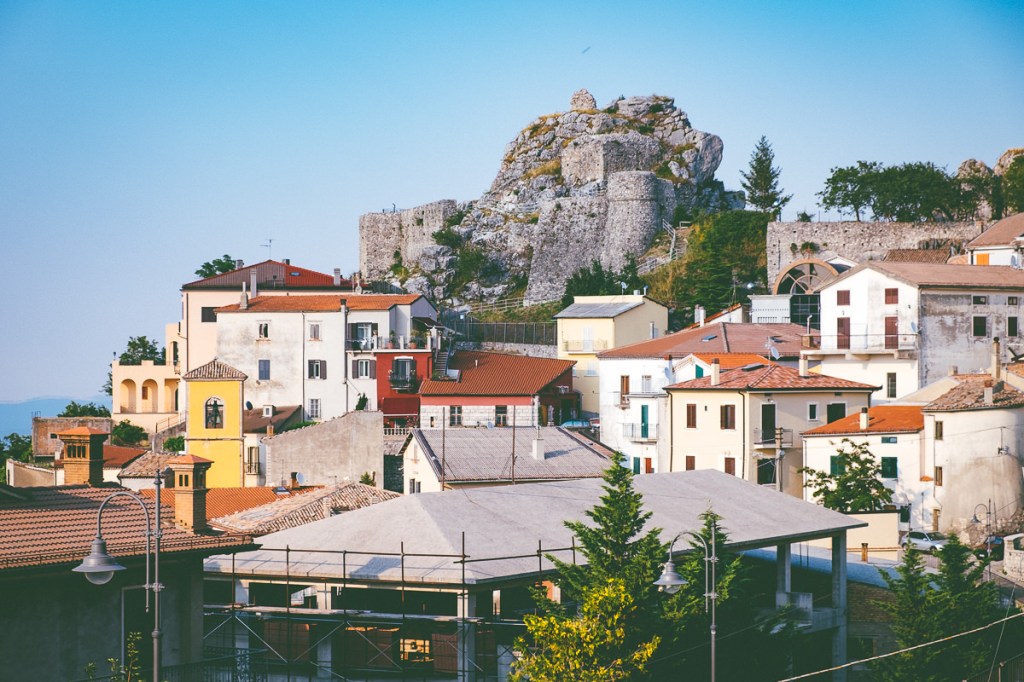
Béarn was itself a semi-sovereign principality, ruled by its own princely family from the early Middle Ages until it was merged with the royal House of Navarre in the 1430s, and then the royal House of France itself, the Bourbons, after 1589. It is a rustic country, still today, nestled in the valleys of the Pyrenees and known for its cows, cheeses and Catholic pilgrimage sites. A few valleys over from its capital, the city of Pau, was an estate known as Monpezat. In 1648, the heiress of this estate, Catherine d’Arricau, married a local doctor, Jean de Laborde. The Laborde family were a family of jurists and professionals originally from a village a few miles upriver from Pau, Nay. Perhaps they took their name from another nearby village, Bordes, or from one a bit further away (in the neighbouring county of Bigorre), Laborde, both of which take their name from an ancient Béarnaise word for farm.

the village of Laborde in the Pyrenees
Welcome to Monpezat–watch for cows!

Like many families of the newly emerging ‘middle class’ of the 17th century, the Laborde family wanted to enrich their lineage with the acquisition of a noble fief. This would bring status and prestige, but also certain legal privileges like exemptions from some taxes, and a stronger legal voice in the local assemblies or ‘estates’. Jean and Catherine’s eldest son, Vincent, was entered into a local company of musketeers, another clear sign of the family’s aspirations to noble status, since it was the nobility who traditionally fought in wars and served in elite regiments like the King’s Musketeers. Some of the greatest musketeers in French history have come from this region, including the most famous of them all, d’Artagnan. But this was also precisely the same time period when the Kingdom of France was cracking down on the assumption of noble titles by non-noble people, particularly those who hoped to obtain privileges by acquiring (by purchase or by marriage) a noble fief. So when the family Laborde applied to sit in the Second Order (the nobility) in a seating of the local estates of Béarn in the early 18th century, their request was turned down.

the Castle of Pau, meeting place of the Estates of Béarn

As the 18th century went on, brides came with surnames like de Canet, Cazenave and du Boy, all potentially noble sounding, and the men followed mixed professions as before, some military, some more bourgeois like mayor and wine-seller. In the early 19th century, Charles de Laborde de Monpezat and his brother Jean are both described as négociants, merchant-traders. Charles was also an official with the public treasury of the city of Agen, a bit to the north in Aquitaine, while Jean was also the mayor of their hometown, Taron (in Béarn, not far from Monpezat). The next generations were the same: Philippe and his brother Aristide are both listed in family genealogies as landowners, merchants, and officials in local government. Aristide (1830-1888) rose higher, as the President of the Tribunal of Commerce of Pau, then Mayor of Pau in 1875. Their sister Amélie became the Mother Superior of a house of the Filles de la Charité, founded by St Vincent de Paul, first in Aix (Provence), then in Lyon. Daughters in the next generation solidified the family’s links with the professional legal class of the south of France, with one daughter married to a president (or senior judge) of the tribunal court of Bordeaux. Like many of their contemporaries, some of these used the title ‘Count’ to boost their social status, but with no genuine legal basis.

In the 20th century, the family de Laborde de Monpezat took an interesting turn, but again, not an unusual one, in that the future for social advancement was within the administrative hierarchy of the French colonial empire (as it was for the British Empire). Philippe’s daughter Julie married a fiscal administrator in French Indochina, possibly inspiring her cousin, Henri, son of Aristide, to pursue a similar career. He was also stimulated by a devastating infestation of grape-loving pests (phylloxera) that struck the vineyards of France in the late 19th century. Henri (d. 1929) became the director of a newspaper in Indochina and eventually delegate of the province of Annam-Tonkin (modern northern and central Vietnam) to the Superior Council of the Colonies (which existed as a French government department until 1935). His son André (d. 1998) looked after his family’s business interests in Vietnam in the 1930s-50s, then returned with his family to France as Indochina began its struggle for independence.

André’s son, Henri, although born in Bordeaux (in 1940), spent much of his childhood in Vietnam, was sent to France for early schooling in Cahors, but returned to Vietnam to complete his high school education, then back to France to study law and political science at the Sorbonne and Chinese and Vietnamese at the French school for East Asian Languages. He became a diplomat, and served in the embassy in London in the 1960s, then met and soon married the heir to the throne of Denmark, Princess Margrethe. Upon their marriage in 1967, he was created a Prince of Denmark, and changed his name to Henrik (and became a Lutheran, which apparently ruffled some feathers in the family).

Princess Margrethe meets the family Laborde de Monpezat

Princess Margrethe had originally not been the designated heir to the Danish throne, as the King her father (Frederick IX) had a younger brother, Prince Knud, who was assumed to be the next in line—indeed, in one of the longest unbroken lines of patrilineal succession in European royal history (back to 1448, though with a bit of a hiccup in 1863). In 1953, the Danish Act of Succession was modified to allow for female succession, meaning Knud and his two sons were now placed lower in the line of succession, after the King’s three daughters. Both of these sons, Ingolf and Christian, married in the last years of the reign of King Frederick IX without obtaining royal permission, so gave up their dynastic rights and took the new title, Count of Rosenborg. It wasn’t until the 1990s that the Danish Crown formally permitted marriage of a royal to a commoner without losing their status (and indeed, neither of Margrethe’s sisters married ‘unequally’), so it is a sleight of hand that Henri de Laborde’s family’s use of the title ‘Count’ seems to have allowed Margrethe to have slipped past this issue in 1967, when her cousins could not, in their marriages of 1968 and 1971.

Henri and Margrethe visit France in 1966

The rest of the story of the marriage of Prince Henrik and Queen Margrethe II (who succeeded her father Frederick IX not long after her marriage, in 1972) is fairly well known, and it was not always smooth sailing. Like many consorts of female sovereigns, Henrik struggled to find a place ‘three steps behind’ his wife, and sometimes pressed for more—for example, asking for formal recognition of his surname as part of the royal name (as Prince Philip also pressed for in England, and somewhat obtained with the name ‘Mountbatten-Windsor’ being adopted for junior royals), and the more elevated title of Prince-Consort, which he was finally given in 2005. In 2008, his sons Frederik and Joachim, princes of Denmark, were given the additional title Count of Monpezat. Prince Henrik died content with this in 2018.

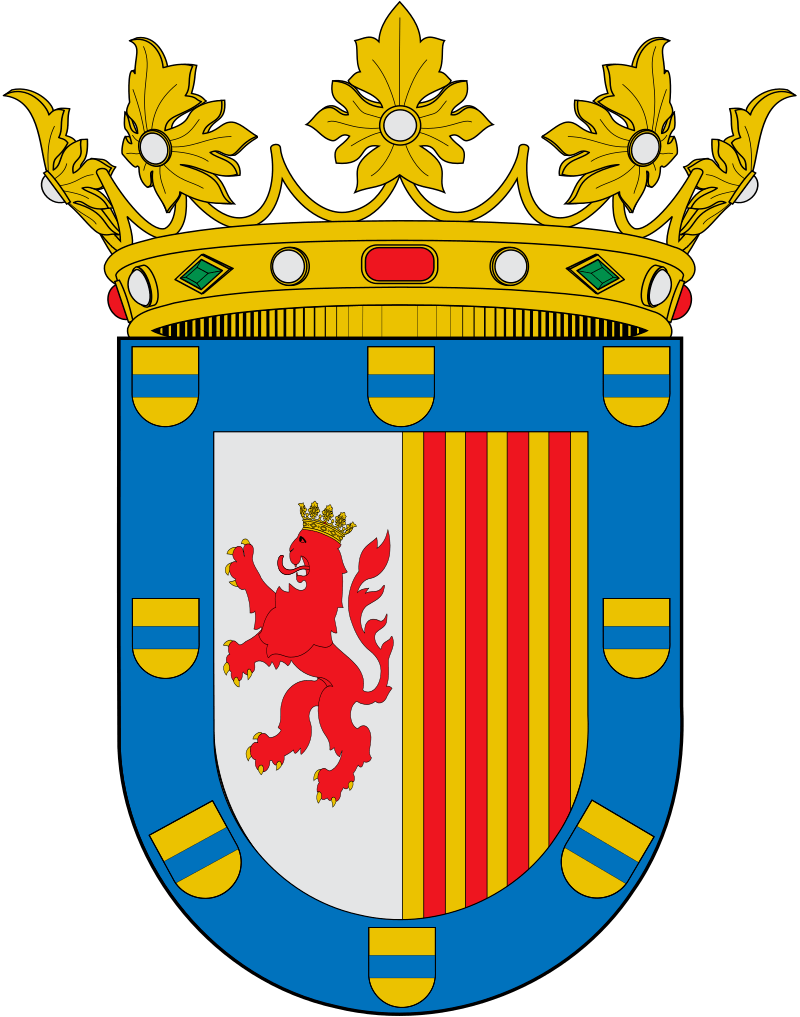
the coat of arms of Prince Joachim of Denmark, with Denmark as a background and a smaller escutcheon made up of Oldenburg (left) and Monpezat (right)

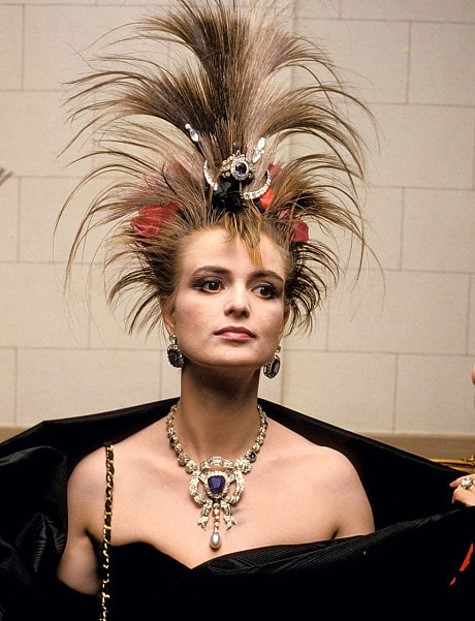
Then in 2023, the Queen decided that the sons of Prince Joachim (and their descendants) would be counts of Monpezat only, which surprised (and offended) many, but is seen as very much in line with all of today’s European royal houses ‘slimming down’ in order to better accommodate themselves with modern values. One might argue, purely academically, that regardless of the Queen’s decision, his male-line descendants could still also call themselves duke of Oldenburg and duke of Schleswig-Holstein, but since dukedoms of the old Holy Roman Empire were always restricted to male-line succession, these in fact now only could be claimed by Ingolf of Rosenborg (who has no sons), and by another line of Counts of Rosenborg, more distant cousins (descendants of a younger son of Frederick VIII).
Count Ingolf of Rosenborg

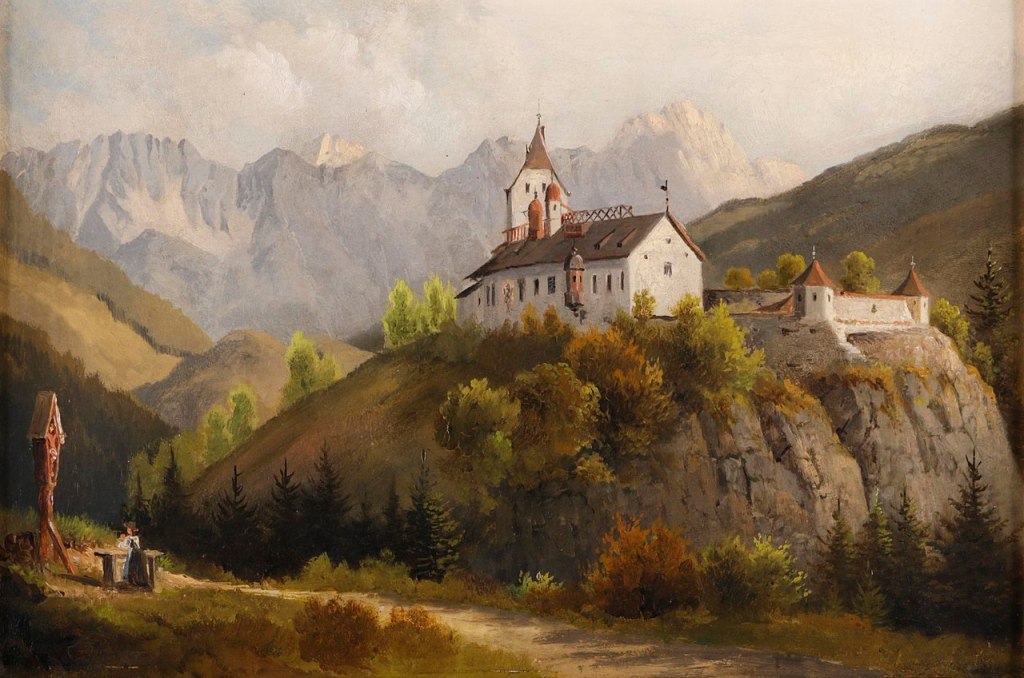
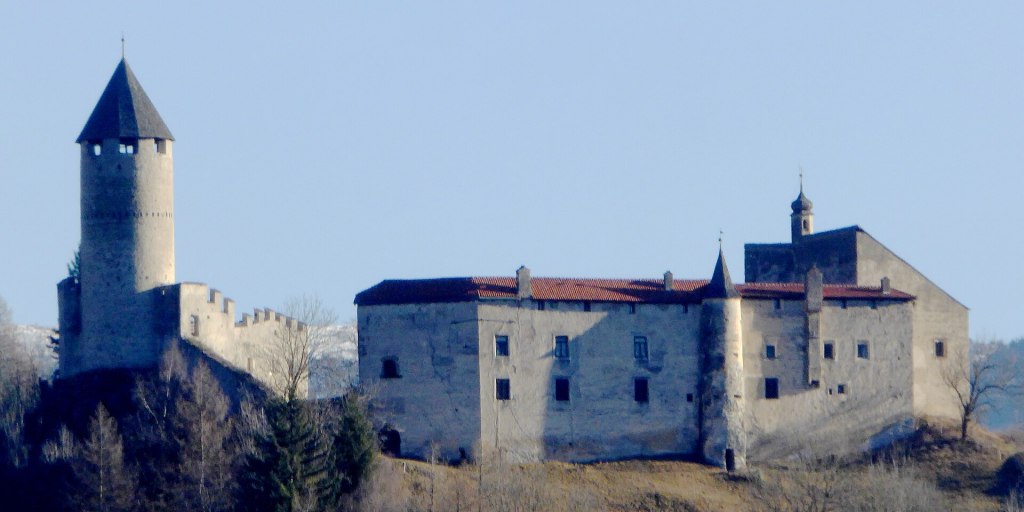
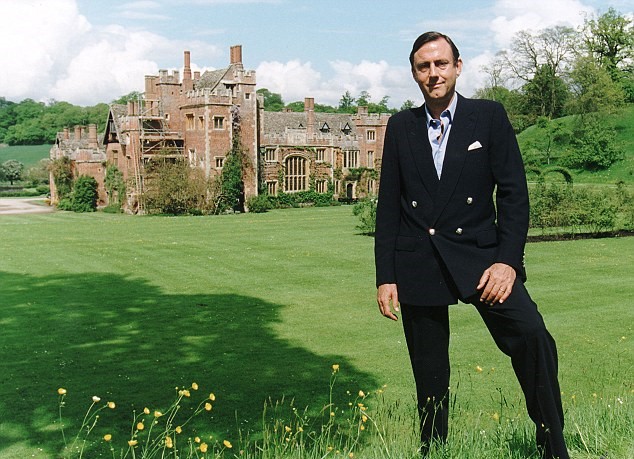
Like his wife, Prince Henrik was passionate about the arts, and about their family’s summer home at Cayx. Purchased as a summer retreat, far from the glare of cameras and his wife’s royal duties in Copenhagen, the Château de Cayx was purchased by the couple in 1974, not far from lands already owned by his family for generations, in the picturesque valley of the Lot, downriver the city of Cahors in Aquitaine. The castle had been built in the 14th century, and passed through several hands, undergoing many renovations.

the chateau of Cayx in Southern France

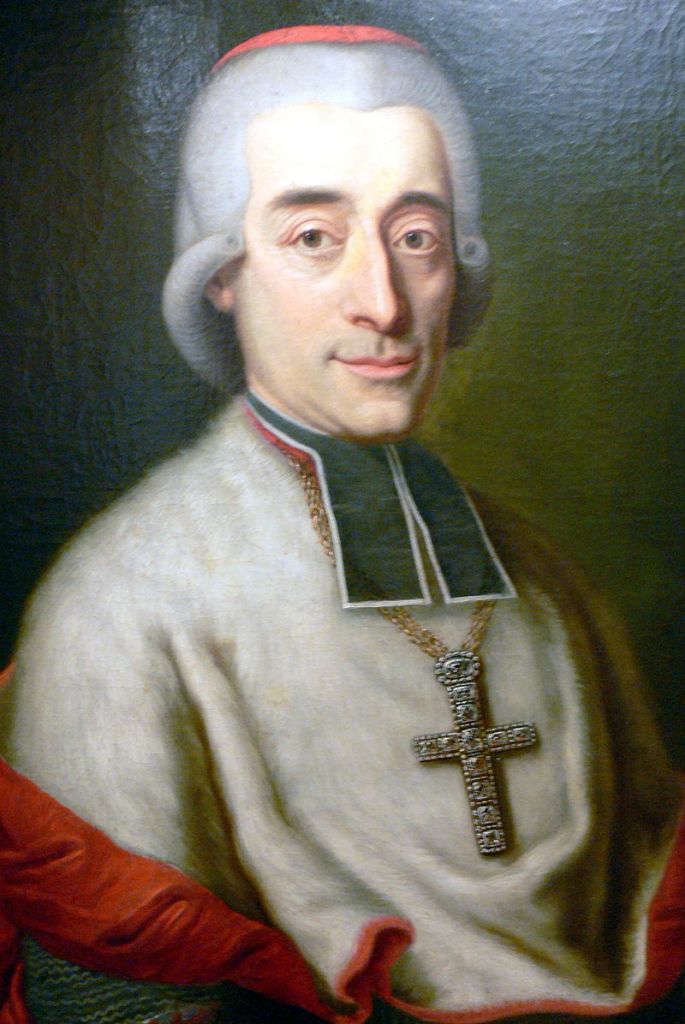
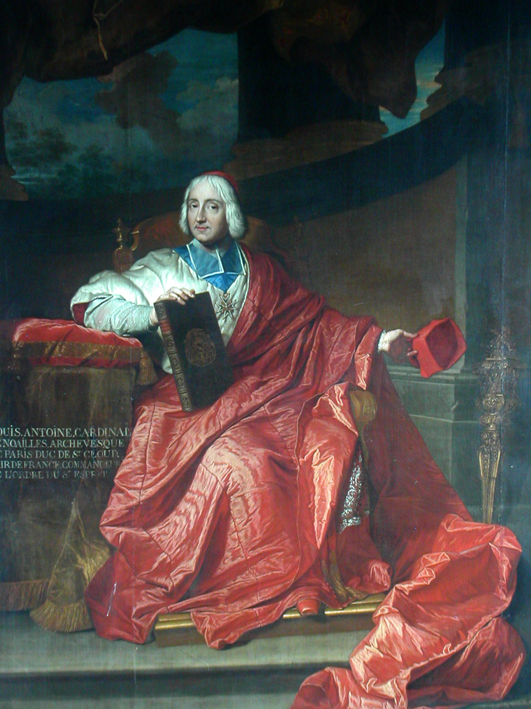
Amongst its 18th-century inhabitants were the famous brothers,  Jean-Jacques Lefranc de Pompignan, a philosophe and writer in the Enlightenment, and Jean-Georges, Archbishop of Vienne, whose liberal beliefs convinced him to lead the great movement of members of the clergy into the Third Estate at the Estates General of 1789. He then served briefly as President of the new National Assembly (4 to 19 July 1789—pretty crucial dates!), and was appointed one of Louis XVI’s ministers of state in August.

Cayx has once more become a flourishing centre of wine production, and will serve as a base for the newly reinvigorated, now royal, house of Laborde de Monpezat. with roots deep in the Béarnaise countryside. Vive le roi! Vive le roi, Frédéric X!

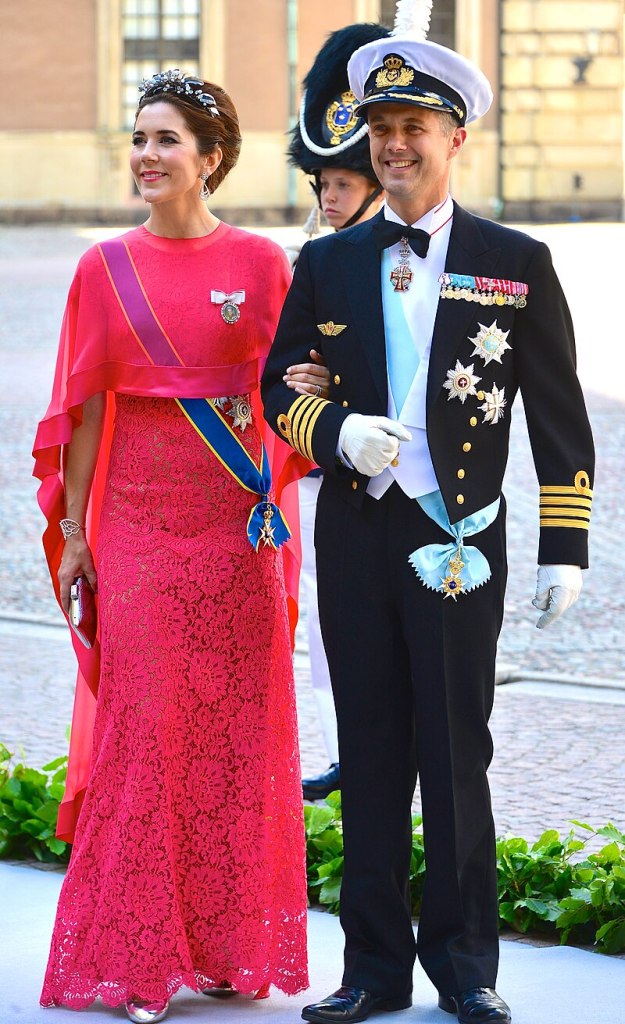
Frederick as Crown Prince of Denmark
buvez bien!

Cantemir Princes in Moldavia and Russia

Sometimes a princely family rises in prominence from fairly humble origins, burns brightly, then disappears. Often this occurs in zones of conflict between great powers, where huge opportunities can be seized by the bold or the crafty. One such family were the Cantemir, ruling princes of Moldavia, then princes of the Russian Empire. Their dynastic history lasts just over one hundred years. They are also interesting in the history of European dukes and princes in that they were—or at least claimed to be—descendants of Mongol khans.

Prince Dmitrie Cantemir, whose portrait blends east and west

The last three decades of the 17th century was a remarkable period for the Balkan provinces, including Moldavia, a semi-autonomous province of the Ottoman Empire since the late 15th century, as the balance of power between the Christian West and the Muslim East began irretrievably to shift. The first significant defeat of the previously undefeatable armies of the Ottoman Empire, at the siege of Vienna in 1683, was followed by wave after wave of victories led by Habsburg armies, liberating Buda and Belgrade by 1689, and reincorporating the Principality of Transylvania with the Kingdom of Hungary by 1699 (see blog about Transylvanian princes). Further south, the principalities of Wallachia and Moldavia remained vassals of the Turks, but a new stirring of Romanian nationalist consciousness was awakened, and a new protector from the far north began to emerge: Orthodox Russia.

the three Romanian provinces in the 17th century

One family at the heart of this transformation was the House of Cantemir or Cantemirești. Their time as leaders of Moldavia was fairly brief, but more broadly they were central to this awakening of Romanian and Orthodox identities, as patrons of an emerging Moldavian nationalist literature, and as protected clients of the Russian Empire. They patronised one of the first translations of the Bible into Romanian, for example, and wrote one of the first scholarly histories of the land and its people. Yet they also worked very hard to establish an identity for themselves that was quite different from Romanian or Moldavian, perhaps to position themselves more securely on the international and diplomatic stage as an important family with excellent connections, able to act as middlemen between Ottomans and Russians. Moldavia (today’s Moldova) had to wait until the 19th century to be liberated from Turkish rule—half of it was incorporated into the Russian Empire in 1812, while the rest was joined to a newly independent Romania in the 1860s.

the Cantemir coat of arms (augmented after their move to Russia)

Modern genealogical research has established that the Cantemir family originated in Moldavia in the early 16th century, in the area of the hamlet of Silișteni (recently re-named Dimitrie Cantemir), just west of the river Prut, the river that today divides independent Moldova from the Romanian province of Moldavia. Yet the established family tradition, put forth as early as the first years of the 18th century, was that the family were of Tatar origin, descendants of Tamerlane.

Timur (d. 1405), or ‘Timur the Lame’ as he was known to Europeans, was a Mongol khan who founded a great empire in Central Asia and whose descendants dominated both the Persian and Mughal empires for the next three hundred years. The Tatars were kin to the Mongols—both groups were a complex mix of Mongolic and Turkic language and culture—and with the disintegration of the Khanate of the Golden Horde in the 15th century, several Tatar khanates emerged in the areas around the lower Volga and north of the Black Sea. One of these, the Crimean Khanate, remained a powerful force well into the 18th century, though from 1475 they were formally vassals of the Ottomans, just like the Christian princes of the Balkans. This area was known to European writers as ‘Tartary’.

Demetrius Cantemir, in his History of the Growth and Decay of the Ottoman Empire—a book he wrote about 1715, and which was eventually translated and published in England (1734)—said himself that his surname was derived from can-temur, the ‘blood of Timur’. Other sources suggest an ancestor called ‘Khan Temir’. Why choose this as a family’s ancestor? In the early 18th century, Tamerlane was an incredibly popular figure in theatre and opera, and represented the oldest enemies of the Ottoman Turks—a factor perhaps the author thought might bring him favour at the Russian court. Demetrius suggested that a warrior named Cantemir from the Crimea moved to Moldavia to aid the army of Prince Stephen the Great (r. 1457-1504) in his fight against the Turks. Indeed, Cantemir does not appear to be a Moldavian name. The idea of Tatar origins had emerged earlier in Demetrius’ career, when he was in service of the Ottomans, perhaps as a qualification to allow him to serve as a diplomat to the Crimean Khan, but later, once he had sought asylum in the Russian Empire, playing up a claim to having Tatar origins may have been a strategy to obtain princely rank, as there was already a precedent for the nobility from former sovereign Tatar and Mongol dynasties being recognised as princes once they were annexed by Russia. Yet Prince Demetrius Cantemir also considered himself to be thoroughly Moldavian, and his children added another dynastic layer, the idea of Byzantine ancestry through their Cantacuzene mother. Whatever the truth of their origins, the facts show that by the early 17th century, the family were minor boyar landowners on the middle Prut valley, not too far south of the principality’s capital, Jassy.

an engraved image of Jassy (modern Iași)

The first to bear the name Cantemir for certain was Constantine (‘the Old’) (1612-1693) who served as a mercenary in the Polish army fighting against Tatars and Swedes. From the 1660s, he switched allegiances and served in the Ottoman armies against Austria. He rose to become governor of a town, then prefect of a district back in Moldavia, and in 1681 was named Grand Sommelier to the Prince of Moldavia (Gheorghe Duca). He married three times, each time to a cousin of the reigning prince, and mostly to grand heiresses, so by the 1680s he was a very wealthy man, and respected by both Moldavian high nobility and the Ottoman authorities. Indeed, in 1672 and 1676 he served as a personal guide to Sultan Mehmet IV in his campaigns against the Poles. Due to these personal connections in both Jassy and Istanbul, Constantine Cantemir was chosen by the boyars to be Prince of Moldavia in 1685 (age 73, hence the nickname ‘the Old’), soon confirmed by the Sultan. His older son, Antiochus, was sent to the Sultan’s court to ‘ensure loyalty’, and when the Poles invaded the Balkans in 1686 and 1691, Prince Constantine assured them of his Christian faith, but did not betray his master the Sultan. Yet in 1690, he did make a secret treaty with Emperor Leopold, saying that if the Austrians could successfully occupy his principality, he would submit to Imperial authority, in return for confirmation that his son would succeed to his throne.

Constantin and Antioch Cantemir

In March 1693, old Prince Constantine Cantemir died, and the boyars chose as prince of Moldavia his second son, Demetrius (age 19), since the elder son was still in Istanbul. His reign lasted only three weeks, as the Sultan objected and replaced him with Constantine Duca. Demetrius (Dimitrie in Moldavian) was ordered to move to Istanbul where he would remain as a ‘guest’ for the next seventeen years. Here he lived in the Moldavian residence, the Boğdan Saray (or Bogdania Palace), in the northeast quarter of the city—the Greek Orthodox district of Phanarion, today’s Fener, near the great western wall. Built in at least the 14th century (possibly the 12th) Bogdania Palace remained a residence for Christian diplomats to the Ottoman Empire until it was mostly destroyed by fire in the 1780s, and was completely in ruins by the end of the 19th century.

Bogdania Palace or the palace of Demetrius in Constantinople (Istanbul)
some walls of the Bogdania Palace photographed in the 19th century

Back in 1695, Demetrius’ brother Antiochus (Antioh in Moldavian) became Prince of Moldavia, and established his rule in the capital of Jassy. Demetrius thus acted as his brother’s agent in Istanbul (and a willing hostage to ensure loyalty). The treaty of Karlowitz (1699) between the Austrians and the Ottomans was a major humiliation for the Turks, so in retrenching their power in the Balkans, Prince Antiochus Cantemir was replaced in 1700—but he was restored in 1705, then deposed again in 1707, and also brought to live in Istanbul.

a commemorative stamp from Moldova for Prince Antioh Cantemir

While Demetrius was in Istanbul, several marriages were proposed for him by the Sultan: a Brancovan, a Mavrocordatos, but in 1700 he married Cassandra, daughter of a former Prince of Wallachia, Serban Cantacuzeno (d. 1688). The Romanian Cantacuzeno family claimed descent from the noble Byzantine house of Kantakouzenos (who contributed two emperors in the 14th century), and Prince Serban had reputedly made plans for allying with the West, marching on Constantinople, and claiming the Byzantine throne. This marriage alliance would certainly boost the prestige of the new Cantemir dynasty. Demetrius engaged with the local Orthodox scholarly community in Istanbul, studied their art and literature, and became a musician and composer too, Stating on good terms with the Ottomans, he also became one of the few Christians who was an accepted part of the artistic patronage network of the Sultan, Ahmed III, and a welcome visitor to his court.

In 1710, perhaps due to this closeness and trust, Sultan Ahmed appointed Demetrius once more as Prince of Moldavia. War was about to start, this time from a different direction: the north. While peace with Austria and Western Europe had been established in 1699, the Russian Empire, led by a young and vigorous Tsar Peter I, was just getting started as an aggressive military power. Peter dreamed of re-establishing an Orthodox monarchy on the Bosporus, and, having defeated his great northern enemy, Sweden, at the Battle of Poltava in 1709, was now ready to fight for this dream in the south. Probably due to this external threat, Demetrius as Prince of Moldavia was given extra distinctions than his predecessors had been, for example, the title of pasha with three queues (rather than the ordinary two); an expensive and honorific caftan made of many colours and gold and silver thread; and an exemption from the usual tributes and gifts demanded by Ottoman overlords. So he returned to Jassy. Here he tried to establish a more authoritarian rule over the boyars, and tried to get the rich monasteries to support the war financially. But an intellectual reformer was not received well in conservative Moldavia, and his attempts were mostly blocked.

another Moldovan commemorative stamp, this one of the reign of Prince Demetrius fighting for independence of Moldavia, 1710-1711

War was declared by Russia in February 1711. In April, Prince Demetrius surprised everyone by signing his own separate treaty with Tsar Peter: Russia would agree to liberate Moldavia and support a hereditary ruler there (with expanded borders and no tribute to Russia); but also would protect Cantemir and his family if the invasion was unsuccessful, and would grant him lands and palaces in Russia equivalent to those he would certainly lose in the Ottoman domains. It was a great gamble. In early June, Russian troops entered the principality, and by the end of the month, Demetrius declared war on the Sultan. Peter himself came to Jassy and was entertained by Demetrius and his court. But the Moldavian army was small, and only the Russian avant-garde had arrived and was quickly surrounded by the massive Ottoman army and its Crimean Tatar allies. The allied Russo-Moldavian troops were crushed at Stănilești on the Prut on the 22nd of July. Peter made a quick treaty with the Sultan (a humiliation, losing the great prize, the port of Azov), and whisked Prince Demetrius away—some said he was hidden in the carriage of the Empress Catherine.

In August, Peter accorded his new ally, and now protected refugee, the title ‘Prince of Russia’ (with the rank of ‘Serene Highness’), augmented his coat-of-arms with a Russian double-headed eagle, and pledged to return one day to Moldavia to restore his throne. He was soon given the estates confiscated from a Russian traitor near Kharkov (and promised tax exemptions on these lands), and was given the task to rebuilt that city (now Kharkiv in northeast Ukraine). This estate of about 57 villages (and 15,000 serfs) was centred on the estate of Komarichoia, on the main road between Kiev and Moscow. Here the Prince built a wooden manor, a mill and a Romanian Orthodox church in a village he renamed for himself,  Dmitrovska (later called Dmitrovsk; now in Russia according to today’s borders). Prince Demetrius also was given an estate at Solomino (on the Donets, to the east). A small colony of Moldavians was formed, consisting of about 4,000 soldiers, boyars and administrators who had accompanied Demetrius and still considered him their hospodar, or prince (the Tsar allowed him to exercise jurisdiction over these people). But after about a year, most of these returned to Moldavia, and Demetrius was ordered to move to Moscow. The family was given a stone residence in Moscow (a big deal in a city still mostly built of wood), and the Prince built a new Romanian style church which would become the family sepulchre. His sons were soon given positions in the Russian court and in the prestigious Preobrazhensky Guard. Their integration process into the Russian aristocracy had begun.
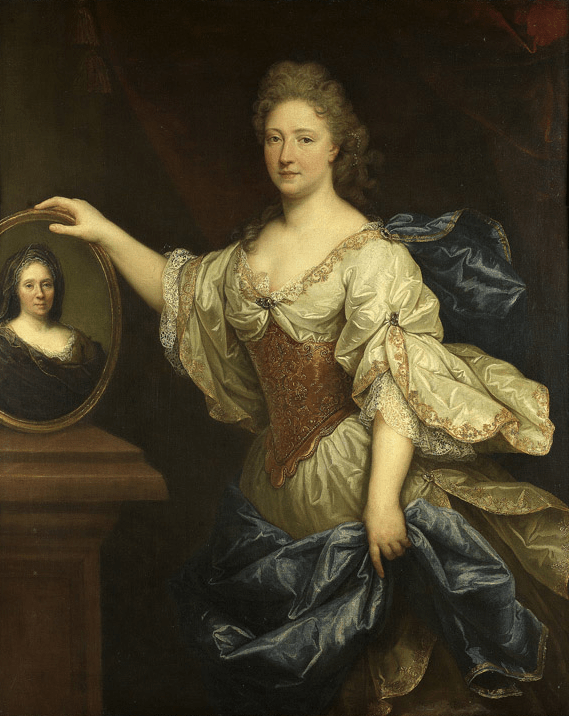
Prince Demetrius Cantemir re-fashioned as a Russian prince

But there remained hope of a return to Moldavia: in 1716, the Austrians defeated the Ottomans, and Demetrius’s brother-in-law, Gheorghe Cantacuzeno, defected to the Austrian camp. Prince Cantemir tried to get Tsar Peter to grant him a passport (and funds) to go raise an army of support in the Balkans, but his request was denied, and by 1718, the Austrians made a new peace treaty.

By this point, Peter the Great’s interests were focused on building his ‘window to the west’, the new city of Saint Petersburg, and Prince Demetrius Cantemir was not far behind. He purchased an estate a bit to the south of the new city, Chornye Griazi, which later, in the 1770s, was purchased by Catherine II and transformed into the Imperial summer residence town of Tsarskoe Selo. In the newly emerging city, the Prince built a small wooden house on the banks of the Neva, which he replaced in 1720/21 with a grand palace of marble, one of the first Russian commissions for the Italian architect Francesco Rastrelli (later famous for Smolny Cathedral and the Winter Palace). This residence was built next to the Summer Palace, so was one of the most in-demand sites (in what later became known as ‘Millionaire Street’) and therefore passed through many hands, purchased first by Catherine the Great in 1762, then remodelled by later owners in the 19th century before becoming—perhaps ironically—the Turkish Embassy in the years leading up to the First World War. This was a busy period for Prince Cantemir as an intellectual—he wrote twelve books between 1711 and 1723, mostly histories of Romania and the Ottoman Empire. He was elected as a member of the Academy of Berlin in 1714.

Cantemir Palace in Saint Petersburg

In 1720, Demetrius married for a second time, Princess Anastasia, daughter of Prince Ivan Trubetskoi, one of the inner circle of Peter the Great. He shaved his beard and adopted Western dress. He tried to use his great favour with the Tsar to hatch a plan to rescue his brother Antiochus from Istanbul, with French naval assistance, but Peter was not interested in provoking the Sultan again. In 1721, Cantemir was named a Privy Councillor and Senator of the Empire, and it is suggested by some historians that it was in this capacity as Senator that he proposed the idea of formally recognising Peter as ‘Emperor’ (which they did in November). This was his way of gently reminding Peter that his true destiny lay in reconquering Constantinople and restoring the Orthodox faith (and his own principality). At the about this time, the Holy Roman Emperor recognised (or created) Prince Cantemir as a prince of the Empire—perhaps as a means of encouraging an alliance with Russia and intervention in this Balkans against the Ottomans. Indeed, in May 1722, a large Russian army did march out, and headed south, but not to the Bosporus; Peter intended to subdue the region north of the Caucasus Mountains, and Demetrius was brought along as a special advisor and interpreter—and a composer of propaganda messages in courtly Turkish to be distributed amongst the local chiefs. The Russian troops had some successes in Dagestan, but were blocked by the Persian governor in Baku, and soon returned north. By the end of the campaign, Prince Demetrius was very ill; he retired to his estates at Dmitrovka where he died in August 1723.

Anastasia Ivanovna, Princess Cantemir

Demetrius Cantemir’s will was very confusing, leaving the choice of the main heir to Emperor Peter, who died before he could make it. It wasn’t until 1729 that the court confirmed the eldest son, Constantine (1703-1747), as the heir. He was already in favour, having been married since 1727 to Princess Anastasia Golitsyna, daughter of the minister-favourite of Emperor Peter II. The youngest son, Antiochus (1708-1744), instead became the intellectual heir of his father, and went on to establish his name across Europe as a member of the Enlightened ‘Republic of Letters’. He supported Empress Anna Ivanovna in her coup against the old aristocracy in 1730, and in 1731 was appointed ambassador to London (aged only 22!—it is possible he was in fact being sent away from the court, as someone who had witnessed the secrets of the coup). In London he helped bring about a new treaty of friendship between Great Britain and Russia in 1734, and was gradually pulled towards making similar efforts in Paris (where tensions were heating up with Russia over Poland), though he was not formally ambassador there until 1738. Antiochus Cantemir’s job was to secure France’s recognition of his master’s title of ‘emperor’ (which they refused to do), and to keep France from allying with the Ottomans if a new war broke out.

young Prince Antiochus Cantemir

A new war did break out between Russia and the Ottomans in 1739, and Russian troops entered Moldavia. With this army was Prince Constantine Cantemir, who was proposed as its new ruling prince. But once again, peace was soon brokered, Moldavia was returned to Ottoman rule, and the port of Azov returned to Russia.

In 1742, it was rumoured that Antiochus Cantemir was to be recalled from France, by the new empress (Elizabeth Petrovna), and named President of the Russian Academy, in recognition of his reputation as a writer. He is revered as one of the founders of modern Russian poetry, and left behind various publications of poetry and prose, re-edited his father’s historical works, and wrote an epic history of Peter the Great. He had indeed done very much to improve the view most westerners had of Russia. But instead of receiving this post, he was instead confirmed in his post as ambassador to France, then suddenly died in Spring 1744.

Prince Demetrius’ daughters also swiftly established themselves in Russian high society. Princess Maria is thought to have been a mistress of Peter I while he was on the Caucasus campaign of 1722/23 (and possibly had a child by him). Perceived as a threat by Peter’s wife Catherine, she was sent away from court, but later obtained posts as lady-in-waiting to Grand Duchess Natalia in 1727-28 (sister of Peter II) and to Empress Anna in 1730-31. She never married, but was a salon hostess in Saint Petersburg with her widowed step-mother. The much younger Princess Catherine (born in Russia in 1720) obtained a position at court as lady-in-waiting to Empress Elizabeth, and was a well-known beauty (known as ‘Smaragda’ (emerald), and an admired keyboardist. She eventually married Prince Dmitri Golitsyn in a grand ceremony at the Russian court, and went with him to Versailles where he was posted in the embassy and later named ambassador (1760). A year later he was posted as ambassador to Vienna, but she died in France before they departed.

The eldest brother, Prince Constantine, was also involved with the Golitsyn family: he married one (as we’ve seen), and was caught up in their disgrace when they tried to limit the powers of Empress Anna on her accession in 1730. He was exiled to Siberia for a time, then died childless in 1747, so the estates were divided between his surviving brothers Sergei and Matvei. Neither of these made much of a mark in Russian history, and neither had children, so in 1780, the Cantemir estates reverted to the Crown, and not to the descendants of Prince Antiochus (senior; who had died in Moldavia in 1726), who had finally come to Russia during the war of 1736-39.

Of these, Prince Constantine became a Russian general, and was succeeded by his son, Dmitri (1749-1820), a colonel who participated in yet another Russian occupation of Moldavia and Wallachia in 1768/74. In 1773, he was named head of the council to administer the region of Oltenia (part of Wallachia), but he left in disgrace and was later confined due to madness. He left no successors.

Today the family name lives on thorough the Russian town of Kantemirovka (in Voronezh Oblast; formerly known as Konstantinovka, named for Prince Constantine); and the town of Cantemir in Moldova (named as such in 1967), not to mention the town of Dimitrie Cantemir in the Moldavian part of Romania, as above. One of the daughters of General Constantine married a prominent Wallachian nobleman, and their descendants, who took the name Câmpineanu-Cantemir, were leaders of the liberal movement in Romania in the later 19th century. There was a Romanian film about Prince Demetrius in 1973, and occasionally, original works of Prince Antiochus turn on at antique book sales.

The de Beauharnais Dukes of Leuchtenberg and Princes Romanovsky: French? German? Russian?

Readers of this site will know by now that I am slightly obsessed with trans-national noble families that moved effortlessly across Europe in the 18th and 19th century, blissfully ignoring the boundaries of nationalism and attempting, in their way, to hold the continent together through kinship networks and cultural exchange. The recent new film Napoleon brought back into my mind the family of his lifelong love, Joséphine de Beauharnais, and the amazing, and very trans-national journey across Europe taken by her descendants—not his—in the century that followed. By the 1820s the Beauharnais were an adjunct part of the royal family of Bavaria, as dukes of Leuchtenberg. And by the 1840s they had been created Prince Romanovsky, again as sort of an additional dynastic branch, this time to the imperial family of Russia.

Josephine de Beauharnais, 1801, by François Gérard

Joséphine de Beauharnais was the grand progenitrix of this pan-European clan, though she did not live to see it. And she herself was only a Beauharnais by marriage. She was however, created a duchess in her own right (the strangely named duchy of Navarre, see below), as a consolation prize for being divorced from the Emperor Napoleon, so she does qualify for a place on the ‘Dukes and Princes’ blogsite. Her daughter too, Hortense de Beauharnais, was given a duchy, Saint-Leu, this time by the restored Bourbon regime after the fall of Bonaparte. There were thus two dukedoms in France before the titles in Germany or Russia were granted to the Beauharnais family; so let’s start in France.

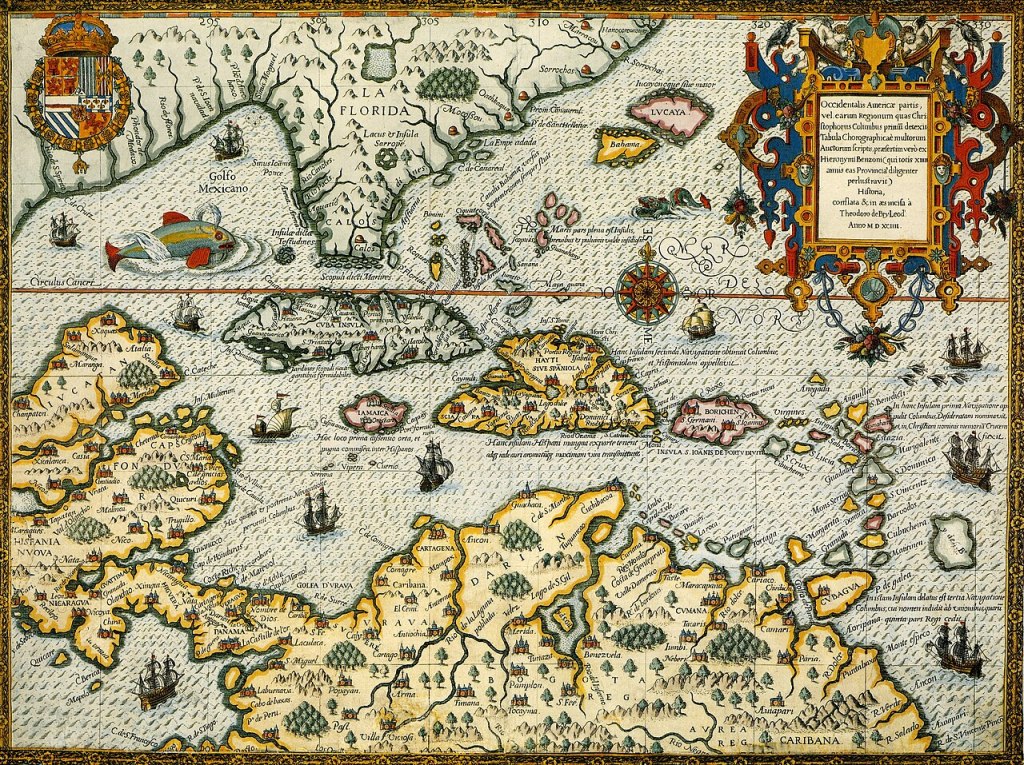
Marie-Josèphe-Rose Tascher de la Pagerie, known as Rose or Marie-Rose in the days before she met Napoleon Bonaparte (who preferred to call her Joséphine), was born on the island of Martinique in the Caribbean in 1763, to a wealthy owner of sugar plantations. Her father aspired to marry her up the social ladder, so in 1779 he arranged her marriage to the younger son of a former governor of their island, Alexandre, Vicomte de Beauharnais. The new couple started a life together in France, where he was serving in the army, and soon had two children, Eugène (1781) and Hortense (1783).

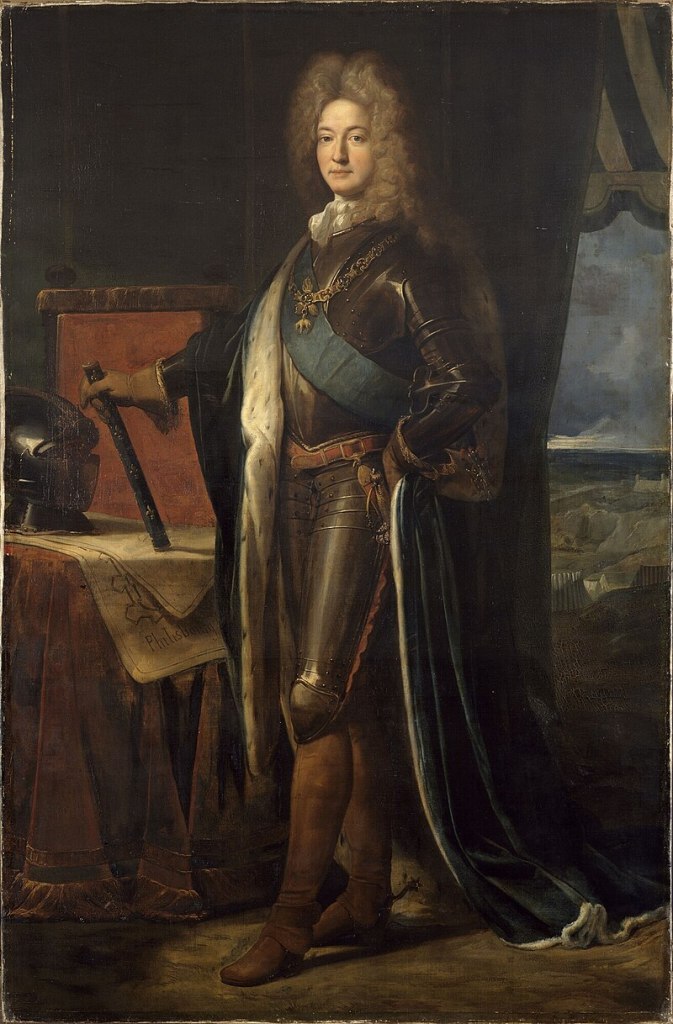
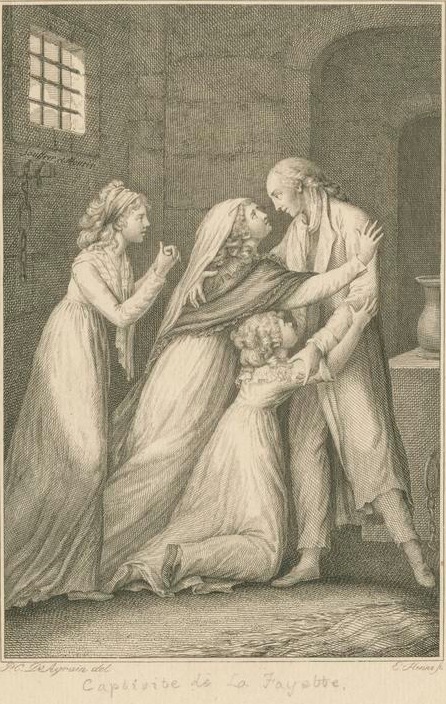
Alexandre’s family may have been socially superior on Martinique, but they were still relatively nouveau amongst the noble families of France, and he was not formally received at court, which irked him. His military career was also stunted somewhat since, by the time he arrived back in the Caribbean to help the French navy fight against the English in the American War of Independence, the war was over. Like many young noblemen, however, he did pick up dangerous new ideas about democracy percolating around in the New World at this time, and was an eager participant in the Estates General of 1789 as a delegate for the nobility of Blois. When the Revolution broke out that summer, Alexandre was one of the first nobles to join the Third Estate, and in the coming years he joined the Jacobin political club and sat twice as president of the National Constituent Assembly, in July/August 1791. A year later, Citizen Beauharnais re-joined the army, now as a general, and by 1793 was commanding the Army of the Rhine. Blamed for the loss of the city of Mainz, however, he resigned his commission and retreated to his family’s estates in the area south of the city of Orléans. But the long arm of the Terror reached him and in March 1794 he was arrested, blamed for the military failure in Germany and suspected of still harbouring subversive aristocratic tendencies… He was executed in Paris on 5 Thermidor of Year Two (ie, 23 July 1794). His wife Marie-Rose was also arrested, in April, and her life was spared only by the fall of the regime a mere five days after her husband’s death.

Alexandre de Beauharnais as a general

Alexandre’s ancestors, the Beauharnais family, were originally merchants in the city of Orléans—the first named is Guillaume, living in 1390, who was also lord of Miramion, an estate northeast of the city. His descendants expanded their landholdings with the lordships of La Chaussée (or La Chaussaye) and La Boëche, also near Orléans. By the end of the 16th century the family had become part of the noblesse de robe (the judiciary nobility), and held prominent provincial posts: François II (d. 1651) was First President in the Presidial Court of Orléans in 1598 and the King’s Lieutenant-General in the Bailliage of Orléans. He was selected to attend the Estates General of 1614. His son Jean raised the social profile of the family somewhat by acquiring a position at court, that of maître d’hôtel du roi in 1652, and in the next generation they secured their place in the capital as advocates in the Parlement of Paris. It was Jean’s grandsons, François and Charles, who really raised to the family closer to the top of the French aristocratic hierarchy, as prominent leaders of France’s new colony in the New World.

François de Beauharnais (b. 1665) became a protégé of a distant kinsman Jérôme Phélypeaux, Comte de Pontchartrain, who, as Minister of the Navy secured his appointment as Intendant of New France in 1702. The intendant was the civil administrator of the colony, second in command to the governor. François acquired land in Acadia (today’s New Brunswick) which was erected into a feudal estate (the barony of Beauville or Banville). After three years, he returned to France and was given the much more prestigious post of intendant of the Navy, then intendant of the district of La Rochelle until 1715, when he, as part of the Phélypeaux network, fell from royal favour. Meanwhile, his brother Charles had already been making a name for himself as a naval captain, and in 1716 married a rich widow, Renée Le Pays de Bourjolly, whose estates included sugar plantations in Saint-Domingue (today’s Haïti) in the Caribbean. By the mid-1720s, the Phélypeaux family were back in favour, and the new Minister of the Navy, the Comte de Maurepas, appointed Charles de Beauharnois (as it was often spelled then), Governor of New France (1726-46). His time as governor was spent trying to maintain the delicate balance between the British in Canada (in Ontario) and the various native regional alliances (the Abenaki, the Iroquois, the Sioux). This balance was disrupted by his brutal suppression of the Fox tribe (or Renards in French) in the region between lakes Superior and Michigan in the late 1720s. Governor Beauharnois solidified New France’s reach into this territory and much further west with a new fort (1727) on the upper reaches of the Mississippi: Fort Beauharnois (now in Minnesota). He also gave this name to his seigneurie, established in 1729 on the south side of the Saint Lawrence river, southwest of Montréal. The Seigneurie of Beauharnois was later sold when France lost control of Québec in the 1760s, but it remains today as a town and the seat of a county.

Charles de Beauharnois, Governor of New France

In 1744, the War of Austrian Succession spread to Canada, and Governor de Beauharnois tried to build up Quebec’s defences against a British attack. But at age 74, he was seen as too old to face this major challenge, and was soon recalled. Back in France he was named a lieutenant-general of the navy in retirement, and he died a few years later. Neither François nor Charles had any children, so their wealth and estates passed to their nephews, François and Claude-Joseph, the sons of their late younger brother Claude, who had himself been a naval captain in what was now a family tradition. The older brother, François, Baron de Beauville, likewise rose through the navy to become a squadron commander, and in 1757 was appointed Governor-General of the ‘Isles du Vent’, that is the Windward Islands in the Caribbean. This post covered all of the French possessions in the Antilles except the large island of Saint-Domingue, and was based in Martinique. He was the last to be called Governor-General—after 1763 each island was given its own governor. After his sons were born on the island, François returned to France where his newly acquired estate, La Ferté-Avrain in the Sologne region south of Orléans, was erected as a marquisate (1764) and renamed La Ferté-Beauharnais. The old medieval château here was mostly dismantled and a new house was built in a fashionable classical style. It would later be ruined during the Revolution and sold by the family in 1821.

François, Marquis de la Ferté-Beauharnais
Chateau of La Ferté-Beauharnais, as reconstructed in the 19th century

The new Marquis’ younger brother, Claude-Joseph, was also raised in rank, as Count of Les Roches-Baritaud, an estate he had purchased in the Vendée, the western portion of Poitou, near the Atlantic coast north of La Rochelle. He too was a captain in the French navy, and won a significant victory over the British off Lizard Point (Cornwall) in 1756. He died before the French Revolution broke out, but his wife ‘Fanny de Beauharnais’ lived on for many years, and flourished as a salonnière, a well-known writer of poems, plays and novels. They had three children, who would re-appear prominently in the Napoleonic regime: Anne as wife of General de Barral, and Claude as a Senator and Count of the Empire (likely due to the intervention of his cousin-in-law, Empress Joséphine), then as Chevalier d’honneur to Joséphine’s replacement, Empress Marie-Louise, in 1810.

the writer Fanny de Beauharnais

After 1794, Joséphine was a widow. Her late husband’s older brother, François, Marquis de la Ferté-Beauharnais, had remained an ardent royalist, in opposition to his own brother, then emigrated when things heated up in 1792. He joined the Army of Emigrés fighting against the new regime, and didn’t return to France until the amnesties of 1802—from abroad, he even tried to convince First Consul Bonaparte, via the Consul’s new wife (Joséphine), to use his position to restore the Bourbon monarchy. This suggestion fell on deaf ears of course, but in 1805 François was briefly given a chance to make his name in the new Empire, as ambassador to Tuscany, then to Spain. He failed to follow Napoleon’s orders in Spain, however, and was soon recalled and exiled to his estates. He died age 90 (!) in 1846.

So finally to Joséphine and her children by her first husband the Vicomte de Beauharnais. Without taking too much of a detour into the history of Napoleon Bonaparte, we can summarise the astonishing career of this minor nobleman from Corsica who became an artillery specialist and dazzled the leaders of the first French Republic in the 1790s, then led a coup to bring down those same leaders once it was clear their regime was corrupt and ineffective, revealed himself to be a genius military strategist and effective politician, then crowned himself Emperor of the French and founder of a new reigning dynasty for France in 1804. Along the way, he needed the social cachet provided to him by the widowed Vicomtesse de Beauharnais to gain entrée into Parisian high society, just as she needed him to remain relevant in a swiftly evolving political landscape. For the purposes of this blog about dynasty, it is her children who also brought value to her marriage to Napoleon, since, as any good Italian mama’s boy—and he was, as we see so well in the recent film, when his mother Letizia Ramolino took matters into her own hands to ensure her son’s ‘potency’—he was obsessed with creating a dynasty and ensuring his legacy. In the absence of a son of his own he tried to build up the profile of his brothers, to little effect—none but Lucien was really an effective leader, and they fell out over the idea of an imperial Bonaparte dynasty. And so Napoleon adopted Joséphine’s children, Eugène and Hortense, unofficially from the time of their marriage in 1796, and officially in 1806, shortly after the proclamation of the Empire.

Josephine as Empress of the French

Eugène de Beauharnais (b. 1781) began his apprenticeship to power in Italy as aide-de-camp to his new step-father in 1797, then the following year on campaigns in Egypt and Syria. When Napoleon was appointed First Consul, Eugène was named Captain of the Light Cavalry of the Consular Guard, 1800, and rose to the rank of general in 1804. That year the Empire was proclaimed, and Eugène was created a ‘Prince of France’, with the style of ‘Imperial Highness’, and soon after was appointed Arch-Chancellor of State, one of the seven ‘Grand Dignitaries of the Empire’ set up to demonstrate to Europe (and to other Frenchmen) that the Empire of the French had a magnificent court just like anyone else.

Eugène de Beauharnais in about 1800

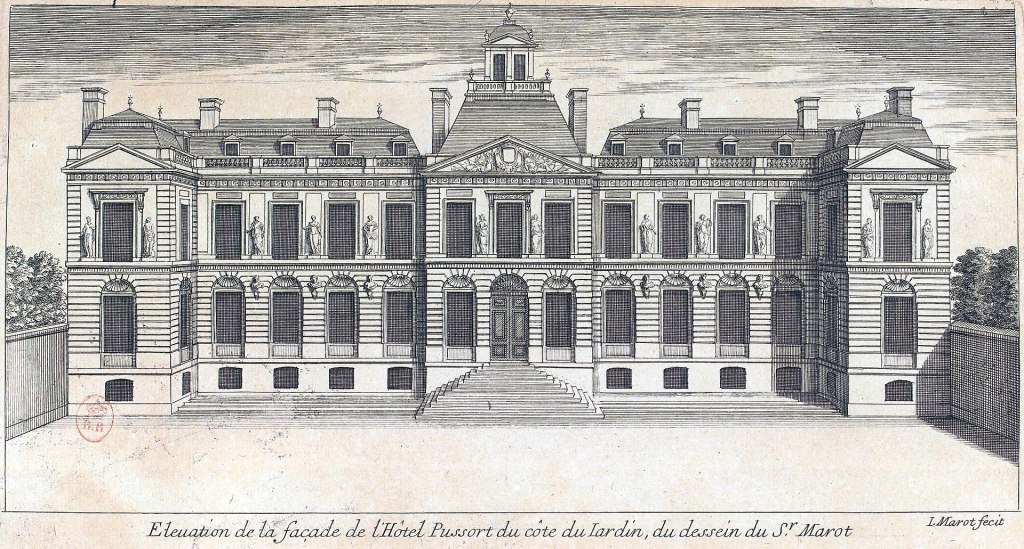
The new Arch-Chancellor had also recently acquired his own grand residence in Paris, in one of the choicest locations in the city: the old Hôtel de Torcy, built by Louis XIV’s foreign minister in 1714 on the banks of the Seine between the Palais Bourbon and what is today the Musée d’Orsay. Set back from the quays somewhat, it had a marvellous garden overlooking the river. Eugène purchased it in 1803, remodelled it in the now ultra-fashionable Egyptian neo-classical style, and renamed it the Hôtel de Beauharnais. After the fall of the Empire, it would be purchased by the King of Prussia, in 1818, and it would serve as the embassy of Prussia, then Germany, until 1944; since 1968 it has been the residence of the German ambassador.

The Hôtel de Beauharnais on the river side
the Hôtel de Beauharnais on the streeet side, showing its ‘Egyptian’ portico (photo Jospe)

By this point, his mother Empress Joséphine also had a prominent residence of her own, the Château of Malmaison, purchased in 1799 and lovingly refurbished as the country seat of the First Consul then Emperor. Located on a bend of the river Seine about 7 miles west of Paris, Malmaison had been a dilapidated 17th-century country manor, and she transformed it into a palace, especially noted for its rose gardens. Since the early 20th century it has been property of the French state, and remains one of the best places to see the preserved ‘empire style’ of the era of the Empress Joséphine.

Malmaison (photo Pedro Faber)

An even more significant appointment came to Joséphine’s son Prince Eugène the next year: Napoleon returned to Italy and resurrected the ancient Kingdom of Italy (essentially Lombardy, but soon to include the Veneto too), crowning himself with the ancient Iron Crown in Milan in May 1805; he then left the Kingdom in the hands of his step-son Eugène as Viceroy. Eugène turned out to be a very good politician and administrator, keeping the peace (for a time) with the Papacy, carrying out a number of public building projects, and implementing the new Civil Code to align with that of France. As part of the extended Imperial family, he was used in the Emperor’s matrimonial chess manoeuvres, and was married in January 1806 to Princess Augusta of Bavaria, to secure France’s alliance with that key German state, which, in return, was recognised as an independent kingdom that same month. It was also in this same month that Eugène was formally adopted by the Emperor, and though it was made clear he was not heir to the French Empire, he was named heir to the Kingdom of Italy, should Napoleon fail to have a son. As a sign of this, and the addition of the Veneto to the Kingdom of Italy, he was created Prince of Venice, December 1807. Earlier in the year, he had given the Emperor his first Beauharnais grandchild, named Joséphine after her grandmother, and she was created Princess of Bologna, and later given further estates in that region and created Duchess of Galliera. It seemed the destiny of the Beauharnais dynasty was to be in Italy—perhaps ironically given the origins of the Buonaparti. The Prince of Venice earned his spurs on the battlefield in Italy too, as Commander of the Army of Italy in the War of the Fifth Coalition (1809), successfully defending the newly acquired Veneto provinces against the Austrians at the Battle of the Piave in June.

Eugène de Beauharnais as Viceroy of Italy

Hortense de Beauharnais (b. 1783) was raised to be part of the wider Bonaparte family too. She’d been educated at school with Napoleon’s sister Caroline, and in 1802—before the proclamation of the Empire and the systematic efforts of the Emperor to marry his siblings into the reigning houses of Europe—she was persuaded to agree to a marriage with her step-father’s younger brother Luigi. As Louis I, King of Holland, from June 1806, her husband was then sent to bring the Dutch into line with Napoleon’s grand European family alliance, and Hortense was forced to go with him. She grew to like her little court in The Hague and became popular with the Dutch. But she hated Louis, and within a year she returned to France, officially to recover her health after the death of a baby son. She revelled in holding the rank of queen in Paris, young and spirited, second only to her mother at the Imperial court.

Hortense de Beauharnais as Queen of Holland

Always in need of daughters—just as any French king needed them for diplomatic alliances—Napoleon incorporated another Beauharnais girl into the Imperial family in 1804, and gave her rooms in the Tuileries Palace. This was Stéphanie de Beauharnais (b. 1789), daughter of Hortense’s father’s cousin, Claude, Comte des Roches-Baritaud (see above). In 1806, she was created ‘Princess of France’, and like Eugène, she was deployed onto the martial chessboard to secure an alliance with one of the German princes, and married to Prince Karl of Baden, grandson and heir to the brand new Grand Duke of Baden. And like that of Hortense, her marriage it was not successful at first: he had little interest in her and lived in the capital, Karlsruhe, while she lived mostly in the old electoral palace in Mannheim. When he succeeded as Grand Duke of Baden in 1811, however, they came together with a common sense of dynastic duty: to produce a son. After three daughters, however, Grand Duke Karl died (1818), and Stéphanie spent a long widowhood—over 40 years—back in Mannheim. An interesting dynastic legacy was that through her daughter Marie-Amélie, who married the Duke of Hamilton, and in turn through her daughter, Lady Mary Victoria Douglas-Hamilton, the blood of the Beauharnais flows today in the house of Grimaldi in Monaco.

Stéphanie de Beauharnais, Grand Duchess of Baden

Matters took a sharp turn for all of the Beauharnais clan in January 1810, when Napoleon annulled his marriage to Joséphine so he might marry the Austrian Archduchess Marie-Louise. She retired to Malmaison, while Hortense was pushed aside as first lady of the court; after July of that same year, she wasn’t even the titular queen of Holland since that kingdom was abolished. Her life descended into scandal as she secretly gave birth to a son in Switzerland in 1811, named Charles Demorny, whose name apparently was ‘loaned’ by friends of Joséphine’s back in the French Antilles. Demorny’s actual father was the Comte de Flahaut, an aide-de-camp of General Murat, who was himself—it is supposed—the illegitimate son of the grand statesman Talleyrand. This uterine brother of the future Emperor Napoleon III would later in life re-enter politics and be elevated in rank as the ‘Duc de Morny’ (1862).

After her divorce, Joséphine was permitted to keep the title and rank of a crowned empress-queen and given a huge pension. She was created Duchess of Navarre, and given the estates of that name centred on a castle near Évreux, a town on the borders between the Ile de France and Normandy. The Château de Navarre had been built in the 1320s by the Queen of Navarre, Joan III, in the estates of her husband, a cousin of the royal family, Philippe, Count of Évreux. The castle passed with the county of Evreux back into the royal domain, and then in the 1640s into the possession of the La Tour d’Auvergne family, dukes of Bouillon, who rebuilt the château in the 1680s. It became property of the French state after the extinction of that family in 1801, then was acquired by the Emperor for his wife. The new Duchess of Navarre revived the château and spent time there to be far from the imperial court, quietly entertaining friends. After her death in 1814, she was succeeded in the duchy by Eugène and his sons, who sold the property in 1835; the castle was demolished. Later the Beauharnais family did put forward claims to the title ‘Duke of Navarre’ (in the 1850s), but the French government refused this as they were now seen as members of a foreign ruling house, so could not take the required oath to be a peer of France. The title was therefore considered extinct.

the Chateau de Navarre, painted in the early 19th century before its destruction

Also in 1810, a few months after the divorce, Eugène was named heir to another new state created by Napoleon, the Grand Duchy of Frankfurt, created out of the territories of the Imperial city of Frankfurt and the now secularised territories of the Archbishopric of Mainz. Its first grand duke was the last archbishop, Karl Theodor von Dalberg, who agreed that Eugène would succeed him when he died. Perhaps it was assumed that now that the Emperor had a new wife, a son would follow, who would be the proper heir to the Kingdom of Italy (as in fact happened, with the birth of the ‘King of Rome’ in March 1811). So it was best to get the growing Beauharnais family out of Italy—a son was indeed born to Eugène in 1810. As it happened, Dalberg ceded the Grand Duchy to Eugène before he died, in October 1813, but it was occupied by anti-Bonaparte forces in December, and by 1814 its territories were annexed by the Kingdom of Bavaria.

Despite the perceived great betrayal of his mother, Eugène de Beauharnais remained one of the most steadfast of all of Napoleon’s commanders—more so than most of the Bonapartes themselves, it has to be said. He led the Army of Italy to Russia in the epic campaign of 1812, then was left in command of the overall retreat, the army in tatters. He stayed loyal to his adoptive father in 1814, despite the defections of his father-in-law the King of Bavaria and his step-aunt Caroline Bonaparte and her husband Joachim Murat, the King and Queen of Naples. Eugène even fought against Murat’s Neapolitan troops near Parma, before he realised it was all over with the abdication of the Emperor in April. He retired to his father-in-law’s court in Munich, and renounced any further political activity. In particular, he did not support Napoleon during the Hundred Days (the attempt to restore the Empire, March to July 1815).

In contrast, Hortense, who had been warmly received by the restored King Louis XVIII in 1814, and even created Duchess of Saint-Leu in her own right, did support the Hundred Days, and was therefore banished from France after Waterloo. She settled at the Castle of Arenenberg, in the Swiss canton of Thurgau, on the banks of Lake Constance (purchased in 1817). In 1831, she would return to France with her son, Louis-Napoléon, in an attempt to overthrow the new government of King Louis-Philippe and restore a Bonapartist regime (Louis-Napoléon would eventually succeed in this goal, and became Emperor Napoleon III). Hortense was exiled again to Arenenberg where she died in 1837. This castle, originally built by a 16th-century mayor of the city of Constance, was eventually sold in the 1870s to the Canton of Thurgau which maintains it as a museum.

Hortense and her two sons, Napoleon-Louis and Louis-Napoleon (the future Napoleon III), c1811.
Arenenberg Castle, overlooking Lake Constance

The brief duchy-peerage of Saint-Leu had been based on an estate Louis Bonaparte purchased in 1804 in the northwest suburbs of Paris. It included a château from the 1690s that had briefly been owned by the Duke of Orléans and his mistress Madame de Genlis in the 1790s. Hortense received the estate when she separated from Louis in 1810 (though he himself took the title ‘Comte de Saint-Leu’ once he was no longer King of Holland), and she hosted several glittering fêtes here. But after the fall of the Empire, the house and estate was returned to its original owners, the Princes of Condé, cousins of the King—and after the shocking death, possibly by suicide, of the last Condé prince in the house, it was demolished in 1837 and the estate sold off. It is possible that young Louis-Napoléon could call himself ‘Duc de Saint-Leu’ in the peerage of France, but once he became emperor any claims to this title were absorbed back into the state.

the chateau at Saint-Leu

Meanwhile, Eugène de Beauharnais was swiftly incorporated into his wife’s family in Munich. In November 1817, he was created Duke of Leuchtenberg and Prince of Eichstädt, with the style of Royal Highness (since he had lost the style of Imperial Highness). He and his wife and children lived in the Palais Leuchtenberg in Munich, where the new Duke happily cultivated his art collection until his early death in 1824 at age 42. He lived just long enough, however, to see the first of his children re-enter the ranks of the highest levels of European royalty, when his daughter Joséphine married Prince Oscar Bernadotte (with equally French roots), heir to the thrones of Sweden and Norway. She became queen in 1844 and lived a long a full life in Stockholm.

The dukedom of Leuchtenberg had been an ancient imperial fief, originally a county (created 1158) held by an eponymous noble dynasty in the northeast quarter of Bavaria, near the mountainous borders with Bohemia. In the next generation the family von Leuchtenberg was raised to the rank of landgrave (a higher grade of count), and they maintained their semi-independence as holders of the largest secular fief within Bavaria until their extinction in 1646. The husband of the last heiress, Mechtild, was Duke Albrecht VI of Bavaria, youngest son of Duke Wilhelm V, so he was granted the landgraviate of Leuchtenberg in her name. But he soon ceded this to his brother Maximilian, the new reigning Duke of Bavaria, who in 1650 gave it to his son, Prince Maximilian Philipp and raised it to the rank of a dukedom. When this first Duke of Leuchtenberg died in 1705, the territory was absorbed into the Electorate of Bavaria. As a landgraviate it was given out once more by the Emperor in 1708 (during the War of Spanish Succession, when Bavaria was occupied), to the Austrian Lamberg family, in order to help them qualify fully as Imperial princes (since it was an immediate fief of the Empire); but it was returned to Bavaria at the end of the war in 1713. The castle of Leuchtenberg, one of the largest in what is called the Upper Palatinate, was built around 1300. It fell into disrepair after the extinction of its original dynasty in 1646, then was brought into a state of ruin by a major fire of 1842.

Leuchtenberg Castle (photo Monster4711)
Maximilian Philipp of Bavaria, 1st Duke of Leuchtenberg

The Principality of Eichstädt (today spelled Eichstätt) was, like Leuchtenberg, a former imperial fief that was added to the territories of the House of Bavaria—in this case much more recently. The small town nestled in the valley of the river Altmühl, about halfway between Munich and Nuremberg, had been the seat of an independent bishopric since the 8th century, and formally a principality of the Empire from 1305. It was the home of an important Jesuit college from the 1560s (and is still an important Catholic university in Germany). Like all of the ecclesiastical territories of the Holy Roman Empire, it was secularised in the last years of the Empire’s existence, in 1802, and its lands were annexed by the new Kingdom of Bavaria. It was re-created as a principality for Eugène and his descendants, with large estates, about 20,000 ‘subjects’, and several castles.

Eichstätt Residenz

The main residence of the family thus became the old episcopal palace in Eichstädt, built around 1700 (replacing an older medieval building). A short distance to the east was an episcopal hunting lodge (built about 1690), Schloss Hofstetten. Much closer to Munich and the royal court, the Leuchtenbergs were given a small castle called Ismaning, overlooking the river Isar northeast of the city. This had been the residence of the Prince-Bishop of Freising, whose lands were also secularised in 1802, and was rebuilt in a classical style by Eugène and his wife Princess Augusta. After the principality of Eichstädt was returned to the Bavarian Crown in 1833, Augusta remained at Ismaning, and after her death in 1851, it was sold. Later it was donated to the local municipality and today serves as the town hall.

Schloss Hofstetten
Schloss Ismaning (photo Octavian)

In Munich itself, Eugène and his wife were given a plot to build on across an open square from the Royal Palace (or Residenz)—this was a new district of the city, just outside the old city centre and new aristocratic palaces here were meant to embellish the very grand new boulevard of Ludwigstrasse. The finest architects were chosen and the Palais Leuchtenberg arose, with neo-Renaissance style in emulation of Roman palaces, and over 250 rooms, a ballroom, a chapel, and so on. After Augusta’s death, the palace was sold to her nephew, Prince Luitpold of Bavaria. Badly damaged in World War II, the ruins were acquired by the state and demolished. It was rebuilt in the 1960s, using the old plans, and today houses the Ministry of Finance.

the rebuilt Palais Leuchtenberg in Munich (photo Panoramafreiheit)

After Eugène de Beauharnais’ death in 1824, his son Auguste became the 2nd Duke of Leuchtenberg and Prince of Eichstädt—though he was only 14, so remained under the care of his mother and the rest of the Bavarian royal family. When he was 19, Auguste escorted his younger sister Amélie to Brazil where she became the second wife of Emperor Pedro I—and he was created Duke of Santa Cruz, in the peerage of Brazil (one of the few ducal titles connected to the New World; named for one of the imperial residences near Rio de Janeiro). Back in Europe, he was briefly considered a candidate for the new throne of Belgium in 1831, but not chosen. He had impressed his brother-in-law Emperor Pedro, however, and so in 1834 journeyed to Lisbon where the Emperor’s daughter (by his first marriage) had recently been installed as Queen Maria II. They married in December, and Auguste was created HRH Prince of Portugal. Sadly Auguste died only three months later. The familial link was maintained with Portugal, however, since the Empress Amelia had returned to Europe after the abdication of her husband in 1831, and she lived on in Lisbon until her death in 1873.

The Principality of Eichstädt was ceded back to the Bavarian Crown in 1833, but the Duchy of Leuchtenberg now passed to Eugène’s second son, Maximilien, again, still a teenager. When he was 20 his uncle the King of Bavaria sent him to Russia to take part in military manoeuvres. He was handsome and well-educated, and while he was there, attracted the attention of the Tsar’s daughter, Grand Duchess Maria Nikolaievna. They were wed two years later (1839) in Saint Petersburg, and were required to settle in Russia as Tsar Nicholas stated he could not bear to lose his favourite daughter. It was a love match, and Maximilian converted to Orthodoxy to satisfy the Russian court. In return, he was created Imperial Highness, and the couple was given a plot in Saint Petersburg a short distance from the Winter Palace where they could build a grand residence of their own. Finished in 1844, the Mariinsky Palace (or the ‘Palais Marie’ in French), across the square from St. Isaac’s Cathedral, became one of the major imperial residences and social gathering spots of the city. Today it is still a grand sight, and houses the Legislative Assembly of the City of Saint-Petersburg.

The Mariinsky Palace today (photo Geevee)

Now a Russian prince, Duke Maximilian of Leuchtenberg continued to pursue his passions, notably the study of mineralogy and the patronage of the fine arts. He became a member of the Academy of Sciences and President of the Academy of Arts in 1843. But his trips to survey mining operations in the Urals gave him tuberculosis and he died in 1852—the Beauharnais-Leuchtenberg men do not seem to live to great age! His widow Maria replaced her husband as President of the Academy of Arts—she remained an avid art collector and filled the Mariinsky with treasures. She raised her very young brood of children (the youngest, George, was only 9 months old) here and at their summer country estate Sergievka on the coast near Peterhof, where she and Maximilian had built the Palais Leuchtenberg shortly after their marriage.

Grand Duchess Maria with her two older sons, Nicolas and Sergei, 1850s
the Palais Leuchtenberg at Sergievka (photo Rasaddin)

But in 1854, Grand Duchess Maria secretly married her lover, Count Grigori Stroganov, and they moved abroad, settling in Florence from 1862. She had two more children and died in semi-disgrace in 1876. While this was going on, she sold the remaining estates of the family in Bavaria (1855). Her children were formally entitled Prince and Princess Romanovsky, to indicate their place in the Romanov family. They ranked as Serene Highnesses and their coat of arms was augmented with an imperial crown and placed against a Russian double-headed eagle. They were definitely Bavarians no more.

Beauharnais-Leuchtenberg arms as Princes Romanovsky: quarters starting in upper left are Leuchtenberg, Eichstadt, Beauharnais and something else pertaining to Bavaria (none of the heraldry websites specify–can anyone help?)

The new Duke, Nicholas (or Nikolai Maximilianovitch, Prince Romanovsky), was well placed to make a career on the European stage, related by blood or marriage to the royal families of Bavaria, Portugal, Sweden, and so on. In 1862, his cousin Otto of Bavaria, was deposed as King of Greece, and Nicholas was considered to replace him—as an Orthodox prince he was seen as a good candidate by the Greeks, but his Romanov blood made him suspect by the other Great Powers (notably Britain). It was a similar story when he was considered for the throne of Romania in 1866. Instead he followed his father’s footsteps and studied mineralogy, becoming the President of the Society of Mineralogy in 1865. In 1868, he fled Russia however, since his mistress Nadezhda Annenkova was pregnant. They wished to marry but she was denied a divorce from her first husband. It was a huge scandal. They married anyway, and lived abroad, where two sons were born, in Geneva and in Rome. They eventually settled in Bavaria at Schloss Stein (inherited from an aunt), until the Duke (alone) was restored to grace in 1877 and given a chance to resume his military career, as a lieutenant-general. Finally, in 1890, the marriage was recognised (as morganatic) and the sons were given the title Duke of Leuchtenberg, now a Russian creation (with the rank of ‘Highness’, ie not imperial or royal). The two boys, Nicholas and George, eventually did come from Bavaria to Russia, but not until after the deaths of their parents in 1891. We will return to them below.

Nicolas, 4th Duke of Leuchtenberg, Prince Romanovsky
The Upper and Lower castles at Stein, Bavaria (photo Schulleitung)

The full imperial and ducal titles thus passed to the second son, Eugene (Evgeny). Unlike his sisters, Maria and Eugenia, who had married ‘properly’ into other European ruling dynasties (Baden and Oldenburg), the 5th Duke of Leuchtenberg followed his brother’s example and married for love. In 1869, he married Daria Konstantinova Opotschinina, who was created ‘Countess of Beauharnais’ by the Tsar. They had one daughter, then Daria died. He remarried in 1878, his wife’s first cousin, Zenaïde (‘Zina’) Skobeleva, but had no further children. The 5th Duke was very close to the Tsar, as he had been raised within the Imperial family after the departure of his mother (Grand Duchess Maria) for Italy in the 1860s, and rose through the ranks of the army, as Division General in the Russo-Turkish Wars of the 1870s, retiring as a lieutenant-general in 1886. His rank at court was raised from Serene Highness to Imperial Highness in 1890 (the same year as his brother’s sons were denied a similar styling), and his wife’s rank was raised to ‘Duchess of Leuchtenberg’ as well. His daughter, also called Daria, Countess of Beauharnais, lived well into the 20th century, but on a return visit to Russia in the 1930s she was arrested and executed.

Eugene, 5th Duke of Leuchtenberg

After the death of Eugene, 5th Duke of Leuchtenberg and Prince Romanovsky, in 1901, these titles passed to his youngest brother, George. That same year, the new 6th Duke was considered, as now has been seen several times for this family, for a sovereign throne, this time the Kingdom of Serbia. Again his Russian blood was seen as both an asset and a problem, to different European powers, but his chances were boosted because he also had a Balkan wife, Princess Anastasia of Montenegro. Serbia had a coup in 1903, however, and the old dynasty was overthrown—the new king had a son and heir, so George of Leuchtenberg-Romanovsky was no longer needed. His marriage was also at an end, and in 1906 he and Anastasia divorced. He left her for a French mistress, and died in Paris in 1912. Anastasia remarried Grand Duke Nikolai Nikolaievich of Russia, a prominent imperial general and commander-in-chief of Russian forces at the start of World War I.

George, 6th Duke of Leuchtenberg

The 6th Duke’s elder son, Alexander, was born from a previous marriage, to Duchess Theresa of Oldenburg (who was herself already considered part of the Russian royal family, as her branch of the House of Oldenburg had moved to Russia at the very start of the 19th century). Alexander (or ‘Sandro’) was now 7th Duke of Leuchtenberg, and Captain of the Hussars of the Imperial Guard. In 1909 it was rumoured he was going to marry the daughter of US industrialist George Jay Gould, but nothing came of this. He did marry, in 1917, Nadezhda Carelli, but they had no children. Coming from one of the most connected princely houses in Europe, in March 1917, the Duke tried to get the British ambassador to Russia to help his Romanov cousins; then in 1918, he went to Berlin to seek aid from Wilhelm II. Neither of course was successful, and Sandro escaped to France where he settled in the Pyrenees near the southern border. He died there in 1942.

Alexander, 7th Duke of Leuchtenberg, as a young man

The 8th and last Duke of Leuchtenberg (of the Bavarian creation) and Prince Romanovsky (of the Russian creation) was the 6th Duke’s younger son (the child of Anastasia of Montenegro). As a young man, Sergei had been close to his step-father, Grand Duke Nikolai, served in the navy during World War I, and after brief capture by the Bolsheviks, participated in naval activities for the Whites in the Black Sea. He then settled in Rome. The 8th Duke never married and died in 1974, the last of the fully royal branch of the House of Beauharnais. His sister, Elena, had died in 1971, leaving as a widow Count Stefan Tyszkiewicz, from a Polish magnate family, who became a car designer in London. Their daughter, Countess Natalia, who died in 2003, was the last of the line. It would be interesting to know what, if anything, was left of the family fortune, whether she inherited any of it, and where it went after her death.

Sergei, 8th Duke of Leuchtenberg, Prince Romanovsky

We do know that much of the fortune, including the Beauharnais collection of artworks, if not the princely titles, had already passed from the 4th Duke to his morganatic sons. As noted above, the elder of these sons, Nicolas, re-created as duke of Leuchtenberg by the Tsar in 1890, returned to Russia, sold off his possessions in Bavaria, and purchased a new estate at Gory, near Novgorod, and a mansion in Saint Petersburg. He was a major-general in the famous Preobrazhensky Regiment, and fought in the First World War. After the Revolution, and brief involvement in the Whites (the royal counter-revolutionaries) in Ukraine, he settled in the south of France—where he took up once more the old family title of Marquis de La Ferté-Beauharnais—at the Château de Ruth, in the Vaucluse near Orange, where he grew grapes and produced wine until he died in 1928 (since 2010, these wineries have belonged to another proprietor).

Duke Nikolai Nikolaievich of Leuchtenberg, in costume for a ball, 1903

Brother George was also a captain in a Russian guards unit from the 1890s, and President of the Saint Petersburg Historical Society. After the Revolution, he settled at another old family property in Bavaria, the former monastery of Seeon, and wrote history books. He is perhaps best remembered as a host to Anna Anderson in the 1920s at Seeon, supporting her claims to be the lost Grand Duchess Anastasia, before she moved on to the United States. The former abbey of Seeon, founded in the 10th century, was built on an island in a lake in the southeast corner of Bavaria; secularised from 1803 and owned by the Leuchtenbergs from the 1850s until 1934, it is today owned by the state and opened as a cultural centre.

the monastery of Seeon in its lake, with the Bavarian Alps in the distance (photo Simon Waldherr)

Both Nicholas and George had several sons. Of the younger line, Dimitry de Leuchtenberg (the name he used), moved to Québec and became a well-known promoter of the professionalization of the sport of skiing (d. 1972); his brother Constantine’s family settled in Ontario. Of the elder line, Nicolas settled with his uncle George at Seeon in Bavaria where he died (1937); while his younger son Sergei emigrated to the United States, his elder son Duke Nicolaus von Leuchtenberg, Marquis de La Ferté-Beauharnais (b. 1933), remained in Germany. He is a retired television engineer in Munich. The current head of the family had two sons, but only one, Constantin (b. 1965) is still living—he is unmarried, and none of the other branches have male heirs, so it is probable the entire House of Beauharnais-Leuchtenberg will soon be extinct.

Duke Nicolaus von Leuchtenberg, head of the House of Beauharnais today (photo BR)

Lobkowicz Princes: Survivors of the Great Bohemian Purge

The Kingdom of Bohemia has a unique place in European history. As the only kingdom within the boundaries of the Holy Roman Empire, and the only mostly Slavic state in a sea of German principalities, it was an anomaly, as were its leading noble families in the middle ages. These Bohemian lords, speaking Czech, always had an independent streak, for example jumping on the idea of a reformation of the Catholic Church long before Martin Luther and his 95 theses. Many Bohemian nobles then did embrace the Lutheran reforms—and this led them into trouble when their very Catholic king re-conquered the country in 1620. Many prominent Bohemian noble houses were simply wiped out, replaced wholesale by Catholic families from Austria and other parts of the Empire. One of the few native survivors were the lords of Lobkowicz, who not only survived, they thrived. Raised to the unprecedented rank of Prince of the Empire in 1624, they one of the very first of the ‘new princes’ created by the Habsburg emperors in the seventeenth century to solidify the loyalty of the upper aristocracy of Central Europe.

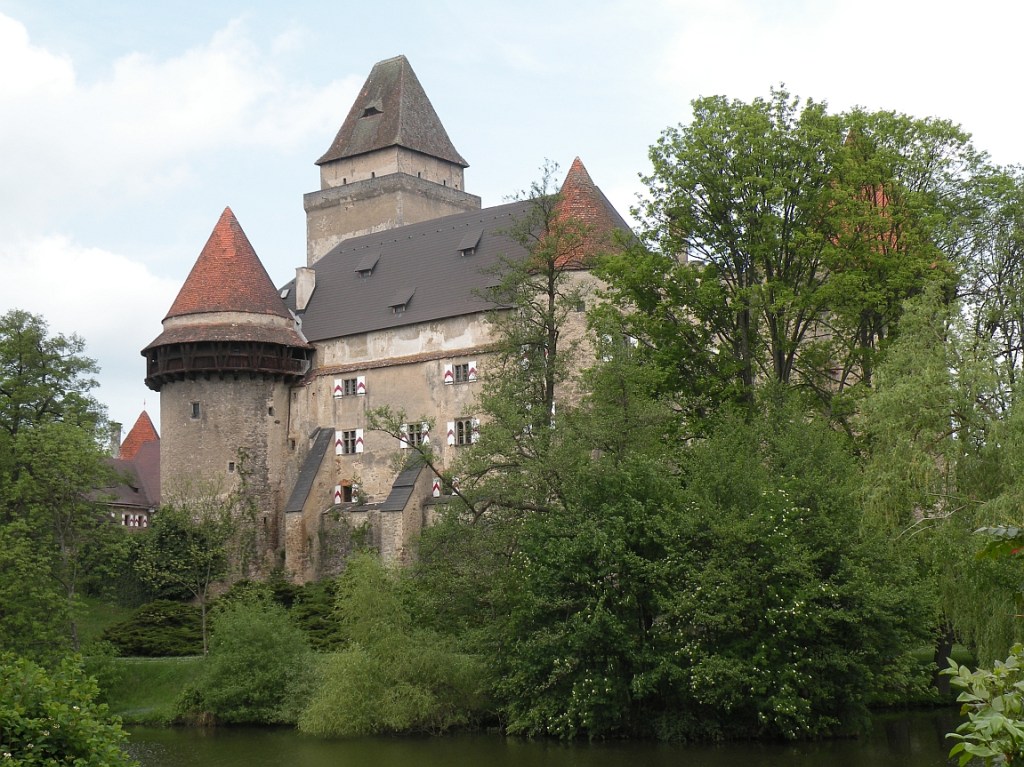
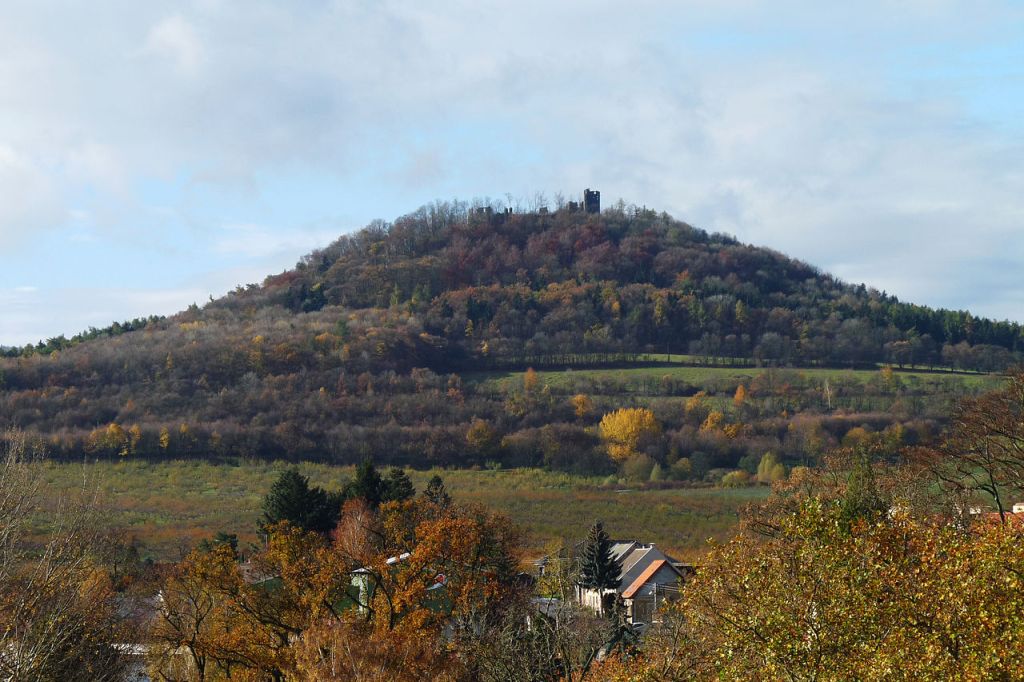
Hasištejn Castle, one of the many Lobkowicz castles that cover the forested hills of northern Bohemia

The House of Lobkowicz (or Lobkowitz in German, and Lobkovic in modern Czech) was not ancient, as noble families go. Genealogists trace their founding ancestor to a squire in the late 14th century, Mikuláš ‘Chudý’ (Nicholas ‘the Poor’), who hailed from the region of northern Bohemia where the two main rivers of the Kingdom, the Labe (or Elbe) and the Vltava (or Moldau) come together. The former drained Bohemia’s northern forested mountains, while the later came out of the hills of the southwest and passed through the capital Prague, before joining the Elbe and flowing north into Saxony and across the North German plain to the sea. The Vltava’s journey across Bohemia is famously portrayed in music by the Czech composer Bedřich Smetana in 1874.

Mikuláš Chudý attended Charles University in Prague and gained the attention of King Václav (or Wenceslas) IV, as one of his scribes. He rose through the ranks of the royal administration and was created Grand Scribe of the Kingdom in 1417. Meanwhile, the King made him a landed nobleman by granting him an estate, Lobkovice, near his place of origin, and he took this as his surname. He rebuilt the old fortress there as a gothic style castle, and his family have owned it—with a few breaks—continuously ever since. It is not certain where this village got its name, but one story relates it to the love of the hunt (lov in Czech), which is certainly apt for a noble estate.

Lobkowicz Castle drawn in 1819

In 1418, Mikuláš z (‘of’) Lobkowicz helped his royal patron Václav IV secure the castles of several rebels in the far north-western reaches of the Kingdom, and was given several to keep for himself, notably Hasištejn which guarded one of the main roads from Prague to Saxony. Like many of Bohemia’s castles, Hasištejn had been originally built by a noble family who habitually crossed this northern frontier and had a dual identity (and name) as both Germans and Czechs (in this case Schönberg and Šumburka), and so it also had a German name, Hassenstein. Hašistejn Castle became the main seat of the senior branch of the family, who were thus called the Hasištejnský z Lobkowicz, until the senior line became extinct. Hasištejn Castle itself, however, was mostly abandoned by the family in the 16th century, then damaged by a major fire. It is still owned by the family but remains in ruins.

Hasištejn Castle ruins today

The two sons of Mikuláš the founder, Mikuláš II and Jan Popel, built on their father’s successes and were raised to the level of Freiherr (free lord or baron), of the Empire in 1459. Though the Habsburgs were not yet permanently kings of Bohemia, this was the first contact between the Austrian ruling dynasty and the House of Lobkowicz, a close relationship that would endure for the next 500 years. The sons of Mikuláš II would later (1479) also be created barons of Bohemia, which ensured them a voice in the Kingdom’s House of Lords. Mikuláš II married an important heiress, Žofie ze Žirotina, whose family, the lords of Žirotín, had been prominent warriors and knights in north Bohemia for centuries, and conveniently died out at this time. Mikuláš added their black eagle to his family’s fairly plain red on white coat-of-arms, thus adding some noble lustre to the rather nouveau lineage of the House of Lobkowicz.

Original Arms of House of Lobkowicz (photo VitVit)

The most famous member of the early House of Lobkowicz was Lord Bohuslav (d. 1510), a renowned humanist writer and poet, who built up an enormous library at Hasištejn Castle. He had studied at the famous universities in Italy and while there renounced Utraquism, the uniquely Bohemian faith that had challenged orthodox Catholicism in the 15th century. He was rewarded with the prestigious court post of Provost of Vyšegrad, the older royal castle just outside of Prague. Bohuslav travelled to the Holy Land in 1490 and later wrote about his travels, all the while accumulating more books and manuscripts for his great library. The Lobkowicz Library still exists today, split between the family’s palace in Prague and the Castle of Nelahozeves, about 11 miles north of the city, which has recently been remodelled to house and display much of the family’s great collections (see below).

Bohuslav’s older brother, Jan II, Baron of Lobkowicz, served as a diplomat for King Vladislav II in the 1470s-80s, an envoy to various cities in the Low Countries and to Rome. He too went on pilgrimage to the Holy Land and wrote a book about it. He also founded a monastery at Kadaň, near the castle of Hasištejn. Jan II relocated his seat to lands acquired by the founder of the family in the more central fertile valley near Lobkovice itself, Castle Obříství, and his branch took that name, while Hasištejnský was used by a junior branch. The senior line remained barons throughout its history, and by the 18th and 19th centuries had moved into service in Bavaria and Austria. The last Baron von Lobkowitz died in 1961. The junior line were a bit more prominent, notably in the person of another Bohuslav, who became vogt (or governor) of Lower Lusatia in 1555 (another Slavic region, just north of Bohemia, across the mountains, now in Germany), then Chief Justice of Bohemia in 1570, and finally Grand Chamberlain of Bohemia, one of the most senior members of the royal court in Prague, in 1576. Two members of this branch were rectors of the University of Wittenberg in Saxony in the middle of the 16th century—which indicates that this branch of the family had become firmly Lutheran—and several of the daughters of this branch married into mixed Saxon/Bohemian noble houses, like the Schönburgs (see above) or the Schwambergs (Švamberka). This line also remained barons, until their extinction in the early 17th century.

The second major branch of the Lobkowicz family, founded by Jan Popel (d. 1470), produced all the later lines of counts and princes. Until the extinction of the Hasištejnská branch, they used the additional surname ‘Popel’, taken from the village of Popelov in Českolipska (in the far north of the Kingdom). The word popel in Czech means ‘ashes’, and the family turned this into a punning motto: ‘Popel jsem a popel budu’ (‘I am ashes and ashes I will be’), reminiscent of the lines spoken about piety humility at a Christian funeral. This branch split in the early 16th century into the Bílina branch and the Chlumec branch, named for their primary residences. As above, it was the cadet branch that surpassed the senior branch in prominence, so before we get to the line of princes, we should look at the line of counts. The Castle of Bílina was in northwest Bohemia, near the mountains. It was famous for its spa waters—developed as an international business in the 18th century. The castle was built in the 13th century, and acquired in 1502 by this branch of the Lobkowicz family. Violently re-catholicised after the revolt of 1620, they nonetheless held on to it, rebuilt it as a baroque palace in the 1670s, then passed it to the line of princes by marriage in the early 18th century. The spa was developed as a major resort in the 1870s, with stunning buildings including a faux Roman temple. Like many properties, Bílina was confiscated by the state after the Second World War, then restored to the family after the fall of Communism. The spa was sold to a private company in 1997 (and they still sell the famous bottled water).

Bílina Castle today (photo SchiDD)
Bílina and its spa, 1899
spa water today

Prominent members of this branch included Kryštof (Christoph) ‘the Younger’ (d. 1609), who was a key supporter of Emperor Rudolf II who moved his capital from Vienna to Prague (by this point the Habsburgs were both Holy Roman Emperors and kings of Bohemia). Kryštof was an important diplomat, sent to Spain to help keep the branches of the Habsburg family united in the late 16th century, and hosting envoys from Poland when they visited Rudolf’s court. Another cousin prominent at Rudolf’s court was Děpolt Matouš (Leopold Matthias; d. 1619), a senior member of the Order of Malta in Bohemia, who was appointed Viceroy of the Kingdom of Bohemia in 1591 (a royal placeholder for when the Emperor-King was absent). He was one of the four Regents of the Kingdom who were assaulted by Protestant rebels in Prague Castle in May 1618, but he was removed from the room just before the famous Defenestration (see below). Another cousin, Jiři (George), was an especial royal favourite of Rudolf, but belongs to the junior Popel branch, so we’ll return to him below.

Děpolt Matouš, Baron Lobkowicz

From this branch, Vilém (William) ‘the Elder’ (d. 1626), brother of Kryštof, was a leader of the Protestant nobles in Bohemia. Though he had frequently served the Habsburgs as governor of the western counties of the Kingdom, he avidly joined the revolt of 1618, and personally threw one of the Habsburg ministers out of the window of Prague Castle in the famous Defenestration that sparked the Thirty Years War. One of the few Protestant nobles to escape the death penalty after their defeat in 1620, he was nevertheless imprisoned and dispossessed of his major estate, Horšovský Týn. This castle, in the mountains in the west of Bohemia, had belonged to the bishops of Prague since the 12th century (its German name is Bischofteinitz), but was acquired by this branch of the Lobkowicz family in 1542, and transformed into a modern Renaissance palace. After confiscation, it was given to the powerful Austrian house of Trauttmansdorf, so it remains part of their story (a future blog post), well into the 20th century.

a contemporary print of the Defenestration of Prague, May 1618
Horšovský Týn (photo Jik jik)

In contrast, Vilém ‘the Younger’ (d. 1647) stayed very loyal to the Catholic Habsburgs, bought up lots of confiscated estates after 1620, and was appointed Judge of the Court in 1628, and after 1634, Grand Master of the Hunt of Bohemia, an office that became hereditary in his line. Vilém and his wife, Benigna Kateřina (herself born a Lobkowicz), demonstrated their wealth and their Catholic piety by building one of the most magnificent buildings in Prague, the Loreta ‘Santa Casa’ (to emulate the ‘Holy House’ of the Virgin Mary in Loreto, Italy), right next to the Royal Palace. The Baroness financed most of he project from the estates she had acquired from defeated Czech Protestants. From these beginnings the Loreto complex would continue to rise thanks to Lobkowicz patronage later in the century.

Loreta Santa Casa, Prague (photo Balou 46)

This incredibly wealthy couple’s son, Baron Kryštof Ferdinand (d. 1658)—who was given his second name as a display of loyalty to the new (and very Catholic) Habsburg Emperor and King of Bohemia, Ferdinand II—was appointed viceroy of Silesia (then still a dependency of the Bohemian Crown), while his son, Václav Ferdinand (d. 1697), became a busy ambassador for the emperor, in Bavaria, France, Spain and England, and was elevated to the rank of Count of the Empire, in 1670. He was awarded the Order of he Golden Fleece, the highest honour in the Habsburg world, in 1695. His marriage to Maria Sophia von Dietrichstein highlights the integration in this century of the native Czech nobility with new Austrian families being imported into Bohemia: her father was a Prince of Dietrichstein, while her mother was a princess of the House of Liechtenstein. Her brother was, like her husband, a major diplomat in this period of strained Spanish-Austrian relations.

But the branch of Lobkowicz counts did not last very long. After Václav Ferdinand’s death, and that of his son, Count Leopold Joseph, in 1707, he was succeeded as head of this branch by his cousin Count Ferdinand Vilém (d. 1708), already eminent as president of the Bohemian Court of Appeals and even Viceroy of the Kingdom of Bohemia (from 1670), and then by his brother Count Oldřich Felix, who was the family’s last hereditary Master of the Hunt of Bohemia, who was killed ignominiously—probably while on a hunt—by a falling tree in 1722.

The next line down the tree of this Popel branch of the House of Lobkowicz was based in Zbiroh, one of the grandest Renaissance castles still extant in the Czech Republic, with an ancient Gothic castle at its core, including a chapel from the mid-1200s. It has been held by various noble families, and at times by the Bohemian Crown itself, and served as a residence for famous European scholars and visiting dignitaries, and as a prison for Protestant nobles during the Thirty Years War, including Baron Vilém ‘the Elder’ of Lobkowicz. Jan III had originally acquired Zbiroh, along with the much more rugged looking fortress of Točník, in the mid-16th century. Both are in the western part of Bohemia. But Jan III spent a lot of his time at court in Prague, as he was (since the 1540s) Grand Justiciar of the Kingdom and Master of the Royal Household.

Zbiroh Castle (photo Marek Vidtman)
Točník Castle (photo Cevenol2)

When he died in 1569, Jan III was succeeded by six sons. The eldest, also Jan, continued his father’s career in high positions in the royal judiciary. Other sons were given posts in local government as ‘hetmen’ or marshals of Bohemian districts. The fifth son, Jiři, rose to greater heights and became a favourite of Emperor-King Rudolf II. At first Grand Chamberlain of Bohemia (1582), he added his father’s office of Grand Justiciar, then in 1585 his uncle’s office of Grand Master of the Household, the second highest position in the Kingdom. He ardently pursued Protestants, and forcibly reclaimed and re-founded the monastery in his family’s lands at Kadaň. But Jiři of Zbiroh felt he was not rewarded sufficiently for his zeal, and in 1593 turned against Rudolf, hoping the other Bohemian nobles would rise with him. They didn’t, and in 1594 he was captured, stripped of his lands and titles, and held in prison for the many years. His older brother Ladislav III also joined the rebellion, fled the country and was condemned to death–he left behind a gorgeous portrait. He was pardoned just before he died, but when his son died (1614), the Zbiroh branch became extinct. The castle passed into royal hands until it was sold in the 1860s

Baron Jiři Popel z Lobkowicz
Ladislav III

This finally takes us to the most junior branch, but the one that rose the highest. The uncle of Grand Master Jiři, Ladislav II, had held this position from 1570 to 1585. He founded a separate line of the family based at the castle Chlumec (or Vysoký [‘high’] Chlumec), in the forested hills south of Prague. This castle, built in the 14th century, was acquired by the Lobkowiczes in 1474, and remained one of the main family seats in Bohemia until the 20th century. Like most of their castles, it was confiscated in World War II, nationalised under the Communists, then restored in the 1990s—but this one was not retained, and in 1998 was sold to a relative, Count von Arco-Zinneberg.

Vysoký Chlumec Castle (photo ŠJů)

Ladislav’s eldest son, Ladislav the Younger, rose to become another of Rudolf II’s favourites, Captain of his guard, and eventually Governor of Moravia, 1615, where he started the process of re-Catholicising this separate province of the Bohemian Crown. He also extended his influence outside of Bohemia, having married two countesses of the prominent imperial family of Salm-Neuburg, and acquired a lease, then the fief outright in 1575, of two immediate imperial territories in Franconia just across the western Bohemian border. ‘Immediate’ means there’s no other lord above you in the feudal chain besides the emperor, and this will be important later. These two fiefs were called Sternstein (today spelled Störnstein) and Neustadt an der Waldnaab, and they had been possessions of the kings of Bohemia since the mid-14th century. The old castle of Sternstein sits high on a rock overlooking the river Floß, which flows out of the hills into the ‘New Town’ (Neu Stadt) on the Waldnaab river, which flows south and becomes simply the Naab before it joins the Danube at Regensberg. The old castle at Sternstein was already a ruin by the time Ladislav of Lobkowicz acquired it, and the rest was pulled down to provide materials to refurbish the Old Schloss at Neustadt. This castle became the main seat of this branch of the family until a New Schloss was built, in a fashionable Italian style, in the 1680s. The family abandoned both castles in the early 18th century, however, and they were sold altogether to the King of Bavaria in 1807.

the Old Castle at Neustadt (photo btr)
the New Castle at Neustadt (photo btr)

Ladislav’s younger brother, Zdeněk Vojtěch (also called Zdenko in German) inherited these Franconian properties in 1621, and in 1624 was raised to the rank of ‘Prince of the Empire’. As noted at the start, these so-called ‘new princes’ were created by Habsburg emperors starting in the 1620s as a means of building up more support (primarily Catholic) for their rule in the Imperial council of princes—since several of the older princely houses had now become Protestant (like Brandenburg, Brunswick or Nassau). Lobkowitz (as it was now being increasingly spelled, and its members increasingly speaking German, but I’ll keep using the old Czech spelling) was one of the very first of these new princes. There was a major qualification required, however, in that the new princes had to own an immediate fief, and one that was deemed to be of princely rank. From 1641, therefore, the fief of Sternstein was declared a sovereign Imperial County, and its owners full Imperial Princes. This great honour was first won by Zdenko, who, like so many of his kinsmen rose in the service of Emperor Rudolf II, to become Grand Chancellor of Bohemia (1599). He remained in this post under Rudolf’s successors, Matthias and Ferdinand II.

Zdeněk Vojtěch, 1st Prince of Lobkowicz

His wife also played a major role in the family’s elevation: Polyxena z Pernštejna (or von Pernstein) was from another major Bohemian noble house, daughter of the previous Grand Chancellor, and of a Spanish aristocrat, Maximiliana Manrique de Lara. She was also widow and heiress of the incredibly wealthy Vilém z Rožmberka (von Rosenberg). From her father she inherited the fabulous Pernstein Palace in Prague, and from her first husband the majestic Roudnice (Raudnitz in German) Castle north of the city. Rožmberka’s fortune was used by Polyxena to buy up lots of confiscated properties of Protestant nobles after the Battle of White Mountain in 1620, like Nelahozeves and Dolní Beřkovice (see below), and even to re-acquire some old Lobkowicz properties like Obříství. Together Zdenko and Polyxena were the leaders of the Catholic faction at the court of Prague, and Polyxena famously defended the Habsburg ministers in her palace immediately following the Defenestration of 23 May 1618.

Polyxena z Pernštejna, 1st Princess of Lobkowicz
A 19th-century historicist-style painting of Polyxena defending the Hahsburg ministers in her palace after the Defenestration (by Václav Brožík)

Pernstein Palace, now renamed Lobkowicz Palace, had been built by Polyxena’s father in the late 16th century, at the far end of the narrow ridge upon which earlier Bohemian kings had constructed the Royal Palace and the basilicas of St Vitus and St George. After centuries of Lobkowicz possession, it was confiscated by the Nazis in 1939, and finally restored to the family in 2002 (opened soon after as a museum), and is today the only part of the Prague Royal Castle complex in private hands.

Lobkowicz Palace at the far right end of Castle Hill (Hradčany) in Prague
Lobkowicz Palace, Prague, main entrance (photo VitVit)

As noted above, the other parts of the Lobkowicz collection on display today are in a restored castle a few miles north of Prague, Nelahozeves, which had been built as a country retreat by the Habsburgs in the mid-16th century, and afterwards purchased by Polyxena, 1st Princess of Lobkowicz in 1623. It became mostly an administrative centre for the dynasty rather than a residence. After the family regained possession in 1993, they immediately re-opened it as an art gallery with temporary exhibitions, then launched the first of its permanent displays in 1997 which featured some of the most significant works from the Lobkowicz Collections. The town of Nelahozeves’s other claim to fame is as the birthplace of composer Antonín Dvořák (in 1841).

Nelahozeves Castle

The 2nd Prince of Lobkowicz (from 1628) was Wenzel (Václav) Eusebius, one of the most influential statesmen in 17th-century Europe. As President of the Imperial War Council in Vienna from 1652, then President of the Imperial Privy Council from 1669, he was essentially the first minister for Emperor Leopold. He became increasingly tied to the pro-French faction at court from the 1670s, however, which led to clashes with the Emperor, to the extent that he was arrested in 1674 and sent to his residence at Roudnice, where he died three years later.

Václav Eusebius, 2nd Prince of Lobkowitz

Roudnice, located on the River Elbe, about 20 miles north of Prague, was built to guard one of the major crossing points of the river in the 12th century. Rebuilt in the 15th century as the summer residence of the bishops of Prague, it was later sold to various nobles and eventually to Vilém z Rožmberka. The 2nd Prince of Lobkowicz made it his seat in the 1650s, hiring Italian architects to remodel it as a grand residence worthy of princes, adding a chapel, theatre, clock tower and formal gardens. During the Communist era, Roudnice housed a state music school, which remained after it was restored to the Lobkowicz family for two more decades, and since 2009 it has been opened to the public as a museum.

Roudnice Castle (photo Harke)

The 2nd Prince confirmed his family’s princely status with the recognition of the County of Sternstein as an immediate imperial fief in 1641. This was confirmed in 1652 and he was admitted as a fully voting member of the Council of Princes of the Empire. To bolster this new status even further, he married not a Czech noblewoman, but an Imperial princess, from a junior branch of the Wittelsbach family (the Counts Palatine of Sulzbach), and in 1646 he purchased the formerly sovereign duchy of Sagan in Silesia, a Polish province that had been part of the Crown of Bohemia since the 14th century (Żagań in Polish). The duchy, the northernmost of Silesia’s numerous component dukedoms, had been ruled by a branch of the former royal dynasty of Poland, the Piasts, then by the kings of Bohemia, the dukes of Saxony, and again Bohemia. In 1627, Ferdinand II gave it to his leading general, Wallenstein, but confiscated it again after his betrayal in 1634. The Lobkowicz princes rebuilt its castle as a baroque palace, but after the entire province of Silesia was conquered by Prussia in the 1740s, they sold it to another German princely house, the Birons, in 1786.

Lobkowicz Castle in Żagań (Sagan), Poland (photo Stefan Fussan)

The coat-of-arms of the princely branch of the House of Lobkowicz was by now more complex: with elements for Pernštejn (the bull’s head); for the duchy of Sagan (the angel and the golden lion), and for the duchy of Silesia (the black eagle); for Sternstein and Neustadt (the star and mountains for Sternstein—literally ‘star stones’—and black and gold stripes); and the Lobkowicz family arms overall.

Lobkowicz Princes as Dukes of Silesia-Sagan and Counts of Sternstein

The 3rd Prince of Lobkowicz, Ferdinand-August, was less prominent, but maintained his father’s place on the Imperial Privy Council and the family’s place amongst the high Habsburg aristocracy by being awarded the Golden Fleece in 1689. At first excluded from high politics due to his father’s disgrace, by the 1690s he had repaired the damage and acted first as formal Representative of the Emperor at the Imperial Diet in Regensburg (1691-98), then as Master of the Household of Empress Amalia, wife of Joseph I (1698-1708). Like his father, Ferdinand-August also demonstrated the family’s new social prominence through his marriages, first to a princess of the House of Nassau, then a princess from Baden-Baden. They were now genuinely part of the trans-national princely order of Central Europe. The 3rd Prince was particularly known as a connoisseur of fine paintings—adding Veronese, Rubens, Breughel and Cranach to the family art collections—as well as musical scores. His son, Philipp Hyazinth, the 4th Prince, continued this trend and collected musical scores, including some from far-off England. His wife, Eleonora Carolina, was the heiress of the Bílina branch of the Lobkowicz family, so added that castle to their domains, along with another, a bit further into the western mountains, Jezeři, or Eisenberg. This medieval castle had been held by various noble families until it was confiscated in the rebellion of 1618 and granted to Vilém ‘the Younger’ of Lobkowicz. In the 18th and 19th centuries it was used as a hunting lodge; in the 20th it was nearly destroyed by coal mining.

Ferdinand August, 3rd Prince
Jezeři Castle, in the western mountains of Bohemia (photo SchiDD)

By the mid-18th century, therefore, the Lobkowicz family had enough estates to create a second majorat (an estate held together by rules of entail), which was done for the 4th Prince’s younger brother, Prince Johann Georg Christian (Jan Jiří Kristián), a successful soldier in Habsburg service who was Governor of Sicily in 1732, Field Marshal in Transylvania and Bohemia, then Commander-in-Chief of forces in Italy and Governor of Milan, 1743-44. His branch, called the Second Majorat branch, or the Mělnik branch, would give numbers to their heads like the senior branch, and continue to the present—we’ll pick them up again towards the end below.

The 5th Prince of Lobkowicz was just a teenager when he succeeded, and died just two years later in 1739. So the 6th Prince, Ferdinand Philipp (d. 1784) headed the family for the middle of the 18th century. He went against tradition by supporting Frederick the Great in his war against the Habsburgs in the 1740s, in an attempt to safeguard his duchy of Sagan (since Silesia was taken by Frederick early in the war). He therefore spent a lot of time away from Vienna, living for a spell in London. But when he returned to Bohemia, he acquired a second major city palace in Prague, on the outskirts of the old city, the much grander Palais Lobkowicz, sometimes called the Kvasejovic Palace after its original builder, Count Kvasejovic—he had it constructed in 1702 but almost immediately sold it due to financial difficulties. The Lobkowicz family acquired it in 1753 and moved out of the older, more cramped palace up on the Hradčany. In 1927, this much grander palace was sold to the new Czechoslovak state which used it as the Ministry of Education. From 1948 it was the Embassy of the People’s Republic of China, then since 1974 the Federal Republic of Germany.

Ferdinand Philipp, 6th Prince
Palais Lobkowicz in Prague (photo Raymond Spekking)

The family of course by now needed a permanent seat in the imperial capital of Vienna as well, so the 6th Prince purchased in 1745 the Dietrichstein Palace, one of the first major baroque palaces that had been built after the Second Siege of Vienna of 1683, when Imperial aristocrats felt secure in the expansion of Vienna into a truly imperial capital. This palace was very close to the Habsburg imperial palace complex, across the street from what is today called the Albertina. From the mid-19th century, the family let it out and mostly lived in Bohemia, in Roudnice or in Prague, and it served for many years as the Embassy of France. After the First World War, the Palais Lobkowitz was the Czechoslovak embassy, then after the Second World War, it was the Institut Français. In 1980 it was finally sold outright to the Austrian government, and today it houses the Theatre Museum, a wing of the Kunsthistorisches Museum.

Lobkowitzplatz in Vienna, by Bernardo Bellotto (c1760) with Palais Lobkowitz on the left (St Stephens in the background)

Both Lobkowicz palaces in Prague and Vienna are also known for their connections to the composer Ludwig van Beethoven. The 7th Prince, Joseph Franz Maximilian, like his ancestors, had a passion for music, and was himself a talented cellist and singer. He participated in the founding of the Society of Friends of Music in Vienna (better known as the Musikverein), which first met in his Vienna palace, and he was a director of the Court Theatre. The Prince was a patron of both Haydn and Beethoven, who dedicated several symphonies to him—the 3rd Symphony was premiered in his Vienna palace in 1804 (and the hall was thereafter referred to as the ‘Eroica Hall’); while many of his works were premiered in Prague at the Palais Lobkowicz. Beethoven dedicated his 5th and 6th symphonies both to the Prince and to his brother-in-law and fellow patron, Count Razumovsky.

Joseph Franz Maximilian, 7th Prince von Lobkowitz, patron of Beethoven

By this point, the Duchy of Sagan had been sold, so in 1786, the Emperor rewarded the family’s renewed loyalty with the title Duke of Raudnitz (the German name for Roudnice). As the Holy Roman Empire was dissolved in 1806, the imperial county of Sternstein did not survive as an independent state within the new German Confederation, so the 7th Prince sold his estates there to the new King of Bavaria. His son, Ferdinand Joseph, 8th Prince of Lobkowicz (d. 1868), solidified their hold on princely status however by obtaining the honorific title of Durchlaucht (‘Serene Highness’) in 1825 (this was initially for the head of the family only, but in 1869 it was extended to all members of the senior line), and eventually a seat as hereditary member in the Austrian House of Lords in 1861. He married a Lichtenstein princess, as many of these old Viennese families continued to be intertwined dynastically well into the 19th century. The 8th Prince also began to modernise the family business, embracing the entrepreneurial spirit of the 19th century by opening a large sugar factory in Bílina.

Ferdinand Joseph, 8th Prince

The 8th Prince had many brothers, and the estates were divided to create several new sub-lineages. Prince Johann Nepomuk founded the line of Křimice. The next brother Prince Joseph Franz, who served as Head of Household of the Empress Elisabeth (the famous ‘Sisi’), founded the line of Dolni Beřkovice. See more on these lines below. The fourth brother, Prince Ludwig Johann, founded a line in Hungary (ext. 1918); while the youngest, Karl Johann (Karel Jan), rose in the Imperial administration to become Governor of Lower Austria in 1858, of Moravia in 1860, and of Tyrol in 1861—but left no descendants.

Prince Karl Johann / Karel Jan

The 9th Prince (Moritz Alois) and the 10th Prince (Ferdinand Zdenko) continued to lead prominent lives in Vienna and Prague, both with seats on the Privy Council and both awarded the Order of the Golden Fleece. By the end of the 19th century, they were one of the largest landowners in the entire Austro-Hungarian Monarchy, with nearly 30,000 hectares. The 10th Prince (d. 1938), was particularly close to the last Habsburg emperor, Carl, as he had been his chamberlain since 1907. After the war, reform acts passed by the new Czechoslovak government reduced the family landholdings by about 80% in return for monetary compensation. The Prince was a loyal supporter of this new regime, and ceased using his titles; both of his eldest sons embraced the new world and married for love, renouncing their claims to the (now empty) titles of Prince of Lobkowicz and Duke of Roudnice, which in theory passed to their cousins (below).

Ferdinand Zdenko (Zdeněk), 10th Prince

The second son, Maximilian, was, like his father, a republican, and, having married an Englishwoman in 1924, served as a diplomat for Czechoslovakia in the crucial years during the Second World War. He was formally exiled from Czechoslovakia in the late 1940s, became the head of the family (after the death of his nephew, a jazz musician, in 1964), and died in Massachusetts in 1967. His grandson William Lobkowicz (b. 1961) returned to the Czech Republic in the 1990s to work for the restoration of the family’s main properties, the Lobkowicz Palace in Prague, Roudnice Castle, the art collections, and so on. His older brother Martin (b. 1954) is the lineal head of the family. Today the family maintains interesting connections with their native Boston, for example, in 2023 Boston Baroque is sponsoring a programme of music connected to the Lobkowicz Collections in Prague.

Maximilian Lobkowicz
William Lobkowicz, at Roudnice (photo Michal Novotny)

One of the first family residences to be restored in the 1990s and re-opened for tourism is Střekov Castle (aka Schreckenstein), built upon a rocky outcrop far above the Elbe. Over the centuries it became a symbol of Northern Bohemia, an inspiration for poets, painters and musicians. Střekov Castle had been built by the King of Bohemia in the 14th century to collect tolls on the river, and then given to various vassals until it was sold to the Lobkowicz family in 1563, who rebuilt and expanded it. By the 17th century it was uninhabited, however, and fell to ruin. Like all other noble properties, it was confiscated in 1948, and was restored in the early 1990s.

Střekov Castle (photo Rudko)

The princely title—though no longer recognised by the Czechoslovak or Austrian governments—passed in 1938 with the death of the last prince to conclude a dynastically ‘equal’ marriage (the 10th, above) to the branch based at Křimice. This castle, on the outskirts of the western city of Plzeň (Pilsen), was built by local burghers in the 13th century, then passed to the noble house of Vrtba in the 17th century, who rebuilt it in classical style in 1811, then passed it by marriage to Prince Johann Nepomuk von Lobkowitz (above). Nationalised in 1948, Křimice was used as a school run by the Škoda car company, a home for youth and a museum depository, falling into near ruin before it was restored to the family in 1994.

Křimice Castle today (photo Václav Štorek)

The 11th Prince of Lobkowicz, Jaroslav Aloys, was a lawyer, and began the family’s long association in the 20th century with the Belgian aristocracy, through his 1905 marriage to the daughter of the Duke of Beaufort-Spontin (who also held lands in Bohemia). His sisters also married Belgian aristocrats. Their son, Friedrich Franz (Bedřich František), briefly the 12th Prince (1953-54), moved to France and lived at the Château of Breuilpont in Normandy.

Prince Jaroslav still held significant lands in Czechoslovakia in the 1930s (about 1,000 hectares) but also had a good income from the old castle brewery at Křimice, as well as some local factories. After the Communist takeover, he did not leave the country, and was allowed to stay in the castle until 1951, when it was given to Škoda—though he was allowed to live in the old brewery. His second son, Jaroslav Claude, who became the 13th Prince of Lobkowicz (nominally) in 1954, also stayed in Czechoslovakia, and worked as an administrator of the castle at Křimice, then later as a journeyman in Plzeň. He died in 1984, so it was his sons, Jaroslav and František who reasserted their branch of the family’s place of prominence in the Czech Republic (as Bohemia was called after 1992). Jaroslav, 14th Prince of Lobkowicz, Duke of Roudnice, Count of Sternstein, etc (b. 1942), is a civil engineer who worked for Siemens in Munich until he returned to his homeland in the 1990s and was elected as a Member of Parliament in 1998 (he served several terms, retiring in 2017), and was also a member of the Plzeň city council. His son, Hereditary Prince Vladimir Jaroslav (b. 1972), now runs the family agricultural estates at Křimice. The current Prince’s brother František (1948-2022) became a priest in Czechoslovakia in the 1970s, and in 1996 was elected first bishop of a newly created diocese of Ostrava-Opava, in Moravia.

Jaroslav, 14th Prince of Lobkowicz

The youngest of the many brothers of the 13th Prince, Ladislav Otto (1925-1958), did not stay in Czechoslovakia, but left in the late 1940s to develop the family’s connections in Belgium. In 1958, he was formally created ‘HSH Prince de Lobkowitz’ by the King of the Belgians—in part aided by his brother-in-law, the Count of Limburg-Stirum who was Head of the Household of King Leopold III. His son Prince Stéphane (b. 1957) is head of the Belgian branch today—recognised as one of the six princely houses of Belgium—and has been elected several times to the parliament for the Brussels region (as indeed have his wife and his daughter). He lives in the suburbs of Brussels in Uccle, and has written a biography of the late King Baudouin. So although he is not the most senior member of the Lobkowicz family, he is the only one recognised legally as a prince.

Prince Stéphane de Lobkowitz

The younger branch of this senior line was based at Dolni Beřkovice (Unterberkowitz). This castle, near the old Lobkowicz heartlands in north-central Bohemia, is also located on the river Elbe. As with other properties, the old castle was confiscated from the local nobility in 1620 and acquired by Polyxena z Pernštejna. The ancient fortress was rebuilt as a palace in the early 17th century, then rebuilt again in the mid-19th century once it became seat of the junior line. In the Communist era Dolni Beřkovice was used as a school and a warehouse, and when it was restored to the family it went to a female descendant who had married into the House of Thurn und Taxis.

Dolni Beřkovice Castle (photo Martin Veselka)

Prominent members of this branch include the son of its founder, Prince Ferdinand Georg (d. 1926), who was Vice-President of the Bohemian House of Lords in the 1890s, and Grand Marshal of Bohemia in 1913; and a great-nephew, Prince Edouard (d. 2010), who in 1959 tied this family to royalty by marriage to Princess Marie-Françoise de Bourbon-Parme, daughter of Xavier, head of the House of Parma (and Carlist pretender to the Spanish throne). She was also a niece of Prince Felix, consort of Grand Duchess Charlotte of Luxembourg, and of Zita, the last Empress of Austria and Queen of Hungary (and the last Queen of Bohemia, for that matter). Their children are thus first cousins to the current reigning family in Luxembourg and the Habsburg pretenders to the thrones of Austria, Hungary and Bohemia.

the wedding of Prince Edouard de Lobkowitz and Princess Marie-Françoise de Bourbon-Parme

Prince Edouard was born in the US to an American mother (the golfer Anita Lihme) and educated in Paris and America. Late in life he served as ambassador from the Order of Malta to Lebanon (1980-90). His eldest son, Edouard Xavier, graduated from college in the US then joined the French army before he was suddenly murdered in Paris in 1984—a case that is still unsolved. The surviving son, Prince Charles-Henri, a society favourite, is currently restoring several ancient castles inherited from his Bourbon-Busset grandmother in central France: Boszt (old and new) and Rochefort, both in the town of Besson in the Bourbonnais.

Boszt, Vieux-Chateau (note coat of arms of Lobkowitz and Bourbon-Parma) (photo Hadrianus)

The current head of this branch of the family is Prince Maria Ferdinand (b. 1942), who lives in Canada. His cousin Michel (b. 1964), was a member of the Czech Parliament several times in the 1990s, and briefly Minister of Defence in 1998.

Finally the branch of the ‘Second Majorat’, also known as the Mělník branch, founded in 1715 for the second son of the 3rd Prince of Lobkowicz. The first prince of this line, Field Marshal Jan Jiří Kristián (seen above), was originally intended to be based at the old Bílina branch castle of Jezeři, but right away he made a deal with is older brother ceding this property in exchange for cash. It wasn’t until the 4th son, Prince August Antonín’s marriage to the heiress Countess Ludmila Czernin z Chudenic in 1753, that the family was established permanently in a residence, the Castle of Mělník. Mělník is located in that same flat plain of north-central Bohemia from which the Lobkowicz family emerged, specifically in this case, right at the confluence of the two great rivers, Elbe and Vltava, a fertile land known for its agriculture and wine. It was also a place of symbolic value to Czech nationalism of the early 19th century, as it was seen as the ancient heartland of the Czech people, and these rich lands were often used by the Crown as dower lands for queen-consorts as widows. In the middle ages there was a fortress here, on the heights overlooking the river, dating from as far back as the 9th century. In 1542, the King gave Mělník Castle to a powerful nobleman, Zdislav Berka of Dubá, who rebuilt it as a renaissance palace. It then belonged to the Czernin family by the 17th century who thus passed it to the House of Lobkowicz by marriage.

Looking up at Mělník Castle from the confluence of the Labe (Elbe) and Vltava (foregrond) rivers (photo Volodymyr Vlasenko)

Across the river Elbe was another castle, Hořín, built by the Czernins in the 1690s on a grander scale and surrounded by parklands. This too became Lobkowicz property in the 1750s. Restored to the Lobkowicz family in the 1990s (with about 2,000 hectares), today Mělník is renovated and partly open to the public; while Hořín has fallen into disrepair. Attempts were made in the 2010s to convert the latter into flats, but as of 2022 the castle is for sale.

Hořín Castle (photo Horakvlado)

August Antonín, 4th Prince of this 2nd Majorat (d. 1803), was a diplomat, Austrian envoy to Spain in the 1770s, and later Grand Marshal of Bohemia. His son, Antonín Isidor, 5th Prince (d. 1819), was Grand Chamberlain, or head of the Royal Household in Bohemia. In 1847, this branch was extended the honorific style the senior line enjoyed, that of Durchlaucht (Serene Highness) but only to the head of the branch, not all its members. The most prominent member in this century was Prince Jiří Kristián, 7th Prince (d. 1908), who was the leader of the conservatives in Bohemia and President of the Bohemian Diet (as ‘Grand Marshal of Bohemia’), from 1871 until the year before his death in 1907 (with some interruption). He was also a deputy in the Austrian House of Deputies and then promoted to a hereditary member of the House of Lords in 1883.

Prince Jiří Kristián, 7th Prince of the 2nd Majorat

Another Prince Jiří Kristián, the 9th Prince of the 2nd Majorat, was a car racer and died in a crash in Berlin in 1932, so the title passed to his uncle then his cousin. Today the 12th Prince is Antonín Otokar (b. 1956), though it is his twin brother, Jiři Jan, who worked for the restoration of the family properties and manages the estates. This branch has spawned several academics, MDs and PHDs, male and female. Two younger brothers of the 11th Prince made a name for themselves in the 20th century: Nikolaus (d. 2019) was a political theorist and philosopher who taught in the United States in the 1960s, then was Rector then President of the University of Munich and then President of the University of Eichstätt in Bavaria (until 1996). He was given the Order of the Golden Fleece by the exiled head of the House of Habsburg in 1978, but much more recently the Order of Tomáš Masaryk by the Czech Republic, in 1998. His brother Frederick (d. 1998) was an esteemed Professor of Physics at the University of Rochester in New York. The heir to this branch (since neither of the twins has a son) is Nikolaus’ son, Johann von Lobkowicz (b. 1954), who in the restitutions of the 1990s, regained the Castle of Drahenice. This most recent acquisition of this ancient princely house, was built by the Valdštejna family in the 17th century, then went through several hands before it was purchased by the Mělník branch of Lobkowicz princes in 1870. Today it is restored, but not open to the public.

Drahenice Castle

Now go grab a cold beer, Czech style, from a brewery whose roots stretch back to noble Lobkowicz breweries in the hills and forests of north-central Bohemia…

Royal Mistresses’ Kin: Dukes of La Vallière and Antin

One of the most powerful positions a woman could hold at any royal court, but particularly that of France, was the ‘recognised’ royal mistress, the open secret that everyone at court knew about. It was one of the only pathways for a woman to get a dukedom on her own in the ancien regime, as a means to recognise her ‘service to the crown’ and to ensure she could occupy spaces at court reserved exclusively for noblewomen of highest rank. Often the long-term beneficiary of these ducal creations, however, was the mistress’s male relatives. But in the case of two of Louis XIV’s mistresses, Louise de La Vallière and Françoise-Athénaïs de Rochechouart, Marquise de Montespan, these relatives had to wait for quite some time before basking in the glory of their family’s royal favourite.

Louise de la Vallière with her children by Louis XIV: Marie-Anne, Mlle de Blois (future Princess of Conti) and Louis, Count of Vermandois

Part of the reason for this was that Louise and Françoise-Athénaïs differed significantly from each other in terms of the world of dukes and princes: Louise was unmarried, but Madame de Montespan had a husband. This meant that Louise could be given a duchy (Vaujours, later called La Vallière) directly, whereas it would have been awkward to give one to Françoise-Athénaïs, since it would have elevated her husband too (and the Marquis de Montespan by law could even have claimed Louis XIV’s illegitimate children as his own). So while Louise’s duchy was eventually passed on to her nephew, Charles-François de La Baume le Blanc, Madame de Montespan’s male children by the King were given their own duchy-peerages directly (Aumale, Penthièvre, and so on), and only in 1711 was her legitimate son (ie, with her husband), Louis-Antoine de Pardaillan de Gondrin, raised in rank to Duke of Antin. In part, both dukedoms, La Vallière and Antin, were created to recognise a degree of kinship—in a roundabout way—that these men would share with the future king of France.

The families who held these two dukedoms were also different. Louise came from a relatively minor and relatively new noble family from the Loire valley, La Baume Le Blanc, whereas the family of Françoise-Athénaïs, Rochechouart, was prominent and ancient (see a separate blog post on them), while the family of her husband, the Marquis de Montespan (the Duke of Antin’s father), Pardaillan de Gondrin, were equally much more prominent at court, and their roots as provincial nobles stretched back to the very earliest days of the French monarchy.

So we can start with the House of Pardaillan, deep in the south of France, in the province of Gascony. It was a fief of the semi-autonomous county of Armagnac. This county was subdivided into baronies, and Pardaillan was one of the oldest of these. The castle of Pardaillan, today in the region of Condomois (in the modern départment of the Gers), dominated a hamlet just outside the town of Beaucaire, on the river Baïse, which flows north out of the Pyrenees to join the mighty Garonne on its way to the Atlantic. Also spelled Pardailhan or Pardeilhan, the castle probably takes its name from an ancient owner, Pardalius, which seems to relate to the word for panther or leopard. There is evidence of a villa here from the Merovingian period at least (6th or 7th century). The medieval castle was built in the early 14th century, and when the family split in the 13th century, it was kept by the senior line until it died out in the early 17th century. The castle of Pardaillan passed into other hands and fell into ruin, and its remains were pulled down in the Revolution.

the medieval divisions of Gascony, including the county of Armagnac, and the counties of Comminges and Bigorre (see below)
Chateau de Pardaillan

A short distance to the northwest is the château of Gondrin, erected as a small fortress in the 14th century, the period when this region was ravaged by French and English armies in the 100 Years War. It became the main seat of the now secondary branch of the family. It was redeveloped as a more grandiose château in the early 17th century, but little remains today. Another of the family’s properties built nearby was Beaumont, also improved in the late 17th century, survives today as a model of French baroque style. Today it is the home of writer and television/radio producer Ève Ruggieri, whose parents restored it from a ruined state. The château hosts summer classical music programmes, and its châtelaine has made a point of celebrating the connection with Madame de Montespan, though I wonder how much time the famous royal mistress would have actually spent there.

artist’s rendering of what the chateau de Gondrin may have looked like
Chateau and gardens of Beaumont-sur-l’Osse

The earliest members of the noble house which used both names, Pardaillan and Gondrin, appear in the 11th century, but details are patchy until the 13th, when one, Hugues, rises to local prominence to become Bishop of Tarbes (1227) and Archbishop of Auch (1244)—both major ecclesiastical powers in the far south of France. A nephew, Bernard, Lord of Pardaillan and Gondrin, established his family’s credibility as Christian warriors by accompanying Louis IX on his crusade to Tunis in 1270. Others served more locally in the wars led by their feudal lord, the Count of Armagnac.

Several offshoot branches were founded in the Middle Ages, and more lordships were acquired by the branch of Gondrin, notably the lordship of Castillon (c. 1400), in the area downriver from Bordeaux known as the Médoc (now on the edge of the village of Saint-Christoly). Its incredibly ancient tower still stands, though it has served as a home for pigeons (a pigeonnier) since the 18th century. The coat-of-arms for this family, three moors’ heads over a castle, were added to the wavy blue and white lines of the Gondrin arms.

the remains of the tower of the castle of Castillon-en-Médoc, overlooking the Gironde estuary
The Pardaillan de Gondrin arms from the 17th century, with Castillon in upper left, and Montespan overall

In 1521, Antoine de Pardaillan, Baron de Gondrin and Viscount of Castillon, married Paule d’Espagne, daughter of the Lord of Montespan. Montespan was much further south in a county called Comminges, quite close to the Pyrenees (see map above). A local noble family said to be a cadet branch of the counts of Comminges took the name ‘Mont d’Espagne’ in the 13th century, and this evolved into Montespan. Antoine assumed the title Baron de Montespan and added the family’s red lion with several small green escutcheons to his own coat-of-arms. He raised the family profile higher through military service in the region, first for the King of Navarre (for whom he also acted as governor and seneschal of that king’s core lordship of Albret, a short distance to the west of Gondrin; and his brother was appointed governor of the neighbouring county of Armagnac), and later for Charles IX in the fight against Protestant rebels in the south of France.

the ruins of the chateau de Montespan

Antoine and Paule had a son named Hector, Baron de Montespan, who became Captain of the King’s Guard and a Councillor of State. He too married yet another heiress, Jeanne d’Antin, in 1561, whose lordship of Antin was also situated in one of the ancient Pyrenean counties, this time Bigorre, to the west of Comminges, which bordered on the sovereign principality of Béarn. This castle too probably took its name from an ancient owner, someone named Antinus. In the Middle Ages, the County of Bigorre belonged to the Count of Foix, which like Béarn, was a semi-sovereign territory. Only after 1607 therefore were these lands, and thus Antin, formally united to the Kingdom of France.

Antin was raised to the status of a marquisate in 1612, as was Montespan three years later, for Antoine-Arnaud de Pardaillan de Gondrin. He had long been a devoted soldier in the service of his fellow Gascon, King Henry IV, and commanded his armies when the King attended to other business away from the front. The King in turn appointed the Marquis Governor of Navarre and Béarn, and later of Agenais and Condomois, sub-regions of Aquitaine (over which he acted as the King’s Lieutenant-General). At court, Antoine-Arnaud was Captain of the Premier Company of the King’s Guard and a member of the Privy Council. His career was crowned with the award of the Order of the Holy Spirit in 1619, the highest order of knighthood in France. By his first marriage, the first Marquis de Montespan had two daughters, through whom he secured kinship relations with two of the leading families of the far south: Albret and Foix. By the second marriage, to Paule de Saint-Lary, sister of the Duke of Bellegarde, one of the great war companions and favourites of Henry IV, he added even further to his family’s patrimony—though not right away.

Antoine-Arnaud, Marquis de Montespan

Paule de Saint-Lary’s son Jean-Antoine was ultimately heir to her brother the Duke of Bellegarde, when he died in 1646; and for good measure, Jean-Antoine married his first cousin, the daughter and heiress of his mother’s other brother, the Baron de Termes, in 1643. Although the Saint-Lary family, like the Montespans, came from Comminges, their duchy of Bellegarde (cr. 1619) was based on the town of Seure on the Saône river, the frontier between Burgundy and Franche-Comté (which until the 1670s was still an international frontier). By 1645, that property had been sold to the Prince of Condé, so the title ‘duchy-peerage’ was transferred onto another property in Gâtinois (the flat plain between Paris and the Loire valley), Choisy-aux-Loges, which had been acquired by the old Duke just before he died in 1646. But the attempted transfer of the duchy-peerage (the title, not just the land) took place in the confusing days of the Regency of Louis XIV, and was never formally recognised by the Parlement of Paris. The other Saint-Lary property added at this time was Termes (or Thermes), another lordship in Comminges, which therefore added to the family’s already extensive lands in that province.

There had been a château at Choisy (or Soisy; with the added name of –aux-Loges indicating its position in the forest of that name) since the mid-14th century. It was the seat of the powerful de l’Hôpital family in the 15th and 16th century, and was rebuilt by one of its most prominent members, who became Marquis de Choisy. After Roger de Saint-Lary acquired it and tried to transfer his duchy-peerage onto it, the name of the castle and the village was changed to Bellegarde; it remained in the possession of Jean-Antoine’s widow, Anne-Marie, until she sold it to her great-nephew Louis-Henri, Marquis de Montespan (below). After he was created Duke of Antin, he made it his main residence and greatly enlarged it, on a scale more appropriate for a duke—in the 1720s he added two wings housing a new chapel and a gallery to display his art collection, plus a grand stable with its own triumphal gate complete with sculpted horses’ heads attributed to the famous sculptor Antoine Coysevox. In the 1770s, the Château de Bellegarde was purchased by a President of the Parlement of Paris (Pierre-Paul Gilbert de Voisins), who took the title Marquis de Bellegarde. Today the château is managed by the town which in recent years has invested in opening up its spaces in the gardens and the ancient donjon for tourism.

Chateau des Ducs d’Antin, Bellegarde (formerly Choisy)
the donjon at Bellegarde

Jean-Antoine, 2nd Marquis de Montespan (and sometimes called, unofficially, ‘Duc de Bellegarde’), had been raised by his uncle Bellegarde as his heir, and already from the 1620s was taking over his uncle’s familiarity with the royal family, becoming one of Louis XIII’s Masters of the Wardrobe at court, and his Lieutenant-General in Armagnac, Bigorre and Comminges. Meanwhile two of his brothers (known as the Marquis d’Antin and the Marquis de Termes) were placed in key positions in the household of the King’s brother, Gaston, Duke of Orléans; still other brothers were put into the Church or the Order of Malta. One of these, Louis-Henri de Pardaillan, rose through the church hierarchy to become Archbishop of Sens, one of the most important positions in the French church, in 1646. He died as a fairly old man in 1674, while his eldest brother the Marquis lived even longer and died at age 85 in 1687. It’s interesting to think these two throwbacks from the very early decades of the century were still alive during the ascendancy of Madame de Montespan.

Louis-Henri, Archbishop of Sens

It was thus the 3rd Marquis de Montespan, Louis-Henri, who became the famous cuckold of Louis XIV, not too long after he had married one of the beauties of the French court, a daughter of the Duke of Mortemart, in 1663. This marriage brought him not only prestige, since the Rochechouarts were one of the oldest and most eminent noble houses in France, but also badly needed cash. His uncle still held the bulk of the family properties; but ceded the title Montespan to his nephew as heir; Louis-Henri also inherited the marquisate of Antin from his father, Roger-Hector, who had died when he was still very young. Like his uncle, this Marquis de Montespan also had a number of brothers who made use of the family’s numerous titles (again one was Marquis d’Antin and the other Marquis de Termes), while others were placed in the Order of Malta. Curiously, his mother, Marie-Christine Zamet (granddaughter of the famous Italian financier, Sebastiano Zametti), was part-heiress of yet another major southern family, that of Nogaret de la Valette, whose principal dukedom of Epernon had been created for one of the favourites of King Henri III in 1581. The Nogarets were also closely related to the Saint-Lary de Bellegarde family, so this was another part of this large coalition of properties held by this noble kinship group in the far south of France. The Duchy of Epernon itself however was not in the south, but based on a property near Chartres, and it is primarily this estate which the Pardaillan family was able to grab for itself after the death of the last duke in 1661. So, if Louis XIV had been feeling more generous towards Louis-Henri at the time he was creating lots of duchy-peerages (the early 1660s), the future mistress might already have been either Duchess of Bellegarde or Duchess of Epernon.

Louis-Henri, Marquis de Montespan

But Louis XIV did not particularly care for the Marquis de Montespan, and particularly once he wanted him out of the way due to his affair with his wife, from about 1666. At that time, both the Marquis and the Marquise served in the household of Madame, Henriette-Anne of England, Duchess of Orléans (the King’s sister-in-law), he as chevalier d’honneur and she as a lady-in-waiting. They had two small children, Marie-Christine and Louis-Antoine, and lived in a small house near the Louvre. Montespan’s debts, despite his wife’s large dowry, pushed him to pursue military commands, so he went to serve in the army occupying Lorraine and then on the expedition to North Africa in 1664. When the King sent him on another mission far away from court, this time to the Spanish frontier, he became suspicious, and in 1667 his fears were confirmed when his wife became pregnant. The Marquis re-appeared at court and made a loud scandal—some sources say he rode around town with cuckold’s horns; others say he deliberately tried to get a venereal disease from a prostitute to then pass on to the King via his wife. He was briefly imprisoned in Paris for publicly insulting the King, then retreated to Gascony, taking his children with him. Here he stayed until he died in 1691 (though some sources say 1702).

In Gascony, the Marquis de Montespan and his children lived at the Château de Bonnefont, an old family property in Bigorre on the river Baïse. Here Marie-Christine died as a teenager—supposedly from grief from missing her mother. At Bonnefont, Montespan is said to have organised a grand funeral ceremony, including interment, for his lost love. He considered himself a virtual widower. This ancient castle had an air of elegance in its newer buildings.  By the 19th century it was sold to a religious order who opened a school—it then went through several versions of college or training centres, and today hosts a school for mentally handicapped children. Its main tower, facing collapse, was dismantled in 1972.

Chateau de Bonnefont

Meanwhile, in Paris, Madame de Montespan was the virtual queen of the court, as a much more dominant personality than the actual queen (Marie-Thérèse of Spain). She and the King had four children that survived childhood: the Duke of Maine, Mlle de Nantes, Mlle de Blois and the Count of Toulouse. In 1674, she obtained a legal separation from her husband, mostly to protect these children’s future inheritance, for example the beautiful château she built near Versailles, Champs, which ultimately passed to the Duke of Maine. From 1677, however, her star was falling, partly due to her involvement in the Affair of the Poisons. Louis wanted to give her the normal ‘parting gift’ of a duchy, but, not wishing to elevate her husband, he named her Superintendant of the Queen’s Household—the top position for a woman at court—with the right to sit in the presence of the Queen, as if she were a duchess. By the 1680s she was definitely out of favour, and in 1691 she retired from the court altogether to a convent in Paris.

The Marquise de Montespan

In 1695, Madame de Montespan purchased a house in the town of Evry, on the heights above the Seine southeast of Paris (on the road to Fontainebleau), as a retreat for herself, Petit-Bourg. When she died in 1707, it passed to her son, Antin, who reconstructed it on a grander scale from 1716, notably its gardens, and when his line died out in the 1750s, it was purchased by the widow of a Parisian official who demolished it and built another—the neoclassical building seen until 1944, when it too was destroyed.

Petit-Bourg in the time of the Duke of Antin

Montespan’s son also inherited the lordship and château at Oiron, in Poitou, south of the Loire (not far from the Abbey of Fontevraud). This was a much grander country house, the seat of the Gouffier family who rose as royal favourites of King François I in the early 16th century. It was the site in particular of one of the most spectacular art collections of the Renaissance. When the Gouffier family (dukes of Roannais) died out in the 1660s, their titles and artworks passed to the Marshal de la Feuillade, who refurbished and modernised it in the 1670s, then sold it to Montespan for her son in 1700. It became one of her preferred residences at the end of her life, but her son preferred Bellegarde and Oiron fell out of use. Indebted, Antin’s widow sold it in 1739 to the Duke of Villeroy—after that it passed through various hands, largely restored in the late 19th century and today open as a museum.

the chateau of Oiron

Much of the Marquis d’Antin’s career was, naturally, promoted by his mother. Even though her star was in the wane after 1680, she brought young Louis-Antoine to court from Gascony in 1683, secured him a military commission, but more importantly, drew him into the circle of the (then assumed) future king, the Grand Dauphin, by marrying him to the grand-daughter of the Dauphin’s old governor, the Duke of Montausier. He also became close to his and the Dauphin’s half-brothers, the illegitimate sons of the King. The year of Antin’s marriage (1686) he was appointed Lieutenant-General of Upper and Lower Alsace, the military equivalent to the governor of the province, but failed to make more of an impact at court until after his disgraced mother died in 1707. In that year he was appointed Governor of Orléannais, a more substantial province (and closer to court) than Alsace; and the next year was named Superintendent of the King’s Building Works. This was an unusual appointment for a noble grandee—normally it was held by one of the King’s lower-ranking ministers—but it brought Antin great access to the King who loved his building projects, and also gave Antin access to all the King’s greatest architects and designers, whom he employed on his own projects at Petit-Bourg and Bellegarde. It turned out he was a very good organiser, and helped Louis XIV and then Louis XV on their various building projects at Versailles and other royal sites. Antin also built his own grand residence in Paris, the Hôtel d’Antin, in the area just on the northwest edge of the old city, in the district now close to the grand department stores. The house no longer stands, but one of the streets in the area bears its name, the Chausée d’Antin.

Louis-Antoine de Pardaillan de Gondrin, Duke of Antin

Finally, in 1711, Louis-Antin was raised to the peerage always denied his father. It was called Antin, not Montespan, and was based on the marquisate of Antin, which had four baronies joined it to form the dukedom, including the barony of Miélan, on the borders between Bigorre and Armagnac, which, due to its situation on the main road between Tarbes and Auch, became its main administrative centre, though it was never a ducal residence. Closer to court, he also held the estates of the duchies of Bellegarde and Epernon, both conveniently located quite close to his government in the Orléannais and the Loire Valley.

Before we follow the 1st Duke of Antin’s children into the 18th century, we should look closer at the Loire Valley and the family of Madame de Montespan’s rival, Louise de La Vallière.

****

Compared to the family of Pardaillan de Gondrin in Gascony, Louise’s family had its roots much closer to the royal court, particularly when French kings spent more of their lives in the Loire Valley in the 16th and early 17th centuries. The family of La Baume Le Blanc de La Vallière were prominent nobles in the town of Tours—not far from favourite royal residences at Blois and Amboise—and held lucrative estates north of the river in Touraine. It was this proximity to royal residences that first brought Louise de La Vallière to the attention of the Bourbons in the 1650s, as we will see.

The Le Blanc family were originally from the Bourbonnais, with estates on the borders with the province of Berry. Here they had a castle called La Baume, on the left bank of the river Allier, and they eventually added La Baume to their surname. The term ‘la baume’ itself comes from local patois for a rocky outcropping. In the Bourbonnais, a castle was built in the 14th century, and held by the Le Blanc family who were also captains of other local castles for the dukes of Bourbon. The earliest member of the family in most family trees is Perrin Le Blanc who commanded the arrière-ban of the feudal armies of Bourbonnais and Auvergne against the English in 1425. But by about 1550, the senior line of the family died out, and the junior line, rising to greater prominence, was now based in Touraine. The ancient castle of La Baume was sold; what is there today was built by different owners, in the mid-18th century.

an old postcard from La Baume in Bourbonnais

Like many families from the more minor provincial nobility of the 15th century, the pathway to a rise in power and wealth was often through service in the judiciary system. Laurent Le Blanc de La Baume, the youngest son of Perrin, thus moved to Paris and became a procureur (a public prosecutor) at the Châtelet, the main law court for the city of Paris. He acquired his own lordships close to the capital, Choisy-sur-Seine and Puiselet.

It’s an interesting coincidence, but just a coincidence, that both of these two families of royal mistresses were associated with a lordship called Choisy, and in fact this one is associated more in people’s memories with a third mistress, Madame de Pompadour. This Choisy was close to Paris, in the district to the south and east in which many of Paris’ elite judiciary and financial families built country homes to get away from the stench of urban streets. The medieval lordship of Choisy, on the Seine, had initially belonged to the Abbey of Saint-Germain-des-Prés in Paris. After its time in Le Blanc de La Baume hands, it became a property desired by royals: in 1678, it was purchased by Louis XIV’s cousin, the Duchess of Montpensier (aka, ‘La Grande Mademoiselle’) who built a new château here for herself and developed its gardens; this passed by inheritance to the Dauphin when she died in 1693, and he soon exchanged it for the château of Meudon closer to Versailles. It was then purchased in 1716 by the Dowager Princesse de Conti, daughter of Louise de La Vallière—another coincidence? or was she conscious that it had once belonged to her mother’s family? At her death in 1739 it was acquired by Louis XV, and it became one of his favourite hunting grounds. It was this King who installed Madame de Pompadour here once she was firmly placed as his mistress in 1746. Considered to be one of the most beautiful baroque palaces of the age of Louis XIV, Choisy (at this point renamed Choisy-le-Roi) was mostly destroyed in the Revolution.

The Chateau de Choisy in the time of the Duchess of Montpensier

Jumping back to the end of the 15th century, Laurent Le Blanc de La Baume’s eldest son Hugues also became a public prosecutor in Paris and married the daughter of one of the head officials at the Châtelet, while his daughter married into another one of Paris’s leading families, the Séguiers. A second son did what second sons do and joined the army—and was killed in battle in northern Italy in 1525. The two youngest sons neither stayed in Paris nor joined the army, but acquired rural estates in Touraine, and by the 1530s shifted the family focus south to the Loire valley.

Another Laurent Le Blanc, son of Hugues, acquired the lordship of La Vallière in Touraine in about 1542. Over the next two decades he acquired several other nearby lordships. And he continued to serve the Crown: as a royal secretary, as master of the household of Queen Eléonore (wife of François I), as tax collector for the province of Maine (next to Touraine) and a high ranking tax official for the city of Bordeaux. In 1558 he was elected to serve a year’s term as Mayor of Tours. But though he did ‘work’ in finance and governance, he also made sure to submit his proofs of nobility in 1550 to ensure his status and privileges as a nobleman (ie, someone who did not ‘work’). His residences proudly bore a noble coat of arms, the distinctive La Baume Le Blanc shield sporting a leopard rearing on its hind legs divided horizontally into two halves, silver and black, against an equally divided field of red and gold.

La Baume Le Blanc arms in the 18th century

The château at La Vallière was rebuilt at about this time, replacing an older fortress from the 14th century. Set in a wooded valley northeast of Tours, near the town of Reugny, its location close to Amboise, Chenonceaux and other famous castles of the Loire Valley made it a highly prized residence for the family in the 17th and 18th centuries, and for their successors in the 19th century (dukes of Uzès then counts of Rougé). It was owned by various others until it was converted into a luxury hotel in 2018, the ‘Château Louise de la Vallière’.

Chateau of Louise de La Vallière

Meanwhile in the city of Tours itself, Laurent II built the Hôtel de la Vallière, in a very central location on the Grand Rue, with gardens behind leading down to the banks of the Loire. This grand house was the scene of much history in Tours: Laurent’s sons received King Henri III here in 1589 after he was chased from Paris by the forces of the Catholic League, and then the next king, Henri IV, later that same year when he was preparing to march north to claim his capital. Louise was born here, but it was sold soon after, in 1655, and became known as the Hôtel de la Crouzille. The house was destroyed in 1940, though elements remain.

a sketch of the rear of the Hotel de La Vallière

Laurent’s son Jean maintained the family’s balance between office-holding in Tours and positions in the royal household: he was Master of the Household and Secretary of the Duc d’Alençon (Charles IX’s younger brother), 1567, then Master of Household of Alençon’s mother, Queen Catherine de Medici, 1579, later filling that same role for Henry IV, 1589, then his divorced wife, Queen Margot—he remained in her household as chevalier d’honneur as late as 1610. In Tours he was Mayor in 1588 and commander of the royal residence on the edge of the city, Plessis-lès-Tours. Jean Le Blanc continued his link with the world of royal finance as well, as Director-General of Finances for Languedoil (ie northern France) and Intendent General of Finances for one of the royal armies in 1590. His wife Charlotte Adam de La Gasserie, daughter of another Master of the Household of the Queen Mother (Catherine de Medici), was herself a Dame d’honneur to the same queen. But Jean and Charlotte had no children, so their estates passed in the next generation to their nieces and nephews, children of another Laurent Le Blanc, and Anne’s younger sister, Marie Adam, heiress of the lordship of La Gasserie, nearly adjacent to the lordship of La Vallière in Touraine.

By this point, the family were pursuing more purely ‘noble’ careers, in a typical scenario seen in provincial noble families who grew rich and influential from service to the royal court: the eldest, Laurent III, joined the army and was killed at the siege of Ostende in 1602. The second son Jean thus took over as head of the family, and secured their advance in the noble hierarchy through a marriage in 1609 to a daughter from one of more prominent families in this region, Françoise de Beauvau. From early posts as equerry in the royal stables and gendarme in the Company of the Dauphin in 1609, he became governor of the château of Amboise and of the city of Tours, and eventually the King’s lieutenant-general in Amboise, 1639. His own children did not look back at all to the world of finance, and made marriages entirely within the nobility and forged careers in the military or the church. Of the clerics, Gilles was a canon in the Cathedral of Saint-Martin in Tours, then rose to become Bishop of Nantes in 1667; while Jacques became a Jesuit who died on a mission to the West Indies. Of the older sons who joined the military, three were killed in various battles of the Thirty Years War—one of these, François, Chevalier de La Vallière, was on the cusp of being named Commander of French forces in Catalonia in 1646 when he was killed in the siege of Lerida.

The eldest son, Laurent V, continued in his father’s post as the King’s Lieutenant in Amboise. By this point, the 1640s-50s, the uncle of the young Louis XIV, Gaston, Duke of Orléans, was living mostly at his preferred residence nearby at Blois, and spending much of his time socialising in Tours. It was this opportunity that Laurent and his wife Françoise le Prevost seized to place their daughter Louise into the household of Gaston, as a companion to his daughters of the same age. After both Gaston and Laurent’s deaths, the widow La Vallière stayed connected to the royal family by re-marrying the Marquis de Saint-Remy, Master of the Household of the now Dowager Duchess of Orléans (Marguerite de Lorraine). It was this connection that brought young Louise to court in 1662, where she was placed in the household of the new Duchess of Orléans (Henrietta Anne of England) as a fille d’honneur. And from here, she was spotted by the King and soon became his first principal mistress.

Louise de La Vallière as the goddess Diana

In 1666, Louis XIV acquired a lordship in Touraine not too far from La Vallière called Vaujours, and in 1667 he joined it to La Vallière and the nearby lordships of Châteaux and Saint-Christophe to form a duchy. The royal genealogist of the period, Père Anselme, says that Châteaux was the premier barony of Anjou, while Saint-Christophe was the premier barony of Touraine, meaning these were all pretty significant estates. The resultant duchy of Vaujours, aka La Vallière, was created with a peerage for Louise and for her daughter, Marie-Anne de Bourbon, known as ‘Mlle de Blois’ until she married the King’s cousin, the Prince of Conti. In 1674, Louise left court and entered a Carmelite convent in Paris, taking the name ‘Soeur Louise de la Miséricorde’—to try to wash away her sins of adultery. She left the duchy of Vaujours to her daughter, who enjoyed its revenue and the chief residence at La Vallière until she in turn donated it to her first cousin, the Marquis de La Vallière. Louise lived in her convent until she died in 1710; her daughter the Dowager Princess of Conti lived well into the reign of Louis XV and died in 1739.

Louise as a nun
Marie-Anne de Bourbon, Dowager Princesse de Conti, Duchess of Vaujours

The ‘other’ château at the heart of the duchy (and confusingly, the nearby village is today called ‘Château-la-Vallière’) was the château de Vaujours, across the border from La Vallière (in Touraine) in the neighbouring province of Anjou, within the lordship of Châteaux. Also nestled in a forested valley (the ‘Val-Joyeux’ which gave it its name), this castle had been built as a defensive structure in the early middle ages when the counts of Anjou were often at war with the kings of France who held neighbouring Touraine. The local Alluye family fortified the château in the 15th century against the English, and with its two moats, it was nearly impregnable, never taken. It then passed to other powerful families of Anjou until the Bueil family sold it to Louis XIV in 1666, as above. In the 19th century, it was sold to an English aristocrat, Thomas Stanhope Holland, but it soon fell into ruin. When I visited the area a few years ago it was dilapidated and closed to the public, but I have read that it has since been spruced up and re-opened.

The Chateau de Vaujours

There were only two dukes of La Vallière: Charles-François, Louise’s nephew, and his son. Charles-François was the son of Jean-François, Louise’s brother, who had started to rise to great heights through his sister’s royal favour, as Governor of the Bourbonnais from 1670, and Captain-Commandant of the Light Cavalry in the regiment of the Dauphin. But he died at only 34 in 1676, leaving everything to his two sons.

Charles-François was thus an orphan at age 6. Nevertheless he succeeded his father as Governor of the Bourbonnais (though actually administered by his cousin and surrogate mother, the Dowager Princess of Conti). Like Montespan’s son, he was placed in the household of the Dauphin and was signed up to be a musketeer to learn his trade in the military. By 1692 he was commander of his own cavalry regiment, and he led these in battle (now as a brigadier general) in the War of Spanish Succession, notably at the Battle of Blenheim in 1704. He was then promoted field marshal, and lieutenant-general by 1709. In 1698, the Dowager Princess of Conti ceded him the Duchy of Vaujours; Louis XV re-erected it more formally into a peerage in 1723 and changed its name to La Vallière. Also in 1698, the Duke of Vaujours married Marie-Thérèse de Noailles, daughter of the 2nd Duke of Noailles—one of Louis XIV’s more successful generals—whose brother married that same year the niece and designated heiress of the last of Louis XIV’s mistresses, Madame de Maintenon. So now all of them are getting into this story (and we’ll see the Noailles family again below).

Charles-François de La Baume Le Blanc, Duc de La Vallière

The Duke and Duchess of La Vallière lived at Champs, another of the small pleasure palaces popping up all around the Isle de France in this period. Champs was situated on the banks of the river Marne, east of Paris. It had been an ancient fief of the Montmorency family, then held by various others in the 17th century, before it was purchased by one royal financier, Renouard de la Touraine, who built a new château here, then by another, Poisson de Bourvallais, after the first was caught doing financial misdeeds and had his lands confiscated. The latter of these also had his properties confiscated in 1716, and the Crown sold it to the Dowager Princess of Conti, who immediately ceded it to her cousin the Duke of Vaujours. Champs was leased to Madame de Pompadour in the 1750s, and it is she who is still commemorated there, as a historical site restored in the 1890s by its aristocratic owners and turned over to the state in 1935. It has again been wonderfully restored in the last decade and re-opened to the public.

The Chateau of Champs-sur-Marne

The 1st Duke of La Vallière resigned his peerage to his son, Louis-César, in 1732—though the 2nd Duke used the title Duke of Vaujours until his father died in 1739. The younger Duke hosted a regular literary salon at Champs, and was a close companion of Louis XV and later of Madame de Pompadour to whom he later (in the 1750s) leased this property. He himself focused instead on developing another property, Montrouge. This new château was built in close proximity to royal hunting grounds on the flat plain just south of the city of Paris. La Vallière’s royal favour through a shared love of the hunt was strengthened by his appointment as Grand Falconer of France in 1748, and Captain of the Hunt at Montrouge. His new château there also hosted his growing collection of books–which were the focus of some major book sales after his death. Most of the town of Montrouge was annexed to the City of Paris in 1860, and the crumbling chateau was demolished in the 1870s to make way for a new town hall.

Louis-César, 2nd Duke of La Vallière

The 2nd Duke of La Vallière was, like his father and grandfather, governor of their family’s ancient home province, the Bourbonnais. He was a brigadier in the army, but not a particularly noteworthy commander. He lived until 1780, as a recognised bibliophile and patron and protector of poets and playwrights. When he died his properties passed to his only daughter, Adrienne-Emilie, who married the Duke of Châtillon. As a widow, she called herself the Duchess of Châtillon and La Vallière, though the peerage was in fact extinct from her father’s death. From here, the properties in Touraine passed through another daughter into the House of Crussol, dukes of Uzès.

****

Returning to the descendants of Madame de Montespan, we see this same family marrying one of its co-heiresses in the mid-18th century into the House of Crussol d’Uzès, as well as another marriage with the family of Noailles—the sister of the 1st Duchess of La Vallière, above, was set to become the 2nd Duchess of Antin, but her husband died long before his father, the 1st Duke—Montespan’s son. But she (Marie-Victoire de Noailles) went on to marry the Count of Toulouse in 1723, tying the Pardaillan family even closer to the King’s illegitimate sons. (in fact she had to keep this marriage a secret at first, since marrying your late husband’s father’s half-brother—so, half-uncle?—was dangerously close to the edges of the incest laws). The Countess of Toulouse remained a powerful figure in the early days of the reign of Louis XV, filling in for the mother he never knew. It was thus good to have her in the Antin corner.

Marie-Victoire de Noailles, first Marquise d e Gondrin, then Countess of Toulouse, as an older woman

Louis-Antoine, 1st Duke of Antin had been well set up in his career by the time Louis XIV died in 1715. As someone who was so closely related to the royal family, and who was already proving himself as a skilled administrator (as Superintendent of the King’s Buildings), he was an easy choice by the Regent, the Duke of Orléans, for a seat on the Regency Council, and in particular as head of the Sub-Council of the Interior. Antin remained on the Regency Council until it ended, when Louis XV came of age, in 1722, then retired to the countryside. By that point his son Louis had died (1712, age only 24) so he ceded his peerage in 1724 to his grandson, also named Louis. The 1st Duke died in 1736.

Louis, 2nd Duke of Antin, was also called ‘Duke of Epernon’, as successful claimant to the lands of that duchy near Chartres (see above). He and his brother were looked after by their mother, now Countess of Toulouse, and by their uncle, Pierre de Pardaillan, who also in 1724 became Bishop of Langres, one of the premier bishoprics (with the rank of duke) in France. The 2nd Duke’s younger brother, Antoine-François, became Governor of Alsace and a Vice-Admiral in the Atlantic fleet. But like their father, neither the 2nd Duke nor his brother lived very long, both dying in their thirties.

Pierre de Pardaillan, Bishop of Langres

This left only one son, three sisters, and two widows. The 3rd Duke of Antin, Louis, lived only 20 years and died in Germany in 1757. His eldest sister, Julie-Sophie, became Abbess of Fontevraud, one of the most famous abbeys in France, in 1765—she would be the last head of this prestigious royal convent, as it was shut down during her tenure in 1792. The other sisters were co-heiresses of the vast estates of the Pardaillain de Gondrin, Saint-Lary de Belleville and Nogaret d’Epernon families. One married the Marquis de Civrac and the other her cousin the Duke of Uzès. Although there were distant cousins of the Pardaillan family living in the provinces that continued on into the modern era, by 1780 both families of the Dukes of Antin and La Vallière, the kin of royal mistresses, were extinct.

Another view of the Chateau de La Valliere, today a luxury hotel

The Duke of Terceira and the House that Manuel built

In the middle of the Atlantic lies a small green island, known as Terceira, as the ‘third’ island to be discovered in the Azores archipelago by Portuguese navigators in the mid-15th century. At over a thousand miles off the coast of the mainland, Terceira would not normally be thought of as a likely seat for a dukedom. And it wasn’t, really, but it did give its name to one, created in 1832, for one of the defenders of liberal government in Portugal, Antonio José de Sousa Manoel de Menezes Saverim de Noronha, 7th Count of Vila Flor. He was given this title in honour of the attack he launched from the island of Terceira earlier that year to defend the rights of the Queen Maria II against her usurping uncle, and a proponent of royal absolutism, Dom Miguel, Duke of Beja. The Duke of Terceira would remain a prominent figure in Portuguese politics for the next two decades, with several terms as Prime Minister.

the Island of Terceira, as depicted in the 16th century

Picking one name out of the extremely complex surname of the Duke of Terceira, ‘Manoel’ links this Portuguese nobleman to a much more extensive dynastic network, with branches in both Portugal and Spain. All of them claimed descent in one way or another from a royal prince, the Infante Manuel, who lived in the middle of the 13th century. By the early 19th century, the Duke of Terceira was the head of the Portuguese branch of the House of Manuel (spelled Manoel in Portuguese, though not always); while the Count of Via Manuel was head of the family in Spain. Ultimately, the Spanish branch would also receive a dukedom, Arévalo del Rey, but not until 1903. A third dukedom appears briefly in this family’s story, that of Tancos, also in Portugal, which only lasts from 1790 to 1791. Reaching much further back to the earliest history of the Manuel dynasty, however, we see one of the most prominent and autonomous (though never officially proclaimed) of all Iberian dukedoms, that of Villena, and this name would remain attached to the dynasty, as Villena, or Vilhena in Portuguese, for the rest of its history.

the arms of Manuel de Villena, used by both branches of the family, from an album of heraldry in the early 16th century

In 1252, the Infante Manuel, the 7th son of King Ferdinand III of Castile and Leon, was given the lordship of Villena as his apanage. It was a strategic territory, recently conquered by the King of Aragon from the Moors, but then taken from Aragon by the King of Castile. The lordship straddled the boundary between Castile and Aragon, and thus gave its lord both autonomy and also a useful position as a negotiator between the two often feuding Christian kingdoms. To secure his power in the region further, he was named Adelantado of the Kingdom of Murcia—the adelantados were powerful governors of newly conquered provinces, with nearly autonomous military and judiciary authority. Closer to the court of his brother King Alfonso X, Don Manuel was given the strategic castles of Peñafiel and Escalona, and served his brother as Alférez, or head of the household guard, then promoted to his Mayordomo mayor in 1279. He had his own household equal in stature to most princes—which seems appropriate for his very ‘imperial’ Greek name, ‘Emmanuel’, reflecting his maternal grandmother’s origins as a Byzantine princess (Irene Angelos, the daughter of Emperor Isaac II). He also married as a prince, first to a princess from Aragon (Constance) and then a princess from Savoy (Beatrice). His sons from both marriages took the name Manuel as a sort of surname, as would their descendants for the next 800 years. The eldest, Alfonso Manuel, died at 16, so the younger son, Juan Manuel, inherited the family properties, and assumed the title ‘Prince of Villena’. Though Villena was never formally more than a lordship, Juan was recognised as a prince in 1330 by the King of Aragon, and as a duke in 1336 by the King of Castile.

an image thought to represent Juan Manuel in the Cathedral of Murcia

The castle at Villena was incredibly strategic, at the intersection of Castile, Aragon and the Muslim states to the south. A much earlier wooden fortress was replaced with a stone tower sometime in the 1170s, and remained the stronghold of the Manuels until the 1360s, then was given by the Crown of Castile to various younger princes and royal favourites (and was erected as a marquisate in 1366, then finally a dukedom in 1418), until it was integrated fully into the royal domain by the end of the 15th century (the title ‘Marques de Villena’ was given out again, but not the castle). Despite losing its value as a border post by the 16th century, Villena remained a royal military stronghold until the days of the Peninsular War at the start of the 19th century.

The Castle of Villena

The other major fortress of the Manuels, Peñafiel, had been a strategic castle long before the era of the Infante Manuel, with foundations built by the earliest counts of Castile as they expanded their reach southwards from their capital of Burgos in the 940s. Its name means ‘loyal rock’, from the Latin pinna fidelis, and this great fortress on a rock grew and grew, until it was one of the most recognisable of Old Castile’s famous castles. Prince Juan Manuel called himself ‘Duke of Peñafiel’ by the 1290s, but, as with Villena, there’s no documentation for such a creation. It was, however, created a dukedom more formally later for the Infante Ferdinand of Antequera, who later became King Ferdinand I of Aragon.

the Castle of Peñafiel

A bit further south, the castle at Escalona was located on the road between Toledo and Avila, southwest of Madrid, also on the (at that time) strategic southern frontier of Castile. It had been a Roman fortress, then a Muslim stronghold, and was particularly strategic in the expanding frontier of the 12th century. The mighty castle we see today is the result of the expansion into a palace by the royal favourite Alvaro de Luna in the 1420s-30.

the Castle of Escalona

Juan Manuel, Prince of Villena, was born at Escalona. And although like his father he served at court, as Mayordomo mayor for his cousins Ferdinand IV and Alfonso XI, he is best remembered as a writer (and bears the nickname ‘el Scritor’). He wrote numerous books, mostly guides for how to live and govern as a prince, but also how to write poetry or how to use weapons properly. Also like his father, he served as a useful diplomat between Castile and Aragon, until he began a long a bloody feud against Alfonso XI in the 1330s. He died in 1348, leaving his lands and titles to his son Fernando Manuel, who died only two years later, succeeded by an infant daughter, Beatrice, who some sources consider to be the 3rd Duchess of Villena (or of Peñafiel). But she too died, in 1361, aged 13 or 14. All of the estates of the House of Manuel—Villena, Peñafiel and Escalona—were inherited by Fernando’s sister, Juana, who had married the Infante Enrique of Castile, soon to become King Enrique II. As noted above, Villena passed therefore to different hands, as did Peñafiel. Escalona was given to Juan Pacheco and created as a dukedom in 1472 (along with a marquisate of Villena). The House of Pacheco would remain one of the most powerful ducal families of Spain until the end of the 18th century.

This was not the end of the House of Manuel! Juan Manuel de Villena had an illegitimate half-brother, Sancho, who was created Lord of Carrión, in Castile near the city of Palencia. This lordship was raised to the rank of a county for his son Juan Sanchez Manuel in 1371. Both Sancho and Juan served their manueline cousins in the administration if their lands in Murcia and in their armies further south. Alfonso, 2nd Count of Carrión, died in about 1393, and his lands passed through his sister to the Padilla family. Meanwhile, another branch was forming across the border in Portugal. Juan Manuel had another illegitimate son, Enrique Manuel de Villena, who accompanied his half-sister, Constanza, to her marriage in 1340 to the Infante Pedro of Portugal. Enrique was only a child, and Constanza’s marriage did not last long (she died in 1349), but Enrique stayed in Portugal, and after Pedro became King of Portugal in 1357, he secured the young man’s loyalty with the title Count of Seia (in north-central Portugal), the lordship of Cascais and the office of alcaide (mayor) in Sintra, both much closer to the capital of Lisbon, plus many other castles in the Kingdom. The new Count of Seia was also married to a daughter of a prominent Portuguese noble house, Sousa (which we will encounter again below). But after King Pedro’s son King Ferdinando’s death in 1383, Henrique Manoel de Vilhena (adopting the Portuguese spelling) was one of the first to proclaim the late king’s daughter, Infanta Beatriz, as Queen of Portugal, meaning that her husband, King Juan I of Castile, could claim the Portuguese throne against João of Aviz. This support for Juan meant, however, that after this dynastic struggle which ended in the victory of the House of Aviz, Henrique was sent packing back to Castile, and his Portuguese lands were lost. Juan I compensated him, however, with the lordships of Montealegre, Belmonte and Meneses, located near the city of Palencia in western Castile. By the end of his life, Enrique was an advisor to the Infante Ferdinand of Castile in his regency (from 1406) and later as he established himself as king of Aragon (from 1412), and Mayordomo of his wife, Queen Leonor de Albuquerque (see her family, for another fascinating cross-Portuguese-Spanish ducal family).

a 17th-century visualisation of Henrique Manoel de Vilhena

Enrique Manuel de Villena started a new line through his two sons, Pedro and Enrique II, successively lords of Montealegre, Belmonte and Meneses. Pedro was the first to be buried in the Dominican convent of San Pablo in Peñafiel—retaining his family’s older link with that fortified town—where the ‘Capilla de los Manueles’ remained the family pantheon for generations. Enrique II’s son, Enrique III, was created Count of Montealegre by the King of Castile in 1406. The genealogies I’ve looked at become quite muddied at this point, and if Enrique I is still alive in 1412, then it doesn’t make sense (to me) for his grandson Enrique III to be created count in 1406—other sources show this as just one generation, not three. In any case, an important split occurred in the early years of the 15th century, and one branch remained in Castile as lords of Belmonte (Belmonte de Campos) and another moved further west as lords of Cheles, on the frontier near Badajoz, and then hopped across the border back to Portugal. We will look at the Castilian lines first.

But first, there is another side line descended from the first House of Manuel to explore. In truth, they may not be related at all—another one of history’s grand genealogical fictions. João Manoel, Bishop of Ceuta and Primate of Africa (from 1443) then Bishop of Guarda, in eastern Portugal (from 1459), was for many years considered by royal historians and noble genealogists to be the son of King Duarte of Portugal (d. 1438) and his mistress, Joana Manoel de Vilhena (a grand-daughter of the Count of Seia), an idea that has now been fairly conclusively dismissed. Manoel in this case may simply have been the Bishop’s second name which became a patronymic for his illegitimate offspring. Nonetheless, these descendants formed another House of Manuel in Portugal—and tellingly, they assumed the very same coat of arms.

the use of the Manuel (here Emanuel, in Latin) arms by this probably unrelated line

At first they were lords of Salvaterra de Magos in the fertile central belt of the river Tejo (or Tagus), northeast of Lisbon, then by the 16th century they were also lords of Tancos, further upriver, and nearby Atalaia. Two marriages to heiresses in that century merged them with the powerful family of Ataide, and in 1583, they were created Count of Atalaia by King Philip II of Spain—since 1580, the new King Philip I of Portugal. The family did well under Habsburg rule in Portugal: the first count, Francisco Manuel de Ataide, was succeeded in 1624 by his brother Pedro, previously a soldier in India in the 1590s and Viceroy of the Algarve in 1621. Their other brother, João, was Bishop of Viseu from 1609, then of Coimbra in 1625, before rising to the top of the ecclesiastical hierarchy as Archbishop of Lisbon in 1632. He was even named Viceroy of Portugal by Philip IV of Spain (Philip III of Portugal) in March 1633, but died only a few months later.

Jumping ahead, the 5th and 6th counts of Atalaia, brothers Pedro and João Manoel de Ataide, were both successful Portuguese commanders in the War of Spanish Succession, supporting the cause of Archduke Charles of Austria against the forces of the Bourbons. Pedro continued to support Charles after the war, now Emperor Charles VI, as Viceroy of Sardinia, 1713-17, and general of cavalry in Austrian-ruled Naples. João became Governor of Portuguese Angola (also 1713-17), then returned to Lisbon to become governor of the Tower of Belem guarding the river Tejo at the gateway to the capital. He succeeded his brother as 6th Count of Atalaia and later in life joined the royal Council of State and served as Master of the Household for Queen Mariana Vitoria in the 1750s. He was promoted in 1751 to the rank of Marquês of Tancos, and died in 1761, the last male of this line. His daughter, Constança became 2nd Marquesa of Tancos, and as a widow was appointed Camareira-mor (First Lady in Waiting) to Queen Maria I, who honoured her with the lifetime title, Duchess of Tancos, in 1790. She died a year later and passed her other titles (the county of Atalaia and the marquisate of Tancos) to her daughter and her heirs in the House of Meneses, though they took the name and arms of Manuel. They lived in the Palácio de Tancos in Lisbon, a lovely pink building high up on the hillside of the Castle of São Jorge.

the Palacio de Tancos in Lisbon

Of the branch of the Manuels that remained in Castile, the lords of Belmonte, Juan III rose to greater heights as one of the chief fiscal officers of Castile (the Contador mayor) and as ambassador to Henry VII of England and later to Pope Leo X. In the 1520s Belmonte was a councillor of state for King Carlos I (Emperor Charles V), and restored his family chapel in Peñafiel, where he is buried.

the tomb of Juan Manuel, Contador Mayor of Castile

His son Lorenzo Manuel was Mayordomo mayor to Charles V, but was the last of his line, passing the estates of Belmonte and others near Palencia to his sister Aldoza. His cousin in a junior line, another Juan Manuel, Lord of Cheles, also served as a mayordomo in the household of the Emperor-King. This Juan had two sons: the elder, Francisco I, continued to guard the frontier of Extremadura from his castle at Cheles and was progenitor of the line of counts of Via Manuel; while the younger, Cristobal, became lord of Carapinha across the border in Portugal, and founder of the line of counts of Vila Flor. From the first came the Spanish dukes of Arévalo, and from the second the Portuguese dukes of Terceira.

Cristóbal Manuel de Villena, 1st Count of Via-Manuel (or Villamanuel in the early days), was general of artillery in the wars against Portugal in the mid-17th century and governor of Badajoz near the border. His nearby castle at Cheles guarded the Guadiana river as it crossed this frontier, so he was ideally placed for this post, and alongside his countship, created by Carlos II in 1689, he was created Viscount of the Villa de Cheles. This castle is today called the Palacio Señorial of the Counts of Via Manuel.

the castle of Cheles, near Badajoz

A series of counts named José followed in the 18th century, the last of which made an advantageous marriage in 1790 to Maria del Pilar Melo de Portugal, from one of the most prominent noble houses in Portugal, though by this point they were also large landowners in Spain. She was, for instance, the 10th Marquesa de Rafal, based in the Kingdom of Valencia near Alicante, and 7th Countess of Granja de Rocamora, located in the same area (the Rocamora family had been one of the leading noble houses of this region in the Middle Ages). Her son Cristóbal, 6th Count of Via Manuel, was killed by Carlists in 1834, leaving a grandson, José Casimiro, to inherit both lineages’ titles and estates, as 7th Count of Via Manuel and 11th Marques of Rafal. He too was murdered, in 1854, leaving a very young son, Enrique, who died in 1874, aged only 21.

This branch of the Manuel family thus came to an end in the male line, but, as with so many Iberian dynasties, the name was simply transferred through the female line along with the estates. Doña Maria Isabel Manuel de Villena married Arturo de Pardo, a deputy to the Cortes and later senator of the realm, and a Gentleman of the Chamber of King Alfonso XIII. At the time of their marriage in 1867, she was created 1st Marquesa de Puebla de Rocamora, and she planned to separate the two estates (Via Manuel and Rafal) once more for her sons, Arturo and Alfonso. But she lived to the ripe old age of 80 and outlived the elder son (below). Several of her daughters inherited her longevity genes: Maria de Milagro lived until 101, while Josefa lived until 106! Second son Alfonso did inherit the marquisate of Rafal, which his descendants continue to hold today.

Maria Isabel Manuel de Villena, Countess of Via Manuel

Some of the lovely estates of the Rocamora branch of the family in Valencia include the palace of the marqueses of Rafal and the palace of the counts of Granja, both in the small city of Orihuela in the Province of Alicante.

Orihuela, Palacio del Marqués de Rafal
Orihuela, Palacio del Conde de la Granja

The elder son of Doña Maria Isabel, Arturo de Pardo y Manuel de Villena (1870-1907), was given his mother’s barony of El Monte Villena in advance of his succession while she lived, but obtained a much higher title due to his close friendship with the young king, Alfonso XIII; they shared a passion for horses, and Arturo became Master of the Royal Maestranza de Caballeria (a noble equestrian club) of Zaragoza. His mother pushed for years to have him recognised as the head of the ancient House of Manuel in Spain by means of the revival of an ancient dukedom from the 15th century, Arévalo, based on a castle and estates north of Avila, which she claimed had belonged to the medieval manueline lords. This had been continually blocked by the House of Zuñiga, whose ancestors had genuinely held the old dukedom of that name, but the King was persuaded to grant it anyway, in 1903, with the addition of ‘del Rey’ to make it distinct.

Arturo de Pardo y Manuel de Villena, 1st Duke of Arevalo del Rey

The first Duke of Arévalo del Rey died before his mother, so his son, Carlos Pardo-Manuel de Villena, inherited his grandmother’s title as 10th Count of Via Manuel, as well as his father’s title as 2nd Duke of Arévalo. He was a Gentleman Grandee of the Chamber of Alfonso XIII and supported him in exile after his deposition in 1931. His eldest son took the title 11th Count of Via Manuel in 1945, but not the ducal title, which went to his younger brother, Arturo. When he died childless in 2005, the ducal title passed to their sister, Maria Consuelo, who ceded it a year later to her son Juan Pablo de Lojendio y Pardo-Manuel de Villena (b. 1950), who is thus today the 5th Duke of Arévalo del Rey. The surname Lojendio comes from his father, a respected diplomat representing Spain in Switzerland, Italy and later the Vatican, but most famously in Cuba where his daring to argue on television with the new dictator Fidel Castro in 1960 caused an international incident—he was given 24 hours to leave the country.

Juan Pablo de Lojendio and his encounter with Fidel Castro

Finally, the line of Counts of Vila Flor, which leads us back to Portugal and back to Terceira. Sancho Manoel de Vilhena was a prominent military commander in the struggle against the Dutch in Brazil, 1638-40, then a general in the War of Restoration in Portugal though which the Braganza dynasty re-established Portuguese independence from Habsburg Spain. In gratitude, the Queen Regent, Luísa de Guzmão, named him 1st Count of Vila Flor, a village on the eastern edge of Portugal, in 1659. He married the heiress Ana de Noronha, daughter of Gaspar de Faria Severim, a Secretary of State, thus adding these surnames to his inheritance, as we will see again below. The 1st Count was also Alcaide-Mor (military governor) of Alegrete, an important defensive town close to Vila Flor, as well as a councillor of state, governor of the Tower of Belem, and so on. In 1677, he was named Viceroy of Brazil, but died before he took office.

Sancho Manoel de Vilhena, 1st Count of Vila Flor

Sancho’s eldest son Cristovão succeeded him as 2nd Count of Vila Flor and Alcaide of Alegrete, while his younger son Antonio became much more famous as a naval commander in the Order of Malta (aka St. John of Jerusalem). In 1722, he was elected Grand Master of the Order, and he really left his mark on the small island of Malta in his 14 years of rule. For himself he built the Palazzo Vilhena in the old capital of Mdina in 1726 (today’s National Museum of Natural History), while for the Order he built a new fort to defend the port of Valetta (Fort Manoel), and new settlement nearby called Borgo Vilhena, now called Floriana (after his family’s title, Vila Flor). Still today the Manoel coat of arms can be seen all over Malta.

Antonio Manoel de Vilhena, Grand Master of the Order of Malta
Palazzo Vilhena in Malta
Manoel Fort in Valetta

The 2nd Count of Vila Flor died without a legitimate male heir in 1704, so the title, and the name Manoel de Vilhena, passed to his sister’s son, Martim de Sousa Meneses. Along more orthodox lines of genealogical reckoning, this means that the House of Manoel died out in this branch, and the title passed to the House of Sousa. But this being the Iberian peninsula, anything goes, and the 3rd Count simply added the name Manoel to his other patronymics. Sousa is one of the very oldest, and most widely spread, noble names in Portugal, and as direct descendants in the male line (though illegitimate) from King Alfonso III (d. 1279), are considered by genealogy nerds to be one of the most junior branches of the House of Capet—the family that includes the Bourbons, the Valois, and the first royal house of Portugal, the Casa de Borgonha (Burgundy). The House of Sousa is fascinating in its own right, and will have a blog post of its own, focusing on the Duke of Palmela (another 19th-century Portuguese dukedom). A different branch of the Sousa family, hereditary grand butlers (copeiro mor) of Portugal in the 16th century, ultimately produced Martim de Sousa Meneses, and his son, Luis Manuel de Sousa e Meneses, 4th Count of Vila Flor. Martim also had a daughter, Mariana, who, like the Duchess of Tancos above was also Camareira-Mor of Queen Maria I, and was created 1st Marquesa de Vila Flor in the 1770s.

The coat of arms used by the later counts of Vila Flor, including both the Manoel de Vilhena arms and those of this branch of the House of Sousa (the quinas of Portugal and the lion of Leon). Overall is a golden annulet representing kinship with the royal house

The 5th and 6th counts of Vila Flor were both involved in colonial government of Brazil, the first as governor of Pernambuco, the second as governor of Maranhão. The 6th Count, Antonio de Sousa Manoel de Meneses Severim de Noronha, died in 1795, leaving his three-year-old son, Antonio José as 7th Count of Vila Flor. This returns us to the Duke of Terceira.

Born in 1792, young Antonio learned his craft as a young officer in the Portuguese armies in the Napoleonic Wars of the early 19th century, rising to the rank of colonel by 1815. Two years later he sailed to Brazil to join the royal Braganza court in exile there. He helped put down a rebellion in Pernambuco and was named governor of the province of Grão Pará (the Amazon basin). In 1821, King João VI decided finally to return to Portugal, and the Count of Vila Flor accompanied him, as one of his Gentlemen of the Chamber. Portugal was in the midst of a long struggle between the forces of constitutional liberalism and royal absolutism, the latter led by the King’s younger son, Dom Miguel. At first, Vila Flor supported this absolutist party and served as field marshal and aide-de-camp to Miguel. As further evidence of this early stance, wee see that he was sent to Spain in 1823 to greet the Duke of Angoulême, the nephew of the King of France who had been sent to Iberia with an army to restore absolute rule in both Spain and Portugal. But by 1824, Vila Flor was shifting in his political mind-set towards liberalism, especially after the murder of his father-in-law by the Miguelists. When the King died in 1826, his son Pedro IV—who had proclaimed himself emperor of an independent Brazil in 1822—issued a formal constitution, then abdicated in favour of his seven-year-old daughter, Maria. Civil war followed, now with Vila Flor supporting the regency of the young queen against the forces of her uncle Miguel. He was rewarded with the title Marquis of Vila Flor in 1827.

the Duke of Terceira as a hghly decorated officer

Dom Miguel took power in Portugal in 1828, forcing Vila Flor to join liberal exiles gathering in London (where the Queen lived). He soon joined two other leaders of this movement on the Island of Terceira in the Azores where they formed a regency government of their own, recognised by Queen Maria and her father Emperor Pedro, acting as regent from Brazil. Vila Flor was named Captain-General of the Azores, and gradually extended the government of the regency over the entire archipelago, fighting off a Miguelist fleet in the Battle of Praia in August 1829.

The Battle of Praia, on the Island of Terceira

Their headquarters was in the ancient port town of Angra, on Terceira—since the mid-15th century one of the key stopping points for Portuguese ships crossing the Atlantic on the return voyage from Brazil, laden with colonial bounty (and thus this port was heavily fortified). In March 1832, Dom Pedro arrived in Angra to take up the regency for his daughter himself, and from there, he and Vila Flor launched the invasion of the Portuguese mainland that summer, starting in Porto. Pedro took formal command of the army in November, and as a thank-you created the dukedom of Terceira for Vila Flor. The new Duke was sent to take over the Algarve, then in July 1833 took the city of Lisbon from the Miguelists. He defeated the remaining rebel army at Asseiceirain May 1834, and the civil war (the ‘war of the two brothers’, Pedro and Miguel) ended.

a political cartoon in France showing the ‘Brothers War’ between Pedro, supported by liberal Louis-Philippe, King of the French, and Miguel, supported by the absolutist Nicholas I, Tsar of Russia

In September 1834, Queen Maria II formally took over the government for herself, and appointed the Duke of Terceira as her Minister of War. In the next decade he became leader of the more moderate wing of the Liberal party, and in April 1836, was asked to form a government when the more leftist group fell from power. This would be his first stint as President of the Council of Ministers (aka Prime Minister), but his government was seen as too heavy handed, and after an uprising in September, was dismissed, replaced once more by the more left-wing liberals. In the summer of 1837, Terceira joined an uprising against these liberals with some of his former military companions, the ‘Revolt of the Marshals’, and they formed a provisional regency government of their own, aiming to restore the original constitution of 1826. This failed and they were exiled—but he was almost immediately recalled when war threatened with Spain over border disputes. In 1842, the old constitution was restored, and Terceira was once again asked by the Queen to be Prime Minister (and again, Minister of War), which he did, for four years, one of the few periods of stability in this monarch’s troubled reign. After his resignation in 1846, he worked as a now senior politician in the Chamber of Peers (the upper house of Parliament), until he was asked to form yet another government after a short civil war in 1851. This was evidently a transitional government and indeed lasted only 6 days.

the older Duke of Terceira in 1850

By the mid-1850s, the Duke of Terceira had left active military service, but continued to be a strong presence in Parliament, still as a liberal, but now more as a patriarch of the Kingdom, one of the few unifying figures who could stand above politics. Maria II died in 1853, and Terceira acted as a father-figure to her son, the teen-aged King Pedro V. As a trusted senior statesman, he was sent to Germany to receive the King’s bride, Stephanie of Hohenzollern-Sigmaringen, in 1858. And in March 1859 he was once again called on to form a government (and appointed Minister of War and Foreign Affairs)—he died in office a year later.

The Duke of Terceira lived at the (Old) Palace of Vila Flor, in Alfama, the fashionable district of Lisbon on the far side of the old Castle of São Jorge, along the banks of the River Tagus, also called the Palace of São João da Praça (today a hotel); or at the Palace of Arroios in the district of that name in Lisbon, northeast of the old city centre. Also known as the Palace of the Lords of Pancos, the residence in Arroios was sold by the family in the early 20th century, and was demolished in the 1950s. The Duke also had a house a bit further out on this side of the city, the Palace of the Copeiros-Mores—the hereditary title (Grand Butler) of his de Sousa forebears—which was also called the Palace of Braço de Prata. Started in the 1590s, it was mostly constructed in the later 17th century, then was occupied in the 18th century by cousins, before it was reclaimed for the Duke of Terceira himself, then sold by his heirs in 1862 to the Portuguese railway company.

The Palace of Braço de Prata in Lisbon, in the 1940s

The heirs of the Duke of Terceira are a bit hard to trace at first, and since the fall of the Portuguese monarchy in 1910, there’s no legal body that confirms who does or does hold what title. In 1860, the heir to the titles and lands was considered to be a distant cousin Cristovão Manoel de Vilhena Saldanha, Senhor de Zibreira, who had been an Aide-de-Camp of King Miguel in the Liberal Wars of the 1820s-30s. Through his mother, Cristovão was the descendant of the 2nd Count of Vila Flor, from whom his line inherited the lordship of Zibreira, in the central river valley of the Tagus. Her mother in turn had been a daughter of the famousMarquis de Pombal, First Minister of Portugal in the 18th century. Cristovão’s father, however, was José Sebastião de Saldanha, 1st Conde de Alpedrinha, brother of Duke of Saldanha, one of the main political collaborators of the Duke of Terceira. Thus despite these grand connections on both sides, this family did not claim the title Duke of Terceira or Count of Vila Flor, but the claims did nevertheless pass through a daughter, Maria Benedita, to her son Tomás de Almeida Manuel de Vilhena who was given licence to use the title Count of Vila Flor by King Manuel II, who reigned briefly from 1908 to 1910. Vila Flor would later serve informally as head of Manuel’s government in exile, basing his operations from the (new) Palace of Vila Flor on the slopes of the Castle of São Jorge in Lisbon (while the monarch himself established his ‘court’ in Twickenham, west London).

Tomás de Almeida Manuel de Vilhena, Count of Vila Flor, as a young man

This new Palace of Vila Flor, purchased in 1907, had initially been known as the Palácio da Costa do Castelo (the palace on the hillside of the Castle), built in the 17th century by courtiers of the royal household, the Cirne family. Located on a narrow street just around the corner from the Palace of Tancos (above), it passed through various ownership before it was bought by Vila Flor. The Count met with significant political and literary figures in this residence—he was himself a journalist and writer, as well as a politician, serving as governor of the districts of Braga and Madeira, and later as a senator in the 1920s—as did his son and grand-daughter, maintaining a sort of intellectual salon here well into the 1980s.

the Palace of Vila Flor, near the Castile of São Jorge in Lisbon

The Count’s paternal surname, Almeida, came from another old noble family, whose head was the Marquis of Livradio (created 1753). Tomás de Almeida added the name of his mother’s family, Manuel de Vilhena, and assumed the role of head of this clan in Portugal. Like many aristocrats in the 20th century, he was passionately interested in genealogy and heraldry, and became first president of the Portuguese Institute of Heraldry before he died in 1932.

His son, the 9th Count of Vila Flor, Francisco Maria de Almeida, was a professor of agronomics (the economics of agriculture), as well as a fencing champion. When he died in 1987, his titles and claims to headship of the House of Manuel de Vilhena passed to his daughter Luísa. She revived some of the other family titles, notably that of Count of Alpedrinha (created 1854, for the brother of the Duke of Saldanha, above) and Lord of Pancas, a much older title from a family that owned many properties all over the eastern edges of Lisbon, notably in the district of Marvila. Dona Luísa also revived use of the title Duke of Terceira. When she died in 1998, these titles and the various dynastic names (and those of her husband, Jaime Dias de Freitas, Count of Azarujinha, created 1890, and an extraordinary neo-gothic country residence near Évora), passed to her son Francisco Xavier Dias de Freitas, 5th Count of Azarujinha and 3rd Duke of Terceira, who died in 2007.

the castle of Azarujinha

The current 4th Duke of Terceira is his son, Lourenço Manoel de Vilhena de Freitas (b. 1973), who is a professor of law at the University of Lisbon. He has worked as an advisor for the Portuguese government, and as a prominent member of the Portuguese Council of Nobility, also bears the titles from the various other families he represents: 12th Count of Vila Flor (Manoel de Vilhena), 4th Count of Alpedrinha (Saldanha), and 6th Count of Azarujinha (Dias de Freitas); while his young son and heir goes by the courtesy title ‘Master of Pancas’.

The Duke of Terceira name lives on today on the island of that name in the Azores in the lush botanical gardens located in the heart of the ancient port city of Angra de Heroísmo—the ‘Heroic’ tag added by Queen Maria II to honour the city from which her reign was launched back in 1832. At the top of the hill above the gardens is a monument commemorating the Queen’s father, Pedro IV, who championed the cause of constitutional liberalism in Portugal.

here’s me in the Jardim Duque da Terceira, the botanical gardens in Angra do Heroísmo

Anatomy of a British Queen: Scotland, the Netherlands, and beyond

September 2023 marks the one-year anniversary of the reign of Charles III in the United Kingdom, and in the list of British queen consorts, adds the name of Camilla Shand. In the history of royal consorts, in Britain or elsewhere in Europe, or indeed at the top of the European aristocracy—the dukes and princes—a family name like Shand would not normally have appeared, or would have been seen as a mésalliance, and in many cases would have cost a prince and his heirs their position in the succession. These strict house rules that regulated succession have never been as forceful in Britain as they were in most continental royal and princely houses—otherwise Henry VIII could have never married who he did!—and even those regulations were relaxed significantly following the Second World War. But a closer look at the ancestry of Queen Camilla reveals that she is in fact related to some of the grandest names of the aristocracy, in Scotland in particular, but also in England and the Netherlands. Even more interesting is the great cross-section of elites who appear the further back you go in her lineage, from London bankers and architects, to minor Breton landowners, to colonial families in New England and Canada.

Queen Camilla when still Duchess of Cornwall in 2011

This post looks at the pedigree chart of Camilla Shand, that is, a chart that lays out parents, grandparents, great-grandparents, etc, and looks in particular at its relationship to dukes and princes. Almost immediately, we see that it is not her father’s, but her mother’s parents, the Cubitts and the Keppels, who were had the grander aristocratic lineage. Beyond this, the Queen’s great-grandmother’s family, the Edmonstones, also connect her to the Elphinstones, who are Charles III’s cousins through his own grandmother, Elizabeth Bowes-Lyons. Yet it is not that surprising, given the close-knit intermarriages of the British aristocracy (and particularly those from Scotland, like Edmonstone and Elphinstone), that Charles and Camilla are cousins.

But what is more intriguing, from the viewpoint of the historical genealogist, is the large number of other fascinating family histories that emerge: this blog post will highlight only some of these, like the Keppels from the Netherlands, or the founding families of Quebec. And credit must be given where it is due: much of this information comes from the incredibly researched and detailed website of royal genealogist William Addams Reitwiesner: http://www.wargs.com/royal/camilla.html. So I hope he doesn’t mind me using it!

Of course, one of the clearest royal links for Camilla Shand, previously Mrs Parker-Bowles, and until recently the Duchess of Cornwall, comes from the well-known story of her maternal great-grandmother, Alice Edmonstone, the wife of the Honourable George Keppel, being the mistress of Charles III’s great-great-grandfather, King Edward VII. There are suggestions that Alice’s daughter, Sonia Keppel (b. 1900), was in fact the King’s daughter, making Charles and Camilla even more closely related. Sonia also had a famous sister, Violet Trefusis, whose life is an extraordinary tale of adventure and romance, particularly her troubled affair with Vita Sackville-West. But she is not a direct ancestor of Camilla, so let’s move on.

Alice Edmonstone, Mrs George Keppel

The Shand family are from Scotland, tracing roots back to Banffshire in the early 18th century, when James Shand was Provost of the City of Banff. His son was the first feudal laird of Craigellie, south of Fraserburgh way out on the northeast edge of Aberdeenshire. And through the family’s marriages in the 18th century, Camilla’s pedigree chart connects her to most of the landed families of this region of Scotland, including the Leslies, Ogilvies, Bairds, Forbes, as well as the Lyons, Lords of Glamis (yes, the same family as the late Queen Mother), and further back to grander aristocratic families that dominated Scotland in the 16th and 17th centuries: Hay, earls of Kinnoull; Douglas, earls of Morton; and Keith, earls Marischal. One of the more prominent Shands in more recent times was Alexander Faulkner Shand (1858-1936), Camilla’s great-grandfather, a barrister and one of the founders of the modern field of psychology.

Alexander Shand

Through Alexander Shand’s wife, Augusta Coates, we connect to an interesting family from Liverpool, the Hopes, bankers, merchants, and members of Parliament. William Hope (d. 1827) gave his name to Hope Street, in the heart of Liverpool, and his house was located where the Philharmonic Hall was built in the 1840s. The street later gave its name to the university based in this neighbourhood, Liverpool-Hope.

Hope Street, Liverpool

Another family with an interesting urban legacy shifts us to Camilla’s mother, the Honourable Rosemary Cubitt. Thomas Cubitt (1788-1855) was the son of a Norfolk carpenter, who became a builder, and left behind an extraordinary number of houses in London, all over Mayfair, Bloomsbury, Islington, and so on, and even building the new face of Buckingham Palace in 1847. He later built Osborne House on the Isle of Wight for Queen Victoria and her family. For himself he purchased a house at Denbies in Dorking, Surrey, which he rebuilt in a much more grand style—unfortunately demolished in the 1950s.

Thomas Cubitt, extraordinary builder
Denbies, the Cubitt residence in Dorking, Surrey

Cubitt’s son entered politics and became 1st Baron Ashcombe, of Dorking, in 1892. Other ancestors on this branch of Queen Camilla’s pedigree chart include landowners in Surrey, brew-masters in Berkshire (Brakspear’s), and a London distiller, who rose to be a banker, an MP and a Lord Mayor of London: Sir Robert Ladbroke (d. 1773). His family gave their name to extensive properties in Kensington, notably Ladbroke Grove (but not to the betting firm, which is named for a country house in Warwickshire).

a family brewery
Sir Robert Ladbroke

Other people found on this branch of the family centred on the southeast of England include two 18th-century admirals, Sir William Rowley, commander of the Mediterranean Fleet in the War of Austrian Succession (1740s), and Sir Robert Harland, First Naval Lord from 1782; and George Peters, a governor of the Bank of England and member of the Russia Company of merchants. A final interesting twig on this branch are the members of an émigré French Huguenot family who arrived in London fleeing persecution in the 1720s: Adrien Coltée Ducarel was a Director of the South Sea Company (happily after its famous burst bubble). His father’s family were merchants in Normandy, owners of the fief of Le Carel, while his mother’s family, initially spelled in these records as Crommelin, lords of Muids (Normandy), but further back revealed as Crommelinck, a Flemish family of linen merchants from Kortrijk.

Admiral Rowley

This link to the Low Countries draws us to the Keppels, the paternal family of Sonia, the Hon. Mrs Cubitt (they divorced before he became 3rd Baron Ashcombe), maternal grandmother of Queen Camilla.

Hon. Sonia Keppel, Mrs Cubitt

The Keppels were an ancient but minor noble family from Gelderland, one of the eastern provinces of the Dutch Republic. In the 1690s, Arnold Joost van Keppel established himself and his family in the peerage of England as the Earl of Albemarle. The Keppels of Albemarle did not obtain a dukedom, to make them more relevant to this website—unlike the predecessor with the name ‘Albemarle’ (General Monck) or the other Dutch family that came over to England in the reign of William III, Bentinck (earls, later dukes of Portland)—but by the end of the 18th century they were related by marriage to most of the ducal families of England and Scotland. Their roots stretch back to the lordship of Woolbeek in the mid-14th century, located near the IJssel river, not too far east of Appeldoorn, where William III would later build his beautiful country house, Het Loo. In the mid-16th century Derck van Keppel married Aleist van de Voorst, the heiress of the nearby lordship of Voorst, closer to the town of Zutphen. De Voorst Castle was rebuilt by Arnold Joost in the 1690s; he also acquired the nearby castle of ‘t Velde (from the Bentincks), and rebuilt it as well. Both Voorst and Velde were sold by the family in the mid-18th century.

Van Keppel coat of arms
Keppel’s house at De Voorst
Huis ‘t Velde

Arnold Joost van Keppel was initially a page in the service of William III, Prince of Orange and Stadtholder of Holland. He accompanied his master in the invasion of England in the Glorious Revolution of 1688, and by 1692 was clearly the royal favourite, displacing the much older Hans Willem Bentinck, Earl of Portland. He was named Groom of the Bedchamber and Master of the Robes, very intimate positions in the Royal Household, which fuelled rumours and satirical poems about the relationship between the King and his friend. We can never know for certain exactly what went on behind closed doors in Kensington Palace, but it would be interesting to consider the familial link between the favourites of William III and Edward VII… Keppel was raised to the peerage in 1696 as Viscount Bury, in Lancashire (which seems pretty random to me, but hey, that’s the history of English peerages for you!), and Baron Ashford in Kent, and then as Earl of Albemarle, 1697. As explained in a previous blogpost, Albemarle refers to nowhere in particular in England, but ultimately derives from Aumale in Normandy, and does make a nice allusion to the ancient name for Britain, Alba, from its white cliffs. The 1st Earl served William ably in his preparations for war against France in the War of Spanish Succession, but after the King’s death in 1702, Albemarle took up a post instead as a general of the Dutch cavalry, which served under the Duke of Marlborough, Commander of the Allied Armies.

Arnold Joost van Keppel, 1st Earl of Albemarle

Albemarle’s wife provides Queen Camilla’s pedigree chart with the lineages of many more noble Dutch families: van der Duyn, lords of Gravenmoer in North Brabant; Suys, lords of Rijswijk in South Holland (the location of the signing of the famous Treaty of Ryswick, the same year as the creation of Van Keppel’s earldom); and Bouckhorst, lords of Wimmenum in North Holland, a family of prominent magistrates and diplomats in the 17th century, the Dutch ‘Golden Age’.

really cool black lion in the Bouckhorst arms

William Keppel, 2nd Earl of Albemarle, re-established the family’s links with Britain. As another intimate of royalty like his father, he was Gentleman of the Bedchamber to George II and ultimately Groom of the Stole. He was also a soldier, commanding British troops in Flanders in the 1740s before being pulled to Scotland to command at Culloden in 1746, after which he was named Commander-in-Chief of British forces in Scotland. A diplomat in the Netherlands and France, he was also appointed Royal Governor of the Colony of Virginia in 1737, and has a county named for him, Albemarle County, in the Piedmont, home to Monticello and the University of Virginia in Charlottesville.

William Keppel, 2nd Earl of Albemarle

In terms of Queen Camilla’s ancestry, the 2nd Earl of Albemarle adds the closest direct link to royalty, through his marriage in 1722 to Lady Anne Lennox, daughter of the Duke of Richmond, and thus grand-daughter of King Charles II and his mistress Louise de Kérouaille, Duchess of Portsmouth. Ancestors added to the chart therefore include Stuarts, Bourbons, Habsburgs, etc, but also minor nobles from Brittany, the Penancoët de Kérouaille family and allied families the Barons of Ploeuc (which interestingly also has a connection to Colonial America, as an estate ultimately passing to the Marquis de Lafayette) and the Lords of Rieux de Sourdéac. René de Rieux, Seigneur de Sourdéac (1548-1628), from one of the most prominent noble families in south Brittany, famously held the fortress of the city of Brest for Henry IV of France in his wars against the Catholic League of the 1590s.

one of Brittany’s finest

Back in England, Lady Anne’s mother’s family were the Brudenells, from the East Midlands, earls of Cardigan from 1661. They were connected by marriage to the northern families of Savage (of Cheshire) and Savile (of Yorkshire), as well as one of the best-connected of any Jacobean court family, the Villiers.

The 3rd and 4th earls of Albemarle, as descendants of the Stuarts and of the most prominent Stuart-era courtiers, thus easily maintained their place in the Georgian hierarchy. The 3rd Earl achieved a great victory in 1762 in the capture of Havana in Cuba, one of the most important cities in Spain’s overseas empire; while the 4th Earl was a politician, holding posts in the Whig governments of the early 19th century. The ancestors they add to Queen Camilla’s pedigree are mostly English county gentry: the Millers of Sussex, the Oglanders of the Isle of Wight, the Southwells of Gloucestershire, the Derrings of Kent, and so on. But further back, these too connect to grand Stuart and Tudor court families: the Watsons, earls of Rockingham, the Wentworths, earls of Strafford, the Tuftons, earls of Thanet, the Sondes, earls of Feversham, the Cecils, earls of Exeter, the Sackvilles, earls of Dorset, and the Pierreponts, earls of Kingston. It is a pretty complete who’s who. One connection here leads to the Barons Cromwell, the descendants of Thomas Cromwell, chief minister of Henry VIII, and another leads to William Cavendish, 1st Duke of Newcastle, one of the most important supporters of the Royalists in the English Civil War, and builder of the marvellous Bolsover Castle in Derbyshire. Of course, through him, we can add the well-loved figure of English history, his grandmother, Bess of Hardwick.

Bess of Hardwick, Countess of Shrewsbury

The Albemarle family seat was at Quidenham Hall in the Norfolk countryside near Thetford. It was a massive Jacobean mansion, bought by the Keppels in 1800, and retained by them until sold to some Carmelite nuns in 1948. The Keppels remained active in the Norfolk political and social scene in the 20th century, but also in Cheshire, where they inherited much of the Egerton properties—whose estates included Tatton Park, though that went by the will of the last Egerton to the National Trust. They also inherited a tiny share in the hereditary rights to the office of Lord Great Chamberlain, though their Carington cousins.

Quidenham Hall, Norfolk, today

Through the marriage of the 6th Earl of Albemarle (d. 1891) we start to get closer to returning to the Scottish aristocracy with which we began. Susan Trotter’s family were from the borders, Berwickshire, but her mother’s family were the Gordons, descended from both branches, the earls of Aberdeen and the dukes of Gordon. Related families here are the Duffs, the Dalrymples, the Lockharts and the Frasers, mostly from Scotland’s northeast corner (like the Shands), but also connecting more widely to the southwest and the Hamilton lords of Bargeny (in Ayrshire), the Douglases of Clydesdale (in Lanarkshire), and the Cunningham earls of Glencairn (in Dumfries).

It is with the wife of the 7th Earl of Albemarle, Queen Camilla’s great-great-grandfather, that things start to get really interesting again in terms of diversity and wider geographical spread. Sophia MacNab (1832-1917) was the daughter of Sir Allan MacNab, joint Premier of the Province of Canada, 1854-56—one of the last to hold that post before ‘United Canada’ (Ontario and Quebec) merged with the other provinces of British North America to form the Dominion of Canada in 1867. The MacNabs were initially from Glen Dochart in the Highlands in Perthshire, but they emigrated to North America in the 18th century. MacNab is remembered today also as the builder of the very grand Dundurn Castle in Hamilton, Ontario.

Allan MacNab, Canadian politician
Dundurn Castle, Hamilton, Ontario, the side facing the water

Allan MacNab’s mother’s family were Napiers, also a founding family of Canada, while his wife’s family, Stuarts and Joneses, were from New York and Massachusetts, Loyalists who moved north after the American Revolution. One of these, Ephraim Jones of Massachusetts (1750-1812), became a mill owner and an MP for the Ottawa River valley in the Parliament of Upper Canada (Ontario). Jones was descended from good stock 17th-century New Englanders: Treadway, Barnes, Goodenough, Allen. The lists include several Old Testament names—Abigails, Nathaniels—even a Suffrance (Haynes), so we know they were Puritans. Ephraim however married Marie Coursel (or Coursolles), who brings in some very different lineages. Her father was Michel Coursel from the Île de Ré on the Atlantic coast of France who emigrated to Québec and in 1739 married the Québecoise Marie-Josèphe Guyon, whose father lived in Verchères, across the Saint Lawrence river from Montréal. His ancestors had been amongst the first to come to Québec, for example, Louis Hébert, in 1617, less than ten years after the founding of the colony. Of all those listed as ancestors of Marie-Josèphe—Guillets, Trottiers, Cloutiers—most come, unsurprisingly, from the Atlantic coast—La Rochelle, Mortagne, Saintonge—and some from Brittany (Saint-Malo). The website cited at the top of this post helpfully includes many of their professions: carpenter, cabinet-maker, tailor. Some of them settled further downstream, at Cap-de-la-Madeleine (today part of Trois Rivières), or even closer to the mouth of the Saint Lawrence, at Château-Richer.

Quebec and the lower Saint Lawrence river, 1764

Lastly we return to Sonia Keppel’s mother’s family, the Edmonstones, and even more Scottish relations for Queen Camilla. Alice Edmonstone (Mrs Keppel) wasn’t married to the heir to the Albemarle earldom, but to George Keppel, the third son of the heir, Viscount Bury. Bury had been a long time Liberal politician, Treasurer of the Household for Queen Victoria, and also Superintendent of Indian Affairs in Canada, 1854-56—which was when he met and married his wife Sophia MacNab. Lord Bury finally became the 7th Earl of Albermarle in 1891, just before the marriage of George and Alice.

a caricature of Viscount Bury, the future 7th Earl of Albemarle

Alice was the daughter of Sir William Edmonstone, 4th Baronet, of Duntreath (1810-1888). He was an admiral and a Scottish MP, and maintained his residences in London and at Duntreath Castle in Stirlingshire. The castle, situated at the foot of the Campsie Fells north of the City of Glasgow, retained its 14th-century tower, and had newer 19th-century extensions built when the family returned to Scotland after having lived in County Antrim in Ireland for over a century. Here they built Redhall, near Carrickfergus (not far from Belfast), which they sold at the end of the 18th century.

Admiral Sir William Edmonstone, 4th Baronet
Duntreath Castle, Strahblane, with the Campsies behind
Redhall, County Antrim

The Edmonstones had been based in this region, anciently known as the Lennox, since they were granted Duntreath by King James I in 1425, when the King’s sister, Princess Mary Stewart, married (for her fourth husband) Sir William Edmonstone. Sir William was a close associate of the young king and benefitted from royal favour. They were originally not from the west of Scotland, but from the Lothians, near Edinburgh, and they kept their original lands here, sometimes referred to as ‘Edmund’s Town’ (Edmundiston in medieval documents) until the 1620s. From having some royal blood from the Stewarts in the 15th century, they made new royal connections in 1999 when the daughter of the 7th Baronet married the son of the titular Grand Duke of Tuscany (Archduke Sigismund of Austria). Her brother got into legal trouble about five years ago for some shady financial dealings. Being a cousin to the future queen-consort, this was eagerly picked up by the media.

Queen Camilla’s descent from the Edmonstones thus connects her even more firmly with the Scottish aristocracy. The first Edmonstone baronet, Archibald (1717-1807), was a Scottish MP in the 1760s to 90s, a firm supporter of Lord North against the separatist yearnings in the American colonies, and was rewarded with a baronetcy in 1774.

A delightfully sour portrait of the 1st Edmonstone Baronet

His mother Anne Campbell was niece of the 1st Duke of Argyll, granddaughter of the 9th Earl of Argyll—which therefore brings in the aristocratic lineages of Campbells, Keiths and Douglases—but also the daughter of Elizabeth Elphinstone. The Elphinstones, like the Edmonstones, are a lowland clan, also originally based in the Lothians around Edinburgh from the 13th century, though it is thought their name may have derived from an earlier connection to Erth or Airth further west in Stirlingshire, on the banks of the River Forth, where their later seat, Elphinstone Tower would be located (‘Airth’s Tun’). Alternatively, it may be that their earliest lands were named as the possession of someone named Alpin (‘Alpin’s Tun’). The family began its rise to prominence in the later 13th century through marriage to a niece of Robert the Bruce. One of them became Bishop of Aberdeen and founder of the university there in 1494. Soon after, Elphinstone Tower in Stirlingshire (there’s also the ruins of one in East Lothian) was rebuilt by the 1st Lord Elphinstone in the early 16th century. The 1st Lord (Alexander) was a close associate of King James IV, and was killed at the Battle of Flodden alongside the King himself in 1513. The 2nd Lord Elphinstone was also killed fighting for Scotland, at Pinkie in 1547.

the ruins of Elphinstone Tower in Stirlingshire

The 4th Lord Elphinstone (another Alexander) became Lord High Treasurer of Scotland under James VI, and significantly augmented Elphinstone Tower in the early years of the 17th century. It remained the family seat until it was sold to the Earl of Dunmure (a Murray) in 1754—and then mostly demolished in the 1820s.

Alexander, 4th Lord Elphinstone

18th– and 19th-century Elphinstones included several prominent British admirals in the American Revolution and the Napoleonic Wars, a general who led a disastrous retreat from Kabul in 1842, directors of the East India Company, and a governor of Bombay and Madras. The 15th Lord was created Baron Elphinstone in the UK Peerage (as opposed to the Scottish Peerage) which meant he and his heirs could sit in the House of Lords without having to be selected as one of the representative Scottish peers. The 16th Lord Elphinstone, Sidney, married Lady Mary Bowes-Lyon, elder sister of the future Queen Elizabeth, in 1910, thus making his descendants cousins to the current royal family.

Sidney, 16th Lord Elphinstone, and Lady Mary Bowes-Lyon

Queen Camilla’s connection to the Elphinstones is much more distant, but reaching back into the 17th century and beyond, connects her pedigree chart to the Maitlands (earls, later dukes of Lauderdale), and lords Livingstone, Fleming, Drummond, Ruthven, Lindsay and so on. Much closer to the present, Alice Edmonstone’s grandmother, Mary Elizabeth Dewar, links her to the Dewars of Vogrie—another Lowland clan based in the Lothians whose fortunes were raised considerably in the 19th century through the distilling of the ‘water of life’. Through the Dewars, the pedigree chart connects to even more Scottish noble families: Halyburtons, Barclays and Kirkpatricks, and the Erskines, earls of Kellie.

Letterhead for Dewars

Looking over the vast expanse of this wonderful pedigree chart, there are even more lines to explore, like that of the Hotham barons from Scarborough in East Yorkshire, or the family of Sir John Barnard, Whig politician and Lord Mayor of London in 1738, whose fierce opposition to Walpole and corruption in government earned him a place amongst the ornate busts of ‘British Worthies’ displayed in Lord Cobham’s lavish country house and gardens at Stowe in Buckinghamshire. Other prominent 18th-century Londoners from the world of business and trade include Barnard’s cousin, John Goodschell of East Sheen, of the Turkey Company, merchant traders with the Ottoman Empire, and various members of the drapers’ guild, the scriveners’ company and the grocers’ guild.

the bust for Sir John Barnard at Stowe
the British Worthies at Stowe

In a remarkably parallel circumstance to the comments made about Elizabeth Bowes-Lyons being a mere commoner when she married the Duke of York in 1923, and especially once she became queen-consort in 1936, we can see that the former Camilla Shand is deeply connected to the noble houses of both England and Scotland, a wide swathe of the landed gentry on both sides of the border, admirals, generals and governors, as well as a fascinating array of businessmen and entrepreneurs in 18th-century London and early settlers of English and French colonies in the New World. And even a few dukes and princes!

Queen Camilla’s coat-of-arms as consort

Jacobite Dukes: the Drummonds of Perth and Melfort

Scotland has several families who obtained the highest rank in the peerage: a dukedom. Several of these families come from the borderlands between Highlands and Lowlands that runs from Argyll to Aberdeen. Perthshire is right in the middle of this, and the Drummond family have been a major power here for centuries. But their dukedom, of Perth itself, is entirely ephemeral, granted by the exiled King James VII (James II of England) in 1701, but never recognised by any subsequent Scottish monarchs. The only monarchs who recognised the dukes of Perth were the kings of France and the popes in Rome.

the head of Clan Drummond before he became Jacobite Duke of Perth

There are two major Scottish castles and estates associated with the name Drummond: Drummond Castle and Blair Drummond, both in Perthshire. But neither belong to the Drummond family today. After their support for the failed Jacobite uprising of 1745—an attempt to restore the Stuart Pretender (James VII’s son, ‘James VIII’)—they had no major seat. But since the 1950s they have been restored to Stobhall Castle, the earliest stronghold of the family. Located on the river Tay, a few miles north of the city of Perth and the ancient royal coronation site of Scone, Stobhall was associated with the Drummonds from about 1360. After they moved their centre of operations to Drummond Castle, Stobhall’s ancient keep was replaced with a dower house and a chapel in the 1570s—notably a Catholic chapel since this family stayed faithful to the old religion during the Reformation. It was rebuilt as the main residence again (‘but still called the ‘Dowery House’) in the 1650s once Drummond Castle was damaged by the English troops under Cromwell, and was also given extensive formal gardens in the latest baroque style. Confiscated by the Crown after the ’45 Rebellion, it was re-granted to the next heir in 1784, but by the end of the century passed through a daughter into the family of Willoughby de Eresby (see my recent post about that family). In 1953, the Willoughby heir, the Earl of Ancaster, ceded Stobhall Castle back to the Earl of Perth, who tried to restore it to more liveable conditions. But since 2011, the family has mostly abandoned it, and sold off much of its contents.

Stobhall today

So who were these Drummonds? Like many eminent Scottish families they have a Gaelic origin to the surname—dromainn, a low ridge, which gives the current Gaelic spelling of the name, Druimeanach—and a mythical origin story. In this case, a natural son of King Andrew of Hungary (d. 1060), George (or Yourick), born of a pagan mother before the King converted to Christianity in order to marry a princess of Kievan Rus in about 1040, had a son called Móric (Maurice) who is said to have accompanied a relative, the exiled English prince, Edgar Aetheling (whose mother may also have been a princess of Rus), back to England, in 1057. Edgar and his sister Margaret had to flee England after 1066, and due to a storm were shipwrecked in Scotland, where they were taken in by King Malcolm III who then married Margaret (later one of the patron saints of Scotland). So the story goes, Malcolm then granted Maurice lands in the region to the west of Stirling, near the shores of Loch Lomond, called Drymen, from which his descendants took the name Drummond. Now while most of this is probably fantasy, the early Drummonds did come from this area (part of what was once the region called Lennox, and they sometimes still use the title ‘thane of Lennox’), and there is an ancient barony in the area called Drummond. They were likely vassals of the more powerful nobles in the region, the Menteiths, who, in about 1360, made a deal with them to exchange any lands in Lennox with those further east in Perthshire. Historians suspect that the later Drummonds concocted the story of descent from a Hungarian prince to raise their status in comparison to their former lords.

a modern compilation of the Drummond coat of arms, its tartan pattern and the areas of Perthshire they dominated, as well as the part of Stirlingshire (Lennox)

The earliest recorded Drummond is Malcolm Beg (living in 1240), who acted as chamberlain to the Earl of Lennox, and married his daughter, Ada. His grandson, Gilbert ‘de Drumund’, swore fealty to the English king, Edward I, in 1296, at the time of the Scottish wars of independence, but Gilbert’s brother, Sir Malcolm, switched sides and fought for Robert the Bruce at Bannockburn, 1314, and was granted lands in Perthshire. Malcolm had three children: John married an heiress of the Montefichet family, bringing in the feudal baronies of Auchterarder and Cargill, and the castle at Stobhall; Sir Maurice became the first laird of Concraig, in Strathearn (the valley of the river Earn), another part of Perthshire, and founded a cadet branch of the family; while Margaret succeeded better than any of them, marrying the Bruce’s son, King David II, in 1363. A second Drummond queen emerged just a few years later, in Margaret’s niece (or perhaps cousin), Annabella Drummond, wife of John Stewart, Earl of Carrick, who in 1390 succeeded to the Scottish throne in 1390, taking the name Robert III. Queen Annabella ruled Scotland in the name of her increasingly mentally ill husband, and was the mother of the first of a long line of Scottish kings called James.

Annabella Drummond, Queen of Scots, wearing a heraldic Drummond dress

The cadet branch established by Sir Maurice at Concraig eventually became known as the Drummonds of Lennoch and Megginch. They were hereditary stewards of the earldom of Strathearn. Looking through the genealogical lists, two interesting people emerge from this branch of the family. Sir Gordon Drummond of Megginch was a prominent British general in the War of 1812, and was subsequently Governor-General of the Canadian provinces (1815-16); the town of Drummondville in Quebec and the township of Drummond in Ontario are named for him, as is the island of Drummond, in Lake Huron, ceded by Britain to the United States (now Michigan) in 1828. In the twentieth century, another Drummond of Megginch successfully brought the barony of Strange out of abeyance in his favour, in 1965. The rather, er, strange, history of this barony (a 1628 creation, to correct a mistaken assumption of a much older barony), had ancient connections with the sovereignty of the Isle of Man, and the new 15th Baron moved there and tried to improve the local economy as a sign of his ‘lordship’ there. The Baron’s daughter was Cherry Drummond, 16th Baroness Strange, who was active in the House of Lords but also a steamy romance novelist. Her niece is the actress Geraldine Somerville, aka, Harry Potter’s mum.

Megginch Castle is east of Perth, on the north shore of the river Tay as it broadens out into a wide firth. Built in the 1460s by the Hay family, it was purchased by the Drummonds in 1644. Today it is held by Cherry Drummond’s daughter, Catherine Drummond-Herdman, and known for its gardens and topiary, but only open occasionally to the public.

Megginch Castle

Meanwhile, the main branch of the Drummond family moved its centre of operations in about 1490 from Stobhall Castle to Drummond Castle, on a rise above the river Earn, south of the town of Crieff. To an ancient tower house, a mansion was added in the 1630s, with extensive gardens that are still the highlight of the property (considered one of the finest terraced gardens in Britain). It was badly damaged in the Civil Wars, then slighted by the government after the first Jacobite uprising of 1715, and then formally seized by the Crown in 1750, and sold back to the heir in 1784. As with Stobhall, it then passed through a daughter (who took the name Drummond-Burrell) to the Willoughby family, and was largely rebuilt in the nineteenth century; but unlike Stobhall they did not give it back, and it remains the second seat of the Willoughbys (along with Grimsthorpe Castle in Lincolnshire).

Drummond Castle, Perthshire

The 15th and 16th centuries were periods of clan rivalries and often quite violent and bloody feuds. One of the bloodiest involves the three daughters of the first Lord Drummond. Sir John, of Cargill (an estate north of Stobhall, on the Tay), had been a lord in Parliament (as ‘Lord Stobhall’), and the King’s envoy to English in negotiating peace talks and border settlements in the 1480s. In 1488 he was the Justiciar of Scotland (the most senior legal office in the Kingdom), and was created Lord Drummond. Shortly after, his daughter became mistress to the new king, James IV, and some sources think he may have married her, at least in secret. In 1501, Margaret and her two sisters, Euphemia, Lady Fleming, and Sibylla, were staying at Drummond Castle when all three suddenly died. Modern historians suspect it was merely food poisoning, but numerous romantic stories have been woven in which Margaret has to be ‘removed’ so that the King could be free to marry Margaret Tudor, daughter of Henry VII, in 1502. Her sisters were just collateral damage.

Other cadet branches established in this time period included Drummond of Blair, and Drummond of Innerpeffray. The first of these established themselves north of Perth, at Blair (in the parish of Blairgowrie), and were given a feudal barony in the 1630s, but later moved their seat to the valley of the river Teith in western Perthshire (now Stirlingshire). They built a new fashionable house here, Blair Drummond, in 1716, but not long after became extinct in the male line—so from 1766 this house too passed to another family, Home-Drummond, who kept it in the family until the early 20th century, then sold it. It is now the site of one of Britain’s great safari park attractions.

Blair Drummond

The second cadet line were established at Innerpeffray, an estate across the Tay from Drummond Castle, with its own tower house. The second laird married Margaret Stewart, the illegitimate daughter of his cousin Margaret Drummond and King James IV. Their daughter then married the 3rd Lord Drummond, and the property was re-integrated into the main line. the 3rd Lord’s brother, James Drummond, was ultimately given this feudal barony by King James VI, with whom he had been raised (and whom he later served as Gentleman of the Bedchamber). In 1609, he was created 1st Lord Maderty, and in 1610, he rebuilt Innerpeffray Castle—today a ruin. In the later seventeenth century, his grandson was created Viscount Strathallan; and his descendants eventually succeeded as Earl of Perth in 1902. So we will pick them up again at the end of this post.

Innerpeffray Castle

Lord Maderty’s nephew, James Drummond, was also in favour with the King, now James I of England, and was raised higher in the peerage, as Earl of Perth, in 1605. He had served the King as ambassador to Spain the year before (an important re-establishment of this link after many years of enmity between these two great sea powers); and his sister, Jean, was one of the favourites of the Queen, Anna of Denmark, and later 1st Countess of Roxburgh. She had been a governess to young Prince Charles when still in Scotland, and later was re-appointed by this same prince, now King Charles I, as governess to his younger children, despite objections to her religion—she remained, like many in her family, a Catholic.

The 2nd Earl of Perth was the 1st Earl’s brother, and he lived a long life, always a supporter of the Stuarts now based in London, but he and his family continued to marry consistently within the Scottish peerage families, particularly those with Catholic leanings like the Gordons of Huntly, but also the Kerrs of Roxburghe, a border family with particular close links to King James and Queen Anna. And by the time his eldest son succeeded as 3rd Earl of Perth in 1662, his third surviving son, William, had already become 2nd Earl of Roxburghe in 1650, as heir to his Kerr grandfather. The Drummond-Kerr family (or just Ker, with one r) would become dukes of Roxburghe in 1707, with their magnificent seat at Floors Castle, but will be written about in a separate post. This line of the House of Ker came to an end in 1805, and the Roxburghe succession was hotly contested, in part by the descendants of the 2nd Earl’s older brother, Sir John Drummond of Logie Almond (an estate he purchased to the north of the traditional Drummond estates in Perthshire). The unsuccessful claimant, Sir William, was an interesting figure, a poet and classical scholar in the world of early Romanticism and fascination with all things Greek, who was able to indulge in these passions as British ambassador to Naples and to the Ottoman Empire in the first decade of the 19th century.

But jumping back to the 17th century, it is with the 4th Earl of Perth, James Drummond, and his brother John, Lord Melfort, that the story of the Drummonds becomes really prominent in the history of Great Britain. Both were ardent supporters of Stuart rule in Scotland, and of James VII (James II in England) in particular, especially at a time when this king had few loyal supporters. Like King James, both converted to the Catholic faith and both were exiled after the Glorious Revolution of 1688. In the last years of the reign of Charles II, the 4th Earl rose through the ranks of the Scottish judiciary and became Lord Justice General in 1682, and Lord Chancellor of Scotland in 1684. John was instead a soldier, and was appointed Master of the Ordnance and a Lieutenant-General in 1680, before also joining government as Treasurer Depute (like Chancellor of the Exchequer in England) in 1682, then Secretary of State for Scotland in 1684. So by the time Charles II’s brother James became king in 1685, the Drummond brothers were virtual rulers of Scotland. Both of them were honoured in the creation of the new Order of the Thistle, 1687, as two of the original eight knights. The Earl of Perth became a proponent of Scottish colonial ventures in the Americas (since England had virtually sown up this market), by supporting a venture to develop the colony of New Jersey, of which he was one of the 24 proprietary lords. The port of Perth Amboy, across the bay from New York, is named for him.

James Drummond, 4th Earl of Perth

The younger brother was soon raised to the peerage, first as Viscount Melfort in 1685, then Earl of Melfort in 1686—Melfort being a village on the coast of Lorne in Argyllshire, south of the town of Oban. This was land confiscated from the local magnate Campbell family, which seems like a pretty dangerous thing. The Earl of Melfort became one of the closest advisors to King James and lived at court in London, so was out of touch with sentiment on the ground in Scotland. He advised the King, for example, that the Scottish Kirk would welcome an act of toleration, allowing Catholics to hold public office. To add further salt to the wound, he and his brother Perth opened a Catholic Chapel in Edinburgh. This was not at all the time for such a thing, and when King James was pushed out of England and Scotland in the Glorious Revolution, so too were the Drummond brothers.

John Drummond, 1st Earl of Melfort, later 1st Duke, wearing the robes of the Order of the Thistle

Melfort fled with the King to France, where Louis XIV (King James’s first cousin) provided them with lodgings in the ‘old’ royal palace, Saint-Germain-en-Laye, to the west of Paris (not too far from Versailles). Perth also tried to flee to France but was caught—snatched from a boat by sailors who recognised him, despite his ‘disguise’ in women’s clothing—and was imprisoned in Stirling Castle for several years, until 1693, when he too joined the exiled Stuart court at Saint-Germain. By this point, Melfort was in the ascendancy. King James named him Secretary of State in December 1688, and sent him as his ambassador to Rome in 1689, but he was unsuccessful in gaining support for an invasion. In 1692, he was created Duke of Melfort (with subsidiary titles, Marquess of Forth, Earl of Isla and Burntisland, Viscount Rickerton, etc), which was of course never recognised in the Scottish peerage. This ‘Jacobite peerage’ was however, formally recognised by Louis XIV in 1701, which gave him the equivalent rank and privileges at the French court as a duke and peer of France. This meant, for example, that he could ride in the carriage of the King, and that his wife (the former Euphemia Wallace) could sit in the presence of the Dauphine (first lady of the court in the absence of a queen).

the Royal Chateau of Saint-Germain-en-Laye

But Melfort pressed too hard for a hard-line, no compromises approach to the King’s restoration, and he lost favour with James and his other senior courtiers, and was replaced as Secretary of State by the more moderate, and Protestant (for now), Earl of Middleton. From June 1694, Melfort left the Stuart court at Saint-Germain and lived for a time in Orléans then Rouen. He settled in Paris and died in 1714, being buried in the church of Saint-Sulpice.

The Earl of Perth retained his favour with the King. He became more of a courtier rather than a politician, and in particular was appointed to the prominent role of Governor to the Prince of Wales, 1696. Perth was regularly seen at Versailles, where he would accompany his charge the Prince of Wales when he attended numerous balls and royal ceremonies. At the château of Saint-Germain, he was given a suite of rooms alongside those of the Drummond of Melfort family and other courtiers including another Jacobite duke written about in a previous blog post, the Duke of Powis. In 1701, he too was given a dukedom, that of Perth, with subsidiary titles Marquess of Drummond, Earl of Stobhall, Viscount Cargill and Baron Concraig. Like that of Melfort, this dukedom was formally recognised by the King of France. This ducal creation was done as one of the first acts of the former Prince of Wales, now recognised by Jacobites as James III of England and VIII of Scotland (aka ‘the Old Pretender’), who also named his former governor as a Gentleman of the Bedchamber, 1703, and Knight of the Garter, 1706. The Duke of Perth supported the rising of the Jacobites in 1715, and as a result was formally stripped of his title Earl of Perth by the government in London. He died a short while later in 1716 and was buried in the Chapel of the Scots College in Paris (part of the University of Paris, in the heart of the Left Bank).

James, 1st Duke of Perth as an older man

His son James, now the 2nd Duke of Perth, had been educated as a Catholic at the Scots College. As the heir (‘Lord Drummond’), he had fought with King James in Ireland, 1689-90, and was appointed the King’s Master of the Horse back in France in 1705. Unlike the Melfort family, the Perths had kept hold of their Scottish estates after 1688, so Lord Drummond relocated there, where his son was born in 1713, at Drummond Castle. But by 1715 it was clear he was still a supporter of the Jacobite cause, and led a cavalry unit at the Battle of Sheriffmuir in 1715 (now as ‘Marquess of Drummond’, using the Jacobite title for the heir). He then escaped back to the continent in February 1716, joining the titular James III in exile in Avignon. He died in 1720, but having donated his lands to his son before the attainder by the British government, his Scottish-born son was still able to retain the Drummond properties, if not the Drummond titles.

James, 2nd Duke of Perth (as Marquess Drummond)

The 3rd Duke of Perth did go abroad for his education, to the Catholic Scots College in Douai, but settled back in Scotland by the 1730s (and in some sources was indeed known there at least unofficially as a duke). His interests seemed mostly to be horse racing rather than politics, but he suddenly joined the Jacobite cause in 1740, and raised a regiment from his tenantry in Crieff at the request of Bonnie Prince Charlies in the summer of 1745. Perth was not a great commander, as it turned out, but was extremely popular, which was useful for the rather disagreeable (and quite foreign) Stuart prince. He led the invasion of England in 1745, but was seen as a poor choice for this, as a Scot and a Catholic. The Duke of Perth was one of the two lieutenants-general (with Lord George Murray) at the Battle of Culloden in April 1746, alongside his brother, Lord John Drummond. The Duke escaped from the disaster, but died on his sea voyage back to France.

James, 3rd Duke of Perth, painted as a commander at Culloden

Lord John became the 4th Duke of Perth, but only for a year. He had been an officer in the French army and was commissioned by Louis XV to form a new regiment, the Regiment Royal-Ecossais, in 1743. This is different to the Scots Guard, which had been a key component of the military household of the kings of France since the early 15th century. Other Drummonds served in the Royal-Ecossais, including Lord Louis of the Melfort branch, and his cousin Viscount Strathallan. Lord John was hot tempered and often offensive, but a good soldier, and was left in command of Jacobite troops in Scotland when the bulk of the army marched south into England. After escaping from Culloden, the new 4th Duke of Perth served in the French forces besieging the Dutch fortress of Bergen-op-Zoom, where he was killed in 1747.

John, 4th Duke of Perth
the banner of the Royal Scots Regiment

Neither the 3rd nor 4th Duke had married. Their Scottish titles were attainted once more by the Hanoverian government, and this time their lands were confiscated as well. Their fiery Jacobite mother, born Lady Jean Gordon, was imprisoned in Edinburgh Castle in 1746, but was allowed to return to Stobhall where she died in 1773, age 90. The titular 5th Duke of Perth (an uncle) had stayed in Scotland and did not use the Jacobite titles; when he died in 1757 he was succeeded by a half-brother, Lord Edward, who lived in France. He had long been a Gentleman of the Chamber of James III (since 1711) and had married a daughter of the Earl of Middleton in 1709, thus reconciling these two factions of the Jacobite court. In 1712 he had accompanied James III to Bar-le-Duc when he was exiled from France, and accompanied in him in his ill-fated journey to reclaim the throne of Scotland in 1716, and then to the next place of exile, Avignon (where he was also joined by the 2nd Duke of Perth and the 2nd Duke of Melfort), and on to the Papal States in Italy in 1717, though the post of Gentleman of the Bedchamber was abolished for the Pretender’s ever dwindling court. He finally abandoned the King and returned to Saint-Germain in the Summer of 1718. With the death of Queen Mary of Modena that Spring, the château was now just a collection of Jacobite exiles, no longer a royal court. To try to keep himself financially afloat, Lord Edward invested heavily in the financial schemes of fellow Scottish exile John Law, but lost big when these schemes collapsed in 1720 (the ‘Mississippi Bubble’). He and his wife continued to occupy one of the grandest apartments at Saint-Germain, on the first floor, opposite the equally grand apartments occupied by their Melfort cousins. In the 1740s he became a zealous supporter of the religious movement in France known as Jansenism, seen as subversive by the French Crown, and was arrested and briefly confined in the Bastille for his beliefs. After 1748, he and his wife left Saint-Germain and bought a house in Paris, in the faubourg Saint-Antoine, where they were still watched by government authorities suspicious of Jansenist activities. When he died childless in 1760, this branch of the Drummond family came to an end.

The younger branch, Melfort, continued, and by this point had already taken over the larger Perth apartments at Saint-Germain. The 2nd Duke of Melfort, another John, was not in fact the 1st Duke’s eldest son. The two eldest sons, James and Robert, had been bypassed in favour of the Catholic sons from a second marriage. The older boys were heirs via their mother to the lordship of Lundin on the south coast of Fife, and took that as their surname. Lundin House had been a tower house in the 14th century, but now had a more elegant country house added. John Lundin, as eldest male general of the House of Drummond in 1760, became titular 10th Earl of Perth, and even more titular 7th Duke of Perth. Having re-assumed the name Drummond, he moved back to the family seat at Stobhall in 1773, then died in 1781 leaving these (not-pressed for) claims to his second son. Lundin House was sold before 1800, to the Erskines, and was demolished in 1876 (though the ancient tower remains).

Lundin Tower, Fife

The elder son, Thomas ‘Lord Drummond’ (a title he was not entitled to due to the attainders of 1716 and 1746), had travelled to New Jersey to represent the family’s claims there, and in the mid-1770s, tried to act as a conciliator between the British government and American colonial leadership in New York—to little effect. He returned to England and died in 1780, so the Perth claims passed to his younger brother James. The titular 8th Duke of Perth had served in India, and now was successful in getting some of the family lands restored in 1784, but not the titles. As a gesture of goodwill, George III did create a new title for him in 1797, Lord Perth, Baron Drummond of Stobhall, which became extinct only a few years later in 1800, when the Drummond estates passed (as seen above) to his daughter Clementina and her husband, Peter Burrell.

In contrast to the line of dukes of Perth, the later dukes of Melfort integrated themselves more thoroughly into French society. The 2nd Duke (John) married a French heiress, Marie-Gabrielle d’Audibert, Countess of Lussan, a widow of two other prominent Jacobites: the Duke of Albemarle (an illegitimate son of King James II), and an Irish soldier, Colonel O’Mahoney. The 15th-century château of Lussan was in the far south of France, in Languedoc, a bit north of the famous Pont du Gard and across the Rhône from Avignon, where the Jacobite court was established for a few years after the ‘15. Lussan would remain in Drummond hands until confiscated during the French Revolution.

Château de Lussan

There were several younger brothers: one joined Habsburg military service in Austria, one became a French abbot, while another, Andrew (or André) was a French lieutenant general, as was his son, Louis-Hector, known as the ‘Comte de Melfort’, who wrote a well-respected treatise about cavalry. This line continued, as ‘Drummond de Melfort’.

the book by Louis-Hector, Comte Drummond de Melfort

Two of their sisters, Mary and Frances, were also quite interesting in that both married in succession the same Spanish grandee: Don José de Rozas, Count of Castelblanco, who would be created Duke of Saint Andrews by the Old Pretender in 1717, in thanks for his support for the Jacobite cause (particularly in sourcing the money to fund an abortive Jacobite rising of 1719). A grand-daughter of the younger sister, María Teresa de Vallabriga y Rozas Drummond de Melfort, would in 1776 marry the Infante Luis Antonio, brother of Carlos III, King of Spain, which caused a bit of a scandal since she was not of royal rank.

Lady Frances Drummond, Duchess of Saint Andrews

The 3rd Duke of Melfort (formerly known as ‘Lord Forth’) was also Comte de Lussan, but it was his brother, Lord Louis, who was more prominent. As noted above he was one of the commanders of the Scottish Royal Regiment at Culloden in 1746, then returned to military service in France, rising to the rank of Lieutenant-General in 1780. He died in the middle of the Revolution in 1792. His nephew, Jacques-Louis, the 4th Duke of Melfort since 1766, emigrated to Spain in 1790, to escape the Revolution. When his cousin Baron Drummond died in 1800, he inherited the claims to the Perth earldom, as well as the Perth dukedom, meaning the two dukedoms were now joined. But he lived only a few more months and died later in 1800.

the arms used by the Dukes of Melfort in France, adding the Audibert red lion, with a ‘augmentation of honour’ overall reflecting the claims of descent from a Hungarian prince

By this point, the Jacobite court no longer existed at Saint-Germain. The Melforts had stayed at Saint-Germain-en-Laye longer than most. Most of the Jacobite community was evicted by the new republican government in 1793, with the exception of the Dowager Duchess (Marie de Béranger) and her youngest son Lord Maurice, who became prisoners in their apartments. Some months later, they too were evicted. Maurice managed to return to the family apartments in 1795, then left for Scotland in 1804. And even a decade later, at the Restoration of the Bourbon monarchy in 1814, Lord Maurice and his mother returned to France, and were this time given apartments by Louis XVIII at Versailles, where the last duchess died in 1819.

The 4th Duke of Melfort had been succeeded by his brother, Charles-Edouard, a priest (called ‘Abbé de Melfort’), who could now be called the 5th Duke of Melfort and 10th Duke of Perth. He did apply for a re-consideration of the attainder of the Perth titles, unsuccessfully. For a time, he was chaplain in the recently rebuilt Catholic church in London (the only one), St Mary Moorfields, close to Finsbury Circus, but also maintained close ties to Rome where he died in 1840.

St Mary Moorfields as it appeared in the 1830s

Things then began to reverse for the family in the next generation: the now titular 11th Duke of Perth, the Abbé’s nephew George, was a Protestant, and after having his rights to Lussan confirmed by the French Council of State in 1841 (along with his title ‘Duc de Melfort’), he turned his attentions again to the reversal of the attainders in the United Kingdom. In 1853, he was successful and was restored as 5th Earl of Perth (or some number it as if the older numbering had continued, so 14th Earl). But though he himself lived a long life, both his son, George, Viscount Forth, and his grandson, George, Lord Drummond, predeceased him, so when the 5th Earl died in 1902, the Perth titles passed to a very distant cousin, while the county of Lussan (and arguably the Melfort French dukedom) passed to his daughter, Marie-Louise, who died unmarried in 1937. I suppose this title went to a cousin, the Countess of Rothes (a Titanic survivor), and it probably resides in the Leslie family today. The cadet line of counts of Melfort (descendants of Louis-Hector) had died out sometime in the 19th century.

an obituary photo of the 5th Earl of Perth, ‘Duc de Melfort’

Therefore, the Drummond succession jumped back across many generations to a more distant branch of the family, the viscounts of Strathallan.

Strathallan is the valley or strath of the Allan Water, the small river that flows into the river Forth at Stirling (near the site of one of the major battles in the Jacobite uprising of 1715, at Sheriffmuir near Bridge of Allan). Today it is still the major route through the Highlands to the far north of Scotland for both the train and the highway (the A9). So a castle had been here to guard this passage for centuries, near the Drummond barony of Auchterarder. Today’s Strathallan Castle is an old building with a newer façade from the early 19th century. It was sold by the Drummonds in 1910 to the Roberts family, and became well-known again in the 21st century for briefly hosting the major music festival, ‘T in the Park’.

Strathallan Castle

Back in 1686, a younger son of the 2nd Baron Maderty, William Drummond, was created Viscount Strathallan and Baron Drummond of Cromlix. He had been a royalist general in the Civil Wars (and continued to agitate on behalf of the Stuarts in Scotland well into the 1650s). In 1655, he was recruited to lead the armies of Muscovy against the Poles and the Tatars, gaining the great favour of Tsar Alexis. Charles II had to convince the Tsar to let Drummond return in 1666, to take up the position of Major-General of the Forces in Scotland. He was an MP in the 1670s, then General of the Ordnance in 1684, and appointed a Lord of the Treasury in 1685—so we see him playing an important part in the government of his Drummond cousins, Perth and Melfort. Viscount Strathallan died in 1688, and his son married a daughter of Melfort, keeping the two branches of the family close. The 2nd and 3rd Viscounts died in close succession (1702 and 1711), leaving the entailed estates (but not the title) to an aunt, whose descendants took the name Hay-Drummond (the earls of Kinnoul), and who inherited the estate at Cromlix and built a new grand mansion there, Cromlix House, in 1874. Since the 1980s it has been a luxury hotel, owned since 2013 by the tennis star Andy Murray.

William Drummond, 1st Viscount Strathallan

The viscounty of Strathallan passed to a cousin, William Drummond of Machany. The 4th Viscount Strathallan was a Jacobite who took part in the ’15, was pardoned, then returned the favour by raising a cavalry unit for the ’45. As part of the dramatic actions of that year, he was named governor of the city of Perth by Bonnie Prince Charlie, then led his cavalry at Culloden, where he was killed. His son escaped from Scotland, and his title was attainted in July 1746.

William, 4th Viscount Strathallan

The (now titular) 5th Viscount Strathallan joined the Régiment Royal-Ecossais in France. An uncle, Andrew, stayed in England, where he had founded the Drummond Bank back in 1717, and now worked hard to keep it from foundering—which must have been quite the task in the face of so many Drummonds fighting against the Crown at Culloden. Andrew Drummond was successful in this, for by the 1760s, he was banker to George III himself and several other members of the royal family. Drummonds Bank remained one of the largest private banks in the United Kingdom till it was joined to the Royal Bank of Scotland in 1924 (though retaining its own separate identity as part of that bank’s wider operations). Its buildings since the 18th century have occupied a prominent site in the zone between the cities of London and Westminster, today on the edge of the Mall and Admiralty Arch on the southern side of Trafalgar Square.

Drummond Bank on Trafalagar Square, London

To the north of London, near Harrow, was the Drummond family estate at Stanmore in Middlesex, built for Andrew Drummond in 1763, whose park was immortalised in a well known portrait of upper-class domestic life by Johan Zoffany. Stanmore later passed to another family in 1839 and was demolished in 1938.

Zoffany’s portrait of the family of Andrew Drummond

Another member of this branch of the family was the banker Henry Drummond, who was one of the founders of the Catholic Apostolic Church in England in the 1820s. In 1819, he purchased Albury Park in Surrey, originally built in the late 17th century for the Duke of Norfolk; it was later owned by another Duke, Northumberland, from 1890 to 1969.

Albury Park, Surrey

So Catholicism remained a major thread in the story of the Drummonds. In 1824, the 8th Viscount of Strathallan got a reversal of his attainder, so he could once again use the title, but was prevented from holding high public office until Catholic Emancipation later in that decade. In 1902, his great-grandson, the 11th Viscount became the senior male of Clan Drummond, and succeeded to the title 6th Earl of Perth (or 15th counting those excluded during the attainder). For devoted Jacobites, he could also be counted as the 12th Duke of Perth. His younger brother, Sir Eric Drummond, was the 1st Secretary General of the League of Nations, 1920 to 1933, then British Ambassador to Italy from 1933. His career too had been affected by his Catholicism, as the Prime Minister, Ramsay Macdonald, blocked his appointment to the ambassadorship to Washington due to his religious affiliation. Ironically, this Drummond had been born a Presbyterian, but converted to his ancestral faith in 1903 to marry Angela Constable-Maxwell, sister of the Duchess of Norfolk (the Howards being another notable Catholic noble clan). He became 7th Earl of Perth and Chief of Clan Drummond in 1937.

Sir Eric Drummond, later 7th Earl of Perth

His son the 8th Earl of Perth (‘Viscount Strathallan’ as heir) succeeded in 1951. He took had a political career, first as Minister of State for Colonial Affairs in 1957 to 1962—a fascinating time to be involved in the dismantling of the British Empire—then as First Crown Estate Commissioner, ie chief executive of the corporation that manages the estates formerly owned privately by the British royal family. He held that post until 1977 and died in 2002. The 9th Earl sold off much of the contents of Stobhall Castle and made his London home the main family seat. His son James has been 10th Earl of Perth since March 2023. Theoretically, he could become the 16th Duke of Perth should King Charles III turn out to be a Jacobite, but I don’t think that’s likely.

The Battle of Culloden, by David Morier (c. 1750)

Dukes of Alburquerque: Royal Favourites and Colonial Governors

Once upon a time there was a Spanish outpost built in the far northern reaches of New Spain, in the Rio Grande Valley of the province of Santa Fe de Nuevo Mexico. Its founders named it after the Viceroy based in far-off Mexico City, the 10th Duke of Alburquerque. Some years later, the increasingly Anglophone settlers in the area dropped the first ‘r’. Today’s city of Albuquerque, New Mexico, has little memory of its connection to a small town and castle the dry barren lands of Extremadura, the frontier province between Spain and Portugal.

the Castle of Alburquerque in western Spain

This proximity to the border makes the history of the name Alburquerque (Albuquerque in Portuguese) a bit more interesting, as it lent its name to a number of noble families linked via female lines who spread out all over the world and included famous empire builders in India and Brazil. The most famous to bear the name, Afonso de Albuquerque, established Portuguese naval supremacy in the Indian Ocean and was named Duke of Goa in 1515. The castle of Alburquerque, in Castile, however, belonged by that time to the family of La Cueva, founded by one of the most interesting figures in Spanish history of the 15th century, Beltrán de La Cueva, who allegedly fathered the Infanta Juana—called ‘la Beltraneja’ after her supposed father—who challenged the rights to the Castilian throne of the Infanta Isabella, more famous as half of the duo Ferdinand and Isabella. Perhaps as a ‘reward’ for providing King Enrique IV an heir, Beltrán was created 1st Duke of Alburquerque in 1464. These two families, Albuquerque and La Cueva, Portuguese and Castilian, were not closely related, but it is interesting to consider their histories together, in particular their legacies in India, Brazil and Mexico in the era of incredibly powerful colonial governors.

The castle of Alburquerque was founded by Castilian kings after the region was retaken from the Moors in the early 13th century, not far from the town of Badajoz. It controlled this new frontier area south of the river Tagus (Tejo) that became known as Extremadura (the ‘extreme’ south-western edge of royal control at this time. Its name likely comes from albus quercus (white oak), signifying cork oak grown in this region. Its first lord was Alfonso Téllez de Meneses, a Castilian warrior with origins near Palencia. His new lordship in this area of reconquest was granted by the King of Portugal, however (not Castile), Sancho I, as part of the arrangement of marrying the King’s illegitimate daughter, Teresa Sanches, in about 1213. Alfonso’s elder son founded the House of Teles de Meneses (one of the most powerful Portuguese noble lines in Middle Ages), while his second marriage produced João Afonso, who was active at both the court of Afonso III of Portugal and Alfonso X of Castile—a good example of the fluidity of these borders in this time period. The castle high on a rock above the settlement was built mostly by the 4th Lord, another João Afonso Teles de Meneses in the 1270s and then completed by his son-in-law Afonso Sanches de Portugal. João Afonso was also the Mordomo mor (head of the royal household) of King Diniz, and one of his chief advisors and diplomats. Connections with royalty abounded: the 4th Lord of Albuquerque’s wife was another Teresa Sanchez, illegitimate daughter of King Sancho IV of Castile; and later in the century, a cousin, Leonor Teles, was the mistress then queen-consort of King Ferdinand of Portugal.

an early modern view of the Castle

With Afonso Sanches de Portugal taking control of the castle of Alburquerque, the lordship passed to a branch of the royal line itself. He was the illegitimate son of King Diniz, and elder half-brother of King Afonso IV. He was not only the firstborn son, however, he was also the favoured son of King Diniz, who created him Count of Albuquerque and arranged his marriage to the heiress of that lordship (Teresa Martins de Albuquerque) in 1304, and also successor to her father’s court office of Mordomo mor. When Afonso IV became king in 1325, he exiled his brother, and a few years later he was murdered. But the line continued, now in service of the kings of Castile: the 2nd Count of Alburquerque (Juan Alfonso ‘the Good’) was chief military officer of Alfonso XI, then Chancellor of the Kingdom of Castile and a favourite of his successor, King Pedro, from 1350. He only enjoyed this favour and this high office for a few years before Pedro ‘the Cruel’ turned on him and probably had him murdered. These were rough times to be a royal favourite!

But the line continued: the 3rd Count, a natural son (though described as legitimate in some sources), Martin, was appointed Governor of Murcia, but was also murdered by King Pedro; his brother Fernando Alfonso, the 4th Count, seems to have gone back into Portuguese service, and was appointed Grand Master of the Order of Santiago in Portugal. And at some point about now (the 1360s; I’m unclear on this), the County of Albuquerque is formally transferred back to the domains of the kings of Castile, not Portugal. The last of the original Portuguese house of Albuquerque died leaving only two natural daughters. The second of these, Teresa, married a Portuguese nobleman, Vasco Martins da Cunha, in about 1370, and transmitted her family name (not his) to their descendants—see below.

Meanwhile, the castle and estates at Albuquerque, now a Castilian fief, were given to yet another illegitimate royal line. Don Sancho Alfonso de Castilla was one of several illegitimate sons of King Alfonso XI. He was created Count of Alburquerque sometime between 1366 and 1373, and also served as chief military officer (Alferez mayor) of his half-brother Enrique II, founder of the royal house of Trastámara, in 1370. Not losing Portuguese connections, however, the Count married Beatriz de Portugal, daughter of King Pedro I (not the same guy as Pedro the Cruel). Perhaps Alburquerque was her dowry. The 2nd Count of Alburquerque died as a child, and the lands and title passed to his sister, Leonor de Alburquerque who, in 1394, married King Enrique’s second grandson, Fernando de Antequera, who, sort of against his will, was elected King of Aragon in 1412.

tomb of Sancho Alfonso de Castilla, in Burgos Cathedral

Initially, the County of Alburquerque was given to Leonor’s younger sons, Enrique and Pedro of Aragon, but in 1445, King Juan II of Castile (not their own brother King Juan II of Aragon…I know, this is really confusing!) took the estates away from this line and granted it to his favourite, Alvaro de Luna, Constable of Castile, who largely rebuilt the castle to its present appearance (so today it is called the ‘Castillo de Luna’). Like most favourites we’ve encountered so far, Luna fell from favour fast and hard and was executed in 1453, and the next king, Enrique IV, gave Alburquerque to his own favourite, Beltrán de la Cueva, as we’ve seen above. The castle would remain in the possession of this family for the next few centuries (though, interestingly, it would briefly return to Portuguese rule by conquest during the War of Spanish Succession). It has been administered as a Spanish national monument since early 20th century. So we need to turn to the family La Cueva, but first we can look at the last of the Portuguese lords who used ‘Albuquerque’ as a surname, not a title.

another view of the Castle at Alburquerque, the Castillo de Luna

As we saw above, Teresa de Albuquerque married Vasco Martins da Cunha. Her daughters and grand-daughters mostly kept the name Albuquerque (while the sons continued their father’s patronymic line). So although by ‘purist’ genealogical reckonings, the family names changed first to Vaz de Melo then Gonçalves de Gomide, the next in this line of descent was known as Gonçalo de Albuquerque (d. c1462), Lord of Vila Verde dos Francos, a village in the hills north of Lisbon. His second son became the Grand Admiral of the Indian Ocean, ‘the Caesar of the East’, Afonso de Albuquerque.

Afonso de Albuquerque, Duke of Goa, Viceroy of India

Young Afonso had been raised as a companion of the young Portuguese prince João, son of King Afonso V, who became King João II in 1481 and named his friend as his Master of the Horse and Chief Equerry. João II was one of the great builders of the Portuguese empire overseas, and this was continued by his cousin, King Manuel I, who, in 1506, appointed Albuquerque to command a fleet in the Indian Ocean (some say this appointment was to get his cousin’s former favourite, and thus a political rival, out of the country). Within a year, Albuquerque had conquered Muscat and Hormuz—the Muslim states guarding access to the Persian Gulf—then two years later defeated a combined Ottoman and Mamluk (Egyptian) fleet at the Battle of Diu. This was one of the turning points of world history that ended Ottoman domination of the Indian Ocean and turned it into virtually a Portuguese lake. In 1509 Albuquerque was appointed 2nd Viceroy of Portuguese India, and in 1510, conquered the city of Goa and moved the capital of the ‘Estado da India’ here (initially established a bit further south in Cochin on the Malabar coast). It would remain the capital of Portuguese India until 1961.

an early map of the Indian Ocean, with India to the right, Arabia to the left, and the Persian Gulf in blue

The city of Goa had been founded in the fifteenth century as a port on the banks of the Mandovi river by the sultans of Bijapur. It was built to replace Govapuri, which lay a few kilometres to the south and had been used as a port by earlier Hindu kings. Afonso de Albuquerque secured the loyalty of many of the majority Hindu population by removing the oppressive taxes of their previous Islamic rulers. Goa became the chief naval base for the Portuguese empire of the east, and from here, Albuquerque launched exploratory and military missions to Malacca and the Spice Islands. He established diplomatic ties with China, with Ethiopia and with the Persian Empire. Finally, in 1515, he was created Duke of Goa, the first non-royal dukedom in Portugal (though since it is not actually in the Kingdom, some sources do not count it), but he died shortly after.

Goa in 1572, in ‘Cities of the World’ by Braun

Afonso de Albuquerque left an illegitimate son, Braz, born before his father departed for the Indian Ocean, and was later renamed Afonso by royal command to honour his late father. The 2nd Duke of Goa was appointed Overseer of the Royal Treasury for King João III, and served as President of the Lisbon City Council, in 1569. He built the Casa dos Bicos in Lisbon, and the Palacio da Bacalhoa in Azeitão, considered to be two of the finest Renaissance buildings in Portugal. When he died in 1581, the ducal title became extinct—though it was curiously resurrected by a descendant (through his daughter) many centuries later.

Casa dos Biscos in Lisbon
Palacio da Bacalhoa in Azeitão, south of Lisbon

In 1886, João Afonso da Costa de Sousa de Macedo, 2nd Conde de Mesquitela, King of Arms of the Royal Household (senior herald), and 12th Armeiro mor (Chief Armourer) of Portugal, was created Duke of Albuquerque by King Luis I. His father the first Count had been recognised as the lineal heir to the family name Alburquerque, bearer of the arms of that house (and those of Costa, Sousa and Macedo), and in particular owner of the farm and residence at Bacalhoa. One of the curious Sousa de Macedo titles he held was Baron of Mullingar, in the peerage of Ireland, a title granted by King Charles II to Antonio de Sousa, a former Portuguese ambassador to England, in 1661. This new Duke of Albuquerque was a successful diplomat, and had been asked to be Minister of Foreign Affairs in 1870, and promised a dukedom at that time, but he turned both offers down. Finally accepting the ducal title in 1886, he died soon after in 1890. The title was considered to have been created for his lifetime only, but his brother and heir sometimes claimed the title Duke of Albuquerque, and so did some of his heirs in the 20th century.

João Afonso da Costa de Sousa de Macedo, 2nd Count of Mesquitela, Duke of Albuquerque

Back in the 16th century, there remained others who used the name Albuquerque, and spread it across the Portuguese empire. Some were descendants of Braz’s sister, who married into the House of Manoel (another illegitimate line of the House of Portugal) and were colonial administrators in India well into the late 17th century. Another fascinating figure is a cousin, Brites de Albuquerque, who followed her husband, Duarte Coelho, west across the Atlantic Ocean, in 1534 when he was appointed 1st Captain of Pernambuco, one of the divisions of the new colony of Brazil. Pernambuco, also known as ‘New Lusitania’, soon became one of the most lucrative Portuguese colonies in the Americas due to the production of sugar. Coelho founded a colonial capital, Olinda, and a port (today’s city of Recife), but had to travel back to Portugal several times to get financial backing from Portuguese merchants. On one of these trips, in 1554, he died, and his wife Brites simply took over running the colony, known as the ‘Captaincy’. This was a proprietary appointment, so Brites (known in Brazilian history as ‘Captoa’—the Lady Captain), maintained it for her sons until they came of age, and even after, as they returned to Portugal to serve in its wars in the 1570s. Altogether, she governed Pernambuco—quite effectively by all accounts—for over thirty years, until her death in 1584. She is considered to be the first female ruler of a European colony in the Americas. Her grandsons continued to be proprietary Captains of Pernambuco: Matias de Albuquerque (who took his grandmother’s surname, not Coelho) unsuccessfully defended the colony against the Dutch in 1634, and was briefly imprisoned back in Lisbon. When Portugal proclaimed its independence from Spain in 1640 under João IV, he was released and rallied to the cause; he defeated the Spanish at the Battle of Montijo, 1644, and was rewarded with a new title, Count of Alegrete. His brother Duarte, however, seems to have stayed loyal to Philip IV of Spain, and was created Marques de Basto and Vizconde de Pernambuco, though the colony remained in Dutch hands (not fully expelled until 1654). He died in 1658, in Spain, the last of his line.

an ancient map of Brazil, with Pernambuco at the easternmost point

Other interesting members of this branch of the family include Brites de Albuquerque’s brother, Jeronimo, who married a local indigenous princess, Muira-Ubi, a daughter of one of the Tabajara kings, who apparently saved his life, Pocahontas style, though like the story of Pocahontas, this is probably a romanticised version of the truth. She converted to Christianity and took the name Maria do Espirito Santo Arcoverde, but in true gallant colonialist style, he left her to marry a ‘proper’ Portuguese noblewoman, Felipa de Melo, in 1562. Apparently, Jeronimo de Albuquerque is remembered as the ‘father of Brazil’ since he left so many descendants with his surname. Another member of this branch of the family was Matias de Albuquerque, Captain of Hormuz, and Viceroy of Portuguese India, 1591-97.

By this point, the actual town and castle of Alburquerque in Extremadura was owned by the House of La Cueva, who had been propelled to the highest ranks of the nobility in just one generation due to royal favour. The family originally were minor nobles and royal officials in the town of Úbeda, near Jaén in Andalusia. Diego Fernández de la Cueva (d. 1473) held several administrative offices here and in other towns in the southeast, and became both a banker and a confidant of the king, Enrique IV. Towards the end of his career, he was rewarded with the title Viscount of Huelma (a nearby town). Before this, his family was honoured by the King’s request that his second son, Beltrán, serve as a page in the royal household. The King and Beltrán became very close, and the favourite was loaded down with gifts. The two friends were so close that some later historians accused them of homosexuality. These historians were supporters of the regime of Enrique’s half-sister, Queen Isabella, and you know what they say about history being written by the winners. The story goes that the King, so far unable to produce an heir, asked his friend to do the job: in 1462, Queen Juana of Portugal gave birth to a girl, the Infanta Juana. Beltrán was that same year married off to Mencia de Mendoza y Luna, the daughter of one of the richest men in the Kingdom, the Duke del Infantado, and niece of the powerful Cardinal Mendoza. This was certainly big step up for the relatively unknown Casa de la Cueva, and it is easy to see how this might be seen as ‘payment’ for services rendered. Beltrán was appointed head of the royal household, and some have called him an early example of a valido, or chief royal favourite.

a portrait of the 1st Duke of Alburquerque from the 19th century

Beltrán de la Cueva was also raised in rank one higher than his father, and created Count of Ledesma, a town and medieval castle in the west of Castile, near Salamanca. This wasn’t too far from the Portuguese border, nor was the town of Alburquerque, further to the south, given to Beltrán as a dukedom in 1464. At the same time he was given the important fortified towns of Roa and Cuéllar, both in Castile, not too far from the old court city of Valladolid. The new Duke of Alburquerque set about rebuilding and expanding all of these properties, but it was Cuéllar in particular that became the family’s main residence for the next two centuries.

The Castle of the Dukes of Alburquerque at Cuéllar

The Castle at Cuéllar, a walled town in the Province of Segovia, was built in the 13th century. It was built as a royal castle, then given to the same earlier royal favourite we’ve seen before, Alvaro de Luna, then was confiscated and given by Juan II to his daughter, the Infanta Isabella, in 1453. When Enrique IV took it from his half-sister to give to his favourite, Beltrán, this really irked her. Nevertheless, she confirmed the gift to the La Cueva family in 1475. The castle’s structure, and the gardens behind it, were expanded into a palace fit for a duke in the 16th century, and became known as the Palace of the Dukes of Alburquerque. In the 17th century, most great aristocrats relocated their permanent residences in Madrid to be closer to the court, but Cuéllar remained the family’s favoured summer residence. It was gradually abandoned in the 19th century, after being occupied by French and then British troops during the Peninsular War. In the 20th century it was used as a political prison and a sanatorium, but more recently it happily opened to the public as a museum.

In 1467, the 1st Duke of Alburquerque fought for Enrique IV against rebels supporting a coup attempt by the King’s younger half-brother, the Infant Alfonso. Again he was rewarded, with another title, Count of Huelma, 1474. But the next year, the King died, and, against expectations, Alburquerque rallied to the cause of Isabella to succeed him—against the claims of his own reputed daughter, Juana (now called ‘la Beltraneja’, the little Beltrán). The new Queen of Castile thus confirmed his possession of Alburquerque, Ledesma and Huelma, and following the War of Castilian Succession (1475-79), he served her (and her husband, Ferdinand of Aragon), for the next decade, notably in the campaigns to conquer the Kingdom of Granada. He died the year that city was taken, 1492, and was buried in the Franciscan convent in the town of Cuéllar. This church became the sepulchre for the family for several generations, and though the buildings were destroyed in later wars, several of its sculpted treasures are now on display in the museum of the Hispanic Society in New York City. One of these clearly displays the coat of arms of the La Cueva family, now raised to the level of the grandees of Spain: on the left side of the altar, their arms bear a distinctive wyvern (a two legged winged dragon; in some it is golden, but in other versions it is green; and in some it is emerging from a rock or mountainside); the 1st Duke’s arms also bore small versions of the arms of the Mendozas (his wife’s family) in the border around the edges.

the ruins of the Franciscan monastery at Cuellar
the Alburquerque tombs in the Hispanic Society, New York
the arms of the dukes of Alburquerque as seen in the stalls for the Order of the Golden Fleece in Flanders (this one for the 3rd Duke in the 16th century)

Other family members were also put into prominent positions, notably the Duke’s younger brothers, Gutierre (Bishop of Palencia, 1461), and Diego (Governor of Cartegena, 1460). In 1476, Beltrán married as his second wife, a daughter of the 1st Duke of Alba—thus really securing his family’s place at the top of the aristocratic hierarchy—and at the same time his son married his new step-mother’s sister. Best make these new marital links firm! A third marriage was made in 1482 to the widowed Duchess of Escalona, his first wife’s cousin, Maria de Velasco y Mendoza, daughter of the former Grand Chamberlain of Enrique IV—when she was widowed for a second time, Queen Isabella created her Duchess of Roa, 1492, just for herself, and although the castle and lordship of Roa passed to her sons (see below), this dukedom did not (and some recent historians have argued that there never was an actual duchy of Roa, it was just a title of honour given to a widow who was already of ducal rank).

The 2nd Duke of Alburquerque, Francisco, is not known for very much, but did serve the first Habsburg king, Carlos I (aka, Emperor Charles V) in his various campaigns, and in 1520 was amongst the first to be promoted to the new rank of ‘Grandee of Spain’. He continued to develop the various castles given to his father, including the Castle of Colmenar, which was renamed Mombeltrán (Monte Beltrán), near the city of Avila in western Castile. Here he fashioned a gallery, a newish architectural feature coming to Spain from Italian Renaissance influence—a place to promenade and hang family portraits.

The Castle of Mombeltran

The 2nd Duke had nine children, who all (boys and girls) served in the household or the armies of the Charles V in some capacity or another. The two eldest, the 3rd Duke (after 1526), Beltrán, and Luis in particular, fought both at home and abroad (Luis especially, at the siege of Vienna by the Turks in 1526; he also held a court position as Captain of the Guard). The 3rd Duke had impressed Charles V in his early campaigns against the French in Navarre (the French were trying to liberate that Kingdom, recently conquered by the Spanish), so he was named Captain-General of the Spanish Army defending the northern frontiers, 1522, and later Viceroy and Captain-General of Aragon. He also led some diplomatic missions abroad, where he met King Henry VIII, and the English king, also impressed with his leadership skills, invited him to London, fitted him out with a large household, and appointed him Generalissimo of the English Armies in 1544 in the campaigns to try to capture Boulogne. Later in life the Duke would be Viceroy of Navarre, 1552-60. Meanwhile, the 3rd Duke’s brother, Bartolomé, became a prelate, and an influential priest in Rome, friend to Loyola and patron of the first Jesuit church in Rome in 1544. That year he became a cardinal. He remained in Rome for the rest of his career, except for a brief stint as Viceroy of Naples, from October to June, 1558/59.

Cardinal Bartolome de la Cueva

In the next generation, the 3rd Duke’s eldest son was already in military service in the lifetime of his father, and was created Marques of Cuéllar in his own right in 1530. He fought in campaigns in North Africa, then succeeded his father in 1560, but was only 4th Duke for three years, and was succeeded by his brother Gabriel, who was also a soldier, notably leading the defence of the North African city of Oran against the Ottomans in 1556. As 5th Duke of Alburquerque, he was Viceroy of Navarre in 1560, then Governor of Milan—a key position in the Spanish Monarchy—from 1564 until his death in 1571. He left behind this amazing portrait, by Moroni, from about 1560.

Gabriel de la Cueva, 5th Duke of Alburquerque

But the 5th Duke also left behind a daughter, Maria, who tried to claim the family lands and titles. After a family scuffle, the courts awarded these to her first cousin, Beltrán III de la Cueva, who in proper early modern aristocratic style, married his other cousin, the daughter of the 4th Duke, so there wouldn’t be any other rival claims to the ducal title, castles and estates. He too, as 6th Duke, would be Viceroy of Aragon, 1599 to 1602. And so too did his son the 7th Duke hold the most senior government positions in the Spanish Monarchy: Viceroy of Catalonia, 1615-19; Viceroy of Sicily, 1627-32; President of the Council of Italy, 1630, and so on. In Catalonia in particular he was known as a rigorous administrator, though perhaps too rigorous, suppressing disorder, but also significant freedoms.

Four more sons followed as the 17th century matured (three of them with the colourful and Christmassy names of Gaspar, Melchor and Baltasar). The eldest, Francisco, became the 8th Duke of Alburquerque in 1637, while the second and third sons forged careers in the army and navy, respectively. The 4th son, Baltasar, Count of Castellar by marriage, was much later in life appointed Viceroy of Peru (1674-78)—he spent much of his time in South America sending expeditions south along the Pacific coast to secure it from English and Dutch incursions. He also put down an indigenous revolt led by a self-proclaimed Inca prince. But this was not the first time the La Cueva family became involved in the affairs of the New World. One female cousin (perhaps two) had accompanied her husband as governor to the Yucatan in Mexico. The 8th Duke of Albuquerque himself became Viceroy of New Spain, 1653-60. His time in government was marked by a serious attempt to defend the eastern coasts of Mexico during war with England, and more of an effort to increase trade with the Philippines and Asia. He pushed for the completion of the Cathedral in Mexico City. When he returned to Spain, he was named Ambassador Extraordinary to the Imperial Court in Vienna, accompanying the Infanta Margarita Teresa to her marriage to Emperor Leopold in 1666. He then went south, and was Viceroy of Sicily, 1668-70, and finally Mayordomo mayor (head of the household) of King Carlos II, 1674-76. He had only a daughter, who, once again, married her uncle, Melchor de la Cueva, who succeeded as 9th Duke, but only for 10 years, dying in 1686.

the 8th Duke of Alburquerque

The real heir of the 8th Duke and previous Viceroy of New Spain in the La Cueva family, was his nephew, Francisco, 10th Duke of Alburquerque. His early years were spent in the navy, as Captain-General of Granada and the coasts of Andalusia. When Carlos II left the Spanish Monarchy to the French prince, Philip of Anjou, in 1700, the Duke was an immediate supporter of the new Bourbon regime, and was rewarded by an appointment to his uncle’s old post as Viceroy of New Spain in 1702. He repressed any lingering loyalty to the Habsburg Dynasty in Mexico and raised lots of money to send back to Spain in support of the Bourbon cause in the War of Spanish Succession. He also brought a new Bourbon magnificence (in contrast to more sombre Habsburg style) to the viceregal court in Mexico City. Alburquerque also strengthened the navy and coastal defences (once again against English attacks), and continued to expand Spain’s colonial reach northwards into North America—he supported Jesuit missions to California, and in 1706 approved a new settlement, which was named after him, in the province of Santa Fe de Nuevo Mexico (ie Albuquerque, New Mexico). The Viceroy also established another new northern outpost, named for his family’s spiritual home back in Spain, San Francisco de Cuéllar, in 1709 (today known as Chihuahua). But of course not everything can be painted as rosy successful history; his regime also brutally suppressed a rebellion by the Pima Indians in this area of northern Mexico. He was recalled to Spain in 1711 and served at court as Gentleman of the Chamber of King Philip V until his death in 1724.

the 11th Duke of Alburquerque, Viceroy of New Spain

The 11th Duke of Alburquerque stayed much closer to the royal court in Madrid. In 1742, he was appointed Caballerizo mayor (first equerry) of Prince Ferdinand, and stayed in this role once the prince became King Ferdinand VI in 1746. The Duke died in 1757, leaving behind only a daughter, whose husband tried to claim the ducal succession after her death in 1762 for their son (but he too died young, in 1779); and a sister, the Marquesa de los Balbases, whose heirs ultimately inherited the dukedom, but not yet.

As noted above, by the 17th century, most of the Spanish grandees made their permanent base in Madrid to be closer to the court. Several of these dukes of Alburquerque lived in the Royal Palace, the Alcázar of Madrid, as their offices required constant attendance on the king or the queen. There is a suggestion that there was an old residence from the 16th century on the Calle Mayor, at the intersection of Calle de Bailén, which would put it at about the location of the Palace of the Duke of Uceda, built in 1613, which was later converted into the buildings of the Council of State (which it still is). In 1645, the 8th Duke acquired by marriage (I think) a new residence near the Royal Monastery of La Encarnación, a few streets northeast of the royal palace. He had married the heiress of Lope Diez de Armendáriz, 1st Marques de Cadreita (1617), born in Peru and later another Viceroy of New Spain (1635-40), whose estates were in Navarre. The 8th Duchess (Juana) served as a lady-in-waiting in the households of queens Isabel, Maria Luisa and Maria Ana, so needed a residence close to the court.

the 8th Duke, his wife Juana, and their daughter

The La Cueva family also possessed a house in Hortaleza, at the time a ‘garden village’ on the outskirts of Madrid (now one of the city’s districts), where the 10th Duke died. The 11th Duke was born in the house near La Encarnación, but spent much of his time in Hortaleza, in a garden residence known as the ‘Palacio de Buenavista’.

the Palacio de Buenavista in Hortaleza today, converted into a convent in the 19th century

After the death of the 11th Duke in 1757, the inheritance was split up. The Ducal title, being a male-preference title, passed to the next male heir, the Count of Siruela. The County of Siruela, in Extremadura, was created in 1470, and passed by marriage to a younger son (the son of the Duchess of Roa, above) in the early 16th century. The Counts of Siruela (using the compound surname Velasco de la Cueva) were a mid-level court family in the succeeding centuries. The 12th Duke of Alburquerque was a Spanish field marshal and died only a few years after he had successfully claimed the title. His son, Miguel, not only inherited the main La Cueva titles (Alburquerque, Cuéllar, Ledesma and Huelma), but also the Marquisate of La Mina (1681), with lands near Seville, created in 1681 for his Guzmán-Dávalos ancestors. He was a courtier, Captain of the Royal Guards Halberdiers and Gentleman of the Chamber of Carlos III and Carlos IV. In 1792-95, as tensions were heating up along the northern border with Revolutionary France, Alburquerque was appointed to an important role as Captain-General of Aragon. He acquired a new palace in Madrid in about 1765, on the Calle de Santa Isabel, a new construction built in the gardens in the old convent of that name (near today’s Atocha Station); then expanded and remodelled it in the 1790s. By the 19th century, it had passed out of the family and was possessed by the Duke of Fernán-Núñez, by which name the palace is known today.

Palace of the Dukes of Alburquerque in Madrid, today known as the Palace of the Dukes of Fernán-Núñez

The 13th Duke died in 1803, and was succeeded by his son, José Maria, a soldier who had been rapidly promoted in the 1790s, a brigadier by age 19. In 1808, as Spanish patriots began to fight back against Napoleonic occupation, the 14th Duke of Alburquerque was appointed Commander of the Army of Castile, then promoted to field marshal then lieutenant-general by 1810, at the head of the Army of Extremadura. He secured the city of Cadiz as a base for the Regency Government (nominally supporting the exiled King Ferdinand VII, but really trying to create its own liberal constitution for a renewed Spain), and was named governor of that city, then Captain-General of Andalusia and President of the Junta of Cadiz (the temporary ruling royalist government). But he soon clashed with others on the Junta, and was sent to London as its ambassador—this was a useful posting as he had made lots of close associations with British army officers helping to liberate Spain, including the Duke of Wellington. But he died soon after, still in London, where he was given a funeral with honours in Westminster Abbey.

the 14th Duke of Alburquerque

With the death of the 14th Duke of Alburquerque in 1811, without a legitimate male heir, the succession was once again contested, for nearly 20 years. His sister was able to claim the successions to Siruela and La Mina, but not Alburquerque. There had been other lines of the House of La Cueva. The senior line (from all the way back in the 15th century, the elder brother of the first Beltrán), were created Marques of Bedmar in 1614, but went extinct in the male line in 1723; the last of these was a significant figure in the Spanish Monarchy: Isidro, 5th Marques de Bedmar, Supreme Commander of the Army in the Spanish Netherlands from 1697, and interim Governor-General of the Low Countries, 1701-04 (a position usually reserved for nobles or princes of much higher rank), and finally Viceroy of Sicily, 1705-07, and Minister of War, 1709. A cadet branch in the 16th century were created Marques of La Adrada (1570), but was extinct by the end of the century. The Line of Bedmar did have its own cadet branch, the counts of Guadiana (who maintained a palace back in the old dynastic hometown of Úbeda), and they continued into the 19th century, so their claims were amongst those that muddied the waters in the Alburquerque succession. It took the courts until 1830 to make a full settlement, but already in 1811 Manuel Miguel Osorio Spinola de la Cueva was calling himself the 15th Duke of Alburquerque. He died before the ruling, so sometimes the numbering systems are off from this point. Manuel Miguel, of the House of Osorio, was already an interesting mixture of two noble lines, from his maternal grandparents, Ana Catalina de la Cueva, sister of the 11th Duke, and her husband Ambrosio Spinola, 5th Marques de los Balbases and 5th Duke of Sesto; but also from his father, the 14th Marques de Alcañices (Osorio). What’s more, he married the heiress of the Duke of Algete (cr. 1728), so this title (and its estates, just north of Madrid) passed to his son as well when he finally formally succeeded as 15th Duke of Alburquerque in 1830.

The dukes of Alburquerque in the 19th century were thus a conglomerate of Spanish (and Italian) houses. The Osorios were an old noble family from León. Their main titles were the marquisate of Astorga and the county of Altamira, but they also inherited the duchy of Medina de los Torres (so they will get a separate blog post). Their arms, two red wolves on gold, were now paired with those of La Cueva. The senior line of the Osorios had inherited in 1741 the marquisate of Alcañices (in Zamora Province, created 1533 for the Enríquez de Almansa). The house of Spinola was originally from Genoa, but had settled in Spain after the creation of their marquisate of Los Balbases, 1621, in Burgos Province—they also retained significant lands granted to them by the King of Spain in the Kingdom of Naples, notably the Duchy of Sesto, 1612 (northwest of the city of Naples). With these added dynastic lines came significant new properties in and around Madrid. While the house in Hortaleza passed out of the family, as did the palace in Madrid near Atocha, an impressive new residence was gained:  the Palacio del Marques de Alcañices (or Palacio de Sesto). This was located in a prominent place on a corner where the Calle de Alcalá intersects the Paseo del Prado, two of the grand boulevards developed on the eastern edge of the old city in the reign of Carlos III. The palace was built sometime in the late 17th century, and purchased by the Osorios in the late 18th century; they would later sell it in 1882, and the building would be demolished to make way for the Bank of Spain.

a painting of the Royal Palace of Buen Retiro in the 17th century ,with the grand promenade that today leads to the Prado (to the right), with (I think) the Palacio del Marques de Alcañices at the bottom
a later illustration of the Palace of the Marques de Alcañices

The 15th Duke of Alburquerque, also Duke of Sesto and Duke of Algete, was a major horse breeder, and firmly established his family as part of the Spanish ‘horsey set’, which they still are today. He was also a courtier, as Mayordomo mayor for Prince-Consort Francisco de Asis (husband of Queen Isabel II), and then Ayo (governor) for their son Prince Alfonso after his birth in 1857. The Duke died in 1866, leaving this role to his son, known already as the Duke of Sesto (he was also called ‘Pepe Osorio’ or ‘Pepe Alcañices’), one of the most interesting characters in royalist circles of 19th-century Spain.

José Osorio, Duke of Sesto (later 16th Duke of Alburquerque)

José Osorio y Silva, 16th Duke of Alburquerque, had already started to establish his political name as Duke of Sesto, when he was Alcalde (mayor) of Madrid, 1857-64. After his father’s death he took over the fatherly role to the Prince of Asturias, as his Mayordomo and Gentleman of the Chamber—he would become one of Alfonso’s closest advisors when he later became king, and appropriately, Director of the Royal Stud Farm and the King’s Montero Mayor (Master of the Hunt). Across his long life he would be director of a number of horse-related government offices or public societies, for example, he was President of the National Society for the Promotion of Horse Breeding (founded by his father), from 1886 to his death in 1909.

Sesto with the young King Alfonso XII

But it is as a chief supporter of the Bourbons that Alburquerque made his mark. Isabel II was forced to give up the throne in 1868, and went into exile in France. The Duke of Alburquerque purchased a palace for her in Paris, renamed the Palacio Castilla (later better known as the very grand Hotel Majestic), and lent the royal family the use of his house at the fashionable seaside town of Deauville. In 1870 he persuaded the Queen to formally abdicate the throne in favour of young Alfonso (whose education he’d been put in charge of), in hopes for a better chance at a restoration. The Duke spent millions in his efforts on behalf of the Bourbons, and was active in rallying the nobility of Spain to the Borbonista cause. His wife too was active in this regard: Princess Sofia Troubetskoy, formerly married to the Duc de Morny (half-brother of Napoleon III)—and rumoured to be the love-child of Tsar Nicholas I—was one of the most beautiful, cosmopolitan and fashionable women in Madrid. In 1871, she led the ‘Rebellion of the Mantillas’, a movement which aimed at alienating the newly imposed King Amedeo of Savoy and his wife in Madrid society. Their home on the Calle de Alcalá became the main gathering place for ‘Alfonsistas’. The Duchess was also reputedly the first to bring Christmas trees to Spain…

Princess Sophia Troubetskoy as a young woman

After a brief republic, Alfonso XII was indeed restored in December 1874, and the Duke of Alburquerque was appointed Jefe Superior of the Royal Palace, basically head of the royal establishment. After Alfonso XII’s early death in 1885, he tried to retire, or at least to retreat to running only the Royal Stud Farm, but was convinced to stay on as mayordomo for the young royal princesses, and was then appointed Gentleman of the Chamber to the new king, Alfonso XIII, born in the Spring of 1886. But he increasingly clashed with the Queen Mother, Maria Christina of Austria, who accused him of stealing money from the royal treasury—once again in this story we see the pretty poor extent of royal gratitude towards favourites! So he donated more of his personal wealth to her, including the Duchy of Sesto and other lands in Italy (1889). He retired from court—though continued to have a role in public affairs, as Spanish representative to various international expos, like that in Paris of 1900. He had sold the Palace on the Calle de Alcalá, and died in a palace a bit to the north, on the Paseo de Recoletos, a grand building located across that broad avenue from the National Library of Spain. Built for the Duke of Sesto in 1865, it would remain the family residence until sold to the General Council of Lawyers in the 1990s.

the Palace of the Duke of Alburquerque on Paseo de Recoletos, Madrid

The 16th Duke of Alburquerque and 9th Duke of Sesto left his titles by a will to his great-nephew, Miguel Osorio. He was appointed one of the ‘Gentilhombres Grandes de España’, the more exclusive rank of Gentleman of the Chamber, reserved for only the highest ranking noblemen and those closest to the King. He was briefly elected deputy to the Cortes for Alcañices in the 1920s, but otherwise kept a fairly low profile. His son, the 18th Duke, another Beltrán, was head of the household of the Count of Barcelona (the exiled head of the royal family) from 1954 to that prince’s death in 1993 (himself dying a year later). His fame came from not from his service to the Bourbons, but from the other great family passion: equestrianism. He was considered one of the best horsemen in Europe, competing in two Olympics (Helsinki 1952 and Rome 1960), and later at several Grand National events in England. Later Alburquerque was a trainer, and, like his predecessors, President of the Society for the Promotion of Horse Breeding in Spain (1985-88). In his obituary he was referred to as ‘the last Spanish cavalier’.

Beltran Alfonso Osorio y Diez de Rivera, 18th Duke Of Alburquerque and the racehorse ‘Poseidon’.

The 20th-century dukes continued to live in the Palacio del Duque de Alburquerque on Paseo de Recoletos. But today’s Duke, the 19th (Juan Miguel, born 1958) lives mostly at his farm El Soto de Mozanaque, where he—unsurprisingly—tends horses. This farm, in Algete, about 30 km northeast of Madrid, was built by the 1st Duke of Algete as a hunting lodge in the early 18th century. The 19th Duke of Alburquerque has restored it and opened it up for use for weddings and other events.

El Soto de Mozanaque
La Cueva de Alburquerque

Meet the Actons, English barons and Neapolitan princes

In the 18th century, political boundaries and national identities were a bit more fluid than they became in the 19th and 20th centuries. A person of great talent could move around the European continent and acquire position and status in a land very different from his or her place of origin. Such is the interesting case of Sir John Acton, one of the great figures of the history of the Kingdom of Naples in the late 18th century and the era of Napoleon, Nelson and the famous beauty Emma Hamilton. Acton established a dynasty that persists in southern Italy today, picking up a princely title in the 20th century, and today occupying one of the finest palazzi in Naples, Cellammare.

Palazzo Cellammare, Naples, at its grandest, with extensive gardens in the heart of the city

English-speaking lovers of Italian history, like me, first came across the name Acton through the author and dilettante Sir Harold Acton, a prominent member of the Bright Young Things in 1920s London, who wrote deliciously gossip-filled books about the last of the Medici (1930) and the last of the Bourbons of Naples (1956 and 1961). When he died in 1994, he donated his villa outside Florence to New York University to encourage the study of Italian art and history.

Harold Acton, by Cecil Beaton, 1949 (National Portrait Gallery)

Harold Acton was a very junior member of an Anglo-Italian family of baronets and later barons. But one of his cousins was granted use of his mother’s princely title in the 1930s, and his heirs now bear the title Prince of Leporano and Duke of Spezzano, thus bringing them into the sphere of this blogsite.

There are early traces of a landowning family in Shropshire in the 13th century, who held local offices and assumed the name ‘de Acton’. There’s a village with this name (possibly from ‘oak town’) in the southwest part of that county, not far from the Welsh borders. But their seat became Aldenham Park, a short distance to the northeast, closer to the county town of Shrewsbury (though there are also nearby villages of Acton Burnell and Acton Round), and not far from Wenlock Edge. Their local constituency was Bridgnorth, and numerous Actons were Members of Parliament from there across the centuries.

the Acton coat-of-arms

The fortified manor house at Aldenham was acquired by the family in 1456, and replaced by a more modern country house in the 17th century then augmented several times in the 18th and 19th centuries, until it was let out then sold by the mid-20th century. It remains in private hands today.

Aldenham Park, Shropshire

At the start of the 17th century, there were two Acton cousins: Walter held the estate of Aldenham, while William, whose father had become a merchant in London, rose to the position of Sheriff of London in 1628, and in 1629 was created a baronet. In September 1640, he was elected Lord Mayor of London, but his election was nullified by Parliament only a month later, as he was seen as too royalist. He died without a male heir in 1651. By that time, Walter’s equally royalist son, Edward, had himself been created a baronet, for Aldenham (1643). Sir Edward Acton was also MP for Bridgnorth and Colonel in the Regiment of Royalist Dragoons

The Baronets Acton continued in succession, usually sitting in Parliament for Bridgnorth. They added a smaller, but more attractive (I think) cottage at Acton Round, used for the heir or for dowagers, but mostly abandoned by the 19th century (and now owned privately by a different family).

Acton Round

The 5th Baronet died in 1791 with no male heir, so the title passed to his cousin, the family’s most famous member: Sir John Acton. John had been born in Besançon, France, where his father, a physician, had settled, the hometown of his wife’s family. His uncle John was a commander in the Tuscan navy, and young John joined him in this service and saw action in the 1770s in battles against the Barbary states in North Africa. By 1775 he was a commander, and led the Tuscan contingent in a (fairly disastrous) Spanish raid against Algiers. Tuscany was at this time governed by Grand Duke Leopold of Lorraine, whose brother was the Holy Roman Emperor, and whose sister, Maria Carolina, was the Queen of Naples. In 1775, the Queen began to assert her authority in the Kingdom—she was well educated and her husband, King Ferdinand IV, was not … embarrassingly so—and in 1778 she asked her brother to send Acton to Naples to re-organise its royal navy. He was rapidly promoted and soon named Commander-in-Chief of both the Army and the Navy, and Minister of the Marine Forces, and by the end of the next decade, both services were in a much better state. But Acton’s influence was much broader—together with the English ambassador, Sir William Hamilton, he aimed to shift Neapolitan diplomatic policies away from Spain and France (the other two Bourbon monarchies), and more towards Austria and its ally, Great Britain. His government portfolio also expanded: in 1780 he was Minister for War, and soon thereafter Minister of Commerce—and by 1789, he was First Secretary of State, essentially Prime Minister.

Sir John Acton, Prime Minster of the Kingdom of Naples

Acton was not universally loved, sharply raising taxes to pay for this new navy, and attempting to bring Naples and Sicily into the more Enlightened spirit of the age in terms of government reform and limits to the Church. The high aristocracy, who had always completely dominated Neapolitan affairs, disliked his relatively low birth, and naturally accusations flew about him and the Queen being lovers. They disliked the influence the British admiral, Horatio Nelson, had over the Neapolitan fleet (and the influence of his lover, Hamilton’s wife Emma, over the Queen). But Nelson’s defeat of the French Mediterranean fleet in 1798 temporarily saved Naples from invasion. A few months later, however, Nelson transported the King and Queen, Acton, and the Hamiltons, to the Kingdom’s second capital, Palermo, in Sicily. The French established a republic in Naples (the Parthenopean Republic), from January to June 1799, after which Acton (now Foreign Minster too) re-established royal authority in Naples with a severely authoritarian and repressive regime. In 1804, again feeling threatened by Napoleon, the King was convinced to sack Acton, sending him to Sicily and giving him a duchy (Modica, which he later renounced). He was soon recalled, but when the French armies invaded Naples, he and the royal family fled once more to Palermo, where Sir John died in 1811.

the monument to Acton in Palermo

Late in life, Sir John Acton decided to found a dynasty. At age 63 he married his 13 year-old niece Mary Ann Acton, daughter of his brother Charles, and they swiftly had three children: Ferdinand, Charles and Elizabeth. Sir John had two brothers, Charles and Philip, who both also made careers in the Neapolitan military. Charles founded the junior branch of the family, to which we will return later.

The eldest son, Ferdinand Acton, 7th Baronet, was known by his second name, Richard. Only a child when his father died, he was sent with his brother to be educated in England. He then returned to Naples in the 1820s, where he commissioned a magnificent neoclassical villa in the neighbourhood known as Chiaia, the fashionable ‘Neapolitan Riviera’ just west of the centre of the city. It still sits at the end of a magnificent garden; today known as the Villa Pignatelli, named for its owners since the 1860s (after having first been sold to the Rothschilds in 1841). Willed to the state in 1952, it today houses an art museum with a special focus on coaches and carriages.

Sir Ferdinand Richard Acton, 7th Baronet
Villa Pignatelli, Chiaia, Naples

In 1832, Sir Ferdinand Richard Acton, an English baronet, joined his family more firmly to the higher aristocracy of Europe by marriage to Baroness Marie-Louise von Dalberg, whose father had been the 1st Duc de Dalberg, a curious blend of German and Napoleonic aristocracy, nephew of the last Archbishop-Elector  of Mainz, who entered service of the French Empire, then represented Louis XVIII at the Congress of Vienna in 1814. Marie-Louise’s mother was a member of the very grand Genoese dynasty, Maria Pellegrina Brignole-Sale. As his wife was a grand heiress to the Dalberg lands in France and Germany, he soon added her surname to his own. Eventually, their son would also inherit one of the Brignole-Sale titles, Marchese of Groppoli, a formerly autonomous fief in the mountains between Liguria and Tuscany, with a crumbling castle up in the mountains.

Marie-Louise von Dalberg, Lady Acton, in a very early photograph

Sir John’s second son Charles, whose second name reflected the patron saint of Naples, Januarius, joined the Church at a young age and served as a Vice-Legate (deputy governor) in Bologna before being promoted Cardinal in 1842. He was very close to popes Pius VIII and Gregory XVI, and often served as a trusted go-between with other heads of state, and was offered higher posts like the archbishopric of Naples. Never of strong constitution, Cardinal Acton weakened and died in 1847, only 44 years old.

Charles, Cardinal Acton

His nephew, Sir John Dalberg-Acton, became the second most remembered member of the family, re-establishing his family’s prominence in Britain. Yet as heir to the Dalberg estates in the Rhineland, he was also Lord of Herrnsheim, a castle and park outside the city of Worms. Herrnsheim had been the seat of the hereditary chamberlains of the bishops of Worms (and adopted ‘Kämmerer von Worms’ as their surname until they changed it to von Dalberg). An ancient medieval castle was rebuilt in the 1460s, then again after a terrible fire in the early 18th century; it was renovated by the Duke of Dalberg in 1809, and again by his daughter, Lady Acton, in the 1830s-40s, notably adding a library in the ancient tower, with an amazing spiral cast-iron staircase—the first of its kind in Germany.

Schloss Herrnsheim, outside Worms
Circular library and staircase

Dalberg-Acton, 8th Baronet, sold Herrnsheim in 1883 (it today belongs to the city of Worms), and by then was also the 13th Marchese di Groppoli. But by this point, his career was firmly in England, where he had taken up the old family seat in Aldenham and was elected as MP for Bridgnorth (as usual) in 1865 (having previously held a seat representing Carlow in Ireland). He was a Liberal, an ardent supporter of Catholic emancipation and home rule in Ireland, and a friend and ally of Prime Minster William Gladstone. Gladstone urged Queen Victoria to raise him to the peerage, as Baron Acton, in 1869, in part to secure his alliance as he negotiated religious policy with Catholic Rome. Acton became known as a writer and historian, focusing on ideas about the compatibility of the ideals of freedom and traditional religion. He was the editor of the Catholic monthly The Rambler, and helped start the English Historical Review, one of the earliest and most prestigious academic journals, but he never published very much himself—his most famous quote comes from a letter he wrote to a colleague in 1887: ‘Power tends to corrupt, and absolute power corrupts absolutely.’ Having been denied entry to Cambridge University as a student, it must have been a great pleasure to be appointed late in life as Regius Professor of Modern History there in 1895. He died in 1902, and is buried at the residence of his wife’s Bavarian family, the counts von Arco.

John Dalberg-Acton, 1st Baron Acton

The 2nd Baron Acton, born in Germany, educated in England, with estates in Italy, naturally became a diplomat, with posts all over Germany, then serving as Britain’s first ambassador to independent Finland in 1919. He was a lord-in-waiting to both Edward VII and George V, and died relatively young in 1924. He had married another heiress, Dorothy Lyon, of Appleton Hall in Cheshire, so the next generation added another name to become Lyon-Dalberg-Acton. Appleton Hall is near Warrington, and became a school in the 1930s; it was demolished in the 1960s, but the estate is now part of the Bridgewater High School. The Acton barons continued to be involved in politics and the Catholic church for the rest of the 20th century. The family had moved to Southern Rhodesia in the 1940s (selling Aldenham), where they raised cattle. The 4th Baron, Richard, married a campaigner against white rule in Rhodesia, and briefly worked in the transitional regime of a newly independent Zimbabwe, clearly continuing his family’s traditional devotion to liberal democracy. But he left once the regime there became oppressive and took up his seat in the British House of Lords. He became an active Labour politician, and was created Baron Acton of Bridgnorth in 2000 to allow him to continue to sit in the House of Lords—whose hereditary nature he had worked to end. His brother Edward was Professor of Modern History specialising in the Russian Revolution at East Anglia University, and later its Vice-Chancellor, retiring in 2014. The current Baron Acton (and 17th Marchese di Groppoli) was born in the 1960s and is a farmer and author (of cookbooks) in Gloucestershire.

Richard, 4th Baron Acton (a portrait including a more famous portrait within it)

So there are several historians in this family, which leads us back to Sir Harold Acton and back to Italy.

The younger branch of the House of Acton was founded by Sir John’s younger brother Joseph, who also served in the Neapolitan navy. Like his nephew Ferdinand, he married into the higher European nobility, a noblewoman from Limburg (Baroness Berghe von Trips), as did his son, Charles (or Carlo), also a Neapolitan military commander, who married a French noblewoman from the House of Albon in Dauphiné. The European aristocracy of the early 19th century were trans-national in a way almost unimaginable today. Charles had thirteen children, so there are numerous branches of the Actons around today, in England, Italy and elsewhere. Two of his sons, Guglielmo and Ferdinando became admirals; both became Minster of the Marine of the newly united Kingdom of Italy (1870-72 and 1879-81), and in fact both married noble sisters in Naples. Their sister Laura married Marco Minghetti, one of the first Prime Ministers of united Italy (and going further, her daughter from a previous marriage married Prince von Bülow, Chancellor of the German Empire).

(Laura Acton Mighetti and Admiral Ferdinando Acton)

Of Ferdinando’s many children, the younger son, Amedeo, became (unsurprisingly) an admiral, and married the heiress of an old Neapolitan principality, Villa Santa Maria, so he was granted the use of the title himself, becoming the first Acton prince in 1926. The Princess’s older sister, Livia Giudice Caracciolo, had inherited her own Neapolitan principality, Leporano, though this title was not used by her husband, Alfredo Acton—yet another admiral—who was created Baron Acton in the Kingdom of Italy (1925). This was the year of his second appointment as Commander-in-Chief of the Italian Navy, having already held this post in 1919-21. He resigned the post once more in 1927 to become a Senator of the Kingdom of Italy, and died a few years later in 1934.

Barone Alfredo Acton, Commander-in-Chief of the Italian Navy

The Princess of Leporano came from a long line of Neapolitan aristocrats. The Caracciolo family had dominated politics in this region for centuries, claiming origins in the Byzantine nobility (as ‘Caracziolus’) who had implanted themselves in southern Italy by at least the 10th century. There were many, many branches (and the family will certainly have their own blog post), each with a duchy or a principality (or several). One branch added the name Giudice by marriage in 1722 to the heiress of Antonio del Giudice. This Neapolitan aristocrat is better known as the Prince of Cellamare, and was famous for his involvement in the ‘Cellamare Conspiracy’ as Spanish ambassador to France in 1718-19. Together with the Duke of Maine (Louis XIV’s illegitimate son), the plotters attempted to depose the Duke of Orléans and put Philip V of Spain in his place as Regent of France. Cellamare was arrested then sent home, and France soon declared war on Spain. The Prince returned to Naples where he set about expanding and beautifying his palazzo, one of the most prominent in Naples still today, the Palazzo Cellamare (often spelled Cellammare). This grand residence, on the boundary between the ancient city of Naples and its new suburb of Chiaia, rises high above the Via Chiaia, a very fashionable shopping street. It was built by one of the Carafa princes in the early 16th century, and following the death of the last member of that branch in 1689, it was taken over by the city, then sold to the Prince of Cellamare. In the 1720s, he built a new chapels and expanded the enclosed gardens that covered the hillside. In the later 18th century the palace was the home of the Prince of Francavilla (Michele Imperiali) who was a great art collector and host of Neapolitan high society. In the early 19th century, the palace hosted the collections of the royal family itself, who feared they might be looted by the French in the revolutionary era. A massive restoration project was started at the Palazzo Cellammare in 2021, notably re-opening a 1940s cinema, the ‘Metropolitan cine-theatre’, built in its underground foundations, and considered the largest cinema in Naples, with 3000 seats.

Palazzo Cellammare after its recent facelift

By the end of the 19th century, the head of the Giudice Carraciolo family was Prince of Cellamare, Prince of Villa Santa Maria, and Prince of Leporano—aside from Villa Santa Maria (in Abruzzo), these estates were based in Apulia (the ‘heel’ of the boot of Italy). Leporano, south of the city of Taranto, was originally elevated into a principality in 1624 for the Muscettola family (who also held the dukedom of Spezzano, in Calabria, the ‘toe’). The Castello Muscettola has origins in the 12th century, and was transformed from a defensive fortress to a residential palace in the 16th century, and passed to the Giudice Caracciolo family by marriage in the mid-19th century.

Castello Muscettola in Leporano, Apulia

Princess Livia, ‘Lady Acton’, died in 1963, so her principality of Leporano and her duchy of Spezzano passed to her eldest son, though he had been granted the use of these titles by King Victor Emmanuel III as early as 1933. Fernando Amedeo Acton, 12th Prince of Leporano, also inherited his aunt’s parts of the Palazzo Cellammare in Naples in 1969. His younger brother Francesco was a naval commander in World War II and was given his own barony by the King in 1940. Also known as an art historian and museum director, he helped restore and rehabilitate several museums in postwar Naples and was for many years director of the Filangieri museum, in the Palazzo Cuomo, a famous collection of artworks, coins and books.

the beautiful interior of the Filangieri Museum

Today the 13th Prince of Leporano, Giovanni Acton, unmarried, lives in the Palazzo Cellammare in Naples, while the rural estates are tended to by his sister Eleonora (given use of the title Duchess of Spezzano by the ex-king Umberto II in 1979), and her son, Francesco Taccone (son of the Marchese di Sitizano). A quick search on the internet reveals two very beautifully designed websites: one for the Leporano estates in Apulia for the production and sales of traditional olives and olive oils; and one for another estate in Calabria, the Borgo di Cannavá (another former Giudice Caracciolo property), which hosts a yoga retreat centre.

Eleonora Action, Duchess of Spezzano, and the Acton olive oil
the Acton arms at work in southern Italy

The author Sir Harold Acton’s roots in Naples were thus extensive. But he was born and raised in Florence. His father Arthur, an illegitimate cousin of Alfredo and Amedeo, was a British architect and art dealer. In 1896 he was in Chicago helping to design the Italianate features of the new buildings of the Illinois Trust and Savings Bank, and soon after married the Bank’s president’s daughter, Hortense Mitchell. With her father’s money, they purchased the Villa La Pietra, in the hills just north of Florence, in 1907. It had been built in the Renaissance, and owned for many centuries by the Capponi family (one of Florence’s major dynasties). The Actons laid out a formal Baroque Italian garden, filling it with almost two hundred statues, and brought together a valuable collection of artworks in the house itself.

Villa la Pietra, outside Florence

It was into this world that was born Harold, and his brother William, also known as one of the Bright Young Things in London, and specifically as a painter (but who died young in 1944). Harold was described in the 1930s as a ‘virile aesthete-dandy’, a close friend to Nancy Mitford and Evelyn Waugh, and one of the inspirations for the character of Anthony Blanche in Waugh’s Brideshead Revisited (published in 1945)—a character who is both very English and very foreign, and notably very Catholic, which Harold was. He was knighted in 1974 and died in 1994, leaving the Villa la Pietra to New York University. If ever a time machine is invented, this is definitely someone I would love to go back and enjoy a glass of sherry with.

Harold Acton as a dapper bright young thing

(images Wikimedia Commons)