Princes of Orange, Part II

At the end of Part I, in 1530 the Prince of Orange, Philibert de Chalon, left his possessions, including the principality of Orange in Provence, and lands in the Free County of Burgundy, to his sister’s son, René of Nassau, whose family–later called the House of Orange-Nassau, would dominate the history of the Low Countries for the next four centuries.

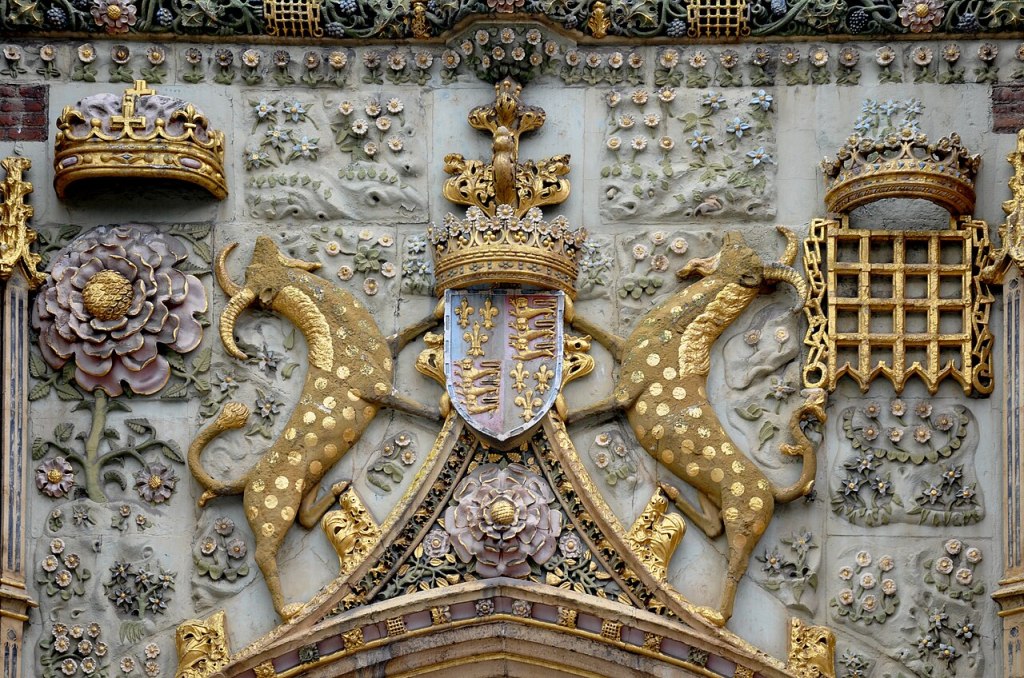
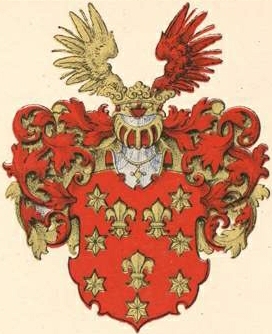
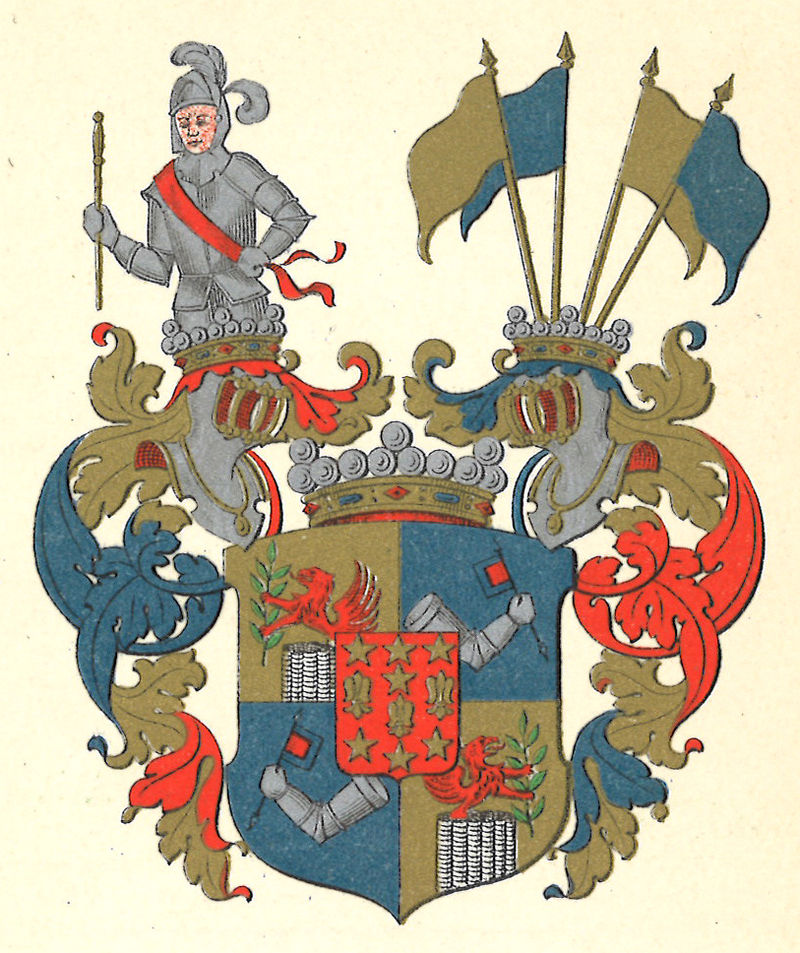
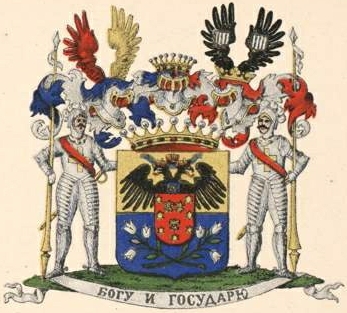
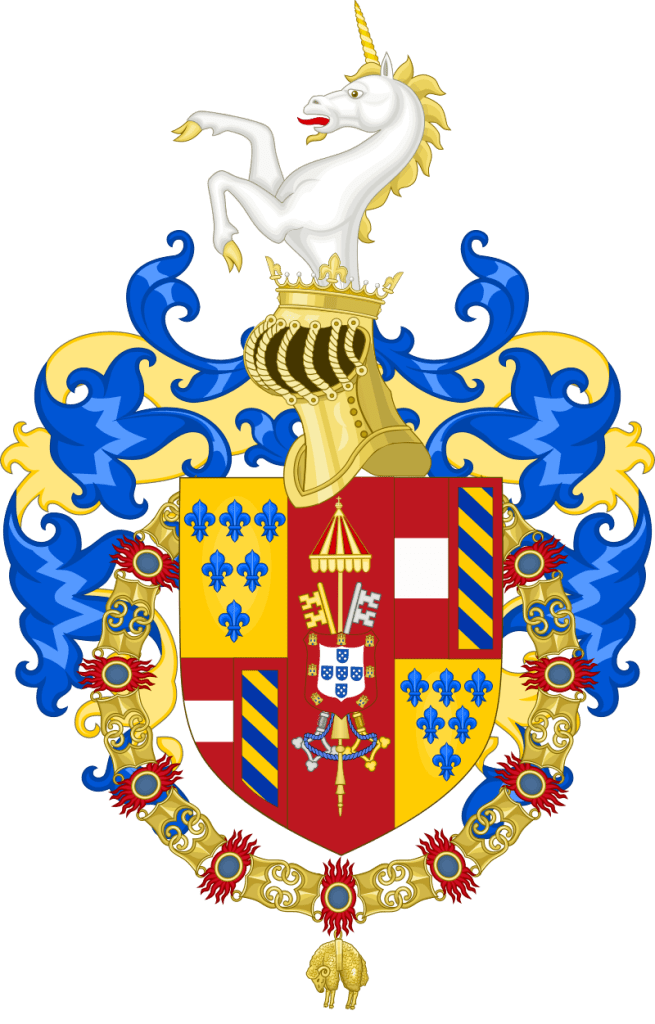
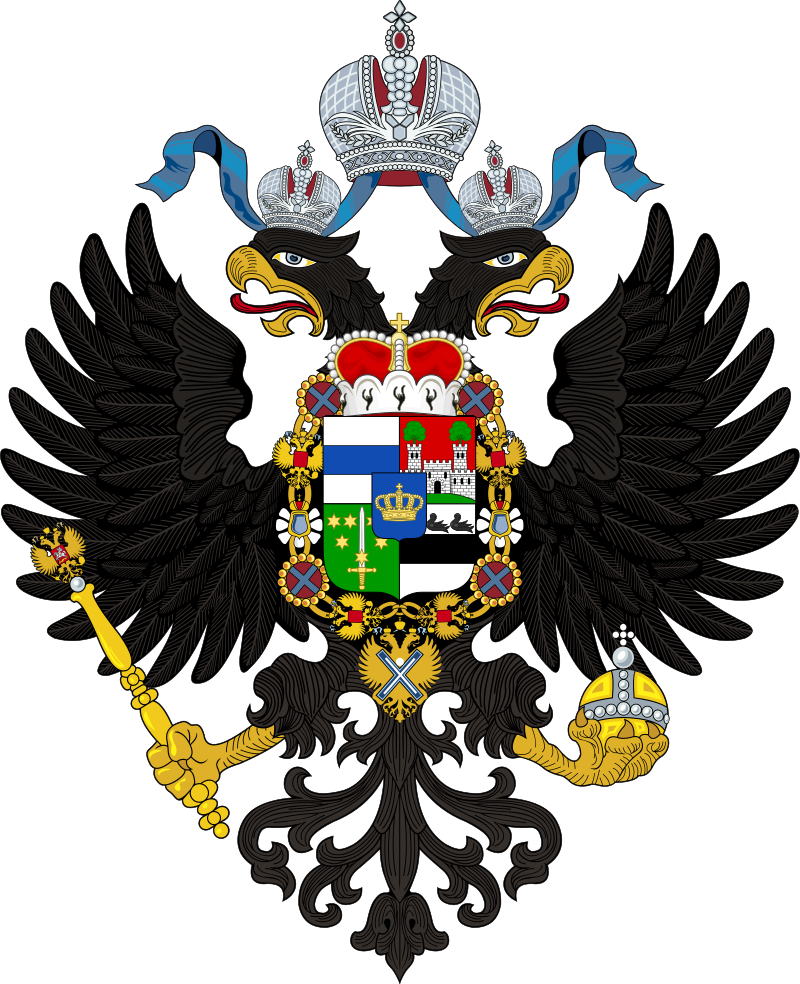
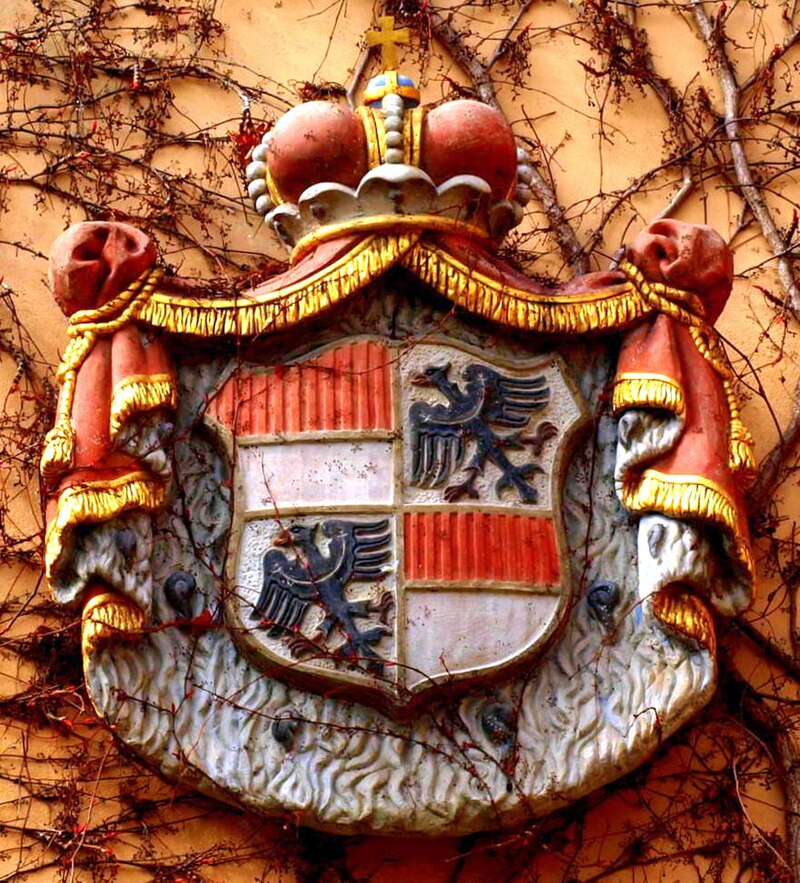
the arms of the modern Dutch royal family, with the ancient motto of the House of Chalon (Noordeinde Palace, The Hague)

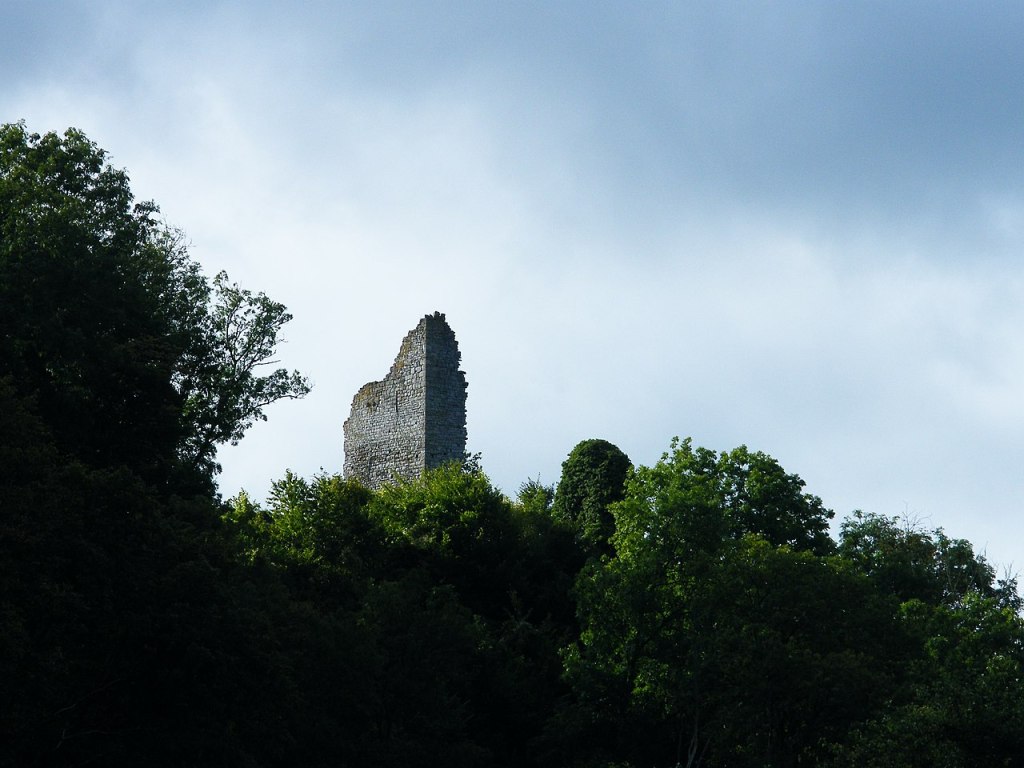
The House of Nassau, while not as grand as the ruling dynasties of Bavaria or Saxony, had roots that went just as deep into the medieval history of the Holy Roman Empire. They emerged as lords of one of the strategic corridors along the Rhine valley, where the river Lahn enters the Rhine from the east, just a bit upriver from Koblenz. In about 1125 one of the local lords built a castle overlooking the river at a town called Nassau—later family legends said this was named for a Swabian chieftain, Nasua, who had fought against Caesar’s legions in about 56 BC. I’ve also seen the name taken apart as ‘Nasse Auen’ or ‘vast wet fields’, which perhaps related to the low-lying terrain in this particular bend of the Lahn. Whatever the case, an interesting fact about the castle at Nassau was that it always belonged to the entire dynasty collectively, no matter how many branches and sub-branches it divided into, across nearly six centuries. Each branch developed their own castle-seat, and Nassau ceased to serve as a residence by the 16th century, mostly falling to ruins in the 17th. Its five-sided bergfried, or central fighting tower, dates from the early 1300s, and was reconstructed, along with some other buildings, in the 1960s by the state of Rheinland-Pfalz, its modern owner.

Nassau Castle above the River Lahn, 17th-century engraving
Castle Nassau today (photo Fritz Geller-Grimm)

The lords of Nassau at first struggled to demonstrate their independence, finally shaking off the bishops of Worms as overlords by the middle of the 12th century, and taking the title ‘count’. They administered their own lands, collected taxes and tolls on the Rhine, and so forth. So eventually they were known as ‘princely counts’, to distinguish them from mere counts who were subject to greater lords. As with most German noble dynasties, the Nassauers divided almost immediately into several branches. The most significant split occurred in 1255 with the major division between the Walramians and the Ottonians. The elder branch, based primarily at Wiesbaden on the river Main across from Mainz, and at Weilburg, much further up the Lahn, eventually became dukes of a consolidated Duchy of Nassau in the early 19th century, and then grand dukes of a newly independent Luxembourg from 1890. Today’s grand ducal family in Luxembourg are still called the House of Nassau-Weilburg.

the county of Nassau in the 16th century (the Rhine is the heavy black line that runs through the map; here ‘Mayence’ is Mainz)

The younger line were based much further in from the Rhine, at the north-eastern extremities of the lands held by the House of Nassau, first at Siegen, and then at Dillenburg. The line of Nassau-Dillenburg was separate from about 1300; they constructed a new castle over the river Dill (replacing one made from wood with one made from stone). Its defences were greatly expanded in the 17th century, but were dismantled in the 18th. A new structure was built in the 1870s by a Dutch princess and named the Wilhelmsturm—today it is a museum of Orange-Nassau history, particularly devoted to William the Silent, who was born here in 1533.

Dillenburg in the 16th century
Dillenburg today, with the Wilhelmsturm

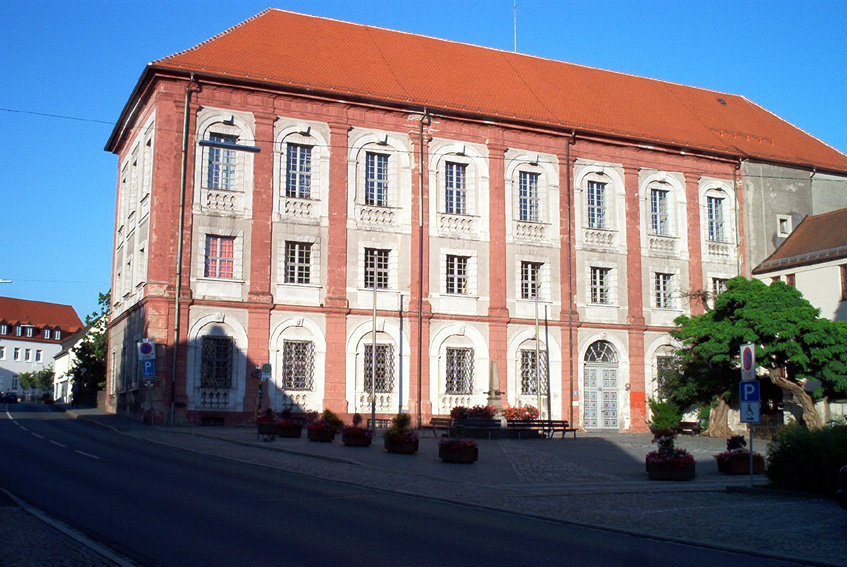
In 1405, Count Engelbert, third son of Count Johann I of Nassau-Dillenburg, married a significant heiress from a very different part of the Holy Roman Empire, Joanna van Polanen, from one of the leading families in the province of South Holland. Her inheritance included the lordship of Lek, named for the river Lek and estates east of Rotterdam in the Rhine delta, and the barony of Breda a few miles to the south in the province of Brabant. Breda is strategically located in the high ground between the estuaries of the Maas (Meuse) to the north and the Scheldt to the south. Its 12th-century fortress had been sold by the Duke of Brabant to the lords of Polanen in the 1350s, and it became the seat of the senior branch of the line of Nassau-Dillenburg in the first decades of the 15th century. They rebuilt the fortress as a renaissance palace in the 1530s, later expanded by William III in the later 17th century. It was given to the army by the Dutch royal family to serve as a military hospital in 1826.

Breda Castle, North Brabant (photo Johan Bakker)
Breda Castle, facing its moat (photo G. Lanting)

Engelbert of Nassau also inherited an even more impressive castle on the other side of the Low Countries, Castile Vianden, deep in the Ardennes, in the Duchy of Luxembourg. It is a very ancient castle, built by a dynasty of counts in about 1090, then rebuilt in Gothic style in the mid-1200s. The last heiress of the original line of counts of Vianden willed it to her cousin Engelbert in 1417 and it became an alternative seat for his family. A later member of the House of Orange-Nassau, Moritz, remodelled it again in the 1620s, now in a renaissance style. In 1820 it was sold by King William I of the Netherlands to a local merchant, who dismantled much of it for parts, until the near-ruin was repurchased and restored by the Dutch royal family as the fashion for Gothic castles came once more into vogue. In 1890, Vianden passed to the House of Nassau-Weilburg with the rest of Luxembourg, and it remained one of the grand ducal residences until ceded to the state in 1977.

Vianden Castle, Luxembourg (photo Jeff Croisé)

Engelbert’s son, Count Johann IV, became firmly embroiled in Burgundian politics and society in the Low Countries. He occupied a prominent townhouse in Brussels, later known as Nassau Palace, on the hilltop near the Duke of Burgundy’s residence, the Coudenberg. He also had a residence in Mechelen, and in his various lordships spread all over the Low Countries. He expanded his control over the Barony of Breda by removing it from vassalage to Antwerp, making it instead a direct fief of the duke of Burgundy (in his capacity as duke of Brabant). In 1440 he married yet another heiress, Mary van Looz, whose inheritance included lands in the prince-bishopric of Liège as well as claims to the important duchy of Jülich in the Rhineland (though these were later denied by Imperial decision of 1499).

Hotel de Nassau, Brussels, painted in 1658

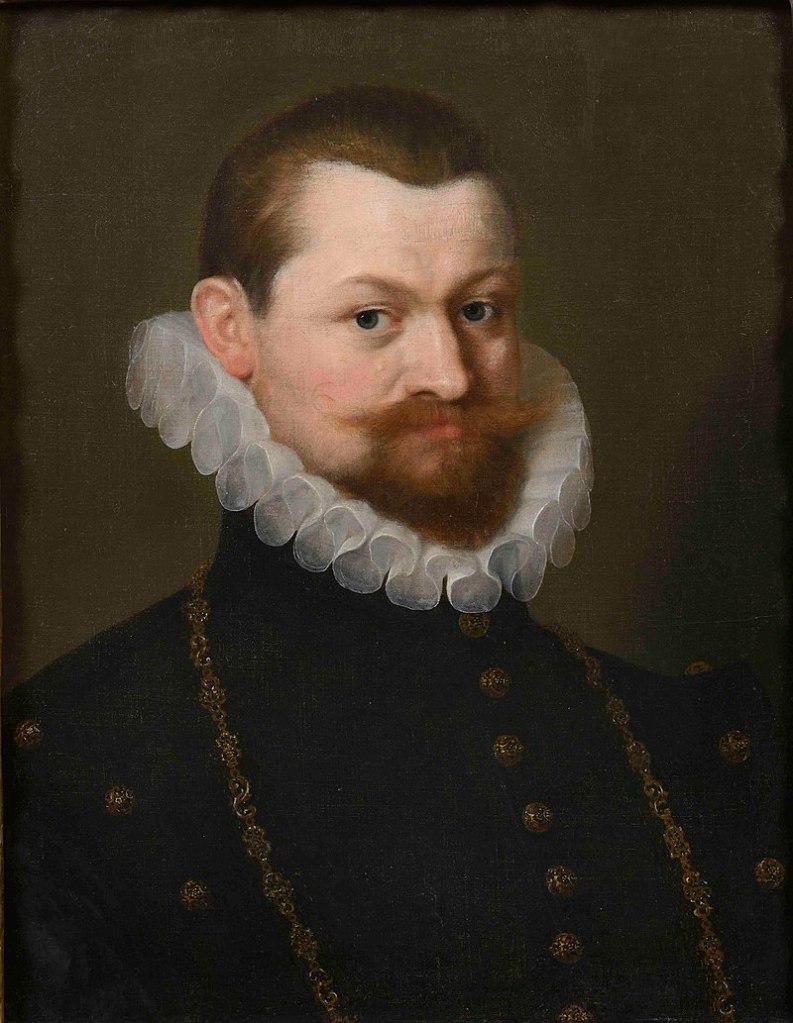
Engelbert II, Count of Nassau-Breda and Count of Vianden, entered into service of the Duke of Burgundy and became a commander of his troops in the 1470s, leader of his Privy Council, and a knight of the exclusive Order of the Golden Fleece. Moving smoothly into the service of the Duke of Burgundy’s successor, Maximilian of Austria, Engelbert was at first appointed Stadtholder (or governor) of Flanders in 1490, then rose to the position of President of the Grand Council in 1498 and Lieutenant-General of the Low Countries—effectively the chief Habsburg representative in the Netherlands—from 1501 until his death in 1504. He acquired several more lordships, notably Roosendaal and Wouw, near Breda, and Diest also in Brabant, but today across the border in Belgium.

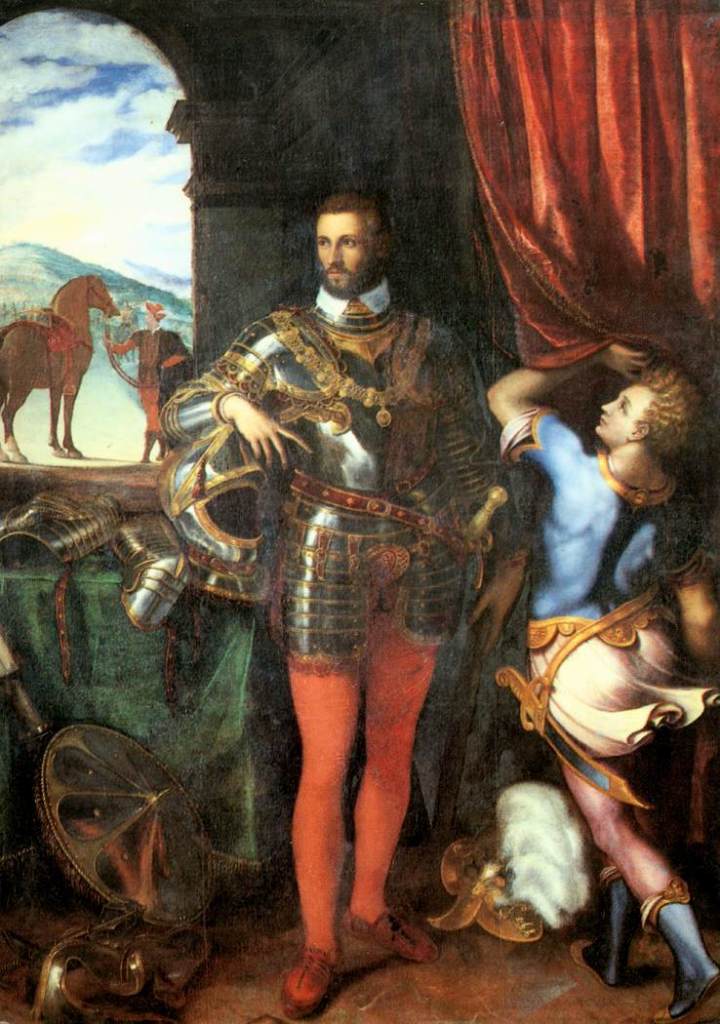
Count Engelbert II of Nsssau, Lord of Breda

Engelbert II had no children, so his Netherlandish inheritance passed entirely to his nephew, Heinrich III of Nassau-Dillenburg. Heinrich (or Hendrik) was appointed a chamberlain in the household of young Archduke Charles, soon to become both Carlos I of Spain and the emperor as Charles V. They became quite close, and Hendrik was named a member of his Privy Council, Stadtholder of Holland and Zealand in 1515, and the new emperor’s Grand Chamberlain in 1521, as well as his Master of the Hunt for the Duchy of Brabant. Nassau-Breda represented Charles formally in Germany at the time of his election as emperor in 1519, and accompanied him to Bologna for his imperial coronation in 1530. As a sign of his loyalty, he remained a firm Catholic in the 1530s, when other leading nobles, including his own brother, William ‘the Rich’, were joining the new Lutheran confession. He also accompanied Charles V to Spain several times, and married a Spaniard as his third wife in 1524. As seen above, his previous wife was Claude de Chalon, sister of Philibert, Prince of Orange.

Hendrik III, Count of Nassau-Breda

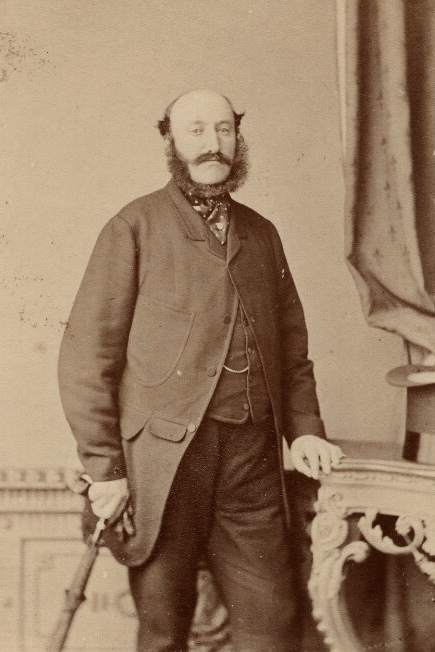
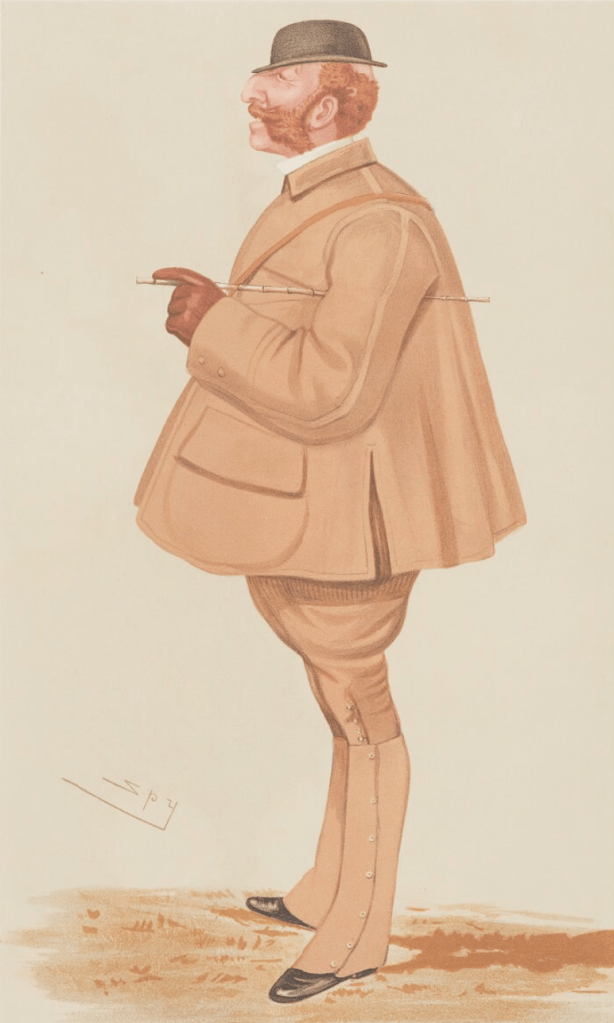
Hendrik of Nassau-Breda had one legitimate son, René who took the surname Chalon, and an illegitimate son with the daughter of the governor of the castle of Vianden, Alexis, who was given the lordship of Corroy in Namur and founded a dynasty (Nassau-Corroy) that became counts in 1693, and lasted until the early 19th century. This medieval fortress, now property of the noble Trazegnies family, is one of the most impressive castles in Belgium.

Corroy Castle (photo Benoit Brummer)

René de Chalon thus had this great quadruple inheritance: he was count of Nassau in Germany, lord of Breda in the Low Countries, lord of Chalon-Arlay in Burgundy, and prince of Orange in Provence. In his relatively short life he was invested as Stadtholder of Holland and Zealand, 1540, then of Guelders in 1543 after it was conquered by Charles V.

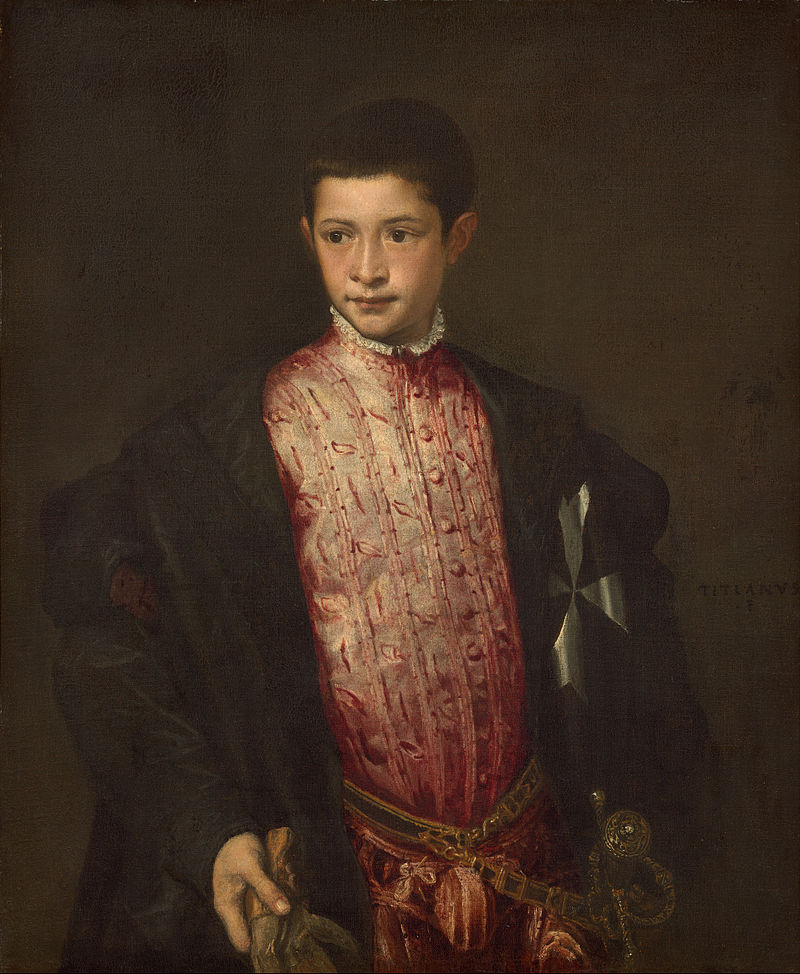
René de Chalon, Prince of Orange

He died just a year later, wounded during the siege of Saint-Dizier, on the frontiers between France and the Duchy of Bar. His wife, Princess Anne of Lorraine took his body initially to her father’s co-capital city, Bar-le-Duc, and here she commissioned one of my favourite tomb sculptures, by Ligier Richier. While René’s body was later transported to Breda for burial, his heart, and the sculpture, remained in Bar.

the monument to René de Chalon in Bar-le-Duc

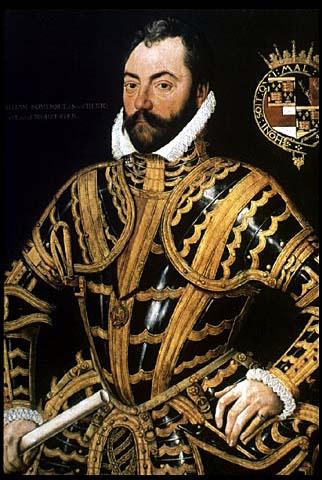
The massive succession of René de Chalon in 1544, estimated at about 800 towns and castles, was all willed to his cousin, William of Nassau-Dillenburg, with the stipulation that he must have a Catholic education. This donation obtained the Emperor’s approval in 1545, and that of the King of France in 1552, crucial since William was not the direct heir to the lands of the Houses of Orange, Baux and Chalon. This William became the famous William the Silent, leader of the Dutch Revolt against Spanish rule, or William I, Prince of Orange. His father, younger brother of Count Hendrik III, had been known as Wilhelm ‘the Rich’ because his share of the Nassau inheritance had included the rich iron ore in the hills around Siegen and Dillenburg. He was known as a good ruler of his territories, loved by his peasants even in the turbulent years of the 1520s, and formally introduced the Reformation into his territories. Nevertheless, he had a Catholic marriage in 1530, to Juliana of Stolberg, and their son was baptised as a Catholic in 1533.

William I of Nassau, Prince of Orange, as a young man

William the Silent thus had a multi-confessional upbringing, but in either case, very loyal to the Habsburg monarchy. He inherited the Chalon and Breda properties in 1544, then succeeded his father in Dillenburg in 1559, but gave most of these German lands to his younger brothers, of which there were many. Johann VI became lord of Dillenburg, and would ultimately become the ancestor of the later princes of Orange and the Dutch royal family, so we will return to him below. Another brother, Louis (or Lodewijk), was initially the most politically active and devoted to the new faith of the Low Countries, Calvinism. He led a confederation of Dutch nobles to protest the harshness of Spanish rule in 1565, and helped start the Dutch Revolt in 1568. While his older brother was attempting to maintain peace between Spanish and Dutch, Catholic and Protestant factions, Louis was sent to the far south of France to serve as governor of the Principality of Orange. From here he raised troops which he led in support of the French Huguenots at the battles of Jarnac and Moncontour, then across the border into the Low Countries where he was killed in battle against the Spanish at Mookerheyde near Nijmegen in 1574. Younger brothers Adolf and Heinrich were also soldiers in this conflict, the former being one of the first casualties of the war in 1568, and the latter killed at Mookerheyde alongside his brother Louis.

a collection of laws for the principality of Orange, printed in 1567 (note the very clear use of the ‘dei gratia’ style for the Prince of Orange, underlining his sovereignty)

William I, Prince of Orange, as we’ve seen, was compelled by terms of the will of René de Chalon to be educated as a Catholic, and so he was, at the court of Mary of Hungary, Governess of the Low Countries. Mary’s brother Charles V continued to take an interest, and arranged a marriage to yet another heiress, Anna van Egmond, heiress of the county of Buren, an autonomous fief of the Empire enclaved within the Dutch provinces, as well as various lordships in Holland and Zealand. William was named to the Emperor’s Council and supported Charles physically when he was ill and formally abdicated from his royal duties in 1555. At first the Prince of Orange continued in the good graces of the new ruler of the Low Countries, Philip II, and was appointed Stadtholder of Holland and Zealand in 1559, then of the Franche-Comté in 1561. But he soon emerged as a leader of the opposition on the Council, disliking the heavy-handed treatment of Protestants by Spanish troops. In 1561, he married as his second wife Anna of Saxony, daughter of the Elector of Saxony—this was significant in that she was of a far higher rank than his first wife, but also daughter of one of the primary leaders of the Protestant movement in Germany. It was a Lutheran ceremony, but William remained a Catholic. Only later (in 1573) did he become a Calvinist—but by this point he had fully broken with the Spanish king, and had been declared an outlaw and a rebel. In 1581, the Dutch estates began to press for full independence from Spanish rule and declared Philip II formally deposed.

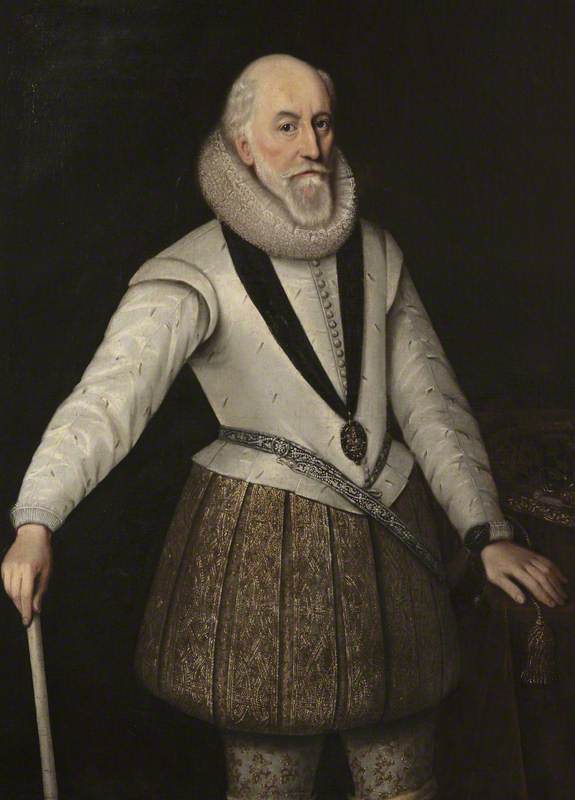
William I (‘the Silent’) as an older man

At first the Prince of Orange tried to lure a French royal prince (the Duke of Anjou) to the Low Countries to act as Sovereign Prince, but this prince was not up to the task, and by 1583, William was himself the virtual sovereign of a new nation. Since the 1570s, he had established his court at a recently secularised convent, the Saint Agatha Cloister next to the Old Church in Delft, which became known as the Prinsenhof. He was assassinated only a year later, and buried in Delft’s New Church, which became the sepulchre of the House of Orange-Nassau, which it still is today. The Prinsenhof was later used as a cloth hall, a Latin school, and since the early 20th century, a municipal museum.

an old print of the Prinsenhof in Delft (on the right)
Delft Prinsenhof today

William the Silent also increased even further the landholdings of the House of Orange-Nassau in the Low Countries, in particular through the purchase in 1582 of the Marquisate of Veere and Vlissingen. Both of these towns were major shipping centres since in the Middle Ages, both in Zealand, and both with strong connections to seaports in England and Scotland across the North Sea—they were historically known in English as Camphire (the ferry or veere at Campu) and Flushing. By the 16th century, much of the Dutch navy was based at Veere and the Dutch East India Company at Vlissingen. The lordships held by the Van Borssele family since the middle ages passed to the Van Bourgondië family (an illegitimate branch of the Valois dukes of Burgundy), and were erected together into a marquisate by Charles V in 1555. But the family sold the marquisate to Philip of Spain in 1567, whose debts were paid in part by selling it to the States of Holland and Zealand, who then sold it to William of Orange. The Prince intended it to be the main domain of his second son, Maurice, and a political benefit too, as it came with two votes in the estates of Zealand. There had been an old castle at Veere, the Zandenburg (or Sandenburgh), but it soon fell into disrepair and its ruins were dismantled in the early 19th century.

19th-century watercolors of the Sandenburgh, Veere

The next Prince of Orange is a bit of an anomaly in the story of Dutch independence. Philip William, the only son from William I’s first marriage, was born and raised as a Catholic, and sent as a hostage to Spain when the revolt broke out in 1568. Unlike his uncles and half-brothers, he remained a devoted Catholic and loyal to the Spanish Habsburgs. He eventually returned to the Netherlands, in 1596, and was allowed to rule the Barony of Breda, though this was contested by his younger brother until 1606. In that year, he married a daughter of the Prince of Condé, cousin to the King of France, so it is clear he had dynastic ambitions. But no children came from the marriage, and he died in 1618.

Philip William of Nassau, Prince of Orange, Baron of Breda

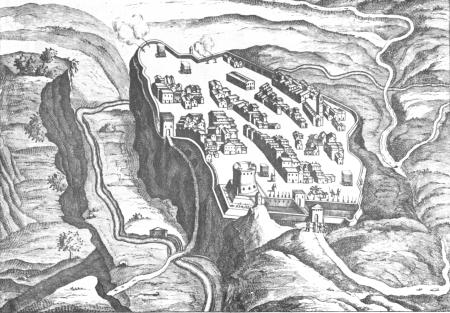
It would be interesting to know more about the relationship between Philip William and the Principality of Orange itself, especially given his renewed relationships with the French royal family. Certainly under the later ‘reigns’ of his half-brothers and then nephew, it remained a haven for Protestants in a sea of Catholics. There were Protestant schools there, and a Protestant university and seminary. A great new fortress was constructed in 1620 by Prince Maurice, on top of the hill that dominates the centre of the city, the site of the ancient Celtic then Roman fortifications. This was dismantled by French forces when they took over the principality in 1672. More on that below.

an engraving of Orange from 1634, showing its fortress above the ancient Roman town

The Principality did not consist just of Orange, but of several smaller enclaves across the region, like the Barony of Orpierre, high up in the pre-Alps east of Orange, whose town walls kept its Protestants safe in the 17th century. Or the castle of Suze-la-Rousse, north of Orange, which had served as the summer residence of the medieval princes, but since the 15th century belonged to an allied family, La Baume de Suze.

Maurice of Nassau, only son of William the Silent’s second marriage (to Anna of Saxony), took up his father’s role as leader of the Dutch Revolt. He was almost immediately appointed statdtholder of all the Dutch provinces (except Friesland), and Captain-General of the United Provinces in 1587. He made a name for himself in history as a successful military commander and reformer—a key exemplar of the so-called ‘military revolution’ that stressed tactics and professionalism in creating the modern army. He was Prince of Orange for only a few years, from 1618 to 1625, then was succeeded by another half-brother, Frederick Henry.

Moritz of Nassau, Prince of Orange, Stadtholder

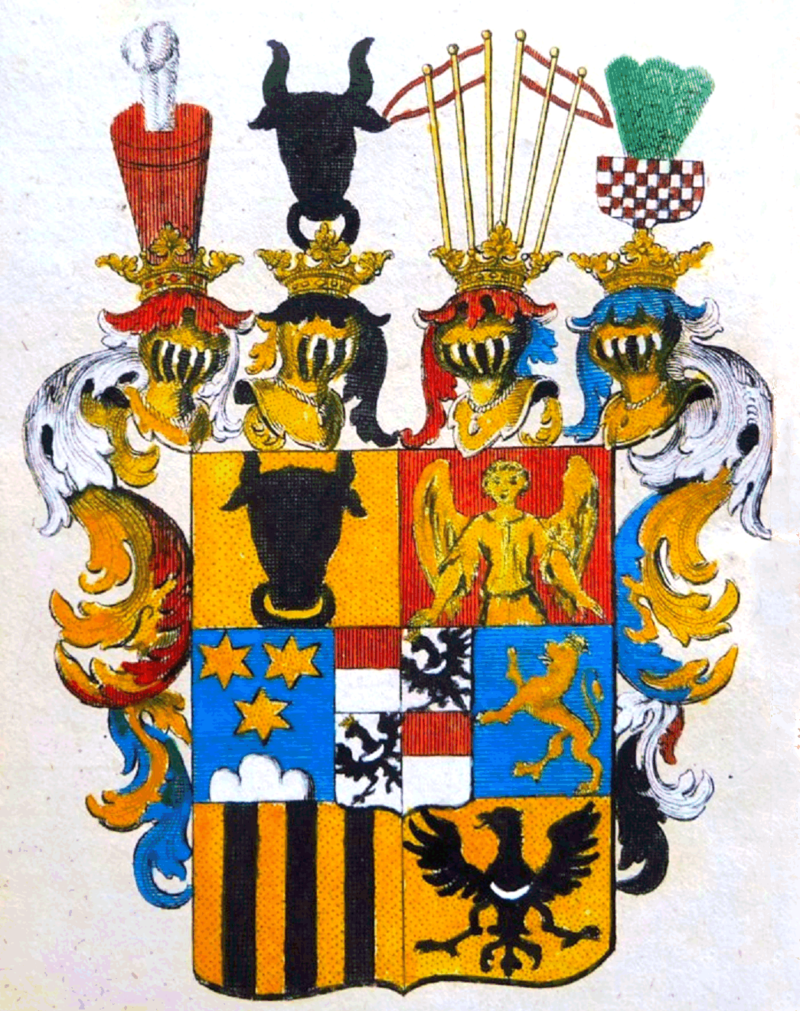
Like his father, Maurice (or Moritz in Dutch) also expanded the family landholdings. In 1594, he was named heir to the Imperial County of Moers (sometimes spelled Meurs or Mörs), on the Rhine between the Duchy of Cleves, the lands of the Archbishop of Cologne and the Duchy of Guelders (still contested between Dutch and Spanish forces). The last sovereign countess had been run out by the Spanish, so she willed the County and its castle (the Moersschloss) to Maurice, who retook it by force in 1597. Possession was contested by the Duke of Cleves-Jülich, and although he agreed to its possession by the House of Orange-Nassau, his family continued to use the title Count of Moers well into the 18th century. Moritz also conquered in 1597 the Imperial County of Lingen, further to the east in Westphalia, a property that his father had been forced to sell to the Habsburgs in 1550. Neither Moers nor Lingen were ever incorporated into the Dutch lands, but remained separate possessions of the dynasty. Their coat of arms now (in some versions) sported not just the various quarters of the House of Nassau, but also the escutcheons of Orange, Chalon-Arlay and Geneva, and now new shields (above and below the centre escutcheon) for Veere & Vlissingen (black and silver) and for Moers (gold and black).

augmented Orange-Nassau arms in 1640s
Moers Castle with a statue of Luise Henriette of Orange (photo © Raimond Spekking / CC BY-SA 3.0)

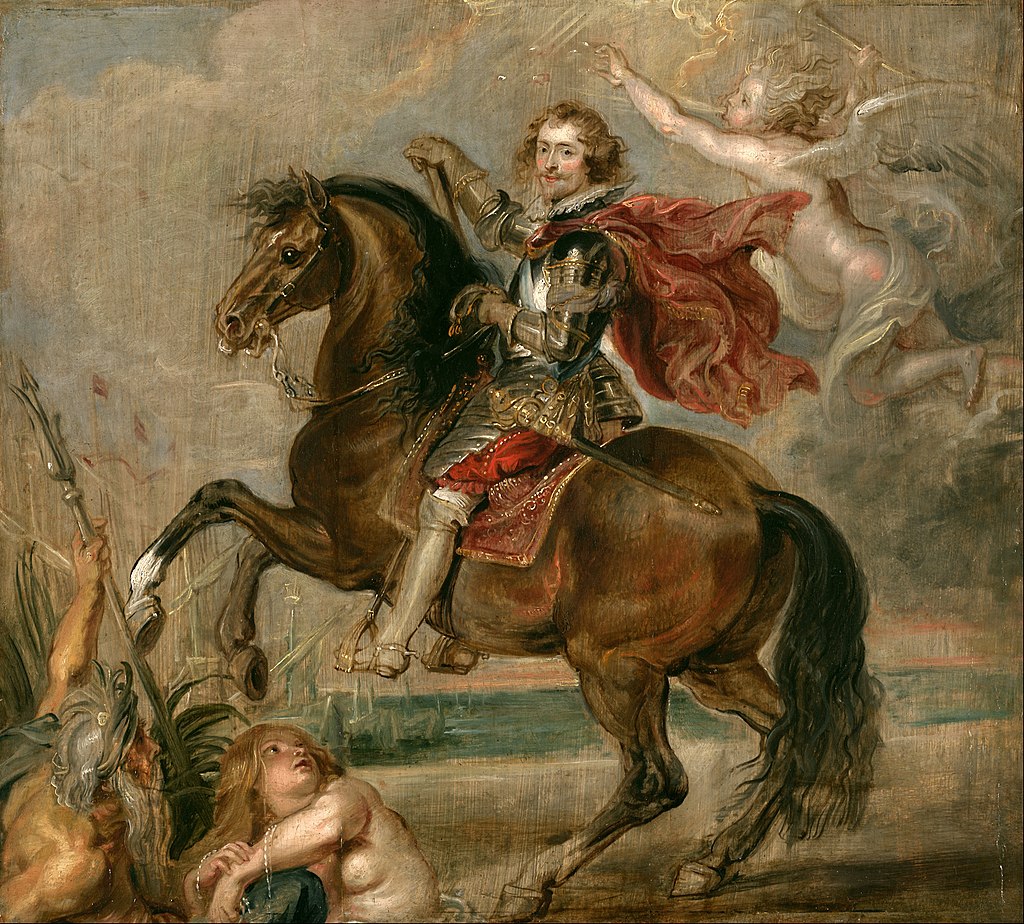
Frederick Henry of Orange-Nassau, youngest son of William I and his fourth wife Louise de Coligny, also took over from his brother as statdtholder of all Dutch provinces except Friesland (which had its own line of Nassau statdtholders, who we will encounter below), and was also appointed Captain-General of the Union. He’s remembered as an equally capable general, but a better politician than his brother Maurice, and is known in particular for the capture of the main Spanish military base, ’s-Hertogenbosch, in 1629.

Frederick Henry of Nsssau, Prince of Orange, Stadtholder

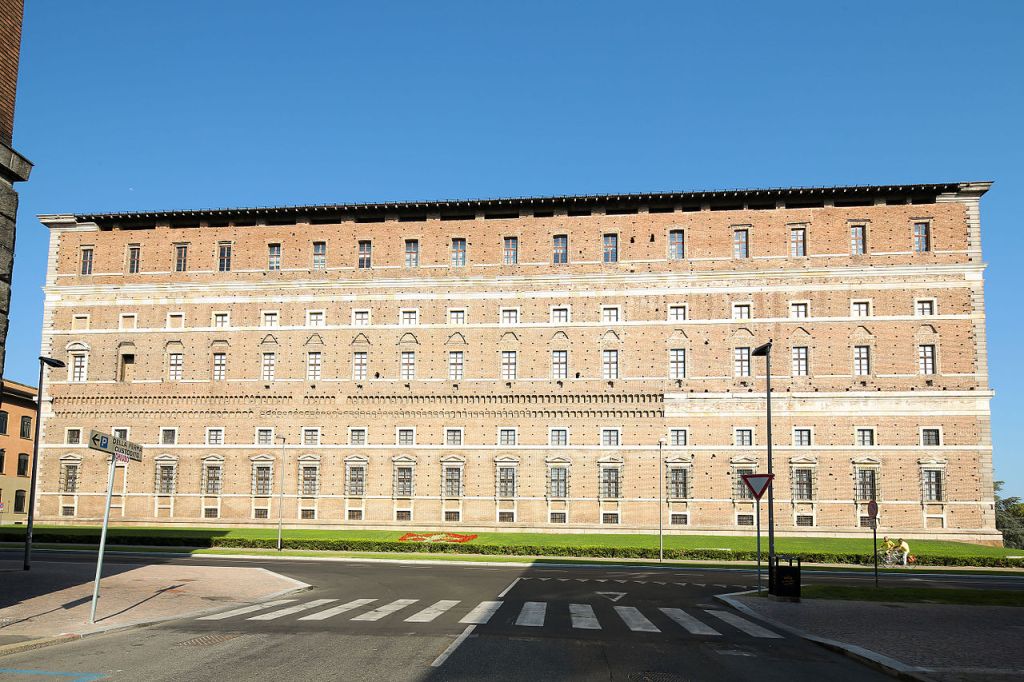
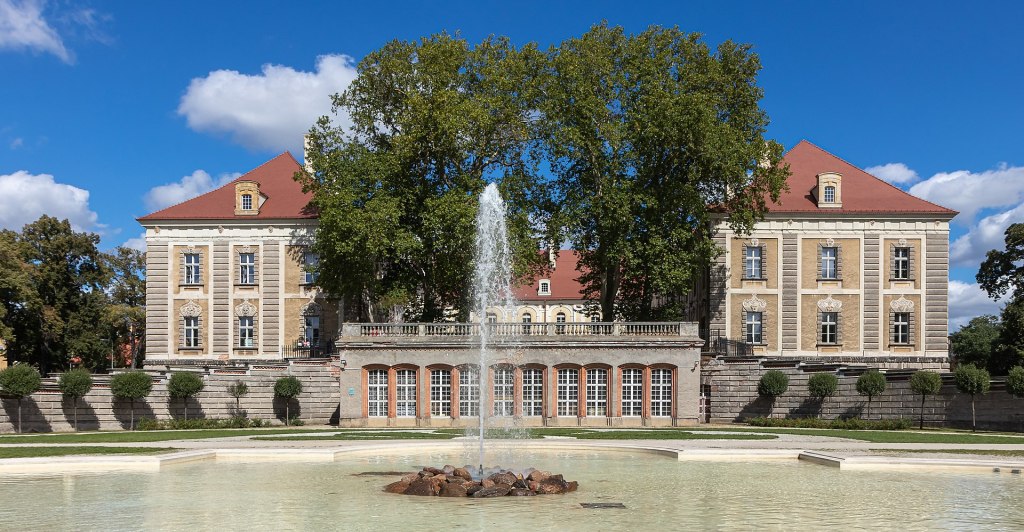
This was the Golden Age for the Dutch Republic, and a high point for the stadtholderate. New residences were renovated or commissioned to develop a proper princely court at The Hague—Amsterdam remained a mercantile city, and what is now the Royal Palace was built in this period as the City Hall. The Hague, formally ’s-Gravenhage (‘the count’s wood’) had been the seat of the medieval counts of Holland, then the meeting place of the States of Holland (and thus the residence of the stadtholders, representatives of now absentee counts), and of the States General of the United Dutch Provinces since the 1580s, so it made sense to establish the court of the Prince of Orange here. Prince Frederick Henry enlarged a palace he had inherited from his mother, Louise de Coligny, Noordeinde. It had been built in the 1530s as a residence of one of the senior officials of the States of Holland in the ‘North End’ of The Hague, and was given to Louise as widow of William the Silent by the States of Holland in 1595. In the 1640s, Frederick Henry added two wings, to give it an H shape (it was called the Oude Hof in this period). Nationalised during the period of the Batavian Republic (1790s), it was named as one of the three official royal palaces once the Netherlands became a Kingdom in 1815, and was used as the main winter residence in the 19th century. Noordeinde Palace was badly burned in 1948, so the monarch resided elsewhere. In 1984 it became formally the ‘office’ or chief working space of the monarch.

Noordeinde Palace, The Hague

On the other side of The Hague, deep in a wood, Frederick Henry’s wife, Amalia von Solms, commissioned a new residence, Huis ten Bosch (‘the house in the wood’), on lands given to her by the States General in 1645. After her husband’s death in 1647, the Dowager Princess filled the central hall, the Oranjezaal, with paintings by the finest Dutch artists, commemorating her husband’s life and the history of the House of Orange. Two large wings were added in the 1730s. Like Noordeinde Palace, the Huis ten Bosch was confiscated by the Batavian Republic, then given for use to the royal family in 1815, again, as one of the three official residences (the other was the Royal Palace in Amsterdam). Extensively renovated in the 1950s, it became the principal residence of Queen Beatrix in 1981, and since 2019 of the current royal family.

Huis ten Bosch, The Hague (photo PeteBobb)
Oranjezaal in the Huis ten Bosch (photo Rijksdienst voor het Cultureel Erfgoed)

Prince Frederick Henry was also the head of an expanding princely dynasty: he had many half-sisters whose unusual second names reveal the growing association of the House of Orange-Nassau with the Dutch Republic: Catharina Belgica, Charlotte Flandrina, Charlotte Brabantina, and Emilia Antwerpiana. These were not just symbolic names, but in fact were given to demonstrate that the estates of these provinces were acting as formal godparents to these girls, and would thus look after them, spiritually and financially if needed. Several of these secured dynastic ties through marriage to other leading Protestant families in Northern Europe, as did, most importantly, the oldest sister, Louise Juliana, who married Frederick IV, the Elector Palatine: their son would unite Protestant Europe in marrying the daughter of King James of England, and this couple would ignite the Thirty Years War in 1618 by accepting the throne of the Kingdom of Bohemia.

Frederick Henry also had lots of daughters, but only one son, William II, to whom we will return to below. But there were also ‘unofficial’ members of the House of Orange-Nassau: both Prince Maurice and Prince Frederick Henry had illegitimate sons: Maurice’s son, Louis (Lodewijk) founded a new line, the lords of Ouwerkerk (in South Holland), who became better known as the family Nassau-Auverquerque in French, or ‘Overkirk’ when they moved into English society in the 1660s. The last of these was Earl of Grantham from 1698 to 1754. Frederick Henry’s son, Frederik, also founded a line, based in the lordship of Zuylestein (in the Province of Utrecht), who were eventually given an English earldom, Rochford (created in 1685; extinct in 1830).

Frederick of Nassau, Lord of Zuylestein (by Lely)

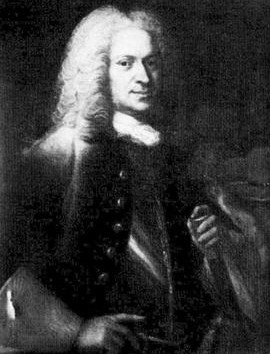
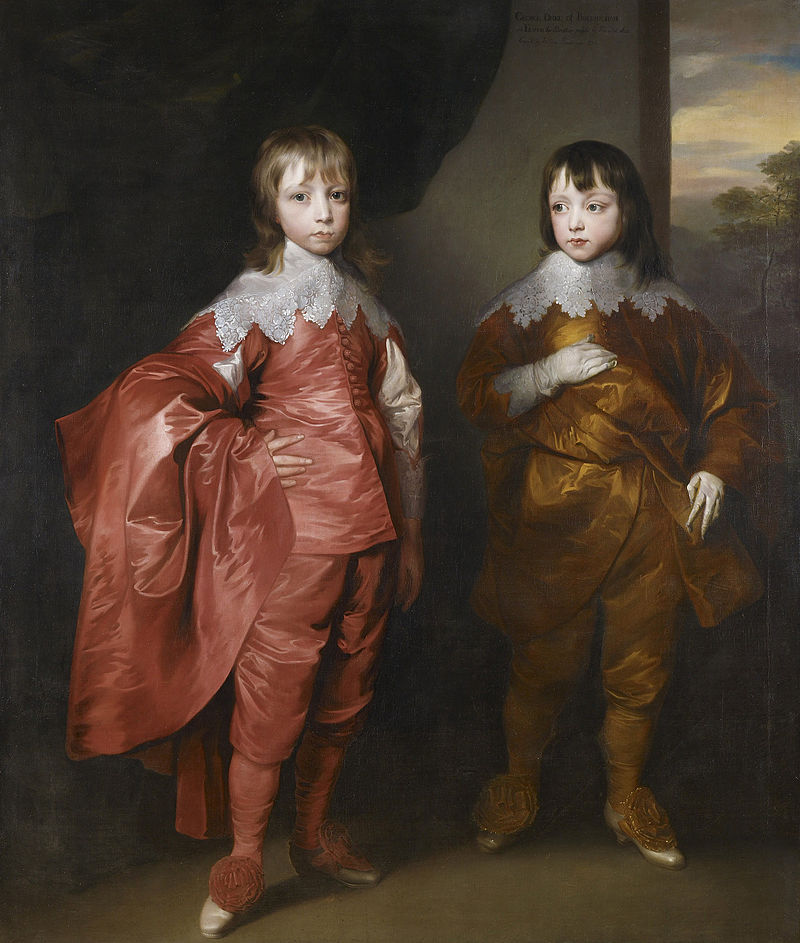
More relevant to our story, the first Lord of Zuylestein was appointed as governor of the household of his younger half-brother, William II, who became Prince of Orange in 1647, and then of William’s young son, William III, who became Prince of Orange only three years later in 1650. Frederik of Nassau-Zuylestein was also a captain of the Dutch infantry, and helped forge closer ties between the Houses of Orange and Stuart when in 1648 he married Mary Killigrew, a maid-of-honour of the Princess of Orange, Mary Stuart, daughter of Charles I. Princess Mary was named Regent of her young son, and together she and Zuylestein tried to preserve some of the status and authority of the role of stadtholder—much of which had been lost in the brief reign of William II, who had opposed the peace offered to the Dutch in the Treaty of Westphalia of 1648, and quarrelled with the Estates of Holland who wanted to reduce the size of the army following the peace. William II was only 24 when he died of smallpox.

the children William II and Mary Stuart, by Van Dyck

William III was born a week later. In addition to his mother and Zuylestein, the Prince was formally looked after by his grandmother, Amalia van Solms (a source of tension for the British princess, who thought her mother-in-law, born a German countess, was beneath her), and his uncle, Frederick William, the Elector of Brandenburg. The fact that a Hohenzollern was his uncle will be important later when we come to the next stage in the succession of the principality of Orange, so keep that in mind. William’s mother died in 1660, so his other uncle, King Charles II of England got involved and convinced the Dutch Estates to declare the Prince a ‘Child of State’ in 1666. Zuylestein was pushed aside, and the job of stadtholder was nearly abolished (Holland and others did formally abolish it in 1670). What would be the role of the House of Orange-Nassau in the Republic now?

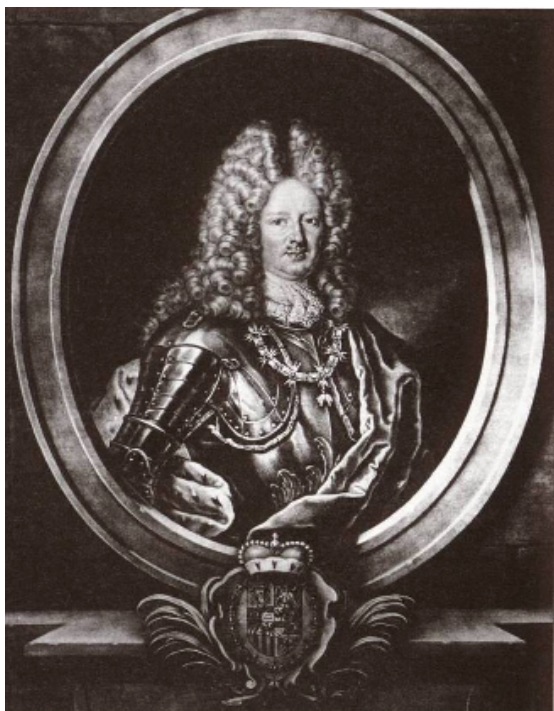
When war broke out with France in 1672, the Prince of Orange was appointed Captain-General, temporarily, but when the actual invasion of the largest army in Europe began, William was swiftly appointed Statdholder of Holland and Zealand. After his first victories on the battlefield, he was appointed hereditary (not just for life) stadtholder in Utrecht (1674) and then Gelderland (1675). From here on, William III’s history is quite well known, as builder of great European coalitions against Louis XIV, preserving Dutch independence in the 1670s, and then leading the Glorious Revolution in England where he was named king (in conjunction with his wife, also named Mary Stuart) in 1689. William and Mary also gave their name to a new college in the colony of Virginia, which I attended exactly three centuries later.

William and Mary as joint sovereigns of England, Scotland and Ireland

Like his grandfather and great-uncle, William III also expanded his family holdings in the Dutch Republic through the purchase of a house at Soestdijk, and construction of the Palace of Het Loo. Soestdijk was built in the mid-17th century by one of the leaders of the Republic, Cornelis de Graeff, who also took charge of young William’s education in the 1650s, often keeping him at Soestdijk, in the Province of Utrecht, to be raised with his sons. In 1674, one of Cornelis’ sons then sold the house to the Prince, who rebuilt it as a hunting lodge. After the revolutionary period, it was returned to the family as private property, and Queen Juliana used it as her residence (though she gave it to the state in 1971) until her death in 2004. In 2017 it was sold to a private developer and there are plans to renovate the palace as a public venue, but also to add housing, a hotel and other elements to the site.

Soestdijk Palace (Creative Commons, Michael A. Echteld)

Further east, in the province of Gelderland, William III built another hunting lodge, called Het Loo (‘the lea’, or forest clearing), near Apeldoorn. This was built swiftly in 1685-86, and he added extensive baroque gardens. It would serve as the chief summer residence for the Dutch kings in the 19th century until 1962; since 1984 it has been a state museum, and the baroque gardens have recently been restored, to great acclaim. Het Loo Palace was one of the first royal buildings I ever visited, on a trip by the Choir of the College of William and Mary to Europe in 1993, and it made a deep impression on me as the legacy of King William III.

Het Loo, engraving from the early 18th century

William himself did not long enjoy his new palaces, however. On the eve of building one final huge European coalition to contain the ambitions of Louis XIV and the House of Bourbon, William III suddenly died, March 1702. He and Mary had no children, and the succession to the Principality of Orange became a heated international diplomatic issue.

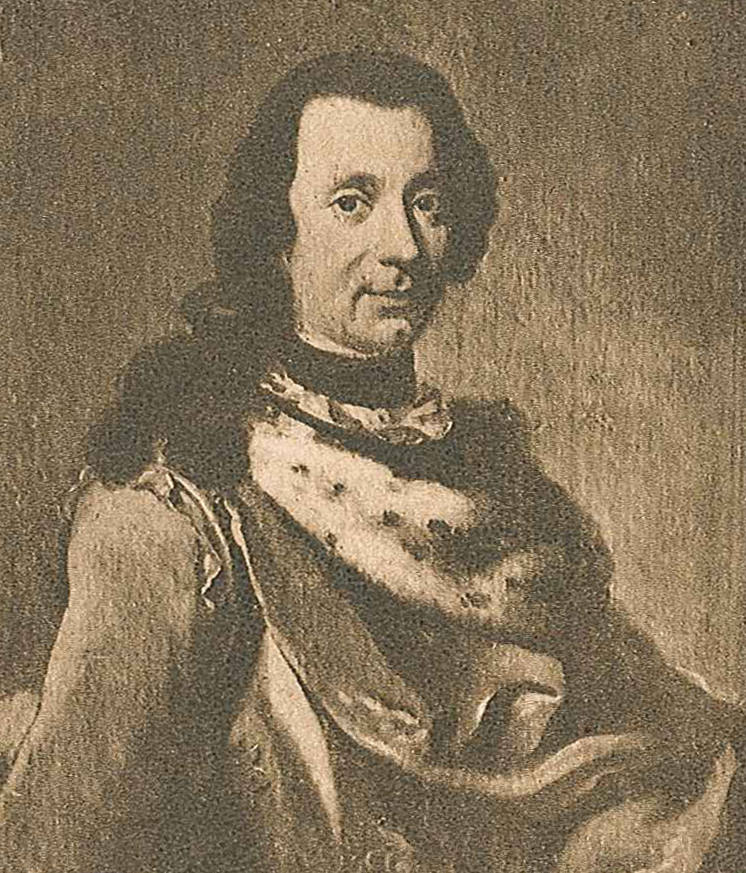
The Principality of Orange had been occupied by France at the start of the Dutch War, 1672, and its fortifications dismantled. In accordance with the Treaty of Utrecht, 1713, Louis XIV formally acquired the principality (and all its smaller enclaved lordships in Provence and Dauphiné), and finally ended its ancient status as a sovereign principality. At least two (possibly three) French claimants emerge to the titles and lands of the princes of Orange. The confused testament of Louis de Chalon, Prince of Orange, back in 1463, had put forward heirs in the House of Seyssel (a frontier family between Burgundy and Savoy), but they had died out and claims made by cousins were thrown out. A younger brother of Louis, Jean, Seigneur de Vitteaux, inherited some Chalon lands in Burgundy, notably L’Isle-sous-Montréal, which passed through several female successions eventually into the House of Mailly by the late 17th century. Louis-Charles de Mailly-Nesle accompanied Louis XIV on his conquest of Franche-Comté in 1674, and was recognised (some said) by the King as the heir to the House of Orange-Chalon (recall that the transfer of titles and properties from René de Chalon to William the Silent in 1544, seen above, was considered legally dubious by several jurists, notably French ones…).  Mailly took the title ‘Prince of Orange and L’Isle-sous-Montréal’, and in 1706 was authorised to use it by the French king. When he died in 1708, his grandson, Louis III de Mailly, Marquis de Nesle, took up the princely title and even moved in to take possession of the Orange estates in 1710 (and one of his sisters married a Prince of Nassau-Siegen, meaning some later members of that family also later claimed the title). But when the actual settlement with the House of Orange-Nassau was made in the Treaty of Utrecht of 1713, Louis XIV changed his mind, and bestowed the lands (and the title Prince of Orange) formally on his cousin, the Prince of Conti (Louis-Armand de Bourbon), as heir to yet another Chalon heiress: Alix, the sister of Prince Louis and Jean de Vitteaux, who was named as heiress presumptive by their mother, Marie des Baux. Alix’s claims passed through various families before it ended up in the House of Orléans-Longueville (an illegitimate branch of the House of Valois). François, Duke of Longueville, had attempted to claim the succession in 1544, and he and his nephew and heir obtained some legal wins in French law courts, but were unable to make good of them due to the prominence of William the Silent. The last Duke of Longueville died in 1694, leaving Conti as his heir. Conti was to hold the principality in usufruct until he died; which he did in 1727, and shortly thereafter, the Principality formally merged with the Crown in 1731. The Mailly claimants continued to use the title well into the 19th century.

Louis de Mailly as Prince of Orange (see text lower left corner)

But there were other claimants, not just to the Principality of Orange, but to the vast Orange-Nassau family properties in the Low Countries, including Breda, Veere & Vlissingen, and the various residences in The Hague, Soestdijk and Het Loo. There were also the Chalon lands in Burgundy, the County of Vianden in Luxembourg, and the Imperial County of Moers. The closest kin to William III when he died in 1702 was actually his cousin, Frederick William I, King of Prussia, who claimed the Principality and the other Nassau titles and estates. He ceded his rights to Orange itself to the King of France by the Treaty of Utrecht in 1713, though retaining use of the title for himself and his descendants. The specific terms of the Treaty specified the King of Prussia could create a new principality of Orange in the Prussian portion of the province of Gelderland (to be based on the town of Geldern, the land of Kessel and other towns and lordships, now in Germany), but I’m not sure if this was ever done, even on paper. The Hohenzollerns continued to use the title ‘Prince of Orange’ as late as 1918.

But Orange was also claimed in 1702 by Johan Willem Friso of Nassau-Dietz. Jumping back to the mid-16th century, one of the younger brothers of William the Silent was Johann VI, Count of Nassau-Dillenburg. Like so many members of this family, he too was involved in the Dutch Revolt, was named Stadtholder of Gelderland, and was one of the principal leaders responsible for the forging of the Union of Utrecht, 1579, the declaration that bound together the northern Dutch provinces in their rebellion against Spanish rule. In 1606, his estates were divided between his five living sons. The eldest, Wilhelm, received Dillenburg, but stayed in the Netherlands where he was appointed stadtholder of Friesland, the northernmost of the Dutch provinces, in 1584. Like his cousins, he was one of the leading commanders of the Dutch army and a military reformer. He solidified links between the branches by marrying his cousin, Anna of Orange-Nassau, but they had no children. The second son, Johann VII received Siegen as his portion of the county of Nassau. He was also known as a military reformer, but he served in a different theatre, with the armies of Sweden in its wars in the Baltic. The fourth son, Ernst Casimir, was given Dietz as his portion of Nassau in 1606 then succeeded his eldest brother as stadtholder of Friesland in 1620. He starts therefore a secondary Dutch line, Nassau-Dietz, also known as the Frisian Branch. We’ll return to them in a moment, but first we need to look at what happens to the Imperial branches of the House of Nassau in the 17th century.

Johann VII, Count of Nassau-Siegen had, with two wives, 21 children. Two of the sons, Johann VIII and Johann Moritz, formed new sub-branches, both called Nassau-Siegen, one Catholic and one Protestant. Johann VIII shocked his family by converting to Catholicism in 1613, and joining the Imperial armies. Johann Moritz retook Siegen from his brother and reversed his efforts at recatholicization, then led a long and interesting career in service of the Dutch Republic, notably as Governor of Dutch Brazil, 1636 to 1643, then Governor of the Duchy of Cleves for the Elector of Brandenburg, from 1648, and finally Commander-in-Chief of Dutch land forces, 1664, for the Republic’s war against England. He gave his second name to the house he built in The Hague, the Mauritshuis, today a fantastic museum.

Mauritshuis, The Hague (by Bartholomeus van Hove, 1825, Rijksmuseum)

In 1650, the two Siegen counts’ uncle, Johann Ludwig of Nassau-Hadamar, an Imperial diplomat (and another convert back to Catholicism), was raised by the Emperor from the rank of count to fürst, ie, ruling prince. This started a trend within the family to press for a similar rank for all its members, and two years later, both branches of Nassau-Siegen were made princes of the Empire, as were the counts of Nassau-Dillenburg and Nassau-Dietz in 1654. Several lines of the other major branch of the dynasty (the Walramians) were later also raised to princely rank, in 1688 (Weilburg, Idstein, Usingen).

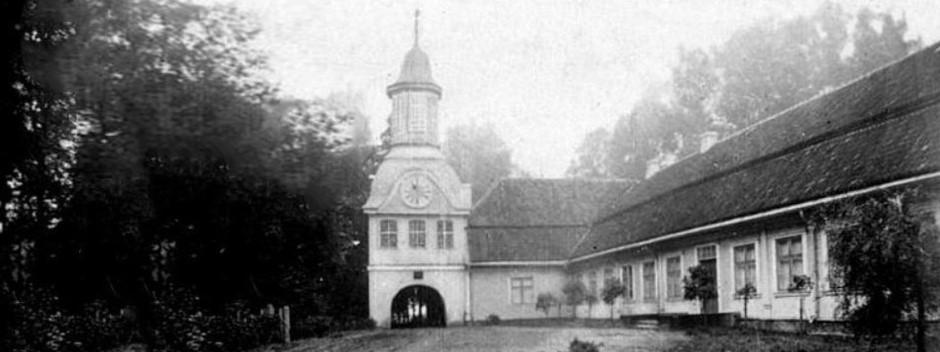
So from 1654, Nassau-Dietz was a principality. The Castle of Dietz (today Diez), on the river Lahn, was built in the 11th century and acquired by the Nassau family through marriage in 1384. South of Dillenburg and Siegen, it was much closer to the old core of the County of Nassau. From the 1680s, the family, when in residence in Germany, moved out of the old castle and into a new palace, Oranienstein, on the edge of town (built on the ruins of a former abbey), and the old castle of Dietz was used as estate and government offices. The Dutch royal family lived in exile at Oranienstein during the period of the Batavian Republic. After 1866 it was given to the Prussian Army who developed it for military use (a cadet school, barracks, medical facilities, and it is still operated by the German military today. Diez Castle now houses a youth hostel and a local history museum.

Diez Castle, Nassau (photo Franzfoto)
Schloss Oranienstein, Diez (photo Carsten Steger)

But in the 17th century the family of Nassau-Dietz spent most its time in Friesland. They had acquired a large house in the provincial capital, Leeuwarden, in 1587, which has since been known as the Stadhouderlijk Hof, or Stadtholder’s Court. In the later 17th century, one of the Frisian line of stadtholders, Willem Frederik, added a lavish garden, the Prinsentuin Garden, which survives today. The Hof itself is, since 1996, a hotel.

Stadhouderlijk Hof, Leeuwarden (photo Jean Housen)

This Willem Frederik was stadtholder of Friesland from 1640. Like several members of his family, he re-joined his Nassau bloodline by marrying the daughter of Frederick Henry, Prince of Orange, in 1652. After the death of Prince William II in 1650, Willem Frederik tried to act as guardian for the infant William III and leader of the Orangist Party in the Republic, without much success. He died in 1664, arranging for his seven-year-old son to be named stadtholder of Friesland under the regency of his mother. Albertine Agnes of Orange-Nassau.

Henry Casimir II, Prince of Nassau-Dietz, was stadtholder of Friesland and Groningen from 1664 to 1696. He seems to have led a fairly uninfluential life, frustrated as a military commander to such an extent that he defected for a time into French service (and thus into opposition of his nephew William III), then resigning when passed over for top command once again in 1693. But he did leave the stadtholderate of Frisia intact for his son, Johan Willem Friso—indeed it was confirmed as hereditary in his family in 1675. When William III died in 1702, the succession to the main line had a problem. William’s will had named the descendants of his aunt, Albertine Agnes of Orange-Nassau, as his heirs: that is, Johan Willem Friso of Nassau-Dietz. But an older will, of Prince Frederick Henry, named the descendants of his elder daughter Luise Henriette, wife of the Elector of Brandenburg. In 1702 therefore, the Elector of Brandenburg, recently promoted to King in Prussia as Frederick I, claimed the Orange succession, as we’ve seen above.

Johan Willem Friso of Nassau-Dietz

Meanwhile, Johan Willem Friso continued to press for his own claims to the Orange-Nassau succession. Finally in 1732, his son William IV made a treaty of partition with the Hohenzollerns of Prussia and they agreed to share the revenues and the title. By this point of course, no one was actually prince of Orange. The agreement pertained more to returning estates and residences in the Netherlands to the new House of Orange-Nassau, notably Noordeinde Palace and Het Loo (financial haggling continued into the 1750s).

Johan Willem Friso had been stadtholder of Friesland and Groningen from 1702, but the other five provinces suspended the office rather than elect him. In 1707 he served as a general in the War of Spanish Succession under the Duke of Marlborough, but he died fairly young in 1711. His son William IV was elected stadtholder of Friesland and Groningen in 1711, with his mother as regent, and later in Gelderland, 1722. In 1739, he inherited the lands of Nassau-Dillenburg, and in 1743, those of Siegen and Hadamar, unifying the northern half of the old imperial county once again. As Prince of Nassau-Dietz he had to balance his interests between the Netherlands and the Holy Roman Empire, and in 1747 he supported the Habsburgs in their war against Prussia and France. The Dutch Republic did too, and when France invaded, he was named stadtholder of the other three main provinces (Holland, Zealand and Utrecht) and then the first Hereditary Stadtholder of the United Provinces, ending the Second Stadtholderless period—this is known as the ‘Orangist Revolution’. He and his family moved their court from Leeuwarden to the princely court at The Hague.

William IV, P:rince of Orange, showing his passion for the Dutch navy

Prince William IV’s ‘royal’ status had been enhanced a few years earlier when he married his cousin, Anne, Princess Royal of Great Britain—and several places were named in his honour in the British colonies, like the County of Orange in Virginia, and Orangeburg, South Carolina. Of course there were also Dutch possessions given the Orange name in the 18th century: the capitals of both Aruba and Sint Eustatius in the Caribbean (Oranjestad); the longest river in South Africa, the Orange (which gave its name to the Orange Free State); even Cape Orange on the borders between Brazil and the Guianas. As a ruler, the Prince of Orange tried to reform the tax burdens on ordinary folk of the countryside, but he was definitely allied with the urban merchant elites as well, and was appointed one of the directors-general of the Dutch East India Company. The Prince of Orange was keen to build this collection of provinces into a unified state—he demonstrated his devotion to this ‘national’ idea even by naming his son, born just one year later, William Batavus. But he died rather suddenly in 1751.

Since the role of stadtholder of all the provinces was now hereditary, his son William V succeeded to this role. But he was only three, so was governed by a string off regents: his mother, Anne of Hanover, his grandmother, Marie Louise of Hesse-Kassel, then his cousin and one of his father’s trusted generals, Duke Ludwig Ernst of Brunswick-Bevern, and finally briefly, his older sister Caroline for one more year until he reached his majority in 1766. A year later he married another cousin, Wilhelmina of Prussia, niece of Frederick the Great, thus fully reconciling the families who had been rivals over the Principality of Orange.

William V

The former regent Brunswick-Bevern stayed on in the Netherlands as Prime Minister until his overtly pro-British policies and close links to Emperor Joseph II clashed with Dutch interests, and, the Dutch faring badly in its war with Great Britain in the early 1780s, he was forced from power in 1784. By association, William V and the idea of a hereditary stadtholder were now increasingly unpopular, and he faced armed uprisings in 1786 and ’87 (and the States of Holland took away his title Lieutenant-General of the Army). His wife was attacked, leading her Prussian relatives to see this as an affront too far so they invaded in September 1787 to suppress the Patriots Party. It was too late to put the lid back on the bubbling revolution about to erupt and it joined up with revolts in France and the Austrian Netherlands just across the southern borders. In January 1795, exiled Patriots returned to the Netherlands and forced the Prince of Orange into exile. The Batavian Republic was proclaimed and the properties of the House of Orange-Nassau were confiscated. William went to Britain to try to obtain assistance, but in 1802, Britain recognised the Batavian Republic (an ally of Republican France), and a Franco-Prussian convention later that year decided that the House of Orange could be compensated for its losses of estates in the Netherlands through the creation of a new Principality of Orange-Nassau-Fulda, with various secularised church lands in Holy Roman Empire, notably the former abbeys of Fulda and Corvey. William V ceded this immediately to his son, in 1803, and died in exile in Brunswick in April 1806.

William Frederick, Prince of Orange-Nassau (William VI), c.1810

The reign of William Frederick, Prince of Orange-Nassau-Fulda, lasted only a few more months. He had refused to join Napoleon’s Confederation of the Rhine, so the new Emperor of the French dissolved the principality in July 1806, and incorporated these territories, as well as the older Nassau lands, into new states he was creating: the Grand Duchy of Berg for his brother-in-law Joachim Murat, and an expanded Duchy of Nassau for the rival line of Nassau-Weilburg. Succeeding his father—at least in Orangist eyes—as William VI, Prince of Orange—he fought against Napoleon in the armies first of Prussia, then Austria. As the tide began to turn the Batavian Republic crumbled and in November 1813, he was asked to return to the Netherlands as ‘Sovereign Prince of the United Netherlands’—with strong support from the Russian Tsar, Alexander I (this alliance would soon be sealed by a marriage between his son and the Tsar’s sister, Anna Pavlovna). He was also given back his lands in the county of Nassau itself. The treaties following Napoleon’s surrender in June 1814 gave him rule over the former Austrian Netherlands as well (as governor-general), but by March of 1815, he proclaimed that he was to be king of a United Netherlands (north and south), later approved by the Congress of Vienna. The new King William I promised to rule with a constitution for the new kingdom, and ceded his dynastic lands in Nassau to Prussia in exchange for the Grand Duchy of Luxembourg.

William I in coronation robes as King of the Netherlands

There was discontent with the rule of King William I in the south almost from the start, and the last years of his reign were consumed by the Belgian Revolution of 1830-39. He was also increasingly alienated from the liberal leanings of his Dutch political leaders, and in 1840 abdicated in order to marry a non-royal Belgian Catholic, the Comtesse d’Oultremont. He died in 1849 as simple ‘Count of Nassau’.

William I had started the tradition of naming his heir ‘Prince of Orange’. William Frederick George was much more popular than his father, both in the Netherlands and in Great Britain, in whose forces he had served with skill in the Napoleonic wars. He was one of the commanders of the Allied troops under Wellington at Waterloo in 1815, and the many pubs in Britain still known today as the ‘Prince of Orange’ are probably named for him (but I’d need to do some pubcrawl research to be sure): one in east Manchester (appropriately on Wellington Road, in Ashton), one in rural Somerset, one in Gravesend, Kent, and a recently closed one in Rotherhithe, southeast London (there’s also one in Torquay in Devon, but I think we can assume that is named for William III who landed his troops there in 1688). He became King William II in 1840.

the Prince of Orange pub nearest me, in Ashton (East Manchester) (photo by the author)
William, Prince of Orange, at the Battle of Waterloo (the future King William II)

William I had a second son, Frederick, who potentially could have started a cadet line, first intended to inherit the German lands, then after 1815 perhaps the Grand Duchy of Luxembourg. But in 1816, he gave up this idea and accepted the title ‘Prince of the Netherlands’ (and a large stipend), and devoted his energies to reorganising and modernising the Dutch army. Another potential for rule came his way in 1829, when he was offered the Greek throne, but he was not interested. After his father’s abdication, Prince Frederick retired from politics, and bought a large private estate in Germany: Muskau, near Görlitz in Saxony, close to the modern border with Poland, where he developed its gardens, reckoned the largest and most famous English-style garden in all of Central Europe.

Muskau in the 19th century

The nineteenth-century history of the princes of Orange is really therefore the history of the royal family of the Netherlands (so less pertinent for a blogsite about dukes and princes). King William II’s son William was entitled Prince of Orange from 1840-49, then succeeded as William III. His eldest son (named, surprise, William) was Prince of Orange 1849-79, but was one of those mid-19th-century royals who simply could not stomach the idea of a stiff and restrained life as a royal prince, so spent his days in Paris (where he was delightfully known as ‘Prince Lemon’) and drank himself to death before he turned 40.

William the Lemon

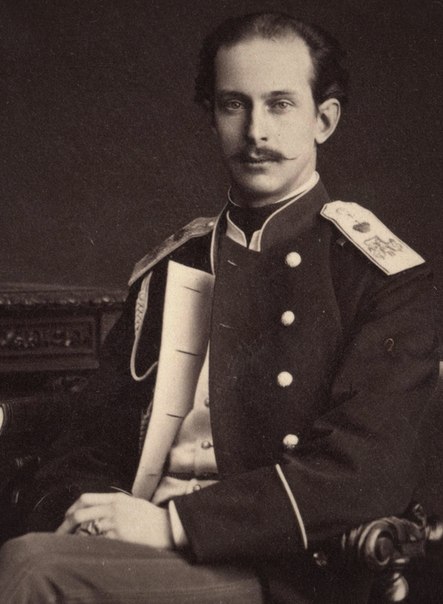
The last Prince of Orange until recent times was thus William III’s second son, Alexander, from 1879 to 1884. Quite unlike his older brother, he was more of an intellectual and very interested in politics. But he too died before his father, only a few years later of typhus, leaving a four-year-old half-sister, Wilhelmina. Wilhelmina was not called Princess of Orange, as her father the King held out for a few more years for a male heir. But when he died in 1890 she did succeed him as sovereign of the Netherlands, though not of Luxembourg, which insisted on males-only succession. Due to a Nassau family pact from many generations before, the Grand Duchy now passed to the House of Nassau-Weilburg, as we’ve seen above. Neither Wilhelmina’s daughter, Juliana, nor her grand-daughter, Beatrix, was called Princess of Orange—as far as I can tell—when they were heir to the throne. The tradition was revived for Beatrix’s son, Willem Alexander, when she became queen in 1980; he then broke with tradition and named his daughter Catharina-Amalia, Princess of Orange, when he ascended the Dutch throne in 2013.

the current Princess of Orange looking stunning in a recent royal event in Luxembourg (photo Chambre des Députés, cropped)

Princes of Orange: a Franco-German-Dutch family (part I)

If you had to choose the most trans-national princely dynasty in all of European history, who would you choose? I’d certainly go for the House of Orange-Nassau, the current royal family of the Kingdom of the Netherlands, who, if their history is looked at from a long perspective, are revealed to be a blended French (Provençal and Burgundian) and German (Rhenish) family who shifted their primary zone of operation to the Low Countries in the 16th century. Several sub-lineages retained a separate identity as princes of the German Empire in the 18th and 19th centuries including the House of Nassau-Weilburg who currently reign in the Grand Duchy of Luxembourg. To complete the total trans-national picture of this dynasty, we see cousins of the family that ruled the principality of Orange as powerful lords in Naples and Sicily in the 13th and 14th centuries, and even illegitimate branches established within the British peerage, as the earls of Rochford and Grantham in the 18th century. In the 17th century, you might ask: how is it that a family from Germany, whose sovereign status derived from a small enclave in southern France, now governed the United Dutch Provinces, and even briefly the kingdoms of England, Scotland and Ireland? This post will focus on the title ‘Prince of Orange’, and the ever-shifting dynasties that held it across the centuries (from Nice to Baux to Chalon to Nassau). I will leave the story of the House of Nassau itself and all its princely branches—and there are several!—for a separate post. In the end, we shall see that, although the current heir to the throne of the Netherlands, Catharina Amalia, is styled ‘Princess of Orange’, by strict lineal descent she is not the best claimant to the title.

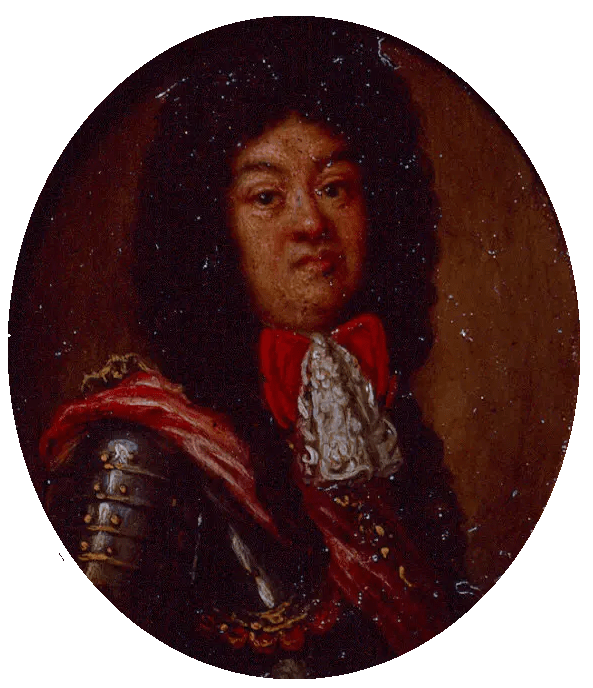
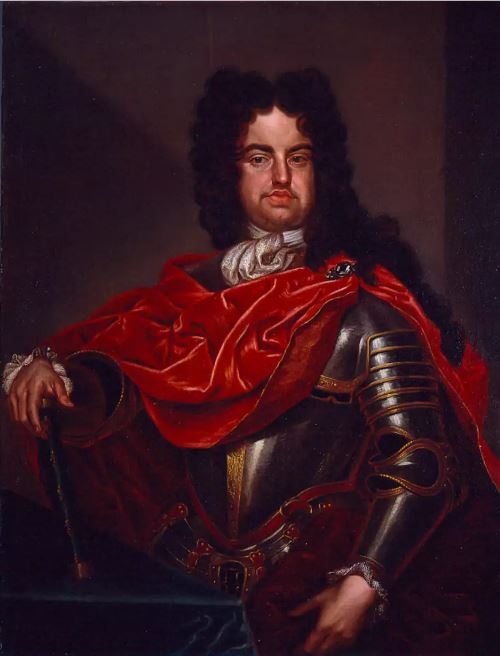
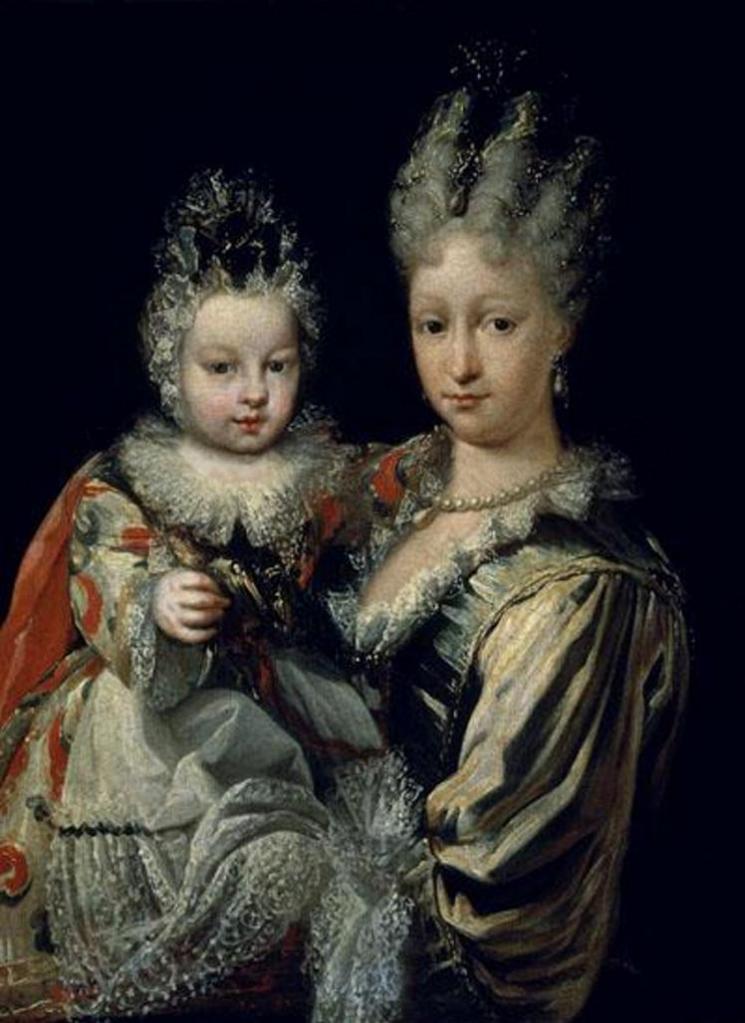
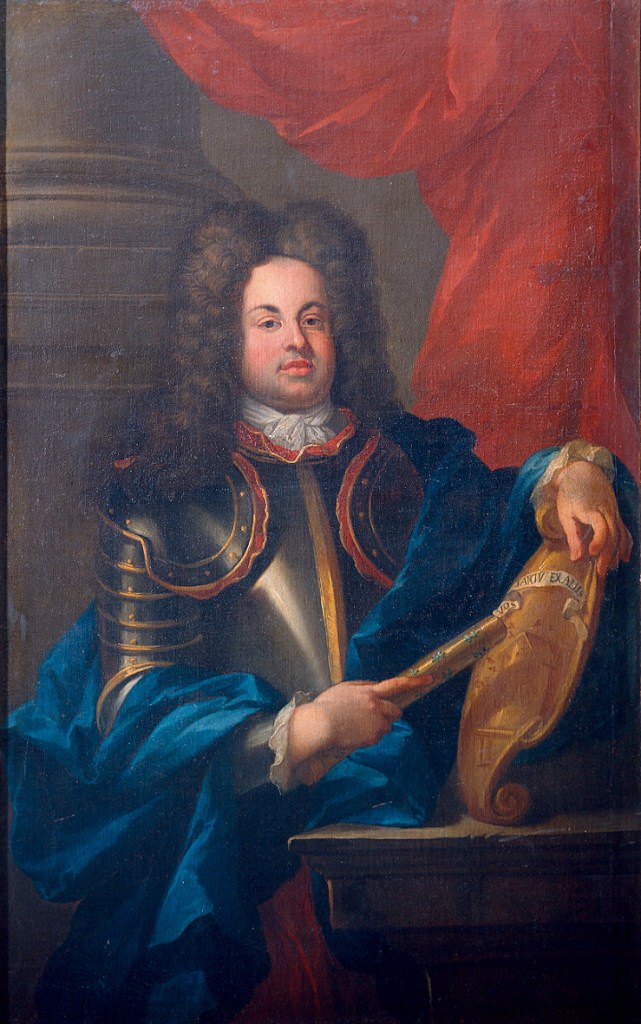
Five princes of Orange from the House of Nassau, from William I to William III (composite image, painted by Honthorst in 1662)

The Principality of Orange is one of the most interesting anomalies in European history: a fragment of an ancient kingdom that disintegrated in the 13th century; a tiny sovereign territory surrounded by French and Papal power; a Protestant enclave in a sea of Catholicism; an empty title claimed by French, Dutch and Prussian princes well into the modern age. And none of it has anything to do with fruit.

The orange fruit takes its name from Persian and Arabic words nārang/nāranj, and gave its name to the colour once it started to circulate in Europe in the late Middle Ages. The principality, and its chief town, takes its name—possibly—from a Celtic water god, Arausio, or maybe from a pre-Celtic word for ‘high place’. It was an important Roman town in south-eastern Gaul, with a grand theatre and a triumphal arch, both of which survive today. By the end of the 3rd century it was the seat of a Christian bishop, and hosted several important synods in the 5th and 6th centuries. When you walk its streets, it feels like an ancient place. The Roman name gradually morphed into Aurengie and later Orenga by the late 12th century.

an aerial view of Orange today, with the Roman theatre at left and the hilltop on which were built various fortresses and castles, but now is a wooded park (photo jeanlouiszimmermann)

After the fall of the Roman Empire in the West, the region of the Rhône Valley between the Mediterranean and the Alps was formed into the Kingdom of the Burgundians, a Germanic people who had come from the north and settled here in the 5th century. It formed one of the component kingdoms of the empire of the Franks, but by the 11th century ceased to be part of the emerging French kingdom of the Capetians and was instead part of the Holy Roman Empire. By the 12th century, Burgundy’s centre of power shifted to the south, to the city on the Rhône called Arles, which the Kingdom took as its name (and ‘Burgundy’ became associated with the lands much further north, as we know them today). The southern part of this kingdom maintained the old identification as the ‘Roman Province’ and we now simply call it Provence.

Provence emerged as an autonomous county as the Kingdom of Arles disintegrated in the late 13th century. France started to annex parts of it (Lyonnais, Vivarais, Dauphiné), while the Papacy established in the 1270s its own direct rule over a county (or ‘comtat’) in the Rhône valley known as the Venaissin, to which the city of Avignon was added in the 1340s. Within this comtat, the ancient city of Orange retained its own independence as the seat of powerful Frankish lords who resisted absorption into any of these polities.

A map of the Comtat Venaissin and the Principality of Orange in the 17th century, showing the city of Avignon and the Rhône along the right (note: North is at the bottom)

Who exactly these earliest lords of Orange were is a bit difficult to discern, as this is also the land of legends, particularly those recounted in song. The famous Provençal troubadours sing of a William of Orange, or Guillaume ‘au Court Nez’ (the short-nosed), who was a knight of Charlemagne, a grandson of Charles Martel, married a Saracen queen (Orable), defeated her son, Arragon, King of Orange, then founded and abbey at Gellone and retired there. He was later named a saint. It is also from this semi-mythical ancestor-hero that derives the very recognisable coat-of-arms of the princes of Orange, the blue hunting horn, or bugle, on a gold field. Though coats-of-arms did not formally emerge in Europe until the 1250s, it was possibly inspired by from a misreading of the name ‘au Court Nez’ as ‘au Cornet’, a small trumpet, or more likely, from the battle horns used by the Gauls as seen on the triumphal arch in Orange still today.

an ancient wax seal with Guillaume au Court Nez

The events of the legendary capture of Orange are meant to take place about 801, but the ‘Chanson de Guillaume’ did not appear until the mid-12th century and the events recounted are pretty much pure fiction. One of the most famous ‘prince-troubadours’ of 12th century, Raimbaut, Lord of Orange, maintained his own ‘Court of Love’, a centre of music and art, in one of the family’s castles, Courthézon, just outside the ancient city.

the Troubador-Prince, Raimbaut I

The connection between Guillaume ‘au Court Nez’ and Raimbaut d’Orange is tenuous, and the former is in fact more closely linked to the dynasty who ruled further west in Toulouse and Aquitaine, not in Provence. There were lords of Orange in the 9th century, but the first really traceable dynasty arose in the 10th century in the hills above the Rhône valley, at a castle called Mévouillon. Early members of this family rose to prominence by filling senior church roles, as was common for noble families of this era—it is the bishops who matter, and this family (according to medieval genealogies, which may be exaggerated) frequently held the sees of Vaison, Gap, Sisteron and even Avignon in the 10th and 11th centuries. One of the non-clerical members of the clan married a daughter of the local overlord, the Count of Provence, in 1012, and obtained the important post of vice-count of Nice. His son, Rambaut, also vice-count (or ‘vicomte’) of Nice became connected with Orange through marriage to an heiress of properties there, notably the aforementioned castle of Courthézon. This castle remained one of the primary seats of the dynasty (now referred to as ‘Orange-Nice’), but declined in the early modern period and was demolished in the 1760s. Today there are only vestiges of its medieval town walls.

remains of walls of Courthézon (photo jeanlouiszimmermann)

Raimbaut II took the title ‘Count of Orange’, and went on the first Crusade in 1096. He is said to have taken part in the siege of Antioch of 1098, and stayed in Palestine where he died sometime in the 1120s. A statue of him was erected in Orange in the 1840s, at the height of France’s renewed passion for medieval history. He too features in an epic poem, La Gerusalemme liberate, written by Torquato Tasso in the16th century.

Raimbaut II in Orange

Count Raimbaut had no sons, so his daughter, Tiburge, took over the rule of Orange, and was one of the first to use a ‘princely’ title. Some sources say it was recognised as a principality in 1163 by Emperor Frederick Barbarossa to act as a counter-balance to Papal power in this corner of the Empire. By the middle of the century, her family had already shed its connections with the city of Nice, and focused their energies on the city of Orange instead. The Princess expanded the town and rebuilt its château within the ruins of the old Roman castrum on the hill above the theatre. She married twice, to powerful local lords in the neighbouring provinces, first Dauphiné (Adhémar de Monteil) then Languedoc (Aumelas). Her son, Raimbaut, Lord of Orange and Aumalas, is the troubadour noted above (died 1173), but his sister and heir, Tiburge II (also known as Tibors), was also known as a poet and singer (a trobairitz, the female equivalent to a troubadour). In 1173, she married Bertrand des Baux, and another chapter starts in the history of the Principality of Orange.

The House of Baux was one of the grandest noble families in Provence. They took their name from their chief seat, the impregnable Château des Baux, which towers over the southern plains of Provence near Arles, built into the rocky outcroppings of the Alpilles. The Old French word baux (or Provençal baou) means cliffs or escarpment. There is evidence of a fort here as early as the 970s, but the current remains originate from the 11th century, when this family took over. Most of the castle was dismantled on orders of the King of France following one of the last pushes for independence by the people of Provence in the 1630s.

the remains of the Castle of Les Baux (photo BlueBreezeWiki)

There are various origin stories for the House of Baux: they claimed descent from King Balthazar (of the Three Wise Men), and some heraldry writers linked this to the use of the star in their coat of arms. Some theorise that the first known founding member, Pons the Younger, was a son of Pons de Marseille (d. 979), of the royal house of Arles, whose older son continued the line of vicomtes of Marseilles (an office similar to that of vicomte of Nice).

Certainly the family did put forward strong claims to rule either the County of Provence, or more widely the old Kingdom of Arles. Raymond-Raimbaud, Seigneur des Baux, was a contender for the throne of Provence in his wife Stephanie’s name (while her sister and rival, Dulcia, married Raymond-Berenguer of Barcelona, and would ultimately link the history of Provence to Barcelona and Aragon for several centuries) and fought for them in what became known as the Baussenque Wars (‘Wars of Baux’), 1144-62. Emperor Conrad III, as ‘King of Burgundy’, recognised Stephanie’s rights in 1145, and granted the couple the power to coin money in Arles. Peace was forged in 1150 in Barcelona (where Raymond-Raimbaud died), but was soon broken by their son Hughes, who was once again recognised as ‘Count of Provence’ (or even as ‘King of Arles’) by Emperor Frederick I in 1155, to little effect. It was into this conflict that Princess Tiburge II brought the wealth and power of the House of Orange through marriage to Hugh’s younger brother, Bertrand, who soon made peace by recognising King Alfonso of Aragon as Count of Provence, and became as a result one of his chief advisors in the region. In return, his and his wife’s sovereignty in Orange was recognised (some sources say formally by the Emperor in 1181, but I’ve not seen any proof of this).

arms of Les Baux and Orange together

Subsequent generations nevertheless used the title ‘prince’ to indicate that they were direct vassals of the Emperor, not of any of their neighbouring princes, though they did hold lands as fiefs of both the Count of Provence to the south and the Dauphin of Dauphiné (or the Viennois) to the north. It is this vague intermediate status between these competing powers that allowed them to maintain their autonomy.

Bertrand de Baux and Tiburge d’Orange had several sons. The eldest, Hugh, received the fortress at Baux and married an heiress of the viscounty of Marseille in about 1200. The second, Bertrand, was given large lordships in Provence (notably Meyrarges and Marignane in the area outside the cities of Aix and Marseille). The third, Guillaume, succeeded as Prince of Orange in 1182. Like his mother and uncle, he too was known as a troubadour. In 1215, at Metz, Emperor Frederick II offered him all of the ancient Kingdom of Arles and the Viennois (aka Dauphiné), again as part of the long-running rivalry between emperors and popes for control of the Rhône Valley. But by 1216 Guillaume was in prison in Avignon, where he died—his descendants continued to claim the kingdom of Arles as late as the 1390s.

troubadour music from the 12th/13th century: the first track is by Raimbaut de Vaqueiras, who learned his craft at the court of Guilhèm del Bauç (Guillaume des Baux)

Guillaume’s son, Raymond I was prince of Orange for many decades, and ruled jointly with his brothers, then their sons and grandsons—as was practice for many of these fiefs in Provence, like most parts of the Empire. Until the 1340s all of them used the title ‘Prince of Orange’ and rule was shared by all males in the family.

Seal of Raymond des Baux, Prince of Orange

But by the 1240s, the landscape of Provence shifted dramatically once more, and the House of Baux was deeply affected. The last Count of Provence from the House of Barcelona died in 1245, leaving only daughters. The eldest and youngest of these were married to the King of France and his brother Charles of Anjou, while the middle two were married to the King of England and his brother Richard of Cornwall. You can see a clash coming. The late Count’s will left Provence to the youngest, Beatrice. so in 1246, she and her husband set out to establish their court in Aix. In 1257, the Prince of Orange ceded his family’s old claims to the Kingdom of Arles to Beatrice and Charles, and peace was maintained. But Charles of Anjou’s ambitions lay further south in Italy, and the House of Baux was pulled along with him to Naples and Sicily. A new pope, with roots in the south of France, was elected in 1265: Clement IV invited Charles to take the throne of Sicily, to drive out the Germans. By 1266, he had taken over both kingdoms of Naples and Sicily, and installed a large number of Provençal lords in his new government, including those of the elder two lines of the House of Baux (Hugh and Bertrand’s sons) and the younger line of Orange as well. Hugh’s son Barral, Vicomte de Marseille, was the Podestà of the Army of Charles d’Anjou in his conquest, and was named Grand Justiciar of the Kingdom of Sicily.

The story of the House of Baux in southern Italy, where they adapted their name to Del Balzo, is dramatic and stormy, but will be told in a separate blog post. They soon became leading members of the Neapolitan nobility, first as Counts of Avellino, in Campania (the region around Naples), from 1272; then Counts of Soleto, in Puglia (the ‘heel’ of Italy) from 1299, and later as Dukes of Andria, 1373 (the first ducal title in the Kingdom of Naples). Several of them held the highest offices of the Kingdom, from Grand Justiciar to Grand Admiral and even Regent. The Del Balzos married members of the ruling Angevin dynasty itself, and briefly held titles Prince of Taranto and Achaia (in Greece), and Lord of Albania (and a purely titular title, ‘Emperor of Constantinople’)—in Balkan history they have yet another surname, the Balschides, or the House of Balscha. The eldest line (Avellino) died out in the early 15th century, followed by the dukes of Andria following a stunning double murder of brothers in 1487. A cadet branch continued the ducal family of Del Balzo into the modern era, with dukedoms created on fiefs at Schiavi, Caprigliano and Presenzano (created in the 17th and 18th centuries—the latter two continue at present).

Returning to Provence, the branch of the family that remained at Orange accumulated more lordships in the region through good marriages to local heiresses, as well as lordships in the neighbouring provinces of Languedoc (integrated into France in the 1200s) and Dauphiné (not part of France till the 1350s). Prince Raymond V worked to expand the economy of his principality, especially in its wine trade, and founded a university in 1365, officially sanctioned by Emperor Charles IV, who had come to the region to be crowned King of Arles. The University of Orange would function until 1793 (having become a Protestant university in the 1570s, then Catholic again from the 1720s), when it was closed by the Revolutionary authorities. Back in the 14th century, Raymond V fell foul of the Angevin regime of Queen Giovanna of Naples (aka, Jeanne, Countess of Provence). His ties with the Empire angered her (as did his marriage to the daughter of another imperial prince in the region, the Count of Geneva), and in 1366, she demanded he do homage to her for Orange, which he refused to do. She temporarily confiscated his lands in Provence, but returned them by 1370. After Giovanna’s death in 1382, she was succeeded by her cousin, Louis of Anjou, and the Prince of Orange once again asserted his independence through the marriage of his only daughter and heir, Marie, to a member of the Burgundian nobility, Jean de Chalon, Lord of Arlay. The House of Chalon were vassals of the Duke of Burgundy who was a great rival of his brother Louis of Anjou, so when the Prince of Orange died in 1393, his vast estates in Provence thus passed into a rival political camp. And so we need to switch families once again, and look at the House of Chalon.

seal of Jean de Chalon-Arlay

The Lords of Arlay were a junior branch of the counts of Chalon who were themselves a junior branch of the counts of Burgundy, one of the two successor states that formed in the north when the ancient Kingdom of Burgundy disintegrated in the 10th and 11th centuries. The overall family, one of those super-clans that medieval genealogists love to piece together, is known either as the Anscarids or the House of Ivrea, and they gave Europe not just this powerful Burgundian ruling clan, but also several kings of Italy in the 10th/11th centuries, and even spawned the royal dynasty of Castile and Leon in the early 12th century (known as the Casa de Borgoña), which went on to rule Aragon as well (as the House of Trastamara) until the early 16th century. The founder of this super-cluster, Count Anscar, came from a region of Burgundy near Dijon, and in the 880s, he and his brother Fulk, Archbishop of Reims, tried to install their kinsman, Guy of Spoleto, on the Frankish throne. Failing that, Anscar went with Guy to Italy where the latter was crowned King of Italy in 889, and in thanks, the new king created Anscar margrave, or marcher lord, of Ivrea, a town that guarded the important passes across the Alps from France into Italy.

The next three generations of Anscarids increased their hold over northern Italy, and several were crowned king. The last of these, Adalberto, was deposed by the Emperor Otto in 961, and retreated to his wife’s estates back in Burgundy. There is some confusion around Gerberga’s identity and possessions, but ultimately her son Otto-William inherited the County of Mâcon, one of the southernmost districts of what was now formally the Duchy of Burgundy, part of the Kingdom of France; and the lordship of Besançon, one of the chief towns on the far side of the River Saône, a river that divided Burgundy into east and west. In about 972, Gerberga remarried Henri, Duke of Burgundy, the brother of the King of France, who adopted her son as his heir, and although Otto-William was unable to successfully claim the Duchy of Burgundy, he was able to use his connections to the Emperor in Germany to proclaim his lands east of the Saône—those around Besançon—as its own separate County of Burgundy. In later generations this county even asserted its independence from the Empire, and earned the nickname ‘Free County’, which stuck, and to this day, this region of France is known as the ‘Franche-Comté’.

Otto-William’s elder son, Guy, founded a line of counts of Mâcon, which lasted for a century; the second son, Renaud, continued as Count of Burgundy. Renaud’s grandsons might be called the ‘greatest generation’ of this family: the eldest, Renaud II, died on the First Crusade, in 1097, as did the second son, Etienne I ‘Tête-Hardi’ (‘Headstrong’) in 1102; the third son, Raimond, went to fight the Moors in Spain and in 1087 married Princess Urraca of Castile and Leon and was named Count of Galicia. His sister, Berta, was possibly one of the later queens of Urraca’s father, Alfonso VI, but this is uncertain. Urraca herself later became Queen of Castile, Leon and Galicia in her own right, and her and Raimond’s son Alfonso VII founded the House of Burgundy in Castile, as above. But this Burgundian ‘greatest generation’ had two more brothers: Hugues, whose election to the see of the Archbishopric of Besançon in 1085 helped solidify this region’s independence from the rest of Burgundy (and thus France); and Guy, who was Archbishop of Vienne from 1088, then elected Pope Calixtus II in 1119. Pretty good for one generation of fairly middle-ranking nobles.

The main line of counts of Burgundy continued for a few more generations, then passed the County by marriage to the Emperor, Frederick Barbarossa, in 1156 (and then on to other families, notably Merania, see below). A younger branch ruled the County of Mâcon and added the County of Chalon, a bit to the north, by marriage in 1186. Chalon-sur-Saône was an ancient capital of the Celtic Aedui people, and was given the name Cabillonum by the Romans (probably from the Gallic word for horse). It later became one of the capitals of the ancient Kingdom of Burgundy, from the 6th century, an early seat of a Christian bishop, and remained one of the most important towns and crossroads at the centre of the Duchy of Burgundy. It formed a separate county from the late 8th century.

the division between the duchy and the county of Burgundy, with Chalon on the Saône

The most famous member of this new House of Chalon was Jean I, known either as ‘the Old’ or ‘the Wise’. In 1236 he arranged the marriage of his eldest son Hugues to Adelaide of Merania, Countess of Burgundy, and began calling himself Count of Burgundy once more, though really he ruled it in his young daughter-in-law’s name. A year later, he ceded the County of Chalon and other properties on the right bank of the Saône (ie, in ducal Burgundy) to the Duke of Burgundy (his father-in-law), and in exchange received the lordship of Salins, in the Free County of Burgundy, and several other important castles. Salins was one of the most important sources of salt in the region (hence its name, from sel in French) and brought him vast wealth. He and his descendants were allowed to keep the title ‘Count of Chalon’ though they no longer possessed it.

one of the ancient salt manufacturies in Salins (photo Christophe Finot)

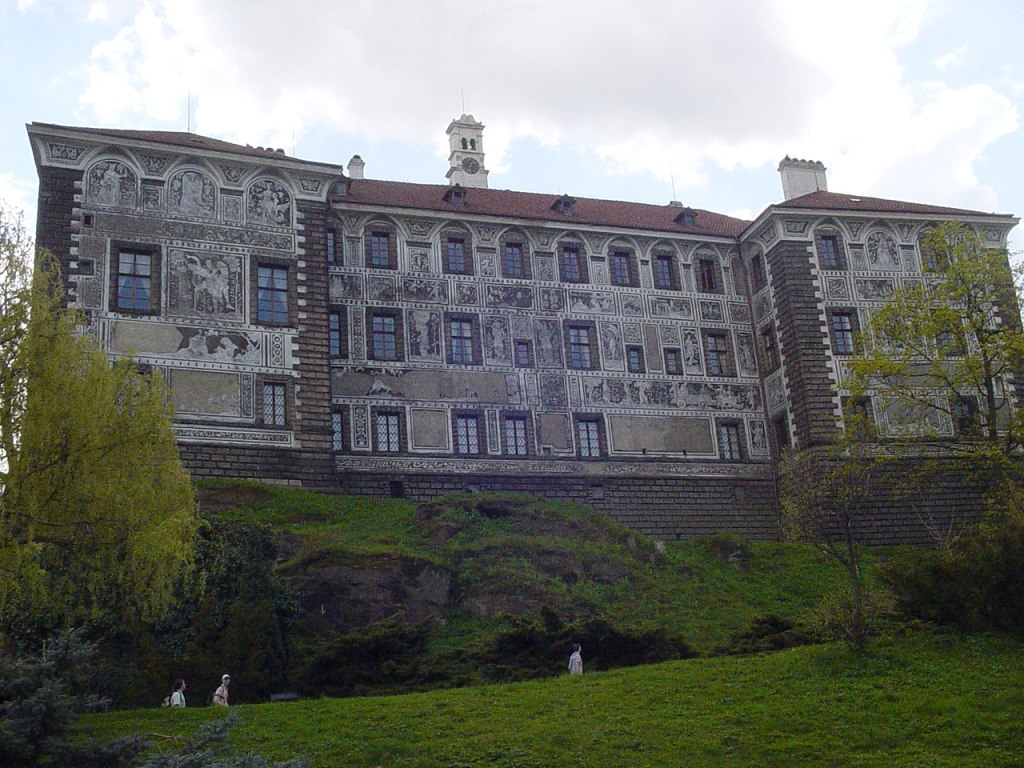
Jean de Chalon purchased forests on the slopes of the Jura mountains in the eastern parts of the County to supply fuel for the saltworks, and built the château of Nozeroy halfway between to serve as a fortified residence from which to watch over the roads for the supply and the trade with nearby districts. It became the dynasty’s principal residence and is known as the ‘Pearl of the Jura’. It was rebuilt on a grander scale in the 1430s by Prince Louis de Chalon (see below), and would be the main seat of the court of the princes of Orange in the 15th century. It was grand enough to host the meetings of the local estates of Franche-Comté. In the 16th century, however, the family base was moved to Arlay, and Nozeroy was mostly dismantled.

reconstruction drawing of Nozeroy

The House of Chalon thus reclaimed the title ‘Count Palatine’ (a count with semi-royal powers) of Burgundy, but not for very long. Jean the Old’s great-grandson Robert died in 1315 as a teenager, and his sister Jeanne took the County in marriage to the House of France, as queen-consort to Philip V. For good measure, her sister Blanche had married the King’s younger brother, Charles, who succeeded him as king. Both sisters were caught up in the Tour de Nesle Affair of 1314; Blanche was found guilty of adultery and Jeanne of being complicit in it.

By this point there were several cadet branches of the House of Chalon: one line were counts of Auxerre and Tonnerre (in the northwest borderlands of the Duchy of Burgundy) until 1424; another were lords of Montaigu (in the southern part of the County of Burgundy) until 1373. Still another was founded by Jean, one of the youngest of the (many) sons of Jean ‘the Old’. He was born from a third marriage, and while a younger brother, Hugues, was given a great position in the church—first as Prince-Bishop of Liège, 1295, then as Prince-Archbishop of Besançon, 1301—Jean was married to a daughter of the Duke of Burgundy (Hugues IV) who brought as a dowry the lordship of Viteaux in the Duchy, and he was given military command over his brother’s episcopal territories in Liège. Jean was also given one of his father’s newer castles, Arlay, which became his seat.

Arlay had been a Roman town and later a centre of settlement of the Burgundian tribes, situated as it was on an important salt road where it crossed the river Seille (pretty much right in the very centre of the Free County). Its ancient fortification was rebuilt as a château by Jean ‘the Old’ and remained a family stronghold until its destruction was ordered by the French king in 1637. A later château of Arlay was built in the 18th century at the foot of the hill by the heirs of the Chalon family, first Gand-Villain, then Brancas-Lauragais (and the castle is sometimes called the château Lauragais), then the Arenbergs in the 19th century, and today is held by the counts of Laguiche, who maintain one of the most prized vineyards in the region.

the ruins of Arlay, above the vineyards (photo M.Minderhoud)

Jean I de Chalon-Arlay’s second son, Jean, maintained the family connection with the high episcopacy, first as Prince-Bishop of Basel, 1325, then Bishop of Langres, one of the six ecclesiastical peers of France. The family then kept a fairly low, regional, profile until 1386 when Jean III, Lord of Arlay, married the heiress Marie des Baux, Princess of Orange, from above. He added her vast patrimony to his own, and quartered her arms with his (her blue cornet on gold; his gold band on red), but they also added an escutcheon for the County of Geneva (gold and blue checks) which she claimed through her mother. They never took over the lands of the Counts of Geneva (mostly to the south of the city and lake), which were sold by the other heirs to the dukes of Savoy in the early 15th century.

Chalon arms quartered with Orange and Geneva overall

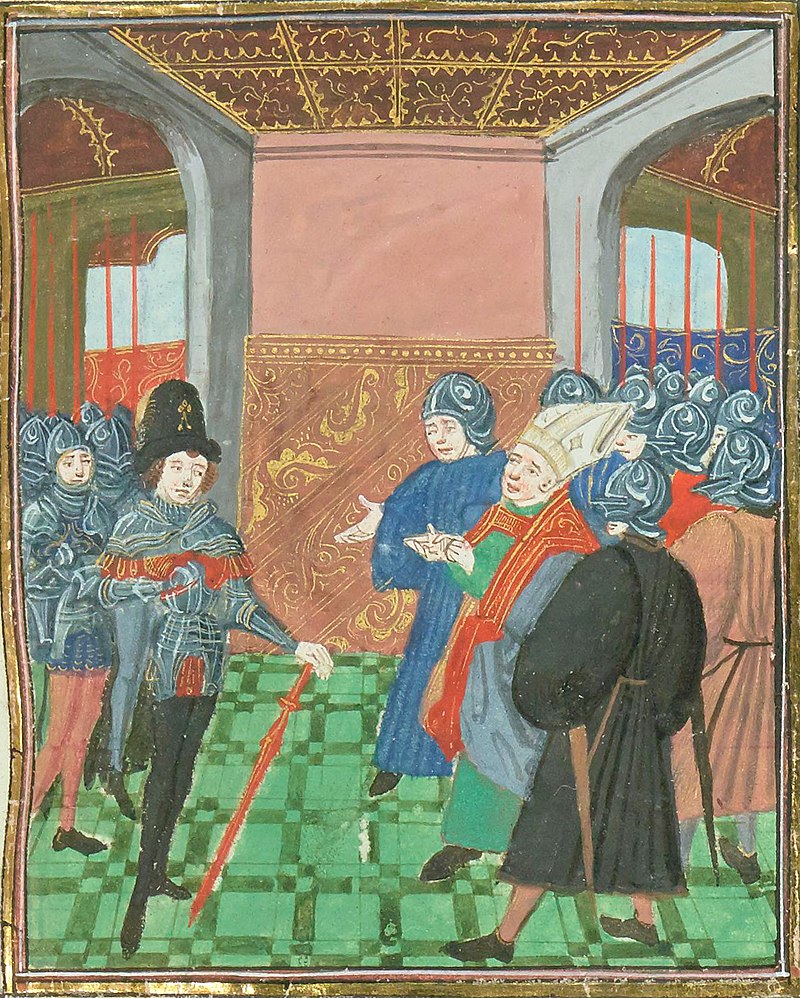
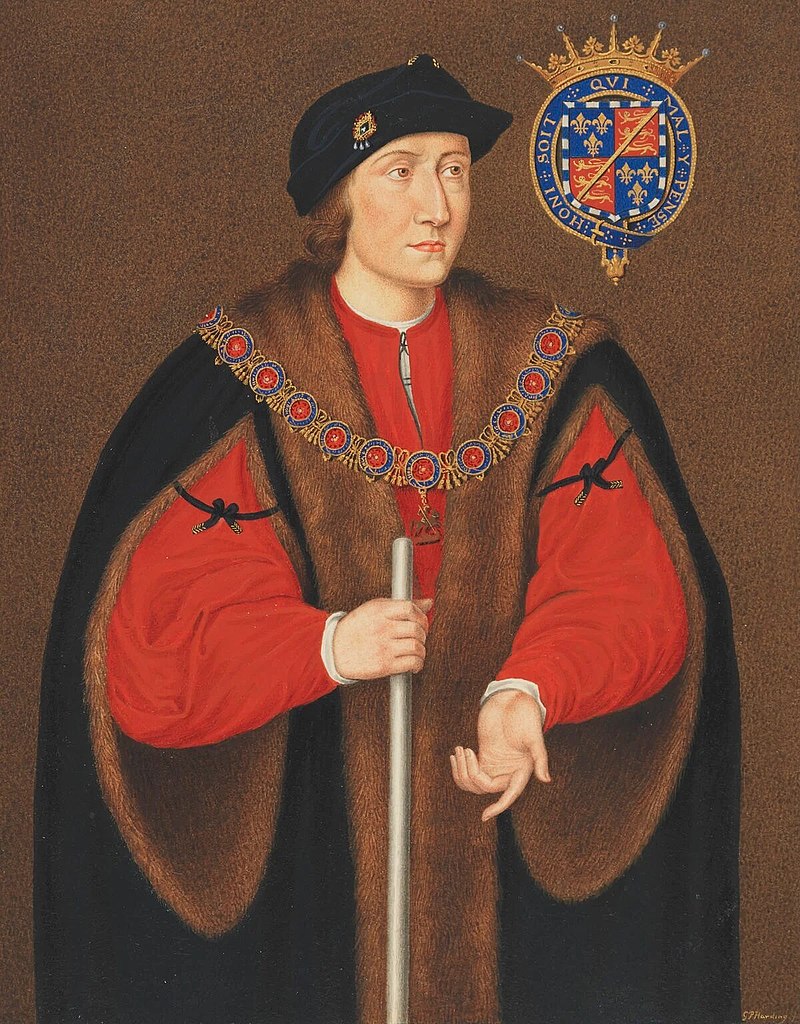
The princes of Orange were thus now firm allies of the dukes of Burgundy (who were by now the counts of Burgundy as well). In the first decades of the 15th century, Jean and Marie’s son, Louis de Chalon, Prince of Orange, led troops against the Duke of Burgundy’s rivals, the Armagnac party (or supporters of the Duke of Orléans) in the far south of France, and against the Countess of Holland in the Low Countries. He also fought for his mother’s rights to the County of Geneva, and failed, and also fell foul of the Duke of Burgundy when he was appointed Vicar of the Empire in the County of Burgundy by Emperor Sigismund, which the Duke saw as an encroachment on his own rights there. When Louis de Chalon retired from politics in 1435, he was trusted by no one, and a will he made before he died in 1463 managed to confuse the succession for future generations by naming the children of his second marriage over those of the first. At the time, this was ignored, but we will return to it later.

Louis de Chalon, Lord of Nozeroy, a younger son of Prince Louis, in the robes of the Order of the Golden Fleece

The eldest son and heir, Guillaume VII, Prince of Orange, left a much more impressive legacy. As a warrior he accompanied Charles, Duke of Orléans, in his conquest of Milan in 1446, then in the 1460s fought with Charles the Bold, Duke of Burgundy, in his war against Liège. He abandoned his Duke at a key moment, however, and his lands in Burgundy were temporarily confiscated. Therefore focusing on his lands in Provence, he re-organised the government of the Principality of Orange, and notably, in 1470, created a separate supreme law court, or parlement. This was annoying to the French king, Louis XI, whose jurisdiction in the region—through the Parlement of Grenoble—was threatened. When Guillaume de Chalon joined his brother-in-law, François II, Duke of Brittany, in fighting to maintain Breton independence, he was defeated in battle by French troops, and arrested by the King’s agents. He was held for two years in a royal prison in Lyon, until in 1474 he agreed to swear allegiance to the King of France for his principality, agreed to submit his Parlement of Orange to the jurisdiction of the Parlement of Grenoble, and to pay a ransom of 40,000 gold écus. He was allowed to retain regalian rights, such as coining money and pardoning criminals, as well as the right to use ‘gratia dei’ on his seals and coins (as if he was a sovereign). Jurists at the time argued that this recognition of French suzerainty was legally invalid, since Orange had always been a vassal of the Count of Provence, which in 1474 was still independent of the French Crown (but only for another 6 years, as it turned out). In any case, Guillaume VII died a year later.

coinage for the principality of Orange, possibly from era of Guillaume VII

His son, Jean II (or Jean IV of Chalon-Arlay), not only Re-asserted his independence as Prince of Orange but also reclaimed the family’s lands in the Free County of Burgundu after the death of Charles the Bold, Duke of Burgundy (killed in battle in 1477). He stayed loyal to the heiress of the late Duke, Marie of Burgundy, and worked with her new husband, Maximilian of Austria, to keep Burgundy from falling entirely into the hands of the French king—for which his estates were confiscated again and he was legally hanged in absentia. Maximilian then sent Orange to the court of his uncle, François II, Duke of Brittany, to help the Austrian archduke (now a widower) obtain the hand of the Breton duke’s heir, Anne. Jean de Chalon helped his uncle put down an internal rebellion in Brittany and was awarded some lordships there, including Lamballe. Anne of Brittany’s marriage was hotly contested, and Jean himself was at one point considered, as he was himself heir presumptive to the still independent duchy. To boost his claims, he added the Breton ermine pattern to his coat-of-arms. He soon added another heraldic quarter, the red lion of Luxembourg, due to his marriage in 1483 to a different heiress, Philiberte de Luxembourg-Ligny, whose family links were very much aligned with those of the House of Chalon, as long-time intermediaries between France and the Holy Roman Empire. Philiberte brought as her dowry the County of Charny, a significant fief in the Duchy of Burgundy, thus augmenting those of the Chalon-Arlay on the other side of the Saône in the Free County.

the arms of Jean II de Chalon, Prince of Orange, which add Brittany in 2 quarters and Luxembourg overall

After Duke François’ death in 1488, the Prince of Orange stayed in Brittany to aid his young cousin Anne as a member of her ruling council. Facing defeat by the forces of the invading King of France, in 1491, he negotiated her marriage with the King (Charles VIII) to secure the peace. In the marriage contract, he renounced his own claims to the succession to the Duchy and was promised 100,000 livres and the job of Lieutenant-General of Brittany, a position he maintained until his death in 1502.

A son, Philibert, was born only three weeks before his father’s death. After leaving his mother’s tutelage, he tried to maintain his family’s precarious balance between French and Imperial power, between loyalties to the Valois and Habsburg dynasties. So it is perhaps ironic that he was the originator of the motto of the princes of Orange, ‘Je maintiendrai’ (‘I will maintain’), still used today by the royal family of the Netherlands. The original motto, however, was ‘Je maintiendrai Chalon’ which makes a bit more sense if you study the border nobility as I’ve done these past few decades: the one thing that trumps loyalty to any of the great powers is loyalty to your own dynasty—family was everything.

Philibert de Chalon, Prince of Orange

When Philibert de Chalon was about 20, he supposedly received a rude reception by King François I of France when he went to his court to complain about French raids into his territories in Orange. As a result of this snub, by 1523 he was firmly in the enemy camp, supporting Emperor Charles V’s campaigns, first against the remains of the Kingdom of Navarre in the Pyrenees, then leading troops in an invasion of the old family homeland, Provence, in 1524. The Prince of Orange took command of the Imperial armies besieging Rome in 1527, and forced the Pope to capitulate to the Emperor’s demands. In gratitude Charles V named the Prince Governor and Captain-General of Naples in 1528, but he died only two years later in the Battle of Gavinana, leading Imperial troops against the city of Florence. He was fatally shot in the chest by two arquebus balls; aged only 28.

Philibert de Chalon’s sister Claude had married another of Charles V’s generals, Heinrich III, Count of Nassau-Breda, who also fought in the Italian Wars, and whose family similarly had a history of walking the tightrope between Habsburg and Valois power in the border zones between France and the Empire. Claude predeceased her brother, but her son, René of Nassau, as principal heir, was charged with taking on the name and arms of the House of Chalon, which he did. But before we move forward to his story, we need to back up one last time and see how the House of Nassau, an ancient dynasty from the Rhineland, became so deeply entwined with the history of the Low Countries. (TO BE CONTINUED)

Rene de Chalon, or Rene of Nassau, Prince of Orange

The Howards: Premier peer of the realm as Duke of Norfolk and Earl Marshal

One of the two hereditary posts remaining amongst the Great Offices of State in the United Kingdom is the Earl Marshal, held continuously by the Howard dukes of Norfolk since the late 17th century, and even before that, off and on since the late 15th century. Even earlier, it was a post inherited by their ancestors, the Mowbrays, and via a side-step, the Bigods and the Marshals of the early 12th century, whose very surname indicated the office they held. His office is symbolised by a golden baton with black tips. After 1660, the Howards held the premier non-royal peerage in England: the dukedom of Norfolk. Yet for many years successive dukes were not able to take up their seats in the House of Lords, nor exercise their duties as Earl Marshal. For not only were they the premier peers of the land, they were also the leading recusant family in England, steadfast to the old faith of Rome.

the 18th Duke of Norfolk as Earl Marshal at the funeral of Elizabeth II, September 2022 (photo Annabel Moeller for the House of Lords)

There are many, many, branches of the Howard family. Overall today they hold, besides the dukedom, 7 earldoms and 14 baronies (six of them held by Norfolk himself). The family tree includes a saint and two cardinals, plus two queens: Catherine Howard and Anne Boleyn if we count her as having a Howard mother. Besides well-known castles held by the ducal branch, there are some of the finest country houses in Britain built by the cadet branches: Audley End (the earls of Suffolk), Castle Howard (the earls of Carlisle), and numerous others. This post will focus solely on the main, ducal line, and the office of Earl Marshal.

The Earl Marshal of England (and since the 19th century of the United Kingdom) organises grand state functions, most notably royal funerals and coronations, as well as the State Opening of Parliament (in conjunction with the Lord Great Chamberlain). He oversees the College of Arms, the body that regulates the use of heraldry in the United Kingdom, and sits as judge of the High Court of Chivalry—very active in the 17th century, but dormant since about 1750, with one or two notable exceptions. There were similar offices for the kingdoms of Scotland (the Keith family, Earl Marischal, until attainted as Jacobites in 1715); and of Ireland (until 1697). Today the Lord Lyon performs the function of regulator of heraldic affairs north of the border in Scotland.

the High Court of Chivalry in 1809

A marshal was initially a king’s stable master, in charge of keeping his horses in order and overseeing the army of equerries and grooms who worked in the royal stables. He was initially junior to the comes stabuli, the lord of the stables, the Constable. The Germanic words marha schalk (horse keeper / servant) first moved into French, as maréchal, which became a term for a military commander, which then moved back into German and English. In France in particular, the top commanders of the army were known as Marshals of France; while in Germany, the head of the royal household became known as the Hofmarshall (with similar words used for the Danish and Swedish courts), more equivalent to the English Lord Steward. It’s interesting to see how this word evolved in so many different directions. In England, a separate office evolved, Master of the Horse, from the 14th century, when the job of Marshal of the King’s Horses became devoted instead to regulating court ceremonial and elements of chivalry, and became known simply as the Lord Marshal.

An early Anglo-Norman lord, Gilbert, served in the English royal household as Royal Serjeant and Marshal to Henry I. When he died in 1129, his office was given to his son, John FitzGilbert. He began sometimes to use Marshal as a surname. His elder son John succeeded him as the King’s Marshal and was in turn succeeded by his younger brother in 1194: William Marshal (or sometimes ‘the Marshal’) was one of the most prominent nobles of the reigns of Henry II, Richard I, John I and Henry III, for whom he served as regent in his early years, famously known as ‘the best knight that ever lived’, and rewarded with an earldom, Pembroke, in 1199. His family rose and fell with great speed—the earldom of Pembroke passing through all five of his sons in turn—and the office of Lord Marshal (or Marshal of the Court) passed via his daughter to the Bigod family, great landowners in East Anglia.

the arms of William Marshal

Roger Bigod was a Norman lord who established his family in Norfolk, near the town of Thetford where he founded a priory. In about 1100 he was given permission by the king to build some castles just across the border in Suffolk, notably Bungay on the river Waveney, and Framlingham a bit further to the south. Bungay retained its form as a fortress for centuries, seized by the crown in about 1300, but given to the Howards in 1483, who kept it until the 20th century—until it was given to the town as a castle ruin in 1987. Framlingham, on the other hand, was transformed by the Bigods into a proper dynastic seat by the 13th century, and continued to be expanded and modernised by subsequent owners in the Mowbray and Howard families in the 15th and 16th centuries. As the main seat of their power, Howards expanded the park, added a mere or lake, and re-clad its facades in more fashionable brick. But it was confiscated several times in the tumultuous Tudor century—and perhaps ironically, or deliberately, served as a prison for Catholic priests and recusants under Elizabeth I in the 1580s—until it was returned, mostly derelict, by King James in 1613. One of the Howard cadets, the Earl of Suffolk, sold the castle in 1635, and in 1636 it was given to Pembroke College, Cambridge, who built workhouses within its crumbling walls. In 1913 Framlingham Castle was given to the state and today is looked after by English Heritage.

Bungay Castle (photo Scott Anderson)
Framlingham Castle (photo Squeezyboy)

The Bigod family died out in 1306, and their lands defaulted to the Crown. Edward II then bestowed the estates and castles to his brother, Thomas of Brotherton, who was then created Earl of Norfolk in 1312, and Lord Marshal—now called ‘Earl Marshal’—in 1316. He was ultimately succeeded by his daughter, Margaret of Brotherton, Countess of Norfolk. Interestingly, she seems to be the only woman to have held the office of Earl Marshal, and was held in such esteem by Richard II that she was created Duchess of Norfolk in 1397, but died only a year and a half later. Her sons from two marriages having predeceased her, she too was succeeded by a daughter, Elizabeth de Segrave, 5th Baroness Segrave, who took all these properties in East Anglia—and the precious royal Plantagenet blood of her grandfather in her veins—by marriage into the House of Mowbray.

Thomas of Brotherton, Earl of Norfolk and Earl Marshal (here ‘Thomas comte marechal’)

The Mowbrays, another Norman noble family, were established primarily further to the north, in Lincolnshire and Yorkshire. But from 1349 John, 4th Baron Mowbray, was married to the Segrave heiress, whose lands were based in the East Midlands, and in 1383 their son Thomas succeeded to both baronies, then rose in rank as Earl of Nottingham, and was appointed Earl Marshal, before being created Duke of Norfolk alongside his grandmother in 1397.

Thomas Mowbray is named Earl Marshal by Richard II

Thomas Mowbray soon quarreled with the King, however, the title was rescinded in 1399, and he died in exile, but the title was restored to his son John in 1425. Two more John Mowbrays succeeded as dukes of Norfolk in the 15th century, with Framlingham Castle as their chief centre of operations. As close kin to the Plantagenets, they sometimes quartered their Mowbray white lion on red with the Brotherton arms, that is, the three gold lions of England on red, with a white (or silver) three-point label at the top which indicates a junior branch. Sometimes they used just the Brotherton arms alone, a real indication of proximity to the throne and royal power.

Brotherton arms, as borne by Thomas Mowbray

In 1476, the 4th Duke of Norfolk died leaving just a daughter, Anne. Two years later, aged only 5, she married Richard, Duke of York, the younger son of King Edward IV. They were re-created Duke and Duchess of Norfolk. But she died in 1481, and he disappeared into the Tower in 1483—a new king, Richard III, was proclaimed. One of the Mowbray co-heirs, Viscount Berkeley, had already been paid off, but the other coheir, Sir John Howard, a son of Margaret Mowbray, secured the vast Brotherton-Mowbray-Segrave succession due to his support of Richard’s usurpation. The Howards would hold on to this position of close proximity to the royal family—for good or ill—for the next several centuries.

But the Howards themselves did not have a long pre-eminent noble pedigree. Unlike almost all other magnates at court, they had no pretensions to Norman antecedents in the male line. So they wove alternative origin stories, and made themselves sound much more English—not Norman—as descendants of Anglo-Saxon warriors. An early claim put forward in the 16th century was that they descended from the Howarth family, landowners in Rochdale in Lancashire (or perhaps Hawarth in Yorkshire). It was conjectured that this name came from haga worth, a settlement near a hawthorn hedge. One Osbert Howard de Haworth was Keeper of the King’s Buckhounds in the 12th century and was thought to have been an ancestor. Later genealogists, especially in the 19th century, tied the Howards to a much older progenitor, Hereward the Wake, a folk hero outlaw who lived in the 11th century and famously tried to defend East Anglia against the Norman invasion. His name suggests a Germanic warrior (a here ward, a leader of men). Some genealogies have linked him to the Mercian royal family, or to Oslac an Anglo-Saxon ealdorman of York. Modern researchers have proposed instead he was related to Danes, as nephew of Brand, abbot of Peterborough, one of the chief sites defended by Hereward in about 1070.

Either of these are of course possible. According to records, however, the first identifiable ancestor is Sir William Howard, a prominent lawyer and judge from the area near King’s Lynn in Norfolk, who rose to prominence in the 1270s and was named one of the justices of the Common Pleas in 1297. He held lands in Wiggenhall, just south of Lynn, and purchased the nearby manor of East Winch in 1298. His first marriage solidified his social rise, by connecting him to the family of Ufford, magnates from Suffolk (and soon to be created earls of Suffolk, 1337). Their son was named Sheriff of Norfolk and Suffolk and Governor of Norwich, and obtained a position at court too, as Gentleman of the Bedchamber of Edward I. He moved the family even closer to royal circles by marrying Joan de Cornwall a daughter of an illegitimate son of Richard, Earl of Cornwall, younger brother of Henry III.

Sir William Howard, drawn from a stained glass window in East Winch

As the 14th century progressed, the Howards continued to accumulate lands in Norfolk, Suffolk and Essex, and served as MPs or in the military. Sir Robert Howard fought with the 2nd Duke of Norfolk (John Mowbray) in France, and became his brother-in-law in 1420. It was his son, John, who scooped up his mother’s vast inheritance (and importantly the right to bear the royal arms of England) and was named Duke of Norfolk in the summer of 1483. He had already served as Earl Marshal, as a deputy for his Mowbray cousin at a tournament in 1467. A loyal Yorkist, he was named Treasurer of the Royal Household by Edward IV in 1468, and a member of the King’s Council, then raised to the peerage as Baron Howard in 1470, and even a Knight of the Garter in 1472—a key sign of royal favour for someone not quite yet of magnate status. Once he inherited the Mowbray lands in 1483, John Howard was therefore also Baron Mowbray, Baron Segrave, and Earl Marshal in his own right. He acted as Earl Marshal at the funeral of Edward IV and the coronation of Richard III, where he bore the royal crown and his son (created Earl of Surrey in his own right at the same time) carried the Sword of State.

John Howard, 1st Duke of Norfolk

The first Duke of Norfolk had been born and raised at Stoke by Nayland, one of the newer Howard properties (since the early 15th century) closer to the southern borders of Suffolk, but soon took up residence in Framlingham. I haven’t been able to find much information about the original house at Stoke (aka Tendring Hall). He added the arms of the Mowbrays and the Brothertons (ie, England, ‘differenced’) to his own. King Richard lavished upon him even higher offices that year: Lord High Admiral of England, Admiral of Ireland and Admiral of Aquitaine (though any hopes of regaining England’s lost continental possessions were swiftly fading by this point). Two years later Norfolk led the vanguard at the Battle of Bosworth Field and was slain alongside his king and cousin.

The new king, Henry VII, put the late Duke’s son and heir, Thomas Howard, into the Tower of London, and took away both titles, Norfolk and Surrey. But by the end of the 1490s, he was back in favour and highly involved in the royal government. He was restored to the earldom of Surrey in 1489, and named Lord High Treasurer in 1501. He even married his son Thomas to Lady Anne of York, sister-in-law to the King himself. When Henry VIII succeeded as king in 1509, the Earl of Surrey acted as Earl Marshal at his coronation; and when the young king went overseas to fight the French in 1513, it fell to Surrey to lead an army north to defend the borders against invading Scots. The battle of Flodden was so disastrous for Scotland—the King (James IV) himself was killed on the day—so Surrey was allowed to resume his father’s old title, Duke of Norfolk (from 1514), and honoured with an ‘augmentation’ to his coat of arms: the Howard arms consisted of a silver bend on red, surrounded by six ‘cross-crosslets fitchy’, to which was now added, on the bend, a Scottish lion, cut in half, with an arrow shot straight through its head. He also added the arms of the De Warrenne family—one of the greatest magnate dynasties of medieval England—the blue and gold checks of the old earls of Surrey.

the newly augmented Howard arms, with Howard, Brotherton, Warrenne and Mowbray, and a ducal coronet

Another of the new castles added to the Howard portfolio was Reigate, a seat of the Warrennes in Surrey, which at one point was the seat of Lord Howard of Effingham (the Admiral famous for defending England versus the Spanish Armada in 1588), who rebuilt the local former priory into a country house. The castle was mostly demolished in the English Civil War of the 1640s, and the house passed out of the family.

the remains of Reigate Castle in Surrey (photo Rjwilmsi)

The restored 2nd Duke of Norfolk continued to hold a central position in government as Lord High Treasurer, and died in 1524, just before things started to get fraught at the Tudor court.

Thomas Howard, 2nd Duke of Norfolk

His son the 3rd Duke continued to hold the office of Lord High Treasurer. As heir he had acted as Lord High Admiral (1513) and Lord Deputy of Ireland (1520). But from the mid-1520s he was increasingly out of favour, and, in trying to regain it, pressed for the downfall of his lowborn rival, Cardinal Wolsey, and the rise of his niece, his sister’s daughter, Anne Boleyn. When she succeeded in marrying the King and being crowned queen in 1533, Norfolk was restored as Earl Marshal (it had been the King’s best pal, Charles Brandon, since 1523), and his daughter Mary was wed to the King’s son, the Duke of Richmond—illegitimate, but some considered a potential heir in case Anne Boleyn failed to deliver a son. It was a good year for the Howards.

Thomas Howard, 3rd Duke of Norfolk, by Holbein, bearing the gold staff of the Earl Marshal

Things changed rapidly. In 1536, the Duke of Richmond died. Queen Anne and her brother George Boleyn were executed for treason, with the Duke of Norfolk, their uncle, presiding over the trial as Lord High Steward (an office that was appointed as need arose, not hereditary). Another rivalry intensified against the King’s new first minster, Thomas Cromwell, in particular over the efforts to reform the Church. Unlike his late niece, Norfolk was not keen on the reform ideas, and when, in the late 1530s, the King wavered in his own commitment, and Cromwell fell from power, Norfolk was there to swiftly supply another niece. The teen-aged Catherine Howard became Queen of England in July 1540, but by the end of 1541 she too had fallen foul of Henry VIII’s temper and was executed.

Catherine Howard, Queen of England

Still Norfolk survived, and in 1541 was appointed Lieutenant-General of the North, responsible for putting down Catholic unrest. In 1546 however, he and his son were arrested on the King’s orders, ostensibly for Surrey’s affront of daring to using the Brotherton arms in his banners without the mark of difference (the three silver labels). The increasingly ill Henry VIII feared that Surrey had ambitions to take the throne from young Prince Edward, reverse the Protestant reforms, and push away the Seymours, his precious son’s uncles and protectors. Indeed, the Earl of Surrey did have pretensions, with floods of Plantagenet blood coursing through this veins: not just via his father’s family and the Mowbrays, but through his mother’s family too, the Staffords (heirs of Edward III’s youngest son, Thomas of Woodstock). Surrey was executed in the Tower 19 January 1547, and the King himself died a few days later, an act of divine judgement perhaps, saving the 3rd Duke’s life. His titles were once more attainted and he was held in the Tower for six years until Princess Mary took the throne in 1553. Restored to his titles, he presided over Mary’s coronation, then died a year later.

Henry Howard, Earl of Surrey, 1546, with his double dose of Plantagenet ancestry: the royal arms of Thomas of Brotherton to the left and Thomas of Woodstock to the right

Henry Howard, Earl of Surrey, had been one of the most colourful figures at court, well known as a poet, a soldier, a brawler. When not at court, he lived at Kenninghall in Norfolk, near the old Mowbray heartland at Thetford, where the Priory now housed most of the Howard tombs. Kenninghall had been transformed from a modest manor house into a palace by the 2nd Duke. In the reign of Edward VI, while the ex-duke was in the Tower, it housed Princess Mary and Princess Elizabeth, and it was from here that Mary proclaimed the beginning of her reign in 1553. The Howard palace at Kenninghall was confiscated again later by Queen Elizabeth, who resided there sometimes herself. But in the 17th century it fell into ruin and was completely demolished in the 1640s. Today a few fragments survive, incorporated into other buildings.

Kenninghall Village marker (photo Keith Evans)

From 1554, the new Duke of Norfolk was the 17-year-old Thomas Howard, who recouped his grandfather’s dukedom, and retained the favour of Queen Mary. She saw his family as a pillar in her new project to return England back to its loyalty to Rome, and in 1554, he was honoured with the post of First Gentleman of the Chamber to the King-Consort, Philip of Spain, when he came to England for his marriage. In 1556, Norfolk too married, and well: Lady Mary FitzAlan, daughter of the Earl of Arundel, head of another prominent noble family that preferred the old church. Eventually she would prove to be a major heiress, but not yet, and she died only a year later, having given birth to one son, appropriately named Philip, as godson of Philip of Spain. The Duke remarried Margaret Audley, who was already an heiress (of Walden Abbey, in Essex, the future Audley End) and already a widow.

Thomas Howard, 4th Duke of Norfolk
Lady Mary FitzAlan, Duchess of Norfolk

The 4th Duke of Norfolk’s history is no less stormy than those of his predecessors. The reign of Elizabeth I started well for him, acting as Earl Marshal at the coronation of 1559 and being appointed to a position of trust and authority as Lieutenant-General of the North. And it was in the North that the Howard interests shifted somewhat in this period. The 4th Duke’s third wife was the widow of Thomas, 4th Baron Dacre of Gillesland, one of the pre-eminent families of Cumberland. When her Dacre son died in 1569 it was decided that her three daughters, co-heirs to the Barony of Dacre, would each marry one of her three Howard step-sons, which they did. The key Dacre property was Greystoke Castle, near Penrith, originally built in the 12th century and by the 1570s a possession of the Howards through this marriage. Falling to a side branch in the later 17th century, Greystoke Castle was enlarged and altered in the 1780s when it returned to the main line, then enlarged again in the 19th century when it became the seat of a separate junior branch once more. It is still held privately, and is run as a B&B and a venue for corporate events. The earldom of Greystoke in the Tarzan stories is, incidentally, fictional, and situated in Scotland.

Greystoke Castle, Cumberland, depicted in the late 18th century

Eventually the 4th Duke’s unwillingness to conform to the reformed Church of England and his collaboration in various plots to put Mary, Queen of Scots on the throne (perhaps with himself as her king-consort), landed him, like his father and his grandfather, in the Tower, and he was executed for treason in 1572.

The eldest son of the 4th Duke, his only child with Lady Mary FitzAlan, was Philip Howard. Queen Elizabeth restored some of his father’s lands, but not titles. In 1580, however, he inherited the vast estates and castles of the FitzAlan family and the Queen created him Earl of Arundel. He is either known as the 1st Earl, as a new creation, or the 13th, counting it as a continuation of his grandfather’s title (or in fact some sources consider him the 20th Earl counting from the original creation of 1138, making it the oldest still extant earldom in England).

The FitzAlans were originally from Brittany and came to England with the Normans. One son of the first Alan, William, was given lands in the marches between England and Wales, in Shropshire, while the younger son, Walter, went to Scotland and established a dynasty of hereditary stewards to early Scots kings—and eventually took the office as their surname, becoming the Stewarts, and later Stuarts. The earliest possessions of the English FitzAlans that passed to the Howards in the 1580s were the Shropshire castles of Oswestry and Clun. Both had been used by the FitzAlans mostly for defensive or storage purposes, not so much as residences. Clun was also used as a hunting lodge, but Oswestry was (and is) surrounded by a sizeable market town. Both were largely in ruins by the time they passed into Howard hands in the 1580s. They passed out of Howard hands in the 17th century, but Clun was re-purchased by a duke of Norfolk in 1894, and restored. Today it is open to visitors and managed by English Heritage.

Clun Castle, Shropshire, on the borders with Wales (photo Philip Halling)

The main area of FitzAlan power and wealth was not the Welsh borders, however. They also acquired Arundel Castle in Sussex along with the earldom of the same name (though it was in fact sometimes called the earldom of Sussex) in the mid-13th century. The castle has remained in family hands ever since and remains the chief seat of the Howard family. The original motte and bailey castle, which took its name from the dell or valley of the river Arun, was expanded numerous times over the centuries, notably by the 11th Duke in the 1780s, and thoroughly renovated in the late 19th century. In recent years Arundel Castle has stood in for Windsor Castle in films like The Madness of King George or Young Victoria.

Arundel Castle, Sussex, overlooking the river Arun (photo Chensiyuan)

The FitzAlans also had a London residence, Arundel House, on the Strand, with gardens going down to the Thames and an adjacent wharf. Originally the townhouse of the bishops of Bath and Wells, after the dissolution of the monasteries it was given to various people before being sold to the 12th Earl of Arundel in 1549. In the 17th century, it notably housed several Howard protégés (scientists, artists, writers), and in the 1660s given as a meeting space for the Royal Society. It is thought this was the setting of the first performance of Thomas Tallis’ famous 40-voice motet, Spem in alium, in 1568. Arundel House was demolished in 1678, and replaced in the late 19th century by new streets and buildings.

Arundel House in London, 1640s

Young Philip Howard was born in Arundel House and initially raised by moderate Protestant tutors. He nevertheless formally returned his allegiance to the Roman Church in 1584. When this became known at court, he tried to flee to the Continent, but was arrested and held in the Tower for several years. He was put on trial in 1589, for having prayed for the success of the Spanish Armada, and his titles were attainted. The Queen refused to sign the death warrant of her cousin, however, and he remained her guest for another five years, dying while still in prison for his faith. He was therefore canonised in 1970 as one of England’s ‘Forty Catholic Martyrs’ from the era of the Reformation. In the 19th century, a chapel was built near Arundel Castle in Sussex, to honour the Virgin Mary and St Philip Neri, but in 1965 it was raised to the status of a cathedral, and soon after changed its name to Our Lady and St Philip Howard.

St Philip Howard, Earl of Arundel
Arundel Catholic Cathedral, seen from the castle (the older St Nicholas’s parish church in the centre describes itself on its website as being the in ‘Anglo-Catholic’ tradition) (photo Chensiyuan)

In the next reign, King James I began to restore favour to the Howards, first creating an earldom of Suffolk in 1603 for Philip Howard’s younger brother, Thomas, and then restoring the earldoms of Arundel and Surrey to Philip’s son Thomas. The family was returning to favour: his son was named Henry Frederick in honour of the King’s eldest son, and in 1613, Arundel was selected to escort the King’s daughter, Elizabeth, to her wedding to the Elector Palatine in Heidelberg—a significant event watched by Protestants all over Europe. Arundel himself formally re-joined the Church of England in 1615, but his commitment was fairly thin (and he returned to the Catholic faith later in life). In 1621 he was restored as Earl Marshal and acted in this capacity for the coronation of Charles I in 1626. As relates to this office, he also revived the Earl Marshal’s Court, or the High Court of Chivalry, as a more permanent institution in 1634, as part of the King’s plans to strengthen the court and regulation of the English nobility. It was extremely active for a few years, then abolished in 1640, and has since returned to its status of convening only when necessary, which has in fact been quite infrequent since the 19th century.

Thomas Howard, Earl of Arundel (‘the Collector Earl’), by Rubens

Arundel fell out with the King in 1626 due to the unapproved marriage of his son (known as Lord Maltravers as heir, the usual subsidiary title of the FitzAlans) to the King’s cousin, Lady Elizabeth Stuart, daughter of the Duke of Lennox. The Earl spent some time in the Tower then was confined to house arrest. By the 1630s, he was back in favour, however, and was appointed Justice in Eyre north of the Trent (1634), Lord Lieutenant of Surrey (1635), and Lord Steward of the Household (1640). In the 1640s, he became estranged from the court again and left for a grand tour of Europe, where he collected great treasures—so much so that he is remembered now by the nickname ‘the Collector Earl’. The ‘Arundel Marbles’, one of the first great collections of Greek and Roman sculptures in England, were later donated to the Ashmolean Museum in Oxford.

While abroad, Thomas Howard was re-created Earl of Norfolk (1644), possibly with an eye to restoring the dukedom to his son, already making his name for himself in the House of Lords (created Baron Mowbray by writ of acceleration to allow him to take up a seat in Parliament before he succeeded to his father’s titles). But the Earl died abroad in Padua in 1646, and his son followed shortly after in 1652. A more long-term legacy of these generations was another great inheritance, this time in Yorkshire, which would become another main centre of Howard wealth and power now that many of their estates in East Anglia were lost. The Earl of Arundel’s wife, from 1606, was Lady Alathea Talbot, one of the three daughters and co-heiresses of the 7th Earl of Shrewsbury. A grand-daughter of Bess of Hardwick, the Countess of Arundel was a court favourite of Queen Anne of Denmark and herself a great collector of art—but also spent much of her life abroad due to her faith. She outlived her sisters, so by the 1650s was a peeress in her own right, as 13th Baroness Furnivall, 17th Baroness Strange of Blackmere,and 17th Baroness Talbot. In terms of land, she brought with her great estates in Yorkshire and Nottinghamshire.

Lady Alathea Talbot, Countess of Arundel, Baroness Furnivall, posed like a queen

Sheffield Castle in South Yorkshire, originally one of the properties of the Furnivall family, inherited by the Talbots, and erected into a grand country home in the early 16th century, was mostly dismantled during the Civil War in the 1640s. Little information exists as to how it looked. But other parts of the Manor of Sheffield became an important part of the Howard patrimony. Much of its remaining buildings were dismantled in the early 18th century, but a Turret House remains, in a residential area of Sheffield known as Norfolk Park (the former deer park, given to the city as it began to really develop in the mid-19th century). A large city park was opened by the Duke of Norfolk in 1848, and then formally given to the city outright in the 20th century. Remains of the manor itself have been leased to the city since the 1950s, and there are current plans to restore it as a tourist attraction.

Sheffield Manor ruins, drawn in 1819
Sheffield Manor Turret House today (photo Gregory Deryckere)

Just across the border to the east, in Nottinghamshire, Worksop Manor was also an estate of the Furnivall family, since the 1250s. It was rebuilt by the Talbot earls of Shrewsbury as one of their main country seats in the 1580s, and became one of the great house of the Elizabethan age. Like Sheffield Manor, Worksop passed to the Howards in the 1650s, along with one of the hereditary honours possessed by the Talbots, the right to give the sovereign a glove during the coronation and to support his right arm during processions in Westminster Abbey. In the early 18th century, the dukes of Norfolk doubled the size of the house and developed its gardens. This area of the northern end of Nottinghamshire became known as ‘the dukeries’ as it was home to four contiguous ducal estates: Norfolk, Newcastle, Kingston and Portland. In 1761 Worksop suffered a major fire; a truly palatial replacement structure was planned, but only one wing was completed by 1777, since the 9th Duke had no children and wasn’t very interested in his distant heirs. Eventually the building and its estate were sold to the duke next door, Newcastle, in 1838, who dismantled most of the buildings. Sold off again by the late 19th century, today Worksop is a well-known stud farm for thoroughbred horses.

Worksop Manor before the fire of 1761
the new Worksop, in the early 19th century

The ‘Collector Earl’ and his son, Henry Frederick, were both dead by the time of the Restoration of Charles II in 1660. There had long been talk about restoring the dukedom of Norfolk, and the King’s early reign was very much focused on reconciliation and restoring honour to some of England’s grandest and most ancient noble houses (several dukedoms are created in this period, much as they are, for similar reasons, by the King’s cousin, Louis XIV in France). There were issues however: not only were the Howards still Catholic, but the eldest son, Thomas (since 1652, Earl of Norfolk, Arundel and Surrey), was known to be mentally disabled, and in fact spent much of his life in an asylum in Padua. In some ways, perhaps this gave the King a good excuse to restore the dukedom in 1660 as he could be certain that this Thomas Howard would not stir up any political trouble. And so, after a nearly unanimous petition put forward by the House of Lords, the King restored the dukedom, after nearly a century. The new 5th Duke of Norfolk was also Earl Marshal, so his cousin, Henry Howard, 3rd Earl of Suffolk, served as acting Earl Marshal in the coronation of April 1661. But a few years later, in 1672, this office was awarded to the Duke’s brother and heir (also called Henry) and declared formally hereditary, which it has been ever since. The new acting Earl Marshal had himself been created Baron Howard of Castle Rising (a property very close to their original family home in Norfolk) in 1669, so that he could sit in the House of Lords, and in 1672, was elevated further as Earl of Norwich. In 1677 Henry Howard finally succeeded as 6th Duke of Norfolk, but had to remove himself from political circles in 1678 when the climate became very hot regarding Catholics and the hysteria of the Popish Plot, and he moved to Bruges.

Henry Howard, 6th Duke of Norfolk

Other family members made even more waves as leaders of the Catholic nobility. His brother, Philip, had lived abroad for many years, formally announcing his adherence to Catholicism in 1646 in Rome and joining the Dominican Order as a monk. In the 1650s he founded a new Priory in Bornem in the Southern Netherlands (south of Antwerp) and became its first prior; this, and the nearby nunnery in Vilvoorde, was intended as a place to train English priests and educate Catholic women. He also later rebuilt the English College in Rome. In 1662 he was recalled to the English court to serve as Grand Almoner for Queen Catherine of Braganza, but as anti-Catholic tensions rose in the 1670s, he once again left for the Low Countries, and then Rome, where he was named Bishop of Helenopolis in Bithynia, one of Rome’s titular seas (as it was in Asia Minor, Ottoman territory), then Cardinal in 1675, and Cardinal-Protector of England and Scotland in 1679. Rising further in the Roman hierarchy, he was appointed Camerlengo (1689-91), the chief financial officer of the College of Cardinals, before he died in 1694, in Rome.

Cardinal Philip Howard of Norfolk

Back in England, any attempt by the family to lay low was scuppered by the actions of the Duke’s uncle, William Howard, Viscount Stafford (a title he had been given after marrying another great heiress in 1640), whose active participation in the Popish Plot of 1678 was denounced by Titus Oates. He was tried by his peers in Parliament, and shamefully unsupported by any of the 8 Howard peers, except the Duke’s son, Baron Mowbray (though this may have had to do with internal family squabbles as Mowbray was angry at his father’s re-marriage to his long-term mistress the year before). Stafford was attainted and executed in 1680—like his predecessor, St Philip Howard, he is considered a Catholic martyr and was beatified in 1929.

William Howard, Viscount Stafford, as a young man (in Catholic black), by Van Dyck

The 6th Duke of Norfolk had sailed back in 1680 in time to vote against his uncle, and returned permanently by about 1683, but died soon after. His son Henry now took over as 7th Duke. It was he who did much to redevelop the family’s estates in the north of England. Having broken with his father over his relationship with a long-term mistress, which he considered damaging to the family’s relationship in society, the 7th Duke himself suffered social scandal as the result of a long adultery trial and eventual divorce from his wife, Lady Mary Mordaunt, in 1685 (she later remarried her lover, Sir John Germain). While he remained a Catholic in private, he publicly conformed, and restored his family’s position at court by not supporting the Catholic James II in 1689, and was rewarded with a seat on the Privy Council by William and Mary. He died in 1701, and the senior Howard titles passed to his nephew, Thomas, of Worksop.

Henry Howard, 7th Duke of Norfolk

The 8th Duke of Norfolk also married a wealthy heiress, Mary Shireburn, in 1709, though they had no children, and ultimately her chief estate, Stonyhurst Hall in Lancashire, was given by her heirs to the Jesuits, who opened Stonyhurst College in 1794 (transferring some of their former college from the Spanish Netherlands). The 8th Duke was Earl Marshal for the coronations of Queen Anne, George I and George II, though the function was actually carried out by his Protestant Howard cousins as deputies (first the 3rd Earl of Carlisle, then the 6th Earl of Suffolk, and finally the 4th Earl of Berkshire). In 1722, the Duke was briefly arrested under suspicion of supporting the Jacobites, but was soon released. In fact it was his wife who was a chief supporter, and she reportedly left him for being too weak in his faith. In contrast, his younger brother, Henry, was named to a Catholic bishopric in 1720, but died before taking up the post; another brother, Richard, was a canon in St Peter’s in Rome; while still another, Edward, was actually an active participant in the 1715 Jacobite uprising in supporter of a (Catholic) Stuart restoration. He escaped punishment due to his brother’s intervention and settled at Workop Manor safely far from court (while Arundel Castle remained the seat of the Duke).

Thomas Howard, 8th Duke of Norfolk, in coronation robes and with staff of Earl Marshal

In 1732, Lord Edward became the 9th Duke of Norfolk. Like his predecessors, he was nominally Earl Marshal, for the coronations of George II and George III, but as a Catholic could not carry out the functions of the office so again deputised his Howard cousins (two earls of Effingham then another earl of Suffolk). He set about rebuilding a new family residence in London—Arundel House on the Strand being a bit shabby—so he purchased two townhouses on St James’s Square, in a much more fashionable area next to the royal palaces, and developed a much grander Norfolk House, completed in 1752. Norfolk House was demolished in 1938, to make way for an office building, but some of the interiors, notably the music room, were preserved and are now on display in the Victoria & Albert museum.

Edward of Worksop, 9th Duke of Norfolk
Norfolk House, London, 1932, before it was demolished

In 1767, the Duke’s nephew and heir died, and he and his wife (Mary Blount, another fervent Catholic woman, for whom, apparently, Captain Cook named Norfolk Island north of New Zealand) became disinterested in completing their grand plans to re-develop Worksop into a country house on a palatial scale, as they were not particularly close to the distant cousin who would inherit the bulk of the Howard titles and estates. When the Duke died in 1777, the dukedom and most of the ancient earldoms and baronies passed to Charles Howard of Greystoke, while the earldom of Norwich and the barony of Castle Rising became extinct, and the baronies of Furnivall, Talbot and Strange of Blackmere, as well as Mowbray and Segrave, went into abeyance between multiple heirs, ultimately being divided between the Stourton and Petre families.

Charles Howard lived at Greystoke Castle in Cumbria. In 1777 he became Duke of Norfolk, earl of Norfolk, Arundel and Surrey, Baron Maltravers, and Earl Marshal of England. He also inherited the properties in Sheffield and Worksop, as well as Arundel Castle in Sussex. He died only a few years later, in 1786, and his son, also Charles, became the 11th Duke. He renounced Catholicism so he could hold political office, though he was vocal in his support for Catholic emancipation. He had no legitimate children (but several illegitimate children), so the title passed once again to a different branch.

Charles of Greystoke, 10th Duke of Norfolk
Charles, 11th Duke of Norfolk

The Howards of Glossop, in Derbyshire, just beyond the easternmost suburbs of Manchester, became a separate branch in the later 17th century. Like so much else in the north of England, this was part of the Talbot inheritance, having originally been a manor held by Basingwerk Abbey, then given to the Talbots at the Dissolution of the Monasteries in the 1530s. It also has an ancient Norman earthworks castle, just to the north of town, but this had been no more than a mound for centuries. In the 1730s, the Howards rebuilt an ancient manor house (formerly known as Royle Hall) located down in the valley of Glossop Brook (the Glossopdale), which flows out of the Peak District. Glossop Manor was used as a hunting lodge by the family in the 18th and early 19th centuries, but was rebuilt as a more permanent country estate by Baron Howard of Glossop (a second son of the 13th Duke, created baron in 1869) in the 1870s, then was sold to the local council in the 1920s, used as a school, then demolished in about 1950. Today its parklands form Manor Park in the town of Glossop.

Glossop Manor in the 19th century

Throughout the 18th century, the Howards developed Glossop as a major centre of the burgeoning Industrial Revolution, first with woollen mills, but later and much more intensely as a centre for cotton weaving. The location was ideal, with a fairly damp climate keeping the raw materials from drying out and ample running water in the surrounding hills to power the mills. By 1831 there were about 30 cotton mills in Glossopdale. And as is more interesting for our story here, the Howards were keen to make this a safe space for Catholic and other dissenting entrepreneurs. After Catholic Emancipation in 1829 they built a new Catholic church in Glossop, followed by other town improvements including a town hall in 1838 and a railway station in 1847—which still displays the Howard Lion above its main doors. The Glossop Estate was sold in 1925, but much of it was donated to the town the Howards built, with placenames remaining as a memory: Norfolk Square, Howardtown, Howard Park, and so on.

Glossop train station, with its Howard Lion (photo Alan Fleming)
the Howard Lion, Glossop (photo Clem Rutter)

The new Duke of Norfolk in 1815 was Bernard Howard of Glossop. He was thus Earl Marshal for the coronations of George IV, William IV and Victoria, though for the first of these in 1821 he had to deputise his Protestant brother, Henry Molyneux-Howard (who had adopted his mother’s surname after she inherited properties in Nottinghamshire: Tevershell and Wellow). He commemorated Catholic emancipation with a grand banquet, and was awarded the Order of the Garter in 1834 by William IV, an honour that had been denied his predecessors since the early 17th century (with the notable exception of the 7th Duke, appointed in 1685 by James II, himself of course a Catholic).

Bernard of Glossop, 12th Duke of Norfolk

In 1842, the 12th Duke was succeeded by his son, Henry (known for most of his life as Earl of Surrey), who was an active politician, and the first Catholic to sit in Parliament after emancipation as MP for Horsham (Sussex), 1829-32. He was appointed a Privy Councillor in 1837, and Treasurer of the Household, and officiated at the coronation of Queen Victoria as Earl Marshal in 1838—no longer needing a deputy. He also revived the claim, long dormant, to serve as Chief Butler of England, an office associated with the family’s former property at Kenninghall (restored to them, but soon to be sold in the 1870s), which carried the right to officiate at coronation banquets traditionally held in Westminster Hall. But the last of these banquets was held in 1821 and was seen as such a lavish expense that it has never been revived. As duke he retained a position in some of the Whig governments of Victoria’s reign, notably that of Lord John Russell in 1846-52 (where he served as Master of the Horse), then in the coalition government of Lord Aberdeen, 1853-54 (where he was Lord Steward of the Household). Like his father, he was given the Garter in 1848.

Henry, 13th Duke of Norfolk

The 13th Duke’s sons were also active in politics. The second son, Baron Howard of Glossop, was Vice-Chamberlain of the Household in the Russell administration of 1846, and a great supporter of the establishment of Catholic schools. The older son, Surrey, resigned his seat in Parliament in 1851 over proposed anti-Catholic legislation. So the Howards weren’t finished with their role as defenders of Catholicism in Britain yet. A second Howard cardinal emerges in this period as well: a cousin, Edward, became a papal diplomat in India, protector of the English College in Rome, and Cardinal from 1877.

Cardinal Edward Howard

The 14th Duke of Norfolk, who succeeded in 1856, added the surname Fitz-Alan formally to his own and replaced the old Mowbray lion with the FitzAlan lion in his coat of arms (fairly subtle: a gold rampant lion instead of a silver one). He and his wife, Augusta Lyons, daughter of a naval hero, built a villa in Bournemouth now known as the Norfolk Royale.

Henry FitzAlan-Howard, 14th Duke of Norfolk
Norfolk Royale, Bournemouth (photo Richard Higgs)

His reign as duke was short, and in 1860 he was succeeded by his very young son, Henry. The 15th Duke of Norfolk was Earl Marshal for the funeral of Queen Victoria, and for the coronations of Edward VII and George V; he was also Lord Lieutenant of Sussex from 1905. He continued the family tradition of supporting Catholic charities, especially in Sheffield (where he was mayor, 1895-97), and founded a college at Cambridge University to support Catholic students (St. Edmund’s) in 1896. He also supported the creation of Sheffield University in 1905 and served as its first Chancellor. The 15th Duke also was responsible for the construction of the neo-gothic Chapel of Our Lady and St. Philip Neri at Arundel, opened in 1873, which we’ve encountered above, as well as a new Catholic church in Norwich, 1877, which since 1976 has been the Catholic cathedral for that city in Norfolk.

Henry, 15th Duke of Norfolk

When the 15th Duke died in 1917 he was succeeded by his only surviving son (an older son, Philip had died in 1902), whose mother was heiress of a Scottish landed estate in Kirkudbrightshire (southwest Scotland), and the barony of Herries of Terregles (created for the Herries family in 1490 and passed to the Maxwells in the 1540s). The 16th Duke, Bernard Marmaduke FitzAlan-Howard, was thus also 12th Baron Herries after his mother died in 1945 (and took his curious second name from his Maxwell grandfather). This inheritance included Terregles House, long the seat of the Maxwells, another traditionally Catholic noble family. The old medieval tower house had been replaced in the late 18th century with a grand country house. The estates were sold off after World War I and the house in the 1930s (and was fully demolished in 1962). The Duke having no sons, the barony of Herries passed in succession to his daughters, the third (and still living) being Jane, 16th Baroness, married to the Marquess of Lothian, a conservative politician better known as Michael Ancram.

Terregles House, mid-19th century

The 16th Duke of Norfolk was Earl Marshal for the coronations of George VI and Elizabeth II and the State Openings of Parliament for many years until his death in 1975. For a family who has survived so much upheaval over so many centuries, it is interesting that the senior branch seems to have such trouble producing sons. So once again the ducal title passed to a cousin, Miles, from the sideline of Howard of Glossop established in the later 19th century.

the 16th Duke as Earl Marshal in 1937 for the coronation of George VI

Here again we have yet another estate being added to the list of formal seats of the family (Arundel being the constant, generation after generation). The 17th Duke’s father was the 3rd Baron Howard of Glossop, but his mother, Mona Stapleton, was 11th Baroness Beaumont (a title dating from 1309), and heiress of the Stapleton seat in North Yorkshire, Carlton Towers, near Selby. The earlier 17th-century manor house was encased in a grand Victorian Gothic Revival mansion built for Henry Stapleton, 9th Baron Beaumont, in the 1870s. The property had been in the hands of the Stapletons since much earlier in fact, and we see an owner from about 1300 serving as a steward in the household of Edward II. Like the Howards they were recusants, and there is evidence of their support for the Catholic Church all over this district. The 17th Duke inherited the house from his mother in 1971 (and her title), and lived there while his father lived at Arundel. Today Carlton Towers is the residence of the current duke’s younger brother and his family.

Carlton Towers (photo Drew Bates)

The 17th Duke of Norfolk had a long career in the army, then took up the role of Earl Marshal after 1975. As a prominent Catholic lord, he represented Queen Elizabeth II at the installation services of Pope John Paul II in 1978. He married a cousin, Anne Constable Maxwell, whose father also served in Rome, as a Papal Chamberlain.

Miles Stapleton-FitzAlan-Howard, 17th Duke of Norfolk, as Earl Marshal for Elizabeth II

In 2002, the Duke of Norfolk and Baron Beaumont died, and was succeeded by his son, Edward, 18th Duke (b. 1956), who is also Earl of Arundel, Earl of Surrey, Earl of Norfolk, Baron Maltravers, Baron FitzAlan, Baron Clun and Baron Howard of Glossop. He is also head of a family that is spread vastly across the country, with the still extant lines of the earls of Suffolk and Berkshire (merged since the 1740s), the earls of Carlisle, and the Howards of Greystoke and Penrith. As Earl Marshal, the Duke of Norfolk reminded the world of his family’s prominent historical role at the funeral of Elizabeth II in 2022, and now for the coronation of King Charles III in May 2023.

the 18th Duke of Norfolk as a young man at Carlton Towers (photo Allan Warren)
commemorative stamp issued in 1984, that shows nicely the full heraldic ‘achievement’ of the Howards of Norfolk. Note the cross gold batons of the office of Earl Marshal

(images Wikimedia Commons)
The Dukes of Ancaster and the one-fourth share of the Lord Great Chamberlain

If you are watching the coronation of King Charles III this Spring, chances are you have been confused by mention of the ‘shared office’ of Lord Great Chamberlain of the United Kingdom, one of the two Great Officers of State that remains hereditary, alongside the Earl Marshal (the Duke of Norfolk), and one of the chief participants in the ceremonies on the day. You may have even heard that this ‘shared office’ is due to the split inheritance of the Duke of Ancaster.

the Lord Great Chamberlain (left) and the Earl Marshal (right), at the State Opening of Parliament of 2013

Who was the Duke of Ancaster and why is his hereditary office currently held by someone called Baron Carrington?

Rupert, 7th Baron Carrington (whose surname, confusingly, is Carington, with one r), was nominated to fill the post of Lord Great Chamberlain following the death of Elizabeth II in September 2022. He will fill this role until the reign ends, when it will pass back to the family of the Marquess of Cholmondeley (who held it in the previous reign). Carrington’s family possess a ¼ share of the office, while the Cholmondeleys hold a ½ share. The other ¼ is held by the heiress of the last Earl of Ancaster, the 28th Baroness Willoughby de Eresby. The formal term for this collective hereditary portioning of an office is that it is held ‘in gross’. It is the result of the complicated succession of 1779 that followed the death of the next-to-last Duke of Ancaster, Robert Bertie. The dukedom and other titles passed to an uncle, some of his private fortune passed to his illegitimate daughter, while the barony of Willoughby and the office of Great Lord Chamberlain went into abeyance between his two sisters. It is the heirs of these sisters who share the office today.

The office of Lord Great Chamberlain is a purely ceremonial position, and is different to the office of Lord Chamberlain. They were once the same, the chief courtier in charge of running the monarch’s chamber (bedchamber) and by extension, the household, but since the 14th century, his actual duties have been carried out by a deputy, who became known as the Lord Chamberlain. Today the Lord Chamberlain, a non-hereditary post but still always someone with a title, is the senior officer of the royal household, responsible for organising all day-to-day ceremonial activities, diplomatic visits, garden parties, award ceremonies. Since 2021 this has been Lord Parker of Minsmere. The higher ranking office, the Great Chamberlain, has been hereditary (for the most part) since the 1130s, and is responsible for organising the great state events of the monarchy, coronations and funerals, along with the Earl Marshal. At the coronation, he dresses the sovereign on the day and is involved in the investiture of royal insignia during the ceremony. He carries the crown at the State Opening of Parliament, and bears a white staff, a symbol of his office, along with a golden key—always a symbol of the office of chamberlain, in any European monarchy, as the courtier with the keys to the monarch’s private spaces. We’ve seen these moments on television when the Lord Great Chamberlain raises his white staff to signal the king’s messenger, ‘Black Rod’, that he should go knock on the door of the House of Commons to summon them to attend the sovereign.

the wedding of the Duke and Duchess of York, 1893, with the Lord Great Chamberlain at left displaying clearly his key of office

The office of Lord Great Chamberlain was for centuries held by the De Vere family, earls of Oxford from 1141 (with some interruptions; but fully confirmed as hereditary by Queen Mary in 1553). When the 18th Earl died in 1625, there was some uncertainty with his succession, but within the year it was decided that the earldom would pass to his male heir, but the office of Great Chamberlain would pass to his closer heir via a female, Robert Bertie, Baron Willoughby the Eresby. He was at about the same time raised in rank as 1st Earl of Lindsey.

So who was Robert Bertie?

The Bertie family (pronounced ‘Barty’) had a family legend—as all these great aristocrats do—that they came to Britain with the Saxons, originating in ‘Bertiland’, said to be in Prussia, though no such place name exists (some have speculated it refers to Bartelsdorf in East Prussia, now in Poland). In any case, a certain Richard Bertie, son of a stone mason, appears in Tudor history as captain of Hurst Castle in Hampshire, and as master of the horse of Catherine Willoughby, the widow of Charles Brandon, Duke of Suffolk. Catherine was herself a major heiress, particularly in Lincolnshire; her father, William, 11th Baron Willoughby de Eresby, was thought to have held thirty manors in Lincolnshire and thirty more in East Anglia. His barony dated from 1313, centred on the manor of Eresby in Spilsby, Lincolnshire (his title appended ‘de Eresby’ to keep it distinct from the Barony of Willoughby de Broke (1491), based in Wiltshire). The Willoughbys themselves came from a village of that name a bit further east in Lincolnshire, at the foot of the hills known as the Lincolnshire Wolds (the village name itself comes from Norse for ‘farm by the willow tree’), in the northern part of the county known as Lindsey. They acquired the manor of Eresby in 1310—its ancient manor house was rebuilt in the 1530s by Brandon, but was destroyed by fire in 1769, leaving little remains today.

Catherine Willoughby, Duchess of Suffolk

A favourite of King Henry VIII, in 1516 the 11th Lord Willoughby was married to the chief lady in waiting and confidante of Queen Katherine of Aragon, Maria de Salinas, and was given as a wedding gift, the castle of Grimsthorpe in the more southerly part of Lincolnshire known as Kesteven, which included a manor called Ancaster. After her father’s death, Catherine Willoughby became a ward of Charles Brandon, and eventually his fourth wife. In the 1540s he transformed Grimsthorpe Castle from a medieval castle (originally been built by an early Earl of Lincoln in the mid-12th century, and confiscated from Lord Lovell by Henry VII) into a splendid residence worthy of a duke. He used building materials from the nearby Abbey of Vaudey, recently secularised. It was grand enough to host royalty: Henry VIII and Marie of Guise, Queen of Scots, both stayed there. It would be rebuilt in the early 18th century to celebrate the creation of the Dukedom of Ancaster, as a Baroque palace, the last major building of John Vanbrugh, and a Capability Brown park was added in the 1770s. It is still in private hands today.

Grimsthorpe Castle, Lincolnshire

The Duke of Suffolk died in 1545 and about 8 years later, the Duchess of Suffolk married her master of the horse, Richard Bertie. Both were devoted Protestants, so early in the reign of Mary I fled to the Continent, first to the Rhineland, and then to Poland. A son was born on their travels so they named him Peregrine, as a pilgrim (‘peregrinus’ a foreign traveller).

Richard Bertie and Catherine Willoughby on their peregrinations, with their daughter and a wetnurse

Returning to England in the reign of Elizabeth I, Richard Bertie became an MP for Lincolnshire, then Justice of the Peace for Lindsey and High Sheriff of Lincolnshire, 1564-65. He apparently tried to claim a seat in the House of Lords in his wife’s name (as Baroness Willoughby) but was rebuked. His son was more successful when his mother died in 1580, and Richard Bertie himself died in 1582.

Peregrine Bertie, now 13th Baron Willoughby de Eresby, served as a diplomat for Elizabeth I, for example to the court of Denmark, but became much better known as a soldier. He served as a commander of English forces sent to the Netherlands to aid the Dutch in their fight against Spanish rule, and was named governor of Bergen-op-Zoom in 1586. He later fought for the Huguenot cause in France and aided Henry IV in his conquest of his kingdom in the 1590s. He ended his career as governor of Berwick and Warden of the East March in 1598 and died in 1601.

Peregrine Bertie, 13th Baron Willoughby de Eresby

Lord Peregrine had married in 1577 Lady Mary de Vere, daughter of the 16th Earl of Oxford, the Lord Great Chamberlain of England (her brother was the volatile 17th Earl, the one some have suspected to be the ‘real’ William Shakespeare). Already having quartered his Bertie arms with Willoughby, the family would eventually also add those of De Vere, once their children became heirs of her family after 1625. The very old Willoughby arms were azure ‘fretty’ (a criss-cross pattern) on gold, while the (I assume) new Bertie arms sported an unusual trio of horizontally arranged battering rams, with blue ram’s heads. The De Vere coat-of-arms, as one of the oldest in the Kingdom, was quite simple: red and gold quarters, with a silver star (or ‘mullet’) in the first quarter.

Bertie of Lindsey arms, with Bertie, Willoughby and Vere on top (this is from the later period, after the creation of the dukedom), families represented on the bottom row are Montagu, Wynn and Brownlow

As we’ve seen, their son Robert Bertie inherited the office of Great Lord Chamberlain and was created Earl of Lindsey. Lindsay, the northern third of Lincolnshire, had once been an independent Anglo-Saxon kingdom, absorbed by Northumbria in the 7th century. Its name reminds us that most of this eastern coast of England was for much of the Middle Ages a mucky wetland, and this patch of higher ground became known as the Isle of Lind (-ey usually meaning island in Anglo-Saxon place names). Lind probably came from the Brittonic word for pool or lake, and the Romans named a town after it, Lindum Colonia, which eventually became Lincoln. Lindsey was a separate administrative unit within Lincolnshire until the administrative reforms of the 1970s when it disappeared.

the three historic ‘parts’ of Lincolnshire

The 1st earl of Lindsey had been raised at court; his godparents were none other than Queen Elizabeth I and Robert Dudley. Aside from performing court duties as Lord Great Chamberlain for the early years of the reign of Charles I, he was active in Lincolnshire as starting major drainage projects in the 1630s. Having served as a young man in Dutch campaigns, he was named a royalist commander at the outset of the Civil War, at first tasked with taking Hull (unsuccessfully), and then acting as general of the infantry at the Battle of Edge Hill in October 1642, where he lost his life. He had married Elizabeth Montagu (sister of the 1st Baron Montagu of Boughton) thus integrating the Bertie family further within the hierarchies of the upper court aristocracy (and also the families holding power in the East Midlands).

Robert Bertie, 1st Earl of Lindsey

Their son, Montagu Bertie (known as ‘Lord Willoughby’ as heir) was a favourite of King Charles I. He raised a regiment of Life Guards and brought it into Royalist service in the Civil War, and in 1643 was named to the Privy Council and a Gentleman of the Bedchamber. Now 2nd Earl of Lindsey, he remained faithful to the King through all his tribulations, including his imprisonment and trial. Though he himself was not punished in 1649, he was forced to pay significant sums to the new regime and retired from politics. At the Restoration of Charles II, he performed the role of the Lord Great Chamberlain in the coronation of 1661, was given the Order of the Garter, and was re-appointed Lord Lieutenant of Lincolnshire, an office his descendants would hold continuously for the next 150 years.

Montagu, 2nd Earl of Lindsey

Robert Bertie succeeded as 3rd Earl of Lindsey in 1666, and in politics retained his family’s strong loyalty to the Crown which gradually morphed into the Tory faction in Parliament. His younger half-brother, James, inherited his own barony, Norreys, and an ancestral seat, Rycote in Oxfordshire, from his mother. Lord Norreys was a more substantial politician, and due to his close connections with his brother-in-law, Lord Danby (essentially the King’s first minister), and helped hold together a ‘Crown Party’ in the turbulent last years of Charles II’s reign, earning for himself an earldom, that of Abingdon, in 1682. The secondary Bertie branch, the earls of Abingdon, outlived the senior branch, and in 1938 combined the two earldoms into one. The current 14th Earl of Lindsey and 9th Earl of Abingdon is Robert Bertie (b. 1931); his heir is known as Baron Norreys.

James Bertie, 1st Earl of Abingdon

The 3rd Earl of Lindsey remained in office under the regime of William and Mary, despite the fall from power of the Danby faction and the rise of the Whigs. His sons regained some of this favour under the new King and Queen, and eventually shifted their loyalties towards the Whig party: the second son, Peregrine, in particular, was named Vice-Chamberlain of the Household of William III, in 1694, and continued in this office under Queen Anne. The older son, another Robert, had been a Tory MP for Boston in the 1680s, and supported the northern rising in support of the Glorious Revolution. He was rewarded by William & Mary with the office of Chancellor of the Duchy of Lancaster, 1689. In 1701 he succeeded his father as 4th Earl of Lindsey, 17th Baron Willoughby de Eresby, and Lord Great Chamberlain—performing this role at the funeral of William III, then at the coronation of Queen Anne on St. George’s Day, 23 April 1702. He was also appointed a Privy Councillor.

Robert Bertie, 4th Earl of Lindsey, in coronation robes and with the white staff of the Lord Great Chamberlain. He is later created 1st Duke of Ancaster and Kesteven

In 1706, he was raised a rank in the peerage, as Marquess of Lindsey, and in the new reign, of George I, was elevated again, in 1715, as Duke of Ancaster and Kesteven. I’ve not been able to find precise reasons for the choice of these titles: perhaps ‘Duke of Lincolnshire’ was rejected, so this was a substitute? Why use both names? Ancaster was one of the original Willoughby estates brought to the Bertie family in the 1550s. Its name suggests Roman origins (‘Anna’s fort or camp’) and indeed there are remains of a Roman settlement here, on a key road north from London. The region of Kesteven was, like Lindsey, one of the three subdivisions of Lincolnshire, in the southwest of the county. Its name may derive from a hybrid of Celtic ceto (‘wood’) and Norse stefna (‘meeting place’)—its name appears as Coestefne in about 1000. More recently it has been used as part of the title of one of its most famous residents, born and raised in Grantham, Baroness Thatcher of Kesteven (cr. 1992).

The 1st Duke of Ancaster and Kesteven had also added to his family’s lands, by marriage in 1678 to the Welsh heiress Mary Wynn, a descendant of the ancient princely house of Aberffraw (kings of Gwynedd), and heiress of the 4th Baronet Wynn. The Wynn estates were centred on Gwydyr Castle, in the Conwy Valley on the eastern edges of County Carnarvon (North Wales). Its ancient manor house had been rebuilt in the 16th century, with material from the local secularised abbey of Maenan. It was neglected as a Bertie property in the 18th century, but subsequent heirs rebuilt it—and the name was resurrected in the title Baron Gwydyr (or Gwydir) in 1796. The estate was mostly sold off in the 1890s, and the house finally in 1921 by Earl Carrington (see below). Today it is privately owned and restored. The 1st Baron Gwydir also built a grand London residence, in Whitehall, Gwydyr House, which is today the office of the Secretary of State for Wales. An earlier residence for the Berties in London was Willoughby House, built as a town house by the Duke and Duchess of Suffolk in the 1530s near Cripplegate, in what was once the edge of the Roman City—after this part of London was bombed in World War II, it was redeveloped as the Barbican, and still uses the name Willoughby House for one of its residential units.

Gwydyr Castle, North Wales

The eldest son of the 1st Duke, Robert, had died studying abroad, so it was the second son, Peregrine, who became 2nd Duke in 1723. In politics, he returned to the family’s traditional alliance with the Tories, and despite the ongoing power of the Whig Ascendancy in the first two reigns of the Hanoverian kings, was appointed to key court and government offices: Gentleman of the Bedchamber in 1719-27 (at first as Marquess of Lindsey, the title used by the heir), and Chief Justice in Eyre, north of the Trent, 1734-42. He maintained the family position in Lincolnshire as Lord Lieutenant, and married a daughter of one of the other local elites, the Brownlows, baronets from the other side of Grantham, at Belton House. He acted as Lord Great Chamberlain in key monarchical events in the deaths and accessions of George I and George II.

Peregrine Bertie, 2nd Duke of Ancaster and Kesteven, his tomb in Edenham Church (Lincs.)

Another Peregrine succeeded his father as 3rd Duke of Ancaster in 1742. He led a military career, rising to the rank of full general by 1772, and was appointed to the office of Master of the Horse in 1766, which was by this point more a political office than an office of the household. The appointment was the start of a long alliance with the Pitt family. In 1773, he built a country house on Richmond Hill overlooking the Thames in west London, Ancaster House, designed by Robert Adam; but his heirs sold this house soon after. In town they also occupied Lindsey House (sometimes called Ancaster House), on Lincoln’s Inn Fields, near Sir John Soane’s House.

Peregrine, 3rd Duke of Ancaster
Lindsey House, Lincoln’s Inn Fields, London

The 3rd Duke died in 1778 and was succeeded by his son Robert as 4th Duke, but only for a year. As Lord Lindsey, he had served in the War of American Independence, 1777-78, and on his return to England was appointed a Privy Councillor, perhaps the start of a great political career. But he died soon after of scarlet fever. He was unmarried, but willed much of his money to an illegitimate daughter, Susan Bertie, who later married another veteran of the war in America, the fantastically named (and outrageously painted) Banastre Tarleton. He had been famous as the daring leader of ‘Tarleton’s Raiders’, particularly in South Carolina, and later became an MP for Liverpool, a vocal anti-abolitionist, a general in the Napoleonic wars in Iberia, and finally a baronet in 1815.

3rd and 4th Dukes of Ancaster in Edenham Church
Banastre Tarleton by Joshua Reynolds

The 4th Duke of Ancaster and Kesteven was the last person to hold the office of Lord Great Chamberlain undivided. Although the ducal title and the earldom of Lindsey passed to his uncle, Brownlow (named for his mother’s family), the office of Great Chamberlain following strict rules governing inheritance went into abeyance between the 4th Duke’s two sisters, Priscilla and Georgina, as did the claims to the barony of Willoughby de Eresby. In 1780, Priscilla was confirmed as 21st Baroness, while her new husband, Sir Peter Burrell (from a family of baronets from Sussex), was appointed Lord Great Chamberlain, and performed the functions of this office until 1820 (and it is he who was created 1st Baron Gwydyr).

Priscilla Bertie, Baroness Willoughby de Eresby

The 5th Duke of Ancaster took over the family responsibilities in Lincolnshire, as Lord Lieutenant, and was also appointed to the Privy Council by George III. When he died in 1809, his personal wealth passed to his only grandson, Brownlow Colyear, son of the 4th Earl of Portmore, who was a potential candidate to re-establish the Bertie name and titles, but he was killed by bandits while studying in Rome in 1819.

Priscilla Bertie, Baroness Willoughby de Eresby, and her husband Peter Burrell, Baron Gwydyr, thus became the senior curators of the Bertie inheritance—though the earldom of Lindsay did pass to a collateral branch, established back in the 1640s from a younger son of the 2nd Earl. The 10th and 11th earls were both seen as feeble-minded and kept away from society and politics. The 12th Earl, who succeeded in 1899, made more of a name for himself, in the military, and in the 1880s served as aide-de-camp to his distant cousin Lord Carrington (him again) when he was Governor of New South Wales. The 12th Earl left no male heir, but through his daughter he has numerous descendants in Australia, and the Lindsey earldom passed to the branch of Abingdon, as we’ve seen.

Peter Burrell, Jr took over as both Baron Willoughby and Baron Gwydyr. He married a great heiress and added her surname to his own: Clementina Drummond, heiress of the 1st Baron Perth, and to two mighty castles in Perthshire: Drummond and Stobhall. He also succeeded his father as acting Lord Great Chamberlain. He thus represented this Great Office of State in one of the grandest coronations in British history, that of George IV in 1821. In 1830, George IV died, and it was agreed that the office would pass to the holder of the other half of the divided succession: George, 2nd Marquess of Cholmondeley, in the name of his mother, Lady Georgina Bertie (who lived until 1838, so was technically the ‘owner’ of this ½ share). He was thus in charge of the ceremonial role in the coronation of William IV.

Peter Burrell, Baron Willoughby, as Great Lord Chamberlain in the coronation of 1821

The House of Cholmondeley (pronounced ‘Chumley’) was an ancient landowning family from Cheshire, with a grand castle at Cholmondeley since the 12th century and estates at Malpas, near the borders with Wales. In 1706 they became earls. In 1791, the 4th Earl of Cholmondeley married Lady Georgina Bertie, sister and co-heiress of the 4th Duke of Ancaster. They enjoyed royal favour in the Regency period, she as Lady of the Bedchamber to the Princess of Wales from 1795, and he as Lord Steward of the Household from 1812. In 1797 he inherited the large palladian mansion built by a cousin, Robert Walpole, in the 1720s: Houghton Hall, in Norfolk. This house would become the family’s main seat from this point until today. In 1815, the Earl became the 1st Marquess of Cholmondeley, and the original castle in Cheshire was rebuilt in a flashy neo-gothic style.

Georgina Bertie, Marchioness of Cholmondeley, with one of her sons
Houghton Hall, Norfolk
Cholmondeley Castle, Cheshire

The 2nd Marquess of Cholmondeley gave up the position as Lord Great Chamberlain on the death of William IV. It passed back to the owner of the other half-share, Peter Drummond-Burrell, who bore the crown in the coronation of Queen Victoria in 1838. He held this office until his death in 1865 when it passed to his son, Albyric, 23rd Baron Willoughby de Eresby. When he died in 1870, the family’s half-share was divided once more between two sisters, Clementina, who became 24th Baroness Willoughby, and Charlotte, Baroness Carrington by marriage. Each of their descendants would now bear ¼of the office, and they agreed that the deputy, ie, the acting Lord Great Chamberlain, would be Clementina’s son, Gilbert Heathcote-Drummond-Willoughby, 2nd Baron Aveland (the Heathcotes were another East Midlands family, with lands in both Lincolnshire and Rutland). Aveland succeeded his mother as Baron Willoughby in 1888, was created Earl of Ancaster in 1892, and exercised the role of Great Chamberlain at the funeral of Queen Victoria in 1901, then once more yielded the office to his Cholmondeley cousins.

Gilbert Heathcote-Drummond-Willoughby, 1st Earl of Ancaster

The long reign of Victoria had been very good for the Willoughby branch of the family. The next Cholmondeley, the 4th Marquess, would not be so fortunate, acting as Lord Great Chamberlain for the coronation of Edward VII in 1902, but then for his funeral only 8 years later.

So in 1910, the role passed to the owner of the junior ¼ share, Earl Carrington, who bore St Edward’s Staff at the coronation of June 1911. In 1912, an agreement between the families formalised what was in practice already occurring, that the office of Lord Great Chamberlain would change with each reign, and would be held by the Cholmondeleys every other reign (as holders of a half-share), and by the Willoughbys and the Carringtons every fourth reign (as holders of quarter shares). Earl Carrington was already a prominent Liberal statesman in Edwardian Britain, and was appointed Governor or New South Wales (Australia), 1885-90, Lord Chamberlain of the Household, 1892-95, and Earl Carrington, 1895. He had also been a personal friend of Edward VII in his long years as Prince of Wales. Carrington’s family name originally had been Smith, relatives of the Smith banking dynasty of Nottingham. This branch were created Baron Carrington (of Upton, Notts.) in 1797, and in 1839 adopted Carrington as their surname. The 3rd Baron added the surname Wynn, but also (in 1880) change the spelling of the surname to Carington with one r. Notes on a postcard for any reasons why he did this. In 1911 he was appointed Lord Privy Seal, thus holding two of the Great Offices of State, and in 1912 was promoted once more, to Marquess of Lincolnshire. His seat had been Wycombe Abbey in Buckinghamshire, but he sold it in 1896.

Charles Wynn-Carington, Earl Carrington, as Lord Great Chamberlain (later Marquess of Lincolnshire)

When Lord Lincolnshire died in 1928, his only son having been killed in World War I, the quarter share of the Lord Great Chamberlainship was divided equally between his five daughters and their heirs. They nominated the husband of the third daughter, William Legge, Viscount Lewisham, son of the 6th Earl of Dartmouth, to act out the position for the remainder of the reign of George V, who died in 1936 (and that same year he succeeded as 7th Earl of Dartmouth).

The new Lord Great Chamberlain in January 1936 was another unlucky Cholmondeley (the 5th Marquess), since the reign of Edward VIII was too short for a coronation, and ended in abdication in December. He nevertheless bore the Royal Standard at the coronation of George VI in May 1937, which he had helped plan the previous year. The 2nd Earl of Ancaster (Gilbert Heathcote-Drummond-Willoughby) now took the role, until his death in 1951 when he was succeeded by his son, James, the 3rd Earl of Ancaster. But George VI died in February 1952, so the 5th Marquess of Cholmondeley was given a second chance to exercise this position.

3rd Earl of Ancaster

The long reign of Queen Elizabeth II was thus attended to first by the 5th Marquess of Cholmondeley until his death in 1968, then his son, Hugh, 6th Marquess, until his death in 1990, and finally David, 7th Marquess. He ceased to be the Lord Great Chamberlain in 2022, and in March 2023 was appointed to be a Lord in Waiting to the new King, as a sign of gratitude for the long service of this family to the House of Windsor. The Marquess’s second son, Oliver, will be a page at the coronation.

5th Marquess of Cholmondeley as Lord Great Chamberlain in 1953
David, 7th Marquess of Cholmondeley, as Lord Great Chamberlain

The new Lord Great Chamberlain, the 7th Baron Carrington (b. 1948), is the great-grandson of the 4th Baron, younger brother and male heir of the Marquess of Lincolnshire. His father, the 6th Baron Carrington, was well known as a Conservative politician, with an incredibly long career from the 1950s to his sudden resignation as Foreign Secretary in 1982 when he failed to anticipate the Argentine invasion of the Falkland Islands. He later was Secretary General of NATO (1984-88), and Chancellor of the Order of the Garter (1994-2012), and was created a life peer (Baron Carington of Upton) in 1999 to allow him to retain a seat in the newly reformed House of Lords. When he died in 2018, he was succeeded by his son Rupert Carington, a banker, as 7th Lord Carrington, who was in that year one of the elected peers to the House of Lords.

Rupert, 7th Baron Carrington, already appearing as Lord Great Chamberlain in September 2022

But he is not one of the shareholders in the office of Lord Great Chamberlain. These are the descendants of the five daughters of Lord Lincolnshire. By 2022 there were 11 co-heirs, in several families, including the Legge-Bourkes, cousins of the Legges of Dartmouth (above), and the family of Tiggy Legge-Bourke, socialite and close friend of Charles as Prince of Wales, and nanny to the royal princes in the 1980s. These all now have tiny shares of the ¼ share of this set of heirs to the Dukes of Ancaster. The other ¼ is held by Jane Heathcote-Drummond-Willoughby, 28th Baroness Willoughby de Eresby, who, while unlikely to hold the title Lord Great Chamberlain herself—which would be an interesting innovation, as a woman—unless two reigns pass in the next decade (she is nearly 90), has nonetheless enjoyed what some would consider the biggest prize: the landed fortune, with 7500 acres in Lincolnshire and Perthshire, nearly £50 million (estimated in 2008), and the castles of Grimsthorpe and Drummond. The earldom of Ancaster became extinct with her father’s death in 1983. A grand-daughter of Nancy, Lady Astor, she was inducted into the world of high society at an early age, and was one of the six Maids of Honour at the 1953 coronation of Elizabeth II. She never married, so her quarter share will be split into smaller shares by her cousins.

the coronation of 1953, with Jane Heathcote-Drummond-Willoughby (second in from right) as one of the Maids of Honour
a coronation publication from 1953

Hooray Heinrich! The House of Reuss and the complexities of being a very minor prince

Have you ever heard of a family where all the male members—and I mean all—were named Heinrich? Perhaps you have, as recently one of them (Heinrich XIII) had his 15 minutes of fame after trying to overthrow the German government and restore the old German Reich in December 2022. But although the English-speaking media described him as an ‘obscure aristocrat’, coming from a ‘minor noble’ family, the Reuss princes have an ancestry that is ancient, and their royal connections occasionally reached the very top of European monarchical society: one Reuss princess was the grandmother of Queen Victoria, one was Tsaritsa of Bulgaria, while another was the second wife of Kaiser Wilhelm II. Today’s princes are cousins of the Dutch and Danish royal families. In a completely different realm of popular celebrity, a rather unexpected person to appear in the lists of today’s Reuss princes is none other than Anni-Frid Lyngstad, otherwise known as one of the A’s in the Swedish pop group ABBA.

the arms of the House of Reuss

The territories ruled by the House of Reuss (also known as the House of Plauen) before the demise of the German Empire in 1918 were nevertheless miniscule. Their statelets in the nineteenth century were amongst the smallest in Germany. Multiple lines that developed in the Middle Ages ultimately coalesced into two principalities, known formally as Reuss Older Line and Reuss Younger Line (Reuß Ältere Linie and Reuß Jüngere Linie in German), though it’s a bit easier to call them by the names of their main seats: Reuss-Greiz and Reuss-Gera. These two counties were raised to the rank of imperial principalities: the elder in 1778 and the junior in 1806 (just in time for the dissolution of the Holy Roman Empire later that same year). The rulers of both principalities abdicated in November 1918, and the Elder Line (Greiz) became extinct in 1927. The Younger Line (Gera) continued into the 20th century, and though its senior branch went extinct sometime around 1945, a junior branch (Köstritz) carried on the family name—the uniquely singular Heinrich, of course—up to the present. The two Reuss principalities joined to form a tiny republic in the Spring of 1919, the ‘People’s State of Reuss’, with just over 1,000 square kilometres of territory and about 200,000 inhabitants; but it soon merged with other small states to form the State of Thuringia in May 1920.

the components that made the State of Thuringia, with the two Reuss principalities in pink (Saxony to the east, and Bavaria to the south)

As with most German noble and princely houses, the Reuss dynastic history is complex, with various branches dividing and re-combining several times over. The main division that resulted in the modern Older Line and Younger Line took place in 1564. At certain points there was also a confessional divide, with one branch entering into Austrian ruling circles as Catholics, while another supported the predominant Lutheranism of Saxony and Thuringia, and still another embraced the more radical Protestant sect known as the Moravian Brethren. To add to the complexity, the systems for numbering all the sons as Heinrich differed: in the Elder Line the numbers restarted at the end of the 17th century and increased until the line died out at number XXIV (24); in the Younger Line many more branches increased the numbers of Heinrichs exponentially so they began to start the counting again at the start of each new century, with a dynastic high of LXXV (75) at the end of the 18th century (from what I see, sources that say one branch went to 100 then started again are not correct). But the early history of the family is even more confusing, since the name of the dynasty originally wasn’t Reuss at all, but Plauen, and Reuss was in fact just the nickname of one of its various Heinrichs. So we need to go back briefly to the very origins of the family, in part to see why they were so fond of the name Heinrich!

An older map of the Reuss territories, or Vogtland, showing the lands of the river Elster at right and river Saale at left

At the end of the 12th century, the German emperors were continuing a long-running policy of installing local strongmen as a vogt or administrator in keys zones of the eastern frontier where conversion of the Slavs to Christianity and colonisation of their lands was underway. One of these frontiers was on the eastern edges of the old German territory of Thuringia—to the east were the marches of Lusatia, territory of the Slavic Sorb people, and to the south was the powerful Slavic kingdom of Bohemia. So at first, this was a delicate region to govern—later the eastern areas came under the dominance of the dukes and electors of Saxony, but the southern border with Bohemia would remain strategic for several centuries. One of the local vogts (actually vögte in German plural; originally from Latin advocatus) was called (already) Heinrich, and he was given the castles and towns of Weida, Gera and Plauen to rule by Emperor Heinrich VI. In the Emperor’s honour, Vogt Heinrich decided that all three of his sons would also bear the name Heinrich (which originally was formed from ancient Germanic words haima ‘home’ and rīk ‘ruler’—and weirdly, the ancient Haimerik became Amerigo in Italian, and thus gives its name to the American continents!). Successive sons retained the appointment as vogt of this borderland, and their lands became known as the ‘Vogtland’—which it is still called today. Originally vassals of the counts of Everstein, in the 1290s they supported King Adolf of Nassau against the rival House of Wettin (the future dukes of Saxony) and were rewarded by making them direct imperial lords, with no feudal overlord but the emperor. They began to sport one of the more unique heraldic animals on their coat-of-arms, the crane, and the golden crane quartered with a golden lion would remain the symbols of the dynasty for 800 years.

princely arms in the 19th century

An early important moment in the family history was the foundation of the Priory of Cronschwitz by the wife of one of the earliest vogts, Jutta von Strassberg, in about 1240. Her husband was about to take a position within the Order of Teutonic Knights, which meant he had to renounce his marriage, and so his wife became founder of a new monastery and its first prioress. He was later buried there and it became the family sepulchre for several centuries. At the Reformation, the Priory was secularised and its buildings fell into ruin, and its farmlands became one of the many estates of the Electors of Saxony

In 1244, the three offices of vogt were divided between three sub-lineages: Weida, Plauen and Gera. The eldest carried on in Weida for the next several centuries, not making too much of an impact in history. Their main residence, the castle at Weida, was built from about the 1160s, and included a massive bergfried (a fighting tower), one of the tallest and oldest still standing in Germany, known since the 17th century as Osterburg (taking its name from this part of Thuringia, ‘Osterland’). The lords of Weida purchased other castles and lordships guarding over the Elster valley, and in the 1420s exchanged Weida itself for other properties with the Margrave of Meissen—the rising power in the region (the House of Wettin) who would soon become the electors of Saxony. Several members of the Saxon ducal family made Osterburg their seat in the 16th and 17th century, and by the 19th it became the property of a local count. By this point, this senior branch of the family of vogts had long died out.

Osterburg today

The youngest line, the vogts of Gera, were also fairly unobtrusive on the European stage. They also acquired further castles and towns in the region, notably Schleiz and Lobenstein, and when they too became extinct, with Heinrich XV, in 1550, these passed to the branch of Plauen. We’ll encounter Gera, Schleiz and Lobenstein again later.

It is the middle line of vogts, the Plauen line, that become the interesting focus for this dynasty’s story. The founder of this line, Heinrich I (d. c1303) already began to expand his branch’s influence by acquiring another lordship (Greiz) by inheritance, and lands and castles across the border in the Kingdom of Bohemia (in the region known as the Egerland, also known as the ‘Bohemian Vogtland’, today called the Cheb District in Czech), that were confiscated lands granted by Emperor Rudolf I of Habsburg in thanks for Heinrich’s support against the Bohemian king, Ottokar II, in the 1270s. His son was appointed Captain of Eger in 1301 by King Albert of Habsburg, and married a Bohemian heiress, Katharina Schwihau von Riesenburg (Švihovski z Rýzmburka in Czech). He was nicknamed Heinrich ‘the Bohemian’, and his descendants were known as the Bohemian branch, though they also held on to the office of Vogt of Plauen (and adopted ‘von Plauen’ as their surname).

Plauen Castle was built in the 1250s (the ‘Castle of the Vogts’). It took its name from the town, a place-name with Slavic origins (Plavno or Plawe), and in fact it was for a time a fief of the King of Bohemia. After the castle itself passed out of the dynasty’s hands in the mid-15th century, it became the seat of junior members of the Saxon ducal house or its administrators. From the mid-19th century it served as a prison, and it was badly bombed in 1945. Today it is a pretty sad ugly ruin.

Plauen Castle in 1909

The first few generations of this branch continued to build connections with the kings of Bohemia and held various administrative posts there. At the end of the 14th century they acquired the lordship of Königswart (Kynžvart), and the lordship of Petschau (Bečov) in the 15th. Two brothers rose to prominent posts in the Order of the Teutonic Knights, crusaders fighting on the frontiers of Christianity in the Baltic: Heinrich von Plauen the Elder became Grand Master of the Order in 1410 but was deposed in 1413; Heinrich the Younger was appointed Commander of the Order’s stronghold at Danzig. The first of these was appointed following the disastrous battle of Grunwald (against Poland and Lithuania), in July 1410, with the task of putting the Order back to together. He had defended the Order’s capital at Marienburg through a long siege that summer, and was elected in November. He settled the peace with Poland in February 1411, and forced local cities under the Order’s rule in Prussia to pay a re-building tax (and to pay off a huge war indemnity). Already quite unpopular, when he then tried to launch a new war against Poland in 1413, he was removed from power.

Heinrich von Plauen, Grand Master of the Teutonic Order

The Grand Master’s cousin Heinrich I (starting the numbering again), was appointed Burgrave of Meissen in 1426—a burgrave being the count of a town, in this case Meissen, though the superior title of margrave (the territorial not urban lord) was held by the much grander Wettin dynasty (the future dukes of Saxony). Jealous of their rights over the city at the heart of their territory, the Wettins blocked the von Plauens from exercising any of the actual powers of the office, but eventually struck a deal which allowed them to keep their ranks amongst the ruling lords of the Empire. Heinrich had the support of Emperor Sigismund (who was also king of Bohemia) who appointed him an Imperial magistrate in the Egerland, and later Hauptmann (administrator) of the Pilsen (Plzeň) district, in 1425. The next generations kept the title Burgrave of Meissen, but gradually lost control of many of their oldest ancestral lands—including Plauen itself—absorbed by the Margraves of Meissen as they gradually constructed the Electorate of Saxony. Heinrich IV was appointed to one of the top positions at the royal court in Prague, Cupbearer, in 1530; and then in 1542 was named Supreme Chancellor of the Crown of Bohemia. His sons, Heinrich V and VI, raised the level of the family’s marriage patterns by each marrying a woman of princely rank (princesses from the houses of Brunswick, Pomerania and Brandenburg), but they left no children, and this branch came to an end in 1572.

arms of the Lords of Plauen, Burgraves of Meissen

The younger brother of Heinrich ‘the Bohemian’ became known as Heinrich ‘the Russian’ (or ‘the Ruthenian’) due to his travels in the east (what’s now western Ukraine) and marriage to a grand-daughter of Daniel, King of Ruthenia, and Princess Anna Mstislavna of Novgorod. He therefore gained the nickname ‘der Reusse’ (the Ruthenian or Russian), and descendants later adopted the surname der Reusse. This name was then applied to the dynasty as a whole and to the territory it ruled. This branch spent the 14th and 15th centuries as administrators and governors of territories in the borderland region between Germans, Czechs and Poles, often in the service of the dukes and electors of Saxony. Others entered the service of different rulers in the area, such as the archbishops of Mainz (who owned large amounts of land in Thuringia) or the Free Imperial City of Nuremburg across the hills in Franconia.

Several members of this branch of the family continued the tradition of serving as knights in the Teutonic Order, in their continuing mission to subdue and Christianise the Baltic peoples in north-eastern Poland. A younger son of Heinrich VII, and a nephew through his mother of one of the Grand Masters of the Order, took command of the Order’s army in its war against the King of Poland in the 1450s. He defeated that King’s army at Konitz (Chojnice) in 1454, and was elected Grand Master himself to succeed his uncle in 1469 (known as ‘Heinrich the Younger’ to distinguish him from the previous Grand Master from his family). Only a year later, he suffered a stroke while travelling back from peace talks with the Poles, and died.

Heinrich Reuss von Plauen, Grand Master of the Teutonic Order

The main base of this new House of Reuss (though they still also used the name ‘von Plauen’) was the town of Greiz. Anciently named Grouts, it took its name from the Slavic word for a fortification (gord, gorod or grad). The Upper Castle of Greiz was built in the 1220s and became the chief residence of this branch of the Plauen lords. It suffered a serious fire in 1540 and was rebuilt and expanded. In 1564, the lordship of Greiz was split between brothers into ‘upper’ and ‘lower’, and a new Lower Castle was constructed. In the early 18th century, the Upper Castle was converted from a feudal castle into a more comfortable residence appropriate for a prince, and in 1768 the two branches were reunited. In 1802, the Lower Castle burned, and was rebuilt, now in a neo-classical style, and by 1809, it became the chief seat of this branch of the Reuss dynasty, while the Upper Castle became an administrative centre for the principality. Both Upper and Lower castles were given to the city of Greiz following the abdication of the princes in 1918, and they form a museum complex open to the public today, alongside a large public garden.

Greiz, Upper Castle
Greiz, Upper and Lower Castles

In the early 16th century, this branch of the Reuss-Plauen family (Reuss zu Greiz) decided to start re-numbering their Heinrichs in every generation, so numbers were kept reasonably low. The senior branch acquired a nearby castle and lordship called Burgk, to the west of Greiz, and made it their chief residence until they died out in 1640. Burgk Castle is on a dramatic mountain spur in a curve of the river Saale. Built originally as a hunting lodge, it was expanded in the 15th century. It passed to the next branch of the House of Reuss-Greiz and was modernised in the 18th century and used a summer residence—though it retained (and retains still today) its medieval fortifications and a unique Renaissance-style ‘Red Tower’ with a half-timbered roof. Unlike the castles in Greiz, Burgk Castle was retained by the family after their abdication as ruling princes, and was the personal property of the Empress Hermine (see below) and her sister Princess Ida. Confiscated by East German authorities after 1945, it houses today a museum of princely life.

Burgk Castle

From the middle of the 17th century, the line of Reuss-Obergreiz had become the senior branch of the entire family (all the other branches of the old family of the Vogts of Plauen, in Weida or in Gera, now being extinct). A junior branch split off in the 1560s and formed the line of Reuss-Gera (or Reuss-Schleiz). In 1673, both branches were raised to the rank of Imperial counts. The full title for all male members, collectively, was now ‘High and well-born Heinrich Reuss, Count and Lord of Plauen, Lord of Greiz, Kranichfeld, Gera, Schleiz and Lobenstein’. But in fact each branch ruled its small territory from one of these main castles.

one of the first generatoin of Reuss counts, showing collective ownership over all the lordships (Pauen, Greiz, etc)

Several counts from the Elder Line (Reuss-Greiz) attained grand positions in the service of grander Imperial princes. For example, Count Heinrich VI of Upper Greiz (1649-1697) was a Privy Councillor for the Margrave of Brandenburg-Bayreuth, then Chamberlain and Chief Falconer for the Elector of Saxony. He was then a General of Artillery from 1694 and was killed in the plains of Hungary as a Polish Field Marshal. At about the same time, his cousins from the Lower Greiz branch, Heinrich IV and Heinrich V, were generals commanding the armies of Hanover and Austria respectively in the War of Spanish Succession.

Heinrich VI of Upper Greiz, Field Marshal

Two generations later, Heinrich XI united the lordships of Upper Greiz, Lower Greiz and Burgk in 1768. His reign of over 70 years was just about the only thing that distinguished him in terms of government or military careers. But he did obtain the key post of Imperial Councillor, and used this proximity to the Empress Maria Theresa and her son Joseph II to obtain a major promotion: from count to imperial prince (Fürst), in 1778, and princely rank to all members of his family (for this branch only—the others had to wait). His principality was now a fully independent member of the Holy Roman Empire, with a vote on the imperial council of princes, just like his much larger and more powerful neighbours, Saxony, Brandenburg or Bavaria. Unlike other members of the House of Reuss, he was a Catholic, and his family would continue to have a close connection to the House of Austria for the next generations. Three of his sons, for example, were Austrian generals in the period of the French Revolutionary wars.

Heinrich XI, first Prince Reuss zu Greiz (Older Line) as a young man

The first Prince Reuss zu Greiz (or formally ‘Prince Reuss Older Line’) added to the family’s collection of residences through the construction of a Summer Palace a few miles to the north of town in the later 1760s. Like the other princely buildings in Greiz, the Summer Palace was given to the city in 1918, and was the first to open as a museum, displaying the family’s collections of artworks and historical objects. Since 1994 it has been owned and managed by the Thuringian Palaces and Gardens Foundation.

Greiz, Summer Palace

The 2nd Fürst of Reuss Older Line (Heinrich XIII) rebuilt the city of Greiz after a devastating fire of 1802 and moved his residence into the Lower Castle. He had been very close to Emperor Joseph II (only a few years older) and enjoyed Imperial favour in the army, rising to the rank of General of Artillery. His youngest brother Heinrich XV outshone him however, with a very long career: fighting versus the Turks in the 1760s, then versus the French in the 1790s; promoted to lieutenant field marshal in 1797 and general of artillery in 1809. In 1813, he played a key role in convincing the King of Bavaria to join the Allies, and after northern Italy was reclaimed from the French, was appointed Military Governor of Veneto and (according to some sources) briefly Viceroy of Lombardy-Venetia, 1814-15. He was later Captain-General of Galicia (the Austrian part of Poland) and retired as a full field marshal in 1824.

Heinrich XIII, 2nd Prince Reuss zu Greiz
Heinrich XV, Austrian Field Marshal

The 3rd and 4th Princes were brothers. Their marriages, and those of their brothers and sisters, reflect the family’s new position within the princely hierarchy, with marriages now exclusively to members of other ruling families of Germany. The Holy Roman Empire had ceased to exist since 1806, and many of these families lost their independence, but Reuss held on to its sovereignty, and joined the Confederation of the Rhine. In the revolutionary year of 1848, the 4th Prince was forced to issue a constitution for his state, but it was not enforced. Like his father and uncles, he served in the Austrian military.

Heinrich XX, 4th Prince Reuss zu Greiz

When he died in 1859, his wife took over as regent for their 13 year old son (Heinrich XXII). The Princess was staunchly anti-Prussian, so the principality was occupied in 1866 following Prussia’s short war with Austria. The 5th Prince took up the reins himself in the next year and continued to his mother’s anti-Prussian stance, though much more diplomatically. Though he joined the formation of the German Empire in 1871 (as the smallest principality, with lands of only about 310 square kilometres, and only about 70,000 subjects), he never fully supported the Hohenzollern Monarchy and refused to do formal mourning for Kaiser Wilhelm I in 1888. He could afford to be autonomous, since he was one of the wealthiest princes in the Reich, owning much of the principality outright, not simply as overlord. He was also well-connected, as his wife was first cousin of Queen Emma of the Netherlands—ties between Reuss and the Dutch Royal House would continue well into the 20th century.

Heinrich XXII, 5th Prince Reuss zu Greiz

Gradually, the 5th Prince healed relations with the House of Prussia, as he had served alongside Kaiser Wilhelm II when they were younger. He rose to the rank of Prussian general and was awarded the Order of the Black Eagle. He knew relations with the Emperor needed to be good, as it was already clear that his only son, Heinrich XXIV, was physically and mentally disabled, and Reuss would be unable to govern itself when he died. Accordingly, a regency was formed for the 6th Prince when he succeeded in 1902, headed by Prince Heinrich XIV of the Younger Line (more on him below), and then under his son Heinrich XXVII after 1908, when he became too old and feeble to govern. The Regent abdicated for himself as Prince of Reuss-Gera on the 10th of November 1918, and on behalf of his cousin as Regent of Reuss-Greiz on the next day. The disabled prince lived until 1927, bringing the Elder Line to an end.

6th and last Prince Reuss zu Greiz (Reuss Older Line)

This last prince of Reuss-Greiz was unmarried, but his two sisters had interesting marital careers, one tragic and one glorious (if somewhat strange). The elder, Princess Caroline, was pressed by the Emperor and Empress to marry the Grand Duke of Saxony-Weimar in 1903, against her will. She detested her husband and the strict court of Weimar, and fled to Switzerland within a year of the wedding. Convinced to return to Weimar, she fell into deep depression, and died in 1905, possibly of suicide. The younger sister, Hermine, married two years later a Silesian-Prussian prince, Johann Georg of Schönaich-Carolath, and had a happy marriage, raising five children before he died in 1920. In 1922, the widowed princess (aged 34) spent some time with her Dutch relatives and visited the exiled Emperor Wilhelm II in Doorn. By the end of the year, they married and she became, at least informally, ‘Empress’. Though he was nearly 30 years older than she, they formed a close companionship and she ran his ‘court’ at Doorn until he died in 1941. She then returned to Germany and took up residence in her castle at Saabor in Silesia, but was captured and put under house arrest in Frankfurt-Oder by the Russians after 1945, dying soon after in 1947.

Princess Hermine Reuss zu Greiz as a young woman
Hermine and Wilhelm II, Kaiser and Kaiserin in exile

With the end of the Older Line of the House of Reuss, we can switch to the Younger Line, which has several sub-branches: Gera, Schleiz, Ebersdorf, Lobenstein and Köstritz, the only line that continues today.

The town of Gera became the seat of the Younger Line. Today it is the third largest city in Thuringia, having flourished as a textile centre and a transport hub in the 19th century. In the mid-16th century, the lordship and its castle was given to a younger son of the Lord of Greiz. The original Gera Castle had been built in the 13th century by the line of vogts, but in the 16th century the new lords built a new castle just across the Elster river, Osterstein, and it remained the chief residence of this branch of the House of Reuss for the next three centuries. It was badly bombed in the Second World War, and all that remains is a single tall tower.

Gera before the war
Gera, tower of Osterstein today

An early significant lord of this branch was Heinrich II ‘Posthumus’ (1572-1635) whose mother and other regents acquired a number of fiefs to add to his territory, including Lobenstein in 1577 and Schleiz in 1611. Much of this area was still subject to the Wettins of Saxony as overlords, but Heinrich formalised the independence of Reuss-Gera by 1616. He improved his state by inviting weavers from Spanish Flanders, Calvinist refugees, though he himself was a Lutheran. In 1608, he opened a gymnasium (the ‘Rutheneum’), one of the earliest in the region, and was a patron of one of the greatest composers of the 17th century, Heinrich Schütz, who was born in the nearby Reuss town of Köstritz. The son of a town official of Gera, Schütz composed one of his greatest works, the Exequien, for Lord Heinrich II, one of the first sets of funereal music written in German, not Latin, with texts chosen by the commissioner of the work himself before he died.

Heinrich II of Reuss-Gera

The lands of the Younger Line were divided in 1637 into Gera, Schleiz and Lobenstein. In 1673, all of the members of this branch were elevated to the rank of Imperial counts, just as in the Older Line. Heinrich I, Count Reuss zu Schleiz, was a Privy Councillor of the Elector of Brandenburg and introduced primogeniture into his estates, as did some of the other lines. His castle, Schleiz, had been rebuilt (from an earlier medieval castle) in 1500, but burnt down in 1689, and he moved his court to Köstritz. In the 1750s, Schloss Schleiz was rebuilt in a baroque style, with an interesting horseshoe shape and the court returned. It was renovated and expanded in the 19th century, then given to the state in 1919 (which used it to house the archives). Badly damaged in World War Two, it remains a ruin, though its towers were restored and given new domes in 1993.

Schleiz in 1908
Schleiz today

Two of the Reuss-Gera counts, Heinrich XVIII and Heinrich XXX, were builders: the first constructed an Orangerie in Gera in 1732, while the latter built a ‘water castle’ just outside of town in 1745, a summer residence, with French-style gardens. The latter is now known as Schloss Tinz, recently restored to form one of the campuses of the local college.

Gera, Orangerie
Schloss Tinz

When Heinrich XXX died in 1802, Gera was divided between the junior branches of Schleiz, Lobenstein and Ebersdorf. There was another line, established in the 1690s, at Köstritz, but it remained a subsidiary of Schleiz, while the others became independent (I’m not certain why). In July 1806, just one month before Emperor Francis II dissolved the Holy Roman Empire, he raised these branches to the rank of ‘fürst’, to equalise their status with the senior branch of Reuss-Greiz. The first Fürst of Reuss-Schleiz (also called Reuss-Gera, since he inherited most of that lordship in 1802) joined his tiny state to the Confederation of the Rhine, 1807, and then the German Confederation in 1815.

The 2nd Fürst of Reuss-Gera, Heinrich LXII, unified all the branches (except Köstritz) in 1848, after the abdication of the head of the lines of Lobenstein and Ebersdorf (see below), and took the title Prince Reuss Younger Line (to match that of Prince Reuss Older Line). Even though it was ‘younger’, the territory of this branch was larger than the Older Line, and its population about twice the size (145,000 people in about 1900). It was also more liberal: in 1849 the Prince granted a written constitution and in 1851, a modern parliament. He moved the capital from Schleiz back to Gera, and died in 1854.

2nd Pfince Reuss zu Schleiz (Reuss Younger Line)

His brother, the 3rd Fürst, was Heinrich LXVII. The numbering is quite confusing since each Heinrich was given his number by order of his birth, from all of the branches of the Younger Line, so brothers did not necessarily have consecutive numbers. In another sharp contrast to the politics of the Older Line principality, the 3rd Fürst of Reuss Younger Line was very pro-Prussian. He tightened the government of his statelet along Prussian lines, and happily joined the North German Confederation in 1866. He was a General of Cavalry in the Prussian Army and was decorated with the Order of the Black Eagle and the Iron Cross.

the 3rd Prince Reuss zu Gera

The 4th Fürst, Heinrich XIV, was also a Prussian general, and as we have seen, became regent of the principality of Reuss Older Line after 1902. When he became too old in 1908, his son, Heinrich XXVII took over the regency, and then succeeded as 5th Fürst in 1913. He too was a Prussian General of Cavalry and Knight of the Order of the Black Eagle. In November 1918, he abdicated both Reussian thrones and retired from public life, dying a decade later.

Heinrich XIV, 4th Prince Reuss Younger Line as a young man
Heinrich XXVII, 5th Prince of Reuss Younger Line and Regent of Reuss Older Line

His son, Heinrich XLV, after 1928 was the head of the entire House of Reuss (the Older Line having died out in 1927). He was a patron and lover of theatre, and became head of dramaturgy at the Reuss Theatre in Gera. He did not marry, and adopted one of his cousins from the Köstritz line to succeed him in his personal properties (not as dynastic head). He joined the Nazi party and served as a Wehrmacht officer, was arrested by the Soviets in August 1945, and is assumed to have died in Buchenwald. His estates were confiscated by the East German government in 1948, and he was formally declared deceased finally in 1962.

the last Prince Reuss of Gera

Before moving on to his successors from the line of Köstritz, we need to go back and briefly look at the lines of Lobenstein and Ebersdorf. The various Count Heinrichs of the branch of Lobenstein in the 18th century served in a variety of foreign armies, notably those of their neighbours, Saxony and Hesse-Kassel. The Castle Lobenstein was one of the most southerly possessions of the Reuss family, close to the border between Thuringia and Bavaria, overlooking a spa town. The most ancient parts of the castle, a tower at the top of the hill, are from the early middle ages, but it was uninhabited by the early 17th century and a new castle constructed down below. Much of the Upper Castle was destroyed in the Thirty Years War by invading Swedes. The Lower Castle declined and was damaged in a fire in 1714, so in the next few years, Count Heinrich XV built a new, grander, palace outside the town walls. It ceased to be a chief residence after the extinction of this branch in 1824. The palace and gardens were extensively renovated in the late 1990s, along with outbuildings such as a garden pavilion and coach house, and is run by the Thuringian Museums Association.

Lobenstein, upper and lower castles

In 1790, for reasons that I have not been able to uncover, Count Heinrich XXXV was created Fürst of Reuss-Lobenstein, as part of the coronation ceremonies for Emperor Leopold II in Frankfurt. Lobenstein would be created again as a principality for his nephew Heinrich LIV in 1806, along with all the other branches, so why had it been singled out in 1790? Perhaps thanks to a personal connection to the young Emperor, as with the 1st Fürst of Reuss-Greiz and Joseph II above. This 2nd Fürst of Reuss-Lobenstein died in 1824, so his lands passed to the branch of Ebersdorf.

Ebersdorf Castle, just a few miles to the northeast, on a small tributary of the Saale River, was built for a new cadet branch in the 1690s. In the 1730s, it became a centre of a new religious movement known as the Moravian Brethren (or the Brethren of Herrnhut), founded by Count von Zinzendorf, whose wife was Erdmuth Dorothea Reuss zu Ebersdorf. In 1733, her brother Count Heinrich XXIX founded a Moravian colony in Ebersdorf, and built a new church building for them the year before he died in 1747. Their sister too, Benigne Marie, was a leading member of the Moravian Church—as were many of the women in this branch who remained single and devoted themselves to Pietism—and noted as a hymn writer. Erdmuth Dorothea was instrumental in keeping alive the movement, administering its estates at Herrnhut (in Lusatia), during her husband’s long periods of exile in the 1730s-50s. On top of this she raised 12 children and ran an orphanage (for refugees from Moravia). She too wrote hymns and started a daily devotional publication called the Daily Watchwords (Losungen), starting in 1728 and still published today.

Count Heinrich XXIX Reuss zu Ebersdorf
Erdmuth Dorothea, Countess Zinzendorf
Ebersdorf Moravian Church

Countess von Zinzendorf’s great-niece, Countess Augusta Reuss zu Ebersdorf, was raised in this environment of piety, and was known in court circles for this and for her beauty. She married in 1777 one of the more junior princes of the House of Saxony, Franz, Duke of Saxe-Coburg and Saalfeld, who is said to have fallen in love with her portrait. They had many children, including Ernst, the next Duke of Saxe-Coburg; Ferdinand, founder of the royal modern houses of Portugal and Bulgaria; Leopold, married to the Crown Princess of Great Britain then chosen to become first king of the Belgians; and Victoria, who became Duchess of Kent and mother of Queen Victoria. Augusta lived until 1831, so it would be interesting to learn more about her relationships with her granddaughter Victoria or with King Leopold late in her life.

Augusta Reuss zu Ebersdorf, Duchess of Saxe-Coburg

Augusta’s older brother Count Heinrich LI of Reuss-Ebersdorf was elevated to the rank of Fürst in 1806. He was succeeded in 1822 by his son, Heinrich LXXII, who also inherited his cousin’s Lobenstein properties in 1824, taking the title Fürst Reuss zu Lobenstein und Ebersdorf. He was an educated prince, a reformer, but moved too fast and too authoritatively and upset the agricultural communities of his principality. This lead to a peasant revolt, a lot of negative attention from the German press, and ultimately a large number of complaints from subjects during the revolutions of 1848. He abdicated the throne rather suddenly, in favour of the Reuss-Schleiz line, retired to estates his mother had left him in Lusatia, and died a few years later in 1852.

Heinrich LXXII, Prince of Ebersdorf and Lobenstein

The Castle at Ebersdorf had been given a new Classical façade, with colossal columns, by Count Heinrich LI in the 1790s. After 1848 it was used only as a summer residence by the Reuss princes. In April 1945, the US Army took over the castle and discovered a workshop for forging official state documents (notably French), as well as over a dozen refugees from various ruling families fleeing the Red Army in the east. After the war, the castle became a home for refugees and retired veterans, then a general nursing home, until it was closed in 2000. In the face of the Reuss family’s restitution claims, the local district put the castle up for sale in 2015, and the family re-purchased it in 2017 (Heinrich XIX). Renovations on the roof started in 2020 and the family have stated an intention to make it their home soon.

Ebersdorf Castle

Another residence that has fairly recently been restored is the Castle of Köstritz. This castle gave its name to the most junior branch of the House of Reuss, and the only one to survive to the present. A hilltop castle had existed to watch over a crossing of the White Elster river, just downriver to the north of the town of Gera, since the mid-13th century. It was acquired by the Reuss lords in 1364. When a junior branch of the line of Reuss-Schleiz was created in 1690, they set about building a new castle down in the town as their main residence. In 1804, they laid out a broad park along the riverside in the style of an English garden. Since 1830, one wing of the castle was devoted to a princely brewery (the ‘Golden Lion’), nationalised since 1948. The Köstritz palace survived the Second World War and the occupations of foreign armies, but was demolished in about 1970, leaving behind only a gateway called the Torbau. A new Schlosshotel was built in its place.

Köstritz Castle, remains of the gateway

As junior nobles, the men of the Köstritz branch sought employment in various royal courts, and so in the first generation (the mid-18th century), Heinrich VI (d. 1783) became a privy councillor of the King of Denmark, while his brother Heinrich IX (d. 1780) became an administrator and close advisor to the King of Prussia, Frederick the Great, rising to high positions in the government, notably Postmaster General (1762-69), and later Grand Marshal of the Court and a Minister of State. He was made a knight of the Order of the Black Eagle, and encouraged to acquire lands in the newly acquired Prussian province of Silesia.

One of these new Silesian acquisitions was the Lordship of Primkanau, with its castle of Trebschen (today’s Trzebiechów in Poland), west of the city of Poznań. It was the ancient seat of the Troschke family, with a 16th-century manor house. It was enlarged by the Reuss-Köstritz family in the later 18th century, with the addition of a tower, and again in the 19th century to appear more like a French Renaissance château. The castle served as residence for a junior line of this branch in the 19th century; they retained it after the First World War but in 1943 sold it to the Bentheim princes, from whom it was confiscated in 1945 and turned into a school.

Trebschen (Trzebiechów)

In 1806, Heinrich XLIII was elevated along with most of the rest of the family to princely rank—so he and his heirs as head of this branch are referred to as fürsten, though they did not enjoy sovereign rights like the heads of the Older and Younger Lines of the House of Reuss, as seen above. In fact they are considered to be part of the Younger Line, and are referred to as a Paragiatslinie, a ‘parasite lineage’, or what would be called in other contexts holders of an apanage as subjects of their sovereign cousins. They did enjoy a right to a hereditary vote in the regional parliament of the principality, and after 1945, they took over the headship of the entire family of Reuss, following the extinction of both the Older and Younger lines, though of course by this point there was no sovereign principality at all.

These princes in the early 19th century served as officers in armies of Denmark, France and Bavaria. The 2nd Fürst of Reuss-Köstritz, Heinrich LXIV, was a member of the Austrian Privy Council from 1844, and an Austrian General of Cavalry in 1848. He acquired the lordships of Ernstbrunn and Hagenberg from Prince Sinzendorf in 1828. Both castles are located in Lower Austria, a short distance north of the city of Vienna, and were acquired and re-modelled by the Sinzendorf family in the 16th century, and again in the 18th. Both estates were confiscated in World War II, then returned to the family in the 1950s. Hagenberg, a small moated castle, was sold in 1974, but Ernstbrunn Castle is still the main seat of the head of the family.

Heinrich LXIV, 2nd Prince Reuss zu Köstritz, Austrian General
Ernstbrunn in Austria

Heinrich LXIX, 3rd Fürst Reuss zu Köstritz, died in 1878, and the headship of the family passed to a junior line. These had at first not been raised to princely status with the rest of their kin in 1806, but ten years later, in 1817, they were elevated by Imperial decree. Most were in fact in military service in Prussia, and by the end of the 19th century, different sub-lineages resided either at Ernstbrunn in Austria or at Trebschen in Silesia. A further lineage resided at a property acquired in Silesia in the 1780s, Stonsdorf (now Staniszów, Poland), near Hirschberg (today’s Jelenia Góra). There was a castle here from the early 14th century, built by the von Stange family, and acquired in the early 18th century by Count von Schmettow who rebuilt it as a baroque palace. His daughter brought it in marriage to the Reuss-Köstritz family, who rebuilt it in the 1780s. It was confiscated in 1945 and converted by the Polish government into a children’s nursing home. Today it is a hotel.

Stonsdorf (Staniszów)

Because this branch, although non-ruling, was considered ‘princely’ its daughters could marry into the highest ruling families of the Empire without causing their husbands to lose their rank. Two daughters rose especially high: Princess Augusta, who became Grand Duchess of Mecklenburg from 1849 to 1862; and her niece, Princess Eleonora, who became the first Tsaritsa of Bulgaria in 1908 when that country declared its full independence from the Ottoman Empire. This was only a few months into her marriage to Ferdinand of Saxe-Coburg (Prince then Tsar of Bulgaria), after she had had both a Catholic and a Protestant marriage ceremony (for him and for her). Ignored by her husband, she devoted herself to raising his children from a first marriage, and serving as a nurse during the First World War—but she died before the war’s conclusion, in September 1917.

Eleonora, Tsaritsa of Bulgaria (1911)
The wedding of Eleonora Reuss zu Köstritz and Ferdinand, Prince of Bulgaria, showing a huge number of Reuss princes and princesses

The Tsaritsa’s brother, Heinrich XXIV, the 5th Fürst from 1894, was an officer in the Prussian army, but was better known as a composer, writing in the style of Brahms and Dvořák. His grandson, Heinrich IV, the 7th Fürst, became head of the entire House of Reuss in 1945 (presumably, since the last Prince of the Younger Line disappeared without a trace), and recovered Ernstbrunn from the American occupying army in 1955. After German reunification in 1990, he successfully reclaimed properties in Köstritz. He was a commander of the Order of St John in Austria and died in 2012. Since then his son, Heinrich XIV, a forestry engineer, has been the head of the family—and appeared on the news in December 2022 to express his family’s embarrassment at the attempted coup by his cousin.

Heinrich XIV, Prince Reuss, current head of the House

The younger cousins of these Reuss-Köstritz princes travelled in slightly higher royal circles in the latter part of the 19th century. Heinrich VII, Lord of Trebschen, was a close friend to Kaiser Wilhelm I and served as his Adjutant-General on the Prussian military staff. In the early years of the Second Reich, he was an ambassador to St. Petersburg and Constantinople, then Imperial Ambassador to Vienna from 1878 to 1894. He married Princess Marie of Saxe-Weimar, daughter of the Grand Duke, whose mother was Princess Sophie of the Netherlands. Though this connection, Marie was considered a potential heir to her aunt, Queen Wilhelmina of the Netherlands, and passed this claim on to her son, Heinrich XXXII (d. 1935). Young Heinrich was educated in the Netherlands, and some members of the Dutch social elite pressed for the Queen to abdicate in his favour or at least name him Crown Prince. All this changed in 1909 when the Queen finally gave birth to a healthy child, the future Queen Juliana.

Heinrich VII of Reuss-Kostritz, as ambassador to the Ottoman Empire, 1877
Heinrich XXXII, a potential heir to the Dutch throne

Another marriage at this very high royal rank at the end of the 19th century was Prince Heinrich XXX (d. 1939) and Princess Feodora, daughter of Bernard III, Duke of Saxe-Meiningen and Princess Charlotte of Prussia, the eldest grandchild of Queen Victoria. He inherited yet another property the family had acquired in the 19th century: the castle of Jänkendorf in Lusatia (the region east of Dresden, along the modern border with Poland). This was a manor held for centuries by the Nostitz family, who built the castle as it currently appears in 1725. By 1815 it had passed to this branch of the Reuss-Köstritz. It was confiscated by the East German government in 1945 and turned into a primary school, which it remains, restored and re-opened only a few years ago.

Jankendorf

Prince Heinrich XXX and Princess Feodora did not have children, however, so he adopted one of the children born of his older brother’s ‘unequal’ marriage. So-called morganatic marriages were becoming increasingly common in this branch of the family: an uncle, Heinrich XXXI (Imperial envoy to the Persian Empire, 1912-16) gave it all up in 1918 to marry for love. Heinrich XXX’s older brother, Heinrich XXVI, named his morganatic children ‘von Plauen’ instead of Reuss (recall, this is the much older medieval name for the family), and gave his sons distinctive first names (not numbers!): Heinrich Ruzzo, Heinrich Pelas, Heinrich Harry (seriously) and Enzio Heinrich. A family council continued to meet in the 20th century, and agreed in the 1950s to permit marriages to mere baronesses to ‘count’ as equal. Heinrich Harry’s son, Heinrich Enzio, was finally recognised by the council in the 1990s as having full dynastic rights as a prince (called ‘Prince Reuss-Plauen’), though not the full princely style as ‘Serene Highness’ which the head of the house enjoys.

Heinrich Enzio had married a Swedish baroness, and their son, another Heinrich Ruzzo (b. 1950), was educated in Sweden, at the same boarding school as the Crown Prince, today’s King Carl Gustaf. They have remained friends and in particular, hunting companions. Prince Reuss-Plauen owned lands in Landskrona (in Scania, north of Malmö) and a castle near Fribourg (Switzerland). He was a landscape architect, and in 1992 became a part—obliquely—of the celebrity pop world through his marriage to Anni-Frid Lyngstad, ‘Frida’ from ABBA. It was his second marriage and her third, and it did not last long, as he died in 1999, but it did make this queen of disco a genuine princess!

Heinrich Ruzzo, Prince Reuss-Plauen, and Anni-Frid Lyngstad, 1992

Finally, we turn to the cadet branch of Reuss-Köstritz that brings us back to the fantasy coup of December 2022. In 1939, a prince from the line who resided at Stonsdorf Castle in Silesia, Heinrich I (d. 1982), married a princess of the House of Mecklenburg-Schwerin, Woizlawa-Feodora, who was also the niece of the last ruling Prince Reuss Younger Line (Reuss-Gera). Heinrich had already been adopted by this last ruling prince a few years before, so perhaps this marriage was meant to solidify his claims to the personal properties of this branch of the family. Princess Woizlawa, whose name reflects the original Slavic origins of the House of Mecklenburg, would reach the age of 101, dying in 2019, and was a driving force behind her son’s efforts to revive the glory of his princely house.

Princess Woizlawa-Feodora on her 100th birthday in 2018

The Princess’ father, Duke Adolf Friedrich of Mecklenburg, was a younger son of Grand Duke Friedrich Franz II, and established his reputation as an explorer, particularly of Africa, in service of the Second Reich, for example as Governor of German Togoland, 1912-14. Dynastically, Adolf Friedrich was at the centre of one of the most inter-connected royal family webs at the end of the 19th century, meaning that Princess Woizlawa-Feodora was first cousin to Queen Juliana of the Netherlands, Grand Duke Cyril of Russia (head of the Imperial House after 1918) and Queen Alexandrine of Denmark. Her father’s younger brother, Duke Heinrich, was Prince Consort of the Netherlands, as husband of Queen Wilhelmina. A widow since 1983, in the 1990s, the septuagenarian princess pressed for restitution of properties confiscated from the family by the East German government in the 1940s, and she successfully recovered a number of artworks and family heirlooms, and Thallwitz Castle and its valuable forestland. Located northeast of Leipzig, Thallwitz had been built in the 1580s (on top of a much older fortification). It was inherited by the Ebersdorf line of the House of Reuss in 1783, and used as a hunting lodge, then passed with Ebersdorf to the princes of the Younger Line, who expanded it in the 1880s with a neo-renaissance wing. In 1942, the last prince of the Younger Line (Reuss Gera) leased the castle to a plastic surgery clinic, which retained it under the new regime until it closed in 1994. It was restored to this branch of the Reuss family in 2008, but remains mostly derelict.

Thallwitz Castle

By thus point, the elderly princess’ affairs were being managed by her 4th son, Heinrich XIII, born in 1951. He claimed to be his mother’s sole heir, excluding his siblings, and managed her lawsuits—trying to re-acquire the old Reuss Theatre in Gera, and to restore the Reuss tombs in Gera—but increasingly he was alienated by the rest of the family for his espousal of far right-wing views, and he himself left the family association in 2008. He acquired a former family hunting lodge, Jagtschloß Weidmannsheil, near Bad Lobenstein, and used it for meetings of like-minded members of the Reichsbürger, or ‘Citizens of the Reich’, and more menacingly, stockpiling weapons. This group envisions a return to an age when Germany was ruled by its princely families, before 1918, and claims that World War One was started as part of a Jewish conspiracy to increase their power. 7 December 2022, Heinrich XIII Reuss zu Köstritz and 24 others were arrested for allegedly plotting to overthrow the German government. They reputedly planned to attack the Reichstag in Berlin and install Prince Reuss as ‘regent’ of a restored German Empire. The hunting lodge at Weidmannsheil was raided and supposedly was equipped with an underground bunker and autonomous power and water supplies to enable the ‘new government’ to withstand a siege. He remains in custody.

Heinrich XIII Reuss zu Köstritz
Jagdschloss Weidmannsheil

The head of the House of Reuss today, Prince Heinrich XIV, who despite having a regnal number in quite close proximity to Heinrich XIII is in fact quite distant kin (but was born just after him in chronological order), and made statements to the press to attempt to distance the family and its reputation from the events of December 2022. The story of this Central European family is indeed much more diverse: from Teutonic Grand Masters, to Moravian Brethren, to royal consorts in Bulgaria and Germany (albeit in exile), and as grandmother of Queen Victoria, ‘grandmother of Europe’—making Princess Augusta the ‘great-great-grandmother of Europe’!

(images Wikimedia Commons)

Wiśniowiecki: Ruthenian princes for Ukraine’s history

One of the arguments put forth by the government in Moscow in support of Russia’s invasion of Ukraine in February 2022 was that this region was not a ‘real’ country, with its own separate history, but merely one historical region of the greater Russian people, which includes White Russians (Belarusians), Red Russians (Ukrainians), and so on. It is correct to say that an autonomous state called ‘Ukraine’ did not formally exist until it emerged in the aftermath of the First World War as one of the Soviet republics, but the term certainly existed long before that, as seen on this map from the 18th century.

Ukrania or Terra Cosaccorum

One of the issues in establishing an internationally recognised autonomous state based on ethnographic lines, as nationalists have known since the early 19th century, is in localising an autonomous history, often one connected to a long-term ruling dynasty, like the Valois in France or the Habsburgs in Austria. The Ukrainians do not have this, at least not as a unified polity—though there was briefly a monarchy proposed by the Germans during World War I, to be headed by Archduke Wilhelm of Austria-Hungary. But much further back in time there had been a cluster of semi-autonomous princes from this region, many tracing their origins back to the dynasty of Prince Rurik whose family established dominion over the area north of the Black Sea that became known as Rus’. This term came to be Latinised and then spread into western tongues as ‘Ruthenia’. At the height of their power in the 16th and 17th centuries, these Ruthenian princes, though nominally subjects of the king of Poland, owned so much land and exercised such a degree of autonomy, that they were sometimes known in Polish as królewięta, ‘little kings’. One of the greatest of these families were the Wiśniowiecki, whose lands were at one point equal to some of the smaller kingdoms of western Europe. Generations of them served the joint monarchy of Poland-Lithuania, as statesmen and soldiers, and one of them even rose to the position of its king: Michael I Korybut Wiśniowiecki, who reigned from 1669 to 1673.

Michael I, King of Poland, Grand Duke of Lithuania

Wiśniowiecki looks like an incredibly impossible name to pronounce to anyone not used to Polish names. An alternative spelling, a transliteration from the Cyrillic used in Ukrainian, is actually a bit simpler: Vyshnevetsky (Вишневе́цькі). I had to pronounce it once in a talk at an academic conference, so I practiced beforehand by breaking it into parts and saying ‘vishna’ and ‘vetsky’. The family took their name from their chief place of residence in the early modern period, Vyshnevets Palace. This is one of these immense palaces virtually unknown to western travellers, similar to those explored in Belarus and Ukraine in my post about the Radziwill princes. It is located in western Ukraine, in the area that was formerly the province of Volhynia, east of the city of Lviv. Volhynia (or Volyn’) and the neighbouring region of Galicia were at one point autonomous medieval principalities. Their eastern borderlands, in continual contact with Slavic Cossacks and Turkic Tatars and other peoples of the steppes, is what probably initially gave this region its name, ukraina, or ‘borderland’. By the 13th century, much of this region was taken from the fragmenting Rus’ dominions by the Grand Princes of Lithuania, whose power and reach was expanding from the west. One of these Lithuanian princes, Korybut, built a castle here in 1395, and passed it on to his descendants. One of these, Michał or Michael, made it his main seat in the early 16th century, transforming it from a defensive fortress into a princely residence, and adopted its name as his own surname. Vyshnevets Castle was destroyed and rebuilt several times over the next two centuries, until taking its present form as a grand neo-classical palace in the 1720s, with its own church and formal gardens. The builder, Prince Michał Serwacy Wiśniowiecki, was however the last of his family, and when he died in 1744, the palace passed to the Mniszech family who held it until the 1850s. It then passed through several owners and underwent severe decline. It became a museum in the 1920s, served as Gestapo headquarters when the region was occupied by the Germans during the Second World War, then suffered a great fire in 1944. Partly restored in the 1960s, it wasn’t until 2005 that a grand restoration project was launched, and now Vyshnevets can once again be considered one of the finest country houses in Ukraine.

Vyshnevets Palace

Prince Korybut has long been assumed to be the founder of the Wiśniowiecki / Vyshnevetsky dynasty. Seventeenth-century histories had no doubt this was true, and members of the family would add it to their first name—like King Michael Korybut noted above—to support their historical legitimacy as ruling princes. But this lineal connection has long been debated by historians: some consider that the Wiśniowiecki and other related Ruthenian princely families were in fact descendants of one of the branches of the House of Rurik (and have recently re-asserted this using DNA testing), or perhaps that they were simply the strongest local Ruthenian nobility who began to associate themselves with the former ruling family of Lithuania to strengthen their own claims to power and status. If we do accept the older family narrative, we should start by identifying who this Prince Korybut was.

The Grand Duchy of Lithuania was founded in the early 14th century by Gediminas, so the princes of his dynasty became known as the Gediminids. He had many sons—one of these, Algirdas, ruled himself as Grand Duke, and also had many (many) sons, including Kaributas. Kaributas was baptised as a Christian in 1380 and took the name Dmitry. He was given some of the newly conquered Ruthenian territories to rule, notably Novhorod-Siverskyi, aka the Duchy of Severia, northeast of the old Rus’ capital of Kiev (now Kyiv). He supported his older brother Grand Duke Jogaila in Lithuanian civil wars in the 1380s, and was instrumental in Jogaila’s acquisition of the throne of Poland in 1386 (Jogaila also took a Christian name as king, Władisław II, but his descendants are known as the Jagiellonians). But Dmitry-Korybut was defeated by their cousin Vytautas in 1393 and stripped of his duchy. He was later given new estates further to the west in Volhynia: Vyshnevets, as we’ve seen, plus nearby Zbarazh and Nesvich (Nieświcz in Polish), which later gave their names to different branches of his descendants.

the seal of Prince Korybut

One of the first of these descendants also has a fascinating story, though in a completely different region: Sigismund Korybut, son of Dmitry, was raised at the court of his uncle Jogaila/Władisław in Krakow, and was considered one of his potential successors as king of Poland, since the king for many years had no son. But in 1422, Sigismund’s life took a different turn when Vytautas, now ruling as Grand Duke of Lithuania, sent him to the Kingdom of Bohemia to try to oust King Sigismund of Hungary from that throne, with the support of the local religious group known as the Hussites. Sigismund Korybut successfully captured Prague and held it on Vytautas’ behalf until a letter from the Pope forced his recall to Lithuania in 1423. Nevertheless, he returned with his own army in 1424, and this time claimed the throne of Bohemia himself. He led the Hussites to victory over King Sigismund in 1426, but eventually left with his troops in 1428, under threat of papal excommunication.

Sigismund Korybut leads Hussite troops in Bohemia

At this point, the link between the Gediminid princes of Lithuania and the founders of the House of Wiśniowiecki is seen by some historians as weak. Sigismund either had a younger brother, Feodor, who took the title Prince of Nesvich and Zbarazh (two of the Volhynian properties granted to Dmitry, above), or else this Feodor was a local Ruthenian (ie Slavic) noble in the service of these Lithuanian princes. Prince Feodor was undoubtedly a magnate in the area, as he was appointed starost or governor of Podolia in 1432. His sons took the surname Nesvitsky (Nieswiecki in Polish). This family, as with many Ruthenian nobles, became increasingly Polonised in the 15th century, many adopting their language but also their religion—converting from Orthodoxy to Catholicism. They also adopted the Polish heraldry system, by which related clans all used the same coat-of-arms or ‘herb’. These were supposedly based on ancient warrior symbols and are pretty distinctive visually. That of the Korybut herb consists of a three-armed cross atop an upturned crescent moon over a six-pointed star.

the Korybut herb

The senior line of this clan changed their surname in the later 15th century from Nesvitsky to Zbaraski, after their primary seat at Zbarazh Castle (though a junior branch kept the name as Russian princes, until their extinction in the 19th century). Like other Ruthenian magnates who traced their origins back to either Rurik or Gediminas, they used the title kniaz, which translates as either prince or duke—this title clashed somewhat with the customs of the Polish nobility, who maintained that all nobles were equal and had no hierarchy of titles. Zbarazh had a wooden fortress as early as 1200. It was rebuilt in the early 17th century by Prince Krzysztof Zbaraski in stone as a grand fortress, with ramparts and bulwarks. In the 1630s it passed to the Wiśniowiecki branch of the family who redeveloped it as a proper princely palace. Like nearby Vyshnevets, it was frequently burned down by Cossacks, Turks or Russians, then rebuilt. By the 18th century Zbarazh was owned by the Potocki family, who kept it until the mid-19th century. Today it houses a museum of art, natural history and archaeology.

Zbarazh fortifications today
Zbarazh Palace main building

In the 16th century, the Zbaraski princes held important posts in the joint realms of Poland and Lithuania, especially key governorships in the far eastern lands bordering Muscovy, such as Pinsk or Vitebsk (now in Belarus) or even the important city of Kiev. Two successive governors in Kiev (today’s Kyiv) oversaw its transfer from the Grand Duchy of Lithuania to the Kingdom of Poland after the formal creation of the Commonwealth of Poland-Lithuania in 1569.

Locating historic Ukraine, after the transfer of most of Ruthenia from Lithuania (pink) to the Polish Crown (orange) in 1569, with modern boundaries and names in black

The family, like many Ruthenian princes, thus became even closer to the Polish monarchy. Prince Janusz Zbaraski was voivode or governor of Bratslav, one of the two capitals of the region of Podolia (adjacent to Volhynia, and thus today also a part of Ukraine). His sons would each hold prominent ceremonial positions in the royal court of Poland. The elder, Jerzy, held the posts of Royal Carver and Royal Cupbearer, while Krzysztof was Master of the Stables (or ‘Grand Equerry’). Prince Jerzy Zbaraski was a strong supporter of King Sigismund III during an anti-absolutist noble rebellion of 1606-09, and later held the important command of Castellan of Krakow. He was also renowned as a patron of the arts. Krzysztof was also an important political player at court, and ambassador to the Ottoman Sultan, 1622-24. When Jerzy died in 1631, this branch of the wider Korybut clan came to an end.

Prince Jerzy Zbaraski
Prince Krzysztof Zbaraski

Much of the vast estates of the Zbaraski princes passed to their junior kinsmen the Wiśniowiecki princes. These estates were concentrated mostly in the region east of Lviv, between the cities of Lutsk to the north and Ternopil in the south. In addition to Zbarazh Castle, they resided in another grand castle, Bilokrynytsya (Białokrynica in Polish), built in the 16th century in Renaissance style, destroyed by a Tatar invasion in 1603, and quickly rebuilt. It passed to the Wiśniowiecki in the 1630s, but by the 18th century, they preferred their residence at Vyshnevets a few miles to the south, and Bilokrynytsya declined. It was given to the Radziwills as a wedding gift in the 1720s and became part of their vast Volhynian landholdings. The grand palace that is there now is from the early 19th century.

As active members of the Polish court, the Zbaraskis also maintained a townhouse in Krakow, not far from the King’s residence in Wawel Castle. Zbaraski Palace was built in the 1540s on the main Market Square—Prince Jerzy imported a Flemish architect to redevelop it along fashionable late Renaissance lines. Today it houses the Goethe Institute in Krakow. They also had a country house in Poland, north of Krakow, called Pilica Castle, also re-built by Prince Jerzy in the early 17th century in an Italianate style. Both of these passed by inheritance to the Wiśniowiecki cousins in 1636, then to other families (notably the Warszyckis, who made Pilica their home).

Zbaraski Palace in Krakow
Pilica Castle

So we too must follow this inheritance from the senior Zbaraski line to the junior Wiśniowiecki princes. Jumping back to the end of the 15th century, Prince Michael Zbaraski made his seat at Vyshnevets and took the surname Vishnevetsky (or Wiśniowiecki in Polish) for himself and his descendants. His brother Feodor, meanwhile, established his base at Poryck (Porytsk in Ukrainian, today called Pavlivka) in the western part of Volhynia, and also at nearby Woronczyn (Voronchyn). From these estates were derived the names of further cadet branches: Porycki and Woroniecki. The former was short-lived and died out by the 1630s; whereas the latter continues still today, formally recognised as princes within the Russian Empire in the mid-nineteenth century. I know very little about the Woroniecki princes (Voronetsky in Russian), so will have to come back and do another blog post about them someday.

As for the Wiśniowiecki, they were much more prominent in the seventeenth century, forming two lines, one descended from Prince Iwan (d. 1542) and the other from his brother Prince Aleksander (d. 1555). Iwan’s second son Andrzej rose to the dominant position in his family’s region, as Voivode of Volhynia in 1576, but it was the elder son, Dymitr, who became one of the most famous members of the family, known today by the Ukrainian spelling of his name, Dmytro Vyshnevetsky, or his nickname ‘Baida’. Baida (байда) means someone who is easy-going or somewhat mischievous, and he is considered a folk hero to Ukrainians today as the founder of a proto-state in the central Dnieper (Dnipro) river valley, as first ‘Hetman of the Cossacks’, though the historical evidence doesn’t really support this title. Here’s a rather overblown folksong about Baida: https://www.youtube.com/watch?v=YfkcDElc8Nk&t=67s. A current joke is circulating today in Ukraine, that President Biden might himself have a bit of Baida in his ancestry…

Prince Dmytro ‘Baida’ Vyshnevetsky

A hetman is the title given to a military commander in various Slavic countries, and is thought to be derived either from the Germanic Hauptmann or the Turkic ataman, which conveniently (or confusingly for linguists) have similar meanings as a leader of men. Prince Dmytro Vyshnevetsky was appointed governor of the Lithuanian district of Cherkasy in about 1550. This city was at the heart of Cossack country—a Slavic, Orthodox semi-nomadic people who occupied the steppes north of the Black Sea—and Dmytro was instrumental in organising them into a fighting force to defend their autonomy versus the Crimean Tatars. Displeased with the way the Grand Duke of Lithuania, Sigismund II Augustus, governed this frontier zone, he defected to the service of Tsar Ivan IV (the ‘Terrible’) and brought the Cossacks along with him, greatly expanding Moscow’s influence in these southern regions. In particular, he constructed a strategic fortification in the Dnieper for the Cossacks, called the Zaporozhian Sich, in 1552, from which this group of Cossacks would take their name. The Zaporozhian Cossacks (alongside the Don Cossacks, further to the east) would remain a powerful force, an autonomous state within a state, governed by its hetman, in Polish-Lithuanian then Russian history for the next two centuries.

the grey-green and purple territories in the centre indicates the Zaporozhian hetmanate in the 18th century

Meanwhile, Prince Dmytro Vyshnevetsky was appointed by the Tsar as a governor of newly conquered Russian territories north of the Caucasus. He recruited men in this region and brought them north to aid in Ivan’s wars in the Baltic, but then changed sides again and took up another command in Lithuania, again fighting the Tatars and the Turks. In 1563, he decided to get involved in the internal politics of Moldavia, a principality to the south which was a vassal state of the Ottoman Empire. In angling perhaps to be named its prince, he upset the Ottoman hornets’ nest and ended up in a prison cell in Constantinople where he was tortured and died. His influence in the region however was not forgotten, and in subsequent decades, the Zaporozhian Cossack hetmanate would transfer its allegiance from Russia to Poland-Lithuania (most of this region was transferred from Lithuania to Poland in 1569), and would remain a centre of Ukrainian proto-nationalism in the centuries to come (as we shall see below).

Baida had no children, so the senior line of the House of Wiśniowiecki was carried on by his nephew, Prince Konstanty, who maintained the family’s local influence as administrator of Cherkasy, and in 1638 was appointed Voivode of Ruthenia (the name given to the district around Lviv, Lwów in Polish). Konstanty had been drawn into Russian political affairs however, earlier in the century through his connections to second wife’s sister Marina Mniszech, briefly Tsaritsa of Russia (see below). His son Janusz rose to the high court office of Master of the Royal Stables of the Polish Crown, and his daughter Mariana married one of the leading Polish magnates, Jakub Sobieski—their son Jan would be elected King of Poland to follow his cousin Michael Wiśniowiecki in 1674. Both of Janusz’s sons were voivodes of Polish or Lithuanian regions and also appointed to high court offices: the elder, Dymitr was Grand Hetman of the Polish Crown in 1676 and Voivode of Krakow in 1678; while in the next generation his nephew Janusz Antoni was Marshal of the Court of Lithuania in 1699 and Voivode of Vilnius, 1704, then of Krakow, 1706.

Prince Janusz Wiśniowiecki

The last Wiśniowiecki of this senior branch was Janusz Antoni’s younger brother, Prince Michał Serwacy. He was an important commander of the Lithuanian army for many years (and is known as Mykolas Servacijus Višnioveckis in Lithuanian) and an influential—though not always on the winning side—player in Polish-Lithuanian politics in the early to mid-eighteenth century. He initially rose to prominence through his defeat of the Sapieha clan in the Lithuanian civil war of 1697-1702, and was appointed Grand Hetman of Lithuania (essentially, commander-in-chief of its armies, a position second only to the Grand Duke). He held this office, plus that of Voivode of Vilnius from 1706, until he was removed and exiled for supporting his kinsman Stanisław Leszczyński as king and grand duke versus the Saxon candidate Augustus the Strong (who took the throne from Leszczyński in 1709). Michał Serwacy reconciled with King Augustus in 1716, was appointed Grand Chancellor of Lithuania in 1720, and later supported the election of his son as king in 1733, with Russia’s support, in the War of Polish Succession. His reward was once again being appointed to the offices of Grand Hetman of Lithuania and Voivode of Vilnius in 1735. When he died in 1744, it was said to be one of the most lavish ceremonies seen anywhere in the 18th century.

Prince Michał Serwacy Wiśniowiecki

The junior line of the House of Wiśniowiecki, founded by Prince Aleksander (d. 1555), also held a mixture of posts, as administrators of districts on their home turf in Volhynia or at the Polish court in Krakow and later Warsaw. They began in the 1580s to accumulate more estates further east, in the region east of Kyiv known as the ‘left bank’ of the Dnieper (or ‘Left Bank Ukraine’)—their lands grew to such a vast extent that the region was sometimes called Wiśniowieczczyzna (‘Wiśniowieckiland’). One of their new strongholds in this region was a castle at Lubny (Łubnie in Polish), not far from Poltava—it was one of the oldest towns in the area, and one of the largest by the 1620s. The family rebuilt the castle in the late 16th century, and founded the Mhar Monastery in 1619. The princely court here had a household at one point of over a hundred people and dominated estates populated by over 200,000 people. The castle at Lubny was completely destroyed in the Cossack uprisings of 1648—there’s nothing left to see today—and soon after this region was transferred to Russian rule.

landholdings of the major magnates in today’s Belarus and Ukraine. The older estates of the Wiśniowiecki family are in red in the centre (Volhynia), while the newer ones on the Left Bank are east of Kyiv (Kijow in Polish)

Two of the cousins of this branch, Adam and Michał, alongside their cousin Konstanty noted above, became involved in the turbulent period of Russian history known as the ‘Time of Troubles’ (1598-1613). After the death of Tsar Fyodor I, the last of the ancient dynasty of Rurik, rumours spread of a prince claiming to be the late Tsar’s youngest (and supposedly dead) brother, Dmitri, who somehow ended up in Polish territory. In about 1603, the Wiśniowiecki cousins ‘discovered’ the Russian prince, and along with their relative by marriage, Jerzy Mniszech, mounted a Polish army with royal backing and the support of the Zaporozhian Cossacks, and launched their ‘Tsarevich’ into Russia, where he managed to take the throne and ruled for a year in 1605-06 (and married Mniszech’s daughter, Marina). Only a few days after the wedding, this ‘False Dmitri’ was dragged out of the Kremlin, hacked to pieces by a Russian mob and burned; the ashes were then fired rather dramatically from a cannon back towards Poland! Nevertheless, another False Dmitri turned up in 1607, was ‘recognised’ by his wife Marina and supported once again by the Wiśniowieckis and other Polish nobles, only to be murdered by a Tatar prince in his war camp in 1610.

a lot of fun 19th-century paintings illustrate the stories of False Dmitri, including this one by Nevrev showing his discovery in the house of Prince Adam Wiśniowiecki

We now come to the second of the grand warrior princes of the Wiśniowiecki clan, again associated with the Cossacks, but this time fighting to suppress them, not raising them up. Prince Jeremi (Yarema in Ukrainian) is known in history as ‘The Hammer of the Cossacks’, romanticised as the ultimate warrior knight of the steppes. He is sometimes given the extra titles of Prince of Lubny and Prince of Khorol, the other major estate of his family in Left Bank Ukraine. Prince Jeremi, born in 1612, had been raised by his mother, a strict Orthodox princess from Moldavia and her prominent Orthodox relatives, but had stunned his family and followers, and much of the old Ruthenian nobility by converting to Roman Catholicism in 1632, as members of the elder branch had already done, to better solidify their dynasty’s place at the court of the Polish kings in Krakow. This was seen as a major blow to any idea of Ruthenian nationalism in the region, but Jeremi was rewarded by being appointed Castellan of Kyiv in 1634 and Voivode of Ruthenia in 1646. He married the daughter of the Deputy Chancellor of the Kingdom, a Zamoyski, one of the other great magnate families of western Ukraine. Prince Wiśniowiecki was one of the richest men in Europe, and was able to raise his own private army of 4,000, later 6,000, men, which he led against Russia in the 1630s and the Tatars in the 1640s. He began to act almost as a law unto himself in Ruthenia, Volhynia and the Left Bank, seizing his neighbours’ lands without recourse to the law and even ignoring the authority of the ruling Vasa kings in far-off Poland, who were too afraid of his wealth and power to challenge him—though the King did deny him the office of Grand Hetman of the Crown which would have legitimised his military position in Poland.

Prince Jeremi Wiśniowiecki

But the Crown was glad of his services when the Khmelnytsky Uprising exploded in the Dnieper Valley in Spring 1648. Bohdan Khmelnytsky was a respected Cossack commander, who, after years of service to the Polish-Lithuanian Commonwealth, was pushed into a corner by excessive aggression on the part of the encroaching Polish magnates and the Polish Catholic Church. By this point, the formerly Ruthenian Orthodox Prince Jeremi Wiśniowiecki represented both of these things, so the clash between them was epic. The Cossack forces, enlarged with Muslim Tatar allies, made significant inroads into western Ukraine—Khmelnytsky was seen as a liberating ‘Moses’ for his people, and he declared himself at one point a new prince of an independent Ruthenian state. He had a notable victory at one of the Wiśniowiecki estates, Zbarazh, in the summer of 1649, but his forces suffered an overwhelming defeat at the Battle of Berestechko in June 1651. This battle, which took place in Volhynia to the north of Zbarazh and Vyshnevets, is considered by some to be the largest land battle of 17th-century Europe, and was led in person by King John Casimir and Prince Jeremi Wiśniowiecki. The Tatars abandoned their Cossack allies and the uprising faded away. Two months later, the prince died suddenly—some suspected poisoning by a jealous king or rival magnates.

a rare contemporary image of the Cossack armies in 1648

But 17 years later, King John Casimir abdicated from his thrones in Poland and Lithuania, and for the first time in nearly a century the dual monarchy was truly elective once more. The memory of Prince Jeremi Wiśniowiecki as defender of the Polish-Lithuanian Commonwealth brought his son, young Michał Korybut—boasting a revival of this ancient ancestral name—to the forefront of candidates, and was supported by the majority of the nobility, those opposed to the importation of another foreign dynasty, French or Austrian, as was desired by many of the magnate clans. Wiśniowiecki, just 19, was duly elected in June 1669 as King of Poland and Grand Duke of Lithuania. His titles also stretched to Grand Prince of Ruthenia, Kiev, Volhynia, Podolia, and so on—ie, most of modern Ukraine. As King Michael I, he immediately faced serious opposition to his rule, notably by those pro-French magnates, led by the Primate of Poland (head of the Church) and none other than his cousin Jan Sobieski (head of the military, as Grand Hetman of the Crown). He attempted to counter this by arranging a marriage in 1670 with an Austrian princess, Archduchess Eleonora Maria, half-sister of the Holy Roman Emperor. The Commonwealth teetered on the brink of full scale civil war, averted only by the common threat of an Ottoman invasion, in June 1672. Sobieski took the lead as commander of the army, but King Michael decided to make peace, agreeing to a treaty with the Sultan in October that ceded the region of Podolia and agreeing to pay an annual tribute. The Poles were humiliated. Nevertheless, in Spring 1673, the King planned an invasion of his own, to undo this treaty, but he suddenly became ill and died in Lviv in November—maybe food poisoning? maybe murder? Sobieski then led the armies to a major victory only one day after the King’s death, and was soon elected king and grand duke himself in May 1674.

King and Grand Duke Michael I

King Michał I Korybut Wiśniowiecki’s reign was brief, but could have left a more permanent legacy in the buildings he commissioned in Poland’s capital Warsaw. But the summer palace he built on the banks of the River Vistula, Smoszewo, a short distance to the northwest (near today’s Warsaw Airport), disappeared by the 20th century, and the family’s palace in the capital was entirely rebuilt in the early 19th century and now houses the Ministry of the Treasury. So it is in Ukraine where we see their legacy today, in the mighty and beautifully restored palaces at Vyshnevets and Zbarazh. Let us hope they are spared the horrors of war!

another view of Vyshnevets Palace

(images Wikimedia Commons)
Lamballe and Penthièvre: Riches upon Riches

One of the most prominent characters in the recent television drama about Marie-Antoinette is her loyal friend and the superintendent of her household, the Princess of Lamballe. There was no actual principality of Lamballe, but the bearer of the name was indeed a princess, by virtue of her birth into the royal house of Savoy, and by a short-lived marriage to a man who bore the courtesy title, Prince of Lamballe. He was the son and heir of the Duke of Penthièvre, one of the richest men in all of Europe, but not quite a fully royal prince.

The Princess of Lamballe, Marie-Therese-Louise de Savoie-Carignan

Lamballe is a small town on the northern coast of Brittany, capital of one of the ancient Breton regions, Penthièvre. Its name comes from the Breton word for monastery (lann) and Paul, the name of a local saint: St Paul Aurélien or Pol de Léon, who lived in the early 6th century. Penthièvre comes from Penteür, or ‘head of the clan’, and signified the lands held by a member of the ruling family. From a very early stage, at least the 1030s, the County of Penthièvre was given as an apanage to younger sons of the dukes of Brittany. This region, with its chief port town of Saint-Brieuc, had much earlier been known as the Kingdom of Domnonia, settled by refugees from Britannia and indeed naming it after their former homeland (Devon, or Dumnonia in Latin). The County of Penthièvre was held by several lineages of the Breton ducal family throughout the Middle Ages, and in the 14th century was one of the rival factions in a lengthy dynastic succession conflict. In the 15th century it was held by the Brosse family, though contested and sometimes confiscated by the main ducal line. Today’s coat-of-arms for Penthièvre still reflects this division, with the easily recognisable ermine pattern for Brittany, but differenced with a red border, on one side, and the arms of the House of Brosse (a golden wheat sheaf on blue) on the other.

arms of Penthievre

There had been an ancient castle at Lamballe, built as early as the 10th century, and it was rebuilt as a more luxurious country château in the 1550s by Jean de Brosse, Duke of Etampes, who had been richly compensated for his wife’s role as chief mistress of the late King Francis I. This castle was the seat of much political intriguing in the Wars of Religion and the court conspiracies of the 1620s, and was thus completely levelled on the orders of Cardinal Richelieu in 1626. There is nothing left to see today except the castle’s chapel, which remains as the Collegiate Church of Notre Dame de Lamballe.

Lamballe in an old post card

The Duke of Etampes had died with no direct heirs, and the County of Penthièvre passed by succession to one of the many branches of the House of Luxembourg, who in 1569 were created Dukes of Penthièvre. They will feature in a separate blog post, as will their heirs after 1579, the dukes of Lorraine-Mercoeur and then by marriage the dukes of Bourbon-Vendôme. But already, we can see that this territory was being associated with princely status, rather than merely noble, as the Luxembourgs and Lorraines were considered ‘foreign princes’ at the French court, and the Bourbon-Vendômes were known as ‘legitimated princes’ as formally recognised offspring of King Henry IV.

In 1687, much of the fiscal revenues of the Duchy of Penthièvre were forcibly acquired by the King to give to his illegitimate daughter, Marie-Anne, Princess of Conti, who in 1696 sold it to her half-brother, Louis-Alexandre de Bourbon, Count of Toulouse. He was given new patents as duke in 1697, and acquired the rest of the duchy’s estates on the death of the Duke of Vendôme in 1712. Toulouse was born in 1678 to Louis XIV and Madame de Montespan. As with all of the King’s illegitimate children, he was loaded down with estates and court posts and government offices, in part to counter-balance the power of the legitimate princes of the blood and the other high court families. He was named Count of Toulouse in his legitimation papers in 1681 (which, for legal reasons, do not name his mother, as she was married to someone else), then created Grand Admiral of France in 1683, and Governor of Guyenne in 1689, which he exchanged for Brittany in 1695. Adding the Penthièvre estates thus firmed up a growing power base in that province and a clear orientation towards the sea.

the young Count of Toulouse, Admiral of France

The Count of Toulouse was always known by that name, not Duke of Penthièvre, nor his other duchy, that of Châteauvillain, erected in 1703 on a town of that name in southern Champagne and comprising the former county of Châteauvillain, the marquisate of Arc-en-Barrois and other nearby baronies. Its medieval castle survived, at least in part, until the town was re-developed in the 1830s. Unlike the duchy of Penthièvre, the duchy of Châteauvillain was created as a peerage of France, entitling him to have a voice in the Parlement of Paris and many legal privileges.

the ruins of Chateauvillain

Not content with one duchy-peerage, Toulouse was also created Duke-Peer of Rambouillet, erected on a marquisate of that name in 1711. Located in prime hunting grounds to the southwest of Paris, Rambouillet had been a fortified manor house in the 14th century and enlarged by several subsequent noble families until it became the seat of a marquisate for the Angennes family in the 17th century (the name would become famous for one of the leading salons in Paris, that of Catherine, Marquise de Rambouillet). It later belonged to the finance minister Fleurieau d’Armenonville, who was pressured by Louis XIV into selling it to Toulouse in 1706. In 1783, the now enlarged Château de Rambouillet was sold to Louis XVI, with its estates still prized for hunting. The King built the ‘Laiterie de la Reine’, a pretend milkmaid’s dairy, for Marie-Antoinette, complete with milk pails made from Sèvres porcelain. Since the 1870s, Rambouillet has been property of the French state and has usually served as a summer retreat for the president of the Republic, and occasionally as the setting for major international gatherings, such as the first G6 Summit in 1975.

Rambouillet today

At court, Toulouse occupied a grand apartment in the Château de Versailles—on the ground floor, formerly the apartment of his mother, Montespan. And in Paris, he acquired a grand residence that had been built in the 1630s by one of the leading ministerial families of France, the Phélypeaux. Known as the Hôtel de la Vrillière, named for one of Louis XIV’s secretaries of state, the house—located close to the new Place des Victoires—was renamed the Hôtel de Toulouse after 1712, and was remodelled by the King’s ‘Premier Architect’, Robert de Cotte. Since 1808 it has housed the Banque de France.

the Hotel de Toulouse as it first appeared in the 18th century

As Admiral of France, Toulouse was not idle: he served as a commander of the French fleet in the Mediterranean during the War of the Spanish Succession, and successfully defended Málaga against the British in 1704. Later that year, he was made a Knight of the Golden Fleece by his nephew, the new Bourbon king of Spain, Philip V. Louis XIV, having seen a huge amount of his family decimated by smallpox in the last years of his reign, pressed the Parlement of Paris to accept an edict that placed his two legitimated sons, the Duke of Maine and the Count of Toulouse, formally into the line of succession. But this was seen as a step too far by the rest of the royal family and other court elites, and the decision was reversed soon after the King’s death. But unlike Maine, Toulouse was not an enemy of the Regent, his cousin the Duke of Orléans, and was not excluded from the regency government. He was appointed head of the Council of the Navy and kept himself far away from the intrigues of his brother Maine.

Louis-Alexandre de Bourbon, as Admiral of France, 1708 by Rigaud, presumably in front of the battle of Malaga

Strangely still single in his forties, in 1723, Toulouse married in secret the widow of his half-nephew, the Marquis de Gondrin (probably a secret due to such consanguinity). Marie-Victoire de Noailles, the daughter of the Marshal-Duke of Noailles, had been for many years like a surrogate mother to the young Louis XV, who had no other close family, and her marriage to the King’s uncle solidified that connection. Both remained part of the King’s inner circle for many years. Toulouse no longer exercised a ministerial post, but he remained Governor of Brittany, and at court exercised the important post—especially to this hunting-mad monarch—of Grand Veneur de France, or Master of the Hunt. This office had been purchased for him by his father the King in 1714. He was also still, at least formally, Admiral of France.

the coat of arms of both Toulouse and his son Penthievre as Master of the Hunt of France (with hunting horns)

When the Count of Toulouse, Duke of Penthièvre, Duke of Rambouillet and Duke of Châteauvillain, died in 1737, these titles passed to his only child, Louis-Jean-Marie. At age 12, this prince légitimé, who went by the title Duke of Penthièvre, also became Admiral of France, Master of the Hunt and Governor of Brittany. He was born at Rambouillet, and it remained a favourite residence until he sold it to the King in 1783. His powerful mother made sure he retained his prominent place at court, and arranged his marriage to a princess, Maria Teresa Felicita d’Este, daughter of Francesco III, Duke of Modena, and Charlotte-Aglaé d’Orléans, herself a daughter of the late Regent, who had returned from Italy and was living at the French court. The half-Italian, half-Bourbon princess was soon joined at Versailles by her sister, Maria Fortunata d’Este, who later became the Princess of Conti. Both pious, the Duke and Duchess of Penthièvre formed a close social set with the equally pious Dauphin and Dauphine in the 1740s-50s. The close consanguinity of the Penthièvres, however, was not a good thing for their offspring, and only two of their seven children survived to adulthood. The eldest son was given a new courtesy title, for the ancient capital of the Duchy of Penthièvre: ‘Prince of Lamballe’; while the second son was known as the Duke of Châteauvillain (and died aged 7). The Duchess herself died only the year before, 1754, aged only 27.

the family of the Duke of Penthievre in 1768, with the Duke, his son Lamballe, the Princesse de Lamballe, Mlle de Penthievre (standing) and the Dowager Countess of Toulouse (recently deceased)

But although the personal family affairs of the Duke of Penthièvre were not so fortunate—perhaps he should have married the other Este sister, Fortunata—his already vast fortune became even vaster in the years that followed. In 1755 he succeeded to the estates of his first cousin, the Prince of Dombes, son of the Duke of Maine; and in 1775, he also succeeded Dombes’ equally childless brother, the Count of Eu. Together, these successions brought him the duchies of Aumale and Gisors, both peerages, and the county-peerage of Eu. All three of these properties were in Normandy, meaning Penthièvre’s western powerhouse now spilled over from neighbouring Brittany. He also inherited the châteaux of the Maine branch of the family, which included Gisors and Eu, but also the famous Renaissance beauty at Anet (the old château of Diane de Poitiers), and the Colbert stronghold near Versailles, Sceaux. Another county acquired in 1775 was Dreux, one of the oldest properties of the House of France, on the borders between the Ile de France and Normandy. After Rambouillet was sold, it would become the favoured seat of the family, and the place of their burial. Finally, in 1785, after the death of the Duke of Choiseul, Penthièvre purchased the adjoining estates of Chanteloup and Amboise, the latter of which was erected into yet another duchy-peerage in 1787. So by 1787 he held seven peerages, and some of the most beautiful and well-known castles in France. His annual fortune is estimated at 6 million livres, in an era when someone was considered wealthy if they had 10,000 a year.

Louis Jean Marie de Bourbon, Duc de Penthièvre, by Nattier, about 1750

What the Duke didn’t have, however, was a male heir. His eldest son, Louis-Alexandre, Prince of Lamballe, had been given the survivance (promise of succession) of his father’s titles, notably Master of the Hunt, when he was only 8 years old. He was not quite a full member of the royal family, and was addressed as ‘Serene Highness’ rather than ‘Royal Highness’, but quickly joined the set of the more ‘fast’ young courtiers led by his cousin the Duke of Chartres, born the same year. Chartres is also seen in the recent television programme, Marie-Antoinette, and indeed is portrayed as one of the rowdier members of the Bourbon court in the late 1760s. In 1767 Lamballe’s father thought it prudent to marry him off, again to a proper princess, another Italian like his mother: Princess Maria Teresa Luisa of Savoy-Carignano. Her father, the Prince of Carignano was head of the junior branch of the royal house of Savoy (kings of Sardinia since the beginning of the century); her mother was from a junior branch of the princely house of Hesse in Germany. The new Princess of Lamballe brought a large dowry to her marriage, which the Prince soon gambled away, and after only a year of marriage, he died from a venereal disease.

The Princess of Lamballe in 1776, by Callet

Suddenly one of the greatest heiresses in France, Lamballe’s sister, Marie-Adélaïde, was scooped up by none other than Chartres himself in 1769; and when his father died in 1785, they became Duke and Duchess of Orléans, first prince and princess of the blood. Marie-Adélaïde survived her entire clan and the tumults of the Revolution, and was still a powerful force in the era of the Restoration, dying only in 1821. Nine years later, her son Louis-Philippe d’Orléans—the heir to all these vast Penthièvre domains—took the throne of France in the July Revolution of 1830.

Marie-Adelaide de Bourbon-Penthievre as Duchess of Orleans (c 1789) by Vigée Lebrun

The Princess of Lamballe was not so fortunate. As a recent arrival herself at Versailles, she formed a natural friendship early on with the new Dauphine from Austria, and once the latter became queen in 1774, Lamballe was appointed Superintendent of the Household of the Queen, the top post for any woman at the French court. And although they remained close until both of their deaths in the Revolution, the Princess was supplanted as the Queen’s favourite by the Duchess of Polignac who was given the less prestigious, but more intimately linked and potentially influential position of Governess of the Children of France, in 1782. Lamballe retreated somewhat from court and a year later purchased a house on the western outskirts of Paris, which became known as the Hôtel de Lamballe. This house was in an aristocratic neighbourhood called Passy, on the banks of the Seine. The house had been built by financiers in the 17th century, and bought first by the Duke of Lauzun in 1705, then the Duke of Luynes in the 1750s. After passing through many hands in the 19th century, it was completely rebuilt (though in the same style) in the 1920s, and since 1945 has housed the Embassy of Turkey.

the Hotel de Lamballe today

One of the attractions of this neighbourhood for the Princess was that her very sympathetic father-in-law, the Duke of Penthièvre, had recently leased the much grander château next door, the Château de Passy, also known as the Château de Boulainvilliers. This sprawling residence and its lovely terraced gardens had been rebuilt and significantly enlarged by the rich financier, Samuel Bernard in the 1720s. The château was sold during the Revolution by Bernard’s heirs, and the estate was subdivided and redeveloped as a fashionable suburb in the 1820s, the Quartier de Boulainvilliers.

Passy: the Chateau de Passy on the left, and the smaller Hotel de Lamballe in the centre

Penthièvre and Lamballe lived in Passy quietly, trying to avoid turbulent politics in the late 1780s. Sharing a love of piety and charity, they worked together on various projects to help the poor in Paris. But she was drawn back into court life as a maintainer of order in Marie-Antoinette’s household after the outbreak of the Revolution (after Polignac had fled in July 1789), and she joined the royal family in their semi-prison state in the Tuileries from October onwards. Even after she had found safety in England in 1791, she soon returned and was imprisoned with the Queen in the Temple in August 1792, then separated from her and transferred to the prison of La Force. During the September Massacres, she was hauled out and given a mock trial by the Parisian mob who then murdered her and paraded her head on a pike around the streets. The angry populace saw her mostly as a symbol of the excesses of the Queen, but also followed the anti-court propaganda that had painted her and her mistress as debauched lovers.

news from Paris, 2 September 1792

Far from Paris, the old Duke of Penthièvre now resided at another château he had acquired from his cousin the Count of Eu in 1775, Bizy, on a hillside overlooking the town of Vernon, near where the Seine crosses from the Ile de France into Normandy. It had been built in the 1670s by Michel-André Jubert de Bouville, intendant of Orléans and Alençon and a close relative to the Colbert family. The Château de Bizy was acquired in the 1720s by the Duke of Belle-Isle, who enlarged it and built a grand park. The King purchased it in 1761 and gave it to his cousin the Count of Eu. Penthièvre’s daughter the Duchess of Orléans joined him here in the Spring of 1791 (she formally separated from her increasingly radical husband, now known as ‘Philippe Egalité’ in the summer of 1792), and together they lived through the news of the murder of the Princess of Lamballe in September 1792, and the execution of Louis XVI in January 1793—but the old Duke died in March, before the executions of Marie-Antoinette in October and of Egalité himself in November. The Dowager Duchess of Orléans eventually recovered the Château de Bizy in 1817. Her grandson sold it in 1858, and today it is the seat of the dukes of Albufera.

Penthievre and his daughter the Duchess of Orleans
the Chateau de Bizy

The enormous joint Penthièvre-Orléans fortune helped fund the House of Bourbon-Orléans’ hold on power in the early to mid-19th century, and the Penthièvre burial spot at Dreux was transformed into the centre of Orléanism, which it remains today. The Chapelle Royale, formerly the Collégiale Saint-Étienne de Dreux, was rebuilt during the Restoration by the Dowager Duchess of Orléans (the former Mlle de Penthièvre). It houses the bodies of the Duke of Penthièvre and his immediate family (including his parents, the Count and Countess of Toulouse, as well as his wife and children, transferred there from Rambouillet in 1783), but it is unknown for certain whether the Princess of Lamballe is interred there as well, her body being lost in the turmoil of September 1792.

the Chapelle Royalle de Dreux (Chapelle St-Louis)

(images Wikimedia Commons)
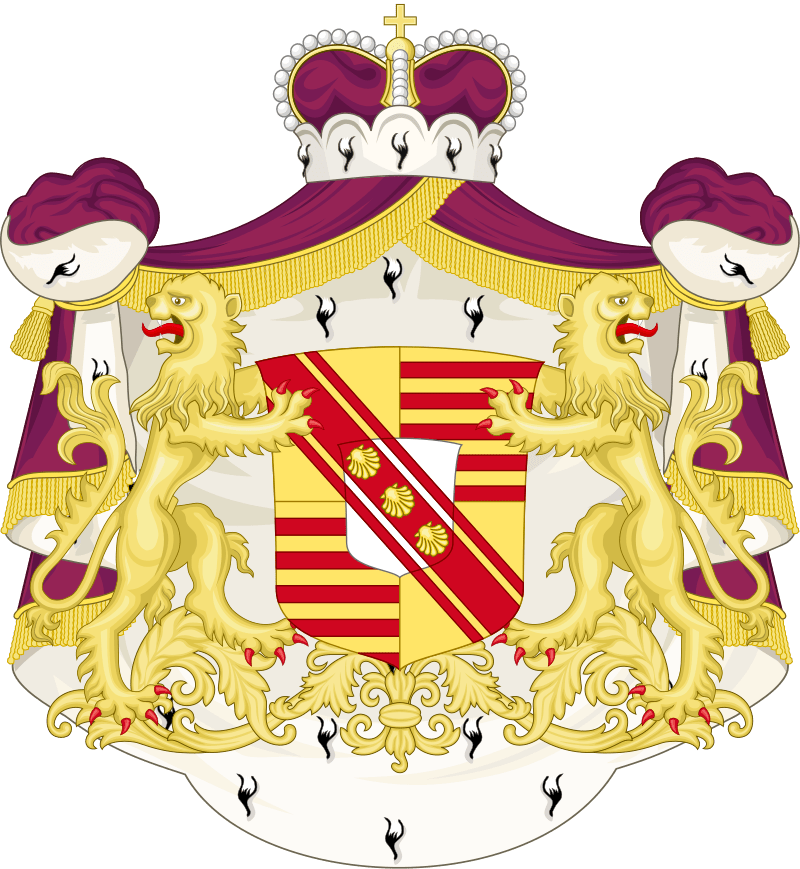
Spare Dukes, Part II, or, What does one do with so many younger brothers?

The violence and in-feuding of royal brothers in the Middle Ages hardly ceased as the histories of England and Scotland transitioned into the Early Modern period. When we last left the Stewarts in Scotland, Robert III, the old king, had died in 1406; his eldest son and heir, the 1st Duke of Rothesay, was also dead; and the second son, James, now King James I, was a prisoner in England. Scotland was therefore ruled by the old king’s younger brother, the 1st Duke of Albany. When he died in 1420, he was immediately succeeded as Regent by his son, Murdoch, 2nd Duke of Albany. When King James I finally managed to liberate himself from English custody and return north across the border in 1424, he tried to offset the power of his cousin Albany by promoting his last remaining uncle, Walter Stewart of Atholl, as Grand Justiciar of Scotland and Earl of Strathearn (the valley of the river Earn, once part of the core of the early medieval kingdom of Alba, now part of Perthshire). The Albany clan was powerful and enjoyed international standing, not just Scottish, as the Duke’s brother, the Earl of Buchan, had just been named Constable of France. But Buchan was killed in battle in August 1424, and King James was thus able to turn the tables in 1425. He had Albany and two of his sons arrested and executed on a hill in front of Stirling Castle. His wife’s father was executed, and she was held in prison for 8 years. The Albany strongholds, Falkland Palace and the Castle of Doune, were confiscated by the Crown. The interfamilial bloodshed of the previous generation showed little signs of abating. Indeed, just over a decade later, the formerly loyal Walter, Earl of Atholl and Strathearn, participated in the murder of James I in 1437, and was then himself executed by the new king, James II.

Falkland Palace, Fife

Wikipedia, the free encyclopedia

James II had no brothers, so he had no fraternal rivalries. He did have four sons, and some of the old antagonisms resurfaced in them. The eldest, James, was Duke of Rothesay as heir, then King James III from 1460. The second son, Alexander, was Duke of Albany from 1458, and established his seat at Dunbar Castle, the centre of his earldom of March (sometimes called the earldom of Dunbar). He was also Lord of the Isle of Man, in the Irish Sea, which gave him a lot of autonomy, though I wonder if he ever visited there. More close to home, Albany was appointed Lord High Admiral of Scotland and Warden of the Marches by his brother in 1464. A third son, David, was named Earl of Moray as an infant in 1456, but he died a year later. Finally, the fourth son, John, was named Earl of Mar, 1458, one of the most powerful and ancient earldoms in Scotland, situated on the edge of the Highlands west of Aberdeen, and based at Kildrummy Castle. In 1479, both Albany and Mar quarrelled with James III—Mar was accused by his brother of witchcraft and treason and soon put to death, but Albany escaped to France.

Dunbar Castle ruins

By 1482, Albany joined the court of Edward IV in England; he promised to hold Scotland in the name of the English king … if he could take it. And he did—later that year he took the title Lieutenant-General of the Kingdom, and King James was imprisoned. But this was an extremely brief reign, and by 1483, Albany was pushed out—he fled to England, then to France where he was killed in a duel with the Duke of Orléans in 1485. His son, John, became Duke of Albany and Earl of March, but was born in France and lived there much of his life. In 1504 he became heir presumptive of the Scottish throne, and he returned in 1514 to take up the post of Regent in the name of young James V (in opposition to the King’s very unpopular mother, Margaret Tudor). The Regent moved back and forth between Scotland and France in the next ten years, then was finally pushed out of government affairs when the King reached legal majority in 1524. He returned to France and died at his castle of Mirefleur in Auvergne in 1536.

John, 2nd Duke of Albany, Regent of Scotland, drawn at the French court

James III had three sons. The eldest, James, was Duke of Rothesay. The youngest, John, was Earl of Mar. The second son, also called James, as a small child was given the forfeited lands of the powerful MacDonald clan, finally brought to heel in 1481, notably the earldom of Ross. Ross, the region to the north of Inverness, had been separated from the ancient earldom of Moray in the mid-12th century. He was also Marquis of Ormond—an early use of this title in Scotland—which referred to a castle (also called Avoch) on the Black Isle near Inverness (and not to Ormonde in Ireland, in case you were wondering). In 1488 he was elevated by his brother, now James IV, to a dukedom. In 1497, though still a minor, the Duke of Ross was named Archbishop of Saint Andrews, possibly to limit his ambitions for the throne. The Archbishop-Duke later served his brother loyally as Lord Chancellor of Scotland, from 1502 until his death in 1504.

the ruins of Ormond Hill, near inverness
the arms of the Duke of Ross, Stirling Castle

The dukedom of Ross was re-created in 1514 for the infant (and posthumously born) second son of James IV, Alexander, but he died only a year later. An illegitimate son, also called Alexander, succeeded his uncle as Archbishop of Saint Andrews in 1504, and as Lord Chancellor in 1510. It’s evident Scottish monarchs still made good use of royal bastards. But the Archbishop was killed at the Battle of Flodden in 1513, alongside his father the King. The new king, James V, thus grew up without any full brothers, but did have an illegitimate half-brother, James, Earl of Moray, whose earldom since the early 14th century had been centred on Darnaway Castle in Morayshire, west of the town of Elgin. He was succeeded as Earl of Moray by another illegitimate James, a half-brother of Mary, Queen of Scots, who later served as regent for her son, James VI.

James Stewart, Earl of Moray
Darnaway Castle, seat of earls of Moray, in the early 19th century before its modern reconstruction

James V had two legitimate sons, and set up as usual as Duke of Rothesay (James) and Duke of Albany (Arthur, or perhaps Robert). The name of the second son is uncertain as he only lived a few weeks, and died within days of his elder brother, who was himself less than a year old, in April 1541. Mary, Queen of Scots, born a year later, was therefore the last of the main line of the House of Stewart (which she now started to spell the French way: Stuart). Besides Moray, she had other half-siblings, including Robert, to whom she granted lands and powers in the Orkney and Shetland islands. In the 1570s, he angled for a recognition of sovereignty, in collaboration with the king of Denmark-Norway (who was still interested in re-asserting his own sovereignty over these isles). Robert built a new princely palace at Birsay, the ancient seat of the Jarls of Orkney. His nephew James VI, reaching his majority in 1579, disliked these princely aspirations, and had Lord Robert imprisoned, but recanted and in 1581 granted him the earldom of Orkney outright. Orkney had also briefly been a dukedom granted by Queen Mary to her third husband, the Earl of Bothwell, in 1567.

the Earl’s Palace at Birsay, Orkney

Mary’s second husband, Henry Stewart, Lord Darnley, had also been given a dukedom, Albany, in 1565, which may seem an odd choice since he was a consort not a second son, but he was also lineally her heir before their son was born. He was murdered in 1567, and Albany vanished again as a title. It surfaced again for Prince Charles, James VI’s second son, created in 1600 just before the family moved to England and the young Charles added the dukedom of York to his titles. Similarly, Charles II added Albany to his brother James, Duke of York’s titles in 1660. Albany would be created again and again in the 18th century alongside the dukedom of York (see below); but it was also created—though not legally recognised in any British courts—for the illegitimate daughter of Prince Charles Edward Stuart, the ‘Young Pretender’. Charlotte, Duchess of Albany from 1784, did not have long to press her Jacobite claims to the thrones of England, Scotland and Ireland, dying a few years later in 1789. We’ve also seen, above, that there was a Dukedom of Albany created in 1881 for Prince Leopold, the fourth son of Queen Victoria, and it passed to his son, Charles Edward, who became Duke of Saxe-Coburg-Gotha in 1900, fought on the German side during the Great War, and was thus deprived of his English and Scottish titles in 1919. The last person to bear the name Albany as a ‘surname’ (of sorts), was Charles Edward’s sister, Princess Alice of Albany, who, as Countess of Athlone, lived to be nearly 100, dying in 1981.

There were other ephemeral dukedoms created for younger royal sons in the Stuart century. James VI had a third son, Robert, whom he created Duke of Kintyre and Lorne in 1602, as an infant, but he died only a few weeks later. James II, as Duke of York, had a number of sons who only lived a few weeks or a few years in the 1660s and 1670s: four of these were called Duke of Cambridge, and one was Duke of Kendal, a unique title named for the town in Westmorland. James also had illegitimate sons who were created dukes of Berwick and Albemarle, as of course did Charles II, spawning the dukes of Monmouth and Buccleuch, Southampton and Cleveland, Grafton, Northumberland, Saint Albans, and Richmond and Lennox. There were thus half a dozen Stuart semi-princes in the early 18th century who offered a sort of social counter-balance to the newly arrived Hanoverian Dynasty. (I’ve already posted about one of these, Saint Albans; others will follow).

The first Hanoverian, George I, had several younger brothers, but most had died before his accession to the British throne in 1714, or in the case of Maximilian, had been disinherited and distanced from the family due to his conversion to Catholicism and service as a commander in the Imperial armies. The youngest brother, Ernst August, at first served as Regent of Hanover after George left for London in 1714, and guardian of his young grandson, Prince Frederick, who was left behind in Germany. In 1715, Ernst August was appointed Prince-Bishop of Osnabrück, a curious family tradition by which this Catholic bishopric was governed by a Lutheran prince; a year later, he was integrated into the British peerage through the creation of the first of the ‘double duchies’ that became the norm for the Hanoverian era, as Duke of York and Albany, one for England, one for Scotland (and Earl of Ulster in the peerage of Ireland). He continued to govern the Electorate of Hanover and the Bishopric of Osnabrück until his death with no heirs in 1728.

Ernst August of Hanover, Duke of York and Albany

At roughly the same time, the dukedom of York was also granted in 1725 by the Old Pretender (‘James III’) to his younger son, Prince Henry. Henry later became a cardinal, and was known as the Cardinal-Duke of York (or to some, ‘Henry IX’), until he died in 1807. Disregarding the existence of a Duke of York in Rome, George II named his younger grandson, Prince Edward, Duke of York and Albany in 1760. The King’s older grandson succeeded as king (George III) later that year, and York was his brother’s heir for a few years until an heir was born. He lived at a new house built on Pall Mall, York House, and started a career in the Royal Navy, before he died suddenly when travelling in Italy in 1767. York House would later be renamed Cumberland House, when it was taken over by the Duke’s younger brother (below), who expanded it. In the early 19th century it was sold and used by the government, first the Board of Ordnance, then the War Office, until it was demolished in the years leading up to World War I.

York House, later Cumberland House, before it was demolished

The next Duke of York and Albany was George III’s second son, Prince Frederick, created in 1784 when he was 21. Like his ancestor Ernst, he was also elected Prince-Bishop of Osnabrück, at the ripe old age of six months—this provided him with a sizeable income for life, and also inspired one of my favourite lines of dialogue in any historical film, when, in The Madness of King George, the actor playing the Duke of York (Julian Rhind-Tutt) mutters to the Prince of Wales (Rupert Everett): “Oh, I found out the other day that I’m Bishop of Osnabruck. [pause] Amazing what one is, really.” Prince Frederick is much more well-remembered, however, as ‘the Grand Old Duke of York’, as Commander-in-Chief of the British Army from 1795, a position he held throughout the Napoleonic Wars until forced to resign in 1809 due to a scandal involving his mistress (though he was reinstated in 1811). His formal country seat was Oatlands, near Weybridge in Surrey, a rebuilt version (following a fire in 1794) of a house that had existed in the grounds of a royal palace built by Henry VIII, long since demolished. This smaller house is now encapsulated within a grander modern building which is a hotel. Oatlands was the preferred residence of Frederica of Prussia, Duchess of York, who must be the most forgotten of all members of the British royal family (I’d never heard of her; had you?). Further afield, Prince Frederick purchased Allerton Castle, near Harrogate in Yorkshire, in 1786, rebuilt it in a fashionable neo-gothic style, then re-sold it in 1789. The Duke lived mostly in London, first on Whitehall (Montagu House, later called Dover House, now the Scottish Office), then purchasing Melbourne House in Piccadilly in 1791, renaming it York House, which he later sold to be developed as luxury flats (and is still known as The Albany). He then commissioned a new residence, another York House, in 1825—though construction was only getting started when he died in 1827. Later known as Stafford House, today it is called Lancaster House, and serves as an extension of the neighbouring Saint James’s Palace, to host formal government functions.

Frederick, Duke of York and Albany
Oatlands, the remaining monumental gateway
The Albany
York House, today Lancaster House

The last dukes of York were created without the Albany name attached: Prince George of Wales, second grandson of Queen Victoria (1892), who later became George V; Prince Albert, second son of the latter (1920), who became George VI; and most recently, Prince Andrew, second son of Elizabeth II (1986). All three were created with the subsidiary title Earl of Inverness. As a young man in the 1890s, George V had lived at York Cottage on the Sandringham Estate in Norfolk and in Marlborough House in London. George VI as second son resided with his young family in a townhouse on Piccadilly, at White Lodge in Richmond Park, then also at York Cottage, which he received from his father in 1923. Prince Andrew lived at Sunninghill Park near Windsor until 2004.

York Cottage, Sandringham

There was also an earlier York House, built in 1736 as a wing of St James’s Palace for the residence of the eldest son of George II, Prince Frederick. Before he was created Prince of Wales in 1729, Frederick had been named Duke of Edinburgh (1726). The Prince of Wales soon moved out, however, to form his own opposition court at Leicester House (formerly dominating what’s now Leicester Square), and it was his younger brother, Prince William, who became the favoured son. William was created Duke of Cumberland in 1726. When the Prince of Wales quarrelled with their father in 1736, some historians have suggested that he proposed to his younger brother that they eventually partition the Hanoverian dominions, with Cumberland getting Hanover—an interesting foreshadowing of its 19th-century future.

York House, St James’s Palace

Cumberland had been a powerful earldom for the Clifford family from 1525 to 1643. A year later, it was given as a dukedom to Charles I’s nephew, Prince Rupert of the Rhine, one of his loyal commanders in the Civil War. After Rupert died, the title was given to Prince George of Denmark, husband of Princess Anne of York (later Queen Anne). Prince William’s dukedom of Cumberland was thus the third. As so often seems to be the case in the English and Scottish royal families, second sons managed to get along better with their fathers. In this case, while George II and the Prince of Wales clashed on nearly every issue, the King and his second son, the Duke of Cumberland, enjoyed soldiering together, for example at the Battle of Dettingen in 1743 in the War of Austrian Succession. In 1745, Cumberland was named Commander-in-Chief in Flanders of the allied forces of Britain, Hanover, Austria and the Netherlands. He suffered a major defeat by the French at Fontenoy in May 1745, but followed this up with a decisive victory at Culloden against the Jacobites in April 1746.

William, Duke of Cumberland

The Duke of Cumberland’s brutal tactics in suppressing Scottish clans earned him the admiration of Tories, but condemnation by the Whigs, and by his brother the Prince of Wales. As the years went on, he continued to advise the King on military matters, notably during the Seven Years War in America (ie, the French and Indian War), and was sent abroad one last time in 1757 to lead the defence of Hanover, threatened with invasion by French troops; he was badly defeated in July, and in September negotiated a highly disadvantageous peace (nearly a surrender), and was publicly disgraced upon his return to London. In 1760, he was denied the post of regent for his young nephew, George III, though he headed a committee created to advise and limit the authority of the King’s mother, the Dowager Princess of Wales. Many government meetings in this period were therefore held in his London house on Upper Grosvenor Street, or at Cumberland Lodge in Windsor Great Park. The Lodge had been built in the 1650s and was named the official residence of the Ranger of the Great Park by Charles II in 1671. The Duke of Cumberland received this appointment in 1746, and since then Windsor Lodge has been known as Cumberland Lodge. It housed the next Duke of Cumberland, then the Duke of Sussex in the 1830s-40s, and finally Princess Helena (one of Victoria’s daughters) from 1866 to 1923. Since 1947 it has housed an educational charity. The Duke of Cumberland also built the nearby Fort Belvedere, as a folly or summer house I Windsor Great Park, in 1750. It has been expanded and leased out by the Crown numerous times, and most famously served as the country retreat for the Prince of Wales in the 1930s—the site of his famous weekend parties, the blossoming of his relationship with Wallis Simpson, and of his abdication as king in 1936.

Cumberland Lodge, Windsor Great Park

The next Duke of Cumberland was Prince Henry, the youngest brother of George III (besides Prince Frederick who died at 15). The King created his brother Henry Duke of Cumberland and Strathearn—once more pairing an English and a Scottish dukedom—on his 21st birthday in 1766, and appointed him Ranger of Windsor Great Park, therefore granting him Cumberland Lodge which his uncle had lived in until his death a few years before. This younger brother of a king certainly did cause his share of familial strife, involved in a string of sexual scandals in the late 1760s and 1770s, and marrying in secret once, maybe twice—the second of these, in 1771, prompted George III to pass the Royal Marriages Act of 1772 requiring all marriages of potential heirs to the throne to be approved by the monarch. In the 1780s, Cumberland—probably trying to keep out of the way of his angry older brother—promoted Brighton as a new resort for high society (a cause soon taken up by his flamboyant nephew the Prince of Wales, builder of the Brighton Pavilion), and died, relatively young, in 1790.

Henry, Duke of Cumberland and Strathearn

Prince Ernest Augustus, 5th son of George III, was Duke of Cumberland and Teviotdale from 1799. Teviotdale is the valley of the Teviot, one of the key rivers in the borderlands between England and Scotland. Initially Ernest had been sent to Hanover for his education, purportedly to keep him away from the influence of his eldest brother the Prince of Wales. He entered the army and served in the Napoleonic Wars under the command of his other older brother, the Duke of York, and he rose to the rank of a field marshal in 1813. Back in Britain, he lived for many years in York House (the wing of St James’s Palace), and, as brother to George IV (whose formal reign began in 1820), became an increasingly vocal conservative voice in the House of Lords. This went against the King’s long-term liberal sympathies, but he tolerated him. This changed when the next brother, Clarence, became king as William IV in 1830: Cumberland’s voice was increasingly limited at court and in government, and he left the United Kingdom altogether once Victoria succeeded in 1837. This was not due to his great unpopularity (which was evident), but because the laws of Hanover prevented female succession, so the Duke of Cumberland became the King of Hanover by law. Here he undid much of the liberalisation of government put in place by his two older brothers; but surprisingly, he was not greatly troubled by the political turmoil of the revolutions of 1848 that swept across Europe, and he handed on his throne intact to his son George in 1851. George (V) lost the throne of Hanover in 1866, but he and his descendants retained the British title of Duke of Cumberland and Teviotdale, until it was taken away during World War I. Like Albany (above), this title hasn’t been re-created in the 20th or 21st centuries, I suppose on the off-chance that they are restored for their current claimants.

Ernst Augustus, Duke of Cumberland and Teviotdale, in the 1820s
a medal commemorating Ernst August’s succession as king of Hanover

George III had another brother, William Henry. This prince was created Duke of Gloucester and Edinburgh in 1764. Like Cumberland, he too married in secret, in 1766, but his brother the King didn’t find out about it until after the Royal Marriages Act, so the children were recognised as fully members of the royal family—but not, interestingly, according to the laws of Hanover, which required princes to marry someone of equal rank, which the Duchess of Gloucester was not (Maria Walpole, a grand-daughter of Britain’s first Prime Minister). Gloucester had a career in the army, rising to the rank of field marshal in 1793, but never really shining as a commander. In the 1770s he and his wife lived in Maria’s newly built house, St. Leonard’s Hill, which they renamed Gloucester Lodge, near Windsor. It was sold to another family in 1781 and mostly demolished in the 1920s. In 1767, the Duke was appointed Warden of Windsor Forest, which brought him Cranbourne Lodge as his residence. This house had existed in some form as early as the 13th century; it was later rebuilt in 1808 as the residence of Princess Charlotte (the heir to the throne as only child of the Prince of Wales), and was mostly destroyed in 1865, leaving just a tower.

William Henry, Duke of Gloucester and Edinburgh
Cranbourne Lodge, after the rebuild of 1808. The Tower on the left was part of the earlier structure, and is all that remains today

The dukedom of Gloucester and Edinburgh passed to William Henry’s son, William Frederick, who was apparently not very bright and was called ‘Silly Billy’ or ‘Slice of Gloucester’ (as in the cheese); nevertheless, he was considered as a candidate for the Swedish throne in 1810 when the Swedish nobles were looking for an heir to their childless king. He lived at Gloucester House in Piccadilly in London, and at Bagshot Park, south of Windsor. Bagshot had been a hunting lodge built for Charles I in the 1630s, and was later altered for the Duke of Clarence in 1798, before it passed to the 2nd Duke of Gloucester in 1816. The house was demolished in 1878 and completely rebuilt as residence for Queen Victoria’s third son, the Duke of Connaught, who lived there until 1942. Since 1998, it has been the residence of Prince Edward, Earl of Wessex, younger brother of the current king.

Bagshot Park, today

There was no new creation of the dukedom of Gloucester in the 19th century. Queen Victoria seemed more interested in creating new and interesting titles (there’s also no duke of York in this generation). But once these traditional titles came back into fashion in the early 20th century, it was re-created, again for a third son, after York. Prince Henry, third son of George V, was created Duke of Gloucester in 1928. He had a career in the Army, was active as colonel-in-chief of the Gloucester Regiment, and rose to the rank of field marshal in 1955. He supported his brother George VI through the Second World War as his aide-de-camp, then after the war, was Governor-General of Australia (1945-47). In London he lived in York House (adjacent to Saint James’s Palace), from 1936 until his death in 1974, and in the country he purchased Barnwell Manor, a house formerly belonging to his wife’s family (the Montagus), near Oundle in Northamptonshire. Barnwell was recently put up for sale by his son, the 2nd Duke of Gloucester, and he and his wife live in Kensington Palace. An interesting point from a dynastic point of view is that, although rule over the duchy of Saxe-Coburg passed to a junior line in the 1890s, by strict lineal succession, today’s Duke of Gloucester is the dynastic head of the House of Saxe-Coburg & Gotha, since Elizabeth II would have been prevented from succeeding her father due to the traditional succession laws in Imperial Germany.

Henry, Duke of Gloucester
Barnwell Manor, Northamptonshire

But jumping back once more from the Saxe-Coburgs to the Hanoverians, there are still more younger brothers of King George IV to look at. We’ve looked so far at the dukes of York (no. 2, of the many sons of George III) and Cumberland (no. 5), which leaves Clarence (3), Kent (4), Sussex (6) and Cambridge (7), not to mention two young princes, Octavius and Alfred, who did not survive childhood. This was an era when royal princes could still be quite political, so it is interesting to see the clash between the liberal values of the older sons, the Prince of Wales and the Duke of Clarence (and later the Duke of Sussex) and the more conservative stances of the Duke of Cumberland. The curiously named dukedom of Clarence was revived in 1789 for Prince William after a 200-year hiatus, and paired with Saint Andrews, in Scotland. He had a long naval career, then settled down at Bushy House, in Teddington on the river Thames west of London, in his capacity at Ranger of Bushy Park, a royal appointment (1797). The house had been built in 1715 by Lord Halifax, and later became the residence of Clarence’s wife, Adelaide, after his brief reign as William IV (1830-37). In the later half of the 19th century, Bushy House was an asylum for the Duke of Nemours, son of the exiled French king, Louis-Philippe, and since 1900 has housed the National Physical Laboratory. The Duke of Clarence and Saint Andrews also built Clarence House in London, near Buckingham Palace, in 1825. It has had a succession of royal residents over the centuries, including long periods of residence by the Duke of Edinburgh (1866 to 1900), the Duke of Connaught (1900 to 1942), and the Queen Mother (1952-2002). Princes William and Harry lived there in the following decade, and since 2012 it has been the residence of the Prince of Wales, and will apparently remain so while Buckingham Palace is refurbished for Charles III.

William, Duke of Clarence as Lord High Admiral, 1827
Bushy House
Clarence House, in the 1870s

The last use of Clarence was also as a joint dukedom, with Avondale, created in 1890, for Prince Albert Victor of Wales, the eldest grandson of Queen Victoria. Avondale refers to the Avon Water in South Lanarkshire, near the town of Hamilton. This Duke of Clarence and Avondale died only two years later. Curiously, there was also an earldom of Clarence, created only a few years before in 1881, as one of the subsidiary titles of the dukedom of Albany for Victoria’s fourth son, Leopold. Albany was given Claremont House, in Surrey, by his mother as a wedding present—it had been built in the early 18th century by the Earl of Clare (later the 1st Duke of Newcastle) and was then purchased by the Crown in 1816 for Princess Charlotte, the heir to the throne. Before being given to Prince Leopold, it had served as the residence for the exiled King and Queen of the French, from 1848 to 1866. Claremont was taken away from Leopold’s son, the 2nd Duke of Albany and Duke of Saxe-Coburg, when he was deprived of his British titles after the First World War; it was sold and now houses a school.

Leopold, Duke of Albany
Claremont House, Surrey

Continuing down the line of the younger brothers of George IV, and later William IV Prince Edward was created Duke of Kent and Strathearn, 1799. When we last encountered the Plantagenet earldom of Kent (created for Edmund of Woodstock in 1321) it was passing by marriage into the Holland family. It them passed to the Grey family, earls of Kent from 1465. The 12th Earl, Henry Grey, was created Duke of Kent in 1710, but died without heirs in 1740. The title (but not any Grey properties associated with it) was thus available to be re-created for a royal prince. George III’s fourth son, Prince Edward, had made a name for himself as Commander-in-Chief in British North America, 1791-1802 (and was an early advocate of the creation of Canada), then as Governor of Gibraltar, 1802-20. But he is mostly remembered today as the father of Queen Victoria, born when he was already in his fifties. He lived at Castle Hill Lodge in Ealing, west of London—he had bought the house from his brother’s secret former wife Mrs Fitzherbert in 1801, but left it in 1812, and it was eventually rebuilt, remodelled, and now serves as a home for wounded soldiers. When the Duke of Kent died in 1820, his double dukedom reverted to the Crown.

Clarence (left) and Kent (right) as boys
Edward, Duke of Kent and Strathearn
Castle Hill Lodge, Ealing

An earldom of Kent was created for the Duke of Edinburgh (Victoria’s second son), in 1866, and years later, Kent was re-erected into a dukedom, in 1934 for Prince George, the fourth son of George V. The new Duke of Kent, the most dashing and sociable brother of George VI, was meant to act as Governor-General of Australia in 1938, but was prevented by the outbreak of war. He was an RAF officer and died in an air crash in Caithness in August 1942. From 1935, he and his family had lived at Coppins in Buckinghamshire, a 19th-century house first acquired by Princess Victoria, daughter of Edward VII. It would remain the family seat for the 2nd Duke of Kent and his family, until he sold it in 1972, and moved to Amner Hall, a Georgian House that became part of the Sandringham Estate in Norfolk at the end of the 19th century (later the residence of the Duke and Duchess of Cambridge), and from 1990, Crocker End in Henley-on-Thames, Oxfordshire, until recently. The Kents now live at Wren Cottage, within Kensington Palace.

George, Duke of Kent
Coppins, Buckinghamshire

The Duke of Sussex was a new title when it was created for Prince Augustus, sixth son of George III, in 1801. Sussex had been a Saxon sub-kingdom in the 9th century, and was subsequently and earldom numerous times, from the 13th century to the 18th. The last earl died in 1799, and Prince Augustus received the elevated title just over a year later. Sussex was the complete opposite of his older politically active brother, Cumberland. He had no naval or army career, and was vocally liberal in the House of Lords, supporting the various reform movements of the early 19th century. He was also a noted patron of arts and sciences. But like some of his uncles, he also had a secret marriage, later annulled in 1794 since it contravened the Royal Marriages Act. He married again without permission in 1831, and eventually his niece Victoria (who considered him her favourite uncle) created his wife Duchess of Inverness so she could hold a high rank at court. His brother William IV had appointed him to be Chief Ranger and Keeper of St James’s Park in 1831, and later Victoria appointed him Governor of Windsor Castle, so he also resided at Cumberland Lodge in Windsor Great Park, as had several of his Hanoverian predecessors. Sussex died in 1843 with no children, and his dukedom remained ‘dormant’ until it was revived for Prince Harry of Wales in 2018. The new Duke of Sussex’s history is of course still being written, but it seems he will certainly be remembered as a younger brother who refused to be ignored in terms of the power dynamics of the British royal family. Like many before him, he has seen his position as the ‘spare’ dissolve into nothingness following the births of the two younger children of his older brother.

Augustus, Duke of Sussex

Finally, the last of the younger brothers of King George IV: Adolphus, Duke of Cambridge. Cambridgeshire had given its name to an earldom as early as the 14th century, and was usually associated with the House of York. In the 17th century it was created as an earldom then a marquisate for the dukes of Hamilton, and then used for younger Stuart princes in the 1660s-70s, all mostly short-lived. Prince George Augustus, grandson of the Electress Sophia (the expected heir to the British throne after 1701), was created Duke of Cambridge in 1706, then became Prince of Wales in 1714 when his father became King George I. Prince Adolphus, the 7th son of George III, was given his dukedom in 1801. He was a field marshal in the army of Hanover from 1813, and acted first as military governor of the Electorate of Hanover, once it was liberated from the French in 1813, then Viceroy, once it was elevated to a Kingdom in 1815. He served in this capacity until 1837, when his brother the Duke of Cumberland succeeded as king of Hanover, though there were murmerings that the local people would have preferred to stay under the more liberal rule of the Duke of Cambridge. In London, he lived at Cambridge House on Piccadilly—one of the few grand mansions to have survived the bombings of World War II—and also held the royal post of Keeper of Richmond Park. His son succeeded him as Duke of Cambridge, until his death in 1904, and the title was revived, though at a lower rank (a marquisate) in 1917 for another Adolphus, Duke of Teck (George V’s brother-in-law, and a grandson via his mother of the 1st Duke of Cambridge). This title became extinct in 1981, and was revived once again as a dukedom in 2011 for Prince William of Wales, now the Prince of Wales.

Adolphus, Duke of Cambridge
Cambridge House, Piccadilly

From 1837, the surviving younger brothers of George IV and William IV acted as uncles to Queen Victoria. Victoria herself had no full brothers or sisters, just the shadowy figure (from a British perspective) of her older half-sister Princess Feodora of Leiningen—who suddenly appears from nowhere in the TV series ‘Victoria’—and her brother Karl, Prince of Leiningen, whose links to the British sovereign helped favour his rise in German politics into the position of a liberal prime minister for a briefly united Germany in the summer of 1848.

Queen Victoria then had four sons, though only one, Arthur, lived long enough to act as a king’s younger brother when the Prince of Wales finally became Edward VII in 1901. Victoria’s choices for ducal titles ran counter to the Stuart and Hanoverian norm: no more York or Gloucester; now we have Edinburgh, Connaught and a final revival of Albany (see above). Alfred, Duke of Edinburgh, the second son, was also the ‘spare’ in line for the throne from 1844 to 1864. He had been considered as a potential successor to the deposed King Otto of Greece in 1862, but his mother blocked it, since it was already decided that he would succeed his childless uncle Ernst as Duke of Saxe-Coburg and Gotha—though this wouldn’t happen until 1893. In the meantime, Alfred was created a duke, 1866, and a captain in the Royal Navy in 1867. He sailed around the world and was the first royal prince to visit Australia, New Zealand, India and Hong Kong. Loads of places all across the British Empire are named for Alfred. By the 1880s the Duke of Edinburgh was an admiral, and was named Commander-in-Chief of the Mediterranean Fleet, and Admiral of the Fleet in 1893. He owned a house at Eastwell Park near Ashford in Kent—there had been a house here since Tudor times, rebuilt in neo-Elizabethan style at the end of the 18th century, and occupied by Alfred and his family in the 1870s and 80s. It was mostly destroyed by a fire in the 1920s. In London the Duke resided in Clarence House, but gave this up, as well as his seat in the House of Lords and his allowance of £15,000 when he became sovereign of the small duchies of Coburg and Gotha.

Alfred, Duke of Edinburgh
Eastwell Park, Kent, before it was demolished in the 1920s

The Duke of Edinburgh’s son had predeceased him, so the title died with him in 1900. The dukedom was re-created for Philip Mountbatten—formerly Prince Philip of Greece and Denmark—in 1947, and it was thought it would be passed on to Philip’s youngest son, Prince Edward, Earl of Wessex (since 1999). But although Edward currently does oversee the running of the Duke of Edinburgh Awards, there’s no indication he is about to be given this title (maybe at the coronation, when such things historically happen).

The one Victorian prince who did live long enough to act as younger brother to Edward VII was Arthur, Duke of Connaught and Strathearn. His title was created in 1874, and is the only ‘double duchy’ of this period, reflecting royal links with both Ireland and Scotland (and he was Earl of Sussex in England). A career army officer, Connaught represented his brother’s royal authority first as Commander-in-Chief of the British Army in Ireland from 1900, and then represented his nephew George V as Governor-General of Canada, 1911-16. He continued to represent the King all around the world in the 1920s. He took over Clarence House from his brother as his London residence and maintained his country seat at Bagshot Park near Windsor for over sixty years. On his death in 1942, the dukedom of Connaught and Strathearn passed to his son (who was also the heir to the dukedom of Fife), who died a year later at age 28.

Arthur, Duke of Connaught and Strathearn

There will certainly never be a revival of a dukedom in Connaught, firmly located within the Republic of Ireland. The future sovereign’s younger brother will be the Duke of Sussex, and it will be interesting to speculate what titles are revived for Prince George’s younger siblings—especially now that male princes no longer trump females in the order of succession. Spain has given dukedoms to kings’ sisters since the 1960s, and now so too does Sweden. Perhaps we can see a Charlotte, Duchess of Albany again? And maybe Louis, being a French name, could be called Duke of Aumale…or even Duke of Normandy!

Gee Beaver, you’re just a kid!

(images from Wikimedia Commons)
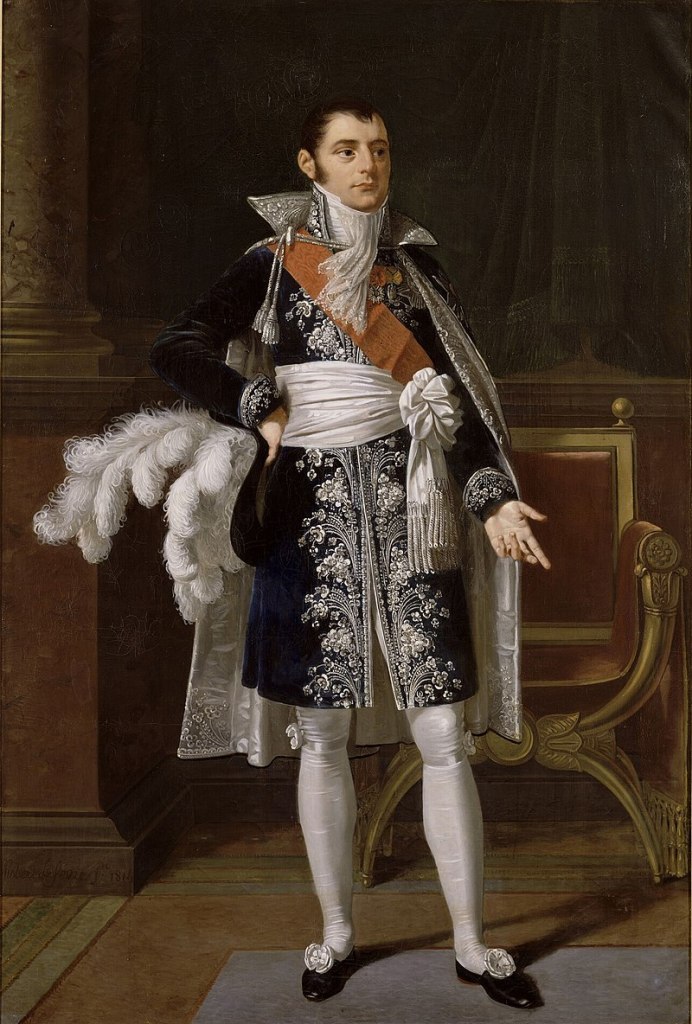
Spare Dukes: What to do with a younger brother in 1,000 years of English and Scottish royal history (Part I)

Dad: “Why would he do a ridiculous thing like that?”
Wally: “‘Cause he wanted to be like you, Dad.”
Dad: “But Wally, when I said 20 miles a day, I was just using a round figure.”
Wally: “Yeah, well, you and I know that, Dad, ‘cause we’re grown up, but gee, the Beaver, he’s just a kid.”

Millions of families have a Wally and a Beaver—mature, handsome, dependable Wally, and mischievous and kinda nuts Beaver, who just wants to be respected and treated like an equal part of the family. If you’re a fan of 1950s American television, I’m sure you can hear Wally’s voice: “Gee, he’s just a kid!” The relationship between the royal heir and the ‘kid brother’ is one of the most interesting aspects of the story of dukes and princes in European history. Sometimes the brother cold be loyal, a capable contributor to the success of the reign; sometimes he could be a minor irritant; sometimes he could be a serious threat to his brother, and several met a grisly end.

the murder of Thomas of Woodstock, Duke of Gloucester, in 1397, in Calais

Starting in the 14th century dukedoms were used to placate a king’s younger brother, so he could rule a small patch of territory on his own. In later periods, when this autonomous power was curtailed, the king’s brother could at least outrank all but the most powerful noblemen of the kingdom. I’ve written a lot about this for France in recent years (and you can read about it in my book from 2021, Monsieur), so I thought, in light of the recent media attention being given to two of the royal brothers in the House of Windsor—for better or for ill—I’d have a look at the phenomenon in the two kingdoms that eventually formed the United Kingdom of Great Britain. Ireland will of course come into this story too, with some of the later royal dukedoms, like Connaught. But a close look at the history of native Irish dynasties deserves its own blog post—see my previous post about driving in Ulster for the O’Neills; and stay tuned in 2023 for a post about the MacCarthys of Munster. Overall, we see over a millennium of fraternal struggles, the same kind that is seen in great narratives of the past, from the stories of Cain and Abel to Mufasa and Scar.

The pre-Conquest history of England and Scotland is pretty much terra incognita for me, and there doesn’t seem to be any sort of ‘system’ in place for keeping younger royal sons happy. In general there was a more sense of collective authority, so all the members of the House of Wessex were called ‘Ætheling’, as someone of royal blood worthy of being selected to rule; whereas the Celtic kingdom of Alba (and older name for Scotland) in the north used a system of alternating lineages, so a king was selected from one line, and then the other. When this system was disrupted, bloodshed broke out, as in the story of Macbeth. In some instances, one of the younger Scottish princes could be given a sub-kingdom to rule, like Strathclyde in the southwest or Moray in the north.

It wasn’t until the Norman Conquest that specific titles were given to a king’s brothers, though at first these were still about dividing the patrimony. William the Conqueror’s sons divided their inheritance: Normandy to the eldest, Robert, and England to the second, William. The third son Henry got very little so probably had a hand in William’s murder in 1100, becoming King Henry I of England, and in 1106 he took over the Duchy of Normandy as well. Similar strife is seen north of the border when the sons and younger brothers of King Malcolm III fought each other over the Scottish throne, until some satisfaction was reached in the creation of powerful earldoms in Lothian, Atholl and Fife in the 1090s, and in 1107, one of the strongest of the sons, David, was created ‘Prince of the Cumbrians’, aka the old kingdom of Strathclyde, stretching from Glasgow to Carlisle. David then became king himself in 1124, and later created autonomous earldoms for this rivals, his nephews, in the far north, in Moray and Ross.

Henry I of England had one legitimate son, William, who was named Duke of Normandy in 1115, mostly so he could do homage to the king of France without the embarrassment of one king doing homage to another. But William died before his father, leaving only a sister (the famous Matilda) and two illegitimate brothers, who were each given sizable territorial bases in England. The King’s elder son, Robert, was created the 1st Earl of Gloucester, in about 1122, centred on lands brought to him by marriage (a feudal barony based around the cities of Gloucester and Bristol—one of the largest in England). Robert added lands in Devon and Glamorgan (south Wales), and he and his heirs administered this powerful earldom from the Castle of Caerphilly in the Welsh Marches. After his son died in 1183, the earldom passed through daughters to other Norman families, the Mandevilles, the de Burghs, the FitzWilliams, and finally the de Clares, who we’ll encounter again in this post. By the mid-15th century the earldom of Gloucester had reverted to the Crown, and in 1385, was re-created as one of the earliest dukedoms in England for one of the sons of Edward III—but that’s getting ahead of ourselves.

The second illegitimate son of King Henry I was Reginald, created Earl of Cornwall in about 1140 with lands acquired either through marriage to a local Cornish heiress, or taken from one of William the Conqueror’s Norman nephews. He based himself at the recently built Launceston Castle. The earldom was given out again in 1225 to the younger brother of King Henry III, Richard, who rebuilt Launceston in the 1230s, built a new castle at Tintagel in 1225, and acquired another Cornish feudal barony, Trematon, in 1230. Much later he moved the capital to Lostwithiel in the 1270s, and built a ‘Duchy Palace’. But to be closer to political centres, Richard was mostly based at Wallingford Palace in Oxfordshire.

Launceston Castle, Cornwall
the ruins of the Ducal Palace

Richard, Earl of Cornwall is a pretty fascinating figure in English history, mostly forgotten, and quite often a pain in his older brother’s side. He revolted a couple times in England, then went abroad to seek his fortune: he was a Crusader, tried and failed to establish his authority in the county of Poitou, was briefly considered for the throne of Sicily, then was elected king of Germany in 1157. Although he was only elected by 4 of the 7 German electors, he got himself crowned in Aachen—but only visited Germany a few times. Back in England, Richard ‘of Almayne’ (Allemagne, ie Germany) he founded Hailes Abbey, which became one of the major pilgrimage sites of medieval England, then died in 1272. His son Edmund, the 2nd Earl, was Regent of England, 1286-89, when Edward I was out of the kingdom fighting in France or Scotland. The earldom of Cornwall was given out again to John, younger brother of Edward III, in 1328. He too was named ‘Guardian of the Realm’ when his brother was overseas, and Warden of the Northern Marches, commanding armies in the wars of Scottish Independence. There were plans for him to marry great heiresses, in Castile or in Brittany, but these came to nothing and he died in 1337 in Scotland.

the seal of Richard of Cornwall as King of Germany

That year, Cornwall was given out again, but raised to the rank of a duke—the first in England. This was given to the son and heir of Edward III, in part to compensate for the final loss of Normandy as an honorific title that could be used by the heir. It has remained the automatic title—and source of revenue—for the heir to the throne ever since.

In Scotland, a similar set-up for the heir was established, a few decades later. The 12th-century princes had either been satisfied with Cumbria, as above, or a newly re-established autonomous earldom of Northumbria—which was soon taken away by the English king and incorporated into England. Some were also given the very lucrative English earldom of Huntingdon. When the original house of Scotland died out in 1290, the throne eventually passed to the Robert the Bruce, who satisfied his younger brother Edward’s urge for power by supporting his quest to be crowned as King of Ireland, which he temporarily succeeded at doing, between 1316 and 1318. Edward’s earldom of Carrick, in southwest Scotland, passed to his nephews in the House of Stewart, who by 1371 took over the throne of Scotland itself. King Robert II (Stewart) had a wild set of six sons, whose stories are fascinating as examples of fraternal strife. As we’ve seen previously, as their father became old and incapacitated, most were given parts of the kingdom to rule themselves, notably the heir, John, ruling Atholl (the old royal heartland), Robert in Fife in the east, Alexander in Buchan in the far northeast, and David in Caithness (up at the very top). They built independent strongholds to defend their power: Robert at Castle Doune in Perthshire and later Falkland in Fife; Alexander at Lochinder Castle in Speyside; David at Urquhart Castle on Loch Ness.

Castle Doune, seat of the dukes of Albany

Once the eldest, John, became king in 1390 (and changed his name to Robert III), he balanced the aspirations of his two potential heirs, his son and his brother, by creating the former, David, Duke of Rothesay, and the latter, Robert, Duke of Albany, both in 1398. Rothesay is an island in the Clyde Estuary in western Scotland. Like the duchy of Cornwall, it was assigned to always be the title for the heir to the throne (though not officially confirmed by Parliament until 1469); but unlike Cornwall, it doesn’t have a territorial component tied to the island, or specific revenues or fiscal privileges. Albany is even more honorific, as not really designating anywhere in specific, but referring to the ancient royal heartland (Perthshire, Atholl) and its old name, Alba. The Duke of Rothesay and the Duke of Albany, uncle and nephew, struggled to control the kingdom as Robert III became ill, and eventually Albany captured Rothesay, and the latter died a few years later in prison, in 1402. Rothesay’s younger brother James soon succeeded as king of Scots, but was a ‘guest’ of the King of England for nearly 20 years, leaving Albany as regent from 1406 till he died in 1420. Later dukes of Albany would prove to be just as powerful within the Scottish royal family, as we’ll see again below.

seal of Robert, Duke of Albany
the coat of arms of the Duke of Albany, shows that he is the second son of Scotland (the red lion with a blue label indicating junior status) as well as second son of the House of Stewart (the checky pattern on gold, again with a blue label)

Back in England, in the mid-12th century, the original House of Normandy was replaced by the House of Anjou, so King Henry II’s younger brothers were heavily involved in French politics. Geoffrey was given lands in Anjou, and hoped to succeed his father as Count of Anjou; when that failed he tried to marry the great heiress, Eleanor of Aquitaine. When that too failed, and she married his elder brother instead, he aligned with the French king, Louis VII, and tried to dismantle Henry and Eleanor’s empire in western France. Geoffrey died after several years of rebellion, in 1158. He was only 24. The youngest brother, William ‘Longspee’ was given lands in Normandy, and was at first considered an ideal prince to be put onto the throne of Ireland, newly conquered by his elder brother Henry II. Henry then tried to marry him to one of the wealthiest of English heiresses, Isabel de Warenne, Countess of Surrey, but the Archbishop of Canterbury prohibited it due to consanguinity (ie they were too closely related). The King and the Archbishop (Beckett) continued to clash until the latter was murdered, but that’s another story. Isabel instead was married to the King’s older half-brother, Hamelin, who became Earl of Surrey and founded a new dynasty based at Conisburgh Castle in Yorkshire.

Conisburgh Castle

The Earl of Surrey was one of the strongest supporters of King Henry II. In contrast, as those who love the movie ‘The Lion in Winter’ will remember, the King’s sons repeatedly rebelled against him. The eldest son, Henry, was created Duke of Normandy and Count of Anjou in 1170. Richard was given his mother’s Duchy of Aquitaine in 1172. A decade later, the third son, Geoffrey, married the heiress to the Duchy of Brittany. These three sons had rebelled against their father in 1173 (supported by their mother Eleanor and the King of France); but in 1183, they re-aligned, and Henry and Geoffrey fought with their father against Richard. The King wanted to take Aquitaine away from Richard to give it to the baby boy, Prince John (‘Lackland’, since he so far had been given nothing of his own). There had been other plans for John: marriage to the heiress of Savoy-Piedmont, then marriage to the heiress of the earldom of Gloucester (see above). This was followed by an appointment as ‘Lord of Ireland’ in 1177, and even a request to the Pope to crown him King of Ireland in 1185 (the Pope declined).

‘The Lion in Winter’. Eleanor of Aquitaine faces off against her husband Henry II, while a mostly passive Richard stands helplessly by

But the eldest son Henry died that rebellious year of 1183, and Richard not only kept hold of Aquitaine, but also succeeded to the English throne in 1189. Geoffrey had already died. So John was the only remaining brother—Richard wanted to go on Crusade, but feared John’s ambitions, so at first he gave him the County of Mortain in Normandy, and required him to stay on that side of the Channel. John soon returned to England, however, and set up his own rival court. In 1193, he allied with his cousin, King Philip of France, hoping to take Normandy and Poitou from his brother; when Richard returned from Crusade, John was deprived of his by now vast estates in Gloucester and Cornwall. Yet they were reconciled and John proved a loyal brother in keeping Normandy loyal to Richard in his last years. When Richard died in 1199, John swiftly took the thrones of England, Normandy and Aquitaine, as well as the throne of Brittany from his little nephew, Arthur (Geoffrey’s son). In this scenario, Prince Arthur can be seen as a forerunner of the ‘princes in the Tower’, and John one of the best examples of the ‘wicked uncle’.

the children of Henry II (here as ‘Duke of Aquitaine’), with John ‘Lackland on the far right

When John became king, he had therefore outlived all his brothers. But he did have some illegitimate half-brothers. Geoffrey was Bishop of Lincoln and Lord Chancellor of England during his father Henry II’s reign. King Richard promoted him to Archbishop of York in 1189. He quarrelled frequently with King John, and was exiled to France for his last years. William (also called ‘Longspee’) was married to the heiress of the earls of Salisbury and named Sheriff of Wiltshire (and based his court at Salisbury Castle, in Wiltshire—an example of how in this period, earldoms were still tied to the actual area they took their name from). John honoured him with important posts: Viceroy of Ireland, Lieutenant of Gascony, Warden of the Welsh Marches. Unsurprisingly, he was one of the few English barons to remain loyal to John in the great revolt of 1215-16; and was then an important figure in the minority of young King Henry III. Illegitimate younger brothers could be a real asset to royal rule.

the tomb of William Longspee, Earl of Salisbury, in Salisbury Cathedral

Henry III also had several illegitimate half-brothers, and most of these were given castles and estates, but no great lordships. His one full brother was Richard of Cornwall, already noted above. King Henry also had two sons, Prince Edward, who was created Duke of Aquitaine (in 1249, when he was only 10), and Prince Edmund. Edmund is another fascinating second son whose history has mostly been forgotten. Nicknamed ‘Crouchback’ (perhaps a corruption of ‘cross-back’ as someone who took the cross on Crusade), he made a name for himself as one of the greatest landowners in England, as a magnate in northern France, and even briefly as a candidate for a royal throne in Sicily. The last of these was actually first, and young Edmund, aged only 10, was invested by the Pope as King of Sicily in 1255, with a promise from his father, Henry III, of large subsidies and a promise to drive the Hohenstaufen family out of Sicily and southern Italy. None of this materialised, and Edmund was formally ‘deprived’ of his throne by the end of the decade. Back in England, he was given the large estates confiscated from the rebel Simon de Montfort, in 1265. This included the earldom of Leicester (an earldom originally created in 1107 for a Norman family). He was also given the lands of other rebels: the Segrave family (also in Leicestershire), and the Ferrers family, earls of Derby, which included lands in Leicestershire and Staffordshire, and more importantly, lands between the rivers Ribble and Mersey, and up to the castle of Lancaster, which were erected, in 1267, into the earldom of Lancaster. Part of the earldom of Lancaster—far from Lancashire itself—included the barony of the Three Castles in Monmouthshire: Grosmont, Shenfrith and White Castle. These three castles remained part of the earldom, later duchy, of Lancaster until the 1820s, when they were sold by the Crown to the Duke of Beaufort.

Edmund ‘crouchback’ (or possibly his son), Earl of Lancaster, facing St George
As in Scotland, by the later 13th century, younger sons in England were using the royal arms with labels of various shades and baring different symbols, like the fleurs-de-lys here for the earls of Lancaster.

Edmund was also appointed High Sherriff of Lancashire, Constable of Leicester Castle, and Lord High Steward of England. He was definitely a force to be reckoned with in central and northern England. He founded and constructed abbeys and priories all over his two earldoms of Leicester and Lancaster. But his marriage to Blanche of Artois in 1276, shifted his focus—she was a niece of King Louis IX of France, and widow of Henry I, King of Navarre and Count of Champagne. Edmund was named co-regent of Champagne on behalf of his step-daughter, Joan, while Navarre was given over to French-appointed governors. When Joan came of age and married the French king in 1184, Edmund relinquished any claims. He did acquire, as part of his wife’s dowry, the lordship of Beaufort in Champagne, a name which will re-appear later in Plantagenet history. When Edmund Crouchback died in 1296, he was succeeded by his son, Thomas, 2nd Earl of Lancaster, who added the lands of the de Lacy family, earls of Lincoln, which included Bolingbroke Castle, and Halton Castle in Cheshire (near Runcorn). The 4th Earl, Henry of Grosmont (taking his name from the castle in Monmouthshire), added yet another earldom, Derby, in 1337, then was created Duke of Lancaster in 1351—the second in England, with palatine powers (ie, almost royal legal autonomy). Henry’s daughter Blanche married John of Gaunt, 3rd son of Edward III, and he thus became Duke of Lancaster, Earl of Leicester, Earl of Derby, Lord of Bowland (a huge barony in Lancashire, still a separate estate today), and Lord of Halton (which also had ‘palatine powers’ over parts of Cheshire). Prince John was thus as rich as any monarch, and held his own splendid court at Kenilworth Castle, in Warwickshire, which he augmented with a splendid Great Hall. He even had his own foreign policy at times, pressing to claim the Kingdom of Castile in his wife’s name in the 1370s-80s, then as Duke of Aquitaine in the 1390s. When John’s son, Henry of Bolingbroke, took the throne of England in 1399, this vast inheritance was thus merged with the Crown. King Charles III today is still Duke of Lancaster and derives much of his income from it. The House of Lancaster also spawned the semi-legitimate House of Beaufort (taking their name from the lordship in Champagne), which included the dukes of Exeter and Somerset, and later dukes of Beaufort, which continue into the present—these will form a separate blog post.

the lands of the House of Lancaster (from an online German atlas), showing clearly the power block between Lincolnshire and Lancashire
John of Gaunt, Duke of Lancaster–by now all English princes are quartering England with France; but he has added Castile and Leon too
Kenilworth, with the medieval Clifford Tower on the right, Robert Dudley’s Elizabethan buildings on the left, and the ruins of John of Gaunt’s Great Hall in the centre.

But this brings us back to the main royal line. Edward I had five sons, from two marriages. The eldest, Henry, didn’t live very long; nor did the second, Alphonso, who was briefly called Earl of Chester—the title usually given to the heir, after Normandy was lost (1204), but before Cornwall was erected as a duchy. It is thought the King had intended to give the lucrative earldom of Cornwall to one of his younger sons, but before he could do so, his surviving heir—the third son, Edward, named the first Prince of Wales in 1301—gave it to his own favourite, Piers Gaveston. The remaining two younger half-brothers of Edward II were given lands and titles of their own, to keep them happy and loyal—hopefully. In 1312, Thomas of Brotherton was given the earldom of Norfolk, with the vast estates in East Anglia of its previous holders, the Bigod family, and their stronghold, Framlingham Castle, in Suffolk. The Bigod earls were also heirs of the Marshal family, who were hereditary Earl Marshals of England, so Prince Thomas also received this office. He did not stay loyal to his brother the King, however, and allied with his sister-in-law the Queen and her favourite Roger Mortimer in the overthrow and trial of the King’s favourites in 1326, and the deposition of the King himself in 1327. the Earl of Norfolk then acted as a guardian and advisor to the young Edward III. His son predeceased him so his daughter, created Duchess of Norfolk in her own right in 1397, passed the Norfolk titles and estates to her daughter, Elizabeth Segrave, whose heirs married the Howards, who thus began their rise to the very top of the English noble hierarchy, based at Framlingham (until the 17th century), and wielding the prestigious post of Earl Marshal still today—organisers of royal funerals and coronations.

Thomas of Woodstock, Earl of Norfolk, here labelled as ‘Comte Mareschal’ (Earl Marshal)
Framlingham Castle, long the stronhold of the earls and dukes of Norfolk

The youngest brother of Edward II, Edmund of Woodstock—all these place names refer to the place they were born, in this case the Palace of Woodstock in Oxfordshire, not to any possession of land—was initially much closer to his older brother, and was given the earldom of Kent, in 1321, and the important post of Lord Warden of the Cinque Ports, trading towns along the southeast coast. He was an important part of Edward II’s government, as a diplomat in France and Scotland, and as Lieutenant of Aquitaine in 1324. But while he was in France, he too joined the Queen’s party, and participated in his brother’s overthrow in 1327 (and was rewarded with confiscated Despencer lands, and the estates of another rebel, the earl of Arundel, notably the castle of Arundel in Sussex, which became his seat). But he fell foul of the regime of Queen Isabella and planned his own rebellion, which failed, and he was executed in 1330. It’s thought that the Earl of Kent’s death, and the idea of executing a royal prince, was the impetus that drove young Edward III to remove his mother and her lover Mortimer from power, and he pardoned his uncle post mortem, and restored the earldom of Kent to his cousin, also named Edmund (Arundel was restored to the FitzAlan family). The 2nd Earl of Kent died within the year, and his brother the 3rd Earl (John) established his seat at Woking Manor in Surrey. When he died in 1352, his estates passed to his sister, Joan, the ‘Fair Maid of Kent’, and thus to her children in the Holland Family. We’ll pick up the Kent pathway again after it returns to the Crown.

Edmund of Woodstock, Earl of Kent

King Edward III had only one younger brother, John of Eltham, who was created Earl of Cornwall, who, again, we’ve already looked at. It is with the sons of Edward III that we once again get an explosion of titles, and now, royal dukedoms. As we’ve seen, the eldest, Edward (the ‘Black Prince’) was created Duke of Cornwall in 1337. He was then named Prince of Wales in 1343 and Duke of Aquitaine in 1362. The four younger sons were created dukes: Clarence, Lancaster, York and Gloucester. Lancaster we’ve already looked at, so we can look at the other three in turn.

In the 14th century, younger sons of kings were encouraged to marry heiresses, rather than rely on royal gifts of lands and titles. The second son of Edward III, Lionel of Antwerp, married the heiress of the de Burgh earls of Ulster, in 1352. The heiress, Elizabeth, was also Lady of Connaught, and brought into the marriage extensive lands in Ireland, and the main fortress of the earldom, Carrickfergus Castle, outside of Belfast. She was also heiress of her grandmother, Elizabeth de Clare, Lady of Clare in Suffolk. It was this lordship, which gave Lionel the name for his dukedom, Clarence, created in 1362. This is one of the anomalies of the English royal dukedoms in that it does not refer to any major county or shire. The honour (another term for lordship) of Clare is in southwest Suffolk, on the border with Essex. The original de Clares came with William the Conqueror and built a castle here in about 1090. They were later earls of Gloucester (from above). The heiress, Elizabeth de Clare, enlarged Clare Castle and its orchards and vineyards. She also endowed Clare College, Cambridge. The new Duke of Clarence took up his wife’s Irish heritage and was Governor of Ireland on behalf of his father, 1361-66, and was also proposed by his father to be King of Scots in 1362. As with so many English princes in this era, he also had an eye to obtaining wealth and authority overseas, so after his first wife died, he travelled to Milan in 1368 to marry a Visconti (her brother was just a teenager, so it was possible she could have inherited the powerful lordship of Milan). Lionel died in Italy, and left a daughter, Philippa, who took the de Burgh and de Clare lands—and a good claim to the English throne—to the Mortimer family, and from there to the House of York. Clare Castle eventually became Crown property, and although some of its lands were made part of the Duchy of Cornwall (and remains so today), the castle was given by Mary I to the Elwes family who kept it until the 19th century. It was mostly dismantled by the 18th century, and is today a pretty indistinctive local country park.

Clare Castle, Suffolk
Carrickfergus, outside Belfast

The dukedom of Clarence, however, was revived for the second son of Henry IV, Thomas of Lancaster, in 1412. He had already been named Lord High Steward of England in 1399, and Lord Lieutenant of Ireland in 1401—though he was only 14, he went to Ireland and did his best to govern for eight years. His father, feuding with his first son (Shakespeare’s ‘Prince Hal’) over keeping the peace with France, replaced the heir with the spare on the royal council in 1411. But when his brother succeeded as Henry V in 1413, Thomas was immediately at his side and ready for war. He fought in France with King Henry in 1418 and 1419 with the title Constable of the Army, and was left in charge of English troops in France in 1421, when Henry returned to England. Later that year, however, he engaged with a Franco-Scottish army at Baugé in Anjou, and was killed.

The Battle of Baugé, presumably showing the death of Thomas of Lancaster, Duke of Clarence

Four decades later, the younger brother of the newly proclaimed Yorkist king, Edward IV, was created Duke of Clarence. Prince George of York was also named Lord Lieutenant of Ireland that same year (1461). He married the daughter of the ‘Kingmaker’, Isabel Neville, and joined his father-in-law when he switched sides to oppose his brother the King in 1470, probably at first hoping to be named king instead, but settled for the position of third in line to the restored Henry VI. Yet when Edward IV took back the throne in 1471, Clarence was forgiven, named Great Chamberlain of England, and was recognised as Earl of Warwick in name of his wife, and then Earl of Salisbury in his own right. But only a few years later he rebelled against his brother again, offended because his brother blocked his marriage to the richest heiress in Europe—here again is that perennial desire to go overseas to obtain a sovereign territory to rule—Mary, Duchess of Burgundy, heiress to Holland, Flanders, Luxembourg, etc. Clarence was accused of using the ‘dark arts’ to kill the King and was executed in February 1478 in a ‘private’ execution (hence the rumour of the butt of Malmsey) inside the Tower of London. His son was denied the succession to the dukedom of Clarence, but was called Earl of Warwick instead. He was later executed by Henry VII, leaving only Margaret, later known as Lady Pole, and finally allowed to use her father’s other title, Countess of Salisbury, until she too was executed by the paranoid Tudor regime in 1541.

George, Duke of Clarence

The title ‘Duke of Clarence’ was proposed for Guildford Dudley as consort to Queen Jane in 1553. That didn’t happen, and his life also ended in execution. Two centuries later, this curious ducal title was revived again for one of the Hanoverian princes, so we’ll pick it up again below.

Jumping back to the first generation of royal dukes, the sons of Edward III, we come to the fourth son, Edmund of Langley, Duke of York. He was born at Langley Palace in Hertfordshire, once a grand royal residence, but now no more than a field. At first, Prince Edmund was given the lands of his godfather, the Earl of Surrey (John de Warenne), who had died in 1347 with no heirs. This included Conisburgh Castle (which we’ve encountered above) in Yorkshire, but also manors in Wakefield, Sowerby, Dewsbury and Halifax. In 1362 his father created him Earl of Cambridge, and in 1376, Warden of the Cinque Ports. When the old king died in 1377, his heir, the Black Prince, was also dead, so it was a nephew, not a brother, who raised Edmund to a dukedom in 1385. The city of York had been the centre of a Viking kingdom, and then an Anglo-Saxon earldom in the 10th century, administering the southern half of the ancient kingdom of Northumbria. With two brief exceptions, the earldom of York was never used again, and once the dukedom of York was created, it remained one of the most significant of the royal dukedoms for the next six hundred years. The 1st Duke of York, Prince Edmund, was favoured by his nephew, King Richard II, in preference to his older brother John of Gaunt, Duke of Lancaster. So he was appointed ‘Keeper of the Realm’ several times in the 1390s while the King was away; some historians think the childless King even wanted to name York as his heir in 1399, instead of Henry of Bolingbroke, but by the end of the year, Bolingbroke had taken the throne (as Henry IV) and York was pushed aside and died a few years later.

the tomb of Edmund of Langley, Duke of York, in Langley Church

The House of York was born, and based at both Langley and Conisburgh. The dukedom merged with the Crown when the 4th Duke took the throne as Edward IV in 1461. It was re-created for the King’s second son, Prince Richard, in 1474, when he was still an infant—he was later also created Earl of Nottingham and Duke of Norfolk (as husband of the heiress to the Mowbray family, heirs of Thomas of Brotherton). In April 1483, he became heir to the throne when his brother became Edward V, but by June, both boys were declared illegitimate by their uncle, Richard of Gloucester, then disappeared into the Tower. From this point on, York emerged as the go-to dukedom for second sons: created in 1494 for Prince Henry, second son of Henry VII; 1605 for Prince Charles, second son of James I; and 1633 for Prince James, second son of Charles I. In all these cases, the Duke of York eventually succeeded his older brother to become king (Henry VIII, Charles I, James II). The latter made the most of his position as Duke of York, as Lord High Admiral and Warden of the Cinque Ports from the 1630s, and an active naval administrator in the 1660s: it is in his honour that the newly seized Dutch colony in the New World was renamed ‘New York’ in 1664. You might say this was his ‘apanage’ as it included extensive land grants; but unlike the medieval royal dukedoms, there was no specific land attached to the duchy of York—instead, James was given lots of financial benefits, from income derived from the postal service to wine tariffs. He also gained significant revenue from his appointment as governor of the Royal African Company. The Duke of York was a significant and divisive figure during the reign of his elder brother Charles II, notably in his conversion to Catholicism, but even more worryingly in his propensity towards the absolutist style of rule favoured by his cousin Louis XIV, which became even more apparent once he succeeded to the throne as James II of England and James VII of Scotland, and led to his deposition in 1688. James had also been Duke of Albany in Scotland, an early example of the pairing of English and Scottish dukedoms that would become the norm in the Hanoverian era. But before we move forward, we need to jump back once more, to the last royal dukedom created for a son of Edward III.

young James, Duke of York, with his father, Charles I

Edward III’s fifth son, Thomas of Woodstock, had at first been Earl of Buckingham (1377), and Earl of Essex, by marriage to the heiress of the vast eastern estates of the de Bohun and Mandeville families. He was also appointed to the traditional Bohun office, Constable of England. Unlike his older brother York, Prince Thomas allied with their other brother the Duke of Lancaster, in opposition to the rule of their nephew Richard II. He was created Duke of Gloucester in 1385, but this does not seem to have helped win his loyalty. He was also given the shadowy Duchy of Aumale in Normandy, but this was contested territory between England and France, and it is doubted whether this title really meant anything. The earldom of Gloucester, as detailed above, had been centred on a significant Norman feudal barony, but most of its lands were still held by the various heirs of the de Clare family, so the dukedom was based instead on the Bohun lands in Essex, notably Pleshey Castle. There was a link however, in that the Bohun earls of Hereford were co-heirs to one of the early Norman lords of Gloucester. Pleshey Castle, a short distance to the southeast of Stansted Airport, was built in the 11th century by the de Mandeville family, and remains today one of the best preserved motte and bailey castles from the Norman era. It later became part of the Duchy of Lancaster, and was sold by Elizabeth I in 1559, soon becoming derelict.

Thomas of Woodstock, Duke of Gloucester
the remains of Pleshey Castle, Essex

The first Duke of Gloucester and his wife Eleanor de Bohun rebuilt some of Pleshey as a royal residence, but by 1397, his rivalry with his nephew Richard II had become toxic, and he was arrested and imprisoned in Calais, where he was murdered. His titles were declared forfeit, so his son was called only Earl of Buckingham. When he in turn died in 1399, his sister Anne of Gloucester took this grand inheritance to the Stafford family, and her descendants were eventually created dukes of Buckingham. With such significant royal blood and vast estates across England, it is therefore understandable why the Tudors saw this family as a threat, and brought the Duke of Buckingham down in 1521.

Another reason for this dynastic conflict was that Eleanor de Bohun had a sister, Mary, who took the other half of the Bohun lands to the House of Lancaster (which later morphed into the House of Tudor). Henry IV, before he became king, had married Mary and took the title Earl of Hereford (later briefly elevated to a dukedom for him in 1397). Henry IV had four sons: the eldest, Henry, Prince of Wales (and Duke of Aquitaine, the last English prince to be called this); the second son, Thomas, Duke of Clarence (see above); John, Duke of Bedford; and Humphrey, Duke of Gloucester. Henry and Thomas received their titles from their father, but John and Humphrey had to wait until their elder brother became king (Henry V) in 1413. We’ll return to Bedford below. Henry V also had half-brothers, the de Beauforts, who were given prominent titles and offices by their father, Henry IV, before he died: John was Earl of Somerset and Constable of England; Henry was Bishop of Winchester and Lord Chancellor; Thomas was Earl of Somerset, Admiral of the North and Lieutenant of Aquitaine. The latter two would remain prominent in the early regency government of young Henry VI, Winchester now as Cardinal de Beaufort, and Somerset, now as Duke of Exeter.

The head of this regency in 1426 was Humphrey, Duke of Gloucester. He had been a companion of Henry V in his campaigns in northern France, but became more interested in books and collecting than his older brothers, at first in his manor house on the banks of the Thames southeast of London, Bella Court, also known as the Palace of Placentia (or ‘Pleasance’, and eventually Greenwich Palace—rebuilt by Henry VII around 1500, and demolished in the 17th century), and later as a founder of Duke Humfrey’s Library at Oxford University (founded on collections he donated on his death in 1447). Like so many younger brothers we’ve encountered so far, Humphrey also wished to acquire a foreign principality to rule himself—he thought he had successfully obtained this with a marriage to the heiress of the counties of Holland and Hainault in 1423, but this clashed with the ambitions of the key English ally, the Duke of Burgundy, and the marriage was annulled in 1428. He died with no children.

Humfrey, Duke of Gloucester receiving a book now in the Duke Humfrey’s Library, Oxford
Placentia, as rebuilt by Henry VII about 1500

The dukedom of Gloucester was re-created for Richard of York, youngest brother of Edward IV, when he took the throne in 1461—though Richard was only 11. He was also given the castles and lands of Pembroke in Wales, and Richmond in Yorkshire, confiscated from the Tudor brothers. He was already being set up as the Yorkist power in the north, and in 1462, was named ‘Governor of the North’, and continued to reside in the north at the stronghold of his mother’s family, the Nevilles, Middleham Castle in Wensleydale, North Yorkshire. Richard consolidated his hold on power in Yorkshire in 1472 when he married his cousin Anne Neville, one of the co-heiresses of Middleham Castle and other estates in the north. This 12th-century stronghold of the Nevilles was later absorbed by the Crown under the Tudors, then sold by James I and slowly fell apart in the 17th century. In the 1470s, the Duke of Gloucester was loaded down with other royal offices, including Constable of England, Great Chamberlain of England, and Lord High Admiral. He took over other Neville estates such as Sherriff Hatton in Yorkshire and Penrith in Cumberland. As is well known, he was named Lord Protector for his nephew Edward V in 1483, then seized the throne and reigned for two years as Richard III before being killed in the Battle of Bosworth by Henry Tudor.

Middleham Castle, Yorkshire

Gloucester was once again a ‘third son’ dukedom for the youngest son of King Charles I, Prince Henry. He had been named Duke of Gloucester already as an infant in 1640, but was formally created as a duke and peer (with rights to sit in the House of Lords) in 1659, with the earldom of Cambridge, on the eve of the restoration of his brother Charles II in 1660. King Charles also appointed him Chief Stewart of Gloucester, an interesting attempt to re-connect the title to the place, but young Henry died shortly after. Another young prince, William, son of Princess Anne (the future Queen Anne) and Prince George of Denmark, was named informally Duke of Gloucester at his birth in 1689. He died in 1700 before this could be formally confirmed. But even though his life was brief, he did give his name, Duke of Gloucester, to the well-known main street of Colonial Williamsburg in Virginia (known fondly to students of the College of William & Mary as ‘DoG Street’). The title briefly appeared again in 1717 for Prince Frederick of Hanover, son of the Prince of Wales, though this was later superseded by the dukedom of Edinburgh in 1726, and then he himself became Prince of Wales in 1729. The pairing of Gloucester and Edinburgh then re-appeared a few years later as one of the ‘double duchies’ of the Hanoverian era, so we can return to it later.

Returning to the sons of Henry IV and the House of Lancaster, John, was created Duke of Bedford by his brother Henry V in 1414. Bedford had been an earldom, briefly, in the 1130s, centred on Bedford Castle; and again briefly in the 1360s, for a French son-in-law of Edward III. Prince John of Lancaster was first given forfeited lands of the Percy family and was created Constable of England in 1403. In addition to the title Duke of Bedford in 1414, he was also called Earl of Kendal and Earl of Richmond. In 1422, the King left him in charge in France as regent, after the death of King Charles VI (and the dispossession of the Dauphin’s rights to the French throne). The Duke of Bedford arranged the coronation of his young nephew Henry VI in Paris in 1431. He was also Governor of Normandy and founded the University of Caen. He lived in Rouen, in the Castle of Joyeux Repos. In Rouen he oversaw the trial and execution of Joan of Arc in 1431, and he died there a few years later—divine justice?

John, Duke of Bedford

As a ducal title, Bedford was briefly re-created for George Neville in 1470, then even more briefly for George, a forgotten third son of Edward IV, who only lived for two years (1477-79). It was then created again in 1485 for Jasper Tudor, which finally brings us a good link to the Tudors. Bedford itself was re-created once more, as an earldom, for the Russell family in 1551, who eventually became dukes of Bedford from 1694 to the present day. Jasper Tudor was one of the half-brothers of Henry VI. He had been created Earl of Pembroke in 1452, establishing himself in that great Welsh fortress, until he was deprived of it by the Yorkists in 1461. Restored to his lands and created Duke of Bedford in 1485 by his nephew, Henry Tudor, now Henry VII, he remained a faithful uncle until his death in 1495. Jasper’s older brother, Edmund, was created Earl of Richmond in 1449, probably to counter-balance the power of the House of York in the North, and in 1455 was married to the Beaufort heiress and given lots of lands in Westmorland and Lancashire, plus Baynard’s Castle for a residence in London. When he died in 1456, his posthumous son, Henry, became Earl of Richmond.

We’ve seen the name Richmond a few times already in this post. It was at first a Norman barony (or ‘honour’), centred in northwest Yorkshire—one of the largest estates in England. It was granted by William the Conqueror to a Breton lord, whose heirs were created the first earls of Richmond (1136), then succeeded to the Duchy of Brittany itself in 1156. For the next 200 years, the Yorkshire earldom and the Breton duchy were united. After 1342 the earldom of Richmond was confiscated and given to John of Gaunt, and later to John, Duke of Bedford—though the Breton dukes continued to claim the title, and it even passed into the royal family of France in the 16th century. Henry Tudor was Earl of Richmond after 1456, but lived in exile for much of his early life (supported ironically by the Duke of Brittany who claimed the same title), and the Yorkists considered his title forfeit and regranted the earldom to the Duke of Clarence and then the Duke of Gloucester. After the Lancastrian Earl of Richmond defeated Richard III at Bosworth in 1485, the title and its extensive lands merged with the Crown. Henry VII renamed the manor of Sheen southwest of London and built a palace there, Richmond. The palace is mostly gone, but the town and the great park retain the name Richmond. Henry VIII’s illegitimate son, Henry Fitzroy, was created Duke of Richmond in 1525, and also Duke of Somerset (a title associated with the Beauforts), but he did not live long with these honours and died in 1536, still a teenager. Richmond was re-created as an English earldom (1613) and then a dukedom (1623) for Ludovic Stewart, 2nd Duke of Lennox, by his cousin, King James VI and I. When this line died out in 1672, the dukedom of Richmond was re-created for an illegitimate son of Charles II, Charles Lennox, in 1675, and the Lennox family still hold this title today (and will be the subject of a separate blog post).

Richmond Castle overlooking the River Swale, Yorkshire

This link conveniently allows us to return to the Stewart Dynasty, and the 15th-century history of royal siblings in Scotland. This is also a good place to pause this narrative—stay tuned for part two of the story of ‘spare dukes’.

(images from Wikimedia Commons)
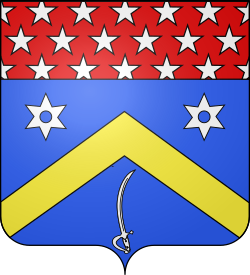
Dukes of Brunswick I: Wolfenbüttel and the Unwanted Princess

In January 1820, Caroline of Brunswick, Princess of Wales, legally became Queen of the United Kingdom of Great Britain and Ireland, and Queen of Hanover, as consort to the new King: George IV. But the King made it abundantly clear that Caroline was to have no part in his new reign and would not be crowned by his side in Westminster Abbey. They had barely spoken for over twenty years, and she had even resided abroad since 1814. Although quite popular with the general public, Caroline had made too many enemies at court and was unable to claim her rightful social position. She died just over a year later.

A satire of the reunion of George IV and his ‘Injured Wife’, Caroline of Brunswick

Many people know that the family of George IV was the House of Hanover, and that Hanover is in Germany. Most people do not know, however, that the older name for the House of Hanover is the House of Brunswick (or Braunschweig), and was therefore the same family as that of Caroline of Brunswick. Caroline’s branch, based in the town of Wolfenbüttel, was in fact the senior branch, and Brunswick-Lüneburg, based in the city of Hanover, was the junior, a fact that really irked the senior branch once the junior branch had been elevated in rank above them, first as Electors of Hanover in 1692, and then as kings of Great Britain and Ireland in 1714 (and then kings of Hanover itself in 1814).

arms of the dukes of Brunswick and Lüneburg: golden lions on red and a blue lion on gold with red hearts, and the arms of some of their smaller possessions. Also includes the white horse of Saxony, later the emblem of Hanover and Lower Saxony

This post will look at the family of Brunswick-Wolfenbüttel and its common origins with the family of Brunswick-Lüneburg, aka Hanover. Emerging as a separate entity as early as the 1260s, the principality of Wolfenbüttel would remain one of the many divisions of the House of Brunswick, and included the dynasty’s ‘home base’ the city of Brunswick itself, until the re-shuffling after the Napoleonic Wars. Once Hanover had been proclaimed a kingdom, the territory of the Wolfenbüttel branch—with no other branches still extant—was called simply the Duchy of Brunswick, and would remain so until the dynasty became extinct in 1884.

the location of Brunswick-Wolfenbüttel in context of the German Empire of the late 19th century.

Yet another name for the House of Brunswick was the House of Guelph, or Welf. The Welf Dynasty (or the Welfen in German) was one of the core ruling families of Germany in the earlier Middle Ages. At their height in the 12th century, they dominated both Saxony in the north and Bavaria in the south, and they rivalled the Hohenstaufens for the Imperial crown. This rivalry also spilled over into the larger dispute between papal and imperial power in the 12th century, in particular erupting into violence in the towns and communes of northern Italy where rival factions took on the Italianised names of ‘Ghibellines’ (from the Hohenstaufen castle of Waiblingen in Swabia) for the pro-imperial faction, or ‘Guelphs’ for the pro-papal faction. Eventually, imperial power prevailed over papal power, and the Hohenstaufens triumphed as medieval Germany’s most powerful dynasty. The Welfs were reduced to a regional power only.

There are several different origin stories for the Welfs. One was that there was a huntsman’s son called ‘Wolf’ who was raised by a childless duke of Swabia as his heir, until his identity was discovered and he retired to a monastery in shame. Another was that he was the 11th (elf in German) son of a Swabian count. Another story puts their earliest origins in the 5th century, as descendants of Edeko, the father of Odoacer, the German chieftain who took power in Italy at the fall of the Roman Empire. Records indicate that there were indeed counts with the name Welf in Swabia by the 8th century, based in the castle of Altdorf, in the Argengau, north of Lake Constance. Some suggest that they were originally Franks, from the Frankish heartland in the Ardennes region, and this first Welf Dynasty were certainly closely related to the Frankish chieftains who established the Carolingian Empire (which included Swabia): two daughters of the first Welf (d. 876) married father and son, Emperor Louis I the Pious, and Louis II the German, King of the East Franks. One branch of the House of Altdorf became kings of Burgundy (9th to 11th centuries), while the Swabian branch continued as counts of Altdorf. They founded an abbey on their mountain (St Martin’s Mountain), which later became known as Weingarten, and was the family sepulchre for many centuries. Leaving Altdorf to the monastery (which remained an independent ecclesiastical territory of the Empire until 1805), they moved their headquarters to a nearby castle of Ravensburg. Count Welf III became close politically to one of his kinsmen, Emperor Henry III, who raised him in rank in 1047 as Duke of Carinthia and Margrave of Verona, important imperial territories on opposing sides of the eastern Alps.

a postcard of the Basilica of St Martin in Weingarten
The entrance to the crypt of the Welf Dynasty in Weingarten

But in 1055, this last member of the first Welf dynasty died, and his sister, Kunigunde, took the inheritance to her Italian husband, Margrave Alberto Azzo II of Milan. His ancestors were also descended from Frankish warriors, those who established themselves on the Lombard plains of northern Italy in the 9th century. His family were known as the Obertenghi, as they stemmed from a lord named Obert (or Obrecht). From this marriage sprung two separate noble houses, one for Germany and one for Italy. The eldest son took the dynastic name of his mother, Welf, and inherited her lands in Swabia. The younger son, Fulk, received a castle his father had built in the Lower Po Valley, Este, and his descendants took that as their surname. A full legal division was made between the properties of the Houses of Welf and Este soon after, but there would always linger some memory of a shared origin, or at least that is what the Hanoverian historians of the early 18th century tell us. 19th-century genealogical historians loved marrying together the names of Guelph and Este as one big giant pan-European superfamily. Two of the illegitimate children of the Duke of Sussex (6th son of King George III) even took the surname ‘d’Este’.

Welf I, founder of the new Welf Dynasty, was appointed Duke of Bavaria in 1070 by Emperor Henry IV, as a reward for his loyalty in a rebellion of the northern German lords. He was followed in this post by his son Welf II, who married a significant Italian heiress, Countess Matilda of Tuscany, which drew the family once more into the political squabbles of northern Italy (and eventually the Guelph/Ghibelline rivalries described above). Welf II’s younger brother succeeded him in Bavaria as Heinrich IX ‘the Black’, who also married a major heiress, this time on the completely opposite side of the Holy Roman Empire: Wulfhilde, an heiress of the dukes of Saxony, whose inheritance included the lordships of Lüneburg, Northeim and Göttingen (these are today in Lower Saxony, which was the Saxony in his period). Duke Heinrich and Wulfhilde had two sons: Heinrich X succeeded as Duke of Bavaria, while the younger, Welf, was given the ancient family lands in Swabia (Altdorf and Ravensburg) and the lands of Matilda of Tuscany; when he died in 1191, in conflict with his nephew, Heinrich XI, he donated these extensive territories to the House of Hohenstaufen, and the Swabian and Tuscan lands were thus lost to the Welfs. Nevertheless, the older brother, Heinrich X ‘the Proud’, Duke of Bavaria, continued to aggrandise the family’s holdings in the north, by marriage to the daughter of Emperor Lothar II, who was also Duke of Saxony. When Lothar died in 1137, Heinrich succeeded him as Duke of Saxony and was expected to be elected as Holy Roman Emperor in his father-in-law’s place. As holder of two (of the six or so) German duchies, this alarmed the other German princes, and he was defeated in the election and deprived of his duchies by the new emperor.

Heinrich the Proud’s son Heinrich ‘the Lion’ regained the Duchy of Saxony in 1142 and also the Duchy of Bavaria in 1156. He did an unusual thing for a German prince, and married well outside normal dynastic circles: Matilda of England, daughter of King Henry II, was offered  in 1168 as part of the English king’s attempts to get closer to Imperial power as a support in his conflicts with papal authority. Heinrich the Lion’s influence thus stretched from England to Poland, the North Sea to the Alps. But again this power reach resulted in disaster, and when he refused to help the Emperor Frederick Barbarossa (a Hohenstaufen) in his Italian campaigns, he was tried and formally dispossessed of his duchies in 1180, and exiled to England. Although he and Frederick were reconciled in 1185, Heinrich was only restored to his allodial lands (lands held outright, not as fiefs of the emperor), the estates of his mother and grandmother in Saxony, notably around Brunswick.

Heinrich the Lion and Matilda of England

Brunswick was founded by a Saxon noble dynasty known as the Brunonids or Brunonians. Their chief town was ‘Bruno’s Town’ or Brunswick. They established themselves in the 10th century in the eastern parts of the Duchy of Saxony (known as ‘Eastphalia’—did you know there was once a counterpart to Westphalia?). They claimed to be descended from a certain Bruno, a duke of Saxony who died in 880, who was related to the Ottonian emperors (who were also from Saxony), thus giving them a blood relationship with the ruling imperial families. Heinrich the Lion built a new residence in Brunswick, the Dankwarderode (between about 1160 and 1175), in the style of imperial palaces of the time, and also Brunswick Cathedral, 1175. This remained the regional capital until the 15th century. The palace was remodelled in the Renaissance style in the early 17th century, but was abandoned again once the city became the main residence of the dukes of Brunswick once more from 1754, and they built a new, much grander ducal palace, the Residenzschloss, just outside the old medieval core of the city (see below). The Dankwarderode was thus used as a barracks and slowly fell apart, until it was reconstructed in 1887—in a wave of neo-medievalist passion that was prevalent in Germany at that time. It is now part of the Duke Anton Ulrich Museum complex and houses works of medieval art, including the famous bronze Brunswick Lion, dating from about 1170.

the Dankwarderode in Brunswick (photo Stefan Schäfer)
the Brunswick Lion (photo Daderot)

Heinrich the Lion died in 1195, leaving three sons. The eldest, Heinrich, was appointed Count Palatine of the Rhine, a key post in the western side of the Empire. The second, Otto, was initially raised by his mother’s family as a surrogate English prince, and was created Earl of York and Count of Poitou by his uncle, King Richard I. In 1198, with the support of his uncle, he was chosen by a group of anti-Hohenstaufen princes to be king of the Germans. After battling against the forces of his rival, Philip of Hohenstaufen, he finally secured the German throne and was even crowned Emperor in Rome in 1209, as Otto IV, but was defeated in battled and forced to retire in 1215.

the seal of Otto IV

The third son, William of Winchester (or William ‘Longsword’), was also born and raised at the English court, but as an adult managed the family’s northern territories, bordering Holstein, and entered into a marriage with the King of Denmark’s sister, hoping to share in Danish control over Holstein. Of the three sons, only William left a surviving male heir, Otto ‘the Child’.

Otto the Child inherited all the lands of the Welf family by 1227. He was able to fend off lingering Hohenstaufen enmity through his great family connections: to England through this grandmother and to Denmark through his mother. With English and Danish backing, and the support of the Pope (and the Guelph party in Italy), he may have hoped to succeed his uncle as emperor, but the Hohenstaufens made him a peace offering instead and restored him to his grandfather’s rank of duke. The title Duke of Saxony was already taken, so for the first time in Imperial history, a brand new dukedom was formally created, in 1235, using the name ‘Brunswick and Lüneburg’—these lordships would now be independent of their former feudal lord, the duke of Saxony, and would remain united as a single fief held directly from the emperor, meaning that although other lands could pass in and out of the dynasty, these two would always be at its core. Even as late as the 18th century, the Hanoverian kings of England were still known formally in Germany as dukes of Brunswick and Lüneburg.

Otto the Child receives the Duchies of Brunswick and Lüneburg from the Emperor

Lüneburg was at the centre of the Welf dynasty’s northernmost territories, in the Elbe valley, built atop a large deposit of salt, which in the middle ages was nearly as valuable as gold. The saltworks here were therefore defended by walls and a fortress, the Kalkberg. The town’s name doesn’t have anything to do with the moon or with lunacy, but probably meant ‘place of refuge’ (as one of the few large hills in a very flat region of Germany), from the ancient Germanic name Hluini. But the Latin name for the town, Selenopolis, while probably referring to salt, also puns with the name Selene, the goddess of the Moon. The salt monopoly drew trade and wealth to the area, and the early Saxon dukes made Lüneburg one of their capitals as early as the 10th century. In the 12th century, the town joined the Hanseatic League, and the Welfs profited greatly from its trading power, with the Kalkberg as one of their chief residences. The castle was destroyed in the War of Lüneburg Succession, 1370-71 (see below), and although the lands were fully restored to the Welfs, the town itself managed to secure its independence as an Imperial Free Town. The Welfs therefore moved their base south to Celle. Hanseatic trade declined in the 16th century, and the House of Brunswick would reclaim direct rule over the town of Lüneburg in 1637. As a point of interest to an American like myself, this town, traditionally known as ‘Lunenburg’ in English, gave its name to several colonial settlements founded by the British in the 18th century, notably in Nova Scotia and Massachusetts, but also a county in my home state of Virginia. The original Lüneburg was a garrison town for the Prussians from the later 19th century, and was, interestingly, the setting for the signatures on the first of the Instruments of Surrender of the Nazi forces on 4 May 1945. The now much reduced salt-hill of Kalkberg is today a nature reserve.

Kalkberg today

The new Duke of Brunswick-Lüneburg, Otto I, gained more territory by supporting the bid of his son-in-law, William of Holland, for the German throne in 1252. Otto’s other daughters were married to all of his powerful neighbours and potential rivals to his new ducal title: Saxony, Thuringia and Anhalt; his younger sons occupied the most important bishoprics that adjoined his territory: Hildesheim and Verden. The newly founded House of Brunswick was off to a great start.

the new duchy in the 13th century, stretching from Lüneburg in the north to Braunschweig in the south

But within only one generation, German tradition kicked in, and the new dukedom was partitioned amongst Otto’s sons. The eldest, Albrecht ‘the Tall’, created a principality centred on the Brunswick lands in the south, around the town of Wolfenbüttel, the upper Leine river valley, and the Harz mountains, a valuable source of copper and lead mining. The younger son, Johann ‘the Handsome’, received the northern territories of Lüneburg (with its salt), Celle and Hanover. They agreed to share the city of Brunswick itself, as a joint dynastic capital. From this point (1269) we have the first basic division between the branches of Brunswick-Wolfenbüttel and Brunswick-Lüneburg.

The town of Wolfenbüttel had been founded along the river Oker, a few miles south of Brunswick, in the 10th century. The name refers to a ‘wolf’s residence’, and local counts built a castle here by the 12th century. This residence was seized and destroyed by the new duke of Brunswick in 1255 and a much grander castle was built in the 1280s. It was largely rebuilt in the 1540s after the religious wars and is considered a model of the Renaissance ‘water castle’, being defended still today by an elegant moat. After the court of the dukes of Brunswick relocated to Brunswick in the 18th century, Wolfenbüttel Castle fell into decline, but was given new life as a girl’s school in the 1860s—today it still houses a high school and a local museum. The town is now more famous as the home for one of the world’s great libraries—as we shall see below.

Wolfenbüttel Schloss (photo Brunswyk)

Another partition took place in 1292 amongst the sons of Albrecht I: Heinrich I ‘the Admirable’ created a principality of Grubenhagen, with a residence in Einbeck and a seat at Herzberg Castle dominating the southwest edge of the Harz Mountains. Grubenhagen was built earlier in the 13th century and probably named for a local family of Welf administrators called Grubo. It was once of the residences of the dukes of Brunswick-Grubenhagen in the 14th to 16th centuries, then fell slowly into ruin. The lands around it were sometimes used as a hunting retreat by princes of the House of Hanover in the 18th and 19th centuries. Many of the dukes of this line preferred to reside at Herzberg, which had been a seat of Emperor Lothar back in the 11th century. It was rebuilt as a half-timber fortress after a fire of 1510, and remained one of the chief ducal residences, passing to the line of Hanover in the 17th century, until the Hanoverians themselves moved to England.

the remaining tower at Grubenhagen (photo Gerhard Elsner)
Herzberg Castle (photo Elke Wetzig)

The line of Brunswick-Grubenhagen, based chiefly in the Harz Mountains, also had an interesting connection with the Mediterranean in the 14th century, with one daughter briefly becoming Byzantine Empress (1321-24), one son becoming prince-consort to the Queen of Naples, one Constable of Jerusalem (in title only, since that Kingdom had long fallen), and one ‘Despot of Romania’ (a principality in north-western Greece and Albania). This branch of the dynasty would split into sub-branches, then re-form into one principality again in 1526, before becoming extinct in 1596. These territories were disputed by the surviving Welf branches until they were awarded to the Lüneburg line in 1617.

Back in 1292, the younger son of Albrecht I, Albrecht II ‘the Fat’, received Wolfenbüttel. He had several sons: the eldest, Otto ‘the Mild’, was lord in Wolfenbüttel, succeeded by his brother Magnus ‘the Pious’ in 1344. The third, Ernst, was given a separate principality in the upper Leine valley, centred on the town of Göttingen, while the youngest brothers became bishops of Hildesheim and Halberstadt. Göttingen, anciently called Gutingi, and probably named from the nearby stream of Gote, was the location of an Ottonian palace, Grona, on a hill west of the river Leine—it was a frequent residence for German kings and emperors from the 10th and 11th centuries. A town was rebuilt in the 1150s, around an imperial foundation church, St Albani, and it developed into a key economic centre for the Welf dynasty, sitting along one of the major north-south trade routes. The ducal residence within the town was built in the 1290s (the Ballerhus fortress), but in the 1380s the town fought for its autonomy, and the fortress was destroyed. Unlike Lüneburg, however, it never developed into a fully independent Free Imperial City. This separate line of Brunswick-Göttingen continued until 1463, then its lands returned to the main Wolfenbüttel branch.

nothing remains of the palace of Grona or the ducal residence in Göttingen, but there are fragments of the old defensive wall here and there

Magnus of Brunswick-Wolfenbüttel married a niece of Emperor Ludwig IV, so had hopes for reclaiming former Welf glories in the Empire, and was temporarily made Count Palatine (or imperial deputy) of Saxony. He secured an important archbishopric, Bremen, for his second son, and pressed to ensure that his older son, Magnus II ‘Torquatus’ (‘with a necklace’) would succeed to the lands of the northern, Lüneburg branch, if it failed. When that line did indeed fail in 1369, however, Magnus II and his son Friedrich had to fight against rival heirs in the House of Saxony, and were only victorious after twenty years of struggle. Duke Friedrich I, feeling confident after this victory, stood for election as emperor in 1400 in Frankfurt, and though he lost, was murdered on the way home, perhaps to prevent him from contesting the election, or from trying again later.

Having briefly re-united the northern Lüneburg lands and the southern Wolfenbüttel lands, the next generation of dukes divided them again: after 1428, there was another line in Lüneburg, and a line in Wolfenbüttel, out of which was carved another smaller principality, Calenberg, in 1432. Calenberg, took its name from a castle built on a small hill (from kahl, ‘barren’) in the meandering valley of the river Leine, a few miles south of Hanover. It had been built in the 13th century to watch over the nearby bishopric of Hildesheim, and only served as an occasional residence for the Brunswick dukes—mostly a vogt, or administrator, lived here, and the dukes of Brunswick-Calenberg lived elsewhere. Calenberg was developed into a larger fortress in the 16th century, then mostly destroyed in the Thirty Years War (all that remains today are some earthwork moats and ramparts). The lands of the separate principality of Calenberg returned to the main Wolfenbüttel line in 1584, then were given to the Lüneburg branch in 1634. It was this line that evolved into the House of Hanover by the end of the century, and then the royal house of Great Britain in 1714. The House of Hanover in Germany still owns the estates of Calenberg, located not far from their chief residence, Marienburg Castle.

Calenberg in the 17th century.

One of these dukes of Brunswick-Calenberg, Friedrich II ‘the Turbulent’, was considered to be a little out of control, involved in feuds and banditry, so he was deposed by his brother Wilhelm in 1484, and died in his prison. Wilhelm thus re-united Wolfenbüttel and Calenberg, as well as Göttingen, which he had inherited when his cousins from that line died out in 1463. Sticking with tradition, he re-distributed these to his sons in 1494, and retired, before dying in 1503. Heinrich was given Wolfenbüttel, while the younger son, Erich I, started a new line of Calenberg-Göttingen. Erich I was a committed commander of Emperor Maximilian I, and established a new seat of power, Rovenburg Castle, aka Landestrost, in the town of Neustadt, north of Hanover. He also built Erichsburg Castle in about 1530, to watch over the more southern parts of his domains.

Duke Erich I and Elisabeth of Brandenburg
Erichsburg Castle

Erich’s wife, Elisabeth of Brandenburg, accused his mistress of witchcraft, so he held a trial, leading to the deaths of several women by burning, but the mistress (Anna Rumschottel) escaped, only to be tried and burned elsewhere. Part of the tension between husband and wife was that, while the Duke remained loyal to the Catholic Church in the early years of the Reformation, his wife did not. After his death in 1540, she became regent and formally introduced Lutheranism into this part of Brunswick. Her son, Erich II, was initially Lutheran, but reversed his loyalties once he took over his lands. He too got involved in the witch craze, and in 1572 accused his very Protestant wife (Sidonie of Saxony) of witchcraft—she too was tried and acquitted. In a more unusual ending, Erich II of Calenberg-Göttingen and his second wife (the very Catholic Dorothée of Lorraine, a failed claimant to the Kingdom of Denmark), fought for the King of Spain in his conquest of Portugal in 1580, then settled in Italy in his wife’s estates in Tortona, then bought a major palazzo in Venice and retired from German politics altogether.

Duke Erich II of Brunswick-Calenberg-Göttingen

Meanwhile, Heinrich I of Brunswick-Wolfenbüttel was an active warrior, taking on many regional fights in Lower Saxony (conquering the smaller county of Hoya for his dynasty) and in Frisia, where he was killed in 1514. He was an ally of the powerful Prince-Archbishop of Bremen, and two of his sons succeeded to that ecclesiastical seat—the elder, Christophe, was the last fully Catholic archbishop, while the younger, Georg, gradually admitted a moderate form of Lutheranism into his diocese in the 1560s. Duke Heinrich II of Wolfenbüttel, on the other hand, remained a Catholic, and a firm ally of the Emperor Charles V, so he sparred with his neighbour the Elector of Saxony—in 1542, he was chased out of his estates by the Elector and the coalition of Protestant princes, but was reinstated by the Emperor a few years later.

The tomb of Heinrich II in Wolfenbüttel, with two of his sons and his second wife, Sofie of Poland

Heinrich II’s son Julius, though as a third son not expected to succeed, became one of the most important princes of the line of Brunswick-Wolfenbüttel. His older brothers having been killed in the religious wars, he succeeded his father as duke in 1568. He then succeeded his cousin Erich II in Calenberg and Göttingen, so the entire southern half of the Welf domains were once more united. Unlike his father, Julius was a passionate follower of Martin Luther and founded the Lutheran State Church in Brunswick-Wolfenbüttel. He was also passionate about education, so in 1576 he founded the Academia Julia, mostly to train Lutheran clergy—this developed into the University of Helmstedt, one of the most important universities in northern Germany until it closed its doors in 1810. The buildings remain and are really lovely.

Duke Julius of Brunswick-Wolfenbüttel
Helmstedt

Duke Julius was a very capable ruler, in particular as an administrative reformer: of the tax system, the military, the judiciary. He was also a great collector of books, and his library of 1572 formed the core of the later Duke August Library (below). To improve his duchy he developed the copper and lead mines in the Harz Mountains, and built roads and canals to transport it, notably taking metals to renowned armouries in Wolfenbüttel. He also rebuilt the Hessen Castle, on the road towards the Harz, in a Renaissance style, and made it his chief residence. Originally a manor house from the 1120s, it was turned into a castle in the 14th century. After Julius’s reign, it became a dowager residence, then a hunting lodge by the end of the 17th century. It slowly decayed until it was renovated in the 1990s.

Schloss Hessen in the 17th century

Another castle Julius re-developed was Calvörde, which had been a Welf castle in the 14th century, but leased out to local nobles in the intervening centuries. The castle is unique with its rounded shape and round moat, but the district it commanded was also interesting as an exclave of the Duchy, far to the northeast (close to Magdeburg), guarding a strategic border between Brunswick and Brandenburg. It remained an exclave even after the reorganisation of the maps of Germany in 1815, all the way until the end of the German Empire in 1918.

Julius’ son, Heinrich Julius, continued his father’s work, and was considered one of the most educated princes of his time, with degrees in theology and law. As an administrator, he was Rector of the University of Helmstedt, but he also wrote plays and theological pamphlets himself. He was an avid supporter of church music, maintaining the famous Michael Praetorius as his Kapellmeister. Heinrich Julius rebuilt the Ducal Palace in Wolfenbüttel along more fashionable Renaissance lines (‘Weser’ style), constructed new buildings for Helmstedt, and commissioned a new church in Wolfenbüttel, the church of the Blessed Mary the Virgin or Marienkirche, in 1608. Though he was a Protestant, he became a chief counsellor to the Emperor Rudolf II, and was named to his Privy Council in 1607. He worked hard to try to resolve issues between competing factions of the Christian faith. He was less tolerant of other faiths however, and expelled the Jews from his territories, and persecuted witches with passion. His dynasty’s standing was increased as well through a marriage to a Danish princess, daughter of King Frederick II.

Of the many children of Duke Heinrich Julius and Elisabeth of Denmark, one of the youngest sons, Prince Christian, was set to be a great military commander in the early years of the Thirty Years War, in defence of the deposed Frederick of the Palatinate (the ‘Winter King’) and in coordinating the military invasion of his cousin and namesake, King Christian IV of Denmark. But he became ill and died, age just 26.

Prince Christian of Brunswick-Wolfenbüttel

His older brother, the new duke of Brunswick-Wolfenbüttel, was Friedrich Ulrich. He was apparently a wayward youth, a heavy drinker, and had been deposed by his own mother and her brother Christian IV of Denmark in 1616. Restored in 1622, he never really asserted himself as a ruler and lost much of his territory during the war, then died ignominiously in a hunting accident in 1634. With him died the last of this branch of the House of Brunswick. But there was one more lingering presence: his widow Anna Sophia, daughter of the Elector of Brandenburg, lived on for another 25 years, protecting the University at Helmstedt against the war ravaging all round, and founded a Latin school nearby, called the Anna-Sophianeum, which still exists today. She lived nearby in Schöningen Castle, another traditional Brunswick dowager residence (three in succession since the 16th century). It remained one of the main administrative centres for this part of the Duchy in the 18th century, but has decayed since.

Anna Sophia of Brandenburg
Schloss Schöningen (photo Juergen Bode)

With the death of Duke Friedrich Ulrich in 1634, the House of Brunswick underwent one of those periodic grand regroupings and redistributions of territory that frequently occurred in ruling German families. Wolfenbüttel, Grubenhagen, Calenberg and Göttingen all passed back to the main line of Lüneburg. But this redistribution had already been planned for in the generation before: Duke Heinrich of Lüneburg gave up this senior position in 1569 to his younger brother (along with Celle and Hanover—the core of the future Hanoverian Dynasty) in return for the potential succession rights to Wolfenbüttel. While he waited he ruled from Dannenberg Castle, southeast of Lüneburg—a medieval castle overlooking the Elbe valley. Today only the central tower remains.

Schloss Dannenberg

Heinrich’s elder son succeeded him in Dannenberg in 1598, and his second son, August, was initially given Grubenhagen, then in the reshuffling of 1634, the principality of Wolfenbüttel. Having not expected originally to succeed to any of his family’s major estates, Duke August had spent much his youth in study and travel, so as an adult he integrated his growing collection of books with the library he had inherited from his cousin Duke Julius, re-founding it as the Bibliotheca Augusta in Wolfenbüttel, but known today as the Herzog August Bibliothek.

Duke August of Brunswick-Wolfenbüttel
Duke August in his library

By Duke August’s death in 1666, his library was the largest collection north of the Alps and already seen as a national treasure by Germans. August himself was a great promoter of German language and literature, but also himself wrote in Latin (including a book a cryptology). Many of the books were bound in a creamy white leather, which still gives a beautiful uniform appearance in the library today. A new building was added in 1723, with a rotunda in graceful neo-classical style, then a grand monumental building replaced it in 1886. Duke August’s library continues today to be a beacon of scholarship particularly for the history of the Reformation and the German Renaissance. Its collections preserve treasures like the illustrated Bible produced for Duke Heinrich the Lion in the 12th century.

the interior of the Herzog August Bibliothek today, with its white leather bindings (photo © Vincent Eisfeld / vincent-eisfeld.de / CC BY-SA 4.0)
The Herzog August Library in the 18th century
The Herzog August Library today (photo Losch)
the Gospels of Heinrich the Lion

The three sons of Duke August are all interesting in their own way, and usher the House of Brunswick-Wolfenbüttel into the 18th century and participation in dynastic politics on a much grander scale. The eldest, Rudolph August, was mostly interested in his studies and in hunting, and gradually associated his more politically minded brother, Anton Ulrich, with administrative rule of the duchy. Rudolph August’s preferred residence was the summer hunting lodge, Hedwigsburg, named for a previous duchess of Wolfenbüttel, Hedwig of Brandenburg. This small palace, southwest of the town, was sold in the 18th century and has mostly disappeared.

The third son, Ferdinand Albrecht, was also a scholar and an art collector, residing in a new Brunswick apanage territory, Bevern, sliced off in 1667. Bevern was in the far western parts of the family lands, on the River Weser; its castle was built in the early years of the 17th century. There was a separate Brunswick-Bevern line until 1809, but the family only occasionally used the castle as a residence. In the 19th century, it was used to house retired ducal court officials and soldiers, then a ‘correctional institute’ and an orphanage. In the 20th century it was a school, a barracks, a prisoner of war camp, and so on. Since the 1970s, it has been restored and today houses a local history museum.

Schloss Bevern

Duke Anton Ulrich is the next of the most important dukes in the Wolfenbüttel story. His rivalry with the House of Hanover and his ambition on the European dynastic marriage market makes for fascinating reading. He was the sole ruler of the Duchy after 1704 and established his rule as a model of what would later be described as ‘enlightened absolutism’. Anton Ulrich was well educated like his siblings, with a doctorate in theology from the University of Helmstedt, and was keen to continue the family legacy in supporting scholarship: he hired the famous philosopher and historian Leibniz to be the librarian at the Duke August Library and built the grand new rotunda building noted above, as well as an opera house in Brunswick.

Duke Anton Ulrich of Brunswick-Wolfenbüttel

He also built his own summer residence to the east of Wolfenbüttel, Schloss Salzdahlum, where he amassed a large art collection, which today is the core of the museum which bears his name in Brunswick—built in the 1750s, it was one of the first public museums in Germany. Salzdahlum and its gardens were designed in part to impress, to rival the gardens built by the Hanoverians in Herrenhausen. But its glories did not last very long. The gardens faded and the palace was dismantled in 1813.

Salzdahlum

The rivalry with the House of Hanover was fanned by the promotion of the Lüneburg branch—the junior branch by this point—to the rank of Imperial Elector in 1692, and their being named as heirs to a fully royal throne, Great Britain, in 1701. Hoping to raise his own branch’s dynastic profile, Duke Anton Ulrich turned to match-making. His own daughters were already married—to mostly small-fry German princes—so he turned to his grand-daughters: in 1708 he arranged a spectacular marriage for the eldest, Elisabeth Christine, to Archduke Charles of Austria, at that point still considered King ‘Carlos III’ of Spain. She grumbled, but agreed to convert to Catholicism, as did her grandpapa himself in 1709. Her younger sister, Charlotte Christine married the Tsarevich Alexis, son of Peter the Great in 1711, so she too had to convert, to Orthodoxy. Tsarevna Charlotte did not get on well with her husband and died shortly after giving birth to the future Peter II in 1715. Elisabeth Christine, on the other hand, did not become queen of Spain, but instead ascended with her husband to the throne of the Holy Roman Empire in 1711, and was the mother of the famous Empress Maria Theresa of Austria.

Elisabeth Christine of Brunswick-Wolfenbüttel, Holy Roman Empress
Charlotte Christine of Brunswick-Wolfenbüttel, Tsarevna of Russia

Old Duke Anton Ulrich died in 1714, age 80, and left his duchy to his son August Wilhelm, who, like his uncle, was more interested in art and hunting, and despite marrying three times in an attempt to produce an heir, maintained a fairly open same-sex relationship. He spent a large fortune on raising the splendour of the small court in Wolfenbüttel, and left the duchy’s finances in tatters when he died in 1735 and passed the estates to his younger brother Ludwig Rudolf (the father of the Tsarevna and the Empress).

Duke August Wilhelm

Duke Ludwig Rudolf had already had a long career as a general in Austrian service, and added new territory to the Brunswick domains: the county of Blankenburg, another eastern exclave in the Harz mountains, which had belonged to the bishops of Halberstadt since the Middle Ages but was secularised as part of the treaty of Westphalia in 1648. The county was raised to the level of a principality in 1708 at the time of his daughter’s marriage to a Habsburg archduke, partly to raise his rank, and partly to sever all the remaining feudal ties to Halberstadt which was now held by the king of Prussia.

The Duchy of Brunswick-Wolfenbüttel by the 18th century, showing the exclaves of Blankenburg and Calvorde, and the now much larger Electorate of Hanover, to the north and south (in yellow)

When Duke Ludwig Rudolf died in 1735, the duchy passed to his cousin, Ferdinand Albrecht II of Brunswick-Bevern, who also had a long career as a solider in Austrian service, starting as an aide to Emperor Leopold and rising to the rank of General-Field Marshal in 1733. He was Duke of Brunswick-Wolfenbüttel for only six months, then passed along the throne to his eldest son, Karl. Duke Karl I had an entire tribe of younger siblings, many of whom had illustrious and interesting careers of their own. Of his sisters, Juliana became queen of Denmark, Elisabeth Christine became queen of Prussia, wife of Frederick the Great, and Luise the mother of Frederick’s successor, Frederick William I of Prussia. The second son, another Anton Ulrich, was put forward by his aunt, the Empress Elisabeth Christine, as a groom for Anna Leopoldovna, a grand-daughter of Tsar Ivan V of Russia and a potential heir to the throne. He moved to Russia in the mid-1730s, married Anna in 1739, and briefly helped her rule Russia as regent for their infant son, Ivan VI, in 1740-41, before his wife’s cousin, Elisabeth Petrovna, daughter of Peter the Great, launched a coup and sent Anna, Anton, baby Ivan, and their entire family to Kholmogory near the Arctic Sea. Anna died soon after, and Ivan in 1764, separated from his family in Schlüsselburg Fortress. Anton Ulrich was then offered the chance to leave Russia by Catherine the Great, but he chose to remain with his other children in the far frozen north. He died in 1776, and in 1780, the younger children, two girls and two boys, were released into custody of their aunt the dowager queen of Denmark.

Prince Anton Ulrich, as a Russian general
Ivan VI (of Brunswick), Tsar of all the Russias

Two of the younger brothers of Karl and Antony Ulrich, Ludwig Ernst and Ferdinand, both became Field Marshals, the former for Austria and the latter for Hanover/Britain. Ludwig Ernst was also briefly involved in Russian politics, serving his brother’s wife as reigning Duke of Courland (on the Baltic) for six month in 1741 before he too was ousted as part of the coup of Elisabeth Petrovna. He then pursued a quite interesting career on the opposite side of Europe, in the Netherlands, where he became a military commander from 1750, and was appointed guardian of the young Prince of Orange, William V, after his mother died in 1759, managing the political affairs of the Dutch Republic for the next six years. Even after the Prince came of age, Ludwig Ernst of Brunswick continued to dominate government until he was pushed out in 1782, having to take the blame for Dutch military and economic failures of the 1770s. He went into exile and died in 1788.

Duke Ludwig Ernst of Brunswick-Bevern

Duke Karl I, who ruled Wolfenbüttel from 1735, kept the family tradition for scholarship alive, expanding the library in Wolfenbüttel and building a new college in Brunswick. He improved the Duchy’s economic situation by founding a porcelain company, at a castle on the Weser, Fürstenberg—which still produces porcelain products today. He also joined with other German princes with ties to the House of Hanover in selling several regiments of locally trained soldiers to Great Britain to use in its war against the American colonies in 1776. The province of New Brunswick in Canada was formed after the war, in 1784, having largely been settled by those English colonists remaining loyal to the House of Hanover, aka, Brunswick. There are lots of towns and counties all over the US, Canada and Australia with the name Brunswick, but these refer to the British royal family, not their cousins in Wolfenbüttel.

Karl I, Duke of Brunswick-Wolfenbüttel, in Prussian military uniform

Karl I also relocated the capital back from Wolfenbüttel to Brunswick, and built a new, much grander ducal palace, started in 1718. It became the official residence of the family formally from 1754. This first palace burned down during the civil unrest of 1830, so was rebuilt in an even more imposing style—along the lines of Buckingham Palace or the new Imperial Palace in Vienna. The moving of the ducal capital away from Wolfenbüttel turned out to be a real blessing for the Herzog August Library, since the small non-industrialised town was entirely spared during World War II, leaving it with one of the best preserved collections of original half-timbered houses in north Germany today, whereas the city of Brunswick was mostly flattened, including the new Ducal Palace. The ruins of this building were fully demolished by the city council in 1960, but it was curiously resurrected in the early years of the 21st century, and re-opened in 2007 as a grand façade with a shopping mall inside (the Schloss-Arkaden). The grand equestrian statues of 19th-century dukes were also restored, flanking either side of the entrance.

the 18th-century Ducal Palace in Brunswick
Brunswick Palace in its reconstructed form (photo Heinz Kudalla)

Karl I’s son, Karl Wilhelm Ferdinand (known by all three names) began his reign in 1780. As a young man, he had been linked to his uncle Frederick the Great, and after starting off as an officer in the army of Hanover, became a Prussian general in 1773 and a General-Field Marshal in 1787. In that year he was sent to the Netherlands to support his kinsman, William V, Prince of Orange, against the revolting ‘Batavian Patriots’—and was praised for his swift, efficient and mostly bloodless way of handling the situation. As a ruler, he was popular, and good with finance. He built a new residence in Brunswick for his British wife, Augusta (sister of King George III), in 1768, which he named Schloss Richmond after one of the royal residences west of London. This cute wedding-cake palace still stands, and was acquired by the city in the 1930s—today it serves as official reception rooms for the city.
Princess August of Great Britain, Duchess of Brunswick
Richmond Schloss (photo Brunswyk)
Duke Karl Wilhelm Ferdinand sponsored the arts and sciences in Brunswick, and had plans to further develop the duchy’s economy and educational systems. But the French Revolutionary Wars broke out in 1792, and the Duke was appointed as Commander-in-Chief of the joint Austro-Prussian army sent to contain the Revolution and to rescue Louis XVI and Marie-Antoinette if necessary. In July of that year he issued the famous ‘Brunswick Manifesto’ (which was actually written by the Prince of Condé, the leader of the royalist émigrés, and not, some historians argue, in fact reflecting the beliefs or aims of the more pacific Duke of Brunswick). The Manifesto was meant to scare the French republicans into submitting back to ‘reason’, but had the opposite effect, fanning the patriotic flames for war. And when war actually began, with the Battle of Valmy in late September, Brunswick was surprised to see how prepared the French patriots really were, and swiftly pulled his troops back to the Rhine. Brunswick made a successful counter-attack in the next year’s campaign, notably re-taking Mainz in 1793, but he resigned as Commander-in-Chief in 1794 due to interference in his command decisions by the young king of Prussia. He did not return to command until 1806, age 70, to lead Prussian troops once more in the Fourth Coalition War. He was defeated by Napoleon at Jena in Thuringia in October, and died shortly after.

Karl Wilhelm Ferdinand, Duke of Brunswick

Duke Karl Wilhelm Ferdinand was succeeded by his fourth son, Friedrich Wilhelm, since the elder three had all been declared ‘incapacitated’ due to mental disability. Mental illness was certainly rampant in the royal families of Europe in the later 18th century—not just limited to ‘Mad King George’, though continual inbreeding between the two branches of the House of Brunswick certainly contributed to its spread. Nevertheless, in 1795, another match was proposed, between the Duke’s second daughter, Princess Caroline, and her first cousin, George, Prince of Wales. They loathed each other from the start, and although they produced one legitimate child within 9 months of the wedding (Princess Charlotte), they rarely saw each other after that. Her story is one of many years fighting for her independence, and scandalising polite society through her brusque manners and indiscrete love affairs, notoriously with her Italian servant Bartolomeo Pergami, with whom she lived after moving abroad in 1814. The Prince of Wales tried several times to divorce her, but even once he succeeded as king (George IV) in January 1820, he was unable to secure it by legal means (an act of Parliament). Caroline, now legally queen, returned to England, and was very popular with the people—probably on account of George being so unpopular—but as we’ve seen above, was barred from attending her own coronation and died only a few weeks later in August 1821.
Caroline of Brunswick, Princess of Wales, 1804, by Lawrence
Caroline with Pergami

It is interesting to consider that Caroline’s wild and out of control behaviour may have been manifestations of the same mental disabilities as her brothers, especially considering that her only sister was renowned for the same outrageous behaviour. Auguste married the Duke of Württemberg in 1780, and was quickly separated from him, accused of uncouth behaviour, incivility and then all-out adultery. She died in 1788 giving birth to an illegitimate child. Her husband, Friedrich, went on to become the first king of Württemberg in 1806.

Auguste of Brunswick, Duchess of Württemberg

Caroline’s brother, Duke Friedrich Wilhelm, did not acquire so much extra territory and exalted titles as his brother-in-law and uncle, the first king of Württemberg and the first king of Hanover (George III). Brunswick remained a fairly small state, though independent (ie, it wasn’t absorbed by a larger state like many other German principalities), and the Duke joined the new German Confederation, the successor to the Holy Roman Empire. In 1807, however, the Duchy was occupied by France, and he took refuge in Baden, at the court of his wife’s family. From 1809, he formed an army of resistance, the ‘Black Brunswickers’ (who wore black in mourning for their duchy), and he became known as the ‘Black Duke’. They successfully retook the city of Brunswick, but he soon retreated with his mother to her homeland in England. He became a lieutenant-general in the British army, and commanded the Black Brunswickers in the Peninsular War, where they were mostly decimated. He returned to a liberated Brunswick in 1813, but was killed in the Battle of Quatre-Bras in Belgium, in June 1815, on the eve of the Battle of Waterloo.

The Black Duke of Brunswick, Friedrich Wilhelm

The new duke of Brunswick, Karl II, was only 10 years old. He had spent the war years in England with his grandmother, Augusta, and remained under the guardianship of his cousin the Prince Regent once he became duke. The Prince Regent, as regent also of Hanover, imposed a new constitution on both of the Brunswick duchies, and when Karl II took the reins himself in 1823, he found that his powers had been severely curtailed. He also found he had lost the income due to him as head of the House of Welf (recall that the House of Lüneburg, ie, Hanover, was the junior branch), and protested, with support of the Austrian emperor, but made little headway. He tried to dismantle the new constitution, but as revolutionary fervour once again spread across Europe in 1830, he was overthrown by a popular movement in Brunswick and sent into exile. From Paris, then London, then Geneva, he continued to issue formal protests, first against his deposition, then against Hanover’s continued domination of Brunswick-Wolfenbüttel, then over Prussia’s takeover of Hanover in 1866. He died in Geneva in 1873 and left a vast fortune to the city, who erected an equally vast statue in his honour.

Karl II, Duke of Brunswick, as a young man

In 1830, Karl II had been replaced with his brother, Wilhelm. Although he reigned for a very long time, over fifty years, he never made very much of a mark on German history. He joined the North German Confederation in 1866 (formed by Prussia, so therefore something his elder brother loathed), served as a general in the Prussian military, and left most government business to his ministers.

Wilhelm, Duke of Brunswick

In fact, Duke Wilhelm of Brunswick spent most of his time at Oels Castle in Silesia. This castle and its town had been the centre of an independent duchy since the early 14th century, one of the many pieces of the fragmented Duchy of Silesia governed by Piasts (the former ruling family of Poland), fully Germanicised by the end of the Middle Ages. The original dynasty became extinct in 1492, and the duchy of Oels passed to the Podiebrad family of Bohemia, then the dukes of Württemberg in 1647, and from them to the House of Brunswick-Wolfenbüttel in 1792. By this point, Silesia was a province of Prussia, so when Duke Wilhelm died with no direct heirs in 1884, the King of Prussia reclaimed the ancient fief for himself as overlord—in 1905, it became the personal property of the Crown Prince of Germany, who continued to live there even after the Great War. In 1945, all of Silesia became part of Poland, so the castle at Oleśnica (as it became known) was nationalised and used for various state organisations. Renovated in the 1970s, it houses offices of a national health charity.

the Castle of Oleśnica today

Duke Wilhelm did try to leave his other possessions, notably the Duchy of Brunswick itself, to the Duke of Cumberland (Ernst August, the son of the deposed King George V of Hanover), but this was disputed—by the old law of the Holy Roman Empire, it should have reverted to the junior line, the House of Hanover; but since Hanover itself was now a part of Prussia, the King of Prussia, now German Emperor, claimed it for himself. It was administered by imperially appointed governors until 1913, when Kaiser Wilhelm II gave it as a wedding present to his daughter, Viktoria Luise, and her husband, none other than Ernst August of Hanover, thus ending the feud between the houses of Hohenzollern and Hanover. This wedding was the last great gathering of European royals before the Great War, attended by the German Emperor and Empress, but also the King and Queen of Great Britain and the Tsar of Russia. The newly restored Duchy of Brunswick was not long-lived, however, and the Duke and Duchess abdicated alongside all the other German princes in November 1918.

Today the city of Brunswick is bustling once again, and the Duke August Library remains one of the jewels in the crown of German academia. I was incredibly fortunate to receive a fellowship to study there for three glorious summer months about five years ago. The legacy of one of the oldest princely houses in Europe continues in this corner of northern Germany.

(images Wikimedia Commons)