Princes of Transylvania, part I

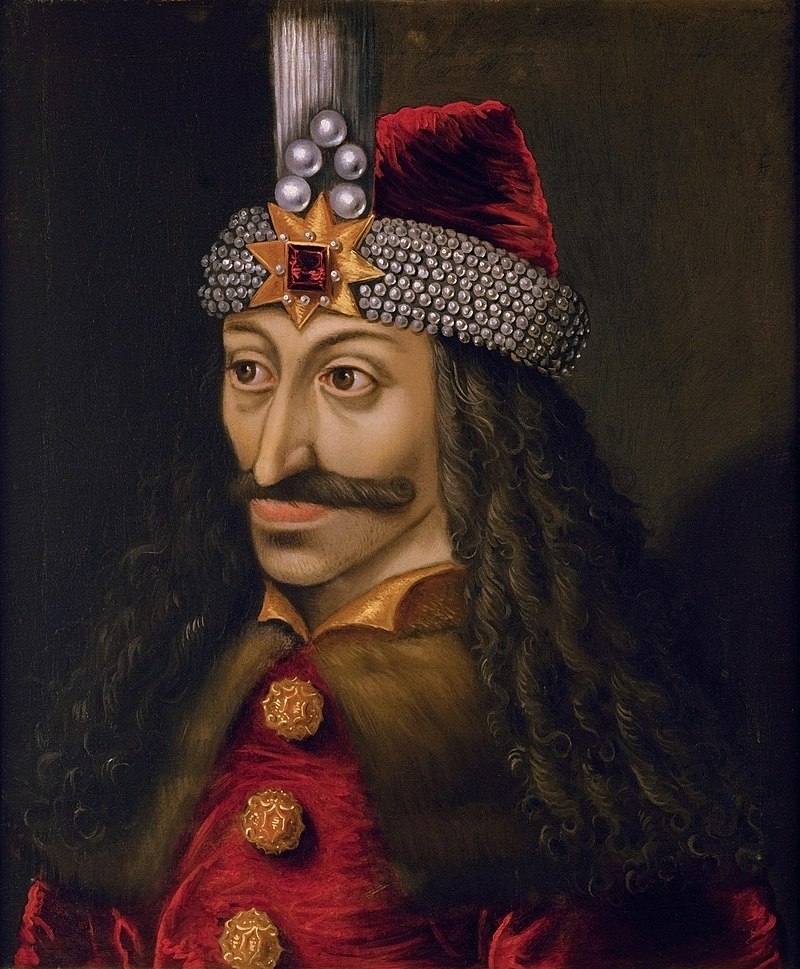
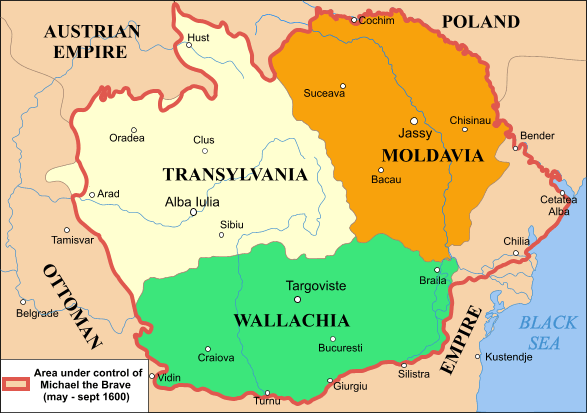
Transylvania. The name conjures up images of vampires and werewolves, and the most famous vampire of all, Count Dracula. But really, his story is part of the Principality of Wallachia and the Carpathian mountains which separate that region from Transylvania. The potential historic inspiration for Dracula, Vlad the Impaler, thus belongs to another blog post, for the princes of Wallachia and Moldavia, and a series of Romanian families. Another favourite tale of horror from this region is of the ‘Blood Countess’, Elizabeth Báthory, whose gruesome murders were said to run into the hundreds. But her chief domains, and the sites of her alleged horrific crimes, lay in what was once known as Upper Hungary, and is now the modern nation of Slovakia.

Báthory’s family, however, did hold much of their lands in the region ‘across the forest’ from the main body of the Hungarian kingdom—ie, ‘trans sylvania’—and they did take on the position of prince of Transylvania for three generations in the late sixteenth and early seventeenth centuries. For Transylvania did not have a specific princely dynasty of its own: at times it was simply a province of the Kingdom of Hungary, and at others a breakaway principality, ever-shifting between sovereignty and loyalty to either the Habsburg king or the Ottoman sultan. This blog post is thus about a series of Hungarian magnate families who rose from their status as ordinary nobles to be princes for a generation or two, then faded back from power. This will be a blog about the Zápolya, Báthory, Rákóczi, Bethlen, Apafy and others—amongst the most famous names in all of Hungarian history.

Today, Transylvania is one of the three regions that make up the modern nation of Romania (alongside Wallachia and Moldavia). For a thousand years, however, if was a frontier zone of mixed ethnicities, Romanians, Hungarians, Slavs and Germans. Still today there is a significant portion of its population who refer to themselves as Szeklers (or Székelys) who are ethnically Hungarian, and those called the Saxons (or Sachsen) who descend from German settlers who came to the region in the 12th and 13th centuries. The Magyar tribes first settled in this region in the late 9th century, but there were also some Vlachs here, probable descendants of the Roman colonists of the province of Dacia from the 2nd century AD, and also some Slavs, who may have given the name to the region’s capital, Balgrad, ‘white castle’ which translates as Fehérvár in Hungarian, Weissenburg in German, and Alba Julia in modern Romanian. The latter name, however, adds the name ‘Julius’, which might suggest a Roman connection, but in fact refers to one of the first Hungarian chieftains to establish a principality here for himself, Gyula. So the full name of his capital was Gyulafehérvár: ‘Gyula’s White Castle’ (in the 18th century it was for a time renamed ‘Karlsburg’, for the Emperor Charles VI).

Map of Transylvania in the 17th century, showing counties (in both Hungarian and Romanian) and different ethnic areas. The yellow counties on the left were usually ruled by the princes of Transylvania too, and were known as the ‘Partium’

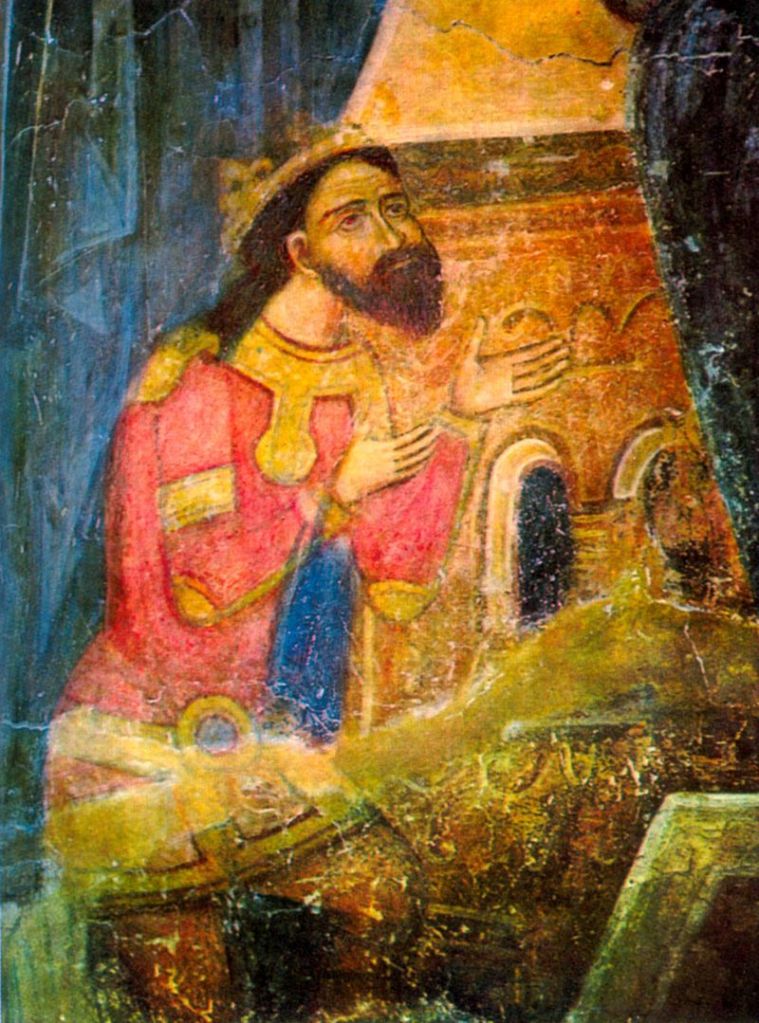
Prince Gyula, one of several pagan Magyar chiefs who arrived in the Pannonian basin—the wide flat plain watered by the Danube and its tributaries—in the 9th century, supposedly defeated a local Vlach (Wallachian or Romanian) duke, Gelou, and set up his rule in this eastern portion of the great basin, while the other Magyar chiefs settled to the west in Hungary proper. There are also suggestions that ‘gyula’ may not be a person, but a military title (seen as ‘gyla’ in Byzantine sources), or perhaps a series of rulers named Gyula. Whatever the truth, according to medieval chronicles, in 1003, the first Christian king of Hungary, St. Stephen, defeated this Prince Gyula, and integrated Transylvania fully into the Kingdom. Gyula may even have been Stephen’s uncle, the father of his queen, Sarolt. Stephen also defeated other dukes, probably Vlachs, in the region: Ajtony (or Ahtum) and Menumorut. From this point onwards, Transylvania did not have its own prince, but a voivode, or governor, appointed by the Hungarian king.

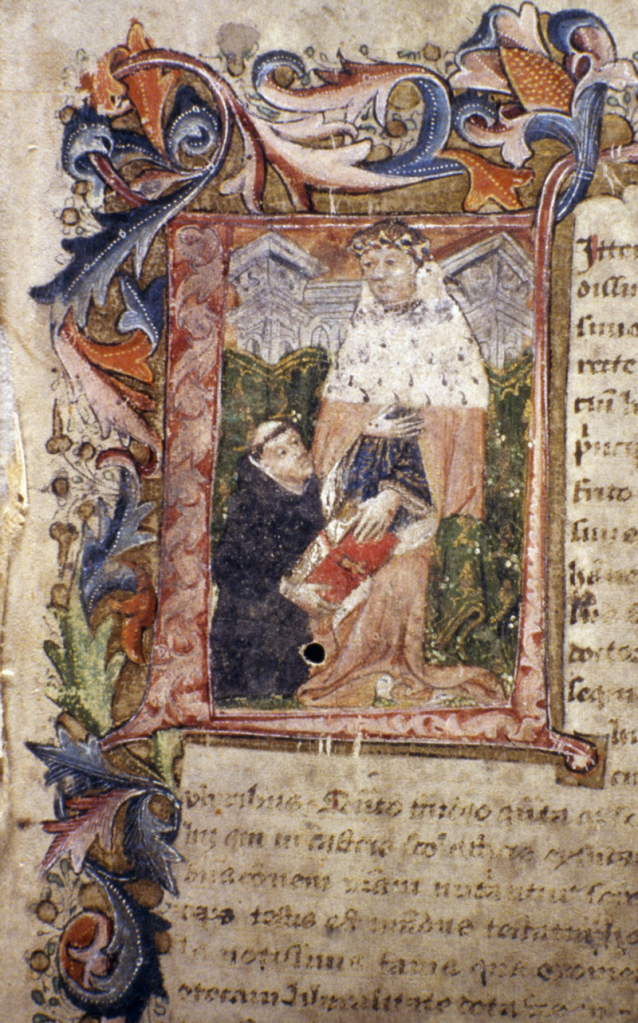
Prince Gyula surrendering to King Stephen I

By the 12th century, the region was known in Hungarian as Erdély, which probably derives from Erdő elve, ‘beyond the forest’, or überwald in German. But the Germans also begin to call it Siebenbürgen, ‘seven castles’, for the seven fortified cities established by the Saxons who were brought in by Hungarian kings about this time to fortify the border between Hungary and the Byzantine Empire (and subsequently the Ottoman Empire). These seven castles feature on the coat-of-arms of Transylvania, along with the black eagle on blue of the Hungarian voivode (and may even refer to ancient Roman Dacia), and the sun and crescent symbols used by the Szeklers (see above).

Other groups who settled in this region—to make it even more complex!—include the Cumans, fleeing Mongol domination of the steppes north of the Black Sea. All of these groups, Hungarians, Szeklers, Saxons, Cumans, enjoyed a degree of influence and power in medieval Transylvania—the one group who did not, about one-third of the population, were the Romanians, excluded formally from government by the 1350s. Some of these, however, seem to have transformed themselves into Hungarians, converted from Orthodoxy to Catholicism, and joined the power structure. The most famous of these is (probably) the Hunyadi family, based at Hunyad Castle (Hunedoara in Romanian, also called Corvin Castle), one of the greatest landowning families in the region by the 1400s. János Hunyadi, one of the greatest generals defending against the Turks, was named voivode of Transylvania in 1440, and recognised as ‘Prince’ by the pope in 1448. His son Mátyás was elected King of Hungary in 1457, better known as Matthias Corvinus, and reigned for over thirty years, one of the greatest of all Hungarian kings. But the Hunyadi family died out shortly after the death of King Matthias in 1490. It seems an interesting feature of several families surveyed here is that they rose and fell in fairly quick succession.

Hunyad Castle (Hunedoara)

Going back to the period of direct royal rule of Transylvania, we do have some early dukes rather than princes. Like royal dynasties in western Europe, the Árpád dynasty of Hungary diffused tensions between royal siblings by giving younger sons dukedoms to rule, as premier subjects of their king. Prince Béla, son of Andrew II, was duke of Transylvania from 1226, then succeeded as king (Béla IV) in 1235. His son Stephen was the same from 1257, before also succeeding to the throne (Stephen V). In the later Angevin dynasty, the tradition continued: Louis, son of King Ladislas, was duke of Transylvania, 1339, then succeeded as king (Louis, or Lajos I) in 1342. His younger brother Stephen, was duke of Transylvania from 1349, but also duke of Szepes and Sáros (what’s now eastern Slovakia) and duke of Slavonia, Croatia and Dalmatia, from 1353. He was thus a major potentate in the Balkans, but died only a year later in 1354.

From this point Transylvania was governed by local magnates as voivodes, not dukes or princes. The Szeklers had their own ruler, called the ‘Count of the Székelys’, based at a castle at Gőrgény (Gurghiu in Romanian). But these offices, voivode and count, were merged by the 1460s. Later the Turks would revive the title ‘Count of the Székelys’ for their local administrators, and it was revived again by Empress Maria Theresa in the 18th century. The impetus for the re-emergence of an independent principality came after the Battle of Mohács, 29 August 1526, and the near complete destruction of the Kingdom of Hungary by Ottoman forces under Suleiman the Magnificent. The first to assert the title Prince of Transylvania was János Zsigmond Zápolya (or Szapolyai).

[Nota bene: in Hungarian, you normally reverse the first and second names, but to keep things simple here I will use the more familiar western style.]

János Zsigmond Zápolya, as a young man

It is unclear where the Zápolya family came from: unlike other Hungarian magnate families they did not trace their ancestry back centuries to the founding of the Kingdom, yet in the mid-15th century, they suddenly emerged as the richest family in Hungary aside from the Hunyadi, to whom they may have been kin. They may therefore also have been originally Vlach, but it seems more likely they were Slavs, taking their name from the village of Szapolya (Zapolje), in Slavonia, on the borders with Bosnia (today in Croatia—Za polja is Croatian for ‘behind the fields’). They gathered properties in Pozsega County (now in Croatia) and Szepes County (now in Slovakia) and by the 1460s, three brothers emerged and took on the most prominent positions in the Kingdom, and formed the core of a ‘nationalist’ party, those opposed to either a Jagiellonian (Polish) or a Habsburg (Austrian) takeover, following the extinction of the previous Hungarian royal dynasty. The eldest, Miklós, was Bishop of Transylvania, based in Gyulafehérvár, from 1462; Imre was the Chief of the Treasury for King Matthias Corvinus, and Ban of Croatia and Dalmatia. A ‘ban’ is a viceroy or governor of a significant territory. The youngest brother, István governed the family’s domains in Szepes County from one of the most powerful fortresses in the Kingdom (Szepes Castle, now Spiš); and also from a second powerful castle a bit further to the west, Trencsén (now Trenčin). This part of Hungary, the mountainous northern section, was known until 1920 as ‘Upper Hungary’, and is today Slovakia. Though not a part of Transylvania, the story of these two regions is tightly interconnected for much of their histories.

Trencsén Castle (Trenčin) (photo Ingo Mehling)

As Matthias Corvinus turned his attentions to adding Bohemia and Silesia to his domains in the 1480s, he left Imre Zápolya behind as Palatine (Nádor) of Hungary, basically the regent or viceroy. The King also conquered the duchies of Austria, and left István Zápolya as governor there. István later succeeded his brother as Palatine of Hungary before he died in 1499. He left behind two sons, János and György, who became leading military figures. But the family was also by now linked by blood to the old Polish royal house, the Piasts, and in the early years of the 16th century, would increase their status further through a marriage of their sister, Borbála, to Sigismund I, King of Poland (though she died only a few years later). Sigismund’s brother, Vladislas, was King of Hungary, and appointed János as Voivode of Transylvania and Count of the Székelys in 1510. Not bad for a family that hadn’t even existed a century before.

János Zápolya, from his base in Transylvania, led the Hungarian armies against the invading Ottoman Turks in successive campaigns after 1513, and both he and his brother György were commanders of the army at the fateful battle of Mohács, in which much of the Hungarian nobility, and the new young King (Lajos II) himself, were killed or captured. In the void, many Hungarian nobles elected the King’s brother-in-law, Ferdinand of Austria, as new King of Hungary. But a significant group of nobles, mostly the lower nobility and gentry, and those based further from Vienna, in Upper Hungary and Transylvania, voted instead for János Zápolya. His story is thus part of the history of Hungary more generally. From 1529, he made Hungary a vassal state to the Ottoman Sultan, and agreed that the Western part of Hungary (to be known as ‘Royal Hungary’) would be subject to the Habsburgs in Vienna. He solidified his family’s accession into the ‘royal’ world by marriage in 1539 to the daughter of his former brother-in-law (by his second wife), Princess Isabella of Poland. But he died only a year later, leaving an infant son.

Suleiman gives the crown to János Zápolya
Princess Isabella of Poland

Isabella of Poland was regent for her son King János II Zsigmond, from 1540 to 1551. The Turks took direct control of Buda, so she moved her government to Transylvania and its capital, Gyulafehérvár. In 1551, she and her son briefly ‘abdicated’ and fled to Poland, but were restored to their throne by the Sultan in 1556. Isabella died in 1559, leaving her son fully in charge of his half of the Hungarian kingdom. He placed it formally under the sovereignty of the Ottoman Empire once more in 1566, and did homage to Sultan Suleiman outside Belgrade. In the 1560s, as the Reformation continued to sweep across Europe, János Zsigmond first adopted Lutheranism, then Calvinism, and finally, Unitarianism—making him the only Unitarian monarch Europe has ever seen. Unitarians were also referred to as anti-Trinitarians, rejecting the divinity of Christ. János Zsigmond passed the Edict of Torda in 1568 saying that all people of Transylvania and Eastern Hungary (known as the ‘Partium’) could worship as their own conscience dictated. This was radical stuff! Two years later, by the Treaty of Speyer, he acknowledged that Emperor Maximilian II was King of Hungary, and in return he was recognised as sovereign Prince of Transylvania, a state under the protection of the Ottoman Empire. This first independent prince of Transylvania died only a year later, in 1571. He was succeeded by a Catholic, István (Stephen) Báthory.

János II Zsigmond meets with the Sultan

Unlike the Zápolyas, or even the Hunyadis, the Báthory clan were amongst the most ancient and distinguished in all of Hungary, and were firmly based in Transylvania and perfectly poised to lead it into a century of semi-independence. They took their name from the town of Bátor, now Nyírbátor, in the far northeast corner of modern Hungary (Szabolcs County), on the borders with western Transylvania. The name is thought to stem from the Old Turkish word ‘batir’ (or even a Mongolian word, ‘bator’), originally meaning a ‘good hero’, and corresponding to ‘bátor’ in modern Hungarian.

Nyírbátor Castle (photo Pudelek)

The Báthory family emerged from one of the ancient clans of the Hungarian tribes known as the Gutkeled, though legend places the origins of this group as two brothers from Swabia, not Magyars, Gut and Keled, who emigrated to this area in the 1040s. Whatever their origins, they rose to great prominence in the period of the decline of the first royal dynasty in Hungary: István of Clan Gutkeled was Palatine of Hungary from 1246, and Ban of Slavonia from 1248—he established almost an independent state here, based in Zagreb, and took the title ‘Dux’ in 1254. When he died in 1259, his four sons took over in various powerful and semi-independent positions in the Kingdom, with Joachim in particular leading a rebellion against King Stephen V in 1272, and taking over as Guardian and Tutor of the new young king, Ladislas IV. This was the start of a period known as the ‘feudal anarchy’ when magnates basically ran the Kingdom as independent petty princes. The Árpád dynasty collapsed and then went extinct in 1301, and order was only restored with the accession of the powerful Charles of Anjou and the defeat of his rivals in 1308.

By this point, the Gutkeled Clan had divided into various sub-lineages, who started to adopt surnames based on their key properties (though they would continue to share the same or similar coats of arms). One of these was Briccius or Bereck, who was given Bátor in 1279 by Ladislas IV as thanks to him and his uncles for serving him in the magnate wars. Eventually the Báthory family split into two branches: one based in Somlyó (or Szilágysomlyó, today’s Șimleu Silvaniei, in Transylvania); and one in Ecsed (now Nagyecsed in northeast Hungary—this was the burial place of many members of the family, including the famous Countess Elizabeth Báthory). There is another family with a similar name, Báthory de Gagy, who were part of the Clan Aba, another one of the very early Magyar clans, who will come up again below.

The junior branch, at Castle Ecsed, rose to greater prominence first. In the early part of the 15th century, István Báthory held several important court and government offices, notably Master of the Stewards, 1417, and Chief Justiciar of Hungary, 1435. His four sons were pillars of the reign of King Matthias Corvinus: Master of the Horse, Master of Stewards, Master of the Treasury, Chief Justiciar and Bishop of Vác (a chief royal counsellor). In 1479, István was named Voivode of Transylvania. His nephews were also prominent in the era of the Battle of Mohács, where one of these, György, Master of the Horse, was killed. The eldest, another István, was at the time the Palatine of Hungary, and he became one of the leaders of the pro-Habsburg faction after Mohács, organising the election of Archduke Ferdinand at Pozsony (now Bratislava). The Turks confiscated his lands, so Ferdinand gave him the Castle of Dévény (now Devin), a powerful fortress that guards the entrance to that city.

As we saw with the Zápolyas, István Báthory wanted to raise up his family’s status by marrying royalty: he married a Polish princess, Sophia, a potential heiress to the Duchy of Mazovia. They had no sons, however, so family leadership passed to three nephews, who again dominated court offices and regional administration, still loyal to the Habsburgs: the eldest, Bonaventura, was Master of the Treasury, Voivode of Transylvania and Chief Justiciar in the 1540s-50s. He was virtual ruler of the Kingdom of Hungary in a period when the Turks were pushed back (the 1550s).

Ecsed remained the family’s nearly impregnable base. The castle had been built by this branch of the Báthorys in the 1320s, on an island in a bog, not too far from the town of Bátor. A dragon was said to patrol this bog, and by some accounts it is this dragon’s teeth, pulled out by one of the warrior ancestors, that adorn the Báthory coat of arms.

Ecsed Castle
a crude version of the Báthory arms

Ecsed was considered to be one of the most impregnable castles in the Kingdom. From here, Bonaventura’s nephew, yet another István, Chief Justiciar from 1586, governed Szabolcs and Szatmár counties. His eldest sister, Erzsébet (Elizabeth), was raised here, and became his chief heir in 1605, though she resided at her late husband’s castle of Csejte (now Čachtice, Slovakia). Her reputation as the ‘Blood Countess’, that she bathed in the blood of hundreds of murdered virgin peasant girls, is based on accusations by her powerful neighbours—in particular her Thurzó cousins, who coveted her extensive lands—and fuelled by the Habsburg dislike of her Calvinist faith and excessive wealth. She was confined to house arrest in her castle in 1611, and died in 1614.

Countess Erzsébet (Elizabeth) Báthory

Ecsed and the other lands of this branch passed to the Somlyó branch, then to the Crown, which re-granted it to the Bethlen family, then to the Rákóczi family, both of whom will feature in the later sections of this blog. It remained an impregnable fortress and a centre of rebellions, until it was finally taken over by Emperor Leopold in 1711 and completely destroyed. There is apparently nothing left.

So we need to switch back to the senior branch, Somlyó, and to the story of Transylvania itself. This castle was acquired by marriage in 1351, and rebuilt as Báthory Castle in the 1590s. The town today remains about 30% Hungarian and 25% Calvinist.

the remains of Castle Somlyó today (photo Țetcu Mircea Rareș)

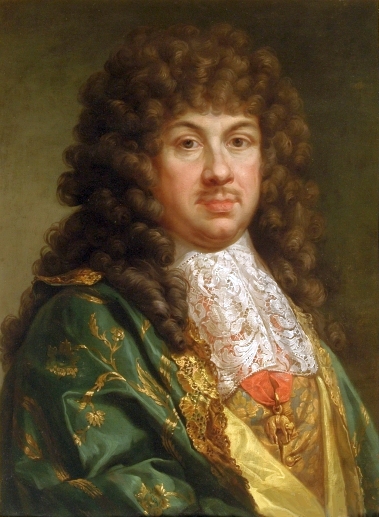
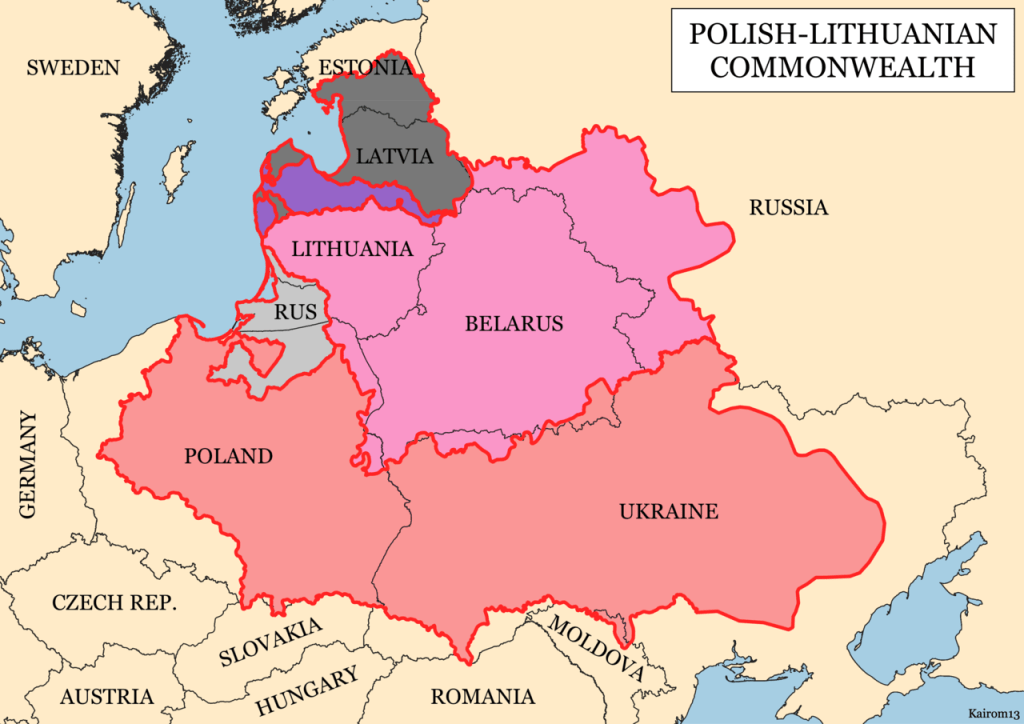
In 1530, István Báthory of Somlyó was named Voivode of Transylvania by János Zápolya, Unlike his kin from the Ecsed branch, he did not support the Habsburg election after the Battle of Mohács. His son, István—the most famous István Báthory, with an international reputation, so I’ll call him Stephen—initially did fight for Ferdinand, but was captured by the Turks in 1553, and, the Habsburg king refusing to pay his ransom, promptly switched sides. When János II Zápolya, Prince of Transylvania, died in 1571, the magnates elected Stephen Báthory voivode, not prince, though he assumed that title later. Báthory was now seen as one of the most powerful magnates in the east, and was elected in 1575 to become King of Poland and Grand Duke of Lithuania, in an effort to stop the expansion of Habsburg power. He agreed to marry the last Jagiellonian princess, Anna, in 1576, and left for Poland, leaving his older brother Kristof behind as Voivoide of Transylvania. King Stephen, a Catholic, re-affirmed the policy of religious tolerance in both of his realms, Transylvania and Poland-Lithuania, and wanted to use Polish power to restore an independent Hungarian kingdom. Instead, he was occupied with war with Russia for many years, weakened, and died in 1586. His widow, Queen Anna, had considered promoting his nephew Zsigmond Báthory as the next king in Poland, but instead supported the election of her own nephew, Sigismund Vasa.

Stephen Báthory, King of Poland, Grand Duke of Lithuania and Prince of Transylvania

Zsigmond, Kristof’s son, had been named Voivode of Transylvania by his uncle in 1581 (though he was only 9 years old), and succeeded him as Prince of Transylvania in 1588. His reign was turbulent to say the least. He was governed by his uncle, István Bocskai, and was confirmed as prince by Sultan Murad III, in return for a 15,000 florin yearly tribute. Rejecting his mother’s Calvinism, Prince Zsigmond was a fervent Catholic, which made him unpopular with the local Transylvanian nobility. Making matters worse, he decided to challenge Ottoman suzerainty, ignoring the advice of his Báthory cousins, who, despite being strongly Catholic, did not think it wise to provoke the Ottomans without the full support of Poland. Imprisoning these cousins (and even executing one of them), in 1594 Prince Zsigmond joined the Holy League set up by the Pope and the Emperor, Rudolf II, to push the Ottomans back down the Balkans, and married the Emperor’s niece, Archduchess Maria Christina, in 1595. He was created Prince of the Empire in 1595 as well, and recognised by the Emperor as hereditary Prince of Transylvania and ‘Partium’ (the easternmost counties of Hungary). He even, for a moment, got the voivodes of Wallachia and Moldavia (the Romanian provinces subject to the Ottoman sultan) to acknowledge him as suzerain. Together they defeated the Ottomans at the Battle of Giurgiu, on the Danube along the border with Bulgaria, in October 1595. This was the high point of the independent Principality of Transylvania.

Zsigmond Báthory, as Prince of Transylvania, Wallachia and Moldavia, Prince of the Empire, Count of the Szeklers, and Lord of the ‘Partium’ of the Kingdom of Hungary

This was followed, however, by lots of defeats, and Zsigmond abdicated in 1598. Maria Christina was elected herself as Princess, until Archduke Maximilian of Austria arrived in 1599 to rule the territory directly as a province of the Habsburg Monarchy. Her marriage, never consummated for whatever reason (Zsigmond claimed he was bewitched; later historians suggest he was a homosexual), was dissolved. The Ex-Prince fled to Poland where he was given lands to rule in Silesia (Ratibor and Opole). He tried to return in 1599 to make a deal with the Sultan, but failed and abdicated again, then returned again in 1601 with a Polish army and briefly got the support of the Sultan, but was unable to establish stable rule, so he abdicated once more, now in favour of Emperor Rudolf. He settled in Bohemia (at Libochovice, in the far northwest), resisted several calls from the Emperor to try again to recover Transylvania, and died in exile in 1613. Maria Christina did not remarry but joined a convent back in Austria, where she died in 1621.

Archduchess Maria Christina of Austria

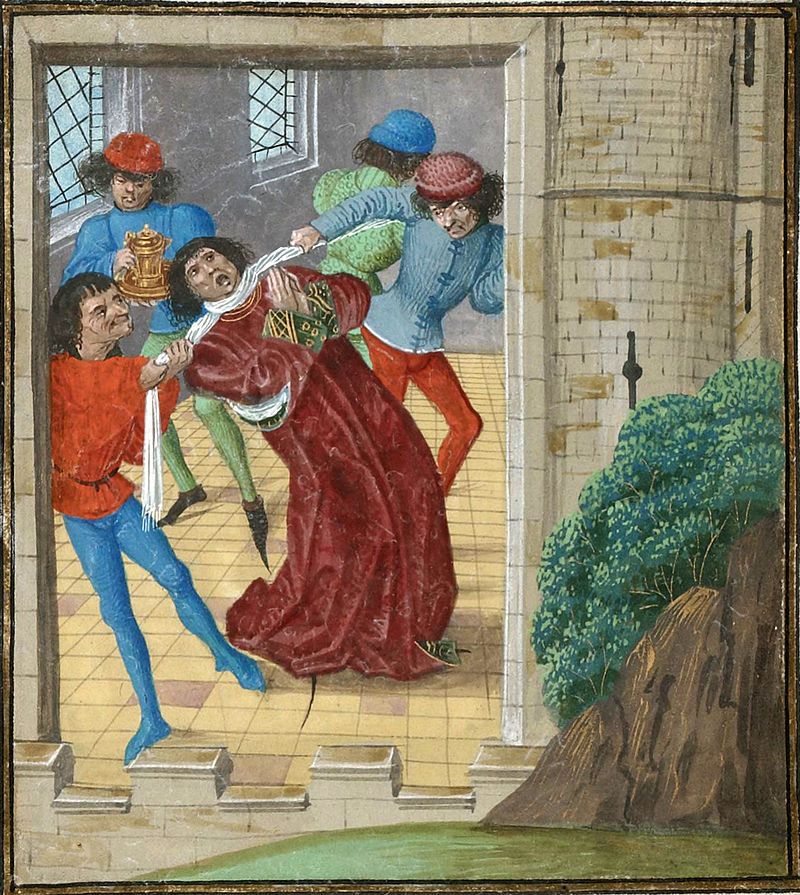
In the midst of all this, Prince Zsigmond had appointed his cousin András Báthory as Prince of Transylvania, in March 1599, with the support of Polish and Ottoman troops. A Cardinal since 1584 (nominated by his uncle, King Stephen—and at once point considered as a  possibility to succeed him as king in 1586), and prince-bishop of Warmia in Poland since 1589, he was firmly on the side of the Poles and the idea of re-catholicising Transylvania. He did re-establish the Catholic diocese in Gyulafehérvár, which remains today, but his rule as Prince of Transylvania lasted only a few months. The Habsburgs allied with the Prince of Wallachia (Michael the Brave, or Mihai Bravu in Romanian) and with the Székely peasants who always seem to get dumped on and had had enough, and in October 1599, the Polish-Ottoman troops of Prince-Cardinal András were defeated at Sellenberk (Șelimbăr near Sibiu, in the south-eastern corner of Transylvania). András was beheaded, and power was given to Prince Michael. The battle of Șelimbăr is seen today as the first moment leading to the unification of the Romanian people.

Prince-Cardinal András Báthory

The Báthorys were not completely finished as a ruling dynasty, however, and we will return to Prince Gábor Báthory in a bit. First we have a quick succession of princes: Mózes Székely, István Bocskai and Zsigmond Rákóczi.

Mózes Székely was, as his name suggests, a Székler. His family was from Székelyudvarhely (now Odorheiu Secuiesc) in the eastern corner of Transylvania. It had been the seat of the Székler assembly since the 1350s, and the seat (‘szék’) of Udvarhely County. The family’s estates were centred on Siménfalva, a town still today 99% Hungarian and mostly Calvinist or Unitarian. His father had been a regional supporter of Zápolya and converted with him to Unitarianism in the 1560s, and was given the job of controlling the production of salt in this region, an important commodity. Young Mózes became a commander of the Székler guards of Stephen Báthory in the 1570s and accompanied him to Poland. He was granted estates back in Transylvania and took over his father’s post overseeing the salt mines, and defending the region against Turkish attacks in the 1590s. He helped restore Zsigmond Báthory in 1598, still leading the Székler army, but these turned on András Báthory and murdered him, as we’ve seen. Mózes became commander of the Habsburg troops in Transylvania, 1599, under the command of the Wallachian prince, Michael, but when the latter’s regime started to collapse in 1600, he travelled to Poland to try to bring about another Báthory restoration. When the Habsburgs regained control once more, Székely instigated a rebellion, 1603, with Turkish and Tatar aid, and in May claimed the title Prince of Transylvania. Again the Skékeler people allied with the Wallachians (who promised them a larger role in government), and they defeated and killed their former leader in July. So much for being the local boy.

Prince Mózes Székely

Mózes Székely Jr was born a few days later. Raised by a Bethlen grandmother, he was put under the protection of a later Transylvanian prince, Gabriel Bethlen, who appointed him Master Steward of the Household, Justiciar of Udverhely County (1620), then gave him lots of estates and married him to a wealthy heiress. All of this was taken away from him by Prince György Rákóczi, however, in the 1630s, and Székely went into exile in the Ottoman Empire. As a prisoner/guest of the Sultan in Constantinople, he spent the next two decades as a diplomatic chesspiece, always a potential claimant to the Transylvanian throne to be wheeled out as needed. But he eventually lost his value, and the Turks sent him to live on the Island of Rhodes where he died in 1657 or ‘58.

A more successful story was that of István Bocskai. His family was from Bihar County in western Transylvania, and also had lands in Zemplén County, which is now eastern Slovakia (near the border with Ukraine). His older sister married the Voivode of Transylvania appointed by Ferdinand of Austria in 1553 (István Dobó), and young István was sent to the Habsburg court in Vienna where he served as a page, then a steward. His father converted to Calvinism in the 1560s, then died in 1570, leaving the teenager in the care of another sister, who married Kristof Báthory, the regent of Transylvania for his brother King Stephen (whom we encountered already above). The two families were therefore fairly entwined, so even as a youngster in 1581 (aged 14), Bocskai was appointed a member of the Regency Council for his nephew young Prince Zsigmond Báthory (aged 9). He married a wealthy widow with lands in Bihar County (the great fortress at Nagykereki), and was appointed governor (ispán) of that county by 1592. He helped Prince Zsigmond throw off the Turkish yoke in 1593-94, then led his armies to defeat the Ottoman forces in Wallachia in 1595 and put down a revolt of the Széklers in 1596.

Bocskai Castle at Nagyhereki

By 1598 István Bocskai was crucial as an interlocutor between Prince Zsigmond and Emperor Rudolf II (who created him a Baron—a rare creation of a noble title for Hungarians who normally considered that a family name was honour enough). Then when Zsigmond abdicated, Bocskai was left behind as his viceroy. Rudolf changed his opinion of his ally however, and deprived him of this office, so the latter helped restored his Báthory cousin in 1599. The tables soon turned again, and Bocskai was sent to Transylvania as the Emperor’s envoy to unseat the pro-Ottoman Prince András. He therefore wanted to be recognised by Rudolf and perhaps rewarded with the voivodeship or even the title of prince, so he pressed his case in 1600, and the local diet confiscated his estates and banished him. He spent much of 1601-02 at the imperial court in Prague as a counsellor to Rudolf II, and was restored to his estates in 1604. He returned to the area to find the destruction of Transylvania caused by the Habsburg-Ottoman wars, and in particular the persecution by the Habsburg governors of the Calvinist nobility (like himself). He realised that only a free (Ottoman supported) principality would thrive, and launched the great Bocskai Uprising (or ‘war of independence’). In November 1604 he was given an ahidnâme (charter) from Sultan Ahmed I naming him Prince of Transylvania. He made peace with the Széklers and allied with the Prince of Moldavia. In February 1605, he was elected Prince of Transylvania by the local diet; this was confirmed by an assembly of nobles from Upper Hungary in April. At the height of his power, Prince István Bocskai asked the Sultan for a royal crown, for all of Hungary, and got one. He was styled as ‘King’ by the Pasha in Buda. This crown is still kept in the royal treasury in Vienna.

István Bocskai (before becoming prince)
a ducat issued by Prince Bocskai (National Numismatic Collection, National Museum of American History)
the Crown of István Bocskai

By the Treaty of Vienna, June 1606, Bocskai was confirmed as Prince of Transylvania (with the Ottoman sultan as suzerain), and the Emperor recognised the rights of Protestants to worship freely across Hungary. The Prince then helped negotiated a long-desired peace between the Habsburgs and the Ottomans in November at Zsitvatorok. But by this point Prince István was weary and ill, and he died in December. He had no children from his late wife (though he had considered marrying the widowed Archduchess Maria Christina), and named a successor, one of his companions in arms, Bálint Drugeth, but the Transylvanian Diet chose someone else instead, a very wealthy older man, whose loyalties were neither to the Ottomans nor the Habsburgs: Zsigmond Rákóczi.

The name Rákóczi is of course for many synonymous with Hungarian history. The ‘Rákóczi March’ is quite a well-known tune—though not written till the 1820s, and made famous soon after through its use by Hector Berlioz in his ‘Damnation of Faust’ (and later by Liszt in one of his Hungarian Rhapsodies). The family traces its lineage back to the 13th century, and the Bogátradvány family, whose origins were said to be from Bohemia (why do none of the Hungarian magnates seem to have actually Magyar ancestry?). An early notable ancestor from this clan was Ipoch, Ban of Slovenia from 1204, and Voivode of Transylvania in 1216-17. By the early 14th century, a descendant took his surname from a castle called Rákóc, in Zemplén County (now in eastern Slovakia), which may have been named for the Slovak word for crayfish (rak; the village today is called Rakovec).

They remained a fairly minor gentry until they shot to the top with the rise of Zsigmond Rákóczi in the second half of the 16th century. He owned lands in the Tokaj wine region of Zemplén County, and built up a family seat in the 1550s at Szerencs Castle. This remained the seat of the Rákóczi family, and a seat of Calvinism in this part of Upper Hungary, until the early 17th century. In the 18th century Szerencs was rebuilt as a palace, and today it is a hotel, a museum and a town cultural centre.

Szerencs Castle

Zsigmond’s early career was in the Habsburg military, and he later served as a tax collector for Emperor Rudolf. By the 1590s, he was an important Habsburg commander in the region, despite his Protestantism, and was given command of the huge fortress of Eger, in Heves County, northeast of Buda. He was named Lieutenant of Heves County in 1588 and made a Baron. His wealth was prodigious, and he supported local Protestant schools and the first translation of the Bible into Hungarian. He even lent money to the Emperor for troops, and in 1597 was given the right to bear the Imperial eagle on his coat of arms, instead of the traditional Rákóczi raven. He continued to build his fortune particularly in the far northeast frontier, taking over Munkács Castle as guardian of his wife’s sons, then Makovica Castle from the bankrupt Ruthenian Prince Ostrogski.

Munkács will feature more in the next sections. Makovica, also known as Zboró (Zborov in Slovak), was an important fortress in Upper Hungary, near the frontier with Poland and guarding some of the key passes across the Carpathians. Built in the 13th century it was held by the Czudar family for a century before becoming Crown property, then passed through various proprietors before being purchased in 1601 by Zsigmond Rákóczi. It became one of the main strongholds for the family in the century to come before it was destroyed by Habsburg forces in 1684. Rebuilt and destroyed again and again in the next two hundred years, it remains a romantic ruin today.

Makovika Castle (Zborov) (photo Pistal)

Now one of the richest men in Hungary, and possessing some of its strongest fortresses, Zsigmond Rákóczi became disillusioned with Habsburg rule in Transylvania and Upper Hungary, and joined the Bocskai Uprising in Spring 1605. He was named governor of Transylvania by the rebellious prince in August. His wealth and his control of key trade routes north towards Poland made him an invaluable magnate to the health of Transylvania, so it was not too surprising that he was elected Prince of Transylvania by the Diet in February 1607. He was acknowledged by the Ottomans, but not by the Habsburgs. Bocskai’s preferred successor Drugeth threatened a civil war, as did the Habsburg choice, Gábor Báthory, so Rákóczi abdicated in March 1608 to avoid more bloodshed. Well into his 60s, he did not have the energy or the desire to rule, and in fact he died only a few months later and was buried back in the Calvinist chapel in Szerencs.

Prince Zsigmond Rákóczi

Gábor (or Gabriel) Báthory, of the Somlyó branch of Báthorys, was born a Catholic, but was orphaned and raised by his Protestant cousin István Báthory from the Ecsed branch. When the latter died in 1605, Gábor inherited his lands, and thus joined together the possessions of the two lines, becoming one of the richest magnates in Hungary. He was also willed much of the lands of his cousin István Bocskai, so saw himself as the most logical successor when he died in December 1606. He gained the support of the Habsburgs by promising to re-convert to Catholicism (though he never did). He put forward his claims to the elderly Rákóczy in February and was elected by the Diet in March 1608, and was soon recognised by both the Sultan and the Emperor.

a coin issued by Prince Gábor Báthory, clearly displaying that family’s unique coat of arms

In 1610, the new Prince of Transylvania moved his capital from Gyulafehérvár, so badly damaged during the wars, to Szeben, the richest Saxon town in the region, known by them as Hermannstadt (and today as Sibiu in Romanian). Hermann was probably an early German founder of the settlement—it remained majority German, and Lutheran, until after the Second World War, but today following mass emigration has almost none of its former diversity.

Hermannstadt

Perhaps feeling a bit over-confident, Prince Gábor Báthory tried to extend his influence over the other two dependent principalities, Moldavia and Wallachia, greatly annoying the Sultan, Ahmed I, who sent troops to unseat him, in August 1613, and to replace him with another Gábor, from the ancient Bethlen dynasty. The last Báthory prince was murdered by assassins from the famous group of Hungarian soldiers known as the Hajdúk. One further member of the family, András, stayed mostly out of sight until he died in 1637, leaving one daughter, Zsófia, who would re-connect this ancient family to the Rákóczys and the future history of Transylvania.

[to be continued in Part II]

Dukes of Albemarle

Sometimes a dukedom is created to commemorate a national hero, a member of ancient well-born family, but his progeny simply doesn’t last, and the exalted title disappears after only the briefest of existences. Such is the case for the dukes of Albemarle, created for General George Monck in 1660 but extinct by 1688 with the death of his son. Sic transit gloria mundi!

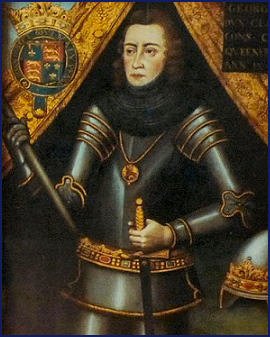
General George Monck, by Peter Lely

One of the more interesting things about the title given to General Monck by a grateful King Charles II is its name, since there isn’t really any place in England or Scotland (or even Ireland) with the name ‘Albemarle’. It in fact has ancient roots in France, to Normandy in particular. The town of Aumale is in the northeast corner of the province, and takes its name from the local stone, a white clay called marle (we also call it kaolin or china clay), which is a pale white, or ‘alba marla’. Monck was from an ancient Devon family, a place where there certainly are marl cliffs to be found.

the coast of Devon

The district around the town of Aumale was designated a county by William II, Duke of Normandy, in 1070. It was ruled by a powerful dynasty of counts until confiscated by the king of France, Philippe II Auguste, in 1196, and the title was given out a few more times by the French Crown before it was elevated to a dukedom in 1547 for the House of Lorraine-Guise, which then passed to the houses of Savoy-Nemours, Maine and Bourbon-Orléans, where it remains today (in pretence). Nevertheless, medieval English kings, still claiming to be dukes of Normandy, continued to recognise the old line of counts, transmitted to the Lords of Forz in 1214, who retained the older form of the name, Albamarla, now as an English earldom, with estates mostly in Yorkshire (Holderness in the east, Craven in the west) and Lincolnshire. The earldom passed to the Crown in 1274, and was given out again, now as a dukedom (of Aumale or Aumerle) in 1385, for the Duke of Gloucester, and again (as Albemarle or Aumale) in 1397, for the son of the Duke of York. Both of these creations had quite brief existences. Finally the ducal title was created again in 1412 for the Duke of Clarence, but was similarly short-lived. Richard de Beauchamp, earl of Warwick, was created earl of Albemarle in 1423, but for life only.

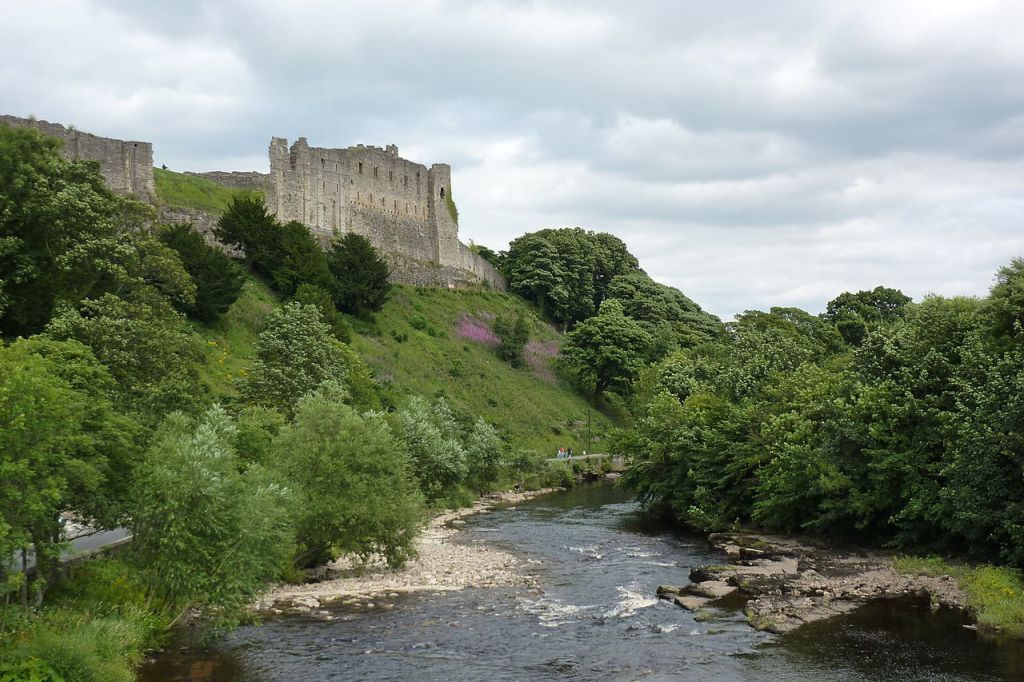
Meanwhile, in the far southwest of the Kingdom, a member of the Devon gentry known as William le Moyne (or ‘the monk’), fortified a manor house in the 13th century, on an estate known as Potheridge, on a bluff overlooking the meandering River Torridge. The Torridge flows northward through northwest Devon, passed the town of Great Torrington, and joins the River Taw at its wide mouth on the Bristol Channel. To the south lies the great mass of Dartmoor. Not far away is Okehampton, one of the seats of the powerful Courtenay family, earls of Devon. Just across the border in Cornwall is Kilkhampton, seat of the Grenville/Granville family, later earls of Bath. These powerful neighbours would also be important relatives, useful in the ascension of the Le Moyne family, who, sometime in the 15th century, adopted a more English sounding name of Monk or Monke, and eventually Monck.

arms of the Monck family

Marriage to another Devon gentry family, Champernown, and then to a daughter of Arthur Plantagenet, Viscount Lisle, the illegitimate son of King Edward IV, probably brought the Moncks closer to court and service to the Crown in the early Tudor era: Kat Ashley, Elizabeth I’s early favourite was born a Champernown; and Lady Frances Plantagenet brought just a smidgeon of royal blood into the Monck family veins. A bigger step up, however, at least potentially, was the marriage of Lady Frances’s grandson, Sir Thomas Monck, in 1619, to Elizabeth Smith, the daughter and co-heiress of Sir George Smith, one of the richest men in Exeter (the county town of Devon) and three times its mayor. But Thomas had to dispute his wife’s dowry in court with is father-in-law, and ended up in debtor’s prison in 1625, dying there two years later. (another source contradicts this however, and says he was elected as MP for Camelford, Cornwall, in 1626—could both be true?). His eldest son, also called Thomas, became a colonel in the English army, but was superseded in reputation by his younger brother George.

George Monck, born in 1608, did what many second sons have to do, impoverished father or not, and joined the military (and the third son, Nicholas, naturally joined the church—we’ll encounter him again later). He took part in some of the tepid English participation of the early years of the Thirty Years War, a raid on Cadiz in 1625, an attack of the Isle de Ré in 1627, then joined the troops of the Dutch Republic in their ongoing struggle against Spain. The Dutch army at that time was amongst the most advanced in Europe, and young George learned a lot. When he was later deployed by King Charles I to suppress the Irish Rebellion of 1641-43, he immediately was noticed by his superiors for his efficiency, even ruthlessness. Back in England, he at first fought for the Royalists, but was captured at Nantwich in 1644 and sat in prison for two years (where he wrote a manual on modern military efficiency), before being named a Parliamentarian commander in Ulster in 1647. Here he managed to stay out for the most part of the Second Civil War and the politics surrounding the execution of the King.

General George Monck

Under the Protectorate, Monck became a favoured general of Oliver Cromwell, who sent him to Scotland, then to sea in the war against the Dutch, then again as Commander-in-Chief of the Army in Scotland, 1655. Meanwhile, he had been elected as MP for Devon in 1653, so had a voice in Parliament, and married that same year Anne Clarges, daughter of a London farrier (a specialist in equine hoof care), and widow of a London milliner. Her social status would come back to haunt Monck later on (as would indeed rumours that her first husband wasn’t even dead at the time of her second marriage). The General’s stay in Scotland again kept him away from the turmoil of London politics, but from afar he supported the rising influence of the moderates, and shortly after the radical wing of the military took over the government in 1659, he marched south, in February 1660, joined by troops led by Parliamentary hero Sir Thomas Fairfax, and supported the moderates now pressing for a restoration of the monarchy. Monck’s support turned the tide, new elections were held, and Parliament formally invited Charles II to return to his throne in April 1660.

General Monck’s brother, Nicholas, a clergymen and political moderate, had been in touch with the royalist faction in Parliament and indeed with those exiled royalists in the Netherlands. In July 1659, he had brought a letter to George in Scotland from Charles II which may have been very influential in Monck’s decisive actions the following spring. In the early days of the Restoration, a grateful king named Nicholas to the bishopric of Hereford, and also named him Provost of Eton College. He lived only a year, however, so his potential as a powerful player during the Restoration was unfulfilled.

Nicholas Monck, Bishop of Hereford

George, however, remained a dominant figure, as 1st Duke of Albemarle, from July 1660. His subsidiary titles were Earl of Torrington and Baron Monck of Potheridge, County Devon. He’s also listed in the letters patent as Baron Beauchamp and Baron Teyes, both also listed as ‘in the County of Devon’ but these, like Albemarle itself, are a fantasy: there was a medieval Baron Teyes (with lands in Wiltshire, at Chilton Foliot) whose heiress passed his lands on to the L’Isle family, whose ultimate heiress married the Beauchamp earl of Warwick and Albemarle (above), and whose ultimate heiress in turn married Arthur Plantagenet, created Viscount Lisle (also above). So these titles were in a way constructing (or more generously re-constructing) a more illustrious aristocratic genealogy for George Monck. In fact, much of the dukedom was not based in Devon, nor in Wiltshire or Warwickshire: a significant part was to be found in the ancient feudal barony of Bowland, in Lancashire, with its caput or seat at Clitheroe Castle. This lordship had been part of the Duchy of Lancaster, ie, owned by the Crown, since 1399, and Charles II gave it, and its great revenues, to the man so useful for his restoration.

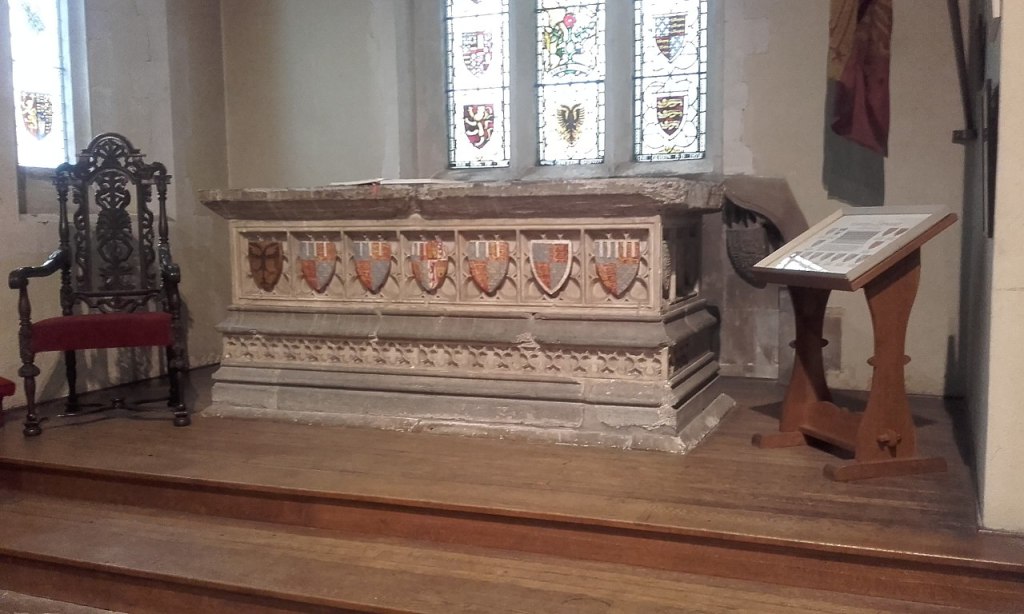
As can be seen on brother Nicholas Monck’s tomb in Westminster Abbey, the family added the Plantagenet arms (upper right) as well as Beauchamp (lower left)

The new Duke of Albemarle was now a grand patron, able to obtain posts and titles for his friends and relations, notably the Granville cousins who had helped get his military career started: John Granville was created 1st Earl of Bath. Albemarle was also given lands in Ireland and a pension of £700 a year. He was named Lord Lieutenant of Devon, a member of the Privy Council and a Knight of the Order of the Garter. In 1661, King Charles asked him to return to Ireland as Lord Deputy or Viceroy, but he was becoming old and infirm, so was named Lord Lieutenant of Middlesex instead. His wife, the daughter and widow of tradesmen, was mocked by society, sometimes called the ‘Monkey Duchess’ (get it?), and seen as grasping and greedy, as only someone of ‘her sort’ could be (they said).

Still the King kept piling on the gifts: in 1663 Albemarle was given lands in the New World in the new Carolina Colony, where Albemarle Sound was named in his honour. He was one of the eight proprietors of the colony, and one of its first counties was named Albemarle County. This no longer exists, but the one in Virginia does, though it was created later, and named after a later Earl of Albemarle (see below). Monck was also given shares in the Royal Africa Company and thus profited from the slave trade.

the Carolina Colony (north is to the right): Albemarle Sound can be made out if you squint on the lower right

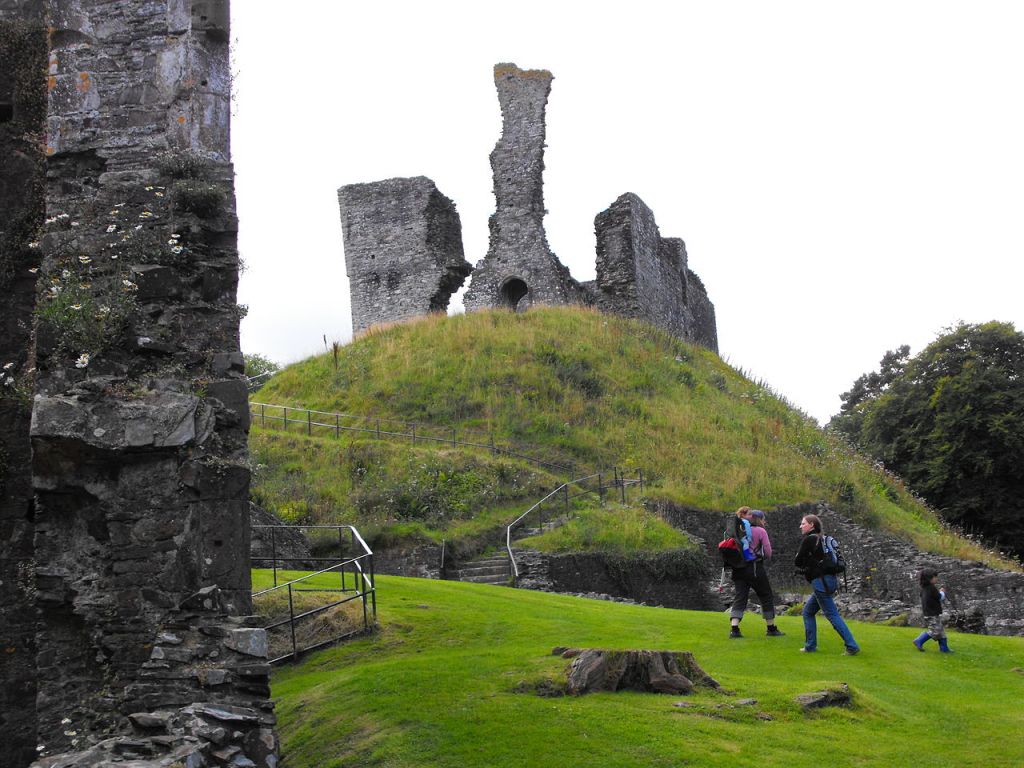
From 1660, the Duke used his wealth to completely rebuild the old family seat at Great Potheridge, turning it into a great Carolean mansion. It did not survive very long, and was mostly demolished in the 1730s, leaving only one wing, which was sold by the Granville heirs to the Rolle family (barons from 1796), then the Trefusis family, and later became part of a college in the 1950s, then leased out as a farmhouse. I explored what was left of the house in this very isolated corner of rural Devon several years ago when it was being used as a kind of ‘outward bound’ facility to get inner city kids out into the countryside. The lone employee, slightly startled by my visit, received me cheerfully and proudly showed me their great hidden treasure: a beautifully preserved wood panelled room and a gorgeous wooden staircase with painted roundels on the ceiling, all dating from the 1660s. Sometimes it is worth it to leave the garden path to smell more distant flowers.

‘Great’ Potheridge today
Potheridge, interior

In the last years of his life, the 1st Duke of Albemarle continued to play a key role in the court of Charles II and the city of London: he helped run the Admiralty in the Second Dutch War, and kept order in London by his commanding presence during both the Great Plague of 1665 and the Great Fire of 1666. He was named First Lord of the Treasury in 1667, but was already weakening and he died in January 1670. He was buried in great pomp in Westminster Abbey.

Albemarle in Westminster Abbey

His only son Christopher became the 2nd Duke of Albemarle. As heir he was known as the Earl of Torrington, and started a career in Parliament as MP for Devon in 1667, though he was only 14. In 1670 he succeeded to his father’s peerage so moved into the House of Lords, and was named to the posts of Gentleman of the Bedchamber, Privy Councillor, and colonel of a regiment of cavalry—though he never had much of a military career. In 1675 he was named Lord Lieutenant of Devon, then in 1682, Chancellor of the University of Cambridge. In 1687, the 2nd Duke was named Lieutenant-Governor of Jamaica, where he got involved in hunting for sunken treasure, and became quite rich, before he died in 1688.

Christopher Monck (1653-1688), 2nd Duke of Albermarle, Chancellor of the University of Cambridge
(portrait at Trinity College)

With his rising fortune, the 2nd Duke purchased in 1675 the huge London mansion, Clarendon House, built by Edward Hyde in the 1660s. He renamed it Albemarle House and at first made it a sparkling centre of London social life. But he sold it in 1683 to a developer named Bond, and today the site underlies both Albemarle and Bond streets in Mayfair.

Albemarle House

Another great London house can be associated with the Moncks, but only tangentially. The 2nd Duke’s wife from 1669 was Lady Elizabeth Cavendish, co-heiress of the Duke of Newcastle. When her husband died, she seems to have gone mad, and as a very wealthy woman (receiving all that gold from Jamaican sunken treasure) was a much sought after bride. But she considered that no man was worthy of her unless he was a crowned head—so the wily and ambitious Ralph Montagu wooed her as the ‘Emperor of China’, and she reigned over his house in Bloomsbury as ‘Empress’. He was created a duke himself in 1705, but died in 1709, leaving her to ‘reign’ until her death in 1734. The ‘palace’, built with much of her Cavendish and Monck money but known as Montagu House, was sold in the 1750s to form the first home of the British Museum, though the site was rebuilt completely in the 1840s.

The future home of the British Museum, Bloomsbury

Though much of the Monck estates passed to their Granville cousins, the Montagus also acquired the Lordship of Bowland from the 2nd Duchess of Albemarle, and the vast wild estates in the North passed from them to the Buccleuch family, then the Towneleys of Burnley (in Lancashire). After that family died out in 1885, nobody claimed the feudal title, until it was revived in 2008 and sold to an anonymous Cambridge don.

The Albemarle title was revived in 1697, as an earldom, for one of William III’s Dutch favourites, Arnold Joost van Keppel. He was also Viscount Bury in Lancashire and Baron Ashford in Kent. His son, the 2nd Earl, was Governor of Virginia from 1737, though he never visited there—and it is he for whom the County of Albemarle (known for the University of Virginia and Thomas Jefferson’s Monticello) was named. The earldom continues to the present.

This new earldom notwithstanding, the deposed James II decided to re-create the dukedom of Albemarle for the younger of his two sons by Arabella Churchill (sister of the future Duke of Marlborough). Born in 1673, Henry FitzJames was created Duke of Albemarle in 1696, Earl of Rochford and Baron Romney (so, like the earldom, with a Kentish connection—perhaps in an effort to reflect the white (alba) of the cliffs of Dover?). He married a French heiress in 1700, and was named a lieutenant-general in the French army in 1702, but died later the same year, so was unable to prove himself as a military commander like his older brother the Duke of Berwick.

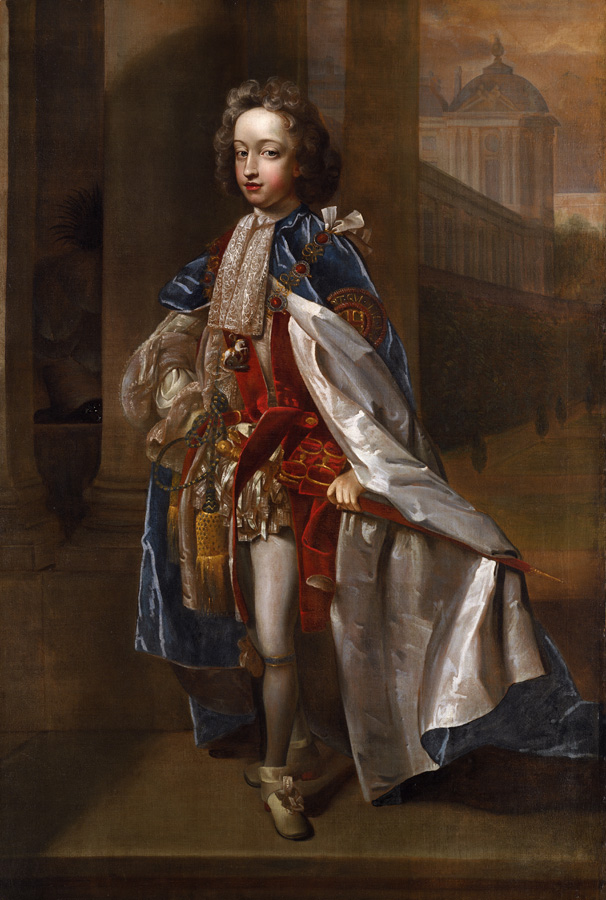
possibly a portrait of the young Henry Fitzjames, future Duke of Albemarle

Not to be outdone, James II’s son, the Old Pretender (‘James III’) created the dukedom of Albemarle once more, in 1721, this time for George Granville, 1st Baron Lansdown, a Monck cousin and potential heir. Lansdown though a staunch Tory was not an outright Jacobite, but had corresponded with the Old Pretender during the rising of the ‘15. His other titles (in the ‘Jacobite peerage’) were Marquis of Monck and Fitzhemmon, Earl of Bath and Viscount Bevel. He died childless in 1735, so his titles (not recognised by anyone) passed to his nephew, Bernard Granville, and then became extinct with the death of this ‘2nd Duke of Albemarle’ in 1776.

another Jacobite ‘Duke of Albemarle’

There were to be no more Albemarle dukes, official or Jacobite, and while the earldom of Albemarle continues in the Keppel family, the Monck family was not entirely extinct. The senior line died out in 1688, as we have seen, but a junior branch, founded in the later 15th century, had emigrated to Ireland in the early 17th century, and became important landowners in County Wexford (on the southeast coast). Charles Monck was created 1st Baron Monck of Ballytrammon (Wexford) in 1797, then a few years later raised to a Viscounty in 1801, as thanks for voting in favour of the Act of Union with Great Britain. His son became 1st Earl of Rathdowne (also Co. Wexford) in 1822, but had no sons, so this title became extinct. The line of Viscounts Monck continues, however: the 4th Viscount, another Charles, became a significant politician and was named Governor-General of British North America and of the Province of Canada, in 1861, a title which morphed into the title of 1st Governor-General of Canada with the creation of the federation in 1867. He returned to Ireland and was named Lord Lieutenant of Dublin by Queen Victoria in 1874, an office he held until just before his death in 1894. The line of Viscounts Monck continues to the present.

Viscount Monck of Ballytrammon

In the long run, a mostly ephemeral title yearning back to romanticised Norman links continues to be used by those grasping for historical legitimation: the current Duke of Aumale, Prince Foulques d’Orleans (b. 1974) is a cousin of the Orleanist pretender to the French throne. Meanwhile the town of Aumale itself sits idly by, based firmly on its white stone foundations, the alba marla.

(images Wikimedia Commons, my own, or from other public websites)

Ansbach and Bayreuth: Secondogeniture lands for Hohenzollern princes

One of the benefits of the fragmentary nature of the German feudal states that made up the Holy Roman Empire was that small segments of a dynasty’s patrimony could be easily carved out to provide younger sons with a territory of their own to govern, a principality from which they could derive an income and prestige as a ruling prince. The downside was of course that continual fragmentation made states ever smaller and ever weaker. Yet having a junior branch of the family ruling over a smaller allied territory could also be beneficial to the dynasty as a whole in the world of international diplomacy: it provided more sons and daughters to be used in marriage alliances, and sometimes allowed the Great Powers to ally with one another indirectly if a direct link would be politically dangerous. Such was the case with Caroline of Ansbach, consort of King George II of Great Britain, whose marriage in 1705 to the son and heir of the Elector of Hanover (the future George I) had been able to re-assert a traditional family alliance with the Hohenzollerns of Prussia without disturbing the fragile alliance recently forged by the Hanoverians with the Habsburgs against the Bourbon dynasty in the War of Spanish Succession.

Caroline of Ansbach as Princess of Wales, by Kneller

Caroline of Ansbach was a princess of the House of Hohenzollern, a dynasty only recently elevated to a royal throne in Prussia, but rulers for much longer in the important frontier principality, or ‘March’, of Brandenburg. As rulers of this frontier they used the title ‘markgraf’ (‘march counts’, margrave in English), but they were considered as princes due to their rights to make laws, pass judgements, and, after the Treaty of Westphalia of 1648, to maintain their own foreign diplomacy. Since the early 15th century, they had also been one of the seven imperial princes who elected the emperor, and had slowly built up the Electorate of Brandenburg into a coherent autonomous state within the Empire—one which would develop into the Kingdom of Prussia in the 18th century. But the Hohenzollerns also possessed some properties to the south of Brandenburg, in an area called Franconia, and this is where the junior branch of the family, Caroline’s family, the margraves of Ansbach, were based. Next door was a second principality of a similar nature, Bayreuth.

Franconia as a complete region in Germany is these days a little difficult to locate. It was one of the oldest parts of the German lands, named for the Franks who lived there (and the place where they forded the river Main was thus called Frankfurt). Originally it stretched from the Rhineland in the west to the hills bordering Bohemia in the east, but distinct territories emerged that obscured the original name, like the Palatinate and the bishoprics of Bamberg and Würzburg. Today the name ‘Franken’ continues to exist as three regions within the state of Bavaria (Upper, Middle and Lower).

Ansbach and Bayreuth in the south (green), in contrast to Brandenburg in the north (pink)
close up on Ansbach and Bayreuth

One of the chief cities of this region, Nuremberg (Nürnberg in German), was built as an Imperial castle in the mid-11th century. Medieval emperors had no fixed capital, but a number of palaces (Kaiserpfalzen) where they held court and occasionally summoned their advisors and imperial representatives (which evolved into the Imperial Diet). This castle was built in an important location on the borders between the Franks and the Bavarians, and on an important trade route between north and south. When emperors were not in residence, they needed trustworthy agents to look after the castle and the surrounding town and lands, so Conrad III created the office of ‘castle count’ (burggraf, burgrave) in 1105, who had his own separate castle—the Imperial Castle and the Burgrave’s Castle remained distinct until the latter was mostly destroyed in the 15th century.

Nuremberg in the MIddle Ages

The job of burgrave of Nuremberg passed by marriage in 1192 to a Count of Zollern, a small but important county to the west in the hills of central Swabia. Their roots stretch back only to the early years of the previous century, but there are of course the inevitable fanciful claims from 19th-century genealogies that they were descended from the same founding fathers as the houses of Austria and Bavaria, way back in the 8th century. The County of Zollern, later Hohenzollern, and its castles, will be the focus of a separate blog post, on the Swabian branches of the family (princes from the 17th century).

Friedrich von Zollern, burgrave of Nuremberg, ruled the castle and the city, as well as the hinterland surrounding it. This included two rural districts, the Oberland and the Niederland, which gradually developed into the principalities of Kulmbach/Bayreuth and Ansbach, respectively. From 1210, the first burgrave’s two sons, Friedrich and Konrad, divided their lands (though it is remarkably uncertain which of the brothers is older—which has a great impact on the later history of the Hohenzollern Dynasty: was the House of Prussia the senior or the junior branch?). Friedrich’s descendants stayed in Nuremberg and became the Franconian Branch, while Konrad’s descendants returned to Zollern Castle and founded the Swabian Branch. Both still exist today—the Franconians are now considered a royal dynasty, as kings of Prussia since 1701 (and later emperors of Germany); but the Swabians had their royal moment too, as kings of Romania after 1881.

From the mid-13th century, tensions between the city of Nuremberg and the burgraves drove the Hohenzollerns to move to a nearby castle: Cadolzburg, built in the 1250s, then rebuilt in the early 15th century. Today the castle of Cadolzburg is still an impressive monument to medieval Hohenzollern power, having been badly damaged in the Second World War but reconstructed by the Bavarian state in the 1980s.

Cadolzburg (photo Keichwa)

The Emperor Fredrick II granted the city of Nuremberg significant privileges in 1219, and by the 14th century it was mostly self-governing; the ‘burgraviate’ itself would be sold to the city fathers in 1427. As their interests focused more on the countryside surrounding the city, the Hohenzollerns annexed a monastery in 1331 about 25 miles southwest of the city, known as Ansbach, named for the brook (bach) of an ancient founder, Onold: ‘Onold’s brook’, or Onoldesbach. It was often spelled with a ‘p’ until the modern era (Anspach). Nearby Heilsbronn Abbey became the dynasty’s spiritual seat and burial place for many generations. It had been founded in the 1130s, by the Cistercians, and became one of the wealthiest monasteries in Germany (dissolved in the Reformation).

Ansbach in the 17th century
Heilsbronn today–only the church survives of the monastery buildings (photo Alexander Rahm)

Just outside the town wall of Ansbach, the Hohenzollerns built a ‘water castle’, from about 1398, which developed into the Residenz. It was rebuilt as a Renaissance palace in the 1560s, and then again in the early 18th century as a blending of Viennese baroque and French rococo. A key feature in this century was a studio in which specialist potters created their very own Ansbach porcelain, which are today a main feature of the local museum. Since 1791, the Residenz of Ansbach has been the seat of a royal administrator, first Prussian then Bavarian, and today it is the seat of government for Middle Franconia.

the Ansbach Residenz (photo Mattes)

From about 1340, the Hohenzollern centre of operations was to the northeast of Nuremberg, in the mighty fortress of Plassenburg, towering over the village of Kulmbach. This was a much hiller region compared to Ansbach, and Kulmbach is thought to take its name from the stream (‘bach’) that rises from the mountains (Latin ‘culmina’). This is the area of the headwaters of the river Main, a branch of which flows nearby, and another through Bayreuth. Plassenburg Castle had been constructed by an earlier dynasty of counts who ruled this area in the 1130s, the Andechs (who were created dukes, in the Adriatic territory of Merano, in 1180—they will have a separate blog post), and enlarged by their successors, the counts of Orlamünde, in the 13th century. It remained one of the principal seats of the Hohenzollerns in Franconia until it was destroyed in war in the 1550s, then rebuilt, to become one of the grandest and most important Renaissance castles in Germany. Nevertheless, from 1604, the seat of the margraves of Kulmbach moved to Bayreuth (about 20 km to the south), and the Plassenburg became a military garrison. Today it houses a suite of museums about the army (in particular a collection of tin soldiers), about the Hohenzollerns, and about the local region.

Plassenburg (photo City of Kulmbach)

In 1398, on the death of Burgrave Friedrich V, his territories were divided. The elder son, Johann, received the principality of Kulmbach, aka the ‘Upper Mountain Lordship’, with Plassenburg Castle, while the younger, Friedrich VI, received the principality of Ansbach (the ‘Lower Mountain Lordship’), with the other family castle, Cadolzburg. In Imperial politics, Friedrich became a key ally and supporter of Emperor Sigismund of Luxemburg, in particular helping him pacify rebellious nobles in Brandenburg. He also lent him a lot of money, which the Emperor was unable to repay. So in 1415, Friedrich of Hohenzollern was given the March of Brandenburg as a fief, and became one of the seven princely electors of the Empire. He moved to Berlin, and the foundations of the rise of the Hohenzollerns in Brandenburg and Prussia were laid.

In 1420, Margrave Friedrich inherited his brother’s principality of Kulmbach, reuniting the Franconian lands. On his death, however, the lands were again divided, with Kulmbach for the eldest son, Johann, Brandenburg for the second, Friedrich, and Ansbach for the third son, Albrecht. All of them used the title ‘margrave of Brandenburg’ (as normal German custom for all sons), followed by which portion of the patrimony they ruled: the technical title was ‘margrave of Brandenburg in Ansbach’ or ‘Brandenburg in Kulmbach’. The Franconian principalities thus became known as margraviates, though really neither was a ‘mark’ or frontier.

The eldest son, Johann ‘the Alchemist’, is said to have given up his rights to the more significant territories in Brandenburg (and the electoral vote) because he was too obsessed with turning rocks into gold, and for his later years this is probably true, but I suspect there was a larger family strategy here, since Johann had married in 1416 (the year after his father’s elevation to elector) the heiress of the old electoral house of Saxony. The Hohenzollerns holding two of the seven electoral votes would have been an unmissable opportunity. But when the old Saxon dynasty went extinct in 1422, the Emperor granted the duchy and its vote to the house of Wettin instead—starting a dynastic rivalry that would continue for nearly 400 years. In later life, Margrave Johann did indeed spend his time in the lab trying to make gold, making use of the abundant minerals in the hills around Kulmbach. He had no sons, but his three daughters married well, from Mantua to Pomerania, and especially the third daughter, Dorothea, who became queen of Denmark, twice: first to King Christopher III (1445-1449), and then to his successor, Christian I of Oldenburg, whom she married after his election in 1449, and helped start the dynasty that still sits on the thrones of Denmark and Norway today.

In 1471, the third son, Albrecht of Ansbach, who had succeeded Johann in Kulmbach, also succeeded in Brandenburg as Elector Albrecht III (and was given the nickname ‘Achilles’—the first of a series of Classical names that this family would adopt). He decided that from henceforth, Brandenburg and its electoral vote would be passed by primogeniture, no longer divided, and that the family’s older Franconian lands, Ansbach and Kulmbach (later known as Bayreuth), would continue to be used as apanages for younger sons, but no further divisions would be made (though there would be another one for a time in the 16th century, Brandenburg-Küstrin, also known as the Neumark, across the Oder in what is now Poland). Albrecht III’s eldest son thus succeeded as elector of Brandenburg in 1486, and his younger sons were given Ansbach and Kulmbach. These were joined together once more only ten years later, then split again in 1521, joined again in 1557, then finally returned (both) once again to the main Brandenburg line in 1603. A territorial division between the two Franconian principalities was formally hammered out in 1541. But they continued to work together: both margraves became leaders of the Franconian Circle in 1500—the circles were set up by the Emperor as a means of more efficiently organising the Empire’s military and taxation structures.

One of the most prominent margraves of this first House of Ansbach was Georg the Pious. He was one of the very first German princes to follow the teachings of Martin Luther, and commissioned early writings on what exactly this branch of Christianity believed in, writings that developed into the Augsburg Confession of 1530, which he was one of the first to sign. He converted the family Abbey of Heilsbronn into a Lutheran church, and turned its monastery school into a Protestant grammar school. After 1625, the main burial place for the margraves of Ansbach would move to St John’s Church in town.

Margrave Georg the Pious of Ansbach

Georg of Ansbach also had eastern interests: as a young man he travelled to his uncle’s court in Buda in Hungary, and became a tutor and co-guardian of King Lajos II. He married into one of the families of Silesian dukes (Münsterberg-Oels), and was named heir to another, Ratibor, in 1521. He then also acquired two more Silesian duchies: Bytom (from King Lajos, who was overlord of Silesia as king of Bohemia) and Jägerndorf. This can be seen as part of the Hohenzollern policy of always wanting to push into the east, into Silesia (what is now southwest Poland). But Lajos II’s successor as king of Hungary and Bohemia after 1526 pushed back against Hohenzollern expansion in Silesia—especially once Georg had embraced the cause of Luther—and he confiscated some of these territories (notably Ratibor), though not Jägerndorf, which the Hohenzollerns held on to until 1621.

From 1527, Georg returned from the east to Ansbach, and built a hunting lodge (named for his dukedom, Ratibor) in Roth, near Nuremberg. He continued to push his family towards the Protestant party in the Empire, notably working with his younger brother Albrecht in Prussia. Albrecht had been elected Grand Master of the Teutonic Order in 1511, then gave up his religious profession and secularised his state in 1525, proclaiming himself to be duke of Prussia (a fief of the king of Poland—for now). It was the first state in Europe to formally adopt Lutheranism as a state religion. Brandenburg itself hesitated, but followed suit in the 1540s. Two other brothers remained Catholic, however: the Archbishop of Riga (in Latvia), until 1563, and the Archbishop of Magdeburg, until 1550—he would be one of the last Catholics to govern this large ecclesiastical territory, which was soon secularised and incorporated into Brandenburg.

Margrave Georg’s Schloss Ratibor, near Ansbach (photo GZoST)

In Franconia, in the margraviate of Kulmbach, Georg’s older brother Kasimir imprisoned their father in the Plassenburg, and took over rule of the principality. He was an ally of the Emperor Charles V, a leader in the repression of the Peasants War of 1525, then a commander on the plains of Hungary in 1527, where he died. His son Albrecht ‘Alcibiades’ (a Greek hero; also called ‘Bellator’, the warlike) became one of the most active warriors in the Reformation. Though he was a follower of Luther (and the first fully Protestant service is said to have been held in his church in Kulmbach in 1528), he supported Charles V faithfully through much of the conflict in the 1540s, then switched sides in the 1550s. Seeing the zeal of Protestant princes secularising large ecclesiastical territories (like Magdeburg), his change of heart was driven by a desire to annex the large and wealthy bishoprics of Würzburg and Bamberg, and he dreamed of re-creating the ancient medieval Duchy of Franconia. Albrecht was utterly defeated and placed under Imperial ban (making him an outlaw) in 1554. He died in 1557, unmarried, so Kulmbach and Ansbach were joined together once again.

Margrave Albrecht Alcibiades

Georg the Pious’s son, Georg Friedrich, was thus margrave in both Ansbach and Kulmbach, and later also became administrator (or ‘regent’) of Prussia, from 1577, when his cousin Albrecht Friedrich (Duke Albrecht’s son) became incapacitated due to mental health. This shows how the dynasty continued to function together even when it was quite spread out, not just looking after their separate possessions. In fact at this time (the late-16th century) there were literally dozens of Hohenzollerns, male and female, ruling as foreign consorts and governing parts of the patrimony, from Franconia to the Baltic. Neither Georg Friedrich nor Albrecht Friedrich had any sons, however, so both Franconian principalities went back into the general pot in Brandenburg, while the duchy of Prussia passed to Brandenburg through marriage.

A new division of Ansbach and Kulmbach, now renamed Bayreuth as its seat moved to that town, was thus ordered by the Elector Johann Georg in 1603. The older son, Christian got Bayreuth, while Joachim Ernst received Ansbach. Bayreuth probably took its name from early immigrants from Bavaria to the south who settled in a clearing (‘Baier’ plus ‘rute’). The first princely residence was built here in the 1440s, and rebuilt and renovated several times. The old Residenz remains in the centre of town, but is overshadowed by the magnificence of the new buildings built in the 18th century (see below).

Bayreuth, Old Schloss

Margrave Christian was one of the founding members of the Protestant Union in 1608, and was a thorn in the side of the Catholic emperor for many years, ruling for a remarkably long time, until 1655. His grandson Christian Ernst, in contrast, was a loyal servant of the Habsburgs, and rose to be an Imperial Field Marshal in 1691: a leader of the Franconian Circle from 1664, notably at the defence of Vienna against the Turks in 1683. A good Protestant, however, he made a policy to re-settle Huguenot refugees from France in the 1680s, and used their skills to help reform his government and develop his institution of higher learning in nearby Erlangen—later to become a prominent university. Erlangen had been badly hit in the wars of the 17th century, so it was being developed as a new town with new ideas. Christian Ernst also built a margravial palace in Erlangen, which now houses the main seat of the University.

Schloss Erlangen (photo Selby)

Margrave Christian Ernst’s son Georg Wilhelm will continue the line of Bayreuth, below. His daughter, Christiane Eberhardine, however, raised the family’s profile a notch through her marriage in 1693 to the Elector of Saxony, who was soon elected King of Poland and Grand Duke of Lithuania. August II converted in order to take up his Catholic throne in Warsaw, but his wife refused, remaining in Dresden and earning the reputation to her loyal Protestant subjects as ‘the Pillar of Saxony’. She remained separated from her husband, then her son (who also converted to become king), for the rest of her life.

Christiane Eberhardine of Brandenburg-Bayreuth

In Ansbach, Margrave Joachim Ernst was also an active member of the Protestant Union of 1608, which was founded in his territories (near Nördlingen), as a counterweight to the growing power of the Catholic Emperor and his allies (notably neighbouring Bavaria). But, in the face of growing fear of the Emperor’s armies (especially after the defeat of the Elector Palatine in 1620 at White Mountain), he backed out of the Union. His son, Friedrich III took up the fight, but was killed at the Battle of Nördlingen in 1635, leaving the margraviate to his brother Albrecht II, who rebuilt his state after the devastations of the Thirty Years War in part by resettling Protestant refugees from a now fully Catholic Austria.

Albrecht II’s son, Margrave Johann Friedrich was the father of Queen Caroline of Ansbach. But she hardly knew him, as he died in 1686 when she was only 3. Johann Friedrich had continued his father’s policy of settling Protestant refugees, augmented by those from France being persecuted by Louis XIV. He was well educated, at the Protestant universities of Strasburg and Geneva, and wanted to make sure his children were too, though he didn’t really live long enough to see it. Having taken up rule from his father in 1672, he died after 14 years, only age 31, of smallpox. Two sons had been born from a first marriage (to a Baden princess), who ruled in succession: Christian Albrecht as a child from 1686-92, and Georg Friedrich II, who was killed fairly young fighting in Imperial service in the War of Spanish Succession, in 1703.

Margrave Johann Friedrich of Ansbach

In 1703, therefore, Caroline’s full brother, Wilhelm Friedrich, took over as Margrave of Ansbach, at age 17. Their mother, Eleonore Erdmuth, had been a princess from Saxony-Eisenach, who married for a second time in 1692 the Elector of Saxony, making her unpopular to her step-sons. For their first ten years, therefore, her children, Caroline (or Wilhelmine Karoline) and Wilhelm Friedrich, were unwelcome in Ansbach, and, having first been sent to live at the court of Brandenburg in Berlin, later joined their mother at the Saxon court in Dresden. Life was not easy here either as the Elector made it clear he preferred his mistress, even threatening to murder his new wife, and sent her and her children to live elsewhere. Once the two children were orphaned in 1696, they returned to Ansbach, but when Wilhelm Friedrich became Margrave in 1703, Caroline was once more sent away, back to Berlin, to be raised by King Frederick I of Prussia and his wife, Sophie Charlotte of Hanover. The latter had a huge impact on young Caroline, and introduced her to the ideas of the new Enlightenment movement. She probably also encouraged the match between Caroline and her nephew, Prince Georg August of Hanover.

In 1704, Caroline resisted an offer to become queen of Spain, through marriage to ‘Carlos III’ (the Austrian Archduke Charles), which would have required a conversion. The next year, she married Georg August, and moved with him to England in 1714 as Princess of Wales. From the very start, relations between King George I and his son and daughter-in-law were strained; the Wales couple made more of an effort to become English and made English friends. Eventually a complete break was made between father and son, in 1717, and led to the formation of an alternative court led by the Waleses, at Leicester House.

Leicester House and Leicester Square in 1750

Caroline got involved in politics, in particular as a friend of Horace Walpole, whom she helped reconcile with the King in 1720. This political alliance with Walpole continued when her husband started a new reign, as George II, from 1727—though a new division began at this time, between the King and Queen and their son, Frederick, the new Prince of Wales, which lasted for a decade, even until Caroline’s death. Nevertheless, the Queen’s legacy is a brilliant one, as a capable ruler (regent four times when the King travelled to Hanover), and a scholar, with a large library and a keen interest in science and health.

Queen Caroline

In Bayreuth, Margrave Georg Wilhelm, while still the heir, also embraced the new spirit of the Enlightenment, and designed and built a new model town, St Georgen, on the outskirts of the city. It had orderly rows of houses, a castle in a lake, and a porcelain factory. He even developed a new order of chivalry, the Order of the Red Eagle (1705), and a new church for the Order to hold its meetings. He built a hunting lodge and extensive gardens, but died in 1726, aged only 49. Today his organised streets are still visible, neat and tidy, but the castle is a prison.

St Georgen

His heir, Margrave Georg Friedrich, was his cousin, who had ruled in Kulmbach before succeeding to Bayreuth. His younger sister, Sophie Magdalene, had once again brought this branch to top-rank prominence through her marriage in 1721 to the future Christian VI, King of Denmark and Norway. She outlived her husband and her son (Frederick V) and as Dowager-Grandmother became entangled in the mess of the royal relationship that was the marriage of her grandson Christian VII and Caroline Matilda of Britain in the late 1760s. Georg Friedrich had a different character to Georg Wilhelm: having been brought up in much less splendour (his father having become massively in debt), he focused his rule in improving his state, and not getting involved in military or imperial politics. He preferred to live at the former monastery of Himmelkron, which he developed into a princely residence. He died after only 10 years, in 1735.

His son, Margrave Friedrich ‘the Beloved’, seems to have combined the temperaments of his two predecessors: an interest in developing his state, but less self-restraint for doing so. Together, he and his celebrated wife, Wilhelmine of Prussia, made Bayreuth into one of the true cultural hot spots of Enlightenment Europe, but they nearly bankrupted their small state. Princess Wilhelmine was the sister of Frederick the Great, and the only person he ever truly loved. Having suffered the cruel oppression of their parents together as children, they remained extremely close, and his devastation at her death in 1758 persisted for the rest of his life (commemorated by a ‘Temple of Friendship’ at Sanssouci he dedicated to her).

Friedrich, Margrave of Bayreuth
Wilhelmine of Prussia, with her books and music

Wilhelmine was, like Caroline, a true daughter of the Enlightenment, and her salon in Bayreuth hosted such luminaries at Voltaire. Like her brother, she was a composer and a great patron of music—and much of the impetus for the building of the great Margravial Opera House in Bayreuth (1740s) can be attributed to her. Note: this is not the famous Bayreuth Festspielhaus built for Richard Wagner in the 1870s—Bayreuth is spoiled in having two world-famous opera houses! It is also the location of Wagner’s house, Wahnfried, and the burial place of both Wagner and his father-in-law, Franz Liszt.

Margravial Opera House, Bayreuth (photo Chianti)

The 18th-century opera house is a model example of ‘Bayreuth Rococo’ style. Margrave Friedrich and Margravine Wilhelmine also built a new Residenz in the centre of town (1754, after a fire gutted the old building), and expanded Georg Wilhelm’s summer residence, the Hermitage, a few miles to the east of town, with extensive gardens and fountains—one of the earliest and finest baroque gardens in Germany. The Hermitage became Wilhelmine’s space especially, and she built a new Music Room, a Japanese Cabinet and a Chinese Mirror Cabinet. In the 19th century, these summer residences and gardens mostly fell into neglect, though the Bavarian King Ludwig II did live here when attending the Wagner Festival. It was mostly forgotten again, until restoration works began by the Bavarian state in the 1960s, and another major renovation, especially of Wilhelmine’s interiors, was completed in 2005.

Bayreuth, New Schloss (photo D. J. Mueller)
Bayreuth, Hermitage (photo Bayreuth2009)

The Margravial couple completed the development of the University of Erlangen in 1743, and established an Academy of Arts in Bayreuth in 1756. Although Friedrich was named an Imperial Field Marshal, and leader of the Franconian Circle, he kept his principality out of the wars raging between Austria and Prussia in the 1740s, and, interestingly, Wilhelmine acted as an unofficial diplomat, a go-between trying to keep channels open between her brother Frederick II in Berlin and the Empress Maria Theresa in Vienna.

When Friedrich died in 1763, Bayreuth passed to his childless uncle, Friedrich Christian, who tried desperately to curtail the excessive costs of the previous margravial couple: he reduced the number of court staff, for example, from 600, back to previous levels of about 150. He fired musicians and stopped building projects. But he died only six years later, and the principality of Bayreuth passed to the line of Brandenburg-Ansbach.

In Ansbach, Queen Caroline’s brother, Margrave Wilhelm Friedrich, had also been expanding his small state’s interests in education and health. He built a public library, a home for poor widows, and planned a university, but died before this could be established. Like his father and his two half-brothers, his life was short, dying in 1723, aged only 37.

Wilhelm Friedrich, Margrave of Ansbach

Nevertheless, Wilhelm Friedrich founded a factory to produce faience pottery, expanded the Ansbach Residenz, and rebuilt several hunting lodges, notably the castle of Unterschwanigen, which he gave to his wife, Christine-Charlotte of Württemberg. This castle would serve as a female residence for successive margravines, notably Friederike Luisa of Prussia, who developed its pleasure gardens and parks, and Friederike Karoline of Saxe-Coburg. The castle and gardens of Unterschwanigen were later sold off by the king of Bavaria and mostly demolished.

Unterschwanigen as it once was

The next margrave, Queen Caroline’s nephew, Karl Wilhelm, was known as ‘The Wild Margrave’. He lived a luxurious lifestyle, mostly devoted to hunting and falconry. He spent huge amounts of money on his falcons (reputedly 10% of the state budget), took a falconer’s daughter to be his mistress, and even named their children ‘von Falkenhausen’. He gave these children several castles, and their descendants, the barons von Falkenhausen, still bear a falcon on their coat of arms today.

Karl Wilhelm, the ‘Wild Margrave’

The Ansbach coat of arms itself was quite extensive: as noted above, in the German system, all male members of a dynasty can make claim to all the family’s titles, so most of the component parts of Brandenburg were represented: various eagles and griffins (Brandenburg, Prussia, Pomerania), recently secularised ecclesiastical territories (Magdeburg, Minden), plus the ancient family properties of the county of Hohenzollern (the black and white checks) and the burgraviate of Nuremberg (black lion on gold, with a red and white border), and finally a simple red square representing the ‘right of regalia’ used by all electoral families.

Despite these wide-ranging pretensions, Margrave Karl Wilhelm did not have unlimited wealth, and spent himself into debt. He rebuilt the Ansbach palace, and several new churches in town (in a new style known as ‘Margrave Style’, similar to ‘Bayreuth Style’). In 1730, he built a special falconry hunting lodge, the ‘Red Castle’ at Triesdorf—one of the largest falconries in Europe. This became the main summer residence for the margraves. Today it is the seat of an agricultural education centre.

The ‘Red Castle’, Triesdorf

Triesdorf had been the residence of the von Seckendorff barons, sold to the margraves of Ansbach around 1600. Here they built the ‘White Palace’ in the 1680s. To this, Margrave Karl Wilhelm Friedrich added a zoo, gardens, lakes and a theatre, and more living spaces for courtiers and servants—inspired by the idea of having one big court residence in the countryside like Versailles. Under the guidance of Lady Craven (see below), the gardens were developed into more English Romantic style. Once the estate was taken over by the Bavarian Crown in the 19th century, Triesdorf was used as an agricultural centre for breeding horses and cattle, with an agricultural school since 1843.

The ‘White Castle’ at Triesdorf (photo Markus Weber)

This Lady Craven was the mistress then second wife of the last margrave, Karl Alexander (or just Alexander) (b. 1736). He succeeded his father in in Ansbach in 1757, then succeeded his distant cousin in Bayreuth in 1769, uniting the two Franconian principalities for the first time since 1603. He thus had a great range of choices for his residence, but he preferred Triesdorf. Saddled with his father’s excessive debts (and now those of Bayreuth), he set out to earn some money: he founded a porcelain factory in 1758, and rented troops to Britain and Holland—notably selling a ‘Frankish Army’ to the British to fight in America. And he was fairly successful, founding even a state bank in 1780 to manage his income.

Margrave Karl Alexander

Having lived apart from his wife for some time, however, and with no children, in 1791, he recognised that, since the King of Prussia would ultimately be his heir to both Ansbach and Bayreuth, he may as well cede these territories to him in advance (in return for a sizeable annual pension). Margravine Friederike Karoline died in February, and in May, the Margrave left Ansbach-Bayreuth with his mistress Lady Craven, married her in October, and abdicated formally in November.

Elizabeth Berkeley, Lady Craven

Lady Craven was born Lady Elizabeth Berkeley (b. 1750), daughter of the 4th Earl of Berkeley, and widow of William, 6th Baron Craven (who died in September of that same year). She had lived in Ansbach since 1787. After 1791 they settled in England, and in 1798 acquired Benham Park, on the river Kennet, near Speen in West Berkshire, where he set up a farm for breeding horses (conveniently close to the race courses at Newbury). The house had been built by her first husband, Baron Craven, in the 1770s (designed by Henry Holland). It later became home to the Sutton baronets in the 19th and 20th centuries, was significantly altered in 1914, and now houses offices.

Benham Park, Berkshire (photo Pam Brophy)

In town, the Margrave and his wife had a house in Fulham known as ‘Brandenburgh House’ (and there is still a ‘Margravine Road’ in Hammersmith). It was not always pleasant being in London, as George III and the ladies of his court continually snubbed her. Nevertheless, in 1801, the Emperor Francis II elevated her formally as ‘Princess Berkeley’. After Margrave Alexander died in 1806, she moved to Naples, and died there.

Brandenburgh House, Fulham

After 1791, the two Franconian principalities of Ansbach and Bayreuth were administered as a new province by the Kingdom of Prussia. The Napoleonic wars shook up the map, and in 1805, Prussia ceded Ansbach to France; then in 1806, it was acquired by Bavaria. Bayreuth was ceded to France in 1806, then it also passed to Bavaria in 1810. Since then they have been governed together as the districts of Franconia by the state of Bavaria. Ansbach is the seat of ‘Middle Franconia’ (though it also includes Nuremberg), while Bayreuth is that for ‘Upper Franconia’.

(images from Wikimedia Commons)

Fouché d’Otrante: French Neapolitan dukes in Sweden

Some dukedoms are awarded to die-hard republicans, based on a territory not connected in any way to the grantee, the title formally removed by one country, then reclaimed by descendants living in another. Not often, it has to be admitted. But such is the story of the ancestors of one of the grandest Swedish aristocrats today, Charles-Louis Fouché, the 8th Duke of Otrante, owner of the palatial manorhouse Elghammar, on a large estate about 80 km to the southwest of Stockholm. His ancestor, the 1st Duke, was one of the most ruthless actors in the French Revolution, the Minister of Police Joseph Fouché.

Joseph Fouché, 1st Duc d’Otrante

The Fouché family were from a village near Nantes. Young Joseph (b. 1759) was educated in the church, but threw everything aside to rush to Paris in the autumn of 1792—the year things really started to get hot in the French Revolution—when he was elected as a deputy to the National Convention. An avid antimonarchist, he soon befriended Robespierre and joined the radical Jacobins and voted for the execution of Citizen Capet, the former King Louis XVI, in January 1793. His revolutionary zeal was noticed, and he was given the task that summer and the next of helping to put down the Royalist revolt in the Vendée, then bringing the city of Lyon to heel during the Terror, which he did with efficient ruthlessness: considering the Guillotine too slow, he used cannons filled with shot to mow down rows of insurrectionists. He returned to Paris in summer 1794 and shifted his allegiances just in time to help bring down his former ally Robespierre (and save his own skin) in the Coup of 9 Thermidor. Fouché survived the purges of the radicals that followed, and continued to work in the government (now known as the Directorate) thanks to the patronage of its most famous leader, Paul Barras, who appointed him to ambassadorial roles, first to the Cisalpine Republic (that is, Milan) in 1798, then Holland in 1799, both brief and fairly uneventful. But it was enough to impress those in power to appoint him Minister of Police in July 1799—with the task of shutting down the Jacobin Club and hunting down its remaining members. He established a massive spy network and was soon one of the most powerful men in France, allying himself to First Consul Napoleon Bonaparte.

Fouché at Lyon, a print from the 1830s, so deliberately anti-Jacobin

After the proclamation of the First Empire of the French, in April 1804, Joseph Fouché was re-appointed Minister of the Police. He was created Count of the Empire in 1808, and briefly Minister of the Interior in 1809. That same year he was created Duke of Otrante, a ‘duchy-grand fief of the Empire’, an honour given within the Kingdom of Naples, a satellite state of the French Empire (and taking its name from the city of Otranto, in the heel of Italy). Napoleon’s new aristocratic titles were of varying degrees of authority, from sovereign principalities given to his marshals to these ‘grand fiefs’ given mostly to government ministers. It gave him no lands or authority in Italy.

Fouché in ‘grand habit’ of Minster of Police in the First Empire (by Dubufe)

But the new Duke had a difficult relationship with the Emperor, who mistrusted (rightly) his extensive spy network, and after 1810 was sent on many missions in Italy to keep him away from Paris (for example, he was nominally appointed governor of Rome but never really took up his post there). He openly plotted against Bonaparte in 1814, but then re-joined him in the Hundred Days, only to immediately conspire from within. Deemed useful by the new Royalist government in the transition from Empire back to Kingdom in the Spring of 1815, he was (surprisingly) appointed once more as Minister of Police (March to June), and even acted as nominal head of the provisional government (as ‘President of the Executive Commission’, 22 June to 7 July), which some considered was at least nominally under the reign of ‘Napoleon II’. Louis XVIII’s restoration ministry led by Talleyrand named Fouché Minister of Police for a final time (July to September)—a necessity to ensure the loyalty of the police force in this unstable period—before both he and Talleyrand were removed from power at the end of the year.

The government of Louis XVIII was in its first months dedicated to being conciliatory, not divisive, so the Duc d’Otrante was merely kept away from centres of power, by being appointed ambassador to the Kingdom of Saxony. But by 1816, he was more formally ‘proscribed’ as a regicide, his titles were declared null, and he was exiled from France. He settled in Trieste, was naturalised as a subject of the Austrian Emperor, and died in 1820. According to the lists of 19th and 20th-century French nobility, this is where the dukedom of Otrante comes to an end. But the fallen Minister of Police had several sons, and the lineage continued.

Fouché d’Otrante coat-of-arms. The stars on red at the top indicate a duke of the Empire

Joseph-Liberté, born in the midst of the Revolution (as the second name suggests) in 1797, remained in France after the Restoration, married the daughter of another former Napoleonic minister (Jean-Baptiste, Comte de Sussy, Minister of Commerce) in 1824, but soon separated from her and lived a quiet life in Paris for the next decades. As far as I can see he didn’t call himself 2nd Duc d’Otrante, but used the lesser Napoleonic title ‘Comte Fouché’. He was known for his strange personality, but also as a learned man, generous and kind—seemingly weighed down by his father’s legacy of state terror. He specifically kept himself apart from the affairs of the Second Empire (proclaimed in January 1852) and died quietly in 1862. His one legacy was a box of letters, kept by his father for ‘insurance’ that were apparently damning messages between Talleyrand and Bonaparte.

The ephemeral 2nd Duke (as he is now reckoned) left behind two brothers—but these were both far from France. Both Armand and Paul-Athanase, who used the title ‘Comte Fouché’, travelled to Sweden in 1822 and obtained posts in the service of the new king of Sweden, also a Frenchman by birth, Carl XIV Johan, the former Jean-Baptiste Bernadotte, Marshal of the French Empire. Count Armand became an officer in the King’s Life Guard, cavalry, while Count Paul-Athanase became a Chamber Gentleman in the royal household. Though this title may have been purely honorific (it’s not certain he was active in service), he was noted as being presented at court in these early days, as not taking ceremonies seriously and offending more conservative Swedish courtiers. He was also appointed as an aide-de-camp and gentleman in the service of the King’s young son, Prince Oscar—a close bond was formed that would allow the Fouché family to embed itself within the Swedish court and its aristocracy for the next century.

Armand, 3rd Duke of Otrante

Armand left Sweden in 1843 and travelled to America where he became an explorer on the upper Missouri River and a collector of ethnographic objects. In 1862 he became head of the family, and probably began to use the title Duke of Otrante, though legally it meant nothing in Sweden. Once he was back in Sweden, Duke Armand bought Stjärnholms Castle in 1870, near the town of Oxelösund, in Södermanland County, on the coast a short distance southwest of Stockholm. He died unmarried in 1878. The Castle, built in the 1730s, was sold by the family in the 1920s and today is home to a sculpture park.

Stjärnholms Castle

The youngest of the three sons of Joseph Fouché, Paul-Athanase, thus became the 4th Duke of Otrante in 1878—and we know he did use the ducal title as it appears in his obituary in 1886. He went mostly by his second name of Athanase—the name of a 4th century bishop of Alexandria and saint, perhaps (?) given as a nod to Napoleon’s reconciliation with the Catholic Church in 1801, given that this was also the year of Athanase’s birth. As we’ve seen, by 1822, he had relocated to the new court of the formerly French Marshal Bernadotte, and by1824 was a Chamber Gentleman of the Swedish King. Also in 1824 he married a local noblewoman, Baroness Christina Palmstierna, though she died only two years later. A decade later he married another Swedish aristocrat, Baroness Adelaide (or Amélie) von Stedingk, with whom he had several children. Although he was recognised as noble (as ‘Comte Fouché d’Otrante’) by the King (Oscar I from 1844), he was not formally ‘introduced’ into the Swedish House of Nobles (the upper house of Parliament until the reforms of the mid-19th century). The ‘unintroduced nobility’ of Sweden had social recognition, but not legal rights or privileges. This did not stop Count Athanase from being appointed to the highest court offices, notably the King’s First Master of the Court Hunt, in 1858, and a promotion to Grand Chamber Gentleman in 1875. He was most known, however, as a patron of the music world, and a member of the Swedish Royal Academy of Music, to whom he donated a huge collection of opera scores in 1858. Late in life, as head of the family, he travelled to Paris where he married for the third time, a woman nearly 50 years his junior, though the validity of this marriage seems to be in doubt, and their son Paul, born more than a decade before in Ostende in Belgium, is not listed on all of the genealogy sites—he migrated to Buenos Aires in Argentina where he died in the 1930s. The 4th Duke also died in Paris, so perhaps he was not welcome back in conservative Swedish court society.

His son Gustaf, however, was by then fully integrated within Swedish high society, and now had a palatial estate in which to more firmly ground the family on Swedish soil. Born in 1840, he held a post within the Royal Stables from 1867, and by 1890 rose to the position of First Court Stable Master (second in command of the Royal Stables, behind the Chief Court Stable Master—roughly equivalent to the Master of the Horse in other countries). In 1865 he married Baroness Augusta Bonde, whose father was a Swedish nobleman but whose mother was Lady Augusta FitzClarence, a grand-daughter of King William IV of Great Britain. A few years later, he married one of his mother’s cousins, Baroness Theresa von Stedingk, who in 1875, inherited her family’s estate at Elghammar.

Gustaf, 5th Duke of Otrante

Elghammar was a manorhouse near Gnesta in Södermanland (southwest of Stockholm). Built picturesquely at the end of a promontory on a lake (Lockvattnet) in the 18th century by the local noble Kruse family, it was sold to the Von Stedingk family, in 1807, and rebuilt in the French Empire style. The barons von Stedingk (the eldest of whom bore the title Count from 1809) were originally from Swedish Pomerania, and rose to their greatest prominence under the Marshal Curt von Stedingk, whose career included a stint at Versailles where he befriended Marie-Antoinette, and service in the French forces aiding the Americans in their war against Great Britain. He was later ambassador to Saint Petersburg and Commander-in-Chief of the Swedish province of Finland. The Duchess of Otrante was the Marshal’s grand-daughter and co-heir. Today’s estate at Elghammar is still vast, over 2,000 hectares.

Marshal von Stedingk
Elghammar
Elghammar and Lockvattnet

The 5th Duke was succeeded in 1910 by his son, Charles-Louis, already serving at court as a Chamber Gentleman in the Household of the Queen. From 1929, he took over his father’s old post of First Court Stable Master, and was a close companion to the King (Gustav V) for the rest of the reign (both men dying in 1950). As an interesting further connection, Gustav’s queen, Victoria, was a descendent of Sweden’s former ruling house, the Vasas, through the grand dukes of Baden, while the Duke of Otrante’s wife, Countess Madeleine Douglas was also descended from the House of Baden (though not directly from the Vasas). The counts of Douglas, as their name suggests, were Scottish in origin, but had been part of the Swedish nobility since the mid-17th century.

Charles-Louis, 6th Duke of Otrante

The 20th-century family of Fouché d’Otrante continued to marry into the Swedish nobility, including another Stedingk, for Countess Victoria, and Countess Christina von Rosen for her brother the 7th Duke, another Gustaf. But the most prominent member of this generation, was Countess Margareta (1909-2005) whose marriage in 1934 to the 5th Prince of Sayn-Wittgenstein-Berleburg (whose family I’ve written about elsewhere on this site) made her a princess. The Prince went missing ten years later as a German officer in the invasion of Russia, but was not formally declared deceased until 1969. A year before, Princess Margareta’s eldest son, Richard, married the second daughter of King Frederick IX of Denmark, Princess Benedikte. A year after that, in 1970, a Fouché cousin Countess Marie (from a junior line) also married a German prince, Philipp Reinhard zu Solms-Hohensolms-Lich. For a family whose ducal title isn’t officially recognised anywhere, they were doing pretty well.

Wedding photo of Margareta and the Prince of Sayn-Wittgenstein
Princess Margareta in later life, wearing the sash of the Danish royal order

As cousin to the current Danish Crown Prince, therefore, the current Duke of Otrante, Charles-Louis (b. 1986, duke from 1995), is considered a member of the wider circle of the Danish royal family, and works to promote the image of his family on the scale of the truly grand—appearing for example in Le Figaro Magazine in August 2015. He certainly has the house for it (with the grand words above the entranceway, More Parentum, ‘according to the traditions of our ancestors’), which includes a ‘Chambre Fouché’, with the bed, uniform and decorations of the founder of the House, Napoleon’s spymaster, Joseph Fouché.

Charles-Louis, 8th Duke of Otrante

(images from Wikimedia and other online sources)

My thanks to Dr Fabian Persson for looking over this article and providing useful details about the modern Swedish court.

Radziwill—Princes sans frontières

Sometimes one single prominent marriage can bring an entire family lineage back into the popular consciousness, even if the details of the who, what, where remain fuzzy. Such is the case for His Serene Highness Prince Stanisław ‘Stas’ Radziwiłł, whose celebrated marriage to Lee Bouvier in March 1959 propelled him into the limelight as part of the world of ‘Camelot’ and the American Kennedys.

Prince and Princess Stanislaus Radziwill

Although before the second World War Prince Stanisław worked for the Polish delegation to the League of Nations and for the Polish Red Cross, the question of his ‘national identity’ is an interesting one. Was he a Pole? When he was born in 1914, at the Radziwill Palace of Szpanów, in Volhynia, he was a subject of the Russian Empire. This region became part of Poland when it regained its independence, then in 1939 it was incorporated into the Soviet Union as part of the Ukrainian SSR. But it had changed times several times even before that: joined to Lithuania in the 14th century, then transferred to Poland in the 16th, and from Poland to Russia at the end of the 18th century. Today most of the grandest former Radziwill properties are in Ukraine and Belarus, but in the past the family were usually considered Polish aristocrats—yet at the very start they were a Lithuanian noble family. While the world’s media focuses this month on the volatile Russo-Ukrainian border, a look at the fascinating history of the princely Radziwill clan can help us understand some of the quite fluid history of this region of the world.

To start with Ukraine, one of the challenges in establishing a national identity in the past hundred years has been a lack of a clearly identifiable historical ruling dynasty, around which most, with few exceptions, European countries were constructed in the medieval and early modern periods. Nationalist state builders of the late 19th and early 20th centuries knew this, hence the establishment of ‘imported’ royal families on the thrones of newly independent states from Greece to Romania, and the plan to do the same for countries emerging from the collapse of the Russian Empire in 1917-18, like Finland or Lithuania, and for Ukraine too: Archduke Wilhelm of Austria was briefly considered for the throne of an independent kingdom, according to the fascinating book by Timothy Snyder, The Red Prince. But centuries before, when this area of what is now Belarus and western Ukraine was part of the federated state of Poland-Lithuania, there was a saying: “There is a king in Warsaw, and a Radziwiłł in Nesvizh”.

Nesvizh, today’s Niasviž in Belarus, was for centuries the centre of a private princely estate that rivalled in size and wealth many western sovereign states. At their height, the aristocratic owners of this estate possessed 23 castles, 426 towns, 2,000 manors and 10,000 villages. They had a private army, which, by the 18th century, could muster 6,000 men. They had townhouses in most important cities in Poland and Lithuania (Warsaw, Lublin, Vilnius), and other regional centres further east (Minsk, Lviv), as well as the major European capitals, Paris, Vienna and Berlin. One of the most prominent in this last category was the Radziwill Palace in Berlin, on Wilhelmstraße near Potsdamer Platz, an 18th-century palais which was acquired by the Prussian government in 1869, and soon after became the seat of the Imperial Chancellor, and was the residence of Adolf Hitler before the building of the New Chancellery in 1939, and was mostly destroyed in World War II.

Palais Radziwill in Berlin before it became the Imperial Chancellery

The Radziwiłł family (properly spelled with two ł’s, which makes a w sound, but usually anglicised simply to Radziwill) were major landowners in what is now Ukraine, but they could never be seen as ‘Ukrainian’ princes, in part due to religion: throughout their history they were strong proponents of Catholicism or Calvinism, never Orthodoxy. Moreover, they were just one of several great princely families whose landholdings in this region were on a truly epic scale.

The lands of Radziwills (blue) and other eastern magnates

Instead, we need to see the Radziwills as representatives of an earlier, pre-nationalist, view of the world, a Lithuanian noble house who rose to power through merging its interests with the Polish monarchy (though sometimes strongly opposing it), and eventually asserting its own independent links to the other dominant powers in the region, Prussia and Russia. There are literally dozens of eminent members of this family, male and female, so this post will offer highlights, and as usual, will focus on dynastic links and built heritage—and there’s a lot of it, and much of it hidden from Western tourists for decades behind the Iron Curtain. So here we can do some virtual tourism thanks to the internet. I will start in Lithuania, then look at the two main branches of the family: the Biržai (Birże in Polish) line and the Nezvizh (Nieśwież) line. Though the latter is the senior branch, it’s the only one to continue into the present, so it makes more sense to finish with it. Across its history, the dynasty—raised to the level of princes in 1518—produced three bishops, two cardinals and one queen, plus eight grand chancellors and seven holders of the post of grand hetman (the highest military commander) of the Grand Duchy of Lithuania.

So let’s start with Lithuania. The Lithuanians are a Baltic people—they are not Slavs like their neighbours to the east and south. They were amongst the last group of Europeans to convert to Christianity, in the late 14th century, but in the two centuries leading up to this the threat of Orthodox Slavic principalities to the east and crusading Catholic warriors from the west forced the Lithuanian nobles to consolidate tribal rule into a unified state, a Grand Duchy. One of the greatest of these Grand Dukes was Jogaila, who not only converted to Christianity, in 1386, but also married the young female ruler of Poland, Jadwiga, joining together the two principalities into one mega-state, Poland-Lithuania, which would stick together until the partitions of these lands between Russia, Prussia and Austria in the 1790s. As part of the dynastic merger agreements of the 1380s, many of the Lithuanian noble families were admitted to the Polish system of ‘heraldic families’, in which clusters of noble houses bore the same or similar coats of arms. The Radziwills’ arms would henceforth bear three horns (‘trąby’).

Poland (red) and Lithuania (pink) joined together in 1386

Grand Duke Jogaila changed his name to the Christian name Vladislav. At the same time, his greatest Lithuanian noble supporters did the same. One of these, Astikas, took the name Christian (or Kristinas). He was said to have descended from a younger brother of one of the early Lithuanian rulers. His son bore the name Radvila (and doesn’t seem to have used his baptised name, Nicholas), which, according to legend refers to a semi-mythical Lithuanian ancestor who was raised by wolves (rado vilko), the pagan high priest Lizdeika who went on to found the city of Vilnius (in an echo of the traditional founding of Rome story by Romulus and Remus). Another idea suggests that the name derives from an ancient Slavic name Radzivon, from the old Greek word for ‘pink’, linking the family to the earlier Slavic rulers of the area, and Greek Orthodoxy. These two contrasting ideas come from Lithuanian sources or Polish sources, so, as always, nationalism plays its part in the creation of history!

Radvila, a 19th-century imagined portrait

In any case, Radvila’s son, Nicholas (Mikalojus in Lithuanian or Mikołaj in Polish) adopted the name Radvilaitisas a surname, later polonised to Radziwiłł. All three of these founders were great landowners in the area of central Lithuania, including Musninkai, to the northwest of the Grand Ducal capital, Vilnius. In 1447, the Grand Duke Casimir granted Radvila the much larger town and estates of Kėdainiai (Kiejdany in Polish), further to the northwest, in a separate region of Lithuania known as Samogitia. This town would remain one of the main bases of the family in the centuries to come. They developed it into a commercial hub, with good water links to the Baltic Sea and to the Hanseatic League, and built one of the first Calvinist (ie, Evangelical Reformed) churches in the region at Kėdainiai, which still retains a family mausoleum.

The Evangelical Church in Kedainiai
The Radziwill palace at Kedainiai in the 19th century

But this extraordinary Protestant activity—one of the most interesting aspects of the Radziwill story—in mostly Catholic Lithuania is in the future. For now, Radvila and his son Mikalojus built up their dynastic power in the region by service to the Grand Duke: the father was Marshal of the Court from 1440, governor of Trakai (one of Lithuania’s former capitals), then castellan of Vilnius, in 1475; he served also as an envoy to the neighbouring Teutonic Order (Germans) and to the Golden Horde (Mongols). The son was also castellan of Trakai, governor of Vilnius, and rose to the post of Grand Chancellor of Lithuania (the top official after the Grand Duke) in 1492. The family would be governors (vaivada) of Vilnius for over 150 years, and one of their major urban palaces still stands in that city, whose history they dominated for so long. Originally a wooden house, then replaced with a baroque structure in the 1630s, Radvilas Palace was mostly unloved in the 18th and 19th centuries. Today it houses an art museum, and although when I visited a couple years ago it looked quite dilapidated, it is undergoing major renovations and has big plans for the future.

Vilnius Palace, my photo of the renovated and unrenovated wings

Mikalojus ‘the Old’ (d. 1509) had four sons, Mikalojus II, Vaitiekus, Jonas (John) and Jergis (George), and a daughter, Anna, who married a Polish prince (from a junior line of the former ruling house), showing how far the family had advanced in just a few generations. Of these sons, the second became Bishop of Vilnius (taking the name Albert), while the others each founded a branch of the family. The eldest son was given lands confiscated by a Lithuanian rebel, Prince Glinski, in 1509, notably Goniądz in the historic region of Podlachia or Podlasie in eastern Poland. Nothing remains of the castle here, but its name became prominent briefly in 1518 as part of the princely title created for Mikalojus II by the Holy Roman Emperor, Maximilian I, as recognition for his part in the King-Grand Duke Sigismund I’s visit to Vienna a few years before. He also still owned the family’s dynastic patrimony in central Lithuania, and acquired another property through marriage, Medilas, to the east (Medele in Polish, now Miadziel in Belarus). He took over his father’s post as Grand Chancellor of Lithuania in 1510, and was a key proponent of forging tighter political links between Poland and Lithuania (and was thus given the nickname ‘Amor Poloniae’).

Mikalojus, first Prince Radziwill

The title ‘Prince Radziwill of Goniądz and Medilas’ did not survive very long, however, as Mikalojus and his three sons were all dead by the 1540s. One son, Jonas, the 2nd Prince Radziwill, was ducal governor of the Duchy of Samogitia, while the other was the Bishop of Samogitia—a pretty good monopoly on local power, secular and sacred. Jonas had three daughters, who took with them the lands of the senior branch into other noble houses—each of these sons-in-law was a voivode or governor of one of the key provinces of Lithuania’s great eastern expansion (done mostly in the 14th and 15th centuries, but a source of enduring tension with Muscovy): Polotsk, Vitebsk and Ruthenia. These lands form today the nation known as Belarus, so it is here where we will ultimately shift our attention for the second branch (Nesvizh). But it’s also worth noting that at least one of these three daughters, Anna (d. 1600), converted to Calvinism, and later Unitarianism, and became known as a religious writer and supporter of the Polish Brethren.

Princess Anna Radziwillowna

Although Anna and her cousins in both the second and third branches of the Radziwill family initially joined the evangelical reform movement sweeping across Europe in the 1530s-40s, only the third branch, Biržai, retained it. This branch, at first known for its earlier seat of Dubingiai (Dubinki in Polish), was founded by Jurgis (Jerzy, or George), known as ‘Hercules’ for his great prowess in battle against the traditional enemies of the Grand Duchy to the east: Muscovy, the Cossacks and the Tatars. He was at various points governor of the Kiev province, as well as castellan of Trakai and Vilnius, and in 1531 was named Grand Hetman of Lithuania. The term ‘hetman’ is a curious title used in various states of Eastern Europe to denote a military commander; it was also used by the Cossacks to denote the leader of the tribes. It seems to come either from German Hauptmann, ‘captain’, or Turkic ataman, ‘father of men’. As leader of the Polish-Lithuanian armies, and in conjunction with the rising political power of his son Mikolaj the Red and his nephew Mikolaj the Black, the Radziwills dominated the Grand Duchy in almost every aspect.

Mikolaj ‘the Red’

Mikolaj II ‘the Red’ forged an alliance with his cousin Mikolaj ‘the Black’ (see below). Both were strong proponents of greater autonomy for Lithuania, within the dual Polish-Lithuanian monarchy, though the family itself was increasingly Polish in language and customs (and I’ll switch to Polish spellings for their names from here on). When the senior princely line of the family became extinct in 1542, the Holy Roman Emperor, Charles V, extended this great honour by making both cousins princes of the Empire, in 1547 (confirmed by the Polish king in 1549).

Emperor Charles V grants the princely title and arms to the Radziwills

This was a good move on the Emperor’s part and would secure a Habsburg ally—as we shall see—within Poland-Lithuania for years to come. The title of ‘imperial prince’ given to nobles who resided outside of the Empire was purely honorary and brought with it no legal rights within the Empire, such as a vote in the Imperial Diet. To mark their honour, both new princes were permitted to place their three-horned trąby arms onto a black eagle symbolising the Holy Roman Empire; the modern Radziwill coat-of-arms was born.

The full princely arms of the Radziwills

But another key element that propelled the Radziwills into the category of European princes was the fact that by 1547, Mikolaj’s sister Barbara was secretly married to a royal prince, who succeeded his father as King Sigismund II August of Poland (and Grand Duke of Lithuania) the next year, making Barbara Radziwillówna a queen. There was great opposition amongst the Polish nobility to allow her to be formally recognised, and some accused her of seducing the King or worse of bewitching him with spells or poisons. But through the great power of the two Radziwill cousins, Red and Black, she was crowned in Krakow in December 1550. She died only five months later, and her story soon evolved into one of true love and devotion triumphing over diversity, revived especially in the Romantic 19th century, as the subject of paintings, plays and novels, and again today (there have been two recent musicals based on her story).

Queen Barbara Radziwillowna

By this point Barbara’s brother Mikolaj the Red was the virtual ruler of Lithuania, second only to the King, as Grand Chancellor from 1566. After King Sigismund II died in 1572, the last of the House of Jagiello, the Radziwill princes demonstrated their loyalty to the Habsburgs by supporting a Habsburg candidate in the royal elections that followed (from 1573 onwards the Polish throne was elective, all the way into the 18th century). But the Radziwill-Habsburg alliance was unusual given that both of the new imperial princes had embraced the Evangelical Reform movement (the branch of Protestantism started by John Calvin) in the 1560s, and actively built Protestant schools and churches in their estates and towns. Mikolaj the Red was based at Dubingiai, in the forested area just north of Vilnius. The castle there had been built by the Lithuanian grand dukes in the early 15th century, and was rebuilt by the Radziwills in the early 16th. At its height it was the largest castle in Lithuania, and became an important centre for Calvinism. The family moved to Biržai early in the 17th century (below), and Dubingiai fell into ruin, but many of the members of this branch were buried in the Reformed church there, whose remains have recently been excavated.

the ruins of Dubingiai in the 19th century

The two sons of Mikolaj the Red (d. 1584) were Prince Mikolaj III (d. 1589) and Prince Krzysztof (d. 1603)—both are called ‘prince’ since the title ‘prince of the Empire’ extends to all sons and daughters (and all subsequent male descendants) of the original bearer, not just the eldest son. The elder brother, Mikolaj, followed his father’s footsteps and supported the establishment of Calvinist schools and churches in Lithuania, as well as the Habsburg candidates for the Polish throne (unsuccessfully). His son, Jerzy (d. 1613), castellan of Trakai, did much the same, but began to see his family’s influence decline as their clear lack of support for the new royal family, the Vasas, brought them increasingly into disfavour at court in Krakow. Krzysztof, on the other hand, made a great name for himself as one of the most celebrated military commanders of the era, in seemingly endless wars against Muscovy to the east and Sweden to the north, earning him the nickname ‘Piorun’, Polish for ‘thunderbolt’. Like his father and grandfather, he was also Grand Hetman of Lithuania.

Thunderbolt’s sons continued this military tradition, but also continued the Radziwill family’s trend to establish its own foreign policy, at the expense of its relationship with the ruling house of Poland. Prince Janusz (d. 1620) was part of a rebellion against King Sigismund III Vasa in 1606, which was badly defeated. He also grew the family’s reputation as ‘princely’ not merely noble, through two marriages: first to the heiress of one of the ancient Russian principalities, Slutsk (or Słuck in Polish); and second to a daughter of the Elector of Brandenburg. Religiously, these were interesting marriages, since Zofia Olelkowicz of Slutsk was Orthodox (and would be canonised by the Belarusian Orthodox Church in 1983) and Elisabeth Sophie von Hohenzollern was Calvinist. Slutsk brought with it 7 castles and 32 villages, now in south-central Belarus. Like the other Radziwill properties, it became a major centre for Calvinism, but also attracted large amounts of Jewish settlers (50% of the population by the late 19th century). The marriage with the Elector’s daughter brought with it closer ties to the emerging Duchy of Prussia, the secularised properties of the Teutonic Order (in 1525), wedged in between Poland and Lithuania.

The religious situation in Poland-Lithuania, 1573, with Calvinists in purple and Orthodox in green (and this map helpfully locates Nesvizh, Slutsk, Kletsk, Olyka and Kėdainiai (NB: Kijow is Polish for Kyiv)

Janusz’s brother, Prince Krzysztof II (d. 1640), also established his name fighting against the Russians and the Swedes, and like others in his family, became increasingly opposed to the rule of King Sigismund III. Alienated from the court, he established himself at this branch’s new seat, Biržai (Birże in Polish—both accent marks indicate a ‘zh’ sound), located in the northern regions of Lithuania. His residence was a new building, from the 1580s, in Renaissance style, with an artificial lake. Krzysztof renovated it again in the 1630s, along Italianate lines, and filled it with treasures and curiosities from all over the world. He developed his stables into one of the largest and most famous in Europe. Unfortunately Biržai was almost completely destroyed by Swedish armies in 1704, but it was reconstructed from the ruins in the 1980s and today houses a regional history museum.

The fortress of Birzai and its town in the 17th century
The ruins of Birzai in 1926
reconstructed Birzai today

The sons of Janusz and Krzysztof, Prince Bogusław and Prince Janusz II, took the family’s international reputation to new heights, very nearly achieved sovereignty of a sort, but then came crashing down again, and this branch itself became extinct by the end of the century. After studies in Leiden and stints as ambassador to Holland and England, the older (but junior) cousin, Janusz, rose to prominence first, as Chamberlain of Lithuania (1633), then Field Hetman (1646), Voivode of Vilnius (1653) and finally Grand Hetman (1654). His first marriage was to a prominent Polish noblewoman, but his second marriage, to the daughter of the Hospodar (‘prince’) of Moldavia, signified that he had higher ambitions. He assumed his family’s now traditional position as protector of Protestants throughout the Commonwealth, which may have led him towards closer association with the traditional enemy, Lutheran Sweden. In one of the episodes of the Northern Wars, Sweden defeated and occupied much of Lithuania, and in August 1655, Janusz signed a peace treaty with Sweden—unsanctioned by his sovereign the Grand Duke of Lithuania (King John II Casimir)—at his family’s residence at Kedainiai. This was followed by the ‘Union of Kedainiai’ in October, which proposed to create a semi-sovereign Radziwill duchy within the Swedish Empire. But the ink was barely dry before Janusz, already seriously ill, died and the Swedes were chased out of Lithuania. The Prince was regarded by the rest of the Polish and Lithuanian nobility as the grandest traitor that had ever been seen.

Prince Janusz, 1634

Prince Boguslaw (d. 1669) had supported his cousin’s ambitions, led a Swedish-backed army against the royalist forces of Poland-Lithuania, and shared his cousin’s downfall and shame in 1655. He retreated to the Prussian capital of his cousin, the Elector of Brandenburg. He set up residence in Königsberg, and was soon named Governor of Prussia (1657).

Prince Bogulaw

Before he left Lithuania, he had renovated yet another major palace in the region, this time in Poland (east-central): Starawieś, acquired by marriage in the 16th century. Boguslaw added towers and cupolas before he sold it in 1664. The palace passed through many noble hands before it was re-purchased by a Radziwill in 1912 (having been renovated again in the 1840s in neo-gothic style). Starawieś Palace was nationalised in 1945, and used as a school and a summer camp, before being bought and renovated by the National Bank of Poland in the 1960s, and used today as a training centre.

Starawies Palace

In 1665, Boguslaw married his cousin’s daughter and heir, Princess Maria Anna, to keep all the other titles and estates in the family. By now they were using the titles Prince of Slutsk and Duke of Biržai and Dubingiai. These were passed to his only child, Princess Ludowika Karolina, who spent most of her short life (1667-95) in Königsberg and Berlin, but took an active interest in maintaining ‘her’ Calvinists back in Lithuania and Slutsk.

Princess Ludowika Karolina
Slutsk Calvinist church

Princess Ludowika Karolina married two times, first to a younger son of the Elector of Brandenburg (Prince Ludwig), and then in 1688, to Karl Philipp, Count Palatine of Neuburg, who would later succeed to the title Elector Palatine. She had a daughter from this latter marriage, and the succession would be contested between different Polish families (supported by the Polish Crown), and the Neuburg family for many years. Princess Ludowika Karolina’s much later descendant, the Duke of Urach, used this link to advance his candidacy as king of an independent Lithuania in 1918 (see my blog on Teck and Urach). Much of the Neuburg succession, notably the Lithuanian lands of Biržai and Dubingiai, was re-acquired by the Nesvizh line of the Radziwills in the mid-18th century, but was later seized by the Russian authorities in 1811and sold to another noble family. This brings the story of the Biržai and Dubingiai branch to an end, and links us to the other main branch, that of Nesvizh, and the descendants of Prince Mikolaj the Black.

Nesvizh Castle is, by western European standards, a princely palace on an epic scale. But it is only one of the many stately homes built by the Radziwills in the 16th century in what is now southern Belarus (Polotsk) and northwest Ukraine (Volhynia). Nesvizh (Nieśwież in Polish, Niasviž in Belarusian, Nesvyžiaus in Lithuanian) was a large estate owned by Mikolaj the Black from 1533. Its importance was recognised in 1551 when it became one of the repositories for the state archives of the Grand Duchy of Lithuania. This region had been known in the middle ages as the Principality of Polotsk, a vassal state of the princes of Rus’ in Kiev, but annexed by the Lithuanian dukes in the 13th century. By the 16th century, with these territories being so far from the royal court in Krakow, it was important to have powerful loyal families stationed here, particularly to defend the frontier in frequent wars with the rising power of Muscovy to the east. The castle of Nesvizh was largely rebuilt in the 1580s, on an immense scale, with an entire town attached. It was sacked by the Swedes in 1706, then refurbished and enlarged, with three separate buildings joined together around a courtyard. In 1792, it was seized by the Russians, its precious archive taken to St Petersburg and its massive art collection dispersed. It was abandoned by the family until a renewed interest in the late 19th century (and given an English style park). It became part of Poland again in 1920, then part of Soviet Union in 1939 and the family were expelled.

Nesvizh, central courtyard
Nesvizh from the lake

Back in the 16th century, the owner of Nesvizh, Mikolaj the Black, was not entirely subservient to the policies of the ruling Jagiellonian dynasty. As we have seen above, he and his cousin, Mikolaj the Red were elevated to the rank of imperial princes in 1547, and were also amongst the most prominent converts to Calvinism in this region. Prince Mikolaj the Black notably provided funds for the printing of the first complete translation of the Bible into Polish in 1563, and founded a Reformed church and college in Vilnius. He increased the power of the grand dukes of Lithuania (remember, these are also the kings of Poland) in the Baltic by acting as chief negotiator with the Grand Master of the Livonian Order to oversee its dissolution and transformation into a vassal state (Courland, now Latvia) in 1562. And he was one of the chief proponents of the increased polonisation of the area, in culture and language (it is noted that by now the family spoke Polish, not Lithuanian, or Ruthenian, the language of the elites in the Grand Duchy). He was a strong supporter of the Crown as Grand Marshal of Lithuania (1544), Grand Chancellor (1550), and Voivode of Vilnius (1551). But he was also a leader of the movement to strengthen the position of Lithuania relative to Poland within the dual monarchy.

Mikolaj ‘the Black’ (a mid-18th-century portrait)

Nevertheless, this branch of the family diverged from the Biržai branch, in returning to a mostly loyal position towards the Polish Crown, and indeed to a firm loyalty to the Catholic Church. Mikolaj the Black had four sons. Three of them became in turn Grand Marshal of Lithuania. A fourth, Jerzy (d. 1600), renounced Protestantism in 1572, studied abroad with the Jesuits, and became bishop of Vilnius (1580), cardinal (1584), and bishop of Krakow (1593). As one of the strong proponents of the Catholic Reformation, he created a seminary in Vilnius and helped gain university status for the Jesuit academy in that city (today’s Vilnius University, the oldest in the Baltics). As bishop of Krakow, he became one of the key advisors to King Sigismund III. He was even considered at one point as a candidate to become pope.

Cardinal Radziwill

Cardinal Radziwill’s ally in the importation of the Jesuit Order into Lithuania was his older brother, Mikolaj Sierotka (or ‘the Orphan’, so called by King Sigismund August who found him ‘abandoned’ and crying as a child and tried to hush him). He founded a printing press for the Jesuits in Vilnius, and built a large Jesuit church in Nesvizh, which became the family mausoleum for the next 250 years. He decided to make Nesvizh his permanent base, and built roads, hospitals and schools there. He also created what was called an ‘ordinat’ (ordynacja in Polish), or entail, in 1586, a legal framework adopted by many magnate families that ensured their estates would stay together and pass from generation to generation, rather than be divided amongst all the sons as was tradition. From this point, the head of the ordinat would usually use the title ‘duke’, with the princely qualifiers of ‘illustrious’ and even Dei gratia (‘by the grace of God’), something usually reserved only for sovereigns. Like others of his family, Mikolaj Sierotka had a semi-independent foreign policy, supporting the Habsburgs in several royal elections in Poland-Lithuania, and pressing the King to forge ahead with his plans to reunify the Catholic and Orthodox churches—resulting in the Union of Brest, 1596, which created the ‘Uniate Ruthenian Church’, whose members survive today as Belarusian Greek Catholics and Ukrainian Greek Catholics. These are churches that are still Orthodox in theology and ritual, but are in full communion with Rome.

Mikolaij ‘Sierotka’

Mikolaj Sierotka was also a scholar and a traveller: he had taken a pilgrimage to the Holy Land and Egypt in 1583-84, and converted in Rome on the journey. He then published a travel narrative in Latin in 1601. He was also a keen supporter of the emerging field of cartography and imported designers and architects to redesign his palace in Nesvizh in the 1580s, but also the nearby palace of Mir, about 18 miles to the northwest. The Radziwills had acquired this palace from the Ilyinich family in 1568, and Mikolaj transformed the old castle into a magnificent Renaissance palace. Famous for its five towers, it is (along with Nesvizh) a UNESCO World Heritage Site.

Mir Palace

Ordinats were also created in 1586 for Sierotka’s younger brothers, one at Kletsk for Albrycht, and one at Olyka for Stanislaw. Mikolaj the Black had created a Calvinist church in Kletsk, but his son handed it back to the Catholic Church and founded a number of convents in his estates. The castle there was destroyed by the Russians in 1660, and again by Swedes in 1706, and never rebuilt. The Radziwills are remembered visually, however, in the coat of arms of the town, which still bears a curved black horn.

the arms of the town of of Kletsk today
Kletsk in the 17th century

Olyka was located further to the south, in the province of Volhynia, now in Ukraine. Like Polotsk, Volhynia had been an independent principality in the Middle Ages, then annexed by Lithuania in the 1300s. The town and castle of Olyka became Radziwill property in the 1560s, and Mikolaj the Black built a grand new palace there. It became one of the largest aristocratic residences in Ukraine. As a centre of revived Catholicism, a Collegiate Church was added later in the century, a replica of the Gesú church in Rome.

Olyka Castle
Olyka in the 19th century

The lines of Kletsk and Olyka both continued into the 17th century, but were both extinct by 1690, meaning their estates passed back to the main branch. Although the main line was based mostly in Nesvizh, they also naturally established bases further west in Poland, as they were frequently needed in Krakow or Warsaw to participate in assemblies of the nobles or elections of kings. The castle of Szydłowiec, a short distance southeast of Warsaw (which became the royal capital in the early 17th century with the permanent transferral of the royal court from Krakow), served as one of these. Brought in to the family by marriage in 1548, it was redeveloped as a baroque palace in the 1620s. It also became a key economic centre for the family’s interests, attracting numerous Jewish settlers in the 18th century, before passing out of Radziwill hands in the 19th. Disused until the 1960s, today Szydłowiec Castle houses a cultural centre and a museum of folk musical instruments.

Szydłowiec Castle

Not too far away from Szydłowiec was Biała Podlaska. Acquired in the 1560s, the castle here was rebuilt in the 1620s by Sierotka’s son Prince Aleksander Ludwik (d. 1654). This prince, a contemporary of the great hero/traitors Janusz and Boguslaw, stayed mostly out of politics. He developed Biała Podlaska (or ‘white town in Podlasie’) in part to stay safe when his eastern estates were under threat from Russian or Cossack invasions. He built an academy there—one of the oldest high schools in Poland still in existence—alongside hospitals and almshouses for the poor. A grand white tower was added in 1720. Most of this was pulled down in the 1880s and it became a Russian garrison.

Biała Podlaska Castle and Radziwill Square

Aleksander Ludwik’s son, Prince Michal Kazimierz (d. 1680), also brought this branch of the family into closer contact with the Polish court and the growing royal city of Warsaw. He married a sister of the King, Jan III Sobieski, and acquired a huge palace right in the centre of town, on the ‘Royal Avenue’ (aka Krawkowskie Przedmieście, or ‘Krakow Suburb’). This magnificent residence, built in the 1640s in Italian baroque style, was purchased from the Lubomirski family in 1674. A century later it was at the centre of Polish politics hosting meetings for a group that drew up Poland’s revolutionary constitution in May 1791. This branch became extinct in 1813, as we shall see, and by 1818 the building was confiscated by the new Russian rulers of Poland, and a viceroy was installed in the former Radziwill Palace. It was rebuilt in a Classical style (burned then restored in the 1850s), and became the seat of the Polish Prime Minister when independence was restored in 1918. Since 1994 it has been the seat of the President of Poland. It is fascinating to consider that between 1918 and 1939, the heads of government of both Germany and Poland resided in former Radziwill palaces!

Radziwill Palace in Warsaw in the 1760s
The Presidential Palace today

Prince Michal Kazimierz, duke of Nesvizh, was succeeded by his sons Prince Jerzy (d. 1689), then Prince Karol Stanislaw (d. 1719), who became yet another Radziwill Grand Chancellor of Lithuania. He had two sons, Michal Kazimierz ‘Rybenko’ and Hieronim Florian, who continued to amass an ever greater fortune for the dynasty. Rybenko (‘fish’, a term he liked to call people as a term of endearment, like ‘pet’, so it became his nickname) was not a great general or politician, but was known as a courtier, a great supporter of the new Saxon dynasty ruling Poland-Lithuania from the early 18th century. The younger brother, Prince Hieronim (d. 1760), managed to reacquire by mid-century the great lost succession of the Biržai-Dubingiai line, located mostly in Lithuania proper, but also including the principality of Slutsk in Belarus. Here he opened a factory to mass produce the famous ‘Slutsk sash’, by now the must-have element of a nobleman’s traditional attire and the symbol of the Polish, Lithuanian and Ruthenian nobilities.

A Slutsk sash from the 18th century

Hieronim is remembered as an eccentric, creating a large private army and a cadet school to train it, a ballet school, an Italian theatre, but also, supposedly, cruel torture chambers at Biała, and a prison for a mentally ill cousin. He has an amazing portrait, and you can see why there was a rumour that he was Peter the Great’s illegitimate son.

Prince Hieronim–maybe a monster, but had great style

When Prince Hieronim died his properties passed to his nephew Karol Stanislaw II (d. 1790), who became the richest magnate in Poland-Lithuania, and indeed possibly in Europe. He was known as ‘Panie Kochanku’ or ‘Beloved Sir’, apparently due to his reputation as a true gentleman of the old school, a noble patriot ready to defend Poland’s honour. Though he was a leader of the opposition to reform in the 1770s-80s (and thus against King Stanislas Poniatowski), he was also an ardent opponent of partition, and had to leave the country for a spell after several of his estates in the east became subject to Russia at the First Partition in 1772 and he refused to swear loyalty to Catherine the Great. His palace in Warsaw was ever a hub of political activity, and as a cosmopolitan prince, he also maintained a residence in Paris, the centre of the civilised world, on a street not too far from the Louvre, today called rue Radziwill.

Panie Kochanku

Both Panie Kochanku and his brother Hieronim Wincenty died before the partitions could really make their full impact and destroy the independence of Poland-Lithuania for the next century. The latter’s son, Dominik Hieronim, was very young when the Second and Third Partitions happened (1793, 1795), making most of Lithuania, Polotsk and Volhynia part of the Russian Empire. Properties closer to Warsaw, notably Biała, became part of the Austrian Empire. Prince Dominik (b. 1786), the 11th ‘ordinat’ or ‘duke’ of Nesvizh and Olyka, and the 8th lord of Biała, prince of Slutsk, count of Szydłowiec, etc, at first embraced the new situation, re-established himself in Nesvizh, and became a chamberlain in the household of Tsar Alexander in 1804. But by 1807 he became disaffected and returned to Warsaw where he joined the movement allied with Napoleon to push for restored Polish independence. He joined the French-Polish army in 1810, his estates were confiscated by the Tsar in 1811, and he took part in the invasion of Russia of 1812, as part of the Polish Regiment in the Imperial Guard. He was wounded the next year in battle near Hanau in Germany, and died.

Dominik Hieronim

Dominik left behind a contested succession. His son, Alexander, was born in the midst of a divorce from his first wife and before the marriage to his second wife took place. He was thus excluded from the succession, which fell entirely to his daughter (born after the second marriage) Stefania. Alexander was recognised as a prince and heir to the Radziwill properties by the Austrian Emperor, but not by the Tsar. There is much less biographical information on Alexander’s descendants, who lived in Austria and the now Austrian parts of Poland—the newly formed Kingdom of Galicia. They established themselves at a castle near Krakow called Grójec. The last, Princess Maria Maximiliana, was forcibly evicted from there in 1945, and died in 1981.

Grojec Palace

Princess Stefania, though barred from inheriting much of the estates by the terms of the entail, was nevertheless still heiress of over a million hectares, mostly in Lithuania and Ruthenia. She was married by the Tsar in 1828 to a German princeling who was also a Russian general, Ludwig of Sayn-Wittgenstein-Berleburg, but the lawsuits dragged on and on, and were not finally resolved until they belonged to her daughter, married to the Prince of Hohenlohe. By this point the family resided in Germany, where Hohenlohe was a rising politician (he would later become Chancellor of the Empire), and as non-nationals they were declared unable to possess property in Russia, and forced to sell it in 1893.

Princess Stefania

With the passing of the main line of the Nesvizh Branch in 1813, leadership of the family fell to a cadet line founded in the late 17th century by Prince Dominik Mikolaj, another Radziwill who served as Grand Chancellor of Lithuania (1690-97). This branch was based in Kletsk, one of the three ordinats set up in 1586. Dominik was succeeded by Prince Jan (d. 1729) then Prince Marcin (d. 1782) who was, like his cousin Hieronim Florian, quite the eccentric, and in the end was the one referred to above as being imprisoned by Hieronim due to his mental instability. The stories about his behaviour range quite widely, including imprisoning his wife and sons for many years, creating a harem for slave girls, acting as a local highway robber and arsonist, and getting involved in cultish study of the more mystical parts of Judaism.

Prince Marcin

Marcin’s son Prince Mikolaj Jozef of Kletsk (d. 1813) weathered the storms of the three partitions of Poland. Finding his lands now in the Russian Empire, he began to focus his line’s activities instead in a new estate acquired by the family in the 18th century, Przygodzice, in ‘Great Poland’ in the southwest near the border with Silesia and the city of Breslau (Wrocław). The real leader of the family at this time however was his youngest brother (and ultimate successor), Michal Hieronim (d. 1831), who was the last ever voivode of Vilnius—a title which became defunct after the third partition, 1795.

Prince Michal Hieronim

But he cannot be seen as a victim here—indications as early as the 1770s were that he was seen as a ‘reliable’ ally for Russian interests in the Polish Sejm (parliament), and is accused of receiving large sums from them in 1773 with which he acquired a major new estate, Nieborów, to the west of Warsaw. Nieborów was a baroque palace built in the 1690s by the Archbishop of Gniezno, with a French-style park. It had passed through several aristocratic hands in the 18th century, before being purchased by Michal Hieronim Radziwill. He and his wife, Helena, filled it with vast art collections, and built a much-admired garden feature, ‘Arkadia’. These passed to various family members in the 19th and 20th centuries, until taken over by the state in 1945. Today Nieborów Palace houses a museum of interior design and 18th-century furniture.

Nieborow Palace
Arkadia in the 19th century

Whatever the truth of his Russian secret connections, Prince Michal Hieronim did vote in favour of the 2nd Partition of 1793, and signed the document making it legal, as a representative of Lithuania. After 1813, he not only succeeded to his branch’s ordinat of Kletsk, but also managed to acquire the two ordinats of the main branch, Nesvizh and Olyka, all now situated in the Russian Empire. This huge windfall was granted by the Tsar not just due to his past loyalty to Russian, but also in part due to his second son’s increased favour with the Prussian royal family.

In 1796, Prince Antoni Henryk (d. 1833) had married Princess Luise of Prussia, daughter of Prince Ferdinand (younger brother of Frederick the Great) and thus first cousin of the King of Prussia (Frederick William III). The Radziwill lands in the west of Poland, notably Przygodzice, were now part of Prussia, and so Antoni founded the more ‘German’ branch of the Radziwill family.

Prince Antoni and Louise of Prussia

His elder brother, Ludwik, in contrast, moved further into Russian orbit, and based himself in Kletsk and the other territories in what was increasingly being called ‘White Russia’ (hence today’s Belarus, from ‘biela’ or ‘white’). Ludwik’s son in particular, Prince Leon (or Lev) (d. 1885) became a Russian diplomat and cavalry general, and was close to Tsar Nicolas I in particular, as his wife, Princess Sofia, was rumoured to be the Tsar’s mistress. As a Russian military commander, Leon helped put down the ‘November Uprising’ of 1830-31, in which Poles attempted to free themselves of Russian rule.

Prince Leon in the 1860s

In stark contrast, his uncle, the youngest brother of Ludwik and Antoni, Prince Michal Gedeon (d. 1850), was the commander-in-chief of the November Uprising. He had earned his stripes earlier in his career as a commander in the Polish army assembled by Napoleon in his fight against Russia. For his part in the Uprising he was imprisoned for five years in Russia, then retired from active service.

Prince Michal Gedeon

Michal Gedeon had acquired yet another new residence, through marriage in 1815: Szpanów, in Volhynia (today’s Shpaniv in Ukraine). This estate, near the town of Rivne (formerly Rovno), was not far from the family’s major estate of Olyka, and like it, was one of the grandest aristocratic estates in Volhynia. The Radziwills rebuilt it in the 19th century, and developed its park and gardens. It became part of Poland again after the First World War, then the estate was taken over by the Soviet army during the Second World War, and nothing remains of the buildings.

Returning to Prince Antoni Henryk, his Prussian connections were encouraged. He was appointed in 1815 as the first and only Statthalter (autonomous governor) of the Grand Duchy of Poznań (Posen in German), the new Prussian province acquired in the Third Partition of Poland and erected as a Grand Duchy after the Congress of Vienna. Fifteen years later he removed from this position when the Grand Duchy lost its autonomy after the November Uprising (which many of the Poles in Poznań had supported). Shifting his interests to Berlin, Antoni’s palace there became a major centre of art and culture, a representative space for Polishness within the Prussian capital. Himself a talented musician and composer, he entertained many prominent musicians here, like Beethoven and Mendelssohn, and had several compositions dedicated to him, notably by Polish composer Fryderyk Chopin, who also gave lessons to his daughter, Princess Wanda.

Chopin performs for the Radziwills

Chopin also stayed at Prince Antoni’s new country residence near the family estates at Przygodzice, a small hunting lodge made of wood, built in 1822-24 and named after its builder: Antonin. This would be the home base for this branch of the family into the mid-20th century, and still today hosts one of the major Chopin festivals in Poland.

Antonin

The Prussian connections remained in the next generation: Antoni’s other daughter, Princess Elisa, was ardently desired in marriage by the Crown Prince (the future Kaiser Wilhelm I), but was deemed of insufficient rank. Elisa’s two brothers, Wilhelm and Boguslas, were both Prussian generals, sat in the Prussian House of Lords, and tried to oppose as best they could Bismarck’s anti-Catholic and anti-Polish policies in the 1860s-70s. The successive princes of this branch continued to act as representatives of Poles within the German Empire, but also maintained the presence of the family in Russia—Nesvizh remained the preferred burial site well into the 20th century. Many were quick to support the re-emergence of an independent Polish state in 1918, though they were mostly advocates of the more conservative approach to re-forming a government, perhaps preferring a monarchy (and in fact their names were even suggested as potential kings of either Poland or Lithuania).

Nesvizh once again became an outpost in the eastern borderlands of Polish politics, particularly under Prince Antoni Albrecht, known as ‘Aba’ (d. 1935) who re-established it as his base. The Prince had social connections with the West, and in 1910 married an Anglo-American socialite, Dorothy Deacon, the sister of the scandalous Gladys, Duchess of Marlborough (the marriage ended soon after). He also maintained a residence in Warsaw. His uncle, Stanisław, pushed for Polish independence from the other side, as an officer of the Russian army and a founder of the ‘National and Preservation Party’ in 1917 in St Petersburg, and an early ally of Marshal Piłsudski, one of the founders of the newly independent Polish state in 1918.

Prince Antoni Albrecht
Dorothy, Princess Radziwill, 1913

In 1922, Prince Antoni Albrecht still owned about 80,000 hectares, while his brother Karol owned over 150,000 in the eastern reaches of Poland (now a borderland with the new Byelorussian Soviet Socialist Republic). The youngest brother, Prince Leon Władisław, was the last ordinat of Nesvizh (the 17th) and also of Kletsk (the 14th). When this part of Poland was annexed by Belarus in 1939, he moved abroad. His last male descendant, the lineal head of the House of Radziwill, Prince Jerzy, died in 2007.

The junior line of this branch, the branch of Przygodzice (a fourth ordinat, created formally in 1873)—or we might call them the ‘Prussian branch’—also took over one of the more ancient ordinats, that of Olyka. Prince Ferdynand (d. 1926) was the 12th ordinat of Olyka, and owned about 43,000 hectares in Western Poland and Volhynia in 1922. As a former long-term member of the Prussian Parliament, his reputation as an elder statesman was drawn on to help set up the new Polish Parliament in 1919. His eldest son Michal ‘the Red’ (d. 1955) was not so revered: his vocally pro-German views led even to him offering his residence of Antonin to Hitler as a form of appeasement; while his scandalous personal life led him to be ostracised by society and most of his family. Instead of thanked, Prince Michal’s ordinat of Przygodzice was nationalised by the Germans, and he ended up leaving very little to his heir, his nephew, also called Michal (d. 1974), whose grandson Marcin (b. 1965) is since 2007 the lineal head of the Radziwill family, though keeps a very low profile in the world of modern princes.

One ordinat remained, Olyka, which was given to the third son of Prince Ferdynand, Prince Janusz (d. 1967). He also owned Nieborów and Szpanów and a palace in Warsaw—these given by a cousin from another branch who had no heir (this Radziwill Palace, on Bielańska street, is now the Museum of Independence), and, unlike his older brother Michal, became one of the leading politicians of the new Polish republic in the 1920s, in particular as a leader of the aristocratic conservative movement, which considered possibly restoring a monarchy of some sort (perhaps even with himself as monarch). In the very early days of Polish independence, he acted as director of the new State Department, creating a revived diplomatic service.

Prince Janusz

In 1939, Prince Janusz attempted to use his international connections to soften the German occupation, but he was imprisoned by the Nazis in 1944, then briefly imprisoned by the Soviets in 1945. Olyka and his other estates in Volhynia (including Szpanów) had been transferred to the Soviet Union in 1939 and thus nationalised, as was Nieborów in Poland, in 1945. Janusz’s elder son, Edmund (d. 1971), was also imprisoned in Russia, for two years (1945-47), while his younger son was Stanisłas (d. 1976), with whom we began this post—in later life he resided in London where he set up a school for Polish refugees and a centre for Polish historical research.

There are in fact many more junior branches, following literally an explosion of Radziwill princes and princesses in the 18th and 19th centuries. One of these was called the line of Szydłowiec, named for the property the family had held south of Warsaw since the mid-16th century, though it was mostly administered from afar, until its own branch was formed in the early 18th century. Prince Maciej (d. 1800) was the last Grand Chancellor of Lithuania (from 1786) and the last Castellan of Vilnius under the old Polish-Lithuanian union (1790-95). He was part of the group trying to save Polish independence through the creation of a modern constitution, and was a hero of the military action against partition in 1792. Partition occurred nevertheless, and he found that his estates now were part of Austria, and their new province of Galicia. When he died, due to serious financial difficulties, much of the inheritance that should have passed to his underage son, including Szydłowiec, was instead auctioned by the Austrian government and purchased by another magnate family, the Sapieha.

Prince Maciej

The many descendants of this underage son Konstanty Mikołaj (d. 1863) can thus be considered the ‘Austrian branch’, and they maintained their main sphere of interest in Krakow, the capital of Galicia after 1849. In the 1880s, his 5th son, Prince Dominik, purchased Balice Palace, on the outskirts of Krakow, which became one of the main residences of this branch until it was nationalised in 1945—it is now part of the Jagiellonian University of Krakow.

Balice Palace

They also held Sichów Palace, to the northeast of the city. None are very prominent in the history of Austria or Galicia, though one, Prince Dominik’s son Hieronim, married into the Imperial family itself in 1909, the Archduchess Renata, a cousin of the Emperor. Their son, another Dominik, married in 1938 Princess Eugénie of Greece (a cousin of Prince Philip, Duke of Edinburgh), but the family’s fortunes came to a halt when Hieronim was sent to a gulag in Russia where he died in 1945, and Dominik and his family moved abroad.

Prince Hieronim and Archduchess Renata

In contrast, another member of this family embraced the new communist regime in Poland: Prince Krzysztof (d. 1986), known as ‘The Red Prince’ who had been in a German concentration camp during the war, and later served as a member of Parliament in the Polish People’s Republic. His daughter, Dr Anna Radziwiłł (d. 2009), was not so convinced, and as a specialist in the teaching of history, published textbooks in an ‘underground library’ to try to ensure that Polish children learned about truth, not propaganda. In the new regime following the fall of Communism, she twice served as under-secretary of state in the Ministry of Education, 1989-92 and 2004-05.

Radziwills still operate in the government of Poland: Dr Konstanty Radziwiłł (b. 1958), a physician, was a senator, and Minister of Health, 2015-18, and currently is a Voivode of the Province of Masovia; his cousin Dr Artur Radziwiłł (b. 1974), an economist, was under-secretary of state in the Ministry of Finance, 2014-15, and tasked with introducing the Euro to Poland (which did not succeed), and for advancing financial reforms in Ukraine, emphasizing once more the ongoing Radziwill ties between Poland and the lands to the east—Lithuania, Belarus and Ukraine—and thus a fitting place to end this piece.

List of castles ‘visited’ in this post:

in Lithuania:

  • Kėdainiai
  • Dubingiai
  • Biržai

in Poland:

  • Goniądz
  • Starawieś
  • Szydłowiec
  • Biała Podlaska
  • Grójec
  • Przygodzice
  • Nieborów
  • Antonin
  • Balice

in Belarus:

  • Miadziel (Medilas, Medele)
  • Slutsk (Słuck)
  • Niasviž or Nesvizh (Nieśwież, Nesvyžiaus)
  • Mir
  • Kletsk (Kleck)

in Ukraine:

  • Olyka (Ołyka)
  • Shpaniv (Szpanów)

Special thanks to Dr Anna Kalinowska for reading through this very long and complicated post! Historical errors and opinions of course remain my own!

(images from Wikimedia Commons)

Seventy Years on the Throne—Europe’s Longest Reigns as Benefit or Burden?

On the 6th of February, 1952, in a treehouse in Kenya, Queen Elizabeth II formally began her long reign, in Britain, in Canada, in Australia, and so on. Few monarchs in world history have reigned for seventy years, and it is interesting to consider whether such long reigns in history have served as beneficial or burdensome. Different examples demonstrate that a long reign can be tremendous anchors for stability, as a kingdom passes through a turbulent or otherwise transformative time in its history. But other examples can be found where an overly long reign can stifle change when change is needed. I think most would agree, in this Jubilee year, even staunch republicans, that the long reign of Elizabeth II has provided useful continuity in a period that otherwise offered swift, and to many frightening, change, from technology to inflation to decolonisation to a deconstruction of the class system as it existed in 1952. Through it all, and in spite of dynastic tribulations—such as the annus horribilis of 1992—there has been a constant presence on the British throne, benevolent and apolitical. This blog never aims to be political, but to reflect on historical precedences and interesting stories, so I won’t say more than that. I was lucky to be in London for the Golden Jubilee in 2002, and enjoyed a rooftop party with friends where we witnessed the Royal Air Force flyover and the sky streaked with red, white and blue. Twenty years later, here’s hoping we can enjoy another uplifting celebration without the divisive intervention of politics.

Elizabeth II after her coronation in 1953, by Cecil Beaton

Several of the longest reigns in British history have been those of its regnant queens: Elizabeth I, 44 years, and Victoria, for nearly 64. Historians of both the Elizabethan Age and the Victorian Age would both argue that the stability offered by these long reigns was of great value to the nation, in both cases overseeing peace and stability in politics and society that translated into great expansion of wealth and economic power. This colonial and imperial expansion is now of course seen more critically as not necessarily something to be celebrated, particularly by those whose lands were being colonised. Domestically, however, the long reigns of Elizabeth and Victoria provided continuity in an era when ordinary people were tired of endless religious upheaval, fear, and even violence in one period, and revolutionary and military disruption and destruction in the other. Rightly or wrongly, the constant presence of Victoria (and her reluctance to meddle overtly in parliamentary politics) meant that British cities could concentrate on industrialisation while much of Europe went from revolution to revolution in the same time period, often leaving destruction and chaos in their wake. The benefits of liberty and equality are of course laudable, and are the highlights of our modern age, but from the perspective of ordinary people living through these tumultuous times, many felt they would rather run their shops and plow their fields without disruption and feed their children in peace.

young Victoria

Long reigns are not an exclusively female prerogative. One of the earliest examples is the Emperor Augustus. His presence at the helm of the Roman state for over forty years allowed it to move out of the turbulent period of civil wars and avoid the disintegration of its empire. Other long and stable reigns from English kings can be seen in Henry III (56 years) in the 13th century, and Edward III (50 years) in the 14th. Long reigns avoid the unpredictability and sometimes violence of a regime change when one monarch dies and another takes his or her place. The transition for Empress Elizabeth to Peter III to Catherine II is a good case study, as Russia careened from one diplomatic alliance to another and back in the space of a few years. And long stable reigns do not always of course mean permanence–the death of Edward III’s first and second sons before his long reign ended in 1377 had long-term effects in the quarrels of the next generation, and ultimately the Wars of the Roses the generation after that.

Edward III as an old man

In the 18th and early 19th centuries, George III reigned for a historic 59 years, and although of course for much of it he was not mentally sound enough to participate in government, it is probably exactly this distance from government, as with Victoria above, and his presence a non-changing, constant representational figurehead, that allowed the British government to weather the storms of the revolutionary era without descending into popular violence or civil war, as happened across the Channel in France.

Young George III

It is in France where we see counter-examples, where long reigns are not necessarily beneficial to the state or to its people. Most people remember that the majority of French kings are named Louis. In a sense, this is itself the idea of continuity—to many people, most unable to read, the fact that the king was always named Louis (regardless of the actual number) was a comfort, much like the unchanging rituals of religion, or the repetition of the seasons. And there was a remarkable continuity of the reigns of Louis XIV and Louis XV, just two reigns, stretching from 1643 to 1774. This hides of course much of the turbulent political struggles and foreign wars that damaged the Kingdom, and in many ways led France directly to revolution in 1789. And this love of continuity by much of the ruling classes in some sense also stifled necessary development and change. If we look at the reign of Louis XIV in particular, his 72 year reign witnessed the coming and going of two complete generations, and the birth of a third, where political and military figures eager for change and improvement were never given their chance, as the old king preferred to rule through people  and methods that he knew. Commentators at the time recognised this: writers like the Duke of Saint-Simon and the Archbishop Fénelon both noted that Louis XIV preferred to govern with men he had been raised with in the 1640s-50s, or their offspring and protégés: the Colberts, the Le Telliers, the Phélypeaux, the family of the duke of Villeroy (see my blog post on the Villeroy) and so on. By the turn of the 18th century, there were already two generations waiting in the wings: those born in the 1650s-60s, the generation of the King’s son, the Dauphin Louis, who never got his chance to rule (which included Fénelon); and those born in the 1670s-80s, the young guns who formed a cabale around the King’s grandsons, the dukes of Burgundy, Anjou and Berry, and to which Saint-Simon himself belonged. There was palpable relief when Louis XIV finally died, aged 76, in 1715. The new king, Louis XV, was a child, so Saint-Simon’s generation eagerly seized the moment under the command of one of their own, the Duke of Orléans (b. 1674), who acted as Regent of France, and ushered in a new age of Enlightenment.

Louis XIV and three generations of heirs

A similar scenario can be seen in Austria-Hungary, where by 1916, two generations of political leaders were anxious to modernise the Empire, and perhaps prevent its destruction. Emperor Franz Joseph had been ruling since December 1848. At the time, he was seen as a breath of fresh air, a handsome youth to rescue Austria from the chaos of the revolutions of 1848; someone who could sweep away the memory of the oppressive anti-revolutionary regime of old men like Prince Metternich and other ancient survivors of the Napoleonic age, half a century before. He married a beautiful Bavarian princess, ‘Sisi’, who even charmed the Hungarians and learned their language, thus facilitating in a small way the transformation of the Austrian Monarchy into the dual monarchy of Austria-Hungary. But it was not enough for this multi-ethnic state in an era of ever-increasing nationalism: the Poles, the Serbs, the Croats, all wanted their status in the Empire recognised on equal footing too. Franz Joseph did not see it that way. His generation still believed that the power of dynasticism was stronger than the power of nationalism. To him, the Habsburg dynasty was the only thing needed to form the nucleus of the state. Crown Prince Rudolf and others of the generation born in the 1850s, had more liberal ideas, and were drawn to the idea of a more loosely confederated empire, but they were kept away from power and turned instead into bored rich playboys. The equivalent can be seen in the eldest son and eldest grandson of Queen Victoria, ‘Bertie’ and ‘Eddie’. Rudolf had no children, and died of suicide, so the heirs of the increasingly elderly Franz Joseph became his nephews.

Franz Joseph in 1851

Archduke Franz Ferdinand is not remembered today as a liberal reformer, and he did push for an increasingly centralised military force, but he did indeed support plans for federalising the Empire and giving increasing devolved powers to the Croats, Serbs, Czechs and so on. It is ironic therefore that Serb nationalists brought about his death, and of course with it, World War I and the dissolution of the Austro-Hungarian monarchy and over 600 years of Habsburg rule. But old Franz Joseph soldiered on, pursuing the war no one wanted and which could probably have been prevented. He and his elderly advisors were unable to see that an ultimatum versus a small state like Serbia would bring the full weight of the Russian Empire down upon them. With Franz Ferdinand dead, the heir became the Emperor’s great-nephew, from the next generation, Carl (b. 1887). Carl and his generation also saw federalisation as the way forward, but were even stronger advocates of peace over sabre-rattling. When Carl finally succeeded as emperor in 1916, he tried at once to make peace, particularly with France, but it was too late, and his dynasty lost everything in November 1918. There are those who still believe today that a pan-Danubian federated state would be much more beneficial to the people of this region than fragmented states governed along ethnic and nationalist lines—and with nationalism ever on the rise in this region today, there is certainly nostalgia for a period when prime loyalties were to a dynasty that floated above ethnic division.

Franz Joseph at his desk, 1912, an untiring toiler

In 2022, the age of any monarchy in Europe wielding more than just symbolic power is past. Yet people from Denmark to the Netherlands do enjoy raising a glass to celebrate those figures who are always there in the national consciousness, when ministers and policies come and go. Today, many of the monarchs on European thrones are relatively young, and grew up in a modern media age. We shall see what the long-term legacy is from people like Felipe VI or Willem-Alexander (both born in the late 60s), or those who will take over in the coming years, like Victoria or Sweden or Haakon of Norway (both born in the 70s).

Crown Princess Victoria

(images Wikimedia Commons)

Dukes of Fife: heirs to Macduff

“Lay on, Macduff”, cries Macbeth as he challenges him towards the end of Shakespeare’s historical ‘Tragedie’ set in Scotland in the 11th century. By murdering the usurping tyrant Macbeth and restoring the proper royal line in the person of King Malcolm III, Macduff is the hero of the piece. 800 years later, if following a romanticised arc of the story, Macduff’s descendant, Alexander, Earl Macduff, was finally rewarded: with a dukedom and a royal bride, Princess Louise, the eldest daughter of the Prince of Wales.

The joining of the ducal arms of Duff of Fife and the royal arms of Saxe-Coburg: the Fife Arms Hotel, Braemar

But there’s more complexity to this story, both in the 11th century and in the 19th. By helping to place Malcolm, son of King Duncan, on the throne in place of his cousin Macbeth, Macduff, the Thane of Fife, was aiding in the process by which traditional Celtic practices of tanistry—by which the throne passed back and forth between different branches of the royal line—were abandoned in favour of primogeniture, the system favoured by the Normans then amassing power across the border in England. So it’s likely Macduff was within spitting distance of the throne himself, and willingly ‘demoted’ his lineage for the sake of greater unity within the Kingdom. At the other end of the story, the dukedom of Fife, created in 1889, is the last non-royal dukedom created in the United Kingdom. But since its creation, the descent of this title has been anything but straightforward, first passing to one woman then to the son of another, so that today its holder is from an altogether different Scottish family, Carnegie.

John Pritchard as Macduff, 1838

That the real Macduff of the 11th century was himself of royal blood can be inferred from the royal names borne by later members of his family: Kenneth, Duncan, Malcolm. His own name isn’t certain, but he was probably a son or grandson of King Dubh, meaning ‘the black’, anglicised as ‘Duff’ (d. 967). The ‘sons of Duff’ (ie, Mac Duff) were given the important region on the east coast of Scotland, Fife, to rule (as a ‘mormaer’ the Celtic term similar to ‘earl’), as well as the nearby abbacy of Abernethy, in Perthshire, as a hereditary position. Abernethy was an important ceremonial centre of medieval Scotland: it had once been a capital of the Pictish people and was an early Christian bishopric. And so, with its lands, came also the ceremonial honour of bearing the crown of Scotland at the royal coronation. Clan Macduff’s position as premier noble family amongst the Gaelic nobility, and its blood proximity to the royal line itself, can also be detected in the coat of arms attributed to them, a simpler version of the arms of Scotland itself, with a red rampant lion on gold.

Not much evidence remains of the rule of the Clan MacDuff in Fife and Perthshire. There is a ‘Cross of MacDuff’ on the north coast of Fife, the remains of an ancient monument (possibly mid-11th century) which supposedly served as the traditional place of refuge for anyone in the clan; some suggest this was Macduff’s castle as ‘thane’ (or king’s official) of Fife. On the south coast of Fife is ‘Macduff’s Castle’, also possibly from the 11th century, but remodelled in the 16th century by the Wemyss family, and now a ruin.

Cross of Macduff
Macduff’s Castle

During the wars of independence in the late 13th and early 14th centuries, the Macduff lords therefore saw themselves as potential contenders for the throne, and while the Bruce family were championing Scottish independence, Alexander, Lord of Abernethy, swore fealty to Edward I of England in 1291 and was given positions of authority in English-held Scotland. Meanwhile, his kinsman, Duncan IV, Earl of Fife, supported Robert the Bruce, who ultimately prevailed; his cousin Isabella married Bruce’s brother, Edward, and was thus nominally Queen of Ireland during his short reign there, 1315-18. The lines of both Fife and Abernethy died out later in that century, with both titles passing ultimately to the Stewarts. The hereditary honour of bearing the royal crown passed through them to the Douglas family who still hold it today in the person of the Duke of Hamilton. But the earldom of Fife remained extinct until it was revived in the mid-18th century—sort of.

In the 1750s, a man named William Duff put forward claims to be descended from one of the junior branches of the house of MacDuff of Fife. And although the Lord Lyon ruled in 1757 that the senior representative of the line of the ancient earls of Fife was the Wemyss family, who owned Macduff’s Castle (above) and lots of land in the area, nevertheless, Duff was rich and powerful enough to get himself a revived Fife earldom, in 1759—but with a twist: not wishing perhaps to offend the ancient nobility of the county of Fife (of which Duff was not a recognised member and where he owned little if any land), nor to give him a seat in the Parliament of Great Britain, his peerage was created in Ireland.

William Duff, 1st Earl Fife

The first Earl Fife (no ‘of’) had in fact already been created Baron Braco (of Kilbryde, in County Cavan—though Braco itself is a village in Perthshire), in 1735, but his chief landholdings were in the far northeast of Scotland, in Banffshire and Morayshire, notably the small estate at Dipple on the River Spey. The Earl’s father, William Duff of Dipple, was a very wealthy merchant, who built his business on the import and export trade in Aberdeen. They were nonetheless members of the old local gentry, with previous marriages within local powerful families, the Gordons, Ogilvies, Grants and Forbes. In the early 18th century, family lawyers worked out the means to acquire the feudal barony of Balvenie in Banffshire, with its medieval castle, to give the family greater polish in polite society. They were able to trace their lineage back to a certain John Duff, who had acquired land in the counties of Banff and Moray and around the river Spey in the early 15th century, but any real connection between John Duff and the early Clan Macduff is unprovable.

Balvenie Castle

The wealthy William Duff went into politics, and represented Banffshire in Parliament, 1727-34. He built a grand house for his burgeoning dynasty, Duff House, in 1740. Designed by William Adam, the family lived here until 1903, when it was given to the local town of Banff—it was subsequently used as a hotel, a sanatorium, a POW camp and barracks, and since 1995 forms part of the National Galleries of Scotland, in the care of Historic Environment Scotland.

Duff House, Banff

As Earl Fife (no ‘of’), and Viscount Macduff, William Duff added the ancient arms of the earls of Fife (the red lion on gold) to his own family’s mostly green coat of arms. He died only a few years later, and was succeeded by his son, James, who also had a long career as an MP—as an Irish peer, he could still sit in the British House of Commons, until he was made a member of the House of Lords with a British peerage (Baron Fife, in the County of Fife) in 1790. The second Earl was a man of his times and thus very interested in improving his estates. He rebuilt the harbour of a town on the north coast of Banffshire, across the bay from Banff town (and Duff House), and changed its name to Macduff (1783). In London, he lived at Fife House, in Whitehall, built in the 1760s, but this was sold on his death in 1809 to the Earl of Liverpool (the future Prime Minister), and demolished later in the century.

The new arms of Duff of Fife (incorporating the ancient Fife lions)

It was his nephew, the 4th Earl, who really struck gold—in liquid form—with the family’s lands in northeast Scotland. His father, the 3rd earl, had only held the titles for two years. James, 4th Earl Fife, followed in his uncle’s footsteps in founding a new town, Dufftown, on the lands of his barony of Balvenie, situated on a tributary (the Fiddich) that feeds into the river Spey, in 1817. This was a ‘planned town’, designed to give employment to soldiers returning from the Napoleonic Wars and to develop his estates into one of centres of whiskey production—today Glenfiddich is only one of the world-famous distilleries based in this town.

Dufftown

The 4th Earl himself had been a soldier in the wars, as a volunteer and later a commissioned officer in the Spanish armies fighting against Napoleon. Upon his return to Britain, he became an MP and a Lord-in-Waiting to King George IV, and was re-created Baron Fife (1827) since his uncle’s British peerage had expired with him. He retired to his Scottish estates in his later years, and continued to develop them, in part by selling off some of the estates further to the south, including Balmoral, which he sold to Prince Albert in 1852. The 4th Earl too died without children, in 1857, and the earlier (Irish) titles passed to his nephew, another James.

James, 4th Earl Fife, by Raeburn

James, 5th Earl Fife, was the son of a general, and had served as an MP for two decades before succeeding to the family titles. Yet another barony was created within the UK peerage, Baron Skene of Skene, at the same time, to allow him to sit in the House of Lords. The Skene estates, in Aberdeeenshire, had been inherited earlier in the century, and included a castle with a 12th-century core and 17th-century extensions. It was later sold to the Hamiltons.

The 5th Earl married higher into the Scottish nobility than his predecessors—Lady Agnes Hay was the daughter of the 18th Earl of Erroll and Lady Elizabeth FitzClarence. The latter was one of the many daughters of King William IV and Dorothea Jordan, thus bringing the Duff family closer in to the orbit of the royal family itself. It is through Lady Agnes that a great number of currently living British public figures can claim descent from the Hanoverian dynasty, including former prime minister David Cameron, television presenter Adam Hart-Davis, and the writer Artemis Cooper. The latter is the daughter of the popular historian John Julius Norwich, whose own father’s name reflects his connection to this clan: Duff Cooper (whom we have encountered before in another blog post, due to his wife, Lady Diana Manners of Rutland).

The only son of the 5th Earl and Countess, Alexander Duff was born in 1849 in Edinburgh, and after his father had become Earl Fife, was known as ‘Viscount Macduff’. In the 1870s, he was an MP for Elginshire, and Lord Lieutenant of that county (the former, formal name for Morayshire). After he succeeded as 6th Earl Fife and Baron Skene, he took his seat in the House of Lords and served in the Liberal governments of the 1880s, and became involved in the creation of the South Africa Company. In 1885, his Irish earldom was finally ‘normalised’ in a sense, by being re-created as ‘Earl of Fife’ in the UK peerage. Then at the end of the decade, in July 1889, he married Princess Louise of Wales, one of the grand-daughters of Queen Victoria. Two days later, he was created Duke of Fife, with the subsidiary title Marquess of Macduff (in the County of Banff).

Louise was nearly 20 years younger than her new husband. She and her sisters Victoria and Maud had spent much of their childhood away from court, in the summers at their father’s estate at Sandringham in Norfolk, or sometimes with their mother’s relatives in Denmark. Though the eldest, she was known to be shyer than the other two. Once she married Alexander Duff, the couple became a solid addition to the extended Victorian royal family, and in 1905, Louise was given the additional honour of the title ‘Princess Royal’, as eldest daughter of the sovereign (now Edward VII). As a widow, from 1912, however, the Duchess of Fife was mostly a recluse during the reign of her brother George V, appearing in public mainly as a companion to their widowed mother, Queen Alexandra.

The daughters of the Prince of Wales, Louise, Maud and Victoria, 1883, Prior Hall

The 1st Duke and Duchess of Fife lived on Portman Square when in London, or Fife House in Brighton, and at Montcoffer House when in Banff (formerly the residence of the Fife estate manager, they ducal couple moved here once they no longer resided at Duff House). For a country seat, they moved to Mar Lodge, near Braemar. This estate had formed a core part of the ancient earldom of Mar, one of the oldest and grandest medieval Scottish lordships, confiscated from the Jacobite 23rd Earl of Mar following the 1715 uprising. William Duff had purchased it back in the 1730s, and built a new residence, Dalmore House. That house was demolished in the 1830s and Mar Lodge was built as a hunting retreat. Much of this Lodge was destroyed in a fire in 1895, and a new Mar Lodge was built for the Duke and Duchess of Fife. It has a famous ballroom, notable for its thousands of deer antlers, and a private chapel, Saint Ninian’s, which became the family burial site. When the 2nd Duchess (below) died in 1959, the succession was divided, with the Mar estate passing to her nephew by marriage, Captain Alexander Ramsay, and then into various private hands until it was acquired by the National Trust for Scotland in 1995, which lets out holiday flats in the restored main house.

Mar Lodge estate
the ballroom antlers

In an interesting echo of the role played by his putative ancestors in Scottish coronations, the Duke of Fife acted as Lord High Constable at the coronations of 1902 and 1911. The following year, he became very ill following his family’s shipwreck off the coast of Morocco, and died in Egypt. All the 18th-century titles became extinct. But provisions had been made since he and Princess Louise had only daughters (one son had been stillborn in 1890): in 1900, he was re-created Duke of Fife and Earl Macduff, with his daughters named specifically as heirs, to be followed by their sons. In 1905, the daughters’ titles were raised from ‘Lady’ to ‘Her Highness, Princess of Great Britain and Ireland’. Of these, Alexandra would soon move up another step to HRH through her marriage, while Maud would remain the only member of the royal family with the style ‘HH’ after all others were removed following the dynastic changes made in 1917 and the birth of the House of Windsor.

The Duchess of Fife and her daughters

In 1912, therefore, Princess Alexandra became the 2nd Duchess of Fife. A year later, she became formally Princess Arthur of Connaught, by marriage to the son of Queen Victoria’s third son, Arthur, Duke of Connaught and Strathearn. She had initially hoped to marry another cousin, Prince Christopher of Greece and Denmark, but this idea was quashed by her parents. The Duchess and Prince Arthur (he was not referred to as the Duke of Fife) were important members of the working royal family in the first years of George V’s reign, as he had no living brothers and his children were still very young. She became known for her nursing activities during World War I, pursuing more formal qualifications in 1919, and becoming a specialist in gynaecology. This active, not just symbolic, service made her very popular, and she carried this popularity with her to South Africa where she accompanied her husband as Governor-General, 1920-24, and she continued to work on improving hospitals there.

Prince and Princess Arthur of Connaught, with son Alastair

Prince Arthur died before his father, in 1938, so their only son, Alastair, became 2nd Duke of Connaught in 1942. He had previously been known as the Earl of Macduff, as his mother’s heir, and was one of the first members of the dynasty to bear ‘Windsor’ as a surname, as a collateral great-grandchild of a sovereign (he had been born a prince, with ‘His Highness’, but these were removed in 1917 in the dynastic re-organisation). Alastair was stationed in Canada during World War II, and died in somewhat mysterious (or perhaps covered up) circumstances only a year after he had succeeded to his grandfather’s titles. It was whispered that the new Duke of Connaught had fallen out of a window, intoxicated, and died from hypothermia. Back in London, his mother continued to run her own Fife Nursing Home until bad health forced her to retire from public life in 1949, and she died in 1959.

The successor to the dukedom of Fife was not Princess Alexandra’s sister, Princess Maud, as she had died several years before. It was instead Maud’s son, James, Lord Carnegie (b. 1929), who became 3rd Duke of Fife in 1959, and ultimately 12th Earl of Southesk in 1992. Princess Maud, known as Lady Maud Carnegie from her marriage in 1923, then Countess of Southesk from 1941, was never in the spotlight like her elder sister and did not carry out royal duties. Her husband had served in the army in the First World War and as aide-de-camp to the Viceroy of India in 1917. He rarely engaged in politics, but in 1939-40 did take up with a Scottish far right pro-Nazi group, with a stated aim of preventing the coming war. He later downplayed his involvement, but the group’s evident antisemitism did not play well in the public eye and after the war, the Earl and Countess of Southesk remained mostly out of the spotlight. When he died in 1992, he was the oldest member of the House of Lords, at nearly 100. They lived at Elsick House, in Kincardineshire, on a large estate near the North Sea, south of Aberdeen. This house had come into the Earl’s possession from his mother’s family, the Bannermans of Elsick, and this family’s arms were added to his own.

Princess Maud and Lord Carnegie

Before continuing the story of the dukes of Fife, therefore, we need a gear shift, away from the family of Macduff, and towards another Scottish clan from the east coast, this time from across the Tay, in Angus, rather than Fife. There had been a Clan Carnegie in Angus since the mid-14th century, and by the early 15th century they had acquired lands of Kinnaird, near Brechin, and built a fortification on the site of a much older ruin.

From the mid-1500s, they began to assert the title of hereditary cupbearer of Scotland, and added this symbol to their coat of arms. Several generations were active in late 16th-century royal government, and in 1616, David Carnegie, a Lord of Session and member of the Scottish Privy Council, was created Baron Carnegie of Kinnaird, and later 1st Earl of Southesk, named for the river South Esk that runs through Angus. His younger brother, John, was created Earl of Ethie, for his seat at Ethie Castle, near Arbroath, but this was later exchanged for the Earldom of Northesk, in 1662. This junior branch spells the name Carnegy, and continues today. I don’t think, by the way, that the Scots-American industrialist and philanthropist Andrew Carnegie connects directly to this family.

Carnegie of Southesk, with the royal cup

The 17th-century Carnegies of Southesk were loyal supporters of the Stuarts: the 2nd Earl remained loyal to Charles II when he was in exile, and the 5th Earl supported ‘James III’ (the ‘Old Pretender’) during the Jacobite uprising known as the Fifteen. Indeed, the Pretender stayed at Kinnaird Castle for a short period towards the end of the rising. As a result, the 5th Earl was attainted, his property and titles confiscated. Claims to these passed to the junior branch, the Carnegie baronets of Pittarrow (cr. 1663, in County Kincardine), who in the 1760s managed to re-purchase Kinnaird and other family estates. Indeed, the 3rd Baronet (the claimed ‘6th Earl’) made his loyalties clear by fighting against the Jacobites at Culloden in 1745.

A century later, the 6th Baronet, James, a distinguished soldier, obtained a reversal of the attainder from Parliament, in 1855, and was recognised as the 9th Earl of Southesk and Baron Carnegie of Kinnaird and Leuchars. In 1869, he was created Baron Balinhard of Farnell, a name taken from the supposed ancient progenitors of the family. This was a UK peerage giving him a seat in the House of Lords in Westminster. His ancestral seat, Kinnaird Castle, though retaining its 15th-century core, was remodelled in Victorian baronial style, but mostly burned down in 1921.

Kinnaird Castle

Much of Kinnaird Castle was rebuilt by the 10th Earl of Southesk, known as a great collector of art, and is today used as holiday apartments; meanwhile his grandson the 12th Earl, aka the 3rd Duke of Fife, took up residence at Elsick House. A second cousin of Queen Elizabeth II through his grandmother, Princess Louise, James, 3rd Duke of Fife, lived most of his life in Scotland managing his estates in Angus; he also reconnected to the earlier parts of this story through his marriage to a daughter of one of the Dewars, of whiskey fame.

the 3rd Duke of Fife at Elsick House

Today the dukedom of Fife is held by his son, the 4th Duke, David (b. 1961), who is at present #81 in the line of succession to the British throne. His son and heir is known as the Earl of Southesk as his courtesy title.

the complete arms of the Duke of Fife, with ancient Fife, the Princess Royal, new Fife (Duff and Skene), and Bannerman, with Carnegie overall–it is interesting in that it displays both a duke’s and an earl’s coronet

(images from Wikimedia Commons)
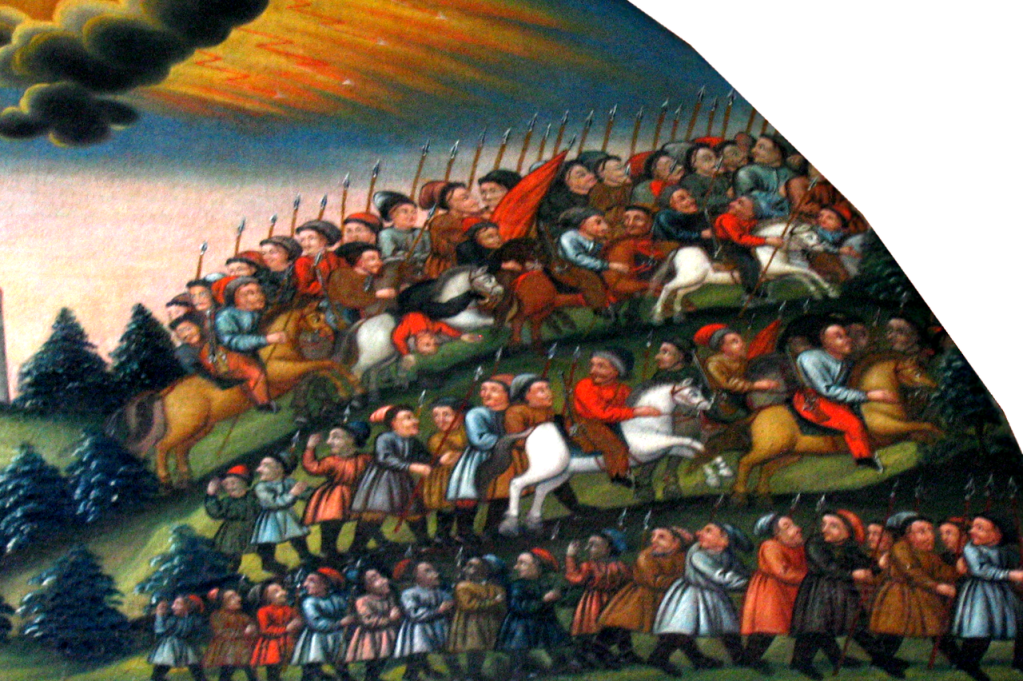
A People Protected by a Prince; A People Proffered by a Prince: Germans who came to America in the 18th Century – My Ancestors

In the 18th century, thousands of Germans crossed the ocean to settle in the British colonies, many concentrated in Pennsylvania, where it is estimated that by the 1770s they made up about one-third of the entire colonial population. There were many motivations for this emigration from Germany, but two of the most significant, religious persecution and military conscription, affected multiple branches of my family. In particular, two princely families can be said to have influenced my ancestors: the counts (later princes) of Sayn-Wittgenstein sheltered, then ejected a group of radical pietists in the early part of the century; only a short distance away, the landgraves of Hesse-Kassel made great profits from ‘renting out’ their trained militias to the British, especially during the War of American Independence. Two princely houses, two sets of German subjects, one devoted to peace, the other trained for war, Anabaptists and Lutherans. Both groups ended up in the New World and eventually mingled in the valleys of Virginia, my home state.

Old Order Brethren women

This post is in response to suggestions by various readers that I should write about my own family. I’m taking advantage of the Christmas break and some down time spent with my family in the Shenandoah Valley of Virginia. Inspired by the sites of farms, churches and graveyards of several branches of my ancestors, and of course the beautiful Blue Ridge Mountains, it seems appropriate to write about emigrants from the central regions of Germany—the Palatinate, Westphalia, Hessen—and to weave in some fascinating stories of their lives here, from helping to fight in the Battle of Saratoga, to being unwittingly part of the battle of Gettysburg, and embarking on a bold and ultimately futile scheme to settle the wild and untamed Pacific Northwest. There are also some truly extraordinary first names in these stories, so watch out for these.

I will start in 2008. I was already living in the United Kingdom at the time, so it was easy to travel to Germany to take part in a grand celebration of the 300th anniversary of the founding of the Church of the Brethren (and other related Brethren churches) in a tiny village called Schwarzenau. It was great to be part of this historic commemoration, with speeches, hymn singing, and of course food, but a highlight for me was seeing one of the hosts, the Prince of Sayn-Wittgenstein, whose ancestors had protected my ancestors back in 1708, and had allowed them to break the law by baptising adults in the nearby Eder River.

The Eder River near Schwarzenau

These lawbreakers were known as ‘radical pietists’, a group who broke away from the mainstream Lutheran and Reformed (Calvinist) Protestant churches, in search of restoring the inner piety of the early Christian faith. In an era increasingly drawn to reason and science, these movements were inspired more by emotion and mysticism—they were ‘moved’ by the Holy Spirit (and similar groups in England were also so moved, thus calling themselves ‘Quakers’ and later ‘Shakers’), and they wanted to distance themselves from the world of war, materialism and religious intolerance that marked out the late 17th century in Europe. In particular, many were driven out of German-speaking parts of France by the increasingly intolerant Louis XIV (who expelled all Protestants in 1685). Many of these settled in the neighbouring German state of the Palatinate, with its capital at Heidelberg, a nominally Calvinist court, but with a reputation for toleration and ecumenicalism. But in 1690, the Protestant branch of the Wittelsbachs who ruled the Palatinate died out, and was replaced by a Catholic branch. Several Palatine Germans, and their Huguenot friends and allies, were forced to look elsewhere for a safe home. Some went to the New World, where they were given land by William Penn, a Quaker, in his new colony, Pennsylvania. Here they founded the town of Germantown in the 1680s.

But some did not leave immediately. A wealthy and educated miller from a town near Heidelberg, Alexander Mack (1679-1735), had been drawn to the radical pietists who had been settling there, and when they were deported by the local ruler in about 1706, they went down the Rhine valley and overland into what is now Westphalia, and found refuge in the small county of Sayn-Wittgenstein.

Gft (Countship) of Sayn (brown) and of Wittgenstein (orange). Westphalia to the north, Hesse to the east, and the Rhine valley to the west

Sayn-Wittgenstein was actually two Imperial counties, joined together by marriage in the mid-1300s. Sayn was itself located on a bend of the Rhine, across from Koblenz, but most of the county was a bit further to the north towards Cologne. The County of Wittgenstein was further inland to the east, in a remote area crossed by the Rothaar hills which formed a watershed between the rivers that flowed to the west (and Westphalia and the Rhineland) and those that flowed to the east (and the regions of Hesse and Hanover or Lower Saxony). So although it was remote and rural, it was strategic as a regional border zone.

Arms of Sayn-Wittgenstein

By the 17th century, the Sayn family was divided into several branches, with one ruling in the Rhineland at the family’s ancient seat, one in southern Wittgenstein with a seat at Hohenstein, and one in northern Wittgenstein, at their residence of Berleburg. Count Heinrich Albrecht of Sayn-Wittgenstein-Hohenstein (1658-1723), left his castle of Wittgenstein and instead established his residence at a modest hunting lodge in the village of Schwarzenau. This lodge, built in the 17th century, and remodelled in the late 18th, is still the seat of one of the branches of the family today.

The Hunting Lodge at Schwarzenau

Count Heinrich Albrecht was, like much of his family, a member of the Reformed Church, but from an early age he moved in more Pietist circles. His mother in fact was a Huguenot who had left France during the persecutions of the mid-17th century. By the end of the century, he had attracted religious refugees from all over the region, and he and his sisters involved themselves in the day-to-day lives and welfare of the radicals, including newcomers like Alexander Mack and his family, who arrived in 1706.

Count Heinrich Albrecht von Sayn-Wittgenstein-Hohenstein

Just a few miles away, the small court at the castle of Berleburg was raising the level of radical pietist activity even higher. The castle, originally built in the 1250s, but rebuilt as a Renaissance palace in the 1550s, was ruled over by Countess Hedwig Sophie (from the dynasty of Lippe, on the other side of Westphalia) in the name of her young son, Count Casimir of Sayn-Wittgenstein-Berleburg (1687-1741).

Berleburg Schloss (photo Kurt Wichmann)

Countess Hedwig Sophie was herself a devotee of the new movement, and attracted preachers and theologians to her court. She sent her son to study at the University of Halle, a centre of pietist theology, then supported his travelled to England, where he learned about the ‘Philadelphians’, a movement of English dissenters with a particular emphasis on universal salvation and the importance of charity. Casimir was keen to import this ideal to his tiny state back in Germany, and when he took over the reins of government from his mother in 1712, worked to build a better society for his people.

Count Casimir von Sayn-Wittgenstein-Berleburg

In particular, Count Casimir was keen to support the work of theologians, and opened a printing press in Berleburg in 1714. A resident of Schwarzenau, Christophe Sauer, was employed to print what is now known as the ‘Berleburg Bible’, printed in the 1720s, which was different from the Lutheran translation, and accompanied with significant pietist commentary. Sauer would later emigrate to Germantown, Pennsylvania, and would print the first Bible in any European language in the colonies (in 1743). Sauer also printed a journal in the 1740s with a broad circulation amongst the German community in and around Philadelphia.

Berleburger Bibel

By 1720, therefore the County of Wittgenstein had become a real haven for religious diversity. Not only the Brethren, led by Alexander Mack, but also some other Pietists, like the Moravians, and Anabaptist groups like those from the south, refugees from Calvinist Swiss cantons that were becoming increasingly conservative and intolerant. Anabaptists and Pietists co-mingled and shared many of the same ideas, notably adult baptism, pacifism, and general simplicity of life. This is where I begin to connect with the story of my own ancestry, but much is merely speculation—several of my family names seem to be Swiss or at least Swabian, notably Spangler, but also Flora (who may have even been French Huguenots—Fleuri). Today’s Austrian Spängler banking clan, for example, one of the wealthiest families in Salzburg and Vienna, came originally from the South Tirol, so a predominantly south German (ie, Swiss or Austrian) ancestry isn’t an unreasonable assumption. There’s also quite a significant ‘dark’ gene that runs through these families and still quite dominant in many of my cousins (a predominant gene for dark hair and dark brown eyes; and we all tan easily!). We’ll come back to these names later.

Bankhaus Spangler in Salzburg

Things began to change in the County of Sayn-Wittgenstein, however. Count Heinrich Albrecht died in 1723, and his younger brother and heir, Count August David, was not very interested in radical religion. He had been a leading government official in Berlin in earlier life, and was now determined to restore what he saw as ‘order’ and a proper Reformed church society. Mack and his family had already left the area (first to Frisia in 1720, then to Pennsylvania in 1729), and soon the rest of the radical community moved from Schwarzenau to Berleburg. But here too things were changing. Count Casimir had never formally left the Reformed Church, and his new wife was much more traditional, a Lutheran, and was directing the education of his son and heir, Ludwig Ferdinand (her stepson). Her father was a prominent official, an Imperial Minister of State and President of the Council in Vienna, Count von Wurmbrand-Stuppach. By 1737, the young count himself had a position in the Imperial High Court (Reichshofrat), and when he succeeded his father as Count of Sayn-Wittgenstein-Berleburg in 1741, his priorities were quite different. Old Count Casimir had not been very interested in economy or finance, so he left the county in a bit of shambles. His son therefore set out to restore order, which meant cleaning out the remaining religious radicals in his domain. As a product of his ‘imperial’ education in Vienna, he was also much more interested in high court culture, employing a full orchestra, and rebuilding the castle as a baroque palace (as we see it today). In 1792, his branch of the family were raised from imperial counts to princes (fürsten), though they were ‘mediatised’ (deprived of sovereignty) very soon after in 1806, and their lands annexed by the Grand Duchy of Hesse, and then transferred to the new Prussian province of Westphalia in 1816. The family was headed until 2017 by Prince Richard, who raised the family’s profile significantly through his marriage in 1968 to Princess Benedikte of Denmark, the sister of Queen Margarethe II.

Prince Richard of Sayn-Wittgenstein-Berleburg (d. 2017) and Princess Benedikte of Denmark, in 2010 (photo Holger Motzkau)

By the 1730s-40s, therefore, Alexander Mack, Christopher Sauer, and the rest of the Brethren (‘German Baptist Brethren’, ‘Dunkers’ or ‘Dunkards’, so named for their practice of adult baptism) were based in south-eastern Pennsylvania. According to older published genealogies and some mor recent online records, I have the suggestion that only one of my various family lines was directly linked to the original group from Schwarzenau. This was Casper Sherfig (as he spelled it in his will) who arrived on a ship from Rotterdam in 1751 as a Dunker. He settled a bit to the south of the border of the colony of Pennsylvania, in an area called Big Pipe Creek, in Frederick County, Maryland (now Carroll County), and he is buried in the Pipe Creek Dunkard Cemetery. This is only 4 miles south of Gettysburg, PA. Casper married Magdalena Heilmann, who had been born in America, and they had 15 children. Of these, three sons (now called ‘Sherfy’) moved south along the Blue Ridge and started branches in Tennessee and Virginia, where land was on offer by the colonial government—Governor William Gooch was keen to entice Germans to settle the frontier as a buffer between English plantations and the native tribes to the west.

German immigration in the 18th century. Staunton is close to where the Sherfys and later Crickenbergers (below) settled; Roanoke is where the Ellers and Floras (next section) settled)

A fourth Sherfy son set up a farm in Gettysburg, where, a generation later, these peace-loving Brethren folk found themselves right in the middle of one of the bloodiest battles in US history. On the afternoon of 2 July 1863, the second day of the battle of Gettysburg, the Army of the Potomac tried to hold the high ground south of the town in the face of waves of Lee’s Army of Northern Virginia, and clashed at an area called ‘The Peach Orchard’, part of the Sherfy farm, the home of a Brethren minister. Off to the west, only a short distance, was a wooded farm still known today as the Spangler Farm. I do not know how closely these Spanglers are related to me—some research remains to be done.

The Peach Orchard and Sherfy Farm, Gettysburg (photo Muhranoff)

Meanwhile, neighbours of Casper Sherfig at Pipes Creek, Maryland, were the Dunkard brothers Heinrich and Georg Michael Eller, from a family who had emigrated from the Palatinate in the 1740s. Heinrich bought a farm here in 1767, and Georg Michael an adjacent farm in 1773. Others of their family (brothers or cousins, it’s not clear), had left Pennsylvania, and journeyed south to settle the frontier in western North Carolina. One of the sons of Georg Michael, Jacob, also moved south, through the Shenandoah Valley and into a newly settled area of the headwaters of the Roanoke River. There’s evidence of a land grant for Jacob in the Roanoke Valley in 1790, in a county named for one of Virginia’s last royal governors, Lord Botetourt (we pronounce it ‘Botitot’). A few years later, in 1797, Jacob Eller purchased land on the side of a small mountain now known as Sugar Loaf. Roanoke County would be separated from Botetourt County in 1838, and Sugar Loaf would remain the heart of the Eller family for the next century and a half, with generations of kids (including my father) working in its abundant orchards of apple and peach trees.

Sugar Loaf
Sugar Loaf in context, with the much larger mountains of the Blue Ridge behind

In this area of Virginia, the southern end of the Great Valley, the Ellers became neighbours to several other German families in neighbouring Franklin County, including Floras, Naffs and Brubakers. Joseph Flory (or Fleuri) immigrated to Philadelphia from the Palatinate, 1733, aboard the ship “Hope”, and died in 1741. His elder sons established branches that flourished in Lancaster, PA, while a younger son Jacob (who spelled his name Flora), moved to Franklin County (created and named for Benjamin Franklin in 1785); his sister Catherine moved south too, having married Jacob Naff, a recent arrival Philadelphia, originally from Kappel, Switzerland (in the Aargau, a northern canton). Jacob and Catherine settled in Boones Mill, Franklin County, on land granted by Governor Randolph in 1782.

the counties of southwest Virginia, notably Roanoke, Floyd, Franklin and Henry

The next several generations show lots of intermarriages between these Ellers, Floras and Naffs. They also married some of the local Scots-Irish immigrant families, notably Montgommery, but mostly they kept to themselves and away from ‘worldly’ affairs. Photographs are rare, even more so than usual for the 19th century, since they were considered too ‘worldly’ for the ‘plain folk’ that defined the German Baptist Brethren in this area. These ‘Dunkards’ were in many ways similar to the more well-known Amish communities in Lancaster, PA, and after a serious split amongst the Brethren in 1881, some chose to retain the more conservative lifestyle—to this day some of my more distant cousins in south-western Virginia dress simply and rely on horse and buggy for transportation.

An Old Order Brethren buggy (photo Al Meskens)

In 1888, the daughter of one of the deacons of the Brethren church in Franklin County, Amanda Flora, married Benjamin Spangler, whose family was from neighbouring Floyd County. Ben’s family had similarly come down the ‘Great Wagon Road’ from Pennsylvania to Virginia sometime in the late 18th century. There’s more research I would like to do someday to establish the link with the Spanglers in Gettysburg (above), or with those who moved west to Ohio and set up the Spangler Candy Company at the start of the 20th century (makers of Dum Dums, Christmas candy canes, and unfortunately, those marshmallow Circus Peanuts that everyone hates). There is indisputably a tradition of making candy and sweets amongst German Anabaptist families of Pennsylvania and Ohio (Hershey and Smucker—both Mennonites).

There are some stories that get told at family reunions about the origins of the Spanglers. One which is intriguing, but I suspect fanciful, is that Georg Spengler served as a cup-bearer (a prominent court officer) in the household of a prince-bishop of Würzburg in the 12th century, and accompanied him and the Emperor Frederick Barbarossa on Crusade where he died and was buried in Antioch. This may have some basis in fact, as other sources indicate that Spanglers were indeed from Franconia (where Würzburg is located), and that their surname was derived from their profession as workers of lead or tin (a spengler is still the term used for plumber in Switzerland and Austria), who also sometimes worked as bracket-makers of fine jewels (a Spangemacher) and could therefore make quite a good living, even entered the service of princes.

Ancestry.com suggests there were Spanglers in Nuremberg, also in Franconia, as far back as the 15th century. At some point in the mid-17th century they moved to northern Switzerland, the Aargau (like the Naffs, above), so I assume they were members of the Reformed Church who had to leave the mostly Catholic areas of eastern Franconia (today part of very Catholic Bavaria). Their names are consistently Johann (or Hans) and Jacob. By the end of the 17th century, they had moved again, to Weiler, a town in the Palatinate close to Heidelberg. But Jacob Spengler, of Weiler, having emigrated to America, is listed as buried at the Alsace Lutheran Chapel in Reading, Berks County, PA, in 1756. Berks County had been formed as recently as 1752, by Germans who wished to have a county separate from Lancaster County to the south. His son Daniel is said to have fought in the Revolutionary War, but certainly migrated south to Virginia, as he is buried in 1787 in what is now the Pigg River Primitive Baptist Cemetery, in Franklin County. Primitive Baptists were conservative separatists from the general English Baptists, who were themselves separatists from the more mainstream English Protestant churches. The movement arose in the early 1820s as a means to purify their communities from the increasing worldliness of other Baptists, so they would have appealed to the German Pietists now settling amongst them in the eastern slopes of the Blue Ridge.

Daniel’s son, Daniel, Jr, moved across the ridge into Montgomery County, and was buried in 1823 in Pine Creek Primitive Baptist Cemetery, near his home, known still as ‘Spangler Mill’ on Pine Creek, which he purchased in 1792. The miller Daniel Spangler was evidently a prominent member of his community, for when the locals petitioned the Commonwealth of Virginia for representation separate from the County of Montgomery, initial separation meetings were held at Spangler’s house in 1819, and when the new county (named Floyd, for the then current governor of Virginia, John Floyd) was eventually created, in 1831, the county court met in the Spangler house, now belonging to his son David, until a courthouse was built a few years later.

Spangler Mill in the 19th century

David Spangler’s son, Christian, was born in Floyd County, and in about 1890 took his family (at least one son and one daughter) to the newly established (1889) state of Washington, with the promise of fertile lands on the north side of the great Columbia River. It must have been quite the journey, nearly 3,000 miles, though this was no romanticised covered wagon ordeal, since by 1887, there was a spur of the Union Pacific Railroad that connected travellers from the East to the Oregon and Washington territories. In fact, it was the railroad company that sold land to about a half a dozen Dunkard families from Floyd County to entice them to settle the valley of the Klickitat River, named for one of the local native nations, on the eastern side of the Cascade Range in Washington State, in the shadow of Mount Adams.

Mount Adams, Washington (©2014 Walter Siegmund)

That region of the Columbia river valley is known for its rich apple orchards, so these Virginia families hoped to bring their seeds out west—inspired perhaps by tales of Christian missionaries-with-seeds like ‘Johnny Appleseed’. The very name of the closest town was in fact Appleton. But the eastern slopes of the Cascades—in sharp contrast to the western slopes—are high and dry, so they were initially not very successful. They turned instead to timber and cattle. But the community did not survive for long, and the Dunkard cemetery is today abandoned, high up on a hillside deep in the woods. My parents found it one day several years ago, but only after quite a bit of struggle with poor maps, multiple local inquiries, and some rugged hiking. I visited Klickitat town (population today about 400) a few years ago on a trip to see friends in Portland, Oregon, about an hour away.

the town of Klickitat and the Klickitat River
Dunkard Cemetery in Appleton (photo Michelle Rau)

Christian, his son, Benjamin (called ‘Bennie’, aged about 25), and at least one of his daughters, Ella—who was married to the Rev. John Simmons, the leader of the community—arrived to start their families in Klickitat. Ben and his new wife Amanda Flora soon were parents of a daughter and three sons, including my grandfather Carl. In 1898, Ben was charged with taking the community’s taxes to the county seat (Goldendale), and was robbed and killed somewhere on the way—either by natives or by bandits, the stories vary; one says he was drowned in the river; another that a native brought back his body and his horse. Whatever the truth, young Amanda, with four children under the age of 10, decided she’d had enough and packed up her family and returned to her family in Virginia. Ben’s sister, Ella Simmons remained in Klickitat, but died only a few years later (in 1901), and his father, Christian, moved away, to Washougal (closer to Portland) and remarried, but when he died in 1925, was buried back in the Dunkard cemetery in Klickitat.

Ben and Amanda, 1890

Back in the southern end of the Great Valley of Virginia, Amanda’s son Carl Spangler, wanted to become a preacher and a teacher, so was encouraged by some of his Flora elders to attend the Brethren junior college at Daleville, in the Roanoke Valley. Here he met and married an Eller, Sadie, whose father owned the Sugar Loaf farm we encountered earlier in this post.

Ben and Amanda’s four children, 1912 (my grandfather Carl seated at left)

Carl and Sadie were distantly related, both having Flora and Brubaker cousins. Sadie’s father, Christian (or ‘Crist’), was not just a farmer, but also a Brethren preacher, and started a new church near his farm in the southern end of Roanoke County called Oak Grove. He had married in 1897 a non-German, Rebecca Henry (though her mother was a Grisso, also German immigrants, whose farm was just over the ridge from Sugar Loaf). I think my Dad’s Grandma Becky is quite beautiful in this photograph (from about 1905), itself an indication that the Ellers were on the more progressive side of the Brethren religious split, still fresh in people’s minds.

Crist and Becky Eller and their first four children, 1905. My grandmother, Sadie, is in the older daughter in the centre. The others are Orien, Henry and Gertrude

Rebecca Henry’s ancestry is interesting—though off topic, as I’m keeping this post about the Germans—in that she is probably (or we wish it was so?) related to Patrick Henry, one of the leading fathers of the American Revolution. The Henrys were Scots-Irish, from Franklin County (the same as the Floras). They had been early settlers of Pittsylvania County, formed in 1767 and named for the British Prime Minister William Pitt. The Scottish and the Irish settlers came to Virginia later than the English, and missed out on the prime real estate of the Tidewater region, so many went west and settled the Piedmont, the eastern slopes of the Blue Ridge Mountains. (This is The Waltons territory too, by the way). Patrick Henry was from Hanover County (near Richmond), but did purchase land in Pittsylvania, and built a plantation, Leatherwood. In 1777, a new county was carved out and named Henry County (to honour Patrick Henry, by now Virginia’s first independent governor). In 1785, the northern part of Henry County, where Rebecca Henry’s ancestors lived, was shaved off to create Franklin County. So the Henrys didn’t really move, the county boundaries did. (see the map of Virginia counties, above).

Crist and Becky Eller had a large family, six boys and four girls—several of them became or married Brethren ministers. Most of them had large families of their own, but they spread out all over the country, and today, I have dozens and dozens of Eller second cousins from California to Maine. Many are talented musically and remain deeply involved in the church of the Brethren and its national leadership. For me, church, family and singing have always gone together hand in hand. But though they spread out across America, the homestead remained Sugar Loaf in Roanoke, until the farm was finally sold for suburban development in the 1950s. There is still a heavy presence of my Spangler, Eller and Flora relatives in the southern end of the Great Valley of Virginia.

So we need to turn to the northern end of the Great Valley, my mother’s side of the family, and the other princely house named in the title of this post, the Landgrave of Hesse-Kassel. This part of Virginia is more properly called the Shenandoah Valley, an anglicised Native American term, though its origin and meaning are now pretty much lost. The romantic ‘beautiful daughter of the stars’ (connected to the Pocahontas story) is unlikely; instead it may be an Iroquois word for ‘river of high mountains’, attributed before these northern peoples were driven out by more southern peoples (like the Catawba) in the era just before European settlement. Settlement started in the late 1720s, notably by Adam Müller, who, interestingly, came from the same town in the Palatinate as Alexander Mack. By the 1790s it is estimated nearly 30% of the central Shenandoah was settled by Mennonites and Brethren and other German groups, and even today it’s estimated at about 10%.

A typical Shenadoah Valley view (photo Pollinator)

But in the 1780s, a new settler arrived in this area, another German, but of more traditional Lutheran stock, not Anabaptist or Pietist. His name was Johannes Crickenberger (or Krickenberger, Kriggenberger, Krukeberger, Krueckeberg or Cuckenberg—all in various church records), and it is thought he was a Hessian soldier, captured at the Battle of Saratoga (October 1777), and freed by the American army, as many German prisoners were, with the promise of land and great opportunity if they would help settle the western frontiers of the new nation. In popular culture, Hessian soldiers have a gruesome reputation, as bloodthirsty killers in the American Revolution, or, more specifically, as the Headless Horseman in The Legend of Sleepy Hollow by Washington Irving (published in 1819). Not many Americans know really who these German immigrants were.

The Headless Horseman!

Hessian soldiers were highly trained professionals hired out in various wars of the 18th century by the landgraves of Hesse-Kassel, primarily Friedrich II (1720-1785). The House of Hesse, whose early history is told in my post about travelling across central Germany, is one of the oldest ruling dynasties in the Holy Roman Empire, but were never amongst the wealthiest, not having clear access to the sea, or the rich mineral resources to the east in Saxony. But they did have good dynastic connections with neighbouring states: in 1740, Landgrave Friedrich II married Princess Mary of Hanover, the daughter of King George II of Great Britain, and personally brought some of his soldiers to Scotland in 1745 to aid his father-in-law in suppressing the Jacobite rebellion there. As a ruler, Friedrich was an ‘enlightened despot’, keen to improve his state and the welfare of his people, so he concentrated on education and public works, but needed revenue to pay for this—he therefore rented out his well-trained soldiers to whoever would pay (sometimes even meaning his soldiers fought on opposite sides of a conflict, as in the Seven Years War when they served in armies of both Austria and Hanover/Britain). He ensured that Hesse-Kassel manufactured its own weapons and stimulated the cloth industry so they were self-reliant for military uniforms. By the 1760s-70s, his endeavours were so successful that, in spite of his building projects, he actually lowered taxes (something the French king could only dream about!).

Friedrich II, Landgrave of Hesse-Kassel

So in 1776, Fredrich II made a deal with his cousin, George III of England, to send about 17,000 soldiers to America as auxiliaries to the British Army. Friedrich’s son, Wilhelm, who was already his own master as Landgrave of Hesse-Hanau (a bit to the south, near Frankfurt), also contributed some soldiers, as did the Duke of Brunswick, the Prince of Waldeck and the Prince of Anhalt. It’s estimated about 30,000 German soldiers in total were sent to North America, about a quarter of British land forces.

Hessian soldiers

Soldiers from Hesse were gathered at the inland port of Karlshafen on the Weser River, located at the border between Hesse, Hanover and Westphalia. This port was developed in the 1710s by Landgrave Karl I, in an area previously settled by French Huguenot refugees (and in fact, not at all far from the religious refuge of the County of Wittgenstein, discussed above).

Karlshafen

Perhaps Johannes Crickenberger came from this area. Family records suggest he came from Reinsdorf in the County of Schaumburg, an exclave of Hesse-Kassel, to the north, near the city of Hanover—which was a Lutheran area which might explain why, or if, Johannes was a Lutheran, since Hesse-Kassel was officially a Calvinist principality. By coincidence (or is it? maybe Johannes didn’t have a surname, so borrowed one from a local landmark?), just across the river from Karlshafen was a large castle called the Krukenburg—an ancient fortress built by the bishops of Paderborn to guard a monastery complex there. It had been conquered by Hesse in the 15th century but by the 18th century was already a ruin.

Krukenburg (photo DaTroll)

The Hessian soldiers sailed down the Weser to the sea, and in August of 1776 had arrived in New York where they helped the British Army secure Long Island. They then took part in the Battle of Trenton, New Jersey, in December, in which about 1,000 Hessians were captured. The next summer, in the lead up to the two battles of Saratoga (in September and October), there was a skirmish at the town of Bennington (in upstate new York just across the border in Vermont), 16 August, in which another thousand Hessians were killed or captured. Could this have been where Johannes was captured by the American Army?

The Capture of the Hessians at Trenton, by John Trumbull

Almost immediately, the United States Congress authorised its Army to offer up to 50 acres to German soldiers who would switch sides. Many of these prisoners were interned in a camp in Lancaster, PA, where they were encouraged to mingle with loyal German-Americans living in the area. It is estimated that about 5,000 chose to remain after the war. For whatever reason, Johannes did not stay in New York or Pennsylvania, and in 1782, he married Teckla (or Thacula) Hockman, in Staufferstadt in the Shenandoah Valley. Staufferstadt was one of the earliest settlements in the Valley, named for Peter Stauffer (or Stover, as it is more commonly spelled today). It was soon renamed Strasburg, after the town in Alsace where many German religious refugees had come from (Stauffer himself was from Mannheim, in the Palatinate). Teckla’s father was Peter Hockman, a Swiss Anabaptist settled nearby on a bend of the Shenandoah River near what’s now Tom’s Brook. An interesting note I found on a genealogy website says that Peter Hockman was fined in 1761 for not responding to a military muster during the French and Indian War—so it seems his pacifist beliefs were intact.

Friedens Church and cemetery

By about 1802, Johannes and Teckla bought a farm several miles to the south on the North River, on the border between Rockingham and Augusta Counties (named for another British Prime Minister, and the mother of King George III, respectively). This is near the town of Weyer’s Cave, near the point where the North, Middle and South rivers converge to form the Shenandoah River. They attended the local Lutheran Church, called the Friedens Church, considered one of the oldest Lutheran churches in the Valley. It’s thought they are buried there, and although there are dozens of tombstones there with German inscriptions, we didn’t see either name on a visit there a few years ago.

German remained the primary language of their son David, who as late as 1812, when he served in the war against Britain, was said to only read and write in German. By the 1830s, he had left the farm on the North River and was living a bit to the east, up on the Blue Ridge in Brown’s Gap. But when he died in 1855, he was buried back in the valley, only about a mile up the road from his father’s farm, at a place called Melanchthon Chapel Cemetery. This Lutheran cemetery would be the resting place for several generations of Crickenbergers, and indeed the name Melanchthon—one of the leading Lutheran reformers of the 16th century—appears again and again in family names. My great-great-grandfather was Philip Melanchthon Crickenberger, and his second son was Peter Melanchthon (his elder son was named William Luther, and indeed, his own younger brother was Martin Luther). Even more extraordinarily, Philip’s older brother, George Washington Crickenberger (yes, that’s his name), had seven sons who made it into the Guinness World Book of Records as the ‘alphabetical sons’: Arthur Benton, Clinton Dewitt, Earl Floyd, George Herman, Ira Jethrow, Kennie Luther, and Minor Newton (born between 1879 and 1895). On the topic of extraordinary names, my mother also had a great-uncle called Orange Presley Harris (called ‘Jack’, understandably), but he’s part of my English ancestry, so not part of this story. These were big farming families with lots and lots of children: Philip Melanchthon Crickenberger married the 18-year-old Lottie Shiflett in 1876, and over the next 21 years they had 17 children, including three sets of twins. Poor Lottie died, aged only 39. Shiflett is another name common to this area of Virginia, though more so on the eastern side of the Blue Ridge, as all my friends who went to UVA know: every policeman, postman or sales clerk in Charlottesville seems to be named Shiflett.

Philip and Lottie Crickenberger in the Melanchthon Chapel Cemetery near Weyer’s Cave (personal photo)

My mother also had some great-aunts on the Sherfy side with fantastic names: Tennessee (‘Tenna’) and Timaoczema (‘Timey’). Several of the lines of the Sherfy family (from above) had moved down the Valley and settled in Johnson City, Tennessee. Others stopped in the way in the Shenandoah Valley, and April and December of 1903, two of these Sherfy sisters married two Crickenberger brothers, Peter and his younger brother Henry (who went by his second name, Neff), thus drawing them in to the Church of the Brethren, and drawing together the lineages being outlined in this story.

Neff Crickenberger and Hattie Sherfy (and witnesses at their wedding), 1903

Pete Crickenberger’s family moved up to Northern Virginia, and I knew some of his descendants where I grew up there. Neff’s family remained in the Valley, and moved around, but ultimately settled near a town called Mount Jackson. His eldest son, Frederick Melanchthon, had been born near the original family homestead near Weyers Cave. His second daughter, Olivia, my grandmother, had the wild idea of going to college—none of her siblings even finishing high school—and she did. It is through this experience that all the lines of my family were eventually drawn together to produce me.

Crickenberger siblings, 1945 (my grandmother Olivia third from left)

Bridgewater College was founded in 1880 by the Church of the Brethren (by Daniel Christian Flory—undoubtedly related to those Floras and Florys so far encountered in this tale). Olivia Crickenberger enrolled in 1927. I asked her how she had managed to get a loan from a bank to pay for college, as the daughter of fairly poor farmers, and she said, quite nonchalantly, ‘I just asked my preacher for a note to take to the bank that said, “Ollie is a good girl”’. Oh what times they were! She also suggested to me that she had gone to college to get away from the marital aims of a neighbouring farmwoman in Mount Jackson, Mother Jordan, whose two (of three) sons had already married two of Ollie’s sisters.

Olivia Crickenberger’s photo in the Bridgewater College yearbook, 1928

But she only finished two years, then married a city slicker from Washington, DC, converted him too to the Church of the Brethren (in fact the minister at their wedding was a cousin, Ernest Sherfy), and sent her own daughter, Carol, my mother, to Bridgewater College. Here she met a track star from Roanoke, Wayne Eller Spangler, my father. They were married in 1954, and decided to travel the world, spending time as teachers in Japan and France, and as missionary teachers in Nigeria, before settling down to raise their family back in Virginia.

Olivia Crickenberger looking a little shy in her class portrait, Bridgewater College, 1928

(images from Wikimedia, or personal collections)

Lerma, Olivares and Haro: los Validos

Spain’s ‘Golden Century’ was dominated politically by powerful men known as validos, a combination of prime minister and personal servant, the closest confidant and advisor to the king. The reigns of Philip III and Philip IV were monopolised by three men, Lerma, Olivares and the latter’s nephew Haro. The first was created Duke of Lerma (1599), and his son Duke of Uceda (1610). The second was created Duke of Sanlúcar la Mayor (1625), but used the curious hybrid title of ‘Count -Duke’ of Olivares; his son-in-law (and at one point anticipated successor) was given the dukedom of Medina de las Torres (1626). The third, while ultimately inheriting the Olivares title, was given his own dukedom of Montoro (1660).

Olivares

This post is thus about three families—the House of Sandoval de Lerma, the House of Guzmán de Olivares, and the House of López de Haro—and at least five ducal titles between them. All three validos were part of wider dynastic clans, or casas; in particular, the House of Guzmán had many branches, and one of the oldest and grandest dukedoms in Spain, Medina Sidonia (1445). But since that dukedom has very much its own story, and indeed continued into the modern era in a different family line (as Spanish dukedoms passed freely through female lines), I will write about it separately.

Like many Iberian families, the histories of these three families is long and sometimes emerges from shadows into national and international prominence, then fades more into the background, only to emerge once again to prominence in a different branch. López de Haro is a good example of this. While they were not dukes or princes, the early members of this family were amongst the most powerful nobles in Spain in the Middle Ages, with generations holding the title Lord of Vizcaya—the province of Biscay, or the Basque Country. They originated in the town of Haro, in the province of La Rioja, one of the contested frontier areas between Vizcaya and the early medieval kingdoms of Navarre and Castile. Iñigo López Ezquerra was appointed governor of Vizcaya in about 1040, and converted his rule into a hereditary title by the 1070s. His son and grandson served the kings of Castile and Leon in their wars of re-conquest against the Moors (Toledo, 1085, Zaragoza, 1118). Diego II, the 5th Lord, rose to the positions of Alferez del rey and Mayordomo mayor in 1183, the top positions at court, and was one of the greatest magnates of the reign of King Alfonso VIII of Castile. Like many of his kinsmen he fought at the battle of Las Navas de Tolosa in 1212, which effectively destroyed the power of the Almohads in Iberia. In 1187 he married his sister Urraca to King Ferdinand II of Leon, solidifying their family’s access to royal favour and power through blood. Several other kinsmen would marry into the various royal houses in the next generations, including Mencia who married in 1240 Sancho II, King of Portugal. They adopted a the symbol of the wolf on their coat of arms (from lupus, or lobo, wolf).

The height of the López de Haro power was probably reached with Lope Diaz III, 8th Lord of Vizcaya, who was still Alferez and Mayordomo of the king, and backed Sancho IV in his usurpation of the Castilian throne from his nephew—Lope and Sancho were married to sisters (grand-daughters of the king of Leon), making their bond even greater. But his power made other nobles jealous, and they concocted an argument between the two men resulting in Lope pulling a knife on the King and his subsequent execution in 1288. By the early 14th century, the senior line died out, and the lordship of Vizcaya passed into the House of Lara, one of the other great magnate families of the Kingdom of Castile in this period.

Back in the 1280s, the son of the 8th Lord of Vizcaya had supported the rival of King Sancho, the dispossessed Infante Alfonso, as did one of the early members of the House of Guzmán. This family arose a little bit later, and bit more to the south, in the province of Burgos in Castile. There is a village here with the name Guzmán, which some have suggested was named for early Germanic (Visigothic) settlers (‘good man’) or for a Visigothic king or chieftain named ‘Gudemar’. Whatever the case, documents show Rodrigo Muñoz de Guzmán as a patron of several monasteries in the region in the 1180s, and tenant-in-chief of the lordship of Roa in the Duero valley. There is a ‘Guzmán Palace’ in the village, built in the 17th century by a member of a minor branch, which today serves as a municipal centre.

There is also a ‘house saint’ in this very early period, though any firm connections are conjectural—he may simply have come from the same town. This is Santo Domingo de Guzmán, better known in English as Saint Dominic, the founder of the Dominican Order in the early years of the 13th century.

Saint Dominic

The great rise to prominence of the Guzmáns came just as the early López de Haro lords were fading away. Alfonso Pérez de Guzmán ‘el Bueno’ was one of the noteworthy conquerors of Andalusia in the 1290s, famously capturing the castle of Tarifa—at the southernmost tip of continental Europe. He was rewarded with the important lordship of Sanlúcar de Barameda, guarding the mouth of the river Guadalquivir, near Cadiz, and the lordship of Medina Sidonia, a bit inland, and one of the most ancient towns in the region—possibly founded by Phoenician colonists (and named for their hometown of Sidon; Medina is Arabic for ‘city’). He was given the fortress of Tarifa to defend, which he did, famously, in 1294, in throwing his knife down to besiegers who had captured his son—indicating he would rather sacrifice his son than disappoint his king.

El Bueno throws down his knife, painting by Martinez Cubells, 1883

Less glamorously, El Bueno was also given the rights to fish tuna in this coastline, one of the most lucrative in the area, and upon which his family built much of their great fortune—the ‘tuna fortress’, Zahara de los Atunes, still stands today. By the end of his life, he had helped Ferdinand IV take the Rock of Gibraltar (1309), and had founded one of the grandest Andalusian aristocratic lineages still extant today. One of his descendants, Juan Alonso de Guzmán el Bueno (they had added this to the surname), was created first Duke of Medina Sidonia (1445), and the family continued to dominate the provinces of Cadiz and Seville for generations. Their residence is still the Palace of Medina Sidonia in Sanlúcar, near Cadiz. As said at the start, I will cover their story separately.

Palace of Zahara de los Atunes

But to get back to the medieval Guzmáns, we need to know exactly who were the parents of ‘El Bueno’. This seems a bit murky. There has been recent speculation that he was a Moor himself who converted, and indeed there is evidence from his life that he played a strong role as a negotiator between Christian and Muslim warring parties, not merely a conqueror. The more traditional answer is that he was the illegitimate son of Pedro Guillén de Guzmán, one of the key military governors of Castile in the reigns of Ferdinand III and Alfonso X. Pedro Guillén’s sister was Mayor, the mistress of Alfonso X and mother of Beatriz, wife of King Alfonso III of Portugal—so, like the López de Haro lords above, royal blood (legitimate or illegitimate) ran through Guzmán veins. Their cousin Pedro Ruiz (or Nuñez), head of the senior branch, was Adelantado mayor (a military commander) of Castile and married the heiress of the lordship of Roa, in Burgos (a town we have already encountered, above), upon which they built the foundations of their dynasty in the north (while El Bueno’s descendants established themselves in the south). In 1312 they acquired the lordship of Toral, near the city of Leon, and this would become this branch’s primary title, raised to a marquisate in 1612. The 2nd Marqués del Toral will turn up in our story of Olivares, below.

Guzman arms: there are many variants for different branches, but all include in some for the cauldron (common in Iberian heraldry) brimming with snakes

The third family covered in this blog post, Sandoval (or Gómez de Sandoval), rose to great prominence last, completely dominated Spain for a brief time, then vanished. They too traced their roots to the early medieval re-settling of northern Castile in the 12th century. Like the Guzmans their name came from a small town in Burgos province, possibly from Zandabal, ‘next to the thicket/grove’. For generations they remained minor local lords, then in the late 14th century Fernán de Sandoval married Ines de Rojas, heiress of lands further to the north, and the riches of an uncle, the Archbishop of Toledo. Their son bore both surnames, Sandoval and Rojas, and was raised to the higher level of nobility, as count of Castrojeriz (near Sandoval, 1426), and as count of Denia, an important town in the Kingdom of Valencia, near Alicante (1431)—a detail that will become important in the career of the valido Lerma, below.

The next generations of Sandovals married into the highest Castilian nobility. Denia was raised to a marquisate in 1484, and another property in Burgos province, Lerma, was raised to a county. The 2nd Marqués of Denia married a cousin of King Ferdinand of Aragon, and in the following generations, the Sandovals became intimates of the royal family at court. Francisco de Sandoval Rojas (1553-1625) was the son of the 4th Marqués, a Gentleman of the Chamber of Philip II, and of Isabel de Borja, a daughter of St. Francisco, duke of Gandia. He was an early friend of the heir to the throne, Prince Felipe, and served as his Caballerizo mayor (the officer in charge of his stables); then when the Prince succeeded as Philip III in 1598, Sandoval swiftly took control of the government as the new king’s chief confidant and advisor. In 1598 he was named Sumiller de Corps, the most intimate office within the royal household in Spain, in charge of the King’s private rooms and his person (dressing, cleaning, etc). He still held the post Caballerizo mayor, which meant that he was also the most intimate officer outside the royal residence, when the king went around on horseback. These two offices joined together, interior and exterior, would define the post of Valido for the century to come.

The Duke of Lerma, by Rubens

In 1599, Sandoval was created duke of Lerma, his son was created Marqués of Cea (a rich lordship in northern Leon), and his cousin Bernardo was promoted to the archbishopric of Toledo (the most senior position in the Spanish church) and made a cardinal. Cardinal de Sandoval was later Grand Inquisitor of Spain—so between them, the Duke and the Cardinal could control both church and state. Lerma’s wife Catalina became the Camarera mayor (head of the household) of the new queen, Margarita of Austria. Lerma’s rule was bold: he made peace with France finally in 1598, but failed to stop the war with the Dutch, leading to state bankruptcy in 1607. In a diversionary tactic, he ordered the expulsion of Moriscos, the descendants of converted Muslims, primarily from the Kingdom of Valencia, in 1609, and he made a great show of overseeing this personally in his marquisate of Denia. This brought him great popularity with the clergy and the populous of Spain, but wrecked the economy of Valencia for several generations.

a contemporary painting of the expulsion of the Moriscos from Denia

As a bit of a control freak, Lerma convinced the King to move the Spanish court away from Madrid to a new palace, La Ribera, in Valladolid, in 1601, and he built himself a grand palace not far away at Lerma, an old medieval walled town, from 1606. The ducal palace of Lerma was built with four corner towers, at a time when no residence could have more than two towers except those belonging to kings. Lerma was now like a second king.

the ducal palace at Lerma

The great favourite helped his son, Cristóbal, acquire the town and county of Uceda, in Guadalajara province (just north of Madrid), in 1609, and it was raised to a separate dukedom in 1610. Cristóbal also built for himself at this time a huge palace right next to the royal palace. In later years it was judged to be too ostentatious to be held by a non-royal person and was confiscated by the Crown. In the later 17th century it became the residence of the Queen Mother, Mariana of Austria, and today the it houses the Council of State.

the Palace of the Duke of Uceda in Madrid

The 1st Duke of Uceda continued to aspire for more power and more influence, and in 1618, conspired to overthrow his own father. He was successful in replacing him as Sumiller de Corps and Caballerizo mayor, but was soon outmaneuvered and replaced by the rising favourite of the next heir to the throne, the Count of Olivares. Uceda was exiled from court, his properties confiscated; he was later jailed and died in prison in 1624. His father fared somewhat better—seeing the writing on the wall, he had asked the Pope to make him a cardinal (his wife had died long before) in 1618, a few months before the coup, so that he would have clerical immunity. The ‘Cardinal-Duke’ therefore retired peaceably to Lerma, but in the new reign, that of Philip IV, he was forced to return huge sums to the state in 1624, and he died, broken, in 1625.

A grandson, Francisco, was for a short time both duke of Lerma and Uceda, and when he died in 1635, his daughters were each given one of these titles. Uceda passed into the House of Téllez-Girón, which also preserved the name Gómez de Sandoval (and merged with the dukedom of Osuna). Lerma eventually passed into the hands of the great Mendoza family (joining with their dukedom of Infantado), then into other grand aristocratic houses and mostly lost amongst the dozens of dukedoms accumulated by the great grandee families of the 19th century. In the 20th century, the ducal palace at Lerma was used as a concentration camp by the fascists in Spain, but today is restored to its former glamour and houses a luxury hotel.

No such spectacular buildings remain to memorialise the second of the great Validos, the ‘Count-Duke’ of Olivares, who had replaced the Duke of Uceda as royal favourite in 1621. He was the grandson of the 1st Count of Olivares, Pedro Pérez de Guzmán. The youngest son of the 3rd Duke of Medina Sidonia, Pedro was given by his father the lordship of Estercolinas, west of the city of Seville, in about 1507. The lordship was renamed Olivares perhaps to reflect the abundant olive groves, another source of the family’s great wealth in the region. The building constructed to house this new branch of the Guzmán family does survive (the Palacio de Olivares) and today serves as the town’s municipal offices.

Palacio de Olivares

Pedro served Charles V abroad in his wars in Italy, Germany and North Africa, and was rewarded with the title Count of Olivares in 1539. He used his affinity with the King to profit from new laws permitting the ancient military orders to sell off their lands in Andalusia. His son, Enrique, now a very wealthy man, continued to serve the Spanish king (now Philip II) in his wars, but also at court, holding a wide variety of prominent positions: Treasurer of Castile, Governor of the royal palace of Seville and Ambassador to France and to Rome. Towards the end of his life he was appointed to the most prestigious offices: viceroy of Sicily (1592-95) then viceroy of Naples (1595-99). His son, Gaspar (b. 1587), the 3rd Count of Olivares, was thus set up very well.

Gaspar had been born in Rome, then at a young age was placed in the household of the heir to the throne. Once the prince became King Philip IV in 1621, Olivares soon assumed the position of Minister-Favourite, the King’s most trusted advisor, so close to his sovereign that some considered him like the King’s alter-ego. In fact, one of the most prominent characteristics of the rule of Olivares in the next two decades was his almost overwhelming dedication to hard work, all in the service of allowing the monarch to be more detached from government, more mystical and removed from the common people, and bringing order back to the administration of the Spanish monarchy. He even built a new palace for the King, the ‘Buen Retiro’, a place where he could ‘retire’ from the bustling city and enjoy himself amongst its gardens and waterways. Constructed in the 1630s, the new palace’s interiors were decorated with paintings by Velázquez and frescoes by Luca Giordano. Olivares is seen by some to be the architect of the last great burst of Spain’s golden age.

The Buen Retiro Palace in the 17th century–little remains today but the park

Others saw him quite differently, as someone who relentlessly pursued centralisation, to the detriment of the Church and the old nobility. He re-started the Dutch War and provoked war with France, reigniting Spain’s financial woes and skyrocketing inflation. By 1640, the strains were so great that independence movements broke out in Portugal and Catalonia, followed by a revolt in Andalusia of the old nobles—led by his own cousin, Gaspar Alfonso Pérez de Guzmán y Sandoval, 9th Duke of Medina Sidonia, whose mother was a daughter of the Duke of Lerma, and whose sister was married to the newly proclaimed king of Portugal. Although he managed to hold on to Catalonia and to supress the revolt in Andalusia, decades of overwork took their toll and Olivares started losing control of his mind. He was forced out of government in January 1643, retired to his sister’s palace in the far west of Spain, and died there, in 1645.

The Conde-Duque de Olivares, by Velazquez (c1624)

Olivares’ succession was confusing. He had been rewarded with a dukedom in 1625, on the town of Sanlúcar la Mayor, in the province of Seville. He wanted to remain known as ‘Olivares’, so rather than change title, he morphed the two into the title ‘Count-Duke of Olivares’ (an unusual occurrence I have not seen anywhere else—and I don’t understand why the King didn’t simply create a duchy of Olivares).

But one dukedom was not enough. Following the precedent set by Lerma, to secure his family’s pre-eminence, he had a second dukedom created, Medina de las Torres, for his daughter and her husband, another Guzmán cousin, Ramiro Nuñez de Guzmán, 2nd Marqués de Torral, selected by the Valido from the senior but more impoverished branch of the family (noted above). Medina de las Torres was a town (‘medina’ in Arabic) with an old Moorish fortress (‘las torres’, the towers) in Extremadura in the far west of Spain, near the border with Portugal.

the towers of Medina de las Torres

But the Duchess, Olivares’ only legitimate child, died only a year later. Her widower remarried, a woman not approved by the Valido, and fell from his former father-in-law’s favour. His marriage saved him, however, as she was a Carafa, one of the most powerful Neapolitan princely houses, and through her influence (and his own personal favour with Philip IV), he was named Viceroy of Naples, in 1636. Through his wife he also held the lofty Italian titles, Prince of Stigliano, Duke of Mondragone, and Duke of Traetto. These titles, and Medina de las Torres, passed to their son, but he had no children, so the Italian titles were inherited elsewhere and the duchy of Medina de las Torres passed to a half-sister (from his father’s third marriage), and then into the House of Osorio.

The Duke of Medina de las Torres
(some fantastic mustaches in this post!)

Annoyed with his supposedly docile and controllable son-in-law’s independent re-marriage, Olivares decided to legitimise his bastard son Juliano, renaming him Enrique Felipez, in 1642. He was named heir to the duchy of Sanlúcar, while the county of Olivares passed to his sister’s son, Luis de Haro (see below). Enrique died a year later, followed by his own son, the 3rd Duque de Sanlúcar la Mayor, only two years later. After a legal battle, a cousin (the son of Olivares’ aunt) was awarded the dukedom, and it remained in his family (Dávila) for several generations (though they preferred to be known by the title, Marqués de Leganes), before passing to the ducal House of Osorio. These two dukedoms, Medina de las Torres and Sanlúcar la Mayor were thus re-joined together in the same family.

The nephew who became the 4th Count of Olivares, Luis Méndez de Haro, in 1645, succeeded his own father soon after (1648) as the 6th Marqués del Carpio, and in that same year was given the court office of Caballerizo mayor, thus confirming his place as the new Valido of Philip IV. Like his predecessors, Haro relied on his close personal favour with the King for his power, though he exercised it in a different manner, much more subtly, much more interested in unifying the court and making peace with Spain’s neighbours. He didn’t even use a title, usually called simply ‘don Luis de Haro’. The marquisate of Carpio was a major estate in the south of Spain, in the province of Cordoba. A junior branch of the ancient House of López de Haro had acquired it through marriage in the late 15th century to the heiress of the Méndez de Sotomayor family—subsequent generations would use the surnames of either López or Méndez de Haro.

the old fortress tower of El Carpio still stands

The lordship of Carpio was raised to a marquisate in 1559, and the family built up significant wealth in the provinces of Cordoba and neighbouring Seville. The 5th Marqués made his father’s office of Caballerizo de las Reales de Cordoba (master of the royal stables) into a hereditary post in 1625, and placed his son, Luis, in the orbit of the Minister-Favourite, his uncle Olivares.

A French print of the man who made peace between France and Spain–note, he was not Hereditary Constable of Castile.

Having succeeded as Minister-Favourite himself from 1643, Haro was at first successful in putting down the revolts in Catalonia and Naples, and ending the war with the Dutch. He restored order domestically, and finally brought France to the negotiating table resulting in the Peace of the Pyrenees of 1659. He was rewarded finally with a dukedom of his own: Montoro, a town in a bend of the Guadalquivir river, northeast of Cordoba. But he did not live long to enjoy this success, dying a year later in 1661.

the town of Montoro

The 1660s and ‘70s were thus decades of a balance of power between the remnants of some of these families. Haro’s eldest son, Gaspar (known as the Marqués del Carpio, not Montoro or Olivares) was exiled from court in 1662, but later became a diplomat and foreign advisor to Queen Mariana, regent for her son King Carlos II. In his absence, foreign affairs was often controlled the Duke of Medina de las Torres, Olivares’ former son-in-law, though counter-balanced by Haro’s uncle, the Count of Castrillo. Haro’s second son, the Count of Monterrey, became a prominent governor in the 1670s, in the Low Countries and in Catalonia. Back in Madrid, his older brother, Carpio hoped to become yet another valido, but his aspirations were dashed by the palace coup led by Philip IV’s illegitimate son, Don Juan, in 1677. He went to Rome as ambassador, where he became a great patron and collector of art, then moved on to serve as Viceroy of Naples, 1682, where he died in 1687.

Carpio as Viceroy of Naples

As the Spanish Golden Century came to a close, the last valido’s grand-daughter, Catalina de Haro, married into the great Alvarez de Toledo family, taking with her the duchy of Montoro, the county of Olivares (which the family still refer to as a ‘county-duchy’—though only recognised as such by a royal decree of 1882), the marquisate of Carpio, and many other properties. The Duke of Alba today continues to list these amongst his great number of aristocratic titles.

(images from Wikimedia Commons)
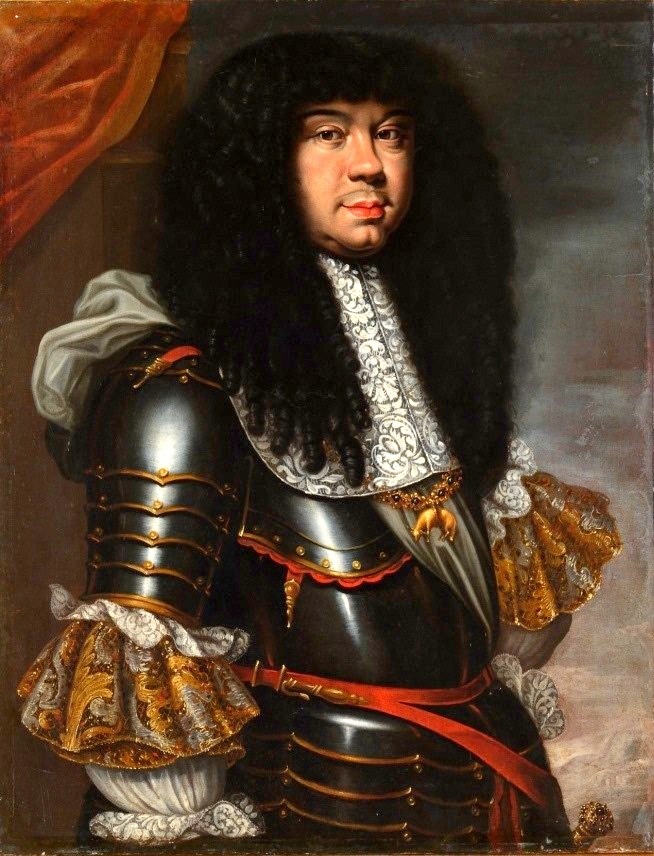
Simplified family charts for Sandoval, Lerma and Haro

Dukes of Saint Albans

Of all the extant dukedoms of the United Kingdom, the dukes of Saint Albans are probably the least well known. They lack a major country house, a ducal seat, to remind the general public of their history and grandeur as a family. They hold no major ceremonial role in the running of the modern monarchy. Yet as one of the four ducal families descended from the illegitimate offspring of King Charles II, their story is an interesting reminder of the close interplay between royalty and nobility in British history. It all starts with a beautiful young actress in a London theatre named Nell Gwyn.

Nell Gwyn, by Simon Verelst

The tale of the Beauclerks, the surname given to them by King Charles, is particularly interesting in the early eighteenth century, as close companions to kings and queens of the Hanoverian dynasty, an interesting scenario where the lingering offspring from one royal house, the Stuarts, remain in close proximity to its successor. The name Beauclerk is unusual—unlike the other three ducal families descended from Charles II, it does not reflect royal lineage (like FitzRoy), or a major Stuart estate (like Lennox), or the name of a major heiress (like Scot). And the title, duke of Saint Albans, granted in 1684, does not reflect any of these associations either (a royal estate like Richmond, or a major noble estate like Buccleuch). It is unclear why either the surname or the title was given to these two sons of the King: Charles, born in 1670, and James, in 1671. ‘Beau clerc’ means ‘fine scholar’, though some have translated it as ‘handsome steward’ a play on the royal surname of Stuart; and some have looked more to an alternative early spelling, ‘Beauclaire’, which connects to the Welsh meanings of their mother’s name, nel gwyn, ‘pretty white’, and is apparently the preferred pronunciation of the name. I have thought that perhaps there was also a bit of historical muddle by Charles and his friends, who wished playfully and romantically to recall the royal liaison from the distant past of ‘Fair Rosamond’ Clifford and King Henry II, though it was Henry I who was nicknamed ‘Beauclerk’. After all, Rosamond’s story does take place in and around Oxford, and the titles given to the elder son at an early age, Burford and Heddington, are both in Oxfordshire. Indeed, one family biographer notes that young Charles’s marriage to the great Oxford heiress Diana de Vere was already envisioned in the early 1670s (though they didn’t in fact marry until 1694), and there is a precedent, in the name ‘earl of Euston’ being granted to another of Charles II’s sons long before his marriage to the heiress of that estate. Some biographers (including her descendant Charles Beauclerk) give Oxford as Nell Gwyn’s birthplace, though evidence for this is scant.

This is all quite speculative, as is the reason for the title Saint Albans, from the town of that name in Hertfordshire which takes its name from the first British martyr, Alban, from the 3rd or 4th century. The Beauclerks were given no lands in that county, nor were they directly connected to the previous earl of Saint Albans, Henry Jermyn, who died in 1684 with no direct heirs (only 8 days before the creation of the dukedom). There was, however, a rumour that Jermyn, who was very close to Queen Henrietta Maria for most of her adult life, was in fact the father of her children, including even Charles II. Could the transfer of the Saint Albans title be a secret clue? If so, it wouldn’t have been a very well-kept secret.

Eleanor ‘Nell’ Gywn is a well-known character from the Restoration period and the court of ‘the Merry Monarch’, Charles II. But much of her actual origin story is mythical—was she a low-born orange seller in Covent Garden who, through luck or talent, became a respected actress, then one of the more sought after courtesans of the Carolean court? Or was she a distant relation of an old and respected Welsh gentry family? I will leave her story to be told by others. What concerns us here is that by about 1668, she was one of the chief favourites of King Charles, and by 1670, had given him a son (to add to those already born to Lucy Walter and Barbara Villiers Palmer), and another in 1671. Young Charles and James Beauclerk were raised close to the court, in houses the King gave their mother on Pall Mall near St James’s Palace in London, or just outside the gates of Windsor Castle in Berkshire. In 1676, Charles was formally given the name Beauclerk and the titles Baron Heddington and Earl of Burford. His brother James was named as his heir, but was soon sent to Paris for his education—the reason for this is unclear—where he died before his 10th birthday.

The house his mother occupied in Windsor became known as Burford House, and he inherited it when she died in 1687. It was located just outside the Lower Ward of Windsor Castle, in an area now occupied by the Royal Mews. Its interiors were decorated by royal artists working next door at the castle, notably Antonio Verrio and Grinling Gibbons. The house was improved by the 2nd Duke of Saint Albans, who was also governor of Windsor Castle and Warden of Windsor Forest. One of the problems with Burford House, and indeed with many of the original endowments of the Beauclerk family, was that it was expensive to maintain but generated little income. The 3rd Duke sold it to George III in the 1770s, and it became known as the ‘Garden House’, the residence of the King’s younger daughters. When the Prince Regent (the future George IV) enlarged the Royal Mews, the house was incorporated within the structure and mostly disappeared, though the street that runs past it is still called Saint Albans Street.

A view of Windsor Castle, with Burford House, centre-left

The first Duke of Saint Albans (cr. 1684) was also given the office of Master of the Hawks or Master Falconer, which brought with it a pension (about £1,000) and a formal place within the court hierarchy of late Stuart Britain. In the past, this post was not a mere formality, and entailed real duties of supplying hawking birds for the royal sport, acquiring birds and overseeing the officers of the Royal Mews at St Martin in the Fields in London. But the reign of James II was tumultuous and not very much given over to pastimes like falconry, so the teenaged Charles did what many young noblemen did, and sought his fortune abroad. After studying for a spell in France from 1682, he served in the Imperial armies besieging the Turks at Belgrade in 1688—he had a Catholic tutor, and indeed his mother Nell had leaned towards Catholicism, and James II certainly put the pressure on his nephew to convert. But the young Duke did not, and later was a faithful servant of Britain’s Protestant monarchs: indeed, while serving abroad in the Habsburg armies, it is likely he met one or more of the sons of the Duke of Hanover who were also active in the wars against the Turks—the eldest of these would become King George I of Great Britain. Saint Albans also fought for King William III in his overseas wars, notably at the Battle of Neerwinden, east of Brussels, in 1693. He was named Captain of the Band of Gentlemen Pensioners by William in November 1693, a key position of intimacy (the King’s personal escort), and a Gentleman of the Bedchamber in 1697, then continued royal service under George I as Lord Lieutenant of Berkshire (from 1716). His wife was named Mistress of the Robes to Caroline of Ansbach as Princess of Wales.

Charles Beauclerk, 1st Duke of Saint Albans, by Kneller

Lady Diana de Vere was the sole heiress of Aubrey, 20th Earl of Oxford, who died in 1703. The earldom of Oxford was one of the oldest in the realm, dating from the time of the Empress Matilda (1141). Though they did hold properties in Oxfordshire, their main seat and centre of operations was in and around Heddingham Castle in Essex. Even more significantly, the De Veres had been hereditary Grand Chamberlains of England, in almost unbroken line since the 1130s.

Lady Diana de Vere, by Kneller

By marrying Lady Diana, in 1694, the 1st duke of Saint Albans was emulating his half-brothers who also married great aristocratic heiresses, and usually took on their surname (and in fact subsequent heirs of the Duke would be called De Vere Beauclerk, and added the very simple De Vere pattern to their coat of arms).

Beauclerk and De Vere arms quartered

But Diana was not in fact a great heiress, as most of the De Vere properties, and the office of Grand Chamberlain, had passed into other families earlier in the century. Compared to his half-brothers, the Duke of St Albans was decidedly poor, with an income of no more than £10,000 by the early 18th century. Nell Gwyn had not been as rapacious as her fellow royal mistresses—recall the “let not poor Nelly starve” story on Charles II’s deathbed. There is the other anecdotal story of Nell being promised and estate ‘as large as she could ride around before breakfast’, which turned out to be quite a bit, and nearly 4,000 acres was given to her just north of the city of Nottingham, on the edges of Sherwood Forest, known as Bestwood. But this estate was too far from court and London society for its first owners, and it lay mostly neglected until the 19th century (and to which we will return, below).

Nevertheless, the 1st Duke and Duchess were prominent members of the court of George I until the Duke’s death in 1726 and hers in 1742. Politically they were Whigs, the main supporters of the Hanoverians, and their family would remain decidedly ‘Whiggish’ for the rest of the century. They left behind a whopping eight sons, all of whom had noteworthy careers, and although most of them obtained offices or military commissions or married heiresses to support themselves (and one became bishop of Hereford), the fact that so many lineages were established right away probably contributed to the swift decline in fortunes of this family, never huge to begin with. In a pattern that would repeat itself again and again across the next two centuries, rich heiresses were found, but long-term wealth always seemed to elude the family, partly because the title continually passing from childless branch to childless branch, and any wealth gained passed out of the family to enrich other dynasties instead.

But at least in the second generation, prestigious connections at court kept the family high in the social hierarchy. Charles, the 2nd Duke, was not particularly good at finances, and not a very astute politician, but he was always staunchly anti-Jacobite (never even hinting at support for his Stuart cousin’s royal claims), and was well-liked by George II who confirmed his title (and pension) as Master of the Hawks in 1726, then gave him the prestigious posts of Governor of Windsor Castle and Warden of Windsor Forest in 1730, Lord Lieutenant of Berkshire in 1727, and finally Lord of the Bedchamber in 1738. He did marry an heiress, with estates in Cheshire and Lancashire, but her father outlived him and no money was accrued. Lacking a major country estate, the 2nd Duke was given the grace and favour house, Cranbourne Lodge, in order to carry out his duties in Windsor Forest, and rooms in the Round Tower of Windsor Castle as its governor. Cranbourne, previously the residence of Prince Rupert of the Rhine, had the remains of a Tudor building (a tower, still standing), but had mostly been rebuilt in 1711. The building was last inhabited by Princess Charlotte, daughter of the Prince Regent, and was mostly demolished in the mid-nineteenth century.

Cranbourne Tower today

The 2nd Duke’s brothers also held prominent positions in the Royal Household: William was Vice-Chamberlain of the Household of Queen Caroline, 1728-32; Sidney was Vice-Chamberlain of the Household, 1740-42; and George was Aide-de-Camp for the King from 1745 (and would later be commander-in-chief of forces in Scotland, 1756-67). George, the 3rd Duke, would also hold his father’s posts in the reign of George III, but with his death in 1786, much of this close connection ceased, and subsequent dukes were much less intimate with their Hanoverian cousins. Another indication of their decline in social influence can be seen in the wives of the 2nd and 3rd dukes, daughters of baronets, not members of the grand aristocratic houses that dominated 18th-century Britain. Again, the 3rd Duke, George, did marry an heiress, Jane Roberts of Glassenbury Park in Kent, with lands in Surrey and Leicestershire (and a stunningly huge dowry of £125,000!), but the marriage failed and they formally separated—when she died she willed her fortune back to her own cousins. The Duke’s life was chaotic: twice having to flee abroad to avoid creditors, having a child with a dairy maid, carousing in Paris and Venice, losing vast sums of money to fake nobles in casinos abroad. He lived for a time with a mistress and four illegitimate children in a castle outside Brussels, until he was arrested there for unpaid debts and forced to leave by the authorities for ‘indecent living’. He died, childless, a broken man.

Jane Roberts, 3rd Duchess of Saint Albans

The 3rd Duke’s nephew, also named George, held the title for only a year before he died unmarried, age 28, in 1787. He had shown much greater promise: serving in the war in America as a young man, and preparing to inherit a great estate in Cheshire—16,000 acres of rich agricultural land on the fertile Cheshire plain. As he too had no male heir, these estates passed swiftly back out of the family, but took with them some of the Beauclerk art treasures that had been accumulated by the first and second dukes.

The title therefore passed to a cousin, the 2nd Baron Vere. This cousin, Aubrey (taking one of the names used by the De Veres for many centuries), was the son of Lord Vere Beauclerk, third son of the 1st Duke and Duchess. Lord Vere had a long career in Parliament and in the navy, rising to the rank of admiral in 1745 and Senior Naval Lord in 1746. He was created Baron Vere of Hanworth, Middlesex, in 1750, having married the heiress of Hanworth Park in 1736 (Mary Chambers, whose fortune also included quite a bit of sugar wealth from Jamaica). This grand house, located not far from Heathrow Airport, would therefore become the family seat when Aubrey succeeded as 5th Duke of Saint Albans in 1787. It had been a royal manor in the 16th century, occupied by Anne Boleyn then Catherine Parr, then passed to the family of Baron Cottington, Chancellor of the Exchequer in the 17th century, and then to the Chambers family. It was rebuilt after a fire in 1797, but it is not certain whether this was undertaken by the 5th Duke, or by the next owners (a succession of families). In the 20th century its grounds served as the London Air Park between the wars, but today it and the house lay mostly abandoned.

Hanworth House and airfield in 1938

The 5th Duke was known less as a courtier like his predecessors, but more of a collector. He lived for a time in Rome from the later 1770s, to study and collect art and also to escape the scandal of his wife’s alleged affair—though the alleged lover actually went with them to Italy as well. The Duke financed the excavation of an ancient Roman site, and had himself and his family painted by fashionable Italian artists.

the 5th Duke and Duchess and their children, painted in Italy

The 5th Duchess, Catherine Ponsonby, was a cousin of the famous Duchess of Devonshire, a woman also known at the time for her scandalous love life. These couples were all part of the beau monde (or the ‘ton’), fashionable aristocrats and socialites. So before continuing on to later dukes, we should pause and look at one of their cousins, one of the most prominent leaders of the ton, with the splendid name of Topham Beauclerk.

Topham was the only child of Lord Sidney Beauclerk, who, as the fifth son of the 1st Duke needed to find a fortune, and he became known as quite the fortune hunter in high society of the 1730s (Lady Mary Wortley Montagu called him ‘Nell Gwyn in person with the sex altered’). In 1736, Lord Sidney did find and marry the heiress Mary Norris, daughter of Thomas Norris of Speke Hall in Lancashire. But a year later, he also received a bequest of the estates of Richard Topham, a bibliophile and collector (especially of drawings) who had become sort of a surrogate father. The Topham estates were located near Windsor (notably Clewer Park), so he now had a residence near his paternal family at Burford House in Windsor, but also an estate and a Tudor manor house far to the north at Speke.
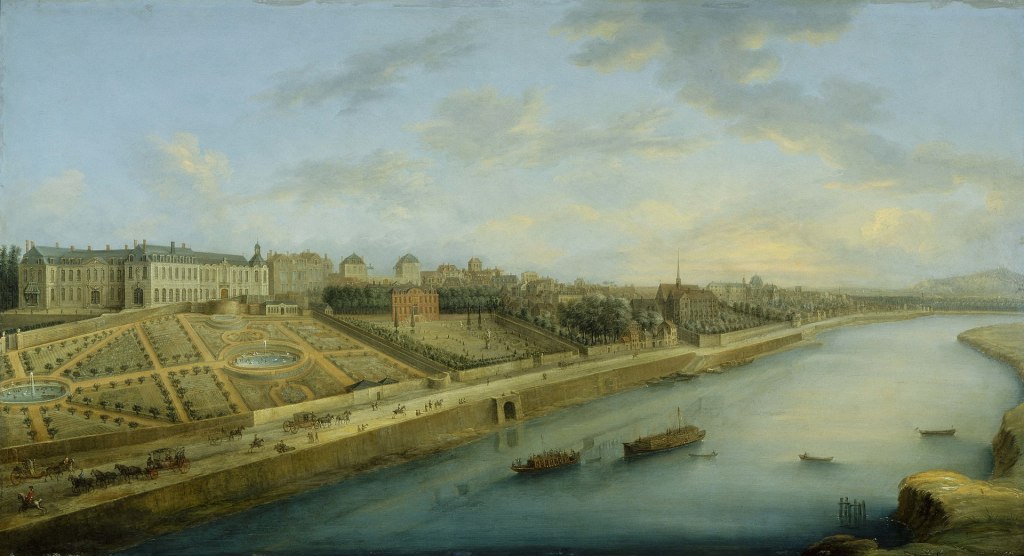
Lord Sidney Beauclerk

Speke Hall had been built in the 1530s for one of the leading gentry families of the area, the Norrises, who were also noteworthy as one of the most persistently Catholic families of the North (much to the annoyance of Elizabethan authorities). Nevertheless, they were staunch Royalists, and in the Civil War era they converted to Anglicanism and defended the Royalist cause in Merseyside. Today, the house, partly modified by later Victorian owners, is wedged uncomfortably between the outer suburbs of Liverpool and the end of the runway of the local airport, yet the National Trust successfully maintain it as an oasis of tranquillity and historical interest. Lord and Lady Sidney Beauclerk lived at Speke Hall when he was not in London as an MP or attending court as Vice-Chamberlain of the Household—he died in 1744, and Mary lived on as a widow for another twenty years, raising their son Topham, named for his father’s benefactor. Once he was of age, however, he took little interest in Speke, and the property was let out to several people and ultimately sold.

Speke Hall in Merseyside

Like many gentlemen of his era, Topham Beauclerk took his Grand Tour, in the 1760s. Back in London he established a reputation as one of the great wits of the age, a close friend of Dr Johnson and a patron of the architect Robert Adam. Johnson seems to have wondered where his much younger friend got his wit and intelligence from, describing his mother Mary Norris as having ‘no notion of a joke…and…a mighty unpliable understanding’, and also lamented as Topham’s failure to actually accomplish anything but engage in brilliant conversation in London society. Yet he loved him dearly, and noted that he would ‘walk to the extent of the diameter of the earth to save Beauclerk’. They caroused together, discussed books together, and founded ‘The Club’ in the 1760s. Topham sometimes hosted this group of intellectuals at the Turk’s Head pub, or at his house on Great Russell Street, where he built a library to house his nearly 30,000 books (languages, sciences, travel books, history, Classics, poetry, and so on). Unlike his cousin the 3rd Duke, Topham had money—he sold a large amount of his estates at Windsor in the 1760s, and there are suggestions that he planned to invest it in redeveloping Speke Hall in the 1770s, though his biographer notes that he lived one generation too soon to become obsessed by the Romantic medievalisms that a half-timbered hall like Speke would inspire. The Hall was instead leased out to local farmers and its precious carved wooden panels in the Great Hall were defaced or broken, and the inlaid oak floors used for firewood. His mother had reputedly wanted him to live at Speke and to assume the name Norris, but he remained in Bloomsbury where he died in 1780, aged only 40. He was described late in life as brilliant but completely idle, even dirty and dishevelled, very disillusioned with society and politics.

Topham Beauclerk

At the height of his career as a socialite, however, Topham Beauclerk’s London life was complemented perfectly by his wife. He had begun a relationship with the beautiful Lady Diana Spencer, a daughter of the 3rd Duke of Marlborough, and Lady-in-Waiting to the Queen, whose marriage to Viscount Bolingbroke was falling apart. In 1768, she petitioned for divorce, shocking society, and within two days married Topham (and legitimised their two daughters). Their circle gathered together writers like Edward Gibbon and Horace Walpole, the liberal politician Charles James Fox, and her cousin, the Duchess of Devonshire. ‘Lady Di’ (as she was known) was also a painter herself and Walpole hung several of her drawings at Strawberry Hill and used them as illustrations for one of his plays. After Topham died in 1780, she retired from society and lived on for another twenty years.
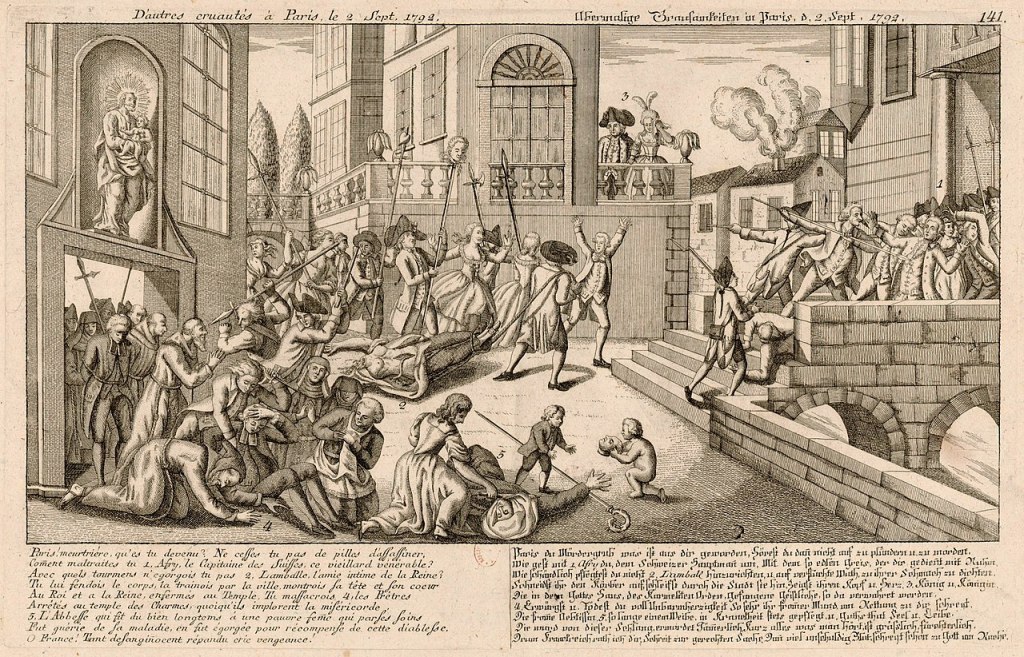
‘Lady Di’, Diana Spencer Beauclerk

Their son, Charles, continued the strong connection with this Enlightened and Whiggish social circle, marrying a daughter of the Duchess of Leinster, a relative of Charles James Fox, and inherited from her the small castle of Ardglass in County Down in Ireland. He was an MP for Richmond in the 1790s, and built a home in West Sussex, Leonardslee, in 1803, to be closer to his work in London. His son Aubrey continued the family tradition of serving as a reformist MP, but his son, William Topham, took this branch of the family in a very different direction, through his marriage in 1910 to Maria de los Dolores (‘Lola’) de Peñalver, 7th Marquesa de Arcos. This title was not claimed by their son, Rafael, but in 1989, he did succeed his mother’s cousin as 6th Marques de Valero de Urría, with its seat in Carreño, in Asturias on the north coast of Spain. Rafael had, during the Second World War, acted as a British military intelligence officer, and his son William also served the British military, as a naval lieutenant on the Queen’s yacht Britannia.

Returning to the main line of the dukes of Saint Albans, the 5th Duke and Duchess—those who had lived in Italy to escape scandal—had several children, including two sons who were dukes, and one who was an admiral. Aubrey, the 6th Duke, was not known for very much, and at first married an heiress (from a formerly Jewish merchant family in Hull), but when she died, her large fortune passed to their only daughter and thus out of the family. He then had a rather quiet second marriage to a daughter of the Manners family (from a junior branch of the dukes of Rutland). Their son Aubrey, succeeded in 1815 as the 7th Duke, at only 4 months old, then he (and his mother) both died six months later. The Hanworth estate (and more of the Beauclerk heirlooms) thus passed out of the family to its natural heirs. The child’s uncle, William, thus became the 8th Duke.
Aubrey, Earl of Burford, later 6th Duke of St. Albans

Unlike the other great dukes of the age, neither of the 8th Duke’s two wives came from a grand aristocratic house. But, like his predecessors, his first wife’s inheritance made up for the lack of a great name. Long before he succeeded as duke, Lord William Beauclerk had married Charlotte Carter Thelwall whose family, originally from Denbighshire in Wales, had established a rather large estate at Redbourne in northern Lincolnshire. Already an orphan, Charlotte died soon after their marriage (in 1797) and left her properties to her husband. Redbourne became a lively centre of Lincolnshire society, and Lord William an astute manager of his country estates (one of the few members of this family to do so). Once he became the 8th Duke, he rented a house in Surrey outside London (Upper Gatton), and re-engaged with the court, notably revising the family role as Grand Falconer at the coronation of George IV in 1821. It would seem that the family’s fortunes were finally improving, with a seat now at Redbourne (and a family mausoleum developed in the local village church) and plans already in motion to finally develop the original St Albans estate at Bestwood in neighbouring Nottinghamshire.

the gates to the Redbourne estate (modern images of the house are not very interesting)

The 8th Duke’s son, William, who succeeded as the 9th Duke in 1825, built on this success and married one of the greatest heiresses of any age, but this one from completely different origins—not a typical country gentleman’s daughter. Harriot Mellon had been a Drury Lane actress who first married the Scottish banker Thomas Coutts, age 80, and became established at Holly Lodge, Highgate, then was named his universal legatee (for nearly 1 million pounds) when he died in 1822 (to the annoyance of his daughters from his first marriage). The Widow Coutts then married the much younger 9th Duke of St Albans in 1827, but was snubbed socially at nearly every turn. The royal dukes attended her parties, but their wives and other highborn ladies shunned her, as she had never been ‘presented’ at court. It took a good deal of cajoling to convince an elderly woman to present Harriot, now a duchess, at court, but even after this Queen Adelaide regularly refused to invite her to court functions. Flush with cash, the Duke now made the most of his position as Grand Falconer (which entitled him to a side of venison each year from the Royal Parks), reviving the sport in Lincolnshire and inviting German falconers to come to England. He hosted grand sporting events, dressed in mock Gothic style, in Lincolnshire, but Harriot was not received by the wives of the gentry here either. The couple lived at Holly Lodge or Saint Albans House on Regency Square in Brighton. When the Duchess died in 1837, she left her husband a £10,000 annuity and interests in London properties, but these were for life only, and did not pass to his heirs. Most of her fortune went to her first husband’s grand-daughter (from his first marriage), making Angela Burdett-Coutts one of the great heiresses of the Victorian age.

Harriot Mellon, 9th Duchess of St Albans, by Sir William Beechey

The children of the 9th Duke came from a second marriage. William, the 10th Duke of Saint Albans, did attempt to carry on his father’s work in re-establishing the family as a grand aristocratic house, notably in the reconstruction of Bestwood as a new ducal seat. The former hunting lodge in Sherwood Forest given by Charles II to Nell Gwyn in the 1680s was entirely rebuilt by the Duke in 1863, and he made it his base for his duties as Lord Lieutenant of Nottinghamshire. The architect, Samuel Sanders Teulon, built a great Neo-Gothic fantasy—quite jarring to some who disliked its proportions, and the fact that much of it looked like a cathedral. It occupies a rise overlooking the city of Nottingham, which end the end spelled its doom, as by the 20th century it was deemed too close to the industrialised Midlands city (with the Beauclerks contributed to themselves, opening a colliery on the Bestwood estate in the 1870s), and the dukes lost interest in the property. It was sold in 1939, and though the house itself survives as a hotel, much of the nicest features of the estate—its woods and terraced gardens—have been redeveloped as the Bestwood Saint Albans business park and surrounding residential neighbourhoods.

Bestwood Hotel today

The 10th Duke married very well, a daughter of Queen Victoria’s private secretary, General Grey. He became a close friend of the Prince of Wales (who was a witness to the Duke’s wedding in 1867, in the Chapel Royal at St James’s Palace). Royal visitors to Bestwood included the Prince, his brother the Duke of Albany, and his son the Duke of Clarence. In 1874, the Duke married for a second time an heiress of some of the Osborne properties in County Tipperary, including a large estate at Newtown Anner. These new land interests drew him into Irish politics, and he left the Liberals to join the Unionists in 1886. When he died in 1898, the family on the surface looked set to see in the new century, with three sons from two marriages, and daughters married into the very best families (Cavendish, Somerset, Lascelles). But there were already quite dark clouds on the horizon.

William, 10th Duke of St Albans

Already in the 1890s, his heir, Charles, earl of Burford, was suffering from severe depression. As 11th Duke of Saint Albans he was clearly not well enough to attend the coronations of 1902 or 1911. He was not declared formally ‘insane’, but spent the rest of his life in a clinic in Sussex, until he was succeeded in 1934 by his younger half-brother, Osborne as the 12th Duke. ‘Obby’ was named for his mother’s family in Ireland—the same family, though a different branch, as George Osborne, the Conservative politician. The 12th Duke had been an army officer, an explorer and prospector in British Columbia. He is considered one of the last great eccentrics of the aristocratic age—he wanted to revive the title of Grand Falconer, and specifically, to bring live falcons into Westminster Abbey for the coronation of 1953. He was considered to have great intelligence but little common sense, and his finances—already weakened by his brother’s long period of ill-health—rapidly declined. Obby had married an Irish peer’s daughter (Beatrix Petty-FitzMaurice, daughter of the 5th Marquess of Lansdowne), and lived with her at Newtown Anner, until that property was sold, sometime in the 1940s. Redbourne in Linconshire had already been sold in 1917, and Bestwood in Nottinghamshire, in 1939 (it had in fact already been let out to industrialists since 1915). He spent much of the rest of his long life (he lived to be 90) out of the spotlight, and, having no children, kept his future heirs out of his life, and made no arrangements for a smooth succession (notably employing means to avoid death duties).

Osbourne ‘Obby’ Beauclerk, 12th Duke of St Albans

The 12th Duke died in 1964 and was succeeded by his cousin, Charles, who thus inherited very little—just the title. He had already had a career as a soldier and a civil servant (notably in military intelligence and propaganda during the Second World War), and now tried to re-establish the family’s fortunes, but made sufficient mistakes such that he had to move to Monaco in the 1970s, and he died in 1988. His wife, Suzanne, was an interesting person: of French descent, she was born on a rubber plantation in Malaya, married Charles Beauclerk shortly after the War, and became a fairly well known writer and painter. The 13th Duke’s heir, Murray, now the 14th Duke of Saint Albans, came from an earlier marriage. He has been the head of the Royal Stuart Society since the 1980s. His son Charles is known as Earl of Burford, and his grandson Baron Vere of Hanworth. The children of the second marriage have a wide and colourful array of marriages to people from across the world, including a bride from Tibet and a groom from the Austrian Habsburgs (Archduke Philipp). Perhaps this new global outlook for the British aristocracy can make up for the lack of firm roots in the countryside, one of the only dukes today without a country seat. What might make the circle complete, however, would be the emergence of a Beauclerk actor or actress, once again recalling the charms of pretty witty Nell Gwyn.

(images from Wikimedia Commons)