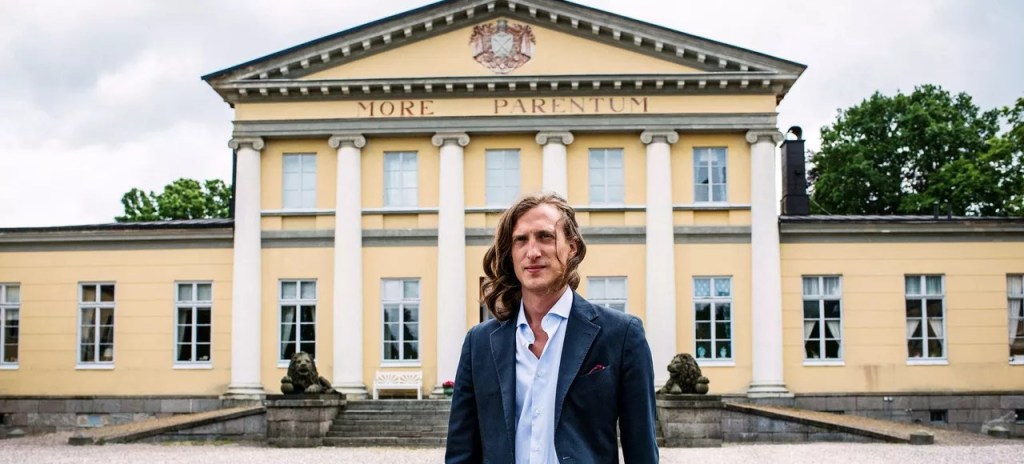
Dukes of Teck, Dukes of Urach

The castles of Teck and Urach are not instantly familiar to even the most seasoned travellers, but both lent their names to dynasties with interesting close connections to more well-known royal and princely families—notably the Windsors and the Grimaldis—and even to an ephemeral kingdom in the Baltic that vanished before the ink was dry on the page. Both families, Teck and Urach, are branches of the ancient royal house of Württemberg, in southwest Germany. English readers will certainly know the name ‘Mary of Teck’, the grandmother of Elizabeth II, portrayed with great eloquence and style in The Crown by Eileen Atkins. Not many know the story of her family, however, or the origins of the name Teck.

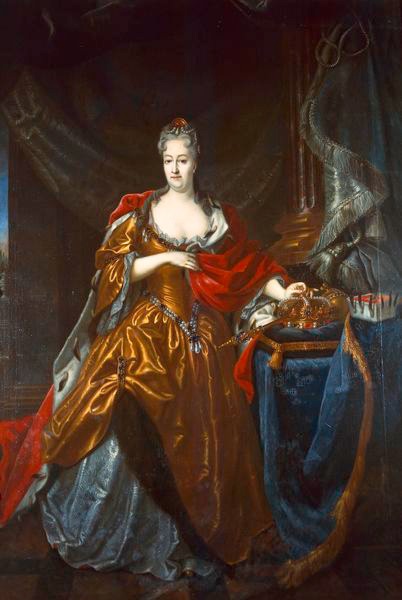
Coronation portrait of Queen Mary of Teck, 1911, by Llewellyn

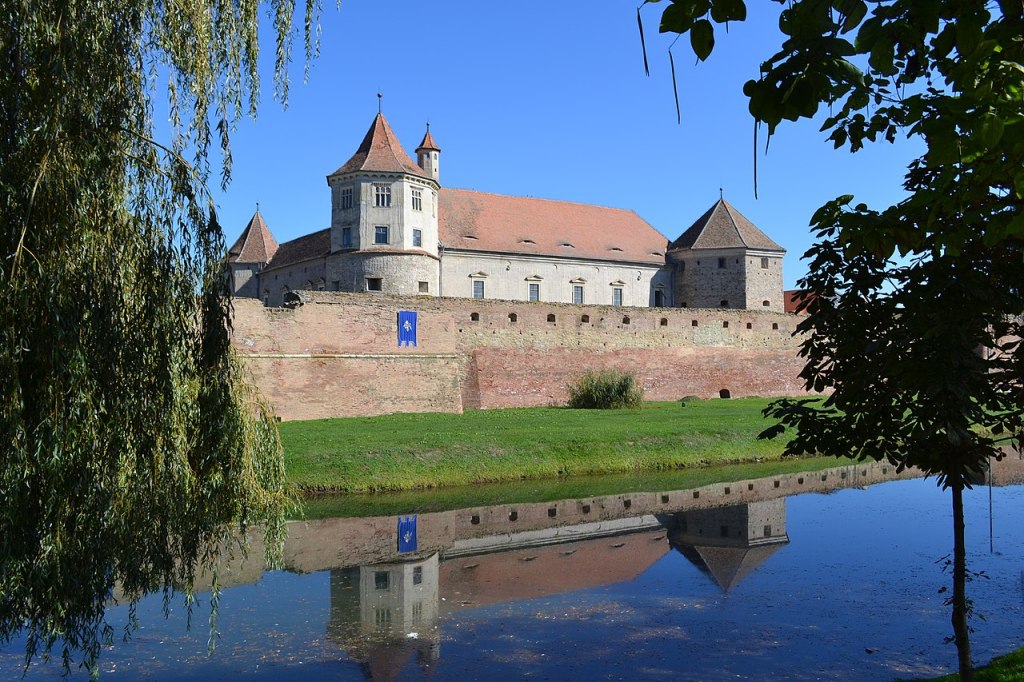
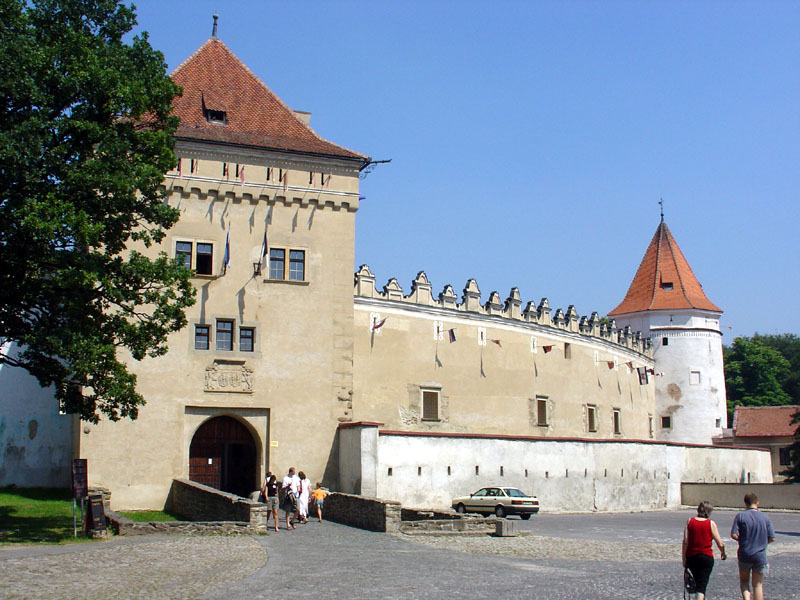
The House of Württemberg, dukes from 1495, and kings from 1806, trace their lineage back to feudal lords who dominated certain hilltops and river valleys east of Stuttgart. They carved out their own county in the 12th and 13th centuries as the ancient Duchy of Swabia disintegrated. The Dukes of Württemberg will have a separate blog post of their own; here we can focus on two castles on the eastern edges of their realm, Teck and Urach. Both were built in the on spurs of the northern edge of the ‘Swabian Jura’, the low mountain range that separates the watersheds of the Danube (south) and Neckar (north) rivers.

Both castles were also originally held by the much more powerful regional dynasty, the Zähringer, created dukes in 1098 (and ultimately progenitors of the House of Baden—so again, subjects of another separate post). From 1187, a younger brother of Duke Berthold IV, Adalbert, was given the castle of Teck and founded his own branch of the family. They used the title ‘duke’, but in these early days, this really was more attached to the person or the dynasty, not to a particular castle or territory. Adalbert’s nephew, Duke Berthold V, died in 1218, bringing the senior line to an end, and his sister and co-heiress, Agnes, married a local count, Egon von Urach, and brought with her in marriage a sizeable portion of the Zähringer lands in the southwestern corner of modern Germany.

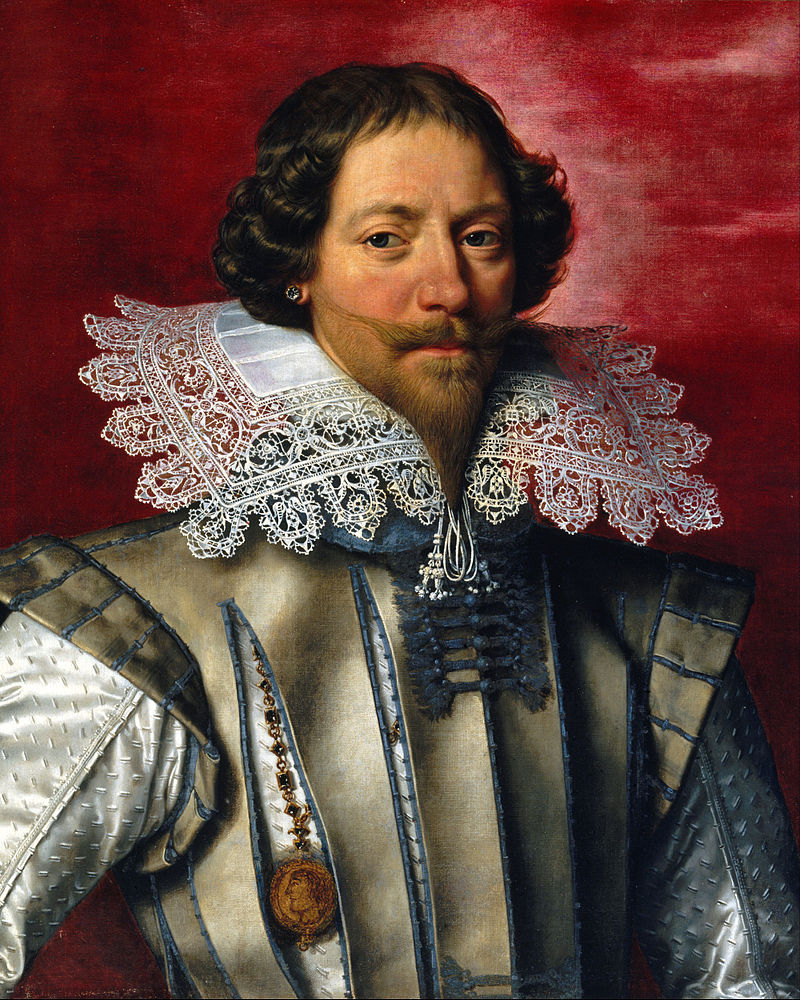
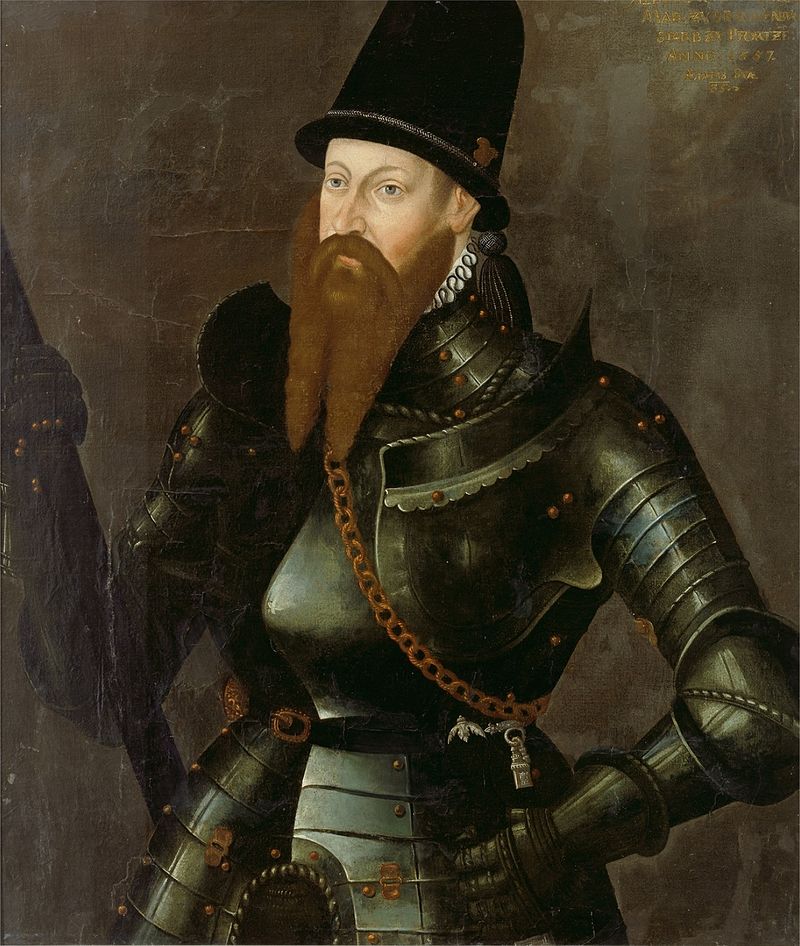
Duke Adalbert

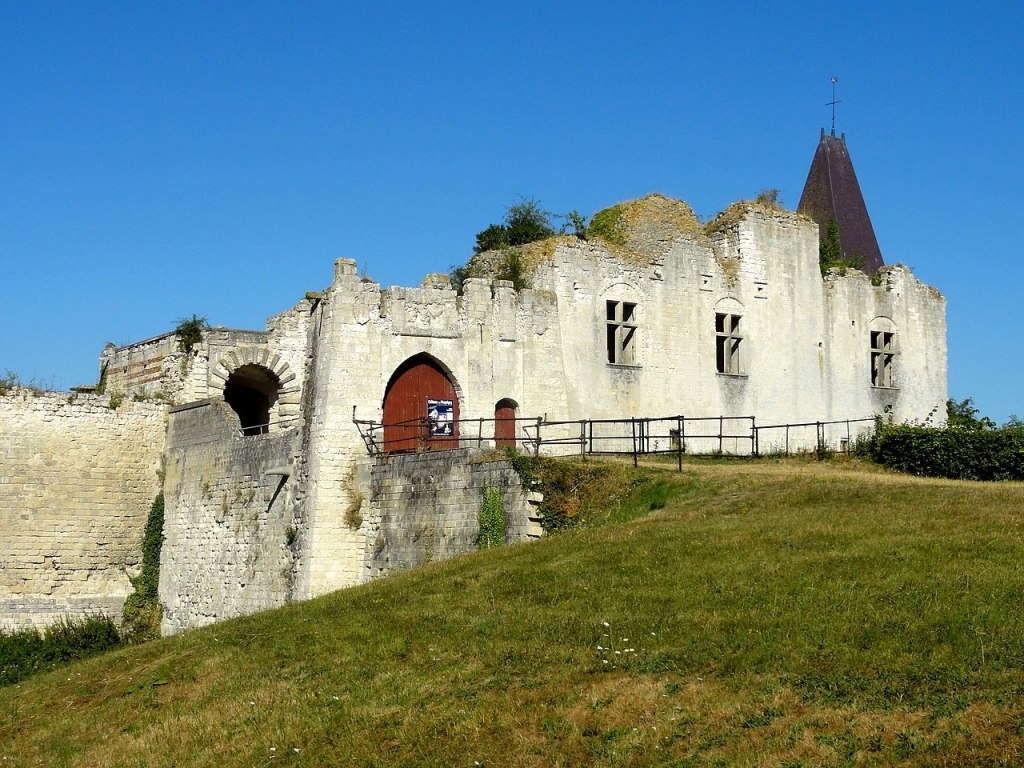
So by the 1220s, the dukes of Teck and the counts of Urach dominated the region to the south and east of the town of Stuttgart, where the counts of Württemberg were beginning to build their domain. By 1260, the latter had acquired the castle and lands of Urach, and it would serve as the capital of one of the branches of the family when it divided in the 15th century. The counts of Württemberg-Urach built a renaissance palace as a residence in the town of Urach (which remains today) and allowed the castle up on the hilltop to degrade. It was a prison by the 17th century, and was dismantled by the dukes of Württemberg in the 18th century, to use the stones in other building projects.

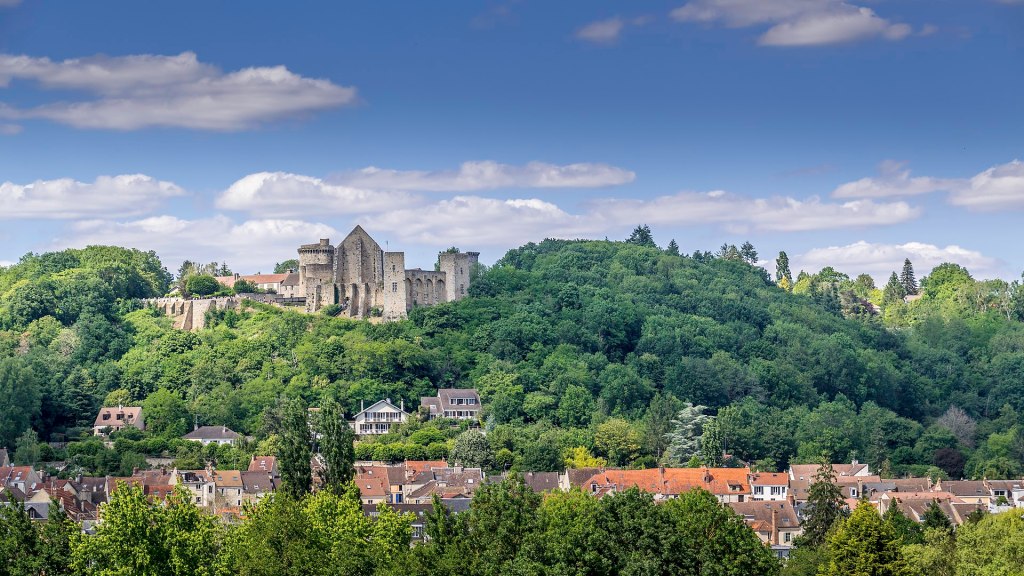
the ruins of Urach Castle today

The dukes of Teck lasted longer as a separate dynasty, and had some influential members: Conrad II was a potential candidate for the election to the Imperial throne in 1291, but was reputedly murdered by the rival faction before he could claim his title. Ludwig, the last duke, was also Patriarch of Aquileia, an ecclesiastical territory in the far northeast corner of Italy, until he was run out by the armies of Venice in 1420. As a senior churchman, he had been prominent in his opposition to some of the attempts at reconciling the Great Schism. With his death in 1439, the dynasty of Zähringen-Teck became extinct—but the castle itself had already been sold to the counts of Württemberg, in 1381. The castle was heavily damaged in the Peasants War of 1525 and never really recovered. There were plans to rebuild it in the 1730s, but these came to nothing. In the 19th century, a tower was built on the ruins, and in the 20th century the site was redeveloped for a hiking lodge and nature reserve.

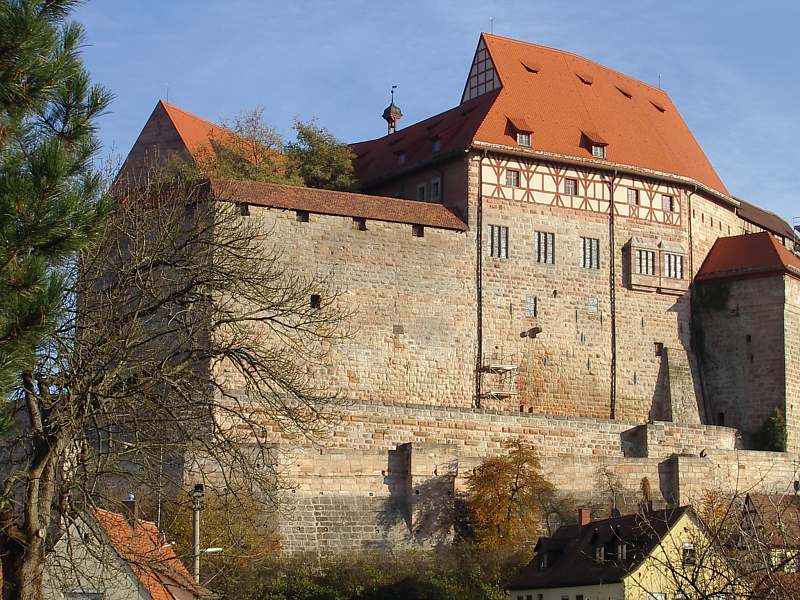
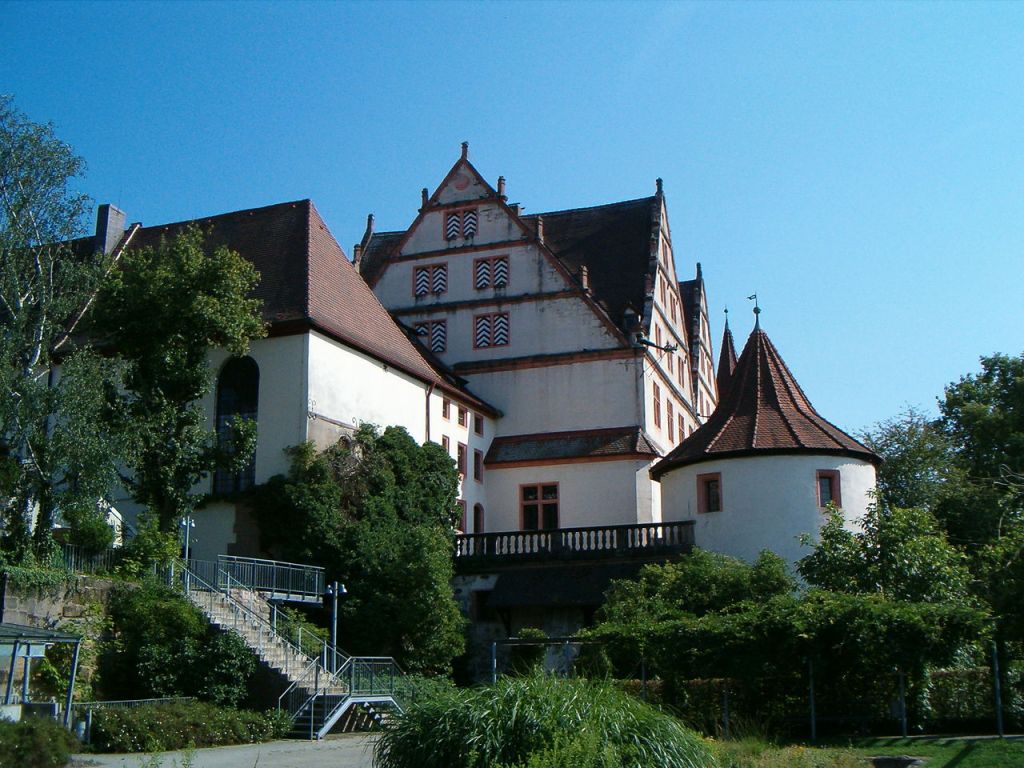
Teck Castle today
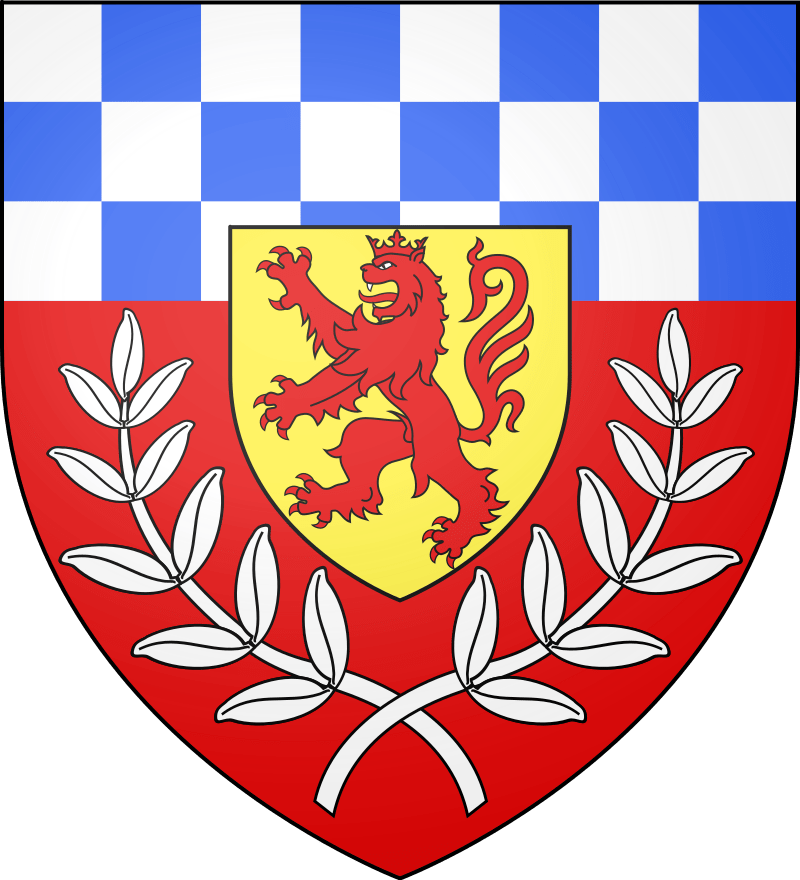
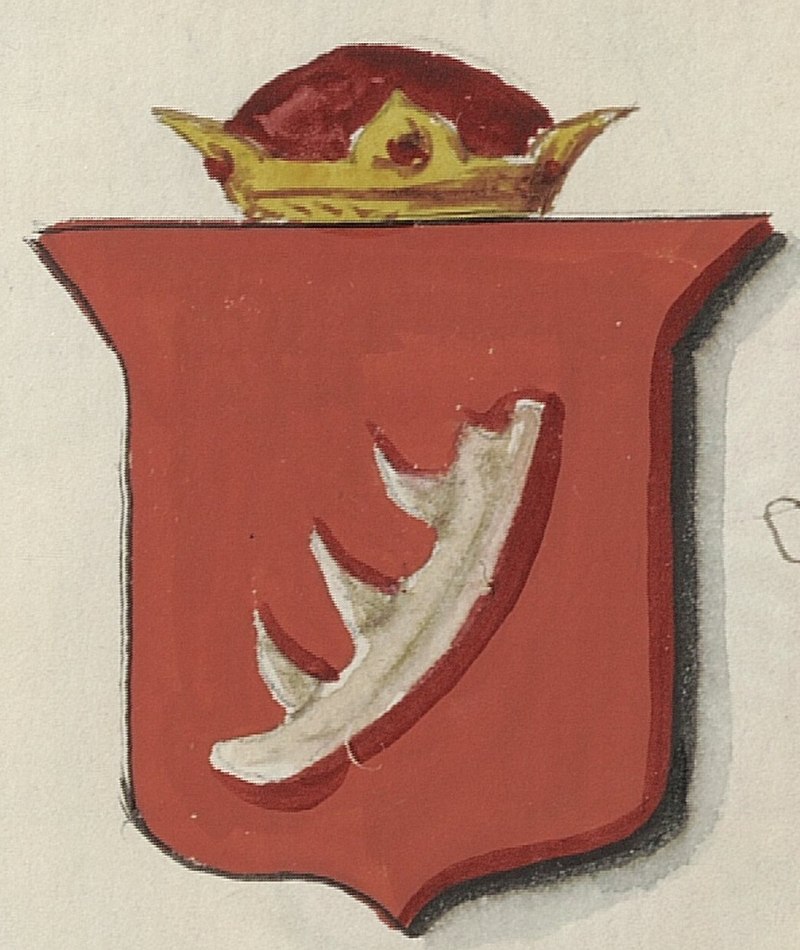
arms of the medieval dukes of Teck

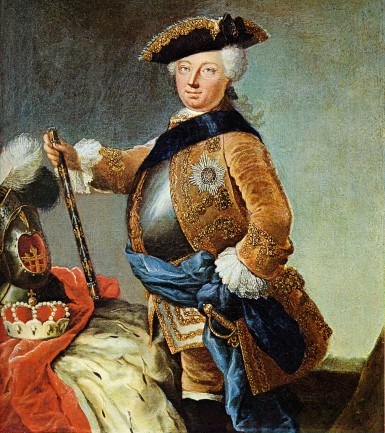
So by the late 18th century, both castles were ruins held by the dukes of Württemberg (who also always used the title ‘duke of Teck’ and sometimes ‘duke of Urach’). Duke Friedrich II became an ally of Napoleon and was rewarded by a significant augmentation of his lands (through annexation of smaller secular and ecclesiastical territories), and an even more significant augmentation of his title, becoming the first King of Württemberg in 1806 as part of the demise of the Holy Roman Empire. King Friedrich’s brother Wilhelm and nephew Alexander would be the founders of the modern families of Urach and Teck, respectively, and will be the focus of the rest of this post. Both of these families were started due to ‘morganatic’ marriages—a term used by German princely families to indicate that, while it was a legal and sacramentally valid marriage, the bride and groom were of unequal rank and therefore their children could not inherit their father’s rank or titles (and in this case, his claims to a royal succession). This is different from another kind of descent, illegitimate, which ties our story here, very loosely, to another descendant of King Friedrich I, Boris Johnson, the British Prime Minister, whose ancestry was revealed on the television programme Who Do You Think You Are? in 2008, via an illegitimate grand-daughter, Karoline, who married Baron Charles de Pfeffel, whose great-grand-daughter married Johnson’s grandfather. On the programme, more was made of the descent back another generation or two to the British royal family, and that connection will become relevant again when we get to the dukes of Teck, but I’ll start with the dukes of Urach.

Duke Wilhelm of Württemberg was the third of six younger brothers of King Friedrich I. He’s called a ‘duke’ because, in Germanic tradition, all children held the same rank as the head of the family (so the children of a ‘Count von Adelburg’ would all be count or countess of Adelburg). Wilhelm had to earn his own living, so, as was normal, he joined the army. But not the local one—he made his name in the army of the King of Denmark, rising to the rank of lieutenant-general in 1795, and was named governor of Copenhagen in 1801.

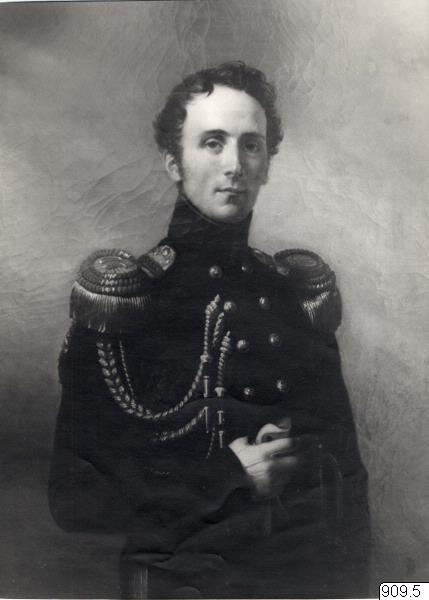
Duke Wilhelm of Wurttemberg

In 1806, Wilhelm was asked to return home by his brother, the newly crowned king, to become first Minster of War for the new Kingdom. While in the north he had fallen in love and married a Swedish noblewoman, Baroness Wilhelmine von Tunderfeldt-Rhodis, whose family had connections to Wilhelm’s mother’s family in Brandenburg. The marriage was deemed unequal, so their children were styled ‘count’ or ‘countess’ of Württemberg.

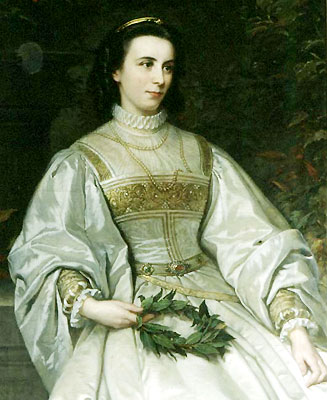
Wilhelmine von Tunderfeldt

The eldest, Count Alexander, embraced the culture and emotions of the early Romantic era, perhaps as a child of love rather than duty, and he became a well-regarded poet and hosted a circle of famous German writers and poets at his castle. It seems he drank rather too deeply however at this emotional fountain and spent much of his relatively short life (he died at 43) in deep depression. He did marry, and left two sons, Eberhard and Alexander, but these died unmarried and this branch died out by the end of the century.

Count Alexander of Wurttemberg, looking suitably romantic

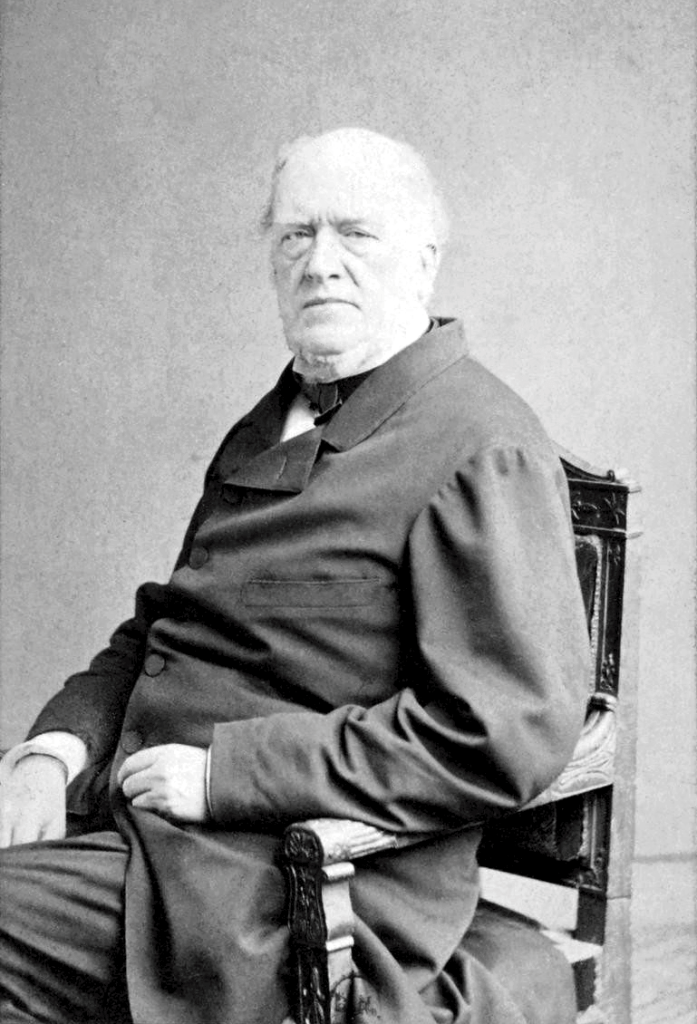
The second son, Wilhelm, took a much more expected career path, and by the 1850s was a general in the Württemberg army. Like his father, Duke Wilhelm, he was also quite interested in science and technology, and published on quite a wide range of topics (and was awarded an honorary doctorate from the University of Tübingen).

Wilhelm, 1st Duke of Urach

He was also quite interested in history, and, like many aristocrats of his age, was inspired to build a new castle along medieval lines. In the 1840s, he acquired the site of an ancient ruin, Lichtenstein Castle, and rebuilt it from scratch. This became his family’s seat, and they still live there today (not to be confused with Liechtenstein, the sovereign principality).

Lichtenstein Castle

Also in the 1840s, Wilhelm converted to Catholicism in order to marry Princess Théodeline de Beauharnais, whose father, the famous Prince Eugène (Napoleon’s adopted step-son), had taken up residence as an exile from France in the nearby duchy of Leuchtenberg. They had four daughters, but no sons, so after her death he re-married, in 1863, another princess, but of a slightly higher rank, since Monaco was a sovereign principality (even if tiny). Princess Florestine was a ‘serene highness’ so in 1867, the King of Württemberg raised his cousin to the rank of ‘Duke of Urach’—the name taken from the old ruined castle to the north of Lichtenstein—and the style of address ‘serene highness’. It was a dukedom in name only; it didn’t come with any territory.

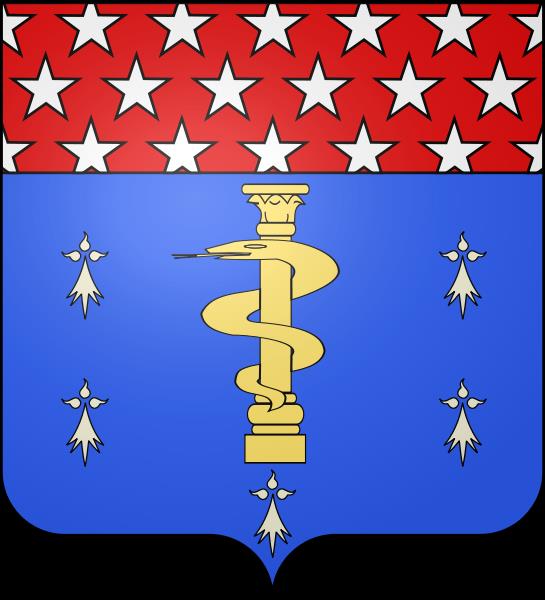
arms of the dukes of Urach

The first Duke of Urach died only two years later, so his widow spent much of her time back in Monaco, where her two sons, Wilhelm and Karl, were raised quite culturally francophone. Duchess Florestine frequently lent a hand to her brother, Prince Charles III of Monaco, whose health was poor and was nearly blind by the 1880s; and she assumed government responsibilities again in the 1890s when her nephew, Prince Albert I, was frequently absent, travelling on oceanographic expeditions.

Florestine of Monaco, Duchess of Urach

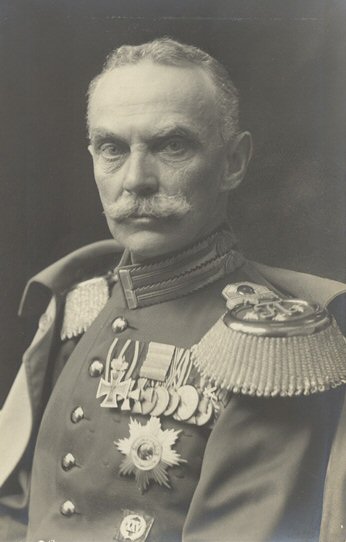
Florestine died in 1897, and her son Wilhelm, now the 2nd Duke of Urach, established himself once more in Germany, as a military commander, and as son-in-law of one of the Bavarian royal dukes. His wife, Amalia, was in fact a niece of the Austrian Empress ‘Sisi’, so Wilhelm had access to the highest royal circles. He was not therefore seen as appropriate by the French governing elites to be a potential heir to the Monegasque throne. By 1911, Prince Albert I was aging and unpopular, and his son Louis was still unmarried—a law was swiftly passed naming Louis’ illegitimate daughter Charlotte formally as heir to the principality. The Duke of Urach protested, but had other prospects: in 1913, he was considered for the newly created throne of Albania; in 1917, there was talk of naming him ruler of a new ‘Grand Duchy’ of Alsace-Lorraine; and in June 1918, he was selected by the independence party of Lithuania to be their king. He was an ideal candidate, since he was a Catholic, distantly descended from the ancient grand dukes of Lithuania, and was related to German ruling houses (necessary to defend their new independence against the Russians) but was not a Hohenzollern. Although he did not have time to travel to Lithuania before the entire idea collapsed in November, he did briefly assume the name ‘Mindaugas II’ to commemorate the founder of the first Lithuanian monarchy in the 13th century.

Wilhelm, 2nd Duke of Urach, in 1909

By the 1920s, the 2nd Duke retired quietly to Schloss Lichtenstein, married another Bavarian princess (Wiltrud), and in 1924, formally renounced any claims he might have to the throne of Monaco. He died in 1928, but his widow lived on until 1975, and was probably influential in ensuring that her step-sons were mindful of the Imperial regulations about marriage (even through the Empire no longer existed): that only equal marriages were permitted if claims to sovereignty were to be transmitted from generation to generation.

Duchess Wiltrud’s step-sons did not all agree however. The eldest, another Wilhelm, embraced the 20th century, married for love (a commoner), studied for an engineering degree and became a senior engineer and director at Daimler-Benz in the 1920s-50s. He also spent time as part of the new management of the Renault factories in occupied France. His brother, Karl Gero, who succeeded their father as 3rd Duke of Urach, was more deeply involved in the Nazi regime, rising to the rank of major in the Wehrmacht. He had married someone of equal rank, but they had no children, so when he died in 1981, the question of succession was raised again. The third brother, Albrecht, had married a commoner, and was disqualified (though in 1930s, there were rumours in Paris that he wanted to be re-considered as heir to Monaco, following the scandalous separation, and later divorce, of Princess Charlotte). The claims to the Urach ducal title therefore passed to the sons of the fourth brother, Eberhard, who had married a Thurn und Taxis princess. Karl Anselm thus became the 4th Duke in 1981, but renounced it in 1991, to marry a commoner; his brother Wilhelm took on the title, and in 1992 married a Belgian noblewoman who many thought could be considered equal, but others did not. His younger brother, Inigo, who had married the year before a German noblewoman who was more clearly ‘equal’, therefore contested the claim, and the two brothers decided that Wilhelm would be the 5th Duke of Urach and hold the lands (including Lichtenstein Castle) within Germany, while Inigo would revive the family claims to the Kingdom of Lithuania—and he reportedly started learning the language and visited the country in the early 2000s. Both brothers are now in their sixties, so this arrangement can carry on for some time yet, but it will be interesting how the next generation settles it (if the next generation even cares at all).

Prince Albert of Monaco visits his Urach cousin at Lichtenstein

The story of the dukes of Teck is a lot more straightforward, but jumps to much greater heights (in royal circles) within only the first generation. They became extinct in the male line in 1981 (and in the female line in 1999).

Stepping back to the first years of the 19th century, the nephew of Württemberg’s first king, Duke Alexander, pursued a military career outside his native land much like Duke Wilhelm, and also like him, married for love outside the circles of the acceptable princely families. Whereas Wilhelm had gone north to Denmark, Alexander went east and in the 1830s became colonel in the army of the Austrian Empire, rising to the rank of general of cavalry by the 1850s.

Duke Alexander of Wurttemberg

While Duke Alexander was stationed in Vienna, he met and married a Hungarian countess, Claudine Rhédey von Kis-Rhéde. Her family were not princely, but they were one of the oldest noble houses of Hungary, claiming descent back to the founders of the Hungarian monarchy in the 11th century. Their castle was in the far east of the Kingdom, in Transylvania in what is now Romania. The village today remains 90% Hungarian and a majority Calvinist. Upon their marriage in 1835, Claudine was created Countess of Hohenstein, a title she could pass on to their children (the first being born a year later). Hohenstein was the name of yet another ruined castle in the region of Württemberg southeast of Stuttgart. After giving birth to three children, Countess Claudine was tragically killed falling from her horse while watching a cavalry charge of her husband’s regiment (another story says she died from wounds she suffered, pregnant, in a carriage accident). The three Hohenstein children were left motherless.

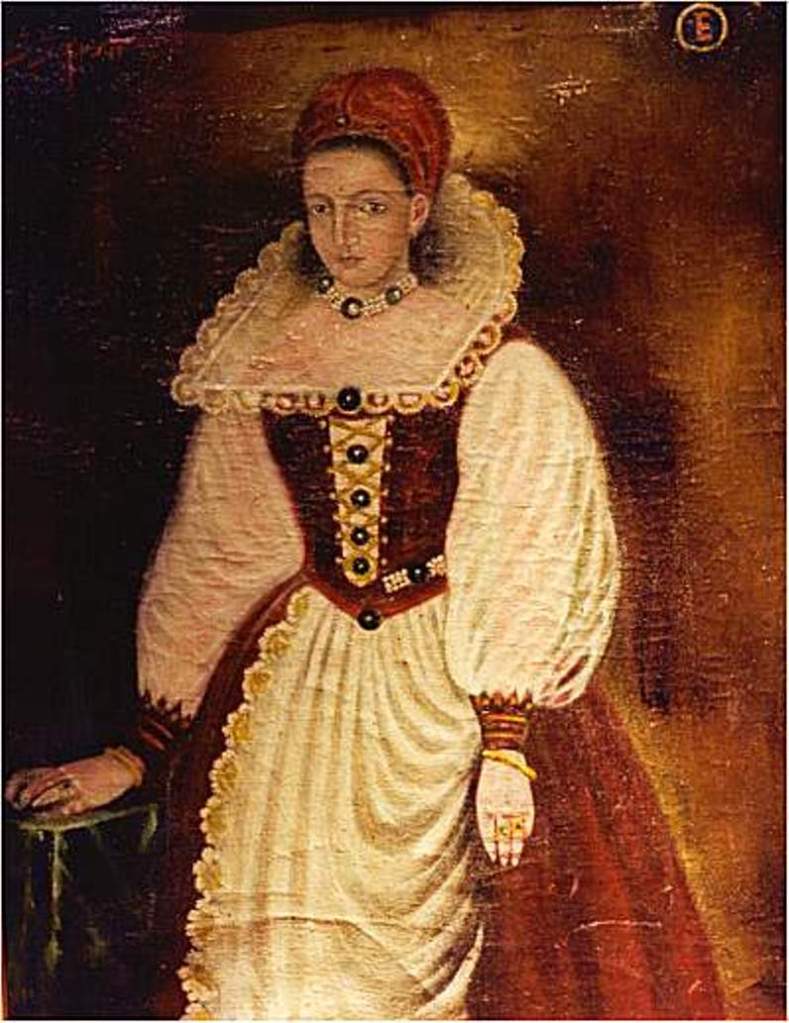
Countess Claudine Rhédey von Kis-Rhéde
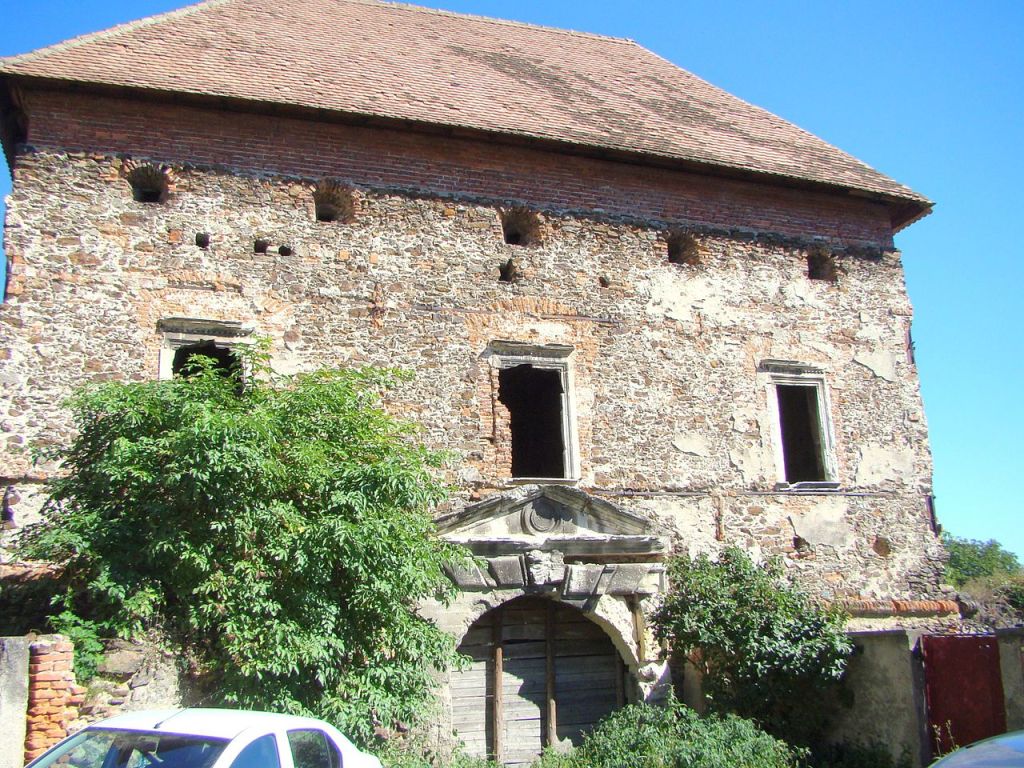
Rhédey Castle in Romania

The eldest and youngest were girls, Claudine and Amalia. Amalia married an Austrian count and settled into a quiet life near Graz, while Claudine purchased a house nearby and remained close to her sister. In 1863, both of them, and their brother Franz, were elevated in rank by their cousin the King of Württemberg: they were prince and princesses of Teck, with the style of ‘serene highness’. Like his father, Prince Franz joined the Austrian army, became a captain in the Hussars, and served in Austria’s wars against Sardinia in 1859 and against Denmark in 1864. A year later, in Vienna, Franz met the Prince and Princess of Wales, who invited him to London to meet their cousin, Princess Mary Adelaide of Cambridge. In March they met, in April they were engaged, and in June they were married.

Franz, 1st Duke of Teck

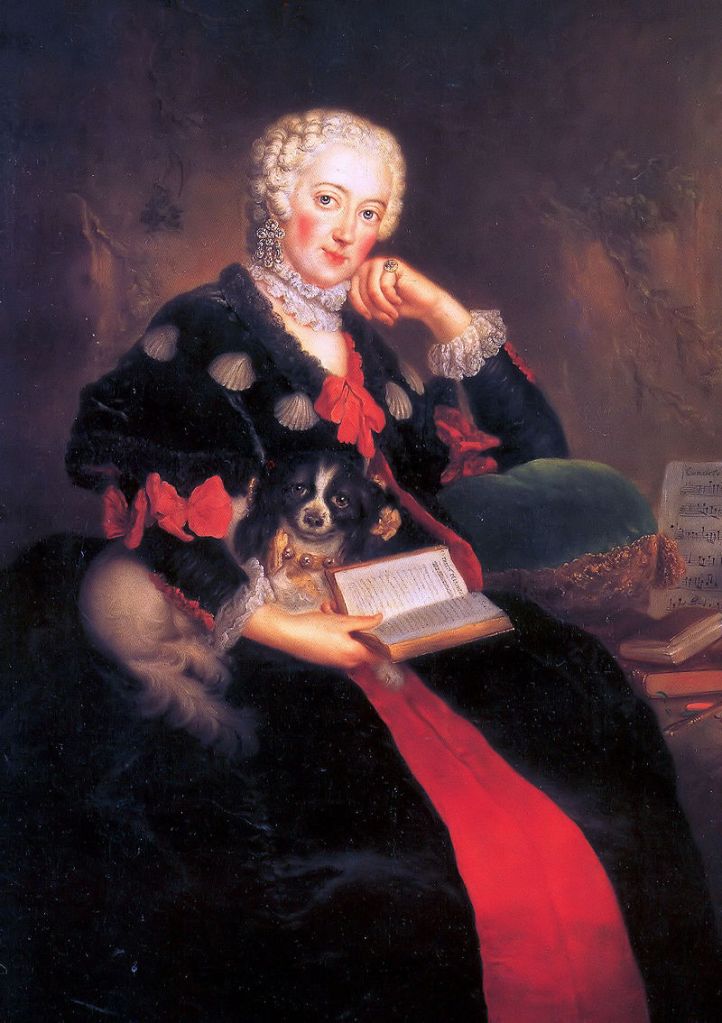
Franz and Mary Adelaide were cousins, both descendants of King George II of Great Britain. But while he was considered one of the handsomest men in the Austrian army, she unfortunately resembled the Hanoverians, full of face and figure. He had princely blood, but she was a full royal princess of Hanover and Great Britain. As long as they stayed in Britain, she received a pension from Parliament, so he resigned his commissions and started a new life as an Englishman.

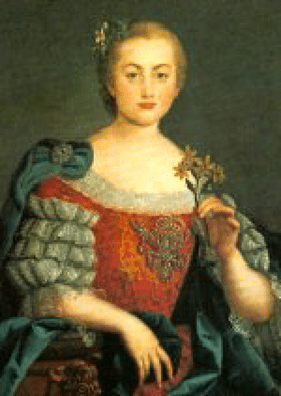
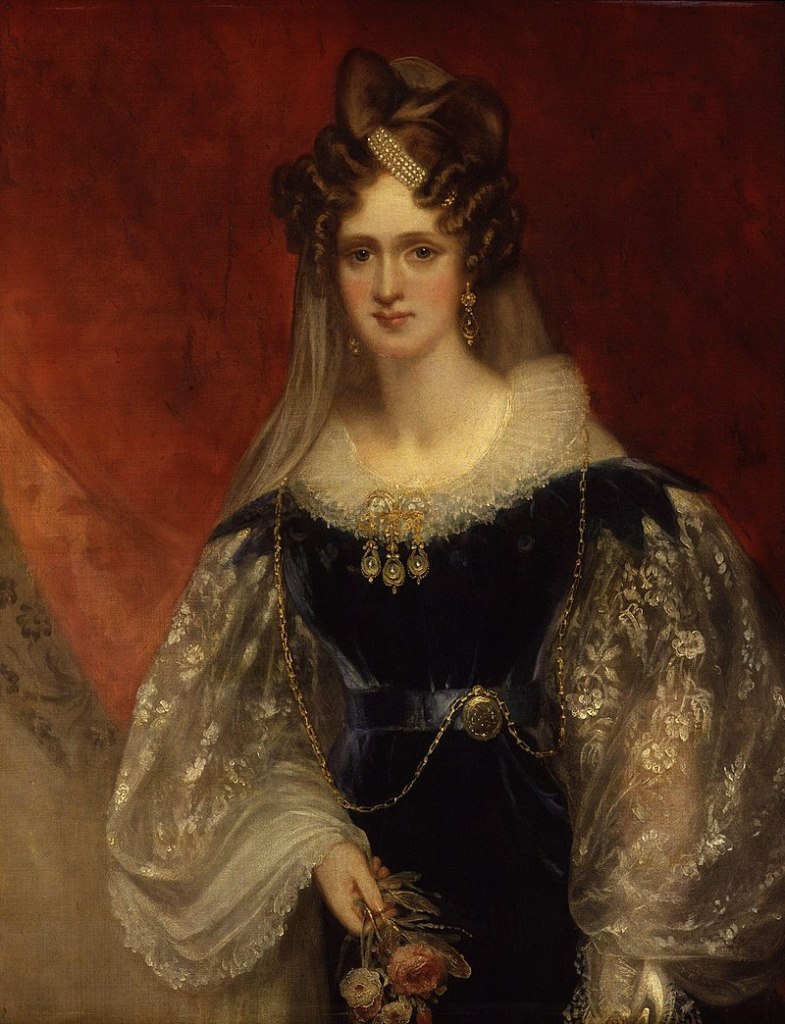
Mary Adelaide of Cambridge, Duchess of Teck

Mary Adelaide herself is usually portrayed as ‘very English’, in contrast to her German husband, but a more careful examination of her life shows that she was nearly as German as he was: her mother was a princess of Hesse-Kassel, and she was born in Hanover, where her father, Adolphus, Duke of Cambridge, was acting as viceroy of the Kingdom of Hanover. Indeed, Adolphus, 7th son of George III, had been sent to school in Hanover by age 12, spent most of his military career here during the Napoleonic wars, then governed the territory in the names of his elder brothers from 1813 to 1837. After Hanover and Britain were separated at the accession of Queen Victoria, Cambridge and his children, including Mary Adelaide, returned to England and settled at Cambridge House on Piccadilly, where he died in 1850.

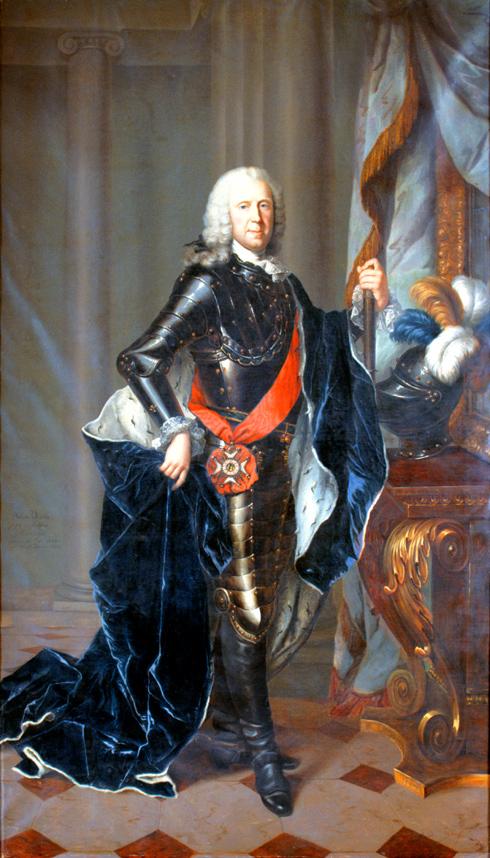
Prince Adolphus, Duke of Cambridge
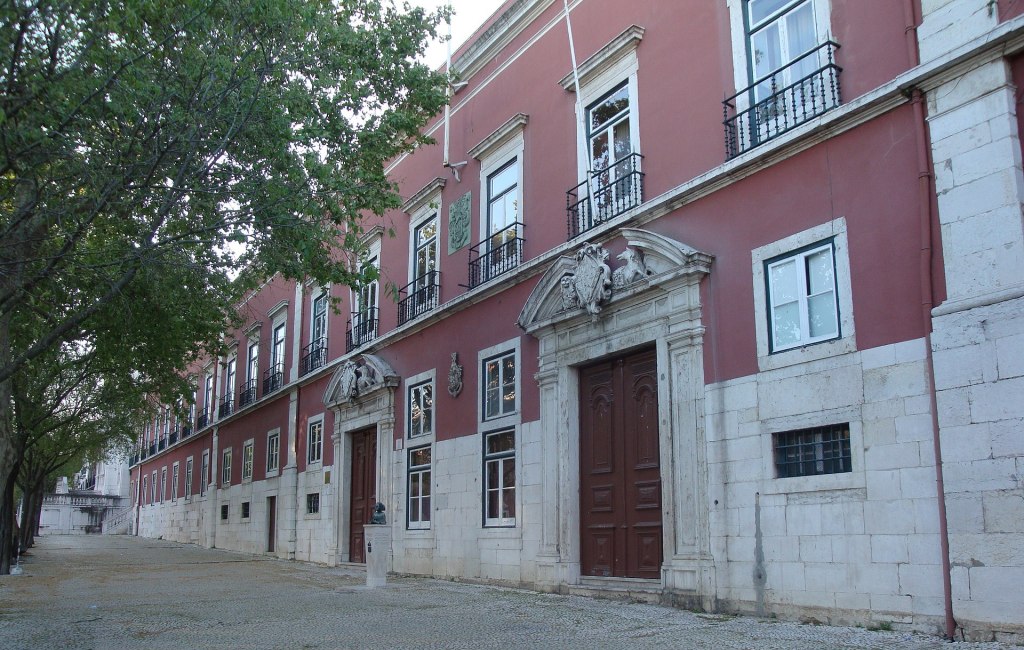
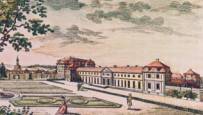
Cambridge House, Picadilly

By 1866, Mary Adelaide was in her thirties and had no real source of income, unlike her brother who had taken over his father’s position in the army (he was commander-in-chief of the army from 1856), or her sister who had married the Grand Duke of Mecklenburg-Strelitz. So a marriage to a handsome foreign duke, even a poor one, was seen as advantageous. Queen Victoria made rooms available to them in Kensington Palace and in 1869 gave them the use of White Lodge in Richmond Park, to raise their already growing family: Victoria Mary (known as ‘May’), born in 1867, and Adolphus (‘Dolly’) in 1868. White Lodge was built in the 1730s by George II and housed various royals over the ensuing century. The Tecks lived there until the end of the 19th century, and since 1955 it has been the home of the Royal Ballet School.

White Lodge, Richmond
The Duchess of Teck with her four children

In 1871, the Prince and Princess of Teck were raised one more rung in the hierarchy of royal princes by being named Duke and Duchess of Teck. I haven’t been able to find out why this happened. Perhaps it was a way for the King of Württemberg to establish his place within the new German Empire (founded that year), by stressing that his house had two cadet branches, Urach and Teck, that were not mere nobles, but princely (fürstliche) dukes. The new Duchess of Teck already retained her Royal Highness rank, and pressed Queen Victoria to extend this honour to her husband, but Victoria refused; relenting somewhat in 1887 to give him the rank of Highness (not Royal Highness) as part of her Jubilee honours.

Meanwhile, the Duke started to find his own ways to alleviate his family’s cashflow problem. They went abroad for a few years in the early 1880s, to live cheaper in Florence, or to stay with relatives in Germany. Then by the end of the decade he reactivated somewhat his military career: he served with the British army in Egyptian campaigns, and was given ranks in the army of Württemberg (1889) and the Imperial army (1891), then promoted to major-general in the British army, 1893, and lieutenant-general in the Imperial army (1895)—though most of these were honorary or ceremonial positions. He died in 1900, three years after his wife. They were buried in the new royal burial area, Frogmore, in Windsor.

The Tecks–mother and father seated, with Alexander, Mary, Adolphus and Francis

Of the four children of the 1st Duke and Duchess of Teck, the best known is of course the eldest, Princess May, who became Queen Mary, wife of George V and grandmother of Queen Elizabeth II. She was famously born in the same room as Victoria had been in Kensington Palace. In December 1891, she became engaged to Prince Albert Victor (‘Eddie’), the eldest son of the Prince of Wales. He died in mysterious circumstances only six weeks later, and by the Spring of 1893 she was engaged to his brother the Duke of York, and they married in July. The rest of Queen Mary’s story is well known, as Duchess of York, then Queen consort, then Queen dowager, until her death in 1953.

The engagement portrait of Eddie and May

Her brother succeeded as 2nd Duke of Teck in 1900. As a young man, Prince Adolphus had joined the cavalry regiment of his uncle, the Duke of Cambridge, then switched to become Captain of the Life Guards in 1895. The year before, he married Lady Margaret Grosvenor, daughter of the 1st Duke of Westminster, thus securing for himself a place within high society nearly as grand as his sister’s. He served in the Boer War in South Africa in 1899, and in 1911 was honoured by his brother-in-law, the now king George V, with the grant of ‘Highness’ just like his father had been. This was followed by the post, in 1914, of Governor and Constable of Windsor Castle.

Adolphus, 1st Marquess of Cambridge

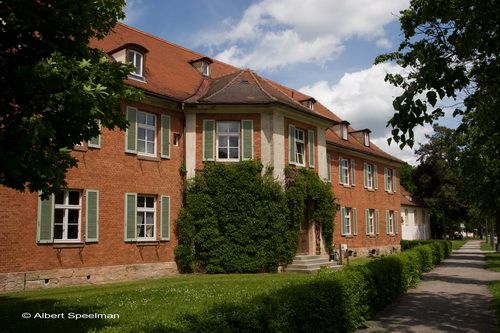
Once the war broke out, the Duke acted as a military secretary to the War Office and to the British Commander-in-Chief in France, but retired from active service in 1916 due to illness. A year later, he joined the Windsors in attempting to purge the royal family of its overtly German names and titles, and in July 1917, renounced his title ‘Duke of Teck’ and took instead the name ‘Cambridge’, after his mother’s family. In November, the King created him Marquess of Cambridge, Earl of Eltham and Viscount Northallerton (I’d love to know why these particular lesser titles were chosen for the courtesy titles—did the family have a connection to Eltham Palace before the Courtaulds bought it in the 1930s?). After the war, the 1st Marquess withdrew mostly from public life—and when suggested as a possible candidate for the Hungarian throne in the 1920s, as a descendant of Hungarian nobility, rejected the notion as preposterous—and lived at Shotton Hall, near Shrewsbury in Shropshire. A handsome red brick manor house, it later became a school and is now subdivided into flats. He died in 1927 followed by his wife in 1929.

Their children, all born as prince or princess of Teck, had become lords and ladies of Cambridge in 1917. The eldest, George, became 2nd Marquess of Cambridge in 1927. Like his ancestors, he led a military career, becoming a major in the Service Corps in the Second World War, but was also a banker in the City. He married a grand-daughter of the 13th Earl of Huntingdon. As more ‘fringe’ members of the royal family, he and his wife did appear at most grand functions, but didn’t carry out royal duties. When he died in 1981, the male line of the House of Teck/Cambridge became extinguished.

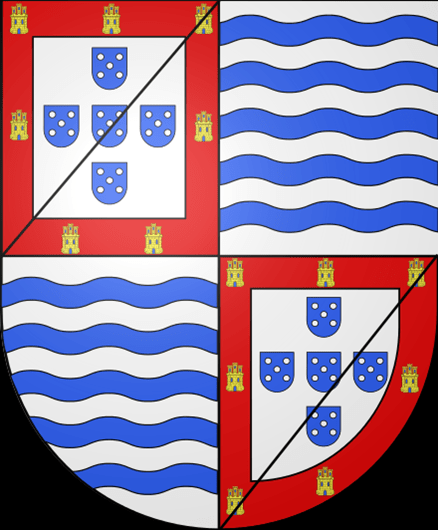
Arms of the Tecks/Cambridges, combining Britain/Hanover/Cambridge with Wurttemberg-Teck

The Cambridges had only one child, Lady Mary Cambridge, who became Lady Mary Whitley in 1951. She had been a childhood companion of the princesses Elizabeth and Margaret in the 1930s (her parents lived close to the Yorks just off Hyde Park), and was a bridesmaid at Elizabeth’s wedding in 1947. When she died in 1999, it was remarked that the Queen lost one of those closest to her since childhood.

There were three other Cambridge children: Lord Fredrick, killed in Belgium in 1940, and two daughters. The elder, Lady Mary, married the Duke of Beaufort in 1923, and is remembered for having hosting her aunt, Queen Mary, during the evacuation of London in World War II at her country house, Badminton. When I visited Badminton many years ago, I was told the story of how horrified Duchess Mary was to see her aunt arrive with literally hundreds of suitcases and hatboxes, but also to discover the truth about the Dowager Queen’s propensity to ‘shoplift’ valuable objects she took a fancy to when visiting country homes. The second daughter, Lady Helena, married Col. John Gibbs, a veteran of the Boer War and the First World War.

The two younger sons of the 1st Duke of Teck were also veterans of overseas conflicts. Prince Francis (‘Frank’) was a major in the Royal Dragoons, serving in South Africa and Egypt, but dying in 1910 before he could serve in WWI (or indeed change his name and titles). He had been known as a bit of a rake, a gambler and ladies’ man who purportedly gave away some of the family jewels, and possibly left behind an illegitimate child or two. When he died, his will was sealed on the orders of Queen Mary to avoid any potential scandals. Frank’s brother Alexander (‘Alge’) was a bit more upstanding. He also served in South Africa, and in World War I in the Life Guards. When the family exchanged their titles in 1917, he was created Earl of Athlone (in County Westmeath, in the centre of Ireland), and Viscount Trematon (in Cornwall). In 1904, he had married Princess Alice of Albany, a grand-daughter of Queen Victoria, and they occupied her family apartments in Kensington Palace. They also lived at Brantridge Park in West Sussex, a villa from the mid-19th century in the hilly area south of London (not far from Crawley).

Brantridge Park

As grand-daughter of a sovereign, Princess Alice kept her rank (HRH), which augmented her husband’s position somewhat, so that the Earl of Athlone was more in the public eye than his elder brother or nephew. In 1923 he was named Governor-General of South Africa, where he attempted to navigate the complex political situation there in the 1920s. In 1931, he returned to England and was named Governor and Constable of Windsor Castle (like his brother), and nine years later was sent abroad again, this time to Canada. While Governor-General (1940-46) he and his wife were kept busy receiving and entertaining the numerous exiled royals who went to Canada during the Second World War: Norway, Luxembourg, Netherlands, etc. He died in 1957, but she lived on until 1981, the last of Queen Victoria’s grandchildren.

Alexander, Earl of Athlone

The Count and Countess of Athlone had three children. Of the two boys, Maurice lived only a month in 1910, and Rupert died age 20 in an automobile accident in France, a victim of his mother’s family’s haemophilia. Their daughter, another May, lived a long life as another distant member of the royal family. Unlike the previous Lady May Cambridge, she was not only a bridesmaid at a royal wedding, but the other way round, with young Princess Elizabeth acting as a bridesmaid in her 1931 wedding to Henry Abel Smith, part of a London banking clan. She died in 1994, bringing her branch of the Teck family to an end.

Lady May Cambridge and Henry Abel-Smith

Württemberg, Urach, Teck, even Monaco and Lithuania: all names that tied together the network of royal and semi-royal families of Europe until the middle of the 20th century.

pub in Earls Court, London

[images from Wikimedia Commons]

Polignac dukes and princes

In the world of the old aristocracy, the primary duty of a noble family was to maintain and hopefully augment status, wealth and power. The granting of a dukedom was a symbol of a noble family having reached the very top. Some, in circumstances of exceptional royal favour, achieved this in just one lifetime, while most instead slowly progressed along the pathway for centuries. One such family were the Polignacs, from amongst France’s oldest noble dynasties, who attained the ducal coronet on the very eve of Revolution. Their success was secured by the particular royal favour of Queen Marie-Antoinette, and although the Queen and the monarchy were swept away only a few years later, the Polignacs survived, and under the Restoration started a new chapter as one of Europe’s now more pan-continental aristocrats, even going one further in obtaining a princely title. The family’s 19th– and 20th-century story is one of glamour and art—not to mention champagne and haute couture—and it led, it seems almost naturally, to one branch taking over the glamour and art of ruling the principality of Monaco.

The Duchesse de Polignac, by Elisabeth Vigée Le Brun

Perhaps fittingly for a fairy-tale ending such as this, one of the ancient seats of the Polignac family, the château of Lavoûte, rests romantically on a jagged promontory overlooking a river bend deep in the mountains of southern France, almost like a Disney castle. Even older is the castle of Polignac itself, which sits atop the ruins of an extinct volcano looking somewhat like an ancient Greek acropolis. In fact, evidence suggests this was the site of a temple to Apollo, giving the site its name (from Apollon in French). A castle replaced this temple by the early 10th century, 800 meters above the valley floor. Its lords were styled ‘vice-counts’, and were given extensive powers to govern this region, known as the Velay (today the Department of Haute-Loire), by the most powerful magnates of central France, the counts of Auvergne. As these counts weakened in independent power, the power of these vice-counts was challenged by the growing authority of the far-off French royal crown, exercised on its behalf by local bishops who had their seat nearby in Le Puy. By the start of the 13th century, these Polignac viscounts were forced to submit to episcopal authority, and this balance remained as the secular and temporal leadership of the province for centuries. In fact several members of the Polignac family were appointed as bishops of Le Puy, and the partnership was strengthened even further.

Chateau de Polignac

Le Puy-en-Velay takes its name literally from the small peaks (puy) that are scattered around the extinct volcanic ranges of central France. It has one of the most dramatic landscapes of any town in Europe, with its cathedral dominating one rock and the Chapel of Saint-Michel d’Aiguilhe on another. Three miles from the town is the château of Polignac, expanded in the 13th and 14th centuries, but gradually abandoned by the family for the more accessible castle of Lavoûte a few miles away. The older castle was severely damaged in the wars of Religion of the 16th century and left to turn into a romantic ruin—it was confiscated and sold during the Revolution, but re-purchased in 1830 and somewhat restored in the 1890s.

Château de Lavoûte, overlooking its bend in the Loire

Lavoûte (or Lavoûte-Polignac) was acquired in the 1250s, enlarged in the 14th century, then built anew in the 1550s in a Renaissance style and as a more ‘modern’ comfortable residence. It sits in a bend on the River Loire, though not really the Loire one thinks of when dreaming of romantic French châteaux—it is certainly the same river, but it is hundreds of miles upriver from the more well-known settings of Chambord, Chenonceau and Amboise. This part of France is remote and rugged. Its warrior nobles, including the Polignacs but also their close neighbours the Lafayettes, took part not only in the crusades to the Holy Land, but in more local crusades against heretics in the south of France. This region would remain a hotbed of resistance to authority, and notably a centre for Protestantism, well into the 17th century, meaning the local Catholic nobility always had opportunities to prove their loyalty to the Catholic kings of France.

By the 16th century, the original line of Polignac lords—mostly named Armand, one after another—had died out, and were replaced by another local noble house, Chalencon, who assumed the more prominent regional name. This second house of Polignac regularly served as royal governors of this province and the province next door, the Vivarais. Chalencon castle is not far from Polignac, similarly built atop of rocky outcropping, this one guarding two bends of the river Ance which flows into the Loire. Dating from the early 11th century, its lords were raised to the rank of baron sometime shortly after. After they took over the Polignac lands and castles, Chalencon was abandoned and it remains mostly a ruin today.

Chateau de Chalencon

Towards the end of the 17th century, the long-standing dual service of the Polignac family to crown and church brought the family to greater prominence in the promotions of two brothers. Scipion-Simon-Apollinaire, governor of Le Puy, was raised to the rank of marquis in 1689, while his brother, Melchior, became a cardinal in 1713. Melchior de Polignac had served as a successful ambassador to Poland in the 1690s, then a French agent in Rome during the War of the Spanish Succession. He was one of the French negotiators sent to Utrecht to end this war, and was later sent back to Rome as formal ambassador (1722), and was further elevated to the archdiocese of Auch in 1726.

Cardinal de Polignac

While he was in Rome, Cardinal de Polignac oversaw the construction of the famous Spanish Steps and threw one of the most lavish parties in the history of Roman lavish parties. In September 1729, to mark the birth of a new Dauphin for France, the Piazza Navona was decorated, and fireworks lit up the night skies.

Fete for the birth of the Dauphin, 1729

The Cardinal was also a poet, a member of the Académie française, and an art collector—his collections were bought after he died in 1741 by Frederick the Great and are still on display at Sans Souci in Potsdam. The Cardinal had brought this ancient family, after 800 years, to national prominence, and left this legacy for his nieces and nephews to build upon. Louis-Melchior, Marquis de Polignac, was a soldier who made his name in the wars of the middle of the century, then was named to one of the top offices of the court, First Equerry in the new household of the Count of Provence, formed in 1773 at the time of his wedding. Provence was the younger brother of the Dauphin, who became Louis XVI the next year, alongside his wife, Marie-Antoinette of Austria.

The arms of the Polignac family (ignore misspelling of Chalencon here)

The new Queen had an emerging favourite, already by about 1775, the daughter-in-law of the Marquis de Polignac. Gabrielle de Polastron. She and her husband, Jules de Polignac, swiftly became part of the ‘in’ set at the youthful court of Versailles. Jules was named First Equerry of the Queen in 1776; his sister, Diane, was given the post of Dame d’honneur of the King’s sister, Elisabeth in 1778; while Gabrielle’s sister-in-law, Louise, became a Dame du Palais of the Queen, and then the mistress of the King’s other brother, the Count of Artois. They formed a tight social set, which is depicted with great flair in the film ‘Marie-Antoinette’ by Sophia Coppola (2006), in which Gabrielle is portrayed by Rose Byrne.

Gabrielle, Duchesse de Polignac

Gabrielle de Polastron was born in Paris, from a noble family which, like the Polignacs, came from ancient noble stock in the far south of France. She became the new Queen’s favourite from about 1775 and soon was showered with gifts and favours (for example, her cousin was appointed to a wealthy bishopric). Her husband, Jules de Polignac, also enjoyed the Queen’s favour, and in 1780, he was appointed Duc de Polignac, by royal brevet, which is not quite the same thing as a duchy-peerage as it only applied to him personally, and did not become a hereditary possession of the family. Similarly, he was given a peerage, in 1783, but it too was for life only. The new duke and duchess were soon promoted to ever greater heights in the court and government hierarchies: in 1782, she was named Governess of the Children of France; and in 1785, he was named director-general of the postal system and director of the royal stud farm, both highly lucrative posts. The Duchess replaced a Rohan princess as governess, which scandalised the court as this office had been held by the very highest families of the court aristocracy for centuries, and it came with one of the largest suites of rooms at Versailles. The Duke and Duchess became symbols of the excessive favour shown by the King and Queen to their friends, the excessive spending of the court, and the corruption of the aristocracy in general. For example, their daughter Aglaé was given an absolutely enormous dowry (800,000 livres) by the Crown in 1780—she’s only 12—to marry another court favourite, the Duc de Guiche.

Aglae, Duchesse de Guiche

The Polignacs, as leaders of the fashionable social set, needed a fashionable place to entertain, and decided to refashion a property Jules inherited from his mother, Claye, east of Paris, in Brie. It had formerly belonged to the dukes of Nevers. In 1787 plans were drawn up to rebuild the château de Claye on a much grander scale, but these were never realised. The family did recover this property after the Revolution, but it was sold in the 1830s.

By the late-1780s, the Duchesse de Polignac in particular was one of the most hated women in France, and regularly featured in pamphlets that pilloried the foreign Queen (‘the Austrian’) as a lesbian. Like the Queen, one of the particular reasons for her unpopularity was her regular intervention in government affairs—the ‘parti de la reine’ were active in favouring their own choice of finance minister and trying to ruin the career of the ever-popular Jacques Necker, the people’s favourite. After the storming of the Bastille, it was agreed that, for the good of the monarchy (and probably their own safety), the Polignacs needed to go, and on 17 July 1789 they fled abroad to Switzerland, then Italy, then Vienna. The Duchess died there in 1793, and the Duke continued to move, now to Russia, where he was joined by his sister, Diane, and his two younger sons, Jules and Melchior. They formed part of the court of the king in exile, Louis XVIII, at Mitau in what is now Latvia. The Duke was given an estate in southern Russia, and did not return to France at the Restoration, though he was rewarded for his loyalty by the now restored French king with a more solid hereditary duchy-peerage a few weeks before his death in 1817.

Jules, 1st Duc de Polignac

The second duke, Armand, also went into exile during the Revolution, but was already old enough to lead his own life and thus remained closer to the action, mostly in the service of the youngest Bourbon prince, the Count of Artois. In 1804, he (and a younger brother, Jules) was involved in a plot against Napoleon and was arrested, but escaped. He remained close to Artois, formed part of the ultra-Catholic party during the Restoration (being named one of the ‘chevaliers de la foi’), and served as the prince’s First Equerry and aide-de-camp. He then joined the government of Artois once he succeeded to the throne as King Charles X, and fell from power with him after the July Revolution of 1830. Armand retired to his estates in the south of France where he remained until his death in 1847.

It was his brother, Jules, however, who was more prominent in the conservative regime of Charles X, and was more severely punished at his fall. Nine years younger than his older brother, he had been raised almost as one of the royal children in the 1780s and was much closer to the royal family in exile. He spent time in Britain in the suite of the Count of Artois, and even retained his ties to the United Kingdom after the Restoration, marrying first the Scottish aristocrat Barbara Campbell in 1816, then Charlotte Perkyns, daughter of an English baronet, in 1824. He was in London at that time, serving as French ambassador (1823-29). He had already gained a reputation abroad as a chef defender of the old Catholic aristocracy as a pillar of the Old Regime—to the extent that the Pope had created him ‘Prince de Polignac’ in 1820, a title recognised by the king of France in 1822. This title was not like other principalities, bringing with it no sense of sovereignty, merely honours, and was one of several similar titles created by Rome in the 19th century (as ‘princeps Romanus’) as a means of extending Papal influence in the Catholic monarchies of Europe. Jules de Polignac returned to France to lead the government of Charles X in the summer of 1829—an appointment that was violently opposed by the liberals and the press. He acted as President of the Council and Minister of Foreign Affairs until the Revolution of July 1830 sent him, and the entire Bourbon monarchy, packing. The Prince de Polignac was arrested and tried for treason in late 1830 (accused of abusing the Constitution of 1814). He was imprisoned until 1836, then given amnesty but required to go into exile. He went to Bavaria, where the King gave him estates and confirmed his princely title (1838), in fact recreating it so that, like mostly German princely titles, it would be given to all sons and daughters of the prince, not just the eldest [NB: lots of online sources say they have a title as ‘Prince of the Empire’, but this is not correct, especially since the Empire did not exist after 1806]. The Prince de Polignac was allowed to return to France in 1845, but not to Paris. He succeeded his childless elder brother as 3rd Duc de Polignac in 1847, but only for a few months.

Jules, 3rd Duke and 1st Prince de Polignac

We will return to the youngest of the Polignac brothers, Melchior, and his descendants (the non-princely branch), but will first carry on with the senior line. Each son bore the title of prince, but only the eldest was a duke. The 4th Duc de Polignac, Jules-Armand, as a young man had been an officer in Bavaria during his father’s exile, then returned to France to continue the process of restoring the family’s ancient possessions. Claye had already been sold, and the châteaux of Polignac and Lavoûte were much too far from the social and political lights of the capital, so he relied on his wife’s inheritance to establish a new base in Paris, the Hôtel de Crillon, one of the finest mansions in the city, on the old Place Louis XV (renamed Place de la Concorde in the later years of the Revolution). Amélie de Berton des Balbes de Crillon was also heiress of the château de St-Jean du Cardonnay, in Normandy (NW of Rouen), a 17th-century château that remained one of the principal country seats of the Polignacs until at least the middle of the 20th century (the Hôtel de Crillon was sold in 1907).

Hotel de Crillon, Paris
Chateau of St-Jean du Cardonnay

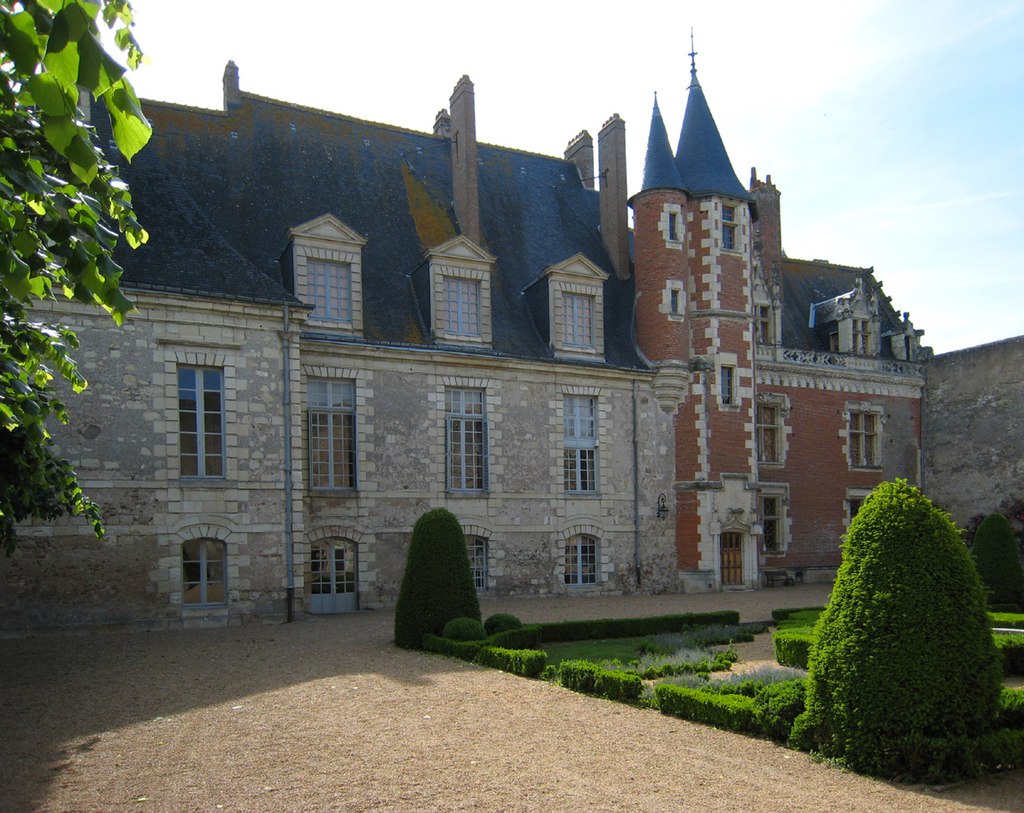
There is not much to say about the 5th or 6th dukes (Héracle and Armand-Henri). The latter added to the family’s holdings by the acquisition, again through marriage (to a princess of the Bauffremont-Courtenay family), of the château of Mercastel, another 17th-century residence, this time to the north of Paris in the Beauvaisis. The 7th Duke, Jules-Héracle, who succeeded his father in 1961, resided at Mercastel, then moved more permanently in the 1970s back to the old family seat at Lavoûte. He was very interested in preservation of France’s cultural history and served as a member of administrative council of La Demeure historique (sort of like the National Trust in England). He died in 1999 and was succeeded by his son, Armand-Charles, 8th Duke and 6th Prince of Polignac (b. 1946), who is divorced and has no children, so his heir is his second cousin Prince Alain, who is married to a Belgian princess from the Ligne family. One of the other residences of the most junior line of this branch is the château of La Jumellière, in the Loire Valley, built in the 19th century in ‘Louis XIII’ style, acquired through marriage by Prince François (younger brother of the 6th Duke).

Chateau de Mercastel
Chateau de La Jumellière

Other members of the princely branch of the family who rose to prominence include Prince Camille and Prince Edmond, younger half-brothers of the 4th Duke. Both had an English mother, so were at ease moving back and forth between the French and English speaking aristocracies. Indeed, Camille made a name for himself as a soldier, and took himself to America in the 1860s to serve as a major-general in the Confederate army in the Civil War (mostly serving in Texas and Louisiana). He later commanded a division in the Franco-Prussian war.

Prince Camille de Polignac

Edmond followed a quite different path. A man of the arts and literature set, a composer himself, and founder of an aristocratic club in the 1860s that supported the work of their friends Berlioz, Gounod, Proust, and so on.

Prince Edmond de Polignac

Late in life, despite his fairly evident homosexuality, Edmond married a soul-mate (with similar temperament artistically and sexually), Winnaretta Singer (‘Winnie’). He was nearly 60, and she 28, but in fact already a widow. The Singers were originally from New York, part of the great Singer sewing machine dynasty, but had moved to France and England (Winnaretta’s mother was French) shortly after her birth in Yonkers in 1865, and she became heiress to her father’s millions in 1875. Her first marriage to Comte de Secy-Montbéliard was annulled in 1892 and she married Edmond de Polignac in 1893. With her fabulous millions, the new Princesse de Polignac set up a salon in fashionable Passy on one of the grand avenues near Trocadero—it remains the site of the Fondation Singer-Polignac, which continues to support the development of young musicians and academics. In its heyday the Polignac salon was a source of patronage for Debussy, Ravel, Satie and young Stravinsky and Milhaud. As a widow (Edmond died in 1901), Winnaretta maintained friendships with Isadora Duncan, Jean Cocteau, Diaghilev, Colette … on and on … but was even closer to notable women artists, counting amongst her lovers the British composer Ethel Smyth and the writer Violet Trefusis (and some add Virginia Woolf). Late in life, her philanthropy extended to commissioning the great modernist architect Le Corbusier to build homeless shelters for the Salvation Army. She died in 1943.

Winnaretta Singer, Princesse Polignac
Fondation Singer-Polignac, Paris

We can return to the cadet branch of the family, founded by Melchior, comte de Polignac, the youngest son of the first Duke and Duchess. He lived with his father in Russia, but returned to France at the Restoration of 1814 to a post as Field Marshal of the Royal Army and Gentleman of Honour of the Dauphin (the son of the Count of Artois), and was later appointed Governor of the Château de Fontainebleau, 1825 to1830. Like his brothers, he was removed from his posts in 1830 and spent the next twenty years far from politics. He had five sons, but by the end of the century, only the descendants of the youngest, Charles, remained to carry on the line. These took the title ‘Marquis de Polignac’ as marker of distinction for the head of the junior branch of the family.

Charles’s eldest son, Guy, Marquis de Polignac, married in 1879 another great heiress from the world of commerce: Louise Pommery, from one of the great Champagne houses—still today one of the biggest in France. Their son, Melchior became the head of Pommery in 1907, and was a prominent early member of the International Olympic Committee in the 1920s. As an older man he was a leader of the French businessmen who advocated collaboration with the German occupation, and after the war was tried, but pardoned. His line continues to present, his son becoming a noted journalist ‘Louis Dalmas’ who founded a left-wing press agency in the 1950s.

A younger son, Comte Jean de Polignac, also married a ‘business heiress’, the daughter of Jeanne Lanvin, founder of a Parisian haute couture empire. The Count and Countess de Polignac ran Lanvin in the 1940s-50s, but are also known for the foundation of a music colony at the family château of Kerbastic on the south coast of Brittany (acquired by marriage in 1851 by his grandfather, Comte Charles), which hosted many of the celebrated names of the age, like François Poulenc and Nadia Boulanger. Comte Jean left this residence and its colony to his nephew Prince Louis (from the princely branch) who founded an annual music festival at Kerbastic which continues to this day.

chateau de Kerbastic

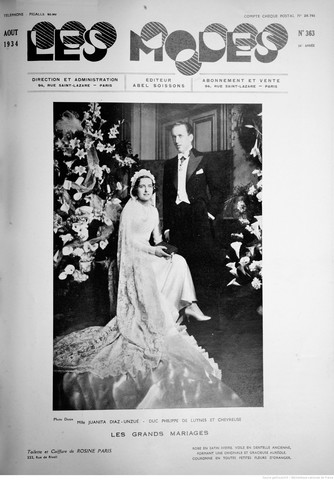
Finally, the youngest son of the youngest line of the junior branch of the House of Polignac, Count Pierre, raised the family’s name once more to princely heights through his 1920 marriage to Charlotte Grimaldi, the illegitimate daughter of Louis II, Prince of Monaco. Pierre was the son of Count Maxence (the younger brother of the Marquis who married the Champagne heiress) and a Mexican aristocrat, Suzanna Marianna de la Torre y Mier. Charlotte, born in 1898, had been adopted by her father in 1919 as means of legitimising her, primarily in order to avoid diplomatic conflict with France who did not want his natural heir, a German prince, succeeding to the Monegasque throne. Her grandfather (the reigning prince, Albert) created her on the same day Princesse de Monaco and Duchesse de Valentinois (the usual title for the heir, since the early 18th century). She married Pierre de Polignac who was naturalised in Monaco and took the name and arms of Grimaldi by princely decree. Two years later, her father succeeded as Prince Louis II, and Charlotte was declared ‘Hereditary Princess of Monaco’. Her husband, SAS Prince Pierre, Duc de Valentinois (a new creation, in Monaco, since by the laws of the French Old Regime, this title could not pass to Charlotte), swiftly took to life in the Principality, and even after they were divorced in 1933, he remained active locally, as patron of writers and artists (there is even a literary prize named for him). In contrast, his wife was generally disinterested in the affairs of Monaco, and spent more of her life at the family château in the far north of France, Marchais, near Laon. She renounced her claims to the throne in favour of her son, Prince Rainier, when he came of age in 1944. Rainier therefore succeeded his grandfather as Prince of Monaco in 1949.

Pierre de Polignac, Princess Charlotte of Monaco and baby Rainier

Like his distant cousin, Prince Pierre de Polignac was significantly involved in the operations of the Olympic Committee (something he passed on to his grandchildren), and later represented Monaco at the international gatherings of UNESCO. He occupied the curious, but certainly well-considered, position of ‘Father of the Prince’ until his death in 1964. The story of Prince Rainier III, his marriage to the actress Grace Kelly, and the very prominent lives of their children, Albert, Caroline and Stephanie, are certainly well known. They belong to a separate blog posting about the history of the Grimaldis of Monaco, though technically, they are members of the House of Polignac.

Though the first Duke and Duchess de Polignac can rightly be accused of taking and taking from the monarchy’s coffers, perhaps we can see some giving back to France in the family’s subsequent contributions to the worlds of art, music, champagne and high fashion!

(images Wikimedia Commons)

Simplified Polignac family tree

Driving across Germany: Bavaria to Baden to Brunswick

Germany’s landscape is wonderfully varied, from steep Alpine peaks to unvaried flatness of the North European Plain. In the summer of 2014, I was lucky to enjoy not one but two research fellowships, in Vienna and Wolfenbüttel, so I took the opportunity of the week between them to rent a car and drive from one end of Germany to the other. Naturally, I stopped off at several sites related to dukes and princes—including princes of Hohenzollern, Baden, Waldeck and Brunswick, and an ecclesiastical prince, the bishop of Speyer. I followed river valleys, the Danube, the Rhine, the Weser, visited important ancient imperial cities like the centre of the judiciary at Wetzlar and an early university at Marburg, and traversed one of the more sparsely populated areas of Germany where my rebellious ancestors defied the state to create a church of their own in the Eder Valley. I also passed a kidney stone in a fabulous castle hotel, which was memorable to say the least. I did this journey in six days, which was really quite rushed, and many sites I only paused at briefly, so a more leisurely trip following this pathway should take more days—but as a general overview of Germany, from south to north, this drive gave me a great feeling for the overall size and shape of the land of my ancestors.

For the first leg of the journey (because rental car companies often make it difficult to pick up a car in one country and drop it in another), I took a train from Vienna to Munich. I had passed a wonderful month in Vienna, my favourite city in the whole world, and had spent days and days exploring every nook and cranny of that fantastically historical city (what’s not to like in a city that focuses most of its attentions on history, music and food?). Now I enjoyed the lush scenery of the northern edge of the Austrian Alps as the train travelled up the Danube Valley, then past Salzburg, and into Bavaria. I spent an afternoon and evening in Munich, and revisited some of the choice spots like the Residenz and the Pinakothek. In the morning I picked up the car and headed due west. I had never driven on a German Autobahn before, so was excited to experience driving on a highway with no speed limit!

It was a nice bright morning, and I took Autobahn 96 west towards Memmingen. I noted the signs to the village of Sontheim (exciting, as a big fan of the American composer), but pulled off at another exit to visit the small town of Mindelheim. It does not receive a lot of visitors, but as a sheer curiosity in the category of ‘princely capitals’, I had to take a look. Mindelheim had been a small lordship in this part of Swabia, partway between the Alps and the Danube, for centuries. It became part of the estates of the duke of Bavaria by the 17th century, then was confiscated in 1704 by the Emperor Leopold following the Battle of Blenheim, not too far away to the north. The victor of this battle (known as the Battle of Höchstädt in Germany), John Churchill, Duke of Marlborough, was a hero of international standing, and the Emperor wished to reward him with a patch of land that would give him a financial reward, but also a prestigious place of honour within the Holy Roman Empire. So the Lordship of Mindelheim was erected into a principality in 1705, confirmed by the Imperial Diet in 1706. Marlborough was now a Prince of the Empire, with a seat in the Diet, and he added an Imperial eagle to his coat of arms. The principality was only 15 square miles, but brought its prince a revenue of about 2,000 pounds (as estimated by a recent biographer, which is about half a million in today’s money). There is a small castle up on a hill overlooking the town (Mindelburg), and Marlborough visited for a few days in 1713. By the end of that year however, Mindelheim was returned to Bavaria by the Treaty of Utrecht, and although Marlborough was compensated with lands elsewhere, they were not of princely rank. My visit was brief, limited to a quick look at the town square and a cup of coffee and a croissant.

Mindelheim

At Memmingen I left the Autobahn. This city has for centuries been at a crossroads between highways leading from north to south, east to west. I headed west on a smaller road and met the Danube at Riedlingen. It is of course a very different river here, compared to the broad queen of rivers I had left two days before. Here it is smaller and swifter, as it cuts through the hills known as the Swabian Alps. I enjoyed the scenery, designated now as the Upper Danube Nature Park, and by lunchtime, arrived at the stunning castle of Sigmaringen.

what a great day to be on a driving tour!

Sigmaringen is one of the largest castles in southern Germany, and has been the seat of one of the branches of the House of Hohenzollern since the late 16th century. The original fortress built on a rock overlooking this bend in the river dates to the 11th century. The castle, and the county that took its name from it, passed through several local noble families until it was acquired by the Habsburgs in 1290, who soon sold it to the regional power, the counts of Württemberg, who granted it to one of their vassals, the counts of Werdenberg, who rebuilt and enlarged it considerably in the late 15th century. After that family died out, the Emperor granted the castle and county of Sigmaringen in 1535 to the counts of Hohenzollern, whose main residence (Burg Zollern) was a bit further to the north.

the always easy to identify arms of the Hohenzollerns, in Sigmaringen

Count Karl was the head of the senior branch of the Hohenzollern dynasty, known as the Swabian Branch, in contrast to the junior line, the Franconian Branch, who later became much more prominent as electors of Brandenburg, and ultimately kings of Prussia and emperors of Germany. Some sources say the Swabian branch is the junior line—I cannot say for certain, and birth records for the late 12th century are probably pretty patchy, but I am sticking with Medieval Lands, my online genealogy bible for the Middle Ages. Anyway, in 1576, as was normal, the dynastic lands were split between the various sons, and the two main branches of Hechingen and Sigmaringen were created—this division remained for the next 300 years. Significantly, both of these southern branches remained Catholic, while their northern cousins in Berlin became Protestants, and as a reward, and to help maintain a loyal Catholic powerbase in the Chamber of Princes in the Imperial Diet, the Habsburg Emperor raised both of the Swabian branches to the rank of Prince of the Empire in 1623.

the Principality of Hohenzollern (in the 19th century)

They were semi-autonomous sovereign princes until the Holy Roman Empire collapsed in 1806, then part of the new loose German Confederation, until the crisis of 1848 caused the Prince, another Karl, to resign, and the principality was absorbed by Prussia in 1850. The family remained prominent however, mostly through the awarding of the throne of Romania to Prince Karl’s grandson, Karl, in 1866, and the even better prize of the throne of Spain to the elder grandson, Leopold, in 1869. But Leopold was forced to reject the offer, a diplomatic affront that was one of the sparks of the Franco-Prussian War of 1870.

Leopold, Prince of Hohenzollern-Sigmaringen

I enjoyed wandering the narrow streets of this lovely little town. I had lunch then visited the outer gates of the castle. It is one of those, like many in Germany, where you can only visit as part of a tour, the tour was only in German, and was not until quite a bit later in the afternoon, so I visited the chapel, which was open, admired the castle’s massive entrance hall, and went on my way—I’ll come back. The castle was mostly burned in 1893 and rebuilt in a late 19th-century eclectic style, though its medieval core and towers remain. The Hohenzollern family still own the property, but use it for tourism and to house their estate offices, preferring to live elsewhere.

my view in front of the castle

The next leg of this journey was the most picturesque of all—the small road meanders alongside the Danube, and occasionally through short tunnels. At most every bend in the river there is a view of a castle or a church perched high up on a ridge overlooking the valley. Famous fortresses here include the Werenweg, one of the residences of the princes of Fürstenberg (another major family in this area, about whom I shall surely write a post soon). There is also the astonishing Kloster Beuren, an ‘arch-abbey’ nestled in the valley floor.

is it safe to take a photo out your car’s front window?
Schloss Werenweg (not my photo!)

When I got to Tuttlingen, despite a strong urge to keep following the river all the way to its source near Donaueschingen (I love finding river sources!), I turned north into a narrow valley and up into the Swabian Alps (or here the Swabian Jura), then west towards the Black Forest. I’ve never explored any of this part of Germany, so I definitely want to come back sometime, but I needed to be in Strasbourg by nightfall, so I pressed on. At some point in the depths of the Black Forest, I pressed a button inadvertently on the car, activating the voice navigation system. I seem to have indicated that I wanted to go to the point where I already was when I pressed the button, and so the further I drove on towards my actual destination, the more insistent the German woman shouted at me that I had to “dreh das Auto um” (turn the car around) and “du gehst den falschen weg!” (you’re going the wrong way!)—or something to that effect. I tried everything to get her to stop, even turning off the car completely, but she was relentless.

I finally arrived (much to my car’s dismay) at the very broad, very grand Rhine River Valley, and crossed the river at Kehl. This is the very same spot where the Archduchess Maria Antonia crossed into France in May 1770 to become the Dauphine (and later Queen) Marie-Antoinette. The handover ceremony was done on a small island in the river, neutral territory, and famously transformed the Austrian archduchess into a French princess, in dress, hairstyle, etiquette. I drove over the Europabrücke, built in 1960, and paused to take a photo.

“just call me ‘Toinette”

I was in Strasbourg to give a talk at the University to postgraduate students, and to take part in a short workshop—so there’s actually a pause in this itinerary, but I will skip that, and return to talk about Strasbourg, and notably about its most influential dynasty, the Rohan prince-bishops who left such a mark on this city and this region, in a separate post. On what I will call ‘Day 2’ here, I drove back across the river into Germany and into the former Grand Duchy of Baden.

The Grand Duchy of Baden, which evolved into the German state of Baden (and now exists only as half of Baden-Württemberg) is a relatively recent creation, formed in 1806 in the wake of the collapse of the Holy Roman Empire. But much of its component parts formed the Margraviate of Baden dating back to the 12th century. I had always assumed that it got its title ‘margrave’ by being on the border (a ‘march’ or mark) between France and Germany, but really, the Rhine Valley has always been a connection zone more than a border, and the cultures of Alsace and Baden have a lot in common in a shared ‘Alemannic’ past. The territory of the Alemanii gradually evolved into the Duchy of Swabia, and as the local noble families fought for control of this duchy (one of the six or so duchies that made up early medieval Germany), one of them, the counts of Zähringen, with their castle perched high above the chief town in the region, Freiburg, emerged and took control. Like many German magnates, they avidly joined in when various emperors flexed their political and military muscle in northern Italy, and were given the March of Verona (the mainland around Venice) to govern—but not for long. They were expelled from Italy, but kept the title margrave and applied it to one of their local castles back home, Baden, and from there the name (which also became the name of the dynasty) was eventually applied to the entire region.

The Grand Duchy at its greatest extent after 1803. This trip focuses on the red bit in the middle: Baden-Baden and Baden-Durlach

Baden, like its name suggests, is a bath, a spa town, called Aquae or ‘waters’ by the Romans as far back as the 3rd century. It didn’t take long to drive here from Strasbourg, and I was allowed to check in early and park the car so I could walk around. It’s a lovely place, and it was a warm summer’s day, so I really enjoyed an aimless wander. There’s an ancient medieval fortress, Hohenbaden, built in the 12th century but a ruin by the 16th. I could see it from the valley floor, but decided against the hard climb up to the hilltop, partly because I assumed I would want to spend more of my time in the Neues Schloss, into which the ruling margraves moved in the late 15th century. I wound my way up the narrow streets of the old town and first visited the Stiftskirche in which generations of the House of Baden are buried.

I just love this look: loungin’ and waitin’ for the Rapture

Reaching the top of the hill, I discovered that the Neues Schloss was closed and inaccessible, even just to peek inside. It had ceased to be the main residence of the Margraves of Baden when they moved their capital to Karlsruhe in the 1780s (more on that below), but remained their summer residence and a place to overlook their growing spa resort town in the 19th century. From 1946 to 1981 it was a museum of the history of the dynasty and the region, but the family sold it in 2003, and there have been plans and delays and plans for a grand re-opening as a luxury hotel ever since. Certainly nothing had happened by 2014 when I was there. Quite disappointing.

My view of the ‘New Castle’ in Baden-Baden
the coat of arms of Baden is also quite simple. I love the gryphons

But the real glories of this town were back down in the valley below. In the 19th century, the Grand Dukes of Baden promoted their former capital as a fashionable spa town. The centrepiece is the glorious Kurhaus, built in the 1820s, which houses a spa, casino and gardens for strolling. And stroll they did. The Lichtentaller Allee is the famous place for strolling, alongside the wonderfully named River Oos. Aristocrats, princes and monarchs came from all over Europe, and diplomats sorted out Europe’s problems each summer while watching horse races and drinking water from one of 29 springs (warm, and with salt and minerals), especially after the railway arrived in the 1840s. By the end of the century, Baden saw about 70,000 visitors each summer. Heavily bombed in WWII, the town then served as the HQ for French occupying forces, and only in the 1980s did it really start to re-emerge as a new ‘it spot’, hosting major international gatherings such as the Olympic Committee and a NATO summit, and in 1998 opened the Festspielhaus, the largest opera and concert hall in Germany. After a lovely dinner overlooking a huge green park and watching more strolling (there’s a lot of that here), I was happy with my day in Baden-Baden—written twice to distinguish it from other towns with that name, but also in an earlier era to distinguish the senior line of the family from its junior lines based in other castles.

So on day three, I wanted to see more of these residences. My first stop was the very grand, and very pink, Palace of Rastatt. The ‘New Castle’ at Baden had been heavily damaged by French troops in the Nine Years War (1688-1697), and so the Margrave, Ludwig Wilhelm, decided to simply move and build elsewhere…down on the plain, where building was less constricted. It is remarkable how really flat this area is, and so suddenly after the hills of the Black Forest in which Baden-Baden is nestled.

Ludwig Wilhelm is one of the most famous members of the House of Baden, known as ‘Türkenlouis’ for his part as one of the leading generals in the Austrian re-conquest of Hungary from the Ottoman Turks in the 1690s. He decided he needed a palace to reflect his stature as a great European general, so transformed an old hunting lodge about 17 km from Baden into a model of the High Baroque (some might say ‘high camp’).

Ludwig Wilhelm’s tomb back in Baden-Baden. There’s a lot going on here…skeletons, angels, allegories of fame and victory…

The new town also has a very 18th-century feel about it, with orderly, well-laid out streets and a grand central market square. Built between 1700 and 1707, the Palace of Rastatt was not damaged in World War II and so remains one of the best preserved examples of this style of architecture. As the residence of a military commander, it’s not a surprise that most of the exhibits are about warfare, but they also highlight the Congress of Rastatt, held here in 1714, which ended the War of the Spanish Succession between France and Austria. But Türkenlouis had already died, so it was his widow, Margravine Sibylla Augusta, who played host to this important gathering of diplomats.

Sibylla Augusta, born a princess of Saxe-Lauenburg, far to the north, had her own summer residence not too far away, so I drove over to see it: Schloss Favorite. This is one of the nicest princely residences I have ever visited. It was designed to be a summer pleasure palace for the widow (and regent for her young son), and a showcase for her collection of fine things, in particular porcelains. These are still on display. The surface of the outer walls of the castle is an unusual pebble, and the whole thing has a delicate uniqueness of its own. It is a great contrast to the imposingly masculine palace at Rastatt.

Rastatt remained the capital of Baden-Baden until 1771, when the senior line died out, and the lands and titles passed to the junior line, Baden-Durlach. All of Baden was once more united into one territory for the first time since the Middle Ages—but not without some negotiations: during the Reformation, the two branches chose different paths (as these princely houses often did), with Baden-Baden remaining Catholic and Baden-Durlach siding with the Protestant reforms. So when the two branches merged, an agreement had to made that both faiths would be equally tolerated. I drove up to the small town of Durlach, now just a suburb of the much larger town of Karlsruhe, and tried to find evidence of a princely dynasty ruling there. There isn’t much, as they moved their centre of operations to Karlsruhe in about 1715. I decided not to go into the city, so I’ll need to return to this area to see the grandeur of the later Grand Dukes of Baden, their palace (completely rebuilt after World War II) and their tombs. Karlsruhe was a completely new town, built by Margrave Karl III (and it means ‘Karl’s repose’), much closer to river ports on the Rhine, and was one of Germany’s important court capitals until 1918 when the dynasty abdicated. It remained a capital city until Baden was merged with Württemberg after the War and Stuttgart became the capital. But still today Karlsruhe is one of Germany’s main centres of government, as the seat of both the Federal Constitutional Court (Bundesverfassungsgericht) and the Federal Court of Justice (Bundesgerichtshof). Excellent long names like these will be seen again on this trip.

It was late afternoon and I had not really had lunch, so in Durlach I wandered around looking for a sandwich shop, then sat in a nice broad square with a lovely round fountain, wondering where the old schloss might have been (this is before I had a smartphone, so travelling was always a bit more of an adventure). Turns out, this square was the very place. There had been an old castle up on the hilltop (the ‘Turmberg’), but when Margrave Karl II moved his capital here in the 1560s, he built a town palace called, quite unimaginatively, the Karlsburg. This, it turns out, was what I was sitting in front of eating my sandwich. Today there is a large neo-classical façade, an adjacent older structure of an interesting ochre hue, and fragments of a stone wall jutting out. Like Old Baden, Karlsburg had been almost completely destroyed by the invading armies of Louis XIV in 1689 (the same armies that so utterly devastated Heidelberg, not too far away). Work started on renovations after the war in 1698 (and there are exist plans intended for a grand new palace), but a new war in 1702, and a dispute with the locals over labour (and perhaps the projected size of the new building), made Karl III, as we’ve seen, move a bit to the west and create a new town altogether. Durlach slid into obscurity and is now just a suburb. The Karlsburg served as a barracks, a museum, and now houses classrooms, local government offices, a performance space, a library…

my photo of the old castle of Durlach, the ruined wall, and the newer Karlsburg beyond

That evening I stayed in a really cute hotel in the middle of the countryside, in wine growing country, the aptly named Weingarten. I had seen Presskopf on the menu before, and understood it was a local specialty, so for dinner (at the hotel, on a beautiful terrace) I had some—of course with some of the local white wine. I didn’t hate it, but it’s not my favourite thing, and the name in English (‘head cheese’) is rather off-putting. Basically, it is meat shaved off of the head of a pig or a cow, and put into gelatin. So why it’s called ‘cheese’ I do not know (apparently in England it is known as ‘brawn’).

The next morning I headed just a few miles up the road to Bruchsal, the palace of the Prince-Bishops of Speyer. Like Rastatt, this was a ‘new build’ following the devastations of the French army in the Nine Years War, and the appearance of the building is similar, a mixture of French high baroque with something a bit more Rhenish. The bishops of Speyer—a city on the other side of the Rhine from here—had for centuries maintained an urban residence near their cathedral, and a rural retreat located just across the river at Udenheim. Feeling threatened by militant Protestants in the early 17th century, Bishop Philipp Christoph von Sötern fortified Udenheim and renamed it after himself, Philippsburg. This fortress, at a strategic spot on the Rhine, became a key target for the French, and was actually occupied by them for much of the century. The bishop of Speyer had to look elsewhere and settled in Durlach, a few miles to the east. It had been site of a royal residence way back in the 10th century, but had been episcopal property since the 11th. In 1716 it became the formal residence of the prince-bishop, and starting in about 1720, a grand new palace was created by Cardinal-Bishop Damian Hugo von Schönborn.

if you build a palace, you should definitely have yourself painted into the decorations

In the 19th century, after the secularisation of church lands, Bruchsal became part of Baden and served as a dowager residence, a barracks, a military hospital and a storehouse, then was badly damaged by fire during the Second World War. It was mostly reconstructed but the decision was taken to restore only some of the interiors as a glittering baroque palace, and others on more modern lines—today it houses two museums, one on local history and one showcasing a fascinating collection of German music boxes and other mechanical toys. It was a lovely space to spend a morning, with coffee in the gardens, then I headed out, drove the few miles to the west to find whatever I could of Philippsburg—a must see for me, since I had read so much about it in my studies of the reign of Louis XIV, as one of the great fortresses of Europe. Well, there is nothing to see. Even understanding how it might once have guarded this part of the Rhine is difficult to perceive, since the river is no longer anywhere near here—you do see high earth embankments alongside a swampy ‘Altrhein’ where this bend of the river used to flow before it was straightened in the industrial era. After the famous sieges of the wars of Louis XIV, Philippsburg had once again been the setting for another huge siege during the Napoleonic Wars, after which the French ordered the fortress completely dismantled. Literally nothing remains, or at least not that I could find that day.

Imperial forces under Duke Charles of Lorraine attack the French entrenched in the fort at Philippsburg, 1676
the Altrhein at Philippsburg today

So with wistful thoughts about the impermanence of history, I hopped back into the car and set off on another leg of zooming on the Autobahn, due north past Mannheim and Darmstadt and Frankfurt. I had visited this part of Germany—Franconia—before, so I zoomed past and continued my more local tour about 60 km north of Frankfurt, to see what I could find in another remnant of the old Holy Roman Empire, in the city of Wetzlar. This town was a moderate-sized free city of the Empire from the 12th century, but had suddenly become much more prominent following the destruction of Speyer by the French as seen above. For not only was Speyer the seat of the prince-bishop, it had also been the seat of the supreme court of the Empire, which after 1689 was relocated to Wetzlar. Like the wonderful long name of the supreme court of modern Germany noted above, this small town suddenly had to make calling cards that included the word Reichskammergericht—and today’s tourism office has to deal with an even longer word on their pamphlets, the Reichskammergerichtsmuseum!

Literally the ‘Imperial Chamber of Law’, this court attracted lawyers from all over Europe and changed the nature of the town, from a market town to a town of erudition. So as I walked around the town—laid out on some pretty steep hillsides, and sitting in a picturesque curve of the River Lahn—I saw loads of signs for literary disciples following the life story of Goethe, who came here as a trainee lawyer, and was inspired to write his first novel, one of the first of the new style of German literature, The Sorrows of Young Werther, in 1772. I was personally more taken by the extremely colourful graffiti I found all over the town, playing on the town’s imperial past, with animations of a Holy Roman Emperor dressed in 18th-century costume in various silly settings, like feeding the chickens or performing in a rock band. I think it is Emperor Francis I, modelled on the statue nearby of the Römische Kaiser, a former theatre and dancehall.

vroom vroom!

After a nice lunch on the terrace in front of the former supreme court building—probably the least imposing building in the world; you would never guess it had housed one of the three most important organs of power in the 18th-century Empire—I wandered along the riverside, looked up at the ruins of a medieval castle built by Emperor Frederick Barbarossa (the ‘Reichsburg’), then hopped back in the car for a short drive north to Marburg.

the former Reichskammergericht chancellery

Marburg is famous as one of the ancient seats of higher learning in Germany and as one of the cradles of Lutheranism. I parked my car on the banks of the Lahn (the same river I’d seen in Wetzlar) and headed up the fairly steep hillside on which this town was built. It had been one of the capitals of the old principality of Hesse, since the 1260s, and became a pilgrimage site for one of its early princesses, St Elizabeth of Hungary. She made this town her home, and a centre for caring for the sick, and was canonised very soon after her death in 1231. The St Elizabeth Church is still a major tourist site, though her remains were removed by Catholics during the Reformation. It’s a great example of high Gothic architecture, as indeed is much of this entire town, having been spared from the destruction of the two world wars.

Halfway up the hill, I passed another Gothic church, the parish church of St. Marien, which houses some of the tombs of the landgraves of Hesse-Marburg. Crowning the hill is the castle itself, seat of the dynasty until its capital moved back to Kassel at the end of the 16th century. It was the site of the Colloquy of Marburg, 1527, hosted by the Landgrave Philipp the Magnanimous, who ardently wished to prevent a further split amongst reformers by inviting Luther and Zwingli to his castle to debate the finer points of the reform movement—others in attendance included Martin Bucer and Philipp Melanchthon—but it was ultimately a failure, and the Zwinglians continued to push for a more rigorous reform of the Church. It felt amazing to be in such an important historical spot. Today the castle is part of the University of Marburg, a space for its exhibitions and grand events. University buildings are scattered all over the hillside and as the town spills down into the river valley, and aside from theology, there are reminders in bookshop windows and theatre advertisements that this was also once a great centre of German Romanticism and the collecting of folklore by local scholars such as the Brothers Grimm.

climbing up to the castle
the Colloquy Chamber, Marburg Castle

Having seen quite a lot of wonderful sites today, I was ready to settle in for a quiet night, and was excited to see the room I had booked in a castle a bit further north, Schloss Waldeck. On this last short drive, I paused only to note excitedly my swift passing (yes, I got a ticket later in the mail) through the small village of Münchhausen, though I later read that this village had nothing to do with the famous Baron (whose family came from further north, near Hanover). Through some genuinely good luck, I had nabbed a fairly cheap room high in the tower of this medieval fortress-hotel: I marvelled at the view as the sun set in the west over the Edersee (a man-made lake made from the Eder river) and a hilly region that forms the natural frontier between Hesse and Westphalia. Through some genuine bad luck, however, my kidneys decided that this would be the best place to get rid of some excess crystalline material. After writhing on the floor in agony for nearly an hour, contemplating whether I should call the local hospital, or perhaps my German family in not-too-far-away Paderborn, or simply letting myself expire, I passed out, and woke up the next morning covered in sweat slumped in a chair. That was an experience I do not wish to repeat.

the view from my window, Waldeck Castle

So, bright and early, feeling miraculously revived, I had breakfast on the terrace of this castle. Perhaps it was the spirit of my ancestors who had healed me, for, just a few miles to west in the Eder river valley, in the gentle hills of the tiny principality of Sayn-Wittgenstein, a group of rebellious Pietists broke with the state Lutheran Church in 1708 and baptised each other as ‘brothers’—there would be no hierarchies for them. They called themselves ‘The Brethren’ and eventually were forced to migrate to Pennsylvania where they became known as ‘Dunkers’ because of their preference for adult baptism. I had visited the site of the baptism in the Eder, the tiny village of Schwarzenau, a few years back, to participate in the 300th anniversary commemorations, which were even attended by the current Prince of Sayn-Wittgenstein himself (imagine my excitement!). But today, I needed to continue heading north, as I was due at my next destination that evening.

The castle in which I had stayed overnight—for better or for worse—was a mighty fortress built in the late 13th century to house and defend the family of the counts of Waldeck. It was in fact, shared by its different branches, which is an interesting idea, though each branch also had its own seat at a different castle, and by the 16th and 17th centuries they had mostly left this place as an old and uncomfortable residence. It served as a barracks, then a women’s prison, and since the 1920s has housed a museum of the local town and district as well as a restaurant and hotel.

the inner courtyard-terrace

The senior branch of the counts of Waldeck moved their residence a few miles to the north, to Arolsen, in 1655. Arolsen had been a medieval nunnery, secularised during the Reformation, and would be completely rebuilt as a baroque palace in about 1715. The town was laid out anew as well, as another good example of an orderly, regimented town fashionable in the Enlightenment—it is so symmetrical in design that the checkered pattern of the town on one side of the castle is mirrored by the same pattern of the gardens and forests on the other. The town would serve as the government of the principality (raised from a county in 1712), even after the fall of the monarchy, until the ‘Free State of Waldeck’ was dissolved in 1929. The castle of Arolsen is extremely yellow, and some shades of Orange, to play up its close links with the House of Orange (due to the marriage of Princess Emma with King William III of the Netherlands in 1879, and her tremendous popularity as Regent in the 1890s); and it is still lived in today by the princely family. It houses one of the best preserved princely libraries in Germany.

Schloss Arolsen
Queen Emma as Regent for her daughter Queen Wilhelmina, 1890

The Waldeck family traces its origins all the back to the early days of the Holy Roman Empire, at first known as the Schwalenbergs, and certainly have Saxon (rather than Franconian or Swabian) origins, as identifiable by their regular use of the name Wittekind (after the legendary ancient king of the Saxons), from the founders of the dynasty right up to the current holder of the princely title. They were entrusted by early emperors to guard the Upper Weser valley, and the borders between Saxony and Westphalia (in fact this area used to be called ‘Ostphalia’). This would later be a zone of conflict between the dukes of Brunswick to the east and the bishops of Paderborn to the west (and the Waldeck family included several bishops there themselves).

The symbol for Waldeck is a eye-catching 8-point star

In 1692, with the death of Georg Friedrich of Waldeck-Wildungen, a field marshal of the Dutch Republic, the line of Waldeck-Eisenberg remained as the only branch, and unified the lands into one county, raised as seen above by the Emperor into an Imperial principality in 1712. Georg Friedrich had in fact already been raised to the rank of prince of the Empire, 1682, but this was a personal title only, so the 1712 creation solidified the ascent of this family to the very top of the imperial hierarchy. Their case for this elevation had been assisted by the augmentation of their state by the addition of the county of Pyrmont, a bit further to the north, and it was to Pyrmont that I headed in the late morning.

Pyrmont had been a separate county from the late 12th century, its fortress built by the archbishop of Cologne as ‘Peters Mount’ to defend his duchy of Westphalia. But it really took off later as a spa town, visited for its ‘miracle springs’ as early as the 1550s. By the 17th century it belonged to the counts of Waldeck who developed it as a tourist destination, in particular from the 1720s when gambling rooms were opened, alongside ballrooms and long tree-lined alleys for healthy strolling. Famous royal visitors included George I of England, Peter I of Russia and Frederick II of Prussia. Its main broad avenue, pedestrianised and lined with boutiques, is still lovely to walk down, with its central bathhouse, ‘Der Hyllige Born’, or ‘Holy Spring’, dominating one end. I had a nice lunch, then looked at the very pink, very baroque, small schloss, an old moated castle rebuilt in about 1710 to house the princes on their summer visits to their spa resort. It’s a nice place, if a bit too pink and mignon for me.

Bad Pyrmont
Schloss Pyrmont

The family’s later history is not so rosy: called Princes of ‘Waldeck und Pyrmont’ after 1712 to recognise the two component parts of their state (not contiguous), they somehow survived the absorption of most of the smaller German states in the period 1803 to 1815, and were a separate component state within the German Empire of 1871. None of the imperial princes survived the fall of the monarchies in 1918 with their power intact, but the Waldeckers did retain much of their private fortune (perhaps as close kin to the House of Orange, as noted above, but also the royal family in Great Britain, as Emma’s sister Helena had married Leopold, Duke of Albany, the youngest son of Queen Victoria). The last hereditary prince, Josias, was one of those high-ranking German aristocrats who saw the Nazis (wrongly as it turned out) as potential restorers of their former authority, though he went further than most and became extremely close to the regime—as a clear signal, his eldest son’s godfathers at his baptism in 1936 were none other than Hitler and Himmler. Prince Josias became a high-ranking SS officer, in charge at one point of the Buchenwald camps, and at another of the military police in occupied France. After the war he was arrested, imprisoned, but later pardoned by the Minister-President of the State of Hesse. His son, Prince Wittekind, understandably kept a lower profile in developing his career, and served with distinction in the army of the West German Republic, one hopes as a bit of dynastic atonement.

I was now in the State of Lower Saxony, which used to be the Kingdom of Hanover, and before that the hodgepodge of principalities governed by the House of Brunswick. In the late afternoon, I left Pyrmont and drove cross-country and past the small cities of Hameln (famous for its pied piper) and Hildesheim (one of the ancient prince-bishoprics which once governed so much of Germany), until I reached my destination, the sleepy town of Wolfenbüttel, where I would be spending the rest of the summer.

I will certainly do a full blog piece on the House of Brunswick (aka Guelph, aka Hanover), but to finish off this rather epic journey, I will add a tag for the final day of having the benefit of a rental car, which was due to be returned in Hanover at the end of one more day. I decided to overshoot Hanover at first, and visited the sleepy town of Celle, seat of another Brunswick principality.

The Brunswick lands in the 19th century: Wolfenbuttel in yellow and Luneburg/Hanover in orange. Waldeck is at lower left (and Pyrmont is the small green F-W)

By the 17th century, there were two main branches of the House of Brunswick—one of the oldest and most powerful princely families in Germany, always nipping at the heels of the reigning imperial dynasties, but obtaining the throne only once, with Otto IV in the early 13th century. There was the senior branch at Wolfenbüttel and the junior branch based in Lüneburg and later in Celle and Hanover. The castle in Wolfenbüttel is by far the most dominant structure in the town, rebuilt in the late 16th century as a Renaissance palace. It today houses a museum and a high school.

Wolfenbuttel Schloss. Of course there are bicycles everywhere…this is Germany!

Across the park is a grand 19th-century building that houses a magnificent 17th-century treasure, the Duke August Library, the real jewel in the crown and the reason I was here, to spend three months working with this library’s collections—Germany supports academic research in a way we can only dream of in the UK, with support here from the State of Lower Saxony, but certainly also aided by the fact that super wealthy companies Volkswagen and Jägermeister are both located nearby. Wolfenbüttel is also an idyllic place to study as it is entirely quiet (in fact quite dull!) and has lovely parks and waterways (lots of canals!), and one of the best preserved collection of half-timbered buildings in Europe. Because the major industrial investment in this region was a few miles to the north in the city of Brunswick (Braunschweig), that town was heavily bombed in the Second World War, leaving this town almost completely intact and its world-class library spared.

The Duke August Library

The town of Brunswick had been jointly ruled by both branches of the dynasty, but after 1753, became the residence and capital of the senior branch, who took the name of simply Duke of Brunswick, since the junior branch were by now firmly called the Dukes of Hanover—and in fact, were of course even better known as the Kings of Great Britain and Ireland, since 1714. Since the year of this drive was, in fact, 2014, I was excited to visit the special exhibits being put on in Celle and in Hanover itself, so after fully checking out the delightful monstrosity of an old building in which I would spend the summer (with the wonderfully eclectic name of ‘party-evening-house’, though really meaning ‘end of work’ or ‘retirement’ house), I headed out in the morning to drive to Celle.

My home for 3 months, the Feierabendhaus, charmingly dumpy, and perhaps haunted?

Skirting around the city of Hanover I drove across a landscape that was very different to any I had seen thus far on this trip: quite flat, with lots of small canals and waterways. These feed into the River Aller, a main tributary of the Weser. Further to the north, and something I really want to explore someday, the flatlands turn into the wild Lüneburger Heath before merging with the broad Elbe valley and the megacity of Hamburg. Celle (or in an older style, Zelle) had been built on the Aller by the Brunswick-Lüneburg dukes when they left their old seat in Lüneburg in order to be closer to their more southerly lands such as Hanover and Göttingen. Like Wolfenbüttel, the old castle at Celle was rebuilt as a Renaissance palace in the 16th century, then modernised in a baroque style in the 1670s. It was mostly abandoned however, after 1705, as the dynasty consolidated into one single branch, based in Hanover, though it was famously used as a prison for the disgraced Queen of Denmark, Caroline Matilde, 1772-1775, since she was the sister of the ruler of Hanover, King George III.

Celle Schloss
The Brunswick coat of arms–the duchy of Brunswick itself has two gold lions on red (similar to England); Luneburg adds a blue lion with red hearts (similar to Denmark); and there’s a white horse on top

The exhibition here about the 300th Anniversary of the union of Great Britain and Hanover was really nicely done and I spent much of the day here. There are also extensive gardens (and the ubiquitous white horse sculptures—the white horse being the symbol of the Hanoverian dynasty), and nice places for lunch in the town. I also visited the main church of Celle, St. Marian, with lots of princely tombs to admire, including, notably, one for poor Caroline Mathilde, and indeed for the other famously disgraced consort from the Hanoverian dynasty, Sophia Dorothea, the wife of King George I, who was never allowed to set foot in her husband’s new British domains due to her ‘indiscretions’ with Count von Königsmarck (who lost his life as a result) in 1694.

The Guelph monument in the city church of Celle

These scandalous events had taken place at the ducal court in Hanover, and I made the short drive there in the late afternoon to return the car. Before heading back by train to Wolfenbüttel, I paused in the city centre to look at the old ducal palace, the Leineschloss, unfortunately completely destroyed in the Second World War, which is now the seat of the Landtag of Lower Saxony, the successor state to the Kingdom of Hanover (which had been proclaimed by the British sovereign in 1814, but absorbed by Prussia in 1866). That summer, I would come back frequently to explore this fascinating small city, and in particular to visit the newly restored marvel that is the gardens of Herrenhausen, just outside of town (thank you again, Volkswagen!). For the 2014 celebrations, there were five interlinked exhibits: at Celle, at Herrenhausen, two in Hanover, and one in Marienburg (as well as one at the Royal Collection in London). Marienburg is the 19th-century fantasy gothic castle south of Hanover which I did not visit, partly put off by the high prices of the castle tours and of the exhibition—it is the current residence of the House of Hanover (Prince Ernst August). But I was pleased to end this tour by celebrating once more the events of the Hanoverian Succession 1714, as they had once been celebrated, perhaps, by the inhabitants of the Principality of Mindelheim where this driving tour began…

a shop window in Hanover, celebrating 1714-2014

(photos mostly my own; some from Wikimedia Commons)

Vorontsov and Dashkov princes

Sometimes one noble family needs another to boost its status slightly into the ranks of the dukes and princes. The Vorontsovs were an old noble family of middle rank who significantly influenced the history of Russia in the 18th century. The Dashkovs were an equally ancient family, and though of higher, even princely, rank, rarely made much of an impact on the national stage. The two families were linked through marriage in the mid-18th century, in the person of probably their most famous member, Ekaterina Vorontsova, Princess Dashkova, the first woman to lead a major academic institution. In the wake of this union, the Dashkov family name and arms were willed to the Vorontsov family, allowing them to become princes themselves in the 19th century. This blog post will therefore look at these families together.

Princess Dashkova

To start, the Dashkovs were amongst that class of highest ranking nobles in Russia known as the ‘Rurikovichi’, or the descendants of Rurik, the semi-legendary founder of the Russian state. Rurik was a Viking who, instead of travelling west like many of his countrymen, ventured east in search of adventure, riches and conquest. He became ruler in the 860s of the Slavs in the area east of Finland, built a new fort called Novgorod (lit. ‘new fort’), and established the principality that would be called Rus’. His son Oleg moved the capital to Kiev, and the dynasty continued to grow and spread over the next several centuries. In contrast to western Europe where primogeniture increasingly concentrated rule into the hands of just one male per dynasty, consolidating the state, in Kievan Rus’ each son was given territories to rule, and the number of principalities, as well as the number of branches of the House of Rurik, grew and grew. By the 15th century there were dozens and dozens of branches and sub-branches, taking their names from the estates they ruled or the nickname of the founder of the lineage. Several of these lines maintained rule over larger territories, and became known as Grand Princes (or Grand Dukes—the word ‘knyaz’ in Russian can be translated as either prince or duke). The last Grand Prince of Smolensk (Yuri, d. 1407), had a younger brother known as Alexander Sviatoslavovich ‘Dashek’ (from the old Mongol word for ‘courageous’).

Dashkov coat of arms, with princely bonnet and mantle

The family that then took the name ‘Dashkov’ remained fairly obscure in the next two centuries, though, like many of their class, they served as boyars (leading nobles in the administrations of Muscovy and Russia) and voivodes or governors of provincial towns or fortresses. In the 17th century, two brothers, Ivan and Andrei Ivanovich, rose to greater prominence, the elder as a magistrate, granted the rank of okolnichy (the noble rank given to the closest companions of the tsars) in 1685, and the younger as a steward in the household of Tsarina Natalya Naryshkina, the mother of Peter the Great. It seems confusing, but the hereditary rank of a Rurikovichi prince and the earned rank of an okolnichy were not incompatible, and though the latter seems much lower in status, as a ‘close person’ to the Tsar, he had great influence. Ivan’s son Peter Dashkov, who also worked in the Tsarina’s household, married into the family of Eudoxia Lopukhina, the wife of Tsar Peter, so they were thus related to the Imperial dynasty itself.

In the 18th century, the Dashkovs continued to rise, again through marriage: Peter’s son Ivan, Captain of the elite Preobrazhensky Guards Regiment, married the wealthy heiress Anastasia Leontyeva, daughter of the Imperial General-in-Chief and great-niece of Peter the Great’s favourite, Prince Menshikov. She was also related to Count Panin, a member of the influential circle in the administration of Empress Elizabeth, daughter of Peter the Great. Another of this ruling circle was Count Mikhail Illarionovich Vorontsov, and the marriage between his niece, Ekaterina Vorontsova, and Ivan’s son, Prince Mikhail Dashkov, in 1759, united these two powerful families. Mikhail Dashkov died on campaign in 1764 as a brigadier general in the Polish wars, leaving behind a son, Pavel, the last Prince Dashkov, who we will come back to below.

Prince Mikhail Dashkov

The Vorontsov family came from a lower rank of the Russian nobility. They and another boyar family, the Velyaminovs, claimed to be two branches of a family descended from a Varangian (that is, a Viking) warrior named Shimon who came to Russia in the 11th century. The Velyaminov branch held important positions in Muscovy in the 14th century, solidified by the marriage of one of their daughters, Alexandra, to Grand Prince Ivan II, in 1345—she was the mother of Prince Dmitri Donskoi, one of the greatest rulers of medieval Muscovy. A younger son, Fedor Vasilievich, was given the nickname ‘Voronets’ (from voron, ‘the raven’), and his descendants then took the name Vorontsov. One of them, Fyodor, rose to great authority in 1543 when he was entrusted with the government of the Russian state by the teen-aged Tsar Ivan IV after having thrown off the more prominent boyars who had so far dominated his reign. Though he had long been a royal favourite, Fyodor Vorontsov’s rule was short, and as the Tsar began to assert his independence, he bristled at the older man’s control and had him executed in 1546. This youngster would of course grow up to earn the nickname ‘Ivan the Terrible’.

Vorontsov coat of arms

A few generations later, three brothers, Mikhail, Roman and Ivan, brought the family once again to national prominence. Mikhail was a favourite of Empress Elizabeth, daughter of Peter the Great. His link with her was strengthened by his marriage in 1742 to Anna Karlovna Skavronskaya, who was the Empress’s first cousin (the niece of Catherine I, born Martha Skavronskaya). His wife would remain one of her royal cousin’s favourites, and rose to the position of Chief Court Mistress in 1760. Empress Elizabeth named Mikhail Vorontsov Vice-Chancellor of the Empire and a Count in 1744, then towards the end of her reign he rose higher to the post of Chancellor of the Russian Empire, effectively the premier minister.

Count Mikhail Vorontsov, Chancellor of the Russian Empire
Anna Skavronskaya, Countess Vorontsova, cousin of Empress Elizabeth

Chancellor Vorontsov built the Vorontsov Palace in St. Petersburg, designed by the most fashionable architect of the day in Russia, Francesco Bartolomeo Rastrelli, but it cost him too much and he sold it to the Crown. Today it houses the exclusive Suvorov military academy, and dominates Sadovaya Street next to the National Library of Russia. He also built the beautiful Vorontsov dacha outside the city on the road towards the Imperial residence at Peterhof.

Vorontsov Palace, Saint Petersburg
the Vorontsov dacha, southwest of Saint Petersburg

The Chancellor’s brother Roman was one of the richest men in Russia, having married the daughter of a wealthy merchant. He served at court as a chamberlain. The third brother, Ivan, was a captain of the prestigious Preobrazhensky Guard and was appointed a Gentleman of the Chamber of Grand Duke Peter, heir to the throne. This is where the fun begins. Roman’s three daughters, Maria, Elizabeth and Catherine, were brought to court in about 1750 to serve in the households of Empress Elizabeth and Grand Duchess Catherine, the new wife of Grand Duke Peter. Maria was a maid of honour to the Empress, and Elizabeth and Catherine maids of honour to the Grand Duchess. But Elizabeth Vorontsova had different ideas than quietly attending her new mistress. A bold and brassy character who is described as being quite uninterested in the fineries of female life at court (‘She swore like a soldier’ and dressed ‘like a scullery maid’). But she appealed very much to young Peter, no doubt due to their shared love of soldiers and marching and drills. By the time the Grand Duke became Emperor Peter III in 1761, there were rumours that he planned to divorce Catherine and marry his mistress.

Countess Elizabeth Vorontsova

The Vorontsovs took sides. The Chancellor weakly backed Peter, as of course did his niece Elizabeth. But the youngest Vorontsov sister, Catherine, whose intellectual interests were more aligned to those of her mistress, backed her namesake, and was part of the court faction that was instrumental in the coup that placed Catherine II on the throne of Russia. With Peter III disposed of, Countess Elizabeth Vorontsova was forced to leave court and marry a nobody deep in the countryside, where she remained for another thirty years. Their uncle the Chancellor was effectively side-lined by the new Empress and ultimately resigned his post and retired to the country.

Catherine Vorontsova, by now known by her married name, Princess Dashkova, travelled widely in the 1760s, took part in the Paris salon culture, studied in Edinburgh (where she was wounded in a dual with a Scottish lady), then returned in the 1780s to resume her position as one of the closest friends and companions of Catherine the Great. Capitalising on the vast experience of the burgeoning Enlightenment she had gained abroad, and the Empress’s great passion for this, she was appointed Director of the Imperial Academy of Arts and Sciences in 1782, then President of the Russian Academy in 1784. These were unheard of positions for a woman, even in the enlightened 18th century. Princess Dashkova shepherded many projects in both organisations, but the one most close to her heart (she was known as a philologist) was the launch of a major Russian dictionary. When the Empress died in 1796, however, her petulant son, Paul I, immediately dismissed his mother’s friend from all of her offices and sent her away from court.

Catherine Vorontsova, Princess Dashkova, c1790

Like most aristocrats of the age, the Princess built a residence in grand style. Of particular note is her suburban dacha, Kiryanovo, built in the 1780s by the successor of Rastrelli, Giacomo Quarenghi. After a century of neglect, the building has recently been renovated and houses a museum devoted to the life of the Princess.

Kiryanovo

Her son, Pavel, Prince Dashkov, with similar interests as his mother (being named a Fellow of the Royal Society in 1781 while he was studying in Edinburgh), managed to retain the Emperor’s favour and was appointed Military Governor of Kiev in 1798. He married, but left no children, so when he died in 1807, he willed his name and arms (and several large estates) to his Vorontsov cousins.

Prince Pavel Dashkov–the last of his line

But before we move on to these cousins, descendants of Count Ivan, we need to look at the careers of the two brothers of the three Vorontsov sisters. Their father, Count Roman, became a general under Catherine II, and was named Governor of Vladimir Province in 1778. He built the large family palace of Andreevskoye near Vladimir. His elder son, Alexander, was a diplomat, Ambassador to Great Britain at the very start of Catherine’s reign, then a member of the Russian Senate. Late in life he attained his uncle’s old job of Chancellor of the Russian Empire, in 1802, and was one of those responsible for leading the new young Emperor, Alexander I, to break with Napoleon and resume fighting the wars against France. His brother, Count Semyon, took over the post of Ambassador to Great Britain but he remained there for years and years, from 1785 to 1806, and even remained there as a fixture of London society (known in England as ‘Count Woronzow’) until his death in 1832. His children, Mikhail and Catherine, grew up in London, and the latter would remain in England the rest of her life, as wife of George Herbert, 11th Earl of Pembroke.

Count Semyon Vorontsov, painted by the English portraitist Thomas Lawrence

Count Mikhail Semyonovich Vorontsov returned to Russia to serve in the wars against Napoleon, and was a commander of the occupation troops in Paris in 1815-1818. In 1823 he was named to the prestigious post of Governor-General of ‘New Russia’—the provinces north of the Black Sea, from Moldavia to Azov, that had been added to the Empire during the reign of Catherine the Great. Here he acted in many ways like a petty sovereign: on the western side of his domains he commanded troops that invaded Bulgaria (then a province of the Ottoman Empire) in 1828; while in the east he expanded Russia’s control over the Muslim regions of Daghestan and Chechnya. His base was in Odessa, where he built the Vorontsov Palace, but he also built the spectacular Alupka Castle, in Moorish style, in the Crimea. As someone acting as a near sovereign, he was appropriately rewarded with a princely title in 1845 (and the rank of ‘serene highness’), and transferred to the post of Viceroy of the Caucasus, 1854, and named Field Marshal of the Empire, 1856.

Prince Mikhail Vorontsov
Alupka Palace in the Crimea

Prince Vorontsov died the same year, and was succeeded by the second prince, Semyon, who died in 1882 without a male heir, leaving the family estates (but not the princely title) to his sister’s daughter, Countess Elizabeth Shuvalova, who just happened to be married to her cousin, Count Illarion Vorontsov-Dashkov, from the cadet branch of the family. She also inherited the Shuvalov property of Pargolovo, north of Saint Petersburg.

Vorontsov-Dashkov villa of Pargolovo

This junior branch were confirmed as counts of the Russian Empire by decree of Paul I in 1797. The female members of the first generation of the nineteenth century were instrumental in transforming German princesses into Imperial consorts, as their chief ladies-in-waiting. In the next generation, Count Illarion, who joined together the names Vorontsov and Dashkov, was a close friend of Tsar Alexander III who appointed him Minister of Imperial Properties in 1881, and a general of cavalry. Alexander’s son, Tsar Nicholas II, appointed him Councillor of State in 1897, and Viceroy of the Caucasus in 1905—and I suspect would have raised him to the rank of prince had politics allowed. Count Vorontsov-Dashkov held his post in the Caucasus, based in Tbilisi, until deep into the First World War, when heavy defeats in the region forced the Tsar to replace his old family friend—now nearly 80—with someone more vigorous. He retired to his estate at Alupka in the Crimea and died a year later in 1916.

Count Illarion Vorontsov-Dashkov

Surprisingly, nearly all the sons and daughters of Count Illarion survived the Revolution, and dispersed across Europe. The fourth son, Alexander, had been an aide-de-camp of the Tsar from 1905, and became a leader of the counter-revolutionary Whites in the Crimea in the 1920s. His nephew Roman emigrated to the United States and was head of the family until 1993, when he was succeeded by another Alexander, who married Alexandra Mironova, an opera singer who went by the name of Barbara Nikish—if her maiden name looks familiar, it is because she was a relative of Vasily Mironov, whose daughter Helen anglicised the name to Mirren. Roman and Alexander’s sister, Maria, kept the family’s profile high in the circles of exiled royals through her marriage in 1922 to Prince Nikita Alexandrovich of Russia, son of Grand Duchess Xenia, sister of Tsar Nicholas. She was created ‘Princess Romanovska’ in 1951 by the Russian pretender in exile. The headship of this branch passed in 2004, with the death of Count Semyon Vorontsov-Dashkov, to Count Alexander, who died in 2016, and left children, but I don’t have details about them.

Count Alexander Illarionovich Vorontsov-Dashkov

There are a few other names that pop up in Russian history who are more distant relatives of the princely Dashkovs or the Vorontsovs. Dmitri Vasilievich Dashkov was Minister of Justice in the 1830s, while Andrei Yakolevich Dashkov was the first Russian ambassador to the United States, 1808-17. In an interesting parallel, Yuli Mikhailovich Vorontsov was also ambassador to the United States, 1994-98, having previously been Soviet ambassador to India, France, and critically, to Afghanistan in the late 1980s. He also served as Deputy Foreign Minister in a time of great change in the USSR (1986-90) and later Russian envoy to the United Nations 1990-94. Others include Vasily Vorontsov (d. 1918), an economist and sociologist who was an early advocate of the ideas of Marx but rejected revolutionary communism; and Boris Vorontsov-Velyaminov (d. 1994), an astrophysicist who specialised in classifying galaxies and nebulae. Distinctive names like this continue to appear in Russian politics and culture and connect its present to its rich and varied past.

(images from Wikimedia Commons)

Sackville dukes of Dorset

The Dukedom of Dorset is mostly forgotten today, a title that had only five holders between 1720 and 1843. Yet their surname, Sackville, is well remembered, particularly as borne by Vita Sackville-West, one of the leaders of the Bloomsbury Group of the early 20th century. The surname also probably inspired Tolkien in his choice of a ‘typical’ double-barrelled surname for posh folks, which he assigned to the pushy relatives of the Hobbit Bilbo: the Sackville-Bagginses. Looking back further in the history of the dynasty, the Sackvilles of the Elizabethan and Jacobean age were courtiers par excellence, and left behind possibly the greatest of all over-the-top aristocratic portraits.

Richard Sackville, 3rd Earl of Dorset, c1613

As is normal for the English peerage, you won’t find much evidence of the history of the dukes of Dorset in Dorset, the county from which they took their name. This is instead a story of Sussex and Kent, in particular of Buckhurst Park and Knole, both set in the hilly area south of London known as the Weald, on either side of the border dividing these two counties. Though they have claims to go back to the Norman conquest (with genealogists pressing for the town of Sauqueville, near Dieppe in Normandy, as their point of origin), they are essentially a great example of one of the families of the new Tudor aristocracy that burst onto the scene in the sixteenth century and made lots and lots of money through royal favour.

Early Norman ancestors listed on probably embellished Victorian genealogies include Herbrand de Sackville (d. 1079) and his son, Jordan, described as ‘Sewer of England’, which isn’t as bad as it sounds (a ‘sewer’ was a household servant responsible for the lord’s table). His son, Sir Jordan Sackville is said to have married Ela de Dene, great-granddaughter of a cupbearer of Edward the Confessor and heiress of Buckhurst in Sussex. A manorhouse did exist here at least as early as the 1270s, and there have been Sackvilles buried in nearby Withyham parish church since that time.

The first really prominent member of the family was Richard Sackville of Buckhurst, a Member of Parliament for Sussex and financial officer in the government of Henry VIII. He had pretty excellent connections: one ancestor was household treasurer for Henry VI in the previous century, one of his aunts was related by marriage to Sir Thomas More, but most importantly, his mother was Margaret Boleyn, aunt of Queen Anne, which meant that his family would be cousins to Queen Elizabeth I. Richard was appointed chancellor of the Court of Augmentations, an office set up by Henry VIII in the 1530s to handle the management of church lands recently secularised by the Dissolution of the Monasteries. Unsurprisingly, much of this money and land found its way into his coffers. In 1535 he made a very good marriage, to the daughter of a Lord Mayor of London, the wealthy draper Sir John Brydges, and in the next decades he was given a knighthood himself and reached the top of the world of finance as his cousin Elizabeth’s Chancellor of the Exchequer, from 1559 till his death in 1566.

Sackville coat of arms

Thomas Sackville took the family to the next level, as one of the favourites of Queen Elizabeth. She promoted him to the peerage as Baron Buckhurst in 1567, and gave him a fantastical house, Knole, about which more below. Lord Buckhurst was a trusted diplomat, travelling to France to negotiate the Queen’s possible marriage to the Duke of Anjou in 1571, then being selected to present the news to Mary, Queen of Scots of her sentence of execution in 1586. As a typical courtier of the Elizabethan age, he wrote poems and plays, but also held an office within the royal administration, attaining the post of Lord High Treasurer in 1599. James I confirmed him in this post early in the next reign, and further honoured him by creating him earl of Dorset, in 1604. By the time of his death in 1608, Thomas Sackville had acquired properties all across the south of England, and established his family as one of the premier noble houses of England.

Thomas, 1st Earl of Dorset

From 1605, this premier noble house moved into one of the premier country houses of the Kingdom: Knole, near Sevenoaks, in Kent. This house is still today one of England’s largest private houses and maintains a famous and significant deer park. The estate was held by various Kent gentry families in the 14th and 15th centuries, then was acquired by Thomas Bourchier, Archbishop of Canterbury, who donated it to his diocese in 1480. Knole served as the country house of the next four archbishops, then was given to the Crown by Thomas Cranmer in 1537. Elizabeth gave it to her cousin Lord Buckhurst in 1566, and it was significantly rebuilt by his heirs in the early 17th century—giving it the look and layout we see today, one of the few Jacobean country houses in England that has not been significantly remodelled or refashioned in later periods. There are approximately 365 rooms, causing some to call it a ‘calendar house’. The Sackville-Wests still live there, but since 1947 it has been managed by the National Trust.

Knole

The 2nd earl of Dorset, Robert, did not survive his father by long (only a year), and didn’t make as significant a mark (though he had served for much of Elizabeth I’s reign as an MP). He did solidify the dynasty’s entrée into the highest circles of the nobility by marrying Lady Margaret Howard, daughter of the Duke of Norfolk. The same is true for their elder son, Richard, the 3rd Earl, who also is known in part for a great marriage, to Lady Anne Clifford, the heiress of vast lands and estates in Cumbria and Yorkshire. They had two daughters, so this inheritance went elsewhere, and Richard Sackville is known mostly as a gambler and womaniser, something that can perhaps be detected in his fantastic portrait, by William Larkin (c1613), seen above.

An almost identical portrait of his brother, the 4th Earl of Dorset, also suggests an extremely colourful character, a notorious dueller in his youth. In 1613, he travelled to the Netherlands to duel Lord Kinloss over the beautiful Venetia Stanley (it was illegal to duel, so they had to go abroad). He killed Kinloss, but royal favour allowed him to escape punishment.

Edward, 4th Earl of Dorset

In the 1620s, he was a prominent supporter of the efforts to establish colonies in the New World, in particular as governor of the Bermuda Islands Company, and contributor to funds for the Virginia Company and the exploration of Canada (giving his name to Dorset Island in the far north). He was also a major patron of the theatre scene, and built his own theatre next to his London residence, Dorset House on Fleet Street, called Salisbury Court—this burned down in the Great Fire of 1666 and was rebuilt as the Dorset Garden Theatre in 1671 (later called the Queen’s Theatre, then demolished in 1709).

Dorset Garden Theatre, on the Strand, London, 1670s

Later in life, the playboy 4th Earl of Dorset emerged as a solid royalist and statesman in the government of Charles I, serving as Lord Chamberlain of the Household and Lord Privy Seal and President of the Council, in the difficult years of the Civil War after 1644. He had already been serving as Chamberlain of the Queen’s Household since the late 1620s, and his wife had held the post of Governess of the royal children from the 1630s until her death in 1643. Mary Curzon was the heiress of one of the branches of the Curzon family, from Derbyshire, bringing Croxall Hall into the landholdings of the Sackville family. This Elizabethan manor house was used from time to time by their successors, but less and less in the 18th century, and was sold in 1779.

Croxhall Hall

The 4th Earl and Countess were survived by only one son (a second son had been killed during the war). Richard, the 5th Earl, continued the family tradition by holding the post of Lord Lieutenant of Sussex, but added to the portfolio the similar post of Lord Lieutenant of Middlesex from the start of the Restoration. He had married the heiress of the earls of Middlesex (Lady Frances Cranfield), and those properties were added to the ever growing landed wealth of the Sackvilles after the death of her brother, the 3rd Earl of Middlesex in 1674.

Their son, Charles, was created Earl of Middlesex (and Baron Cranfield) before he succeeded his father as 6th Earl of Dorset. Like his grandfather, he was Lord Chamberlain of the Household, for William & Mary (1689-1695), and he served as one of the Lord Justices of the Realm when the King was overseas in the 1690s. But he was better known as a poet and spirited courtier—also like his grandfather in his youth—and a typical libertine of the Restoration court. He was a patron of the playwright Dryden and other writers. His love for the theatre also brought him into contact with Nell Gwynn, the actress, who called him her ‘Charles the Second’, as the second of her lovers with that name (King Charles II was in fact ‘the Third’). Charles died in 1706, but his royal favour carried on into the reign of George I in the person of his son, Lionel Cranfield Sackville, 1st Duke of Dorset.

The 1st Duke, created in 1720, had been named a Privy Councillor right away in the new reign (1714), and Groom of the Stole, one of the most intimate posts in the royal household. His wife, Elizabeth Colyear, was named Lady of the Bedchamber to the new Princess of Wales (Caroline of Ansbach) in the same year, and would serve her for the rest of her life (as Princess and as Queen-Consort), becoming Mistress of the Robes in 1723. Two years later, the Duke was promoted to the office of Lord Steward of the Household, acting as Lord High Steward of England at the coronation of 1727, then being sent to Ireland as Lord-Lieutenant (or Viceroy) in 1730. His eight years there was uneventful, so he was sent back in 1750—this time he got involved in political infighting in Dublin and became so unpopular he was recalled in 1755, and was given the post of Master of the Horse as compensation. He died in 1768, at the ripe old age of 77.

Lionel Sackville, 1st Duke of Dorset

The first Duke also set about rebuilding Buckhurst Park as a summer retreat, much cooler than Dorset House in London. The house, sometimes known as Stoneland, was mostly a new build on the site of the old manor house. It would be renovated again in the early 19th century along fashionable ‘Jacobethan’ lines, and the park landscaped by Humphrey Repton. The estate would later be augmented with formal gardens designed by the leading designer Edwin Lutyens in 1902. The estate borders the Ashdown Forest, and some of the woods at Buckhurst were frequented in the 1920s by local writer, A. A. Milne, who used this as a setting for Winnie-the-Pooh’s adventures in the ‘Hundred Acre Wood’.

Buckhurst Park, c. 1900

The 2nd Duke of Dorset, Charles, was part of the clique of the Prince of Wales in opposition to his father, George II, in the 1730s-40s (as the heir he was known as the ‘Earl of Middlesex’), and an MP for East Grinstead and then for Sussex. He was also an opera impresario, having acquired the taste on his Grand Tour, and he tried to re-launch Italian opera in London (and his Italian mistress), with only limited success—like Handel, he found that Italian opera was no longer favoured in England in the 1740s.

Charles, 2nd Duke of Dorset, on the Grand Tour in Italy, c1730

The 2nd Duke was only duke for four years, following his father to the grave in 1769, and was succeeded in the dukedom by his nephew John, the only son of the unfortunate Lord John Sackville who had been committed to an asylum, c. 1746, then sent to Switzerland where he died. The 3rd Duke served the very delicate and important position of Ambassador to France in the tumultuous years between the end of the War of American Independence (which was won with French support) and the outbreak of the French Revolution. He correctly identified the disturbances of July 14 as a ‘revolution’ (still a fairly new concept at the time) in his dispatches back to London, and returned to England in August when events started to heat up, particularly against the nobility—though he was not formally replaced until the next summer. Like his uncle, he was also interested in the Italian arts, and had a long-term mistress, Giovanna Zanerini, a ballerina at the King’s Theatre Haymarket.

John, 3rd Duke of Dorset

Dorset spent the 1790s as Steward of the Household, and died in 1799, succeeded by his son, George, 4th Duke, who died young in 1815 (not yet 22). The latter left two sisters, Mary, Countess of Plymouth, who inherited Knole and the estates in Kent, and Elizabeth, Countess De La Warr, who inherited Buckhurst and the lands in Sussex and Middlesex. Mary died with no heirs, so Elizabeth inherited the lot, and was created Baroness Buckhurst in her own right in 1864. We will pick up her story again below.

The Dukedom of Dorset, without the lands and houses, passed to Charles Sackville-Germain, son of George, Viscount Sackville of Drayton (cr. 1782), the youngest brother of the 2nd Duke. Lord George had been a prominent soldier in the Seven Years War, and commander of British Forces in Europe in 1758, until he was dismissed and court martialled in 1759 for refusing to follow orders. He was nevertheless rehabilitated by his friend the new king, George III, in the 1760s, and became Secretary of State for America in 1775, as part of the ministry of Lord North. A few years before, Sackville had been adopted by the widow, Lady Elizabeth Germain, of Drayton. As it turned out, Lord George Sackville-Germain was rather uninformed about the situation in America, and his bungling of much of the war forced his retirement in an effort to save the North ministry (which it didn’t)—he died a few years later. Despite not being a tremendous success in the New World, he left the name Sackville in several towns, in Nova Scotia and New Brunswick, and in New South Wales (Australia).

George, Viscount Sackville of Drayton

The last male heir of the House of Sackville was Viscount Sackville’s son, Charles, who became the 5th Duke of Dorset in 1815. He served as Master of the Horse under two Tory governments of the 1820s and 30s, and died unmarried in 1843. His seat was Drayton House, near Kettering in Northamptonshire, an early 18th-century house built around a 14th-century core. When he died, this house and the Germain estates passed to his niece Caroline Stopford, whose descendants took the name Stopford-Sackville.

Drayton House

This takes us back to the other female heirs of the Sackvilles, the sons of Elizabeth, Baroness Buckhurst. She had married in 1813 George West, 5th Earl De La Warr. The West family were also from Sussex, with roots in the 14th century, created barons in 1402. They inherited the lands and titles of the La Warr family in 1427 (and were given precedence of the original La Warr barony of 1299). The Wests had plenty of aristocratic blood, marrying a cousin of the Plantagenets in the 1380s and a cousin of the Tudors (Anne Knollys) in the 1570s. The La Warr family were Normans who settled in Gloucestershire in the Middle Ages and gave their name to the village of Wickwar, but more famously lent their name to the evolving maps of the New World, lands being explored to the north of the new colony of Virginia—what is now known as Delaware: the state, the river, and the native people who inhabited the region. Thomas West, 3rd Baron de la Warr—the barony being re-created in the 16th century, when the original, and the West barony too, passed to female heirs—was the first Governor of Virginia, from 1610, and actually went there to get the colony going, returned to England, then died in 1618 on a return trip. His brother Francis (whose wife bore the wonderful name of Temperance Flowerdew) had been commander of the fort at Jamestown since the start, and became acting governor in 1627. Another brother, John, married the daughter of Virginia governor George Percy, and was named governor himself in 1635—he left descendants, the Wests of West Point, Virginia.

Thomas West, Lord Delaware (from Encyclopedia Virginia)

Over a century later, John West, 7th Baron de la Warr, was named governor of another colony, New York, in 1737, and was later elevated to an earldom (De La Warr, with the viscountcy of Cantelupe) in 1761. Subsequent earls held prominent positions in the military and the royal households of the Hanoverian monarchy, with the 5th rising in the hierarchy to the position of Lord Chamberlain of the Household (1841-46; 1858-59). It was he who had married the Sackville heiress, and they changed their surname by law in 1843 to Sackville-West. They had six sons: the first, ‘Lord Cantelupe’ (named for an ancient West family property in Devon, Cauntelow) died before his father, in 1850; the second, Charles, 6th Earl De La Warr, committed suicide in 1873, leaving the earldom and the Buckhurst estates to the third son, Reginald, who had been his mother’s designated heir (and originally held the title Baron Buckhurst)—he had also been a clergyman, and served as Chaplain to Queen Victoria from1846 to 1865, before marrying and continuing the Sackville family line (he changed his name from West to Sackville in 1871). The 9th Earl was given the name Herbrand—in line with the fashion of the late Victorians to revive ancient Norman names (recall the first Herbrand de Sackville, at the start of this post). He became an eminent courtier and politician, a Lord in Waiting to George V in the 1920s, and Chairman of the Labour Party in the 1930s. He was appointed Lord Privy Seal, 1937-38, Envoy to the Emperor of Ethiopia, 1944 (in the wake of Haile Selassie’s restoration behind the forces of Great Britain), and Postmaster General in 1951. Today’s Earl De La Warr, the 11th (William, since 1988), splits his time between the City and raising livestock at Buckhurst, and in particular, developing the perfect sausage. You can find the Buckhurst Sausage at the Dorset Arms pub in Withyham and at Waitrose!

http://speldhurstqualityfoods.com/our-story/

This leaves one final line, the Sackville-Wests, the family of the writer Vita. The fourth of the six sons mentioned above, Mortimer, was supposed to inherit the barony of Buckhurst when his older brother succeeded to the earldom (by the slightly weird terms of the creation of his mother’s title), but didn’t. So in compensation, he was given the Sackville estates, including Knole, and created 1st Baron Sackville of Knole in 1876. He held a number of prominent places at court and died in 1888, leaving the barony and Knole to the fifth brother, Lionel. The 2nd Baron Sackville was a diplomat, spending much time abroad where he acquired a mistress, Pepita de Olíva, an internationally famous Spanish dancer. Her origin story is so incredible it is worth quoting from her online biography from the Real Academia de la Historia: ‘Officially the daughter of Pedro Durán [a barber or a butcher] and Catalina Ortega, there were rumors that she was the illegitimate daughter of Francisco de Borja Téllez-Girón y Pimentel, 10th Duke of Osuna. … Catalina Ortega, daughter of a gypsy who made sandals in Malaga, had worked in a circus. …’. She even had a waltz named for her by the Viennese composer Johann Strauss, the ‘Pepita-Polka’. Pepita and Lionel spent several years together in various settings, she touring as a dancer, he working in British embassies; they had five children, called themselves ‘Comte et Comtesse West’ at their Villa Pepa in France, and when she died in 1872, he considered that she was legally his wife. He served as ambassador to Spain, 1878-81, then to the United States, 1881-88 (when he succeeded as Baron Sackville). When he died in 1908, his children tried to claim that their parents had been legally married, but the case was thrown out of the British courts in 1910.

Pepita

The eldest daughter of Lionel and Pepita, Victoria, did however become Lady Sackville, by marrying her cousin, another Lionel, son of the sixth of the Sackville-West sons (William, d. 1905). They had only one child, the Honourable Victoria (‘Vita’) Sackville-West, who married the Honourable Harold Nicolson (third son of the 3rd Baron Carnock). Denied possession of her cherished childhood home, Knole, because of her gender, Vita purchased the nearby derelict Elizabethan manor of Sissinghurst Castle (which had belonged to one of her distant ancestors), in 1930, and she and Harold transformed it into the marvellous garden showpiece beloved by tourists today. I first visited in 1993, sang with my college choir in the rose garden, and was privileged to receive a guided tour of the house by Vita and Harold’s son, Nigel Nicolson. It’s an incredible sensation when you browse the books in someone’s library and nearly every book is either written by that person’s mother or father. An unforgettable experience.

Vita Sackville-West

Later that day we also visited Lionel, 6th Baron Sackville, at Knole, and wondered at the number of courtyards that make up this very complex house, and at the expanse of parkland populated by hundreds of deer. Since 2004 the house and its park has been looked after by his nephew, Robert Sackville-West, 7th Baron Sackville, a businessman in the world of publishing, who has himself published a history of the Sackville family, and an intriguing book, The Disinherited (2015), about the failed claims of the children of Lionel and Pepita. It would be equally intriguing if a descendant of the 18th-century Sackvilles, in Buckhurst or Knole, ever tried to reclaim the earldom or the dukedom of Dorset, long since forgotten.

Knole’s main gate today

(images Wikimedia Commons)

An Ulster Circuit: O’Neill princes and Abercorn dukes

Travelling in Britain and Ireland can be quite damp. While there are certainly moments of glorious sunshine, any traveller should also be prepared for days and days of drizzle, grey skies, and mud. Yet this can be a bonus for viewing historical monuments, adding drama and mystery to the landscape. Northern Ireland is one place that sees its fair share of rain each year, as I discovered on this circular drive around several key sites of the ancient Kingdom of Ulster.

Armagh in the evening after the rains

Ulster is today mostly a geographical concept, a ‘traditional province’, and it is divided between the six counties that make up Northern Ireland, part of the United Kingdom, and the three counties that became part of the Republic of Ireland when these two political entities were separated in 1921-22. The name comes from a Norse form of the Irish words Ulaidh, the tribes that lived in the area, and tír, or land. The instantly recognisable symbol of the province is the red hand, the symbol of the O’Neill family since about the 13th century, but with legends stretching back much earlier, to a king’s bloody hand on a white banner used to rally soldiers in battle. Since the 16th century, the red hand of Ulster has become a symbol of resistance to English rule.

O’Neill of Tyrone

I encountered another powerful visual symbol of O’Neill authority in this region on one of my first days of a trip I took in April 2018 to Belfast to attend a history conference. In the magnificent Ulster Museum next to Queen’s University I marvelled at an ancient stone slab that was once the princely ‘inauguration chair’ of one of the branches of the O’Neills, the Clandeboye, from Castlereagh in County Down.

Ulster Museum, Belfast

This was a good inspiration for the circular trip I then set off on around Ulster—staying within Northern Ireland; the Republic counties of Donegal, Cavan and Monaghan would have to wait for another trip. In this journey, I explored sites associated with Ireland’s ancient past, coronation mounds and sacred burial spots, and some that were more modern, such as the seat of the Irish branch of the great Scottish house of Hamilton, the dukes of Abercorn. I did this loop in only five days, partly to meet up with an appointment to give a talk at Ulster University-Coleraine; a much more leisurely trip would certainly yield more treasures. As usual, I like to drive with local music wherever possible, so I found a nifty CD from a London band (with Ulster roots) called Lick the Tins, who had hits in the 1980s with a cover of ‘Can’t Help Falling in Love’ and ‘Belle of Belfast City’, which I offer here.

On my first morning out in the car, I wanted to get into the countryside swiftly, so I did not go to two of the largest built attractions in the Belfast area, Carrickfergus Castle to the north or Hillsborough to the south, and instead headed east towards the coast and deep into County Down. This was O’Neill of Clandeboye country. This branch of the old royal house of Ulster pushed eastwards in the 14th century and took over the areas now known as Down and Antrim (to the north). They took their name as the Clan of Hugh the Blonde (Clann Aodha Bhuide), today spelled often as Clandeboye, Claneboye or Clanaboy. Their main seats of power were in Castlereagh, noted above (just outside Belfast), Bangor, further east on the coast, or Edenduffcarrick, in western Antrim, on the northeast shore of Lough Neagh (the large lake in the middle of Northern Ireland). The latter changed its name to Shane’s Castle in the 16th century, and has been the seat of Earls, then Barons O’Neill since the 19th century (whose surname was Chichester, but descend from O’Neills in the female line).

traditional territories of Ulster in the early modern era

The first major castle I came across that first morning out was Killyleagh, at times part of the Clandeboye story, but more prominently forming a centre of English power. Built by one of the first Anglo-Norman invaders of the 12th century, John de Courcy, as a defence against Vikings (or so the guidebooks say, even though Viking power in Ireland had pretty much dwindled by the 1180s, and surely the Normans themselves could be considered Vikings of a sort—we should always be slightly wary of things repeated in guidebooks). It is dramatically poised on a hill overlooking Strangford Lough and strategically watching over the channel that connects the lough to the sea.

Killyleagh, County Down

The castle and its lordship became part of the Clandeboye territories as the Norman earldom of Ulster crumbled in the 14th century, but following the destruction of power and the redistribution of the lands of the native Celtic princes at the end of the 16th century, Killyleagh was given to a loyal servant of King James I, James Hamilton (a distant kinsman of the main branch of Hamiltons who became dukes in Scotland—see my separate posting for them). Hamilton acted an agent and informant for the King in this part of Ireland, and was rewarded with one of the confiscated O’Neill baronies in 1602. He brought Protestant settlers over from Scotland and was given the title Viscount Claneboye in 1622. His son, also James, attempted to keep the region loyal to the Crown during the Civil Wars of the 1640s, and rebuilt the castle towers to fend off the invasion from Cromwell, and was raised to an earldom, of Clanbrassil, in 1647 (this name is taken from estates further to the west in County Armagh). This line came to an end in 1675; the earldom was re-created for a cousin in 1756 (already Baron Claneboye); but extinct again in 1798. A cadet branch had already taken over the lands and castle of Killyleagh, and as the double-barrelled Rowan-Hamiltons, still inhabit it today. It was largely re-designed in the 19th century to resemble a French Renaissance château from the Loire Valley.

James Hamilton, 1st Viscount Claneboye

Meanwhile, the dispossessed O’Neill Clandeboye chieftains emigrated first to France, where they were prominent soldiers in the Jacobite armies who fought for the king of France in the 18th century, then to Portugal in mid-century, where they remain today. They have estates and palaces around Setubal, outside Lisbon, and the head of the family regards himself as ‘The O’Neill’, or head of the entire Clan O’Neill (and they also sometimes claim the earldom of Tyrone, the family’s more senior title; see more on this below). He is also sometimes called ‘Prince of Clanaboy’. One was prominent in the mid-19th century, an intimate of the Portuguese royal family, served as a prominent official in the judiciary, and was created Viscount of Santa Monica in 1876. Today’s Clan Chief is Hugo O’Neill.

Henrique O’Neill, 1st Visconde de Santa Monica

I couldn’t go inside Killyleagh, but the sun came out so I was pleased to press onward towards the coast, and drove up a rather steep hill into the town of Downpatrick, and even further up to the Cathedral, a special place for all of Ireland as the supposed burial place of Saint Patrick himself. The town is named for the Fort of Patrick (Dún Pádraig), though it seems to have been called ‘fort’ (and given its name to the surrounding county of Down) long before. Details of Patrick’s life are murky, but notionally he was born in northern Britannia, came to Hibernia (Ireland) to convert the locals to Christianity, and after his death sometime in the 5th or early 6th century, was buried here, along with the bodies of St Columba (who travelled in the opposite direction, from Ireland to Scotland, and died in the late 6th century) and St Brigit (originally from Kildare near Dublin). Both Columba and Brigit’s remains (or parts of them) were brought here later, in the 9th century. The very traditional looking stone marking the spot was in fact placed here in the early 20th century, but there are crosses inside the Cathedral and in the local museum that genuinely date back to the 9th century.

Down Cathedral (and my little car)
the stone thought to mark the spot of St Patrick’s grave

The town of Downpatrick became a centre of English settlement in the north of Ireland from the 13th century onward, and Down Cathedral is today part of the (Protestant) Church of Ireland, not Catholic. The name was also used more recently as the third of the titles given to Prince George, the Duke of Kent, on the occasion of his marriage in 1934 (along with the earldom of St Andrews). Today, the grandson of the current Duke, Edward Windsor, is called ‘Lord Downpatrick’. Such titles are a means by which the royal family demonstrates its shared interests in all parts of the United Kingdom, not just England, but it doesn’t come with lands or castles connected to the name.

After lunch in this nice town, I headed south to the coast, and encountered a tiny seaside cottage that I had read about in the excellent book, Aristocrats, by Stella Tillyard, about the four fascinating Lennox sisters, daughters of the Duke of Richmond in the mid-18th century. The second of these sisters, Emily, married the Earl of Kildare (a Fitzgerald, see my earlier blog post about driving around Leinster and the south of Ireland). They became the 1st Duke and Duchess of Leinster in 1766, and produced an army of children. As part of their education, Emily hired William Ogilvie, whose Enlightenment-era teachings included the physical exploration of nature, and he and the Duchess built a small retreat on the seaside at Ardglass where the children could collect shells and study sea life up close. The little bathing house that is in the marina now was built long after the children had gone, and after the Duchess had married the tutor: Ardglass became their getaway from Dublin society in the first decades of the 19th century.

Emily, Duchess of Leinster
The bathing house at Ardglass

From here I drove around the southern coast of County Down and around the impressive Mourne Mountains. Bright sunshine emerged just as I passed some lovely looking beach towns, but I pressed on to where I wanted to spend that evening, in Armagh. I turned inland at the Carlingford Lough, which intrigued me since the Earl of Carlingford is one of the figures I encounter often in my research about the Duchy of Lorraine—I was tempted to cross over the border into the Republic of Ireland and see the Carlingford estates, but I continued inland and arrived at my B&B on a broad plateau looking over the rolling grassy hills of County Armagh, named for the goddess Macha, about whom I would soon learn more about.

I had arrived at my accommodation at about 4 PM and wanted to see if I could squeeze in a visit to Navan Fort, and got there just before closing. They made a production about how they would now have to put on one more tour, just for me, and I insisted that they really didn’t, especially since I only wanted to see the mound itself, and not the re-constructed early Celtic village and the costumed interpreters there. But they insisted, so I went and sat in a muddy hut filled with smoke and pretended to be interested in the songs about hunting being sung by a man dressed in furs while his woman weaved fabrics in the background. Don’t get me wrong, things like this are great for kids, and I did enjoy bantering with them about pretending to not know anything about the modern world (they wondered how I had travelled to Hibernia from Britannia; and I tried to throw a wrench in by saying I was well travelled in Gallia and originally came from the unknown lands over the seas to the west), but I was truly grateful when they finally released me to go see the actual site itself.

Navan, modern reconstruction (not my photo…note blue skies)

One of the site guides took me up, and as it was her last round of the day, she had to lock up various fences, so she dawdled and talked to me for ages—a really excellent and knowledgeable guide. The site is very ancient, neolithic, so actually predates the Celts, probably raised somewhere around 3 or 4,000 BC. There are two embankments that encircle the mound, atop which there is evidence for wooden buildings back to at least the 8th century BC. Roundhouses built and re-built and built again, so the idea seems to suggest that this was not a residence, or a coronation spot (though it may have been used as such by the later Ulaidh people, in part because from here you can see into almost every corner of the Kingdom of Ulster, or fires lit atop similar mounds in each county), but more likely a ceremonial royal immolation spot, with buildings and effigies (or actual people) burnt as part of the process for transitioning from this world to the next. As it became a Celtic or Gaelic site, it continued to be a site associated with kingship, and came to be known by an Irish name: Macha, a goddess associated with land and kingship. Eamhain Mhacha (mound, or more poetically ‘brooch’ of Macha) was somehow morphed into the English Navan (if the Irish ‘mh’ in Eamhain is pronounced ‘v’, as in the name Niamh).

the view from Navan Fort

The site was abandoned by the Middle Ages, as a Christianised population moved its main focus about 2 miles away in ‘Macha’s Height’ (Ard Macha, Armagh), where reverence to the goddess gradually made way for a Christian shrine, and ultimately the centre of the Church in the north of Ireland. For centuries the Archbishop of Armagh was the most important religious figure in the north, rivalled only by the Archbishop of Cashel in the south. I wandered around the town in the early evening, looking for something to eat. It’s a lovely place, built on fairly steep hills, though the main cathedral—as with Downpatrick—is now Church of Ireland, and the Catholic cathedral (both are called St Patrick), built in the 19th century, is on the opposing hillside. In both church hierarchies, the archbishop of Armagh is still the Primate of All Ireland. The older church, with some foundations from the 5th century, was remodelled several times over the centuries, and is also the (supposed) burial place of a major figure of Irish history: Brian Boru, one of the greatest of all High Kings of all Ireland, killed in battle in 1014.

St Patrick’s Cathedral, Armagh

The next morning I headed northwestwards into County Tyrone—the real heartland of O’Neill territory. As noted above, there were two main (and many, many junior) branches of this clan, one of the most dominant in Irish history, comparable to the princely houses of O’Brian or MacCarthy in the south. I first crossed the Blackwater, roughly the ancient dividing river between the kingdoms of eastern Ulster and the Tír Eoghain, or ‘land of Eoghan’, one of the legendary founders of the O’Neill dynasty in the 5th century (anglicised as ‘Owen’), pals with St Patrick, and founder of a new kingdom called Ailech. The dynasty founded by Eoghan were called the Cenél nEogain, the ‘kindred of Eoghan’ (forgive my spellings here—there seem to be quite a lot of variants in printed and online sources, and I am certainly no expert in the Irish tongue). I paused at Blackwatertown, where the English built a major fort in the later 16th century to attempt to impose their authority over this region, but were in fact repelled here during the Nine Years War in which the native chieftains fought back against the forces of Elizabeth I.

Blackwater Fort–the weather was just great today…

From here I proceeded to Dungannon, once the main stronghold of the O’Neills. This town is a nice market town, with a newly redesigned museum about the O’Neills and in particular the ‘Flight of the Earls’, the eventual result of the Nine Years War, when dozens of native chieftains and their followers left Ireland altogether, rather than submit to English rule. The castle atop the mound at the back of the museum is just a ruin, and in fact the two remaining towers are from a much later structure, built by the politician Thomas Knox, 1st Earl of Ranfurly, a member of the Ulster Scots community that had re-settled the area after the departure of the earls in the early 17th century. Castle Hill did play one more prominent part in Irish history, in 1641, when it was the site of the Proclamation of Dungannon, by Phelim O’Neill, by which Irish chiefs declared their loyalty to Charles I and against the forces of the English Parliament.

Castle Hill, Dungannon (still raining)
A little bit cheesy

To get more of a genuine feeling for O’Neill kingship, I drove a few miles north of town, to another mound: Tullyhogue, of Tulach Óc, the ‘hill of young warriors’. Like Navan, it had been a ring fort long before the O’Neills shifted their capital from a spot further north in Tyrone (Inishowen), but by the 9th century it became their chief secular ceremonial space, for inaugurations (with Armagh becoming the complementary spiritual space and burial site). It was a great muddy slog up to the hill, now ringed with trees, and it still has a great aura of history and mystery—enhanced certainly that day by black clouds and misty rains. I was covered with black mud by the time I got back to my car.

Tullyhogue, County Tyrone–the enchanted circle at he top of the hill
the view from the bottom of the hill

Like many Celtic monarchies, the O’Neills were served by another clan in a hereditary position; in this case the O’Hagans were for centuries the stewards of this site, and were in charge of running the ceremonies needed for kingship (sort of like the Earl Marshal in Britain today). During an inauguration ceremony, the chief vassal of the O’Neills, The O’Cahan, threw a golden sandal over The O’Neill’s head, to suggest good fortune, then The O’Hagan placed this shoe on the new king’s foot, and handed him a rod of office. You can see this in the much magnified detail from a map from 1602 (below). The last genuine inauguration ritual here took place in 1595, and it is said that the inauguration stone (the Leac na Rí, ‘flagstone of kings’) was smashed soon after.

With the crushing of the stone and the flight of the earls, the Kingdom of Tyrone ceased to exist, and traditional O’Neill power in the region was destroyed. According to legend, this power stretched all the way back to Niall of the Nine Hostages, a mythical high king of all Ireland who lived in the 5th century. Closer to provable territory was Niall, High King of Ireland, 916-919, a member of the ‘kindred of Eoghan’ noted above. Much of this early history is quite murky, but it becomes clearer by the mid-12th century when the O’Neills replaced the MacLochlainns as the main power in Ulster, just in time to join with other northern chieftains to try to repel the Anglo-Norman invasions of the 1170s. Aodh Méith (d. 1230) stabilised the Kingdom of Tyrone, made peace with newly emergent English earldom of Ulster to the east, and became the most powerful of the native princes of the north of Ireland. Their history was not always about resistance, however; the relationship of subsequent O’Neill kings with the English was often quite positive—several went on crusade with English monarchs, or fought alongside them in France in the Hundred Years War. This changed with the emergence of Tudor power in the 16th century, and the rebellion of the Fitzgeralds to the south in the 1530s (supported in part by the O’Neills). The Tudors transformed the Lordship of Ireland into a Kingdom of Ireland in 1541 and, not able to tolerate the idea of independent kingship within a unified kingdom, introduced a ‘surrender and regrant’ policy, which meant that a native chief could relinquish his claim to being a sovereign prince in return for a title in the new Irish peerage, given by the new King of Ireland. Conn Bacagh O’Neill, King of Tyrone, did indeed surrender his claims in return for the earldom of Tyrone, in 1542 (with the subsidiary title Baron of Dungannon, named for their old royal capital). When he died in 1559, a succession struggle ensued, in part because the newly introduced English titles were based on primogeniture, rather than the traditional tanistry system which does not pass directly from father to son. The first Earl’s grandson Hugh was recognised as second Earl, but a kinsman, a half-brother, Shane (Seán, John), proclaimed himself as The O’Neill, a title no longer recognised by the English overlords. As a point of interest for this blogsite, Shane sometimes took the titles ‘Prince of Tyrone’ and ‘Dux Hibernicorum’ (duke of the Irish). He fought against the MacDonnells, a Scottish clan settling along the Antrim coast, until he was murdered by them in 1567.

Hugh O’Neill, 2nd Earl of Tyrone

Shane was succeeded as The O’Neill Mór by a cousin, Turlough, who later submitted to the English and was given the title Earl of Clanconnell. Hugh O’Neill, 2nd Earl of Tyrone, initially supported the Elizabethan regime, but by the 1590s he had turned against her and was one of the leaders of the great rebellion that led to the Flight of the Earls in 1607. Hugh was declared a traitor and his titles were attainted (and he died in Rome in 1616), but his descendants in Spain would continue to call themselves ‘Conde de Tiron’ until their extinction in the main line in 1695. There are a lot of people who claim the title of The O’Neill today, including the descendants of Shane (the MacShanes), the Prince of the Fews (a branch historically based in the south of Ulster), and the Marques de la Granja (today’s Carlos O’Neill), and although I found widely conflicting information, it seems that only The O’Neill of Clanaboy (in Portugal) is officially recognised on modern lists of clan chiefs.

A contemporary image of Turlough O’Neill yielding to the English governor Sir Henry Sydney

In the evening I lodged in an ancient house that belonged to an eccentric old man whose family had owned this estate for generations, just outside the town of Omagh. I was disappointed to find that Ómaigh is not also a derivation of the goddess Macha (that would have been more fun), but ‘virgin plain’. It’s a cute town nestled in the valley of the river Strule, which means I’ve crossed a watershed since it flows west and north into the River Foyle, not east into the Irish Sea or into Lough Neagh in the centre of Ulster.

my b&b outside Omagh, with its own standing stone!

On day three I headed down the Strule valley towards the town of Strabane. A little detour on small country roads at Newtownstewart (10 points for guessing the origins of that town’s name!) and I arrived at the gates of Baronscourt, the seat of Ireland’s second extant ducal family (Leinster being the other), the dukes of Abercorn. This is, like Killyleagh, once again Hamilton country (see my Hamilton blog post for why so many branches of this Scottish dynasty came to Ireland). I couldn’t get inside—it is still run as a private estate, with agriculture, forestry, fisheries, and so on—which was a bummer, but at least I got the sense of what this end of the country looks like (this is still County Tyrone, the very western end of it). It is lush and green with rolling hills. Maybe someday the Duke will invite me for tea, but it was not that day. The estate also includes a prominent golf course, established in the early 20th century. I don’t golf.

My view of the Baronscourt estate
an illustration of Baronscourt from the 1840s

In the early years of the 17th century, James Hamilton, 1st Earl of Abercorn (a village in West Lothian, near Linlithgow), was granted lands in County Tyrone following the Flight of the Earls and the confiscation of O’Neill lands. He was the grandson of the Earl of Arran, regent of Scotland in the 1540s-50s. Abercorn built the first Baronscourt house, and died soon after in 1618. His son (also James) had been created Baron Hamilton of Strabane (the nearby larger town) himself in 1617 (in the peerage of Ireland), inherited the earldom of Abercorn the next year, and became heir-male of the House of Hamilton in 1651 (the main Hamilton line continued, however, passing into the House of Douglas). He lost his lands in Scotland during the Commonwealth as a Catholic, so his family turned their attentions even more to Ireland. The 4th Earl was loyal to James II during the Glorious Revolution, but the 5th Earl changed tack and supported William & Mary, so was restored to lands and titles that had been lost. There were many, many sub-branches of this family, who, as Catholics, found their careers blocked within the British military or court hierarchies, so instead became soldiers and courtiers in France and Austria. The main line maintained interests in both English and Irish politics in the 18th century, rebuilt Baronscourt considerably in the 1780s, and the 9th Earl, a friend and colleague of Prime Minister William Pitt, was promoted to 1st Marquess of Abercorn in 1790. This title was in the peerage of Great Britain, not Ireland, and thus gave him a seat in the House of Lords in London.

John James Hamilton, 1st Marquess of Abercorn

His grandson was created 1st Duke of Abercorn (in the peerage of Ireland) in 1868, in recognition of his service as Lord Lieutenant of Ireland (1866-68, 1874-76), and as an intimate of the royal family itself. He had the curious honour of being recognised, somewhat, by Napoleon III as Duc de Châtellerault in France, as senior male of the House of Hamilton. This means that the Duke of Abercorn today is one of the only noblemen in the UK who has a title in the peerages of Great Britain, Scotland, Ireland and France (though this is of course only notional). The 1st Duke’s sons were both involved in the Unionist movement to keep Ireland as part of the United Kingdom in the late 19th century, and the younger son, Lord George Hamilton, went on to serve as First Lord of the Admiralty and Secretary of State for India (1895).

James Hamilton, 1st Duke of Abercorn

This continued in the next generation, as the 3rd Duke of Abercorn was appointed first Governor-General of Northern Ireland, 1922-1945. His family were closely intertwined with the other ducal families of the UK—Bedford, Marlborough and Buccleuch—which would continue in the next generations with marriage links forged with the Spencers, Percys and Grosvenors. The 4th Duchess, Mary (d. 1990), was Lady of the Bedchamber to Queen Elizabeth (wife of George VI), then to Queen Elizabeth II; her sister-in-law, Lady Cynthia Hamilton, became Countess Spencer and was grandmother to Lady Diana Spencer. The current Duke’s wife, Sacha, who died in 2018, was the sister of the Duchess of Westminster—both sisters were descended from Russian royalty, and the late Duchess of Abercorn was noted as the founder of the Pushkin Trust, which encourages creative writing in pupils in Northern Ireland, especially with an eye to cross-cultural exchange, Protestant and Catholic. This seems increasingly relevant in these Brexity times, and with Baronscourt’s estate boundaries so very near to the border with the Republic of Ireland.

Cynthia, Countess Spencer

The next leg of my trip would of course bring me face to face with modern politics, as I spent the afternoon touring the town of Derry/Londonderry. There’s a lot to say about the recent history of this city, and ‘the Troubles’, and viewing its monuments and scars was truly moving, but I’ll keep this blog post about more ancient history. Originally called the ‘oak grove’ or Daire, the town grew up around a monastery founded by St. Columba in the 540s. The monastery church is now the Catholic parish church of the old town (the Catholic cathedral is outside the old town walls); it was built in the 12th century and rebuilt in the 1780s.

the site of the old monastery of St Columba

Columba, or Colmcille, is thought to be a member of another one of Ireland’s ancient ruling clans, the Cenel Conaill, of Donegal (the county just to the west, today in the Republic). These were also a branch of the original O’Neills (the Uí Néill), with the same legendary descent from Niall of the Nine Hostages (see above). The town became more important as a trading centre in the Tudor and Plantation era, and became seat of a new county, Londonderry, 1610, built and planned by London merchants—one of the first planned cities in the growing British Empire. They also built a new cathedral, St Columb’s, for the new Church of Ireland (Protestant). This church sits next to one of the city walls overlooking the broad and elegant River Foyle with its elegant new footbridge.

St Columb’s Cathedral
the bridge over the Foyle

The new County of Derry (or Londonderry, depending on your politics) was carved out of an older county called Coleraine, named for the ‘O’Cahan’s country’, the northern reaches of the old Kingdom of Tyrone. I spent my last night of the trip here in the town of Coleraine where I gave my paper to the local university, and was given a great guided tour of the nearby seaport of Portrush (and an excellent fish supper!).

Portrush from the air (not my photo)

Finally, my last day, I did the one thing every tourist to Northern Ireland must do, and visited the Giant’s Causeway on the north Antrim coast. It did not disappoint, in part because for the first time I was blessed with glorious sunshine! It’s a marvellous walk down to the fantastic and queer geological feature of the (mostly) hexagonal basalt columns, the remnants of ancient volcanic activity in this part of the world. There are no dukes or princes here, but the legends about its creation centre on Fionn mac Cumhaill (Finn MacCool), who was either a giant or a hero-prince (or both—why not?), and even older legends about Fomorians, supernatural beings in the Irish pre-Christian pantheon, personifications of darkness and chaos, like the ancient Greek Titans.

a selfie to prove I was actually on this trip–and that the sun came out!
the views from above the Giant’s Causeway are just stunning

Having hiked and marvelled at this natural wonder, I then zoomed back down the motorway, skirted Belfast, and returned the car at the airport for the short jump back across the Irish Sea to Manchester. If I had one more day, I would have visited Northern Ireland’s most dominant medieval castle, Carrickfergus, another castle built by the Normans in the 1170s (though named for a local legendary king, Fergus). It became the main seat of the English Crown in the North for the next several centuries, and still today has links with the monarchy, as one of the courtesy titles (since 2011) of Prince William, Duke of Cambridge. Another trip to this region certainly beckons.

another view of Derry/Londonderry, from the old city walls looking west to Donegal, my next destination I hope!

(images my own or from Wikimedia Commons)

Dukes of Cleves, with Jülich, Berg and the Mark

‘Divorced, beheaded, died; divorced, beheaded, survived’. Possibly the most successful mnemonic in history; people who love Tudor history can even remember that Number Four (‘divorced’) was Anne of Cleves. But where on earth was Cleves?

A misleading clue is in one of her historical nicknames, the ‘Flanders Mare’, though in the sixteenth century, Englishmen often referred to all of the Low Countries—Belgium and the Netherlands—as ‘Flanders’. And although Cleves could certainly have ended up being a part of the modern nation of the Netherlands (geographically and linguistically it would make sense), due to the complex twists of genealogical and diplomatic history, it ended up instead as part of Prussia, and thus of modern Germany. It was, and still is, the gateway between the German Lower Rhine area, the zone downriver from Cologne and the industrial Ruhr, and the flat delta of the many mouths of the Rhine that flow through the Netherlands. The rather small duchy of Cleves is forever linked to the memory of the unfortunate queen, Anne of Cleves, fourth wife of Henry VIII, married to solidify his position as a leader of the Reformation in Northern Europe, but dismissed from his bedchamber within months for being too plain and too boring.

But Cleves is also closely tied to another great story, much more ancient: the legend of Lohengrin, the Schwanritter, or Knight of the Swan. An epic tale from at least the early 13th century, Lohengrin was the son of Parsifal, the knight of the Holy Grail, who is sent downriver from his castle (the Schwanenburg) in a small boat pulled by swans in order to rescue a maiden. The deal (as is always with such things) is that she can never ask his identity. As the story developed, and later became the opera by Wagner (premiered in 1850), the hero has to marry the Princess Elsa and restore Christian rule to the Duchy of Brabant. After the ubiquitous Bridal March, today played at every wedding on the planet, and the truly gorgeous ‘Elsa’s Procession to the Cathedral’, she inevitably asks her new husband his name (wouldn’t you?), and he gets back into his swan boat and sails away.

Lohengrin by Crane (1895)
a lovely rendering of Elsa’s Procession for brass choir (Canadian Brass and Brass of Berlin)

Today’s Schwanenburg is a tower on a bluff overlooking the Rhine valley, a ‘cliff’ which may have given the name to the local town and the surrounding region, ‘kleef’ in Dutch and Low German, which may have evolved into Kleve in German (though sources tell us that it was actually spelled with a C until the 1930s). The castle is first mentioned in the 1020s; it collapsed and was rebuilt several times; before being utterly destroyed in the Second World War, and then once again rebuilt.

Schwanenburg from a postcard from about 1900

According to legendary history, a Frankish lord, Dietrich (Dirk in Dutch), was ruler of the area between the Rhine (called the Waal in the Netherlands) and the Maas (or Meuse), sometimes called Teisterbant. He died in 713 and left a daughter, Beatrix, whose rule in her town of Nijmegen had to be defended by the local knight Elias (‘Lohengrin’) from Cleves—sometimes called Aelius Gralius (or ‘of the Grail’), a soldier who had previously fought with Charles Martel against the Moors in Southern Gaul. Their children spawned the medieval noble houses of Cleves and Guelders (the neighbouring territory, today part of the Netherlands, as Gelderland). This first house of Cleves-Teisterbant is purely legendary and according to fanciful genealogies, comes to an end in about the year 1000. More concrete (yet still quite shadowy) is the story that two brothers from Flanders, Gerhard and Rutger, were expelled from that territory in about 1020, and were given lands by the German Emperor in the strategic territory downriver from the Imperial cities of Aachen and Cologne: Wassenberg and Cleves. The House of Wassenberg is thus supposedly the origin of both the houses of Guelders, from the elder brother, and Cleves, from the younger. Both are listed as counties by the end of the century.

The intertwined dynastic history of the counties, later duchies, of Cleves and Guelders (which will be covered in a separate posting), are indicative of a much bigger, much more complex story about how medieval dynasties grew and consolidated and split and regrouped over the centuries, sometimes coming together in what I like to call ‘superclans’. The best example of this is in fact the dynasty of Cleves, which, by the time of Anne of Cleves in the early sixteenth century, was in fact the blending of five separate lineages from the Middle Rhineland: Cleves, Jülich, Mark, Berg and Ravensberg. French and Belgian historians know this ‘superclan’ better under the name La Marck (from German ‘der Mark’), and it includes under this umbrella term the dukes of Bouillon, the dukes of Nevers, and the dukes of Arenberg, amongst other lineages, each of which is worthy of a blog post of its own, or we’d be here all day. The famous 17th-century French novel La Princesse de Clèves for example takes its name from this family. At its height, the conglomerate state of Cleves-Jülich-Berg-Mark, aka ‘the United Duchies’, covered almost all of the Rhineland, enveloping the city-state of Cologne and dominating the pre-industrial yet already quite wealthy Ruhr Valley. It was one of the major states of the Holy Roman Empire, but it is mostly forgotten today, since, after 1609, its ruling family became extinct and the different duchies were partitioned between different powers.

The Rhineland in the 16th century, showing in orange the unified duchies and counties of Cleves, Julich, Berg, Mark and Ravensberg (plus Guelders in stripes)

The counts of Cleves of the House of Wassenberg pass in a succession of Dietrichs. It is a very dominant name—one of them even had three sons all named Dietrich. They were constantly at war with their neighbours in Guelders and Brabant and especially with the Archbishop of Cologne, who always wanted to establish his dominance over the entire Rhineland region. They founded the monastery of Bedburg which became their traditional comital burial place, and purchased the town of Duisburg, at the mouth of the Ruhr valley, on the other side of the Rhine, which added greatly to their wealth and would develop into one of the great trading hubs of the area. A junior branch established themselves as lord of Valkenburg, the core of what is today the Dutch province of Limburg, based in a castle on the only real hill in that very flat country. By the early 14th century, the counts of Cleves had used marriage alliances to settle their quarrels with local neighbours that when the last count of the original line died in 1368, the territory smoothly passed to the House of Berg-Mark.

a fanciful image of one of the early Count Dirks of Cleves

This neighbouring family also stretches back into the murky period of the formation of the Holy Roman Empire under the Franks. One of the powerful families of the region known as Lotharingia—the region between eastern and western Frankia, ie Germany and France—were later labelled the ‘Ezzonen’ by genealogists and historians, taken from the name of one of their founders, Ezzo, Count Palatine (basically like a viceroy for the emperor) of Lotharingia in the early 11th century, though his roots go much further back into the 9th. They rose to great prominence through marital ties to the Ottonian kings of Germany. One of their younger sons, Adolf, was given church lands across the river from Cologne to protect (known as an advocatus, avoué or vogt), which was a common way for families to get their start as local rulers in this period. His grandson, also called Adolf, was recognised as ‘count’ of the surrounding lands, called ‘Berg’, by about 1100. Confusingly, the main early seat of the counts of Berg was called Burg, built in about 1130 on the Wupper River (and abandoning an earlier castle called Berg or Altenberg). This castle was in fact called Neuenberg until it was significantly enlarged and renamed, Burg, in the 15th century.

Schloss Burg

Castle Burg was one of the largest fortresses in the Rhineland, and several members of the family were also archbishops of Cologne, across the river, thus uniting sacred and secular power in the region—notably Archbishop Engelbert II, a chief advisor of Emperor Frederick II, who was murdered in 1226 and is venerated as a saint.

St Engelbert of Berg

In about 1260, the counts of Berg moved down from their hill fortress into their chief town on the Rhine, Düsseldorf, and built a new residence. The Düsseldorf Schloss would remain the seat of government and a main courtly centre for the Rhineland for centuries, first for the counts of Berg, raised to the rank of duke in 1380, then for their successors of the House of Jülich (below). The dynastic necropolis remained in the older seat in the monastery at Altenberg. The counts of Berg expanded their lands in 1346 by inheriting the county of Ravensberg, a short distance to the east in Westphalia (in what is today ironically called Ostwestfalen). These counts guarded an important pass across the hills of the Teutoburg Forest, with their capital at Bielefeld, watched over by the fortified tower of Sparrenberg, still a prominent local landmark.

Sparrenberg

The other end of the territory ruled by the House of Berg, a bit further to the south and east, had split off into its own county in the 1160s. This branch of the family were at first called the counts of Altena, named for their castle there—another great castle in this area that has survived into the present, largely restored in the early 20th century and opened as one of the very first youth hostels, which it still is.

Altena

By the start of the 1200s, the counts of Altena had moved to a new castle, Burg Mark, near the Westphalian town of Hamm, and took the name ‘count of the Mark’ for this castle on the Lippe River. Nothing remains today of this castle except some earthworks outside the town. I had always assumed that ‘the Mark’ (and it is always referred to as such, not just ‘Mark’) referred to these lords’ status as guardians of a frontier, or a ‘march’—in this case between the hills east of the Rhine and the plains of Westphalia—but I can’t find anything to support this in my sources—the original fief, held of the archbishop of Cologne, was a ‘feldmark’, which to me is much less interesting, as the border of a field. Nevertheless, in occupying both sides of the River Ruhr, this small territory, ‘the Mark’, would later punch above its weight as the industrial heartland of 19th-century Prussia.

As with Cleves and Berg, the counts of the Mark spent much of the middle ages fighting against the power of the archbishops of Cologne, though at times they also occupied the archbishop’s seat themselves. Count Adolf III was briefly archbishop, 1363-64, before he gave it up to succeed his mother as count of Cleves (he ceded the archbishop’s throne to his uncle, but kept most of the revenues). Another uncle founded the House of La Marck-Arenberg, which became (and remains) one of the leading family of dukes and princes in Belgium (this will get its own separate blog post, to include the dukes of Bouillon, semi-sovereign princes all the way up to the end of the ancien régime in the 1790s). Adolf III later succeeded as count of the Mark as well in 1391, thus combining Cleves and Mark into one trans-rhenane state, and combining the distinctive checkerboard coat of arms of the Mark with the unique star pattern of Cleves (two crossed staffs, with fleurs-de-lys tips on all eight endings).

Cleves-Mark

Count Adolf IV of Cleves and the Mark shifted the orientation of his family’s history to the west. He acquired the lordship of Ravenstein, on the Maas, west of Nijmegen, by conquest in 1397, and entered the service of the Duke of Burgundy, John the Fearless, the most powerful man in the Low Countries, and marrying his daughter, Marie, in 1406. As a recognition of Adolf’s rise in stature, the Emperor Sigismund promoted him to the rank of Duke of Cleves, in 1417. Adolf secured his ascendancy by marrying off his daughters to many important princes, including the Duke of Bavaria, the Duke of Guelders, the King of Navarre and the Duke of Orléans (she became the mother of the future King Louis XII of France).

The second Duke of Cleves, Johann I, was raised at the court of Burgundy and served the dukes in their wars, but also led his own, as usual against the Archbishop of Cologne, successfully adding the town (and abbey) of Xanten to Cleves, and Soest to the Mark. In 1455, he married the heiress of the French counties of Nevers, Rethel and Eu, and his younger son, Engilbert de Clèves, would found the dynasty of Clèves-Nevers, a pre-eminent dynasty in France until its extinction a century later. Johann’s younger brother, Adolf, was given the lordship of Ravenstein and became a prominent member of the court of Burgundy, acting as the Governor-General of the Low Countries in the 1470s and aiding in the transition of these territories from the Valois to the Habsburgs after the death of the last Duke of Burgundy in 1477. His son, Philippe de Clèves-Ravenstein (or Filips van Kleve in Dutch), was also a major military leader for the Habsburgs in the Low Countries, with his seat at Wijnendale Castle in Flanders. He then switched sides and joined French service, accompanying his cousin Louis XII to Italy, and serving as Governor of Genoa in 1501.

Johann II, 3rd Duke of Cleves (d. 1521), is known mostly as der Kindermacher (‘the babymaker’) since he is said to have had at least 63 illegitimate children. He initially rebelled against Habsburg rule in the former Burgundian Low Countries, but was subdued by Emperor Maximilian, and became a loyal ally, helping him in his fight against the other contenders for power in the region, the dukes of Guelders. He spent a lot of money in doing so, and we can see that the dynasty’s rule was becoming quite stretched, from Flanders to Westphalia, leading the local towns and nobles in Cleves and Mark to force concessions from the Duke—by about 1510, they were in complete charge of taxation and other fiscal matters in their territories, an important step towards popular governance in Germany which would have long-term impacts on the history of Brandenburg-Prussia. Before Johann II’s death, his son, Johann III, had succeeded his wife’s father as Duke of Jülich and Berg (in 1511), so we need to back up and look at Berg again, and the House of Jülich.

Johann II of Cleves

About the same time the above-named Rhineland and Westphalian counties of Cleves, Berg and the Mark were being formed, around the year 1000, the strip of hilly land to the west of Cologne, paralleling the Rhine the way Berg did on the eastern banks, was born. And like its neighbours, its counts struggled for much of the Middle Ages to establish their independence against the most powerful archbishops of Germany. The name derives from a Roman settlement or camp, Juliacum, which developed into Gulik in Low German. The first counts were mostly called Gerhard, but the name Wilhelm appears in the mid-12th century and remains the dominant dynastic name, much like Dietrich did for Cleves or Adolf for Berg. The original line died out in 1207 and the heiress took the county to a noble family from the Eiffel, a bit to the south. They had a town residence in Jülich, but by this point were living more securely in their fortress on the western edge of their territory, closer to Aachen: the castle of Nideggen, built in the 1170s and extended in the 1340s to become one of the largest fortresses in the Rhineland. It was mostly destroyed in the wars of the 16th and 17th centuries, and was rebuilt as a museum of local history in the 20th century. Today it houses the Castle Museum (Burgenmuseum).

Nideggen

As with the other comital families covered in this post, the counts of Jülich blended their affairs both east and west, involved in wars in central Germany but also in the Low Countries—two generations of Wilhelms-in-waiting (as the reigning count outlived both his son and grandson) were very involved in Flemish politics, the elder marrying a daughter of the ruling count of Flanders, and the younger becoming an important military figure in some of the Flemish campaigns against France in the early years of the 1300s. His cousins succeeded to the territory and raised the family to the next level, with Wilhelm V as first duke of Jülich, 1356, and his half-brother Walram as Archbishop of Cologne from 1332. More importantly, through his wife, Joanna of Holland and Hainaut, he was brother-in-law to both Edward III, King of England, and Ludwig IV, Holy Roman Emperor, and was a crucial keystone to forming an Anglo-German alliance that allowed Edward to launch the Hundred Years War in 1337. This alliance collapsed a decade later, however, and Wilhelm switched sides to support the French king (who was also his wife’s cousin) and the new pro-French emperor, Charles IV (who raised Wilhelm’s county to a duchy). He may also have been created earl of Cambridge in 1340, but evidence for this is patchy.

arms of Julich

In typical dynastic fashion, Wilhelm I married his two sons to heiresses, and both, in their way, were successful in adding to the territory and influence of the Duchy of Jülich. The elder son, Gerhard, became Count of Berg and Ravensberg in 1348, but died a year before his father, so these lands (but not Jülich) were passed on to a young son, Wilhelm, who was given a dukedom of his own, for Berg, in 1380. The younger son, Wilhelm II, succeeded instead as 2nd Duke of Jülich, and put forward claims to his wife’s family duchy, in neighbouring Guelders (this story seems to keep repeating in this post, eh?). A War of Guelders Succession followed (versus the House of Blois), and the Emperor Charles IV intervened in 1377 to awarded it to Wilhelm II’s son, Wilhelm III, now Duke of both Jülich and Guelders.

This Wilhelm III (or I of the united duchies) thus ruled a conglomerate state that stretched from the Rhine to the Zuiderzee, and became known as one of the great warriors of the 14th century, fighting on numerous crusades in the Baltic and in France as an ally of the King of England. He visited the English court in 1390 and was made a Knight of the Garter. The next year he went on pilgrimage to the Holy Land, then fought against pirates on the North African coast. His court at Arnhem in Guelders became a centre of the flowering of late medieval arts and culture. But he had no children, nor did his brother and successor, Duke Reinald—at least not legitimate ones—so when the latter died in 1423, the Duchy of Guelders passed via their sister, Joanna (all women in this century are called Joanna, right?) to the House of Egmont, and the Duchy of Jülich went back to the main male line, by now known as the dukes of Berg. A little confused? See the chart at the end.

Adolf, 2nd Duke of Berg, thus became Duke of Jülich as well in 1423. As with so many of these families, an ecclesiastical partnership was crucial for augmenting and maintaining their partner, and Adolf was aided by his younger brother, Wilhelm, Bishop of Paderborn, the most important bishopric in Westphalia. Adolf also tried to expand his influence southwards, by claiming his wife’s inheritance, the Duchy of Bar, which he lost—it was instead attached to of Lorraine and remained so into the 18th century. He also claimed the Duchy of Guelders, with Imperial support (and tried to marry his heir to the last Duke’s widow), but again without success. His nephew, Gerhard, Duke of Jülich, Duke of Berg and Count of Ravensberg, continued to press these claims, and won a great battle in 1444, but ultimately sold his claims to Guelders to the Duke of Burgundy—another key step in the consolidation of Burgundian power over the entire Low Countries. (and of course, the new dukes of Guelders also counter-claimed the Duchy of Jülich; fair is fair)

The last independent duke of this line, Wilhelm IV, reigned from 1475 to 1511, and married two times, but produced no sons. In 1510, he therefore made an agreement with his neighbour, Duke Johann II of Cleves and Mark, that their children would marry (the ‘Cleves Union’). And so Marie of Berg and Jülich married Johann III of Cleves and Mark, to form the ‘United Duchies’, finally uniting most of the territories in the Lower Rhine under one family.

Johann III of Cleves-Mark

They retained residences and fortresses in Cleves, Jülich and the Mark, but their principal seat became the city palace of the dukes of Berg in Düsseldorf. The original medieval building was largely extended in the 1540s as a Renaissance palace, and would remain the seat of the dynasty for the next century. It would flourish again as the court of the Elector Palatine in the late 17th century (see below), with one of the first public painting galleries. Later it would serve as the seat of the Prussian governor of the Rhineland and the seat of the regional parliament (from 1845). It burned almost entirely to the ground in 1872, and all that remains today is its medieval great tower, still watching over this particular bend of the River Rhine.

Dusseldorf in the 17th century (palace just left of centre)
the ruins of the Dusseldorf Schloss after the fire, c1890

At last we arrive at the immediate family of Anne of Cleves. By now we see that she is in fact much more than ‘of Cleves’, but ‘of Jülich’ or ‘of the Mark’. From a strictly patrilineal perspective, she was ‘of Berg’ and was in fact born in the old Bergish capital of Düsseldorf, in 1515,and was raised in Schloss Burg. It is the religious question that then becomes really fascinating to me, since I was taught (as we all were) that Anne was ‘the Protestant princess’ meant to solidify Henry VIII’s break from Rome in the 1530s. As with so many things about the early modern period, it’s just not that simple. Anne’s parents differed in their religious outlook and approach to the growth of reform ideas in the 1520s: her father, Duke Johann II, known as ‘the Peaceful’, was heavily influenced by Erasmus, and tried to make his court a centre of a moderate via media: reform the Church, yes, but break with Rome, no. His wife, Maria of Jülich, however, was a much stricter Catholic. Their children were raised in this environment, and the girls in particular raised to be pious, not coquettes, which in part explains Henry VIII’s disinterest in Anne. In 1527, Duke Johann decided to make a very ecumenical double wedding arrangement for his two eldest daughters (the youngest, Amalia, was only 10, and in fact never married, though she lived a long life). He betrothed his oldest daughter, Sybilla, to the heir of the Elector of Saxony. Johann Friedrich soon succeeded and the new electoral couple became two of the main champions of the Protestant movement.

Sybilla of Cleves, by Cranach (c1526)

The second daughter, Anne, was betrothed, in contrast, to the son of one of the fiercest opponents of reform, the Duke of Lorraine. Had this marriage with François de Lorraine taken place, Anne of Cleves’ life would have certainly been very different, but for murky reasons, it fizzled out by 1535, and by 1539, she was being considered as a bride by Henry VIII’s chief minister, Thomas Cromwell, mostly with the aim of connecting Henry to Anne’s brother-in-law, the Elector of Saxony, and to her brother, Wilhelm V, the new Duke of Cleves and Jülich. As we know, Anne now enters the storyline of the Hillary Mantel epic trilogy about Cromwell, and the failure of her marriage after only six months is one of the catalysts of his downfall and execution. She gets a pretty easy ride, in Tudor terms, and lives quietly in the countryside, at Hever Castle, Richmond Palace, Penshurst and other residences, and with a pre-eminent rank at court when she visits, honoured at key ceremonies in the reign of Queen Mary (and quite clearly adhering to the old faith) until she dies, the last of Henry VIII’s queens, in 1557.

Anne of Cleves, by Bruyn in the 1540s

Wilhelm V, known as ‘the Rich’ (so possibly another attraction for Henry VIII), was a much more devoted Protestant than his sister. His interest in the alliance with England was, once again, to try to take over the Duchy of Guelders, now in the hands of the Emperor Charles V. He also married a niece of the King of France, Jeanne d’Albret, in 1541, for the same reason. She was only 12 and this marriage was annulled in 1545. By this time he gave up his hold on Guelders (by the Treaty of Venlo, 1543) and became instead an ally of Charles V. He focused instead on developing his duchies, building new fortifications in Cleves and Jülich, and expanding the residence at Düsseldorf, employing celebrated Italian architect, Alessandro Pasqualini. Becoming a bit more of an Erasmian Catholic like his father, he built a Humanist gymnasium in Düsseldorf and attracted prominent Humanist scholars to his court, including the cartographer Gerhard Mercator. He agreed to educate his children in a way that would please all parties. Having married a Habsburg princess (Maria of Austria) in 1546, he agreed that, although his sons would be raised as Lutherans, his daughters would be Catholics.

Wilhelm ‘the Rich’, duke of Cleves, Berg, Julich (and here, claiming Guelders too)
the enlarged residence in Julich, today a school

Duke Wilhelm of Cleves-Jülich-Berg ruled for a very long time, not dying until 1592, by which time he was old and frail and finding it difficult to navigate the confessional division of his territories and the increasing tensions between his neighbours on either side: the Catholic Habsburgs and the Protestant Dutch provinces. His elder son, Karl Friedrich, rejecting his Lutheran upbringing, died while on pilgrimage to Rome in 1575, honoured by Pope Gregory XIII and buried with great pomp in the German church in Rome. The Pope had hoped the young prince would be a leader of the Counter-Reformation in the Rhineland, where his subjects were very divided—Cleves and Mark mostly Protestant, Jülich and Berg remaining Catholic. His successor as heir, Johann Wilhelm, showed early promise, as Bishop of Münster from 1574, then marrying two good Catholic girls to try to extend the family line, Jakobea of Baden and Antoinette of Lorraine. Johann Wilhelm was already showing signs of mental illness, however, and both women were compelled to navigate the difficult religious divide of the United Duchies as duchess-consort. With support of all the Catholic powers of Europe, Jakobea tried to force herself onto the governing councils of her husband’s duchies, went too far, and was (probably) strangled in the night of 3 September 1597. Antoinette was more subtle, perhaps learning the art of governing unruly men from her grandmother, Catherine de Medici, and managed to wrangle complete control as Duchess-Regent for her unfit husband.

Antoinette, Duchess of Cleves-Julich-Berg

There were no children when Duke Johann Wilhelm died in March 1609, and indeed there were no more male heirs from any of the houses described above. The long-expected War of Jülich Succession broke out, a conflict viewed by historians as the forerunner of the Thirty Years War, as well as a catalyst for the final success of the Dutch Revolt against Spain, and one the possible motivations behind the assassination of King Henry IV of France (who was planning to intervene on the Protestant side in the conflict). By the Treaty of Xanten (in Cleves) of November 1614, the United Duchies were divided, mostly amongst religious lines, between the heirs of the last Duke’s sisters: Cleves, Mark and Ravensberg went to the Protestant Elector of Brandenburg, son-in-law and heir of Maria Eleanora of Cleves, Duchess of Prussia; and Jülich and Berg to the Catholic Count Palatine of Neuburg, son of Anna of Cleves.

From this point onwards, Cleves-Mark would be a very important foothold for the House of Brandenburg-Prussia in the Rhineland, an important source of revenue despite its small size, especially as the area industrialised in the 18th century, and would become the core of the Prussian Rhine Province in the 19th century. The Hohenzollerns continued to use the titles Duke of Cleves and Count of the Mark even after they became emperors of Germany, to the end of the Reich in 1918. Jülich-Berg became the centre of the court of the Counts-Palatine of Neuburg (a territory in what is now northern Bavaria), who were promoted to the premier ranks of German princes in 1685 when Duke Philipp Wilhelm succeeded his cousin as Elector Palatine. Possibly one of the most successful dynasts in European history, he married off his daughters incredibly well: an empress, a queen of Spain and a queen of Portugal. Düsseldorf became a major court city, developed further by his son, the new Elector Johann Wilhelm, and his Medici wife, Anna Maria Luisa. It was this couple who gathered together the major art collection that put Düsseldorf on the map as a major city of the culture in the 18th century.

Elector Palatine Johann Wilhelm and Anna Maria Luisa de Medici

The Electoral couple had no children; Anna Maria Luisa moved back to Florence and took much of her art with her. The new Elector, Carl Philipp, moved the capital back to the Palatinate, to a new city, built from scratch along rational Enlightenment ideals, Mannheim. Düsseldorf became a backwater, even more so when the Elector’s cousin and heir, Karl Theodor, succeeded to the Duchy of Bavaria in 1777, uniting a great swathe of Germany under Wittelsbach rule, from the Alps to the Rhineland. The last duke of Jülich and Berg, Maximilian of Bavaria, became King of Bavaria in 1805, and after the dust had settled following the Napoleonic Wars, a new province of Jülich-Cleves-Berg was created for Prussia, which in 1822 was dissolved to become part of the greater Rhine Province, which had Cologne as its capital (finally—dominance achieved!).

But there is one more historical note worth mentioning about Berg in a blog-page about dukes and princes: one of the many principalities created by Emperor Napoleon for his extended family members was the Grand Duchy of Berg, granted in 1806 to his brother-in-law, Joachim Murat (husband of Caroline Bonaparte), with lands on the right bank of the Rhine, primarily Berg but also some of Cleves (the left bank, including Jülich, had been occupied and incorporated into France by 1799). Murat soon annexed the Mark and the former bishopric of Münster which greatly enlarged his Grand Duchy. In 1808 Joachim and Caroline departed for Italy where they became King and Queen of Naples, and the Grand Duchy of Berg was given in 1809 to Napoleon’s nephew, Napoleon-Louis Bonaparte. Düsseldorf once again became a capital city, but not for long—after the Battle of Leipzig in 1813, the Prussian armies occupied Berg and its territories were soon absorbed into the Rhine Province.

As part of the propaganda drive to unify the nationalist and political unity of the German peoples, the ruling Hohenzollerns were able to draw on one of the greatest legends of the region, the Knight of the Swan of Cleves.

(images Wikimedia commons)

Sforza dukes of Milan

In a recent television series, the artist Leonardo da Vinci is brought to Milan to work for the most powerful man in Renaissance Italy: Ludovico il Moro. Il Moro was head of the Sforza family, one of the names most associated with Italian history in the fifteenth century—like Medici or Borgia—but interestingly, their name wasn’t originally Sforza at all, and though the main line, dukes of Milan from 1450 to 1535, petered out after only four generations, several other branches continued, rose and fell in prominence, and even continue today.

Ludovico Sforza, Duke of Milan

The family Attendolo were originally rich noble landowners near Cotignola in the Romagna, a province north of Rome, on the Adriatic. Several nobles from this region aspired to wealth and glory in the fifteenth century, but as the territory was firmly under the thumb of Papal rule, many sought employment as professional soldiers, condottieri, in other parts of Italy. Having little loyalty to one city state or another, they lead their men in the service of whoever paid the most, and often switched sides mid-campaign if more money was on offer from their opponents. Some of the greatest of these at the beginning of the century were the cousins Lorenzo, Giacomo, Micheletto and Foschino Attendolo—they fought for the Pope, for Venice, for Florence, and especially for (and sometimes against) the Angevin kings and queens of Naples, gaining lots of land and prestigious titles in southern Italy. The greatest of these was Giacomo, whose nickname was ‘Giacomuzzo’, or just ‘Muzio’, who later took on the cognomen ‘Sforza’, from ‘striving’ or ‘steadfast’.

Muzio Attendolo Sforza

At the height of his career, he purchased his hometown of Cotignola from the Pope and had it erected into a countship for himself and his eldest son, Bosio. A Palazzo Sforza remained in Cotignola until it was bombed in the 20th century, but has been restored and serves as the town’s museum.

Sforza Palazzo in Cotignola

By the time Muzio Sforza died in 1424, he had accumulated exalted titles like Grand Constable of Sicily and Gonfalonier of the Church. He left behind no fewer than five sons and ten illegitimate children, who, in Renaissance Italy, could quite often rise as high, or higher, than their legitimate siblings. This was the case with Bosio and Francesco. The legitimate son, Bosio, inherited his father’s properties in the Romagna and Tuscany, and was the progenitor of the line of the Sforza family that continues today. But it was Francesco, his illegitimate half-brother, who really made the family’s name synonymous with Renaissance magnificence. Francesco started out in his father’s armies, then in the 1420s established himself as an independent condottiero with his own band of highly trained warriors. They fought for Naples, for the Pope, and for Milan – the rising powerhouse of northern Italy then under the leadership of the Visconti family, promoted to ducal rank by the Holy Roman Emperor in 1395.

Francesco Sforza, Duke of Milan

After initially fighting against them, Francesco switched sides to serve the Visconti family in their unending wars against rivals Venice and Florence; he even married his boss’s daughter, Bianca Maria, an illegitimate daughter of Duke Filippo Maria, in 1441. By 1445, he was named Captain General of the Milanese troops. The Duke died in 1447, and the people of Milan proclaimed a republic—the Ambrosian Republic—but Francesco pressed his wife’s claims to the Duchy and conquered it by 1450. He was formally recognised as Duke of Milan by the Milanese Senate, though he never obtained formal investiture from the Emperor (like many fiefs in Northern Italy, Milan was considered part of the Holy Roman Empire). Duke Francesco ruled Milan well, modernising its government, creating a more efficient taxation system, building the Ospedale Maggiore, and restoring the Ducal Palace, in which he established a flourishing Renaissance court culture. He expanded Milan’s power by annexing the city and republic of Genoa in 1464 (which also included the island of Corsica), and stabilised Italy for the first time in a generation through a league with Cosimo de Medici of Florence. His oldest half-brother, Bosio, became a solid landowning power in Tuscany (see below), while another was installed as Archbishop of Milan in 1454 (a rare case where one family holds the top jobs in both church and state). His younger, also illegitimate, brothers established themselves as soldiers in various parts of Italy, and one, Alessandro, resumed their father’s job of Grand Constable of the Kingdom of Naples-Sicily—he also became lord of Pesaro and will be looked at again below. When he died in 1466, Francesco, the first Duke of Milan of a new line, was mourned as the founder of a new, powerful Lombard state.

Sforza and Visconti arms joined together as dukes of Milan (photo Giovanni Dall’Orto)

Francesco Sforza, like his father, left behind and army of legitimate and illegitimate children. The legitimate sons, were placed in positions to maintain the family’s prestige and honour at both ends of the peninsula: the eldest, Galeazzo Maria, as Duke of Milan, the younger brothers as successively dukes of Bari (in Apulia, part of the Kingdom of Naples), and the youngest (Ascanio) as a cardinal in Rome. The family’s impact was thus felt in all the major power centres of Italy. The same was true for the daughters: one married one of the powerful lords of Lombardy, the marchese of Monferrrato, while another married the heir to the throne of Naples. Illegitimate daughters were also used to solidify marriage alliances with the leading families of northern Italy: Malaspina, Malatesta, Este. The family were no longer just low-ranking nobles, soldiers for hire, but related by blood to the greatest aristocratic houses in Italy, and even to the royal house of Aragon in Naples.

Galeazzo Maria, Duke of Milan, does not enjoy the same reputation as a good ruler that his father did. He is remembered as cruel, even sadistical. On the positive side, he is known as one of the leading patrons of Flemish music, at that point the height of Renaissance fashion. His brother Cardinal Ascanio was one of the early patrons of the Flemish composer Josquin des Prez, who would become the most famous musician in Europe by the end of the century. Ascanio would also become one of the principal political players in the papacy in the last decade of the fifteenth century, helping to elect Rodrigo Borgia as pope in 1492 and acting as his Vice-Chancellor (‘prime minister’) of the Papal States, always striving to maintain the balance in the Italian Peninsula between Milan and Naples.

Ascanio, Cardinal Sforza

But Galeazzo Maria’s tyrannical rule became too much for his senior courtiers, who murdered him in church the day after Christmas in 1476. He was succeeded by his seven-year-old son, Gian Galeazzo, who was at first governed by his mother, Bona of Savoy, until she was run out by the boy’s uncle, Ludovico. As depicted in the recent series Leonardo, the boy was mostly his uncle’s prisoner and died mysteriously in 1494. Italian Renaissance histories are full of gossipy stories: some say he was poisoned; others says he died from having too much sex with his new wife, Isabella d’Aragona (who was also his first cousin).

A portrait of St Sebastian which may be young Gian Galeazzo Sforza

The Regent Ludovico took over formally as Duke of Milan, completely ignoring the rights of Gian Galeazzo’s little son, Francesco, and the late Duke’s younger brother, Ermes. He did, however, promote their sister (his niece), Bianca Maria, to the very top of the European social and political hierarchy, by marrying her to Emperor Maximilian I in the Spring of 1494, which achieved several things: the Emperor finally formally invested the Sforza family with the Duchy of Milan, and he joined an alliance to help keep the French out of Italy.

Bianca Maria Sforza, wife of Emperor Maximilian I
Ludovico Sforza receiving the Imperial fief of Milan from Maximilian, with Bianca Maria as consort

Ludovico had essentially already been ruling Milan for a decade before he became duke. He is known as ‘il Moro’ perhaps because he had dark skin (‘the Moor’)—other explanations that he had ‘mulberry trees’ on his coat of arms don’t make sense to me—and although this name lent an air of gangster ruthlessness (not totally unwarranted) to his reign, he is also rightly remembered as one of the great patrons of Leonardo da Vinci (notably commissioning The Last Supper for the Convent of Santa Maria delle Grazie outside Milan). Duke Ludovico and his wife, Beatrice d’Este, led one of the most brilliant courts in Europe, hosting painters and poets. He stimulated the Milanese economy, for example, the silk industry (maybe that’s the mulberry connection?) and canals, and refortified the city, notably in building the Sforza Fortress on the edge of the old city.

Castello Sforzesco in Milan (photo Federica Gagliardi)
The Pala Sforzecsa, a large altarpiece, with Ludovico, Beatrice and two of their sons.

But Ludovico also caused a right mess for Italy, and eventually brought about his own family’s downfall, by inviting Charles VIII, King of France, to bring his massive armies into Italy in order to defend Milan against a coalition of Venice, Naples and Rome, an invitation which he later regretted (though the impact and the ‘blame’ for this is debated by historians). Charles had a claim to the Kingdom of Naples, but once he took it, he turned back northwards and challenged Sforza rule in Lombardy. Ludovico managed to defeat the mighty French army at the Battle of Fornovo (near Parma) in July 1495, but a few years later Charles’s successor on the French throne, Louis XII, was back—this time, not just with a claim to Naples, but also to Milan itself, through his grandmother, Valentina Visconti, and he drove Ludovico out of the city in the summer of 1499. Sforza tried to reclaim his duchy in 1500, but was captured and taken to France where he spent the rest of his life locked away in the castle of Loches, in Touraine. He died in 1508.

Little Francesco Sforza (‘il Duchetto’) was also taken to France, as a ‘guest’ of the King, became an abbot, and died, still young, in 1512. Cardinal Ascanio too was taken to France, but was allowed to come and go, and remained a force in Papal politics. The greatest prize, Leonardo da Vinci himself, was also invited to reside in France, and was given a small château of his own, Clos Lucé, next to the King’s palace at Amboise in the Loire Valley, where he died in 1519.

Leonardo da Vinci as an older man

Ludovico’s young son, Massimiliano, was briefly restored to the throne of Milan in 1512, by Swiss troops with Imperial, Papal and Venetian backing. But at the great battle of Marignano (September 1515), the forces of the new, young and vigorous French king, François I, were victorious, and Milan was once again in French hands. Massimiliano, was, like his father and cousins, taken to France, given a pension and died obscurely in 1530 (or some say, even as late as 1552, as a monk hidden away somewhere). His younger brother, Francesco II, having been raised at the Imperial court, was installed on the Milanese throne by Emperor Charles V in 1521; deposed briefly by the French in 1524-25, then allied with the French against the Emperor in 1526; then re-allied with the Charles in 1534 and even married the Emperor’s niece, Christina of Denmark. But he died only a year later, and at the grand peace between France and the Emperor in 1529, Charles V was himself recognised as duke of Milan. Sforza rule was at an end in Milan, and in fact, the city and the dukedom remained a Habsburg possession for the next three centuries, until finally liberated (or captured? depends on your political views about the Italian Risorgimento) by the House of Savoy in 1859.

Massimiliano, Duke of Milan

One member of the main line of the Sforzas remained: Bona, daughter of Gian Galeazzo, who inherited the Neapolitan properties of the family, married the King of Poland in 1518, and is remembered for bringing the best of the Italian Renaissance north of the Alps to the Polish court and through her daughters to the courts of Hungary and Sweden. A classic example of female cultural transmission in this period.

There also remained a number of illegitimate sons: Ottaviano, son of Galeazzo Maria, was a bishop, but also a warrior, and tried—and failed—to take the throne of Milan in 1535; his cousin, Giovanni Paolo, also had ambitions for the Milanese throne in 1535, but died mysteriously the same year. He had, however, obtained imperial favour in the preceding years, and had been entrusted with governing the eastern approaches to the Duchy of Milan, as Marchese of Caravaggio. He established a branch of the Sforzas that remained in Lombardy, based at the powerful castle of Galliate, guarding the western borders of Milan from hereditary enemies in Turin. Muzio II, the 4th Marchese, was less of a fighter than his ancestors, and became instead a patron of the arts—he was one of the early patrons of a local lad, Michelangelo Marisi, whose father was one of their household officers, and who would become famous later under the name of his hometown: Caravaggio. The 17th-century Sforzas of this branch remained in Milan, as top-level counsellors and officials of Spanish rule there until they became extinct in 1697.

Giovanni Paolo Sforza, Marchese di Caravaggio
Sforza Palace in Galliate (photo Alessandro Vecchi)

Another illegitimate line that emerged were the counts of Borgonovo, a town in southern Lombardy. One of the many bastards of Duke Francesco, Sforza Secondo (he had an elder half-brother also called Sforza), was given the town and castle of Borgonovo by his father in 1451, and supported his half-brother Il Moro in the later decades of the century, notably as his governor of the important cities near his castle, Parma and Piacenza. When Duke Ludovico was driven out by the French, Sforza Secondo fled to Naples, but his illegitimate sons returned to the region and established two branches of the family: one in Borgonovo and one in San Giovanni. The first provided a succession of important courtiers and officials for the dukes of Parma until the line became extinct in 1680.

Soecondo Sforza, Count of Borognovo
La Rocca, the Sforza castle in Borgonovo (photo Magistrali)

The second faded more into obscurity, and were denied succession to the county of Borgonovo by the Duke of Parma, but re-emerged into prominence centuries later: Count Giovanni Sforza was an eminent historian at the end of the nineteenth century; his son Carlo served as Minister of Foreign Affairs in the 1920s until his anti-Fascist views drove him into exile—he led the anti-Mussolini faction abroad for the next decade, then led the drive to establish an Italian republic in 1946, and served once more as Foreign Minister in 1947 to 1951, bringing Italy into the very earliest phases of the European Union. Count Carlo’s son, Sforza Galeazzo, was a sculptor, but also served as Deputy Secretary-General of Council of Europe, from 1968 until his death in 1978. Others of this line continue to live in Milan and at the ancestral home in Montignoso, on the Tuscan riviera.

Count Carlo Sforza

Heading back to the Renaissance, we also see one of Duke Galeazzo Maria’s illegitimate offspring in one of the most stirring stories of the period: Caterina Sforza, Lady of Forli. Her story has been depicted on numerous historical dramas, mostly about her conflict with the Borgias. In 1477, her she was married off to Girolamo Riario, nephew of Pope Sixtus IV. The couple were given two cities within the Papal States to rule as their own, Forli and Imola, and they spent a lot of time at the Papal court in Rome, where she flourished amongst high society, the greatest artists and eminent Humanist thinkers. In 1484, the Pope died, and her husband had to fend for himself as ruler of his territories in the Romagna. Caterina, with the support of her powerful uncle, Ludovico ‘il Moro’, did her best to support him, but the local populace grew angry at his heavy taxation and murdered Girolamo in 1488; Caterina held on to power through sheer chutzpa, and—anecdotally at least—when her enemies captured her sons and threatened to kill them, she stood on the ramparts of the fortress, exposed her genitals and shouted: “Fatelo, se volete … qui ho quanto basta per farne altri!” (“Do it, if you want to … I have here what’s needed to make others!”). She governed Forli and Imola as regent for her young sons until another force challenged her: the unstoppable Cesare Borgia, son of Pope Alexander VI, who wished to make Romagna his own principality, so needed the Riario-Sforza family out of his way. She had ruled her states like a true sovereign, a ‘Tigress’ they called her—Machiavelli was a major fanboy—and defended it ably against the French, against the Venetians, but could not hold out against one of the greatest strategists of the age, and in January 1500, she was led by Cesare Borgia to Rome to be the ‘guest’ of his father in the Castel Sant’Angelo. After the Borgias fell from power, Caterina was allowed to retire to Florence where she died in 1509—although humbled, she would have been glad to see her legacy in the career of her grandson, Cosimo de Medici, first Grand Duke of Florence, and through him, her descendants on most of the thrones of Europe.

Caterina Sforza, Lady of Forli

Another lord deposed in the Papal States by Cesare Borgia was Giovanni Sforza, Lord of Pesaro. His grandfather, Alessandro, was an illegitimate half-brother of Duke Francesco Sforza, and like him a prominent condottiero fighting for the Church and for Naples, and appointed ruler of Pesaro, on the Adriatic, in 1444. Alessandro and his son Costanzo built the magnificent ducal palace in Pesaro, then the latter passed the lordship to his illegitimate son, Giovanni. Giovanni is best known, sadly, as the victim of a staged impotence trial conducted by the Borgias in 1497, when they needed to obtain an annulment for Lucrezia Borgia, once her first husband was no longer of political use to them. Giovanni responded by accusing his wife of paternal and fraternal incest—a smear that has stuck with the Borgias ever since. Eventually, he gave way, but it wasn’t enough, and in 1500, he was driven out of Pesaro. Like Caterina Sforza, Giovanni Sforza did have the last laugh, however, and after the fall of the Borgias in 1503, he returned to Pesaro, remarried, and surprise surprise, had a son. The infant Costanzo II was confirmed as lord of Pesaro, but died only two years later, and the territories were given by the new pope to his own family, the Della Rovere.

Sforza Palace in Pesaro

Finally, the line of Santa Fiora, one of the only lines of the family to start and continue through legitimate marriage, and which carries on into the modern era. It is also interesting to consider on this blog site, as, with the exceptions of the dukes of Milan, these were the only ones who obtained ducal rank (at Segni and Onano); however, this being fragmented Italy, the more interesting property (to me anyway), is their eponymous county of Santa Fiora, because, although of lower rank than a duchy, it outranked most of these as sovereign territory, at least nominally having no feudal overlord. The county, in the hilly borders between Tuscany and Lazio, had been the patrimony of the Aldobrandeschi family, counts from about 1215.

the town of Santa Fiora (photo Sailko)

In 1439, Bosio Sforza married the heiress, Cecilia Aldobrandeschi, and established a new line, with large estates on both sides of the Apennines (since they kept the main Attendolo patrimony of Cotignola in the Romagna).

Sforza Palazzo in Santa Fiora

The second count of Santa Fiora was formerly recognised as sovereign by the nearby Republic of Siena in 1471. His grandson, Bosio II, re-established the family’s position in Italy after the fall of the main line in Milan, through his marriage to the illegitimate daughter of the Farnese pope, Paul III. He was named Governor of Parma (newly emerging as an independent Farnese principality) in 1527, and Commander of the Pontifical Guard in 1534. His brothers Ascanio and Alfonso became high ranking church officials, and his sons even more so, as practically extensions of the Farnese dynasty: the eldest, Guido Ascanio (in reversal of the norm, though not for Papal families) became a cardinal, bishop of Parma, and Camerlengo of the Church—the head of the Papal Household. Alessandro was also a cardinal, and succeeded his brother in Parma; politically, he became quite important as a mouthpiece of the Papal government at the Council of Trent in the 1550s-60s. The non-clerical brothers all became important military leaders in service of the Papacy and Parma, or leading mercenary troops in support of the Catholic party in the French Wars of Religion. Sforza Ascanio, the 10th count of Santa Fiora, was, like his father, Captain-General of the Pontifical Guard, Governor of Parma for the Farnese, then Governor of Siena for the Medici, and finally ambassador from Tuscany to the Imperial Count in Vienna, where he was awarded the collar of the Order of the Golden Fleece. The Sforzas were once again a family at the centre of international politics and diplomacy.

Sforza Sforza, count of Santa Fiora

But like so many families closely connected to the Papacy in Rome, their fortunes diminished when there was no longer a relative on the Papal throne. The Sforzas of Santa Fiora tried to keep their position by marrying into the newly emerging Roman powers, the families of  Julius III (Del Monte) or Gregory XIII (Boncompagni), and did add to their landed wealth through marriage to Fulvia Conti, from one of the oldest noble families in Rome, and heiress of the lordship of Segni, in the hills southeast of Rome. Segni was erected into a duchy in 1585 by Sixtus V. A generation later, another lordship in the hills around Rome (though in the north), Onano, was also created a dukedom, 1612, for Mario II, as a wedding present from Pope Paul V. Mario had married Renée de Lorraine, daughter of the Duke of Mayenne, one of the leading Catholics in France, and an important political ally of the Pope in France. But Mario II was unable to keep hold of his family’s vast estates, and, fearing financial ruin, sold off much of his inheritance, including Segni, and the sovereignty (though not the lands themselves) to the Grand Duke of Tuscany, in 1633.

The French links of the family continued: Mario’s brother, Enrico, had been a godson of King Henry IV and stayed in French service under the Italian Queen Mother, Maria de’ Medici, as did his son, Ascanio (‘Marquis de Sforce’ in French). Renée de Lorraine’s son, Ludovico or Louis, stayed in France as well, was recognised as a ‘cousin du roi’, managed to buy back some of his father’s lands (like Segni), and was given lands by Louis XIV to compensate those confiscated by the Spanish, offended by his loyalty to France. Much of his life is hazy and mysterious, and as a potential heir to the Mayenne branch of the Lorraine-Guise family, I was always quite keen to look for more information, but the ‘duc de Sforce, d’Ognano et de Ségni’ remains elusive, though he lived a long life, was awarded France’s highest honour, the Order of the Saint-Esprit in 1675, married one of the nieces of Madame de Montespan in 1678, and died in 1685.

Louis de Sforce had no children, so his lands passed back to his Italian cousins: Federico was once again duke of Segni and Onano, and still count of Santa Fiora and count of Cotignola, and married one of the great heiresses of the age, Livia Cesarini, Duchess of Civitanova and Princess of Genzano. He was also honoured with both the Order of the Saint-Esprit from France and a grandeeship from Spain. The Cesarini family were one of those ancient Roman noble families who claimed descent from an ancient Imperial clan (in this case, none other than the clan Julia, the family of Julius Caesar). A typical Roman aristocratic family with loads of cardinals, they were also raised to ducal status with the creation of the duchy of Civitanova (a town on the Adriatic) in 1582. With the extinction of the last male Cesarini in 1685, a new blended family emerged, and a new title (1697), ‘Dukes of Sforza-Cesarini’, who have since then split their time between a Roman townhouse and the Palace at Genzano, also located in the hills in the south-eastern suburbs of Rome. As a bonus, Livia was also ultimately the heiress of another Roman family, the Savelli princes of Albano. The family was once again set do be a dominant papal family in eighteenth-century Rome, but were prominent in Spain and Naples too (now both ruled by the Bourbons)—Gian Giorgio became the Conde de Chinchon, in Castile, while Leonora, Duchess of San Giovanni Rotondo, was named Cameriera Maggiore of the Queen of Naples and Governess of the Neapolitan royal princesses.

Two families joined together: Sforza (using the older Attendolo arms) and Cesarini–its eagle, column and bear allude to relations with the oldest families of the Roman aristocracy, Colonna and Orsini
Palazzao Sforza-Cesarini in Genzano (photo LPLT)

In the next generation, Sforza Giuseppe Sforza-Cesarini-Savelli (who used the name ‘Duke of Marsi’ taken from the newly inherited Savelli estates), is known as the founder of the Teatro Argentina in Rome, 1732—one of the leading theatres of the city (still today), where the Duke’s grandson, Duke Francesco II, supported the early career of the opera composer Rossini, notably supporting his first staging of ‘The Barber of Seville’ (which was apparently disastrous). Francesco was the 6th Prince of Genzano, the 10th Duke of Segni, and Gonfaloniere del Popolo e del Senato of Rome.

Teatro Argentino in the 18th century
Francesco II Sforza-Cesarini, looking appropriately dramatic

This close tie with Rome was disrupted somewhat in the later 19th century, but not until the family itself was rocked by a succession dispute. When Duke Salvatore Sforza-Cesarini died in 1832, most of his lands passed to his sister’s husband’s family, the Torlonia, but Lorenzo Filippo Montani stepped forward and claimed that, although fairly evident to most that their mother had strayed out of her marriage to the Sforza Duke, by the laws of the Church, he was still legally the son of whomever his mother was married to. The Church courts agreed, and in 1834 he was recognised as the Duke Sforza-Cesarini and Prince of Genzano. This Lorenzo then turned out to be a fair-weather friend to the Church, and when the French armies arrived in Rome in support of the unification of Italy under the House of Savoy, in 1860, he was named a commissioner of the occupying Piedmontese forces by Napoleon III. His lands in Rome were confiscated by an angry Pope Pius IX until King Victor Emmanuel took the city by force in 1870 and restored them to the Duke’s son (Lorenzo died in 1867). Lorenzo Sforza-Cesarini had also been a leader of the artistic elites of Rome in the mid-nineteenth century, rebuilding the gardens at Genzano with his wife, Caroline Shirley, an illegitimate, yet well-provided for, grand-daughter of the English peer, Earl Ferrers. 

Lorenzo, Duke Sforza-Cesarini, Prince of Genzano

Their son, Duke Francesco III, was an avid supporter of the new Italian monarchy, a counsellor to Victor Emmanuel II and a Life Senator. He married a Colonna, to more firmly affix his family’s dubious parentage within the Roman aristocracy, and his son married a Torlonia cousin, to heal the rift with those who had claimed the Sforza and Cesarini properties earlier in the century. She brought with her in marriage the Villa Torlonia in Fiumicino (west of Rome) which became one of the family’s principal residences.

Villa Torlonia in Fiumicino

Much of the situation remained the same through the twentieth century, with no stand-out stories of political or military prominence. Duke Bosio Sforza-Cesarini sold the palazzo in Genzano in 1998 to the local town, and kept only the Villa Torlonia in Fiumicinio. He died in 2018 and left the family fortunes in the hands of his son Lorenzo (b. 1964), the 13th Prince of Genzano. The family maintains the Palazzo Sforza-Cesarini, on the Corso Vittorio Emanuele II in the centre of Rome, originally granted to Cardinal Guido Ascanio in the 1530s by Paul III.

Palazzo Sforza-Cesarini in Rome (photo Alvaro & Elisabetta de Alvariis)

(images Wikimedia Commons)

Dukes of Mortemart: the Rochechouarts

Madame de Montespan—one of the most famous women in French history, one of the most archetypal maîtresses en titre of the court of Louis XIV at Versailles. She was not a duchess, unlike many other women in her position, though she was given the equivalent rights at court as a mark of her unparalleled royal favour. But as a married woman, it would have been difficult to be created a duchess without doing the same for her husband, a man the King despised. But Louis XIV did raise several members of her close family to the highest ranks: their illegitimate son, the Duc du Maine in 1673, and her legitimate son, as Duc d’Antin in 1711. Royal favour was amply demonstrated by the King giving her sister the position of Abbess of Fontevraud, one of the most prestigious and wealthy abbeys in France, in 1670, while her brother was promoted to the top rank of the military, a Marshal of France, in 1675. A marshal is roughly equivalent in rank at court to a duke, but her brother, Louis-Victor de Rochechouart, Maréchal de Vivonne, was already in line to become a duke-and-peer (of Mortemart), as a member of one of the most ancient and enduring court families France has had in its entire history, with prominent members from the 10th century all the way to the 21st.

Françoise-Athénaïs de Rochechouart, Marquise de Montespan

Although some claims take the family back all the way to the early 8th century and the powerful counts of Toulouse, the first attestable Rochechouarts were a line of Frankish lords all called Aimery (or the more Germanic form, Amalric) who, from about 980, held a string of fortresses in the border zones between the Frankish heartlands (the Isle de France and the Loire Valley) and the kingdom of Aquitania in the southwest, in areas that became known as La Marche (literally ‘the frontier’) and Limousin. Their main fortress, from which they took their name, was the roca cavardi, the ‘Rock of Cavardus’ (a personal name, or perhaps from chouard, similar to the French word chouette, owl). Situated on a plateau on the edge of the Massif Central—in fact its most westerly spur—between the provinces of Limousin and Poitou, their fortress commanded a territory they governed as viscounts, or junior count, which in this early period signified a good deal of autonomy, in affairs military as well as judicial. Aimery IV and Aimery V both took part in the early Crusades, and Aimery VI rebuilt the castle in the early 13th century. Today the donjon and entrance tower remain from this period. The castle and the title vicomte passed by marriage out of the family in the late 15th century, and into the family of Pontville (or Ponville), who rebuilt the château in a Renaissance style. It was re-purchased by the Rochechouart family in the 1820s then given to the town in the 1830s, and it now serves as the local town hall and art museum.

Rochechouart

Meanwhile, two heiresses in the 13th century brought in two other properties that became prominent names and titles for the family in subsequent centuries: Mortemart in La Marche, and Tonnay Charente in Saintonge, closer to the coast (we will return to them below). By this point, the former frontier between France and Aquitaine was once again a place of conflict, as the King of France based in Paris tried to bring to heel his most powerful vassal the Duke of Aquitaine, who after 1152 was the King of England. As the Hundred Years War raged, in the 14th and 15th centuries, the Rochechouarts remained loyal to the King of France, so suffered from English raids into Poitou and Limousin. Louis, Vicomte de Rochechouart, at first did homage to the Prince of Wales (as Count of Poitou) in 1363, but by the end of the decade was named Governor of Limousin by the French king and helped him push the English out of the region, with his castle as a centre of resistance.

Western France, showing the complex boundaries between the historic provinces of Poitou, Saintonge, La Marche and Limousin (Aquitaine is the orange region to the south)

In the fifteenth century, several cadet branches were formed, most prominently the lords of Chandeniers, Jars and Faudoas, spreading out across Poitou, the Middle Loire (Sancerre) and Gascony (Lomagne). The eldest of these branches was based at a fortress of La Mothe-Chandeniers in Loudunois, and the much newer, very beautiful Renaissance château of Javarzay in Poitou, built in 1514. Both of these were sold in the early years of Louis XIV, as this branch of the family declined and ultimately died out by the end of the reign.

Javarzay

The next branch, Faudoas, provided generations of generals and courtiers (and a cardinal), before becoming extinct during the Revolution, making the senior line that of Jars. A famous member of the French court came from this branch, the ‘Chevalier de Jars’ a major court intriguer and enemy of Cardinal Richelieu in the 1630s-40s. After the tumults of the Revolution, there was really only one male family member left standing in this branch, Louis-Victor de Rochechouart-La Brosse, who took the title Comte de Rochechouart as an emigré and served as a general in the army of Russia until the Restoration of 1814, after which he was named as an aide-de-camp of the newly restored Louis XVIII, a field marshal, and governor of Paris, 1815-23 (d. 1858).

Louis-Victor, Comte de Rochechouart

His descendants continue to the present, using the titles Marquis de Rochechouart and ‘chief of the name and arms’ of Rochechouart. Today’s head bears the quite traditional name, Aimery (b. 1950).

The ancient coat of arms of the Rochechouart family, one of the most distinct in France

But all of these senior branches were overshadowed by a quite junior branch, the Mortemarts, which split off from the main line in a partition of the estates of 1256. Like the castle of Rochechouart, the ancient fortress at Mortemart—with roots stretching back to the 10th century—was built on one of the westernmost spurs of the Massif Central. It was destroyed by the English in the 14th century, rebuilt, then dismantled in the 17th century on orders of Louis XIII and remained a ruin until restored in the early 20th century. It is not one of the most glamorous or romantic castles in France, but it certainly looks durable. More than just the site of a castle, however, Mortemart was also the location for several prominent monasteries patronised by the family: Augustinians, Carmelites and Carthusians. Today these buildings are the more impressive local monuments. As a typical border family during the 100 Years War, the Rochechouart-Mortemart branch did a lot of side-switching: Aymery II, Seigneur de Mortemart, first served the Prince of Wales (‘the Black Prince’) and accompanied him on his campaign in Spain, but he later joined the King of France’s campaign to drive the English from Aquitaine and was appointed Captain-General of Poitou and Saintonge in 1392. He married another heiress, of the lordship of Montpipeau, in the much more agriculturally rich area of the Orléannais. This estate would later be raised to a marquisate for a junior branch of this line.

Chateau de Mortemart

In the 15th and 16th centuries, the Mortemart branch of the family dominated their region, providing successive bishops of Saintes (capital of Saintonge), and captains and governors of many towns, including the important seaport of La Rochelle. They were close to the royal family and prominent at court: a second son, Louis, Seigneur de Montpipeau (d. 1566), joined the household of Francis I and was appointed a Gentleman of the Chamber, Pantler of the King (head of the kitchens), and ultimately the extremely influential position of Governor of the Royal Children de France. Unlike many noble grandees of this area, they did not become Protestants and remained close to the Crown, René de Rochechouart, Baron de Mortemart, serving as a royal commander in most of the campaigns of the Wars of Religion.  

René de Rochechouart, Baron de Mortemart

They continued to acquire feudal lands, and began to augment their status by playing up their semi-mythical princely origins by adopting the title ‘Prince of Tonnay-Charente’. There was in fact no principality of Tonnay-Charente, and the princely title—like others assumed in this period by noble families of this region, like the La Rochefoucaulds at nearby Marcillac, or Mortagne for the Richelieu family—was never formally created, and entailed no special juridical or legal privileges, but was tolerated by French monarchs who understood that the more glittering titles worn by (loyal) members of their court, the brighter the sparkle to foreign visitors. The coat-of-arms adopted by the Mortemart branch also flaunted their semi-royal status, quartering the Rochechaourt arms with those of the Visconti of Milan, the dukes of Brittany and the kings of Navarre.

Rochechouart in the centre, with Milan at lower left, then Navarre, Chatillon and Brittany (l to r)

Tonnay-Charente itself was an ancient fortified site, on an escarpment above the River Charente, one of the most important rivers in this province known as Saintonge. It was developed as a port, monastery and castle by early medieval rulers, and its lords (it is claimed) used a princely title as early as the 11th century. After it passed into the hands of the Rochechoaurt family, the lands were devastated by the 100 Years War, the Wars of Religion and the Fronde civil wars, until the castle was rebuilt for the last time in the 18th century. It was sold off by the Revolutionary authorities and has served as the seat of the local mayor, a sanatorium and offices for the Red Cross.

the remains of the Castle of Tonnay-Charente

The most prominent Prince of Tonnay-Charente was Gabriel (1600-1675), who was raised as a childhood companion of Louis XIII and remained by his side as Premier Gentleman of the Chamber from 1630. In 1650, his marquisate of Mortemart was elevated to a duchy-peerage, by the Regent of France, Anne of Austria, as part of her plans to shore up support from the old aristocracy during the turbulent period of the Fronde. Parlement objected to this and other ducal creations, and had to be forced by the King to formally register it in law in 1663. Later that decade, Gabriel’s decades of loyalty to the royal family was rewarded by the office of Governor of Paris and of the Isle de France.

Gabriel de Rochechouart, 1st Duke of Mortemart

This grant was also a mark of personal favour, since this was now the era of Madame de Montespan, the Duke’s younger daughter: Françoise-Athénaïs. As we have seen, his other daughter, Marie-Madeleine, became a prominent abbess. Together with the eldest sister, Gabrielle, Marquise de Thianges, these three daughters of the 1st Duke of Mortemart were all celebrated both for their beauty and for their wit—the ‘esprit Mortemart’—which could either be seen as great fun or dangerously sharp. One person who understandably did not enjoy the show was the Queen, Marie-Thérèse of Spain, a woman not known as either witty nor beautiful, and who had to suffer her husband’s mistress as Superintendant of her household.

The son and heir of the family, Louis-Victor, was General of the Galleys of France from 1665, and was created Duke of Vivonne in 1668 (a ‘brevet’ title, given usually to a son in advance of his succession to his father’s dukedom). Vivonne was one of Louis XIV’s great companions, a lover of fun, passionate about literature and the theatre—it seems clear the King was captivated by this ‘esprit Mortemart’ from every angle. He succeeded his father as Duke of Mortemart and was promoted to the rank of Marshal of France in 1675. The Marshal made his name through a bold naval campaign to attempt to capture the island of Sicily from the Spanish in early 1675, and though he only controlled the city of Messina, he governed there as ‘Viceroy of Sicily’ for three years before being driven out. He died fairly young in 1688. The title ‘Duke of Vivonne’ is still used sometimes by the family, normally as the title for the second son (the eldest still using the title ‘Prince de Tonnay-Charente’).

Louis-Victor, Marshal-Duke of Vivonne

Vivonne was the name of another important estate held by the family, not too far away from the family cradle, in Poitou. The medieval counts of Vivonne had built a lovely castle outside that town, Cercigny, which became one of the Rochechouarts’ primary residences when not at court. Another residence was at Lussac, also nearby, the birthplace of La Montespan. Lussac had been one of the most important fortresses held by the English in the 100 Years War, and is today an interesting romantic ruin of four towers on the side of a lake.

Lussac

Madame de Montespan herself had of course a suite of rooms at Versailles, but she also built a country retreat for herself: the Château of Clagny, a short distance from the Palace of Versailles. Built in the 1670s, it survived barely a century before it was torn down by her heirs and sold off for parts.

Clagny

In Paris, the family maintained several prominent townhouses, including two in the St-Germain neighbourhood, near the Luxembourg Palace: the Hôtel de Rochechouart (rue de Grenelle, today’s Ministry of Education), the Hôtel de Mortemart (around the corner), the Hôtel de Jars, and others.

Hotel de Rochechouart
Hotel de Mortemart

The next generations of the family remained at the very top of the court hierarchy: the 2nd Duke of Mortemart’s son (who predeceased him by only a few months) was a General of the Galleys of France, while two of his daughters were abbesses (Beaumont and Fontevraud)  and two became duchesses (Elbeuf and Lesdiguières). The son (Louis, known as the Prince de Tonnay-Charente as heir to the dukedom), even married into the most prominent political circles, through his union with Marie-Anne Colbert, daughter of Louis XIV’s first minister.
The family in the eighteenth century continued to hold the now hereditary post of Premier Gentleman of the Chamber (one of four, who rotated by quarter), positions in the military for the sons, and places in the Queen’s household for the daughters. Several family members bore the name Victor, and by the middle of the century had begun to use instead the curious name Victurnien, taken from one of their feudal estates named for a mysterious fifth-century hermit, St. Victurnien. All four of the younger children of the 9th Duke’s children had it as the first part of their name; and all of his nine grandchildren had it as the last part of their name.  Victurnien-Jean-Baptiste, the 10th Duke, was a field marshal in 1788, a deputy of the nobility at the Estates General of 1789, and formed a regiment of émigrés (the Régiment Mortemart) which was funded by the British government during the wars of the French Revolution. His brother was also a conservative leader of the nobility; whereas their cousin, General Aimery-Louis-Roger, from the line of Rochechouart-Faudoas, was an ardent supporter of the Revolution from the very start, as one of the 47 noble deputies who voted to join the Third Estate to form the National Assembly on 25 May 1789.

His father having reconciled with Napoleon, the 11th Duke of Mortemart, Casimir-Louis-Victurnien (1787-1875), was first a commander of the French Empire, notably as an Ordinance Officer for Napoleon on his 1812 campaign in Russia, but was then a Restoration general and ambassador, returning once more to Russia as a diplomat rather than a soldier (1828-30). Like most of the high court nobility, Mortemart had quickly reconciled with the Bourbons after 1814, was confirmed as a duke and peer in 1817, given the post of Captain of the King’s Swiss Guard, and even asked to form a new government as Prime Minister by King Charles X on the eve of the July Revolution of 1830, during which that king lost his throne. When he appeared before the deputies of the National Assembly, the Duke was told simply: “It is too late”. He went into semi-retirement, but later served as a Senator in the Second Empire.

Duke Casimir

His only son having died young, the 11th was succeeded in 1875 by a cousin, Anne-Victurnien-René, an officer in the Royal Guard, who was in turn succeeded in 1893 by his nephew for a few months. The family continued into the 20th century (younger sons bore the title Marquis de Mortemart or Comte de Mortemart), and is currently headed (since 1992) by Charles-Emmanuel, 17th Duke of Mortemart (b. 1967). [sometimes the numbering varies, with the third duke not counting since he died before his father]. In 2015, he sold off a great deal of the Mortemart treasures, mostly 18th-century furniture, housed at the Château de Réveillon in Burgundy—a news event that rattled the modern nobility of France—so that he could concentrate his family’s remaining wealth on the traditional estates in Haute-Vienne (the former provinces of Limousin and La Marche), like the castle at Mortemart (re-developed as a hotel). In contrast, Réveillon, had been a relatively recent addition to the Rochechouart patrimony: an ancient manor house rebuilt in the 19th century (in ‘Neo-Louis XIII Style’), and passed by inheritance to the dukes of Mortemart in the early 20th.

Reveillon

The jewel in the crown of the family today is also a relatively recent addition, the fantastic Château de Meillant, in Berry. Originally built by the powerful medieval dynasty of the counts of Sancerre, it had been developed into a magnificent showpiece of flamboyant Gothic style by the Amboise family—one of the most influential court dynasties at the end of the 15th century, and with numerous ties to Italy, which is reflected in the development of their château. Meillant passed through the hands of various grand aristocratic families in the 16th to 18th centuries, before being acquired through marriage by Duke Casimir who invested heavily in its restoration in the 1840s. The Castle website touts it as “one of the last inhabited castles in France” and “the flagship of Berry”. For the family that claims an ancientness second only to the royal family of France itself, this seems a worthy claim.

Meillant

(photos from Wikimedia Commons or individual castle websites)
The Herberts & the Duke of Powis

Last summer I drove the lush green valleys of eastern Wales, in the region that was once the ancient Kingdom of Powys, ruled in the early Middle Ages by the Gwerthrynion dynasty until the 850s, then as divided principalities. As we passed by the market town of Welshpool, one of the former princely capitals, we drove by the imposing medieval Powis Castle and its impressive cascading gardens. I was reminded that this was the seat of the one and only dukedom based in Wales—and this only a Jacobite dukedom, so not officially recognised at all in the peerage of the United Kingdom.

The ephemeral ‘Duke of Powis’ was a member of the powerful Herbert family, whose various branches have exercised control over different parts of Wales since the 15th century: Pembrokeshire in the far southwest, Monmouthshire in the southeast, and this area of Powys that was once known as Montgomeryshire. Today the family still thrives in two main branches, the earls of Pembroke & Montgomery, and the earls of Carnarvon—the latter have received much media attention in recent years as hosts of the globally successful television drama ‘Downton Abbey’, in their seat Highclere Castle. This branch of the family are also famous for the 5th Earl’s funding of the expedition that excavated the tomb of King Tutankhamun in the 1920s (and possibly incurring the wrath of its curse), and more recently for the close friendship between the 7th Earl (known as ‘Porchey’) and Queen Elizabeth II, as manager of her racing horses. More recently, the other branch of the family have opened their home, Wilton, to film crews for ‘Outlander’, to serve as a stand in for scenes set at Versailles, not to mention scenes in ‘The Crown’ and ‘Young Victoria’.
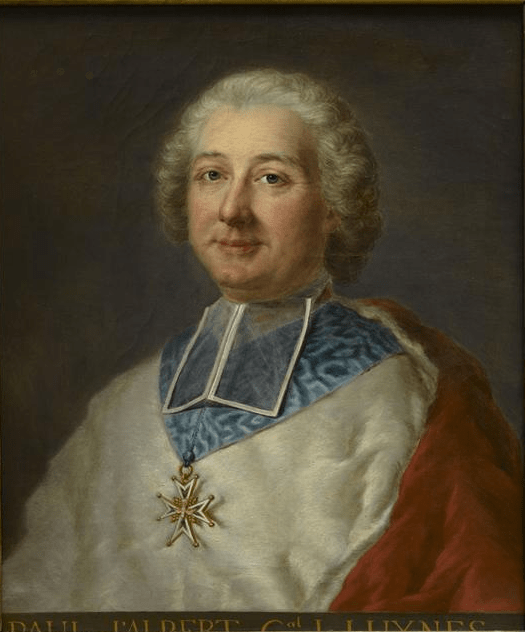
A Wilton House interior

I thought it would be a great addition to this collection of short histories of ducal families to be able to include one from Wales, even if it is slightly cheating since the Jacobite dukedom, even if formally recognised, only lasted from 1689 to 1748. And it seems that the Herberts aren’t Welsh in origin anyway, but came—like most of the ruling lords in this region—from northern France. Or at least that is how traditional histories always portrayed them. More recent studies (perhaps with a nationalist bias?) name them as descendants of a cadet prince of the royal house of Gwent (extinct by the 1070s). Other stories say they were the offspring of one of the many illegitimate sons of King Henry I of England (perhaps with Nesta, the Welsh princess of Deheubarth). But if we stick with the traditional version, we get the fascinating idea that this was one of the very few Anglo-Norman dynasties who descended not from the Norman warlords, nor from the Frankish feudal nobility, but from the royal house of France itself.

the arms of the Herberts

One of the great-grandsons of Emperor Charlemagne, Pepin II, was not given a royal throne like most of his cousins, but instead a clutch of lordships in the north of France, what is now eastern Picardy, which were then formed into a county, Vermandois. From him descend the line of the counts of Vermandois, which lasted until the 11th century (or beyond, in the form of the house of Saint-Simon, or so it was claimed—see the entry for the Dukes of Saint-Simon). Several of these counts were known as Heribert, and the last one, Heribert V, had (it is claimed) a younger brother, Pierre, whose son Herbert came to England to make his fortune, and served as Lord Chamberlain to the Conqueror’s son, King William Rufus. His son, Herbert FitzHerbert, was Lord Chamberlain of King Stephen, followed by still another Herbert FiztHerbert, Lord Chamberlain for King Henry II. These latter two made important marriages with women connected to the Welsh borderlands of Hereford and Shropshire: Sybil Corbet and Lucy of Hereford. By the early 14th century, the FitzHerberts were created barons, though the main line died out by the end of the century.

One of their younger sons, Peter FitzHerbert of Chewton (d. 1323), is the claimed link between the Frankish (or Carolingian) FitzHerberts and the Welsh Herberts, which I am not going to attempt to untangle here. Peter married a daughter and heiress of the Lord of Llanllowell in Monmouthshire, and their descendants began to use Welsh naming practices (‘ap’ meaning ‘son of’): Gwyllim ap Jenkin of Gwarinddu (alias Herbert) (living 1350) is seen as the progenitor of the modern house of Herbert. This puts him in the right place (Monmouthshire), to be possibly descended from the Welsh princes of Gwent, as above, but also to become established in the environs of Raglan Castle, the Herbert stronghold for centuries.

Raglan Castle

Raglan, or the “Great Tower of Gwent” was one of the chief fortresses on the borders between England and Wales. It is still a sight to behold, though in ruins since the 17th century, and one of the great models of fortification of the late Middle Ages. It was acquired and rebuilt by Gwyllim’s grandson, Sir Gwyllim ap Thomas, ‘Y marchog glas o Went” (the Blue Knight of Gwent) , who had risen through the ranks first as steward of the lordship of Abergavenny and Sheriff of Cardigan, Carmarthen and Glamorgan, then named as Chief Steward of the Duke of York’s estates in Wales, 1442, and member of the Yorkist military council, before he died in 1446. His wife was Gwladys ferch Dafydd Gam, known as the ‘Star of Abergavenny’, praised by Welsh poets, of whom she was an important patron. Their son, another William (‘Black William’), who adopted the surname Herbert, in the English style, continued the family’s loyal support of the Yorkist cause, and was rewarded, first with a barony (Herbert of Raglan), then the Order of the Garter and possession of the Pembroke Castle (in southwest Wales), all in 1461. He was also, importantly, given wardship of the young Henry Tudor (the future King Henry VII), who was born at Pembroke, and in 1468, created Earl of Pembroke, one of the oldest Welsh earldoms, first held by Gilbert de Clare in the 1130s.

Pembroke Castle

The first Herbert earl of Pembroke was named Justiciar of all of South Wales, but within a year was captured and executed by the Lancastrians at the battle of Danesmoor (or Edgecote Moor). His son the second Earl was forced to give up the lands and title of Pembroke, in exchange for another earldom, Huntingdon. He was confirmed in his father’s office as Justiciar of South Wales, and even married the sister of the Queen, Mary Woodville. But he had only a daughter, Elizabeth, who married Charles Somerset, 1st Earl of Worcester, and took both the barony of Herbert and Raglan Castle to the Somerset family (later Dukes of Beaufort) where they stayed until the 1980s.

But a son of the 2nd Earl’s illegitimate half-brother, Sir William Herbert, miraculously raised the family’s fortunes once more as an ally and friend of Henry VIII—he even became yet another royal brother-in-law, like his uncle, through marriage to Anne Parr, sister of Queen Katherine. He served as the King’s Chief Gentleman of the Privy Chamber and Receiver of the King’s Revenues, and was rewarded with confiscated monastic lands at Wilton Abbey, near Salisbury, and was named as one of the guardians of King Edward VI when King Henry died in 1547. Young Edward created him Baron Herbert of Cardiff (the castle there had also been given to him by Henry VIII), and 1st Earl of Pembroke in 1551. In the 1540s and 50s, he occupied himself with the rebuilding of Wilton Abbey.

the first Earl of Pembroke of the 2nd creation

Wilton House was a large Tudor mansion—today only the tower of that house survives. In the 1630s, Inigo Jones replaced one of the wings, and more of it was renovated in the early 19th century by James Wyatt. A Palladian bridge built on the grounds in the 1730s has been much copied at other English country houses. It is still the Pembroke family seat.

Wilton House (Tudor tower in the centre)
Wilton House, Palladian Bridge

The first Earl of Pembroke of this second creation had two sons. The elder, Henry, continued the family tradition of marrying royal in-laws, this time Catherine Grey, sister of Queen Jane, in 1553. This of course turned out to be a very bad idea, and the marriage was swiftly annulled after Jane was removed from power. The younger son, Edward, purchased the lands of another branch of the Grey family, including Powys Castle, so it is important we return to his line below.

The 3rd Earl of Pembroke was Lord Chancellor for King James, and Chancellor of the University of Oxford, and had a new college (Pembroke College) named for him. His brother was one of James’ favourites, and was created Earl of Montgomery in 1605, then succeeded as 4th Earl of Pembroke—his descendants have ever since been the earls of Pembroke and Montgomery, two Welsh earldoms for one family. The 8th Earl was First Lord of the Admiralty and Lord Privy Seal in the 1690s under William & Mary, then Lord President of the Council, Lord High Admiral and Lord Lieutenant of Ireland under Queen Anne. It is surprising to me he wasn’t created a duke, in this period when loyal supporters of the Glorious Revolution were being promoted in relatively large numbers.

the 3rd Earl of Pembroke, in the central courtyard of the Bodleian Library, Oxford University

This brings us to the cadet branches. One of these, Herbert of Chirbury, had been separate since the mid-15th century, and maintained their lands in the borderlands of Shropshire and Montgomeryshire. They held the castle of Montgomery itself, and were often appointed sheriff of the county. The senior line were created Baron Herbert of Cherbury (or Chirbury) in 1629, while the second line became more prominent, briefly, as both supporters and enemies of King James II. Of the two sons of Sir Edward Herbert, Lord Keeper of the Great Seal for Charles II, the younger, also Sir Edward, became attached to James when he was Duke of York, and was subsequently raised by James once he became king to Lord Chief Justice of England, 1685. He fled England with his master in 1689, and served as Lord Chancellor of the exiled Jacobite court in France (and was created Earl of Portland). In contrast, the older brother, Arthur, had been dismissed as an admiral by James, and went to Holland to encourage William of Orange to invade and take the throne—he was named commander-in-chief of the fleet, and Baron Herbert of Torbay (where William landed in 1688), then Earl of Torrington and First Lord of the Admiralty. Neither Portland nor Torrington left descendants, so these titles became extinct. But another Jacobite of this generation did.

This was the ‘Duke of Powis’, a descendant of the cadet branch noted above, founded by Sir Edward Herbert of Powys Castle. This castle, noted as one of the only major castles built by the Welsh in that great era of great castle building by the English in Wales (think Carnarvon, Harlech, etc), was built in the late 13th century by Welsh prince Gruffydd ap Gwen Wynnwyn, a supporter of Edward I, who convinced him to give up his royal title in exchange for an English barony (La Pole, or Pool, later renamed Welshpool). Soon after, this barony passed to the Charleton family, and then in the 1530s to the Greys, who sold it to this branch of the Herberts—notably, Catholics—in the 1580s. Pole Castle became known as Powys or Powis Castle, and the family were raised to the peerage as Baron Powis in 1629.

Powis Castle, one of my favourite spots in Britain

The 3rd Baron Powis, William Herbert, was created Earl of Powis and Viscount Montgomery in 1674, and was one of the Catholic Lords accused of treason in the Titus Oates Plot and spent six years in the Tower of London from 1678. After his release, he became close to the Catholic king, James II, who raised him a notch to Marquess of Powis in 1687. When James was deposed the following year, Powis followed him into exile and was created Duke of Powis, and served as Lord Chamberlain and Lord Steward of the household and one of the King’s principal advisors until his death in 1696. His wife, Lady Elizabeth Somerset (of the family who now owned Raglan Castle), had helped him spirit Queen Mary and the infant Prince of Wales out of the country to France, and would serve as her principal Lady in Waiting at the court at Saint-Germain, and governess of the Prince of Wales, until she died in 1691.

William Herbert, 1st Duke of Powis

Their son William, known as ‘Viscount Montgomery’ during all of this turmoil, was at most a lukewarm supporter of James and the Jacobites—unlike some of his more avid sisters—and was arrested a few times, but released as being seen as ‘not dangerous’. He was restored to his father’s title Marquess of Powis, in 1722, and the confiscated estates, including Powis Castle, as well as Powis House, their London residence on Great Ormond Street (demolished at the end of the 18th century). He was known to Jacobites as the ‘2nd Duke of Powis’, and indeed he made some weak claims in Parliament to request recognition of this title, but without success. He died in 1745, followed by his son, another William, in 1748. The heiress, Barbara, married her cousin from the Chirbury line (see above), Henry Herbert, who was re-created Earl Powis in 1748 (and Viscount Ludlow, in Shropshire).

This line too came to an end, in 1801, and the estates passed (and titles again re-created) to another son-in-law, Edward, Lord Clive, son of the famous ‘Clive of India’, one of the founders of the British Raj. Their descendants took the surname Herbert, and continues to present. Powis Castle is their seat, and one of its centrepieces is the Clive Collection of artefacts from India. The current Earl of Powis (the 8th), John Herbert (b. 1952), also bears the titles Baron Clive of Plassey (in County Clare, Ireland) and Baron Herbert of Chirbury (among others). A junior branch have been earls of Plymouth since 1905 (with the surname Windsor-Clive).

This brings us to the 20th century, and back to the main senior lines of the House of Herbert. The brothers Sidney and David Herbert were part of the fashionable set of the interwar years—Sidney (who later succeeded his father as 16th Earl of Pembroke) was Private Secretary and Comptroller of the Duchess of Kent (the very beautiful Princess Marina of Greece), while David was a socialite and designer, known as ‘the Queen of Tangiers’, intimate with fashionable writers like Paul Bowles. Henry Herbert, the 17th Earl, was a film and television producer…which leads conveniently to their cousins, the Earls of Carnarvon, who opened their castle, Highclere, to the ITV production team for ‘Downton Abbey’.

Highclere Castle

Highclere, in Hampshire, is mostly a 19th-century creation, a ‘Jacobethan’ fantasy constructed around an earlier house built in the 1670s by Sir Robert Sawyer, Attorney General for Charles II (whose daughter married the 8th Earl of Pembroke). There had been a residence here much earlier, ‘Bishop’s Clere’, which belonged to the Bishop of Winchester in the Middle Ages. Charles Barry, builder of the Houses of Parliament, rebuilt it in the 1840s for the 3rd Earl of Carnarvon.

This branch of the Herberts had been created Baron Porchester in 1780 and Earl of Carnarvon in 1793 (though I don’t think there is any actual connection to that county in Wales). The first Earl was Master of the Horse for George III, 1806-07, and the horsey connection would continue with ‘Porchey’ as seen above. the 4th Earl was Secretary of State for the Colonies in the 1860s-70s, then Lord Lieutenant of Ireland, 1885-86. His sons both had a very colonial outlook, perhaps, and while the elder son (the 5th Earl) became a premier Egyptologist (as noted above), the younger, Lord Aubrey, became an avid orientalist and travel writer, and an advocate for Albanian independence from the Ottoman Empire (and was indeed offered the throne of Albania two times, in early 1914 and in 1920). The Queen’s racing manager succeeded his father as 7th Earl, and died in 2001. The current Earl of Carnarvon, George, and his son, Lord Porchester, realised the great financial windfall a television company could bring by using the house as a set, and particularly to a house badly in need of refurbishing by the end of the 20th century. Downton may not be set in Wales, and its owners not dukes, but it does seem a residence suitable for a family descended from ancient Welsh kings, and maybe even from Charlemagne himself.

Lord Carnarvon and Howard Carter open King Tut’s Tomb in 1923

(images Wikimedia Commons or other public domain)