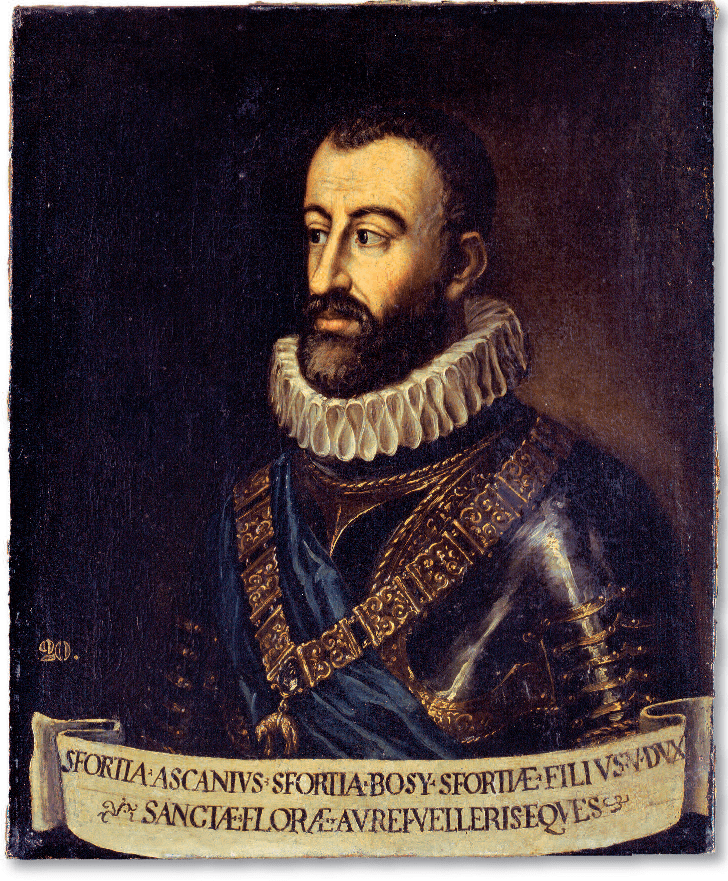
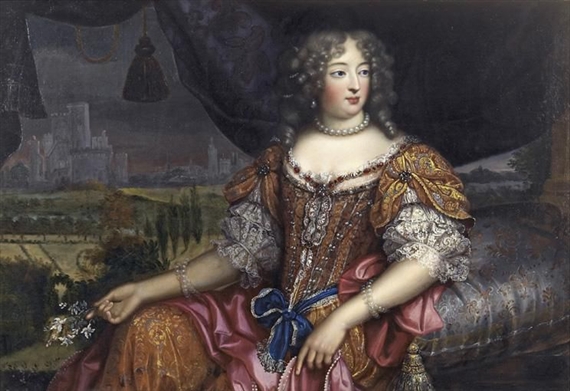
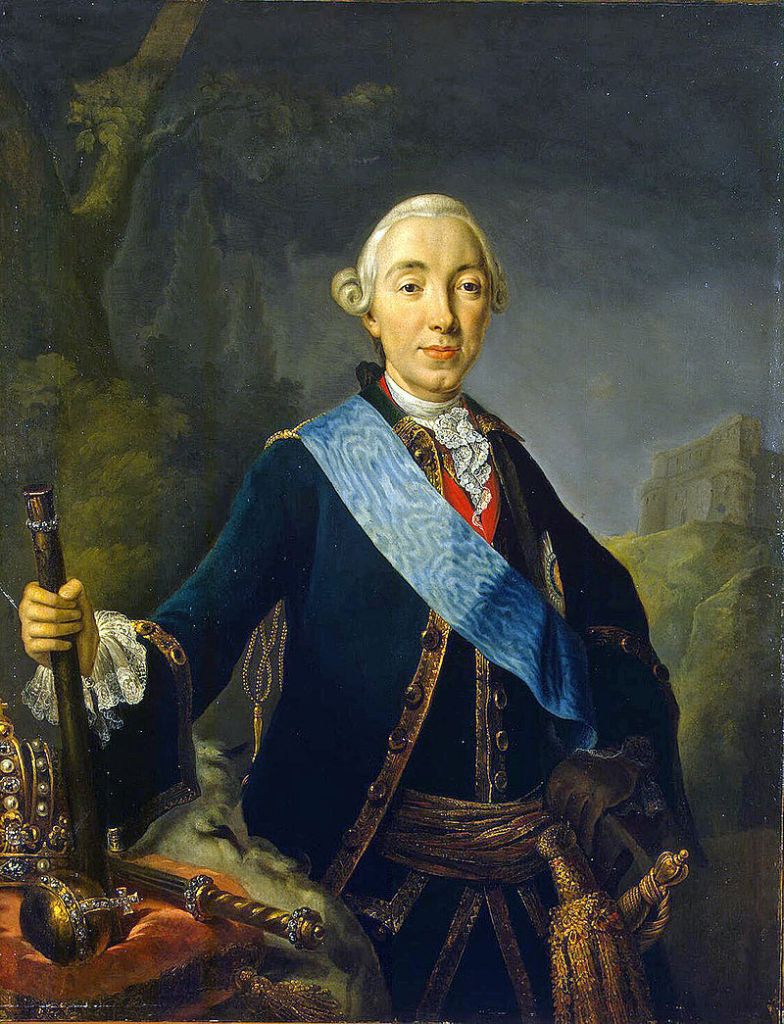
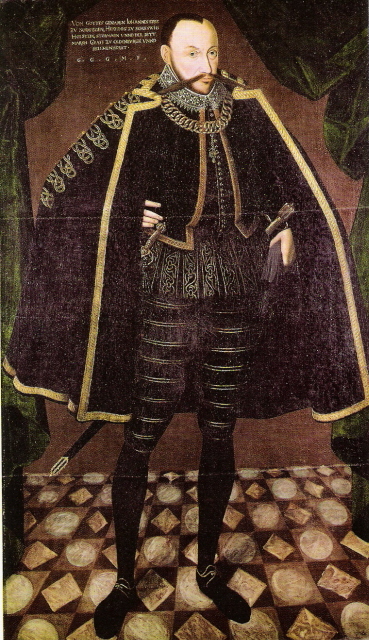
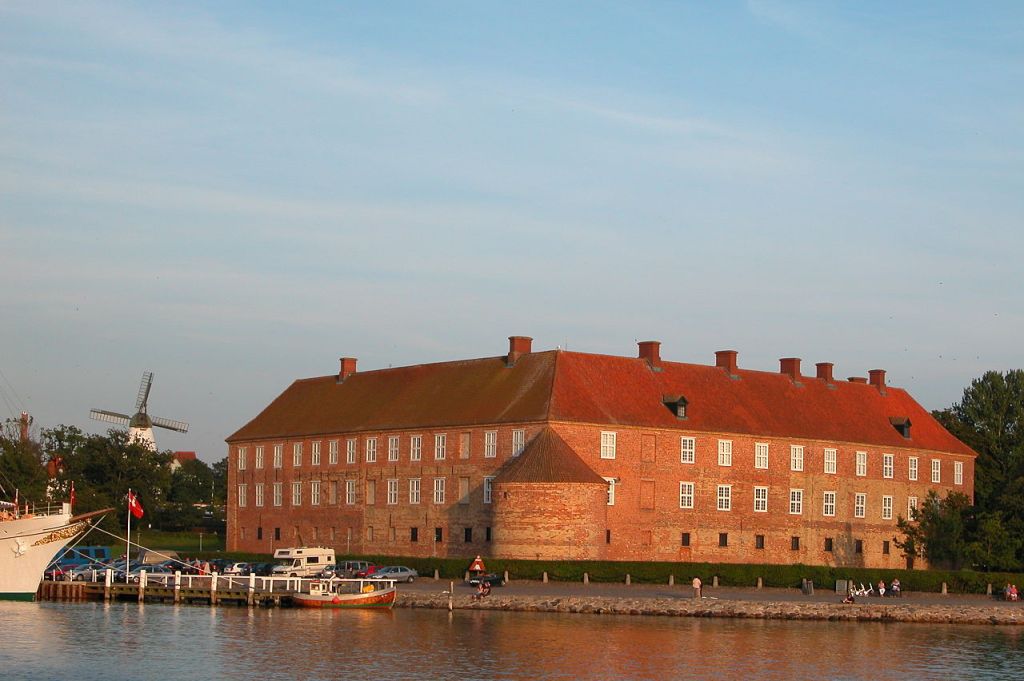
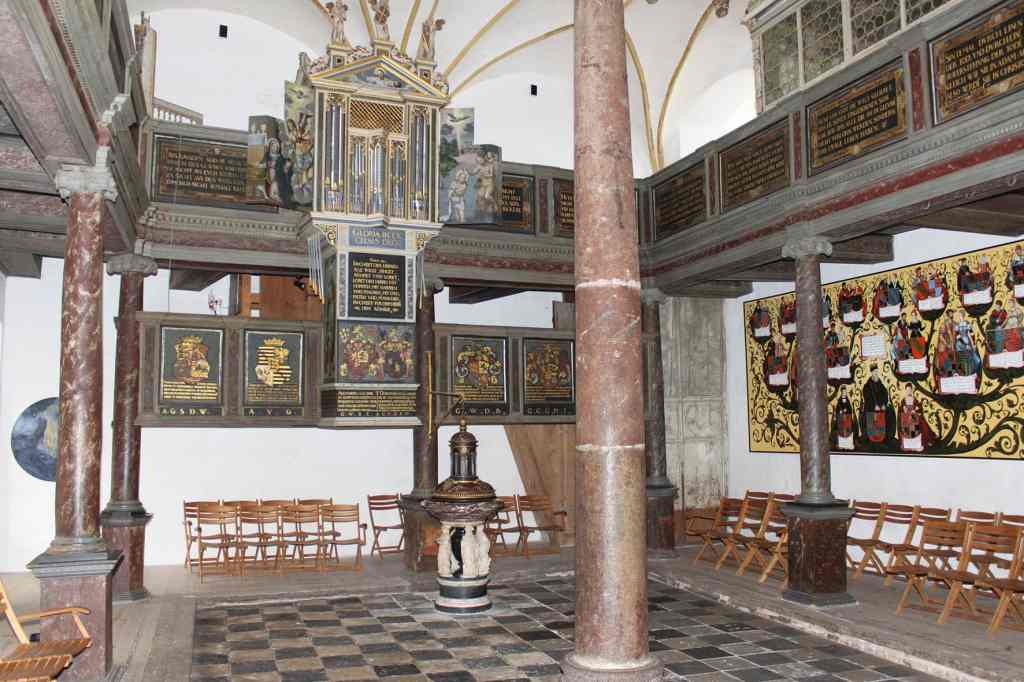
Dukes of Saint-Simon

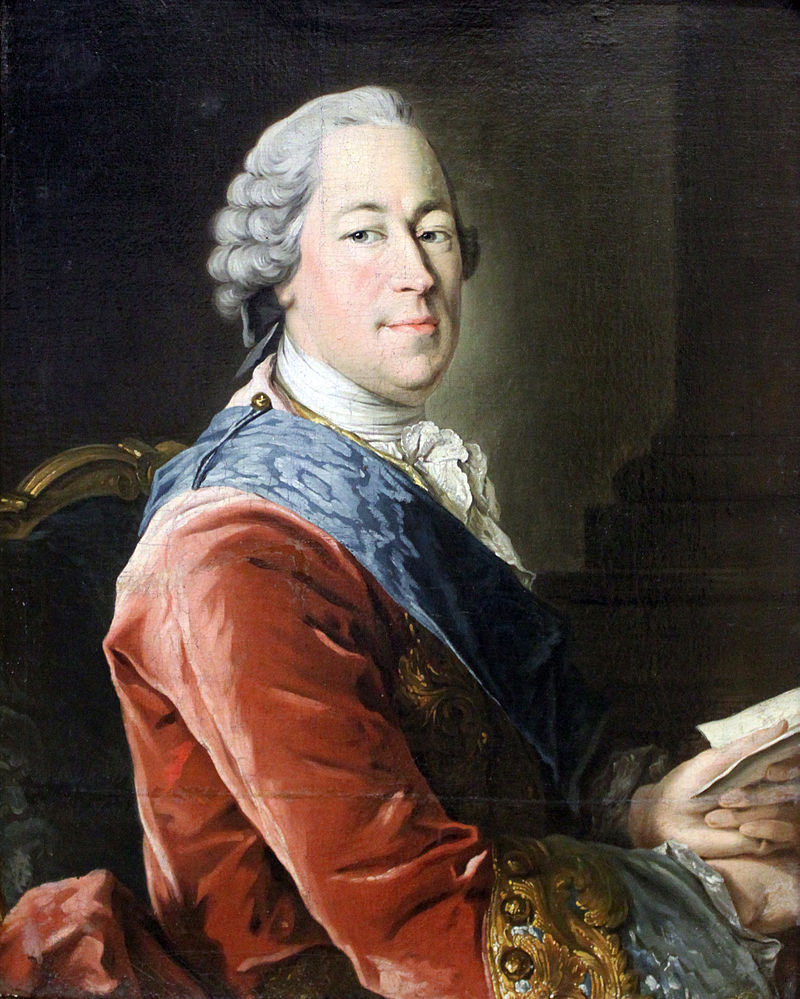
The Duke of Saint-Simon is one of the most famous memoirists of all time, and the most meticulous and detailed account available to us for the court of Louis XIV of France. He’s not always the most reliable source, as he particularly enjoys boasting, about his powerful friends, about his own intellect, and so on. One of his most persistent boasts in his memoirs is that his lineage is impeccable, in ancientness and nobility, and that he therefore deserved to be treated with the utmost of deference (which he rarely got), and deserved a seat at the table of royal government. Yet how much do most people interested in the history of Versailles know about this lineage?  Who were these exalted ancestors of the Duke of Saint-Simon?  Most specialists of the history of the French court or of French literature of the 18th century probably could not tell you.

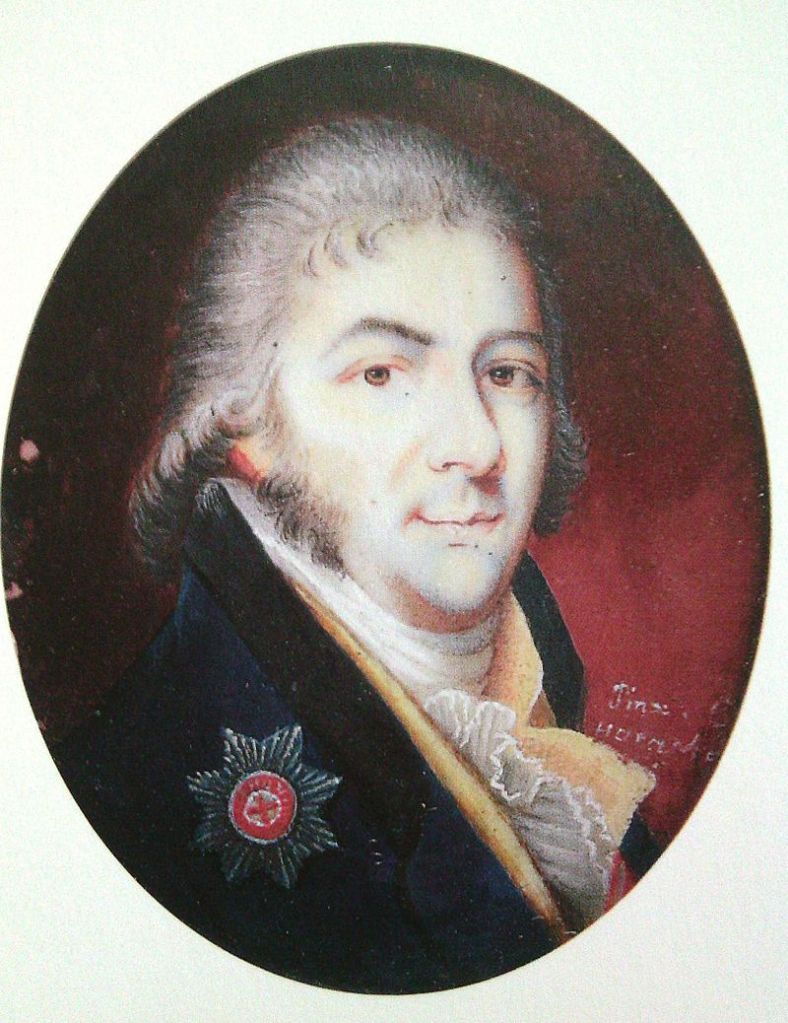
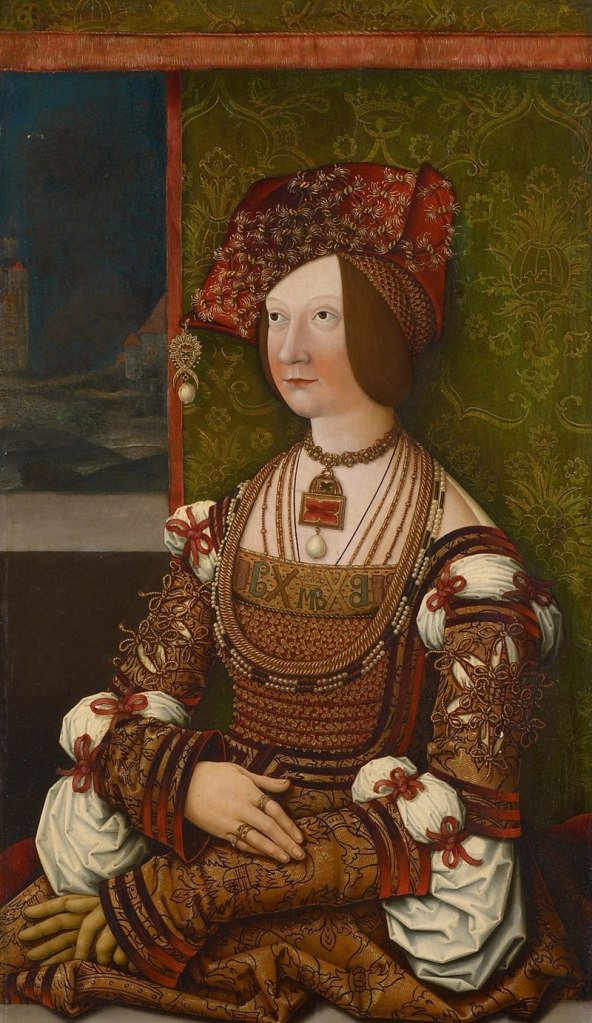
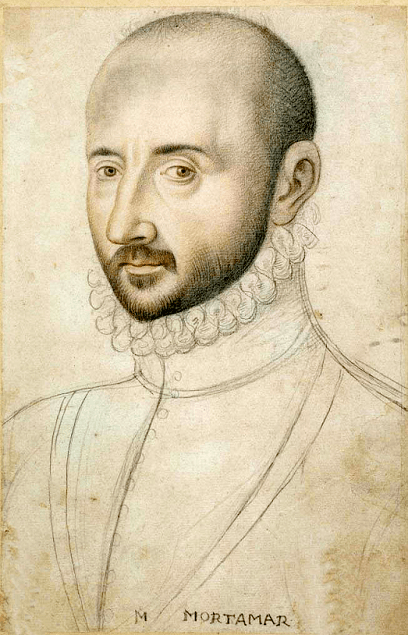
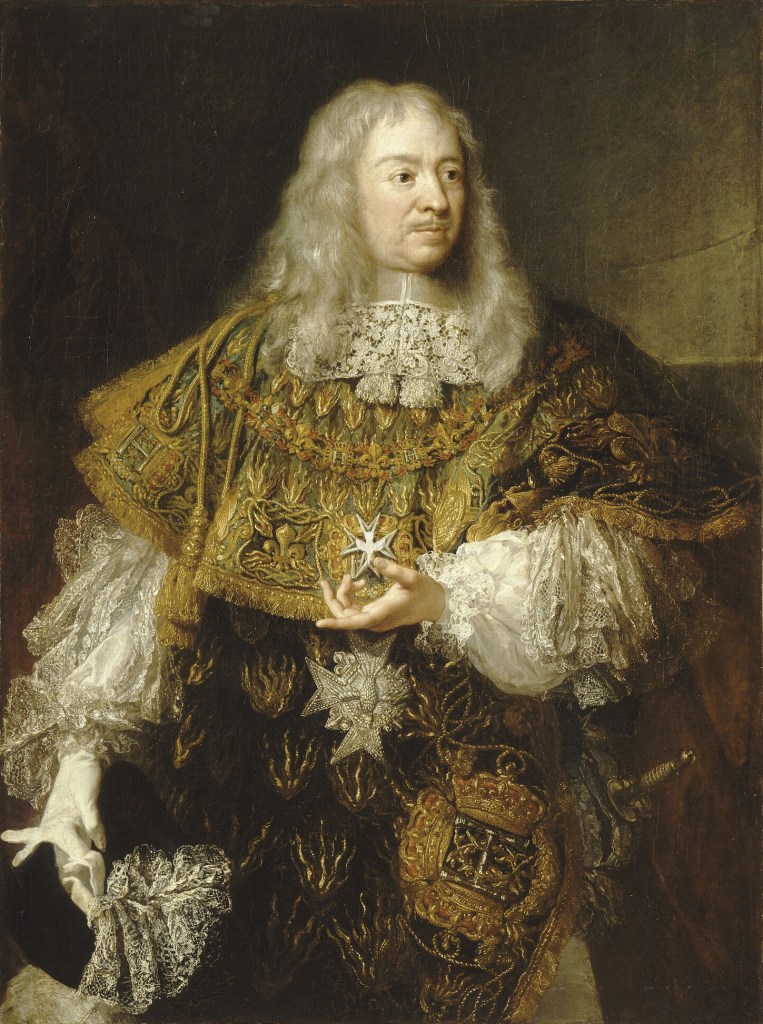
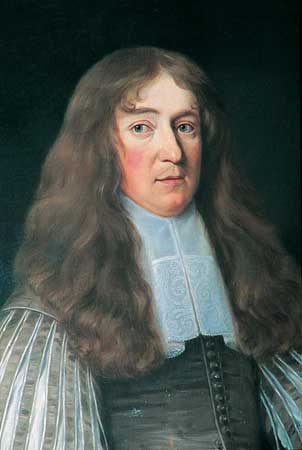
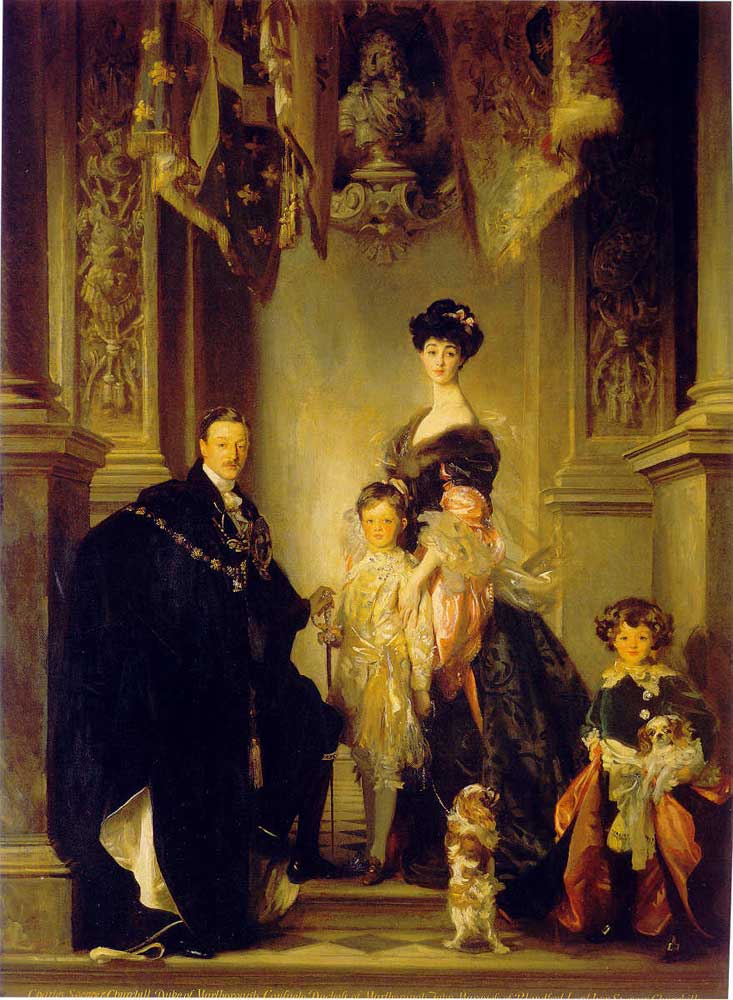
the Duke of Saint-Simon, by van Loo, 1728

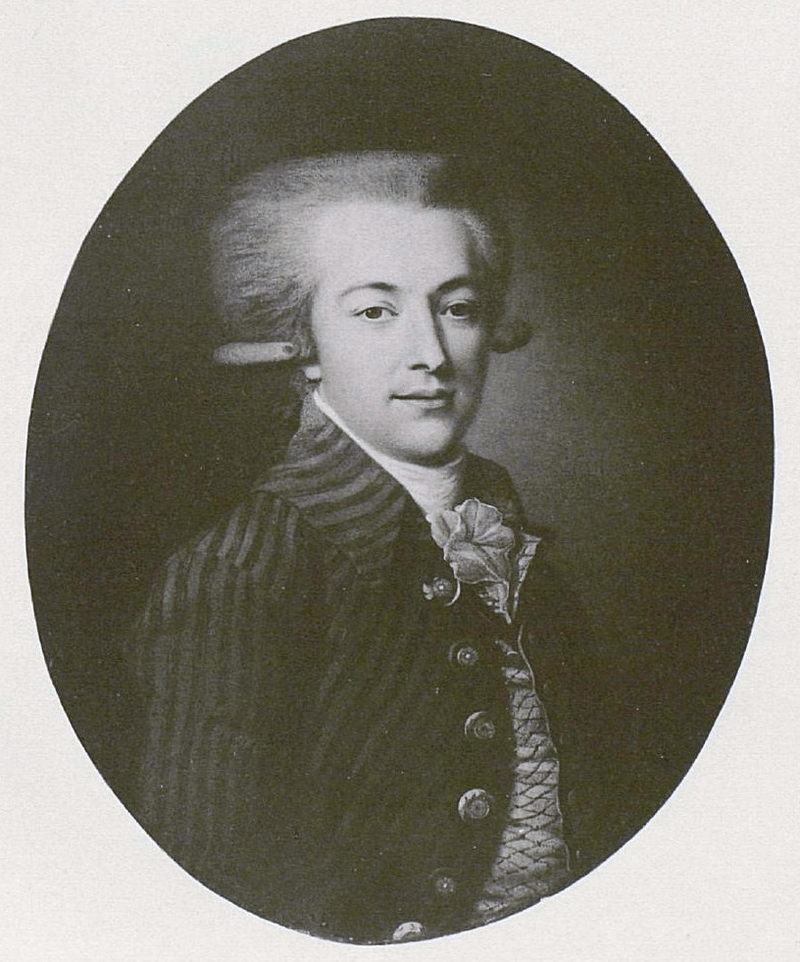
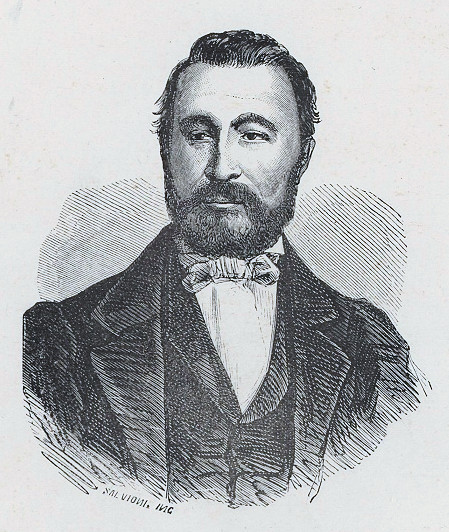
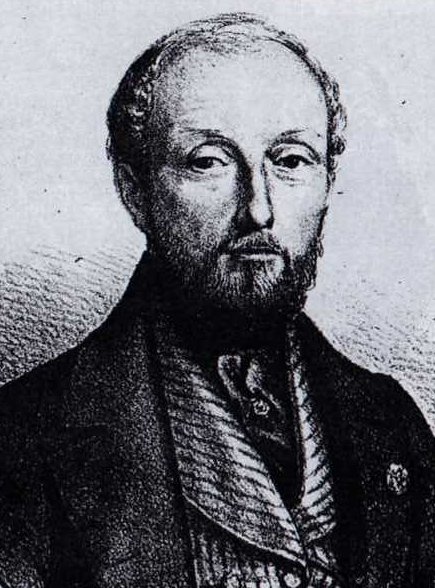
On another level entirely, the name Saint-Simon means something else to historians of a different stripe, those who are interested in the social and political movements of the early nineteenth century. ‘Saint-Simonians’ were those who followed the ideologies of the Count of Saint-Simon, a political and economic theorist who called for a form of socialist utopia in which science and industry would drive society. The two men, the Duke and the Count, were in fact distant cousins, though their ideologies were worlds apart.

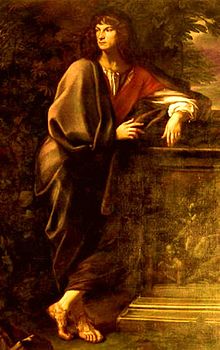
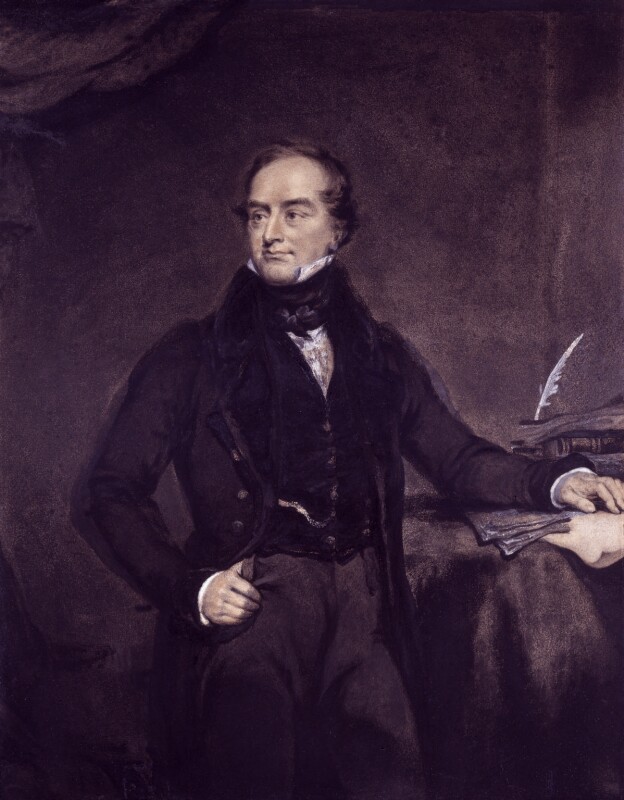
the Count of Saint-Simon

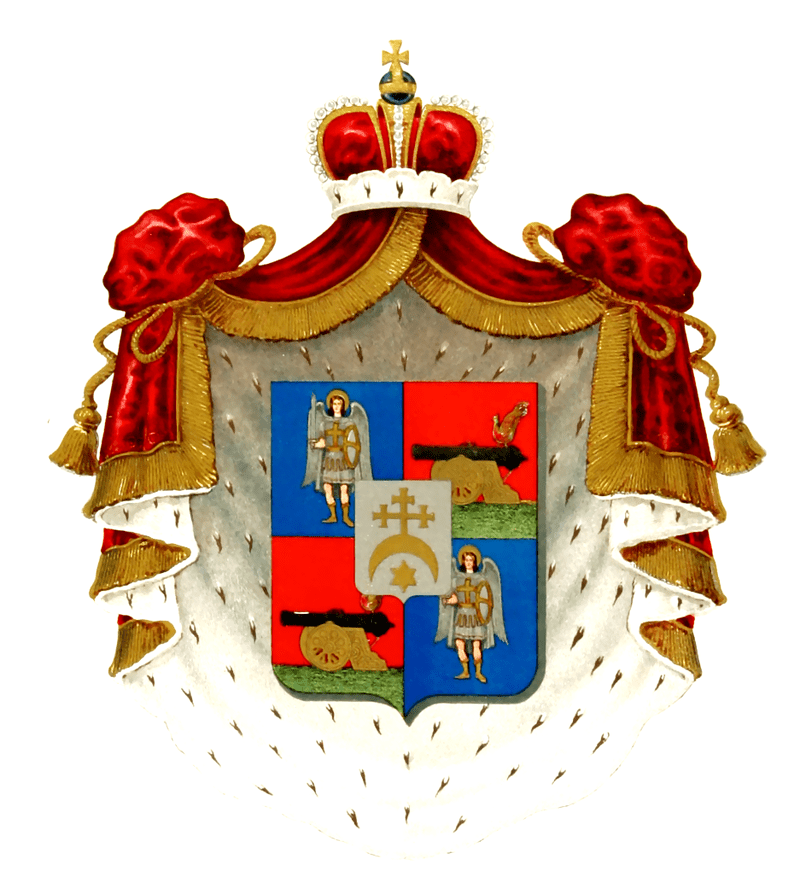
Both the Duke of Saint-Simon and the Count of Saint-Simon were members of the family of Rouvroy, which did indeed have ancient roots. The small towns of Rouvroy and Saint-Simon are both in the far north of France, in Picardy—the village of Saint-Simon in particular is in the easternmost part of the Province of Picardy, the Vermandois, one of the most ancient feudal counties of France.  The earliest known members of the family emerge from medieval documents as having close ties to the counts of Vermandois, as vassals, officers and agents, and this proximity is what probably led to the exaggeration by the Duke of Saint-Simon in his writings that they were not just servants of the Vermandois dynasty, but members, from a junior branch.  What makes this claim even more noteworthy is that the House of Vermandois itself was a junior branch of the Imperial dynasty of Charlemagne.  By claiming direct lineal kinship with the Carolingians, Saint-Simon was, not very subtly, asserting that his family had a better claim to the French throne than Louis XIV, whose ancestor, Hugh Capet, ‘usurped’ the throne from the legitimate Carolingian heirs in the late 10th century. (see the chart at the bottom of this page)

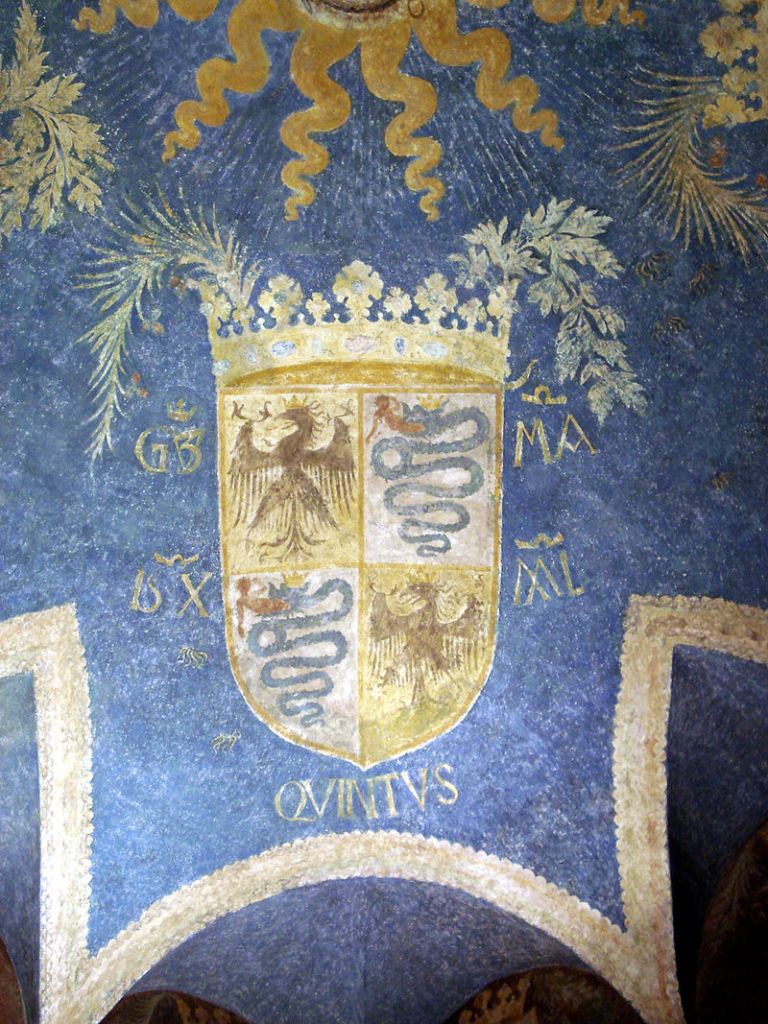
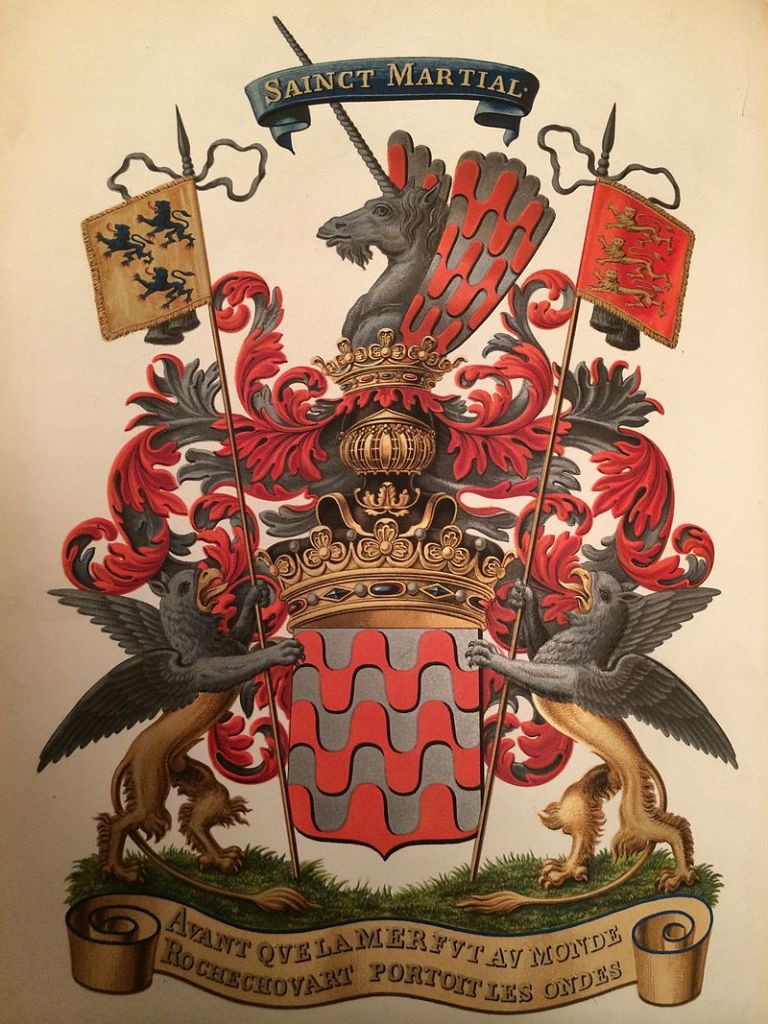
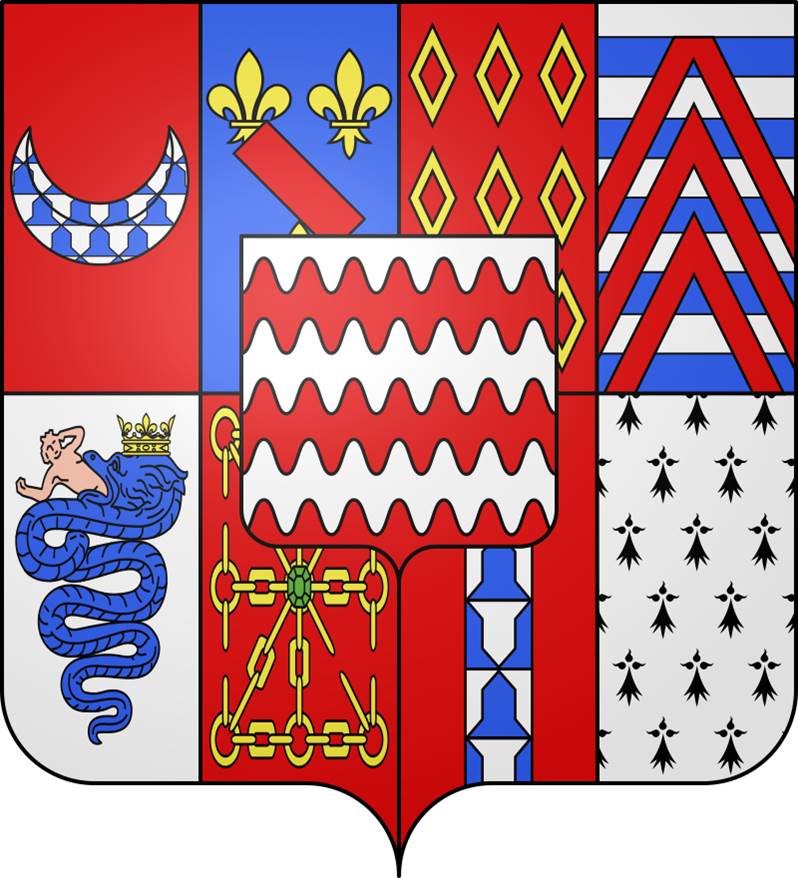
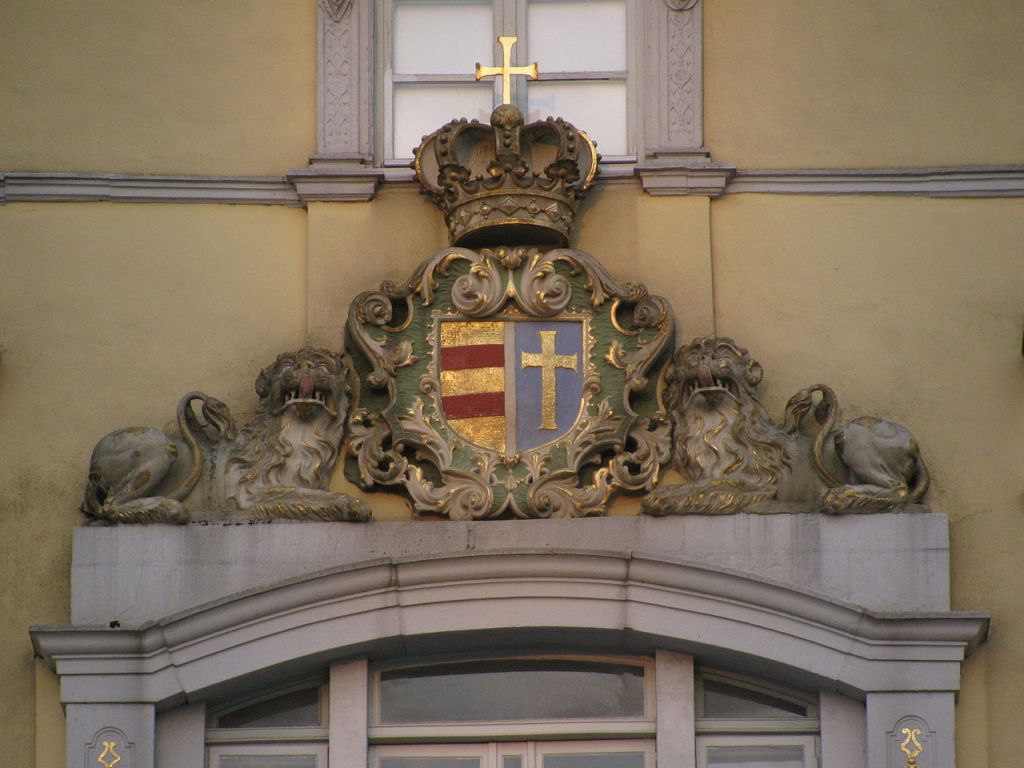
coat-of-arms of the Marquis de Saint-Simon (uncle of the memoirist), which includes the blue and gold checkers of the counts of Vermandois, with French fleurs-de-lis)

Upon closer examination, the weak link in this dynastic story seems to be a certain Eudes de Vermandois ‘the foolish’, who, according to Père Anselme’s massive royal genealogy of the late 17th century, only appears in some accounts, while his more well-documented sister, Adèle, is known to have transmitted the county by marriage back into the royal house of France. Anselme adds that those who mention Eudes explain that he had been disinherited in about 1077 because he was ‘of little understanding and without government’ (ie, he was probably mentally ill). Nevertheless, Eudes is said to have married an heiress called Avide, daughter of the Lord of Saint-Simon. He adopted her name and started a new dynasty. The last lord of Saint-Simon of this line died around 1330, leaving his lands to his sister, Marguerite, who in 1332 married Mathieu de Rouvroy, ‘le Borgne’ (‘one-eyed’). Mathieu had lost an eye in battle in service to the Capetian monarchs in battles along the northern frontier of Picardy and Flanders, and was appointed governor of Lille. His ancestors had filled important leadership roles like this, but the most prominent were on the far side of the Kingdom, Renaut and Alphonse both serving as governors of the Kingdom of Navarre in the late 13th and early 14th centuries. Mathieu’s son, Jean, would also lose an eye in battle, and similarly sported the nickname ‘the one-eyed’, before he was killed at Agincourt in 1415. Those looking for physical remains of the Rouvroy de Saint-Simon family won’t find very much in Picardy. Fragments of ancient castles can be found at Saint-Simon, Rouvroy, Clastres and other family estates, but most of the land today is wide rolling countryside. For imposing châteaux, we’ll need to travel south, to later centres of power, to the northwest and southwest of Paris (Sandricourt, La Ferté-Vidame), and even further to the lands northeast of Bordeaux (Ruffec and Giscours)—though even with these, they are either ruins or much later rebuilds.

But before the family expanded south, they expanded further north. Before he died, Jean de Rouvroy married a Flemish heiress, Jeanne d’Haverskerque, Lady of Rasse (or Râches, in Flanders), and their two sons founded the two main lines of the House of Rouvroy-Saint-Simon. The elder, lords of Saint-Simon and other properties in Vermandois and Picardy, rose through service to the late medieval dukes of Burgundy (who governed Picardy) and kings of France, were named viscount of Clastres, but never fully joined the ranks of the grandees of France until the eighteenth century, aided by the pre-eminence of the junior branch, the lords of Rasse. We will return to the senior branch below. The junior branch of Saint-Simon-Rasse held several lordships near Orchies and Douai, and were appointed to important military posts along the sensitive frontiers of Flanders, until one of these rose to the high rank of maréchal de camp in 1591. His son, Louis, was also a commander in the wars of religion in the 1580s-90s, and, like many nobles, bankrupted his family in supplying his own men with food and supplies. His three sons, however, managed to rebuild, and even surpass the family fortunes, with the middle son in particular, Claude, becoming a royal favourite.  This was the father of the famous memoirist.

Claude, first Duke of Saint-Simon

Claude de Rouvroy, Comte de Rasse, was born in 1607, and was appointed to be a page in the household of the Dauphin Louis. Once the Dauphin became king, as Louis XIII, Claude remained one of his close companions, a Gentleman of his Chamber, named Premier Equerry of the King in 1627, then only a year later, Master of the Wolf Hunt of France (Grand Louvetier), one of the Great Offices of the Crown.  Like most Bourbons, Louis XIII passionately loved hunting, so it is significant that his closest friends were named to positions like Master of the Hunt, Master Falconer, etc; this ensured that they were always near him in his day-to-day activities. Claude was also one of the young men of the court best known as a dancer, an important and often politically charged evening pastime, and indeed, he remained a protector of musicians for the rest of his life. Gossips who always wondered why the King had thus far not produced any children with the Queen (and why he had no mistresses) naturally jumped to the conclusion that the King was having an affair with the attractive Claude de Rouvroy.  And maybe he was.

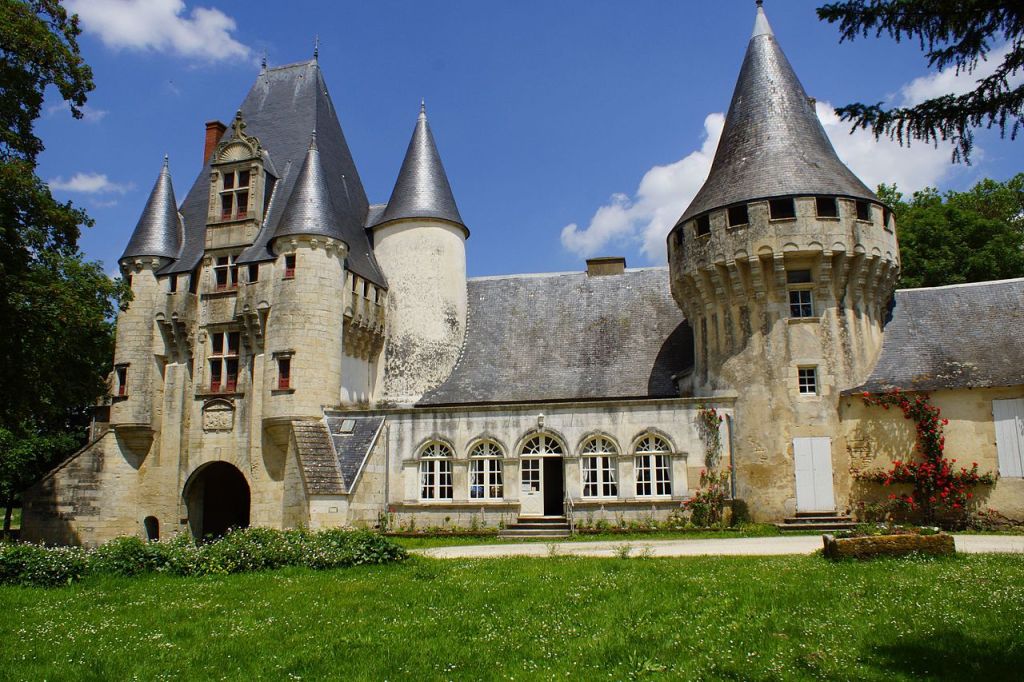
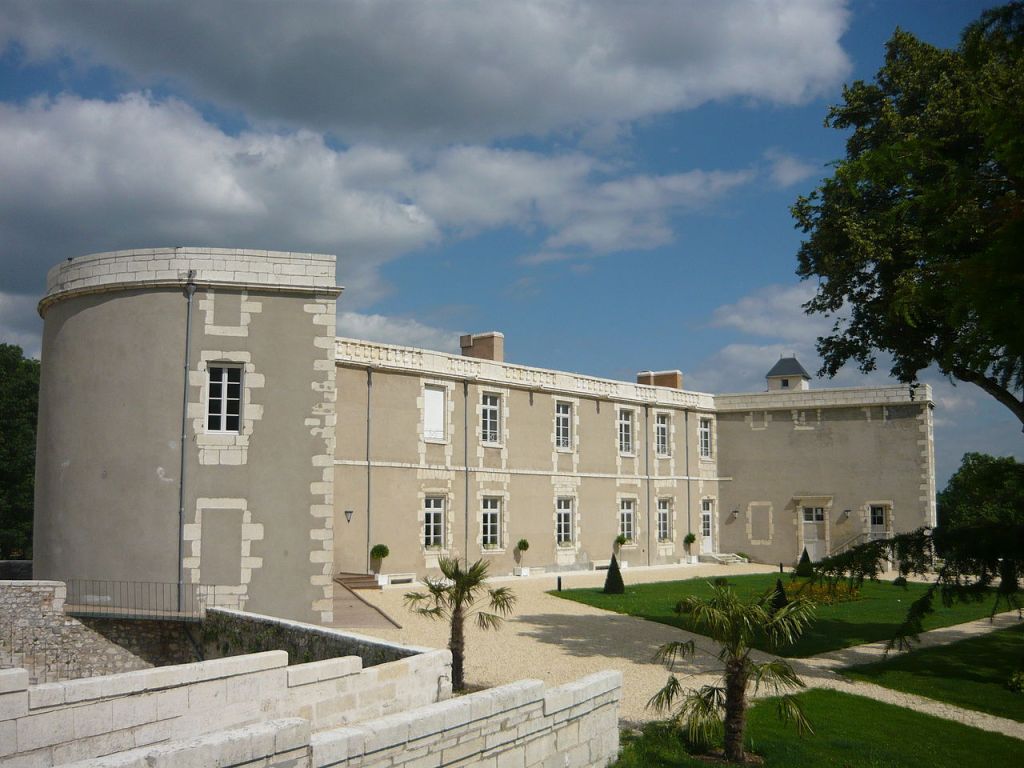
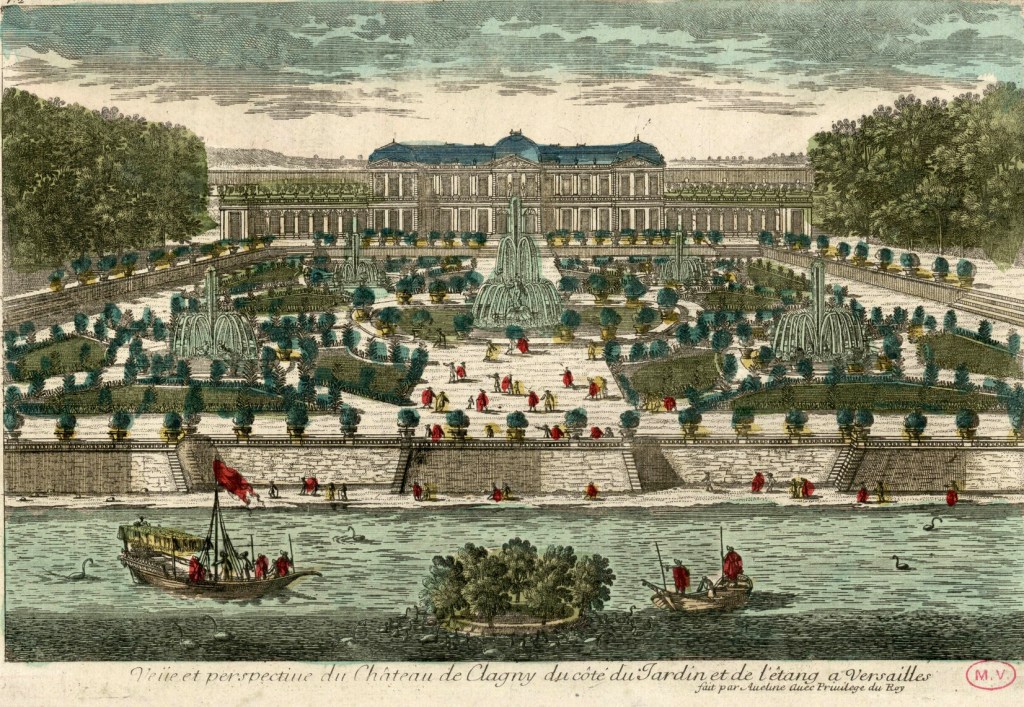
In 1630, Claude was named governor of the fortress of Blaye, a very lucrative post as one of the keys to controlling the defense of Bordeaux and Aquitaine, and governor of the of royal châteaux of Versailles and Saint-Germain-en-Laye.  By 1635 he had accumulated enough money through his various court offices and government appointments to purchase a grand estate at La Ferté-Vidame, in the former province of Perche (southwest of Paris, bordering on Normandy) which came with an interesting title of ‘vidame’ de Chartres.  The cathedral town of Chartres was about 50 km to the east, and the vidames were secular lords who aided the bishop in the administration of his lands. The lords of La Ferté were vidames of Chartres from the early 12th century; their castle was older, built in the 10th century, and, as rebuilt in the 14th by the Vendôme family, would become the Rouvroy family’s primary country seat for the next century and half.

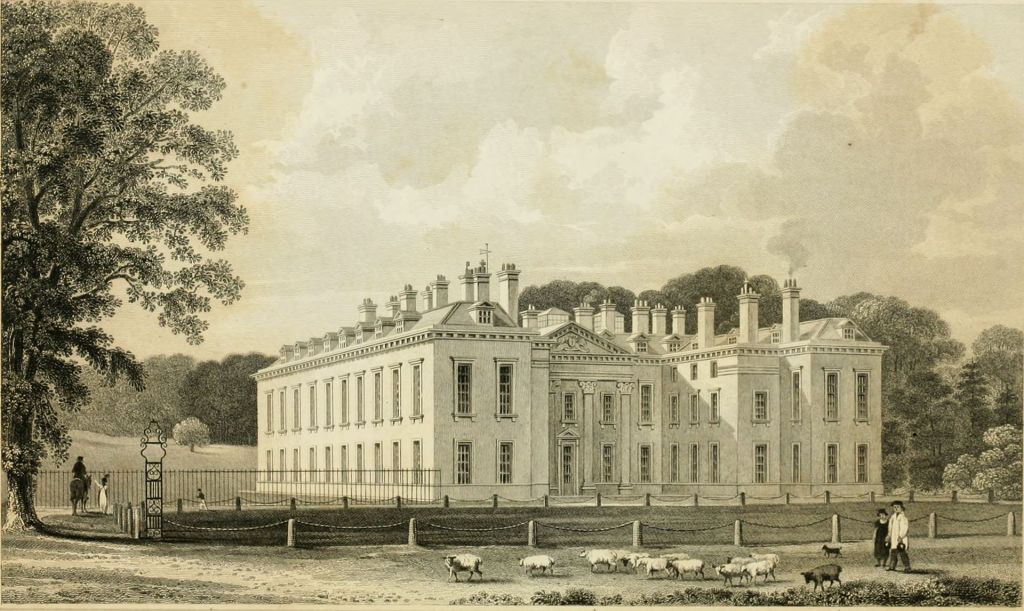
La Ferté-Vidame in the 1750s

The royal favourite, Claude de Rouvroy, also convinced his distant cousins to cede the original family lands to him—the seigneuries of Saint-Simon, Clastres and others in Vermandois—and these were erected into a duchy-peerage by the King in 1635. But the new Duke of Saint-Simon was almost immediately disgraced—for what sounds like a pretty flimsy reason of defending his uncle who had failed to defend a key fortress in the north, though 1636 was a fairly stressful year for the King, as Spanish armies came within a hair’s breadth of invading the Isle de France and Paris itself. I wonder if it didn’t have more to do with the fact that Cardinal Richelieu, the real power in France, was finding it difficult to control the King’s favourites and worked for their removal (one of Louis XIII’s only real ‘mistresses’, Louise de La Fayette, was also sent away later that year), in part so he could place his own creature within the King’s intimate circles: note the swift rise of the young and debonnaire Marquis de Cinq-Mars, a client of the Cardinal’s, was only a year later.

The 1st Duke of Saint-Simon retired to Blaye and did not return to favour at court until the King was on his deathbed in 1643 (and notably following the disgrace and horrific execution of Cinq-Mars in late 1642). The Duke’s son claims in his memoirs that the King, overjoyed with the reconciliation, promised to name his erstwhile favourite Master of the Horse (Grand Écuyer), one of the top court offices in France, and that he died before he could make it official. Saint-Simon firmly believed the office was then ‘stolen’ by Henry de Lorraine, Count of Harcourt, a favourite of the new Queen Regent, and it was then passed on to his son and grandsons in the reign of Louis XIV (they did in fact control this prestigious office until the Revolution).  This ‘theft’ (for which there is no real evidence beyond the word of Saint-Simon) is the source of many, many pages of outrage and bile in the Memoirs of Saint-Simon towards the House of Lorraine. In fact he did lose the position of Master of the Wolf-Hunt and that of Premier Equerry of the King, in the new regime of the Regent Anne, but one does wonder why exactly the former consort of Louis XIII disliked Saint-Simon so much.

The 1st Duke of Saint-Simon outlived his royal patron by fifty years (that’s right, fifty) but is almost never mentioned in the histories of the Regency of Queen Anne or the court of young Louis XIV. His elder brother, Charles, Marquis de Saint-Simon, was more prominent: a lieutenant general and captain of the château of Chantilly in the 1630s-50s, the primary seat of the Prince of Condé, first prince of the blood, and one of the most powerful men in the Kingdom. The Marquis also made the first marriage in the family from amongst the high aristocracy, Louise de Crussol, daughter of the Duke of Uzès, and Dame d’honneur of Queen Anne. Charles introduced his wife’s daughter from a previous marriage, Diane-Henriette de Budos de Portes, to his brother Claude, and they were married in 1644. But neither Charles nor Claude had a son to carry on the name or the title, so Claude remarried, at age 65, to try to beget an heir. The bride was the 32 year old Charlotte de l’Aubespine, Dame de Ruffec, daughter and co-heiress of the Marquis de Châteauneuf and Eleonore de Volvire, Marquise de Ruffec.  Ruffec was a large estate in Angoulême (now the Department of Charente) north of Bordeaux. A son, Louis (known as the Vidame de Chartres as heir) was born in 1675, but as he complains in his memoirs, just as his father was introducing him to the world of the court and helping to start his military career, he died in 1693.

the young Saint-Simon, as Vidame de Chartres, 1692, by Rigaud

The 2nd Duke of Saint-Simon, the memoirist, therefore had to make his own way. His aunts and uncles were dead, and his elder half-sister too, Gabrielle-Louise, who had married very well, to the Duke of Brissac, but died with no children. So Saint-Simon had no well-placed in-laws or cousins.  He was not entirely without support, however: the King was in fact his godfather, which entailed a certain level of protection, and certainly had a hand in his marriage, in 1695, to a daughter of another duke, and one very much in favour, Guy-Aldonce de Durfort, Duke of Lorges, Marshal of France. The new Duchess of Saint-Simon, Marie-Gabrielle, was said by many to be the more successful courtier of the couple, and it surely humiliated the Duke when, in 1706, the King talked about appointing him ambassador to Rome—finally a prestigious posting!—but his advisors counseled him sharply to do nothing without first seeking the advice of his wife.

the Duchess of Saint-Simon

The Rome posting never materialised, and the King never did give the Duke of Saint-Simon the kind of appointment he felt he deserved in his administration. Nor was his military career any more successful, and after being passed over for a promotion in 1702, he quit the army, and made a big show about it, thus losing any chances he may have had of ever returning to the King’s favour.  His wife, meanwhile, continued to thrive, and in 1710 was appointed Dame d’honneur (chief lady-in-waiting) to one of the royal princesses, the King’s favourite grand-daughter (via his illegitimate daughter), the Duchess of Berry. The Duke placed his hopes in this next generation, the grandchildren of the King, and became a member of the circle of the Duke of Burgundy, heir to the throne from 1711. The two young men shared a vision of a new France that would be built after the old king would (finally!) die, a kingdom based on traditional values of Christian piety, and especially respect for the old aristocratic families, like Saint-Simon’s of course, who had been cruelly abased and so ignored by the Sun King in his vanity and false notions of absolutism in government.  At least this is how Saint-Simon viewed it, but these ideas are supported by the writings of the Duke of Burgundy’s former tutor, the Archbishop Fénélon, whose thoughts on this subject had earned him exile from the court.  All they had to do was wait: Louis XIV was now 73 years old.

These plans for a bright future were dashed however, when the Duke of Burgundy died, in the Spring of 1712. The old king Louis XIV finally died himself in 1715, and Saint-Simon saw some hope in the new regime of his friend and close contemporary in age, though quite different in temperament, the Duke of Orléans, who now became regent for the child-king, Louis XV. Saint-Simon’s vision of a decentralised government where the grand old aristocrats were once again given premier place in running the state was tested by the Regent (in various councils, known as ‘polysynody’), but failed miserably since all the aristocrats did was bicker over issues of precedence and their own special interests. Unable really to find his place on the various governing councils of the Regent, the Duke looked elsewhere for a place to express his superior rank, and was gratified with the post of Extraordinary Ambassador to Spain in 1721, with the specific task of requesting the hand of the Infanta Mariana Victoria for Louis XV. His mission was successful in that a marriage contract was signed (though later rejected), but also personally, in obtaining the great favour from the King of Spain (the former Duke of Anjou, another of Louis XIV’s grandsons) of having his first son awarded the Order of the Golden Fleece, the highest honour in Spain, and his second son the title of Grandee of Spain, a rank which was recognised at the French court as equal to a dukedom, with all its privileges. That same year, he negotiated a prestigious marriage for his only daughter, Charlotte, with a prince, Charles-Louis-Antoine de Hénin-Liétart, Prince of Chimay, who was one of the leading grandees of the Spanish Netherlands, a lieutenant-general in both French and Spanish armies, had a Cardinal-Archbishop for a brother, and, even more thrilling for Saint-Simon, was considered to be a sovereign prince, albeit in the tiny principality of Revin and Fumay (in the Ardennes). This family even claimed descent from the Carolingians, via the ancient House of Alsace, so Saint-Simon must have been the happiest father-of-the-bride who ever lived.

the Duke of Saint-Simon as an older man

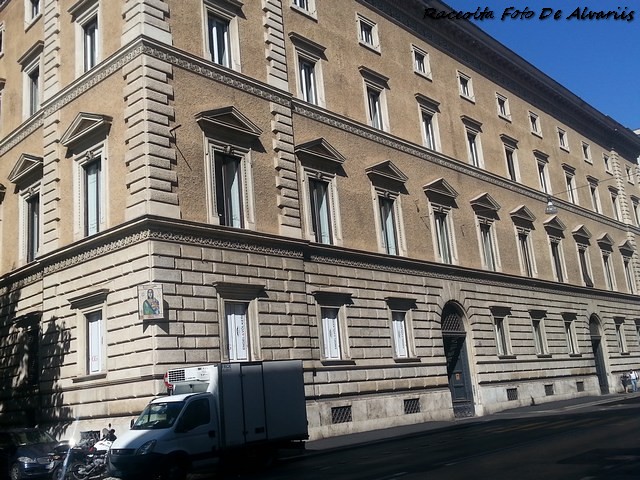
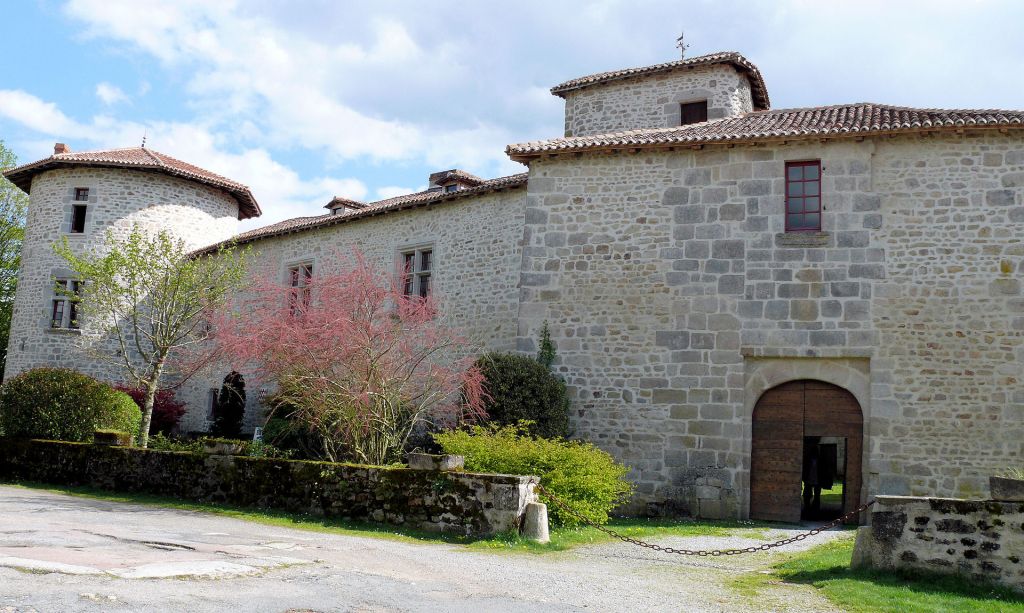
But the ambassadorial trip to Spain (and undoubtedly his daughter’s significant dowry needed to attract the Prince of Chimay) ruined the Duke of Saint-Simon’s finances, and his future in politics was dashed when the Regent Orléans fell from power and then died, in 1723, and his replacement at the head of government was an old enemy of Saint-Simon, Cardinal Dubois. Saint-Simon retreated to his château at La Ferté-Vidame, and spent the next decades writing his famous memoirs. The grand château still retained its medieval appearance, with eight great towers. The Duke did maintain a residence in Paris, but he moved from place to place—the building at 17 rue du Cherche-Midi in the 6th arrondissement (not far from the Luxembourg Gardens) bears a plaque indicating that this was where he wrote the memoirs—but he was not often seen at court.

the manuscript memoirs, now in the Bibliothèque nationale de France

The 2nd Duke of Saint-Simon knew he needed to try to maintain to the family’s position at court and in the government while he languished in the provinces. In 1727 he oversaw the marriage of his elder son, Jacques-Louis, to a daughter of the Duke of Gramont, and in 1728, he formally resigned his peerage to him, thus allowing him to sit as a peer in the Parlement of Paris and appear at court in the rank of a duke. To differentiate father and son, the latter was known as the ‘Duke of Ruffec’, taking his title from his grandmother’s marquisate near Bordeaux.  When Jacques-Louis died in 1746, the old Duke once again resigned his peerage, now for the second son, Armand-Jean, who was now legally the 4th Duke of Saint-Simon, but he too predeceased his father, in 1754. And when the by now fairly ancient memoirist-duke died himself in 1755, there only remained his daughter, the Princess of Chimay (who had no children), and one daughter by the eldest son, Marie-Christine, who had married the Comte de Valentinois, younger brother of the Prince of Monaco.

The Countess of Valentinois had a very good court career—she inherited her uncle’s title ‘Grandee of Spain’, which meant she was treated as a duchess (or even better, since her Grimaldi husband was ranked as a ‘foreign prince’), and was given the important court office of Dame de Compagnie of ‘Mesdames’ (the unmarried daughters of Louis XV), in 1762, then Dame d’atours of the Comtesse de Provence (the sister-in-law of the future Louis XVI), in 1770, and finally the same princess’s Dame d’honneur, in 1772. Like many court aristocrats of the later 18th century, however, she ran into financial troubles. Although she had inherited the magnificent château and estates at La Ferté-Vidame, and the estates in the south of France at Ruffec, she sold these off: Ruffec to the Comte de Broglie in 1762; and La Ferté to the financier Jean-Joseph de Laborde in 1764 (who significantly remodelled it). Just as she was reaching her apogee, as first lady of the second lady of France, she died in 1774, childless, and with her, the junior branch of the House of Rouvroy.

the Countess of Valentinois

But the memory of the memoirist persisted. The 2nd Duke of Saint-Simon had understood the importance of solidifying the position of all of his dynasty, not just the immediate family, and reached out as a patron to his very distant cousins from the senior line of the family. As early as 1712, he looked after Claude-Charles de Rouvroy-Falvy, who lost his father that year, and helped him acquire a lucrative benefice, the Abbey of Jumièges in Normandy, in 1716. The young Abbot accompanied the Duke on his embassy to Spain in 1721-22, and was first promoted to higher clergy as Bishop of Noyon in 1731, then Metz, in 1733.  Neither Noyon nor Metz were amongst the wealthiest sees or the most prominent politically in the French church, but to the status-conscious and history-loving Saint-Simon, they were perfect: Noyon, though one of the smallest dioceses in France, was also one of the oldest, and its bishop was one of the six ecclesiastical peers who crowned the monarch; Metz was formerly an Imperial bishopric and thus entitled to be addressed as ‘prince’ and ‘highness’, or so Claude-Charles thought.  His assumption of princely airs and graces (and claims to regalian rights, ie, as if he was a sovereign, some judiciary, some financial), caused the local Parlement of Metz, in 1737, to issue a formal statement prohibiting him from using the title ‘Prince of Metz’.  He was a true heir to Saint-Simon. And in fact, the Duke left him his papers in his will, including the famous memoir manuscript, though he never actually took possession due to legal complications, before he himself died five years later in 1760.

Claude-Charles de Rouvroy, Bishop of Metz

The Bishop of Metz in turn had promoted the career of another cousin, from an even more remote branch, Charles-François de Rouvroy-Sandricourt. He was first appointed to be the Bishop’s Grand Vicar (chief administrator), then given his own diocese as Bishop of Agde (on the Mediterranean coast) in 1759. He survived into the world of the French Revolution, but continued the family tradition of clinging to traditional values, refusing to swear the oath supporting the new ‘state church’ of 1790, and succumbing to the guillotine in 1794.

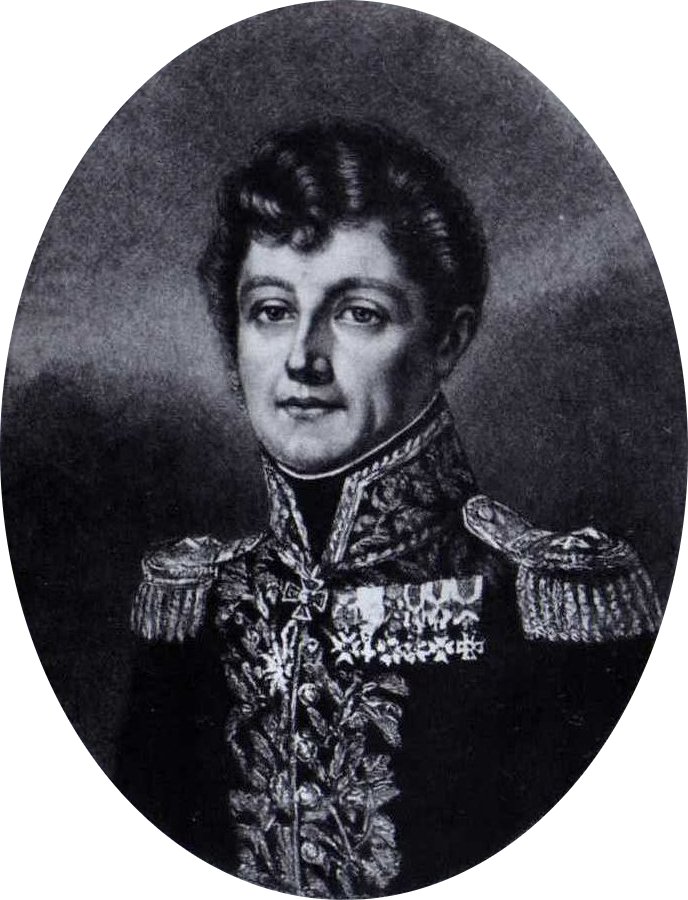
Another cousin, Claude-Anne, from the line of Rouvroy-Montbléru, raised the military profile of the family in the later 18th century, and even managed to revive, in a round-about way, the title of Duke of Saint-Simon. Both Claude-Anne and his brother Claude (a popular family name) served in the French army aiding the Americans in their quest for independence (both of them notably at Yorktown). The younger was named one of the founding members of the Order of Cincinnatus, the hereditary order founded to commemorate the heroes of the American Revolution, and his descendants continued to bear this honour until they died out in the early 20th century. Claude-Anne, a field marshal from 1780, served as a deputy of the Second Estate (the nobility) from Angoulême (where he held properties, notably the château of Giscours) to the Estates General of 1789. Soon after the outbreak of revolution, the Marquis de Saint-Simon (or Marquis de Montbléru) emigrated, to Spain, where he was named a lieutenant-general in the Spanish army and gathered together a group of fellow émigrés to form the Légion catholique et royale des Pyrénées (aka Légion de Saint-Simon) in 1793. In 1796, he was named by Carlos IV second in command of the Army of Navarre, Captain-General of the Province of Old Castile, and colonel of the Regiment de Bourbon, which he led in combat in Majorca, Catalonia, and Portugal. He was rewarded by his services first with the title of Grandee of Spain, first class, 1803, then Duke of Saint-Simon and Capitàn General of Spain (the equivalent of a Marshal of France), by the restored King Ferdinand VII, in 1814. He remained in Spain as colonel of the Walloon Guard, but stayed out of politics. His properties like Giscours has been confiscated and sold, so he remained in Spain, in Pamplona or Madrid, where he died in 1819.

the Spanish Duke of Saint-Simon

The Duque de Saint-Simon left behind only a daughter, ‘Mademoiselle de Saint-Simon’ who is known today for a dramatic painting by Charles Lafont depicting the moment she begged the Emperor Napoléon to spare her father’s life after he had been captured in 1808.

Clemency of Emperor Napoleon before Mlle de Saint-Simon, Lafont, 1810

The Duke’s heir was his nephew, Henri-Jean-Victor, who had led a very different life in the military, serving from age 18 in the armies of the French republic, including campaigns in Spain against the very same royalist forces being led by his uncle.  From 1809, he commanded one of the guards regiments of Joseph Bonaparte (Napoléon’s brother) as King of Spain. Like so many aristocrats, the Vicomte de Saint-Simon rallied to Louis XVIII at the Restoration, in 1814, and remained loyal during the Hundred Days, accompanying the King to Ghent, where he was named a maréchal de camp. When his uncle died, Henri-Jean-Victor succeeded as second Spanish Duke of Saint-Simon, and confirmed as a peer of France by Louis XVIII in 1819 (though with the rank of marquis, not duke). Crucially for our story here, he petitioned the King to formally release from state possession the already famous, but unpublished, memoirs of his distant cousin. The first complete version of the Memoirs of the Duke of Saint-Simon appeared under his patronage in 1829-30 in 27 volumes.


The Marquis de Saint-Simon (he didn’t start to use the ducal title until the 1840s) entered royal service; he was an ambassador first in Lisbon, then in Copenhagen, before being named Governor-General of the French colonial possessions in India, based in Pondichéry, in 1834. Recalled in 1841, he played a role in the Senate in support of the monarchy of Louis-Philippe, and was promoted to lieutenant general in the army, though he was ineffectual in preventing the revolution of 1848 that swept this regime from power. As a good political chameleon, he supported the proclamation of the Second Empire in 1851, and was named Senator of France. Late in life, he ceded his rights to the manuscript of Saint-Simon’s memoirs to the publisher Hachette, who produced what is now considered one of the premier editions of the memoirs, edited by Adolphe Chéruel, in 1856-58. As he was dying in 1865, the ‘6th Duke of Saint-Simon’ tried to have one of his sons from his second marriage—born long before the marriage—recognised as a legal heir (and thus potentially 3rd Duque de Saint-Simon, Grandee of Spain), but was rebuffed by all legal authorities in France and Spain.

Henri-Jean-Victor, Marquis (or Duc) de Saint-Simon

Had he been still alive, the last member of the family to have left a significant mark on history, Henri de Saint-Simon (he ceased to use a title during the Revolution), might have applauded this attempt to transfer noble status onto the son of double adultery. The Comte de Saint-Simon was actually a double-dose Saint-Simon, with his father heading up the junior branch of Sandricourt, and his mother from the more senior line of Falvy. The line of Sandricourt, an estate northwest of Paris, a marquisate from 1652, had been a distinct branch from the early 16th century. They became in fact more prominent than their cousins at the court of the last Valois kings, but lost prominence under the Bourbons. But they were always there, and in the late 18th century, the numerous brothers and sisters of Count Claude-Henri de Saint-Simon de Sandricourt all served in the army or the navy and at court—one of the most prominent was his sister, Marie-Louise, Dame de Montléart, who succeeded her Saint-Simon cousin as Dame d’honneur of the King’s sister-in-law, the Comtesse de Provence, in 1786. Claude-Henri (who went by Henri) served in America under General Rochambeau, and like his cousin, was awarded the Order of Cincinnatus. He was the King’s Lieutenant in the city and region of Metz, but quit military service to devote himself to industry and plans to build canals and factories.

portrait of Henri de Saint-Simon in middle age, painted after his death

He embraced the Revolution fully, made a lot of money working for the regime, then lost it all, and turned instead to writing, though not much came of it until 1817, when he published l’Industrie, an important forerunner in the history of socialist thought. More successful though brief, was a periodical he founded, l’Organisateur, to criticise the government and make plans for a better system, but it was shut down in 1820, after only a few issues. He published more books advocating the primary of industry for building a more equitable future, then began to write about philosophy and how a new religion could be forged out of the best parts of Christianity in the  service of the state, society and its poorest members. His final work, Nouveau christianisme: Dialogues entre un conservateur et un novateur, was left unfinished when he died in 1825.

Henri de Saint-Simon left no descendants, but his brother, a naval officer, did, and there remains a Rouvroy de Saint-Simon family inscribed in the official lists of the modern French nobility.  In fact, one of the caretakers of such lists was Fernand, Comte de Saint-Simon, one of the authorities on the history of the French nobility in the 1970s.  There are no grand buildings left associated with the Saint-Simon family (the grand château that exists today at Sandricourt was built in the 19th century by a different family—and had interesting inhabitants in the 20th century, including the American millionaire Robert Walton Goelet, whose first cousin Mary had joined the British aristocracy as Duchess of Roxburghe, and Hermann Goering during the occupation of France in the Second World War).

Sandricourt

The still monumental ruins of the château of La Ferté-Vidame, a symbol of the lost world of ancien régime France. Looted and sacked during the Revolution, it became the property of the Orléans family after the Restoration, then confiscated by Napoleon III and sold and re-sold many times, until the French state acquired it and used it as the home of a religious charity aimed at rehabilitating imprisoned women.  In 1991 the state ceded it to the department of Eure-et-Loir who has restored the grounds and opened them to the public.

the ruins of La Ferté-Vidame

(images from Wikimedia Commons)

Leinster Dukes and Princes: An Irish Driving Tour

In September 2014, I attended a wedding of a dear friend in the south-east corner of Ireland, near Kilkenny. The wedding was hosted in a gorgeous country house called Borris. I knew nothing about this house with an odd-sounding name, but in the evening before the wedding, after the rehearsal dinner, I chatted with the owner, Mr Morris Kavanagh, who told me without much fanfare that if the ancient Kingdom of Leinster still had a king, that this would be his residence. Leinster—one of the four ancient provinces of Ireland—has not had a recognised king since the twelfth century, following the English invasions led by Richard ‘Strongbow’ de Clare, but it does have a duke today, even if he hasn’t lived in Ireland since the 1940s. This driving tour blog will follow a circuit I made in the days preceding the wedding, and the castles and towns I visited related to ancient kings of Leinster (and the neighbouring kingdom of Munster), and to Ireland’s two ducal families: FitzGerald and Butler. Along the way, the itinerary also stops in on the Duke of Devonshire’s Irish seat, Lismore Castle, and we will learn that this part of Ireland has been influenced by both St. Kenny and St. Kevin!

As you can see from this map, the trip covered mostly south-central Ireland, the counties of Tipperary, Waterford and Kilkenny, with stops in counties Kildare and Carlow. It was a brilliantly warm September, so I was looking forward to a long drive in the countryside with windows rolled down and lots of wind and music. I picked up a car at the airport in Dublin and drove west into the countryside of County Kildare where I ventured into the parking lot of the ‘luxury hotel and golf resort’ Carton House, formerly the seat of the FitzGeralds, dukes of Leinster since the 18th century. I did peer into the lobby, but alas am not a millionaire, so couldn’t see much beyond. The conversion of this house and its estate into a golfer’s paradise has been criticised as a great loss to the heritage of Ireland, and I certainly agree, though I can see the point of the Irish government and people not wishing to commemorate or celebrate a palatial home that could be seen to represent over 900 years of oppression by the English. Still, it seems like something beautiful and of genuine historical importance has been lost. I see on the hotel’s website that there is a plan for 2020 to renovate much of the 18th-century interiors, so I hope they allow plebs like me in to see it.

When thinking about built heritage, it’s worth asking: do families like the FitzGeralds really represent the English colonial oppression of the Irish? As always, history is rarely black and white, and, as is often pointed out, the FitzGeralds and other Anglo-Irish families like them resisted the Tudor attempts at tighter control in the 16th century, and indeed, one of the leading members of the Irish Rebellion of 1798 was Lord Edward FitzGerald, a martyr for the cause of Irish independence. Lord Edward represented the ideals of the Enlightenment, the American Revolution and the French Revolution; even his close connections to the British royal family itself (his mother was a great-grand-daughter of King Charles II) were not enough to save him from a brutal death.

The arrest of Lord Edward FitzGerald

The Fitzgeralds were first awarded lands in this area in the 1170s as a reward for their part in the capture of Dublin by Anglo-Norman armies of ‘Strongbow’. The family remained in place as one of the chief families of the English-occupied area of eastern Ireland (known as ‘the Pale’), first as barons of Offaly, then as earls of Kildare, from 1315. In the 15th century they reigned as virtual sovereigns in this part of Ireland (mostly while the English were preoccupied with the Wars of the Roses), but soon lost some of this prominence by resisting the Tudor reforms, both of politics and religion, imposed by Henry VIII—leading to full out rebellion in 1537, and the execution of the 10th earl and several of his family members.

Slowly rebuilding their local power and influence over the next century, Carton House was designed in the 1740s as a palatial country residence for the 20th Earl of Kildare, by the architect Richard Cassels, who also built the Earl’s Dublin residence, Kildare House, which was later known as Leinster House, and today is the seat of the Oireachtas, the parliament of Ireland. Kildare was raised to a marquisate in 1761, then again to a dukedom (of Leinster) in 1766. The Duke and Duchess of Leinster were sometimes referred to as the ‘king and queen of Ireland’, and they lived in almost royal splendour. The Duchess, Lady Emily Gordon-Lennox, the grand-daughter of Charles II (and his mistress, Louise de Keroualle) referred to above, was responsible for much of the development of Carton and its gardens, and in particular, the famous Shell Cottage, a small retreat decorated with shells sent to her from all over the world.

the interior of Shell Cottage

Carton House was enlarged and remodeled in the 19th century by the 3rd Duke of Leinster. But, becoming heavily indebted by the early 20th century, and obviously having no more role in Irish politics after 1922, the FitzGeralds gradually sold off the lands and the house. In the 1970s Carton House was owned by a wealthy English peer (of Irish descent), Baron Brocket, and used for several films such as Barry Lyndon (1975), then sold to the owners who developed it into the golf course and hotel.

Having not really seen much beyond a parking lot and a lobby, I was eager to really get out into the countryside. I drove west along the new M4 motorway till I reached virtually the centre of the island, and turned south. The central plain of Ireland is gorgeous, rolling hills, of course very green. As with previous driving trips, I wanted to sample recordings of locally made traditional music, so I stopped in a small shop in a town and purchase two CDs: one a typically cheesy mix of tourist-friendly Irish folk music, and the other a bit more obscure, with the festive title “Jig it in Style”, by the fiddler Seán Keane, a member of The Chieftains. This recording is instrumental only, which makes for good driving music.

‘Brereton’s Reel’ from Jig it in Style

Continuing south, the flatness of this central region eventually produced a dramatic effect for the large castle outcrop that appeared on the horizon: the Rock of Cashel. I have to admit, my knowledge of Irish history was at the time almost nil, and I had never heard of Cashel, so I was so energised to discover this place, and can recommend it as one of the best sites I’ve visited in Ireland, not just for the visuals of a fairly romantic ruin, but as an important historical centre.

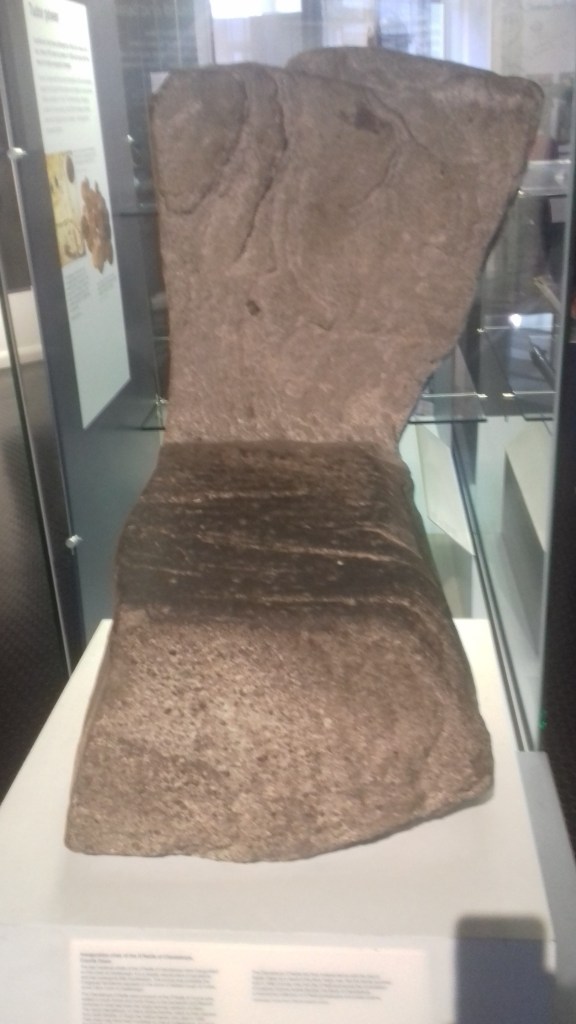
The Rock of Cashel is a fascinating combination of castle and cathedral, reflecting how early Celtic monarchies often blended the secular and the sacred more closely than other European monarchical systems. The story goes that this was the place where St. Patrick convinced the King of Munster to accept Christianity in the 5th century. Munster is the kingdom to the west of Leinster, historically ruled by either O’Brians or MacCarthys (and then divided between them, into north and south), and was one of the last provinces to submit to English rule, and even after that remaining largely independent of the government in Dublin until the late 16th century. There’s a lot of territory to cover, from Cork to Kerry, so that is certainly on the agenda of future driving tours. The Rock of Cashel remained the seat of Munster’s kings until 1101 when it was given to the Church (as the seat of an archbishop from 1118). New buildings were built in the 12th-13th centuries, notably by King Cormac MacCarthaigh. Taken over by the Protestant Church of Ireland in the Reformation, the old buildings were abandoned in the 18th century and a new (pretty dull) cathedral was built in the town of Cashel. Catholics were once again allowed to have an archdiocese of their own in the 19th century, and a new Italianate fantasy cathedral was built in the nearby town of Thurles in the 1860s. I spent the whole afternoon walking through the Rock of Cashel and its surrounding hillside covered in sheep, then stayed the night in town.

The next day, I headed west and briefly looked at the town of Tipperary (of course singing the famous World War I era song in my head the whole time). It is not a particularly remarkable town, and not the largest town nor even the administrative seat of the county that bears its name. I was, however, fascinated to see the huge presence in shop fronts and colourful billboards and banners all over town of a massive sports rivalry between Tipperary and Kilkenny—and not for football or rugby: hurling. Tipperary blue versus Kilkenny black and gold.

From Tipperary I drove a short distance to Cahir, another magnificent medieval castle built by a conquering Anglo-Norman family, the Butlers. Sometimes spelled Caher, or Cathair (‘stone ringfort’) in Irish, the castle sits magnificently on an island in the River Suir.

Originally the site of an abbey, in the 12th century a castle was built by one of the O’Brian kings of Munster. Taken by the English, it was granted by Edward III to James Butler, 2nd earl of Ormond, in 1375. This title (Ormond, or Urumhain) reflects the division of the ancient kingdom of Munster into three parts: northern (Thomond), southern (Desmond) and eastern (Ormond) and gave the earls great autonomous authority in this corner of Ireland. The Butlers had originally been hereditary Chief Butlers of Ireland since 1192—yes, the household officer in charge of supplying drinks, with the lucrative fiscal privilege of taking a cut on all barrels of wine imported into Ireland—and evolved into one of the other major Anglo-Irish families, like the FitzGeralds, for the next eight centuries, frequently holding high office like county sheriff or even several times Lord Lieutenant, the chief representative of the Crown in Ireland. Cahir Castle was given to a cadet branch of the Butler family in the 15th century, and they were created Baron Cahir in 1542 by Henry VIII. But this branch of the family did not remain loyal (unlike their kinsmen the earls of Ormond), and defended Irish Catholicism in the wars against Elizabeth I, until their nearly impregnable fortress was finally taken, by the Queen’s champion, the Earl of Essex, in 1599.

The barons Cahir were eventually pardoned and restored, but they had lost most of their power, and the castle was mostly in ruins by the 18th century. The last Baron died in1961 and the castle passed into state ownership, and is now a major tourist attraction in this region. Like Carton House, Cahir Castle has also been used as a film set, notably for Excalibur (1981) and some scenes of the recent television series The Tudors. I stayed my second night in this really lovely town—highly recommended.

Early the next morning, I headed further south, along a small windy road across the Knockmealdown Mountains, into County Waterford, and the valley of the Blackwater River. Here I visited Lismore Castle, the Irish seat of the dukes of Devonshire. It has a tremendous vantage point over the Blackwater, and its extensive gardens are impressive to walk around, but sadly the house is not open for visitors.

How did one of the leading Derbyshire families, the Cavendishes, come to own one of the largest castles in Ireland? It passed to them by marriage in 1753, that of the daughter of the 3rd Earl of Burlington (Lady Charlotte Boyle) and the 4th duke of Devonshire, and is today the seat of the heir to the dukedom, who uses the title Earl of Burlington. He has opened part of the castle as an arts centre, and commissioned contemporary artists to populate the gardens, notably Antony Gormley, whose standing human figures are instantly recognisable.

Lios Mór (‘great fort’) was originally built by Prince John (the future King John) in 1185 to defend a river crossing in the northern approaches to County Waterford, one of the English strongholds on the south coast. Like Cashel and Cahir, this too had religious origins, and Lismore Abbey had been an important centre of learning since the 7th century. It remained the seat of the local bishop until it was taken over the earls of Desmond (another branch of the FitzGeralds) in the early 16th century. These earls also rebelled against the Tudor crown in the 1590s, but unlike the Butlers in Cahir, their lands were not restored, but instead were sold, first to Sir Walter Raleigh, then in 1602 to an English adventurer and colonial administrator, Richard Boyle. He was later created Baron Boyle, 1616, Earl of Cork, 1620, and finally Lord Treasurer of Ireland, 1631. Having amassed a large fortune, he transformed his new seat at Lismore into a palatial residence. It was the birthplace of his many children, including the famous chemist, Robert Boyle, but the Castle was sidelined by later descendants who preferred to develop instead properties closer to the court in London, notably Burlington House, on Piccadilly, and Chiswick House on the River Thames. All of these properties were therefore part of the great windfall of the heiress Lady Charlotte Boyle, 4th Duchess of Devonshire. The 6th Duke of Devonshire transformed the castle into its current neo-gothic appearance in the 1810s-20s (with fantastic neo-gothic interiors as well), and continued remodelling it as late as the 1850s, commissioning the designer of his gardens at Chatsworth, and the Crystal Palace in London, Joseph Paxton, to perform his magic at Lismore. In the 20th century, the castle was given to a younger son, Lord Charles Cavendish, who lived here with his wife Adele Astaire (the dancer, sister of Fred)—she lived until 1981, and is commemorated in some of the artworks in the public art gallery.

A Lismore Irish rose

It was raining as I set off eastwards, then crossed the hills back into the valley of the River Suir. Now back in Butler territory, I travelled down the river valley to the town of Carrick, located at the juncture of the counties Tipperary, Waterford and Kilkenny. Carrick (Carraig) means simply ‘rock’, and the town was formerly an island in the river. The main line of the Butler family was based here from the early 14th century, and their first major Irish title was Earl of Carrick (1315), but this was soon replaced with the Earldom of Ormond (1328), for James Butler (or ‘Le Botiler’ as it was still sometimes spelled), 7th Chief Butler of Ireland. The earldom was created with ‘palatine privileges’ over County Tipperary, which means authority ‘from the palace’, as if the sovereign were present in person (receiving oaths, organising military activity, administering justice, etc); and these unprecedented privileges were enjoyed by the Butlers until they were finally reclaimed by the Crown in 1715. The castle built here, therefore, had to be symbolic of English royal authority, and in the 15th century, the earls improved the original fortress by adding four large round towers. These are now mostly a ruin, but still extant is the adjacent Tudor manor house, the first residence built in this style in Ireland. It was erected by the 10th Earl of Ormond who had spent time at the court of Elizabeth I, his cousin via the Boleyns, and desired to bring back some of this Tudor architectural style to Ireland.

Ormond Castle, Carrick

In the 17th century, James Butler, the 12th Earl of Ormond, founded a woollen industry in Carrick and the town flourished—well situated between the sheep-covered interior and the major port of Waterford just a few miles downstream. He was probably the family’s most prominent member: commander of Royalist forces in Ireland during the Civil War, and rewarded at first with a marquisate (1642), and then a dukedom in 1661 as he was sent back to Ireland to govern as Lord-Lieutenant for much of the Restoration period. Following the Duke’s death in 1688, his descendants mostly abandoned Ormond Castle in Carrick, in favour of Kilkenny Castle. It was given to the state in the 1940s, and restored in the 1990s.

That afternoon I drove cross-country into County Kilkenny, and its county town of the same name, where I was to stay for the next few nights. This town, similarly festooned for the upcoming hurling match versus Tipperary—now everything was in black and gold stripes, not blue—is a lot more lively than its sporting rival.

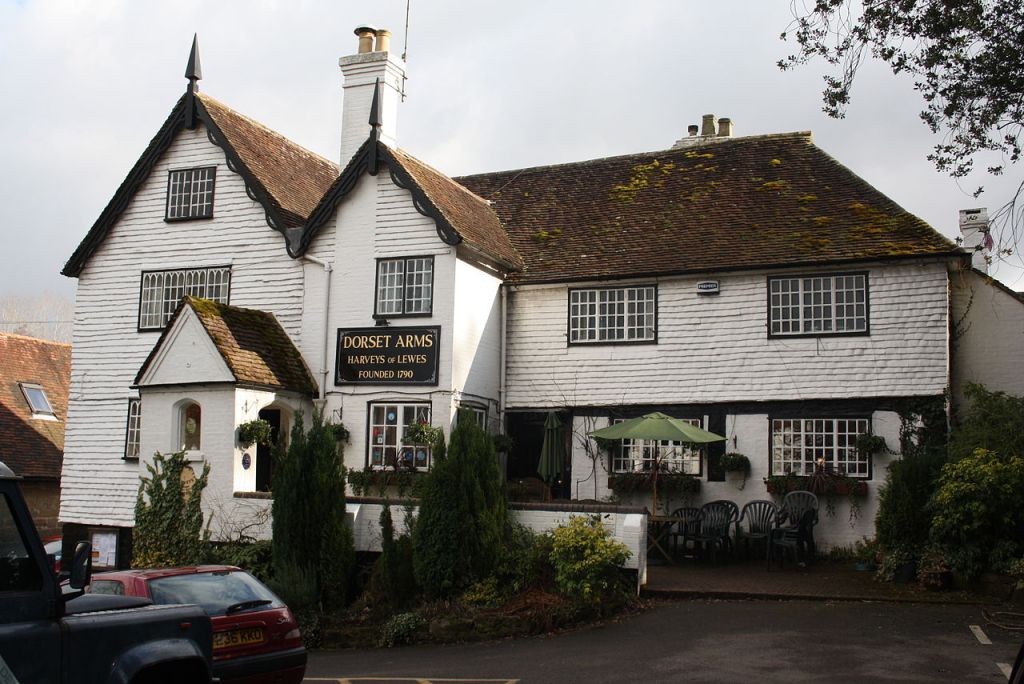
Situated on both banks of the River Nore, it had been a prosperous walled city of merchants as early as the 13th century. This prosperity of course masks a darker history, as with many towns here, in that most of these merchants were English or Anglo-Irish, and the Irish-speaking community were kept firmly segregated (there is still an area of the town called ‘Irishtown’). The town then, and now, was dominated by two great buildings, sacred and secular, the cathedral and the castle. The first of these gave the town its name, as the Church (cill) of St. Canice (Cainnech, also known as St. Kenneth or even St. Kenny), a warrior-monk who supposedly defeated the last archdruid of Ireland on this hilltop in 597 and finally completed the conversion of Ireland. The abbey founded on the spot took the Saint’s name, and was later raised into an archbishopric in 1111. One of the original 9th-century round towers survives, but most of the building is from the 13th century. Some of it features a distinctive local black marble, the same stone used in the new tomb built for Richard III in Leicester Cathedral for his reburial in 2015.

As with Cashel, princely and ecclesiastical power often mingled, and this cathedral site served as the seat of the kings of Ossory (Osraige)—a narrow wedge between the larger kingdoms of Leinster and Munster—until they were pushed out of the area by the arrival of the English. Strongbow himself built a new castle on a rise on the other side of the river in 1195, probably of wood, and a massive stone fortress with four round towers was later  constructed in the 1260s. Three of these massive towers still stand, while the fourth was destroyed in the violence of the 1640s. The Butlers took over the castle in 1391, and Kilkenny Castle became their primary seat by the 17th century.

By this point there had been significant transformations in the town—the Cathedral was now Protestant, as were the Butlers (well, some of them). The Marquess of Ormond (the later Duke) nevertheless permitted the Confederation of Kilkenny to be based in his castle in the 1640s, while he resided in Dublin as Lord Lieutenant of Ireland. This Confederation was formed by a group of Catholic nobles and gentry who, while professing their loyalty to the Crown, pressed for greater Irish autonomy. Based in Kilkenny, they set up a government which controlled about 2/3 of Ireland until it was crushed by Parliamentary forces in 1649. Ormond himself followed the new king (Charles II) into exile in France, and when he returned during the Restoration, the now Duke of Ormonde (usually spelling it now with a terminal e, as being more French), he remodeled much of Kilkenny Castle according to French tastes.

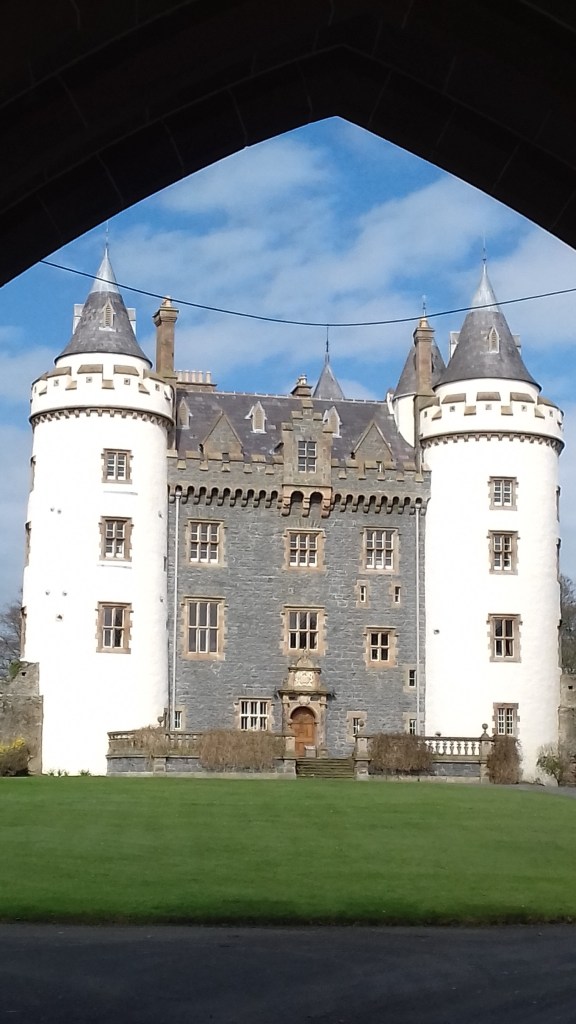
The Butlers of Ormonde lost much of their influence after the 2nd Duke joined the Jacobite cause in the early 18th century, and their titles were attainted. As a dynasty, the Butlers were surpassed by the Fitzgeralds as the first family of Ireland, though their lands and titles (earldom and marquisate, but not dukedom) were restored by the 19th century. Kilkenny Castle was remodelled once again in the now fashionable neo-gothic style, which is how it appears today. The family remained in residence during the Irish Civil War in the 1920s, then finally in 1935 sold the contents in a massive public sale and relocated to London—the 6th Marquess of Ormonde sold the castle to the town in 1967, for a mostly symbolic £50. Kilkenny Castle today forms a central part of the city parks and the tourism industry of the town. Since 1997, the marquisate is extinct, or at least unclaimed, though there are several other branches of the Butler family spread across Ireland.

Having completed my wanderings, I now engaged with wedding celebrations for the next few days. The drive cross country (on tiny! roads) between County Kilkenny and County Carlow was a pleasant way to get into the spirit of things, and the setting of Borris House could not have been lovelier for a wedding. As already described at the start of this post, the owners of this enormous private house claimed that Borris would be the seat of the kings of Leinster, had the kingdom survived into the modern age. I was sceptical, as, in my line of work, you very often find aristocrats who make wild claims about their family’s past based on legend or misremembered history. So I did some checking up on Mr Kavanagh and found that there was really much truth to his claim, and it turns out, the story is even more intriguing.

Kavanagh of Borris

The name Kavanagh is an Anglicisation of Caomhánach, which means ‘of Kevin’, and refers to the founder of this branch of the royal house of Leinster, Domhnall ‘Caomhánach’ MacMurchada, who was raised at the Abbey of St. Caomhan (or ‘St. Kevin’, don’t laugh), in County Wexford. Wexford and Carlow (the county in which Borris House is situated) were the heartlands of the old kings of Leinster who adopted the surname MacMurchada (MacMurrough) in the 11th century. Their capital was at Ferns (in County Wexford, the area formerly known by its Gaelic name, Cheinnselaig or Kinsella) and several are buried there at the Abbey of St. Mary. Like most Gaelic ruling dynasties, they traced their lineage back for centuries through oral tradition, all the way back to ‘Milesians’, warriors who supposedly left Scythia and settled in Iberia, then eventually made their way to Hibernia, or Ireland. In recorded history—though certainly still open to mythologizing and misrepresentation—we have the father of our Domhnall, King Diarmaid, who was deposed by the High King of Ireland in 1167, fled to Wales, England and France seeking aid; and convinced the Earl of Pembroke, Richard ‘Strongbow’ de Clare, and his allies, to help him retake his lands (and probably aimed at becoming the High King himself), in exchange for his daughter’s hand and promise of succession—a promise which then involved Henry II, King of England, who did not wish his vassal, Pembroke, to attain such independent power. For inviting foreigners to invade Ireland, Diarmait is sometimes called Diarmait na nGall, or ‘Dermot of the Foreigners’. It should be no surprise that the Norman warlords did not help him become High King, and claimed his kingdom for themselves in the name of his daughter Aoife (or Eve, perhaps fitting for someone who—though not really her idea—caused the downfall of independent Ireland?), thus disinheriting Prince Domhnall ‘of Kevin’.

Did you follow that? Basically, infighting led to a foreign invasion. A lesson to be learned. The descendants of Domnhall Caomhánach at some point made Borris House their headquarters, further inland and away from the increasingly English southeast coastline. Some of these continued to use the title ‘King of Leinster’ though it didn’t mean much—with a notable exception in Art Og MacMurchada Caomhanach (MacMurrough Kavanagh), who genuinely revived the kingship in the 1370s, exerting his authority over Irish and Anglo-Norman lords alike; he did formally submit to Richard II in 1394, but immediately renounced his oath. The very last was Domhnall ‘Spáinneach’, who got his nickname (the Spaniard) from his travels abroad as a youth, and tried to assert his authority as King of Leinster in the 1590s, but was crushed alongside the other Irish chieftains by the forces of Elizabeth I. Unlike many of those who fled abroad, never to return, Domhnall submitted to Elizabeth in 1603, and lived in peace until 1632. His successors were simply ‘Mr Kavanagh of Borris’, or, unofficially, ‘The MacMurrough’ indicating their position as head of an Irish clan. The most famous of these was Arthur, head of the family from 1853, who, despite having essentially no arms and legs, just stumps, since birth, was nevertheless able to travel widely (Egypt, Persia, India) and even to ride a horse. He served for many years as an MP for County Carlow, and rose in the ranks to be named High Sheriff of County Kilkenny, Lord Lieutenant of County Carlow, and finally a member of the Privy Council for Ireland in 1886. Here’s an interesting article about him:

https://www.bbc.co.uk/news/magazine-20592861

Arthur’s grandson, Sir Dermot MacMurrough-Kavanagh, was Crown Equerry of the Royal Household, 1941-55, one of the major household officers in Buckingham Palace. He was the last male of this family, and with his death in 1958, the title of ‘The MacMurrough’, by some accounts, became extinct. Borris House passed to his niece, Joanne, who, to bring a nicely circular end to this story, married the Duke of Leinster (though I have no idea if anyone made the connection that the potential Gaelic-Irish queen of Leinster was marrying the Anglo-Irish duke of Leinster). Their marriage ended in divorce, however, and by the time she inherited, she was married to Lt-Col. Archibald Macalpine-Downie. Their son and grandson changed their name legally to Kavanagh, and manage the property today.

Borris House

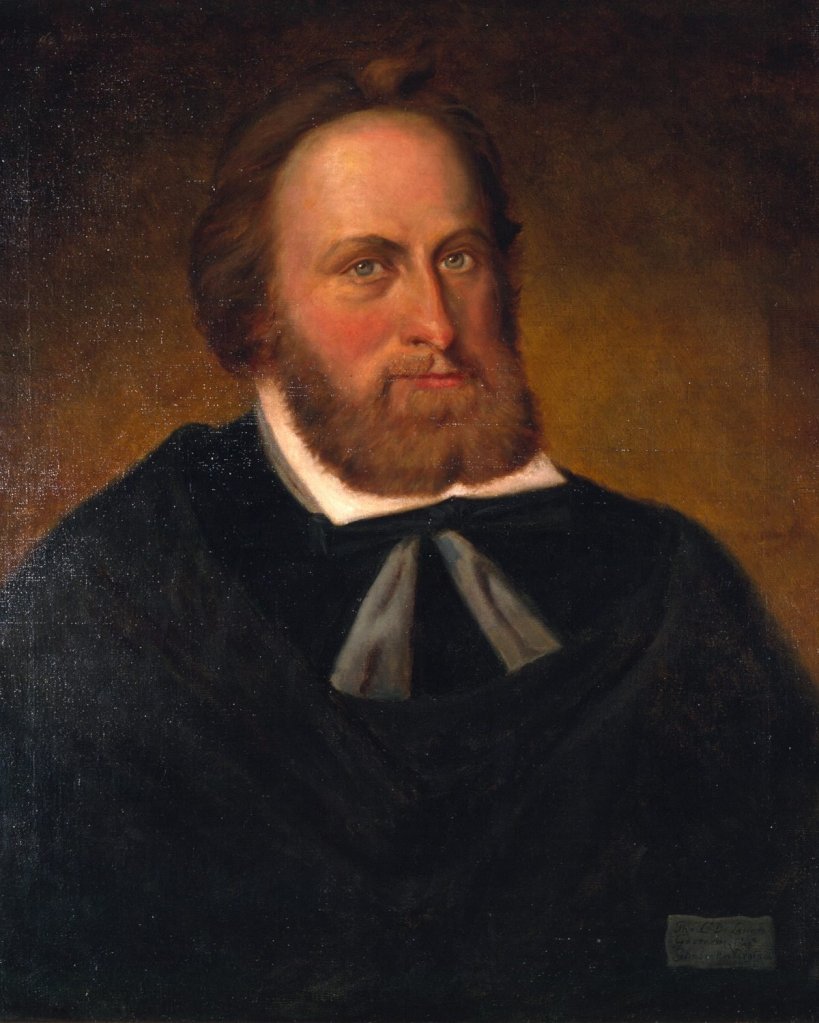
Although it is a private home, Borris House, on a flatland on the banks of the river Barrow, is well-situated to make use of its lovely views of the Blackstairs Mountains as a venue for weddings and other events. There isn’t much there that signified to me as I wandered the grounds that this was an ancient place—the house was mostly built as a Tudor Revival manor house in the 1730s by Morgan Kavanagh, then remodeled with some neo-gothic elements in the 1810s. An indication that it certainly was once the home of great lords, however, was the presence of a small private chapel on the grounds, which makes the site even more useful for weddings. The one I attended was indeed magical, though has a somewhat bittersweet memory for me, as the groom tragically died only a few months later. So in his honour, I will leave you with a bittersweet Irish parting song:

May Kenny and Kevin be with you!

the view from the Rock of Cashel

(images my own or courtesy of Wikimedia Commons)

Dukes of Villeroy

The family history of the dukes of Villeroy is one of the best examples of a the successful rise of a non-noble family into the very highest ranks of the French aristocracy, even to the point of being considered members of the intimate royal circle at Versailles. Indeed, one of these, the 2nd Duke, might be considered one of the few men Louis XIV would have called ‘friend’, a person who certainly would have made an intriguing contribution to the recent television show Versailles. The same might be said for his sister, Catherine, one of the great intriguers of the French court, whose brazen attempt to bring down the power of Madame de Maintenon led instead to her downfall and banishment from court.

Catherine de Neufville, Countess of Armagnac

The story of the Neufville de Villeroy family is also a neatly self-contained saga of the Ancien Régime, from their rising up in the era of ‘new men’ promoted in the exuberance of a reforming monarchy in the early 16th century, to obtaining the highest positions of duke and peer, marshal of France and provincial governor in the 17th century, then coming to a complete and swift end via the guillotine during the French Revolution. It is also one of the best examples of a family whose origins were most often obscured by the large-scale genealogical volumes produced in the eighteenth century. Rising from the status of a propertied government minister into the court nobility was acceptable for the image the monarchy and its supporters wanted to portray; rising from fish merchants was not.

Because of this desire to obscure a family’s origins in ‘trade’, there are therefore a lot of conflicting accounts about the origins of the Neufville family. Their surname means simply ‘new town’, but there’s no real indication what this refers to. It seems that they were successful merchants dealing in fish from one of the great port cities in Normandy, Rouen, who in the 15th century transferred their business to the great central market in Paris known as Les Halles. Near this great commercial centre, they built one of the many residences that later bore the name Villeroy, named for a lordship they acquired by marriage in the 16th century (see below). This Hôtel de Villeroy (rue des Bourdonnais) was conveniently located between Les Halles and the government centres a few streets to the west clustered around the Louvre. Richard Neufville combined his thriving mercantile business with administrative positions, first looking after the Paris residence of the Duke of Burgundy as his maître d’hôtel, then as a tax official for the district of Paris.

The Neufville coat of arms, as borne by an archbishop of Lyon

His son, Nicolas, seems to have added a ‘de’ around 1500 when he acquired some small seigneuries in the environs of Paris, and shortly thereafter the prestigious post of royal secretary. Most importantly, he had married well, to Geneviève le Gendre, whose father and brother (also from Rouen) both held offices of treasurer of France (high ranking finance officials), and Nicolas soon joined them in this position. He served Louis XII and Francis I as a finance secretary and a privy councillor, as did his son, Nicolas II. The latter in particular became an intimate financial officer for Francis I, financial secretary for his private affairs, and treasurer of his order of knighthood. He also continued the family’s rise in prominence within the city of Paris as administrator of the Hôtel-Dieu, the most prominent charity hospital. And he too married well, first to a great-niece of the Chancellor of France (Briçonnet), and then two more times within Parisian parlementaire circles. In the late 1530s, he secured for his son, Nicolas III, his mother’s claims to the Le Gendre properties, Villeroy and Alincourt, on opposite sides of Paris. Alincourt, in the small province known as the Vexin, was situated perfectly on the route between Paris and Rouen to allow convenient contacts with their former business network in Normandy. It possessed a medieval castle which was modified in the 16th century and still exists today, in private hands.

the Chateau d’Alincourt in the 20th century

The lordship of Villeroy was to the south-east of Paris, in the region of great forests so cherished by royalty and the nobility for its hunting (the grandest of all these, Fontainebleau, is in the same general direction). Built on the banks of the River Essonne, near its confluence with the Seine, Villeroy was part of the lordship of Mennecy which had long been a fief of the Cathedral of Notre-Dame de Paris, but was sold off to financiers in the 15th century and eventually acquired by one these, Le Gendre. In the 1560s, Nicolas III de Neufville rebuilt the château and enlarged its gardens. The house was rebuilt in a neo-classical style in the 18th century, and the family supported the opening of a nearby porcelain manufactury. This was closed by the 1780s, and in the 1790s, after the extinction of the family, the château was pulled down. Only the park remains today.

Nicolas III Le Gendre de Neufville, Seigneur de Villeroy and Alincourt, had a career much like his father, a royal finance secretary and a Parisian city official, who also married within the circle of Parisian high finance. He rose higher in the ranks, however, serving as a Secretary of State for King Henry II and his Lieutenant in the Ile de France, and ending his career in the top position in the hierarchy of the city of Paris, the Provost of the Merchants (essentially the mayor), 1566 to 1570.

Nicolas IV was therefore launched very well into his career, and would become one of the leading government figures of the late 16th and early 17th centuries. In addition to serving as one of the chief ministers of Charles IX, Henry III, Henry IV and Marie de Medici—in a long career spanning from the 1560s to his death in 1617—he and his wife, Madeleine de l’Aubespine, also hosted a leading Parisian salon at their home the Hôtel de Villeroy. She was a leading light in the Parisian intellectual scene, a hostess and patron of major poets like Ronsard, and known herself as a poet and a translator.

Nicolas III, Madeleine de l’Aubespine and Nicolas IV in the family chapel at Magny, near Alincourt

Père Anselme’s genealogical history of the family praises Nicolas IV as ‘a strong supporter of men of letters, with the reputation as one of the wisest and skilful men at court’. He succeeded his father-in-law as a Secretary of State in 1567, and soon became the close personal secretary of King Charles IX, then one of the most influential ministers, particularly in foreign affairs, of King Henry III. Initially a supporter of the Catholic League, Villeroy transferred his allegiance to Henry IV after his conversion to Catholicism in 1594, and was confirmed by the new king as a Minister of State. Towards the end of his career, his lordship of Villeroy was raised to the status of marquisate. He had been influential in the fall of the chief minister, Sully, in 1611, but was himself pushed aside in 1614.

Nicolas IV, Seigneur de Villeroy, as a young Secretary of State

By this point, however, the Neufvilles’ place was secure as a court family, and Nicolas V’s only son, Charles, Marquis de Villeroy, was already acting as a grandee nobleman, with the kinds of provincial and court offices that went along with such status. Charles had made a name for himself in the early years of the 17th century as ambassador to Rome (two of his sons were born there and were honoured with significant godfathers, who gave them their names: Ferdinand for the Grand Duke of Tuscany, and Camille for Cardinal Borghese, the future Pope Paul V). On his return to France, Charles was named Governor of Lyon, and the neighbouring provinces of Lyonnais, Forez and Beaujolais, 1612, a powerful position in France’s second city that his family would turn into a nearly hereditary possession, retaining the governorship of these provinces until the Revolution. Charles also retained his father’s position on the Council of State, and obtained a court office, Grand Marshal of the Lodgings of the Royal Household, the officer in charge of distributing rooms when the court moved from one residence to another, or traveled in the countryside or on campaign. He was therefore key in determining access to the king, a crucial element of court life and royal patronage in this period. The Marquis de Villeroy displayed the perfect blending of administrative and court worlds that consumed the energies of so many families on the rise. This is seen in his marriages as well, and those of his children: he first married the daughter of the previous governor of Lyon, Marguerite de Mandelot, then the daughter of one of the most influential Parisian parlementaire families, Jacqueline de Harlay. The daughters of his first marriage both married within this same mixed old/new noble/ministerial world: a Brulart and a Souvré, and obtained posts as ladies-in-waiting to the Queen. From the second marriage, Villeroy’s elder sons were launched on military careers, while the younger sons entered the Church and the Order of Malta (an exclusively noble order—they had now definitely arrived)—the youngest was even named ‘Lyon-François’ to demonstrate the family’s new prominent position in the southeast of France.

Of the clergymen, Camille became the most prominent, first being sent to the southeast as an abbot and lieutenant-general of the Lyonnais, then elevated to the position of Archbishop of Lyon in 1654. His long reign in Lyon was one of the most intriguing fusions of secular and spiritual power in early modern France, as both archbishop and lieutenant-general (virtual governor, since his brother was usually elsewhere). He rebuilt the archiepiscopal palace and also a country château at Ombreval (renamed Neufville for the family), on the river Saône north of the city of Lyon. Here he acted like a virtual sovereign and lived in great splendour.

part of the 17th-century chateau of Ombreval (most of it today is a later construction)

He was a reformer in his archdiocese, built numerous schools and churches, rebuilt the Hôtel de Ville in Lyon, and gathered a huge collection of books (estimated at over 5,000) which he donated to the Jesuits of Lyon upon his death in 1698. His devotion to the city of Lyon was clear: although always supportive of Louis XIV in his struggles against religious dissent, he opposed the King’s actions against Protestants, since many of these were essential to Lyon’s most important industry, silk weaving. Ombreval was erected into a marquisate for him, and this and the château were passed on to Archbishop Camille’s nephew, the Marshal de Villeroy, and then into the family of Boufflers by marriage in the 1730s.

This Marshal de Villeroy was the second of two pre-eminent Marshals of France in the reign of Louis XIV, the first and second dukes of Villeroy. Most noteworthy about these men, father and son, was their position of extreme intimacy with the monarch himself, the first as governor of the young Sun King, and the second as intimate friend, then as governor of the royal successor, Louis XV.

The first of these, Nicolas V, first known as the Marquis d’Alincourt as his father’s heir, was given the survivance of the governorship of Lyon and the Lyonnais in 1615, when he was only 17. A survivance is an important indication of a family’s importance within the monarchical structure of ancien régime France, as it was a basically a guarantee that the office would pass from father to son, and that if it wasn’t, the family would receive significant financial compensation. Young Nicolas also secured a bright future through marriage in 1617 to Madeleine de Créquy, daughter of a leading general, the future Marshal-Duke de Lesdiguières, under whom he served in numerous campaigns in northern Italy in the 1620s-30s. Rising in the ranks of the French army himself, Alincourt played important role in the wars of Louis XIII in the Piedmont, Franche-Comté and Catalonia—often using nearby Lyon as his base of operations—then made a real name for himself in the siege of Turin, 1640, and the successful capture of the nearly impregnable fortress of La Mothe in Lorraine, 1645. The next Spring he was chosen to act as the governor of the new king, Louis XIV, who was now 7, the year princes traditionally were moved from the care of women into that of men. He was also raised to the rank of Marshal of France, the highest military grade in the Kingdom.

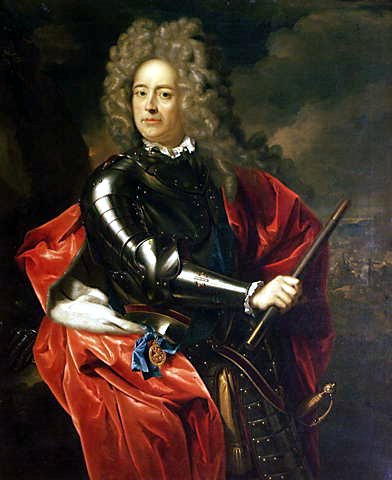
the first Marshal de Villeroy

The Marshal was more than merely a loyal commander, but had been a childhood companion (enfant d’honneur) of Louis XIII, and the King’s widow now ensured that the two families would remain close. The proximity between the Hôtel de Villeroy and the Palais Royal where the young king was being raised meant that a lot of time was spent in both places, and the two Bourbon princes played and were schooled together with the Neufville sons and daughters. To further honour this long-term connection, the marquisate of Villeroy was elevated into a duchy in 1651, though given the fragile politics of the era, the new duke had to wait until 1663, once the King was fully in his majority, for the title and peerage to be confirmed by the Parlement of Paris, who were not so keen to promote this relatively arriviste family, formerly very much one of their own, to the premier ranks of the nobility. The King had to force them, and force them he did.

Now that Louis XIV was an adult, the first Duke of Villeroy’s position as princely governor was transformed into a government post, as Chief of the Royal Council of Finances, in 1661, though this was mostly symbolic—the actual financial control was held firmly by Louis XIV’s chief minister, Colbert. Here was a source of conflict, however, in that Villeroy continued his families links with the other main ministerial clan, the Le Telliers, rivals of the Colberts: his half-sister’s grand-daughter Anne de Souvré married the leading Le Tellier, the war minister Louvois, and his own grandson, Nicolas VI, would later marry the child of this union, Marguerite Le Tellier. Such was the way that Louis XIV encouraged his chief courtiers and ministers to remain in constant competition with each other rather than united and against the Crown. It is the chief strength of his reign.

The chief weakness, however, was in Louis XIV’s complete loyalty to his favourites, regardless of the cost to the state or to his reputation as king. One of these favourites was his governor’s son, his childhood friend, François de Neufville, 2nd Duke of Villeroy. We can see it also in the King’s relationship with the Duke’s sister, Catherine, who was married in 1660 to the King’s other great childhood friend, Louis de Lorraine, Comte d’Armagnac. Such was the King’s affection for Armagnac that despite Catherine’s repeated scandalous transgressions at court in the later 1660s which cost her the post of Dame du Palais of the Queen and even her expulsion from court (after she informed the Queen about the King’s affair with Madame de Montespan), she never lost the King’s favour completely, and their sons were highly favoured by him throughout the reign.

This was hardly comparative with the on-going favour given to her brother, the 2nd Duke, who was repeatedly rewarded with military commands even following great disasters. He had been ceded his father’s regiment from Lyon, his position as governor there, and even the ducal title and peerage from 1675. He was rapidly promoted brigadier general in 1672, field marshal in 1674, lieutenant-general in 1777, and finally Marshal of France like his father in 1693.

the second Marshal de Villeroy

A year later the new Marshal de Villeroy was in charge of the siege of Namur, but allowed the armies of William of Orange escape, refusing to listen to the voices of his advisors. Yet he remained in command of the Army of the Low Countries until peace was declared in 1697. When the War of the Spanish Succession broke out in 1701, Villeroy was sent to command the Army of Italy, but was soon defeated by the Austrian General Prince Eugene, at Chiari, then shortly after at Cremona in 1702, and was held prisoner in Austria for several months. Nevertheless, he was welcomed back to Versailles with open arms—to the great ire and disgust of contemporary memoirists like Saint-Simon—and sent out again in 1703 to command the Army of Flanders. The greatest defeat of his career came at Ramillies, May 1706, at the hands of the Duke of Marlborough. This time Villeroy’s favour was not enough to save him, and he resigned his command as well as his household post as Captain of the King’s Guard.

Marlborough receiving captured French flags at Ramillies

Nevertheless, disfavour did not last long, and Villeroy was restored to Louis XIV’s inner circle in 1712, and was named to his father’s old post as Chief of the Council of Finances in 1714. More importantly, he was named future governor of the Dauphin Louis, aged only 4, soon to succeed as Louis XV. The Regency established in 1715 by the new King’s uncle, the Duke of Orléans, would be fractured by two major factions: that of the liberals and reformers led by Orléans and his chief minister Dubois, and the conservatives led (rather weakly) by Villeroy, and the late King’s widow, Madame de Maintenon and illegitimate (and favourite) son, the Duc du Maine. Villeroy was given a seat on the Regency Council, as head of the Council of Commerce, but his real power emerged in 1717 when the boy king was formally transferred into his care (upon reaching the age of 7). The Marshal lived with the King in the Tuileries, rather than in his large Paris residence the Hôtel des Lesdiguières.

This residence, close to the Bastille, was part of a large inheritance that fell to the Villeroy family thanks to the first Duke’s marriage to Madeleine de Créqui de Lesdiguières, followed shortly by the inheritance that came from his own wife’s family, heirs of the duchies of Retz and Beaupréau (both located in western France, near the mouth of the Loire). The 2nd Marshal’s grandson would be known as the Duke of Retz from 1716 (as his father was already 3rd Duke of Villeroy, from 1696). Since the King’s governor resided at the Tuileries, the Hôtel de Lesdiguières was provided for the visit of Peter the Great to France in 1717, and Villeroy and the King visited the Russian Tsar there to attempt to build stronger connections between their two nations.

Peter the Great meeting Louis XV, with Villeroy to the left in red (painted in the 19th century)

The Governor of Louis XV was known to contemporaries either as a bulwark of solid, pious louisquatorzian values, or as a vain, rigid relic of the past who was teaching the boy king to be pompous and frivolous. Finally, the Regent Orléans had enough and managed to exile Villeroy from court, ordering him to tend to his governorship in Lyon in August 1722. When the King attained his majority a few months later in February 1723, this order was not reversed, which demonstrates pretty clearly that the old love between the monarchy and the Neufville de Villeroy family was finally at an end. Although he did return to Paris in 1724 after the death of Orléans, the Marshal resided in the Hôtel de Lesdiguières and ceased to play an important role in the Kingdom.

The 3rd Duke of Villeroy, Nicolas VI, may have seemed set to restore the family position. Already a lieutenant-general by 1702 (promoted despite his father’s defeat), and commanding a part of his father’s army crushed at Ramillies, he was nevertheless given his disgraced father’s post of Captain of the Guard in 1708, and assured the succession to the governorship of Lyonnais, Forez and Beaujolais. In October 1722, even after the father had been sent to Lyon, the son was given a place of honour at the coronation of Louis XV, as commander of troops camped outside the city of Reims and ceremonial captain of the Scottish Guard. But the timing was off for this generation—the 3rd Duke was part of that missing generation, those born in the 1660s, who lost their chance of being intimates of the sovereign when that potential sovereign (the Grand Dauphin) died in 1711. His wife, Marguerite le Tellier, also died in 1711 during the same smallpox epidemic, severing the ties of the Neufville and Le Tellier families. Now firmly established as high aristocrats, the children of the 3rd Duke and Duchess married into exclusively ducal circles: two of the oldest families in France, Montmorency and Harcourt, and a fairly recent military dynasty like their own, Boufflers, with a double marriage to a brother and sister in 1720 and 1721.

The 3rd Duke didn’t live much longer to build on this new dynastic power base, however, and died only four years after his ancient father (aged 86), in 1734. His younger brother, François-Paul, had also been set up to continue to build the family’s power in the south-east, as Archbishop of Lyon in 1714. He had been considered as successor to his great-uncle Archbishop Camille as early as 1698, but at only 19, even Louis XIV’s extreme favour towards this family was not enough to overcome clerical opinion that an archbishopric was not appropriate. He did finally take over in Lyon, as well as the country château at Ombreval, but he too died in middle age, in 1731.

The 4th Duke, Louis-François, who had been known as the Duc de Retz as heir, had no children, and his brother had been created Duc d’Alincourt in 1729 by royal brevet as a sign that he was the assumed heir (and he was also created lieutenant in Lyon). But Alincourt died in 1732, so the 4th Duke raised the only surviving nephew as his own son.

4th Duc de Villeroy

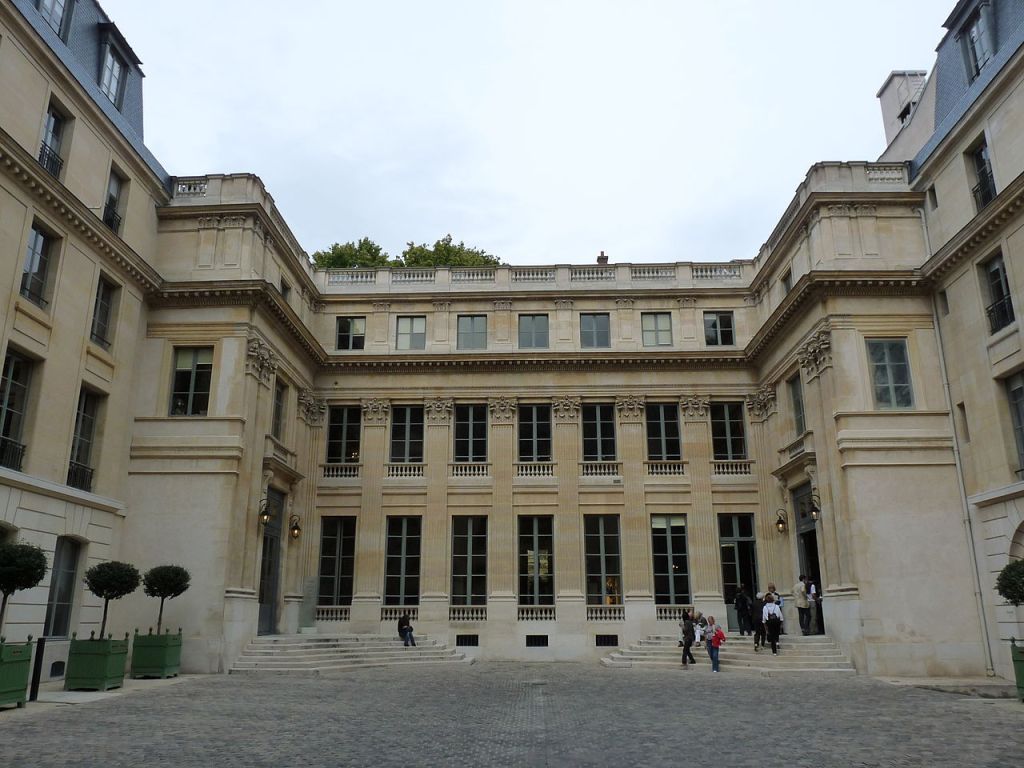
The 4th Duc de Villeroy, like his ancestors, rose through the military ranks, attaining the rank of Field Marshal in 1738 in the run-up to the War of Austrian Succession. But his interests were more in developing his family properties, notably with the proclaim manufactury at Villeroy mentioned above, but also rebuilding the château there and its gardens, and building a new Hôtel de Villeroy in Paris. The Hôtel de Lesdiguières was mostly sold off in the 1730s, and the old Hôtel de Villeroy, entirely rebuilt by the first Marshal in the 1640s, had been sold in 1671 (the building remains and for a while served as the Bureau de Poste). So a new Hôtel de Villeroy was built in the newly fashionable neighbourhood on the left bank of the Seine, near the Invalides—originally built for the Swiss banker, Antoine Hogguer, it was redesigned in the 1730s by the fashionable architect Jean-Baptiste Leroux.

the old Hotel de Villeroy in the 1st arrondissement
the new Hotel de Villeroy in the 7th arrondissement

But like many of the grand court families in the latter half of the 18th century, the Neufvilles ran into financial difficulties. The new Villeroy residence in Paris was sold in 1768 (it became a government building during the Revolution, and has been the seat of the Ministry of Agriculture since the 1880s), the porcelain factory was shut down in 1777, and the duchy of Retz was sold in 1778. The 4th Duke had died in 1766, and even though his nephew the 5th Duke, Gabriel-Louis, succeeded to the now informally hereditary posts of Captain of the King’s Guard and Governor of Lyonnais, Forez and Beaujolais, and rose through the military hierarchy as lieutenant-general by 1781, he was never a major presence, in court, government, or military. Having sold the Hôtel de Villeroy, he acquired the smaller Hôtel de Beauharnais for his residence in Paris, but spent much of his time at the Hôtel de Villeroy in Lyon. Like most dukes by the 18th century, he married within the now exclusive circle of ducal families, Jeanne-Louise-Constance, daughter of the Duke of Aumont, but they had no children. No longer part of the inner royal circle, his family’s long service to the Crown nevertheless tarred him during the Revolution, and he was executed during the Terror in April 1794. There were no nephews or cadet branches, so when the Duke’s widow died in 1816, the Neufville de Villeroy name was completely extinguished.

(images from Wikimedia Commons)
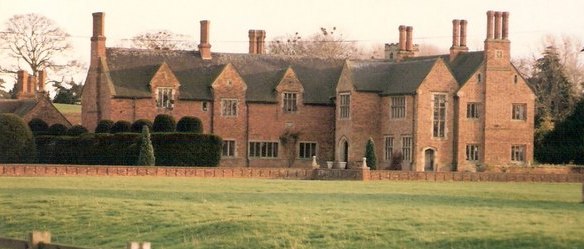
Dukes of Bridgewater

When it comes to name swapping within the British aristocracy, the Egertons are champions. At various times their surname has been Malpas or Grey or Tatton, or more recently Leveson-Gore or Grosvenor. In fact, the dynasty’s founders used the name Le Belward before marrying the heiress of the barony of Malpas in the southwestern corner of Cheshire. They were one of the families who settled these sensitive borderlands between Wales and England in the 11th century. There are claims that William le Belward was in fact descended from Welsh lords in Gwynedd; but other family histories suggest that they, like many of their contemporaries, came from Normandy (and that Belward is a corruption of Belvoir). By the end of the next century, the family had split into three lines, each taking the surname of their feudal estate, Malpas, Cholmondeley, and Egerton. The last of these is a small village not far from Malpas, close to the southern border of Cheshire with Shropshire. The Egerton family would go on to form several branches, and in time would hold a number of titles, including Duke of Bridgewater, Earl of Wilton and Baron Egerton of Tatton. The family has strong connections to the city of Manchester, as former owners of Heaton Park and Worsley Hall, and giving their name most famously to the Bridgewater Canal, as I’ll explore in this post.

the start of the Bridgewater Canal in Worsley, Lancashire

The senior line of this multi-lineal Cheshire family, de Malpas, remained prominent in the county until they died out in the 14th century, and the barony passed to the Breretons. The Cholmondeleys (pronounced ‘Chumley’) continued in the area, and still do today, having been elevated to an earldom in 1706 and a marquisate in 1815. Since 1778, they have also possessed half of the hereditary office of Lord Great Chamberlain, one of the ceremonial officers of state in the United Kingdom, who carries the long white staff at the opening of Parliament and dresses the monarch before a coronation. The office alternates between the Marquess of Cholmondeley and the other co-heirs, by reign—this family has held the position since 1952, but will give it up in the next reign. They have two family seats, an 18th-century Palladian villa in Norfolk, Houghton Hall, and the ancient family seat, Cholmondeley Castle in Cheshire, rebuilt in the 19th century as a neo-Gothic medieval fantasy.

Cholmondeley Castle

The junior line, the Egertons, also continued to thrive in Cheshire, regularly holding the office of sheriff and other county posts in the 14th and 15th centuries, and inter-marrying with other members of the local gentry whose families names are familiar to anyone interested in the history of Cheshire and the northwest of England: Venables of Kinderton, Brereton of Tatton, Warburton of Arley, or Grosvenor of Eaton. Through marriage they acquired the estate of Oulton, not far from the villages of Egerton or Malpas, which became their seat. There was once a grand 18th-century house at Oulton, but it was destroyed in the 20th century.

Oulton Hall, Cheshire, c. 1735

The main line of Egerton of Egerton and Oulton added further properties to their portfolio, notably Wrinehill in Staffordshire, and were created baronets in 1617. The first baronet, Sir Rowland Egerton, married well, in 1620, to Bridget Grey, daughter of the 14th Baron Grey de Wilton, a former Lord Deputy of Ireland. The Greys were one of the oldest and most well-established noble families in England, with numerous branches in various counties. Bridget Grey ultimately inherited one of these, and her family’s properties in Herefordshire, notably at Wilton (though the ancient castle itself had already been sold). Her descendants would have to wait over a century, however, before they could bear the title Baron Grey de Wilton, as her brother, the 15th Baron, had been attainted in 1603 for his participation in a plot against the life of the new king, James I.

Ruins of Wilton Castle, Herefordshire–gave its name to the later Egerton title, though they never owned the castle itself

Meanwhile, the family continued to add properties in the northwest of England through heiresses, notably in 1684, when they acquired Heaton Park from Elizabeth Holland. Today a sadly abandoned, yet still stately, 18th-century mansion on the northern outskirts of the city of Manchester, Heaton Park was once the centre of a large estate in what was then southern Lancashire. Built on a rise overlooking the Mersey and Irwell valleys and the Pennines to the east, the hall was an early commission for one of the great architects of the later 18th century, James Wyatt, built in the 1770s for the 7th Egerton baronet, whose rise in fortunes was further marked by the elevation of his title, first to Baron Grey de Wilton, 1784, then Earl of Wilton, 1801. The hall had an elegant saloon with painted ceilings and a built-in organ, which survives in situ today; its park, with a boating lake and an observatory (and at one point a track for horse racing) was originally laid out by William Emes in the style of Capability Brown. Heaton Park would serve as a centre of the county nobility of Lancashire in the early 19th century, who watched from afar as a new industrial city was blossoming on their very doorstep.

Heaton Park today
a close up of the Heaton organ
Heaton Park and its observatory

The Grey-Egerton earls of Wilton died out only a few years later, in 1814, though the title was allowed by royal licence to pass to a grandson in the Grosvenor family, another ancient Cheshire family who suddenly rose to national prominence in the 18th century as property developers in London (Belgravia, Mayfair), and were created Earl Grosvenor in 1784 (the very same year as Wilton), and later Marquess of Westminster, 1831, and finally Duke of Westminster in 1874. The new earls of Wilton changed their surname from Grosvenor to Egerton, until 1999, when the title passed to a different branch of the Grosvenor family. Meanwhile, Heaton Park was sold to the Manchester City Council in the late 19th century, as the earls of Wilton found the encroaching city just a bit too close for comfort (in fact, the Manchester to Bury train line was run through a tunnel directly under the estate), and they relocated to their family estates in the south.

After the death of the last Egerton earl of Wilton, the Egerton baronetcy continued in a cadet male line, and still does: the current baronet is the 17th, William de Malpas Egerton (b. 1949). In the 19th and 20th centuries, several members of this branch distinguished themselves as admirals and generals, and further cadet branches were established, including the Bulkeley Egertons and the Warburtons (formerly Egertons) of Arley Hall, which is a familiar setting to fans of the TV show Peaky Blinders.

Arley Hall, Cheshire

It is the second major branch of the Egerton family that interests us here as qualifying this family as ‘ducal’. Founded by an illegitimate son who rose to become Chancellor of England, this branch would ultimately become earls then dukes of Bridgewater.

Arms of the duke of Bridgewater

In the late 15th century, a cadet branch of the Cheshire Egertons had been formed based in the nearby manor of Ridley. Sir Richard Egerton of Ridley (d. 1579) and his children married into the usual circles of the Cheshire gentry—a Grosvenor of Eaton, a Warburton of Arley, a Brereton of Tatton—but it was his son born out of wedlock who rose to national prominence. Despite his illegitimacy, Thomas Egerton was supported by his family and given an education in law, first at Oxford, then at Lincoln’s Inn in London. In the 1570s, he made a name for himself as a lawyer, and was hired by the Crown to work as a prosecutor in the 1580s—most notably at the trial of Mary, Queen of Scots, in 1586, and later at the trial of his friend, the Earl of Essex. By 1592, Egerton was Elizabeth I’s Attorney General, then Master of the Rolls (the head of the Court of Appeals) in 1594, and finally Lord Keeper of the Great Seal, 1596. King James kept Egerton on as his chief judicial officer, and promoted him to the top job, Lord Chancellor of England, in 1603, along with a peerage, as Baron Ellesmere.

Sir Thomas Egerton, Baron Ellesmere

Today the name Ellesmere is more usually associated with the port built at the terminus of the Ellesmere Canal in the later 18th century, but the original castle and town are across the southern Cheshire border in the next county, Shropshire. Baron Ellesmere also acquired lands in Cheshire, Tatton Park, from the Brereton family, lands in Northamptonshire, Brackley, and a large estate in Hertfordshire, closer to London, in the Chiltern Hills, the former Ashridge Priory (a former monastic building acquired by Henry VIII in 1539, home to Princess Elizabeth in the early 1550s). Ashridge would become the main Egerton family seat, and the nearby church of Saint Peter and Saint Paul in Little Gaddesden would host the family chapel and tombs.

Bridgewater Chapel in Little Gaddesden

As Lord Chancellor, Lord Ellesmere used his position to support some of King James’ ideas about strengthening the legal position of the crown, and in particular in fusing the governments of both the realms of England and Scotland, a project James was unable to complete due to hesitation in both parliaments. In 1617, well into his 70s, the Lord Chancellor was finally allowed to retire, and was honoured with a higher peerage title, Viscount Brackley, but died soon after. Evidence of his rise in the social hierarchy can be seen in his second marriage in 1600, to Alice Spencer of Althorp, widow of the 5th Earl of Derby—not bad for an illegitimate son of a junior branch of a provincial gentry family.

But the family’s rise was by no means complete. King James had reputedly wished to raise his Lord Chancellor higher into the nobility with an earldom, and he did so for his son, John, who was created Earl of Bridgewater in 1617 shortly after his father’s death. Like so many noble titles in England, the name of the earldom had little to do with the geographical concentration of estates or social standing of its bearer. The name was taken from Bridgwater in Somerset, where the Egertons did have some lands, but it was not their centre of operations. There is no ‘e’ in the Somerset town, as it is (apparently) referring not to a bridge over water—as you might logically think—but to the burg (fortress) of Walter. And of course Bridgewater would work so well as a descriptor for the most famous canal builders in England, but that is merely a convenient coincidence, as the canal duke didn’t live until the mid-18th century. There had been a previous earldom of Bridgwater, briefly, for the Daubeney family of Somerset, between 1538 and 1548, but there is no direct connection with the Egertons.

The first Egerton earl of Bridgewater succeeded his father with a seat on the Privy Council in 1626, and was appointed by King Charles I to act as Lord President of Wales and the Marches (Cheshire, Shropshire, Herefordshire) in 1631. He had solidified his family’s position in the court nobility, and in the county families of the northwest, by marrying his step-sister, Frances Stanley, only two years after his father had married her mother. Their children’s marriages reflect in some ways this expanded influence along the borders between England and Wales—a Vaughan of Carbury, a Herbert of Chirbury—but also court families like the Hobarts and Cecils. The eldest son, the 2nd Earl of Bridgewater, married into the top ranks of the nobility in 1641: Elizabeth Cavendish, daughter of the Duke of Newcastle. Both the Egertons and Cavendishes were royalists during the Civil War, and afterwards the 2nd Earl was rewarded in the Restoration with the posts of Lord Lieutenant of Buckinghamshire, Cheshire, Lancashire and Hertfordshire, at one point holding all four at the same time (1681-86), which is rare.

The next generations changed allegiance somewhat. Whereas most of the formerly royalist families gravitated to the newly forming Tory party, the 3rd Earl became one of the leading members of the Whig aristocracy, those descendants of moderate Parliamentarians who supported monarchy, but one with limits. John, 3rd Earl of Bridgewater, was active in the Whig government under William III as First Lord of the Admiralty, 1699-1701, and Speaker of the House of Lords in 1697 and 1701.

3rd Earl of Bridgewater, by Kneller

The Earl’s sister Elizabeth married into one of the premier Whig families, the Sydneys, earls of Leicester, while his brothers continued the family tradition of dividing their time between activity in the House of Commons and developing their country estates. One of these, Sir William, inherited the property of Worsley, in Lancashire; while another, Thomas, was given Tatton Park, across the Mersey in Cheshire. These two properties, to the west and south of the developing market town of Manchester, would bring the Egerton story much closer to the history of the great industrial city in the following centuries, much as their Grey-Egerton cousins were doing to the north of Manchester, at Heaton Park. As the Egertons of Heaton also owned estates in Denton, to the east, you might say Manchester was now ringed on all sides by this one family. The Egertons of course needed a London seat as well, so the 3rd Earl purchased the former Cleveland House (named for Charles II’s mistress, the Duchess of Cleveland), in 1700, to replace an earlier Bridgewater House which had burned down in 1687.

Bridgewater House, London (as redeveloped in the 1840s)

In 1673, the 3rd Earl married his second wife, Lady Jane Paulet, whose father, the Marquis of Winchester, would later become 1st Duke of Bolton. Her mother was the heiress Mary Scrope, and they named their third son after her: Scroop. Born in 1681, the Honourable Scroop Egerton became the heir after the 1687 fire at Bridgewater House in London, which tragically killed his older two brothers. He was then known as Viscount Brackley (the courtesy title used by the heir) until he succeeded his father, aged only 20, as 4th Earl of Bridgewater. He also inherited the post held by his father and grandfather, Lord Lieutenant of Buckinghamshire, but was otherwise not very involved in politics. Instead, his younger brother, William, occupied the family seat in the Commons as MP for Brackley, while another younger brother, Henry, entered the church and became Bishop of Hereford in 1723. The 4th Earl did obtain prominent positions in the royal household: first as Gentleman of the Bedchamber and Master of the Horse to Prince George of Denmark (the husband of Queen Anne); Lord Chamberlain to Caroline, Princess of Wales, from the start of the new reign (1714); and finally Lord of the Bedchamber to King George II. He maintained the family’s position at the heart of the Whig aristocracy by marrying first Lady Elizabeth Churchill (daughter of the Duke of Marlborough) and then Lady Rachel Russell (daughter of the Duke of Bedford). It was therefore maybe inevitable that the Earl was raised another level in the peerage himself in 1720, as the 1st Duke of Bridgewater.

Scroop Egerton, 1st Duke of Bridgewater

The first Duke spent the next two decades fairly quietly at court and at Ashridge. He and his second wife tended their estates and managed the education and marriages of their offspring. Only one child survived from the Duke’s first marriage, Anne, who married into her step-mother’s family to become Duchess of Bedford herself; and although there were several sons born of the second marriage, again the elder sons died fairly young. The first, Charles (who was called by the new courtesy title, Marquess of Brackley) lived only six years, and although his brother John survived long enough to succeed as 2nd Duke of Bridgewater, in 1745, he too died, only three years later, at 21.

The youngest son, Francis, thus became 3rd Duke of Bridgewater at age 12. He was raised by his widowed mother, the Dowager Duchess (who lived to the ripe old age of 70), but never seemed to fit in with London society. After breaking off a rumoured engagement with society beauty, Elizabeth Gunning (the widowed Duchess of Hamilton, later Duchess of Argyll), he retired to his estates in the north, and began to develop Worsley in particular. It is the 3rd Duke who would become the most famous member of the family, the celebrated ‘Canal Duke’, also known as ‘the Father of British inland navigation’.

the ‘Canal Duke’ as a young man

The village of Worsley in Lancashire was owned for many centuries by the family of the same name, then by their successors the Breretons, at one stage the most prominent family in Cheshire. The estate had fallen to the Egertons in the 1630s, but never really developed. The Old Hall, a classic Tudor era timber-framed house, was relegated to the side in the 1760s when the 3rd Duke of Bridgewater turned his attentions to his northern estates, and he built a new residence in neoclassical style (known later as the ‘Brick Hall’).

the 18th-century ‘Brick Hall’

It is what was underneath, however, that became more important. The Duke soon discovered that the hills on his Worsley estate were full of black gold: coal. The question soon became how to transport it effectively and economically to the newly emergent boom town of Manchester, about 7 miles away.

In 1761, the Duke and some of his associates invited the engineer James Brindley to Worsley Old Hall, and here they developed plans for the Bridgewater Canal, the first major project of its kind in Britain. Swiftly completed between Worsley and Manchester, extensions were soon made to take the canal all the way to Runcorn in the Mersey Estuary, which allowed products being manufactured in Manchester (mostly woolen and cotton textiles) to be transferred to oceangoing vessels in the port of Liverpool.

The Bridgewater Canal crossing the River Mersey
(I live on the other side of Turn Moss)
In Worsley, the Canal emerges literally from the subterranean coalfields

The Bridgewater Canal made the Duke an enormous fortune, and by the time of his death in 1803, he was the richest nobleman in England, with a fortune estimated at about two million pounds (well over one-hundred million today). He acquired a large collections of old masters (notably two famous Titians still in the Egerton collection), participated in the purchase and resale of the enormous Orléans Collection in France in 1789, and began to upgrade Ashridge House in Hertfordshire, projecting a new grand-scale country seat for his dynasty.

the 3rd Duke in old age (Salford Museum)

But he didn’t create a dynasty. Having never married, he spent his final years devising legal means for the estates to stay together, entailing most of it to his long-deceased sister’s second grandson, Lord Francis Leveson-Gower, son of the Marquess of Stafford, who in 1833 changed his name to Egerton, and in 1846, was created Earl of Ellesmere. The dukedom of Bridgewater became extinct in 1803, but the earldom of Bridgewater and the Hertfordshire estates passed to a cousin, a distant male heir (see below). The new Lancashire dynasty created by the last Duke’s will, continued to live at Worsley. The Earl of Ellesmere was nominally head of the Bridgewater Trust, which sold the Canal to the newly formed Bridgewater Navigation Company, 1872, then to the Manchester Ship Canal Company in 1887 (who built a much larger waterway to replace the now far too small Bridgewater Canal).

In the 1840s, the Ellesmere earls rebuilt Bridgewater House in London, and at the same time built a vast new country house outside Manchester, known as Worsley New Hall, in a neo-Elizabethan style, designed by Edward Blore. They also laid out extensive terraced gardens, designed by the well-known landscape architect, William Andrews Nesfield. Queen Victoria and the Duke of Wellington visited, in a specially designed barge, shortly after the completion of house and gardens in 1851.

Worsley New Hall

But the New Hall didn’t survive very long: the trials of the First World War and crippling death duties in the 1920s forced the Egertons of Ellesmere to consolidate, and they sold off the Worsley estate, with both Old and New Halls (Brick Hall had been demolished in the 1840s), and New Hall was demolished in the aftermath of the Second World War. Only Old Hall remains, now a pub restaurant. The grounds of the New Hall were recently excavated by a team from Salford University—who shared fascinating images of the remains they discovered, notably of an electric lift, one of the earliest of its kind!—and the grounds and surviving garden landscapes are being developed for a grand re-opening by the Royal Horticultural Society.

Worsley Old Hall
recent archaeology works at Worsley New Hall

The earldom of Ellesmere continues to the present, but since 1963 it has been subsumed within the greater title of Duke of Sutherland, and the Egerton name changed back to Leveson-Gower.

Meanwhile, the earldom of Bridgewater passed to a junior line. Henry Egerton, Bishop of Hereford, married (as Anglican bishops can do) and his son continued in the same pathway, rising from bishop of Bangor to Lichfield, then to Durham in 1771. His eldest son, John, succeeded as 7th Earl of Bridgewater in 1803. Unlike his Whig cousins, he had been a long-serving Tory MP in the years of the Pitt administration, and rose through the ranks of the military during the Napoleonic wars, ending as a full general in 1812. He completed his cousin’s desire to rebuilt Ashridge Hall, an early example of Gothic Revival style designed by James Wyatt (today it houses a business school). On a hill above the house was built a monument to the 3rd Duke of Bridgewater, a great Doric column crowned by a giant copper urn, today managed by the National Trust.

the rebuilt Ashridge Hall
the Bridgewater Monument

The 7th earl died childless in 1823 and the earldom passed to his brother, the 8th and last earl, named Francis like the last duke. One of the great noble eccentrics (in an era curiously full of very odd aristocrats), he lived in Paris, where he reportedly dressed up his dogs and cats as ladies and gentlemen and drove them around in an open carriage. A more considerable legacy however, was his intellectual and financial support of natural science and antiquarianism—at his death he bequeathed a collection, the Egerton Manuscripts, to the British Museum, with funds for further acquisition, and today the collection (now housed at the British Library) includes over 3,000 manuscripts (most famously the ‘Egerton Gospel’, a set of papyrus fragments from Egypt acquired in the 1930s). With the 8th Earl’s death in 1829, the earldom of Bridgewater ceased to exist, and the estates and properties in Northamptonshire passed to his sister’s grandson, John Cust, Viscount Alford (who of course took the name Egerton), then to his son, John Egerton-Cust, 2nd Earl Brownlow.

Which finally brings us back to the topic of the ever changing Egerton surname. There is a final Egerton branch to be mentioned, descended from Thomas Egerton, of Tatton Park in Cheshire, noted above. These were successively known as Egerton of Tatton, then Tatton of Tatton, then Egerton again. They finally achieved an earldom named Egerton itself, though it was short-lived. At the start of the 18th century, John Egerton built a new Tatton Hall, a short distance from the old hall, a brick Tudor house. There were plans to redesign the new house again, along more rococo lines, by John’s brother Samuel, in the 1770s, this time by Samuel Wyatt, brother of James Wyatt. Neither lived to see the building works completed, but they were carried out by Samuel Egerton’s sister’s son, William Tatton, of Wythenshaw Hall. In 1780 he changed his name to Egerton, and completed the envisioned works at Tatton Park.

Tatton Park

His grandson, William Tatton Egerton, was created 1st Baron Egerton of Tatton in 1859, a long-term MP for Cheshire (and later Lord Lieutenant), and a developer of one of the new suburbs of Manchester, Chorlton (where I live!). His son Wilbraham (great name) was also a long-term Conservative MP, and a chairman of the Manchester Ship Canal Company. He was elevated to the rank of Earl Egerton (and Viscount Salford) in 1897, and died in 1909 with no male heir, so the earldom became extinct. The barony passed to his brother, Alan, whose son, Maurice, was the 4th and last Baron Egerton of Tatton.

Maurice Egerton, 4th Baron Egerton of Tatton

Maurice Egerton was one of those Edwardian imperialist, collector, philanthropist, ‘confirmed bachelor’ types. He opened Tatton Park to the local public on occasion, and specially built a grand exhibition hall to display his vast collection of trophy heads and horns and other artefacts he had collected on his many shooting trips in East Africa, where he built a regal residence for himself in Kenya (‘Lord Egerton Castle’), as well as an agricultural college (now Egerton University). An endlessly fascinating individual, he was also a fervent early supporter of aviation (and friend of the Wright brothers) and early motor cars. He died unmarried in 1958, and Tatton Park was given to the National Trust; it remains one of the most popular destinations for Mancunians on a day out.

The Egerton name may finally be gone, but Manchester is still known in part for the Bridgwater Canal, which runs right into the heart of the city, which in 1996 opened a new state-of-the-art performance venue, Bridgewater Hall. There is also an Egerton Park high school in Denton and an Egerton Football Club in Knutsford.

the Rochdale Canal enters the Bridgewater basin in Castlefield, central Manchester
on the right is the restaurant Dukes 92, named for the 3rd Duke of Bridgewater

(images my own photos or from Wikimedia Commons)

UPDATE (19 May 2020): Yesterday, I spotted this barge on the Bridgewater Canal, so some elements of the old Company still exist!

What is a prince? What is a duke?

When reading about someone who is the prince of this or the duchess of that, most people immediately conjure up an image of someone who is very grand, an elite part of the old aristocracy of Europe. But I am very often struck by how frequently historians, including professional academic historians, regularly use noble titles indiscriminately and interchangeably, and when asked to clarify whether the person being referred to is a count or a duke or a baron they say ‘it’s all the same, right?’ This short introductory piece will explain how they are not the same, and will focus on the top two titles in the system of noble titles: the prince and the duke.

The aristocracies of Europe have a wide range of variations in their composition, nomenclatures and customs, but there are also certain similarities across the Continent—for example, most have some form of the titles ‘prince’ or ‘duke’, both deriving from Latin words for command or leadership. There are exceptions, like in Germanic and Slavic languages, which use non Latin-based words, but with similar meanings. Most European countries went through a period of monarchy at some point in their history, some briefly while others maintain it still, and all of these monarchies created a system of hereditary nobility to assist them at first in defending the country and later in governing as well. The base-level nobles, the vast majority, were called lords or barons, but those who were given greater responsibilities, usually in a particular region, were created ‘counts’ (earls in English) or viscounts (‘vice-counts’), from the Latin word for companion (comes). This system emerged about the time Europe was reorganising itself under the Carolingians (the family of Charlemagne) in the 9th and 10th centuries. Higher up the hierarchy still, members of the ruling dynasties were called ‘prince’ (from princeps, the ‘first one’), which indicated they shared some of the authority of the head of their family, the monarch. Princely status from its earliest emergence was therefore something that is given to all members of a ruling family, by right of birth, not merit or achievement. This issue came up again just this year, when people asked whether Prince Harry, the Duke of Sussex, could have his status as prince removed. Back in the age of the Carolingians, some princes were given larger territories to govern, as autonomous rulers, with the title ‘duke’ (from dux, or ‘leader’). Often these leaders were supplied by the tribal chiefs of the ethnic groups being incorporated into the wider Imperial whole, like the dukes of the Saxons or the Bavarians east of the Rhine, or the dukes of the Gascons in southwestern France. The German term for duke is herzog, loosely from heer and ziehen, ‘puller’ or leader of the fighting men. In Slavic languages a similar term is voivode, ‘war leader’.

For much of their history, the titles prince and duke were restricted to royalty or semi-royalty only. As Europe’s kingdom’s evolved into more centralised territorial bodies, dukedoms were still given to younger sons to rule as ‘junior kings’ in what are called apanage territories, and these could be ruled with a certain degree of autonomy, but ultimately remained part of the kingdom as a whole. Well known examples in France include the duchies of Anjou, Orléans or Burgundy, or in England the dukedoms of Cornwall, Lancaster and York, but similar apanages existed in most countries: the duchy of Styria for junior Habsburgs in Austria, the duchy of Coimbra in Portugal, the duchies of Halland and Södermanland in Sweden, and so on. This predominance of royal-only dukedoms started to shift in the fifteenth century, as certain magnate families established so much power they had to be recognised as power-sharers in their own right within the kingdom. There were non-royal dukes in Germany and Italy from the 13th and 14th centuries (Brunswick, 1235; Mecklenburg, 1348; Milan, 1395), and these maintained such a degree of autonomous authority that we might call them semi-royal anyway. The same is true in Russia and Poland, where the word kniaz can be translated as either duke or prince (and seems to be a derivative of the early Germanic word for king). But the western monarchies of France, Spain and England did not have their first non-royal dukes until much later.

Early French non-royal dukedoms were given to powerful semi-autonomous magnates such as the Count of Armagnac (Duke of Nemours, 1461), important Italian allies (Valentinois for Cesare Borgia, 1499; Nemours for the Medici, 1515), then for representatives of foreign dynasties settling in France (Cleves, Lorraine, Savoy), and finally for some ‘native’ French noble families (Gouffier, Brosse, Montmorency) by the middle of the sixteenth century who had strong connections, personal or by marriage, with the royal family. Across the Channel, for the Plantagenets, aside from the early anomaly of the ‘duke of Ireland’ (Robert de Vere, 1386, for life only), the first non-royal dukedoms were created for nobles with close blood relations with the royal family: Norfolk for Thomas de Mowbray, 1397; Buckingham for Humphrey de Stafford, 1444; Suffolk for William de la Pole, 1448. Only a handful were created in the Tudor era (restoring the Howards, and new dukedoms for royal favourites Charles Brandon, Edward Seymour, and John Dudley), so it was not until the 17th century that the numbers began to increase in England (and the first Scottish dukedoms as well), with a similar large-scale increase in France as well.  Still, overall numbers of dukes in France or Britain were never more than 20 or so at a time (today there are about 25 in the United Kingdom, and about 40 in France).

a French ducal coronet

Looking further south, we see Spanish non-royal dukedoms emerging in the mid-15th century for grandee families like Luna, Guzman, Osorio, La Cueva, Alvarez de Toledo and Zuñiga. Portugal had only one non-royal dukedom this early, Bragança, and that was created for an illegitimate member of the dynasty (ie, his mother was not the queen), and Portugal never had more than a handful of dukedoms, royal or non-royal. In Spain, in contrast, by the 17th century, there was an ever-growing number of dukedoms (already about 40 by 1600), and, even more spectacularly, the kings of Spain began to reward loyalty in their overseas territories in Italy (Naples and Sicily) with dukedoms so these began to proliferate, literally into the hundreds by the 18th century.

To separate out some of these families, the higher title of ‘prince’ was introduced, but this too grew to exorbitant numbers in southern Italy until a principality came to mean little more than a particularly large feudal estate. In the Holy Roman Empire as well, a new title was introduced in the 17th century to distinguish certain grandee families, usually with strong connections with the Imperial court: there already were the territorial dukes (Saxony, Bavaria, etc), so instead these were called fürsts or ‘princes’—in German, a distinction can be made between the word prinz which generally refers to members of  those older ruling families, and fürst, a ‘ruling prince’ (from the same root word as the German führer, leader) who is not royal and not a duke. Well known princely families like these include the Liechtensteins, Fürstenbergs, Dietrichsteins and Schwarzenbergs. Their ‘rule’ was only personal until they acquired a fief that was held from no other prince besides the emperor (known as an ‘immediate fief’) and they then were allowed to join the top governing body of the Empire, the Council of Princes which acted as the upper house of the Imperial Diet. Liechtenstein is the only one of these tiny immediate territories that survived into the modern age as a sovereign state, a principality, not a kingdom—and ironically, until the 19th century, the estates around the castle at Vaduz in the Alps were not really considered an important part of the family’s landholdings, which were mostly concentrated in Austria nearer to Vienna, or in Bohemia. A few of these non-royal princely titles were granted in the Habsburg-governed Netherlands as well, for the magnate families like Ligne, Epinoy, or Croÿ. The most famous prince in the Low Countries, the Prince of Orange, was of a different kind, however, as a ruler of a sovereign territory in southern France, not too far from another sovereign family, the Princes of Monaco (sovereign meaning at least nominally outside the control of any other power). These micro-sovereignties were mostly self-proclaimed, and sometimes their status was recognised by their larger royal neighbours, and sometimes they were not.

a princely crown from the Holy Roman Empire

So there are different kinds of prince, royal, non-royal, sovereign prince, imperial prince, and a very uneven distribution, from hundreds in Sicily, to none at all in England.  France had almost no creations of non-royal princely titles, but those that were formed a peculiar category called the ‘foreign princes’, which included the dukes of Guise, princes of the House of Lorraine, and were the subject of my doctoral research. These families were considered to be princely because they were members of foreign sovereign dynasties, but their native titles had no legal standing within France—so all of them were granted dukedoms in France to maintain their elevated dignity and status, and, I would argue, to boost the prestige of the French court. French kings could point to their courtiers and show that they ruled over not only the subject nobility but also the higher princely clans of Europe—a sort of hearkening back to the ancient world’s concept of ‘king of kings’—and allowed them to compete in prestige with their rivals, the emperors in Vienna.

If you’d like to read a recent academic piece of mine on this topic, here is a chapter I published in Adel und Nation in der Neuzeit: Hierarchie, Egalität und Loyalität 16.-20. Jahrhundert, Martin Wrede and Laurent Bourquin, eds (Thorbeke Verlag, 2017)–don’t worry, it’s in English:

The chief difference between princely status and ducal status in most of these countries was in the differences of inheritance systems. All members of the house of Lorraine, for example, were princes and princesses by birth, but only the senior male in France was the duke of Guise. This reflects the two basic systems of inheritance and succession that operated in medieval and early modern Europe: partible inheritance and primogeniture. Germanic custom leaned more towards partible, that is equally divided, inheritance, so all children got a portion of their parents’ wealth: all of the children of a duke of Saxony were called duke or duchess of Saxony, though in terms of actually ruling, men were (no surprise) favoured. But this is why Germany so famously saw ever increasingly tiny dukedoms in the late middle ages, until primogeniture was imposed, often by force, in the early modern period. Primogeniture, in which the firstborn gets everything, had been the more favoured system in the Roman world, and gradually took hold in the Germanic kingdoms once it became clear that, while seemingly unfair to younger sons, avoided quite a lot of bloodshed, fratricide and civil war.  Primogeniture mostly favoured males, and this is true for principalities and dukedoms as well as for royal thrones, but not always, and there are certainly instances where, in default of a son, a throne passes to a daughter, even if there male cousins—though this was almost always a source of strife and legal deliberation. At one end of the scale, German dukedoms never passed to a woman, and this is (mostly) true for England and France as well, though there are some exceptions. In these kingdoms, dukedoms were created, existed for a few generations, then became extinct through lack of a male heir. At the other end of the scale, Spain allowed for almost universal succession, so it is the one place in Europe where hereditary titles never become extinct, and certain aristocratic clans simply accumulate more and more, resulting in extreme cases like the Duchess of Alba, who died in 2014, and was the possessor of about 40 titles, eight of them dukedoms, the most titled person in the world according to the Guinness World Book of Records.

There are also a good deal of other variants in the two titles of prince and duke. Some dukes were deemed to be of higher status than others, so they were called ‘grand dukes’, first with the Medici of Tuscany in 1569—which annoyed the neighbouring dukes of Savoy and Mantua and Ferrara very much, whose ruling families saw themselves as older and grander, even if they had less wealth. Many more grand duchies were created in the aftermath of the Napoleonic wars: Luxembourg, Mecklenburg, Baden, etc. In keeping up with the Joneses, the Habsburgs wanted to ensure that everyone knew their dynasty was of higher rank than anyone else in Europe, so invented the title of ‘archduke’ for their sons and daughters in 1358. Because the language of eastern Europe makes duke and prince fairly interchangeable, the early rulers of Poland were called grand dukes or grand princes before they were fully recognised as kings at the end of the 13th century. The same is true for Russian grand princes of Kiev, Moscow, Vladimir, Tver and so on, until the line of Moscow adopted the title of tsar (‘caesar’ or emperor) in the 16th century.  From this point, grand duke and grand duchess began to be used for all members of the Russian imperial family. All of the magnate families who could claim descent from the original rulers of the various Russian principalities began to use princely titles, and by the 19th century, these numbered in the hundreds. Other rulers in the east in the early modern era were referred to as prince or grand prince—Transylvania, Wallachia, Moldavia, Serbia—in part to show their simultaneous autonomy and subservience to a greater power, whether Byzantine, Ottoman or Habsburg. On the other edge of Europe, the title of prince was sometimes used by Celtic families in Ireland or Wales to indicate descent from a family that had been formerly sovereign before the coming of the English, for example the O’Donnell princes (or flatha) of Tyrconnell or the MacCarthy princes of Desmond.  Some would say the title ‘prince of Wales’ used today is a bit of an insult to those princes of Gwynedd and Powys who were genuinely Welsh.

Besides the hereditary principalities and dukedoms, there were also those (rare) given for life only—as a reward for a great victory or peace accord—and there were those held by churchmen. Ecclesiastical titles originally were part of the means for making the church independent of the state, by allowing bishops to rule a particular territory and generate their own income, but later they became a means for honouring senior prelates. In France, the earliest of these were the ancient Frankish bishops who were central to coronation rituals: the archbishop of Reims was considered a duke and a peer of the realm (see below for what it means to be a peer), as were the bishops of Laon and Langres. Later (1674) the archbishop of Paris was similarly honoured with the title duke of Saint-Cloud, but it didn’t have the same sense of territorial rule over the lands in his diocese. Imperial bishops started out with much the same powers, but as Germany increasingly decentralised (as opposed to France increasingly centralising) their powers as territorial rulers were strengthened and they became known as prince-bishops. The top three were the prince-archbishops of Cologne, Mainz and Trier, and they controlled vast territories in the Rhineland and central Germany as virtual sovereigns. Some of the largest of these territories were formally recognised as duchies: Bremen, Magdeburg, Würzburg (aka ‘duke of Franconia’), and Westphalia (ruled by the archbishops of Cologne). There were also several large abbeys that enjoyed princely status, such as Fulda or Corvey, and some for women, like Essen or Quedlinburg. Being a princess-abbess was just about the best job you could get if you were a woman in pre-modern Germany and you didn’t want to rule as simply a consort to a duke or prince. The main thing that connected all of these ecclesiastical princes was of course that they were non-hereditary (at least in theory; in practice some families treated them as their own personal fiefs, most notably the Wittelsbachs in Cologne).

The other thing that connects together all of the hereditary and non-hereditary princes and dukes, at least in the pre-modern world, was their formal role in creating their monarchs, and in holding them to account if necessary. These magnates were thus known as ‘peers’ in that they were equal (from pair in French) to each other, and in the early days of the history of monarchy, equal to the prince before his coronation (or sacralisation once the Church got involved)—they liked the use the phrase primer inter pares, the ‘first amongst equals’, to describe this semi-tribal tradition, and to remind monarchs that they were made and could thus be un-made. Those responsible for choosing or electing (or perhaps merely acclaiming) the monarch were called peers, formally codified into peerages in England and France, and only informally in Spain or Portugal (where they were called ‘grandees’), and they developed even further in the Holy Roman Empire into ‘electors’. By the mid-14th century there were seven electors in Germany, three sacred and four secular. Not all of these were dukes: only the elector of Saxony was a duke (and arguably the archbishop of Cologne), while the others were the king of Bohemia, the margrave of Brandenburg and the count palatine of the Rhine, though all of these ranked as territorial princes. In France, the original six lay peers entrusted with the coronation ceremony included three dukes (Normandy, Aquitaine and Burgundy), but also three counts (Flanders, Champagne and Toulouse), and when new dukedoms were created, they were also called peers (mostly; some were not), which did not affect the coronation rites, but it did reflect their other role which was to act as a supreme court for the Kingdom, as members of the Parlement of Paris. Similarly, in England, the peers of the House of Lords acted as a supreme court, a job they retained until 2005. Of course, there are a lot of peers in England who are not dukes (barons have been peers since the earliest days of the English peerage), which underlines that much of this history is imprecise and hard to put into firmly delineated categories.

Charles VII of France sitting with some of the Peers of the Realm in the Parlement of Paris

So to conclude this introductory essay, we can see that there are a lot of overlappings and variations of definitions, systems, practices. The peerage does not always mean the dukes; and the titles duke and prince are often overlapping (in fact, in the early modern period, most dukes in England are referred to as ‘high and mighty prince’ in formal documentation). This is why I am treating them together here on this website. There is quite a large chronological and geographical spread to be covered, so I have made some dangerous generalisations above. In England, there are generally only two kinds of dukes, royal and non-royal, though they can be divided into separate peerages for England, Scotland and Ireland. In Germany and Italy they can be ruling and non-ruling (like Mantua for the Gonzagas versus Bracciano for the Orsini). In France the scene is much more complex, with ancient dukes like Aquitaine or Burgundy wielding essentially sovereign (or ‘regalian’) rule, ancien-régime (that is, before the Revolution), dukes acting as peers in the Parlement, then Napoleonic, Restoration and Second Empire dukedoms being created mostly as purely honorific titles. And then there are the countries that have virtually no non-royal princely or ducal titles (like Denmark or Sweden), and those where princely and ducal titles run into the hundreds, like Russia or Naples. There is also a lot of confusing and sometimes contradictory information out there, so hopefully, I can help navigate these complexities to provide some interesting history!

Hello and Welcome!

This website is the product of many years of research, travel, conversation with friends, and so on. I first became obsessed with dynastic history when my family and I visited Innsbruck, Austria, in 1984 and I saw the magnificent tomb of Emperor Maximilian I — who was this guy? who were these ancestors?

I was hooked on the Habsburgs, wrote papers about them as an undergraduate, then wrote about their relatives, the princes of Lorraine for my doctorate. This sparked the idea that there was more to just studying kings and queens, or the nobility of one particular nation or other. I wanted to do a much broader comparative study of those who were not fully royal (kings, queens, emperors), nor fully ‘local’ nobility (barons, counts). There was an in between category, the dukes and princes, who could easily move between the courts of Europe and had an identity all their own.

each rank has its own style of crown

In addition to reading about all these families, I have continued in my initial desire to see the spaces in which they lived or were buried, so I have enjoyed many years of travel to locations all across Europe to visit country houses, palaces, or ruins. One of my favorite adventures was finding the Duke of Albemarle’s house in the remotest corner or Devon.

Great Potheridge, near Torrington
The remaining south wing, now an outdoor activity center for young people

The blogs I write here will tell the stories of these families, from Spain to Russia, make comparisons, share photos of trips I have made to these properties, and so on. I hope you enjoy them!

Jonathan

Me and the Duke of Westminster’s carriage, Eaton Hall, Cheshire

Double Duchess—William & Mary Choir Tour, Summer 1993

What technique do you use to get a duchess to offer you tea and biscuits? In this travel account, this will be revealed as we follow the Choir of the College of William & Mary in its European tour of May and June 1993 as part of the celebration of the College’s tercentenary. I will focus on the parts of the tour around England, with the help of a journal I kept during the trip, carefully noting our visits to various sites connected to King William III, Queen Mary II, their celebrated architect Sir Christopher Wren, the city of Williamsburg, or the Commonwealth of Virginia more generally. On this tour we met two duchesses (Beaufort and Roxburghe) which makes this journey pertinent to this website. And we did visit two ducal residences, Badminton and Knole. Oh, and we met the Queen of England, naturally, plus Baroness Thatcher, Lord Avebury, two German counts and a countess, the son of ‘Desert Fox’ Rommel and the son of Vita Sackville-West. All in all, a pretty average vacation.

The College of William & Mary, in Williamsburg, Virginia, was founded in 1693 by the British crown for two main purposes: to allow sons of the colony to obtain theological training without having to cross the Atlantic, and to bring European education to the native population of the New World. It is the oldest properly founded (dismiss those claims by damn yankees at Harvard) university in the United States, with certainly one of the oldest buildings of higher education, named for Christopher Wren who may or may not have had a direct hand in its design. Sometimes known as ‘the Alma Mater of the Nation’, its alumni include three US presidents (Jefferson, Monroe, Tyler), four Supreme Court justices, and more recently, former CIA Director Robert Gates and film and television stars Glenn Close, Steven Culp, Jon Stewart and Patton Oswalt. In 1993, the College celebrated its 300th anniversary with several large-scale commemorative events, capped off with a commemorative rekindling of the historic ties between William & Mary and the United Kingdom through the appointment of recently retired British Prime Minister, Margaret Thatcher, as Chancellor of the College (the last British chancellor being unceremoniously dumped in 1776), and with a reception and concert in London for Queen Elizabeth II.

The full choir (not all were able to go to Europe) in front of the Wren Building

I was lucky to be graduating from the College at precisely the right moment. The speakers at graduation ceremonies in 1992 had been completely forgettable, whereas our graduation in May 1993 featured Thatcher, Virginia Governor Douglas Wilder, and main speaker Bill Cosby (long before any hints of scandal). I sometimes used to wonder what some of the Virginia good ole boys in the audience might have thought about a woman chancellor, an African-American governor and a comedian (who was also an African-American) as the three featured guests that day. Anyway, if this wasn’t exciting enough, only a few days later, members of the college choir reconvened at Dulles Airport and flew off on the greatest adventure any of us had ever experienced. We were led by our cherished and well-beloved choir director, Frank Lendrim (known affectionately as ‘Doc’) and his tireless and exceptionally witty wife, Bettye-Jean. Dr Lendrim had spent time earlier in his career in England, and somehow knew everyone, which would benefit us all, as you shall see as you read on. As an academic, Lendrim was a specialist of Brahms and the Romantics, and I will never forget the thrill of being in his class on nineteenth-century music where he would lecture from behind the piano, and play excerpts of symphonies or operas from memory to make a specific point. He loved that I was a French horn player, and would often shout in the middle of class, “the horns, Jonathan, the horns!” when they featured, as they often did, in key moments of Brahms, Wagner’s ‘Ring Cycle’, or Richard Strauss.

[have a listen to this. ‘Four Last Songs’ with the amazing Jessye Norman—the entrance of the French horn at minute 8, moves my soul, every time, deeply, utterly: https://www.youtube.com/watch?v=SDoqnjB7Um4 ]

Anyway, let’s get on with it. As with my previous tour blog, I am fortunate in that my parents trained me to never throw anything away, so I still have a little brown journal in which I recording my experiences of this trip (the notebook is itself an oddity as a recycled object my mother gave me, dating not from the early 90s, but I think from the 1940s?).

I also still have the printed roster of names and the full itinerary, with dates, times, even addresses of the hotels we stayed in and hosts all across England.

My little brown notebook is full of details about places I went, people I met, friends I did things with, how much I paid for food and so on.

I even noted down a game we played while riding around on the bus that was a combination of ‘telephone’ and ‘tongue-twisters’ (‘Larilyn likes limey lemons’). We had two tour buses:  one was always known as the ‘quiet bus’, while on the other, we regularly danced to a disco soundtrack (ABBA was the favourite).

Dancing on the Disco Bus: Andy, Deena and Me

Some comments in the notebook are truly precious as I experienced English culture for only the second time in my life: “mango pickle is good but very hot”; Church of England services are full of “lots of memorized, ancient, cultic words”; the toilet in one of our hotels made “violent exploding sounds”; a woman cautioned me from going up an ancient church tower because it had “wooky stairs” (or at least that’s what I thought she said—certainly she said “wonky”); and the most enigmatic, as we drove through Rye, I commented “very stupid”. I marvelled that McDonalds in England served strawberry trifle.

The first few weeks of the Choir Tour were in France, Switzerland Germany and the Netherlands, but I will skim over these fairly quickly, and focus mainly here on the English part of the tour. We landed in Paris on 18 May—already I see how dated my travel log is, since one of the chief complaints about the flight was how several of us were accidentally seated in the ‘smoking section’. A bunch of groggy young people then sat waiting for our coaches to pick us up and take us into Paris.

The morning after: Matthew, Me and Missy in Charles de Gaulle airport. One of the words we invented on this trip was ‘unsat’, which is what is depicted here on my face.

We spent about five days in Paris, visited all the major sites (including my first experience of the Palace of Versailles!), and gave short concerts at Chartres Cathedral and the Church of La Madeleine. Our concerts were mostly made up of American choral music, modern and traditional songs, but not entirely American, as we also included some of Vaughan Williams’ Mass in G minor. We also explored Paris and enjoyed many of its famous sights…

Kate and Adam in the iconic pose

After Paris, we made short stops and concerts in Geneva and Lucerne, where we ascended to the top of an Alpine peak.

On Mount Pilatus: Me, Jen, Steven, Kim, James and Kevin

We then crossed into Germany and spend a few days in Stuttgart, where we did a concert in the old Ducal Palace, in its beautiful ‘Weißer Saal’ (‘White Hall’).

Afterwards there was a reception where I met some interesting people. Our host was the Mayor of the City, Manfred Rommel, whose father had been the famous ‘Desert Fox’ commander of German forces in North Africa in the Second World War. Much more interesting to me, however, was a man we had met earlier in the day at the Mercedes-Benz museum, Count Schweinitz, about whom I knew absolutely nothing (and still don’t), but was the very first genuine titled person I had ever met. Given my fascination with noble history that had absorbed me throughout my university studies, this felt like I was seeing a real live manifestation of that history for the first time. (I see now looking online that his family has an ancient pedigree in Silesia). A few moments later, my historical interest was raised several notches when I met the Count and Countess von Stauffenberg. He was the son of the famous Claus von Stauffenberg who led the attempted assassination plot against Hitler in July 1944. According to my notes, the Count was not very thrilled to be chatting with a 21-year-old American, but his wife, a Countess in her own right (von Bentzel-Sturmfeder-Horneck, of Schloss Thurn in Bavaria) was very engaging, talked to me about politics and life in Germany following reunification, and even gave me her card and invited me to visit when I came back through Germany, as I was planning to do later that summer. I didn’t visit her—for boring reasons mostly involving fighting with my travel partner; we are no longer friends—and I wonder what it would have been like if I had.

After Stuttgart, the Choir took a leisurely boat cruise down the Rhine, then re-joined our buses the next morning for a short drive across the border into the Netherlands.

Jen, Dob and Me, on the Rhine
James and our very cool driver, Jan Evert

In the Netherlands, we spent the morning at Het Loo Palace. This was the favourite residence of William and Mary as Dutch stadtholders before they became king and queen of England, Scotland and Ireland in 1689. It’s a beautiful building, and especially its gardens, though the scale really drove home the point to me of what it meant to be a prince in a Calvinist republic versus an Anglican monarchy (which was itself of course a lot more restrained than what we had seen in absolutist France at Versailles the week before).

On a previous European tour, the William & Mary Choir had famously sang at Het Loo for Princess Margriet, sister of the then Queen of the Netherlands, as part of the ongoing theme of re-connecting with our William & Mary past. But on this trip we did not—I guess it was felt that meeting the Queen of England in a few weeks would be ample royal contact. Another outstanding anecdote emerges from my notebook at this point: in the gift shop, none of us had any guilders, since we were not even staying one night in the Netherlands, and this was before many people had a credit card. Our friend Kate did have one, but there was a spend minimum, so a bunch of us tried to pool our purchases, and “the shop ladies were so slow and funny and it took nearly a half an hour. So we were quite late for lunch!” In the back of the notebook where I kept track of my spending, there is a note that says I owe Kate 18.75 guilders—I wonder if I ever paid her back?

That evening we took the ferry from Hoek van Holland to Harwich, then in the grey mist of a London morning we had a tour on a boat up and down the Thames. It was my second time in London, so I felt like an old hand. There’s a fun picture of me (and the same Kate) with Barbara and Larilyn who all considered ourselves to be devoted Gilbert and Sullivan fans (and we had performed in several operettas together in the previous four years).

We stayed in a warm and friendly hotel run by Italians very near the British Museum, St. Margaret’s—I’ve often walked down these streets more recently trying to remember which one it was, and now, looking at the itinerary, I see the address is on Bedford Place, and it looks like the hotel is still there but is now called the Beauchamp. In my diary I noted how strange it was to have to walk up and down stairs to get to our room (it was three old houses connected together), and how nice it was of the owner “Mrs Marazzi” to let us put things in the refrigerator, and even lent us plates and cutlery one night when we ordered dinner from an Indian takeaway. When we left London a week later, we serenaded the hotel staff from the street—such was our way when we were on tour. While in London we visited many, many sights, as a group, in pairs, or me by myself. Often they were connected to William, Mary or Christopher Wren. For example, we visited the Wren Chapel at the Royal Hospital Chelsea (which looks amazingly like the Wren Chapel back in Williamsburg, but larger), and the Wren Chapel at the Royal Naval College in Greenwich. We also visited the Tradescant Museum in Lambeth where we learned about two collectors who went to Virginia in the early 17th century to learn all they could about plants and native cultures in the new colony. We visited the graves of William & Mary in Westminster Abbey, where we ceremoniously placed flowers: orange and blue for the Orange-Nassau dynasty, light blue for Mary’s love of Delftware porcelain, and some small yellow buds “because I like them”, said Bettye-Jean Lendrim with a twinkle in her eye. We sang some concerts and church services where I struggled with “weird Anglican hymns” and their asymmetrical structure, and where I was amused by the way chaplains said “will you please sit down”.

the Choir sang in these rather unappealing green robes when we did church services (here in Canterbury)

While in London, we also visited the College of Arms, where one of the heralds showed us the original patent granting a coat-of-arms to the new college in the colony of Virginia. I noted in the journal that I had no idea such a career as ‘herald’ existed, and determined that one day I would become one.

I would eventually like to replace this image with a photo from the College of Arms itself–does anyone have one?

There were also some great adventures in London, such as meeting up with some of my high school friends and going clubbing at the Hippodrome (which was not such a good thing given that it made my ears ring at a steady pitch for several days, making singing a bit difficult); and, probably the oddest experience of the whole trip, encountering “Mike” in a pub near Covent Garden with Adam and Andrea (‘Dob’). Mike, a fairly rotund man with a mop of white hair, said he was a managing editor at TimeOut magazine, and entertained us for hours by quoting old American movies and singing songs. I noted that “We were sort of afraid he might turn out to be dangerous”. He kept buying us drinks, and then took the three of us round the corner for dinner (it was 11 PM), where he bought us “chips, 2 bottles of great wine [how would I know?], cheeses and deserts”. “Was he going to stick us with the bill?”, I wrote. “Nope, he paid, said he loved meeting Americans, and left. We laughed all the way home.” Mike, whoever you are, thank you for a hilarious encounter!

Then came the big day, June 3, where we gathered at Drapers’ Hall on Throgmorton Street in the City to perform for Elizabeth II. The Worshipful Company of Drapers, a survivor of the ancient London guilds of the Middle Ages (and of which William, Prince of Orange, had been a member), was now a philanthropic charity and had recently established a scheme to support William & Mary students who wished to study in the UK. As we sat in the anteroom waiting for the evening concert to start, the new Chancellor of the College, Baroness Thatcher, came and sat next to me on a bench and said she’d been trying to learn the words to the alma mater—she added that she once had a good singing voice, but was now mostly a “smoky baritone”. Not at all into politics then (or now), I had very little to say in my notebook about the encounter other than “Seems very nice”. A few days earlier we had voted on who would be presented to the Queen, and I was selected to be one of the four, alongside the choir president, Kate, plus Kim and James. We sang half the concert for Her Majesty (and I noted carefully, her lady-in-waiting, the Duchess of Grafton, so actually this blog could be about three duchesses, but never mind), then Doc was presented to her, and he in turn presented us four, but in his nervousness he introduced me as Kate. I noted in the journal that “The Queen looked great. Not her typical same-ole, same-ole dress. What a rush”. I also noted how odd it felt to sing “God save the Queen” to the Queen. She asked us in her teeny-tiny voice how long we had been on tour (“So long—how do you do it?”).

William & Mary News, July 1993 (see bottom for full link).
I was told there were more photos, including one of me being presented, but I’ve never seen it…

Then she left and we performed the rest of the concert. There were more speeches, by the Master of the Drapers’ Company (‘not very original but obviously well educated”), and by Thatcher (“Great Speech—she’s really got it together!”). Then there was another reception (we were getting good at those) and I met Lord and Lady Avebury—he introduced himself by saying “I’m the chap who owns those rocks”, meaning the Stone Circle at Avebury, not far from Stonehenge. His wife was an alumna of William & Mary and they both seemed pretty excited about making the connection. Again, I had no idea who was at the time, but I see now in looking him up that he had been a fairly prominent politician, a Liberal Democrat peer in the House of Lords and respected human rights campaigner.

From William & Mary News, July 1993

On June 7 we left London to begin the last portion of the tour, in the English countryside. Again there were two coaches, driven by a friendly couple, John and Naomi, both Welsh and both only about 5 feet tall. We first headed south into Sussex, where we sang at the Hurstpierpoint School, and had a brief stop in Brighton, which is now one of my favourite spots in Britain. Of course I went to visit the Royal Pavilion with its extravagant interiors and sculpted serpents and dragons, and I made a note in my journal about how bizarre it was to see people on the beach “wearing so little” (European men not sporting the huge bathing trunks we were accustomed to at home) and yet wearing shoes, since the pebble beach is otherwise impossible to walk on. That night I and my two roommates for the tour, Seth and Steven, stayed in an amazing old house—old, from the 15th century, to be precise! My comment was that our wing, the older part of the house, was ‘sagging a bit’, but I was very excited to see a peacock on the lawn in the morning. I think I was very lucky in my host accommodations because I was in a group of three, while most were in pairs, so we tended to get the hosts with bigger houses.

We then proceeded east, into Kent, and over the next few days visited Hever Castle (home of Anne Boleyn), Churchill’s country retreat at Chartwell, Bodiam Castle, Ightham Mote and Canterbury Cathedral. While in Kent we were once again amazingly lucky to have the best host family, in Cranbook, where we stayed in a 16th-century house. One evening our hosts drove Seth and me across the Thames Estuary to Cambridge University where we watched their daughter Suzie perform in what was called a ‘Scratch Annie’—a tradition they did during exams where they started working on a play, in this case ‘Annie Get Your Gun’, on Tuesday, then performed it on Friday. We were invited to the afterparty in St. Catherine’s College and both fell in love. It was especially fun to return with the rest of the Choir to Cambridge a few days later and introduce people to our new friends, Suzie and Steve, and in particular participate in a rehearsal of an a capella singing group (then a phenomenon newly arrived in the UK from the States) called ‘Something for the Weekend’, who performed creative arrangements of songs like ‘Summertime’ and ‘Like a Virgin’. Suzie, is now a fairly well known actress on the British stage; and I wonder what ever became of Steve.

Back in Kent, the Choir enjoyed one of the most special days of the whole tour. We visited Sissinghurst Castle and its amazing gardens, each with a different theme, either in type of flower or in colour. One of the concerts I remember giving most was in the rose garden. Doctor Lendrim was clearly in his element.

a most GLORIOUS photo!

The gardens were designed by Vita Sackville-West and Harold Nicolson, in my mind two of the most intriguing people of the 20th century, leaders of the Bloomsbury Set. They had purchased the dilapidated Tudor manorhouse at Sissinghurst and restored its main tower and some of the outbuildings, converted into a modern home, in the 1930s. While we were there, Harold and Vita’s son, Nigel Nicolson, personally showed us around the gardens and even let us into the house—then off-limits to tourists—and in particular into the library, where, as I recorded in the journal, I was fairly overwhelmed to think of a library stocked almost entirely with books written by either your famous mother or your famous father. I wrote: “Vita Sackville-West was his mom—a real person”. I think it was my first real physical connection with a historical figure.

Vita’s Tower at Sissinghurst

Later that day, Nicolson accompanied us to his mother’s ancestral home, Knole, one of the largest country houses in England, and one of the few Tudor mansions to survive mostly unmodified by later generations. Knole, today managed by the National Trust is also noted as having one of the largest collections of 17th-century furniture, and one of the largest deer parks.

Knole

Knole fits neatly into the category of dukes’ houses for this website, as seat of the dukes of Dorset in the 18th century. Built in the 1450s, it was at first the residence of successive archbishops of Canterbury. Acquired by Henry VIII in the 1530s, it was later granted by Elizabeth I to one of her cousins, Thomas Sackville, who largely rebuilt the house. The Sackvilles were subsequently earls of Dorset (1604), then dukes of Dorset (1720). The 3rd Duke was one of the great collectors of the late 18th century, but when his son died unmarried in 1815, the dukedom became extinct. The house and its contents passed via a niece to the West family, who became the double-barrelled Sackville-Wests, and barons Sackville in 1876. Vita was the daughter of the 3rd Baron, and always lamented that, being female, she could not inherit the title or the house. She spent much of her time there, however, and it is said that her most-famous lover, Virginia Woolf, based her characters in her novel Orlando on the Sackville portraits at Knole.

One of my favourite examples of the extravagance of male dress at the court of James I: Richard Sackville, 3rd Earl of Dorset

It was perhaps fitting, then, that I bought a book of letters between Vita and Virginia and read them with rapt interest on the bus, in the melancholic rain, with Kim. It’s one of my most cherished memories of the entire trip, and we cried together over Virginia’s growing despair at the end of their relationship. To add to the sombre mood, the very next day several of us witnessed the sudden death of the porter of the King’s School in Canterbury, where we were staying for the night. We had been amiably chatting with him only moments before. I think it was a transformative moment for many of us, to have come so close to death in our still very young lives.

On a happier note, the sunshine returned and we visited the romantically situated Leeds Castle, and took part in the traditional William & Mary Choir scone-eating contest. There was also a fascinating link (once more on this trip) with the history of Virginia, and we were proud to maintain the connection. Leeds Castle—in Kent, nowhere near the city of Leeds in Yorkshire—was built on an island in a lake in the early 12th century. It was later a favoured residence of King Edward I, and then of several Plantagenet and Tudor queens. What we see today, however, is a mostly 19th-century Tudor fantasy built by later owners. The Virginia connection comes from the castle’s 17th-century owners, the Culpepers, who were one of the original grantees of the Northern Neck proprietary colony given by Charles II in 1649 (confirmed in 1660 when he actually had the power to make such a grant). One of the Culpeper daughters married one of the other grantees, Lord Fairfax, and both families gave their names to counties in northern Virginia. The Fairfaxes owned Leeds Castle in the 18th century, then sold it following the American Revolution as they assimilated into a new life in a republic (one of the only English aristocratic families to do so). In the 1980s, the Governor of Virginia (and future presidential hopeful) Chuck Robb ceremoniously opened the newly redesigned Culpeper Gardens. I thought this connection with my home state was fascinating, but I was less impressed with the interiors, redesigned in the 1930s to look like what they at that time thought medieval interiors should look like—pretty kitsch. Also inside, we were served an inordinately huge amount of scones and jam and clotted cream (and of course tea), and one of the basses, Chris, won the contest with 12 scones.

Leeds Castle

The next few days were spent in East Anglia, where my normal roommates, plus a few others, stayed in a large farmhouse near the deliciously named Woolpit, not far from Bury St Edmunds. In a slightly odd moment of re-connecting to current US culture, here we watched the final episode of ‘Cheers’ together with our host family. In my notebook I enjoyed making notes on how the broad East Anglia accent sounded…which I continued in the next few days as we shifted our base of operations to the West Country. In the small Somerset village of Bruton—which gave its name to Bruton Parish Church in Williamsburg, Virginia—we stayed on another farm, possibly my favourite host family of the trip. They had such heavy accents that I wrote in the journal that sometimes the father in particular ‘speaks to us as if we are talking in a foreign language. And we reciprocate!’ They gave us Wellington boots and we trudged around the farm, watching the cows being milked by great automated machines, and accompanying their son to the local pub for another night of singing (mostly Beatles songs, but we apparently taught them our favourite: “Down Among the Dead Men” and “Shenandoah”). We were also quite happy for nearly the first time in England to have a proper cooked meal, not just cold salads and sandwich meat, which is what I think the hosts all thought we wanted (they all said “surely you’ve eaten so much on this tour, and don’t want to load up just before [or just after] a concert, so we’ll just give you something light”).

Have a listen:  https://www.youtube.com/watch?v=-k5-zZmqhdo This version is by the Penn Glee Club—with a very cheesy intro…but the other versions I found on Youtube are quite dreary. This captures well the spirit in which we sang it.

In the West Country our coaches drove up and down the countryside, it seems, back and forth. Following the itinerary is a bit dizzying, and we visited so many cathedrals (Worcester, Exeter, Wells) that at one point I noted “Too many cathedrals too quickly!”, and a day or so later, “On to Salisbury Cathedral which I don’t remember at all.” There was a quick jaunt to the south coast, and the town of Budleigh Salterton, where, due to a mix up, we were asked to perform as the chorus for both ‘Pirates of Penzance’ and ‘Trial by Jury’ in a Gilbert and Sullivan Festival, though only a handful of us knew the music, having put on ‘Pirates’ the year before. Somehow we managed. We went north again into the Cotswolds where we stayed in Cheltenham—where I would later live for three years in 2006-09—as guests of the Dean Close School. We also visited a girls school at Westonbirt House, a fantastic neo-Tudor monstrosity built in the 19th century by “a wealthy sheep merchant”. I tremendously enjoyed having tea in the gardens there, though I admitted to the diary, “I don’t have a clue where we are”.

The Lord of the Manor: Me and Westonbirt

We visited Stratford-on-Avon, sang at the Sexey School (which of course elicited great titters), visited Stourhead Gardens and Glastonbury Abbey (on the Solstice!) and even met (completely randomly) the actor Bob Sagett at nearby Stonehenge. We had a British music appreciation day, visiting both Down Ampney, the birthplace of Vaughan Williams—and singing the (to us) very oddly metred hymn he wrote with that name—and the Malvern Hills, the beloved landscape of Elgar. Here we hiked up hills (and enjoyed a sign ordering us not to ‘worry the sheep’) and met even more friendly English hosts.

Down Ampney: https://www.youtube.com/watch?v=qgUFay0th9A

And here, sadly, is where the journal stops. I know there is another notebook somewhere in my boxes of ‘old stuff’, and someday I will find it, and perhaps add more details to this account, but for now, we can wrap up the tour by finally attending to the title of this post, the Double Duchesses.

On Friday June 25th, we drove to South Gloucestershire and Badminton House, where we were extremely fortunate to be greeted and given a tour by its owner, the Duchess of Beaufort.

Badminton House

As usual, there was a connection with Virginia and a connection with William & Mary: as noted in the printed itinerary, “Lord Botetourt’s sister married the Duke of Beaufort and there are two portraits of Lord Botetourt in the House which the Duchess will show the choir”. Norborne Berkeley, 4th Baron Botetourt, was one of the last royal governors of Virginia (dying in Williamsburg in 1770), who was also Rector of the College, and is duly commemorated with a statue in a place of honour in front of the Wren Building. He gave his name to the small chamber group within the William & Mary Choir, as well as to a county in southwest Virginia (pronounced ‘bot-a-tot’)—some of my childhood church friends will certainly know the song ‘The Great Botetourt Bus-Truck Race’, but that’s not really part of this story. More pertinently, the barony of Botetourt passed to the family of the dukes of Beaufort, of Badminton House, in 1803.

Badminton was an ancient manorhouse in Gloucestershire which the Somerset family acquired in the early 17th century, then renovated to become their main residence after the family seat, Raglan Castle, was destroyed in the Civil War. They were created Dukes of Beaufort in 1682 by Charles II, and remained loyal to James II even during the Glorious Revolution. Nevertheless they reconciled with William & Mary, and flourished as one of the great court dynasties of the 18th century. An interesting fact is that the dukes of Beaufort are the only family descended in direct male line (though illegitimate) from the Plantagenet kings of England. In 2015, during the excitement over the reburial of Richard III, a scientist examined the DNA of the current Duke and said with regret that there had been a ‘genetic disconnect’ at some unspecified point in the past—ie, someone had lied about a child’s paternity, I am guessing in the wild and unruly days of the 18th century. In the 19th century, as the story goes, the children of the 8th Duke of Beaufort, finding themselves unable to play outside during a snowstorm, invented a new game in the Great Hall, with a shuttlecock light enough to not damage the walls or the priceless statuary in the hall, which took on the name badminton.

Badminton is also famous in the 20th century as organiser of one of the two largest fox hunts in Britain, the setting for the Badminton Horse Trials since the 1940s, and for hosting Queen Mary during the Second World War.

Most of the family stories were told to us by the Duchess herself, who turned out to be one of the funniest raconteurs I would ever meet. Born Lady Caroline Thynne, she was the daughter of the 6th Marquess of Bath and Daphne Fielding (a later married name)—both considered amongst the ‘Bright Young Things’ of the 1920s (her mother became a well-known author, and her brother would much later become the more famously eccentric Lord Bath, the one with the ‘wifelets’, who just died in April this year). We never saw the Duke, but the Duchess took us all over the house—a real treat, since it is one of the few great country houses in the UK that remains closed to visitors except as private tours—and kept us in stitches with her stories. There were always dogs with us on the tour. Lots of dogs. On the priceless Queen Anne furniture. Oh well. We were shown a secret door in the magnificent library, which I think amused us greatly.

Kevin and Adrian and the secret door

The story I remember the most (sadly without the details from the journal) was about her mother-in-law, the Dowager Duchess, who one day, at quite an advanced age, fell all the way down the main staircase of the house, only to comment upon reaching the bottom, that she was so happy to finally be able to notice—in mid-fall—how the intricate carving on the Jacobean wooden stairs continued onto the underside of each step as well! She also told us how her mother-in-law (the former Lady Mary Cambridge, who lived in the house until 1987) had suffered during the War as she had been called upon to host her aunt, the Dowager Queen, Mary of Teck, who arrived with over a hundred suitcases and dozens of staff, but, more worryingly, was famously a kleptomaniac. The Duchess wondered how many Beaufort pieces might still be lurking somewhere in the Royal Collection. It was in the small museum where the family relics were kept where I earned my Choir Tour prize (we all got one, traditionally, on the last day of the tour): as the Duchess showed us the coronation robes last used in 1953, I asked (being sure to remember to address her as ‘Your Grace’) if they would be the same robes in the event of the next coronation. I of course meant that they looked a bit ‘worn’, but she laughed and said that “fortunately, the waistline IS expandable”. I was mortified, but the Choir’s prize-givers immortalised the moment at the end of the tour by naming me ‘Miss Manners’. We ended our visit to Badminton by giving a short concert for an audience of one in the Beaufort Chapel.

Beaufort Chapel
A photo of the Duchess of Beaufort sent to me fellow choir member, Karen, but she thinks it was taken by another of us, Maria. Thanks!

I was saddened to hear of our delightful tourguide’s death only two years later, but in another interesting twist of fate, I was really pleased to host her daughter, the popular historian Anne Somerset, as the guest speaker at conference I organised in 2013.

According to the itinerary we then spent three days in that well-known tourist destination, West Horsley. We even apparently had two free days there. What on earth we did for two days in West Horsley I haven’t the foggiest idea. What I do remember is our short visit to another Duchess (two duchesses in two days!), and learning how to manipulate etiquette to obtain favours (no wonder I became a court historian!). We arrived in our coaches at West Horsley Place, a large 15th-century red brick manorhouse near Guildford in Surrey, and were greeted by its long-term resident, the Duchess of Roxburghe. Again relying on my now fairly patchy memory, she had apparently been told that the Duchess of Beaufort had given us lunch (which she hadn’t), and so, not to be outdone socially, she put on a nice spread of biscuits (the English usage) and cakes. Why we met the Duchess is a mystery, and the itinerary this time fails to enlighten. The only clue is that we were there to do a benefit concert to raise money for a new organ in the local church of St. Mary’s. I welcome suggestions from former Choir members in the comments box! As the tour’s resident Miss Manners, I do recall checking the etiquette books and noting that she should be referred to not as the Duchess of Roxburghe, but as Mary, Duchess of Roxburghe, since she had divorced the Duke and he had remarried.

West Horsley Place

The house itself, West Horsley Place, I remember as being pretty dilapidated, and it wasn’t until many years later, on the Duchess’s death in 2014, that I discovered what a fascinating person she had been. Lady Anne Milnes was the daughter of the 1st Marquess of Crewe, a lord lieutenant of Ireland, secretary of state for India and ambassador to France, and grand-daughter of the Earl of Rosebery, briefly Liberal Prime Minister, and his wife, the richest heiress in Britain, Hannah de Rothschild. She married the 9th Duke of Roxburghe, in 1935, and was described in her obituary, as one of the last great army hostesses of the waning days of the Empire, setting up for tea each afternoon in the tents of her husband’s military headquarters in the deserts of the Middle East, as if a war wasn’t going on. Civility must be maintained! The couple received more notoriety, however, after the war, when the Duke attempted to force the Duchess into divorce by evicting her from their enormous castle, Floors, on the River Tweed in Scotland. She maintained a life for several months under siege in one wing of the castle, though he cut off the, phone, the electricity and running water, until she conceded to a divorce late in 1953.

A photo of the Duchess from sunnier days

After her death, her nephew, the broadcaster Bamber Gascoigne discovered unanticipated treasures under the cobwebs of West Horsley Place. Check out this delightful short video made by Sotheby’s:

https://www.youtube.com/watch?v=Lmj9LQrttho

On June 28th we had one last great tour, of undoubtedly the best of all British palaces, Hampton Court, then one last concert at St. Peter’s Church in Staines. Staines does not have a reputation amongst English people as ‘beautiful’, but that golden evening in mid-summer, on the banks of the Thames, with swans in attendance, I do remember it as a beautiful setting, as we all said farewell to each other, amidst great tears, as we sang our choir’s signature song, ‘Shenandoah’, together one last time.

The Choir of the College of William & Mary, from a recording we did the summer before
My tour roommates, Steven and Seth in Staines

The printed itinerary says the Choir departed the next morning for United flight #921 at Heathrow, but I wasn’t with them, having set out on my own by train for Cologne, where I would meet my friend Miriam, for the next few weeks of high adventure. But that is a different journey.

(images either my own photos, those of fellow choir members shared over the years, or taken from Wikimedia Commons)

The William & Mary alma mater

A link to the William & Mary News story from 21 July 1993 (may require an alumni login):

https://digitalarchive.wm.edu/handle/10288/19748

Dukes of Alba

Some dynasties are remembered primarily for one member, for good or ill, and such is the legacy of the ‘Iron Duke’, Fernando Álvarez de Toledo, the 3rd Duke of Alba (1507-1582). His military genius served King Philip II of Spain very well until he was sent to quell religious and political unrest in the Low Countries, and instead ignited a genuine revolution due to his heavy-handed approach.

The 3rd Duke of Alba, by Antonio Moro

But the dukes of Alba represent a good deal more of Spanish history than this single legacy, and from the 15th century to the present day have embodied the richness and grandeur of the aristocracy of Spain. When the 18th Duchess of Alba died in 2014, the news was covered as if she was royalty—and indeed, some would suggest she was the true claimant to the thrones of England and Scotland; journalists revelled in naming her the most titled aristocrat in the world, with over forty titles, including eight dukedoms.

The 18th Duchess of Alba, in Seville

This over-abundance of ducal titles held by Doña Cayetana Fitz-James Stuart y Silva points to one of the singular characteristics of the Spanish aristocracy (shared somewhat in Portugal and Italy) that titles of nobility by custom pass to a woman in default of a male heir. As such, the Duchess of Alba was head not just of the Casa de Alba, but also the House of Fitz-James (the illegitimate descendants of King James II and VII), the House of Silva, and others. And the head of the House of Álvarez de Toledo, the original holders of the dukedom of Alba, are in fact distant relations whose main title is a different dukedom altogether, that of Medina Sidonia. So unlike most other blogs on this site, I will be following the title (Alba), not strictly the patrilineal dynasty (Álvarez de Toledo). It is very messy from a genealogical standpoint, but blame the Spaniards and their more egalitarian ways!

The basic coat-of-arms of the Alvarez de Toledo family

To start with the origins of the Álvarez de Toledo family, however, we need to plunge back into the midst of the Reconquista of the 11th-12th centuries, as Christian armies retook the Iberian peninsula from the Moors, and the city of Toledo in particular, south of Madrid. A family that rose to prominence locally, as successive alcaldes (magistrates) of Toledo, gradually took the patronymic of one of their founding members, and the sons of Álvaro became known as Álvarez de Toledo. In the 1360s, they acquired the lordships of Valdecorneja and Oropesa, to the west of Toledo, and formed the two main branches of the family. The Counts of Oropesa (a senior line, but illegitimate in origins) flourished in the 16th century, then that title passed out of the male line in 1621, into a cadet line of the House of Portugal. The lords of Valdecorneja were lifted to the premier ranks of the Castilian nobility through the efforts of an important churchman, Gutierre de Toledo, successively bishop of Palencia, archbishop of Seville, then archbishop of Toledo and primate of all Spain (d. 1445). He had acquired a lordship to the west of Madrid, near Salamanca, called Alba de Tormes, a fortress at an important crossing of the river Tormes, which flows north into the Douro.

The tower at Alba de Tormes

The Archbishop gave this lordship and its castle to his nephew, Fernando, a soldier on the southern frontier, who was created 1st Count of Alba in 1439, by Juan II, King of Castile and León, given the court offices of Copero mayor (Cupbearer) and chamberlain, and married into the highest circles of the court. His son, Garcia, proved his valour on the battlefield in Andalucia in the 1450s, and was one of the powerful noblemen who supported King Enrique IV and his daughter Juana in the dynastic crisis of 1464. He was rewarded with lands: the marquisate of Coria and the county of Salvatierra de Tormes (further upstream from Alba), and the elevation of Alba de Tormes into a duchy in 1472.

the first Duke of Alba

But when King Enrique IV died in 1474, the 1st Duke of Alba did not side with the Infanta Juana in the ensuing civil war with her half-sister, Infanta Isabella, for he had marital ties to her new husband, Ferdinand, King of Aragon: his wife, Maria Enriquez, and Ferdinand’s mother were half-sisters. The 2nd Duke of Alba, Fadrique (sometimes anglicised to Frederick), therefore had even closer ties to the royal house, and he was put at the head of the armies of Ferdinand and Isabella in the invasion of Roussillon in 1503 and the conquest of Navarre in 1512. As a reward for the latter, he was named Captain-General of Andalucia, and given the lordship of Huéscar in Granada. When Ferdinand and Isabella’s grandson, King Carlos I of Castile and Aragon, aka Emperor Charles V, set out to more formally delineate a high court aristocracy for a united Spain, the Duke of Alba was named first of the Spanish knights of the Golden Fleece, in 1519, and one of the first twenty noblemen officially entitled to the style Grandee of Spain, in 1520. He also acted as Mayordomo mayor of the King-Emperor, that is, head of his household, and Councillor of State, and he accompanied Charles V in journeys to his various domains in Germany, the Low Countries and Italy.

the 2nd Duke of Alba

The 2nd Duke’s eldest son died relatively young, fighting in a disastrous campaign to conquer Djerba (in Tunisia) in 1510, but his second son, Pedro, Marques of Villafranca del Bierzo (in León, near the border with Galicia), maintained the family’s pre-eminent position as one of the most powerful viceroys of Naples in that Kingdom’s history. For twenty years (1532-52), he worked to improve the city of Naples, building new streets, new shipyards, a new viceregal palace, and centralised the legal and governmental systems to the detriment of the old feudal barons—with a severity which nearly caused a revolt that sent him packing in 1547. Such was his high profile on the Italian peninsula, that his daughter, Eleanora de Toledo, was considered a worthy bride for the Duke of Florence (later Grand Duke of Tuscany), Cosimo I de Medici. She is the subject of my very favourite Renaissance portrait, by Bronzino.

A third son of the 2nd Duke, Juan, also entered Italian politics, but in Rome—having climbed the episcopal hierarchy in Castile (bishop of Cordoba, then Burgos, later archbishop of Santiago), he was named a cardinal in 1538, and bishop of two important Roman sees, Albano and Frascati—a philosopher and theologian, he was well regarded and considered a candidate for the papal throne itself in the conclaves of 1550 and 1555 (and died in 1557).

Back in Spain, the 2nd Duke’s grandson now came to maturity and distinguished himself in early military commands in the conquest of Tunis, 1535—a sort of revenge for his father’s ignominious death—and in the defeat of the armies of France at Perpignan in 1542. The 3rd Duke, Fernando, is today considered one the greatest generals of the 16th century, loved by his soldiers and feared by his enemies. In 1547 he helped Charles V defeat the German Protestant princes at Mühlberg in Saxony, and in 1557, he humiliated Pope Paul IV by marching on Rome to keep him from openly siding with the French. A later pope, the distinctly more pro-Spanish Pius V, rewarded the Duke for his efforts in North Africa and Germany by sending him the ‘Golden Rose’, the highest papal honour, along with other symbolic honours, the blessed sword and the blessed hat, the designations of a ‘champion of the Church’. It seemed logical therefore for Alba to be sent to the Low Countries to help his king, Philip II, root out heresy amongst his Dutch subjects and restore good order.

The 3rd Duke of Alba had gained administrative experience as Governor of Milan (1555-56) and Viceroy of Naples (1556-58), so in 1567 he was named Governor-General of the Netherlands, and arrived soon after at the head of a large Spanish army. Reversing the policies of his predecessor who wished to settle disputes between emerging Catholic and Protestant factions peaceably, Alba set about restoring the authority of the King of Spain through the creation of a tribunal, the Council of Troubles (known as the ‘Council of Blood’ or Bloedraad locally). But by targeting and ultimately executing even Catholic moderates, famously the counts of Egmont and Hoorn, he pushed the Dutch too far, and instead of smouldering discontent, the country burst into the flames of open rebellion. Alba as before was an unstoppable general, defeating the armies of Louis of Nassau and the Prince of Orange, but the vicious brutality of the capture of the cities of Mechelen in 1572 (known as ‘the Spanish Fury’) and Haarlem in 1573 finally convinced Philip II that Alba’s policy was not working, and he was recalled to Madrid.

a contemporary image of the brutality of Spanish justice at Haarlem
A Franco-Dutch political cartoon depicting Alba eating babies, encouraged by the Catholic hydra (headed by cardinals de Guise and Granvelle), the headless bodies of Hoorn & Egmond at his feet.

In the last years of life, ‘El Gran Duque’ continued to dominate the court—he had been Mayordomo mayor since 1541, for both Charles V and Philip II, a Councillor of State and Grand Master of this Order of the Golden Fleece from 1546—and leader of the ‘hawk’ faction, pressing for harsher actions in the Low Countries, and punishments for England or France if they dared to get involved. In one final heroic act for the Habsburg monarchy, he led Spanish troops, at age 73, to Lisbon where he defeated the troops of the rival claimant to the throne of Portugal (Prior Antonio) in 1580, and served as that kingdom’s first Habsburg viceroy, a position he held until he died in 1582.

Having such a reputation to live up to, the succeeding dukes of Alba hardly stand out in the history of Spain’s ‘Golden Century’. The 4th Duke, while still the heir (from 1563 always known as Duke of Huéscar), scandalised the court when he broke a previous engagement with one of the Queen’s favourites, Magdalena de Guzmán, which cost him a year’s incarceration in the Castle of La Mota. He then led some of his father’s troops in the bloodiest campaigns in the Low Countries, before being disgraced once more in the eyes of Philip II upon the discovery that the real truth behind the earlier marital scandal was that he had secretly married his cousin Maria de Toledo; he was again exiled from court and died only three years after his father. Somewhat more successful were his illegitimate half-brother, Hernando, who was appointed Viceroy of Catalonia in 1571, and his legitimate full-brother Diego, who married one of the great heiresses of the age, Brianda de Beaumont, who brought the county of Lerin and the office of Hereditary Constable of Navarre into the family.

Diego’s son, Antonio Álvarez de Toledo de Beaumont, 5th Duke of Alba, restored the family’s prominence at court, as a Gentleman of the Chamber of King Philip III, Counsellor of State, and once again Mayordomo mayor del rey, in 1629. He also regained for a time his grandfather’s and great-uncle’s post of Viceroy of Naples, from 1622 to 1629. His period of rule in Naples was troubled, however, by bad harvests, a serious earthquake in 1626, and an increase in the number of Turkish pirate raids along the coasts of southern Italy. Back in Spain, he spent his time as one of the patrons of the poet Lope de Vega. His son Fernando II was also a patron of one of Spain’s great writers, Calderón de la Barca. The 6th Duke also married well, this time to the heiress of one of the leading families of Seville, Antonia Enríquez de Ribera. She brought with her several properties in Andalucia, but most importantly, the Palacio de las Dueñas in Seville, which would become, and continues to be, one of the main residences of the family. Like many palaces in the Mediterranean, Arab influence is easily seen in the architecture of this building, constructed in the late 15th century, in its relatively bland exterior, but exquisite inner courtyard, filled with an abundance of plants and fountains.

the gateway to the Palacio de las Dueñas in Seville
Las Dueñas interior courtyard

The 6th Duchess of Alba would ultimately become the heiress of her mother, Maria Manrique de Lara, as well, which allowed her son to add the Manrique dukedom of Galisteo (in Extremadura, near the border with Portugal) to the family’s growing collection of titles, in 1675. The next two generations do not particularly stand out: sons and daughters married well, mostly within the circle of Spanish ducal families (Fernández de Velasco, Silva, Guzmán, Ponce de León, López de Haro). The 9th Duke, Antonio IV Martín, gained prominence as ambassador to France in 1703-11, during the crucial transition between the rule of the houses of Habsburg and Bourbon, and attracted the attention of the young Philip V, who named him to be his Sumiller de corps, one of the top household offices, but he died en route back from France before taking up the post.

The 10th Duke of Alba, Francisco, was a Gentleman of the Chamber of Philip V and his son Louis I, Grand Chancellor of the Council of the Indies, as well as Montero mayor, of Master of the Hunt. In this last office, the Duke was in charge, as alcaide, of three of the most important rural royal residences, El Pardo, La Zarzuela and Valsaín. In 1688, he too married one of the greatest heiress of the era, Catalina López de Haro, 3rd Duchess of Montoro, 5th Duchess of Olivares, Marquesa del Carpio and of Eliche, Countess of Monterrey, Ayala, and so on. They had only one child, a daughter Maria Teresa, who inherited five duchies, five marquisates, five counties and the office of Constable of Navarre. In 1712, shortly after her father had succeeded as the 10th Duke, she married Manuel de Silva, Count of Galve, the youngest son of the Duke of Pastrana. The dukedom of Alba thus passed into the House of Silva for a time, and then in 1802 to the House of FitzJames-Stuart.

Before leaving the House of Álvarez de Toledo, we should note that the family continued and thrived in its junior line. The second major branch was founded by the Viceroy of Naples, the Marques de Villafranca del Bierzo (above), whose son acquired the Neapolitan dukedom of Fernandina and the principality of Montalbano, in 1569, during his time as Viceroy of Sicily and Captain-General of the Mediterranean fleet. This branch continued to hold prominent posts in the Spanish territories in Italy and in the Spanish navy for the next century, and in 1683 consolidated their position even further in the Kingdom of Naples through marriage to the heiress of the Moncada family, and the acquisition of the Sicilian dukedoms of Bivona and Montalto. A nephew married the triple heiress of the dukes of El Infantado (Mendoza), also dukes of Lerma (Sandoval) and Pastrana (Silva), forming another sub-branch until its extinction in 1841 (see Infantado). The main line soon (1713) married another significant heiress (though not until 1779) of the House of Guzmán, dukes of Medina Sidonia, which became the main title of the Álvarez de Toledo family and lasted into the 20th century. From 1955, however, these titles were inherited by another fantastic heiress, the famous ‘Red Duchess’ (see Medina Sidonia), and the senior male became the Marques de Miraflores, who succeeded as Duke of Zaragoza in 1975. The present head of the house is Manuel Álvarez de Toledo, 5th Duke of Zaragoza (b. 1944).

This now senior branch (Villafranca del Bierzo) has several junior branches, all formed in the 19th and 20th centuries, each with their own titles (mostly marquisates and counties). Two of these are prominent in Spain today as producers of quality olive oil (the Marques of Valdueza) and wine, one of the specialties of the El Bierzo region in northwest León. There were three other main sub-branches of the Álvarez de Toledo family, founded back in the 15th and 16th centuries. The counts of Oropesa, already mentioned, included a prominent Viceroy of Peru, 1569-81, then became extinct in the male line in 1621. The brothers of the 2nd Duke of Alba created two sub-lineages which included prominent courtiers and colonial governors. The line of Mancera, elevated to marquisate in 1623 for Pedro de Toledo, Viceroy of Peru (1639-48), was continued in his son, Antonio, Viceroy of New Spain (1664-73), then extinct in 1715. The line of Ayala, created a county in 1622, also included a Viceroy of Sicily (1660-64) before it too became extinct, in 1676.

Antonio, Marques de Mancera, Viceroy of New Spain

Returning to the story of the dukes of Alba themselves, we first look at the House of Silva, before turning to the curious British-French-Spanish hybrid dynasty of FitzJames-Stuart. The Silva family has its origins in Portugal in the 13th century (though claiming much more ancient ancestry through the kings of León to the Visigoths). In the 16th century, Rui Gomes da Silva, relocated to Castile and became a favourite of Philip II, who created him Duke of Pastrana (in Guadalajara, east of Madrid) and Prince of Eboli (in Campania, in the Kingdom of Naples). That story will be told in the entry on the dukes of Pastrana, while another branch is represented in the line of dukes of Hijar. As we’ve seen, the younger son of the 5th Duke of Pastrana married the Álvarez de Toledo heiress, and their son Fernando (1714-1778) adopted the surnames de Silva Mendoza y Toledo and the titles 12th Duke of Alba de Tormes, 9th Duke of Huéscar, 5th Duke of Montoro, 7th Count-Duke of Olivares, and so on.

Not succeeding his mother as Duke of Alba until 1755, he was better known as the Duke of Huéscar, using the traditional title for the heir, while he made his name in diplomatic and governmental circles. He was ambassador to France, 1746-49, where he befriended leading lights of the Enlightenment like Rousseau, and earned a reputation as a thinker which earned him the post of Director of the Royal Academy which he led for two decades from 1753. At court he obtained the post of Mayordomo mayor in 1753, and briefly served Ferdinand VI as Prime Minister of Spain (April-May 1754).

Ferdando de Silva, 12th Duke of Alba

The 12th Duke of Alba built a new palace for the family, known as the Palacio de los duques de Alba, on top of a ruined medieval fortress of Piedrahíta in Ávila province (west of Madrid) that had been in the Álvarez de Toledo family for centuries. The new palace was built in the late 1750s in granite, in Neo-Classical style by the French architect Jacques Marquet, at extravagant cost. The Duke had seen elaborate French gardens during his time as ambassador, and emulated them in his gardens here. It became the family’s chief summer residence, a place to escape the heat of the city of Madrid. Sold to the local community in 1931, it now houses a school.

Palacio de los duques de Alba, Piedrahíta

Duke Fernando (de Silva) married an Álvarez de Toledo, of the Oropesa line, and had only one son, who predeceased him, and only one daughter, who succeeded him. In 1775, Maria del Pilar Cayetana de Silva y Álvarez de Toledo, the 13th Duchess of Alba, nine times a Grandee of Spain, the richest heiress in Europe, married one of the richest heirs, the head of the House of Álvarez de Toledo, 15th Duke of Medina Sidonia. Together they dominated aristocratic society and patronised the greatest artists and thinkers of the day. The Duchess is most famously known from two full-length portrait paintings by Goya (the ‘White Duchess’ and the ‘Black Duchess’), and was thought by some to be the model for the scandalous nude ‘la Maja’ portrait.

‘White Duchess’
‘Black Duchess’

But when the 13th Duchess died in 1802, Alba was once again without a direct heir. Her great-aunt Maria Teresa had married in 1738 the 3rd Duke of Berwick, Liria and Xerica, who went by the interesting name Jacobo Francisco Eduardo FitzJames-Stuart (he had added the additional surname Stuart, to remind people where he really came from). This couple employed the Spanish architect Ventura Rodríguez to build an urban palace for them in Madrid. The Liria Palace, built around 1770, and today in the very heart of Madrid, remains the seat of the Dukes of Alba today, and is a repository of some of the treasures of the art world, including the Goya ‘White Duchess’ noted above.

Palacio de Liria

The grandfather of the Duke of Berwick and Liria was James FitzJames, illegitimate son of King James II of England (VII of Scotland) and Arabella Churchill, sister of the future Duke of Marlborough. His father created him Duke of Berwick in 1687 (a British peerage his descendants would still like to reclaim) and he led troops to try to save his father’s throne in Ireland in 1690, then went on to become a leading French general and helped Philip V claim his throne in the War of Spanish Succession. As a reward, he was created Duke of Liria and Xérica (or Llíria and Jérica, both in Valencia) in 1707, and Duke of Fitz-James in France, 1710. The succession was then split between his sons, the elder taking the Spanish titles (and the British titles, Earl of Tynmouth, Baron of Bosworth, though formally attainted), and the younger (half-brothers) continuing the line in France (see Dukes of FitzJames).

The 2nd Duke of Berwick, James Francis, was given Liria and Xérica and other Spanish dominions, including the curious title Grand-Alcalde and First Regent of the City of San Felipe, as the city of Xàtiva in Valencia had been (temporarily) renamed to honour the new Bourbon king. He served as a Gentleman of the Chamber of Philip V, general of his armies, and was sent abroad as his ambassador to Russia, 1726-30, Vienna, 1731-33, and later Naples where he died in 1738. In 1716, he had married another one of these colossal heiresses, Catalina Ventura Colón de Portugal, 9th Duchess of Veragua, 8th Duchess of la Vega, plus 4 marquisates (including Jamaica), 4 counties, and the hereditary office of Admiral of the Indies—the rank granted to Christopher Columbus (Colón in Spanish) by Ferdinand and Isabella after his discoveries in 1492. Veragua took its title from territory on the isthmus of Panama, while La Vega referred to the island of Santo Domingo.

The 3rd Duke of Berwick, Liria and Xérica, who married the Alba heiress above, was therefore also the Duke of Veragua and La Vega and Admiral of the Indies. His brother Pedro was First Equerry to King Ferdinand VI, and stayed true to the family’s Jacobite heritage through a marriage to Maria Benita de Rozas y Drummond, daughter of the Jacobite ‘Duke of Saint Andrews’ and Lady Frances Drummond. In a similar manner, the 4th Duke of Berwick married the sister of the Jacobite ‘Queen of England’, Louise von Stolberg, wife of the Young Pretender, Charles Edward Stuart (’Bonnie Prince Charlie’). The 4th Duke, while anticipating the windfall of the huge Alba succession, in 1787 lost the Colón titles, offices and estates after a lengthy lawsuit. His son and grandson, the 5th and 6th dukes of Berwick, also died before they could succeed to the Silva-Álvarez de Toledo titles. The 5th, Jacopo Felipe, was only 21 when he died, and his eldest son, Jacopo José, lived only from 1792-95. His younger son, Carlos Miguel, was only a year old when he became 7th Duke of Berwick, Liria and Xérica, and twelve when he became the 14th Duke of Alba, Duke of Huéscar, Montoro, Olivares, and all the rest.

The 19th-century history of the triple dynasty of FitzJames, Silva and Álvarez de Toledo, continued the pattern of grand marriages on an international, cosmopolitan scale. The 14th Duke married a Sicilian princess, Rosalia di Ventimiglia di Grammonte, and his son a Spanish-Scottish-Belgian countess whose sister Empress Eugénie was the wife of Napoleon III. The 14th Duke died at only 41, but is considered one of the great collectors and art patrons of the family, filling the Liria Palace with artworks he purchased in his Italian travels, and supporting young sculptors and painters. The 15th Duke and Duchess were close to the court of Queen Isabel II, he as Gentleman of the Chamber and she as a Lady-in-Waiting. The Duchess, Maria Francisca de Sales, like so many other Spanish noblewomen in this story, was an heiress, of the Portocarrero-Palafox family, and held in her own right the titles 14th Duchess of Peñaranda de Duero, 9th Countess of Montijo, 17th Countess of Miranda del Castañar, and about 10 others.

Jacopo Luis FitzJames-Stuart, 15th Duke of Alba, Duke of Berwick, Duke of Veragua etc

In the later 19th century, the Spanish aristocracy began the practice of granting some of their multitudes of titles and grandezas to younger children, both male and female, so the daughters of the 15th Duke and Duchess were created Duchess of Galisteo and Duchess of Montoro. Their son, Carlos Maria, succeeded first to his mother’s titles, in 1860, as 14th Duke of Peñaranda and Count of Montijo, then his father’s titles in 1881. The 16th Duke of Alba was 13 times a Grandee of Spain, Knight of the Golden Fleece and Knight Grand Cross of the Order of Carlos III. He served at court as Chamberlain to the Queen Regent María Cristina of Austria, in the government as a Senator of the Kingdom, and in international affairs as ambassador to Belgium, 1872-78, and to Russia, 1878-85, and as a diplomat in Istanbul and New York, where he died in 1901.

the 16th Duke of Alba

The early part of the 20th century saw the Casa de Alba as extreme loyalists to the royal family: both sons of the 16th Duke served as Gentleman of the Bedchamber to King Alfonso XIII, and their sister a Lady-in-Waiting to Queen Victoria Eugenia. As was now tradition, the younger children were given titles: the counties of Baños and Teba to the daughter, Eugenia Sol; the Portocarraro-Palafox titles to the second son, Hernando Carlos, who therefore became 15th Duke of Peñaranda del Duero and 11th Count of Montijo; and the senior titles to the first son, Jacobo (who apparently went by the name ‘Jimmy Alba’). Both brothers were on the Spanish polo team that won silver at the 1920 Olympics, and both strongly supported the rise of the far right in the 1930s, with the younger of the two being a victim of the controversial Paracuellos massacres of November 1936. The 17th Duke of Alba would serve as Foreign Minister of Spain in the regime of Prime Minister Berenguer, 1930-31; later under General Franco, he was sent as Ambassador to the United Kingdom, in 1936, but his post was not formally recognised by the British government until 1939. In 1920, he had married yet another well-titled heiress, Maria del Rosario de Silva y Guturbay, 15th Duquesa de Aliaga, who would ultimately bring one more Duchy into the family, one of the oldest in Spain, that of Híjar.

the 17th Duke of Alba

Shortly after succeeding his father as 17th Duke of Alba, Jacobo FitzJames-Stuart decided that a family of practically royal status should themselves have a fittingly princely pantheon. One of the many families whose legacy they now represented, the Guzmáns of Olivares, had founded a monastery to the east of Madrid in the village of Loeches. The family crypt in the monastery of La Inmaculada Concepción was now rebranded as the Alba pantheon, and modelled on the royal pantheon built by Philip II at the palace-monastery of El Escorial. When the Duke died in 1953, his funeral was held here in great pomp and splendour.

Monastery of La Inmaculada Concepción, Loeches

The 17th Duke’s only child, 27-year-old Maria del Rosario Cayetana, succeeded to her father’s numerous titles in 1953, and then those of her maternal grandfather in 1955. She was now the head of the Casa de Alba, but also receiver of the treasures, lands and titles of the dynasties of FitzJames, Silva, Álvarez de Toledo, Guzmán, Sandoval and López de Haro. As 18th Duchess of Alba, 11th Duchess of Berwick and 17th Duchess of Híjar, she represented over 40 other Spanish (and Italian) titles, plus the now purely ceremonial posts of Constable of Navarre, Constable of Aragon and Marshal of Castile, 20 times Grandee of Spain. She was a high flying socialite, with a flamboyant personality, who partied with movie stars as a young woman and danced the flamenco at her third wedding when she was 85. Her first marriage, in 1947—considered by some to be the most sumptuous wedding in the post-war world, perhaps outshining another famous wedding celebrated that year in Westminster Abbey—was within the norms of accepted aristocratic practice: Pedro Luis Martínez de Irujo was the younger son of the Duke of Sotomayor, and they remained married (unusually for the high aristocracy of the mid-20th century) until he died in 1972. Their children were all given titles, the Dukedom of Huéscar, as usual, for the heir, and other dukedoms, marquisates or counties for the others (4 sons and 1 daughter), usually on their wedding—for example, the daughter, Eugenia, was created Duchess of Montoro as an appropriate pun when she married the prize bullfighter Francisco Rivera Ordoñez in 1998.

the Duchess of Alba in 1947

It was the second and third marriages of the Duchess of Alba that caused controversy in the family. In 1978 she married a former Jesuit and theologian, Jesus Aguirre Ortiz de Zarate; and following his death in 2001, she announced that she wanted to marry a non-aristocrat, Alfonso Díez Carabantes, 24 years her junior, which she did in 2011, but not before her children ensured that he formally renounced any claims to her vast fortune. By this point she lived mostly at the Palacio de la Dueñas in Seville, leaving the Liria Palace in Madrid and the administration of the Alba estates and collections to her eldest son. When the Duchess died in 2014, her son Carlos (b. 1948), who now used the surname FitzJames-Stuart instead of Martínez, became the 19th Duke of Alba, and his son, Fernando (b. 1990), the 15th Duke of Huéscar. It is uncertain who inherited the title of Duke of Berwick: by normal British peerage rules, a dukedom would pass to the next male heir, Jacobo Hernando, 17th Duke of Peñaranda, but some consider that the dukedom had become a Spanish title when it was recognised by Philip V in 1707, and therefore should follow Spanish regulations. It is within the power of Queen Elizabeth II to step in and reverse the attainder of 1695, but this is pretty unlikely. I suspect the Duke of Alba is content with his numerous Spanish titles and his collections in the Liria Palace.

(Images from Wikimedia Commons)

Simplified Alba genealogy

Current full titles:

  • Ten with Grandeza: 19th Duke of Alba de Tormes, 12th Duke of Berwick, Liria and Jérica, 14th Duke of Huéscar (ceded to his son), 15th Count-Duke of Olivares, 17th Marquis of Carpio, and five countships: Lemos, Lerín, Miranda del Castañar, Monterrey and Osorno (also ceded, to his second son Carlos).
  • Titles without Grandeza: 15 marquisates, 11 counties, 1 viscounty, 1 lordship, and the office of Constable of Navarre.

Other ducal titles in the family:

  • 2nd son, Alfonso Martínez de Irujo, 16th Duke of Aliaga, 18th Duke of Híjar
  • 5th son, Cayetano, 4th Duke of Arjona
  • Daughter, Eugenia, 15th Duchess of Montoro
  • Cousin, Jacobo Hernando FitzJames-Stuart, 17th Duke of Peñaranda de Duero, 12th Duke of Berwick, 8th Duke of La Roca

Borghese Princes

Most tourist visits to Rome include a stop at the Villa Borghese. The name evokes elegance and the splendour of the Baroque Age—the art gallery contained within holds some of the genuine treasures of the Renaissance art world. Visitors may not realise this was once the private residence and gardens of one of the leading aristocratic families of Rome. First laid out in the early years of the 17th century, the gardens of the Villa Borghese, the most extensive built in Rome since Antiquity, are still the third largest public park in Rome (80 hectares). Remodelled in the early 19th century along the lines of the ‘English garden’, they were given to the city of Rome and opened to the public in 1903. The famous Spanish Steps leads up to the park and to the Villa which now houses the Galleria Borghese and other buildings, including the Villa Medici, Vila Giulia and the Galleria Nazionale d’Arte Moderna, a zoo, and sports buildings that were built to host equestrian events at the 1960 Summer Olympics. The Gardens of the Villa Borghese are an integral part of the cultural landscape of Rome; they have been painted, described in poetry, and depicted musically in Ottorino Respighi’s Pines of Rome tone poem from 1924.

The Borghese are still today one of Rome’s, and Italy’s, most prominent aristocratic families. Like most of the Roman princely clans, their pre-eminence derived from one of their members being elevated to the throne of Saint Peter. Some of the families of the papal aristocracy included more than one pope, but the Borghese had only one, Paul V, and one tremendously influential cardinal-nephew, Scipione. Also like many papal families, their origins were not in Rome itself. This family originally came from Siena, in Tuscany. The progenitor is usually given as a 13th-century wool merchant, Tiezzo da Monticiano, whose nephew Borghese gave his name to the family. Two centuries later, one of these merchants, Agostino Borghese, rose to prominence as a soldier in the wars between Siena and Florence—the competition between these cities was not only over local control of the growing wealth and industry of Tuscany, but was part of a much bigger struggle for influence in Italy between the pope and the Holy Roman Emperor. Clever families like the Borghese could play off this rivalry and, if done right, obtain rewards from both sides. Agostino was first created a hereditary count of the Empire in 1432, then in 1458 was elevated to count palatine of the Lateran, an honorary position in papal service.

The Borghese dragon, with the Imperial eagle added

Agostino’s sons and grandsons continued to move between the worlds of trade and politics in both Siena and Rome, then his great-grandson, Count Marcantonio moved his family to Rome, as the ambassador from Siena to the Holy See in 1537. Shifting employers, he became a legal official within the papal government in the 1540s-50s, and ultimately papal governor of the cities of Ravenna and Orvieto. His shift in focus can also be seen in his two marriages: the first in 1531, to a Sienese patrician’s daughter, Aurelia Bargagli, then in 1548 to Flaminia degli Astalli, a Roman noblewoman. The eldest son from this second marriage would become Pope Paul V.

Pope Paul V, by Caravaggio

Camillo Borghese (1552-1621) studied law like his father, and entered papal service in the 1570s, quickly rising in the hierarchy until he was appointed vice-legate to Bologna, 1588, nuncio to Spain, 1595, and cardinal, 1596. As cardinal he filled the key administrative positions of secretary of the Roman Inquisition and vicar of the bishop of Rome. In the conclave of 1605, Borghese was found to be a good compromise candidate between the rival factions of French and Spanish cardinals, and was elected Pope Paul V. The nearly two decades of his papacy were important for the Catholic Reformation, reinforcing the authority of the Church, and in particular supporting the memory of previous reformers through canonisation: Ignatius of Loyola, Francis Xavier, Aloysius Gonzaga, Teresa de Avila, Carlo Borromeo and Philippo Neri were all made saints in this period (though several canonisations were completed only the year after Paul’s death by Gregory XV). The Borghese papacy is perhaps better known, however, for its policy of restoring the grandeur of the papal capital city—in particular, through the completion of the Basilica of St. Peter. Paul V commissioned Carlo Maderno to finally complete the massive building by constructing a monumental façade, and, not suffering from an overabundance of humility, ensured that the construction bore the inscription IN HONOREM PRINCIPIS APOST PAVLVS V BVRGHESIVS ROMANVS PONT MAX AN MDCXII PONT VII (‘In honour of the Prince of Apostles, Paul V Borghese, a Roman, Supreme Pontiff, in the year 1612, the seventh of his pontificate’).

The facade of St Peter’s Basilica

Like most Renaissance popes, Paul V was swift to elevate his family through offices and land grants. You never knew how brief your time in the papal throne was going to be, so it was imperative to act fast. His two brothers were both given huge estates in the rich agricultural lands north of the city (known as the Roman Campagna), and both elevated to noble titles: Giovanni Battista was named Prince of Vivaro (1609), and governor of the Borgo and Castle of Sant’Angelo (the principal papal centres in Rome besides the Quirinal Palace); and Francesco, was appointed Duke of Rignano (1607), and general of the papal armies. A Borghese cousin, also named Camillo, was named archbishop of their home town of Siena in 1607. But as far as papal nepotism goes, the real star was the Pope’s sister’s son, Scipione Caffarelli, who took the name Borghese, and became the ‘Cardinal-Nephew’ (cardinal nipote), the recognised head of the papal government. But Cardinal Borghese was more well known for his lavish parties, bordering on scandalous, and his skill and taste as a collector of antiquities and Renaissance masters. He was notorious for heaping favours on attractive young men, including one he allegedly had promoted to the cardinalate, Stefano Pignatelli. It was Scipione who built the Villa Borghese on the Pincian Hill, and laid out its gardens. He was a patron of Caravaggio and Bernini (two of my very favourite artists), and became one of the greatest collectors of art in Europe. His collections form the core of the Galleria Borghese in his former pleasure palace.

Cardinal Borghese, by Leoni
Caravaggio, Boy with a Basket of Fruit
Bernini, Apollo and Daphne

One of the key features of the Roman aristocracy, of course, is that popes and cardinals do not have sons (at least legitimate ones), so their wealth and power are channelled into nephews. In this case, everything went to Giovanni Battista’s son, Marcantonio II, 2nd prince of Vivaro in 1609, and 1st prince of Sulmona in 1610. Sulmona was not a papal fief, but was granted by the King of Spain as a favour to the pope, whose favour he was attempting to court. Located in the northern part of the Kingdom of Naples, the Abruzzo, it had been one of the earliest principalities created on the peninsula by the Habsburg kings, in 1526. The new prince was also created a Grandee of Spain and Knight of the Order of Calatrava. Closer to Rome, Marcantonio was loaded down with even more titles and estates: Principe di Sant’Angelo, Principe di San Polo, Duca di Monte Compatri, Duca di Palombara, Duca di Poggio Nativo, and several other fiefs with titles of marquis, count or baron. Much of these were paid for by the enormous dowry he received upon his marriage to Camilla Orsini, heiress of one of the oldest and most powerful families in Rome. As part of Paul V’s foreign policy, his nephew Marcantonio had at first been proposed as a groom for princesses—a daughter of Henry IV of France, or a daughter of the Grand Duke of Tuscany—but in the end, an Orsini marriage tied the Borghese forever to the top ranks of the Roman aristocracy. To further solidify the dynasty’s long-term presence in Rome, Paul V also built the stunning Pauline Chapel in the Basilica of Santa Maria Maggiore to serve as the dynastic crypt, which is still does today.

Borghese Chapel, Santa Maria Maggiore, Rome

And of course they would need a centre of operations for the living, so the Pope also gave his nephew a sumptuous palazzo near the Campo Marzio, the Palazzo Borghese. Situated on the northern edge of the ancient centre of the city, near the river, the Palazzo had been purchased in 1604 and enlarged by Cardinal Camillo before he became pope, then given to his brothers; it was developed further in the later 17th century, and its new interior courtyard has been described as amongst the most spectacular anywhere. Other palaces were built nearby to house other members of the family, and the square was ultimately named for the family, Piazza Borghese. Most of the family’s great artworks were kept here until transferred to the Villa Borghese up on the hill. In more recent times, the Palazzo Borghese has hosted (since the 1920s) the exclusive aristocratic club, Circolo della caccia on the piano nobile, and the embassy of Spain.

Palazzo Borghese in Rome

Marcantonio’s son, Paolo, would also make a spectacular marriage (in 1638), to another great heiress, Olimpia Aldobrandini, 3rd Principessa di Meldola, 2nd Principessa di Rossano. The Aldobrandini were originally from Florence, and had been elevated into the Roman aristocracy by the election of Pope Clement VIII (Paul V’s predecessor). Meldola was a large estate in the Romagna (one of the main provinces of the Papal States), while Rossano, like Sulmona, was a principality created by the king of Spain in Calabria. Like so many papal families, the Borghese were now connected to both the Papal States and to the Kingdom of Naples. But aside from these two important feudal properties, Meldola and Rossano, much of the Aldobrandini fortune passed to other families (through Olimpia’s second marriage, to a Pamphili), and the Borghese would have to wait until the middle of the 18th century, and the outcome of lengthy lawsuits, to recoup their expected inheritance.

Inheriting all of his family’s vast wealth in 1717, Marcantonio III, 3rd Prince of Sulmona, was able to play host to princes and prelates, attracting the attention of the Emperor himself, Charles VI, who appointed him Viceroy of Naples in 1721. His pro-Habsburg position was adopted in part to secure the restoration of his Neapolitan properties (especially Rossano), which had been confiscated from his father for supporting the Bourbons during the War of Spanish Succession. His Roman origins helped smooth over political tensions between Naples and Rome, but in the end he was replaced by an Austrian, one of the Emperor’s favourites. In the next generation, the Borghese were lured back into support of the Bourbons, once more in charge in Naples after 1735, and their head, Prince Camillo Borghese, was created a Grandee of Spain, 1739, and a Knight of the Order of San Gennaro in 1740. They of course maintained ties to the Papacy, with Cardinal Francesco acting as Prefect of the Papal Palace, while sisters reinforced marital links with both Roman families (Odeschalchi and Pamphili) and Neapolitan families (Caraffa). This was continued in the subsequent generation as well, with the eldest son, Marcantonio IV, serving as a Senator of Rome; the second son Paolo taking on the Aldobrandini inheritance (and recognised as Prince in his own right, 1777); the third son, Cardinal Scipione, becoming Prefect of the Papal Household and Camerlengo of the Sacred College; and a fourth son, acting as ambassador of Spain to the court of Berlin. Marcantonio also married well, to yet another heiress, this time from the powerful Florentine Salviati family, and he made use of his wife’s large dowry to improve the gardens of the Villa Borghese in the 1770s-80s, remodelling them along the lines of the fashionable English garden style, and opening the Villa itself as a public museum, one of the first of its kind.

When the explosive energy of the French Revolution expanded into Italy in the late 1790s, the elderly Prince Marcantonio IV was a tepid supporter, but his sons, Camillo and Francesco, both embraced the movement fully, joining the revolutionary armies of Napoleon, and putting their faith fervently in the his ideals for the reinvigoration of Italy. Both brothers fought with Napoleon across Europe, but followed somewhat different paths. Camillo married Pauline Bonaparte in 1803, was created a Prince of the French Empire, 1805, and Sovereign Duke of Guastalla in 1806 (a tiny state in the Po Valley formerly held by the Gonzagas of Mantua). Both he and Francesco (known as Prince Aldobrandini, the family’s secundogeniture) rose through the ranks of the French armies, Camillo in particular making a name for himself by encouraging the Poles to rise up against their Russian overlords, and as a reward, being named Governor-General of the departments of France on the ‘far side’ (from a Parisian perspective) of the Alps (‘les départements-au-delà des Alpes’) in 1808.

Prince Camillo Borghese, by Gérard

Prince Camillo ruled from Turin as a virtual sovereign, though he did it alone, as by this point his marriage to Pauline was in name only. Camillo also agreed (under pressure) to sell a number of the Borghese treasures, notably the collections of ancient sculpture, to the Louvre in Paris. The famous (though somewhat scandalous at the time) Canova sculpture of the Emperor’s sister, however, remained in Italy.

Pauline Borghese, by Canova, Galleria Borghese

Camillo’s younger brother Francesco also married into Napoleon’s intimate circle, to one of Empress Josephine’s chief ladies-in-waiting, Adèle de la Rochefoucauld, and was named Brigadier General and First Equerry of the Emperor in 1811. When the Empire fell in 1814, Prince Camillo submitted swiftly to the Allies in Piedmont, and retired to his palace in Florence (the former Palazzo Salviati, now called the Palazzo Borghese), while Pauline remained in the Palazzo Borghese in Rome. Prince Francesco remained in France, and continued to serve in the now royalist army until he retired in 1830. He succeed his childless older brother in 1832, and, having been formally re-confirmed in his Roman titles by the Pope in 1831, began to purchase even more properties from Italian families who had not done so well under Napoleon: the principality of Nettuno, on the coast south of Rome, and the dukedom of Bomarzo, in the hills of northern Lazio.

Francesco Borghese, as a French general

Francesco’s three sons were models for how the world of the high aristocracy would look in the nineteenth century—rich, completely cosmopolitan and mostly floating above national borders. This is best seen in their marriages: the eldest, Marcantonio V, 8th Prince of Sulmona, married Lady Gwendoline Talbot, daughter of the Earl of Shrewsbury; Camillo, Prince Aldobrandini, married Princess Marie-Flore von Arenberg (from the Austrian branch of that family); while Scipione, Duke Salviati (a title confirmed by the Grand Duke of Tuscany in 1834) married Arabella de FitzJames, daughter of the French duke of FitzJames (a descendant of King James II). from these marriages sprouted the three main lines that continue today: Borghese, Aldobrandini and Salviati. A fourth separate branch was formed when Marcantonio’s third son, Giulio, married the heiress of the house of Torlonia (a Roman family, of French origins) in 1872, and took on their titles as Prince of Fucino (in Abruzzo). Other cadet branches followed as this family tree exploded: the princes of Nettuno, the dukes of Bomarzo (also princes of Sant’Angelo e San Polo), and the Princes of Leonforte. Depending on your reckoning, there are seven extant lines of the House of Borghese (though some of these use the surnames Aldobrandini, Salviati or Torlonia—see separate entries for these families).

In the 20th century, there have been several prominent Borghese princes or princesses. Scipione, 10th Prince of Sulmona, gained international fame by participating in the Peking to Paris automobile race of 1907. He was an avid traveller and published several accounts of journeys in Asia; back home he served as a member of the radical party in the Italian Parliament, 1904-13, interested particularly in agricultural reform.

Prince Scipione, centre, with his partner the journalist Luigi Barzini

But reform wasn’t enough to save the precarious family finances (which in part determined the donation of the Villa Borghese to the state in 1903), and most of the lands outside of Rome were sold off by the 1920s. In the difficult decades that followed, many family members supported the rise of fascism in Italy, notably Giacomo Borghese a cousin from the branch of Poggio Nativo, known as the Principe di Leonforte due to his marriage to the heiress of the Sicilian Lanza-Branciforte family in 1927. He was President of the Council of the Province of Rome, 1936, and Governor of the City of Rome, 1939-43. It was Prince Scipione’s nephew, Prince Junio Valerio, who was the family’s most prominent public face, known as ‘The Black Prince’. A prominent naval commander in the 1940s, Junio Valerio later became a leader of the post-war far right movement in Italy, a founder of the Fronte Nazionale in 1967, and leader of an unsuccessful neo-Fascist coup in December 1970.

‘The Black Prince’, Don Junio Borghese

Sticking to more tried and true methods of family aggrandisement, the Black Prince’s elder brother, Flavio, 12th Prince of Sulmona, made one last spectacular Borghese marriage, in 1927, to Angela Paterno, 7th Princess of Sperlinga dei Manganelli, though which he acquired estates in Sicily and the very grand but somewhat dreary (let’s call it shabby chic) 15th-century Palazzo Manganelli in Catania. Their son Camillo was head of the family until 2011, and their grandson Scipione (b. 1970), is 14th Prince of Sulmona, 9th Prince of Sperlinga, 15th Prince of Rossano, etc. Other prominent members of the dynasty in recent years have come from the cadet branch of Bomarzo, including Princess Marcella, who founded a cosmetics empire in the 1950s (part of Revlon), and her grandson, Lorenzo Borghese, an American reality television star.

Some Borghese properties to visit outside Rome, from north to south:

Palazzo Borghese in Siena
Palazzo Borghese in Florence
Palazzo Manganelli in Catania, Sicily

(images from Wikimedia Commons)

Current titles held in the senior branch: Principe di Sulmona, Principe di Rossano, Principe di Monte Compatri, Principe di Vivaro, Principe di Sperlinga dei Manganelli, Principe di Nettuno, Principe di Sant’Angelo, Principe di San Polo dei Cavalieri, Duca di Palombara, Duca di Canemorto, Duca di Castelchiodato, Duca di Poggio Nativo, Duca di Bomarzo, plus 6 titles of marchese, 2 of count, 1 of baron, and more than 15 titles of signore.

Simplified genealogy

Dukes of Mecklenburg

Lovers of British royal history are familiar with the period when royal brides were regularly imported to England from small German principalities with intriguing names: Ansbach, Saxe-Gotha, Mecklenburg-Strelitz. The last of these was the native land of Queen Charlotte, consort of George III—she is probably the most familiar of these consorts, in part due to her brilliant portrayal by Helen Mirren opposite Nigel Hawthorne in the 1994 film The Madness of King George. For me, I remember Charlotte of Mecklenburg mostly as one of the two imposing portraits in the state rooms of the Governor’s Palace in Williamsburg, Virginia, where I went to university.

studio of Allan Ramsay (1762)

A wider knowledge about Mecklenburg-Strelitz itself, however, is almost completely lacking. When you start to take a look more closely at this region, the northernmost part of the former East Germany, its history is far more fascinating than merely the birthplace of Queen Charlotte, as one of only two ducal families in the Holy Roman Empire with Slavic origins (the other being Pomerania), and one of very oldest and longest-lasting ducal dynasties in Germany, with continuous rule from the 12th century until the fall of the German monarchies in 1918, and representative claimants to the title still today. They had one of the more distinctive symbols on their coat-of-arms, the bull’s head, and a bull acted as a ‘heraldic beast’ alongside another creature typical of heraldry in this region, the griffin (or gryphon).

And although never remembered as one of Germany’s major princely houses, the Mecklenburgs managed to give their name to a county in western North Carolina (whose capital, Charlotte, is named for the queen-consort), and another, extremely rural county in southern Virginia. The rural nature of this county seems appropriate. The area ruled by the dukes of Mecklenburg (today’s German state of Mecklenburg-Vorpommern), with a long coastline along the Baltic Sea, is mostly rural, with a few historic towns, but no major cities. Rostock is the largest, with just over 200,000 people, followed by the state capital, Schwerin, at just under 100,000. The terrain is flat and sandy or marshy, with soil not renowned for fertility, nor was it ever a major industrial centre. Yet its palaces look spectacular, particularly Ludwigslust, the region has not one but two of the oldest universities in Europe (Rostock, 1419, and Greifswald, 1456), and its dukes were amongst the wealthiest in the Empire at the start of the 20th century. I was therefore intrigued to learn more about their story, and as this is an area of Germany I have never visited, this short history will be as much a virtual tour for me as it is for my readers.

The House of Mecklenburg is sometimes referred to as the Nikotlings, named for Niklot, an early 12th-century chief of the region’s Slavic tribes, known as the Obotrites (or Abodrites), whose base was a fortress called ‘Mikla Burg’ (given as ‘big fortress’ in Old Saxon—but could it not be a corruption of not Niklot’s Burg, much like Nikolai becomes Mikołaj in Polish?). The Obotrites were also known to their German neighbours as Wends, a confederation of Slavic tribes living along the banks of the River Elbe (which gives them another name, Polabians, which means those who live ‘along’—po in most Slavic languages—the Elbe, or Laba). In their ongoing struggles against their Germanic neighbours to the west, the Saxons, they sometimes aligned with other powers, the Franks under Charlemagne, the Polish princes to the east, or the kings of a newly emergent power in the Baltic, Denmark. And sometimes they adopted Christianity and sometimes they rejected it, to best suit their shifting alliances. An earlier Obotrite prince (sometimes called ‘king’), Gottschalk, whose German name means ‘servant of God’—he doesn’t seem to have a Slavic name—married a Danish princess, established a much larger and more autonomous principality—stretching into what is now Holstein, with a capital at Liubice, today’s Lübeck—and tried to convert his people before he was murdered in 1066.

the Wends lived in the uncoloured area in the northeast

The eastward march of German and Christian colonisation was relentless, and eventually the rulers of the Wends turned to the Holy Roman Emperor for protection: Niklot’s son Pribislav, ruler of the eastern Obotrites, with his capital in Schwerin (Zuarin), was recognised as a prince of the Empire in the 1160s, formally converted to Christianity, endowed the bishopric of Schwerin, founded a major abbey at Doberan, and even went on pilgrimage to Jerusalem. But this came at a price: Mecklenburg was formally put under the feudal overlordship of the Duke of Saxony, then of the King of Denmark, until the 1220s when they freed themselves of any vassalage except the emperor himself. By this point they were becoming Germanised—I would be curious to know exactly when these princes and their high nobility stopped speaking a Slavic language—and adopted names like Heinrich and Johann, though interestingly, one of the most repeated dynastic names, up to the present day, would remain Borwin (from Buriwoj). Traces of Slavic origins are also still present in the names of towns in the region, like Stargard (stari, old, gorod, fortress), or other place names ending in ‘itz’ or ‘ow’. It is clear, however, that the Mecklenburg princes adopted the Germanic practice of partible inheritance. This meant that all sons inherited a claim to rule, and the territory was sometimes ruled jointly by brothers, and sometimes partitioned into smaller territories. From the 1230s, there were four Mecklenburg principalities: Schwerin, Werle, Rostock and Parchim. The latter two of these were soon reincorporated, but the line of Werle remained distinct until 1436. The senior line was elevated by Emperor Charles IV from princes to dukes in 1348, but this aggrandisement was immediately followed by another partition, and the line of Mecklenburg-Stargard would remain separate until 1471.

Marriage patterns in the fourteenth century for the new dukes demonstrate a balance between older alliances with other Slavic princes in Pomerania or Poland, with German neighbours in Brandenburg or Holstein (with whom they were also frequently at war), but also with their Baltic neighbours to the north, Denmark and Sweden. In the 1350s, the ambitious first Duke of Mecklenburg, Albert II, involved himself more directly in the internal politics of the Scandinavian kingdoms, using his wife’s connections, as sister of King Magnus IV of Sweden, and grand-daughter of Haakon V of Norway. With the support of disaffected nobles, he led a coup that allowed his son Albert to take the throne of Sweden in 1364. His grandson, also called Albert, claimed the Danish throne in 1375. King Albert of Sweden was never popular, seen as far too German, and after 8 years of civil war, his noble supporters turned on him, deposed him in 1389, and imprisoned him for five years. Still, he and his remaining allies held Stockholm, and his son ruled the island of Gotland, until 1398. The rule of the Mecklenburgs in Sweden and Denmark was short lived.

Duke Albert II (right) and King Albert of Sweden

Returning focus to Mecklenburg itself, Albert’s successors developed their capital cities in Schwerin, Stargard and Rostock, and founded the universities noted above. Brothers continued to rule jointly, with varying degrees of success, and reunified the duchy by the 1470s, only to divide it again in the partition of 1520, into Mecklenburg-Schwerin and Mecklenburg-Güstrow. Both branches, senior and junior, retained the title ‘duke of Mecklenburg’, and both were considered of equal rank as princes of the Empire, though the eastern part, governed from Güstrow (apparently from the Polabian ‘lizard place’ Guščerov), was smaller. Their biggest concern in the fifteenth century was keeping control over the port towns of Rostock and Wismar, who wished to increase their independence as members of the Hanseatic League of German trading cities in the Baltic. The dukes were not keen to let such a major source of tax revenue slip out of their control.

Bigger troubles came, of course, in the sixteenth century, with the outbreak of the reform movement led by Martin Luther. Duke Henry V was an early supporter and personal correspondent with Luther, but earned his nickname ‘the Pacific’ by trying hard not to get swept into the violence that engulfed Germany in the 1520s and 30s. He remained loyal to the Emperor. His brother (another Albert, of Güstrow) was even more loyal, and resistant to the new ideas, and fought on the Emperor’s side, but the family as a whole remained committed to the Protestant cause—Henry’s sons and nephews became the first Lutheran bishops of Schwerin and Ratzeburg, and both territories would eventually be secularised and incorporated into Mecklenburg territory. These two ecclesiastical principalities had often been useful to the dynasty to give younger sons territories to govern, so now there was even more pressure to divide up the duchy according to Germanic custom. Yet the leading female monastic establishment, Ribnitz, remained headed by Catholic Mecklenburg princesses until the last one died in the 1580s. It is important to remember that confessional divides in this period were not as clear cut as we like to think. Nevertheless, the Lutheran state church of Mecklenburg was formally established and recognised by the territorial diet in 1549.

In the midst of all this, dynastic aspiration remained an important part of the lives of the dukes of Mecklenburg, with Albert of Mecklenburg-Güstrow making one last bid for the Danish throne in the 1530s. His sons reunified the two duchies in 1557, and began to develop the territory after the tumults of the German religious wars came to a pause after the Peace of Augsburg in 1555. Güstrow and Schwerin were transformed into more fashionable Renaissance palaces, and the brother dukes John Albert I and Ulrich III became collectors of books, founders of institutions of higher learning, and educated themselves in the emerging fields of cartography and astronomy.

Duke Johann Albert

The Palace of Güstrow, built by Duke Ulrich, is the best remaining example of Renaissance Mecklenburg, its new building from the 1560s reflecting a fusion of Italian, French and German styles.

Schloss Güstrow today

Though devout Lutherans, the Mecklenburg brothers loyally furnished men and money to the Catholic Emperor to wage war against the Ottoman Turks in the 1590s. This unity and prosperity was continued for two generations more, until the brothers Adolph Frederick and John Albert II once more partitioned the duchy, again into Schwerin and Güstrow, in 1621, before being caught up in the Thirty Years War. They attempted to remain neutral in this conflict between the northern Protestant princes and Emperor and his Catholic allies, but they quietly supported the invasion of the King of Denmark (whose mother, Sophie, was their cousin), for which the Emperor deprived them of their ducal titles in 1627 and granted the Duchy of Mecklenburg to his leading general, Wallenstein. This act prompted the Swedish king, Gustavus Adolphus, to invade the north coast of Germany, restoring the two Mecklenburg dukes in 1631, and leading a lighting invasion of central Germany in 1632 that changed the course of the war. In the peace settlements of 1648, Mecklenburg was successful in formally incorporating the former bishoprics of Schwerin and Ratzeburg into its territory, but was not successful in claiming some of the lands of the dukes of Pomerania, to the east, following the extinction of that ruling house in 1637. These lands went instead to Sweden, as ‘payment’ for liberating the Protestant German princes, and this part of the Baltic would remain Swedish territory until the settlements following the Napoleonic Wars in 1815, when Western (or ‘Hither’) Pomerania was given to Prussia. As further insult, the important and wealthy Mecklenburg port town of Wismar was also given to Sweden.

The rest of the 17th century was pretty quiet for the dukes of Mecklenburg. Of particular interest to me is the appearance in 1662 of Duke Christian Louis at the court of Louis XIV. He had divorced his wife (a Mecklenburg cousin), converted to Catholicism (or ‘abjured heresy’ in the parlance of the day), then married a prominent French widow, Elisabeth-Angélique de Montmorency, Duchess of Châtillon. She remained, now as the ‘duchesse de Mecklembourg’ a prominent figure at the French court, and although I know he died nearly 30 years later in the Hague, I know almost nothing else about his life. Certainly a future research project for me.

Christian Louis

At the end of the century, the last duke of the Güstrow line died, and the succession was squabbled over until a new partition agreement was hammered out in 1701, by which Frederick William was granted the central lands of the Duchy, based around Schwerin, and his uncle, Adolph Frederick II, was given an oddly formed non-contiguous territory called Mecklenburg-Strelitz, with lands in the east (Strelitz, from the Polabian word strelci, meaning ‘shooters’), as well as the lands of the former bishopric of Ratzeburg, in the west. Though called collectively, Mecklenburg-Strelitz, the two pieces would be governed separately by its dukes. The other important detail of the 1701 agreement was the introduction of primogeniture in both duchies—there would be no more splitting of the territory or confusing successions leading to fraternal or uncle-nephew strife.

Schwerin in pink, Strelitz in purple

And so we come to the eighteenth century and the twin duchies as they are mostly remembered today: Mecklenburg-Schwerin and Mecklenburg-Strelitz. Right away, the larger of the two, Schwerin, began to emerge as the more actively reformist state: Duke Frederick William I set out plans that would abolish serfdom and establish taxes on the privileged groups of society, the knights and the clergy. His brother and successor, Duke Charles Leopold, pressed it further, and wanted to develop an absolutist state to control the old feudal nobility, notably with a standing army, and also with increased independent income derived from allowing Russia to station troops in Mecklenburg to fight in the Northern War (1700-21) against Sweden. To seal the alliance, he married the Tsar’s niece, Catherine Ivanovna (daughter of Ivan V, half-brother of Peter the Great) in 1716. The local nobility were not about to lose their tremendous power, however, and appealed to the Emperor, Charles VI, who judged in their favour and placed Mecklenburg under Imperial ban in 1719. The Duke went into exile and his Duchy was governed by deputies from neighbouring Hanover and Prussia until the ban was lifted, Charles Leopold deposed, and his brother Christian Ludwig II named as ruling duke in 1728, though with heavily restricted powers. In the late 1740s, he attempted once more to rein in the unfettered powers of the nobility, but was again defeated, and in a new government agreement of 1755, the nobles were formally assured of the freedom to rule their estates as they pleased unfettered, a situation that would remain in Mecklenburg, in sharp contrast to much of the rest of Germany, until 1918.

Christian Ludwig II

Meanwhile, Catherine Ivanovna had returned to Russia, with her only child, a daughter Elisabeth Catherine (renamed Anna Leopoldovna when she converted to Orthodoxy), and was considered briefly for the Imperial throne, but passed over in favour of her sister Anna, after the death of Tsar Peter II in 1730. A decade later, Empress Anna died, and Anna Leopoldovna was named regent for her infant son, Tsar Ivan VI, though his ‘reign’ lasted less than a year, and he and his mother would spend the rest of their lives in prison.

Anna Leopoldovna

Duke Christian Ludwig II, disappointed with his failed reforms in government, spent time building a country retreat called Ludwigslust (‘Ludwig’s pleasure’). About 40 km south of the capital, it is surrounded by rolling countryside and forests, not far from the Elbe Valley. The Duke’s son, Frederick II, moved the ducal government there and built a new, large palace in the 1770s, which is what is seen today, and a large country park, modelled after the then fashionable ‘English Garden’ style.

Duke Frederick was also interested in reforming the morals and education levels of the Duchy, abolishing torture and building schools. His son, Duke Frederick Franz I, was less of a reformer, and more concerned with paying for his father’s palaces, churches and schools. He made a deal with the Dutch Republic in 1788, to sell 1000 fighting men to supply their army (much like his neighbour the Landgrave of Hesse had done for Great Britain during the American War of Independence). And when the Revolutionary Wars broke out in Europe in the 1790s, he tried to remain neutral, but was exiled by Napoleon in 1806, and his duchy occupied. He reluctantly joined the Confederation of the Rhine in 1808—one of the last princes to do so, but was one of the first to leave in 1813, when his territories were liberated by Russian armies, in which one of his sons served as a general. Frederick Franz’s heir, Frederick Louis, was less a soldier, but a talented diplomat, and acted as a representative of Mecklenburg at the Congress of Vienna, 1815, where he pressed for territorial acquisitions in formerly Swedish Pomerania. These were given instead to the ever-expanding Prussia, and in compensation, both of the Mecklenburg duchies were elevated to the status of grand duchies, with the style of ‘royal highness’.

Meanwhile, 18th-century Mecklenburg-Strelitz was a much smaller affair, but went through similar transformations. Duke Adolph Frederick III rebuilt his capital, Neustrelitz, in the 1730s, after the old town had been destroyed in a fire. The castle at Neustrelitz was built in the imposing late Baroque Neo-Classical style by architect Christoph Julius Löwe, and remained at the centre of government affairs until it was destroyed in 1945.

Schloss Neustrelitz in about 1920

But Queen Charlotte of Great Britain was not born in Neustrelitz. She and her five siblings were born in Mirow, further south in Mecklenburg’s ‘Lake District’. The principality of Mirow had for many centuries been the headquarters for the local branch of the Knights of St. John (aka the Order of Malta), secularised in the 16th century, and used as an apanage for younger sons ever since. Duke Adolph Frederick’s younger brother, Charles Louis, rebuilt Mirow castle, also designed by Löwe, as a baroque palace in the 1740s.

Schloss Mirow

The Prince of Mirow’s son, Adolph Fredrick IV, succeeded his childless uncle as Duke of Mecklenburg-Strelitz, in 1752. Nine years later, the new duke’s youngest sister, Sophie Charlotte, was married to King George III, and the ducal family would remain closely tied to Great Britain and Hanover for the rest of the century. Charlotte’s younger brothers all visited their sister in England, studied, and found employment in the British army. Charles was named governor of the Electorate of Hanover, 1776 to 1786 (and later succeeded as ruling duke of Mecklenburg-Strelitz), while Ernst was governor of one of the chief towns of the Electorate, Celle, from 1763, and while there, acted as protector (ie, jailer) of George III’s sister Caroline Matilda, the disgraced Queen of Denmark. Ernst would later succeed his brother as governor of Hanover, 1802, and was named a Field Marshal of the Hanoverian army in the same year. The youngest brother, Georg August, took a different path: after he too briefly served in the British forces, he moved to Vienna and joined the Imperial army, rising to the rank of brigadier general in 1780, before dying in Hungary aged only 37.

Charles II in British uniform

As the Napoleonic Wars engulfed the region, Duke Charles II managed not to be exiled like his cousin in Schwerin, but was as reluctant to join the Confederation of the Rhine and just as eager to leave it. Charles had also recognised the need to balance dynastic relations, so while maintaining the link with Hanover and Great Britain, he encouraged his younger son, Karl Friedrich, to join the Prussian army, and by the end of the war he had risen to the rank of lieutenant-general (and would later go on to lead the Prussian government as President of the State Council, 1827-37). Charles II also solidified marriage ties with the Hohenzollerns in Prussia, and with other German dynasties in Hesse and Saxony. His youngest daughter Frederica married in 1815 Prince Ernst August of Great Britain, Duke of Cumberland, and therefore in 1837 became first queen of Hanover, now separated from the United Kingdom. Many years before, however, her sister Louise had become one of the most famous women in Germany, as Queen of Prussia, who met with Napoleon at Tilsit in 1807 to plead for favourable terms after Prussia’s disastrous defeats. When she died in 1810, she was commemorated with the creation of the Order of Louise, and even in the 20th century, Queen Louise was held up in Nazi propaganda as the ideal of the virtuous German woman. Mecklenburg-Strelitz had thus shown the interesting large role a small state could play in placing its daughters on three of the thrones of Europe: Great Britain, Hanover and Prussia.

Louise, Queen of Prussia

As Europe began to re-assemble itself after 1815, the two new Grand Duchies tried to catch up in reforms. Both finally eradicated serfdom, but both were unable to shake off the power of the ancient feudal nobility. Grand Duke Paul (named for his grandfather, the Tsar Paul) moved the capital back to Schwerin, where he built a new official residence (now the State Museum), and modernised the legal system and the military. Grand Duke George in Strelitz, was initially also interested in reform, but grew more conservative as he got older and as Europe descended into a dangerous time for princely rule. When Paul’s son Frederick Franz II introduced a constitution in Schwerin following the wave of revolutions in 1848, it was George in Strelitz who led the opposition, and helped the old nobility bring down the constitution in 1850. Further attempts in Schwerin in 1909 would also be blocked, and by 1914, the two Mecklenburgs were the only member states of the German Empire with no written constitution guaranteeing legal freedoms to its citizens.

Frederick Franz II

Like so many German princes of this era, Frederick Franz II sponsored the rebuilding of the main grand ducal buildings in the 1840s to create a new neo-Gothic German style. The rebuilt palace in Schwerin is stunning, and almost completely unknown outside Germany. The original fortress had been built on an island in a lake, and the new palace, the masterpiece of architect Georg Adolph Demmler, draws on French Renaissance châteaux of the Loire valley like Chambord and Blois.

In this period of revival, Neustrelitz Palace would retain its 18th-century look, but new palaces were built nearby in the 1850s, the Marienpalais, for Grand Duchess Marie, and the Carolinenpalais for the divorced Crown Princess of Denmark, Caroline Marianne, both built in a more sober style than the Romantic fantasy in Schwerin.

Carolinenpalais, Neustrelitz

The last generations of ruling grand dukes in Mecklenburg-Schwerin were prominent servants of the crown of Prussia and the emerging German Empire: Frederick Franz II was a general in the Austro-Prussian and Franco-Prussian wars that built that empire; while his younger sons were active in constructing a German empire overseas, Johann Albrecht as President of the German Colonial Society, and Adolf Friedrich as Governor of Togo in West Africa, 1912-14. Johann Albrecht also acted as regent of Schwerin after his oldest brother, Frederick Franz III, committed suicide in Cannes in 1897. His homosexuality had been an open secret at the Prussian court, and although male same-sex relations had an oddly prominent place in the social sphere of Kaiser Wilhelm II, as the Eulenberg scandal would show in 1906, it could also lead to personal disaster. The Regent Johann Albrecht was also selected by the Kaiser to act as regent of the Duchy of Brunswick in Wolfenbüttel in 1907, until this territory was granted to the House of Hanover in 1913. But not everything was so Prussian: the youngest brother, Heinrich, married the Queen of the Netherlands in 1901, and he and Wilhelmina tried the best they could to defend Dutch independence during the Great War. Their daughter, Queen Juliana (whose dynastic name should have technically been Mecklenburg-Schwerin) would reign over Dutch hearts until 1980.

Meanwhile, affairs in Mecklenburg-Strelitz were quieter. Frederick William II was blind from the 1860s, and had a temperament of severe economy to the point of avarice. He failed to develop his country’s industry or infrastructure, but left behind one of the biggest private fortunes in the Reich, second only to the Kaiser’s. The Grand Duke owned up to a third of the land in the duchy outright. In this era of German Romantic revivalism, he re-created a chivalric order, recalling the dynasty’s ancient Slavic past, the Order of the Wendish Crown (1864), while Mecklenburg-Schwerin would also institute a new order, that of the Griffin (1884), using another visual symbol of the ancient Slavic tribes. The newly refashioned palace of Schwerin would also feature a heroic statue to the original Slavic chieftain and founder of the dynasty, Niklot.

Despite its relative backwardness, Mecklenburg-Strelitz was seen by some as a kingdom of fairytales, ruled by gentlemen and chivalry, in comparison to the hard military state in next-door Mecklenburg-Schwerin. This Strelitzian fantasy was not shared by the Grand Duke’s wife, Augusta of Cambridge, Princess of Great Britain, a grand-daughter of George III, who continued to maintain close ties with ‘liberal’ Britain, and a house in London, until communication (and her British pension) were cut off by World War I. Her son, Grand Duke Adolf Frederick V had tried and failed to liberalise the state in the early years of the 20th century, and died just before the war broke out, leaving his son, Adolf Frederick VI to scramble for a wife in wartime, and dogged by a scandalous past as a crown prince playboy. Dragged into despair, he committed suicide in February 1918, as the Reich was beginning to collapse, and a succession crisis arose.

Adolf Frederick VI, last Grand Duke of Mecklenburg-Schwerin

His younger brother Karl Borwin (a name that re-emerged in this period of historical revival) had been killed in a duel in 1908, and their cousins were living in Russia and trying to survive the Revolution there. The ruling Grand Duke of Schwerin, Frederick Franz IV, was therefore named regent in Strelitz, unifying the two Mecklenburgs for the first time since 1701, but of course he, with all the other German princes, abdicated in November 1918. In the chaos of the last weeks of the German Empire, there had been some fairly odd proposals: one was to name the Grand Duke’s uncle, Adolf Friedrich (the one who had been in Togo) as ‘Duke of the United Baltic Duchy’ (or ‘Grand Duke of Livonia’), but this ephemeral state only lasted from 5 to 28 November 1918.

Frederick Franz IV, last Grand Duke of Mecklenburg-Strelitz

After the war, Frederick Franz IV and his wife Alexandra of Hanover lived for a time with his sister, Alexandrine, Queen of Denmark, then were allowed to return to their properties, and to visit their other sister, Cecilie, Crown Princess of Prussia, who lived in the Cecilienhof in Potsdam. The Grand Duke’s son, Frederick Franz V, rose in the new order to become a captain in the Waffen-SS. His father did not approve (and was himself detained by Nazis towards the end of the war), but it was the wider family’s disapproval of a marriage to a non-royal woman in 1941 that led a dynastic council to legally pass the role of head of the family to his brother Christian Ludwig in 1943. The latter was imprisoned by the Soviets in Russia from 1945 to 1953, then acted as head of the family, though all their properties were confiscated, until his death in 1996. The family’s personal properties were restored in 1997, to his two daughters and their distant cousin of Strelitz, while their uncle, Frederick Franz V, died in 2001, the last male of this branch of the Grand Ducal House.

It was therefore the head of the House of Mecklenburg-Strelitz who took over as chairman of the family foundation. Grand Duke Borwin (b. 1956) is the great-great-grandson of Prince Georg August who moved to Russia in the 1850s after marrying Grand Duchess Catherina Mikhailovna. Their son Georg Alexander was a Russian general but also a well-regarded composer and cellist in St. Petersburg, who married his mother’s lady-in-waiting, Natalia Vanliarskaya, who was created Countess of Carlow in 1890, as was usual for the wife of an unequal, or morganatic marriage. Their children were called count and countess von Carlow (more properly, Karlovka, in Poltava Province of Russia, now Ukraine) and were not entitled to the Mecklenburg succession. Given the lack of males in the Schwerin branch following the suicide of 1918, however, the last fully ‘dynastic’ male in the house, Grand Duke Karl Michael, who had himself been a lieutenant-general in the Russian imperial army, adopted his nephew in 1928, before dying in 1934. Count Georg Alexander thus became titular Grand Duke of Mecklenburg-Strelitz, confirmed by Grand Duke Cyril of Russia (as self-proclaimed head of the Imperial dynasty) and confirmed by the titular Grand Duke of Mecklenburg-Schwerin. He returned to Mecklenburg in the 1930s, trained as a political scientist, was held by the Nazis then fled to the west in 1945, married a daughter of the last Austrian emperor (Archduchess Charlotte), and died in Sigmaringen in 1963. Their son, another Georg Alexander, who also married a Habsburg Archduchess (Ilona), moved into an apartment in 1990 in the old Mirow Palace to help with its reconstruction, and died in 1996, on the eve of the family’s restitution of their properties. His son, Borwin, therefore manages what is left of the Mecklenburg estates, with an aim to revive some of the Grand Ducal charitable institutions (like the Order of the Griffin) and renovate remaining built heritage.

Full titles: Grand Duke of Mecklenburg, Prince of the Wends, Schwerin and Ratzeburg, Lord of Schwerin, Lord of the Lands of Rostock and Stargard.

For a really interesting look at the lives and careers of the brother of Queen Charlotte, see the chapter by Clarissa Campbell-Orr, “Charlotte, Queen of Great Britain and Electress of Hanover: Northern Dynasties and the Northern Republic of Letters”, in Campbell- Orr, ed., Queenship in Europe, 1660-1815. The Role of the Consort (Cambridge: Cambridge University Press, 2004).

(images from Wikimedia commons)