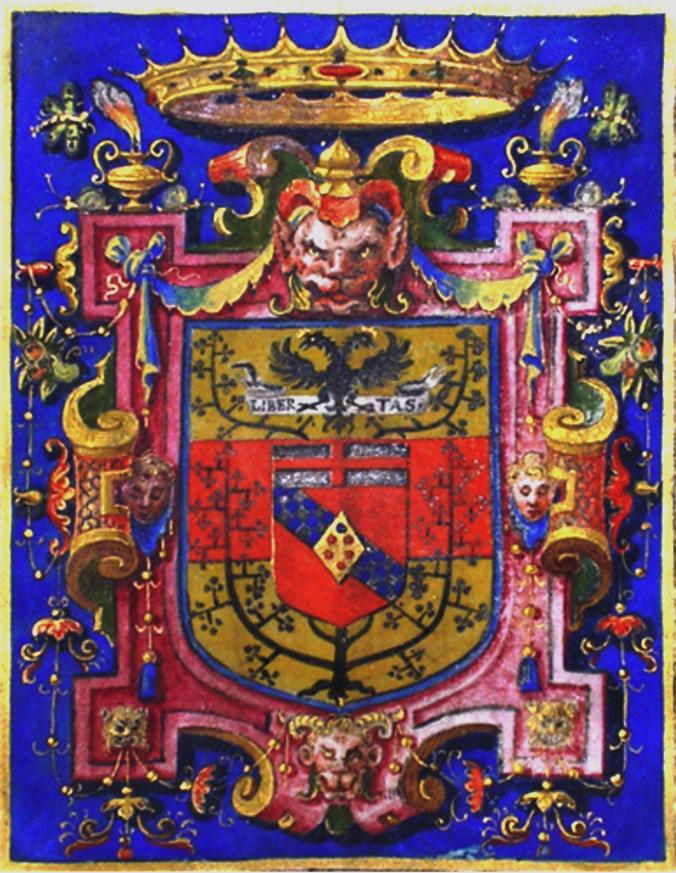
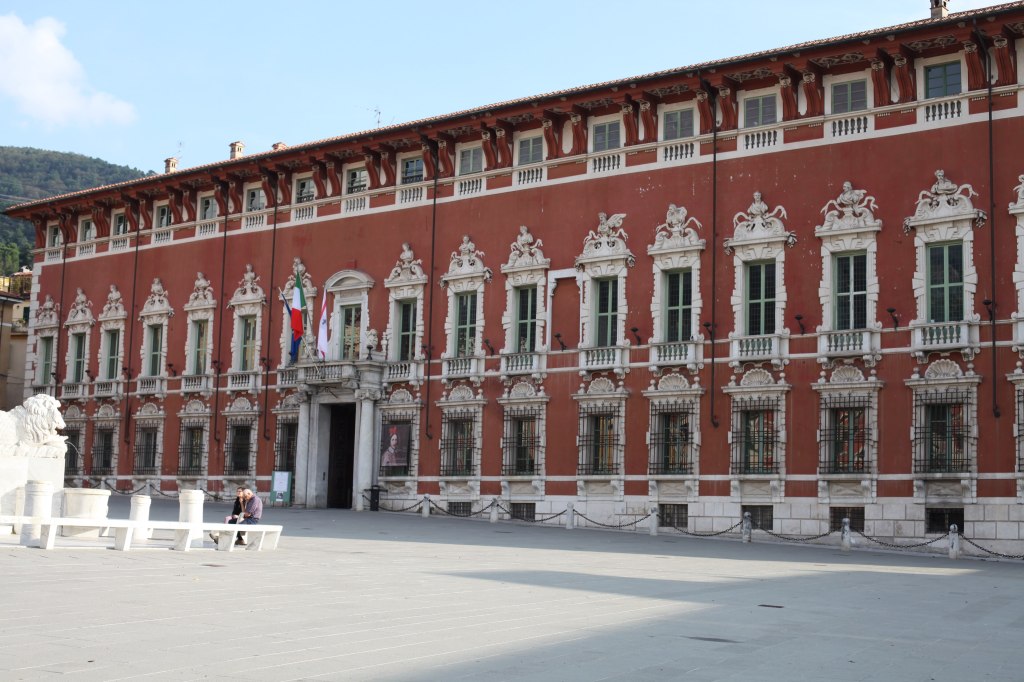
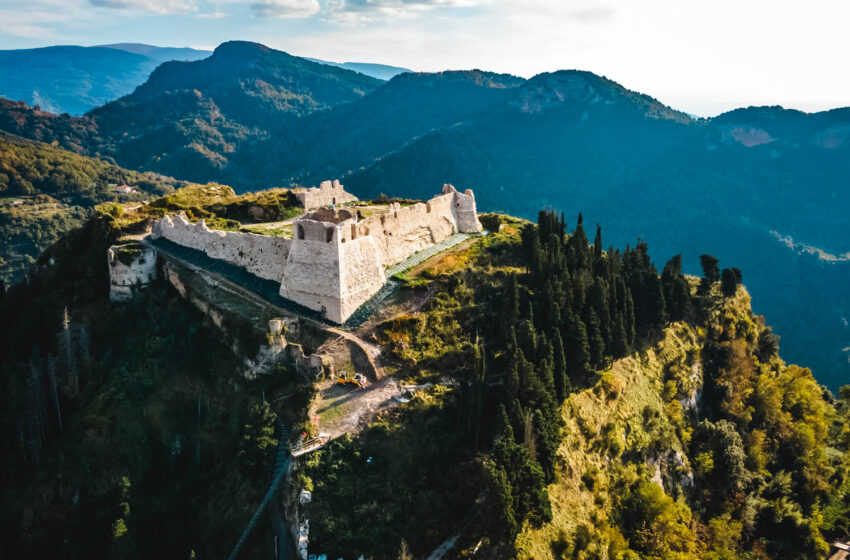
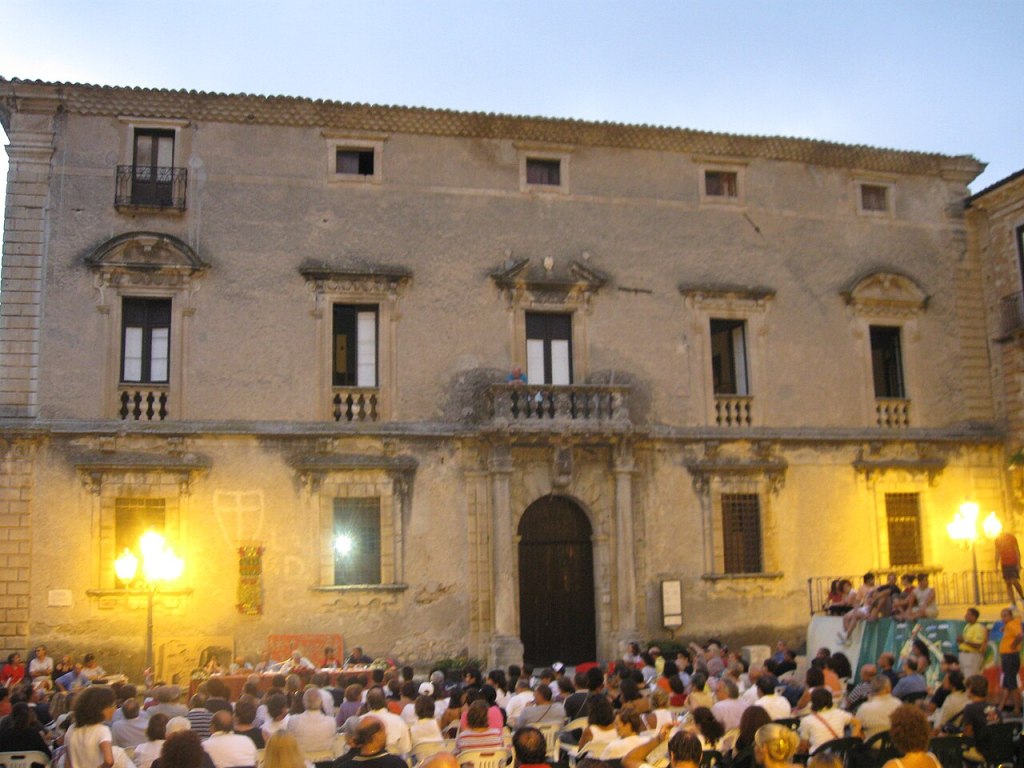
When reading about someone who is the prince of this or the duchess of that, most people immediately conjure up an image of someone who is very grand, an elite part of the old aristocracy of Europe. But I am very often struck by how frequently historians, including professional academic historians, regularly use noble titles indiscriminately and interchangeably, and when asked to clarify whether the person being referred to is a count or a duke or a baron they say ‘it’s all the same, right?’ This short introductory piece will explain how they are not the same, and will focus on the top two titles in the system of noble titles: the prince and the duke.
The aristocracies of Europe have a wide range of variations in their composition, nomenclatures and customs, but there are also certain similarities across the Continent—for example, most have some form of the titles ‘prince’ or ‘duke’, both deriving from Latin words for command or leadership. There are exceptions, like in Germanic and Slavic languages, which use non Latin-based words, but with similar meanings. Most European countries went through a period of monarchy at some point in their history, some briefly while others maintain it still, and all of these monarchies created a system of hereditary nobility to assist them at first in defending the country and later in governing as well. The base-level nobles, the vast majority, were called lords or barons, but those who were given greater responsibilities, usually in a particular region, were created ‘counts’ (earls in English) or viscounts (‘vice-counts’), from the Latin word for companion (comes). This system emerged about the time Europe was reorganising itself under the Carolingians (the family of Charlemagne) in the 9th and 10th centuries. Higher up the hierarchy still, members of the ruling dynasties were called ‘prince’ (from princeps, the ‘first one’), which indicated they shared some of the authority of the head of their family, the monarch. Princely status from its earliest emergence was therefore something that is given to all members of a ruling family, by right of birth, not merit or achievement. This issue came up again just this year, when people asked whether Prince Harry, the Duke of Sussex, could have his status as prince removed. Back in the age of the Carolingians, some princes were given larger territories to govern, as autonomous rulers, with the title ‘duke’ (from dux, or ‘leader’). Often these leaders were supplied by the tribal chiefs of the ethnic groups being incorporated into the wider Imperial whole, like the dukes of the Saxons or the Bavarians east of the Rhine, or the dukes of the Gascons in southwestern France. The German term for duke is herzog, loosely from heer and ziehen, ‘puller’ or leader of the fighting men. In Slavic languages a similar term is voivode, ‘war leader’.
For much of their history, the titles prince and duke were restricted to royalty or semi-royalty only. As Europe’s kingdom’s evolved into more centralised territorial bodies, dukedoms were still given to younger sons to rule as ‘junior kings’ in what are called apanage territories, and these could be ruled with a certain degree of autonomy, but ultimately remained part of the kingdom as a whole. Well known examples in France include the duchies of Anjou, Orléans or Burgundy, or in England the dukedoms of Cornwall, Lancaster and York, but similar apanages existed in most countries: the duchy of Styria for junior Habsburgs in Austria, the duchy of Coimbra in Portugal, the duchies of Halland and Södermanland in Sweden, and so on. This predominance of royal-only dukedoms started to shift in the fifteenth century, as certain magnate families established so much power they had to be recognised as power-sharers in their own right within the kingdom. There were non-royal dukes in Germany and Italy from the 13th and 14th centuries (Brunswick, 1235; Mecklenburg, 1348; Milan, 1395), and these maintained such a degree of autonomous authority that we might call them semi-royal anyway. The same is true in Russia and Poland, where the word kniaz can be translated as either duke or prince (and seems to be a derivative of the early Germanic word for king). But the western monarchies of France, Spain and England did not have their first non-royal dukes until much later.
Early French non-royal dukedoms were given to powerful semi-autonomous magnates such as the Count of Armagnac (Duke of Nemours, 1461), important Italian allies (Valentinois for Cesare Borgia, 1499; Nemours for the Medici, 1515), then for representatives of foreign dynasties settling in France (Cleves, Lorraine, Savoy), and finally for some ‘native’ French noble families (Gouffier, Brosse, Montmorency) by the middle of the sixteenth century who had strong connections, personal or by marriage, with the royal family. Across the Channel, for the Plantagenets, aside from the early anomaly of the ‘duke of Ireland’ (Robert de Vere, 1386, for life only), the first non-royal dukedoms were created for nobles with close blood relations with the royal family: Norfolk for Thomas de Mowbray, 1397; Buckingham for Humphrey de Stafford, 1444; Suffolk for William de la Pole, 1448. Only a handful were created in the Tudor era (restoring the Howards, and new dukedoms for royal favourites Charles Brandon, Edward Seymour, and John Dudley), so it was not until the 17th century that the numbers began to increase in England (and the first Scottish dukedoms as well), with a similar large-scale increase in France as well. Still, overall numbers of dukes in France or Britain were never more than 20 or so at a time (today there are about 25 in the United Kingdom, and about 40 in France).
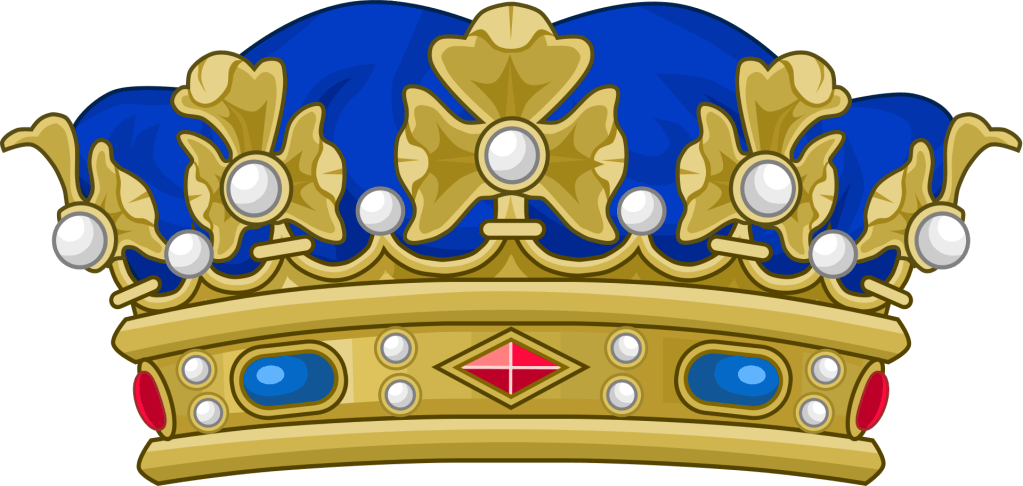
a French ducal coronet
Looking further south, we see Spanish non-royal dukedoms emerging in the mid-15th century for grandee families like Luna, Guzman, Osorio, La Cueva, Alvarez de Toledo and Zuñiga. Portugal had only one non-royal dukedom this early, Bragança, and that was created for an illegitimate member of the dynasty (ie, his mother was not the queen), and Portugal never had more than a handful of dukedoms, royal or non-royal. In Spain, in contrast, by the 17th century, there was an ever-growing number of dukedoms (already about 40 by 1600), and, even more spectacularly, the kings of Spain began to reward loyalty in their overseas territories in Italy (Naples and Sicily) with dukedoms so these began to proliferate, literally into the hundreds by the 18th century.
To separate out some of these families, the higher title of ‘prince’ was introduced, but this too grew to exorbitant numbers in southern Italy until a principality came to mean little more than a particularly large feudal estate. In the Holy Roman Empire as well, a new title was introduced in the 17th century to distinguish certain grandee families, usually with strong connections with the Imperial court: there already were the territorial dukes (Saxony, Bavaria, etc), so instead these were called fürsts or ‘princes’—in German, a distinction can be made between the word prinz which generally refers to members of those older ruling families, and fürst, a ‘ruling prince’ (from the same root word as the German führer, leader) who is not royal and not a duke. Well known princely families like these include the Liechtensteins, Fürstenbergs, Dietrichsteins and Schwarzenbergs. Their ‘rule’ was only personal until they acquired a fief that was held from no other prince besides the emperor (known as an ‘immediate fief’) and they then were allowed to join the top governing body of the Empire, the Council of Princes which acted as the upper house of the Imperial Diet. Liechtenstein is the only one of these tiny immediate territories that survived into the modern age as a sovereign state, a principality, not a kingdom—and ironically, until the 19th century, the estates around the castle at Vaduz in the Alps were not really considered an important part of the family’s landholdings, which were mostly concentrated in Austria nearer to Vienna, or in Bohemia. A few of these non-royal princely titles were granted in the Habsburg-governed Netherlands as well, for the magnate families like Ligne, Epinoy, or Croÿ. The most famous prince in the Low Countries, the Prince of Orange, was of a different kind, however, as a ruler of a sovereign territory in southern France, not too far from another sovereign family, the Princes of Monaco (sovereign meaning at least nominally outside the control of any other power). These micro-sovereignties were mostly self-proclaimed, and sometimes their status was recognised by their larger royal neighbours, and sometimes they were not.
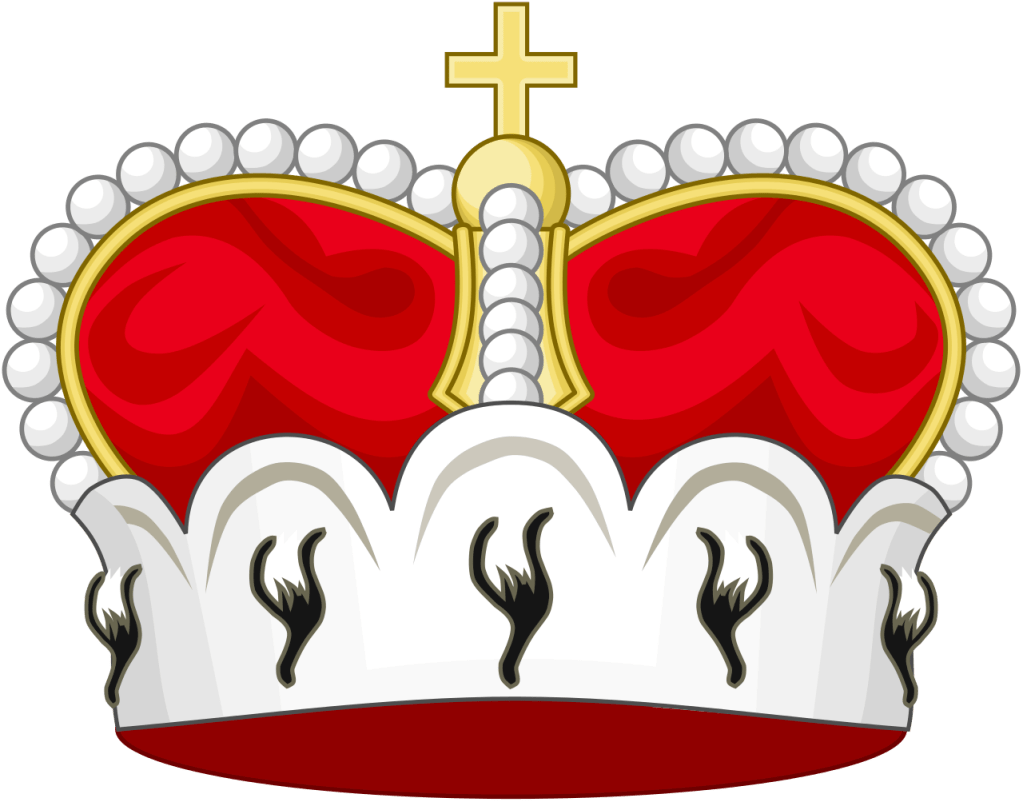
a princely crown from the Holy Roman Empire
So there are different kinds of prince, royal, non-royal, sovereign prince, imperial prince, and a very uneven distribution, from hundreds in Sicily, to none at all in England. France had almost no creations of non-royal princely titles, but those that were formed a peculiar category called the ‘foreign princes’, which included the dukes of Guise, princes of the House of Lorraine, and were the subject of my doctoral research. These families were considered to be princely because they were members of foreign sovereign dynasties, but their native titles had no legal standing within France—so all of them were granted dukedoms in France to maintain their elevated dignity and status, and, I would argue, to boost the prestige of the French court. French kings could point to their courtiers and show that they ruled over not only the subject nobility but also the higher princely clans of Europe—a sort of hearkening back to the ancient world’s concept of ‘king of kings’—and allowed them to compete in prestige with their rivals, the emperors in Vienna.
If you’d like to read a recent academic piece of mine on this topic, here is a chapter I published in Adel und Nation in der Neuzeit: Hierarchie, Egalität und Loyalität 16.-20. Jahrhundert, Martin Wrede and Laurent Bourquin, eds (Thorbeke Verlag, 2017)–don’t worry, it’s in English:
The chief difference between princely status and ducal status in most of these countries was in the differences of inheritance systems. All members of the house of Lorraine, for example, were princes and princesses by birth, but only the senior male in France was the duke of Guise. This reflects the two basic systems of inheritance and succession that operated in medieval and early modern Europe: partible inheritance and primogeniture. Germanic custom leaned more towards partible, that is equally divided, inheritance, so all children got a portion of their parents’ wealth: all of the children of a duke of Saxony were called duke or duchess of Saxony, though in terms of actually ruling, men were (no surprise) favoured. But this is why Germany so famously saw ever increasingly tiny dukedoms in the late middle ages, until primogeniture was imposed, often by force, in the early modern period. Primogeniture, in which the firstborn gets everything, had been the more favoured system in the Roman world, and gradually took hold in the Germanic kingdoms once it became clear that, while seemingly unfair to younger sons, avoided quite a lot of bloodshed, fratricide and civil war. Primogeniture mostly favoured males, and this is true for principalities and dukedoms as well as for royal thrones, but not always, and there are certainly instances where, in default of a son, a throne passes to a daughter, even if there male cousins—though this was almost always a source of strife and legal deliberation. At one end of the scale, German dukedoms never passed to a woman, and this is (mostly) true for England and France as well, though there are some exceptions. In these kingdoms, dukedoms were created, existed for a few generations, then became extinct through lack of a male heir. At the other end of the scale, Spain allowed for almost universal succession, so it is the one place in Europe where hereditary titles never become extinct, and certain aristocratic clans simply accumulate more and more, resulting in extreme cases like the Duchess of Alba, who died in 2014, and was the possessor of about 40 titles, eight of them dukedoms, the most titled person in the world according to the Guinness World Book of Records.
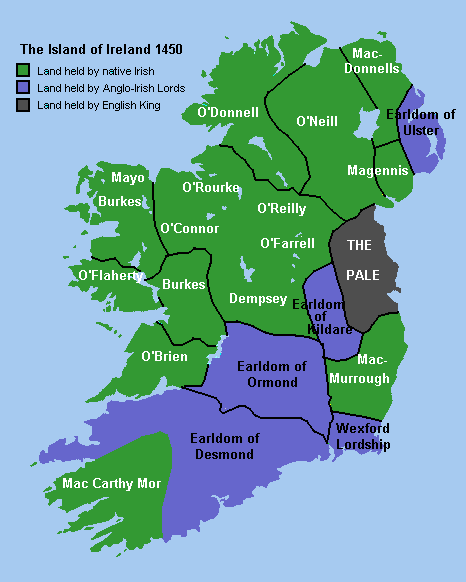
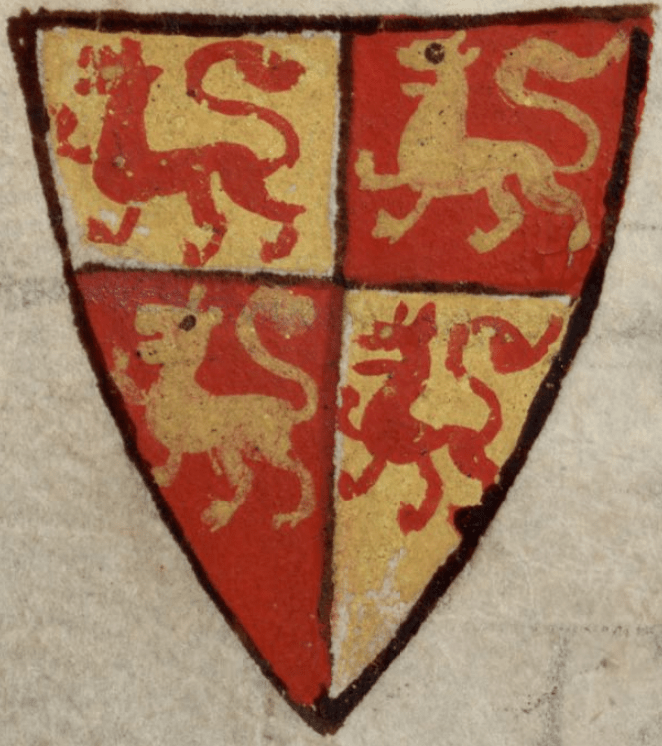
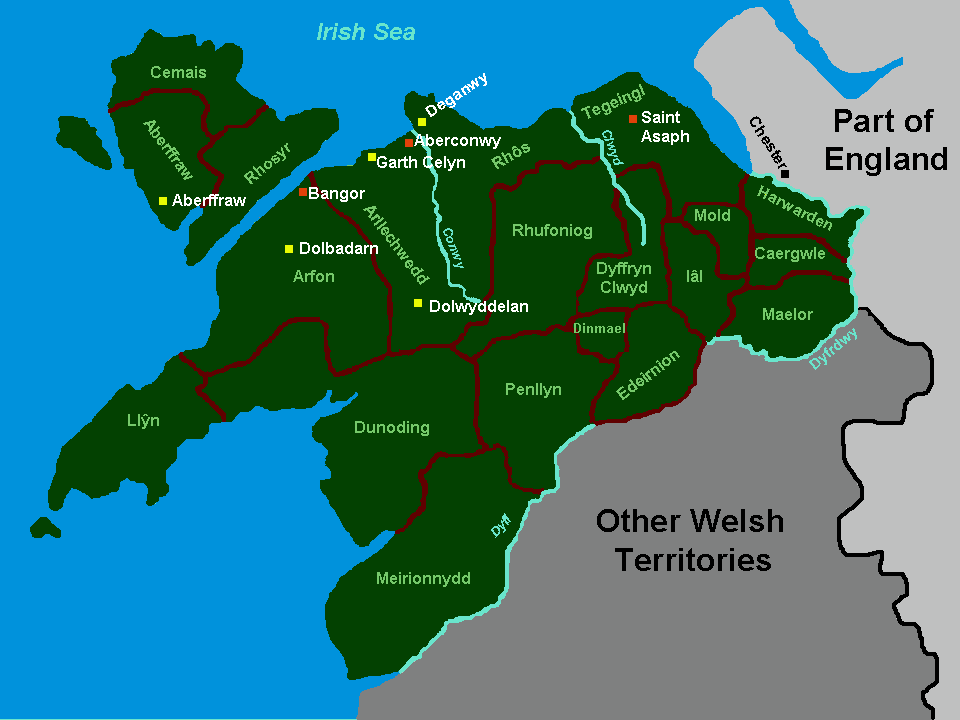
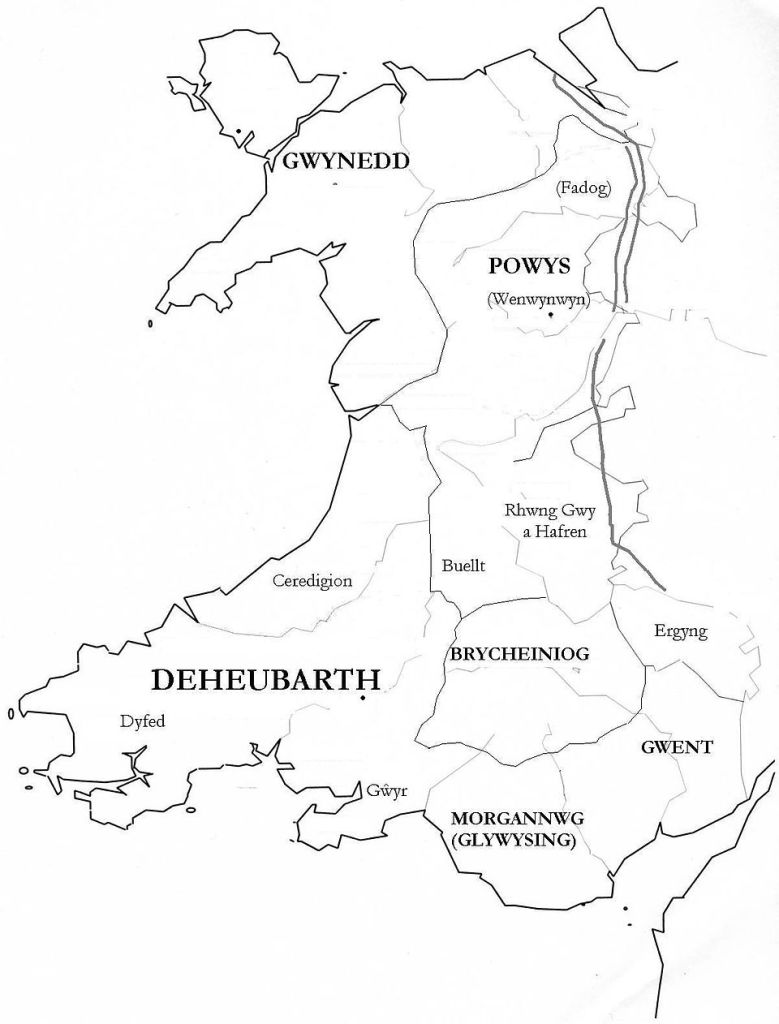
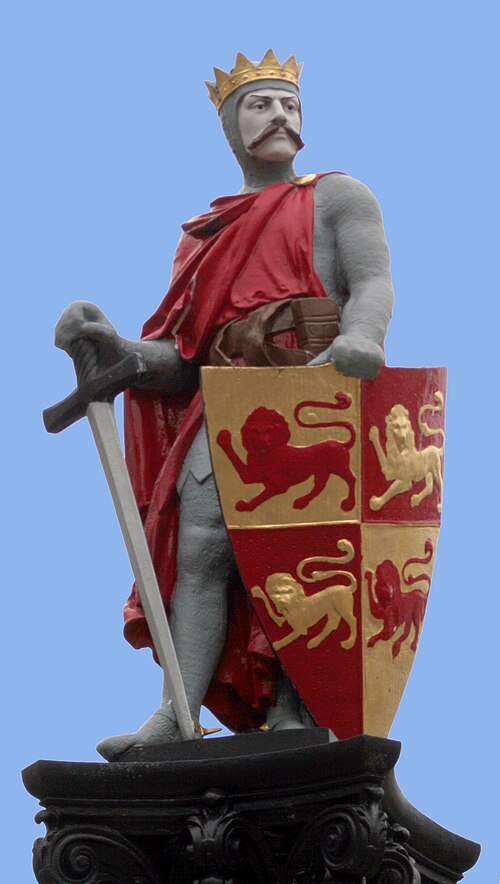
There are also a good deal of other variants in the two titles of prince and duke. Some dukes were deemed to be of higher status than others, so they were called ‘grand dukes’, first with the Medici of Tuscany in 1569—which annoyed the neighbouring dukes of Savoy and Mantua and Ferrara very much, whose ruling families saw themselves as older and grander, even if they had less wealth. Many more grand duchies were created in the aftermath of the Napoleonic wars: Luxembourg, Mecklenburg, Baden, etc. In keeping up with the Joneses, the Habsburgs wanted to ensure that everyone knew their dynasty was of higher rank than anyone else in Europe, so invented the title of ‘archduke’ for their sons and daughters in 1358. Because the language of eastern Europe makes duke and prince fairly interchangeable, the early rulers of Poland were called grand dukes or grand princes before they were fully recognised as kings at the end of the 13th century. The same is true for Russian grand princes of Kiev, Moscow, Vladimir, Tver and so on, until the line of Moscow adopted the title of tsar (‘caesar’ or emperor) in the 16th century. From this point, grand duke and grand duchess began to be used for all members of the Russian imperial family. All of the magnate families who could claim descent from the original rulers of the various Russian principalities began to use princely titles, and by the 19th century, these numbered in the hundreds. Other rulers in the east in the early modern era were referred to as prince or grand prince—Transylvania, Wallachia, Moldavia, Serbia—in part to show their simultaneous autonomy and subservience to a greater power, whether Byzantine, Ottoman or Habsburg. On the other edge of Europe, the title of prince was sometimes used by Celtic families in Ireland or Wales to indicate descent from a family that had been formerly sovereign before the coming of the English, for example the O’Donnell princes (or flatha) of Tyrconnell or the MacCarthy princes of Desmond. Some would say the title ‘prince of Wales’ used today is a bit of an insult to those princes of Gwynedd and Powys who were genuinely Welsh.
Besides the hereditary principalities and dukedoms, there were also those (rare) given for life only—as a reward for a great victory or peace accord—and there were those held by churchmen. Ecclesiastical titles originally were part of the means for making the church independent of the state, by allowing bishops to rule a particular territory and generate their own income, but later they became a means for honouring senior prelates. In France, the earliest of these were the ancient Frankish bishops who were central to coronation rituals: the archbishop of Reims was considered a duke and a peer of the realm (see below for what it means to be a peer), as were the bishops of Laon and Langres. Later (1674) the archbishop of Paris was similarly honoured with the title duke of Saint-Cloud, but it didn’t have the same sense of territorial rule over the lands in his diocese. Imperial bishops started out with much the same powers, but as Germany increasingly decentralised (as opposed to France increasingly centralising) their powers as territorial rulers were strengthened and they became known as prince-bishops. The top three were the prince-archbishops of Cologne, Mainz and Trier, and they controlled vast territories in the Rhineland and central Germany as virtual sovereigns. Some of the largest of these territories were formally recognised as duchies: Bremen, Magdeburg, Würzburg (aka ‘duke of Franconia’), and Westphalia (ruled by the archbishops of Cologne). There were also several large abbeys that enjoyed princely status, such as Fulda or Corvey, and some for women, like Essen or Quedlinburg. Being a princess-abbess was just about the best job you could get if you were a woman in pre-modern Germany and you didn’t want to rule as simply a consort to a duke or prince. The main thing that connected all of these ecclesiastical princes was of course that they were non-hereditary (at least in theory; in practice some families treated them as their own personal fiefs, most notably the Wittelsbachs in Cologne).
The other thing that connects together all of the hereditary and non-hereditary princes and dukes, at least in the pre-modern world, was their formal role in creating their monarchs, and in holding them to account if necessary. These magnates were thus known as ‘peers’ in that they were equal (from pair in French) to each other, and in the early days of the history of monarchy, equal to the prince before his coronation (or sacralisation once the Church got involved)—they liked the use the phrase primer inter pares, the ‘first amongst equals’, to describe this semi-tribal tradition, and to remind monarchs that they were made and could thus be un-made. Those responsible for choosing or electing (or perhaps merely acclaiming) the monarch were called peers, formally codified into peerages in England and France, and only informally in Spain or Portugal (where they were called ‘grandees’), and they developed even further in the Holy Roman Empire into ‘electors’. By the mid-14th century there were seven electors in Germany, three sacred and four secular. Not all of these were dukes: only the elector of Saxony was a duke (and arguably the archbishop of Cologne), while the others were the king of Bohemia, the margrave of Brandenburg and the count palatine of the Rhine, though all of these ranked as territorial princes. In France, the original six lay peers entrusted with the coronation ceremony included three dukes (Normandy, Aquitaine and Burgundy), but also three counts (Flanders, Champagne and Toulouse), and when new dukedoms were created, they were also called peers (mostly; some were not), which did not affect the coronation rites, but it did reflect their other role which was to act as a supreme court for the Kingdom, as members of the Parlement of Paris. Similarly, in England, the peers of the House of Lords acted as a supreme court, a job they retained until 2005. Of course, there are a lot of peers in England who are not dukes (barons have been peers since the earliest days of the English peerage), which underlines that much of this history is imprecise and hard to put into firmly delineated categories.
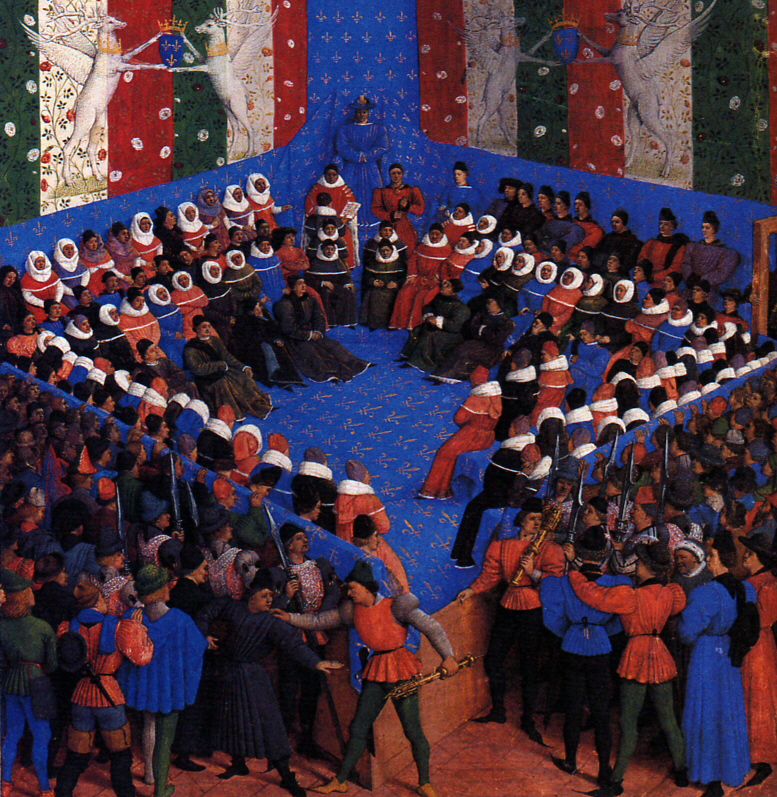
Charles VII of France sitting with some of the Peers of the Realm in the Parlement of Paris
So to conclude this introductory essay, we can see that there are a lot of overlappings and variations of definitions, systems, practices. The peerage does not always mean the dukes; and the titles duke and prince are often overlapping (in fact, in the early modern period, most dukes in England are referred to as ‘high and mighty prince’ in formal documentation). This is why I am treating them together here on this website. There is quite a large chronological and geographical spread to be covered, so I have made some dangerous generalisations above. In England, there are generally only two kinds of dukes, royal and non-royal, though they can be divided into separate peerages for England, Scotland and Ireland. In Germany and Italy they can be ruling and non-ruling (like Mantua for the Gonzagas versus Bracciano for the Orsini). In France the scene is much more complex, with ancient dukes like Aquitaine or Burgundy wielding essentially sovereign (or ‘regalian’) rule, ancien-régime (that is, before the Revolution), dukes acting as peers in the Parlement, then Napoleonic, Restoration and Second Empire dukedoms being created mostly as purely honorific titles. And then there are the countries that have virtually no non-royal princely or ducal titles (like Denmark or Sweden), and those where princely and ducal titles run into the hundreds, like Russia or Naples. There is also a lot of confusing and sometimes contradictory information out there, so hopefully, I can help navigate these complexities to provide some interesting history!
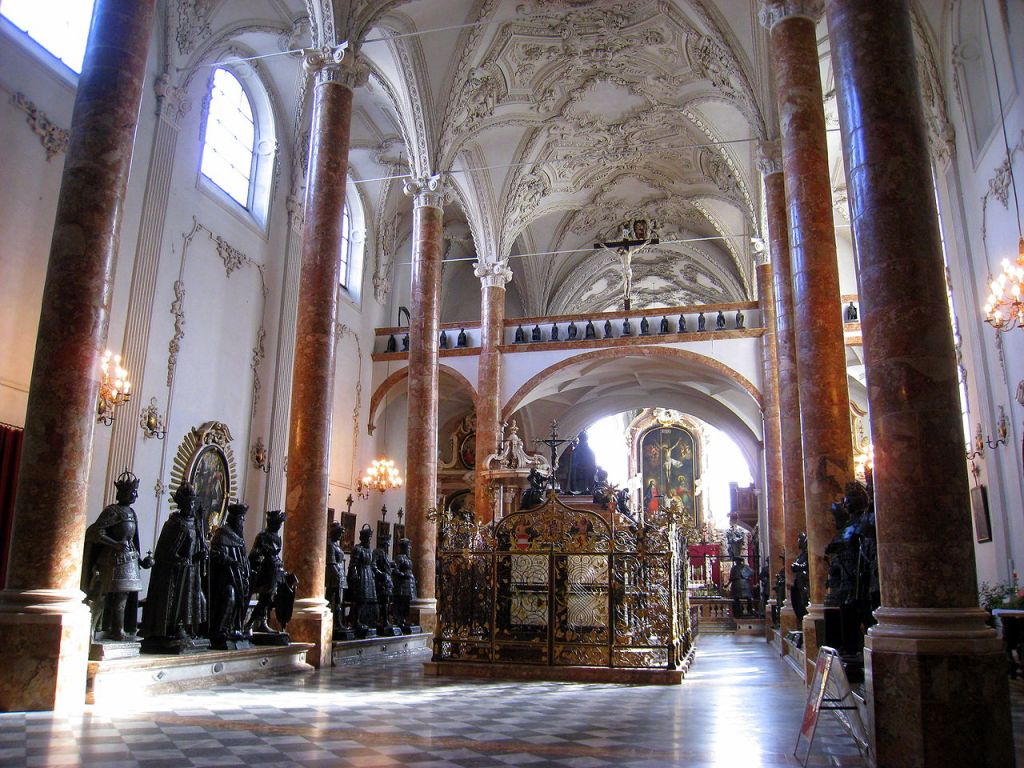
This website is the product of many years of research, travel, conversation with friends, and so on. I first became obsessed with dynastic history when my family and I visited Innsbruck, Austria, in 1984 and I saw the magnificent tomb of Emperor Maximilian I — who was this guy? who were these ancestors?
I was hooked on the Habsburgs, wrote papers about them as an undergraduate, then wrote about their relatives, the princes of Lorraine for my doctorate. This sparked the idea that there was more to just studying kings and queens, or the nobility of one particular nation or other. I wanted to do a much broader comparative study of those who were not fully royal (kings, queens, emperors), nor fully ‘local’ nobility (barons, counts). There was an in between category, the dukes and princes, who could easily move between the courts of Europe and had an identity all their own.
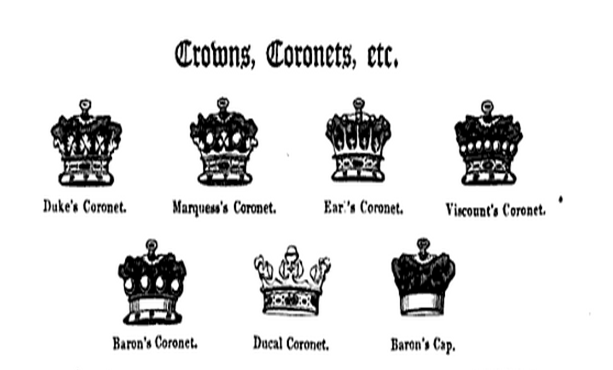
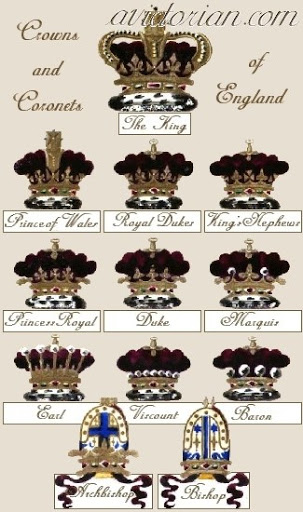
each rank has its own style of crown
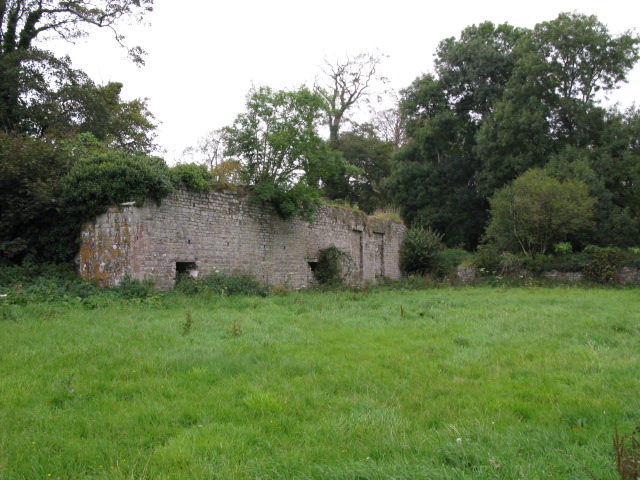
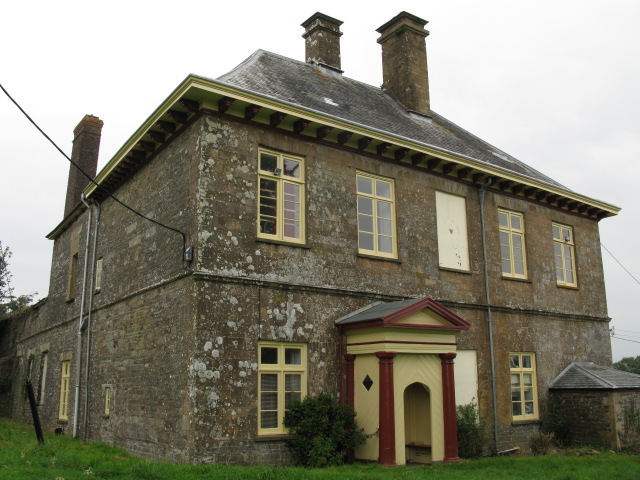
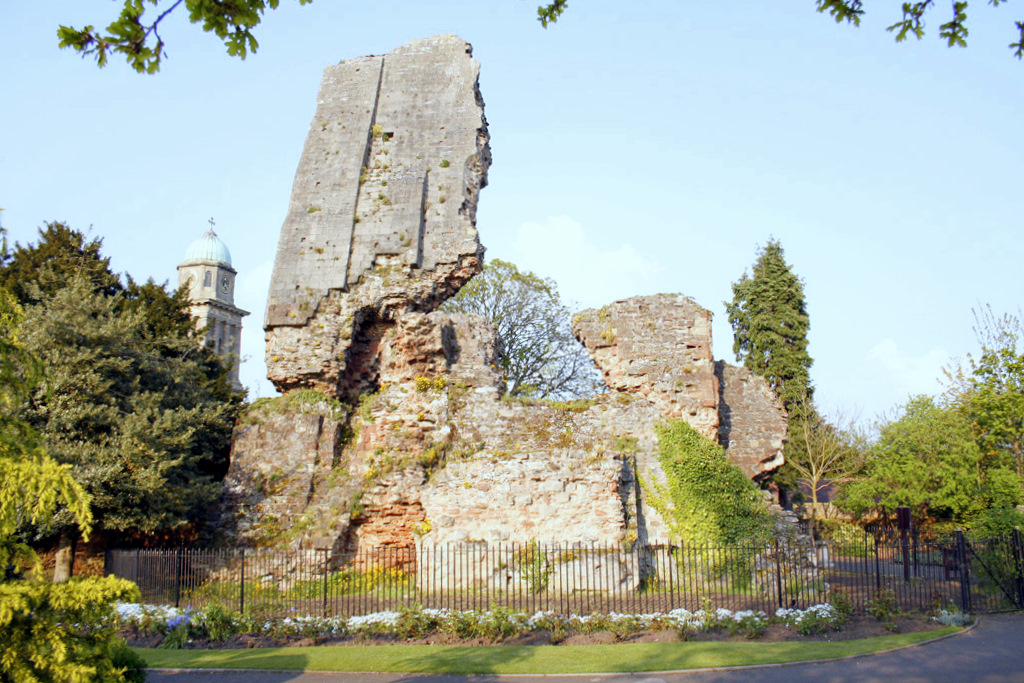
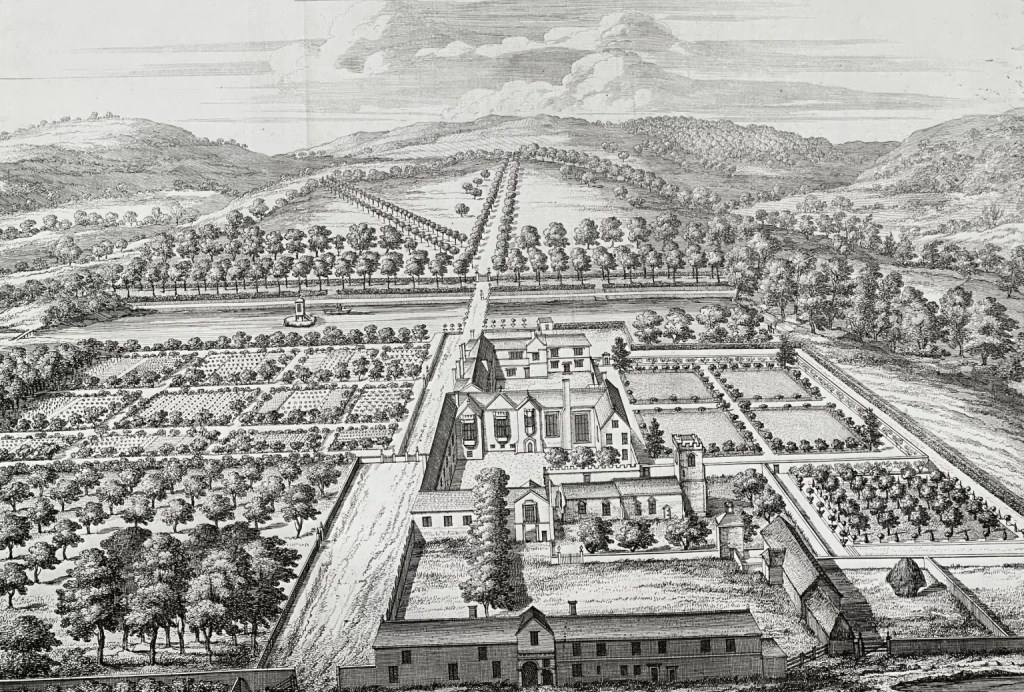
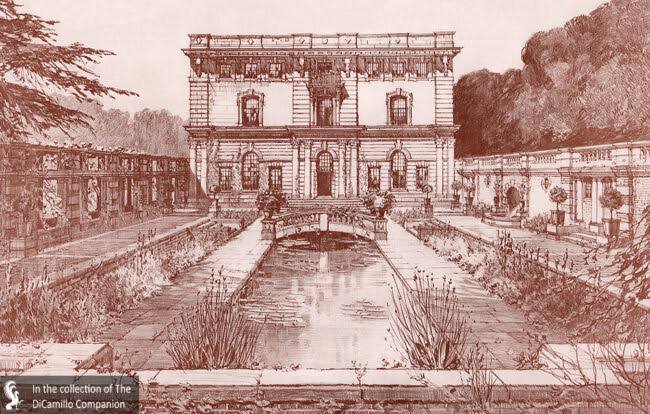
In addition to reading about all these families, I have continued in my initial desire to see the spaces in which they lived or were buried, so I have enjoyed many years of travel to locations all across Europe to visit country houses, palaces, or ruins. One of my favorite adventures was finding the Duke of Albemarle’s house in the remotest corner or Devon.
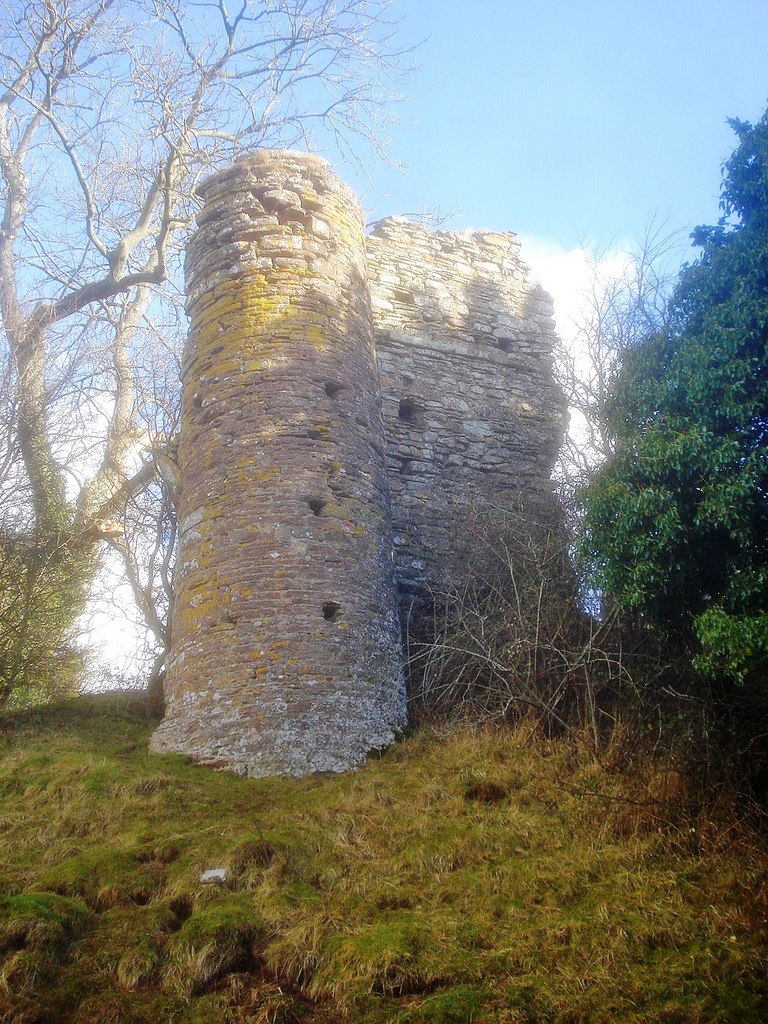
Great Potheridge, near TorringtonThe remaining south wing, now an outdoor activity center for young people
The blogs I write here will tell the stories of these families, from Spain to Russia, make comparisons, share photos of trips I have made to these properties, and so on. I hope you enjoy them!
Jonathan
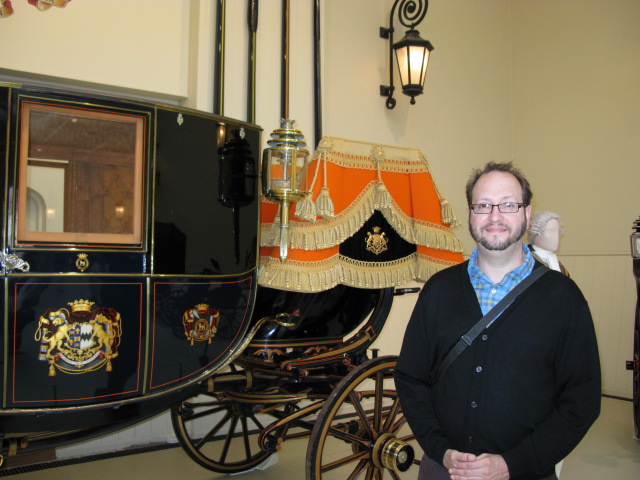
Me and the Duke of Westminster’s carriage, Eaton Hall, Cheshire
Some of the most fun stories about dukes and princes in European history are about those who seem to come from nowhere, gain the very highest of noble titles for catching the eye and favour of a particular monarch, then either fade into obscurity or arrive at a very bad end. Three such examples appeared in Spanish history in the eighteenth and nineteenth centuries: Ripperdá, Godoy and Riánsares.
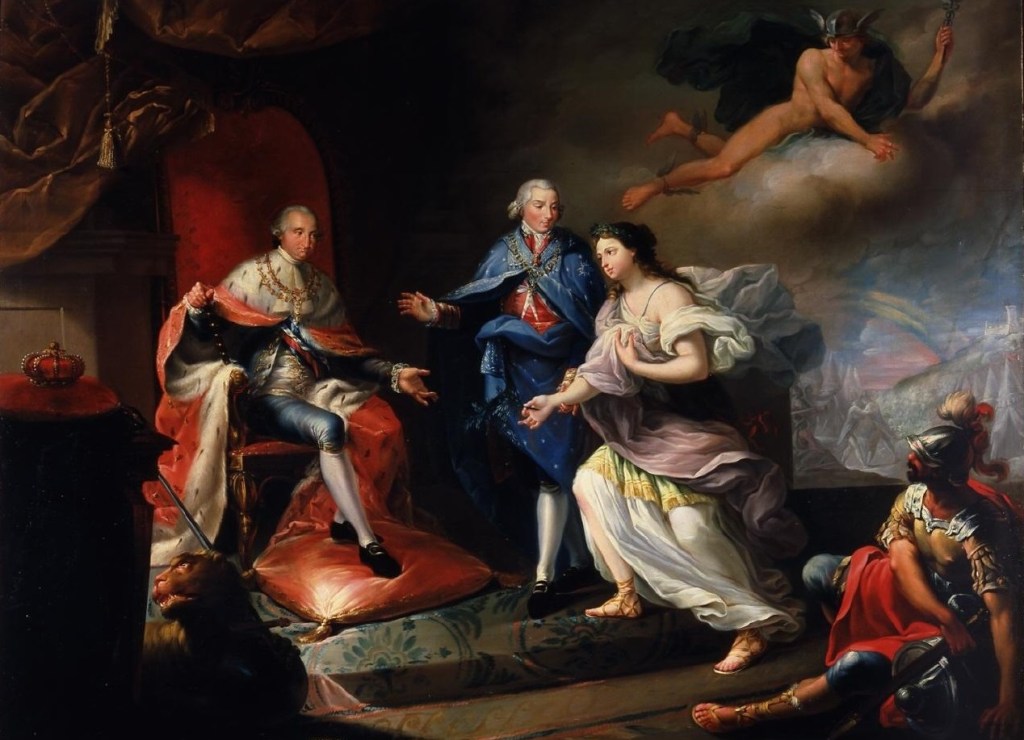
Manuel de Godoy presents Peace to King Carlos IV of Spain, by Pau Montaña, 1796–a feat for which the royal favourite, already duke of Alcudia, was created ‘Prince of the Peace’
In 1715, a Dutch diplomat, Johan Willem Ripperda appeared in Madrid to negotiate commercial treaties in the wake of the War of the Spanish Succession. Born in Groningen in the far north of the Dutch Republic, his family were an old respected noble family, with branches on both sides of the border between Friesland and Westphalia, recognised as barons in the 1470s by the Holy Roman Emperor, but losing much of their wealth and influence in the ensuing century. Their family name probably derives from an original founder, Rupert, back in the thirteenth century. One branch returned to Catholicism in the seventeenth century and were rewarded by the Emperor with a higher title of Imperial barons in 1676. Johan Willem was raised a Catholic, which barred him from holding administrative posts in the Republic, but he converted to Calvinism in order to be elected to the States General for Groningen. He also boosted his career through marriage to an heiress, Aleida van Shellingwoude, Lady of Poelgeest and Koudekerk, near Leiden in South Holland. They had two children and she died in 1717.
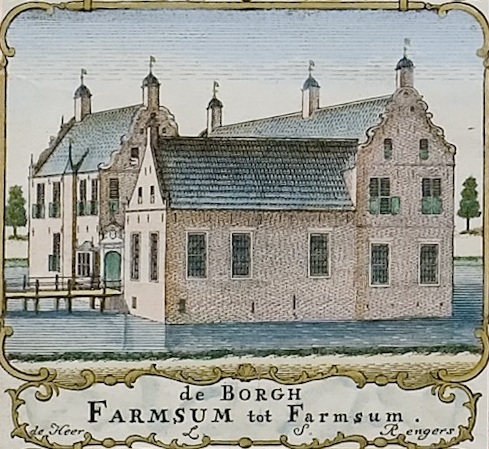
An early seat of the Ripperda family was the ‘village house’ of Farmsum, where for centuries they were hereditary noble administrators. Built in the early thirteenth century on the edge of the Ems estuary (which today divides the Netherlands from Germany), it was demolished in 1812.
Farmsum manor house in Groningen, drawn in 1781
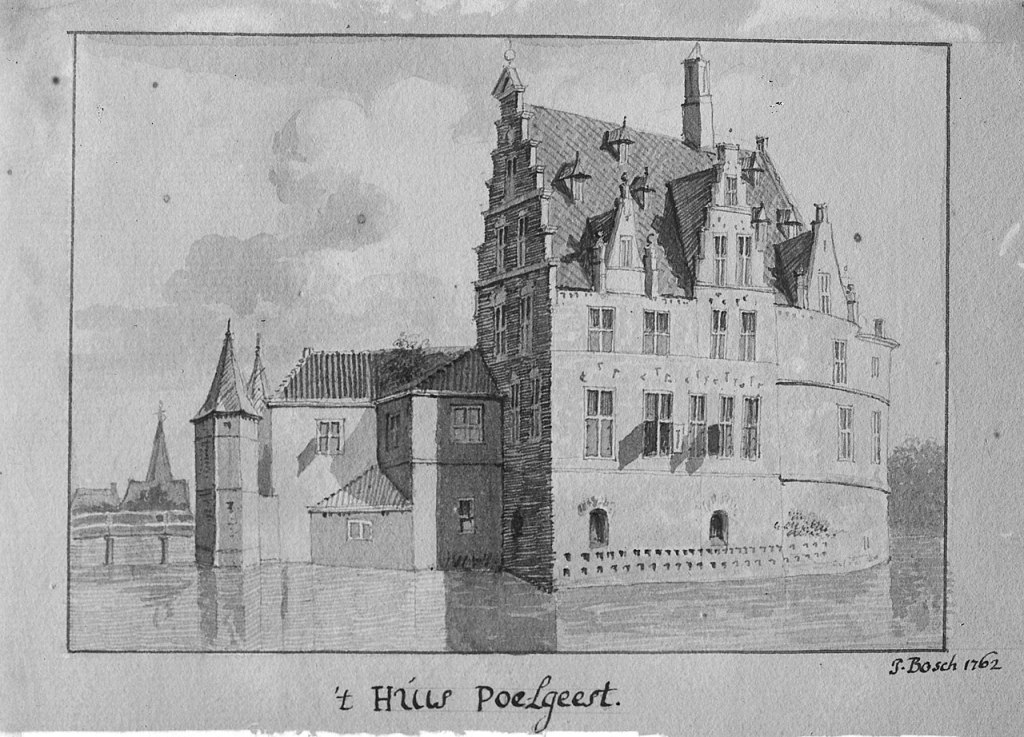
The newer family property, the Castle of Groot Poelgeest was also built in the thirteenth century, and acquired by a family who took Poelgeest as a surname soon after. They held it until 1692 until penury forced them to sell it. It was a round water castle with two large brick towers, on the banks of the Old Rhine before it flows into the city of Leiden. Most has disappeared over the years, but one tower remains.
Groot Poelgeest in Holland
Following his initial mission to Spain, Baron Jan Willem Ripperda van Poelgeest remained in Madrid and converted back to Catholicism to gain the favour of King Philip V. By the Spring of 1725 had entranced the King with grand ideas for restoring the lost prestige of the Spanish Monarchy, still smarting over the loss of territory in Italy and the Low Countries a decade before. He travelled to Vienna and negotiated a new treaty between the formerly bitter enemies (Philip and Emperor Charles VI, who still thought of himself as ‘Carlos III’), by which the Emperor agreed that his daughter and heiress, Archduchess Maria Theresa (age 7), would marry the King’s second son, Infante Carlos (age 9); in return Spain recognised that the Archduchess would inherit the entire Habsburg Monarchy in central Europe: Austria, Hungary, Bohemia, and so on. Then if both Philip V and his son the Prince of Asturias died, Carlos and Maria Theresa would inherit both empires and re-unite the sixteenth-century empire of Emperor Charles V—a renewed Habsburg-Bourbon hybrid dynasty would encircle the globe, utterly unstoppable! Other elements of the treaty stipulated that Spain would join Austria in a crusade against the Protestants in Germany and the Ottomans in the Balkans. Provinces that had been ‘stolen’ from the Habsburgs in the seventeenth century by France would be restored: Flanders and Artois to Austria, Roussillon and Sardinia to Spain. Even the Catholic Stuarts would be restored to their thrones in England and Scotland. Austria would be granted privileged access to trade with Spain’s American colonies and would in return help Spain retake Minorca and Gibraltar from the British. The entire European order would be overturned!
Jan Willem Ripperda
Philip V was thrilled. He created Ripperdá (now with the accent mark) a Duke and Grandee of Spain, and Secretary of State in December 1725. The new duke married again, a Spanish noblewoman Francisca de Xarava del Castillo, and had another son. But his triumph was short-lived. Spanish grandees, rightly concerned about the outrage this treaty would provoke in Britain and France, accused the new favourite of massive embezzlement from the Spanish Treasury, and secured his removal from office in April 1726. He was even imprisoned for good measure in a fortress in Segovia. Ripperdá eventually escaped in 1728, and reputedly—though many stories about his later adventures were probably fabricated to sell books—ended up as a pasha in the service of the Sultan of Morocco, leading troops against the Spanish garrisons in North Africa (Oran and Ceuta) and even trying to have himself crowned king of an independent Corsica. He died in 1737.
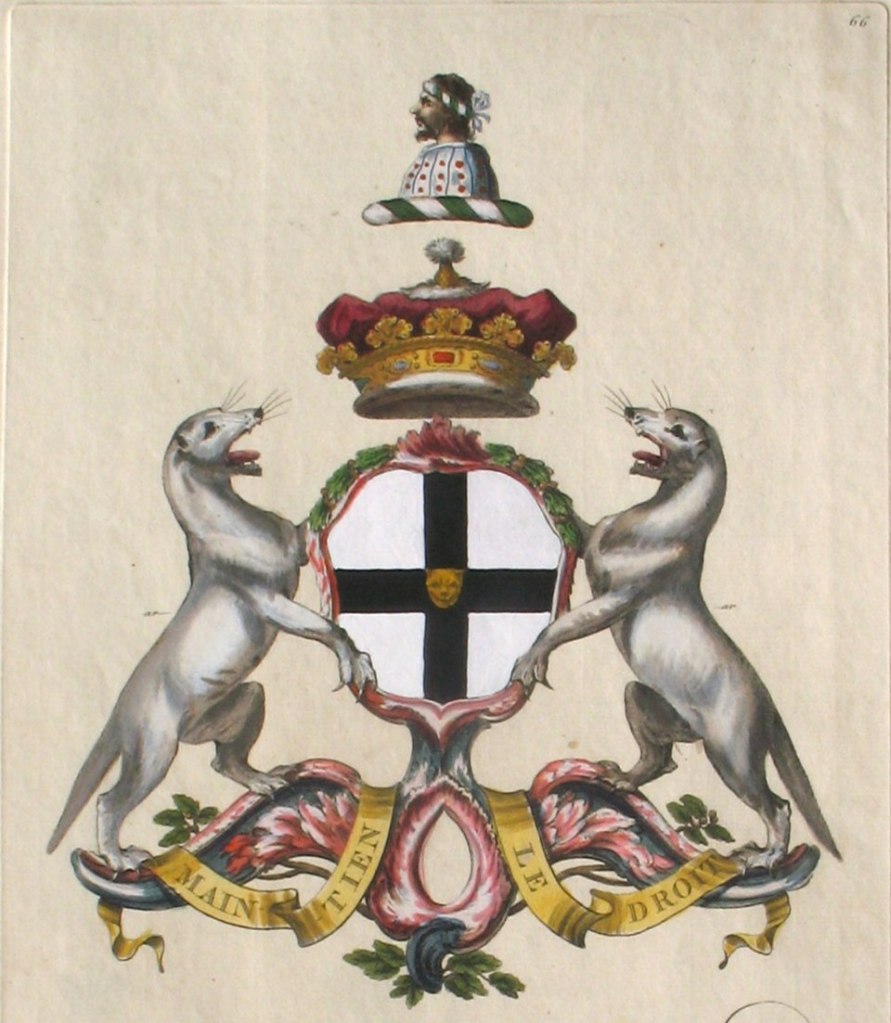
Ripperda’s coat of arms (the crown seems to be one of a prince of the Empire, so is a bit ambitious)
The Dukedom of Ripperdá was almost immediately revoked. He did have sons, however. The eldest son, from his first marriage, was Ludolph Luirdt, who had a swift and short diplomatic career, as Spanish Ambassador to the Hague, to Saint Petersburg and to Vienna before his father’s fall in 1726. In Vienna he had married extremely well, a daughter of a Count Cobenzl (from a family that would become quite prominent in Austrian politics later in the century), but he returned to the Netherlands to take up his mother’s lordship and castle at Poelgeest. A much younger son, from the Duke’s second marriage, was Don Juan María, Baron de Ripperdá, appointed Governor of Texas in 1769. For nearly ten years he defended the Spanish colony from Apaches attacking from the north and English settlers coming in from the east. He moved the capital to San Antonio. But a clash with the Viceroy of New Spain led to his transfer to the post of Governor of Honduras in 1778—he died shortly after arrival there in 1780. Many descendants of the ephemeral Duque de Ripperdá, born from a third son, continued to be a prominent noble family in Groningen and the Emsland in the far northwest of Germany. They died out in the late nineteenth century, but other Ripperda lines continue elsewhere.
*
Soon after Don Juan de Ripperdá was leaving Texas, we see the arrival on the political scene of one of the most notorious figures of Spanish history, Manuel de Godoy. Opinions were split then and now over whether he was merely a good-looking chancer or a skilled politician who knew how to manipulate his royal patrons.
Manuel’s father, José de Godoy, was a municipal officer in the city of Badajoz. Before they had settled in Badajoz, in western Spain, the family was from Galicia and claimed descent from a famous Captain-General of this border zone with Portugal in the later fourteenth century. The future politician Manuel was in fact the fourth son, so he really had to make his way at court based only on charm and good looks—which apparently he did, and his favour with King Carlos IV and Queen Maria Luisa from the early 1790s (when he was in his young twenties) was so intense that naturally people assumed he was having an affair with the Queen, or even, some thought, with the King. Some considered it may have even been a menage à trois. One recent historian has suggested the Queen was merely conforming to the fashion of the day for a high-born lady to have a cortejo, a young attractive male companion, with the benign indifference of the husband. From their own letters and correspondence, it is clear that the royal couple were devoted to young Manuel mostly as someone they could rely on who was, in turn, completely dependent on them, not being a grandee with his own independent wealth and authority, nor a member of one of the major aristocratic factions at court. They doted on him like a son (he was about twenty years younger than they), in particular since they were not that fond of their actual son, Fernando, Prince of Asturias. But gossip did run: in particular that the Queen’s last two children were far too cute to be Bourbons. This was especially commented on in the famous painting of the royal family by Goya, now hanging in the Prado in Madrid.
Manuel de Godoy as a dashing young guardsman, 1790
Of Manuel’s older brothers, the eldest, José, was a canon in Badajoz Cathedral—unusual but not unheard of for an eldest son to join the Church—while the second son Luis had a successful military career and rose to the rank of brigadier-general, 1791, then Governor of Badajoz and Captain-General of Extremadura, 1794-95. Luis also became Viscount of La Armeria by marriage. The third brother, Diego, also had a military career, rising to lieutenant-general in 1795 in the war against France, then, succeeding his brother in Extremadura in 1796, and finally Inspector-General of the Cavalry in 1802. Diego was sent to France in 1808 as Master of the Horse for King Charles IV during his period of exile at the Château of Compiègne—the year before he had been created Duke of Almodóvar del Campo (from an estate in La Mancha), and lived the rest of his life in exile, in Rome or Lucca (d. 1842). The ducal title was for life only, but he had no children anyway, nor did his brother Luis. The Godoy brothers also had two sisters, María Antonia and Ramona, who married influential aristocrats. The older married a Sicilian nobleman, a protégé of her brother who arranged for him to be created 1st Marques de Branciforte, and appointed Viceroy of New Spain, 1794-98—he is remembered as one of the most corrupt Spanish governors in the New World.
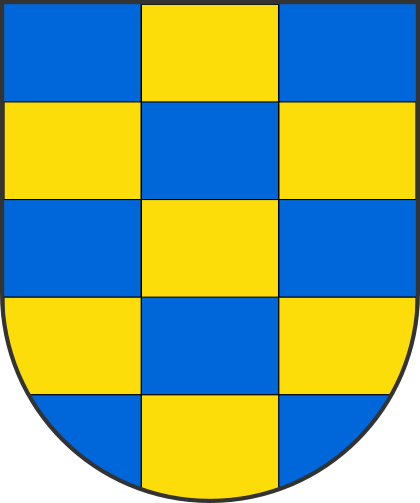
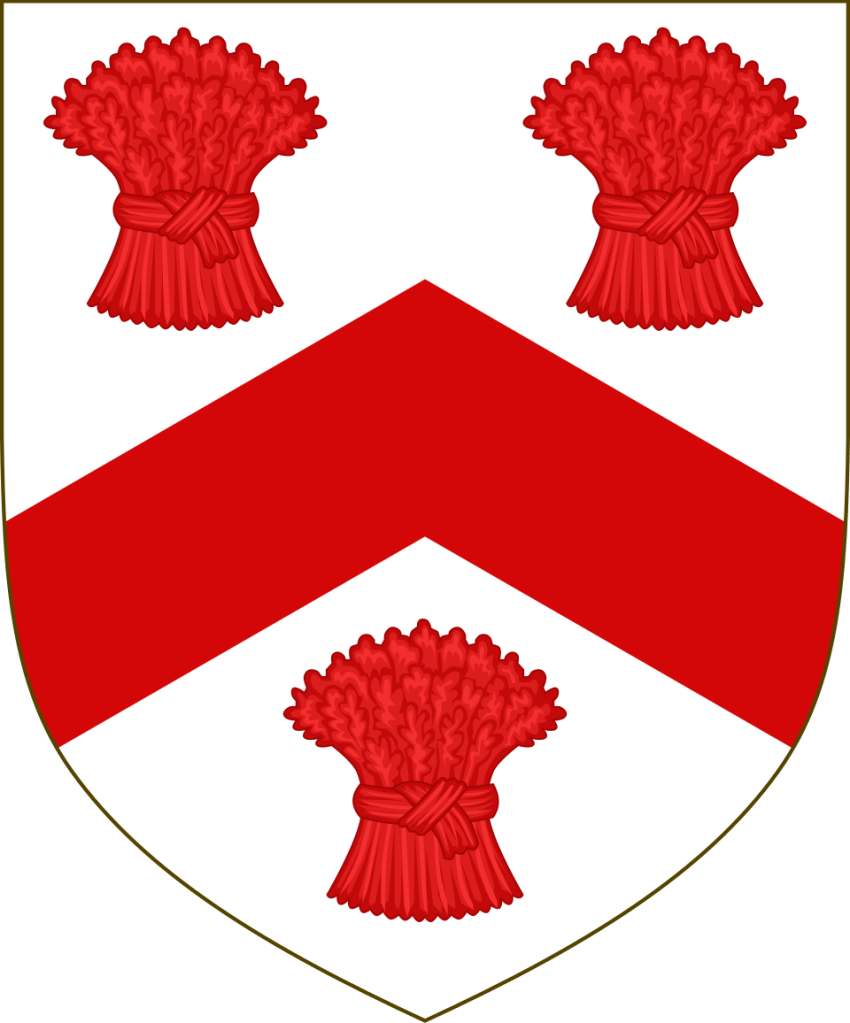
the very simple arms of the House of Godoy
It was in fact Luis de Godoy who came to the royal couple’s attention first—indeed, Queen Maria Luisa’s flirtations with him led to his dismissal from his post in the Royal Guard…but not before he had introduced his younger brother Manuel to court. By about 1785, the latter was in favour, and rose quickly: he obtained an appointment in the Royal Guard, and by July 1791 was a lieutenant-general in the army and a gentleman of the chamber of the King. In 1792 he was created Duke of La Alcudia and Grandee of Spain, as well as Minister of Foreign Affairs and Principal Secretary of State (aka ‘Prime Minister’). A daily routine developed in which the favourite would attend the King and Queen at lunch, appropriately as a gentleman of the household, then he and the Queen would retire to his rooms beneath the royal apartments to work on government matters while the King went out hunting. In the evenings the King met privately with Godoy to go over the day’s policies and finalise decisions.
The Valle de Alcudia is in the province of Ciudad Real, south of Toledo—the arid high plateau of La Mancha. The lands here were traditionally held by the Order of Calatrava, ever since the Reconquista. Godoy’s dukedom was originally referred to as La Alcudia, but his later heirs used simply Alcudia; it was sometimes used as the title for the heir to the dukedom of Sueca, or sometimes the other way round.
In 1793, the new Duke of La Alcudia led Spain reluctantly into the War of the First Coalition against Republican France. After an initial successful offensive, by the end of 1794 Spanish troops were on the defensive and feared invasion. By July 1795 Spanish diplomats had signed the Peace of Basel, ceding to France the colony of Santo Domingo (the eastern half of Hispaniola) in the Caribbean. Yet in spite of this fairly dismal performance, Godoy was created Principe de La Paz (‘Prince of the Peace’), an unusual title for a country that had no tradition of princely titles in its aristocratic hierarchy. He was also rewarded with estates in Granada (with status as a hereditary member of the maestranza or noble brotherhood of that province) and a huge royal pension of a million reales.
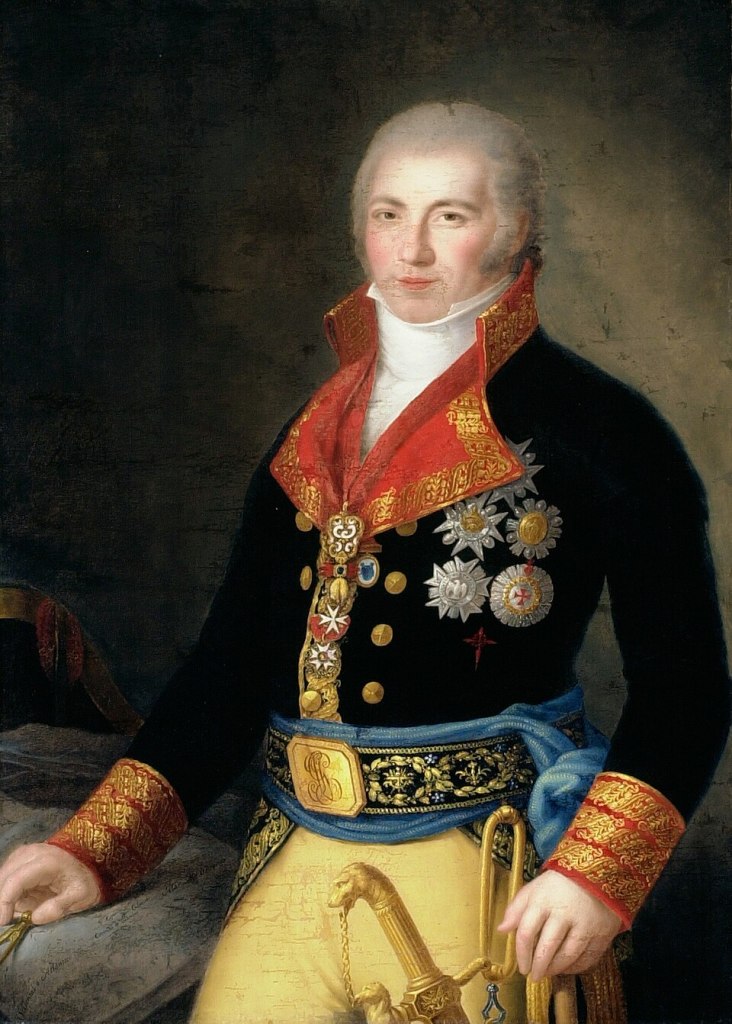
a now senior statesman Godoy, Prince of the Peace and Duke of la Alcudia
Godoy continued to scandalise elite society. He had a young mistress, Josefina de Tudó (known as ‘Pepita’), who was appointed a lady-in-waiting to the Queen in 1797. She was the daughter of a captain of artillery in Cadiz; due to his daughter’s favour, he rose swiftly to the rank of brigadier in 1795 and lieutenant in the Royal Guard and intendant of the Palace of Buen Retiro in Madrid in 1797 (though he died soon after).
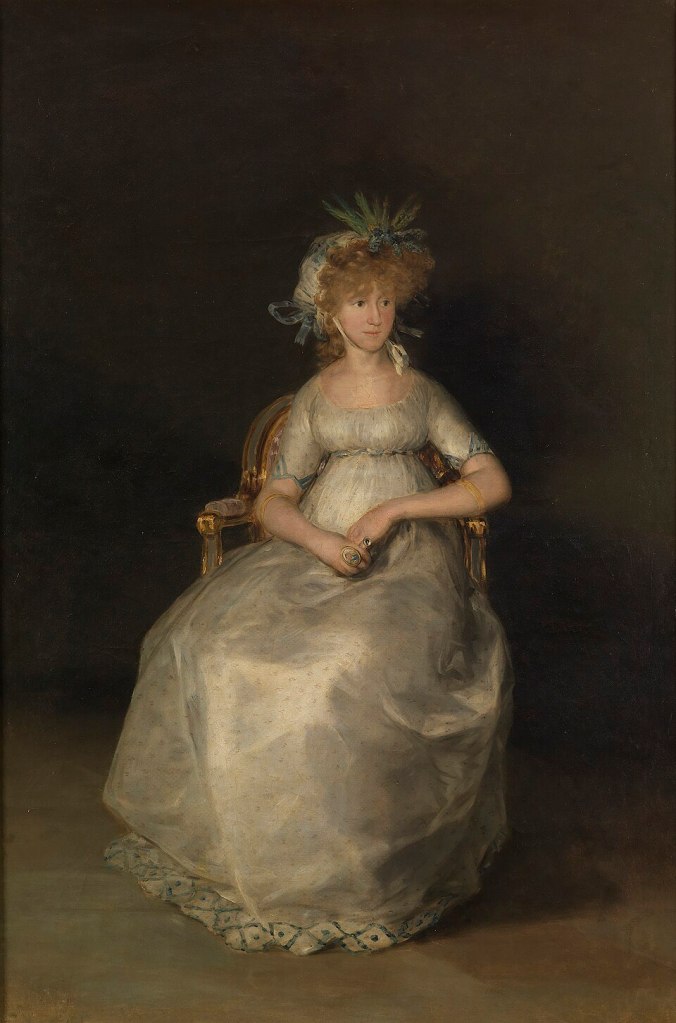
That same year, the Queen arranged a marriage for Manuel, either to draw him away from Pepita (whom he may have already married secretly), or to shield her own relationship with him from public scrutiny. The bride was a first cousin of the King: María Teresa de Borbón y Vallabriga, granddaughter of King Philip V. Though ineligible to succeed to the Spanish throne due to the unequal status of their parents, doña María Teresa was still a great match for a man from such humble origins. She herself was given the additional title of Marquesa de Boadilla del Monte in 1799, and in 1803 became Countess of Chinchón, ceded to her by her brother, Luis María, who had been recently promoted to the highest ranks of the church in Spain, cardinal and archbishop of Toledo.
María Teresa de Borbón y Vallabriga, Countess of Chinchón, painted by Goya
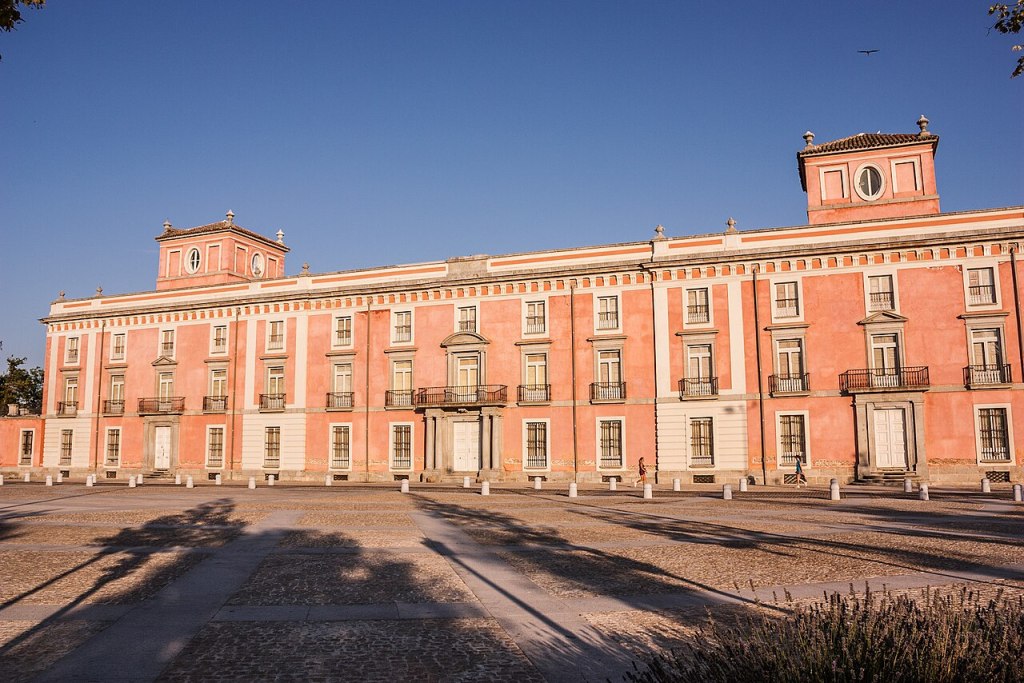
Boadilla is a hilly area west of metropolitan Madrid—today one of the wealthiest addresses in Spain. It was initially a lordship held from the late fifteenth century by Fernando de Cabrera and Beatriz de Bobadilla, both prominent courtiers: Fernando’s father Andrés had been majordomo mayor for King Enrique IV, while Beatriz was herself a childhood friend and later chief confidante and camarera mayor of Queen Isabella the Catholic. Their son Fernando was created Count of Chinchón in 1520 and given vast estates all around Madrid. The lordship passed with the county through various families until it was acquired by Infante Luis, youngest son of King Philip V of Spain. He ordered the rebuilding in 1765 of the ‘Palace of the Two Towers’ (a much older structure built by the marques of Mirabel), maintaining the structure of having a large tower at either end. It has a plain exterior and lavish interior, in Moorish fashion (like many palaces in Spain). Known today as the Palace of the Infante don Luis, it was held by the dukes of Alcudia into the twentieth century, housing their extensive art collection, badly damaged in the Spanish Civil War, and expropriated by the city council of Boadilla in 1998 and since 2006 has been ceded to the Society of Authors and Editors and refashioned with an auditorium, library and apartments—the Society was sent away however in 2009, and the city has plans for an equestrian school.
Palace of the Infante don Luis, Boadilla del Monte (photo Jacob Newman)
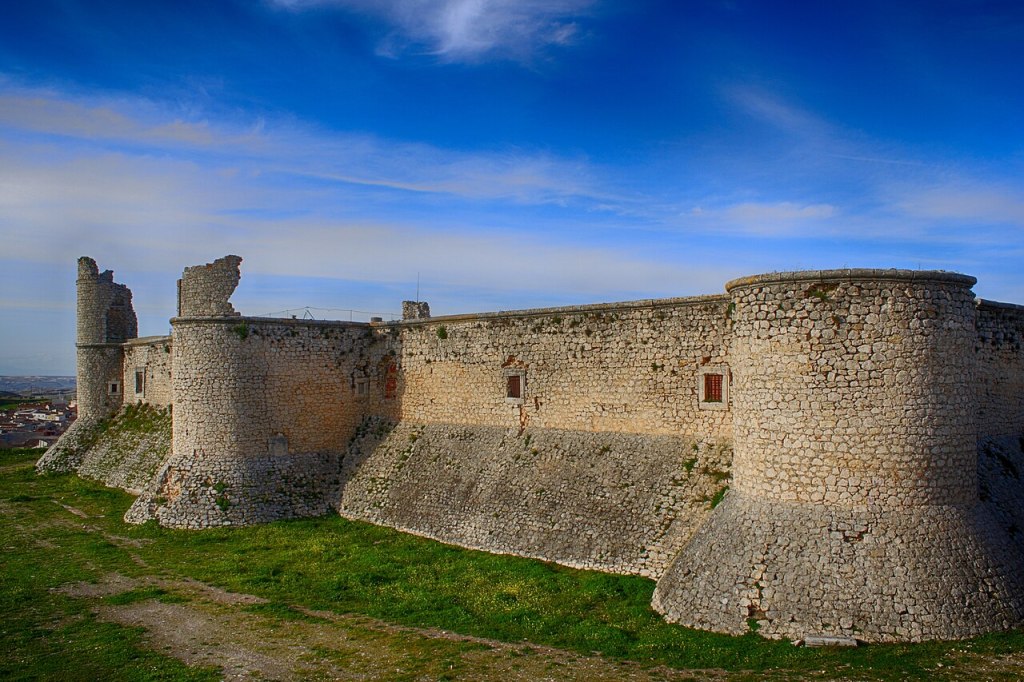
The County of Chinchón itself consisted of about twenty towns and a large medieval fortress, situated on the southeast corner of today’s Madrid Province—it had traditionally been part of the old Kingdom of Toledo but in the 1480s it was put under the jurisdiction of the archbishops of Segovia, so the counts of Chinchón always maintained a townhouse in that city. The County was held by the Cabrera family until 1665, then by inheritance to the Cardenas then Castro families; acquired by the Savelli family of Rome in 1683; then purchased for Infante Felipe, son of Philip V in 1738, as he was in need of an apanage to compensate (in a rather small way) for the fact that his older brother Carlos had gained a major windfall a few years before by conquering Naples & Sicily. Felipe himself would soon become Duke of Parma, so he ceded the County of Chinchón to the youngest brother, Luis, who had initially been endowed with the super lucrative archbishopric of Toledo, but had decided the ecclesiastical life wasn’t for him. If this had been France, the county would have been raised to a duchy, but I think in Spain it was sufficiently lofty to bear the title ‘Infante’. The castle at Chinchón, already crumbling by the eighteenth century, was further damaged in the War of Independence of 1808, and is now a ruin—it is still owned by the family of the dukes of Alcudia.
the medieval fortress of Chinchón (photo M. Peinado)
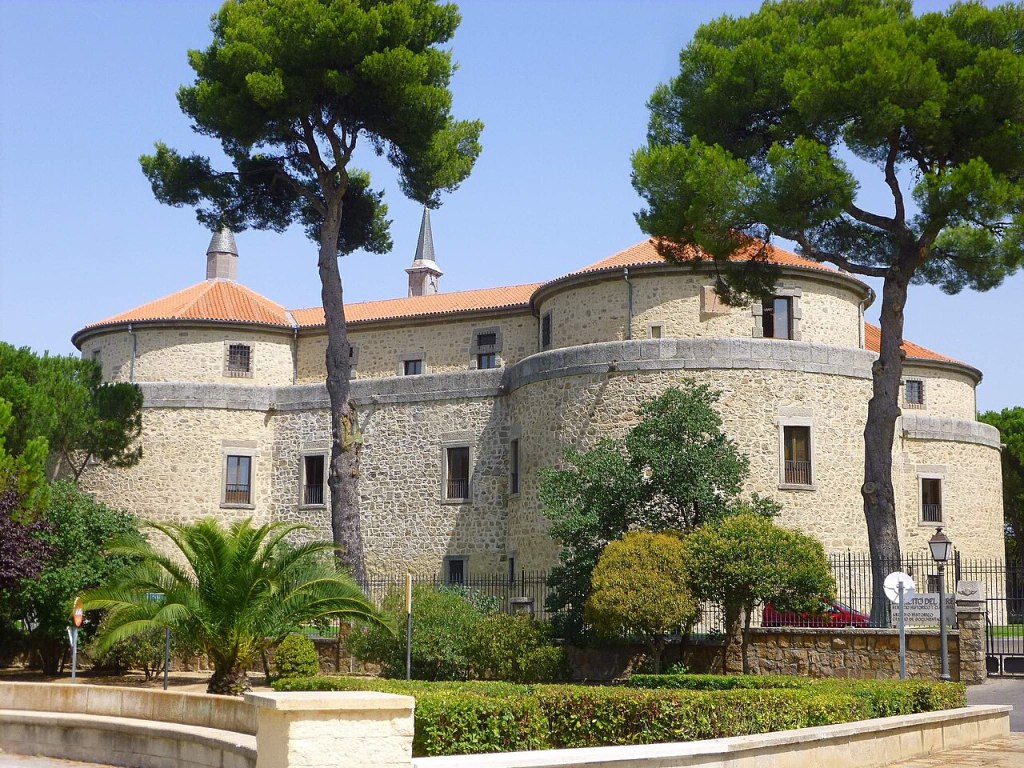
Another part of the County of Chinchón was the town of Villaviciosa de Odón, back in the western parts of Madrid, not far from Boadilla. Here there was another old castle built in the 1490s, destroyed in 1521 after a revolt and rebuilt in 1583 with three large circular towers. Infante Luis restored it in the 1740s, and it became a favoured residence of his older brother King Ferdinand VI, who, entering deep depression after the death of his wife in 1758 spent much of the last year of his life here. Godoy himself would be imprisoned here during the revolution of 1808, but was retained by his descendants—in the nineteenth century it was rented out to a forestry engineering school, then was used as a farmhouse and granary. In 1965 the dukes of Alcudia sold it to the state, and it now houses the archives of the Air Force.
the old castle at Villaviciosa de Odón (photo Zarateman)
A more modern building in Villaviciosa de Odón is still known as the Casa-Palacio Manuel Godoy. Built in the late seventeenth century, then renovated for the favourite and his semi-royal wife, it was rented out for over a century until purchased by the town in 1986 to save it from destruction. Renovated in the 1990s, it houses a school for music and dance, and is still visited by tourists for its lavish gardens.
the palace of Manuel Godoy in Villaviciosa de Odón (photo Zarateman)
Aside from these titles and estates in Spain (and there were many more), Manuel Godoy was also created Count of Évoramonte in Portugal in 1797 by Queen Maria I, in thanks for his efforts to keep the peace between France and Portugal at this time. There was an ancient medieval castle here, on a mount overlooking the city of Évora, a possession of the dukes of Braganza from the 1530s—and although the descendants of Godoy still use the title, I don’t think they ever held the castle, though I am not certain.
Godoy ran the government of Spain as best he could: his progressive administration proposed reforms, but these only encouraged liberal factionalism in government, the fiscal measures failed, and he was temporarily ousted in March 1797. When he returned to power in August, he was no longer First Secretary of State but nonetheless continued to run the government of Charles IV. As international tensions built up once more, First Consul Bonaparte used gifts and flattery to try to convince Spain to invade Portugal (and draw Britain into war there), even offering Godoy command as ‘Generalissimo of Land and Sea’—despite Godoy having little military experience. In 1804, the favourite was given another dukedom, Sueca.
The Dukedom of Sueca was named for a town in Province of Valencia, south of the city just in from the coast. Its main estate was the very lucrative Lordship of Albufera which was essentially revenues from fishing and rice-farming in the marshy lagoon (albufera). The name Sueca itself might come from the Arabic suwayqa, which means ‘little market’. Godoy now had a dukedom in both of Spain’s major kingdoms (Castile and Aragon). Sueca would later be used jointly with Alcudia and persists to this day.
In 1807, Godoy was granted use of the magnificent Buenavista Palace in Madrid, the traditional residence of the dukes of Alba—but it was taken away from him before he had a chance to renovate it and move in. Meanwhile, he rented a small house (the ‘casa chica’) on the nearby Barquillo street, into which he moved much of his growing art collection. This building, just off the main boulevard that runs through central Madrid, was looted during the violence of 1808 (see below), but was rebuilt in a grand manner by Godoy’s descendant the Duke of Alcudia in 1904 and is known as the Casa-Palacio of the dukes of Sueca and Alcudia. Its back windows overlook the Buenavista Palace, the residence that was not to be.
the palace of the dukes of Sueca and Alcudia, Barquillo Street in Madrid
The royal favourite also acquired a house in Aranjuez to be near one of the favoured country residences of the King and Queen. Located on the town’s main grand boulevard that leads towards the royal palace, the Calle del Principe, it is also adjacent to the grand park of the same name and a bend of the river Tagus. Today it houses the College of the Sagrada Familia.
Godoy Palace in Aranjuez
A few years later, Bonaparte pressed for an invasion again, and this time tried to convince the King and Queen that Godoy was no good, then reversed tack and once again sent Godoy gifts and even hinted at a sovereign territory of his own to be carved out of Portugal should their efforts there be successful. By 1807 Bonaparte, now Emperor Napoléon, had driven a wedge between the King and his son Prince Fernando who was very popular with the people. The King had his son arrested, and in Spring 1808, a mob attacked Godoy’s house in Aranjuez, and the next day he was dismissed as head of the government by a nervous Charles IV, followed soon after by the King’s own abdication. This is seen as the start of the revolution in Spain. The Prince of Asturias, now King Ferdinand VII, revoked Godoy’s titles—most were later restored, but never the title Prince of the Peace. Napoléon invited the entire Spanish royal family to France to ‘negotiate’ a dynastic settlement, but really wanted to impose his own government in Spain (and eventually his brother Joseph as king). Godoy and Pepita moved to France with the King and Queen and lived with them at the Château of Compiègne—as close as the ménage had been before—then were moved to a villa in Marseille, and finally in 1812 allowed to leave France. They settled in Rome in the Palazzo Borghese. Two years later, a king was restored in Spain, but it was Ferdinand VII, not Charles IV, and so the old favourite, the former Prince of the Peace, remained in Rome.
His wife María Teresa de Borbón-Chinchón stayed in Spain. With the fall of Godoy in 1808, she separated from him forever, and moved to Toledo with her brother the Cardinal. Her eight-year-old daughter Carlota Luisa went to France with her father and lived with the King and Queen. The Countess of Chinchón (also known as the ‘Duchess of Sueca’ by courtesy if not law) was eventually allowed to return to her estates and by 1817 resided at Boadilla del Monte. It is interesting to note that one of her sisters, María Luisa, also married a royal favourite who became a duke in this period: Joaquín José, 3rd Marquis of Malgarejo, was a general and war hero who became a confidant to King Ferdinand VII who created him Duke of San Fernando de Quiroga in 1815, arranged his marriage to his cousin in 1817, then appointed him Secretary of State (or ‘Prime Minister’), September 1819 to March 1820. A moderate, he lost favour as the King became increasingly conservative. The Countess of Chinchón was also deemed too liberal by the mid-1820s, and went into exile to Paris, where she died in 1828. Though still married legally to Godoy, whose titles and lands were not restored, she was declared legally entitled to these post-mortem and thus able to pass the titles of Chinchón, Sueca and Alcudia to her daughter Carlota Luisa. In Madrid, she had lived in a palace of her own from 1797, today still called the Palacio de la Duquesa de Sueca. Located on the southern edge of the old city, behind the old Cathedral of San Isidro, it had been built in the 1790s by Charles IV on the site of a former Jesuit college (and initially intended as a place to educate his servant’s children). Confiscated in 1808, it was used again as a school, later a barracks, then converted into an apartment building by 1910. It became sadly dilapidated and in the 1990s was going to be demolished before the City of Madrid stepped in and made plans to renovate it for housing. Long delays meant that part of it was actually torn down in 2013, but since 2021 there has happily been a general clean up.
Palacio of the Duchess of Sueca, Madrid, after restoration (photo Jorgecft)
In Rome, Godoy was finally able to marry his Pepita—or perhaps he re-married her, having already done so in secret a few years before—and thus legitimated their children. Josefina de Tudó had been created Countess of Castillo Fiel and Viscountess of Rocafuerte in 1807—before everything collapsed. As far as I can tell, neither Castillo Fiel or Rocafuerte exist as places, so I wonder if they might simply be a play on the words ‘faithful’ and ‘strong’?
Josefina de Tudó, ‘Pepita’, Countess of Castillo Fiel, 1813
The exiled Godoy and Pepita had remained in Rome despite the deaths of their protectors, Charles IV and Maria Luisa, within weeks of each other in 1819. But he gained the support of Pope Pius VIII who at the time of his marriage in December 1829 created him Prince Godoy di Bassano and Prince of Paserano. I am not certain why, but perhaps the liberal pope wanted to send a signal to the increasingly conservative Ferdinand VII of Spain that the more reform-minded Godoy had his favour by restoring him to princely rank. The former Prince of the Peace had acquired the estate of Bassano di Sutri after its last owners had died out in 1826. Located in the hilly region north of Rome, where aristocrats had long built their summer residences due to the cleaner air, Bassano had been a marquisate for the Giustiniani family since 1605, raised to a principality in 1644. Some sources call Godoy the 7th Prince of Bassano, others Prince Godoy di Bassano (or ‘Godoy di Bassano, Roman Prince’). It doesn’t seem he acquired the magnificent Palace of Bassano however, which passed from the Giustiniani to the Odescalchi family in 1854. Paserano or Passerano is more mysterious—some sources suggest it was an estate in Piedmont, with a castle; but I think it is more likely to be the neighbourhood of Gallicano, a suburb of Rome southeast of the city.
Pius VIII did not live long, and was succeeded by the much more conservative Pope Gregory XVI, so perhaps Godoy lost favour. Snubbed by Roman high society, he moved to Paris in 1832, where he and Pepita tried to establish a salon. Snubbed there too, she returned to Madrid to try to recover family properties, but he stayed, now relying on a pension from King Louis-Philippe. He attempted to raise funds by publishing his memoirs in 1836. In 1847, Queen Isabel II of Spain, shortly after creating the third of our ‘maverick’ ducal titles (next), was building bridges and healing family rifts: and so she restored Godoy to his Spanish properties and titles (though still not the princely title). Yet he still remained in Paris where he died in 1851. Pepita died several years later in Spain, in 1869.
Carlota Luisa Manuela de Godoy y Borbón had already succeeded her father as 2nd Duchess of Sueca and Alcudia. As we’ve seen, these dukedoms had been adjudicated post-mortem to her mother in 1829, then passed to her. Also from her mother she became 2nd Marquesa of Boadilla del Monte and 16th Countess of Chinchón. Back in 1821, she had married don Camillo Ruspoli, a younger son of a Roman prince. The Ruspolis were originally Florentine, but moved to Rome and became one of the leading families of the papal court (and remain so today)—the pope created them princes of Cerveteri in 1709 and they were later elevated to prince of the Holy Roman Empire in 1792. Prince Camillo was the third son of the third prince of Cerveteri, Squadron Chief of the Dragoon Regiment of Pope Leo XII, and held the honorary post of gentleman of the chamber of the Austrian emperor.
Carlota de Godoy y Borbón in 1817
Their son Adolfo Ruspoli y Godoy became 2nd Duke of Alcudia after the death of his grandfather in 1851, and later 3rd Duke of Sueca, after the death of his mother in 1886. He was a Gentleman of the Chamber of Queen Isabel II and Senator of the Realm in Spain, and died in his nineties in 1914. Though he retained his princely rank as an Italian aristocrat, he lived in Spain and integrated into the high Spanish aristocracy through a marriage in 1857 to the daughter of the Duke of Medina Sidonia.
A younger brother of the 2nd Duke of Alcudia, Luis, was given his mother’s marquisate of Boadilla del Monte in 1853 and founded a junior line. He lived in Florence as would his son and grandson.
the joint Godoy and Ruspoli arms on their house in Florence (photo Sailko)
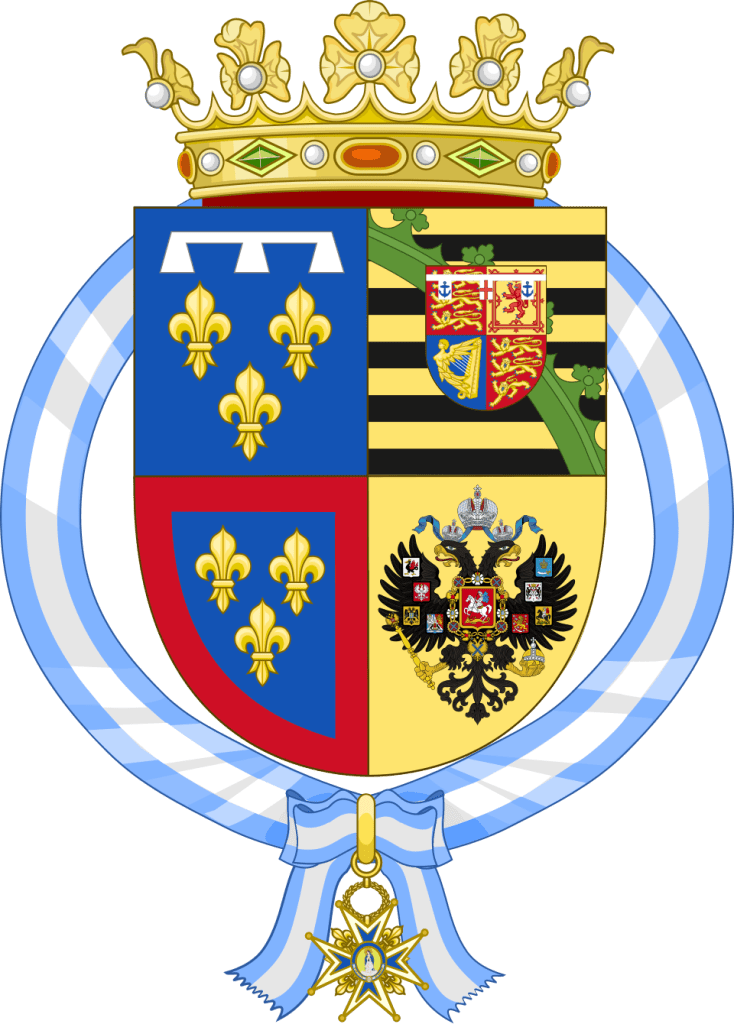
Carlos Ruspoli, 3rd Duke of Alcudia and 4th Duke of Sueca was, like his father, a Senator of the Realm (d. 1936). His son Camilo, 4th Duke of Alcudia, also became the 6th Marques of Boadilla after the death of his cousin Paolo in Italy in 1969. He died in 1975 and once again divided these titles between two sons: Carlos (d. 2016) was Duke of Alcudia and Sueca, while Luis (d. 2011) became Marques of Boadilla. In 2016, these titles were once again joined in the person of don Luis Ruspoli (b. 1963), 6th Duke of Sueca, Roman Prince and Prince of the Empire, 20th Count of Chinchón, 8th Marques of Boadilla del Monte, Count of Evoramonte and Maestrante of Granada. His son Carlos (b. 1993) bears the title Duke of Alcudia as heir.
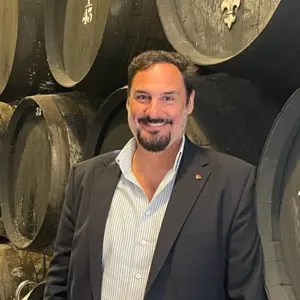
Luis Ruspoli, 6th Duke of Sueca
From Manuel Godoy’s relationship with Pepita Tudó came two sons: Manuel and Luis. The younger died when he was ten. The older (b. 1805) was legitimised by his parents’ subsequent marriage, and in 1851 he succeeded to his father’s Italian titles as 2nd Prince of Bassano and ‘Principe Romano’ de Godoy. When Pepita died in 1869, Manuel succeeded to her titles too, as 2nd Count of Castillo Fiel and Viscount of Rocafuerte. He was honoured with the Order of Santiago in Spain, the Order of Christ in Rome, the Order of Avis in Portugal and the Grand Cross of the Order of Malta, but died only a few years later in 1871, leaving a number of children from his wife Maria Carolina Crowe y O’Donovan O’Neill, the daughter of an Irish businessman in Paris—whose status is often inflated in online sources as ‘Sir Lawrence Crowe, Lord of St Stephen’s Green House’, which is not actually a title, just a house for wealthy merchants in Dublin. Other errors can be found online in which Marie-Caroline is described as a maid-of-honour of Empress Eugénie, but there were no maids-of-honour in the Imperial household of the 1860s, and no one of this name in the Empress’ service. Surely the confusion comes from Pauline van der Linden who was a dame d’honneur to the Empress and was married to the Duke of Bassano (an unrelated title, connected to a different city in Italy, created by Napoleon for one of his ministers).
Another Manuel succeeded his father as 3rd Prince Godoy di Bassano. He died in 1896 with no children from either of his two marriages. His younger brother Carlos had already died, so the princely title died out, and the rest of the succession passed to female heirs: the older sister Matilde had already been ceded the title 4th Countess of Castillo Fiel in 1875, while Josefa was named 2nd Viscountess of Rocafuerte, but died before she could inherit further. A third sister, Maria Luisa, married well, to Ernst Alexander, Prince von Looz & Corswarem. Matilde married Felix Martín y Romero, the Chief of the Civil Administration and Secretary to Queen Isabel II. When she died in 1901, her daughter Maria took Castillo Fiel into yet another family (Crespo) by marriage and into the twentieth century. The last of these died with no heirs in 1989.
*
A third ‘Maverick Duke’ in the history of Spain was so elevated in 1844. This duke did not at all have the same degree of political or diplomatic influence as the Duke of Ripperda or the Prince of the Peace. Agustín Fernando Muñoz y Sánchez was known as a kindly figure at court with little political ambition, but a comfort in tumultuous times to the Queen Regent Maria Christina, mother to Isabel II. His dukedom of Riánsares continues to the present.
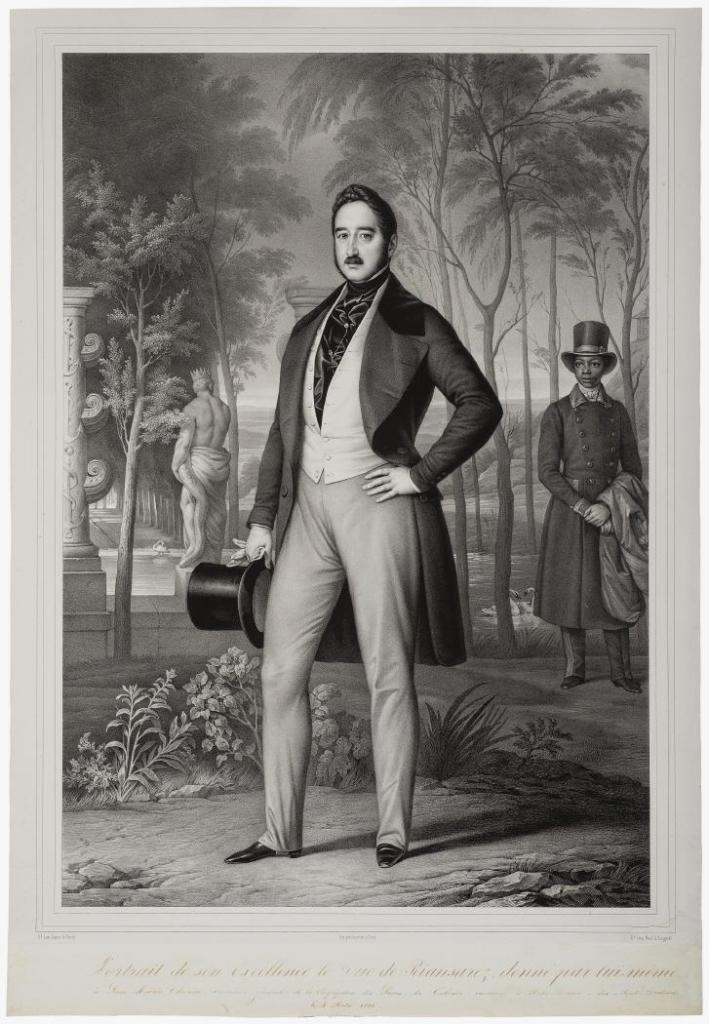
Agustín Fernando Muñoz y Sánchez, Duke of Riánsares, step-father of a Queen, in 1845
Maria Christina of the Two Sicilies was born in 1806 in Palermo to Crown Prince Francesco (later King Francesco I) and his wife Maria Isabella of Spain. After her grandfather’s restoration in Naples in 1815, he changed the name of his kingdom from Naples-Sicily to the Two Sicilies. In December 1829, she married her uncle, Ferdinand VII, King of Spain, who, twenty years her senior, had still not sired a male heir after three wives. A daughter was born in August 1830, then another in January 1832, before the King died in September 1833. Queen Maria Christina, though only 27, was named Regent of Spain for her daughter, Queen Isabel II, and began a decade of fairly rocky regency, jostled between political extremes of right and left each supported by ambitious generals. Already by December 1833, it is thought, she secretly married a member of the Royal Guard, don Agustín Fernando Muñoz.
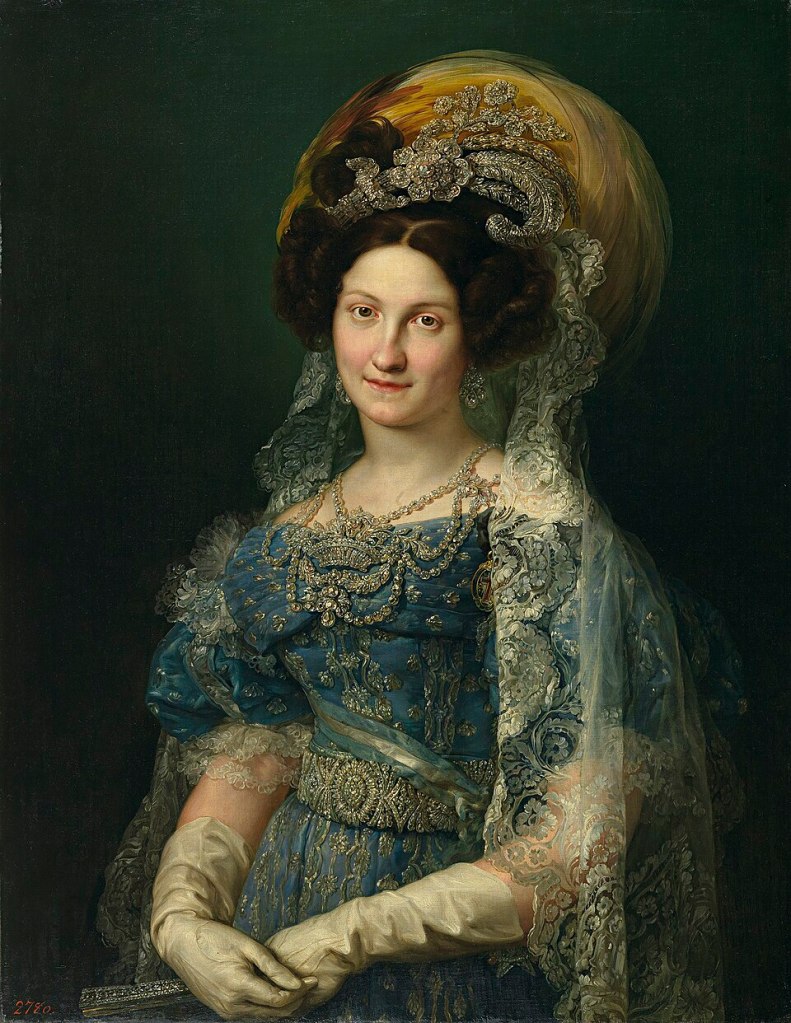
Maria Christina of the Two Sicilies, Queen of Spain, in 1830
Muñoz was the son of a royal agent who was an officer in charge of the government monopoly for the sale of tobacco. His affiliation with the court came through his paternal grandmother, a wetnurse of one of the daughters of Carlos IV back in the 1770s. Agustín Fernando, born in 1808, obtained a position in the Royal Guard, and was initially positioned to rise within the aristocratic hierarchy through his 1827 marriage to a Palafox, a powerful clan at court. She died in 1829, just when the young Neapolitan princess Maria Christina arrived in Madrid to wed the aging King Ferdinand.
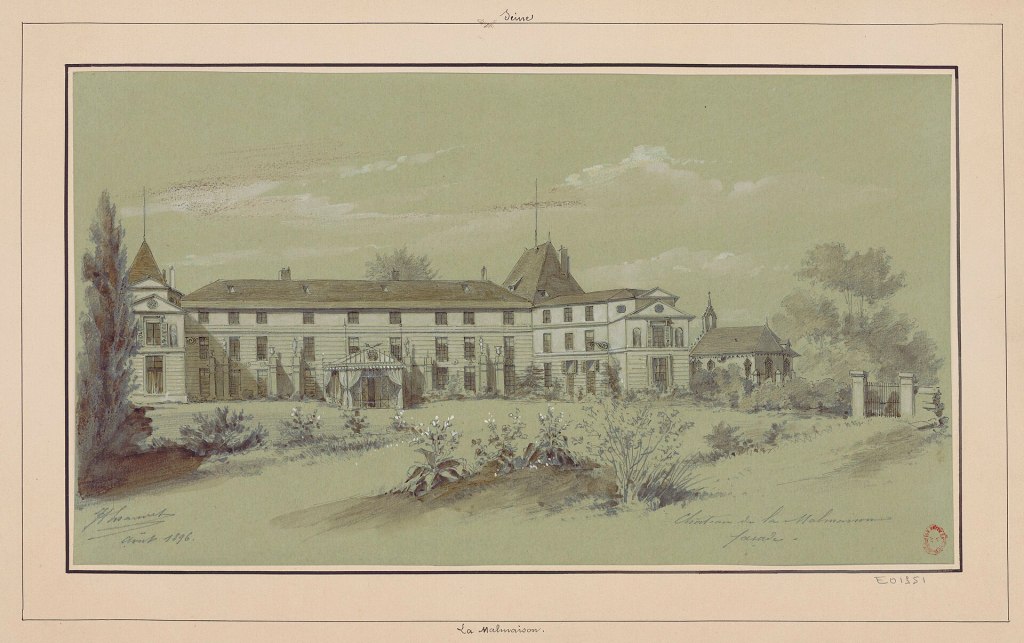
In 1840, Queen Maria Christina renounced the regency and she and her secret (but known) husband moved to France, where her aunt Amélie, was Queen of the French. In 1842, the Queen Mother purchased the Château de Malmaison, the former residence of Empress Joséphine in the western suburbs of Paris. Malmaison had been a run-down manor house purchased and vastly improved by Joséphine in 1799. It had become neglected again when Maria Christina purchased in 1842, and she and her husband would raise their children here, until it was sold to Napoleon III in 1861. In the city itself, she rebuilt an old mansion on the Champs-Elysées, not far from the Arc de Triomphe, named the Hôtel d’Espagne—sold to the Duchesse d’Uzès after the Queen’s death in 1878, it was demolished in 1902 and replaced with a shopping arcade. Only a few streets away she acquired another residence, the Hôtel de Bragance, so named since the Emperor of Brazil, Pedro I, had resided here in 1831-32. This too was sold to Napoleon III, in 1857, who gave it to his cousin Matilde Bonaparte who hosted a famous salon here in the 1860s. Interestingly, the building was the seat of the Embassy of Spain for a while in the 1870s; it has not survived and was replaced by offices in the 1950s. To support themselves in exile, Maria Christina and her husband acquired a valuable royal saltworks in Franche-Comté.
Malmaison, outside Paris, drawn in 1896
From France, the Queen Mother plotted against the new Regent, General Espartero, and in 1843, after another coup, they returned to Spain. The following year, Isabel II, now declared in her majority, created the dukedom of Riánsares (or sometimes Riánzares) for Muñoz in June, then formally recognised his mother’s marriage to him in October—and organised a more public re-marriage. In 1846, the Duke was created Marques of San Agustín and given the Order of the Golden Fleece—the highest noble honour in Spain. He was given the rank of Captain-General in the Spanish Army, its highest rank. Also in 1846, the Queen gave a title to his father, Count of Retamoso and Viscount of Sabiñan, and gave him the office of administrator of the Real Cortijo de San Isidro, an agricultural estate owned by the Crown near Aranjuez. These titles passed to his eldest son, José Antonio, who took over in Aranjuez then became a royal finance officer for the Household, a Senator of the Kingdom and Gentleman of the Bedchamber. The 2nd Count of Retamoso died in 1858, and his titles continued for three more generations then passed to a female heir, and thus into another family.
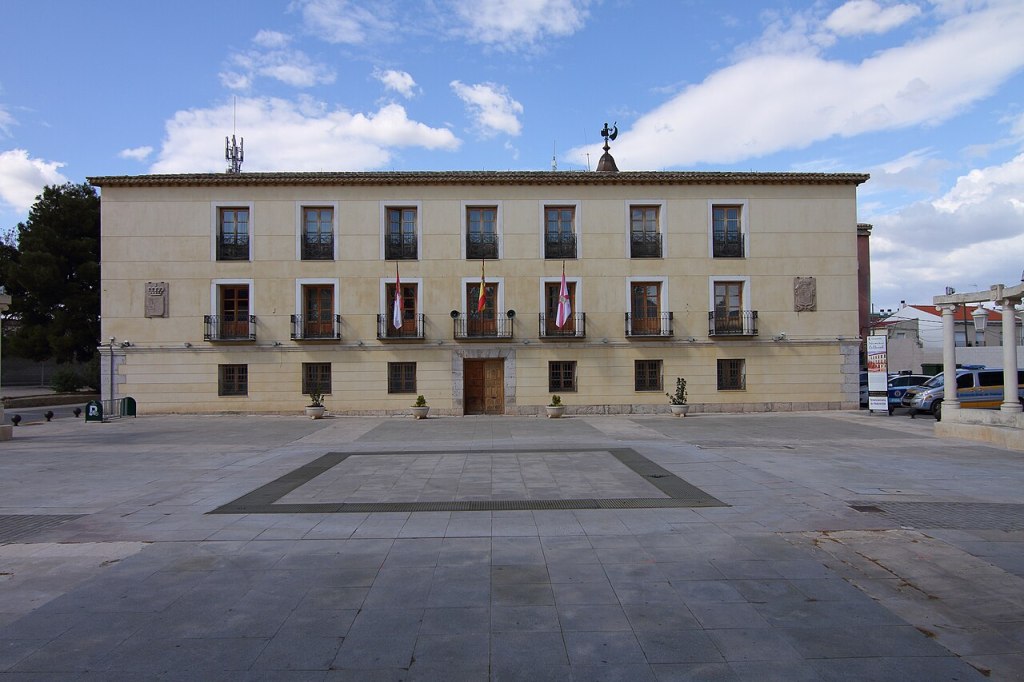
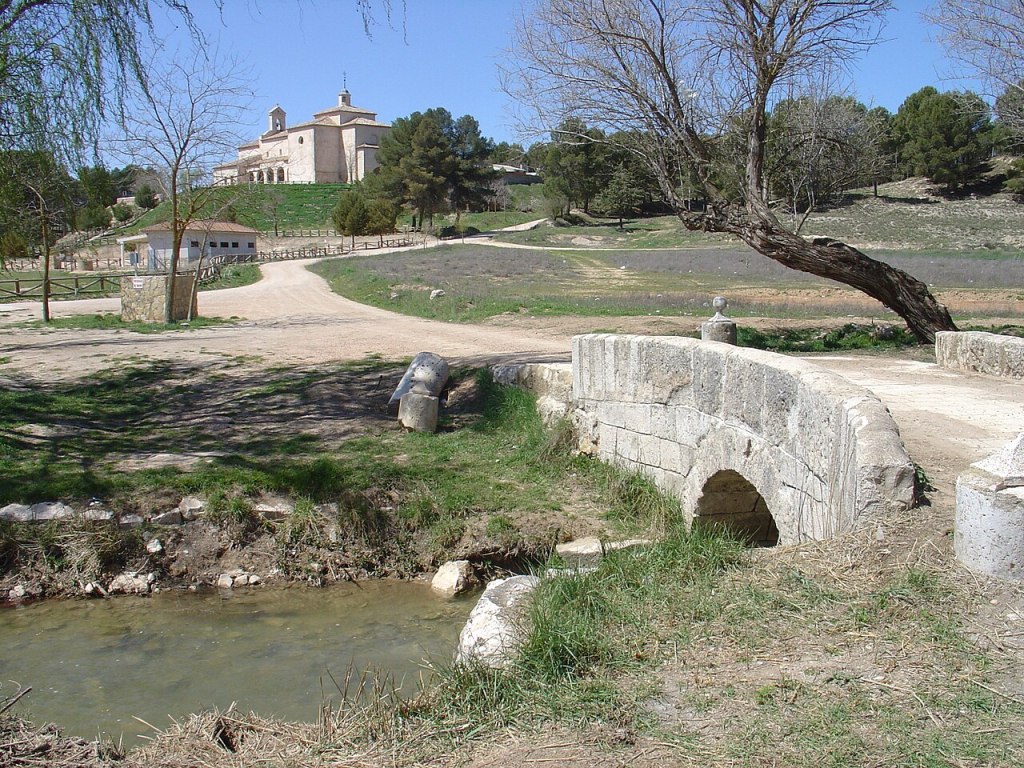
Riánsares was named for a river just outside Muñoz’ hometown of Tarancón in the Province of Cuenca (southeast of Madrid). This river (also called the Ansares) is one of the headwaters that feed into the Guadiana river, which flows west and south into the Atlantic. Tarancón had been the property of the Order of Santiago until the reforms of 1833 and now became the centre of the new dukedom, conveniently located close to the royal summer palace of Aranjuez. The town would give its name to a second duchy, given to Maria Christina and don Agustín Fernando’s eldest son, Agustín Muñoz y Borbón, in November 1847 (when he was ten years old). The old manor house was reconstructed as the Palace of the Dukes of Riánsares, and today serves as the town hall. A short distance outside town, on the banks of the river itself they acquired an ancient sanctuary dedicated to the Virgin of Riánsares—who supposedly interceded to aid King Reccared I when he fell dangerously ill near this spot in the late sixth century—to use as a summer house and family sepulchre. It is once again a hermitage.
the Palace of the Dukes of Riánsares, Tarancón
the Sanctuary of the Virgin of Riánsares, and the river of the same name
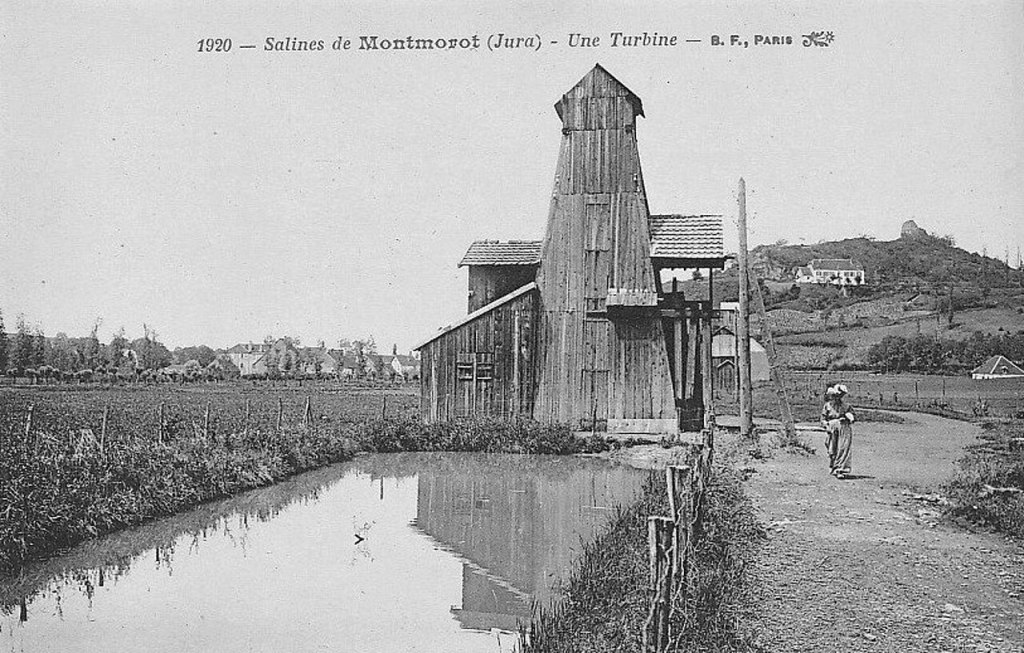
1846 was also the year of a diplomatic triumph for the Queen Mother in arranging a marriage between her second daughter, Infanta Maria Luisa, and King Louis-Philippe’s son the Duke of Montpensier. The King responded by creating the dukedom of Montmorot for Agustín Muñoz in 1847, and named him Grand Cross of the Legion of Honour. Montmorot was an estate with an ancient castle in the foothills of the Jura, in eastern France, the centre of a lordship held by a family of that name in the Middle Ages, but acquired by the French crown in the 1320s. This area was rich in salt production, and in the early 1840s, the French state had nationalised several of the saltworks (or salines), including those at Montmorot which were snapped up by the Duke of Riánsares. A dukedom and peerage would secure his position in France in case his titles and were confiscated in Spain.
the saltworks at Montmorot in eastern France
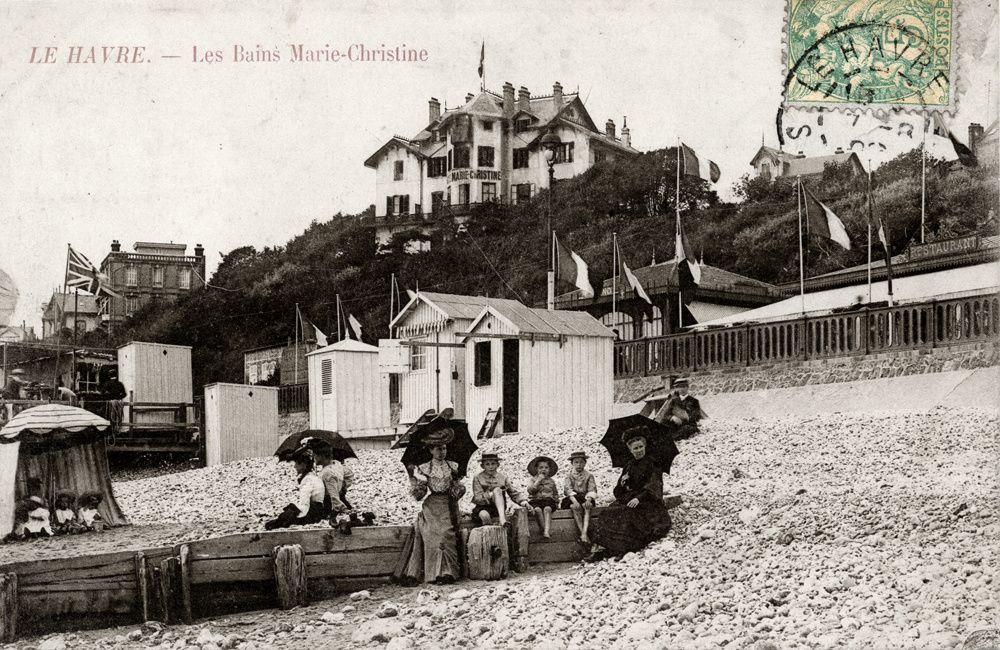
But in 1847, politics shifted and the Queen and her Duke returned to Spain. Though he did not have political ambitions, Riánsares clearly did have business skills, and made a lot of money in developing railroads and coal mines in Spain. He left Spain once again in 1854, when Maria Christina was driven away for meddling too much in her daughter’s government, and for dipping her hand too much into the royal treasury to support her husband’s investment schemes. After a few years in Paris, they sold their properties there and built a villa, ‘Mon Désir’ on the Norman seaside just outside Le Havre, where the Duke died in 1873, and the Queen a few years later in 1878. By that point, her daughter Isabel II was also living in exile, at the Palais de Castille in Paris. Mon Désir sat atop a hill surrounded by a large estate that included landscaped gardens, stables, and a large winter garden greenhouse. After their deaths, the villa became the luxury Hotel Marie-Christine. It survived both world wars, then was demolished in the 1950s. Maria Christina was buried as a Spanish queen in the Escorial, while her second husband the Duke of Riánsares was buried at the family sepulchre in Tarancón.
the Villa Mon Désir outside Le Havre (after being converted to the Hotel Marie-Christine)
The Duke and the Queen had eight children—all born before the formal recognition of their marriage in 1844. The first, María Amparo was born in November 1834, and was given the title Condesa de Vista Alegre. In 1855, while living at Malmaison outside Paris, she met and married a Polish exile, Prince Czartoryski. She died young in 1864, but left children who would continue to unite this Polish family with the Bourbons for several generations. Another daughter was created Marquesa of Castillejo and married an Italian prince. As noted above, the eldest son, Agustín was created Duke of Tarancón in 1847, then Viscount of Rostrollano in 1849. He died at Malmaison in 1855 at age 18.
the young Agustín Muñoz y Borbón, Duke of Tarancón
Dowager Queen Maria Christina, the Duke of Riansares, and their youngest daughter María Cristina Muñoz y Borbón, 1861
A second son, Fernando Muñoz y Borbón, created Count of Casa Muñoz in 1848, and Viscount of Alborada in 1849, became 2nd Duke of Tarancón in 1855, then 2nd Duke of Riánsares with the death of his father in 1873 (and technically Duc de Montmorot, though this was never recognised in Spain, and is rarely included on lists of French dukedoms; I’ve also seen a younger son, Juan, called Duc de Montmorort, who died in 1863 at age 22). In 1874, his nephew Alfonso XII allowed him to return to Spain, and confirmed his status as a Grandee of Spain. He died in 1910, leaving several children and a still quite large fortune.
Fernando, 2nd Duke of Riánsares
The next generations of the Muñoz-Borbón family, though semi-royal, did not leave much of a trace in the historical accounts. Unlike many Spanish aristocrats in this period, they stayed out of the political limelight and enjoyed the financial independence provided by the 1st Duke’s investments. The 3rd Duke, Fernando, born in 1864, was only head of the family for three years before following his father to the grave in 1913. His son Fernando, 4th Duke, also did not have a long life, dying in 1925 age 31. In contrast, his nephew José Bernardo succeeded as 5th Duke (bypassing his own father, who used instead the title Marques de San Agustín) at age two and lived until 2008. When he died the Spanish titles passed to his daughter, María de la Consolación, who benefitted from the recent Spanish equal succession law allowing a daughter to inherit a ducal title even if she had a younger brother. Any ephemeral claims to a French dukedom, however, ceased, since French dukedoms were all male-only creations.
arms of the Muñoz-Borbón family, dukes of Riánsares and Tarancón
The 6th Duchess of Riánsares and Tarancón (b. 1948), had previously been given the title Marquesa de Castillejo (the title created for Queen Maria Christina’s second daughter) in 1983, shortly after her marriage to Armando de las Alas-Pumariño. Her daughter, named for her distant ancestress Maria Christina (b. 1982), is her heir, and was given the Castillejo title in 1998.
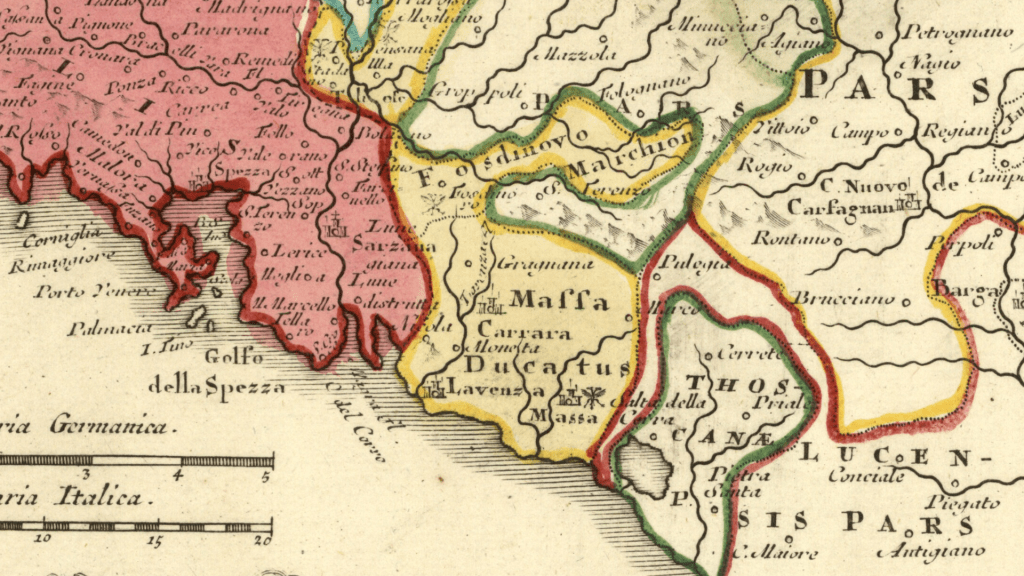
There’s a strange corner of northwest Italy where the Apennine mountain chain crashes into the sea creating narrow valleys and deep seaports that were contested by rival powers for centuries, at the intersection between the provinces of Liguria, Tuscany and Lombardy. Because of this rivalry and the complex geography, numerous small fiefdoms maintained a precarious independence in the face of larger regional powers—Genoa, Florence, Milan. They claimed to owe allegiance to none of these, but directly to the Holy Roman Emperor, long after most of these northern Italian states had ensured that their vassal status to the Empire was nominal at most. By the seventeenth century, most of these tiny imperial fiefs were absorbed into their larger neighbours, but two of them, Massa and Carrara, continued to exist as tiny microstates, ruled by the same family yet separate, one a duchy and the other a principality, until finally they too were swallowed up by the Duchy of Modena in the early nineteenth century.
Massa and Cararra in about 1720, with the Malaspina marquisate of Fosdinovo and other fiefs also in yellow (indicated a ‘imperial territory’ by tiny double-headed eagles). Genoa is in pink to the left, Tuscany and Lucca to the right
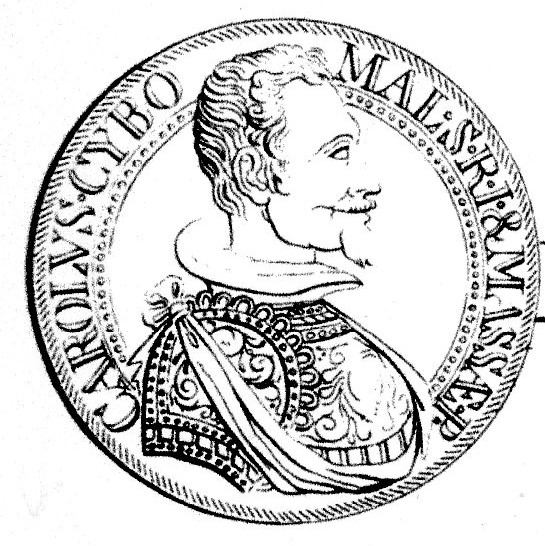
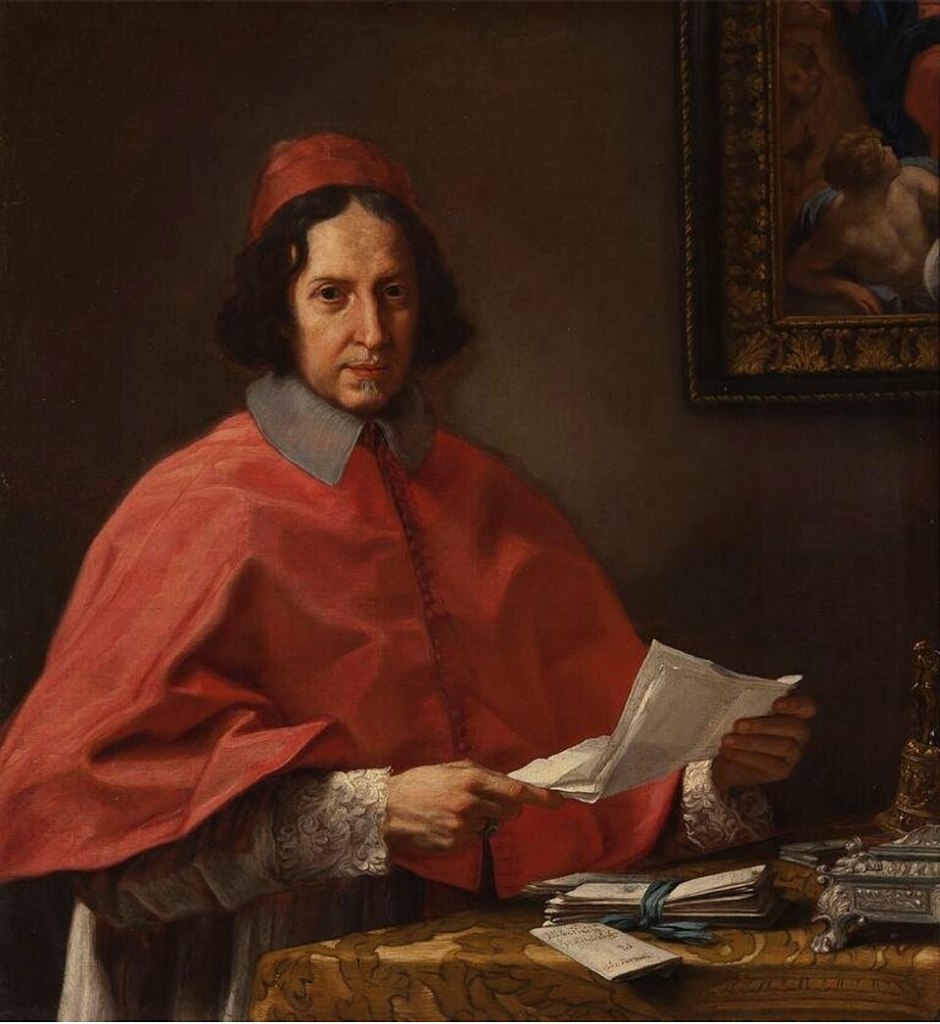
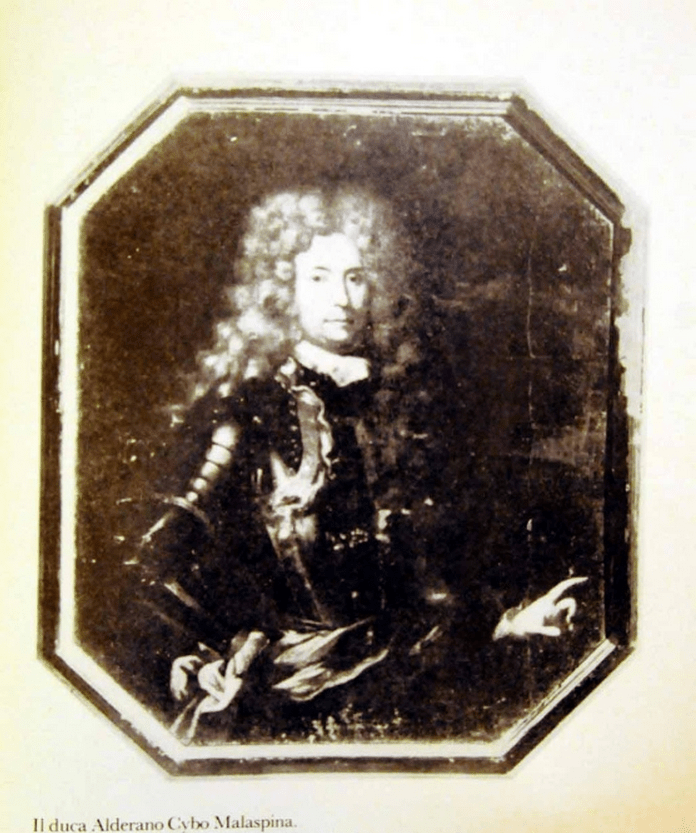
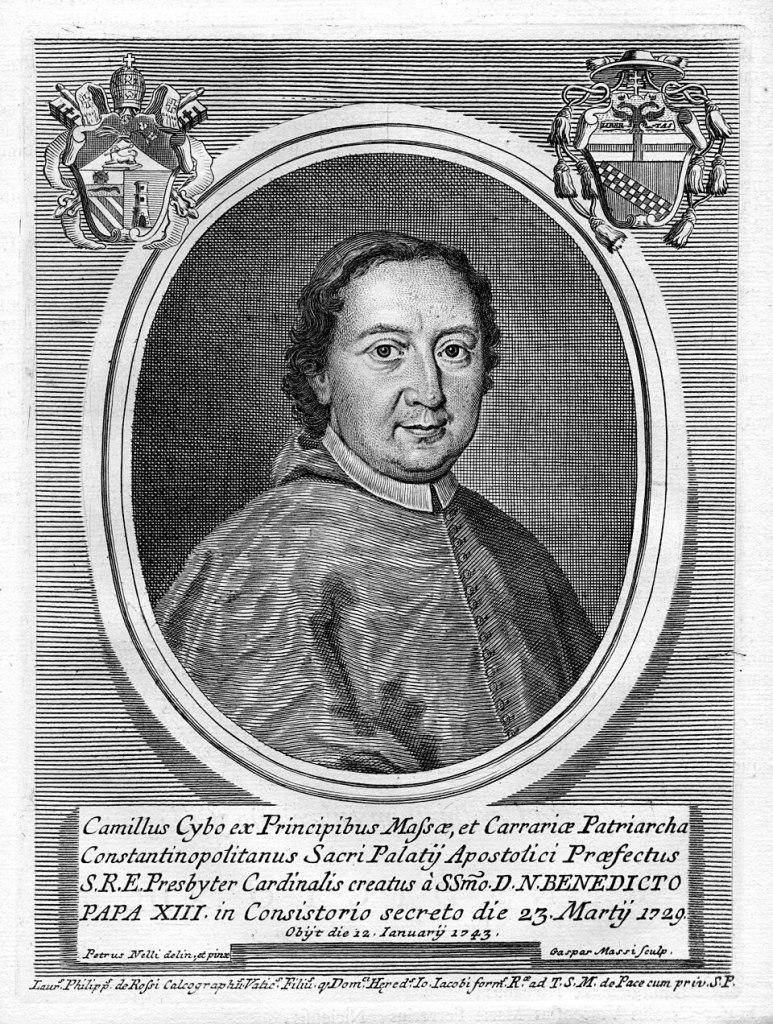
The ruling family here was actually two families in succession: first Malaspina, one of northern Italy’s oldest noble houses, then Cybo, a Genoese family that vaulted into premier ranks thanks to the election of one of its sons to the papacy as Innocent VIII in 1484. Like most papal families, they aspired to acquire a sovereign territory to rule as princes, and they did, when the Pope’s grandson Lorenzo Cybo married Ricciarda Malaspina, Marchesa of Massa and Lady of Carrara. The Cybo-Malaspina family then governed the two small imperial fiefs—Massa elevated to a principality in 1568 then a dukedom in 1664; Carrara to a principality the latter year—until the last Duke-Prince died in 1731. His daughter, now sovereign Duchess-Princess of Massa and Carrara, soon after married the heir to the Este duchies directly across the mountains, Modena and Reggio. Even after the tumults of the Napoleonic wars, the two small states retained their autonomy within the wider Este state (now ruled by a Habsburg cadet prince who took the name Habsburg-Este) until they were finally fully incorporated in 1836. Today the province of Massa-Carrara, still wedged between the mountains and the sea, is part of the Region of Tuscany.
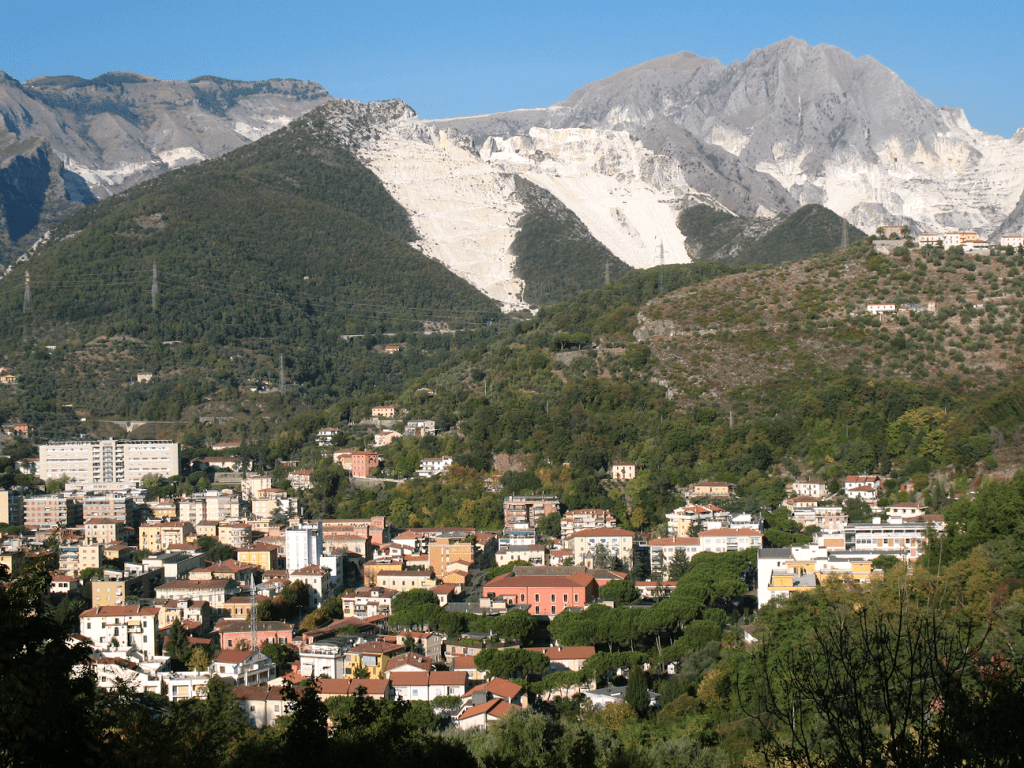
This part of Italy is most famously known for its luscious white marble, quarried from the local mountain range called the Apuan Alps. The name Carrara itself comes from the Latin word for ‘quarry’ (which seems to come from an earlier Ligurian word kar for stone). The Romans had used marble from here for their temples and civic buildings as early as the second century BC, for example in the Pantheon or Trajan’s Column, and Carrara marble would remain world famous well into the modern age. Some of my personal favourites in the world of sculpture were created from Carrara marble, like the shockingly lifelike works of Bernini and Canova (not to mention Michelangelo’s David), and most recently the striking Sheikh Zayed Grand Mosque in Abu Dhabi, completed only in 2007.
the marble quarries surrounding Carrara (photo Carrarino)
The Romans called this marble Luni marble, and the nearby town of Luni became the seat of powerful bishops who ruled the town of Carrara and its quarries until it became an independent city-state in the thirteenth century. Much of this region was known as the Lunigiana, taking its name from the episcopal town. In the fourteenth century the town was under the authority of the republics of Pisa, then Lucca, then Florence. It was acquired at the end of that century by the Visconti family, lords of Milan, who eventually sold it to Count Antoniotto Filerermo of Genoa, who sold Carrara in 1473 to Jacopo Malaspina.
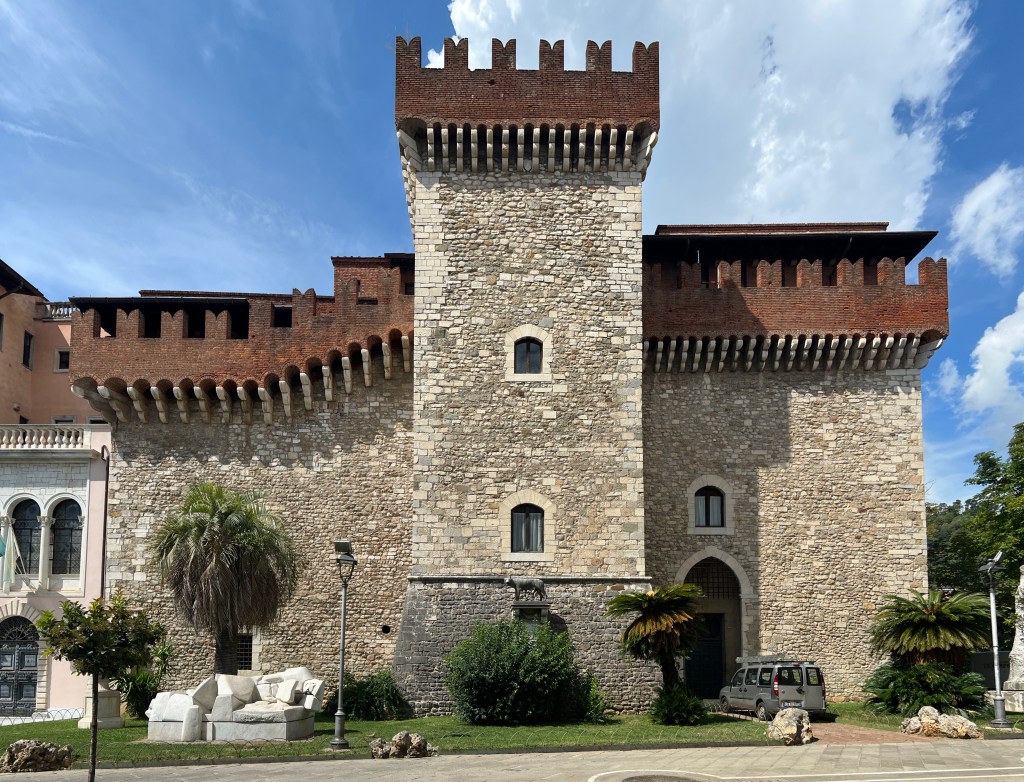
Meanwhile, just a bit to the south and east, the town of Massa was also a city-state by the eleventh century, overlooked by a castle inhabited by a branch of an ancient Lombard warrior clan historians now call the Obertenghi. This branch eventually assumed the nickname of its founder, ‘bad thorn’ (one story suggests an ancestor killed a king with a thorn). Their Malaspina Castle at Massa, built in the 1100s, was destroyed by the Republic of Lucca in 1269, and, except for a short return to the family in the 1340s-50s, was held by Lucca until the 1430s, when it was returned under the protection of the Republic of Florence. Later in the fifteenth century, the castle was enlarged and parts transformed into a comfortable Renaissance princely residence, but by the 1550s, the ruling family preferred to live in a more modern ducal palace in the centre of Massa. Malaspina Castle retained only military functions after that, and then, following the unification of Italy in the 1860s, it was used as a prison. Closed in 1946, it was renovated and opened to the public.
the Rocca Malaspina above Massa (photo Davide Papalini)
The origins of the Malaspina family trace back, like so many of the ruling families of northern Italy, to the Lombard invasions of the sixth century, and their establishment of a Kingdom of Italy. Incorporated into the empire of Charlemagne in the eighth century, the descendants of the Lombard ruling families were given large segments of northern Italy to govern as ‘marcher lords’ (ie lords on the marches or frontiers of the Frankish empire), which we now translate as margrave (or marchese in Italian). One of these families was founded by Oberto, Count of Luni, who was appointed Margrave of the Eastern March (aka Eastern Liguria) by the Emperor in 961. Historical records from this period are sparse or conflicting, but genealogical historians of the nineteenth century tried to pull together loose strands (and sometimes wishful thinking) to create an overarching dynasty they named the ‘Obertenghi’, after Count Oberto. This dynasty is what I would call a ‘supercluster’ since, as reconstructed by these genealogists, it spawned not one but four of Italy’s grand ruling families: the Pallavicini, the Malaspina, the lords of Corsica and even the House of Este, which, through an interesting historical twist, was also the parent family of the House of Brunswick and thus of the House of Hanover, the royal house of Great Britain. There were royal connections already in this earlier period, for example Berta, who married Arduino, King of Italy from 1002 to 1014.
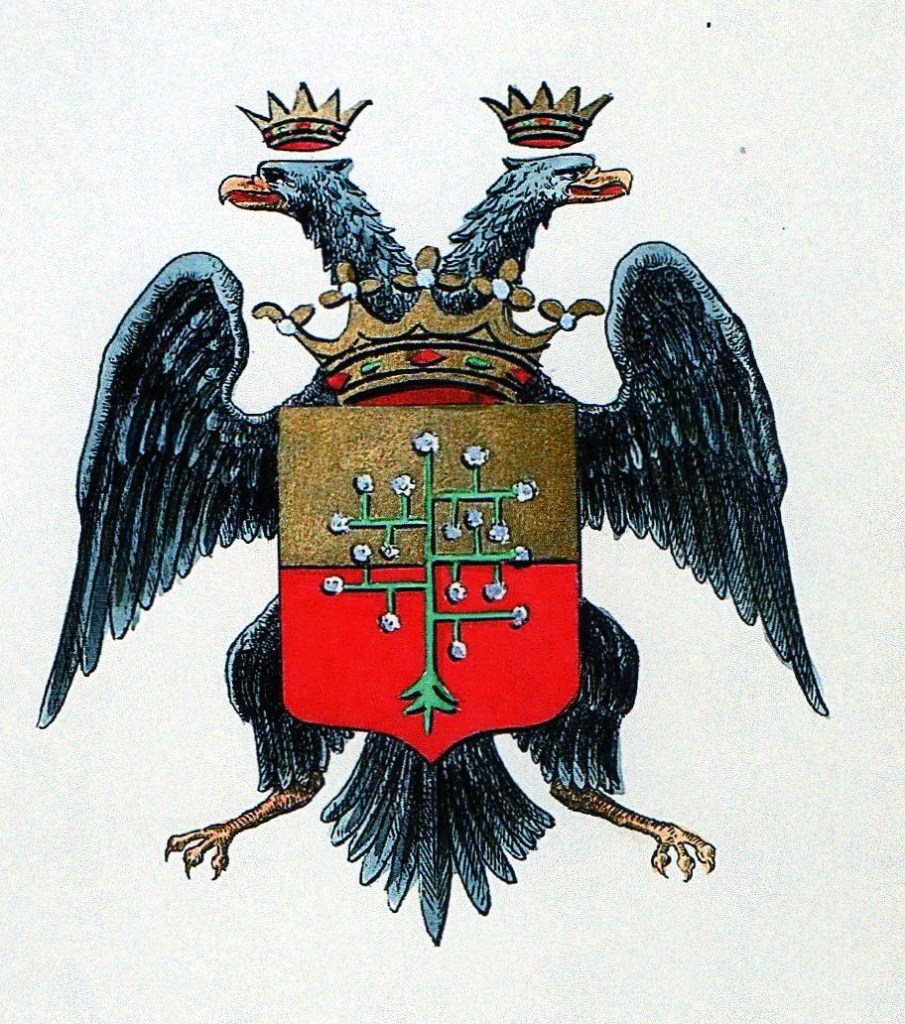
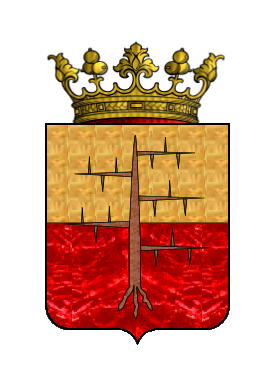
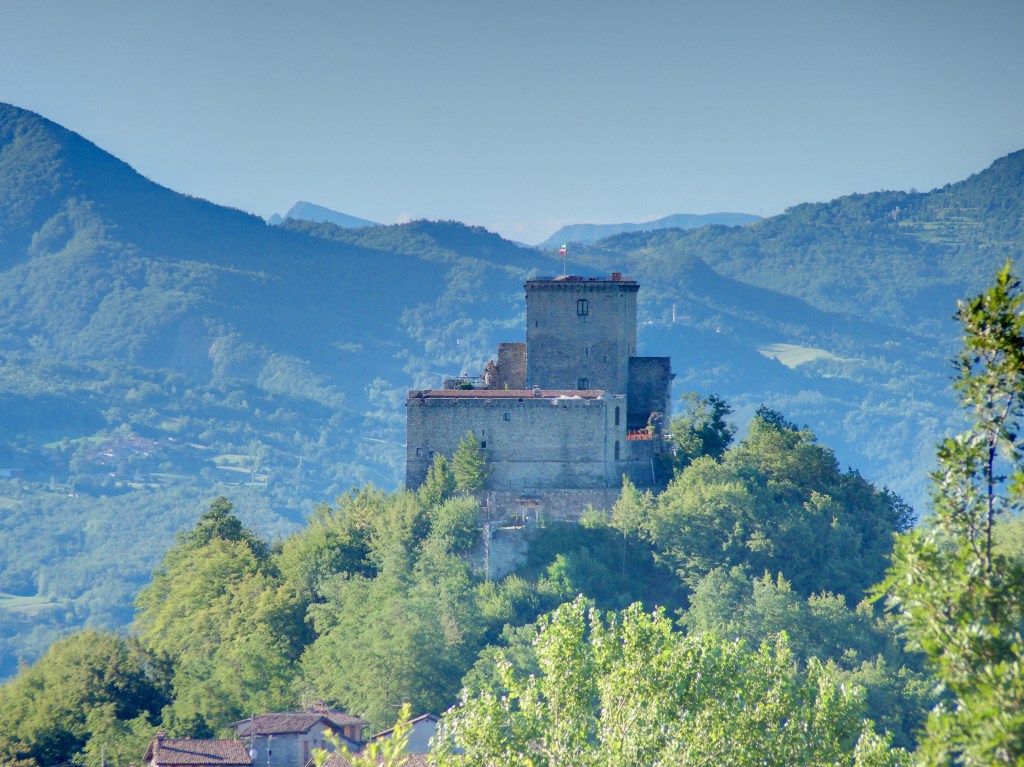
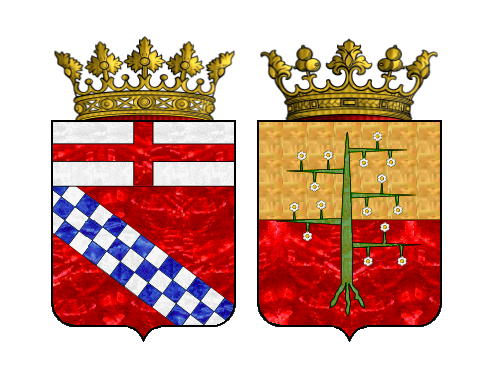
The branch of the Obertenghi that took the name ‘Malaspina’ was founded by Marchese Alberto, purportedly a son of Oberto Obizzo II, son of the first Oberto, and died around 1140—this is probably too much of a gap if his grandfather died about 997, so this link is one of those marked in older published genealogies as ‘uncertain’. There must have been some connection, as Alberto and his descendants all used the hereditary title marchese, which, like other Germanic titles was given to all sons, not just the eldest, and eventually was applied to smaller fiefs acquired in the regions of the Lunigiana and the neighbouring Garfagnana (the mountainous zone between the republics of Genoa and Lucca), so we call them the marquisates of Mulazzo, of Giovagallo, of Villafranca, and so on. These weren’t really marquisates in the way we conceive of them in more modern noble systems, but spread out estates, castles and towns owned and governed by each branch of the Malaspina family who held the rank of marchese—in other words, the rank was attached to the family, not to the land, though eventually that distinction was blurred. They were vassals directly of the emperor (confirmed 1164), who appointed an Imperial Vicar in northern Italy to look after their affairs. Some were called ‘Prince of San Colombano’ as secular guardian of the large imperial abbey of that name in Lombardy near Piacenza. These tiny ‘thorns’ were annoyances in the sides of the growing merchant republics nearby (Genoa, Lucca, Pisa, Florence). From about the middle of the thirteenth century, the ‘Bad Thorn’ family split into two sub-lineages: the ‘Spino Fiorito’ and the ‘Spino Secco’ (‘flowering’ and ‘dry’ thorns). Both bore versions of the coat of arms that featured a thorn with or without small white flowers, and an Imperial eagle making clear their loyalties.
an 18th-century drawings of Malaspina ‘flowering thorns’
Spino Secco
One of the earliest members of the family who remains famous today was Marchese Alberto ‘Moro’ (died about 1210), a troubadour, poet and knight who invited other troubadours from Provence to bring this fashionable artform of poetry and music to Italy. Naturally, they praised him in song as brave, chivalrous and learned. His nephew Corrado (died about 1250) who founded the junior line of Spino Secco, was also regarded as a learned knight, and became a favourite of Emperor Frederick II who sent him on diplomatic missions between Genoa and Milan. His grandson Franceschino, appointed Imperial Vicar of Parma, continued this tradition of maintaining an artistic and chivalrous court, as praised in a poem by Dante after he had taken refuge at the Malaspina court in 1306.
Others in this junior line intermarried with the patrician families of Genoa (Spinola, Grimaldi, Fieschi) and became politically intertwined with Genoa’s interests in the neighbouring big islands: Corsica and Sardinia. The Massa branch of the Obertenghi had been imperial defenders of Corsica since the eleventh century, and some settled there: Ugo was first to call himself Marchese of Massa and Corsica, around 1100; his nephew, Alberto (or ‘Corso’), started a branch of the family that governed these two territories for three generations—officially vassals of the archbishops of Pisa. By the end of the twelfth century, the last of these, Guglielmo, also ruled as ‘Giudice’ (a judge, but with the powers of a king) of Cagliari, one of the four provinces of medieval Sardinia. This is one of the very few times both Corsica and Sardinia were governed by the same family. When Guglielmo di Massa died in 1214, his daughters took these Sardinian lands back to their local families (Lacon-Serra and Lacon-Gunale), while Corsica passed to a cousin, Andrea (‘Bianco’) Malaspina of the line of marchesi of Parodi (a fief east of Genoa). After this line died out, Corsica was incorporated into the Republic of Genoa in the 1280s, where it stayed until annexed by France in the 1760s.
Malaspina ‘Secco’
There were many, many more branches of the Malaspina Secco line, several of which continued into the early modern period, and some still today (in fact, one author lists 16 ‘dry thorn’ Malaspinas and 15 ‘flowering thorn’ Malaspinas living in the mid-eighteenth century). Some of the most prominent of these include the Villafranca in Lunigiana, based at a twelfth-century castle called Virgoletta. These allied so clearly with the Este family of Modena that by the 1720s they were called Villafranca Estense. They merged with another line, Castevoli in the 1760s: Marchese Tomamso III was the last to enjoy sovereignty (formally confirmed by Emperor Joseph II in 1772, but lost to the French in 1797). After the Napoleonic wars, he resumed his family’s loyalties to the Este and was named a chamberlain to Francis IV, Duke of Modena, and overseer of provincial engineering projects—he was himself an architect and designed much of the Cathedral of Villafranca, various churches and villas, and important roadworks and water management projects. He died in 1834.
In the line of Mulazzo, also based in Lunigiana, many of the Malaspina fiefs were sold off to the Doria family of Genoa in the 1650s. Another famous Malaspina in the later eighteenth century was Marchese Alessandro of Mulazzo, who travelled the world in the 1780s-90s, commissioned by the King of Spain to map out the west coast of the Americas. This branch died out in 1810, but several sub-lineages continue to the present (such as the Malaspina di Fabbrica in Val Trebbia in the western Apennines).
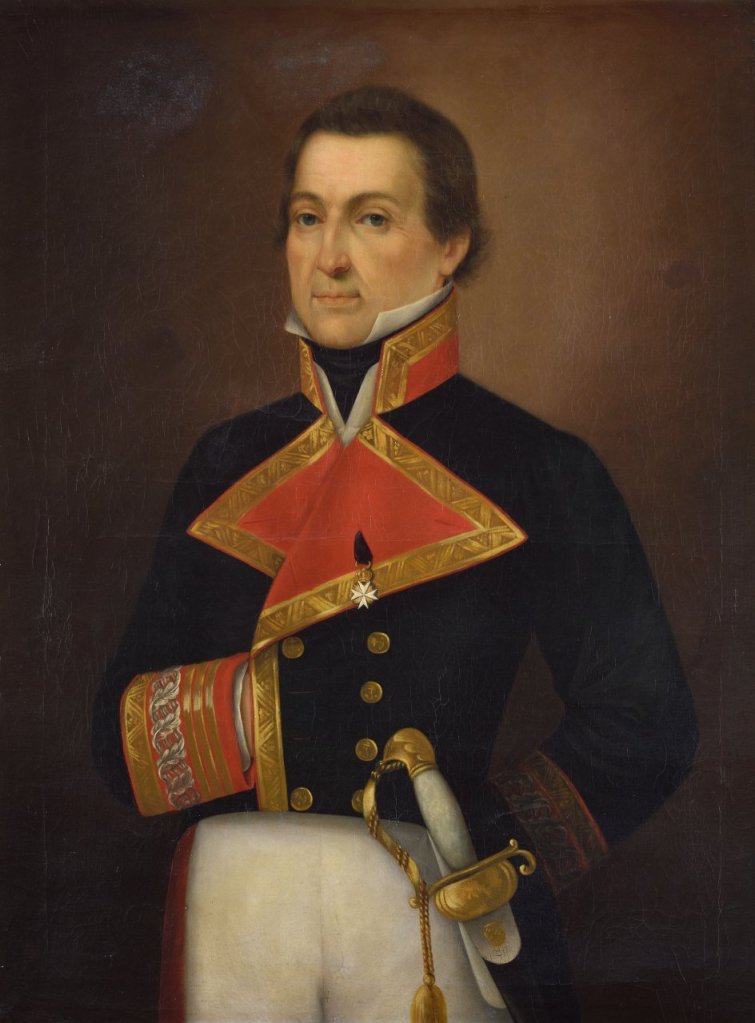
Marchese Alessandro Malaspina di Mulazzo
Spino Fiorito
Of the senior line of ‘flowering thorns’, Spinetta ‘the Great’, Marchese of Fivizzano, re-established his own dominance amongst the now very prolifically expanding branches of the dynasty. He acquired the Lordship of Fosdinovo, a hilltop town near Carrara with its own ‘Castello Malaspina’ in 1308, then was appointed Imperial Vicar of Reggio (across the mountains on the Lombard plain), 1311, by Emperor Henry VII, and Podestà (or military ruler) of Milan in 1314, by his father-in-law, Matteo Visconti. Two years before, he had helped the Emperor (actually ‘King of the Romans’ on his way to Rome to be crowned ‘Emperor’), in his efforts to force Florence to submit to Imperial authority, but faced a valiant defence led in part by his own cousins Obizzo and Morroello Malaspina—this was the period of the Guelph versus Ghibelline wars that divided most every region, city state and noble house. When the political wheel turned—as it always does—Spinetta was driven out of his lands in 1317 and went to the northeastern parts of Italy, the lands of the della Scala family in Verona, whose armies he led in their incessant struggle against Venice and Milan. He acquired estates near Verona which one branch of his descendants held until the twentieth century. The Malaspina condottiero returned to his lands in the Lunigiana in 1340 and re-focussed his energies on building his small patrimonial state: he expanded his castle in Fosdinovo, built hospitals and churches and even an old soldiers’ retirement home.
Spinetta Malaspina ‘the Great’
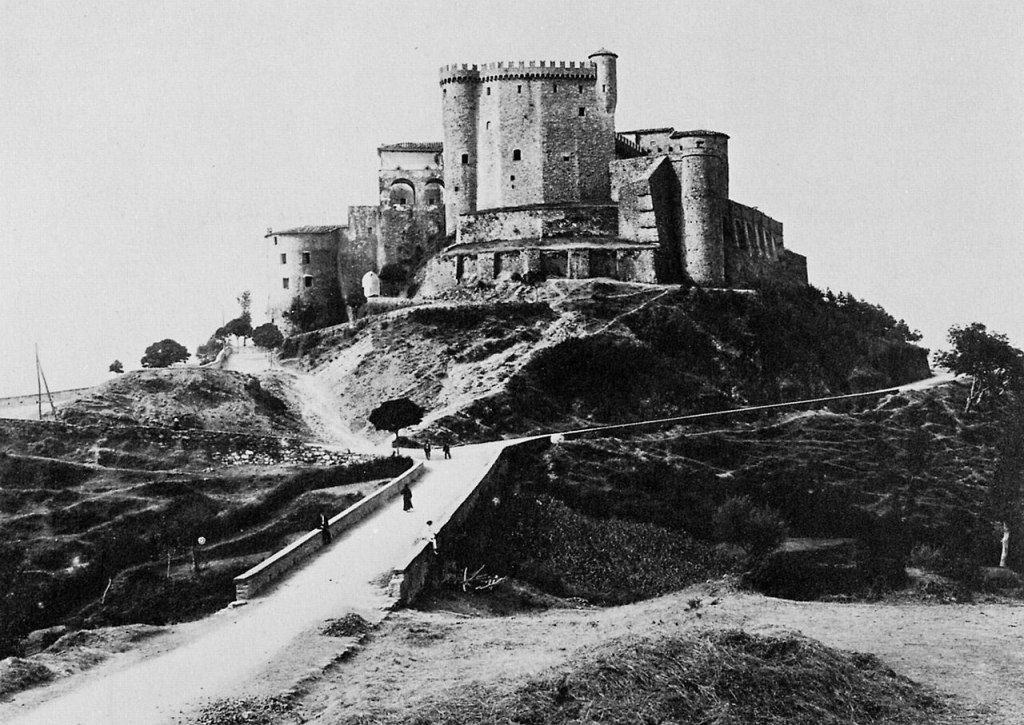
Fosdinovo Castle is still the largest and best-preserved medieval castle in Lunigiana. Its roots go back to the Lombard invasions of northern Italy, but the main stone fortress dates to the late twelfth century. It was modernised in the Renaissance period, then annexed by the Este family of Modena in the nineteenth century (as capital of their new province, Lunigiana Estense), and used as a hospital. Repurchased by the no longer sovereign Malaspina family in the 1860s, by the end of the century it passed to a Torrigiani nephew (who added the Malaspina name to his own). Restored in the 1960s, it is now open for tourism.
an old photo of Fosdinovo Castle
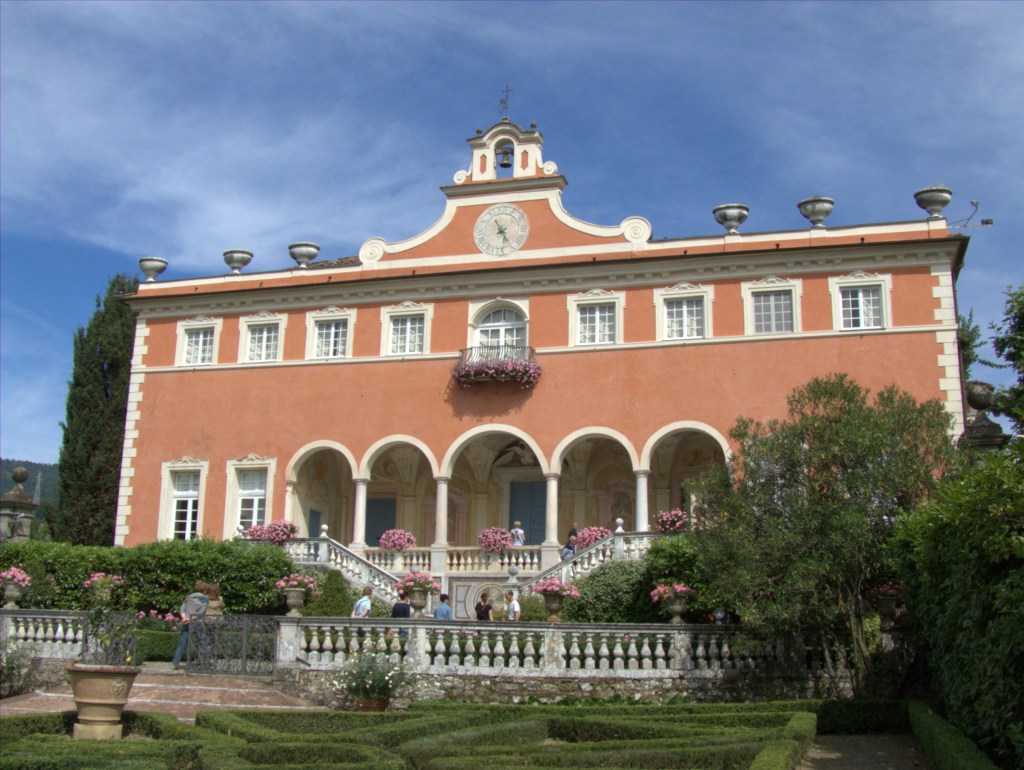
At the foot of the hill below Fosdinovo in the village of Caniparola, Marchese Gabriele III built a summer residence in the 1720s, the Villa Malaspina. It too passed to the Torrigiani, but now belongs to a different family from the region.
Villa Malaspina in Canipanola
Before Spinetta ‘the Great’ Malaspina died in 1352, he secured his family’s place as a ruling house by ensuring his brother Gabriele’s election as Bishop of Luni, and his son Galeotto’s formal investiture as Marchese of Fosdinovo in 1355 by Emperor Charles IV. The line of Fosdinovo would be an autonomous line of marchesi for the next century. Some of their lords became prominent military commanders for hire (‘condottieri’), notably Spinetta II, who served King Charles III of Naples in the 1380s and was rewarded with the Duchy of Gravina in Puglia—though this did not pass on to his heirs. They grew closer to Florence (rather than Genoa), which in the long run may be why Lunigiana is today part of Tuscany, not Liguria.
Spinetta II’s son Antonio Alberico, 4th Marchese di Fosdinovo, was an ally of Florence, and forged a league with all the other Malaspina families in Lunigiana, 1414, to defend their interests against advances from either Genoa or Milan. One branch however, the marchesi di Castel dell’Aquila, attacked another branch, the marchesi della Verrucola, and massacred all of them except a single heiress, Giovanna, who married Antonio Alberico of Fosdinovo in 1418. He then led a Florentine army to avenge her family, and conveniently, to take over the Verrucola branch’s lands. As it turned out, the Castel dell’Aquila line also died without an heir in 1466, so these lands were also added to those of Fosdinovo. In 1430, again leading a Florentine army, Antonio Alberico occupied the towns of Massa and Carrara (then under occupation of the Republic of Lucca, Florence’s enemy), and he managed to keep them, obtaining an Imperial investiture as Marchese of Massa and Lord of Carrara in 1442. In fact, he had repurchased the original family lands at Massa in 1441, as these had been ceded to the Abbey of San Venerio when the line of marchesi of Massa died out in the thirteenth century. He therefore moved his capital from Fosdinovo to Massa, but also acquired a residence in Carrara.
The Palazzo Malaspina in Carrara was rebuilt by the family in the 1440s, then again in the late sixteenth century (and rebranded Palazzo Cybo Malaspina). Today it houses the Academy of Fine Arts, and, naturally, one of Italy’s finest collections of marble.
Malaspina Castle in Carrara (photo Chabe01)
The 1st Marchese of Massa died in 1445, and two decades later his four sons divided the now very grand patrimony into four parts: the eldest, Giacomo I, retained Massa and Carrara, while Lazzaro was given the lands of Castel dell’Aquila (aka Gragnola), Gabriele II was given Fosdinovo, and Spinetta the lands much further away near Verona. The line of Gragnola died out in the seventeenth century and its fiefs were ceded to Tuscany (the fate of most of these sub-branches as they died out). A branch based at Godiasco in Lombardy included one marchese, Barnabò, who was a fierce defender of the French invasion of Italy in the early sixteenth century, so was captured and swiftly executed by the Sforzas of Milan. This line eventually fell to another, Oramala, whose lands were near Pavia, which was one of the few branches not to lose its autonomy until the very end of the eighteenth century (and the line itself died out only in the nineteenth). Oramala Castle, built in the eleventh century, became a cultural centre in the Middle Ages, known for its poetry and music. Abandoned in the eighteenth century, it still exists and was restored in the 1980s.
Oramala Castle (photo Terensky)
The Marquisate of Fosdinovo itself would also remain a sovereign imperial territory, with its seat at Villa Malaspina until the Napoleonic invasion of northern Italy in 1797. The last sovereign marchese, Carlo Emanuele, was a builder of a library, a theatre, an academy and sports facilities (including an early football stadium in 1789). He was a moderniser too, developing an insurance plan for farmers, whose profits supported charities and schools. He even supported the decrees of his new French masters, abolishing feudalism in July 1797, and willingly renouncing his sovereignty in favour of the new regime of the re-created ‘Kingdom of Italy’. He briefly tried to renounce this renunciation in 1802; this backfired and he took refuge in Pisa where he died in 1808. After 1815, Fosdinovo and many other Malaspina fiefs were ceded to Modena.
A cadet line of this branch, based at Sannazzaro (also near Pavia in Lombardy), died out with Marchese Luigi Malaspina, who was a passionate travel writer and art collector. He wrote guides for tourists to Pavia, and expanded his family’s Palazzo Malaspina in the 1790s to house his collection. After the region was taken over by the French, he remained loyal to the Habsburgs, who named him an imperial court chamberlain and gave him a position in the government of Pavia after it returned to Austrian rule after 1815. When he died in 1835, he donated the Palazzo and its art collections to the city of Pavia—today it houses the city’s Historical Archives and its Prefecture.
Palazzo Malaspina in Pavia (photo Fabio Romanoni)
Heading back to the senior line of the Malaspina Fiorito, Giacomo Malaspina, Marchese of Massa and Lord of Carrara, died in 1481, and was succeeded by his son Antonio Alberico II. The latter reminded the European political order of his importance—despite the smallness of his state—by hosting Charles VIII, King of France, on his way south to conquer the Kingdom of Naples in 1494. During this same invasion, one of the old strongholds of the family, Fivizzano—ceded in 1477 by Spinetta II to the Republic of Florence—was, unfortunately, the site of an important lesson for the people of Italy, when its garrison refused to submit to the army of Frenchmen, led by Antonio Alberico’s uncle, Gabriele II, Marchese of Fosdinovo (eager to regain this town for himself). All of ‘civilised’ Italy was shocked to discover the ‘barbaric’ Frenchmen’s new tactic of ‘total war’, and the entire garrison and all of the townspeople were slaughtered, the walls of the town flattened by France’s very modern and very powerful immense cannons. Gabriele’s service was rewarded six years later when another French army deposed his nephew in Massa and Carrara and granted them to him. Though Alberto Alberico II recovered these lands a year later, he soon faced the problem of having only four daughters in the face of his uncle’s numerous sons.
When Alberto Alberico II died in 1519, he managed to pass his fiefs to his second daughter, Ricciarda. An older daughter, Eleonora, had married a scion of a prominent Genoese house, Scipione Fieschi, Count of Lavagna, but had died shortly after the wedding in 1515, leaving her sister Ricciarda next in line. The youngest sister Taddea was later married off by Ricciarda in 1524 to the Count of Scandiano, a vassal of the Dukes of Ferrara—later she moved to Florence and became notorious as the mistress of Duke Alessandro de’ Medici and mother of three of his children. Florence was an important ally to have though, and in 1520, Ricciarda, the new Lady of Massa and Carrara, married Lorenzo Cybo, the grandson of Pope Innocent VIII and close kin to the Medici rulers of Florence (his mother was Maddalena de’ Medici, daughter of Lorenzo the Magnificent and sister of Pope Leo X). This marriage had a rocky start, and Ricciarda Malaspina’s rights to her inheritance were soon challenged by her own husband, until she obtained approval as the formal fiefholder directly from the Emperor Charles V in 1529. The two sons of this marriage would start a new blended dynasty: the Cybo-Malaspina.
the arms of Cybo (left) and Malaspina (right)
Cybo
Family legend has it that the Cybo or Cibo family came from Greece, perhaps Rhodes, to Genoa sometime in the twelfth century. The name is said to come from the cubes (kybos) on a chessboard, which is represented in their coat of arms.
Once in Genoa they established an albergo, one of the clusters of aristocratic families. Early members of the Cybo family who made their mark in the maritime history of the Republic include Lanfranco, a consul in 1241, and Guglielmo, Admiral of the Genoese fleet in 1260. One of the branches of the family moved south to the Kingdom of Naples and changed their name to Tomacelli—they produced the family’s first pope: Boniface IX, who reigned 1389 to 1404. Half a century later, Arano Cybo of Genoa also went south to Naples, where he became Count of Gragnano in Campania and Viceroy of Naples for King René d’Anjou, 1438-41, but was run out of that Kingdom with René after the invasion of Alfonso of Aragon. He passed into Papal service in Rome and became a Senator and Prefect of Rome in 1455. He died in 1457, leaving a young son Giovanni Battista.
Giovanni Battista Cybo spent his youth in Naples, then joined the Church and was appointed bishop of Savona (near Genoa) in 1466, then bishop of Molfetta (in Apulia) in 1472, and cardinal the next year, making his home in Rome. He rose through the ranks of the Church hierarchy until he was appointed Camerlengo of the College of Cardinals in 1482, then only two years later elected pope, as Innocent VIII. His papacy, though lasting less than ten years, had a great long-term impact on the history of Italy, Europe and even further—he delivered one of the definitive edicts about the Church’s persecution of witches in 1484; involved the Church in Ottoman politics as the host/jailer of Prince Cem, younger brother of Sultan Bayezid (who paid the Pope for his efforts) from 1489; and invited Charles VIII of France to invade Italy in 1489, a decision that began the Italian Wars that ravaged the peninsula for the next seventy years. Pope Innocent was also responsible for starting building works on the Belvedere Palace next to St Peter’s Basilica (not completed until the mid-sixteenth century).
monument to Innocent VIII in St Peters Basilica
Like most Renaissance popes, Innocent VIII also looked after his own family: in 1487, he named his older brother Maurizio governor of Spoleto, one of the largest papal states, and his nephew Giovanni Battista castellan of Civitavecchia, one of Rome’s main fortified seaports. Often the most rewards were heaped on illegitimate members of a family, whose loyalty could usually be more dependable, so Maurizio’s illegitimate son Lorenzo was made archbishop of Benevento in 1485, castellan of Sant’Angelo (the Pope’s main fortress in Rome) in 1487, and a cardinal in 1489. Even bigger responsibilities were given to the Pope’s own illegitimate son Franceschetto, fathered in his youth in Naples with a local nobleman’s daughter. He was named Captain-General of the Papal Armies and Governor of Rome in 1487; then in 1488, his holy father purchased Florentine citizenship for him. This solidified his place in Florence, where, a year before, he had married Maddalena de’ Medici. Franceschetto was given further wealth and status within the Papal States as Count of the Lateran Palace and Count of Ferentillo (in Umbria).
Ferentillo, a mountain village in Umbria with impressive walls, was dominated by a fourteenth-century castle built by the Monaldeschi family. The lordship was ruled as an independent state within the Papal States, with regulations set down to guarantee its independence written by later Cybos, elevated to a dukedom in 1619, and maintaining this independence until 1730, when it was sold to Nicolò Benedetti, then passed to the dukes of Montevecchio (who continue to use the title Duke of Ferentillo).
Ferentillo in the mountains of Umbria (photo LigaDue)
Franceschetto Cybo became infamous for spending the Church’s money while his father was pope, even attempting at one point to steal money outright from the papal treasury in 1490 in a panicked move when he thought his father was dead. His father did pass away in 1492, and Cybo went into hiding during the Borgia papacy, but returned to Rome as a friend of Pope Julius II when the della Rovere family returned triumphantly to power in 1503. Pope Julius created him Duke of Spoleto—the last person to hold this large independent papal fief with roots stretching back to the Lombard invasions. He died in 1519, but not before his marital ties with the Medicis bore fruit once more.
His wife Maddalena’s brother Giovanni de’ Medici had been made a cardinal by her father-in-law Innocent VIII in 1484. In 1513, he was elected pope as Leo X and returned the favour, naming Maddalena’s son Innocenzo a cardinal, then archbishop of Genoa in 1520. At the same time he was also bishop of Marseille and archbishop of Turin. In 1524, Clement VII (the next Medici pope) appointed Cardinal Cybo as Papal Legate of the Romagna, in other words governor of these northern papal states, which meant he was responsible to host Charles V when he arrived in Bologna in 1530 for his coronation as Holy Roman Emperor. His papal cousin then appointed him Governor of Florence, 1532-33, in the absence of an adult male Medici. He crowned his career as Cardinal-Protector of Germany from 1542 to his death in 1550. Cardinal Cybo’s connection to the Malaspina was a little unusual in that he took his own sister-in-law Ricciarda as his mistress, fathering several children, including, perhaps, her second (supposedly legitimate) son, Alberico.
Pope Leo X with the papal nephews, including Innocenzo Cybo (right)
This returns us to the Cybo-Malaspina marriage of 1520. Franceschetto Cybo and Maddalena de’ Medici’s first son was Lorenzo, 2nd Count of Ferentillo. He succeeded his father as Governor (not ‘Duke’) of Spoleto in 1519, and General of the Papal Army in 1520; and was later confirmed in this post by Clement VII, then appointed Governor of Viterbo (1532) and Governor of Pisa (1534). As we’ve seen above, his marriage to Ricciarda Malaspina was not happy, and he immediately challenged her for the rights to be called Marchese of Massa and Lord of Carrara. Although she obtained the investiture herself for these from the Emperor in 1529, and allowed her husband to call himself co-ruler from 1530, he nevertheless tried to oust her in 1538, resulting instead that she ousted him in 1541, and again obtained approval from the Emperor. She was then ousted, however, by her son Giulio in 1546 (backed by Medici troops led by his father). Ricciarda returned once more in 1547, then died in 1553.
Lorenzo Cybo
By this point, Lorenzo was dead, as indeed was Giulio. Giulio had been favoured by the Emperor Charles V in his capacity as King of Spain, naming him a Gentilhombre de la Boca in 1543, and giving him commands in the Spanish army in the Low Countries. He married a Doria thus linking his politics to Genoa (at a time when the Doria were pro-Imperial). But in late 1547, having been ousted from Massa and Carrara by his mother, Giulio joined an anti-Doria plot in Genoa (backed by the Florentines) and in January 1548 was arrested and executed in May.
A Sovereign State
This left Ricciarda’s second son, Alberico. Alberico I reigned for seventy years, an era of development and prosperity for Massa and Carrara, especially due to the increase in demand of Carrara marble. The Emperor confirmed his investiture of these two fiefs in 1554, then in 1568 Imperial ties were strengthened further when Maximilian II raised the fiefs in rank: Massa to a principality and Carrara to a marquisate. As a prince of the Holy Roman Empire, Alberico was given the right to include the Imperial Eagle in his coat-of-arms (along with the style ‘Most Illustrious’). He also strengthened his ties with the papal aristocracy, marrying Elisabetta della Rovere, daughter of the powerful and wealthy Francesco Maria, Duke of Urbino. He had links with Spain as well (always a good idea in sixteenth century Italy) as a royal chamberlain from 1558. In the 1560s the Prince of Massa enlarged the Malaspina fortress above the city of Massa, built a new Palazzo Cybo-Malaspina, and further added to the family domains, purchasing the County of Aiello in Calabria (the Kingdom of Naples) in 1566.
Alberico I Cybo-Malaspina, Prince of Massa
the fancy arms of Alberico I, blending Malaspina, Cybo and Medici too (in the centre). Note the presence of the imperial eagle and the St George’s cross for Genoa
The Palazzo Ducale in Massa was built on the site of an older family villa. It was a grand classical building on one of the town’s main squares, but the façade we see today dates from the 1690s when Duchess Teresa Pamphilj gave it a more baroque frontage, and painted it red and white, the colours of her great-uncle, the powerful Pope Innocent X. The ‘red palace’ was also redesigned inside, and an interior courtyard was given elaborate fountains known as Neptune’s Grotto. Today the Ducal Palace houses the offices for the province of Massa and Carrara and the local prefecture.
The Palazzo Ducale in Massa (photo Mongolo1984)
Neptune’s Grotto in the Palazzo Ducale (photo Sgado walter)
Aiello, in its older form Ajello, had for centuries been an important fortification guarding the western coast of Calabria. In the Middle Ages, its castle housed a huge royal garrison and often served as refuge for warring factions between the Angevin and Aragonese dynasties battling over control of Naples and Sicily. The old castle remained one of the largest castles in the region until repeatedly damaged by earthquakes in the 1680s and 1780s. The ruins were recently made accessible and opened for tourism. Meanwhile, the sixteenth-century palazzo in the centre housed the organs of the Cybo-Malaspina administration for the county then the duchy, and remains an attractive component of the town of Aiello.
Aiello’s ancient castle, in Calabria
Palazzo Cybo-Malaspina in Aiello (photo Del Carretto)
Prince Alberico I married an illegitimate daughter of the House of Este, and when that ducal line died out in 1597, she and her sisters—legitimated by the Pope—could perhaps have made claims to the extensive duchies of Ferrara and Modena, the latter of which instead passed to a more distant branch of the Este family, while Ferrara itself was annexed directly to the Papal States. Perhaps as a compensation, Pope Clement VIII raised Ferentillo to a dukedom—with a degree of autonomy within the Papal States—in 1603. Aiello was similarly raised in 1605 to a dukedom by the King of Spain. Alberico I’s two sons, Alderano and Ferrante, predeceased him, so he was succeeded in 1623 by his grandson Carlo I, Prince of Massa, Marchese of Carrara, Duke of Ferentillo and Duke of Aiello. The family’s major holdings now stretched from the Ligurian coast to Umbria in the Papal States to Calabria in the Kingdom of Naples; they were thus vassals of the Emperor, the Pope and the King of Spain.
Carlo I, Prince of Massa, Marchese of Carrara, Duke of Ferentillo and Aiello
Carlo I continued to develop his grandfather’s tiny state in Massa and Carrara: he modernised buildings in both towns, and was a patron of the arts and sciences, notably setting up a printing press to publicise the works of ‘his’ scholars. He was himself a writer and poet, and was admitted to the scholarly academies of Lucca, Ferrara and Genoa. He re-attached his family’s ancient links to that latter city by means of another marriage (one of many) to the Spinola family. Shortly after he died in 1662, his son, Alberico II, was raised again in rank by the Holy Roman Emperor: he was now Duke of Massa and Prince of Carrara. The higher titles gave the family no more extra privileges (they already had the rights to mint coins, and of full justice), but helped ensure the Emperor had a firm ally in the region, and that the Cybo-Malaspina’s sovereignty could not be challenged by Florence or Modena (both French-leaning in diplomatic affairs in this period). It may also have been done to ensure the new Duke’s marriage was fully equal, as his wife, Fulvia Pico della Mirandola, was from another tiny but sovereign dukedom in northern Italy, Mirandola.
Alberico II, Duke of Massa & Prince of Carrara
Duke Alberico II had many younger brothers. The most prominent was Alderano, a cardinal from 1645 and Master of the Papal Chambers and Prefect of the Apostolic Palaces. In the 1640s-50s he served as legate to various cities in the Papal States; and he later became Secretary of State for the Papal States (1676-89) and Dean of the Sacred College of Cardinals (1687). He died in 1700 at nearly ninety years old. Other brothers included Giannettino, a general of the Spanish cavalry; Francesco, a general of the Spanish galleys; Lorenzo, Bishop of Jesi (in eastern Italy); and Odoardo, a governor of various papal cities then Nuncio to Switzerland and Secretary of Propaganda, 1680-95—with the titular posts of Archbishop of Seleucia from 1670, then Patriarch of Constantinople in 1689. This curious titular see (since there was no actual Roman Catholic church in Constantinople) passed in 1705 to Odoardo’s nephew Alessandro, a longtime canon in St John Lateran in Rome, but he died that same year. There were no other major ecclesiastical princes in this generation, but the new Duke of Massa (from 1690), Carlo II, did his part in re-cementing his family’s connections with Rome by means of his marriage to Teresa Pamphilj, grandniece of Pope Innocent X, as noted above.
Alderano, Cardinal Cybo, Papal Secretary of State
Despite his father’s commitment to the Imperial cause in the 1660s, by the time the War of the Spanish Succession broke out in 1701, Duke Carlo II was pro-Bourbon, which earned him favour with Louis XIV, perhaps in the hopes of gaining new territory in the wake of France’s victories in northern Italy. When he died in 1710, his son Alberico III, already a maréchal de camp in the French army, continued this policy (even though France by this point in the war had been mostly pushed out of Italy), but died young in 1715, leaving his estates to his brother Camillo, who, as a churchman, ceded them to a much younger brother, Alderano. Alderano I’s youth and inexperience led him to arbitrary acts and extravagant living, which forced him to sell off much of the family’s art collections to cover his costs. He also sold the Duchy of Ferentillo (to the Benedetti family in 1730, which then passed to Gabrielli family in 1804, who still use the ducal title). Cardinal Camillo was able to hold on to the family’s other duchy, Aiello. Duke Alderano’s arrogance and oppressive rule prompted a popular uprising in Carrara, and his early death in 1731. Camillo thus became co-regent for his five-year-old niece, Maria Teresa.
Alderano, Duke of Massa, Prince of Carrara
Cardinal Camillo was already a senior figure in Italian politics. Appointed as President of the Apostolic Chamber (an office that looked after papal finances) as early as 1705, in 1718 he was named to his family’s now hereditary title of Patriarch of Constantinople; then in 1725 Papal Maggiordomo (head of the household) and Prefect of the Apostolic Palaces. He was named a cardinal in 1729 and Grand Prior in Rome for the Order of Malta in 1730. He now governed Massa and Carrara as co-regent with his niece’s mother, Ricciarda Gonzaga (from a junior branch of Novellara), until he died in 1743.
Camillo, Cardinal Cybo
Maria Teresa, Duchess of Massa and Princess of Carrara, Duchess of Aiello, born in 1725, had been betrothed as early as 1732 to the great-nephew of Prince Eugene of Savoy (Prince Eugène-Jean de Savoie-Soissons), in an effort to establish a second independent (if small) state for the House of Savoy in Italy. This plan had the support of the Emperor as feudal overlord, but the young prince died before the marriage could take place. Instead, the little duchess was betrothed in 1738 to Prince Ercole Rinaldo d’Este, son and heir of Francesco III, Duke of Modena, and Charlotte-Aglaé of Orléans, thus bringing the Cybo-Malaspina family once more into the orbit of Bourbon France (two of Ercole’s sisters would marry Bourbon princes). By acquiring Massa and Carrara, the landlocked duchies of Modena and Reggio would finally have access to the sea. Ercole was two years younger than Maria Teresa, so the wedding was postponed to 1741, when he was 14. According to one report, the teen spouses hated each other right away, but grew closer through the shared experience of exile, 1746-48, when Modena was occupied by Austrian troops in the War of Austrian Succession. During this time, Maria Teresa’s mother continued to act as regent of Massa-Carrara.
Maria Teresa, Duchess of Massa, Princess of Carrara
The reconciliation of the Prince and Princess of Modena was short-lived: after the death of their male heir in 1753, they separated, and made it official in 1768 when Maria Teresa’s mother died and she ruled her duchy herself. She lived either in Massa, or her own palace in the city of Reggio (and is in fact buried there), while Ercole lived at court in Modena. Now ruling Massa directly, she constructed a new road connecting it to Modena, and reformed the marble extraction business in Carrara—and founded an Art Academy there in 1757, naturally focusing on sculpture and architecture. She opened a hospital and reformed the clergy. Having already ruled her own state for years, she finally became Duchess-Consort of Modena and Reggio when her father-in-law died in 1780 and her husband became Duke Ercole III.
a medal struck to commemorate the opening of the Academy of Arts in Carrara, 1774, with Maria Teresa as sovereign of Massa and Carrara, and hereditary princess of Modena
The expanded Este-Cybo-Malaspina dynastic conglomerate state of Modena, Reggio, Massa and Carrara did not long survive, however, due to the revolutionary armies that soon swept across the Alps from France. But a succession crisis had emerged years before: Ercole and Maria Teresa had only one surviving child, a daughter, Maria Beatrice Ricciarda, born in 1750. Rather than see these Imperial fiefs simply absorbed into the Austrian dominions (as had happened to Mantua when the Gonzaga line failed earlier in the century), plans were made to maintain Modena’s independence (and therefore Massa-Carrara’s too), by creating a new hybrid dynasty forged by this heiress and one of the younger sons of Emperor Francis I of Lorraine, Grand Duke of Tuscany, and his wife Empress Maria Theresa of Austria: as early as 1753, Maria Beatrice was informally betrothed to their third son, Prince Pietro Leopoldo of Tuscany, who would, according to a secret treaty, assume the name and arms of the House of Este. In 1761, the third son moved up one position in the succession (now becoming heir to Tuscany) since his older brother Carlo died; so Maria Beatrice’s betrothal was transferred to the now third son, Archduke Ferdinand. They were formally betrothed in Milan (where her grandfather Duke Francesco III of Modena, was Austrian governor) in 1766, then married in 1771, the same year the Imperial Diet approved the eventual transfer of the duchies of Modena and Reggio to Ferdinand of Austria. At the same time, Ferdinand assumed his new grandfather-in-law’s post of Governor of Milan. The couple lived in Milan for twenty-five years and produced a large brood of children.
Maria Beatrice d’Este in 1772, heiress of Modena and Massa-Carrara
Maria Beatrice d’Este succeeded her mother Maria Teresa Cybo-Malaspina as Sovereign Duchess of Massa and Princess of Carrara in 1790. Her father, Duke Ercole III of Modena, would live for another twenty-three years, but in 1796, northern Italy was overrun by the revolutionary armies of France, led by General Bonaparte. The Este family fled to Venice then to Vienna. The tiny state of Massa and Carrara was incorporated into a new state created by the French, the Cispadane Republic (‘this side of the Po’), which was absorbed into the larger Cisalpine Republic in 1797, renamed the Italian Republic in 1802, then finally the Kingdom of Italy in 1805. But in 1806, the territories of Massa and Cararra (and the new Kingdom’s only point of access on the western side of Italy) were extracted and added to the new principality of Lucca and Piombino ruled since 1805 by Elisa Bonaparte, sister of now Emperor Napoleon, and her husband Felix Bacciochi (see Piombino). In Spring 1809, Princess Elisa was elevated further as Grand Duchess of Tuscany, with Lucca-Piombino retaining its independent status under her rule; yet confusingly, later that same summer, an honorary title ‘Duc de Massa di Carrara’ was given to the French Minister of Justice, Claude-Ambroise Régnier. This seems a little odd given that Elisa was already Duchess of Massa. The French title, purely nominal after the fall of the Napoleonic Empire in 1814, was passed down for several generations, becoming extinct only in 1962 (see a future blog post on this and other Napoleonic dukedoms in Italy).
Maria Beatrice d’Este, Archduchess of Austria, in 1817
With the collapse of the Napoleonic regimes in Italy in 1814, the Duchy of Massa and the Principality of Carrara were returned to Maria Beatrice d’Este, but were governed from afar as she continued to reside in Vienna. Her husband Ferdinand of Austria had died in 1806, so the Duchy of Modena was restored to their son Archduke Francis who took the name Duke Francesco IV. He turned out to be a very conservative prince (as were many in his generation of post-revolutionary Europe), and founded a dynasty known as Austria-Este that continues today. In 1829, the nearly eighty-year-old Maria Beatrice died, and Massa and Carrara finally passed to her son Duke Francesco, who fully incorporated them into the Duchy of Modena a few years later. Only three decades later, all of this was annexed by the Kingdom of Sardinia, soon rebranded the Kingdom of Italy, and Massa-Carrara was detached to once more to form a separate province.
All that remains are the beautiful marble statues…
Maria Beatrice d’Este, last sovereign Duchess of Massa and Princess of Carrara, at Carrara…in marble (photo Walter Sgado)
Once upon a time there was a man named Richard who had so many hyphens he didn’t know what to do. And so Lord Richard Temple-Nugent-Brydges-Chandos-Grenville petitioned the King for a dukedom and got one: the dukedom of Buckingham and Chandos. This unusual double dukedom, created in 1822, combined the Buckingham title from his father’s family, the Grenvilles (who also picked up the Temple and Nugent surnames), and an earlier Chandos title from his wife’s family, the Brydges-Chandos family. But this wasn’t the first time Buckingham was combined with another title to form a dukedom: Buckingham and Normanby had been created in 1703 for the Sheffield family, but was extinct by 1735. In contrast to the Sheffields, solid Tories, the family cluster of Grenville, Temple and Pitt dominated the Whig party for much of the eighteenth century from their grand county house at Stowe in Buckinghamshire. But much of their fame and fortune came from an older family: the Brydges of Chandos.
Stowe House in Buckinhamshire (photo by Daderot)
In the thirteenth century, there was a man living in the borders between England and Wales, Sir Simon de Brugge. Later genealogists put forward suggestions that he was a descendant of warriors who had come with William the Conqueror, perhaps the Montgomerie family, relatives of Duke William from Normandy, who had been given the earldom of Shrewsbury to protect western England against Welsh incursions. They proposed Sir Simon’s ancestors took their name from a fortified bridge built by the Montgomeries to defend a bend in the river Severn in Shropshire. The town that grew up around this bridge, Bridgenorth, was later spelled Brigge, Brug or Bruges. Within a few generations, the Brugge family had settled at Solers, now Bridge Sollers in Herefordshire, on the river Wye.
the ruins of the castle at Bridgenorth
In the late fourteenth century there were two brothers: Thomas Bruges, who owned Haresfield and Matson, estates in the neighbouring county of Gloucestershire (both now suburbs of the city of Gloucester), and John, who retained Solers, and became Sheriff of both Herefordshire and Gloucestershire. John’s line ultimately settled in Dymock, in the Forest of Dean in Gloucestershire, and included Sir John Brydges who moved to London to become a draper, and served as Lord Mayor of London in 1520. His daughter Winifred did very well on the marriage market and wed first Sir Richard Sackville, then John Paulet, 2nd Marquis of Winchester (the son of Elizabeth I’s Lord High Treasurer). The elder brother, Thomas, married an heiress to more Gloucestershire estates, Alice Berkeley, daughter of Sir Thomas Berkeley of Cubberley, and Margaret Chandos, heiress of the barony of Chandos.
Roger de Chaundos, of Fownhope and Snodhill Castle in Herefordshire, was Sheriff of Herefordshire on and off between 1311 and 1333, and Sheriff of Glamorgan, across the border in South Wales. In 1337, he was summoned to Parliament as 1st Baron Chaundos. The name likely derived from Candos near a bend in the Seine in central Normandy. Roger’s son Thomas, 2nd Baron de Chaundos, was also Sheriff of Herefordshire off and one between 1359 and 1374. About this same time, one of the most famous knights in England was Sir John Chandos—probably a relative from a different branch based in Derby—who was a close friend to Edward the Black Prince and named by him to the post of Constable of Aquitaine. Another Sir John, the 3rd Baron, died in 1428, leaving his sister (or perhaps his daughter) Margaret as his heir. It was her grand-daughter Alice who brought the Chandos estates to the Brydges family.
Cubberley or Coberley had been owned by the Berkeleys since the eleventh century, but had not built a manor house here until the early thirteenth century. Nestled in a Cotswold valley a few miles east of Gloucester, Coberley Hall became the seat of the Brydges family for the next century, until they moved to Sudeley Castle in the sixteenth century. Sold to John Dutton, later Lord Sherborne, in 1606, it passed through many hands before it was demolished in 1790.
Coberley Hall, Gloucestershire, in 1712
The barony of Chandos was not a place, but just a title attached to the name, like many of the early English baronies. Lands in Herefordshire passed to the Brydges, but the most important castle, Snodhill, passed to other relatives, then to the Beauchamp family and on to the English Crown. An important frontier castle between England and Wales, it was held by various families for the Crown over the centuries until ‘slighted’ on order of the Parliamentarians during the English Civil War. The ruins decayed until only recently when a new Preservation Trust was set up to rescue it and carry out fascinating archaeological work, as can be seen in this lovely video: https://snodhillcastle.org/
Thomas and Alice’s son, Sir Giles Bruges of Cubberley, was, according to some sources de jure 4th Baron Chandos (terminating the abeyance in 1458). He became Sheriff of Gloucestershire and died in 1467. He married well to secure his family’s position in the county, Katherine Clifford, of Frampton-on-Severn, whose first husband had been Anselme Guise of Elmore, on a rise south of Gloucester. In an interesting aside about the Guise family of Gloucestershire: they were no relation to the powerful Guise dynasty in France, but took their name from an ancestor Guy owning something (Originally ‘Guy’s Aspley’ in Bedfordshire), and indeed is pronounced locally as Guy’s.
the arms of the Brydges-Chandos family (from the 1760s)
After a few generations, the barony of Chandos was finally recognised, but as a new creation. Sir John Brugge or Brydges also married well, in 1512, to Elizabeth Grey, daughter of the 9th Baron Grey de Wilton and Florence Hastings, a cousin of Henry VIII’s bosom friend Lord Hastings. Brugge was himself in favour at the young court of Henry VIII, one of the King’s soldiering buddies. When he was older, Sir John served the Crown as his ancestors did as a sheriff (of Wiltshire, 1537; while his brother Thomas, became sheriff of Gloucestershire, Berkshire and Oxfordshire). Having been the Constable of Sudeley Castle in Gloucestershire since the 1530s, he was granted it outright by Queen Mary in 1554, and created Baron Chandos of Sudeley, in thanks for his role in suppressing the rebellion of Thomas Wyatt in February of that year. He was appointed Lieutenant of the Tower of London, with his first task being to oversee the execution of his wife’s cousin, Lady Jane Grey, as depicted in the famous painting by Paul Delaroche from 1833. He also watched over the Queen’s half-sister Elizabeth during her incarceration in the Tower that Spring, then oversaw the execution of Wyatt himself in May. Lord Chandos died in 1557, so he escaped any repercussions for his actions when Elizabeth took the throne in 1558.
Delaroche’s ‘Execution of Lady Jane Grey’ (1833), with Lord Chandos comforting the young Tudor queen
Sudeley Castle is also in Gloucestershire, a few miles north of the Brydges estates at Coberley, near the ancient Cotswold town of Winchcombe. It is best known today as the home of Queen Katherine Parr as a widow and her chief lodger, Princess Elizabeth. Winchcombe had been an ancient capital of Mercian kings, and a royal estate nearby was held by Norman kings from the eleventh century. A local family, de Sudeley (from sudeleagh, ‘south meadow’), barons Sudeley from 1299, died out in the 1440s and the estate passed by marriage to Ralph Boteler, Lord High Treasurer, who built a grand new mansion. As a Lancastrian, his estates were seized by the Yorkist king Edward IV in 1469, and in the next reign, Richard III made this a favourite residence, built a large banqueting hall, which still remains in ruined form. In his will, Henry VIII gave the castle to Thomas Seymour, who was created Baron Seymour of Sudeley in 1547, and married the widowed Queen Katherine. But their marital bliss was short lived: she died in September 1548 and was buried at Sudeley; he fell from favour and was executed in March 1549. Her brother the Marquess of Northampton inherited, but he too fell from favour and the castle and its gardens was seized by Queen Mary in 1553 and given to Baron Chandos, as above. His son Edmund remodelled it significantly in the 1560s-70s, in part to make it suitable to host Elizabeth I on her royal progresses through the West Country (she stayed here several times, including a three-day festival in 1592, which bankrupted the Brydges-Chandos family!). Seriously damaged during the English Civil War, the 6th Baron Chandos was unable to make repairs due to significant debts, and in 1655 it passed out of his family by means of his wife’s heirs by her second marriage, the Pitts. They rented it out to various tenants, but over the next century the building seriously decayed. In 1837, the Dent brothers, glove merchants from Worcester, purchased Sudeley Castle and began to retore it. Their descendants, the Dent-Brocklehursts, still own it, and have opened it up for tourism since the 1970s. Today it is also known as a site for super glamorous celebrity weddings.
Sudeley Castle, with the ruins of the great hall in the rear (photo Wdejager)
Edmund, 2nd Baron Chandos (d. 1573), continued the line in Gloucestershire, while his brother Charles founded a second line in neighbouring Herefordshire by acquiring Wilton Castle from his cousin the 13th Baron Grey (to enable the latter to pay a ransom in 1558). The senior line continued on, as virtual ‘kings of the Cotswolds’ (a nickname given to Grey, 5th Baron Chandos, in the 1610s). His second son, William, the 7th Baron, died in 1676. They had all married well, with successive baronesses being daughters of the Earl of Lincoln, the Earl of Derby and the Earl of Manchester.
Grey Brydges, 5th Baron of Chandos, c1615
In 1676, the barony of Chandos passed to the junior line of Wilton (created baronets in 1627). Sir James Brydges, 3rd Baronet, was now 8th Baron Chandos of Sudeley. He was appointed Sheriff of Herefordshire the next year. He married Elizabeth Barnard of London, daughter of Sir Henry Barnard, a very wealthy merchant with the Levant Company who controlled appointments as ambassador to Constantinople—indeed, Barnard sent his new son-in-law Chandos to the Ottoman court as the English ambassador from 1680. Though he did not die until 1714, his son James’s career soon eclipsed his own.
James, 8th Baron of Chandos–what a mustache!
James Jr had also married a Londoner, Mary Lake, daughter of Sir Thomas Lake, of Cannons, Middlesex. She died in 1712 just before the culmination of her husband’s great rise to a dukedom, but her inheritance brought great riches, including Cannons. James had started his political career as MP from Hereford in 1697, and became involved in the East India Company and the financial administration of the office of the Lord High Admiral. From here he was appointed in 1705 Paymaster-General of the Allied Forces, a post that is always seen as a major stepping stone to great wealth (see Henry Fox later in the century). Managing public funds needed to support the huge war effort in the War of the Spanish Succession, he amassed a huge sum for himself, one of largest and swiftest fortunes of the age. In October 1714, three days after succeeding his father as 9th Baron Chandos, the new king George I made him Earl of Carnarvon and Viscount Wilton in his coronation honours. He was a talented political networker, and after courting Whig ministers, was further elevated in the peerage in 1719 as Duke of Chandos and Marquess of Carnarvon.
The 1st Duke of Chandos and his family by Kneller, 1713
In 1710, Brydges purchased his wife’s uncle’s estate at Cannons in Middlesex just outside London, in the village of Edgware (just off the ancient Watling Street, but now giving its name to Edgware Road). The name Cannons refers to the canons of St Bartholomew’s Priory who owned the land in the Middle Ages. After the Priory had been dissolved in the Reformation, a large house was built here in the early seventeenth century by Mary’s great-grandfather Thomas Lake, Secretary of State for James I, who granted him the manor of Little Stanmore in 1604. Brydges started a new house in 1713, a model of innovative Palladianism in England, which cost over £200,000 (about 40 million today) before it was finished in 1720. It was a marvel, but, as we will see below, unsustainable, and so after a twelve-day demolition sale in 1747, it was mostly pulled down. Elements were saved: the portico columns are now part of the National Gallery in London; the ceiling of the chapel is now in a church in Worcestershire; and so on. A new villa was built on the site in 1760 by William Hallett, a renowned cabinet maker; today it houses the North London Collegiate School, while Canons Park is owned by the local council (and gives its name, with this spelling, to a tube stop). Nearby, the Duke built a family mausoleum in St Lawrence Church.
Cannons House in Middlesex
Chandos Mausoleum (photo Doyle of London)
The Duke of Chandos became one of the great patrons of the Georgian Age: at Cannons, he exhibited Italian art and maintained his own orchestra and choir—led by the leading composer of the age, Handel. The German-born composer arranged eleven psalm settings into what is known as the ‘Chandos Anthems’ in 1717-18 for the ducal chapel; and in 1718 premiered his pastoral masque Acis and Galatea, outside on the terraces overlooking the garden, with its water features that included an impressive jet d’eau. This would later be reworked and expanded into an opera, Handel’s most popular secular work. This musical legacy later inspired the formation of a record label Chandos Music in 1963 (later Chandos Records from 1979).
James Brydges, 1st Duke of Chandos
The Duke’s extravagance was mocked by some in high society as tasteless and definitely smelling of the nouveau riche. But his fortune continued to grow: he built a grand townhouse on St James Square; he invested in the development of the district north of Mayfair called Marylebone; he speculated in stocks. But here is where it all went wrong: in the bursting of the ‘South Sea Bubble’, October 1720, Chandos lost nearly £700,000 (£200 million today). Forced to sell his London townhouse, his debts continued to grow, to nearly £85,000 by his death in 1744.
The Duke and his first wife had several sons who died young, followed by John (known as the ‘Marquess of Carnarvon’ after 1719), who married well, Lady Catherine Tollemache, daughter of the Earl of Dysart, but died in 1727, leaving two daughters. The next son, Henry, tried to rebuild the family’s position by obtaining a good position at court, as Master of the Horse to the Prince of Wales in 1729, and by marriage to Mary Bruce, granddaughter of the 2nd Earl of Ailesbury. Her father, later the 3rd Earl, died in 1747 with no male heirs, meaning most of his titles passed to distant male cousins, but not his barony of Kinloss (based in Morayshire, created in 1602 for Edward Bruce, Master of the Rolls), which was reckoned able to pass through a female line. But Carnarvon lost the position in the Prince’s household by 1735, his wife died in 1738, and he sullied his social standing by a second marriage to a domestic, Anne Jefferies (née Wells) in 1744. It was said he ‘bought’ his new wife from an innkeeper while visiting Newmarket—wife-selling was in fact a way of getting a divorce in the eighteenth century, and the Duke claimed he saw her being mistreated so rescued her. But the damage was done and once he became 2nd Duke of Chandos, he dismantled Cannons in 1747 and auctioned off its contents to attempt to cover his father’s debts.
Anne Wells, 2nd Duchess of Chandos (Walker Art Gallery)
A second Chandos House was built in London at this time, on Queen Anne St in Marylebone, by the famous architect Robert Adam, his first London townhouse. Construction began in 1769. Its chief resident was for many years the 3rd Duke’s widow, confined here in her madness until 1813, after which it was sold. It housed the Austrian Embassy until 1866, then had various owners under 1959 when it was sold to a business. It is remarkably intact.
Chandos House in Marylebone (photo Julian Osley)
The 2nd Duke of Chandos did not get to live in his new London house, and died in 1771. He was succeeded by his son, another James. As Marquess of Carnarvon, James had acquired another good post at court, Gentleman of the Bedchamber of the Prince of Wales, 1760-64, and was later named a member of the Privy Council in 1775 and appointed Lord Steward of the Household, 1783, a post he held until his death in 1789. This was an important post to have at the time of crisis during the first attack of George III’s mental illness in the summer of 1788. The 3rd Duke of Chandos’ marriages were not of the rank normally associated with the great ducal families of the age, though both were strategic additions to prop up his family’s flagging fortune: his first wife (from 1753) Margaret Nicol (Nicholl), was an heiress, of Minchenden Hall in Middlesex; while the second (from 1777) was Anna Eliza Hope Elletson (née Gamon), heiress of her first husband’s sugar plantation in Jamaica.
James, 3rd Duke of Chandos, as Marquess of Carnarven, in Van Dyck costume 1750
Minchenden (today usually spelled Minchington) was a brick house built in the 1660s by Sir Thomas Wolstenholme in Southgate, which is ironically in North London (it was the ‘south gate’ of the Enfield Chase, an open area long owned by the Duchy of Lancaster, over which young James Brydges had been appointed Ranger). Purchased by John Nichol in 1738 it passed to his daughter Margaret and thus to the Brydges family. As family debts continued to mount in the nineteenth century, the house was sold to a neighbouring landowner who demolished the house and absorbed the estate into his own.
Minchenden Hall in 1776
The Hope Plantation in Jamaica had been established by Maor Richard Hope in 1655, not too far from Kingston, and by the eighteenth century was worked by hundreds of slaves. Anna Eliza had been born in Hertfordshire but moved to Jamaica where her first husband, Roger Hope Elletson, served as Lieutenant-Governor, 1767-68. Since 1873, the Hope Estate has been transformed into the Hope Royal Botanical Gardens.
Hope Royal Botanical Gardens, Jamaica
With restored wealth, the 3rd Duke added to the family’s reputation as art collectors, notably through his acquisition (via his first marriage) of a portrait thought most to resemble William Shakespeare, now known as the ‘Chandos Portrait’. This was sold by his heirs in 1848 to the Earl of Ellesmere who donated it to the newly founded National Portrait Gallery as the first work of art in its collection.
In 1789, the 3rd Duke died rather suddenly died due to an accident fall, it was said caused by his wife. She was declared a lunatic in 1791, and was confined to Chandos House and became a ward of court. Several lawsuits sprung up regarding the management of her various estates, including lands in Ireland and the plantation in Jamaica.
What was left of the Chandos fortune passed to their only child, Anna Elizabeth, who was only ten years old. This inheritance included claims to the Scottish barony of Kinloss, which the 3rd Duke had never claimed, though eligible as heir of his grandfather the Earl of Ailesbury in 1747. It was proposed to marry the heiress as early as 1785 to Richard Temple-Nugent-Grenville, Earl Temple, which was done in 1796. She and her husband thus forged the great quintuple-barrelled surname by royal licence in 1799.
Anna Elizabeth Brydges, Marchioness of Buckingham, 1812
Grenville & Temple
By strict patrilineal reckoning, Richard’s surname was Grenville. This family’s roots stretch back into the eleventh century in Buckinghamshire—the first real connection with this county we encounter in this post. Earlier versions of the name are given as Greenvile or Greenville. They were lords of Wotton Underwood, a village northwest of Aylesbury, from about the fourteenth century. It is interesting to note that Buckinghamshire would proliferate with prime ministers’ country houses over the centuries: besides Wotton, there was Stowe House to the north (see below), and Hughenden (Disraeli’s house) to the south, as indeed is Chequers. In fact, former prime minister Tony Blair purchased the refurbished stable block at Wotton Underwood itself in 2008.
There was a manor house at Wotton from the twelfth century. The Grenvilles built a new house on higher ground in 1704, before moving to Stowe in 1749. A younger brother stayed on at Wotton, as did a sister, Hester, who was married to William Pitt the Elder, who redesigned its landscaping. After a bad fire in 1820, it was rebuilt with lower proportions, and after the family died out in 1889, it was rented out, then sold in 1929. The run-down building was slated for demolition in 1957, but was saved and renovated. It is still in private hands and open infrequently. Its coach house was renamed the South Pavilion and was owned by Sir John Gielgud, then Tony Blair.
Wotton House, Buckinghamshire (photo Mark Edwards)
For centuries the Grenvilles of Wotton cultivated ties with local gentry families of Buckinghamshire but did not rise to great prominence. Then in 1710, Richard Grenville, MP for Buckingham, married Hester Temple, sister and ultimately co-heiress of Sir Richard Temple of Stowe, the future Viscount Cobham, one of the leading lights of Whig politics in the 1720s-30s.
the joined arms of Grenville and Temple
The Temple family were a more recent addition to Buckinghamshire society, making their money in wool, and based at Stowe House only from the late sixteenth century. The family rose in the world a bit when John Temple of Stowe’s daughter Elizabeth married William Fiennes, Viscount Saye & Sele (from just over the border in Oxfordshire) in 1600, and a few years later, his son Thomas, MP for Andover in Hampshire, purchased the ‘rotten borough’ of Buckingham (its two MPs far over-represented a small electorate), became a baronet (1611), and was appointed in succession Sheriff of Oxfordshire, Buckinghamshire and Warwickshire.
His son Peter was also Sheriff of Buckinghamshire, while a nephew, Thomas, became Governor-Proprietor of Acadia-Nova Scotia in 1657, and received one of those rare baronetcies in the Peerage of Nova Scotia in 1662. Thomas was joint proprietor with William Crowne (both appointed by Lord Protector Cromwell), and they travelled there to develop it, also living in Boston for a time, but were forced by a treaty signed by England 1667 to recognise that Acadia belonged to France.
In the latter half of the seventeenth century, the Temple family became embedded in the ‘Country Party’, the remnants of the Parliamentarians of the Civil War which eventually formed the Whig Party in the 1670s. One of the main aims of the Whigs in this time was to prevent the succession of the Catholic and absolutist Duke of York, a mission led in part in Parliament by Sir Richard Temple, 3rd Baronet. His son Richard, 4th Baronet, was a soldier and politician: he rose through the military ranks in the 1680s-90s and in 1710 was promoted to lieutenant-general. He also occupied one of those seats guaranteed for the family as MP for Buckingham, from 1697 to 1714. That latter year, a new king, George I elevated him to the peerage as Baron Cobham, in the County of Kent, and sent him to Vienna as his ambassador. I’m not sure why this title was selected, as Cobham Hall in Kent seems un-related, as does Cobham Park in Surrey. In 1715, Lord Cobham married Anne Halsey, heiress of Edmund, owner of Anchor Brewery in Southwark, whose wealth enabled him to redevelop his family’s old seat at Stowe. Her father benefitted too, obtaining one of the Temple safe seats as MP for Buckingham in 1717.
Richard Temple, Viscount Cobham
Stowe House is in the far northern end of Buckinghamshire. Originally a manor owned by Osney Abbey (in Oxford), when it was secularised in 1539 it was given to the Giffords, then leased to the Temples in 1571 and then sold to them outright in 1589. The house was rebuilt in the 1680s by the 3rd baronet, then additions were added in the 1720s by Viscount Cobham (with renowned architects John Vanbrugh and William Kent). The real showpiece we see today, the very wide steps leading up to the neo-classical south front, was added in the 1770s by the 2nd Earl Temple (designed by Robert Adam). Later additions included a massive library built in its own wing, and a fashionable ‘Egyptian Hall’. It was lavishly decorated with artworks purchased in Italy on the Grand Tour, and notably, much of the Orléans Collection sold in 1798. Most of this was sold off during the family’s bankruptcy travails in 1848-49—notably the Stowe Collection of Manuscripts now housed at the British Library, including about two-thousand Irish, Anglo-Saxon and medieval documents. The rest of the collections were sold in 1921, though some things were later bought back, notably family portraits that still adorn the house. After the Grenville-Temple family died out in 1889, Stowe House was rented out (including to the Count of Paris, exiled claimant to the French throne, who died here in 1894). The Morgan-Grenvilles sold it in 1922 to Stowe School, who still occupy the house, while the gardens, since 1989, have been held by the National Trust. Stowe’s gardens are still considered amongst the finest in Britain, but its real fame came as its role as the political hub for much of mid-century politics, as we will see.
Stowe House in 1750
Palladian Bridge at Stowe Park (photo Peter Dean)
Speaking of politics, Lord Cobham returned to politics in 1716, and was named a Privy Councillor and Constable of Windsor Castle. In 1718, he was honoured further with the elevation of his title to Viscount Cobham. In the two decades that followed he developed into a senior statesman for the Whig party, the mentor to his nephews George Grenville and William Pitt, both future prime ministers. His faction became known as the Cobhamites, or ‘Cobham’s Cubs’, and they usually met at Stowe House—an alternate capital in opposition to London, and in particular a focal point of opposition to the government of Prime Minister Walpole. George Lyttleton was another of the Cubs, and was also a nephew, the son of Cobham’s sister Christian (and his family ultimately would be the heirs to the Cobham title). Other posts and ranks given to Viscount Cobham in this period include Governor of Jersey (1723) and Lord-Lieutenant of Buckinghamshire (1728); and in military grades, General (1735), and finally Field Marshal (1742).
When Viscount Cobham died in 1749, his viscountcy, and Stowe House, passed to his sister Hester, who was created Countess Cobham in her own right in 1749, with her son Richard Grenville-Temple as her heir. The Temple baronetcy, however, passed by right to a cousin, William Temple, but became dormant a generation later with the death of the 7th baronet in 1786. The next generation of Grenville-Temples was extraordinary, with four brothers and a brother-in-law at the pinnacle of Whig politics for much of the middle of the eighteenth century—often leading the government not from London, but from Stowe House.
The eldest, Richard Grenville-Temple, succeeded his mother in 1752 as 2nd Earl Temple and 3rd Viscount Cobham. A close political associate of his brother George and William Pitt, they pushed their way into power in the 1740s in the government of Henry Pelham. In 1754 Pitt solidified the alliance by marrying their sister Hester. In 1756, Richard became First Lord of the Admiralty while George was Treasurer of the Navy. Then in 1757, Pitt formed a government as virtual prime minister (nominally under Pelham’s brother, the Duke of Newcastle), and Richard was promoted to Lord Privy Seal. That was as high as the Earl rose in politics, and he died in 1779, leaving his titles to his nephew George Grenville junior.
Richard Grenville, 2nd Earl Temple
Meanwhile, George Grenville senior succeeded Pitt as Leader of the Commons in 1761, then formed a government as Prime Minister (formally Chancellor of the Exchequer) in 1763. His ministry oversaw the aftermath of the Seven Years War and the first stirrings of colonial unrest in America. After only two years he was forced out by the King who disliked him for replacing his favourite, Lord Bute. He died in 1770. Grenville was succeeded as Prime Minister in 1766 by his brother-in-law William Pitt (this time officially), again for only two years. Pitt was created Earl of Chatham that same year (Lady Hester had already been created Baroness Chatham in her own right in 1761), and was father to two sons: John, 2nd Earl of Chatham, and William Pitt the Younger, who would himself be Prime Minister for over two decades, from 1783 to 1806, transforming the Grenvillite party into the Pittite party.
George Grenville, Prime Minister
The younger Grenville brothers were James, a Lord of the Treasury and Cofferer of the Household during the ministries of both Grenville and Pitt; and Henry, who actually held high office before anyone in the family, as Governor of Barbados in 1746, and later as Ambassador to Constantinople in 1761.
The next generation was nearly a repeat of the same, with three brothers all prominent in different spheres of influence. Here the most eminent was the youngest, William Wyndham Grenville, who succeeded Pitt the Younger as Prime Minister in February 1806, and oversaw the abolition of slavery in March 1807, but was forced out that same month for trying to pass a bill on Catholic Emancipation. He took his middle name from his mother’s father, Sir William Wyndham, a prominent politician (though a Tory) in the reign of Queen Anne (and husband to the great Seymour heiress). Here yet another brother-in-law, Charles Wyndham, 2nd Earl of Egremont, was part of the political machine of the Temple-Grenvilles in the 1760s. Before this Grenville became prime minister, he had been created Baron Grenville of Wotton in 1790 to move him from being Speaker of the House of Commons to Leader of the House of Lords. His wife Anne Pitt was a cousin of Pitt the Younger. His older brother Thomas, held the family seat as MP for Buckingham and was First Lord of the Admiralty, 1806-07.
Anne Pitt, Lady Grenville, as Hebe, by Elisabeth Vigee Le Brun
Finally, the eldest brother, George, 3rd Earl Temple from 1779, was Lord Lieutenant of Ireland August 1782 to May 1783, and 1787 to 1789. In between these stints in Ireland he was appointed a Secretary of State when Pitt the Younger formed his first ministry in December 1783, but resigned only three days later—the shortest cabinet tenure until the 2020s. He was raised in rank to Marquess of Buckingham in 1784 and sent back to Ireland where he became increasingly unpopular for his extravagant lifestyle. While he was in Ireland, he succeeded his father-in-law as 2nd Earl Nugent. So one more name was added to the family list.
George Temple-Nugent-Grenville, 3rd Earl Temple, 1st Marquess of Buckingham
Nugent:
George Grenville’s wife was Lady Mary Nugent. The Nugent family came from County Westmeath, right in the centre of Ireland. Sir Gilbert de Nugent, said to be originally from Nogent-le-Rotrou in western France, came to Ireland with one of the conquering Norman lords, Hugh de Lacy, in 1171. When de Lacy was granted the lands of the former Kingdom of Meath, Nugent was given the local lordship of Delvin, where he built a new castle.
Delvin Castle, County Westmeath (photo Brian Shaw)
Delvin Castle, also called Nugent Castle, is today a ruin on the edge of town. Another castle nearby, Clonyn, was the seat of the senior branch of the family: initially built by the 1st Earl of Westmeath in 1639—he famously burned it down himself in 1649 rather than forced to offer hospitality to the men of Cromwell’s army—restored by his grandson in the 1680s, then replaced altogether in Victorian neogothic style in the 1860s and sold in the 1920s (and still privately owned).
Clonyn Castle in County Westmeath, Ireland
A peerage title, Baron Delvin, was granted to William FitzRichard Nugent in 1389, and more officially in 1451. The family produced several rebels during the Tudor era and remained Catholic even after reconciliation with the Crown and the creation of the title Earl of Westmeath for Richard Nugent, 7th Baron Delvin, in 1621. The second son of the 1st Earl went abroad, as many Irish Catholic nobles did, and founded a line of Austrian Nugents: Jakob Robert, Count Nugent von Westmeath was a Field Marshal-Lieutenant, while Count Michael Anton was an Austrian artillery commander and Governor of Prague (d. c1790). A soldier in the next generation was much more famous, and even made a prince (so doubly qualified for inclusion in this blog post): Laval, Count Nugent von Westmeath, was born at Ballinacor House in County Westmeath in 1777. He had a long military career in Austrian service, from the Napoleonic Wars to the revolutions of 1848. In 1809, he was appointed Chief of the General Staff of Archduke Johann, commander of Austrian forces in the war against France, and today is recognised (by some) as a hero in Croatia for liberating their Adriatic coast from French troops. In 1813, he led troops into Italy, liberating Modena and restoring its Este duke, and was named a Lieutenant-Field Marshal in April 1815. Now commander of one of the armies sent to chase the ex-king of Naples, Joachim Murat, out of Italy, he liberated Rome, then defeated Murat in May. For his efforts, Count Nugent was rewarded with the title ‘Roman Prince’ by Pope Pius VII in 1816, and a Knight of the Order of the Golden Fleece in Austria. Continuing down the Peninsula, he helped restore King Ferdinand IV to his throne in Naples, and so moved into that monarch’s service in 1817, married an Italian noblewoman (a Riario-Sforza), then returned to Austria in 1820. He returned to the Croatian coast as military commander in 1829, having already acquired several castles and lordships there including the imposing and very ancient Trsat Castle, overlooking Rijeka—once a stronghold of the Frankopan princes—which he restored and opened as a museum; and Bosilijevo, another Frankopan castle further inland (on the borders with Slovenia), which he acquired from the Auersperg family [LINK] and made his chief residence. Bosilijevo Castle was sold by the family in 1897, but Trsat was maintained until confiscated during World War II.
Bosiljevo Castle in Croatia (photo by Seki)
Having continued to rise in the military hierarchy, as Master of Ordnance in 1838 and General-in-Chief in Moravia in 1839, Nugent von Westmeath was sent to North Italy to suppress the revolts of 1848, then pulled to Hungary to do the same there in 1849. Again, his successes earned him a promotion, to full Field Marshal. A few years before his death in 1862, he was honoured again for his adherence to the Catholic cause with the titular title ‘Prior of Ireland’, a no longer extant position within the Order of Malta. He was succeeded as ‘2nd Prince Nugent’ by his son Albert (d. 1896), then his grandson Laval (d. 1940).
Count Nugent von Westmeath, Roman Prince, Austrian Field Marshal
Back in Ireland, the main Nugent line continued in the person of George, 8th Earl of Westmeath, who was raised in rank to Marquess of Westmeath in 1822. When he died in 1871, the title passed to a cousin and reverted to an earldom, which continues to the present.
But Mary Nugent was from a cadet branch of the family, Nugent of Carlanstown, formed in the sixteenth century by the second son of the 3rd Baron Delvin. Carlanstown is also in County Westmeath and was the site of a medieval castle, mostly (but not entirely) replaced by a grand house in 1830.
Robert Nugent of Carlanstown became a tutor in the household of Peter Plunkett, 4th Earl of Fingall, and married his daughter Lady Emilia in 1730. She died in childbirth the next year, but Robert continued to advance his career through an astute second marriage in 1736 to a rich and well-connected widow, Anna Craggs, whose second husband, English MP John Knight, had left her Gosfield Hall.
Gosfield, near the town of Braintree in Essex, had been built by John Wentworth in 1545. Expanded in the 1690s, it was then acquired by Knight in 1715. Nugent later expanded it to house his daughter and son-in-law, the Marquess of Buckingham. Louis XVIII lived here in 1807-09 until moving to the better-known Hartwell House in Buckinghamshire. Gosfield Hall was later owned by the Courtauld Institute, and today it is run as a wedding venue.
Gosfield Hall, Essex (photo Tony Emptage)
Anna Craggs’ father, James Craggs, was a financier and Whig politician. He was appointed Postmaster General in 1715 and clothier to the army, from which he profited a great deal, in the same manner as the Duke of Chandos above. He made an enormous fortune in the South Sea Bubble and was implicated in its collapse in 1720. His son James was named Secretary of War in 1717. Both father and son died within a month of each other in 1721, leaving Anna a great heiress.
Robert Nugent of Carlanstown, who took the name Craggs-Nugent on his second marriage, converted to Protestantism, and saw his political fortunes rise. MP for Cornwall and then Bristol from 1741 to 1788, from 1782 was called ‘Father of the House’ as the longest-serving MP. In 1747, he was appointed Comptroller of the Household of the Prince of Wales (and ingratiated himself by lending a lot of money), then in successive Whig regimes he was a Lord of the Treasury (1754), a member of the Privy Council (1759) and First Lord of Trade (1766). He was also appointed Vice-Treasurer of Ireland in 1759, a post he held (with a short break) until 1782, and was rewarded for his party loyalty with the titles Viscount Clare and Baron Nugent of Carlanstown, 1767; then Earl Nugent, 1776 (all in the Peerage of Ireland). His third wife (from 1757), Elizabeth Drax, widow of the 4th Earl of Berkeley, helped solidify his connections with the royal family through her long service as Lady of the Bedchamber to Augusta, Princess of Wales (the mother of George III)—for nearly thirty years.
Robert Craggs Nugent, 1st Earl Nugent, by Gainsborough
But despite his three marriages, the 1st Earl Nugent left no male heirs: his son Edmund from his first marriage died young in 1771, while his third wife left him two daughters, Mary and Louisa. The earldom of 1776 was thus created with a special remainder to allow it to pass to Mary and her heirs.
Edmund Nugent did have two sons, Sir George and Sir Charles, but these were illegitimate. The latter was an admiral, with service in America and the Caribbean from the 1770s to the 1810s. He retired as Admiral of the Fleet, 1833, the most senior officer in the Royal Navy. Sir George Nugent made his career on land: he served in the American Revolution and the Revolutionary Wars and was a major-general by 1796, then was named Commander of the Northern District of Ireland in 1798 (during the great rebellion there that year). From 1801 to 1806 he was Governor of Jamaica, and when he returned to serve as Commander of the Western District of England, he was also made a baronet, of Waddesdon in Berkshire—a place made more famous for its fantastic neo-gothic palace built by the Rothschilds in 1874. In 1811 Sir George Nugent was sent abroad again as Commander-in-Chief in India. Much later in life was raised to Field Marshal (1846). His line of baronets continues to the present; a second son of one of these was created Baron Nugent of Watterling, Norfolk, in 1960. He had been the equerry of the Duke of York since 1927 and continued in this role when the Duke became George VI, and even after for his daughter, Queen Elizabeth II, until 1960, when his post was converted to Lord-in-Waiting. He died in 1973 and his barony died with him.
When the 1st Earl Nugent died in 1788, his daughter Mary, Marchioness of Buckingham, Countess Temple, and Viscountess Chatham, became 2nd Countess Nugent, bringing this Irish title seemingly appropriately to her husband, George Temple-Grenville, Lord Lieutenant of Ireland. Together they adopted the surname Nugent-Temple-Grenville. Mary had an inheritance worth £14,000 a year and nearly 9,000 Irish acres. To secure this inheritance, Mary was created Baroness Nugent of Carlanstown in her own right in 1800, with special remainder to her second son, George. She died in 1812, followed by her husband in 1813.
Mary Nugent, Marchioness of Buckingham
And so we come to their son, Richard Temple-Nugent-Brydges-Chandos-Grenville, 2nd Marquess of Buckingham, 4th Earl Temple and 3rd Earl Nugent. He had married Lady Anne Brydges, daughter of the 3rd Duke of Chandos, in 1796, and so formed the entire five-barrelled surname. I suppose it seemed outrageous for such a splendidly titled—and well-connected politically—person to not have a dukedom, so in 1822, King George IV re-created the Duchy of Chandos, but threw in Buckingham as well. It is said that the 1st Duke of Buckingham Chandos earned this promotion from the King by becoming a Tory in order to support the administration of George IV’s favoured Prime Minister, Lord Liverpool, and especially by having so many rotten boroughs in his pocket (these were all quashed by the Reform Acts of 1832). This dukedom was the last of the double dukedoms, an oddity that had appeared in the eighteenth century (with the exception of two more royal dukedoms in the nineteenth century: Connaught & Strathearn and Clarence & Avondale). His new subsidiary titles were Marquess of Chandos and Earl Temple of Stowe. In 1830, the Duke was named Lord Steward for the coronation of William IV. The 1st Duchess died in 1836 followed by the 1st Duke in 1839.
Richard Temple-Nugent-Brydges-Chandos-Grenville, 1st Duke of Buckingham & Chandos
The Victorian era thus opened with Richard, 2nd Duke of Buckingham and Chandos, as one of its leading figures, still based at the old Whig political headquarters, Stowe House. In the government formed by Robert Peel in September 1841, he was named Lord Privy Seal, but he only served for five months. The Chandos family curse seems to have been passed to him from his mother, and, with around 1.5 million pounds of debt, in 1847 he declared himself bankrupt, selling Buckingham House on Pall Mall, Avington Park (the new Chandos seat), and much of the contents of Stowe House, including 21,000 bottles of wine. He also sold over 36,000 acres of land in Ireland and southwest England, leaving just the core of 10,000 in Buckinghamshire.
Richard, 2nd Duke of Buckingham & Chandos
Avington Park is a country house in the Itchen valley, just outside Winchester in Hampshire. It was built as an Elizabethan ‘half-H’ style manor house, expanded in the seventeenth century by a Brydges cadet branch, and in 1751 passed to the 2nd Duke of Chandos. In the 1847 sale, it was acquired by the Shelley family (the same as the poet), and it is still in private hands.
Avington Park, Hampshire (photo Mike Searle)
The London residence of the family had been Buckingham House—not the one that became Buckingham Palace, but one almost as grand on Pall Mall. It had been built for the 1st Marquess of Buckingham in 1790 by Sir John Soame. Sold in 1847, then demolished in 1908, an even grander building on the site now hosts the Royal Automobile Club.
Buckingham House on Pall Mall
At this low point in Buckingham & Chandos fortunes, yet another Temple prime minister enters this story: Henry John Temple, 3rd Viscount Palmerston, was the first prime minister from the Liberal Party, 1855-58 and 1859-65. He too had strong Irish roots: his family’s viscounty had been created in 1723 in the Irish peerage (for Palmerston in County Dublin) along with a barony, Temple of Mount Temple, County Sligo. But it appears these Temples were not related to the Temples in this blog post: Lord Palmerston’s ancestors had been lawyers and politicians in Ireland since the early seventeenth century—though they did originally hail from Leicestershire, which is not that far from Buckinghamshire, so perhaps somewhere in the past they were related to the Temples of Stowe? What’s more, the political tendrils of the Temple-Grenville-Pitt dynasty don’t entirely end there either, as William Gladstone, prime minister in the 1860s-90s, was married to a granddaughter of Catherine Grenville, sister of the 1st Marquess of Buckingham.
There was a bit of a resurge in the next generation. In 1861, the 2nd Duke of Buckingham and Chandos was succeeded by his son Richard, whose second name Plantagenet seems to augment even further the outrageous ostentatiousness of his quintuple-barrelled surname. This pomposity is especially notable in the absolutely huge and overwhelmingly complicated ‘Grenville Armorial’, commissioned by his grandfather for the ceiling of the library in Stowe House in 1806. Designed to shock and impress, at 1.4 meters, with 719 individual ‘quarterings’ (some certainly exaggerated) it tells the story of the combination of families of Grenville, Temple, Nugent, Brydges and Chandos.
the Grenville Armorial at Stowe House
As Marquess of Chandos, Richard had been appointed Keeper of the Privy Seal of the Prince of Wales (1852), and now as 3rd Duke of Buckingham and Chandos, he resumed his family’s premier place in politics, as Lord President of the Council, 1866-67, then as Secretary of State for the Colonies, 1867-68. He paid off most of his father’s debts, successfully reclaimed the title Baron Kinloss in 1868 (dormant since 1747), and in 1875 crowned his career as Governor of Madras, 1875-1880. When he died in 1889, however, the magnificent collection of surnames and titles (and of course landed estates) was dispersed to various heirs. Despite his two marriages, to Caroline Harvey and Alice Graham (widow of the Earl of Egerton), he had no sons, only three daughters.
Richard, 3rd Duke of Buckingham and Chandos
The dukedom and the marquessates became extinct, as did the earldom of Nugent. The viscountcy of Cobham passed to a cousin, Lord Lyttelton, while Stowe House and the Scottish barony of Kinloss went to the Duke’s eldest daughter Lady Mary, married since 1884 to Major Luis Morgan—they assumed the name Morgan-Grenville. The earldom of Temple of Stowe had been created with a special remainder to the 3rd Duke’s sister, Anne, who in 1846 married William Gore-Langton, a kinsman of the Gore baronets, the earls of Arran and the barons Harlech. Their son William Temple-Gore-Langton became 4th Earl Temple of Stowe in 1889, and his heirs still hold the title. The Temple title and the Temple seat at Stowe were now separated, and though Lady Kinloss tried to keep up the maintenance of Stowe House, she was forced to sell it in 1921. She had boosted her family’s connection to the past by giving her younger sons various ancestral names to form Temple-Morgan-Grenville and Nugent-Morgan-Grenville, but when she died in 1944, her eldest son having died shortly before her, she was succeeded by his daughter, Mary, who added her husband’s surname to her own. True to her family’s political heritage, Mary Freeman-Grenville, 12th Lady Kinloss, was active in the House of Lords until her hereditary status was removed in 1999. She was succeeded in 2012 by her daughter Teresa Freeman-Grenville.
There is currently no dukedom of Buckingham or Chandos.
another view of Cannons House, the splendour of the Duke of Chandos
In 2024, Emily Sheffield published an editorial in I (now The I Paper) commenting on what it was like to be former Tory Prime Minister David Cameron’s sister-in-law. She received a lot of flak on social media from people who claimed she would be nowhere if not for her sister Samantha and her famous husband. Few seemed to be aware that the Sheffield family was far more aristocratic than the Camerons, with roots stretching back to the Tudor era and beyond. At one point they even inhabited the house now occupied by Britain’s royal family. Though they had risen slowly through the peerage hierarchy, they finally achieved the highest honour, a dukedom, in 1703—and it was an unusual one, in that it combined two place names, Buckingham and Normanby. Their lands, including Normanby, were firmly in Lincolnshire and Yorkshire, but not Buckinghamshire, but the name could perhaps reflect the influential Yorkshire political network of the dukes of Buckingham of the previous century, extinct since 1687. And the ‘Yorkshire clique’ did generally adhere to Tory politics, as would the Sheffields of Normanby. This is in sharp contrast with the family of the next dukes of Buckingham (and Chandos), who were leaders of the Whig party for much of the eighteenth century. Though the dukes of Buckingham & Normanby may not be well remembered today (if at all), their imprint on the city of London was long lasting: Buckingham House is better known today as Buckingham Palace.
Buckingham House in 1710
The Sheffields were a solid gentry family in North Lincolnshire as early as the thirteenth century, with no connection, as far as I can tell, with the manor of Sheffield on the far side of Yorkshire (later the great industrial city of Sheffield, which took its name from the river Sheaf). Their seat was at Butterwick on the west bank of the river Trent (with East Butterwick opposite side) in a low-lying area near the confluence of the Trent with the Ouse known as the Isle of Axholme. There was a tower house here in which the Sheffield family lived in the sixteenth century, surrounded by a deer park, which has some remains today. By the 1620s, the tower was sometimes called Mulgrave Castle, but this is more properly the name of their castle in North Yorkshire (see below). Forty years later, the family moved to Normanby, across the river and a few miles to the north, and the old tower at Butterwick fell to ruin.
the Sheffield family coat-of-arms, punning on the word sheaf
Sir Robert Sheffield, son of an MP, became a lawyer and held several prominent positions within the City of London, notably that of Recorder, a senior judge, before becoming Speaker of the Commons in 1512. His son began marrying into the higher nobility, with two wives, a Stanley (of Derby) and a Zouche, but died relatively young, leaving his son Edmund as a ward of George Boleyn (Queen Anne’s brother), and after his fall, John De Vere, Earl of Oxford, whose daughter Anne he married in 1538. Through his Stanley mother he was a cousin of Henry VIII who in his will authorised the creation of the barony of Sheffield of Butterwick, which was actioned only a month after the King’s death in 1547. But the 1st Lord Sheffield died just two years later trying to put down an uprising near Norwich, part of Kett’s Rebellion, in August 1549.
John, 2nd Baron Sheffield, also died relatively young, in 1568. Leaving little to his widow except this splendid Tudor portrait.
John, 2nd Baron Sheffield
The 2nd Lady Sheffield, born Douglas Howard, remained at court and was one of the powerful personalities that flourished at the Elizabethan court. Douglas, daughter of William, Lord Howard of Effingham, had been named for her godmother, Lady Margaret Douglas. About the time of her husband’s death, Lady Sheffield started an affair with Robert Dudley, the favourite of Queen Elizabeth—a dangerous idea. A son was born in 1574, called Robert Dudley, who later followed his mother’s lead in claiming that she and his father had indeed married in 1573 (in a controversial court case of 1604/05). The marriage was never recognised by Robert Dudley (senior), and soon after he married Lettice Knollys in 1578, Lady Sheffield married Sir Edward Stafford. In later life both Staffords played an important role representing English interests in France where Sir Edward was Ambassador.
Douglas Howard, Lady Sheffield then Lady Stafford
The 3rd Baron Sheffield, Edmund, was raised at the Elizabethan court, and served in the English support for Dutch independence in 1585 and in the Navy against the Spanish Armada in 1588. In the next reign, he rose in favour of King James, first as Lord Lieutenant of Yorkshire and President of the Council of the North, 1603, then Vice-Admiral of Yorkshire, 1604. In 1625, King Charles granted him Mulgrave Castle, then in 1626 elevated him in the peerage to Earl of Mulgrave.
Edmund Sheffield, 1st Earl of Mulgrave (National Portrait Gallery)
Mulgrave is just north of Whitby, on the coast of North Yorkshire. A Viking fortress had been built here as far back as the sixth century, replaced by an imposing Norman castle in the twelfth century, as the caput (or main seat) of a feudal barony. It passed through various Norman families, Fossard, de Turnham, de Mauley, and by 1400 to Bigot, and in the sixteenth century to the Radcliffes. Dismantled by order of Parliament in 1647, a new Mulgrave Castle was rebuilt a short distance to the north by Catherine, Duchess of Buckingham and Normanby. This passed to the Phipps family in 1718, who significantly remodelled it in the 1780s, and they still own it today.
the remains of the old Mulgrave Castle (photo Bill Boaden)
the new Mulgrave Castle in 1824
The 1st Earl of Mulgrave’s son John died young in 1614, so he was eventually succeeded by his grandson, Edmund, in 1646. In 1631, young Edmund made an interesting choice in marrying Elizabeth Cranfield, daughter of the disgraced former Lord High Treasurer, the Earl of Middlesex. Back in 1621, Middlesex had tried to gain royal favour by marrying as his second wife Anne Brett, a cousin of the King’s favourite, George Villiers, Duke of Buckingham—but he also tried to promote Anne’s brother Arthur Brett as a rival royal favourite in 1622, which led to his downfall. Buckingham himself died in 1628; and although he left a son, the 2nd Duke of Buckingham, when he died in 1687, that title became available. Could this be the link between the Sheffield family and the title Buckingham that we shall see in the next generation? After these tumultuous years at the court of James I, Edmund became a Parliamentarian, yet he was still permitted by King Charles to succeed his father as Lord-Lieutenant of Yorkshire as late as 1646, the year he also became 2nd Earl of Mulgrave. During the Commonwealth period Mulgrave sat as a member of the Council of State, but died in 1658, before the Restoration, when many members of the aristocracy redeemed themselves at the court of Charles II. So it was the widowed Countess of Mulgrave who was instrumental in raising her young son John to be more loyal.
And loyal he was. And was well rewarded…with a double dukedom. The young 3rd Earl of Mulgrave first succeeded his father as Vice-Admiral of Yorkshire, though he was only 12. As an adult, he joined the emerging Tory faction at court, a political group that evolved in the 1670s around the old Royalist interests (and the Yorkshire gentry faction), and was rewarded with the position of Lord-Lieutenant of the East Riding of Yorkshire in 1679. He was a longtime courtier as Gentleman of the Chamber for both Charles II and James II. He was particularly favoured in the reign of James II, who named him to his Privy Council in 1685, and Lord Chamberlain of England. Mulgrave supported James in the Glorious Revolution of 1688, so lost these posts in the new regime of William & Mary, but was later reconciled with William III who rewarded his loyalty (again) by raising him in the peerage to Marquis of Normanby in 1694.
John Sheffield as 3rd Earl of Mulgrave, later 1st Duke of Buckingham and Normanby
Normanby Hall is near Scunthorpe in North Lincolnshire. A seventeenth-century house was redesigned in late Georgian style by the Sheffield family in the 1820s, and remained their primary seat until it was given to the North Lincolnshire Council in 1963 (and the Sheffield family moved to Sutton Park, see below). The house was opened for tourism and the grounds turned into a country park.
Normanby Hall (photo David Wright)
In 1702, King William died and was succeeded by Queen Anne. The Marquis of Normanby by this point was one of her favourites, and she appointed him Lord Privy Seal in 1702 and Lord-Lieutenant of the North Riding of Yorkshire (switching Ridings). The next year, she created him Duke of Buckingham and Normanby. Cockayne’s Complete Peerage speculates that the ‘and Normanby’ was added in case the Villers heirs managed to reclaim the Buckingham title (which they didn’t). A few years later, the Whigs lost power and the Queen’s favoured party, the Tories, formed a government, so the new Duke was created Lord Steward of the Household, 1710, and Lord President of the Council, 1711. These posts ended with the arrival of George I in 1714, and the Duke retired, and died in 1721.
the arms of the 1st Duke of Buckingham and Normanby
In 1703, the new Duke of Buckingham and Normanby built a house near court in London, on land he had acquired a few years before. He named it Buckingham House. This land, in the fields north of Westminster Abbey had originally been part of the Manor of Ebury, watered by the river Tyburn. It was an ancient estate, owned by Anglo-Saxon kings, then given by William the Conqueror to the Abbey. Henry VIII secularised the lands in 1536 and leased it out; James I then sold the freehold, which eventually passed to the Earl of Middlesex—the same as above—who sold it to Hugh Audley, one of England’s richest men. He left it to his great-niece Mary Davies, whose story is known as the founder of the great London wealth of the Grosvenor dukes of Westminster. The first great house on the site was built in 1624 by William Blake, purchased in 1633 by George Goring, Earl of Norwich. This ‘Goring House’ was extended over the next decades and soon included a ‘Great Garden’. In the 1670s it was owned by Henry Bennet, Earl of Arlington, a chief minister of Charles II. It burned down in 1674, so a new ‘Arlington House’ was built in 1675. John Sheffield bought the freehold then built a new ‘Buckingham House’ in 1703, with a central block and two service wings. His heirs sold both the freehold and the house back to the Crown in 1761—it was later known as ‘the Queen’s House’ and by the 1790s, Buckingham Palace. A new building replaced the Sheffield house in the 1820s, then Queen Victoria added a new wing in the 1850s—what is now considered the ‘front’ of the house, with its famous balcony (though this was significantly redesigned in 1913).
Buckingham House, now Palace, in 1821, before the major renovations later that decade
In 1706, the Duke of Buckingham and Normanby married for the third time—the two first wives having died childless—to Catherine Darnley, the divorced Countess of Anglesey. This was an interesting choice, as she was a natural daughter of James II and his mistress Catherine Sedley. The new Duchess was thus a half-sister of the Old Pretender, James Edward Stuart, and was reputedly one of the most proud women at court (some called her ‘Princess Buckingham’), openly pro-Jacobite. Politically she was a Tory and a strong rival to the Whig Sarah Churchill, Duchess of Marlborough. Much younger than her husband, the Duchess of Buckingham and Normanby lived for many years as a widow and died in 1743, outliving the dukedom itself: outliving two infant sons (called by the courtesy title ‘Marquess of Normanby’), and the nineteen-year-old 2nd Duke.
Possibly Catherine Darnley, Duchess of Buckingham and Normanby (Hogarth’s ‘Three Ladies in a Grand Interior’, 1736)
Edmund, 2nd Duke of Buckingham & Normanby, served in Germany with his uncle, the Duke of Berwick (also an illegitimate child of James II), in the War of the Polish Succession (1733-35, and died of consumption on a visit to Rome in 1735.
Edmund, 2nd Duke of Buckingham and Normanby
Upon the 2nd Duke’s death most of the Sheffield estates passed to a half-brother (below); but Mulgrave Castle was awarded to the Phipps family, heirs of his mother’s first marriage to the Earl of Anglesey, and some of the Sheffield titles were later re-created for them: Baron Mulgrave, 1765, Earl of Mulgrave and Viscount Normanby, 1812 (for Henry Phipps, Foreign Secretary, 1805, and First Lord of the Admiralty, 1807); and finally Marquis of Normanby, 1838 (for Constantine Phipps, Lord Lieutenant of Ireland and Home Secretary). This line continues today. There was also a new barony (and for a short time, an earldom) of Sheffield, for the unrelated Holroyd family in 1781, now held by a branch of the Stanley family.
The illegitimate son of the 1st Duke, Sir Charles Sheffield, born about the time of his father’s third marriage, was created Baronet Sheffield, of Normanby, in 1755. He inherited Buckingham House but soon sold it to George III. The Sheffield baronets retreated back to Lincolnshire for the next century. In 1963, they sold the too large Normanby House and purchased Sutton Park, north of York towards the Howardian Hills. The Georgian manor house built by the Harland family in the 1750s replaced an earlier Jacobean manor. The Sheffields moved their huge art collection here from Normanby (and included works that had once been in Buckingham House in London). It remains private, with occasional open days. The 8th and current Sheffield baronet, Sir Reginald, is the father of Samantha, Lady Cameron, and the journalist Emily Sheffield.
Can you think of a country in Europe that existed in the pre-modern period but vanished completely, leaving almost no trace? The Duchy of Courland is one of these. It was a semi-sovereign state from 1561 to 1795—only semi- since it was legally a fief of the grand dukes of Lithuania, then the kings of Poland, and then a puppet state of Russia. After 1795, Courland was a component of the Russian Empire, and after 1918 it joined with Livonia to become Latvia. And that is how it remains.
the duchies of Livonia (pink) and Courland (yellow), 1705
Two families ruled as dukes of Courland: Kettler then Büren whose name morphed into Biron. After they were deposed in 1795, the Biron story did not end: the senior line became dukes of Sagan in Silesia, while the younger branch stayed in Russia, then moved to Germany as princes Biron von Kurland.
The name Kurland (German for Courland) took its name from the local people on these Baltic shores, the Kurs (latinised as Curonians), related to their neighbours to the north (Letts and Livonians) and to the south (Semigallians and Lithuanians). The ‘land of the Kurs’ in Latvian is Kurzeme, which survives today as a name for one of the districts of Latvia, the westernmost part of the country. There were early dukes of the Curonians, fierce pagan warriors who defended their coasts against incursions by Christian crusaders; in about 1230, Duke Lamekins agreed to convert his people in return for freedoms from paying taxes to the local bishop. Details of others are very patchy. The later Duchy of Courland—the focus of this post—was usually joined with Semigallia, to the east, with its capital at Mitau, today’s Jelgava. Riga, the major city in this region (and today’s capital of Latvia) was not part of Courland, but was the seat of a prince-archbishopric subject to the Holy Roman Empire. This ecclesiastic principality was set up in the thirteenth century when German knights conquered and Christianised the area and set up the State of the Livonian Order or Terra Mariana (‘the Land of Mary’), which included the lands of the Kurs, except for certain western lands (three separate enclaves) that were set up as a separate Bishopric of Courland, with its capital at Pilten. For the next three centuries, German knights ruled the area as a religious state.
Things began to change in the 1520s as the Reformation arrived in the Baltic. The other German knightly state, the Teutonic Order, to the south, was secularised in 1525 and its last Grand Master, Albert of Brandenburg (a Hohenzollern) became Duke of Prussia, a vassal to the King of Poland. The Livonian elites wanted the same, in part to be defended against the increasing expansion of Orthodox Muscovy to the east. But not all of them—the urban elites in port cities like Riga preferred to join with the expanding trading empires in the Baltic of Sweden and Denmark-Norway. Between 1558 and 1583 various wars raged between all of these external players, and in the meantime, the last Grand Master (or Landmeister) of the Livonian Order, Gotthard Kettler, proclaimed in 1561 a secular state, the Duchy of Courland and Semigallia, with himself as duke, as a client of the Grand Duke of Lithuania (who was also the King of Poland; a few years later these two states formally merged). Fighting continued, and eventually Sweden and Poland-Lithuania defeated Muscovy in 1583. The northern border of Courland was recognised as the river Daugava (Düna in German), and, after several more complicated wars, the rest of Livonia was ceded to Sweden.
Gotthard Kettler came from Westphalia, the flat plain between the Rhineland and the bishopric of Paderborn. The Kettlers were from the ministeriales (administrative) class of minor nobles, with an early ancestor cited in 1210, based in the Sauerland, the hilly forested land in the eastern part of today’s North Rhine-Westphalia state. They acquired castles and estates as vassals of the counts of Arnsberg. By the fourteenth century they were using the name Ketteler, later Kettler, and used a kettle hook (a Kesselhaken) on their coat of arms. The senior line built a castle called Kettelburg (now completely vanished) and died out about 1500.
the Kettler arms
A junior branch split off in the 1380s with the acquisition of a castle called Assen, in Lippetal (the river Lippe runs through Westphalia and gives its name to many places). A Neu-Assen Castle was built in the 1560s then passed to the Counts von Galen for whom it is best known. Gotthard I Kettler acquired the estate of Mellrich a bit to the south, in 1483—this is not too far from Büren, which we will encounter below. The estate included a castle, Eggeringhausen, built in the 1380s by a knightly family, von Mellrich, which the Kettlers eventually sold in the early seventeenth century to other local noble houses.
Eggeringhausen Castle at Mellrich in Westphalia (photo Michael Kramer)
Gotthard II Kettler of Mellrich had several sons. One of these was Wilhelm, who followed his family’s path of many generations of canons in either Münster or Paderborn cathedral, then rose further and was elected Prince-Bishop of Münster in 1553, but clashed with the Pope over concessions being given to Protestants and resigned in 1558. By this point, his younger brother Gotthard was rising through the ranks as a knight of the Livonian Order. He’d joined up in 1537, and in 1554 was awarded the Komtur (a commandery) of Dünaburg (Daugavpils) on the eastern frontiers with Muscovy/Russia. When the Grand Master of the Order resigned in 1559 due to ongoing crossfire between Poland, Russia and Sweden, Kettler stepped into his shoes, and as we’ve seen, became the first Duke of Courland and Semigallia in 1561—and he converted to Lutheranism. In 1566, no longer a celibate knight, he decided to marry and start a dynasty; his union was a great success (for someone from such a relatively low ranking noble family), in Anna, daughter of Duke Albert VII of Mecklenburg-Güstrow, whose mother was Princess Anna of Brandenburg, sister of the Elector of Brandenburg and cousin of the 1st Duke of Prussia.
Gotthard Kettler, 1st Duke of Courland and Semigallia
During his reign as duke, Gotthard encouraged other former knights to marry and create a new nobility that would dominate this Baltic state for generations. They converted their commanderies into inheritable estates, as did the Duke himself—it is estimated he owned about one-third of the land outright. The Duke also imported governing and economic practices from the German principalities, notably enforcing the enserfment of the local non-German population. He also acquired the last bits of land for the Duchy by purchasing the lands of the medieval bishopric of Courland from Denmark in 1585.
In the 1570s, Duke Gotthard rebuilt the castle at his capital in Mitau. It is unsure where this name came from, but it may be from Mitte in der Aue as it was built in the middle of a river island or floodplain, which in Old German was an Aue or Aa; this makes sense when considering that the modern Latvian name for the town is Jelgava which means ‘town on the river’. The Livonian Order built a castle to guard a crossing of the river Lielupe here in the 1260s We will return to the story of this castle below.
the old castle at Mitau, on the river Lielupe, sketched in 1703
The arms of the Duchy at this point were formed from the emblems of Courland and Semigallia: a red lion on silver and a crowned stag or elk on blue. The Kettler arms were placed in the middle and sometimes combined with the arms of the ruler of Poland-Lithuania (usually the Vasa dynasty) to display feudal loyalty.
the arms of Courland and Semigallia under the Kettlers
In 1587 the Duchy was divided into two pieces by Duke Gotthard’s will: Semigallia for the eldest, Friedrich, and Courland for the younger, Wilhelm—though the split would not take place until the younger reached his majority in 1596. Both brothers served with the armies of the King of Poland (their feudal overlord) against the invading Swedes. Friedrich resided in Mitau, while Wilhelm established himself at the Castle of Goldingen (today’s Kuldīga, in the western part of modern Latvia). The castle here had been built in the 1240s by the Livonian Order to defend a market town on the river Venta, an important crossroads between Prussia and the large Hanseatic port city of Riga. For much of the later middle ages, Goldingen had been the administrative centre of Courland. After this shifted to Mitau in the early seventeenth century, the castle faded in importance. Sacked by the Swedes in 1658, it was nonetheless rebuilt and upgraded in the 1680s as a summer residence—with a zoo! Looted and burned by the Swedes and Russians in the Great Northern War in the early eighteenth century, it was not restored again and began to collapse. Its remains were dismantled in 1801 and its grounds now form a city park.
a modern drawing reconstructing Goldingen Castle (Kuldīga)
There was no need for two courts anyway after 1617, when Duke Friedrich consolidated his rule over both parts. His brother Wilhelm had ruled despotically in Mitau, and when he executed two of his powerful opponents, the local diet (the Landtag) drove him out and elected his brother as sole duke, reuniting Courland and Semigallia once more. The diet adopted a new constitution that limited the power of the duke and ensured the landholding nobles would have more control—this is the first ‘constitutional monarchy’ in Europe. Wilhelm went abroad and served in the armies of King Gustavus Adolphus of Sweden, gained a few vacant benefices in Pomerania, and died in 1640.
Friedrich, Duke of Semigallia and Courland
the amazing trousers of Wilhelm, Duke of Courland
But Duke Friedrich did not have a son, so he adopted his nephew Jacob to be his heir, and his co-ruler from 1638. Although Jacob’s father had been unsuitable, the nobles recognised that his mother, Sophie, daughter of the Duke of Prussia, connected the dynasty to the growing power in the region (though she herself had died shortly after his birth). And indeed, as soon as Jacob was sole duke from 1642, he launched plans to make his small duchy (and himself) very very rich. He opened a shipbuilding industry, constructed a navy and developed the port of Libau (today’s Liepāja) on Courland’s western Baltic coast. One major advantage of this port was that it remained ice-free in the winter—a feature that would later be important to the Tsarist regime of the nineteenth century and the Soviet regime of the twentieth. From Libau, the Duke’s government expanded trade with the Dutch, the English and further, all the way to Portugal. He controlled the collections of customs duties personally, then, extraordinarily for such a small and remote territory, launched colonial ventures. In 1651, he set up a trading base at Fort Jacob on an island in the Gambia river in West Africa, then in 1654, he sent ships to settle the island of Tobago in the Caribbean. ‘New Courland’ received 80 families and was defended by 120 soldiers. In honour of Duke Jacob, there was soon a Fort Jacob, Jacobs Bay and Jacobsstadt.
New Courland, on the western side of the island of Tobago
Things went badly when, as part of its war against Poland-Lithuania, Sweden attacked Courland, imprisoned its duke in Riga, 1658-60, destroyed its fleet and took its colonies. When freed by the peace treaty of 1660, Duke Jacob did rebuild the fleet and even retook Tobago (by then in Dutch hands), and he maintained these until his death in 1682. Duke Jacob had married well (as his father and grandfather had done), Princess Luise Charlotte, the daughter of the Elector of Brandenburg (who was now also the Duke of Prussia, a close neighbour, just a few miles south of Libau). So when he died his duchy was passed in a healthy state, with a good ally, to his eldest son Friedrich Casimir.
Jacob, Duke of Courland and Semigallia
The 4th Duke of Courland and Semigallia had learned soldiering as a young man, leading a regiment of Courlanders in service of the Dutch against France in 1673. While he was in The Hague he married a cousin of the Prince of Orange, Princess Sophie Amalie of Nassau-Siegen. Once installed as duke in Mitau, he encouraged the first printing of books in Latvian, not German, and tried to continue building on his father’s successes in international trade. But Sweden’s Baltic Empire was booming and by the 1690s wanted to block Courland as a rival. In 1693, he sold Tobago to the English. Looking to reinforce his alliance with the House of Hohenzollern, in 1691, he married as his second wife Elisabeth Sophie of Brandenburg, daughter of the ‘Great Elector’ Frederick William. A new chapter for Courland started, however, when the young Tsar Peter visited Courland in 1697 and took a great interest in its accessible ports.
Friedrich Casimir, Duke of Courland and Semigallia
Elisabeth Sophie of Brandenburg, Duchess of Courland, regent for her son
Friedrich Casimir died in 1698, leaving his throne to his five-year-old son Fredrich Wilhelm, under a regency by his mother and his uncle Ferdinand of Courland, who lived in Danzig, a free city under Polish sovereignty on the Baltic (now Gdánsk). When the Great Northern War broke out between Sweden and Russia, the Regent Elisabeth Sophie and her son were forced to flee when Sweden occupied the duchy in 1701. They went to live in Berlin with her brother’s family (now King in Prussia). Peter the Great once again took an interest, and in 1709, engaged the young Duke Friedrich Wilhelm to his niece Anna Ivanovna (or Ioannovna, daughter of Tsar Ivan V), helped him regain his duchy, and brought him to St Petersburg for his wedding in November 1710. Sadly he died on the journey back to Courland in January 1711, and so Anna was installed as Duchess of Courland and Semigallia—legally as the regent, since the throne now passed to uncle Ferdinand—but he remained in Danzig. Duchess Elisabeth Sophie was by now married to the Margrave of Brandenburg-Bayreuth, and then to the Duke of Saxe-Meiningen. Widowed a third time in 1724, she lived on in a small castle in Thuringia for another two decades.
Friedrich Wilhelm, the young duke of Courland, wearing the orange ribbon of the Order of the Black Eagle of Prussia
Ferdinand was a soldier—serving in the Polish armies versus the Turks in the 1690s, then attempting to lead the defence of Courland against the Swedes in 1701. The Courland Landtag was not particularly interested in him in 1711, so preferred the benevolent rule of Duchess Anna. She maintained a court in Mitau with a meagre pension from Tsar Peter. Then in 1725, they took a different approach and tried to re-affirm their loyalty to the Polish Crown (still legally the feudal overlord, though mostly a fiction since the reign of Duke Jacob), by electing an illegitimate son of the King of Poland, Count Moritz of Saxony. He already had a reputation as a soldier in the armies of the Holy Roman Emperor. He angled for a marriage to Duchess Anna, but the Tsar sent Russian troops in 1727 to run him out. Moritz moved to France and forged a career there (as Maurice de Saxe), although he did return briefly to Russia in 1742 to press his claims to Courland which went nowhere. The next year he was named a Marshal of France, one of the great commanders of the century.
Ferdinand, de jure Duke of Courland, as a young soldier
Anna Ivanovna of Russia as Duchess-Regent of Courland, 1710
Anna Ivanovna ruled as regent of Courland and Semigalia until 1730 when, through the strange twists of the Romanov succession, she became Empress of Russia. Ferdinand of Courland asserted his right to rule from Danzig, but again the local estates were not interested (and he was by now 76, and only married now to try to get an heir). When he died in May 1737, the estates, in concert with the King of Poland and Empress Anna, chose a local Courland nobleman, Ernst Johann von Bühren, or Biron as it was spelled in Russian. Russia helped Augustus III get elected as King of Poland and Grand Duke of Lithuania, and in return he recognised Biron as Duke of Courland and Semigallia.
So who was Ernst Johann von Bühren? His story is one of the great success stories of the eighteenth century. One of great rise, great fall, and then rise again. The noble House of Bühren (or Büren) came from the same region of central Germany as the Kettlers, only a short distance from the Kettler base in Westphalia, and indeed, had first come to this region in the retinue of Gotthard, 1st Duke of Courland. The family as a whole had many branches and there were several who made their mark in German history, in government and military, most notably Moritz, Baron zu Büren, President of the Imperial Supreme Court (the Reichskammergericht) between 1629 and 1644. NB: This family is not to be confused with the princes von Bülow, from Mecklenburg; nor is it related to the dukes of Biron in France (the Gontaut family, based in southwest France); or the family of US President Martin van Buren, whose Dutch ancestors were perhaps from the town of Buren, an imperial county in the Middle Ages held by the houses of Egmont then Orange (and the Dutch king is still called the Count of Buren). These Bührens, Lutherans, settled in Semigallia, on an estate called Kalnciems, on the Lielupe river downstream from the capital Mitau. They were ennobled by the King of Poland in 1638.
Ernst Johann, born 1690, was an adventurer from a young age: expelled from the University of Königsberg, he travelled abroad looking for employment in various courts. One of his sisters became a lady-in-waiting to Anna Ivanovna when she was Duchess of Courland, then became the mistress of Peter Bestuzhev, Anna’s minister in Courland (and perhaps her lover). Bestuzhev ran Courland from 1715 to 1728 when he was run out, accused of mismanagement and supporting the candidacy of Moritz of Saxony as duke. Büren, now Biron, had been given a job at court in Mitau, as the Duchess Anna’s secretary, and now took over the running of the Duchy from his former patron. He also became Anna’s lover, though in 1723 he married one of her ladies-in-waiting, from a local noble family (von Trotha) probably to help hide the affair. But when Anna moved to Moscow to take over the government of Russia in 1730, Biron went with her. At her coronation, he was named a count and Grand Chamberlain of the Russian court. When Anna crushed the old aristocratic faction at court, Count Biron became virtual ruler of Russia at her side. His opponents were executed or exiled—it was said that the Germans had taken over the Russian court. He became very rich.
Ernst Johann von Biron, Duke of Courland and Semigallia
Back in Courland, Biron was given an estate, Wenden (northeast of Riga, so actually in Livonia, which became part of Russia in 1721). This estate had a fine castle, built by the Livonian Order and for many centuries the seat of its Grand Master. Today the castle ruins are among the tourist highlights of Latvia.
the ruins of Wenden Castle in Livonia (now Cēsis, Latvia)
In 1737, as we’ve seen, Ernst Johann was elected Duke of Courland and Semigallia, to replace the last of the Kettlers. He changed the coat of arms of the duchy, replacing the Kettler escutcheon with that of Büren: a black raven holding berries in its beak, sitting on a small tree with a gold key. Other elements added included a large crowned A S monogram in one quarter and with an A 3 in another (I think these stand for Augustus of Saxony and Augustus III, the Courland feudal lords, but I am not sure); and crowned silver chevrons on red.
the arms of Courland and Semigallia for the Biron dynasty
But the Duke stayed at the Empress’s side in Moscow or St Petersburg. His older brother Karl was named a general and Governor of Moscow; his younger brother Gustav was also named a general. When Anna died in October 1740, Biron was named Regent for her adopted heir, her infant grandnephew Ivan VI. Just three weeks later Biron was driven out by a rival faction and condemned to death, commuted to exile in Siberia, along with his brothers and all his family. His estates in Courland were confiscated. But in Spring 1741, a palace coup installed Elizabeth Petrovna as the new Empress, and Biron was allowed back from Siberia, but ordered to live in Yaroslavl, still quite far from court.
a formal Russian portrait of Ernst Johann as Duke
Meanwhile, in Courland, Biron was at first replaced by Ludwig Ernst of Brunswick-Wolfenbüttel, young Ivan VI’s paternal uncle; but with Ivan’s deposing, Brunswick went too. Empress Elizabeth left the matter of who would govern Courland (still legally a fief of Poland, so really none of her business) unresolved for nearly two decades, before concocting a plan in 1758 to help her cosy up to the regime in Poland-Lithuania (enemies of her enemies in Prussia), encouraging the local estates to elect the fifth son of King Augustus III, Prince Karl of Saxony, as their duke. This they did, but there was an immediate clash, since they elected him as a very limited ruler who would not attempt to curtail their freedoms, whereas his father, as feudal overlord of Courland and Semigallia, appointed his son without any restrictions. Karl was also a Catholic prince in a Lutheran state. Nevertheless, he held on, maintaining a festive court in Mitau, until Catherine II deposed him in 1762 and restored Biron. Prince Karl moved back to Dresden where he acquired a baroque palace on the edge of the old city (fairly close to the Frauenkirche), which he renamed the Kurländer Palais. When he died 1797 it was acquired by the royal family of Saxony who used it for various purposes. Mostly destroyed in 1945, it was rebuilt in 2006, and still reflects in its name Dresden’s brief encounter with far-off Courland.
the Courland Palace in Dresden
With the death of Elisabeth and the coup of Catherine II, Ernst Johann von Biron was once again restored to his throne in Courland. He set about completing the building of two of the most impressive palaces in the Baltic: Mitau and Ruhental (Rundāle).
Back in 1736, Biron had lured one of Empress Anna’s favourite architects, Bartolomeo Rastrelli, to Courland, and commissioned him to completely rebuilt the old castle at Mitau, destroyed in the Great Northern War in the previous decade. Rastrelli was the son of a Florentine but was himself born in Paris; his most famous works in St Petersburg include the Winter Palace and the Smolny convent, both commissioned by Empress Elizabeth in the 1740s. By the time Rastrelli returned to work in Mitau in the 1760s, tastes had changed somewhat, so this enormous palace (for such a small state) blended baroque with classical styles. After Courland was absorbed by the Russian Empire at the end of the century, Mitau Palace was put at the disposal of the exiled Louis XVIII of France and his small court in 1798. It was here that the most important event staged to keep alive the flame of royalism (in the face of the rise of Napoleon back in France) was held in 1799: a wedding between the King’s niece Marie-Thérèse Charlotte (‘Madame Royale’, the daughter of Louis XVI and Marie-Antoinette) and his nephew, the Duke of Angoulême. Though the French court had to leave Russia in 1801, they were allowed back in 1804, only to be sent away again in 1807 when the Russian Emperor made overtures to Bonaparte. The Palace at Mitau was the seat of the Governor of Courland until 1915. During the Russian civil war its interiors were burned, 1919, by a retreating army of Whites. From 1939 the Latvian Academy of Agriculture was established here. Badly damaged again in World War II, its exteriors were restored in the 1950s, but not the interiors, and the Academy was re-opened (now the University of Life Sciences). The only part visitable for tourists is the ducal crypt underneath one of the wings. But the exteriors alone are worth the visit.
the new ducal palace at Mitau, today’s Jelgava (photo by dejelnieks)
Happily, the interiors of the second Rastrelli designed palace have been fully restored and are now one of the most visited tourist spots in Latvia: Rundāle. Called Ruhental in German, it was designed to be the summer residence of the dukes, a short distance southeast of Mitau. Also built in two phases (1730s, 1760s), it became famous for its stucco decorations in the White Hall and its gardens inspired by Versailles (indeed, it is referred to as the ‘Versailles of Latvia’). After the Birons ceased to reign in Courland, the palace was given to Count Valerian Zubov, the brother of Catherine II’s last great love, Platon. The latter inherited it in 1804, then his widow who remarried Count Shuvalov. Ruhental stayed in this family for the next century, then, like Mitau, it was badly damaged by retreating White Russians. In 1920, the new Republic of Latvia used the palace to house a school and a home for military veterans. In 1933, the Ministry of Education renovated it further as a school (the dining room was used as the gymnasium). Then starting in about 1970, the state began to restore Rundāle Palace as a museum, a long slow process that only concluded in 2015, to stunning effect.
Ruhental Palace from the air, today’s Rundāle (photo by Jeroen Komen)
In 1769, Duke Ernst Johann ceded his duchy to his son Peter. Peter had been born in Mitau in 1724, then was raised at the Russian court until he was exiled with his father in 1740. He married first a princess from the German house of Waldeck, then a Yusupov princess (a marriage that ended in divorce). Finally in 1779, once in charge in Courland, he married for the third time Countess Dorothea von Medem, from an old Baltic German noble family, whose father had been a prominent general in Russian service. Duke Peter was 55, and she 18, but he badly needed an heir; what he got was four daughters, all beautiful and intelligent, who will be looked at individually below.
Peter Biron, Duke of Courland and Semigallia
Duke Peter Biron wanted to restore Courland to its former glory. He restored and enhanced his palaces at Mitau and Ruhental, and wanted to build a university in his capital. So in Mitau he founded the Petrine Academy, and invited scholars to move there from the University of Königsberg, notably the famous philosopher Emmanuel Kant, who declined. The Academy does still survive today and is one of the attractive sights of modern Jelgava (now a history and art museum).
the Petrine Academy in Mitau
Yet Peter’s reign was not popular amongst his Courlandish subjects, and seeing that the days of the Polish-Lithuanian Commonwealth—of which the Duchy of Courland and Semigallia was at least still notionally a part—were numbered following the first and second partitions of the 1770s-80s, Duke Peter aligned himself increasingly with Prussia, and began to spend more time in Berlin. He purchased a palace with extensive parklands, Friedrichsfelde, in the Lichtenberg district (now an eastern suburb). This country manor had been purchased and renamed in 1699 by Elector Friedrich III (soon the first King of Prussia), who soon gave it to his half-brother the Margrave of Brandenburg-Schwedt. In 1762, his heirs sold it to Frederick the Great’s younger brother Prince Augustus Ferdinand, who then sold it to Biron in 1786. Biron had it redesigned along neoclassical lines. In 1816, Friedrichsfelde was acquired by the von Treskow family who held it until 1945. Today its large parklands have been turned into the Tierpark, a zoo, while the house is used for concerts.
Friedrichsfelde Palace outside Berlin (photo by A.Savin)
Also in 1786, the Duke purchased the Duchy of Sagan in Silesia from the Lobkowitz family. Sagan, today’s Żagań in Polish, was one of the many semi-sovereign duchies that made up of the medieval Duchy of Silesia—once part of the Polish Crown, but from the early fourteenth century part of the Bohemian Crown. One of the northernmost of these sub-duchies, Głogów, was divided between heirs in 1274, so Żagań was off and on independent until it was acquired by the dukes of Saxony in 1472, who imported Lutheranism during the Reformation, then acquired by the King of Bohemia directly (that is, Emperor Ferdinand I), in 1549. Ferdinand II gave it to his best general Wallenstein in 1627, then to the Bohemian princely house of Lobkowitz in 1646, who converted the old castle of Sagan into a baroque palace. From 1740, Silesia was part of the Kingdom of Prussia, but Sagan remained semi-sovereign within it; after 1815, however, Sagan’s sovereignty was removed, but its dukes remained members of the local diet of Silesia and also had a seat in the Prussian House of Lords. Biron’s heirs continued to hold it (as we will see below) until Silesia became part of Poland in 1945 and all feudal estates were confiscated. After a period of restoration in the 1960s-70s, the palace was refitted as a cultural centre for the town of Żagań.
Sagan Palace in Silesia, as painted in the nineteenth century
In 1795, when the final partition of Poland-Lithuania did come, Duke Peter formally ceded Courland and Semigallia to the Russian Empire in return for a huge sum of two million roubles and a large annual pension. Already very wealthy, he was now one of the richest men in all of Europe—though it would be his daughters who would enjoy this great wealth more than he. The last Duke of Courland died in in 1800, in Gellenau, Silesia (now Jeleniów), a palace of his neighbour the Count von Mutius, of an overdose of mercury (prescribed by Mutius himself, despite Biron not having syphilis). He was later reburied at Sagan in the Church of Grace, one of several Lutheran churches built in Silesia in the early eighteenth century. Rebuilt by the Duke’s daughters in the 1840s to serve as a family mausoleum, its large brick tower survives today, the rest having been demolished (and the crypt ransacked) in the 1960s.
a photo of the Evangelical Church in Sagan with its tower before the church was destroyed
Dorothea, the former Duchess of Courland—remember, much younger than he—had raised her daughters mostly in Sagan. While her husband still ruled, she had been sent on diplomatic missions to employ her charm in the courts of Berlin and St Petersburg to ensure their family survived the coming partitions of Poland. She became alienated from her husband and took lovers, and by 1793 was already living in Berlin at Fredrichsfelde, where she gave birth to the youngest daughter, Dorothea—probably not Peter’s daughter, the assumed candidate is Count Aleksander Batowski, a Polish envoy to the Duchy of Courland.
Dorothea von Medem, Duchess of Courland, with her two eldest daughters
In the city itself, Dorothea resided at a large palace on Unter den Linden: the Palais Kurland. This building was originally built in the 1730s, and from the 1760s was owned by Princess Amalie of Prussia, sister of Frederick the Great, then from the 1780s by Crown Prince Frederick William. Online sources conflict about when it became property of the Birons: one source says it was purchased by Duke Peter in the 1780s, and another says by Duchess Dorothea in 1805. In any case, it passed to her youngest daughter Dorothea by the 1820s, and retained the name Courland Palace even after it was sold in 1837 to Tsar Nicholas I who rebuilt it in the 1840s to use as the Russian embassy. Destroyed during World War II it was completely rebuilt in the 1950s as the embassy of the Soviet Union, and it remains the Russian embassy today.
Palais Kurland as the Russian Embassy in Berlin, mid-nineteenth century
Desiring her own country residence, in 1794 Duchess Dorothea purchased the lordship of Löbichau in Thuringia (within the Duchy of Saxe-Altenburg) and built a summer palace in neoclassical style. A manor house here had been owned by various nobles since the fourteenth century. The Duchess now expanded the house and added a garden in English style. She also built a smaller Tannenfeld Palace nearby in ‘baroque revival’ style. At Löbichau she hosted a salon for poets, writers and princes, known to many as the ‘court of the muses’. Famous visitors included Tsar Alexander I and Napoleon, Talleyrand and Metternich, and artists like Goethe, Schiller and the patriot poet Theodor Körner. Such was Dorothea’s reputation for beauty and intelligence that princes proposed to her, like Prince Frederick Alfred of Sweden (youngest brother of King Gustav III) in 1801. After 1809, she moved to Paris where her daughter had become entrenched in the new courtly society of Napoleon and his first minister Talleyrand—some say it was she who began to turn Talleyrand against his master, with consequences that affected the entire continent. The last Duchess of Courland died in Löbichau in 1821 and was later reburied with the rest of the family in Sagan. The estate in Thuringia passed to her third daughter, the Duchess of Acerenza, and eventually to her niece Luise von Tümpling, who in 1908 turned Löbichau Palace into a school for girls. After the 1950s it was used as an administrative building for the local government which in 2009 demolished it and rebuilt it (still as a neoclassical structure) to use as a nursing home.
Löbichau Palace, Thuringia, in the nineteenth century
The eldest daughter of Duke Peter and Duchess Dorothea, Princess Wilhelmine of Courland (also known as Wilhelmine von Sagan), was—like her mother—known for her beauty and intelligence. But like a lot of aristocrats her generation (born in the 1780s) she was inspired by the revolutionary age and wanted to be free from society’s rules and regulations about courtship and marriage—as we will see with all the Courland sisters. As a teenager, she fell in love with her tutor, the Swedish Baron (later Count) Gustaf Armfelt—a general, courtier and statesman, much older, already married … and her mother’s former lover!—and bore him a daughter in 1801: Adelaide Gustava, whisked away to be raised by his relatives. The year before, Armfelt and her mother arranged for Wilhelmine to be married to Prince Louis de Rohan-Guémené, younger brother of the Duc de Montbazon—both already in exile and fighting in Austrian service. She was a great catch, since her father had left her the Duchy of Sagan in Silesia, plus several properties in Bohemia. And it was Bohemia in which the Rohan émigrés were beginning to settle, so it seemed like a good match.
Princess Wilhelmine of Courland, Duchess of Sagan
Wilhelmine is known in Czech history as Kateřina Zaháňská (her full name was Katharina Wilhelmine; the surname means ‘of Sagan’). Her major estate in the Kingdom of Bohemia was Náchod, in the far northeast. Its name translates as ‘the place of arrival’ which was appropriate for this town on the borders with Polish Silesia. There was a castle here from the thirteenth century, important enough to be held by Bohemian kings in the Middle Ages, and the powerful Poděbrady family in the fifteenth century. Sold to the noble house of Simiřický (or Smiřičtí) in 1544, the castle was refashioned as a Renaissance palace. But as Protestants, they were deprived of their estates in the aftermath of the Battle of White Mountain, 1620. Náchod was eventually given to General Ottavio Piccolomini in 1634. His family remodelled the palace once more in a more baroque style, and held it until the line was extinct in 1783. Sold to Peter von Biron in 1792, he modernised it as a residence and built a theatre here to entertain guests. After his daughter Wilhelmine’s death in 1839, it was purchased by the Prince of Schaumburg-Lippe whose descendants held it until confiscated by the state in 1945.
Nachod Castle, Bohemia (photo by Kozuch)
Just a few miles in the countryside to the west was Ratibořice which became one of Wilhelmine’s preferred residences. It was also formerly part of the Simiřický then Piccolomini estates—the latter built a summer palace here in 1708, modelled on an Italian villa. Wilhelmine rebuilt it in the 1820s along neoclassical lines, and lavishly furnished it and equipped it with a large library. Ratibořice palace also passed to the Schaumburg-Lippe family until 1945.
the summer palace at Ratibořice (photo by Karpac)
The Duchess of Sagan spent her winters in Vienna, where she set up an elite salon and had a string of lovers. Her marriage to Prince Rohan ended in divorce in 1805; and while she re-married soon, to Prince Vasily Trubetskoy, that also ended within a year. By 1813, she was in a relationship with Prince Metternich, the most powerful man in Vienna if not in Europe. Their correspondence has been published and reveals her influence in his decision to re-create an anti-French coalition, with emissaries meeting in Ratibořice, which ultimately led to Napoleon’s defeat in 1814. She then had a relationship with Prince Windisch-Graetz, one of the leading soldiers in this effort. In 1819, the Princess married a third time, to Count Karl Rudolf von der Schulenberg—this marriage also ended in divorce, in 1828, and she spent the rest of her days in Vienna where she died.
Wilhelmine’s residence in Vienna was a rented wing of the Palais Palm, the former residence of the Prince of Palm, in the aristocratic quarter near where the Burgtheater now stands. During the Congress of Vienna, the other half of the palace was rented out to her rival, Princess Katharina Bagration, and both of their salons became a hotbed of romantic intrigues and international espionage. The building was demolished in 1857, so we cannot visit it today. Another Biron palace that does still exist is their residence in Prague, built in the eighteenth century by the Černín family in the Lesser Town at the foot of the royal palace hill. Wilhelmine sold it to her sister Pauline in 1806, who in 1816 sold it to the older brother of Prince Louis de Rohan—it remained known as the Rohanský Palace until confiscated by the state in 1945.
the Courland Palace in Prague, later known as the Palais Rohan (photo by VitVit)
Princess Pauline has a much less colourful story, though still far from scandal-free. In 1800, she married another prince, Friedrich of Hohenzollern-Hechingen. He inherited this small principality in Swabia from his father in 1810, but by that point had already separated from his wife since she had had an affair with her brother-in-law Louis de Rohan in 1805 (with whom she had a daughter, Marie). Unlike his pro-Austrian wife and sister-in-law, The Prince of Hechingen travelled to France to fight in service of Napoleon, while the Princess moved to Vienna to live with her older sister Wilhelmine. In 1838 Pauline inherited the Duchy of Sagan from her sister and sold off the remaining properties in Bohemia like Náchod. She died in Vienna in 1845.
Princess Pauline of Courland, Princess of Hohenzollern-Hechingen
Princess Joanna, raised like her sisters at Sagan, had an affair at 16 with one of her father’s musicians, an Italian man named Arnoldi. They tried to elope to America, but were prevented and she was disinherited; in 1800 she was held in the Courland Palace in Prague and forced to send letters to Arnoldi which led to his arrest and murder. They did have a son, Friedrich von Piattoli, who was taken away to be raised by others. Within a year, the exiled Queen Caroline of Naples arranged for Joanna to marry a senior courtier from Naples, Francesco Pignatelli, Duke of Acerenza. They separated in 1806, and she lived with her mother at Löbichau where she died in 1876, at nearly 92 years old!
Princess Joanna of Courland, Duchess of Acerenza
Finally, Princess Dorothea, perhaps the most intriguing of these four interesting women. Born a decade after her sisters (and as we’ve seen, probably from a different father), she led a life mostly in France in contrast to her Viennese or Berliner sisters. She is mostly known in history as Dorothée de Dino, from her Neapolitan duchy created for her powerful uncle Prince Talleyrand. By 1809, her mother had become friendly with Talleyrand, the former Foreign Minister of the French Empire and now a key diplomat connecting Napoleon to the rulers of Prussia, Austria and Russia. Indeed, it was Alexander I who urged a union between Dorothea and Talleyrand’s nephew Count Edmond. The new Countess de Talleyrand-Périgord became a Catholic and grew apart from her Lutheran and anti-French sisters; she may even have taken over from her mother as a lover of Prince Talleyrand himself. She accompanied him to Austria for the Congress of Vienna in 1814 and was known to be amongst his confidantes—so it is interesting to consider that her relationship with Talleyrand and her sister Wilhelmine’s relationship with Metternich surely affected the discussions reshaping post-Napoleonic Europe!
Princess Dorothea of Courland, Duchess of Dino, Duchess of Talleyrand
Back in France, Talleyrand was created Duke of Talleyrand by the restored Louis XVIII in 1814, a title that would later pass to Edmond. In 1817, he was also given the title ‘Duke of Dino’ by Ferdinand, King of the Two Sicilies (grateful for being restored to his thrones), named for an uninhabited island off the coast of Calabria. Talleyrand immediately transferred the title to his nephew and niece—who formally separated about this time. In 1818, Talleyrand purchased for his niece the Château de Bouges, near Châteauroux, south of the Loire valley. This chocolate box château had been built in 1765 for the master of royal forges and cloth factories in Châteauroux by Louis XV’s chief architect Gabriel, modelled on the Petit Trianon. In the twentieth century it was owned by Paris department store magnates the Viguier family who then gave it to the state in 1968. It is still famous for its gardens.
the Château de Bouges near Châteauroux, France (photo by SiefkinDR)
Meanwhile, Dorothée de Dino moved in with her uncle-in-law in 1820 at his nearby country château of Valençay. She raised her two sons Napoléon-Louis (who became known as the ‘Duc de Valençay’ from 1829 in anticipation of his inheritance from his great-uncle) and Alexandre (later known as ‘Duc de Dino’), and gave birth to a daughter Pauline, who is considered by most to be the daughter of Prince Talleyrand himself. She accompanied the Prince to London as well when he became Ambassador to the United Kingdom. In 1828, she purchased another château, further to the north in Touraine: Rochecotte. This castle had been built in the ‘Louis XVI’ style of the 1770s on a hillside overlooking the Loire valley by the Marquis de Rochecotte. He was executed during a royalist uprising in 1798, and the castle passed through various hands before being purchased by the Duchess of Dino. She improved the gardens, notably by importing hydraulic pumps, newly invented in England. The older Talleyrand stayed here a lot, hosting his famous political gatherings.
the Château de Rochecotte in Touraine (photo Brosset37)
When the older Talleyrand died in 1838, his estates passed mainly to his nephew Edmond, who now became Duc de Talleyrand (see a future blog post on the Talleyrand-Périgord family for more on this title), while his wife inherited some of his uncle’s personal property like the magnificent Hôtel de Saint-Florentin in Paris, which she sold to the Rothschilds, and the Château de Valençay which she preserved for her son (though separated, they were not legally divorced, so she now became the Duchess of Talleyrand). In 1845, her sister Pauline died which meant she became Duchess of Sagan in Silesia as well (Joanna was passed over, having been disinherited by their father). So Dorothée moved there, and gave Rochecotte to her daughter Pauline who passed it on to her descendants in the Castellane family—they finally sold it in 1978; and in the 1980s it was turned into a luxury hotel. The last Duchess of Sagan died in Silesia a carriage accident in 1862.
The duchies of Sagan and Dino continued to pass through the line of Talleyrand-Périgord: Sagan was recognised formally as a French dukedom by Napoleon III, and passed in the mid-twentieth century to the family of Pourtalès; Dino was held by the junior branch, confirmed by the King of Italy in 1912 and passed after 1968 to the family Gonzalez de Andia then (since 2015) to the Villegas family.
The House of Biron seemingly had some to end…but wait, there’s more! Ernst Johann von Biron, Duke of Courland and Semigallia, had a younger son, Karl Ernst, born in Mitau in 1728. When his father rose to the height of his powers as chief favourite of Empress Anna, Karl benefitted of course and was named Captain of the Preobrazhensky Life Guard Regiment, 1732. Exiled along with the rest of his family in 1741, he was briefly re-established in the Russian military in 1762 by unfortunately backing the wrong horse: Peter III. When the latter was deposed a few months later, Karl Biron left Russia and travelled around western Europe. In 1771, he formally renounced his claims to the succession to Courland, and in return was given a smaller property his father had acquired in Silesia in 1734: Wartenberg.
Karl Ernst Biron von Kurland
Wartenberg had initially been the Polish town of Syców (and would return to that name after the Second World War), but was renamed when German settlers were settled here by the local prince in the thirteenth century. Located within the Duchy of Oels (Oleśnica), another one of the Silesian duchies (like Sagan), it was always quite close to the border with Poland and had a larger Polish population than other Silesian towns—so for a long time it was called ‘Polish Wartenberg’ to distinguish it from ‘German Wartenberg’ (today’s Otyń), which, interestingly, was purchased by Karl’s older brother Duke Peter in 1786 and held by the senior branch of the Biron family in the nineteenth century as part of their Sagan estates. Polish Wartenberg is also interesting as a feudal estate since it had been granted, back in 1489, by the King of Bohemia (as Duke of Silesia) to the Haugwitz family as a ‘free lordship’, with similar rights to the semi-sovereign duchies of Silesia like Sagan. This was held by the Dohna family (who will have their own blog post as princes at some point) from 1592 until sold to Biron in 1734. A thirteenth-century castle existed here, and the Dohna built a baroque palace next door in the seventeenth; this burned in 1813, so the Biron-Wartenberg family built a new neo-gothic castle in its place in 1853 (and pulled down the ‘real’ gothic castle). This was burned by the Red Army in 1945 and demolished in 1952. The Biron family still use the (now empty) title ‘Free Lord of Syców’.
the neo-gothic castle at Wartenberg, Silesia, today’s Syców, Poland
Karl Ernst was succeeded in Wartenberg in 1801 by his son Gustav Calixt. He had been considered briefly to replace his uncle Peter in a re-created Russian duchy of Courland in 1795 by Catherine II, but this idea did not materialise. Duke Peter having died in 1800 leaving only daughters, Gustav reached a settlement with Tsar Alexander I in 1802 for any residual claims to Courland by means of a large pension. He took the title Prince Biron of Courland, which was acknowledged as a title within the Russian Empire (with the style ‘Serene Highness’), and, according to some sources (but not others) by the Holy Roman Emperor. He obtained a position at court as a chamberlain and became a lieutenant in the Russian army. By 1807, however, he had shifted loyalties to Prussia and began a distinguished career in its war against Napoleon. At the end of the war, he was appointed Governor of Glatz in Silesia and spent the rest of his life cultivating his estates in Silesia and his family ties there, having married a von Maltzen countess, with kinship links to the local nobility and to the Prussian high command.
Gustav Calixt, Prince Biron of Courland
Gustav’s eldest son Karl Freidrich was a Prussian cavalry captain and married very well into the high imperial aristocracy (a Countess of Lippe-Biesterfeld), but died without children in 1848. His brother Calixt, in contrast, had maintained his family’s historic ties with Russia through marriage to Princess Yelena Meshcherskaya. But his career was spent in Berlin, as Royal Cupbearer at court and from 1854 a hereditary member of the Prussian House of Lords for Wartenberg. He was also a hereditary member of the Silesian parliament in Breslau, and from 1867 to 1871, represented Breslau in the Reichstag of the North German Confederation. These political roles passed in 1882 to his son Prince Gustav Peter who also married within the high Imperial aristocracy (a Löwenstein princess), but after she died in childbirth in 1890, he remarried a Frenchwoman, Françoise, daughter of the politician the Comte de Jaucourt, who bore him several children.
Gustav Peter, Prince Biron of Courland
Returning our focus to Courland for a moment, as World War I came to its climax, there had been a brief attempt to resurrect the Duchy of Courland and Semigallia, between March and September 1918, under the German Kaiser’s direct rule. This was then subsumed within a ‘United Baltic Duchy’ ruled by Duke Adolf Friedrich of Mecklenburg-Schwerin, September to November. There’s no indication Prince Biron was ever considered as duke for these ephemeral states, and by November 1918 the Republic of Latvia was proclaimed. Prince and Princess Biron of Courland moved west when the estate of Wartenberg was divided by the Treaty of Versailles of 1919, with half of it incorporated into a newly established Poland. They had purchased a house in the spa town of Baden-Baden, the Villa Eden, renamed the Villa Biron. Already known as a high spot for aristocratic society in ‘Europe’s Summer Capital’, the villa had hosted Emperor Franz Joseph of Austria and ‘Sisi’, the German Kaiser and his wife, and Otto von Bismarck, amongst many others. The Biron von Kurland couple resided here until 1939 when they sold the villa (though still today called the ‘Palais Biron’, housing offices of the Chamber of Industry and Commerce and hosting grand conferences) and returned to a re-unified Wartenberg estate. The Prince died here in 1941, and after the war the Princess settled once again in the west with her children.
the Villa Biron in Baden-Baden (photo by Dguendel)
The younger son, Prince Friedrich Franz, was based in Bonn where he served as President of the Association of German Nobles from 1978 to 1986. The older son, Prince Karl, had married a granddaughter of the former Kaiser in 1938, Princess Herzeleide of Prussia, and settled with his family in Munich. He was active in charities and became a Commander of the Order of St John. In 1982 the headship of the family passed to their eldest son Ernst Johann who has been active in the restoration projects at the Palace of Rundāle in Latvia, and died only a few weeks ago in June 2026. The current head is his brother Michael, Prince Biron von Kurland, born in 1944, whose son Alexander was born in 1972.
Ernst Johann, Prince Biron von Kurland, his wife Elisabeth and the curator of Rundāle Palace (photo by Rundāle)
a postcard from Sagan with its Talleyrand ducal couple
In the historic Kingdom of Ireland there were two types of nobility: the ancient native Gaelic aristocracy, descended from kings and clan chiefs, and the Anglo-Norman nobles who arrived in the wake of their conquest of Ireland in the 1170s-80s. These soon controlled most of the richest parts of Ireland, but over the centuries became gaelicised, such that when a new English nobility arrived in the sixteenth and seventeenth centuries, they became known as the ‘Old English’, or Seanghaill (lit. ‘old foreigners’). Amongst these families, several retained the old Norman patronymic starting with fitz, ‘son of’, like the FitzPatricks or FitzGeralds, and of these, the latter became dukes of Leinster, often seen as the first family of Ireland. Others retained a surname derived from a place or castle in England or Normandy, while still others took a new surname in Ireland based on a royal office they held. Such was the case for the Butlers, who, centuries after they were established in Ireland, received one of only three dukedoms created in the peerage of Ireland: Ormond in 1661. They lost it only two generations later, but other branches continued to dominate the high aristocracy of Ireland, as earls then marquesses of Ormond, into the modern era.
Kilkenny Castle, the Butler seat for over 500 years
The royal office in question was Chief Butler of Ireland. The English court had been served by a Chief Butler since the Norman Conquest. His basic task was to present wine to the monarch at his coronation banquet, but he also enjoyed certain rights and privileges pertaining to the importing and selling of wine within the Kingdom. The office derived from a similar post at the French court, the Grand Bouteiller (or ‘great bottle handler’), who was in charge of the royal wine cellars (and as with Butler, also became a noble surname in France as Le Bouteiller). The coat of arms used by the Butlers was a mix of a basic shield of blue and gold (divided horizontally by a jagged line) and another shield that bore three golden goblets on red. A noble family in central Germany, von Buttlar, also used a clear depiction of the function, with three wine butts or barrels. There was also a Le Boteler family in England, barons in the thirteenth and fourteenth centuries (and briefly again in the seventeenth).
the Butler coat of arms (for an earl who was a Knight of the Garter)
The Irish Butlers descended from a Norman lord, Hervey Walter, who lived in West Dereham in Norfolk, the brother-in-law of Ranulf de Glanville, Chief Justiciar of England under King Henry II. Some genealogical sources attempt to connect Hervey (an Anglicisation of the French name Hervé) to a more obviously powerful family, suggesting he was the son of Hervé de Clare, of the Suffolk Clares, kinsmen of William the Conqueror, who later became earls of Hertford and, more significantly, led the conquest of Ireland in the form of Richard ‘Strongbow’, Earl of Pembroke. But there’s no evidence for this link, nor that the original surname was FitzWalter—just Walter. What is clear is that Ranulf de Glanville gave a leg up to his nephews, Theobald Walter and Hubert Walter, to make their way at the royal court. Hubert in fact succeeded Ranulf as Chief Justiciar in 1193, and was appointed Archbishop of Canterbury that same year, then Lord Chancellor of England in 1199. As such he was a key figure in the reign of King John and developed much of the early regulations of the English judiciary system; he was even left in charge of the government when the King was abroad in 1202. His initial rise, however, had been under John’s brother King Richard, with whom he had gone on Crusade in 1189—in fact, he had been responsible for the trial and excommunication of Prince John in 1194.
But Prince John had, a decade earlier, favoured Hubert Walter’s older brother, Theobald. John was, as his share of Henry II’s domains, called Lord of Ireland, and as such visited the island for the first time in 1185. Theobald was in his entourage and was named Chief Butler of Ireland (or PinceraRegis in Latin). The Prince toured much of Ireland and granted his servant Theobald extensive lands in the southeast part of the old Kingdom of Limerick (or North Munster), including the barony of Ormond, which took its name from an earlier division of Munster called the Kingdom of East Munster or Urumhain, which today forms County Tipperary. He also received baronies in Clare, Offaly and Limerick, most seized from local chiefs who had resisted English rule, whom Theobald helped John defeat. Back in England, John’s father King Henry II granted Theobald and his heirs duties on wine imports into Irish ports, to allow him to sustain his office with noble dignity. Instead of Walter, his family would use the surname Le Botiller, ‘the Butler’. Theobald the Butler also maintained links with England, being appointed by King Richard as High Sheriff of Lancashire in 1194, and he later married to one of the major heiresses of Yorkshire, Maud le Vavasour—sometimes considered as the role model for the character of Marian in the Robin Hood stories, based on events later in her life when she returned to England.
Late medieval Ireland, showing earldom of Ormond, the eastern part of the old Kingdom of Munster
One of the first places the Butlers established their power base was on the east coast at Arklow in County Wicklow. This town (which used the Norse term for a meadow, a low), was important for trade across the Irish Sea as straddled the mouth of the river Avoca. There was a large Norman-style castle here built by the Butlers in the 1180s, as a well as a Dominican Priory they founded in the 1260s as a place for family burials. In the fifteenth century, the family moved inland to their castle at Kilkenny, and Castle Arklow fell to ruin (only a single tower remains), and the estate was sold in 1714.
the ruins of Castle Arklow printed in the 1790s
Theobald, 1st Chief Butler of Ireland, died in 1205, and was succeeded by another Theobald. Like many Anglo-Norman lords of this era, he divided his time between England and Ireland. He married twice, once to the daughter of a Justiciar of Ireland and once to another significant Northern English heiress (Roesia de Verdun), whose father had also accompanied Prince John in Ireland in 1285. Her inheritance included Alton Towers which is more familiar today as one of England’s major amusement parks (and will be looked at in a blog post about the Talbot dukes of Shrewsbury). Theobald le Botiller later accompanied the young King Henry III on his invasion of France in 1229, and died there a year later. The 3rd Butler, also named Theobald, also married the daughter of a Justiciar of Ireland (Margery de Burgh), then himself was appointed to that office, in 1247, but died only a year later.
And so it continued for the next few generations, with two more Theobalds as 4th and 5th Chief Butler, also holding posts at Justiciar of Ireland—essentially the head of the government, in the name of the King or his viceroy—and marrying women with connections to other Anglo-Norman lords in Ireland but also heiresses of lands in England. They therefore retained their double identity as Anglo-Irish well into the fourteenth century. In 1315, Edmund, the 6th Butler and Justiciar of Ireland, defended Ireland against an invasion by Scots, and was rewarded with an earldom, Carrick, based on the river Suir in Tipperary—one of the major noble titles in the south of Ireland. But it was never fully recognised nor passed on to his heirs, so after his death in 1321, his son, James (the first of *many* Butlers of this name) was compensated with the title Earl of Ormond in 1328. This is the main title by which the family would be known for the next eight hundred years.
possibly the tomb of the 1st Earl of Ormond, in Gowran (photo Jennifer Winder-Baggot)
Ormond Castle was built outside the old town of Carrick on the river Suir, near where the counties of Tipperary, Kilkenny and Waterford come together. The Suir was an important highway into the interior, and we will see several Butler castles built along its banks. The old Castle Carrick was acquired by the Butlers in about 1315, and was subsequently known as Castle Ormond. Often it is spelled Ormonde, particularly in the sixteenth and seventeenth centuries when it was fashionable to make English spellings look more French. For consistency in this post, I will stick with Ormond. In the 1560s, the 10th Earl of Ormond, a cousin of Elizabeth I who spent a lot of time at the English court, built a new manor in the new Tudor style—the first in Ireland. He left the fifteenth-century tower standing and incorporated it into one side of the manor. This was not a defensive building, the very fact of which was meant to display the Earl’s power and authority as not needing such a thing. The castle was a favoured residence through the seventeenth century but was mostly abandoned by the eighteenth, when the family preferred Kilkenny Castle instead. In 1947 it was given to the state and restored for tourism.
Ormond Castle in Carrick, with medieval tower behind Tudor manor house (photo Humphrey Bolton)
Another important title acquired by the Butlers at this point was Baron Dunboyne. Edmund’s brother Thomas was summoned as a baron to the Irish Parliament in 1324. These estates, developed by the bishops of Meath (just outside Dublin), were used to create a cadet line of the House of Butler, which persists today. The Barony of Dunboyne, County Meath, was formally re-created as a peerage in 1541 for the 10th Baron, so ever since, this line uses both numberings (so today baron, Richard Butler, b. 1983, is called the 30th and 20th). The original Dunboyne Castle, a medieval tower house, was destroyed in the 1650s during the Cromwellian invasion. But the family had long resided instead at Kiltinan Castle in County Tipperary (which in 1650 passed to the Cooke family), and in the mid-eighteenth century replaced the ancient Dunboyne Castle with a new Georgian manor house. Badly burned in the Irish rebellion of 1798, it was not rebuilt right away, and the family more recently has lived at Argo Hill House in Sussex. In the twentieth century Dunboyne was renovated and today hosts a hotel and spa.
the Georgian manor house at Dunboyne, outside Dublin
The cadet line of Butler of Dunboyne remained Roman Catholic after the Reformation. Prominent clergy in the eighteenth century include an Archbishop of Cashel in 1757 (James), and a Bishop of Cork in 1763 (John), who inherited the baronial title in 1785 so asked the Pope for a dispensation in order to marry and carry on the line—he was refused, so he resigned, became a Protestant, and married his cousin Mary Butler (but they didn’t have children, and the title passed to a cousin).
The 7th Chief Butler, James, 1st Earl of Ormond, was particularly favoured by the English king, Edward III, as he had become close kin through marriage, the year before the creation of the earldom, to Eleanor de Bohun, a granddaughter through her mother of Edward I. The earldom of Ormond thus came with rights to act as a ‘palatine lord’ in County Tipperary, which gave him more control over the local judiciary plus some rights to collect certain royal fees. This significant honour was meant to be for his lifetime only, but his descendants still exercised palatine rights here until 1715. His younger brother John founded another main cadet branch of the Butlers, of Clonamicklon, in northeast Tipperary. A descendent, Sir Pierce, was a lieutenant-general and was created Viscount Ikerrin in 1629 in the Irish Peerage. The 8th Viscount was then created Earl of Carrick, 1748 (in commemoration of his distant ancestor, the 1st Earl). The seat of this branch is Mount Juliet, in County Kilkenny, on which was based the new title, Baron Butler of Mount Juliet, created in 1912 in the UK Peerage to ensure these Butlers had a seat in the Parliament in Westminster.
As with most of the oldest noble families in Europe, the Butler coat of arms as described above was very simple and easy to recognise on the battlefield. And, adopting the continental heraldry system, junior branches added small changes or ‘differences’: three scallop shells (‘escallops’) for Butler of Dunboyne; a gold crescent moon for Butler of Clonamicklon; a blue crescent moon for Butler of Mountgarret and so on. The main line also added to more quarters, a red cross on ermine for Fitzgerald of Desmond (neighbours, cousins and hereditary enemies), and two gold rings and a white swan over a red lion on silver for the earldom of Carrick (though they hadn’t possessed it since the death of the 1st Earl).
the expanded Butler arms (to include Carrick and Desmond), on Kilkenny Castle (photo Sheila1988)
The main line continued: James, 2nd Earl of Ormond, was once again Lord Justiciar of Ireland, 1359, 1364, 1376, but also rose one notch higher in the government of Ireland as Lord Deputy, 1364, governing ruthlessly under the Viceroy, the Duke of Clarence. He ended his career as Constable of Dublin Castle, from 1372. He died at Knocktopher Castle, in County Kilkenny. This was the site of another Butler monastery, but both this and the castle were destroyed in the seventeenth century, leaving little remains.
The 3rd Earl of Ormond was also Lord Deputy of Ireland, 1384, then Lord Justiciar in 1392 and 1401, and he expanded the family’s holdings significantly by purchasing more castles in the interior of Ireland, Gowran, with a new Collegiate Church that became the chief family burial spot; and Kilkenny Castle (about which more below). Gowran had been an early seat of the ancient kings of Osraighe (and sometimes this earl is called ‘Earl of Gowran’). But while the Collegiate Church still stands (and with it several Butler earls), the Butler castle built in the 1380s left little trace as it was replaced by a more comfortable country house in the eighteenth century, built by the Agar family, viscounts Clifden. The Butler family’s main seat shifted a few miles to the west, to Kilkenny.
St Mary’s Collegiate Church, Gowran (photo jcgowran)
The 3rd Earl had several sons, the eldest illegitimate: Thomas Le Boteller, who became Lord Deputy in 1406, then Lord Chancellor in 1412. He was unmarried, as a Knight Hospitaller, and had earned a reputation as a soldier in Normandy and employed the ruthlessness he learned on the battlefield in government back in Ireland, where he is remembered as particularly ruthless. Of the other sons of the 3rd Earl, the two youngest, Philip and James, founded still more cadet branches. Philip’s descendants were the Botelers (later Butlers) of Brantfield (an estate in Hertfordshire), who became baronets of Hatfield Woodhall (in Herts) in 1620, then Baronets of Bramfield, in 1643—both extinct in 1657. James’s descendants were the Butlers of Cahir, created Baron Cahir in 1542 and again in 1583. The 10th Baron was created Earl of Glengall and Viscount Cahir in 1816. This title became extinct in 1858, but the barony is in abeyance and could be reclaimed.
Cahir Castle, one of the largest and most famous in Ireland, is in County Tipperary, again on the river Suir—but this time in it, not next to it. Buit on an island in the 1140s by the O’Briens, kings of Thomond (and named cathair, ‘stone fort’), unlike the others, this was a Gaelic castle built to block the expansion of the Normans in this area. It was confiscated by the English government and given to the Butlers in 1375. Enlarged several times, it would be the site of a major siege during one of the many rebellions of Irish Catholic lords against the Elizabethan regime in the 1590s. Cahir was mostly a ruin by the eighteenth century, then restored during the revival of interest in all things medieval in the 1840s. In 1961, the last Baron Cahir died, so the castle passed into state custody.
Cahir Castle on the River Suir, at the time of the siege of 1599
The second son of the 3rd Earl of Ormond, Sir Richard of Polestown, founded a branch who later succeeded to the earldom, so we’ll return to them below. James, 4th Earl of Ormond, was often a key deputy for English kings in the government of Ireland, like his ancestors serving as both Lord Deputy (1405) and then in the top role, Lord Lieutenant (aka Viceroy), 1420, 1425 and 1442. The 4th Earl maintained long feuds with both the Talbots (and their head in Ireland, Richard, Archbishop of Dublin) and the FitzGeralds of Desmond—and later settled these through the marriages of two of his daughters. As in previous generations, his own marriages reflect a continuing interlinkage between English and Irish aristocracies: the first was a Beauchamp of Bergavenny while the second was a FitzGerald of Kildare (just as his mother and step-mother had been an English Welles and an Irish FitzGerald of Desmond). From the first marriage, he left three sons, who each succeeded him as earl.
James, the 5th Earl, was also created Earl of Wiltshire, 1449, to further secure his place back in England, and married twice within the Lancastrian faction in the English Wars of the Roses: Alice Stafford and Eleanor Beaufort, the latter a great catch as daughter of the Duke of Somerset. In this period, the Earl left his Irish affairs to the cadet lines of the family, and resided in England, where he was appointed Lord High Treasurer of England, 1455 (briefly), and again 1458-60. He brought Irish troops over to England to support Queen Margaret of Anjou in her defence of the Lancastrian cause, for which he was executed by Edward IV following the disastrous battle of Towton in 1461.
John Butler then succeeded as 6th Earl of Ormond, and continued to support the Lancastrians, though now in Ireland, where he was badly defeated at Piltown in County Kilkenny by a Yorkist army. His title had been attainted after Towton but was restored by Edward IV who sent him on embassies to various European courts. He died in pilgrimage in the Holy Land in 1476, leaving a brother, Thomas, 7th Earl of Ormond, who lived in England, sat on the Tudor Privy Council and served at court as Lord Chamberlain for Queen Catherine of Aragon. When he died in 1515 he was considered one of the richest men in both England and Ireland. His daughters Anne and Margaret became his co-heiresses to lands in England, and passed these along to their eldest sons: Anne’s son George St. Leger and Margaret’s son Sir Thomas Boleyn (father of Anne Boleyn). Whether the earldom of Ormond could pass through female succession was unclear, so it was disputed for several years.
The earldom had in fact already been in dispute for several years: another James Butler, an illegitimate son of the 6th Earl, had claimed the earldom for himself since his father died in 1476. This rival 7th Earl went on to defend Ireland for the Tudors against the Yorkist pretender, Perkin Warbeck, in 1491 and 1493, and was rewarded by Henry VII for this loyalty with the post of Lord Treasurer of Ireland, 1492-94), in reality the de facto governor of that kingdom. His rival for the Ormond succession, Thomas Butler, finally had him silenced in 1497 through assassination.
In 1515, the next male heir was Piers Butler, great-grandson of Sir Richard of Polestown Castle in County Kilkenny (now Paulstown), younger brother of the 4th Earl, as noted above. Sir Richard’s eldest son Edmund had taken a further step on the path of gaelicisation by adopting the title ‘The MacRichard of Ossory’, as kin via his mother to one of the great Gaelic clans, the O’Reillys. The area around Polestown lay within the borders of the ancient Kingdom of Osraighe (anglicised as Ossory), long a buffer state between the larger kingdoms of Munster and Leinster. We will see the name Ossory appear again in the family history below. He may have tried to boost these Gaelic credentials even further by marrying his son James to Sabina Kavanagh, daughter to one of the pretenders to the Kingdom of Leinster (a MacMurrough-Kavanagh). His younger son Walter founded another cadet line: baronets Butler of Polestown in 1645, extinct in 1761.
So when Piers Butler of Polestown claimed the succession to the earldom of Ormond after the death of his cousin Thomas in 1515, he managed to take physical possession of the lands, but this was contested by his English cousins, including Thomas Boleyn, whose mother Margaret Butler was a powerful figure at the Tudor court. Finally in 1528, undoubtedly through the influence of Anne Boleyn, Henry VIII convinced Butler to renounce the earldom, in exchange for another, the Earldom of Ossory—reviving his grandfather’s assumed title. Thomas Boleyn thus became Earl of Ormond, and was also given the former Butler earldom of Wiltshire. When Thomas Boleyn died in 1538—both his daughter Queen Anne and his son George having been shamed and executed—the earldom of Ormond was finally restored to Piers Butler, who then died a year later.
The 8th Earl’s son, James, was thus both 2nd Earl of Ossory and 9th Earl of Ormond (though some genealogies count Boleyn in the numbering, making Butler the 10th Earl). As a young man, James Butler had accompanied Henry VIII to France, in 1513, and was badly wounded—so bore the nickname ‘the Lame’. In 1522, he was proposed as a husband for his cousin Anne Boleyn as a means for resolving the succession dispute. While still heir to his father’s titles, James was appointed Lord High Treasurer of Ireland, 1532, then Admiral of Ireland, 1535, and given his own peerage, Viscount Thurles, named for a castle in County Tipperary.
James Butler, 9th Earl of Ormond, 2nd Earl of Ossory, by Holbein
Thurles Castle, also known as Westgate Castle (or the Black Castle) to distinguish it from the other castle in this town (Bridge Castle, the old stronghold of the O’Fogarty clan). Thurles itself came from the word durlas, ‘strong fort’, and this was yet another Butler stronghold built to control a crossing over the river Suir. The tower house was built to protect the western gate into the town—though today it is in the middle of town, an unattractive ruin. Thurles is also important as it became the seat of the Catholic archdiocese of Cashel after the Reformation.
The Black Castle, Thurles (photo looking@cities)
Once Viscount Thurles inherited his father’s earldoms of Ormond and Ossory, he was appointed Commander of the Irish forces in England’s war against the Scots of 1544: the ‘Rough Wooing’. Like most Tudor courtiers, he benefitted from the dissolution of the monasteries, in his case, in Ireland, with the acquisition of Kells Priory, in 1540—though note well that this priory was in County Kilkenny, not the more famous Kells Abbey (of the Book of Kells fame) located in County Meath. The remains of the former priory still look impressive, with its extensive walls and seven towers built in the 1190s. The 9th Earl was very much in the ascendant. And though he had not married the potential heiress Anne Boleyn in the 1520s, he did later marry Lady Joan Fitzgerald, heiress of her father, the 10th Earl of Desmond, whose lands bordered those of the Butlers in the south of Ireland—bitter rivals for centuries. But Joan’s uncle managed to claim the Desmond earldom, so this resulted in little advantage for the Butlers. Suddenly, at a dinner in London in 1546, the Earl died of poisoning—no investigation followed, and no one knows who did it, but suspicion falls on his rival for power in Ireland, Sir Anthony St Leger, Lord Deputy of Ireland (who was, incidentally, a relative of the St Legers who also claimed some of the Butler succession back in 1515).
The 9th Earl left behind several sons, but they were all very young, so headship of the family fell to the Earl’s younger brother, Richard, created Viscount Mountgarret in 1550; and an illegitimate brother Edmund, Archbishop of Cashel—the senior ecclesiastical post in the south of Ireland. Edmund had been appointed to this see in 1527, and publicly accepted royal supremacy of the church in 1539 (whereas many Irish prelates did not). Through his influence in the Irish Parliament in Dublin and the Irish Privy Council, legislation was approved that formally transformed the Lordship of Ireland into a Kingdom, with Henry VIII as its first king, in 1541.
The title Viscount Mountgarret was based on lands more recently acquired by the Butlers along Ireland’s south coast in County Wexford. A hilltop north of the town of New Ross on the river Barrow was the site of a tower built in 1408 by the Bishop of Ferns (who was also Lord Chancellor of Ireland) when he moved the seat of his diocese from Ferns to New Ross. As above, it was important for the Butlers to control riverways, and the tower on Mountgarret overlooks the Barrow near its confluence with both the Nore above (flowing from Kilkenny) and the Suir below (flowing from Tipperary), which all then form a large estuary as the Barrow enters the sea. The tower house was rebuilt by the 1st Viscount in the 1550s. His descendants formed yet another branch of the House of Butler: the 5th Viscount was a supporter of James II in 1689 and was attainted (reversed in 1715); and the 12th was created Earl of Kilkenny in 1793. Another member of this line was the last of the line of Catholic archbishops of Cashel, James (1774 to 1791). While this earldom went extinct in 1846, the viscounty continued into the twentieth century, when, to assure his seat in the UK Parliament, the 14th Viscount was created Baron Mountgarret of Nidd (in the West Riding of Yorkshire), in 1911. Today’s 18th Viscount Mountgarret (Piers Butler, b. 1961) is in fact a claimant to the earldoms of Ormond and Ossory, but has not put forwards claims, requiring a costly process of genealogical proofs and with no real benefits. His seat is Stainley House, near Harrowgate (as Nidd Hall was sold in the 1960s).
Mountgarret Castle (photo Liam Murphy)
Jumping back to the sixteenth century, the 10th Earl of Ormond and 3rd Earl of Ossory came of age in the later 1550s, when, like his ancestors, he was appointed Lord Treasurer of Ireland, a position he held a remarkably long time, from 1559 to 1614. Thomas Butler had in fact been raised with his cousin Princess Elizabeth, as a Protestant, and was a ward of the Crown after his father’s death in 1546. He and Queen Elizabeth remained close, and he fought for her often back in Ireland. In particular, he led troops against his mother’s family, the Fitzgeralds of Desmond, when they rebelled in the 1560s (and later against his own brothers, who took up the Desmond cause). In 1579 he was appointed Lord General of forces in Munster (the province that included the Butler lands in Tipperary), to put down the Second Desmond Rebellion. In 1597 he was appointed Lieutenant-General of all royal forces in Ireland, and in 1600 was instrumental in suppressing Tyrone’s Rebellion in the north (which also involved his brothers).
Thomas Butler, 10th Earl of Ormond
Meanwhile, the Earl—known as ‘Black Tom’—expanded Ormond Castle in the 1560s, in preparation for a visit by Queen Elizabeth (which never materialised). He later built a great gallery at Kilkenny Castle. He died in 1614, leaving a daughter, Elizabeth, as his sole heir. His brothers having been attainted due to rebellion, the Earl convinced the Queen to reverse the attainder in 1603 for his nephew Theobald, who was then married to Lady Elizabeth. The new king, James I, then created a title for them, Viscount Butler of Tulleophelim (County Carlow). Theobald died young, however, in 1613; so shortly before her father’s death, Elizabeth married a Scottish favourite of the King, Richard Preston, Lord Dingwall, whose royal favour she hoped would help her block the succession to the next Butler male heir (Walter, below). In 1618, she and her husband were awarded half the Butler estates, and in 1619, in an interesting twist, were created Earl and Countess of Desmond (that title confiscated from the FitzGeralds in the 1580s). They too only had a daughter, another Elizabeth, in her own right Lady Dingwall, who in 1629, at age 14, married her cousin James Butler, Viscount Thurles, thus bringing back together much of the Butler estates, including the crown jewel, Kilkenny Castle.
Elizabeth Preston, Countess of Ormond (later 1st Duchess), with her son Thomas, Lord Ossory, c1640
The town of Kilkenny (and the county in which it is located) takes its name from ‘the church of Saint Kenny’ or Cainnech, one of the Twelve Apostles of Ireland. Both the Cathedral of St Cainneach (or Canice) and the castle built to defend it, also take their name from him. The original fortress on the river Nore was built by the kings of Osraighe; it was later rebuilt in Norman style as a symbol of English power by Strongbow himself in the twelfth century, then rebuilt in stone by his De Bohun heirs in the next century. Seized by the Crown in 1381, it was sold to the Butlers in 1391, and became their main seat in the century that followed. Badly damaged in the civil wars of the 1640s-50s, it was modernised by the 1st Duke of Ormond in the 1660s; then much of this was ‘re-medievalised’ by the family in the nineteenth century. As we will see below, the Butlers struggled to maintain so many large properties in the twentieth century, so, after many of the surrounding estates had been sold off, the contents were sold in a hugely publicised public auction in 1935, and the family moved to England. As it started to fall into disrepair, the 6th Marquess of Ormond sold it to the Castle Restoration Committee for a symbolic £50. Since then the City of Kilkenny has restored it and opened it for tourism.
Kilkenny Castle as it appeared in the auction catalogue of 1935
The 10th Earl of Ormond’s younger brothers, Sir Edmund of Cloughrenan, Edward and Piers got involved in the Desmond Rebellion, 1569-70, and fought for their share of the inheritance that they saw was being granted by the Deputy Lieutenant to someone else. The 10th Earl, returning from England, actually helped put down this short ‘Butler Revolt’, and while the younger brothers were pardoned, Edmund was not: he escaped imprisonment in Dublin Castle and lived in exile until his death in the 1580s. He left several sons: the first two, Piers and James, later rebelled in 1596 and were executed on orders of their own uncle the Earl; the third, Theobald, was created Viscount Butler of Tulleophelim in 1603 as we’ve seen. Old Anglo-Norman nobles like the Desmonds and the Butlers had aligned with the Catholic Gaelic nobility of Ireland—and we can see this alliance given flesh in the marriage between the third of the 10th Earl’s brothers, John of Kilcash (who had not taken part in the Butler Revolt of 1569) and Katherine MacCarthy, daughter of the Prince of Carbery (‘the MacCarthy Reagh’). Their son Walter, a devoted Catholic, would even be given a Gaelic moniker, Walter an Phaidrin (‘of the beads’). He became the male heir in 1614, but his faith (and his cousin’s favour with the King, as seen above), deprived him of half the inheritance. The 11th Earl of Ormond was in fact held in prison in London, 1617-25, for protesting this situation to King James, and matters were only settled in 1629 when he agreed to the marriage of his grandson James to the Butler heiress, Lady Elizabeth Preston.
The 11th Earl’s son, Thomas, Viscount Thurles, had married an English Catholic woman, Jane Pointz, and died young, in 1619, on a ship travelling towards England heading for a trial in London, accused of garrisoning Kilkenny Castle with troops against royal wishes. Their eldest son, James, only nine years old, became a ward of the Crown, and King James ensured that he was raised and educated by Protestant tutors. The 12th Earl of Ormond, as he became when his grandfather died in 1633, was therefore a Protestant in a vast sea of Catholic relatives. His younger brother Richard was given their grandfather’s apanage of Kilcash Castle and spent much of his life in opposition and exile. He founded another cadet line, of Garryricken (where his son Walter built a new house in 1660), to which we will return in the eighteenth century.
Kilcash Castle is a fortified tower built in the sixteenth century in the southeast corner of Conty Kilkenny, guarding one of the main roads connecting Kilkenny to the Suir river valley. Once there was a cadet line living here, a great hall and living quarters were added. But all of these fell to ruin in the nineteenth century, and was further damaged during the unrest of the 1920s. Today it is dangerously close to collapse, and was finally sold by the Butler estate to the Irish government in 1997 to try to save it. The local church became the burial ground for many of the eighteenth-century earls and other Butler kin.
Kilcash Castle (photo Humphrey Bolton)
James, 12th Earl of Ormond, in contrast to his brother Richard of Kilcash, was a loyal servant of the Stuarts and raised the family to its greatest heights, recognised by being created Marquess of Ormond in 1642, then Duke of Ormond in 1661. He was Lord Lieutenant, aka Viceroy, of Ireland three times: 1643, 1661-69, and 1677-84. When considering the creation of the dukedom of Ormond (usually spelled ‘Ormonde’ in this period), it is important to put it into perspective of the Peerage of Ireland. There had been no other dukedoms in Ireland (and they were in fact still very rare in England and Scotland). There were also only three marquisates in the 1650s: Ormond itself, Antrim (for the MacDonnells), and Clanricarde (for the Burkes), and the latter two soon became extinct. There was a sharp increase in the number of Irish earldoms created under the Stuarts—so it is significant that Charles II chose to honour the Butlers above the rest by creating a more elevated title.
James Butler, 1st Duke of Ormonde, by Lely (National Trust)
Back in 1641, rebellion had broken out in Ireland: the 12th Earl of Ormond was named Commander of the Royal Army in Ireland, and secured the Pale in the face of a rising rebellion of Catholic Irish Confederates (to which his brother belonged). The Confederates set up an alternative government in Butler’s own seat, Kilkenny Castle, the location of its Supreme Council from 1642 to 1648. The Earl himself, raised in rank to Marquess in 1642 in an attempt to boost further his prestige within the military, was based in Dublin, and given further authority as Lord Lieutenant of Ireland in 1643. His negotiations with his countrymen in Kilkenny led to the Ormonde Peace of 1646 and the Second Ormonde Peace of 1649, which created an alliance between Confederates and Royalists against the forces of Oliver Cromwell. This alliance failed, and Ormond was exiled and his lands confiscated by the English Republic’s representatives in Ireland. Ormond lived overseas with Charles II in the 1650s, then was greatly rewarded when that king was restored in 1660: in March 1661 he was given the dukedom of Ormond, in the peerage of Ireland, along with subsidiary titles Earl of Brecknock and Baron Butler of Llanthory, both in the Peerage of England (being places in Wales). He had already been named Lord Steward of the Household, 1660, and performed the more ceremonial role, Lord High Steward of England, during the King’s coronation later that year. Ormond was also reinstated as Lord Lieutenant of Ireland. Other honorary posts included Lord Lieutenant of Somerset, High Steward of Westminster, and Chancellor of Trinity College Dublin.
In 1669, the first Duke of Ormond was removed from office in Ireland due to personality clashes with the King’s favourite, the Duke of Buckingham. He retired to live in Oxfordshire, where he could attend to his new duties as Chancellor of Oxford University. He developed his estates back in Ireland (now fully restored, including the palatine powers in County Tipperary), notably by installing a wool industry in Carrick. The King restored him to full authority by re-appointing him Lord Lieutenant of Ireland in 1677, an attempt to keep order in Catholic Ireland amidst rising anti-Catholic feeling in England (and Protestant Dublin). In 1682, on a trip to London, James Butler’s dukedom was re-created by the King, this time in the peerage of England, to demonstrate his full faith in Ormond’s control of politics in Ireland, but also to build up his own defences in the English parliament. But Ormond was removed once again by court intrigues in 1684. The 1st Duke died in England in July 1688, just as things were about to heat up again for Ireland. He outlived all three of his sons: Thomas, Earl of Ossory (the courtesy title as heir), Richard, Earl of Arran (a new title, created in 1662), and John, Earl of Gowran (also a new title, 1676). All were dead by 1686.
Thomas Butler, Earl of Ossory, had spent much of his formative years in exile, in France and the Low Countries, where he met and married Emilia van Nassau, sister of the Heer van Ouwerkerk, a cousin of the Prince of Orange (known as ‘Lord Overkirk’ in England) whose son, the Earl of Grantham would later marry Ossory’s daughter Henrietta. At the Restoration he was named Lord of the Bedchamber for Charles II, then in 1662 was ‘accelerated’ to the earldom of Ossory so he could sit in the Irish House of Lords while his father was still alive. Four years later, he was created Baron Butler of Moore Park (Herts) so he could have a seat in the English House of Lords as well. He became a commander in the Dutch War of the 1670s, first against them, then with them, and became close to William III, the young Dutch Stadtholder, but died in 1680, before this friendship could bring real political advantage in England when William III became king.
Emilia of Nassau, Countess of Ossory (by Honthorst)
Of his younger brothers, Lord Richard was also given titles in both the Irish and English peerages: Earl of Arran in 1662 (not the Scottish island; the Arran islands—today spelled Aran—off the west coast, which he had purchased), Viscount Tullogh and Baron of Cloughgrannan (in Ireland); then Baron Butler of Weston (in Huntingdon, England) in 1673. He married two rich heiresses: Mary Stuart, Baroness Clifton (daughter of the Duke of Richmond and Lennox)—married at age 12 and died at 16—then Dorothy Ferrers of Tamworth, who produced an only daughter, Charlotte Butler, who took the Ferrers estates by marriage into the Cornwallis family. The other brother, Lord John, served briefly as an MP in the Irish Parliament, 1662 to 1666, then he too was given Irish titles: Earl of Gowran, Viscount Clonmore (Kilkenny) and Baron Aghrim (Galway), in 1676—supposedly as a reward for saving Dublin Castle from a fire in 1671. Both earldoms, Arran and Gowran, were extinct on the deaths of their bearers.
The grandson of the 1st Duke of Ormond, James, Viscount Thurles and 3rd Lord Dingwall (in Scotland), became the 2nd Duke in 1688. He also took over his grandfather’s posts as chancellor of the universities of Dublin and Oxford. He was at first loyal to James II, having served with him against the Duke of Monmouth in 1685, and refused to vote in favour of his deposition in February 1688. But he soon changed sides and served William III as commander of the Horse Guards at the Battle of the Boyne in July 1690. He went on to command in William’s army in Flanders in the Nine Years War, then was named Commander of Land Forces in Spain, from 1702. In London he built a residence in Richmond Park, Ormonde Lodge.
James, 2nd Duke of Ormond
Ormonde Lodge was built near the Thames on the north side of Richmond, nearly adjacent to the royal estate at Kew. It was in fact seized by the government in 1715, purchased by the Prince of Wales (the future George II), and was used by him and his grandson George III as a favoured summer residence (by which time it was known as Richmond Lodge). Demolished in 1772, the parklands were merged with the Kew estate.
Ormond Lodge, as it appeared in 1770 (as Richmond Lodge)
By 1703, Queen Anne was on the throne, the 2nd Duke’s wife, Lady Mary Beaufort, was one of her ladies-in-waiting, and he was himself in favour. The Queen sent Ormond to Ireland to serve as Lord Lieutenant (1703-07; 1710-13), then sent him back to the battlefield in 1712 when the Duke of Marlborough was dismissed from his posts, replacing him as Commander-in-Chief of the Allied Forces. But by this point in the War of the Spanish Succession, the British government was not interested in pursuing the war, so conflicts with the Dutch and Austrian allies essentially meant that Ormond did very little. Towards the end of Queen Anne’s reign, as a committed Tory, the Duke of Ormond drew closer to the Jacobites, so when George I succeeded Anne in 1714, the Duke was stripped of his military commands—further, he was accused of supporting the Jacobite Uprising in 1715 and was put on trial. He fled to France and was formally attainted in August 1715. His estates were taken away, as was his Order of the Garter, and the Irish Parliament finally legally ended the palatine rights his family had enjoyed in County Tipperary for centuries. He moved to Spain and tried to organise an invasion fleet for the Old Pretender in 1719. In 1732, he moved again, to Avignon, where he died in 1745. He left two daughters, Elizabeth and Mary, but neither of these left children.
The succession passed in theory to the Duke’s brother, Lord Charles Butler, Earl of Arran (a re-creation in 1693 of their uncle’s earldom). Charles had also been created Baron Butler of Weston (the English title of their other uncle), in 1694. He too had a military career, rising to rank of lieutenant-general in 1708 and Master-General of the Ordnance in Ireland, 1712. He avoided any involvement in the ‘15, but nevertheless joined the Jacobite cause by 1720, and was preparing to command troops for the Old Pretender in the ‘Atterbury Plot’ until he was discovered and the plot unravelled. In May 1722, the Pretender (‘James III’) named both the 2nd Duke and his brother Arran ‘Lords Regent’ to look after his affairs until he would be restored, raising Charles in rank to ‘Duke of Arran’ (a dukedom never formally recognised by the British Crown). He remained a ‘discreet’ Jacobite, never using the ducal title in public, and secretly corresponding with those who helped put Stuart-friendly Tories into government in the 1730s. He even withstood an attempt to remove him as Chancellor of Oxford University. Nor did he claim his brother’s titles to become 3rd Duke of Ormond when he died in 1745—that year of course being the crucial second Jacobite rising known as the ’45. Back in 1721, the Earl of Arran had been given formal permission to repurchase his brother’s confiscated estates in Ireland. But when he died in 1758 with no direct male heir, his earldom of Arran went extinct, while succession to his other titles was less clear. Many years later the descendants of his sister Henrietta, Countess of Grantham, managed to reverse the attainder on the Butler barony (of Moore Park), along with the Lordship of Dingwall—but not until 1871. The earldoms of Ormond and Ossory went into abeyance until the correct successor could be identified.
Charles, ‘Duke of Arran’ (de jure 3rd Duke of Ormond)
John Butler, of Kilcash, a great-grandson of the 1st Duke’s younger brother (Richard of Kilcash, above) inherited the estates in 1760, but did not claim the earldoms as he thought they were forfeit since the ‘15, and as a Catholic he was restricted from holding public office anyway. His brother Christopher had been the Catholic Archbishop of Cashel for many years: 1711 to 1757. Nor did his son Walter Butler, de jure 16th Earl of Ormond and 9th Earl of Ossory, put forward claims. He nevertheless moved his residence to the family seat at Kilkenny Castle, restored it and landscaped its grounds. He also constructed grand stables across the road and a dowager house, Butler House.
His son John changed things: in order to marry, he converted to Protestantism in 1764. Anne Wandesford was heiress of coal mines around Castlecomer in County Kilkenny. John successfully reclaimed the two earldoms in 1791 (and moved from the House of Commons to the House of Lords), and by the time of his death in 1795, had re-established his family as the largest landowner in southern Ireland. The 17th Earl’s sister Eleanor Butler is remembered in history as one of the ‘Ladies of Llangollen’, who lived with Sarah Ponsonby for fifty years at Plas Newydd in North Wales, leaving Ireland in 1780 to escape the pressures of conventional marriage.
the Ladies of Llangollen, 1819 (National Library of Wales)
Walter Butler went one step further than his father and raised the family’s rank once more to that of marquess, in 1816 (now in the peerage of the United Kingdom). He gave up the family’s ancient right to presage, the collecting of duties on wine imports—the backbone of the family since the 1280s—in exchange for a large cash settlement, though they did still ceremonially use the title ‘Chief Butler of Ireland’. He died in 1820, so the marquessate had to be re-created for his brother James in 1825, along with a new barony, Baron Butler of Llanthony (Monmouthshire). James had been an MP in Ireland for a few years, then in the UK Parliament from 1801 to 1820 (when he moved into the Irish House of Lords as 19th Earl of Ormond). He was part of the social circle of the Prince of Wales, who saw to it that the marquessate was re-created when he became king (George IV), and suggested he ask for a dukedom, which he declined.
James Wandesford Butler, 1st Marquess of Ormonde
The 2nd Marquess of Ormond was a Lord in Waiting to Queen Victoria from 1841 and died in 1854. His son James (‘Earl of Ossory’ as the heir) did ask for a dukedom, in 1868, but Prime Minister Disraeli opposed the idea; a few years later he married the daughter of the newly minted Duke of Westminster, the richest peer in England, so perhaps he thought he had another chance. He was on the Irish Privy Council and was Lord Lieutenant of County Kilkenny for many years, but was the last to live at Kilkenny Castle, having entertained the King and Queen there in 1904. When he died in 1919, the title passed to his brother Arthur, but the castle was given directly to the latter’s son George, to avoid death duties. The 4th Marquess himself married an American heiress, Ellen Stager (whose father founded Western Union and pioneered the use of the telegraph), and in 1901 used some of her fortune to purchase Gennings House in Kent.
James, 3rd Marquess of Ormonde, 1901
Gennings House, in western Kent, was built in the early eighteenth century, and briefly the property of the 3rd Duke of Saint Albans. In the later nineteenth century it was the seat of the Campbell-Bannerman family, political elites related to the Liberal Prime Minister (1905-08). Let to various people until 1901 when purchased by the Butlers, who lived here until it was sold again in 1955.
Gennings Park in Kent (photo a lawrence)
The very Irish house of Butler was thus very English already by the time of Irish independence (and the closing of the Irish House of Lords). The 4th Marquess of Ormond died in 1943 and was succeeded by Lord Ossory (George), who lived in London. Much of the fortune was gone, through overspending in the nineteenth century, and inheritances passing to the 3rd Marquess’s daughters. The 5th Marquess died a few years later, having lost his son, Anthony, Viscount Thurles, early in the War (1940). So his brother Arthur became 6th Marquess, selling Gennings in 1955 to purchase Cantley House (Berkshire), before he died in 1971. Both George and Arthur left daughters—one of these, Lady Moyra, was the mother to Piers Weld-Forester, a playboy boyfriend of Princess Anne in 1971, and motorway car-racer killed in a crash in 1977. He had been co-owner of the Ormonde Family Trust, which sold Kilkenny Castle—empty since the 1930s—to the local government in 1967.
In 1971, the titles (but none of the estate) passed to a cousin, Charles Butler (nephew of the 3rd and 4th Marquesses). Already 72 years old, he had served in the Army in World War I, then moved to the United States in the 1920s, where he married Nan Gilpin and worked as the business manager of the Art Institute of Chicago in the 1940s-50s. As 7th Marquess of Ormond and 25th Earl of Ormond, he re-established ties with Ireland in his seventies, taking on the role of President of the Butler Society and visiting Kilkenny Castle. He died in 1997, in Chicago, leaving two daughters. The Marquessate is once again extinct, but, as noted above, the 18th Viscount of Mountgarret should be able to claim the earldom.
Charles Butler, 7th Marquess of Ormond, from his Chicago obituary, 1997
The Russian Empire in all its vastness had many, many princes. Some became fairly well known while others came and went in prominence in Russian history. One of the most enduring—with historical figures from the fifteenth century all the way to the Revolution of 1918, and some interesting characters even after—are the Golitsyns. One was a Prime Minister in the early reign of Peter the Great in the 1680s, while another was Prime Minister in the last days of the reign of Nicholas II. Others were generals, musicians, art collectors and scientists. The Golitsyn princes are sometimes better known by the Frenchified version of their name, Galitzine. The name comes from the nickname of one of their earliest members, ‘Golitsa’, which comes from geležis, ‘glove’ in old Lithuanian—indicating the iron or hard leather glove he wore in battle in the early sixteenth century.
Why did this Russian prince have a Lithuanian nickname? While most of the Russian princes were descended from the founder of the ruling dynasty of Rus, Rurik, a number were descended instead from the founding chieftain of the Lithuanian principality, Gediminas (who died in 1341). The Golitsyns were one of the latter, and from the seventeenth century onwards, were the senior representatives of this former ruling house (the Gediminids). As so often the case, the exact filiation from Gediminas is a little murky, and probably fiddled with by nineteenth-century genealogists, but the accepted version was that Gediminas’ second son Narimantas had a son (or perhaps grandson) called Patrikas of Korela (a fortress north of what’s now Saint Petersburg). And from Patrikas descended a number of grand princely families, notably the Kurakin, the Khovanski and the Golitsyn. The son of Patrikas, Jurgis (Yuri, or George), moved to Muscovy about 1410 and married the daughter of Grand Prince Vasily I, thus tying his family to the Russian ruling clan. Their offspring became one of the premier boyar families in the period when Muscovy expanded to take over all the other Russian principalities. Their landed interests, remained tied to the far northwest, particularly around the city of Pskov. The coat of arms used by the family reflected this mixed interest: the arms of Lithuania at top (a knight on a white horse), the arms of Novgorod which was usually the overlord of Pskov (two bears supporting a throne), and an unknown quarter (a silver cross on blue, with an imperial eagle in the centre) which may have come from one of the ancient family estates.
arms of the Golitsyn princes
An early prominent member—using as his surname the patronymic Patrikeyev—was Vassian, Bishop of Rostov, a confidant of Tsar Ivan III, and supporter of his grandson Dmitri Ivanovich against the claims of his uncle Vasily III in the succession of 1503. Bishop Vassian was also notable as a political writer, with works in the 1480s that stressed that the Mongols (the Golden Horde) were not the rightful rulers of Russia, and that the descendants of Rurik should stop paying them tribute, as they had been since the thirteenth century.
Bishop Vassian’s father Ivan Yurievich Patrikeev fighting for Ivan III against the Tatars, from a mid-16th-century chronicle
The first to gain the nickname ‘Golitsa’ was Mikhail Ivanovich Bulgakov, the warrior with the iron glove (his own surname came from his father’s nickname, bulgaq, Turkic for ‘proud’). His son Yuri Mikhailovich Bulgakov-Golitsyn was appointed to important posts by the Tsar: governor of Pskov and later Novgorod, and ambassador to Hungary (in 1550). His sons used the title knyaz (‘prince’) to indicate their family’s high status, and the title boyar to indicate service to the tsar. Prince Vasily Vasilievich Golitsyn was a leading commander in the armies of Russia against Sweden in the 1590s, and then defended Moscow against an invasion by the Crimean khan. He became a prominent political player in the period that followed the extinction of the first ruling house in 1598, the years without a permanent tsar known as the ‘Time of Troubles’. He served as a senior official in the regime of Tsar Boris Godunov and led troops against the ‘False Dmitri’ (claiming to be the son of Tsar Ivan). He later turned around and fought for Dmitri against Godunov’s son Feodor, and was one of the coordinators of the latter’s murder. He then participated in the overthrow of a second ‘False Dmitri’ in 1606, and of the next elected tsar, Vasily Shuisky in 1610, and was himself nominated for the throne in the National Assembly (the Zemsky Sobor) of 1613—but Mikhail Romanov was elected instead. At the time, Vasily was not in Moscow since he had been sent to Poland to negotiate their prince’s claims to the Russian throne, but was imprisoned by them and died there in 1619.
There were already many branches of the family, but all Golitsyns today descend from Prince Andrei Andreievich. He had four sons who generated the four main branches of the family: the Vasilievich, Ivanovich, Alexeievich and Mikhailovich lines. Each contributed hugely to the history of late seventeenth and eighteenth-century Russia—though not always united and sometimes even working actively against each other.
Of the senior line, Prince Vasily Vasilievich was a major figure in the early reign of Peter the Great when he was still a child governed by his elder sister Sophia. Golitsyn and the Regent Sophia were kindred spirits in their interests in education and modernisation of the elites of Russia and its institutions—in particular the military, for which he proposed a system whereby promotions were made based on merit, not ancestry, something that certainly was picked up later by Tsar Peter as an adult. He even considered ideas like the abolition of serfdom and the introduction of religious toleration. From 1682, Prince Golitsyn was Principal Minister (as Minister of Foreign Affairs) for Sophia, and perhaps her lover. He made peace with China in the East and Poland in the West (and recovered Kiev from Poland in 1686). But when Sophia was overthrown by her half-brother in September 1689, her favourite fell with her. Prince Vasily was deprived of his lands and titles but was spared execution; he was exiled with his family to the far north of Russia where he died.
Prince Vasily Vasilievich, ‘the Great Golitsyn’, First Minister of the Regent Sophia, proudly displaying his peace treaty with Poland-Lithuania
Vasily’s branch continued into the eighteenth century, though pushed aside due to the exile and disgrace of its founder. His grandson, Mikhail Alexeievich was initially patronised by Peter the Great who sent him abroad for his education, but later suffered an incredibly strange fate, the stuff of legends, told many times and with differing details. In 1729 he went abroad and converted to Catholicism in order to marry an unnamed Italian or German noblewoman; when Empress Anna discovered this, she declared the marriage illegal and forced the Prince to take on the role of a court fool, serving kvass (a sort of weak wheat beer) to her courtiers (and thus earning the new surname Kvasnik). Then in 1740, he was forced to marry another court fool known as Avdotia Buzheninova, whose surname refers to her custom of smearing melted fat on her body instead of washing, a custom of her people, the Kalmyks. A grand carnival was arranged, in which the newlyweds were paraded in a cage atop an elephant followed by deer, dogs and pigs led by various ethnic minorities of the Empire. They then ‘held court’ in an ice palace constructed on the Neva. Finally freed from his humiliation when the Empress died in 1740, Prince Mikhail lived a rather long life, dying only in 1775.
the wedding procession of Prince Mikhail Alexeievich
While the senior line of the Vasilievichi carried on into the nineteenth century, they seem to have been quite inconspicuous, particularly when compared to their cousins from other lines, as we shall see. None really stand out. When the Russian Empire collapsed in 1917-18, the formal head of the house was Prince Valerian (b. 1869). Born in Moscow, he died there as well sometime after 1923, whereas his wife and son fled abroad to Brussels, where the son, Konstantin, died in 1924. Formal headship—whether that entailed any special privilege or not—passed to a cousin, Nikolai, who had emigrated to New Zealand where he died in 1952, ending the senior line of the House of Golitsyn.
Line of Alexei
The second major branch, the Alexeievichi, were the richest and most numerous branch, sometimes called the ‘Moscow branch’. Early on it split into three sub-branches, for his sons Boris, Ivan and Peter. Prince Boris Alexeievich was the chief rival of his cousin Vasily (the favourite of the Regent Sophia), and was court chamberlain and tutor of young Tsar Peter. Like his cousin, he was also highly educated, very ‘western’, but turned against Sophia and Prince Vasily to aid Peter in his coup d’état of 1689. Once fully in charge, Peter named Boris Minister of the Interior, and gave him the estate of Vyazyomy in 1694, in thanks for saving his life during the Streltsy Revolt. This became the chief estate of this branch of the family. He also acquired the estate of Dubrovitsy, where he built a new stone church in grandiose baroque style, the Church of the Incarnation, though it was at first deemed ‘too Catholic’ in appearance and not dedicated by the Patriarch until several years after its construction. This Prince Golitsyn ruled Russia as one of the ‘triumvirate’ when Tsar Peter went abroad on his long European travels, 1697-98, but he lost favour after failing to suppress a rebellion in Astrakhan in 1706.
Boris Alexeievich, Minister of the Interior
The Vyazomy Manor, west of Moscow, had once been the ancestral estate of Boris Godunov, then served as the residence of the first ‘False Dmitri’ (above). It was a huge estate, comprising several villages and about 900 serfs. The Manor was rebuilt in Louis XVI Style in the 1770s and remained a centre of aristocratic life when the court was in residence in Moscow—though it was located a bit too close for comfort to the battleground of Borodino in 1812 (and the Russian commanders headquartered themselves here). In the late nineteenth century, part of the estate was cut off and set up as a train station for the new Moscow to Brest main line, and the new town around it was named Golitsino. Here the Golitsyns also developed a handicraft cooperative—specialising in basket weaving—for their tenants. Some of this survived the downfall of the old regime, when the estate became a collective farm, and later a horse-breeding and plant disease research centre after the war. Since the 1980s the palace has housed the State Pushkin Museum.
Vyazomy Manor (photo Rommel-86)
The Dubrovitsy estate, south of Moscow, had been first acquired in marriage by Prince Ivan Golitsyn, then purchased by his cousin Boris in 1688. Alongside the great stone church, he built a manor house which was enlarged in the following century and remodelled in classical style. In the latter half of the eighteenth century the palace was acquired by Potemkin, then by Catherine II who gave it to her new favourite, Dmitriev-Momonov. After the latter’s son died in 1863, a succession battle awarded the estate back to the Golistyns who held it until the Revolution. Nationalised in the 1920s, Dubrovitsy Palace was mostly empty in the Soviet era, and has been recently restored and is used to house a local marriage office, a veterans council and research centres for animal husbandry and agriculture.
Dubrovitsy, with the Church of the Incarnation and the palace behind (photo Elena Nechiporenko)
Boris’ grandson, Sergei Alexeievich was appointed Russia’s first permanent ambassador to Spain in 1722, then returned to serve in the Imperial Mint, becoming its director in 1743, then Governor of Moscow, 1753-56. During his tenure, the city’s fire brigade was established and its university opened. His grandson Alexander Nikolaievich was a strange character, combining intimate court favour with ever-increasing piety. Raised in the court alongside Catherine the Great’s grandsons and particularly close to the eldest, Alexander (whose gentleman of the chamber he became in 1795), he continued this friendship once Alexander became Tsar in 1801. Appointed to the post of the Emperor’s representative in the National Church Synod in 1803, he set to work reforming theological colleges and founded a society to promote the Bible, having it translated into Russian. He was appointed to the Council of State in 1810 and then Minister of Education in 1816. Progressives worried of his increasingly conservative power over religion and education and worked to remove him from the Emperor’s favour—even mocking his eternal bachelor status and suspicious closeness with men. But Alexander’s brother and successor Nicholas I retained A.N. Golitsyn on the Council, and he even presided over it for some time in the late 1830s, before he retired to his country estate on the Black Sea, Gaspra, where he died in 1844.
Alexander Nikolaievich, Chief Procurator to the Synod, Minister of Education, in 1840
Prince Alexander’s residence in Saint Petersburg was Golitsyn House on the Fontanka Embankment, among the line of grand aristocratic palaces along the Fontanka river that cuts through the centre of the city. Built in the 1790s and purchased by the Prince in 1812, by the end of the century it belonged to the Treasury, and was owned by the Imperial Court until 1917. In the twentieth century, it was for a long time a school of design, and today it houses a school for children with special needs.
Golitsyn House on the Fontanka, Saint Petersburg (photo A.Savin)
Gaspra, an estate a few miles west of Yalta in the Crimea, had been confiscated from the Crimean khans in 1783 and given to the Golitsyns who built a new summer residence here in the 1830s, known as ‘Alexandria’, overlooking the Black Sea. From the 1860s it was owned by Countess Panina, who rented it out to Leo Tolstoy in 1901-02. Since the Revolution it has housed a sanatorium.
a painting of Gaspra on the Black Sea
Back in the eighteenth century, in the junior branch of the Line of Alexei, Prince Vladimir Borisovich (d. 1798) was even more pro-western than his ancestors had been and became quite Frenchified. He and his wife moved to the French court in the 1780s to oversee their sons’ education there. The Princess, Natalia Petrovna, who had been a lady-in-waiting to Empress Catherine II in the 1760s, many years later was the inspiration for the title character in Pushkin’s novella The Queen of Spades (1833), in which the elderly Countess teaches the story’s protagonist the secret for winning at cards. In Tchaikovsky’s opera version of the story (Pique Dame or Пиковая дама, 1890), the Countess memorably reminisces about the better times of her youth, when she sang at the French court ‘Je crains de lui parler la nuit’, a genuine aria from Grétry’s opera Richard Cœur-de-Lion which premiered in Paris in 1784. The real ‘Queen of Spades’ died in 1838, at age 96, having served at court through the reigns of five emperors and empresses.
Vladimir Borisovich in 1762
Princess Natalia Golitsyna as an older woman, the ‘Queen of Spades’
The ‘Queen of Spades House’, where the Princess Golitsyna lived, was actually next door to where Pushkin lived in the 1830s, on Malaya Morskaya Street, not far from St Isaac’s Cathedral in Saint Petersburg. This house had been built for the Chamberlain of the Court in the 1740s, Prince Gagarin, then sold to the Apraksins, then to the Prince and Princess Golitsyn when they fled the French Revolution in 1790. They created a social and artistic hub for other refugees here, including the celebrated society painter Marie Vigée-Lebrun. In 1838, the grand residence was purchased by the Minister of War, Prince Chernyshev, and his family held it until the Russian Revolution. Afterwards it housed various government offices and the Red Cross—today it still houses a clinic run by the Ministry of the Interior.
Golitsyn house on Malaya Morskaya Street, Saint Petersburg (photo Aervin)
Of Prince Vladimir and Princess Natalia’s sons, Boris and Dmitri both stayed in France at first in the early days of the French Revolution and joined the French Royal Guard, but were recalled to Russia by Catherine the Great in 1791. Boris then left in 1794 to join the Swedish army to fight against the republican armies of France. Back in Russia he became a Lieutenant-General in 1799 and died in 1813, from wounds he’d received at the Battle of Borodino. His brother Dmitri Vladimirovich was named a full General of the Cavalry the year after that, then served for over twenty years as Military Governor of Moscow, overseeing its rebuilding as one of Imperial Russia’s two capitals after it had been burned to the ground in 1812. He was a member of the Council of State from 1821, and in 1841 was formally recognised as a ‘Serene Highness’, distinguishing him and his family from the many other princely families of Imperial Russia. This extended to his descendants, who reside today in France.
Dmitri Vladimirovich, Governor of Moscow
One rung down in the branches of the Line of Alexei, Prince Feodor Sergeievich (d. 1826) served the court as Grand Master of the Hunt. In 1809, he married the last of the line of princes Prozorovsky, one of the many princes descended from Rurik, founder of the Russian royal line, and heiress of Field Marshal Prince Alexander Prozorovsky. Princess Anna was heiress of a large estate, Ramenskoye, southeast of Moscow. In 1831 she built a textile mill here which, by the end of the nineteenth century was one of the largest textile businesses in Russia. Before she died in 1863, the Princess obtained permission from the Tsar for her son Alexander, a Lieutenant-General, to add the name Prozorovsky to his own. The Princes Golitsyn-Prozorovsky only continued for one more generation, however, with another Lieutenant-General named Alexander dying in 1914.
the textile mill at Ramenskoye (photo A.Slavin)
This line of princes had a second seat, much further from the capital, Zubrilovka, in the Volga river valley near the city of Saratov. Purchased by Prince Feodor’s father in the 1780s, Feodor made it a showcase for his collections of art objects. He and his wife Anna built a school here for noble children, the first in the province. Later generations neglected Zubrilovka Palace and it declined, then was badly burned during a peasant uprising in 1905. Portraits, books and documents were destroyed, and the building was not repaired. After the Revolution, the estate was given to an agricultural commune settled by displaced citizens from Petrograd, and the palace was partly restored as a holiday home for party workers. It continued to decline however and was empty by the 1980s. Plans in recent years to save it have come to nothing.
Zubrilovka Palace
Another member of this branch, Prince Dmitri Alexeievich, was Ambassador to Paris, 1762-68, and made his mark by pressing Catherine II to make huge acquisitions of French art, notably the Crozat Collection which she purchased for the Hermitage in 1772. He also convinced Catherine to purchase the library of his friend the philosophe Denis Diderot. Golitsyn then was posted as ambassador to the Dutch Republic, 1768-98, and in this capacity was part of a group of diplomats who created a league of ‘armed neutrality’ to the support the American colonists in their war against Britain. Like his cousins, he was a reformer, and encouraged Grand Duke Paul, while still heir to the throne, to consider patronising new developments in science back in Russia and even (with little success) to abolish serfdom.
His son Dmitri is known by an Americanised version of his name, Demetrius Gallitzin, also known as ‘the Apostle of the Alleghenies’. He grew up in Holland with Prince William of Orange (later the first king of the Netherlands), but by 1786 was discontented with the Orthodoxy of his ancestors and converted to Catholicism. He moved to Baltimore, Maryland (the centre of Catholicism in the United States) in 1792, entered a seminary, became a priest, and travelled into the interior—incognito at first as ‘Augustine Schmettau’, his mother’s maiden name; which morphed into ‘Schmet’, then ‘Smith’. The Bishop of Baltimore sent him on missions to western Maryland and western Pennsylvania, on the far side of the Allegheny Mountains, where in 1799 he founded a settlement called Loretto (after the shrine in Italy), in what is now Cambria County, Pennsylvania. This was the first English-speaking Catholic community west of the Appalachians; its church today is called the Basilica of Saint Michael. ‘Augustine Smith’ became a US citizen in 1802, then legally changed his name in 1809 to Demetrius Augustine Gallitzin. As a priest, he couldn’t inherit his father’s estate, which he wanted to use to fund his mission work in Pennsylvania, so he looked to his friend King William of the Netherlands for help. Gallitzin was several times suggested as bishop for new dioceses being created in Pittsburgh, Cincinnati and Detroit, but he declined them all. He did accept the title of ‘Vicar-General’ of Western Pennsylvania. Prince Demetrius died in Loretto in 1840, leaving his name to the nearby town of Gallitzin.
Demetrius Augustine Gallitzin
I’ll be honest, I didn’t expect to find that story when I started researching this family! So let’s go back to Mother Russia…
The Alexeievich Branch continued to flourish in the late nineteenth century, and even the twentieth, but before we look at these princes, we should jump back to the seventeenth century to look at the third and fourth branches.
Branch 3, the Line of Ivan flourished in the late seventeenth century as the others did, but died out in 1751, so did not reach the great numerical expanse of the other lineages. The brothers Andrei and Ivan were governors of Kazan, the former Tatar capital on the Volga, during the regency of Sophia and their cousin Prince Vasily in the 1680s, and this branch continued its presence in this frontier region until they died out two generations later.
So we can move on to Branch 4, the Line of Mikhail (the ‘Saint Petersburg Branch’)
The founder of this line, Prince Mikhail Andreievich Golitsyn, was Governor of Pskov where the family still had a lot of land and power, under the Regent Sophia, 1682-87. His eldest son Dmitri Mikhailovich was sent by Peter the Great to Italy to learn military tactics. He was later appointed a Senator of the Empire and President of the College of Commerce—but was deprived of this office due to a scandal in 1723. Perhaps for this reason he was the head of the conservative faction in opposition to Empress Catherine I (Peter’s lowborn wife), and then correspondingly rose again in favour under Peter II, who hated his step-grandmother. The new Tsar named him head of his Privy Council in 1727. Like the other Golitsyns we have seen in this period, Prince Dmitri was a reformer, trying to influence the young Tsar to consider new plans for developing a constitutional monarchy led by the aristocracy. These plans were then drawn up formally for Peter II’s successor, Empress Anna, in 1730, and at first she accepted them, then repudiated them—Prince Golitsyn was pushed out of court, tried and imprisoned for his anti-monarchy views in 1736. He died a year later.
Dmitri Mikhailovich, the author of one of the world’s first constitutions
Dmitri acquired one of the major estates of the family, Arkhangelskoye Palace, about fifteen miles west of Moscow. It had belonged in the seventeenth century to Sheremetevs then Cherkasskys, and passed by marriage in 1703 to the Golitsyns. Dmitri retreated here when exiled from the court, and developed a French style garden on the banks of the Moscow River. His grandson Nikolai rebuilt the manor into a palace in the 1780s, with French-inspired architecture and Swedish engineering—he’d picked up the designers on his trips abroad as a diplomat. But work was not completed before it was sold to the Yussupovs in 1810—they built a massive temple-tomb here, as well as a theatre for Italian plays. Since the Revolution it has housed an art and history museum.
Arkhangelskoye Palace (photo A.Slavin)
Dmitri had two younger brothers both named Mikhail Mikhailovich. The older was a Russian Field Marshal and Military Governor of occupied Finland, 1714-21. He too was in favour in the reign of Peter II, as a member of the Privy Council and President of the College of War in 1728. He supported the succession of Empress Anna in 1730, but died that same year, leaving several sons: the eldest, Alexander, was in favour with Anna’s successor Elizabeth, who supported his military career as commander of an army sent against Prussia in 1757, and General-in-Chief after his victory at Kunersdorf, 1758. Catherine the Great retained his services in 1762 as her adjutant-general and a member of her High Court Council. He again commanded an army, in 1768, this time sent against the Turks, and successfully captured a garrison town at Khotyn, for which he was created a Field Marshal. He was one of Catherine’s closest advisors in the 1770s and filled several government posts. Notably he was Governor-General of Saint Petersburg, 1775 and 1780-83, during which time he reformed the city’s police force, built schools and hospitals, and oversaw the creation of the huge equestrian statue of Peter the Great which still stands sentinel near the Admiralty buildings. He died in office.
Alexander Mikhailovoch, capture of Khotyn, 1769
The second son, Dmitri Mikhailovich, spent much of Catherine’s reign abroad: he was ambassador to Paris in the late 1750s, then to Vienna from 1761 to 1792—it is amazing to think that two Golitsyn cousins dominated senior diplomatic posts in Paris, Vienna and The Hague for nearly three decades. At the Imperial court, Prince Dmitri was one of the key negotiators for the first partition of Poland between Russia, Austria and Prussia in 1772. He was also a major patron of Mozart and a collector of art, which he housed in a palace he constructed on the outskirts of Vienna, at the foot of a hill named in his honour the Gallitzenberg—he even had a street in Vienna named for him, Gallitzenstraße, which led from the city to these western hills. The summer palace Golitsyn lived in from 1784 was sold in 1795 to Prince Romanzov then to Prince Montléart in 1824 (and renamed Wilhelminenberg after his wife Wilhelmine). A new palace was constructed here in 1903 for a junior Habsburg archduke, and for much of the twentieth century it housed a children’s home (and since 2000 an exclusive hotel). All that remains of the original villa and its park is a Neoclassical round temple on the hill above the palace. The Prince (‘Fürst von Gallitzen’) died in 1793 and, childless, ordered that this fortune be used to open a hospital back in Russia.
Dmitri Mikhailovich, Ambassador to Paris and to Vienna, in 1762
Gallitzenberg in Vienna, 1790
The Golitsyn Hospital, built in the southwest suburbs of Moscow (on what is now the major boulevard, Leninsky Prospekt), was opened by Dmitri’s cousin Prince Alexander Mikhailovich in 1802, the third public hospital in the Russian capital. It had an affiliation with Moscow University and soon became the clinical base for professors of the University’s medical school. An art gallery was opened here in 1810 to house Prince Dmitri’s collection, the first public gallery of Western European art in Moscow. But it did not last long, and in 1817 was closed and the artworks sold to fund the expansion of the hospital. The Golitsyn Hospital lost its independence in 1919 when it was merged with the 1st City Hospital next door.
the Golitsyn Hospital, Moscow, in 1890s
Mikhail the elder’s third son Nikolai was Grand Marshal of the Court (d. 1786), while his fourth son Andrei died relatively young but left a son, Boris, a lieutenant-general, and a grandson, Nikolai, a cellist and a music patron—in particular commissioning Beethoven to write three of his very late string quartets (in 1822). Prince Nikolai Borisovich also translated Pushkin into French. His son Yuri was a composer and conductor, and died in 1872, ending this line.
This branch had accumulated a lot of wealth, in part through marriage to Princess Anna Gruzinskaya (aka, ‘of Georgia’), granddaughter of one of the last kings of Kartli, and in part through the gift of the Sima estate in Vladimir, northeast of Moscow. Here Princess Anna’s nephew, General Bagration, a hero of the War of 1812, died of his war wounds. When the Sima estate was nationalised in 1918, it became an orphanage, but in the 1960s was declared a national monument, and today houses a rural ‘House of Culture’, the local library, as well as a museum dedicated to the Patriotic War of 1812 and General Bagration.
Anna Gruzinskaya, Princess Golitsyna, looking amazing
Golitsyn Palace at Sima
Andrei’s younger son Alexei was a Privy Councillor and Master of the Horse late in the reign of Catherine II. His widow Alexandra converted to Catholicism in 1818, along with two sons and a daughter, and became a missionary amongst the Russian nobility. Eldest son Peter moved to France in 1837 and left descendants there; while Paul stayed in Russia and retained a place at court, as a Gentleman of the Bedchamber. Their sister brings us back to Catholic mission activity in the United States: Princess Elizaveta was at first a nun in Metz then Paris, then travelled to America to become the Assistant General of the Society of the Sacred Heart of Jesus in Louisiana, 1839. She was sent to New York to open a house of the Society in 1841 and died back in Louisiana in 1844.
Princess Elizaveta Alexeievna Golitsyna
Returning to that second Mikhail Mikhailovich (Mikhail the Younger), like his brothers, he too was prominent in the reign of Tsar Peter II, a member of the Privy Council and President of the College of Justice in 1727. He later had a career in the navy, as an admiral in 1746, then Supreme Commander of Saint Petersburg in 1752 and Admiral-General in 1756—the latter was a tremendous honour, usually reserved for royals only. His position at court had been solidified as a young man through his marriage to Tatiana Naryshkina, the daughter of the Governor of Moscow and a cousin of the Tsar through the latter’s grandmother Natalia Naryshkina.
Mikhail Mikhailovich the younger, as an admiral (note the ermine cloak as a prince)
Their son Alexander was a key figure of the Enlightenment in Russia: he spent much of the 1740s-60s abroad as a diplomat, and used his connections to major artists he met to become a connoisseur and collector of art. He was one of those most encouraging Catherine II to build the Hermitage in 1764. Politically, Alexander Golitsyn aided Catherine in her overthrow of her husband in 1762 and was named to her Privy Council and Vice-Chancellor of the Empire, largely concerned with foreign affairs. He fell out of the Empress’s inner circle and eventually resigned to take up the more ceremonial court position of Chief Chamberlain in 1775. In the 1780s, he retired from politics altogether and devoted himself to the renovation of the main country seat of the Mikhailovichi branch of the family, the estate of Pekhra-Yakovlevskoe east of Moscow, then in the 1790s was responsible for completing his cousin Dmitri’s vision for the Golitsyn Hospital in that city. He lived until 1807, well into his 80s.
Alexander Mikhailovich, Vice-Chancellor of the Empire, 1772
The estate of Pekhra-Yakovlevskoe, considered one of the finest in Russia, took its name from the small Pekhorka river (a tributary of the Moscow river) and the former owners of the estate, the Yakovlevs, an old boyar family. Acquired by the Golitsyns in 1591, a small house was built here in the 1760s, then Prince Alexander Mikhailovich built a much grander palace in the 1780s, along with the impressive Church of the Transfiguration. In 1828 it was sold to Prince Gagarin, then others, before it was nationalised during the Revolution. Following a fire in 1924, it was restored to house the Institute for Fur Farming, and since the 1950s the Agrarian University.
Pekhra-Yakovlevskoe in 1820
Prince Alexander had no legitimate children, so this branch of the family was led in the early nineteenth century by his nephews Alexander, an important art collector, and Sergei, who took over as director of the Golitsyn Hospital. Prince Sergei Mikhailovich, nicknamed ‘the last Moscow nobleman’, was seen as the unofficial head of the Golitsyn family as a whole, and was involved in numerous charities and aspects of government, as a member of the Council of State from 1837 until his death in 1859.
Sergei Mikhailovich
His wife Evdokia, daughter of General Izmailov, known as the ‘Princesse Nocturne’, was one of the great beauties of her age, and had been forced to marry the quite unattractive Prince Golitsyn. After living abroad for many years to escape her marriage, she returned to Saint Petersburg to become one of the great salon hostesses—earning her nickname since her salon never received its guests until after 10 at night. Her house on Millionnaya Street regularly hosted the greatest names in literature and art, including Pushkin who for a time was in love with her.
Princess Evdokia, ‘Princess Nocturne’, c. 1800
Prince Sergei’s country residence was at Grebnevo, northeast of Moscow. This sixteenth-century estate had belonged to the Trubetskoyes by the early eighteenth century, then passed to the Cantemirs—one of whom married Dmitri Mikhailovich Golitsyn (the one who lived in Vienna). But it wasn’t until 1811 that the estate passed to them permanently. Sergei enlarged it and gave it a number of outbuildings. He sold it in 1845. After the Revolution it was a sanatorium but since the 1960s has fallen mostly into ruin.
Grebnevo today
The Prince also maintained a residence closer in towards the city, at Kuzminki, in the southeastern suburbs, along a river that once powered several mills. It had been a Stroganov manor and passed to the Golitsyns by marriage in 1757. Kuzminki was often visited by members of the royal family, sometimes for extended stays—Catherine II lived here for nearly a year in the 1770s. In 1912 it was sold to the city of Moscow, but the main building burned down in 1916. Since 1999 its surviving outbuildings have housed a museum of noble estate culture.
Kuzminki in the 1840s
Later Golitsyns
As the nineteenth century progressed, the three remaining main branches of the House of Golitsyn moved further and further apart. As seen above, the senior branch of Prince Vasily continued but was mostly out of the spotlight. Of the senior line of the branch of Prince Alexei, Prince Valerian stands out for having taken part in the Decembrist Uprising of 1825 against the autocratic rule of Tsar Nicholas I, and was exiled to Siberia. His son Mstislav was given the extra title of Count Osterman in 1863, as heir to his great-uncle Count Alexander Osterman-Tolstoy, a hero of the Napoleonic Wars, who was heir himself to his uncle, Count Ivan Osterman, Chancellor of the Russian Empire. Along with the title came an estate, Krasnoye, southeast of Moscow near the city of Ryazan. Here generations of Ostermans, Tolstoys and Golitsyns are buried.
the Osterman church on the Krasnoye estate
In another sub-branch we find Prince Alexei Vasilievich (d. 1901) who was part of the circle of friends of Tchaikovsky and lived openly with a male lover. The composer spent the summer of 1864 at his friend’s estate of Trostinets in Kharkov Province (now Kharkiv, Ukraine). It only belonged to the family for a short period, inherited mid-nineteenth century, but by 1870s sold to Leopold Koenig who ran the sugar beet factory here.
Golitsyn Palace in Trostinets
In contrast to these circles of high culture, we find (in the same sub-branch) Prince Grigory Sergeievich, a major-general in the retinue of the Tsar, Military Governor of the Ural Oblast and Commander of the Ural Cossack Army from 1876 to 1885. He was a member of the Council of State, 1893, then sent to the southern frontiers of the Empire, as Commander-in-Chief of the Caucasian Administration, 1896-97. A year later, Golitsyn was promoted to Governor of all of Transcaucasia, with his seat in Tbilisi. He survived an assassination attempt by Armenian radicals and died in his bed in 1907.
Grigory Sergeievich, Govenor of Transcaucasia, in 1897
Grigory’s brother, Lev, was a winemaker, setting up wine-growing estates in the Crimea and Northern Caucasus and introducing sparkling wines into Russian dining. As a young man he had studied in France, and in 1878 acquired the estate called ‘Paradise’ near Sudak on the south coast of the Crimea. Here he built a manor house and a guest house modelled on Moorish design. By the 1880s he had become winemaker for the Imperial household, and his champagne served at the coronation banquet of Nicholas II in 1896 became known as ‘Coronation’. In 1912, the Tsar came to visit and requested the name be changed from Paradise to ‘New World’ or Novy Svet, a name which was retained by the estate and company even after the Revolution.
Russian stamp from 2020 commemorating Prince Lev Golitsyn, his winery, and his gold medal from the Paris Exhibition of 1900
the Manor at Novy Svet (photo Hamerani)
Even further down this extended tree of the Alexeievichi, we find Prince Vladimir Mikhailovich, Mayor of Moscow during the turbulent years of the reign of Nicholas II. He had been appointed Governor of the Moscow region 1887, then was elected mayor in 1897. During his tenure tramlines were centralised and a plan drawn up for a metro system. He also built major power factories to bring electricity to the people of Moscow. In his position as mayor of one of the two capital cities of the Empire, he became a leader of the opposition to tsarist absolutism and resigned after the repression of the uprising of 1905. He survived the Revolution but was forbidden from residing in Moscow. Nor could he reside in his country residence, Petrovskoye-Durnevo, as it had been confiscated by the Soviet state.
Vladimir Mikhailovich, Mayor of Moscow, in 1906
Petrovskoye-Durnevo was an estate on the north bank of the Moscow River, west of the city. It had belonged to the Prozorovsky princes in the seventeenth century, then passed by marriage to the Golitysns in the 1720s. Rebuilt as a Gothic castle in the 1760s, it was demolished and rebuilt in 1807 in Classical style, as we see it today. In the 1920s, it served as an orphanage, a rest home and a sanatorium. In 1930 its name was changed to Petrovo-Dalneye, but fell into decay. Restored in the 1970s by the Ministry of Internal Affairs as a national monument, today it is mostly forgotten and deteriorating.
Petrovskoye-Durnevo (photo Ilya Evmina)
In the youngest branch, the Mikhailovichi, prominent late nineteenth-century Golitysns include Prince Sergei Mikhailovich (d. 1915), whose status as a wealthy landowner—inheriting both the Kuzminki and Dubrovitsy estates—allowed him to be a major philanthropist. He supported the construction of several Orthodox churches abroad, took over as Director of the Golitsyn Hospital in 1873, and funded numerous charities and poor relief funds. He inherited his father’s large art collection and opened his house in central Moscow on Znamensky Lane as the Golitsyn Museum in 1865.
Sergei Mikhailovich as an old man in 1900
This museum housed an extraordinary collection of two hundred paintings of Western masters and over 12,000 volumes of his family library. The estate had been purchased by Mikhail Mikhailovich the younger in 1724, and the house built in the 1760s, then expanded to house Catherine II during an extended stay in Moscow in 1775. In financial difficulties, Sergei Mikhailovich was forced to close the museum and sell its collections to the Hermitage. In 1903 the house itself was sold to the Moscow Art Society, and several of the outbuildings were converted into rentable flats for artists—some of these included the composer Scriabin, the painter Repnin and the author Pasternak. After the Revolution, the building housed various departments of the USSR Academy of Sciences—nearly being torn down in the 1930s to build the huge Palace of Soviets (which was not built)—and by the 1990s it housed the Institute of Philosophy of the Russian Academy of Sciences. It was sold and in 2015 re-opened as part of the Pushkin State Museum of Fine Arts, housing its gallery of nineteenth- and twentieth-century European and American Art.
Golitsyn Museum in Moscow (photo by Shakko)
Prince Sergei’s cousin Boris Borisovich (d. 1916, grandson of the music patron Prince Nikolai) was a prominent physicist who invented the electromagnetic seismograph in 1906, then served as President of the International Seismological Association, 1911, and Director of Central Physical Observatory, 1913. Golitsyn princes like Mayor Vladimir, Gallery owner Sergei and scientist Boris demonstrated the best of the late imperial aristocracy in Russia.
The Russian Revolution of course disturbed the centuries old dominance of princely families like the Golitsyns. One of the most famous of the entire family was right in the thick of it, though completely unable to keep events from spiralling out of control. Prince Nikolai Dmitrievich, of the Alexeievichi branch, was a nephew of Prince Alexander Sergeievich (the Minister of Education under Alexander I). Early in his career, Prince Nikolai served as governor of Archangelsk, then of Kaluga and Tver in the 1880s-90s. He later led Red Cross efforts in the Urals and Kazakhstan during the famines of 1907-08, which impressed Tsar Nicholas II who named him to the Council of State in late 1915. As the crisis in government grew, the Tsar appointed Prince Golitsyn Chairman of the Council of Ministers, aka Prime Minister of Russia, in December 1916 (old style; January 1917 new style). Golitsyn was by this point an old man and not a very energetic leader, and he weakly opposed the other ministers’ efforts to shut down the Duma. When the Tsar closed this legislative assembly in late February 1917, Golitsyn resigned. As the Revolution unfolded, he was arrested, tortured, then released in mid-March. For the next few years he lived quietly, repairing shoes and guarding people’s gardens to earn a living. But Comrade Nikolai Dmitrievich was arrested again in 1925, suspected of having counter-revolutionary ties, and executed a few months later.
Nikolai Dmitrievich, the last Prime Minister of Imperial Russia, in 1917
Following the Revolution, we see a diaspora of Golitsyn princes—now more often spelled Galitzine since many ended up in Paris. For example, Prince Mstislav Galitzine, Count Osterman (grandson of the first Count Osterman, of the same name) founded an anti-Bolshevik club in Paris and became involved in fashionable high society interested in esotericism and dream interpretation. Probably through these connections in 1925 he met the much older American socialite heiress and mystic, Aimee Crocker Gouraud. She was an heiress of California railroad money—and at the time considered one of America’s most eccentric personalities and party princesses. This was her fifth marriage, but now she was a real princess—in exchange for a pension of $250 a month for her husband. They divorced only two years later, and he lived in Paris for another forty years. From 1952, he became the de facto head of the entire House of Golitsyn, following the death of his very distant cousin Prince Nikolai in New Zealand.
Mstislav Galitzine in 1920s Paris
Mstislav’s brother Leo moved to Canada where he ran a chartered airplane company in Great Bear Lake. He later acted in small parts in Hollywood, and when he died, in Vancouver, in 1969, the headship of the House of Golitsyn passed once more to another branch, but not for long. This was to Prince Alexander Nikolaievich, son of the executed former Prime Minister. In 1927 he had married Princess Maria Petrovna of Russia, the niece of Grand Duke Nikolai, Commander-in-Chief of Russian forces in World War I, and they settled at La Bastide-Galitzine, near Toulon. Alexandre Galitzine became head of the House in 1966 and died, childless, in 1974. The family may no longer exist on this stretch of the Côte d’Azur, but the cultural association Matrioshka founded by the Princess does, inviting speakers and musicians every summer.
promotional poster for La Bastide-Galitzine, near Toulon
Meanwhile, the claimed title of ‘Head of House’ passed to Dmitri and his brother Kirill who lived in New York City from the 1950s. I am not certain their claim to being heads of the family was recognised by the other branches, since their grandfather Vladimir in some sources is listed as illegitimate, and in others, not. But the purported illegitimacy must not have stained the reputation of the family too much, for in the next generation, Dmitri’s son Peter married (in 1981) Archduchess Maria Anna of Austria, niece of Archduke Otto, claimant to the imperial and royal thrones of Austria and Hungary. Prince Peter moved with Maria Anna to a newly reborn Russia in 1993, and worked to support Catholic charities there, but eventually moved back to the United States in 2008. They have several children, but the actual claim to be senior prince of the House of Golitsyn (if that means anything today), falls to his older brother Dmitri (b. 1947) and his son Philip (b. 1979). Meanwhile, Kirill’s son Vladimir became one of the central pillars of the White Russian community in New York, and ran many of the activities of the Russian Nobility Association, culminating as its president in 2017, until his death in 2018.
Prince Vladimir Galitzine in New York
In the youngest branch of the Line of Alexei, we have the descendants of the longtime Mayor of Moscow (above). Some of these stayed in Russia, such as Georgy Sergeievich Golitsyn, a well-known physicist in the Soviet Union, an atmospheric scientist who at first examined the atmospheres of Venus and Mars in the 1960s, then developed the concept of a ‘nuclear winter’ in the 1980s. He worked for many years at the Russian Academy of Sciences in Moscow, and died only in May of this year. One of his cousins, Prince Andrei Kirillovich, also stayed in Russia, and became a fairly well-known illustrator. In 1990, he helped to found the Assembly of the Russian Nobility, and was elected its leader…a position he held until his death in 2023. He was connected to other Russian noble and charity organisations all over the world.
Prince Andrei Kirillovich Golitsyn
In contrast, many cousins from left Russia. Princess Irene Borisovna, born in the last months of the Empire, escaped with her mother and settled in Rome, She became a leading fashion designer in the 1950s-60s, dressing celebrities like Sophia Loren, Elizabeth Taylor and Jackie Kennedy.
Irene Galitzine in the 1950s
Others went to America. Brothers Alexander and George ‘Golitzen’ became successful members of the film industry in Hollywood. Alexander was a production designer and art director—he won Oscars for Spartacus (1960) and To Kill a Mockingbird (1962), and was nominated for many others. He died at nearly 100 in 2005. George was a producer, responsible for Disney classics Pollyanna (1960) and Parent Trap (1961), but died just two years later. Their sister meanwhile kept up the princely pretensions: in 1931, Natalia married Prince Vasily Alexandrovich of Russia, nephew of the Tsar, and lived for many years in a town near San Francisco.
Alexander Golitzen, Hollywood art director
Another Prince Alexander in America (this one spelled Golitzin), from one of the extant Mikhailovichi lines, was formerly a professor of theology and since 2016 has been Archbishop of the South of the Orthodox Church of America (based in Dallas).
Princess Alexandra (‘Aleka’) Pavlovna moved to Chicago, and in 1928 she too married a Romanov prince, Rostislav Alexandrovich (Vasily’s brother). After a divorce in 1944, she opened up her own clothing shop and was a fixture of Chicago society until she died, age 101 in 2006. Her cousin Vladimir also married, somewhat, into royalty, when he married in 1945 Mabel Iris FitzGeorge, a granddaughter of the 2nd Duke of Cambridge (himself a grandson of King George III). Prince Vladimir Galitzine as a young man had been aide-de-camp of Grand Duke Nikolai, Commander-in-Chief of the Imperial Army, in 1914. In 1912, he married Ekaterina, Countess von Carlow, a morganatic daughter of the Grand Duke Alexander of Mecklenburg-Strelitz (her sister Maria married Boris Golitsyn from the line of the longtime governor-general of Moscow). They emigrated to London, where he set up an art and antiques shop in Berkeley Square in Mayfair in the 1920s; he was also for many years Chairman of the Russian Society of Support for Russian Emigrants in England. They lived for a time in Chessington Hall in Surrey. Princess Ekaterina was killed in the Blitz in 1940, so Vladimir married again. He died in London in 1954, and is buried in Brompton Cemetery, but left behind a set of ‘London Galitzines’.
Vladimir Galitzine
Which leads us to the question of London-born actor, Nicholas Galitzine (b. 1994), who shot to fame last year through his role as the Duke of Buckingham in Mary & George (and previously the cheesy Amazon Prime film, Red, White and Royal Blue (2023) and now appears much bulked up in the summer blockbuster Masters of the Universe. But although his Wikipedia page used to speculate that he might be ‘a real royal’, it now clearly states he is not. Nor is one of the most famous defectors from the KGB to the CIA in the 1960s, Anatoliy Golitsyn.
Even within the lists of those genuinely descended from Mikhail ‘With the Iron Glove’ there are loads more Golitsyns not mentioned in this overview, and many more estates scattered across Russia. They truly left their mark, and continue to do so.
one of the many other handsome Golitsyn princes in the 19th century, this one Mikhail Alexandrovich, 1833
The Duchy of Galliera, as seen in Part I, was created in 1839 for Raphaelle De Ferrari and his wife Maria Brignole-Sale, centred on a tiny village in the Papal States north of Bologna. After the death of the pro-Orléanist Duchess of Galliera in 1888, the Duchy was willed to Antoine d’Orléans, Duke of Montpensier, youngest son of the late King Louis-Philippe of France and brother-in-law of the Queen of Spain, Isabel II. He was thus a senior figure within the Spanish royal family, and he and his descendants would remain so until the 1930s. Though his heirs sold the lands in Italy themselves in the 1920s, they are still today known as the dukes of Galliera.
Antoine, Duke of Montpensier and the Infanta Maria Luisa Fernanda of Spain
Before continuing the story of the Duchy of Galliera into the twentieth century, it is a good idea to back up and look over the history of the ducal title of Montpensier.
The lordship of Montpensier formed around a butte overlooking the town of Aigueperse in the twelfth century. This was the northern bulwark of the semi-independent County of Auvergne, strategically situated at the northern edge of the Massif Central where hills begin to level out into the plains of northern France. Montpensier bordered on the ancient lordship of Bourbon, and was held by families associated with both the counts of Auvergne and dukes of Bourbon—Thiers, Beaujeu, Dreux, then back to Beaujeu—before it was sold to Jean de Valois, Duke of Berry, younger brother of King Charles V, who in 1384 upgraded the lordship into a county for his sons Charles and Jean. Neither of these had children, so the county of Montpensier passed to their sister Marie who in 1400 married Jean I, Duke of Bourbon, another prince of the blood. Marie was also heiress of the Duchy of Auvergne, so these two territories formed a block in the very heart of France that would represent almost a kingdom within a kingdom for the next century. There was an ancient castle atop the butte of Montpensier, but it was completely dismantled in the 1630s, and little remains.
divisions of Auvergne in the Middle Ages, with the lordship of Montpensier near the border with Bourbon
an old postcard of the Butte de Montpensier in Auvergne
In a division of family lands in 1442, the County of Montpensier was given to a younger son of the Duke of Bourbon to form his own branch of the family. The most famous of these was Gilbert, Count of Montpensier, who marched to Italy with King Charles VIII and was left in charge as Viceroy of Naples in 1495 and even created ‘Archduke’ of Sessa there. His son, Charles III, married the heiress of the duchies of Bourbon and Auvergne, and as Constable of France was the most powerful man in the Kingdom aside from the King—which was his downfall, and by 1522 all his lands were lost. His sister Louise was allowed to retain the County of Montpensier which was elevated in 1538 into a Duchy-Peerage for her and for her son, Louis de Bourbon-Vendôme (from the junior branch of the Bourbon dynasty). It then passed to his son and grandson, magnate princes that played an important role in the French Wars of Religion. One of their wives was the subject of one of the world’s first romance novels, La Princesse de Montpensier, published in 1662 by Mme de La Fayette. This history will be told in a separate blog post about the dukedoms affiliated with the Bourbon dynasty in the early modern period.
Gilbert de Bourbon, Count of Montpensier, Viceroy of Naples
The last duke of Montpensier, Henri, died in 1608, leaving the duchy (as well as three other duchies, two principalities and numerous counties and lordships) to his daughter Marie. Her marriage in 1626 to Louis XIII’s younger brother Gaston, was unnerving to many at the French court as it gave one of the largest single fortunes in France to the King’s brother and potential rival—see my book Monsieurfor all the juicy details. Sadly, Marie de Bourbon-Montpensier died soon after, having given birth to a daughter, Anne-Marie-Louise, Duchess of Montpensier in her own right. She never married so retained the title ‘Mademoiselle de France’ for her entire life, though after the birth of her cousin Marie-Louise in 1662, she became known as ‘La Grande Mademoiselle’ to distinguish the two princesses. She is one of the most colourful figures of seventeenth-century France and really ought to have a television miniseries devoted to her life.
When La Grande Mademoiselle died in 1693, her vast fortune was split up and various pieces went to different cousins. The Duchy of Montpensier went to her favourite cousin, Philippe, Duke of Orléans, younger brother of Louis XIV. It was a useful boost to his independence as a prince, since, unlike the Duchy of Orléans which was a royal apanage, Montpensier was private property so could support the family if for whatever reason the apanage was revoked by the Crown. The Orléans dynasty maintained the Duchy of Montpensier within its portfolio, and some of its daughters were known by the honorific style ‘Mlle de Montpensier’ at court, notably Louise-Élisabeth, the fifth daughter of the Regent of France (Philippe, Duke of Orléans), who was sent to Spain in early 1722 to marry the Prince of Asturias. When he briefly reigned as King Louis I of Spain in 1724 (January to August), she reigned as queen. But her teenaged antics so alienated her from the Spanish court that she was sent back to France, quite the humiliation for any royal princess, and spent her life mostly isolated at her residence in the Palais du Luxembourg since her presence at Versailles, still holding the rank of queen, would complicate etiquette in the presence of the new Queen of France, Marie Leszczyska. Louise-Élisabeth died completely forgotten in 1742, aged only 32.
a print of Louise-Élisabeth d’Orléans, (very briefly) Queen of Spain, known before her marriage as Mlle de Montpensier
The Montpensier title was used later in the century for the second son of the Duke of Chartres (the eldest son and heir of the Duke of Orléans), Antoine-Philippe de Bourbon. The Duke of Montpensier was born in 1775 and raised with his two brothers in the very liberal household of their father, later better known during the Revolution as Philippe-Égalité. In 1791 he joined his older brother’s regiment and fought in the first battles of the Revolutionary Wars—his brother’s defection to the Austrian army, however, in Spring 1793, meant that he was arrested and imprisoned in Marseille, where he contracted tuberculosis. A change of government led to him and his brothers being exiled to the United States in 1796. For two years they roamed the continent, from New England to the Mississippi valley, and he developed his skills as a landscape painter. Eventually, in 1800, they returned to Europe and settled in a house in Twickenham, west London, where he died of his long illness in 1807.
Antoine d’Orléans, Duke of Montpensier, in 1792
His brother, now the Duke of Orléans, was bereft and when his own youngest son was born in 1824, he named him Antoine, Duke of Montpensier. Six years later, Orléans became Louis-Philippe, King of the French, and Montpensier became one of the five royal sons who set out to raise the profile of the House of Orléans. At first, Montpensier was too young to gain glory on the battlefield in the conquest of Algeria in the 1830s, but he made up for it in the 1840s, first as a soldier then as a diplomat, negotiating peace settlements with the rulers of Algiers and Tunis.
the young Antoine d’Orléans, Duke of Montpensier, 1851
In 1846, he was put forward as a candidate for marriage to the young Queen of Spain, Isabel II, to reunify the two Bourbon royal houses, but Great Britain did not like seeing the French king have such influence in Spain, nor did more conservative Spaniards, who wanted their queen to marry within the line of Spanish Bourbons. As a compromise, the Queen married her cousin, Don Francisco de Asís de Borbón, while on the same day, Antoine d’Orléans married the Queen’s sister, Infanta María Luisa Fernanda. Some thought this too was a plot by the scheming King Louis-Philippe since the Infanta was her sister’s heir, and the new King-Consort (Francisco) was thought to be homosexual and thus the throne would ultimately pass to Antoine or his eventual son. He and Luisa Fernanda (as she is usually referred) were already close cousins, as their mothers were both princesses of Bourbon-Two Sicilies. After the Revolution of 1848 sent the Orléans family once more into exile, Montpensier and his wife moved to Spain, but his ambitions for power made him unpopular with Isabel II and her court in Madrid, and the couple spent most of their time in Seville, where they took up residence at the Palacio de San Telmo.
The palace of San Telmo had been built near the banks of the Guadalquivir river in 1682 as a seminary-college for orphans of sailors (Saint Elmo is the patron saint of mariners), with extensive gardens. It received a new, bolder façade in 1734, today considered representative of Sevillian baroque. In 1841, the college was converted into a naval college, then sold to the Duke and Duchess of Montpensier in 1849. In 1897, they sold it to the local archdiocese (and the park was converted to a public park) who owned it until 1989 when it was ceded to the state—today it houses the presidency of the Council of Andalusia.
Palace of San Telmo in Seville (photo by Jebulon)
In 1853, the couple, who now had three daughters, built a summer residence closer to the coast at Sanlúcar de Barrameda. The Palacio de Orleans-Borbón was built in a Neo-Mudéjar style, and today serves at the town hall of the municipality.
The Palacio de Orleans-Borbón in Sanlúcar de Barrameda (photo Anual)
There is another Palacio de Orleans nearby, also purchased in the 1850s, but not enlarged to its present proportions until the 1870s by the Duke’s daughter and son-in-law, the Count and Countess of Paris. The sixteenth century manorhouse had belonged to the Manrique de Zúñiga family and was named Villamanrique. This was changed to Villamanrique de la Condesa in honour of the Countess of Paris in 1916, and the palace still belongs to the Bourbon-Orléans family, in the branch of Orléans-Bragance, the pretenders to the imperial throne of Brazil.
the Palacio de Orleans in Villamanrique de la Condesa
By 1858, Isabel II had a male heir, and the Duke of Montpensier was named Captain-General of the Spanish Army, the ceremonial head of the military. The next year he was made an Infante of Spain so that his rank was equal to that of his wife, as were their children (now five, including a son, Fernando). But he continued to press for more influence in government, particularly as a liberal in contrast to the Queen’s increasing conservatism. So again the Montpensiers were pushed away to live in Andalusia. In 1868, the Queen was driven from the throne in one of the many military coups that punctuated her reign, and Montpensier put himself forward as a candidate to replace her, though he thought it wise to leave Spain. The family took refuge at a property in the Auvergne, the Château de Randan, quite close to where this story began. This large estate had been purchased in 1821 by Adélaïde d’Orléans and willed to her nephew the Duke of Montpensier in 1847 along with the extensive Montpensier forests—a very good source of income. Its history is covered as one of the major possessions of the House of Orléans in the twentieth century.
the Duke and Duchess of Montpensier and their eldest children in the gardens of San Telmo, 1853
Antoine d’Orléans put himself forward again when the Spanish Republic crumbled in 1870 and a new king was sought. It did not help his reputation that in March he killed his cousin the Duke of Seville in a duel, having been slandered by him in the press. Montpensier was not selected for the throne, and was even for a time was banished to Minorca for refusing to swear fidelity to the new king (Amadeus of Savoy). Two of his sons died young, Ferdinand in 1873 and Louis in 1874. Antoine finally returned to favour in the reign of his nephew Alfonso XII (from 1874) and in January 1878, was pleased to oversee the marriage of his daughter Mercedes to the King, though she died soon after, only 18 years old, as did her sister Maria Cristina in 1879 before she had a chance to take her sister’s place as queen as planned.
Mercedes de Orleans-Montpensier, another very brief Queen of Spain
The eldest Montpensier daughter Maria Isabel had long before married the new head of the royal house of France, her cousin the Count of Paris, to Orleanists ‘King Philip VII’. In Spain, the family’s proximity to the Crown was further solidified finally with the marriage in 1886 of Infante Antonio de Orléans-Montpensier and Infanta Eulalia, the sister of Alfonso XII. The King had died the year before, leaving the Duke of Montpensier once more one of the senior male figures in the House of Spain. In 1888, he added a new title, Duke of Galliera, the recipient of the benevolence of the Orleaniste Maria Brignole-Sale, Duchess of Galliera, as seen in Part I. This was not formalised as a ducal title within the Kingdom of Italy until 1895, by which time Antoine d’Orléans was dead. His widow donated the grand park of San Telmo in Seville to the city and today it bears her name as the Parc María Luisa. She died in 1897.
The new head of the family was Antonio de Orleans-Montpensier, Duke of Galliera and Infante of Spain. Born in Seville, he was thoroughly Spanish, and his marriage to Infanta Eulalia brought him honours and duties within the Spanish royal family. In 1892, for example, the couple paid an official visit to Cuba and the United States to commemorate the quadricentennial of the discovery of the New World by Columbus. But by 1900 the very different temperaments of the couple forced them apart and they legally separated. She was an intelligent and cultivated woman, author of several books, while he was a playboy and spendthrift. By the 1920s he was so broke he sold his lands in Italy, including the duchy of Galliera and he died in penury in 1930. She outlived him by nearly three decades, a respected member of the Spanish royal house.
Antonio de Orleans, Duke of Galliera, Infante of Spain
The eldest son of Antonio and Eulalia was Alfonso. Born the same year as his cousin King Alfonso XIII, the two were close growing up, and the King supported his cousin’s career in the helping to develop the first aviation element of the Spanish armed forces, notably in repressing revolts in Spanish Morocco in 1913. A few years before, he had helped strengthen the Spanish Bourbons’ ties with the dynasties of northern Europe (something King Alfonso was keen on), through his marriage to Princess Beatrice of Edinburgh, the daughter of Prince Alfred of Great Britain (Queen Victoria’s favourite son), who had become Duke of Saxe-Coburg and Gotha in 1893. Her sister was Queen Marie of Romania. At first the new Duchess of Galliera refused to convert to Catholicism, and Alfonso briefly lost his status as an infante of Spain, but she did in 1913 and this was restored. Nevertheless, the relationship became rocky during the First World War when Beatrice was accused of flirting with the King, and he sent them away to Switzerland.
Alfonso, Duke of Galliera, and Beatrice of Edinburgh
Infante Alfonso returned to Spain in 1921 and spent the next decade training pilots to fly. His wife lived in England off and on. In 1936, they lost their estates in Spain since they and their sons openly opposed the republican government. Once Franco took over, Alfonso returned to work as a pilot as head of Spain’s aerial forces, and was raised to the rank of general in the air force in 1940. But his career again ended abruptly in 1945 when he openly voiced his support for the Count of Barcelona to reclaim the Spanish throne. He remained the Count’s representative within Spain amongst the monarchist movement until he died in 1975.
Alfonso had a younger brother, Infante Luis Ferdinand de Orleans-Galliera, who had a relatively short but troubled life. In the 1920s he was frequently at the centre of scandal due to drug use and unsuitable marriages, and was stripped of his royal status in 1924. Ten years later he was arrested in France for anti-social behaviour, again involving drugs, but also alleged homosexual acts. He died in disgrace in 1945.
By this point, focus was turned to the next generation and the three sons of the Duke and Duchess of Galliera: Álvaro, Alfonso and Ataúlfo. Though now more distant cousins, in the 1920s they were still seen as an extension of the royal family, and in the Spanish Civil War supported the Nationalists (monarchists) against the Republicans. Alfonso was killed in battle in 1936, and Ataúlfo (whose name came from an ancient Visigothic king of Spain) joined the German legion sent to fight in Spain. Unlike the rest of the royal family, he remained loyal to Franco. He never married and also may have been homosexual.
the Galliera coat-of-arms as used in this generation, with Orleans-Montpensier, Saxe-Coburg (with Great Britain overall), Bourbon-Anjou (the House of Spain), and Russia (from their Romanov grandmother). They used the surname Orleans-Borbón y Sajonia-Coburgo y Gotha
The eldest brother Álvaro shifted his focus somewhat away from the Spanish royal family. As a young man he had been a pilot like his father, and was extended the rank of infante of Spain by the King (which his younger brothers were not). In 1937, he married an Italian aristocrat, and his father ceded his title Duke of Galliera to him, formally confirmed by King Victor Emmanuel III. Carla Parodi-Delfino was the daughter and heiress of an Italian industrialist, business magnate, and key supporter of fascism in Italy. The Duke moved to Italy and mostly remained out of the spotlight, dying in Monaco in 1997, and his wife in 2000.
Álvaro de Orleans-Borbón, Duke of Galliera, Infante of Spain
They left a son and two daughters, not considered royal because their parents’ marriage was seen as morganatic. One son, Alonso, had predeceased his parents. He and his brother Álvaro both married Italian aristocrats: Alonso with a niece of Queen Paola of the Belgians, and Álvaro a daughter of the Prince of Strongoli, Emilia Pignatelli. They too had two sons, another Alfonso and Álvaro, born in 1968 and 1969. Alfonso became the Duke of Galliera in 1997 and remains the head of the Orleans-Galliera family today. He studied at an American business school, then shifted focus to become a race car driver; in 1994, he made a name for himself at the famous races at Le Mans. Since then he has created a racing team based in Sanlúcar de Barrameda, ‘Racing Engineering’, which has won several prominent trophies. The current Duke of Galliera has a son and heir, another Alonso, born in 1994, who has recently married a Belgian aristocrat.
Alfonso de Orleans-Borbón, Duke of Galliera
Since the start of the nineteenth century, most of Europe’s ruling families have been much more closely affiliated with the country over which they rule. The line of dukes of Galliera illustrates a fascinating counter-example in which French princes use an Italian title in modern day Spain.
Once upon a time there was a shining city by the sea: Genoa. A fair city built on bustling trade with the eastern Mediterranean, its merchant-oligarchs created a republic in which a select number of leading families shared rule through an elective title of doge, a local variant of the old Roman title dux or duke. In the thirteenth and fourteenth centuries, pre-eminent names like Adorno and Fregoso appear multiple times in the list of doges, replaced in later centuries by even more famous names like Spinola and Doria. Some of these families expanded their own dynastic power beyond the confines of the Republic into the hinterlands of Liguria and Piedmont and obtained fiefs from the Holy Roman Emperor; they eventually ranked amongst the highest nobles in Italy, notably the Doria princes and the Spinola dukes. These will have their own blog posts. They all left behind stunning palaces as monuments to Genoa’s prosperity.
the Palazzo Bianco, one of the pair of palaces built in Genoa by the Brignole-Sale
One family that is less well-known, Brignole-Sale, though they built two of the most well-known of these palaces, did not at first attain these princely heights. They did, however, create an independent power base in a marquisate that was considered sovereign, if extremely tiny: Groppoli, in the strategic mountainous region where Liguria, Tuscany and Lombardy come together. This family also started to consider themselves as one of the princely houses of Europe even if they didn’t strictly possess a princely title, dating from the first election of one of their members (out of an eventual four) to the position of doge. In 1635, Doge Giovanni Francesco Brignole staged a royal investiture as ‘king’ of Corsica—an island governed by Genoa since 1347—sealed with the gift of a new statue of the Virgin Mary to the Cathedral, along with a royal crown and sceptre entrusted for safe keeping with the Archbishop. Brignole argued that all Genoese patrician families, as potentially elected doges and thus kings of Corsica, were of equivalent rank to a prince of the blood in other states (noting that the meaning of ‘prince’ in many contexts was considered to be someone with potential to rule). The 1630s, it should be noted, was precisely the same period when princes all across Europe were putting forth various status claims to distinguish themselves from their peers, including uses of ‘highness’, ‘serene highness’ and ‘royal highness’—the latter style now claimed not just by sons of kings in France or Spain, but for the dukes of Savoy and grand dukes of Tuscany, the jealous neighbours of the doges of Genoa.
But this blog post is not principally about the princely doges of Genoa or the sovereign marquisate of Groppoli. Several miles to the east, near the city of Bologna in the province of the Romagna, was the estate of Galliera, which was not at all significant until it was purchased by Napoleon Bonaparte and given to his stepson’s firstborn child as a duchy in 1812. A generation later it was sold to a Genoese patrician, Raffaele de Ferrari, who married the heiress of the Brignole-Sale family, and was created Duke of Galliera by the Pope in 1837. The Duke and Duchess lived in Paris, and when she died in 1888, she left her Italian duchy to a prince of the House of Orléans, Antoine, Duke of Montpensier, who happened to be living in Spain as brother-in-law of the late king, Alfonso XII. The French family of Orléans-Montpensier would operate as Spanish princes, with the Italian title Duke of Galliera, throughout the twentieth century and indeed continues at present. They will be covered in Part II of this post.
Maria Brignole-Sale de Ferrari, Duchess of Galliera
The biggest legacy of the Brignole-Sale family is not the creation of the Duchy of Galliera, or the great wealth that enabled the foundation of an independent branch of Franco-Spanish princes. Rather it is some of the grandest residential buildings in Europe, including the hotels de Monaco and de Matignon in Paris and the twin Brignole palazzi, Rosso and Bianco, in Genoa, today the artistic centrepieces of that wonderful maritime city.
So it makes sense to start with these buildings in Genoa. But not at first the Red and the White. First something smaller, an ancient tower residence—the kind built by Italian urban nobles since the Middle Ages—in the oldest quarter of Genoa near the harbour, and a new villa on the outskirts of the city. The first was acquired by a Genoese merchant called Giulio Sale in 1583, and the second newly built by him in the years that followed. Sale was a noble senator of the Genoese Republic, who went on to acquire the marquisate of Groppoli from the Medici in 1592. When he died in 1607, all his properties passed to his daughter, Geronima, who had recently married her first cousin, Giovanni Francesco Brignole.
Of these properties, the oldest, was known as the Palazzo Giulio Sale. Its tower was built by the Embriaci family in the twelfth century. Purchased by the Cattaneo family in 1540, it was enlarged by the acquisition of an adjacent house. Renamed the Palazzo Brignole-Sale, it was again expanded in the seventeenth century. With their extinction in the 1860s, the palazzo passed to the Melzi-d’Eril family; and today it is divided into flats but the tower remains.
Palazzo Giulio Sale, facade (photo Superchilum)
the rear of the Palazzo Giulio Sale, revealing its medieval tower (photo Twice25)
In the hilly eastern neighbourhood of Genoa known as Albaro, patricians built grand villas to escape the heat and smell of the city. One of these, built by Giulio Sale, became known as the Villa Brignole-Sale. Sold in 1882 to nuns, it is now a school.
Villa Brignole-Sale in Albaro
Groppoli had a much more complex past history. About a hundred miles to the east of Genoa, it was in a contested region known as the Lunigiana, desired by both Liguria and Tuscany, but kept independent by its feudal overlord, the Holy Roman Emperor. The Empire always maintained a degree of sovereignty over these north Italian states, though at times purely nominal. The Lunigiana famously was divided between several micro-sovereignties, some consisting of just a single town or village. The best example was the twin state of Massa and Carrara, ruled by the Malaspina then the Cibo families (see a future blog post on them), until the entire area was absorbed by the Grand Duchy of Tuscany after the fall of the old regime in Italy in the 1790s. Groppoli was in fact one of the many tiny parts of the Malaspina sovereign territories—as Lombards, their custom was to divide the inheritance between sons (rather than consolidate with primogeniture), so from 1576, Groppoli split off from the main Malaspina marquisate of Mulazzo (itself an independent imperial fief since the 1160s), though just a year later it was sold to the Medici grand duke of Tuscany, Ferdinand I, and raised to the rank of imperial marquisate by Emperor Rudolf II. Ferdinand then re-granted it as a fief to Giulio Sale in 1592. Once in the possession of the Brignole-Sale family, the marquisate of Groppoli was ruled as if it was sovereign, ignoring complaints by the Medici grand dukes, and tacitly approved by the Habsburg emperor, until the 1750s-60s, when a centralising government in Tuscany tried to reclaim it, and finally succeeded in 1774. It was one of the tiniest states in Italy, being only 12 km2 and with less than a thousand people. The medieval Groppoli Castle, also known as Gavedo, is on a hilltop a few miles south of the town of Mulazzo; lower down the hillside in the village of Gavedo is the Villa Brignole-Sale, built in the 1640s, which today is a restaurant.
Castello Groppoli in Tuscany
the Villa Brignole-Sale in Gavedo
So by 1620, Giovanni Francesco Brignole and Geronima Sale were well set to establish a powerful new dynasty in Genoa. Giovanni Francesco was the son of Antonio Brignole—whose surname came from brignòle, a plum tree, which appears on their coat-of-arms. He was a wool merchant from Rapallo, a port further along the coast east of Genoa (near Portofino), who later expanded into silk, and made enough of a name for himself that he was elected to be a senator in the Republic. He married Maddalena Sale, sister of Giulio, and their children brought the two families together.
the arms of Brignole, with its plum tree, and Sale
Their eldest son Giovanni Francesco rose through the ranks of Genoese society and held various jobs for the Republic, notably serving in embassies to Vienna and Rome, and as a magistrate in Corsica. He built up the family’s landholdings by purchasing fiefs from the Spinolas and Dorias, and in 1635 was elected Doge of Genoa. He served his two-year term and died shortly after. There would be three other doges from the Brignole-Sale family, including the very last one before the Republic was destroyed by the revolutionary armies of France.
Giovanni Francesco Brignole-Sale as Doge of Genoa
Antonio and Maddalena also helped build up their family’s power through marriages: daughters Geronima and Giovanna married into local noble houses, the former to a son of one of the most recent doges, the Durazzo, and the latter to one of the oldest families in the region, with princely status, the Saluzzo. Of their two sons, Carlo married into the local Merello family and was able to start his own cadet branch of the family, housed in their own palace in Genoa, today known as the Palazzo Gio Carlo Brignole or the ‘Palazzo Verde’—the first of our ‘coloured’ Genoese palaces. Built in 1628 on the Piazza della Meridiana, at one end of the aristocratic Strada Nuova—see below—and renamed for his grandson Gio Carlo who enlarged it. It later passed to the Durazzo cousins (becoming the Palazzo Brignole Durazzo) and today houses the headquarters of the Hifi Prestige sound system company.
The Palazzo Gio Carlo Brignole or ‘Palazzo Verde’ (photo Palickap)
We will come back to the cadet line later. The child of Giovanni Francesco Brignole and Geronima Sale, Anton Giulio, took the name Brignole-Sale and became the 2nd Marchese of Groppoli, formally invested again by the Grand Duke of Tuscany in 1610. He continued to solidify his family’s place in the Genoese social hierarchy by marriage to Paolina, whose father was an Adorno and whose mother a Spinola, practically Genoese royalty. Anton Giulio was a diplomat like his father as well as a literary patron; later in life as a widower he retired from the secular world and became a Jesuit.
Anton Giulio, 2nd Marchese di Groppoli, by Van Dyck, 1627
Paolina Adorno Brignole-Sale, by Van Dyck
Their two sons Rodolfo and Giovanni Francesco continued to expand the family’s presence in the urban landscape of the city. In 1671, the brothers built a new mansion on the Strada Nuova, one of the grand streets being developed up the hill away from the old medieval city and its busy harbour, much more likely to catch fresher breezes wafting up from the sea. Originally conceived as the Strada Maggiore in 1550 and nicknamed the Strada Aurea (‘Golden Street’) in the eighteenth century,since 1881 it has been called Strada Giuseppe Garibaldi. The entire street is a UNESCO World Heritage Site. The brothers divided the new palace, each with his own piano nobile. The Palazzo Rosso’s distinctive red exterior drew visitors in, to hanging gardens, ceiling frescos and a collection of paintings by the leading artists of Europe: Reni, Del Sarto, Van Dyck, Veronese, on and on and on… In 1872, the Duchess of Galliera donated the building and its collections to the city of Genoa, but it remained in the style of a house-museum until major renovations in the 1950s greatly expanded the gallery space.
Palazzo Rossi on the Strada Nuova (photo by Sailko)
Meanwhile, in 1675, Giovanni Francesco acquired a villa in Voltri, another suburb of Genoa. Much more spacious than the villa in the east, this villa in the west was set in a large park, developed as baroque gardens in the early eighteenth century, then redeveloped as an English park in 1803, and redeveloped again in a Romantic style by the Duchess in 1872. When she died, she left the Villa Brignole-Sale and its gardens to a pious charity bearing her family name. Since 1931 it has been run as a public park by the city of Genoa. Today it is known as the Villa Brignole Sale Duchessa di Galliera.
the Villa Brignole-Sale in Voltri (photo GiuF80)
So now that we have a green and a red palace, what about the famous white palace, the Palazzo Bianco? In 1711, the widow of Giovanni Francesco, Maria Durazzo, acquired the palace across the street from the Palazzo Rosso as the principal creditor of the De Franchi family. This was a much older building, built in the 1530s for the Grimaldi family—Genoese patricians who were distant cousins of the sovereign princes of Monaco—and acquired by the De Franchis in 1658. Marchesa Maria renovated the palace in 1714 and gave it the name ‘bianco’. Like the Palazzo Rosso, the Palazzo Bianco was given to the city in the nineteenth century—its ‘galleria pubblica’ was specifically mentioned in the Duchess’s will of 1884. It too was redesigned in the 1950s, and houses more spectacular masterpieces, by Caravaggio, Raphael…
the Palazzo Bianco from street level (photo Twice25)
Rodolfo and Giovanni Francesco succeeded their father as 3rd and 4th Marchesi di Groppoli, followed by the latter’s son Anton Giulio, who died young in 1710. Of his four sons, two were elected doge of Genoa. The eldest, Giovanni Francesco, had a long career in service to the Republic starting in the 1730s, when he served as general of its galleys and director of public works, successfully repairing the great aqueduct that brought fresh water to the city and overseeing the construction of a new port. As ambassador to France, 1737-39, he withdrew from an age-old alliance with Austria to ally with France, inviting them to aid in the oppression of independence movements on Corsica—though in the long term, this ended with Genoa’s complete cession of the island to France in 1768 (and the end of the doges’ claims to its royal title). The new alliance also led to an invasion by Austrian troops in the War of Austrian Succession (1740-48), during which Brignole-Sale led the small Genoese army under Franco-Spanish command in a bold attempt to defend the Republic. After several victories in the field, Giovanni Francesco was elected doge in March 1746, but Spain’s sudden withdrawal from the war in June led to a complete occupation of the city and the Doge’s humiliating surrender before an Austrian general, ironically the Genoese soldier Antoniotto Botta Adorno. By the end of the year, however, a popular revolt in Genoa drove the Austrians out, and the Doge re-asserted command, acceded to revolutionary demands for democratic government, then slowly rescinded these concessions once peace was restored in late 1748. By this point, Giovanni Francesco II was no longer doge; he spent the last decade of his life tending his feudal estates in Groppoli—which meant confronting a newly aggressive Tuscany.
Giovanni Francesco II, Doge of Genoa
Since 1737, a new dynasty ruled in Florence, the House of Lorraine, and the new Grand Duke, Francesco II (the future Emperor Francis Stephen), was a determined reformer. One area needing reform was Tuscany’s messy relationship with the feudal lords on its northern borders, especially those in the Lunigiana protected by Imperial law since the Middle Ages. Once Francis Stephen was himself elected Holy Roman Emperor in 1745, this protection was obviously lost, and new decrees were passed in 1749 abolishing the old privileges of the semi-sovereign fiefs like Groppoli, claiming they were now merely Tuscan fiefs and had to comply fully with Tuscan law. The Brignole-Sale family held out for several years, but finally gave in and acknowledged Tuscan sovereignty in 1774.
After the eldest of the four brothers died in 1760, the two remaining brothers, Giuseppe Maria and Rodolfo Emilio, fought over the succession, and notably over full proprietary rights over the Palazzo Rosso, notably because the former only had a daughter and the latter was concerned the palace and other properties would pass out of the family when she married. Indeed, Rodolfo also opposed Giuseppe’s choice of a husband for his daughter, Maria Caterina. In 1757 she had married Honoré III Grimaldi, Prince of Monaco. On paper this was a fantastic marriage, to a sovereign prince and a member of the wider Genoese dynasty of Grimaldi (who had also provided several doges in the eighteenth century), but the Prince was seen as an unsavoury character, and rumoured to be the lover of his new wife’s mother, Maria Anna Balbi (whose own father had also been a doge, back in the 1730s). The dispute nearly resulted in a duel, until the matter was settled by Republican courts agreeing that Rodolfo would be the primary heir of Giuseppe, not Maria Caterina. As it turned out, the marriage was unsuccessful, and after having given the Prince two sons, the Princess of Monaco legally separated from her physically abusive husband in 1770. While he publicly flaunted his mistresses in Parisian society, she too had already begun a relationship with the Prince of Condé, Louis-Joseph de Bourbon, a cousin of the King of France.
Maria Caterina Brignole-Sale, Princess of Monaco
At first the beautiful and cultured Princess of Monaco lived in Paris with the Prince of Condé at his Palais Bourbon in the Faubourg Saint-Germain or at his country house at Chantilly. Then in 1773, she used her newly restored dowry to purchase a plot a few streets away from the Condé residence and constructed a new Hôtel de Monaco. Her husband resided in the nearby Hôtel de Matignon (about which more below), or far to the south in his principality on the Mediterranean coast. The Hôtel de Monaco was built in bold neo-classical style, but didn’t remain in the family long. Soon after the Revolution broke out, both Marie-Catherine and Louis-Joseph left France, and the building was leased as a residence for the British ambassador, then the Ottoman ambassador. Sold to the Marshal Davout in 1808, from the 1820s it housed various dignitaries and private individuals, notably the Austrian ambassador in the 1830s. Since 1938 it has been the residence of the ambassador of Poland.
the Hôtel de Monaco (photo Moonik)
Marie-Catherine Brignole-Sale accompanied her partner the Prince of Condé to his court in exile established in Koblenz on the Rhine. While all of his private income was confiscated by the French government, hers was not, and she was crucial in funding his household and the creation of an army of émigrés in the early years of the Revolutionary Wars. After 1792, this counter-revolutionary effort failed and the couple moved to England where they resided in a house in Wimbledon. In 1795, the Prince of Monaco died, and a few years later, the Princess and Condé married, though they kept it secret until 1808. She died in 1813 and is buried in London, missing by only a year what would have been a triumphant return to France as Princess of Condé, a princess of the blood, outranking every woman at court save those of the immediate royal family.
Meanwhile, back in Genoa, the youngest brother of Doge Giovanni Francesco, Rodolfo Emilio, rose through the ranks of the Genoese Republic in the 1750s, serving in various posts in the magistrature and administration. In 1762, he was elected Doge of Genoa for a two-year term, during which he made strides in reforming education and monastic property holding—very much in line with other reforming princes of this decade. After his term was up, he continued to serve in other posts, and after 1769, succeeded his brother Giuseppe Maria as 8th Marchese of Groppoli, which meant continuing the struggle against the Grand Dukes of Tuscany.
Rodolfo Brignole-Sale, Doge of Genoa
He was succeeded in 1774 by his son Anton Giulio, whose marriage to Anna Pieri, from a patrician family in Siena, contributed to the last flourishing of high society in ‘La Superba’, the Republic of Genoa, notably in the grand balls she staged at the Villa Brignole-Sale in Albaro and the new theatre she built at the Villa Brignole-Sale in Voltri. Following the fall of the ancient republic in 1797, and its liberation from Austrian occupation in 1801 by Napoleon, Anna became a fervent Bonapartist. Her husband died in 1802 and the widowed Marchesa di Groppoli travelled between Paris, where she became a lady-in-waiting to Empress Josephine in 1804, and Genoa, where she hosted pro-French intellectuals in her Palazzo Rosso—indeed, a treaty was signed here in June 1805 by which the new ‘Ligurian Republic’ was annexed to the French Empire. In 1810, Anna and her son Anton moved to Paris where she became lady-in-waiting to the new empress, Marie-Louise of Austria. She was created a Countess of the Empire in her own right, and even worked on Napoleon’s behalf to try to forge closer ties with Rome where one of her relatives was a chief advisor to Pope Pius VII. After the defeat of Napoleon in 1814, both she and her son travelled to Vienna where her son tried to re-establish the independence of a Genoese republic (which failed, and Liguria was annexed to the Kingdom of Sardinia), and Anna remained in service to Marie-Louise before dying at Schönbrunn in 1815.
Anna Pieri Brignole-Sale
Of Anton Giulio and Anna’s children, the eldest, Rodolfo, had abandoned his rights as Marchese di Groppoli (now merely a Tuscan title, with no claims to sovereignty) in 1806 and became a priest, and, thanks to his mother’s ties with the Papacy, was given the purely titular rank of Bishop of Assuras—an ancient Roman bishopric in North Africa (now Tunisia) that had not existed since the Islamic takeover centuries before. His younger brother Antonio, 11th Marchese di Groppoli and Count of the Empire of the French, returned from the Congress of Vienna and pragmatically entered the service of the King of Sardinia. He was a diplomat in Spain, England and Russia before being named Ambassador to France in 1836, and, like his mother, was a major figure in society and politics, now under the July Monarchy of King Louis-Philippe. At the collapse of this regime in 1848, he was recalled and named a Senator of the Kingdom of Sardinia. He died in 1863 leaving only two daughters—to whom we shall return (one being the Duchess of Galliera)—and the heirs of his sister, Maria Pellegrina, Duchess of Dalberg, who, like her mother, had been a lady-in-waiting of the Empress Marie-Louise. Her husband, the Duke of Dalberg, was a leading figure in Napoleonic Germany (and a blog is in preparation on that family), and thanks to this prestige, their children were able to claim a part of the Brignole-Sale succession in 1863, notably the marquisate of Groppoli. From the Dalbergs it passed to the House of Acton who continue to use this title today.
Marchese Antonio Brignole-Sale, 1846
Before returning to France and the other half of the succession, we need to look at the cadet line of the House of Brignole-Sale, and three of its members who also made their mark on the history of Genoa and Italy.
Giacomo Maria Brignole-Sale was the only doge elected twice; he was also the last ever doge. First elected in 1779, then in 1795, he served until the Republic was destroyed in 1797. In this second term, he had tried to maintain neutrality as French armies under the command of General Bonaparte battled across northern Italy against the forces of the King of Sardinia and the Austrian Emperor (as Duke of Milan). But he clashed with local Jacobins who were eager to see the gains of the French Revolution imported to Italy, and in May 1797, Bonaparte responded to news of civic disorders and occupied the city. The Doge agreed to negotiate for the future of the Republic: in June the Ligurian Republic was proclaimed, a client state of the Republic of France, with Brignole-Sale as its first doge, but the title was abolished within days, and although he remained in power as president of a provisional government, he was mostly under French direction and was replaced and eventually exiled in 1798. He moved to Florence where he died in 1801.
a coin from the Ligurian Republic, 1798
[please help–why is it difficult to find a painting of the last Doge of genoa?]
The last doge’s eldest son Gian Carlo remained in politics after returning from exile in 1814. After briefly trying to re-establish an independent Genoese republic, like his cousin Antonio, he immediately joined the service of the King of Sardinia, becoming a gentleman of the chamber in 1815, and was given the job of reorganising the University of Genoa. He served as the Kingdom’s Finance Minister for nearly a decade from 1816, and afterwards returned to Genoa to oversee its poor relief system.
Marchese Gian Carlo Brignole-Sale
Gian Carlo left three sons, the youngest of whom became a major figure in the papal government in the 1850s. Giacomo Luigi worked in the finance administration of the Apostolic Chamber in the 1830s, and was named titular Archbishop of Nazianzus, another former diocese in Muslim territory (now central Turkey). He was promoted to Cardinal in 1834 and passed through various posts including Papal Legate to Ferrara and Vicar of the Lateran Basilica before he was appointed Camerlengo of the Sacred College in 1851, the head of finances for the College of Cardinals. He held this post for a year, then died in 1853.
Giacomo Luigi, Cardinal Brignole
The Cardinal Brignole’s nephew Benedetto would be the last male member of the House of Brignole-Sale (other more distant lines of the Brignoles do persist). And so we must turn back to the primary heiress of the main branch, Maria, Duchess of Galliera and shift our attention back to France.
Born in Genoa when it was still part of the French Empire, we might even consider her French by birth. In 1828, when she was only 17, she married Raffaele De Ferrari, whose family were also Genoese patricians, with several doges in their pedigree (including his uncle, Doge Raffaele Agostino De Ferrari, in 1787-89). He became a banker and an investor in railroads, as a co-founder in the 1850s of the Compagnie des chemins de fer du Midi, which developed railroads from Lyon to Paris and to other parts of France, the Piedmont, the Pyrenees, Morocco, etc. He was involved in the formation of Crédit Mobilier, one of the most significant and influential financial institutions in the nineteenth century, involved in railroads in South America and the building of the Suez Canal. He was listed amongst the ‘millionaires’ of nineteenth-century Europe, and supported charities in France and back in Genoa, and funded improvements to the city’s port. One of Genoa’s main train stations is still today called the Brignole. As a reward, he was named a Senator of the Kingdom of Sardinia. Raffaele and Maria had also climbed higher on the social ladder when they were created Duke and Duchess of Galliera by the Pope in 1837, and much later, Prince and Princess of Lucedio by the King of Italy in 1875.
Raffaele De Ferrari, 1st Duke of Galliera, Prince of Lucedio, wearing the Order of the Annunziata
Galliera is a small village in the province of Bologna, in the Romagna, at the time still part of the Papal States. It had a medieval tower, just outside the village, but otherwise was insignificant as a fief. It must have been the richness of its agricultural estates in the fertile plains south of the river Po that drew Napoleon Bonaparte to acquire it when he visited Bologna in 1805. That year, Bonaparte was in the process of creating a new Kingdom of Italy and named his stepson Eugène de Beauharnais its viceroy (and assumed heir). Eugène’s first child was born in 1807, named after her grandmother Joséphine, and was given the titles Princess of Bologna and, a few years later, Duchess of Galliera. She was also given a residence in the city of Bologna itself, the Palazzo Caprara, built by the Caprara family in 1603. The house often hosted illustrious guests, aristocrats on tour, popes touring their provinces, and Napoleon himself when he visited Bologna in 1796, and again in 1805, when he decided to purchase it. In 1823, Joséphine de Beauharnais married Oskar, Crown Prince of Sweden, and in 1837 (shortly before becoming king and queen) they sold the Galliera property and the palazzo in Bologna to Raffaele De Ferrari, who was then created Duke of Galliera in 1838. The papal title was confirmed by the King of Sardinia in 1839. The Palazzo di Galliera was ultimately sold in the 1920s to the local government and, renamed Palazzo Caprara, houses the Prefecture of Bologna.
the medieval tower at Galliera, next to the town cemetery (photo Threecharlie)
Palazzo di Galliera, or Palazzo Caprara, Bologna
The King of Sardinia countered the Pope’s gift of a duchy by creating a principality of Lucedio, based on a secularised abbey De Ferrari had purchased in 1861. The abbey was an ancient Cistercian foundation from the twelfth century located in the Monferrato area of the Piedmont, north of the Po in the province of Vercelli. This too is rich agricultural land, famous for its rice, so was a good acquisition for the new Duke and Duchess of Galliera. It too had previous Napoleonic connections, having first been given by the Emperor to his brother-in-law, Prince Camillo Borghese. His possession threatened by the King of Sardinia, Borghese sold the estate in 1818 to Marchese Gozzani di San Gorgio, whose heir accrued debts so sold it to De Ferrari. After the latter’s death in 1876, his son ceded it to a cousin, Marchese Andrea Carrega Bertolini, who was allowed the keep the title ‘Prince of Lucedio’ by the King of Italy. In 1937, the ‘principality’ (as it is still called) was repurchased by descendants of the Gozzani family who maintain it today as a rice farm and tourist attraction.
the old abbey buildings of Lucedio and flooded rice fields
The most important acquisition made by the ducal couple was not in Italy, but in Paris: the Hôtel de Matignon—aka the Hôtel Galliera. Whether it is just a coincidence that the Genoese duke and duchess were attracted to the other former grand residence of the Grimaldis (themselves having Genoese roots)—the other one (the Hôtel de Monaco) having been built by another Brignole-Sale princess—I do not know. This building was older, constructed when the Faubourg Saint-Germain was first being pushed as the new fashionable area of the French capital in the first years of the eighteenth century. The initial proprietor, the Prince of Tingry, spent so much on it, however, that he had to sell it before it was completed, in 1725, to Jacques Goyon, Comte de Matignon. He gave it to his son, the Duc de Valentinois, husband of Louise-Hippolyte Grimaldi, heiress of the principality of Monaco. The Hôtel de Matignon became an anchor for high society on this side of the Seine. Confiscated in 1793, then restored in 1802, the Grimaldis sold the Matignon and its large park (said to be the largest private garden in Paris) to Anne-Eléonore Franchi, a dancer and former mistress of Emperor Joseph II. Prince Talleyrand lived here at the height of his power under the Empire, hosting four lavish dinners a week as Minister for Foreign Affairs, then in 1811 sold it to the Emperor. Transferred into royal hands in 1814, Louis XVIII exchanged it for the Elysée Palace with his cousin the Duchess of Bourbon, who then left it to her niece Adélaïde d’Orléans. After the revolution of 1848, the Orléans properties were confiscated once again, and there was a plan to make it the seat of the executive for the Second Republic, but it was sold instead to the Duke and Duchess of Galliera in 1852. In the mid-1870s, the Duchess opened up the Hôtel de Matignon as a residence for the Count of Paris (the pretender ‘Philip VII’) and his family, clearly demonstrating her sympathies as an Orléaniste; but when he hosted a huge event here celebrating the marriage of his daughter Princess Amélie to the Crown Prince of Portugal in 1886, the French public was outraged at such public ostentation and a new law of banishment was passed, exiling the House of Orléans once again. Angry with the French state for this, the Duchess of Galliera donated the Hôtel Galliera to the Emperor of Austria who made it his embassy. Confiscated once more during the First World War as enemy property, by 1922 it was fully owned by the French state and, again known as the Matignon, was developed as the residence for the head of state, at that time called the President of the Council of Ministers, but since 1958, the Prime Minister. It retains this function today.
the Hôtel de Matignon or the Hôtel Galliera (photo Frederic de Goldschmidt)
The Duke and Duchess of Galliera had one son, the intriguingly unusual Philippe de Ferraris. Born in Paris in 1850, and godson of the recently exiled King and Queen of the French, he had Italian nationality at first, then was naturalised French and then took Austrian citizenship after he was adopted by an Austrian count and became to use the name Philipp von Ferrary or Philippe de La Renotière de Ferrari. He renounced the succession to his father’s titles at this point (1876), but not his father’s money, and devoted himself to creating one of the greatest collections of stamps in the world, eventually worth millions. The philatelist also taught history at Paris’ School of Political Science (known today as ‘Sciences Po’). Despite his mother’s donation of the Hôtel de Matignon to the Austrians, her will stipulated that he would always maintain an apartment there, but when war broke out he—being an Austrian citizen—fled abroad to neutral Switzerland where he died in 1917. The French government seized the stamp collection and sold it for an enormous sum.
Maria Brignole-Sale De Ferrari, Duchess of Galliera with her son Filippo
As a widow from 1876, the Duchess of Galliera became a major philanthropist. She founded the Galliera Hospital in Genoa and an orphanage in the Paris suburb of Meudon. She decided to donate land she and her husband had acquired in Paris’ sixteenth arrondissement (not far from the Trocadéro) to build an art museum to house the Brignole-Sale collections—amongst the finest in the world. But, outraged by the law of exile for the Orléans in 1886, she changed her will and left the art to the city of Genoa. She had long before opened up the two main family palaces in Genoa, Rosso and Bianco, to the general public, and now they had the means to become two of the most celebrated galleries in Europe. The building of the Musée Galliera had already been started however, and given to the city of Paris. It was completed in 1894, and used for temporary exhibitions of modern art, industrial art and so on; then in 1977 it was rechristened as the Palais Galliera, housing the City of Paris Museum of Fashion.
the Palais Galliera, Paris (photo Joe deSousa)
Have left major donations to France, Italy and Austria, perhaps the most interesting donation—for a site about dukes and princes—was the legacy of the duchy of Galliera itself to the youngest son of the late King Louis-Philippe, now acting as an adjunct member of the royal family of Spain: Antoine d’Orléans, Duke of Montpensier. Part II of this post will shift the focus to the later dukes of Galliera, of the House of Orléans-Montpensier.
Since 1301, the heir to the English throne has borne the title Prince of Wales, but this title had been forged by several previous generations of native Welsh princes, notably of the House of Aberffraw: the princes of Gwynedd. From their base on the Isle of Môn, better known in English as Anglesey, they dominated the northwest corner of Wales for centuries, and stretched their influence along the north coast towards Chester and down the west coast into Ceredigion. At times their authority extended deep into the interior to include the principality of Powys, assuming the title ‘Prince of all the Welsh’ or even ‘King of the Britons’.
Criccieth Castle, one of the seats of the princes of Gwynedd on Cardigan Bay (photo James@hopgrove)
There are few physical remains of this dynasty, either in written records, visual representations of its princes, or its chief residences. The chronicles that are used by historians of Wales are often incomplete or contradictory. For a dynastic historian like me, their history is a good lesson in how family did not always mean harmony, and fraternal bloodshed and betrayal in this dynasty was rampant. Yet there are also stories of bravery and skill here, preserving Welsh culture in the face of generation after generation of invasions by Danes and Saxons, and later by Normans, to whom they ultimately fell. The House of Gwynedd is usually divided into two dynasties: the first, the House of Cunedda, established in the 450s (or the Maelgyning, named for Maelgwn in the sixth century), and the House of Aberffraw, who took over in the 840s and ruled until 1283.
coat-of-arms of the last princes of the House of Gwynedd, from the Chronica Majora, 13th century
Cunedda is one of the earliest figures to feature in Welsh history though provable details are scarce. He was said to be a warrior chieftain from northern Britannia, living in the area called Manaw Gododdin, today roughly the area known as the Lothians in Scotland. Invited by the people of northern Wales to help them either defend against raids by marauders from the Isle of Man, or to drive out Irish people who had settled the northwest coasts. Irish influence in this period was heavy, and it is thought the name of the Llŷn Peninsula, just south of Anglesey, might mean ‘people from Leinster’. Some stories say Cunedda was the grandson of a Roman officer stationed in Britain, while others say he was a descendant of Beli Mawr, an ancient British king from before the Roman conquest, and from other British kings who had ruled the ‘Old North’ (Hen Ogledd) in the Roman era, including Coel Hen (‘Cole the Old’), who reigned in the fourth century (and who has become confused over time with the nursery rhyme figure of Old King Cole). Both of these origin narratives could be true, and it seems that he and his sons did retain Roman customs and the Christian faith. His epithet, ‘Wledig’, is possibly a translation of a Roman title (an official of a region, like a ‘count’ in the original sense of that word), but may be more simply a British word for ruler or lord. Cunedda and his successors used the title rhi, ‘chief’ or ‘small king’, or the grander title of brenhin, ‘king’. To keep with the theme of dukes and princes in this website, I’ll pass over much of the earlier period of independent kings in Gwynedd, and focus more on the later period, after about 1060, when its rulers adopted the lesser title of tywysog or prince.
Cunedda from a 15th-century manuscript history of Britain by Geoffrey of Monmouth (National Library of Wales)
The state established by Cunedda in about 450 stretched from the Llŷn Peninsula and Ynys Môn in the west to the area around Conwy on the north coast and over the Clwyd mountains to the river Dee in the east. His kingdom eventually took the name Gwynedd, possibly from the Old Irish weidh-n (forest people, wild people) or weina (chase, pursue). In Latin, it was rendered Vened or Venedotia. Môn was probably from the same root as manaw (‘mountain island’) as used for Mannin, aka the Isle of Man. In contrast, Anglesey derives from the much later Viking name ‘Ongli’s Island’, which could be named for a chief called Ongli or for ongull (‘hook’), related to our word ‘angle’…so not Angle as in those people who came to Britain with the Saxons.
Gwynedd at its widest extent, from Merioneth in the southwest to the river Dee in the northeast, and including several of the major princely sites mentioned in this post, notably Aberffraw on Ynys Môn (Anglesey) in the northwest
Cunedda died about 460 and divided his realm amongst his sons and grandsons, who gave their names to the historic principalities of northwest Wales: Ceredig ruled Ceredigion (Cardigan) and Meirion ruled Meirionydd (Merioneth). The eldest son Einion Yrth (‘the Impetuous’) retained Gwynedd and defeated the remaining Irish on Môn and consolidated his family’s rule there. He was followed in about 500 by his son, Cadwallon Lawhir (‘the Long-Haired’), who established his family’s superiority over the other Cambrian or Welsh states. Cadwallon’s nephew, Cynlas Goch (‘the Red’, also called Cuneglasus), established a separate line who ruled in the eastern parts of Gwynedd known as Rhos, which continued until about 800. Another interesting, but probably mythical, member of the dynasty at this early stage, was Saint Non or Nonita, who was a daughter or daughter-in-law of King Ceredig, a nun raped by another Welsh prince resulting in the birth of Saint David, the patron saint of Wales. Saints Einion and Seiriol are also attached in some medieval genealogies to the line of Rhos. The Ceredigion branch of the dynasty carried on as rulers of a separate kingdom until it was absorbed by Gwynedd towards the end of the ninth century.
There are few sites with visible remains to visit from these early kings of Gwynedd, Rhos and Ceredigion. The court of Cadwallon Lawhir may have been a site today called Caswallon’s Llys (llys being the Welsh word for ‘court’, essentially an undefended great hall palace rather than a fortified castle) on the northeast corner of Ynys Môn atop a hill, Mynydd Eilian (‘mount of Saint Eilian’)—today only visible due to geophysical surveys undertaken in 2009. It is also thought he had a stronghold further to the east on the north coast near the mouth of the Conwy river: Bodysgallen (Bod Caswallon), though there is no real evidence connecting him to this site. The current Bodysgallen House is a manor built in the seventeenth century by the Wynns and held by the Mostyns from the later eighteenth century.
the view atop Mynydd Eilian (photo Pampuco)
Just next door is the ruined hill fort of Deganwy, built by King Maelgwyn in the sixth century on a volcanic plug overlooking Conwy Bay (and today offering great views to the later Norman Conwy Castle). The Earl of Chester later built a Norman castle here in the 1070s, but little is known about it, in part because Prince Llywelyn Fawr rebuilt and expanded it in the thirteenth century, and this castle in turn was destroyed in 1241 by Dafydd II to prevent it from falling into English hands. Henry III of England nevertheless captured the site, rebuilt a castle, then saw it destroyed again in 1263 by Llywelyn II. Conwy Castle was then built on the other side of the estuary in the 1280s by Edward I, and Deganwy lost any strategic value. Very little remains today.
Deganwy, with a view across to Conwy Castle (photo Angeanderson)
Also nearby, on the other side of the peninsula (and thus overlooking the Colwyn Bay) was the llys of the Rhos branch of the family, Dinerth, on a hill called Bryn Euryn—again, only known today following an excavation of 1997. At the foot of this hill was a more recent building, Llys Euryn, held by a local lieutenant for the princes of Gwynedd in the thirteenth century who became the ancestor of the Tudors.
the ruins of Llys Euryn, as painted in 1795
Some of the kings in this early period stand out. Maelgwyn Hir (‘the Tall’), was known as a great warrior, but not necessarily in a good way: Gildas, one of the only contemporary sources, describes him as a ‘vicious sinner’. He and Cuneglasus are listed as amongst the worst kings of the Britons. Yet Maelgwn is also known as a founder of many churches and abbeys, perhaps even the episcopal see for Gwynedd, Bangor, in about 530—at first as a monastery for Saint Deiniol and only later (perhaps the eighth century?) as a bishopric.
Maelgwyn Hir, from the same 15th-century manuscript as above
By mid-century, the principality was weakened by conflict with another British state, the Kingdom of Strathclyde, which perhaps led to Gwynedd’s early defeat by the new invaders, the Saxons, at the Battle of Chester, 613. In a resurgence, Cadwallon II raised a large army and took over much of the north of Britain, sacking York in 633, but died in battle a year later. He and his son, Cadwaladr, are considered the last two ‘high kings’ of Britain (‘Rex Brettonum’). The latter was very religious (known as Fendigaid, ‘Blessed’) and strengthened the church; he built a church on the southwest coast of Môn (near the later royal site of Aberffraw), now called Saint Cadwaladr (in the village of Llangadwaladr), where his grandfather Cadfan’s tomb can still be viewed (from about 625). The Blessed Cadwaladr was a folk saint (not formally recognised by Rome), but a powerful one with a messianic aura—the last British king to drive out the Saxons (under the banner of his iconic red dragon), and destined to return someday to do the same once more (Y Mab Darogan, ‘the child of destiny’). According to Geoffrey of Monmouth (always very free with his imagination in his chronicles), towards the end of his life Cadwaladr renounced the throne and went on pilgrimage to Rome where he died in 682. The Tudor Dynasty revived his messianic cult and claimed descent from him to help legitimise their claims to the English throne.
the banner and dragon of Cadwaladr
The royal genealogy in the next generations gets a little fuzzy: Idwal, Rhodri, Cynan, Hywel and Caradog all involved themselves in wars versus their Saxon neighbours to the east, but also against other Welsh princes to the south and the inevitable fraternal or avuncular struggles that continued to weaken the dynasty. Several kings are said to have died due to the ‘treachery’ of their brothers. The capital shifted to Caernarfon, an old Roman fortification, Segontium, on the river Seiont. The newer Welsh name derived from y gaer yn Arfon, ‘the fort in the land across from Môn’. A new castle was built after the Norman conquest by the Earl of Chester in the 1080s—and also one at the other end of the Menai Strait called Aberlleiniog, on Anglesey near Beaumaris. Caernarvon was re-captured by the prince of Gwynedd in 1115, but was taken again by the English in 1283, when Edward I rebuilt it once more into the magnificent castle we see today, one of the great models of medieval castle building, and part of the ring of castles in North Wales, including Conwy and Harlech. Here Edward’s son was crowned Prince of Wales in 1301.
But that’s getting ahead of ourselves by quite a bit. The last of the House of Cunedda, King Hywel, died in 825, leaving a daughter (or perhaps a niece), Ethyll (or Esyllt). Some historians consider she may have been invented by later medieval genealogists to legitimise the takeover of Gwynedd by the House of Aberffraw.
Merfyn Frych (‘the Freckled’) (also known as ‘the Opressor’), was said to have married Ethyll. Or she was his mother, married to Gwriad who was said to be descended from the ancient kings of Britain (and from them back to Adam) or to the kings of the Isle of Man (there is often confusion in these sources between Man and Môn). Historians gave his dynasty the name Aberffraw after his principal seat on Môn.
an imagined Merfyn Frych from the Historie of Cambria, 1584
Aberffraw became the new seat of the principality when Merfyn’s son Rhodri moved the llys here from Caernarfon in about 870. A new fortress-residence replaced an older palace that had been built at the mouth of the Ffraw river by Cadwallon Lawhir in the fifth century. It remained the capital until the thirteenth century—later rulers used the title ‘Prince of Aberffraw’. Much was dismantled in the 1320s to provide stone used to rebuild Caernarfon Castle, and the rest was destroyed soon after. There was never again a castle here, and the land was eventually owned by the Meurig (Meyrick) family of Bodorgan Hall, and later the Owens of Penrhos—then various families until it was part of the estate of the Marquis of Anglesey (in the Paget family) and then Viscount Bulkeley (of Beaumaris).
Aberffraw village today
Another llys, east of Aberffraw and closer to the Menai Straits, has been identified at Rhosyr. Little is known about it, but it was in use in the mid-thirteenth century and has only recently been purchased and excavated by Cadw, the historic preservation organisation for Wales.
Llys Rhosyr, Great Hall (photo Robin Leicester)
Rhodri Mawr (‘the Great’) was given this nickname as he inherited both Gwynedd from his father in 843, and Powys from his mother in 855, and eventually Ceredigion by marriage to its heiress in 872. So by the 870s, he was effectively prince of all of northern and central Wales. He was killed in 878 in battle against the Mercians, however, and his sons divided up his realm once more: Anarawd the eldest got Gwynedd, Merfyn got Powys, and Cadell got Ceredigion then added the Kingdom of Deheubarth (South Wales) by the end of the century—his descendants were called the Cadellings or the House of Dinefwr, named for their principal seat in Carmarthen (Anglicised as Dynevor). They ruled South Wales, contesting supremacy over Wales with the House of Aberffraw (and particularly passing Powys in the centre back and forth), until they were conquered by the English in 1197. They will receive a separate blog post
Medieval Wales
The House of Aberffraw usually claimed primacy over the other Welsh princes. But not always: Idwal of Gwynedd took on the Saxons under Edmund I, but was killed in 942, so his cousin Hywel Dda (‘the Black’), King of Deheubarth, took over in Gwynedd and Powys—once more unifying all of Wales, and famously codified Welsh law (Cyfraith Hywel), and agreeing to a firm border with King Athelstan of Wessex in 930. The laws may actually date from a later period, but Tudor legal experts liked to cite them again to stress Henry VII’s descent from Rhodri Mawr and Hywel Dda.
Idwal’s sons were restored to their place in Gwynedd in 950, and the next reigns are absolutely bloody. Nearly all of the kings blinded or murdered or exiled their brothers or nephews. They also sometimes paid tribute to the Saxon kings and sometimes were deposed by them. King Iago was defeated in 1039 by Gruffydd ap Llywelyn, who came from a different Welsh line altogether (founded by Seisyll, of unknown origins, who married a princess of the House of Aberffraw) His son Cynan lived in exile in Ireland forged an alliance through marriage with the daughter of Olav, King of Dublin, But his return to Wales in 1050 with a fleet of Irish ships failed and he returned to exile. The reign of Gruffydd ap Llywelyn had weakened by his getting involved in the politics and dynastic struggles of his Saxon neighbours, and he was defeated by Harold Godwinson in 1063. As is well known, Godwinson was then himself defeated by William, Duke of Normandy, in 1066 and a new era began for Wales as well.
Another dynasty arose in the north, with Bleddyn ap Cynfyn of Powys taking the throne of Gwynedd, with the backing of Edward the Confessor, in 1063, then passing this on to his nephew Cynwrig, who was driven out in 1079 when the House of Aberffraw re-established itself in Cynan’s son Gruffydd. By this point, the title used was prince not king, as Anglo-Norman overlordship was usually acknowledged. Indeed, North Wales was mostly occupied by the Normans in the 1080s-90s, with troops advancing from their base in Chester. Gruffydd was captured in 1081 and spent several years in Chester Castle. In 1092, the Normans attempted to install one of their own as Bishop of Bangor, but he was driven out. Gruffydd escaped and fled back to Ireland once more in 1096 but soon returned with Irish and Danish troops and secured his rule over Môn. In 1101 he negotiated terms with King Henry I of England, who recognised his rule here, plus Llŷn and the north coast as far as the mouth of the river Conwy. Further east, the King created a new buffer zone, the Welsh Marches, firmly under Norman control. Gwynedd enjoyed relative peace and a period of rebuilding in the astonishingly long reign (well, for medieval Welsh history!) of Prince Gruffydd ap Cynyn, who patronised the arts (according to legend one of the earliest official also sponsored an Eisteddfod, the festival and competition of poetry and music), and rebuilt royal residences and churches in stone, notably Bangor Cathedral, 1120-39, where eventually he would be buried. In 1116, Henry invaded again, with support from Alexander I of Scotland, and forced Gruffydd to do formal homage and pay a heavy fine. Peace was maintained as the Prince attained old age, and his rule was extended somewhat further to the south, into Meirionnydd, 1136, due to a dynastic dispute there. That same year, he joined with the princes of Powys and Deheubarth to defeat the Normans at Cardigan Castle.
some early coffin lids found in Bangor Cathedral, sketched in the 18th century
When Prince Gruffydd died in 1137, his sons Owain and Cadwaladr took over the rule of Gwynedd and much of northern Wales jointly. An older son, Cadwallon, had been killed fighting a few years before, and his son Cunedda’s claims were stifled by his uncles who had his eyes pulled out (and he was otherwise ‘emasculated’). Of the remaining co-princes, Cadwaladr made a name for himself early, by travelling to England and supporting Lady Matilda in her fight to gain the throne, and helped her capture her rival Stephen of Blois in 1141. Two years later, he murdered an ally of the House of Aberffraw, the King of Deheubarth, so was exiled by his brother Owain to Ireland—he returned to the Menai Strait with a Norse fleet and civil war seemed imminent, but the threat to Wales from the Norman marcher lords brought them back together. Tensions re-emerged between the brothers several times until 1153 when Cadwaladr fled to England, where he had kin as the brother-in-law of Gilbert de Clare, Earl of Hereford, and joined forces with King Henry II (Matilda’s son).
Meanwhile, Prince Owain had tested the peace with Henry II by expanding his domains eastward along the north coast of Wales, to Rhuddlan and the Clwyd valley (what is now Denbighshire). So in 1157, Henry II arrived with an army, joined by the Earl of Hereford and Prince Cadwaladr, but was pushed back. Nevertheless, Owain agreed to renew homage, restore lands to his brother, and Rhuddlan to the Earl of Chester. Peace held for about five years, until Owain invaded England through Shropshire (this time with his brother at his side). Again there was a hasty English retreat, and Henry II for a time abandoned his plans to definitely conquer Wales.
Yet by the 1150s Owain was using the title tywysog (prince), not brenhin or rex, since he recognised de jure the sovereignty of the King of England—though he was de facto independent. His supremacy amongst the Welsh princes was asserted as the senior descendant of Rhodri the Great. Owain ap Gruffydd was considered one of the greatest rulers of medieval Wales, but when he died in 1170, the Welsh principalities were again torn apart by another civil war and another English invasion.
Owain ap Gruffydd, Prince of Gwynedd, by Hugh Williams, 190
After three years, most of the realm was taken by force by Prince Dafydd I, who brutalised and imprisoned his brothers Maelgwn and Rhodri, as well as illegitimate half-brothers Hywel and Cynan. Also named as a sibling is Prince Madoc who was said to have sailed west to escape the dynastic chaos and ended up discovering North America. This is a character I knew very well in my childhood, as a protagonist in one of my favourite novels, A Swiftly Tilting Planet, by Madeleine L’Engle, along with his supposed descendants who bore the names Maddox and Mad Dog. There was indeed a long-enduring legend amongst the English colonists of the seventeenth and eighteenth century that there were Welsh-speaking natives living in the interior of the Carolinas, and was linked to a Cherokee legend of the ‘moon-eyed people’ who were fair haired and pale-skinned, but contemporary sources list no Madoc amongst the sons of Owain ap Gruffydd.
one of many books about the legend of Prince Madoc
Dafydd’s rule was supported by Henry II of England, and in 1174 he married the King’s half-sister Emma of Anjou. In the early 1190s, his brother Rhodri escaped from prison, and with the aid of his nephews Gruffydd and Maredudd, the sons of Cynan of Merioneth, and Llywelyn, the son of his eldest brother Iorwerth Drwyndwn (‘broken nose’), he defeated Dafydd at the Battle of the Conwy Estuary and drove him out of Gwynedd and into exile in England (where Henry II had given him and his wife some estates in Shropshire).
Llywelyn became Prince of Gwynedd, while his cousins retained Merioneth as his vassals. He had been raised in exile in Powys (his mother’s homeland), and shortly after 1200 he had annexed much of that principality as well as Ceredigion to the south. He too allied with the English royal family through marriage to Joan, daughter of King John in 1205, who soon gave him an heir, Dafydd. But there was also an elder son, Gruffydd, born from an earlier marriage with a daughter of Ragnald, King of Man, that was much contested and then annulled since he had consummated the relationship before she was thirteen.
The name Llywelyn is still today synonymous with independent Wales and distinct in its Welshness—and its difficulty to pronounce for many given its initial double ll (a ‘voiceless alveolar lateral fricative’, as I’m sure we all know). Unlike David, Owen or Griffith, it did not have an easy Latin or English version for medieval chroniclers or early modern historians (though some used ‘Lewis’). The name is said to have evolved from Lugubelinos, a compound of two British deities Lugus and Belenus (the gods of harvest and healing).
a modern statue of Llywelyn Fawr in Conwy (photo Rhion Pritchard)
Llywelyn Fawr (‘the Great’) had a long and stable reign. His early alliance with King John was tested when the latter invaded in 1211, despite attempts by Joan to intervene. But the Welsh princes came together and by 1216 the English were driven out, and Llywelyn recognised as paramount amongst the princes. Two years later, John was dead, and Llywelyn made a new treaty with his son Henry III by which he was formally recognised as ‘Prince of Wales’. The next decade of peace allowed him to develop his court at Aberffraw as a ruling prince, using his wife’s knowledge of court etiquette and culture. He also tried to establish a more stable form of government, by hosting other Welsh princes in a regional council, usually at an abbey such as Strata Florida (inland from Aberystwyth). The Prince used this period to build or refortify many castles all around Gwynedd. It’s worth pausing to look at some of these castles, built in a new style for Wales, inspired by Norman designs.
Castell y Bere was first. Built on the top of a ridge deep in the mountains, it was intended to control the population of Merioneth and secure Gwynedd’s southern borders. Edward I expanded it in the 1290s, then it was retaken by the Welsh in 1294, burned and mostly abandoned—a ruin by the sixteenth century. Today the site is managed by Cadw.
Castell y Bere (photo Gareth James)
Criccieth was built later, in the 1230s on a headland overlooking Tremadog Bay (the northern part of Cardigan Bay). It was built to be the administrative centre of this region (known as Eifionydd), and to displace a nearby Norman castle, Dolbenmaen. Captured by Edward I in 1283, Criccieth Castle was improved by the English, and often used as a prison. It was a ruin by the 1450s, and eventually sold by the Crown to the 2nd Baron Harlech (of the Ormsby-Gore family), and since the 1930s has also been managed by Cadw.
Criccieth from the air (photo Llywelyn2000)
Moving inland into Snowdonia, Dolbadarn Castle was built at the base of Llanberis Pass, which allowed travellers or troops to cross from the west coast to the Conwy valley which then linked up to roads along the north coast. The large round tower allowed the Prince to wield authority as lord of the mountains, not just the islands and coasts of northwest Wales. It was one of the strongest castles of the Welsh princes, and would be Daffyd II’s last holdout in the final days of Welsh independence in 1283. After that, it lost importance and fell apart. A ruin by the eighteenth century, Dolbadarn became a popular subject for Romantic painters like Turner. It was owned by the Duff baronets until it too was gifted to Cadw in 1941.
Dolbadarn (photo Cadw)
On the far side of the Llanberis Pass was Dolwyddelan Castle, which Prince Llywelyn built to replace an older castle nearby, Tomen, which had been built by his father and was probably his birthplace. Dolwyddelan sits on a ridge commanding the upper reaches of the river Lledr which flows into the river Conwy, and guards the main east-west route through the interior. Like the others, it was taken by Edward I in 1283, and eventually granted by the Crown to the Wynn family of baronets (whose base was the neighbouring Gwydir estate). From the Wynns, it passed to their descendants the lords Willoughby de Eresby, and from them into the custody of Cadw in 1930.
Dolwyddelan Castle (photo Jeff Buck)
By 1235, Gwynedd was at peace, with a ring of advanced castles from Cardigan Bay to the Conwy estuary, and a sophisticated court at Aberffraw. Prince Llywelyn promoted his younger (unquestionably legitimate) son Dafydd as his heir, ‘Prince of Aberffraw and Lord of Snowdonia’—and obtained the formal nod of approval from King Henry III, to whose court he travelled with his mother (Henry’s half-sister) to do formal homage.
Llywelyn and his sons Gruffydd and Dafydd
Yet the best laid plans rarely hold, and after Llywelyn the Great died in 1240, King Henry invaded and forced Dafydd II to give up claims to all lands outside Gwynedd, and for good measure captured his half-brother Gruffydd, taking him to the Tower of London, where he died in 1244 trying to escape. Dafydd did have some successes repelling English forces, then died suddenly in 1245, and was buried at the Abbey of Aberconwy, founded by his father (who is also buried there), now in the heart of the town of Conwy.
Dafydd II’s death once again re-opened the succession question—always a thorny point in a land that had not yet embraced primogeniture. His half-brother Gruffydd’s older son Owain Goch had also been a prisoner in London with his father while the younger, Llywelyn, had remained in Wales as an ally of his uncle. Now Henry III negotiated a shared rule between Owain and Llywelyn, and fraternal peace lasted until 1253. Another younger brother, Dafydd, reignited the conflict, and he and Owain took on Llywelyn in 1255 and lost. Owain was imprisoned for about twenty years (probably in Dolbadarn Castle), while Dafydd remained on the loose, and led another rebellion against Llywelyn II in 1263, after which he was exiled to England (only to return for another try in 1274).
Prince Llywelyn II ‘the Last’ reunited all the Welsh principalities in the 1260s-70s. His seat was Garth Celyn, in the village of Abergwyngregyn (or just Aber). The small village on the north coast, midway between Conwy and Bangor, has two sites that are claimed as Gwynedd’s last princely capital. A manor house, Pen y Bryn, up on a hill, with structures that date back to the seventeenth century at least (and hints of earlier stonework), and a mound down in the valley closer to the church. There are calls for the Welsh government to purchase the site of Garth Celyn (‘Holly Enclosure’), but which one?
Pen y Bryn in the foreground and the village of Abergwyngregyn (the church and hill in the trees beyond) (photo Llywelyn2000)
In 1275, Llwelyn married Eleanor, the daughter of Simon de Montfort, Earl of Leicester—a significant alliance given de Montfort’s role as leader of the baronial opposition to the Crown in England in the 1260s. Further to this, Eleanor’s mother was Eleanor of England, Henry III’s sister and aunt to the new king from 1272, Edward I. Thanks to these familial links, after Edward invaded North Wales in 1277, a new settlement was reached, the Treaty of Aberconwy, named for the monastery noted above, by which Llywelyn secured Gwynedd and the title Prince of Wales for himself, while his brothers were also given lands to rule: Owain in Llŷn and Dafydd in the interior valleys east of the Conwy river (while England secured the north coast and the Dee estuary). Dafydd was also married to a significant English noblewoman, the daughter of the Earl of Derby. The most significant clause of the Treaty was that when Llywelyn died, his principality would be ceded to the English crown.
Llywelyn II, Prince of Wales, seated beside Edward I and Alexander, King of the Scots, at a meeting of the English parliament (from Wriothesley Garter Book, c1530, Royal Collection)
Though he had been a key ally of the English, Dafydd rejected this idea and fanned other Welsh princes to join him in attacking English outposts in Spring 1282. Llywelyn did not want war but felt obliged to support his brother and defend Welsh independence—and was killed in an ambush near Builth Wells in Powys in December; his head was taken to London. Llywelyn’s wife Eleanor also died in 1282, so their only child, an infant daughter Gwenllian, was left as an orphan. The last of her house, she was captured by the English and spent her life in Sempringham Priory in Lincolnshire. Always treated with courtesy as a princess of Wales, she died in 1337.
Dafydd III continued the fight for several months. In the winter of 1282-83, he was increasingly encircled in Snowdonia, and held on to the fortress of Castell y Bere until April 1283. Captured in June, he was taken to Rhuddlan Castle (by this point English military headquarters in North Wales), then to Shrewsbury and executed. His head was also sent to London. The remaining males of the family were captured and sent to Bristol Castle. The daughters, like Gwenllian, were sent to convents in England for the rest of their lives. Dafydd’s eldest son Llywelyn died a prisoner in 1287 (about twenty years old), while his younger brother Owain, the titular ‘Prince of Gwynedd’, continued to live in Bristol Castle until his death in 1325.
By the Statute of Rhuddlan, 1284, Gwynedd was annexed by the Kingdom of England and was reorganised into six shires (Anglesey, Carnarvon, Merioneth and Flint, alongside two in the south, Cardigan and Carmarthen). The rest of Wales would become the ‘Principality of Wales’, governed locally by English marcher lords, and overall by the King’s heir based (at least nominally) in Ludlow—ironically located not in Wales but Shropshire—with the future Edward II first being crowned as Prince of Wales at Caernarfon in 1301. This remained the situation until all of Wales was fully incorporated into England by Henry VIII in 1536.
There were later Welsh revolts: 1294 by Prince Madoc of Merioneth; 1372 by Owain Lawgoch; then 1400 by the famous Owain Glynŵr (a member of the House of Powys). Of these, Owain Lawgoch (‘red-handed’) is relevant here, as a descendant of Llywelyn the Great via his illegitimate son Gruffydd. He was born at Tatsfield Manor in Surrey, educated in the art of war in the French army in the 1350s-60s, and during a pause in the fighting of the Hundred Years War, planned armed expeditions to Wales to reclaim his ancestral throne, with the backing of the French king (1372-74). Referring to himself in French as Evain de Gales,he issued manifestos, but never got far with his invasions and was assassinated by an English agent at Mortagne in Poitou in 1378. He is reckoned to be the last of the House of Aberffraw.
the seal of Owain Lawgoch (National Library of France)
There are lines of Welsh nobles who trace their lineage back to these princes, notably the line of Wynn of Gwydir. Their family genealogies linked them to one of the uncles of Llywelyn the Great, Rhodri, Lord of Anglesey (d. 1195); they owned an estate, Gwydir, in the high uplands of the river Conwy in Snowdonia, from the mid-fourteenth century to the eighteenth. The Wynns were one of the most significant families of north Wales during the Tudor and Stuart periods, and their manor house, built around 1500, still stands. The most prominent was Sir John Wynn, Sheriff of Carnarvonshire and Merionethshire between 1587 and 1603, and a member of the Council of the Marches of Wales—created Baronet Wynn of Gwydir by King James I in 1611. The last baronet died in 1719, and the heiress took the estate to the family of the Duke of Ancaster and his heirs in the family Willoughby de Eresby.
Gwydir Manor (photo Dara Jasumani)
The principality of Gwnyedd vanished, but the name was resurrected as a modern county in 1974. In 1996 it was reduced, so that today it includes Merioneth and Carmarthen, but not Anglesey. All three do retain the name Gwynedd however as a ‘preserved county’ for ceremonial purposes. The most famous castles in Wales are the ‘big four’ (Caernarvon, Beaumaris, Harlech and Conwy), but these were built by Edward I and are part of the later history of the region. For now the northwest corner of Wales remains part of the United Kingdom—though a genuine point of interest as one of the best places to hear Welsh spoken in everyday life—but who knows, perhaps someday the Blessed Cadwaladr will return to drive the Saxons away from these shores.
a reconstruction of the Llys of Llywelyn Fawr at the Museum of Sat Fagans near Cardiff