Croatia was a kingdom for a thousand years, from 925 to 1918, yet for most of that time it was subject to rule by neighbouring dynasties, the Hungarian Arpads, the Austrian Habsburgs. Its western Adriatic coastline was for centuries dominated by Italian maritime republics, Venice and Ragusa. Croatia’s nobility therefore was always tightly intertwined with the histories of Hungary or Venice. Some families did maintain a Slavic identity, however, none more famous than the Frankopans, whose sovereign rule over the island of Krk, with the title of knez (prince or lord) gives them entry into the world of dukes and princes. They were one of the three most important Croatian families, holding sway from the early twelfth century until their disappearance in the seventeenth, and were a vital force in defending the northern end of the Balkan peninsula from being overrun by the forces of the Ottoman Empire.
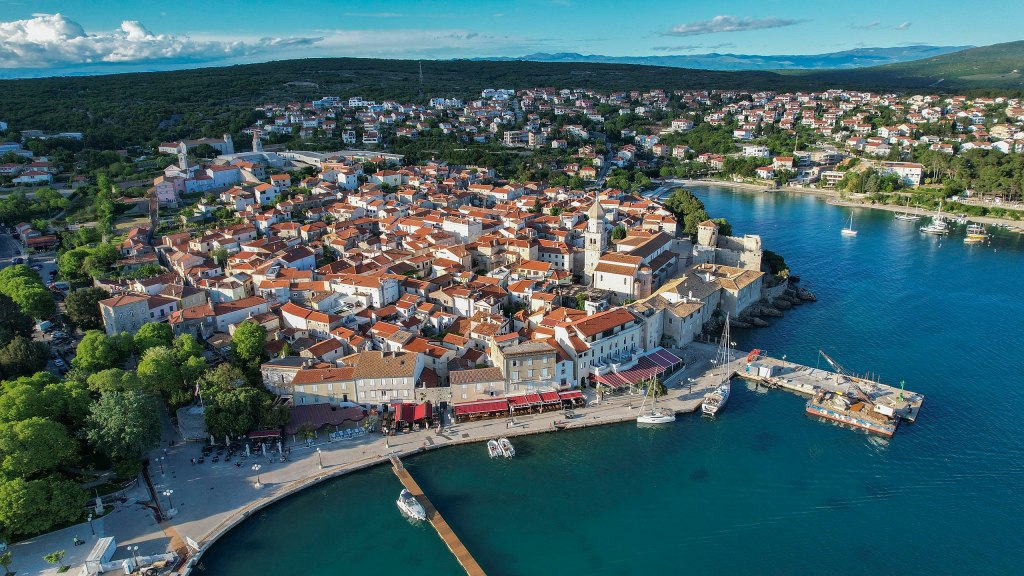
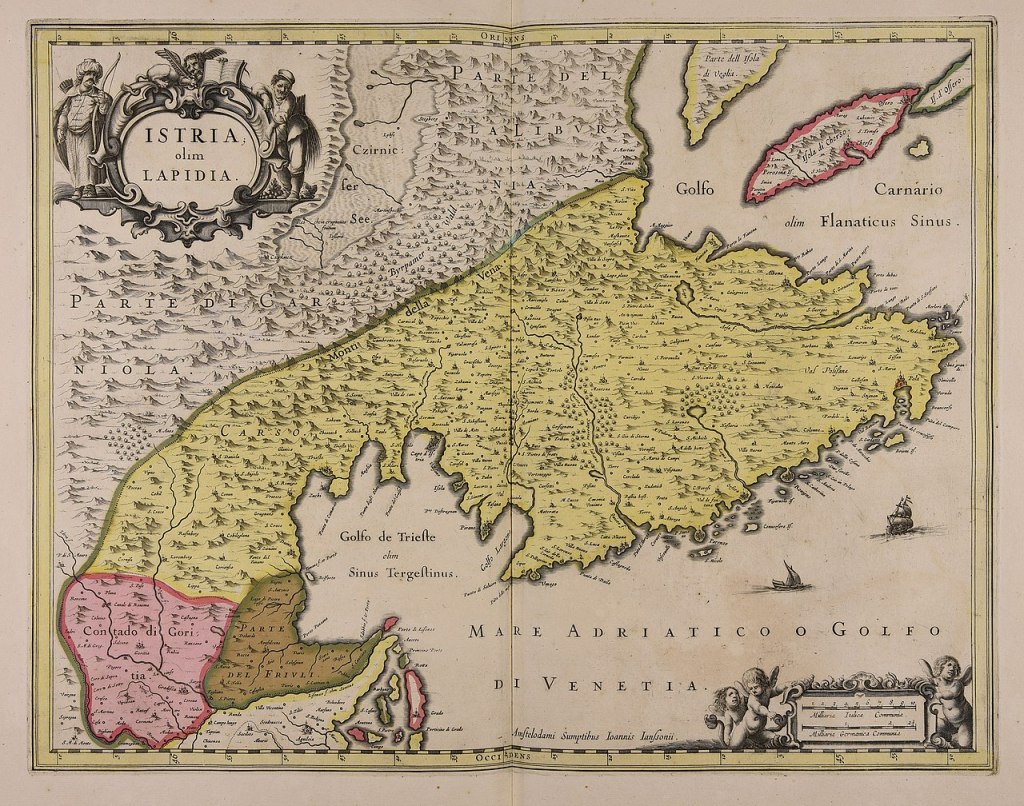
One thing to note right away is that for the first few centuries, their name was not Frankopan at all. Like most aristocrats in Europe, they initially took a surname from their chief possession, so in this case ‘Krčki’, from the island of Krk, the largest and most populous island in the Adriatic, tucked into the ‘armpit’ formed by the Istrian peninsula and the Croatian mainland. The newer surname was ‘borrowed’ from an ancient Roman noble family, the Frangipani, to give the Croatian noble house more heft, associating them with the Roman Empire and its power in the Adriatic. The Frangipani name is also associated today with frangipane, the almond custard paste, or the scent of the plumeria plant used in perfumes. A popular etymology of the name in Croatia—which I suspect has an element of truth pertaining to its adoption by the family who ruled Krk in the fifteenth century—was frank pan or ‘free lord’, and many of the Frankopans in that century were indeed appointed to the important office of ban (or viceroy) of Croatia by the kings of Hungary. It is easy to guess (as I did) that ‘ban’ and ‘pan’ were variants of the same Slavic word for lord or ruler, but a short look at etymological dictionaries suggests that pan, used by northern Slavs (Poles, Czechs), came from an Indo-European word for protector, while ban, used by southern Slavs (Croats, Serbs) came from a Turkic word for noble leader (similar to bay or bey).
And indeed, Frangipani did not mean ‘free lords’—the Italian family claimed descent from the ancient Roman clan of the Anicii, initially a plebian family in the Republic era, who by the late Imperial era had developed into the Anicius family of nobles. They were prominent in their act of acceptance of Christianity, one of the first families of senatorial rank to do so, and frequently served as consuls. Olybrius (Anicius Olybrius) became Emperor in the West, briefly, July to November 472; he was chiefly a puppet of Germanic warlords, and his family were quick to support the new regime of the Ostrogoths in the following decades. One of these, Anicius Manlius, became a consul and advisor to the Ostrogoth kings, but is more famous as the philosopher and historian Boethius. Later members of Gens Anicius moved to the Eastern Empire and served as consuls and generals there. While late Roman genealogies are quite fuzzy, it is thought that both Pope Felix III (d. 492) and Pope Gregory I ‘the Great’ (d. 604) were members of this family.
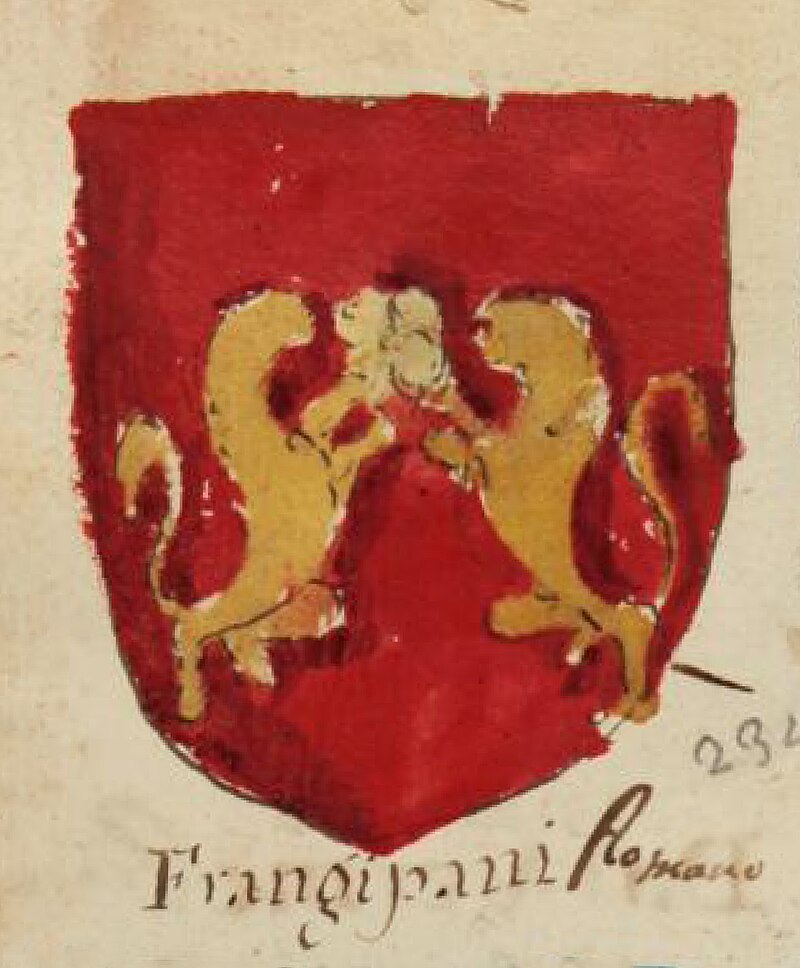
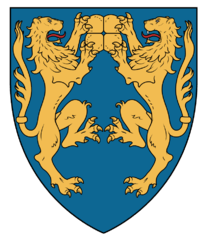
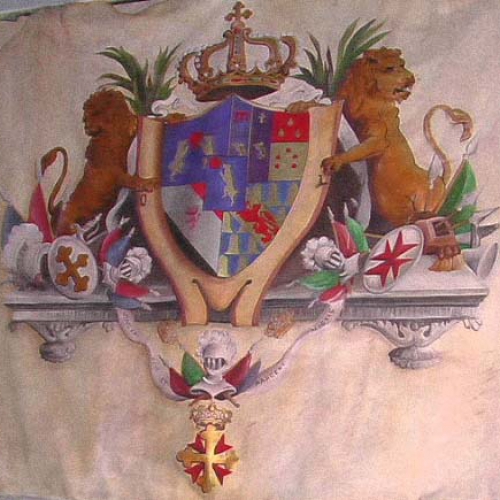
Then there is a gap. The first attested Roman family member with the name Frangipani comes from 1014. This house was very powerful in the twelfth century, influencing the making and unmaking of popes. From 1130 they held the Colosseum and turned it into their own defensive post in Rome. They also held rich agricultural lands in Campania. They divided into several branches, and in the seventeenth century, the last of the main line, Mario Frangipane, Marchese di Nemi, named the Croatian lord, Fran Krsto Frankopan, as his successor to the name and arms, then died in 1654. The coat of arms of the Frangipani of Rome was distinctive and punning: two golden rampant lions facing each other, breaking bread (frangere panem) together.
The family legend—which is certainly possible—was that in the early twelfth century, younger brothers of the Roman Frangipani left to settle in Venice and Illyria (the ancient name for the Adriatic coastline of the Balkan peninsula). In 1118, a man called Count Dujam (Doimo in Italian) was given permission by the Doge of Venice to rule the island of Krk (then called Veglia in Italian) as a vassal of the Serene Republic. By 1221, King Andrew II of Hungary gave the brothers Henry and Servidon Krčki the islands of Brač, Hvar and others further down the Adriatic coast (closer to Spalato/Split), thus establishing the dual relationship of this family between Venice and Hungary that persisted for many years. Andrew’s son Béla IV took refuge on Krk in 1240-41, and the family helped him win back his kingdom from the Mongols, and also to win a war against the Duke of Austria, so were given lands on the mainland of the Kingdom of Croatia (in personal union with Hungary since 1102): the counties of Senj and Modruš. From here on, Krk would remain a vassal state of Venice, while the mainland territories were held as fiefs of the kings of Hungary.
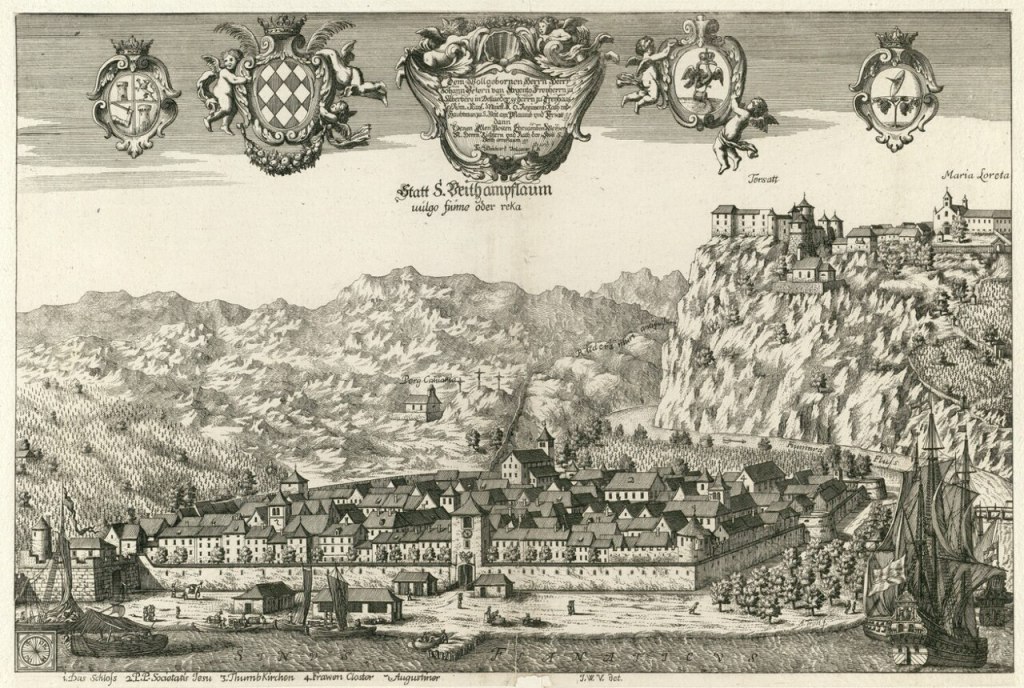
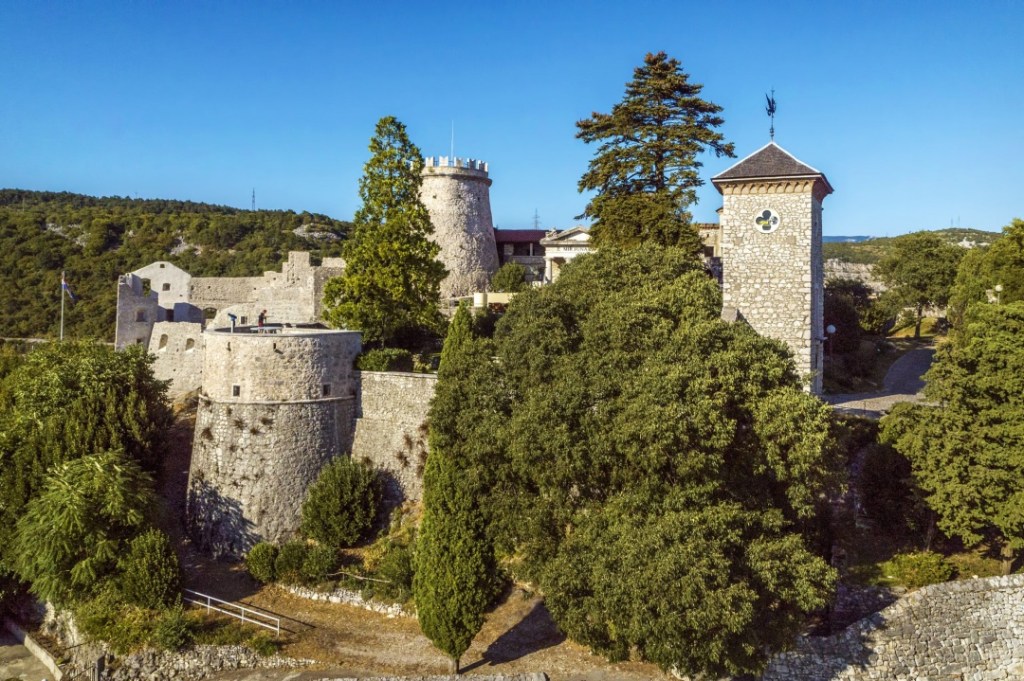
Another family legend from this early period was that the lords of Krk were responsible for bringing the Holy House of the Virgin from Nazareth to Croatia, to their castle of Trsat overlooking the city of Rijeka (aka Tersatto and Fiume, respectively, in Italian), in 1291. One story says that Nikola Frankopan sent architects to the Holy Land to obtain measurements so he could rebuild the stones that arrived just as they had been; he then sent the entire construction as a gift to the pope, across the Adriatic to Loreto, where it remains to this day. But a shrine was then built on the spot, Our Lady of Trsat, which still contains a precious treasure: a painting of Mary said to be painted by St Luke. The Frankopans also built a monastery here. The medieval structures were rebuilt in baroque style in the 1640s, and again in the 1690s after a devastating fire.
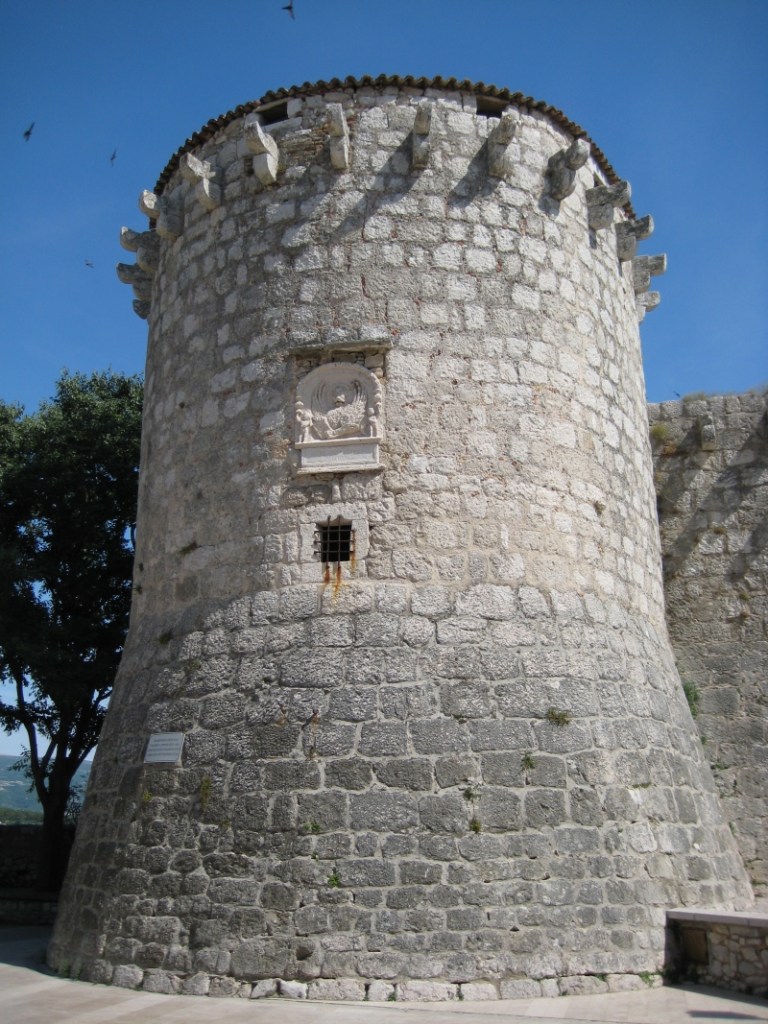
The island of Veglia—Vikla in Dalmatian (a descendant of Latin spoken along the Illyrian coast, now extinct)—had an older name, Kyrista or Kyrikon in Greek, Curicta in Latin. Its original inhabitants were called the Liburnians, who called it Curicum. Why did the Venetians rename it Vekla or Veglia, I do not know. The island had been colonised by Rome, then formed an independent city-state until it was re-absorbed into the Roman Empire (of the East) in 812, then ceded to Venice in 1001. The family who took the name ‘of Krk’ (and later Frankopan) built a powerful fortress overlooking the main town on the southwest coast of the island in the 1190s; a large round tower was added in the century that followed. Frankopan Castle is still today one of the chief tourist attractions of the island. From here they ruled as semi-independent princes, nominally paying tribute to Venice.
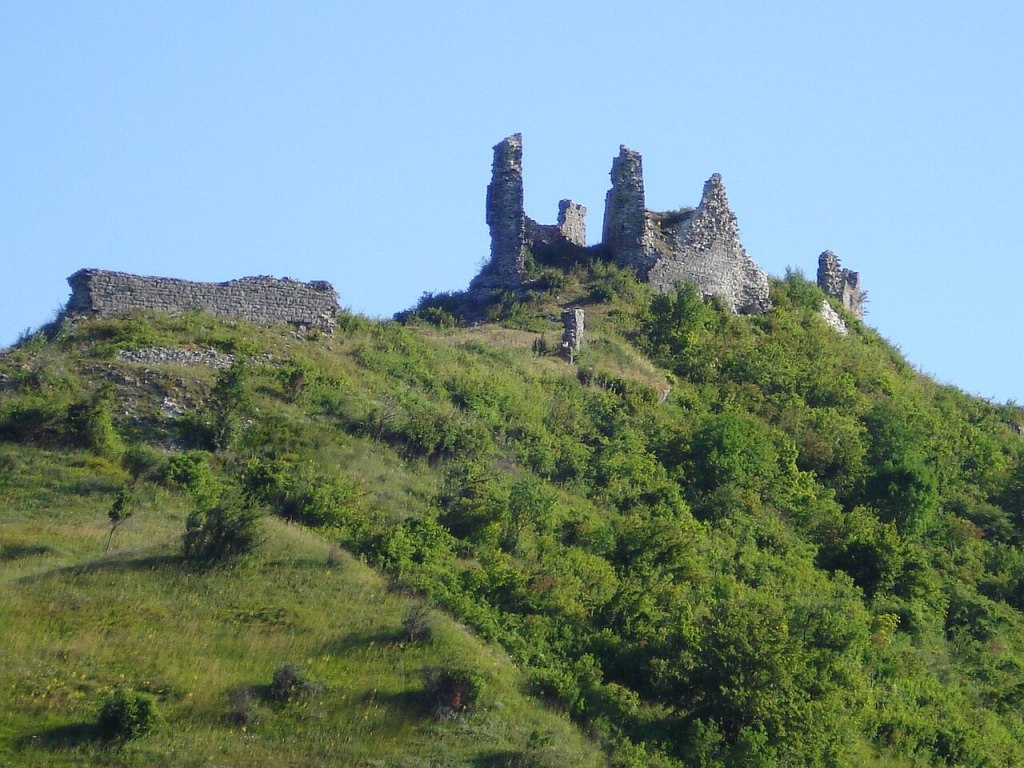
On the mainland, Modruš was a town and a county (part of the Lika region, a connector between the sea and the mountains forming the border with Bosnia), located on a strategic road between the Adriatic and the Pannonian Basin (ie, Hungary). Modruš (or Modrussa in Latin) was a royal estate until given to the Frankopans in 1193. The town was dominated by the Castle of Tržan, which remained the family’s principal seat on the mainland for centuries (its name comes from the Croatian word for trade, tržiti). This fortress was very old, probably with foundations from the ninth century. It was enlarged by the Frankopans in the early fifteenth century, and was never in its history taken, even when the town was burned by the Ottomans in 1493. In the mid-fifteenth century, the town was given its own bishop, but this area became increasingly dangerous once the Ottomans took over the neighbouring kingdom of Bosnia in 1461, and the see was transferred to Novi Vinodolski (and eventually merged with Segna). By the mid-sixteenth century, trade declined, the castle decayed, and Modruš became part of the new Habsburg Croatian Military Frontier district, its castle taken over by the army. Tržan was abandoned entirely in the 1790s and today is a ruin.
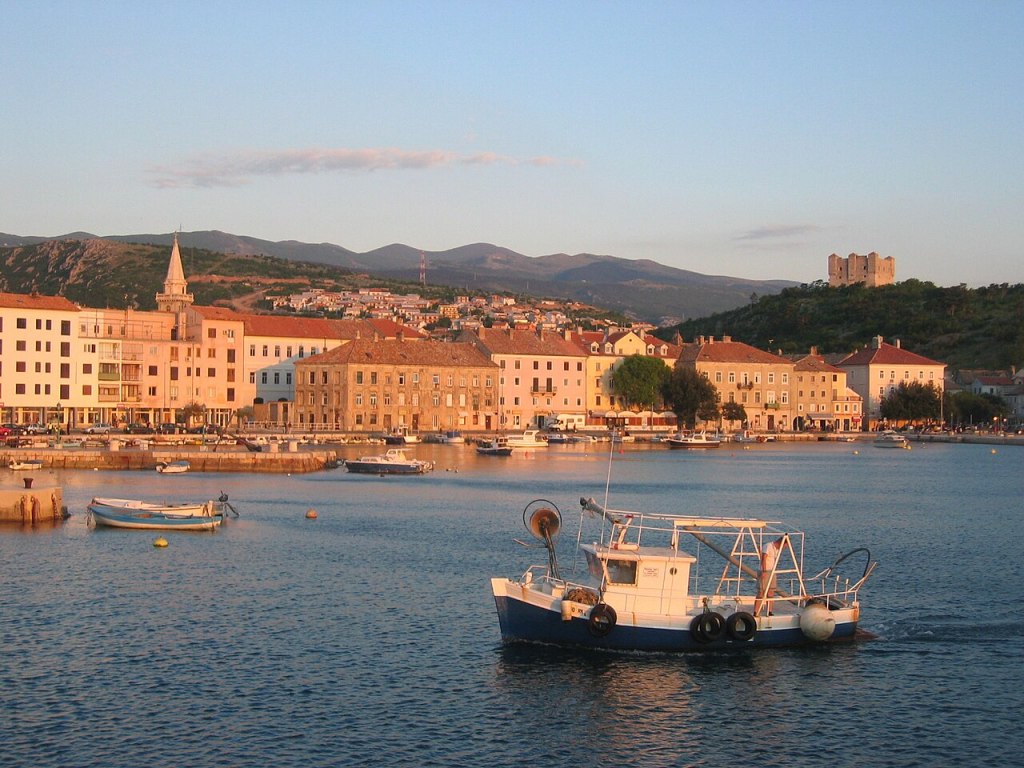
More safely on the coast, to the west, the county of Senj was formed around the ancient city of Senia, founded by Illyrians and Liburnians, perhaps three thousand years ago. Croats arrived in the Balkans in the seventh century and settled along this coast. Senj was the seat of a bishop by 1169, then held from the King of Hungary-Croatia by the Templars from 1184. It was then given to the lords of Krk in 1271. Whereas their other domains were influenced by Venice, Senj remained a centre for Croatian language and culture, and even their own script, Glagolitic (a relative of Cyrillic). In 1469, the King of Hungary took the city away from the family and granted it status of an independent royal city.
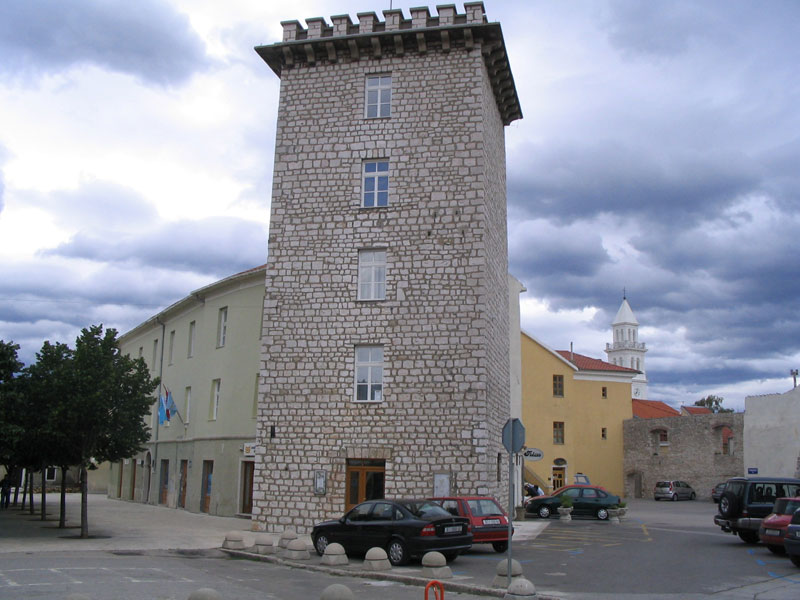
Also along the coastal region was Novi Vinodolski, held by the family from the 1280s to the 1670s. Its castle still survives in one single tower in the town square, having suffered devastation by the Turks in 1527, the Venetians in 1598, and a major earthquake in 1750.
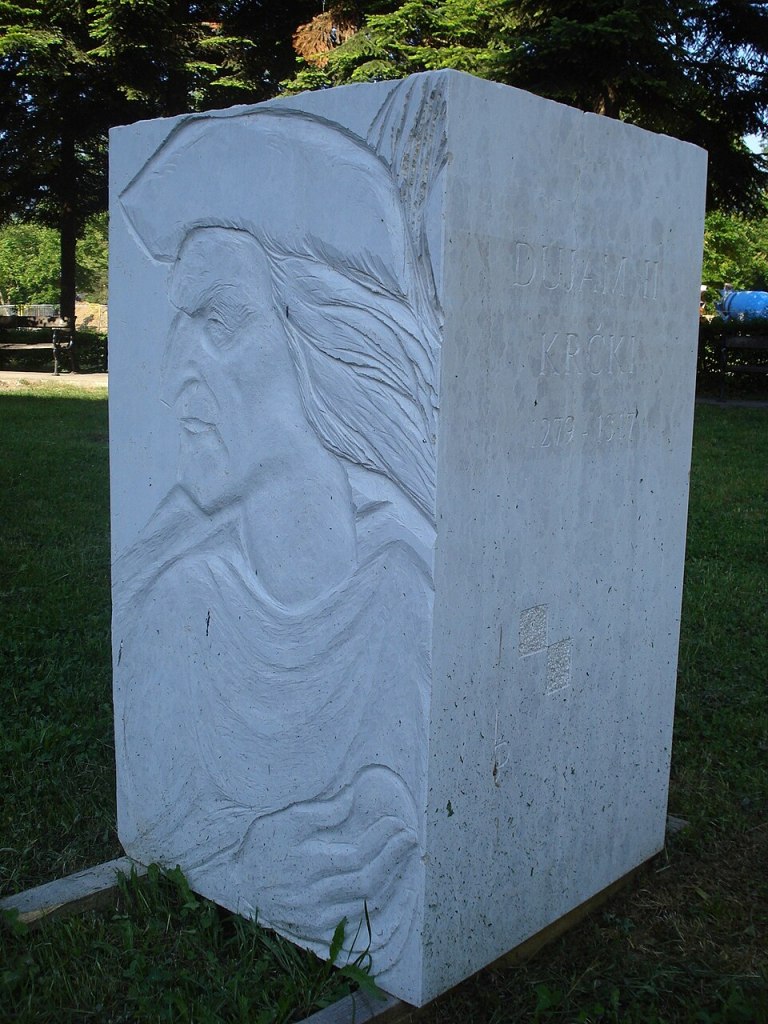
By the turn of the fourteenth century, the Krčki family had become kingmakers in Hungary and Croatia. Dujam II (or ‘Doimus’), lord of Krk since 1290, and ‘podestà’ of Senj, took part in a magnate conspiracy that usurped royal authority across the two kingdoms in the reign of Andew III, the last king of the Árpád dynasty. When Andrew died in 1301, Dujan supported the candidacy of the King’s great-nephew, Charles Robert of Anjou, Prince of Naples, and accompanied him on his journey from Naples to Spalato on the Dalmatian coast, and from there to Zagreb, the Croatian capital, then helped him fight for the crown which he finally succeeded at winning in 1308. Dujam of Krk remained loyal to the new Angevin dynasty, and was rewarded with confirmation of possession of the County of Modruš augmented by the counties of Vinodol (on the coast) and Gacka, with its castle of Ostočac. He died in 1317.
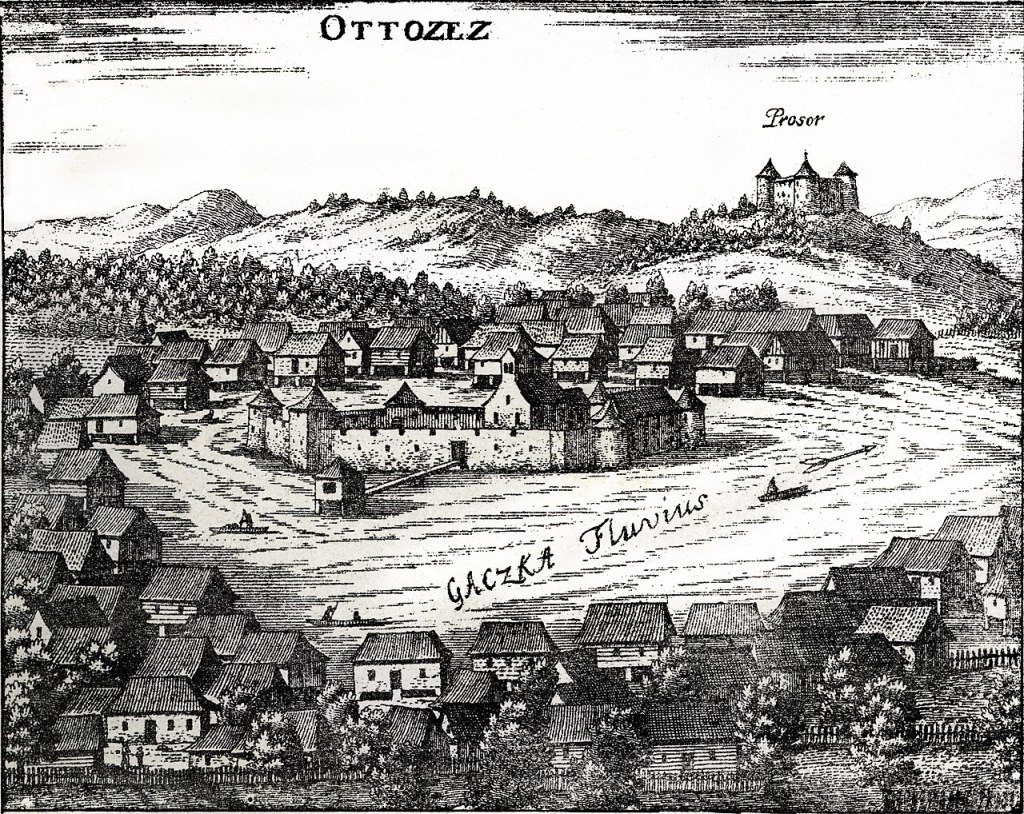
Otočac, also in the Lika region (called Ottozzec or Ottocaz in Italian), was rebuilt by the Frankopans as a major fortress in 1448, and again in 1619. As with Modruš, a bishopric was established here, in 1460, in an effort to aid this branch of the family in defending this increasingly fragile frontier against Islam. But also like Modruš, the bishopric declined and was suppressed in 1534. A decade later, the cream of the Croatian nobility gathered in Otočac and defeated the Ottomans, preventing their advance towards the Adriatic coast. The fortress was demolished in the 1820s.
The family reached its apogee in Nikola IV. His mother was a daughter of the Count of Gorica (Görz), a member of the hereditary imperial aristocracy and the most powerful lords of northern Croatia. From her, he inherited a rivalry with the other great magnates of Croatia-Slovenia, the Counts of Celje (Cilli), whose daughter became a queen by her marriage to Sigismund of Luxembourg, king of Hungary and Croatia. The two clans came close to civil war in the 1420s, but Nikola several years before had supported Sigismund’s control of the Hungarian throne when challenged by an Angevin claimant in 1403, and had also loaned the King money, in return for towns and fortresses like Knin, on the frontier with Bosnia, and Bihać, now in Bosnia. So in 1425, Sigismund (by now elected King of the Romans, and soon crowned Holy Roman Emperor) confirmed these grants (in Italian, ‘Begle [Veglia], Segnie and Modrusse) to ‘Niccolo Frangiapan’, and the next year named him Ban of Croatia and Dalmatia (1426-32), the first of many Frankopans to hold this office.
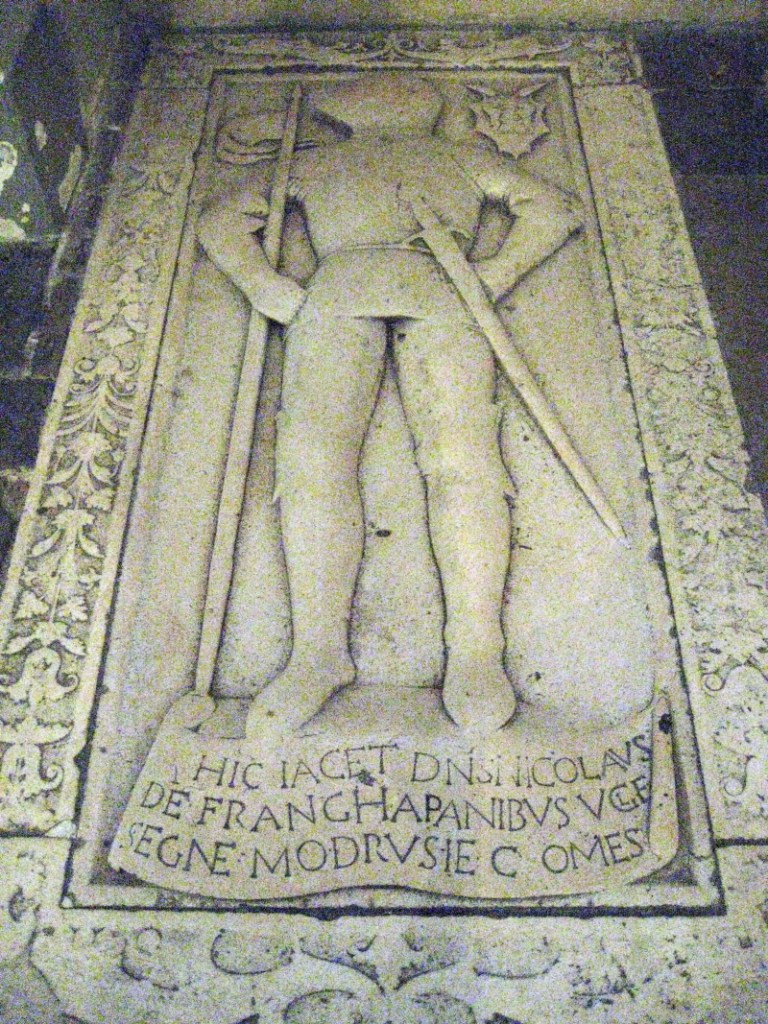
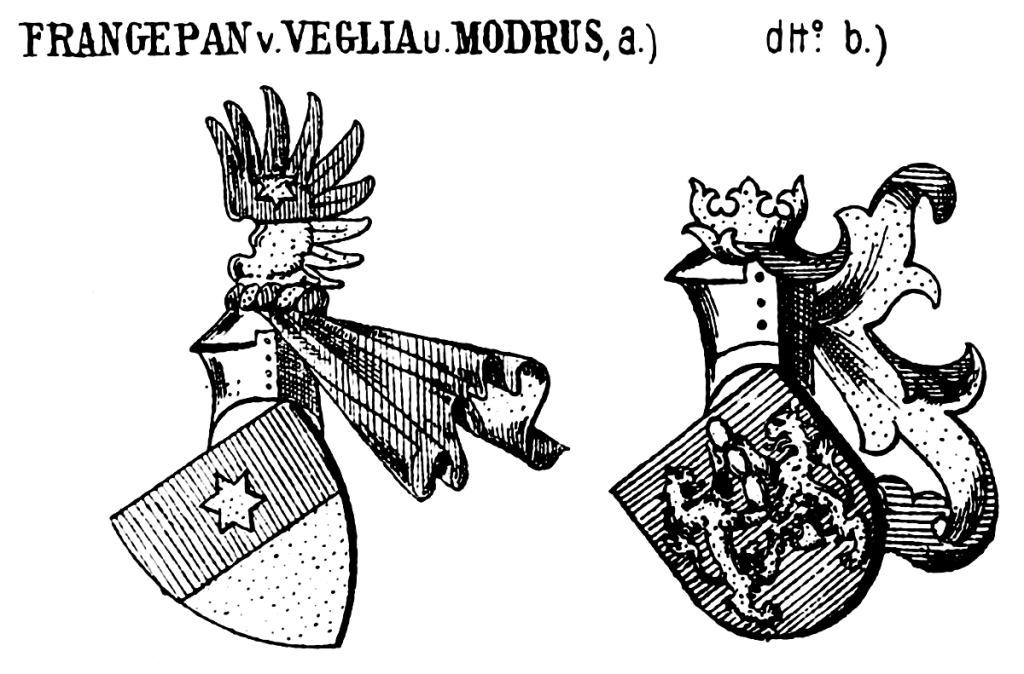
Frankopan was now the name he used. In 1424, Nikola had travelled to Rome and was recognised as a descendent of the ancient Frangipani family. He had already (two years earlier) begun to use their name and their arms (its lions quite distinct from the gold star on a gold and red shield). He used the title ‘Prince of Krk and Modruš’, and was also lord of the island of Rab (or Arba, not far from Krk), until it was reattached to Venice in 1409. On the mainland, he added significantly to the family domains with the castles of Cetin, Slunj, Ozalj and several others. These castles were later distributed to various descendants and gave names to separate lines: Centinski, Slunjski, Ozaljski and so on.
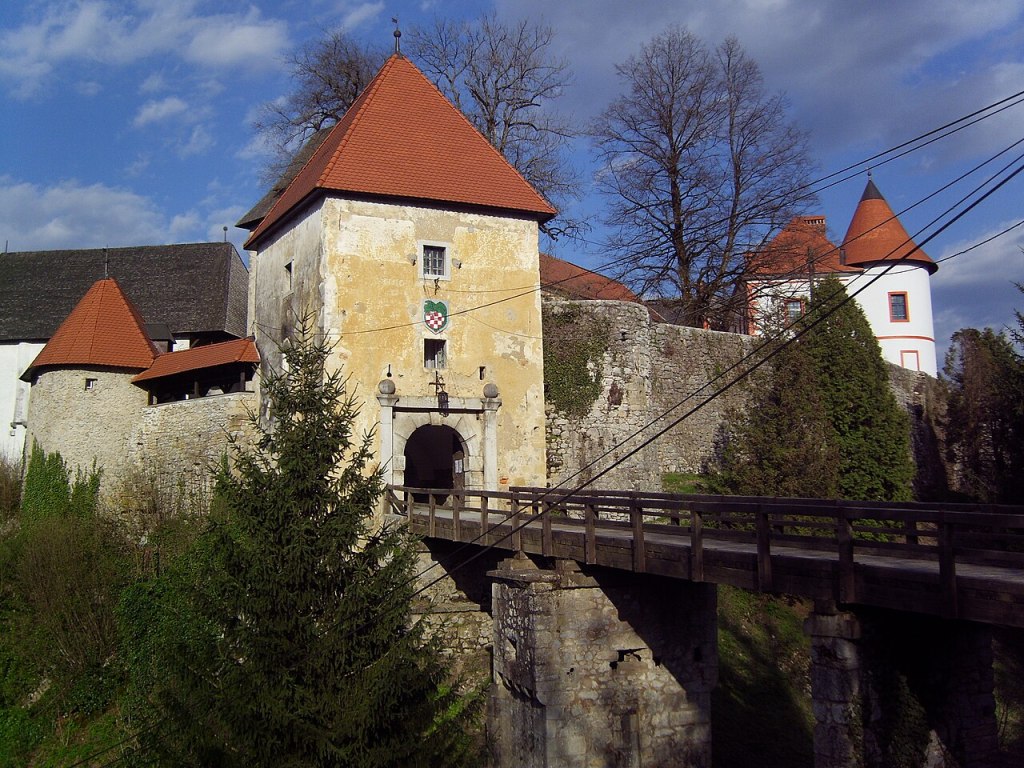
Of these castles the finest still today is Ozalj, today on the Croatian border with Slovenia. Built on a high cliff above the Kupa river in the 1240s, it was for many centuries jointly owned by both the Frankopan and Zrinski families, and was the centre of their joint conspiracy in the 1670s (see below). Today it is a museum, one of the best preserved in Croatia.
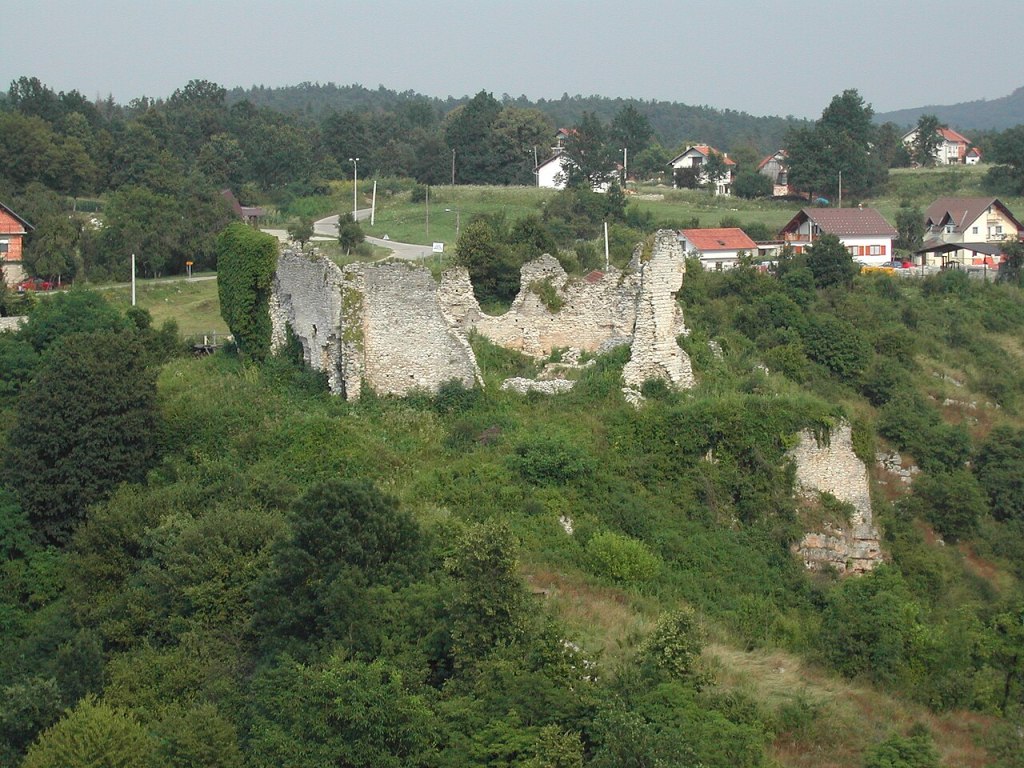
Further south, close to the border with Bosnia, is the Castle Cetin (lit. Cetingrad), Frankopan property from 1387. It is best known as a place where the Croatian nobility gathered in 1526 after the terrible defeat (and death) of the Hungarian king by the Turks at the Battle of Mohacs—the Cetinska Sabor. Here the Croatians voted to recognised Ferdinand of Austria as their king (rather than the Hungarian candidate), and although the Kingdom of Croatia remained a subsidiary part of the Kingdom of Hungary for the next four centuries, many Croatians see this as an important mark of their loyalty to the Habsburgs directly and a step towards independence. The Frankopans were run out of this castle by the Ottomans in 1536, and when it was retaken it was incorporated into the defensive system of the Habsburg Military Frontier province. It was taken and re-taken by the Turks over and over again until 1809, and the fortress was destroyed in 1866.
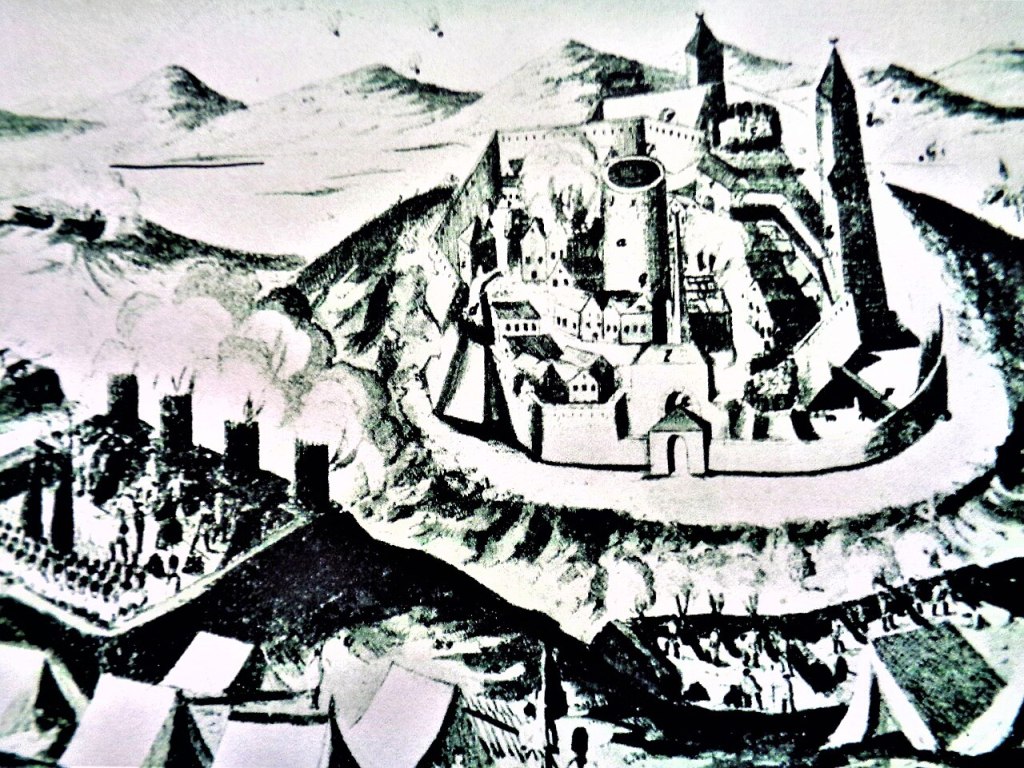
Castle Slunj, a short distance to the west, was also part of this border defence system and was repeatedly ravaged by the Turks, resulting in the area’s depopulation until the later eighteenth century. No longer needed, the castle became a ruin.
Nikola IV’s son, Ivan VI Frankopan, took over from his father as Ban of Croatia in 1432. He travelled a lot and is known by different names: Giovanni Franco in Italy or Johann Franke in Sweden, where he was in the service of King Eric of Pomerania—they had met in Venice in the 1420s and went together to the Holy Land (1423-25), then the King named ‘Johann’ Bailiff of Stegeborg, a fortress on the east coast of Sweden. Back in Croatia, Ivan married one of the heiresses of the Nelipić family, ‘dukes’ of Knin, Cetina and Trogir (the interior of Dalmatia). But King Sigismund, forgetting the past favour of Ivan’s father, denied his claims to this succession and confiscated all of his lands and titles in a short civil war in 1436. Frankopan was on the verge of victory, but died suddenly—perhaps poison? The King gave away these lands, but he too died, after a long and eventful reign.
Ivan VI had ruled with his brother Stjepan (Stephen) III, who later served as a diplomat for the King of Hungary. In 1449 a more permanent division was made between their sons, with Ivan VII ruling in Krk and Barnardin in Modruš (his descendants were known as the Frankopan Modruški). Ivan VII, known in Latin sources as Ioannes de Frangapanis, is one of the only members of the family to genuinely rule as a ‘prince’ on the island of Krk, as an ally of the King of Hungary and the King of Naples in the 1440s-50s, though he placed his principality under the protection of Venice in 1451 ,and solidified his ties through marriage to a prominent daughter of Venice, Elisabetta Morosini, in 1454. He encouraged the settlement on the island of Vlachs—Christian refugees from the Ottoman Empire—and they stayed for centuries. But conflict with his brothers, who ruled on the mainland, and the King of Hungary (Matthias Corvinus), prompted him to cede full control of Krk back to the Venetian Republic in 1480, and he took refuge with the Emperor Frederick III—the last years of his life were spent fighting with then against Corvinus and died exiled and landless in 1485.
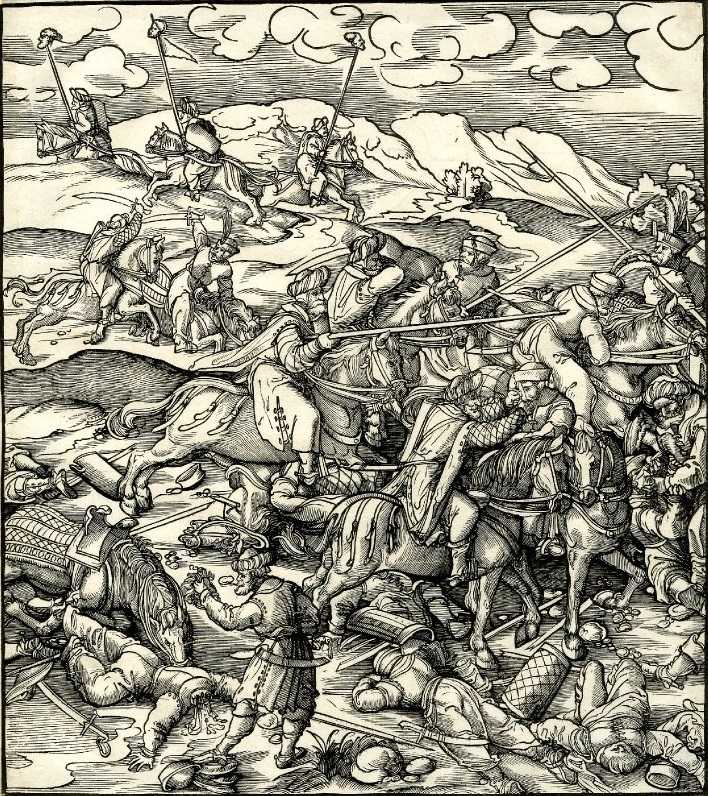
Ivan’s brother Bernardin of Modruš became known as a hero in the defence of Croatia against the Turks, especially at the Battle of Krbava Field, 1493, a defeat in which many Croatian nobles (including his cousin, Ivan IX) died. This battle provided a temporary pause in the ongoing rebellion the Frankopans were waging against their overlord, the Hungarian born Ban of Croatia, Imre Derencsényi. Rule over Croatia was being contested at this time between the Habsburgs of Austria and the Hungarian magnate Matthias Corvinus, as seen with Ivan VI above, and Bernardin tried his best to maintain ties with both, until Corvinus confiscated his castle of Senj in 1469—a breach later healed by the marriage of Bernardin’s daughter Beatrica to Matthias’s son János. To make things even more interesting, Bernardin’s maternal family ties were with Italy, as the son of Isotta d’Este, from the ruling house of Ferrara, and the husband (after 1476) of Princess Luisa Marzano d’Aragona, a granddaughter of the King of Naples. He used these various international connections to obtain help for Croatia and Dalmatia, by means of impassioned speeches given before the Doge of Venice and the Imperial Diet in Nuremberg. He was also patron of the Croatian language and culture, including sponsoring a translation of the Bible. Towards the end of his life, his links with the Corvinus family made him join the anti-Habsburg factions that supported the Jagiellonians and later János Zápolya in their rule in Hungary after 1526—unlike most of the Croatian nobles noted above at the Cetinska Sabor. He died in 1529.
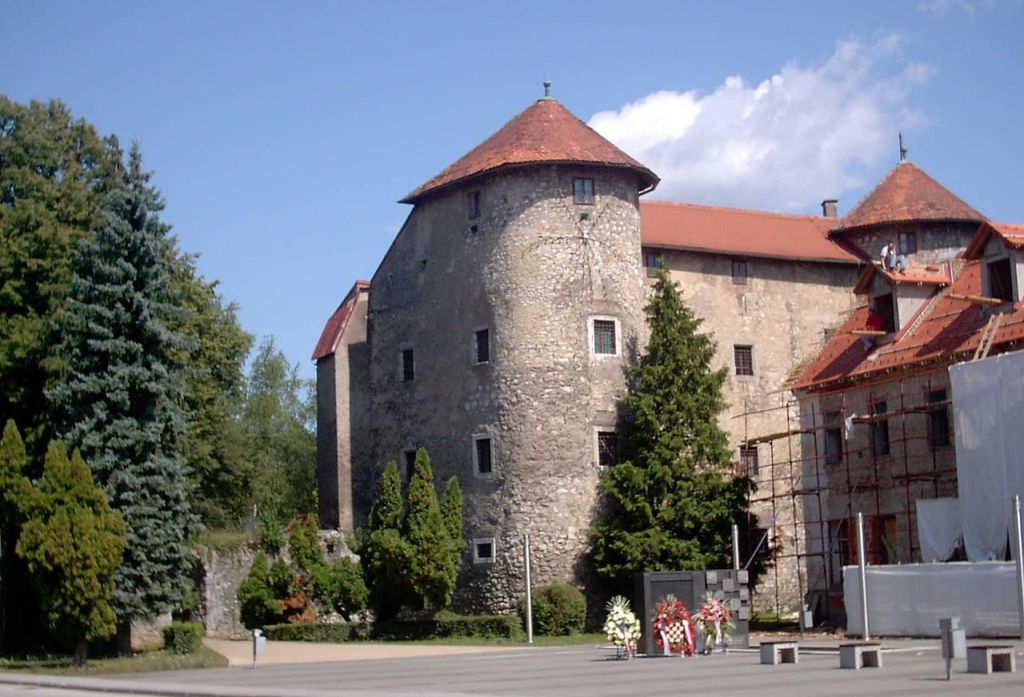
Bernardin Frankpan had built a new fortified residence after Modruš was destroyed by the Turks in 1493. Ogulin Castle and its surrounding village became the new centre of the defence of central Croatia, and the Frankopan serfs there were freed from most of their owed labour so they could focus on soldiering instead—reputedly very successful at this, they were rewarded by their lords in 1622 with complete freedom. The castle in Ogulin today is the regional museum.
Bernardin’s son, Krsto Brinjski (of castle Brinj, near Modruš), was also a supporter of Zápolya in the succession crisis of 1526 (against Ferdinand of Austria), and was named by him as Ban of Croatia, Slavonia and Dalmatia and Captain-General of the Kingdom of Hungary between the Drava and the Danube (he also restored him to his estates at Senj). He was not always been anti-Habsburg, however: a renowned general, Krsto (or Christof) had previously fought in the service of the Habsburgs against Venice, and in the 1510s was rewarded with lands in Carniola (one of the Habsburg duchies, today’s Slovenia), and encouraged to attempt to free Krk from Venetian rule in 1512 and again in 1514 (resulting in his imprisonment for five years). In 1519, he travelled to the court of Emperor Charles V to have his possession of estates in Carniola confirmed, and was named Military Commander of Istria. By 1523, however, he had clashed with the Emperor’s brother and regent in Austria, Archduke Ferdinand, so he entered the service of Lajos II, King of Hungary, who named him ‘Protector’ of Croatia in 1525. Frankopan warned the young king not to engage the Turks in 1526 but to wait until his Croatian army (and hopefully reinforcements sent by the Pope) could arrive, but Lajos did not wait, and the Hungarian army was annihilated at Mohács. Krsto was not present at the battle, but his brother Matija was, and was killed. Formally named Ban of Croatia in 1526 by Zápolya, Frankopan did not live long and was himself killed at the siege of Varaždin in northern Croatia, September 1527, a huge blow to the anti-Habsburg faction in Hungary, which led Zápolya to flee to Poland. Although Krsto had a famous love match with Apollonia Lang, sister of the Archbishop of Salzburg, he had no children.
Another prominent member in the time of turmoil after the Battle of Mohács was Franjo, son of Ivan IX. He initially supported the succession of János Zápolya to the throne of Hungary, not the Habsburgs, and worked as a diplomat to secure recognition of his rule in the rump of Hungary (the rest being occupied by the Turkish army), first at the court of the King of Poland, and then at the court of Charles V in Spain. In about 1535 Zappolya appointed him Archbishop of Kalocsa, in south-central Hungary, though this was never formally recognised and practically irrelevant since this diocese was under occupation. By 1538 he was instead recognised by Pope Paul III as Bishop of Eger, in northern Hungary, and urged him to work to stop the spread of Protestantism in that Kingdom. Instead, Franjo (or Ferenc in Hungarian), identified that the Turks were the greater threat and urged Hungarians to unify behind the Habsburgs as the best hope for the country’s survival. He died in 1543.
Leadership of the family passed to Juraj (George) III, from the Slunjski branch of the family. The area around their landholdings, Slunj and Cetin, were devastated by repeated Turkish invasions from Bosnia in the sixteenth century (and were not fully re-populated until the nineteenth century). It was Juraj Slunjski who in late 1526 had organised the assembly of the Croatian estates at Cetin that elected Archduke Ferdinand as King of Croatia (opposed by his cousins Krsto and Franjo). In the next generation, Juraj’s son Franjo was rewarded for this loyalty to the Habsburgs by his appointment as the next Frankopan Ban of Croatia in 1567. He died in 1572, the last of this branch.
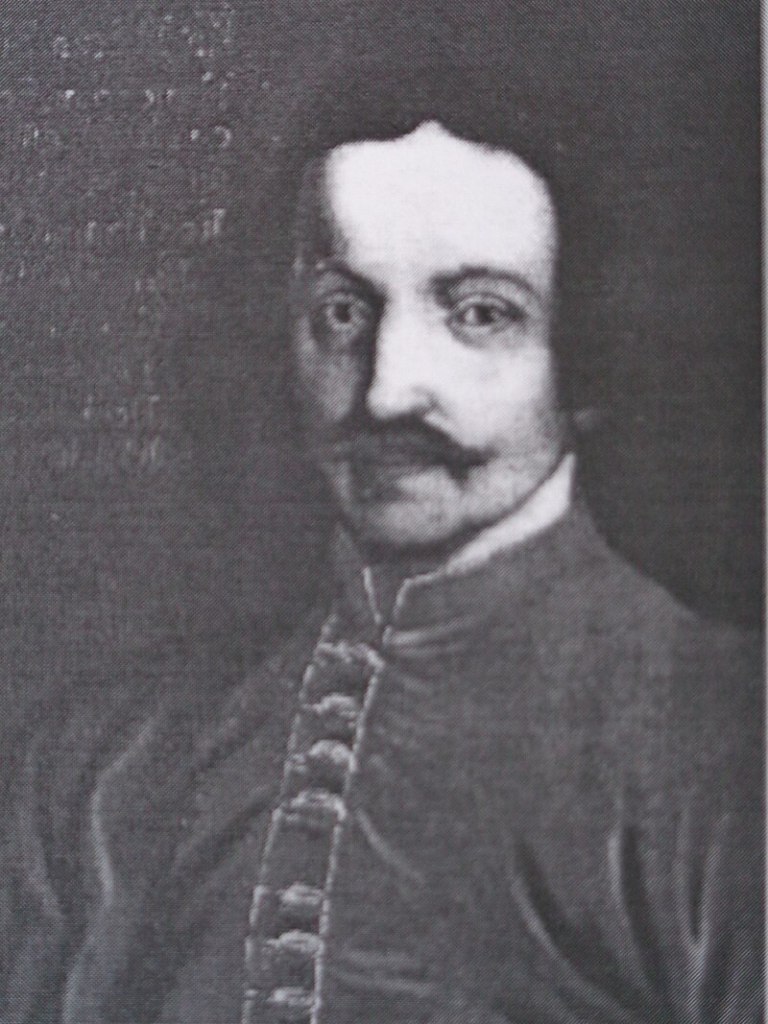
By the early seventeenth century, the only branch remaining was the Trsat branch. Nikola IX of Trsat (Trsatski), was as usual combining his military and administrative role on multiple fronts: defending the frontier against the Turks as Grand Captain of Senj, fighting against the Venetians along the coast, and defending Habsburg interests in the area against a rebellion of Hungarian magnates. Emperor Matthias appointed him Ban of Croatia in 1617—the last Frankopan to hold this title—and the Croatian assembly named him Captain of the Cavalry of the Kingdom in 1619. He resigned from these positions in 1622 and lived out of the spotlight until his death in 1647.
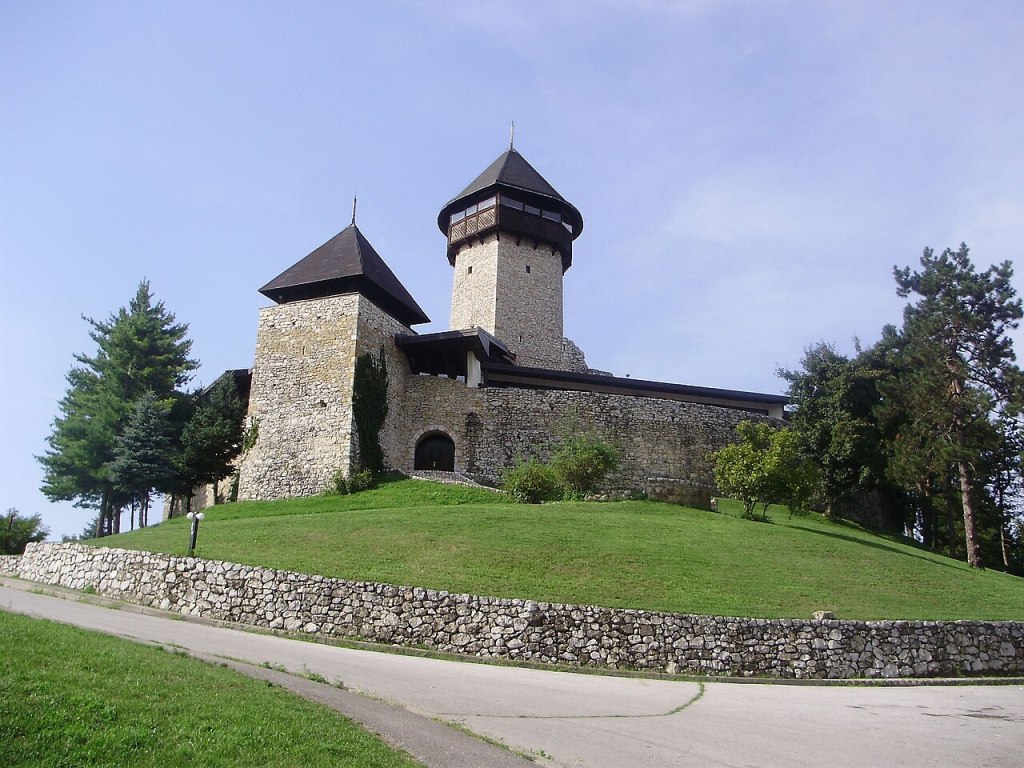
Frankopans and other border barons lost ground in this period, as the Ottomans stepped up their encroachment in the Balkans: in 1633, one of the old fortresses of the Frankopans, Velika Kladuša, not far from Cetingrad, was conquered by Turkish forces, and it became one of their major bases for operation in the next century. Of all the many Frankopan castles in the region, it is the only one that has remained on the other side of the border and is still in Bosnia and Herzegovina, not in Croatia (and interestingly, was the headquarters of the breakaway republic of Western Bosnia in 1993 to 1995).
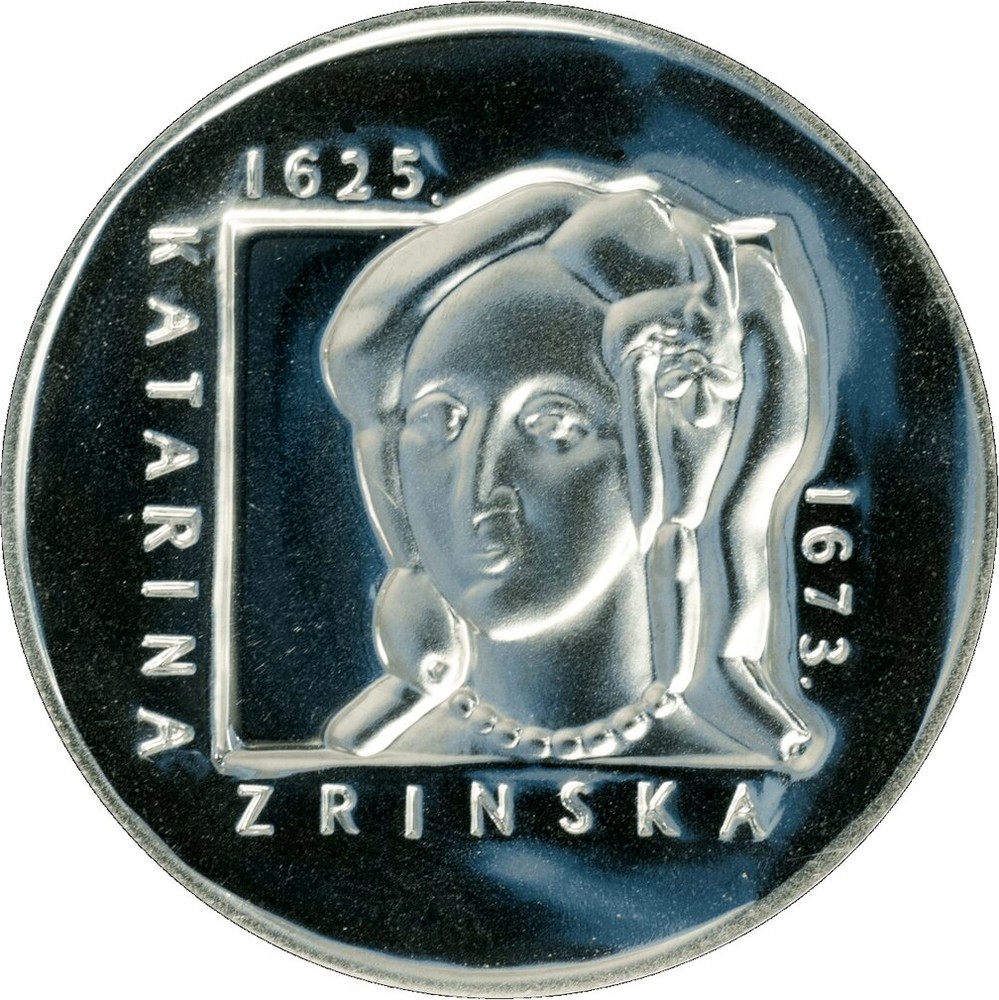
Meanwhile, Nicola IX’s brother, Vuk II Krsto (d. 1652), was a Habsburg captain of various frontier castles and was governor of one of the six border captaincies (Karlovac) in Croatia. His daughter Katarina, wife of Count Petar Zrinski, was known as a patron of the arts and a writer, who became a popular heroine in the Croatian national revival of the nineteenth century. Katarina Zrinska later inspired and gave her name to women’s clubs in twentieth-century Croatia, and in 1999 she was commemorated on the 200 kuna silver coin.
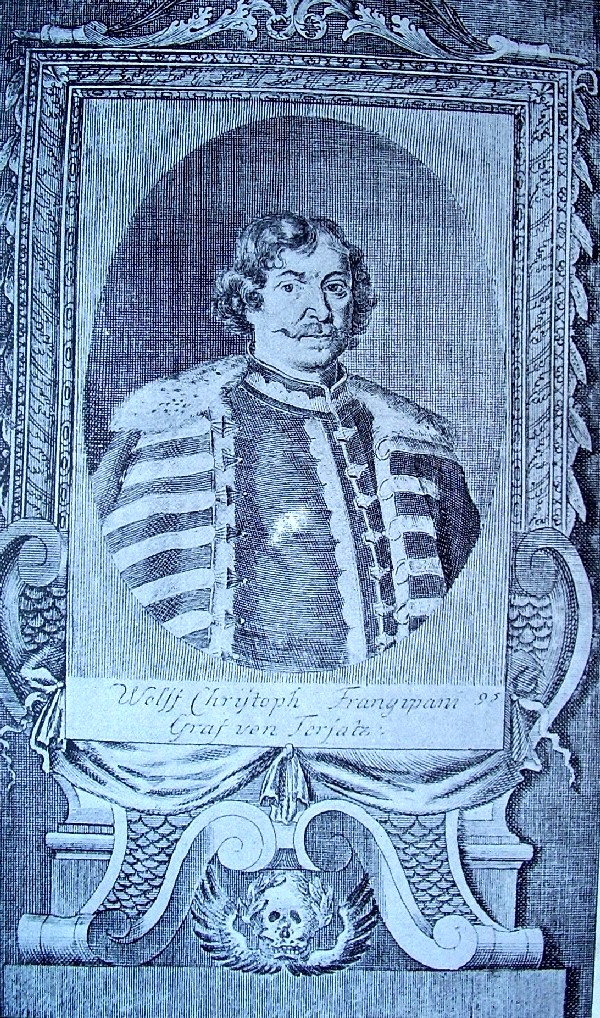
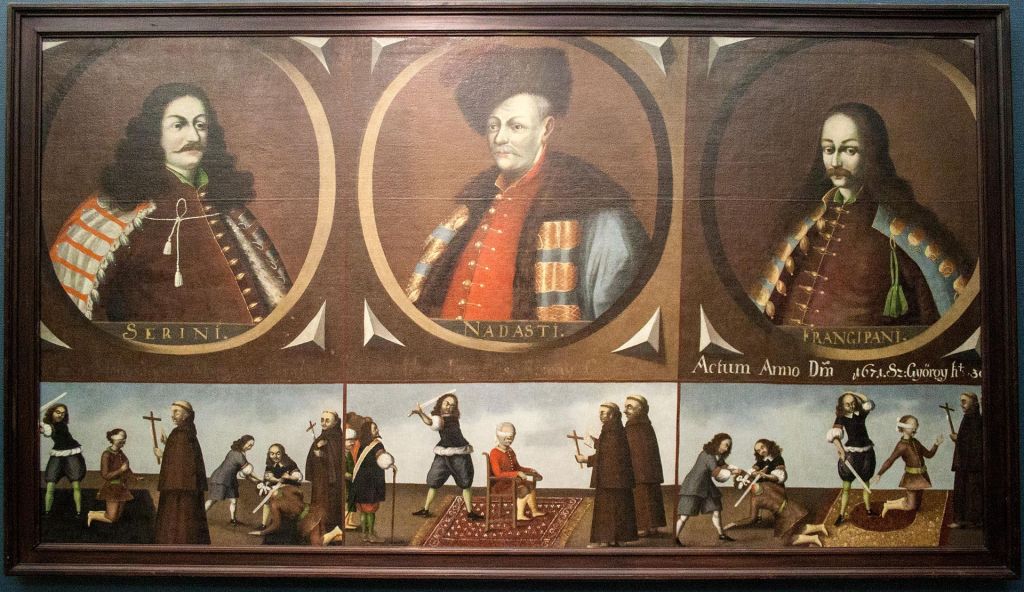
Katarina’s husband and her brother, Fran Krsto (or Ferenc Kristóf in Hungarian), were both leaders of a conspiracy against the Habsburg Emperor-King, Leopold I. Like many magnates in Hungary and Croatia, they were angry that Leopold had ceded territories back to the Ottomans after the Peace of Vasvár (August 1664), and sought to re-assert local independence from the Habsburgs by any means—sending out feelers in 1666 to the courts of France, Poland and Sweden, and even to the Doge in Venice. Nobody wanted to get involved. An offer was made to place Hungary and Croatia under Ottoman suzerainty in return for local autonomy (similar to affairs in Transylvania and Wallachia, but the Sultan was himself not interested at this time in renewing war with the Habsburgs. Plotting took place at the jointly co-owned Castle of Ozalj. A failed attempt to capture Emperor Leopold in 1667 and circulation of pamphlets inciting an insurrection in 1670, finally caused the Emperor to order the arrests in March 1671 of Zrinski, Frankopan and other co-conspirators including Hungarian magnate Ferenc Nádasdy. After two trials, one before the smaller court of the Emperor and one including a number of Hungarian peers, all three were executed in Wiener Neustadt (south of Vienna) in April 1671. The widowed Countess Zrinska was held in a prison near Vienna for some time, then confined to a convent in Graz for the rest of her life.
Fran Krsto had married a Roman noblewoman, Giulia di Naro in 1660, in an aim to solidify his family’s claim to the succession left to them in 1654 by the last of the Roman Fangipani, the Marchese di Nemi (so on his tombstone he is referred to as a marquis). But with his death in 1671, the Croatian house of Frankopan came to an end. His remains were repatriated to Zagreb Cathedral only in 1919. He too has been commemorated recently in Croatian currency.
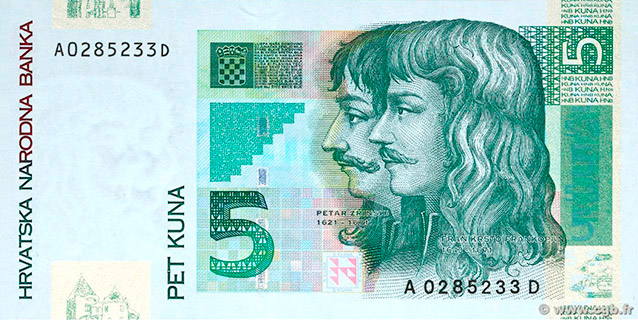
The main fief left to him by the Frangipani of Rome, Nemi, was one of the lordships in the Alban Hills, the aristocratic playground for papal families, southeast of Rome. The Frangipani had supposedly held this fief in the eleventh century, but for much of the Middle Ages it had alternated ownership between the Cistercians and the princely Colonna family. The Frangipanis did purchase it in 1572. After the end of the Croatian line Frankopans, it passed to a line of Frangipani in Friuli (the borderlands between Italy and Croatia) who held it until 1781 when it was sold to Luigi Braschi Onesti, nephew of Pope Pius VI, who raised the lordship in rank to a dukedom. The dukedom of Nemi was then sold on again in 1835.
Years later, in the mid-twentieth century, the name re-surfaced, as an addition to a Dalmatian-Italian noble surname Doimi de Lupis. I’m not enough of a scholar on the history of the nobility of this part of the world to say what is certain, but it seems that Louis Doimi de Lupis, who was born in Split in Yugoslavia in 1939 and emigrated to London, found a family tradition that the Doimi (or Dujmić in Croatian) descended from the Nikola Frankopan associated with the Holy House of Nazareth of 1290 (described above), and so he added this to his surname, along with two other names of the leading Croatian nobility, Šubić and Zrinski. Two of his children are prominent in British upper crust society today, a daughter, Paola, married since 2006 to Lord Nicholas Windsor (second son of the Duke of Kent)—recently announcing their separation—and Peter, a Professor of Byzantine History at Oxford University and author of the celebrated Silk Roads. While the former has openly used the title ‘princess’ (at her wedding for example), the latter has quietly dismissed the claims (though does use Frankopan as his surname). Was it based on the coincidence of the name Doimi with the twelfth-century founder of the family in Krk, Doimo?
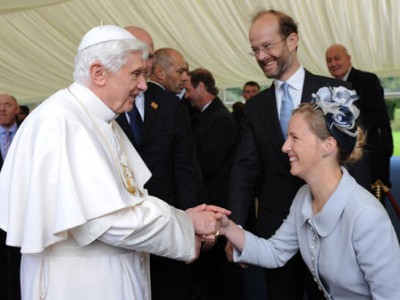
What I can discern more concretely from genealogical sources is that Doimi de Lupis is a composite family: the Doimi were non-titled nobles from Parenzo, on the west coast of Istria (renamed Poreč after it became part of Yugoslavia in 1947); while the Lupis were from Lissa, the Italian name for the island of Vis, one of the more southern Dalmatian islands, off the coast of Split (the old Italian city of Spalato). The origins of the Lupis family reach back much further, to Lorenzo de Lupis, who was sent from Apulia to the Dalmatian coast to act as Imperial notary in the city of Ragusa (modern Dubrovnik) in 1291. The famous Italian genealogist of the nineteenth century Pompeo Litta placed him as a member of a junior branch of the family of Lupis de Soragna, who ruled a small state on the Lombard plain (Soragna) and became princes of the Empire, so will get their own blog page in the future. These in turn claimed descent from a family in Gaul (which included St Lupo of Troyes who died in 478) and even back to the ancient Roman Empire. A senior descendant of Lorenzo de Lupis, Count Niccolò, a noble of Lissa (where the Palazzo Lupis remains today), died in 1795; his daughter Orsola had married (1756) Stefano Doimi of Parenzo, and they created a new hybrid family of Doimi de Lupis. Their noble status was acknowledged by the Emperor of Austria (who was also King of Croatia) in 1855 and they were given a hereditary title of ritter (similar to Captain Von Trapp, also from the Austrian Littoral, as seen in a blog post about his family). Ultimately this all created a really fascinating conglomeration of Dalmatian, Italian and English kinship. In a blog post about a frontier family on the borders between Christianity and Islam, between Hungary and Venice, and who had already borrowed their name from a dying Roman noble family, this all somehow seems to make sense. Long live the House of Krk!
(images from Wikimedia Commons)

