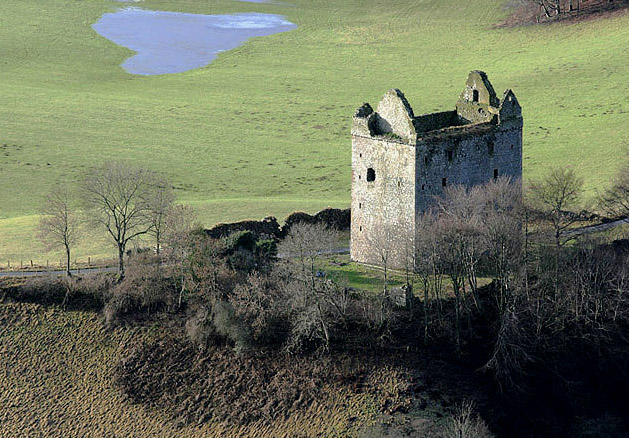
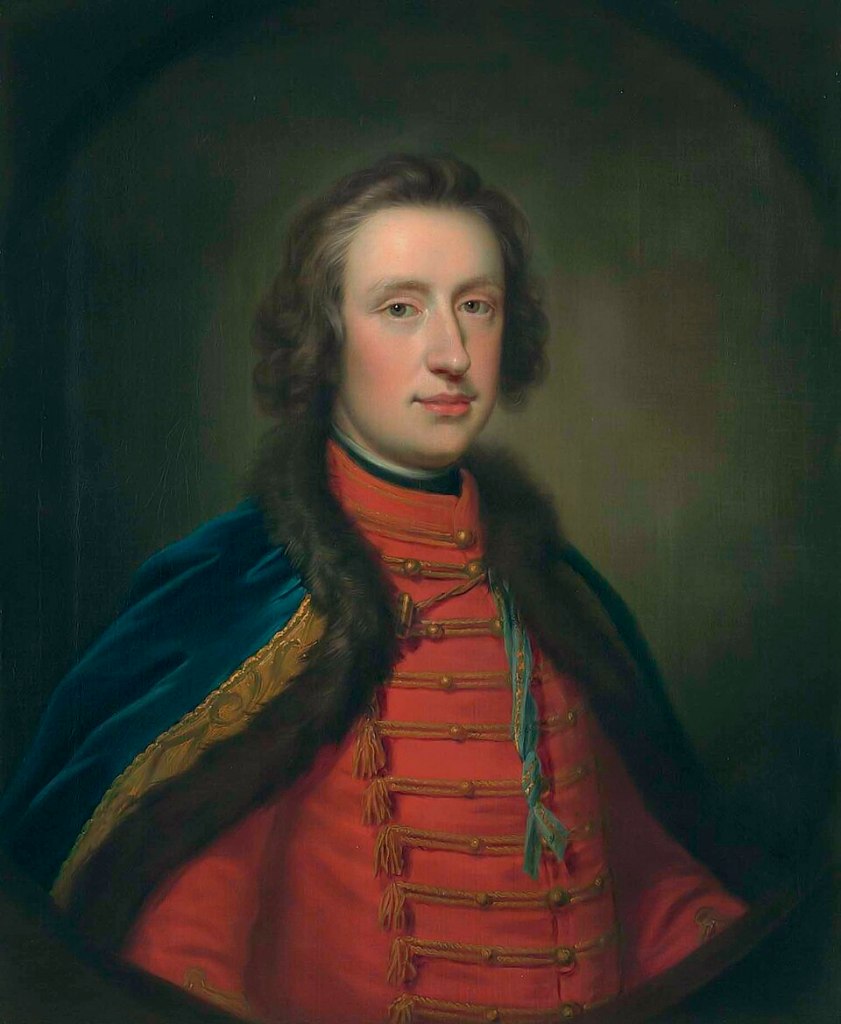
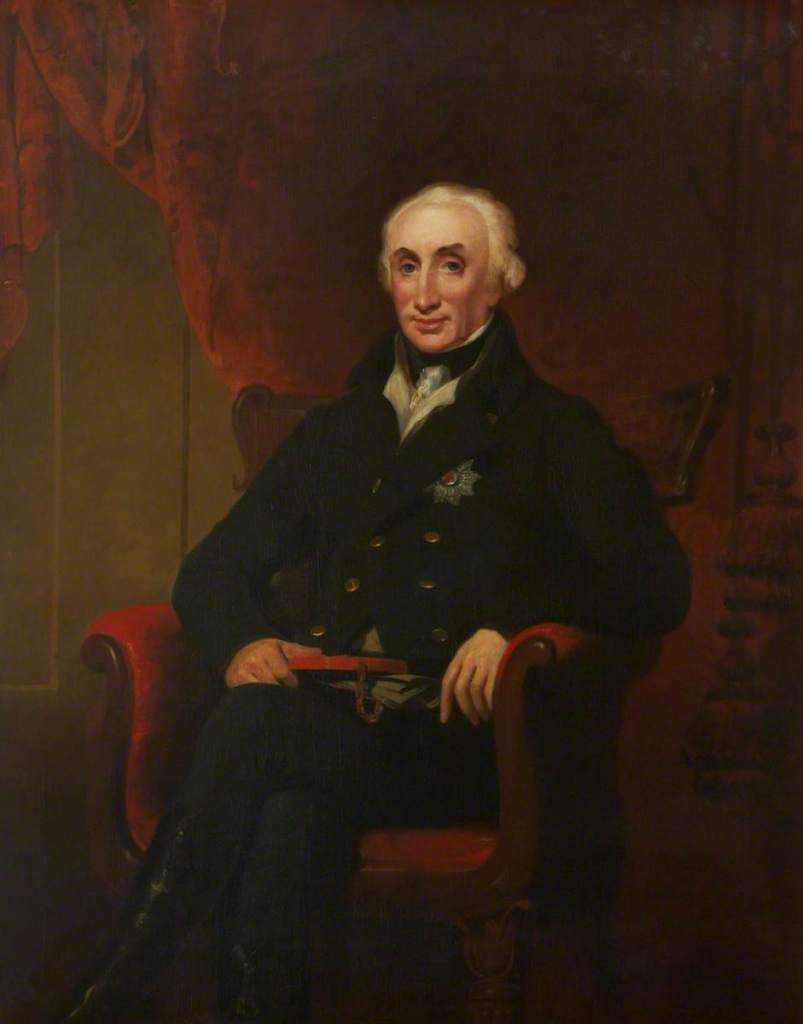
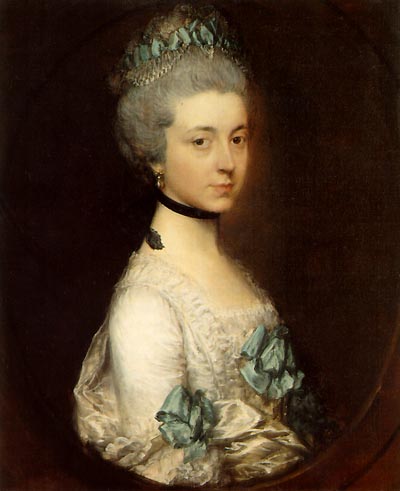
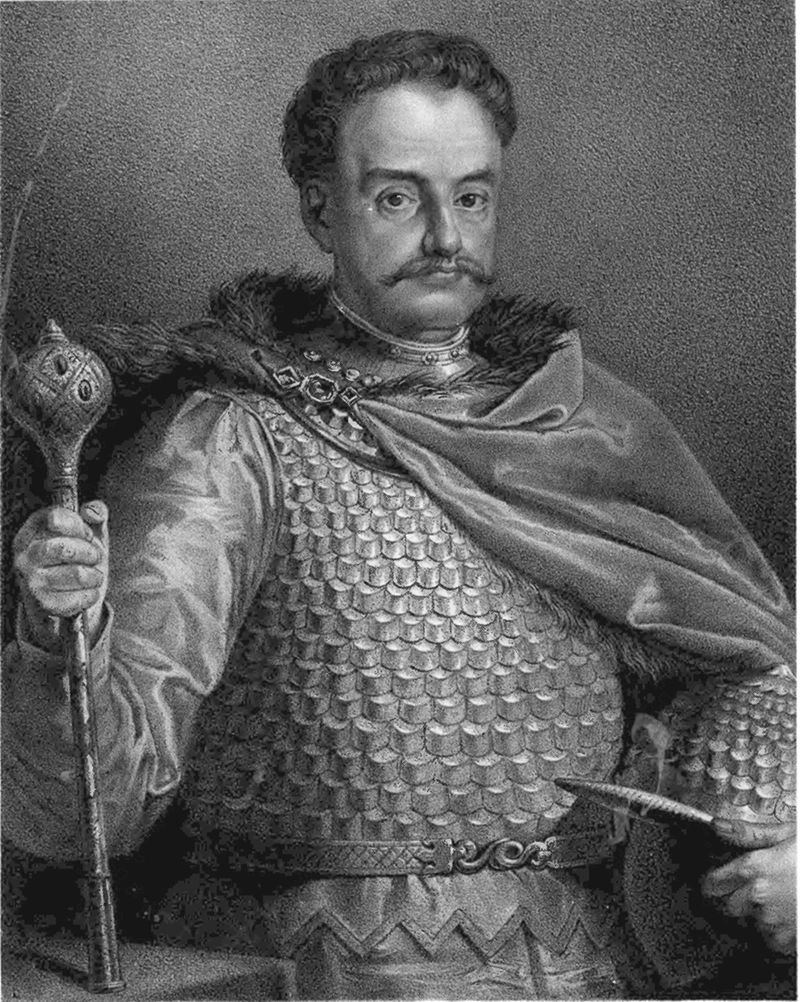
In the world of dukes and princes, most family histories stretch across centuries. Families usually needed to accumulate stories of valorous deeds and a reputation of living like princes before they were formally created as such. They also needed sufficient wealth, acquired over generations, to sustain such a dignity. But not always. Sometimes one man could rise from the lower ranks to the very top of the aristocratic hierarchy in just one lifetime. But often fate is cruel (or just?) and cuts the dynasty down after only a short time of existence. Such is the case of the Eggenbergs of Styria. They were princes of the Holy Roman Empire only between 1623 and 1717—not even a century.
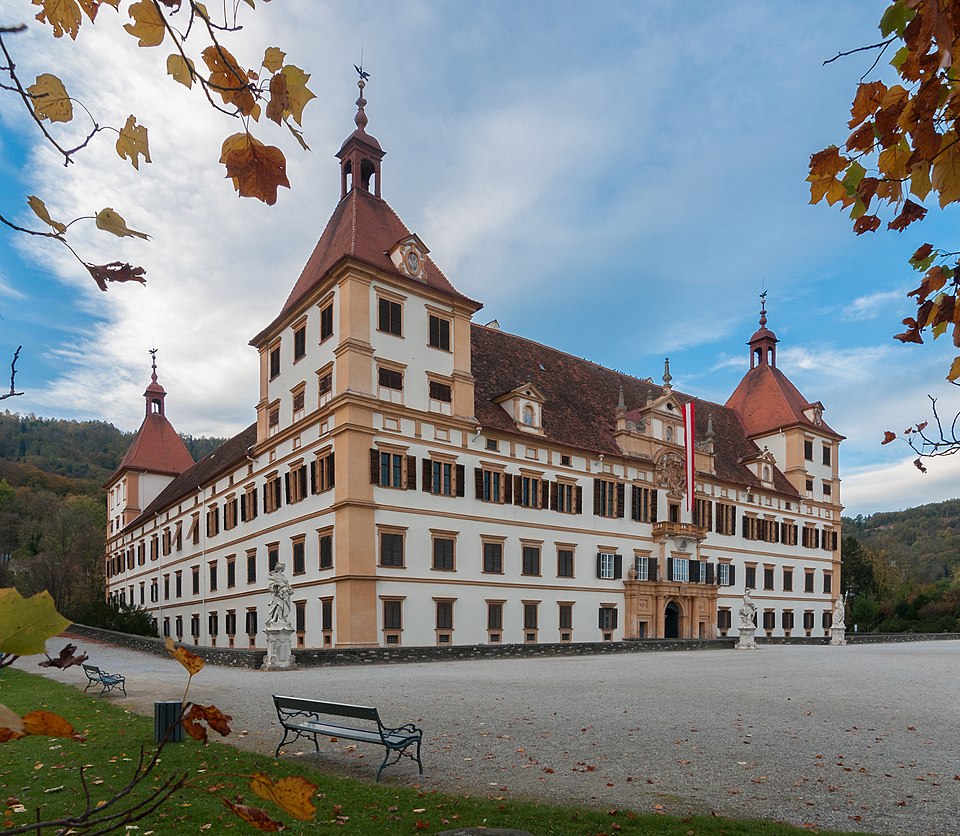
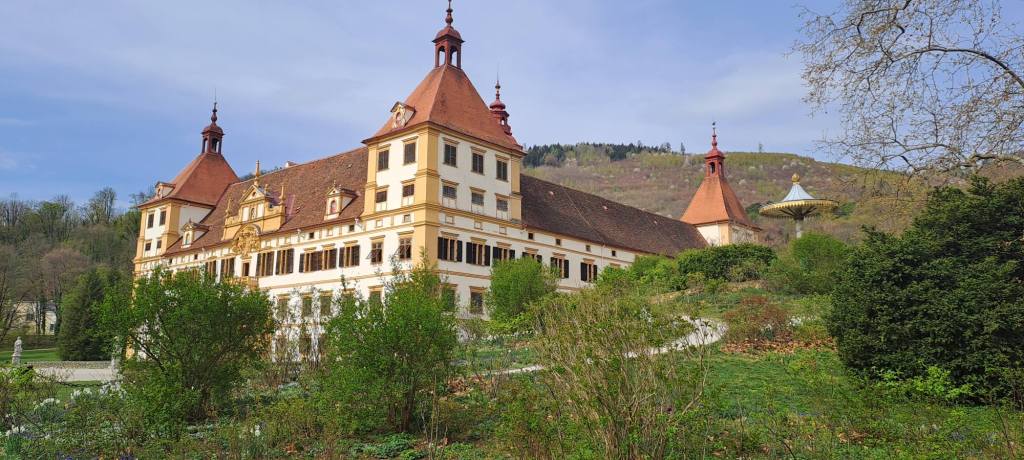
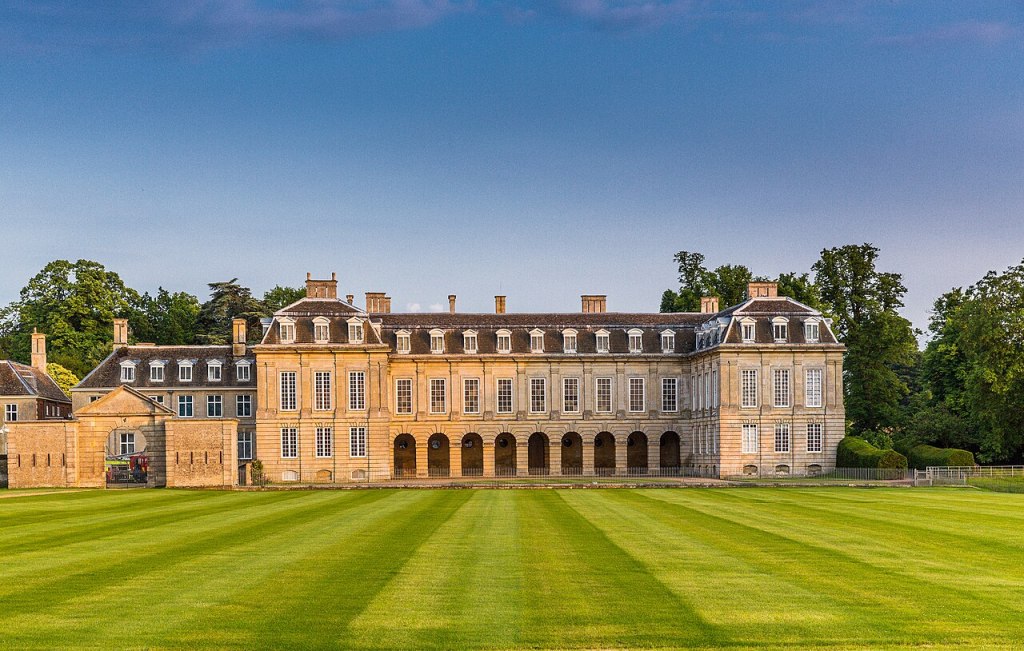
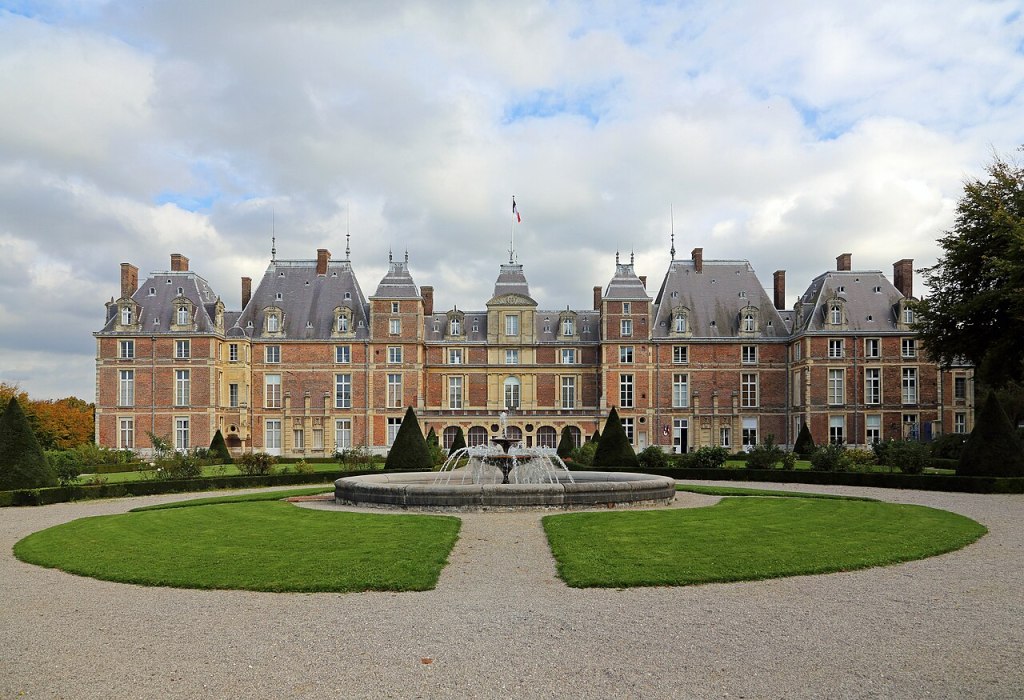
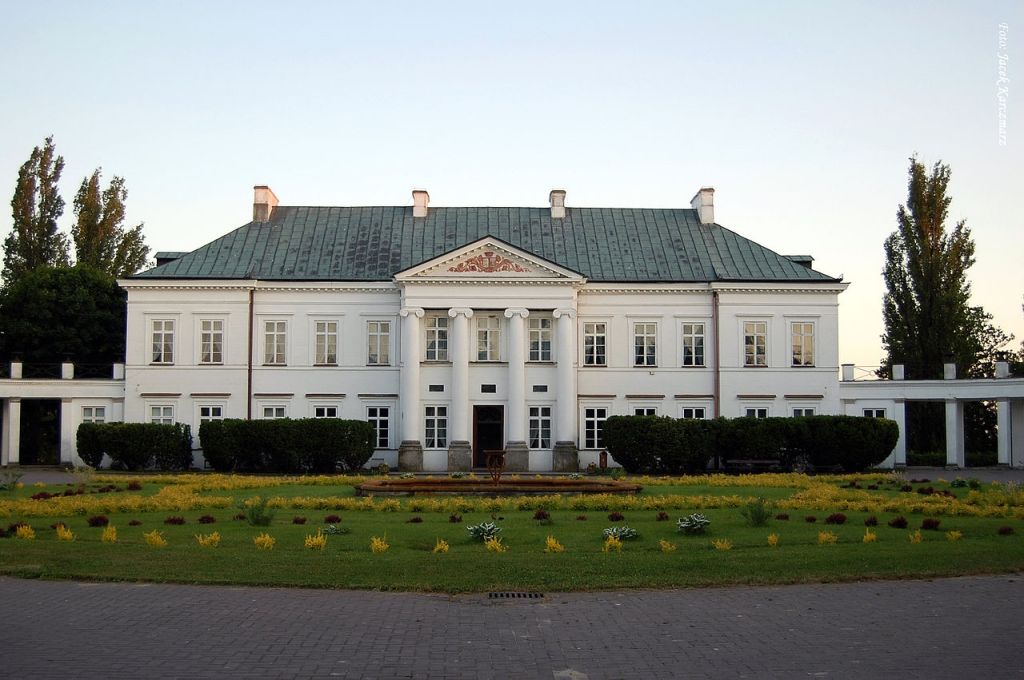
Eggenberg Palace outside Graz, Austria (photo Ralf Roletschek)
The meteoric rise was down to two main factors: great wealth, generated by savvy financial dealings with the Habsburg family, and the personal relationships that were established with those same Habsburgs, especially one, Ferdinand II, as he transitioned from a junior prince to Emperor.
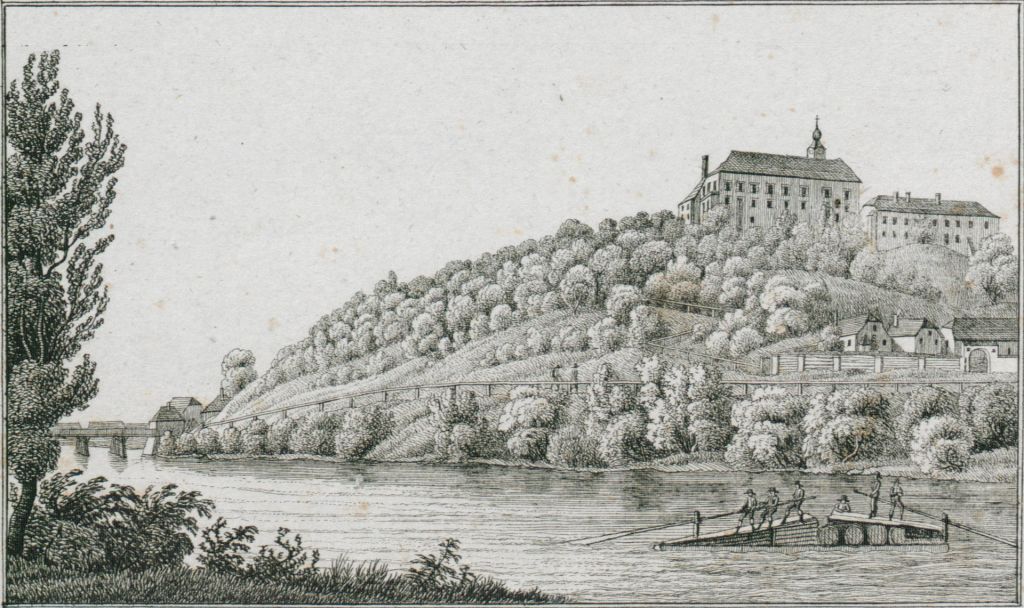
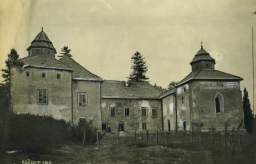
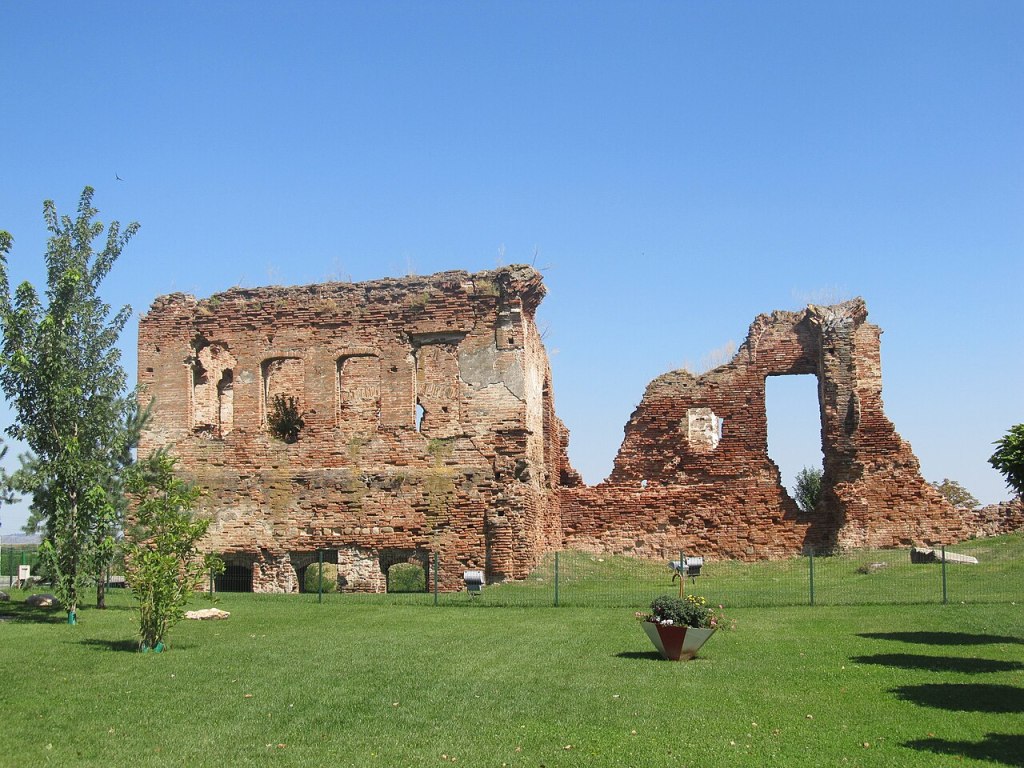
The Eggenberg story does start a little earlier. Ulrich Eggenberger was a municipal judge in the city of Graz, capital of the Duchy of Styria, in today’s southern corner of Austria. He appears in documents starting in the 1430s, as a financier to several of the local noble families, and in addition making a fortune from winemaking in the town of Radkersburg, a few miles to the southeast (today right on the border with Slovenia—still an area known for its wine). There is a castle directly across the river Mur, now in Slovenia, so it uses the Slavic name, Radgona. Built in the 1150s by the rulers of Styria to defend the border with Hungary, Radgona Castle was taken by the Hungarians in the late fifteenth century, then returned to the Habsburgs. The Eggenberg family purchased the castle in 1623, and it passed in the eighteenth century to another local noble family, the Herbersteins, who sold it on in 1789. In a separate country to Radkersburg since 1920, Gornja Radgona (or Schloss Oberradkersburg) was nationalised by Yugoslavia and was used as a school. Since the 1990s, the castle has served as a museum and event venue.
Oberradkersburg overlooking the river Mur (now Gornja Radgona, Slovenia)
By the time of Ulrich’s death in 1448 his family was amongst the wealthiest bourgeois elites in the province. Where the name came from is unclear—was there an ‘egg mountain’ in the area? A lot of Austrian names with ‘egg’ in them (like Schwarzenegger) derive from a corner or sharp edge (eck, and an early form of the name was in fact Eckenberger). There was an earlier noble family of Eggenberg who flourished in Upper Austria in the fourteenth century, but there is no connection.
Ulrich’s eldest son Balthasar was a great entrepreneur and came to be one of the leading financial officers for Emperor Frederick III, who preferred to reside in Graz rather than Vienna. By the 1450s, Balthasar Eggenberger was appointed Master of the Imperial Mint for Styria (and for neighbouring provinces Carinthia and Carniola), and, as expected, he began to build in the city to demonstrate his family’s position there: a hospital in the centre with his family’s crypt in its chapel, and in 1460 a house on the western outskirts of town, at the foot of the mountains. He was a real wheeler-dealer and amassed a huge fortune, but in order to keep up with the shifting economy of the troubled times, he had to devalue silver coins, causing a crash—he fled to Venice. The Emperor needed him, however, so he was recalled … But in time they fell out again (for reasons not known) and Balthasar died in prison in Graz in 1493.
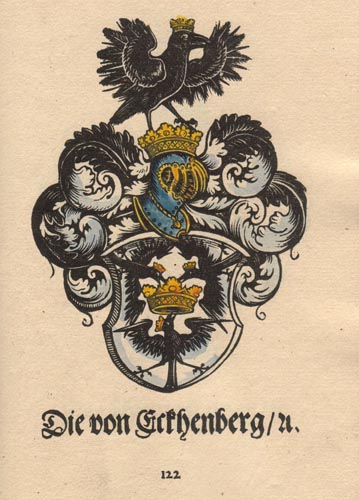
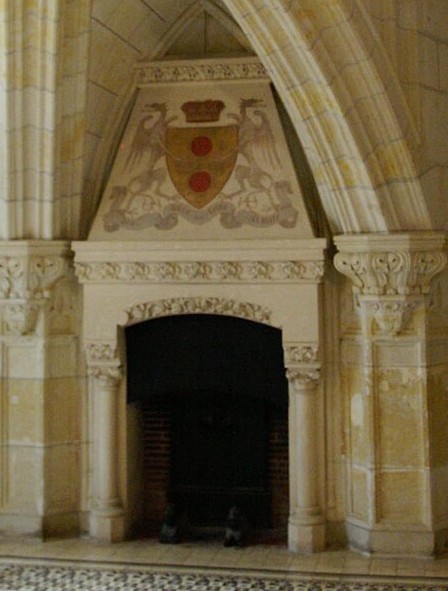
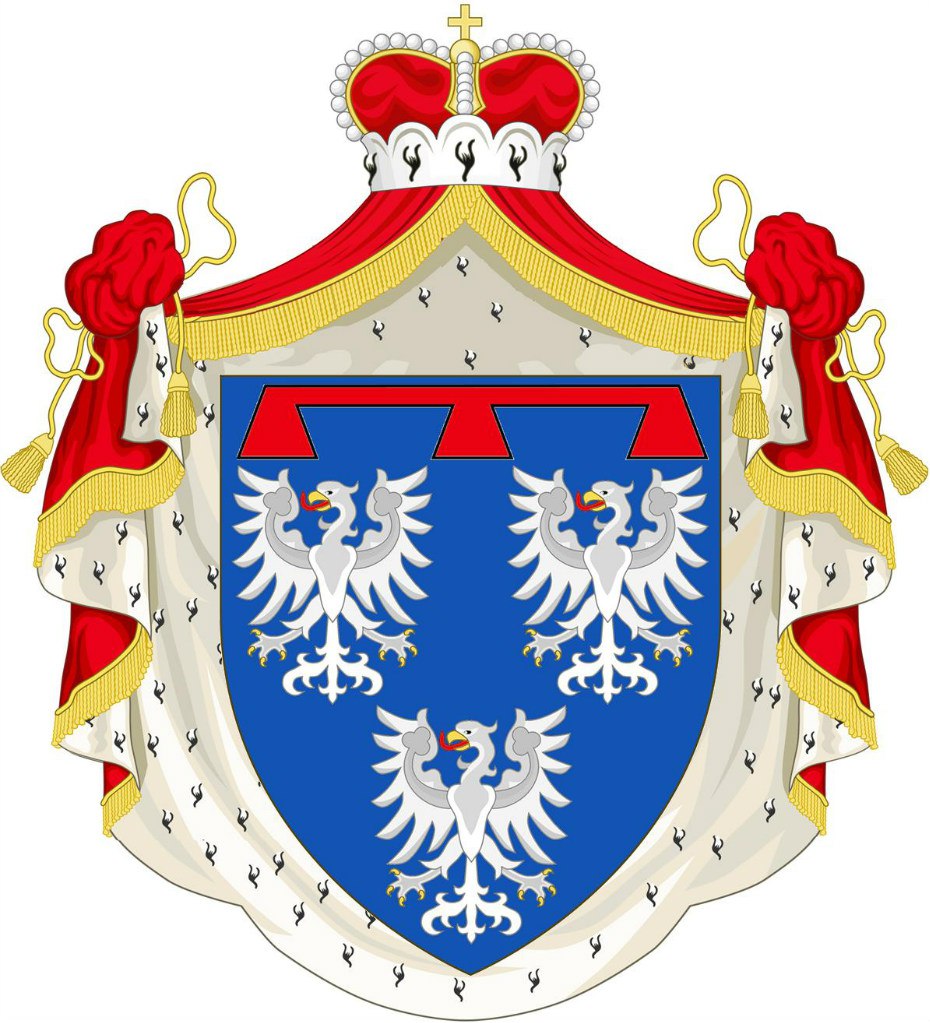
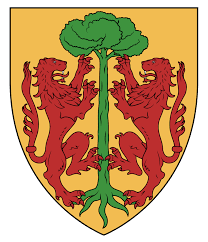
One reason Frederick probably did not trust Eggenberger was his open dealings with Matthias Corvinus, king of Hungary and rival of Frederick. In about 1479, Eggenberger adopted a coat-of-arms of a crown supported by three ravens, and it was fairly clear this was a reference to his patronage by Corvinus, whose name means the raven.
the Eggenberg arms, with its three ravens
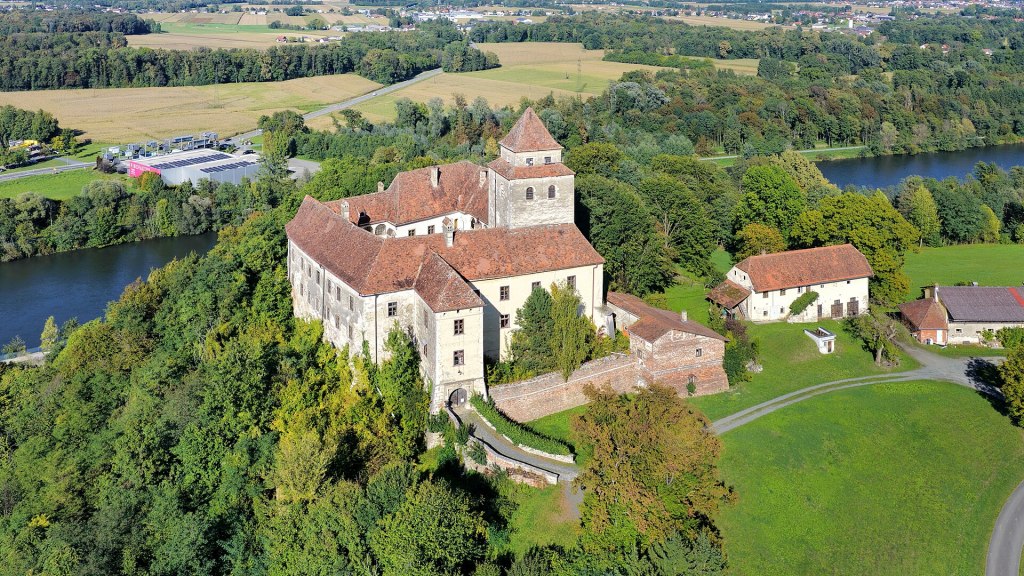
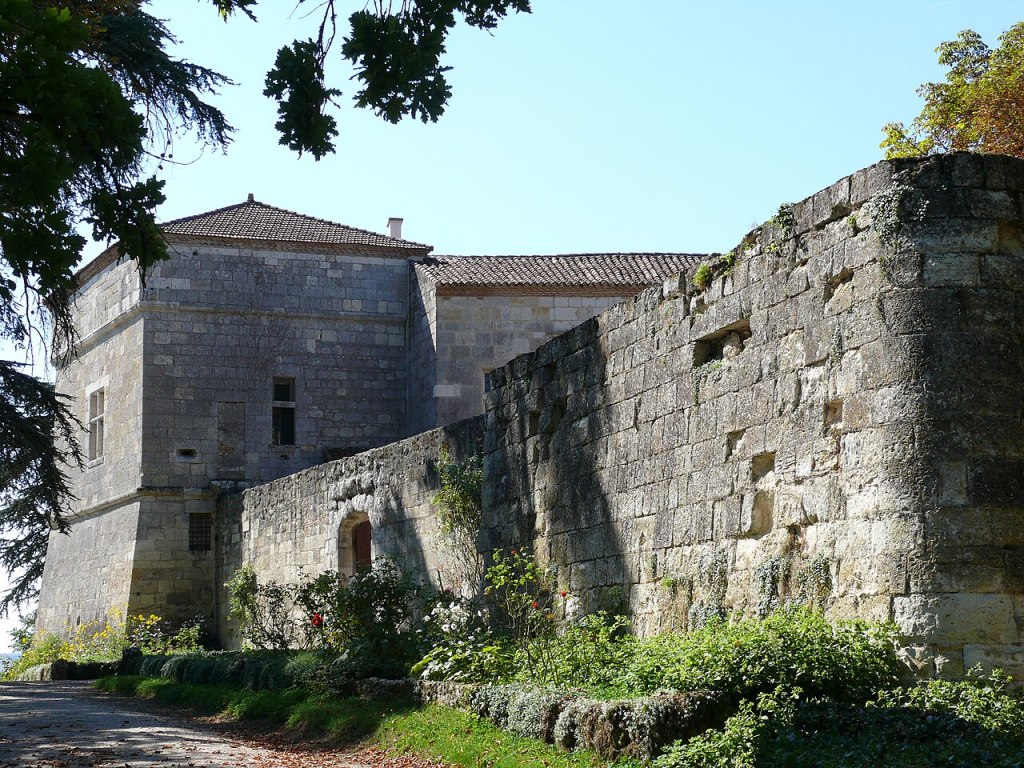
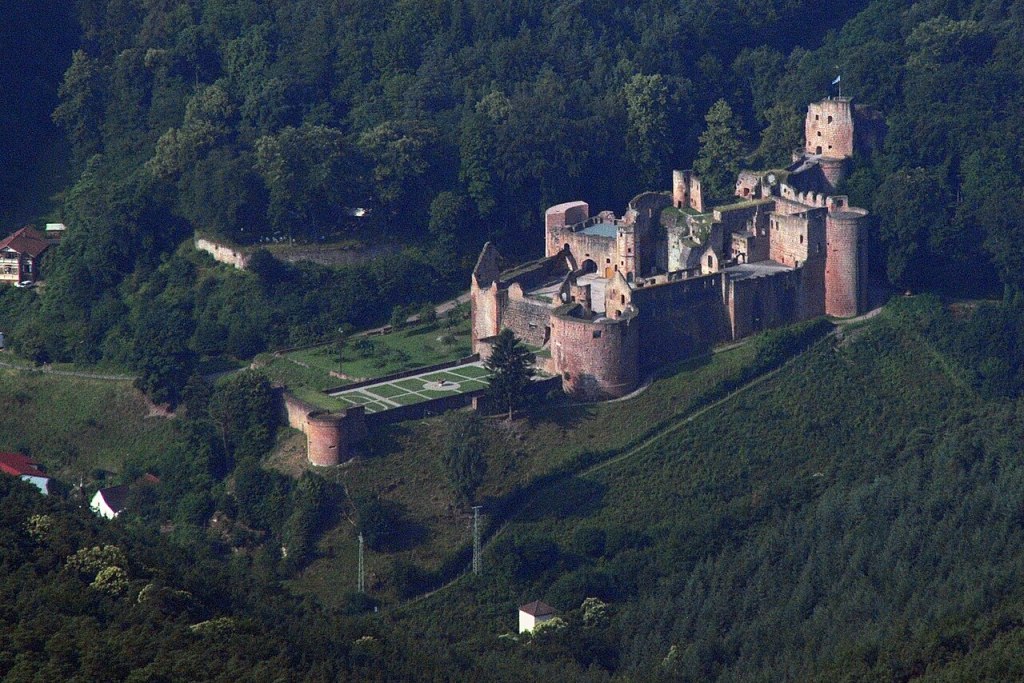
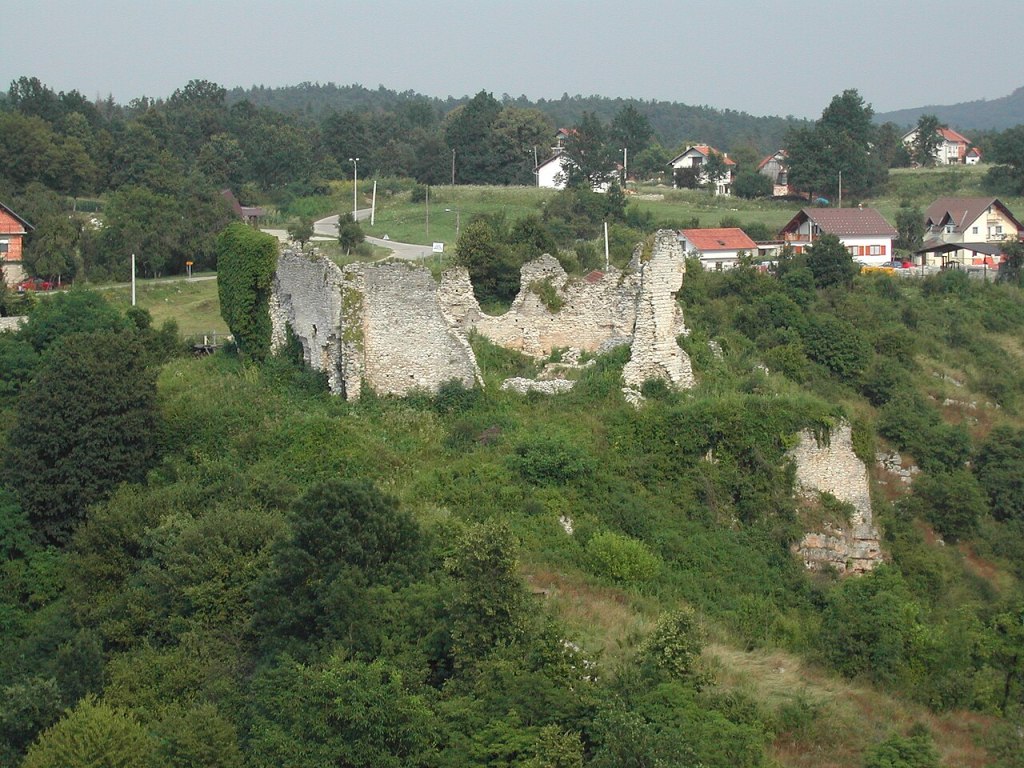
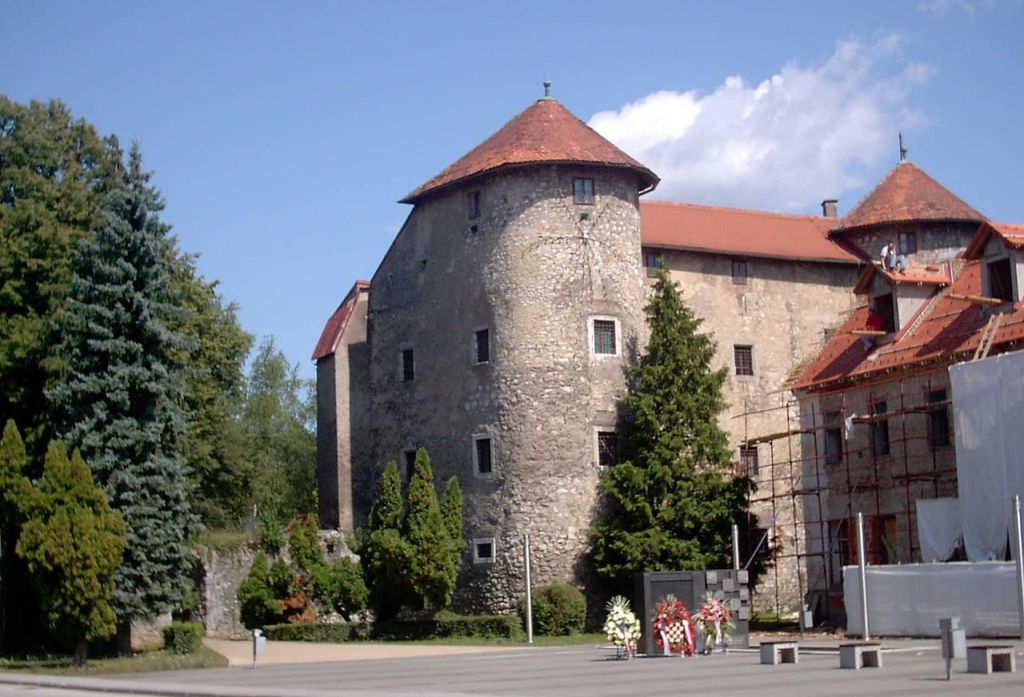
After Balthasar’s fall, the senior branch of the family laid low while the junior branch rose in stature. In 1543 they acquired a large castle south of Graz, Ehrenhausen. This castle was just a few miles upstream from Radkersburg, also overlooking the Mur river valley. A twelfth-century keep had been held by the lords of Pettau from the thirteenth to the fifteenth century. Once in the hands of the Eggenbergs, its defences were strengthened, important now that this region was an active frontier between Habsburg lands and Ottoman occupied Hungary. The castle passed to the senior Eggenberg line in the mid-seventeenth century, then to the Leslie family in the mid-eighteenth and finally to the Attems counts until the 1880s. It too remains in private hands today.
Ehrenhausen Castle on the Mur (photo C Stadler, Bwag)
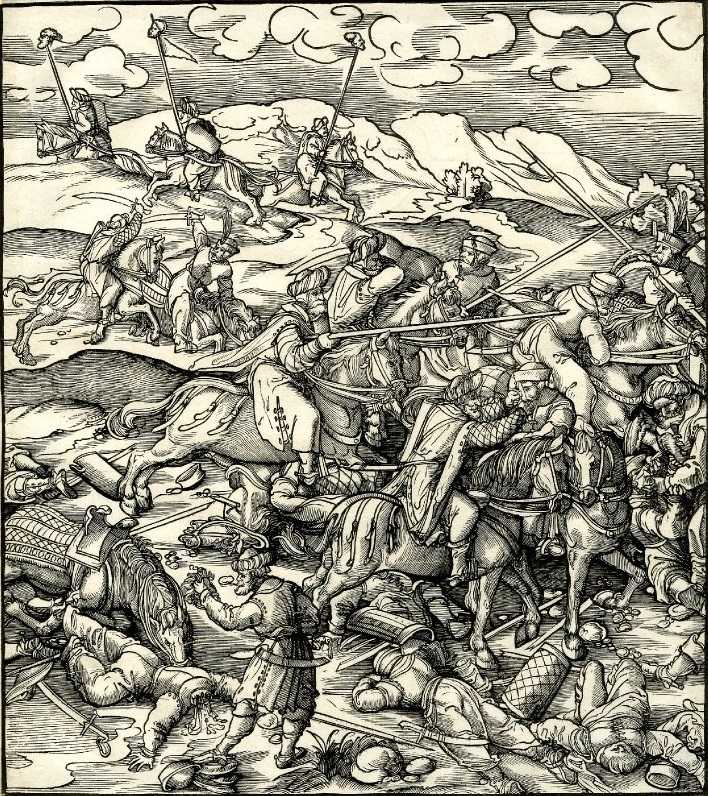
In the later sixteenth century, Rupprecht von Eggenberg of Ehrenhausen became a prominent military commander on the southeast frontier of the Habsburg lands. In Graz, he was appointed Captain of the Guard of the archducal court, but he made his name on the military frontier: in 1593, he led Styrian troops to defeat an Ottoman army at Sisak, and again in 1595 at Petrija (both in Croatia). He was rewarded with post of Colonel-General of the Croatian frontier, then two years later promoted to Colonel-General of the Artillery, and in 1598, earned the noble title of freiherr (baron) for himself and all of his house. Before he died in 1611, Rupprecht built a mausoleum at Ehrenhausen, a beautiful gem of baroque architecture, but made specific criteria for burial there: only those family members who remained faithful to the Catholic Church (in an era when many of the nobility were not), and who had attained the rank of general—which his nephew Wolff did, and was also buried here in 1615. The Ehrenhausen line died out in 1646.
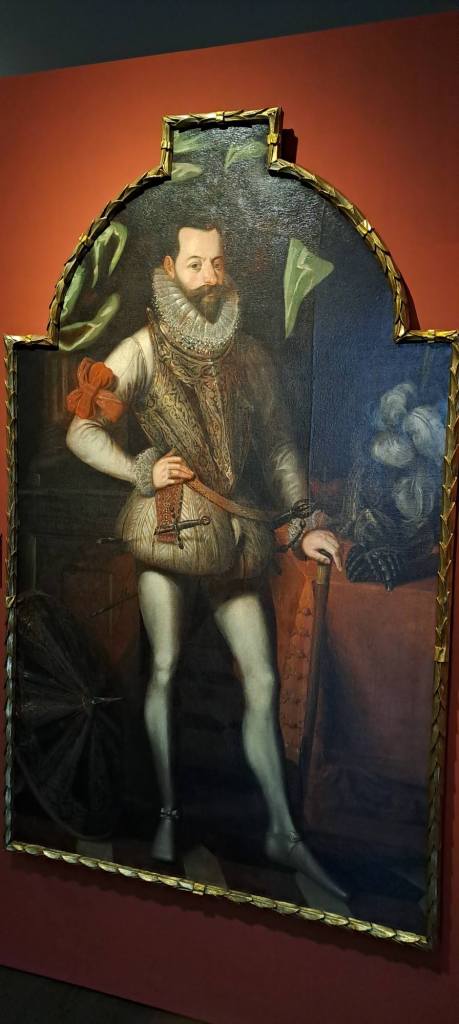
Rupprecht von Eggenberg (photo by the author)
The promotion to baronial status within the nobility also benefitted the senior line of the Eggenbergs, now represented by Hans Ulrich, who, unlike his cousins, was in fact raised a Protestant, but smartly converted back to Catholicism and ingratiated himself with the ruler of Inner Austria (Styria, Carinthia, Carniola), Archduke Ferdinand, once more as a financial advisor. Swiftly becoming indispensable, the Archduke named Hans Ulrich Governor of Carniola and a member of his privy council in 1602, then Grand Master of the Styrian court in 1615. Four years later, Eggenberg’s services were crucial in financing Ferdinand’s election as Holy Roman Emperor, and he continued to raise the funds needed for the Emperor to wage the Thirty Years War. He was rewarded with a position on the Imperial Privy Council and the post of Lord Chamberlain, and in 1625 he was appointed to Ferdinand’s old job, Governor of Inner Austria—an unprecedented appointment for someone whose family had only recently been members of the urban bourgeoisie. The Emperor rectified the situation somewhat by raising Hans Ulrich in rank from baron to Prince of the Empire in 1623, and augmenting this further with the title of duke in 1628, a title attached to the castle and extensive estates of Krumau in Bohemia.
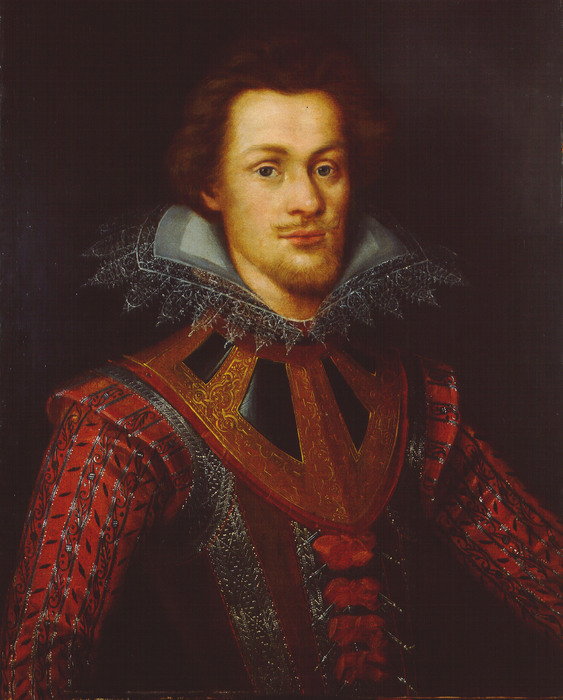
Hans Ulrich, 1st Prince of Eggenberg
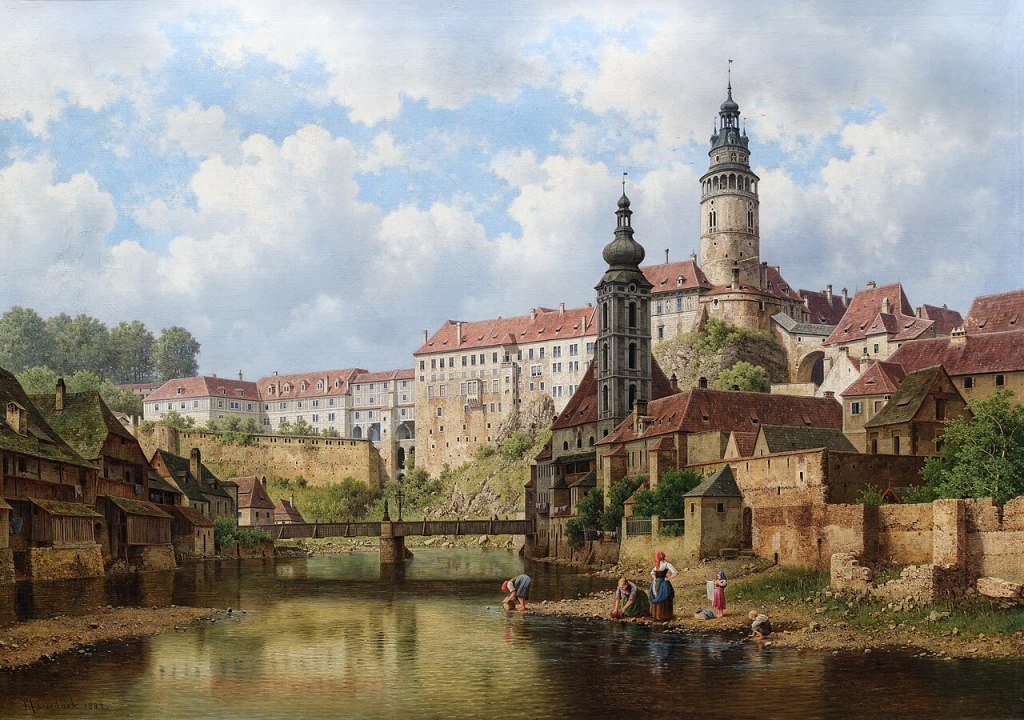
Krumau is today the popular Czech tourist attraction of Český Krumlov. This huge fortress on the upper Vltava river in South Bohemia was built in the 1250s by the Vitkovci family (also called the Krumlov family), and after 1302, passed to a cadet line of their clan, the Rosenbergs. They gave it a makeover in Renaissance style in the sixteenth century, then died out in 1611. The Habsburgs took it over, then as we’ve seen, granted it to Hans Ulrich von Eggenberg, in gratitude in part for the efforts Eggenberg was making to enable the Emperor-King to re-catholicise the nobility of Bohemia. His heirs gave the castle another, baroque, makeover in the 1660s. From the early eighteenth century, the castle of Krumau or Krumlov (called ‘Český’ to distinguish it from another Krumlov in Moravia) belonged to the Schwarzenberg princes, who will have their own blog post. Since 1947 it has been nationalised and is maintained by the Czech state.
the Castle of Krumau (today Krumlov) painted in 1882
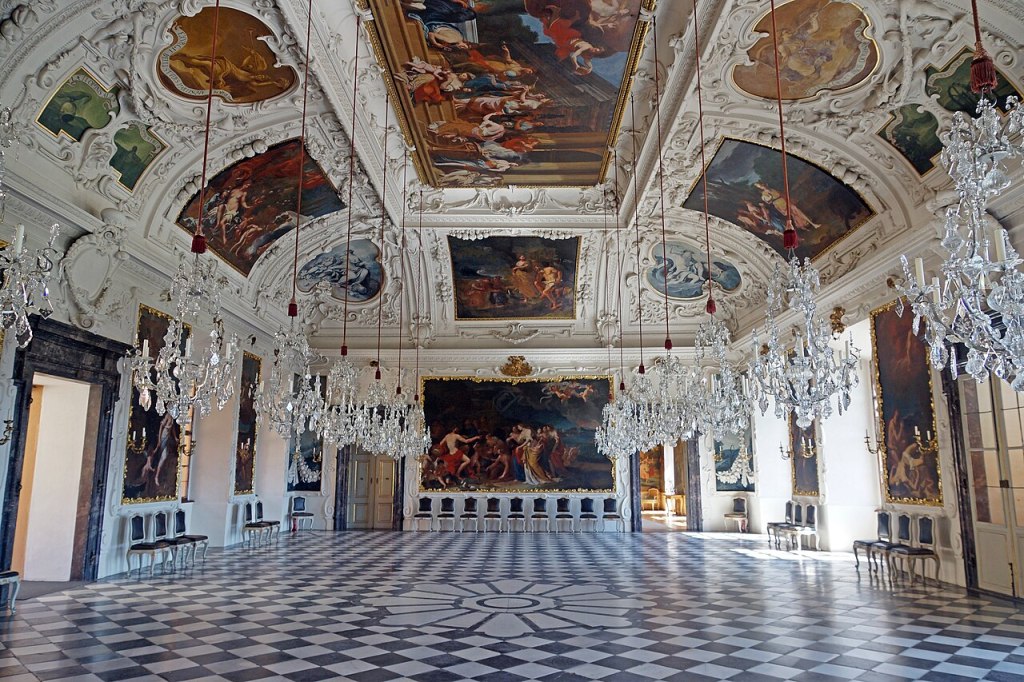
Though the 1st Prince of Eggenberg now had this magnificent treasure in Bohemia, he preferred to live in Styria. In order to live in the style of a prince and an imperial governor, he made plans to enlarge his family’s home outside Graz on a truly colossal scale. Much of the plans for a new baroque palace were inspired by the Escorial in Spain, with its grid plan and four towers, but these plans were modified significantly by his son, who had been inspired by noble palaces in Rome and also by the mystical forces of numerology. The numbers of windows and rooms and doorways all connect to 365 days of the year, 24 hours of the day, 60 minutes in an hour, and so on. There was also a theme of planets and planetary deities running through the building. Eggenberg Palace was completed by Hans Ulrich’s grandson in the 1660s, who added in particular the stunning ceiling paintings that still exist, thanks to the fact that the heirs to the Eggenbergs in the eighteenth and nineteenth centuries (the Herbersteins) weren’t that interested in this property, so left it mostly intact. The Hebersteins kept the property until 1939 when they sold it to the state of Styria and it became part of the Joanneum, a cluster of museums in Graz originally founded by Archduke Johann in 1811. Because of its preservation of its original interiors, the Eggenberg Palace is now part of the wider classification of Graz’s old town and museums as a UNESCO World Heritage Site. An interesting detail is that the original fifteenth-century house was not destroyed, but enveloped, so the old Gothic chapel is still visible, as are some of the old rooms in which Balthasar Eggenberger did his business as Master of the Mint—and these rooms today house a rich collection of coins.
the Hall of the Planets, the central ceremonial room in Eggenberg Palace (photo Allie Caulfield)
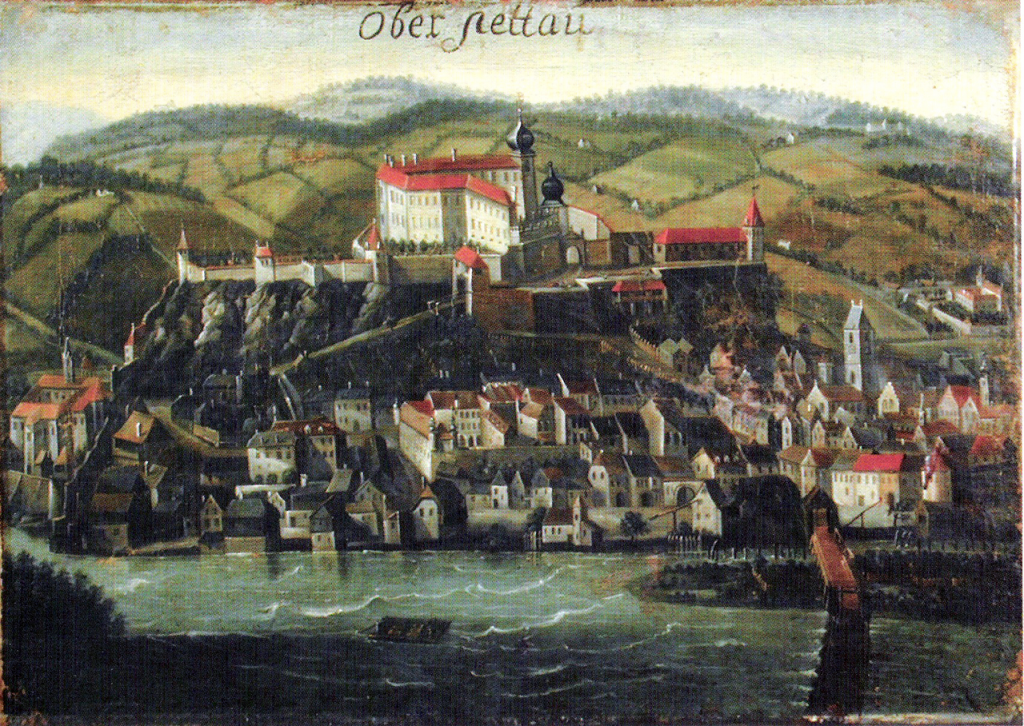
Now one of the richest men in all the Habsburg domains, Hans Ulrich, 1st Prince of Eggenberg also acquired lands in Slovenia, for example, Pettau (now Ptuj) in an area that at the time was the southernmost part of Styria. The castle here had been owned by the lords of Pettau until their extinction in 1438, then the Schaunburg family. From the 1550s, it was held directly by the Habsburgs, who sold it to Eggenberg in 1622. It eventually passed to the Leslie family like their castle of Ehrenhausen. Pettau was later held by the Dietrichsteins, then the Herbersteins (who seem to have scooped up so many inheritances in this region) until, after it was transferred from Austrian to Slovenian control after World War I, it was nationalised by Yugoslavia in 1945.
Pettau Castle (Ptuj, Slovenia) painted in 1687 when it was owned by the Eggenbergs
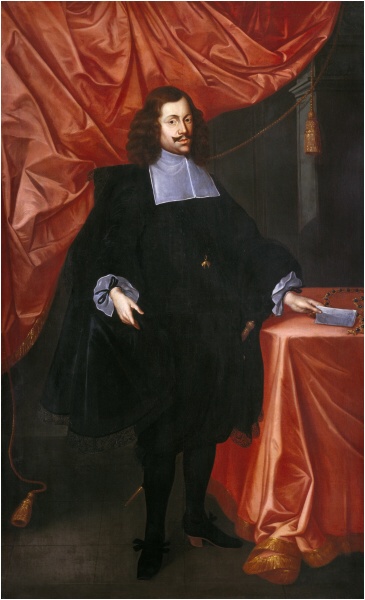
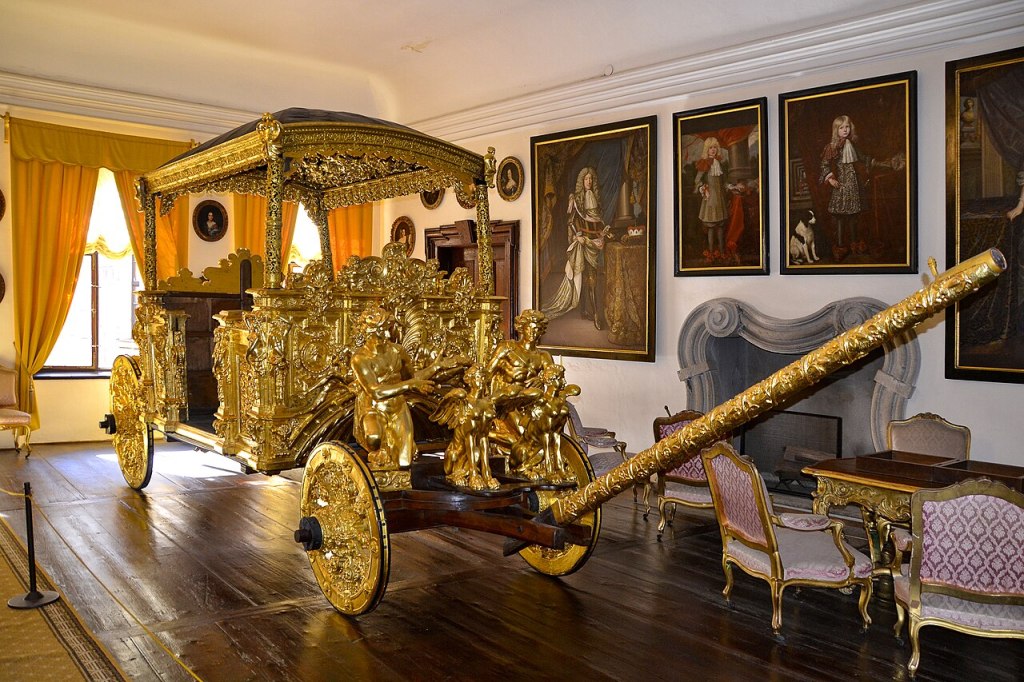
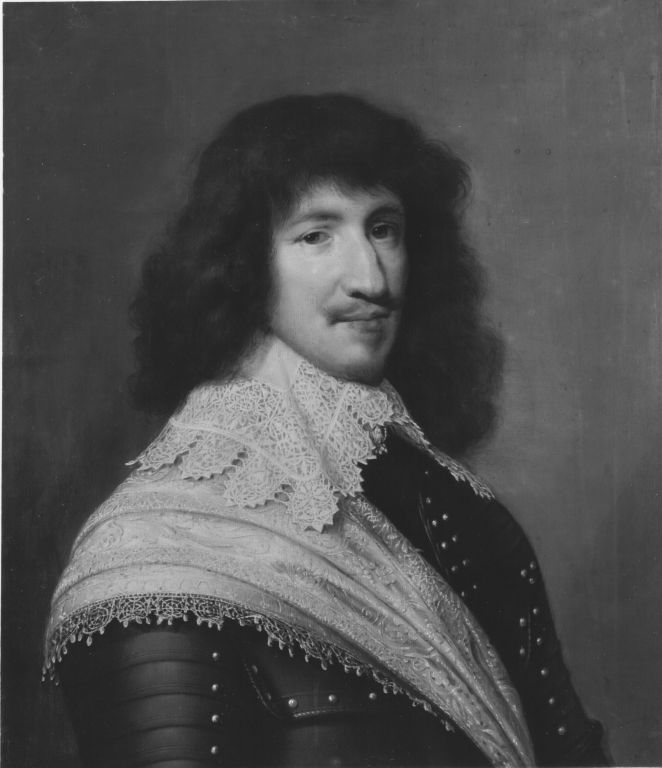
By 1630, Hans Ulrich was one of the most important statesmen in Europe, the premier minister of Emperor Ferdinand II. When he died in 1634, however, he had still not acquired the one thing he needed to be regarded as a true prince of the Holy Roman Empire: an ‘immediate’ fief. This meant a territory that was not held in vassalage to any other prince but directly from the emperor. This was the chief qualification needed for someone created a prince to be accepted by the other princes of the Empire and allowed a seat in the princes’ chamber in the Imperial Diet. This was therefore Hans Ulrich’s son Johann Anton’s chief goal. Unlike his father, he didn’t have the same political ambitions. But he was, like his father, very close to a Habsburg prince: Ferdinand II’s son Ferdinand III who succeeded as emperor in 1637. Johann Anton, the 2nd Prince of Eggenberg, had already taken over much of his father’s ceremonial role, as Governor of Carniola and Privy Councillor from 1635, and Chamberlain of Inner Austria. He organised Ferdinand II’s funeral in Graz (unlike most Habsburgs, Ferdinand did not wish to be buried in Vienna), and was given the tremendous honour in 1637 of travelling to Rome (in a brilliant golden carriage) to formally announce Ferdinand III’s imperial election to Pope Urban VIII. The golden carriage is still on display today at Český Krumlov.
Johann Anton, 2nd Prince of Eggenberg
The Golden Carriage in Český Krumlov, and Eggenberg portraits behind (photo Mosbatho)
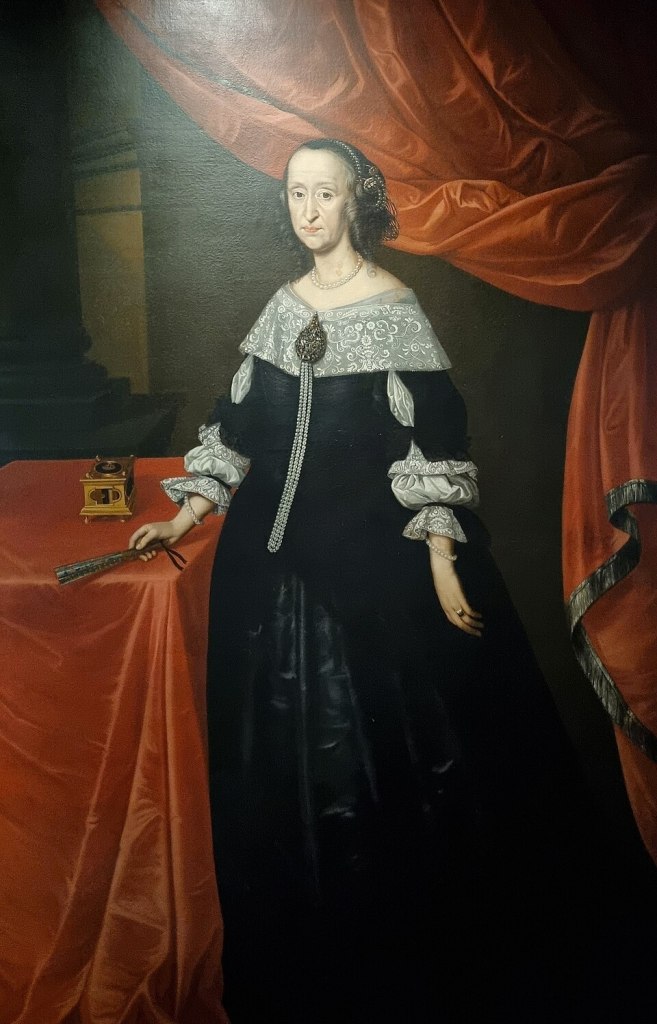
One plan Johann Anton had for securing his position as a prince of the Empire, was to marry into one of the genuinely old princely families. So in 1639 he married Princess Anna Maria of Brandenburg-Bayreuth, a Hohenzollern whose father was Margrave of Bayreuth, a younger son of the Elector of Brandenburg. She was also the sister-in-law of the Elector of Saxony. The only encumbrance was her religion—she remained a Protestant but did agree to raise their children as Catholics. Yet even with these electoral princes as close relatives, the Prince of Eggenberg’s admission in the princely chamber of the Diet was still blocked.
Anna Maria of Brandenburg-Bayreuth
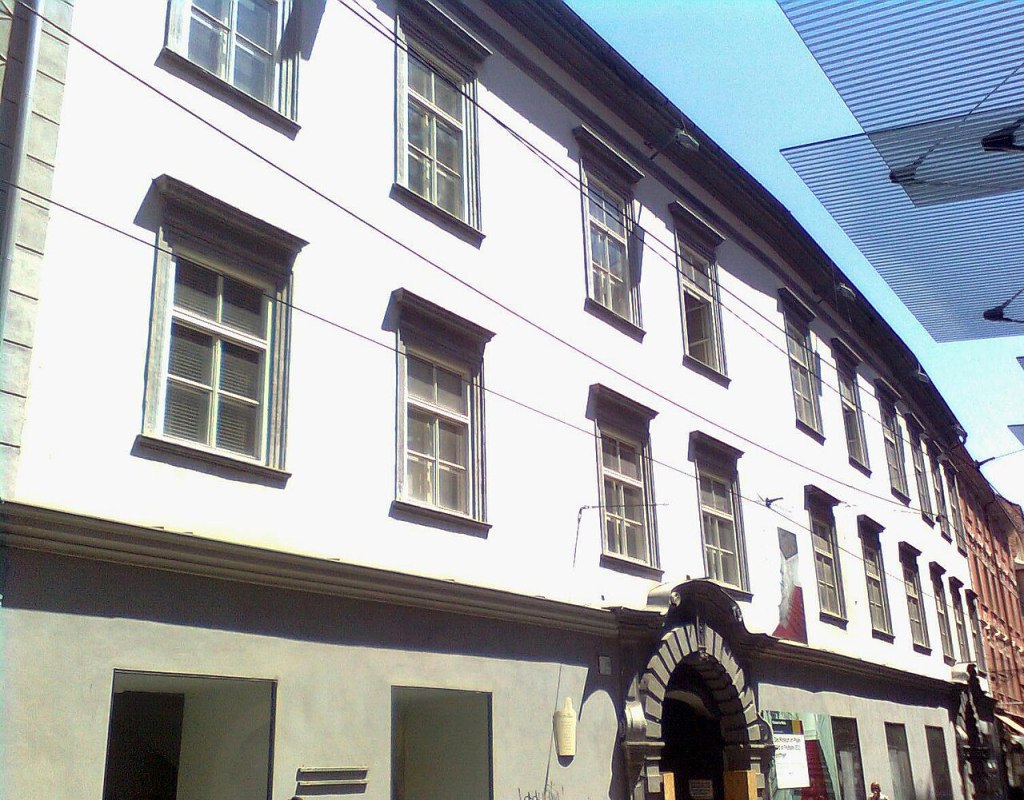
Meanwhile, Johann Anton accumulated more lands, with the extinction of the Ehrenhausen branch in 1646. And while he continued his father’s plans to develop Eggenberg Palace, he lived at the Eggenberg townhouse in the city of Graz, in the aristocratic quarter at the foot of the Schlossberg, in what is today called the Herberstein Palace and houses the Graz History Museum (also part of the Joanneum).
Eggenberg Palace in Graz, now Herberstein Palace (photo Andi oisn)
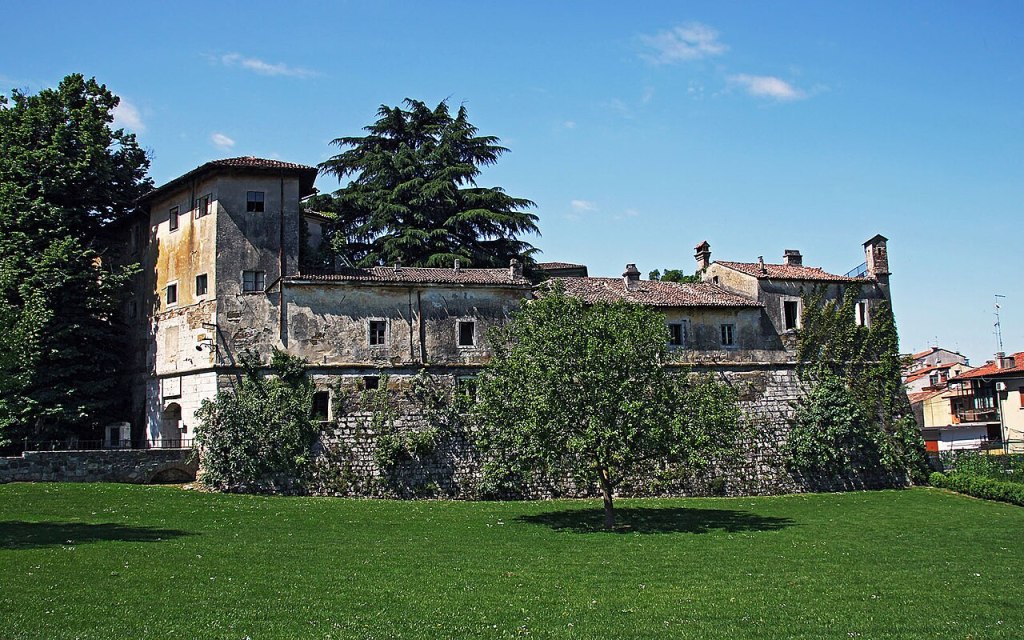
Finally, the issue of the princely rank was resolved by the Emperor granting Eggenberg part of the old imperial county of Görz, in two parts consisting of the old fortress town of Gradisca and the ancient port city of Aquileia, in the region of Friuli (now in Italy). In 1647 it was renamed the Princely County of Gradisca; it gave Johann Anton a genuinely sovereign territory to rule over: about 20 villages, though not all contiguous, several enclaved within Venetian territory. Eggenberg paid the Emperor a huge sum of 200,000 guilders in cash, and relieved him of a sizeable debt the Habsburgs owed the Eggenberg family. Yet the formal recognition of his princely title was still withheld by the other princes, until finally they relented for his son in 1654.
Gradisca had been formerly part of an independent county of Gorizia or Görz, which straddled the frontiers between the Habsburg lands of Carinthia and Carniola and the Republic of Venice. Much further back, both towns were part of an ecclesiastical estate, the Patriarchate of Aquileia, an ancient Roman city that became an early centre for Christianity in the northern Adriatic: an archbishopric by the fourth century, and a patriarchate, self-proclaimed during a temporary schism with Rome in the 550s. Venice conquered the entire area in 1420, and fortified the city of Gradisca (which took its name from the Slavic word for fortress, since the population here was a mix of Italians and Slovenes) against potential attacks by the Hungarians or later the Ottomans. The County of Görz had maintained its independence, but its line of counts died out in 1500 and the territory was added to the Habsburg domains, as was Gradisca and the now much less important city of Aquileia in 1511. It was this that was granted to the Eggenbergs in the 1640s. After 1717, Gradisca returned to the Habsburgs and was reintegrated into the province of ‘Gorizia and Gradisca’ which it remained into the twentieth century. In 1921, Gradisca was ceded to the Kingdom of Italy.
The castle at Gradisca, Italy (photo Vid Pogacnik)
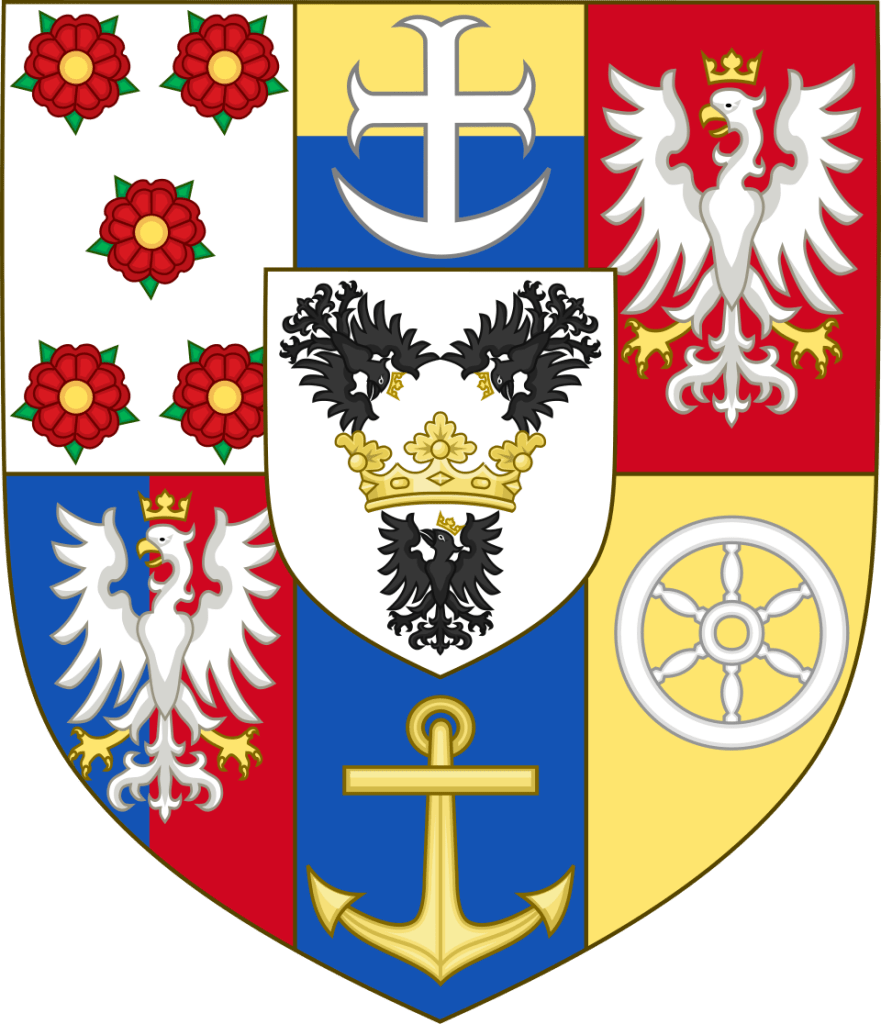
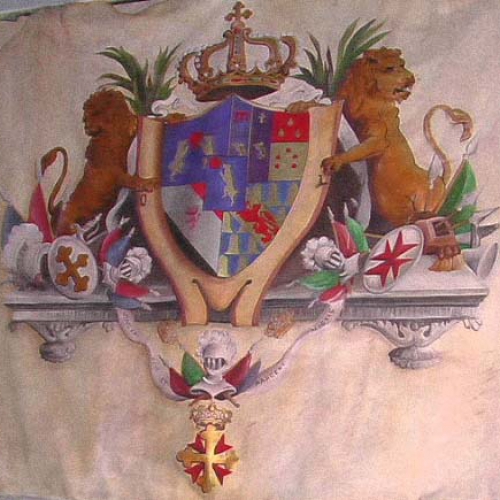
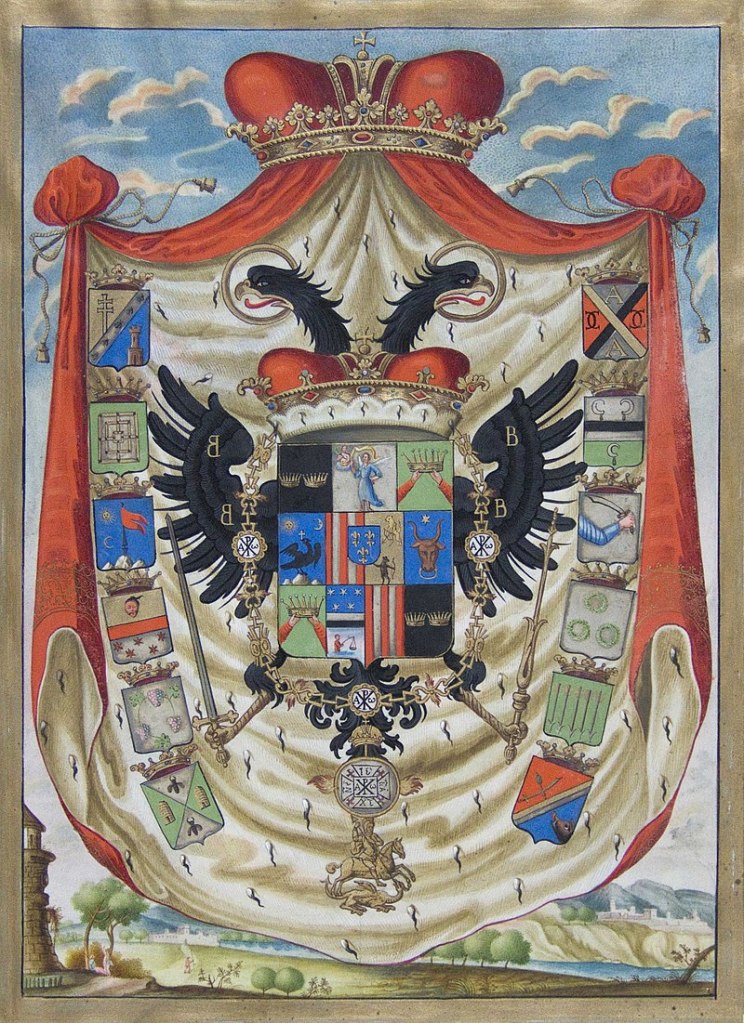
So by the late 1640s, the Eggenberg family bore a much more complex coat of arms: aside from the three ravens of Eggenberg, we see five red roses on silver for Krumau, a gold anchor on blue for Pettau, another anchor (with a cross on top) for Gradisca, a silver eagle on red for Aquileia, and a silver eagle on a divided red and blue field for the County of Adelsberg, another possession in what it now Slovenia (today called Poslojna).
the full Eggenberg arms, with Krumau and Gradisca
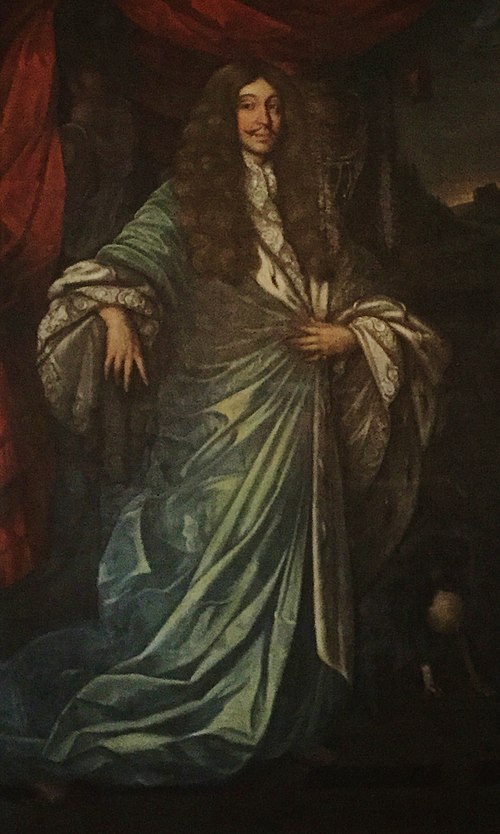
Johann Anton, the 2nd Prince, died suddenly in 1649, with an incomplete will. His widow Anna Maria of Brandenburg held the family together and ruled in the name of her young sons until they came of age in 1664. She retired to Ödenburg (now Sopron, Hungary) where toleration for Protestants was higher—and an Eggenberg Palace remains in that city. The Dowager Princess made sure that both sons would be represented in a division of their father’s estate, and even that her daughter received an equal portion for her dowry—which enabled her to marry the Prince of Dietrichstein (one of the other great success stories of the Austrian high nobility in this period). In 1666, both sons married, one a Schwarzenberg and one a Liechtenstein. This was a tight circle of the grandest Austrian princely houses.
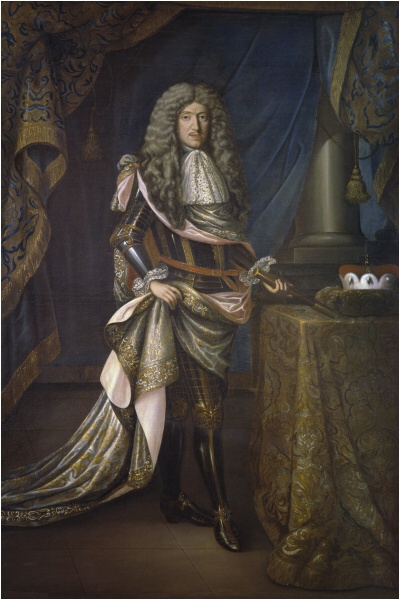
The trouble with the unfinished will was what to do with Gradisca—as a territory with a vote in the Diet it could not be divided. After several years of haggling, it was agreed that the eldest son, Johann Christian, would receive the Bohemian lands centred on the Duchy of Krumau, as well as the princely county of Gradisca (and thus the seat in the Diet). His brother Johann Seyfried received the Styrian and Slovene lands; he was the one who finally brought to fruition their grandfather’s vision for a princely palace outside of Graz. Here in 1673, Johann Seyfried received the huge honour (and as always, the enormous financial burden that went with it) of hosting Emperor Leopold I on the eve of his wedding to his cousin Archduchess Claudia Felicitas of Tirol. He continued to spend lavishly and soon was teetering on bankruptcy. He was forced to sell many of the lands in Slovenia and was ultimately saved by outliving his older brother and thus inheriting his share of the Eggenberg estates.
Johann Christian, 3rd Prince of Eggenberg, with his princely crown
Prince Johann Christian had built up his reputation as a grand noble administrator in South Bohemia, purchasing lands to augment the Duchy of Krumau, and aggrandising the castle and its gardens. He and his wife Maria Ernestina von Schwarzenberg turned it into a real princely court with its own permanent theatre. In Prague the princely couple resided in the former Lobkowitz Palace, confiscated in the 1620s and granted to Hans Ulrich von Eggenberg in 1631. Like Český Krumlov, the Eggenberg Palace in Prague passed to the Schwarzenbergs and is today known by that name.
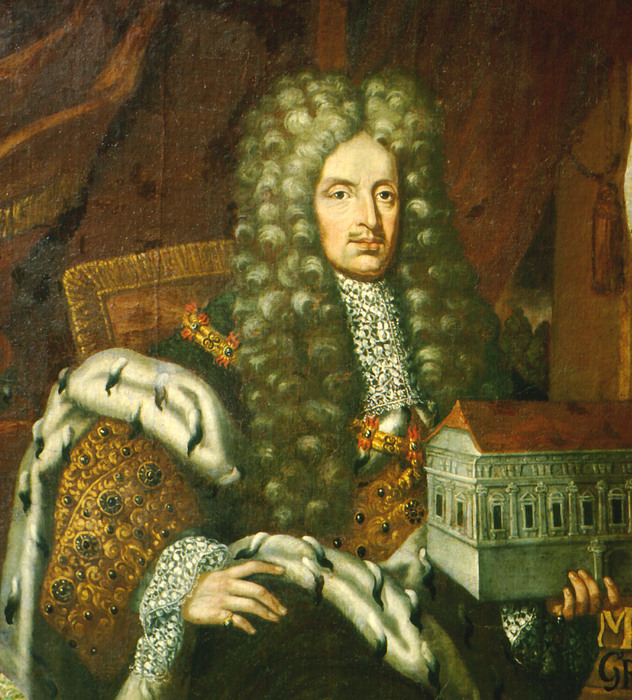
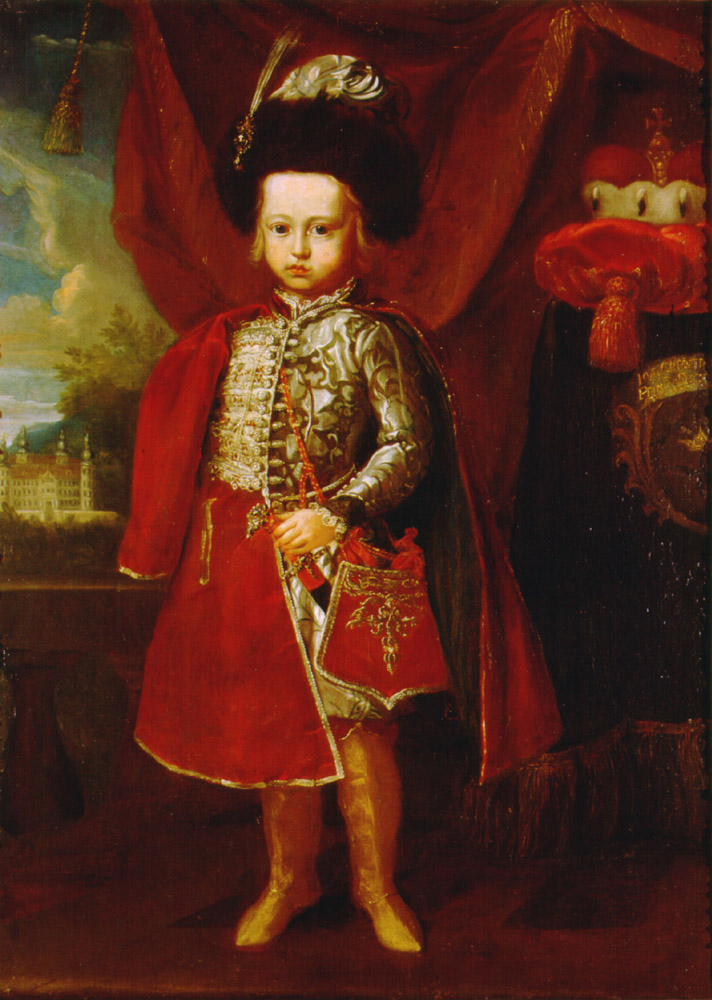
Johann Christian died in 1710, thus reuniting the Bohemian and Styrian inheritances in the person of his brother, but only briefly, as he was followed to the grave by Johann Seyfried, now 4th Prince of Eggenberg, in 1713. The Eggenberg family came crashing down almost immediately. The latter’s son, Johann Anton II, the 5th Prince, died in 1716, as did his own very young son Johann Christian II in 1717. Four deaths in seven years. A devout Catholic might wonder what the family had done to offend God. The old nobility perhaps sneered that this was justice for such upstarts and that piles of money simply cannot replace ancientness of noble lineage.
Johann Seyfried, 4th Prince of Eggenberg, with a monastic foundation he made in Graz
Johann Anton II, 5th Prince
Johann Christian II, 6th Prince, in Hungarian dress, with Eggenberg Palace in background
Princess Maria Eleonora von Eggenberg remained as heiress of the properties in Styria, Bohemia, Friuli and elsewhere. She married three times but had no children. Her ultimate heir when she died in 1774—over half a century later—was her third husband, the Count of Herberstein. As noted above, his family was more interested in their properties elsewhere in Austria, so Eggenberg Palace was mostly unlived in except for a few weeks each year. The castle of Krumau/Krumlov did not pass to the Herberstein family—it had remained the property of the Dowager Princess Maria Ernestina, widow of Johann Christian, who left it to her own family, the Schwarzenbergs, and they continued to own it until the 1940s. Other properties, as we’ve seen, passed to the family of Maria Eleonora’s second husband, Count Leslie. Gradisca returned to direct Habsburg rule. Most of the Eggenberg residences, in Graz, in Prague and elsewhere, now bear other names. Only the grand palace outside Graz maintains their grand legacy.
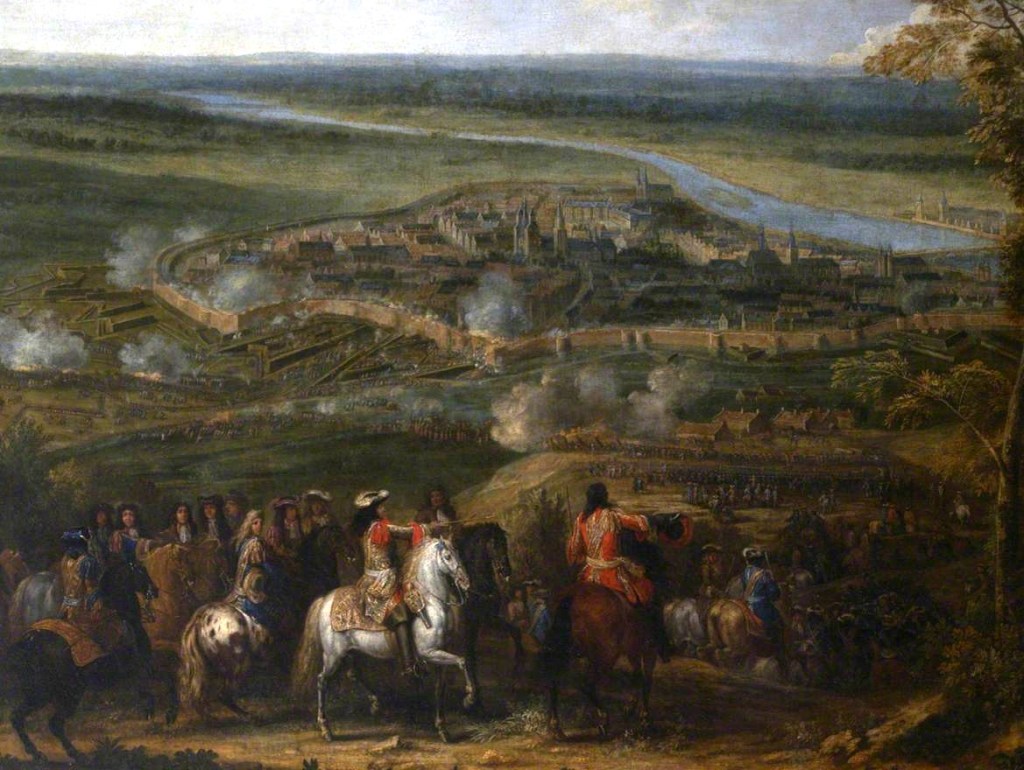
In June 1673, the French Army laid siege to the Dutch city of Maastricht, a key crossing point of the river Meuse—they would take and hold the city for several years, aided by an English force commanded by a young Duke of Monmouth and the future Duke of Marlborough, John Churchill, and with the participation of the King, Louis XIV, himself, and the King’s brother, Philippe, Duke of Orléans. It was a glorious victory worthy of the Sun King. But one of his most celebrated commanders was killed during the siege, the Comte d’Artagnan, a captain of the Musketeers. It is believed he was buried in the Church of St Peter and St Paul in Maastricht’s western suburb of Wolder, where Louis XIV’s camp was during the siege—and in March 2026, bones were discovered under the main altar during repair work being done to that church which archaeologists and historians think may be the remains of the famous musketeer. Samples have been sent to labs for testing, so we shall see what they discover…
The Siege of Maastricht, 1673 (National Trust)
The famous d’Artagnan at the Siege of Maastricht of 1673 was not the dashing young hero immortalised in the Three Musketeers novels by Alexandre Dumas—he would have been about 63 years old. Nor was his name in fact d’Artagnan, but Charles Batz de Castelmore. He had ‘borrowed’ the name from his mother, Françoise de Montesquiou d’Artagnan, and it would retain some of its notoriety as a name in the decades after his death through use by his first cousins, Joseph de Montesquiou, another captain of the Musketeers, and Pierre de Montesqiou, known as the Maréchal d’Artagnan.
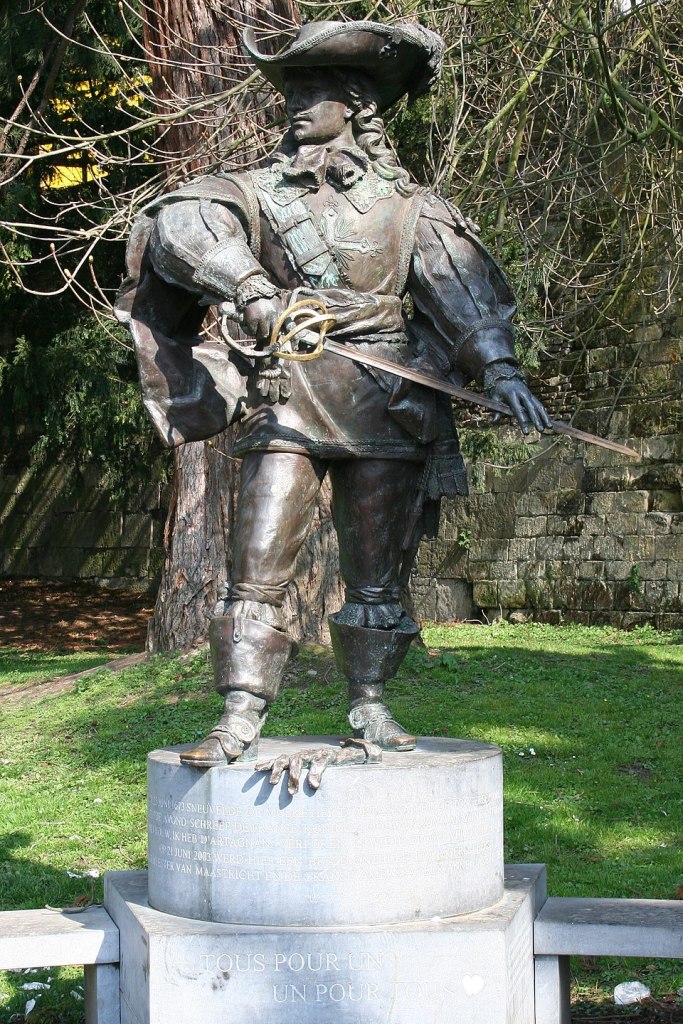
D’Artagnan in Maastricht (photo Pahles)
So the name that is central of this blog post, and which qualifies d’Artagnan for inclusion within this website for dukes and princes, is Montesquiou. It linked him also to one of the most celebrated military commanders of the age, also a distant Montesquiou cousin, Blaise de Monluc. It does not, however, connect him to one of the most prominent philosophes of the Age of Enlightenment, Charles-Louis de Secondat, Baron de Montesquieu (d. 1753), who was from a family of magistrates of Bordeaux. The much more aristocratic Montesquiou dynasty, also from the south of France, in fact claimed to be linked to one of the most ancient dynasties in France, the counts of Fezensac, and through them, to the House of Gascony, who have roots as far back as the eighth century, or possibly even the seventh.
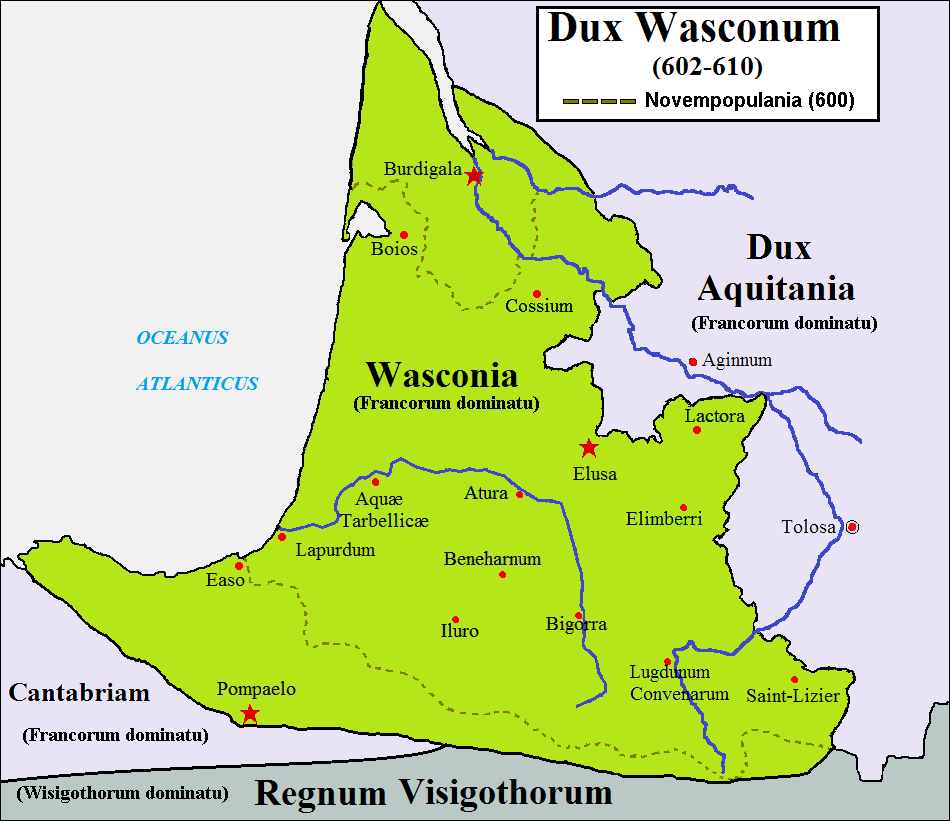
The early history of the House of Gascony is fragmentary and sometimes contradictory. As Gaul fell to various invaders after the collapse of the Roman Empire, the southern part of the old province of Aquitania was invaded by Vascons, a tribe of people from Iberia who later were known as Basques south of the Pyrenees and Gascons north of the mountains. In the conflicts between the Franks, the Burgundians and the Visigoths, they tried to forge their own territory, and around 600 were governed by a duke appointed by a Frankish king. This duke or military governor was probably a Frank or a Gallo-Roman, but in 670 we see a duke called Lupus who may have been a Vascon, and he changed the name of the region from the Roman Novempopulania to Vasconia. He extended his rule north to the Garonne river and fought off Visigoths to the east—chroniclers write that he wanted to be named king, but was murdered in 675 before achieving this goal.
Vasconia in the 7th Century (with modern Toulouse in the east and Bordeaux in the north)
The name Lupus means ‘wolf’ in Latin, and later became Loup in French and Lobo or Lope in Spanish (in Basque, wolf is otxoa). A century later, a second Loup (from the same family?) allied with the Franks to preserve his country from the invading Umayyads and swore an oath of loyalty to Charlemagne in 769—who then reversed the tide and pushed the Arabs back across the mountains in the 770s-80s.
In the 820s, Loup III Centelle, ‘Prince of the Gascons’ rebelled against the Franks and asked the King of Asturias for protection. The King appointed the Prince’s son Sance as governor or consul. Sance (or Sancho) already had a reputation for fighting against Saracens in Iberia, and the grateful Gascon people proclaimed his family’s rule would be hereditary. In the 830s-40s, he and his successors fought off several waves of attacks by Vikings (Northmen), but succeeded in capturing the city of Bordeaux, which became the new capital of Vasconia or Gascony. The name Sance derived from the Roman Sanctius, a holy person. Using the patronymic naming systems prevalent in those days, sons of Lope would be named Lopez, while sons of Sancho would be Sanchez—two of the most common Spanish surnames were born.
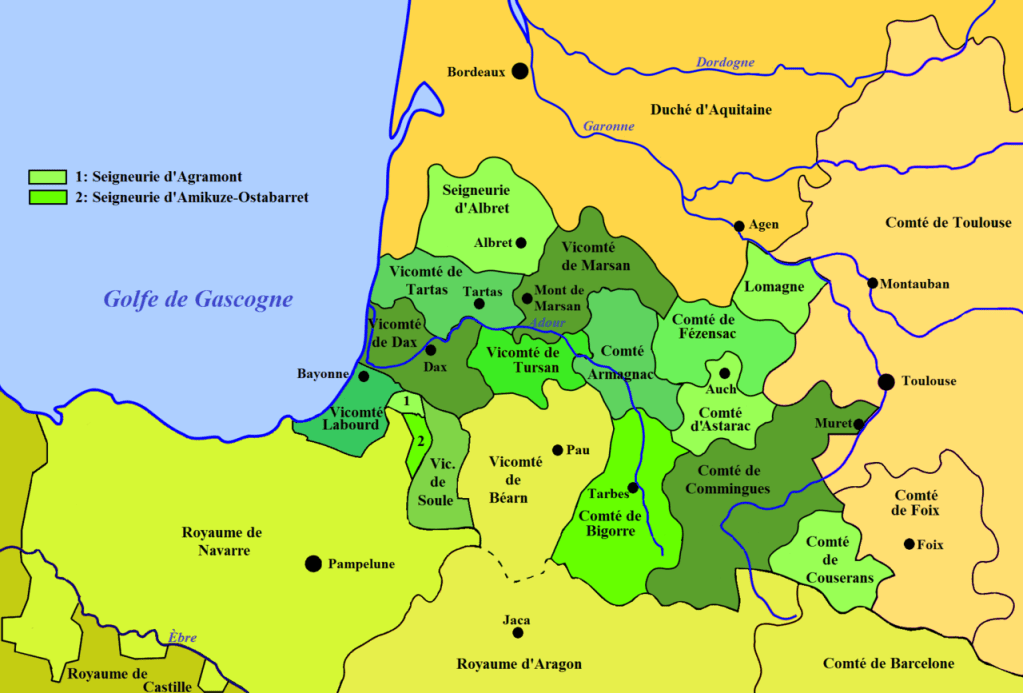
A few years later Sance II reunited different parts of Gascony, both the inland valleys and along the Atlantic coast, and thus revived the title ‘duke’ in about 851, establishing a de facto independent state in defiance of any loyalty to the Frankish empire. His son (or at least relative) Garcia Sanchez (or as he’s known in French, Garsie-Sance, or Gassia Sans in Gascon) was called Duke of Gascony, but also Count and Marcher Lord of the Ocean Coast and Count of Bordeaux. When he died in about 925, his lands were divided into three parts for his sons. The eldest, Sance-Garcie, continued the line of dukes of Gascony until 1039 when the duchy passed into the possession of their more powerful neighbours to the north, the dukes of Aquitaine (of the House of Poitiers), whose heiress, Eleanor of Aquitaine, took it to the House of England through her marriage to Henri of Anjou in 1152. The third son, Arnaud-Garcie received the county of Astarac and founded a lineage that ultimately included—or so they claimed—the family of Saint-Lary, which will have a blog post due to the Duke of Bellegarde. The middle son, Guillaume-Garcie (or Guillermo), was given parts of central Gascony called the counties of Fezensac and Armagnac. The latter split off in the next generation and would form the House of Armagnac, the most powerful medieval noble family in southern France, and for a time in all of France (the fifteenth century), gaining ducal status as dukes of Nemours, before dying out in 1503.
Gascony in 1150, showing counties of Armagnac, Fezensac and Astarac
The County of Fezensac, with its capital at Vic-Fezensac (vic simply being a local word for ‘main town’), is a region today known for its amazing Gascon cuisine, with duck, rabbit and garlic, not mention foie-gras and Armagnac brandy (today’s Département of the Gers). Its counts in the tenth and eleventh centuries left behind records as donors to local bishops of Condom and archbishops of Auch. According to later genealogical assertions, Count Guillaume (d. 1074) divided his estates between his eldest son Aimery, who received the county, and Aysin, who received the lordship of Montesquiou. The elder line did not survive long and the county of Fezensac was re-integrated with the county of Armagnac from about 1140. The line of Montesquiou, in contrast, continues to the present. Whether the connection is genuine or not, it was formally recognised as so by Louis XVI in 1777, and the name was changed to Montesquiou-Fezensac.
The lordship took its name from a fortified village in the County of Armagnac, southwest of Auch, which seems to have taken its name from a local Occitan (or Gascon) word esquiu (‘savage’) to indicate a wild hill; but it may be that there was a family with this savage name who attached it to a hill on which they built their castle, the Mont d’Esquiou. There is only a trace of an eleventh-century castle here—it was last occupied in the 1570s, then passed to the Monluc family (see below). The ruins were sold and demolished during the Revolution, and its materials reused in local building projects.
the village of Montesquiou today (photo Florent Pecassou)
The coat-of-arms of the early Montesquiou lords is seen in accounts of the Crusades, and is quite simple, one of the best marks for genuine ancientness in French heraldry: two red balls or roundels on gold. They were titled as barons from at least the 1090s, and were vassals of the counts of Armagnac.
the Montesquiou arms, seen in the château of Courtanvaux (photo David Merrett)
With lands so close to the borders with Spain, some of the barons crossed the Pyrenees and gained military glory in service of the kings of Navarre in campaigns against the Moors. One of these, Aysinus (or Assieu), was rewarded with the title ‘son and canon of the Cathedral of Auch’, which became attached to the family’s barony of Anglès (or Saint-Jean d’Anglès) which was considered one of the four baronies of Armagnac—succeeding generations thus held a prominent place in the local estates and in the metropolitan church of Auch. Early prominent churchmen include a bishop of Tarbes (in one of the Pyrenean valleys to the south) in the mid-twelfth century, and Pierre de Montesquiou, Bishop of Albi and Cardinal (d. 1262). A generation later, a nephew with the unusual name of Pictavin became Bishop of Bazas then of Albi (both a bit to the north, in Aquitaine), then also a Cardinal (d. 1355). While the Cardinal’s older brother continued the main line, the younger brother Odet, married Aude de Lasseran, in 1318, heiress of the lordships of Massencomme and Monluc. The former was local, in the County of Fezensac, and formed a separate cadet line (extinct in the fifteenth century); while the latter was located further north in the Agenais (also in Aquitaine). This family, who used the surname Lasseran-Massencomme, leads to the Marshal Blaise de Monluc, or so his family said, as we will see below.
The history of the Montesquiou barons in the next two centuries largely follows that of their overlord the count of Armagnac, fighting with him versus the counts of Foix or the kings of England or France. In the 1470s, the inheritance was divided and two branches formed: the elder based at Montesquiou and the latter at the château of Marsan. The senior line died out in 1569 with the death of François, Baron de Montesquiou, a gentleman in the household of the Duke of Anjou (the future King Henri III), and Captain of his Swiss Guards. His sister and heir Anne married Fabien de Monluc, thus connecting that family more genuinely to the Montesquious.
Fabien de Monluc was the son of one of the most famous military commanders in French history, Blaise de Monluc, and later published genealogies asserting that he was himself descended from the Montesquiou family, in a branch who split off in the fourteenth century and changed their name to Lasseran de Massencome. Changing your name to match that of your principal fief was not uncommon in the Middle Ages, but it does make the genealogists’ job a bit more complicated. This story was accepted by official royal genealogists in the eighteenth century, but by the nineteenth century it had come under doubt, and now it is thought that the Monlucs were a minor gentry family from the Armagnac region who made a good marriage at the start of the sixteenth century to the heiress of the lordship of Estillac, a bit further to the north in the Agenais, near the mighty Garonne river, and attached their name to its castle. Today it is called the Château de Montluc, spelled with a t probably by mistake, assuming it applied to a ‘mount’, whereas the actual spelling Monluc seems to have derived from an earlier Roman name bono luco (and the b changed over time to an m). The thirteenth-century fortification was expanded and re-fortified along modern military lines by the Maréchal de Monluc in the 1570s, then in the 1640s passed to his heirs in the Escoubleau de Sourdis family. It was sold several times in the eighteenth and nineteenth centuries, and is still in private hands.
the château of Monluc at Estillac (photo by Mossot)
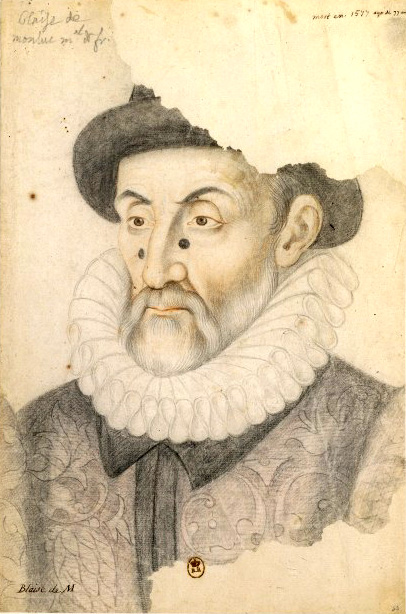
Blaise de Monluc was born around 1500 and by his twenties was in service of King François I in his wars in Italy, acted as military governor of the city of Siena—which he defended against an Imperial siege in 1555—and by 1558 was appointed Captain-General of the Infantry of France by Henri II. He maintained his prominence as a client of the Guise family leading Catholic troops in the Wars of Religion, and was appointed Lieutenant-General of Guyenne in 1562. He became an almost independent force in the southwest of France, besieging Protestant strongholds, like La Rochelle in 1573, gaining a reputation for brutal but efficient acts. He was shot in the face in 1570, so he wore a mask for the rest of his life. When Henri III came to the throne in 1574, he rewarded Monluc’s long and illustrious career—serving five reigns—with the baton of a Marshal of France. This was a reward, but also in a sense an indication that it was time to retire, since accusations of brutality and corruption were mounting. He therefore set about recording his memoirs as a soldier in the Commentaries, published in 1576 and ever since regarded as a sort of ‘soldier’s bible’. He died a year later.
Blaise de Monluc, Marshal of France
The Marshal had two brothers, Jacques and Jean. Jacques, known as ‘the Young Monluc’ was also a soldier, a captain of the royal men-at-arms, lieutenant for the King in the Piedmont, and governor of the city of Albi. He is most interesting for this website as he acquired a curious title ‘Prince of Chabanois’, one of several small lordships to take such a title in the region contested by the English and French kings during the Hundred Years War (Poitou, Angoumois, Saintonge, Limousin). Now spelled Chabanais, the ancient lordship in the Angoumois (today’s Charente) had belonged to various families but rose to prominence under the Rochechouarts in the fourteenth century, then a branch of the counts of Vendôme, who used the title ‘prince’. As with the château of Monluc above, this property passed to the Escoubleau family in the seventeenth century, then the Colbert family (for whom it was more formally erected into a marquisate, the princely title never being official) who held it until the nineteenth century. Its tenth-century castle was mostly a ruin by that point, and its vestiges were removed in the 1890s to make way for public buildings in the town.
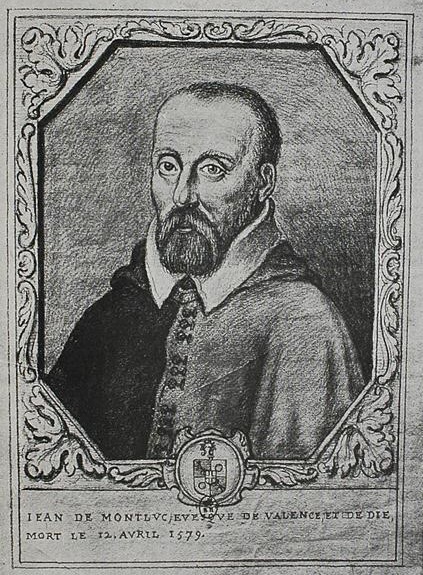
Brother Jean was also interesting: as a younger son, he pursued as career in the church and eventually was elected Bishop of Valence and Die (in France’s southeast) in 1553. He was better known, however, as a diplomat, and was sent by François I to Constantinople in 1540, Venice, 1545, and later by Catherine de Medici to Poland to help get her son Henri elected as king there in 1572-73. He was one of the Queen-Mother’s most trusted advisors, and like her, was more interested in maintaining the peace than defending orthodox Catholicism in France. So unlike his brother Blaise, he was accused of defending or even supporting Protestant heresy, and was removed from his diocese by the Pope in 1574.
Jean de Monluc, Bishop of Valence
The Bishop also had an illegitimate son, who followed in his uncle’s footsteps to become a military commander. Jean de Monluc, Seigneur de Balagny, was a commander for the Catholic League in the north of France, and when he agreed to come to terms with King Henri IV, the King rewarded him with the rank of Marshal of France, 1594, and an appointment as governor of the city of Cambray. This city recently occupied by the French held the rank of prince-archbishopric, so Maréchal de Balagny took the unprecedented title ‘Prince of Cambray’. This meant the Monluc family now held two principalities! This presumption, and his heavy-handed government, led the citizens of Cambray to revolt and aided the Spanish in driving out the French by 1595—it would remain in Spanish hands until definitively attached to France in 1678. Balagny continued to integrate himself into the King’s inner circle by taking as his wife Diane d’Estrées, the older sister of the King’s mistress Gabrielle. He died in 1603 and left descendants, titled Marquis de Balagny (based on the lordship in Beauvasis, north of Paris), who died out later in the century.
Jean de Monluc, Marshal de Balagny, Prince of Cambray
Blaise de Monluc also had sons. Most of them predeceased him in various battles—one, Pierre-Bertrand, in attempting to take French troops to Congo, Mozambique or Malindi on the east coast of Africa to set up a trading post. Stopping first at Madeira, he briefly took it over, but was killed when the Portuguese, fearing French incursions into their sphere of trade, retook the island in 1568. The youngest son, Fabien, had been willed the principality of Chabanais by his uncle the Bishop of Valence, but was killed in 1573 while serving as governor of the fortress of Pignerolo in Piedmont.
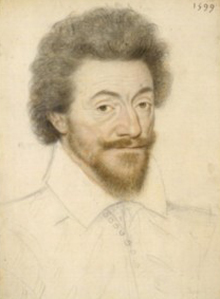
It was this Fabien who had married Anne, Dame de Montesquiou, which led their son Adrien to put forward the idea that the Lasseran de Massencome de Monluc family was in fact already related to this more prestigious Gascon family. He published a genealogy in the 1620s with the aim to secure his eligibility to be appointed to the highest royal orders (St-Michel and St-Esprit). According to the royal genealogist Père Anselme writing later in the century, Adrien had been nominated to receive the St-Esprit in 1613, but for some reason did not receive it, and by the 1630s, had fallen out with Cardinal Richelieu and was sent to the Bastille, accused of plotting a coup. Earlier in his life he had been a favourite of King Henri IV, a fellow Gascon, one of the court gallants of this very randy court known as ‘les Intrépides’ or ‘les Dangereux’. Back in 1592, he had married very well, to Jeanne de Foix-Carmain, heiress of a very valuable property in the Lauragais, the grain-basket of Languedoc, the county of Carmain (today spelled Caraman). He was also named governor of the county of Foix, at the time still fairly independent from the Kingdom of France.
Adrien de Monluc de Montesquiou, Prince of Chabanais, Count of Carmain
Carmain (or Carmaing) had long been a prominent lordship, on the road between Toulouse and Béziers, elevated to a viscounty for the Lautrec family in 1310, then to a county for the Foix in the 1480s. It would pass to Adrien’s daughter who used the illustrious styling Jeanne de Montluc de Foix, Comtesse de Carmain, Princesse de Chabanais, Dame de Montesquiou. In 1612, her father had arranged her marriage to Charles d’Escoubleau, Marquis de Sourdis, from a family on the rise in the west of France, notably through Charles’ brother François, the warrior Cardinal-Archbishop of Bordeaux, and they inherited all of these territories. Carmain, however, was sold in 1670 to Pierre-Paul Riquet, from Béziers, who built the famous Canal du Midi. His descendants ultimately inherited the Principality of Chimay in 1804, and are now one of the leading families of the Belgian nobility as princes of Chimay and dukes of Caraman.
So, while the barony of Montesquiou had passed out of the family’s possession, the junior branch was based in the lordship of Marsan. Its château was built by the Montesquious in the twelfth century in the town of that name, northeast of the regional capital of Auch. Damaged across centuries of conflict with the counts of Armagnac or the archbishops of Auch, the family rebuilt it entirely as a more grandiose country house in the 1750s in a neoclassical style. In 1906 it was given by the now senior branch to another junior branch, whose descendants still live there.
the château de Marsan in Armagnac
In the 1480s, the House of Montesquiou-Marsan divided again into several more sub-lineages: Marsan for the eldest, then Salles (in the Lauragais), and others. We will return later to the line of Marsan, which includes the ducal line, and focus first on the line of Salles, which became the line of d’Artagnan in the 1540s when Jacquette d’Estaing, Dame d’Artagnan (daughter of a wonderfully named Sauvage d’Artagnan), willed her estates to her husband, Paul de Montesquiou, Seigneur de Salles, an equerry to Henri II d’Albret, king of Navarre. This lordship thus passed to his son from a second marriage.
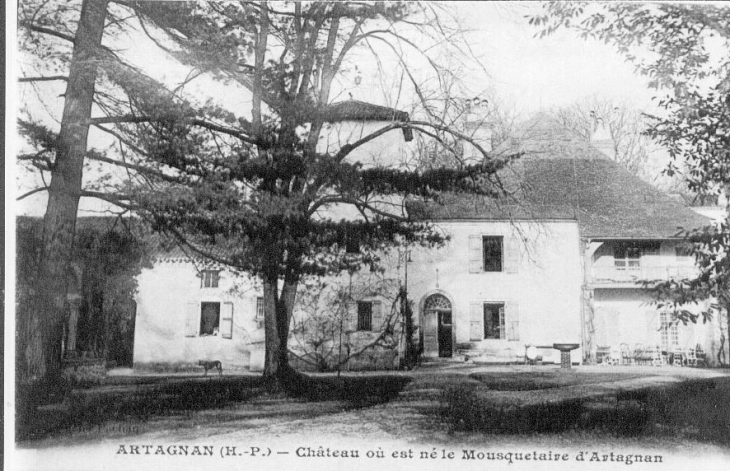
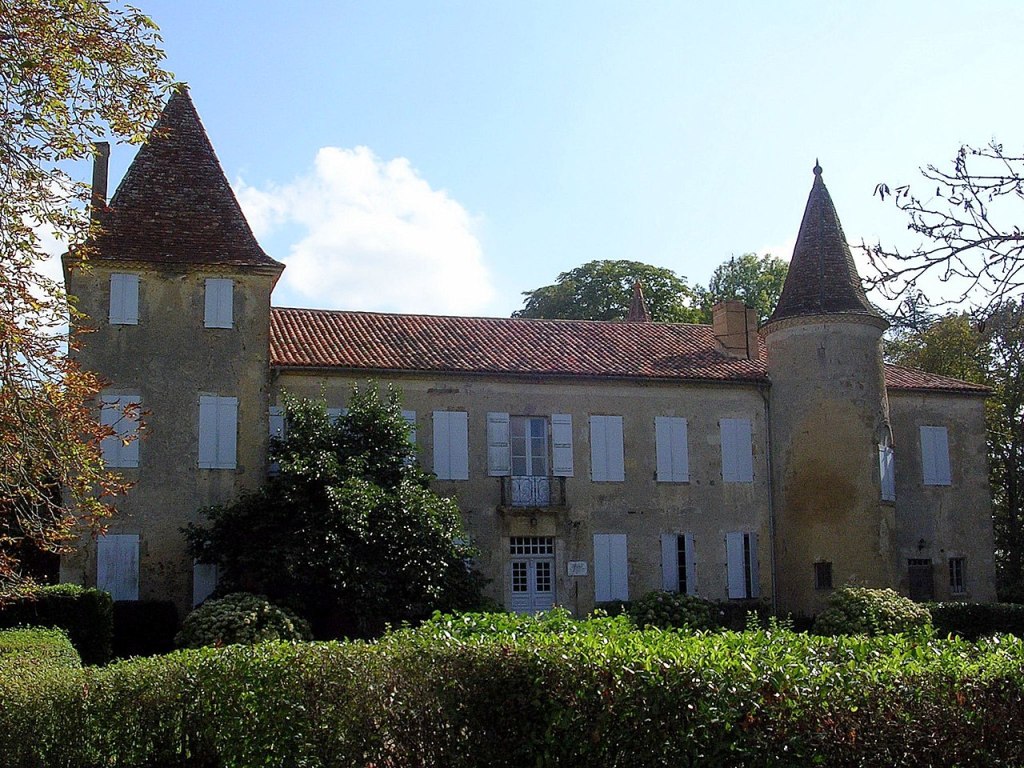
The lordship of Artagnan was even further south, in the County of Bigorre, one of the semi-independent counties in the Pyrenees that were only fully brought under control of the French monarchy in the seventeenth century. Known as Artanhan in Occitan, it took its name possibly from an ancient Gaulish word for bear, artos, which formed a personal name Artanius. It doesn’t seem to have had a castle, though I’ve found some old postcards showing a house in Artagnan claiming the famous Musketeer was born here, probably because the character in Dumas’ novel comes from Tarbes, which is nearby, whereas the real d’Artagnan was likely born in the château of Castelmore (see below).
Artagnan in Bigorre
One of the lordships in this wild and remote region of Bigorre that claimed to be a ‘free lordship’, with no feudal overlord at all (much like we can see with the ‘principality’ of Bidache for the Gramont family) was Tarasteix, acquired by Henri de Montesquou d’Artagnan in 1664. He had been appointed royal governor of the Château of Montaner in Béarn in 1630 and the King’s Lieutenant in the city of Bayonne. More importantly in terms of his family’s rise to prominence, he had married the sister of the Marshal de Gassion, one of the leading French commanders of the 1630s-40s. It was probably Gassion who supported the early career of Henri’s sister’s son, Charles de Batz de Castelmore.
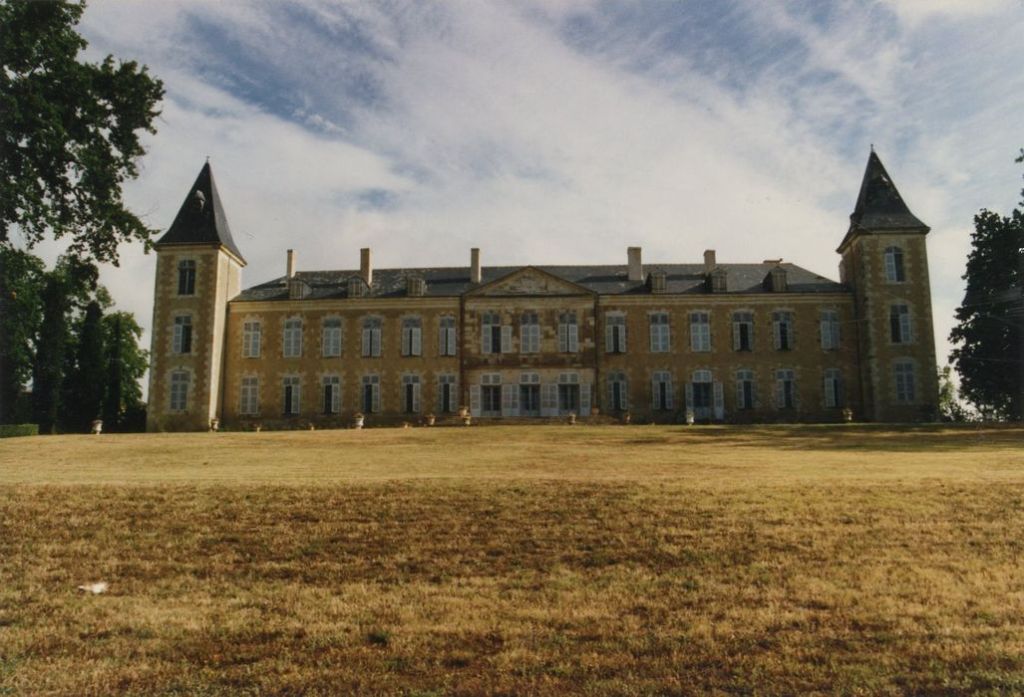
The Batz family were merchants in one of the towns near Auch, Lupiac, and Charles de Batz’s grandfather was ennobled for holding an office in the local magistracy and bought a nearby château called Castelmore in order for his family to ‘live nobly’ (which was in itself one of the qualifications for being noble in the early seventeenth century). The château was only recently constructed, not a medieval fortress, and it remains mostly unaltered today, still in private hands (though reports suggest it has recently been sold to owners who want to open it up for Three Musketeers tourism).
the château of Castelmore (photo by Jibi44)
In about 1630, young Charles travelled to Paris using his mother’s name and her connections—his older brother Paul was already serving in the Musketeers there, alongside three other Gascon noblemen whose names sound suspiciously like Athos, Porthos and Aramis. The newly minted d’Artagnan joined the Musketeers, the elite unit of the French Guards formed as part of the royal household in the 1620s which fought in the various military campaigns of the 1630s-40s. He then shifted his focus to acting as a secret agent and diplomat for Cardinal Mazarin (for whom he also served as one of the gentlemen of his household), until his Musketeer regiment was re-formed in the late 1650s. D’Artagnan lived in a house in Paris on rue du Bac, in the fashionable faubourg Saint-Germain, immersed himself in the world of the literary salons there, and became increasingly attached to the young Louis XIV, with whom he travelled through Gascony on his way to the Spanish border to meet his new wife, the Infanta Maria Teresa. The King thus gave this trusted soldier the task of arresting Nicolas Fouquet, suspected of government embezzling on a spectacular scale, and of personally guarding him for the several years of the trial of the century. In 1667, d’Artagnan (now sometimes using the title ‘count’) was named Captain-Lieutenant of the First Company of Musketeers, which meant he was its real commander, since the nominal captain was the King himself. He was appointed governor of the newly captured city of Lille in 1672, but was pulled away to attend the King during the siege of Maastricht, where, as we have seen, he was killed. His life inspired a novel by Gatien de Courtilz de Sandras, published in 1700, which was then used by Dumas to write his novels in the 1840s.
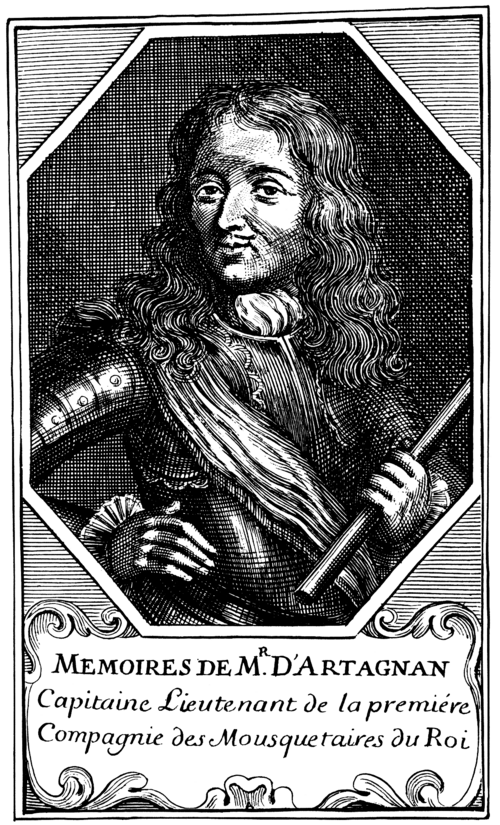
D’Artagnan, as seen on the frontispiece of the book by Courtilz de Sandras
The name d’Artagnan was kept in the public eye by the famous Musketeer’s first cousin, Joseph de Montesquiou, Comte d’Artagnan, who became a Musketeer in 1669, then rose through the ranks until he too was Captain-Lieutenant of the First Company in 1702, and led his brigade in various campaigns of the War of the Spanish Succession. After the war he was appointed governor of the southern city of Nîmes in 1719, and died a decade later.
An even more prominent career was forged by another first cousin, Pierre de Montesquiou d’Artagnan, who was sent to Paris to be looked after by d’Artagnan in 1660 and was established in the King’s household as a page, then joined the Musketeers in 1666. He too rose through the ranks of the Guards to become a Maréchal de camp in 1691, and was named governor of the city of Arras and lieutenant-general of the surrounding province, Artois—French since the 1660s, but still a sensitive frontier zone during the Nine Years War. When at court, Pierre was close to the King’s second wife, Madame de Maintenon, and the King’s favourite son, the Duke of Maine. When the next war broke out (the Spanish Succession), his closeness to this inner royal circle led the King to entrust him with the mission of guiding his grandson, the Duke of Burgundy, in his first command, leading French armies into Flanders. In 1709, Montesquiou commanded one wing of the infantry at the Battle of Malplaquet and shortly afterwards was named a Marshal of France, the highest rank in the military—he was known, possibly to honour his famous cousin, as the Marshal d’Artagnan. During the disastrous winter of 1710, when everything froze and France was brought to its knees, he was left in the field guarding the Flanders frontier against potential invasion by the Allies. After the war, he was given the prestigious post of Governor of Brittany, 1716-20, and was appointed as a member of the Regency Council, 1721, which ran the Kingdom on behalf of the young Louis XV. The Marshal retired with full honours and died at his country estate in the southern suburbs of Paris, Le Plessis-Picquet.
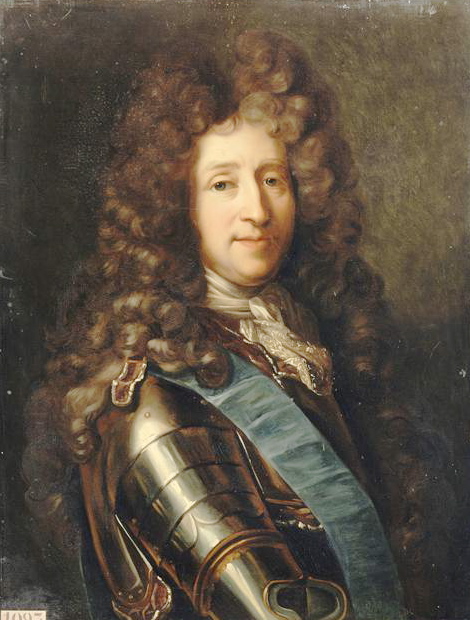
Pierre de Montesquiou, Marshal d’Artagnan
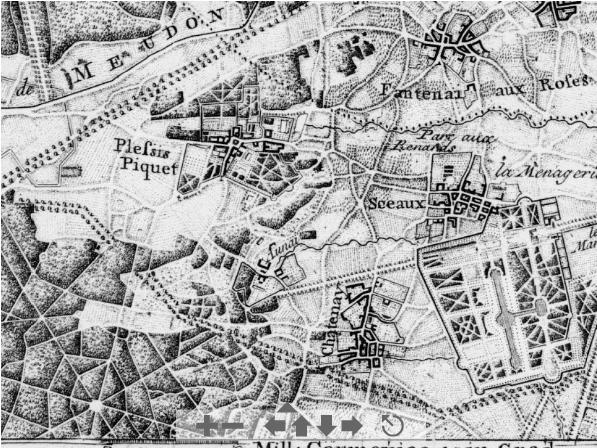
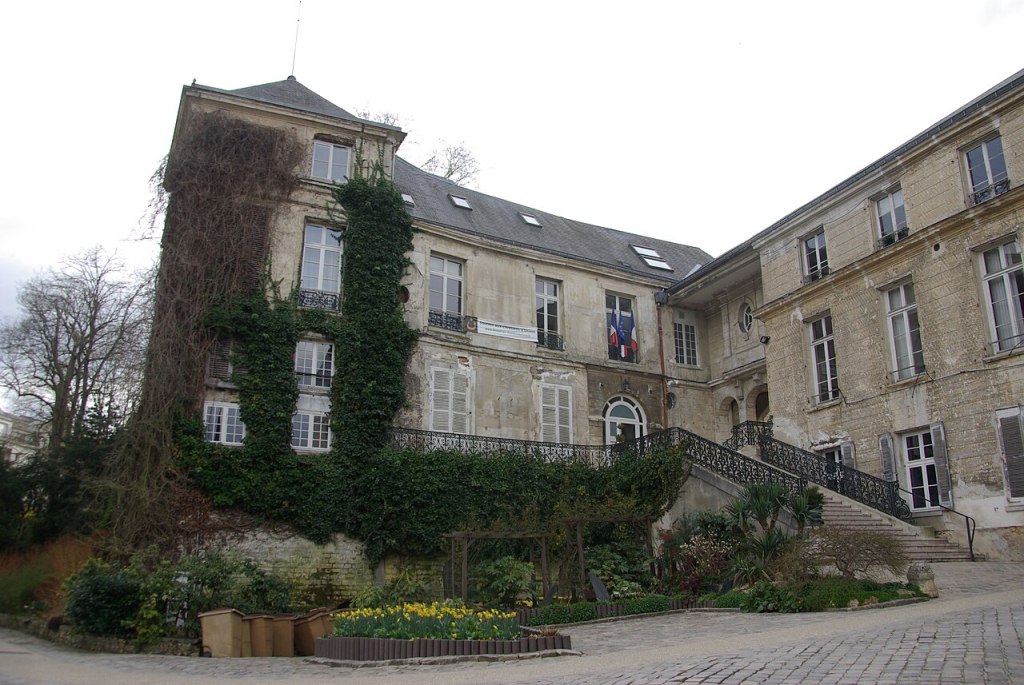
Le Plessis-Picquet had been built in 1410 by a Parisian financier and counsellor of Charles VI, Jean Picquet. It passed through the hands of various Parisian magistrate and parliamentary families, notably the Potier (a senior family of the Paris Parlement), until it was acquired by Jean-Baptiste Colbert, Louis XIV’s first minister—it was conveniently located between Colbert’s estate at Sceaux and the estate of Meudon, soon to be the residence of the Dauphin. When Pierre de Montesquiou acquired it in 1699, it was thus in the heart of the royal suburbs, a short drive to Versailles, and made it easy to socialise with his friends the Duke and Duchess of Maine who had established their court and salon at Sceaux. Montesquiou’s heirs would sell the château in 1755, and it passed through many more hands—including briefly to the Duke of Massa, one of Napoleon’s dukes, 1814-17—until it became the home of the Hachette family of Parisian publishers from 1853 (and took the name Château de Hachette). They sold it in 1915 to a government agency, and today it serves as the Hôtel de Ville for the town of Le Plessis-Robinson. When I lived in Paris, I had to follow the signs for ‘Robinson’ every day as I headed home on the RER B, and I always thought it such a strange name for a French town.
Plessis-Picquet and its neighbours in 1751, with Meudon at top and Sceaux at right
Le Plessis-Picquet today as Hôtel de Ville of Plessis-Robinson (photo AlSepPhoenix)
An even more oddly named estate had been acquired by Joseph de Montesquiou d’Artagnan: Mauperthuis, from malus, ‘bad’ and pertusium, ‘passage’. This estate in Brie, the region to the east of Paris, was in fact rich agricultural land, and brought the next generation great wealth. Joseph never married and had no sons, but he had five nephews, who also inherited lands from their uncle the Marshal d’Artagnan (who also had no surviving sons). All five forged advanced careers in the French military, including two in the Musketeers. One of these, Louis, Comte de Montesquiou, nearly added a third princely title to the family’s collection, by marriage in 1713 to Louise-Alphonse de Berghes, Princesse de Râches (an estate in Flanders that had been genuinely elevated into a principality by the King of Spain before this territory was lost to France in the 1670s). Soon after she died, heavily pregnant, she willed the principality to her husband, but the courts overruled this and returned it to her paternal heirs. Louis became Sub-Lieutenant of the First Company of Musketeers in 1729 and died in 1743. His brother’s son, Anne-Pierre, thus inherited all of the family properties of this branch of the family (the younger or d’Artagnan branch).
Anne-Pierre was raised as a menin or companion to the royal children of France, but unlike them, he embraced more of the teachings of the Enlightenment and became affiliated with a group called the Physiocrats who believed that wealth did not come from trade but from improving the land—when he inherited Mauperthuis, he built a grand new château there in the 1760s, and used the rich lands to develop new agricultural methods, and bred a new strain of merino sheep. A park was also laid out along newly fashionable English garden lines and became a renowned place to visit for a drive from the capital into the country—indeed, it was not far from Le Raincy, the country residence of the Duke of Orléans, who shared many of Montesquiou’s enlightened ideas, and they would be allies in the revolutionary period to come. Nevertheless, the château of Mauperthuis would be seized by revolutionary authorities in 1793 and destroyed. The park was eventually recovered by the family then sold in 1817.
plans for the new château at Mauperthuis
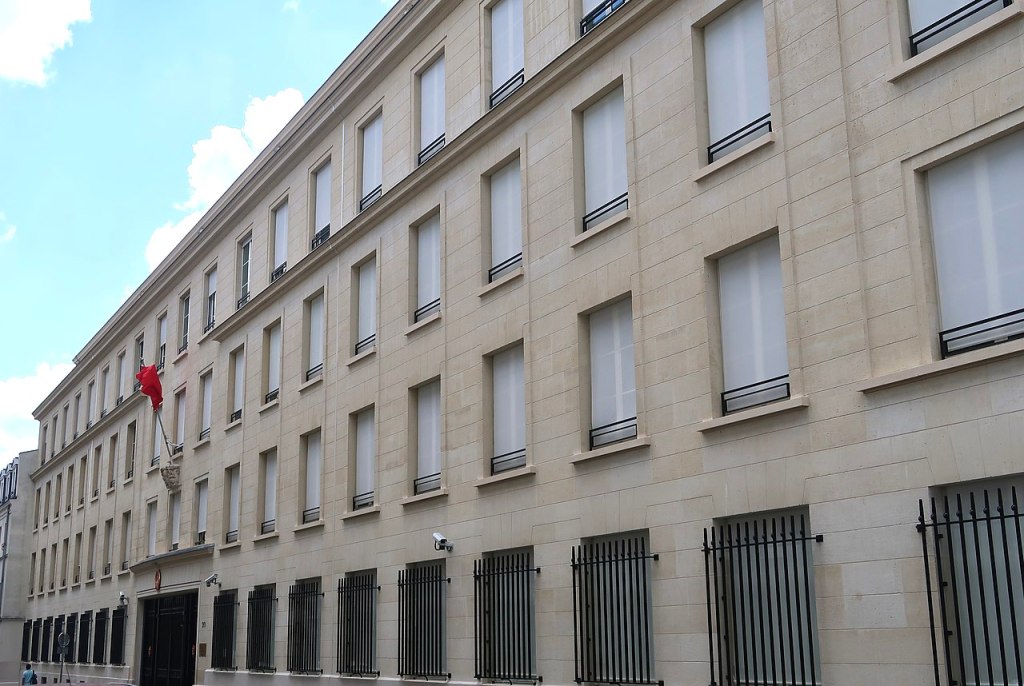
Anne-Pierre took the title Marquis de Montesquiou and would be formally authorised to add the name Fezensac by Louis XVI in 1777. Interestingly, his mother’s dowry had included the original lordship of Montesquiou, bought by her father from its heirs. Like all men in his family, he joined the army and rose through the ranks in the 1750s-60s, and was appointed Premier Equerry of the Count of Provence (Monsieur), Louis XVI’s younger brother. Both men enjoyed reading and patronising the arts, and the Marquis became part of the Prince’s inner circle, more elevated and literate than the court of Versailles, and more focused on Paris. Here he built a residence on the rue de Monsieur (not far from the Invalides, and near his workplace of Provence’s stables), the Hôtel de Montesquiou, in 1781. After 1851, it housed a Benedictine convent, and from 1938 was used by the French state for offices (and they built a very modern façade that obscures the building from the street), notably, between 1959 and 1999 the Ministry of Cooperation, an agency set up to maintain good relations with France’s former colonies. Since 2012, the hôtel has housed the Embassy of China.
the Hôtel de Montesquiou as it appears today (photo Celette)
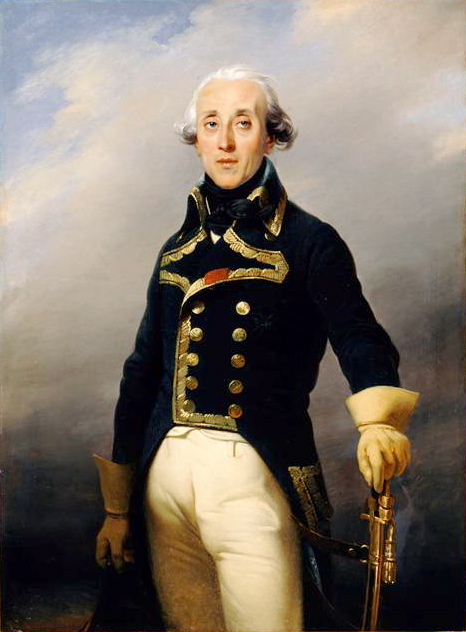
The Marquis de Montesquiou-Fezensac published verse and comedies which earned him a seat in the Académie française in 1784, and he was eager to act as a deputy for Second Estate (the nobility) for the Paris district at the Estates General of 1789. Here he swiftly joined the Third Estate to form the National Assembly in June, along with his ally the Duke of Orléans, and would later be appointed President of the Constituent Assembly, as that body became by 1791. His family’s military reputation and his own successful career made him a good choice to lead the newly created Army of the South in the summer of 1792, and he conquered Savoy for the new French Republic in September, then was instructed to invade Geneva. Rather than use force, he chose to negotiate with the magistrates of the city—perhaps respecting it as the land of Rousseau and Necker?—for which he was accused of treason in November. He fled abroad, and although he returned in 1795, kept his head down and died a few years later.
Anne-Pierre, Marquis de Montesquiou-Fezensac
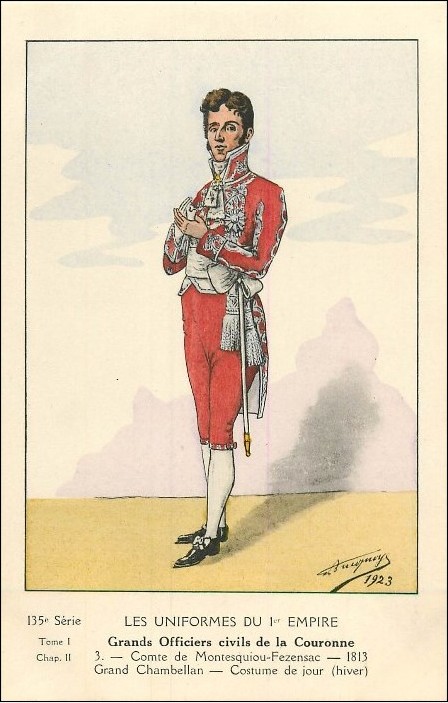
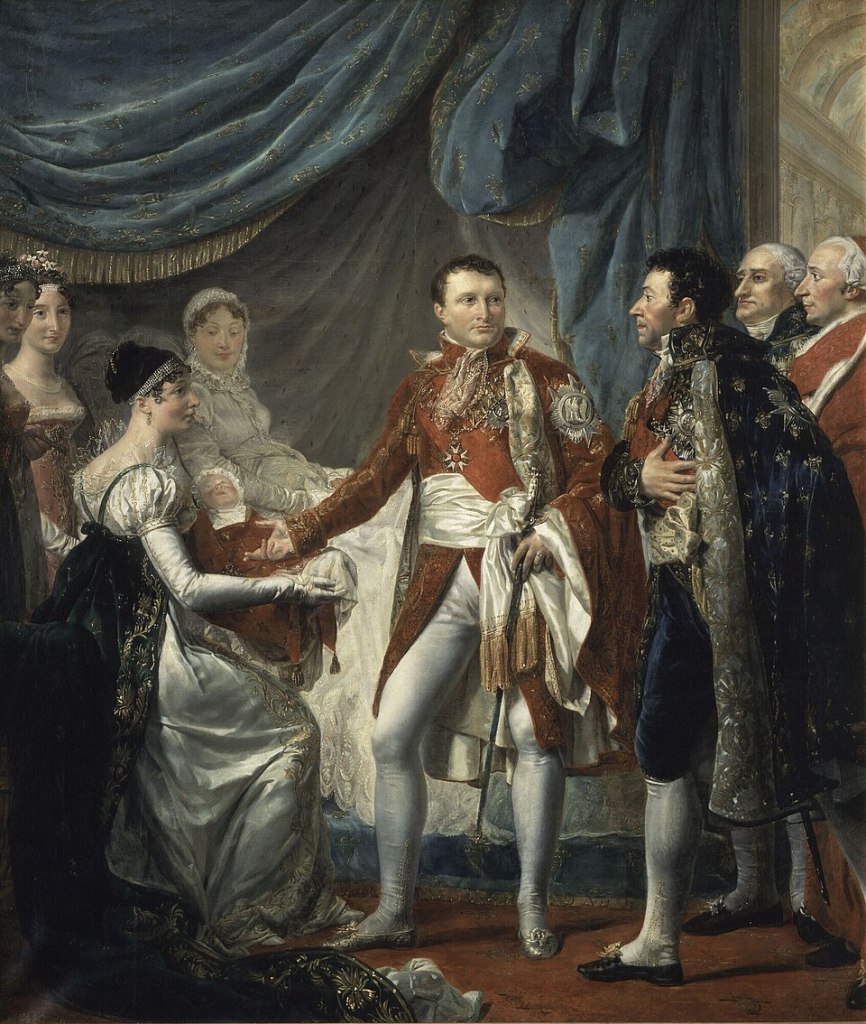
His sons however would continue their father’s legacy of support for the Revolution. Both had been set up at a young age to continue in royal services in the households of the King’s brothers, Provence and Artois, but both rallied to the cause of Napoleon and the proclamation of the Empire of the French in 1804. The elder, Pierre, was appointed Grand Chamberlain of the Imperial court in 1809, and was President of the Legislative Corps in 1810-13. He received a new imperial title, Count of the Empire, in 1810. His intimacy with the imperial court was strengthened further when his wife was appointed Governess of the king of Rome, Napoleon’s son, in 1811. Louise-Charlotte Le Tellier de Courtanvaux, known by her charge as ‘Maman Quiou’, also brought to the marriage another large château, Courtanvaux.
Pierre, Comte de Montesquiou-Fezensac, as Grand Chamberlain
Napoleon presents the King of Rome to the Imperial court. The Empress Marie-Louise remains in bed, and the baby is I presume in the arms of his new governess, the Comtesse de Montesquiou-Fezensac
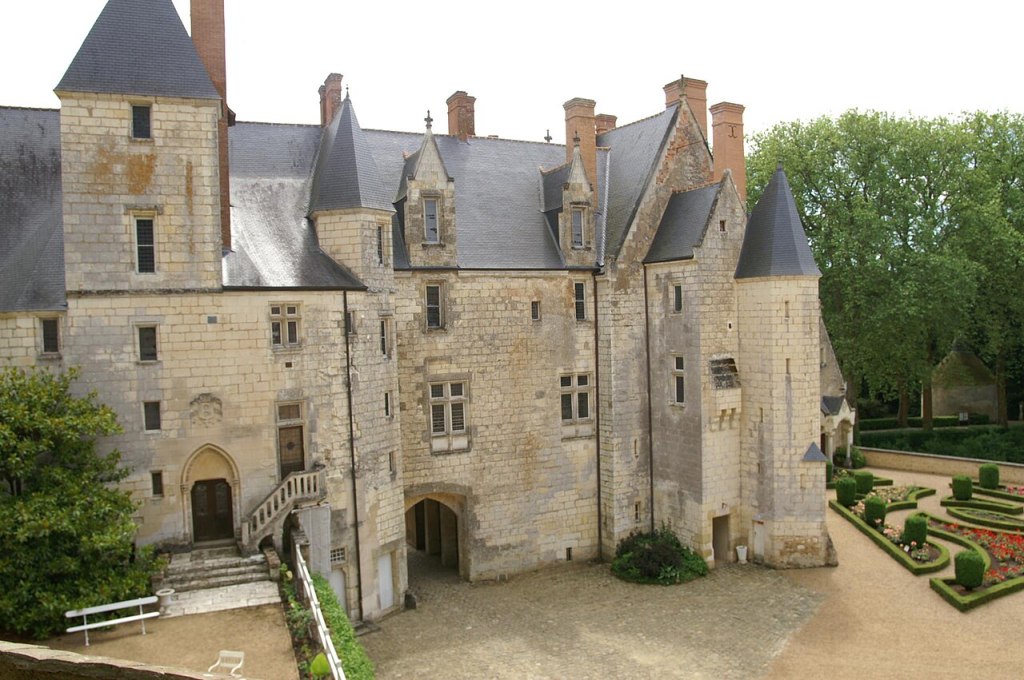
The Château de Courtanvaux is one of France’s great country houses. Built in the province of Maine (between Normandy and the Loire valley) in the fourteenth century, it was renovated in the fifteenth century and retains much of this characteristic high gothic style. The powerful Souvré family held it from 1500, known for the Marshal de Souvré, companion of Henry IV and preceptor for his son, Louis XIII. Now a marquisate, the estate and château passed by marriage to the Le Tellier family in 1661, but no one lived there for over a century until it was re-occupied and restored by Pierre and Louise-Charlotte de Montesquiou after the fall of Napoleon in 1815. Courtanvaux remained the family’s principal seat throughout the nineteenth and twentieth centuries, until it was sold by Aymeri de Montesquiou (below) in 1978. It is now owned by the local town and opened up for visitors.
the Château de Courtanvaux (photo by David Merrett)
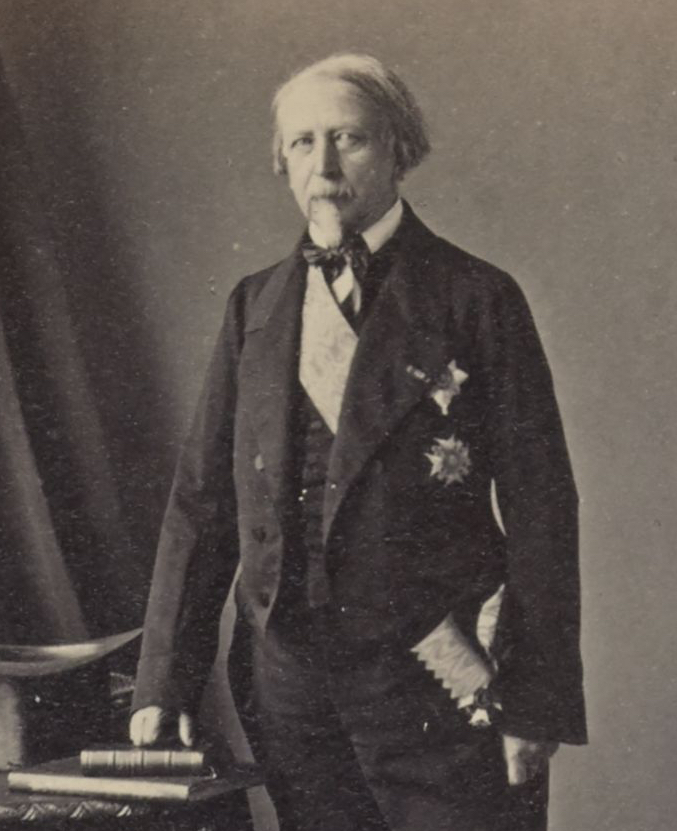
Pierre’s son Anatole was an ardent Bonapartist, a soldier in many of the Emperor’s campaigns and his aide-de-camp from 1813, and went into exile in 1815. He was reconciled with the new regime in 1816 and appointed aide-de-camp of the Duke of Orléans (and his wife appointed dame d’honneur of the Duchess), so when that Duke became King Louis-Philippe in 1830, Anatole de Montesquiou became an ardent supporter of Orléanism. Louis-Philippe gave him a seat in the Chamber of Peers in 1841, and elevated his military rank to general in 1848…but in that same year the Orléans Monarchy fell and Montesquiou went into exile once more. He did return in the 1850s and devoted himself to local politics in the area around Courtanvaux, and in the 1860s was a director of the Société de Secours aux Blessés Militaires, the organisation that would eventually become the French Red Cross.
Anatole, Marquis de Montesuiou-Fezensac
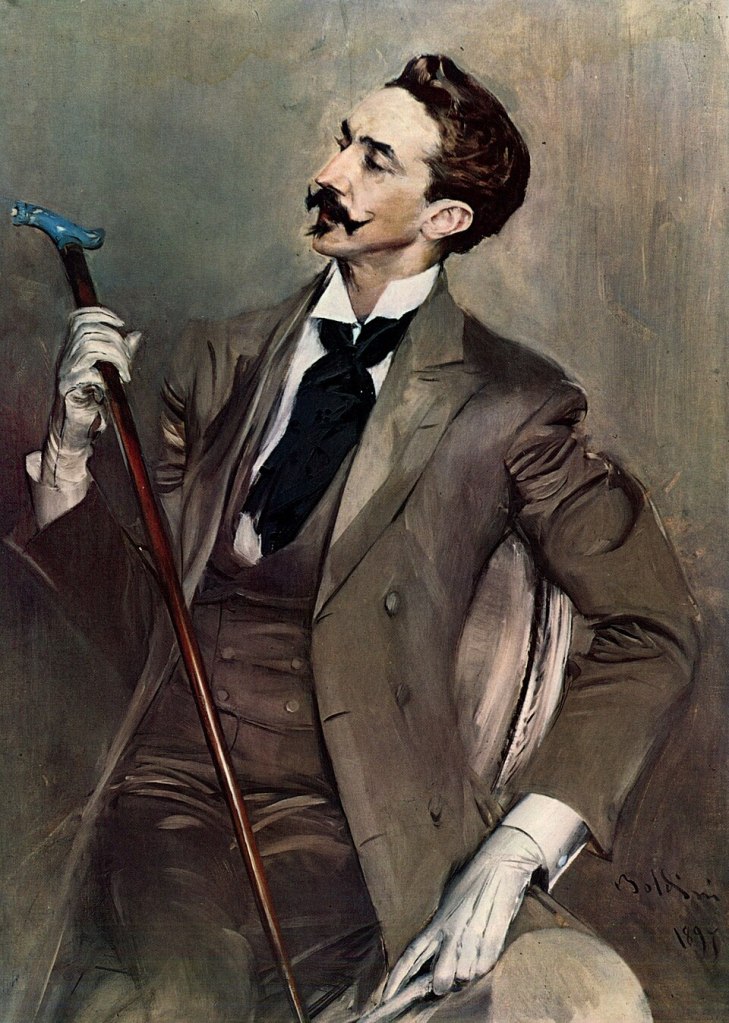
Of the many descendants of this branch of the Montesquiou family in the nineteenth and twentieth centuries, two stand out. Count Robert de Montesquiou (d. 1921) was a well-known dandy of the Belle Epoque: a poet and literary critic, he was a supporter of the Avant-Garde at his Hôtel de Montesquiou-Fezensac (not to be confused with the nearby Hôtel de Montesquiou, which today houses a Chinese cultural centre), where he lived fairly openly with his companion, the Argentinian Gabriel d’Yturri. Both men are cited as models for one of the more outrageous characters immortalised by Proust.
Count Robert de Montesquiou, by Boldini
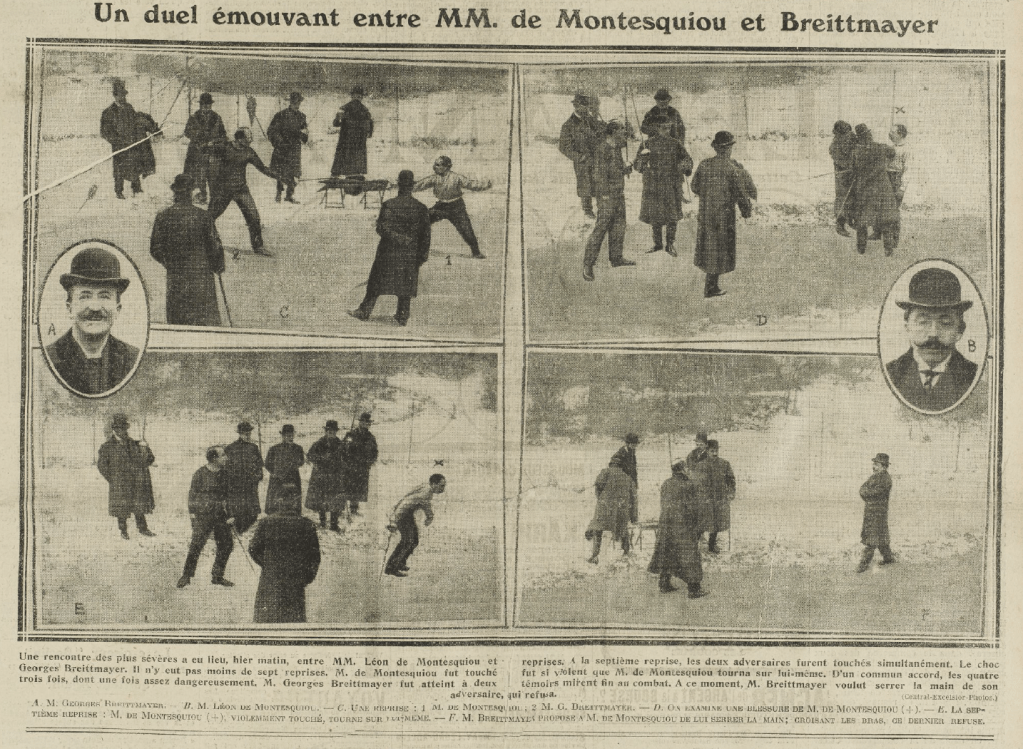
In the next generation, Count Léon de Montesquiou was at first a historian, writing a doctoral dissertation on the suppression of the noble duel, then from 1900 a leading member of the far-right nationalist and royalist party, Action Française. Vocally opposed to the government that had overturned the Dreyfus judgment in 1906, his comments calling for violent overthrow caused him to be removed from his post in the army reserve. Perhaps ironically, and in the spirit of the Musketeers, he was involved in a duel with a political opponent in November 1911. When war broke out, Montesquiou was re-integrated into the army and was killed in combat in September 1915.
a newspaper article about the duel of 1911, with Montesquiou in the white shift and in the right side portrait
The senior line, who used the title Marquis de Montesquiou-Fezensac for the head (and count for younger sons), continue to the present and will be looked at again once they take up the title ‘Duke of Fezensac’ after 1913. But first we need to see where this ducal title came from, and for that we need to go all the way back to the senior line of the House of Montesquiou, the lords of Marsan.
As we’ve seen, this line split from the line of d’Artagnan in the 1480s. There is not much remarkable to note about this branch in the next two centuries. Marc-Antoine was the first to adopt a higher title, Comte de Montesquiou-Marsan, and became a Captain in the French Navy in the mid-eighteenth century. The family’s rise in society is signalled by his marriage in 1752 to Françoise-Catherine de Narbonne-Lara, whose brothers were prominent at the court of Louis XV, and whose sister-in-law was one of the King’s favoured mistresses (and whose son, possibly the King’s, was briefly Minister of War under Louis XVI). Marc-Antoine’s eldest son Philippe rose to the rank of Maréchal de Camp in 1791, and eventually Lieutenant-General at the Restoration in 1814.
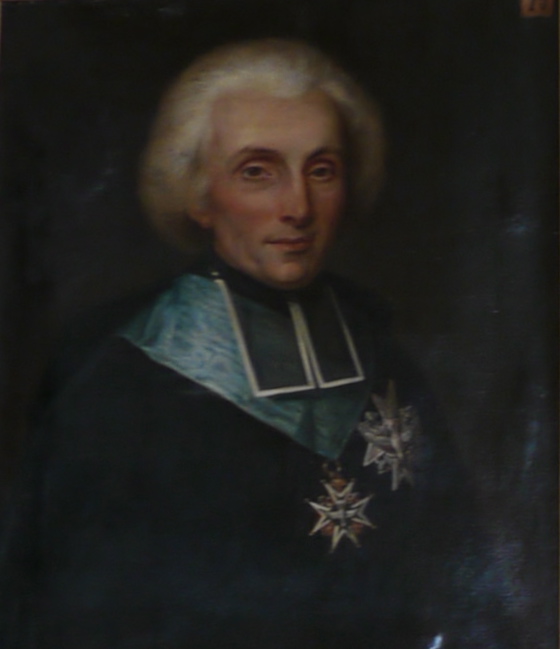
It was his younger brother, François-Xavier-Marc-Antoine, who brought the family—remember, one of the oldest in all of France—to the premier rank in 1821. But unlike most dukes, he was not a soldier, but a churchman. The Abbé de Montesquiou was two times over abbot of Beaulieu: one near Langres from 1782, and one near Le Mans from 1786. In 1785, he was appointed one of two agents-general of the clergy, an administrative role at the top of the French Church hierarchy (so we can assume he was headed for appointment as a bishop). He was then selected to represent the First Estate for the Paris district at the Estates General, and unlike his distant cousin noted above, he did not at first agree to join the Third Estate to form the National Assembly. He eventually came around and was elected several times to act as that body’s president, for monthly terms in 1790 and 1791. He remained conservative however, and opposed the adoption of the Civil Constitution of the Clergy (making it a strictly French Church, severing dependency on Rome) in July 1790. When things got hot after the popular attack on the Tuileries Palace in August 1792, he fled abroad, first to England, then to the United States. His journeys there were later recorded and published. The Abbé returned to France in 1795 after the end of the Terror, and acted as a royalist agent for the titular king in exile, Louis XVIII. As a reward, he was part of the provisional government set up in April 1814 before the return of the King, and he urged Louis not to accept a constitution from the Senate—reaffirming the old idea that kings grant rights to the people, not the other way round. He was appointed Minister of the Interior, and began to reform the nation’s education system, but was run out with the King in the Hundred Days in 1815. When the monarchy was restored for the second time, Montesquiou retained the title of Minister of State.
François-Xavier-Marc-Antoine, Abbé de Montesquiou
The Abbé de Montesquiou was a member of the Académie française from 1816, and appointed to the Chamber of Peers as Count of Montesquiou-Fezensac in 1817. This was then raised in rank to Duke of Fezensac (sometimes written Montesquiou-Fezensac) in 1821, though I’m not certain why: perhaps the fairly moderate Louis XVIII wished to keep him on side in the face of the increasingly conservative opposition led by his brother Artois, the future Charles X. When ultimately Charles X was toppled in 1830, the Duc de Fezensac at first remained in his seat in the Chamber of Peers under the new liberal regime, but resigned in 1832 and died soon after.
Before he died, the first Duke resigned his peerage to his nephew, Raymond. Initially not sharing his uncle’s fervent royalist views, he had joined the army in 1804, and served as aide-de-camp for Marshal Ney from 1806. In 1808 he married Henriette Clarke, daughter of Napoleon’s Minister of War, and in 1809 was created a baron of the Empire. He was appointed a general in 1813, and led campaigns in Germany and Bohemia. But despite these close Napoleonic ties, he did swiftly assimilate into the Restoration court, like so many nobles of the Old Regime, and was appointed a Major-General in the Royal Guard in 1815. In 1838, now as 2nd Duke of Fezensac, he represented King Louis-Philippe as Ambassador to Spain.
Raymond de Montesquiou, 2nd Duke of Fezensac
A generation is skipped since the 2nd Duke’s eldest son Roger-Aimery predeceased him, so in 1867 the title passed to his grandson, Philippe. Interestingly, another ducal title passed through this line, with Henriette Clarke, the 2nd Duchess, ultimately passing her father’s Napoleonic dukedom (Feltre) to one of her daughter’s sons. Philippe, 3rd Duke of Fezensac, was active in politics in the French Third Republic, representing the Department of the Gers in the Senate for a decade (1887-97) in support of the conservative monarchist faction. After his retirement, he became President of the exclusive Jockey Club of Paris, 1908 until his death in 1913. He had two daughters, but the dukedom expired with him.
Philippe, 3rd Duke of Fezensac, as a young man
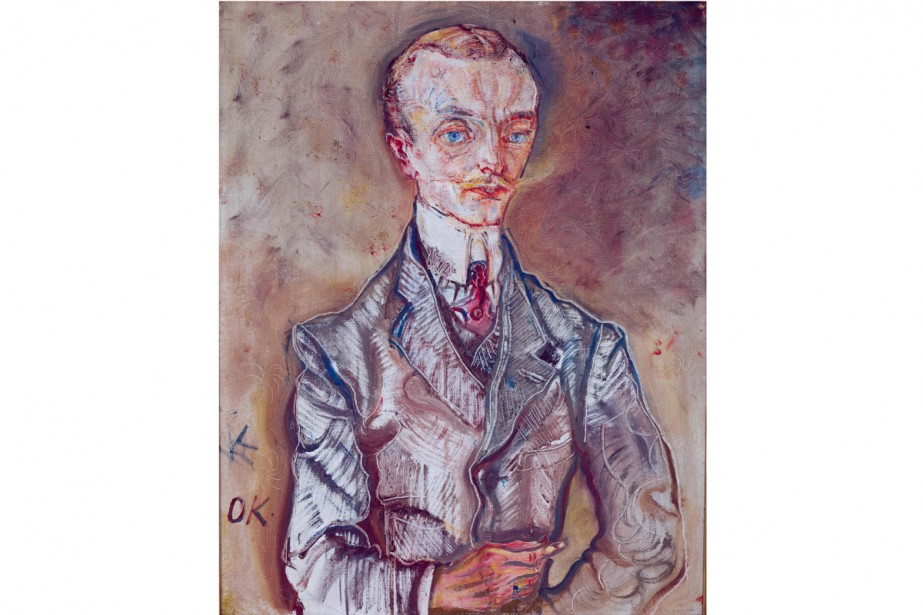
As noted above, before he died, the 3rd Duke donated several properties including the Château of Marsan in the ancient family heartland to a very distant cousin from the junior d’Artagnan line, Joseph, Marquis de Montesquiou-Fezensac, who assumed the title 4th Duke of Fezensac without any legal basis, since he wasn’t descended from the original grantee. Joseph and his wife Victoire Masséna de Rivoli were part of the avant-garde society of turn of the century Paris and were both painted by Expressionist painter Oskar Kokoschka.
Joseph, Marquis de Montesquiou-Fezensac, by Kokoschka, 1910
Joseph was succeeded in 1939 by his son Pierre (‘5th Duke’) who took on various political roles in the Gers, including the post of mayor of Marsan, then served at the national level as a deputy from the Gers, 1958-76. Taking an interest in European politics, in the 1960s he was appointed to the Council of Europe and the Assembly of the Western European Union, where he presided over its liberal members. He inherited the Château of Courtanvaux in 1964, but also lived at Marsan until his death in 1976.
Pierre, 5th Duke of Fezensac
His son, Aymeri de Montesquiou (b. 1942), is considered to be the 6th Duke of Fezensac. He too has been for many years mayor of Marsan, where he resides, a deputy in the National Assembly and the European Parliament, and Senator for the Gers, 1998 to 2015. In the Senate, he sat as a Union Centriste (centre-right), but in 2015 his senatorial re-election was invalidated as he was accused of money laundering and trafficking influence with foreign agents, notably from Kazakhstan. Since 2012 he legally changed his name to Montesquiou-Fezensac d’Artagnan—and perhaps he can get a career re-launch with the renewed interest in his famous Musketeer ancestor buried in a church in far-off Maastricht.
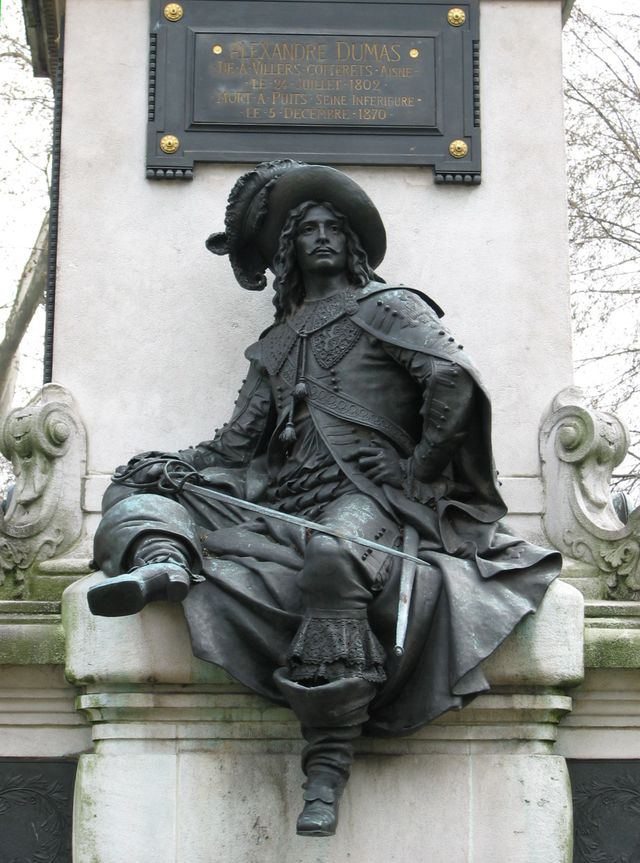
D’Artagnan on the Dumas statue in Paris (photo Marimarina)
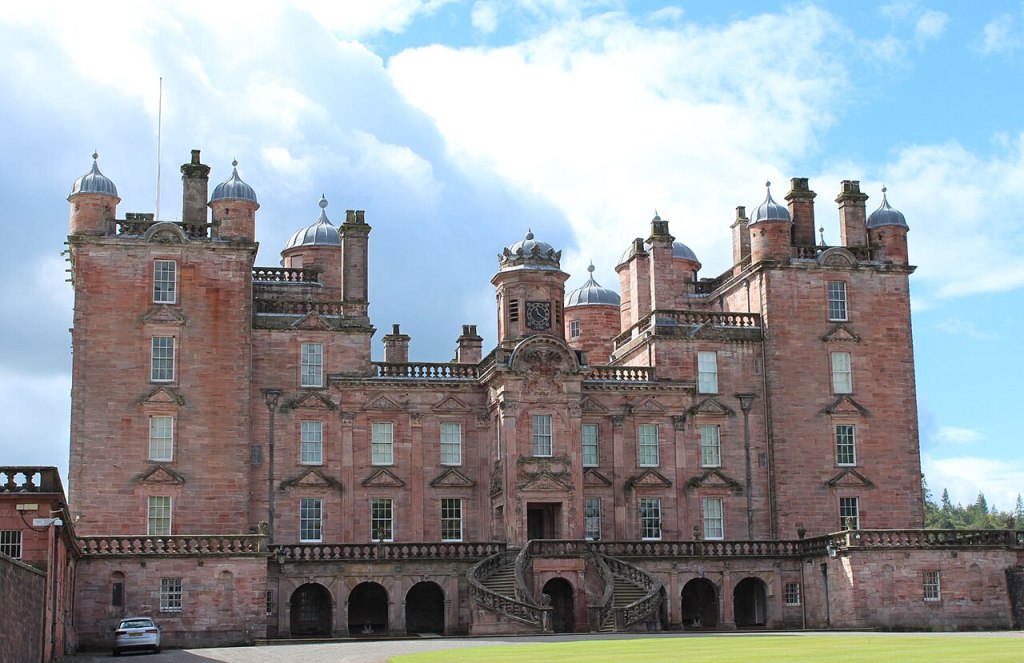
Of all the grand aristocratic families with multiple titles and country houses in the United Kingdom today, one of the few who have also retained much of their ancestral lands is that of Montagu-Douglas-Scott. As their name suggests, this is actually three lineages joined together. The Scotts are an old Scottish clan from the Borders whose heiress married the illegitimate son of King Charles II in 1663 and founded the line of the dukes of Buccleuch, with a seat at Dalkeith House near Edinburgh; then by marrying a Douglas heiress in 1720, the family succeeded (eventually) to the title Duke of Queensberry, with another seat at Drumlanrig Castle in the Borders; and finally, another marriage in 1767 brought them the Montagu estate of Broughton House in Northamptonshire. The history of the Montagus, dukes of Montagu and of Manchester, has recently been told, and that of Douglas, one of the most powerful of all Scots noble houses, will certainly have a post of his own. So here we will focus on the Scotts of Buccleuch.
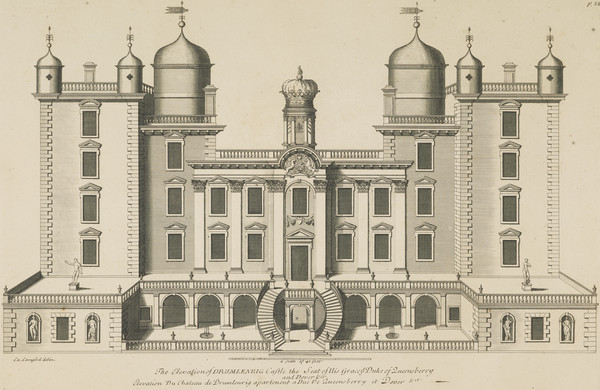
Drumlanrig Castle,seat of the dukes of Buccleuch, with its distinctive pink stone (photo Billy McCrorie)
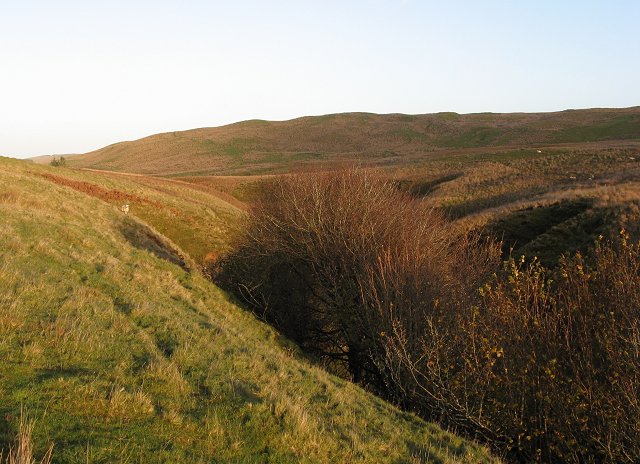
The surname Scott (Scotte, Scotus) traces back to the 1120s, but the first prominent member was Sir Richard Scott, Ranger of Ettrick Forest in the late 1200s. Ettrick Forest was one of the extensive forests controlled by the Scottish kings, this one just north of the border with England, in what is today called Selkirkshire. As Ranger, Sir Richard had access to property and acquired an estate on the Rankel Burn deep in the forest, upon which he built a new house called Buccleuch—pronounced ‘Buckloo’. The name describes a cleugh (gorge) above the burn in which a purported ancestor shot a mighty buck. There are remains of an old castle, now hidden beneath a nineteenth-century farmhouse, and a chapel and ruins of another fortified keep further up the hillside.
The Buck Cleugh (photo Richard Webb)
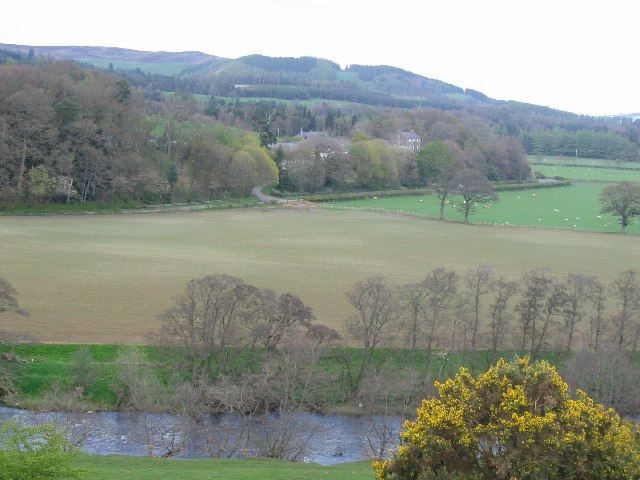
the Ettrick Water on the Buccleuch Estate
About the same time, Sir Richard acquired, by marriage to the heiress of the Murthock family of northern Lanarkshire (the upper Clyde valley), the barony of Murthockstone, which later became known as Murdostoun. The Scotts built a new castle here in the fifteenth century, above the South Calder Water. But it was soon exchanged for lands in the Borders with the Inglis family, who thereafter dominated this area southeast of Glasgow until they sold it in the late nineteenth century. Murdostoun Castle today houses a medical facility.
In about 1350, the family divided into two lines, the senior retaining Buccleuch and the junior, Scott of Synton (or Sinton, a village near Ashkirk in Selkirkshire), eventually becoming Lords Polwarth, inheriting the barony of Polwarth in Berwickshire in 1827 and taking the surname Hepburne-Scott, who continue to the present day, headed by the 11th Lord Polwarth (b. 1947).
Meanwhile, the senior line raised their profile by allying with the Stewarts in the Borders to suppress the Douglasses—and were rewarded with several of the Douglas properties. By the end of the fifteenth century, the Scotts were the most powerful of the border lords—though this was contested by Clan Kerr, in a long-running clan feud.
The Scott arms from a 17th-century map
In the 1420s, the Scotts of Buccleuch acquired half of a barony in neighbouring Roxburghshire, Branxholme, overlooking the river Teviot near Hawick (an area called Upper Teviotdale). In 1446, by the above exchange with the Inglis family, they acquired the other half of the barony, and Branxholme became the new Scott family seat. The tower house here was burned in 1532 during a raid by the Earl of Northumberland, and again destroyed by the Earl of Essex in 1570. Such are the dangers of being a Border family… There is a more moderate house here today, built by Sir Walter Scott of Buccleuch in the 1570s, and remodelled in 1837 for the 5th Duke. The family still retains the property.
Branxholme as it appears today (photo Walter Baxter)
This Sir Walter Scott was the son of Sir Walter Scott (a common name in the family), Warden of Liddesdale and of the Middle March (the name for the frontier with England), until he was murdered in 1552 by the Kerrs. His grandson, another Walter, was Warden of the West March in 1590, famously led a cross-border raid to Carlisle in 1596 to rescue a fellow border reiver that almost caused a war with England (earning him the nickname ‘Bold Buccleuch’ and a number of poems and ballads), and was called to the Scottish Parliament in 1606 as Lord Scott of Buccleuch. Lord Walter helped James VI and I get involved in Dutch Protestant affairs against Catholic Spain without formally committing England and Scotland to war (leading a Scots-Dutch brigade), as did his son Walter who succeeded him in 1611. Because of this service, and likely because his mother and wife were both daughters of earls, this Walter was raised to the peerage to 1st Earl of Buccleuch in 1619. His son Francis succeeded as 2nd Earl of Buccleuch in 1633.
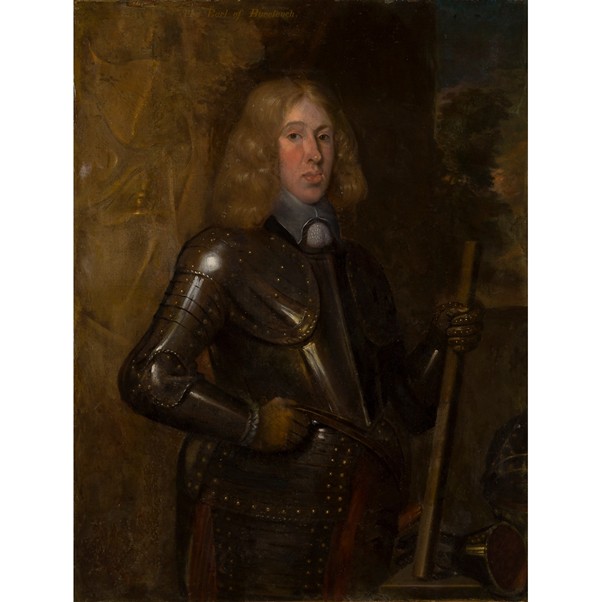
Francis Scott, 2nd Earl of Buccleuch (said to be)
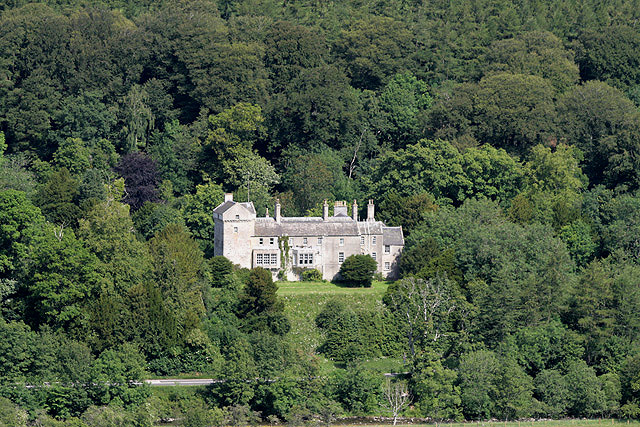
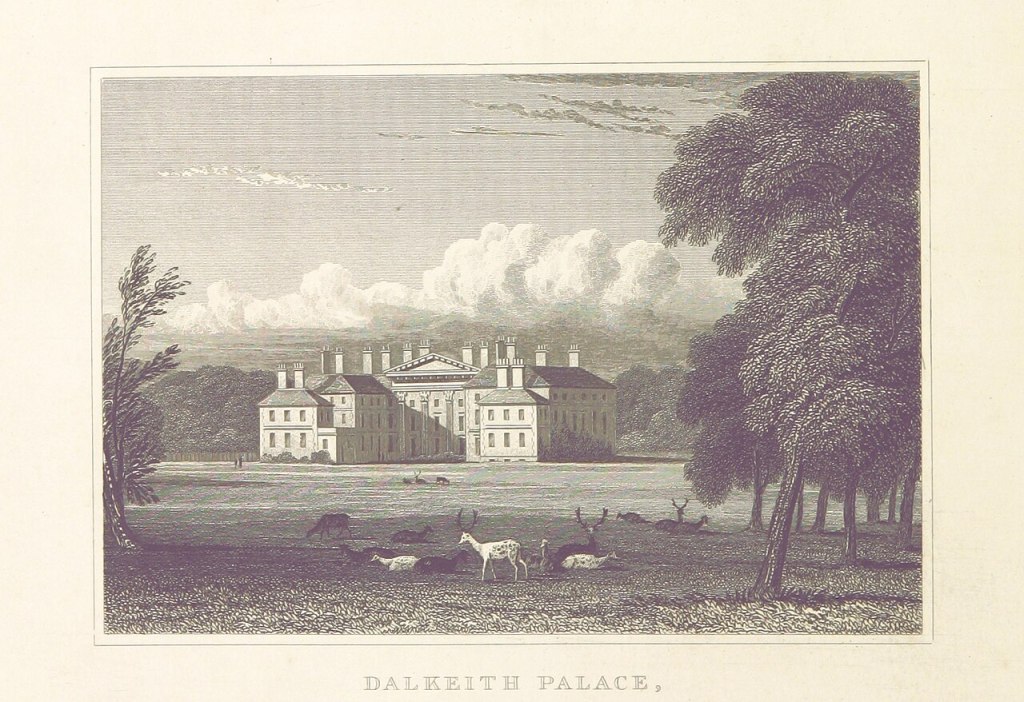
The 2nd Earl acquired a major new property, Dalkeith Palace, to give his family a seat closer to the capital, Edinburgh. The ‘wooded vale’ (dail cheith) of the River Esk, in the County of Midlothian, was guarded since the twelfth century by a castle built by Clan Graham, which passed by marriage in 1342 to Clan Douglas, in the branch of the earls of Morton (who also used the title, since the 1380s, Lord Dalkeith). The castle was the setting for numerous political visits, imprisonments and sieges in the sixteenth century, and was aggrandised (and rebranded as a ‘palace’) by the Earl of Morton who served as Regent of Scotland in the 1570s. It was a favoured residence of King James VI and Anne of Denmark, and their son Charles I when he came north for his Scottish coronation—he liked it so much he began the process of purchasing and enlarging it in 1637, but war intervened, and in 1642, the Douglasses sold it instead to the 2nd Earl of Buccleuch. It would be rebuilt entirely by the Dowager Duchess of Buccleuch (the 2nd Earl’s daughter), 1701-11, as a grand baroque palace, and continued to attract royal visits well into the next century, both George IV and Victoria preferring it to the dark and un-renovated Holyroodhouse. Dalkeith Palace (or Dalkeith House as it became known in the twentieth century) was vacated by the Buccleuch family after 1914, and by the 1970s was leased to a computer firm, and then from the mid-1980s to the University of Wisconsin who ran a study abroad centre here. Since 2021 the house has been reclaimed by the family’s Living Heritage Trust, which also runs the surrounding country park, and has begun hosting art exhibitions, perfect for a day out from nearby Edinburgh.
Dalkeith Palace in 1829
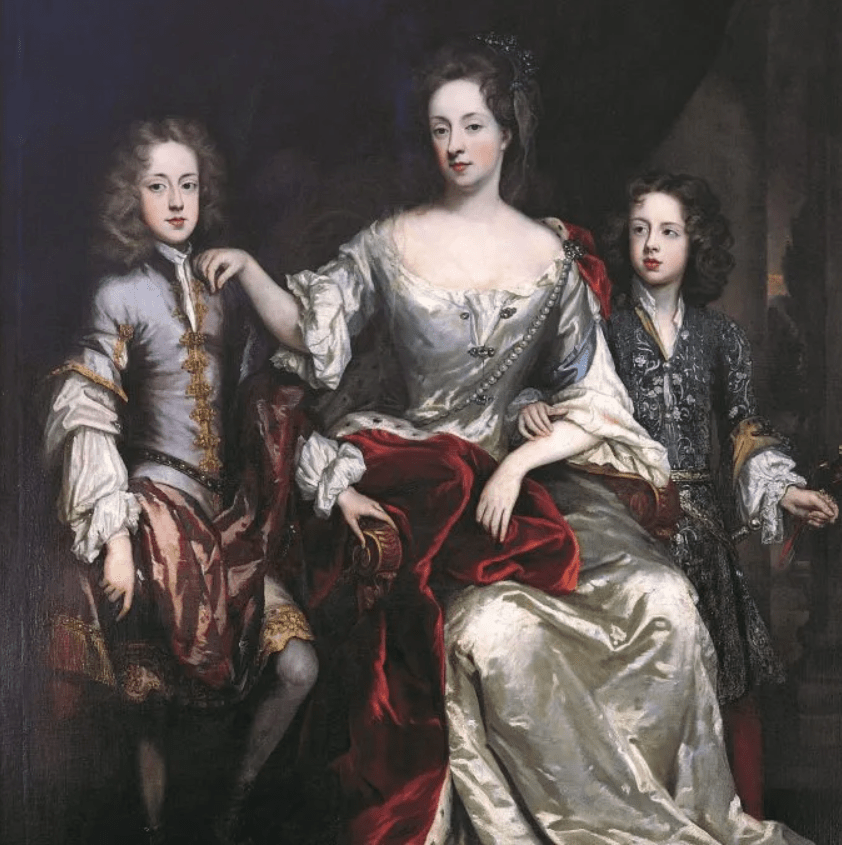
Returning to the seventeenth century, we see that the increasingly politicised 2nd Earl of Buccleuch was a Covenanter, leading a Scottish cavalry unit against the Royalists under Lord Montrose. He died in 1651, leaving two daughters: Mary, who became 3rd Countess of Buccleuch at age four, but died unmarried in 1661; and Anne, 4th Countess, who in 1663, married the Duke of Monmouth. At the time of their marriage, she was created—equally with him—Duchess of Buccleuch, so when he was executed and attainted in 1685, it did not affect her titles or those of her children.
Anne Scott, 1st Duchess of Buccleuch, with her two sons
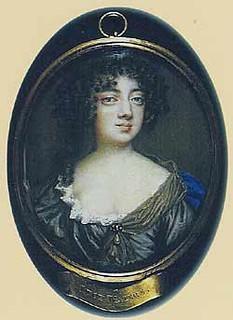
So who was the Duke of Monmouth? James Crofts or James FitzRoy, who later took the surname Scott, was born in April 1649 in Rotterdam, the product of a tryst of a young Charles Stuart and Lucy Walter—both were 18, and Charles had just become king, nominally, after the execution of his father in January. Charles and Lucy had conducted a teen love affair that winter at the court of The Hague—Walter was from a minor Welsh gentry family, and there was always a lingering story that she hoped for better things for herself and her son by claiming that she and the King had married, but no real evidence for this was ever produced—notably towards the end of Charles II’s reign, when courtiers hoped for a Protestant succession, rather than a Catholic one as represented by the King’s brother, the Duke of York.
a miniature said to be Lucy Walter
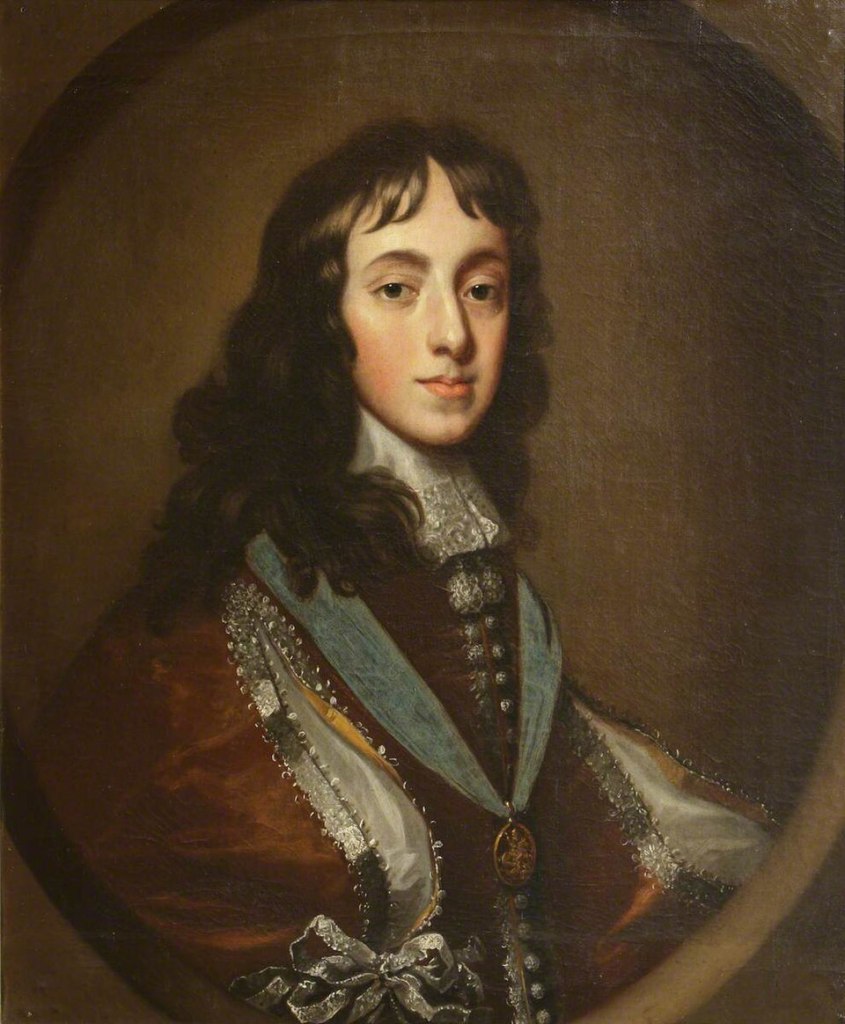
Charles II acknowledged his son James right away, and the baby and his mother moved around between Paris, Cologne and London—which also raised suspicions: Lucy was arrested in 1656 and accused of being a spy, and sent back to the Low Countries. Charles stopped paying her a pension and removed James from her care in 1658, bringing him to the exiled court in Paris, where he was raised by the newly ennobled William, 1st Baron Crofts (hence the first surname), a longtime servant of the King’s mother, and now the King’s Gentleman of the Bedchamber. Interestingly, James Crofts, after he became James Scott, would name his own illegitimate son (born 1683) James Crofts. Lucy Walter, pushed away from Stuart affairs by the sense of a pending Restoration, died later in 1658.
young James Scott National Trust)
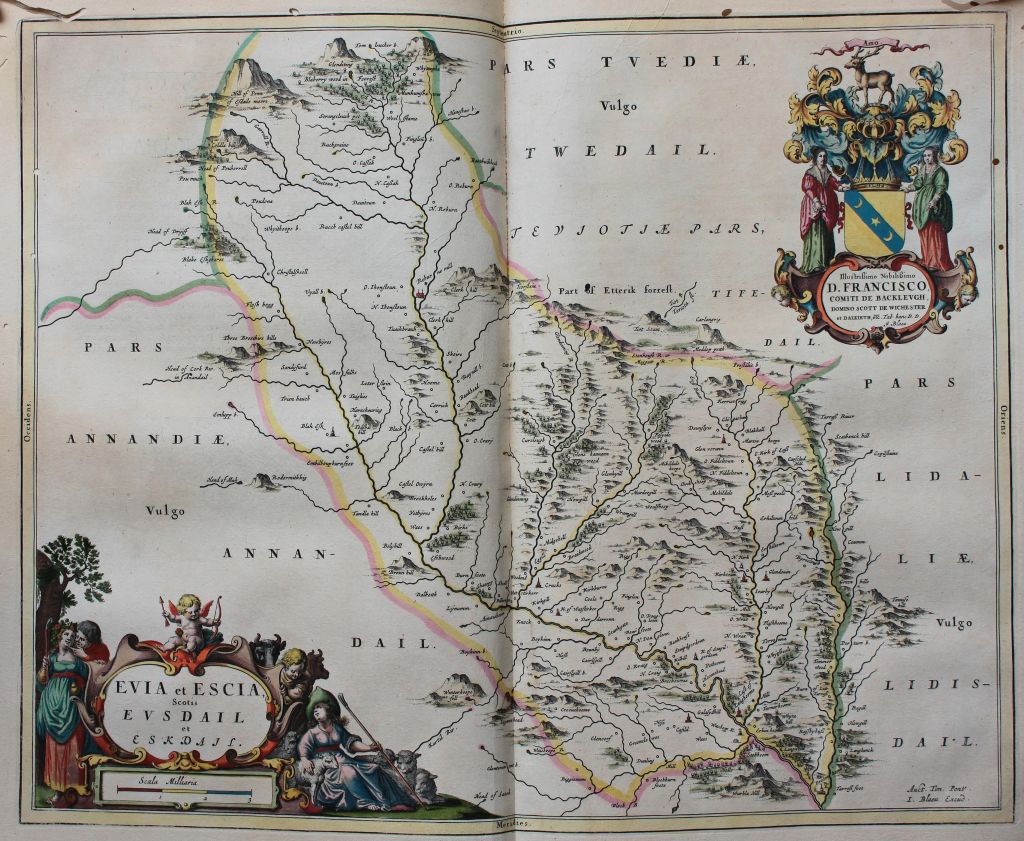
When Charles II was restored to his thrones in England, Scotland and Ireland, he brought his son James home with him. In February 1663, he was created Duke of Monmouth, Earl of Doncaster and Baron Scott of Tynedale. All these titles were in the peerage of England, giving Monmouth a seat in the House of Lords—but clearly a marriage with Anne Scott was already arranged, given the name of the barony. Monmouth is in Wales (though legally in England until the 1970s), Doncaster in Yorkshire and Tynedale in Northumberland. Two months later, the new duke did marry his heiress, and both were created Duke and Duchess of Buccleuch, Earl and Countess of Dalkeith, and Baron and Baroness Scott of Whitchester and Eskdale. Whitchester is on the Teviot near Branxholme, while Eskdale is the valley just across the watershed from Teviotdale, the river Esk flowing southwest into Solway Firth—it is perhaps notable that the barony of Eskdale long belonged to Clan Douglas, so perhaps this foreshadowed the merger of these two ancient rival clans. These titles carried a seat in the Scottish Parliament.
A map of Eskdale from the 1650s. Ettrick Forest and other Buccleuch lands are further north
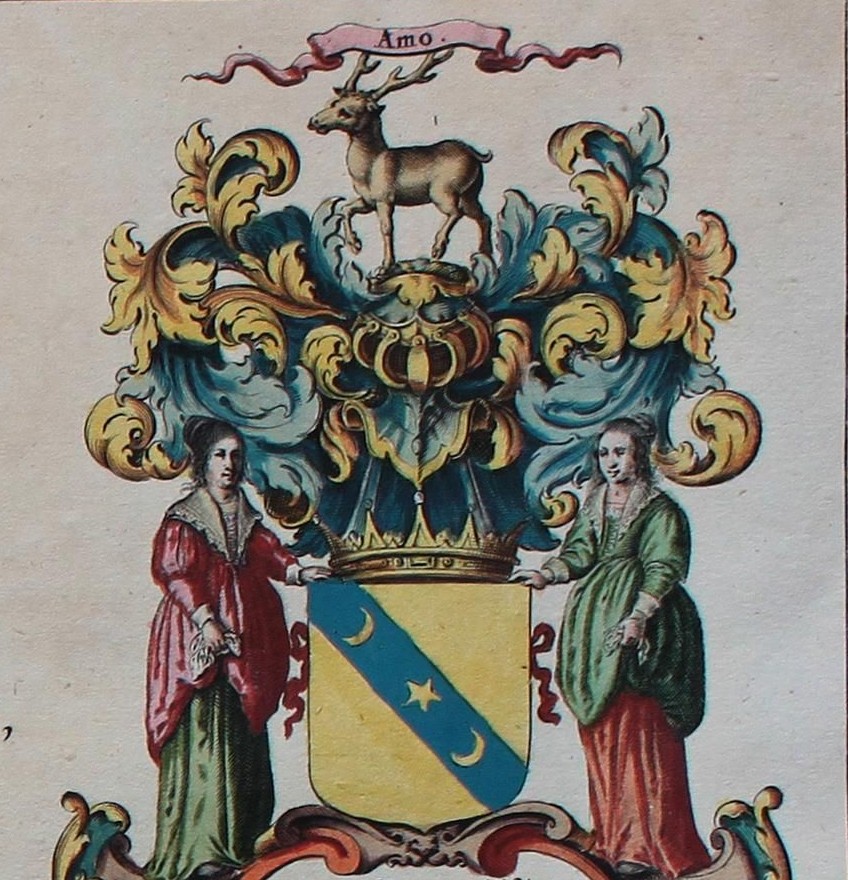
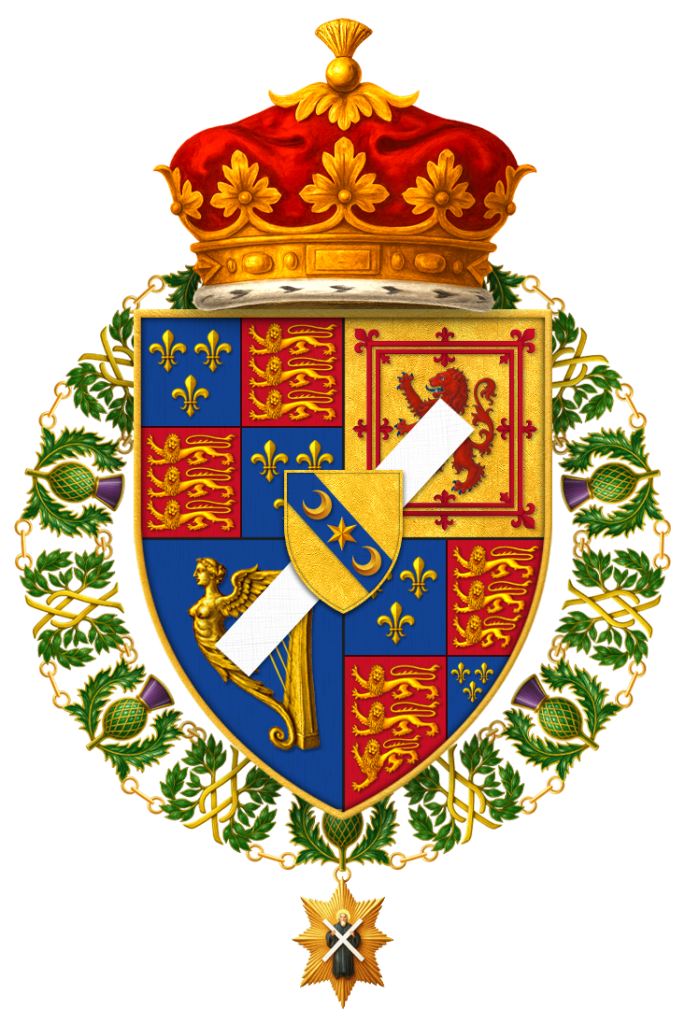
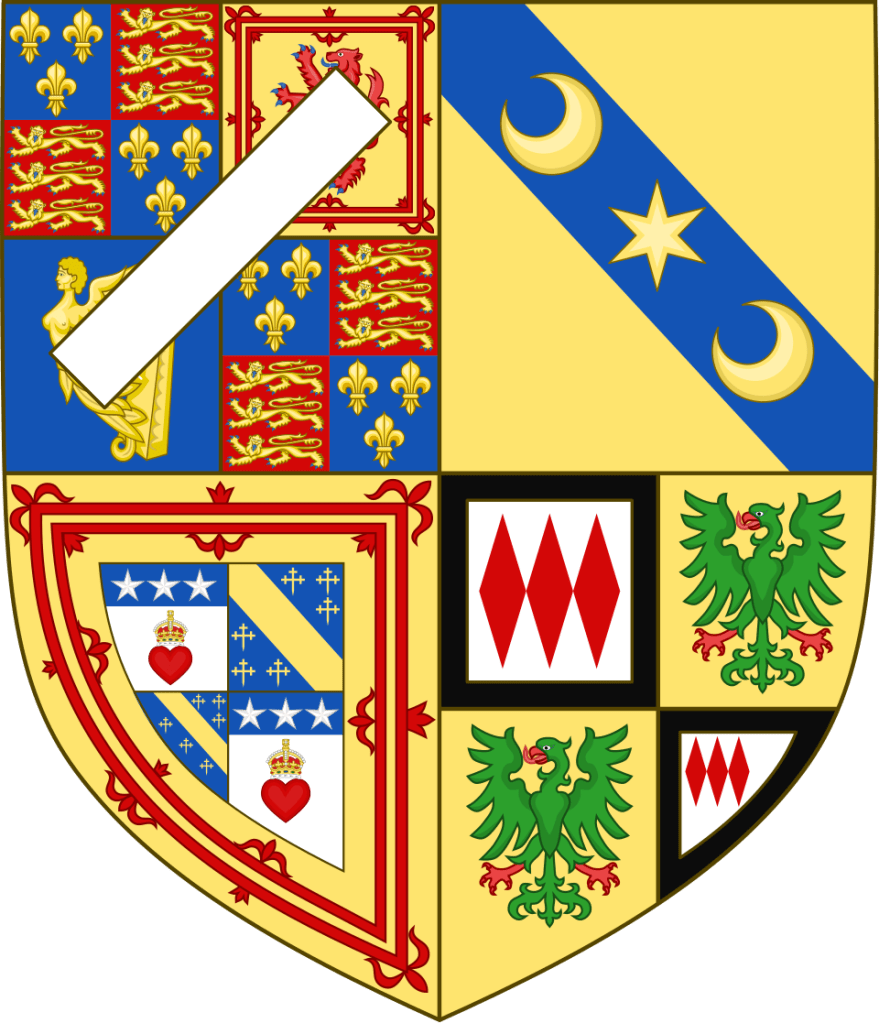
A new dynasty was born, joining together the distinctive coat-of-arms of the Scotts, gold, with two moons and a star on a blue band, with the royal arms of the Stuarts, with a silver ‘bend sinister’ denoting bastardy. The first son, born in 1674, would bear the name Earl of Dalkeith.
the early arms of the dukes of Buccleuch, with Royal Stuart and Scott (and the Order of the Thistle)
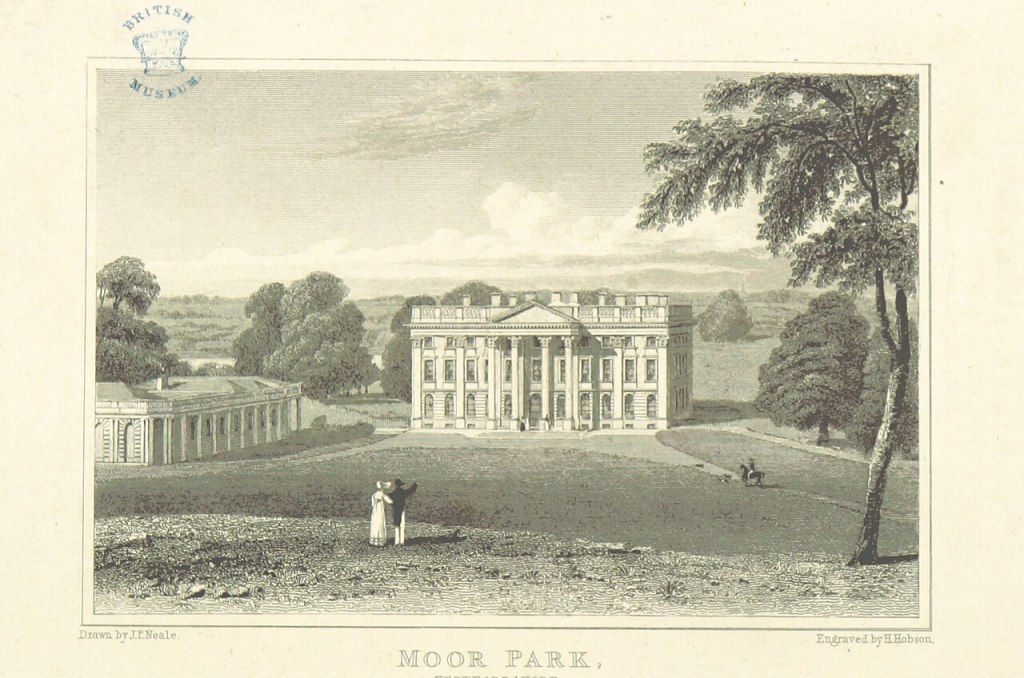
The Duke of Monmouth established his credentials as a military leader right away: serving in the navy against the Dutch in 1665, then appointed Colonel of the Royal Horse Guards in 1668. Rather than live on their Scottish estates far from court, the Duke and Duchess acquired Moor Park in Hertfordshire, north of London, in 1670. This house was a newer residence built in the park of the much older More Palace (or the ‘Manor of the More’). Acquired from the Abbey of St Albans, it had been turned into a residence by Cardinal Wolsey, then housed Katherine of Aragon following the annulment of her marriage. Preparations were made for it to become a country house for Anne Boleyn after her coronation, but she lost her crown before this was finalised. By the 1590s More Palace was in ruins and in the 1660s it was completely pulled down. The property had been leased to the Russells, earls of Bedford, who built the new house in the park (hence ‘Moor Park’) in 1617. Monmouth rebuilt it again in the 1670s, and after his death his widow sold it to a wealthy lawyer Benjamin Haskins-Stiles who fully transformed it into a Palladian villa as we see it today. Over the next two centuries it was bought and sold by various aristocrats, including the son of the Duke of Westminster and Lord and Lady Leverhulme, who in the 1920s, built a golf course in the grounds—today the house serves as its clubhouse.
Moor Park as rebuilt in the 18th century
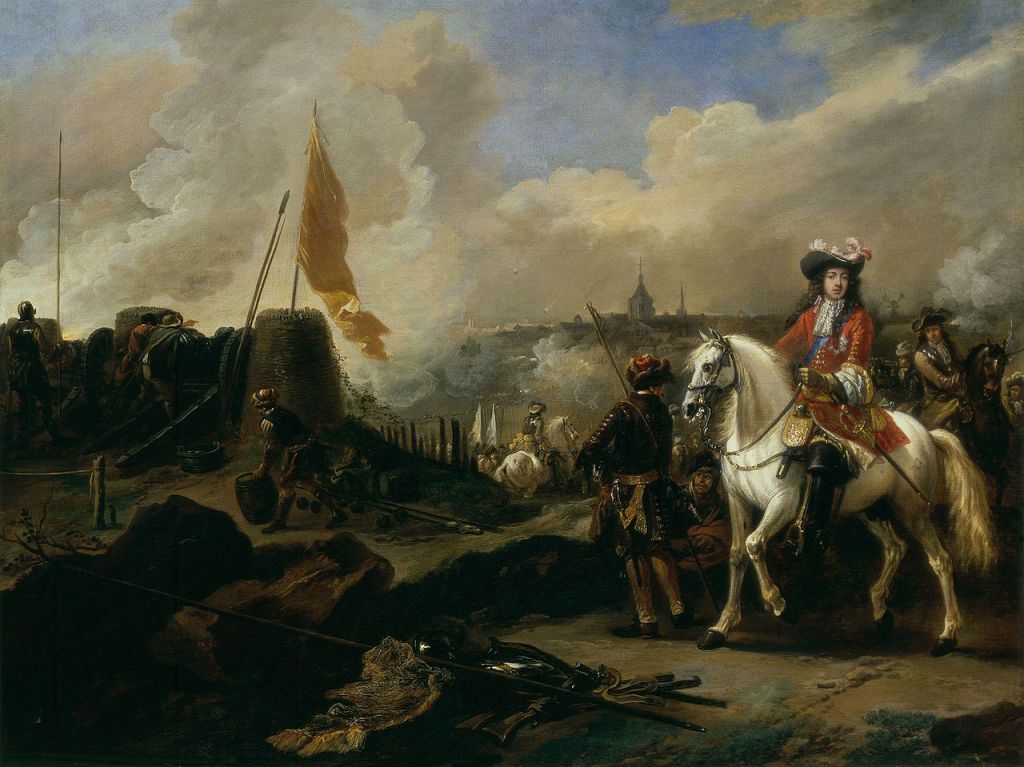
In 1672, the Duke of Monmouth was given command of 6,000 troops that were sent to France to serve in a war against the Dutch. In this war, he showed himself to be one of the era’s finest soldiers—but then so too had the Duke of York, his future rival, in the previous decade. The King, still lacking a legitimate heir after a decade of marriage to Catherine of Braganza, heaped more and more honours on to his favourite son: governor of Hull in 1673, and Lord Lieutenant of the East Riding of Yorkshire, then Master of the Horse, 1674, and effective commander of all royal land forces. In 1678, in a reversal of the situation of 1672, he led a joint Anglo-Dutch force against France, then was sent north in 1679 to put down a rebellion in England.
The Duke of Monmouth at the siege of Maastricht, 1673
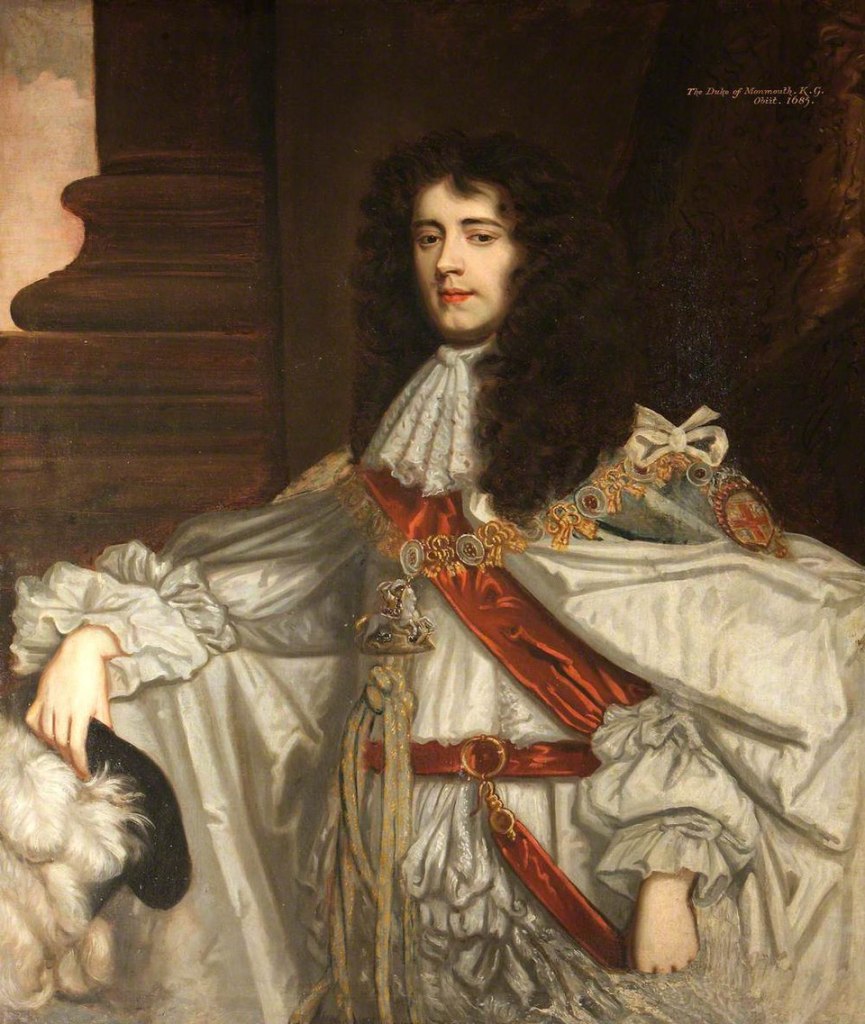
But by the end of 1679, the Exclusion Crisis—a political crisis over Parliament’s efforts to exclude the Duke of York from the succession—forced the King to send his son away from court, especially as Monmouth was not supporting the claims being put forward that his mother had married Charles back in 1648. In contrast to York, Monmouth, a Protestant war hero, was very popular. But he again played his cards wrong by participating (or at least being accused of participating) in the Rye House Plot to murder both the King and the Duke of York in 1683. Then in June 1685, shortly after the death of Charles II, the Duke of Monmouth raised the standard of rebellion against the new king, James II, at Lyme Regis, in Devon. His forces were soundly defeated at Sedgemoor in Somerset, 6 July. He was arrested and his titles attainted—many people hoped for clemency, including the Dowager Queen, Catherine, but Monmouth was executed on 15 July on Tower Hill. As noted above, his English titles were attainted, while the Scottish ones were allowed to continue for his widow and eldest son—the English subsidiary titles (Doncaster and Scott of Tynemouth) were, however, restored to the 2nd Duke in 1743.
James Scott, Duke of Monmouth and Buccleuch, in Garter Robes, after Lely (National Trust)
In 1685, the Duke of Monmouth left behind his widow and two sons, James and Henry, born in 1674 and 1676. Other children had died young, and there were several illegitimate children, including Henrietta Crofts who married the Duke of Bolton. Their mother, Anne, Duchess of Buccleuch, re-married in 1688 as the second wife of Charles, 3rd Baron Cornwallis, First Lord of the Admiralty, and they had several daughters, but only one, Isabella, lived long into the next century, unmarried (and used, notably, her mother’s surname, as a potential heiress to the dukedom should her half-brothers die without heirs). The eldest son, James, Earl of Dalkeith, did not become 2nd Duke of Buccleuch since he died in 1705, many years before his mother (who died in 1732). A year after his death, his brother Henry was created Earl of Deloraine. He was a politician elected to the last Scottish Parliament who voted in favour of its dissolution and to join the English Parliament in 1707. This title was based in the usual Scott homeland of Ettrick Forest, named after a burn called Deloraine, an affluent of Ettrick Water. His subsidiary titles included Lord Goldielands, a tower house on the Teviot, south of Hawick; and Viscount of Hermitage, a castle with a very eminent story in the history of Scotland.
Henry Scott, Earl of Deloraine
Hermitage Castle, in Liddesdale, County Roxburghe, was probably named for the Old French l’armitage or gatehouse. It was built in the 1240s by the De Soulis family, whose last member, William, left behind a curious legacy of witchcraft and attempted regicide. Visitors to the castle today are still confronted with stories of ghosts and strange noises. He lost the castle in 1320 and it was granted to the Black Douglas family, earls of Douglas, who rebuilt it on a grander scale. After that family was brought down by the Crown in the 1450s, the castle was re-granted to the Hepburns, earls of Bothwell. It was thus the property of Lord Bothwell during some of the more romantic escapades of the reign of Mary, Queen of Scots in the 1560s. It was again confiscated by the Crown after a plot against James VI by Bothwell’s nephew in 1593, and a year later was granted to the ever-loyal Scott of Buccleuch. After the Stuarts joined the crowns of Scotland and England, however, a powerful border fortress was no longer needed, so Hermitage was neglected. By the time it was part of the estates of the Earl of Deloraine, it was a ruin. The dukes of Buccleuch recouped the property in 1807 and held it until it was given to the nation in 1930—today it is one of the jewels in the tourism crown of Historic Environment Scotland.
Hermitage Castle today (photo Postdlf)
The Earl of Deloraine was rewarded for his loyalty to the Act of Union and to the Hanoverian Succession with a position in the household of the Prince of Wales, as Gentleman of the Bedchamber. In this position he met Mary Howard (of the Berkshire branch of Howards), a maid of honour to the Princess of Wales, and they wed in 1726. When the Prince became George II in 1727, Deloraine was elevated to Gentleman of the Royal Bedchamber. His wife could no longer be a maid of honour, but the new queen, Caroline, appointed her governess of her daughters Mary and Louise. After the Earl died in 1730, she re-married the tutor of Prince William, William Windham, though continued to be referred to as Lady Deloraine, notably once she became the King’s mistress in about 1737. She held this position at court—and became known for her rude behaviour—until unseated abruptly by Amalie von Wallmoden in 1742 (who retained the title until the King’s death in 1760).
The Earl had two sons, Francis and Henry, who succeeded him as 2nd and 3rd Earl of Deloraine in 1730 and 1739, but the latter only for a year before being succeeded by his infant son Henry, who held the earldom until 1807. After his death, the properties returned to the main line of Buccleuch.
The Earl of Dalkeith had married well, in 1694, to Henrietta Hyde, daughter of the 1st Earl of Rochester, whose sister Anne was the mother of the two Stuart princesses, Mary and Anne, so Henrietta was first cousin to two regnant queens. They had one son, Francis, who became 2nd Duke of Buccleuch when his grandmother died in 1732.
A man of his times, the 2nd Duke was interested in science and the Enlightenment—leading to his appointment as Grand Master of the Freemasons, 1723-24, a Fellow of the Royal Society, 1724, and ultimately being awarded an honorary doctorate from Oxford University, 1745. While nothing specific is attributed to him in terms of scholarship, he was known as a patron in a variety of scientific fields. In Parliament, he was selected as one of the Scottish representative peers, then became a peer on his own right, 1743 when his grandfather’s English titles were restored (so he sat as Lord Doncaster). He married twice, Jane Douglas, daughter of the 2nd Duke of Queensberry—more on that below—and Alice Powell in 1744, before he succumbed to smallpox in 1751.
Before he died, the 2nd Duke greatly increased the holdings of the family’s country houses. He acquired the Manor of Spalding in the fenlands of southern Lincolnshire, and rented Hall Place at Hurley in Berkshire as his country seat nearer to London—close to Maidenhead, this house sat high above the Thames valley, and was modern and stylish, built in 1728 by a London lawyer (today it houses the Berkshire College of Agriculture). Then in 1747, the Duke purchased Bowhill in the old Scott heartland of Selkirkshire for his son as his seat until he inherited Dalkeith House (and to give him a footing to run for a seat in Parliament in that county).
Hall Place photographed in the 1940s
Bowhill House, a few miles outside the town of Selkirk, was built in 1708 by John Murray, Lord Bowhill (a Lord of Session). After it was purchased by the Scotts of Buccleuch, it was slowly improved and enlarged, converting it from a summer house to a permanent residence, and in particular, a showpiece for the growing art collection of three dynasties (Scott, Montagu and Douglas)—still today, the collection here is impressively grand.
Bowhill House, Selkirkshire (photo Richard Webb)
It is interesting to consider that this new purchase was already in the heart of Scott territory, in the Yarrow Water valley near its confluence with the Ettrick Water, and thus downstream from both Deloraine and Buccleuch itself. Also in this valley, much closer to Bowhill, was the remains of Newark Castle, a tower house built by the 4th Earl of Douglas in 1406 as a ‘new wark’ to replace his older castle as the seat of feudal administration for this district. Confiscated in 1455, Newark became the administrative centre for the Royal Forest of Ettrick. Over the next century the castle and its lands were given to various Scottish queens as part of their jointure lands, with the Scotts of Buccleuch sometimes acting as captain until they acquired the property outright by the later seventeenth century. It is now thus reunited with Scott property at Bowhill, the seat of the eldest sons of the dukes of Buccleuch.
Newark Castle (photo Walter Baxter)
The first of these eldest sons, Francis, Earl of Dalkeith, died in 1750, at 29, so the succession to the dukedom skipped a generation to pass to his son. Dalkeith had married Lady Caroline Campbell, eldest daughter of the 2nd Duke of Argyll, who had been created Duke of Greenwich in 1719 (as means of guaranteeing a seat in the united British Parliament); after Argyll died in 1743, Caroline became co-heiress with her sisters, and in 1767 was created Baroness Greenwich—she had remarried the politician Charles Townshend, and the title was created to pass to their eldest son, but they had no surviving sons, so this title went extinct on her death in 1794.
Francis, Earl of Dalkeith, in Hussar uniform, 1747
Henry Scott became 3rd Duke of Buccleuch as a child when his grandfather died in 1751. He had a good education, and was tutored by Adam Smith on his Grand Tour. Perhaps fittingly for a man educated by the greatest economist of the age, the Duke established his career in 1777 as Governor of the Royal Bank of Scotland. Later the King appointed him Lord Lieutenant of Midlothian and Haddington, 1794, and he was put in command of troops in Scotland in case of French invasion during the Revolutionary Wars.
Henry Scott, 3rd Duke of Buccleuch and 5th Duke of Queensberry
Back in 1767, the 3rd Duke had married Lady Elizabeth Montagu, daughter of George Brudenell and Mary Montagu of Boughton, 1stDuke and Duchess of Montagu of a new creation in 1766. When Brudenell died in 1790, his daughter the Duchess of Buccleuch inherited the Montagu lands—notably Boughton House—but not the dukedom (though her second son was set up as Baron Montagu of Boughton, see below). Two decades later, however, the 3rd Duke did inherit another dukedom, Queensberry, from his grandmother’s first cousin once removed, William Douglas, 4th Duke of Queensberry who died in 1810. This dukedom had been created in 1684 for a branch of the Douglas family that were based at Drumlanrig Castle in Dumfriesshire, not far from Queensberry Hill (in the Lowther Hills) from which it took its name. The history of this family and the titles associated with it will be detailed in a separate blog, but here we can note that its subsidiary titles from 1684 were Marquess of Dumfriesshire, Earl of Drumlanrig and Sanquhar, Viscount of Nith, Torthorwald and Ross, and Lord Douglas of Kilmount, Middlebie and Dornock. Douglas was also Marquess of Queensberry and Earl of March, but as these had separate rules of creation, when he died in 1810, they passed to different Douglas relatives.
Lady Elizabeth Montagu, Duchess of Buccleuch and Queensberry
Of all these titles, it is worth noting that of Nith, since it was in the Nithsdale that Drumlanrig Castle was situated (and Sanquhar is nearby). The old castle, taking its name possibly from drum (ridge) and lanerc (a clearing in a wood), had been the centre of the Queensberry estate for a long time before the 1st Duke of Queensberry built a new, much grander castle here in 1679-89, and added a formal garden following the latest French and Dutch designs, with a summer house and water cascades. It became one of the grandest of all Scottish residences, with its distinctive pink stone, and is now the primary seat of the Buccleuch family.
Drumlanrig elevation (National Galleries of Scotland)
After 1810, the 3rd Duke of Buccleuch and 5th Duke of Queensberry, thus took the name Montagu-Douglas-Scott, and later generations would use a more complex coat-of-arms for the family: Royal Stuart (‘bruised’ for illegitimacy), Scott, Douglas, Montagu (and more recent generations would also add quarters indicating descent from the Campbells, the Brudenells and the Churchills).
dukes of Buccleuch and Queensberry (Stuart, Scott, Montagu and Douglas)
This now triple dynasty was still connected to the rest of Clan Scott, however, and the Duke was (and is) considered clan chief. Other branches of the Scotts, like the ducal line, had consistently remained loyal to the new Hanoverian regime across the eighteenth century, evident in both Jacobite uprisings, the ’15 and the ’45. This extended to the remaining members of Clan Scott: one of the most aggressive and brutal redcoats being Captain Caroline Frederick Scott, who defended Fort William in March 1746.
Other interesting Scotts from different branches include the most famous of all, Sir Walter Scott the poet and novelist. He came from the line of Harden (from the same branch that spawned the Lords Polwarth), with their seat at Smailholm Castle near Kelso in the Borders. The castle being a ruin by the late eighteenth century, this Walter Scott grew up in Edinburgh, studied at the university there, and became one of the most famous of all Scottish writers, with novels including Ivanhoe, Rob Roy, Waverley and The Lady of the Lake. He was also a historian, and elected President of the Royal Society and the Society of Antiquaries of Scotland. He worked with George IV to recover the Crown Jewels of Scotland (lost since the 1650s) and stage-managed the King’s visit to Scotland in 1822—reviving the use of tartan and the wearing of kilts as part of the royal identity in Scotland. The King created Scott a baronet in 1820, of Abbotsford, the name of a house he had recently built, in romantic Gothic Revival style, near Galashiels, on the Tweed. Abbotsford would be lived in by a Scott descendant until 2004 when it was completely turned over to tourism.
Sir Walter Scott, by Lawrence (Royal Collection)
Abbotsford from across the Tweed, c1830
Two other Scotts are worth noting here, two more novelists, both known confusingly as Lady Scott. Caroline Lucy Scott (d. 1857) was a niece of the 3rd Duke of Buccleuch, married to Admiral Sir George Scott. She wrote anonymous novels in the 1820s-30s but published later religious tracts under her own name. Harriet Anne Scott (d. 1894) was the wife of Sir James Scott, 3rd Baronet of Dunninald (from the Scott of Logie branch). She wrote ten novels in the 1830s-60s, using her own name after the first few.
The first duke of both Buccleuch and Queensberry only held these titles for two years. His son, Charles, 4th Duke of Buccleuch and 6th Duke of Queensberry, had been known for most of his life as the Earl of Dalkeith and had a long career as an MP in the British House of Commons until he was ‘accelerated’ into the House of Lords by a royal writ creating him Baron Scott of Tyndale in 1807. He was Lord Lieutenant of Dumfriesshire from 1797 and succeeded his father as Lord Lieutenant of Midlothian in 1812. But his hold on the ducal titles was also short, dying only seven years later.
The 4th Duke had been responsible for improving Drumlanrig Castle, pulling together the art collections at Bowhill, and establishing the parish church of St Edmunds, Warkton, near Boughton House, as the new family sepulchre (though some remained buried in St Mary’s, Dalkeith). He also showed an interest in technology and sponsored one of the oldest iron bridges in Scotland, at Langholm Lodge (built for the 3rd Duke in 1786), over the River Esk north of Gretna Green (known as the ‘Duchess Bridge’). The Lodge was demolished in 1853, but the ornamental gardens built around it survive.
the Duchess Bridge at Langholm
The 4th Duke’s younger brother, Henry, in 1790 inherited one of the new creations for the Montagu family, Baron Montagu of Boughton, and along with it, the large feudal property called the Forest of Bowland in Lancashire. He died in 1845 leaving only daughters—so the barony of Montagu of Bought became extinct and the lordship of Bowland passed to another family. A sister also helped keep these family lines connected, however, by her marriage to one of the other co-heirs, Charles Douglas, 6th Marquess of Queensberry.
In 1819, most of this passed to Walter Montagu-Douglas-Scott, the 5th Duke of Buccleuch and 7th Duke of Queensberry. As a young magnate, he was interested in the continued development of Scotland, and funded the development of Granton Harbour on the Edinburgh waterfront. He had a political career as a Conservative member of Peel’s government: Lord Keeper of the Privy Seal, 1842-46, then Lord President of the Council, briefly, January to July 1846. He also maintained a position at court, as Captain-General of the Royal Bodyguard of Scottish Archers and an aide-de-camp to Queen Victoria. He was far and away one of the richest men in the United Kingdom, with 250,000 acres in Dumfriesshire, 100,000 in Roxburghshire, 60,000 in Selkirkshire, 18,000 acres in Northamptonshire, and another 24,000 scattered all over England and Scotland (about 460,000 acres total).
Walter, 5th Duke of Buccleuch
A new property added by this duke was Eildon Hall, near the river Tweed and the town of Melrose in Roxburghshire. Built in the shadow of Eildon Hill, an isolated outcropping in the Scottish Borders, Eildon Hall was constructed as a hunting lodge by a local surgeon in 1802, then bought by the 5th Duke of Buccleuch in 1838 to enhance his newly established Buccleuch Hunt in the surrounding Cheviot Hills. By the end of the century, it had become the usual residence of the earls of Dalkeith as heirs to the dukedom.
Eildon Hall (photo Jenny Gumbrell)
The 5th Duke, who died in 1884, had three sons: the youngest, Lord Charles, was an admiral in the navy with a very long career; the second, Lord Henry, became Baron Montagu of Beaulieu and started a junior line, about which more below. The eldest, William, was, as the Earl of Dalkeith, an active MP in the 1850s-80s, and established his London residence at Montagu House on Whitehall Street. This was a townhouse with frontage on the Thames, initially built in the 1730s by the 2nd Duke of Montagu, on a site previously part of the medieval residence of the archbishops of York. The Georgian mansion was replaced in the 1850s with a much larger, and fairly unusual French Renaissance style house, one of the grandest private mansions in London. In 1917 it was taken over for use as government offices, and was demolished in 1949 (the site is now part of the Ministry of Defence).
Montagu House as rebuilt in the 1850s
William, 6th Duke of Buccleuch, succeeded his father as Captain-General of the Archers, and was named a member of the Privy Council in 1901. He died in 1914, leaving behind five sons (an older son, Walter, had died young): John became the 7th Duke, while George, Henry and Herbert were soldiers—the latter was also the great-grandfather of Sarah Ferguson, Duchess of York. Lord Francis was not a soldier, a black sheep I guess.
William, 6th Duke of Buccleuch, in the uniform of the Royal Scottish Archers
Before continuing the main line in the twentieth century, we should pause to look at the line founded by Lord Henry: Montagu of Beaulieu. Unlike the senior line, they use the surname Douglas-Montagu-Scott (and reverse the order of the quarterings in the coat-of-arms). Lord Henry was created Baron Montagu of Beaulieu in 1885. He had been an MP for Hampshire from 1868 to 1884 but was better known as a world traveller: Australia, Egypt, South Africa, and so on. In 1865, he was given Beaulieu Palace House by his father and thus rooted his career and his family in the southern country of Hampshire—for example, in 1890 he was appointed Verderer of the New Forest, a medieval office pertaining to keeping woodlands healthy and ‘verdant’ or green.
Beaulieu (pronounced ‘Byoolee’) had been built in the 1200s as the gatehouse for the Abbey of Beaulieu (‘beautiful place’). This was a Cistercian abbey, an order known for living in isolated places and being self-sufficient communities, founded in 1203 by King John. It became known as an ‘exempt’ abbey, owing obedience directly to the pope, not the local bishop. Much of the abbey buildings remain today, but it is the gatehouse that was acquired at secularisation in 1538 by Thomas Wriothesley, who later became Earl of Southampton. The house passed by inheritance to the Montagus, and then to the Scotts, as we’ve seen, who enlarged the building the nineteenth century, retaining its Gothic style.
Beaulieu Abbey remains (photo David Dixon)
Beaulieu Palace House (photo DeFacto)
The 2nd Baron Montagu succeeded his father in 1905; already a pioneer of the motorcar in the 1890s, when he died in 1929, he passed this passion on to his son—eventually, for at the time of succession, Edward Douglas-Montagu-Scott was only three. When he died in 2015, the 3rd Baron thus passed a milestone for the longest peerage tenure: 86½ years. The 3rd Baron founded the National Motor Museum at Beaulieu in 1952, and hosted the Beaulieu Jazz Festival here between 1956 and 1961. He is most famous, however, for the scandal that broke out in 1954 when he was arrested, tried and imprisoned for homosexual acts—which gained in significance as a major catalyst for public scrutiny of the laws and ultimately the decriminalisation of homosexuality in the 1960s. The Baron himself was bisexual and married to produce today’s 4th Baron Montagu (Ralph, b. 1961). Following the scandal, the 2nd Baron rose again in society, and was Chairman of the Historic Houses Association, 1973-78, then of English Heritage, 1984-92.
Edward Douglas-Montagu-Scott, 3rd Baron Montagu of Beaulieu, with one of his motorcars
Returning to the main line, John Montagu-Douglas-Scott, 7th Duke of Buccleuch and 9th Duke of Queensberry, spent much of his life as an heir, first as Lord Eskdaill then as Earl of Dalkeith. As a young man he served in the Navy and in the House of Commons. When he became Duke in 1914, he vacated Montagu House and moved to No 2, Grosvenor Place. He was appointed Lord Lieutenant of Dumfriesshire, 1915, and Lord Clerk Register for Scotland, 1926. A few weeks after his death in October 1935, his daughter Lady Alice made a spectacular marriage to a member of the royal family: Prince Henry, the Duke of Gloucester, third son of King George V. It is interesting to consider this a reunion of distant kinship, since—we should recall—the Montagu-Douglas-Scotts were themselves a cadet branch of the House of Stuart. Princess Alice, Duchess of Gloucester, lived until 2004, dying at age 103!
John Montagu Douglas Scott, 7th Duke of Buccleuch and 9th Duke of Queensberry
the Duke and Duchess of Gloucester (Alice Montagu-Douglas-Scott) and their two sons, 1945
Her brother Walter, 8th Duke of Buccleuch, split his time between the three main residences of the family, Drumlanrig, Bowhill and Boughton, and continued to be one of the largest private landowners in the UK in an era when other aristocratic fortunes were crumbling. Like his predecessors, he was Captain-General of the Royal Company of Archers, but was also appointed Lord Steward of the Household—until he was compelled to resign by George VI for displaying awkwardly pro-German sentiments. It was known that he attended Hitler’s birthday party in 1939, and campaigned for a truce rather than war, but some say he went further and met secretly with Ribbentrop in London. Still, he remained close to the royal family through his sister’s marriage and through his own (in 1921) to Mary Lascelles, a cousin of the Earl of Harewood (husband to Princess Mary). His daughter Elizabeth also married within this elite circle and became Duchess of Northumberland.
Walter, 8th Duke of Buccleuch, and his wife Mary Lascelles
The 8th Duke died in 1973 and was succeeded by his son John, who also had a naval career, then served in the Commons (known as ‘Johnny Dalkeith’). In 1971, he had a hunting accident and spent the rest of his life in a wheelchair, but he continued to regularly attend the Lords (once he became duke) and held other prominent offices: Lord-Lieutenant of Roxburghshire and of Selkirkshire (merged from 1975), and Chancellor of the Order of the Thistle, 1992 to 2007.
John, 9th Duke of Buccleuch (photo Allan Warren)
In 2007, Richard Montagu-Douglas-Scott (b. 1954) became the 10th Duke of Buccleuch and 12th Duke of Queensberry. He is Chief of Clan Scott, and like his father, Chancellor of the Order of the Thistle as well as Lord Lieutenant of Roxburgh, Ettrick and Lauderdale. Besides the family’s main large residences, he lives at Eildon Hall (the traditional home of the heir). Since 2018, he has been surpassed as the largest private landowner in the UK, but still holds an impressive 217,000 acres (about 880 km2). The Buccleuch Group manages his interests in estates but also wind farms, tourism and forestry. The Duke holds ceremonial posts, notably as Captain-General of the Royal Company of Archers, which carries the title ‘Gold Stick for Scotland’ with its key role at the openings of the Scottish Parliament and at royal coronations and funerals—as recently seen in 2022 and 2023. He is active in Scottish society as President of the National Trust for Scotland, 2003-12, and President of the Royal Scottish Geographical Society, 1999-2005 (and many other things). Also active in the church, he was appointed High Steward of Westminster Abbey in 2016, and Lord High Commissioner to the General Assembly of the Church of Scotland, 2018-19, the Queen’s personal representative to the Kirk.
Richard, 10th Duke of Buccleuch and 12th Duke of Queensberry, as ‘Gold Stick’, Captain-General of the Royal Company of Archers, at the late Queen’s funeral, 2022 (photo Katie Chan)
The triple dynasty is secure with an heir, Walter, Earl of Dalkeith (b. 1984) and a spare, Willoughby Ralph, Lord Eskdaill (b. 2016), plus an uncle, Lord Charles Scott (b. 1987), and many cousins, descendants of the 6th Duke. Reaching out for the crown in 1685, the Scotts remain essentially a clan of the Borders with roots still in Ettrick Forest.
Those knowledgeable about the dynastic details of the life of Queen Victoria will know that she had a half-sister, Princess Feodora. But her appearance in season three of the television series Victoria surprised many—at the time, I was asked if this was a fictional character added to make the series more interesting, as historical dramas often do. She was indeed a real person: one of two children born to Victoria’s mother from her first marriage to the Prince of Leiningen.
Princess Feodora of Leiningen, Princess of Hohenlohe-Langenburg, c1858 (Royal Collection)
Leiningen? What is it? It was one of several ancient counties of the Holy Roman Empire that was elevated to the status of an autonomous principality in the final years of the Empire’s existence, then was snuffed out in the re-shuffling of Europe’s political boundaries at the Congress of Vienna in 1815. The family retained a princely rank, if no genuine sovereignty, all the way up to the fall of the German Empire in 1918. And because they were related to the British royal family, they forged several marriages of the highest order beyond the level of their peers. The other German princely family most associated with Princess Feodora was Hohenlohe—her husband’s family—and they too kept up relations with the British royal family, notably through Feodora’s third son Victor who came to live in the United Kingdom and served in the Royal Navy. But the Hohenlohes are part of a different story and will have their own blog post. The two half-siblings of Queen Victoria, Feodora and Karl of Leiningen, belonged to one of the most ancient noble houses of the Palatinate, the area of the Rhineland that was the political and economic core of the Holy Roman Empire from its earliest days.
cousins Ernst of Leiningen and Viktor of Hohenlohe-Langenburg, 1857, by Frederick Richard Say, now in the British Royal Collection
Leiningen Castle was built by a Count Emich in about 1100, in the area of hills west of the middle Rhine where the flat river plain meets the Palatine Forest (the Pfälzerwald), near the ancient episcopal city of Worms. The family also built about this same time a nearby abbey, Höningen, to serve as the family sepulchre. There is a record of an earlier Emich (or Amicho) who donated property in the Worms area to a local abbey in 782, and descendants were called the Emichonen (because many of them held this name), owning property in the mid-tenth century in the area known as the Nahegau (the valley of the river Nahe). Unlike most noble families, the date for their elevation to the rank of count is impossible to pinpoint, but they were certainly called counts by the time of another Emich, a leader of the First Crusade in the 1090s.
The origin of the family name is also not known for certain. It is possible the castle, and then the family, took its name from the Leinbaum, the lime tree growing on the banks of the Leinbach (now called the Eckbach)—and indeed, the older family coat-of-arms bore a lime tree. The area around their holdings became known as the Leiningerland.
a French map of the Middle Rhine, with the County of Leiningen (Linange in French) in pink between the bishoprics of Worms and Speyer, with ‘Old Leiningen’ at the far western end of the county
The first castle, now known as Altleiningen, endured centuries of conflict as armies marched up and down the Rhine, then was badly damaged in the Peasants War of 1525 and rebuilt in a newer Renaissance style. Destroyed again by French troops who ravaged the Palatinate in 1690, it was not rebuilt, and was used for building materials by local residents. It was still owned by the family in 1933 when it was acquired by the local government; in the 1960s Altleiningen Castle was partly rebuilt and used as a youth hostel. Today it is not only known for hosting a number of local festivals but also as a home for the largest colony of wild bats in Germany, sleeping in its ancient vaults.
the ruined Altleiningen Castle, 1854
In the twelfth century, the family added to its prestige in the typical way of many German noble families in this period, by obtaining prized episcopal seats for its sons: the middle of this century saw two bishops of Würzburg and two bishops of Speyer, the latter at that point still one of the core religious centres of the Holy Roman Empire. Through this connection, the counts of Leiningen were given more senior titles by the emperor, notably in 1205 that of Landvogt (district governor) of the Speyergau, the region around the city of Speyer.
The original line of counts died out in 1220—the last count’s sister Liutgarde married Simon II, Count of Saarbrücken. Saarbrücken was a larger county further to the west, in what is now called the Saarland (see Nassau-Saarbrücken), which passed to their eldest son, while their second son Friedrich took the name Leiningen and restarted the dynasty. Count Friedrich II was also known as a composer-performer of German songs, a Minnesinger.
Friedrich II, Count of Leiningen, from a 14th-century manuscript now in the University of Heidelberg; he bears the arms of the family: three silver eagles on blue
Friedrich inherited a castle, Hardenburg, built around 1205 a bit further to the south, on a bend in the river Isenach. It would become the senior branch of the Leiningen family’s main residence after 1560, until they moved to the town in the plains below, Bad Dürkheim (see below) after the ravages of the French armies in the 1690s. A further wave of French destruction did the rest in the 1790s, and the castle has remained a ruin since. Acquired by the state in 1820s, it is maintained today by the State of Rhineland-Palatinate.
the grand ruins of Hardenburg Castle today (photo Wolkenkratzer)
Friedrich’s son Simon of Leiningen married an heiress, Gertrude, Countess of Dagsburg (more on that below), but they had no children so both inheritances passed to his brother, Friedrich III. In about 1240, Friedrich built a new castle five kilometres from Altleiningen named Neuleiningen. This castle was completely destroyed by the French in 1690 and was not rebuilt.
the ruins of Neuleiningen around 1800
Other Leiningen castles built in this period, also ruins since the 1690s, include Battenberg Castle and Emichsburg in Bockenheim—the latter was a grander residence, of which some walls remain, having been incorporated into a local winery—the Leiningerland is one of the centres of the German wine country.
the old gateway from Emichsburg Castle
When Count Friedrich IV died in 1316, his domains were divided into the lines of Leiningen-Dagsburg and Leiningen-Hardenburg. The former was based much further to the south and west, in the Vosges mountains, along what was for many centuries the frontier between Alsace and Lorraine—though both were part of the Empire until the seventeenth century, and both Alsace and this eastern edge of Lorraine were German speaking.
The County of Dagsburg is a fascinating fragment of Imperial feudalism that persisted as an independent entity well into the modern age, until it was finally absorbed by France during the Revolution (and renamed ‘Dabo’ as it is called today). It is most famous for its huge pink sandstone rock (or rocher) that towers over the forested valleys of the Vosges mountains. Atop this rock (elevation about 650 meters) an ancient castle perched rather precariously, as does today the Chapel of Saint-Léon, named for Dagsburg’s most famous son, Pope Leo IX (Léon in French). Originally built by the local ruling family called the Ettichonids (or the House of Alsace) in the tenth century, the castle was probably named for a former Frankish nobleman called Dago (so ‘Dago’s Castle’ or burg).
Dagsburg Castle in the Vosges, sketched in the 1660s
the Rock of Dagsburg (Dabo in French) today, with its chapel of St Leo, built in the 1890s (photo Gzen92)
In the mid-eleventh century Dagsburg’s heiress, Heilwig, married an Alsatian count of Egisheim. Heilwig has several legends associated with her, including the discovery of holy relics in local monasteries and the performance of great miracles. She is also famous as the mother of Bruno of Dagsburg-Egisheim, Bishop of Toul from 1026, elected Pope Leo IX in 1049. A major church reformer (though his inflexibility led to the permanent break with the Eastern Church in 1054), he has been venerated as a saint since shortly after his death. The Pope’s older brother, Hugo, continued the line of counts of Dagsburg until its extinction in 1212 and its inheritance by Countess Gertrude. Gertrude is a fascinating historical person, an heiress and a poet, before she married Simon III of Leiningen, she was also a duchess and a queen, having survived two much more prominent husbands: first Thibaut I, Duke of Lorraine, and secondly Thibaut IV of Champagne, King of Navarre.
an imagined 17th-century portrait of Gertude of Dagsburg (wrongly labelled Agnes) with her first husband Thibaut de Lorraine
So Gertrude of Dagsburg was quite a catch for the Leiningers, and their augmented status continued to be enhanced in the next century with two more bishops of Speyer (Heinrich and Emich), a bishop of Bamberg, and, finally, an archbishop of Mainz: Gottfried von Leiningen-Dagsburg scaled to the top of the ecclesiastical hierarchy in the Holy Roman Empire, and was also thus one of the seven imperial electors—though only briefly, from 1396 to 1397.
A further territory was added in 1344, a few miles to the west, across the crest of the Vosges: the County of Rixingen, or Ruxinge in French (many German place names ending in ‘ingen’ become ‘inge’ or ‘ange’ in French, including Leiningen itself, called Linange in French sources). Today the town is called Réchicourt, which is not a transliteration of Rixingen: the ancient Carolingian villa of ‘Richis Curtis’ became Réchicourt, while the Frankish village below was Ruadgisingen or Rixingen. Situated in the upper reaches of the river Saar, this was for centuries on the linguistic border between French and German. Its twelfth-century castle would be destroyed in 1469 in a conflict with the powerful Duke of Lorraine; later rebuilt in Renaissance style, in the 1660s it was sold to the Ahlefelt family. In the late eighteenth century the county was held by the Duke of Fronsac (in the Richelieu family) though it remained firmly outside the jurisdiction of the King of France until the Revolutionary wars of the 1790s. The last of the line of counts of Leiningen-Rixingen demonstrates well the trans-national character of this branch in particular: Philipp Ludwig, who converted to Catholicism in 1671, grew up in Lorraine (at the time occupied by France) and at first served in the army of France, then after 1688 shifted to Imperial service, but also served on the Privy Council of the Elector Palatine. He was killed as an Austrian general at the Battle of Cassano, 1705.
Philipp Ludwig, Count of Leiningen-Rixingen, Imperial general
The senior line of counts of Leiningen-Dagsburg continued to move between the Rhineland and their possessions in the Vosges until 1467 when the last count, Hesso, died; the family’s principal heiress Margarete married a nobleman from across the Rhine, Reinhard III, Lord of Westerburg, from a junior branch of the House of Runkel. We will encounter Runkel again in another post as the Princes of Wied-Runkel. Their lordship of Westerburg was situated across the Rhine in the hilly region called the Westerwald. The castle dominates a landscape wedged between the estates of the electors of Trier and the counts of Nassau. Built in the 1190s by the House of Leiningen, it was held by the Runkels from about 1220, forming a separate branch soon after, then, from the 1550s formed a separate branch of a renewed house of Leiningen-Westerburg. The castle remains in private hands today.
Westerburg Castle (photo Oliver Abels, SBT)
A reborn and rebranded dynasty, Leiningen-Westerburg, with the bulk of the Leiningen possessions west of the Rhine, and the Westerburg castles and lordships east of the Rhine, would divide, re-combine and re-divide until the end of the Holy Roman Empire in 1806. Many of the Westerburg lands passed out of the family in the mid-seventeenth century, so the two remaining branches in the eighteenth century were called Leiningen-Westerburg-Altleiningen and Leiningen-Westerburg-Neuleiningen. They remained counts, not princes, so are not covered in detail here, but they were given compensatory lands like their princely cousins in 1803 when their estates west of the Rhine were confiscated by the French: the secularised abbeys of Ilbenstadt and Engelthal in the Wetterau. Several branches died out in the nineteenth and twentieth centuries, with the last male of this line dying in 1956. Some of these distinguished themselves as soldiers, notably Viktor, an Austrian Field Marshal Lieutenant (d. 1880), and his cousin Karl, a Hungarian freedom fighter, killed during the uprisings of 1849. In the twentieth century, Count Wilhelm of Leiningen-Westerburg-Neuleiningen (d. 1956) was a prominent chemist, forestry scientist and university professor.
Ilbenstadt, another secularised abbey for the Leiningen family in 1803 (photo Haral Gärtner)
One curious element about this split in the Leiningen family after 1316 and the extinction in the male line of the senior branch in 1467, was that both the new Leiningen-Westerburg family and the junior line—still ‘genuine’ Leiningers by patrilineal standards—kept the same arms, three silver eagles on blue, both marked by a three-point red label (since both were descended from a younger line of the House of Saarbrücken). The Westerburg branch quartered this with their own arms, a gold cross on red, with twenty smaller gold crosses.
the arms of Leiningen and Westerburg
Even though most of the old Leiningen territories went to the Westerburgs, the castle of Dagsburg passed back to the junior line based in Hardenburg. They also continued to acquire lands in and around the Duchy of Lorraine, like the lordship of Aspremont in 1466, in the Meuse valley, and the lordship of Weißenburg in Alsace (today’s Wissembourg). In my own research on the Duchy of Lorraine, I encounter these in the seventeenth century as ‘comtes de Linange’.
A further dynastic division in 1560 created the lines of Leiningen-Dagsburg-Hardenburg and Leiningen-Dagsburg-Falkenburg. The later were based at another castle deep in the Palatine Forest built on a rock of red sandstone and acquired by the family in about 1300. Entirely destroyed by the French in the 1680s, nothing remains of Falkenburg Castle. But by this point, these counts had moved to another castle, Heidesheim, closer to the main centres of Leiningen power, southwest of Worms, built in 1608. Another line settled further north in Guntersblum. These two lines came to an end in 1774, but two brothers, formerly excluded from the succession due to illegitimate descent, sued the main line of Leiningen and (surprisingly) won, re-creating two imperial counties in Guntersblum and Heidesheim, which persisted until the end of the Holy Roman Empire. Count Christian Karl of Leiningen-Dagsburg-Falkenburg-Guntersblum built a new Leiningen Palace in Guntersblum, in 1787—it remains a fine building, still privately owned.
the new Leiningen Schloss in Guntersblum (photo Jivee Blau)
Having only been re-established, these two tiny counties were overrun by the armies of revolutionary France in the 1790s, and both families fled (and Heidesheim Castle burned down); by a treaty between France and the Empire both were given lands in compensation in 1803, east of the Rhine: Guntersblum got Billigheim (formerly part of the lands of the Elector Palatine), while Heidesheim got Neudenau (formerly a fief of the Elector of Mainz). Both of these were almost immediately mediatised and joined to the new aggrandised Grand Duchy of Baden in 1806. These two cadet lines eventually died out, the last in 1925.
Meanwhile, in 1725, the main line of the family moved its main seat down from the mountain at Castle Hardenburg to the town of Dürkheim in the valley below. This was an ancient spa town, with several mineral springs. On the site of a Roman villa was an important medieval abbey (Limburg) and a mercantile town, acquired by the Leiningen family in 1554. Count Emich IX had already made the town the dynastic centre and built a new chapel there for the family necropolis in 1508. The town was destroyed by the French in the 1690s, so Count Freidrich Magnus rebuilt it and added a new residence for himself on the edge of town, Schloss Dürkheim, in the 1720s. This new baroque palace was soon augmented with formal gardens, completed by his son Karl Friedrich in the 1760s. He also added new wings, and converted one of these into a theatre open to the public, where several of his family members performed as amateurs. A few miles to the west, the counts built a smaller hunting lodge, Jägerthal, where the family resided in the summer months. But, as seems to happen a lot in this story, French armies invaded in the 1790s, with Schloss Dürkheim as a particular target since it had housed the commanders of the army of French noble émigrés, and both the city palace and the rural hunting lodge were completely destroyed. Neither was rebuilt, but in the nineteenth century, the town was developed into a spa town (and it changed its name in 1904 to Bad Dürkheim)—today its Kurhaus hosts a casino, spa and restaurant.
Schloss Dürkheim in 1787
From 1756, the head of the senior branch of Leiningen-Dagsburg-Hardenburg was Count Karl Friedrich, born in the new Schloss Dürkheim. He became a Chamberlain at the Imperial court and served the Elector Palatine on his Privy Council and as a lieutenant-general in his armies. In 1774, he inherited the lands of the Leiningen-Falkenburg branch (though as seen above, he later had to give them back), so in 1779, Emperor Joseph II augmented his status by elevating him to princely rank—though not fully autonomous like other Imperial princes: he had did not have an independent vote in the Diet, but voted as a member of the College of Counts of the Wetterau, the collective body at the Diet representing the high nobility of the Middle Rhine.
Karl Friedrich, 1st Prince of Leiningen
In the 1790s, as French revolutionary armies advanced towards the Rhine, they incorporated many German principalities into the expanding French Republic. The Prince of Leiningen lost his lands west of the Rhine, but according to the Treaty of Lunéville (1801), he was compensated, with lands taken from secularised ecclesiastical territories on the other side of the Rhine. A re-constituted Principality of Leiningen, created in 1803, was formed from lands east of the city of Heidelberg taken from a now secularised Archbishopric of Mainz—notably the Abbey of Amorbach, which became its capital—and from the Electoral Palatinate—including another former abbey, Mosbach—plus some smaller fiefs from the Bishopric of Würzburg to the east. Added to his princely title, Karl Friedrich’s other formal titles now included Count Palatine of Mosbach, Count of Düren, Lord of Amorbach and so on.
The Abbey of Amorbach was one of four grand abbeys established by the Frankish kings of the eighth century to help convert this region (Franconia). It was for a while an independent Imperial abbey, but by the tenth century was under the jurisdiction of the Bishop of Würzburg, then in 1656 transferred to that of the Archbishop of Mainz. The abbey church and its residence were rebuilt in the 1740s in a baroque style. In the 1780s, it was given a new organ, which remains one of the finest in the world. After 1803, the abbey church was given to the local parish (now Protestant) while the residence became the first seat of the princes of Leiningen. A few streets away, one of the archbishops of Mainz who had been born in Amorbach built a residence for himself there in the 1720s, and this became the preferred residence for the princes of Leiningen, and remains their private home today.
the former Abbey of Amorbach, with the princely residence to the right
on the edge of town, the Leiningen Palace of Amorbach, painted in 1857 (and the Catholic church of St Gangolf)
Having barely been created, the Principality of Leiningen was mediatised in 1806, and absorbed within the new Grand Duchy of Baden (today part of the state of Baden-Württemberg). After the Congress of Vienna of 1814-15, the former lands of the old County of Leiningen in the Palatinate—on the west bank of the Rhine—were given to the new Kingdom of Bavaria. Baden also ceded some of its territory, including Amorbach, to Bavaria. The 1st (and only independent) Prince of Leiningen died only a year later, in 1807. He was succeeded by his son, Emich Karl, who had long run the affairs of the family, particularly negotiating the delicate balance between French and Imperial politics.
Emich Carl, 2nd Prince of Leiningen
The 2nd Prince had married twice, both to women with later connections to Queen Victoria. The first was Countess Henriette of Reuss-Ebersdorf, from the curiously Pietist branch of that minor princely house from Thuringia, whose sister Augusta would become the grandmother of both Victoria and her husband Prince Albert. A year after their only child, Hereditary Prince Friedrich Karl, died in 1800, she also died. With no surviving children to sustain the newly created principality, the Prince married his wife’s niece, the much younger Princess Victoria of Saxe-Coburg-Saalfeld, and they had two children, Karl and Feodora. He died in 1814, and his widow remarried the Duke of Kent in May 1818, giving birth to Princess Victoria of Great Britain and Hanover almost exactly one year later. For that first year of their marriage, the Duke and Duchess of Kent lived in the Leiningen Palace in Amorbach, so it is interesting to consider that the eminent British queen was conceived in Leiningen territory.
Victoria of Saxe-Coburg-Saalfeld, Dowager Princess of Leiningen, now Duchess of Kent (1818)
Queen Victoria’s elder half-brother, Karl, 3rd Prince of Leiningen, born in 1804, was educated in art and in law. Encouraged by the liberal outlook of the both the British royal family and the House of Saxe-Coburg, he took an active part in the reinvigorated political life of Germany, as a member of the Diet of the Grand Duchy of Baden, but also in the legislative body of the Kingdom of Bavaria (in which his seat, Amorbach, was located). In fact, he rose to the rank of President of the Bavarian Upper House in 1842, and lieutenant-general in the Bavarian Army. He had a reputation as a reformer, and an advocate for parliamentary government and limits to aristocratic privilege. So when a democratic movement swept across Europe in 1848, German liberals created a new central government based in Frankfurt, and in August, named Archduke John of Austria as ‘Regent’ and the Prince of Leiningen as First Minister (of the ‘Provisional Central Power’). Delegates to the Diet of Frankfurt appreciated the balance of a Catholic Archduke and a Lutheran prince, as well as Leiningen’s connections with the British establishment, hoping this could sustain their revolution. By September, however, Prussia defied the rest of the constituent states of this German confederation in making a separate peace with Denmark over the Schleswig-Holstein Question (ask Prince Albert to explain it), and Leiningen resigned as First Minister. By May 1849, the Austrian and Prussian delegates had abandoned the National Assembly in Frankfurt altogether and it dwindled away and died. The 3rd Prince also died, in 1856.
Karl, 3rd Prince of Leiningen
In his personal life, Prince Karl’s tastes also reflected his British connections: in 1828, he built a new princely residence in the forests southwest of Amorbach, the Odenwald. His father had developed a wildlife park here and built a small hunting lodge named Waldleiningen, after the forests of Leiningen his family had left behind. The new castle was built on a grander scale, in a romantic neogothic style, inspired by Abbotsford, the gothic novelist Sir Walter Scott’s country house in the Scottish Borders. In World War II Waldleiningen was converted into a hospital and today is run by the princely house as a private psychiatric clinic.
Waldleiningen, painted in 1863 by August Becker (Royal Collection)
Karl’s sister, Princess Feodora, born in 1807, was fully named Anna Feodora, after her maternal aunt, Juliane of Saxe-Coburg, who had married a Russian grand duke and adopted the name Anna Feodorovna. Feodora of Leiningen was raised and educated in Kensington Palace alongside her younger half-sister Victoria, by their beloved German governess, Baroness Lehzen. In 1825, she was courted by a young man still trying to figure out his place in the British royal family: Augustus d’Este, the son of the Duke of Sussex and Lady Augusta Murray, whose marriage was seen as legal in some circles, but not recognised by the royal family, so the boy’s attempts to call himself ‘Prince Augustus’ were scorned, and his pleading letters to Princess Feodora—which you can see in the National Archives at Kew—got him nowhere. Another suitor was the Duke of Nassau, head of the newly augmented House of Nassau-Weilburg. This match would have made Feodora a sovereign duchess, but according to most narratives, her mother the Duchess of Kent was concerned about any hint of overshadowing her half-sister the future queen, so in 1828, when she was 21, Feodora (sometimes spelled Feodore by the family) was married to a prince, but a very minor one: Ernst I, Prince of Hohenlohe-Langenburg. He was a cousin of Adelaide of Saxe-Meiningen, Duchess of Clerence (soon to be Queen Adelaide), who facilitated the match. Hohenlohe, like Leiningen, was an ancient imperial county that had been elevated to full princely status in the eighteenth century (slightly earlier, in 1744), then mediatised and absorbed into its larger neighbour, the Kingdom of Württemberg. Its lands were further east than Leiningen, in the borderlands between Württemberg and Bavaria, notably its main princely seat, the castle of Langenburg, where Feodora lived out the remaining years of her life, raising six children, and corresponding frequently with Queen Victoria. She visited Britain a number of times, notably at her half-sister’s coronation in 1838.
Princess Feodora of Leiningen in 1818, George Dawe (Royal Collection)
Continuing the line, Princess Feodora’s nephew, Ernst, 4th Prince of Leiningen, was born at Amorbach and spent much of his childhood here or at the British court. In 1849, he joined the British navy, and served all over the world, notably in Burma and the Crimea. Given the rank of captain in 1860, he commanded Her Majesty’s Yacht Victoria and Albert. In 1863, he was suggested to take up the throne of the Kingdom of Greece by the British government (as an alternative to Victoria’s son Prince Alfred, which the Great Powers rejected), but he declined. Years later there was even a suggestion he could become Duke of Lorraine in 1890, in an effort to stabilise that region annexed by the German Empire—this would have been an interesting return of the House of ‘Linange’ to that region, heirs to the Rock of Dagsburg. By that point, Ernst had retired from the Royal Navy with a rank of Admiral (from 1887), having served as Commander-in-Chief of the Nore (the Thames Estuary and Medway), 1885 to 1887. He certainly kept up family ties with Britain, with both his children, Alberta and Emich, born at Osborne House, Queen Victoria’s summer residence on the Isle of Wight. Ernst paid attention to his duties as a German prince too, marrying Princess Marie of Baden in 1858, attending sessions of the upper houses of the diets of Bavaria and Baden, and improving his estates, notably converting poorly developed agricultural lands into forestry (in the Odenwald). He died in 1904.
Ernst, 4th Prince of Leiningen
Emich, 5th Prince of Leiningen, has a much smaller profile, and spent most of his career in Germany, tending his estates, and serving in the Prussian army. In 1894, he married his second cousin, Princess Feodora of Hohenlohe-Langenburg, and they had several children (the eldest son, Emich Ernst, was killed in the First World War on the Western Front in March 1918 at age 22). The Prince managed to secure his inheritance in 1925 (at a time when government pressure was trying to break up the large aristocratic estates), then drifted to the right and joined the Nazi Party in 1933. He died six years later, on the eve of World War II.
Emich, 5th Prince of Leiningen, and Feodora of Hohenlohe-Langenburg
The 6th Prince, Karl, also joined the Nazi Party and served in the war that broke out just as he assumed headship of the family. He was taken prisoner by the Soviets and died in the USSR in 1946. Interestingly, he had married a Russian princess, Grand Duchess Maria Kirillovna, back in 1925. And she was not just any Russian princess who had survived the Revolution, but the sister of Grand Duke Vladimir, who, since 1938 had claimed the throne of the old Russian Empire. A further connection with Great Britain was reinforced as well: her mother was Princess Victoria Melita of Saxe-Coburg, daughter of Prince Alfred and thus granddaughter of Queen Victoria.
Grand Duchess Maria Kirillovna of Russia in 1925
This re-connection to the senior royal families in Europe (regnant or deposed) was re-asserted even further in the next generation: the eldest son, Emich Kyrill (7th Prince of Leiningen), married Duchess Eilike, daughter of the Grand Duke of Oldenburg; Prince Karl married Princess Marie Louise, older sister of King Simeon II of Bulgaria; Princess Kira married Prince Andrew of Yugoslavia; and Princess Margarita married Friedrich Wilhelm, Prince of Hohenzollern (head of the Swabian branch of that family). An even longer-term impact was that the eldest son of Emich and Eilike, Prince Karl Emich, would be named by the Monarchist Party of Russia in 2013 as head of their movement to reclaim the throne of Russia. But that’s getting ahead of ourselves a bit.
The 7th Prince of Leiningen, a businessman in postwar West Germany, kept much of the family fortune together until his death in 1991. That same year, he had disinherited his oldest son due to an unequal marriage (though hardly a commoner—a member of the extended Thyssen business clan, and later after a divorce, the second wife of the 4th Aga Khan), and so the succession passed to his younger brother, Andreas (b. 1955), who today is the 8th Prince of Leiningen. Andreas had certainly satisfied the requirement to marry a princess through his 1981 marriage to Princess Alexandra of Hanover, sister of the current head of the House of Hanover. Their son the Hereditary Prince, Friedrich (b. 1982) did the same, marrying Princess Victoria Luise of Prussia, though they only have two daughters, so in the future the headship of the House of Leiningen will pass to Prince Hermann (b. 1987) or his son Prince Leopold (b. 2019).
Andreas, 8th Prince of Leiningen and his wife, Princess Alexandra of Hanover
Meanwhile, Prince Karl Emich and his third wife, Countess Isabelle von und zu Egloffstein, were invited to occupy a nebulous throne by the Monarchist Party of Russia in 2013. This group adheres strictly to the Pauline Laws of succession in Russia, saying the throne (or claims to it) cannot pass to a woman, thus denouncing the claims of the Grand Duchess Maria Vladimirovna and her son Yuri, who have claimed to be heads of the House of Romanov since 1992. Karl Emich is a great-great-great-grandson of Tsar Alexander II, and although he also descends via a female (his grandmother Maria Kirillovna), his supporters deem him ‘more acceptable’ than Maria Vladimirovna since they consider her parents’ marriage to be unequal. The Prince of Leiningen converted to Russian Orthodoxy and took the name Nikolai Kirillovich Romanov or ‘Nicholas III’. Since then, the MPR has tried to acquire some land it can declare sovereign, over which their ‘Russian Imperial State’ can rule—apparently trying to acquire land in Russia itself, or Montenegro or offshore in the Mediterranean…or even as far off as the Gambia or Kiribati in the South Pacific. The Prince has a son and heir, Emich Albrecht, born in 2010.
Prince Karl Emich of Leiningen, claimant to the Russian throne, in 2014 (photo Anton Bakov)
Though there are now two princely lines established, with strong connections to the royal houses of Germany and Russia, the likelihood of either the Sovereign Principality of Leiningen or the Russian Empire or the being reborn is slight. Nevertheless, the Leiningen story is a good example of how a family dispossessed of its ancient lands can rebuild again using the strong connections of a half-sister of Queen Victoria.
Shortly after his marriage to his first cousin, Princess Henrietta of England, in March 1661, Philippe de France, second son of Louis XIII and younger brother of Louis XIV, was given the Orléans apanage (for its earlier history, see Part I). Philippe had, as Gaston had before him, been known as Duke of Anjou, but just as a courtesy title. He was now formally Duke of Orléans, Duke of Chartres and Duke of Valois. Louis XIV restricted his brother’s access to the full wealth of the apanage however, by keeping the castles of Blois and Chambord for the Crown. Later Philippe’s apanage was augmented (at the time of his second marriage in 1671) with the Duchy of Nemours, and eventually (though many years later) he inherited significant properties from Gaston’s daughter, La Grande Mademoiselle, notably the Duchy of Montpensier and the Principality of Joinville—these latter two were not part of the apanage, but held as private property (ie, they could pass to a daughter or could be sold).
Philippe de France, Duke of Orléans, known as ‘Monsieur’ as brother of the King
Philippe, Duke of Orléans, is different to his predecessors in that he had very little to do with the Orléannais. He did build the Orléans Canal, connecting the Loire to the Seine (via the Loiret) in the 1680s, but his life was lived almost exclusively at court or his preferred residences: the Palais-Royal in the heart of Paris, or the Château of Saint-Cloud on the road towards Versailles. The former was initially the grand palace built close to the Louvre by the First Minister of Louis XIII, Cardinal Richelieu, in 1629, so was known as the Palais Richelieu. After he died in 1642, it was taken over by Queen Anne and her two little boys, Louis XIV and Philippe, as a more comfortable residence compared to the old fortress of the Louvre. Renamed the Palais-Royal, it was given as a residence to Philippe after he married in 1661, then added more completely to his apanage in 1692—it thus remained part of the Orléans patrimony until the middle of the nineteenth century. Since the proclamation of the Third Republic it has housed various government institutions, notably the Council of State as well as the Ministry of Culture, which is appropriate since once wing still houses the Comédie-Française, which, in one form or another, has existed here since the Duke of Orléans installed the theatre troupe of Molière in the 1660s.
the Palais Royal in Paris, residence of the dukes of Orléans from the 1660s to the 1840s (today the seat of the Council of State)
The Château of Saint-Cloud, initially built by the Gondi family of Florentine bankers on the outskirts of the city of Paris, it was purchased for Philippe by Cardinal Mazarin in 1658. It became his pride and joy, and the focus of his herculean patronage efforts in the 1670s-80s. Perched high above a bend in the river Seine, its chief glory was a grand waterfall called La Cascade, which is the only part of Saint-Cloud to remain visible today. Inside the château was a golden chamber where Philippe received guests, a gallery for Chinese porcelains and Japanese lacquers, and even a hall of mirrors, built several years before the more famous hall of that name at Versailles. Unfortunately, the Château of Saint-Cloud burned down in the turmoil at the end of the Franco-Prussian War in 1870.
the chateau of Saint-Cloud, by Allegrain, with its famous Cascade down to the Seine
If Philippe wanted to go further afield, unlike Gaston he did not go south to the Loire valley, but north to his Duchy of Valois and its chief château, Villers-Cotterêts. Built as a royal castle by François I in the 1530s on the site of an old hunting lodge, it was the site of a significant edict, in 1539, by which the King decreed that French, not Latin, would henceforth be the language of government and law. In 1661, it was given to Philippe as part of his apanage, and he spent much time here in the time of his first marriage to Henrietta of England, particularly at times when he left the court to protest against a decision made by his brother the King. Villers-Cotterêts remained in the Orléans family until the French Revolution when it was confiscated and given over for use by the French army, then in the nineteenth century was used as a home for the poor, and later a retreat for the elderly. This lasted until 2014 when the building was basically abandoned and was left to rot, until the French president established a Cité Internationale de la Langue Française—to commemorate the edict of 1539—and re-opened a renovated palace in 2023.
the chateau of Villers-Cotterêts in the 18th century
The Duke of Orléans had a huge apartment at Versailles as well, adjacent to the central core apartments of the King and the Queen. Known simply as ‘Monsieur’ as the brother of the King, Philippe was known as a prince who was loyal and fun, even frivolous and scandalous due to his fairly open sexual preference for men and his long-term relationship with the Chevalier de Lorraine. But he could be serious and reliable, offering support and counsel to his brother when needed on issues of court etiquette and proving himself as a commander on the battlefield, notably at the Battle of Cassel in Flanders where he defeated the Prince of Orange in 1677.
Philippe also did his duty in terms of the dynasty. He had a male partner for over thirty years, the Chevalier de Lorraine, but married twice, both for diplomatic reasons, and produced seven healthy children. His first wife was Henrietta, sister of the King of England, and his second was Elisabeth-Charlotte, daughter of the Elector Palatine of the Rhine. Naturally his focus was on having a son, to pass on the Orléans apanage. Philippe-Charles, Duke of Valois, was born in 1664, but died 2½ years later. Another Duke of Valois was born in 1673, Alexandre-Louis, followed by a second son, Philippe-Charles, called the Duke of Chartres, in 1674. Valois died in 1676, but Chartres survived, and as Philippe II, succeeded his father as Duke of Orléans in 1701.
**
A new House of Orléans was born—the first since the fifteenth century—and survived and thrived throughout the eighteenth century as the second royal family of France. Thanks to the work of Philippe I, a financial empire had been created that allowed them to be autonomous from the French Crown, a factor that irked their cousins Louis XV and Louis XVI.
From 1709, the Orléans princes added a new title: ‘First Prince of the Blood’. This was not given to Philippe II, since he already held a higher rank, ‘Grandson of France’, but to his son, Louis, born in 1703, and as his father had been, titled Duke of Chartres. This elevation in status meant that the Prince of Condé no longer held the prestigious title (and its pension) of ‘First Prince of the Blood’, and these two branches of the royal family, Bourbon-Orléans and Bourbon-Condé, would be rivals for the rest of the century. This rivalry was fiercest early on, when Philippe II was named Regent of France in 1715, in charge of the government during the minority of Louis XV (born in 1710), and Condé (known by his secondary title Duke of Bourbon) was given a seat on the Regency Council, but also looked after the King’s household as Grand Master of France. The two men were also brothers-in-law, both having married illegitimate daughters of Louis XIV. The Regency of the Duke of Orléans was a period of experimentation in government, mostly unsuccessful, though the King kept him on as First Minister when the Regency formally ended in 1722. When Orléans died in 1723, he was succeeded in this role by the Duke of Bourbon, who swiftly undid most of his rival’s policies, particularly in foreign policy.
Philippe, 2nd Duke of Orléans, Regent of France, with his son the Duke of Chartres
For Orléans had not only solidified the King’s position abroad by arranging a marriage with the daughter of the King of Spain, he also ensured that the House of Orléans shared in this glory, by sending two of his own daughters to wed Spanish princes. Despite loathing his wife, Françoise-Marie de Bourbon, from the very start of their marriage (he called her ‘Madame Lucifer’), Philippe II had seven healthy children. Aside from the son and heir noted already, the eldest daughter ‘Mademoiselle’ (as the eldest unmarried daughter of the cadet line was always known) had been married to Louis XIV’s grandson, the Duke of Berry, while ‘Mlle de Valois’ was sent abroad to marry the Duke of Modena, before ‘Mlle de Montpensier’ and ‘Mlle de Beaujolais’ were sent off to Spain in 1723 to marry Crown Prince Luis and his brother Infante Felipe. The Crown Princess, Louise-Elisabeth, became Queen of Spain briefly in 1724, but due to her husband’s sudden death and her universally loathed behaviour, she (and her sister) were sent back to France, like unwanted packages. Once Louis XV began having children of his own, the children of the House of Orléans would return to their secondary position, as princes of the blood with the style of ‘Serene Highness’.
Luisa Isabel de Orleans, Queen of Spain (for seven months)
The new Duke of Orléans, Louis, was of a very different character to either his intellectual father or his vivacious grandfather. He seemed to have inherited some of his grandmother Madame de Montespan’s headstrong passions: as a young man he loved and he fought with vigour, not always forethought, and in middle age, he threw himself completely into a life of religious contemplation, retiring from the world of the court and becoming known as the ‘Hermit of Sainte-Geneviève’ (the abbey near the Latin quarter in Paris). Louis ‘the Pious’ had a short marriage to a German princess, Jeanne de Bade (Baden), which produced one child, a son, Louis-Philippe, Duke of Chartres (b. 1725).
Louis, 3rd Duke of Orléans
Louis-Philippe, 4th Duke of Orléans, succeeded to this title in 1752. When he came of age in 1740, he had initially been proposed as a groom for Louis XV’s second daughter, Madame Henriette, and the teen-aged couple had even displayed real affection for each other; but it was decided that such a marriage would emphasise the Orléans cousins too much as potential heirs to the French throne and antagonise strained relations with Philip V of Spain. So the prince was married instead to another, more distant, Bourbon cousin, ‘Mlle de Conti’, in 1743, in an effort to heal the breach between the Orléans and Condé/Conti branches of the family. This marriage was not more successful than his grandparents’ had been, and they produced only two children, Louis-Philippe II, Duke of Chartres, and Bathilde. Orléans revealed his attachment to the ideas of the French Enlightenment through the education of these children, and in 1756 they were made examples of for the entire court by being inoculated for smallpox. Orléans was also an ally of his brother-in-law, the Prince of Conti, an influential member of the ‘loyal opposition’ to the King’s inclinations towards continued absolutism rather than the fresh political ideas of the era.
Louis-Philippe I, 4th Duke of Orléans
The 4th Duke of Orléans set out to expand the already vast Orléans empire, adding the county of Soissons to his apanage in 1751, and the nearby lordships of La Fère, Marle and Ham in Picardy. Like his great-grandfather, he increased his revenues by developing a waterway, the Ourcq Canal, to bring supplies and fresh water to Paris from his duchy of Valois; and developed the area around the Palais-Royal in Paris for commercial enterprise. His wife died in 1759, and the widowed Duke settled far from court at a large château he purchased in the countryside east of Paris, Le Raincy. This château had been built in the mid-seventeenth century and owned by the Princess Palatine (Anne de Gonzague) then her daughter the Princess of Condé. The Duke of Orléans now redesigned the château and developed its gardens in the newly fashionable English style.
the chateau of Le Raincy in the 17th century
Orléans moved here with his mistress, the widowed Marquise de Montesson. They forged a committed relationship and the King agreed to their marriage in 1773, as long as it remained secret and she was not given any rights or titles. The Duke was mocked by members of high society, who quipped that “unable to make Madame de Montesson a Duchess of Orléans, he made himself Monsieur de Montesson”. The new couple acquired yet another château, Sainte-Assise, southeast of Paris on the road to Fontainebleau. Here the Duke put on great entertainments for his guests, with plays written and acted by the Marquise. Louis XVI and Marie-Antoinette refused to visit what they saw as a shocking set up, which further distanced Orléans from his support of the Crown. This château has survived, modified, passing through many hands until it was owned by the princes of Beauvau, but since the 1920s property of a radio broadcasting company.
the chateau of Saint-Assise in 1921
The Duke of Orléans was already annoyed with the royal family since he had tried to negotiate a marriage for his son with Princess Kunigunde of Poland in 1769, but was blocked by the King who thought that Chartres was not of sufficient rank to marry the daughter of a king. The Duke arranged instead a wedding to the daughter of the Duke of Penthièvre, a Bourbon, but from an illegitimate branch. Members of the court mocked him again, scorning this marriage as a mésalliance. A convincing factor was of course the bride’s vast fortune: a dowry worth about four million livres in real estate, and some of the finest châteaux of the Loire valley.
The union of two of the grandest fortunes in France, Orléans and Penthièvre, in 1769, ensured that the family could act independently of the Crown, and both the Duke of Orléans and the Duke of Chartres shocked the court by signing a letter of protest against the King’s plans to dismiss the parlements of France in 1771—along with several other princes of the blood, they were exiled from court. The Palais-Royal became a focal point for political discontent against the troubled regime of Louis XV.
Louis-Philippe II d’Orléans as Duke of Chartres, with Marie-Adélaïde de Bourbon-Penthièvre and two of their children (including the future King Louis-Philippe)
As a new reign began in 1774, the Duke of Orléans retreated to the Château de Sainte-Assise with his wife, Madame de Montesson. The Duke of Chartres, named formally Louis-Philippe II but referred to generally as Philippe, was also socially isolated, despite his early friendship with Marie-Antoinette and the bright young things at court. Like them, he too accumulated debts through lavish living and grand patronage of artists and architects. One of his early projects was the pleasure gardens at Monceau, on the northern edge of Paris. This ‘fantasy park’ brought together elements from around the world: a Chinese pagoda, an Egyptian pyramid, a Roman colonnade, a Dutch windmill… The Duke’s servants walked around the park dressed in Chinese costume or as animals. He later added a large rotunda, the Pavillon de Chartres, with offices on the ground floor and an apartment above for himself and his mistresses.
the Duke of Chartres’ pleasure gardens at Monceau
Meanwhile Chartres was raising two families. With his wife Marie-Adélaïde (the former ‘Mlle de Penthièvre’), he had a son, Louis-Philippe III, Duke of Valois, in 1773, followed by another, Antoine-Philippe, Duke of Montpensier, in 1775. These boys were followed by twin girls in 1777, Mlle d’Orléans and Mlle de Chartres, and then another son, Louis-Charles, Count of Beaujolais, in 1779. The Duke was also raising two foundling daughters with his mistress, the Comtesse de Genlis, a niece of Madame de Montesson who had been appointed as a lady-in-waiting to his wife. The more well-known of these daughters, Paméla, was officially an orphan, but may have been Chartres’ child. All the children were raised together, with Madame de Genlis as their governess. She already had a reputation as an educationalist; her aim was to mould the young princes with values of humility and public service. They read Voltaire and Rousseau, and she encouraged them to gain confidence and poise through theatre—she even published an educational tract on this theme, amongst her other works on the education of princes and of women.
a popular engraving of the famous Madame de Genlis at her writing desk
Madame de Genlis’ focus on educating young women had the most impact on Mlle d’Orléans, Adélaïde, who became a respected intellect as an adult; she never married and remained a constant figure at the side of her brother Louis-Philippe well into the nineteenth century. Paméla went abroad during the Revolution and married Lord Edward Fitzgerald, a leader of the Irish Revolt of 1798, during which he was arrested and died in prison.
The Duke and Duchess of Chartres lived mainly at the Palais-Royal in Paris and sometimes at their suburban residence the Château of Saint-Cloud. But Saint-Cloud had been neglected, and just before he died in 1785, the old Duke of Orléans sold it to the Crown. The new 5th Duke of Orléans was able to use these funds therefore to focus his attentions on expanding the gardens at his father’s favoured country retreat, the Château of Le Raincy. Already the most English of the Bourbon princes, Philippe d’Orléans refashioned the gardens along the latest English styles. He even built a small café for visitors in which the waiters spoke English. He also had a new English mistress, the well-known socialite Grace Elliott. Ever the anglophile, the prince spent a good deal of time in London, with a house on Portland Place, living incognito as the ‘Count of Joinville’. He desired nothing more than to live as a ‘Milord Anglais’, investing in business, betting on horses at Newmarket, and gambling with his old friend, and fellow liberal, Charles James Fox.
Philippe, 5th Duke of Orléans
With two families and expensive building projects, Orléans thus needed employment. As part of his marriage arrangements with the daughter of the Duke of Penthièvre, Admiral of France, it was understood that Philippe would embark on a naval career and ultimately succeed his father-in-law in this prestigious post. He had begun service in the navy in 1772, served in a few campaigns, and by 1778 was a junior admiral. But that summer he made a crucial command error during the battle of Ouessant (‘Ushant’ in English) off the coast of Brittany that allowed the British navy to escape. He was not given another command, further alienating him from Louis XVI and Marie-Antoinette.
By the mid-1780s, Orléans had a significant political faction of his own, supporting opponents of the Crown known as the ‘Patriot Party’. In 1784, he allowed a banned play, ‘The Marriage of Figaro’ to be put on at the Comédie française, the theatre supported by him at the Palais-Royal. He took part in the Assembly of the Notables in 1787, where he protested against the Crown’s fiscal proposals and called for an Estates General. The King clashed violently with his cousin the Duke, publicly, in Parlement: when the Duke questioned the legality of a new law being presented, the King shouted ‘It is legal because I wish it!’ Orléans was once again forbidden from appearing in Parlement, and two of his supporters were arrested. In the winter of 1788-89, the Palais-Royal hummed with activity, printing pamphlets to agitate the public.
As Revolution broke out in Paris in the summer of 1789, the Palais-Royal remained the nerve centre for popular radicalism, where cries for reform became ever louder. The Estates General proclaimed itself a National Assembly on 20 June, and most of the clergy defied the King by joining it on 25 June, followed the next day by nearly fifty nobles—led by Philippe, Duke of Orléans, First Prince of the Blood. He was soon asked to preside over that body, but refused. He also rejected—at least publicly—calls to name him Lieutenant-General of the Kingdom or regent for the Dauphin, or even king himself. Orléans at first tried to act as a mediator between the Assembly and his cousin the King, but was pushed away by the court. The King sent him as a diplomatic envoy to Great Britain, where he tried to use his popularity in high society in London to forge a career as international diplomat. By mid-1790 his popularity in Paris was fading as the revolution radicalised and anyone with connections to the Old Regime, no matter how liberal their personal politics, became suspect. Many found it suspicious that much of his private fortune had been moved into British banks and investments.
Nevertheless, the Duke of Orléans continued to demonstrate his devotion to the Revolution. He joined the Jacobin Club, and after the King’s attempted flight from France in June 1791, formally asserted his loyalty and again dismissed ideas of making him regent or king. He even changed his name: after the proclamation of the Republic in September 1792 and his election as a deputy to the Convention, he took the name ‘Philippe Égalité’. His eldest son Louis-Philippe eagerly followed his father’s lead; he joined the Army of the North in the summer of 1791, and swiftly gained glory, notably at one of the first victories of the revolutionary armies at Quiévrain, April 1792. In January 1793, Égalité made his most powerful mark on the history of France by voting for the death of Louis XVI, and opposing any efforts to amend the sentence to exile or life imprisonment.
a loyal citizen of the French Republic
But only a few months later, the defection of General Dumouriez into Austrian service, prompted the start of the Terror. Crucially, Dumouriez had convinced Égalité’s son, the former Duke of Chartres, to go with him. This defection made it clear to the revolutionary government that no one of royal blood could be trusted. On 1 April 1793, a decree was passed in the National Convention that condemned to death anyone with connections to counter-revolution. Philippe Égalité had voted in favour, yet just seven days later, he himself was arrested and taken to prison. He was put on trial on 6 November and guillotined the same day.
The new (if nominal) Duke of Orléans, Louis-Philippe III, age 20, headed to Switzerland where he moved from place to place, teaching classes to earn much-needed money, then began several years of far-reaching—and rather extraordinary for a Bourbon prince—peregrinations in Europe and North America. After a year in Scandinavia in 1795, he travelled to the United States, settling at first in Philadelphia. Joined by his brothers Montpensier and Beaujolais, he spent time in New York City and Boston, and travelled as far as Tennessee and Maine. In early 1798, hearing that their mother had been deported from France, the brothers travelled south to New Orleans, the city named for their great-great-grandfather, the Regent Orléans, hoping to return to Europe. After a year, they finally made their way back and settled in Twickenham, in the western suburbs of London. Here they watched as the Napoleonic wars unfolded, maintained by the British government as potential political or diplomatic pawns.
Louis-Philippe III, Duke of Chartres, as a lieutenant-general in 1792 (the year before he became 6th Duke of Orléans)
In 1809 the Duke of Orléans journeyed to Sicily where he met and married his cousin, Maria Amalia, daughter of King Ferdinand IV. The marriage had been fiercely opposed by Queen Maria Carolina—the sister of Marie-Antoinette—who harboured great anger against the regicide Philippe Égalité, the groom’s late father. The new couple remained in Palermo, in a residence near the Royal Palace, the ‘Palazzo Orléans’, where three of their children were born before they finally returned to France in 1814. The Palazzo Orléans would remain an important Orléans residence until it was seized by the Italian state in 1940—today it serves as the seat of the president and the Regional Council of Sicily.
the Palazzo Orleans in Palermo today (photo How Rapid)
Sadly, neither of the Duke’s brothers survived the revolutionary period. Both Montpensier and Beaujolais had been kept in prison in Marseilles for several years after their father’s arrest, and both suffered long-term damage to their health. After their adventures in America, Montpensier’s health worsened and he died near Windsor in 1807; while Beaujolais, who had joined the British Navy in 1804, tried to improve his health by visiting the Mediterranean, but he too died, on Malta, in 1808. The Dowager Duchess of Orléans also survived the Revolution. Despite her disinterest in revolutionary politics, following her husband’s execution, the ‘Veuve Égalité’ had been brought back to Paris in late 1793 and imprisoned in the Luxembourg Palace; here she met and fell in love with a disgraced Girondin deputy, Jacques-Marie Rouzet, who later obtained Marie-Adélaïde’s freedom and lived with her in Paris until both were exiled in 1797. They resided first in Spain, then in 1809 joined the small Orléans court in Palermo, then returned to France in June 1814.
**
At the Restoration of the French Monarchy in Spring 1814, Louis XVIII made every effort to reconcile the two branches of the royal family. The 6th Duke of Orléans, Louis-Philippe III, returned to France from Sicily with his wife and children. At first an eager supporter of his royal cousin’s regime, when Napoleon returned from Elba in March 1815, Orléans did not accompany the King and his court to Ghent, and instead established connections with the Bonapartist government. Thus the hereditary mistrust of the two branches was rekindled and continued to fester in the second Bourbon Restoration through minor but very public humiliations, like denying Orléans the use of the royal box at the Opera. Although an avowed liberal, Orléans was strongly attached to etiquette and hated being slighted socially, for example being treated as a ‘Serene Highness’ when, in comparison, visiting foreign princes from junior ruling houses like Bavaria and Saxony were now ‘Royal Highness’. When Charles X took the throne in 1825, he tried to balance this by decreeing that all princes of the blood would be Royal Highnesses.
Louis-Philippe, 6th Duke of Orléans, First Prince of the Blood, in the Restoration (1820s)
The Orléans family residence was re-established at the Palais-Royal in the centre of Paris, where Duchess Marie-Amélie was formally hostess. She had a relatively reserved personality, and society looked instead to the Duke’s sister, Adélaïde, ‘Mademoiselle’, as the real political hostess. She ran a salon attended by Parisian liberals and clashed with the senior women of the royal family. The Duke’s mother, the Dowager Duchess Marie-Adélaïde set about asserting her possession of the numerous properties she had inherited from her father, the Duke of Penthièvre. One of the major châteaux added to the Orléans holdings at this time was Amboise, in the Loire valley. Amboise, in Touraine, had been a royal property since Charles VII confiscated it from the powerful Amboise family in 1434. It had been part of the apanage of Gaston, Duke of Orléans, between the 1620s and 1660s, but was otherwise maintained as a royal, not ducal, property—associated probably the most with King Francis I and his invited Italian master, Leonardo da Vinci (who lived in the smaller château next door 1516-19). Gifted by Louis XV to his First Minister the Duke of Choiseul, and after his death purchased by the Duke of Penthièvre, it thus entered the portfolio of the dukes of Orléans. In the nineteenth century the family set out to restore it to its former glory, and the family foundation, the Fondation Saint-Louis continues to do so today.
the chateau of Amboise (photo Gzen92)
Besides the Dowager Duchess’s recouping of properties like Amboise, but also the Norman estates of Eu and Aumale, her most enduring contribution to the House of Orléans was the construction of a new site, the Royal Chapel of Saint-Louis, built at Dreux from 1816, a fantastic example of Neo-Gothic architecture, about an hour west of Paris. It became the necropolis for the Orléans family and a centre for royal ritual and memory—which it remains to this day.
the Chapelle Royale Saint-Louis de Dreux, the Orléans family necropolis (photo Renaud d’Avout)
The Orléans family also acquired a new country residence: the Château of Neuilly, in the western suburbs of Paris. Neuilly had been built in the 1750s and passed through various hands until it was bought by Marshal Joachim Murat in 1804 who expanded it then gave it to Napoleon’s sister Pauline in 1808. In 1819, the Duke of Orléans acquired the château and its extensive parklands for his summer residence. It remained a centre of Orléanism for the next three decades until it burned down in 1848 and its estate auctioned off. Part of it survives today as a convent.
Neuilly, the new Orléans family suburban residence, in 1836
Further afield Mademoiselle purchased a château of her own far to the south in rural Auvergne, Randan, which she rebuilt as a neo-gothic fantasy. This castle had been built by local lords in the thirteenth century who took the name ‘Château-Randan’, then passed to the Viscounts of Polignac, another Auvergnat family in the sixteenth century who rebuilt it in a Renaissance style. It passed to the La Rochefoucauld and Bauffremont families, under whom Randan was erected into a curious dukedom for mother and daughter (for whom there will be a future blog post), before it passed through several other ducal families: Foix-Candale, Caumont, Durfort and Choiseul. An heir to the later sold it to Mademoiselle in 1821. The Orléans family held on to the property until the 1920s when a terrible fire destroyed most of the building. An heiress took it to the Huarte family from Spain until the regional government purchased the ruins in 1999.
the ruins of Randan in the Auvergne (photo Domain Randan)
Meanwhile, the Duke of Orléans’ personal fortune had continued to grow. Already one of the richest men in France, he inherited the vast estates of his mother in 1821. Then in 1829, the last Prince of Condé made a will naming Orléans’ fifth son Henri his universal heir, bringing an even larger fortune into the collective arms of the House of Bourbon-Orléans. This included in particular the spectacular domain of Chantilly, north of Paris. An ancient lordship of the Montmorency family, Chantilly had been turned into a princely seat by the princes of Condé in the eighteenth century, famous notably for its stables built on a royal scale. Henri d’Orléans, created Duke of Aumale by his father, rebuilt the château entirely in the 1870s in a deliberately historicist style. When he died in 1897, Aumale donated the château and its estates to the Institut de France, which still owns it today. It maintains some of the finest elements of the Condé-Orléans art collections and a great library—a treasure-trove to historians of Bourbon history.
Chantilly, the Bourbon-Condé seat until 1830, then passing to the Bourbon-Orléans (photo by ignis)
In Paris, the Palais-Royal continued to buzz as a centre of Orléanism. It was the setting for a huge party in May 1830, just as a political crisis was brewing that would bring down the senior branch of the Bourbons just over a month later. Orléans made headlines by celebrating in style the visit of his brother-in-law, the King of the Two Sicilies. There were 3,000 guests, but there were also crowds shouting against the King’s new ultra-royalist ministry. When political events spiralled out of control for Charles X in July, the King attempted to preserve the throne by appointing the Duke of Orléans—his cousin and old friend from their far-off youth at Versailles, but by now on far ends of the political spectrum—as Lieutenant-General of the Kingdom, and hopefully as regent for his grandson, the Duke of Bordeaux. Louis-Philippe hesitated between accepting these proposals, or suggestions that he accept the French crown himself. His family was divided: his sister Adélaïde urged him to take the throne, against the views of his more conservative wife Marie-Amélie. Orléans himself was at the Château of Le Raincy, while the two women were both at Neuilly—so when the delegation from the provisional government came there, Adélaïde accepted the crown on her brother’s behalf.
Adélaïde d’Orléans, ‘Mademoiselle’ (1838)
Back in Paris, Louis-Philippe was unsure what to do following this ‘July Revolution’. He was very popular, as a moderate option between ultra-royalism, militant Bonapartism or radical republicanism. On 8 August the Chamber of Peers invited him not to be regent, but king, and he accepted. He chose the regnal name Louis-Philippe I, and adopted the title ‘King of the French’ (not ‘of France’) indicating that his throne came from popular sovereignty, not divine will or ancient conquest. He was officially proclaimed king by the French legislature at the Palais Bourbon on 9 August 1830. He was escorted during the ceremony by two of his sons, the dukes of Chartres and Nemours. A few days later, Chartres was re-branded as Duke of Orléans and ‘Prince Royal’—not Dauphin, another sign of the new approach for this ‘July Monarchy’.
Louis-Philippe leaves the Palais Royal in July 1830 to accept the crown
**
The rest of the story of King Louis-Philippe is the history of the French monarchy rather than the dukes of Orléans—though it should be noted that several more conservative foreign royal families continued to refer to him as the Duke of Orléans, seeing him as no more than a usurper—so we should move on to his son and anticipated successor.
the large family of King Louis-Philippe and Queen Marie-Amélie
Prince Ferdinand-Philippe, born in Palermo in 1810, had been named for his grandfathers, King Ferdinand of Naples and Philippe d’Orléans. During the Restoration he had been educated in Paris and steered towards a military career. Once he became Duke of Orléans in 1830, Ferdinand swiftly became a quite popular prince, helping to put down a revolt of silk workers in Lyon without violence and visiting cholera patients in Paris. He earned military glory through his service in military ventures in Belgium (1831-32) and in three campaigns in the French conquest of Algeria (1835-36, 1839 and 1840). He was seen as a great hope for the future of Orléanism in France and therefore needed to marry and produce an heir. In 1836, Ferdinand went on tour to the capitals of Europe—Brussels, Berlin, Vienna—but did not find a suitable Catholic bride. The search was widened to include Protestant princesses with links to the ruling houses of Denmark or Prussia. Here the Duke of Orléans finally found his match, Helene of Mecklenburg-Schwerin, a niece of the King of Prussia. They were married in May 1837, in a civil ceremony at Fontainebleau since the Archbishop of Paris refused to preside over a wedding to a Protestant in Notre Dame Cathedral. They soon had two sons, Philippe and Robert, and set themselves up in the Tuileries Palace, where the prince established a large collection of medieval art and East Asian porcelains.
Ferdinand-Philippe, Duke of Orléans, Prince Royale, by Ingres (1842)
Just as things were looking rosy for the next generation of the House of Orléans, in July 1842, the Duke was injured in a carriage accident on the road to Neuilly and died several hours later. All of France went into mourning, and eventually several grand memorial statues were erected to his memory. Perhaps the most touching is the memorial on his tomb at the Saint-Louis Chapel at Dreux, finished only when his widow died in 1858; as a Protestant, Hélène could not be interred within the chapel, so her sarcophagus sits just outside, and her outstretched arm reaches through the wall for the hand of her beloved.
Ferdinand and Hélène buried side by side at Dreux (photo by Patrick)
There was already hope for the next generation, however. After 1842, the Duke of Orléans’ son, Philippe, became the ‘Prince Royal’, as heir to his grandfather. He was given the courtesy title ‘Count of Paris’, a deliberate re-assertion of the ancientness of the dynasty, one of the very first titles used by Hugh Capet before his rise to the French throne in 987. His younger brother, Robert, was given the title Duke of Chartres. There were also numerous other dynastic titles regularly seen in the House of Orléans, now in use for the King’s numerous sons and grandsons (Nemours, Joinville, Aumale, Montpensier, Penthièvre), and new ones added from the succession of the Prince of Condé (Guise, Alençon or Condé itself). Louis, Duke of Nemours would become head of the family after their father’s death in 1850 (since his nephews were children), while Henri, Duke of Aumale later became its intellectual head, as a historian and political writer. Antoine, Duke of Montpensier married a Spanish infanta and established a separate branch that meddled in internal affairs in Spain, and remains a part of the extended Spanish royal family today.
The Orléans monarchy fell in 1848. There would be no more formal dukes of Orléans, but the title was used again, as a ‘courtesy’ by later members of the family.
The previous Duke of Orléans’ son, Philippe, Count of Paris, died in 1894, he was succeeded as head of the royal family in exile by his son, Philippe, who took the title ‘Philip VIII’. Born in Twickenham in 1860, he returned to France with his family in 1871 at the fall of the Second Empire, but was exiled again by the Third Republic in 1886. In 1880, his father gave him the title ‘Duke of Orléans’, and sent him to complete his education at Sandhurst—he then served as a staff officer to Lord Roberts, Commander-in-Chief of the British Army in India. In 1890 he came of age, and demanded he be allowed to fulfil his required military service like any young Frenchman. Instead, French officials arrested him and imprisoned him in the Conciergerie in Paris. But here he was well housed and well fed; he received high-ranking visitors and even carried on an affair with a Parisian dancer. He was soon pardoned and evicted from France, mocked by the French press for being such a pampered prisoner.
Philippe, Duke of Orléans, Orleanist Pretender to the French throne, 1910
While the family had resided in Paris in the 1870s, they lived at the Hôtel de Galliera in the fashionable faubourg Saint-Germain. This enormous hôtel particulier was built for the princes of Monaco in the 1720s and called the Hôtel de Matignon (the princes’ former surname before they adopted Grimaldi). Confiscated during the Revolution it was later given the Crown to the Orléans family, who eventually sold it to the Duke of Galliera (like the Grimaldi, from a family of Genoese bankers), whose widow then generously opened it up for the Count of Paris and his family (since they no longer owned the Palais-Royal). After her death it became the Embassy of Austria-Hungary, then was acquired by the French government for use as a residence of the head of government. Renamed Hôtel de Matignon, it still houses the Prime Minister of France.
Hôtel de Galliera, or de Matignon, today’s home of the Prime Minister of France
In 1886, when the news came that the Orléans family had to leave France, they were spending the summer at their preferred country residence, the Château of Eu. Like Chantilly and Amboise, Eu is one of the finest remainders of the glories of France’s country houses. It was built in the 1570s by the Duke of Guise on the site of an ancient fortress—watching over this area of the Norman coast since the tenth century. The Guise family passed it in 1661 to La Grande Mademoiselle (Gaston d’Orléans’ daughter, seen above), who was forced by Louis XIV to give it to his illegitimate son, the Duke of Maine. From Maine’s heirs it passed to the Duke of Penthièvre and thus back into the House of Orléans, along with its vast forests—a significant source of revenue for the family. It was the favoured country retreat of Louis-Philippe during the July Monarchy, and was where he received Queen Victoria and her family in a famous meeting of the monarchs that established an entente cordiale in 1845. From 1905 to 1940, it was the residence of one branch of the Orléans family who were also (by marriage) the claimants to the imperial throne of Brazil (Orléans-Bragance). Sold by their heirs in 1964 to the town of Eu, the château now houses a very grand Musée Louis-Philippe. Interestingly, some of the estate is still owned by the last Duke of Orléans (below) and his cousin.
the chateau of Eu (photo by Marc Ryckaert)
Eu, the arms of the Bourbon-Orléans and Braganzas of Brazil, with a royal and an imperial crown
Over the next two decades, the exiled Duke of Orléans became an explorer, notably in the Arctic, discovering new parts of northeast Greenland (‘Duke of Orléans Land’ and nearby ‘Cape Philippe’). Boatloads of stuffed wildlife were brought back to England and to his new residence in Worcestershire, Wood Norton. He was elected to the Royal Geographic Society in 1893. Just before the First World War, however, he moved to Belgium, to a residence dubbed the ‘Manoir d’Anjou’ at Putdaël, near Brussels. Huge dioramas of natural scenes had been created at his museum in Wood Norton, which eventually were donated to the National History Museum in Paris (the ‘Gallerie du duc d’Orléans’—built in 1928, torn down in 1959). Politically he had tried to keep Orléanism alive, but distanced himself from the far right wing monarchist party, Action française. The Duke of Orléans died in 1926 in the Orléans Palace in Palermo, Sicily. In 1896, he had married Archduchess Maria Dorothea of Austria, but they soon separated and had no children.
The headship of the House of Orléans passed to a cousin, whose son ultimately took over as Henri, Count of Paris. His second son Prince François was killed in Algeria in 1960 and was posthumously given the title of Duke of Orléans. A few years later, in 1969, the title was revived for the fourth son, Prince Jacques. Born in 1941 in Rabat in the French Protectorate of Morrocco, Jacques was the younger of a pair of twins. Michel, the older brother, was moved to a lower position in the order of succession by their father when he married a woman of unequal rank. Jacques married the daughter of a French duke, Gersende de Sabran-Pontevès, which was deemed appropriate—and the reversal of their birth order was confirmed by later heads of the family. It was said that the ducal title of Orléans was given as a snub to his twin (titled merely Count of Evreux), and in consequence, Jacques’ sons would be given higher ranking titles: Duke of Chartres (b. 1972) and Duke of Aumale (b. 1974). Prince Jacques also has a daughter who married the second son of the Duke of Mouchy (a Noailles).
Jacques, Duke of Orléans
In the 1990s, the Duke of Orléans led his siblings in a revolt against their father, in an attempt to block his sales of some of the family properties (and to raid the private fortune of his wife, their mother). Orléans would publish a tell-all book about it in 1999. At the time, the family still owned property worth about 15 million euros, including art and jewels, the Château of Amboise, and the domain of Dreux with the family necropolis. Other items had been sold long before, notably the Manoir d’Anjou in Belgium and the Palais d’Orléans in Sicily in the 1940s.
The current Duke of Orléans’ children are considered by Orléanist monarchists to hold the rank of ‘first prince of the blood’. Somewhat confusingly, those who support the Legitimists in case of a restoration of the French throne (the House of Anjou in Spain) consider instead that the head of this branch of the family, Prince Jean, is not the Count of Paris, but in fact the 13th Duke of Orléans, by right of primogeniture established by Louis XIV for his brother Philippe all the way back in 1661.
a modern representation of the power of the dukes of Orléans in the city of Orléans
France and England share a tradition of using a select group of ducal titles for their second sons—most often York for England and Orléans for France. But not always, since, in both cases, if the holder of the second son title had his own son it carried on into the next generation, so the Crown would turn to another title for the second son, like Gloucester in England or Anjou in France.
the traditional coat of arms of the second son of the kings of France
The most famous dukes of Orléans are those younger brothers of Louis XIII and Louis XIV, Gaston and Philippe, the latter of which founded a dynasty that continues to the present day (the House of Bourbon-Orléans). But the title stretches back much further into the history of the French monarchy as a dukedom, and even further, to the very foundations of the monarchy, as a county and a kingdom.
The Orléannais is one of the richest, most agriculturally productive regions of France, conveniently watered by the broad river Loire which also served as an efficient means to transport grains and grapes from France’s interior to its Atlantic ports. So it was a natural spot to base the centre of one of the early Frankish kingdoms under the Merovingians and Carolingians, and eventually became the prized possession and power base of the family that eventually unseated the Carolingians: the Capetians.
the Orléanais and the great bend of the Loire, with Paris at the top of the map
The city of Orléans itself is ancient, built at a good crossing spot on the Loire, so it developed into a trading centre for the people of Gaul, Cenabum, as far back as the second century BC. It was destroyed by Julius Caesar in 52 BC, then rebuilt several centuries later by the Emperor Aurelian (d. 275 AD), who renamed it after himself: Civitas Aurelianorum. By the Middle Ages it had become one of the three richest cities in France. Several important battles were fought here across the centuries, at this strategic crossing of the river: from Atilla the Hun versus the Franks and Visigoths in 451, to Joan of Arc versus the English a thousand years later in 1429.
a postcard of the crossing of the Loire at Orléans from the 1890s
The Merovingians and Carolingians divided and re-divided their Frankish kingdom into sub-kingdoms, including one based in Orléans, from the 510s until the reign of Charlemagne. Probably the most famous of these was Guntram, king of Orléans from 561-592, who ruled a fourth of the Kingdom, including much of the east (Burgundy). Two centuries later, Charlemagne reunited all of the various pieces of the Frankish realms, and granted the region of Orléans as a county to loyal Frankish generals. One of these, Odo (d. 834), was related to the royal family, and was a key support in their fight against the Viking invasions from the North Sea. Odo’s son Guillaume succeeded him as Count of Orléans, and his daughter Ermentrude became a queen, as wife of Charles the Bald, who later accused William of treason and executed him (866).
The County of Orléans was given to another Frankish lord, called Robert, founder of the Robertians who gathered a significant land power base in Orléans, Anjou, and Touraine (the old ‘March of Neustria’, a block of territory that protected the Frankish heartlands from Vikings and Gascons), and importantly the County of Paris and the area around it, which became known as the Duchy of France, or the Ile de France. This power allowed them to take the throne of France several times, and then more permanently under Robert’s descendant Hugh Capet, who had himself crowned in the Cathedral of Orléans in 987. Orléans remained the preferred seat of the Capetian monarchy well into the eleventh century.
But where did they reside? There’s little evidence of a royal palace in Orléans, but it was likely located on the riverbanks, next to what became known as the Châtelet—as in Paris, the name given to the seat of justice and its prison. Vestiges of the Châtelet of Orléans remain today. Like many cities in the Middle Ages, effective local power was exercised by the local bishop, who had a palace next to the Cathedral, while the counts and later dukes resided in the countryside in increasingly magnificent castles, for example Beaugency (see below). One significant early building in the city is the ‘King’s House’ (built in the early fifteenth century); constructed on the northeast edge of the old walled city, it was the administrative centre of the Orléannais, a law court, and housed princes or cardinals when they passed through the city. Rebuilt in the early sixteenth century as the Hôtel Brachet, then renamed the Hôtel de la Vieille Intendance in the eighteenth century, it has housed the tribunal court for Orléans since 1989.
the Vieille Intendance, Orléans
Orléans and Paris became the two most important parts of the royal domain in the period when most of France was dominated by its feudal magnates. The first time the County of Orléans was given to a second son was in 1250, for Prince Philippe, son of King Louis IX. This was the era when French kings were creating the system of ‘apanage’: the lands and revenues could be enjoyed by a junior prince with a great deal of autonomy, but they remained ultimately part of the royal domain and would return to the pot if the apanagiste had no legitimate heir (they hadn’t yet learned that these should be males only titles, but they soon would, once Artois was lost through female inheritance…). Young Philippe (about fifteen) retained this title when his older brother Louis died in 1260 (there not yet being a tradition to name the heir ‘dauphin’), and went with his father on crusade to North Africa in 1270. The King died in Tunis, so Orléans became King Philip III (‘the Hardy’).
In 1344, Orléans was made a duchy-peerage and given to another Philippe, second son of King Philip VI, when he was about eight years old. He was also Count of Valois, another important part of the royal domain to the north of Paris, and Count of Touraine, immediately downriver from Orléans, which was also raised into a duchy-peerage. His father also married him (still age eight) to his cousin Princess Blanche of France, daughter of Charles IV. After Philip VI died in 1350, Philippe d’Orléans became an important supporter for his older brother, King John II. He fought alongside him at the Battle of Poitiers in 1356 (where John was taken prisoner), then was exchanged as a hostage of the peace forged by the Treaty of Bretigny, 1360—and remained in England until 1365.
the wax seal of Prince Philippe, the 1st Duke of Orléans (1353), already using the coat-of-arms used by the dukes of Orléans for centuries to come
One of Duke Philippe’s residences in his apanage was the Château de Beaugency, a few miles downriver from the city of Orléans. This was a stronghold built by the lords of Beaugency in the eleventh century, later acquired by the Crown in 1292, and given to Philippe in 1344. It is still one of the most impressive medieval castles in the Loire Valley, though much of what we see today was built slightly later by the Count of Dunois (below). His descendants, the Orléans-Longueville family, also made new additions, in the Renaissance style, in the 1520s, and it was held by subsequent dukes of Orléans until the French Revolution.
the cheateu of Beaugency, with its medieval tower, Renaissance residence and the abbey church (chateau-beaugency.com)
The 1st Duke had also acquired, at the start of King John’s reign, a grand residence in Paris from his brother, so he could also live like a prince in the Kingdom’s chief city. This was the Hôtel de Navarre, on the rue St-André des Arts (in the area between what’s now the Metro stops of St-Michel and Odéon). This princely residence had been built in the 1260s on the Left Bank (most other princes, notably the Duke of Burgundy, lived closer to the Louvre, on the Right Bank) by Thibaut, King of Navarre (held at that time by the French family of Blois-Champagne). When his descendant King Charles of Navarre clashed with King John of France, his estates, including the Hôtel de Navarre, were confiscated. This site would be the main Parisian residence for the dukes of Orléans until the era of Louis II in the 1480s, then was sold to various other proprietors until it was divided into two lots in the 1640s (and became the hôtels de Châteauvieux and Vieuville, entirely rebuilt in the eighteenth century).
the sign that marks the spot of the Hôtel de Navarre in the 6th Arrondissement in Paris
The first Duke of Orléans died in 1375, at only 39 years old, leaving no legitimate children from his wife Blanche, though there were several illegitimate sons, including Louis d’Orléans, who became Bishop of Poitiers and Bishop of Beauvais, and died in 1397 on a trip to the Holy Land.
So the Duchy-Peerage of Orléans was re-created in 1392 for the first Duke’s great-nephew, Louis, the younger brother of King Charles VI. He had already been given lands from the royal domain, the Duchy of Touraine, in 1386, which he now exchanged for Orléans as well as the County of Valois (which was later raised to a duchy as well, 1406). Louis continued to acquire even more feudal estates, like the County of Château-Thierry and other lands in Champagne (the only other region of France equal to the Orléannais in the richness of its agriculture), the counties of Blois and Dunois (to add to his block of Orléans and Touraine), and the counties of Angoulême and Périgord, stretching his influence down towards the southwest of France—and spaces contested by the King of England.
Louis, Duke of Orléans, receives a book from Christine de Pizan (c1410)
In 1389, Louis married Valentina Visconti, the daughter of the Duke of Milan. She brought with her as a dowry the County of Asti, a small territory but strategically wedged between Piedmont, Lombardy and Genoa. She also ultimately became heiress to the Duchy of Milan itself—a factor that affected the histories of both France and Italy for a century—but not until the 1440s, well after her death.
Valentina Visconti, with the coat-of-arms of both Orléans and Visconti-Milan (1398)
Louis and Valentina became known as organisers of grand fêtes. In Paris they lived at the Hôtel de Navarre (or Hôtel d’Orléans), noted above. He was also given a smaller residence, the Hôtel du Petit-Musc, purchased for him by his brother in 1378, just inside the Paris city walls near the Porte Saint-Antoine (today’s Place de la Bastille). This building named for the street or district ‘Petit-Musc’ could refer to a small hidden street, or it may have been ‘pute et muse’, a hidden place to promenade with prostitutes. Nothing of it remains today as it was entirely rebuilt as the Hôtel de Boisy by the dukes of Roannais in the 1560s, then acquired by the Duc de Mayenne in 1605. A member of the House of Lorraine-Guise, Mayenne enlarged it into how we see it today, and it bears his name, so is part of the story of the dukes of Guise.
Outside Paris, Louis I preferred to reside not in his Duchy of Orléans, in a château like Beaugency, but his County of Valois, northeast of Paris in a region favoured by French royals for its excellent hunting grounds in the large royal forests of Compiègne and Villers-Cotterêts. The Duke rebuilt an ancient castle here, Pierrefonds, built by local nobles and acquired by the royal domain in the late twelfth century. Duke Louis rebuilt it completely in the 1390s, a massive structure with seven grand towers. Pierrefonds was later given to various nobles in the sixteenth century, then was dismantled on orders of Louis XIII in 1617—its ruins became a fashionable Romantic tourist spot in the nineteenth century, then the castle was almost entirely rebuilt on the orders of Napoleon III in the 1860s (in what is known as ‘Troubadour Style’, a sort of Romanticised vision of Medieval architecture), which is how we see it today.
a drawing of the chateau of Pierrefonds before its reconstruction (1858)
Not far away was the Château of La Ferté-Milon, also a much older castle, acquired by the Crown for the County of Valois in the 1290s, and now added in the 1390s to the Orléans apanage. Louis also planned to rebuild this into a more elaborate residence, but it was still incomplete at the time of his death, and his successors took little interest in it. La Ferté-Milon was dismantled in 1594 on the orders of Henry IV, and remains a ruin.
the ruins of La Ferté-Milon today (photo Matteo Bombardieri)
a sculpted Coronation of the Virgin at La Ferté-Milon, with a clear example of the Orléans arms (photo Patrick Clenet)
The Duke of Orléans was thus a very powerful magnate, with bases in the Loire valley, the Valois and in Paris, and able to step in when his brother needed him in 1392 when he was attacked by debilitating mental illness. The royal brothers’ uncle, Philippe, Duke of Burgundy, had been Regent of France while Charles VI was a child (1380-88), and he now re-asserted his power, pushing out the Duke of Orléans from any attempt to be regent for his unwell older brother. This starts a long and bloody feud between the houses of Burgundy and Orléans that continued for the next two generations. As part of this rivalry, in 1402, Orléans made yet another acquisition, the Duchy of Luxembourg, to spite uncle Burgundy’s desire to unite the northern and southern halves of his domain (but also perhaps to connect to his domains in Valois, on the road from Paris to Luxembourg). Philippe of Burgundy died in 1404, and was succeeded by his son Jean who continued to wield his father’s control over the King and his council. In frustration, the Queen, Isabeau of Bavaria, made an alliance with the Duke of Orléans and the Duke of Berry (another of the King’s uncles), December 1405, and by 1407 managed to push Burgundy and his supporters out of government and out of Paris. In response, Duke Jean got his men to assassinate the Duke of Orléans in the street near the Hôtel de St-Pol (the favoured royal residence, on the eastern edges of the city of Paris), in November 1407.
the assassination of Louis, Duke of Orléans
This murder provoked a civil war in France, Burgundians versus Armagnacs, so called for the new Duke of Orléans’s father-in-law, mentor and war commander, Bernard VII, Count of Armagnac. The new Duke, only 13, was named Charles. His marriage to Bonne d’Armagnac in 1410, at age 16, was in fact his second marriage, having married at first when he was 12 Isabelle of France, daughter of Charles VI (herself already the widow of King Richard II of England), in 1406. She died in childbirth in 1409, only 19 years old. The 2nd Duke of Orléans (of the second creation) made a bold debut on the battlefield at Agincourt in 1415, where miraculously he was not killed or maimed, but was captured and taken to England—where he remained for the next 24 years.
The Duke of Orléans, as hostage of the King of England, moved around a lot: the Tower of London, Bolingbroke Castle, Pontefract and others. Henry V refused to allow him to be ransomed, but the French prince was relatively free in his daily life, and spent this time becoming a poet—in fact, he is regarded as one of the leading poets of this period, in both French and English. Over five hundred of his poems survive, some of which were set to music in the late nineteenth century during a revival of all things medieval—notably the ‘Trois Chansons de Charles d’Orléans’, premiered by Debussy in 1909.
Orléans was finally freed in 1440 thanks to the intervention of the Duke of Burgundy (and lots of ransom money). In return, he had to promise to stop the vendetta seeking vengeance for his father’s murder. He solidified this new bond with a third marriage, now to Burgundy’s niece, Marie de Clèves, daughter of Adolf, Duke of Cleves (and it was her dowry that secured the ransom). He settled into his château at Blois where he nurtured a court of art and music and poetry. He died in 1465.
Charles, 2nd Duke of Orléans, wearing the robes of the Order of the Golden Fleece, and with his arms quartering Orléans with Milan
The 3rd Duke of Orléans, Louis II, was born from this third marriage, so was only three when he succeeded to his elderly father’s titles. But before we look at this generation, we need to look at Duke Charles’s brothers, Vertus and Angoulême, and his half-brother, one of the most famous men of this period, Dunois.
Philippe, second son of the 1st Duke of Orléans, was known as the Count of Vertus. This county in central Champagne had in fact been given as a dowry to a French princess who married into the ducal family of Milan, then returned with Valentina of Milan as part of her dowry. Both he and his older brother Charles quartered Orléans and Visconti in their coat-of-arms. Vertus took over as head of the Armagnacs while his older brother was held hostage in England, and supported the Dauphin Charles in his campaigns to recover his claims to the Kingdom after he had been disinherited by the Treaty of Troyes (between Henry V and Charles VI) in May 1420; but he died unmarried only a few months later.
Jean, the third son, was given the County of Angoulême as his part of the Orléans succession in 1407. He was sent to England as a hostage even before the Battle of Agincourt, in 1412, in an attempt to broker a peace. He was only 13. Like his oldest brother, he stayed in England for a very long time—33 years! Also like Charles, he was bookish, and when he returned to France finally in 1444, he brought back quite a library, some of which is still at the core of the National Library of France today. His son Charles, Count of Angoulême, did not make much of a mark himself, but was the progenitor of the House of Valois-Angoulême, fully royal once his son François succeeded to the French throne in 1515. But that’s a different story. Angoulême also joined the Dauphin’s campaigns versus the English in the 1440s, notably alongside his illegitimate half-brother Dunois.
Jean, ‘Bastard of Orléans’, is famous as one of the companions and generals of Jeanne d’Arc at the siege of Orléans, 1429, after which he helped the Dauphin, now calling himself Charles VII, drive the English out of France. In thanks, his brother (still in England) gave him the County of Dunois (west of Orléans, centred on the town and castle of Châteaudun, or ‘Château Dun’). The King augmented this with the County of Longueville in Normandy, by which title his descendants (who continued to use the surname ‘d’Orléans’) are known—they were raised to the rank of dukes in 1505, so will have a post of their own. Their coat-of-arms is a fascinating example of the intersection of cadency and bastardy: Dunois bore a three-point silver label of the House of Orléans ‘bruised’ by a silver bend sinister denoting bastardy. This bend was then reversed to become a bend dexter once the Orléans-Longueville family obtained legitimation as princes of the blood by the King of France in the sixteenth century—though their exact status as princes of the blood remained contested, much to their chagrin.
Jean, ‘bastard of Orléans’, Count of Dunois
Inheriting the Orléans apanage at such a young age, Louis, 3rd Duke of Orléans was raised under the watchful eye of his mother, Marie de Clèves, and through her, the Duke of Burgundy. This new alliance—a complete reversal of family politics at the start of the century—worried the new King of France, Louis XI, who is remembered as one of the most politically manipulative kings in French history. As such, in a juicy anecdote that is often told, worthy of ‘Game of Thrones’, the King is said to have forced his young cousin Orléans in 1476 (when he was 14) to accept the honour of marriage to a royal princess, his own daughter Jeanne, despite knowing that she suffered from disfigurement that would prevent her from having children. A perfect way to kill off a rival dynasty. Specialists of the era now cast doubts on this story, pointing out that it was circulated during Orléans’ later proceedings to get this marriage annulled for political reasons, and that the ‘evidence’ he presented to the ecclesiastical courts also included accusations of witchcraft, so the story may have simply been part of the campaign concocted to blacken the reputation of Jeanne and her father. The marriage was indeed annulled, but in the long run, Jeanne won a rather large victory (in terms of the celestial and the eternal) as she was canonised as a saint in 1950.
Jeanne de France, Duchess of Orléans, later canonised
As he matured, Louis of Orléans became known as a reformer, displayed at the Estates General of 1484, held in the city of Tours, where he supported demands for an end to corrupt taxation practices and to foreign influence in the French church and military. He also put himself forward as the best man to lead the Kingdom as regent, since Louis XI had died and his son Charles VIII was only 13 and temporarily being governed by his older sister, Anne, Dame de Beaujeu. The Estates General sided with Anne, and Louis and his reform ideas were pushed aside. The next year, Orléans joined a revolt against Anne’s regency, known as ‘the Mad War’ (la Guerre Folle), in league with the Duke of Brittany and other disgruntled grandees. He was defeated at captured at St-Aubin du Cormier, in eastern Brittany, in July 1488.
Pardoned in 1491, Orléans patched things up with his now adult cousin Charles VIII by going on campaign with him to Italy in 1494. The King was invited to the Italian peninsula by the Pope, to stake a claim on the Kingdom of Naples (to keep it out of the hands of the King of Aragon), but also by the Duke of Milan, who sought protection from his enemies in Venice and Florence—unwittingly reviving the Duke of Orléans’ claims to that Duchy himself in the name of his grandmother Valentina Visconti.
Suddenly, Charles VIII died, in April 1498. Though he and his wife, Anne of Brittany, had had several children, none of them survived, and there was no one else in line of succession, so Louis, Duke of Orléans, became Louis XII, King of France. Right away he marched back to Italy and finally took the Duchy of Milan in the Autumn of 1499. A year before, he had successfully arranged for his first marriage to Jeanne de France to be annulled, and he married the late King’s widow, Anne of Brittany, ensuring that Brittany remained a part of France. Domestically, Louis XII also put into place many of the reforms he had tried to champion at the Estates General back in 1484. The last Duke of Orléans of this line had a good reign as Louis XII, but is overshadowed in popular memory by his cousin and successor, Francis I. Lovers of Tudor history remember Louis XII as the elderly king who married Henry VIII’s sister Mary, and died shortly after from an excess of marital passion…
Louis II, Duke of Orléans, in 1498 when he has become King Louis XII, surrounded by the patron saints of France (painting by Jean Bourdichon)
One of the chief castles Louis II of Orléans had inherited in his apanage was the Château of Blois. Not in the Orléannais, it was in the county next door, and had been built in the tenth century by the powerful Counts of Blois—one of the major feudal dynasties of the Middle Ages in France. It had been given to Louis I, first Duke of Orléans, when his apanage was created in 1392, and was inhabited in the 1440s by Duke Charles, the poet-duke, who made it a court of poets and musicians. But it wasn’t until Louis II became King that he began major renovation works and created the ‘Louis XII Wing’ of the château as we see it today, in flamboyant gothic style. The more famous wing at Blois is that built by Louis XII’s successor, Francis I, in a dramatic Renaissance style (with its famous twisting staircase). It remained a royal, not ducal residence, a favoured nursery for royal children, first for Queen Claude then for Queen Catherine de Medici, until it was given again as part of the Orléans apanage to Louis XIII’s brother Gaston (see below), who built a third magnificent wing in the 1630s, and had plans to demolish the other two wings and rebuild if and when (he assumed) he became king. The birth of Louis XIV in 1638 scuppered those plans (thank goodness!), then the French Revolution interrupted other plans to demolish the château in 1788 (!), so Blois remains mostly untouched, one of the finest heritage sites in the Loire Valley.
the Louis XII Wing of the chateau of Blois (photo Christophe Finet)
**
The reign of Francis I, starting in 1515, is usually seen as the turning point between the Late Medieval and Renaissance eras of French history. A few years later, in 1519, Francis and his queen, Claude (the daughter of Louis XII and Anne of Brittany), celebrated the birth of a second son, Henri, who was—as was now tradition—created Duke of Orléans. The young Duke, only 7, was sent to Spain as a hostage in 1526, along with his brother the Dauphin, in exchange for their father’s freedom following the shocking Battle of Pavia. Henri was said to be sulky and often melancholic after his return to France in 1530, hardly cheered by his marriage three years later to Catherine de Medici, a strategic marriage since she was niece of Pope Leo X (and also heiress of a significant chunk of central France) but not someone of rank deemed sufficient to marry a royal prince of the House of Valois. This discrepancy in rank became even more awkward in 1536, when the Dauphin François died, and Henri became the new Dauphin. The Orléans apanage was transferred to the next brother, Charles, three years younger.
King Francis I at council, with his three sons, the Dauphin François, Henri, Duke of Orléans, and Charles, Duke of Angoulême
Prince Charles had first been called Duke of Angoulême, inheriting this apanage on the death of his grandmother, Louise de Savoie, in 1531. After he became Duke of Orléans in 1536, his father continued to build up his estates, granting him the counties of La Marche and Clermont in 1540, as well as the Duchy of Châtellerault (in Poitou, a less prestigious title, but it came with a peerage, which gave Charles a seat in the Parlement of Paris). He was very much his father’s favoured son, and a court favourite, some say because of his more sunny disposition, having not suffered the three years of imprisonment in Spain as the Dauphin Henri did. The court even divided into rival factions in the early 1540s, presided over by the King’s mistress, the Duchesse d’Etampes (with Orléans) and the Dauphin’s mistress, Diane de Poitiers. This was exacerbated when the Duke of Orléans was successful in his early military career in 1542 while the Dauphin was not, and even more so when the King opened negotiations in September 1544 to secure a peace treaty with Emperor Charles V by means of a marriage between Orléans and a Habsburg (further highlighting the Dauphin’s low-born wife). The Emperor even offered as a dowry the Duchy of Milan, which the Dauphin thought should be his by right of his senior descent from Valentina Visconti. The King counter-offered by giving Orléans yet another duchy, Bourbon, a rich territory in the centre of France recently confiscated from the junior branch of the royal house. Negotiations dragged out until the Emperor finally agreed in September 1545, only to discover that the Duke of Orléans had died a few days before, of plague while on campaign near Boulogne. He was only 23.
Charles, Duke of Orléans, by Corneille de Lyon (1536)
The Dauphin Henri became Henri II in 1547, and despite their rocky start, he and Catherine de Medici had numerous sons. As before, the eldest, François, was named Dauphin, while the second son, Louis, was created Duke of Orléans (1549). He died only a year later (not yet two years old), and the apanage was transferred to the third son, another Charles. After the brief reign of Francis II, Charles became king as Charles IX in 1560, so the Duchy of Orléans was given to the next brother, Henri, who later exchanged it (in 1566) for the Duchy of Anjou.
the widowed Queen Catherine de Medici with her children in 1561: Charles IX (the former Duke of Orléans), Henri, Duke of Orléans (later Duke of Anjou), Marguerite (future Queen of Navarre), and François, Duke of Alençon (workshop of François Clouet)
The Orléans estates were given to their mother, Catherine, to add to her own estates, which included the Château of Chenonceau—famous for its long gallery extending across the river Cher—in the Duchy of Touraine. She had big plans to expand this royal residence, but the Wars of Religion caused delays, until her death in 1589 brought all these properties back into control of the Crown.
The next creation of the Duchy of Orléans as a royal apanage was in 1626, for Gaston de France, younger brother of Louis XIII. There had been a brief ‘Duc d’Orléans’ as a courtesy title (not a formal investiture as an apanage) for an unnamed second son of King Henry IV (lived 1607-1611, and sometimes erroneously assumed by genealogists to be named ‘Nicolas’, from the N. (‘not named’) printed in royal genealogies of the time), so Gaston (b. 1608) had been given the title Duc d’Anjou as a baby. His apanage of Orléans was given in 1626 as part of a marriage and peace deal after brief revolt against his brother (though he was only 18, so was mostly being manipulated by powerful courtiers). This marriage was to Marie de Bourbon-Montpensier, an incredibly wealthy heiress (owning huge chunks of central France). His apanage also included the duchies of Chartres and Valois and the County of Blois.
the marriage of Gaston, Duke of Orléans, and Marie de Bourbon, Duchess of Montpensier, 1626
It was at Blois that Gaston, Duke of Orléans, focused much of his energies as a princely patron. He spent many years residing here in the 1630s-50s, as he had made himself very unwelcome at the court of Louis XIII. For years he remained, awkwardly, in the position as heir to the throne, from 1611 until his sister-in-law Queen Anne finally produced a male heir (Louis XIV) in 1638. He tried to be loyal, but continually got dragged into court intrigues and rebellion, which mostly ended badly…for his friends, since he himself could not be severely punished since he was, as ever, the heir to the throne. The Conspiracy of Chalais of 1626, the Day of Dupes of 1630, the Montmorency rebellion of 1632… Retiring to Blois from 1634, the Duke of Orléans hosted a number of artists, musicians and political exiles—men and women who had fallen foul of the King and his first minister, Cardinal Richelieu. Gaston had grand plans to expand this into a very grand royal residence, as we’ve seen above.
Blois, the Gaston Wing in the centre, and the more famous Francis I Wing on the right
Gaston also had plans to build a much grander château at Chambord, located within the Duchy of Orléans itself. Chambord was at the centre of one of the largest royal hunting parks in France (which, incidentally, it still is), a part of the Orléans apanage since the 1390s, returned to the Crown in 1498, and favoured by Francis I, who built an entirely new château here in the 1520s. It was rarely used after the 1550s, so was due for renovation when Gaston set his eyes on it in the early 1640s. Chambord was held by the royal family once more after Gaston’s death in 1660, and was given as residence to various people in the next century—notably Louis XV’s father-in-law, the exiled King Stanislas of Poland—and remained property of the Bourbons even after the Revolution, finally being sold to the nation in 1930. In Paris, Gaston lived in his mother Marie de Medici’s grand new palace, the Palais du Luxembourg, which was called at this time the Palais d’Orléans.
Though he had two wives, Gaston died without a male heir. Marie de Montpensier had died soon after giving birth to a daughter, Anne-Marie-Louise d’Orléans, Duchess of Montpensier, better known to history as ‘La Grande Mademoiselle’. She and her father had a fraught relationship—he cherished her (and her money, as sole heir of her mother), but also very much wanted a son, to whom he could pass on the Orléans apanage. His second marriage, to Marguerite de Lorraine, sister of Charles IV, Duke of Lorraine and Bar, had been blocked by his brother the King, so he was not allowed to live with her until after his brother’s death in 1643. The Duke and Duchess of Lorraine once again made their home at Blois and started a family. A son, Jean-Gaston, was born in 1650, given the title Duke of Valois, but died only two years later. So Gaston and Marguerite focused on raising their three daughters, Marguerite-Louise, Elisabeth, and Françoise. These could not inherit the throne however, so when Gaston died in February 1660, the Orléans apanage returned once more to the Crown, and was given out again in 1661, to Philippe de France, younger brother of Louis XIV. Philippe d’Orléans is the founder of the House of Orléans that persists today.
Gaston, Duke of Orléans as painted in 1634 by Anthony Van Dyck
Croatia was a kingdom for a thousand years, from 925 to 1918, yet for most of that time it was subject to rule by neighbouring dynasties, the Hungarian Arpads, the Austrian Habsburgs. Its western Adriatic coastline was for centuries dominated by Italian maritime republics, Venice and Ragusa. Croatia’s nobility therefore was always tightly intertwined with the histories of Hungary or Venice. Some families did maintain a Slavic identity, however, none more famous than the Frankopans, whose sovereign rule over the island of Krk, with the title of knez (prince or lord) gives them entry into the world of dukes and princes. They were one of the three most important Croatian families, holding sway from the early twelfth century until their disappearance in the seventeenth, and were a vital force in defending the northern end of the Balkan peninsula from being overrun by the forces of the Ottoman Empire.
the town of Krk, with the Frankopan castle overlooking the harbour (photo Arne Müseler)
One thing to note right away is that for the first few centuries, their name was not Frankopan at all. Like most aristocrats in Europe, they initially took a surname from their chief possession, so in this case ‘Krčki’, from the island of Krk, the largest and most populous island in the Adriatic, tucked into the ‘armpit’ formed by the Istrian peninsula and the Croatian mainland. The newer surname was ‘borrowed’ from an ancient Roman noble family, the Frangipani, to give the Croatian noble house more heft, associating them with the Roman Empire and its power in the Adriatic. The Frangipani name is also associated today with frangipane, the almond custard paste, or the scent of the plumeria plant used in perfumes. A popular etymology of the name in Croatia—which I suspect has an element of truth pertaining to its adoption by the family who ruled Krk in the fifteenth century—was frank pan or ‘free lord’, and many of the Frankopans in that century were indeed appointed to the important office of ban (or viceroy) of Croatia by the kings of Hungary. It is easy to guess (as I did) that ‘ban’ and ‘pan’ were variants of the same Slavic word for lord or ruler, but a short look at etymological dictionaries suggests that pan, used by northern Slavs (Poles, Czechs), came from an Indo-European word for protector, while ban, used by southern Slavs (Croats, Serbs) came from a Turkic word for noble leader (similar to bay or bey).
And indeed, Frangipani did not mean ‘free lords’—the Italian family claimed descent from the ancient Roman clan of the Anicii, initially a plebian family in the Republic era, who by the late Imperial era had developed into the Anicius family of nobles. They were prominent in their act of acceptance of Christianity, one of the first families of senatorial rank to do so, and frequently served as consuls. Olybrius (Anicius Olybrius) became Emperor in the West, briefly, July to November 472; he was chiefly a puppet of Germanic warlords, and his family were quick to support the new regime of the Ostrogoths in the following decades. One of these, Anicius Manlius, became a consul and advisor to the Ostrogoth kings, but is more famous as the philosopher and historian Boethius. Later members of Gens Anicius moved to the Eastern Empire and served as consuls and generals there. While late Roman genealogies are quite fuzzy, it is thought that both Pope Felix III (d. 492) and Pope Gregory I ‘the Great’ (d. 604) were members of this family.
Then there is a gap. The first attested Roman family member with the name Frangipani comes from 1014. This house was very powerful in the twelfth century, influencing the making and unmaking of popes. From 1130 they held the Colosseum and turned it into their own defensive post in Rome. They also held rich agricultural lands in Campania. They divided into several branches, and in the seventeenth century, the last of the main line, Mario Frangipane, Marchese di Nemi, named the Croatian lord, Fran Krsto Frankopan, as his successor to the name and arms, then died in 1654. The coat of arms of the Frangipani of Rome was distinctive and punning: two golden rampant lions facing each other, breaking bread (frangere panem) together.
the arms of the Frangipani family of Rome
the arms as adopted by the Frankopans of Croatia-Dalmatia
a nineteenth-century guide showing the difference between the old and new arms of the family
The family legend—which is certainly possible—was that in the early twelfth century, younger brothers of the Roman Frangipani left to settle in Venice and Illyria (the ancient name for the Adriatic coastline of the Balkan peninsula). In 1118, a man called Count Dujam (Doimo in Italian) was given permission by the Doge of Venice to rule the island of Krk (then called Veglia in Italian) as a vassal of the Serene Republic. By 1221, King Andrew II of Hungary gave the brothers Henry and Servidon Krčki the islands of Brač, Hvar and others further down the Adriatic coast (closer to Spalato/Split), thus establishing the dual relationship of this family between Venice and Hungary that persisted for many years. Andrew’s son Béla IV took refuge on Krk in 1240-41, and the family helped him win back his kingdom from the Mongols, and also to win a war against the Duke of Austria, so were given lands on the mainland of the Kingdom of Croatia (in personal union with Hungary since 1102): the counties of Senj and Modruš. From here on, Krk would remain a vassal state of Venice, while the mainland territories were held as fiefs of the kings of Hungary.
a map of Istria from 1636 (with north at the left): Venice is just beyond the border at bottom, while Krk (Veglia) is partly seen at the very top of the map
Another family legend from this early period was that the lords of Krk were responsible for bringing the Holy House of the Virgin from Nazareth to Croatia, to their castle of Trsat overlooking the city of Rijeka (aka Tersatto and Fiume, respectively, in Italian), in 1291. One story says that Nikola Frankopan sent architects to the Holy Land to obtain measurements so he could rebuild the stones that arrived just as they had been; he then sent the entire construction as a gift to the pope, across the Adriatic to Loreto, where it remains to this day. But a shrine was then built on the spot, Our Lady of Trsat, which still contains a precious treasure: a painting of Mary said to be painted by St Luke. The Frankopans also built a monastery here. The medieval structures were rebuilt in baroque style in the 1640s, and again in the 1690s after a devastating fire.
Rijeka and Trsat and the monastery of Maria of Loreto in 1689
Trsat Castle as it appears today (photo by nepoznat)
The island of Veglia—Vikla in Dalmatian (a descendant of Latin spoken along the Illyrian coast, now extinct)—had an older name, Kyrista or Kyrikon in Greek, Curicta in Latin. Its original inhabitants were called the Liburnians, who called it Curicum. Why did the Venetians rename it Vekla or Veglia, I do not know. The island had been colonised by Rome, then formed an independent city-state until it was re-absorbed into the Roman Empire (of the East) in 812, then ceded to Venice in 1001. The family who took the name ‘of Krk’ (and later Frankopan) built a powerful fortress overlooking the main town on the southwest coast of the island in the 1190s; a large round tower was added in the century that followed. Frankopan Castle is still today one of the chief tourist attractions of the island. From here they ruled as semi-independent princes, nominally paying tribute to Venice.
Frankopan Castle in Krk, look closely to see the Lion of Venice (photo RobertaF)
On the mainland, Modruš was a town and a county (part of the Lika region, a connector between the sea and the mountains forming the border with Bosnia), located on a strategic road between the Adriatic and the Pannonian Basin (ie, Hungary). Modruš (or Modrussa in Latin) was a royal estate until given to the Frankopans in 1193. The town was dominated by the Castle of Tržan, which remained the family’s principal seat on the mainland for centuries (its name comes from the Croatian word for trade, tržiti). This fortress was very old, probably with foundations from the ninth century. It was enlarged by the Frankopans in the early fifteenth century, and was never in its history taken, even when the town was burned by the Ottomans in 1493. In the mid-fifteenth century, the town was given its own bishop, but this area became increasingly dangerous once the Ottomans took over the neighbouring kingdom of Bosnia in 1461, and the see was transferred to Novi Vinodolski (and eventually merged with Segna). By the mid-sixteenth century, trade declined, the castle decayed, and Modruš became part of the new Habsburg Croatian Military Frontier district, its castle taken over by the army. Tržan was abandoned entirely in the 1790s and today is a ruin.
the ruins of Tržan Castle near Modruš (photo by Silverije)
More safely on the coast, to the west, the county of Senj was formed around the ancient city of Senia, founded by Illyrians and Liburnians, perhaps three thousand years ago. Croats arrived in the Balkans in the seventh century and settled along this coast. Senj was the seat of a bishop by 1169, then held from the King of Hungary-Croatia by the Templars from 1184. It was then given to the lords of Krk in 1271. Whereas their other domains were influenced by Venice, Senj remained a centre for Croatian language and culture, and even their own script, Glagolitic (a relative of Cyrillic). In 1469, the King of Hungary took the city away from the family and granted it status of an independent royal city.
Senj with its castle of Nehaj (photo by SI-Ziga)
Also along the coastal region was Novi Vinodolski, held by the family from the 1280s to the 1670s. Its castle still survives in one single tower in the town square, having suffered devastation by the Turks in 1527, the Venetians in 1598, and a major earthquake in 1750.
the remaining tower at Novi Vinodolski (photo by Ante Perkovic)
By the turn of the fourteenth century, the Krčki family had become kingmakers in Hungary and Croatia. Dujam II (or ‘Doimus’), lord of Krk since 1290, and ‘podestà’ of Senj, took part in a magnate conspiracy that usurped royal authority across the two kingdoms in the reign of Andew III, the last king of the Árpád dynasty. When Andrew died in 1301, Dujan supported the candidacy of the King’s great-nephew, Charles Robert of Anjou, Prince of Naples, and accompanied him on his journey from Naples to Spalato on the Dalmatian coast, and from there to Zagreb, the Croatian capital, then helped him fight for the crown which he finally succeeded at winning in 1308. Dujam of Krk remained loyal to the new Angevin dynasty, and was rewarded with confirmation of possession of the County of Modruš augmented by the counties of Vinodol (on the coast) and Gacka, with its castle of Ostočac. He died in 1317.
a modern monument to Dujam II Krčki in Otočac (photo by Silverije)
Otočac, also in the Lika region (called Ottozzec or Ottocaz in Italian), was rebuilt by the Frankopans as a major fortress in 1448, and again in 1619. As with Modruš, a bishopric was established here, in 1460, in an effort to aid this branch of the family in defending this increasingly fragile frontier against Islam. But also like Modruš, the bishopric declined and was suppressed in 1534. A decade later, the cream of the Croatian nobility gathered in Otočac and defeated the Ottomans, preventing their advance towards the Adriatic coast. The fortress was demolished in the 1820s.
Otočac in an 18th-century print
The family reached its apogee in Nikola IV. His mother was a daughter of the Count of Gorica (Görz), a member of the hereditary imperial aristocracy and the most powerful lords of northern Croatia. From her, he inherited a rivalry with the other great magnates of Croatia-Slovenia, the Counts of Celje (Cilli), whose daughter became a queen by her marriage to Sigismund of Luxembourg, king of Hungary and Croatia. The two clans came close to civil war in the 1420s, but Nikola several years before had supported Sigismund’s control of the Hungarian throne when challenged by an Angevin claimant in 1403, and had also loaned the King money, in return for towns and fortresses like Knin, on the frontier with Bosnia, and Bihać, now in Bosnia. So in 1425, Sigismund (by now elected King of the Romans, and soon crowned Holy Roman Emperor) confirmed these grants (in Italian, ‘Begle [Veglia], Segnie and Modrusse) to ‘Niccolo Frangiapan’, and the next year named him Ban of Croatia and Dalmatia (1426-32), the first of many Frankopans to hold this office.
Nikola IV’s grave (clearly using the name Franghapani) in the family mausoleum in Trsat
Frankopan was now the name he used. In 1424, Nikola had travelled to Rome and was recognised as a descendent of the ancient Frangipani family. He had already (two years earlier) begun to use their name and their arms (its lions quite distinct from the gold star on a gold and red shield). He used the title ‘Prince of Krk and Modruš’, and was also lord of the island of Rab (or Arba, not far from Krk), until it was reattached to Venice in 1409. On the mainland, he added significantly to the family domains with the castles of Cetin, Slunj, Ozalj and several others. These castles were later distributed to various descendants and gave names to separate lines: Centinski, Slunjski, Ozaljski and so on.
Of these castles the finest still today is Ozalj, today on the Croatian border with Slovenia. Built on a high cliff above the Kupa river in the 1240s, it was for many centuries jointly owned by both the Frankopan and Zrinski families, and was the centre of their joint conspiracy in the 1670s (see below). Today it is a museum, one of the best preserved in Croatia.
Ozalj Castle today (photo by Bern Bartsch)
Further south, close to the border with Bosnia, is the Castle Cetin (lit. Cetingrad), Frankopan property from 1387. It is best known as a place where the Croatian nobility gathered in 1526 after the terrible defeat (and death) of the Hungarian king by the Turks at the Battle of Mohacs—the Cetinska Sabor. Here the Croatians voted to recognised Ferdinand of Austria as their king (rather than the Hungarian candidate), and although the Kingdom of Croatia remained a subsidiary part of the Kingdom of Hungary for the next four centuries, many Croatians see this as an important mark of their loyalty to the Habsburgs directly and a step towards independence. The Frankopans were run out of this castle by the Ottomans in 1536, and when it was retaken it was incorporated into the defensive system of the Habsburg Military Frontier province. It was taken and re-taken by the Turks over and over again until 1809, and the fortress was destroyed in 1866.
Cetingrad in the 1790s
Castle Slunj, a short distance to the west, was also part of this border defence system and was repeatedly ravaged by the Turks, resulting in the area’s depopulation until the later eighteenth century. No longer needed, the castle became a ruin.
the ruins of Slunj Castle (photo Neoneo13)
Nikola IV’s son, Ivan VI Frankopan, took over from his father as Ban of Croatia in 1432. He travelled a lot and is known by different names: Giovanni Franco in Italy or Johann Franke in Sweden, where he was in the service of King Eric of Pomerania—they had met in Venice in the 1420s and went together to the Holy Land (1423-25), then the King named ‘Johann’ Bailiff of Stegeborg, a fortress on the east coast of Sweden. Back in Croatia, Ivan married one of the heiresses of the Nelipić family, ‘dukes’ of Knin, Cetina and Trogir (the interior of Dalmatia). But King Sigismund, forgetting the past favour of Ivan’s father, denied his claims to this succession and confiscated all of his lands and titles in a short civil war in 1436. Frankopan was on the verge of victory, but died suddenly—perhaps poison? The King gave away these lands, but he too died, after a long and eventful reign.
Ivan VI had ruled with his brother Stjepan (Stephen) III, who later served as a diplomat for the King of Hungary. In 1449 a more permanent division was made between their sons, with Ivan VII ruling in Krk and Barnardin in Modruš (his descendants were known as the Frankopan Modruški). Ivan VII, known in Latin sources as Ioannes de Frangapanis, is one of the only members of the family to genuinely rule as a ‘prince’ on the island of Krk, as an ally of the King of Hungary and the King of Naples in the 1440s-50s, though he placed his principality under the protection of Venice in 1451 ,and solidified his ties through marriage to a prominent daughter of Venice, Elisabetta Morosini, in 1454. He encouraged the settlement on the island of Vlachs—Christian refugees from the Ottoman Empire—and they stayed for centuries. But conflict with his brothers, who ruled on the mainland, and the King of Hungary (Matthias Corvinus), prompted him to cede full control of Krk back to the Venetian Republic in 1480, and he took refuge with the Emperor Frederick III—the last years of his life were spent fighting with then against Corvinus and died exiled and landless in 1485.
Ivan’s brother Bernardin of Modruš became known as a hero in the defence of Croatia against the Turks, especially at the Battle of Krbava Field, 1493, a defeat in which many Croatian nobles (including his cousin, Ivan IX) died. This battle provided a temporary pause in the ongoing rebellion the Frankopans were waging against their overlord, the Hungarian born Ban of Croatia, Imre Derencsényi. Rule over Croatia was being contested at this time between the Habsburgs of Austria and the Hungarian magnate Matthias Corvinus, as seen with Ivan VI above, and Bernardin tried his best to maintain ties with both, until Corvinus confiscated his castle of Senj in 1469—a breach later healed by the marriage of Bernardin’s daughter Beatrica to Matthias’s son János. To make things even more interesting, Bernardin’s maternal family ties were with Italy, as the son of Isotta d’Este, from the ruling house of Ferrara, and the husband (after 1476) of Princess Luisa Marzano d’Aragona, a granddaughter of the King of Naples. He used these various international connections to obtain help for Croatia and Dalmatia, by means of impassioned speeches given before the Doge of Venice and the Imperial Diet in Nuremberg. He was also patron of the Croatian language and culture, including sponsoring a translation of the Bible. Towards the end of his life, his links with the Corvinus family made him join the anti-Habsburg factions that supported the Jagiellonians and later János Zápolya in their rule in Hungary after 1526—unlike most of the Croatian nobles noted above at the Cetinska Sabor. He died in 1529.
Battle of Krbava Field, 1493
Bernardin Frankpan had built a new fortified residence after Modruš was destroyed by the Turks in 1493. Ogulin Castle and its surrounding village became the new centre of the defence of central Croatia, and the Frankopan serfs there were freed from most of their owed labour so they could focus on soldiering instead—reputedly very successful at this, they were rewarded by their lords in 1622 with complete freedom. The castle in Ogulin today is the regional museum.
Ogulin Castle (photo by Rootmaker)
Bernardin’s son, Krsto Brinjski (of castle Brinj, near Modruš), was also a supporter of Zápolya in the succession crisis of 1526 (against Ferdinand of Austria), and was named by him as Ban of Croatia, Slavonia and Dalmatia and Captain-General of the Kingdom of Hungary between the Drava and the Danube (he also restored him to his estates at Senj). He was not always been anti-Habsburg, however: a renowned general, Krsto (or Christof) had previously fought in the service of the Habsburgs against Venice, and in the 1510s was rewarded with lands in Carniola (one of the Habsburg duchies, today’s Slovenia), and encouraged to attempt to free Krk from Venetian rule in 1512 and again in 1514 (resulting in his imprisonment for five years). In 1519, he travelled to the court of Emperor Charles V to have his possession of estates in Carniola confirmed, and was named Military Commander of Istria. By 1523, however, he had clashed with the Emperor’s brother and regent in Austria, Archduke Ferdinand, so he entered the service of Lajos II, King of Hungary, who named him ‘Protector’ of Croatia in 1525. Frankopan warned the young king not to engage the Turks in 1526 but to wait until his Croatian army (and hopefully reinforcements sent by the Pope) could arrive, but Lajos did not wait, and the Hungarian army was annihilated at Mohács. Krsto was not present at the battle, but his brother Matija was, and was killed. Formally named Ban of Croatia in 1526 by Zápolya, Frankopan did not live long and was himself killed at the siege of Varaždin in northern Croatia, September 1527, a huge blow to the anti-Habsburg faction in Hungary, which led Zápolya to flee to Poland. Although Krsto had a famous love match with Apollonia Lang, sister of the Archbishop of Salzburg, he had no children.
Another prominent member in the time of turmoil after the Battle of Mohács was Franjo, son of Ivan IX. He initially supported the succession of János Zápolya to the throne of Hungary, not the Habsburgs, and worked as a diplomat to secure recognition of his rule in the rump of Hungary (the rest being occupied by the Turkish army), first at the court of the King of Poland, and then at the court of Charles V in Spain. In about 1535 Zappolya appointed him Archbishop of Kalocsa, in south-central Hungary, though this was never formally recognised and practically irrelevant since this diocese was under occupation. By 1538 he was instead recognised by Pope Paul III as Bishop of Eger, in northern Hungary, and urged him to work to stop the spread of Protestantism in that Kingdom. Instead, Franjo (or Ferenc in Hungarian), identified that the Turks were the greater threat and urged Hungarians to unify behind the Habsburgs as the best hope for the country’s survival. He died in 1543.
Leadership of the family passed to Juraj (George) III, from the Slunjski branch of the family. The area around their landholdings, Slunj and Cetin, were devastated by repeated Turkish invasions from Bosnia in the sixteenth century (and were not fully re-populated until the nineteenth century). It was Juraj Slunjski who in late 1526 had organised the assembly of the Croatian estates at Cetin that elected Archduke Ferdinand as King of Croatia (opposed by his cousins Krsto and Franjo). In the next generation, Juraj’s son Franjo was rewarded for this loyalty to the Habsburgs by his appointment as the next Frankopan Ban of Croatia in 1567. He died in 1572, the last of this branch.
Juraj III Frankopan Slunjski
By the early seventeenth century, the only branch remaining was the Trsat branch. Nikola IX of Trsat (Trsatski), was as usual combining his military and administrative role on multiple fronts: defending the frontier against the Turks as Grand Captain of Senj, fighting against the Venetians along the coast, and defending Habsburg interests in the area against a rebellion of Hungarian magnates. Emperor Matthias appointed him Ban of Croatia in 1617—the last Frankopan to hold this title—and the Croatian assembly named him Captain of the Cavalry of the Kingdom in 1619. He resigned from these positions in 1622 and lived out of the spotlight until his death in 1647.
Frankopans and other border barons lost ground in this period, as the Ottomans stepped up their encroachment in the Balkans: in 1633, one of the old fortresses of the Frankopans, Velika Kladuša, not far from Cetingrad, was conquered by Turkish forces, and it became one of their major bases for operation in the next century. Of all the many Frankopan castles in the region, it is the only one that has remained on the other side of the border and is still in Bosnia and Herzegovina, not in Croatia (and interestingly, was the headquarters of the breakaway republic of Western Bosnia in 1993 to 1995).
Velika Kladuša in Bosnia (photo by Raffaello)
Meanwhile, Nicola IX’s brother, Vuk II Krsto (d. 1652), was a Habsburg captain of various frontier castles and was governor of one of the six border captaincies (Karlovac) in Croatia. His daughter Katarina, wife of Count Petar Zrinski, was known as a patron of the arts and a writer, who became a popular heroine in the Croatian national revival of the nineteenth century. Katarina Zrinska later inspired and gave her name to women’s clubs in twentieth-century Croatia, and in 1999 she was commemorated on the 200 kuna silver coin.
Vuk Krsto Frankopan Trsatski (his name and title given here in German)
a Croatian coin for Countess Katarina Zrinska
Katarina’s husband and her brother, Fran Krsto (or Ferenc Kristóf in Hungarian), were both leaders of a conspiracy against the Habsburg Emperor-King, Leopold I. Like many magnates in Hungary and Croatia, they were angry that Leopold had ceded territories back to the Ottomans after the Peace of Vasvár (August 1664), and sought to re-assert local independence from the Habsburgs by any means—sending out feelers in 1666 to the courts of France, Poland and Sweden, and even to the Doge in Venice. Nobody wanted to get involved. An offer was made to place Hungary and Croatia under Ottoman suzerainty in return for local autonomy (similar to affairs in Transylvania and Wallachia, but the Sultan was himself not interested at this time in renewing war with the Habsburgs. Plotting took place at the jointly co-owned Castle of Ozalj. A failed attempt to capture Emperor Leopold in 1667 and circulation of pamphlets inciting an insurrection in 1670, finally caused the Emperor to order the arrests in March 1671 of Zrinski, Frankopan and other co-conspirators including Hungarian magnate Ferenc Nádasdy. After two trials, one before the smaller court of the Emperor and one including a number of Hungarian peers, all three were executed in Wiener Neustadt (south of Vienna) in April 1671. The widowed Countess Zrinska was held in a prison near Vienna for some time, then confined to a convent in Graz for the rest of her life.
the execution of Zrinski, Nádasdy and Frankopan, 1671
Fran Krsto had married a Roman noblewoman, Giulia di Naro in 1660, in an aim to solidify his family’s claim to the succession left to them in 1654 by the last of the Roman Fangipani, the Marchese di Nemi (so on his tombstone he is referred to as a marquis). But with his death in 1671, the Croatian house of Frankopan came to an end. His remains were repatriated to Zagreb Cathedral only in 1919. He too has been commemorated recently in Croatian currency.
a 5 kuna note with Zrinski and Frankopan (in front)
The main fief left to him by the Frangipani of Rome, Nemi, was one of the lordships in the Alban Hills, the aristocratic playground for papal families, southeast of Rome. The Frangipani had supposedly held this fief in the eleventh century, but for much of the Middle Ages it had alternated ownership between the Cistercians and the princely Colonna family. The Frangipanis did purchase it in 1572. After the end of the Croatian line Frankopans, it passed to a line of Frangipani in Friuli (the borderlands between Italy and Croatia) who held it until 1781 when it was sold to Luigi Braschi Onesti, nephew of Pope Pius VI, who raised the lordship in rank to a dukedom. The dukedom of Nemi was then sold on again in 1835.
Years later, in the mid-twentieth century, the name re-surfaced, as an addition to a Dalmatian-Italian noble surname Doimi de Lupis. I’m not enough of a scholar on the history of the nobility of this part of the world to say what is certain, but it seems that Louis Doimi de Lupis, who was born in Split in Yugoslavia in 1939 and emigrated to London, found a family tradition that the Doimi (or Dujmić in Croatian) descended from the Nikola Frankopan associated with the Holy House of Nazareth of 1290 (described above), and so he added this to his surname, along with two other names of the leading Croatian nobility, Šubić and Zrinski. Two of his children are prominent in British upper crust society today, a daughter, Paola, married since 2006 to Lord Nicholas Windsor (second son of the Duke of Kent)—recently announcing their separation—and Peter, a Professor of Byzantine History at Oxford University and author of the celebrated Silk Roads. While the former has openly used the title ‘princess’ (at her wedding for example), the latter has quietly dismissed the claims (though does use Frankopan as his surname). Was it based on the coincidence of the name Doimi with the twelfth-century founder of the family in Krk, Doimo?
Paola and Lord Nicholas Windsor meet the Pope (photo from Lupis.it)
What I can discern more concretely from genealogical sources is that Doimi de Lupis is a composite family: the Doimi were non-titled nobles from Parenzo, on the west coast of Istria (renamed Poreč after it became part of Yugoslavia in 1947); while the Lupis were from Lissa, the Italian name for the island of Vis, one of the more southern Dalmatian islands, off the coast of Split (the old Italian city of Spalato). The origins of the Lupis family reach back much further, to Lorenzo de Lupis, who was sent from Apulia to the Dalmatian coast to act as Imperial notary in the city of Ragusa (modern Dubrovnik) in 1291. The famous Italian genealogist of the nineteenth century Pompeo Litta placed him as a member of a junior branch of the family of Lupis de Soragna, who ruled a small state on the Lombard plain (Soragna) and became princes of the Empire, so will get their own blog page in the future. These in turn claimed descent from a family in Gaul (which included St Lupo of Troyes who died in 478) and even back to the ancient Roman Empire. A senior descendant of Lorenzo de Lupis, Count Niccolò, a noble of Lissa (where the Palazzo Lupis remains today), died in 1795; his daughter Orsola had married (1756) Stefano Doimi of Parenzo, and they created a new hybrid family of Doimi de Lupis. Their noble status was acknowledged by the Emperor of Austria (who was also King of Croatia) in 1855 and they were given a hereditary title of ritter (similar to Captain Von Trapp, also from the Austrian Littoral, as seen in a blog post about his family). Ultimately this all created a really fascinating conglomeration of Dalmatian, Italian and English kinship. In a blog post about a frontier family on the borders between Christianity and Islam, between Hungary and Venice, and who had already borrowed their name from a dying Roman noble family, this all somehow seems to make sense. Long live the House of Krk!
a coat of arms from the Palazzo Lupis in Vis (Lissa), which uses the Frankopan arms in the position of honour in the first quarter (from palazzolupis.it)
The city of Manchester was a rough city in the industrial age. The history of the dukes of Manchester shares some of the underworld aspects of the great northern powerhouse, but in fact has nothing to do with the city—like most British dukedoms, the title does not align with the geography. Three modern dukes of Manchester have spent time behind bars—but the long history of their family is much more interesting than that.
Kimbolton Castle, Huntingdonshire, seat of the dukes of Manchester
The Montagus were known in the Middle Ages as the earls of Salisbury, powerful magnates in the west of England and often very close to the Crown. A secondary branch of Montagus—perhaps not related at all, but certainly claiming to be (as we shall see)—built up their powerbase not in Somerset but in Northamptonshire, in the Midlands. At the start of the eighteenth century, the senior line obtained the first family dukedom, Montagu (1705), while the junior lines had already established themselves as earls of Manchester (1626), earls of Sandwich (1660), and eventually earls of Halifax (1714). The dukedom carried on, but passed into an allied family, the Brudenells, then went extinct in 1770. Meanwhile, the earls of Manchester were given the family’s second dukedom, of Manchester (1719), which continues to this day. Other interesting side-branches of the House of Montagu are the Wortley-Montagus, famous for its Enlightened women in the eighteenth century, and the Montagus of Beaulieu, famous for the National Motor Museum and a gay sex scandal of the 1950s—though their story belongs more to the story of the dukes of Buccleuch, whose surname is Montagu-Douglas-Scott; these became Montagus only by marriage so will have their own blog, under Scott.
As with many families, the Montagu family in all its branches is held together by a shared heraldry: the three distinctive red diamonds are known as ‘fusils’. This was later quartered with the arms of Monthermer, a very distinctive green eagle, and junior branches added small symbols as they became established: a red crescent, a red star, and so on. The name, initially spelled Montaigu, Montague or Montacute, is from the Latin monte acuto, or ‘pointed hill’.
arms of the Montagus as earls of Manchester (with a red crescent as they were the cadet branch at the time)
Some have tried to trace the surname to the Norman village of Montaigu-les-Bois in Coutances—and there was a French noble family with this name, which died out in 1715—and that a companion of William the Conqueror, Drogo, came from there and gave his name to estates he was granted in Somerset after the Conquest. Others, however, suggest the opposite, that he took his surname from these estates, for a priory dedicated to Saint Michael on a ‘pointed hill’ (Mont Agud), near Yeovil in eastern Somerset. Historical records show that this area of the county had initially been granted to the Count of Mortain, half-brother of the Conqueror, and that the Norman nobleman named Drogo was in his suite and became his vassal for about twenty fiefs in Somerset and Devon. Two of the key estates he was given in Somerset were at Tintinhull and Wincanton, near Bruton, a bit to the northeast. The latter included Knowle Park, held directly from the King. Also nearby was Shepton Montague. These all passed to the Neville family in the 1420s.
Montacute House in the 1780s, with its ‘pointed hill’ behind
Montacute Priory was founded in about 1080, a dependency of the Abbey of Cluny in France, and Montacute House was built nearby. The Priory was dissolved in 1539 and became a farmhouse on the Phelips estate: Sir Edward Phelips, a yeoman farmer who became Speaker of the Commons, rebuilt the house in the 1590s—one of the finest examples of the Elizabethan country house. But his family soon faded back into the rural gentry and found it hard to maintain such a grand house. Their distant descendants ultimately sold it in 1931, becoming one of the first properties acquired by the National Trust.
Montacute House today (photo Mike Searle)
Meanwhile, the descendants of Drogo were summoned to Parliament as Lord Montagu or Montacute in 1299. Simon, the first baron, fought with Edward I and Edward II in Wales, Aquitaine and Scotland, and was named Admiral of the Fleet in 1310. His son William was Steward of the Household of Edward II in 1316 and Seneschal of Gascony in 1318. He thus established great intimacy with the Plantagenet kings, and propelled his three sons to the highest social, political and ecclesiastical positions in the land. William, 3rd Baron Montagu, was created Earl of Salisbury in 1337 and Marshal of England in 1338. His brother Simon was Bishop of Worcester, then of Ely; while Edward was also summoned to Parliament as Baron Montagu, 1348, having married Alice of Norfolk, a granddaughter of Edward I. They had only daughters, so a junior line was not established at this point.
The earldom of Salisbury had first been created in 1145 by Lady Matilda, at a time when she held power, as a reward to an ally for watching over the western parts of England, notably the Salisbury plain. The original line soon died out and the title passed through three heiresses until re-granted to William de Montacute in 1337. He had grown up as a close companion of Edward III, and solidified his position as a royal favourite when he helped the young king overthrow his mother and her lover Mortimer in 1330. Salisbury served with Edward in Scotland and in France, and frequently served as his representative in diplomatic activity. The King also recognised him as King of Mann, supporting his claim to rule that island due to a supposed grant given to his grandfather Simon by Aufrica de Connoght, whose identity is unclear, but may have been heiress of the last Norse king of Mann, Magnus Olafsson. But first the Earl had to conquer the island from the King of Scots, which he did in 1343, and he and his son were recognised as sovereign lords until they sold these rights to the Le Scrope family in 1392. Closer to home, the Countess of Salisbury is remembered in myth or anecdote as the woman whose honour was defended by Edward III when she dropped her garter at a ball (and thus the source of the name for his order of chivalry).
The main seat for the family at this point, to be closer to court in London or Winchester, was Bisham Manor, in Berkshire. A manor house was built here in the 1260s by the Knights Templar, whose properties were confiscated by the Crown in 1307; Bisham was then sold to the 1st Earl of Salisbury in 1335, who founded a priory next door to serve as the Montagu mausoleum. When the Salisbury dynasty ended, Bisham returned to the Crown under Henry VIII, who also dissolved and pulled down the priory in the 1540s. The manor was acquired by the Hoby family who held it for the next two centuries.
Bisham Manor today (photo WyrdLight.com)
When the 1st Earl of Salisbury died in 1344, he was one of the wealthiest men in the Kingdom. His son William Montagu, 2nd Earl of Salisbury, was one of the first knights of the Order of the Garter, in 1348, and a military commander in the war in France. He married Joan of Kent, the King’s first cousin, though this was declared invalid; and his title passed to his nephew. John, 3rd Earl of Salisbury, was also heir to his mother, Margaret de Monthermer, heiress of the 2nd Baron Monthermer, whose father was the Earl of Gloucester and Hertford, and mother was Joan of England, daughter of Edward I. The origins of the Monthermer family are unknown and it is unclear where the name comes from (though likely Norman). As close kin and friend of King Richard II, the 3rd Earl fell from power with him in 1397, then was executed in 1400 for plotting against the new king, Henry IV. Thomas, 4th Earl of Salisbury, recovered the lands and titles in 1409, and swiftly gained the favour of Henry V, fighting alongside him in France in 1419 and given the County of Perche as one of the spoils of war. In 1423 he was named Governor of Champagne, as part of the English occupation of northern France, then was killed as one of the English commanders in the siege of Orléans, 1428.
William de Montagu, 2nd Earl of Salisbury, in his Garter robes, and wearing his Montagu-Monthermer colours (from a manuscript of 1430)
Alice Montagu was left as her father’s heir—medieval earldoms could be inherited through women, so she was the 5th Countess of Salisbury in her own right, as well as Baroness Montagu and Baroness Monthermer. She had married Richard Neville in 1420 and they had several children: the elder sons were the earls of Warwick and Salisbury, while the 4th son, John, a Yorkist commander, was created Baron Montagu, 1461, then Earl of Northumberland in 1464 and Marquess of Montagu in 1470 (in exchange for giving up the Northumberland earldom)—only to lose all of this on the execution block in 1471. The earldom of Salisbury passed from the Nevilles to George, Duke of Clarence (brother of Edward IV), then to his son Edward, though only nominally since he was a prisoner in the Tower after the Battle of Bosworth Field. His sister, Margaret, Countess of Salisbury, is remembered as the cousin of Henry VIII that was dragged to the Tower as an old woman, and executed for simply having too much Plantagenet blood in 1541. Eventually, the earldom of Salisbury was recreated for the Cecil family (1605), and they hold it still today.
The medieval Montagu family was gone. But another emerged at about the same time, claiming that their branch’s founder, Richard Ladde, who took the name Montagu in 1447, was a son or grandson of John or James Montagu, an illegitimate son of the 4th Earl of Salisbury. Richard’s family certainly used the same coat of arms, so either this is true, or they assumed the name and arms due to a gift in the last Earl’s will. But the family has few connections to Somerset or Wiltshire: Richard was a yeoman from Hanging Houghton, and his son Thomas Montagu was of Hemington, both villages in Northamptonshire. Hanging Houghton, in the centre of the County, was a great country house, owned by the family since about 1470, with great gardens and terraces, though eventually abandoned by them in 1665. It was in ruins by the eighteenth century, and now just a footprint remains.
It was Thomas’s son, Sir Edward Montagu, who brought this family back to the top ranks of English aristocratic society. A lawyer, he became Chief Justice of the King’s Bench and of the Common Pleas (1530s-50), a member of the Privy Council, and in 1547 was named one of the sixteen executors of Henry VIII’s will and governor of the child-king Edward VI. He narrowly avoided execution in 1553 for having drafted Edward VI’s will naming Lady Jane Grey as heir instead of Princess Mary.
Sir Edward Montagu, Chief Justice
Sir Edward had moved his chief residence to Boughton, also in Northamptonshire, in 1528. There was a de Boughton family in this county since the early Middle Ages, with a manor house just north of the town of Northampton. The estate of Boughton, however, was further north, near the town of Kettering. Buildings here were part of a monastic complex that, when shut down by Henry VIII, was sold to Montagu. The grand country house we see there now was built by his great-grandson, Ralph Montagu, in the 1680s, inspired by his periods of residence in France and the newly built château of Versailles. John, 2nd Duke of Montagu, developed extensive gardens, again in a French style influenced by his Grand Tour (and giving him the nickname ‘John the Planter’). In the eighteenth century, however, Boughton House lost prominence, designated as a residence for dowagers or younger siblings, and, because it was not the family’s main residence, it was not renovated to keep up with the latest styles and therefore remains almost completely untouched in its original seventeenth-century form—a rarity amongst the English country houses. After 1790, Boughton was part of the inheritance of the dukes of Buccleuch, but continued to fade (since they resided primarily in Scotland), but since the 1990s, new life has been breathed into Boughton, particularly its gardens, and re-oriented towards tourism.
Boughton House (photo Euan Myles)
Chief Justice Sir Edward Montagu’s son Edward was an MP for Northamptonshire and held several posts in the county (including county sheriff four times). He expanded the family’s landholdings in this county even more, notably acquiring Barnwell Castle in the 1540s, to which he added a manor house—the Tudor house (and older castle ruins) passed to the dukes of Buccleuch in the early nineteenth century; they sold it in 1913, but it was purchased in 1938 by the 6th Duke’s grand-daughter and her husband the Duke of Gloucester. The Gloucesters—cousins of Elizabeth II—lived here until the 1990s and it was sold in 2024.
ruins of Barnwell Castle
The second Edward Montagu died in 1602, leaving behind a set of sons who each rose to prominence in different ways. Three of them, Edward, Henry and Sidney, spawned the separate lines of Montagu of Boughton, Montagu of Manchester and Montagu of Sandwich. Of the others, Walter and Charles gained knighthoods and served in Parliament, while James entered the church and served the Crown as Dean of the Chapel Royal from 1603. He had Calvinist leanings and a scholarly reputation, so was close to King James, whose works he edited, and who promoted him to Bishop of Bath & Wells in 1608 then of Winchester in 1616. A Privy Councillor and first Master of Sidney Sussex College at Cambridge University, he died relatively young only two years later in 1618.
The eldest brother, Edward, an MP for Northamptonshire since the 1580s, was promoted to the House of Lords by the King in 1621, as Baron Montagu of Boughton. He remained a loyal servant of the Stuarts and when tensions arose between Parliament and Charles I, he backed the King and was arrested, 1642. The damp of the Tower of London made him ill and though he was transferred to a hospital, he died in 1644.
Edward, 1st Baron Montagu of Boughton
Meanwhile, his brother Henry had become a lawyer like their grandfather, and Chief Justice of the King’s Bench by 1616. King James named him Lord High Treasurer in 1620, and created him Viscount Mandeville and Baron Montagu of Kimbolton, then the next year raised him to the post of Lord President of the Council. King Charles continued his father’s favour and raised him in rank to Earl of Manchester, 1626, and Lord Privy Seal, 1628. Like his elder brother, he remained one of the most trusted counsellors of Charles I, but when he died in 1642, his son was already known as a leader of the Parliamentarian opposition, and a commander of their army. The youngest brother, Sidney, of Hinchingbrooke, was also a judge, serving as a Master of Requests, part of a lawcourt closely attached to the Crown through the Privy Council. He remained a loyalist, and like his brother Edward was arrested in 1642; and though he was released, he too died in 1644, leaving a son, Edward, who became 1st Earl of Sandwich—his story will be picked up again towards the very end of this post.
Henry Montagu, 1st Earl of Manchester (as Chief Justice of the King’s Bench)
Of the senior line, of Boughton, there were two brothers: Edward, 2nd Baron Montagu, who sided with Parliament in the Civil War, and Sir William, another lawyer and a member of the House of Commons for fifty years. Charles II favoured the latter with the office of Chief Baron of the Exchequer (a judge), 1676, but he was removed by James II in 1686. We thus see this family continually balancing between military and judicial service, and between loyalty and opposition. The 2nd Baron’s heir, another Edward, reversed his father’s position and helped bring about the restoration of the monarchy in 1660; he was rewarded with the office of Master of the Horse for Queen Catherine of Braganza, but was killed in 1665 in the Anglo-Dutch War before he could succeed to his father’s title, which thus passed in 1684 to his brother Ralph, who had already taken over the post of the Queen’s Master of the Horse.
Ralph Montagu was a court gallant in the Restoration. He served as a diplomat in France in 1669-70 (when Charles II and Louis XIV were trying to form an unwieldy alliance), then was given a prominent court position, Master of the Great Wardrobe, 1671, but fell from favour for trying to bring down the Earl of Danby as first minister along with his chief supporter the Duchess of Cleveland, and for supporting the Exclusion Party in Parliament (the faction trying to exclude the Catholic James, Duke of York from succeeding to the Crown). Charles II thus removed Montagu from his court posts in 1678.
Ralph Montagu, 1st Duke of Montagu
Succeeding to the peerage as 3rd Baron Montagu in 1684, he focused on rebuilding Boughton House as we’ve seen above, recalling the grand French châteaux he’d seen when he was ambassador. He also built a grand London mansion, Montagu House, situated on the northern edge of the old city, next to open fields in a district known as Bloomsbury. The house was built starting in 1675, with French and Dutch influences, and murals by renowned Italian painter Antonio Verrio, but in 1686 it burned down, and Montagu had to start again. The second Montagu House was grander and more clearly influenced by French classicism. In the 1750s, thinking the Bloomsbury area becoming too ‘middle class’, Montagu’s son sold the house to the newly founded British Museum. The site remains the home of this classic British institution, though Montagu House itself was torn down in the 1840s and rebuilt as a much more imposing Greek Revival building.
Montagu House, Bloomsbury, in the 1750s
Ralph, Baron Montagu of Boughton, returned to royal favour after he backed William III in 1689, and was restored to his post as Master of the Great Wardrobe. He was also created Earl of Montagu and Viscount Monthermer—the latter title a formal recognition by the Crown that his family was indeed descended from the ancient House of Montagu. The Earl had married a very wealthy heiress, Elizabeth Wriothesley, heiress of the earls of Southampton, and potentially heiress of her first husband the Earl of Northumberland. She died in 1690, and two years later Montagu married again, another rich widow: Elizabeth Cavendish, heiress of her father the Duke of Newcastle and of her first husband, the Duke of Albemarle (Christopher Monck). It was said at the time that the Dowager Duchess of Albemarle was ‘mad’ (and some joked she was the ‘Monkey Duchess’ punning on her first husband’s surname) because she was convinced that, as the greatest heiress in England, she could only remarry a crowned head, and somehow thought this must be the Emperor of China. And so (as the story goes), Ralph Montagu dressed up in Chinese robes, proposed, and she accepted.
the Duchess of Montagu in her first marriage
One of the properties Elizabeth Cavendish brought into the Montagu portfolio from Albemarle was the Lordship of Bowland, a vast wilderness of hills and dales in Lancashire. Its extent was enormous, covering about 800 km2 with ten manors and four parishes. It had been designated the ‘Forest and Liberty of Bowland’ by the Normans, and was held with the Honor of Clitheroe by the de Lacy family, then passed to the earls of Lancaster in the fourteenth century. It thus became part of the Duchy of Lancaster, which was held directly by the Crown, until the Restoration when Bowland was granted to General Monck as part of his new dukedom of Albemarle. Along with most of the Montagu of Boughton branch properties, the Lordship of Bowland passed to the dukes of Buccleuch at the start of the nineteenth century, and from them to the local Lancashire Towneley family. The title was disused by the end of the century, but was revived in 2008 when it was sold to a private (and secret) person at Cambridge University.
After such a long career, and now with a fantastic fortune, Ralph, Earl of Montagu, was promoted by Queen Anne in 1705 to Duke of Montagu and Marquess of Monthermer. This promotion was also thanks to the favour Montagu had with the Duke and Duchess of Marlborough, whose daughter Mary his son married that same year. The 1st Duke died a wealthy and powerful man in 1709. His Duchess—the ‘Empress of China’—survived for another twenty-five years in the halls of what is now the site of the British Museum. Maybe she haunts it still?
Their son John, 2nd Duke of Montagu, was active in both government and society. He was interested in science and medicine, as a founding governor of the Foundling Hospital in London in 1739, and a Grand Master of the first Masonic Lodge in England in 1725. He was named governor of the islands of St Lucia and St Vincent in the West Indies in 1722, but the British were soon chased off these islands. In 1740, Montagu’s political career was crowned with the office of Master-General of the Ordnance, a post responsible for organising military supplies, hospitals, transportation etc…and thus often one of the most lucrative positions in government, as each commission always came with a ‘fee’.
John, 2nd Duke of Montagu
The 2nd Duke moved his chief London residence away from Bloomsbury in the 1730s and built another Montagu House in the more aristocratic district closer to Westminster on Whitehall Street. The site had been the location of the London residence of the medieval archbishops of York, and later part of the Whitehall Palace complex itself (before it mostly burned down in the 1690s). This second Montagu House was relatively modest, with a front on the Thames. Like Boughton, it passed to the dukes of Buccleuch in the nineteenth century, who replaced it with a much grander building. This was demolished in 1949 and the site is today part of the Ministry of Defence buildings.
Montagu House, Whitehall, fronting on to the Thames, 1750s
There was even a third Montagu House, built by the 1st Duke at Blackheath Common, overlooking Greenwich Park and the Thames valley in southeast London. Eighteenth-century Montagus used this house as a retreat from the smells of urban London, but it is best known for housing a royal tenant, Caroline of Brunswick, Princess of Wales, estranged from her husband and thus from court, who lived here with her daughter, Princess Charlotte, between 1799 and 1812. It was the scene of Caroline’s alleged love affairs and gained lots of bad press, so in 1815 it was torn down. All that remains today are tennis courts on the site.
Montagu House, Blackheath, as it appeared in the 18th century
John and Mary Montagu had a son, John, who died when he was five, and two daughters. The first, Lady Isabella, married the 2nd Duke of Manchester (below), then Edward Hussey, an MP from an old Anglo-Irish family, who legally took the name Hussey-Montagu, and when he retired from Parliament in 1762 was created Baron Beaulieu, of Beaulieu (Hampshire), then in 1784, advanced to Earl of Beaulieu. They had a son, John, Lord Montagu, another MP, but he died before his father, and when the latter died in 1802, these titles went extinct.
The younger daughter, Lady Mary, married George Brudenell, 4th Earl of Cardigan, who also took the name and arms of Montagu. The Brudenell family were, like the Montagus, a landowning family from Northamptonshire, based at Deene Park; and like the Montagus they also rose to prominence through the career of a sixteenth century high court judge. Made barons in 1628, then earls in 1661, they only renounced Catholicism in 1709. The 3rd Earl had married Lady Elizabeth Bruce, heiress of the Earl of Ailesbury and Elgin, so while the eldest son George was set up with the earldom of Cardigan, and later the Montagu succession, the younger son Thomas took the name Bruce and was re-created Earl of Ailesbury in 1776. This was a family on the rise, and the 4th Earl was swiftly named Justice in Eyre North of the Trent, 1742, Governor of Windsor Castle, 1752, and re-created Duke of Montagu in 1766. He was later given a seat on the Privy Council and finally named Master of the Horse, 1780. In London, the Brudenell-Montagus lived at Montagu House on Whitehall and at Cardigan House. In the countryside, they inhabited Boughton House or Deene Park, and further afield enjoyed the revenues of the Forest of Bowland, which the Duke inherited from his sister-in-law Isabella in 1786 (his Duchess, Mary, had died in 1775).
George Brudenell-Montagu, Duke of Montagu and 4th Earl of Cardigan
As with his first cousin John Hussey-Montagu, John Brudenell-Montagu was set up as a politician and an heir: in Parliament he was moved to the House of Lords as Baron Montagu of Boughton in 1762 (as a Tory supporter), then became Marquess of Monthermer as courtesy title when the dukedom was re-created for his father and mother. But he too died before his father; so in 1786, the Crown re-created the barony of Montagu once more, this time with special remainder for his father and then for his nephew. In 1767, his sister Lady Elizabeth had married Henry Scott, 3rd Duke of Buccleuch, a descendant of King Charles II, and their second son, Henry, took the name Montagu-Scott and 2nd Baron Montagu of Boughton on his grandfather’s death in 1790. He was also Lord of Bowland. He died in 1845 with only daughters, so the barony went extinct, while the Lordship of Bowland went to his older brother’s descendants, who now took the triple-barrelled surname Montagu-Douglas-Scott. This offshoot of the Montagus—who also inherited the house at Boughton and several other properties noted here—will have their own separate blog post as dukes of Buccleuch.
This is one of the more complicated arranging and re-arranging of surnames and titles that seems to have been commonplace amongst the British aristocracy of the eighteenth century. In the end, the headship of the house of Montagu passed to the next line, Manchester, while the junior line of the house of Brudenell reclaimed its earldom of Cardigan, and its seat, Deene Park, where they still live today, having merged with the earldom of Ailesbury (one of the Bruce titles), raised to a marquessate in 1821.
**
We pick up the Manchester line again with the 2nd Earl who succeeded his father at the start of the English Civil War. Edward Montagu had already been advanced to the House of Lords in 1626 as Viscount Mandeville (also known as Baron Kimbolton), and unlike his father was a vocal opponent of royal absolutism. As 2nd Earl from 1642, he became a Parliamentarian general, in command of the eastern counties in 1643, and leading the forces to victory at the Battle of Marston Moor. In subsequent years, Oliver Cromwell challenged his commitment to the cause and he resigned. The Earl of Manchester took up his seat in the House of Lords where he tried to reconcile the Parliamentarians with the Royalists, and tried to avoid bringing the King to trial. Having failed at these goals, he retired from public life during the Commonwealth, and was ultimately rewarded by Charles II in the Restoration with the post of one of the commissioners for the Great Seal of England and the Order of the Garter.
Edward, 2nd Earl of Manchester
The seat of this branch of the Montagus was Kimbolton Castle in Huntingdonshire (today part of Cambridgeshire). A castle was built here in the twelfth century by the 1st Earl of Essex, Geoffrey FitzPeter, whose sons adopted the name Mandeville, after one of their maternal ancestors (Geoffrey de Mandeville had been one of the companions of William the Conqueror a century before), and this name will re-appear frequently in the history of the House of Montagu. In 1522, the medieval castle was acquired by Richard Wingfield, a Tudor courtier and diplomat, who rebuilt it as a Tudor manor house, with a moat. Because it was secure with a moat, and relatively far from London and the court, Kimbolton was offered by Wingfield as a residence for the disgraced Queen Katherine of Aragon (now recognised officially only as the Dowager Princess of Wales). Wingfield was a well-connected host, as a cousin of Charles Brandon, Duke of Suffolk (Henry VIII’s best friend and brother-in-law), and also a diplomat who had earned the favour of Emperor Charles V, Katherine’s nephew. She lived at Kimbolton in total isolation, seeing almost no one and only leaving her rooms to attend mass in the castle’s chapel, from May 1534 until her death in January 1536. The Wingfields organised her funeral at nearby Peterborough Cathedral. In 1615, Kimbolton Castle was purchased by the future 1st Earl of Manchester; it was then rebuilt by the 1st Duke of Manchester in about 1700, in a classical style but with battlements to give it more of a ‘castle’ feel. Over the next two centuries, most of the Manchester family would be buried in St Andrew’s church in the village, but the house itself slowly fell into disrepair, only to be overhauled, with indoor plumbing and electric lights, in the 1930s, but at far too much cost, forcing the sale first of the contents in 1949, then of the castle itself in 1950. It now houses the Kimbolton School, and is only open for tourists on certain open days each year.
Kimbolton Castle today (photo Jim Osley)
The 2nd Earl of Manchester died in 1667, and although he married five times, he had only one son, Robert, the 3rd Earl, who did not live long as earl, and died in 1683, having served as a Gentleman of the Bedchamber for Charles II and Lord Lieutenant of Huntingdonshire. His son Charles would become the 1st Duke of Manchester, but before we move to him, the 2nd Earl’s younger brothers and nephews should be mentioned.
Walter Montagu is one of the most fascinating members of the family—and certainly for me as a historian of the court of Louis XIV. He was sent several times as a diplomat from Charles I to France in the 1620s-30s (often with secret instructions). In 1634, he converted to Catholicism and was given a place in the household of the French-born (and Catholic) Queen Henrietta Maria. In the Civil War Montagu left with the Queen for France, and joined a monastic community, becoming abbot of a Benedictine monastery in Nanteuil and also abbot of St-Martin of Pontoise (with its generous revenues) through the intercession of the Queen and her sister-in-law, the Regent of France, Anne of Austria (on whose behalf he continued to run secret missions to England in the 1640s). In 1647, Abbé Walter was named Chaplain to the British queen, and her almoner (her court at this point was based in the Palais Royal in Paris). During the Restoration Abbé Montagu lived at the Queen Mother’s court at Somerset House in London, then returned with her again to France in 1665, and officiated at her funeral at St-Denis in 1669. He then joined the household of Henrietta Maria’s daughter, Henriette, Duchess of Orléans, but she died the following year, so he retired from court and died in 1677.
a set of essays written by Walter Montagu
A younger half-brother, George, of Horton Hall, was an MP for Huntingdonshire in the 1640s, then for Dover in the 1660s-70s. Horton Hall was also in Northamptonshire, but on the opposite side from other Montagu properties, close to the border with Buckinghamshire. It was an old estate owned in the sixteenth century by the Parr family (relatives of Queen Katherine Parr); Baron Parr of Horton built a Tudor mansion. Acquired by the 1st Earl of Manchester then held by this younger branch of the Montagu family—and rebuilt in the 1740s in a palladian style—it was later sold in the 1780s to diplomat Robert Gunning. Horton passed through other hands in the nineteenth century, then was demolished in 1936.
Horton Hall in the 1780s
Hon. George Montagu of Horton had two sons: James was a judge and Whig politician, rising to the post of Attorney General in 1708 and Chief Baron of the Exchequer in 1722; Charles was also a Whig politician, but rose more prominently as part of the ‘Whig Junto’ who often ran the government in the reigns of William III and Anne. In 1694 he was Chancellor of the Exchequer, and one of the driving forces behind the creation of the Bank of England. King William created him Baron Halifax (of Halifax in Yorkshire). He later was a major supporter of the Act of Union (1707, joining England and Scotland), and of the Hanoverian Succession, so in 1714 was rewarded by George I with the post of First Lord of the Treasury and the earldom of Halifax. He died the following year, so the barony passed to his nephew George, who was re-created Earl of Halifax that same year. He was appointed Ranger of Bushy Park in west London and built the ‘Upper Lodge’ in 1714/15, which today is known as Bushy House (and was for a time the residence of King William IV and his wife Adelaide).
Charles Montagu, 1st Earl of Halifax, leader of the Whig Junto
George, 2nd Earl of Halifax is known most for his role in developing trade with the North American colonies in his capacity as President of the Board of Trade from 1749—and in that same year founding a new city, Halifax, in the colony of Nova Scotia. There are also counties in Virginia and North Carolina named for him (in fact quite close to each other, on the border between the two states). As a leading Tory politician of the 1760s, he was Lord Lieutenant of Ireland, First Lord of the Admiralty, and a Secretary of State. Unlike others of his party, he was a supporter of the rights of the colonists and opposed to slavery. He returned to government in 1770 as Lord Privy Seal in the new administration of his nephew and protégé, Lord North, but died a year later, his titles extinct.
George, 2nd Earl of Halifax
Charles Montagu, 4th Earl of Manchester from 1683, was a supporter of the accession of William and Mary in 1689, and fought under William in Ireland. He was appointed Ambassador to France, 1699-1701, and to Venice, 1707-08, then under George I was given a post in the Household as Lord of the Bedchamber and finally elevated to a dukedom in 1719. This meant there were now two Montagu dukedoms, Montagu and Manchester, a rare honour for a single family. He died three years later and the title passed to his heir, known as Viscount Mandeville.
Charles Montagu, 1st Duke of Manchester
William, 2nd Duke of Manchester, was, like many of his family, Lord Lieutenant of Huntingdonshire. He was also, like the Duke of Montagu, one of the founders of the Foundling Hospital in London. As we’ve seen, he married his cousin Lady Isabella Montagu, but they had no children, so when he died in 1739, the titles passed to his brother Robert.
Robert, 3rd Duke of Manchester
The 3rd Duke of Manchester was a Whig politician (unlike his cousin the Earl of Halifax), and Lord of the Bedchamber for George II from 1739, then Lord Chamberlain for Queen Charlotte form 1761 until his death a year later. He had two sons: the younger, Lord Charles Montagu, was one of the last royal governors of South Carolina (off and on three times between 1766 and 1773), and commander of a regiment of redcoats in the War of American Independence. He did not make it back to Britain and died in 1784 in Nova Scotia, appropriately in Halifax, where he is buried.
Lord Charles Montagu, Governor of South Carolina
George, 4th Duke of Manchester, took over from his father as Lord of the Bedchamber in 1762, and set about remodelling Kimbolton Castle and developing properties in central London. In the ministry of his cousin Lord North, he was appointed Lord Chamberlain of the Household, 1782, and a member of the Privy Council, but was removed when the North government fell a year later. Instead, he was sent as Ambassador to France (by now a familiar posting for his family) where he helped settle the details of the Treaty of Paris, 1783, that ended the war in North America.
George, 4th Duke of Manchester
The Manchester properties in London were part of the Portman estate in Marylebone, across Oxford Street from Mayfair. In the 1770s, the 4th Duke developed Manchester Square, and on one side built Manchester House. This name did not remain very long however: after a short stint as the Embassy of Spain in the 1790s, the house was sold to the 2nd Marquess of Hertford (of the Seymour family) in 1797. Again used as an embassy, this time for France (1836-51), the house, now called Hertford House, eventually passed—along with one of the greatest art collections of the age—to an illegitimate son of the 4th Marquess, Richard Wallace, who bequeathed it to the nation in 1890. The Wallace Collection in Hertford House still presides gracefully over Manchester Square.
Manchester House, later Hertford House, now the Wallace Collection (1816)
William, 5th Duke of Manchester, succeeded his father in 1788. He had led a fairly quiet life as Lord Mandeville, but made an impact later on, notably as Governor of Jamaica, 1808 to 1827, during which time he oversaw the abolition of slavery in that colony. He had married a daughter and co-heiress of the Duke of Gordon, but she ran off with a footman in 1812 and they legally separated.
Their son, George, 6th Duke of Manchester, was known for most of his life as Viscount Mandeville (and gave this name to a parish in Jamaica while his father was governor) since he only held the ducal title from 1843 to 1855. At this time there was a neogothic revival in Britain, and a passion for all things medieval; the Montagus joined in the fun by reviving the name Drogo, which appeared somewhere in the list of names of sons in every generation from here on. The Duke also married an heiress, Millicent Bernard-Sparrow, daughter of a general and heiress of Brampton Park in Huntingdonshire, and large estates in Ireland.
George, 6th Duke of Manchester
Brampton Park had a red brick house from the sixteenth century, built by the Throckmortons. It was then owned by the Bernard family (baronets) and was rebuilt by the last heiress, Olivia Bernard, Lady Sparrow, a prominent philanthropist, in the 1820s. Much of the house was destroyed by fire in 1907; it was restored and lived in by the Manchester family in the 1920s-30s, then housed German prisoners of war in World War II. It became the officers’ mess building for the Royal Air Force at Brampton, 1955 to 2013, and is now being developed into residential units.
Brampton Park
The heir to the Montagu and Bernard fortunes, William Drogo, 7th Duke, was thus a very wealthy landowner, with 13,000 acres in Huntingdonshire and 12,000 in County Armagh, Ireland. He was passionate about religion, and was active in the Canterbury Association, set up in 1848 to colonise New Zealand—he bought land there and was encouraged to emigrate and lead the new colony, but he didn’t—then from 1861 to 1888, he was Grand Prior of the Order of St John (the Protestant charity set up to replace the old Order of St John, aka Malta).
William Drogo, 7th Duke of Manchester, carte-de-visite, 1860
In 1852, the future duke married the intriguing German countess from Hanover, Luise von Alten, a courtier who became Mistress of the Robes to Queen Victoria, 1858-59, and a noted political hostess and friend of the Prime Minister, Lord Derby (whose grandson later married her daughter Lady Alice Montagu). Widowed in 1890, Duchess Louise soon married the Duke of Devonshire, gaining her nickname the ‘Double Duchess’. She was known as a great beauty and a member of the Prince of Wales Set (the friends of the future King Edward VII).
Louise von Alten, Duchess of Manchester, by Winterhalter, 1859
Her son, George, 8th Duke of Manchester, also made an interesting marriage, in 1876, to Consuelo Yznaga, daughter of a Cuban plantation owner and niece of a New York banker. She came with a six million dollar dowry, then inherited further millions from her brother in 1901; she was one of the inspirations for characters in Edith Wharton’s The Buccaneers—Wharton had known the Duchess personally, but the book didn’t come out until 1938, long after her death. Consuelo commissioned the famous Manchester Tiara from Cartier in 1903, which kept the family afloat even in its darkest moments, then was given to the nation in 2007 to cover death duties (now housed in the Victoria & Albert in London).
Consuelo Yznaga, Duchess of Manchester, by Singer Sargent, 1907
But such extraordinary wealth also seems to have brought on the downturn in fortunes of the House of Montagu, from which it is still reeling. Part of the problem was the collapse in the 1880s of the land rental market in Britain, resulting in a drop in income for the Manchester landed estates from £90,000 to £25,000. But the 8th Duke also made matters worse through poor financial decisions. As Viscount Mandeville, George Montagu had a modest career as an MP and soldier, but became better known as a drunk and a social outcast. He spent most of his wife’s dowry on gambling and women (notably a mistress, music-hall singer Bessie Bellwood), so was exiled by his father to Tandragee Castle in Armagh. His wife remained in London. The same year he succeeded to the dukedom, 1890, he was declared bankrupt, and died just two years later of cirrhosis, only 39. His widow lived on until 1909.
George, Viscount Mandeville, in Vanity Fair, 1882, later 8th Duke of Manchester
Tandragee was originally the seat of the O’Hanlon family. Confiscated after Ireland’s Nine Years War in 1603, the estate and its castle were given to the St John family, then destroyed in the rebellion of 1641 when the O’Hanlons tried to take it back. The Sparrow family acquired the estate in the eighteenth century and it thus passed by marriage to the dukes of Manchester. The 6th Duke rebuilt the castle, and it became the secondary residence of the family after Kimbolton. In 1956, his impoverished descendants sold it to a local man who installed a business he had created: the very glamourous sounding Tayto Potato Crisp Company.
Tandragee Castle, Co Armagh (photo GreyHobbit)
The teenaged William (Lord Kimbolton while his grandfather was alive and known as ‘Kim’ by his friends for the rest of his life) became 9th Duke of Manchester in 1892. He was able to avoid some of the worst of his father’s bankruptcy by relying on his mother’s sizeable American estate, wisely kept separate. But like his predecessors, he spent a lot of money, entertaining, travelling, collecting, and gambling. As a young peer he joined the Liberals in Parliament and was appointed Captain of the Yeomen of the Guard in 1905 by the government of Campbell-Bannerman. Five years earlier, he had married another American, Helena Zimmerman of Cincinnati, another heiress as daughter of a railroad president and major stockholder in Standard Oil. The marriage was in secret since his mother did not approve of the match—was this New York money looking down on Ohio money?
Helena Zimmerman, Duchess of Manchester
Eugene Zimmerman paid off many of Kim’s debts, and bought the couple an estate in County Galway, Kylemore Castle, 1903—a grand former abbey, which they had to sell not long after. Still the Duke’s debts grew and grew and he spent much of his time abroad evading creditors. His wife divorced him in 1931, and he immediately married the West End actress Kathleen Dawes. Soon after he was convicted of making false financial statements to a pawnbroker and sentenced to nine months in Wormwood Scrubs Prison in west London (his brother, Lord Edward, also spent time here in 1935, then died mysteriously in a Mexican jungle). The 9th Duke of Manchester died in disgrace in 1947.
William, 9th Duke of Manchester
Alexander, Viscount Mandeville (known as ‘Mandy’), now became the 10th Duke of Manchester. He had started a career in the Royal Navy in the 1930s, then moved to British East Africa (now Kenya) in 1946 to farm a huge estate—10,000 acres, where he could live like a duke, with 14 houseboys and 20 gardeners—and try to undo generations of profligate spending. He had spent a lot on Kimbolton Castle in the 1930s, bringing in modern plumbing and electricity, but by the 1950s, he sold it, and Tandragee Castle as well; as his businesses continued to fail in the 1960s, he sold of the rest of the family’s interests in the United Kingdom. He was succeeded in 1977 by his elder son, Sidney (also known as ‘Kim’), who continued to develop the family interests in Kenya and South Africa but only held the ducal title for eight years before his own death in 1985.
Alexander, 10th Duke of Manchester
The new 12th Duke of Manchester seems to have inherited his grandfather’s propensity for double dealing and evading the law. As a young man, Lord Angus Montagu (or ‘Aggi’) had moved to Australia where he worked as a salesman, a cattle wrangler, a barman and a crocodile wrestler. Much of his history is colourful and difficult to substantiate for certain, but he seems also to have worked in Texas oil fields and sold trousers in a Melbourne department store. By the 1980s Angus was living in a modest flat in Bedford, a short drive north of London, but also not too far from Kimbolton where he could maintain at least some family ties as ‘lord of the manor’. In 1985, on succeeding to his lofty titles (but inheriting next to nothing), he was charged with conspiracy to fraud a British bank, but was acquitted by a judge who deemed him too ‘absurdly stupid’ to be guilty, and duped instead by a cleverer con-man. Rather than retreat from this brush with the law, the new duke only increased his activities with associates often connected with the London criminal underground. And his debts continued to increase. Over the next decade he used his title to try to start up fundraising schemes, but was convicted of fraud in 1996 in the United States, where he spent two years in prison then was deported to the UK. He did set up a moderately successful tourism business in later years, offering Americans a chance to tour England in the company of a ‘real duke’. He married four times and died in his flat in Bedford in 2002.
Angus, 12th Duke of Manchester, with younger son Kimble (photo Allan Warren)
Since 2002, the 13th Duke of Manchester has been Alexander Montagu, born in Australia in 1962, but living in the US since the 1980s. As a duke with no fortune he has also struggled to find his place, like his father spending time in prison (in Australia), and as recently as 2013 was charged with fraud for a bad cheque in Las Vegas, Nevada, and soon after that served time for burglary and making a false police report (for which he served several years in prison after 2017). But he has also been dogged by lawsuits and scandals involving his marriages. There are reports of a first brief marriage in Australia to a woman (who claims he tried to kill her), and legal protests from him that he does not owe child support for offspring from a marriage he says never existed. He had a second wife in the US for several years, whom he divorced, and although it seems he considers their son Alexander (b. 1993) to be his heir, it will be interesting to see how the British peerage regulators will consider him since (if the claims are correct) the Duke was still married to wife number one when he married wife number two. The heir himself, Viscount Mandeville, has himself already featured in the US press when he was a child as one of the many purported ‘special friends’ of Michael Jackson, then as an aristocrat working in fast-food in southern California to put himself through college. The online social media profiles of both the 13th Duke and his Duchess (a third wife, a real estate professional in Las Vegas) are a bit nutty, but I’ll leave this there, since I’m a historian, so will retreat to safer ground…!
**
Before wrapping up, there is one final line of the House of Montagu that reached prominence, and another earldom, that of Sandwich. Sir Sidney Montagu, youngest brother of the 1st Earl of Manchester, acquired another estate in Huntingdonshire: Hinchingbrooke. Like so many country houses in the history of the English aristocracy, this one began its life as a monastic building, a Benedictine nunnery from the eleventh century. It was secularised and acquired by none other than a nephew of Thomas Cromwell (the man conveniently behind the dissolution of the monasteries), in 1538. The Cromwells rebuilt it as an Elizabethan manor house in the 1560s, and held on to it until Sir Oliver (uncle of the more famous Oliver) got into financial difficulties and sold it in 1627 to Sidney Montagu. The Montagus of Hinchingbrooke were based here for the next three centuries, rebuilding the house after a major fire in 1830, then selling it in 1962 to Huntingdonshire County Council. In 1970 it became the main building of the Hinchingbrooke School.
Hinchingbrooke Castle in 1818
Sidney of Hinchingbrooke’s son Edward was an MP in the 1640s-50s and a soldier in the Parliamentarian army. During the English Commonwealth he sat on the Council of State (1653-59) and was appointed General at Sea in 1656. He remained involved in naval affairs in the Restoration, benefitting from his familial link with naval administrator Samuel Pepys who was his mother’s great-nephew. The King created him Earl of Sandwich (in Kent) in May 1660 in recognition for his part in ensuring the Restoration earlier that year (with subsidiary titles Viscount Hinchingbrooke and Baron Montagu of St Neots, both in Huntingdonshire). He was entrusted with important diplomatic roles: Ambassador to Portugal, 1661-62 (to settle the King’s marriage with Catherine of Braganza), and Ambassador to Spain, 1666-68 (to negotiate the Treaty of Madrid, 1667, which aimed to block French advances in the Low Countries and to mediate between Spain and Portugal). Lord Sandwich continued his naval career and was killed at the Battle of Solebay in 1672—such was his reputation in England that he was given a state funeral.
Edward Montagu, 1st Earl of Sandwich, 1666
As this branch were not dukes or princes, we shouldn’t follow its path entirely, but several names jump out as prominent members of eighteenth-century British society. John, 4th Earl of Sandwich, was a prominent politician and supporter of the expansion of Britain’s overseas empire. He was Secretary of State in the governments of George Grenville and Lord North in the 1660s-70s (the ‘Patriot Whigs’), and First Lord of the Admiralty off and on between the 1740s and 1780s; as such he sponsored the journeys of Captain Cook in the Atlantic and Pacific oceans, and had two distinct island chains named for him in the 1770s: the Sandwich Islands (aka the Kingdom of Hawai‘i) in the Pacific, and the South Sandwich Islands in the southern Atlantic (near Antarctica). There’s also Montague Island off the coast of Alaska and Hinchinbrook Island off the coast of Queensland, Australia. We remember him most, however, for being too busy at work on naval affairs to stop for lunch (or to stop at the gambling tables, depending on which tale you believe), so asking for meat to be placed between two slices of bread: a sandwich.
John, 4th Earl of Sandwich
The earldom of Sandwich continues today with Luke Montagu (b. 1969), 12th Earl since February 2025. Since 1955 they have lived at Mapperton in Dorset, an ancient manor house rebuilt by the Morgan family in the Tudor era. Mapperton House has been voted one of England’s finest country houses, and its gardens regularly win heritage prizes—both are used frequently as sets for film and television.
Mapperton House (photo Mike Searle)
Back in the eighteenth century, the younger son of the 1st Earl of Sandwich, Sidney, became very wealthy, having married his father’s ward, the heiress of the Wortley baronets of Wortley Hall, nearly Barnsley in Yorkshire. Under the ground at Wortley was black gold, coal, which Sidney developed with great financial success. His son Sir Edward Wortley Montagu was Ambassador to Constantinople, 1716-18, but it is his wife Lady Mary (daughter of the Duke of Kingston), who is more famous today, as a writer of letters and travel diaries, and in particular reporting on her experiences inside the Ottoman harem in Constantinople, where she learned of a technique for preventing smallpox, which she used on her own children and even convinced her friend back in London, Caroline, Princess of Wales, to use on the royal children. Her son Edward was also known as a traveller and a student of languages—going so far as to abandon English culture altogether and living ‘as a Turk’ in Venice in the 1750s-60s.
Lady Mary Wortley-Montagu, in Turkish dress, 1716
Another prominent member of the fashionable intellectual set of London society in this period was Elizabeth Montagu, wife of another Montagu cousin, who was known as one of the leaders of the ‘bluestockings’, educated women either admired or reviled for their learning and independence of spirit. This branch of the Montagus owned yet another ‘Montagu House’ in London, this one on Portman Square, in Marylebone—built about 1780, it survived until the area was bombed in the Second World War. There is also a Montagu Square nearby, developed in 1810 and named for the famous Salon hostess.
Elizabeth Montagu, 1776
Montagu House, Portman Square, 1870s
There is yet another peerage title ‘Baron Montagu’, this one of Beaulieu, created in 1885, famous for its beautiful Beaulieu Palace House in Hampshire (home to the National Motor Museum since 1952), and for the 3rd Baron’s imprisonment for homosexuality in 1954. But this branch more properly belongs to the Montagu-Douglas-Scott line, dukes of Buccleuch, so will be covered there.
One other claimed branch—distant, and of an unsure connection—is Montague of Boveney (in Buckinghamshire), which contributed one prominent churchman (Bishop of Chichester, 1628-38, then Norwich, 1638-41), and a colonist who migrated to Jamestown, Virginia in 1621. His family set up a plantation on the Charles River (now the York River), and left descendants, including Andrew Jackson Montague, the 44th Governor of Virginia, 1902-06.
Andrew J. Montague in 1913
From one of the richest and most powerful families in eighteenth-century Britain, the House of Montagu is today living under the shadow of the criminally indebted twentieth-century dukes of Manchester.
another view of Montagu House, Bloomsbury (the garden side)
The Kingdom of Poland, a remarkably egalitarian society, officially had no title rankings within its nobility. It therefore had very few families with the titles duke or princes within its borders—those that did bear higher titles received them from foreign powers, either the Holy Roman Empire or Russia. Amongst these, one stands out as also receiving recognition as ‘foreign prince’ from the King of France, and even further, as a ‘cousin du roi’, a rare accolade for anyone who wasn’t royalty: Jabłonowski.
Prince Joseph Alexander Jablonowski, a portrait made while he was ambassador to France, proudly displaying a princely crown and ermine mantle, and a open book (on left) open to the pages ‘Tabulae Iablonovianae’…the proud genealogy of a prince
The status of ‘prince étranger’ (foreign prince) and ‘cousin du roi’, was a great honour in France, but its precise privileges were only vaguely defined. It provided premier access to exclusive spaces within France’s royal palaces, privileges regarding sitting in the presence of the Queen or keeping on your hat in the presence of the King, but also precedence over dukes in ceremonies, and, more tangibly, privileged access to places in military academies or elite convents for your children, or posts within the royal household. So why did a relatively obscure family from Poland (not even one of the most well-known magnate families, like Czartoryski, Sapieha, or Radziwiłł) receive such honours from one of the grandest courts of Europe? All because of a curious marriage arranged for Louis XV in 1725—about which more below.
The Jablonowskis were not the grandest Polish magnate family; nor were they ‘ancient’ when compared to many of their peers. But once they arrived at the premier level of aristocratic society in the last quarter of the seventeenth century, they remained prominent for the next century and a half, then faded away again. (correctly spelled as Jabłonowski in Polish, I’ll ‘Frenchify’ it for this post).
In the sixteenth century, a family with the surname Wichulski purchased an estate called Jabłonowo in the southern borderlands of what was then known as ‘Royal Prussia’, the part of Prussia that was held directly by the Crown, and not by the Knights of the Teutonic Order. This estate was close to the Vistula river, downriver from Warsaw, close to the town of Chełmno. The family took the name of the estate as their new surname. They also adopted one of the ‘herbs’, the heraldic signs shared by inter-related clans of the Polish nobility. This one is referred to as ‘Prus III’, indicating that its bearers had (or claimed to have) connections to the ancient people of this region of the Baltic coast, the Borussians (or Prussians). There were two elements in this coat-of-arms: the silver double-cross on red was said to come from an ancient Borussian prince who converted to Christianity; while the horseshoe and cross on blue, a pobog (‘for God’), was a symbol for luck.
the herb ‘Prus III’ adopted by the Jablonowskis
The family first rose to prominence in the 1670s with Stanisław Jan Jablonowski, the son of Jan Stanisław, Sword-Bearer of the Polish Crown, and Anna Ostrozanka, daughter of a senior courtier and governor, Jan Ostoróg. As a young man, Stanisław Jan gained a reputation fighting in wars against Sweden in the 1650s, and was appointed to official ranks at court and in the field, notably, Grand Guard of the Crown, 1660, a senior military officer that accompanied the king to war. In 1664, he was appointed Voivode or Governor of Ruthenia, one of the eastern territories of the Kingdom of Poland (now western Ukraine), with its capital at Lwów (today’s Lviv). Here he acquired new lands to enable his family to rise to magnate status, for example Zawałów, in the region of Galicia (now Zavaliv in Ukraine). The castle had been built by the Makowiewski family in the early seventeenth century, destroyed by invading Turkish armies in 1675, then purchased and rebuilt by Jablonowski. By the nineteenth century it was part of the Austrian Empire and belonged to the Raczyński family, then was destroyed in World War I.
Zawałów Castle, Galicia
In 1668, Stanisław Jan supported the election of the Prince of Condé (Louis de Bourbon) in the elections to the Polish throne, an unsuccessful bid against the more local candidate, Michal Korybut Wiśniowiecki. This was thus the family’s first strong connection to France. Turning his attentions again towards the east, Jablonowski took part in the important battle of Chocim (Khotyn) in western Ukraine, 1673, that solidly defeated the Ottoman armies. He was appointed Field Hetman of the Crown in 1676, then Grand Hetman of the Crown in 1683—these were the senior positions of the Polish army, second only to the king. As such he commanded one wing of the army led by King Jan Sobieski in the defence of Vienna against the Turks in 1683. This was followed by another victory, over the Tatars at Lwów in 1695, and in 1696 was a candidate for the throne of Poland-Lithuania itself when Sobieski died (and potentially the hand in marriage of his widow).
Stanisław Jan Jablonowski, holding the mace of Grand Hetman of the Crown
In 1698, he was created Prince of the Holy Roman Empire by Emperor Leopold I, in the hopes of luring him out of the pro-French camp and instead support the Austrian candidate for the Polish throne, Augustus of Saxony. Grand Hetman Jablonowski did initially support Augustus, but he and his family did not long stay in the pro-Austria faction, as we shall see. He died in 1702 in Lwów, the city of his great victory, and he was honoured there with a prominent statue. His princely title being only a personal one, it died with him.
The statue of Stanisław Jan in Lwów, before it was destroyed in 1945
Another estate acquired by Stanisław Jan in Galicia was an ancient town he renamed Mariampol (Mariiampil today), after an icon of the Virgin Mary he supposedly had carried with him in the defence of Vienna. Here he built a fortified residence, with towers and moats. Over the next century this remained one of the main Jablonowski strongholds, with a new palace built in the 1730s, alongside a Capuchin monastery, to which the Pope sent precious relics of Saint Victor in 1740 (remember, these were Catholic nobles in a sea of Orthodox vassals). The entire town of Mariampol still had its ramparts when it became part of the Austrian Empire in the early nineteenth century until the Habsburg authorities ordered them dismantled in 1817. The remaining palace was partly destroyed in World War I, then nationalised and demolished in World War II.
Mariampol ruins in 1926
Just two years after the 1st Prince Jablonowski’s death, in 1704, his grandson and namesake, Stanisław Leszczyński, became King of Poland and Grand Duke of Lithuania in a French-backed coup against Augustus of Saxony. The Leszczyński family were also Polish magnates, from further west, taking their name from the estate of Leszno. Like Stanisław Jan, Rafał Leszczyński had also risen through the ranks in courtly and administrative positions, notably as voivode of several western provinces, and in 1676 married Anna Jablonowska. Their son Stanisław was born a year later. Already by this point both families were aligned as members of the pro-French faction in Polish politics.
The eldest son of Prince Jablonowski, Jan Stanisław, sustained the family’s prominent place in the Polish-Lithuanian Commonwealth by serving as Voivode of Volhynia, 1693, and of Ruthenia like his father, from 1697. He also solidified the pro-French stance of the family through his marriage in 1693 to Jeanne-Marie de Béthune, whose father was the French ambassador to Poland, and whose mother was the sister of the Queen of Poland (Marie-Casimire de la Grange d’Arquien). Nevertheless, Jan Stanisław did not support the Swedish (and French) coup of 1704 that put his nephew Stanisław Leszczyński onto the throne in place of King Augustus, and he left Poland with the latter to reside at the Saxon court in Dresden. In 1706, once Augustus appeared to be losing ground, he switched sides, returned to Poland and was appointed Royal Chancellor by his nephew. But Leszczyński’s unstable reign came to an end in 1709 when he too was driven off the throne and into exile, meaning Jablonowski lost his job too. The latter tried to mount a coup against the restored Augustus of Saxony in 1713, aiming to restore his nephew with Ottoman help, but was arrested and held prisoner for four years in Saxony. He lived on for another decade and a half, now focusing on patronage of the arts, rebuilding his residences in Lwów and Mariampol, and publishing a number of texts on religious and political thought—he is considered an important pre-Enlightenment thinker in Poland.
Jan Stanisław Jablonowski
Jeanne-Marie de Béthune, niece of the Queen of Poland
His younger brother, Aleksander Jan, was Grand Standard Bearer of Poland, a high military position, and deserves to be noted here mostly for his excellent portrait.
Aleksander Jan
Their sister, Anna, now mother of the ex-King of Poland, went with Stanislas (as he’s known in western Europe) and his family into exile, first to Sweden, then to the small German duchy of Zweibrücken, and finally to France in 1719. With them was her grand-daughter Maria, whose marriage in 1725 to the young King Louis XV of France surprised royal watchers all over Europe. She was not from one of the major royal families of Europe, and although her father had been a king, he certainly wasn’t one now. Queen Marie Leszczynska is not one of the better remembered queens of France, yet she reigned longer than most (43 years) and was in fact cherished by her subjects as a model of piety and motherhood, a queen who caused no scandals and did not involve herself in politics. Her grandmother Anna Jablonowska lived long enough to see this amazing rise in her family’s fortunes, and died at the Château of Chambord in the Loire valley in 1727. She is buried nearby in the Cathedral of Blois. Queen Marie had several children and grandchildren, including kings Louis XVI, Louis XVIII and Charles X. What this kinship meant for the Jablonowski family we can see below.
Anna Leszczynska, born Jablonowska, in 1709, grandmother of the Queen of France
The headship of the family now passed to Stanisław Wincenty. He managed his family’s estates in the east, in Volhynia (now northwest Ukraine), building new castles in tiny villages of Krzewín (now Kryvyn), to house his rich art collections, and Płużne (now Pluzhne), where he deposited the Jablonowski family archive. Both were completely destroyed in the early twentieth century. One of the reasons the family was increasingly attracted to this area was because of the extinction in the 1680s of the princely house of Ostrogski, one of the four main landowners in what is now western Ukraine (see Radziwill and Wiśniowiecki). The principal Ostrogski lands were based here, in and around the town of Ostróg (now Ostroh), sometimes considered an independent duchy or principality in the pre-modern period. Although the main claims to the Ostrogski estates passed to the princely Lubomirski family, this was disputed, and litigation continued all the way through the eighteenth century. Sometimes the family members in the eighteenth century are referred to as ‘Prince Ostróg’ or ‘Duke of Ostróg’, but this wasn’t formally recognised by anyone, and most claims disappeared by the time this area became part of the Russian Empire after 1793.
Jablonowski Castle in Krzewín, Volhynia
But Stanisław Wincenty never became a major public figure in Poland-Lithuania. He was a voivode, but of a smaller province in the centre of Poland (Rawa). He supported the re-election once again of his cousin Stanislas Leszcynski in 1733, which sparked the War of Polish Succession, really a proxy war between France and Spain versus Austria and Russia—in the end, the latter were the stronger and imposed King Augustus III in Poland, while Leszczynski limped back to France. Stanisław Wincenty Jablonowski stayed out of politics, and focused on writing and poetry. He visited the French court several times to visit his cousin the Queen, who honoured him as a ‘cousin du roi’, granting him access to her cabinet as if he was a prince of the blood, and arranged in 1741 for him to be presented with the Order of the Golden Fleece sent to France by King Philip V of Spain. On another visit in 1750, he was given the Order of the Holy Spirit by Louis XV himself. Meanwhile, in 1744, the pro-French Emperor Charles VII (of Bavaria) reinstated his grandfather’s princely rank, but this time extended it to all his brothers and cousins and made into a hereditary title. This was confirmed a few decades later by Emperor Joseph II (of Austria), in 1773, about the time of the first partition of Poland, when it was a useful tactic to gain allies in his new Galician territories (the Russians would also confirm the princely title, but not until the 1840s, see below).
Stanisław Wincenty, Prince Jablonowski, ‘cousin du roi’
Stanisław Wincenty had two brothers, Jan Kajetan and Dimityr Hippolyte, and two sisters who maintained the connection with France. Of the sisters, Catherine-Dorothée married Franciszek (François) Ossolinski, who as Grand Treasurer of Poland had been one of King Stanislas Leszczynski’s chief court officers, and moved with him to Nancy when he became reigning Duke of Lorraine in 1736. ‘Duc Ossolinski’ (as he was called in France) became Grand Master of the Household of Lorraine, while his wife became one of King Stanislas’s many mistresses; she died at the Lorraine summer palace at Lunéville. Meanwhile Marie-Louise Jablonowska married Anne-Charles de la Trémoille, Prince de Talmond, from a cadet line of his family. The La Trémoille family were also recognised at the French court as ‘foreign princes’, so together with the Jablonowskis they had a lot of clout, whether in Versailles or Lunéville. The Princesse de Talmond became a member of the close circle of Queen Marie Leszczynska at Versailles, and a go-between with their cousin, King Stanislas at Lunéville. She was, like her brother, treated as a princess of the blood, with rights to sit in the Queen’s presence with a ‘chair with a back’ (ie, better than duchesses who were given only a stool). In the 1740s she had a short and tumultuous relationship with the exiled Stuart Pretender, Bonnie Prince Charlie, and tried to prevent (unsuccessfully) his expulsion from France. As she aged, Marie-Louise was known by the Paris salonnières as a woman of spirit, a beauty and a wit admired by Voltaire, who was ‘truly Sarmatian’ in her pride, a reference to the adopted ‘horse-warrior’ identity of the Polish nobles.
[I’d love it if someone could a find a portrait of the Princesse de Talmond for me!]
Prince Jan Kajetan became the eldest male of the clan in 1754, and the same year (having reconciled with King Augustus III), was appointed Voivode of Bracław, another large province of south-eastern Poland (now Braclav, Ukraine), and later served as an Austrian Field Marshal. He supposedly considered himself to be of royal rank due to his cousinage with the French royal family, and by the 1770s used the title ‘Duke of Ostróg’.
But it was his wife, Princess Anna Jablonowska who made more of a mark on history—regarded by many as one of the most significant women in eighteenth-century Poland. The daughter of Prince Kazimierz Sapieha, and an heiress of one of the grandest of Polish magnate houses, she became known as a widow for improvements on her estates (building textile factories, schools and hospitals) as well as social advances, working to transform serfs (which she freed) into rent-paying tenants, for example via a generous loan fund. She set up a printing press and opened a midwifery school. She was passionate about science and known for her natural history collection kept in her castle at Kock. Princess Jablonowska also got involved in politics, a leader of the opposition of the reign of King Stanislas Poniatowski (elected in 1764), and a member of the Bar Confederation, which in 1768 attempted to remove this king (and Russian influence) through ties with Vienna (and more remotely, with Versailles). When this noble revolt was suppressed in 1772, Anna retired from action and died in Ostróg (by now in the Russian Empire) in 1800.
Princess Anna Jablonowska (born Sapieha)
Princess Anna Jablonowska’s efforts were mostly focused on the old Sapieha estates of Siemiatycze in Podlasie and Kock near Lublin (both now close to the eastern frontiers of Poland). In Siemiatycze she had a palace built in 1773, which was destroyed by a fire in the 1860s. More well known was her castle at Kock. Under an older form of the name, Koczsko, the estate had been owned by the powerful Firlej family, Protestant magnates in the sixteenth century. In the mid-seventeenth century, they died out and their estates passed through various hands. In the 1770s, the Princess erected a new palace here, a main central house with two wings. She also constructed a town hall, market square and an elegant Catholic church for the town. Her work attracted the attention of monarchs: both Emperor Joseph II and the future Tsar Paul visited in the 1780s. After her death, the Jablonowski Palace and the rest of Kock passed back to the Sapieha family, then soon into other hands. A new Classical front was added in the 1820s. Kock was once more in centre stage on 6 October 1939 when the last remnants of the independent Polish army surrendered in the castle courtyard to the Germans. After the war, the house served as a school until it was transformed into a social care home in the 1980s.
Kock Palace in eastern Poland (photo Jackowy)
Also prominent in the eighteenth century was a cousin, Józef Aleksander, son of Aleksander Jan. He too was raised to the rank of Imperial prince in 1744, and at the same time was given the prominent court office of Stolnik of the Grand Duchy of Lithuania (equivalent to a ‘pantler’ in western courts, who served a monarch at table). In 1755, like his cousin, he was appointed to a large voivodeship in Lithuania, Nowogródek (now Novogrudok, Belarus), and the next year was honoured by Louis XV with the Order of the Holy Spirit. Like his cousins, he visited France numerous times in the 1730s-60s, and left written accounts of some of his observations of the court of Versailles. At one point in the 1730s, he considered marriage to a French princess (Mlle de Bouillon) and settling in France. But by the 1760s, his interests shifted away from France and towards the reigning Saxon dynasty, though in 1764 the heir, Elector Frederick Christian, failed to be elected to succeed his father in Poland-Lithuania. The Elector nevertheless extended his protection to a new scholarly endeavour: the Jablonowski Scientific Society at the University of Leipzig in Saxony, one of the main centres of learning in Central Europe. Founded in 1768, the Society’s aims were to promote the study of history (primarily of the Poles and other Slavs), mathematics and economics, with new works being published in the journal Acta Societatis Jablonovianae. Prince Jablonowski died in Leipzig in 1777, but the Scientific Society continues.
Prince Józef Aleksander Jablonowski, with the star and sash of the French Order of the Saint-Esprit
Prince Józef Aleksander’s particular interest in history was shown in his own large-scale publications about Poland and the Cossacks, and a Jablonowski genealogy (full of mythical ancestors), as well as his patronage of other scholarly works, notably the first major atlas of Poland, published in 1772. In 1761, his love for sixteenth-century Polish poet Jan Kochanowski led him to purchase his family estate, Czarnolas, in Lesser Poland (on the left bank of the Vistula, south of Warsaw). The villa here was rebuilt by the Jablonowskis in the nineteenth century in a neoclassical style—and still exists today as the Kochanowski Museum.
Czarnolas House
But the Prince certainly didn’t lack other places to stay: by the end of his life he owned at least eighteen castles all over the Polish-Lithuanian Commonwealth, though by that point, much of these lands had been annexed by Russia or Austria in the First Partition of 1773.
Two of these were prominent: Lisianka and Lachowce. The first was built in the 1730s by Józef Aleksander, on the river Tykich, in the Dnieper Uplands of what is now Central Ukraine (further east than what we’ve encountered so far). He donated the older castle here to a group of Franciscans—and indeed, like many of his family members, he built several Catholic churches and convents all over this region. Lisianka Castle burned down in 1842. Lachowce Castle was an older fortification on an island in the river Horyń, in Volhynia, built in wood in the later seventeenth century; here Prince Józef Aleksander built a new residence in brick, and imported some of the ceremonial practices he had witnessed on his trips to Versailles. This building passed to the Sapieha family by marriage in the early nineteenth century, but was confiscated by the Tsar for a later family member’s participation in the Decembrist Uprisings against Russian rule in 1825. Today there is no trace of the palace.
To add even more to these, Józef Aleksander inherited some estates from his wife, another Sapieha heiress, including a village with an incredible spelling: Szczeczyce. Perhaps understandably, he renamed the estate Jabłonów. Located on the Neman river near Grodno (now Hrodna, on the western borders of Belarus), he enhanced the existing noble palace and added a family burial chapel (in the 1760s). The estate passed out of the family by the end of the century (but retained the name) and became part of Russia (with the Russian spelling of the name, Yablonov). Today the village is gone, but the ruined chapel remains. Incidentally, there is another village that was named Jabłonów, further south in Galicia, though it had no direct link to the Jablonowski family. Today it is called Yabluniv in Ukraine.
the chapel at Jabłonów (today in Belarus)
the entrance to the village of Yabluniv, Ukraine (photo by Volodymyr Khanas)
In the next generation, the head of the family became Prince Antoni Barnaba, son of Stanisław Wincenty. Like his forebears, he was a governor, as Voivode of Poznań (in west-central Poland) from 1760, and Castellan of Krakow from 1782. Usually a Polish kasztelan was a lower rank than a voivode, but Krakow, the former royal capital, was an exception. His position here placed him in a key location during the time of the dismemberment of the Polish-Lithuanian Commonwealth between 1773 and 1795. Already in 1764 he had made his anti-Russian sentiments known when he joined the Confederation of Bar and was sent to Vienna as the rebel group’s envoy. In 1788, he joined the Patriotic Party whose aims were to halt further partitions and create a constitution for Poland. Despite nominal support from Revolutionary France, Russian armies loomed in the region of Krakow, and Antoni Barnaba Jablonowski took part in the Kościuszko Uprising against this threat in 1794. It failed, and a year later Krakow was annexed by its former supporter Austria. The Prince died a few years later in 1799 in Warsaw, temporarily part of the Kingdom of Prussia.
Prince Antoni Barnaba Jablonowski
By this point the Jablonowski princes were amongst the greatest magnates in Poland, with two major urban palaces in which to put on a magnificent display. In the old capital, Krakow, the family took over the Zbaraski Palace in the 1770s. Built in the 1540s, linking together several townhouses on the south side of the city’s Main Market Square, the palace passed through many magnate families, Zbaraskis, Wiśniowieckis, Potockis … and finally to the Jablonowskis, who added a neoclassical façade and a new wing (expanding into the house next door). In the nineteenth century it passed into other hands, then back to the Jablonowskis then back to the Potockis.
Jablonowski Palace in Krakow (Pałac Potockich)
A much grander palace was built in the country’s new capital, Warsaw, by Prince Antoni Barnaba between 1773 and 1785. Located on one of the two grand boulevards of the old town that converge close to the Royal Castle (Senatorska Street), Jablonowski Palace was one of the grandest buildings in the city, directly across from the Grand National Theatre, built in the 1820s. By that point, the palace had been nationalised by Russian authorities and rebuilt as Warsaw’s city hall. Its characteristic tower was added in the 1860s. Destroyed like so much of Warsaw in 1944, it was rebuilt in the 1990s to prewar designs. Today it houses a major international bank.
Jablonowski Palace in Warsaw, as the City Hall, 1862
Meanwhile, Antoni Barnaba’s cousin from a collateral (non-princely) branch, Konstanty Aleksander, had a son who is worth mentioning here. Władysław Franciszek was referred to by contemporaries as ‘the black one’ (czarny), and many historians now are certain that he was the product of an extra-marital liaison by his mother, and celebrate him as Poland’s first African general. If he was illegitimate, he was accepted by his father as his own. Of more interest to us here was how he re-asserted his family’s connection to France once again, though in a very different context. He was sent to France to study at the military academy in 1783, where he was classmates with Napoleon Bonaparte. On graduation, he was commissioned as a lieutenant in the Regiment-Royal Allemand, in 1789 (age twenty), then served in Poland in the Kościuszko Uprising of 1794, before returning to France as a soldier in the Revolutionary army in 1798. Appointed a general of the Polish Legion in 1799, he served in Italy then was sent on an expedition to Saint-Domingue (modern Haïti) in 1802 where he (ironically if his African origins are true) fought to put down a major slave rebellion. He died there of yellow fever, as did so many French officers that year.
Władysław Franciszek Jablonowski, ‘Czarny’
In the aftermath of the partitions of Poland-Lithuania, the Jablonowski family found itself divided into two branches, Russian and Austrian (though they themselves retained a Polish identity). The Russian branch was headed by Stanisław Pawel and his half-brother Maksymilian (and are sometimes seen with the Russian spelling, Yablonovsky). Born over two decades apart, their roles to play in Polish history were quite different. Stanisław Pawel was a commander in the Polish-Lithuanian army in the 1780s, rising to the rank of major-general and head of the Foot Guards Regiment, before the independent army was taken over by Russia in 1794. In 1807, Napoleon liberated much of central Poland and created a new ‘Grand Duchy of Poland’, nominally ruled by the new King of Saxony. Prince Jablonowski, reliably pro-French and married to a relative of Marie Walewska—Napoleon’s mistress and advisor at this time—was appointed ‘Senator Castellan’, a new rank in this attempt at reviving an independent Poland, then ‘Senator Voivode’ in 1812. That year, however, Napoleon marched into Russia to disastrous consequences, and Poland was abandoned to its fate, and once again partitioned between Russia and Prussia. The Prince died in 1822.
Prince Maksymilian, on the other hand, was much more fully integrated into the power structures of the Russian Empire. He was given the rank of an Imperial chamberlain as early as 1804, and in 1820 was appointed a Senator-Castellan of the new Kingdom of Poland (part of Russia). In 1825, the Tsar appointed him Voivode of Poland, and in 1829, a chamberlain of the Polish court—which still existed in Warsaw, with the Russian emperor as its king. After the failure of the Polish Uprising of 1830-31, he was appointed to the Royal State Council and Grand Chamberlain of court, and eventually President of the Heraldic Court of Poland (the regulatory body of the Polish nobility). In 1844, the Tsar confirmed his title of prince (legally transforming his title Prince of the Holy Roman Empire to Prince of the Russian Empire); and a year later this title was formally recognised in the Kingdom of Poland. He died in 1846 on his estates in Volhynia. Prince Maximilian’s wife, Teresa (born a Princess Lubomirska), was considered one of the great beauties of Warsaw and hostess of her own fashionable salon.
Princess Teresa Jablonowska (born Lubomirska)
The Prince’s nephews, however, were not so malleable to Russian interests. Prince Antoni held the rank, like his uncle, of chamberlain of the court of Poland, and held a minor administrative position in the government. But he was a member of Polish nationalist secret societies, and in 1825 took part in the Decembrist Uprising against Russian rule—he was arrested and sent to prison in Saint Petersburg where he was sentenced to twenty years of hard labour. He was pardoned by the Tsar, for giving names and was sent to live in a remote corner of Russia for the next decade, after which he was allowed to return to his estates in eastern Poland where he died in 1855. His brother Stanisław was at first more pro-Russian, and joined the army in the fight against Napoleon. But he too joined a nationalist uprising, this one 1830-31 (during which his troops defended one of Warsaw’s gates), and was exiled. He died in Krakow (in Austrian territory) in 1878, the last of this branch.
Jablonowski’s men defending the Warsaw Tollgate, 1830
The younger Jablonowski branch held lands now incorporated into the Austrian Empire, so focused their identities towards Vienna. Already during the Congress of Vienna of 1815, Prince Ludwik Jablonowski demonstrated his loyalty to the Habsburg dynasty, and in 1816 was appointed Ambassador to the Kingdom of the Two Sicilies. After his return to Vienna in 1820 he was confirmed in the rank of Fürst, then was rewarded with the offices of Imperial chamberlain (1831), privy councillor (1833) and Grand Equerry of the Kingdom of Galicia (1834)—Galicia having been erected into a kingdom ruled by the Austrian emperor, as a counterpoint to the Russian kingdom of Poland.
Ludwik, first Austrian Fürst Jablonowski
The 2nd Prince Jablonowski of the Austrian branch, Karol (or Karl) became a conservative politician in the House of Lords of the Austrian Empire, representing the great Polish landowners who were now part of a much wider empire. He helped establish a separate Privy Council for Galicia, based in Lwow (or Lemberg, as it was called in German) in the year of nationalist uprisings, 1848, and worked to ensure measures were taken to improve the Galician economy (notably its railroads), and opposed land reforms and the abolition of serfdom. His younger brother, Alexander, was an Austrian Field Marshal-Lieutenant who helped pacify Vienna in 1848.
Karol, 2nd Prince Jablonowski (Royal Collection, London)
In 1834, Prince Karol married an heiress of the Skarbek family who had built a grand palace in Galicia at Bursztyn (now Burshtyn in Ukraine). This property, formerly the seat of the powerful Sieniawski family who died out in the mid-eighteenth century, became the Galician branch’s principal seat until they were driven out of the area at the end of the Second World War. The Bursztyn Palace was demolished in 1944, though a family burial chapel remains.
Bursztyn Palace in the 1920s
Prince Karol died in 1885 and was succeeded by his son, Stanisław Maria Ferdynand, 3rd Prince Jablonowski, whose rank was augmented by Emperor Franz Josef with the style ‘Serene Highness’ in 1905. In 1909 his son Stanisław Maria Ludwik became the 4th Prince—neither the 3rd or 4th prince played much active role in public life. The latter married a daughter of a Polish nobleman, Zygmunt Mineyko, an engineer and cartographer who helped develop the newly independent Greek kingdom in the late nineteenth century, and whose other daughter married Georgios Papandreou, a strongly anti-monarchist Greek politician who later Prime Minister at the end of World War II. When the 4th Prince died in 1921, he left only daughters, who carried on the family tradition from exile after the Communists expropriated their estates in Poland and Ukraine—the last died in London in 2004. The princely title had passed to a cousin, Karol Ludwik, who died a few years later in Graz, Austria, in 1925. The princely branches of the House of Jablonowski passed out of existence. There are many others who bear this name in Poland (and Yablonovsky in Russia), but these come from other more distant branches, or indeed from other families who bore the same name (but a different coat of arms).
the full Jablonowski princely arms as used in Austria
(images Wikimedia Commons; thanks to interesting articles by Katarzyna Kosior on the Franco-Polish relations for the family in the eighteenth century; and to Rafe Heydel-Mankoo for assistance with information about the Austrian branch)
One of the most interesting aspects of the high aristocracy in European history is its fluidity. In the centuries before the rise of nationalism, elites could and often did move from place to place and adapt to new scenarios with relative ease. On this site, we’ve seen examples of this already with the Scottish Hamiltons in France, the Portuguese Lancastres in Castile, or the Livonian Lievens in Sweden. And the older you get with an aristocratic family, often the more mobility you get. One family whose claimed roots stretch back to the eleventh century were the Cantacuzinos, who began their journey amongst the military aristocracy of the Byzantine Empire, then re-emerged as Greek Phanariot merchant-princes under Ottoman rule in the mid-sixteenth century, and by the seventeenth and eighteenth centuries were regularly serving as Ottoman governors of the provinces of Wallachia and Moldavia—and later were prominent in the push towards fusing these provinces into the modern nation of Romania in the nineteenth century. Along the way, they also established separate branches of Russian princes, Austrian counts and French exiles. The spelling varies between Greek Kantakouzenos and Cantacuzino in Romanian to Cantacouzène in French.
A Greek official in Ottoman service (early 19th century)
The link between the Byzantine family who held several of the top posts in the imperial government from the twelfth to fifteenth centuries, and even briefly held the imperial title itself (John VI and Matthew, 1341 to 1357), and the family of Greco-Romanian princes in the sixteenth to twentieth centuries, is tenuous. Some historians dismiss it outright as a wild claim built on the chaos that followed the destruction of the Byzantine Empire in 1453; while others consider it plausible if unprovable. For the sake of this post, I am going to assume it is true, and although I will introduce the Byzantine family, I will move swiftly on to the more modern period, since that’s what I know more about as a historian.
The family first emerged amongst the military elites of the Empire of the East in the eleventh century: an early member was Manuel Kantakouzenos, a military commander in 1079. Speculation on the origin of the name has posited the joining of two Greek names Katina and Kusin, perhaps through a marriage, to form Καντακουζηνός (Latinised by medieval historians in the West as Cantacuzenus). Another thought is that they came from Kouzenas near Smyrna in Asia Minor. The real founder of the imperial dynasty was Ioannes Kantakouzenos, a military commander in the western parts of the Empire in the 1150s who rose to the rank of Pansebastos sebastos—basically ‘commander of all commanders’ (equivalent to the title ‘augustus’ in the West, second only to the emperor). He was killed in Anatolia, in battle against the Seljuk Turks in 1176, but not before siring at least one son with Maria Komnene, a relative of the ruling Komnenos (Comnenus) dynasty. His son Manuel was imprisoned and blinded by Emperor Manuel I Komnenos in about 1175/80—a typical way of getting rid of a rival, since ideologically an ‘imperfect’ man could not represent the divine as a ruler on earth. But there are two others who may have been sons or nephews of Ioannes: Andronikos and another Ioannes. The elder was declared a gambros, or kinsman, of Emperor Isaac II Angelos, the founder of the new dynasty that followed the Komnenoi in 1185. He had already been named sebastos by 1150, and was given the post of dux (military governor) of two provinces in Asia Minor in 1175. His (maybe) brother Ioannes rose even higher, despite being blinded by Emperor Andronikos I in 1183, by the new emperor, Isaac II, whose kinsman he more clearly was, having married his sister, Eirene Angelina, back in 1170. Isaac II appointed him caesar (the rank below sebastos) in 1185, gambros, then despot (a rank higher than caesar but still lower than sebastos), as military commander in Bulgaria in 1186. Another member of the family, Mikhael, perhaps a cousin, was involved in the conspiracy that deposed Emperor Isaac in 1195, and is perhaps the same Mikhael (a son of Ioannes and Eirene Angelina) who claimed the throne in 1199, but was imprisoned by the man who had taken it from Isaac II, his brother Alexios III…
This is all quite confusing, and made more so as most of these intermarried Byzantine dynasties took various forms of each other’s names, so tying one person to a specific dynasty is difficult—usually they had a string of names: Komnenos Dukas Angelos, etc. Indeed the next family member to rise to prominence was Ioannes Komnenos Angelos Kantakouzenos. He was given the court office of Pinkernes (cup bearer) in 1242, then was appointed Dux of Thakesion in Asia Minor in 1244. He governed here on behalf of the ‘rump’ of the Byzantine Empire based in Nicaea, for whom he defended the coast against the Latin rulers who had taken over the bulk of the Empire in 1204. More importantly from a dynastic point of view, Ioannes married Eirene Palaiologina, daughter of the Megas Domestikos, the commander-in-chief of the army of Nicaea, and sister of Michael VIII who would eventually drive the Latins out and restore Greek rule in Constantinople in 1261.
Eirene is actually the more interesting person in this story. Before he died, her husband Ioannes retired to a monastery, a common practice, and Eirene became a nun. After her brother became Emperor, she was an important influence on his early reign, but opposed his religious policies that favoured a proposed union with the Western Church in 1277, for which she was imprisoned. She thereafter became the focus of the opposition to Michael VIII’s reign at the court of her son-in-law, Ivailo, Tsar of the Bulgarians. Her daughters played an interesting part in this first reign of the Palaiologos dynasty as well: Theodora, also a widow-nun, was arrested with her mother in 1277 for opposing her uncle. She later restored the Church of Saint Andrew of Crete in Constantinople and made it her political base in the capital. Her sister Maria Kantakouzene was married in 1269 to Konstantin Tikh, Tsar of the Bulgarians, who became paralysed soon after and left much of the governing to his wife—she too led the opposition to the religious policies of Michael VIII; ruled as regent for her son, Tsar Michael II of Bulgaria, 1277-79; then married her husband’s killer, the leader of a peasant revolt named Ivailo, who then became Tsar of Bulgarians. In 1279, his reign was ended by a Mongol and Byzantine invasion, and Maria was taken back to Constantinople as her brother’s prisoner. Nearly two decades later, however, under the new Palaiologos emperor, Andronikos II, the third sister, Anna Kantakouzene, once more took power over a neighbouring territory, the Despotate of Epirus, in the name of her son Thomas Komnenos Dukas, until about 1313.
What we don’t have is a clear link between these powerful Byzantine women and Mikhael Kantakouzenos, the father of Emperor John VI. It is assumed he was a cousin, and his kinship with the imperial family was strengthened by his marriage to Theodora Angelina Palaiologina, possibly a niece of Emperor Michael VIII. Kantakouzenos was appointed Epitropos (steward or governor) of Morea, the southernmost part of Greece, in 1308. It was his son Ioannes who would make the biggest mark in Byzantine history for this family.
Ioannes Kantakouzenos as Emperor John VI, with his court
In 1321, Ioannes Kantakouzenos aided a young Prince Andronikos Palaiologos in rebellion against his grandfather Emperor Andronikos II, and by 1328, he was himself de facto ruler of the Empire as Megas Domestikos for the young prince, now Andronikos III. His high rank was made even higher with the fabulous new title ‘Panhypersebastos’ in 1340. When the Emperor died in June 1341, he was succeeded by his nine-year-old son, John V, and Kantakouzenos was proclaimed Regent of the Empire, but was opposed by powerful figures including the Patriarch and the boy’s mother, Anna. Ioannes left the capital to defend the frontier in Thrace against the Serbs, and declared himself co-emperor in October, as John VI. I’m guessing it is one of the only times in history when two people with the same name served as king or emperor at the same time. A civil war raged until John VI was victorious over John V and changed his position from junior co-emperor to senior co-emperor in 1347. Over the next few years he placed family members in key positions all across the Empire: his eldest son Matthaios, already Governor of Thrace, was named co-emperor in 1353; his second son Manuel, was Eparchos (city governor) of Constantinople, then Despot of Morea (and married to the daughter of the King of Armenia); while a cousin, Nikephorus, was Governor of Adrianopolis. Of his daughters, the younger, Helena, was married to John V and thus became empress; while the elder, Theodora was married to Sultan Orkhan, the second ruler of the new Ottoman state emerging in Anatolia. This must have been quite a shock for a Christian princess.
This points to a new alliance being forged: John VI and Sultan Orkhan versus John V and the Serbs. When civil war broke out again in 1352, Turkish forces took their spoils, and the Ottomans gained their first foothold on the European side of the Bosporus. The Turks had their first major victory on European soil at Demotikos, near Adrianopolis, and John V’s forces were vanquished. Matthaios was now formally crowned as co-emperor (Matthew I) in 1354, but the tide was soon reversed and by the end of the year, his father John VI was driven from Constantinople and forced into a monastery, then later into exile at his younger son’s court in the Morea, where he dedicated himself to writing books on history and theology, and died nearly thirty years later.
By this point, Morea was virtually an independent state with its capital at Mistra, run by Despot Manuel Kantakouzenos. Emperor Matthew settled here after he too was defeated by the alliance of John V and the Serbs, in 1357. After Manuel died in 1380, Matthaios declared himself the successor as Despot in Morea, but was run out when the real governor arrived from Constantinople in 1382. John V died in 1391, leaving as the last person standing in all this his wife, Empress Helena Kantakouzene, who became a nun (‘Hypomone’), then re-entered politics in 1393 as Regent of the Empire when her son Emperor Manuel II was absent from the capital.
The Byzantine Empire in the mid-fourteenth century, with Morea in pink in southern Greece
Matthaios had two sons, both given rank of ‘despot’, the younger of these, Demetrios, also trying to continue the family rule in Morea in 1382-83. By the 1390s, the family’s power had all but dissipated. A grandson of Emperor John VI, Theodoros, was Byzantine ambassador to France and to Venice, where he was honoured with the title Patrician, 1387, and Senator, 1409—the Venetians being keen to maintain solid alliances with families of influence particularly in Morea, where they had colonial interests. His children made a bit of a comeback, with daughters marrying a Serbian prince, a Georgian king (though which one I cannot determine), and an emperor of Trebizond—a subsidiary Greek state on the northern coast of Anatolia—and sons occupying posts in the Byzantine government and army (though one, Thomas, became a commander of Serb armies, and is listed as marrying a daughter of the Emperor of Germany…but who?). The family tree is quite extensive at this point with many named in various positions in the defence of Constantinople in its last days as capital of the Eastern Roman Empire. Ioannes Kantakouzenos was a general for Konstantinos Palaiologos in Morea, and then helped him ascend the throne as the last Byzantine Emperor, Constantine XI, in 1449. His cousin Andronikos Kantakouzenos was the last Megas Domestikos for Constantine XI, and was executed after the fall of the city in May 1453 to Sultan Mehmet II ‘the Conqueror’, along with many others from this family, including his son Theodoros. His brother Giorgios, survived, and is the potential link to the later Cantacuzino family.
Giorgios Kantakouzenos, known as ‘Sachatai’—a Turkish nickname, though none of the online sources suggest what it means—had travelled quite a bit in the 1430s-40s, to the courts of Morea, Trebizond and Serbia, the last as brother-in-law of its ruler, Djuradj Brancović, who appointed him archon (governor) of the Serb capital, Semendria (today’s Smederevo) in 1454. Of his sons, the eldest, Theodoros, continued to live in Serbia in the 1450s; his second son Manuel was proclaimed ‘Despot of Albania’ by rebels in the Peloponnese in 1453-54; and his fourth, Demetrios, returned to Constantinople where, in about 1466, he was appointed ‘Domestikos’ of the Orthodox Church. Daughters in this generation continued to make useful alliances: with Venetian or Ragusan lords, with an emperor in Trebizond, with a duke of Saint Sava (what is today Hercegovina), and so on. One of Demetrios’ sons, Theodoros, married an Italian woman, and had children, but details about them are not known—one of these is thought *perhaps* to be Michael ‘Son of the Devil’, from whom all modern Cantacuzinos descend.
arms traditionally said to be used the Kantakouzenos as an imperial dynastyarms said to be used by the Kantakouzanos as a private family
This ‘Son of the Devil’, or Şeytanoğlu in Turkish, Michael Kantakouzenos, was a wealthy Ottoman magnate who dominated the affairs of the Orthodox community in Constantinople in the middle of the sixteenth century, and acted as a conduit between them and the court of the Sultan (who gave him the title ‘archon’). He was very rich, enjoying monopolies on certain items in the capital city (notably saltworks), fisheries along the Black Sea coast, and the fur trade with Muscovy. His fellow Christians saw him as rapacious and cruel and gave him his nickname. In the 1570s, he extended his reach to the Balkan provinces where he was a tax farmer, and built his own Black Sea fleet to look after his fisheries and fur trade. He built a huge palace along this coast, in Anchialos (now Pomorie, Bulgaria). As he extended his reach economically, so too did he extend his reach politically, becoming a ‘king maker’ for the two Romanian principalities (Wallachia and Moldavia) and of the various Greek bishops and even patriarchs of the Orthodox Church. It is possible that Iane Kantakouzenos of Zagori was his brother (or cousin), and was placed as Ban (viceroy) of Oltenia, the western half of Wallachia; while a certain Theodora Kantakouzine was the mother of Prince Michael the Brave, the temporary unifier of all of the Romanian principalities in the 1590s—Prince Michael called Iane ‘uncle’, so Michael Kantakouzenos may have been his uncle too. In any case, Şeytanoğlu married as his second wife a daughter of Mircea III, Prince of Wallachia (of the family of Dracul), thus firmly moving his family from merchants to princes.
But Archon Michael didn’t live to see this. In 1576, he was accused of plotting against Sultan Murad III, arrested and hung from an archway of his own palace in 1578. There’s always a lesson to be learned from reaching too far too fast.
Michael’s son Andronikos (Mihaloğlu Derviş, Turkish for ‘son of Michael’ and ‘holy man’) managed to regain much of his father’s confiscated wealth, and returned to the task of integrating himself within the Romanian political elites (so is known in their histories as Andronic). He became a boyar in Wallachia, then Ban of Oltenia in 1592, and finally Co-Prince of Moldavia (with his perhaps cousin Michael the Brave), May to June 1600. He gained lands in Buzău County, on the borders between Wallachia and Moldavia, and a house in Târgovişte, the old capital of Wallachia. He managed Michael the Brave’s diplomatic affairs with Western Europe, but during that Prince’s rebellion against the Sultan in the summer of 1600, Andronikos went back to Constantinople and disappeared—perhaps he was executed, or perhaps he retired into a monastery.
There were at least three sons, but I’m unsure what order they go in. Possibly the eldest, Georgios, Gheorghe or ‘Iordaki’ in Romanian, returned to Moldavia and became ‘Grand Treasurer’ and chief of its armies in the 1630s-40s. He married twice, to daughters of local boyars, and founded the Iordaki Branch (or Moldavian Branch) of the Cantacuzino family. His brother Konstantinos or ‘Kostaki’ went south and became ‘Grand Boyar of Wallachia’. He married the daughter of one of the most influential local families, Elena Bassaraba-Craiovescu, daughter of Prince Radu Şerban of Wallachia, and founded the Kostaki Branch (or Wallachian Branch) of the family. Konstantinos was strangled in 1663 by the rival Ghica family, but his wife managed to keep her sons safe and re-established their power by the next decade.
Konstantinos, Grand Boyar of Wallachia
The first genuine prince in the family, though, was the son of the third brother, Michael (Mihalis): Demetrius (Dumitraşcu) was appointed by Sultan Mehmet IV to the post of Hospodar or Prince of Moldavia in 1673, though only for a few months, then was reappointed again briefly in 1675, and again for over a year 1684-85. This time he was driven out by his general, Constantin Cantemir, about whom I’ve written elsewhere. Prince Demetrius returned to Constantinople and died, and did not start a separate branch like his brothers.
The Wallachian branch is more extensive and reached higher ranks, so it will be simpler to start with the Moldavian branch, perhaps on the assumption that it was the senior line anyway. I am unclear when they began to call themselves ‘prince’—as with several other local families from whom were drawn successive hospodars or voivodes (seemingly interchangeable terms that are translated either as governor, viceroy, or more elevatedly, as prince) of the Romanian principalities. They are also referred to as Phanariots, the name given to Greek families who lived in Phanar, a quarter of Constantinople, who now increasingly were sent by the Ottoman sultans to rule subject Christian populations in the Balkans.
Many members of the Moldavian line took the name of its founder, Iordaki (sometimes given as Iordache). Right away they divided into two lines: the Cantacuzino-Deleanu, for their chief estate at Deleni and the Cantacuzino-Paşcanu at Paşcani
The older of these residences, Paşcani, was built in the mid-seventeenth century by the Grand Treasurer Iordache. This was located in Iaşi County, west of the city of the same name (known historically as Jassy, the capital of the Principality of Moldavia), towards the slopes of the Carpathians that separate Moldavia from Transylvania. In 1812, the mansion passed into the hands of other noble families, who held it until private properties were expropriated by the Communist government in 1948. The house became the home for a Pioneer Youth Club (part of the movement all across the Eastern Bloc to educate future party members); today it belongs to the Ministry of Education, but is dilapidated and need of restoration.
an old photo of the Cantacuino residence at Paşcani
A short distance away, closer to the mountains, this branch of the family also acquired (by marriage in the early seventeenth century) the Şerbeşti estate and its manor house, now called the Iordache Cantacuzino House, in a town now called Ştefan cel Mare. A second floor was added in the nineteenth century; today it is a school.
the house at Şerbeşti (photo Cezar Suceveanu)
The other branch’s residence at Deleni was built in 1730 on an estate acquired earlier in the century, further to the north but still in Iaşi County. This mansion also passed out of the family at the end of the eighteenth century, by marriage, to the Ghica family who held it until World War II. Soviet soldiers occupied it for two years and burned much of the interiors. Over time it was transformed into a cultural centre, and now a medical facility for the town.
the mansion at Deleni (photo Cezar Suceveanu)
The Cantacuzino family also owned residences in the city of Iaşi itself. The Cantacuzino-Paşcanu Palace, built in 1780, was the Moldavian branch’s primary residence for a century, then became the City Hall in 1912. In 1970 Iaşi City Hall moved into a larger building, so this became the Registry Office. There is a statue of another Romanian prince, Cantemir, who lived in an earlier palace on this site.
Cantacuzino Palace in Iaşi (photo Argenna)
In another part of town was the Cantacuzino House, built in in 1840 in grand style by the Grand Chancellor, Dumitrache Cantacuzino. In 1875, it was acquired by the Romanian royal family who used it as their principal residence when visiting Iaşi, their second capital after Bucharest; during World War I it became the principal residence of Queen Marie (the best-known Romanian queen to English readers, as a grand-daughter of Queen Victoria) when Bucharest was occupied by foreign armies. It too became a ‘Palace of Pioneers’ in the Communist era, and since 1989 has been converted into the ‘Children’s Palace’.
Cantacuzino House in Iaşi (Photo Argenna)
Iordache, Lord of Deleni, was Grand Chancellor of the Principality of Moldavia in about 1740. His grandson Matei moved to Russia in 1791 and was recognised formally as a prince by Catherine the Great, and given the post of Councillor of State. He and his sons moved back to Moldavia in 1812, though by this point it had been annexed to the Russian Empire. The next generation was thoroughly Russified: the eldest son Grigori, a colonel in the Imperial Guards, had been killed defending Russia at Borodino (1812), while the youngest, Egor, was married to a sister of the Russian Chancellor, Prince Gorchakov. It was the middle son, Alexander, a chamberlain at the Russian court, who redirected the family’s energies back towards Moldavia when he joined the fight for independence, first in Moldavia, 1821, and then in Greece, 1829, where he bought up some of the estates of retreating Turkish magnates, including Tatoi, near Athens, which after 1872 became the private residence of the Greek royal family.
a postcard of Tatoi when it was a royal estate, c 1915
Prince Alexander had a number of sons. Mikhail was an officer in the Greek and Russian armies, maintaining links with both states as Marshal of the Nobility of Bessarabia (the part of Moldavia still in the Russian Empire), and son-in-law of the Prime Minister of Greece in the 1830s; he then became a politician in the new state of Romania, as it forged its independence from the Ottoman Empire in the 1850s-60s (from 1858 known as the ‘United Principalities of Moldavia and Wallachia’, and after 1862, the ‘Romanian United Principalities’, still a vassal state of the Ottoman sultans). His brother Alexander (Alexandru in Romanian) took a more prominent role, as Minister of Foreign Affairs of the new state, June to September 1862, and Minister of Finance, July 1862 to March 1863.
Prince Alexandru Cantacuzino, c.1860
Other family members stayed in Russia: Mikhail and Alexandru’s nephew Prince Grigori was a diplomat in the United States (1892-95), then in the Kingdom of Württemberg, where he died in 1902. A cousin, Mikhail, a lieutenant-general in the Russian army, tied himself to the Imperial family by marriage to Olga, an illegitimate daughter of Grand Duke Nikolai Nikolaievich (a younger son of Tsar Nicholas I). Another cousin Mikhail was appointed Bulgaria’s Minister of War in 1885, a year when Russia tried to completely dominate its Balkan protégé’s government—but he was run out with all the other Russian officers following a coup in Sofia. Still other cousins from this branch devoted themselves to the new nation of Romania: Ioan Alexandru was one of the last caimacams (Turkish governors) of Moldavia, 1858-59, and later served as Minister of Finance of the Principality of Romania in 1870, and then its envoy to France and to Serbia; his nephew Constantin was a prominent leader of the conservative party in Romania after it declared its full independence from the Ottomans in 1877, and was elected President of the Assembly of Deputies in 1907 and again in 1912-14, after which he was appointed to the Crown Council, where he urged the King to remain neutral in World War I, then changed his tune to press for Romania to join the Allies in 1916 (which it did). Most of the Cantacuzino marriages in this period, male and female, were to other Romanian princes of this class: Callimachi, Stirbey, Ghika, Sturdza. The last male princes of this (Moldavian) line died in the 1920s.
Constantin Cantacuzino-Paşcanu in 1910
Now turning to the Wallachian branch (or the Kostaki branch), we see the sons of the murdered Grand Boyar Konstantinos Kantakouzenos flourishing in Wallachia in the late seventeenth century. The eldest, Serban—named for his grandfather, Prince Radu Serban of Wallachia—was himself appointed by the Sultan as Voivode (or Prince) of Wallachia in 1678. He was noteworthy in his support of early Romanian nationalism, in ordering a Romanian translation of the Bible and abolishing the old Slavonic liturgy in Wallachian churches. Forced to support his Turkish overlords at the siege of Vienna, 1683, he made secret plans to join the Christian side—this failed, and a few years later he was poisoned by his brother Constantin. Constantin was the ‘Vel Stolnic’ or High Steward of Wallachia, a humanist scholar and early historian of the Romanian people. He was offered the job of voivode by the Sultan in 1688 (I guess in thanks for offing his brother), but preferred to stay behind the throne as an advisor for his sister’s son, Constantin Brancoveanu, and after his death in 1714, for his own son, Stefan. Prince Stefan II was the last semi-independent Prince of Wallachia, and had been involved in the downfall of his cousin in 1714, denouncing him to the Sultan for double-dealings with the Russian tsar. But Stefan in fact had plans of his own, to put Wallachia under Austrian protection—he managed to temporarily do so with the help of Austrian troops led by Prince Eugene of Savoy in 1715, but he was soon arrested and he, his father, and his uncle Mihai were all taken to Constantinople and beheaded.
Prince Serban, Voivode of Wallachia
Prince Stefan II, Voivode of Wallachia
Meanwhile, their cousin Toma had filled the Wallachian court offices of Grand Postelnic (Chamberlain) and Grand Spatar (Sword Bearer) under Prince Constantin Brancoveanu, until he led the Wallachian cavalry in support of Russia against the Ottomans in 1711; after Russia’s defeat in 1712, he fled there (similar to Cantemir…see that blog post). In Russia, Prince Toma was created a count of the Russian Empire, and appointed a major-general in the Russian army and commander of the citadel at Rostov guarding the River Don. He did not leave children to form a Russian branch, but his nephews did: Matei, and Prince Stefan II’s sons, Radu and Constantin. Of these two sons, the latter was formally recognised as a prince of the Russian Empire, and was a major-general in the Russian army; although he had two sons, his line died out in 1781. I’ll pick up the Russian line of Prince Matei again below.
Prince Radu Cantacuzeno was one of the most interesting members of the family. After his father’s execution in 1716, he and his younger brother were taken by their mother to Vienna where they obtained a pension from the Habsburg emperor and a promise that if Austria liberated Wallachia again, Radu (or Rudolf in German) would be placed on its throne. This did not materialise, so Radu, in desperate need of funds, began to use his family’s exotic-sounding name and mostly unknown past to his advantage as an entrepreneur. He was the first to assert clearly that his family descended from Emperor John VI, and published a genealogy, with a few invented names filling in the gaps. He changed his coat of arms from the earlier arms depicting an eagle holding a cross, to an expanded version with quarterings representing various Byzantine imperial dynasties and Romanian regions, a version still in use by the family today.
the expanded Cantacuzino arms from a publication in 1744, with arms of the imperial families on top, the Wallachian raven and Moldavian bull in the centre row, a double headed eagle (with B’s for Byzantium) and an imperial crown, and the collar of the Constantinian Order of St George
As a self-proclaimed claimant to the imperial title of Constantinople, he revived a supposed Constantinian order of chivalry, the Order of Saint George (which by all accounts was entirely invented in the sixteenth century, since the Byzantine Empire had no chivalric orders), and as its Grand Master, sold knighthoods to members of the Austrian nobility. He may even have been recognised as Grand Master by Emperor Charles VI (in part to challenge the other claimant to the grand mastership, Charles, King of Naples, son of his onetime rival for the Spanish throne). On his faked diplomas he used the titles ‘Prince of Wallachia, Moldavia and Bessarabia, despot of the Peloponnese, prince of Thessaly…’ and so on. He managed to create a small army, the ‘Illyrian Regiment’ in 1736, which he and his brother led all over the Balkans trying to start revolts to claim thrones in Wallachia or Serbia. By 1744, Charles VI’s daughter Maria Theresa was in charge in Vienna and was less impressed with Radu’s lofty claims, and more concerned with his mounting debts and disruptions caused to her diplomatic efforts to maintain the peace with the Ottomans. She declared his chivalric order fake and ordered his arrest—he fled abroad but his brother Constantin spent forty years in prison in Hungary then went to Russia as above. Prince Radu travelled all over Europe, from Berlin, to Paris and Venice, and died in Poland in 1761.
Meanwhile the senior line of this family, the descendants of Prince Serban I, remained more fixed in Wallachia. Serban’s son, Gheorghe (or Iordache), as a child was pushed forward by the Austrians as his father’s successor, unsuccessfully, then appointed Ban of Craiovia, the part of western Wallachia that had come under Austrian rule (1718-26). His eldest son Matei was created an Austrian count and established a branch that persisted there until 1883. The younger son Toma established a branch that also moved closer into the Austro-Hungarian sphere by becoming became lords of Corneni, near Cluj in Transylvania (then part of Hungary). The Cantacuzino-Corneanu continue to the present.
Other lines remained in Wallachia and, as they divided, took on nicknames to differentiate themselves. Gheorghe Cantacuzino-Rafoveanu was Minister of Finance of the Kingdom of Romania, 1895-98; while his cousin, Gheorghe Cantacuzino-Grănicerul (known as ‘Zizi’; his nickname Grănicerul means ‘the Border Guard’, from his time serving on the border in the war), a nephew of Gheorghe Manu, Prime Minister in 1890, became a Romanian general in World War I, then a conservative member of parliament. In 1934, he became President of the pro-fascist Nationalist Party, and briefly led a legion in Spain in the army of General Franco. His sister Ioana was an aviator, the first woman pilot in Romania, while their brother Ioan entered the world of the theatre through his marriage to actress Maria Filotti, a prolific stage performer, longtime teacher at the Conservatoire and between 1939 and 1948 director of the National Theatre in Bucharest. Their son Ion Filotti Cantacuzino continued in this vein, as a writer and film producer. He made short films for the Romanian war department in World War II, which caused him to be blacklisted after 1945 when the Communists took over. He had two sons, Georghe, a historian with specialisms in heritage and archaeology (monasteries), who served as chief museologist of the National Museum of Romanian History until 1990, then became an inspector at the Direction of Historical Monuments (d. 2019). The younger son, Şerban, became an actor in Paris in the 1990s (d. 2011).
Gheorghe Cantacuzino-Grănicerul, Romanian general and far-right political leader
It was in the line of Parvu (d. 1751) that the most significant leaders of the first decades of Romanian independence emerge. His two great-grandsons, Grigore and Constantin, saw the future of Romania in opposite visions. Both brothers served as Vornic of Wallachia, a court office in charge of justice and internal affairs. But Grigore became a leader of the nationalist liberals pressing for independence, and clashed with Constantin, a leader of the conservative boyar class who preferred the status quo: autonomy within the Empire. Constantin thrived in the government of Prince Alexander II Ghica in the later 1830s, as Postelnic and Logothete (Secretary of State and Justice Minister), but was unsuccessful in the election of 1842 to replace Ghica as prince. He joined the Ottoman army in 1848, and in return was named Caimacam (Regent) of Wallachia, 1848-49, and in the 1850s tried to obtain the princely throne again, as a champion of remaining under Ottoman rule. After Turkey’s defeat in the Crimean War, Prince Constantin was named Vice President of an ad hoc ‘Divan’, or caretaker government (and again in 1856). He tried once more to obtain the princely throne itself in 1859, but by this point the winds had changed, and outright independence was in the air.
Constantin Cantacuzino in traditional dress, c.1820, later Caimacam of Wallachia
Constantin the Postelnic built a family residence at Filipeştii de Târg, in one of the mountain valleys northwest of Bucharest, in a county called Prahova, where many of the later Cantacuzino residences would also be built. Today it is one of Romania’s chief tourist regions, and its old road leading across the Carpathians linking Wallachia and Transylvania is now travelled by those seeking access to ‘Dracula’s Castle’ at Braşov.
the ruins of the Cantacuzino mansion at Filipeştii de Târg (photo Nenea Hartia)
While Constantin’s son Ion became Minister of Justice for the new United Romanian Principalities and President of the Court of Appeals, it was his cousin, Grigore’s son, who made more of a mark: Prince Gheorghe Grigore was known as ‘Nababul’ (‘the Nabob’) due to his great wealth and grandiose lifestyle. He was a lavish builder: the Cantacuzino Palace in Bucharest, the Cantacuzino Castle in Buşteni and others. In government, he was elected mayor of the city of Bucharest in 1869, then held the posts of Minister of Finance (1873-75), President of the Chamber of Deputies (1889-91), President of the Senate (1892-95), and finally Prime Minister of Romania, twice, from 1899 to 1900 and 1906 to 1907, as head of the Conservative Party. In the later year, he failed to put down a major peasant revolt, so resigned.
Prince Gheorghe Grigore Cantacuzino, ‘Nababul’, twice Prime Minister of Romania
In 1901, the Nabob built a colossal place in the northwest quarter of Bucharest in Beaux-Arts style, mixing in French classical and rococo influences. It has gates built to resemble those built for Louis XIV at Versailles. In 1913, it served as the site for the signing of the Peace of Bucharest with Bulgaria; and during World War II it was the residence of the President of the Council of Ministers. The Prince’s daughter-in-law later married Romania’s most famous composer, George Enescu, and since 1956 the Cantacuzino Palace has housed the Enescu Museum.
Cantacuzino Palace in Bucharest shortly after it was built
Meanwhile, up in picturesque Prahova County, the Nabob built Cantacuzino Castle at Buşteni, at the foot of the Bucegi Mountains. Completed in 1911, it served as a family summer residence and hunting lodge. Built in quite a different style to the city palace, Buşteni Castle, also known as Zamora Castle, is described as ‘neo-Romanian’, with lots of marble and mosaic, wood ceilings and friezes—lots of full-size family portraits and numerous coats-of-arms of various Wallachian noble families. Nationalised in 1948, it became a sanatorium; then after the fall of Communist regime in Romania, it was returned to Cantacuzino heirs who restored it and, since 2010, have opened it up as a museum—today one of the most popular tourist spots in Romania, and since 2022 seen on television screens all over the world as the setting for Nevermore Academy in the Netflix series ‘Wednesday’.
Cantacuzino Castle, Buşteni (photo Costea Stefan)
prominent Cantecuzino ancestors painted at Buşteni
Finally, returning to his great passion for French architectural styles, the Nabob started a palace at Floreşti (not far from Buştemi), also known as the Romanian ‘Little Trianon’. This was started in 1911, but Prince Gheorghe Grigore died in 1913 before it was completed, and his son Mihail had little interest. So it deteriorated almost immediately. Pillaged in World War II then nationalised, the Floreşti Palace became a dog training facility. Its roof collapsed in the 1970s and villagers began to use the stones for other building works. Returned to the family in 1989, they decided it wasn’t worth saving, so it was sold to a private entrepreneur. He has plans to restore this strangely grandiose building the rural countryside, but it looks like they remain still only plans.
the ‘Little Trianon’ at Floreşti (photo Nenea Hartia)
In the twentieth century, this branch continued to be eminent in various areas of public life: Ion’s son Ion (or ‘Iancu’), a physician and bacteriologist at the Romanian School of Medicine and Pharmacy, led campaigns against cholera and typhus in World War I; his cousins, Mihail and Grigore (sons of the Prime Minister), both served as Mayor of Bucharest in the years leading up to the First World War. Mihail later became Minister of Justice (1910-14 and 1916-18). They had prominent wives too: Mihail’s wife Maria (‘Maruca’), was a lady-in-waiting to Romania’s popular Queen Marie, and later in life re-married the famous composer George Enescu (as noted above). Grigore’s wife Alexandrina was a leading feminist in Romania in the 1920s, vice-president of the International Council of Women and representative for women’s rights at the League of Nations, but ultimately was pulled by her conservative aristocratic roots towards fascism (she and her circle became labelled as ‘nationalist feminists’).
Prince Grigore Gheorghe and his wife Alexandrina out for a drive
Princess Alexandrina Cantacuzino later in life as a leader of the women’s rights movement in Romania
In the next generation, Mihail’s son Constantin became an ace pilot in World War II; then, his lands confiscated by the postwar government in 1946, he settled in Spain with his wife, the Romanian actress Nadia Gray, who became a film star in French, English and Italian films, notably 1960’s La Dolce Vita. Grigore’s son Alexandru became a leader of the Fascist ‘Iron Guard’ in Romania in 1935, and fought with them in Spain, in support of Franco. He returned to Romania in 1937 where he was elected a deputy in the National Assembly, but was arrested in April 1938, on orders of King Carol II. He was released but plotted to overthrow the King that summer, so was arrested again in October—he refused to submit to a trial run by the royal regime and was executed in September 1939.
Flying Ace Constantin
Finally we return to the branch of Cantacuzino princes established in Russia, where they were known as Kantakuzen or Cantacuzène in French (the language of the high aristocracy). This branch descends from Matei, son of Parvu. He was lord of Magureni in Wallachia—in Prahova County, as so many estates we’ve encountered already (suggesting this area was seriously infested with Cantacuzinos!), and also as with those estates, the Cantacuzino mansion in Magureni is now little more than rubble. Matei’s eldest son Constantin established a branch here (the Cantacuzino-Magureanu), which persisted into the twentieth century. Another Matei was a judge and professor of civil law in Iaşi at the end of the nineteenth century, mayor of that city, 1912-14, then a conservative member of the Romanian Chamber of Deputies, rising to national posts of Minister of Religious Affairs (briefly in Spring 1918) and Minister of Justice (also briefly, in Summer 1920); his son George Matei was an architect and painter, who moved to art school in Paris in the 1920s (so many of these Cantacuzinos we’ve encountered were educated in France), then returned to Romania to work on restoration projects of prominent buildings in Bucharest; from 1948 to 1953 he was a prisoner of the new Communist regime, then freed and joined the country’s directorate appointed to look after Romania’s historic monuments. But in 1957, he was again declared an enemy of the people and lost his positions—still he worked in historic restoration even as a blacklisted architect (for example for the Metropolitan of Moldavia); though he died in 1960s, interest in his worked was revived in the 1990s. He has a son, Stefan, who grew up in England and was a respected architect there.
architect George Matei Cantacuzino
The second son of Matei of Magureni, Parvu, was yet another Wallachian leader who revolted against Ottoman rule in the mid-eighteenth century, and, after succeeding in taking over the principality in 1769, was swiftly brought down and executed, within the year. It was his brother, the youngest son, Radu, who established the Russian line. Radu, also known as Radukan, or Rodion Matveievich in Russian, fought for Wallachia against the Turks in his older brother’s rebellion, then joined Russian service in 1770 and was appointed a colonel of a regiment he recruited in the Danubian principalities. He died in 1774 and left two sons, Ivan and Nikolai, the elder of whom moved back to Wallachia and into Austrian service, while Nikolai stayed in Russia and rose through the ranks. He was recognised formally by Catherine the Great as a prince in 1772, and was appointed colonel of different regiments (or ‘hosts’) of Cossacks in Ukraine. He established his family in an estate near Odessa, and acquired a residence in Saint Petersburg. I have no information about either of these residences, so would love to know more.
Nikolai Rodionovich, Prince Cantacuzene
the Cantacuzino arms as used in the Russian Empire: this includes the Angelus, Comnenuns and Palaiologus arms on top, Moldavia, Cantacuzino and Wallachia on bottom, all over a golden double-headed eagle on red, and a very ‘Byzantine’ crown on the helm
Prince Nikolai Rodionovich Cantacuzene’s son Rodion Nikolaievich was also a soldier, like his father rising to the rank of major-general. He raised the profile of this branch somewhat through his marriage to Princess Maria Alexandrovna Frolova-Bagreeva, the grand-daughter and heiress of the famous liberal reformer Count Mikhail Speransky, virtual prime minister of Russia under Alexander I in the Napoleonic era, and, while less influential under Nicholas I, was responsible for a huge codification project of Russian laws, for which he was awarded the title of count (and special permission to allow his grand-daughter to pass this title to her Cantacuzino husband and sons) in 1839. The name Speransky was ‘self-fashioned’ (he himself being illegitimate), from the Latin sperare (‘to hope’). Maria also brought with her the Speransky estate in Ukraine, Great Buromka, on the Buromka River southeast of Kiev. Once a great ‘Gilded Age’ mansion, only some ruins and the park of this once very grand estate remains today.
Buromka (or Bouromka) c. 1920
Rodion and Maria’s son Mikhail was confirmed as Count Speransky by the Tsar in 1872. An imperial privy councillor, he acted as Director of the Imperial Department of Spiritual Affairs and Foreign Confessions, a job he had interesting insights on as a descendant of Orthodox Greeks, but also married to Elisabeth Sicard a daughter of French Huguenots, merchants who had settled in Odessa. Their son, Prince Mikhail, Count Speransky, married an even more unusual bride: Julia Grant, granddaughter of the US president. They had met while he was a diplomat in Italy and married in a grand society marriage in Newport in 1899. In Russia, he was aide-de-camp of the Tsar at the start of World War I, the became a prominent cavalry general in the Russian defensive line in East Prussia. During the Revolution, he and his wife fled to the United States. Princess Cantacuzène published three fascinating books between 1919 and 1921 giving eye-witness accounts of the Russian aristocracy, the court in Saint Petersburg and the Bolshevik Revolution. In America, the couple’s marriage was annulled in 1934 and he died in Sarasota, Florida, 1955, while she lived on until the age of 99, dying in Washington DC (the city of her birth) in 1975. She is buried in the National Cathedral.
Prince Mikhail Mikhailovich Cantacuzene, Count Speransky
Prince Mikhail’s wedding to Julia Grant in Newport
The Cantacuzène-Speransky line continues today, mostly in the United States, but with ventures elsewhere, one son, Mikhail, establishing a business in Mozambique then South Africa; a daughter, Zenaida, marrying Sir John Hanbury-Williams, Director of the Bank of England and a member of the households of George V and George VI; and a cousin, Pierre, born in France, who rose through the ranks of the Russian Orthodox Church in exile (as Father Ambrose) to become Bishop of Bishop of Vevey (1993, in Switzerland), Vicar for Western Europe (based in Geneva) then Bishop of Geneva and Western Europe, 2000-06 (d. 2009).