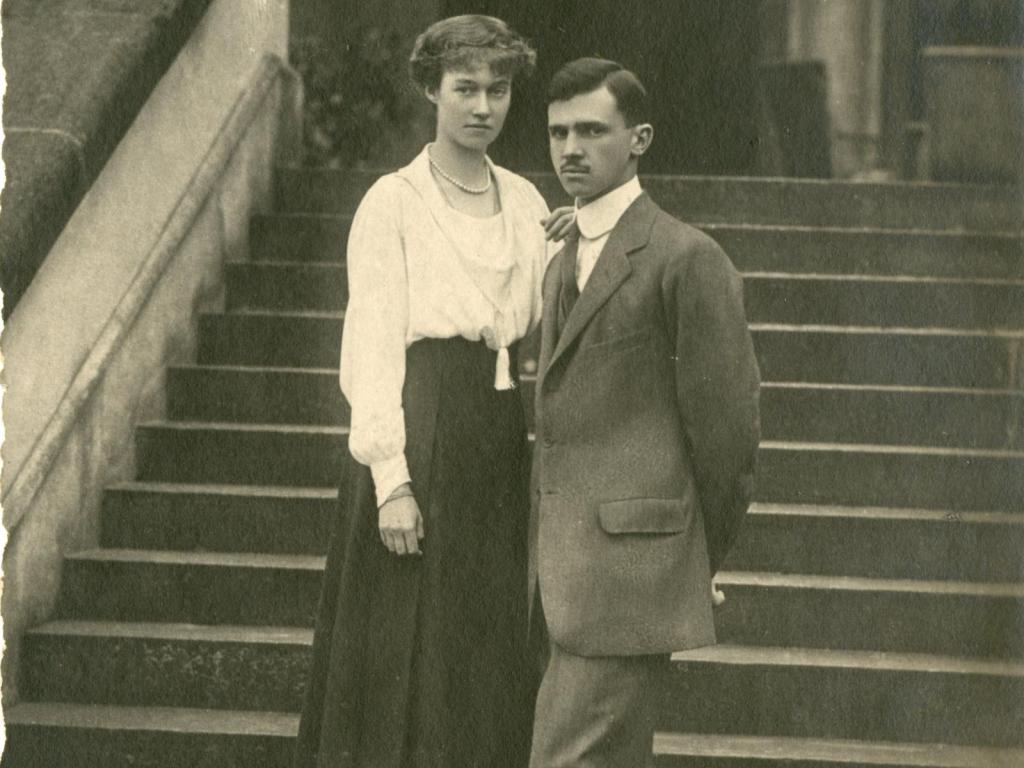
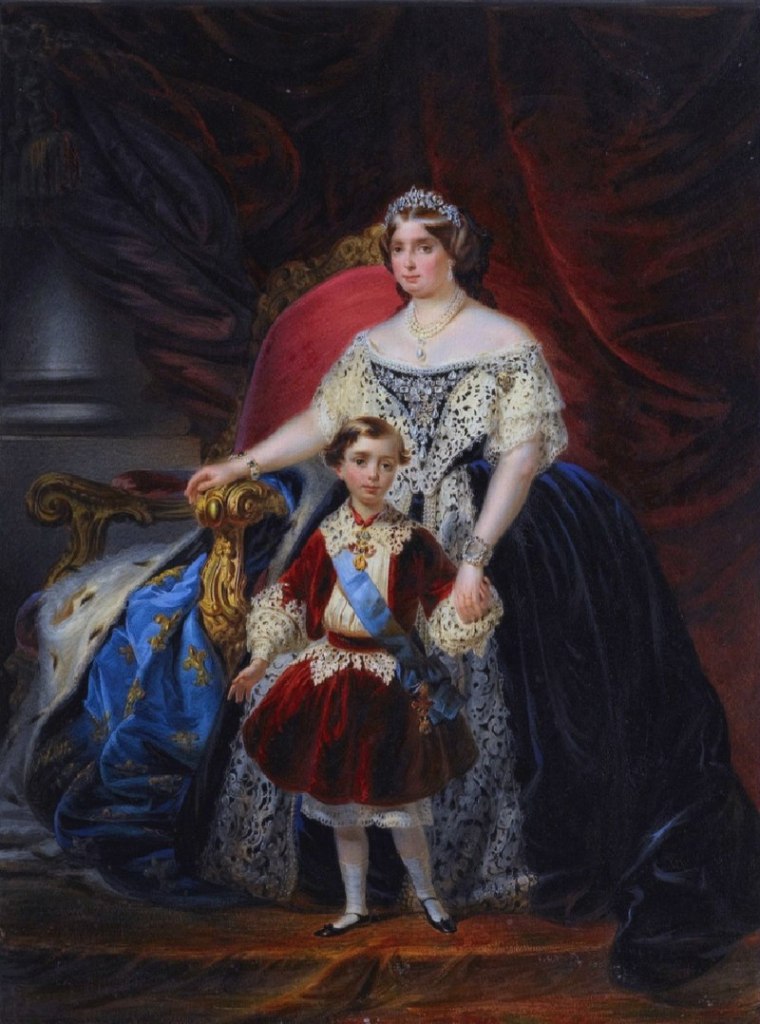
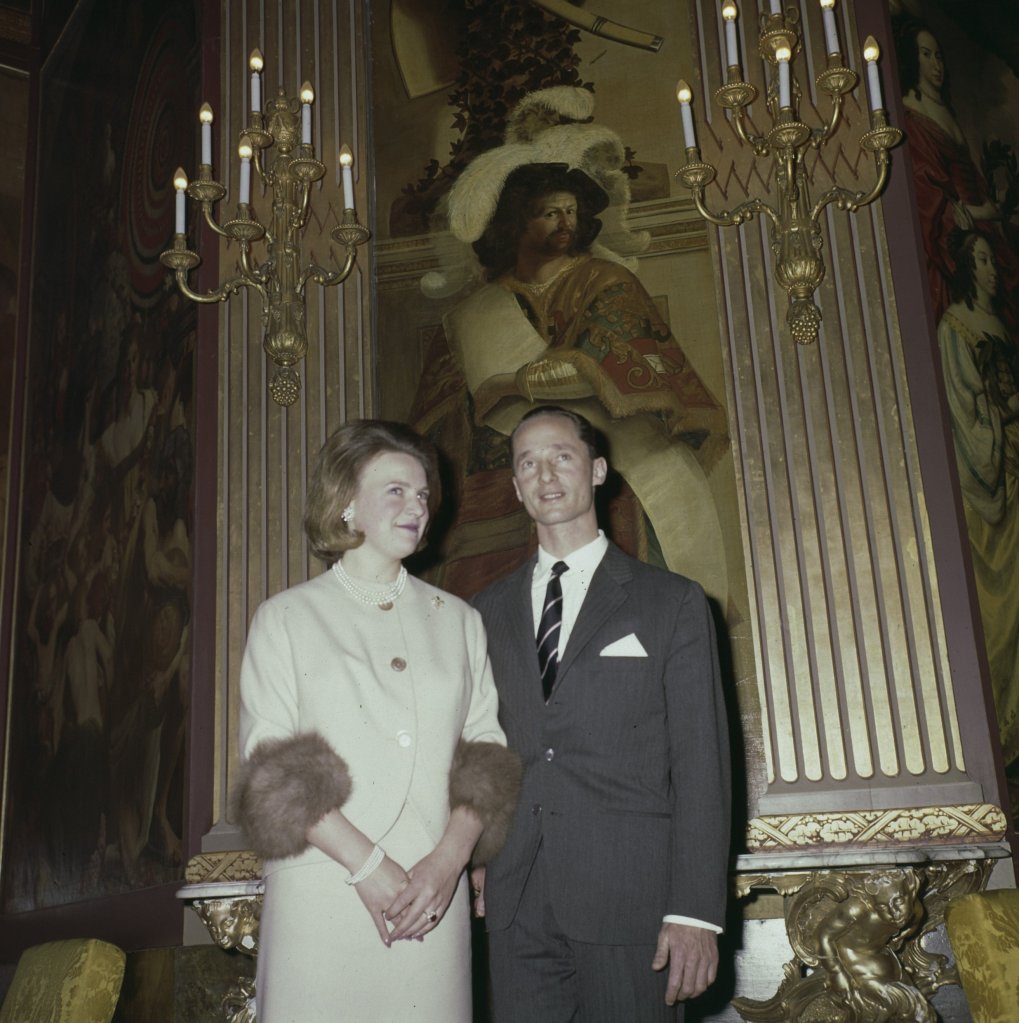
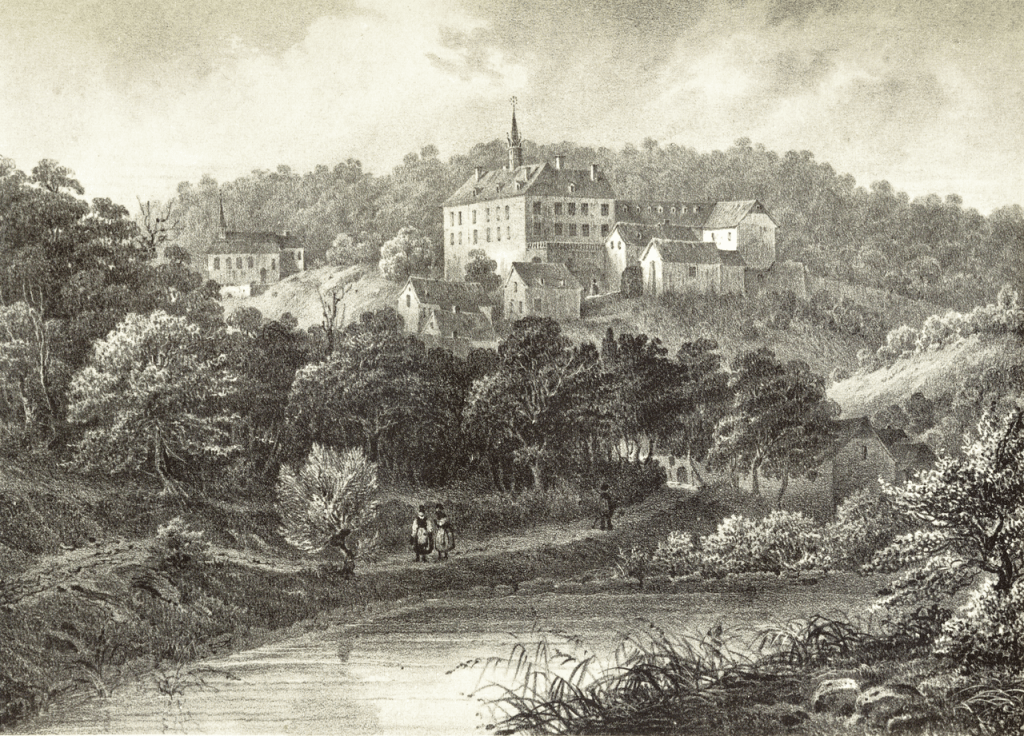
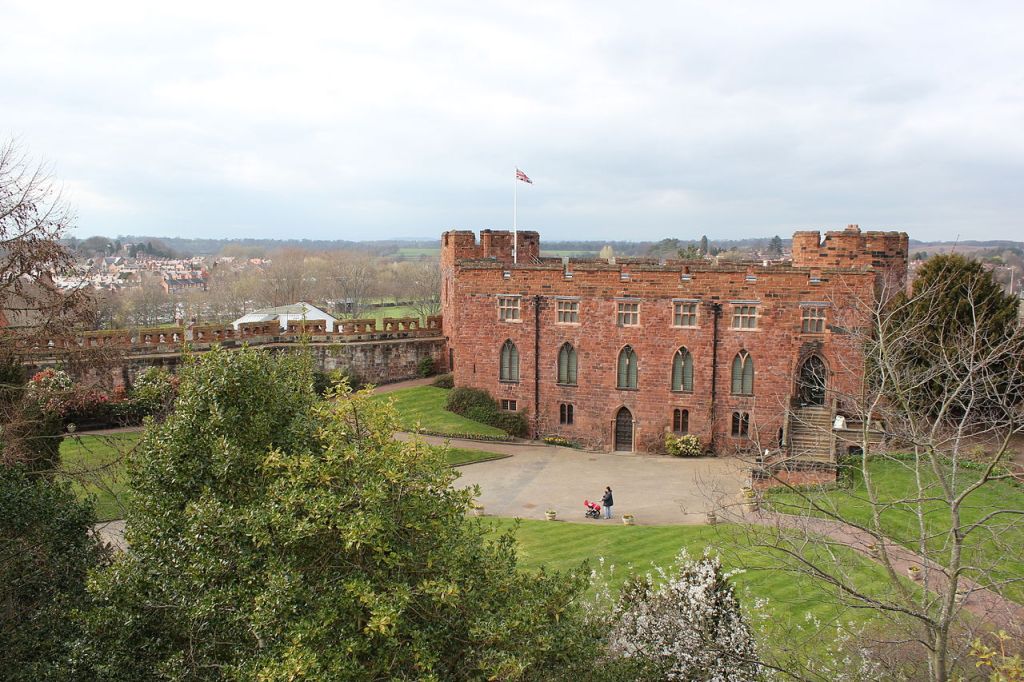
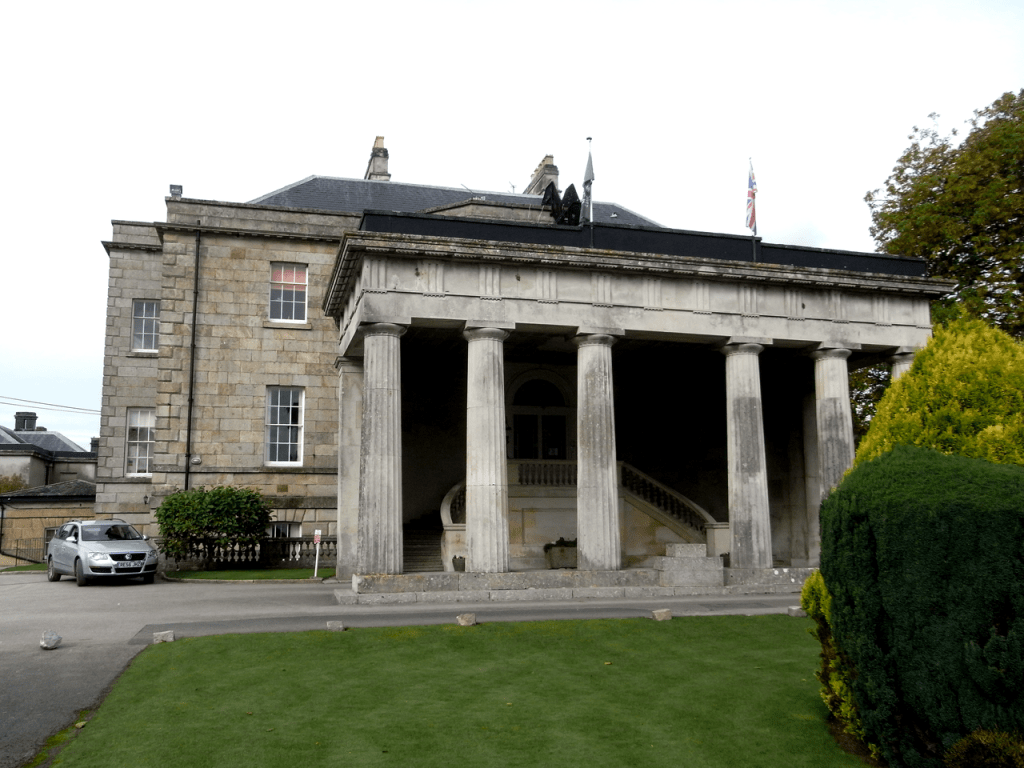
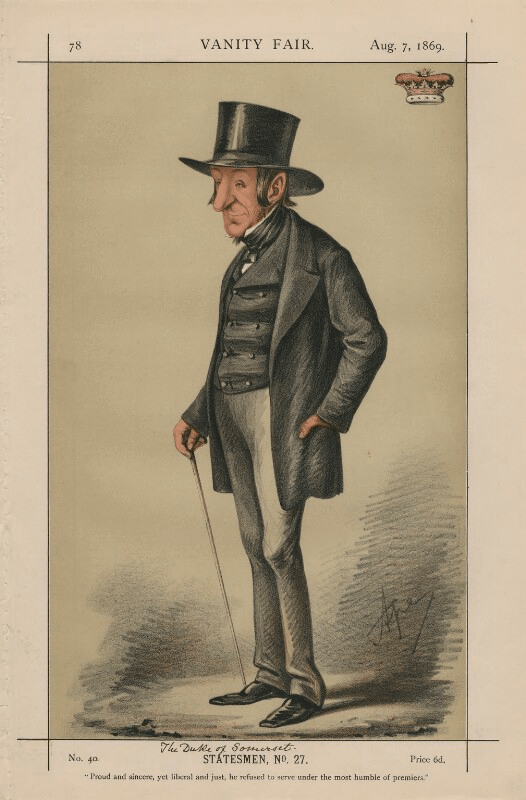
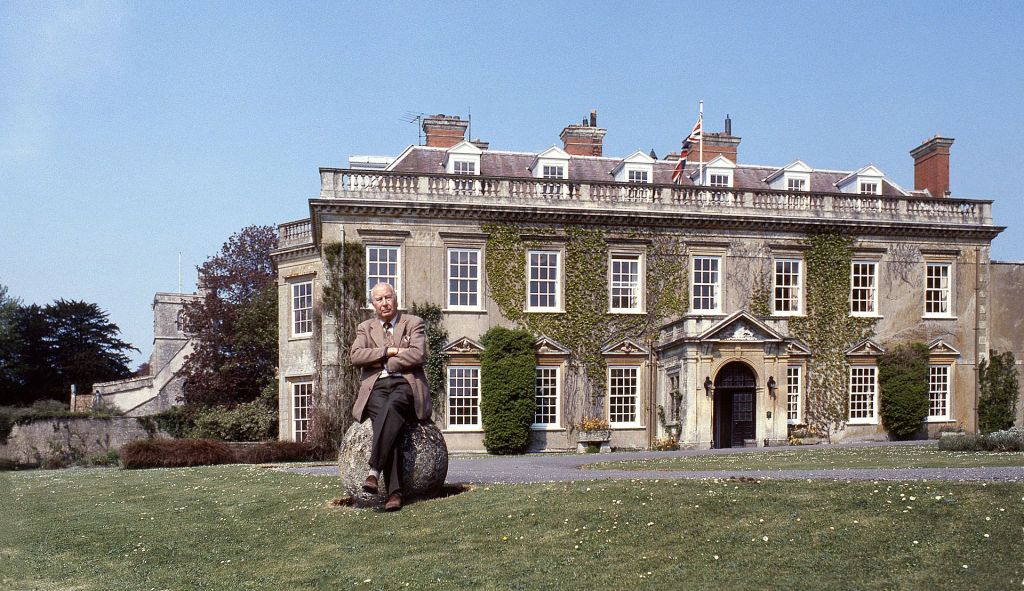
The new Grand Duchess of Luxembourg, born Countess Stéphanie de Lannoy, comes from an old noble family from the Low Countries. The House of Lannoy is one of the most distinguished noble houses in Belgium, yet nether of the two princely titles they held at different parts of their history—Sulmona and Rheina-Wolbeck—were located in Belgium. Nor in fact is the village of Lannoy itself in … any more.
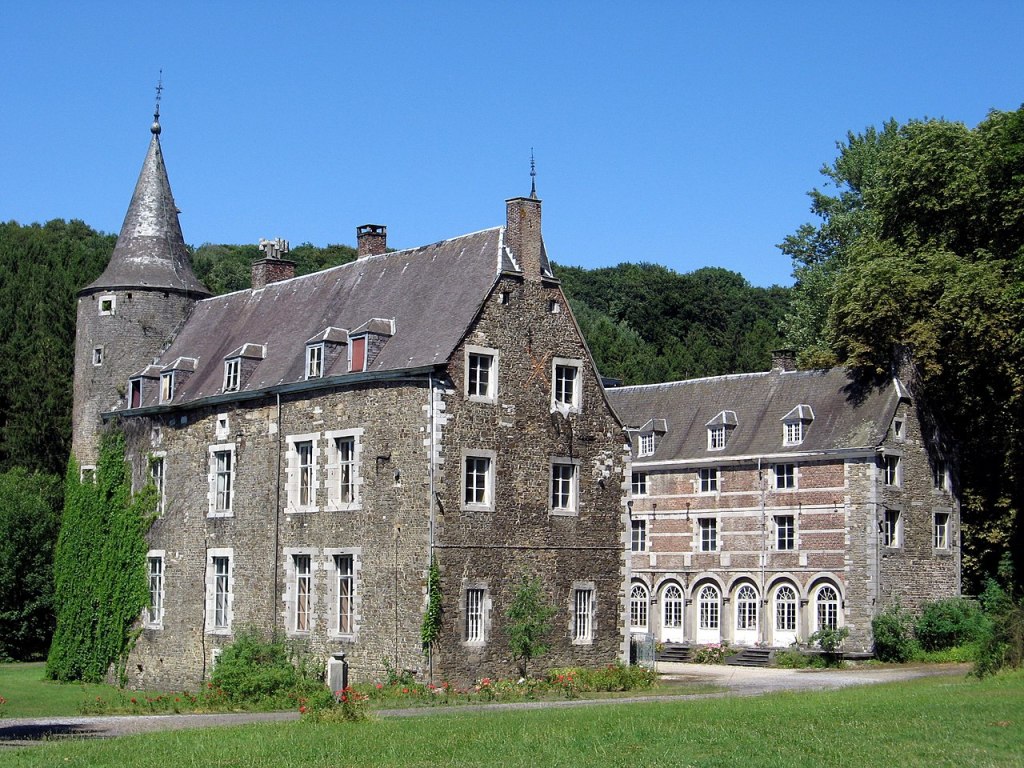
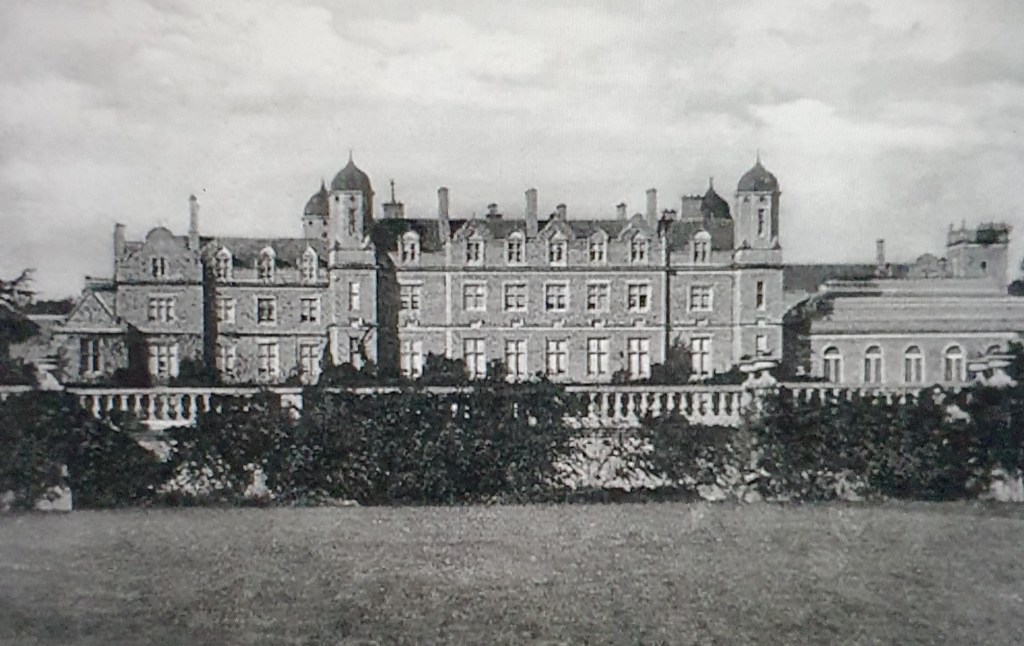
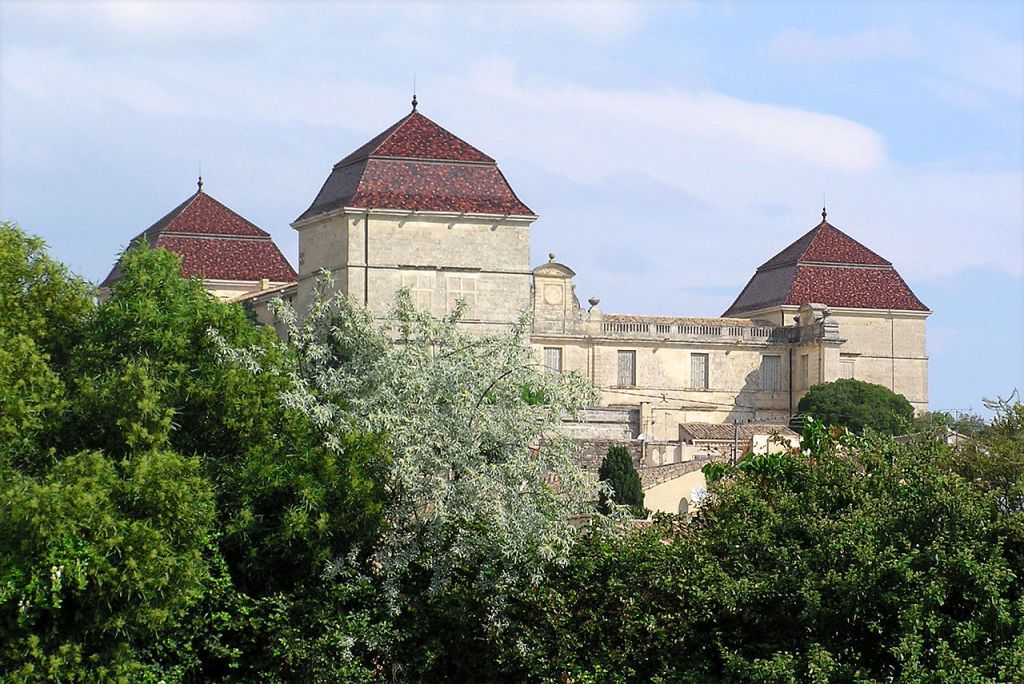
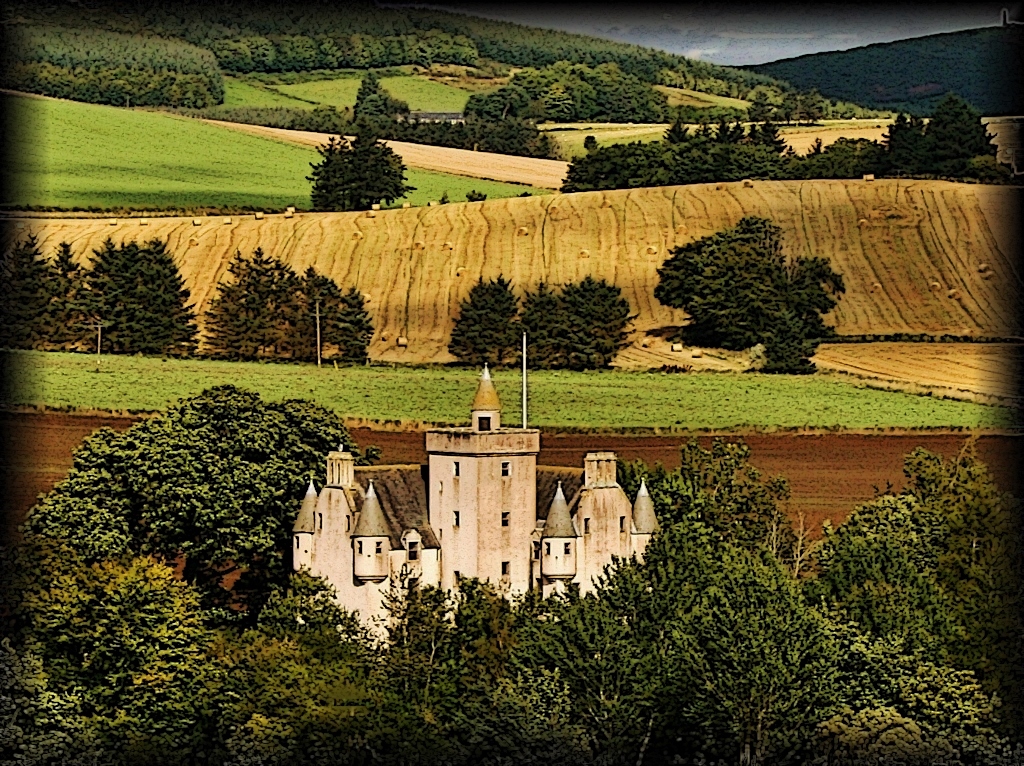
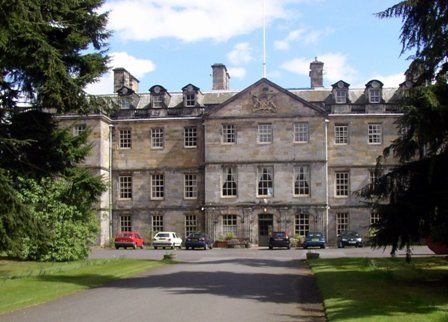
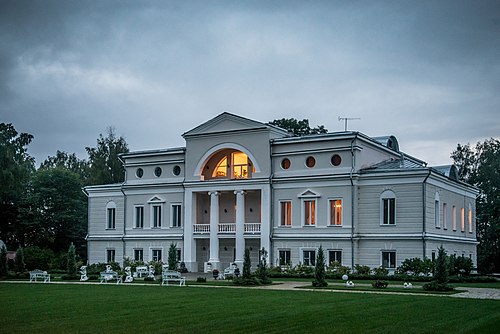
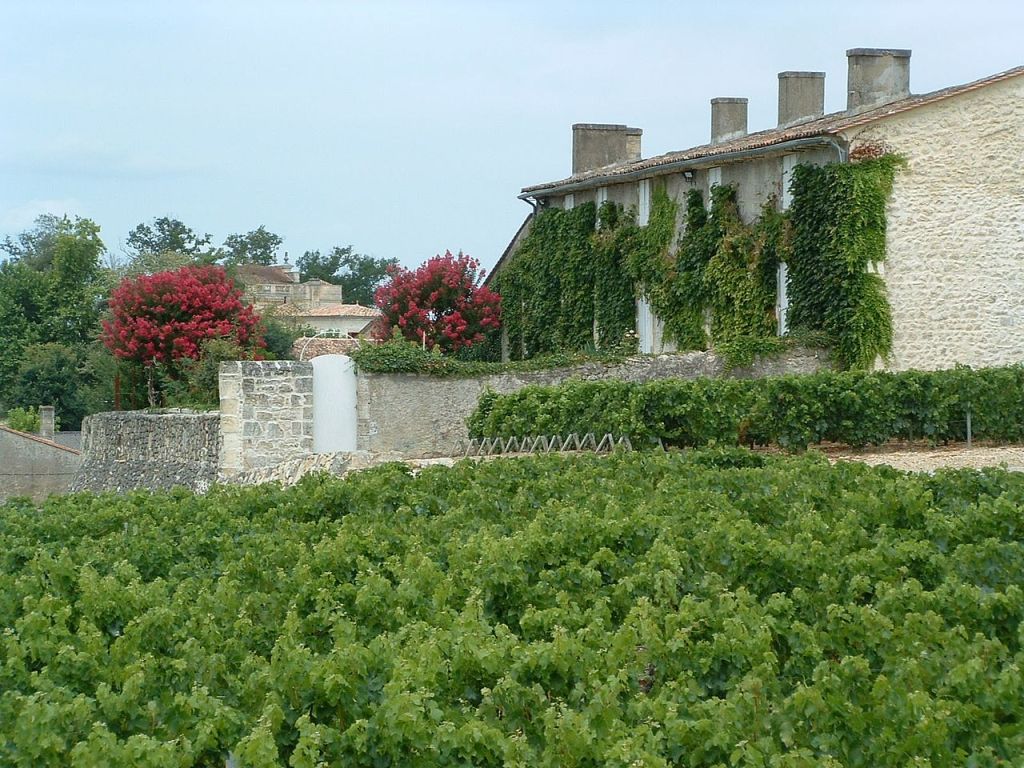
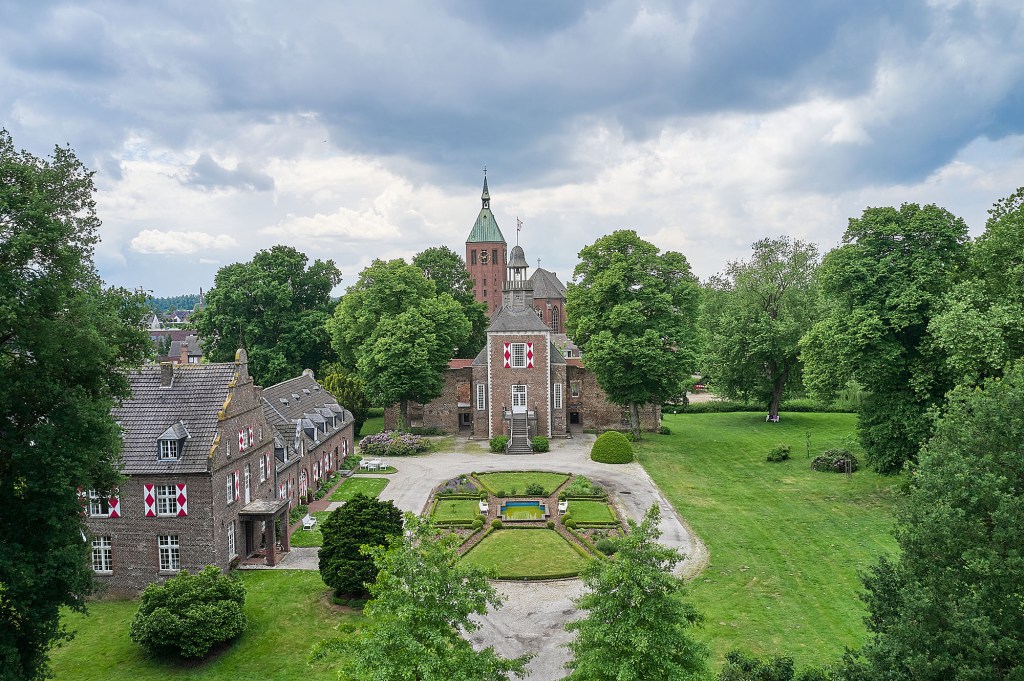
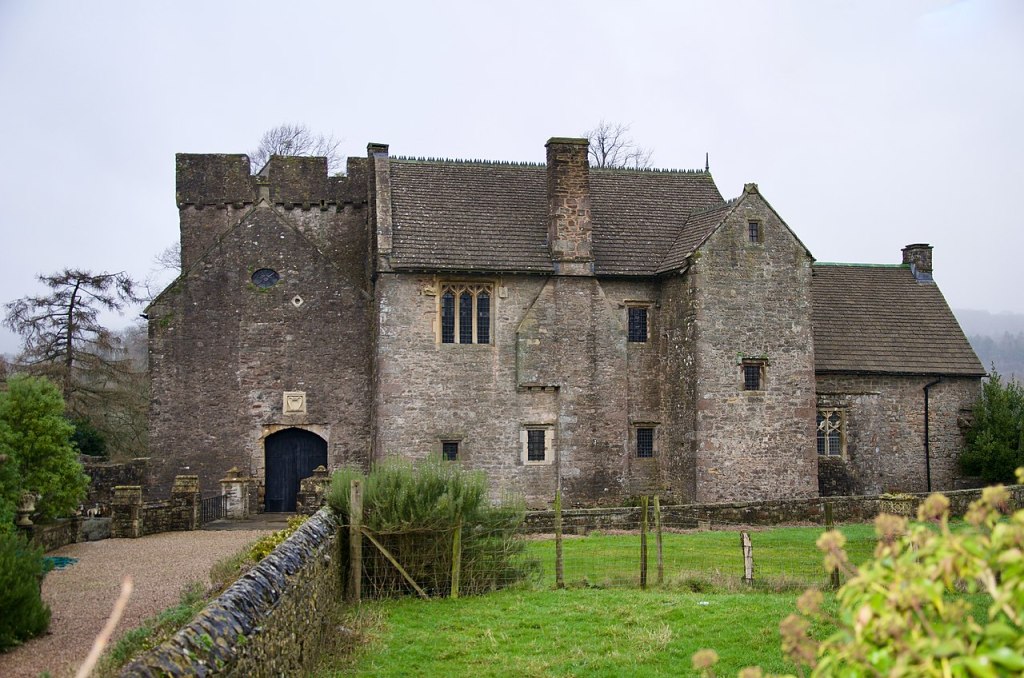
Anvaing Castle in Hainaut, seat of the Lannoy family today (photo Jean-Pol Grandmont)
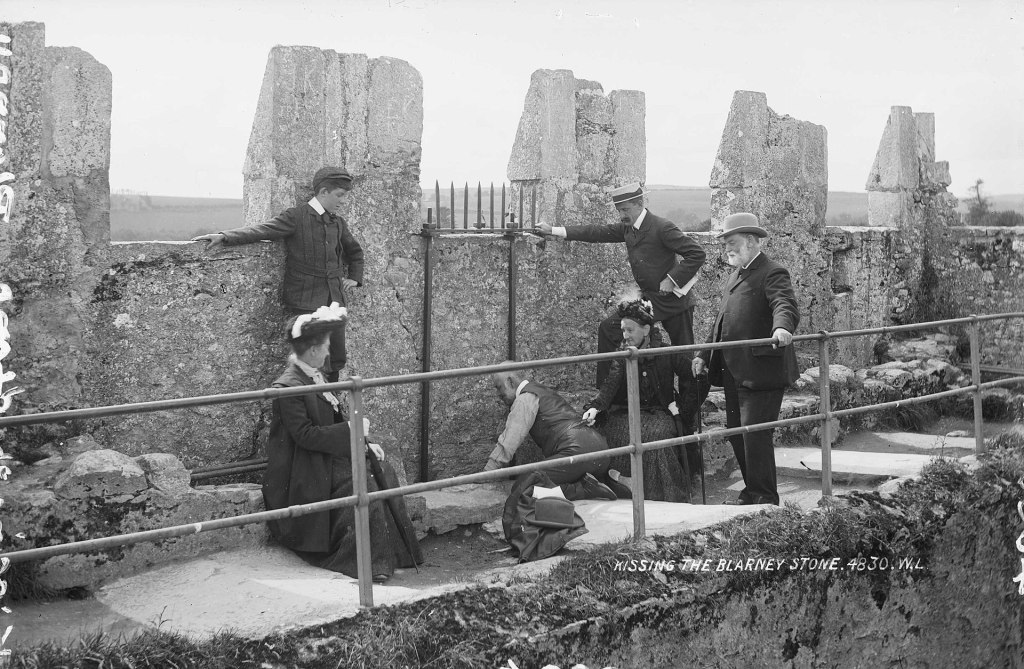
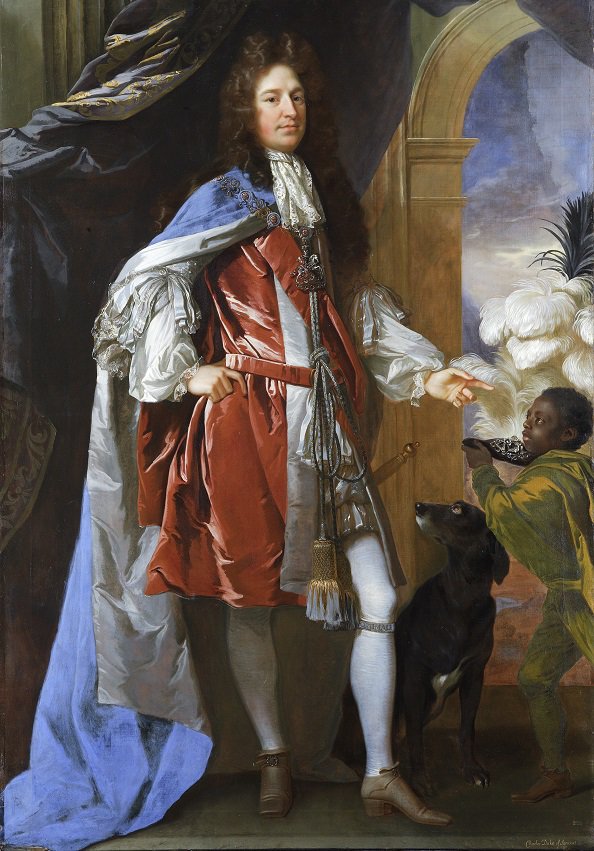
The name Lannoy, as the seventeenth-century royal genealogist Père Anselme pointed out, is pretty common, and the commonness of the name goes back to its probable meaning, l’aune or the alder tree. There was, for example, a castle and lordship of Lannoy in eastern Lorraine in the Middle Ages; and in the seventeenth century, a Lannoy family came to great prominence at the French court, then died out. Charles, Comte de Lannoy (or sometimes Lannois) was the King’s Premier Maître d’Hôtel in the 1640s, and Lord of Brunoy, a seigneurie on the banks of the Seine southeast of Paris which he left to his daughter, Anne-Elizabeth, who married the Duke of Elbeuf, one of the subjects of my doctoral research—Brunoy was later given to the Count of Provence, younger brother of Louis XVI, and erected into a duchy-peerage, so was again central to my own research on this prince. But neither of these Lannoy families connect directly with those of Belgium, There is also a claim—maybe true, maybe not—that a younger son of one of the Belgian Lannoys became a Protestant during the Reformation and his descendants left for America in the 1620s where they spelled their name De Lano or Delano, and became one of the leading families of Boston, and ultimately gave their surname to Franklin Delano Roosevelt.
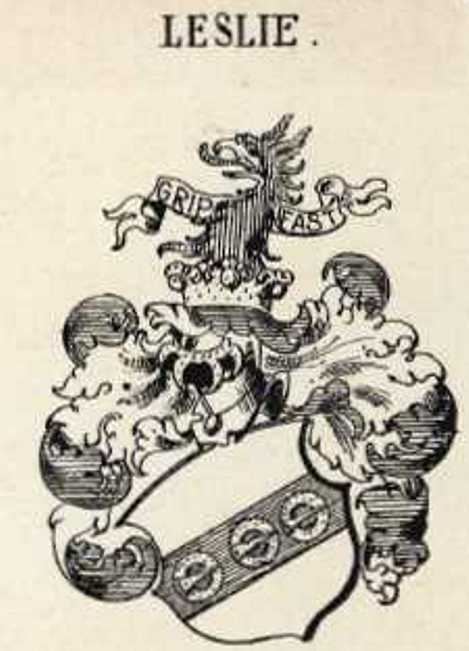
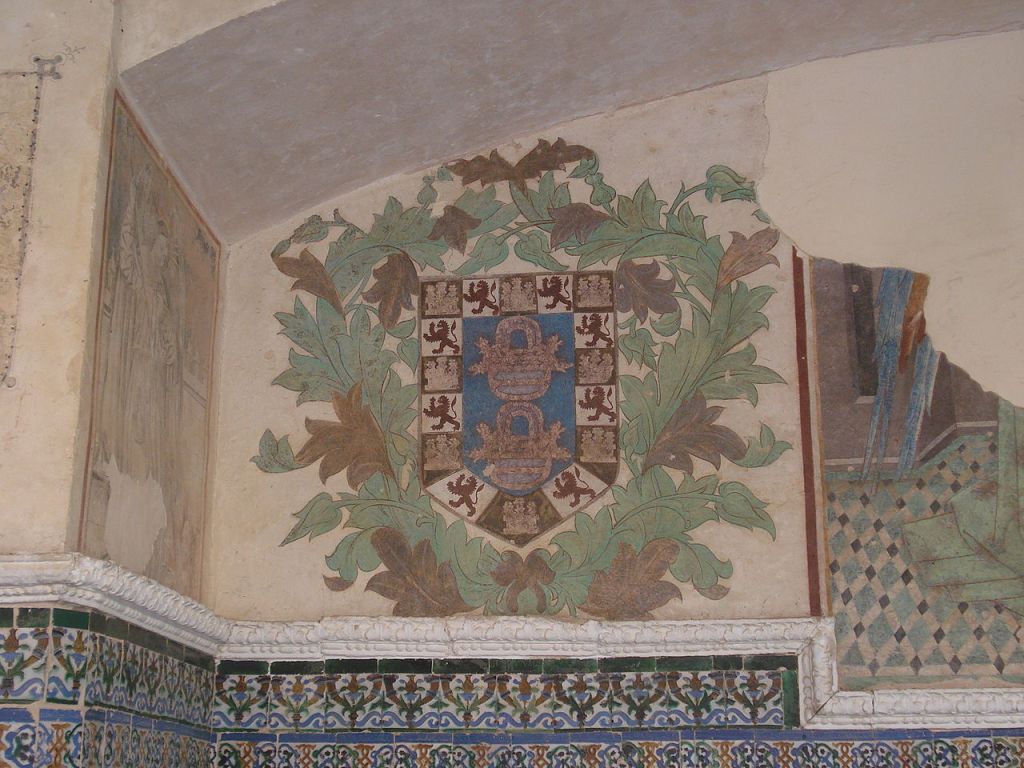
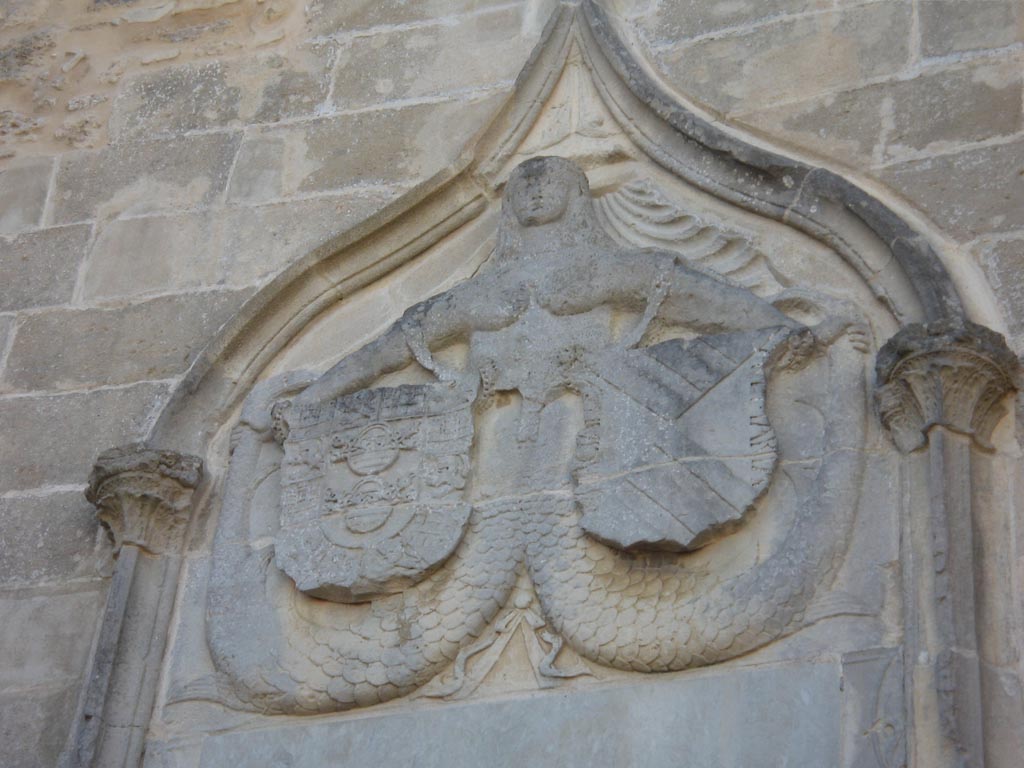
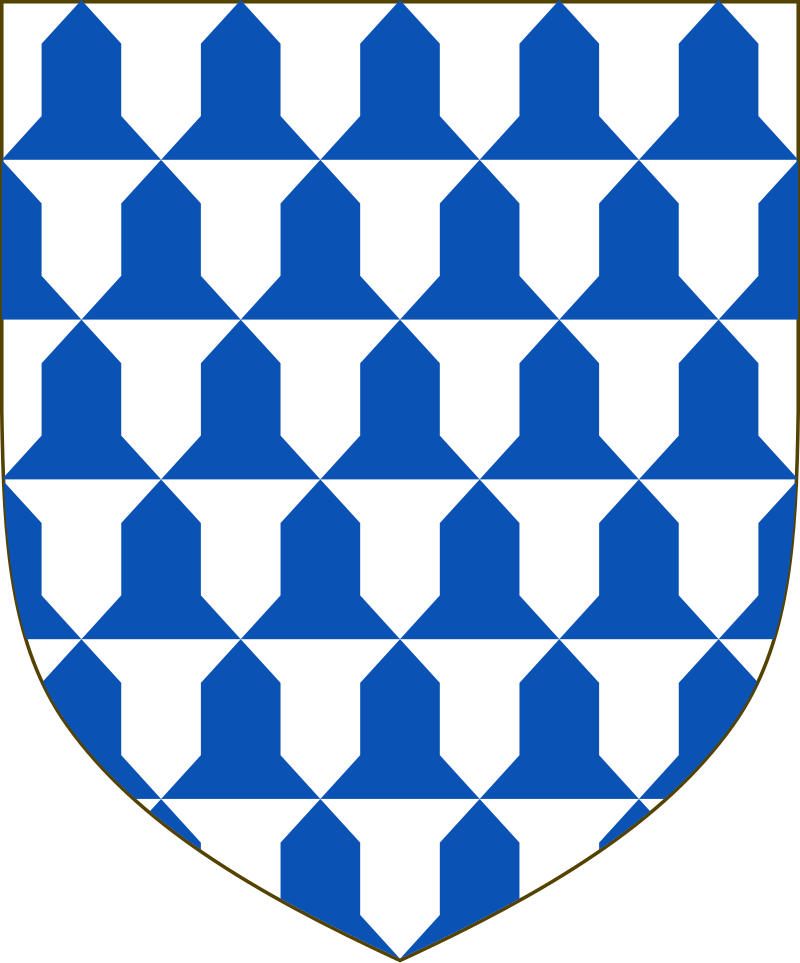
The village of Lannoy we are concerned with here is in French Flanders. It is now part of the wider suburban sprawl of the city of Lille in France, but very close to the border with Belgium. Lille was once one of the major towns of the County of Flanders, as part of the Spanish Netherlands, but when it was captured by the French in the late 1660s, it took with it the village of Lannoy. By this point, the Lannoy family were no longer proprietors of the fief, it having passed out of the family at the end of the fifteenth century. There had been a castle there, of which little remains, but the Lannoy family did retain their very distinctive coat of arms, three green lions, crowned, on a silver field.
Lannoy arms from a stall plate for a knight of the Golden Fleece in Bruges
The Lannoy family were based in French Flanders and in Hainaut, the county immediately east to the east (also divided today between France and Belgium). This is a francophone area, but they also held lands further north in Flemish speaking areas around the regional capital, Brussels, and one branch expanded further east and held the lordship of Clervaux in Luxembourg, where German (or a German dialect) was more common. As noted above, their princely titles were even more far flung, with Sulmona being in the Kingdom of Naples and Rheina-Wolbeck being in northwest Germany, near the city of Münster.
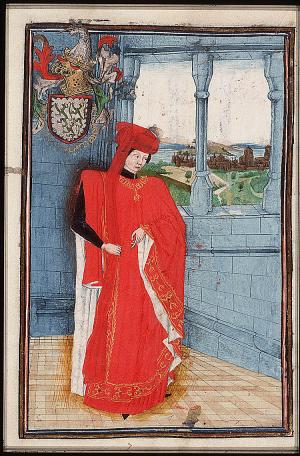
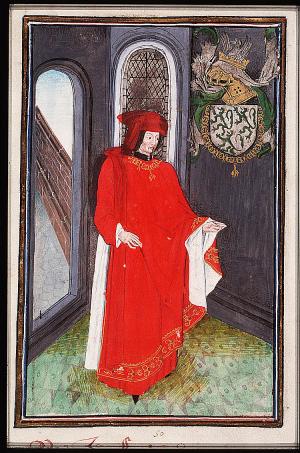
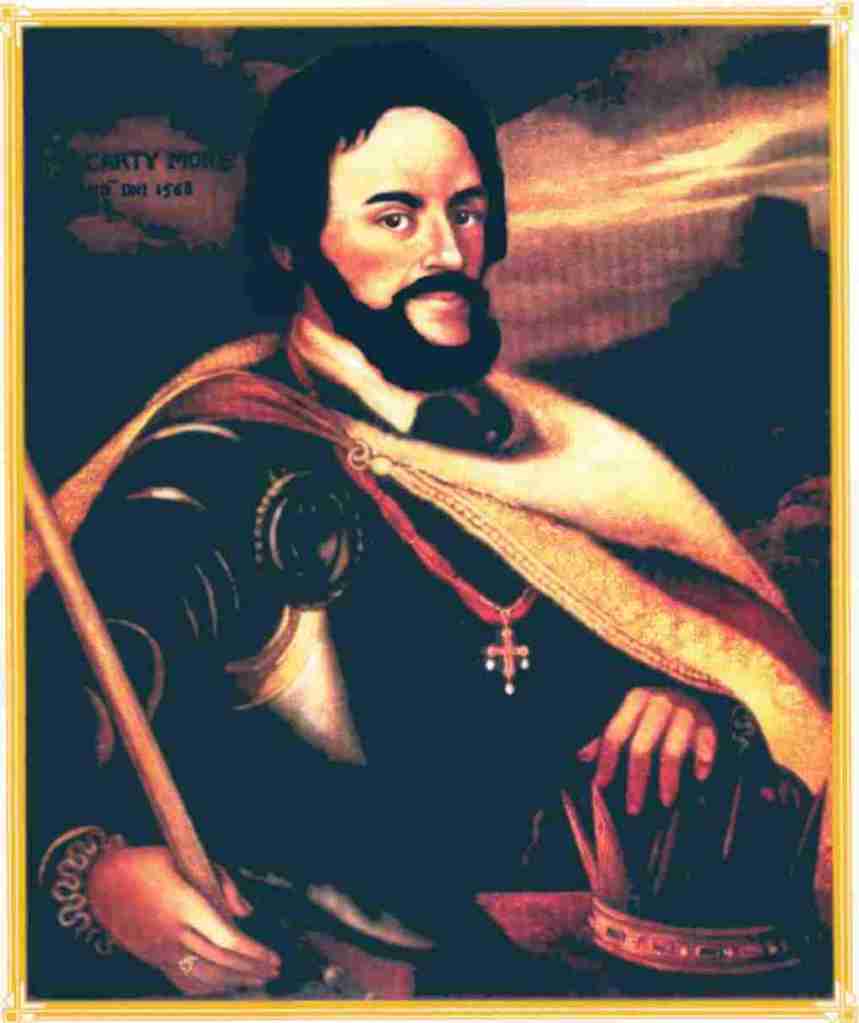
The first members of the family who came to real prominence were three brothers from the cadet line of Santes and Molenbaix (lordships located on either side of Lille), Hugo, Gilbert and Baldwin. All three held senior positions at the court of the dukes of Burgundy in the early fifteenth century. The dukes of Burgundy were at their height as princes at this point, and often based their court nearby at Lille. Hugo and Gilbert were both diplomats and soldiers for hire, travelling to the Holy Land, Muscovy, Spain and Poland. Both fought at Agincourt against the English. As part of the peace process that followed, Hugo arranged a marriage between the Countess of Holland and the Duke of Gloucester (brother of Henry V), while Gilbert was sent by Henry V to Syria and Egypt in 1421 to sound out possibilities of re-establishing a Christian Kingdom in Jerusalem. He published accounts of his travels in the Middle East, Poland and Russia, and also wrote a book, Advice for a Young Prince, in 1440, for the young Prince Charles of Burgundy, later Duke Charles the Rash (clearly not taking Gilbert de Lannoy’s advice).
Hugh de Lannoy, as a Knight of the Golden Fleece
brother Gilbert, also a Knight, from the Book of Statutes, 1472
The youngest brother, Baldwin, was also an ambassador from Burgundy to the court of Henry V, and served as Governor of Lille for fifty years (1424-74). All three were founding members of the Order of the Golden Fleece when it was instituted by Duke Philip the Good in 1430—its first chapter met in Lille. Baldwin celebrated the event by having his portrait painted by Jan Van Eyck.
Baldwin de Lannoy, by Jan Van Eyck (Gemäldegalerie, Berlin)
In the next generation, the head of the senior branch, still based at Lannoy itself, Jean II, was also a knight of the Order of the Golden Fleece (and also depicted in their distinctive red robes in a book of their statutes compiled in 1473). In all, fifteen members of the House of Lannoy would receive this honour. His father Jean I had been killed at Agincourt, so Jean was lord from a young age. He was nephew of Antoine de Croÿ, one of Burgundy’s leading courtiers (and of Agnès de Croÿ, mistress of the Duke), and by 1448 was appointed Stadtholder (or governor) of Holland and Zealand, adding Walloon Flanders (the French-speaking parts of the county around Lille and Douai) in 1459. At this point he befriended the young Dauphin of France, Louis, who spend several years in Burgundy in exile, then helped this prince reclaim his throne as Louis XI in 1461. But this shift in loyalty angered the Duke of Burgundy, Charles the Rash, so Lannoy lost his posts in the Low Countries in 1463, and by 1468 was in open conflict with his former lord and went into exile in France. He returned to service in Burgundy when it was taken over by Emperor Maximilian (married to Mary of Burgundy, Duke Charles’s heiress), serving as his chamberlain and ambassador—notably in 1482 to arrange peace with his old friend Louis XI.
Jean II de Lannoy
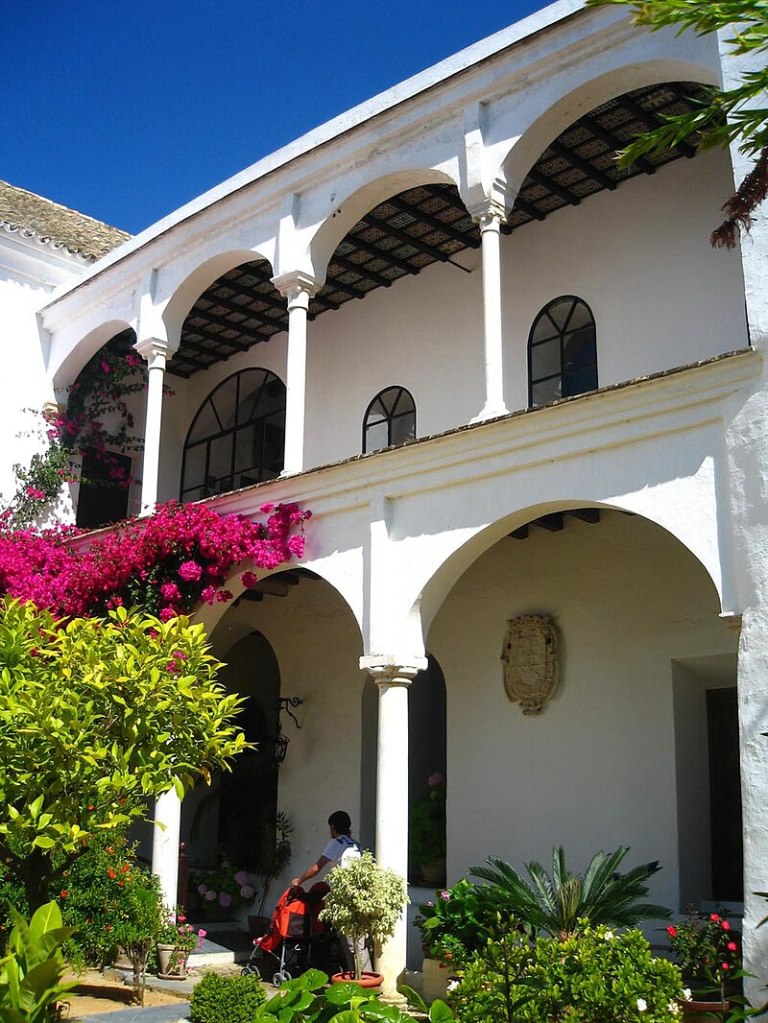
When Jean de Lannoy died in 1493, his lands were divided up by his daughters, and Lannoy itself passed out of the family. His brother Antoine founded a line at Maingoval (today spelled Mingoval) in Artois. It was his grandson Charles who was the most famous member of the House of Lannoy and its first prince. His early career was spent as a soldier in the service of Emperor Maximilian’s son, Philip the Handsome, husband to Juana, heiress of the kingdoms of Castile and Aragon. In 1515, Charles de Lannoy was appointed First Equerry and a member of the council of their son Charles, Duke of Burgundy, who soon became king of Castile and Aragon as Carlos I (and Lannoy’s title became Caballerizo mayor), and after 1519, Holy Roman Emperor as Charles V. in 1511, Charles de Lannoy purchased a sizeable castle in Brabant to be closer to the court in Brussels, Hof ter Ham, in the town of Steen-Ockerzeel, northeast of Brussels. It was a medieval castle rebuilt in a more modern style with a much grander moat in the 1490s by Philippe Hinckaert, a leading courtier. The Lannoy family sold it in 1577, and it would be held by various Belgian families until 1929 when it was leased to the exiled Emperess Zita of Austria-Hungary who raised her large brood of Habsburg archdukes and archduchesses here until 1940 when they fled to Canada in the face of the Nazi invasion. Badly damaged in the war, it has been beautifully restored.
Hof Ter Ham (photo Johan Bakker)
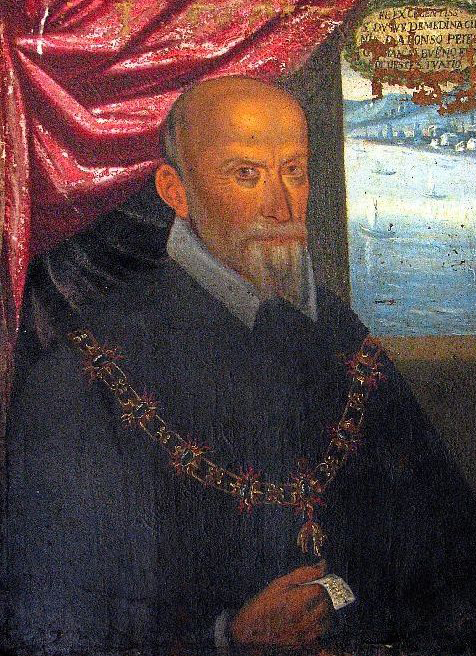
In the 1520s, the Emperor-King fixed his eyes on the Italian peninsula. He wished to secure his grandfather’s succession in the Kingdom of Naples, but also to wrest control of the Duchy of Milan from the French who had taken it in 1515. Lannoy was at first sent to Naples to govern as Viceroy, 1522-23. In 1523 he was brought north to Lombardy and given command of Charles V’s armies: he defeated the French first at Sessia in 1524, then decisively at Pavia in 1525—we have seen in 2025 several commemorations of that epic battle between Francis I and Charles V, resulting in the King of France’s capture and utter humiliation. It was Charles de Lannoy in fact who was charged with taking the captive King Francis to Madrid, then escorting him to the frontier with France a year later to exchange him for his young sons as hostages. As a reward, in 1526, Charles de Lannoy (or Don Carlos de Lannoi) was created a count of the Empire (a benefit accrued to his family as a whole), and was given the County of Asti in Lombardy (recently conquered from the French) and the Principality of Sulmona in the Abruzzo, the northernmost province of the Kingdom of Naples on the Adriatic coast (and also given the fief of Ortona, sometimes spelled Ortona a Mare, as the chief port of Abruzzo). He was given the rank of a Grandee of Spain. Charles de Lannoy died in Gaeta, one of the chief fortress cities of Naples, in 1527.
Charles de Lannoy, 1st Prince of Sulmona
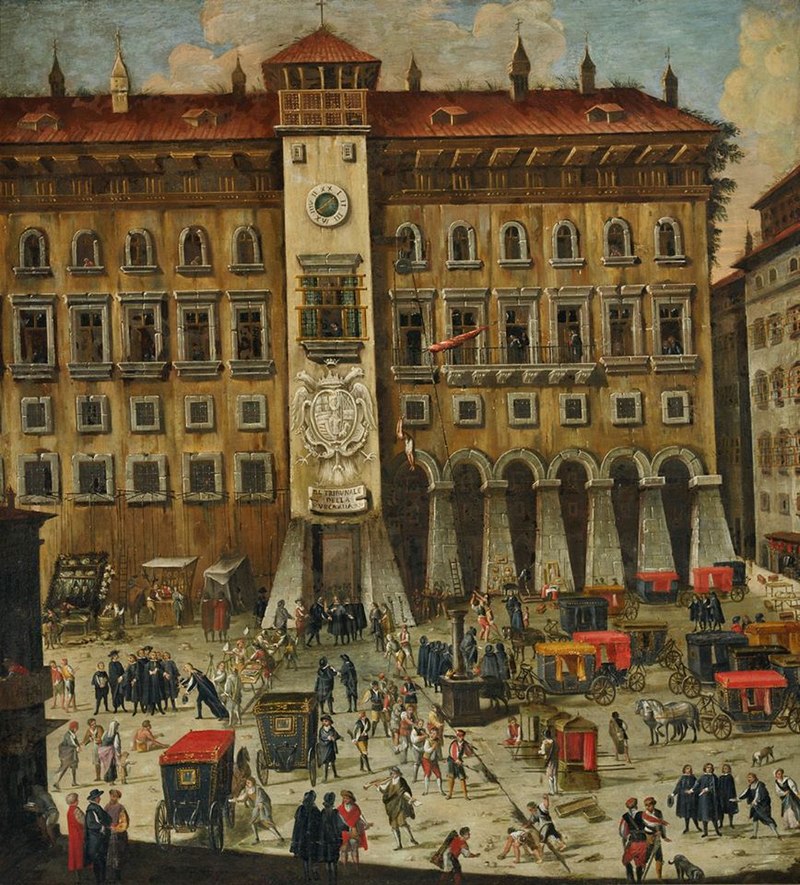
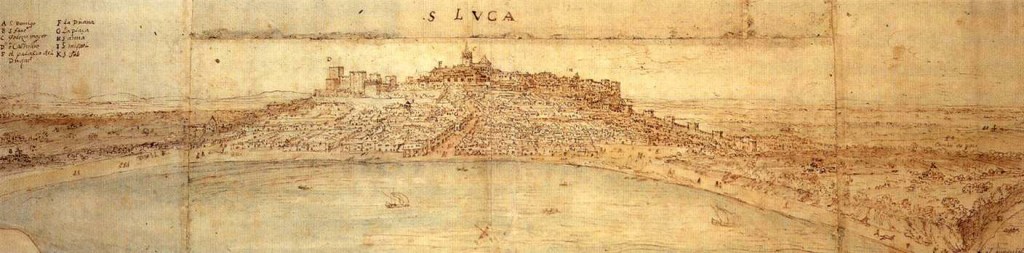
Sulmona the city is famous as the birthplace of the poet Ovid. Today it is more well known as the home of confetti, the brightly coloured sugared almond candies. Most of the medieval city was destroyed in an earthquake in 1706, so today’s appearance is almost completely baroque. The Lannoy family did not reside here in a palace, but were given the lucrative rights to collect a tax on the wool trade in the Abruzzo. It had been granted numerous rights as a free city under the Angevin kings of Naples, but Charles V curtailed these, and the Lannoy princes ruled absolutely, causing much civic unrest.
Sulmona in the Abruzzo, in 1647
The 1st Prince of Sulmona had married Françoise de Montbel, from a Savoyard family also in the service of Emperor Charles V. In particular, she had been one of Charles’s wet nurses, so was always in favour. As a widow, in 1528, she consolidated her family’s position in the Kingdom of Naples by exchanging the County of Asti in the north of Italy for the Duchy of Boiano and the County of Venafro, both in the province of Molise, in the mountains north of Naples.
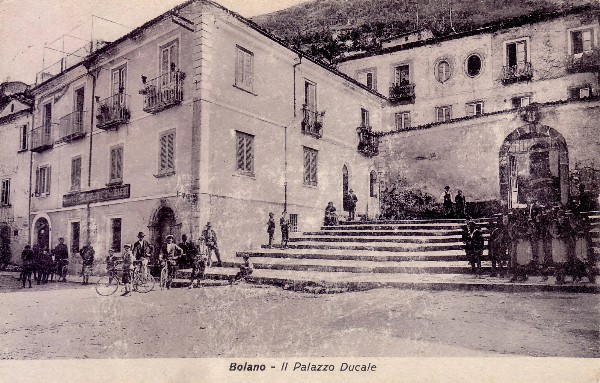
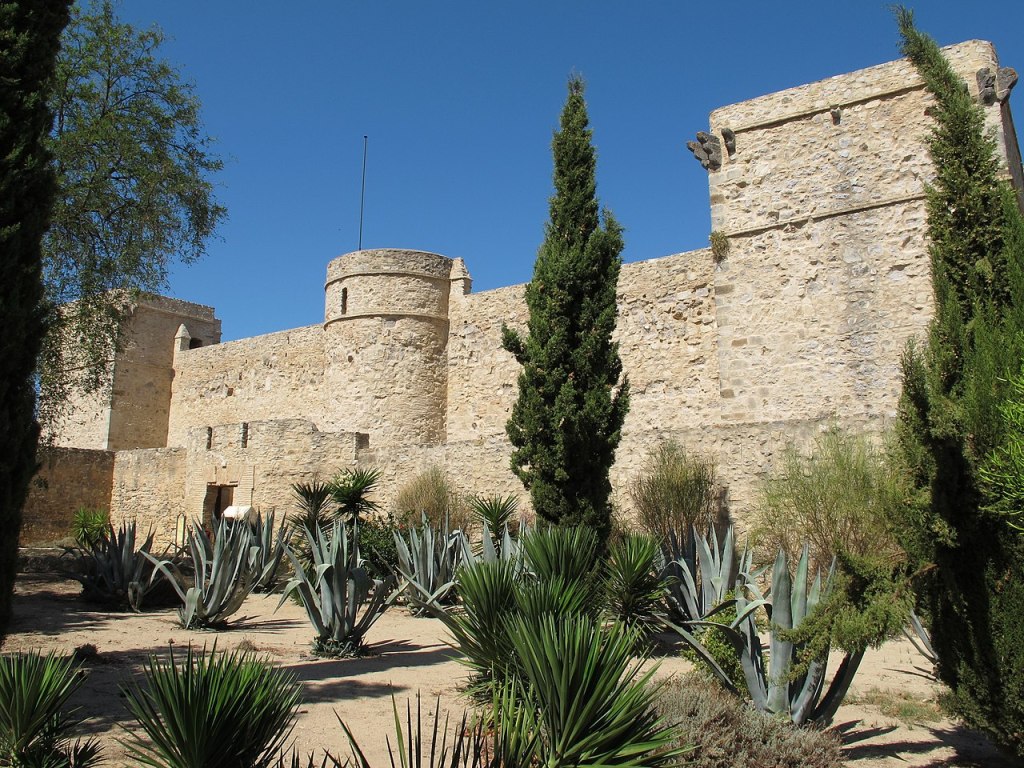
Boiano, or Bojano, had been the ancient city of Bovianum, an ancient city of the Samnites, enemies of the Romans. In the middle ages it was erected into a county for Norman knights who came to Italy with the Hauteville family (who created the kingdoms of Sicily and Naples in the eleventh century)—according to some sources they were called ‘de Moulins’ (‘from the mill’) and eventually Italianised their name into Molise, which became the name of the county and then the province itself. By the fifteenth century it was owned by the Pandone family, close allies of the ruling House of Aragon, and when the 1st Duke of Boaino, Enrico Pandone, sided with the French against Charles V, he lost his lands as well as his head in 1528. The old Norman Castello Pandone di Bojano above the town had already mostly crumbled due to frequent earthquakes in this region, but the Palazzo Pandone in the town centre remained and was given to the Lannoy family. It still stands today.
the ducal castle in Boiano
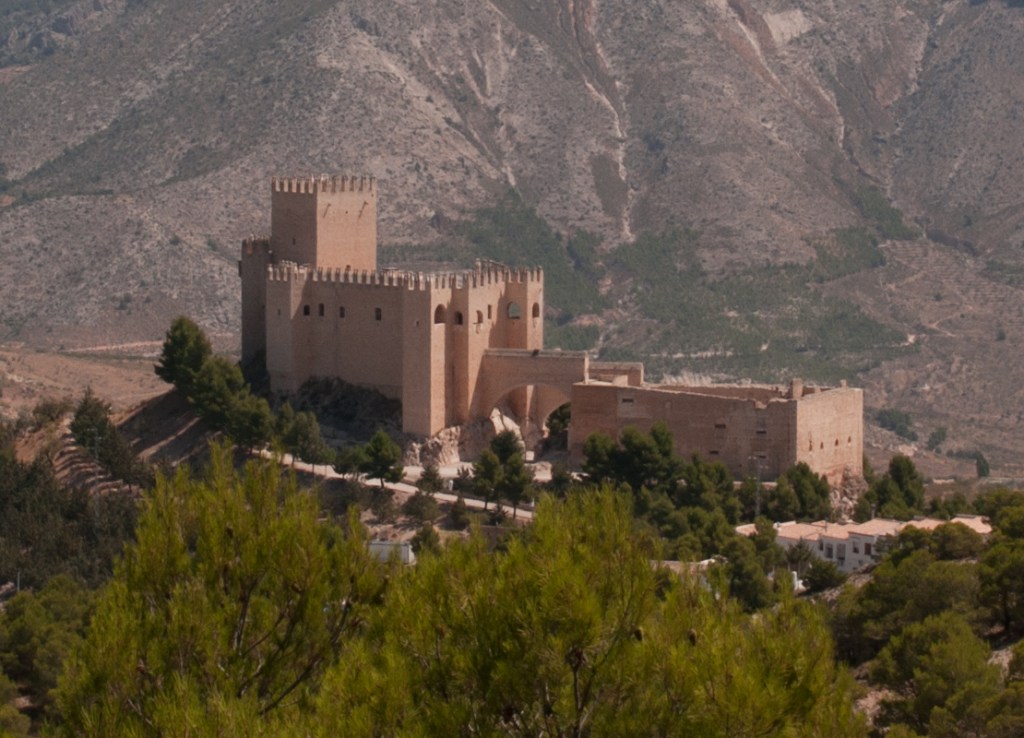
Enrico Pandone also lost the County of Venafro, a few miles to the west. Here too the Pandone family had rebuilt an older castle in Renaissance style, in the 1440s, famous for its horse frescoes. The Dowager Princess of Sulmona made this her chief residence and raised her many sons here. By the 1700s the Castello Pandone had passed to a major Neapolitan family, the Carafa, and then to others—it is still privately owned.
Castello Pandone in Venafro (photo Lucio Musacchio)
The eldest son, Philippe de Lannoy (or Filippo de Lanoya), 2nd Prince of Sulmona, retained the great favour of Emperor Charles V, who, in 1534, attended his wedding in Naples to Isabella Colonna, daughter of the Duke of Traetto and widow of the Condottiero Luigi Gonzaga—she was one of the most well-connected Italian aristocrats of the day. As a wedding present, the Emperor gave them the Castello Capuano, one of the two oldest palaces in Naples, though they didn’t hold on to it for long—the new viceroy appropriated it (in exchange for another palazzo, today’s Palazzo d’Aquino in the Via Medina) to build his centralised judicial complex, which it remained for several centuries.
the Capuano Castello in Naples, briefly a Lannoy residence
The 2nd Prince was also a soldier, leading the imperial cavalry in Charles V’s wars against the Duke of Saxony. He died relatively young in 1553, and was succeeded by his son Carlo. Carlo renounced his titles only a few years later, so it was Orazio de Lanoya who became Prince of Sulmona and Count of Venafro, between 1559 and 1597—though he sold Venafro and Ortona in 1582. He was a colonel in the Spanish infantry and married a daughter of Alfonso d’Avalos, Marchese di Pescara, a Spanish family that had also become ‘Neapolitanised’. The 4th Prince was succeeded by his son Filippo II, who died fairly young in 1600, leaving a small child, Filippo III, who died in 1604. Sulmona returned to the Crown and in 1610 was given out again as a principality to the Borghese family, who retain the title still today.
Meanwhile, the Duchy of Boiano had been given by the 1st Princess of Sulmona to her second son, Ferrante (or Ferdinand). He sold it in 1538 to his brother Giorgio, and as Comte de la Roche, moved north back to the Low Countries, where he served as an imperial artillery general and married a daughter of Nicolas Perrenot de Granvelle, one of the chief advisors to the Emperor in the Low Countries and Germany. Due to these connections he was appointed governor of several key places in the Low Countries and the Franche-Comté (the home of the Perrenot de Granvelle clan) and became a military engineer and cartographer there.
Giorgio, 2nd Duke of Boiano, stayed in Italy and married another daughter of a Neapolitanised Spaniard, Giulia Diaz Carlon, Countess of Montovia. Their first son Carlo became 3th Duke, while their younger son Costantino entered the church and was briefly Bishop of Vico Equense, on the Bay of Naples. Carlo de Lanoya died in 1575 and the Duchy of Boiano passed by marriage of his daughters into the Carafa family. The Italian chapter for the House of Lannoy came to an end.
Back in the Low Countries, the junior branch of Molembais continued into the seventeenth century. Scanning the family tree we see numerous sons and daughters in positions of authority within the Habsburg court in Brussels: Baldwin II was Premier Maître d’Hôtel for Mary, Duchess of Burgundy, then for her husband Emperor Maximilian, and was appointed to lead the household of their son, Archduke Philip the Fair, as his steward: upon that prince’s coming of age, Baldwin de Lannoy-Molembais accompanied him to inauguration ceremonies in all the provinces of the Low Countries, notably in Leuven in September 1494 where he was sworn in as Duke of Brabant, and in July 1495, when he had his grand ceremonial entry into Brussels. Lannoy’s son Philippe would later become head of the Council of Finances and Grand Maître of the Household of Mary of Hungary, Charles V’s sister, when she was appointed Governor of the Low Countries in the 1530s; and his two sons in turn would act as governors of Hainaut and Tournai. This branch died out in the 1590s (though this is where the claimed descent to the Delano family of America fits in).
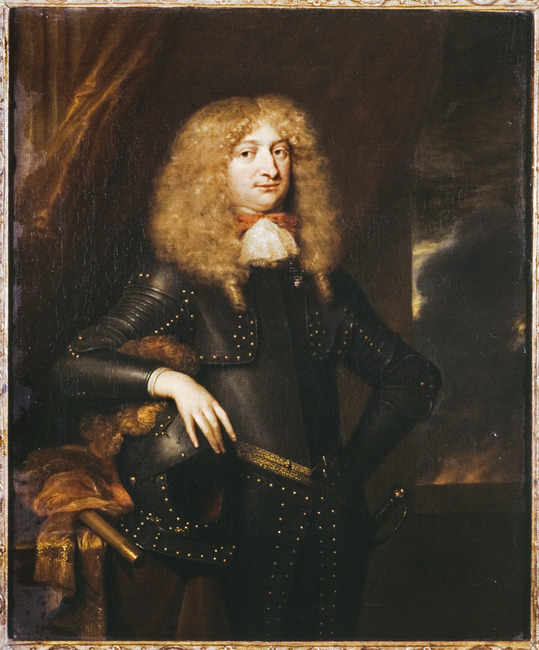
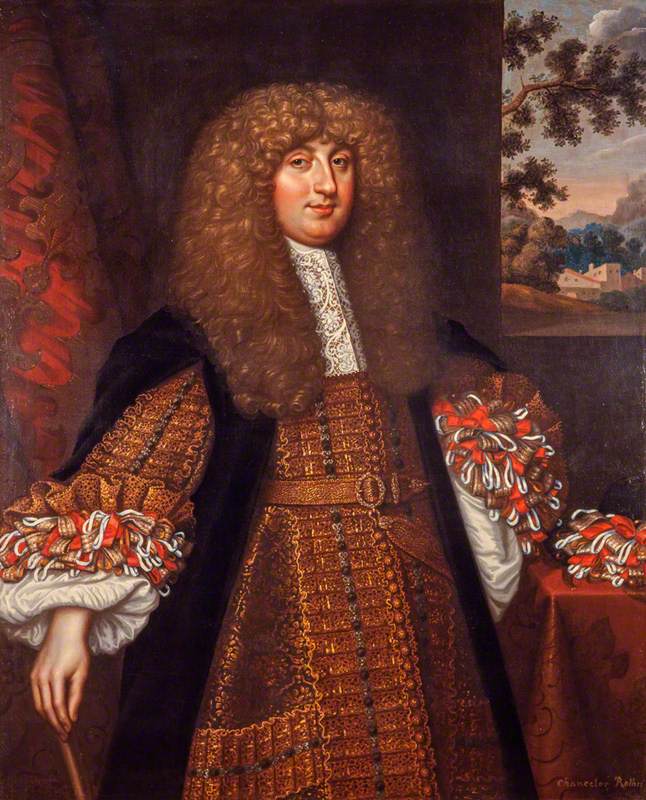
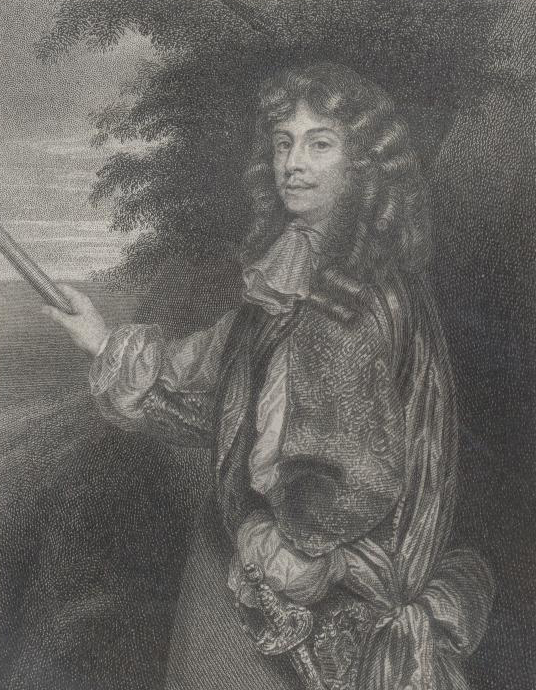
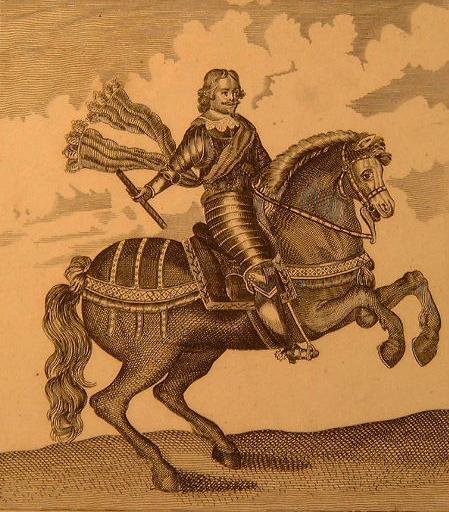
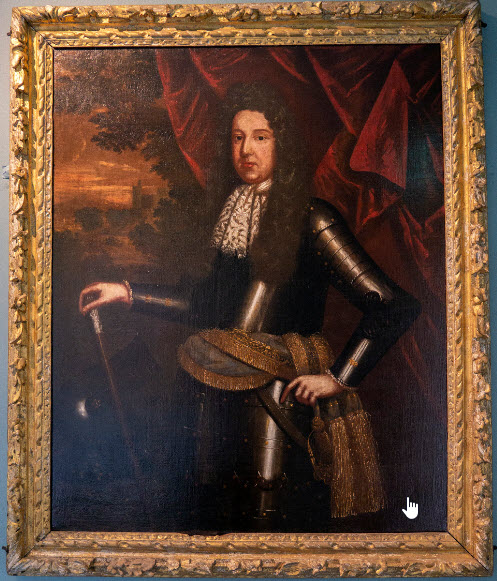
The next branch down were the lords of La Motterie, another fief on the borders of Belgium and France northeast of Lille. Claude de Lannoy was created Count of La Motterie in 1628 by the King of Spain—by this point, the Low Countries had been divided into the Dutch Republic in the north and the Spanish Netherlands in the south. He was successively Governor of Maastricht (1616), Namur (1634) and Luxembourg (1638), and Camp Master General for Philip IV, serving as a Spanish commander in the Thirty Years War and a member of the war council of the governor general in Brussels.
Claude de Lannoy, Count of La Motterie
His marriage to Claudine d’Eltz, from an old noble house from Luxembourg, brought into the family the Barony of Clervaux: Clerf in German, Klierf in Luxemburgish. This compact territory, fairly autonomous within the northern reaches of the Duchy of Luxembourg consisted of a twelfth-century castle and a large abbey, the Abbey of St. Maurice and St. Maur. It was built by the Count of Sponheim, a member of an extensive noble family that dominated the remote hills and valleys of this area of the northern Ardennes; its large round towers were added in 1400 by the noble Brandenbourg family. The Lannoy family would possess the barony of Clervaux until it was sold in the 1920s. Claude de Lannoy enlarged it by building its impressive ‘Knights’ Hall’. Badly damaged in World War II, the castle was restored and now serves as the seat of the local administration and a regional history museum.
Clervaux in Luxembourg, abbey and castle (photo Jean-Pol Grandmont)
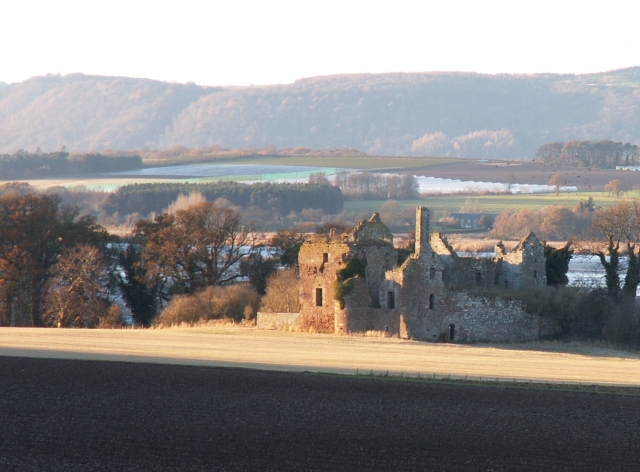
The 1st Count had two sons founding separate lines of La Motterie and Clervaux. Starting with the junior line, we come to the second princely title for the House of Lannoy. Adrien-Gérard, Count of Lannoy-Clervaux (d. 1730) was Governor of Namur, and lord of the ‘libre terre’ of Bolland. This ‘free land’ and its castle were located in the old Duchy of Limburg, today’s Province of Liège, where feudal boundaries were often quite blurry. The castle was built in the sixteenth century and was held by the Lannoys into the nineteenth century—it remains in private hands today.
Bolland Castle, in Limburg (photo Soluwe)
In 1789, Count Florent-Stanislas married Clémentine-Joséphine de Looz-Corswarem, daughter of the Duke of Looz-Corswarem, one of the few ducal titles in the Austrian Netherlands (see Beaufort-Spontin), who later became 1st Prince of Rheina-Wolbeck. The 1st Prince, Wilhelm von Looz-Corswarem, only ‘reigned’ for a few months in 1803 then passed his title to his son, Joseph Arnold. And when he died in 1827, the claims to this title passed to his brother-in-law Lannoy (Clémentine died the year before).
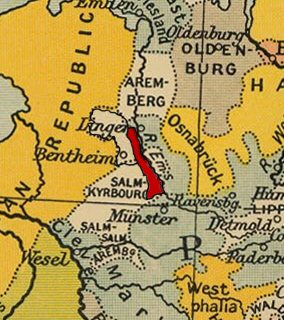
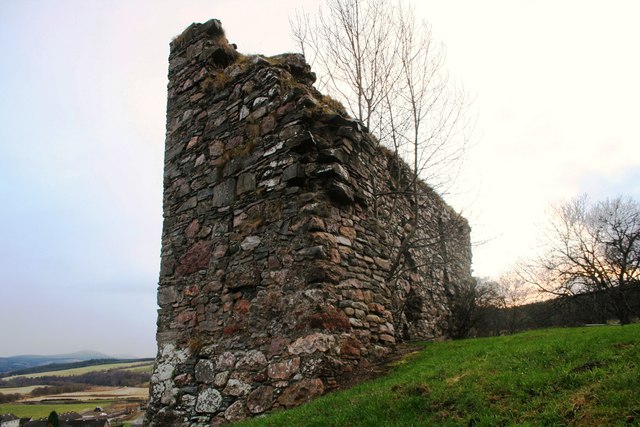
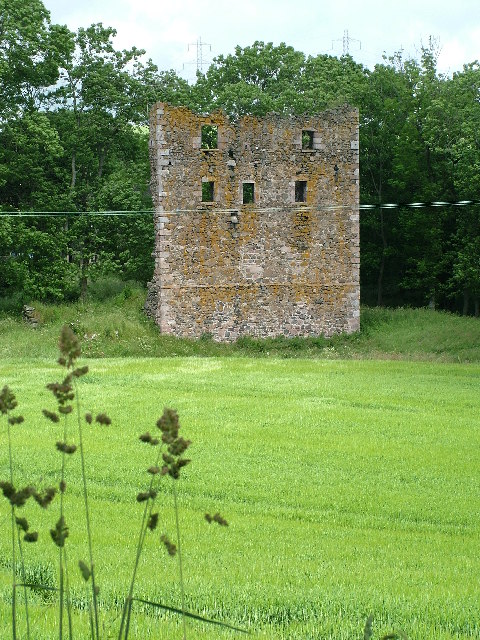
Rheina-Wolbeck was an unusual principality, a tiny sliver of land running along the west bank of the River Ems northwest of the city of Münster. Rheine was an old city in a region known as Münsterland, the lands belonging to the Prince-Bishopric of Münster; it also bordered the imperial counties of Lingen and Bentheim (on the very western edges of Germany’s modern borders). Wolbeck was also part of the Prince-Bishop’s lands, just outside the city on the southeast, with a fortified castle to which the bishops retreated when their citizens became unruly (like so many bishops of the Holy Roman Empire, they were forced to reside outside their episcopal city). With a mighty octagonal tower at its centre, over the centuries it developed into a hunting lodge, with a zoo added in the early eighteenth century. But all this was destroyed in the Seven Years War and almost nothing remains of Burg Wolbeck.
the tiny Principality of Rheina-Wolbeck (in red), 1803
In 1803, most of the ecclesiastical states of the Holy Roman Empire were secularised and given to other princes. Münster was the same. As a result of the Treaty of Lunéville two years before, aristocrats from the Austrian Netherlands who lost their lands to ever-expanding French conquests were compensated on the far side of the Rhine. The Duke of Looz-Corswarem was one of these, and this rather strange new state was created for him though he was at first slow to claim it. Apparently he considered Rheina to be a better latinised form of the name, rather than Rheine. One of the few real sources of income was a toll on a bridge over the River Ems which flows due north into the North Sea. There were plans to develop the Ems for better river transport, but only three years later, the principality was dissolved and its lands given to the new Grand Duchy of Berg, ruled by Napoleon’s brother-in-law, Joachim Murat. In 1811, the lands on the left bank of the Ems were incorporated directly into the French Empire. As Napoleon’s empire began to collapse in 1813, Duke Wilhelm von Looz-Corswarem’s son, Joseph Arnold, tried to reclaim the Principality of Rheina-Wolbeck. But in the Congress of Vienna of 1814-15, these lands (along with most of the Münsterland) were given to the Kingdom of Prussia as part of the new Province of Westphalia. Some of the lands, however, he was allowed to keep, notably the former Abbey of Bentlage.
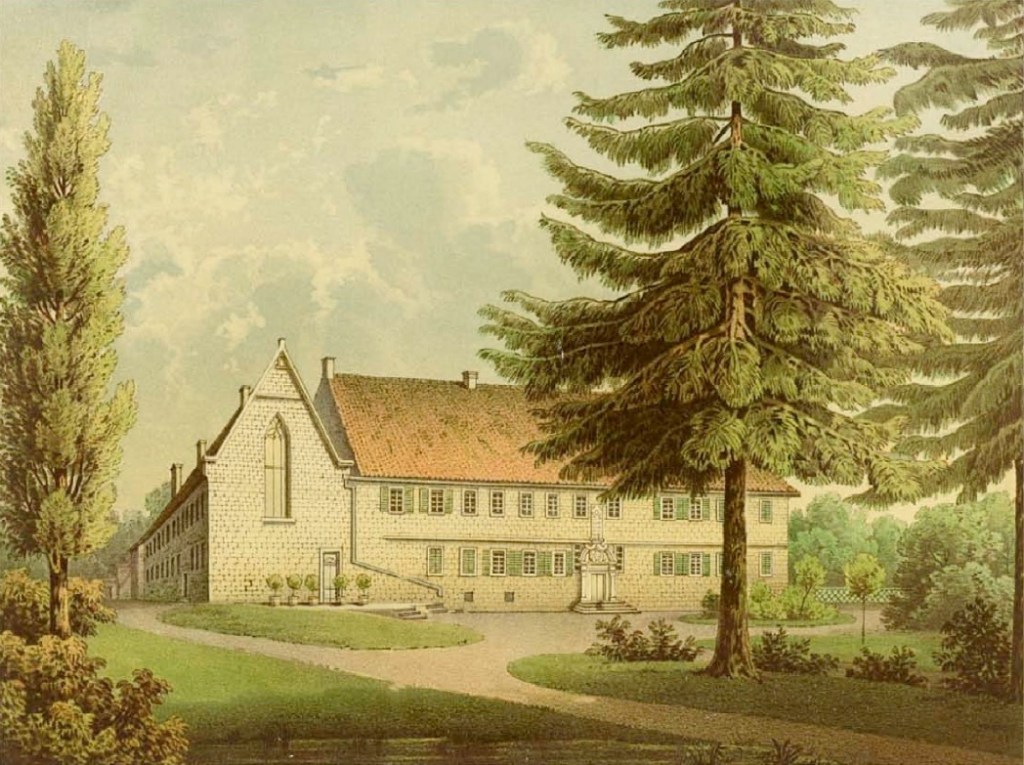
Bentlage was founded as an abbey for the Order of the Holy Cross (sometimes called the Crusader Brothers) in 1437. It was never huge and by the eighteenth century had only about a dozen resident friars. It was secularised in 1803, and given to the new Prince of Rheina-Wolbeck as its seat. When Joseph Arnold died in 1827, the property passed to Count Florent-Stanislas de Lannoy-Clervaux, and it stayed with his descendants, renovated as a country seat, until 1912, then passed back to Looz-Corswarem heirs, until they died out in 1946 and it passed to another family. Acquired by the city of Rheine in 1978, it has been turned into a museum.
Bentlage Abbey converted into a castle, 19th century
Florent-Stanislas de Lannoy-Clervaux’s succession to these lands, but also to the (now empty) title of Rheina-Wolbeck, was contested. It wasn’t until 1840 that the Bentlage estate was confirmed as his, and the King of Prussia re-created the title Prince of Rheina-Wolbeck for his heir, his grandson Napoléon de Lannoy, though without any sovereignty, merely the top of the noble hierarchy in the Prussian House of Lords. The title and seat were confirmed again in 1878 by Emperor Wilhelm I for the 3rd Prince of Rheina-Wolbeck (with the style ‘His Princely Grace’), Arthur de Lannoy. By this point the family was living mostly back in Belgium, and Bentlage was neglected. Arthur never married and was succeeded in 1895 by his brother Edgar who died in 1912. He did have a son, but his marriage was deemed unequal by the standards of Imperial princes, so the title and estates passed back to Looz-Corswarem heirs. This branch of the family (Lannoy-Clervaux) died out by the end of the twentieth century.
Returning to the more senior line of Lannoy-La Motterie, Philippe, 2nd Count of La Motterie, was Maître d’Hôtel of Archduke Leopold and Don Juan de Austria, successive governors of the Spanish Netherlands, though this latter appointment was cut short as he was killed in 1658 in the Battle of the Dunes against France. By his second marriage, he brought in another significant fief, Beaurepaire, in southern Hainaut (now also in France).
As this branch grew and spread in the eighteenth century, their actual title, Count of the Empire, was applied by different sons to different estates they acquired: Annapes, Watignies, Beaurepaire. In a junior branch, Eugène-Hyacinthe, 5th Comte de la Motterie, was Governor of Brussels (1737), a Field Marshal and Artillery General in the Imperial Army, and ultimately Grand Marshal of the Court of Brussels, 1751-56.
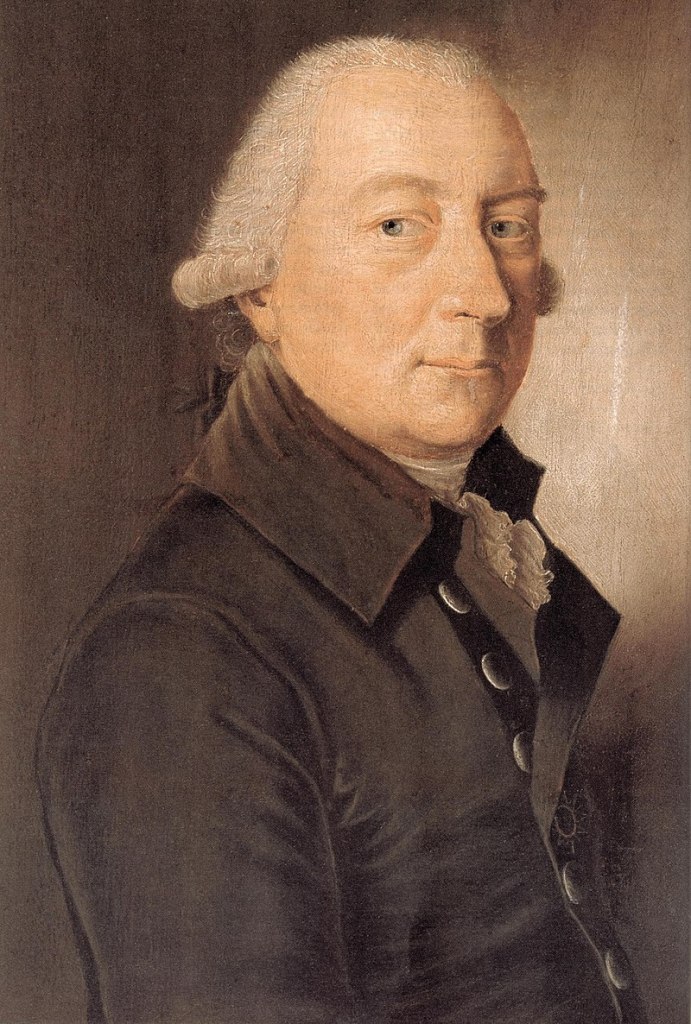
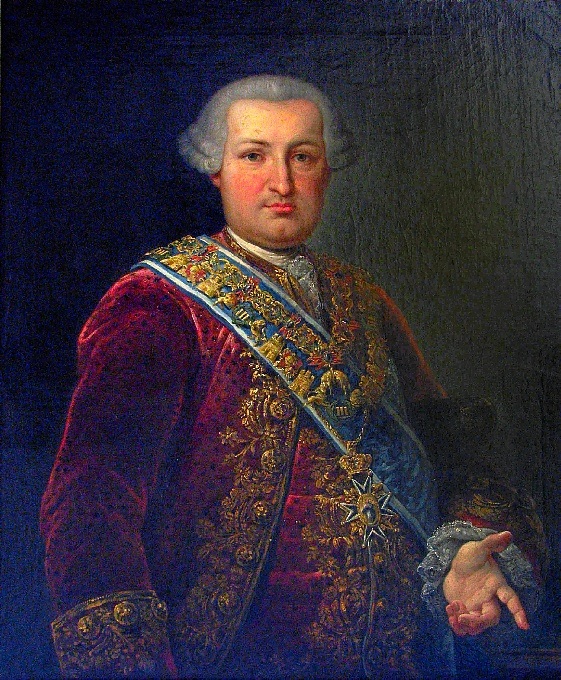
His son Chrétien-Joseph (d. 1822) was Imperial Lord Chamberlain from 1756, a leader of the court of Prince Charles of Lorraine, Governor-General of the Austrian Netherlands from 1741 to 1780. He resided at the Hôtel de Lannoy in Brussels. Before he died, Chrétien-Joseph, like many nobles had to adapt to his country being absorbed into the French Empire, so in 1804 he accepted a position as Senator of France, and in 1808, Count of the Empire. The line of La Motterie died out with him, while his cousins, the counts of Beaurepaire continued until 1870.
Chrétien-Joseph de Lannoy, Count of La Motterie
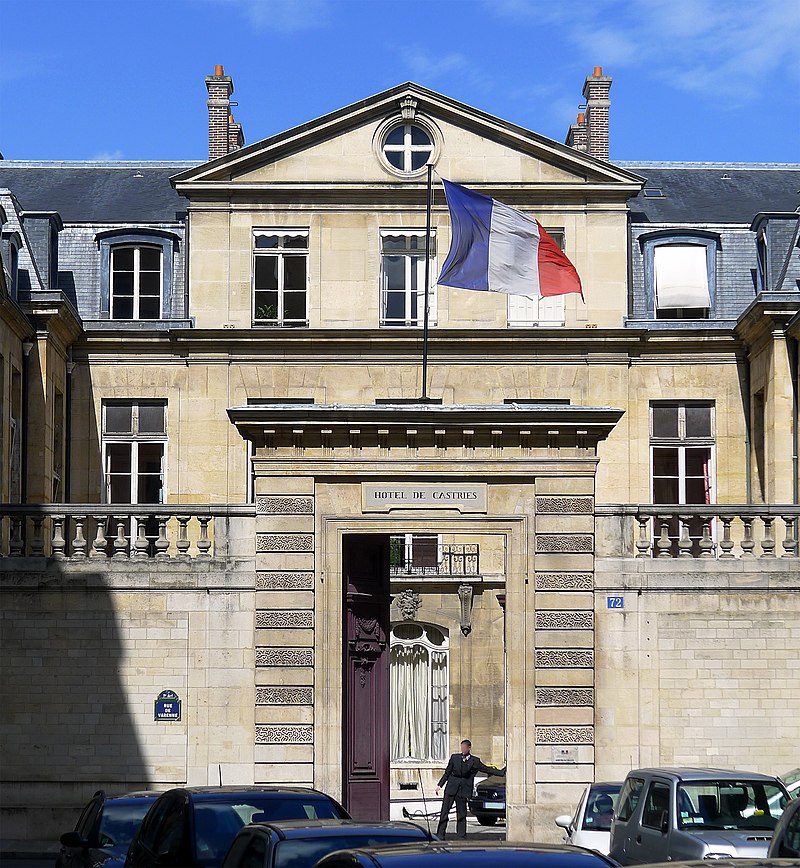
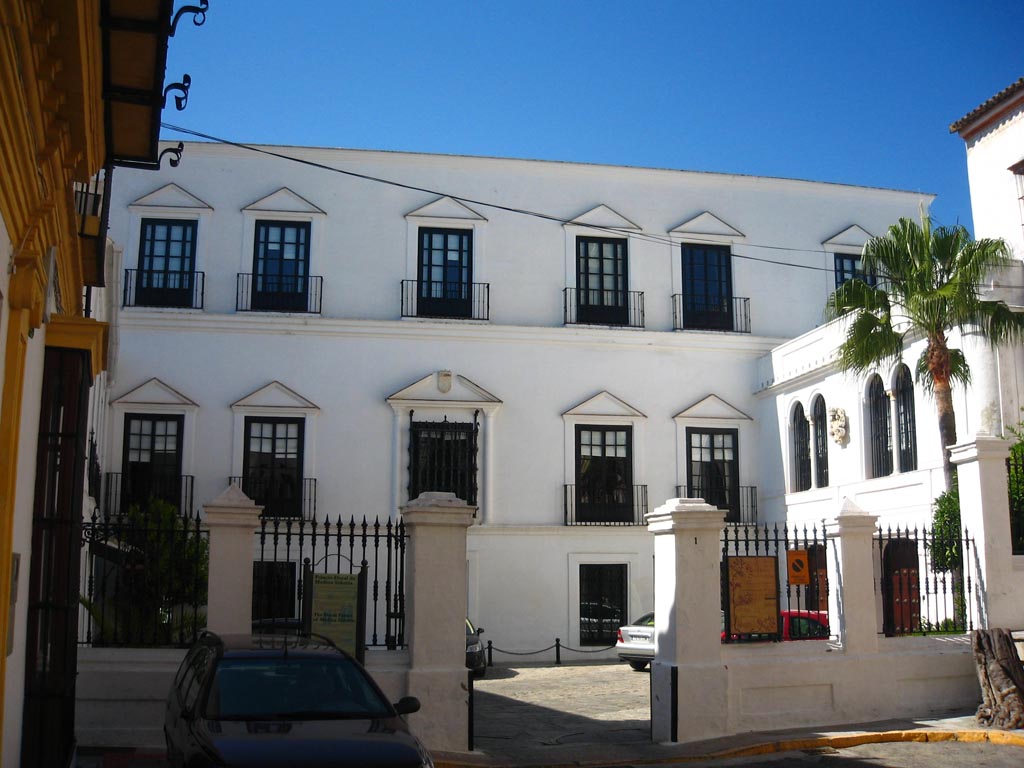
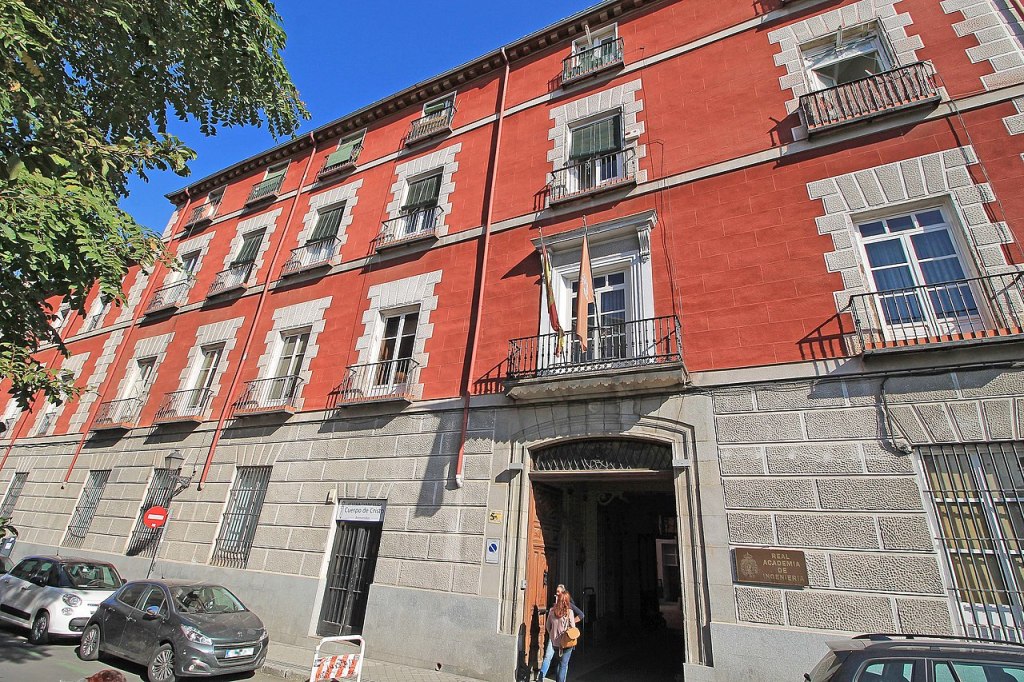
The Hôtel de Lannoy is on the rue aux Laines (or Wolstraat, ‘wool street’), a street popular with aristocrats from the fourteenth century, on the edge of the old city, south of the Coudenberg, the seat of the court (today’s Royal Palace). It was built as a city residence for the family in the eighteenth century, across the street from the grand Palais d’Egmont and its large gardens. There was also a Hôtel de Lannoy built in the 1770s, closer to the Royal Palace, sold to the Ligne family in the 1830s, so today known by that name.
Hotel de Lannoy, rue aux Laines, Brussels (photo Michel wal)
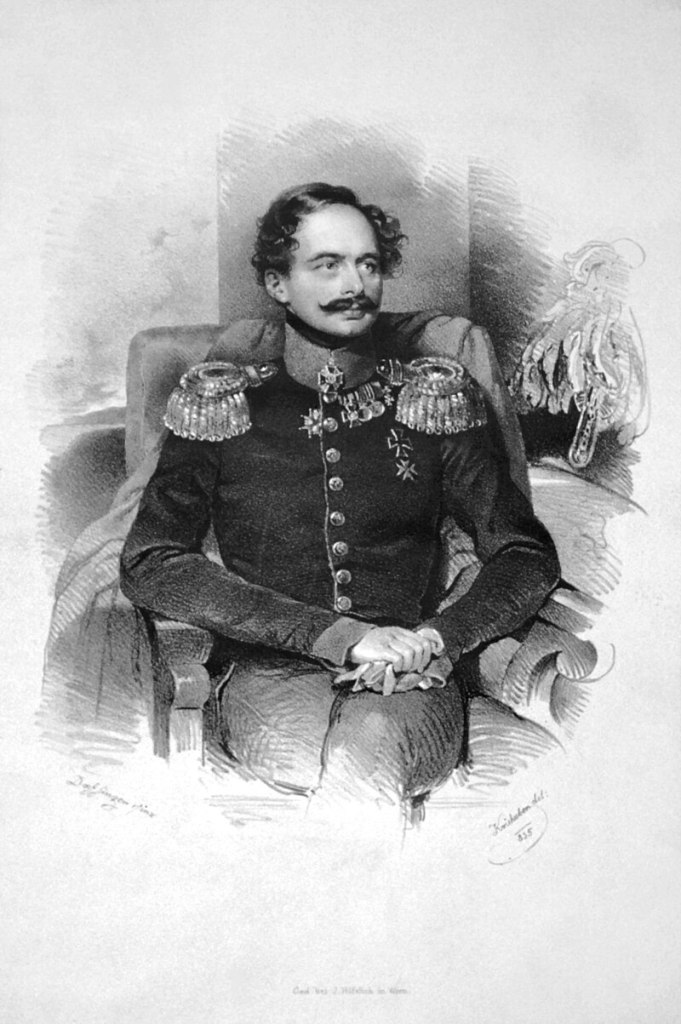
The senior line, who used the title more straightforwardly as ‘Comte de Lannoy’, came into greater prominence in the nineteenth century. Gustave-Ferdinand (d. 1892) was Chamberlain of King William I of the Netherlands, then after Belgium declared its independence in 1830, Grand Master of the Household of the Queen of the Belgians.
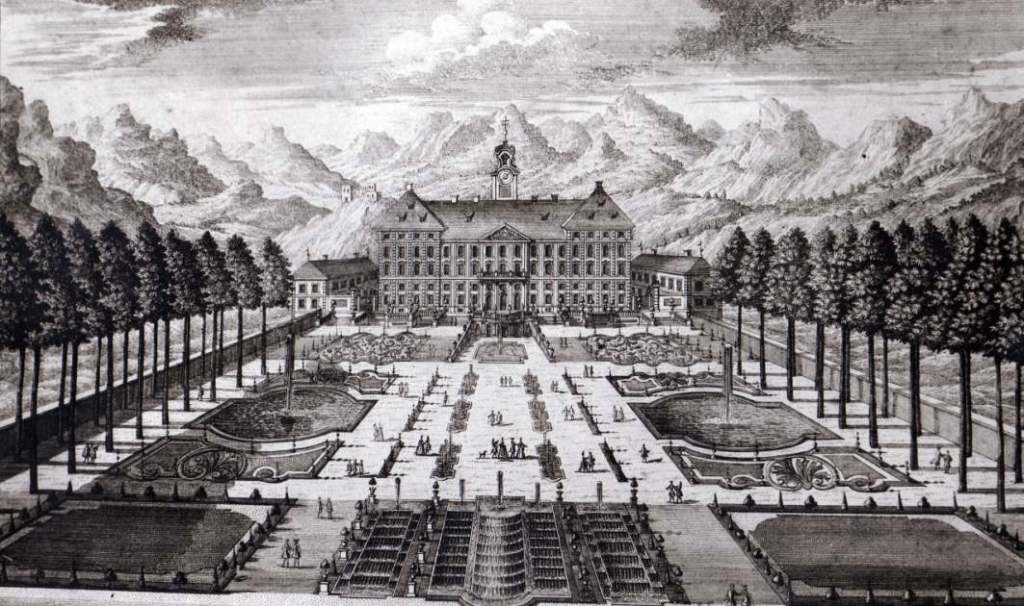
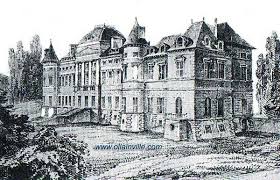
His country seat was the Château d’Anvaing, in the town of Frasnes-lez-Anvaing in Hainaut. Originally built by Jacques de Boubaix in 1561, in the style of a Renaissance water castle, it was then acquired by the Lannoy family in 1781. Extensive French-style gardens had been added in the early eighteenth century, and in about 1800 the estate was modified again, turning the old moat into a proper lake and refashioning the castle to have a more medieval ‘defensive’ look again becoming popular for aristocratic dwellings. Anvaing became famous in the twentieth century as the site of the capitulation of the Belgian Army in May 1940. It remains the main seat of the Lannoy family.
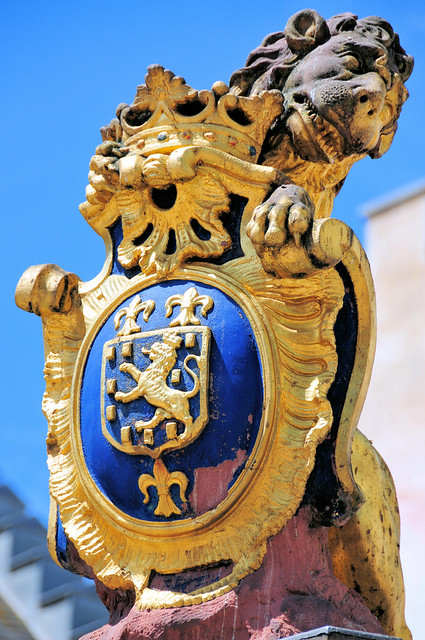
the Lannoy lion at Anvaing Castle
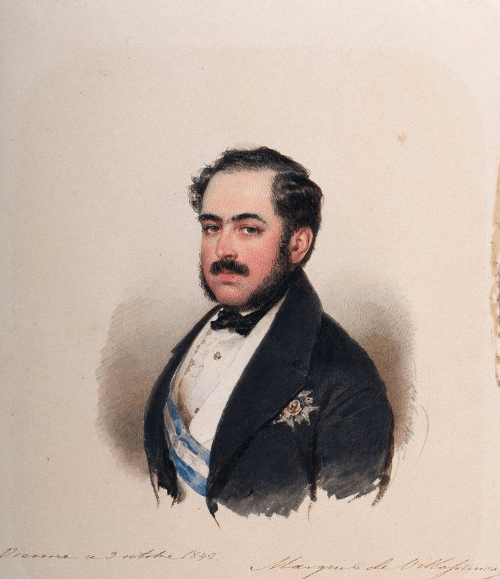
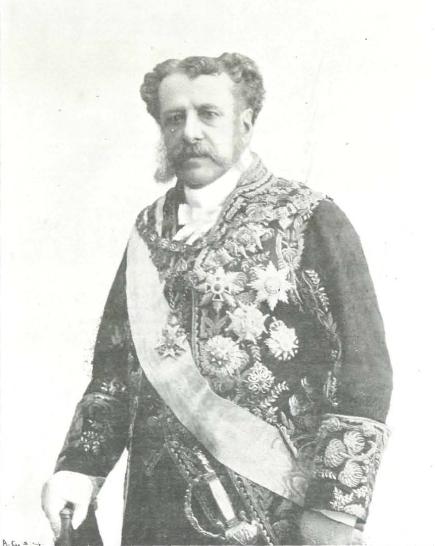
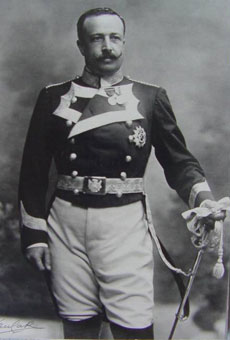
In the twentieth century, Philippe, Count of Lannoy (d. 1937), was Marshal of the Court of King Albert II of the Belgians—when the latter died, the Marshal was responsible for organising his funeral. He then became Grand Master of the Household of the now widowed Queen Elisabeth. Hie grandson, another Philippe, Count of Lannoy (d. 2019), was a provincial councillor of the Province of Hainaut. He and his wife, a member of an Antwerp family ennobled in 1614 (della Faille de Leverghem), had seven children and then one more after a gap of eight years: this is Countess Stéphanie, the new Grand Duchess of Luxembourg.
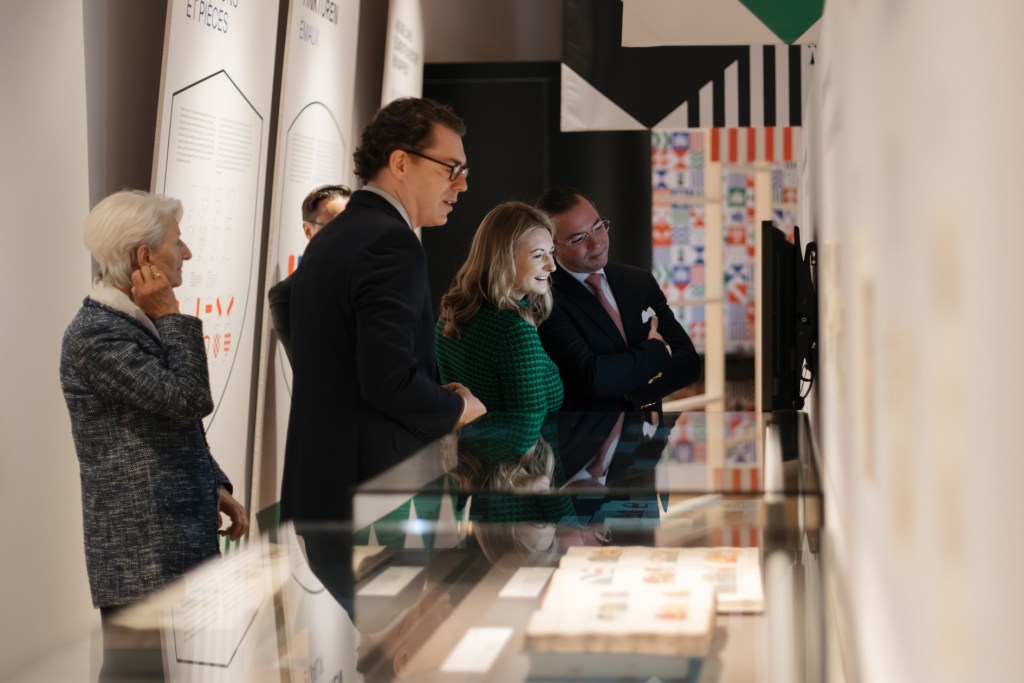
Stéphanie de Lannoy, now Grand Duchess of Luxembourg, visiting last year’s exhibition about heraldry at the National Library guided by its curator (and my old friend) Dr Pit Péporté (photo Maison du Grand Duc, Kary Barthelmey)
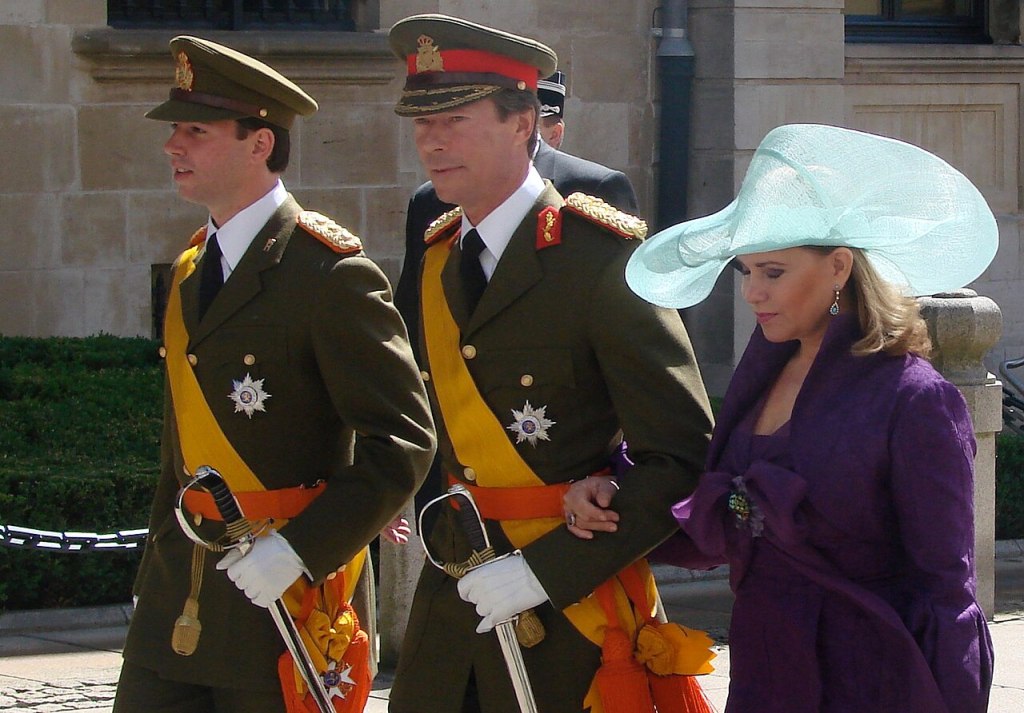
On 3 October 2025, Henri, Grand Duke of Luxembourg, abdicated his throne in favour of his eldest son, Crown Prince Guillaume. The Grand Duchy of Luxembourg as an independent sovereign state has only had its own ruling family since 1890, though the Duchy of Luxembourg itself (and before that the County) is far more ancient, with roots stretching back into the eleventh century, and the Grand Duchy existed as an autonomous state within the Germanic Confederation, with the King of the Netherlands as its sovereign, from 1815. At that time, the dynasty that ruled the Grand Duchy was the House of Orange-Nassau, whose history has been traced here; after 1890, they were succeeded in Luxembourg by very distant cousins from the House of Nassau-Weilburg. One of the new Grand Duke Guillaume’s subsidiary titles is thus Prince of Nassau. But he and his siblings also bear another title: Prince of Bourbon-Parma, which makes the history of this ruling family even more interesting. Although they officially still are called the House of Nassau-Weilburg, strictly speaking from a traditional patrilineal perspective, they are Bourbons, members of the ancient House of France, with ancestry stretching back to the first Capetians in the tenth century.
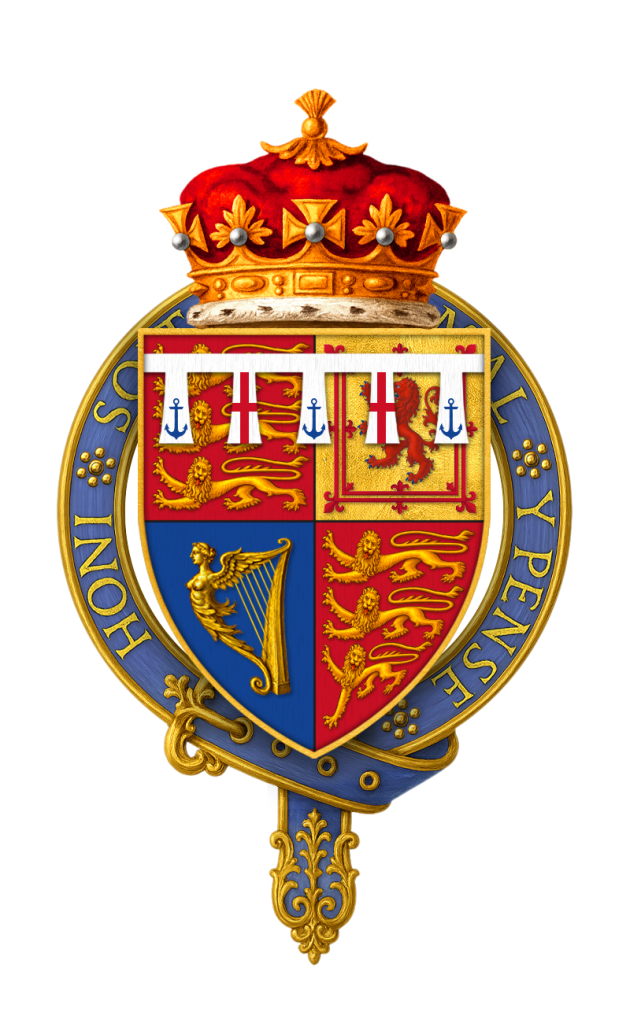
the arms of the grand dukes of Luxembourg, with quarters for Luxembourg and Nassau, and overall the arms of the house of Bourbon-Parma
An interesting twist, for those interested in historical drama on television, is that the actor currently playing Louis XVI in the series ‘Marie-Antoinette’, Louis Cunningham, despite lacking the heavy paunch and jowls of the real Louis XVI, certainly has a very Bourbon nose, and with reason—his mother is Princess Charlotte of Luxembourg, Princess of Bourbon-Parma, cousin to the current grand ducal family.
So how did this come about, that there are Bourbons masquerading as Nassauers in Luxembourg? This blog will look first at the twentieth-century dynastic history of Luxembourg and the Bourbon-Parma family, then will step back to look at the Princes of Nassau-Weilburg, one half of the House of Nassau. A previous blog has looked at the junior half of this dynasty, in its many branches that became princes (Dillenburg, Hadamar, Siegen and Dietz)—the last of these also became princes of Orange (a French territory they no longer possessed) in 1702, Dutch Stadtholders then kings of the Netherlands in 1815. As in Luxembourg, although the male line died out in 1890, the royal family there retains the name Orange-Nassau (rather than adopting Mecklenburg, Lippe or Amsberg for each successive spouse of a reigning queen). The branch of Weilburg also included other lines that also established principalities (Idstein, Usingen and Saarbrücken); and evolved into the relatively short-lived Duchy of Nassau, one of the new states created in the course of the Napoleonic Wars in Germany, but which disappeared in 1866.
the Middle Rhine in the Middle Ages, with the County of Nassau stretching northward from one of its capitals, Wiesbaden. Weilburg (here as ‘Weilbg’), is at one end of the river Lahn, while Nassau castle itself is at the other.
To start, we can look at the strange circumstances in Luxembourgish history that followed the death of Grand Duke William IV in 1912. He and his wife, the former Portuguese Infanta Maria Anna, had six daughters but no sons. There were no other male members of the House of Nassau, in either of its two main branches—except the Count of Merenberg, but we’ll come back to him and the reasons for his exclusion. The Grand Duke passed a law that would allow him to be succeeded by his eldest daughter, Marie-Adélaïde. She governed the Grand Duchy for nearly six years, but in January 1919 abdicated in the face of her pro-German sentiment during the First World War. Her sister Charlotte, age 23, took over as Grand Duchess. A few months later, she married Prince Félix of Bourbon-Parma, and together they re-generated a grand ducal dynasty for Luxembourg, over which she presided until her abdication in 1964. Félix was her first cousin (he also had a Portuguese infanta as a mother), and although he was created ‘Prince of Luxembourg’ the day before their wedding, he retained his title Prince of Bourbon-Parma for the rest of his life—after all, the Bourbons outranked the Nassaus, and his children by right could now be called Royal Highness instead of Grand Ducal Highness. Why was this so? What or where was Bourbon-Parma?
Grand Duchess Charlotte of Luxembourg and Prince Felix of Bourbon-Parma shortly after their marriage (Collection of the Maison Grand Ducale de Luxembourg)
It was not a place, but a branch of the royal house of Bourbon that ruled in the Duchy of Parma (and Piacenza, to give it its full name) from the 1730s to 1859, when it was annexed to the Kingdom of Sardinia (which soon became the Kingdom of Italy). The Bourbon Dynasty is of course one of the most well-known royal houses in Europe, ruling France from 1589 to 1848 (with some gaps), and Spain from 1700 to the present (with some gaps). In 1731, the son of the first Bourbon king in Spain (Philip V), Infante Carlos, sailed for Italy where he took possession of the duchies of Parma and Piacenza, ruled by his mother’s family, the Farnese, since 1545. Duke Charles I was not satisfied with this relatively small state, however, and in 1734, marched an army south to reclaim the kingdoms of Naples and Sicily, lost to his father at the end of the War of the Spanish Succession in 1713. Parma was then annexed by Austria, only to be returned to the Bourbons—to another son of Philip V and Isabel Farnese (Infante Felipe)—at the end of the War of Austrian Succession in 1748 (and with the addition of a third duchy, tiny Guastalla). Duke Philip was seen as an extension of the royal family of Spain, but his wife, Duchess Elisabeth-Louise, was the eldest and favourite daughter of Louis XV of France. Their son Duke Ferdinand of Parma was thus caught between the wills of the French and Spanish branches of the Bourbon dynasty, though he came to rely increasingly on his wife, an Austrian archduchess, Maria Amalia (an older sister of Queen Marie-Antoinette), and they forged a more independent path.
The family of Philip, Duke of Parma, with his consort, Louise-Elisabeth of France. The future duke Ferdinand plays with his sister, the future Queen Maria Luisa of Spain (Giuseppe Baldrighi, 1757)
So by the time of the French Revolution, there were four ruling branches of the House of Bourbon—France, Spain, Naples-Sicily and Parma—plus some non-ruling branches like the dukes of Orléans and the princes of Condé and Conti. All four lost their thrones as a result of the French Revolution—though the Bourbons of Naples held on in Sicily throughout, and the Bourbons of Parma actually got a promotion, briefly, as kings of Etruria, a curious revival of an ancient name for a monarchy created in Tuscany by Napoleon as a satellite or dependant state of the French Empire (1801-1807). Norman Davies included this interesting puppet state in his book Vanished Kingdoms from 2012: ‘Etruria: French Snake in the Tuscan Grass’. The Bourbon-Parma family then had to wait until Napoleon’s widow, ex-Empress Marie-Louise died in 1847 before they were fully restored to Parma and Piacenza (in the meantime they were compensated with the smaller duchy next door, Lucca). By this point, Duke Charles II (who curiously had been called Louis II as child-king of Etruria) was hardly interested in governing, and abdicated in 1849 in favour of his son Charles III. This duke was assassinated in 1854, and his infant son Robert was deposed in 1859 by the unstoppable surge of the Italian Risorgimento. Unified Italy would soon take over in Naples and Sicily as well.
Duke Robert I of Parma, with his mother Louise as regent (Carlini, 1854)
So after 1859, the Bourbon-Parma family was a ruling dynasty with nowhere to rule. Robert married twice and had twenty-four children. (yes!) The last of these, Zita, did not die until 1989, at 96 years old. Despite not having a throne, their royal blood and kinship ties to other royal houses still afforded them prestige and first-class marriages: in 1893, the eldest child Princess Maria Luisa married Ferdinand, Prince of Bulgaria (later Tsar), and in 1903, Prince Elias married Archduchess Maria Anna of Austria. A far more significant marriage occurred in 1911, when their half-sister, Zita, married Archduke Carl of Austria, heir to the throne after 1914, and they succeeded as Emperor and Empress of Austria, King and Queen of Hungary, in November 1916. Zita’s brother Prince Félix then married Charlotte, Grand Duchess of Luxembourg, in 1919, as we’ve seen. Her other brother Sixtus had already made his name somewhat a few years before, in what’s now known as the ‘Sixtus Affair’.
When World War I broke out, the head of the family, Prince Elias (known as Élie in French—like much of his family, or indeed his class, they preferred to speak and write to one another in French) served in the Austrian army, in an honoured position as brother-in-law of the Emperor Carl, as did his brothers René and Félix (the actual eldest brother, the titular Duke Henri, was in fact severely mentally disabled, as was the next brother, Joseph, so Elias had been appointed by the Austrian court as their guardian, along with several of their sisters, also disabled). In contrast, two of their half-brothers, Sixtus (or Sixte in French, as he was the 6th son) and Xavier, joined the Belgian army. In March 1917, Sixtus arranged a meeting via his sister Empress Zita in Switzerland between French officials and Emperor Carl, in an effort to make peace terms before Austria-Hungary crumbled altogether. The French had stipulations for the peace, notably the restoration of Alsace-Lorraine and the independence of Belgium, which Carl was unable to guarantee in the face of fierce opposition from his German allies. So nothing was finalised, and when news of the negotiations leaked to the press in April 1918, the Emperor denied involvement until French President Clemenceau published the relevant letters and documents. This weakened any influence the Habsburg emperor had in Berlin and only hastened the collapse of his empire.
Four of the Bourbon-Parma brothers, circa 1920: Sixtus, Xavier, Felix and Rene
Although the Bourbon-Parma dynasty had no throne, they had no shortage of money, inheriting not just private estates in Italy like the Villa Pianore near Lucca, but also the wealth of the senior branch of the House of Bourbon when it died out in 1883, notably several castles in Austria and the Château of Chambord in France (Duke Robert’s mother had been the sister of the last Bourbon, the Comte de Chambord). Since Elias had fought for the Austrians, his French estates were sequestered in 1915, then liquidated by the French state in the 1920s; this action was contested by his half-brothers Sixtus and Xavier, who had served in the Belgian army, allied with France, and therefore not subject to the same wartime sanctions. In 1925 the French government awarded them an equal share of the patrimony (what remained of it). Chambord, however, had to be sold to the state, for 11 million francs, in 1932. Elias succeeded as titular Duke of Parma in 1950, after the incapacitated Henri and Joseph died. His son, Robert II, then headed the clan until he died without a son in 1974.
Villa Borbone delle Pianore, near Lucca
Meanwhile, Prince Xavier had still other dynastic claims to press. Although he wasn’t the eldest son, in 1936 he was selected to act as ‘regent’ for the Carlist party in Spain. This is not the place to go into the history of Carlism in Spain, but in a nutshell, back in 1833, Infante Carlos, younger brother of King Ferdinand VII, refused to accept that the Spanish throne could pass to a woman and tried to block the accession of his niece Isabel II, and three Carlist Wars followed, very nearly toppling the government. After 1883, they also claimed to be the legitimate heirs to the French throne, as the senior lineal male descendants of King Louis XIV (though this hardly meant much given that France was now a republic). In 1936, the last of the Carlist pretenders died childless, so the Carlist organisation asked Xavier to be ‘regent’ and symbolic commander of their troops fighting in the Spanish Civil War (the actual king, Alfonso XIII, had been expelled in 1931). Xavier was not the next in line, lineally, but he did share the values of the movement, in its extreme devotion to conservative politics and the Catholic Church. He was expelled from Spain by General Franco in 1937; then arrested by the French Vichy government in 1944 and deported for having close links to the Resistance, and was incarcerated at Dachau until May 1945. From 1952, Xavier was named ‘king’ (Javier I) by leaders of the Carlist movement, though he himself shied away from it. In 1975, once he became titular Duke of Parma, he abdicated as ‘King of Spain’ in favour of his son Carlos Hugo (b. 1930), who became ‘Carlos VIII’.
the Carlist coat of arms for Spain since the 1930s, with the arms of Bourbon-Parma (instead of Bourbon-Anjou) in the centre
So it would seem the senior branch of the Bourbon-Parma family should be mostly associated with Spain today, but that is not in fact the case. Carlos Hugo had married Princess Irene of the Netherlands, the second daughter of Queen Juliana. Their engagement in 1964 had caused a constitutional crisis, since the Dutch government refused to sanction the marriage due to his father’s claims to be a head of state. They were nevertheless married, in Rome, with the Princess converting to Catholicism and losing her succession rights to the Dutch throne. None of her family attended the wedding. They lived in Madrid until Franco expelled them in 1968, and so they moved to France. After 1981, Irene and Carlos Hugo were divorced, and she and her children lived in the Netherlands, at Soestdijk Palace. Her husband had re-engaged with the Carlist movement in the 1970s, notably trying to reform it after a neo-fascist attack on his more liberal supporters in May 1976 in Navarre (the ‘Montejurra Massacre’). In fact, Carlos Hugo was a socialist, totally at odds with the Carlist movement, so in 1979 he renounced his claims in favour of his brother, Sixtus Henry, a real devotee, regarded as a ‘standard bearer of tradition’, who now took the name ‘Enrique V’. Sixtus Henry (or ‘Don Sixto’) remains active in Far Right politics all over Europe and prefers to use the title ‘regent’ of the Carlists, rather than king, in hopes that his nephew might return to traditional ideology. This nephew, Prince Carlos (b. 1970), was raised in the Netherlands and married a Dutch citizen. Since 1996 he and his siblings have been formally recognised as part of the Dutch Royal Family. In 2010 he succeeded his father as titular Duke of Parma, but also took up the Carlist claim, as either ‘King Carlos Javier’ or the Duke of Madrid (the title used by previous Carlist pretenders). He acknowledges these various titles and styles, but makes no active claims on the Spanish throne. Instead, his energies are focused on Dutch environmental issues. His son, Prince Carlos Enrique (b. 2016), is known as the Duke of Piacenza.
Carlos Hugo of Bourbon-Parma and Irene of the Netherlands, 1964 (Dutch National Archives, Photo Collection)
There is still one more branch of the Bourbon-Parma family today: after the end of the First World War, Prince René married Princess Margaret of Denmark, daughter of Prince Valdemar (a younger son of King Christian IX). They lived in France in the interwar period, then in Denmark after 1945, and raised a number of children including Princess Anne who married King Michael of Romania in 1948 (just after he had abdicated that throne); and Prince Michel whose family are still considered distant extensions of the Danish royal family. Prince Erik in fact closed the circle somewhat by marrying his cousin, the daughter of Princess Marie-Gabrielle of Luxembourg, in 1980.
Returning therefore to the Grand Duchy of Luxembourg, Charlotte abdicated in 1964 in favour of her son Prince Jean. His father, Prince Félix of Bourbon-Parma, had earned a prominent position in the Grand Duchy, notably as the president of the Luxembourg Red Cross, 1923-32 and 1947-69. He died in 1970 in Fischbach Castle—an estate owned by the Grand Ducal family since the 1840s, deep in the hills north of the city of Luxembourg. Charlotte died in 1985, the last member by birth of the House of Nassau-Weilburg (four of her five sisters had died relatively young). Two years later, Grand Duke Jean decided formally that his family would be known as the House of Nassau-Weilburg, not Bourbon-Parma—but this decision was reversed by his eldest son Grand Duke Henri when Jean abdicated in 2000. Both male and female members of the dynasty are now known as both prince/princess of Nassau and of Bourbon-Parma. The House of Bourbon-Parma continues to thrive as a royal house also through the marriages of some of its other members: Grand Duke Jean married the sister of the King of the Belgians, Joséphine-Charlotte; their daughter Marie-Astrid married a Habsburg, Archduke Carl Christian of Austria (a descendant of Empress Zita); and her sister Margaretha married Prince Nikolaus of Liechtenstein (younger brother of the ruling prince). In an interesting twist to the situation of her grandfather Félix, Margaretha is permitted to retain her HRH style, while her husband is a Serene Highness.
Fischbach Castle as it appeared in the 1840s
And so we can now step back to the early years of the Holy Roman Empire, to follow the path of the House of Nassau-Weilburg that led them from relatively minor counts in the Rhineland to one of the ruling houses of Europe.
As seen in the previous blog post about the princes of Orange (part 2), the counts of Nassau emerged in the early twelfth century as lords controlling much of the Lahn river valley as it flows between the Taunus mountains and the Westerwald into the Rhine in the middle stretch of the great river between Mainz and Koblenz. They shook off any ties of vassalage to the local bishops of Worms or Mainz, and were soon included amongst the imperial counts, that is, those with real autonomy and a voice in the imperial diet. In 1255, the family’s landholdings were divided between two brothers, Walram and Otto, and the two main branches of the dynasty were formed, with the Lahn acting as a north-south boundary between them. The senior line, the Walramians, took over the southern lands, notably Wiesbaden and Weilburg; while the Ottonians were based further north at Dillenburg and Siegen, and would eventually (three centuries later) acquire the principality of Orange and become major political players in the Low Countries, before becoming the royal dynasty of the Netherlands from 1815 to the present. One thing that makes this family really interesting is that even more than others of a similar rank, they always maintained a common dynastic interest: all branches, no many how many they bifurcated into, maintained joint ownership over the main castle of Nassau on the Lahn (even after it fell into disrepair); and several mutual succession pacts were signed, not just within the two sub-branches, but between the Walramian and Ottonian branches as well, which had significant ramifications, namely that the line of Nassau-Weilburg, Walramians, were called to succeed the line of Nassau-Dietz (or Orange-Nassau), Ottonians, on the throne of Luxembourg, even after six hundred years of separation. That’s really something.
the Nassau lion, shared by both branches of the dynasty–the only difference was that the Walramians used a crowned lion, in remembrance of their brief possession of the imperial crown (a house decoration in Wiesbaden)
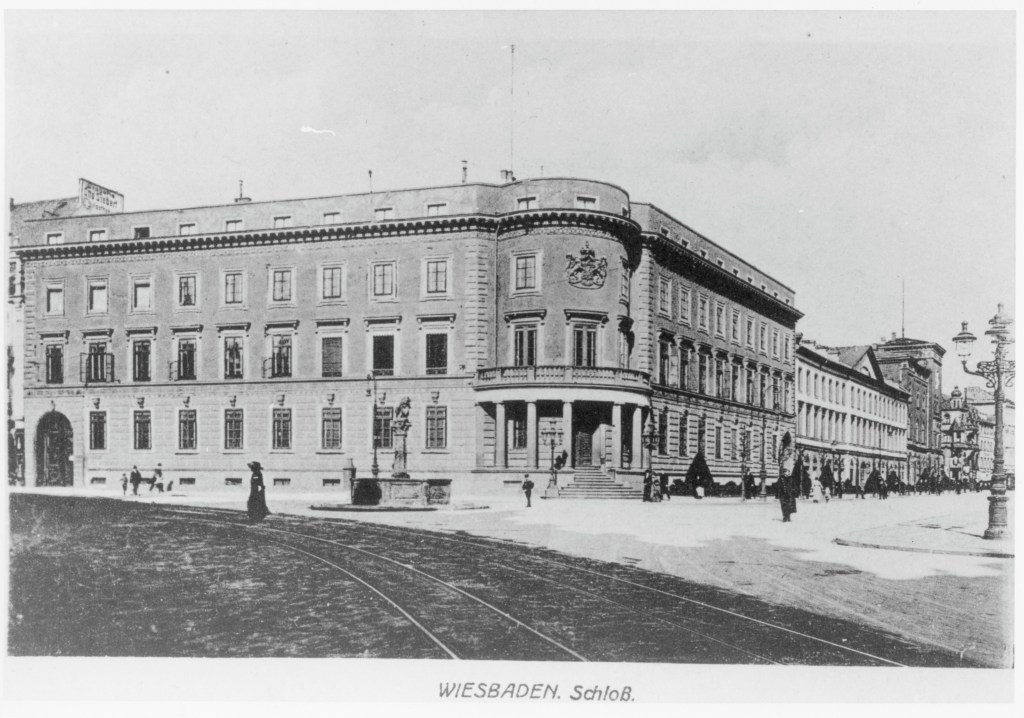
The first main seat of the Walramians was Wiesbaden, at the far southern end of the County of Nassau. This is a really interesting city, a spa town with gardens and theatres, located on the huge bend of the Rhine where it is joined by the river Main near the city of Mainz. The name gives it away that this was always a spa (‘baden’), and it had been a royal residence of Frankish rulers since the eighth century (this was in fact part of the ancient Duchy of Franconia). The Nassau counts acquired the town and built a new castle here in the 1230s, later developed as a renaissance palace in the sixteenth century, then fell into disuse in the seventeenth when the family base shifted elsewhere. Wiesbaden was revived in the nineteenth century when it became the capital of the enlarged Duchy of Nassau (see below), and its Stadtschloss (‘city palace’) was rebuilt as a neoclassical palace in 1841. It later became part of Prussia, and a favoured summer residence for Germany’s emperors—who also patronised the development of the spa, notably in its grand main building, the Kurhaus (1907), with baths, concert halls, casinos and restaurants. With the fall of the German Empire, the former Nassau palace served several functions: as headquarters for the British Army in the 1920s, seat of the Wehrmacht for the western districts of Germany in the 1930s, then headquarters for the US Army, 1945-46. Since 1946 it has housed the Hessian State Parliament.
the Stadtschloss, Wiesbaden, in 1920
The other main residence of the early Walramian counts of Nassau was Weilburg. This castle sits in a loop of the river Lahn, near the mouth of a smaller river called Weil. Deep in the hills, it guards one of the ‘high roads’ (ie, not the roads following along the valley of the Rhine) between Frankfurt and Cologne. It too was an ancient royal foundation, as an abbey dedicated to St Walpurgis (tenth century), with a nearby royal residence, which the Nassau counts received in 1225 at first as vogts or advocates (secular defenders of ecclesiastical lands), on behalf of the bishop of Worms, but then sold to them outright in 1294. A new castle was built in the 1350s, replaced by a renaissance palace in the mid-sixteenth century, then upgraded again in baroque style in the early eighteenth century, and expanded with orangeries (two!) and an ornamental garden. This was the main seat of the Duchy of Nassau from 1806 to 1818 when it moved to Wiesbaden, and although these lands were also annexed to Prussia after 1866, the Nassau-Weilburg family continued to own the castle until sold to the State of Prussia by Grand Duchess Charlotte of Luxembourg in 1935 (the family still retains ownership of the dynastic burial chapel).
the baroque town of Weilburg on the Lahn river, in 1900
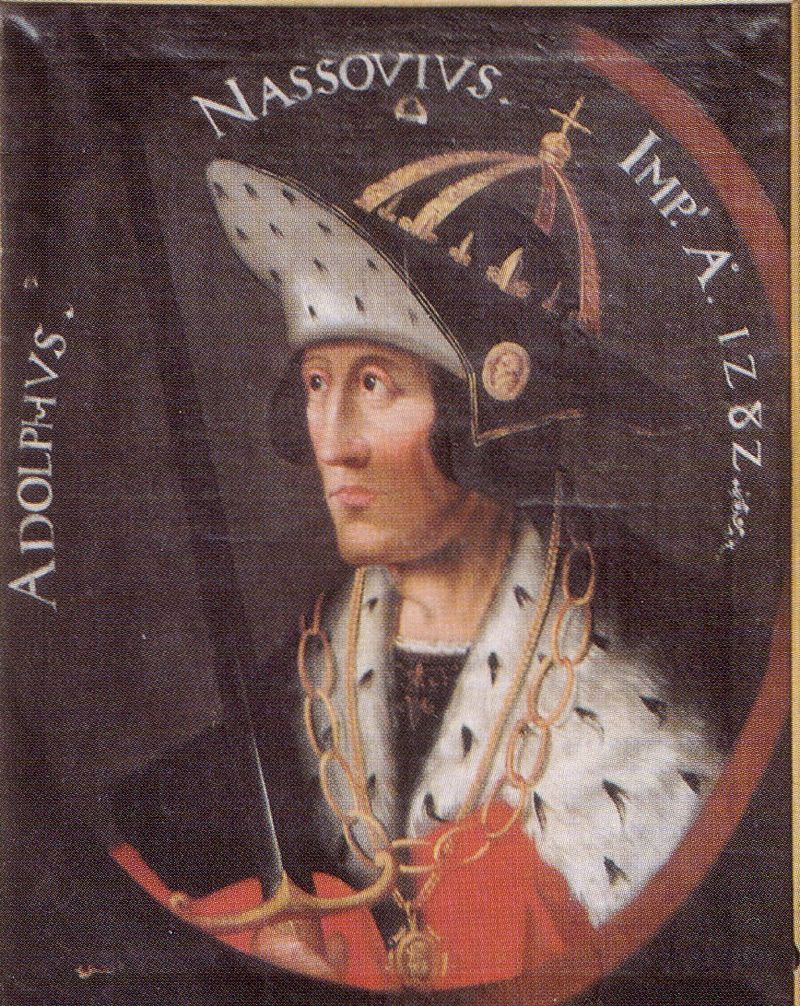
Both branches of the House of Nassau received a huge prestige boost in 1292 when Count Adolf was—to the surprise of many of the great magnates—elected King of Germany, the first step towards being crowned Holy Roman Emperor. This was the second time in a row the German princes had elected a relative nobody after the collapse of the Hohenstaufen imperial dynasty, with the idea that if the person occupying the top position in the Empire had little wealth and no large territorial base, he couldn’t be a threat. Count Rudolf of Habsburg had been the first, in 1273, but when he died in 1291 his supporters tried to elect his son Albert, now Duke of Austria, as his successor. This went against the idea of keeping a weak person on the throne, so opponents elected Adolf of Nassau. His father Walram II had been the marshal of the court of King Rudolf and a member of his privy council, and Adolf as a young man had also served at his court, and those of the archbishop-electors of Cologne and Mainz. So he was elected mostly by these Rhenish archbishops as a block to Albert of Habsburg, and he had to agree to many concessions and restrictions on his power. He very quickly broke all his promises however, making an alliance with the King of England against the King of France (which the archbishops opposed), and trying to build up his dynasty’s territorial base (as the Habsburgs had done) by annexing lands in Thuringia and Saxony, thus alienating the electors of Saxony and Brandenburg. By Spring of 1298, the princes had enough, and Adolf I was deposed, and Albert of Habsburg elected in his place—Adolf held on for a short while but was killed in battle against Albert near Worms in July.
Adolf of Nassau, King of Germany, painted in 1662
Most medieval noble families raised themselves up the ranks by obtaining important episcopal positions, especially those noble families in the Rhineland. So the Nassauers’ position in imperial politics was saved following this disaster by the election in 1300 of Adolf’s brother, Diether, as Archbishop of Trier. His relatively short reign there was also pretty disastrous though, as he made enemies of the new emperor (Albert), of his own chapter and citizens in Trier—even leading to violence—and ruined the electorate’s finances. He died in 1307. A more sustained run of ecclesiastical power for the House of Nassau was in Mainz, where King Adolf’s son Gerlach was Archbishop for a long time (1346-71)—including the crucial period when the final number of imperial electors (including himself) was determined by the Golden Bull of 1356—followed after a gap by his nephew Adolf, 1381 to 1390, then his brother Johann, 1397 to 1420, and finally another Adolf, 1461 to 1475. So for nearly 150 years, the Nassau dynasty controlled one of the three key archbishoprics in the Empire, Mainz, based just across the river from their seat at Wiesbaden. The Archbishop of Mainz was also the Imperial Arch-Chancellor, who presided over meetings of the prince-electors following the death of each king or emperor—though the House of Nassau was never again tempted to fill this seat themselves.
In the 1340s, like most German princely families, the Walramians divided up their lands between brothers, starting the sub-branches of Nassau-Weilburg and Nassau-Wiesbaden, to which was also called Nassau-Idstein. In 1366 all the members of the family were formally named as imperial counts (subject to no one but the emperor himself), and a few years later, another important territory was added to this branch, located much further to the west on the borders with France, the county of Saarbrücken. The lines of Weilburg, Wiesbaden-Idstein and Saarbrücken would be divided, re-united, and divided again many times over the next three centuries. But until they were elevated to the next step, imperial princes, I will only skim over the most pre-eminent members.
The senior line based at Idstein occupied a castle just a few miles north of Wiesbaden, in the Taunus mountains. Unlike many of the other Nassau properties, its medieval castle served as a residence almost continually between 1100 and 1721, and its twelfth-century Hexenturm, or ‘witches tower’, remains an icon of the town. A new residence was built in the early seventeenth century, but the older buildings were left intact. After 1721, the family moved to Biebrich, a new palace on the other side of Wiesbaden, so Idstein was used to house administrators and the comital archives.
Idstein with its ‘Witches Tower’ in 1655
The most prominent member of this branch was Count Adolf III, a supporter of Emperor Maximilian I in his efforts to govern his new territories in the Low Countries, for which he was appointed Stadtholder of Guelders in 1489. Succeeding generations were also involved in the politics of the Low Countries (and married into the nobility there), which interestingly mirrors what their Ottonian cousins were doing at the same time. This line of Wiesbaden-Idstein died out and the lands passed back to Nassau-Weilburg.
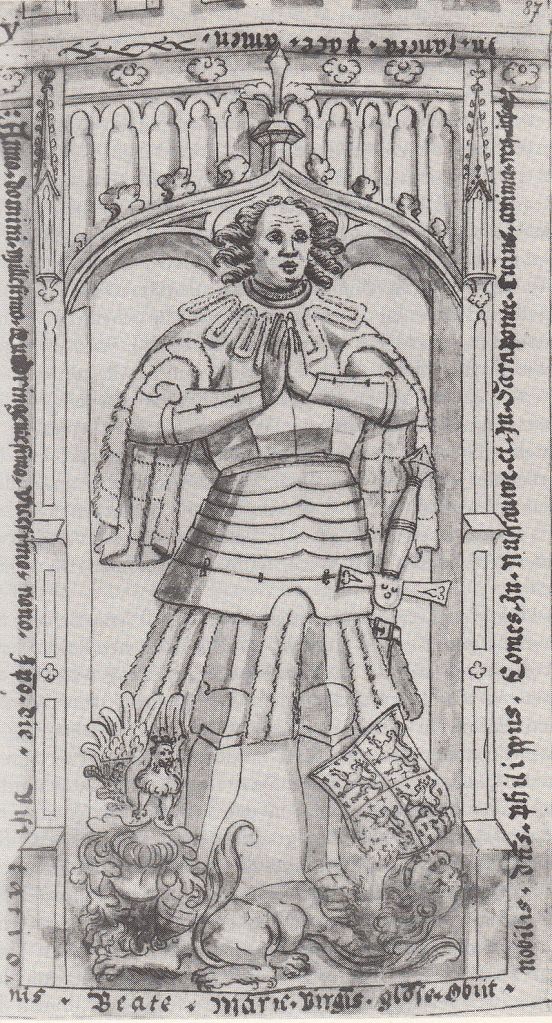
Back in the 1380s, a new territory, Saarbrücken, was inherited by Count Philipp of Weilburg, who became quite involved in German politics at the national level, appointed by Emperor Wenceslas of Luxembourg to maintain the peace in the Rhineland (and given the right to coin his money in his domains), then taking part in the deposing of this emperor, and of his successor, Rupert of the Palatinate. He later became a senior advisor on the council of Emperor Sigismund of Luxembourg, and was appointed by him to be hauptmann in Luxembourg, aka, leader of the nobility. When he died in 1429, Weilburg and Saarbrücken were divided between his two sons.
Philipp, Count of Nassau-Weilburg and Count of Saarbrucken, a drawing of his tomb done in the 1630s
Saarbrücken has a fascinating history of its own, aside from its long association with the House of Nassau between the 1380s and the 1790s. As its name suggests, a county was formed around an important crossing of the river Saar (the river that gives its name to the Saarland, Germany’s most western, and smallest, state). But it’s possible that the word brücken does not come from bridges (like nearby Zweibrücken, ‘two bridges’), but in fact from an older Celtic term briga, ‘large stone’—and the river Saar itself takes its name from a Celtic word, sara, for ‘running water’. In French, this is known as the Sarre, and today it forms much of the boundary between German and French speaking areas, though in the past it didn’t—the language frontier was further west, within the Duchy of Lorraine. Nevertheless, this really interesting cultural frontier zone, the Saargau, fragmented early on in the history of the Holy Roman Empire, and spawned numerous tiny principalities like Saarbrücken (and nearby Saarwerden, which we’ll encounter below) in the area between the provinces we now know as Alsace and Lorraine. Several of these remained independent imperial enclaves even after the Kingdom of France had taken over both these provinces, and will feature in other future blogs (like Leiningen, Salm, or Hanau-Lichtenberg)—and when the Holy Roman Emperor was looking for a pretext to launch a war against the French Republic in 1792, the rights of these princes provided it. That included Nassau-Saarbrücken.
Nassau properties in the late 18th century (orange), showing Saarbrucken (and Saarwerden at very bottom) bordering France in purple, with the Palatinate (Pfalz; in green) and Mainz (in pink) separating it from the rest of Nassau at upper right (with the small lordship of Kirchheim next to Falkenstein) [Fsm. is ‘principality’; Gft. is ‘county’]
Saarbrücken was a county from 1080, at first as a vassal of the bishops of Metz, then as autonomous imperial counts. The County of Zweibrücken was carved out of its eastern parts in the thirteenth century, and had its own very interesting history—but that is part of the story of the Wittelsbachs of the Palatinate, not Nassau. The original dynasty of counts died out in 1233 (and similar to the House of Nassau, their prestige was boosted by having two archbishops of Mainz, Adalbert I and Adalbert II, between 1111 and 1141). A second dynasty died out in 1381, and passed Saarbrücken by marriage to the House of Nassau-Weilburg. This succession also brought them the lordship of Commercy, a real curiosity in that it was wedged between the duchies of Lorraine and Bar, yet legally subject to neither. Its owner was thus drawn much further west towards politics of the Kingdom of France—but the counts of Saarbrücken (probably wisely) sold this tiny sovereignty to the duke of Lorraine and Bar in 1444.
Saarbrücken had an ancient castle, since it was situated on high ground at a crossing of the Saar, a key river that flows northward to join the Mosel just above the city of Trier. This castle was destroyed and rebuilt many times over the centuries, then was developed into a more comfortable residence by Count Philipp IV in the late sixteenth century, primarily as a summer residence (in the winters, he lived back across the Rhine in Nassau proper). This residence was destroyed in war in 1677, and rebuilt by Count Louis Crato, who, in emulation of Versailles, opened up the courtyard so that the new palace faced the town. He also ordered French baroque gardens. His successor Wilhelm Heinrich built an even grander palace on this site, getting rid of the old medieval defensive structures, and planning an entirely new town, on a grid, with a palace for his heir, a city hall, and a grand public square called the Ludwigsplatz. Completed in 1748, this was a model town for the new ‘Enlightened’ style, organised and neat. He expanded the baroque gardens as well, and built wings on the palace to house his government and administrative archives (again, very much like at Versailles). Much of this was destroyed when the French chased the dynasty out in 1793, and after the Napolenoic Wars ended, Saarbrücken was not returned—the palace was converted into flats and the central pavilion demolished. In 1910 it was acquired by the Saarland district government. It served as a Gestapo headquarters during the Second World War, and was again badly damaged—totally renovated in the 1980s, a new central pavilion was built, with a very modern steel skeleton, and today it serves as the administrative centre for the Saarland.
Saarbrucken painted in 1770
There were numerous intermarriages between the branches of Nassau-Weilburg, Idstein and Saarbrücken, and also with their more distant cousins from Nassau-Dillenburg, Siegen and Dietz. Most of them (but not all) joined the Protestant movement in the 1530s, though some chose Lutheranism and others Calvinism and imposed these on their subjects in the County of Nassau. Count Philipp III of Weilburg created a new school in his town, the Gymnasium Philippinum, and was a close ally of his neighbour, Landgrave Philipp of Hesse, one of the leaders of the reform movement in central Germany. As part of their alliance, they exchanged some territories between Nassau and Hesse, notably parts of the old medieval County of Katzenelnbogen, situated on both sides of the great bend of the Rhine (which I always thought gave its name to this ‘cat’s elbow’, but apparently not). The Katzenelnbogen family had died out in 1483, and the houses of Nassau and Hesse fought over the succession in the imperial lawcourts for over fifty years (the wonderfully named Katzenelnbogische Erbfolgestreit, or ‘Katzenelnbogen Succession Struggle’). It is worth pointing out, however, that it was an Ottonian branch of the Nassauers that claimed this land, not the Walramians; and although they ultimately lost the lawsuit, they continued to use the title ‘Count of Katzenelnbogen’, which eventually passed into the collection of titles still used by the Dutch royal family today. In 1815, the old County of Katzenelnbogen was added to the new Duchy of Nassau (to compensate for lost lands west of the Rhine), and so after 1890, the grand dukes of Luxembourg also started to use this title when listing all of their dynastic titles. And so it appears in lists today in the titles of both the kings of the Netherlands and the grand dukes of Luxembourg today. Isn’t that peculiar?
As Philipp of Hesse lost influence in the 1540s, Philipp of Nassau worked to construct an alliance of small counts in this part of the Empire, known as the Wetterau Association. As the reform movement progressed, Philipp dissolved the ancient Abbey of Weilburg (and others) in the 1550s.
Meanwhile, the County of Saarbrücken was still Catholic. In 1527, the territory of the Nassau-Saarbrücken branch had been expanded significantly with the addition of the County of Saarwerden, a few miles upriver on the Saar, in the Vosges mountains. A werd was a small island in German, and this county was built up in the twelfth century around the towns of Saarwerden (presumably in the river at the time) and Bockenheim on a nearby bank. Like Saarbrücken, it was initially a fief of the bishops of Metz, then independent for several centuries. The most famous member of its first dynasty was Friedrich, Archbishop of Cologne, 1370-1414. By the time of his death, the county had passed by marriage to the counts of Moers (whose lands were much further north, in the lower Rhine near Cologne). In the 1550s, Lutheranism was introduced here, despite the fierce opposition of the neighbouring prince, the Duke of Lorraine—it became a place of refuge for Huguenots fleeing persecution in France, so for a time had both a Lutheran and a Calvinist church existing peaceably side by side. In the 1570s, the counts started also to introduce the reform in Saarbrücken as well, so the Duke of Lorraine struck back and claimed both counties, pursuing the House of Nassau in the Imperial courts. The progress of this lawsuit is another excellent example, as with Katzenelnbogen above, of the incredible slowness of justice within the Holy Roman Empire, and due to this, and of course the intervening turmoil of the Thirty Years War, nothing was resolved until the Treaties of Westphalia, 1648, which restored both Saarbrücken and Saarwerden to the House of Nassau—though as a security, the Duke of Lorraine retained control over the two towns of Saarwerden and Bockenheim (now Frenchified as Sarreverden and Bouquenom). The Count had to move across the river and built a new capital, Neu-Saarwerden, though not until 1702. There was never a grand princely residence in Saarwerden (it was a very remote place), but the new schloss did reflect the ethos of the time, built along the sober and organised ideas of the Enlightenment (and has sometimes between called ‘the Mannheim of the Nassau’, referring to the idealised planned city on the Rhine, built about the same time). After Lorraine was annexed to France in 1766, Sarrewerden remained a Protestant enclave in Catholic France (and with Catholic Bouquenom as an enclave within an enclave at its centre). In 1793 it was annexed to the French Republic, and the two towns were united with a new name, Sarre-Union, which they still retain today.
the very simple castle at Neu-Saarwerden (photo by Ralph Hammann)
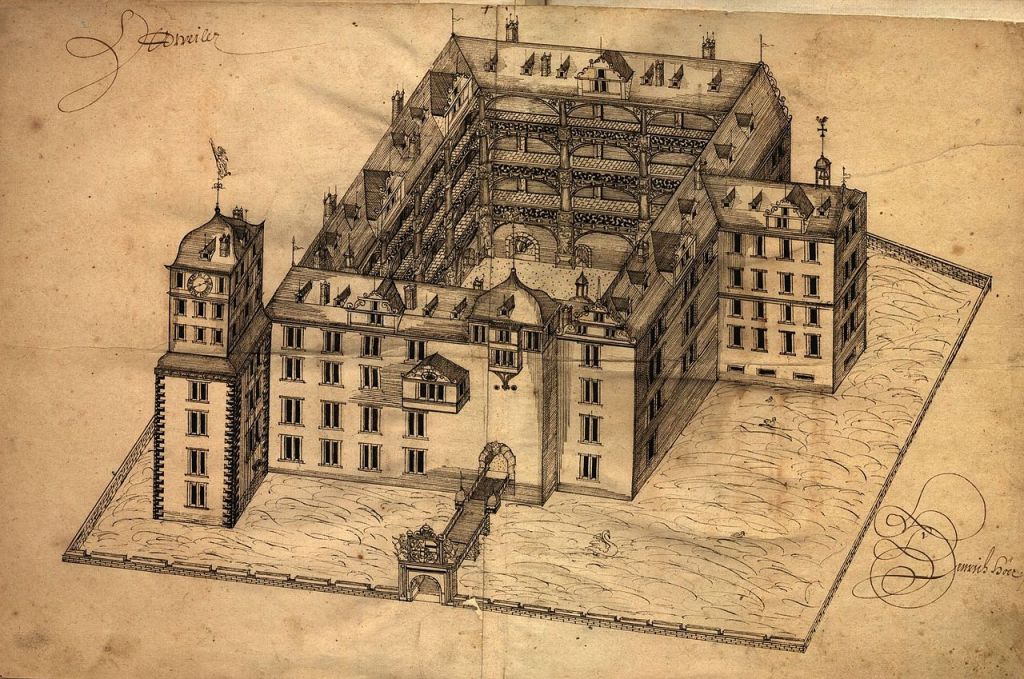
A more interesting residence was built by this branch at Ottweiler, in the eastern part of the County of Saarbrücken. It had an old fortification from the twelfth century, a gothic schloss from the fourteenth, then rebuilt in Renaissance style in 1550, with four wings and open galleries. When the Weilburg and Saarbrücken branches were merged after 1574, the Weilburg branch temporarily made this their chief residence. When the lines were split again in 1640, Nassau-Ottweiler became its own entity. But damaged in the Thirty Years War, its castle was neglected and later demolished in 1753. The town was developed by later princes of Nassau-Saarbrücken as a centre of porcelain manufacture (from the 1760s).
the castle at Ottweiler, drawn in 1617
Of the later sixteenth-century Nassauers, Count Albrecht of Saarbrücken was most prominent, as brother-in-law of William of Orange and a supporter in his armed struggle against the Duke of Alba in the Low Countries in 1568. By 1605, Albrecht’s son Count Ludwig II re-combined all of the Walramian branches—Wiesbaden-Idstein, Weilburg and Saarbrücken—and moved his seat more permanently to Saarbrücken. Here he built a school like that in Weilburg, the Ludwig Gymnasium, and sponsored projects that would make the river Saar more navigable. When he died in 1627, the lands were divided once again, with lands west of the Rhine going to the eldest, Wilhelm Ludwig, and lands east of the Rhine going to Johann (Idstein and Wiesbaden) and Ernst Kasimir (Weilburg). These three brothers joined the Protestant side against the Emperor in the Thirty Years War (first fighting alongside the King of Sweden, then aligning themselves with France), and thus had much of their lands confiscated. Even when many Protestant German lands were restored by treaty in 1635, the Nassau counts were deliberately excluded, and they had to wait until the Treaties of Westphalia in 1648—by which time many of their towns and castles were ruined, their populations decimated.
the more complex coat of arms used by the Walramians by the seventeenth century, with Saarbrucken and Saarwerden at the top, the distinctive green of the lordship of Merenberg, and Nassau overall
The senior line, in Saarbrücken, split again into three: Ottweiler, Saarbrücken, and a new division, Usingen. Of these counts, the most prominent was Count Gustav Adolf of Saarbrucken (clearly named for the Swedish king), who, although he had served in the French army in his youth, clashed with Louis XIV’s ‘reunion’ strategies as an older man in the 1670s. The French king directed his army of lawyers to find obscure feudal laws with which to claim territories that should be ‘re-united’ with France. In particular, since France now ruled over Metz, the former fiefs of Metz should be French too—this included Saarbrücken and Saarwerden, and both territories were occupied. Gustav Adolf’s son Count Ludwig Crato fought against this and served in the armies of the Dutch Republic against France, until his lands were restored by the Treaty of Ryswick, 1697. He continued to develop Saarbrücken into a fine baroque capital, as seen above. He also built a country retreat, a lustschloss called Monplaisir, in Halberg, east of the town, complete with a baroque garden, to which later princes added a zoo, an English garden and a Chinese pavilion. All of this was destroyed by the French in 1793 (a new and completely different castle was built at Halberg in the 1880s). Ludwig Crato’s brother, Count Karl, continued to develop the county’s economy, adding glass and salt industries that laid the foundations that established this region as a leader in the Industrial Revolution.
Meanwhile, the line of Wiesbaden-Idstein was led by Count Georg August, who served at the Siege of Vienna in 1683 and was one of several counts of the House of Nassau to be elevated in rank to become a Prince of the Empire, in 1688. Several of the branches of the Ottonian branch had been so created in the 1650s (Dillenburg, Hadamar, Dietz, Siegen), which much have irked those of the Walramian line considering that they were technically the senior branch. Also elevated to the rank of fürst in 1688 were the counts of Weilburg and Usingen, though why not Ottweiler or Saarbrücken, I am not certain—perhaps because they were occupied by France at the time. As imperial princes, the Nassau lords now had a vote in the Imperial Diet, not just one of the collective votes held by the counts of the Wetterau.
Georg August commemorated his new status by building a Herrengarten in Wiesbaden, and moving his residence from the old schloss at Idstein, to a brand new palace right on the banks of the Rhine, Biebrich. This was a residence fit for princes and remains one of the finest examples of Rhineland baroque architecture. Work began in 1702 and was completed in 1721; it included two pavilions connected by a long gallery and a circular ballroom at the centre. Two wings were added by later princes in the 1730s. Biebrich Palace was damaged in World War II, and mostly rebuilt in the 1980s. Today it is used by the state of Hesse for ceremonies and to house heritage offices.
the still stunning Schloss Biebrich on the Rhine, near Wiesbaden (photo by Fritz Geller-Grimm)
When Georg August died in 1721, his lands passed to the Ottweiler line, as did those of Saarbrücken when Count Karl died in 1723. The Ottweiler line itself went extinct in 1728, meaning all these lands (except Weilburg, see below) passed to the new branch, Nassau-Usingen.
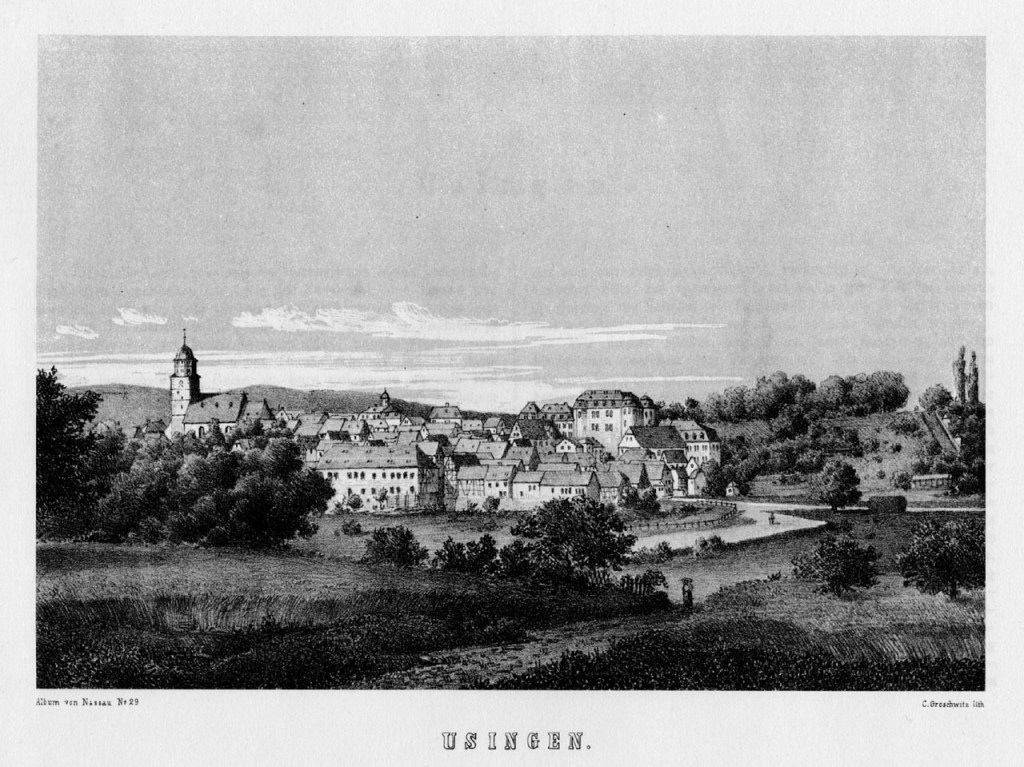
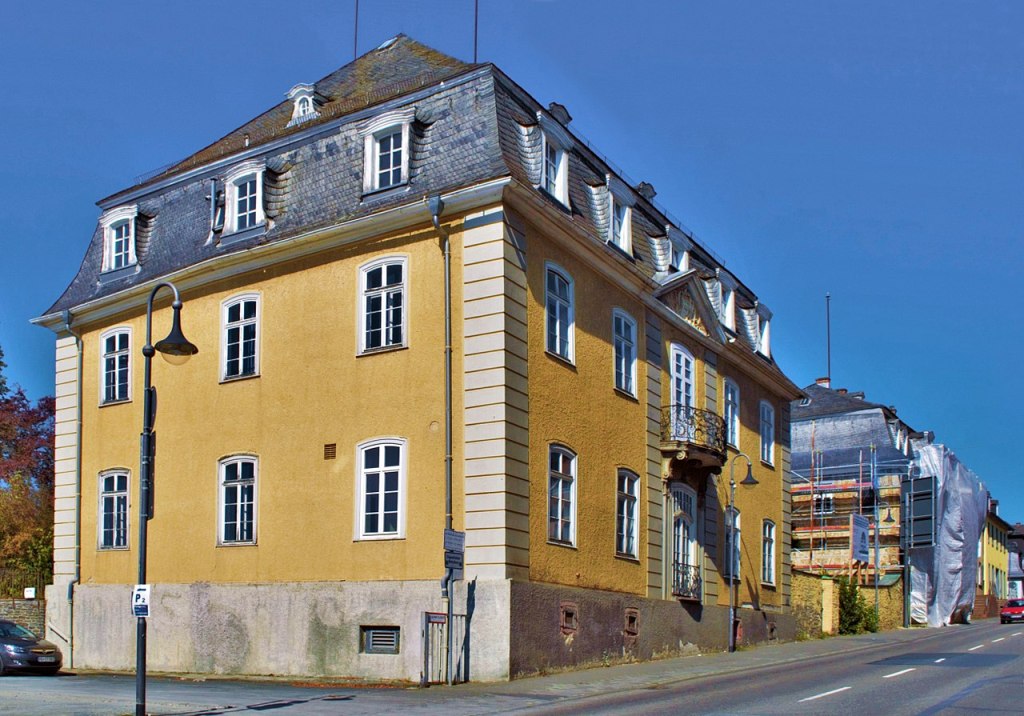
Usingen was a small town in the High Taunus mountains, east of Weilburg, on the Usa river. It had been acquired by the Nassau family in 1326 who built a small castle, but otherwise left it alone. In the 1660s, Count Walrad carved out a new territory here and built a new residence. He served as a Field Marshal in the army of the Emperor and later for the Dutch Republic. He too served at the Siege of Vienna and then in the campaigns in Hungary, for which he too was rewarded by being created Prince of Nassau-Usingen in 1688. After a fire of 1692 destroyed much of his town, he rebuilt it—like Neu-Saarwerden, according to the ideals of the early Enlightenment, and he settled it with Huguenot refugees (and unlike some of his Lutheran cousins, he himself was a Calvinist). The princely residence was remodelled in the 1730s—destroyed in 1873, it was rebuilt in a quite sober style, and is now a school. There was also the ‘Prince’s Palace’, built in the centre of town in the 1770s, but sold in the early nineteenth century—it has housed local administrative offices ever since.
Usingen in 1864
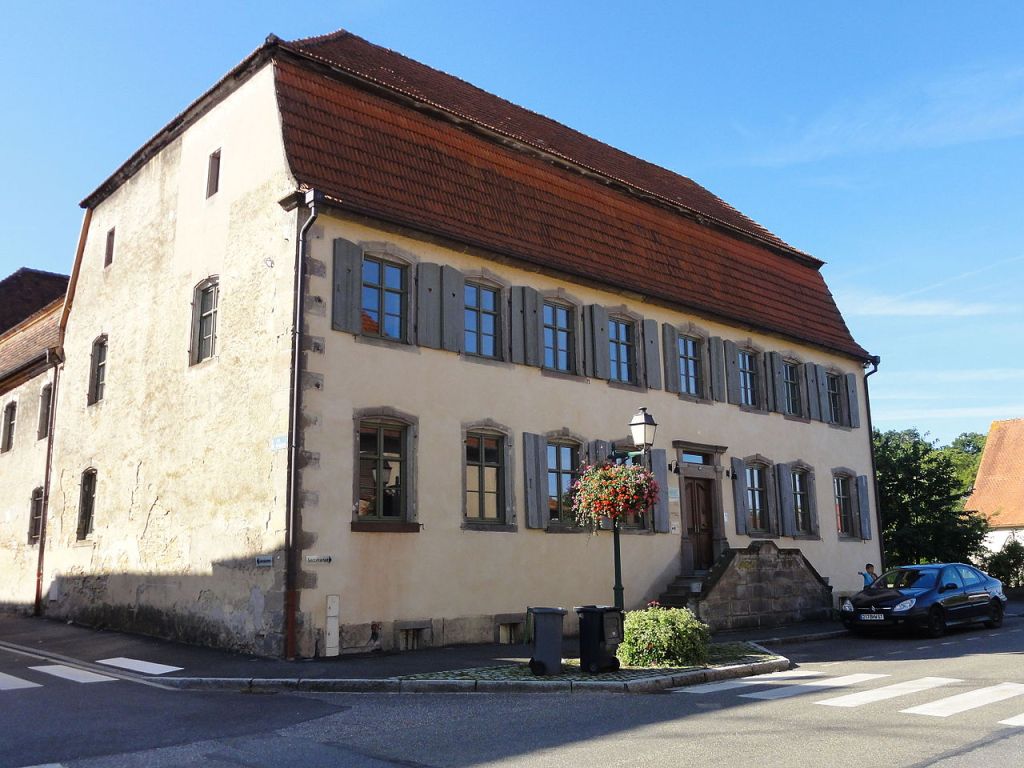
The Prinzenpalais in Usingen
Prince Walrad died in service of the Emperor early in the War of Spanish Succession in 1702. His son Wilhelm Heinrich, 2nd Prince of Nassau-Usingen, once again reconnected the two main branches of the House of Nassau by his marriage in 1706 to Princess Charlotte Amalia of Nassau-Dillenburg. Wounded in the service of the Dutch army in 1703, he left military service and died relatively young in 1718. The 3rd Prince, Karl, was thus the cousin who gathered back together all the properties of Wiesbaden, Idstein and Saarbrücken in 1728, and moved into the fine new palace at Biebrich, where he lived a long and mostly peaceful life until 1775. He left two sons, soldiers, and a bastard, Karl Philipp, whose mother had been created Baroness von Biebrich in 1744, and who himself would be called the Count of Weilnau. This name came from a medieval county next door to Nassau, like Weilburg built above the river Weil, that was absorbed by the Nassau counts in the 1330s. Weilnau still has remains of an old castle and a new castle from the sixteenth century.
Walrad, 1st Prince of Nassau-Usingen
In 1735, Prince Karl of Nassau-Usingen gave the counties of Saarbrücken and Saarwerden to his brother Wilhelm Heinrich II, who was created a fürst as well, finally bringing the Saarbrücken branch in line with the others. The 1st Prince of Nassau-Saarbrücken ruled one of the smallest principalities in the Empire, at only 12 square miles and with only about 20,000 people. Nevertheless, it had one of the finest capitals, with a new grand baroque princely palace, as we’ve seen, and a burgeoning industrial economy, with Saarland coal and iron. Wilhelm Heinrich led a regiment of Nassauers in the service of King Louis XV of France, in the War of the Austrian Succession and the Seven Years War, and was ultimately promoted to the rank of lieutenant-general. Back in Saarbrücken he constructed a new hunting lodge, Jägersberg—but ultimately all his projects left his principality in debt.
Wilhelm Friedrich, Prince of Nassau-Saarbrucken, French general, wearing the star and sash of the French royal Order of the Saint-Esprit
He was succeeded in 1768 by his son, Ludwig, 2nd Prince of Nassau-Saarbrücken who continued to develop this principality as an ‘enlightened absolutist’, building schools, developing agriculture, reforming the penal code. He too built a new palace, Ludwigsberg, in 1769, and a new state church, Ludwigskirche, 1775. Though he was a learned and determined reformer, that was not enough for the French revolutionaries who swept into the Rhineland in 1793, and he fled in May, dying the next year near Frankfurt. He left a son, Heinrich Ludwig, the 3rd Prince, who joined the Prussian army in 1793, but died in 1797, having never reigned in his occupied principality. Neither Ludwigsberg nor Jägersberg survived the revolutionary era.
Ludwig, 2nd Prince of Nassau-Saarbrucken
There was now only one male left of this line of Nassau-Saarbrücken, Adolf Ludwig, who had been born of the 2nd Prince’s second morganatic marriage so was not entitled to the rank of prince. His father had ensured that his mother, a former maid of one of his mistresses, had been created Countess of Ottweiler (1784), so the son also took this title. There are suggestions (but I’ve not seen any verification, and it sounds unlikely to me) that Prince Ludwig persuaded King Louis XVI to create his wife Duchesse de Dillange (aka Dillingen, in Saarbrücken), in the Spring of 1789, and that Adolf Ludwig was later called the Duc de Dillange. He did (as Count of Ottweiler) join the army of the King of Württemberg, then volunteered in Napoleon’s campaign in Russia in 1812, where he died.
Back in Usingen, the 3rd Prince had been succeeded in 1775 by his eldest son, Karl Wilhelm, who added took the title 4th Prince of Nassau-Saarbrücken in 1797. He had served as a lieutenant-general in the Dutch army in the 1770s, and in 1783 was one of the signatories of the mutual succession pact for all of the branches of the House of Nassau (including Orange-Nassau, which was ultimately important to the history of Luxembourg, as we’ve seen). In the commission that dismantled the Holy Roman Empire in 1803, he was compensated for lands lost west of the Rhine (Saarbrücken and Saarwerden) with lands taken (mostly) from secularised archbishoprics of Mainz and Trier, but also from Hesse and the Palatinate. He died that same year, passing his lands and titles to his brother, Friedrich August, now 5th Prince of Usingen, an Imperial Field Marshal since 1790, who joined the Confederation of the Rhine in July 1806, and formed the new Duchy of Nassau with his Weilburg cousin in August—they agreed to a joint rule (with Friedrich August taking the senior title of Duke) since Usingen had no son. This was approved by the Congress of Vienna in 1815, and the 1st Duke of Nassau died in March 1816.
Friedrich August, 5th Prince of Nassau-Usingen, 1st Duke of Nassau
So finally, we need to focus again on the line of Nassau-Weilburg itself, and bring this story to a close. The youngest son of Count Ludwig II, Ernst Casimir, did not spend much time in his portion of the County of Nassau, as imperial troops drove him and the rest of his family out of the area during the Thirty Years War, and he died shortly after these lands were restored. It was his grandson, Count Johann Ernst, who brought this branch of the family back to prominence, and was, like the other heads of branches, created 1st Prince of Nassau-Weilburg in 1688. He served as a general in the army of the Elector Palatine, and later as an Imperial Field Marshal defending the Rhine against a French invasion in the War of Spanish Succession. He was also the Grand Master of the Court for the Elector Palatine in Düsseldorf until 1716, rebuilt his own smaller court residence in Weilburg, and died a few years later in 1719.
Johann Ernst, 1st Prince of Nassau-Weilburg
His son, Karl August, 2nd Prince of Nassau-Weilburg, had already been active as a diplomat in service of the Elector of Saxony (who was also the King of Poland). As a prince he was a cavalry general in the Imperial army in the 1730s. The 3rd Prince, Karl Christian, took over in 1753, and a few years later raised the dynastic profile of his branch of the family through marriage to Princess Carolina of Orange-Nassau, daughter of William IV, Prince of Orange, and Princess Anne of Great Britain, the eldest daughter of King George II. His connections with the Netherlands allowed him to rise in the military and by the 1770s he was a general in the Dutch Army and governor of the City of Maastricht.
Karl Christian, 3rd Prince of Nassau-Weilburg
The 3rd Prince died in 1788, leaving his principality to his son Friedrich Wilhelm, the 4th Prince, who agreed in 1815 to act as the junior partner in the joint rule of the new Duchy of Nassau, on the assumption that he would succeed the senior partner (Friedrich August of Usingen, as above), but he died three months too soon (in January 1816), so it was his son Wilhelm who became 2nd Duke of Nassau, the newly unified state within the German Confederation, pulling together all of the territories of the Walramian branches of the House of Nassau east of the Rhine (Wiesbaden, Idstein, Weilburg, Usingen), and some of the lands of the Ottonian branches (Dietz, Hadamar)—but not those further north like Siegen, which were given by the new King of the Netherlands (Orange-Nassau) to the King of Prussia by the Congress of Vienna in exchange for the Grand Duchy of Luxembourg.
the Duchy of Nassau after 1816, showing parts that were joined together in 1806 from Usingen and Weilburg, and the lands of their cousins Nassau-Orange (in orange), then additions from the electorates of Mainz and Trier (in green) and from Hesse (light and dark red)
Duke Wilhelm married well, to Louise of Saxe-Hildburghausen, niece of Queen Louise of Prussia and Frederica, Duchess of Cumberland (later Queen of Hanover), and grand-niece of Queen Charlotte of Great Britain. His sister Henrietta connected the family to the Catholic houses of Europe by marriage to Archduke Karl of Austria, younger brother of Emperor Francis I and commander-in-chief of Austria’s armies. Intriguingly, Archduchess Henrietta did not have to convert to Catholicism herself, though her children had to be raised in the faith, and she left behind her ‘surname’ on the landscape of Austria, in the Weilburg Palace in Baden, a spa town south of Vienna—sadly destroyed by fire in April 1945.
Wilhem, Duke of Nassau
Duke Wilhelm was succeeded by his eldest son Adolf as 3rd Duke of Nassau in 1839. It was he who made Wiesbaden formally his capital and rebuilt the Stadtschloss there as his chief residence. Although he was a liberal ruler, his rule was threatened by the revolts of 1848 that shook all the thrones of Europe, and in the aftermath he became much more conservative. In an effort to support the old ways of Germany, under the guidance of the ancient Habsburg dynasty, he supported Austria in its short war against Prussia in 1866, and paid the price. Nassau was annexed to Prussia, and its Duke had to wander around the courts of Europe for a few years before settling into a new residence, Schloss Hohenburg in Bavaria. Built in the 1710s by Count von Herwarth, then sold to various people including the Prince of Leiningen (Queen Victoria’s half brother), Duke Adolf purchased it in 1870 from Baron von Eichthal. Twenty years later, already in his seventies, he succeeded to the Grand Ducal throne in Luxembourg, as seen towards the start of this post, by virtue to the Nassau Family Pact of 1783. He kept Hohenburg as a summer residence, and it later became the residence of Grand Duchess Marie Anne of Portugal, widow of Grand Duke William IV. She left Germany at the start of the Second World War and died before it ended. The castle was sold in 1953 to create a convent school.
Hohenburg in Bavaria, newly built in 1720
As with the previous generation, the sisters of Grand Duke Adolf (or Adolphe in French) helped link this new royal house to other reigning houses in Europe: Princess Helene became the mother of Emma, Queen of the Netherlands, while Princess Sophia had already become Queen of Sweden and Norway, since 1872. Adolf’s fifteen-year reign set the standard for limited direct involvement in the Grand Duchy’s government. He died in 1905 and was succeeded by his son William IV, who, as seen above, died only a few years later in 1912 with no male heirs. One faint claim was made, from Georg, Count von Merenberg, who protested that his father Prince Nikolaus’ morganatic marriage did not necessarily block him from the succession to the throne of Luxembourg. Wilhelm IV ruled that it did in 1907, and the throne passed smoothly to his daughter Princess Marie-Adélaïde.
Adolf, Duke of Nassau, as a young man
Prince Nikolaus of Nassau (who had died in 1905), was a Prussian general (so, no hard feelings about the annexation of his brother’s duchy then). In 1868, he married Natalia Pushkina, daughter of the famous Russian poet. Despite a very illustrious ancestry—very ancient Pushkins, Rurikovichi princes, and, more exotically, Abram Gannibal, Peter the Great’s famed African general, and Petro Doroshenko, a Cossack general—she was not deemed of sufficient rank to marry a prince, so the marriage was deemed morganatic, and she was created Countess of Merenberg—taking this title from another one of the old medieval counties absorbed by the counts of Nassau back in the fourteenth century, not far from Weilburg. The line of the counts of Merenberg continued into the twentieth century, with close connections to the Romanovs and later to the Mountbattens. When the last of these, Count Georg Michael, died in 1965, he was the last male member of the entire House of Nassau—he left one daughter, Clotilde, who is still living, the last scion of an ancient dynasty.
the beautiful Natalia Pushkina, Countess of Merenberg
Since 1964, the merger of the houses of Nassau-Weilburg and Bourbon-Parma has generated a hybrid Franco-German dynasty that suits this small state at the crossroads of cultures. Luxembourg’s daily newspapers are printed in French, German and Luxembourgish, and the sons and daughters of its ruling dynasty have married spouses from across the region, for example the new Grand Duke Guillaume’s consort, Stéphanie, who comes from a noble Belgian family, the House of Lannoy (which has in the past included some princely titles, so deserves its own blog post), and others from more far flung places, such as Grand Duchess Maria Teresa, born in Cuba.
the former Grand Duke of Luxembourg, Henri, with his consort Maria Teresa, and their son, the new Grand Duke Guillaume (photo by Disquatufais from 2009)
Kent is one of the most familiar names for an English county—but also unique in that it is one of the few that are never appended ‘-shire’ when giving historic names. It is also said to be one of the oldest place names still in use in England, named by the Greeks as Kantion in the fourth century BC, probably from a Celtic word for ‘land on the edge’ or ‘coast’, which certainly applies to this land famous for its white cliffs. When Julius Caesar invaded Britain in 55 BC he called this area Cantia and its people the Cantiaci or the Cantii. Their capital eventually became known as Canterbury—bury being a Germanic toponym for a town.
So by the fifth century, it was a Germanic place, settled by Jutes and Saxons who formed a Kingdom of Cantware (‘Kentish people’). The first reliably recorded king was Aethelberht, who converted to Christianity in 597 and set up the first two episcopal seats in England, at Canterbury and Rochester. After 764, his descendants weakened and Kent was often a client kingdom of Mercia, and after 825 was absorbed by Wessex.
Kent, with Sussex, Surrey and Middlesex
The first time Kent was referred to as an earldom was in 1020 when King Cnut gave it to Godwin, already Earl of Wessex (another source says it wasn’t until Edward the Confessor’s reign started in 1042). Godwin died in 1053 and his lands were divided, with Kent going to his fifth son Leofwine (along with Essex, Middlesex and other earldoms in the southeast). Earl Leofwine was killed alongside his brother King Harold at Hastings in 1066 (shown in the Bayeux Tapestry as ‘Lewine’). It’s too bad Leofwine was erased from existence in recent BBC television dramatization of the Norman Conquest.
The death of Leofwine (left) in the Bayeux Tapestry
Kent was one of the few places that really resisted the Normans, so in 1067 it was given the status of a county palatine, and its new earl, Odo, Bishop of Bayeux (William the Conqueror’s half-brother), more extensive powers. He later betrayed his family and forfeited his lands, including the earldom of Kent.
In the next three centuries, the earldom of Kent was re-created several times for key supporters of the English Crown. In 1141, it was for William of Ypres, a lieutenant of King Stephen; in 1227 it was for Hubert de Burgh, Chief Justiciar of England and Regent for the young King Henry III; then in 1321, for Edmund of Woodstock, sixth son of King Edward I. The earldom passed to his two sons, then after 1352 to their sister Joan, the ‘Fair Maid of Kent’. She could pass on the lands to her children, but not the earldom, so her husband, Thomas Holland, was re-created earl of Kent in 1360.
Joan, the Fair Maid of Kent
The Holland family held the earldom of Kent for the rest of the fourteenth century, with Thomas and Joan’s grandson Thomas (the 3rd Earl) being elevated to Duke of Surrey in 1397, though quickly brought down again in 1399 and executed in 1400. His brother the 4th Earl died in 1408, meaning their sister, another Joan, Countess of Kent, could transmit it to her husbands, one of them being Edmund, Duke of York (though in the end she had no children).
Another very brief creation was for William Neville (younger son of the Earl of Westmoreland), an ally of the Yorkist king, Edward IV, and Steward of his Household. He was named Earl of Kent in 1461, then died in 1463.
Immediately, the earldom was given again in 1465 to another Yorkist supporter, Edmund Grey, Lord Grey of Ruthin, Lord Treasurer of England. His son solidified the Grey family’s place at the top of the English aristocracy by marriage to the Queen’s sister, Anne Woodville (in 1480). So their descendants would be cousins of the Tudors in the century to come. The House of Grey is itself vast, with roots stretching back to the Conquest, and including the powerful Tudor magnate, the Duke of Suffolk, and his daughter, Lady Jane, several earldoms (including that for Prime Minister Earl Grey), and numerous baronies. The multiple branches of this family will have its own blog post in due course, but for now, we can focus on the last of the Grey earls of Kent, who became the one and only non-royal Duke of Kent, in 1710.
Henry Grey, Duke of Kent
Henry Grey, 12th Earl of Kent, was a moderate politician and courtier, who served in the Household as Lord Chamberlain for Queen Anne, 1704-10, and was created Marquess of Kent in 1706. He agreed to give up his post in exchange for a dukedom, which he got in 1710, with subsidiary titles Earl of Harold and Viscount Goderich. The latter title comes from a castle held by the Greys since the 1610s, Goodrich, a mighty Norman fortress in Herefordshire. I suspect the earldom was also an allusion to Norman ancestry and Harold Godwinson (though it was his brother who was Earl of Kent, as we’ve seen). The Duke of Kent later returned to the Household under the Hanoverians, as Gentleman of the Bedchamber and as Lord Steward, 1716-18, and in the government at Lord Privy Seal, 1719-20. He lived at Wrest Park, in Bedfordshire, which today is the site of a magnificent, very French, country house—but it was a later reconstruction, not the house as the Duke of Kent knew it. Some of the earlier buildings remain, notably the lovely banqueting pavilion.By 1733, all of the Duke’s sons had died, so the King agreed to create a new title for him, Marquess Grey, with a special remainder to his grand-daughter, Lady Jemima Campbell. The Duke died in 1740, and his titles with him, except the marquisate—Lady Jemima married Philip Yorke, 2nd Earl of Hardwicke, that same year and the history of Wrest Park lies with her family.
Wrest Park in about 1710
The Pavillion at Wrest Park
And so we come to the first royal dukedom bearing the name Kent. The Hanoverians continued a Stuart practice of pairing together an English and a Scottish dukedom for royal princes, and this was done for the older sons of King George III as they came of age (but curiously not for the youngest two sons, whose dukedoms are English only). Prince Edward, the fourth son, was created Duke of Kent and Strathearn, in 1799. He had made a name for himself as Commander-in-Chief in British North America, 1791-1802 (and was an early advocate of the creation of Canada), then as Governor of Gibraltar, 1802-20. But he is mostly remembered today as the father of Queen Victoria, born when he was already in his fifties.
Prince Edward, Duke of Kent and Strathearn
The Duke of Kent lived at Castle Hill Lodge in Ealing, west of London—he had bought the house from his brother’s secret former wife Mrs Fitzherbert in 1801, but left it in 1812, and it was eventually rebuilt, remodelled, and now serves as a home for wounded soldiers. When he died in 1820, his double dukedom reverted to the Crown.
Castle Hill Lodge in Ealing
The title was given out again for Prince Alfred, second son of Queen Victoria, but not as a dukedom. When he was created Duke of Edinburgh in 1866, his subsidiary titles were Earl of Kent and Earl of Ulster. By the 1880s the Duke of Edinburgh was an admiral, and was named Commander-in-Chief of the Mediterranean Fleet, and Admiral of the Fleet in 1893. That same year he inherited the title Duke of Saxe-Coburg & Gotha and moved to Germany. He died in 1900 with no sons, so these titles returned to the Crown.
The Duke of Edinburgh did actually own property in Kent: a house at Eastwell Park near Ashford. There had been a house here since Tudor times, rebuilt in neo-Elizabethan style at the end of the eighteenth century, and occupied by Prince Alfred and his family in the 1870s and 80s. It was mostly destroyed by a fire in the 1920s.
Eastwell Park, Kent
Finally, we come to the present creation of the Dukedom of Kent. The title was raised once more into a dukedom in 1934 for Prince George, fourth son of George V. The new Duke of Kent, the most dashing and sociable brother of George VI, was meant to act as Governor-General of Australia in 1938, but was prevented by the outbreak of war. He was an RAF officer and died in an air crash in Caithness in August 1942. He had married in 1934 the glamourous Princess Marina of Greece, whose mother was a Russian grand duchess, which brought Romanov blood into this branch of the British royal family. Her first cousin Philip of Greece later married Elizabeth II. Princess Marina continued to be an active member of the House of Windsor for another twenty-five years.
Prince George, Duke of Kent
George and Marina, Duke and Duchess of Kent, 1934
From 1935, the Duke and Duchess of Kent lived at Coppins in Buckinghamshire, a nineteenth-century house first acquired by Princess Victoria, daughter of Edward VII. It would remain the family seat for the 2nd Duke of Kent and his family, until he sold it in 1972, and moved to Amner Hall, a Georgian House that became part of the Sandringham Estate in Norfolk at the end of the nineteenth century (later the residence of the Prince and Princess of Wales), and from 1990, Crocker End in Henley-on-Thames, Oxfordshire, until recently. Since 1978, the Kents also resided at Wren Cottage, within the grounds of Kensington Palace.
Coppins, Buckinghamshire
The 2nd Duke of Kent, Prince Edward of Great Britain and Northern Ireland, is the oldest living member of the British royal family (since September 2025). Born in 1935, he was only six when his father died and he succeeded to his titles. He followed a military career in the 1950s-70s, serving in Hong Kong, Cyprus and Northern Ireland. He became an honorary Field Marshal in 1993, and was colonel of the Scots Guards from 1974 to 2024. He has been very active in carrying out royal duties, often representing his cousin the late Queen overseas (such as independence ceremonies in Uganda and Barbados), and acting as chairman or president for a number of charities relating to sports, business or technology. He shares a passion for tennis for his wife, the now late Katharine Worsley. The daughter of a baronet from North Yorkshire, based at Holvingham Hall, she married the Duke in 1961, and like him became known for her connection to Wimbledon. The Duchess of Kent converted to Catholicism in 1994, and retreated from many of her royal duties, dropping the HRH styling from 2002 and focusing instead on her support for music, both performance and teaching (as simply ‘Katherine Kent’).
the 2nd Duke and Duchess of Kent, in 2013
The Duke and his siblings (Prince Michael of Kent and Princess Alexandra, Lady Ogilvy) all retain the style HRH, as grandchildren of a sovereign. Their children are not, however, so when George, Earl of St Andrews (b. 1962) succeeds his father he will be the 3rd Duke of Kent, but not royal. His son, Edward, Lord Downpatrick (b. 1988) became a Catholic, so while he is in line for the dukedom, is not in line for the throne, nor is his uncle, Lord Nicholas Windsor. The Duke of Kent’s brother, Prince Michael, married a Catholic, as did the Earl of St Andrews, so both lost their place in the line of succession, but were both restored to it by Elizabeth II in 2015. The last in the line of succession to the dukedom is Prince Michael’s son, Lord Frederick Windsor. There are of course Kent daughters and granddaughters as well, but although they are in line for the throne, they are not in line for the dukedom.
In ancient times there was a road, the Via Domitia, built by the Romans to bring soldiers and trade across the Alps from Italy into southern Gaul, then south to Spain. Cities and towns along this route that hugged the Mediterranean prospered, and fortified positions held by noblemen kept trade safe, and of course provided financial gains. One such fortification was on a rise above the road as it passed between the towns of Lunel and Montpellier: Castries.
Castries took its name from the Roman castrum or fort established to watch over the road. By the tenth century there was a feudal lord and a simple castle. In the middle of the twelfth century, this became part of the much larger lordship of Montpellier—which in the thirteenth and fourteenth century was held by the House of Barcelona, kings of Aragon and Majorca, until sold to the French Crown in 1344. In the fifteenth century, the castle and lordship were alienated by the Crown to the family de Pierre (or Peyre) de Pierrefort, who sold it to a cousin, Guilhem Lacroix in 1495. His descendants completely rebuilt the old castle in 1520, and again in the 1670s as an enormous palace, a display of great wealth and power in the region. It is this grand château, with golden walls that shine in the light of the Mediterranean sun, that stands today, referred to locally as the ‘Petit Versailles’ of Languedoc. It has recently been restored, but is not yet open for visits, as I recently discovered in my travels through this region.
Chateau de Castries, near Montpellier
Who was Guilhem Lacroix? His family were merchants from Montpellier who had amassed great wealth on the Mediterranean fish market, then became money changers, then bankers. In the fourteenth century, their name was Le Cros or Lacroux; by the end of the fifteenth century, it was La Croix de Castries, one of the powerful baronial families of Languedoc. Over the centuries, they drew nearer and nearer to the royal court, given a marquisate in 1639, then a dukedom in 1784. As with many of the grandest families at Versailles, this family history rooted in trade was not something to boast about, so seventeenth-century genealogists hoping to please (and to be remunerated) came up with new ancestors: in this case, the La Croix family were said to be descended from a knight, Jean ‘of the Cross’, a landholder in Languedoc in the 1320s. The family’s coat-of-arms supported this: a golden cross on a blue field. Jean was connected by these genealogists to a prominent contemporary holy man, Saint Roch, born in Montpellier. Saint Roch himself, they wrote, was descended from the ancient lords of Montpellier, who were an offshoot of the earliest line of French kings, the Merovingians. As proof, one author asserted that the La Croix family had frequently been protected from the plague by Saint Roch (one of his specialities). Another early ancestor was added for good measure: another Chevalier Jean de La Croix, who had bravely fought in the resistance against the English in Anjou and defeated the Duke of Clarence at the Battle of Beaugé, 1421.
La Croix de Castries coat of arms
The truth is less poetic. Guilhem (or William) Lacroix, wealthy banker, was elected as one of the consuls of the city of Montpellier, in 1465, and a counsellor in the Cour des Aides, the financial court for the city with jurisdiction over this part of the province of Languedoc. He was appointed President of the Cour des Aides in 1487, which was an ennobling office (and for which he undoubtedly paid). This was the era in which French kings were establishing real control for the first time over the southernmost parts of the Kingdom, so the now noble Guilhem de La Croix became a trusted servant of kings Louis XI, Charles VIII and Louis XII. He frequently served as President of the Estates of Languedoc (the meeting of the three orders—clergy, nobles, commons—at a provincial level) in the 1470s-90s, and in 1495 his rise was crowned when he was appointed royal governor of the city of Montpellier itself, and purchased the Barony of Castries, which made him one of the barons of Languedoc, with a permanent seat at the Estates, no longer a member of the ‘commons’.
a meeting of the Estates of Languedoc in 1704, presided over by the Duc de Villars: clergy on the left and the barons on the right
His son Louis took over as Baron of Castries in 1502 and continued his father’s role as servant of the Crown in this far end of the Kingdom. In 1517, he was deputy of the city of Montpellier to a national assembly of the nineteen most important cities of France, then in 1519, he was appointed Commissioner of the King at the Estates of Languedoc. Louis (the name surely reflects the family’s loyalties) also married well, to an heiress of lordships in other parts of the Midi, in Languedoc, Auvergne and Limousin.
Over the next century, the barons of Castries served in the king’s armies and as representative of the Crown at the Estates of Languedoc and as consuls of Montpellier. They continued to intermarry with the administrative elites of their city and the local nobles of the province. When Baron Jacques died in 1575, his estates were divided between his two very young sons: the younger son, Gaspard, was given the lordship of Meyrargues, in Provence, and formed a separate branch of the family, to which we will return below. The elder, Jean, retained the lands in Languedoc, but moved the family’s interests more solidly to court by obtaining the posts of Gentleman of the Chamber and Captain of the King’s Lances—though he died only aged 21 in 1592. He did leave a son, another Jean, who continued the dual tradition between court and provinces: serving in the local military under the governor of Languedoc, the Duke of Montmorency, attending the provincial estates as one of the ‘premier barons’, but also attending the King at court as a Gentleman of the Chamber. Perhaps more importantly, he married Louise de l’Hôpital, Dame d’honneur of Queen Anne, whose family was on the rise at court.
It was probably this connection that persuaded the King to favour their son, René-Gaspard, with the rank of marquis in 1639. He also took up his father’s post as a Gentleman of the Chamber that year. This first marquisate is a little vague, seemingly not erected on the barony of Castries, but referring to the already extant marquisate of Varambon, in southern Burgundy, recently confiscated from the Rye family, to whom René-Gaspard returned it in 1641. Four years later, it was Queen Anne who normalised the situation by making a marquisate of Castries fixed firmly on that barony in Languedoc—and thus retaining his prominence in the estates there, where he was also named ‘Councillor of State of the Sword’ an honorary position within the nobility as a representative of the Crown.
René-Gaspard de La Croix, Marquis de Castries
The Marquis de Castries rose in the ranks of the military to lieutenant-general, 1660, and was appointed Governor of Montpellier (and of the chief port nearby at Sète), then Lieutenant-General of Languedoc (essentially second in command to the royal governor) in 1668. As military arm of the government of Languedoc, he was sent in 1670 to suppress Protestant unrest in the Cévennes. He also was in charge of presiding over the Estates if the governor was absent, and it was with this in mind that he significantly enlarged his château at Castries, with the idea of hosting the Estates there—a real sign of wealth and prestige. He invited the King’s gardener Le Nôtre to send plans for the redesign of his gardens and fountains, for which he even built a special aqueduct, bringing water from seven kilometres away. The Aqueduct de Castries still stands.
Aqueduct de Castries
The next bastion of French elite society that the La Croix de Castries family needed to conquer was the Church. And in this they were aided by the Marquis de Castries’ wife’s brother, Cardinal de Bonzi. Bonzi was a member of a Florentine family who had held several of the most prominent episcopal sees in the south of France for generations—he himself was Archbishop of Narbonne and an important diplomat for Louis XIV in Italy. The Cardinal provided his nephew Armand-Pierre a post as Archdeacon of the Cathedral of Narbonne (not far from Montpellier) and several abbeys in Languedoc. At court, the Abbé de Castries was appointed an almoner in the household of the Duchess of Burgundy (married to the King’s grandson), then of the Duchess of Berry, the daughter of the Regent of France, the Duke of Orléans. It was the latter who appointed Castries to the archbishopric of Tours in 1717, but only two years later he transferred to the archbishopric of Albi, in Languedoc. Also in 1717, the Regent admitted Castries onto the Royal Council of Conscience (one of the various councils that governed France during the minority of Louis XV). But he did not become a major force in the French Church and lived quietly for another three decades.
Armand-Pierre de La Croix, Archbishop of Albi
His brother Joseph, 2nd Marquis de Castries, was also set up well, with a marriage to a niece of Madame de Montespan (and a chief lady-in-waiting to the King’s sister-in-law, the Duchess of Orléans), and succeeded to the family offices of Lieutenant-General of Languedoc and Governor of Montpellier in 1674. His eldest son died in 1717, at 23, followed by his wife in 1718. A few years later he was married again, to the daughter of the Duc de Lévis, who was also Count of Charlus (in Limousin), which passed to the La Croix de Castries family at the death of her father in 1734.
Charlus was an ancient fortress on the ‘Pic de Charlus’ a hilltop on the borders between Upper Auvergne (the Cantal) and Limousin. It had played its part in the wars between the kings of France and England, but by the eighteenth century was only a ruin. It did not become a La Croix de Castries residence.
Charlus ruins today
The eldest son of this second marriage, Armand-François, became 3rd Marquis de Castries in 1728, and Governor of Montpellier—though he was only three. He grew up to be a soldier, but died in 1743 in the War of Austrian Succession. His brother Charles-Eugène was also a soldier, and became the most well-known member of the entire family.
The 4th Marquis de Castries and Comte de Charlus had a long career as a soldier, and also maintained the family offices in Montpellier and Languedoc. He made his name as a cavalry officer in the Seven Years War, notably achieving victories on land, but he also led a naval expedition to secure France’s interests in the West Indies in 1756—capturing the island of Saint Lucia from the British and later renaming its capital city Castries. After the war he was took up a court post as Commander of the King’s Gendarmes (1770). In 1780, Louis XVI appointed him Minister of the Marine, an important position as France geared up for war once more with Great Britain in defence of the independence of the United States. He re-organised the fleet (in shambles since France’s massive defeat in 1763) which was key to America’s victory at Yorktown in 1781. But in the latter part of the war, tried to secure France’s interests in the Indian Ocean as well (notably defending the Mascarene islands, today’s Réunion and Mauritius), with less success. The King rewarded Castries with the baton of a Marshal of France in 1783. He had become a friend and ally of the reform minister Jacques Necker, whose disgrace in 1787 led to the Marshal de Castries’ resignation as Minister of the Marine, though he was compensated with the post of Governor of Flanders and Hainault. He refused the King’s request to take up this post again in July 1789, when Necker was asked back as Finance Minister, and when things heated up for the aristocracy in October, he left France to stay at Necker’s house in Switzerland.
The Marshal de Castries
As the army of French exiles (the émigrés) began to form in the Rhineland in 1792, the Marshal de Castries became commander of a brigade (though he saw little action himself). He became chief military advisor and Head of the Council of Louis XVI’s brother, who formed a government in exile after the King’s execution in January 1793. A few years later, while visiting Wolfenbüttel, the capital of his old adversary in the Seven Years War, the Duke of Brunswick, he died.
Close to Paris and to the court at Versailles, the Marshal acquired the Château of Ollainville, south of the city, which had once been a country retreat enjoyed by Henri III in the 1570s, and was now remodelled by Castries in the 1780s; and also nearby a follie or garden house in Antony, close to the Château of Sceaux. Both properties were confiscated in the Revolution and demolished in the nineteenth century; the latter is now the site of Parc Heller.
Chateau d’Ollainville in the 18th century
In the city itself the Marshal lived at the Hôtel de Castries, which he rebuilt in a more up-to-date style in the 1760s using money he inherited from his uncle, the Marshal de Belle-Isle. This hôtel particulier was built on the rue de Varenne in the faubourg Saint-Germain in the late seventeenth century by the Seigneur de Nogent. It was sold to the La Croix family in 1708, purchased with money from Cardinal de Bonzi. In 1790, after the Marshal left France, the house became the seat of the Ministry of War, then was returned to the family. Rebuilt by the 2nd Duke of Castries in the 1840s, the Hôtel de Castries then passed to other aristocratic families by marriage after 1886, until acquired once more by the French government in 1946, which housed the Minister of Agriculture here—which was succeeded by various other ministries until the present (recently it has been the seat of the Ministry of Housing and Urban Development, and its successor in charge of migrants, which drew the attention of the public when complaints were made in 2017.
the Hotel de Castries today
The Marshal had only one son, Armand-Charles-Augustin, who became the 1st Duke of Castries in 1784. This was in part an honour by the King for his father, the Marshal, but also for his father-in-law, the Duc de Guines, former ambassador to Prussia and Great Britain, whose daughter Marie-Louise-Philippine he had married in 1778. Both duchies (Guines and Castries) were ‘by brevet’ meaning a royal order and were not full duchy-peerages, received as peers in the Parlement of Paris. It was agreed that Louis XVI would transfer the ducal title more formally, with a peerage, for Castries once Guines died—but this did not happen until 1806 (and in fact by then his daughter was already dead). Meanwhile, the Count of Charlus (as he was known, as the heir) was establishing his own career in the shadow of his father, as a soldier in the American War of Independence (notably at Yorktown in October 1781), then as Lieutenant-General of Lyonnais, Forez and Beaujolais in 1782. The Duc de Castries was selected as a deputy for the nobility to the Estates General of Spring 1789, and was at first progressive and a supporter of reform (including the abolishment of noble privilege). But as the Revolution radicalised in the Autumn, he became increasingly royalist, defending the King’s prerogatives in government. He remained in Paris until late 1790, after he had fought a duel with a political opponent in a very aristocratic manner and was hounded in the press for it, and an angry mob sacked the Hôtel de Castries. He fled to Switzerland and joined the émigré cause opposing the Revolution. When he returned to France in the Restoration of 1814, Louis XVIII named him a lieutenant-general in the army and in 1817 finally normalised his title as a duke and peer of France. He retired form active service and died two decades later in 1842.
the duel between Armand-Charles de La Croix and M. Lameth
the pillaging of the Hotel de Castries in November 1790
the 1st Duke of Castries in the Restoration
The 2nd Duke of Castries was his son, Edmond, born just before the Revolution. Unlike his father, he was a supporter of the Empire of Napoleon, and served in the Imperial army in 1809-13, including the long campaign into Russia. In the Restoration he rose to the rank of maréchal de camp, but was not particularly noteworthy as a soldier. His wife, Claire, daughter of the Duke of Maillé, was more prominent, known for hosting a Paris salon at the Hôtel de Castries in the faubourg Saint-Germain, and indeed for her scandalous extra-marital relations. One of these was with the son of Prince Metternich, Chancellor of Austria (which produced a son in the 1820s); while another was with the writer Balzac in the 1830s, which was not physical (or was it? online sources are cagey), but consisted of intense literary exchanges, and she is noted as the model for some of his novels (both in a good and bad way).
Edmond, 2nd Duke of Castries
Claire, Duchess of Castries
The 2nd Duke of Castries died in 1866, and was succeeded by his nephew, also called Edmond, a lieutenant in the army. The 3rd Duke died twenty years later in 1886, only in his fifties. His sister Elisabeth maintained the family prominence as the wife of Patrice de MacMahon, Duke of Magenta, President of the Third Republic in the 1870s. When she died in 1900, the senior line ended. The hôtel in Paris and the château in Languedoc passed to the Harcourt family, by means of the last duke’s mother, Marie-Auguste d’Harcourt.
A junior line continued, descended from the lords of Meyrargues, noted above. Formally created ‘Count of Castries’ in the Restoration (1821), they included several prominent soldiers and colonial explorers in the century that followed, and after 1886, sometimes assumed the title ‘Duc de Castries’, though they had no legal right to it. The most famous of these was the historian René de La Croix de Castries, 4th Count of Castries. As a young man, in 1935, he purchased the Château de Castries from the Harcourt family, and spent considerable time and money to bring it back to its former glory. He was mayor of the town of Castries in the 1940s, but soon moved to Paris where he became known as a historian of the French monarchy and nobility (publishing as the ‘Duc de Castries’). After establishing his reputation as a writer, he was elected to a chair of the Académie française (1972), and President of the Society of the History of France (1974), then president for a term of the Institut de France, the leading association for arts and sciences in France (Spring 1982). He was also President of the French branch of the Society of Cincinnati (1975), a reflection of his family’s prominent participation in the American War of Independence. He died in 1986, and was succeeded in his role for the Cincinnati by his first cousin, François, whose son Henri de Castries is today one of the most influential businessmen in France.
René de La Croix de Castries
bust of the Marshal de Castries in Castries, Saint Lucia
(images Wikimedia Commons or public domain websites)
One of the least known dukedoms in the peerages of Great Britain is that of Cleveland. After starting off as a title for one of the most famous duchesses in Europe, Barbara Villiers, the second and third dukes, Charles and William FitzRoy, were very rich but unremarkable. Their successors in the Vane family managed to revive the dukedom in the nineteenth century, and although they maintained one of the greatest estates in England, Raby in County Durham, they too did little to make themselves memorable in the history of the British aristocracy and left little trace when they died out in 1891.
Raby Castle in County Durham
As with many of the great houses of Europe, much of the fame, and the reason for their elevation to the most exalted title, came from whom they descended: in the case of the first dukes, they were the son and grandson of the King of England, Charles II. For the Vanes, the illustrious ancestors were a bit further back, leaders of the Parliamentary party of the seventeenth century, and solid members of the subsequent Whig Party in the eighteenth. So it is interesting to pair them together considering the first were naturally supporters of the Crown, while the latter did much to limit its power. The Vanes are also a good example of the enduring power of a county family in Britain, as one of the largest landowners in County Durham and lords lieutenant there off and on for over two centuries (1753 to 1988).
Where is Cleveland? Aside from the US city in Ohio (named for General Moses Cleaveland), and the ‘Cleveland Street Scandal’ of 1889 (for afficionados of Victorian London), which took place in Fitzrovia, once part of the 2nd Duke of Cleveland’s estate, the name does not conjure up a specific place. But there is a Cleveland, named for the cliffs that overlook the North Sea in the area just south of the mouth of the River Tees and north of the North York Moors. There was once a County of Cleveland, from 1974 to 1996, with its county town of Middlesbrough. Most of the area is in Yorkshire, but part of the short-lived county was across the Tees in Durham, which is more connected historically to the title of the dukedom that bears its name.
cliffs near Saltburn in the former County of Cleveland
The first bearer of the title was not a duke but a duchess: Barbara Palmer, née Villiers, the most influential of all of Charles II’s mistresses, who was Lady Castlemaine (an Irish title) by marriage, then was elevated to the peerage on her own in 1670 as Baroness Nonsuch, Countess of Southampton and Duchess of Cleveland. She was given Nonsuch Palace, in Surrey, which she had torn down in the 1680s to cover her great debts. Her story is more fully told in the blog about the dukes of Buckingham and the rest of the Villiers family. The letters patent for the duchy specified that it was created for Barbara, and not her husband, and her eldest son by the King, Charles FitzRoy, born in 1662.
Barbara, Duchess of Cleveland, with her firstborn, Charles FitzRoy, the spitting image of his father… A famous painting by Sir Peter Lely, rather shockingly modelled on the Virgin and Child
At first, the boy, Lady Castlemaine’s second child with the King, was formally recognised by her husband, and baptised a Catholic as Charles Palmer, Lord Limerick (the Castlemaine courtesy title); but only a few days later the King insisted on another Protestant baptism, and the name FitzRoy (‘son of the king’), though this wasn’t formally acknowledged until the creation of the titles in 1670 when the boy was eight. By this point he had two brothers, Henry FitzRoy, soon to be created Earl of Euston then Duke of Grafton; and George FitzRoy, Earl of Northumberland (later also a dukedom). While Henry was soon well set up with the succession of his wife (the Euston estate), and his heirs continue today, George and his potential heirs were named in the remainder for the dukedom of Cleveland after his oldest brother, but did not have any heirs. All three boys were given the coat of arms of the royal Stuarts with a band sinister denoting illegitimacy: a simple band of ermine (a fur symbolising princely rank) for the eldest, a band of silver and blue for Henry and ermine and blue for George. Some of their estate was developed into an urban district north of the City of Westminster and named ‘Fitzrovia’. Most of the subsequent FitzRoy story will be told in a post about the dukes of Grafton.
FitzRoy of Cleveland, with a fairly minimised bar sinister
In 1675, Charles was given a peerage of his own: Duke of Southampton, with subsidiary titles Earl of Chichester and Baron Newbury. The Southampton title, an elevation of his mother’s earldom from 1670, had been an earldom before, notably for the Wriothesley family who rose to such prominence in the Tudor era after the fall of Thomas Cromwell (as depicted so well in the novels by Hilary Mantel). The 4th Earl was also 2nd Earl of Chichester (which he inherited from his father-in-law, Francis Leigh), so these titles were already linked when that family went extinct in 1667. Different heiresses took the Wriothesley estates into the Russell and Montagu families (both who grew rich by developing the Bloomsbury estate in London, notably abutting Fitzrovia). Perhaps the King hoped to pick up one of these heiresses to establish his son, as he would do for several of the others (and named Henry ‘earl of Euston’ in anticipation, even before he was engaged). I don’t know why Baron Newbury was chosen—it doesn’t have a history of being a title, and is mostly known as a market town in Berkshire where two significant battles had been fought in the English Civil War (I thought for a moment it might have been named for the King’s favourite country hangout spot, the races, but that’s Newmarket, not Newbury).
young Charles FitzRoy, Duke of Southampton
In any case, by 1670, Charles FitzRoy was betrothed to Mary Wood, whose family was not eminent, but whose father, Sir Henry Wood, Bt., was a lifelong supporter of the Stuart dynasty and a very rich man. Wood had been Treasurer of the Household of Queen Henrietta Maria, then Clerk of Green Cloth, and he had estates in Suffolk (notably at Ufford, near the coast, and the lands of the former Priory of Campsey), as well as estates closer to London such as Clapton in Hackney Downs in Middlesex. When Henry Wood died, his family, notably brother Thomas, Bishop of Lichfield, tried to take Mary into custody, but Barbara basically kidnapped her, to raise her as her future daughter-in-law. The children were married in 1679, but the new Duchess of Southampton died in 1680, still only seventeen.
The Wood family challenged the Duke of Southampton’s claims to his late wife’s inheritance, and lost. So by 1692, the Duke could establish himself in a country seat in Suffolk, at Loudham Hall. This was an old manor house owned by the de Loudham family from the 1200s, rebuilt in the sixteenth century by the Blannerhasset family, then sold in 1627 to Henry Wood, who enlarged the house. After the Duke of Southampton’s death in 1730, the Wood succession did not pass to his son by a second marriage, but back to the Wood family, who refaced Loudham in Classical style, then sold it in 1792 to the Whitbread family, known for their beer, who owned it until 1919. It was held by the Adeane family for much of the twentieth century, but has since been sold several times and remains private. It was recently in the hands of Mike Lynch, technology entrepreneur whose name was in the papers due to a trial for fraud in the UK in 2019 and in the US in 2023, of which he was acquitted, then his sudden death in a boat accident in the Mediterranean in August 2024 (within a day of his co-defendant, hit by a car while jogging).
Loudham Hall, Suffolk
Meanwhile, the Duke was married again, in 1694, to another potential heiress, Anne Pulteney, whose family were minor landowners in Leicestershire. At the time, Anne was not an heiress, with two older brothers who produced heirs, but the Pulteney Estate succession will come up again later, with significant lands in Somerset and in Shropshire.
In 1709, the 1st Duke of Southampton became the 2nd Duke of Cleveland when his mother died. In 1720, he bought a London townhouse on St. James’s Square—the most fashionable address in London (ultimately housing seven dukes). Built for the Earl of Essex in 1674, this was not the house a few streets away known as Cleveland House, where his mother lived from 1670—that was an older house built by the Howard family in the 1620s, and since the eighteenth century known as Bridgewater House (behind Clarence House and overlooking Green Park). This new Cleveland House was located on the west side of St. James’s Square, No. 19, though in the nineteenth century, its main entrance was re-orientated and became No. 33 King Street. It was completely demolished in 1895 and rebuilt as offices and flats, and again in 1999 (today it notably houses the Rolex headquarters).
Cleveland House, St James’s Square, in 1893
As for the Duke himself, Charles FitzRoy left very little tales of political or social life. Though he ranked high, as third English duke in precedence (behind Norfolk and Somerset), he rarely sat in the House of Lords and was considered by many to be ‘not very bright’. He didn’t need to get involved in financial schemes, since his income was already valued around £100,000 a year. At court he inherited the office of Chief Butler of the Household from his brother the Duke of Northumberland in 1716. This at least could have brought him some prominence in his chief duty of organising and hosting the coronation banquet, but more research needs to be done to see what if any tasks he undertook in this guise for the coronation of George II in 1727. He died in 1730.
Charles and Anne had six children: Lady Grace, who will link the FitzRoys to the Vanes; then three sons, William, Charles and Henry. William succeeded as 2nd Duke of Southampton and 3rd Duke of Cleveland in 1730. Lord Charles had died in 1723 aged 25, and Lord Henry in 1709, only 8. There were also two sisters, Lady Barbara—finally, some recognition for the former Barbara Palmer!—who did not marry; and Lady Anne, who married John Paddey, Esq., a member of London’s judiciary set (who is sometimes listed as ‘Francis Paddy’, as he appears in some of the printed peerages of the era).
Like his father, William, the 3rd Duke of Cleveland and 2nd Duke of Southampton, was said to be ‘not very bright’, and also rarely sat in the House of Lords, spending most of his time, it seems, at the races. Known as the Earl of Chichester as heir, he was rarely seen at court either. Lord William did inherit his father’s court office of Chief Butler, and again it would be interesting to see what role exactly he performed at the coronation of George III in 1760. The Duke was given some political offices, but these were mainly to generate an income and had really interesting names, like Comptroller of the Seal and Green Wax Offices. In 1731, he married Lady Henrietta Finch, daughter of Daniel, 2nd Earl of Nottingham and 7th Earl of Winchilsea, a prominent Tory politician in the late seventeenth century, now long retired—so if anything, the Duke of Cleveland supported Tory interests (and he was noted as an ‘opponent’ to the ministry of the Whig Duke of Newcastle in the early 1760s). Henrietta was not an heiress at all, as sixth daughter, but her brother’s political career does link this story again to the Pulteney family, as an ally of the Earl of Bath.
William FitzRoy, 3rd Duke of Cleveland and 2nd Duke of Southampton
The Duke did not inherit the Wood estate, notably Loudham Hall, and he is noted as early as the 1740s as spending much of his time at his brother-in-law’s estate, Raby Castle, in County Durham. He lived at Cleveland House when in London, and rented out houses in the countryside for short periods. A printed peerage from 1766 lists his residences as ‘Bayles, near Windsor’ (Baylis House in Berkshire, owned by the Osborne family, dukes of Leeds), and ‘Combe-park, Surrey’ (probably Coombe House, near Croydon). Further afield, we see that he rented Rushbrooke Hall, but only for a few years in the 1760s. Like Loudham, Rushbrooke is located in Suffolk, but on the western side of the county, closer to Bury St Edmunds. This moated manor house had been in the Jermyn family since the 1230s. The 2nd Baron Jermyn died in 1703 and his daughter took the house by marriage into the Davers family (baronets) who rented it out to the Duke of Cleveland, but only for a few years in the 1760s. In the nineteenth century, Rushbrooke was rented out to a family of that name. By the mid-twentieth century it fell into disrepair and was demolished.
Rushbrooke in 1818
Towards the end of his life, the Duke of Cleveland and Southampton was living full time at his nephew’s estate, Raby Castle, where he died in 1774. His titles all went extinct. There was never again a dukedom or even earldom of Southampton—though a few years later, in 1780, a younger son of the Duke of Grafton, another Charles FitzRoy, was created Baron Southampton, a title that continues today.
And so, on to the Vanes and Raby Castle!
The Vane family were originally from Kent, from the area of the upper Medway valley near Tonbridge. They are part of a wider family who spelled their name either Vane or Fane. One branch, the Fanes of Badsell, became earls of Westmorland in 1626, and also inherited the ancient baronies of Bergavenny (from the Nevilles) and Le Despencer. Their seats were Mereworth Castle in Kent and Apethorpe Hall in Northamptonshire. This line continues to the present with the 16th Earl, Anthony Fane, born in 1951. The ancestor that links these to the Vane family of Cleveland is Sir John Fane, or Ivon Vane, whose name suggests he was from Wales. He made his fortune by capturing King Jean II of France on the battlefield at Poitiers, 1356, and received a large ransom for him. Later genealogists, however, say the common ancestor is the less exciting Henry Vane from Tonbridge in Kent who died a century later. Regardless, both branches of the family bear a golden gauntlet on their coat-of-arms referring back to the Ivon Vane story. They differ in that the Fanes show the back side of the gauntlet and the Vanes use the palm side.
The Vane Arms pub today, outside Stockton in County Durham (the gauntlets should be gold, and the stag needs its horns)
Sir Henry Vane the Elder came from out relative obscurity in the reign of Charles I to become one of the richest men in England. He had served in the King’s household from the time he was Prince of Wales, and became one of the King’s closest financial advisors in the 1630s—rising to Treasurer of the Household in 1639, and Secretary of State in 1640. He sold his ancestral home of Hadlow, Kent, and purchased Fairlawne in Kent, and the huge estates of Barnard Castle, Raby Castle and Long Newton, all in the County of Durham, in the far north of England. Here he was appointed Warden of the Teesside Forests. In May 1641, Vane got caught up in the King’s dismissal and execution of the Earl of Strafford, and was himself dismissed from office. He defected to the Parliamentarian side to oppose royal tyranny and was appointed by them to the post of Lord Lieutenant of Durham—the first of many of his line to hold this position. He died in 1655, a very large landowner.
Sir Henry Vane the Elder
In Kent, Fairlawne was a large manor in Shipbourne near Tonbridge. Sir Henry the Elder had the house rebuilt in the 1630s, and it was upgraded again in the 1720s. It was given to a younger branch (viscounts Vane) in the eighteenth century, then passed to another family after 1789. Many Vanes are buried in the local church of St Giles’. The Cazalet family, wealthy merchants, took over as lords of the manor in the 1870s, and today it is owned by a Saudi prince. It is still a large estate, with over 1000 acres.
Fairlawne in Kent
Up in County Durham, Barnard Castle is a Norman castle built to watch over the river Tees as it passes through a gap of the eastern foothills of the Pennines on its way down towards the larger towns of Darlington and Stockton. For centuries the river was the border between Yorkshire and the County Palatine of Durham, so called as its bishop enjoyed ‘palatine’ (or ‘palace-like’) powers, for practical reasons since this area was so far from London. Being so far north, its noble families usually had some connections to Scotland as well, and the family who owned the castle from the eleventh to the thirteenth centuries were the Balliols, who even claimed the Scottish throne briefly in the 1290s. Guy de Balliol built the first castle here in about 1095 to protect the first Norman bishop of Durham. His nephew and successor Bernard gave the castle its name. Once the Balliols became too caught up in the Scottish Wars of Independence against King Edward I, the Bishop of Durham confiscated Barnard Castle; a few years later the King granted it to the Earl of Warwick, whose descendant Anne Neville married Richard, Duke of Gloucester, who made the castle one of his preferred seats in the North. He of course became King Richard III and the estate was merged with the Crown until it was sold to Sir Henry Vane. Vane used much of the stone and roof of the already crumbling Barnard Castle to fix up nearby Raby, and it remains a ruin, today in the care of English Heritage. It is still an impressive fortress, and a fun visit alongside the nearby market town of the same name—made famous in the British media in May 2020 by the rather strange drive by Dominic Cummings to ‘check his eyesight’ during lockdown.
Barnard Castle on the River Tees
It was Raby Castle, a few miles to the northeast, that became the real jewel in the Vane family crown. The castle today is a major attraction in Teesdale and the large estate includes the High Force Waterfall further up the Tees in the North Pennines. The moated castle was built in the 1370s by John Neville, 3rd Baron Neville of Raby, whose family had owned the site since the thirteenth century, and were called to Parliament as barons of Raby from 1295. The Neville family is one of England’s greatest aristocratic clans, and will receive their own blog post, though they only held a dukedom (Bedford) briefly in the 1470s. John Neville’s son Ralph was created Earl of Westmorland in 1397 and the family held this title until 1571 (after which, as we’ve seen, it passed to the Fane family). There is a link here in that the uppermost reaches of the river Tees forms the boundary between County Durham and County Westmorland. Junior branches of the House of Neville became earls of Salisbury and earls of Warwick, leading to Anne, queen-consort of Richard III as we’ve seen; but there was another Neville queen, Cecile Neville of Raby, daughter of the 1st Earl of Westmorland, who married the Duke of York and was mother to both Edward IV and Richard III. Raby Castle remained the Neville seat throughout the Wars of the Roses and the early Tudor period. In 1569, the 6th Earl took part in the Northern Rising in support of Mary, Queen of Scots’ claim to the English throne, and Elizabeth I confiscated his lands and titles. The Crown now held Raby Castle until it was sold to Sir Henry Vane in 1626. It has stayed in this family ever since. Since the 1960s it has been spruced up and opened to the public, and is also often used for television and film crews, for example in 1998’s blockbuster Elizabeth.
Raby as it appeared in 1818
The third property purchased by Henry Vane in County Durham was Long Newton, a manor located on the road between Darlington and Stockton. It passed to his younger son, Sir George Vane, who started a separate line that was equally prominent in its own way: Vane-Tempest. The baronetcy of Vane of Long Newton was created in 1782, due to the merger of this family with the Tempests of nearby Wynyard Hall. The Vane-Tempest family made its fortune from shipping coal, which then passed via marriage to the Stewart family of County Down in Ireland. These became the Vane-Tempest-Stewarts, who bore the titles Marquess of Londonderry (1796, peerage of Ireland), and Earl Vane (1823, UK peerage), and continue to the present. The current Marquis of Londonderry, the 10th (Frederick Vane-Temple-Stewart), was born in 1972; his heir is Viscount Castlereagh of County Down.
The senior branch of the House of Vane, of Raby, was founded by Sir Henry the Elder’s son, Sir Henry, the Younger. His father tried to promote his career at court in the 1630s, but the younger Henry was more passionate about his Puritan beliefs and left for the Massachusetts Bay Colony in 1635. A year later he was elected governor of that colony, but only served one year, poorly handling both religious controversy in the colony and military action against the nearby Pequot tribe. He returned to England and championed the Parliamentarian cause against the Crown far more than his father, and during the Commonwealth he served on the Council of State, 1649-53 (and briefly as its president, May to June 1652). In the Restoration he was initially granted clemency by Charles II, but was nevertheless condemned by a government commission and executed in June 1662.
Sir Henry Vane the Younger
Henry Vane’s son Christopher continued to support the Parliamentary cause, which morphed into the Whig Party by the 1670s. As a supporter of the reign of William and Mary, he was named to the Privy Council, 1688, and later elevated to the peerage by King William in 1698 as Baron Barnard of Barnard Castle. He married Elizabeth Holles, which tied him to one of the premier Whig families (her brother was created Duke of Newcastle in 1694; and her two Pelham nephews would both be Whig prime ministers in the eighteenth century).
Christopher Vane, 1st Baron Barnard of Barnard Castle
Christopher and Elizabeth had three sons. The youngest, William, another Whig politician, was created Viscount Vane in 1720 (of Dungannon, County Tyrone), and was based at Fairlawne in Kent. His line died out in 1789. The second son, Morgan, founded a cadet line who would resurface in the peerage after the senior line died out in the 1890s. The eldest, Gilbert, was 2nd Baron Barnard. His son Henry was a solidly reliable Whig politician, but never a leader. He was given the very lucrative post of Paymaster General of Ireland and sat on the Irish Privy Council, 1742-44, then became a Lord of the Treasury in 1749, as a client of his cousin the Duke of Newcastle (one of the Pelham brothers). He was also appointed to his great-great-grandfather’s post of Lord Lieutenant of Durham in 1753, starting the long family tradition as the ceremonial representative of the monarchy in the county. That year he succeeded his father as 3rd Baron Barnard, and the following year the King made his position as royal representative easier by raising him in rank, to Earl of Darlington (after the largest town in the southern part of the county). He died in 1758, a few years before his wife, Lady Grace FitzRoy, daughter of the 2nd Duke of Cleveland.
Lord Darlington’s sister, Hon. Anne Vane, also had an interesting, if brief, career at court, as ‘the Beautiful Vanella’ (as she was dubbed in the press), the mistress of Frederick, Prince of Wales. She was appointed as a maid of honour to Queen Caroline, Frederick’s mother, and by 1730 was linked to the Prince, by whom she had a son in 1732, the unrecognised child Cornwall FitzFrederick Vane, who died four years later, followed soon after by his mother, aged only 26.
Anne Vane, one of the beauties of the court of George II
The 2nd Earl of Darlington, as Viscount Barnard sat in Parliament as a Whig MP, and later held the mid-level posts of Governor of Carlisle, 1763, and Master of the Jewel Office, 1763 to 1782 (who oversaw the safety of the Crown Jewels). His chief interest was in modernising and improving Raby Castle, and carrying on his father’s role as Lord Lieutenant of Durham. He died in 1792 and was succeeded by William, 3rd Earl of Darlington.
Like his ancestors, William Vane sat in Parliament as a Whig, then took over as Lord Lieutenant of County Durham in 1792. He raised a regiment of cavalry to serve in the wars against France, but did little else to distinguish himself. He did, however, increase his family’s prestige as landowners, however, in positioning himself as heir to the name (if not the titles or lands) of his FitzRoy grandmother, but also as heir to the Pulteney Estate, as distant heir of his great-grandmother, Anne Pulteney, Duchess of Cleveland.
Anne’s nephew, William Pulteney was a significant politician (as Earl of Bath from 1742, and briefly Prime Minister for two days in February 1746), and a great acquirer of lands. In 1726 he purchased the Bathwick estate in Somerset, directly across the Avon from the City of Bath (connected today by the Pulteney Bridge). He also developed real estate in London (like Great Pulteney Street in Soho) and made himself guardian and then heir to the last member of the Newport family (earls of Bradbury) of Shropshire. He had aspirational family interests himself in that West Midlands county, by descent from the Corbets, important medieval marcher lords. In the early 1760s, the Earl of Bath had plans to transform the Newport family seat of Eyton, on the river Severn east of the town of Shrewsbury, but he died before anything could be completed. His heirs instead focused on Shrewsbury Castle, an ancient Norman fortress transformed into a residence in the sixteenth century, owned by the earls of Bradbury since 1666. It was further modernised by the Pulteney family in the 1780s, a notable early project for Thomas Telford. These Shropshire lands (which include the famous landmark, the Wrekin) did pass to the Vane family of Durham when the last Pulteney heiress (Laura, Countess of Bath) died in 1808; they maintained Shrewsbury Castle as a second seat until it was sold in 1924 to the local borough council.
Shrewsbury Castle
By the start of the nineteenth century, William Vane, 3rd Earl of Darlington, began to quarter his family arms with the FitzRoy arms, added the Somerset and Shropshire estates of the Pulteneys, and pressed the inheritance claims of his wife, Lady Catherine Powlett, as daughter and co-heir of the last Duke of Bolton who died in 1794 (though most of the Powlett estates went to an illegitimate niece, and the Bolton baronial title passed to a cousin). In 1826, he ‘reminded’ high society of his connection to the last Duke of Cleveland by naming a new bridge over the Avon in Bath after him. So in 1827, King George IV recognised this kinship link by raising Darlington to the rank of Marquess of Cleveland, and then in 1833, Duke of Cleveland. The first Duke was made a Knight of the Order of the Garter in 1839 by Queen Victoria, then died in 1842.
William Henry Vane, 3rd Earl of Darlington, 1st Duke of Cleveland, in his Parliamentary robes
FitzRoy quartered with Vane
The Cleveland Bridge, Bath, engraved in 1830
It seemed the Vanes had finally reached the top of the aristocracy and Raby Castle was once again a princely seat in the North. But none of the 1st Duke’s three sons had male heirs and the dynasty’s senior line died out in 1891. Moreover, the family was outshone in political and social prestige by the junior line of the Marquess of Londonderry, first by Lord Castlereagh (later 2nd Marquess) one of the leading diplomats at the Congress of Vienna in 1814-15, then by the 3rd Marquess, a prominent soldier and diplomat, who took over as Lord Lieutenant of Durham when the 1st Duke of Cleveland died in 1842 (and the Londonderry branch would keep this office off and on until 1949).
Henry, 2nd Duke of Cleveland, was himself a soldier, attaining the rank of major-general in 1851 and retiring as a full general in 1863. He had a long career as a Whig MP in the House of Commons, from 1812 to 1842 when he moved into the House of Lords. He was mostly an absentee landlord in Bath, but focused on improvements to Raby Castle, where he built a neo-gothic entrance hall. He continued to gather the family’s great art collection here, refashioned one of its salons as a Jacobean gallery, and played host to visiting royalty (notably the Prince of Orange who became King William III of the Netherlands while at Raby in March 1849). He died in January 1864 and was succeeded by his brother William.
Henry, 2nd Duke of Cleveland
William, 3rd Duke of Cleveland, had also spent over forty years as an MP, using the name and arms of Powlett, setting himself up as heir of his mother. As heir, he lived at Harewood House (or Harewood Park), an eighteenth-century house on the edge of Windsor Great Park in Berkshire (still standing today, but privately owned). William Powlett (then briefly Vane again) reigned as duke for only eight months and died in September 1864.
FitzRoy quartered with Vane and with Powlett
His brother, Lord Harry Powlett (or Powlett-Vane), became the 4th Duke of Cleveland. He had been a diplomat in the 1830s, and in 1854 married Wilhelmina Stanhope, daughter of Earl Stanhope (Lady Dalmeny by her first marriage). Although they had no children, the Duke raised his step-son, Archibald Primrose, who later became famous as the Earl of Rosebery, Prime Minister in 1894-95. In London, the Duke and Duchess resided at Cleveland House on St James’s Square. In the countryside, the Duke owned over 100,000 acres: 55,000 in County Durham and 25,000 in Shropshire. Wilhelmina, Duchess of Cleveland, had been prominent at the early court of Queen Victoria, having served as a maid of honour at the coronation of 1838, then a bridesmaid in 1840. She later was a bit of a historian, delving into the history of her home at Battle Abbey near Hastings, writing a guidebook for visitors there, and an account of noble families whose ancestors were inscribed in the ‘Battle Abbey Roll’, a list of those who fought at Hastings in 1066.
Harry Powlett, 4th Duke of Cleveland
Wilhelmina, Duchess of Cleveland (I think she looks a lot like the actress Maria Doyle Kennedy, who played Catherine of Aragon in The Tudors)
Lord Harry and Lady Wilhelmina had acquired Battle Abbey in 1857 as a country seat, on the south coast in Sussex. This was the abbey commissioned by William the Conqueror to be built on the site of the Battle of Hastings to atone for all those killed that day. It was constructed in the 1070s and then dissolved as a monastery in 1538 on orders of Henry VIII who gave it to his faithful servant Sir Anthony Browne. Browne demolished most of the abbey and used its materials to reconstruct the abbot’s residence as a country house. In 1721, the Browne family sold the house now known as Battle Abbey to the Webster family, who held it for over a century, selling it to Lord Harry Vane. It became a favoured residence of the last Duke and Duchess of Cleveland, and the Duchess remained here as a widow until she died in 1901. It returned to ownership of the Websters, who converted it into a school in 1923. In 1976 it was finally sold to the state to be maintained by English Heritage, though the school still remains on the site.
Battle Abbey, Sussex: remains of the chapterhouse, left, and the former residence, now school
the front of the house, Battle Abbey
When the 4th Duke of Cleveland died at Cleveland House in London in 1891, the Pulteney Estate in Somerset passed to a nephew, while the Vane estates in County Durham—Barnard Castle and Raby Castle—and in Shropshire passed to the next male heir, Henry Vane, who became 9th Baron Barnard. Interestingly, his eldest son Henry reunited the distant branches of the Vane/Fane family through his marriage in 1914 to Lady Enid Fane, daughter of the 13th Earl of Westmorland. Hon. Henry Vane also became Master of Foxhounds for one of the premier hunts in England, the Zetland, formerly known as the Raby, which covered huge amounts of County Durham and North Yorkshire. He died shortly before his father, meaning the barony, and the post of Master of Foxhounds, passed to his brother Christopher, who, as 10th Baron Barnard, picked up once more the old family post of Lord Lieutenant of County Durham in 1958. He died in 1964, and his son, John, the 11th Baron, was appointed to this post again in 1970 and held it until 1988. When he died in 2016, the Vane estates were valued at £94 million, currently managed by another Harry Vane, 12th Baron Barnard (b. 1959).
(images Wikimedia Commons)
I am grateful to the History of Parliament Trust, London, for allowing me to see the unpublished articles in draft on Charles and William FitzRoy, 2nd and 3rd dukes of Cleveland, for the 1660-1832 section, by Dr Robin Eagles.
‘You know nothing, Jon Snow’, is perhaps a fitting introduction to the family history of Rose Leslie, an actress famous for playing Ygritte the Wildling in Game of Thrones. Snow did in fact know nothing about his own true ancestry in the story, but he also did not know that his real-life counterpart, Kit Harington, would marry Rose Leslie. And although both actors play non-aristocrats in the show, both in fact come from genuinely aristocratic families: he from the Harington baronets of Ridlington (in County Rutland), and she from the lairds of Warthill in Aberdeenshire, Scotland. But it is also possible that Jon Snow/Kit Harington did not know that Rose Leslie is not really a Leslie at all, in the strict sense of patrilineal descent, but a member of Clan Arbuthnott. The story of Clan Leslie is an interesting one in that it demonstrates nicely how aristocratic names and titles could be passed around, across family lines, and that matrilineal histories should not be overlooked. It is also a good example of how in the early modern period, noble lineages could sometimes be quite fluid in their national identities.
a postcard for Clan Leslie
For the most famous Leslie in European history, Walter, was not that prominent in Scottish history, but was a significant figure in the Thirty Years War in Central Europe, and rose to the rank of Imperial Marshal. And though he wasn’t a duke or a prince, his military rank gave him similar privileges to them at the Imperial court in Vienna, and he stuck around, founding a line of Austrian counts who persisted until the start of the nineteenth century. But Clan Leslie does qualify for this blogsite ‘Dukes and Princes’, with one single duke: back in Scotland, Count Walter’s cousin, John Leslie, was created Duke of Rothes in 1680, but he died just over a year later, and the title with him…perhaps the shortest-lived ducal title in the British Isles? Of the various Leslie branches, the two senior titles were earl of Rothes (1458) in Aberdeenshire and earl of Leven (1641) in Fife. Both titles still exist, and both use the surname Leslie, though the current 22nd Earl of Rothes (and Baron Leslie, head of the Clan) is really a Haworth; and the current 15th Earl of Leven is a Melville.
Yet the most intriguing ‘you know nothing’ element of this family’s story is where they in fact came from…
Intriguingly, considering the history of Field Marshal Walter Leslie, there is an old Leslie family story that places their origins in Central Europe. Way back in 1067, Edgar Aetheling—the Anglo-Saxon claimant to the throne of England—and his sister Margaret fled England for the Scottish court, where she married the Scottish king, Malcolm III (and later became a saint). In her entourage was a man called Bartolf, who was said to have originated in Hungary, where both Edgar and Margaret had been born in exile. This is similar to the origin story of the Drummond family. But perhaps Bartolf was an Anglo-Saxon lord who went into exile with the royal family earlier in the century. As the story goes, Bartolf married the Scots king’s sister, Beatrix (though this princess doesn’t appear in most sources), and was created Earl of Ross, in the far north of Scotland (though this also doesn’t appear in most sources). In another part of the legend, Bartolf served as Queen Margaret’s chamberlain, and one day, when out riding with the Queen seated behind him, he shouted ‘Grip Fast!’ to safely cross a wild river, and she held on to his three belt buckles. ‘Grip Fast’ became the family motto, and three buckles remain on the family’s coat of arms to this day.
The Leslie arms, with buckles and motto ‘Grip Fast’
What does seem to be provable is that Bartolf was given lands in Aberdeenshire, today’s Castle Leslie, in the upper reaches of the Gadie Burn, which flows into the River Urie which flows south-eastward until it joins the Don outside the city of Aberdeen. This part of the County of Aberdeen was anciently known as Garioch (‘the rough place’, Gairbheach), an important lordship keeping watch over the northern territories of Scotland on behalf of the king. One source suggests that Bartolf, or perhaps his son, was appointed Constable of Inverurie Castle (named for the mouth of the Urie), in about 1080. A wooden castle was built to the west of Inverurie, in the Garioch, replaced with a stone structure in the fourteenth century, then lost to the Forbes family in 1620 who rebuilt it as a tall tower castle in the 1660s. Leslie Castle passed through several families then was abandoned after 1820—until it was purchased in 1980 by an Aberdeen architect named David Leslie who restored it and opened it for a time as a guesthouse. Since 2018 it has been owned (and still open as a guesthouse) by the current Baron of Leslie (a feudal barony, not a peerage).
Castle Leslie in the Garioch, Aberdeenshire
Back in the Middle Ages, a grandson or great-grandson of the founder, called Norman de Leslie, spread the family interests both further north to Rothes, in the ancient Kingdom of Moray; and also further south to Fythkill, in the ancient Kingdom of Fife. And although Leslie and Rothes in the north of Scotland gave the family the names for their noble titles, their real power base shifted to Fife, where their lands ultimately formed a new town which took the name Leslie (and even later, a brand new town in the 1940s, Glenrothes). More about these later.
Rothes Castle was built in Speyside (the valley of the river Spey) south of the city of Elgin. The Leslies held it for the Scottish Crown by the end of the thirteenth century. A towering fortress, it dominated this part of the Spey valley now known more for its many whisky distilleries. Destroyed in 1662, then sold to a local family, the Grants, today only a mighty wall stands, high above the valley.
Rothes Castle, in Speyside, County Moray
In the middle of the fourteenth century, five brothers founded several branches. The eldest retained the original Leslie lands, the third son founded a line at Rothes, while the youngest founded a line at Balquhain, near Inverurie—we’ll return to these two lines. A fourth son, Walter, was a great traveller, fighting in the Baltic against pagans and in France against the English and then on Crusade in Egypt. When he returned to Scotland in 1366, he was favoured by King David II who forced the Earl of Ross to agree to a marriage with his daughter and heiress, Euphemia. Their son Alexander was also Earl of Ross, with a capital at Dingwall, north of the Moray Firth, but had to contend for this title with his stepfather, Alexander Stewart, son of King Robert II. The Stewarts craved this northern earldom, so Alexander Leslie was married to King Robert’s grand-daughter Isabel, and their daughter, another Euphemia, was compelled to enter a nunnery and cede her rights to Ross to her mother’s brother, John Stewart. When he died in 1424, however, the earldom of Ross reverted to its natural course and passed via Mariota Leslie (Earl Alexander’s sister) to the MacDonalds, lords of the Isles.
Thirty years later, the Leslies were once again given an earldom, with the elevation of the lordship of Rothes. It may look suspiciously like Ross, but is pronounced with two syllables, so sounds different. George, 1st Earl of Rothes, had been created Baron Leslie by King James II in 1445. Though his earldom was formally based in the castle in Speyside, the Earl and his heirs lived in Fythkill in Fife, which was renamed Leslie at this time. The town of Leslie, in south-central Fife, overlooks the River Leven, and is located between the royal castle and hunting grounds at Falkland and one of the Douglas family strongholds, Leven Castle on an island in the middle of Loch Leven. On the north coast of Fife, on the Tay, rose another castle for the Leslies: Ballinbreich. This was a more significant fortress than what they held elsewhere in Fife, the centre of a large barony, and was augmented even further in the sixteenth century. Today it is a ruin. With lands controlling both the north and south coasts of Fife, the earls of Rothes were strategically placed to play an important role in Scottish politics.
Ballinbreich Castle, Fife
But it wasn’t until the 4th Earl, another George, that the family rose to real prominence. George Leslie was close to King James V and accompanied him on his trip to France to find a bride in 1536. He was a Lord of Session and Sheriff of Fife. In May 1546, he, his brother and his sons were involved in the murder of Cardinal Beaton in St Andrews, and although they were tried, they were not punished beyond being excluded from the succession to the earldom and barony. The Earl himself remained in politics, and was named ambassador to Denmark, then envoy to France to accompany Mary Queen of Scots to her marriage to the Dauphin. When he died in 1558, his eldest sons were passed over in favour of a younger son, Andrew. This 5th Earl of Rothes initially opposed the rule of Queen Mary, opposed her marriage to Lord Darnley, and was part of the plot against her secretary Rizzio, but later changed his tune and became one of her chief supporters. He lived a long life, not dying until 1611.
Andrew Leslie, 5th Earl of Rothes
His grandson, John, 6th Earl of Rothes, once again became an opposition figure, leading the Covenanters in Scotland against the religious policies of Charles I, though he died in 1641 before the full-blown Civil War began. His son John thus became earl at age ten. Raised by the Earl of Crawford, who switched sides to become a Royalist in 1647, the 7th Earl of Rothes began his career in Royalist armies (and was engaged to Crawford’s daughter), but was soon captured, and was held by Cromwell’s government until 1658, first in the Tower of London then Edinburgh Castle. At the Restoration he enthusiastically welcomed Charles II who in 1663 named him Lord High Treasurer of Scotland, and in 1667, Lord Chancellor and President of the Privy Council of Scotland. Already by this point it was recognised that her would have no male heirs, so in 1663, he was re-created Earl of Rothes with a remainder allowing for female succession.
In 1667, the 7th Earl began to rebuild the family seat in Leslie, Fife—this became Leslie Palace and was once one of the grandest residences in Scotland. Several of its wings were badly damaged in a fire in 1763, and only one wing remained as the family seat until 1919 when it was sold to the Church of Scotland who used it for an elderly care home. Developers bought it, but were set back by another bad fire in 2009, yet when I visited it this year its conversion into flats was nearly complete. Nestled into a beautiful valley below the village of Leslie, it looks like a wonderful place to live.
Leslie House, near Glenrothes, Fife
In May 1680, the owner of this grand palace was appropriately honoured with a dukedom. His other new titles were Marquis of Bambreich (a spelling of Ballinbreich) and Earl of Leslie. The Duke of Rothes had governed Scotland as Lord Chancellor for over fifteen years, but as noted above, had no male heirs, so we can assume Charles II intended for this to be a gratification for life. When he died just over a year later, the dukedom and older earldom of Rothes became extinct, while the new earldom of Rothes passed to his elder daughter Margaret, who had married Charles Hamilton, 5th Earl of Haddington. It was agreed that these two earldoms should not be held in tandem, so their eldest son succeeded as Earl of Rothes (and changed his name to Leslie), while the second son continued the line of Hamilton of Haddington. It is from this eldest son that the current head of Clan Leslie descends.
John Leslie, 7th Earl and 1st Duke of Rothes, Lord Chancellor of Scotland
Meanwhile, other powerful figures were emerging from Leslie cadet branches. Four Leslies became famous as military commanders, at first overseas and then at home in the Civil Wars: Alexander of Balgonie, Alexander of Auchintoul, David of Lindores and Walter of Balquhain. All of them were at some point part of the army of the King of Sweden, and thus part of the fascinating diaspora of Scottish nobles who were integrated into the Swedish high command during the Thirty Years War. Some of these, notably from ducal families like Douglas and Hamilton, put down roots and stayed in Sweden for generations. The Leslies didn’t. Instead, from one of these four commanders sprouted the earls of Leven in Scotland, and from two others came branches of Leslies in Russia and Austria.
Scottish mercenary soldiers in the Thirty Years War
The first Alexander Leslie was an illegitimate son of George, Keeper of Blair Castle in Perthshire, from the Kininvie branch of the Leslies (based in Speyside). When he was in his twenties he left Scotland to join the forces of the Swedish army and served in that Kingdom’s various wars against its neighbours (Poland, Russia, Denmark). In 1628, Sweden entered the Thirty Years War, a great Northern Protestant champion coming to the rescue of beleaguered German princes, and Leslie was key in securing the Baltic city of Stralsund against the Catholic armies of the Emperor. By 1631, he was a Major-General commanding a significant number of English and Scottish volunteers. Since the Anglo-Scottish king, James VI and I, refused to commit to this war (or was unable due to lack of funds) many noblemen came here on their own volition to gain glory and advancement. Alexander Leslie’s star continued to rise and he was named a Swedish Field Marshal in 1636 and continued to push the Imperials south, out of Protestant territory.
But in 1638, Leslie was recalled to Scotland, where troubles were brewing between the Scottish Presbyterians and the policies for religious conformity being imposed by Charles I. An ‘Army of the Convenant’ was formed, over which Leslie was named ‘Lord General’. Importantly, he not only brought with him skill and renown, but Swedish guns and cannons as well. After he secured Aberdeen and Edinburgh from the Royalists, he marched his army south into England and took the city of Newcastle. Before the conflict erupted into full civil war, the King made peace with a number of the Scottish leaders, and in 1641 named Leslie a member of the Scottish Privy Council and created him Earl of Leven (in Fife) and Lord Balgonie. The latter was a castle Leslie had purchased in 1635, on the banks of the River Leven just east of the new town of Leslie (and east of the modern town of Glenrothes, see above). It had been built in the 1360s by the Sibbald family, then enlarged in the 1490s by the Lundie family. The first Earl of Leven added a more modern residence within its walls. More improvements were made by subsequent earls before it was sold to the Balfour family in 1824, under whom it decayed. The ruins are open to the public today and the restored chapel and great hall are used for weddings.
Balgonie Castle, Fife, in 1804
In 1642, the 1st English Civil War broke out—part of what is more accurately now called the War of the Three Kingdoms, since Scotland and Ireland were involved too—and by 1644, the Earl of Leven was named Commander of the Covenanter Army once more and acted as senior commander for both the Scottish and English armies ranged against the King, gaining a major victory at Marston Moor in July. In 1646, he participated in the siege of Newark, on the river Trent (see below) where he was given charge of the defeated King who came here to surrender; as part of the peace settlement, he agreed to march his Scottish troops north across the border. He retired from active service, and although he retained the title ‘Lord General’ in the next war, he took no active part. Nevertheless, when Cromwell’s troops invaded Scotland in 1651, Leven was captured—by now displaying Royalist sympathies—and taken to the Tower of London. He paid a bail, was freed, arrested again, and was finally freed in 1654 thanks to negotiations from Queen Christina of Sweden.
Alexander Leslie, 1st Earl of Leven, Lord General of Scottish troops
When the first Earl of Leven died, at Balgonie Castle, in 1661, he was succeeded by his grandson Alexander. The Earl’s son, also called Alexander, had served under his father in Sweden and in Scotland, and had married a Leslie from the senior branch (Rothes) perhaps to better secure his standing within the Scottish peerage (given that his father was born illegitimate), but died in 1644, shortly after Marston Moor. The second Earl of Leven died only three years later and left only daughters, Margaret and Catherine, who succeeded as Countess of Leven (but are not reckoned in the numbering of the list of earls). Margaret married, but died within a year in 1674, childless, and her teen-aged sister Catherine died two years later. The succession was disputed between the Earl of Rothes (soon to be the Duke, above), and the 2nd Earl of Leven’s sister, Catherine, who had married George Melville, Lord Melville of Monimail in Fife.
The Melville lords were based at Monimail Palace, a few miles north of Leven in Fife. The Palace had been a seat of the archbishops of Saint Andrews from the thirteenth century, but passed to the Melvilles in the early seventeenth century (and they were created Lord Melville in 1616), who mostly dismantled the palace and built a new Melville House nearby. In 1681, the Duke of Rothes died, and Lady Catherine Leslie’s son David was permitted to take up the title 3rd Earl of Leven. Soon after, both David and his father had to flee Scotland for allegedly plotting against Charles II, and they joined the court of William of Orange in The Hague. Young David used familial connections to raise troops from the German principalities, and helped the Prince in his invasion of southwest England in 1688. His father became one of the chief supporters of the new regime of William & Mary, and in 1690 was created Secretary of State for Scotland and Earl of Melville. David, Earl of Leven, was named Keeper of Edinburgh Castle, a post he held for the next twenty years. In the reign of Queen Anne, he was named Commander-in-Chief of Scottish forces (1706), and in 1707 succeeded his father as 2nd Earl of Melville. From here on the family name would be Leslie-Melville, and they would hold the two earldoms jointly, though they are mostly known as Lord Leven, and the heir as Lord Balgonie.
David Melville, 3rd Earl of Leven, 2nd Earl of Melville
Jumping back to the 1630s, Alexander Leslie’s distant cousin David, son of the first Baron Lindores (a younger son of the Earl of Rothes), also joined the Swedish army under his cousin’s command. Lindores Abbey in Fife had been secularised in 1566 and given to David’s father (whose mother, interestingly, was an illegitimate son of James V, making David Leslie a cousin to the King). In 1632, David left Sweden with his other cousin Alexander Leslie (below) to serve in Russia, but soon returned to Sweden in 1634 as Adjutant-General to King Gustavus Adolphus. In 1640, he too returned to Scotland to serve in the Covenanter Army, and became a Major-General serving under the Earl of Leven, with notable victories in England and Scotland, notably routing the Royalists at Philipshaugh (near Selkirk) in 1645, after which he was promoted Lieutenant-General of Scottish forces. He led the siege of Newark, noted above, and Charles I surrendered to him in May 1646 before he was handed over the Earl of Leven. David Leslie was now one of the most prominent generals in Britain, and he purchased a castle for himself in 1649, the aptly named Newark Castle, on the east coast of Fife. Built in the fifteenth century it eventually passed out of Leslie hands and was a ruin by the nineteenth century.
Newark Castle, Fife
General Leslie, like many of the Scots commanders, changed sides in 1650 to back the exiled King Charles II, and led the defence of Scotland against the invasion of Cromwell’s army. He then led Scottish troops into England in 1651 but was badly defeated at Worcester and taken to the Tower of London, where he stayed until he was released at the Restoration in 1660. A grateful Charles II created him Lord Newark. He died in 1682 and was succeeded by his son David for another decade before this title became extinct in 1694—though his daughter Jean took the title ‘Lady Newark’ and claimed she had been given a re-grant of the barony. Her sons changed their name from Anstruther to Leslie and continued to use the title Lord Newark until they eventually gave up the claim in the early nineteenth century.
General David Leslie, Lord Newark
The next Leslie commander intersects with General David Leslie’s career in interesting ways. Alexander Leslie of Auchintoul (near Banff) was from a junior branch of a junior branch of the lairds of Balquhain (about which below). He too was a colonel in Swedish service by 1629, and was sent by the Swedish king on a mission to Moscow in 1630, but instead of returning, he stayed to command a company of foreign soldiers in the service of Tsar Mikhail (including his distant cousin, David Leslie), and led these troops in Russia’s on-going war against the Commonwealth of Poland-Lithuania. He too returned to Scotland in 1637, but unlike his Leslie cousins, he joined the Royalists under the Marquis of Montrose; he was captured at Philiphaugh in 1645 but released by cousin David, and was banished from Scotland.
Alexander Leslie of Auchintoul as a Russian commander
Alexander of Auchintoul returned to Russia where he became an important reformer of the military forces of Tsar Alexis, and led the successful siege of the city of Smolensk in 1654, then served as its first Russian governor. He converted to Orthodoxy, was recognised as a nobleman, and was given the estate of Gerchikovo, south of Smolensk, by a grateful Tsar. He left descendants in Russia (including several generals in the eighteenth century) who enlarged the mansion before it passed out the family’s hands. Gerchikovo Manor after 1918 served as a school then a health camp and is now privately owned and run as a hotel. The Russian Leslies died out with Lieutenant-General Alexander Alexandrovich Leslie in 1899.
Gerchikovo Manor, near Smolensk, Russia
Another member of this branch worth mentioning is John Leslie of Crichie, an educated scholar and companion of James VI and I who named him a Privy Councillor of Scotland. As a faithful servant of the Crown he was sent by Charles I to be Bishop of the Isles (the Hebrides) in 1628 to try to enforce his religious policies in the west of Scotland, then to do the same in Ireland as Bishop of Raphoe (in County Donegal) in 1630. He became one of the leaders of Royalism in Ireland in the 1640s-50s, earning the nickname the ‘fighting bishop’, taking up arms during the Cromwellian invasion. In 1661, he transferred to the diocese of Clogher (County Tyrone), at 90 years old! And settled down to the castle he bought at Glaslough (County Monaghan) where he died at age 100 in 1671.
From the ‘fighting bishop’ descended the Irish branch of Clan Leslie, who were heavily involved in the political and military life of County Monaghan for the next two centuries, based at Glaslough, renamed Castle Leslie. The Bishop’s son, Charles, was one of the most prominent Jacobite propagandists in the 1690s, refusing to take the oath to William & Mary. He never fit in completely at the Stuart court in exile however: although he was an ardent royalist, his Protestantism was at odds with the Pretender’s devotion to Rome. The family replaced the old castle at Glaslough with a Victorian mansion in 1870, and in 1876 were created baronets. One of these married the American heiress Leonie Jerome, sister of Jenny Jerome, mother of Winston Churchill. The last recognised baronet (there is an heir but it remains unclaimed) was ‘Jack’ Leslie, openly gay, known for television appearances on programmes about Irish Castles, and for accidentally letting it slip that Paul McCartney’s super-secret wedding to Heather Mills in 2002 was being held at Castle Leslie. He died in 2016, aged 99.
Castle Leslie, Glaslough, County Monaghan, Ireland
Finally we come to perhaps the most famous Leslie, Walter, Imperial Field Marshal and Count of the Empire.
Walter came from the line of Leslie of Balquhain, one of the major divisions of the clan, split off from the mid-1300s. Balquhain Castle is about 2½ miles northwest of Inverurie, one of the earliest Leslie estates in the north of Scotland, in Aberdeenshire, granted by the king of Scots in 1340, and was formally a barony from 1511. Burnt down by rivals, the castle was rebuilt in the 1530s. The family moved to Fettenear House a few miles to the south in the 1690s, but kept Balquhain as a fortified place of safety—as Catholics and Jacobites—so it was once more destroyed by the Duke of Cumberland in the follow-up to the Battle of Culloden in 1746. It remains a ruin today.
Balquhain Castle, Aberdeenshire
Fettenear Palace had been a summer residence of the bishops of Aberdeen since the fourteenth century. Located on a bend in the river Don northwest of the city of Aberdeen, it was turned into a grander palace in the 1520s, then was granted by a grateful bishop in 1550s to the 8th Laird of Balquhain in thanks for defending his diocese against Protestants. The Leslies let the old palace crumble and built a new Fettenear House in its place in the 1690s when it became their main seat. The last Laird of Balquhain died in 1916 and a few years later the house burned down…it remains a ruin.
Fettenear House in ruins, Aberdeenshire
Walter Leslie was born at Fettenear in 1607, the fourth son of the 10th Laird of Balquhain. Before he was twenty, he had joined the Protestant cause on the Continent, serving in the Dutch armies fighting against Spain, then in Swedish armies on the Baltic by 1628. In 1630, his path differed from his cousins, however—I’m assuming he himself was a Catholic, given the leanings of this branch of the clan—and he switched sides to join the Catholic armies of the Emperor Ferdinand II. By 1631, he was attached to the service of General Wallenstein, the Emperor’s supreme commander in the Thirty Years War, under whom he led a division of Scottish and Irish soldiers. In early 1634, he became the ring-leader of a circle of foreign commanders (Scots and Italians) who plotted to bring down Wallenstein (with the Emperor’s tacit approval, since he was growing wary of the great general’s power and independence). Leslie and his co-conspirators murdered Wallenstein and his top officers in February in Eger (in Bohemia), and Leslie personally brought the news to Vienna—meaning he was first in line for the Emperor’s rewards. The Emperor gave him a court office (chamberlain), and named him to the post of Lieutenant Field Marshal and Head of the Guard of the King of Hungary (the Emperor’s son, Archduke Ferdinand). By the end of the year he earned glory as one of the main commanders at the great Imperial victory at Nördlingen.
Wallenstein’s murder, Eger, 1634
Walter Leslie was also given the confiscated estates in Bohemia of one of Wallenstein’s lieutenants, Adam Trčka, notably the huge castle of Nové Město nad Metují (in German, Neustadt an der Mettau). This estate was located in northeast Bohemia, near the border with Silesia (today’s border between Czechia and Poland). An old fortress had been acquired by the powerful noble Pernštejn family in 1527 who rebuilt it as a Renaissance-style palace, dominated by a great tower. After 1548 it passed to the Stubenberk family, until 1621 when it was purchased by Wallenstein who gave it to Trčka. Now owned by Walter Leslie, it was again rebuilt, now in a baroque style. It passed to his nephews and remained in the family until 1802, when it passed to Dietrichstein relatives. Today it has been restored and is open for tourism.
Nové Město nad Metují, Bohemia, as it appeared in 1800
Archduke Ferdinand became Emperor Ferdinand III in 1637 and rewarded his friend by creating him Count of the Empire. As Walter, Count Leslie aged he became more of a courtier, diplomat and administrator: first as Ambassador to Naples and Rome, 1645, then as Governor of the Croatian-Slavonian Military Frontier against the Turks in 1650. He sealed his integration within the Habsburg nobility by his marriage in 1647 to Princess Anna Franziska von Dietrichstein, whose father was the head of the Imperial Court and a major landowner in Bohemia (and whose mother was a Lichtenstein princess). In 1657, Count Walter was named Vice-President of the Imperial War Council; and in 1665 was once more sent abroad, now as Ambassador to Constantinople, to help hammer out the details following a peace treaty made between the Habsburgs and Ottomans the year before. He was honoured with the Order of the Golden Fleece, and died in Vienna in 1667—he is buried, appropriately, in the Scots Abbey of Vienna.
Walter Leslie, Count of the Empire, Austrian Field Marshal
In the 1650s, like the grand aristocrat that he was, Walter Leslie also became a great collector of art, in particular to fill a new castle he purchased in 1656 near his governorship along the southern military frontier. Today in Slovenia (but then in the Austrian duchy of Styria), Ptuj Castle (or Pettau in German) sits gracefully over the Drava river. Built back in the twelfth century as an outpost of the archbishops of Salzburg, it later became a base for the Jesuits in the region. After 1656, Walter Leslie rebuilt it in a baroque style, and, like the Bohemian lands, it stayed in the family until 1802, then passed to Dietrichsteins, then Herbersteins until it was nationalised in 1945. Today Ptuj houses a museum of regional history.
Ptuj Castle, Styria (now Slovenia), in 1687
Walter Leslie had no children, so the Emperor, to further honour this war hero and statesman, created his older brother Alexander (now 14th Laird of Balquhain) Count of the Empire. Alexander had four sons: the younger two moved to Austria where one (Alexander) became a colonel in the Austrian army and another (William) a canon in the Cathedral of Breslau (Wrocłow), and later professor of philosophy at the University of Perugia, Rector of the Scots College in Douai, Superior of Jesuit Missions in Scotland, and Rector of the Scots College in Rome! The second son (Patrick) inherited the Balquhair lairdship, the house at Fettenear, and continued the line in Scotland; while the eldest (James) was named senior heir of their uncle Walter: he received the lands in Bohemia and Styria and became an Imperial chamberlain (1660), General of Artillery (1673), and finally Imperial Field Marshal (1683). Known as Count Jakob von Leslie (or von Lesel), he also married a Liechtenstein princess, and purchased a townhouse in Graz, Lesliehof, which today is part of the ‘Altes Joanneum’, the National History Museum of the city of Graz.
the former Lesliehof, now the Altes Joanneum in Graz, Austria
After 1739, the Scottish and Austro-Bohemian lines merged again, and Antony, Count Leslie, was also the 19th Laird of Balquhain. When he died in 1802, the Scottish lands and titles fell to different families (who took Leslie as a surname, or added it with a hyphen), while the lands in Austria and Bohemia passed to their Dietrichstein cousins.
Which leaves just some minor lines of genuine Leslies holding the fort in Scotland (but recall that both the earls of Rothes and the earls of Leven used Leslie as their surname, so I am forcing the issue a bit here). There were Leslie baronets of Wardis (County Moray) still in the twentieth century (and the title is currently dormant until someone claims it); Leslie baronets of Glaslough in Ireland (as above); and a line founded in the early sixteenth century by a younger son of the Laird of Wardis, who acquired by marriage a small castle called Wardhill (or Warthill) in rural Aberdeenshire, today a posh hotel which I drove past last summer and tried to have a peak into. The male line of the lairds of Wardhill died out in the end of the nineteenth century and the heiress, Mary Rose Leslie, married George Arbuthnot: their descendant Sebastian Arbuthnot-Leslie is the 15th Laird of Wardhill and the father of the actress Rose Leslie. Nearby is Lickleyhead Castle, anciently a Leslie castle, but only repurchased by them in the twentieth century, by Rose Leslie’s great-great-grandfather, Don Guillermo Landa y Escandón, a senior Mexican politician and diplomat, whose own mother had been a lady-in-waiting to the Empress Carlotta of Mexico—this Scottish aristocrat turned Wildling gets more and more interesting with every turn!
Ireland did not have dukes and princes created by emperors or kings in the manner of other European kingdoms in the medieval and early modern ages. There were a few dukedoms (Ormond, Leinster, Abercorn), but these were all created for Anglo-Irish families who had emigrated to the Emerald Isle at some point after its conquest by the English monarchy in the twelfth century. Ireland did have its own native nobility, however, with very ancient pedigrees, who divided the island along clan lines and small kingdoms, and occasionally came together to select a high king. This blogsite has looked briefly at the histories of the O’Neill kings in Ulster and the Kavanagh kings in Leinster — now it is time to look at the Irish kings who retained a degree of their independence longer than the others: the MacCarthys, kings of Munster. But this site is about dukes and princes, not kings, so I will focus on the story that unfolds mostly after the English invasion, when the MacCarthys took slightly lower titles, as princes of Desmond, Carbery or Muskerry, and when briefly there was a dukedom created for them—by the exiled Jacobite kings in France—that of Clancarty.
The other detail that complicates the telling of the MacCarthy story is the system of inheritance used by the Irish until the end of the sixteenth century: tanistry. Rather than passing leadership of a clan or a kingdom always from father to eldest son as in the primogeniture-based systems prevalent in England, France or Spain, an Irish ruler had a tanist (tánaiste) as his heir apparent, usually selected by the elites of the clan. Quite often this was a king’s younger brother, with the assumption that the king’s son would then in turn be named tanist of his uncle, and then the uncle’s son after that. This system had the advantage of avoiding royal minorities, so an adult male was always in command, to best defend the clan or the kingdom, but also to ensure that power was not overly concentrated in one single patriline, but shared out amongst a few closely related lines. That said, some historians comment on how unusual it was for the MacCarthys to have such continuity of father to son kings, from the fourteenth to the sixteenth century, avoiding civil war that destroyed many other Irish ruling dynasties. In a manner similar to French kings, they created ‘apanages’ for younger sons, in this case the three main junior branches of the family: Duhallow, Carberry and Muskerry. The head over all of these was referred to as the ‘Great MacCarthy’ or MacCarthy Mór.
The MacCarthys are often reported to be the oldest native Irish lineage supported by records, not just legends. But legends there are, and these (like most Irish kings) trace back to the ‘Milesians’, the sons of Mil who sailed from Iberia to Ireland and defeated its local gods/kings and populated the island. One the descendants of these Milesians was Ailill Ollamh (or any of a number of spellings), king of the southern half of Ireland sometime in the 3rd century. He married Sadb, a daughter of the famous ‘Conn of the Hundred Battles’, High King of Ireland, and had three sons. The eldest, Éogan Mór (‘Owen the Great’) founded the royal house of the Eóganachta (sometimes called ‘Eugenians’ in older English-language histories) who became the MacCarthys, while the second, Cormac Cas was progenitor of the Dalcasians or O’Briens. These two royal houses contended for power in Munster for the next five hundred years. Munster itself, Mumhan in Irish, is thought to have evolved from mó (great) ána (prosperity), and over time was divided into Thomond (North Munster) for the O’Briens and Desmond (South Munster) for the MacCarthys. But there’s also Ormond (East Munster) which developed as a separate kingdom, but early on was transformed into an Anglo-Norman earldom for the Butler family (who will have a separate blog post, as dukes of Ormonde).
The Kingdom of Munster amongst the Irish kingdoms in the early middle ages
In the fifth century, one of the Eóganachta, Corc, became king of all of Munster and founded a new royal capital on top a great rock at Cashel. His grandson Aongus converted to Christianity and built a church on the same site—thus creating the fascinating blended royal-clerical complex of buildings that persist as ruins at Cashel today—and indeed many of their successors were titled both ‘king’ and ‘archbishop’. The last king of an uninterrupted line was killed in 960 and the O’Briens dominated the region for the next century. A later king, Carthaigh, re-asserted the independence of his clan and fought off Viking invaders on the south coast and O’Brien warriors to the north, before he was killed by the latter in about 1045. His son Muircadach used the usual patronymic ‘son of Carthaigh’, or mac Carthaigh, and this became the clan name. His sons, Tadhg, Cormac and Donogh, re-established an independent kingdom of South Munster (Desmond) by the Treaty of Glenmire, 1118, and ruled the kingdom in turn according to tanistry—though not without conflict: Cormac deposed Tadhg (and banished his sons), and was in turn deposed by Donagh. These early kings of South Munster were sometimes called ‘king of Cork’ or sometimes ‘king of Cashel’.
Cashel–the castle/cathedral–as we see it today
The son of Cormac MacCarthy, Diarmait, was one of the first Irish lords to submit to King Henry II of England, at Waterford in 1171; but instead of recognising his kingship, the English king granted Desmond to the FitzGerald family (also known as the Geraldines), who from then on competed with the native Irish in this region for centuries. King Diarmait thus began to push to re-settle his people further into the south and west, in Kerry. Diarmait’s son, Cormac, briefly deposed his father for having submitted, in 1176, then was killed by his father with Norman aid. Diarmait himself was then killed by another Anglo-Norman lord at peace talks in 1185. His second son, Domnall, was referred to in sources not as ‘king’ but as ‘prince’ of Desmond, but also began the tradition of using ‘MacCarthy Mór’ as his title. He had a formal inauguration ceremony at one of the clan’s many fortresses, always with hereditary clan lieutenants, O’Sullivan and O’Donoghue, in supporting roles. He defeated the English and temporarily drove them out of the southwest of Ireland in 1196, but failed to unify with the other native princely power, the O’Briens.
Ireland after the conquest, with Munster divided blue for English lords and green for native princes, including the MacCarthy in the southwest
The Anglo-Normans were soon back and the next centuries saw the reduced princes of Desmond fighting against them, against the O’Briens, against local vassal families like the O’Mahonys, and of course amongst themselves, often uncle-nephew. The first of the junior branches, Carbery (Cairbreach), split off in about 1205, with the lords of Duhallow in the next generation (and several other minor branches). The various branches intermarried a lot, but they also married quite a bit with their Anglo-Norman neighbours, especially the FitzGeralds, earls of Desmond, but also the FitzMaurices, lords of Kerry. One more junior branch was forged about this time and moved to Scotland in service of the Bruce family—their name evolved into Macartney, and they returned to Ireland during the Scottish settlement of Ulster in the seventeenth century (becoming lords of Lissanoure in Antrim). In the 1790s, George Macartney famously led one of Britain’s first embassies to Imperial China—he was created Viscount Macartney at the start of his mission (1792), then raised in rank to Earl Macartney (in the peerage of Ireland) when he finished (1794). This title was short-lived and died with him in 1806.
Earl MacCartney
The difference between the Carbery and Duhallow branches was that the former was nearly as powerful in land and followers as the overall head of the clan, and used the title prince, or ‘MacCarthy Reagh’ (or ‘Riabhach’, which means ‘grey’ or ‘swarthy’), whereas the head of the Duhallow clan remained firmly loyal to the MacCarthy Mór.
A map of Desmond (south Munster) showing the lands of Duhallow in the north, Muskerry in the centre and Carbery in the south (also shows lands of vassal clans like the O’Sullivans, O’Learys and O’Mahonys)
Donal Roe, MacCarthy Mór and Prince of Desmond, began a century of strength from about 1262. He acknowledged the English king as overlord but was able to regain MacCarthy authority over the Norman lords in Cork and Kerry. His grandson Cormac and great-grandson Donal Oge were the last real independent princes, and were brought down in part by trying to reimpose their authority on junior branches of the family, who, in resistance, allied with the Fitzgeralds. Yet another junior branch, this even more powerful than the others, was established by Donal’s brother Dermod, who in about 1353 was recognised by the English king (or his viceroy in Dublin) as Prince of Muskerry (sometimes Anglicised as Muscry), centred on the river Lee in central County Cork, named for the Múscraige people. We will return to their story below after the main line.
Donal Oge (‘the Younger’) was the last of the great princes of Desmond. His son, Tadhg ‘the Monk’ retired to a monastery in Cork, leaving his grandson Donal Oge III to attempt once more to revive the family’s power. He is the last to be called ‘king’ in the Irish sources. He rebelled against English rule in 1460 and was brought back in line through gifts and spent the rest of his reign rebuilding the family monastery at Irrelagh (today known as Muckross) and his residence at ‘the Pallis’. I’ve not found out much about Pallis Castle (or Caislean ua Cartha, ‘the Carthy Castle’) other than it was completely destroyed during the invasion of Oliver Cromwell in the 1640s. It was a short distance northwest of the town of Killarney which served as a sort of capital of the principality of Desmond (today in County Kerry). The abbey, on the other side of Killarney, is also today a ruin, having been dissolved as a religious house in the Elizabethan era. Nearby was the other seat of the MacCarthy Mór, Castle Lough, on a peninsula overlooking Lough Lein (also called MacCarthy Castle in some sources), now a ruin in Killarney Park.
Muckross Abbey
Castlelough, or MacCarthy Castle, outside Killarney
After nearly a half century of struggles both internal and external to the clan, in 1536, Donal an Druimin made peace with the Lord Deputy of Ireland, Thomas Radcliffe, and ruled peaceably as Prince of Desmond until 1558, when his son Donal, succeeded to the chieftaincy without fuss and submitted to the regime of Queen Mary—in return he was created Earl of Clancare (or Clancarty) and Baron of Valentia in 1565, and even went to England to be invested with these titles personally. Valentia refers to an island off the west coast of the Iveragh Peninsula in County Kerry—jutting out into the Atlantic Ocean. The English form of the name is a corruption of Bhéil inse, ‘harbour of the island’).
A 19th-century painting of the last Prince of Desmond, Donal MacCarthy, the 1st Earl of Clancare
The first Earl of Clancare was a good Elizabethan, known as a poet and courtier. He married Honora Fitzgerald, daughter of the Earl of Desmond—from the family that had been the MacCarthy rival for centuries. Then in 1569, he renounced his English titles and joined his father-in-law in a rebellion against the Crown. He was soon knocked out of the war, however, by the forces of the Lord Deputy. In about 1587, his son Tadhg died, leaving the MacCarthy Mór with no close male heir. His daughter Elena married the following year the tanist of the Prince of Carbery, Finghin MacCarthy, who assumed the headship of the dynasty after his father-in-law Donal died in 1596. Finghin (known as ‘Florence’ in English sources) took the title MacCarthy Mór, but was challenged by his wife’s illegitimate half-brother, Donal, as well as by Dermot MacDonough, Lord of Duhallow, and Cormac, Prince of Muskerry.
Donal was recognised by the O’Neill rebels in the north of Ireland in 1598 and chased the Earl of Essex out of Munster; then Finghin came to Ireland in 1599 from England where he had been living at court with his wife since the 1580s and gained Elizabeth I’s favour. The English Crown agreed to recognise Finghin as the MacCarthy Mór in exchange for him subduing his rebel cousin, Donal. To attempt to counter this, Donal submitted to George Carew, Lord President of Munster, who pleaded on his behalf to the Crown. Meanwhile, the Lord of Duhallow, Dermot MacOwen MacDonough, also claimed the headship of the Crown, so Elizabeth sent an order to recognise his cousin and rival as head of his own subclan (also in dispute—so this is a rivalry within a rivalry), and in 1600 recognised Finghin again as head of the family—Dermot became an outlaw and soon joined Spanish plotters against the English government in Ireland. The Queen suddenly grew suspicious of Finghin for negotiating a peace settlement with Clan O’Neill in 1601—which for some reason was seen as treachery—and imprisoned him in the Tower of London. Here he stayed, off and on for nearly forty years! The ceremonial rights of the head of the clan (and the chief rents from vassals) were now vested in the Crown, while Donal was granted his father’s lands in 1605—these were lost by his son during the Cromwellian invasion of Ireland, and the MacCarthy Mór estates dissipated. Desmond was finally united as one county—both the principality and the earldom.
One of the newer castles built during this struggle was Kanturk Castle, built as a fortress for the MacDonough MacCarthys of Duhallow. Their lands were in the northern parts of County Cork, taking their name from Dúiche Ealla, the land of the river Allow. Kanturk, or Ceann Toirc (‘boar’s head’) was built on this river in about 1600 to defend against the ever-increasing number of English settlers—though it grew so large that the settlers obtained an order from the English authorities to halt construction by 1620—it was never completed. This still impressive fortress today belongs to An Taisce, the National Trust for Ireland.
Kanturk Castle
Jumping back to look at the line of the princes of Carbery, we see that they too had many splits early on, and most princes died bloody deaths. The first prince, Donal Gott, was killed in 1251; his eldest, Dermod, was excluded from the succession but given lands on the southeast coast of Carbery to transmit to his descendants, who took the name Clan Dermod of Cloghane. These emigrated to France in the late seventeenth century and founded a mercantile enterprise in Bordeaux which persisted into the nineteenth century and beyond. Like several other branches we will encounter below, they were created (or at least called) ‘Count MacCarthy’ in France. The most prominent, Denis, served as director of the Chamber of Commerce of Bordeaux in 1767, then Premier Consul of the city in 1767-68.
Denis MacCarthy, wine merchant in Bordeaux
the MacCarthy House at Marbuzet, outside Bordeaux, still today a producer of fine Medoc wine
The 1st Prince of Carbery’s younger sons ruled in succession: Finghin ‘Ragh na-Roin’ defeated the Geraldines in 1261 and secured Irish independence in the region, then was killed by the De Courcys later that year at Ringrone (Ragh na-Roin—many of the Irish princes are known to history after the place of their death). His brother Cormac was killed by the Burkes a year later, leaving Donal, who took his revenge on the De Courcys in 1295. His son Donal Caomh (‘the Handsome’) was the first to use the title ‘Prince’ and established that Carbery was de facto independent of the MacCarthy Mór—taking the clan title MacCarthy Reagh. Importantly, he controlled the ports along the south coast, and his heirs soon became the richest princes in Ireland. His son Donal Glas is recognised as ‘prince’ in charters from the King of England. This prince rebuilt the Friary of Timoleague as this branch’s ecclesiastical seat—this ancient religious site, dedicated to the sixth-century Saint Molaga (Teach Molaga is ‘House of Malaga’). Secularised in the 1580s, the Friary was briefly re-opened by local Catholics, but again closed by the end of the 1620s and eventually crumbled into ruins.
Timoleague Friary
Not only did this branch of the family have its own friary, it also had its own bishop: Rosscarbery (or just Ross), on the south coast, created as a separate diocese in the twelfth century. Since 1958 the Catholic diocese has been united with that of Cork. Further east along the coast was one of the main seats of the MacCarthy Reagh, Kilbrittain Castle. Said to be the oldest still inhabited castle in Ireland, it as built in the 1030s as the seat of Clan O’Mahony; taken by the De Courcys, then by the Prince of Carbery in the early fifteenth century. After the family was dispossessed in the seventeenth century, Kilbrittain was held by the Earl of Cork (Richard Boyle) and then the Stawell family who restored it and enlarged it over two centuries. It remains privately owned.
Kilbrittain Castle
In the 1480s, another Finghin, Prince of Carbery, gained the favour of King Henry VII who commissioned him to receive the homage of the other Irish chiefs on behalf of the Crown. He went further in 1496 and surrendered his lands and sovereign rights (as ‘MacCarthy Reagh’) for regrant, which thus permitted him to adopt primogeniture for his lands, with the approval of the Geraldines—one of whom was his wife, and one his daughter-in-law (the latter in particular was daughter of the Earl of Kildare, Lord Deputy of Ireland). Yet his son Donal joined with his cousin the Prince of Muskerry and rebelled against Henry VIII in 1521, and defeated his mother’s kinsman, the Earl of Desmond. His sons, Cormac, Finghin, Donogh and Owen thus all reverted to the system of tanistry and ruled in succession as princes of Carbery.
Their descendants split: Owen’s son Finghin joined the O’Neill rebellion of the 1590s and was one of the last to submit in 1602—his issue, the MacCarthys of Timoleague moved in the 1690s to France, like so many MacCarthys, and acquired lordships near La Rochelle on the Atlantic coast. Charles-Denis MacCarthy was a Captain in the Regiment-Royal of Dragoons for the King of France, and in 1786 was recognised as ‘Vicomte MacCarthy’ and given honneurs de la cour (the right to attend court at Versailles). This line died out in the early twentieth century.
The son of Prince Donogh was Finghin MacDonough who became the next MacCarthy Mór, as above, so we’ll pick up his line again. The son of Prince Cormac, Donal na-Pipi (‘of the Pipes’—named for the pipes of wine that washed onto his shores) succeeded as MacCarthy Reagh in 1593. He renounced the princely title (again) and was created Lord Carbery by James I in 1606. He had many sons: the descendants of the eldest, Cormac, remained titular princes of Carbery. One, Donal, was High Sherriff of County Cork in 1635, the next, Cormac, was commander of the Munster clans in the rebellion of 1641. His estates were confiscated by Cromwell in 1652, and partially restored by Charles II—he had served in the Duke of York’s regiment in France during the Commonwealth era, which established a link for his sons and grandsons who fought for James II in the Glorious Revolution of 1688-89 and at the Boyne in 1690. One of the daughters, Eleanor, went into service of Queen Mary of Modena in her exile at Saint-Germain in France. A cadet branch also moved to France at this time to live freely as Catholics, and settled in Toulouse. The Toulouse MacCarthys were also created counts (1776) and given the honneurs de la cour. In the next generation, the Abbé MacCarthy was a famous preacher in France in the 1820s, while his brother served as aide-de-camp of the Prince of Condé. The head of this branch, titular prince of Carbery, emigrated to the United States in the 1840s, where they still have descendants.
Meanwhile, Finghin MacDonough MacCarthy, titular MacCarthy Mór, spent much of his ‘reign’ in the Tower of London—in and out on various suspicions and bails and fees—as did his eldest son, Tadhg. While living in London, Finghin (or Florence) compiled several annals of Irish medieval histories as Mac Carthaigh’s Book, a valuable resource held today in Ireland’s National Library.When he died in 1640, his younger son Donal succeeded to the now empty title, became a Protestant and served the Duke of Ormonde as a royalist commander in the Civil Wars; his brother Finghin meanwhile was a rebel and held County Kerry for the Irish Confederation from 1641. Of the descendants of Donal, Cormac served the Crown as a lieutenant for James II and governor of Carrickfergus Castle (outside Belfast), but his heirs remained Protestant and in Ireland (as opposed to those Catholic MacCarthys who emigrated to France). Another Cormac, or ‘Charles’, was the last to use the title ‘MacCarthy Mór’. He was a captain in the Royal Guards regiment and died in 1770. His first cousin John MacCarthy added his mother’s surname Welply to his own—her father, Joseph Welply, was a Welshman who had moved to Cork and acquired some of the confiscated lands of the MacCarthys of Muskerry from the Crown. John may have tried to claim the title MacCarthy Mór at this time. A few generations later, another John Welply MacCarthy emigrated in the 1840s to the United States.
Some of Finghin MacDonough MacCarthy’s descendants moved to France with James II after he was deposed in 1688-89. One of these, Charles, a captain in the French army, may have been a claimant to the MacCarthy Mór title, and may have left descendants in France.
But the more famous French MacCarthys came from the line of Muskerry, so we need to back up one last time and look at this branch. The princes’ main fortress was at Macroom, while the tanist was usually based at Carrignamuck. Macroom was a town on the river Sullane, a tributary of the Lee west of Cork City. It was a prosperous town due to milling, and was thus defended by a number of MacCarthy tower houses. Macroom became the capital of the Muskerry princes in the fourteenth century. Its castle, in the centre of town, had originally been built in the twelfth century; was significantly enlarged in the mid-sixteenth century, then lost to the MacCarthys in the 1690s. Only a ruined tower and a wall remains of the old castle, while an elaborate gatehouse crowns the town’s main square—though this was built in a gothic style only in the 1820s.
Macroom Castle ruins
the 19th century gates at Macroom
One of the MacCarthy tower houses was Carrignamuck, east of Macroom about halfway to Cork. Built in the 1450s, Carraig na Muc (‘rock of the pigs’) was forfeited by the MacCarthys in 1641 and a ruin by the late nineteenth century. It is in private hands today, in the grounds of the eighteenth-century Dripsey Castle. Another of these tower houses, this one to the west of Macroom, was the delightfully named Carrigaphooca, whose name ‘rock of the fairy’—and this strategic road towards Kerry is sometimes called ‘fairyland’ (more on the fairies below).
Carrignamuck tower house
Carrigaphooca–fairy castle
The 9th Prince of Muskerry, Cormac Laidhir (‘the Stout’), added even more to this string of fortifications west of Cork, including Kilcrea Castle and the most famous of them all—Blarney Castle. He also founded a Franciscan abbey at Kilcrea in 1465—so each of the three main branches of the family now had their own ecclesiastical centre.
Kilcrea Abbey
Blarney Castle, about five miles northwest of Cork, was first built in the early thirteenth century. The Prince of Muskerry significantly enlarged it in the 1440s, and added the battlements which include the famous Blarney Stone. Also known as the ‘Stone of Eloquence’ it is thought to once have been an ancient coronation stone—common across the Celtic world—or a charmed stone gifted to Clan MacCarthy by the goddess Clíodhna. One version says this ‘fairy protectress’ of the clan granted an eloquent tongue to the builder of the castle, whose words later believed to be simply empty flattery or ‘blarney’. Tourists now kiss the blarney stone to be blessed with this gift too. Like most of the MacCarthy properties, Blarney Castle was confiscated in 1641, restored in 1660, then confiscated again in the 1690s. This time it was sold (eventually) to the powerful governor of Cork, James Jeffreys, and it stayed in his family for two centuries. A new Blarney House was built nearby, which burned down in the 1820s. The estate passed to the Colthurst family by marriage in 1846, and another house was built—this remains the seat of this family of baronets.
Blarney Castle
tourists kissing the Blarney Stone in 1897
Later in his reign, the great builder Prince Cormac ‘the Stout’ allied with Henry VII in 1494 in an attempt to pacify the region, but soon after quarrelled with his brother and tanist, and was murdered. This meant the brother’s lineage was excluded, so the succession passed to Cormac’s son Cormac Oge Laidhir (‘the Younger Stout’!). He defeated the Fitzgeralds at Mourne Abbey in 1521, which eventually became part of his family’s properties when the Abbey was secularised under Henry VIII.
The 11th Prince of Muskerry, Tadhg, agreed to submit to English justice in 1542, repudiating the traditional Irish system of Brehon law. His brother was the 12th Prince, according to tanistry, and was succeeded by his sons, Sir Dermot and Sir Cormac, who both worked with the English government to suppress dissent—just as the region was heating up again with the rebellion of the Earl of Desmond. Cormac, the 14th Prince, was named Sheriff of County Cork and given the power of martial law in 1576; he formally surrendered his lands and titles in 1578, and was re-granted them by the Crown (including Mourne Abbey, and Cloghan in Carbery, confiscated from his kinsman). Despite the official ending of tanistry with the surrender and regrant, he left a will naming his brother then his nephew then his son—a clear indication the old ways were still in his mind. He died in 1583, and his brother Callaghan, who didn’t want any trouble, quickly surrendered the title to his nephew.
Cormac, 16th Prince of Muskerry, officially Baron of Blarney in the Peerage of Ireland, was, like so many others, a claimant for the title MacCarthy Mór in 1596. He perhaps hoped to improve his chances of being recognised by the English Crown by conforming to the Protestant Church of Ireland, and to be on the safe side, repeated his father’s act of surrender and regrant in 1589; then again for King James in 1614. He was also for a time Sheriff of Cork, and stayed loyal to the Crown during the siege of Kinsale, October 1601, when many of his kinsmen went into rebellion and then exile. Yet he was accused by a cousin of corresponding with Irish rebels and their Spanish supporters, and was taken into custody. He was forced to give up Blarney Castle, then Macroom—he escaped and soon came to terms with the government, 1602, and died peaceably in 1616.
Ever the most loyal branch, Cormac’s son Cormac Oge, aka Sir Charles MacCarty (as it was usually spelled in this century), was created 1st Viscount Muskerry in 1628. His son Donough, the 2nd Viscount, was then named Earl of Clancarty in 1658. He had been a leader of the Irish Confederation and commander of its Munster forces, 1641, but soon sided with Charles I and was appointed Lord President of Munster. After the execution of the King in 1649, he tried to keep the southwest loyal to the Stuarts, but by 1652 surrendered Limerick to Ireton. His last stronghold was Rosse Castle near Killarney, which was the last place to surrender to Parliamentary forces—his lands were confiscated and he was tried for treason, but he fled abroad to join the court of Charles II. He was created earl in Brussels, and after the restoration of 1660, was restored to his lands. It seems he put forward a request once again to be recognised as MacCarthy Mór, but the time of traditional Irish chieftaincies was over. He died in 1665 in London.
Charles MacCarthy, 1st Earl of Clancarty
His eldest son Charles had been killed a month before at the Battle of Lowestoft against the Dutch, and his infant grandson Charles (nominally the 2nd Earl of Clancarty) died within the year, so the 3rd Earl of Clancarty was Callaghan, who had initially become a monk while in exile in France, but now renounced his ecclesiastical position, became a Protestant to succeed to the title and to marry Elizabeth FitzGerald, daughter of the 16th Earl of Kildare, then re-converted to Catholicism on his deathbed in 1676.
It was the younger son of the 1st Earl, Justin, who became the most famous MacCarthy of the early modern era. As a boy he went into exile in France with his family, and was raised by soldiers there, coming into contact with James, Duke of York and becoming a close friend. As nephew of James Butler, the 1st Duke of Ormonde, he was well connected during the Restoration period, though he stayed in France until the late 1670s, when he returned to try to help defend the Duke of York’s cause against those who would exclude him from the royal succession due to his Catholicism. When James did become king in 1685, McCarthy (the preferred spelling for him) was named Lord Lieutenant of County Cork, 1687, and member of the Irish Privy Council. He kept Munster loyal to James during the Glorious Revolution and was named Master-General of Artillery of James’ troops in Ireland, then escaped with his regiment to France. In 1689 he was created Viscount Mountcashel and Baron Castleinch (or Castle Inchy, in County Cork); then soon after (1690 or perhaps 1693?) he weas elevated to a dukedom, either of Clancarty, or, as seen in French sources, ‘Duc de Mountcashel’, taking its name from the ancient Rock of Cashel upon which the MacCarthy dynasty was anciently founded. None of these titles were of course recognised in England, but they were in France, and he was honoured at the court of Louis XIV, who named him commander of all Irish troops in France in May 1690. His Mountcashel Brigade of about 5,000 men was sent to fight in Piedmont then in Catalonia in 1691 against the King of Spain, and finally to the Rhine in the campaign of 1693 against the Holy Roman Emperor. The Duke of Clancarty died a year later taking the waters at Barèges in the Pyrenees, and was buried there. He left his (ephemeral) ducal title to his cousin from the Carrignavar branch (below).
Justin McCarty, ‘Duke of Mountcashel’
Meanwhile, Lord Mountcashel’s nephew Donough carried on the senior line as 4th Earl of Clancarty. During his period as head of the family, he built a new mansion next to the old Blarney Castle, and also made improvements to Macroom. He married into the Spencer family, allied to the Marlboroughs and other families in favour at court, but his star began to wane when, despite being raised a Protestant, he adopted the Catholic faith of his fathers in 1689 and was taken to the Tower and his titles attainted. He escaped to France in 1694 where James II appointed him Captain of his Horse Guard. But in 1697, he abandoned the cause and returned to Ireland, only to find himself imprisoned again and his lands confiscated again. He went abroad and settled in the Low Countries and in Hamburg, and though his attainder was reversed in 1721—or at least promised—he did not return and died in Germany in 1734.
His son Robert, known as ‘Viscount Muskerry’, was, like his father, in favour with those in power in London, notably the Earl of Oxford and the Duchess of Marlborough. Yet they could not convince the Crown to return his lands (or indeed confirm the reversal of the attainder of his earldom), though he did obtain a senior naval post as Commodore-Governor of Newfoundland, 1733-34. The titular 5th Earl of Clancarty ultimately gave up trying to reclaim his lands (it was simply too complicated as they had already been redistributed to others, notably the Bentinck earls of Portland), and in 1740 he resigned his commission in the Royal Navy and joined the Jacobites in France, where Louis XV granted him a post and a pension. He settled into a château on the outskirts of the town of Boulogne (on the English Channel) and died there in 1769.
His successors are not well known. They served in France’s armies until at some point they returned to Ireland, probably in the early nineteenth century. Donough McCarthy called himself the titular ‘Earl of Clancarty’ until his death in 1871. His heirs emigrated to America.
A bit more is known about a cadet branch of the MacCarthys of Muskerry, those of Carrignavar, who stayed in France. Florence Callaghan McCarthy was adopted by his cousin Justin McCarthy, Viscount Mountcashel, in his will of 1693, so in 1694 he took the title 2nd Duke of Clancarty in the Jacobite Peerage. He died in 1715, and was succeeded by his son, Callaghan. The 3rd Duke of Clancarty was an officer in the Irish Brigade in France, and was killed fighting for Louis XV at the Battle of Fontenoy in 1745. The 4th Duke was a French naval officer, killed at sea; while the 5th Duke served in the Napoleonic campaigns in Spain. His son the 6th Duke lived until 1903. All three of these dukes were named Florence. I know very little else about them (and the ducal title does not appear on lists of French dukedoms of the nineteenth century, even those recognised though created by foreign rulers), so would love to hear from people with more information!
a contemporary drawing of an officer of the Irish Brigade
Finally we have Pol (or Paul), the 7th Duke of Clancarty (or Clancarty-Blarney). He had been a lieutenant in the army of Napoleon III as a young man in 1870s. He sometimes used the title ‘Prince of Desmond’ and stressed his rights to be seen as the head of the royal house of Munster, heir to the ancient king-bishops of Cashel. He died in his eighties in 1927 with no male heir, and any such claims died with him.
There were other MacCarthys in France in the nineteenth century. The line of Coshmaing, initially based along the river Maine (Maing) [Coshmaing = Castlemaine] with their seat at Castle Molahiffe, settled in France and by the end of the eighteenth century were highly ranked in the Life Guards of Louis XVI. The son-in-law of the last of these, Charles Guéroult, took the name MacCarthy and served in the army of the French noble émigrés during the Revolution, then joined the British army, and in 1812 was named Lieutenant-Governor of a fort taken from the French on the Senegal river. In 1814 he was transferred to the same post in the British colony of Sierra Leone, then in 1821 was named Brigadier General of the West Coast of Africa, in which capacity he helped to turn the Gold Coast into a Crown Colony (Ghana), suppressing its slave traders. General MacCarthy was killed in battle against the Ashanti in 1824.
General Charles McCarthy, Governor of Ghana
Does anyone today claim the titles MacCarthy Mór, MacCarthy Reagh or Prince of Muskerry? There were several genealogical studies published in the late nineteenth and early twentieth centuries, but none of these was conclusive. The senior branch by the twentieth century was determined to be the MacCarthys of Kerslawny (also known as the Srugrena sept or the sept of Coraic of Dunguile, or more recently as the Trant-MacCarthys), based near Killarney. This branch broke off from the main line back in the early fifteenth century. Their position as the senior line was recognised by the Ulster King of Arms in 1906 (after the death of the last of the MacCarthy counts of Toulouse), but after Ireland became a republic things became a bit murky. In 1992, a claimed relative of the MacCarthy recognised in 1906, Terence MacCarthy, a genealogist from Belfast, claimed the title MacCarthy Mór (as ‘Tadhg V’) and presented genealogical documents later shown to be false. He was recognised by the Irish Genealogical Office, a government division that recognised clan chiefs, and he set about organising an organisation of clan groups and created an order of chivalry—and even started handing out noble titles. In 1999, The Sunday Times exposed his fraud and he withdrew the claim—the scandal led to the ending of the practice of the Irish government to get involved at all in the regulation of clan titles, in 2003.
Various family associations today state on their websites that there is no recognised head of the clan, or anyone holding the titles prince of Carbery or prince of Muskerry, and has not been since the death of the last MacCarthy Reagh claimant in 1754. One of these association websites decries the former practice of the Irish government to base its recognitions of clan chiefs based on the principals of primogeniture, when, according to older customs of Brehon law and tanistry, if there is no clan chief, the family as a whole should organise a meeting to choose one, a Derbhfine. One candidate seems to be from the line of Kilbrittain (Carbery) living in Canada. The most recent postings suggest there is a meeting happening this spring with an election expected in August 2025. Watch this space!
another view of the ruined McCarthy Castle on Lough Leane, County Kerry
(images from Wikimedia Commons and other public spaces)
One of the wealthiest and most powerful aristocratic families in Spain are the dukes of Medina Sidonia. With their base in the Andalusian seaport town of Sanlúcar de Barrameda, huge estates across the south of Spain, and the oldest extant dukedom in the Kingdom, they dominate much of Spanish history from the fifteenth century to the present. Their members include admirals, bishops and even a queen: Luisa, Queen-Consort of Portugal in the 1640s-50s. Founded by the powerful Andalusian dynasty of Guzmán, since the late eighteenth century, the title has been held by an offshoot of the equally historically powerful Alvarez de Toledo family, the dukes of Alba. The other major branch of the House of Guzmán, the dukes of Olivares and dukes of Medina de las Torres, was featured in a previous blog.
There were other significant junior branches of the Guzmán family, including the marquesses of Montealegre, who became dukes of Nájera by maternal succession in 1811, but held it for less than a century, before passing it through another maternal succession in 1895. That dukedom was originally created for the Manrique de Lara family, so will be covered in a blogpost about them, with a much more northern focus—this post will be about the deep south and one of the most ancient cities in Europe.
the arms of the Dukes of Medina Sidonia, with the Pillars of Hercules and the Spanish royal motto, ‘Non plus ultra’
Medina Sidonia was probably named by Phoenician settlers for their hometown of Sidon (now in Lebanon), in the ninth century BC. It was a Roman then Visigothic town before being renamed al-Madinah (‘the City’) by the Arabs who conquered southern Iberia in the eighth century AD. It was conquered by Christian forces in 1264 and its fortress given as headquarters to military orders like Santiago. Located about 50 km east of Cadiz it served as a launching post for the reconquest of the Andalusian coast and then Granada to the east.
the city of Medina Sidonia and the plains of Andalusia
Medina Sidonia is also the title of the oldest extant dukedom in Spain. It was first awarded in 1380 to Enrique de Castilla, an illegitimate half-brother of King Juan I of Castile. He died in 1404 without a successor, so the title returned to the Crown, before the estate was given to the Guzmáns in 1440, and the title re-created in 1445. The castle was rebuilt and remained in the family for centuries.
The previous blog about the Guzmán family told how they initially appeared in the mid-twelfth century much further to the north in the Province of Burgos, along the Duero River—probably of Visigothic descent—and how they claimed to have a ‘house saint’, Dominic, though he may have just been ‘from’ the town of Guzmán. Solid credentials as warriors and servants of the Castilian monarchy were earned as early as the twelfth century, when Pedro Ruiz de Guzmán was Mayordomo mayor of King Alfonso VIII of Castile, 1194, and was killed the next year at the battle of Alarcos, in one of the campaigns that began to push the borders of Castile south towards Andalusia. His two sons Nuño and Guillen fought with Alfonso VIII at the Battle of Las Navas de Tolosa, 1212, one of the great turning points of Spanish history. The army of the Almohad Caliph was crushed, and Muslim hold over southern Iberia began to decline.
The two sons split the inheritance and created two main lines: the elder at El Toral near León up north, and the younger with new lands acquired in the south in Andalusia—this younger branch ultimately spawned both the dukedoms of Olivares and Medina Sidonia, but there is question of whether its founder Guillen was in fact a member of this dynasty (for details, see the other blogpost). A natural son from this branch was the famous warrior Alfonso Perez ‘el Bueno’ de Guzmán, first Lord of Sanlúcar de Barrameda, and first Lord of Medina Sidonia, Adelantado mayor de la Frontera—a royal official appointed to watch over the frontier with Islam. In 1301, El Bueno built a monastery outside the city of Seville (conquered by Christian forces in 1248), dedicated at the local saint, Isidore, to serve as the family pantheon. Expanded by his son Juan Alonso (whose tomb is still visible there), it was run by the Cistercians until the fifteenth century then the Jeronimites. The Monastery of San Isidoro del Campo became a centre of the short-lived reformation movement in Spain; here, in 1569, the first Spanish language bible was translated and printed. Closed as a monastery in the 1830s, today it is a museum.
Monastery of San Isidoro del Campo, outside Seville
Juan Alonso Perez de Guzman
The Guzmán family acquired the important county of Niebla in 1369, in the westernmost parts of Andalusia, abutting the border with the Kingdom of Portugal. Together, Niebla, Sanlúcar de Barrameda and Medina Sidonia formed a nearly continuous block along the Atlantic coast of southwestern Castile. These estates were relatively fertile and flat, with cattle grazing in the west and wheat, olives and grapes grown further east, and all conveniently exported to other parts of Europe through Sanlúcar at the mouth of the Guadalquivir River, which also connects inland to the two chief cities of Seville and Cordoba. On the coast, the family also acquired the incredibly lucrative monopoly of the tuna trade, and by the fifteenth century were one of the richest families in Spain. They augmented their arms as well in this period: Juan Alonso, Lord of Sanlúcar and first count of Niebla, married twice, each wife having connections to the royal family, notably his second wife, Beatriz de Castilla, natural daughter of King Enrique III of Castile, who brought Niebla to her marriage—so he added the lions and castles of the royal arms as a border around his family arms, the two caldrons of red and gold with snakes in them. A ‘caldron’ or cooking pot (caldera) is a unique feature of Spanish heraldry, going back to a tradition by which a king granted a pennant and a cooking pot to high nobles, indicating their ability to lead and feed an army.
the Guzman arms, with the caldrons and snakes, surrounded by the arms of Castile and Leon
The 2nd Count of Niebla, Enrique, also married a natural daughter of a king, this time Violante, daughter of Martin of Aragon, King of Sicily. He later served in the conquest of an important Andalusian city, Antequera, in 1410, then in 1436 led an attempt to capture the Rock of Gibraltar from the Emir of Granada—the attack was repelled with heavy casualties and the Count himself was drowned while trying to escape. His body was recovered by the Moors, decapitated and hung on the walls of Gibraltar for the next twenty-two years.
So it was perhaps in honour of this martyrdom, as much as for his own actions, that King Juan II of Castile created Enrique’s son Juan Alonso Duke of Medina Sidonia in 1445. Juan Alonso had served the King faithfully during the civil wars against the Infantes of Aragon (1437-45), notably in keeping Seville and much of the rest of Andalusia loyal. He had already been named Adelantado mayor de la Frontera of Andalusia by the previous king, Enrique III, and had even added more Andalusian territory to the patrimony by marrying Maria de la Cerda, daughter of the Count of Medinaceli, whose dowry included the lordship of Huelva, adjacent to Niebla, thus connecting that territory to the sea. But the 1st Duke and Duchess had no children. Nevertheless, the Duke’s favour with the King was so high that in 1460 he forged an unprecedented royal agreement that the dukedom could pass to one of his *many* illegitimate sons, so when he died in 1468, the titles passed smoothly to his eldest, Enrique.
Enrique de Guzmán, 2nd Duke Medina Sidonia, 4th Count of Niebla, 6th Lord of Sanlúcar de Barrameda, and so on, earned his spurs as a warrior in the conquest of Malaga, for which he was awarded with yet another title: Marquess of Gibraltar (1478), for the place finally conquered by his father in 1462, redeeming the memory of his grandfather from earlier in the century. He was named Captain-General of the Frontier and Alcaide, or governor, of the Royal Alcázars (residences) of Seville. He too added an important property in Andalusia through marriage, that of Olivares. He died a few months after the successful destruction of the Emirate of Granada in 1492.
In the 1470s, the 2nd Duke rebuilt the Castle of Santiago in Sanlúcar de Barrameda (on top of an older fortress built by the founder of the house, El Bueno). This became the family’s main fortress and symbol of power for the next two centuries. Its importance was highlighted when Ferdinand and Isabella situated within its walls the ‘Casa de Contratación’, an administrative office set up to oversee the import and export of people and goods with the New World. By the nineteenth century this castle was a barracks owned by the Ministry of War, then was given to the town which let it deteriorate until 2003 when it underwent a massive renovation ad it now a key tourist attraction.
Castle of Santiago in Sanlucar de Barrameda
a panorama of Sanlucar on the great river Guadalquivir from the 1560s
Juan Alonso, 3rd Duke of Medina Sidonia, was considered to be the richest man in Spain, and a virtual king in Andalusia. He held on to the title and territory of Gibraltar until 1501, when the Crown reincorporated it into the royal domains of Castile. He was compensated a few years later with another marquisate, Cazaza, named for the newly conquered town in Morocco. Cazaza was retaken by the King of Morocco in 1530s (and destroyed) but the Guzmán family still use the title today.
The 3rd Duke died relatively young in 1507, and was succeeded by his eldest son Enrique, who was only thirteen. He married, but died only six years later, and passed his estates and titles to his half-brother Alonso, equally a teenager. Nevertheless, he too married right away, uniting his family again with the royal house by marriage to Ana de Aragón, a natural daughter of Alonso, Archbishop of Zaragoza (himself a natural son of Ferdinand the Catholic). But it soon became clear that the 5th Duke was mentally unsound and was declared ‘unfit’ — his marriage was annulled and the dukedom (and his wife) transferred to the next brother, Juan Alonso, in 1518. The 6th Duke of Medina Sidonia was then head of the family for forty years. The last of these brothers, Pedro, received as his portion the lordship of Olivares, erected into a county for him—which led to the line of the dukes of Olivares, as seen in the previous blog.
In the sixteenth century, the family moved out of the ancient fortress at Sanlúcar de Barrameda and re-fashioned an old Moorish villa into a renaissance style palace (called the Palacio de los Guzmanes). It became the principal residence of the family, with luxurious gardens and a large woodland adjacent. Today it is the seat of the Medina Sidonia House Archive, one of the best private archives in Europe, as well as some of the family’s fantastic art collections.
Palacio de los Guzmanes, Sanlucar de Barrameda
the garden courtyard of the Palacio de los Guzmanes, in typical Andalusian style
Juan Alonso, 6th Duke of Medina Sidonia, was not as famous a warrior as his predecessors, but did play a diplomatic role as Ambassador to Portugal in 1543. His son Juan Claros, known as the Count of Niebla, died before he did, leaving a grandson, Alonso, to succeed to the dukedom in 1558. This 7th Duke once again emphasised his family’s eminent position in the history of Spain—but his name has often been tied with failure and incompetence.
Alonso, 7th Duke of Medina Sidonia, became duke when he was only nine, and as a teenager was married to the daughter of the Prince and Princess of Eboli, the most powerful aristocrats at the court of King Philip II. He was appointed Captain-General of Lombardy in 1581, but still really had no command experience when he was named Captain-General of the ‘Mar Océano’ (the Atlantic) and of the ‘Armada Invencible’ in February 1588. His connections at court plus his reputation as a good Catholic seem to have been the reasons for this appointment, and he himself was unsure, writing to the King that his inexperience—and his propensity for sea-sickness—made him a poor choice for the planned invasion of England. As it turned out the invasion of the Spanish Armada in August was a disaster, and Medina Sidonia was shamed. Popular stories grew over the centuries of him being a buffoon and a coward, hiding beneath the decks during the encounter with the English fleet. But he retained the King’s confidence, and, still in his role as Captain General of Andalusia (which became a hereditary post), he (and his son, Juan, as Admiral of Mar Océano) was in charge of defending Cadiz against the English in 1596—which failed—and then defending Gibraltar against the Dutch in 1606—which also failed.
Alonso de Guzman, 7th Duke of Medina Sidonia, Admiral of the Invincible Armada
The 7th Duke died in 1615, followed by his eldest son the 8th Duke, Juan, in 1636. The 8th Duke did achieve a bit more than his father in naval matters when he commanded the Galleys of Spain in raids against the Barbary pirates of North Africa. He also worked to maintain the personal relationship with the Spanish monarchs by hosting hunting parties for Philip IV on his estates in the marshy delta of the Guadalquivir river near Sanlúcar, the Coto de Doñana. A coto is a game preserve, and this area was named for a hunting lodge built by the 7th Duchess, Doña Ana. The Doñana remained a favourite hunting ground for royals well into the nineteenth century (as seen by a print in a newspaper from 1863 marking the visit of Empress Eugénie to the Medina Sidonia estates). The preserve was sold in 1901 to a sherry magnate, William Garvey, and since the 1960s has been developed as a national park, a UNESCO world heritage site and a biosphere reserve.
the hunting party at the Coto de Doñana, 1863
The 8th Duke’s younger brothers also made their mark: Alonso was the Premier Chaplain and Almoner to both Philip III and Philip IV, and was named Patriarch of the Indies and Archbishop of Tyre—both of these titles were titular but in reality meant Don Alonso was head of the Royal Chapel at court—while his youngest brother Juan Carlos, Count of Saltes, served on Philip IV’s Council of War and was appointed Captain-General of the Armada and Adelantado of the Canary Islands. He was also Marques of Fuentes by marriage and passed this title, as well as the office of Adelantado in the Canaries, to his son Alonso. This cadet branch went no further however, as he died in 1695 with no children.
Another Guzmán cadet branch was formed however, in the next generation, when Melchor became Marquis of Villamanrique (in La Mancha) by marriage, and his son Manuel Luis picked up the marquisate of Astorga (in León) by marriage in 1650. This line died out in the male line as well in 1710, but in this case there was a female heir, Ana Nicolasa, who took both Villamanrique and Astorga into the House of Moscoso de Osorio by marriage. Ana Nicolasa also later became heiress of her Guzmán cousin the Duke of Medina de las Torres (see previous blog post), and was also 4th Duchess of Atrisco, a title created for the Sarmiento family (and passed through two other women before her!) for a Governor of New Spain and husband of one of the heiresses of the lineage of Montezuma—but those are other stories to be told elsewhere.
Melchor’s oldest brother was Gaspar (and there was also a Balthasar, but he died young), 9th Duke of Medina Sidonia. He was the last Lord of Sanlúcar de Barrameda, due to his treasonous actions in 1641. Gaspar de Guzmán had succeeded his father as Captain-General of Andalusia and of the Mar Océano in 1636. He was a Gentleman of the Chamber of King Philip IV. But in early 1641, taking advantage of the rebellions breaking out both in Portugal and in Catalonia (and the ongoing war with France), he joined with other malcontent aristocrats in a revolt in Andalusia. Some have said this was a bid for independence, with the idea of making Medina Sidonia a king; while other historians have said it was simply to remove the Duke’s rival in power, his cousin the Count-Duke of Olivares, and install himself as Minister-Favourite—or even that there was no plot at all, but that the idea was planted in the King’s mind by Olivares himself to weaken the position of the Duke of Medina Sidonia. Whatever the truth, the King reacted by taking away the lands of the Duke, including the most lucrative estate, Sanlúcar de Barrameda, which was incorporated into the Crown, and the Duke was forced to live at or near court, closely monitored. The city of Sanlúcar itself also suffered, as the office of the Grand Captain of the Coasts of Andalusia and the Atlantic Ocean was moved to another town, and with it the vast fleets laden with treasures from the West Indies and South America. (Nota bene: two decades before another nearby town, Sanlúcar la Mayor, had been erected into a dukedom for the other Gaspar de Guzmán, the Count-Duke of Olivares—could he have engineered the removal of this lordship just out of petty rivalry?).
Gaspar de Guzman, 9th Duke of Medina Sidonia
It may also have been that a rebellion was encouraged by the Duke’s sister Luisa: in 1633 she had married João, Duke of Braganza, premier nobleman of Portugal, and in 1640 she encouraged him to assert his rights to an independent Portuguese throne. For fifteen years Queen Luisa de Gusmão reigned with her husband, now King João IV, in Lisbon, and supported the war effort against Spain. Together they built a new royal dynasty, and from 1656, Luisa acted as regent for their son, Afonso VI, who was only 13. Though legally in majority, her regency was extended due to her son’s perceived mental incapacity. She negotiated a renewal of the old alliance between Portugal and Great Britain in 1662, sealed with the marriage of her daughter, Catherine, to King Charles II. But by the end of that year, a court faction supporting her son drove her out of politics and into a monastery where she died in 1666 (and her son Alonso was driven from power only a year later by her other son, Infante Pedro). A Portuguese connection was maintained in the next generation, when one of the illegitimate sons of the 9th Duke, Domingo de Guzmán, was granted posts in the Portuguese church, and eventually rose to become Bishop of Coimbra, then Archbishop of Evora in 1678.
Luisa de Gusmão, Queen of Portugal
The 9th Duke of Medina Sidonia died in 1664, followed by his son, the 10th Duke (Gaspar Juan) in 1667. His half-brother Juan Claros thus became 11th Duke, 9th Marques of Cazaza, Count of Niebla and so on. He was a Caballerizo (Equerry) of Philip IV, married the daughter of the Duke of Medina de las Torres—the heir of Olivares, perhaps in an effort to reconcile the two Guzmán branches—and was appointed Viceroy of Catalonia in 1690, at a crucial time when this province was again in revolt and in danger of invasion by France. Trust in the family evidently restored, he was named Mayordomo mayor of King Carlos II in 1699, and was part of the maelstrom of court faction and counter-faction in the following crucial year when the King wavered in his decision to leave the Spanish Empire to a Bourbon or a Habsburg. When the Bourbon candidate, Philip V, arrived, Medina Sidonia was replaced as head of the household, though he was given the job of Caballerizo mayor, aka Master of the Horse, which was almost as equally prestigious and entailed intimacy with the monarch on a daily basis.
Philip V of Spain taking the homage of the grandees of Spain; the Duke of Medina Sidonia is at far right
The 11th Duke died in 1713 and was succeeded by his only son Manuel Alonso, then his grandson, Domingo José, in 1721. This 13th Duke was a hypochondriac and lived mostly far from court. He was succeeded in 1739 by his son, Pedro de Alcantara, who returned to court and government in various roles, notably as Caballerizo mayor of Queen Barbara (wife of Ferdinand VI), and ultimately Caballerizo mayor to the King (Carlos III) in 1768. When he died in 1779, the succession of the senior line of the Casa de Guzmán, its many estates and titles, became one of the most desired aristocratic inheritances in Europe.
Pedro de Alcantara, 14th Duke of Medina Sidonia
Headship of the Casa Medina Sidonia was successfully claimed by his cousin, José Alvarez de Toledo, grandson of the 13th Duke’s sister Juana de Guzmán and Fadrique Alvarez de Toledo, 9th Marques of Villafranza del Bierzo. Thus two of the grandest families of the Spanish aristocracy were joined together.
Jumping back several generations were see in a previous blog on the House of Alvarez de Toledo (the Dukes of Alba), that a cadet line had been established in the sixteenth century with the marquisate of Villafranca del Bierzo, in the Kingdom of León (in the far northwest, near the border with Galicia). This branch had greatly enriched itself when holding the offices of Viceroy of Naples and Sicily (father and son), gaining the estates and titles of Duke of Ferrandina and Prince of Montalbano in the Kingdom of Naples—better known as Fernandina and Montalbán in Spanish. Their seventeenth-century descendants continued as pillars of the Spanish monarchy, as governors in both southern and northern Italy (ie, Milan), generals on land and sea, and forged marriages with other similarly powerful Spanish and Italian princely clans.
the ancient town of Villafranca del Bierzo in León
In 1683, José Fadrique Alvarez de Toledo, 8th Marquis of Villafranca del Bierzo, 5th Duke of Fernandina and Prince of Montalbán, married Catalina de Moncada, heiress of the Duchy of Montalto, the Duchy of Bivona and the Principality of Paternò, all in the Kingdom of Sicily. She was also heiress of a large estate in Andalusia, the Marquisate of Los Vélez, which will ultimately add to the vast acreage of the dukes of Medina Sidonia in the south of Spain. It was their son, Fadrique Vincente, the 9th Marquis (this title, being Castilian, always seemed to take precedence over the Italian ducal and princely titles), who married Juana de Guzmán, daughter of the 12th Duke of Medina Sidonia, in 1713, as above.
And so their grandson, José, the 11th Marquis, also became the 15th Duke of Medina Sidonia, in 1779. He was also Marquis of Cazaza in Africa, Count of Niebla in western Andalusia and Marquis of Los Vélez in eastern Andalusia. He was five times over a Grandee of Spain. But wait, there’s more… (said in the voice of Bob Barker on ‘The Price is Right’): only three years before, José had married María del Pilar Teresa de Silva y Alvarez de Toledo, 13th Duchess of Alba, one of the greatest heiresses of the age. This double ducal couple—Alba and Medina Sidonia—were progressive politically, attractive and rich, and patrons of artists like Goya and Haydn.
José Alvarez de Toledo, Marquis of Villafranca, 15th Duke of Medina Sidonia and 13th Duke of Alba by marriage. His complex coat of arms displays Osorio (Villafranca), Guzman, Alvarez de Toledo and so on.
Right away they built a brand new palace—with royal proportions—on the eastern edge of the city of Madrid: the Palacio de Buenavista. A previous palace had been built here in the sixteenth century, owned by the royal family; it was lived in by the Dowager Queen Isabel Farnese until her death in 1766, then acquired by the House of Alba. The new Duke and Duchess commissioned the finest architects of the 1770s, and filled the palace with some of the most famous artworks in Spain. Acquired by the City of Madrid in 1807, it was at one point planned to turn the Buenavista Palace into an art gallery. Instead, it was ceded to the army in 1816 and was the seat of the Ministry of War from 1847, and from 1981 the headquarters of the Spanish Army.
the Palacio de Buenavista in Madrid, 1891
If I had been the King of Spain, I would have found this union of two houses most frightening. And indeed, there was an attempt in 1795 to replace the King’s favourite, Manuel Godoy, with the 15th Duke of Medina Sidonia (known at the time as the Duke of Alba) as premier minister. But as fate would have it, the Duke died in 1798 before the couple had any children—the Alba lands and titles went elsewhere, and the Guzmán / Medina Sidonia titles passed to the Duke’s brother, Francisco de Borja. The 16th Duke had been a soldier: a brigadier in 1795 and a field marshal in 1798. During the Peninsular War he was appointed General Commander of Murcia, 1808, and joined the Cortes at Cadiz that attempted to create a constitution for Spain. At the restoration of the Bourbons, he was appointed Caballerizo mayor of the Queen, and he died, in 1821, having safely seen his family through the tumults of the revolutionary era.
Francisco, 16th Duke of Medina Sidonia
His heir, known as the Duke of Fernandina, did not survive, so the succession went to his second son, Pedro, who ceded some of the Italian titles to his younger brother, José. As 14th Duke of Bivona, José (or Giuseppe) was considered the Premier Peer of Sicily, but after 1860, Sicily was incorporated into the Kingdom of Italy, so Queen Isabel II converted Bivona into a Spanish dukedom in 1865. This cadet line continued into the twentieth century; the 18th Duke of Bivona, Tristan, died in 1926, and the title lay dormant until revived in 1956 by Tristan’s sister’s grandson, Manuel Falco, who was already 5th Duke of Arco (since 1940), and 6th Duke of Fernan Nuñez (since 1936). This line continues today.
Meanwhile, Pedro de Alcántera, 17th Duke of Medina Sidonia, solidified his ties to the Spanish royal family through a marriage in 1822 to María del Pilar de Silva, daughter of the Mayordomo mayor of King Ferdinand VII (the Marques del Viso). But the Duke did not support the succession of the King’s infant daughter, Isabel II, in 1833, and instead joined the cause of her uncle Infante Carlos. He at first moved his family to Naples, then joined the Carlist court in the later 1830s as one of the pretender’s gentlemen of the chamber, then in 1837 was sent on an important diplomatic mission to St Petersburg to try to gain the support of the Tsar for Carlos’ claims to the throne. He was warmly received (and is referred to mostly as the Marquis of Villafranca, not Duke of Medina Sidonia), but by 1839, the Tsar made it clear that he would not support Carlism, and Don Pedro returned to Spain. His estates had been confiscated, and were not returned until 1847, thanks to the efforts of his son in Spain. He was eventually reconciled with the Queen and restored to his position as a gentleman of the chamber and named a Senator of the Kingdom. His first cousin was the Empress Eugénie of France, so he was also useful to the now adult Isabel II as a host when the Spanish-born Empress made a state visit to Spain in 1863.
Pedro de Alcantara, 17th Duke of Medina Sidonia, Marquis of Villafranca
The Duke did not survive the turbulent last years of the reign of Isabel II, dying in 1867 a year before she was deposed in 1868. The 18th Duke, José Joaquín—who now used the ducal title in preference to the marquisate, perhaps trying to forget his father’s prominence in the Carlist movement—was also the last to really take up the family role in Italian politics. As the heir he had been called Duke of Fernandina and Prince of Paternò and as such sat in the Parliament of the Kingdom of the Two Sicilies in the 1850s—an interesting reminder that aristocrats like these maintained dual identities as Spanish and Italian grandees well into the nineteenth century. Known as ‘Pepe Fernandina’, the Duke and his wife lived at the centre of the social life of mid-century Madrid, at their residence, the Palace of the Marquis of Villafranca, built in the 1720s in the area just south of the Royal Palace. This grand building (on Calle San Pedro) passed to relatives in the later nineteenth century, was divided up into flats in the twentieth, and today has been restored and houses the Royal Academy of Engineers.
Palace of the Marquis of Villafranca in Madrid
After the death of his father, the 18th Duke of Medina Sidonia re-asserted himself in Spanish government. In 1875, after the restoration of the monarchy, he was elected Senator for the province of Cádiz, where he was the largest landowner, but was not as active in politics as his son (the Count of Niebla), who was active in the Liberal party. In 1885, young King Alfonso XII died and his widow, Queen Maria Cristina, replaced most of the household officers for her infant son, Alfonso XIII, appointing the Duke of Medina Sidonia to the top spots as Mayordomo mayor and Caballerizo mayor (thus head of the court both inside and out), who then succeeded his uncle as ‘Jefe superior’ of the court from 1890.
José Joaquín, 18th Duke of Medina Sidonia
In all of these generations, subsidiary Spanish and Italian titles were shed, to give titles to both younger sons and daughters. And the link with Italy remained, despite the loss of independence of the kingdoms of Naples and Sicily: two of the 18th Duke’s aunts had married prominent Neapolitan aristocrats, so there were plenty of familial relations, and in 1907, the King of Italy created a new title, Prince of Montalto, for Joaquín, 19th Duke of Medina Sidonia, based on his estates in Sicily. Having succeeded his father in 1900, the 19th Duke did not share his father’s passion for the court, and spent most of his time tending his farms in Andalusia. Still suffering from huge debts accumulated in the previous century by his father and grandfather, he sold off properties, for example the Coto de Doñana near Sanlúcar de Barrameda (as above), and the Castle of Vélez Blanco, built in 1515 by the first Marquis of Los Vélez (Pedro Fajardo), and serving as the seat of the Medina Sidonia family in eastern Andalusia since the late seventeenth century. Long abandoned as a residence, its perfect Renaissance interior sparked interest of collectors, so was sold and dismantled in 1904 to a French collector. Later resold and moved to New York City, since 1945 the ‘court of honour’ is housed in the Metropolitan Museum of Art. The ruined castle itself was retained by the family until 2005 when it was sold to the Region of Andalusia who is restoring it for use as a museum.
Joaquín, 19th Duke of Medina Sidonia
Castle of Velez-Blanco in Andalusia
the patio of the Castle of Velez in the Met in New York
The 19th Duke died in 1915, passing everything to his son, another Joaquín, who in 1931, married the daughter of the 1st Duke of Maura, son of Antonio Maura, President of the Council of Ministers several times between 1903 and 1922 (as an interesting aside, Maura’s grand-niece is Carmen Maura, one of Spain’s most celebrated actresses, the muse of filmmaker Pedro Almodóvar). He was appointed one of Alfonso XIII’s gentlemen of the chamber, and his family’s credit with the royal family was still so strong that the King revived a long extinct title for his sister, María, the Duchy of Santa Cristina, in 1923—despite the genealogical link to the original holders being extremely distant (from the seventeenth century), and having natural heirs in Italy (where Santa Cristina is physically located, in Reggio di Calabria). The title was originally created in 1830 for the ambassador from the Two Sicilies to Spain, Fulco Giordano Ruffo di Calabria, and is still used by both his Italian cousins (the Torrigiani), and the descendants of María Alvarez de Toledo (the Márquez family).
The 20th Duke of Medina Sidonia died in 1955 and was succeeded by his only child, Luisa Isabel Alvarez de Toledo y Maura, 21st Duchess of Medina Sidonia, 16th Marquise of Villafranca del Bierzo, 24th Countess of Niebla, three times Grandee of Spain… known as ‘La Duquesa Roja’—the Red Duchess. She was born in Estoril in 1936, amidst the community of royalist exiles in that Portuguese coastal town; and it was here where she was ‘presented’ in society in 1954, alongside the Infanta Pilar, eldest granddaughter of the deposed King. A year later, she married aristocrat Leoncio González de Gregorio, and right away produced an heir and two spares: Leoncio (‘Count of Niebla’), María del Pilar, and Gabriel. Her marriage broke down soon after and they lived separately from 1958 (though they did not formally divorce until 2005). A committed socialist her entire life, the Duchess was imprisoned by the Francoist regime in 1969 (serving eight months) for protesting against the government’s treatment of farmers following a chemical disaster. She published a novel in 1968, La huelga (‘the strike’), that critiqued ‘Caciquismo’, the political-social system where local bosses dominate towns through clientele networks. She lived in exile in France for six years until the death of General Franco in 1975. In the 1980s-90s, she concentrated on writings (more novels, a memoir about the 1960s) and on creating the Foundation of the House of Medina Sidonia (created in 1990), with its fantastic family archive. She published articles on the history of her family that challenged traditional historians’ views, some fairly controversial.
Luisa Isabel Alvarez de Toledo, 21st Duchess of Medina Sidonia in the Foundation archives
When not living at the family palace in Sanlúcar, the Duchess lived in Cantabria, on the northern coast of Spain, in the Palacio of the counts of La Mortera, which she had inherited from her Maura grandfather. This house, built in the late eighteenth century, had been enlarged by the 1st Count of La Mortera who had made a fortune in Cuba—and the Duchess received it instead of remuneration owed to the family by the Cuban government, though not without controversy, as her children later found out.
the Palace of the Counts of La Mortera in Cantabria
Then another surprise: only a few hours before her death in 2008, the 21st Duchess of Medina Sidonia married her partner since the 1980s, German-born historian Liliane Dahlmann. By Spanish law she is entitled to be called ‘Dowager Duchess’ and today runs the Medina Sidonia Foundation.
This historically minded duchess left her titles to another historian, her eldest son Leoncio González de Gregorio y Alvarez de Toledo, the current Duke of Medina Sidonia (b. 1956). He is a professor at the University of Castile-La Mancha. His sister, Maria del Pilar, initially had the title Duchess of Fernandina rehabilitated for herself by King Juan Carlos in 1993, but in 2012 this decision was reversed, and that title was returned to the Duke for use, according to tradition, by his heir, Alonso (b. 1983).
Another ducal title that re-emerged in this family in the reign of King Juan Carlos was that of Zaragoza. Alonso Cristiano Alvarez de Toledo—from a cadet line that separated in the nineteenth century, but in fact the senior male of the Casa de Alvarez de Toledo after the death of the 20th Duke of Medina Sidonia in 1955—inherited claims to the dukedom of Zaragoza from his grandmother, from the family Rebolledo de Palafox. The title had been created in 1834 for the head of the royal armies and a hero of the Peninsular War, José Rebolledo de Palafox (Palafox being an old noble family from Aragon). Born in 1896, from 1916 Alonso Cristiano was titled Marquis of San Felices de Aragón and 11th Count of Eril (inherited from the Rebolledo de Palafox family); then in 1935 he succeeded his father as 7th Marquis of Miraflores. He was a Gentleman of the Chamber of King Alfonso XIII from 1917, and a career diplomat with posts in Ireland and Switzerland. Finally, in 1975 (the year of the restoration of the monarchy), at nearly eighty years old, he was created 4th Duke of Zaragoza (though it had been claimed since 1963). He died in 1990, and passed this title to his son Manuel, 5th Duke of Zaragoza (b. 1944)—the current senior male of the House of Alvarez de Toledo, though he possesses neither the dukedom of Alba nor that or Medina Sidonia.
the Guzman and Mendoza arms at the Castle of Santiago in Sanlucar de Barrameda
The court of Kaiser Wilhelm II is remembered for its excessive militarism—the Prussian sabre rattling that encouraged the Austrian emperor to send such a strong ultimatum to the Serbs in July 1914 that made World War I inevitable—an excess that ultimately brought about the demise of both monarchies and the dukes and princes that supported them. What is less well known is that the court in Berlin in the first years of the twentieth century was also a hotbed of intrigue headed by a group of nobles close to the Kaiser whose attachments to the extremes of nationalism, even occultism, led to much of this militarism. Two members of this coterie were created princes: Philipp zu Eulenburg and Bernhard von Bülow. Both were members of ancient Junker families, but they only reached the very top of the aristocratic hierarchy at the very end of the period of aristocratic hegemony in Germany. This post will look at these two families in comparison to see how they scaled this ladder. Besides the two most prominent members, there were many others who achieved prominence as ministers or generals, and in the case of the Bülows, as musicians too. The first Prince zu Eulenburg scandalised society when whispers about his homosexuality were dragged in front of the courts and the world’s newspapers in 1906-08. The first (and only) Prince von Bülow was also accused of ‘deviancy’, but it didn’t stick—nevertheless he too was brought down, a year later following another scandal in the press, a scandal that nearly lead to war with France five years before anyone had even heard of the Archduke Franz Ferdinand. The ‘Eulenburg Affair’ and the ‘Daily Telegraph Affair’ were instrumental in the melt-down of the Kaiser’s regime, long before the First World War had begun.
Prince von Bülow, Chancellor of Germany, riding in the Tiergarten, Berlin (photo Bundesarchiv, / Gebrüder Haeckel)
But the more compelling story, from the perspective of this blog, is the continuity and sheer volume of the history of service to monarchy in both Eulenburg and Bülow families, both tracing their roots back to the earliest days of the Holy Roman Empire. And it is interesting that both made contributions to the history of classical music, in the context of the nationalist music movement of Franz Liszt and Richard Wagener.
The Eulenburg family was originally from Saxony, in a region in what was originally ruled by the margraves of Meissen and later became the Electorate of Saxony. The earliest ancestors, from the 1180s, were ministeriales (the administrative class at the bottom of the nobility) in service of the margraves. In fact, the first Meissen margraves of the previous century came from Eulenburg itself—known in the Middle Ages variably as Ileburg, Ilburg, or Yleborch, and today Eilenburg. The ancient fortified hilltop here (the ‘Burgberg’), overlooking the river Mulde, was given to this vassal family, and they took their name from it, expanded its buildings, then sold it back to the margraves by the end of the fourteenth century (and it remained a Wettin seat for centuries).
the remains of the Burgberg at Eilenberg (photo Mewes)
By this point the family had moved on, first to Lusatia, where Botho von Ileburg was governor in 1450, and then to the far northern reaches of the expanding German lands, territory conquered by the Teutonic Knights in the Baltic, soon known as the Duchy of Prussia (and later as ‘East Prussia’). Botho’s son Wend fought for the Teutonic Knights and was rewarded with an estate in 1468 at Gallingen, fairly close to one of the Order’s great fortresses, Bartenstein (today’s Bartoszyce, in Poland). The Eylenburgs or Eulenburgs turned the manor house here into a castle in 1589, expanded into a three-wing palace in 1745, and renovated again in the 1830s in a neo-gothic style. The estate at Gallingen in the nineteenth century covered a whopping 15,000 acres. In 1945, its owner, another Botho, was carried off by the Red Army, and in the settlement that drew up the new borders dividing East Prussia, it became part of Poland—its population was expelled and it was renamed Galiny. The castle has been recently restored and opened as a hotel.
Gallingen, East Prussia, today Galiny, Poland (photo Marek and Ewa Wojciechowscy)
A short distance to the northeast, two estates, Prassen and Leunenburg, were acquired by marriage in 1490. Prassen became the family’s chief seat from about 1610, where they built a new manor house (while the older castle at Leunenburg was destroyed in war with the Swedes and never restored). A curious legend is attached to Prassen Castle in the eighteenth century: a wedding was hosted here by a family of ‘Bartukken’ (the local version of gnomes); in one version, the wedding was interrupted by an Eulenburg family member and they were cursed to only ever have thirteen members alive at one time; in another, the king of the Bartukken wed an Eulenburg daughter—she vanished into thin air, but the family was promised good fortune, and soon after (1786) they were raised in rank from barons to counts. Like Gallingen, Schloss Prassen was also rebuilt in the early nineteenth century as a neogothic castle. It was also confiscated in 1945 and has fallen into ruin. Today this estate is known as Prosna in Polish.
the ruins of Prassen Castle
Just across the border, in the Russian exclave of Kaliningrad, is the village of Klimkova, which for most of its history was the estate and castle of Wicken. It was acquired by the Eulenbergs by marriage in 1766. Completely destroyed in 1945, the only reminder of the family’s existence here is the still fairly large number of Protestants in an otherwise very Orthodox or Catholic land.
Wicken, in East Prussia, before the war
By the seventeenth century, there were various branches of the Eulenburg family, and they served the margraves of Brandenburg (who were also dukes of Prussia) as chamberlains, diplomats and generals. The family began its rise in the first years of the eighteenth century when Gottfried of the Plassen line was named ‘Freiherr’ (baron) in 1709, and from 1726 served as Lord Marshal of the Court of the newly constituted Kingdom of Prussia, and from 1728, as Minister of War and member of the King’s Privy Council. He inherited the lands of the senior branch of the family, at Gallingen, while his son married the heiress to the neighbouring estate of Wicken, so by the time his grandson, Ernst Christoph, came of age, he had amassed a sizeable estate in East Prussia, enough for the King to elevate the family to the rank of Count (1786). So, not really the work of gnomes.
Eulenburg coat-of-arms
The Eulenburgs by tradition used ‘zu’ rather than ‘von’ in the title, which usually (but rather vaguely) implies sovereignty over a territory, not just being ‘from’ there (see notably the princes ‘von und zu’ Liechtenstein); in this case they did not even own the original castle back in Saxony from which they took their name, so I am not certain why they used ‘zu’—but they did. The first Count zu Eulenburg had six sons, and divided the patrimony into three entailed estates: Prassen, Wicken and Gallingen (the other three sons had to fend for themselves). The family maintained a base in the capital of royal Prussia, Königsberg (today’s Kaliningrad). ‘Eulenburg House’ was one of the many grand aristocratic palaces on a main street of the city, Königstraße (today known as Frunze street), and is remarkably one of the few to have survived the near complete levelling of the city in World War II. The family also maintained a country estate, Perkuiken, northeast of the city.
the former Eulenburg House in Kaliningrad, Russia
The three senior lines survive today, but it was the descendants of the sixth son, Friedrich Leopold, who rose to the highest rank. His elder son, Count Friedrich Albrecht was a very gifted scholar; he studied law then rose through the ranks of the Prussian Ministry of the Interior in the 1840s-50s. He then shifted to external affairs, and led a successful diplomatic and trade expedition to Japan and China, 1859—Prussia’s first foray into East Asia. He was recalled to Prussia in 1862 and once more to domestic affairs, now as Minister of the Interior. Over fifteen years he modernised the administrative structures of the Kingdom of Prussia and extended ‘Prussianism’ into newly acquired territories, notably the former kingdom of Hanover and the duchies of Schleswig and Holstein, annexed in 1866.
Count Friedrich Albrecht zu Eulenburg
Count Friedrich Albrecht was succeeded as Prussian Minister of the Interior in 1878 by his second cousin, Count Botho Wendt zu Eulenburg. He tried to carry out his cousin’s planned reforms, but clashed with the more conservative Chancellor Bismarck, so resigned in 1881. A decade later, after Bismarck’s retirement, he was once again Minister of the Interior, but also Minister-President of Prussia (aka, Prime Minister) from 1892 to 1894.
Count Botho zu Eulenburg
Meanwhile, Count Botho’s brother August played his part in maintaining the family’s prominence at court: as a young man he became close to Crown Prince Frederick—with the expectation that he and his brother (and his cousin, below) would play prominent roles in the more liberal regime that seemed imminent once the Crown Prince succeeded as king of Prussia and emperor of Germany. In 1883, Count August was promoted within the household to the post of Grand Master of Ceremonies, a position he would retain until 1914, with the addition of the even higher office of Grand Marshal of the Court and Household from 1890. Crown Prince Frederick did succeed to the throne, as Emperor Frederick III, but died after only three months in 1888. Eulenburg retained his position at the head of the Imperial household under Frederick’s son, William II, and was promoted again in 1907 to Minister of the Royal Household. Even after the fall of the monarchy in 1918, Count August continued to act as a formal representative of the royal family until his death in 1921.
August, Count zu Eulenburg
The Eulenburg who helped ensure his cousins Botho and August rose to such high ranks within the imperial government and household was Philipp zu Eulenburg, whose close relationship to Kaiser Wilhelm II brought the family to the pinnacle of its power, but also nearly to its ruin.
Count Philipp’s father, Philipp Konrad, had a fairly middling career, a lieutenant-colonel in the army and a chamberlain at court. It was his marriage in 1846, however, that propelled his branch of the family from moderate landowners to one of the richest in Prussia. His wife, Alexandrine, Baroness von Rothkirch and Panthen, was grandniece of Karl, Baron von Hertefeld, Lord of Liebenberg. These estates spread Eulenburg interests to the far west in Cleves and to the north of Brandenburg. The Eulenburg arms was now quartered with a red hart for Hartefeld.
Eulenburg and Hertefeld
The Hertefeld family were knights in the Rhineland dating back to the fourteenth century, based at Haus Hertefeld in Weeze, near the modern Dutch border. Originally Hertefeld was an independent imperial fief but from 1358 it was subject to the dukes of Cleves. The house was rebuilt as a baroque palace in 1700, and though it mostly burned down in February 1945, was partly rebuilt and became the Eulenburg family seat as they had lost their properties in the east. It was further restored between 1998 and 2006, rebuilding the main tower and the baroque dome—it remains the private residence of the family.
Haus Hertefeld, near Weeze, duchy of Cleves (photo Manuel Thomé)
The family also acquired Kolk House by marriage in the early sixteenth century. This was a moated castle in the village of Uedem, near Xanten, also in the Duchy of Cleves. The original fourteenth-century manor house was rebuilt in the seventeenth century in Dutch baroque style—at first in 1632, then again in 1648 after its destruction in the Thirty Years War. It was remarkably undamaged in the Second World War, and today is the seat of the younger son of the family.
Haus Kolk
In 1614, after the extinction of its ducal family, the Duchy of Cleves was awarded to the electors of Brandenburg, and the Hertefeld family began to focus their attentions on the rising power of the court in Berlin. Samuel von und zu Hertefeld entered the service of Electoral Prince Friedrich (son of the Elector), and after this prince became Elector himself, was appointed to positions of authority, first as Master of the Hunt in Cleves, 1697, then Grand Master of the Hunt of Brandenburg in 1704. By this point, the Elector had become King Frederick I of Prussia, and he elevated Hertefeld’s title as well, to baron. The new Baron von Hertefeld masterminded land reclamation projects in central Brandenburg (the Havelland) and in East Prussia, amassed a huge personal fortune, and was named Secretary of State for the Interior in 1727. He died in 1730 at Liebenberg.
The manor of Lienbenberg in northern Brandenburg (about 50 km north of Berlin), had been acquired by the Hertefeld family in 1652. The former knight’s manor house here would be rebuilt by the Samuel’s heirs in 1743, then expanded and redesigned in Historicist style by the Eulenburgs in 1875. Its chief attraction was its extensive forests with abundant game with which Philipp zu Eulenburg could entice the Kaiser to visit and thus gain his favour. It was thus an incredible windfall for the family. Confiscated by the East German government after 1945, Liebenberg was run for years as a supply centre for the Socialist Party who also used it as an educational facility and a space for social events and a guesthouse for prominent party members. In 1991 it was privatised and sold; about 2000 it was acquired by Deutsche Kreditbank and converted into a hotel and conference centre, with other buildings being used for an organic farm.
Liebenberg Castle in Brandenburg (photo Vincent Dallmann)
Count Philipp gained another asset from his mother Alexandrine. She was musical and had established a friendship with Cosima von Bülow, daughter of the composer Franz Liszt, and later wife of Richard Wagner (see below), who encouraged her son’s musical and philosophical education. His place in the circle of the growing cult of Richard Wagner—using high art to advance the cause of nationalism—led him also to espouse the racist ‘Aryanist’ ideologies of the French aristocrat Gobineau, and he may even have had a sexual relationship with him. Young Philipp became a vocal nationalist and anti-semite. He feared instability in Germany’s new empire after 1870, so grew to oppose the spread of democracy but also the power of the Catholic Church, since it divided the loyalties of its adherents between Berlin and Rome.
Like many members of his family, Count Philipp became a diplomat, and worked in Paris and Munich for much of the 1880s. He became increasingly drawn to the life of an artist, penning some plays, short stories and musical compositions: the collection ‘Old Norse Songs’ was published in 1892, as were the ‘Rose Songs’ (Rosenlieder) which were quite popular during his lifetime. He also added to his branch of the family’s fortune and influence through a marriage in 1875 to Augusta Sandels, grand-daughter and heiress of Johan August Sandels, Governor-General of Norway, 1818, and Swedish Field Marshal—he had gained fame as a general who defeated the Russians in 1808, then Napoleon in 1813-14, and was rewarded with lands in Swedish Pomerania. In 1815, Pomerania was granted to Prussia and the general was created Count Sandels, a title which later passed to his grand-daughter and her husband.
Crucially, from about 1886, Count Philipp became very close to Prince Wilhelm of Prussia (12 years younger)—almost too close, which made Chancellor Bismarck uncomfortable. In particular, Eulenburg introduced the young Wilhelm to the occult, consulted clairvoyants, led séances. Perhaps to remove him from the scene, Bismarck sent Eulenburg to Oldenburg as ambassador from Prussia in 1888. By the end of that year, however, Wilhelm had succeeded his father as Kaiser, and Eulenburg was back at court. He was courted by those aspiring for power as the closest friend of the new Kaiser—and was a central player in Bismarck’s overthrow in March 1890.
Philipp zu Eulenburg on holiday with Kaiser Wilhelm II, 1890
By 1894, Eulenburg, though holding no official post except ambassador (to Munich, 1891-93; to Vienna, 1893-1902), was almost as powerful as the Chancellor, using his personal influence with the Kaiser to change policy, appointing his cousins to eminent posts in government and the household (Botho and August, as above), and forging an alliance with Bernhard von Bülow—pushing him to the top spot as Chancellor in 1900 (see below). From his post in Vienna, he continued to support Wagnerism and antisemitism, yet he maintained a close relationship with Jewish banker Nathaniel Meyer, Baron von Rothschild, who left him 1 million krones. The late 1890s was a time of increasing suspicion of sexual deviancy at the court of Berlin, with the Kaiser depicted mostly as a hapless victim if not an active participant (which is unlikely). Indeed, in 1897, Count Philipp’s younger brother Friedrich was charged by the Army of being a homosexual; and in 1898, one of Eulenburg’s closest friends, General Kuno von Moltke, was accused by his wife of preferring sex with Eulenburg. Even the Kaiser’s wife, Empress Auguste, accused her husband of spending more time with Eulenburg than with her or their children, suggesting that they were themselves having an affair.
A homosexual affair between Eulenburg and the Kaiser seems unlikely, but Wilhelm did reward his friend’s loyalty with the greatest prize, elevating him to the rank of Prince zu Eulenburg und Hertefeld, with the style of ‘serene highness’ in 1900. Yet already the new prince expressed fear in personal letters of the now near constant stormy and explosive rages of the Kaiser. They began to disagree over military strategy, as Philipp was pro-war but against the expansion of naval power, a project close to Wilhelm’s heart as the best way to show up his British relatives.
Philipp, 1st Prince of Eulenburg-Hertefeld, 1906
In 1906-07, Prince Eulenburg’s position at the centre of the Kaiser’s court began to crumble following a series of scandals known as the Harden-Eulenburg Affair. At the heart of the affair was factional politics: Eulenburg and Bülow versus Friedrich von Holstein, the Kaiser’s leading advisor on foreign affairs. Holstein had been angered by the failure of the Algeciras Conference (over the colonial partition of Morocco) in April 1906, and made a show of resigning—then was surprised when the Kaiser accepted his resignation on the prompting of Eulenberg. So Holstein sought revenge. He challenged Eulenberg to a duel, which the latter declined, so Holstein turned instead to social discrediting by means of the sensationalist media always eager for a juicy story. Though it has never been proven, it is thought he encouraged the journalist Maximilian Harden to publish articles in Die Zukunft abut the so-called ‘Liebenberg Round Table’, a cult of homosexuals who dominated the Kaiser and his court. The articles accused Eulenburg and his friends of being ‘too soft’ to go to war with France over Morocco and suggested that he was in fact being blackmailed by a French diplomat in Berlin, Raymond Lecomte, with whom he was having an affair. Eulenburg and Lecomte were in fact hunting buddies, spending time in the forests of Liebenberg, and Lecomte did suspiciously burn his papers after the article’s publication. Harden decried Eulenburg’s love of singing, and called for ‘real men’ like Bismarck to return to the helm of the Imperial government.
a cartoon in a French newspaper, satirising Prussian men flirting in a park while women campaign for the vote in the background (‘Happily, we still have love!’ he says)–perhaps it is Eulenburg and the Kaiser himself
The affair spread in 1907 when Kuno von Moltke sued Harden for libel, and lost. An early champion of gay rights, Magnus Hirschfeld, testified that Moltke was indeed a homosexual, but argued that there was nothing wrong with that. The judge overturned the jury’s decision, so Harden settled out of court. Another campaigner for gay rights, Adolf Brand, published a pamphlet saying that Chancellor von Bülow was a homosexual, so a new case was started, Bülow vs Brand, which involved Eulenburg who testified that he had never committed ‘depravities’ with Bülow or any other men. Eulenburg then accused Harden of being a ‘rascally Jew’. Harden next set himself up in April 1908 in a fake trial with a fellow journalist in Munich, in which two Bavarian fishermen testified to having been sodomised by Eulenburg back in the 1880s when he was on holiday there—thus also accusing Eulenburg of perjury due to his testimony in the other trial. This led to the Prince’s arrest in May and the police conveniently seized and burned his papers; later discoveries revealed that Eulenburg did have a close relationship with one of the fishermen (Jakob Ernst), as did the then Prince Wilhelm. The Kaiser now wrote to Eulenburg saying he wanted no homosexuals at his court and never wanted to see his former friend again. Other friends wrote to him in prison that he should save the Kaiser’s honour and his family’s reputation by committing suicide. All of his friends (including Moltke) turned against him.
Eulenburg struck back by accusing Jakob Ernst of being a drunk (even by Bavarian standards), and that the entire affair was a Catholic plot (Jesuits, Bavarian separatists) to destroy him, a champion of Protestant Prussian values. Several working-class men testified against him. In mid-July 1908, the Prince collapsed in court and the judge ruled him unfit for trial. He was declared unfit twice a year from then on until his death in 1924. By late 1908, Maximilian Harden turned his attention to the Kaiser himself, since he thought he had been in the thrall of this den of homosexual vipers (today we might call them ‘catty queens’ sitting at the back of a darkened disco) due to something they had on him. He called for Holstein to take the lead in government and lead Germany to war as a means of purifying the nation.
Germany did go to war in 1914, though without Prince Philipp zu Eulenburg anywhere near the levers of government, and caused the death of the Prince’s beloved second son. Count Botho, who went by second name Sigwart, shared many of his father’s artistic traits: drawn to music, he was invited as a young man by Cosima Wagner to Bayreuth to learn the trade, then studied with Max Reger at the Conservatory in Leipzig, completing a doctorate on a sixteenth-century German composer in 1907. He married the singer Helene Staegemann and composed songs for soprano, as well as an organ concerto, a melodrama for orchestra (‘Hector’) and an opera, the ‘Song of Euripides’ (1915). That same year he joined the army and was killed in Galicia.
Count Sigwart zu Eulenburg
Sigwart’s death devastated the Prince, who spent the rest of his life trying to contact him in séances. By December 1917, Eulenburg was in despair and wrote to friends that Germany was losing the war because of the Kaiser and the Jews. In later years he claimed he would have stopped the war from happening at all if he had still been ambassador to Austria-Hungary in 1914.
Prince Philipp’s eldest son, Friedrich Wend, had an interesting career himself as 2nd Prince zu Eulenburg und Hartefeld and Count von Sandels. As a young man he befriended Rudolf Steiner, an Austrian occultist and founder of ‘Anthrosophy’ the study of accessing the spiritual world. Steiner had been a friend of Count Sigwart and tried to communicate with him after his death in 1915. Once he succeeded his father as head of the family, Friedrich Wend became a leading member of the conservative landowners party in Prussia, and was instrumental in convincing them to combat Bolshevism and gain the support of the masses by joining with the Nazi Party in its surge to power in Germany. Indeed, Hermann Göring lived at the estate that neighboured Leiebenberg, so social connections were forged. The Prince fell from favour however due to his niece’s activities as part of the anti-Nazi resistance, and his own efforts to petition the government to release some religious prisoners in 1941—seemingly as a result, his son Wend was posted to the Eastern Front, then to Italy, in both cases the most dangerous places in the war, and he was captured in April 1945 by American troops (probably saving his life). He fled with his wife to their properties in West Germany, and, soon joined by their son, rebuilt the property of Hartefeld.
Friedrich Wend, 2nd Prince of Eulenburg-Hertefeld
The 2nd Prince died in 1963, followed by Wend, the 3rd Prince, in 1986. The current prince is Philipp (b. 1938), who presides over his two sons who manage the two remaining family properties with their families: Friedrich (b. 1966) in Hartefeld and Siegwart (b. 1969) at Kolk.
an oriole, or ‘bülow’ (photo Agnete)
Another family that rose slowly to the top of the Prussian aristocratic hierarchy through centuries of service were the von Bülows. Only one of them was named a prince, which earns this family a place among the dukes and princes, but like the Eulenburgs—in fact even more so—their dynastic history includes some very colourful stories.
In the early thirteenth century, a knight named Gottfried took the name of a small village in Mecklenburg, Bulowe, which in turn took its name from the local Wendish word for oriole, bülow, which from then on appeared as an element of the family coat of arms. The Wends were a Slavic people, gradually being pushed out of their Baltic principalities by ever increasing Germanic populations, and the dukes of Mecklenburg themselves—as seen in an earlier post on this site—retained a certain Slavicness in their bloodline, all the way to the twentieth century. Their German vassals, being so close to the Baltic and the Scandinavian realms spread northward, so there were branches of the von Bülow family who earned a place within the Danish and Swedish nobilities as well (the Swedish branch known as the Bylow). The family landholdings straddled the frontier between Mecklenburg and Holstein to the west, and in 1470 they added the significant estate of Gudow in the neighbouring duchy of Saxony-Lauenburg. The lord of Gudow was one of the political leaders of this duchy as hereditary land marshal (until 1882); their castle housed the ducal archives. A new castle was built here in the early sixteenth century, then remodelled along neoclassical lines in the 1820s; it remains one of the primary properties of the Bülow family to the present day.
Gudow Manor in 1830
As with many noble families of the Holy Roman Empire, their status was raised through the church, and in this case the Bülow family had four bishops of nearby Schwerin in the fourteenth century. About this time, a family shrine was established at Doberan Minster near the Baltic coast. This monastery was founded by the local dukes in the 1170s, the first in Mecklenburg. In the sixteenth century, it was converted into a Lutheran church. The Bülows restored it in 1874, and its ceiling proudly sports the Bülow arms.
Doberan Minster, with the Bülow coat-of-arms (photo Malchen53)
Over the centuries, the Bülow family became one of the largest landowners in Mecklenburg, and provided the dukes of Mecklenburg and the neighbouring margraves of Brandenburg with generals, courtiers and statesmen, and split into many, many sub-branches. One of these was based at Dennewitz, southwest of Berlin near the frontier with Saxony, and contributed two generals to the army of Frederick the Great, then one of the leading commanders of the next generation in the fight against Napoleon, Friedrich Wilhelm von Bülow. He was a member of the inner circle of King Frederick William II, and in the 1790s was assigned to be military instructor to the King’s nephew, Prince Louis Ferdinand of Prussia. By 1813 he was a lieutenant-general and helped defeat a French army—at Dennewitz in fact—in September of that year, preventing an attempted occupation of Berlin and turning the tide of the war. He was rewarded with the title of count (Bülow-Dennewitz) and the next year was promoted to full general and given the task of driving the French out of the Low Countries and joining his armies to those of General Blücher for the invasion of France itself. In the months that followed Count von Bülow was named Commander-in-Chief of East Prussia, with his base in Königsberg, but was soon recalled to fight with Blücher again on the plains of Waterloo for Napoleon’s final defeat. He died a year later.
Count Friedrich Wilhelm von Bülow-Dennewitz
The famous General von Bülow’s country seat was at Schloß Grünhoff, in East Prussia on the Baltic coast—a district called Samland, west of the city of Königsberg. The castle, originally built by the Elector of Brandenburg and Duke of Prussia in 1697 as a hunting lodge, was rebuilt by his son in the 1850s. It had also been the site for many years of one of the largest stud farms in the region, dating back all the way to the era of the Teutonic Order (fourteenth/fifteenth centuries). It survived World War II and today, as Roschino, in the Russian district of Kaliningrad, is being renovated.
Schloß Grünhoff, East Prussia, now Roschino, Russia
Another line of the family was based at Essenrode, near Helmstedt across the border in Hanover. In the eighteenth century they served the electors of Hanover (also kings of Great Britain) in various administrative roles. Another Friedrich Wilhelm von Bülow was a prominent judicial official in Hanover then aided Prussia in its takeover of that kingdom after 1806. His first cousin, Count von Hardenberg, had recently become Chancellor of Prussia, and promoted his career. Having been successful in Hanover, Friedrich Wilhelm was given the task of also incorporating occupied Polish and Lithuanian territories into the Kingdom of Prussia, then those of occupied Saxony, and after the war was Oberpräsident (civic governor) of the new Prussian province of Saxony. Like his cousin from the Dennewitz branch, he too was raised in rank to count, 1816. His brother Hans was also a successful politician: named Minister of Finance of the new Kingdom of Westphalia in 1808, then transferred to the same post in Prussia from 1813-17. He was then Minister of Commerce, 1817-25. His lasting achievement as a financial policy maker for Prussia was to create a system of customs barriers that made Prussia wealthy and made other German states want to join Prussia in a customs union—the first steps towards German unification later in the century.
Hans, Count von Bülow-Essenrode
Essenrode Manor had been built in 1738 by an earlier Bülow (the estate itself had been acquired in the 1620s, with an old moated manor house from the fourteenth century). In 1837 it was sold to the von Lüneburg family, an illegitimate branch of the House of Brunswick, who still own it today.
Essenrode Manor, Lower Saxony (photo Axel Hindemith)
The branch that gave us our single Bülow prince moved from Mecklenburg into Danish service in the eighteenth century. Baron Heinrich von Bülow was a diplomat who married the daughter of a prominent diplomat Wilhelm von Humboldt—better known as a political philosopher and educational reformer—and rose to become Prussian Foreign Minister, 1842-45. His nephew Bernhard Ernst worked for the King of Denmark and represented his interests as Duke of Schleswig and Holstein in the German Diet in the 1850s. Here he got to know Otto von Bismarck, forging a bond between their families that would persist for the next generations. In 1862 he became Chief Minister of the Grand Duke of Mecklenburg-Strelitz, then ten years later was appointed by Bismarck, now Chancellor of the new German Empire, to be Secretary for Foreign Affairs, and he remained Bismarck’s right-hand man in diplomatic policy until his death in 1879. It was Bernhard Ernst’s son Bernhard Heinrich who rose even further to become prince and Chancellor of the Empire.
Bernhard Ernst von Bülow
Bernhard Heinrich von Bülow was raised near Hamburg at a villa owned by his mother’s family, the Rückers of Hamburg (today known as the Voss’sche Villa), in Klein Flottbek, on the north bank of the Elbe west of the city. He entered German foreign service in the 1870s, and became particularly useful to Chancellor Bismarck as a diplomat in Russia in the 1880s, helping to forge better ties with Germany’s most powerful neighbour to the east. In 1888 he was named Ambassador to Romania, then to Italy, 1893.
Bernhard von von Bülow’s birthplace at Klein Flottbek, outside Hamburg
In 1897 he was appointed Secretary of State for Foreign Affairs, and in fact was the premier minister for the Kaiser since the Chancellor, Prince Hohenlohe, was very old. As director of Imperial policy, Bülow stressed colonial expansion, which annoyed France and the Netherlands, and an aggressive expansion of the Imperial Navy, which alienated Britain and Russia. He was elevated within the Prussian nobility to the rank of count in 1899. When Hohenlohe retired in October 1900, Bülow moved into his place as Chancellor of the German Empire and Prime Minister of Prussia. His government’s successful defiance towards France in a colonial clash over Morocco led the Kaiser to promote him to the rank of prince, which coincided with celebrations for the wedding of the Crown Prince, in June 1905. A prince needed a large fortune to sustain this dignity, and in 1904, he inherited five million marks from a cousin, Wilhelm von Godeffroy, a Berlin banker.
Bernhard, Prince von von Bülow, Chancellor of the German Empire
Things began to unravel for Prince von Bülow during the Eulenburg Scandal of 1907, as detailed above—he too was accused of being part of the homosexual circle of ‘court deviants’, but successfully sued his accusers for libel. But early in 1908, Wilhelm II made offensive and embarrassing anti-English comments to a journalist from The Daily Telegraph, and the Chancellor failed to stop its publication; his relationship with both the Kaiser and the Reichstag broke down and he resigned in June 1909. The official reason given was over his failure to pass a bill on inheritance tax. But his career was not over: in 1914 he was appointed Ambassador to Italy to try to convince King Victor Emmanuel to enter the war on the side of Germany and Austria-Hungary. The Prince tried to broker a deal between Italy and Austria-Hungary (over possession of South Tirol, Trieste and other territories), but in May 1915, Italy declared war on Austria-Hungary, and Ambassador von Bülow left Rome. He lived out of the spotlight for the next decade and died in 1929.
Bernhard von Bülow was aided in his Italian diplomacy by his marriage back in the 1880s to Maria Anna Beccadelli, Princess of Camporeale, intimately connected to high-ranking Italian politicians as the step-daughter of a former Italian prime minister, Marco Minghetti. The Bülows purchased a villa in Rome, the Villa Malta and lived there much of the time after 1909. Built on the Pincian Hill, near the Villa Medici, the villa had been an old country estate of the princely Orsini family since the sixteenth century, then passed through several interesting owners, including the Order of Malta in the seventeenth century (hence the name), the Bavarian royal family between 1827 and 1878, then by a Count Bobrinski (a descendant of Catherine the Great and Gregory Orlov) who rebuilt it in a more Romantic style. Since World War II it has been owned by the Jesuits.
Maria Anna Beccadelli, Princess of Camporeale, Princess von Bülow
Villa Malta in Rome, painted in 1830
Prince von Bülow had no sons, and his brothers pre-deceased him, so there were no other princes von Bülow. His wife Maria Anna, besides providing useful links to Roman political culture, also provides and interesting link to the second most well-known member of this family. As a young woman, she had been a pupil of the Hungarian composer Franz Liszt, and thus would have known Liszt’s daughter, Cosima (about ten years older), and her first husband, Hans von Bülow. These relationships also bring us back into the orbit of the composer Richard Wagner, whom we encountered above in the context of Philipp zu Eulenburg. Cosima scandalised Europe in 1870 when she divorced Hans and married Wagner.
Cosima Liszt
Hans, Freiherr von Bülow, was a very distant cousin to Bernhard von Bülow. He was born in Saxony where his branch had entered service of the electors and later kings of Saxony. His father, Karl Eduard, was a novelist and an early proponent of ‘German studies’ as a new branch of literary scholarship. From a young age Hans became a student of music, and was apprenticed to the great piano virtuoso and composer, Franz Liszt—in 1857 he married his daughter Cosima. Hans von Bülow swiftly became known as a conductor and pianist himself, and was appointed Hofkapellmeister to the court of the King of Bavaria in Munich in 1864, and director of the Royal School of Music in 1867. A devoted Wagnerite, he conducted the premiers of the operas Tristan and Isolde (1865) and Die Meistersinger (1868). His daughters were even named for Wagnerian heroines: aside from Isolde, there was Senta (from Flying Dutchman), Elisabeth (from Tannhäuser) and Eva (from Meistersinger).
Hans von Bülow, conductor and pianist
But Von Bülow’s conducting and performing schedule kept him away from his wife. Cosima was also drawn to the great master, and, after having several children with Wagner, demanded a divorce and was finally granted it in 1870. Hans broke permanently with Wagner, but his career continued to flourish. He composed and made transcriptions of larger works for piano, and premiered new compositions such as Tchaikovsky’s first piano concerto in Boston in 1875. In 1880 was appointed Hofkapellmeister in the court of the Grand Duke of Saxe-Meiningen, where he developed its orchestra into one of Europe’s leading ensembles (and hired a young Richard Strauss as his conducting assistant!). From 1887 to 1892 he served as principal conductor of the Berlin Philharmonic—the crowning position to his career as one of the most famous musicians in the world—and died two years later
Neither the Prince-Chancellor nor the Baron-Conductor left male descendants, but there were plenty of other family members to carry on the name in the twentieth century. In the military, there was Field Marshal Karl von Bülow, commander of the German Second Army in 1914-15, who defeated the French at Charleroi in the first month of the war; and Walter von Bülow-Bothkamp, an ace fighter pilot killed in action in 1918.
Ace Pilot Walter von Bülow
In the world of the arts, there was Vicco von Bülow, known as ‘Loriot’—a name taken from the family’s oriole namesake, a well-known comedian and cartoonist in the 1950s, who voiced his own cartoon dog Wum on German television in the 1970s. Later in life he too was an important figure in the world of classical music, as a director of operas in the 1980s-90s, notably a narrated version of Wagner’s Ring.
Loriot with Wum (photo Goebel/EPA)
Finally, back in the world of politics, there was Frits Toxwerdt von Bülow, a Danish lawyer who became Justice Minster in Denmark in 1910, and later Speaker of the Landsting, the upper house of the Danish parliament, in 1920. His grandson Claus once again ties this blog to world of aristocratic scandal. Although he used the surname ‘von Bülow’, this was in fact his mother’s name; his father was Danish playwright Svend Borberg. Claus von Bülow moved to Britain and established himself as a lawyer and socialite in the 1950s. In 1966, he married Martha Crawford, better known as ‘Sunny’, the daughter and heiress of an American utilities magnate and the former wife of the Prince of Auersperg. In 1982, Claus was accused of attempting to murder Sunny by means of an insulin overdose, but was declared innocent after appealing an initial conviction—the central story of the book and later film Reversal of Fortune (1990), starring Jeremy Irons and Meryl Streep. Sunny lived on in a vegetative state for twenty-eight years until 2008, and Claus died in 2019. They had a daughter who, probably not coincidentally, they named Cosima von Bülow.
As an interesting, but actually unrelated, coda: we see a family called Eulenburg in nineteenth century who in a sense tie together the themes of sexuality and music in this blog. The Jewish Eulenburg family of Leipzig converted to Protestantism in the 1840s, and started a music publishing house in 1874. The founder’s brother, Albrecht Eulenburg, was a prominent sexologist. The family were expelled from Germany in 1939 and moved most of their operation to London. In the 1950s they were incorporated into the Schott publishing house, though the Eulenburg scores are still published and very recognisable on the shelves in their canary yellow.
Some interesting further reading:
John Röhl, The Kaiser and His Court (Cambridge University Press, 1994)
Norman Domeier, The Eulenburg Affair: A Cultural History of Politics in the German Empire (Boydell & Brewer, 2015)
Alan Walker, Hans von Bülow (Oxford University Press, 2009)
Katherine Anne Lerman, Chancellor as Courtier. Bernhard von Bulow & the Governance of Germany, 1900–1909 (Cambridge University Press, 1990)
The woman at the centre of the historical drama The Mirror and the Light—though she doesn’t say very much—is Jane Seymour, third wife of Henry VIII of England and mother of the future king, Edward VI. Hilary Mantel’s trilogy focuses on the rise and fall of Thomas Cromwell, from a tradesman’s son to chief minister of the King and Earl of Essex, but there are other similar arcs as well: the rise and fall of Anne Boleyn in books one and two, the fall and rise of Stephen Gardiner, Bishop of Winchester, the rise and rise of Cromwell’s protegé, Thomas Wriothesley (‘Call-Me Risley’), and the great ascent from country gentry to royal in-laws of the Seymour brothers, Edward and Thomas. Throughout the novels and the television series there is a strong distinction made between a family of ancient lineage, such as that of Thomas Howard, who is confident that his line will endure no matter what the temporary ups and downs of court life bring him—and for the most part, despite a century of executions and attainders awaiting his family, he is correct, and the dukes of Norfolk remain today at the top of the British peerage. Less certain is the fate that awaits those families of ‘newer blood’ who are raised up by Henry VIII: Cromwell’s son survives his father’s downfall and execution in 1540 and retains his barony which is then passed down through generations of Cromwells before it becomes extinct in 1687. Wriothesley continues to prosper in Tudor service and is created Earl of Southampton at the start of the reign of Edward VI (1547). His heirs remain at the top of the court society until this earldom also becomes extinct in 1667. Of this collection of ‘new men’ at the Tudor court, the one that surpasses both of these in terms of longevity is—after a setback of over a century—the Seymours, dukes of Somerset.
Holbein’s celebrated portrait of Jane Seymour, Queen of England
The Seymours of Wolf Hall are mostly associated with Wiltshire, the flat and fertile county in the West Country where Henry VIII goes hunting at the end of the book Wolf Hall and discovers his blushing beauty Jane. Though Wolf Hall no longer remains in Seymour hands, their main ducal seat today, Bradley House, is also in Wiltshire. They also held significant lands in the neighbouring county of Somerset (hence perhaps the choice of title for the dukedom), and for a time were based in Devon (at Berry Pomeroy Castle and Stover House). But before any of this, the Seymours came from Monmouthshire in South Wales.
Like so many families of the English aristocracy who wanted to rise at court, having Norman ancestry was of paramount importance, even if you had to fudge it a bit. The later Seymours claimed their name was a corruption of the name St Maur, derived from a village of that name in Normandy near Avranches (though there are several towns in France named for the sixth-century Benedictine monk Saint Maurus). There was indeed a prominent family of that name who settled in Somerset and Wiltshire in the eleventh century and were created Baron St Maur in 1314—they had a different coat of arms to the family that gave rise to the Seymours, but that doesn’t necessarily mean anything, since heraldry was adopted after many Norman family lines had already split. The Barons St Maur died out in 1409 and their barony passed to the La Zouche family. Their possible relation was William St Maur who lived in Monmouthshire in 1240. His seat was Penhow (where the parish church is named for St Maur), a manor house later built into a castle by Roger de St Maur in the early twelfth century. It passed out of the family in 1359, but just in time to be surpassed by an even grander estate, that of the Beauchamp family in Somerset.
Penhow Castle in Monmouthshire (photo Brassknocker)
The Barons Beauchamp, of Hatch or Hache in Somerset, were one of the most prominent Norman families in the West Country. Their chief estate was part of a royal hunting forest granted shortly after the conquest of 1066 (a ‘hache’ is a Saxon word for a gateway into the forest). Several branches of the Beauchamp family—whose name means ‘beautiful field’ in French—spread across southern England: aside from the branch in Somerset, the line in Bedfordshire (Bletsoe) ultimately joined with the Beauforts (the family of the mother of Henry VII), while that of Warwickshire became the powerful earls of Warwick of the thirteenth to fifteenth centuries—much of their land and titles ultimately passed to another ‘new’ family of the Tudor era, rivals of the Seymours, the Dudleys. The Beauchamps of Hatch had a very simple yet distinctive coat of arms, an alternating pattern of blue and white known as ‘vair’, or squirrel’s fur. It is thought, by the way, that Cinderella’s glass slipper was not in fact verre (glass) in the original French version of the story, but vair, a more sensible material out of which to make shoes…
the vair pattern of the Beauchamps of Hatch
The Somerset Beauchamps were invited to Parliament as barons in 1299, but they died out in the 1360s—the peerage went into abeyance and has stayed there evermore, despite attempts to revive it. But the feudal barony (different from a peerage) passed to Cecily de Beauchamp, wife of Sir Roger de St Maur (or Seymour as he started to spell it by the 1390s). The Beauchamp name and distinctive arms will re-appear later in the Seymour history, notably as Viscount Beauchamp. Hatch itself passed out of the Seymour family in the 1670s; the house was torn down and replaced, then sold to another family again.
But the Seymours still maintained a residence in South Wales: the manor of Undy (Woundy or Gwndy), in Monmouthshire, which remained their main seat until the early 1400s when they moved to Wolf Hall in Wiltshire.
Another Roger Seymour, Speaker of the House of Commons, married Maud Esturmy, heiress in 1427 of the manor of Wulfhall in Savernake Forest, southeast of Marlborough. Savernake was a royal forest, granted to Maud’s father Sir William Esturmy—it is still privately owned (the only ancient forest in England still in private hands) by the Bruce family, whom we’ll encounter below. It is likely this is the forest in which Henry VIII was hunting when he met Jane. There was a large manor house at Wulfhall in the 1530s, with towers, which was mostly in ruins by the 1570s when the family moved to nearby Totnam (see below). The remains of the house continued to be used by servants, and evolved into a more modest farmhouse, leased out to tenants (and with a newer Georgian wing and a Victorian façade)—but recent archaeological digs have revealed some of the splendours of the original Wolf Hall, notably in tunnels underground.
fragments of the Tudor wing of the farmhouse at Wolf Hall (photo ‘The Real Wolfhall’)
a gnarly old tree in Savernake Forest
Roger and Maud’s son John became Hereditary Warden of Savernake Forest, and Sheriff of Wiltshire, as was his son, also called John. Three more Johns followed as eldest son, until the last one died young, leaving his brother Edward as new head of the family. Edward’s mother, Margery Wentworth, had a drop of Plantagenet blood in her veins (via the Cliffords, Percys and Mortimers), which thus entered the Seymour bloodline. Closer to hand, she also shared blood with her half first cousins, Thomas Howard, 3rd Duke of Norfolk, and Elizabeth Boleyn, mother of Queen Anne. So young Edward Seymour was not without connections when he entered life at the court of Henry VIII. Sir John Seymour had served Henry VII and Henry VIII in various military campaigns and was named Sheriff and Justice of the Peace for Wiltshire, and notably, Constable of Bristol Castle in 1509. He was thus able to use his service and his wife’s connections to get his son Edward a place in the entourage of Princess Mary when she married King Louis XII of France in 1514—and his rise at court started from there.
Edward Seymour served with Henry VIII on his campaigns in France in 1523 and in 1529 was named esquire of the body and became one of the King’s favoured companions. He invited the King hunting at Wulfhall during a royal progress in 1535, and secured the King’s interest in his sister Jane. But Jane and her sister Elizabeth had already been living at court, as maids of honour to Queen Katherine of Aragon by at least 1532, and later in the household of Queen Anne Boleyn, whom she supplanted in May 1536—betrothed to the King only a day after Anne’s execution. Edward Seymour was raised to the peerage as Viscount Beauchamp. Just over a year later, in October 1537, Jane gave birth to Prince Edward—a Tudor heir at last!—and her brother Edward was promoted again, to Earl of Hertford.
Edward Seymour as Earl of Hertford and Knight of the Garter
The Seymour arms was considerably augmented at this time as well—with a new element derived from the English royal arms, something we don’t see very often in English heraldry (the Howards being another example). In addition to their quite distinctive two golden wings on red, we now see a dramatic design whereby a field of blue fleurs-de-lys on gold (a reversal of the French royal arms) is divided by three gold English lions on red. The new Earl’s arms also included Beauchamp of Hatch on the top row, and below this the other families whose lands and pretensions he had inherited: Esturmy, MacWilliams and Coker.
the augmented arms of the Seymours
Sadly Queen Jane died about a week after giving birth to Prince Edward. The Earl of Hertford managed to retain the King’s favour, however, and as uncle to the future king, was in a good position. Seymour’s greatest skill was as a military commander, and he effectively led campaigns against the Scots and the French in 1544-46. He returned from France as a hero in late 1546 and attended the King in his last months, then was named one of sixteen executors of the King’s will and guardians of the realm when Henry VIII died in late January 1547. Within days, Seymour had superseded the terms of the will and declared himself head of the regency council, and on 4 February was named Lord Protector of the Realm in the name of his little nephew, now King Edward VI. Hertford was also raised in the peerage once more: as Duke of Somerset, still an extremely rare title in England.
young Edward VI with his uncles Edward and Thomas Seymour, and Thomas Cranmer (part of a larger image illustrating the succession from Henry VIII to Edward VI and the defeat of popery)
The regime of Lord Protector Somerset solidified the shift of power at court in favour of the Protestant faction. The Catholic Howards and Stephen Gardiner, Bishop of Winchester, were now out. Titles were given to Somerset’s allies, Wriothesley (Earl of Southampton) and Dudley (Earl of Warwick), and Somerset’s brother Thomas (created Baron Seymour of Sudeley and Lord High Admiral). There was another Seymour brother, Henry, but although he too had previously held some positions at court (notably in the households of queens Anne of Cleves and Katherine Parr), he preferred to remain in the countryside working as an administrator for the Crown—and he notably survived the tumults of the next decade and died much later.
Sudeley Castle has an ancient an interesting history, with royal roots back into the Anglo-Saxon period, and though most famous today as the resting place for Queen Katherine Parr, it was only a Seymour property for a few years. Most of its story belongs on a future blog post for the Brydges family, dukes of Chandos, who held it for about two centuries. It had been a royal property since the 1470s, granted by young Edward VI to Thomas Seymour in 1547, along with his new wife, the Dowager Queen, Katherine Parr. It returned to Crown ownership in 1553 then was given to Baron Chandos. Mostly ruins by the end of the eighteenth century it was partly restored by the Dent-Brocklehursts in the nineteenth and twentieth centuries who still live there today.
Sudeley Castle in Gloucestershire (photo Ethan Doyle White)
Meanwhile, the Duke of Somerset needed a London base. He had acquired a plot of land in 1539 in the area between the cities of London and Westminster, with one side facing the Thames and one side facing the old connecting road known as the Strand (for the old word for a river embankment). Now he began to build a new palace, Somerset House, importing newly fashionable architectural styles from the Continent. It was hardly started when it was confiscated by the Crown and from then on housed various members of the royal family, usually women: from Princess Elizabeth in the 1550s, and three Stuart consorts in the seventeenth century, Anne of Denmark, Henrietta Maria of France, and Catherine of Braganza. From 1775 it was completely rebuilt as a space for government offices and learned societies: the Royal Academy was here until the 1830s, and the Inland Revenue was based here until 2013. Since the 1990s Somerset House has been transformed into an arts centre, housing the Courtauld Institute and various independent creative businesses.
old Somerset House before it was replaced in the 1770s
The 1st Duke of Somerset remained a strong military leader, soundly defeating the Scots at Pinkie in September 1547. But cracks in his administration appeared almost immediately, mostly via the ambitions of his friend Dudley and his brother Thomas, who wanted the position of governor of the young King and was jealous of his older brother’s power. He and his new wife Katherine Parr were already looking after her step-daughter and ward, Princess Elizabeth; and when Katherine died in September 1548, Thomas began to make noises about marrying Elizabeth himself—a future king-consort if Edward died, or at least royal brother-in-law (as well as royal uncle). This bold ambition was too much for the Lord Protector and other members of the Council, and in January 1549, he was arrested on charges of embezzlement and was beheaded in March.
Thomas Seymour, Baron Seymour of Sudeley
Other opposition to Somerset’s rule came from various quarters. His desire to impose Protestant unity on the people of England, via the Act of Uniformity, 1549, and the Book of Common Prayer, annoyed those still faithful to the old church, mostly in rural communities. These were further angered by his reforms to landholding policies that allowed landowners to encroach on common lands. He also raised taxes to pay for the expensive ongoing war with Scotland. Two major rebellions were sparked, in the south and the east, which ultimately led to the financial ruin of the realm and the downfall of Protector Somerset’s regime. He was arrested in October 1549, and though he was soon released, he was replaced as head of the Regency Council by Robert Dudley, Earl of Warwick. In October 1551, Somerset was arrested again and sent to the Tower for treason (on vague charges), then was executed in January 1552 on charges of trying to usurp government back from Dudley (now Duke of Northumberland). Just over fifteen years after the triumph of the marriage of Jane Seymour to Henry VIII, the Seymour dynasty seemed finished.
And the dangers were not completely over. The 1st Duke of Somerset had had two sons by his first wife, John and Edward. Both had been disinherited back in 1540 when their father suspected their mother of infidelity. It wasn’t a full disinheritance though, but a curious ‘postponement’ of their rights to a succession (including, ultimately, the ducal title) to a position after the sons of Somerset’s second marriage. John had tried to fight back and sued for his mother’s succession, but it had been sold, so he was compensated with a new estate, Maiden Bradley, about which more later. Despite being semi-bastardised, the two older boys were arrested alongside their father in 1551—John died in the Tower in 1552, but Edward survived and formed a separate Seymour line in Devon, to which we will return.
The immediate successors to the 1st Duke of Somerset thus came from his second marriage. A second Edward (known as Lord Hertford as his father’s heir) had been educated alongside his cousin Edward VI. After his father’s execution, he was at first barred from succeeding to any lands or titles, but later some lands were restored by the young King. In 1559, Princess Elizabeth became Queen Elizabeth I and raised Seymour (now age 20) to the peerage once more as Earl of Hertford and Baron Beauchamp of Hatch. But just one year later he took a great risk by marrying in secret the Queen’s cousin and potential heir: Lady Catherine Grey, sister of the executed Jane Grey and granddaughter of Henry VII’s daughter Princess Mary. Although Mary was younger than Margaret, Queen of Scots, the terms of Henry VIII’s will favoured her descendants, the Greys, over the Stuarts, making Catherine Grey the heir. When the Queen discovered this marriage—due to Catherine’s evident pregnancy—she confined both in the Tower, where Catherine gave birth to a son, another Edward. The marriage was declared invalid and the son illegitimate. Somehow they managed to have more children in the Tower, then Catherine died in 1568 and Hertford was released. By 1576 he seemed to be in favour, as he was noted as carrying the Great Sword of State in formal processions at court.
Edward Seymour, Earl of Hertford
Lady Catherine Grey and her son Edward Seymour, Lord Beauchamp
In about 1575, the Earl of Hertford moved his seat from Wulfhall to a new house nearby: Tottenham or Totnam Lodge in Savernake Forest. This house would be enlarged in the 1670s by the 4th Duke of Somerset, who also redesigned the deer park. He bequeathed it to his niece Elizabeth who took it by marriage to the Bruce family. The Bruces, earls of Elgin and Ailesbury, rebuilt Tottenham in grand Palladian style in the 1720s, and it remained their seat until 1946. Since then it has been a school, then was empty for several years until it was sold in 2014 into private hands.
the eighteenth-century Tottenham House (photo Murky1)
In 1582, the Earl of Hertford married again, and again secretly. This time it was Lady Frances Howard, daughter of Baron Howard of Effingham. He tried to set her aside in 1595 in order to legitimise his sons from his first marriage to Catherine Grey—and maybe claim their place in the line of succession since Elizabeth I still had not named an heir. Frances Howard died in 1598 and Edward Seymour married Frances Howard…yes, this is confusing. This Frances was daughter of a younger son of the Duke of Norfolk, and widow of a wealthy wine merchant, Henry Pranell. The death of Elizabeth I in 1603 meant it was finally Hertford’s time to shine at court—he and his wife were in great favour with the new sovereigns, James I and Anna of Denmark (despite, or maybe because of, his sons’ potential better claims to the English throne according to the terms of Henry VIII’s will?). He’s sent on diplomatic missions and she forms part of the Queen’s inner circle. In order to reside closer to court, Hertford bought an estate on the coast of Hampshire, Netley Abbey, in 1602. He also maintained a townhouse in London, Hertford House, on Canon Row, in Westminster (where today’s modern police station sits).
Netley Abbey was a Cistercian foundation, built in the 1230s, just outside Southampton. In 1536, it was seized and given to William Paulet, later Marquis of Winchester, who transformed it into a country house. His heirs sold it in 1602 to Hertford, and the Seymours lived here until it passed to the Bruce family as with so much else of the Seymour estates. They sold it right away to the Duke of Beaufort, but it quickly fell into disrepair and was mostly demolished—the remains of the ancient church buildings became a famous ruin. Since 1922 it has been run by the state and is today part of English Heritage.
Netley Abbey, religious buildings converted to a Tudor dwelling (notably the windows) (photo David Mainwood)
When the Earl of Hertford died in 1621 he was buried in the Seymour Chapel in Salisbury Cathedral (other family members were buried in the parish church close to Wulfhall, in Great Bedwyn). His widow maintained her great royal favour and married the King’s cousin, the Duke of Lennox. The eldest son of Catherine Grey, Edward, called Lord Beauchamp once his legitimacy was recognised, had died before his father, as indeed had his own first son, Edward. So the succession passed to the second son, William, 2nd Earl of Hertford.
Trouble seems to follow this family around … so in 1610 when he was 22 years old, and still only the second grandson, William secretly married the one person he really shouldn’t: Lady Arbella Stuart. She was then considered fourth in line to the throne—as a descendant of Margaret Tudor—and had been the subject of plots and counterplots her entire life. William Seymour would himself have been considered seventh in line, so their marriage was a definite challenge to the legitimacy of the succession of James VI of Scotland to the English throne. Both were confined to the Tower of London—they escaped in 1611, though she was recaptured and died four years later in confinement; he fled abroad to the Low Countries.
Lady Arbella Stuart
But by 1616 Seymour was back at court and was knighted—so I guess all was forgiven. In 1621, he succeeded his grandfather as 2nd Earl of Hertford and took up his seat in the House of Lords—he was a continual opponent of his cousin King Charles I until about 1640, when politics got too radical and he was wooed into the royalist camp by means of his elevation in rank to Marquess of Hertford in 1641. During the Civil War he remained a moderate royalist and tried to keep open lines of communication through his brother-in-law, the Earl of Essex, a parliamentary commander. Hertford’s loyalty to the King was proven in the years following Charles I’s captivity—unlike other moderate royalists, he stayed with his cousin until his execution. He then retreated from London and laid low during the Commonwealth. In 1660, the Marquess of Hertford’s loyalty was rewarded and he was restored—finally—to his great-grandfather’s dukedom of Somerset. But his joy was extremely brief, enjoying the title for only a month before he died in October.
William Seymour, Marquess of Hertford, later Duke of Somerset
Another royalist commander in the Civil War was Francis Seymour, the 1st Marquess of Hertford’s younger brother, who was created Baron Seymour of Trowbridge (Wiltshire) in 1641. Like his older brother, he too had not always been a supporter of the King: elected as a Member of Parliament for Wiltshire in 1621, he was consistently opposed to the King’s plans to raise money for foreign wars. His seat in Parliament represented the Wiltshire town of Marlborough where he acquired Marlborough Castle, an old Norman motte and bailey that had been used for centuries as a dower property for English queens, but had been a ruin since about 1400. Francis built a new house here, which was later replaced by a larger building (1680s) by the 6th Duke of Somerset. By the late eighteenth century Marlborough Castle had been sold and became the Castle Inn with a prominent gentleman’s club; by the 1840s, this became the nucleus of the new Marlborough College, which it still is today.
Marlborough House, and the ancient mound, 1720s
The 2nd Duke of Somerset’s eldest sons had died in their twenties; the third, Henry, Lord Beauchamp, spent several months in the Tower (now a pretty familiar place for the Seymours) in 1651, and died only a few years later, meaning the succession in late 1660 passed to the restored Duke’s grandson, William, who was only eight (though his birth date seems to vary between 1650 and 1654). The new 3rd Duke was looked after by his mother, the very intelligent Mary Capell—later more famous as the 1st Duchess of Beaufort. This is where matters could be confusing, as the Beaufort surname was Somerset, and their ancestral title had been Duke of Somerset, as seen in their own separate blog. So in this case her new surname was Somerset, while her son’s title was Somerset.
William, 3rd Duke of Somerset, studio of Peter Lely
Little William died in 1671, about twenty, and the succession passed to his uncle John, 4th Duke of Somerset—himself only about 25, but already the black sheep of the family, with a mountain of debts. His situation was not improved by the fact that most of the Seymour lands were not specifically entailed with the titles, so although he became a duke, his niece Elizabeth (the 3rd Duke’s little sister), inherited most of the estates: Wulfhall, Tottenham and Savernake Forest in Wiltshire; Hatch Beauchamp in Somerset, and, technically, the claim to the throne of England, by now fairly distant and forgotten. The 4th Duke died three years later in 1675, and a year later Elizabeth married Thomas Bruce, Lord Kinloss, son of the Earl of Ailesbury—his family were descended from the royal house of Bruce in Scotland, and in some minds, passed along the Grey-Seymour claim to the English throne to their descendants (today it is Teresa Freeman-Grenville, 13th Lady Kinloss).
Elizabeth, Countess of Ailesbury, heiress of the Seymour estates
The new Duke of Somerset in 1675 was thus a cousin, Francis Seymour, 3rd Baron Seymour of Trowbridge, of Marlborough Castle. But the 5th Duke too had a very short tenure, and was killed, aged 20, on the Ligurian Coast, where he duelled with a man whose wife he had insulted. The succession passed to his brother Charles, who in remarkable contrast, enjoyed a long and prosperous life. So enamoured was he with his semi-royal descent and so passionate about the details of court etiquette, that he gained the nickname ‘the Proud Duke’. But since the Seymour inheritance had passed to the Bruce family, he had to marry well, and marry well he did: Lady Elizabeth Percy was the heiress of the vast fortune of the earls of Northumberland, one of the oldest and grandest noble families in all of England. Though she was only fifteen, this was already her third marriage! Her father having died when she was three, Elizabeth was already owner of Alnwick Castle in Northumberland, Petworth Castle in Sussex, Syon House outside of London, and a number of other castles and properties in Cumberland and Yorkshire. A separate blog about the Percys of Northumberland will look more closely at these estates.
Charles, 6th Duke of Somerset
Elizabeth Percy, Duchess of Somerset
Immediately, the 6th Duke’s career took off as a member of the household of Charles II—but he fell from favour under James II and was dismissed as a Lord of Bedchamber in 1687. He spent the next few years rebuilding Petworth into a monumental ducal palace, in French château style, worthy of the double dynastic identity of Seymours and Percys (as an aside, his marriage contract said he was to change his name to Percy, but he never did). It was the Duchess of Somerset who helped restore her husband’s position at court, as a favourite of Queen Anne. The Duke became Anne’s Master of the Horse in 1702, and his wife eventually replaced the Duchess of Marlborough as Mistress of the Robes and chief confidante. Their proximity to the Queen played a key role at the very end of her life when she began to waver on her commitment to the Hanoverian Succession (perhaps preferring to atone for supporting the rebellion against her father back in 1689); Somerset and other key peers kept her on target. Under George I, the Duke at first retained his post of Master of the Horse, but was dismissed in 1715, and retired to private life. Elizabeth Percy died in 1722, and after a strange unrequited love affair with the Duchess of Marlborough, Somerset married the much younger Lady Charlotte Finch. He died over two decades later in 1748 at his beloved Petworth.
Petworth, Sussex, as it looked in about 1700
There was only one surviving son, Algernon (a traditional Percy name), who had had a fairly successful career under his courtesy title, ‘Earl of Hertford’. After 1722, he became Baron Percy, as his mother’s heir. He held a succession of administrative posts, from governor of Tynemouth Castle in Northumberland in 1711 to governor of Minorca, 1727, and of Guernsey, 1742. He was also Lord Lieutenant of Sussex as heir apparent to Petworth. But when he succeeded as 7th Duke of Somerset in 1748, he had already lost his own son, George, Lord Beauchamp, and disliked the idea of his estates passing to a very distant Seymour cousin. So in 1749 there was an extraordinary set of titles created for him by George II designed to favour two different heirs. The Duke was created Earl of Northumberland with a special remainder for his daughter Elizabeth and her husband Hugh Smithson (who changed his name to Percy, and ultimately became 1st Duke of Northumberland). He was also created Earl of Egremont, named for the Percy estates in Cumberland, with a special remainder for his sister’s son, Charles Wyndham—the Wyndhams inherited Petworth and they still live there today. The 7th Duke of Somerset died only one year later in 1750.
Algernon Seymour, Earl of Hertford, later 7th Duke of Somerset
Elizabeth Seymour as Baroness Percy (with peeress’s bonnet), later 1st Duchess of Northumberland
So once again, the next duke of Somerset inherited the title but very little else.
In order to find the 8th Duke of Somerset, we need to jump all the way back to the mid-sixteenth century and to the younger of the two disinherited sons of the 1st Duke: Sir Edward Seymour, Lord of Berry Pomeroy. The castle of Berry Pomeroy, near Totnes in south Devon, was built on an outcrop overlooking a narrow valley by the Pomeroy family in the late fifteenth century (on the site of a much older manor). That family fell onto hard times and sold the manor and castle to Lord Protector Edward Seymour in 1547. His son Edward, disinherited from the Wiltshire estates, was given this instead; he built a new Tudor mansion on the site in the 1560s—huge, with four storeys and dozens of rooms. In 1583, Elizabeth I named him High Sheriff of Devon thus more firmly establishing his branch of the family in the southwest of England. His son Edward was then given the rank of baronet in 1611 by King James. The 2nd baronet (another Edward) was the governor of Dartmouth (the main port of south Devon) and as a royalist, was imprisoned in London during the Civil War. The house at Berry Pomeroy was abandoned and fell into ruin—mostly demolished in the 1690s. Yet it was given a new lease on life in the more romantic age of the early nineteenth century, when Regency era tourists developed a passion for ancient ruins. Numerous engravings and paintings followed, and gothic novels set in the castle, and in 1830—seeing a good thing—the Seymours engaged in one of the first examples of ‘heritage conservation’, hoping to draw more tourists and earn some money in local hotels and pubs.
the gatehouse and Tudor mansion of Berry Pomeroy, Devon (photo Chris Gunns)
an etching of Berry Pomeroy from 1822
The reason for the house’s abandonment was the successful political career of the 4th Baronet, Edward Seymour, who wished to live closer to London once he became Speaker of the House of Commons in 1673, and Treasurer of the Navy. He based himself at Bradley House on western edge of Wiltshire near the border with Somerset, not far from the more famous country houses of Stourhead and Longleat. The village is called Maiden Bradley and was said to have taken this name from a daughter (a ‘maiden’) of an official of King Henry II who suffered from leprosy and founded a hospital in the village of Bradley in 1164. This later became an Augustinian priory, and when the priories were dissolved, this one was given to Edward Seymour in the 1530s, then passed to his eldest sons of the Berry Pomeroy line. A new house was built in the 1690s (it is said using materials from Pomeroy). It thus became the ducal seat when this branch succeeded in the 1750s, and remains so today. Much of it was dismantled in the 1820s, leaving just one wing. It remains mostly shut for visitors.
Bradley House, Maiden Bradley, with neighbouring All Saints Church (photo Somerset Estates)
The 4th Baronet’s career continued to rise—in the House of Commons he led a powerful faction (then developing into the Tory Party) that opposed the exclusion of James, Duke of York, from succeeding to the throne; yet he was also one of the first to abandon James in November 1688 and declare for William of Orange in his invasion of England—at Brixham in Devon, quite close to Berry Pomeroy. After he retired from Parliament, he was given the prominent court position of Comptroller of the Royal Household by Queen Anne in 1702.
Sir Edward Seymour, 4th Baronet of Berry Pomeroy, Speaker of the Commons
Sir Edward Seymour married twice—his second wife was a Popham, co-heiress of even more estates in Wiltshire (Littlecote); and his son by his first marriage married a Popham too, to secure the inheritance—as indeed did a younger grandson, to be sure (ultimately founding a separate line, of Knoyle House, Wiltshire; extinct in 1888). The oldest grandson, rather remarkably, succeeded his very distant cousin in 1750 to the Dukedom of Somerset, so we’ll follow his line below. His uncles, the two sons of the 4th Baronet’s second marriage, instead picked up the succession of another gentry family, the Conways of Warwickshire (with the very brief title, earl of Conway), who also had significant lands in Ireland—a factor which shaped their political fortunes. The elder of these, Popham Seymour-Conway, was killed in a duel in 1699, leaving the estates to his brother, Francis, who was created Baron Conway of Ragley in 1703—but also Baron Conway of Killultagh (Antrim) in 1712, ensuring he had a voice in both English and Irish parliaments. He was also given a seat on the Irish Privy Council. His two sons founded the junior branch of the House of Seymour, the Seymour-Conways. The younger of these, Henry, was a politician and soldier, holding the post of Chief Secretary for Ireland, 1755-57, and Speaker of the House of Commons, 1765-68, and rising in the army to Commander in Chief of the Forces, 1782-93. The older brother, Francis Seymour-Conway, was restored to the old earldom of Hertford, 1750—the same year as his cousin’s succession to the dukedom of Somerset—and was sent to Ireland as its viceroy in 1765-66, then returned to England to serve as Lord Chamberlain at court for nearly twenty years. At the end of his life he was raised a rank to Marquess of Hertford (1793).
Francis Seymour-Conway, 1st Marquess of Hertford
Today’s Marquess of Hertford is the 9th (Harry Seymour—they dropped Conway from the name in 1870—born in 1958). The other main legacy of the Marquesses of Hertford—incidentally a much wealthier and much more aristocratic family than their senior cousins the dukes of Somerset—is the splendid Wallace Collection in London, based in Hertford House and housing artworks amassed mostly by the 3rd and 4th marquesses and willed to the latter’s illegitimate son, Richard Wallace, then to the nation in 1897.
Hertford House on Manchester Square, London–today’s Wallace Collection
Ragley Hall, west of Stratford-upon-Avon, Warwickshire, was built by the Earl of Conway in 1680. It has remained the seat of the Seymour-Conway family since then; in the 1950s it was refurbished and opened to the public. In the 1750s, the family bought a second seat, Sudbourne Hall in Suffolk. Richard Wallace purchased it from the Marquess of Hertford in 1871, then sold it in 1884—it passed through various hands until it was demolished in 1953.
Ragley Hall, Warwickshire (photo DeFacto)
Returning to the main line of the Seymours, who seem to be quite good at keeping their line going (and the ducal title), when other similar clans did not, we see yet another Edward Seymour becoming 8th Duke of Somerset in 1750 (having been merely a baronet). He inherited none of the vast estates, now given to the Smithsons and the Wyndhams, and died only seven years later.
The 9th Duke of Somerset, also Edward—about whom there seems to be nothing to say—died unmarried in 1792, so the titles passed to his brother Webb (his mother’s maiden name), the 10th Duke—but only from January 1792 to December 1793 (at nearly 80). His son Edward Adolphus, the 11th Duke, formally changed the spelling of his surname to St Maur (pronounced ‘seemer’), believing it to reflect the original spelling, and picking up on the air of the neogothic and romantic love of all things medieval—it was he who commissioned the restoration (and marketing) of Berry Pomeroy as a tourist attraction in the 1830s.
Edward St Maur, 11th Duke of Somerset
The 11th Duke moved his seat closer to the ruin in Devon by acquiring a new residence, Stover House, in Teigngrace, near Newton Abbot. Purchased in 1829, the Georgian mansion had been built by the Templer family in the 1770s (originally merchants from Exeter). They had also constructed a nearby church and the Stover Canal. The Duke of Somerset added a large porte-cochère, or covered gateway for coaches, a clock house and stables. He was a scholar, a mathematician and President of the Royal Institution, 1826-42. In 1808 he purchased a London townhouse on Park Lane in Mayfair, which he named Somerset House, despite there already being a more famous building of this name (see above). He married Lady Charlotte Hamilton an heiress of the 9th Duke of Hamilton, and filled Stover House with her renowned art collection.
Stover House, Devon
The 11th Duke’s son Edward Augustus became 12th Duke in 1855. As a younger man, he had married beneath his station, to Georgiana Sheridan, granddaughter of the playwright, and a famous society beauty. As heir he held various posts in the Whig governments of the 1830s-40s, then as Duke he served as First Lord of the Admiralty, 1859-66. He was also honoured with a new title, Earl St Maur, of Berry Pomeroy, in 1863—this was done to ensure his son had a proper courtesy title as the son of a duke (since the earldom of Hertford had not passed from the 7th to the 8th Duke back in 1750). His son Edward Augustus (but known as Ferdinand) did use this as his courtesy title, but was also created ‘Baron Seymour’ in a writ of acceleration (also 1863) to allow him to take up his seat in the House of Lords. He led a fairly romantic and wild life as a soldier in India and in Italy, where he became the subject of a scandalous trial where he was accused of horsewhipping a fellow soldier. Some gossipy sources say he went crazy, or that he converted to Islam. Earl St Maur may or may not have secretly married in Tangier in about 1862, then died in England in 1869 after a botched operation, leaving an illegitimate son, Harold St Maur. A younger son, also called Edward, was a diplomat, and was killed by a bear in India in 1865.
the 12th Duke of Somerset in Vanity Fair
The 12th Duke of Somerset, now heirless, despised his brothers who had so looked down on his wife socially, so he arranged to pass Stover House and its art collection to his illegitimate grandson, Harold, while the rest of the inheritance was divided amongst his daughters (for example, one of the daughters inherited Somerset House on Park Lane, which she soon sold—today the site is occupied by the Marriott Hotel Park Lane). When the Duke died in 1885, Harold did make an attempt to claim the dukedom, but failed (and tried again in 1923, again with no success). Stover House has been leased to a school since 1932.
So the 13th Duke of Somerset, Archibald, moved back to Maiden Bradley, now stripped of all its contents. He died unmarried a few years later and passed the titles to a third brother, Algernon, who died three years later. The Seymours/St Maurs certainly go through dukes quickly! The last duke of this line was Algernon, 15th Duke of Somerset, who lived quietly at Bradley House and died in 1923. The succession jumped once more across several generations of male-line kinship, to Col. Edward Seymour (and the more familiar surname was resumed).
the newly minted 16th Duke of Somerset in 1925
Col. Edward Seymour was the great-great-grandson of Lord Francis Seymour, Dean of Wells Cathedral and Chaplain to George II, the third son of the 8th Duke of Somerset. The new 16th Duke of Somerset had been a career soldier, in army ordnance. It took two years for the House of Lords to give full approval to his succession to the ducal title (disputed by the Marquess of Hertford), and he died a few years later, in 1931. His son, Evelyn, though by no means one of the great landowners of Britain like his fellow dukes, was nonetheless honoured with the position of carrying the sceptre at the coronation of George VI in 1937, and appointed to one of his family’s longstanding posts, Lord Lieutenant of Wiltshire, 1942-1950. Like his father he had a long military career, serving in the Boer War, World War I and World War II. His son Percy, the 18th Duke from 1954, had also been a soldier, with service in Asia; when he died his title passed to his son John (we seem finally to have run out of Edwards), who worked as a chartered surveyor in the 1970s-80s, then sat in the lords as Duke from 1984 until the hereditary peerage was abolished; he was then selected as one of the elected peers in 2014. His heir is Sebastian, Lord Seymour. There may no longer be a Seymour of Wolf Hall, but the Wiltshire hills at Maiden Bradley are still home to this amazing survivor of a ducal dynasty.
the 18th Duke of Somerset at Bradley House (photo Allen Warren)