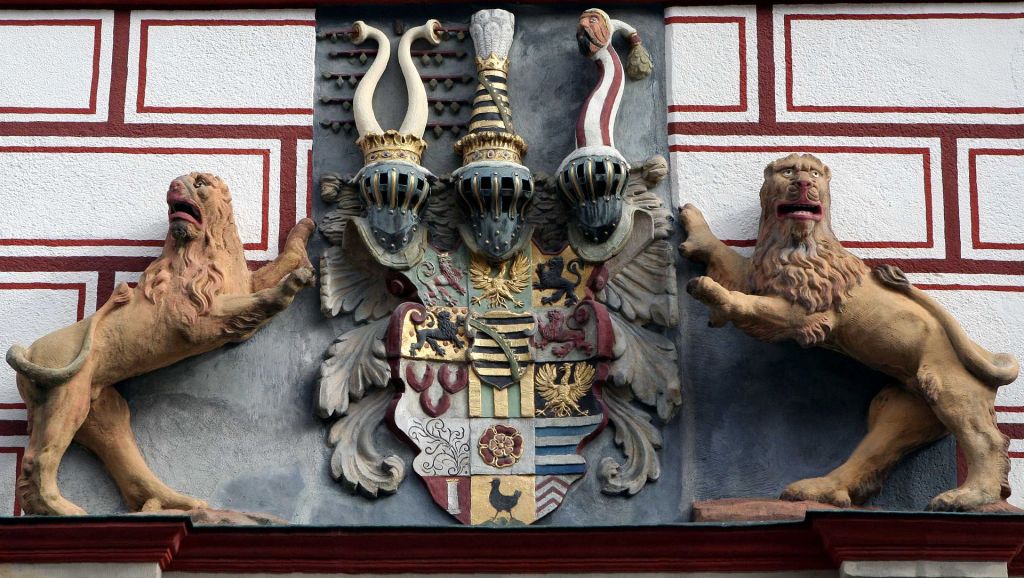
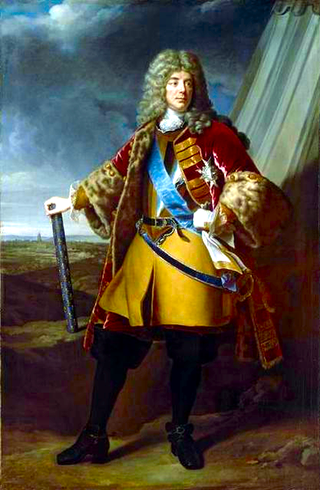
One of the most well-known ducal families in French history is the House of Guise, an interesting example of a cadet branch of a family being more famous (or infamous) than the senior branch, the sovereign dukes of Lorraine. The dukes of Guise dominated French politics and diplomatic and religious policy for much of the 16th century, and I’ve written about them in an earlier blogpost. They were also successful in generating further cadet branches who were themselves also able to sustain a position at the top of the social hierarchy in France, for many generations. One of these branches was the line of Elbeuf. They were the most junior branch of the Lorraine-Guise dynasty, but also outlived the others by more than a century, finally dying out in 1825. The Elbeuf line was further sub-divided into the branches of Harcourt, Lillebonne, Armagnac and Marsan, and this post will look briefly at all of these, and in particular at their extensive landholdings, which, although almost entirely vanished today as built structures, demonstrate clearly the vastness of the spread of a major aristocratic family like this, stretching from Normandy to Provence.
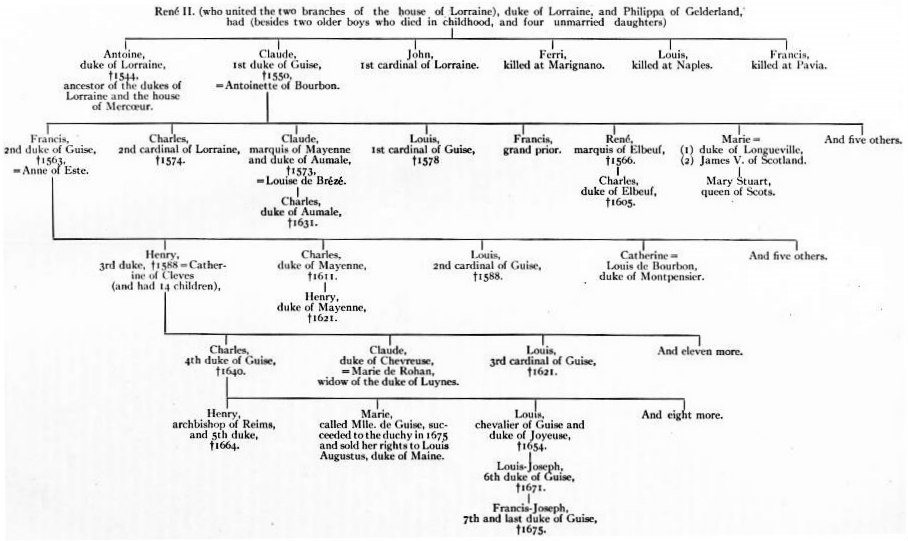
The Elbeuf branch was founded by René de Lorraine (1536-1566), the youngest son of the first Duke of Guise. René himself left behind little for historians to write about, dying at only age 30, but his portion of the family patrimony, added to the lands he secured through his marriage to a wealthy heiress, established a lineage that was almost as wealthy and powerful as their cousins in the senior line. René’s name itself was a reflection of his membership in the Lorraine dynasty, the name of his grandfather, Duke René II of Lorraine, and a further ancestor, King René I of Anjou, who reigned as sovereign count of Provence, and as king of Sicily, though mostly in name only. At an early age, René was sent with his older brother to fight with French armies in Italy, then against Imperial armies at Metz, and in 1561, he was sent to Scotland with his niece, Mary, Queen of Scots, to Scotland, as representative of the king of France, but also as ambassador from the family, to ensure a Guise presence in Scottish affairs following the death of his eldest sister, the Queen-Regent Marie de Guise.
In terms of estates, René’s marriage of 1555 to Louise de Rieux secured the family’s hold over a rich succession that the House of Lorraine had been contesting since the 1450s. Most of these lands were in Normandy, and some in Brittany (like the county of Rieux itself, in south-eastern Brittany, not far from the mouth of the Loire). Chief amongst these was the barony of Elbeuf, which the Lorraine family had successfully claimed in the 15th century (and which was given to young René as his portion of the inheritance), and the county of Harcourt, which they had not. Both of these large feudal estates lay in the rich fertile lands of upper Normandy, and would provide great wealth for René and Louise’s descendants.
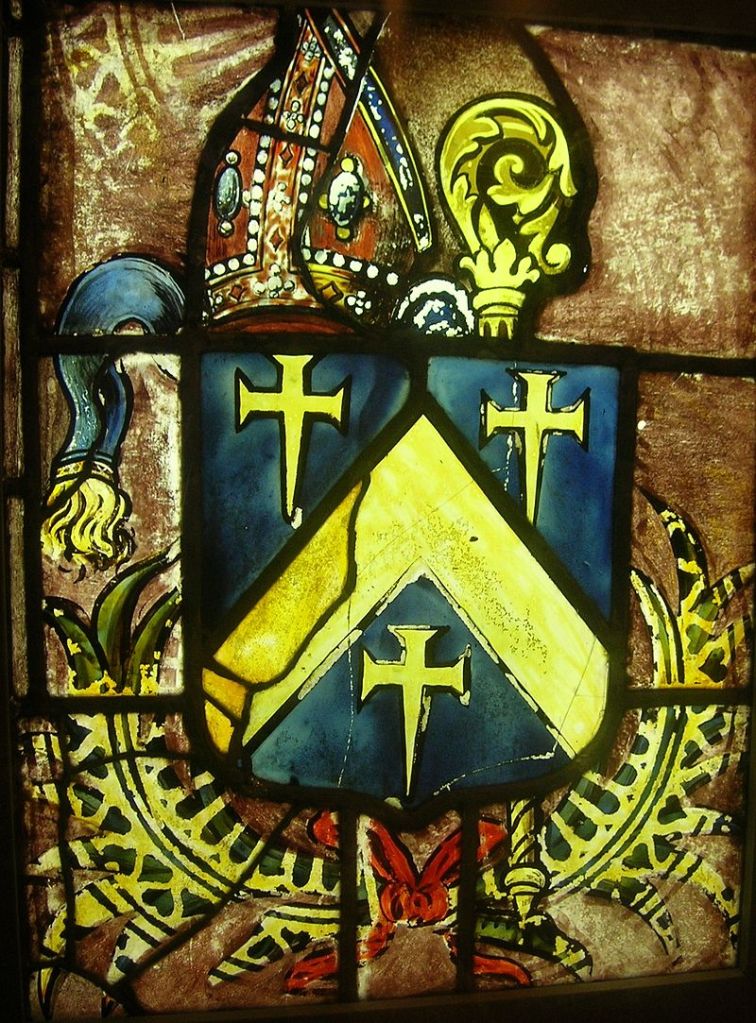
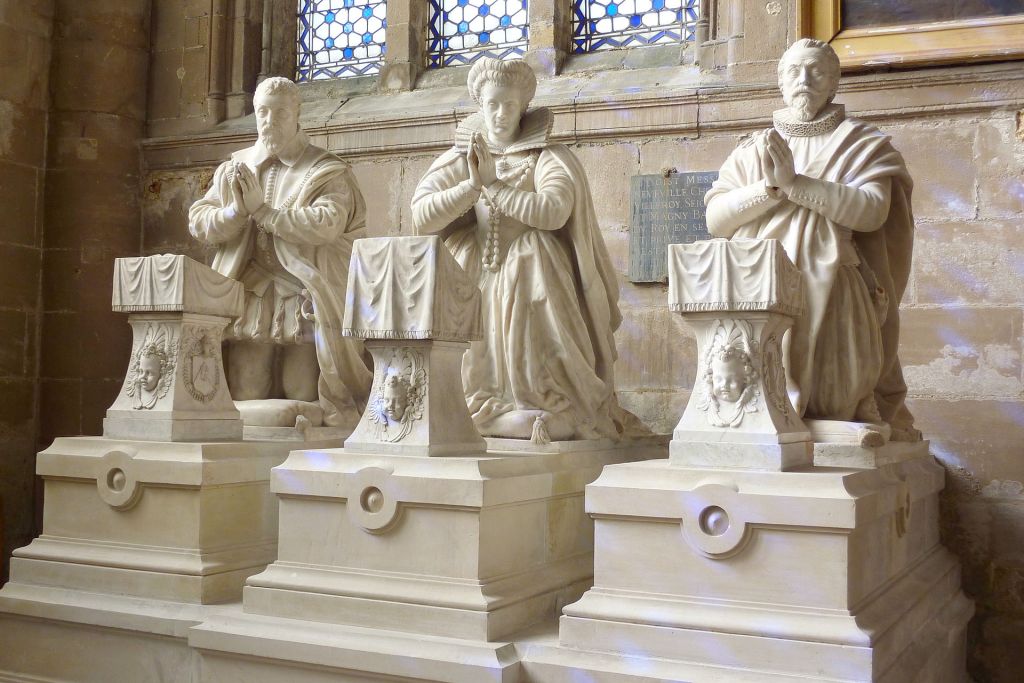
The barony of Elbeuf was erected into a duchy-peerage for René’s son Charles (1556-1605), in 1581. The duchy consisted of the lands of Elbeuf itself, plus other nearby baronies: Quatremares, Routot and others. It included jurisdiction over certain local markets and even over a segment of the river Seine, as it wound its way between Paris and Rouen. The town of Elbeuf itself, in a meander of the river just above Rouen, was already thriving as a centre of cloth production, and as a transmission point for grains onto the river from the high plateau above. The dukes of Elbeuf maintained a residence in the town, near the river—it has long since disappeared, but was located close to where the town hall is today. In the hills above the town was the Collegiate Church of St-Louis de La Saussaye, founded by an earlier lord of Elbeuf in the 1300s and rebuilt in the 16th century, which became the sepulchre for this branch of the House of Lorraine—much damaged in the tumults of the Revolutionary period.

In addition to the duchy, Charles de Lorraine was also count of three other Norman territories, Brionne, Lillebonne and Harcourt. The ancient towers of Brionne and Lillebonne, built by the Normans, were both mostly ruins already by the 16th century, but were important strategic points in controlling the economy of this part of Normandy: Brionne in the high plains southwest of Rouen, and Lillebonne in the lowlands closer to the mouth of the Seine. In between, the Elbeuf patrimony included the sizeable forest of Brotonne, at a time when one of the most reliable sources of aristocratic income was in forestry.
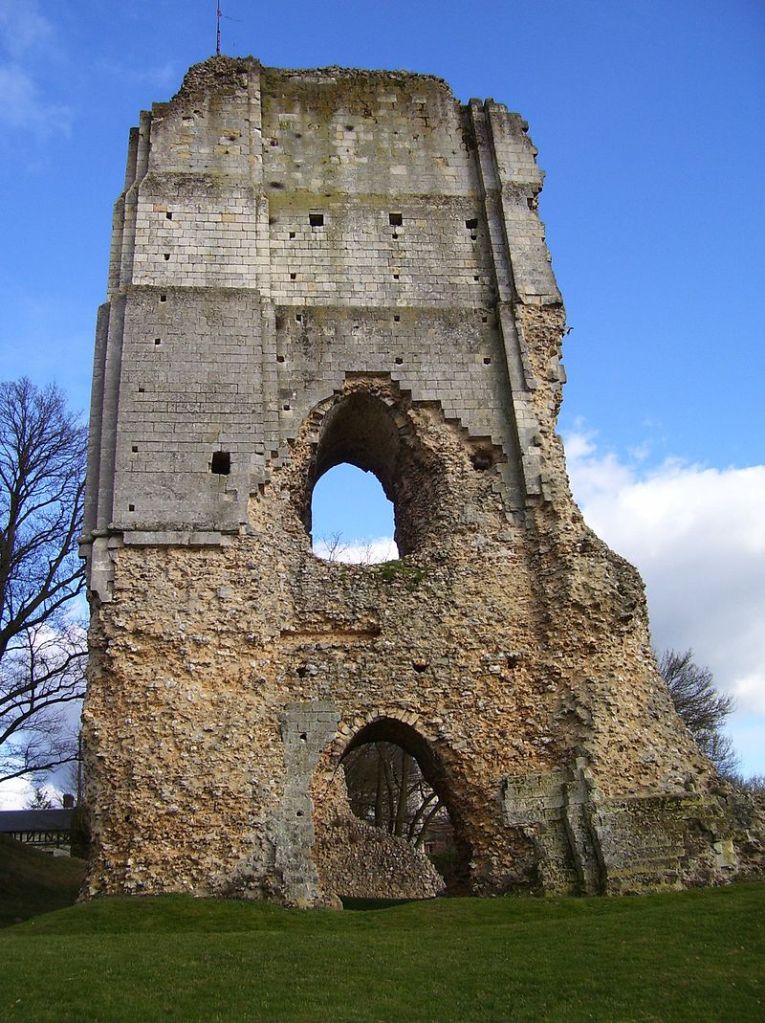
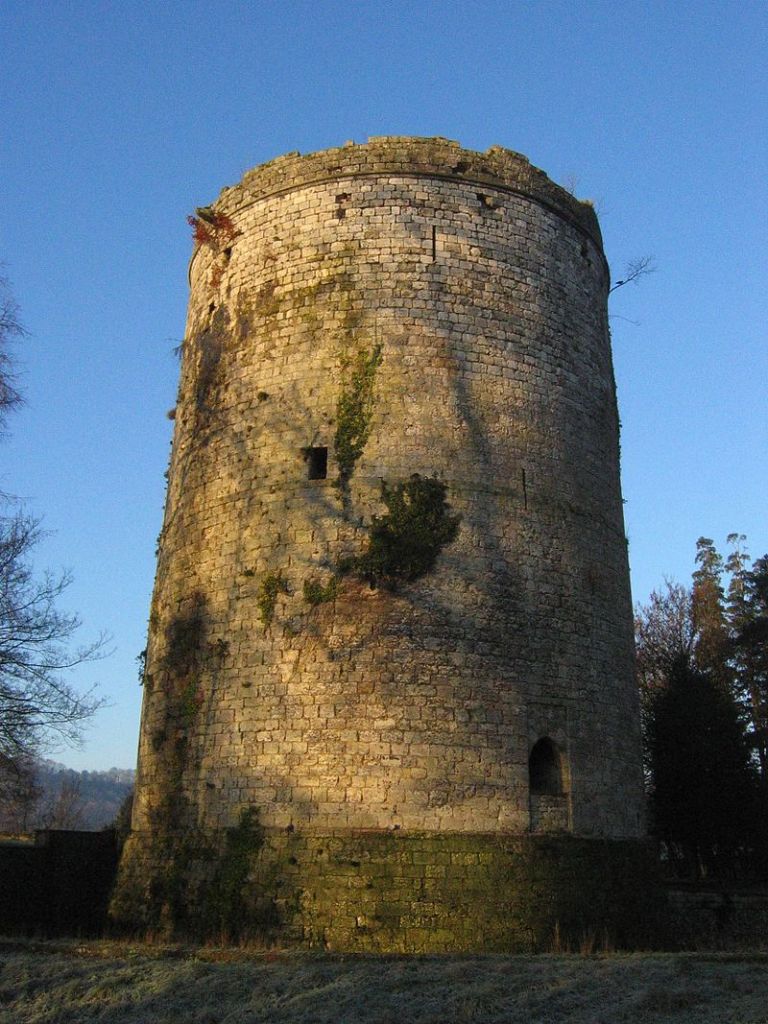
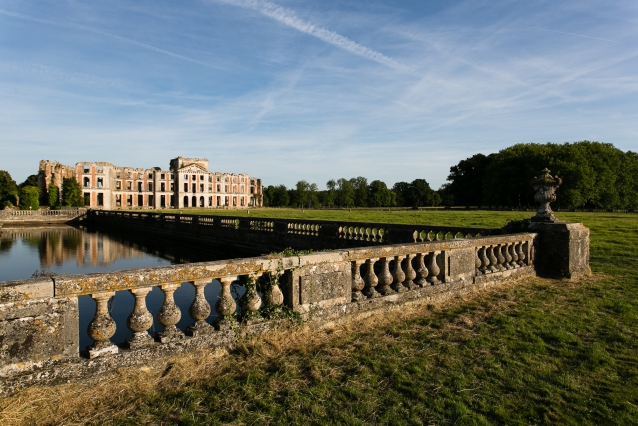
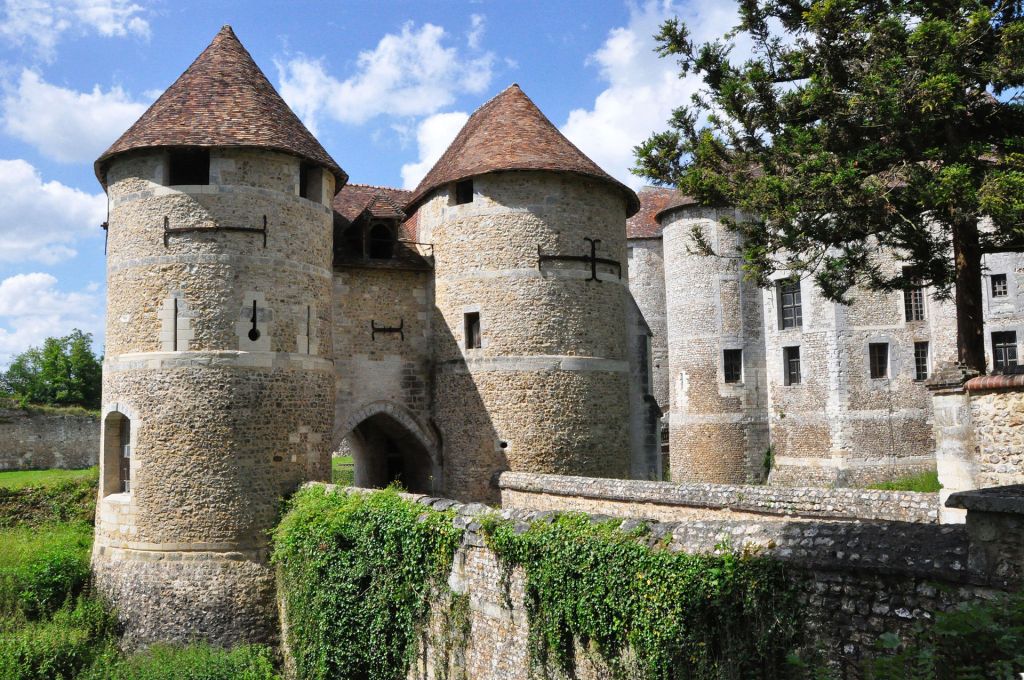
But the real treasure in terms of built heritage was the Château of Harcourt, a few miles east of Brionne. One of the best preserved medieval castles in France, it was the stronghold of the powerful Norman Harcourt dynasty from its inception in the 10th century. Claiming shared roots with Rollo and other Danish lords who invaded this region, the Harcourt dynasty is one of the most successful and prolific noble families in Europe, with branches in both France and England, though they lost possession of the castle of Harcourt itself via female succession in the early 15th century. It remained an important military stronghold for the Lorraine family well into the 17th century, and the county of Harcourt was held by younger Elbeuf sons, giving them revenues almost as grand as the duchy of Elbeuf itself, then was used as a residence by a junior branch of the line of Elbeuf well into the 18th century before falling into disrepair.
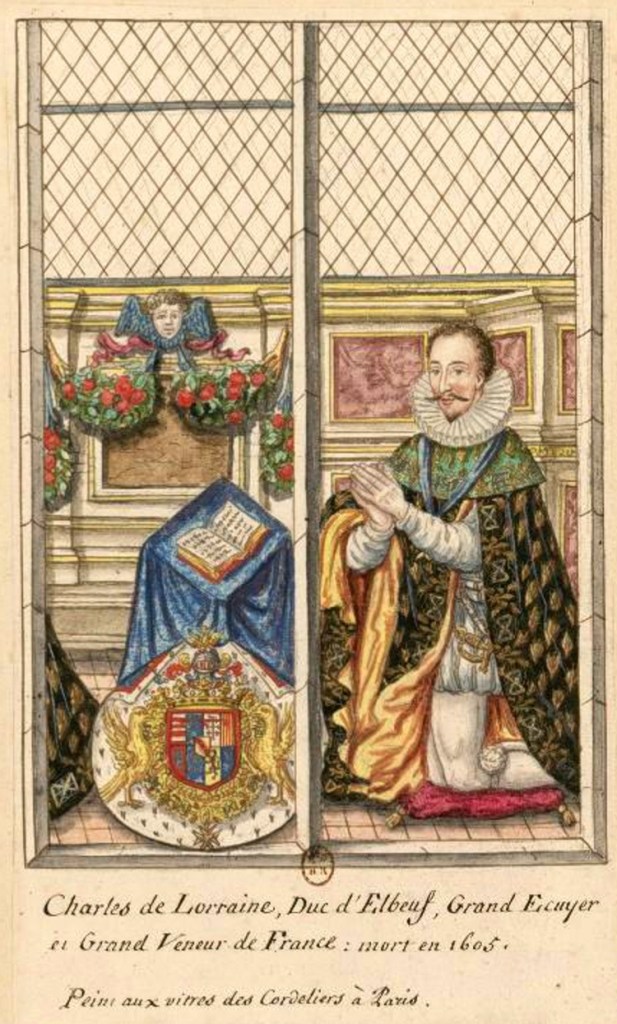
Charles de Lorraine-Elbeuf rose to great prominence at the French court alongside his cousins from the branches of Guise, Aumale and Mayenne. He held the posts of Master of the Horse of France and Master of the Hunt, Governor of the Bourbonnais, and was one of the first members of the Order of the Saint-Esprit.
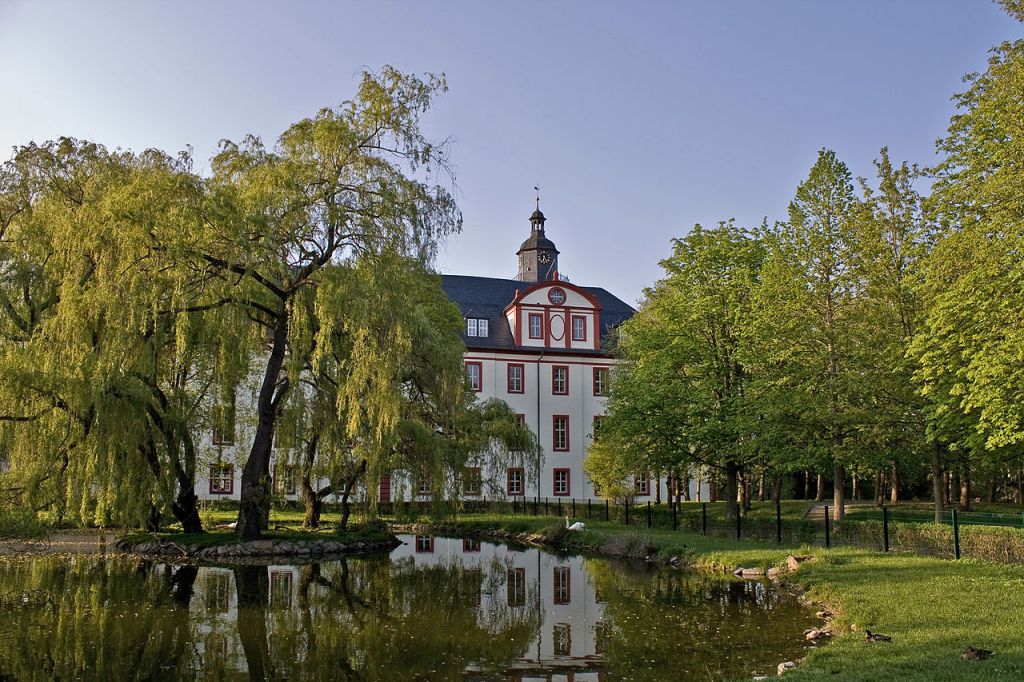
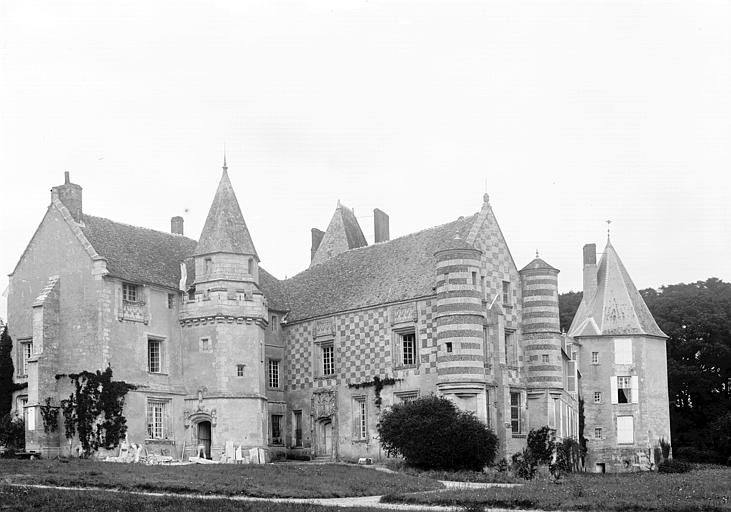
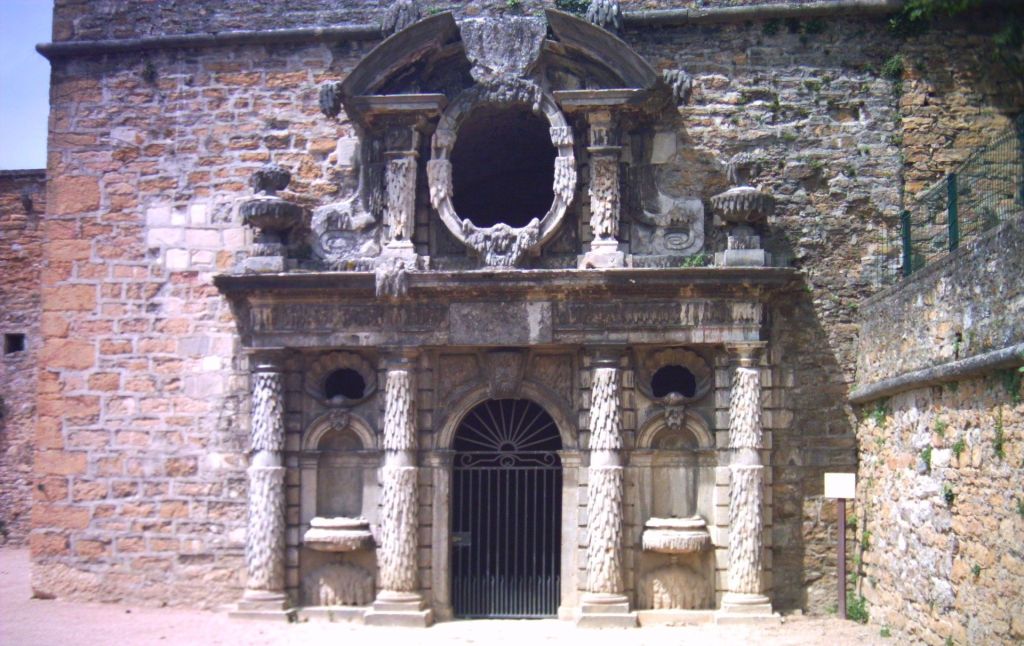
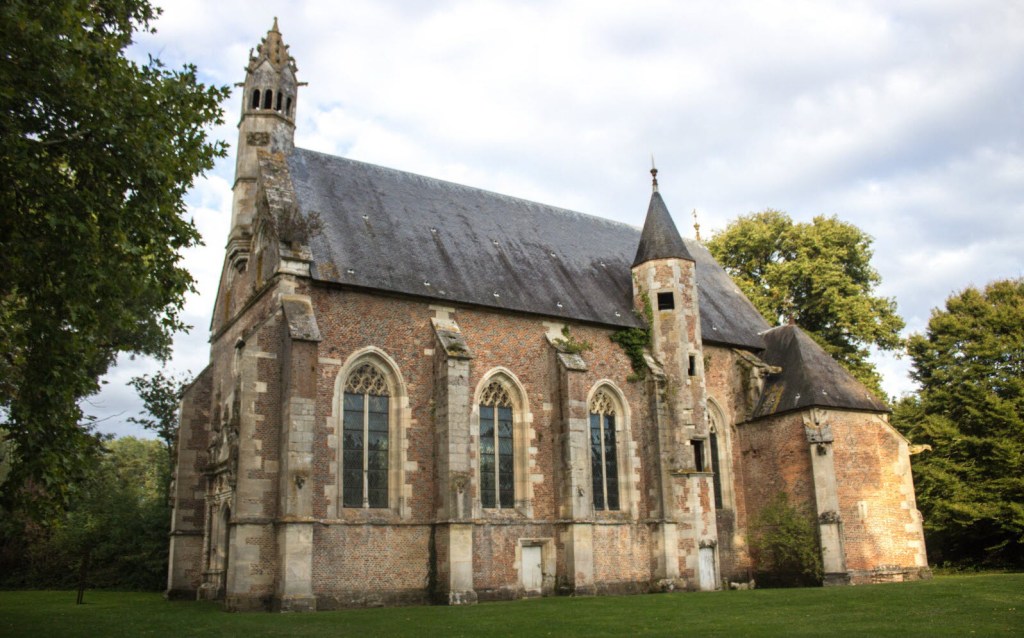
In 1583, he nearly doubled the size of his estates through a marriage to the heiress Marguerite Chabot, Dame de Pagny. Her father, Leonor, Comte de Charny, was one of the most loyal officers of King Henri III, Master of the Horse, and owner of huge estates in Burgundy. To his extensive properties in Normandy, the first Duke of Elbeuf now added lordships in Burgundy: Charny in the northwest, and Pagny and other lordships spread along the upper Saône valley in the east. The central buildings at Pagny were mostly destroyed in the 18th century, but the great treasure remains, the marvellous Gothic chapel built in the 12th century by the lords of Pagny and rebuilt in the early 16th century by the powerful nobleman Philippe Chabot, Admiral of France under François I. Pagny was also held by a cadet branch of the line of Elbeuf until it was purchased in 1675 by Louis XIV and bestowed on his illegitimate son, the Comte de Vermandois, who passed it along on his death to his maternal family, the dukes of La Vallière.
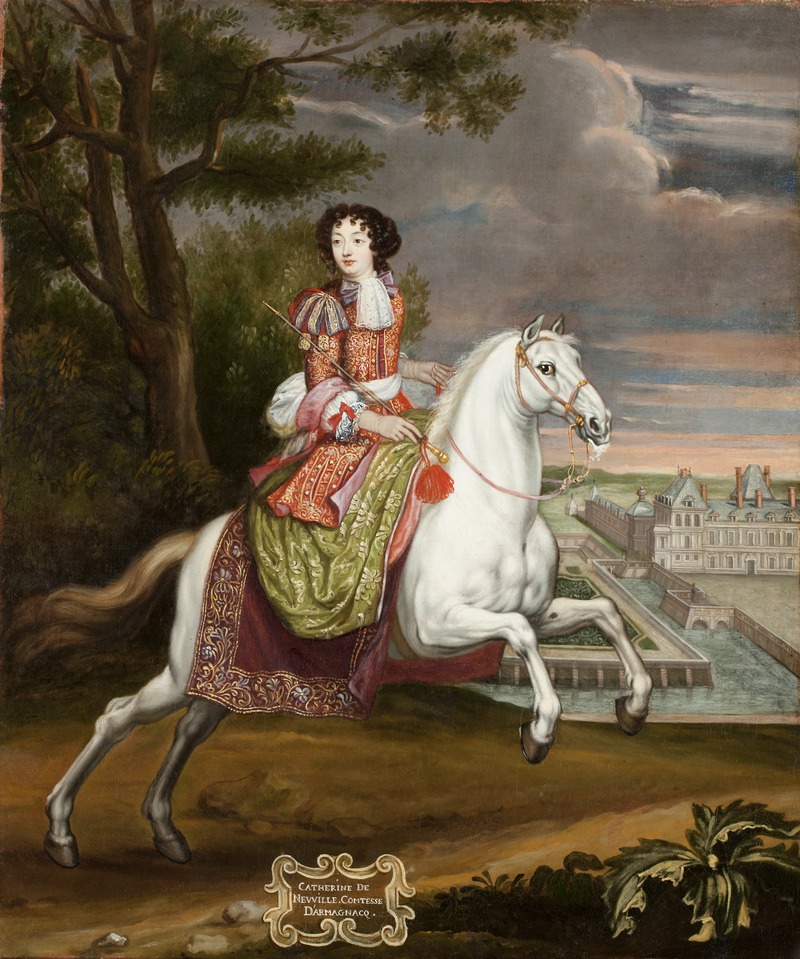
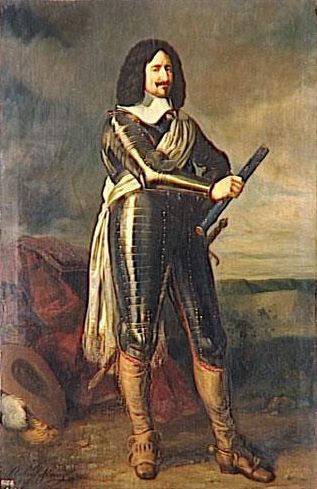
The line of Lorraine-Elbeuf was dealt a terrible blow, however, when Duke Charles suddenly died in 1605, leaving a widow, two underage sons, and four daughters, only one of whom had already been married off, and crucially losing the income derived from major court offices, since underage sons could not act as provincial governors or hold senior court offices. Marguerite Chabot spent much of the rest of her very long widowhood—nearly 50 years!—battling creditors and rapacious kinsmen who wished to claim parts or all of her succession. By the time her eldest son, Charles II (1596-1657), had reached his majority, a degree of royal favour was re-established, mostly through the marriage to the King’s half-sister, Catherine-Henriette de Bourbon-Vendôme, an illegitimate daughter of Henry IV and Gabrielle d’Estrées. But this alliance soon soured, and a link to the Vendôme clan and to the King’s rebellious brother Gaston, proved to be a liability in the period of the rise of Cardinal Richelieu, and Charles II was disgraced and sent from court. Elbeuf did later secure a governorship, Picardy, but not a major court office. That honour went instead to his younger brother, Henri, Count of Harcourt (1601-1666), who had been favoured by their mother and given most of the richest properties in Burgundy. Harcourt, almost alone in the family, made an alliance with Richelieu, secured through a marriage to one of the Cardinal’s cousins (and rewarded with lands in Gascony as part of her dowry, and the title Count of Armagnac), and was finally restored to his father’s old court office, Master of the Horse of France—one of the eight major court offices in France, which would remain in the House of Lorraine-Elbeuf from 1643 all the way to the end of the Ancien Régime.
Denied this great honour, the second Duke of Elbeuf would sink lower in the eyes of the Regency government of Anne of Austria when he supported the rebellious Parlement of Paris during the Fronde, leading their troops against the Crown in 1649. His financial losses during these events further strained an already heavily indebted patrimony, as did the need to provide for three sons, the heir, Charles III, plus François-Louis and François-Marie. The junior branch of the family now took the lead, headed now by the Count of Harcourt’s eldest sons, Louis, Count of Armagnac (a close favourite of Louis XIV) and Philippe, the Chevalier de Lorraine (an even closer favourite of the King’s brother, Philippe, Duke of Orléans). This junior branch, enjoying such eminent royal favour as well as the incredibly lucrative office of Master of the Horse, even acted as de facto head of the entire house of Lorraine-Guise after the death of the last member of the senior branch, Mlle de Guise, in 1688. From her, they inherited one further feudal estate that would lend its name to later members of the family: the barony of Lambesc in Provence. Lambesc had been part of the patrimony of King René in the 15th century, and thus a reminder to the family of its distant claims to royal status in the Mediterranean.
The third Duke of Elbeuf, Charles III (1620-1692), himself never rose to great prominence. He spent much of his time living in his provincial governorship of Picardy (to which had been added Artois, Boulonnais, and the other ‘Pays Conquis’, lands acquired from the Spanish in the 1650s). He had a residence in Paris, the Hôtel d’Elbeuf on the rue Vaugirard (near the Luxembourg Palace), plus residences at Versailles and at Saint-Germain-en-Laye. But despite three advantageous marriages, to heiresses and well-connected court families, Charles remained in debt and maintained a low profile. By the end of his life his estates were sequestered and he lived on a pension paid out by a directorate set up by his creditors.
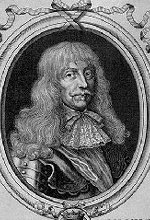
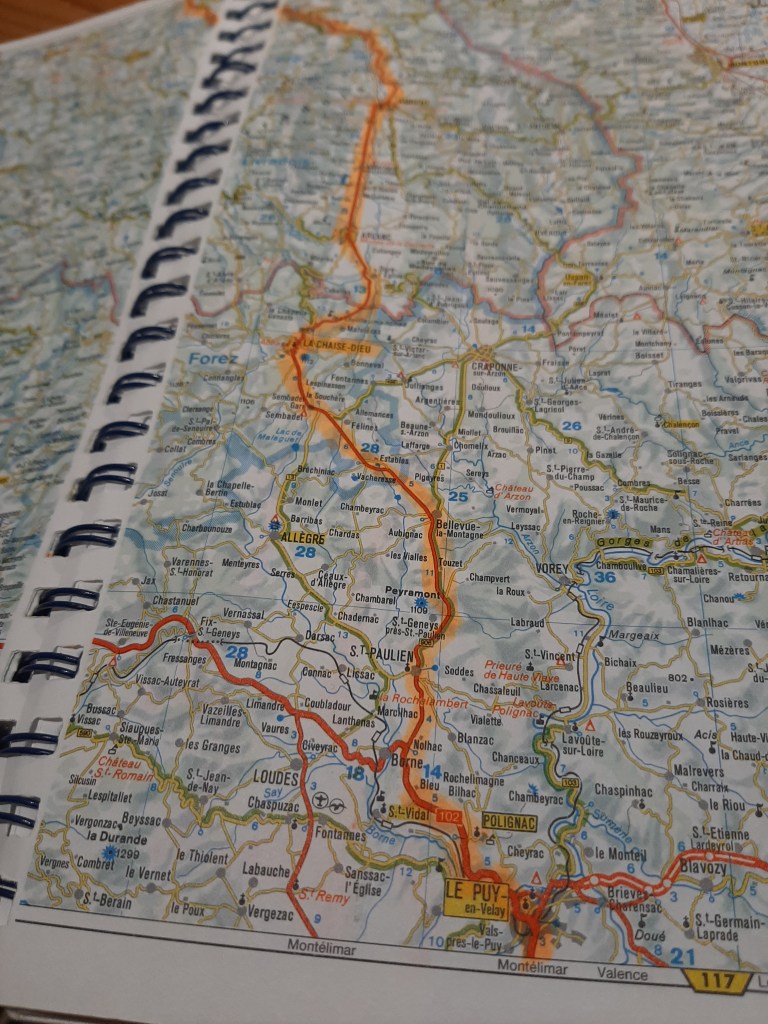
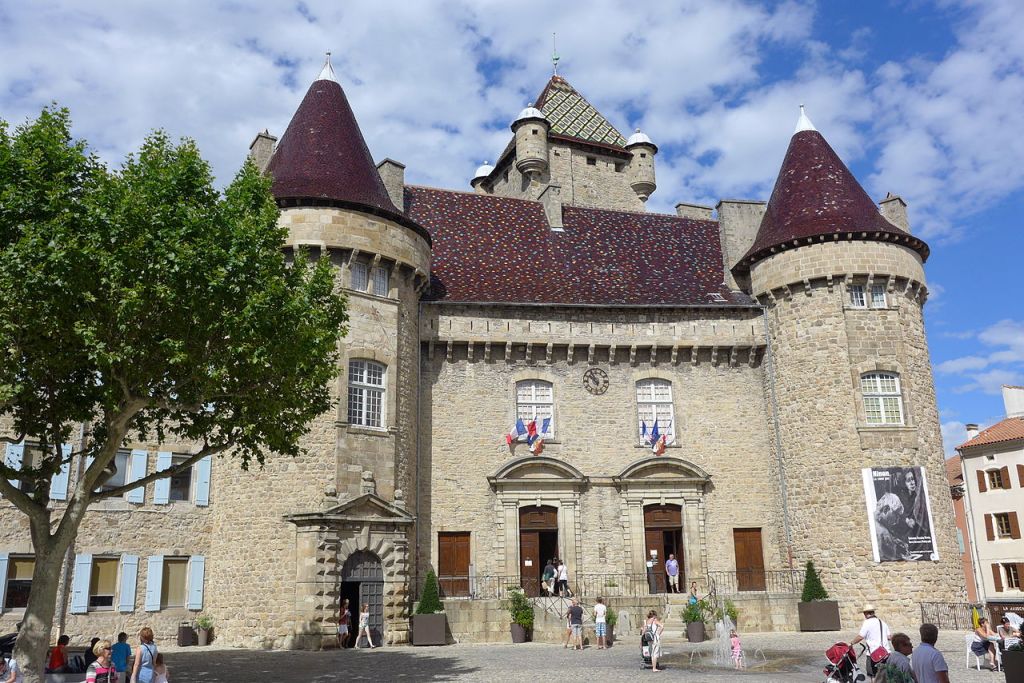
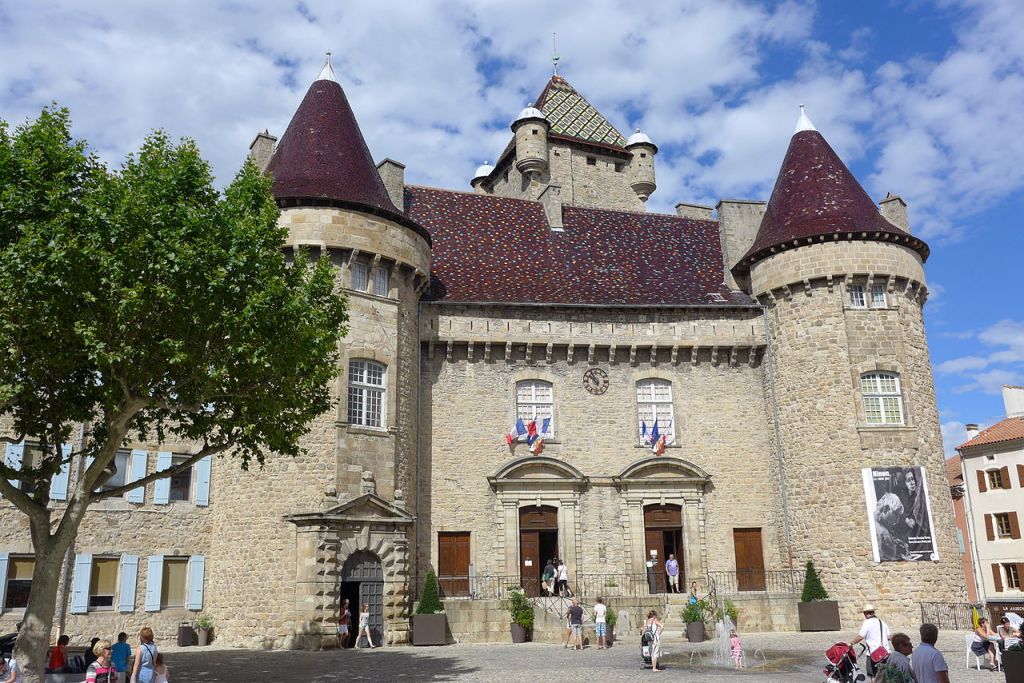
Of his younger brothers, François-Louis was given the château and county of Harcourt, and married a major heiress from the southeast of France, Anne d’Ornano, Countess of Montlaur in Languedoc and Marquise de Maubec in Dauphiné—the two properties mirroring each other on either side of the Rhône Valley. Opting to remove himself from his brother’s financial distress, the Count of Harcourt chose instead to live as a great provincial magnate in the south of France, and established a new line, Lorraine-Harcourt, that continued until the middle of the 18th century. Their base was the ancient seat of the Montlaur family in Aubenas, where the magnificent château is still the centrepiece of the town. They elevated their status somewhat by taking the title ‘Prince’ of Harcourt, though this title reflected their personal rank as a foreign prince of the House of Lorraine, not any possession of a genuine principality; later they took the title ‘Prince of Guise’, which was actually an estate in the Duchy of Lorraine erected into a ‘principality’ by the Duke of Lorraine in 1718 in an effort to lure back to Lorraine some of the cadets of his dynasty. An effort that worked in this case, as the Prince of Guise sold his lands in the south of France and settled for a time at the court of Lorraine in Lunéville.
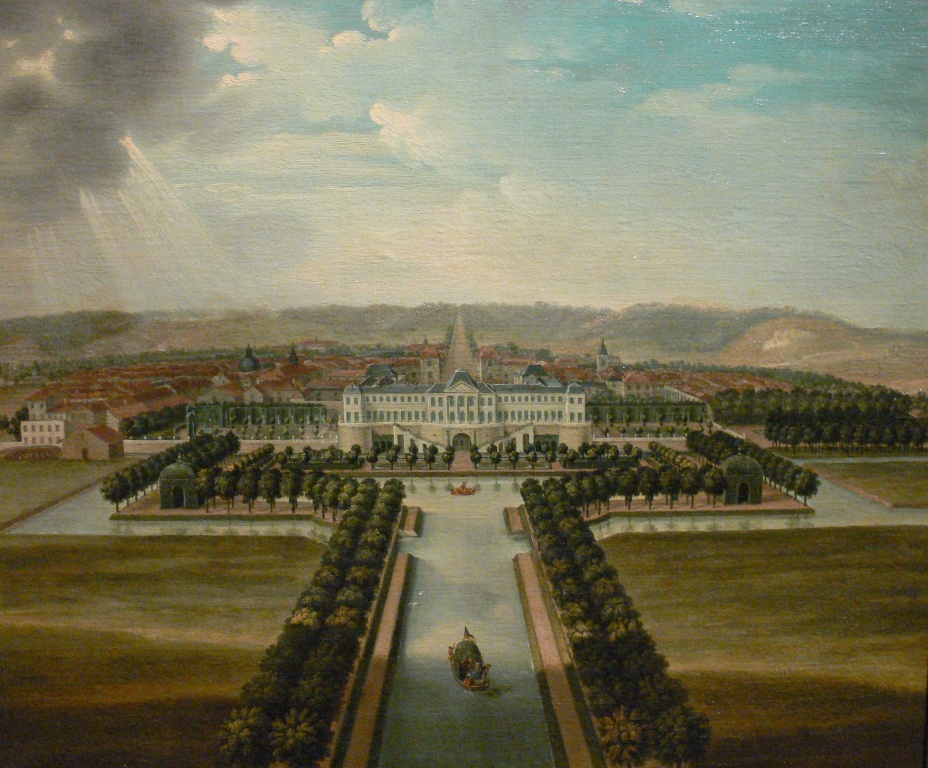
The youngest brother, François-Marie, was given the county of Lillebonne, and he too established his independence through marriage to an heiress and shifting his activities away from the court of France. In 1660, he married the daughter of the head of his house, Duke Charles IV of Lorraine, and he became one of the Duke’s most trusted military commanders. He and his wife purchased the sovereign lordship of Commercy, on the borders of Lorraine, where they rebuilt an ancient château and established their own miniature court. Their eldest son, Charles-François, took the title ‘Prince of Commercy’ and, like his friend Prince Eugene of Savoy, left France complaining of a lack of royal patronage in the army, and instead became a leading commander in the armies of the Holy Roman Emperor, before he was killed in the War of Spanish Succession in northern Italy in 1702. Commercy left behind two sisters, both great favourites of the Grand Dauphin (who had to scramble for position once their powerful patron at court died suddenly in 1711—the elder sister becoming abbess of the powerful Abbey of Remiremont in Lorraine), and his estates ultimately passed to his uncle, his mother’s brother, the Prince of Vaudémont, who continued to convert Commercy into a miniature Versailles, which is mostly still standing today.
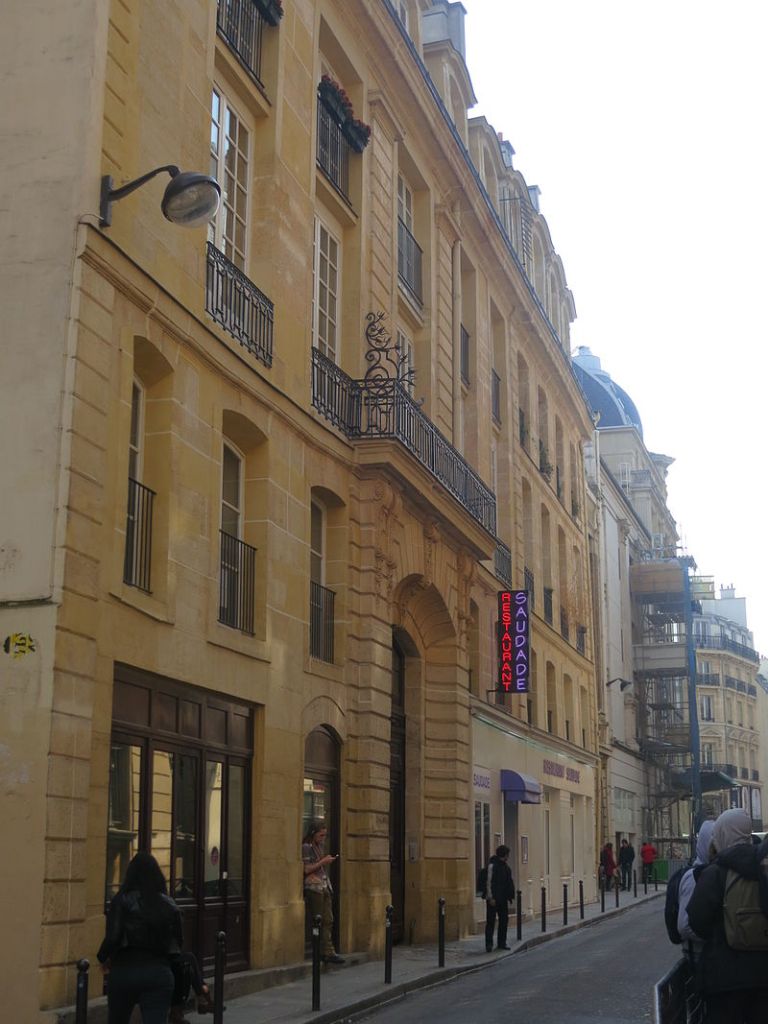
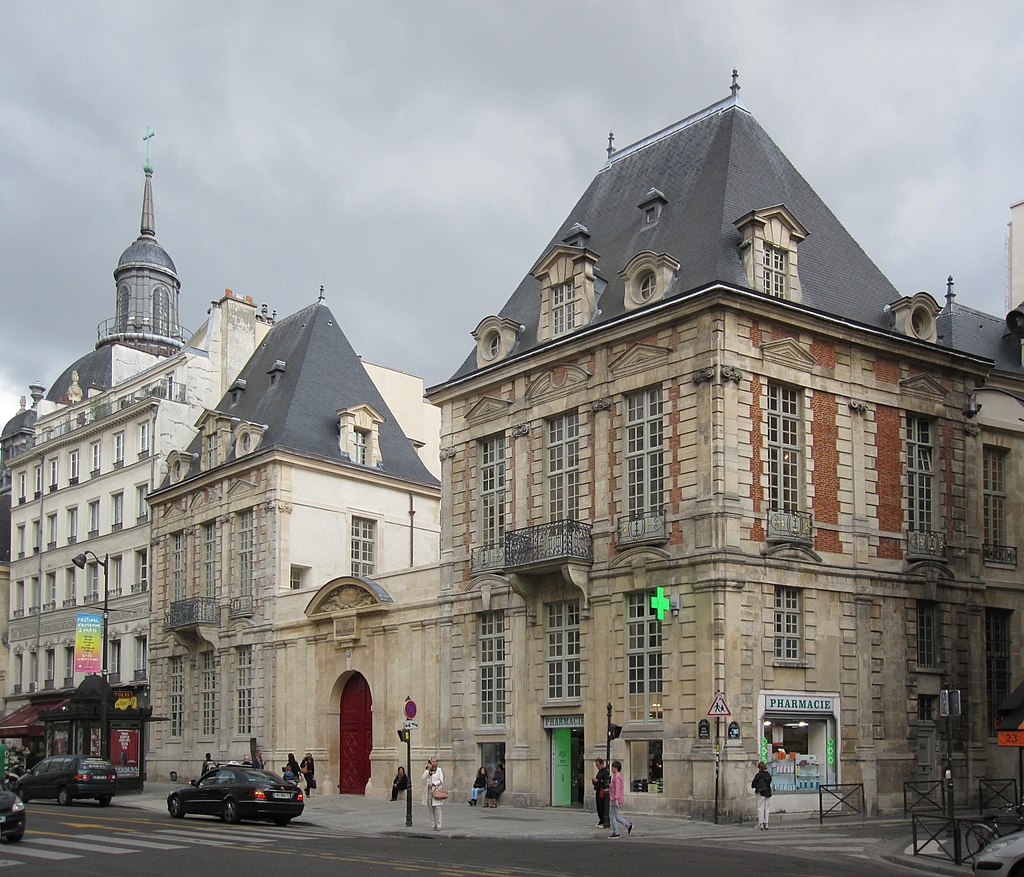
One final sibling of Duke Charles III remains to be mentioned, Marie-Marguerite-Ignace, Mlle d’Elbeuf, who, unusually, remained single her entire life and never entered a convent. She obtained a major court office, dame du palais of Queen Marie-Thérèse, and her own portion of the Elbeuf patrimony, notably lands in Burgundy which enabled her to purchase the County of Rosnay in Champagne. She also inherited one of the largest non-royal residences in Paris, to rival the Hôtel de Guise itself a few streets away in the Marais, known as the Hôtel de Mayenne, and later as the Hôtel de Lillebonne after she bequeathed it to her nieces: today it still stands, on the rue Saint-Antoine, just inside the Place de la Bastille, inhabited by the Lycée des Francs-Bourgeois, and recently restored to its former glory as a monument to mid-17th-century urban architecture. If you look closely, you can see the double cross of Lorraine in its windows.
This brings us to the 18th century, and the existence of four sub-branches of the House of Lorraine-Elbeuf: Elbeuf, Harcourt, Armagnac and Marsan. The last of these was established from the youngest brother of the Count of Armagnac and the Chevalier de Lorraine, and took its name from the viscounty of Marsan in the far southwest, near Toulouse. Landholdings in this area were augmented, again through marriage to the heiress of the lordship of Pons in Saintonge (near Bordeaux), and through the gift of another property in the Duchy of Lorraine, the lordship of Lixheim (or Lixin). Not do be outdone by their cousins of the Harcourt branch, the last members of this branch therefore called themselves ‘Prince of Pons’ and ‘Prince of Lixin’. One of the most prominent members of this line of princes was the Comtesse de Marsan, Marie-Louise de Rohan, who, as Governess of the Royal Children of France, looked after the early childhood development of Louis XVI, Louis XVIII and Charles X, and gave her name to one of the restored elements of the Tuileries Palace, the Pavillon de Marsan, today part of the Louvre.
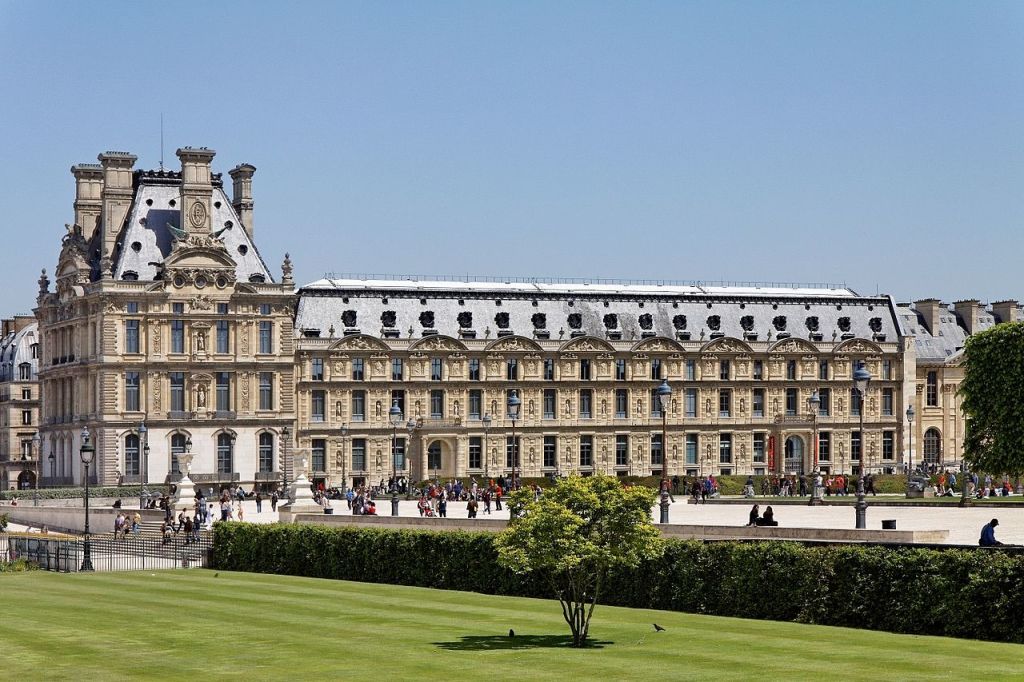
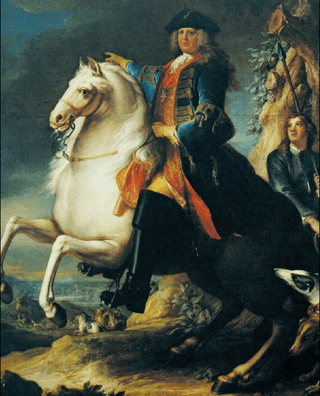
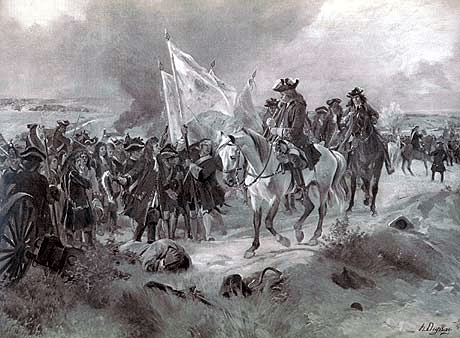
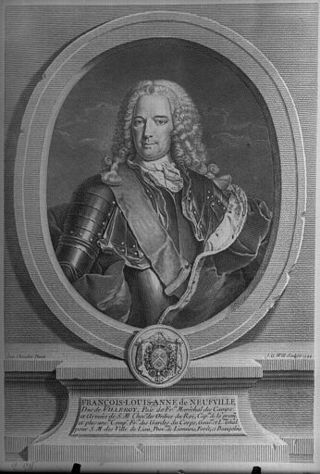
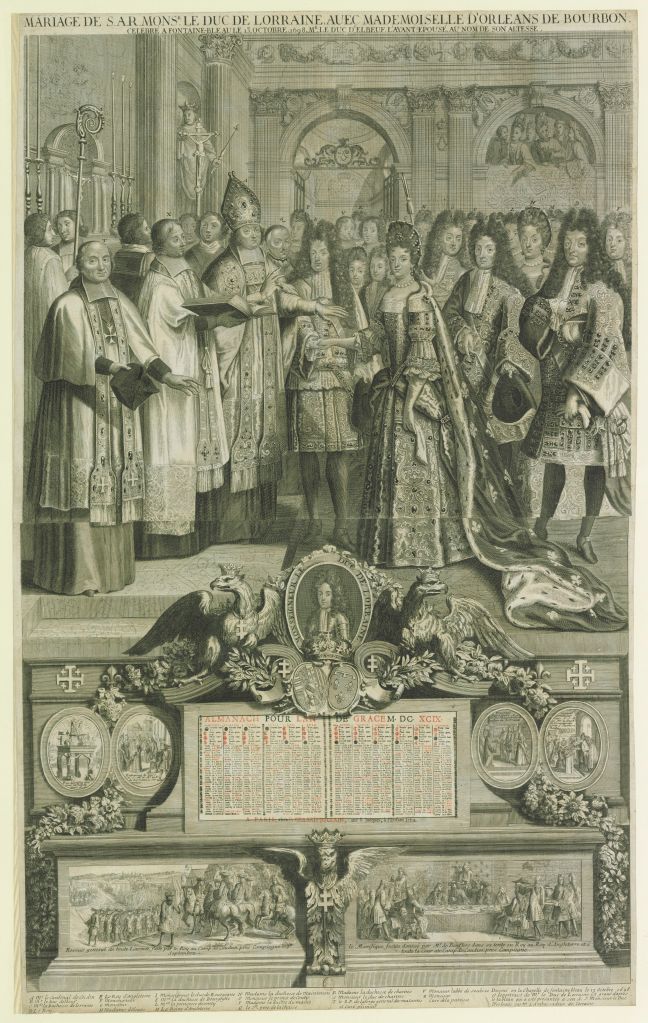
The line of Harcourt as we have seen sold its southern properties in the early years of the eighteenth century; similarly, the line of Elbeuf sold the county of Lillebonne in 1701—in this case, back to the House of Harcourt, who were on the rise again, and created dukes in 1709 (though not regaining their old château of Harcourt, so the dukedom was instead based on other estates further west in Normandy). The new Duke, Henri (1661-1748), restored much of his family’s honour as a successful military commander (notably being raised more as a nephew of the great General Turenne than as a prince of Lorraine), and continued to administer his father’s provincial governorships of Picardy, Artois and the Pays Conquis (adding much of Hainaut when it was conquered during the War of Spanish Succession). He was also now the head of the cadet branch of the House of Lorraine, and as such represented the Duke of Lorraine in ceremonies at Versailles, notably marrying as a proxy spouse the King’s niece, Elisabeth-Charlotte d’Orléans, in 1698, and escorting her to the frontier to meet her new husband, the Duke. As a further mark of royal favour, Elbeuf married a niece of Madame de Montespan, but ultimately his line failed as his son and heir was killed in battle in northern Italy.
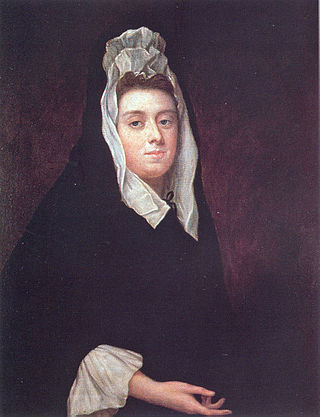
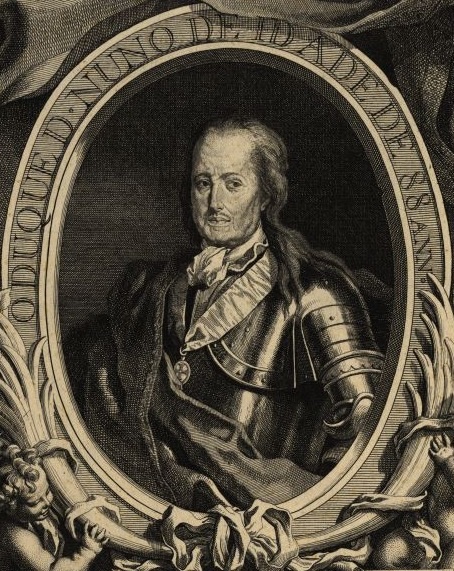
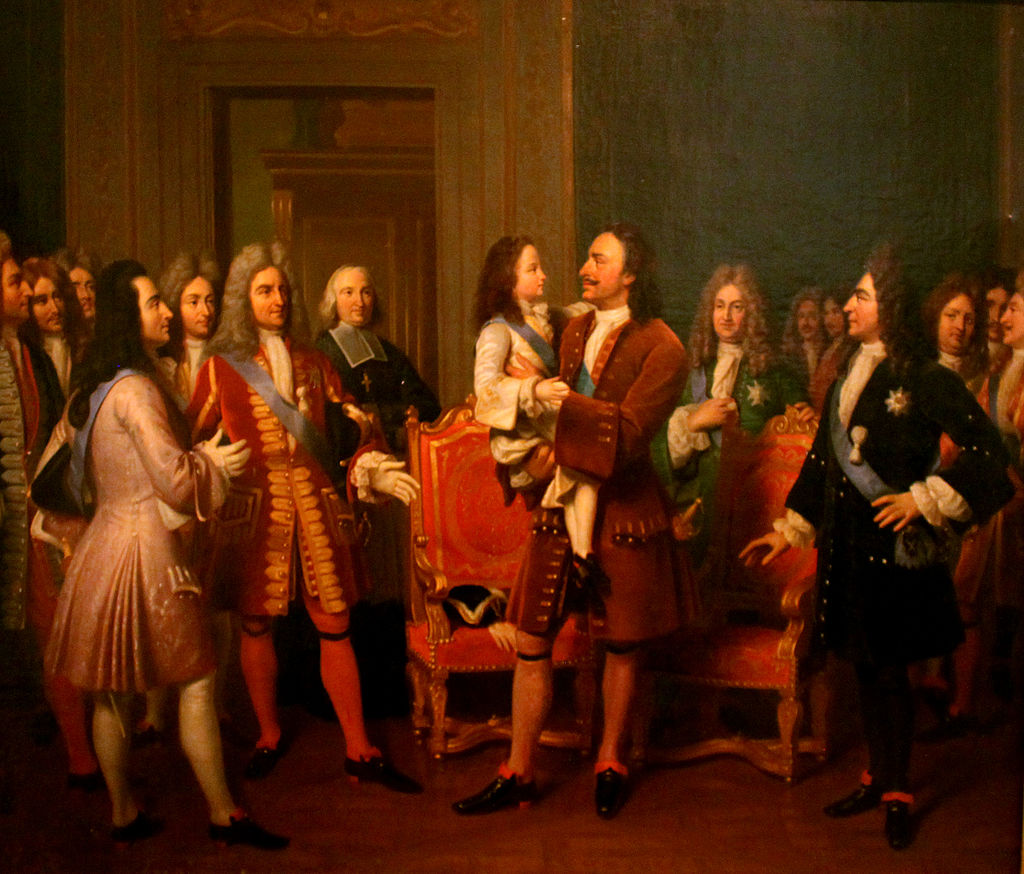
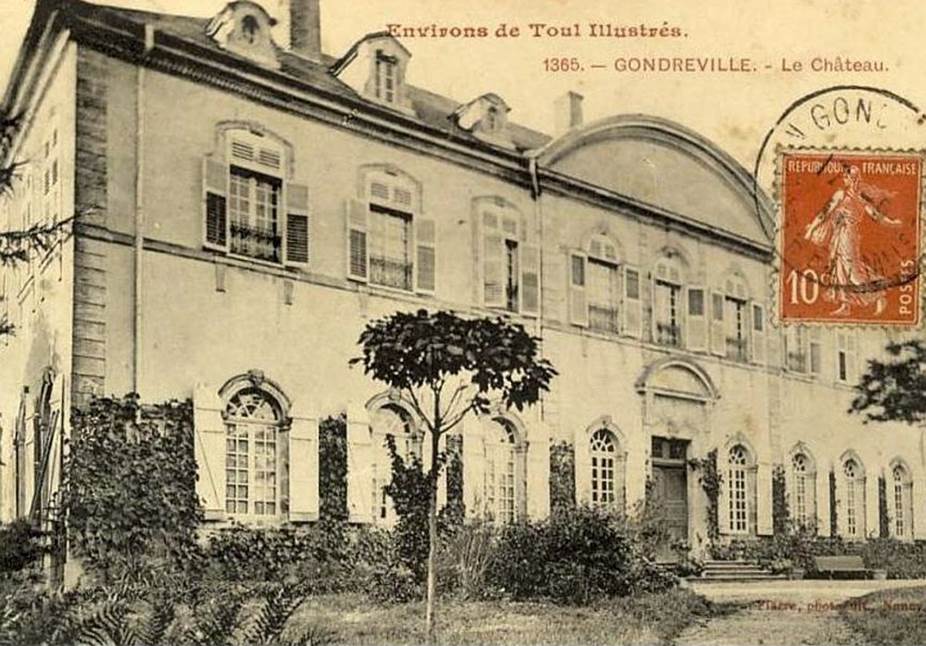
The heir of the Duchy of Elbeuf was therefore the 4th Duke’s much younger brother, Emmanuel-Maurice (1677-1763), known as the ‘Prince d’Elbeuf’. As a young man he had made himself unpopular at court, with the King and with his brother—the reasons for this are not clear—and he went instead into service of the armies of the Emperor, then fighting in Italy. He became a general in the cavalry for Imperial troops in Naples, married the daughter of a local grandee, the Duke of Salza, and, while attempting to renovate his villa south of the city, accidentally discovered the remains of the Roman city of Herculaneum. Returning to France after the War of Spanish Succession, he found himself excluded from his family, so, like Guise and Lixheim, was lured to the court of the Duke of Lorraine and resided for a time a the Château of Gondreville, west of Nancy. Although he succeeded to his older brother’s title as 5th Duke of Elbeuf in 1748, he was coerced into selling the lands to his cousin and future heir (since he himself remained childless). As the 5th Duke, he also had a new wife, Innocente-Catherine de Rougé, daughter of the Marquis du Plessis-Bellière, and widow of the Marquis de Coëtenfao. As a widow again, late in life the Duchess of Elbeuf was an eyewitness to the French Revolution, and her surviving letters now form the core of an exciting new research project “Revolutionary Duchess” (see http://revolutionaryduchess.exeter.ac.uk/duchess/ )
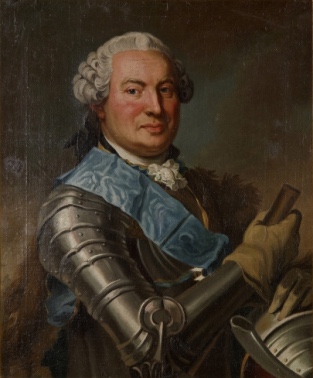
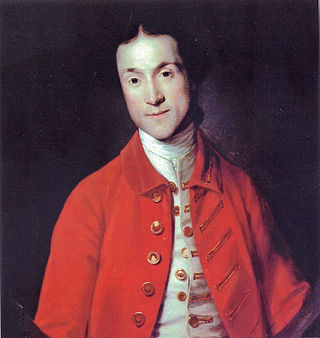
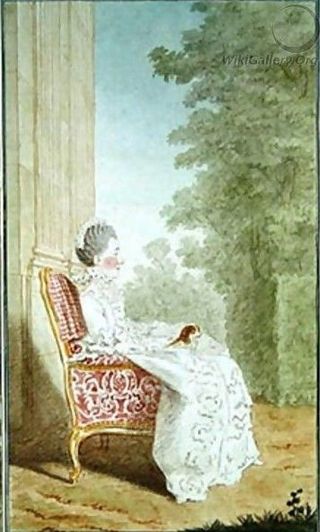
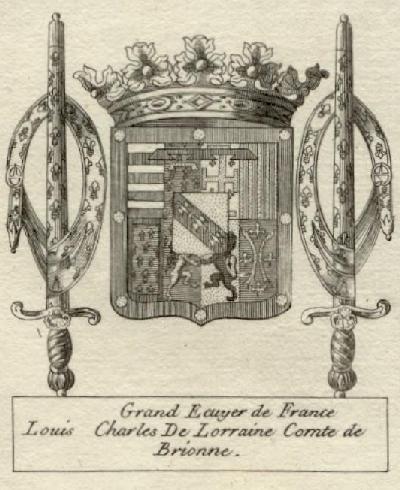
Finally, in 1763, the title Duke of Elbeuf was restored to its lands, passing to the great-great-grandson of the Count of Armagnac, and reuniting finally the ducal title with the office of Master of the Horse, and the now almost hereditary office of Governor of Anjou. Charles-Eugène (1751-1825) was only a child, but times had changed since the family lost the post of Master of the Horse back in 1605—this time, a minor was confirmed in the office, while his mother, the indomitable Countess of Brionne (Louise-Julie-Constance de Rohan-Rochefort), governed the King’s stables herself, the only instance I know of where a woman held one of the great court offices of France (and was named in documents ‘Grande Ecuyère de France’). Though technically the 6th Duke of Elbeuf, Charles-Eugène instead took the title ‘Prince of Lambesc’, perhaps as a nod to the country’s shift back towards the Mediterranean as a military power (following the defeat in North America in 1763); at about the same time, his cousin, the last member of the line of Marsan, was named Governor of Provence, an important governorship that had last been held by the Lorraine-Guise before their great fall from grace in 1630. In a subtle way, this title may have been a re-assertion of the family’s ancient claims to royal status in the Mediterranean, a reminder of the glorious Provençal court of ‘le Bon Roi René’. And indeed, Lambesc’s uncle, Camille, was abbot of St-Victor, the most important abbey in Marseille, and since 1768, his sister, Joséphine had been married to the Prince of Savoy-Carignano and lived across the Alps in Turin. Was this a family re-orientation towards the Mediterranean? At the same time, however, Lambesc’s brother, Joseph-Marie took the title ‘Prince de Vaudémont’, a re-assertion of the family’s ties with the Duchy of Lorraine, now firmly part of France, and their sister, Anne-Charlotte, was established as the Abbess of Remiremont, the most prominent abbey in that region.
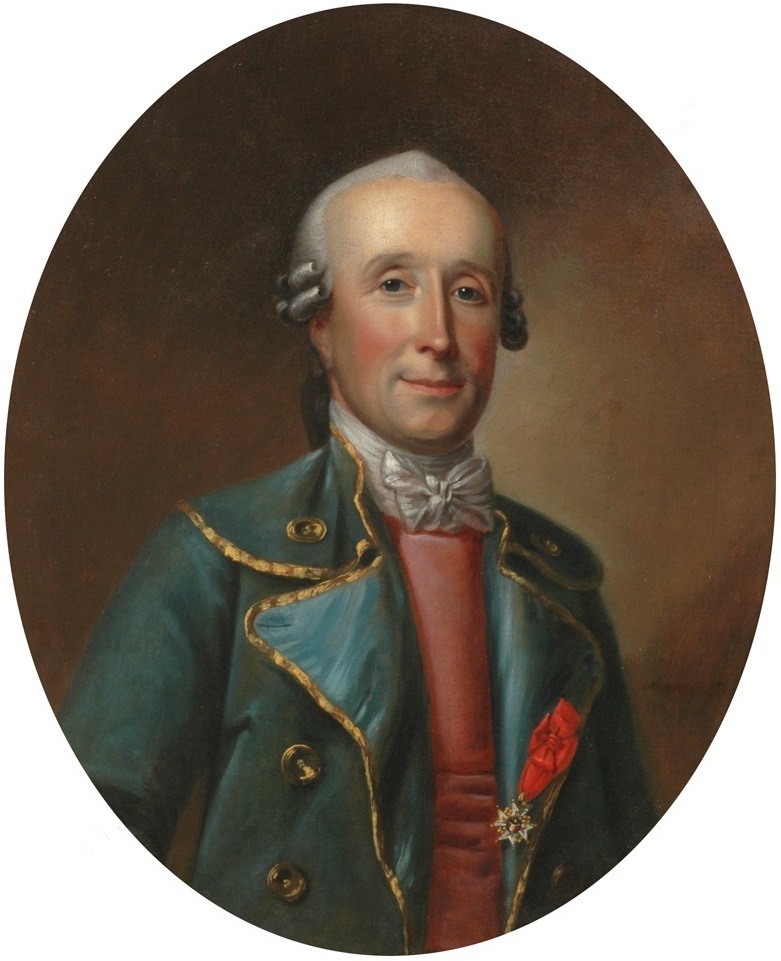
But the name Lambesc did not become famous as a restorer of his family’s prominence in Provence or Lorraine; instead, it was a name that became linked with the failure of Royal attempts to repress the outbreak of the French Revolution in July 1789. In fact, the Prince of Lambesc’s actions, in calling for shots to be fired on a crowd of protestors in the Tuileries Gardens on the 12th of July, may in fact have stoked the flames of violence that followed on the 14th.
See here for a recent blog I wrote about this event for the People’s History Museum in Manchester:
Shortly after the Revolution broke out, he and his brother both emigrated to Vienna, where they served in Imperial armies, and were well treated, considered as ‘princes of the blood’ of the Imperial house, since the House of Lorraine had succeeded the House of Habsburg since the 1740s. Neither brother returned to France, even after the Restoration of 1814, and even after the office of Master of the Horse was formally re-invested in the Prince of Lambesc in absentia—and the line of Dukes of Elbeuf came to an end in 1825.
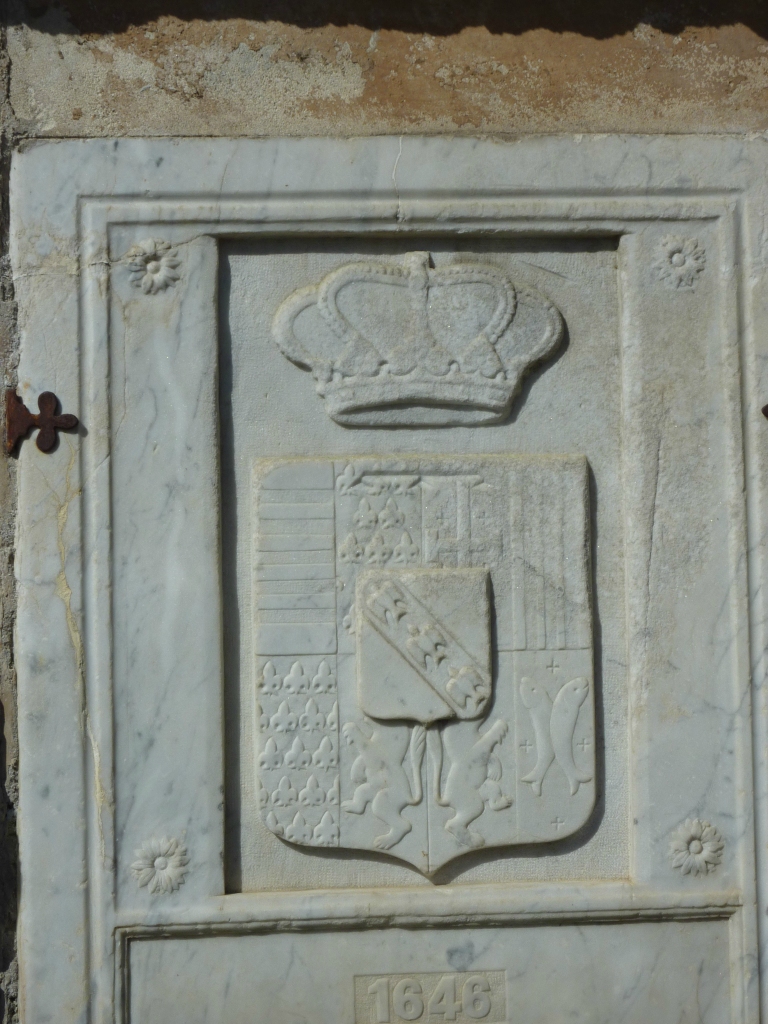
(images from Wikimedia Commons or photos by the author)
To read more about the Elbeuf branch of the family of Lorraine-Guise, see Stuart Carroll, Noble Power During the French Wars of Religion (1998) for the sixteenth century; and Jonathan Spangler, The Society of Princes (2009) for the seventeenth.