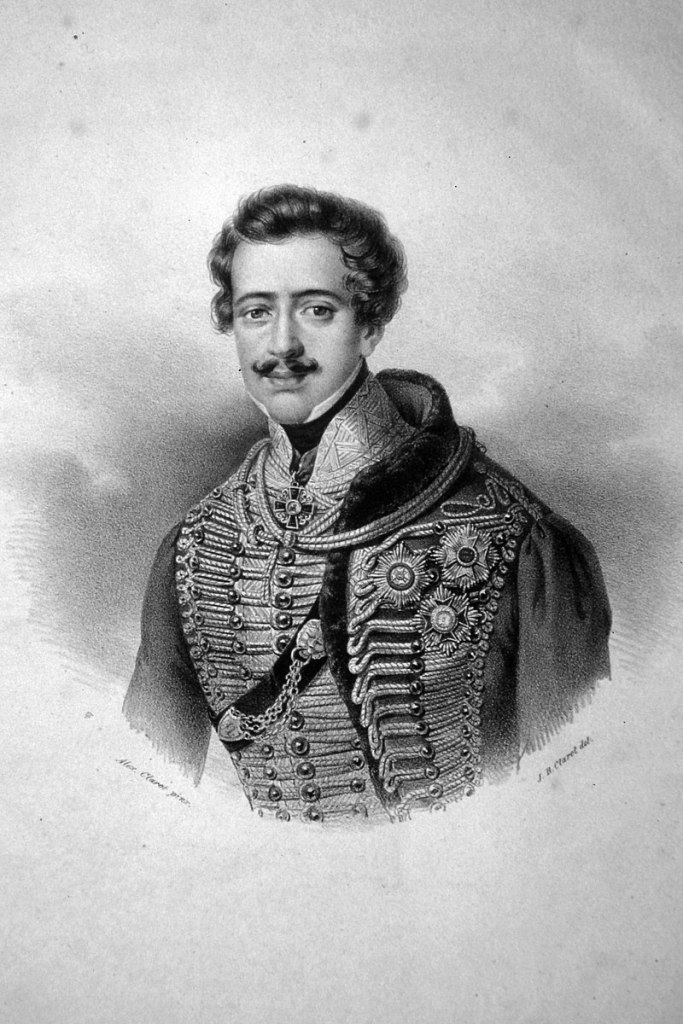
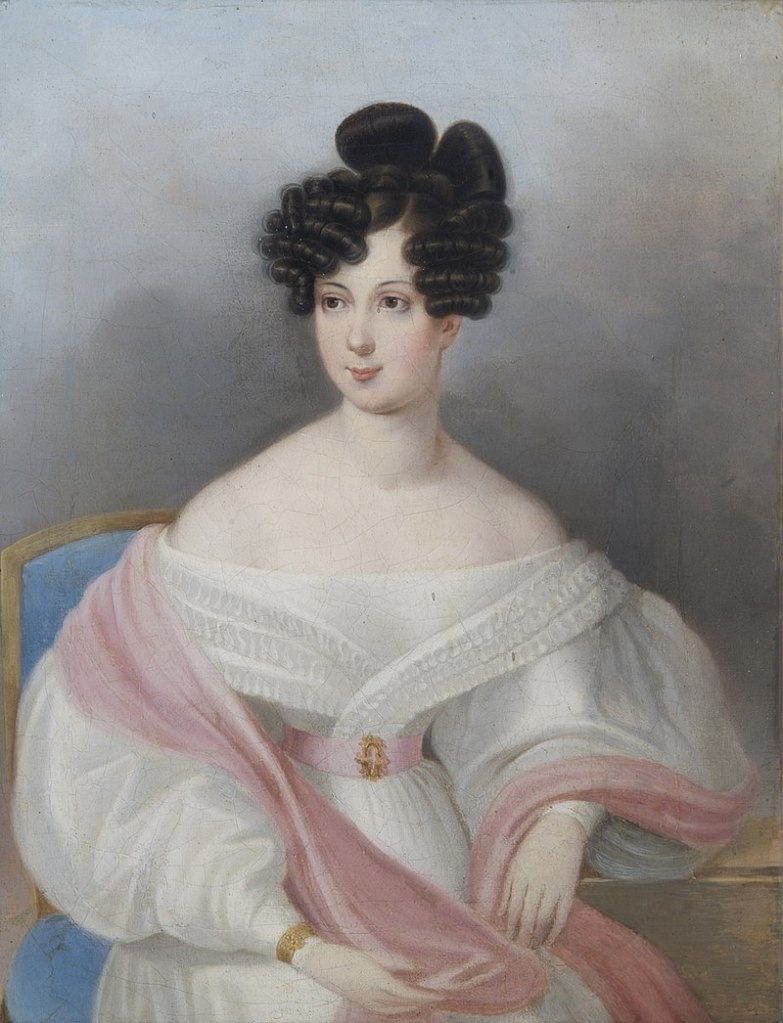
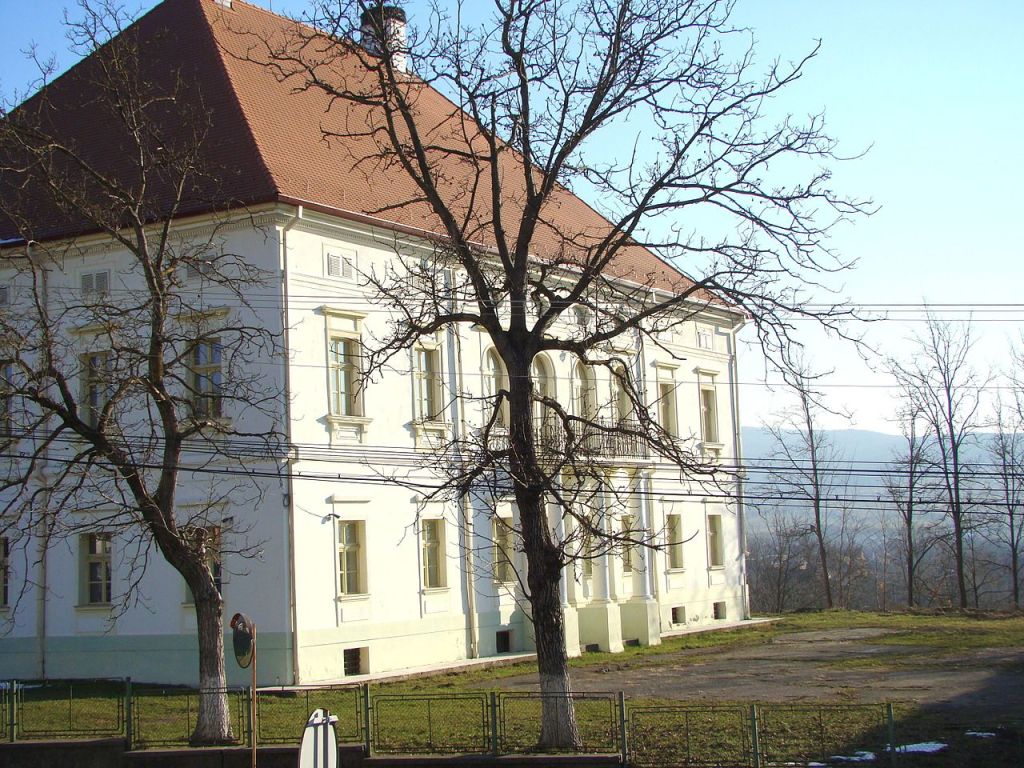
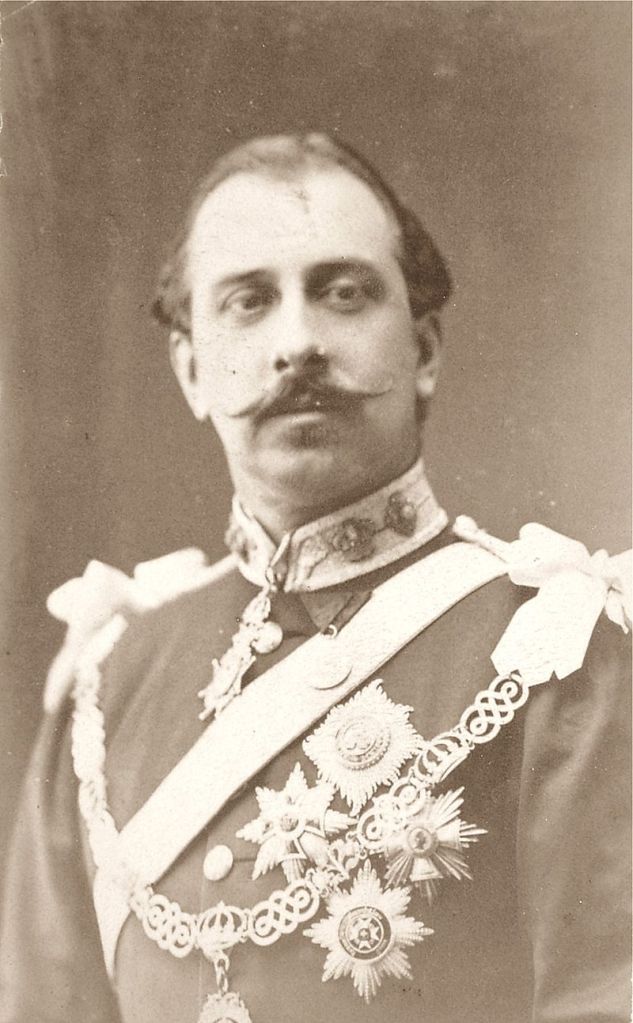
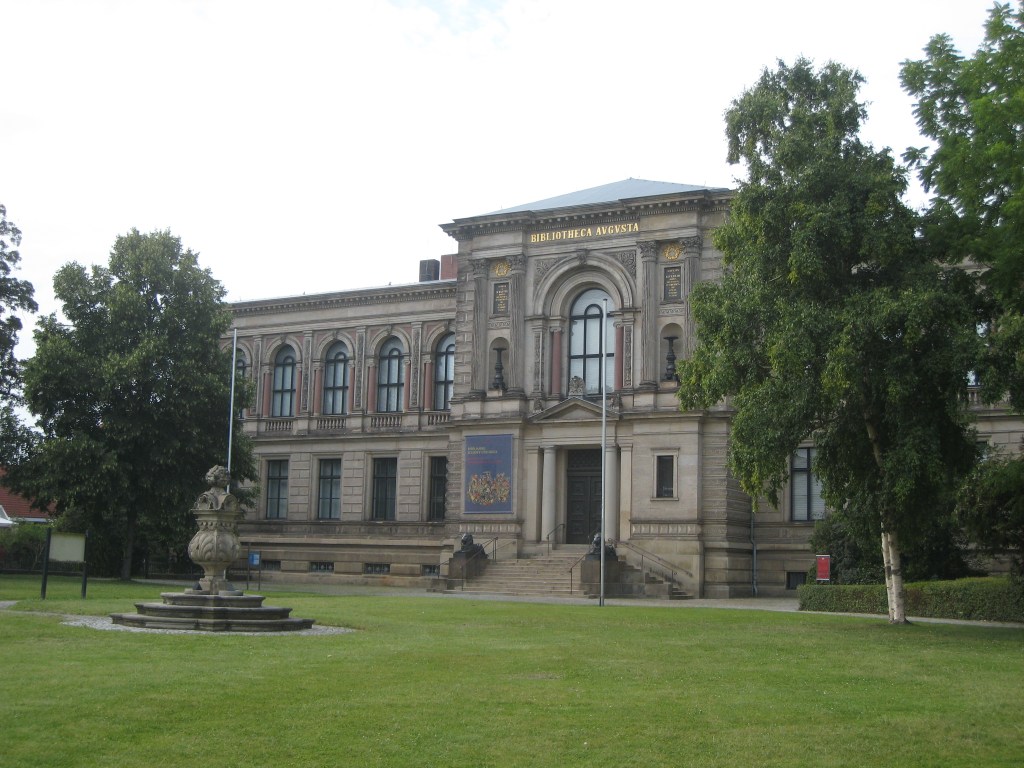
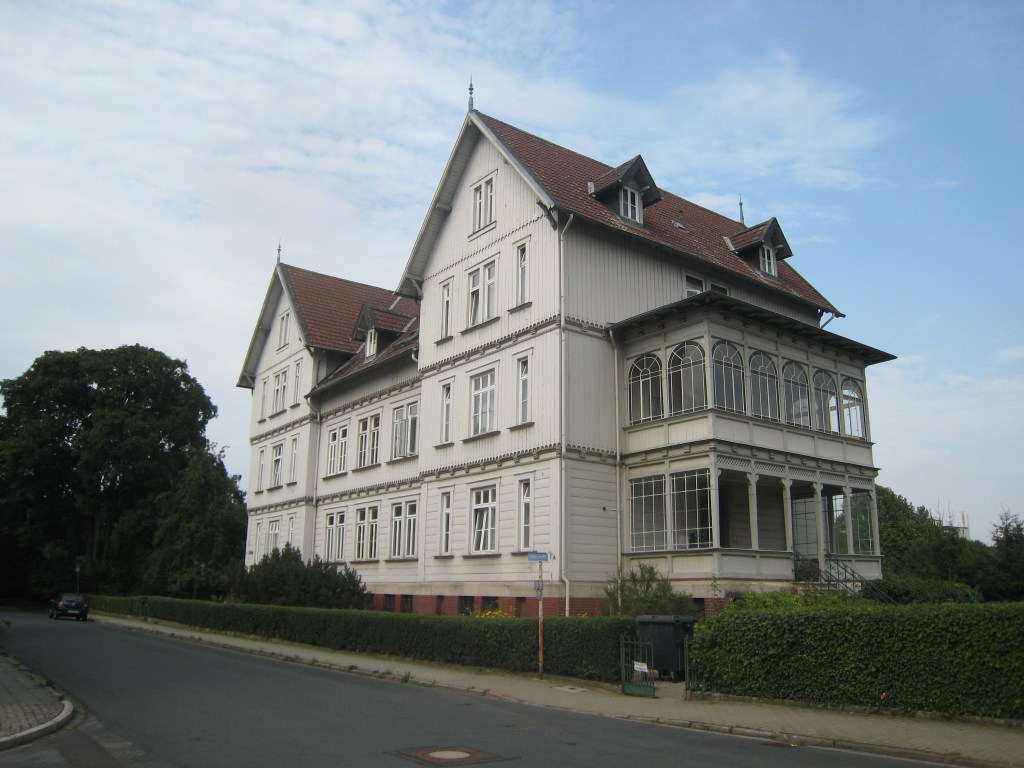
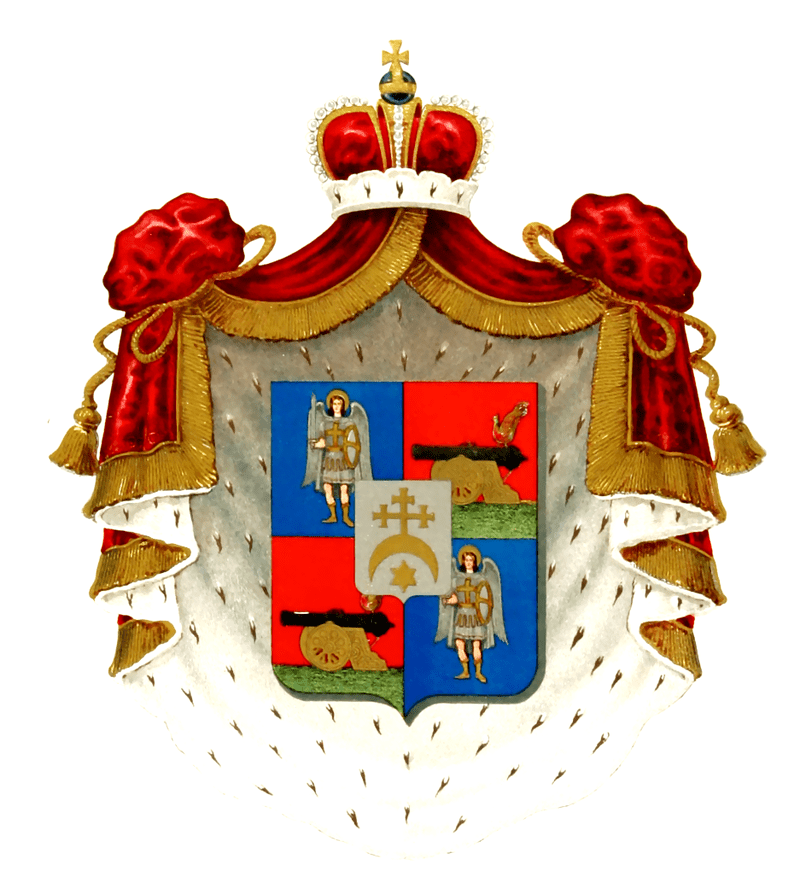
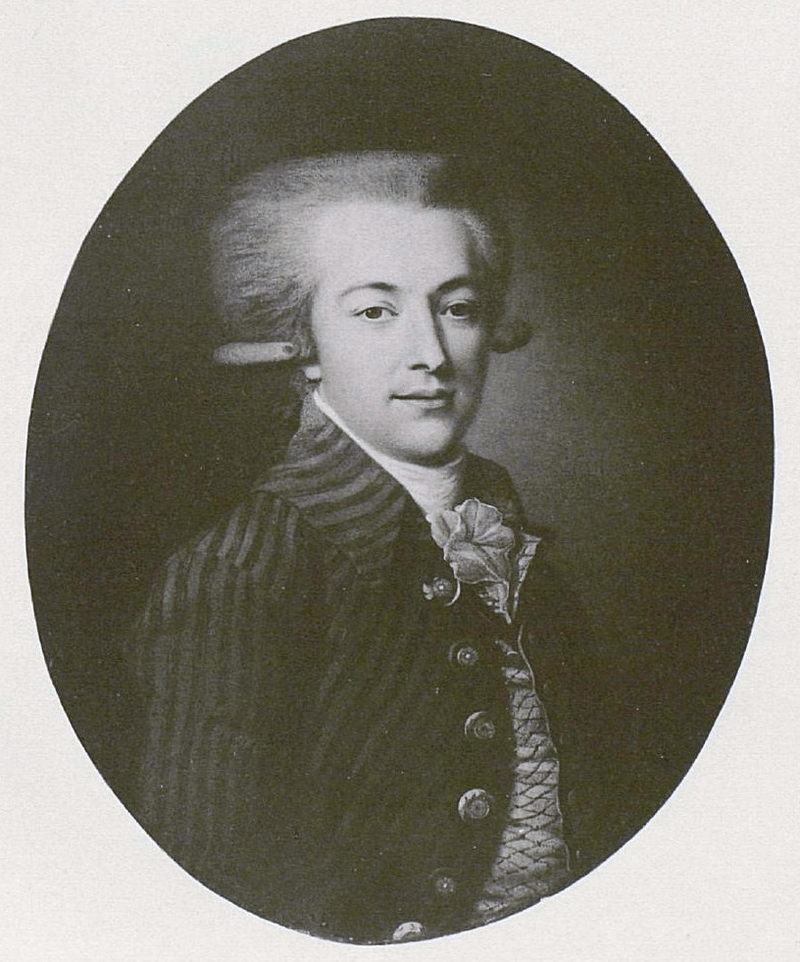
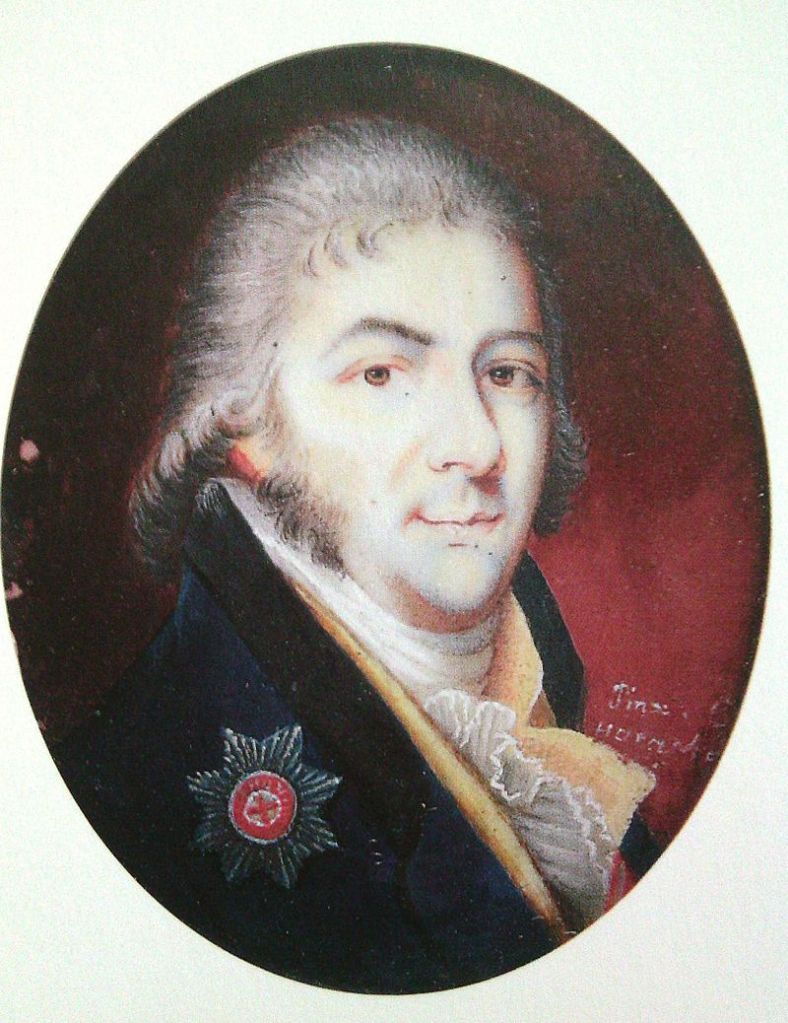
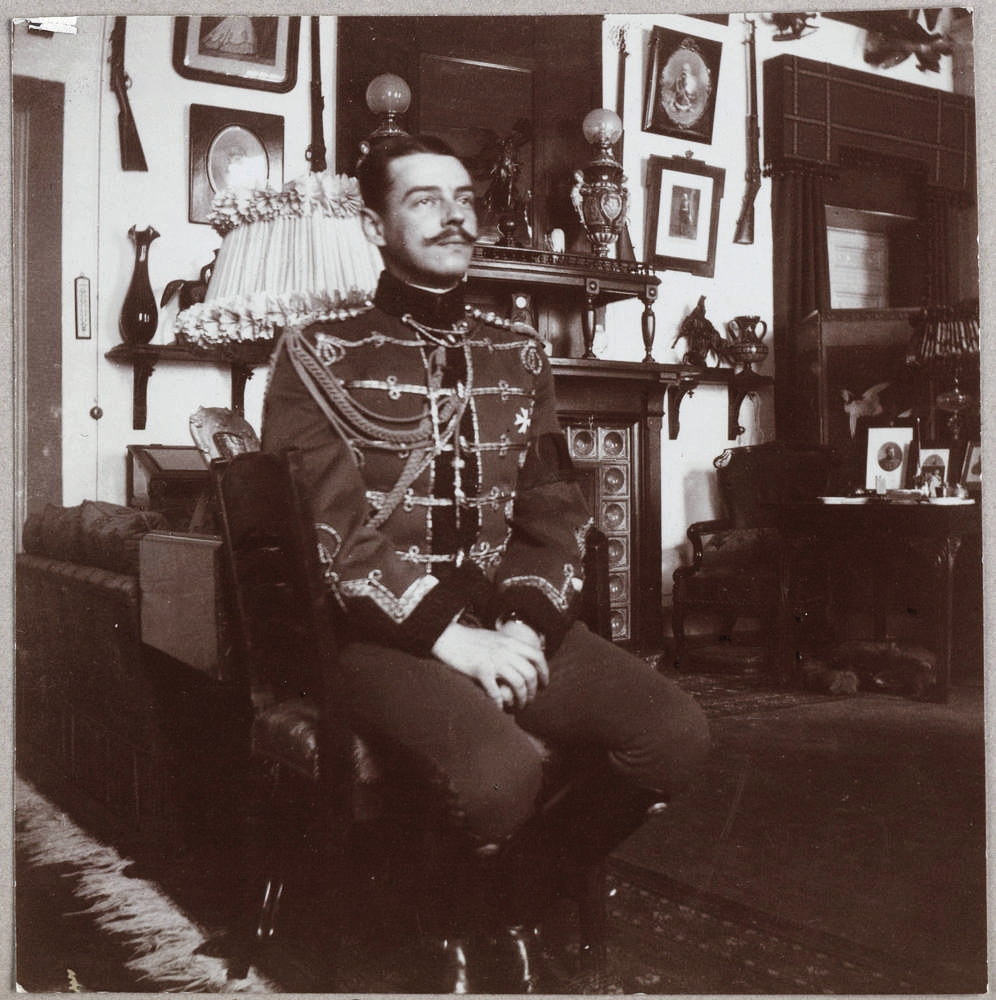
Dukes of Oldenburg and Schleswig-Holstein

The name Windsor was chosen to represent the royal family of the United Kingdom in 1917, taken, quite rightly, from the castle that had been at the centre of royal operations in England since the 11th century. But if we go back to an older way of giving names to royal dynasties, the name traditionally adheres to the male lineage, so when the current British monarch passes away, by this form of reckoning, the House of Saxe-Coburg will give way to the House of Oldenburg. “But I thought Prince Philip was Greek?” I hear you say. Greece was also once governed by the House of Oldenburg. And so is the current Kingdom of Denmark. And Norway. Oldenburgs once supplied monarchs to thrones of Russia and Sweden as well.

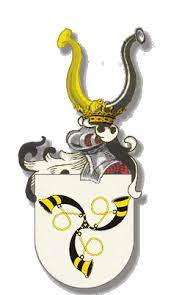
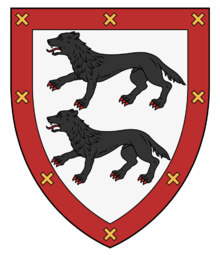
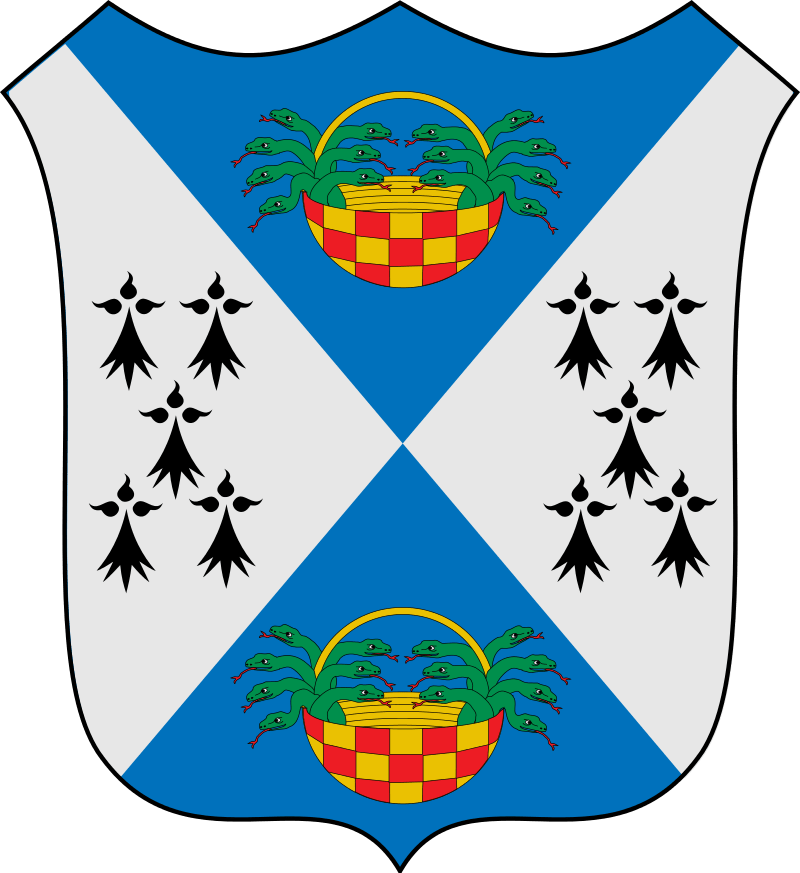
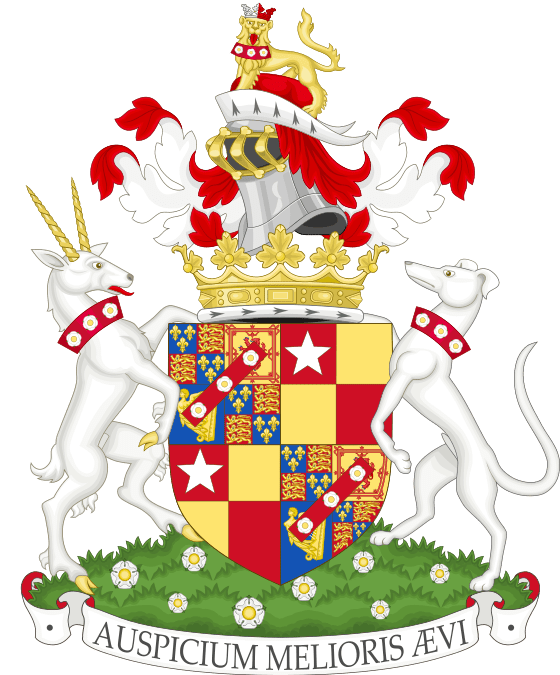
The Arms of the House of Oldenburg, Oldenburg Castle, Germany

If most royal dynasties take their names from the castle from which they originated, where is Oldenburg? This post will look at the origins and extremely successful spread of the House of Oldenburg, the future royal house for Great Britain. Connections will be made with the royal houses of Denmark, Greece, etc, but in keeping with the theme of this website, I will stick to dukes and princes, and look at the various castles and palaces built in the Grand Duchy of Oldenburg and the duchies of Schleswig and Holstein in the fascinating border region between Germany and Denmark. As people who enjoy their royal trivia love to tell you, the “real” surname of the Prince of Wales should be Schleswig-Holstein-Sonderburg-Glücksburg. That’s a mouthful.

In the late 11th century—the same time Windsor Castle was being built by the Normans in England—a Saxon count named Egilmar established himself at a strategic crossing of the river Hunte on the very flat north German plain to the west of the city of Bremen. Here he built a castle called Oldenburg. He married a noblewoman from the other side of the massive Elbe estuary, Dithmarschen, establishing a link between these two low-lying and rather marshy territories that would endure for centuries, and would continually entwine Denmark in north German politics. This is the same area from which the Angles and the Saxons emigrated across the North Sea to Britannia in the 5th century, so perhaps it is fitting that the Oldenburg name has finally arrived on these island shores.

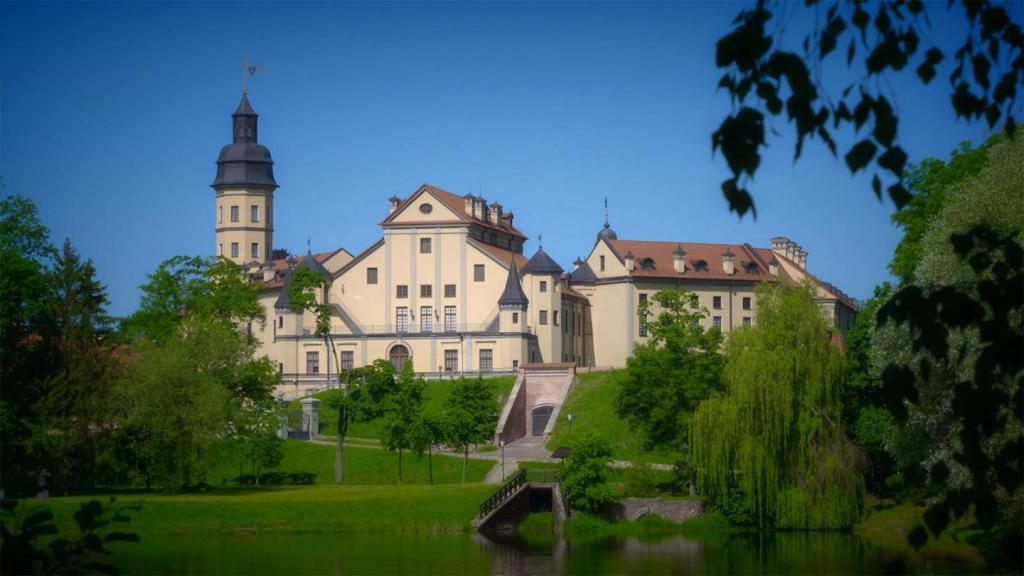
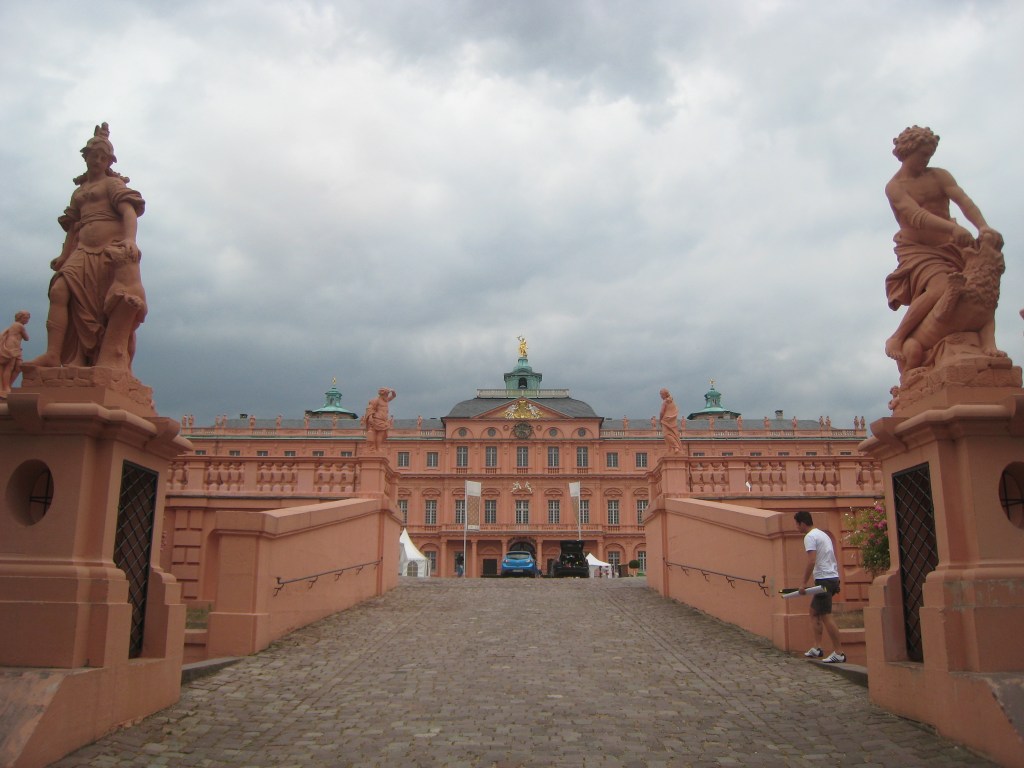
Oldenburg Castle was the seat of a long line of counts—often using the name Christian—who were subsidiary to the dukes of Saxony, then autonomous princes of the Holy Roman Empire until the extinction of the ruling line in 1667. The castle seen today in the city of Oldenburg was rebuilt in the Renaissance style in the early 17th century, and still dominates the centre of town with its bright yellow towers. After 1667, the county was ruled by Denmark and the castle became the seat of a Danish governor, until a junior branch was re-established as dukes (1776), then grand dukes (1815) of Oldenburg, and the Castle was restyled once more in a neoclassical style. Today it is a museum of art and culture, together with the nearby Prinzenpalais, built in the 1820s to become the official residence of the grand dukes, and the Elisabeth-Anna-Palais, the family’s residence from the 1890s until their abdication in 1918.

Oldenburg Castle

A few miles north of the city, the counts of Oldenburg maintained a close relationship with the abbey of Rastede, and following the Reformation, transformed its buildings into a hunting lodge, then a summer residence in the 1640s. The newly established dukes of Oldenburg of the 1780s refashioned this too along neoclassical lines, and added the then very fashionable English gardens. Schloss Rastede remains the residence of the ducal family today, and they also still own Eutin Castle, one of the most significant castles in Holstein, a former seat of the prince-bishops of Lübeck, transformed into the country residence of the grand dukes of Oldenburg in the 19th century, and acting as a point of contact with their Danish and Russian relatives.

Rastede Castle
Eutin Castle

The grand dukes of Oldenburg were never a hugely influential dynasty in 19th-century Germany. But they maintained a high profile as close relations of the royal families of Russia, Denmark and Sweden, and regularly provided consorts to these and other European monarchies. The first to make his mark as grand duke was Augustus, who ruled from 1829 to 1853, and endeavoured to turn this corner of Germany from a mere backwater ruled for a century by Danish governors into a centre for modern agriculture, trade and the arts—though like many of his peers, he resisted granting his state a constitution, still fearing the disorders of popular movements had had witnessed as a young man. Conservatives like him adhered to the older idea from the Enlightenment that an educated benevolent prince was the best way to bring peace and prosperity to the people. Grand Duke Augustus established an efficient if autocratic government and sponsored a theatre, an orchestra and a teaching college founded by his father (the future Oldenburg University).

Grand Duke August

This form of paternalism worked for a small population (about 800,000 people), and was continued by Augustus’ successor, Grand Duke Peter II (r. 1853-1900), but it was increasingly out of step with liberalisation movements spreading across Germany. Peter proposed a constitution for a North German Confederation in the 1860s which retained most of the power for the old ruling princes of the now quite defunct Holy Roman Empire, an idea which was quickly discounted. At home, he increasingly restricted the role of the local parliament, and despite carefully planned reforms from above, his state stagnated.

Grand Duke Peter II

The last reigning Grand Duke, Friedrich August, maintained this hereditary conservatism, but was also very popular, in particular due to his achievements in continuing to develop trade centres for Oldenburg, notably in its canals and ports along the Weser River. Closely associated by marriage to the Imperial family in Berlin, he tried to influence German politics during World War I with his ‘annexationist’ policies, advocating the expansion of the German Empire in Belgium and northern France. He abdicated with the rest of the German monarchs in November 1918. His son, Nikolaus, was head of the family from 1931 to 1970, retreated to a low profile for himself, tending to the family’s agricultural interests at Rastede, and to a more local, small-scale image for the dynasty (resuming the title ‘duke’ rather than ‘grand duke’ for example). Nikolaus’s son was given one of the very traditional dynastic names, Anton Günther, and he remained active in local forestry and agriculture in Holstein and Lower Saxony until his death in 2014, when the headship of the family passed to his son, Christian (b. 1955). One of his cousins, Eilike, brought the family back into the news of the fervent royal watchers in 1997 when she married Archduke Georg of Austria, Prince of Hungary, second son of the heir to the Austrian and Hungarian thrones, in St Stephen’s Basilica in Budapest—which, as it happens, was my one and only genuine moment of royal geekery since I travelled to Budapest to witness it.

I took many photos…but not this one. I wasn’t allowed inside as a mere peasant

It is royal marriages at the very top levels like this, that have continued to bring the House of Oldenburg to prominence, over and over. The most recent, you might say, being Prince Philip of Greece’s wedding to Princess Elizabeth of Great Britain in 1947, but it would certainly also include Philip’s cousin Sophia’s wedding to Juan Carlos of Spain in 1962.The original marriage that propelled the dynasty into the premier rank was that of Christian VII, Count of Oldenburg, to the Dowager Queen of Denmark, Norway and Sweden, Dorothea of Brandenburg, in 1449, as part of the agreement that would bring Christian onto the Danish throne.

Christian and Dorothea

The main reason for the council of the realm of Denmark to choose Christian for their next king after the death of King Christopher in 1448, was that he was the nephew and heir of Denmark’s most powerful feudal lord, Adolf, Duke of Schleswig and Count of Holstein. These two territories formed the important bridge—politically, economically, culturally—between the Kingdom of Denmark and the Holy Roman Empire (in fact, Schleswig was in one, and Holstein in the other), so the Danish elites wanted to keep them secure and more fully under Danish influence. They also wanted to try to preserve the union of the three Scandinavian kingdoms—Denmark, Norway, Sweden—which was indeed rebuilt once again by 1457 by King Christian. The royal house of Oldenburg would rule over Denmark and Norway (losing Sweden in the 1520s) until 1814, then Denmark alone, up to the present day. There was a glitch in the dynastic succession in the 1860s, when the senior line died out, and the throne passed to a junior branch, Glücksburg (about whom below), which is today headed by Queen Margarethe II. With her death, the family name might be said by purists to change to the House of Laborde de Monpezat, but in reality it will remain Oldenburg.

Jutland, Schleswig and Holstein

It is with the sons of King Christian I that begins the incredibly complex and convoluted story of the duchies of Schleswig and Holstein (the latter raised to the status of a duchy as well in 1474). I will only touch on some highlights here, or we’d be here all night, and will focus on the pathway that led to the emergence of the branch of Glücksburg as the leading branch of the family by the mid-nineteenth century.

Schleswig takes its name from a town on the Schlei, an inlet of the Baltic Sea, plus the Danish vik or ‘bay’. It was a southern stronghold of Viking and Danish kings, but became a ‘march’ or frontier of the Empire in the early 10th century and was gradually colonised by Germans, mostly Saxons from the county of Holstein—which was itself established as a stronghold against Slavs on the Baltic coast, with a new bishopric set up at Lübeck to Christianise them. The Eider River was the boundary between Schleswig and Holstein, and by the 1230s the former was firmly Danish territory, and was created a duchy to be given as an apanage to younger sons of the royal house. Holstein, taking its name from a local tribe of ‘wood dwellers’ (Holcetae), was ruled by a line of independent counts from about 1100 from the House of Schauenburg (later spelled Schaumburg), originally from Westphalia. As with most German dynasties, they soon split their patrimony into the sub-fiefs of Itzehoe, Plön, Pinneburg, Rendsburg. The latter of these rose to prominence in the 14th century as regents or rulers of Schleswig, and even at times dominating the affairs of Denmark itself. From 1375, Schleswig and Holstein were ruled together—though one still a fief of Denmark, and the other a fief of the Empire—until they passed together in 1460 to the House of Oldenburg. All of the other branches of the House of Holstein had died out by then, with the exception of Pinneburg (with territory just outside Hamburg), which continued for another two centuries, though with little influence.

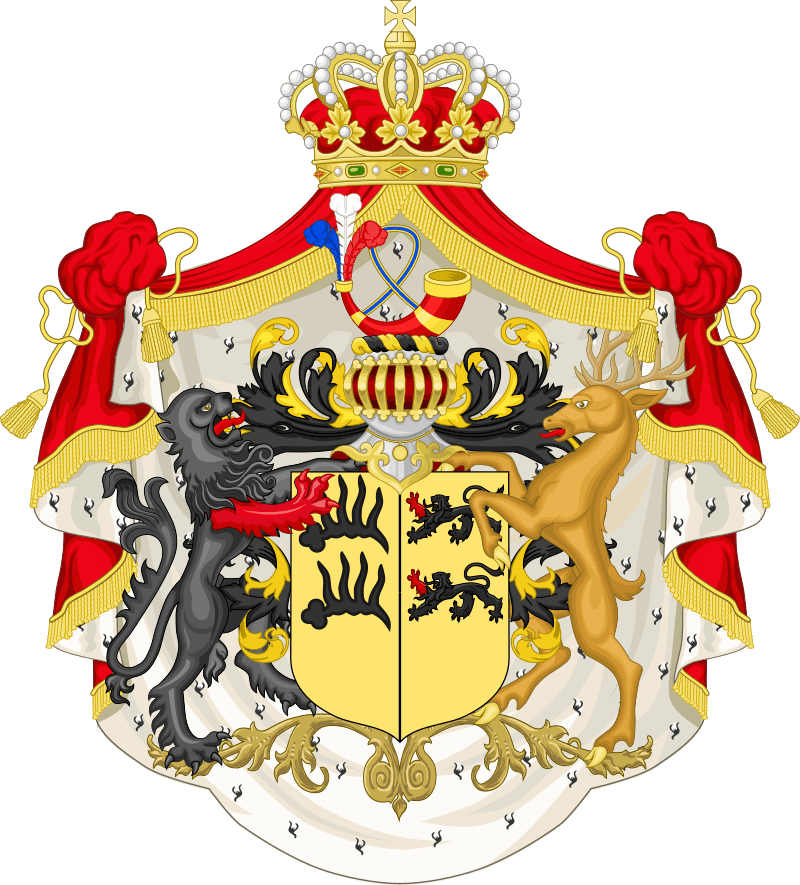
The coats of arms of these two territories are distinctive: Schleswig bears the two blue lions on gold, while Holstein is represented by a stylised nettle leaf, fairly unique in the world of heraldry.

A simple form of the arms of the dukes of Schleswig-Holstein, which also includes Oldenburg overall

Two important laws had been passed in these centuries of strife—both of which would come back to haunt Dano-German diplomacy in the nineteenth century: in 1325, the ‘Constitutio Valdemariana’ stipulated that the thrones of Schleswig and Denmark should never be held by the same person; and in 1460, the Treaty of Ribe ordered that Schleswig and Holstein must always be united. King Christian I of Oldenburg violated the first of these by uniting them all together under his personal rule. His sons ruled them jointly, and it wasn’t until 1544 that a formal separation of sorts was made, and a younger son of King Fredrick I, Adolf, was named duke of Schleswig and Holstein with his base at Gottorp.

Adolf, 1st Duke of Holstein-Gottorp

Even after this date, legally the duchies remained indivisibly ruled, as a ‘condominium’ between the kings of Denmark and the cadet branches, who all bore the title ‘duke of Schleswig and Holstein’. By the 17th century, the two co-ruling branches were therefore known as duke of Schleswig-Holstein in Gottorp, and the duke of Schleswig-Holstein in Glückstadt (for the Danish Crown), the latter being a new town and harbour founded on the Elbe (in southernmost Holstein) by the Danish kings in an attempt to compete with the trade juggernaut of the independent City of Hamburg, a few miles upstream.

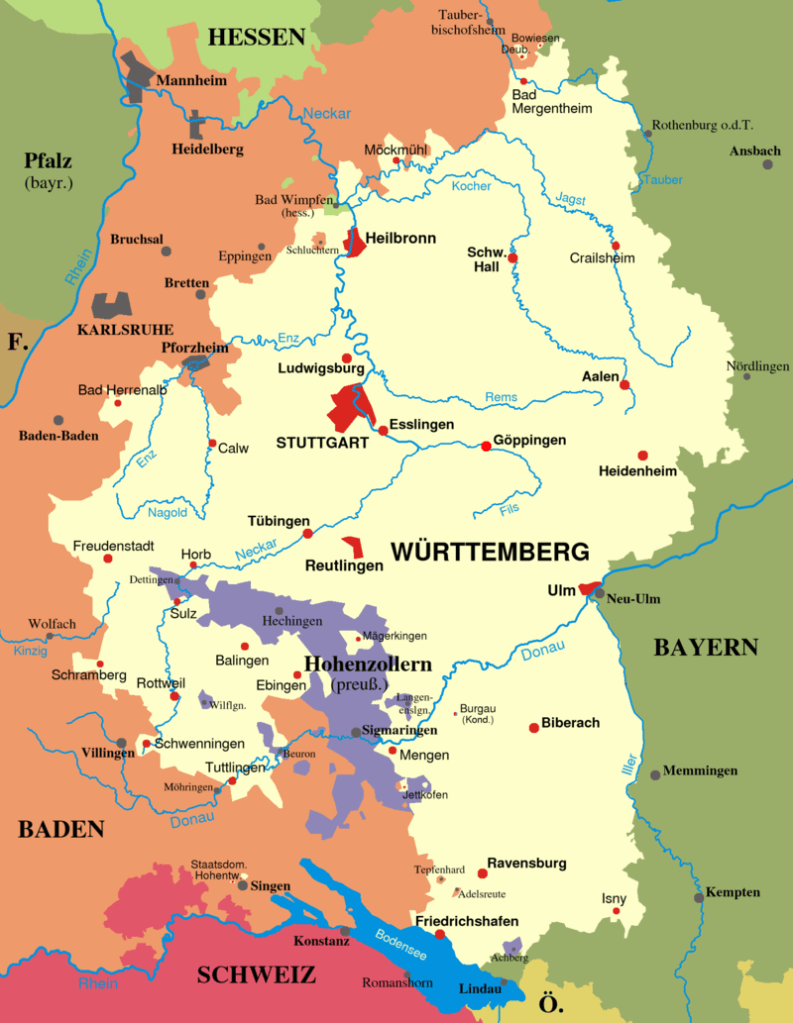
the amazingly complex map of Schleswig and Holstein, with lands ruled by the Danish Crown in yellow,
by the dukes in orange, ruled jointly in lighter orange, and lands given to the Sonderburg line in pink
(the other colours are for two independent counties and the bishopric of Lubeck)

The branch of Holstein-Gottorp took over the old capital of Holstein, with its island stronghold built in the 12th century, the Castle of Gottorp (Gottorf in German). It was rebuilt as a princely residence in the mid-16th century, and rebuilt again in its current form in about 1700 by the famous Swedish architect Nicodemus Tessin the Younger.

Schloss Gottorf

But Duke Friedrich IV, having married the King of Sweden’s sister, supported Sweden against Denmark in the Great Northern War, and the castle was taken away from them by the treaty that ended the war in 1720, along with a large chunk of Holstein and their portion of Schleswig (which was therefore now fully reunited under the Danish Crown). Gottorp Castle became a barracks for the next three centuries, and is now part of the state museum system for Schleswig-Holstein. The ducal family moved to their secondary residence, the Castle of Kiel, an old fortress that had often been used as a dowager residence for its widows. In the 19th century, Kiel Castle would become the seat of the Holstein government, then residence of its Prussian governors. As a major centre for German naval power, the town of Kiel and its castle were almost completely destroyed in the Second World War.

Feeling they needed to bolster their family’s power with foreign marriages, the duke of Holstein-Gottorp who had lost much of his patrimony, Karl Friedrich, married Anna Petrovna, the daughter of Peter the Great. His first cousin and heir, Karl August, was set to marry the other daughter, Elizabeth, but he died. Both had ambitions to succeed their maternal uncle on the throne of Sweden, which ultimately Karl August’s younger brother, Adolph Friedrich, did, in 1751. By this point, Anna Petrovna’s son, Karl Peter, was established in St. Petersburg as the future Tsar of Russia, having been brought there by Elizabeth Petrovna, now Empress, as a teenager and married off to his cousin, the daughter of yet another Holsteiner, Johanna Elisabeth, Princess of Anhalt-Zerbst. This bride would of course become Catherine the Great, and Peter III and Catherine’s story is well known. Through them the House of Oldenburg would rule Russia—though under the name Romanov—until the Revolution of 1917. Meanwhile, the King of Sweden had sons and the House of Oldenburg would rule in Stockholm—under the name Vasa—until they were replaced in 1818 by the Bernadottes who reign today.

Peter III, Tsar of Russia, Duke of Holstein-Gottorp

Back in Denmark, the idea of a conjoined Russia-Gottorp throne was pretty uncomfortable. So in 1773, a family pact was made, whereby Denmark and Russia exchanged the remaining Holstein lands that remained outside of Crown control for the old County of Oldenburg. Russia then ceded Oldenburg to a junior Holstein cousin, and the new house of Oldenburg, as detailed above, was born. Russia got a firm ally in Denmark out of the deal—to help control its chief rival in the Baltic, Sweden—and Denmark finally got a unified rule over the duchies of Schleswig and Holstein. Everybody is happy.

After the destruction of the Holy Roman Empire in 1806, Holstein joined the Germanic Confederation in 1815, and its ruler, the King of Denmark was happy to interfere in German politics. That old law about forever keeping Schleswig and Holstein, however, reared its head when people in southern Schleswig, mostly Germans, wanted closer ties to Germany, while people in northern Schleswig, mostly Danes, wanted out. A solution was found, some thought, in resurrecting an independent state within the Confederation under the rulership of the next prince in line from the House of Oldenburg who was not the Danish king: the Duke of Schleswig-Holstein-Sonderburg-Augustenburg.

So wait, there’s yet another line of Schleswig-Holstein dukes? I thought you said the Holstein-Gottorp division that ended in 1773 was the last? Sadly not, dear reader. However, the junior branches of the House of Oldenburg-Denmark that were formed after that initial split of 1544, were of a slightly different kind. They did not rule in condominium with the Danish Crown like Gottorp did, but as ‘partitioned lords’ (Abgeteite Herren). This meant that while they gained a certain portion of revenues from the duchies of Schleswig and Holstein, and were granted residences from which they took their names, they did not share in the Crown’s sovereignty over Schleswig, they did not have an independent seat in the Imperial Reichstag for Holstein, and they couldn’t mint their own coins or raise their own armies. These various junior lines—and there were many—all descend from Prince Hans, the younger brother of King Frederick II of Denmark-Norway.

Prince Hans

In 1564, Hans was given the castle of Sønderborg, in Schleswig, which is today one of the southernmost parts of Denmark, on an island just offshore of the east coast of Jutland. It was a fortress built by the king of Denmark in the 1150s, expanded in the 14th century, and now converted into a princely residence in the 1570s. A notable addition at this time was the ducal chapel, which is considered one of the best preserved Lutheran castle chapels. A later duke, Christian Adolf I, went bankrupt in 1667 and sold this castle to the Danish Crown, and moved his family to his wife’s patrimony at Franzhagen, until this line died out in 1709. Sønderborg castle was remodelled in the 1720s, and was once again given to the cadet branches (in 1764), but it was never again used as a ducal residence, but as barracks or a warehouse. It was sold to the Danish State in the 1920s and is today the museum for regional history about the Duchy of Schleswig.

Sønderborg Castle
Sønderborg Castle Chapel–note dynastic family tree on right

The heirs of this first branch were the next branch down, the dukes of Augustenburg. This branch was founded in the early 17th century, and eventually took its name from a new castle built in the 1660s on a fjord on Als island (not far to the east from Sonderburg), and named for the wife of the first duke of this line, his cousin Augusta of Schleswig-Holstein-Glücksburg. Many of these junior branches continued to interlock the family through endogamous marriages, or they mingled with the local Danish and north German nobility, and they earned their living by serving in foreign armies. The castle of Augustenburg was replaced in the 1770s, with the attractive building of today with its yellow walls and blue tiled roof.

Augustenborg Castle

By the mid-18th century, the duke of Schleswig-Holstein-Sonderburg-Augustenburg was the senior cadet prince of the House of Oldenburg, and began to aim higher socially and politically. In 1786, Duke Frederick Christian II married the daughter of the Danish king, a potential heiress, since the Danish kingdom had no laws against female succession (though Holstein, as a German state, did). His younger brother, Christian August, was invited by the Swedish people to become their Crown Prince in 1809, but he died a year later before he could succeed to the throne. By the 1840s, as it became clear that King Frederick VII of Denmark would be childless, Duke Christian August II put forward claims, as senior male heir and son of a Danish princess. His sister, Caroline Amalie, was also the Queen of Denmark. He seemed the perfect candidate. But his marriage to a woman of non-princely rank (though interestingly, still endogamous, since she was from one of the illegitimate lines of the House of Denmark, Danneskjold-Samsø) made him unsuitable. Nevertheless, pressed by German nationalists in 1848, the Duke set up a government in Kiel of an independent Schleswig-Holstein and sparked the first of the Schleswig Wars between Denmark and the German Confederation, a temporary victory for Denmark, supported by the Russian Tsar, as nominally head of the Holstein-Gottorp branch and guarantor of Danish supremacy in the region.

Duke Christian August of Augustenburg

The Duke’s son, Frederick, pressed the family’s claims again after the death of Frederick VII of Denmark in 1863, and sparked the second Schleswig War, in which Prussia and Austria forced Denmark to give up its claims to both Schleswig and Holstein. Great Britain was involved, as a guarantor of the earlier peace settlement, and the issue became familial as well as political in the years following the war when Queen Victoria’s daughter Princess Helena married the Duke’s younger brother, Prince Christian, who relocated to London. A few years before, the daughter of the rival (and successful) claimant to the Danish throne, Princess Alexandra of Glücksburg, had married the Prince of Wales, and for the rest of her life, Alexandra is said to have passionately resented Prussia for having invaded and humiliated her Danish homeland. It would be interesting to investigate the relationship between Christian and Alexandra…

Christian and Helena

The defeated family of the Duke of Augustenburg was vanquished and moved to estates they owned in Silesia (Primkenau Castle, now Przemków in Poland). The castle of Augustenborg (the Danish spelling) was abandoned to the Danish Crown, then sold to the state in the 1920s, and is now a psychiatric hospital. The family built a new palace at Primkenau in the 1890s, but this burned down in 1945, and nothing remains.

the two castles at Primkenau

The family did retain a residence in Denmark, Gråsten Castle, originally a 16th-century hunting lodge, not far from Sønderborg, which was also sold to Denmark in the 1920s, and became one of the favoured summer residences of the Danish royal family in the 20th century, and still today.

Gråsten (Gravenstein) Castle

The son of Princess Helena of Great Britain (aka ‘Princess Christian’), named Albert (of course), became the last titular duke of this line, and with his death in 1931, the line of Augustenburg came to an end, leaving their claims to the duchies of Schleswig and Holstein to the Duke of Glücksburg.

This finally brings us to the line of Glücksburg. There had been several other branches in the 17th and 18th centuries, notably the dukes of Plön with their fantastic castle on a hill overlooking a lake (in Holstein, halfway between Kiel and Lübeck), famous for its library and gardens. These dukes had run into some problems, by becoming Catholic and joining the service of the Emperor in Vienna, and when their line died out in 1761, the Danish king was happy to take over their lands and made their palace one of his favoured summer residences. After the 1860s, once Holstein was lost to Denmark, it became a Prussian military academy, and Plön Castle has remained a prestigious private academy ever since.

Plön Castle

The most junior branch was given no significant estates at all in Schleswig or Holstein, and took their title, Beck, from an estate they purchased in 1605 far to the south in Westphalia, near Minden (fairly close to their kinsmen’s County of Oldenburg). There they built Haus Beck in the 1640s, which they sold in the 1740s. As a princely line quite remote from any chance of a royal throne, this branch ranged widely across Europe, in service of other monarchs, as can be seen in their quite cosmopolitan marriages, from East Prussian Dohnas, a Piedmontese contessa, a Russian Prince Bariatinsky, and the Duke of Silva-Tarouca, the Portuguese-born advisor and minister of Empress Maria Theresa of Austria. Things began to change with the 1810 marriage of Duke Friedrich Wilhelm to Louise of Hesse-Kassel, a grand-daughter and potential heiress of King Frederick V of Denmark. Although a German prince, her father served as a Danish Field Marshal and governor of the duchies of Schleswig and Holstein, so the Duke and Duchess of Beck became quite close to the Danish court.

As a mark of favour, in 1825, Louise’s cousin, King Frederick VI, granted the couple the Castle of Glücksburg, which had been the seat of an earlier Schleswig-Holstein-Sonderburg branch that died out in 1779 (but whose widow had been allowed to remain in situ until her death in 1824). The castle, known as Lyksborg in Danish, is today one of the northernmost points in Germany, on an island in the Flensburg Fjord. It was built in the 1580s on the site of a former monastery, Rüde Abbey, which was dismantled in the Reformation and the bricks re-used for the new ducal residence. Much of the Renaissance decoration on the exterior was removed in the more sober 19th century, and it is one of the few castles named in this posting that remains the property of the family.

The link between the Danish royal family and the dukes of Glücksburg was strengthened with the marriage in 1838 of Duke Charles with Princess Wilhelmina, daughter of Frederick VI, and former wife of Frederick VII (I know, this is confusing), and a few years later by his younger brother, Christian, with another Hesse-Kassel princess with a Danish mother. Although Prince Christian was the fourth of seven sons, he had been the godson and namesake of King Christian VIII, and raised at the Danish court as a surrogate royal prince. When the thorny question of the Schleswig-Holstein succession came up in 1848, he was chosen to succeed the childless Frederick VII, as someone with succession rights to both Denmark and the contested duchies, and was given the title ‘Prince of Denmark’ in 1852, in a treaty agreed to by all the major powers of Europe. His family moved into the elegant Yellow Palace in Copenhagen (where the future Queen Alexandra of Great Britain was born), and he succeeded to the Danish throne in 1863, and moved into the Amalienborg Palace.

The Yellow Palace, Copenhagen

That very same year (in fact earlier), Christian’s second son, William, was selected to become second monarch of the newly independent Greek Kingdom (taking the name Georgios). Alexandra had also married the Prince of Wales in 1863, and her sisters would also marry heirs: to the Russian throne and the defunct Hanoverian throne. Their descendants spread out across all the thrones of Europe, giving Christian IX the nickname ‘Grandfather of Europe’.

Christian IX with his vast extended family, by Laurits Tuxin (Amalienborg Museum), circa 1883. The Prince and Princess of Wales are on the left, the Tsar and Tsarina are in the centre, and the King of Greece is in the back right, with the red collar

In addition to Denmark and Greece, a further throne was added in 1905 with the selection of Prince Carl to become king of a newly independent Norway (as Haakon VII). The Greek princes retained their position as potential heirs to the Danish throne, hence the full title of Prince Philip, Duke of Edinburgh, when he was born in 1921 at the Villa of Mon Repos in Corfu, as ‘Prince of Greece and Denmark’.

Mon Repos, Corfu

A year later, in the face of a defeat in the Greco-Turkish war, King Constantine I was forced to abdicate and much of the family, including Philip’s father Andrew, fled the country. The Greek monarchy would be removed and restored numerous times over the succeeding decades, and was finally sent away permanently in 1974. The last king, Constantine II, may have wished to solidify his ties with Denmark by marrying Frederick IX’s second daughter, Anne Marie (royal purists may in fact suggest that, as Queen Margarethe II married a non-royal person, Anne-Marie and her ‘double-Oldenburg’ offspring should succeed to the Danish throne, but no one would take them seriously). Oldenburg rule in Norway continues today with King Harald V and his very popular son, Prince Haakon Magnus. As an interesting aside, there was a potential for an Oldenburg takeover of the British throne much earlier, if Queen Anne and her husband, Prince George (Jørgen in Danish), son of King Frederick III of Denmark, had generated a dynasty. As is now well known thanks to the movie The Favourite, all of Anne’s seventeen pregnancies resulted in stillborns or infant deaths, with the single son, William, living to the age of 11. There is therefore a tiny piece of the House of Oldenburg in Virginia, through the namesake of Duke of Gloucester Street, the main thoroughfare in Colonial Williamsburg.

Prince William, Duke of Gloucester

In the 21st century, none of these royals in Denmark, Greece and Norway (not to mention Spain, as still presided over by matriarch Queen Sophia, sister of Constantine), the Duke of Edinburgh or the Prince of Wales, are technically the head of the family. Nor is it the Grand Duke of Oldenburg. The House of Oldenburg, or the House of Glücksburg, is ‘officially’ led by Prince Christophe, Duke of Schleswig-Holstein (b. 1949), who, together with his wife, from the Westphalian princely family of Lippe, heads the family foundation that runs the museum at Glücksburg Castle, as well as extensive landholdings in the region, based from his residence Gut Grünholz, an 18th-century manorhouse bought from the von Moltke family in the 19th century, east of the town of Schleswig.

Grünholz Manor
Duke Christophe and Duchess Elisabeth, at Glücksburg

Unlike many German princely families following the collapse of the German Empire in 1918, the Glücksburgs maintained a fairly low profile for the succeeding generations, marrying well (so far, always with equal marriages by traditional German royal standards). Christophe’s grandfather, Duke Friedrich, head of the entire Schleswig-Holstein family after the extinction of the Augustenburg line, is interesting to note, however, in the context of the life of Prince Philip, in that he was a follower of Kurt Hahn, founder of Salem School, which transferred (along with Philip) to Gordonstoun in Scotland in 1934. After the war, Friedrich founded his own school along similar lines at one of his estates, Louisenlund, today one of the poshest private schools in Germany, located on the banks of the Schlei, nicely taking us back to the dynasty’s earliest origins.

Louisenlund

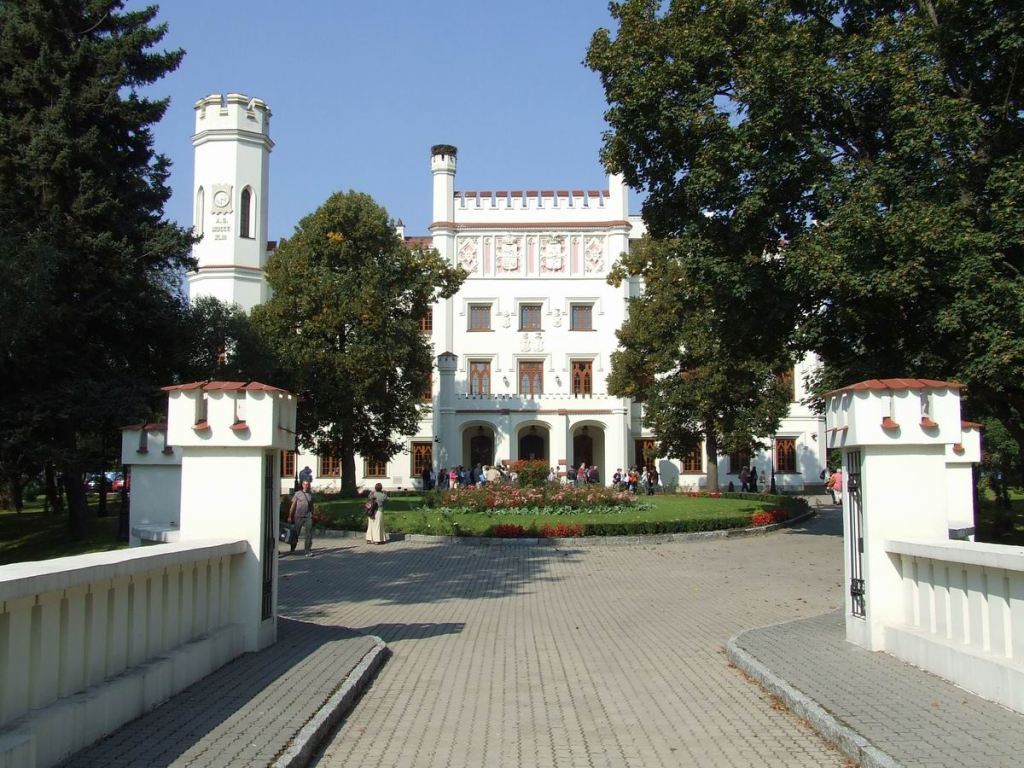
Castles visited in this blog: Oldenburg and Rastede in Lower Saxony; Gottorp, Kiel, Plön, Glücksburg and others in Schleswig-Holstein; and Sønderborg and Augustenborg in Denmark (since the 1920 referendum dividing Slesvig/Schleswig).

(images taken mostly from Wikimedia Commons)

Here’s a handy table, especially to help with the messy Danish succession in the 1860s (from Wikimedia Commons)

Dukes of Marlborough

If you want to see how many dukes and princes are in the ancestry of the second in line to the throne of Great Britain, it is useful to look at both sides of the family: not just the royal ancestors of Prince William’s father the Prince of Wales, but also the lineage of his mother, born Lady Diana Spencer. While one of her great-grandfathers was the Duke of Abercorn (see my post on the Hamilton family), her paternal ancestors, the Spencers, were earls, a few rungs down from dukes and princes; but if you jump over to the senior branch of the family, the Spencers were dukes of Marlborough and today go by the double-barrelled surname Spencer-Churchill. They acquired the Churchill name and title in 1733 as descendants and heirs of John Churchill, one of the greatest generals in British history. Some sources claim they also inherited a princely title, that of Mindelheim in Bavaria, and although that is not correct, the legacy does remain, in that the current Duke of Marlborough still uses an Imperial double-headed eagle in his coat-of-arms, topped with a princely coronet of the Holy Roman Empire. So in this way, the Spencers are dukes and princes.

coat of arms of the Dukes of Marlborough

It is therefore somewhat ironic that compared to most of the ducal families in Great Britain, neither the Spencers nor the Churchills have an ancient pedigree. Both were relatively new families when they received their titles, the Spencers rising to wealth and power as part of the new Tudor aristocracy in the sixteenth century, and the Churchills not till the following century. There’s an often repeated anecdote from the 1620s, whereby the snobbish Earl of Arundel, with an ancient Howard pedigree, teased Lord Spencer for boasting about his ancestors’ great achievements: “My Lord, when these things you speak of were doing, your ancestors were keeping sheep.” Spencer instantly replied, “when my ancestors (as you say) were keeping sheep, yours were plotting treason.” Both families, Spencers and Churchills, therefore felt the need to embellish their ancestry, especially in the Victorian era, when such ‘imagined histories’ were all the rage.

A number of beautifully illustrated nineteenth-century family histories therefore invented interesting progenitors for the Spencers and the Churchills. Especially so for the latter, said to be descended from somebody called Gitto de Leon, an exiled heir to the Duchy of Aquitaine (or maybe the Kingdom of León?) who took refuge at the court of the Duke of Normandy, then accompanied him (or perhaps his son did) on his conquest of England in 1066. He either came from a town in Normandy called Courcil, or was given lands in Somerset called Courcil or Curcelle, which later corrupted into the Anglo-Saxon Church Hill. Other stories give the original rise of the family from the fortuitous marriage of Roger Churchill, a blacksmith in Catherston, a village in western Dorset, to the daughter of the local landlord of Bradford Peverell in the middle of the 16th century. But they remained tenant farmers in Dorset. The real start of the family’s rise comes a few generations later when John Churchill established himself as a prominent lawyer in London, then returned to the West Country to marry Sarah Winston, of Gloucestershire, in 1618, and rented a sizeable manor house in Dorset, Minterne House.

Minterne House in Dorset

Subsequent generations were born in this house, and adopted the name Winston. The first Winston Churchill was a fervent royalist during the Civil War, an MP from Dorset, an officer in the household of Charles II, and, like his distant descendant and namesake, a passionate lover of history: he wrote a history of English kings and was a fellow of the Royal Society. He even married a descendant of the famous Elizabethan sea captain Sir Francis Drake. But his wife’s more important relative was the Duke of Buckingham, a royal favourite, and this connection opened doors for the family that led to their spectacular rise to the top of the court hierarchy by the end of the century.

Winston Churchill

In a similar manner, the Spencers claimed to be descended from the powerful medieval Despencer family, and even adopted a modified version of their coat-of-arms, with its distinctive golden ‘fret’. The Le Despencer family were major landowners in the 13th century who enjoyed unparalleled royal favour, especially Hugh the Younger, the favourite of King Edward II, executed by the jealous barons in 1326. The rest of the Despencer clan were gone by the 1420s and the first historical Spencer does not appear in the records until 1470—so a link is of course possible, but unproven. This was Henry Spencer who owned the estate of Badby in Northamptonshire, and this county in the heart of England would remain the Spencer headquarters for the next five centuries.

Henry Spencer’s son John raised livestock—here is where the sheep come in—which was a very profitable venture, with wool being shipped across the North Sea to the great burgeoning weaving cities of Flanders and Holland. With this money he was able to purchase the nearby estate of Althorp and one further to the west, Wormleighton, in Warwickshire, around 1510, and by the time of his death had established a family burial spot in Great Brington and rebuilt the manor house in nearby Althorp.

Althorp in the early 19th century, with sheep

Althorp, about 6 miles outside the county town of Northampton, gradually became the family seat, more so after extensive damage to Wormleighton during the Civil War, and was enlarged in the 1680s, and again a century later, when it was transformed into a more fashionable neoclassical style. By the mid-18th century it had become a major social setting for the Spencer political set, and a place of display for the family’s great collections of art and books—the library was one of the largest of its day and today forms one of the cores of the Rylands Library of the University of Manchester. One of the other great treasures of the inside of the house was its grand oak staircase. The gardens were also redesigned in the 18th century, by notable designers like Henry Holland, and remain mostly intact, with the well-known addition in 1997 of the Diana Memorial on an island in an oval lake.

Althorp House interior

Much of these estates had been developed in the early 17th century by Robert Spencer, reputed to be the richest man in England—thanks to all those sheep—and raised to the peerage in 1603 as Baron Spencer of Wormleighton. His sons were active royalists during the Civil War, and his grandson Henry was rewarded for service at the Battle of Edgehill (and for his requisite financial ‘contribution’ to the Crown treasury) with the earldom of Sunderland in 1643. Like so many earldoms in England created in this period, the family had no links to the actual town of Sunderland in the far northeast, near Newcastle. The second Earl of Sunderland led a prominent if a bit unruly political life as an ambassador then secretary of state for Charles II, then a key advisor to James II until they fell out and he fled abroad—returning in the 1690s to become again a key advisor to William III and one of the founders of the Whig Party (with four other lords known as the ‘Whig Junto’ in the reigns of William and then Queen Anne).

Robert Spencer, 2nd Earl of Sunderland, in Classical dress

One of the key factors of politics in the 18th century was the importance of family alliances, and the Spencers would remain a cornerstone of the Whig aristocracy, alongside families related by marriage, the Cavendishes and Russells. Charles, the 3rd Earl of Sunderland, took over this role when his father died in 1702. After a brief marriage to a Cavendish, he married in 1699 the daughter of another prominent member of the inner circle of the court, John Churchill.

John Churchill, 1st Duke of Marlborough, as commander of the British Forces

The son of Sir Winston Churchill and Elizabeth Drake, John Churchill became one of the greatest supporters of James, Duke of York, later King James II, and leader of his troops, until the fateful moment in November 1688 when he abandoned the King in favour of the invading William of Orange. The entire family had benefitted at first through the relationship of John’s sister, Arabella, with the Duke of York in the 1660s. Arabella became mother to four of James’s illegitimate children (called the FitzJameses), and though the Duke’s patronage, John and his younger brothers all benefitted, with positions in the household and in the army. Brothers John, George and Charles all became close to the new husband of James’s daughter, Princess Anne, and when Anne became Queen in 1702, their rise was further solidified, all three becoming leading military figures in the War of Spanish Succession. It helped too that John’s wife, Sarah Jennings was particularly close with Anne—and the story of their tumultuous relationship has become quite famous now through the film The Favourite. John had been raised to the peerage as Earl of Marlborough in 1689 by a grateful King William, and he was now raised further to a dukedom in 1702. Anne also created him Captain-General of the British Army, and he would lead the Allied Forces in Europe to great victories in the war against France, with famous victories at Blenheim, Ramillies and Malplaquet. His wife was at the same time appointed Mistress of the Robes and head of the Queen’s Household. When Sarah fell from power, then so too did John, and he was removed from command just as he was on the verge of defeating France in 1711.

Sarah Churchill, Duchess of Marlborough

John and Sarah retired to a building site known as Blenheim Palace, a few miles north of Oxford, an estate (and funds) given by Queen Anne as a gift from the nation after the Battle of Blenheim in 1704. Blenheim was built at Woodstock, a village that would provide a parliamentary seat for various Churchills and Spencers for the next two centuries, and designated as a ‘palace’, the only non-royal, non-episcopal residence in England with this label. Built between 1705 and 1722 by the controversial architect Sir John Vanbrugh—controversial since he had no formal training, but was a playwright—the palace ran into severe financial difficulties and ‘creative differences’ between the architect and the Duchess. In the end it emerged as one of the most majestic buildings in Britain, with its double suites of state and private apartments, its great hall with amazing ceiling paintings by Thornhill, a grand library and chapel, and extensive gardens and fountains.

Blenheim in the 18th century

Even after his disgrace, the 1st Duke of Marlborough had not been forgotten. Still celebrated in Europe, he had been given a sizeable estate in southern Germany, Mindelheim, which the Emperor wished to transform into a semi-sovereign principality of the Empire in 1705. It was a tiny state, about 15 square miles, and the Duke visited it only once, in 1713. Diplomatic politics got in the way, however, and Mindelheim was restored to its previous owner (the Duke of Bavaria) in 1714, and the Emperor’s proposed replacement, Nellenburg (a bit further to the south, on Lake Constance), was blocked. Still, the title ‘Prince of the Empire’ was retained by the British duke (as were the heraldic elements, seen above), and, more importantly, the Emperor’s personal favour helped restore Marlborough to favour with the accession of an Imperial ally, Prince George of Hanover, to the British throne in 1714. The new King George I restored Marlborough to his position as Captain-General of British Forces which he retained until he died in 1722.

Principality of Mindelheim

A duke needs a male heir however, and the Marlboroughs had only one son, the Marquess of Blandford (the courtesy title for their heir), who died of smallpox when still in his teens. The Duke had two brothers, both prominent as generals and admirals, but neither of them had a legitimate son. Several daughters remained, and Parliament passed a special act allowing for the dukedom to pass to a female heir (the Imperial princely titles however could not be passed to women). All four Churchill daughters had married well into the most solid names of the political aristocracy—Egerton, Montagu, Spencer and Godolphin—and the latter of these, Henrietta, Countess Godolphin, succeeded as 2nd Duchess of Marlborough in her own right. Her son, another Marquess of Blandford, was expected to succeed, but he too died relatively young, and the title passed instead to her sister’s son, Charles Spencer, 5th Earl of Sunderland. Here we see therefore, that fate had removed two young men from the succession, and brought about the union of the two houses, Spencer and Churchill.

John Churchill, Marquess of Blandford (1686-1703)

The 3rd Earl of Sunderland, Marlborough’s son-in-law, had already taken over from his father the role as leader of the Whig Junto in the reign of Queen Anne. Under George I he was promoted to cabinet positions including Lord Privy Seal and First Lord of the Treasury, making him in essence the Prime Minister, until he fell from power in the wake of the financial speculation scheme, the South Sea Bubble, bursting in 1720. His older son died a few years later, so it was his second son, Charles, the 5th Earl, who succeeded to the Marlborough estates in 1733 (and handed over the Spencer estates to his younger brother, John, who started his own dynasty, the earls Spencer … which we’ll come to). The third Duke of Marlborough seemed set to rise to both of his grandfathers’ heights, in politics and in the military, but he died on campaign in the Seven Years War in 1758 without reaching his full potential.

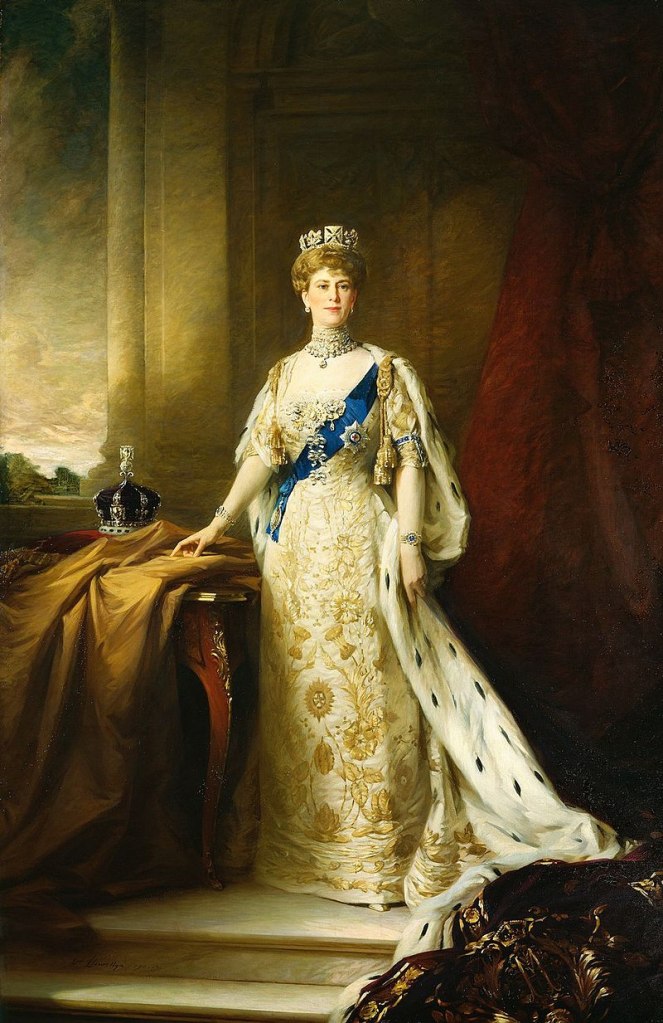
The Spencers also inherited the main London residence of the Churchills, Marlborough House, one of the string of grand houses along the Mall leading up to Buckingham Palace. Built primarily by Sarah, Duchess of Marlborough, to designs by Christopher Wren, from the early 19th century it became a residence of various members of the Royal Family, notably the Prince and Princess of Wales in the 1860s and Queen Mary after 1936. Today it houses the Commonwealth Secretariat.

Marlborough House

The family continued to dominate Whig politics for the rest of the century: the 4th Duke of Marlborough was Lord Chamberlain and Lord Privy Seal in the 1760s, while both of his brothers held seats in the Commons. The younger of these, Lord Charles, was also a key member of the court of King George III, from being appointed Comptroller of the Household in 1763 to dying as one of the Gentlemen of the Bedchamber in 1820. His grandsons led interesting lives working for the Church of England across the British Empire, the elder as bishop of Newfoundland then Jamaica, and the younger as bishop of Madras. Their cousin, Augustus Spencer was Commander in Chief of the British Army in Bombay in the 1870s. This junior line were created Baron Churchill of Wychwood (Oxon), in 1815, raised to Viscount Churchill in 1902, but since 2017 reverted to the barony when it passed to a distant cousin.

Having conscientiously chosen to employ both Spencer and Churchill names, the 5th Duke of Marlborough formally changed the family surname from Spencer to Spencer-Churchill in 1817. He had been a party boy in the early 19th century, the height of the Regency, and sold off much of the family collections. The next Duke, George, spent most of his life as an heir, first as earl of Sunderland, then marquess of Blandford, and only the last 17 years of his life as duke. Before he became a peer, therefore, he had a long career in the Commons as MP for Woodstock, and demonstrated a remarkable about-face for the family by his devotion to the Tory Party, a trend his successors would continue throughout the 19th century, notably his son the 7th Duke. Again having a long Parliamentary career as Sunderland, then Blandford, and still holding the family seat at Woodstock, he then served, as duke, in the Conservative Cabinet of Disraeli.

The wonderfully whiskered 7th Duke of Marlborough

From this point, the family divided somewhat, and elder sons inherited the titles while the younger sons took leading positions in politics. While the 8th Duke of Marlborough was getting involved in divorce scandals, his younger brother Lord Randolph took a leading position in British politics in trying to steer the Conservative Party towards progressive reformist policies rather than simply reacting against those being pushed by the Liberal Party. As Secretary of State for India he supported the annexation of Burma in 1886, and the next year he reached the pinnacle of his career as Chancellor of the Exchequer and Leader of the Commons. But his success was brief and his antagonism of party leaders led to his ostricization, and he died relatively young, leaving the ultimate glory of becoming Prime Minister to his son Sir Winston Churchill, and the political line carried on to Winston’s son and his grandson (another Winston) into the 1990s.

One thing Lord Randolph and his brother the 8th Duke of Marlborough had in common was that they both married Americans. The Duke married Lily Warren Price whose great wealth helped finance badly needed repairs and upgrades to Blenheim Palace; Randolph married Jennie Jerome. This was the age of Edith Wharton’s ‘Buccaneers’, wealthy American heiresses ‘sold’ by their parents to obtain glittering European titles. The greatest of these, perhaps, was Consuelo Vanderbilt, whose 2.5 million dollar dowry (plus shares in New York Central Railroad Company) helped the 9th Duke complete the restoration of Blenheim and its gardens. The marriage was not a great success and ended in acrimonious divorce in 1921.

maybe the best thing to come out of this marriage: the magnificent portrait of the 9th Duke and Duchess of Marlborough and their sons, by John Singer Sargent (1905)

Despite the influx of American dollars, the Blenheim estate struggled to keep up with the rising costs of maintaining a country house in the 20th century. The 10th Duke of Marlborough and his wife were therefore amongst the first aristocrats to open their homes to the public in the 1950s, and though Blenheim Palace remains in private hands, rather than as part of the National Trust or English Heritage, it is still one of the crown jewels of British tourism and attracts nearly a million visitors a year. It is run as a trust, with the current 12th Duke, known as ‘Jamie Blandford’ before he succeeded in 2014, keeping a fairly low profile both in terms of the estate and on the national stage.

In contrast, the younger branch of the family, the earls Spencer, have become more prominent in the 20th century, firstly as close members of the royal court and more recently as the family of the global superstar that was Diana, Princess of Wales. The current earl, the 9th (Charles), was already a page in the royal household before his sister married the Prince of Wales in 1981, and the links go back much further. Their father (‘Johnny Spencer’) was Equerry to George VI, 1950-52, then to Elizabeth II, 1952-54; and their grandmother, Lady Fermoy—as seen in episodes of the new season of ‘The Crown’—was for many years a Woman of the Bedchamber and close friend of the Queen Mother. In fact, Diana’s other grandmother, Cynthia Hamilton, was also a Lady of the Bedchamber to the Queen Mother for many decades. So any attempt to portray Lady Diana Spencer as an uninformed outsider to court circles I think needs to be seen as dramatic licence.

Going back to the origins of this line, the nephew of the 3rd Duke of Marlborough, was given the Spencer lands (as well as those of Sarah Jennings), and was created Earl Spencer in 1765. His daughter Lady Georgiana was the famous Duchess of Devonshire—famous in her own day as a fashionista and leader of the London social set, and again famous today for Keira Knightley’s portrayal of her in the 2008 film, The Duchess. One of the key scenes in that film demonstrated the power of aristocratic women in this century—when women did not have the right to vote—to influence politics through public appearances, and also as society hosts of political groups like the Whigs. Key to playing host to social elites was having a grand London residence, so the 1st Earl commissioned the monumental Spencer residence in London, on St James’s Place, in grand Greek neoclassical style. It is still owned by the family, but in recent decades has been rented out as a business site, to Christie’s, then The Economist, and now Lord Rothschild.

Spencer House

As with their senior Marlborough cousins, the Spencers (and the Devonshire Cavendishes) were at the epicentre of the liberal Whig Party, with the 2nd Earl serving as Lord Privy Seal, 1st Lord of the Admiralty and Home Secretary in the 1790s-1800s (in coalition governments), then the 3rd Earl (John) rising to the post of Chancellor of the Exchequer in the 1830s and being especially instrumental in the passage of the Reform Bill of 1832, under the Whig Prime Minister Earl Grey—interestingly, though not that surprisingly given the persistent interconnections between British politics and family ties—the same man who had been romantically involved with his aunt the Duchess of Devonshire. The 3rd Earl left a real legacy of reform, nicknamed ‘Honest Jack’ for his reputation as politically incorruptible.

John, 3rd Earl Spencer

After the Whig Party transitioned into the Liberal Party in the 1850s, the 5th Earl (also named John) held top government offices for even longer than his grandfather, as Lord Lieutenant of Ireland, Lord President of the Council, and First Lord of the Admiralty. The ‘Red Earl’ (due to the colour of his beard, not his politics) made a name for himself for his reforms of the Irish government and even advocating Irish home rule in the 1880s, and was several times asked to be Prime Minister, but preferred to stay in the House of Lords as leader of the Liberal Party until he retired in 1905.

John, 5th Earl Spencer–ever wonder where those ginger genes came from?

It is interesting to see the two branches of the family by the end of the 19th century dominating both rival political parties, Liberal Spencers and Conservative Churchills. The Spencers also maintained its close links with the royal family in the 19th century, with various members holding posts like Groom of the Bedchamber to the Prince Consort and the Prince of Wales, Lord Chamberlain of the Household (twice) and Lord Steward. They were successive lords lieutenant of Northamptonshire, and made their home, Althorp, a centre of county society. They also maintained an estate much closer to London and to court: Wimbledon Park (part of the inheritance of Sarah Jennings). Here the 2nd Earl Spencer built a new house in about 1800, sold in 1846, and demolished in the 1950s. Not until 1996, however, did the current Earl sell the title of the lordship of the manor of Wimbledon—a title with a few vague rights over common lands, at least until recent legislation abolished even those vestiges of feudalism.

Wimbledon Park House

The more modern Charles, 9th Earl Spencer, spent the early years of his career as a journalist, gave Althorp its first major overhaul since the 18th century, and opens the house for visitors in the summer months, as well as for an annual literary festival in the autumn. This two-pronged family, Churchill and Spencer, each line emerging from obscurity to lead the reforming party of the British politics for much of the 18th and 19th centuries, continues to act as guardians of the legacy of two of the finest examples in 18th-century English country house buildings, Blenheim and Althorp, hopefully for generations to come.

(images from Wikimedia Commons or other license free sites)

Princes of Battenberg

In a dramatic intimate moment of the first episode of the new season of ‘The Crown’, Prince Philip says to his daughter Princess Anne, “A Battenberg refuses to give in”. Who were the Battenbergs and why did this sentiment apply to recent members of the House of Windsor?

Philip and Anne: Battenberg bonding

More than just the namesake of a very sweet cake, the Battenbergs were created princes by the Grand Duke of Hesse in 1858, but they made their mark on history in other arenas, from Bulgaria in the 1880s to Great Britain in the early decades of the twentieth century—and then carrying on in Britain, though under an inverted name: Mountbatten (berg being the word for mountain in German). On the surface, this family was just a cadet branch of the second-tier German princely house of Hesse. But in fact, their lineage stretches back to the very earliest days of German history and also to the earliest building blocks of what is today’s Kingdom of Belgium, as dukes of Brabant. The medieval dynasty took its name from the town of Leuven (or Louvain in French), east of Brussels—and even gave its name to an English queen (Adeliza de Louvain, wife of Henry I), and the regenerated dynasty of the Percy earls of Northumberland descended from Adeliza’s brother, Josceline.

In the 20th century, a Battenberg was Queen of Spain, a Battenberg was Queen of Sweden, and one married the cherished daughter of Queen Victoria, Princess Beatrice. Possibly the most famous of all was Prince Louis of Battenberg, who changed his name to Mountbatten as a teenager, and rose to become First Sea Lord and last Viceroy of India. He was also uncle and surrogate father to Prince Philip of Greece (who also took Mountbatten as his surname, as his mother’s name, though he was really an Oldenburg)—and thus the inspiration behind the line of dialogue from ‘The Crown’.

Louis, Earl Mountbatten of Burma

This short overview will look at the ancestry of the House of Battenberg, the successes and failures of its earliest members, and some of their current whereabouts, and will also look, as usual, at some of the residences that can be visited by the intrepid tourist: from Schloss Heiligenberg in central Germany to Broadlands in southern England.

We can start with Battenberg Castle itself: although it gave its name to the family, they did not live there. Dominating the centre of the Eder river valley (the same one known to my Church of the Brethren friends and relatives as the birthplace of the denomination), on the borders between Hesse and Westphalia, Battenberg was the seat of powerful medieval counts before they became extinct in the 14th century. It then became property of the Landgraves of Hesse, who rebuilt the ruined castle as a hunting lodge in the 18th century. The coat of arms is very simple, a black and white shield.

Battenberg in the 17th century

What is a Landgrave of Hesse? Hesse is the state at the very centre of Germany, formed in the Middle Ages from the disintegration of the ancient Duchy of Franconia. At first they dominated the Upper Weser river valley, between their capital cities of Kassel and Marburg, but gradually the landgraves (a landgraf is a count of a land or region) expanded their holdings to the south and west, incorporating counties as far as a great bend in the Rhine (the Katzenelnbogen), and establishing a second capital, Darmstadt. It is from the Darmstadt branch that the Battenbergs descend—more on them later.

The House of Hesse originated in the House of Louvain, starting with a certain Giselbert, a count who was given control by the Emperor of the region around the river Meuse / Maas in the mid-9th century. This area was at the time known as Lower Lotharingia (or Lower Lorraine), and gradually evolved into the Duchy of Brabant, with its capital in Brussels. The family’s control of the area was solidified through the marriage in the early 11th century of Lambert of Louvain and Gerberga, daughter of Duke Charles of Lotharingia, one of the last of the Carolingians, the descendants of Charlemagne. The dukes of Brabant gained in power and prestige, marrying regularly into the royal houses of France, England and Germany. The last duke died in 1355, leaving three heiresses, which ultimately led to his large territories being added to the growing conglomerate ruled by the Dukes of Burgundy, and eventually would form the modern nation of Belgium.

an early modern imagining of a portrait of Lambert and Gerberga

A younger son, however, had started a new line, as heir to the large Landgraviate of Thuringia—one of the ancient ‘national’ territories of Germany (like Franconia or Saxony). Heinrich I (d. 1308) lost out on inheriting all of Thuringia, but successfully claimed the westernmost parts, to which he applied the name Hesse, and took the Thuringian title ‘landgrave’, and even its coat-of-arms, the  red and white stripey (or ‘barry’) lion on blue. Still today the neighbouring states of Hesse and Thuringia use very nearly identical arms. Centuries later, the Battenbergs would incorporate both the black and white stripes of Battenberg, and the Hessian lion (differenced with a red and white border) in their heraldry.

from a 15th-century heraldry manuscript
coat-of-arms of the Marquess of Milford Haven

Like most German princely states, The Landgraviate of Hesse would be divided and subdivided, and different branches would rise and fall in prominence. Probably the most famous Landgrave was Philip ‘the Magnanimous’, one of the most important leaders of the Protestant Reformation, as host of the famous Marburg Colloquy of 1529, where early Lutheran doctrine was hammered out, and one of the leaders of the religious war against the Emperor Charles V. Philip founded the University of Marburg, which is still one of the pre-eminent universities in Germany.

Philip, Landgrave of Hesse

By the time of the dissolution of the Holy Roman Empire, the two main branches, Hesse-Kassel and Hesse-Darmstadt, were each elevated to higher ranks, the former to the status of an Elector of the Empire (in 1803, just in time to have the whole electoral system abolished), and the latter as a Grand Duchy. The Electorate of Hesse was annexed by Prussia in the 1860s, but the Grand Duchy of Hesse (‘and by Rhine’, to give it is full, slightly odd title) survived as an independent state within the German Empire until all of its princes abdicated in November 1918.

Germany in the first half of the 19th century: the two Hesse states, Electoral and Grand Ducal, are in the centre, light and dark brown

By that point, the ruling dynasty of Hesse-Darmstadt had raised its profile a bit above its rank, through marriages into the royal houses of Great Britain and Russia: Princess Marie of Hesse married Tsar Alexander II in 1841; her nephew Grand Duke Louis IV married Queen Victoria’s second daughter, Alice, in 1862; and their daughter, Alix, would in turn marry the Russian Tsar Nicholas II in 1894. But one of the Hessian princes, Alexander, did not follow the dynastic rules, and married one of his sister Tsarevna Marie’s ladies-in-waiting, Countess Julia von Hauke, and their offspring would be barred from succeeding to the Grand Ducal throne. This was the birth of the House of Battenberg.

By the 19th century, members of ruling families in Europe were meant to marry only others from the same rank. Julia von Hauke’s family were descended from tradesmen in Mainz, but had risen through the ranks in Russian service. Her father Moritz served as Minister of War in Russian-controlled Poland from 1820, was created a count in 1829, and then hacked to pieces a year later by Polish revolutionaries. Julia’s marriage to Prince Alexander of Hesse was frowned on by the rest of the family and he lost his position in the Russian army. Nevertheless, as was by then normal for marriages of unequal status (known as ‘morganatic’ marriages), the bride and her children were given a title (in this instance by the Grand Duke of Hesse): Battenberg. Originally they were to hold the rank of counts (1851), but by 1858 she and her four (soon to be five) children were raised to the rank of princes and princesses, with the honorific address of ‘Serene Highness’.

Alexander’s family settled in one of the Hesse castles, Heiligenberg, located a few miles south of Darmstadt. A country retreat built in the early 19th century and renovated by Alexander and Julia in the 1850s-60s, Schloß Heiligenberg became one of the favoured meeting places in central Europe for the far-flung relations of the House of Hesse, from Britain to Russia, including the courting couple, Nicholas and Alexandra. This castle was sold by the family in the 1920s, and has become property of the State of Hesse, and variously used as a school, a hospital and most recently a concert and exhibition hall. Nearby the Battenberg Mausoleum still stands tribute to the family that once lived here.

It is with the four sons of Alexander and Julia where our story starts to get really interesting, as the family spread out all across Europe: Louis and Henry in Britain, and Alexander and Franz Joseph in the Balkans. The only daughter, Princess Marie, married a local Hessian count, Gustaf von Erbach-Schönberg, and lived a relatively quiet life. The earliest of the four sons to make his mark was the rather unprepared Alexander, known in the family as ‘Sandro’ (or ‘Drino’), who at age 22 was put forward by his uncle the Tsar as the first Prince of Bulgaria, an Ottoman province that had just been granted self-rule in 1878. At first he played by the rulebook set down by his powerful Russian patron, but by 1883 he craved the popularity of the Bulgarian people and restored a liberal constitution, and was ousted by pro-Russian soldiers in late 1886. He retired to Austria and assumed the name ‘Count von Hartenau’, marrying in 1889 an Austria opera singer, Johanna Loisinger. But when he died a few years later, he was buried in Bulgaria, as a sovereign. His children carried the name von Hartenau into the 20th century, but also the memory of the brief Bulgarian Battenberg dynasty, with the typically Bulgarian names Assen and Tsvetana.

Alexander, Prince of Bulgaria

Another potential extension of the Bulgarian story was the youngest of the Battenberg brothers, Franz Joseph, who accompanied his older brother to Bulgaria and served in the army there—as his brother was still unmarried, Franz Joseph was considered the probable heir to the throne, though of course he left when Alexander did. He remained in Balkan circles, however, and in 1897 married the daughter of the ruling Prince of Montenegro, sister of the Queen of Italy. A number of chatterers in diplomatic circles considered the Battenberg princes as ideal candidates for new thrones appearing in south-eastern Europe with the slow decline of the Ottoman Empire—Albania, Rumelia or Crete—as being so well connected by blood to the great royal houses of Europe, but not fully aligned with any. But Franz Joseph and his wife Anna retired instead to Switzerland where he wrote books on economics, and she composed music (apparently very well). He died in 1924, but she lived on until 1971, still using the title Princess of Battenberg, the last person to do so.

In contrast, the eldest brother, Louis, changed his name from Battenberg to Mountbatten, and renounced his princely titles in the summer of 1917, at the urging of King George V in the face of rising anti-German sentiment in Britain (and of course, as is well known, the King changed his own name from Saxe-Coburg to Windsor).

But despite being born in Austria, there was nothing notably un-British about Prince Louis of Battenberg, having served in the British navy since he was a teenager. Adept in three languages (he spoke German with his father, French with his mother, and English with his nanny), he was a natural fit to work in the gathering of information in the various courts and capitals of Europe, and was appointed Director of Naval Intelligence in 1902. Promoted to First Sea Lord in 1912, he was suddenly asked to retire in 1914, again due to anti-German fears in the government and the naval high command. Along with changing his surname in 1917, he was created Marquess of Milford Haven (a Welsh port town in Pembrokeshire). But why just a marquis? Years later his grand-daughter Pamela Hicks wrote in her memoirs that he had been offered a dukedom—more appropriate for a close relative of the King; and his wife, Victoria of Hesse, was a grand-daughter of Victoria—but turned it down, considering he did not have the wealth to support a lifestyle expected of a duke. Indeed, he did not have a lot of money, much of it having been confiscated in Germany during the war or lost in the Russian Revolution, and he sold the family castle at Heiligenberg in 1920, and died only a year later.

Louis of Battenberg

Prince Louis’ second son, Lord Louis Mountbatten, has written that one of his life’s enduring motivations was to recover what his father had lost, and remove the dishonour of having been removed from the post of First Sea Lord. And that he did, becoming First Sea Lord in 1954…but only after holding even higher posts. Proving his worth as a sea captain in the early years of the Second World War, he was promoted Supreme Commander of the Allied Forces in Southeast Asia in 1943, then Viceroy of India in 1947—King George VI’s representative in the transition from colony to independent member of the Commonwealth. Mountbatten (created Earl Mountbatten of Burma in 1947) was criticised for not doing enough to prevent the violence of partition, and he was not very involved in government for several years, before returning to Naval affairs in 1954 as First Sea Lord, then as Chief of the Defence Staff in 1959 in the government of Harold Macmillan.

Mountbatten as Viceroy, with Gandhi and Edwina

Lord Mountbatten was successful, but his success was in great part enabled by his talented wife, Edwina Ashley, who not only helped enable his social networking, but also provided the means to pay for it, as one of the chief heirs of the business magnate Sir Ernest Cassel. Through her descent from the Palmerston family, she inherited a sizeable Georgian country house in Hampshire, Broadlands, and a castle on the rugged coastline of western Ireland, Classiebawn.

Broadlands had begun life as the manor house of Romsey Abbey, in the Test river valley north of Southampton. At the dissolution of the monasteries of the 1540s, it was sold to Sir Francis Fleming, then passed by marriage to the Barbe family, until it was sold in 1736 to Henry Temple, 1st Viscount Palmerston. He hired the most fashionable architects and garden designers—Capability Brown, Henry Holland, William Kent—and rebuilt the house as a Palladian Villa and the gardens as a marvel of ‘broad lands’ gently rolling down to the river’s edge. Broadlands served as the country retreat of the 3rd Viscount Palmerston when he was Prime Minster under Queen Victoria. A century later, the Mountbattens made it their main residence and renovated it. It hosted the Queen and the Duke of Edinburgh for their honeymoon in 1947, and the Prince and Princess of Wales on their honeymoon in 1981. Both matches were arranged, at least in part, by ‘Uncle Dickie’, as Mountbatten was known in family circles. Today it is the residence of the 3rd Earl Mountbatten, Norton Knatchbull, the son of Mountbatten’s elder daughter, Patricia, who died in 2017.

Broadlands

Classiebawn Castle was a summer getaway, near the town of Sligo. Built in the 19th century in baronial style (ie, a style intended to look much older than it was), the land had once belonged to the O’Connor clan, and Mountbatten’s presence there was therefore a living symbol of British imperialism, especially as Sligo is in the Republic of Ireland, not Northern Ireland. Mountbatten’s death in the nearby harbour from a bomb placed by the IRA in August 1979 sent a shockwave through the fabric of Britain in a troubled decade, and a turning point in the lives of the British royal family.

Classiebawn

In contrast, the lives of the senior line of the House of Battenberg, now the House of Mountbatten, were much quieter. Both the 2nd and 3rd marquesses of Milford Haven were, unsurprisingly, naval men. The 2nd Marquess had continued his family’s marital tradition by marrying the offspring of another morganatic marriage, this time the Grand Duke Mikhail of Russia and Countess Sophie von Merenberg. His wife, known before her marriage as Countess Nadejda de Torby, brought a bit of glamour and exoticism to the British royal family of the 1920s, and her son, the 3rd Marquess, became one of the leaders of the London socialite scene of the 1950s (and was best man at the wedding of his cousin, Prince Philip of Greece to the Queen in 1947). The 4th Marquis of Milford Haven lives mostly out of the spotlight, and his younger brother, Ivar only made headlines by becoming the first member of the extended royal family to have a same-sex marriage, in September 2018. Also unlike their junior cousins, the Milford Havens have never had the same kind of showy country house on the scale of Broadlands, though recently, the current Marquess and his wife have been impressing the sporting world with their world-class polo club, Great Trippetts, in West Sussex.

Finally the fourth of Alexander and Julia’s sons, Prince Henry of Battenberg, may have done the best in terms of dynastic success, marrying the daughter of Queen Victoria herself, but had the shortest time to enjoy it, dying only ten years later. The Queen agreed to the match on condition that the Prince settle in the UK so that her beloved Beatrice would never leave her side. At the time of his marriage in 1885, Henry (known as ‘Liko’) was created HRH and a Knight of the Garter, and naturalised a British subject. In 1889, he was appointed Governor of Carisbrooke Castle and of the Isle of Wight, but he wanted to do more. Obtaining a post of colonel in the army in 1893, he joined the expedition sent to fight in the Ashanti War in West Africa in 1896, caught malaria, and died before he could reach home. His widow, Princess Beatrice remained her mother’s supporter in her last years, then worked as editor of Victoria’s diaries, and continued to appear in public well into her 70s, dying in 1944, age 87.

Henry and Beatrice are buried in the Battenberg Chapel of St Mildred’s Church in Whippingham on the Isle of Wight. So too are many of their descendants, though not two of their sons, one (Maurice) who is buried in Flanders fields having been killed in the early months of World War I, and the other (Leopold), who despite being a haemophiliac (the disease passed through the female descendants of Queen Victoria), survived his service in the war, only to die in surgery a few years later.

Their older brother Alexander also served in the war, and was one of the first to use the surname Mountbatten in an official manner, getting married in July 1917 as simply Sir Alexander Mountbatten, since his peerage from the King—the Marquessate of Carisbrooke, to commemorate his parents’ connection to the Isle of Wight—had not yet been granted. There was only one Marquess of Carisbrooke, as he had only a daughter, Lady Iris Mountbatten, who moved to California to have a short career as a television actress, then settled in Toronto where she died in 1982.

Alexander, Marquess of Carisbrooke

The only daughter of Henry and Beatrice, Victoria Eugénie (known as ‘Ena’) married the King of Spain, Alfonso XIII, in 1906, and went into exile with him in 1931 when the second Spanish Republic was proclaimed. She survived her husband by nearly three decades, dying in Switzerland in 1969. Interestingly, her cousin Alice of Battenberg, widow of Prince Andrew of Greece and mother of the Duke of Edinburgh, also died in 1969. It is Alice who could have inspired the fictional Prince Philip in ‘The Crown’ to utter the line, “A Battenberg refuses to give in”, as someone whose life was full of challenges—notably several Greek revolutions and a lifetime of deafness and misdiagnosed mental illness. Yet she is remembered for the important work she did sheltering Jews in Greece during the Second World War, for which she is recognised as ‘Righteous Among the Nations’ in Israel. After the war, she stayed in Greece and founded an Orthodox nursing order of nuns known as the Christian Sisterhood of Martha and Mary.

Princess Alice with her son the Duke of Edinburgh

Possibly her greatest trial came in November 1937 when her daughter Cecile, Grand Duchess of Hesse, was killed in an air accident in Ostend, alongside her husband, two sons and his mother. This tragedy all but extinguished the junior branch of the House of Hesse (Darmstadt), but the ancient House of Louvain carries on in the line of Hesse-Kassel and in the Mountbattens of Milford Haven. And cake.

(Images taken from Wikimedia Commons and other online copyright free sources)

Dukes of Elbeuf, another branch of the House of Lorraine

One of the most well-known ducal families in French history is the House of Guise, an interesting example of a cadet branch of a family being more famous (or infamous) than the senior branch, the sovereign dukes of Lorraine. The dukes of Guise dominated French politics and diplomatic and religious policy for much of the 16th century, and I’ve written about them in an earlier blogpost.  They were also successful in generating further cadet branches who were themselves also able to sustain a position at the top of the social hierarchy in France, for many generations. One of these branches was the line of Elbeuf. They were the most junior branch of the Lorraine-Guise dynasty, but also outlived the others by more than a century, finally dying out in 1825. The Elbeuf line was further sub-divided into the branches of Harcourt, Lillebonne, Armagnac and Marsan, and this post will look briefly at all of these, and in particular at their extensive landholdings, which, although almost entirely vanished today as built structures, demonstrate clearly the vastness of the spread of a major aristocratic family like this, stretching from Normandy to Provence.

An overview of the House of Lorraine-Guise: René of Elbeuf appears on the second row

The Elbeuf branch was founded by René de Lorraine (1536-1566), the youngest son of the first Duke of Guise. René himself left behind little for historians to write about, dying at only age 30, but his portion of the family patrimony, added to the lands he secured through his marriage to a wealthy heiress, established a lineage that was almost as wealthy and powerful as their cousins in the senior line. René’s name itself was a reflection of his membership in the Lorraine dynasty, the name of his grandfather, Duke René II of Lorraine, and a further ancestor, King René I of Anjou, who reigned as sovereign count of Provence, and as king of Sicily, though mostly in name only. At an early age, René was sent with his older brother to fight with French armies in Italy, then against Imperial armies at Metz, and in 1561, he was sent to Scotland with his niece, Mary, Queen of Scots, to Scotland, as representative of the king of France, but also as ambassador from the family, to ensure a Guise presence in Scottish affairs following the death of his eldest sister, the Queen-Regent Marie de Guise. 

In terms of estates, René’s marriage of 1555 to Louise de Rieux secured the family’s hold over a rich succession that the House of Lorraine had been contesting since the 1450s. Most of these lands were in Normandy, and some in Brittany (like the county of Rieux itself, in south-eastern Brittany, not far from the mouth of the Loire). Chief amongst these was the barony of Elbeuf, which the Lorraine family had successfully claimed in the 15th century (and which was given to young René as his portion of the inheritance), and the county of Harcourt, which they had not.  Both of these large feudal estates lay in the rich fertile lands of upper Normandy, and would provide great wealth for René and Louise’s descendants.

The barony of Elbeuf was erected into a duchy-peerage for René’s son Charles (1556-1605), in 1581. The duchy consisted of the lands of Elbeuf itself, plus other nearby baronies: Quatremares, Routot and others. It included jurisdiction over certain local markets and even over a segment of the river Seine, as it wound its way between Paris and Rouen. The town of Elbeuf itself, in a meander of the river just above Rouen, was already thriving as a centre of cloth production, and as a transmission point for grains onto the river from the high plateau above. The dukes of Elbeuf maintained a residence in the town, near the river—it has long since disappeared, but was located close to where the town hall is today. In the hills above the town was the Collegiate Church of St-Louis de La Saussaye, founded by an earlier lord of Elbeuf in the 1300s and rebuilt in the 16th century, which became the sepulchre for this branch of the House of Lorraine—much damaged in the tumults of the Revolutionary period.

La Saussaye today

In addition to the duchy, Charles de Lorraine was also count of three other Norman territories, Brionne, Lillebonne and Harcourt.  The ancient towers of Brionne and Lillebonne, built by the Normans, were both mostly ruins already by the 16th century, but were important strategic points in controlling the economy of this part of Normandy: Brionne in the high plains southwest of Rouen, and Lillebonne in the lowlands closer to the mouth of the Seine. In between, the Elbeuf patrimony included the sizeable forest of Brotonne, at a time when one of the most reliable sources of aristocratic income was in forestry.

Brionne
Lillebonne

But the real treasure in terms of built heritage was the Château of Harcourt, a few miles east of Brionne. One of the best preserved medieval castles in France, it was the stronghold of the powerful Norman Harcourt dynasty from its inception in the 10th century.  Claiming shared roots with Rollo and other Danish lords who invaded this region, the Harcourt dynasty is one of the most successful and prolific noble families in Europe, with branches in both France and England, though they lost possession of the castle of Harcourt itself via female succession in the early 15th century. It remained an important military stronghold for the Lorraine family well into the 17th century, and the county of Harcourt was held by younger Elbeuf sons, giving them revenues almost as grand as the duchy of Elbeuf itself, then was used as a residence by a junior branch of the line of Elbeuf well into the 18th century before falling into disrepair.

Harcourt

Charles de Lorraine-Elbeuf rose to great prominence at the French court alongside his cousins from the branches of Guise, Aumale and Mayenne. He held the posts of Master of the Horse of France and Master of the Hunt, Governor of the Bourbonnais, and was one of the first members of the Order of the Saint-Esprit.

In 1583, he nearly doubled the size of his estates through a marriage to the heiress Marguerite Chabot, Dame de Pagny. Her father, Leonor, Comte de Charny, was one of the most loyal officers of King Henri III, Master of the Horse, and owner of huge estates in Burgundy.  To his extensive properties in Normandy, the first Duke of Elbeuf now added lordships in Burgundy: Charny in the northwest, and Pagny and other lordships spread along the upper Saône valley in the east. The central buildings at Pagny were mostly destroyed in the 18th century, but the great treasure remains, the marvellous Gothic chapel built in the 12th century by the lords of Pagny and rebuilt in the early 16th century by the powerful nobleman Philippe Chabot, Admiral of France under François I. Pagny was also held by a cadet branch of the line of Elbeuf until it was purchased in 1675 by Louis XIV and bestowed on his illegitimate son, the Comte de Vermandois, who passed it along on his death to his maternal family, the dukes of La Vallière.

the chapel at Pagny

The line of Lorraine-Elbeuf was dealt a terrible blow, however, when Duke Charles suddenly died in 1605, leaving a widow, two underage sons, and four daughters, only one of whom had already been married off, and crucially losing the income derived from major court offices, since underage sons could not act as provincial governors or hold senior court offices.  Marguerite Chabot spent much of the rest of her very long widowhood—nearly 50 years!—battling creditors and rapacious kinsmen who wished to claim parts or all of her succession. By the time her eldest son, Charles II (1596-1657), had reached his majority, a degree of royal favour was re-established, mostly through the marriage to the King’s half-sister, Catherine-Henriette de Bourbon-Vendôme, an illegitimate daughter of Henry IV and Gabrielle d’Estrées.  But this alliance soon soured, and a link to the Vendôme clan and to the King’s rebellious brother Gaston, proved to be a liability in the period of the rise of Cardinal Richelieu, and Charles II was disgraced and sent from court. Elbeuf did later secure a governorship, Picardy, but not a major court office. That honour went instead to his younger brother, Henri, Count of Harcourt (1601-1666), who had been favoured by their mother and given most of the richest properties in Burgundy. Harcourt, almost alone in the family, made an alliance with Richelieu, secured through a marriage to one of the Cardinal’s cousins (and rewarded with lands in Gascony as part of her dowry, and the title Count of Armagnac), and was finally restored to his father’s old court office, Master of the Horse of France—one of the eight major court offices in France, which would remain in the House of Lorraine-Elbeuf from 1643 all the way to the end of the Ancien Régime.

The arms of the cadet branch of the House of Lorraine, with the emblems of the office of Master of the Horse

Denied this great honour, the second Duke of Elbeuf would sink lower in the eyes of the Regency government of Anne of Austria when he supported the rebellious Parlement of Paris during the Fronde, leading their troops against the Crown in 1649. His financial losses during these events further strained an already heavily indebted patrimony, as did the need to provide for three sons, the heir, Charles III, plus François-Louis and François-Marie.  The junior branch of the family now took the lead, headed now by the Count of Harcourt’s eldest sons, Louis, Count of Armagnac (a close favourite of Louis XIV) and Philippe, the Chevalier de Lorraine (an even closer favourite of the King’s brother, Philippe, Duke of Orléans).  This junior branch, enjoying such eminent royal favour as well as the incredibly lucrative office of Master of the Horse, even acted as de facto head of the entire house of Lorraine-Guise after the death of the last member of the senior branch, Mlle de Guise, in 1688.  From her, they inherited one further feudal estate that would lend its name to later members of the family: the barony of Lambesc in Provence. Lambesc had been part of the patrimony of King René in the 15th century, and thus a reminder to the family of its distant claims to royal status in the Mediterranean.

The third Duke of Elbeuf, Charles III (1620-1692), himself never rose to great prominence. He spent much of his time living in his provincial governorship of Picardy (to which had been added Artois, Boulonnais, and the other ‘Pays Conquis’, lands acquired from the Spanish in the 1650s). He had a residence in Paris, the Hôtel d’Elbeuf on the rue Vaugirard (near the Luxembourg Palace), plus residences at Versailles and at Saint-Germain-en-Laye. But despite three advantageous marriages, to heiresses and well-connected court families, Charles remained in debt and maintained a low profile. By the end of his life his estates were sequestered and he lived on a pension paid out by a directorate set up by his creditors.

Charles, 3rd Duke of Elbeuf

Of his younger brothers, François-Louis was given the château and county of Harcourt, and married a major heiress from the southeast of France, Anne d’Ornano, Countess of Montlaur in Languedoc and Marquise de Maubec in Dauphiné—the two properties mirroring each other on either side of the Rhône Valley.  Opting to remove himself from his brother’s financial distress, the Count of Harcourt chose instead to live as a great provincial magnate in the south of France, and established a new line, Lorraine-Harcourt, that continued until the middle of the 18th century.  Their base was the ancient seat of the Montlaur family in Aubenas, where the magnificent château is still the centrepiece of the town. They elevated their status somewhat by taking the title ‘Prince’ of Harcourt, though this title reflected their personal rank as a foreign prince of the House of Lorraine, not any possession of a genuine principality; later they took the title ‘Prince of Guise’, which was actually an estate in the Duchy of Lorraine erected into a ‘principality’ by the Duke of Lorraine in 1718 in an effort to lure back to Lorraine some of the cadets of his dynasty. An effort that worked in this case, as the Prince of Guise sold his lands in the south of France and settled for a time at the court of Lorraine in Lunéville.

Aubenas

The youngest brother, François-Marie, was given the county of Lillebonne, and he too established his independence through marriage to an heiress and shifting his activities away from the court of France. In 1660, he married the daughter of the head of his house, Duke Charles IV of Lorraine, and he became one of the Duke’s most trusted military commanders. He and his wife purchased the sovereign lordship of Commercy, on the borders of Lorraine, where they rebuilt an ancient château and established their own miniature court. Their eldest son, Charles-François, took the title ‘Prince of Commercy’ and, like his friend Prince Eugene of Savoy, left France complaining of a lack of royal patronage in the army, and instead became a leading commander in the armies of the Holy Roman Emperor, before he was killed in the War of Spanish Succession in northern Italy in 1702. Commercy left behind two sisters, both great favourites of the Grand Dauphin (who had to scramble for position once their powerful patron at court died suddenly in 1711—the elder sister becoming abbess of the powerful Abbey of Remiremont in Lorraine), and his estates ultimately passed to his uncle, his mother’s brother, the Prince of Vaudémont, who continued to convert Commercy into a miniature Versailles, which is mostly still standing today.

Commercy, later in the 18th century

One final sibling of Duke Charles III remains to be mentioned, Marie-Marguerite-Ignace, Mlle d’Elbeuf, who, unusually, remained single her entire life and never entered a convent. She obtained a major court office, dame du palais of Queen Marie-Thérèse, and her own portion of the Elbeuf patrimony, notably lands in Burgundy which enabled her to purchase the County of Rosnay in Champagne. She also inherited one of the largest non-royal residences in Paris, to rival the Hôtel de Guise itself a few streets away in the Marais, known as the Hôtel de Mayenne, and later as the Hôtel de Lillebonne after she bequeathed it to her nieces: today it still stands, on the rue Saint-Antoine, just inside the Place de la Bastille, inhabited by the Lycée des Francs-Bourgeois, and recently restored to its former glory as a monument to mid-17th-century urban architecture. If you look closely, you can see the double cross of Lorraine in its windows.

the Hotel de Mayenne today

This brings us to the 18th century, and the existence of four sub-branches of the House of Lorraine-Elbeuf: Elbeuf, Harcourt, Armagnac and Marsan. The last of these was established from the youngest brother of the Count of Armagnac and the Chevalier de Lorraine, and took its name from the viscounty of Marsan in the far southwest, near Toulouse. Landholdings in this area were augmented, again through marriage to the heiress of the lordship of Pons in Saintonge (near Bordeaux), and through the gift of another property in the Duchy of Lorraine, the lordship of Lixheim (or Lixin). Not do be outdone by their cousins of the Harcourt branch, the last members of this branch therefore called themselves ‘Prince of Pons’ and ‘Prince of Lixin’. One of the  most prominent members of this line of princes was the Comtesse de Marsan, Marie-Louise de Rohan, who, as Governess of the Royal Children of France, looked after the early childhood development of Louis XVI, Louis XVIII and Charles X, and gave her name to one of the restored elements of the Tuileries Palace, the Pavillon de Marsan, today part of the Louvre.

Pavillon de Marsan (left) today, and the Marsan wing of the Louvre (rebuilt after its destruction in the 1870s)

The line of Harcourt as we have seen sold its southern properties in the early years of the eighteenth century; similarly, the line of Elbeuf sold the county of Lillebonne in 1701—in this case, back to the House of Harcourt, who were on the rise again, and created dukes in 1709 (though not regaining their old château of Harcourt, so the dukedom was instead based on other estates further west in Normandy).  The new Duke, Henri (1661-1748), restored much of his family’s honour as a successful military commander (notably being raised more as a nephew of the great General Turenne than as a prince of Lorraine), and continued to administer his father’s provincial governorships of Picardy, Artois and the Pays Conquis (adding much of Hainaut when it was conquered during the War of Spanish Succession).  He was also now the head of the cadet branch of the House of Lorraine, and as such represented the Duke of Lorraine in ceremonies at Versailles, notably marrying as a proxy spouse the King’s niece, Elisabeth-Charlotte d’Orléans, in 1698, and escorting her to the frontier to meet her new husband, the Duke. As a further mark of royal favour, Elbeuf married a niece of Madame de Montespan, but ultimately his line failed as his son and heir was killed in battle in northern Italy.

A page from the Gazette de France showing the 4th Duke of Elbeuf (centre) as proxy groom for the marriage of the Duke of Lorraine and Princess Elisabeth-Charlotte d’Orléans. Symbols of the Duchy of Lorraine are all over this image.

The heir of the Duchy of Elbeuf was therefore the 4th Duke’s much younger brother, Emmanuel-Maurice (1677-1763), known as the ‘Prince d’Elbeuf’. As a young man he had made himself unpopular at court, with the King and with his brother—the reasons for this are not clear—and he went instead into service of the armies of the Emperor, then fighting in Italy. He became a general in the cavalry for Imperial troops in Naples, married the daughter of a local grandee, the Duke of Salza, and, while attempting to renovate his villa south of the city, accidentally discovered the remains of the Roman city of Herculaneum.  Returning to France after the War of Spanish Succession, he found himself excluded from his family, so, like Guise and Lixheim, was lured to the court of the Duke of Lorraine and resided for a time a the Château of Gondreville, west of Nancy.  Although he succeeded to his older brother’s title as 5th Duke of Elbeuf in 1748, he was coerced into selling the lands to his cousin and future heir (since he himself remained childless).  As the 5th Duke, he also had a new wife, Innocente-Catherine de Rougé, daughter of the Marquis du Plessis-Bellière, and widow of the Marquis de Coëtenfao. As a widow again, late in life the Duchess of Elbeuf was an eyewitness to the French Revolution, and her surviving letters now form the core of an exciting new research project “Revolutionary Duchess” (see http://revolutionaryduchess.exeter.ac.uk/duchess/ )

Gondreville

Finally, in 1763, the title Duke of Elbeuf was restored to its lands, passing to the great-great-grandson of the Count of Armagnac, and reuniting finally the ducal title with the office of Master of the Horse, and the now almost hereditary office of Governor of Anjou. Charles-Eugène (1751-1825) was only a child, but times had changed since the family lost the post of Master of the Horse back in 1605—this time, a minor was confirmed in the office, while his mother, the indomitable Countess of Brionne (Louise-Julie-Constance de Rohan-Rochefort), governed the King’s stables herself, the only instance I know of where a woman held one of the great court offices of France (and was named in documents ‘Grande Ecuyère de France’). Though technically the 6th Duke of Elbeuf, Charles-Eugène instead took the title ‘Prince of Lambesc’, perhaps as a nod to the country’s shift back towards the Mediterranean as a military power (following the defeat in North America in 1763); at about the same time, his cousin, the last member of the line of Marsan, was named Governor of Provence, an important governorship that had last been held by the Lorraine-Guise before their great fall from grace in 1630.  In a subtle way, this title may have been a re-assertion of the family’s ancient claims to royal status in the Mediterranean, a reminder of the glorious Provençal court of ‘le Bon Roi René’. And indeed, Lambesc’s uncle, Camille, was abbot of St-Victor, the most important abbey in Marseille, and since 1768, his sister, Joséphine had been married to the Prince of Savoy-Carignano and lived across the Alps in Turin. Was this a family re-orientation towards the Mediterranean? At the same time, however, Lambesc’s brother, Joseph-Marie took the title ‘Prince de Vaudémont’, a re-assertion of the family’s ties with the Duchy of Lorraine, now firmly part of France, and their sister, Anne-Charlotte, was established as the Abbess of Remiremont, the most prominent abbey in that region.

The Prince of Lambesc, last Duke of Elbeuf

But the name Lambesc did not become famous as a restorer of his family’s prominence in Provence or Lorraine; instead, it was a name that became linked with the failure of Royal attempts to repress the outbreak of the French Revolution in July 1789. In fact, the Prince of Lambesc’s actions, in calling for shots to be fired on a crowd of protestors in the Tuileries Gardens on the 12th of July, may in fact have stoked the flames of violence that followed on the 14th.

See here for a recent blog I wrote about this event for the People’s History Museum in Manchester:

Shortly after the Revolution broke out, he and his brother both emigrated to Vienna, where they served in Imperial armies, and were well treated, considered as ‘princes of the blood’ of the Imperial house, since the House of Lorraine had succeeded the House of Habsburg since the 1740s. Neither brother returned to France, even after the Restoration of 1814, and even after the office of Master of the Horse was formally re-invested in the Prince of Lambesc in absentia—and the line of Dukes of Elbeuf came to an end in 1825.

the coat of arms of the House of Lorraine on a fountain in the town of Lambesc in Provence

(images from Wikimedia Commons or photos by the author)

To read more about the Elbeuf branch of the family of Lorraine-Guise, see Stuart Carroll, Noble Power During the French Wars of Religion (1998) for the sixteenth century; and Jonathan Spangler, The Society of Princes (2009) for the seventeenth.

Savoy and Dauphiné Driving Tour: The Ancient Trans-Rhodanian Principalities

In the early Middle Ages, if you traveled from Paris to Rome, once you crossed the Rhône River at Lyon, you were no longer in France, but in French-speaking principalities that were component parts of the Holy Roman Empire. After 1349, the first of these you’d encounter on crossing the river, the Dauphiné, was property of the kings of France—though arguably not fully a part of France, legally, until much later. After about a day’s travel, the next principality you would pass through, Savoy, remained part of the Empire until the end of Ancien Régime, and even beyond, not becoming part of France until 1860. This drive, which I did about four years ago, will circle through these two fascinating formerly independent principalities, and also takes a quick look in at a third principality, the curious micro-state of Dombes that remained legally independent of France well into the 18th century. I will also pay a visit to one of the most beautiful buildings in Europe, the Abbey of Brou, in the alliteratively named town of Bourg-en-Bresse.

All of these regions had once been part of an ancient kingdom created by the Burgundians, a Germanic tribe who settled the region in the 5th century. This once encompassed what is now western Switzerland, the Burgundy you’ve heard of, and the Burgundy you haven’t, today’s regions of Dauphiné, Savoy and Provence. These two Burgundies became divided into Transjurane and Cisjurane Burgundy in the 9th century, the former meaning ‘across the Jura Mountains’ and the latter ‘on this side’ (looking at it from the perspective of Lyon or the lower Rhône Valley, so sometimes called Upper and Lower Burgundy, respectively). Both were at various times blended with the kingdoms of Arles and Provence, which expanded and contracted over the centuries, until disintegrating in the middle of the 11th century. The Holy Roman Emperor, suzerain of this whole area at the time, granted lands in the former kingdom to local lords as fiefs, Savoy emerging from part of Transjurane Burgundy and its neighbour to the south, Dauphiné evolving from parts of Cisjurane Burgundy. It’s very confusing, and in fact remained confusing for a long time, with the borders ill defined and the rulers of Savoy and Dauphiné continually fighting over them. To add to the confusion, several of the ancient towns in the region remained outside the jurisdiction of either prince, as autonomous territories ruled by bishops, like Geneva, and it is here where this driving tour begins.

I landed at the airport in Geneva and rented a car on the French side (an interesting enclave of car rental desks), then drove along an eerie fenced corridor from the airport to the town of Ferney in France, so as not to have to go through Swiss territory and pay the exorbitant rate to drive through (well, mostly under) the city of Geneva. I went all the way around the bowl in which Geneva sits—with lovely views of the city, the lake and the surrounding mountains—till I arrived at a cheap hotel I’d booked in Archamps. The car park had a sign at the end of it saying ‘Frontière’, so I naturally jumped back and forth across, in and out of Switzerland, without impunity. The next morning I drove the short way over a low pass to the town of Annecy. It’s not a long drive, and it is interesting to come to it from the direction of Geneva, as it can put in mind the distance (physical and mental) between that city and the seat of its Catholic bishops after 1535—the year they were sent away from a now Calvinist city.

Annecy is a beautiful small town, kept small as it is hemmed in by the waters of Lake Annecy and the surrounding mountains. A short river, the Thiou, flows out of the lake and into the river Fier which soon joins the Rhône a few miles to the west. The Thiou bisects the town, also criss-crossed by canals. The streets are lined with shops and restaurants, and the day I was there, absolute hordes of tourists. Picturesque bridges cross the waterways, jammed with those making photos, especially in favour of the town’s most famous landmark, the Palais de l’Isle, a 12th-century fortified building on an island in the centre of town that has served as Annecy’s prison and courthouse.

I made a quick exit from the town centre and headed up a small hill towards the Château d’Annecy. The oldest part of this complex of buildings, built at various times and in various styles, was the residence of the counts of Geneva—forced to leave the city of Geneva itself by its prince-bishops in the early 13th century (rather ironically, eh?)—until their extinction in 1394. Their castle and their county (the Genevois) were then sold to the counts of Savoy in 1401. These counts emerged in the mid-11th century as loyal agents of Imperial power in the strategic valleys leading up to the key Alpine passes between France and Italy. By the 1100s, they owned lands on both sides of Alps: Savoy, Maurienne, Chablais on one side, and Aosta and Torino on the other, in the Italian Piedmont. In the 14th century, the Savoyard counts expanded their rule southwards, acquiring the county of Nice and thus an outlet to the Mediterranean, and with this addition of Annecy and the Genevois, their power stretched from Lake Geneva to the sea.

Lake Annecy on a warm summer morning

The counts of Savoy were based in Chambéry (see below), so they therefore left younger brothers or cousins in charge in Annecy and created the apanage of Genevois (an apanage is a segment of a kingdom or noble territory sectioned off for use by a younger brother, but still remaining part of the family patrimony). First counts, then (from 1564) dukes, these apanagistes rebuilt parts of the Château of Annecy in the 15th and 16th centuries, notably in the 1570s when the castle provided a refuge from French court politics for Jacques de Savoie, the Duke of Genevois (aka the Duke of Nemours, his title in France), and his powerful Italian-born wife, Anne d’Este, formerly Duchess of Guise. One of the main wings of the castle today bears the name Nemours and tells their story, with contemporary objects, artworks and furnishing. When the line of dukes of Savoy-Nemours became extinct in 1659, the castle at Annecy fell out of favour, and was used as a barracks for the next centuries until it was turned into the city museum after the Second World War. Today it houses various galleries about history, local artists and the natural world.

Annecy Castle, old donjon at right, newer Renaissance buildings to the left

I left Annecy after lunch and drove south, skirting the main mountain range of the pre-Alps which towered over the lake to the east—Albertville, for example, is not far, and the land of winter sports and site of the 1992 Winter Olympics. I soon arrived at another lake, Lac du Bourget, and the resort town of Aix-les-Bains. At the southern end of the lake is the city of Chambéry, the capital of the counts of Savoy from the 1280s, improved by them once their status was raised to dukes by Emperor Sigismund in 1416, then mostly abandoned once their court moved across the Alps to Turin in 1563. The court stayed at Chambéry only occasionally after that—sometimes when hosting visiting French royal relatives—or its castle housed unwanted dowagers or abdicated dukes. I parked my car in the centre of town and noticed the castle wasn’t open till later in the afternoon—and it was boiling hot—so I went into the local art museum and discovered with great luck that it currently was hosting an exhibition about the court of Turin as patrons of the arts! A lovely centrepiece was a lovely red baroque wagon for the royal children of the House of Savoy.

Later I went on a guided tour of the castle of Chambéry, which is monumental in scale but a bit of a hodge-podge of architectural styles, including a gorgeous Gothic chapel with a distinctly Jesuit façade slapped onto it. One detail you can see all over buildings such as this is the ‘Savoy Knot’, a symbol of the dynasty also used as an emblem for their chivalric Order of the Annunciation, founded in 1362 by Count Amadeus VI.

This order of knighthood became a royal order after 1713 when the dukes of Savoy were promoted to kings of Sardinia (and later the royal house of Italy). One of these kings, Victor Amadeus III, returned to Chambéry and tried to make it look more appropriately regal by adding a new wing, which today is the seat of the government of the Département de Savoie. After 1860, Savoy was ceded to France, and rather than being the second city of a trans-Alpine monarchy, Chambéry settled into life as a quiet provincial town. I enjoyed a meal that included some regional specialisms like the of tartiflette, made from potatoes, bacon (lardons), onions, and local reblochon—the famously stinky Savoyard cheese. My stay overnight here was not very memorable…but the real star of the show was revealed the next day!

I got up early as I knew I had a lot of driving to do. Heading back north, this time I went to the west of the lake and turned off the main road onto a tiny mountain road. For the next hour I climbed and climbed, twisted and turned round sharp hairpins, then rapidly descended back down to the edge of the lake.

Ma Petite Voiture, and hairpin turns!

Here on the lake’s edge was the Abbey of Hautecombe, founded for the Cistercian Order by Count Amadeus III of Savoy in the early 12th century, and resting place of counts and dukes of his dynasty ever since. A place of real beauty in the most wonderful location on this lake surrounded by steep mountains, it had fallen into disrepair during the French occupation of the 1790s, but was rebuilt by King Charles Felix of Sardinia in the 1820s, and his tomb forms one of the Abbey’s centrepieces. The most recent royal burials were of former King Umberto II of Italy in 1983, and his wife Queen Marie José at his side in 2001. Since the 1990s, the Abbey has been owned and run by an ecumenical Catholic regeneration group known as Le Chemin Neuf. Imagine my surprise when I listened to the English audio guide and immediately recognised the voice of an old friend who had lived in this community a few years before!

Luckily the road back out of Hautecombe was less harrowing, and I drove around rather than over the ridge of the Mont du Chat then joined the road that accompanies the mighty Rhône river as its squeezes through some pretty dramatic gaps in the southernmost Jura mountains (roughly where transjurane and cisjurane were demarcated). I paused for lunch and a bit of a nose round in the town of Belley, which was once the capital of a small province known as Bugey, sold to France by the Duke of Savoy in 1601. Not a large town, it was nevertheless the seat of a bishop, so had its own small cathedral, mostly rebuilt in the 19th-century neo-gothic style, in front of which I sat and munched my favourite mid-afternoon snack, coffee-flavoured éclair. Now you know what to bring when I host a dinner party.

I continued to follow the road alongside the Rhône—with water still that curious light blue-green colour you see when the river leaves Lake Geneva to start its long journey to the Mediterranean—and crossed the ancient frontier between Savoy and the Dauphiné at the river Guiers. I took a short detour up this river valley to twin towns both named Le Pont-de-Beauvoisin (‘the bridge of good neighbours’). This was the ancient crossing point of the river, where, at certain points in the past, royal brides were exchanged between France and Savoy, for example, Marie-Adélaïde de Savoie, married to the grandson of Louis XIV in 1696. Her wedding turned out not to be the cement for eternal friendship between the two states, and the girl’s father, Duke Victor Amadeus II, changed sides soon after when the next war started. Perhaps not a very good neighbour after all.

Pont de Beauvoisin

From Beauvoisin I left the Rhône valley and entered ‘France’ as it was until 1860, and the province of Dauphiné. I drove a short distance to the town of La Tour du Pin, where I stayed the next night. This town and its château, long since destroyed, was the centre of a large autonomous barony in the Middle Ages. The barons were at times completely independent of the Dauphins or else dominated the region as their most prominent vassals, until they themselves took over as Dauphin in 1282. The main line of the family became extinct only a few generations later, and sold the Dauphiné itself to the King of France in 1349, but various cadet lines continued into the modern era, and include one of the famous memoirists of the Revolutionary period, the Marquise de la Tour du Pin, born Henriette-Lucy Dillon, from a family of Irish Jacobites who had settled in France in the 1690s. This part of the Dauphiné, the Turripinois, took its name from the former barony, and is only one of several distinct regions that formed this territory, another former sovereign principality, like Savoy, that spanned from the Alps to the Rhône valley. Today it is divided into several modern départements, but in the past it was composed of regions, including those in the Rhône valley (Viennois, Valentinois), areas further inland (Diois, Grésivaudan), and fully Alpine territories further to the east (Gapençais, Embrunais, Briançonnais).

A map showing the different parts of the Dauphiné, and also the linguistic divide between northern and southern parts of the principality

From La Tour du Pin, I continued the next day across the high arid plains (known as the ‘Terres Froides’) to the ancient Roman city of Vienne. This city gave its name to its surrounding countryside, the Viennois, and ultimately the full name of the medieval principality, the Dauphiné de Viennois. So what is the Dauphiné? Like Savoy, it was formed from the feudal possessions of one of the counts placed in charge by the Holy Roman Emperor when the Kingdom of Burgundy disintegrated in the 11th century. Originally titled counts of Albon, their citadel dominates a hill overlooking the Rhône valley a little bit to the south, about halfway between Vienne and Valence (the climb up to the ruins is worthwhile, but not on this trip). One of these at the start of the 12th century, Guigues, took the additional name ‘Dauphin’—the reasons for this are varied, complicated, and entirely conjectural—possibly, for example, because his mother came from the city of Taranto in southern Italy whose symbol was a dolphin. His successors were called ‘count-dauphin’ or simply ‘dauphin’. They soon shifted their base of operations from the area around Vienne further to the east, to the valley of the Grésivaudan, a much morphed form of ‘the valley of Gratianopolis’, the Roman city that became known as Grenoble. With Grenoble as their capital, the dauphins soon dropped the name ‘de Viennois’, and slowly expanded their control over the lands of Imperial bishops ruling in the deep Alpine valleys: Gap, Embrun, Briançon—as above.

I didn’t visit Grenoble on this trip, but it is certainly worth seeing in its dramatic mountain setting alongside the swift-flowing River Isère, and does complete the story of the Dauphiné, as its capital up until the division of the province into départements during the French Revolution. But today I was in the earlier capital, Vienne. Much remains to see of Roman ‘Vienna’, one of the most important of their outposts in Gaul, formerly the capital of the local Allobroges people. The city is built on several hills that slope down to the Rhône—a major river by this point, much larger than when I last saw it when leaving Savoy. One of the hills supports the ruins of a Roman theatre, and is now crowned by a massive 19th-century statue of the Virgin; the other dominant hill is topped by the medieval fortress that housed the archbishops of Vienne if politics got touchy in the town.

the castle of Vienne, from the Rhône waterfront
the view from the castle of the Roman theatre and statue of the Virgin

The archbishops of Vienne were powerful rulers in this region. Vienne has been one of the earliest centres of Christianity in Roman Gaul, and its bishops were elevated to archbishops as early as 450, giving them a claim to the title ‘Primate of the Gauls’, disputed with Lyon. As with most Imperial bishops, they maintained jurisdiction over their town and its surroundings that was quite separate from the rural feudal lords around them, in this case, the count-dauphins. And indeed, when the last dauphin, Humbert II, heavily indebted, sold the Dauphiné to the King of France in 1349, the archbishops of Vienne refused to give up their autonomy, not becoming fully part of France until the middle of the 15th century. The agreement between Humbert and King Philip VI stipulated that the territory should be ruled by the King’s son and heir, who was thereafter called ‘the Dauphin’, a tradition that persisted for the rest of the history of the French monarchy.

coat-of-arms of the Dauphin of France

The next day, I drove north, skirting around the very large city of Lyon—itself attached formally to the Kingdom of France only a few years before the Dauphiné—and followed a bit further north the major tributary of the Rhône, the river Saône (they meet in the centre of Lyon).I stopped for lunch in a small town perched high on a hillside overlooking the Saône Valley: Trévoux.This town, with picturesque steep streets, and a crumbling ruined château, was once capital of a small micro-principality known as Les Dombes. In the Middle Ages it was the part of the lands held by the Lords of Beaujolais that were on the far side, that is, the Imperial side, of the river. These lords made the most of this sliver of land not under the jurisdiction of the king of France to exercise sovereign justice and mint their own coins. But it was never worth very much more than that, being a sandy, marshy terrain, a moraine filled with potholes which the locals filled with water to create a ‘pisciculture’, that is, raising fish (and frogs) to sell mostly to the citizens of the nearby big city of Lyon.

In 1400, the lordship of Dombes passed to the House of Bourbon-Montpensier, who continued to rule it as petty princes until the death of the last one, the duchess of Montpensier, better known as La Grande Mademoiselle, whose memoirs tell us of her thrill in visiting this small town where she, a junior member of the royal family, could act truly as a sovereign. As a sign of her grand benevolence—she was always quite the drama queen—she founded a hospital. But late in life she was forced to cede it to Louis XIV’s bastard son, the Duc du Maine. Although Maine spent most of his time at court in Versailles, he too enjoyed flexing his muscle as a sovereign, and constructed a parliament building, and most famously, a printing press, on which books could be printed outside the jurisdiction of the royal censors of France. The most famous series of books, the Dictionnaire de Trévoux, became famous as one of the major outlets for Enlightenment thought, disseminating views that might otherwise have been censored by the Crown. This came to an end in 1762, when Louis XV convinced his cousin, Maine’s son, the Comte d’Eu, to sell it, and the Dombes was finally integrated into the Kingdom of France

(north is to the left, Lyon at lower right)

To end this drive, I started to head back east, vaguely towards Geneva. But I made one more overnight stop, in Bourg-en-Bresse. Driving diagonally right across the odd landscape of the Dombes, with its thousand small lakes, I arrived in this cute town, now considered part of Burgundy, but once the capital of another small semi-autonomous region, Bresse. Bresse was ruled by the dukes of Savoy from the 1270s, often given as the apanage to their heirs. In 1601, the Duke of Savoy ceded Bresse and Bugey (to the east, see above), to King Henry IV of France. Bourg as a town is nice to visit, with several streets lined with old houses belonging to merchants who thrived here, at an important crossroads between France and Italy. But the real treasure lies just outside the town, the Royal Monastery of Brou.

Brou had been the site of a monastery for many years, but in the early 16th century was re-founded as a royal necropolis for the House of Savoy by Margaret of Austria, widow of Duke Philibert II. Only Margaret, her husband, and his mother, are buried there—for as we have seen, the House of Savoy shifted its operations across the Alps into the Italian Piedmont in the next generation—but these tombs, and the building in which they are placed, are truly amongst the greatest artistic gems from this period of European history. The building is in stunning white, Flamboyant Gothic mixed with some newer Renaissance classical elements, and with a distinctive coloured glazed tiles, like those on the roof of the family Hospital in Beaune, in Burgundy, or even the cathedrals in Vienna and Budapest, a clear artistic link between the various outposts of the House of Burgundy and its successors, the House of Habsburg. Margaret herself was a link, as daughter of Emperor Maximilian and Mary of Burgundy, and successor to the dukes of Burgundy as governor of the Low Countries (she also left behind a wonderful palace in Mechelen, near Brussels). Margaret’s court in the Netherlands was famed as a place of patronage of writers, composers and painters, and she employed the finest craftsmen to construct her tomb here—both she and her husband are depicted twice, above and below, in effigies of marble and alabaster—and she hoped to retire here as abbess, in the tradition of Habsburg royal women. It was not to be however, and her nephew, Emperor Charles V would not let her leave her post as governor in the Low Countries, where she died in 1530.

Margaret of Austria’s tomb, Brou

From Brou I drove east on a twisting road across several low ridges and across the gorges of the River Ain, until I approached the gates of Geneva, at Bellegarde-sur-Valserine. Rather than using the motorway (something I have avoided this entire drive), you approach the Swiss border through a really dramatic gap in the Jura mountains, the Défilé de l’Ecluse, where the Rhône pushes its way through the mountains. I was still a bit early for my evening flight, so for one last oddity, I visited the small hillside town of Gex, once the capital of the smallest province of France, the Gexois, which was, like Bresse and Bugey, ceded to France by the duke of Savoy in 1601.  There’s not a lot to see here—a supermarket where Genevans shop because the prices are much lower in France; and the heraldic oddity of a coat-of-arms that reflects that once upon a time, a long time ago, the barony of Gex was held by the lords of Joinville in far-off Champagne—so I headed towards the airport, noting that the next time I visited here I should tour the facilities of CERN, the nuclear research centre, and visit the château of Ferney, once home to the philosopher and playwright Voltaire. Border zones between kingdoms and empires are fascinating places to explore, zones of influence of different cuisines and artistic styles, good places to bring together international minds for scientific collaboration, and also good places to hide from the censors of 18th-century French theatre!

The Défilé de l’Ecluse, where the Rhône pushes through the Jura

(images my own or from Wikimedia Commons)

Dukes of Hamilton

The name Hamilton is currently very much in the air, as music and theatre fans all over the world learn about this Founding Father of the great experiment in a republican form of government established in North America in the late 18th century. But Alexander Hamilton has always been around, as someone you study in American History courses as that guy who helped define the legalistic and financial framework of the new nation, or more simply, as that guy on the ten-dollar bill.

Few people are aware, however, that he was part of a grand and ancient ducal, almost royal, dynasty from Scotland. Even the famous biography by Ron Chernow on which the musical Hamilton is based only alludes to this ancestry vaguely, though he does comment that the social climbing New Yorker did sometimes boast about his blue-blood ancestors. The musical downplays this somewhat, and with reason, since any connection Alexander Hamilton had to this family of grandees, with multiple branches and a string of titles including four dukedoms and numerous marquisates and earldoms, was fairly limited, having been abandoned by his father (who may not have even been his father, notes Chernow, pp. 27-28) at a young age, penniless, on an island in the West Indies. But the family’s wider story is worth knowing, as significant players in the struggles of the reign of Mary, Queen of Scots, the Civil Wars of the 1640s; and interacting with various intriguing figures of history, from Admiral Nelson’s beloved Emma, to the Deputy Führer Rudolf Hess.

Alexander Hamilton’s father, James Hamilton of Grange, came from a junior branch of a junior branch of a junior branch of the House of Hamilton…most genealogical sources are even unsure how exactly this line is connected, with some crucial details missing in the early 17th century. It seems likely, they conclude, that these lords of a patch of land in the west of Scotland, near Kilmarnock (in Ayrshire), were a continuation of the line of Cambuskeith, which branched off from the main line as early as the late 14th century. It is interesting to learn that Alexander Hamilton, first Secretary of the Treasury of the United States, decided to memorialise this connection in the naming of his own mansion in upper Manhattan The Grange, which still stands, in a neighbourhood fittingly called Hamilton Heights.

Hamilton Grange, New York

This persistence of a family name is certainly evident across the Atlantic in Scotland, where there is a town called Hamilton and numerous houses, castles, streets and shopping malls with the name. At one point, Hamilton Palace, about 15 miles southeast of Glasgow, was considered the largest non-royal residence in Europe. It was torn down in the 1920s and today is the rather unlovely site of a sports complex, a supermarket, and a McDonalds. But other monuments to the family remain, across Scotland, which this blog post will explore.

The significant size of Hamilton Palace was no accident, and for several centuries the family acted as a sort of second royal family for Scotland, ready to take over in place of the Stuarts. This was no empty pretension—for much of the 16th century they were indeed next in line to the throne, sometimes with only a tiny infant standing in their way. As such they needed to be respected, so were given high positions of leadership in the Kingdom, and in 1643 created the first (with one brief exception) non-royal dukes in Scotland. They had already been created Dukes of Châtellerault (in Poitou, France) by King Henri II in thanks for efforts maintaining the Auld Alliance between France and Scotland in 1548. After the union of Scotland and England in 1707, a new dukedom was created, Brandon, based in England (1711). Over a century later, the junior branch, established in Ireland since the 17th century, was elevated to its own dukedom, Abercorn (1868). Both branches continue to use the title Duc de Châtellerault (and Napoleon III even confirmed it for the Duke of Hamilton, his distant kinsman, in 1864). Four dukedoms in one family is pretty impressive, and as one begins to contemplate how to write a short overview of this family, the sheer length of the histories of multiple branches (literally dozens, though most become fairly minor nobles), involvement in the histories of not just Scotland and England, but also Ireland, France and even Sweden, and numerous castles and residences, it is a little overwhelming.

To add one further twist to this complex history—the main line of the Dukes of Hamilton are not actually Hamiltons at all, strictly speaking, but Douglases. As the second great rival of the Stuarts for power in the late Middle Ages, the Douglas lords were sometimes enemies, sometimes allies of the House of Hamilton. But in 1656, Anne, 3rd Duchess of Hamilton, married Lord William Douglas and they formed a new dynasty, Douglas-Hamilton, which continues to the present. They are considered by most to be Hamiltons, but by strict patrilineal descent, the chief of Clan Hamilton is the Duke of Abercorn, while, ironically, the Duke of Hamilton is regarded by most as the head of Clan Douglas.

But it seems a little artificial to me to refer to this House as a ‘clan’, as their story has little to do with Gaelic culture or life in the Scottish Highlands. They are a lowland family, with power bases—lands and castles—in both the west (chiefly Lanarkshire) and the east (in both West Lothian and East Lothian) of what is known as the Central Belt. As hinted at by the name Hamilton itself, they are of ‘foreign’ origin. Their origins are obscure and there are a variety of stories that appear in the genealogies. Most agree that the first historically documented member, Walter FitzGilbert ‘de Hameldone’, who was active in the 1290s to 1320s, came from England. Some say he might have been a member of the family of the Earls of Leicester, or the Umfraville family of Northumberland—both of these families used a Cinquefoil (a heraldic representation of a five-petal rose) in their coats of arms, and there are likely candidate place-names in both locations (for example Hameldon or Hambledon in Leicestershire; or Humbleton in Northumberland). One account says his father Gilbert married a sister of a nephew of Robert the Bruce, so was drawn into Scottish service during the Scottish wars of independence; while another suggests that either this Gilbert, or his son Walter, praised the valour of The Bruce in the court of Edward II, was attacked for it by the King’s favourite Despencer, and fled north of the border. Historical record seems to suggest that Walter was indeed a soldier in service of the English Crown in its struggle to achieve overlordship over Scotland in the early 1300s, captain of Bothwell Castle in the valley of the Clyde, until he switched sides and joined the cause of Robert the Bruce, for which he was rewarded with lands nearby, Dalserf and Cadzow, in about 1315, and later given more lands in West Lothian, including Kinneil. Cadzow and Kinneil would form the twin power bases for the family, west and east, for the next two centuries.

Cadzow Castle (pronounced ‘cadyou’, as the z is in fact a different letter, a yogh, in old Scots) was a fortified tower possibly built as early as the 12th century, overlooking the gorge of the Avon (or Aven), a tributary of the Clyde. It was rebuilt in the 16th century, utterly destroyed in the civil wars of the 1570s, and later redeveloped as a Romantic ruin in the 18th and 19th century to provide ‘scenery’ for hunting parties. It’s worth a hike up from the large country park called Chatelherault (as it is spelled in Scotland, more on that later), but mostly inaccessible to explore close up.

19th-century tourists visiting Cadzow

The lands in this area of the Clyde Valley, Lanarkshire, and the neighbouring county of Ayrshire, were divided and sub-divided into the numerous sub-branches of the family, including Cambuskeith, Dalserf, Udston, Wishaw, Orbiston, Silvertonhill, Bothwellhaugh, etc. An important split occurred in the very first generation after Walter, his second son John FiztWalter de Hamilton being given lands in Haddingtonshire (the old name of East Lothian), at Innerwick, near Dunbar, which formed a major cadet branch, later the earls of Haddington (created 1627), which continues to the present. The earls maintained two wonderful country seats: one in the area of Haddington, Tyninghame House, and one in the Borders, Mellerstain, near Kelso, though the former was sold in 1987.

Mellerstain, seat of the Hamiltons of Haddington

Returning to Lanarkshire and the lands to the south of Glasgow, the lairds of Cadzow were given a great social boost when they aligned with the powerful Black Douglas family in the 1450s, linked through marriage to the widowed Countess Douglas, then even further by switching sides mid-rebellion, to become one of the chief supporters of King James II in the west of Scotland, rewarded with some of the lands of the now crushed Douglases (notably Craignethan, a bit further up the Clydesdale), and the tremendous honour of marriage of the King’s daughter, Princess Mary, the widowed Countess of Arran. Through the first alliance, they had been summoned to Parliament as ‘Lord Hamilton’ (1445), and their holdings in the valley below Cadzow were renamed Hamilton. Through the second, they were given large estates on the island of Arran, in the Firth of Clyde, and their son was created Earl of Arran in 1503. Their seat on the island was the ancient fortress of Brodick, with roots as far back as the Gaelic chieftains who came across the water from Ireland in the 5th century, and the Norse sea lords in the 10th century who gave it its name, Breiðvik (‘broad bay’). Granted to the first Lord Hamilton by his brother-in-law, James III, in about 1470, this castle became a very useful place of security in the 16th and 17th centuries when politics got too hot on the mainland.

Brodick Castle

From this point, the Hamiltons of Arran quartered their arms (the cinquefoil) with a galley or ‘lymphad’ (another heraldic word, derived for the Gaelic word for longship, long fhada). This had long been a symbol of power in the western isles, and features in other coats of arms of insular noble houses such as the Macleans or MacDonnells, or even the Prince of Wales in his capacity as Lord of the Isles.

cinquefoils and lymphads

The other key benefit from marriage to a royal Stewart princess of course was that her son the Earl of Arran was, for much of his life, quite close to the royal succession. As one of the most prominent figures at the court of King James IV, he was involved in negotiations for the King’s marriage to Margaret Tudor in 1503, and commanded the Scottish fleet in engagements in Scandinavia, the Western Isles and off the coast of France. During the minority of James V, he was President of the Regency Council, but struggled for power once the Douglases again rose to prominence through marriage to the widowed Queen Mother. He also had to defend himself against the Stuarts of Lennox who saw themselves as next in line for the throne should the King fail to produce heirs. He himself felt some dynastic urgency, as he too had no heirs, causing him to press the King to legitimise one of his many bastard sons (James Hamilton of Finnart, later famous as the King’s chief builder of palaces), and even two bastard uncles, in 1512-13. From a second marriage, he finally produced James, 2nd Earl of Arran, heir presumptive to Mary, Queen of Scots from 1542, and probably the most famous member of the family, as Regent of Scotland from 1542 to 1554.

James, 2nd Earl of Arran, Regent of Scotland

The Regent Arran, James Hamilton, attempted to navigate the difficult path between great rivals France and England, and at the same time keep a handle on the bubbling religious reform movement then taking hold in Scotland. At first pro-English and pro-Protestant, he soon reversed position, re-embracing the Catholic faith and the alliance with France. He negotiated the marriage of the young Queen Mary with the Dauphin of France and was rewarded with a French duchy, Châtellerault. It is unusual for a king to grant a duchy to a foreign nobleman, but not the first time this had happened in the history of the Auld Alliance: a century before, Archibald Douglas had been created Duke of Touraine by King Charles VII during the Hundred Years War.

While he was regent, the new Duke of Châtellerault expanded the family’s principal residence in the east, Kinneil House, about 20 miles west of Edinburgh on the road to Falkirk. Today, it is a poorly preserved example of a tower house, at least on the outside—but on the inside are to be found genuine treasures, in the painted walls and ceilings commissioned by the Duke and his wife, Margaret Douglas. The paintings include numerous Biblical and Classical scenes, many having to do with the power of women, such as Bathsheba, Delilah, Lucretia and Mary Magdalen. Ceiling paintings and an elaborate wall carving clearly demonstrate the Hamiltons’ new ducal status (with a coronet of strawberry leaves) and the alliance with France (the Order of St. Michael). It is emblematic display of the highest order.

Kinneil, painted ceiling

In later times, Kinneil House (sometimes called Arran House) acted sometimes as a fortress, sometimes a prison for the family, and was used on occasion as a setting for the court of James VI. It was largely rebuilt in the late 17th century, but was mostly abandoned by the family in the 18th, often being let out to people employed in their service, for example, James Watt who developed his steam engine in a cottage on the estate. Kinneil was nearly a ruin by the 20th century, but was saved from demolition by the Director of the National Galleries of Scotland who had heard about its unique 16th-century painted walls and ceilings. Today it is looked after by Historic Environment Scotland.

Kinneil House today

Back in 1543, the renewal of the alliance with France brought on war with England, reaching its low point for Scotland at the Battle of Pinkie, outside Edinburgh, in 1547. The Duke of Châtellerault held on to the regency for a few more years then was forced to relinquish power to the Queen’s mother, Mary of Guise, in 1554. By the terms of the agreement, he was re-confirmed as heir to the throne, but later discovered he had been betrayed and the Scottish throne had been promised to France. Pretty miffed, in 1559, he switched sides again, joined the Protestant rebellion, lost his French dukedom, and attempted to forge an alliance with Queen Elizabeth by offering his son (and thus potentially the Scottish throne) as her groom. By 1566, he withdrew to France, to try to recover his duchy; failing in this he returned to Scotland, was imprisoned by the new Regent, the Earl of Moray, and possibly had a hand in the latter’s murder (at the hands of another Hamilton, James, of Bothwellhaugh; along with Arran’s illegitimate half-brother, John, Archbishop of St. Andrews). By now he became a strong supporter of the Queen of Scots, until he once again switched sides and supported the reign of her infant son James VI in 1573, and died two years later.

The other Hamilton residence that features in this period, the Marian Civil Wars, is the castle of Craignethan, further up the Clyde valley from Cadzow and Hamilton. Built as a model of innovative fortification by the King’s chief builder, Hamilton of Finnart in the 1530s, after his fall in 1540, his half-brother the Regent used it as his stronghold in the west. It was rendered defenceless by James VI in the 1580s, and was mostly a ruin when it was sold by the family in the 1650s.

Craignethan Castle

The Regent Arran’s eldest son John had become mentally ill, so although he succeeded as 3rd Earl, he was governed by his younger brothers John and Claud. Both were accused of participation in the murders of the regents Moray and then Lennox, and were exiled to England (and the title of Arran temporarily taken away from the family). Lord John was restored at the point of a sword (and with the backing of Elizabeth I) in 1585, and by 1599 had regained favour with the King so much that he was created Marquess of Hamilton (thus outranking his older brother) in 1599. This new title, between dukes and earls, was recently imported from France; Hamilton’s was one of the first and there would be very few others like it in the peerage of Scotland.

The youngest son of the Regent Arran, Claud, had been created Lord Paisley (an important ecclesiastical and market town southwest of Glasgow) by James VI in 1587—in spite of his plotting with Spain on behalf of the imprisoned Mary, Queen of Scots. Lord Paisley founded the branch of the Hamiltons, earls (1606), later dukes, of Abercorn, who were part of the great expansion of Scots into Ulster in the 17th century. While Abercorn itself is an estate (with an already long ruined castle) in West Lothian, their power base soon became the barony of Strabane, in County Tyrone, and they would remain a force in the history and politics of this part of Ireland for the next three centuries. In the 1740s, they built a large mansion at Baronscourt, which remains the seat of the Duke of Abercorn today (I will do a separate post about these dukes). Unlike their cousins in Scotland, this branch remained Catholic, and some of their cadet lines emigrated to Continental Europe to serve in Imperial or French (Catholic) armies. Four brothers, George, Anthony, Richard and John, all became officers in the armies of Louis XIV, and their sister, Elizabeth, Comtesse de Gramont, became one of the celebrated beauties of the French court, and Dame du Palais of the Queen. Anthony (or Antoine), Comte Hamilton, wrote a memoir about the court which is probably mostly fiction, but is full of gossipy stories and quite fun to read.

“La Belle Hamilton” (Elizabeth, Countess of Gramont), by Lely (Hampton Court Palace)

Meanwhile, a Protestant branch, from the line of Hamilton of Dalserf (branched off in the early 15th century), also emigrated to Ireland in the early 17th century, establishing themselves in County Fermanagh. They too sought employment in the wars raging on the Continent, this time the Protestant armies of the King of Sweden. They were created Friherre (or baron) of Dalserf in the 1650s, and a line was established permanently in Sweden, with two prominent members in the later 18th century: Count Gustav David Hamilton, of Barsebäck, a field marshal and commander of Swedish forces in Pomerania in the Seven Years War; and his son Count Adolf Ludvig, one of the leaders of the opposition against the absolutism of King Gustav III in the 1780s. There are still Counts Hamilton in Sweden today.

Count Gustav David Hamilton, Swedish Field Marshal

Other branches of the House of Hamilton established in Ireland in the 17th century include the Viscounts Boyne (1717, in Leinster, which continue to present); and the Earls of Clanbrassil (1647, in Armagh, extinct 1798), whose seat of Killyleagh in County Down (about 20 miles southeast of Belfast) is still a mighty fortress that dominates its town, and is still lived in by Hamilton descendants.

Killyleagh, seat of the Hamiltons of Clanbrassil

Coming back to the main line and the history of Scotland, the 1st Marquess of Hamilton’s son James succeeded as 2nd Marquess in 1604, and was a favourite of James VI, newly crowned as James I of England. He was involved in early colonial ambitions, investing in the expeditions to Virginia (and for whom Hamilton Parish in Bermuda is named; though not the capital city, Hamilton, which is named for a later royal governor, from the Abercorn branch). As part of King James’s efforts to integrate his two kingdoms, Hamilton was created Earl of Cambridge in the English peerage, in 1619, so he could attend the English Parliament. The Marquess was important dynastically as he remained in the line of succession to the throne of Scotland, after the King’s three children, and was given offices in both realms: in 1621, he was named Lord High Commissioner, the King’s representative in the Scottish Parliament; and in 1623 he was appointed Lord Steward of the Household in England. James VI and I died in March 1625, as did the 2nd Marquess only a few weeks before.

James, 2nd Marquess of Hamilton

The 3rd Marquess of Hamilton would be one of the major players of the next reign, and in the Civil Wars that destroyed it. Loaded with court offices by Charles I, notably Gentleman of the Bedchamber and Master of the Horse, in 1638 he was sent to Scotland to quell the rebellion of the Convenanters who did not wish to see English-style episcopacy re-imposed by an increasingly absolutist king. Hamilton failed in his various attempts, notably being stood down by his own mother, a colonel in the Covenanter army, who threatened to shoot him with her own pistol if he disembarked in Edinburgh. He continued to try to mediate between the King and the Scots, and was shown royal favour by the promotion of his marquisate to a dukedom in 1643, along with a second marquisate, of Clydesdale (to be used as the courtesy title for his heir). But he vacillated in his loyalty to the King, and was arrested in 1644 and imprisoned on St. Michael’s Mount until he was freed by Parliamentary Forces two years later. Still the King wished to secure his loyalty, so he created him Hereditary Keeper of Holyroodhouse, the seat of the monarch in Scotland, a position which the dukes of Hamilton continue to hold today. This worked, and the new Duke led a Scottish army into England in support of Charles in 1648, but was defeated at Preston in August and executed in March 1649, a few weeks after the King’s own execution. March was turning out to be an ill-favoured month for the Hamiltons.

James, 1st Duke of Hamilton

The 1st Duke of Hamilton’s brother William had also been honoured by Charles, as Earl of Lanark, 1639, and Secretary of State for Scotland in 1641. He succeeded as 2nd Duke while in exile in Holland, then joined the Scottish army trying to re-establish Charles II in England, and was killed at the Battle of Worcester in September 1651.

The main line of the Hamilton family suddenly found itself consisting of six unwed young women. In normal circumstances, heiresses would take lands and minor titles into another family by marriage, or perhaps be married to another person from the same dynasty. In this case, the creation of the Dukedom of Hamilton was generous—more than almost any other dukedom—in that it specified female succession in default of male heirs. The eldest daughter of the first Duke, Lady Anne, therefore succeeded her uncle as the 3rd Duchess, and a few years later married Lord William Douglas, Earl of Selkirk, a younger son of the Marquess of Douglas.

Anne, 3rd Duchess of Hamilton

Together Anne and William started a new dynasty, the Douglas-Hamiltons, and of their thirteen children, four sons bore separate titles (the ‘Marquess of Clydesdale’ as heir, plus the earls of Selkirk, Ruglen and Orkney), and three daughters made prestigious titled marriages (the Duchess of Atholl, the Marchioness of Tweeddale, and the Countess of Panmure). Some of these bore the surname Hamilton and some Douglas, and some established new cadet branches of their own. The fourth son, Orkney, was Governor of Virginia for nearly forty years in the early 18th century—though he probably never visited—while the youngest son, Archibald, was a naval commander and Governor of Jamaica. The main line of the House of Douglas continued for a few more generations (also elevated to a dukedom, 1703), but when they became extinct in 1761, many of their titles were added to those of the Dukes of Hamilton, notably the marquessate of Douglas, the earldom of Angus, and the lordship of Abernethy, an ancient royal and ecclesiastical site in Perthshire, which brought with it the hereditary title Bearer of the Crown of Scotland—this title is still in use today, for example in the formal opening of the new Scottish Parliament in 1999.

A new coat-of-arms, Hamilton quartered with Douglas

As premier peer of Scotland (and still maintaining claims of her own to the Scottish throne), Duchess Anne decided to rebuild their residence at Hamilton in Lanarkshire to suit her exalted rank. Hamilton Palace was built by the architect James Smith in the 1680s in the style of a Palladian Villa. It was surrounded by Lanarkshire coalfields, which brought in lots of money, and by the 19th century, the house was further expanded, in part to house the huge collections of art and furniture of the 10th Duke. But the coal mining was too enticing, and led to mining under the house itself—by the 1920s, subsidence was so bad, and the family’s debts substantial, that the Palace was torn down. Little remains of the interiors except a preserved and re-assembled dining room in the Boston Museum of Fine Arts; and nothing of the estate buildings save the Mausoleum built by the 10th Duke (below), a coach house and a riding school.

Hamilton Palace

James Douglas-Hamilton was granted his mother’s titles in 1698 to become 4th Duke of Hamilton. He invested heavily in the Darien Scheme in Panama, a Scottish attempt to circumvent the English stranglehold on colonial trade, which failed utterly by 1700, bankrupting many Scots and leading in great part to the forging of the Union of the Crowns in 1707. Hamilton wasn’t in favour of the union (perhaps he continued to harbour some hopes that the Scottish Parliament would choose him to succeed Queen Anne, not her cousins the Hanoverians), yet he benefited through the creation of another dukedom, of Brandon, in Suffolk, to allow him to sit in Parliament in his own right not as a representative peer from Scotland. Shortly after this great honour (thus far, the only people who had multiple dukedoms in more than one peerage were royal), this was followed by an appointment as Master General of Ordinance and Ambassador to France—it looked like a glittering military and diplomatic career would follow. But in November 1712, he was killed in a famous duel in Hyde Park by a rival for a disputed inheritance, Lord Mohun.

James, 4th Duke of Hamilton, 1st Duke of Brandon

With the 4th duke’s passing, the history of the dukes of Hamilton goes into slumber for a century. There is nothing very much to say about the 5th Duke, the 6th Duke or even the 7th, 8th or 9th dukes… They lived well, they loved well. Like many Georgian aristocrats, they drank to excess and conducted scandalous affairs. The 5th Duke did add to the cultural landscape of greater Glasgow by commissioning William Adam in 1734 to build a hunting lodge in the hillside above Hamilton Palace, which they named ‘Chatelherault’ in memory of their lost French dukedom. It houses kennels, stables and accommodation for guests partaking in the hunt. It was given to the nation in lieu of death duties in 1973 and opened as a country park in 1987. I am sure the name continues to bewilder even locals to this day.

Chatelherault

The 6th Duke of Hamilton married the society beauty Elizabeth Gunning (famous as a ‘double duchess’ for later marrying the Duke of Argyle); the 7th Duke died as a teenager. The 8th Duke had no legitimate children, so the title passed to his uncle, the 9th Duke. His daughter Anne was known as one of the few loyal supporters of Queen Caroline of Brunswick, and was an unmarried grand dame in her own right. One of the cousins of these 18th-century dukes was Sir William Hamilton, ambassador to Naples from 1764 to 1800,  one of the most interesting people in the period, as a connoisseur and collector, whose youthful second wife, the former actress Emma Hart, became world famous as the lover of Admiral Nelson.

Emma Hamilton, by Vigée Le Brun (1790)

With the 10th Duke of Hamilton (and 7th Duke of Brandon) the main line starts to get more interesting again. Alexander Douglas-Hamilton succeeded his father in 1819. He had already served as Ambassador to Imperial Russia (as ‘Marquess of Douglas and Clydesdale’, the courtesy title) in 1806, and in 1810 married Susan Beckford, the heiress of one of Britain’s richest men and grandest art collectors. Contemporaries said he was a very proud aristocrat, “with a great predisposition to over-estimate the importance of ancient birth”.

Alexander, 10th Duke of Hamilton (Brodick Castle)

He was passionate about Egyptology, and went a bit further than most in his interests, acquiring a Ptolmaic sepulchre for himself and constructing a giant Mausoleum in Egyptian-Classical style in the 1840s in which to bury himself, and indeed to re-bury his ‘pharaoh-like’ ancestors. The Mausoleum, by the architect David Hamilton, at over 120 feet tall, and, it has to be said, with its rather phallic appearance, is one of the more extraordinary buildings in Britain.

Hamilton Mausoleum

This sense of exalted lineage and princely status was raised even higher in the next generation, as the 11th Duke, William, married a German princess, Maria Amalia of Baden, daughter of the Grand Duke and maternal cousin of the Bonapartes. Through her he became related to a number of royal houses of Europe. Their daughter Mary Victoria married the heir to the Principality of Monaco and became ancestress of the current House of Grimaldi. The Hamiltons spent most of their time living abroad, in Paris or Germany, but unfortunately they also spent like princes, purchasing a grand house in London, enlarging Brodick Castle on the Island of Arran (to resemble a German hunting schloss), and debts began to accumulate.

Their son, the 12th Duke of Hamilton, succeeded in 1863. The next year, his cousin Emperor Napoleon III confirmed (or re-created) his Duchy of Châtellerault in the French Empire, but also confirmed it for the Duke of Abercorn (the actual heir male), and it is the latter who added ‘France en surtout’ to his coat of arms (ironically the old royal arms, in a new Imperial France). The façade began to crumble when the Duke was forced to sell much of his grand-father’s huge collection of art and furniture, in 1882. And worse, from a strictly dynastic perspective, he had only a single daughter, who couldn’t succeed to the dukedom(s) and other titles, because, unlike her ancestor Duchess Anne, there were other male heirs. Nevertheless, she inherited much of the fortune and the lands, including Brodick Castle, and these passed through marriage to the dukes of Montrose.

The Dukedom and most other titles passed to a distant cousin, Alfred, who had a naval career, oversaw the demolition of Hamilton Palace in 1921, and moved his family to a nearby estate, Dungavel, originally one of the family’s hunting lodges and summer retreats in the hills of South Lanarkshire. He also bought an English country house, Ferne House, in Wiltshire, in which he and his wife set up an animal sanctuary, which it remains.

Dungavel House

The 14th Duke, Douglas Douglas-Hamilton, succeeded his father in 1940, and a year later had an interesting guest ‘drop in’ (literally), when the Deputy Führer Rudolf Hess parachuted onto his estates near Dungavel, hoping to establish contact with someone he had (most likely) met when the British lord had visited Berlin in 1936, in order to forge a deal for peace between the United Kingdom and Germany. The Duke immediately turned Hess over to authorities, and no peace deal emerged. Watching the skies was not unusual for the Duke, as he had been an early aviator, and was appointed Air Commodore responsible for air defence for Scotland during the war.

Douglas, 14th Duke of Hamilton

In 1947, the Duke sold Dungavel (it became a prison), and purchased an ancient castle on the other side of Scotland, in East Lothian: Lennoxlove. Built way back in the 14th century, it had been the seat of the Maitland family for centuries, reaching their peak in the person of the Duke of Lauderdale, virtual viceroy of Scotland for Charles II in the 1670s. At the time, however, it was known as Lethington Castle, and received its new name after the death of Lauderdale in 1682, when its new owner, the Countess of Lennox, gifted it in her will to one of her kinsman, as ‘Lennox’s Love’. When the last Stuart of Blantyre died in 1900, the castle passed through a number of hands before it was purchased as the new ducal seat for the House of Hamilton. I visited Lennoxlove just last summer, and can highly recommend it, as a genuine ancient fortress, only moderately impacted by developments of the 18th or 19th centuries. It is not very easy to get to, and is only open to tours on certain days, so I was pleased, and a bit embarrassed, to have my very own private tour by an extremely knowledgeable guide who was also comfortable in making it more conversational once she found out I was a historian specialist on the aristocracy.

Lennoxlove

The 14th Duke died in 1973, and his son the 15th Duke inherited the titles, the house and its contents (much moved from Hamilton Palace), as well as his interests in aviation: he too had a career in the Air Force, then worked as a test pilot. The 15th Duke also played his part in the ceremonial life of Scotland, continuing to act in his capacity as Hereditary Keeper of Holyroodhouse on the Queen’s behalf, and Bearer of the Crown of Scotland at state ceremonies. He died in 2010, and was succeeded by his son, Alexander (b. 1978). The current Duke is married and has children, and it is his uncle who is more in the spotlight, as a prominent Conservative politician (a Minster of State in the 1990s), now seated in the House of Lords as Baron Selkirk of Douglas (life peerage, 1997).

the current Duke of Hamilton & Brandon, Bearer of the Crown of Scotland, opening of Scottish Parliament, 2011

With branches still extant in Scotland, England, Ireland, Sweden, and the United States, the Hamiltons can be described as one of the most widespread ducal families in the history of the nobility. I wonder how many of them have managed to obtain tickets to see the show on Broadway?

(images from Wikimedia Commons or my own photos)

Dukes of Saxe-Coburg and Saxe-Gotha, families of two British consorts

Anyone who is interested in the history of the British monarchy is familiar with the names Saxe-Coburg and Saxe-Gotha: Prince Albert, consort of Queen Victoria is certainly a well-known figure; Princess Augusta, the mother of George III, probably less so. Those who have read about monarchies in the 19th century more generally are also aware that the House of Saxe-Coburg extended its reach from a tiny principality in the centre of Germany to the thrones of Belgium, Portugal, Bulgaria and the United Kingdom. A pretty amazing dynastic success story. But who were these Coburgs? Like many consorts in British history, popular history generally recalls their names, but not much more about them.

Augusta of Saxe-Gotha, Princess of Wales, and her growing family, 1739, Van Loo
Albert of Saxe-Coburg and Gotha, Prince Consort of the United Kingdom, by Winterhalter

In the middle of the first World War, King George V wanted to change the name of the royal dynasty of the United Kingdom from Saxe-Coburg and Gotha to something much more English-sounding. Before they settled on Windsor, his advisors looked to ancient history for ideas: much like the House of Hanover had sometimes been referred to by the much older dynastic name of Guelph, the Saxe-Coburgs thought perhaps they could use the name Wettin. Wettin Castle was built by Saxon lords in the 10th or 11th century as Germans began to spread eastward into the Ostmark, fortifying lands they took over from the Slavs. Legend says they descended from the Saxon warrior-king Widukind himself (d. 785), but they were undoubtedly kin to the Saxon dynasty that controlled much of this region now known as Saxony, the Ascanians. Gradually the family took over a larger territory, again on the frontier, and were called the Margraves of Meissen (a castle further to the east, and closer to the border with Bohemia), and later added the title Landgrave of Thuringia. Thuringia, to the west and south of Saxony, was a land much more central to the core of medieval Germany, and its towns were important centres of trade between east and west. But until the 1920s when the name re-appeared as a political unit, Thuringia became subsumed within the territories of the Saxon princes.

location of Thuringia within modern Germany

The House of Wettin ruled here from the 1240s, but acquired the much greater prize, the title Duke of Saxony, in the 1380s, followed by their elevation to the position of one of the seven electors of the Holy Roman Empire in 1423. Being German princes, however, they adhered to a traditional inheritance practice whereby each son was entitled to a share in the patrimony, and the territory was divided and re-divided it into smaller and smaller units: Gotha, Weimar, Eisenach, Meiningen, etc. This post will focus only on the first of these, Gotha (plus a territory acquired a little later, Coburg), rather than attempt to cover the entire history of all the various Saxon duchies.

The largest part of these Wettin territories, the old Margraviate of Meissen, was held more or less together by one branch of the family, known as the Albertines (named for the founder Duke Albert) and ultimately became the Electorate of Saxony with its capital at Dresden. Its dukes were propelled into the highest ranks of the European princely society through election to the throne of Poland-Lithuania in the late 17th century, and a century later, in 1806, Saxony itself was elevated to the status of a kingdom. The other branch of the family, the Ernestines (named for Duke Ernest), was actually senior and was initially given the richer lands (Thuringia) and the electoral title, but lost it in 1556, thanks to their support for Martin Luther and their leadership of the revolt against the Emperor Charles V. The sons of the last of the Ernestine elector retained the title ‘Duke of Saxony’, but were restricted to governing much smaller territories named for their chief residences. Technically, their titles should be ‘Duke of Saxony in Gotha’ or ‘Duke of Saxony in Weimar’, but English usage over the centuries has adopted the French system of shortening this to ‘Saxe’ (French for the German word Sachsen), followed by the relevant subdivision: Gotha, Weimar, etc. This is essentially where our story begins.

The Ernestine duchies in the 19th century (the ‘Grand Duchy’, dark green, is Saxe-Weimar-Eisenach)

One of these smaller Saxon duchies in the later 16th century was actually not in Thuringia, but across the forested ridge in the region directly to the south, Franconia. This was based in the town of Coburg, inherited by the Wettins in the 15th century, but transformed into a real princely capital in the 16th.  Over the years, the Duchy of Saxe-Coburg became affiliated with Thuringia and the other Saxon states, but it reverted to its earlier status after the fall of the German monarchies in 1918, and today is part of Franconia within the larger state of Bavaria. Its grand fortress, known as Veste Coburg, guarded ancient roads that crossed the Thuringian Forest, the low mountain range that divides Thuringia from Franconia (and once divided East and West Germany). But these roads also connected the rulers of Coburg with one of their territories on the other side of the ridge, the Abbey of Saalfeld. The abbey, founded in the 11th century on the River Saale (hence the name), was secularised in the Reformation, and acquired by the first prince to settle in Coburg, Duke Johann Ernst (1521-1553), a younger brother of the Elector of Saxony. Saalfeld and Coburg would be tied to each other for several centuries, as we will see again below.

Johann Ernst also sheltered Luther for a time in his castle at Coburg, for his safety, during the negotiations taking place in 1530 at the Diet of Augsburg to decide the fate of the Church in Germany. In the 1540s, the Duke moved his household out of the old fortress and into the town, constructing a grand Renaissance palace, Ehrenburg, on the site of a former Franciscan monastery. The Ehrenburg Palace would remain the primary residence of the Dukes of Saxe-Coburg until 1918. Much of it was burned in 1690, so it was rebuilt in the newer baroque style, and a chapel added. In the early 19th century it was remodelled again, in the style of the English Gothic Revival, by the architect Karl Friedrich Schinkel, with a new sandstone façade which is still a notable feature today.

Ehrenburg in 1900

Duke Johann Casimir (1564-1633) completed the construction of the palace, and developed many of the institutions of the fledgling state in Coburg. For his court, he built up a library and patronised artists and a composer; for the state, he formally established the Lutheran Church, reformed the judiciary system, and, most famously, encouraged higher education for his subjects, constructing the Casimirianum in 1605, which remains in use to this day as a specialist high school.

Johann Casimir had his cruel side too, avidly supporting the persecution of witches in his territories, and keeping his wife prisoner for her lifetime after divorcing her for adultery. When he died with no children, in 1633, Coburg passed to a brother, then a nephew, before passing by marriage to the youngest son of the Duke of Saxe-Weimar, Ernst of Saxe-Gotha.

Duke Ernst the Pious of Saxe-Gotha

Ernst der Fromme (‘the Pious’) (1601-1675) is one of the most important figures in the history of this family, and indeed in the history of baroque Germany. Ruler of the town of Gotha after a partition with his brothers in 1640, like Johann Casimir, he is considered the father of his small state, and a model of good governance for German princes. The town was very old, named ‘Gotoha’ or ‘good waters’ by early Thuringian settlers in the 8th century. Unlike Coburg, it is located in a flatter terrain, and developed in the middle ages as a cloth town, on one of the main east-west roads across this region. Ernst brought back prosperity after the devastations of the Thirty Years War, and was noted for his piety and fairness, keeping taxes low and rooting out corruption. He also built schools, even for peasants, namely the Ernestium, which became a model for Germany. His most enduring legacy is a new ducal palace at Gotha, built on the site of a destroyed medieval fortress, which he named Friedenstein, or ‘peace rock’.

the garden front of the Friedenstein Palace

Completed in the 1650s, the Friedenstein was the first, and remained one of the largest, palaces in the new baroque style in the Europe, designed to house not just the ducal family, but the government administration as well (an idea later adopted by Louis XIV at Versailles). It also housed the Duke’s growing art collection and his library, one of the largest in Germany, and a theatre, one of the only baroque theatres that survives today, even with its original machinery for moving scenery intact.

Unlike the other residences of the Dukes of Saxe-Coburg and Gotha, in the 19th century this palace was mostly ignored, so it retains its 17th-century flavour, though in the parks surrounding the palace, later dukes did construct a pleasure palace, Friedrichsthal, c1715, and a fashionable orangerie and English garden in the 1770s. They also constructed a porcelain factory, and a large ducal museum in the town for the edification of its citizens. Ever interested in progressive ideas like literacy and education, the 18th-century dukes established a printing press within the Friedenstein. The world-famous Almanach de Gotha was printed here from 1763 until 1944, the indispensable handbook for anyone wishing to know who formally was or was not accepted as a ruling prince or upper nobility, how to rank them, how to address them, etc.

Despite the name Gotha’s reputation as the supreme arbiter of the high aristocracy, Gotha itself remained a centre of the Liberal movement in the 19th century—supported by its dukes—and was the birthplace of the German Socialist Party in 1875. Today the palace is cared for by the Thuringian association of castles and gardens, and still houses an important library for historians and the state archives for Thuringia.

Ernst der Fromme had a wider vision for his ideas: he wanted to evangelise, and supported Lutheran missions in Russia and in Abyssinia (Ethiopia). When he died, much of this died with him, and of his 18 children, 9 survived to adulthood, and they continued the traditional practice of subdivision of lands. Ernst’s reasonably large state was divided into Gotha & Altenburg for the eldest son, Coburg for the second, Meiningen for the third, and on—seven in total. None of these sons really distinguished themselves. The eldest, Friedrich I (1646-1691) ruined the Duchy’s finances with extravagant expenses for the court, but also in maintaining a standing army which he contributed to the Emperor’s ongoing wars against the Turks and against Louis XIV. On the plus side, he was one of the first to implement primogeniture in Saxe-Gotha, in 1685, ending the centuries old practice of division and subdivision. Several of Friedrich’s younger brothers died without heirs, and those who remained squabbled over the pieces until a family agreement was laid down in 1735, after arbitration by the Emperor. From this point there were four ducal lines established for the 18th century: Gotha-Altenburg, Meiningen, Hildburghausen, and Coburg-Saalfeld. In totality for the Wettin dynasty, there also remained the two more senior Ernestine ducal lines of Saxe-Weimer and Saxe-Eisenach (which merged in the 1740s), plus the more distant electoral (Albertine) line of Saxony, based in Dresden.

In Gotha, Friedrich I was succeeded by Friedrich II (1676-1732), who continued to spend a good deal of money on improving the ducal residences, supporting the composer Stölzel, maintaining an army, and supporting an overly large family. There is certainly something about these north German Protestant dynasties—they really loved breeding. Friedrich and his wife, his first cousin, Magdalena Augusta of Anhalt-Zerbst (a cousin of the father of Catherine the Great, future Empress of Russia), had 19 children! Nine of these survived, including the youngest daughter, Augusta (1719-1772), who in 1736 married Frederick, Prince of Wales. Augusta had been chosen in part as a compromise in the growing rift between the Houses of Hanover (in Great Britain) and Hohenzollern (in Prussia). The daughters of good Lutheran Saxon dukes were seen as good marriage material, of ancient lineage, mostly neutral in diplomatic alliances, from states too small to threaten the balance of power, and demonstrably of fertile stock. They also provided useful family conduits for informal diplomacy: one of Augusta’s brothers commanded in the Imperial army in Austria, and one went to serve his cousin Catherine as a general in Russia. Yet another brother spent time studying in England and maintained a presence at the court of his sister the Princess of Wales. What could be said to be the ‘Coburg system’ of spreading its influence around and punching above its weight in the 19th century, perhaps had as its model the ‘Gotha system’ in the century before.

Friedrich II, father of Princess Augusta

Princess Augusta of Saxe-Gotha did not fail to deliver, literally, delivering nine children for the royal house of Great Britain between 1737 and 1751. Her husband the Prince of Wales died in the Spring of 1751, however, so Augusta never became queen. Like many royal mothers, she tried to influence the next reign, that of George III (from 1760), but was seen as too overbearing, too foreign, and too much under the influence of her friend (and suspected lover), John Stuart, Earl of Bute, and was sidelined. She is remembered, at least, in the names of the town of Augusta, Georgia, and Augusta County, Virginia.

Princess Augusta as Dowager Princess of Wales

Augusta’s eldest brother, Duke Friedrich III, had a long reign, 1732-1772, but doesn’t stand out much in history. Far more well known are his son and grandson, Ernst II and Augustus. The second Duke Ernst of Saxe-Gotha seems to have finally taken up the mantle of his famous ancestor, and was a strong advocate of education and learning, rebuilding Gotha’s collections and libraries and constructing an observatory in 1787 that was in its day the most advanced in Europe. He was a supporter of the Enlightenment, even joining the movements of the Freemasons and the Illuminati, groups often seen as antithetical to the rule of hereditary princes. He generally supported the changes taking place in France, and died at the height of the Napoleonic wars in 1804.

Ernst II’s son, Augustus (1772-1822), went even further, and became a bit obsessed with Napoleon, redecorating some of his residences in ‘Empire’ style, and enthusiastically joining the pro-French Confederation of the Rhine in 1806. Gotha was, as a result, not occupied by French armies as some of its neighbours were, but this enthusiasm did mean the Duke was pretty unpopular after Waterloo. Augustus was also considered a bit extravagant, enjoying some eccentric cross-dressing at court (and hints of homosexuality). He married twice, but only produced one daughter, Louise (see below), and when he died he was succeeded by his brother, Frederick IV, whose death in 1825 led to a great re-distribution of the states of the Ernestine branch of the House of Saxony.

Duke August of Saxe-Gotha

Backing up a bit, we can examine the line of Saxe-Coburg-Saalfeld in the 18th century. The Youngest son of Duke Ernst the Pious, Johann Ernst IV, was given Coburg as his share in 1680, but wanted more, so gradually took over other parts of the inheritance, including Saalfeld (with its residence, built on the old Benedictine abbey noted above) in 1699.

the schloss at Saalfeld

Johann Ernst’s two sons ruled together, until the elder, Christian Ernst, adopted a different lifestyle and settled in Saalfeld where he wrote Pietist hymns and hosted the religious reformer Count Zinzendorf. He married unequally, so when he died in 1745, the succession passed smoothly to his brother, Franz Josias (1697-1764), who lived in Coburg. One of the first acts of Duke Franz Josias was to secure approval of his legislation bringing primogeniture to his duchy, as Gotha had done more than half a century before.

The next dukes of Saxe-Coburg-Saalfeld, Ernst Friedrich and his son Franz, lived relatively quietly, and completed the transferral of the court from Saalfeld back to Coburg. Unlike his cousin in Gotha, Franz opposed the advances of Napoleon into Germany, and joined his forces to those of Britain and Hanover, which resulted in Coburg’s occupation in 1806.

Duke Franz of Saxe-Coburg-Saalfeld, maternal grandfather of Queen Victoria

He married a princess from the House of Reuss, another small princely state in Thuringia, but not one of the Wettin duchies. Augusta of Reuss-Ebersdorf (who would become the grandmother of Queen Victoria) came from a family who are mostly remembered today for their eccentric tradition of naming all their sons Heinrich—all of them, and not just one per generation…so Augusta’s father, for example, was Count Heinrich XXIV. Franz and Augusta had 10 children, of whom seven survived and mostly did very well on the marriage market. One of the daughters, Juliane, became a Russian grand duchess, but the 4th daughter, Victoria, is more famous, as the Duchess of Kent, mother to Queen Victoria.

Victoria, Duchess of Kent, with Princess Victoria

Of the sons, Ernst succeeded as Duke of Saxe-Coburg-Saalfeld in 1806. The second son, Ferdinand, joined the Imperial army in Austria, married a Hungarian countess and founded the Catholic branch of the family, kings of Portugal from 1837 to 1910, and the kings of Bulgaria from 1887 to 1946 (and include the family in exile today, headed by Simeon Sakskoburggotski, who was briefly ‘restored’ to power as prime minister, 2001-2005). The youngest son, Leopold, at first had the brightest future, as consort to the future Queen of England, Charlotte, who died in 1817, thus paving the way for the accession of Princess Victoria of Kent. ‘Uncle Leopold’ instead was invited to become the first king of a newly independent Belgium, in 1831. The House of Saxe-Coburg still reigns in Belgium today. The distinctive heraldic emblem of the House of Saxony, the green band of trefoil leaves known formally as a crancelin, spread across Europe. Legend has it that an early ruler of Saxony was appointed by means of the Holy Roman Emperor placing a coronet of rue across the Duke’s shield of gold and black bars.

The Coburg coast-of-arms as seen on the town hall of Coburg
the crancelin of Saxony

Duke Ernst I (1784-1844) served in the Prussian army against Napoleon, then was restored in 1815, and given a small augmentation to his territory with the addition of the Principality of Lichtenberg—though its location in the Palatinate, west of the Rhine, made integration difficult with the lands in Thuringia, so it was sold to Prussia in 1834. The Duke’s status was augmented in 1826, after the senior line of Gotha died out and he was given that dukedom, though he had to give up Saalfeld in exchange. The new Duke of Saxe-Coburg and Gotha maintained his family’s tradition of liberal values, and he granted a constitution to Coburg (though oddly, not to Gotha, which continued to be governed as a separate duchy). He established a house order of chivalry in 1833, the Ernestine Order, jointly with the dukes of Altenburg and Meiningen. He also redesigned Ehrenburg Palace in Coburg, as well as two other important family residences nearby, Schloss Callenberg and Schloss Rosenau.

Duke Ernst I of Saxe-Coburg and Gotha

The castle at Callenberg was originally a hunting lodge, about 4 miles from Coburg, purchased by Duke Johann Casimir in the 1580s and used as a summer residence. It was re-acquired by the Coburg line in 1825, remodelled by Ernst, then remodelled again in the 1850s. It was lost in 1945, but re-acquired at the end of the 20th century, and is now the current residence of the family, and its chief dynastic burial place.

Schloss Callenberg

Rosenau is perhaps the most famous Coburg residence to an English readership, as the birthplace of Duke Ernst I’s second son, Prince Albert, consort of Queen Victoria, in 1819. It was originally the residence of the Rosenau family, then sold to the line of Saxe-Altenburg, and purchased by Duke Franz of Saxe-Coburg-Saalfeld in 1805, as a summer house and a residence for his heir, Ernst. Ernst then gave it a full renovation, in fashionable Gothic style, starting in 1808, using the same architect as at Ehrenburg, Karl Friedrich Schinkel. Known almost as a physical embodiment of the German Romantic movement, its most famous features include the Marble Hall and its Englischer Garten. Rosenau became the preferred residence of the ducal family at the end of the 19th century; it was taken over by the state in 1918, but leased to the family until 1938.

Schloss Rosenau in 1900

The image of the ideal family life projected at Rosenau for Duke Ernst and his two sons, Ernst and Albert, and very much carried on by Prince Albert for his own family in England, was in fact far from reality. Neither the Duke nor his wife, his cousin Louise of Saxe-Gotha, were particularly interested in each other, and they separated after less than ten years of marriage and formally divorced in 1826. She was sent to live in the part of Saxe-Coburg that was most remote, Lichtenberg, where she had a secret re-marriage, then died at only 30 years of age.

Duchess Luise with her sons, Ernst and Albert

Ernst II succeeded his father as Duke of Saxe-Coburg and Gotha in 1844, and was also never particularly interested in his own marriage, to Princess Alexandrine of Baden. He was passionate about painting, music and natural history, in restoring an ancient abbey acquired by his father, Reinhardsbrunn, and remodelling the ancient fortress of Coburg in the Gothic Revival style. A typical Coburg, he was a supporter of Liberalism, and in the national unification of Germany. He confirmed the written constitution for Coburg, granted one finally to Gotha, then unified the two into one state in 1852. His popularity meant he weathered the storms of the 1848 revolutions easily. But after this, he began to shift his politics, still in favour of unification, but now under the heavier hand of Prussia, which led to alienation from his British family, particularly as it became clear from the 1860s that one of Prince Albert’s sons needed to be groomed for the Saxe-Coburg succession, as Ernst had no children.

Duke Ernst II

The unification of the United Kingdom and the Duchy of Saxe-Coburg-Gotha was seen as undesirable, so Albert’s eldest son, the future King Edward VII, renounced his rights in favour of his younger brother, Prince Alfred. Alfred was torn between his British and his German futures, but ultimately did rule in Coburg and in Gotha from 1893 to 1900.

young Prince Alfred–to me looks much more like a Coburg than his elder brother Albert

Duke Alfred’s son pre-deceased him, and the next two British princes (the Duke of Connaught and his son) renounced the succession, so the throne passed to another nephew, Prince Charles Edward of Albany, who became Duke Carl Eduard. He was a young man when he succeeded in 1900, only able to rule on his own from 1905, then threw himself into renovation projects of the various Coburg residences, notably Veste Coburg, trying to undo some of the Romanticism of the 19th century to restore a more ‘authentic’ medieval look. After the first World War the castle was taken over by the State of Bavaria, but he was allowed to continue living there until his death.

Veste Coburg in 1900

The war also caused Carl Eduard to lose his status as a Prince of Great Britain, and he abdicated as Duke of Saxe-Coburg and Gotha in November 1918. Abandoned by his British family, he avidly supported the Nazi rise to power in the 1930s, and encouraged his sons to serve in the Wehrmacht during the Second World War. Imprisoned for a year by the Americans, fined for his war crimes, and having lost half of his estates to the Soviets—Gotha lay within the Soviet Zone of occupation, while Coburg was in the American Zone—he died penniless in a flat in Coburg in 1954.

Duke Carl Eduard in 1905

The recent history of the House of Saxe-Coburg has seen a slow restoration of their reputation, aided by having close relatives on the thrones of Britain and Sweden (Carl Eduard’s grandson is the current King of Sweden). The Duke’s eldest son married unequally and renounced the succession, and his second son was killed in the war, so the third son, Friedrich Josias became titular duke, until 1998, when he was succeeded by his son, Andreas (b. 1943). Duke Andreas was born and raised in New Orleans (by his mother and American step-father), but now lives in the old family residence at Callenberg and at Greinburg Castle in Austria. He has been unsuccessful in reclaiming properties in Thuringia, but remains a patron of art and history institutions in the town of Gotha, and manages the remaining family estates in Bavaria and Austria, including farms and forests, and in 2006 re-created a House Order of knighthood as a charity foundation. [update: Duke Andreas died in 2025 and was succeeded by his son Hubertus (b. 1975)]

From a purely dynastic, genealogical perspective, the House of Saxe-Coburg-Gotha can be said to have succeeded beyond the wildest dreams of any small princely state, with sovereigns in the United Kingdom, Belgium, Bulgaria and Portugal (all four at once between 1901 and 1910). Queen Elizabeth II will be the last Coburg monarch in the United Kingdom, but even if the throne itself will soon pass to the House of Oldenburg (aka Greece & Denmark), there remain nevertheless several junior lines ion the UK who descend in the male line directly (or so the myth goes) from Widukind: the Duke of Gloucester, the Duke of Kent and Prince Michael of Kent and their numerous heirs.

Widukind, King of the Saxons

(images from Wikimedia Commons)

Dukes and Abbeys in the Midi: A Circular Drive around the Centre of France

Driving tours in France often include visits to the country’s periphery, the seacoast, the Alps, the Pyrenees. This long circular drive I did in the summer of 2000, to allow me to dig in to some regional archives for my dissertation about the Lorraine-Guise family, instead took me deep into France’s interior. Aside from exploring territories and residences associated with the Guise, this trip also included stop-offs connected to other dukes like Sully, Aubigny and Joyeuse (and briefly noting castles of ducal families Bellegarde, Polignac and Ventadour), as well as visits to two of the most spectacular abbeys in France, Saint-Benoît and La Chaise-Dieu. It was one of my first super road-trips in Europe, and as before, I’m pleased I still have the old atlas in which I traced the journey.

Being a poor student at the end of a year abroad, I wasn’t entirely sure how I was going to afford renting a car to enable me to get to the various archives in some of the more isolated departments of France, notably the Ardèche and the Gers in the deep southern interior. I have, I must admit, often been fortunate to meet the right people at the right time, and during the previous winter one of my Parisian friends had introduced me to her mother who was passionate about French history, fascinated by the fact that this crazy American was just as obsessed by her country’s history, and happened to have a car which she rarely used. A bit stunned by her generosity, I nevertheless leapt at the chance, and took off early one morning in June. I headed out of the city via the Porte d’Italie—this was indeed once the route to Italy, National road 7, and I wanted to stick to non-motorway driving as much as I could, a much better way to see a country. This road follows the Seine upriver, through the Forest of Fontainebleau and the town of Nemours onto a flat plain known as the Gâtinais. At Montargis, I paused to look at a ruined château that once belonged to Philippe d’Orléans, brother of Louis XIV, though its restoration projects had not yet begun, so there wasn’t much to see. I turned off the main road and headed west, passed through the town of Bellegarde (with a historic château, at different times property of the dukes of Bellegarde and dukes of Antin), and reached the Loire near my first destination: the Abbey of St-Benoît-sur-Loire.

St-Benoît was once one of the richest abbeys in France, and one of the oldest, originally built in the 7th century to house the bones of Saint Benedict (Benoît in French), and rebuilt in the 11th century, famous especially for its distinctive porch. Also known as Fleury, it is monumental in scale, and at its height housed over a hundred monks and a large library. It was one of the great centres of learning of the High Middle Ages, and parent to numerous priories all over western Europe. From the 16th century onwards, the abbey was held, as many were, in commendam, which means in the trust of a great churchman or secular noble who looked after the abbey’s welfare (and enjoyed its significant revenues), but had little to do with its day-to-day running. One of these in the later 17th century was Philippe, Chevalier de Lorraine, one of the subjects of my research. The disinclination towards religion by this Versailles courtier, lover of the King’s brother, was offensive to many, as indeed was the entire commendam system of benefice holding, and was one of the more corrupt practices of the Catholic Church that reformers desired to abolish. At the Revolution, the monks were chased away entirely, its famous library dispersed. It took some time to re-establish a Benedictine community here, but since World War II it has once again become a flourishing abbey.

After lunch I drove just across the river Loire and visited one of France’s finest medieval châteaux: Sully. The current building was constructed mostly in the 14th century, with some modifications in the 17th. The medieval lords of Sully controlled the crossing point of the river and much of this region of the Loire as it transitions from the uplands of central France into the wide Loire valley, the more well-known part of the river, home to Blois, Chambord, Amboise, etc. The original Sully castle passed to the family La Trémoïlle in the 14th century, who rebuilt it in its present form, then sold it in 1602 to Maximilien de Béthune, premier minister of King Henry IV and one of the builders of the modern French state. The barony of Sully was erected into a duchy for him, in 1606, and he set about converting it into a worthy ducal seat, especially after he was pushed out of government by the Regent Maria de Medici after 1611. The château stayed in the family for the next 300 years, until it was sold to the local council in the 1960s.

Sully

I stayed overnight in Sully-sur-Loire, then spent the next day crossing the wide plain of the Sancerrois on surely one of the straightest roads I have ever been on—probably built by those single-minded Romans who never let a simple hill get in their way.

This road passes through the town of Aubigny-sur-Nère, of interest to lovers of Scottish history and the Auld Alliance, as belonging to a branch of the Stuarts since the early 15th century, and given by Charles II to his French mistress, Louise de Kéroualle, then raised into a duchy for her by Louis XIV, and held by her descendants the Dukes of Richmond until the Revolution. They still use the title Duc d’Aubigny today, but the ‘Château des Stuarts’ belongs to the community and serves as the town hall. It was built in its present form by Robert Stuart d’Aubigny, Marshal of France, in the early 16th century. There’s not a lot to see as a tourist, but there is a small museum dedicated to the history of the Auld Alliance that connected France and Scotland for centuries.

Castle of the Stuarts, Aubigny

In the afternoon, I carried on due south, through the town of Bourges, capital of the province of Berry, and then on to another completely straight road until I joined the Cher river valley and the terrain became more hilly. Driving across some hillside passes and through the deep gorges of the river Sioule, I arrived in the Auvergne, the heart of what’s known as the Midi, and found, quite late, an overnight stay in the town of Riom near Clermont-Ferrand. How I managed finding accommodation on the fly before having the internet on my phone amazes me now, and I sometimes left it until dinnertime to start looking for hotels with signs that read vacancy. Watching the sunset was a real treat as it went down behind the ancient volcanic peaks of the Auvergne—my hotel was quite close to the town of Volvic in fact, and the well-known logo of the mineral water from there displays the iconic peaks.

In the morning I headed east for a short way, before turning south once more, on another very straight road, this time straight through some hills—very determined people were these Roman road builders!—and listening to one of the CDs I had brought along, of Dawn Upshaw singing the ‘Songs of the Auvergne’ by Joseph Canteloube, a set of local folksongs arranged for soprano in the late 1920s. This is lushly orchestrated, evocative music, sung in the local Auvergnat dialect, with fun titles such as ‘La pastrouletta e lou chibalié’ (the shepherdess and the chevalier), ‘Quan z’eyro petitoune’ (when I was small), and ‘Tè, l’co tè’ (go away doggie).

The gorgeous lullaby, ‘Baïlèro’, Dawn Upshaw, Kent Nagano and the Orchestre de l’Opéra de Lyon

The Auvergne has an interesting history derived from its isolation and rugged terrain. It was one of the last strongholds of the Gauls against the Romans, its local tribe the Arverni being led by the famous Vercingetorix, defeating Caesar here in 52 BCE before being crushed a few months later at Alesia. This was later a place of refuge for Huguenots, for the disgraced ‘Reine Margot’, and even the French Vichy government during the Second World War. I enjoyed driving along this fairly isolated road early in the morning, and as the road continued ever southward, I eventually reached a major watershed, and another huge abbey: La Chaise-Dieu.

La Chaise Dieu

The name seems quite appropriate, as ‘the seat of God’, sitting here at the very top of a mountain ridge, with the rugged hills of the Auvergne to the north and Languedoc spreading away to the south, all the way to the sea. The name does not mean that exactly, however, as chaise in this case is a modification of the local Occitan word chasa, or ‘house’. Occitan is the local language of the south of France, its name coined to distinguish the pronunciation of the word for ‘yes’ in the north ‘oui’ from the southern ‘oc’, hence langue d’oc (Languedoc). I heard the language spoken for this first time on this trip as I tuned into one of the local radio stations which broadcast in Occitan.

A far too cute video of children speaking in Occitan
An older man telling a story in Auvergnat Occitan

The Abbey of La Chaise-Dieu was, like St-Benoît, a Benedictine monastery, founded in the 11th century as part of the Cluniac movement to reform the medieval church. The monumental buildings were constructed in the 14th century by Clement VI, one of the Avignon popes, who had been a monk here and who suitable buildings for his tomb. Inside is a well-preserved example of a ‘danse-macabre’ from the 15th century, painted to keep plague away from the faithful. Also put into commende in the 16th century, the abbots of La Chaise-Dieu were always very high profile courtiers, cardinals and minsters, including both Richelieu and Mazarin, and much later the Cardinal de Rohan who was exiled here after the Affair of the Diamond Necklace which embarrassed Queen Marie-Antoinette in 1785. It was also held for a time by another of my Lorraine princes, Anne-Marie, one of the many sons of the Comte d’Armagnac, a favourite of Louis XIV who was pushing for this son (known as the ‘Abbé d’Armagnac’) to become a cardinal—but he died before this could be accomplished. The monks were driven out here too during the French Revolution, and did not return until towards the end of the 20th century. Meanwhile, a famous music festival has been held here each summer since the 1960s.

From this mountaintop experience, I drove down into a province known before the Revolution as the Velay, like Auvergne also named for its ancient Gaulish inhabitants, the Vellavi. I arrived mid-morning at its capital, Le Puy-en-Velay, after passing by the château of the dukes of Polignac—at which I did not stop, and have been meaning to return ever since. The Polignacs were one of the most ancient and most prominent noble house in this part of France, though they did not manage to scale the heights and acquire a dukedom until the very final hours of the Ancien Régime, mostly through the intense friendship of the first duchess with Marie-Antoinette (as portrayed vivaciously by Rose Byrne in the 2006 Sophia Coppola film). The castle, still owned by the family, is today mostly a ruin, but incredibly dramatic as I drove past, dominating the landscape atop a rocky outcropping, in fact the plug of an ancient volcano. This area is home to hundreds of these plugs (the remains of volcanic cores that have worn away) known locally as puys, or little mountains (similar to puig in Catalan or poggio in Italian), and the town of Le Puy (also known for its lentils) gets its distinctive look from them—it looks almost otherworldy, with castles and churches perched atop these pointy peaks.
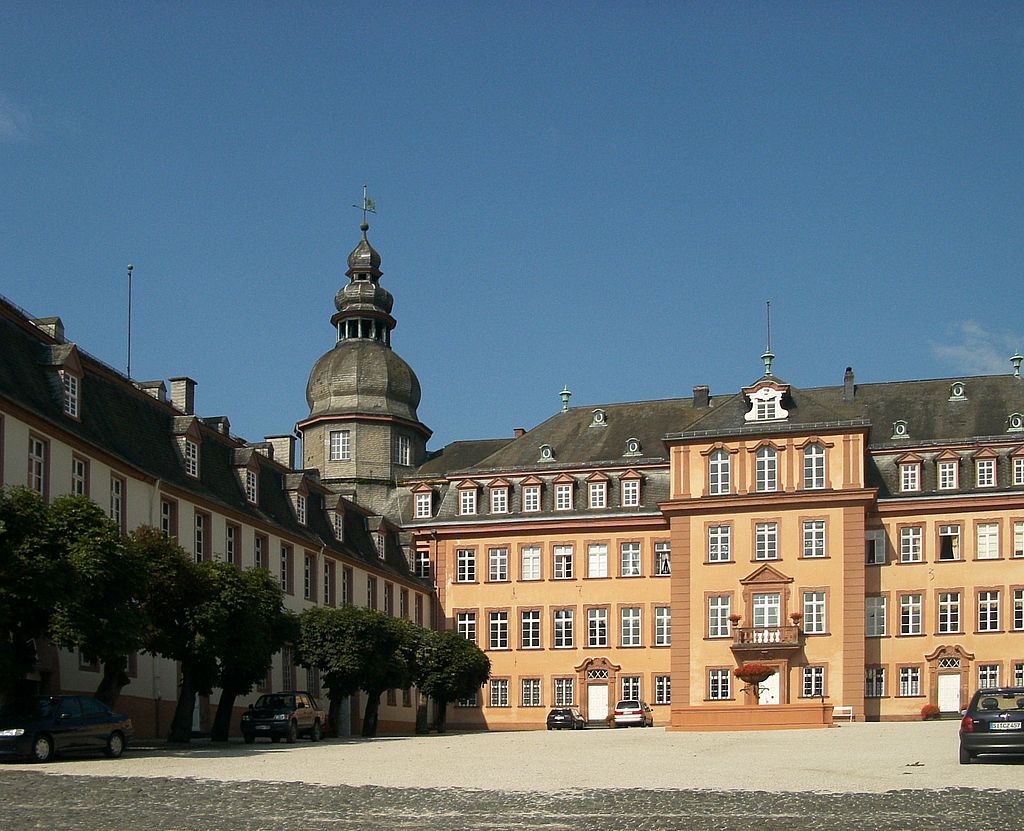
Le Puy

It is hard to believe that the river valley meandering nearby is once again the Loire, so very far from what we normally think of as the Loire Valley—the river in fact originates deep in the mountains of the south, one province over from here, formerly known as the Vivarais, now the department of the Ardèche.

The Vivarais was ultimately my destination for this trip. It was never really a fully fledged province of France, but a sub-province of Languedoc, though, being so far from the provincial capital, Toulouse, and separated by some pretty rugged terrain, it enjoyed quite a bit of autonomy. It had originally been the territory governed by the Bishop of Viviers, which gave it its name, and retained its own local governing body, known as the estates, up to the Revolution. The estates included representatives of the towns, the local clergy, and of course the local nobility, and it was these nobles that fascinated me, as they had a system of rotating membership drawn from the barons of the Vivarais. Twelve of these barons took turns in rotation acting as hosts for the annual meeting in their château, a position of honour and an expression of their local authority. In the later 17th century, the Lorraine-Guise family held three of these rotating baronies. As my research was developing, I thought it pretty extraordinary that such a small region so far from either the court at Versailles or the normal Guise power bases in Champagne or Normandy could draw their attention, so I came here to poke around in the archives, held in the town of Privas, the capital of the Department of Ardèche, as the Vivarais was renamed during the Revolution for the river that drains most of the area, flowing down from the rocky hills known as the Cévennes through narrow gorges into the Rhône River and from there down to the Mediterranean.

the Vivarais is the area within the circle just to the right of the orange

As I drove across these ridges into the Ardèche I could immediately sense I was in a different ecosystem—a lot more pine trees, much less undergrowth, a brighter, more yellow light, and certainly a different smell. I return to the south of France most every year now, and always immediately know I have arrived from this smell: a mix of pine, lavender and the sea. As the afternoon progressed, I drove down along a road high above the deep Ardèche river valley and passed by the castle of Montlaur, one of the places I was here to study, as it was one of the baronies owned by the Guise. The 12th-century castle, already a ruin by the 18th century, is still inspiring, perched on top of a ridge dominating its surroundings.

Montlaur

The Montlaur family controlled this valley for centuries, before they died out and passed their extensive properties to the princes of Harcourt, a branch of the Guise family. This road also passes by the equally impressive ruins of the château de Ventadour, though the main castle (with the same name) of this ducal family is further away in the Limousin. I arrived late in the day in Privas, set myself up in a hotel—thank goodness my French was getting pretty good by this point, since English was not a working language in these parts—and got ready for a week in the archives. The town is small and built on many levels which allows for lots of picturesque vistas, restaurants on terraces, and small squares with fountains. The town also has loads of shops selling the local specialty, crème de marrons, made from chestnuts. I highly recommend it. Yum.

With Privas as a base, I took several short (and one very long) driving trips in the afternoons or long evenings (one of the pleasures of travelling in mid-June) after working in the mornings in the archives. One day I drove to the nearby town of Aubenas, a bit larger than Privas, and dominated by a large castle in the centre of town, which also passed from the Montlaur family to the Harcourts. It too originated in the 11th or 12th century, but was mostly built in the 14th century—unlike the others, it is not a ruin, and you can still see how it has been modified in multiple styles over the centuries, from the medieval round towers, to a Burgundian style coloured tile roof from the Renaissance, to neo-Classical elements added later in the doorframes and windows. Today it is the town hall of Aubenas and houses a collection of portraits, including some of my Harcourt princes and princesses.

Aubenas

From here I took a tiny road that followed the Ardèche river, on which was set the castle of the Vogüé family, down in the valley rather than perched up on a hill. This family of local nobles originally held none of the baronies of the Vivarais, but by the end of the 18th century, through inheritance or purchase, they acquired four of them, and probably were on the road to becoming a ducal family themselves when the Revolution broke out. They remain in existence and are still a presence in the region, and open their château to tourism.

Vogüé on the Ardèche

I then completed that day’s drive by doing a circle, along small roads, taking in the small town of St-Remèze—another of the rotating baronies held by the Harcourts—then down into the gorges of the Ardèche, today an extremely popular holiday destination for adventurous boaters, mostly Dutch.

gorges of the Ardèche

Another day, I decided I wanted to see the other half of the Montlaur inheritance which lay across the Rhône, in the former province of the Dauphiné. This was a long drive, crossing the huge, broad, very blue-green-grey river at Tournon, then cross-country to the tiny village of Maubec, high up on a plateau above the river Bourbre which flows northwest towards Lyon. This plateau is called the ‘Terres Froides’ and it does seem it would be pretty chilly and quite arid. It’s primarily cattle country, and the dairy and wheat products produced here made the marquisate of Maubec a good acquisition for the Harcourts (in contrast to the dry and rocky unproductive lands back across the Rhône). The remains of the château of Maubec were hard to find, and I had to walk through a playground and people’s yards, dogs barking, just to find barely a wall standing.

Maubec

It was starting to get late, so I hopped back into the car and down into the valley floor where I got on the motorway and headed south. It was a Sunday evening, and the gate was up as I drove in, so I assumed that maybe you don’t pay tolls on Sundays. I drove for hours and hours, deep into the night, till I left the motorway at Valence only to discover from the attendant in the toll booth that it was my fault (naturally) that the other end of the motorway hadn’t had a barrier from which to take a ticket. How to explain this in broken French to a man at about midnight?  I had to pay a huge sum, a ‘full fare’ since I couldn’t prove where I had entered the motorway. Sheesh.

The next day I had another argument in bad French with the woman (who I remember wore a white vest, what you might call a ‘wife-beater’) at the hotel in Privas. She had promised I could pay with a credit card when I checked in, but then said I couldn’t when I tried to leave. Her answer to my pleas was simply to do the French shrug, lower lip extended, and walk away. I was so angry, and now seriously short of cash (for complicated reasons I won’t bore you with, I had no bank account in France, and cash machines back then wouldn’t let you use a foreign bank card). It was very hot. Before I left the Vivarais, I wanted to stop and see two more of the rotating baronies: firstly, the absolutely cute village of Largentière, which was the barony held by the bishop of Viviers himself, built on several layers, and with tiny alleyways—much of the village centre is inaccessible except on foot, which made it quite pleasant. The second, further along the road, was Joyeuse. This was the seat of an ancient regional noble house with that same name, who rose swiftly to the very heights of the aristocracy in the late 16th century, as favourites of King Henry III, and were created dukes, in 1581. Their success was brief, however, and only lasted a generation—the lands passed to Henriette-Catherine de Joyeuse who married the Duke of Guise. Her daughter, Marie, was the last of the family, and though I do not think she ever came this far south, she certainly was interested in the town. Although the château is nothing to write home about (odd and blocky), the new church she had built in 1675 is quite lovely. Together, château and church dominate the high part of the town, which, like so many towns across the south of France is built on a hilltop. Marie de Guise’s investment in a new church partly helped me see why her family was so interested in this region—for a long time it had been a haven, due to its rugged isolation, for Huguenots, and Marie was certainly keen to perform her family’s main role in the history of France in stamping out heresy.

Joyeuse castle and ramparts
the ‘new’ (in 1675) church of Joyeuse

That afternoon I set out for a long and a bit arduous cross-country drive, up a long windy river valley deep into the Cévennes, into the next province over from the Vivarais, the Gévaudan, and found a place to stay overnight in its chief town, Mende. Mende was historically the seat of another powerful local bishop, so prevalent across southern France in the absence of a strong monarchical government. That evening I witnessed the oddity of a parade featuring an ‘American style’ marching band, and decided to sample the cuisine I had heard about from French foodies: gésiers, or gizzards. Sliced very thin and served on a salad, my tongue said very nice, but my stomach almost immediately rejected it. This is unheard of for me; I generally like everything. But the meal came back up almost as soon as I returned to my hotel room—from the balcony of which I could still watch the marching band. My lasting memory of Mende is thus, unfortunately, a little weird.

a salad with gesiers and pears

The next morning I continued westward, following the River Lot for a stretch, then crossing over a causse, a high arid plateau, to come to Rodez, the capital of the region that used to be called the Rouergue. Like the Vivarais, this province also had twelve baronies that together administered the region. One of these baronies was Panat, and I headed there for a lunch date on a sunny terrace in an ancient house just below the château (in which the count still lives). It was great to see people socially again, after so many days on the road solo—this was the summer home of an eminent professor of history, Orest Ranum, and his amazing wife, Pat. He had written about 17th-century France for many decades while at Johns Hopkins University in Baltimore, but it was actually she I wanted to talk more with, since she had done extensive research on the Guise family, as a musicologist specialising on Marc-Antoine Charpentier, the composer who worked for many years for Marie de Guise. I had sent them some of my writing in advance, and was thrilled then immediately dispirited when Orest praised my work as exceptional, then predicted I would struggle to land an academic job since I had chosen such an unfashionable topic as the French nobility. Pffft!

Panat, in the Rouergue

The afternoon was golden, and I drove south and west, past Albi and into the broad central plain of western Languedoc. I remember it was vividly blanketed in yellow—sunflowers. I drove around the perimeter of Toulouse and stayed overnight in an unmemorable roadside hotel (often on this, and subsequent, trips, I stayed in one of those wonderful French hotels, like Formule Un, that cost almost nothing, and deliver almost nothing in terms of comfort, but are always reliable and clean).

In the morning I headed due west to my next destination, Auch, the capital of the Department of Gers which includes the ancient County of Armagnac, and whose archives I next wanted to peer into. Armagnac is more than just the name of a local brandy, it is also the name of a dynasty that dominated politics in the southwestern corner of France—Gascony—for much of the middle ages. They gave their name to one of the factions that tore the Kingdom apart in the early decades of the 15th century (and they often allied with the English king against the French king to do so); but by the end of the century, it was they, not the French monarchy that disappeared from the corridors of power, and their lands were redistributed to more loyal French nobles. My interest in the region comes in two centuries later, when the title Count of Armagnac was conferred upon the Count of Harcourt (one of my Lorraine-Guise princes), but all the standard sources indicated that it was merely an honorific title, not having much if anything to do with the old Gascon county itself. So I spent a morning in the archives in Auch—such a different experience to the very modern regional archives I had worked in in Paris, Rouen or the previous week in Privas: these were located in the back room of an old church, and the two ancient curators seemed extremely surprised to see anyone at all, much less an American phd student. Instead of insisting I wear white cotton gloves, they brought tea and even a piece of cake to the desk where I was working. I didn’t find much in the archives here, except that southern French hospitality was very different to what I had experienced in the north, but I did find clear evidence that the Count of Harcourt had very real rights and revenues from his new southern county.

Feeling pleased, I splurged for a nice lunch on a terrace in the centre of town. Gascony is known for its culinary richness, and Auch in particular is known as a real centre of gastronomy. I don’t recall precisely what I ate that day, but all these years later, I can still recall the absolute lusciousness of the rabbit dish. I have been a convert to southern cooking ever since. I got back in the car and headed north through Armagnac country, stopping briefly in the town of Condom, which, not only being a funny name for English-speakers, was also the site of a bishopric held by one of my Lorraine princes (every stop has a purpose). Condom was the site of one of those ancient fortified abbeys repeatedly attacked and pillaged by Vikings and Saracens in the 9th and 10th centuries. In the 14th century the abbot was raised to the status of a bishop by one of the Avignon popes and it remained a powerful Catholic presence in a region often dominated by Huguenots, but it disappeared as a separate diocese during the Revolution.

Condom

Continuing north, I passed Agen and Bergerac where I crossed the Dordogne and stopped for my last overnight stay in Périgueux, the capital of the province of Périgord, part of Aquitaine. Driving through this territory, the margins between the coastal plain to the west and the more hilly Massif Central of the Midi to the east you note the presence of numerous castles, logically, since this borderland was fought over for so long between the kings of England and France in the Hundred Years War. This route was also one of the key pilgrimage pathways from northwest Europe towards Santiago in Spain. The next day I continued up this route across the Limousin (and its capital Limoges), then joined the motorway for my final long trek back up to Paris. In a subsequent driving tour I explored more of Aquitaine and the west of France—the subject of a future blog post—but my time for this trip was up. My last stop was a lunch break in Orléans, where I re-crossed the Loire. I went into the centre of town and had a look at the cathedral which dominates one end of its central broad avenue, named for Jeanne d’Arc, whose heroics at the siege of Orléans in April 1429, helped to turn the tide of the Hundred Years War in France’s favour, a fact the tourist stands, t-shirts and snack shops never let you forget.

Jeanne d’Arc at the siege of Orleans, by Lenepveu (1880s)
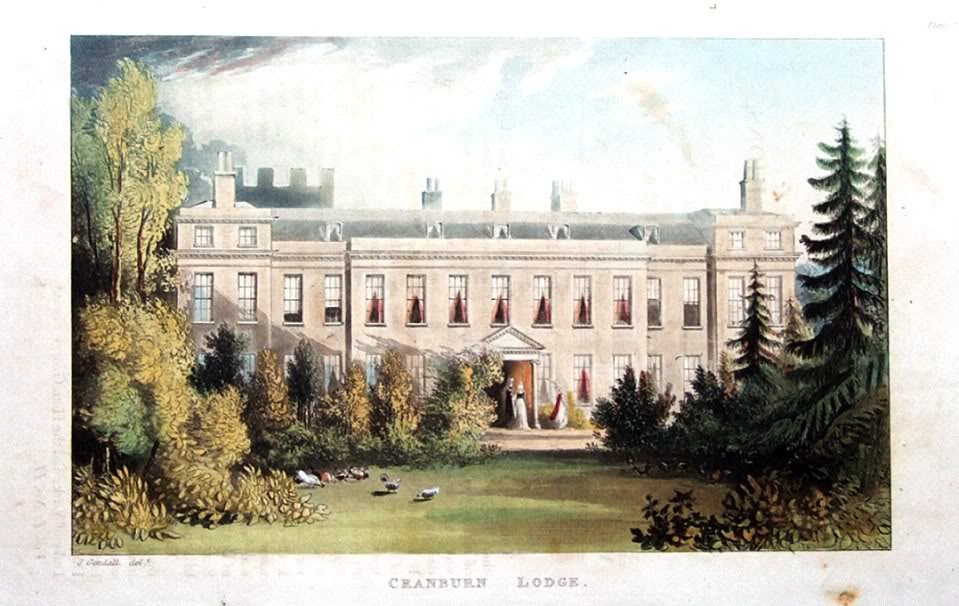
The final stretch was over the very flat and wheat-filled plain north of Orléans known as the Beauce. The modern N 20 highway follows the path of the ancient route to Paris, that passes between the narrow gap—well-fortified—at Montlhéry, and eventually back up to the Porte d’Orléans, one of the major gateways into the city.

La Chaise Dieu

(photos from Wikimedia Commons, my own, or other open source sites)
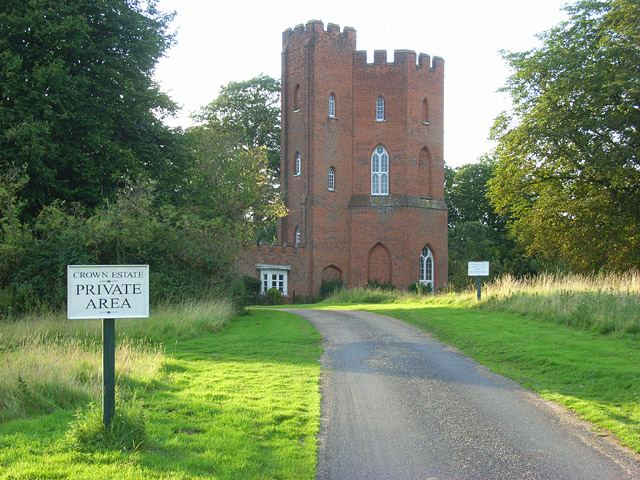
Dukes of Westminster

What do rural Cheshire and the most fashionable neighbourhoods in West London have in common? Both have been part of the extensive portfolio of the Grosvenor family for centuries. The dukedom of Westminster may be relatively new (1874), but their development of Mayfair and Belgravia stretches back to the early 18th century, and their control of extensive estates in Cheshire much, much further, to the 12th century or before. As a dynastic history, their story is a good example of the enduring marriage between the English provincial gentry and the economic and political power of London. For centuries, the Grosvenors were not that different to the hundreds of county families who dominated the shires of England for most of its history; but due to a fortunate marriage in the late 17th century, and savvy business planning in the century that followed, they were drawn into the first rank of Britain’s power elite, so much so that—according to the legend—Queen Victoria felt compelled to make her richest subject a duke so that she would not be embarrassed sitting down with him for tea.

the tomb of the 1st Duke of Westminster in Eccleston, Cheshire, with his Garter banner that nicely illustrates the union of Cheshire (the golden wheatsheaf) and London (the arms of the city of Westminster)

The connections between London and Cheshire are evident in the street names of Mayfair and Belgravia: Eaton Street in particular is named for the manor that has been the seat of the family since the middle of the 15th century. But the Grosvenors are not ‘native’ to Cheshire: the family name is unmistakably of Norman origin as descendants of the great (or fat) hunter, probably a master of the hunt in the service of the dukes of Normandy. But the precise details of their early years in Cheshire are hard to pin down. The great flat plain south of the River Mersey that had been dominated by the Roman military camp, or castrum, which gradually became the city of Chester was a key area the Normans wanted to control after their conquest in 1066. The earlier full name of the city, Castrum Deva, reflects the importance of the River Dee as a border between English and Welsh territories, and one of William the Conqueror’s chief lieutenants (and probable kinsmen), Hugh ‘Lupus’ (the wolf, or ‘le Gros’ the fat) was named Earl of Chester, with extensive military and administrative powers. According to tradition, the first Grosvenors descended from a nephew of this Hugh Lupus, and were given lands along the banks of the Dee to help keep it secure for Anglo-Norman rule, though the first records indicate their lands were at Little Budworth, a short distance to the east. It wasn’t until 1450 when Ralph Grosvenor married Joan Eaton and established his base at her estates at Eaton, on the west bank of the Dee a few miles south of Chester. Over the next century, the family married, as expected, with the major county families of Cheshire—Fitton, Stanley, Legh, Norris, Venables—but also across the Welsh border into Flintshire. They frequently acted as mayors of Chester, sheriffs of Cheshire, or members of Parliament for the county.

One of these, Richard Grosvenor, married three times within this social set; his wives had names familiar to those who live in the northwest: Cholmondeley, Wilbraham and Warbuton. His prominence in the House of Commons as MP for Chester earned him a baronetcy in 1622. He was a supporter of the Crown in the Northwest, and served as both Sheriff of Cheshire and Sheriff of Denbighshire, in Wales. His son continued the family’s royalist support when many others of the county were turning against Charles I, and he extended his influence westward into Wales through marriage to a Mosytn heiress, with lands in Flintshire. This was important, as the mineral resources (coal, lead, stone) in the mountains of North Wales became a great source of revenue for the Grosvenors in the later 17th century. This wealth allowed the 3rd Baronet, Thomas, to rebuild Eaton Hall in the 1670s, the first in a series of great houses built on the site.

The 1670s Eaton Hall and its gardens, c1708

His increased wealth and stature may also have encouraged him to pursue a marriage outside the normal spheres of the Cheshire gentry. Mary Davies was the daughter of a scrivener (scribe) and lawyer of London, who, at a young age, was already heiress to the Manor of Ebury, in Middlesex. Ebury was an ancient manor formerly held by the Abbey of Westminster; confiscated by the Crown in 1530s, it was given to various people in succession, including the Earl of Middlesex, who sold it to Hugh Audley, one of the richest men in England, who then passed it to his great-great-niece, Mary Davies. She married Sir Thomas Grosvenor in 1677, when she was only 12 (and he 21). The Ebury estate consisted of about 500 acres on the north bank of the Thames in what was then mostly undrained, swampy land west of the town of Westminster, through which ran the lower courses of the River Tyburn.

the Thames valley in London in physical contours: Pimlico is clearly labelled
Mary Davies, Lady Grosvenor

Mary Davies, Lady Grosvenor, is only normally noted in two other contexts in the histories of the family: one that she converted to Catholicism in about 1695, and the other, that she went mad about the same time—I suspect these are just two ways of telling the same story according to the biases of the time… In any case, she lived a long life, until 1730, by which time her three sons, Richard, Thomas and Robert (the 4th, 5th and 6th baronets in succession) had begun developing the northern parts of Ebury Manor into a new area of fashionable residence they called Mayfair, centred around Grosvenor Square. Several streets were laid out on what had been the site of the annual May Fair, and were given royal approval by the creation of a new parish and a new parish church, St. George’s Hanover Square, which became one of the most fashionable places to have a society wedding in the 18th century. Grosvenor Square was the site of many of London’s most prestigious mansions, and would be the home of the embassy of the United States from 1960 to 2018.

St. George’s Hanover Square
a typical street in Mayfair

The son of the 6th Baronet, Richard Grosvenor, naturally became increasingly involved in politics as his interests in the affairs of London grew. The family MPs had traditionally been Tories, and Sir Richard was for the most part a supporter of the Tory ministries of the 1750s, though he supported the Whigs in their ambitious pursuit of a conclusion to the Seven Years War under Pitt the Elder, and was moved into the House of Lords as Baron Grosvenor of Eaton in 1761. Twenty years later, he again supported a Pitt (this time the Younger) and was again rewarded, now with an earldom, in 1784. The 1st Earl Grosvenor did not neglect his northern duties, however, and married a Vernon from Staffordshire, served as Mayor of Chester in 1759, and in the late 1760s acquired the manors of Belgrave and Eccleston which bordered his Eaton estate. The marriage was not long a happy one, and within five years Henrietta, Lady Grosvenor, was embroiled in a scandalous affair with the King’s younger brother, the Duke of Cumberland. Her husband sued the Duke and was given significant damages; the couple separated and she remained in London as part of the fashionable set while he returned to Cheshire to develop his estates, and in particular his passion for horses.

the first Earl Grosvenor, by Reynolds

Their son, the 2nd Earl Grosvenor, would turn his attention once again to London, and develop the area a bit further to the west, named Belgravia in honour of the family’s newer property in Cheshire. As was seen in the recent television drama of the same name, this residential area designed by Thomas Cubitt became the centre of aristocratic life in the Regency period of the early 19th century. The new royal residence, Buckingham Palace, lay between Mayfair and Belgravia, and formed an effective beating heart of the new aristocratic quarter of west London. Further south, nearer the river, was Pimlico, developed as a residential area a bit later. The Earl moved his own London residence from Millbank House (on the Thames) in 1805 to Mayfair, to a house he purchased from the Duke of Gloucester which he renamed Grosvenor House. This is on Park Lane, the road bordering Hyde Park, one of the best addresses in the city. A massive colonnade was added later in the century, and in 1889 Grosvenor House became one of the first electrified buildings in the country. It was sold in the 1920s and mostly demolished, to be reborn as the Grosvenor House Hotel which remains today in all its splendour.

the colonnaded entrance to Grosvenor House, Park Lane

The 2nd Earl also turned to rebuilding Eaton Hall in Cheshire from about 1803, engaging one of the Prince of Wales’s favourite architects (notably in Brighton), William Porden, to build a neo-Gothic mansion of princely proportions—described by contemporaries as either epic and wondrous or in monstrously bad taste.

the Porden Eaton Hall

As a politician, the 2nd Earl also started out as a Tory then shifted towards the more reform-minded parties, supporting Catholic Emancipation and laws to benefit the poor, and as part of the coronation honours for William IV in 1831, was created Marquess of Westminster, recognising that his family was now a major player in London. The arms of the city of Westminster were added to his ancient coat-of-arms (a golden portcullis, the golden cross of St. Edward, and two Tudor roses). Nevertheless, the Marquess continued the family tradition of serving as Mayor of Chester, and for many years Lord Lieutenant of Flintshire. In 1794, he had married the heiress of one of the other leading aristocratic clans in the northwest, Lady Eleanor Egerton of Wilton, and their second son would later adopt the Egerton surname, and inherit the title Earl of Wilton and the estates centred on Heaton Park (now in Greater Manchester—see Dukes of Bridgewater).

the 1st Marquess of Westminster

The 1st Marquess of Westminster died in 1845 and was succeeded by his eldest son, Richard (who had been known for most of his life by the courtesy title ‘Viscount Belgrave’). He completed the family’s political transition to the Whig party and served in the government of Lord John Russell as Lord Steward of the Household in 1850. His younger brothers were also political, though divided: Thomas Egerton, Earl of Wilton as a Tory, and Lord Robert, a Whig who was passionate about solidifying the Church of England through reform (and consequently opposed Irish home rule). Lord Robert served different administrations in the 1830s-40s, as Comptroller then Treasurer of the Household, and was awarded his own barony in 1857, named for the family’s original London property, Ebury. The Ebury barons, with their seat at Moor Park in Hertfordshire, would continue into the 20th century, and inherited the Wilton earldom in 1999 (though today they live in Australia). Continuing the family’s spread of properties across England, the 2nd Marquess acquired and rebuilt Fonthill Abbey in Wiltshire, and he built schools in Cheshire and donated land in the city of Chester to form Grosvenor Park.

The 3rd Marquis of Westminster succeeded his father in 1869, and was soon after raised once more in the peerage, to the top rank, a dukedom, in the resignation honours requested by Gladstone in 1874. The 1st Duke of Westminster continued to develop his London properties and acquired a new rural residence to escape the filthy city—one of the most splendid of all, Cliveden, in Buckinghamshire, purchased from his mother-in-law (who was also his aunt), the widow of the 2nd Duke of Sutherland. Cliveden would become more famous in the 20th century as the country house of the Astors (and the setting for the Profumo Scandal in the 1960s). The marriage of Hugh Lupus Grosvenor—taking his name from the ancient family founder—to Lady Constance Leveson-Gower, his mother’s niece, is illustrative of the closing of ranks in the Victorian era—in fact the second son of the Leveson-Gower family had also inherited large estates from the Egerton family and taken the name. The powerful ducal families of northwest England wanted to ensure their wealth and power stayed within the extended family circle, which also included the Cavendishes in Derbyshire and Yorkshire, and the Percys further north. It thus seemed to make sense to move the Grosvenors up into this world of dukes, and it didn’t hurt that the 1st Duke of Westminster’s annual income had reached about £200,000 (about 25 million today).

the 1st Duke of Westminster, by Walker, Chester Town Hall

Aside from his palatial residences at Grosvenor House in Mayfair and Cliveden, the 1st Duke yet again decided to rebuilt Eaton Hall in Cheshire. He employed a man locally grown and educated, Alfred Waterhouse, whose fame was established through his designs for the Manchester Town Hall, the Natural History Museum in London, and various university buildings in Manchester, Liverpool and Leeds. His designs were also inspired by the Gothic, but much more restrained than the previous building at Eaton, and were seen by most as a lot more tasteful, and certainly more austere (described in once source as ‘Wagnerian’). The buildings included a formal wing, a private wing, a clock tower, a private chapel, and stables that would rival those of any European monarch.

the Waterhouse Eaton Hall

The Duke also built numerous smaller buildings on the estate—lodges, offices, a garden house, a riding school—and even a small railway line to transport supplies from the main line into Chester. He served as Lord Lieutenant of Cheshire and Lord Lieutenant of the newly formed County of London, from 1888. He supported government reforms and the movement for temperance (shutting down several of the pubs on his own estate), which may seem unusual considering that his other great passion was horse-racing (or maybe I am being judgy?). The 1st Duke of Westminster is known for his horses (and his only formal government appointment was in fact Master of the Horse, in 1880, though this was by now just a ceremonial role). His celebrated champion thoroughbreds won the Derby four times, including the most famous horse of the 19th century, ‘Bend Or’, who won in 1880.

Bend Or, in the Westminster racing colours

This horse’s curious name recalls the most infamous lawsuit in the history of heraldry, from 1389, when two families, Grosvenor and Scrope (of Bolton Castle in West Yorkshire), both claimed the same simple coat-of-arms, a gold diagonal strip (a bend or) on a blue (or azure) field. The Scrope family won the lawsuit, forcing the Grosvenors to adopt their golden wheatsheaf (a ‘garb’ in heraldic language, an ancient symbol of Cheshire), but had fallen into obscurity, so in a way, this reclaiming of the bend or symbolism was a victory long in coming. The 1st Duke’s grandson, born the year before the Derby win, was always known by his nickname ‘Bendor’, and in recent years, another member of the family (from the Ebury line) who has moved into prominence is the presenter and art historian Bendor Grosvenor.

a bend or
a garb or

By the turn of the 20th century, the Westminster family was enormous—the 1st Duke had married twice and sired twelve children, and three of his sons had sons of their own. The heir, ‘Earl Grosvenor’, predeceased his father, so young ‘Bendor’ took over as 2nd Duke and ruled over the Grosvenor estates (estimated in 1900 at about 6 million pounds, or over 700 million in today’s money) for the next half-century. As a young man, he served in the Boer War and World War I, and was active in sport, notably competing in the 1908 Olympics in motorboat racing. In the 1920s, he had a highly visible ten-year affair with Coco Chanel, which took on a darker shade in the 1930s as his interests were increasingly drawn to the far right and anti-Semitism, and there were rumours of his attempts to use Chanel’s connections with the Nazis to broker a deal with Hitler in the midst of World War II.

the 2nd Duke and Coco Chanel

The 2nd Duke died in 1953. Despite having married four times, he sired only one son who lived for five years, and two daughters. The elder, Lady Ursula, married twice and had children, but the younger, Lady Mary, never married, and despite the lack of a ducal title, managed to keep up the princely lifestyle of her forebears, as manager of large estates in Kenya, South Africa and the Scottish Highlands, until her death in 2000. She was like her father in her passion for sport, and was known as an accomplished racecar driver.

In 1953, the ducal title and the bulk of the estate therefore passed to William Grosvenor, already a man in his late fifties, who had lived with a caretaker all of his life due to brain damage incurred at birth. When he died in 1963, the title moved to still another branch of cousins, two brothers, Gerald and Robert, the 4th and 5th dukes. Gerald had had a long military career, as lieutenant-colonel, then a Yeoman of the Guard from 1952. Once he became duke he set about bringing the Grosvenor Estate more up to date—expanding holdings into North America and Australia and focusing attention on the decaying Waterhouse buildings at Eaton. It was decided to demolish most of the grand old buildings, leaving the clock tower, the chapel and the stables (which today houses the Grosvenor museum and a carriage museum), and building in its place a more modest house, though this was not built until the early 1970s, once the baton had passed from the 4th Duke to the 5th. This house, what I reckon is the fifth house on the site, was designed by the architect John Dennys, and was not seen as a success by those who viewed it, though I’d say credit should be given for trying to forge a new modern style for the English country house.

the Denny Eaton Hall

Waterhouse fans were outraged. This look did not last long, and the house would later be clad in a new pink façade in the 1980s, in what is described as ‘French château’ style (hmmm). The result is only a little better, especially with the stark contrast of the towering chapel and stable buildings. On its own, I suspect the current house would look cute, sort of bijou, but the juxtaposition of old and new struck me as quite incongruous when I visited on one of the rare open days (even then, only the gardens and the stable block are open).

the current Eaton Hall

The earlier life of the 5th Duke of Westminster gives a slightly different twist to this story so far: born in 1910, he was quite far down the line of succession, and concentrated his political interests on his mother’s estates in Northern Ireland, living at Ely Lodge on Lough Erne and serving as MP for Fermanagh and South Tyrone, 1955-64, and High Sheriff of County Fermanagh. As a result, his son spoke with a Northern Irish accent which certainly made him stand out in Westminster. Nevertheless, the young 6th Duke, who took over from his father in 1979, firmly established himself in London and in the Northwest—in fact more so than most of his predecessors, acting as chairman of a number of local charities in Cheshire and Liverpool, and chancellor of two of the newest universities in the country, first of Manchester Metropolitan (where I work) from its inception as a full-fledged university in 1992, then of Chester University when it too attained university status in 2005. He also headed up the committee that organised the 2002 Commonwealth Games in Manchester, and presided over a number of organisations concerned with regulating the hunt and preserving the environment. He also added to the family’s landholdings in the north by acquiring the Abbeystead estate, near Lancaster, with 18,000 acres bordering on the Forest of Bowland. It was quite unexpected when he died suddenly there in August 2016.

the 6th Duke of Westminster

The 6th Duke had reconnected the Grosvenor family with the Northwest of England, but he and his two sisters also connected their family more closely with the higher aristocracy (since several of his predecessors had married young when they were still mere ‘gentlemen’, the now numerous dowager duchesses—there were three in 1979—came from more modest backgrounds; the 2nd Duke’s widow Anne outlasted them all, passing away in 2003!). One sister married the Duke of Roxburghe, and the other married the Queen’s first cousin, the Earl of Lichfield, the photographer. The Duke’s own wife, Natalia Phillips, while herself untitled, is a close relative of the Mountbattens, through their shared Romanov descent. The children of the 6th Duke and Duchess were therefore raised in close proximity the royal family, and there are various godparentages in both directions. One of the families brought into close contact this way are the Van Cutsems, one of whom married the Duke’s eldest child, Tamara, in 2004. The second daughter married media royalty, history presenter Dan Snow, while the much younger two children, Hugh and Viola remain unmarried. It was Hugh who at the tender young age of 25 suddenly became the 7th Duke of Westminster, and one of the richest men in the world, with a fortune estimated at about 10 billion pounds. Much of this fortune is still based in London and Cheshire properties, but the Grosvenor Group has expanded globally, and includes a surprising number of office towers in San Francisco and Vancouver, and shopping malls in Sweden, France, Shanghai and Liverpool. The blending of aristocracy and commerce continues.

the gates of St. Mary’s, Eccleston, burial place for most of the Grosvenors

(images from Wikimedia Commons or my own photos)

Dukes of Cadaval

Dukes can be dangerous. Most European monarchies have suffered at one point or another from over-powerful uncles with ducal titles: Bedford and Gloucester for Henry VI of England, Burgundy and Anjou for Charles VI of France, or those more distantly related to the king, usually known as the princes of the blood. In some cases, these are the strongest supporters of the monarchy, but in others they can be its fiercest challengers. In the case of Portugal in the 17th century, the dukes of Cadaval were able to help make a king, João IV, but also to unmake one, João’s son Afonso VI. Yet riding high can also mean having a great fall, and after having been the largest landowners and most powerful aristocrats in the 18th century, the dukes of Cadaval backed the wrong horse in the civil war of the 1820s and spent much of the rest of the century in exile.

Nuno Álvares Pereira de Melo, first Duke of Cadaval

The dukes of Cadaval, or the House of Melo (more fully Álvares Pereira de Melo), were a junior branch of the House of Bragança, which was itself an illegitimate cadet branch of the royal dynasty of Portugal, the House of Avis. Afonso de Portugal, natural son of King João I, was created Duke of Bragança in 1442 by his half-brother, the Duke of Coimbra acting as regent for the young King Afonso V. He was already a wealthy man, having married the heiress Brites Álvares Pereira, daughter of the Constable of Portugal, the famous Nuno Álvares Pereira, a general in the Portuguese wars of independence of the 1380s and ultimately canonised by the Catholic Church (the ‘Santo Condestável’).

the Constable of Portugal

The second Duke of Bragança added to this by marrying Joana de Castro, heiress of Cadaval, a large estate in the hills to the north of Lisbon. They had four sons who dominated the court and administration of Afonso V in the 1470s. The youngest of these, Álvaro, made yet another great marriage to an heiress, Filipa de Melo, Lady of Ferreira de Aves. He founded a new lineage who took a new compound name, Álvares Pereira de Melo, lords of Ferreira, Cadaval, Melo, Tentúgal and so on. These lands extended the reach of the family up into the more northerly parts of the Kingdom, mostly in the province of Beira, from the highlands (Melo and Ferreira) to the lowlands nearer the coast (Tentúgal). Álvaro had been head of the judiciary in Portugal, as Grand Chancellor, but fell from favour—along with most of the great magnates—in the new reign of King João II (r. 1481-95), went into exile in Castile, and became one of the chief counsellors of Queen Isabella, who compensated him for his lost estates in Portugal with large estates newly conquered in the south of Spain. He also increased his family’s riches significantly by backing Christopher Columbus in his dispute with the Crown over his rights to revenues from new discoveries, in exchange for a grant of 10% of the profits from the New World. At the start of the new century, he was recalled to Portugal by King Manuel and restored to his lands and offices. Having two sons, he was able to divide his patrimony and his interests, between Portugal and Castile, with the latter branch becoming even closer to Columbus by marriage to his grand-daughter, and starting a new dynasty in Spain, Colón de Portugal, dukes of Veragua—a topic for another blog post.

The elder son, Rodrigo, remained in Portugal and was created Conde de Tentúgal in 1504 (with the right to be addressed by the king as ‘nephew’), then Marquês de Ferreira in 1533. Like most Portuguese noblemen, he took part in the great overseas expansion of the 16th century, acting as governor of Tangier. This interest in North African affairs eventually led to disaster, however, with the battle of Alcácer-Quibir (al Quasr al-kibr) in 1578, in which King Sebastião, intervening in a Moroccan succession dispute, lost his life, along with much of the high Portuguese nobility. His death ultimately ushered in the long period of Habsburg rule in Portugal, from 1580 to 1640.

It is in 1640 where the story of the dukes of Cadaval really takes off. The Portuguese nobility and urban elites had been bristling under the rule of the Habsburgs from Madrid for a while, and looked to the extant branches of the former ruling house for leadership: the senior-most of these, headed by the Duke of Bragança, was encouraged by the next in line, the Marquis of Ferreira, to proclaim himself king. And in 1640, while the armies of Philip IV of Spain were otherwise occupied with fighting in the Thirty Years War in the Rhineland and the Low Countries, and simultaneously facing a serious rebellion in Catalonia, they made their move, led by a group of forty noblemen in Lisbon known as the ‘Conjurados’. In early December, Bragança was proclaimed king as João IV in Lisbon, followed soon after by a similar proclamation by Ferreira in his family’s regional power base of Évora, the chief city of the Alentejo Province, an important region to secure, as the borderlands facing Castile. At the formal coronation of the new king, Ferreira bore the Sword of State as Constable of Portugal.

the coronation of King João IV–the Marquis of Ferreira holds the sword of state

The next two decades were a struggle to maintain this new independence; Francisco de Melo, Marquis of Ferreira was an important part of this, making use of his international standing to act as ambassador to France in 1641 to secure crucial French support against Spain, while at home he helped run the new court as Grand Master of the Household, and in the field he commanded the cavalry in battles along the eastern frontier. It is interesting to note—though not that unusual in the history of grandee families, especially those with properties on or near border zones—that there were two men of roughly the same age, cousins, who were both called Francisco de Melo, and while the Marquis of Ferreira is remembered as one of the chief supporters of the Portuguese Restoration, the other, the Count of Assumar, was one of the leading generals and statesmen in Spain, commanding armies in Flanders, then serving in succession as viceroy of Sicily, the Low Countries, and Catalonia, and representative of the King of Spain at the peace talks in Westphalia in 1648. By this date, the year of the end of the Thirty Years War, Ferreira was dead, but King João wished to honour him, and named his son, Nuno Álvares Pereira de Melo, first Duke of Cadaval, in April 1648, as part of the celebrations of the birth of a second royal son, Dom Pedro.

the Marquis of Ferreira, father of the 1st Duke of Cadaval

The new dukedom gave this family a rank enjoyed by no other in Portugal, and was accompanied by recognition that they were in line of succession to the throne, should the line of Bragança fail. Cadaval was a large territory, consisting of about twenty villages, and the Duke set about constructing new residences to match his status. One of these was the Palace of Muge, on the Tejo northeast of Lisbon (originally a royal residence, it was a property acquired by his marriage to Maria de Portugal-Faro, Condessa de Odemira, from another branch of the House of Portugal). This estate, its palace destroyed by the great earthquake of 1755, is still run by the family, now as a major Portuguese winery, the Casa Cadaval.

The first Duke also enlarged a house nearer to Lisbon, known as Pedrouços, in the area of suburban villas along the Tejo waterfront west of Belém, which later became a sometime royal residence, and a fashionable seafront retreat in the early 19th century. Part of the estate rising on the hillside above retains a hint of the former association with the dukes of Cadaval, the fort of Alto do Duque, one of the western defences of the city of Lisbon built in the 19th century. Mostly a ruin by the late 20th century, it has recently undergone renovation as part of the urban regeneration of this section of Lisbon.

Pedrouços in the 1930s

But the real symbol of the new ducal family’s power and prestige was in Évora, the Palácio Cadaval, which remains the primary ducal seat today. Located in the heart of the city, near the Cathedral and the ancient ruins of a Roman temple, it was originally a Moorish then Visigothic fortress—with even older Roman foundations—rebuilt as a castle in the 14th century by the de Melo family, renovated in the early 16th century in what is called ‘Manueline’ style (after King Manuel I—the style of the famous Jerónimos Monastery in Belém, Lisbon), and then given a new façade in the 17th century. It still retains its most notable feature, the medieval five-sided tower. It was restored in the 1990s, and today hosts concerts and cultural events.

Palace of the Dukes of Cadaval, Évora

The 1st Duke of Cadaval was only ten when the dukedom was created, but he became one of the most important men of the reign of the second Bragança king, Afonso VI, whose reign began in 1656 when he was still a child. Cadaval served the Queen Regent, Luisa de Guzmán, as a general and a councillor of state, but when her son came of age in 1662 he was pushed out, along with the pro-English faction at court. In 1667, he returned to power, with the help of the French-born queen, Marie-Françoise of Savoy-Nemours, and the King’s younger brother, Dom Pedro. In a rather scandalous turn of events, the Queen and her brother-in-law deposed the King (on grounds of mental health), she acquired an annulment (claiming non-consummation), and within a year had married Pedro, who was proclaimed Prince Regent and later succeeded as King Pedro II. Cadaval was named Constable of Portugal and Mordomo-mor (Head of the Household) of the Queen, and retook his seat on the Council of State and the Council of War. He was now (and would remain) very pro-French, and solidified this stance through a second marriage, in 1671, to Marie-Angélique de Lorraine, daughter of the Comte d’Harcourt; then after her death in 1674, to her cousin, Marguerite de Lorraine, daughter of Louis, Comte d’Armagnac. As a historical phenomenon, it is fascinating to note that there are several other marriages between the high aristocracies of France and Portugal in the reign of Louis XIV, which is what drew me to the history of the Cadaval family to begin with while I was researching the Lorraine princes for my doctorate. I think there is more to this story—was Louis trying to wrench Portugal away from its traditional alliance with England?—and it would make for a good Phd dissertation—contact me if you are interested!

1st Duke of Cadaval

As a sign of his heightened international prestige, the Duke of Cadaval was sent to Spain in 1681 to negotiate peace, and to Nice in 1682 to pick up a groom, Victor Amadeus II, Duke of Savoy, for his marriage to the heiress to the Portuguese throne, Infanta Isabel Luísa, Princess of Beira, and to deliver him safely back to Lisbon. This marriage had been arranged by the couple’s mothers, who were sisters, but had been rejected from the start by the Savoyard prince, and he refused to board the boat commanded by Cadaval, who therefore returned home groomless. The unfortunate Infanta—known as Sempre-noiva, ‘always-engaged’—died in 1690, but Cadaval’s fortunes continued to rise: although Pedro II now had a male heir, he was only an infant, and the only other Bragança offspring was an illegitimate daughter, Luisa, sometimes known as the Princess of Carnide, who was married in 1695 to the heir to the Duke of Cadaval, Luis Ambrosio (known as the 2nd Duke since his father resigned his titles to him in 1682). She then remarried his brother, Jaime, after her first husband’s death from smallpox in 1700 (and Jaime became the 3rd Duke of Cadaval). It isn’t hard to see that the Portuguese royal family was closing ranks and preparing for a Cadaval succession should the senior line die out; alternatively, we can see this as an emulation of Louis XIV’s policy of marrying illegitimate royal offspring to the first prince of the blood (as indeed Louis had done with the grandson of the Prince of Condé and his daughter Mlle de Nantes in 1685). There were no offspring from either of these marriages, however, and by 1697, Pedro II had four healthy sons.

The new reign of King João V began in 1707, and the 1st Duke of Cadaval, was still one of the leading men at court, in the government and in the army. In 1707, he was named Governor of the Army in its on-going war with Bourbon Spain, though actual command in the field was given to younger men, and he finally died, nearly 90, in 1725. His son, the 3rd Duke, had taken over his seat on the Council of State, and acted as Estribeiro-mor (Grand Equerry) of the King. He too married a princess from the House of Lorraine, Henriette, daughter of Louis, Prince de Lambesc, in 1739. Portugal was now, however, even more firmly pro-British—was this another Cadaval attempt to forge an alternative pro-French policy?

the 3rd Duke of Cadaval

The 3rd Duke died in 1749 and was succeeded by his son, Nuno Caetano, the 4th Duke, who doesn’t seem to have left much of an impression on history. More impressive is the 3rd Duke’s brother’s widow (who was also his niece), Ana Maria de Lorena de Sá e Meneses, who was honoured with her own title, Duchess of Abrantes when she became Camareira-Mor of the Queen, the highest position for a woman at the Portuguese court, in 1753. The high office and the ducal title were re-granted to her daughter, Maria Margarida de Lorena. The name Lorraine thus persisted through several generations of female succession, a fascinating cultural difference in naming practices from most of the other aristocracies of Europe that were much more strictly patrilineal. The second Duchess of Abrantes (a town in the very centre of Portugal) had no children, so the estates and titles passed to a cousin from the Sá e Meneses family on her death in 1780.

allegorical portrait of Ana Maria, Duchess of Abrantes (identifiable through the coat-of-arms on her shield) as Athena

Portugal, like much of Europe, then entered the revolutionary era, and the Cadaval family would not emerge from it unscathed. Shortly after the outbreak of the French Revolution, the 5th Duke of Cadaval, Miguel Caetano, married yet another French woman of the highest rank, Marie-Madeleine de Montmorency-Luxembourg, daughter of the Duke of Luxembourg who had emigrated to Portugal. The 5th Duke and Duchess themselves fled the Revolutionary wars when they reached Portugal in 1807, and departed with the royal family for Brazil, where the 5th Duke died. In the period following the restoration of Portugal’s independence, the 6th Duke, Nuno Caetano, sided with the uncle of the new queen, Maria II, and with others who wished to suppress the liberal constitution and restore absolutism. The Duke was already a member of the Regency Council (the Queen was only 7 years old), and when her uncle, Miguel, seized the reins of government as King Miguel in 1828, the Duke of Cadaval served as his prime minister, and was recognised once more as first prince of the blood and cousin of the King. The Duke and his brother, Segismondo, had solidified their position further by marriage to the two daughters and heiresses of the senior-most illegitimate branch of the royal house of Bragança, the Duke of Lafões, a leading political figure in the later 18th century. The ensuing civil wars known as the ‘Guerras Liberais’ (Liberal Wars) were fought between those who supported Queen Maria and a liberal constitution, and those who supported King Miguel (the ‘Miguelists’), until the later were defeated in the Spring of 1834 (it is notable that their last stand was in Évora, Cadaval territory). Miguel and his followers were all banished from the Kingdom. Cadaval left for France, never to return.

6th Duke of Cadaval

According to official sources, the title Duke of Cadaval then became extinct on his death in 1837, because, according to Portuguese custom, most titles were not legally hereditary, but had to be re-confirmed for each holder, and since the Duke’s heiress, Maria de Piedade, did not recognise the Constitutional regime, she was never confirmed as 7th Duchess. Of course, in 1837, she was only 10, so she was looked after by her uncles, the Duke of Lafões and his younger brother, Jaime, who married her a few years later. They soon had twin sons, Nuno and Jaime, and settled in a villa they purchased on the outskirts of the town of Pau, in the far southwestern corner of France. This building, still known as the Villa Cadaval, remained the family seat until the 1930s, then served as the refuge of the deposed Bey of Tunis in the 1940s, and was sold to the French state in 1955.

Villa Cadaval in Pau

The 8th Duke of Cadaval, Jaime II, was recognised only by the Miguelists who remained in exile in various parts of Europe, as was his son Nuno, the 9th Duke, who joined the Portuguese Expeditionary Force fighting with the Allies in northern France during World War I. He and his brother Dom Antonio were allowed to return to Portugal when the ban was lifted in 1930—by this time Portugal was no longer a monarchy, and the senior line of the House of Bragança was extinct, leaving only the descendants of King Miguel, who took over the responsibility of unofficially regulating the Portuguese nobility as the Crown would normally do, and thus formally recognised the 10th Duke of Cadaval, Jaime III, when he succeeded his father in 1935. The Duke, along with his cousins (his uncle’s two daughters), set about restoring the estates in Évora and Muge and the forests and parkland at Mata do Duque, and lived a long life until 2001.

10th Duke of Cadaval

His succession was complicated: the Duke had married twice, but the first marriage was civil only, not religious, as the bride was a divorcée. The two daughters from his second marriage therefore did not recognise the two daughters from the first, and were supported by much of the traditional aristocracy. The Duke of Bragança, as head of the royal house of Portugal and head of the Council of Nobility stepped in to broker a deal by which the elder daughter of the second marriage, Diana, became the 11th Duchess of Cadaval, and her much older half-sister, Rosalinda, was given the titles Marquesa of Ferreira and Condessa of Tentúgal, the traditional titles borne by the heir to the dukedom, and in the meantime he created a new title for her, Duchess of Cadaval-Hermès, in recognition of her marriage to Hubert Guerrand-Hermès, heir to the Hermès fashion dynasty. Diana de Cadaval has raised her family’s profile, as an author and as organiser of cultural festivals at the Cadaval Palace in Évora, and also due to her high-profile marriage in 2008 to Prince Charles-Philippe de Bourbon-Orléans, Duc d’Anjou, first cousin of the current Orléanist pretender to the French throne. Genealogy geeks like me find this marriage particularly interesting as both of them are descended in direct male line from Hugh Capet, the founder of the Capetian Dynasty in the 10th century. The Cadavals have always wanted to be recognised for their royal blood, and now, to royal watchers and French royalists at least, she is styled HRH Princess of Bourbon-Orléans. Both France and Portugal are republics today, nevertheless in certain circles these titles bring a high level of social caché.

the Duchess of Cadaval and Prince Charles-Philippe d’Orleans, in front of a wall hanging with the Cadaval coat-of-arms

(images from Wikimedia Commons and other open-source websites)

My sincere thanks go to Hélder Carvalhal for reading over this text to ensure I haven’t said anything completely daft about Portuguese history!

A link to the gorgeous website for the Palace of the Dukes of Cadaval in Évora:

https://www.palaciocadaval.com/en/