Some of the most fun stories about dukes and princes in European history are about those who seem to come from nowhere, gain the very highest of noble titles for catching the eye and favour of a particular monarch, then either fade into obscurity or arrive at a very bad end. Three such examples appeared in Spanish history in the eighteenth and nineteenth centuries: Ripperdá, Godoy and Riánsares.
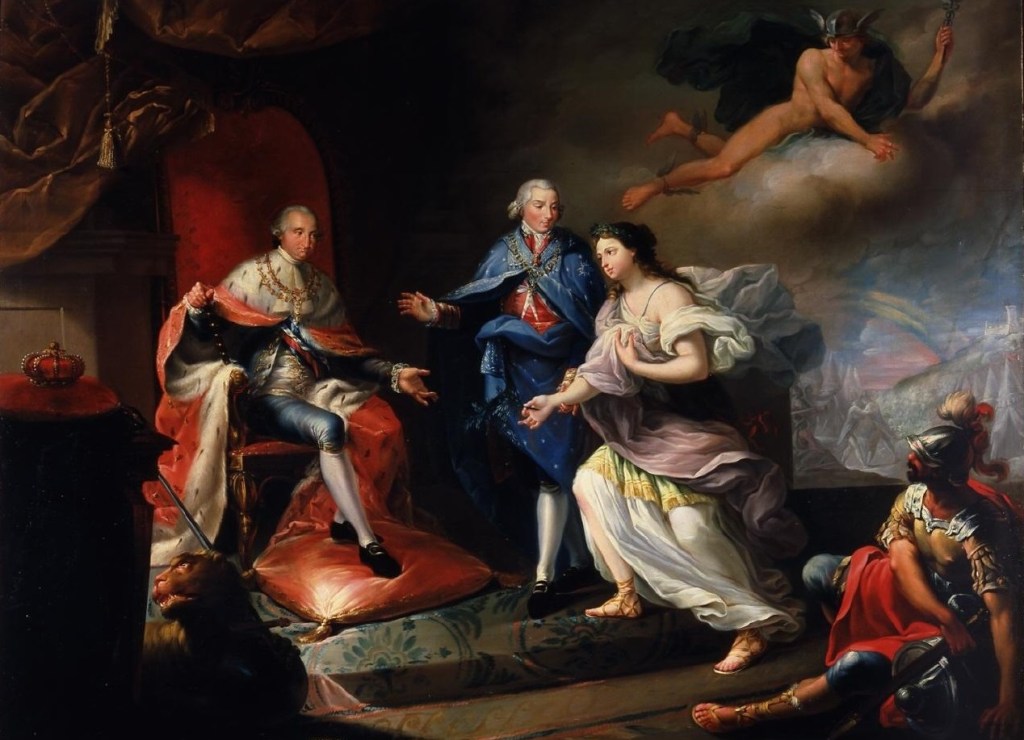
In 1715, a Dutch diplomat, Johan Willem Ripperda appeared in Madrid to negotiate commercial treaties in the wake of the War of the Spanish Succession. Born in Groningen in the far north of the Dutch Republic, his family were an old respected noble family, with branches on both sides of the border between Friesland and Westphalia, recognised as barons in the 1470s by the Holy Roman Emperor, but losing much of their wealth and influence in the ensuing century. Their family name probably derives from an original founder, Rupert, back in the thirteenth century. One branch returned to Catholicism in the seventeenth century and were rewarded by the Emperor with a higher title of Imperial barons in 1676. Johan Willem was raised a Catholic, which barred him from holding administrative posts in the Republic, but he converted to Calvinism in order to be elected to the States General for Groningen. He also boosted his career through marriage to an heiress, Aleida van Shellingwoude, Lady of Poelgeest and Koudekerk, near Leiden in South Holland. They had two children and she died in 1717.
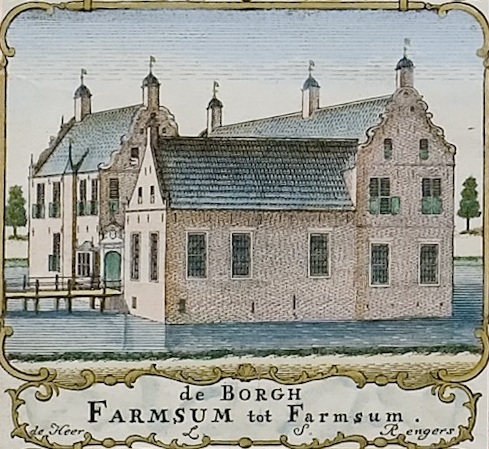
An early seat of the Ripperda family was the ‘village house’ of Farmsum, where for centuries they were hereditary noble administrators. Built in the early thirteenth century on the edge of the Ems estuary (which today divides the Netherlands from Germany), it was demolished in 1812.
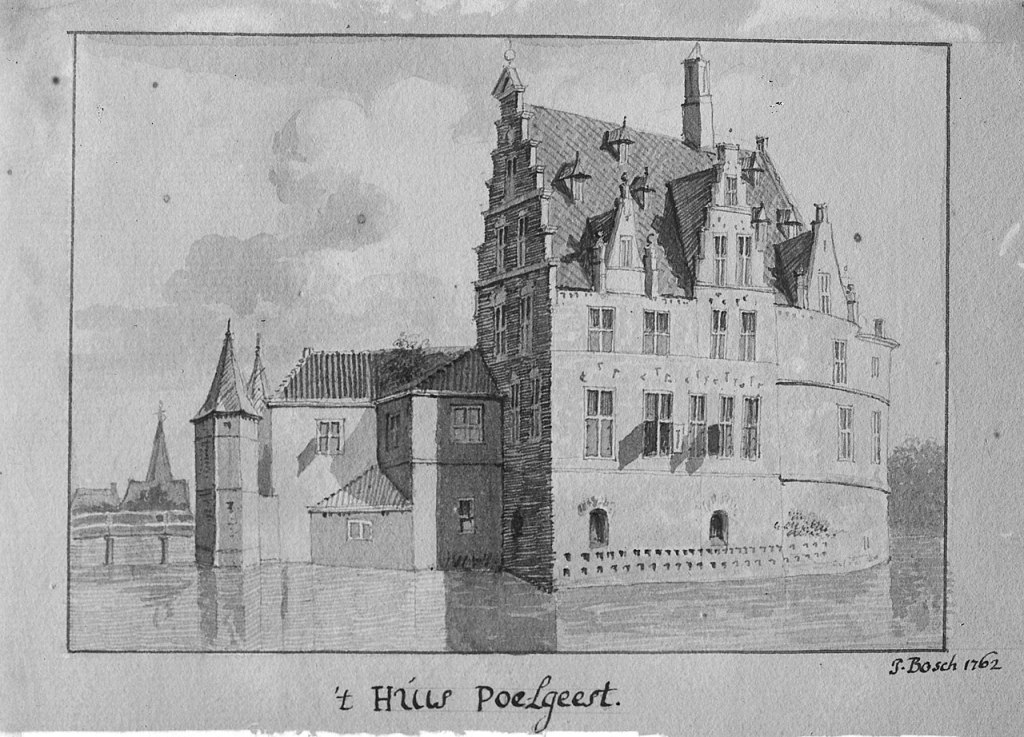
The newer family property, the Castle of Groot Poelgeest was also built in the thirteenth century, and acquired by a family who took Poelgeest as a surname soon after. They held it until 1692 until penury forced them to sell it. It was a round water castle with two large brick towers, on the banks of the Old Rhine before it flows into the city of Leiden. Most has disappeared over the years, but one tower remains.
Following his initial mission to Spain, Baron Jan Willem Ripperda van Poelgeest remained in Madrid and converted back to Catholicism to gain the favour of King Philip V. By the Spring of 1725 had entranced the King with grand ideas for restoring the lost prestige of the Spanish Monarchy, still smarting over the loss of territory in Italy and the Low Countries a decade before. He travelled to Vienna and negotiated a new treaty between the formerly bitter enemies (Philip and Emperor Charles VI, who still thought of himself as ‘Carlos III’), by which the Emperor agreed that his daughter and heiress, Archduchess Maria Theresa (age 7), would marry the King’s second son, Infante Carlos (age 9); in return Spain recognised that the Archduchess would inherit the entire Habsburg Monarchy in central Europe: Austria, Hungary, Bohemia, and so on. Then if both Philip V and his son the Prince of Asturias died, Carlos and Maria Theresa would inherit both empires and re-unite the sixteenth-century empire of Emperor Charles V—a renewed Habsburg-Bourbon hybrid dynasty would encircle the globe, utterly unstoppable! Other elements of the treaty stipulated that Spain would join Austria in a crusade against the Protestants in Germany and the Ottomans in the Balkans. Provinces that had been ‘stolen’ from the Habsburgs in the seventeenth century by France would be restored: Flanders and Artois to Austria, Roussillon and Sardinia to Spain. Even the Catholic Stuarts would be restored to their thrones in England and Scotland. Austria would be granted privileged access to trade with Spain’s American colonies and would in return help Spain retake Minorca and Gibraltar from the British. The entire European order would be overturned!
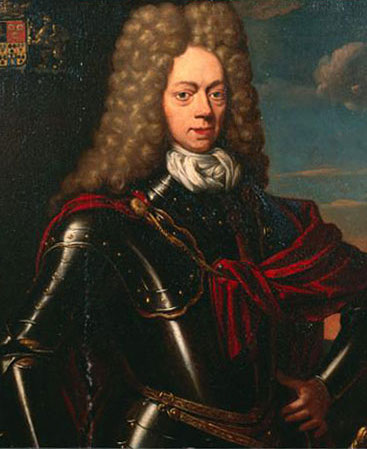
Philip V was thrilled. He created Ripperdá (now with the accent mark) a Duke and Grandee of Spain, and Secretary of State in December 1725. The new duke married again, a Spanish noblewoman Francisca de Xarava del Castillo, and had another son. But his triumph was short-lived. Spanish grandees, rightly concerned about the outrage this treaty would provoke in Britain and France, accused the new favourite of massive embezzlement from the Spanish Treasury, and secured his removal from office in April 1726. He was even imprisoned for good measure in a fortress in Segovia. Ripperdá eventually escaped in 1728, and reputedly—though many stories about his later adventures were probably fabricated to sell books—ended up as a pasha in the service of the Sultan of Morocco, leading troops against the Spanish garrisons in North Africa (Oran and Ceuta) and even trying to have himself crowned king of an independent Corsica. He died in 1737.
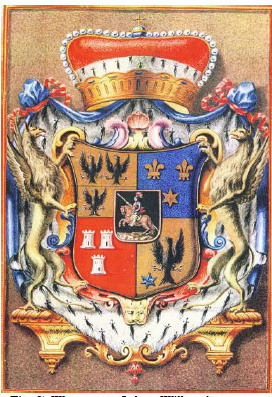
The Dukedom of Ripperdá was almost immediately revoked. He did have sons, however. The eldest son, from his first marriage, was Ludolph Luirdt, who had a swift and short diplomatic career, as Spanish Ambassador to the Hague, to Saint Petersburg and to Vienna before his father’s fall in 1726. In Vienna he had married extremely well, a daughter of a Count Cobenzl (from a family that would become quite prominent in Austrian politics later in the century), but he returned to the Netherlands to take up his mother’s lordship and castle at Poelgeest. A much younger son, from the Duke’s second marriage, was Don Juan María, Baron de Ripperdá, appointed Governor of Texas in 1769. For nearly ten years he defended the Spanish colony from Apaches attacking from the north and English settlers coming in from the east. He moved the capital to San Antonio. But a clash with the Viceroy of New Spain led to his transfer to the post of Governor of Honduras in 1778—he died shortly after arrival there in 1780. Many descendants of the ephemeral Duque de Ripperdá, born from a third son, continued to be a prominent noble family in Groningen and the Emsland in the far northwest of Germany. They died out in the late nineteenth century, but other Ripperda lines continue elsewhere.
*
Soon after Don Juan de Ripperdá was leaving Texas, we see the arrival on the political scene of one of the most notorious figures of Spanish history, Manuel de Godoy. Opinions were split then and now over whether he was merely a good-looking chancer or a skilled politician who knew how to manipulate his royal patrons.
Manuel’s father, José de Godoy, was a municipal officer in the city of Badajoz. Before they had settled in Badajoz, in western Spain, the family was from Galicia and claimed descent from a famous Captain-General of this border zone with Portugal in the later fourteenth century. The future politician Manuel was in fact the fourth son, so he really had to make his way at court based only on charm and good looks—which apparently he did, and his favour with King Carlos IV and Queen Maria Luisa from the early 1790s (when he was in his young twenties) was so intense that naturally people assumed he was having an affair with the Queen, or even, some thought, with the King. Some considered it may have even been a menage à trois. One recent historian has suggested the Queen was merely conforming to the fashion of the day for a high-born lady to have a cortejo, a young attractive male companion, with the benign indifference of the husband. From their own letters and correspondence, it is clear that the royal couple were devoted to young Manuel mostly as someone they could rely on who was, in turn, completely dependent on them, not being a grandee with his own independent wealth and authority, nor a member of one of the major aristocratic factions at court. They doted on him like a son (he was about twenty years younger than they), in particular since they were not that fond of their actual son, Fernando, Prince of Asturias. But gossip did run: in particular that the Queen’s last two children were far too cute to be Bourbons. This was especially commented on in the famous painting of the royal family by Goya, now hanging in the Prado in Madrid.
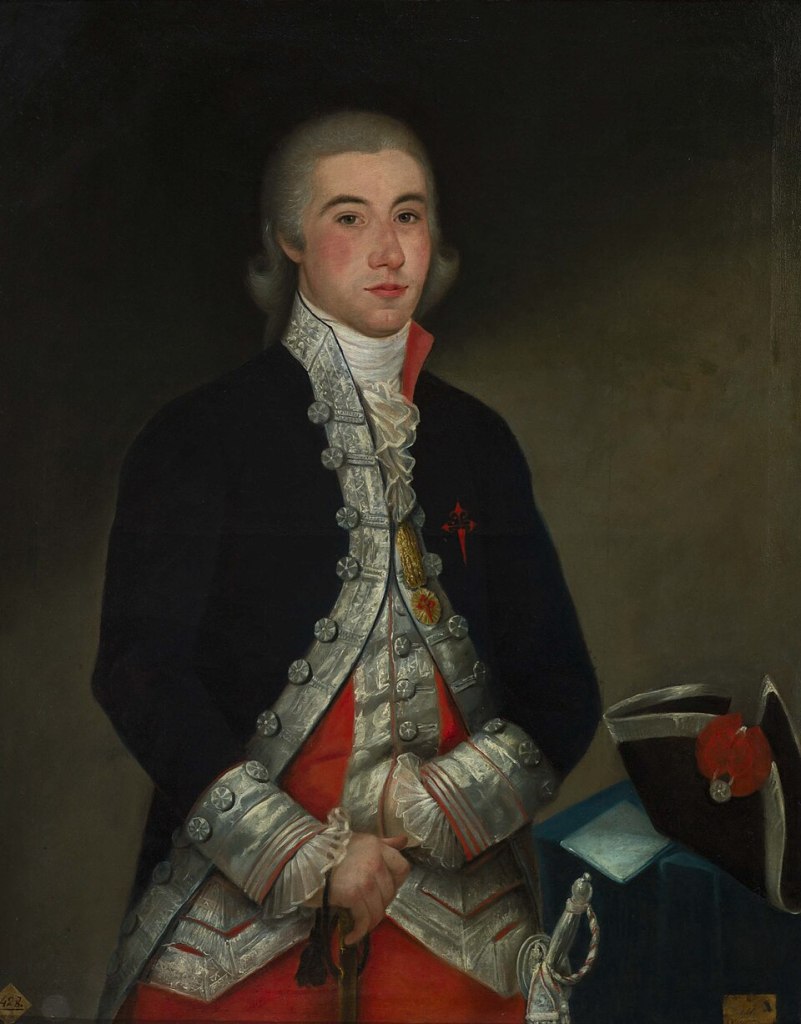
Of Manuel’s older brothers, the eldest, José, was a canon in Badajoz Cathedral—unusual but not unheard of for an eldest son to join the Church—while the second son Luis had a successful military career and rose to the rank of brigadier-general, 1791, then Governor of Badajoz and Captain-General of Extremadura, 1794-95. Luis also became Viscount of La Armeria by marriage. The third brother, Diego, also had a military career, rising to lieutenant-general in 1795 in the war against France, then, succeeding his brother in Extremadura in 1796, and finally Inspector-General of the Cavalry in 1802. Diego was sent to France in 1808 as Master of the Horse for King Charles IV during his period of exile at the Château of Compiègne—the year before he had been created Duke of Almodóvar del Campo (from an estate in La Mancha), and lived the rest of his life in exile, in Rome or Lucca (d. 1842). The ducal title was for life only, but he had no children anyway, nor did his brother Luis. The Godoy brothers also had two sisters, María Antonia and Ramona, who married influential aristocrats. The older married a Sicilian nobleman, a protégé of her brother who arranged for him to be created 1st Marques de Branciforte, and appointed Viceroy of New Spain, 1794-98—he is remembered as one of the most corrupt Spanish governors in the New World.
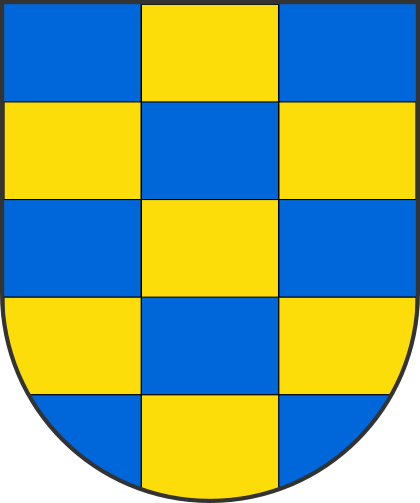
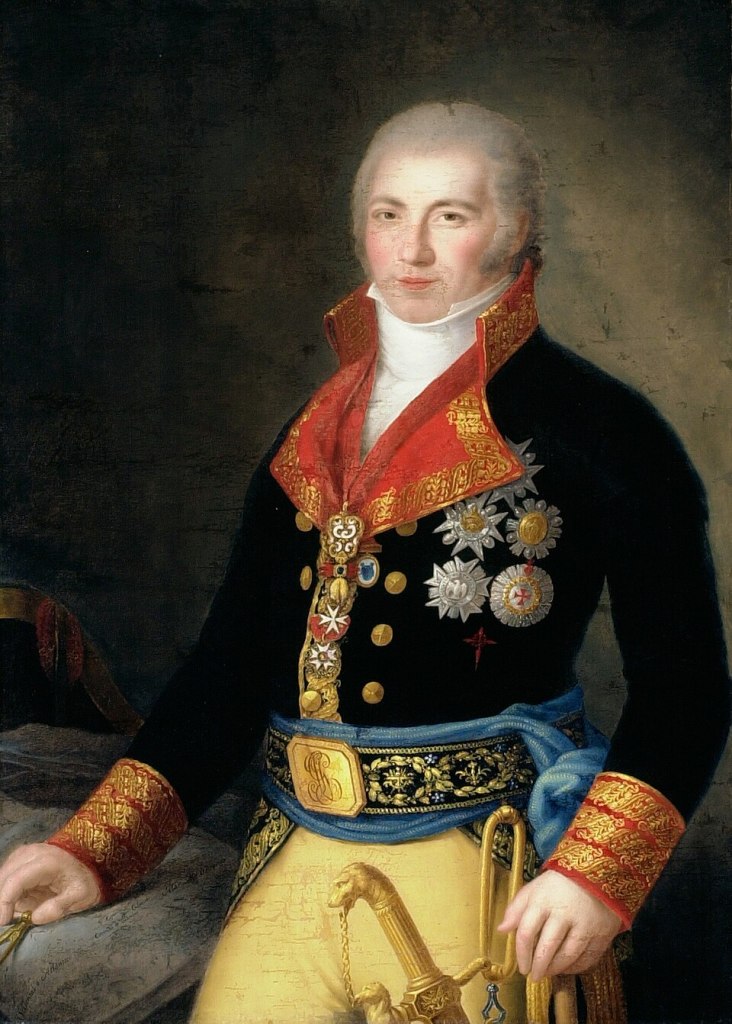
It was in fact Luis de Godoy who came to the royal couple’s attention first—indeed, Queen Maria Luisa’s flirtations with him led to his dismissal from his post in the Royal Guard…but not before he had introduced his younger brother Manuel to court. By about 1785, the latter was in favour, and rose quickly: he obtained an appointment in the Royal Guard, and by July 1791 was a lieutenant-general in the army and a gentleman of the chamber of the King. In 1792 he was created Duke of La Alcudia and Grandee of Spain, as well as Minister of Foreign Affairs and Principal Secretary of State (aka ‘Prime Minister’). A daily routine developed in which the favourite would attend the King and Queen at lunch, appropriately as a gentleman of the household, then he and the Queen would retire to his rooms beneath the royal apartments to work on government matters while the King went out hunting. In the evenings the King met privately with Godoy to go over the day’s policies and finalise decisions.
The Valle de Alcudia is in the province of Ciudad Real, south of Toledo—the arid high plateau of La Mancha. The lands here were traditionally held by the Order of Calatrava, ever since the Reconquista. Godoy’s dukedom was originally referred to as La Alcudia, but his later heirs used simply Alcudia; it was sometimes used as the title for the heir to the dukedom of Sueca, or sometimes the other way round.
In 1793, the new Duke of La Alcudia led Spain reluctantly into the War of the First Coalition against Republican France. After an initial successful offensive, by the end of 1794 Spanish troops were on the defensive and feared invasion. By July 1795 Spanish diplomats had signed the Peace of Basel, ceding to France the colony of Santo Domingo (the eastern half of Hispaniola) in the Caribbean. Yet in spite of this fairly dismal performance, Godoy was created Principe de La Paz (‘Prince of the Peace’), an unusual title for a country that had no tradition of princely titles in its aristocratic hierarchy. He was also rewarded with estates in Granada (with status as a hereditary member of the maestranza or noble brotherhood of that province) and a huge royal pension of a million reales.
Godoy continued to scandalise elite society. He had a young mistress, Josefina de Tudó (known as ‘Pepita’), who was appointed a lady-in-waiting to the Queen in 1797. She was the daughter of a captain of artillery in Cadiz; due to his daughter’s favour, he rose swiftly to the rank of brigadier in 1795 and lieutenant in the Royal Guard and intendant of the Palace of Buen Retiro in Madrid in 1797 (though he died soon after).
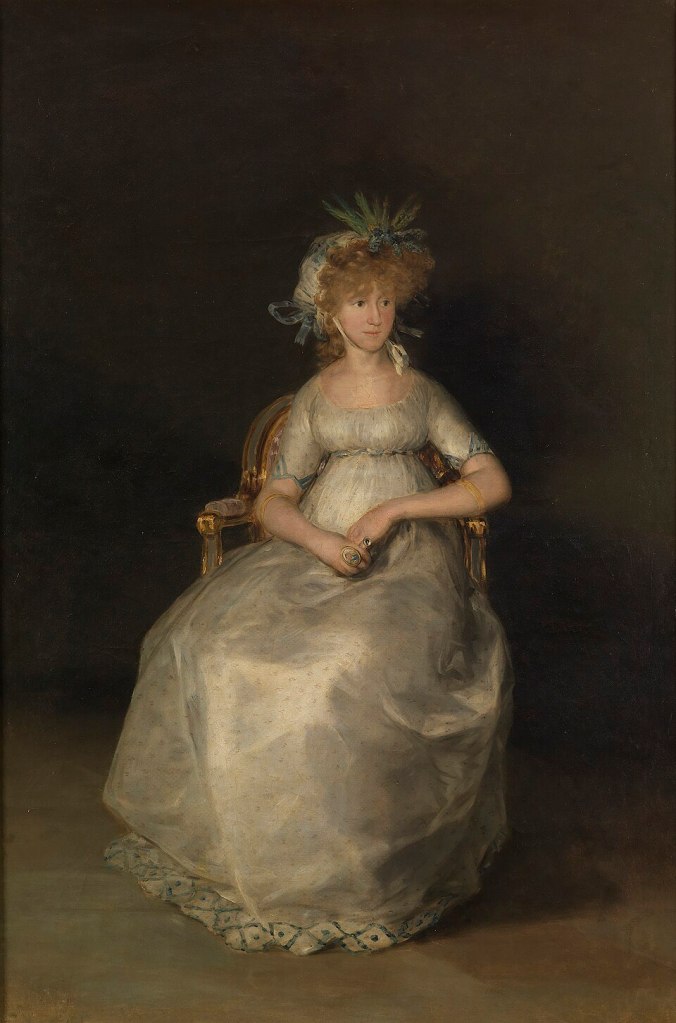
That same year, the Queen arranged a marriage for Manuel, either to draw him away from Pepita (whom he may have already married secretly), or to shield her own relationship with him from public scrutiny. The bride was a first cousin of the King: María Teresa de Borbón y Vallabriga, granddaughter of King Philip V. Though ineligible to succeed to the Spanish throne due to the unequal status of their parents, doña María Teresa was still a great match for a man from such humble origins. She herself was given the additional title of Marquesa de Boadilla del Monte in 1799, and in 1803 became Countess of Chinchón, ceded to her by her brother, Luis María, who had been recently promoted to the highest ranks of the church in Spain, cardinal and archbishop of Toledo.
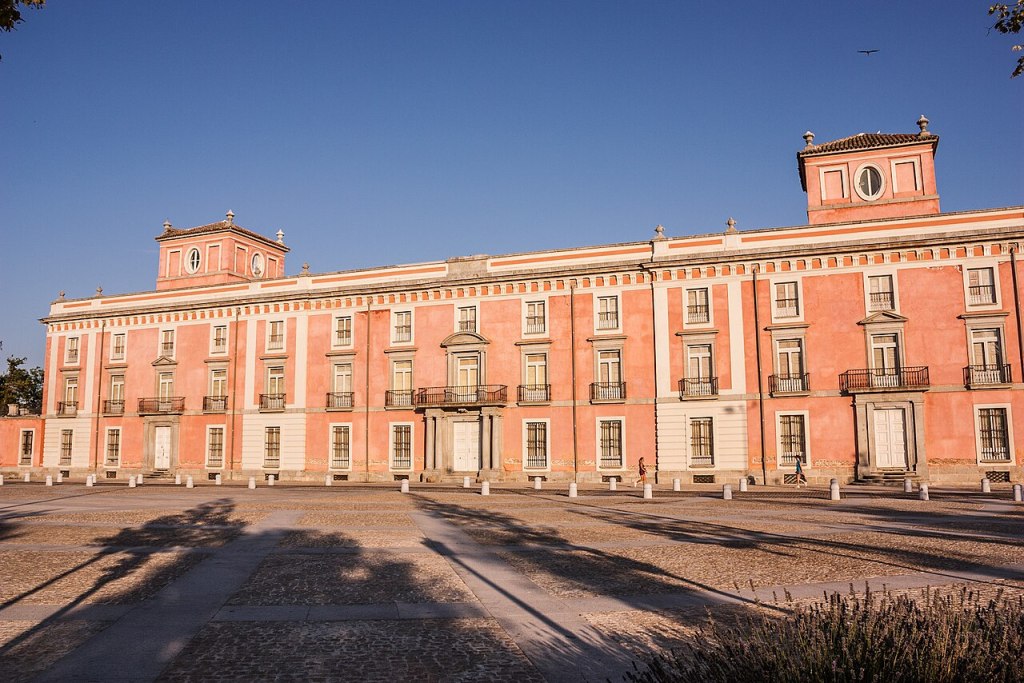
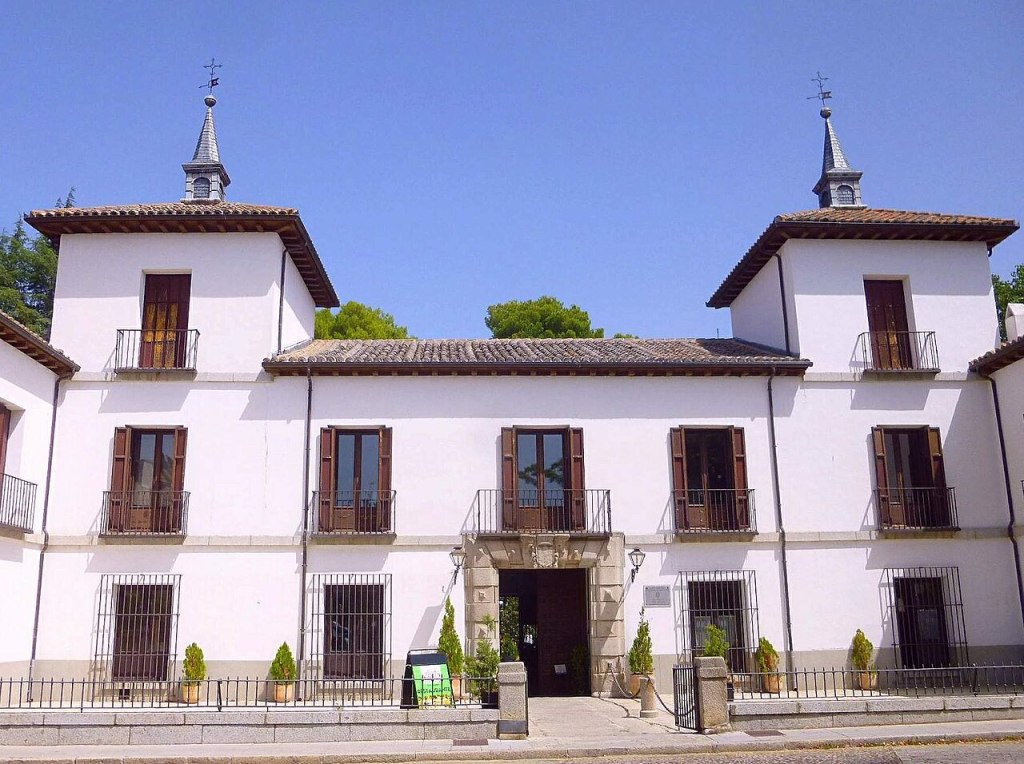
Boadilla is a hilly area west of metropolitan Madrid—today one of the wealthiest addresses in Spain. It was initially a lordship held from the late fifteenth century by Fernando de Cabrera and Beatriz de Bobadilla, both prominent courtiers: Fernando’s father Andrés had been majordomo mayor for King Enrique IV, while Beatriz was herself a childhood friend and later chief confidante and camarera mayor of Queen Isabella the Catholic. Their son Fernando was created Count of Chinchón in 1520 and given vast estates all around Madrid. The lordship passed with the county through various families until it was acquired by Infante Luis, youngest son of King Philip V of Spain. He ordered the rebuilding in 1765 of the ‘Palace of the Two Towers’ (a much older structure built by the marques of Mirabel), maintaining the structure of having a large tower at either end. It has a plain exterior and lavish interior, in Moorish fashion (like many palaces in Spain). Known today as the Palace of the Infante don Luis, it was held by the dukes of Alcudia into the twentieth century, housing their extensive art collection, badly damaged in the Spanish Civil War, and expropriated by the city council of Boadilla in 1998 and since 2006 has been ceded to the Society of Authors and Editors and refashioned with an auditorium, library and apartments—the Society was sent away however in 2009, and the city has plans for an equestrian school.
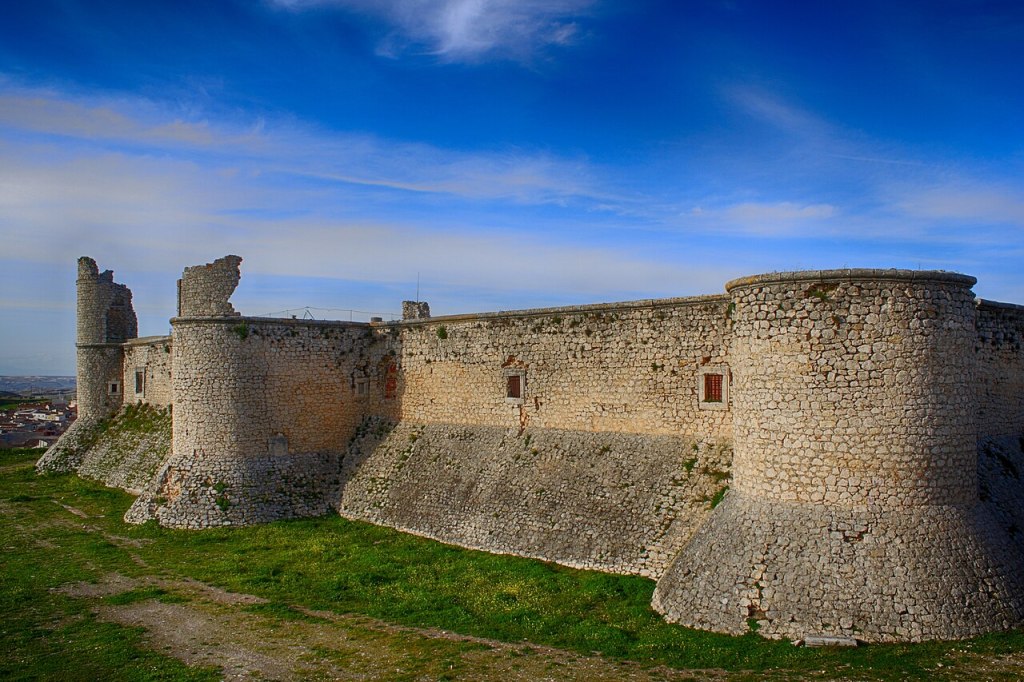
The County of Chinchón itself consisted of about twenty towns and a large medieval fortress, situated on the southeast corner of today’s Madrid Province—it had traditionally been part of the old Kingdom of Toledo but in the 1480s it was put under the jurisdiction of the archbishops of Segovia, so the counts of Chinchón always maintained a townhouse in that city. The County was held by the Cabrera family until 1665, then by inheritance to the Cardenas then Castro families; acquired by the Savelli family of Rome in 1683; then purchased for Infante Felipe, son of Philip V in 1738, as he was in need of an apanage to compensate (in a rather small way) for the fact that his older brother Carlos had gained a major windfall a few years before by conquering Naples & Sicily. Felipe himself would soon become Duke of Parma, so he ceded the County of Chinchón to the youngest brother, Luis, who had initially been endowed with the super lucrative archbishopric of Toledo, but had decided the ecclesiastical life wasn’t for him. If this had been France, the county would have been raised to a duchy, but I think in Spain it was sufficiently lofty to bear the title ‘Infante’. The castle at Chinchón, already crumbling by the eighteenth century, was further damaged in the War of Independence of 1808, and is now a ruin—it is still owned by the family of the dukes of Alcudia.
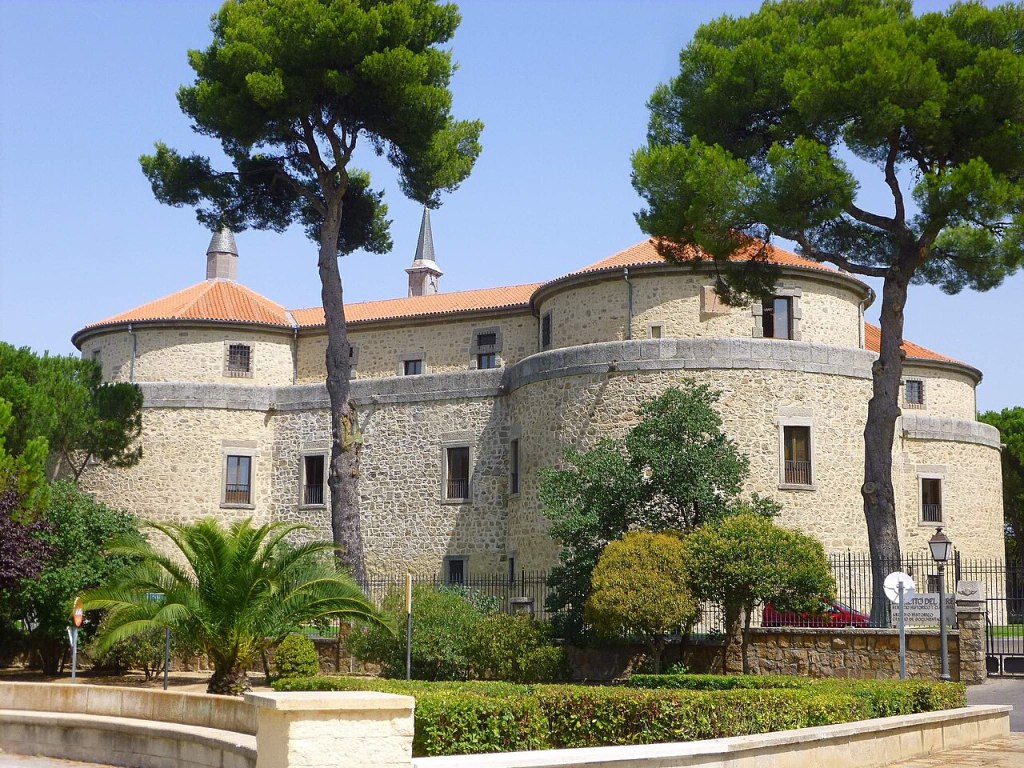
Another part of the County of Chinchón was the town of Villaviciosa de Odón, back in the western parts of Madrid, not far from Boadilla. Here there was another old castle built in the 1490s, destroyed in 1521 after a revolt and rebuilt in 1583 with three large circular towers. Infante Luis restored it in the 1740s, and it became a favoured residence of his older brother King Ferdinand VI, who, entering deep depression after the death of his wife in 1758 spent much of the last year of his life here. Godoy himself would be imprisoned here during the revolution of 1808, but was retained by his descendants—in the nineteenth century it was rented out to a forestry engineering school, then was used as a farmhouse and granary. In 1965 the dukes of Alcudia sold it to the state, and it now houses the archives of the Air Force.
A more modern building in Villaviciosa de Odón is still known as the Casa-Palacio Manuel Godoy. Built in the late seventeenth century, then renovated for the favourite and his semi-royal wife, it was rented out for over a century until purchased by the town in 1986 to save it from destruction. Renovated in the 1990s, it houses a school for music and dance, and is still visited by tourists for its lavish gardens.
Aside from these titles and estates in Spain (and there were many more), Manuel Godoy was also created Count of Évoramonte in Portugal in 1797 by Queen Maria I, in thanks for his efforts to keep the peace between France and Portugal at this time. There was an ancient medieval castle here, on a mount overlooking the city of Évora, a possession of the dukes of Braganza from the 1530s—and although the descendants of Godoy still use the title, I don’t think they ever held the castle, though I am not certain.
Godoy ran the government of Spain as best he could: his progressive administration proposed reforms, but these only encouraged liberal factionalism in government, the fiscal measures failed, and he was temporarily ousted in March 1797. When he returned to power in August, he was no longer First Secretary of State but nonetheless continued to run the government of Charles IV. As international tensions built up once more, First Consul Bonaparte used gifts and flattery to try to convince Spain to invade Portugal (and draw Britain into war there), even offering Godoy command as ‘Generalissimo of Land and Sea’—despite Godoy having little military experience. In 1804, the favourite was given another dukedom, Sueca.
The Dukedom of Sueca was named for a town in Province of Valencia, south of the city just in from the coast. Its main estate was the very lucrative Lordship of Albufera which was essentially revenues from fishing and rice-farming in the marshy lagoon (albufera). The name Sueca itself might come from the Arabic suwayqa, which means ‘little market’. Godoy now had a dukedom in both of Spain’s major kingdoms (Castile and Aragon). Sueca would later be used jointly with Alcudia and persists to this day.
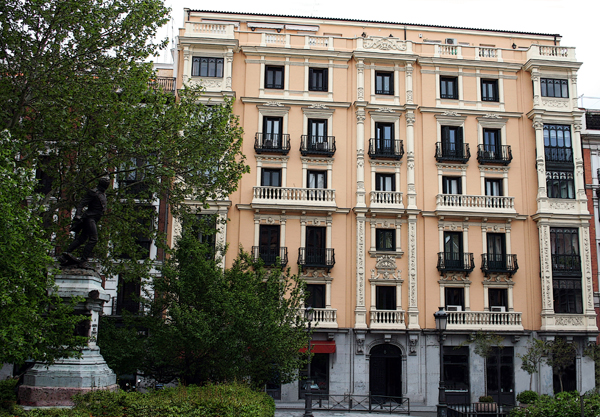
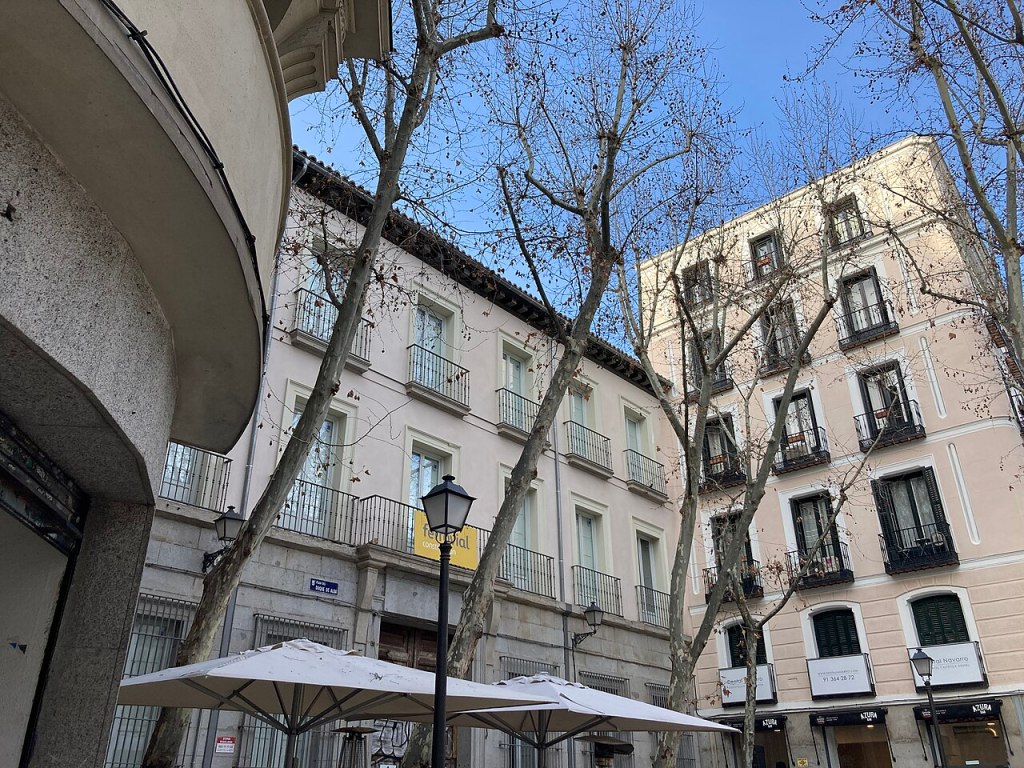
In 1807, Godoy was granted use of the magnificent Buenavista Palace in Madrid, the traditional residence of the dukes of Alba—but it was taken away from him before he had a chance to renovate it and move in. Meanwhile, he rented a small house (the ‘casa chica’) on the nearby Barquillo street, into which he moved much of his growing art collection. This building, just off the main boulevard that runs through central Madrid, was looted during the violence of 1808 (see below), but was rebuilt in a grand manner by Godoy’s descendant the Duke of Alcudia in 1904 and is known as the Casa-Palacio of the dukes of Sueca and Alcudia. Its back windows overlook the Buenavista Palace, the residence that was not to be.
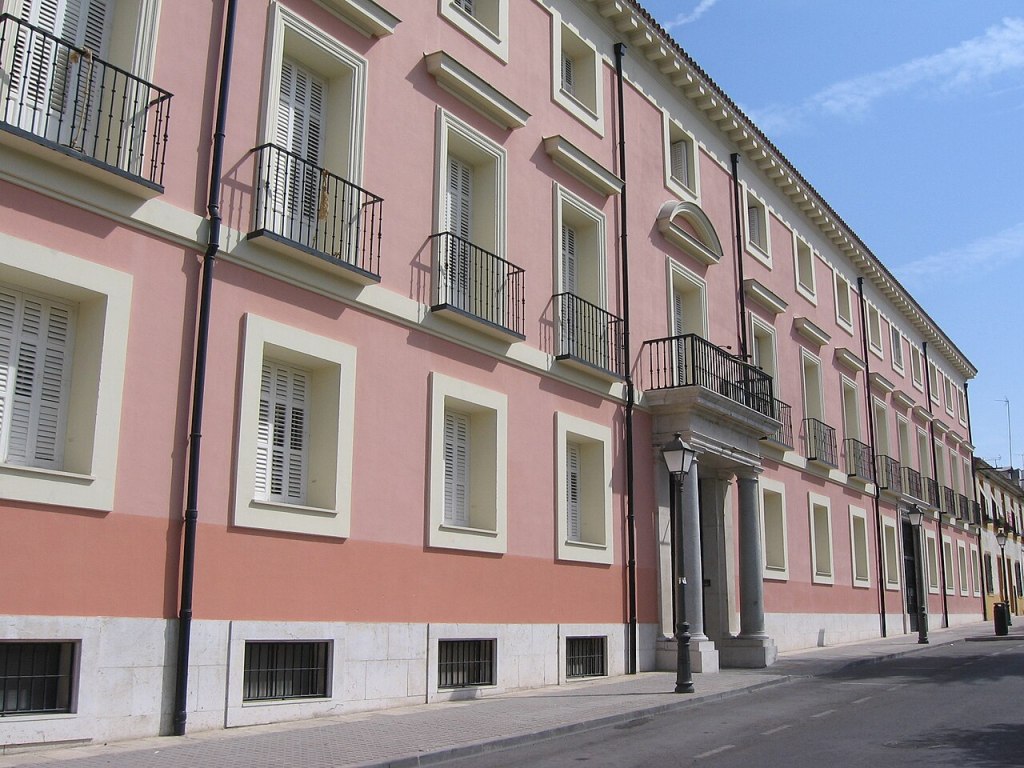
The royal favourite also acquired a house in Aranjuez to be near one of the favoured country residences of the King and Queen. Located on the town’s main grand boulevard that leads towards the royal palace, the Calle del Principe, it is also adjacent to the grand park of the same name and a bend of the river Tagus. Today it houses the College of the Sagrada Familia.
A few years later, Bonaparte pressed for an invasion again, and this time tried to convince the King and Queen that Godoy was no good, then reversed tack and once again sent Godoy gifts and even hinted at a sovereign territory of his own to be carved out of Portugal should their efforts there be successful. By 1807 Bonaparte, now Emperor Napoléon, had driven a wedge between the King and his son Prince Fernando who was very popular with the people. The King had his son arrested, and in Spring 1808, a mob attacked Godoy’s house in Aranjuez, and the next day he was dismissed as head of the government by a nervous Charles IV, followed soon after by the King’s own abdication. This is seen as the start of the revolution in Spain. The Prince of Asturias, now King Ferdinand VII, revoked Godoy’s titles—most were later restored, but never the title Prince of the Peace. Napoléon invited the entire Spanish royal family to France to ‘negotiate’ a dynastic settlement, but really wanted to impose his own government in Spain (and eventually his brother Joseph as king). Godoy and Pepita moved to France with the King and Queen and lived with them at the Château of Compiègne—as close as the ménage had been before—then were moved to a villa in Marseille, and finally in 1812 allowed to leave France. They settled in Rome in the Palazzo Borghese. Two years later, a king was restored in Spain, but it was Ferdinand VII, not Charles IV, and so the old favourite, the former Prince of the Peace, remained in Rome.
His wife María Teresa de Borbón-Chinchón stayed in Spain. With the fall of Godoy in 1808, she separated from him forever, and moved to Toledo with her brother the Cardinal. Her eight-year-old daughter Carlota Luisa went to France with her father and lived with the King and Queen. The Countess of Chinchón (also known as the ‘Duchess of Sueca’ by courtesy if not law) was eventually allowed to return to her estates and by 1817 resided at Boadilla del Monte. It is interesting to note that one of her sisters, María Luisa, also married a royal favourite who became a duke in this period: Joaquín José, 3rd Marquis of Malgarejo, was a general and war hero who became a confidant to King Ferdinand VII who created him Duke of San Fernando de Quiroga in 1815, arranged his marriage to his cousin in 1817, then appointed him Secretary of State (or ‘Prime Minister’), September 1819 to March 1820. A moderate, he lost favour as the King became increasingly conservative. The Countess of Chinchón was also deemed too liberal by the mid-1820s, and went into exile to Paris, where she died in 1828. Though still married legally to Godoy, whose titles and lands were not restored, she was declared legally entitled to these post-mortem and thus able to pass the titles of Chinchón, Sueca and Alcudia to her daughter Carlota Luisa. In Madrid, she had lived in a palace of her own from 1797, today still called the Palacio de la Duquesa de Sueca. Located on the southern edge of the old city, behind the old Cathedral of San Isidro, it had been built in the 1790s by Charles IV on the site of a former Jesuit college (and initially intended as a place to educate his servant’s children). Confiscated in 1808, it was used again as a school, later a barracks, then converted into an apartment building by 1910. It became sadly dilapidated and in the 1990s was going to be demolished before the City of Madrid stepped in and made plans to renovate it for housing. Long delays meant that part of it was actually torn down in 2013, but since 2021 there has happily been a general clean up.
In Rome, Godoy was finally able to marry his Pepita—or perhaps he re-married her, having already done so in secret a few years before—and thus legitimated their children. Josefina de Tudó had been created Countess of Castillo Fiel and Viscountess of Rocafuerte in 1807—before everything collapsed. As far as I can tell, neither Castillo Fiel or Rocafuerte exist as places, so I wonder if they might simply be a play on the words ‘faithful’ and ‘strong’?
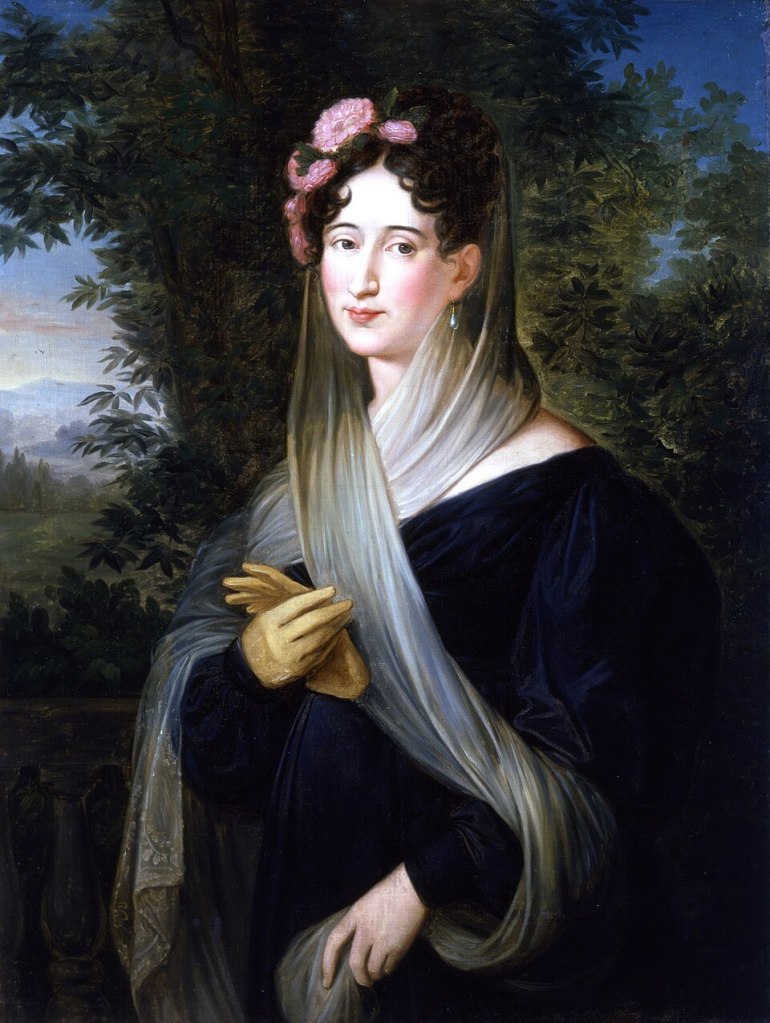
The exiled Godoy and Pepita had remained in Rome despite the deaths of their protectors, Charles IV and Maria Luisa, within weeks of each other in 1819. But he gained the support of Pope Pius VIII who at the time of his marriage in December 1829 created him Prince Godoy di Bassano and Prince of Paserano. I am not certain why, but perhaps the liberal pope wanted to send a signal to the increasingly conservative Ferdinand VII of Spain that the more reform-minded Godoy had his favour by restoring him to princely rank. The former Prince of the Peace had acquired the estate of Bassano di Sutri after its last owners had died out in 1826. Located in the hilly region north of Rome, where aristocrats had long built their summer residences due to the cleaner air, Bassano had been a marquisate for the Giustiniani family since 1605, raised to a principality in 1644. Some sources call Godoy the 7th Prince of Bassano, others Prince Godoy di Bassano (or ‘Godoy di Bassano, Roman Prince’). It doesn’t seem he acquired the magnificent Palace of Bassano however, which passed from the Giustiniani to the Odescalchi family in 1854. Paserano or Passerano is more mysterious—some sources suggest it was an estate in Piedmont, with a castle; but I think it is more likely to be the neighbourhood of Gallicano, a suburb of Rome southeast of the city.
Pius VIII did not live long, and was succeeded by the much more conservative Pope Gregory XVI, so perhaps Godoy lost favour. Snubbed by Roman high society, he moved to Paris in 1832, where he and Pepita tried to establish a salon. Snubbed there too, she returned to Madrid to try to recover family properties, but he stayed, now relying on a pension from King Louis-Philippe. He attempted to raise funds by publishing his memoirs in 1836. In 1847, Queen Isabel II of Spain, shortly after creating the third of our ‘maverick’ ducal titles (next), was building bridges and healing family rifts: and so she restored Godoy to his Spanish properties and titles (though still not the princely title). Yet he still remained in Paris where he died in 1851. Pepita died several years later in Spain, in 1869.
Carlota Luisa Manuela de Godoy y Borbón had already succeeded her father as 2nd Duchess of Sueca and Alcudia. As we’ve seen, these dukedoms had been adjudicated post-mortem to her mother in 1829, then passed to her. Also from her mother she became 2nd Marquesa of Boadilla del Monte and 16th Countess of Chinchón. Back in 1821, she had married don Camillo Ruspoli, a younger son of a Roman prince. The Ruspolis were originally Florentine, but moved to Rome and became one of the leading families of the papal court (and remain so today)—the pope created them princes of Cerveteri in 1709 and they were later elevated to prince of the Holy Roman Empire in 1792. Prince Camillo was the third son of the third prince of Cerveteri, Squadron Chief of the Dragoon Regiment of Pope Leo XII, and held the honorary post of gentleman of the chamber of the Austrian emperor.
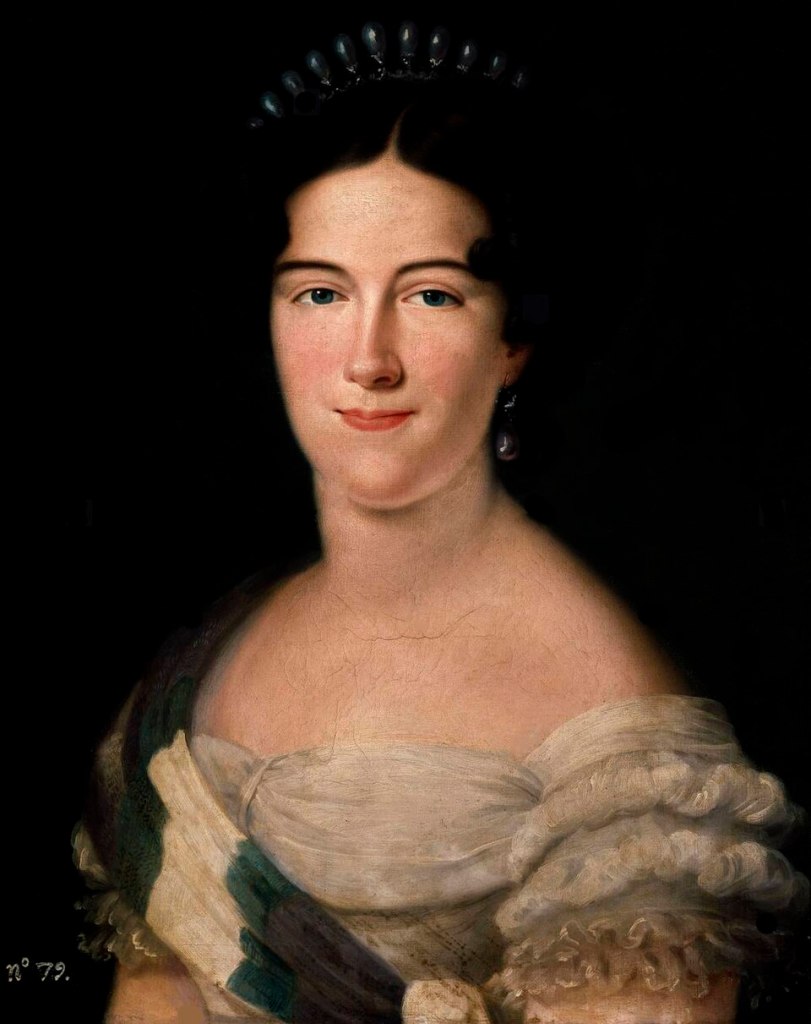
Their son Adolfo Ruspoli y Godoy became 2nd Duke of Alcudia after the death of his grandfather in 1851, and later 3rd Duke of Sueca, after the death of his mother in 1886. He was a Gentleman of the Chamber of Queen Isabel II and Senator of the Realm in Spain, and died in his nineties in 1914. Though he retained his princely rank as an Italian aristocrat, he lived in Spain and integrated into the high Spanish aristocracy through a marriage in 1857 to the daughter of the Duke of Medina Sidonia.
A younger brother of the 2nd Duke of Alcudia, Luis, was given his mother’s marquisate of Boadilla del Monte in 1853 and founded a junior line. He lived in Florence as would his son and grandson.
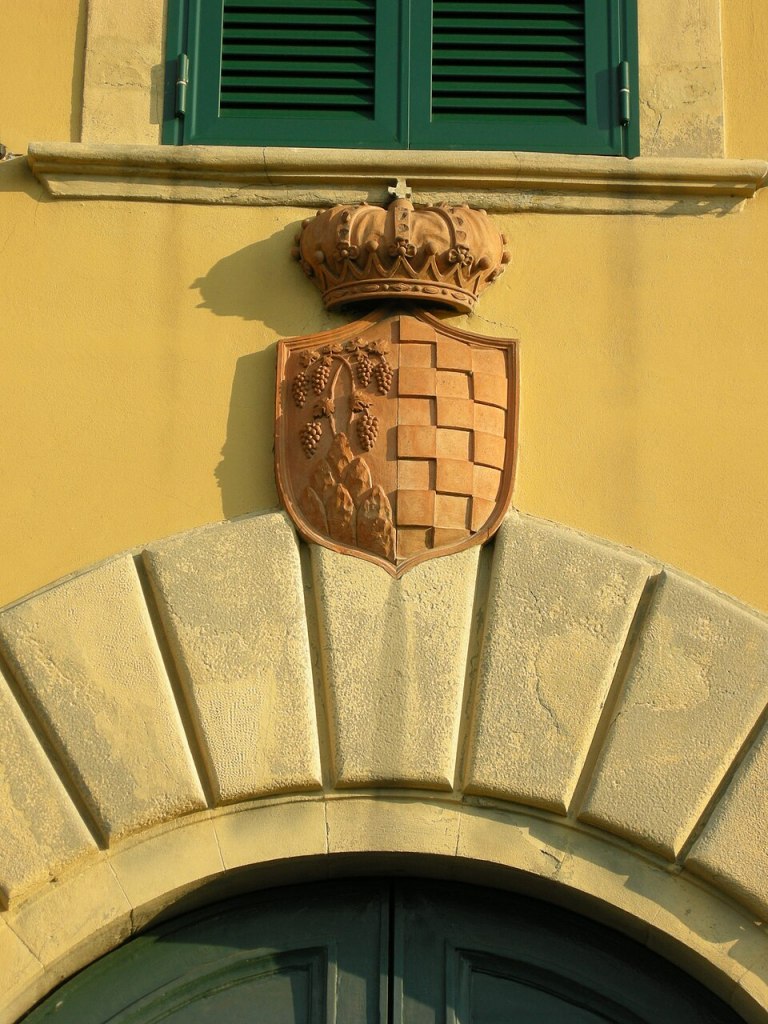
Carlos Ruspoli, 3rd Duke of Alcudia and 4th Duke of Sueca was, like his father, a Senator of the Realm (d. 1936). His son Camilo, 4th Duke of Alcudia, also became the 6th Marques of Boadilla after the death of his cousin Paolo in Italy in 1969. He died in 1975 and once again divided these titles between two sons: Carlos (d. 2016) was Duke of Alcudia and Sueca, while Luis (d. 2011) became Marques of Boadilla. In 2016, these titles were once again joined in the person of don Luis Ruspoli (b. 1963), 6th Duke of Sueca, Roman Prince and Prince of the Empire, 20th Count of Chinchón, 8th Marques of Boadilla del Monte, Count of Evoramonte and Maestrante of Granada. His son Carlos (b. 1993) bears the title Duke of Alcudia as heir.
From Manuel Godoy’s relationship with Pepita Tudó came two sons: Manuel and Luis. The younger died when he was ten. The older (b. 1805) was legitimised by his parents’ subsequent marriage, and in 1851 he succeeded to his father’s Italian titles as 2nd Prince of Bassano and ‘Principe Romano’ de Godoy. When Pepita died in 1869, Manuel succeeded to her titles too, as 2nd Count of Castillo Fiel and Viscount of Rocafuerte. He was honoured with the Order of Santiago in Spain, the Order of Christ in Rome, the Order of Avis in Portugal and the Grand Cross of the Order of Malta, but died only a few years later in 1871, leaving a number of children from his wife Maria Carolina Crowe y O’Donovan O’Neill, the daughter of an Irish businessman in Paris—whose status is often inflated in online sources as ‘Sir Lawrence Crowe, Lord of St Stephen’s Green House’, which is not actually a title, just a house for wealthy merchants in Dublin. Other errors can be found online in which Marie-Caroline is described as a maid-of-honour of Empress Eugénie, but there were no maids-of-honour in the Imperial household of the 1860s, and no one of this name in the Empress’ service. Surely the confusion comes from Pauline van der Linden who was a dame d’honneur to the Empress and was married to the Duke of Bassano (an unrelated title, connected to a different city in Italy, created by Napoleon for one of his ministers).
Another Manuel succeeded his father as 3rd Prince Godoy di Bassano. He died in 1896 with no children from either of his two marriages. His younger brother Carlos had already died, so the princely title died out, and the rest of the succession passed to female heirs: the older sister Matilde had already been ceded the title 4th Countess of Castillo Fiel in 1875, while Josefa was named 2nd Viscountess of Rocafuerte, but died before she could inherit further. A third sister, Maria Luisa, married well, to Ernst Alexander, Prince von Looz & Corswarem. Matilde married Felix Martín y Romero, the Chief of the Civil Administration and Secretary to Queen Isabel II. When she died in 1901, her daughter Maria took Castillo Fiel into yet another family (Crespo) by marriage and into the twentieth century. The last of these died with no heirs in 1989.
*
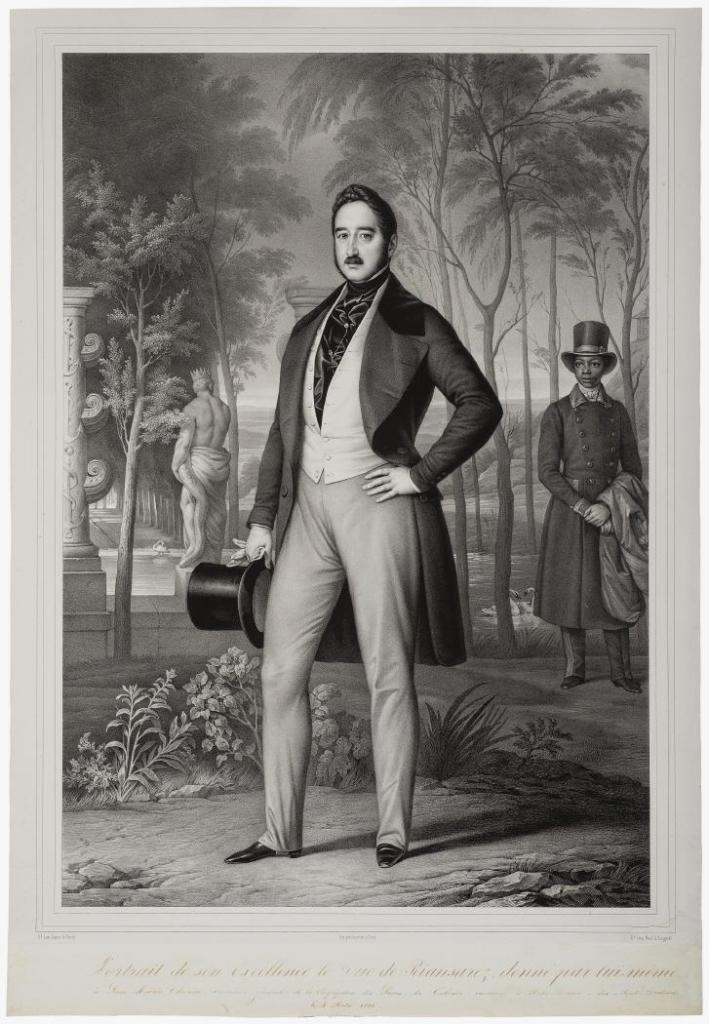
A third ‘Maverick Duke’ in the history of Spain was so elevated in 1844. This duke did not at all have the same degree of political or diplomatic influence as the Duke of Ripperda or the Prince of the Peace. Agustín Fernando Muñoz y Sánchez was known as a kindly figure at court with little political ambition, but a comfort in tumultuous times to the Queen Regent Maria Christina, mother to Isabel II. His dukedom of Riánsares continues to the present.
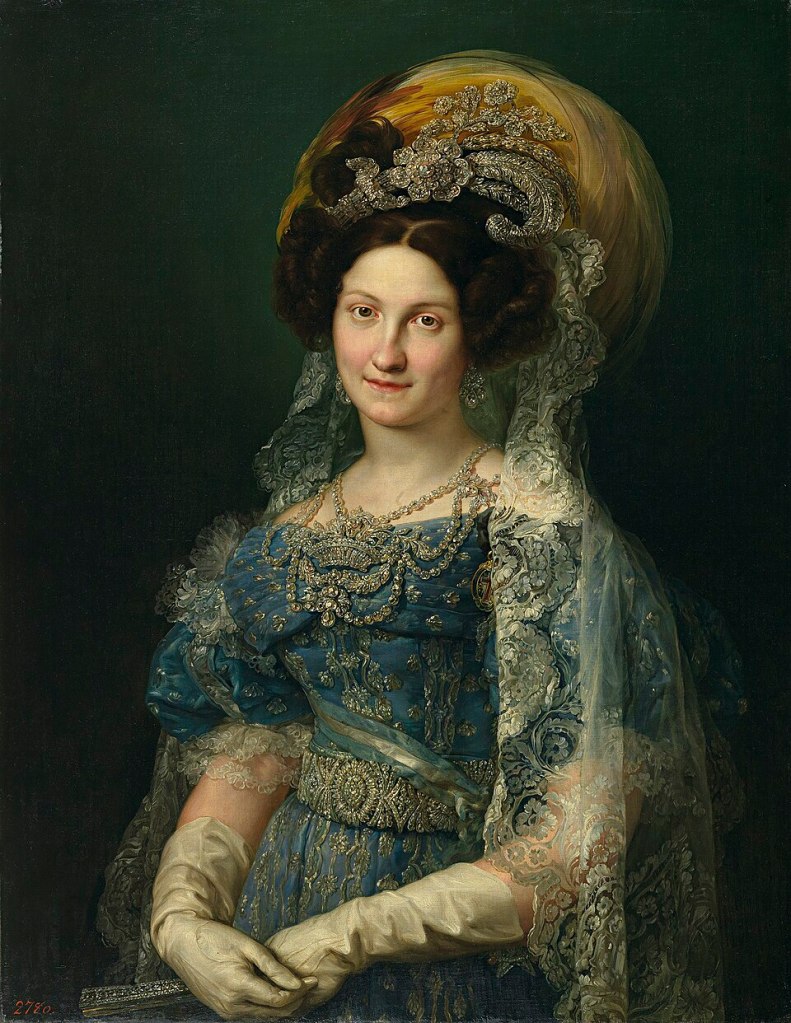
Maria Christina of the Two Sicilies was born in 1806 in Palermo to Crown Prince Francesco (later King Francesco I) and his wife Maria Isabella of Spain. After her grandfather’s restoration in Naples in 1815, he changed the name of his kingdom from Naples-Sicily to the Two Sicilies. In December 1829, she married her uncle, Ferdinand VII, King of Spain, who, twenty years her senior, had still not sired a male heir after three wives. A daughter was born in August 1830, then another in January 1832, before the King died in September 1833. Queen Maria Christina, though only 27, was named Regent of Spain for her daughter, Queen Isabel II, and began a decade of fairly rocky regency, jostled between political extremes of right and left each supported by ambitious generals. Already by December 1833, it is thought, she secretly married a member of the Royal Guard, don Agustín Fernando Muñoz.
Muñoz was the son of a royal agent who was an officer in charge of the government monopoly for the sale of tobacco. His affiliation with the court came through his paternal grandmother, a wetnurse of one of the daughters of Carlos IV back in the 1770s. Agustín Fernando, born in 1808, obtained a position in the Royal Guard, and was initially positioned to rise within the aristocratic hierarchy through his 1827 marriage to a Palafox, a powerful clan at court. She died in 1829, just when the young Neapolitan princess Maria Christina arrived in Madrid to wed the aging King Ferdinand.
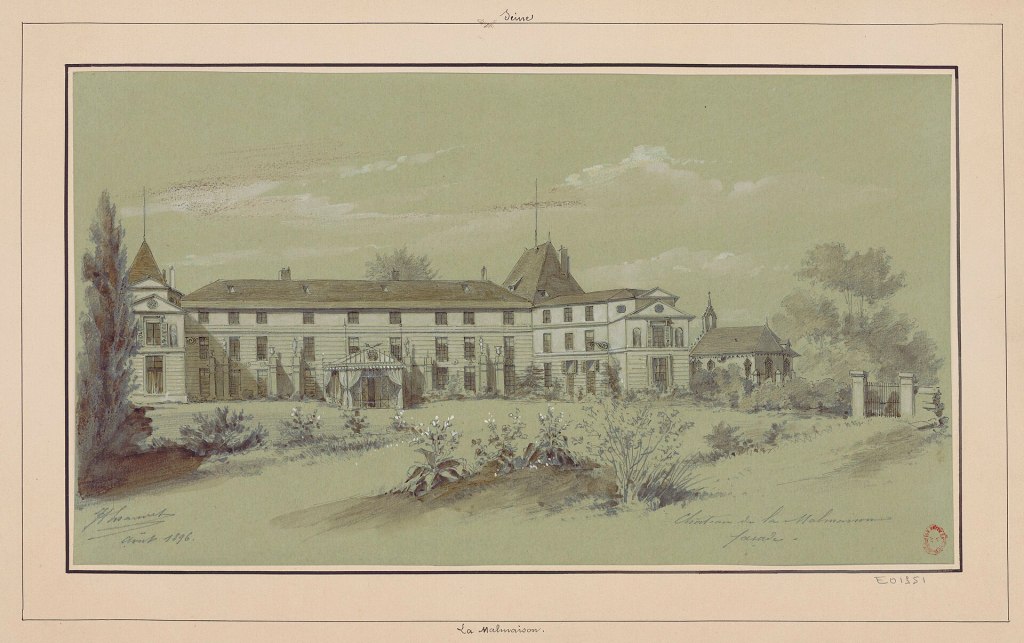
In 1840, Queen Maria Christina renounced the regency and she and her secret (but known) husband moved to France, where her aunt Amélie, was Queen of the French. In 1842, the Queen Mother purchased the Château de Malmaison, the former residence of Empress Joséphine in the western suburbs of Paris. Malmaison had been a run-down manor house purchased and vastly improved by Joséphine in 1799. It had become neglected again when Maria Christina purchased in 1842, and she and her husband would raise their children here, until it was sold to Napoleon III in 1861. In the city itself, she rebuilt an old mansion on the Champs-Elysées, not far from the Arc de Triomphe, named the Hôtel d’Espagne—sold to the Duchesse d’Uzès after the Queen’s death in 1878, it was demolished in 1902 and replaced with a shopping arcade. Only a few streets away she acquired another residence, the Hôtel de Bragance, so named since the Emperor of Brazil, Pedro I, had resided here in 1831-32. This too was sold to Napoleon III, in 1857, who gave it to his cousin Matilde Bonaparte who hosted a famous salon here in the 1860s. Interestingly, the building was the seat of the Embassy of Spain for a while in the 1870s; it has not survived and was replaced by offices in the 1950s. To support themselves in exile, Maria Christina and her husband acquired a valuable royal saltworks in Franche-Comté.
From France, the Queen Mother plotted against the new Regent, General Espartero, and in 1843, after another coup, they returned to Spain. The following year, Isabel II, now declared in her majority, created the dukedom of Riánsares (or sometimes Riánzares) for Muñoz in June, then formally recognised his mother’s marriage to him in October—and organised a more public re-marriage. In 1846, the Duke was created Marques of San Agustín and given the Order of the Golden Fleece—the highest noble honour in Spain. He was given the rank of Captain-General in the Spanish Army, its highest rank. Also in 1846, the Queen gave a title to his father, Count of Retamoso and Viscount of Sabiñan, and gave him the office of administrator of the Real Cortijo de San Isidro, an agricultural estate owned by the Crown near Aranjuez. These titles passed to his eldest son, José Antonio, who took over in Aranjuez then became a royal finance officer for the Household, a Senator of the Kingdom and Gentleman of the Bedchamber. The 2nd Count of Retamoso died in 1858, and his titles continued for three more generations then passed to a female heir, and thus into another family.
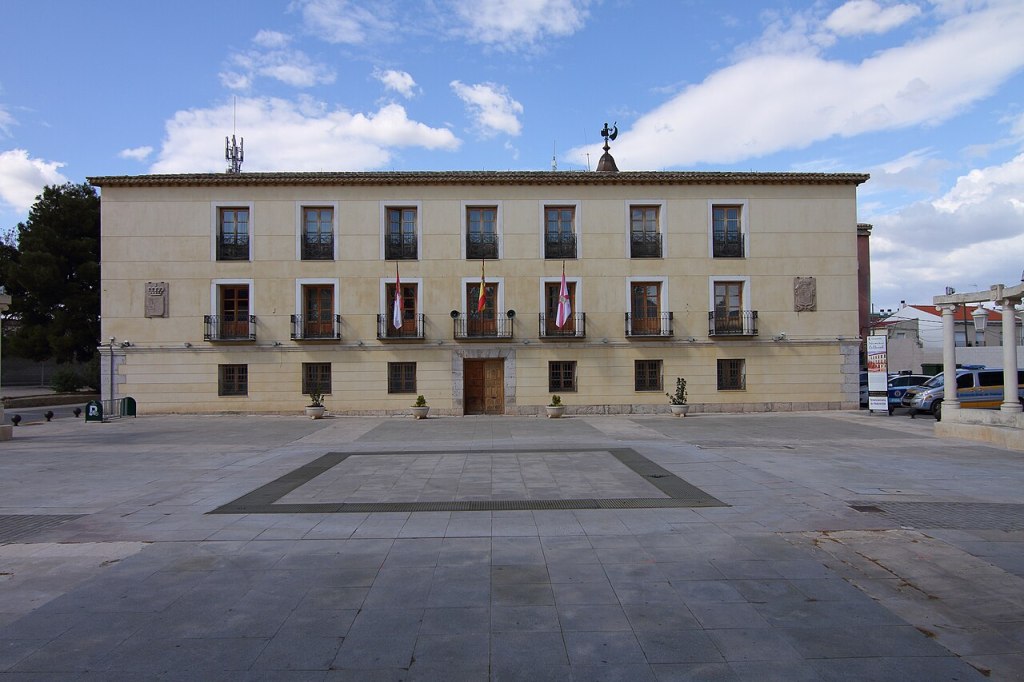
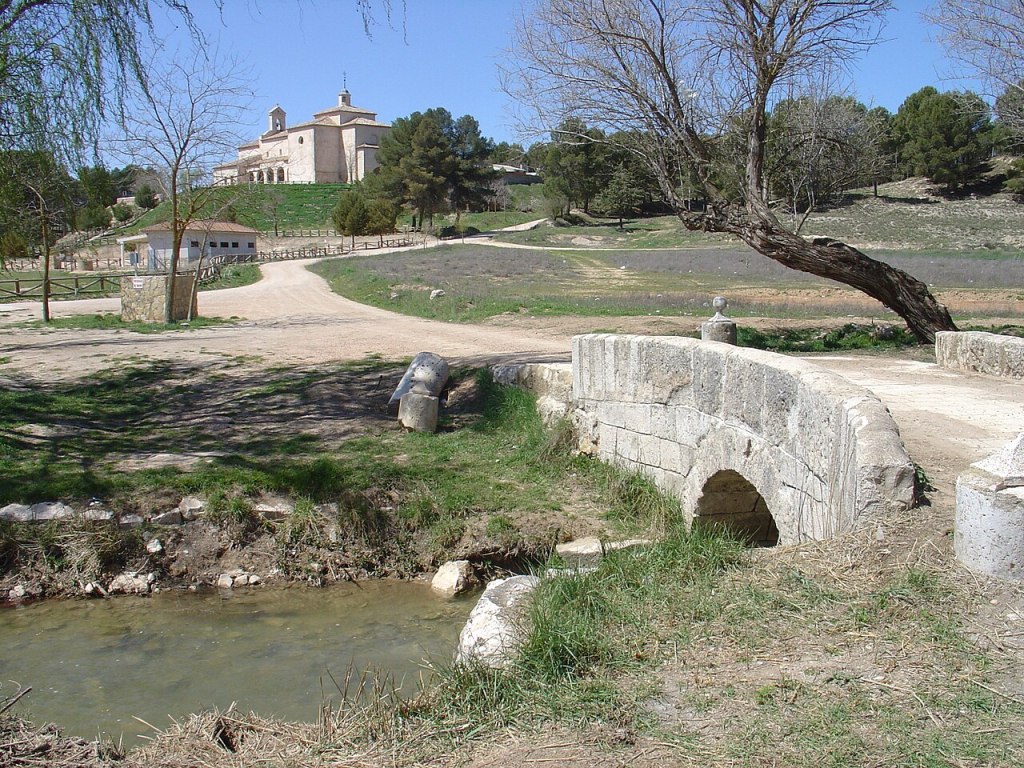
Riánsares was named for a river just outside Muñoz’ hometown of Tarancón in the Province of Cuenca (southeast of Madrid). This river (also called the Ansares) is one of the headwaters that feed into the Guadiana river, which flows west and south into the Atlantic. Tarancón had been the property of the Order of Santiago until the reforms of 1833 and now became the centre of the new dukedom, conveniently located close to the royal summer palace of Aranjuez. The town would give its name to a second duchy, given to Maria Christina and don Agustín Fernando’s eldest son, Agustín Muñoz y Borbón, in November 1847 (when he was ten years old). The old manor house was reconstructed as the Palace of the Dukes of Riánsares, and today serves as the town hall. A short distance outside town, on the banks of the river itself they acquired an ancient sanctuary dedicated to the Virgin of Riánsares—who supposedly interceded to aid King Reccared I when he fell dangerously ill near this spot in the late sixth century—to use as a summer house and family sepulchre. It is once again a hermitage.
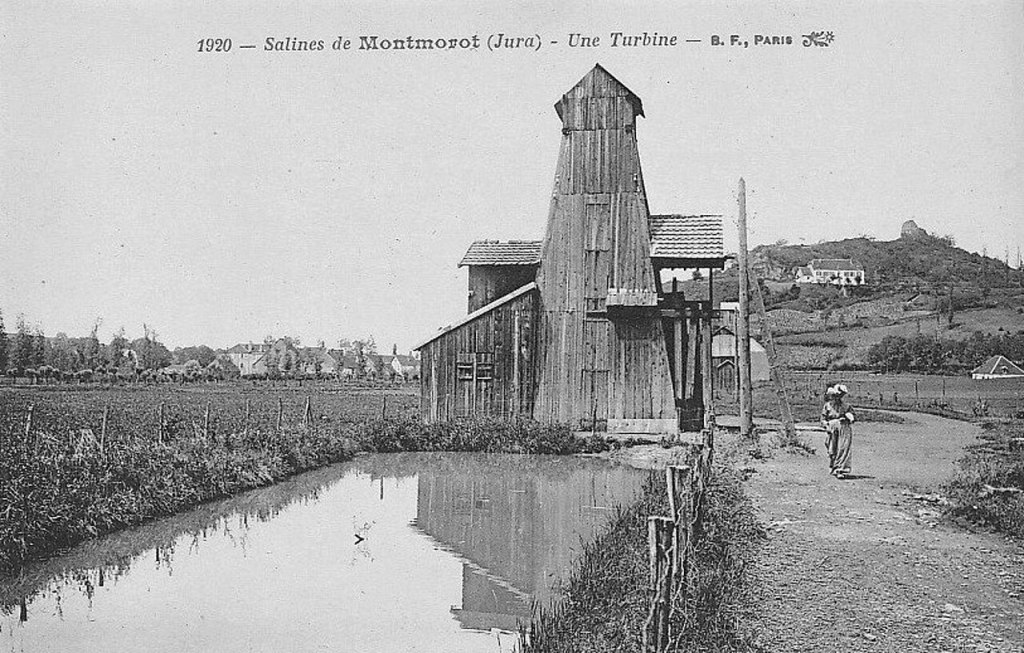
1846 was also the year of a diplomatic triumph for the Queen Mother in arranging a marriage between her second daughter, Infanta Maria Luisa, and King Louis-Philippe’s son the Duke of Montpensier. The King responded by creating the dukedom of Montmorot for Agustín Muñoz in 1847, and named him Grand Cross of the Legion of Honour. Montmorot was an estate with an ancient castle in the foothills of the Jura, in eastern France, the centre of a lordship held by a family of that name in the Middle Ages, but acquired by the French crown in the 1320s. This area was rich in salt production, and in the early 1840s, the French state had nationalised several of the saltworks (or salines), including those at Montmorot which were snapped up by the Duke of Riánsares. A dukedom and peerage would secure his position in France in case his titles and were confiscated in Spain.
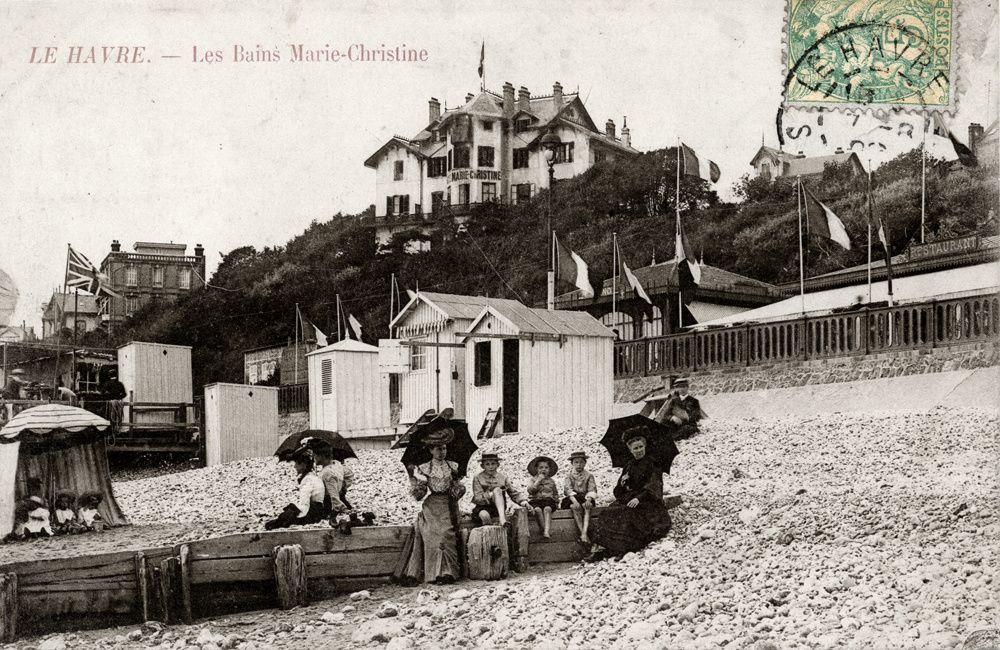
But in 1847, politics shifted and the Queen and her Duke returned to Spain. Though he did not have political ambitions, Riánsares clearly did have business skills, and made a lot of money in developing railroads and coal mines in Spain. He left Spain once again in 1854, when Maria Christina was driven away for meddling too much in her daughter’s government, and for dipping her hand too much into the royal treasury to support her husband’s investment schemes. After a few years in Paris, they sold their properties there and built a villa, ‘Mon Désir’ on the Norman seaside just outside Le Havre, where the Duke died in 1873, and the Queen a few years later in 1878. By that point, her daughter Isabel II was also living in exile, at the Palais de Castille in Paris. Mon Désir sat atop a hill surrounded by a large estate that included landscaped gardens, stables, and a large winter garden greenhouse. After their deaths, the villa became the luxury Hotel Marie-Christine. It survived both world wars, then was demolished in the 1950s. Maria Christina was buried as a Spanish queen in the Escorial, while her second husband the Duke of Riánsares was buried at the family sepulchre in Tarancón.
The Duke and the Queen had eight children—all born before the formal recognition of their marriage in 1844. The first, María Amparo was born in November 1834, and was given the title Condesa de Vista Alegre. In 1855, while living at Malmaison outside Paris, she met and married a Polish exile, Prince Czartoryski. She died young in 1864, but left children who would continue to unite this Polish family with the Bourbons for several generations. Another daughter was created Marquesa of Castillejo and married an Italian prince. As noted above, the eldest son, Agustín was created Duke of Tarancón in 1847, then Viscount of Rostrollano in 1849. He died at Malmaison in 1855 at age 18.
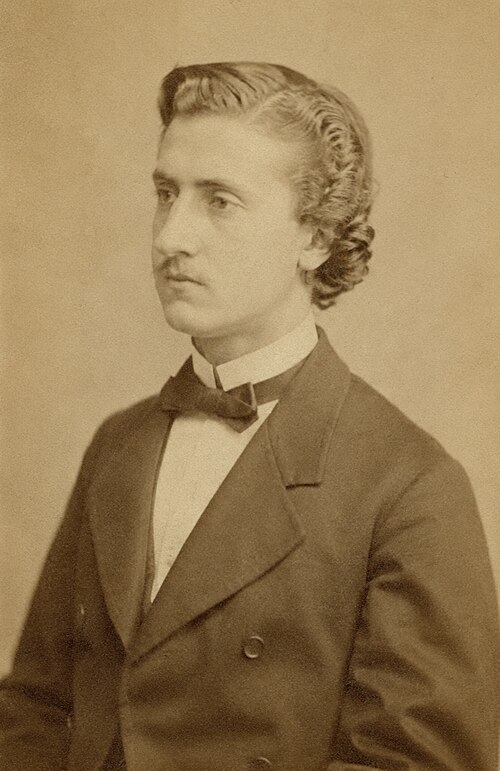
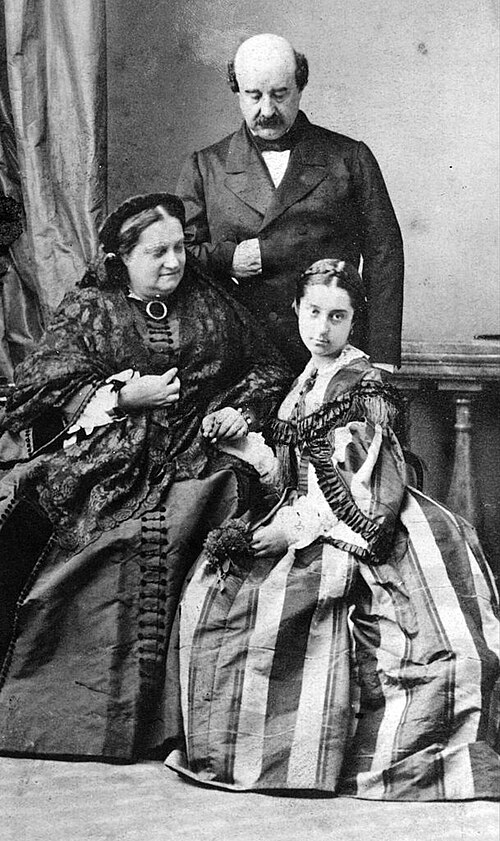
A second son, Fernando Muñoz y Borbón, created Count of Casa Muñoz in 1848, and Viscount of Alborada in 1849, became 2nd Duke of Tarancón in 1855, then 2nd Duke of Riánsares with the death of his father in 1873 (and technically Duc de Montmorot, though this was never recognised in Spain, and is rarely included on lists of French dukedoms; I’ve also seen a younger son, Juan, called Duc de Montmorort, who died in 1863 at age 22). In 1874, his nephew Alfonso XII allowed him to return to Spain, and confirmed his status as a Grandee of Spain. He died in 1910, leaving several children and a still quite large fortune.
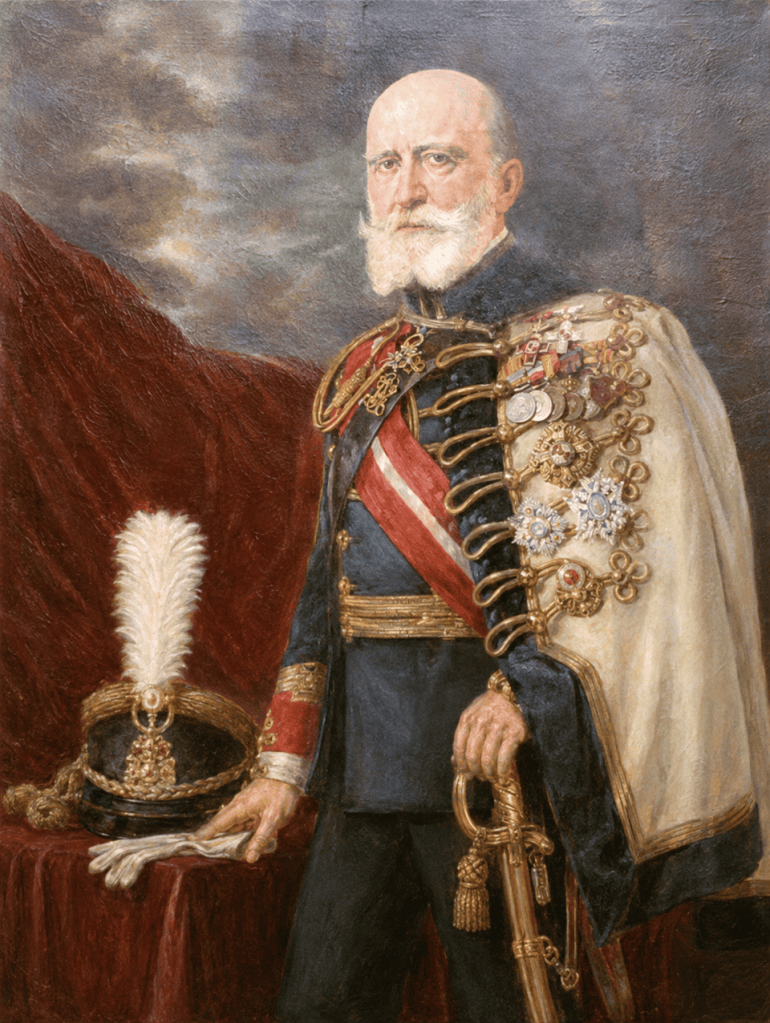
The next generations of the Muñoz-Borbón family, though semi-royal, did not leave much of a trace in the historical accounts. Unlike many Spanish aristocrats in this period, they stayed out of the political limelight and enjoyed the financial independence provided by the 1st Duke’s investments. The 3rd Duke, Fernando, born in 1864, was only head of the family for three years before following his father to the grave in 1913. His son Fernando, 4th Duke, also did not have a long life, dying in 1925 age 31. In contrast, his nephew José Bernardo succeeded as 5th Duke (bypassing his own father, who used instead the title Marques de San Agustín) at age two and lived until 2008. When he died the Spanish titles passed to his daughter, María de la Consolación, who benefitted from the recent Spanish equal succession law allowing a daughter to inherit a ducal title even if she had a younger brother. Any ephemeral claims to a French dukedom, however, ceased, since French dukedoms were all male-only creations.
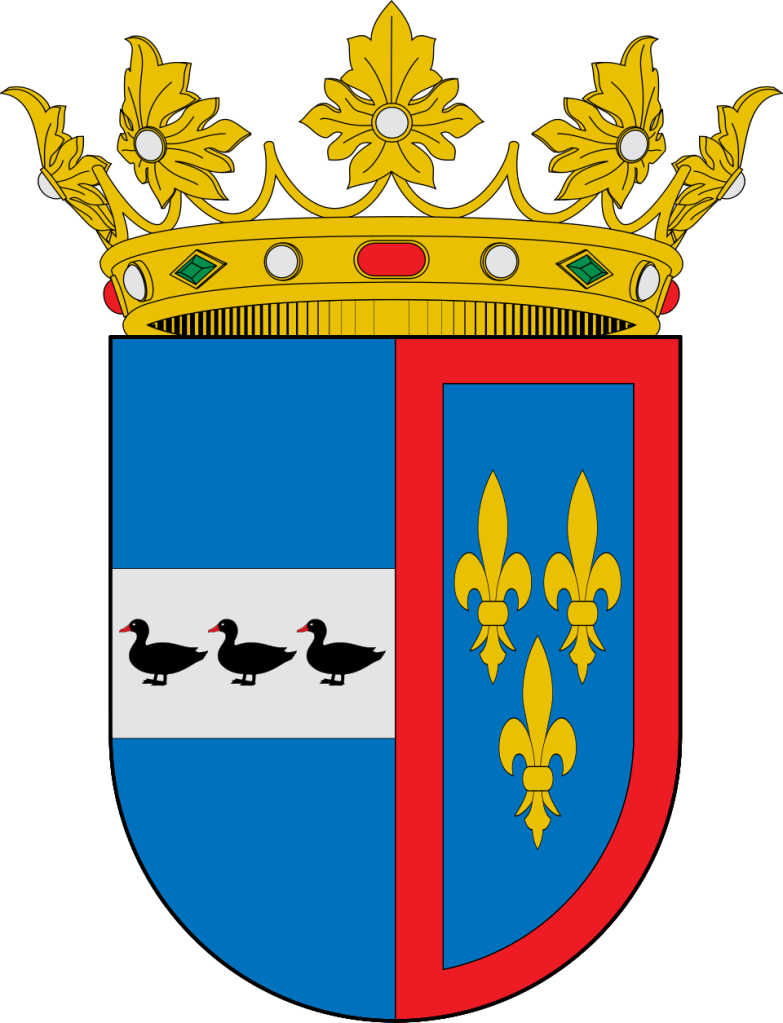
The 6th Duchess of Riánsares and Tarancón (b. 1948), had previously been given the title Marquesa de Castillejo (the title created for Queen Maria Christina’s second daughter) in 1983, shortly after her marriage to Armando de las Alas-Pumariño. Her daughter, named for her distant ancestress Maria Christina (b. 1982), is her heir, and was given the Castillejo title in 1998.
(images Wikimedia Commons)

