Once upon a time there was a man named Richard who had so many hyphens he didn’t know what to do. And so Lord Richard Temple-Nugent-Brydges-Chandos-Grenville petitioned the King for a dukedom and got one: the dukedom of Buckingham and Chandos. This unusual double dukedom, created in 1822, combined the Buckingham title from his father’s family, the Grenvilles (who also picked up the Temple and Nugent surnames), and an earlier Chandos title from his wife’s family, the Brydges-Chandos family. But this wasn’t the first time Buckingham was combined with another title to form a dukedom: Buckingham and Normanby had been created in 1703 for the Sheffield family, but was extinct by 1735. In contrast to the Sheffields, solid Tories, the family cluster of Grenville, Temple and Pitt dominated the Whig party for much of the eighteenth century from their grand county house at Stowe in Buckinghamshire. But much of their fame and fortune came from an older family: the Brydges of Chandos.
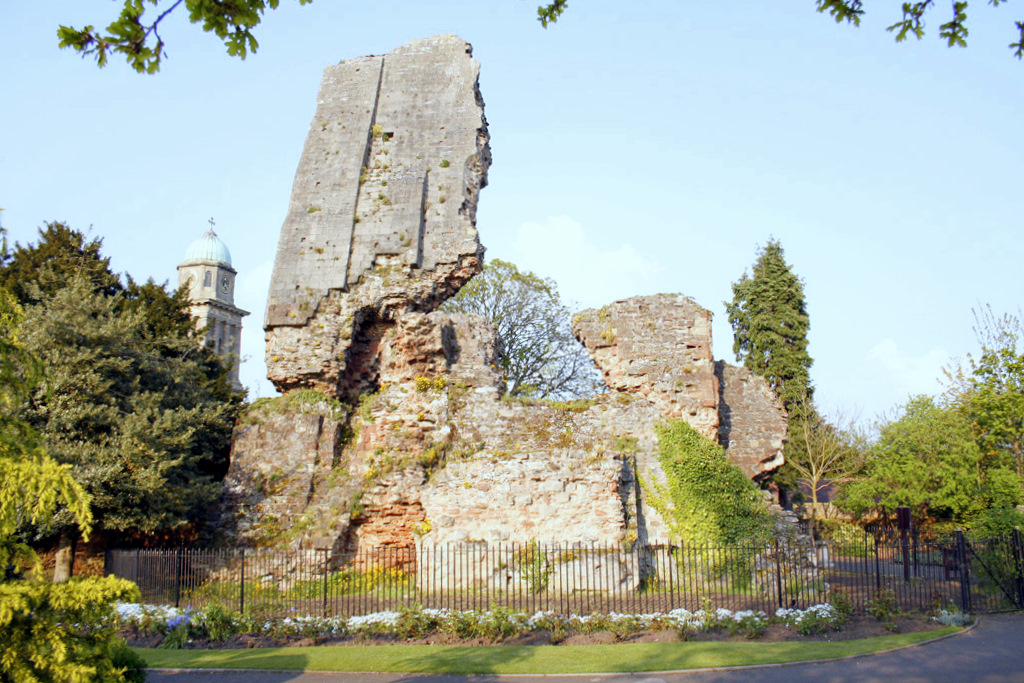
In the thirteenth century, there was a man living in the borders between England and Wales, Sir Simon de Brugge. Later genealogists put forward suggestions that he was a descendant of warriors who had come with William the Conqueror, perhaps the Montgomerie family, relatives of Duke William from Normandy, who had been given the earldom of Shrewsbury to protect western England against Welsh incursions. They proposed Sir Simon’s ancestors took their name from a fortified bridge built by the Montgomeries to defend a bend in the river Severn in Shropshire. The town that grew up around this bridge, Bridgenorth, was later spelled Brigge, Brug or Bruges. Within a few generations, the Brugge family had settled at Solers, now Bridge Sollers in Herefordshire, on the river Wye.
In the late fourteenth century there were two brothers: Thomas Bruges, who owned Haresfield and Matson, estates in the neighbouring county of Gloucestershire (both now suburbs of the city of Gloucester), and John, who retained Solers, and became Sheriff of both Herefordshire and Gloucestershire. John’s line ultimately settled in Dymock, in the Forest of Dean in Gloucestershire, and included Sir John Brydges who moved to London to become a draper, and served as Lord Mayor of London in 1520. His daughter Winifred did very well on the marriage market and wed first Sir Richard Sackville, then John Paulet, 2nd Marquis of Winchester (the son of Elizabeth I’s Lord High Treasurer). The elder brother, Thomas, married an heiress to more Gloucestershire estates, Alice Berkeley, daughter of Sir Thomas Berkeley of Cubberley, and Margaret Chandos, heiress of the barony of Chandos.
Roger de Chaundos, of Fownhope and Snodhill Castle in Herefordshire, was Sheriff of Herefordshire on and off between 1311 and 1333, and Sheriff of Glamorgan, across the border in South Wales. In 1337, he was summoned to Parliament as 1st Baron Chaundos. The name likely derived from Candos near a bend in the Seine in central Normandy. Roger’s son Thomas, 2nd Baron de Chaundos, was also Sheriff of Herefordshire off and one between 1359 and 1374. About this same time, one of the most famous knights in England was Sir John Chandos—probably a relative from a different branch based in Derby—who was a close friend to Edward the Black Prince and named by him to the post of Constable of Aquitaine. Another Sir John, the 3rd Baron, died in 1428, leaving his sister (or perhaps his daughter) Margaret as his heir. It was her grand-daughter Alice who brought the Chandos estates to the Brydges family.
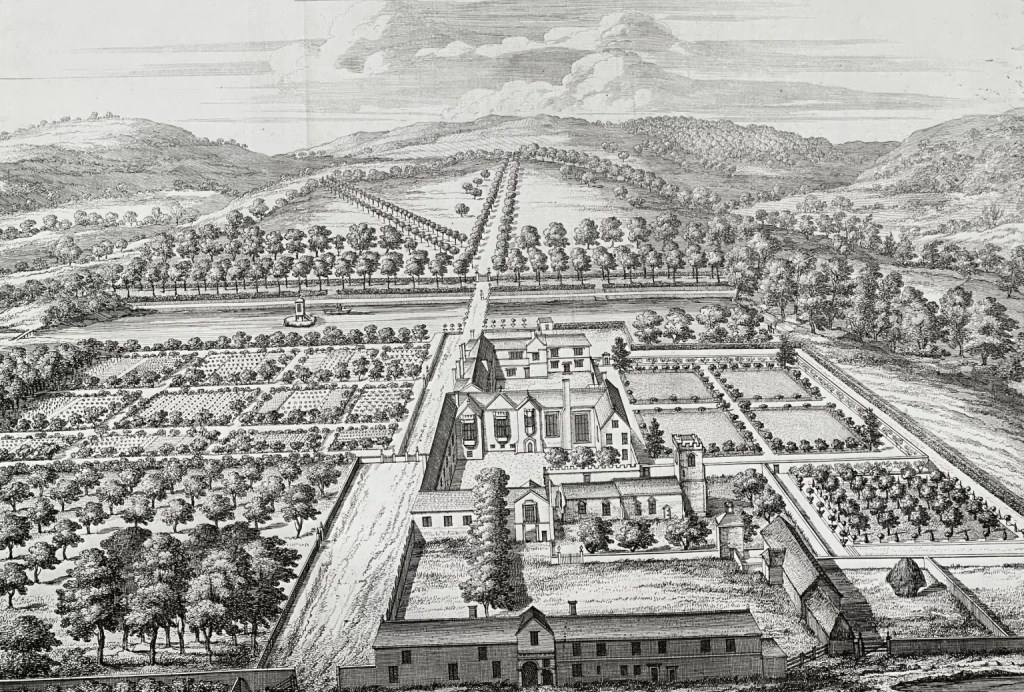
Cubberley or Coberley had been owned by the Berkeleys since the eleventh century, but had not built a manor house here until the early thirteenth century. Nestled in a Cotswold valley a few miles east of Gloucester, Coberley Hall became the seat of the Brydges family for the next century, until they moved to Sudeley Castle in the sixteenth century. Sold to John Dutton, later Lord Sherborne, in 1606, it passed through many hands before it was demolished in 1790.
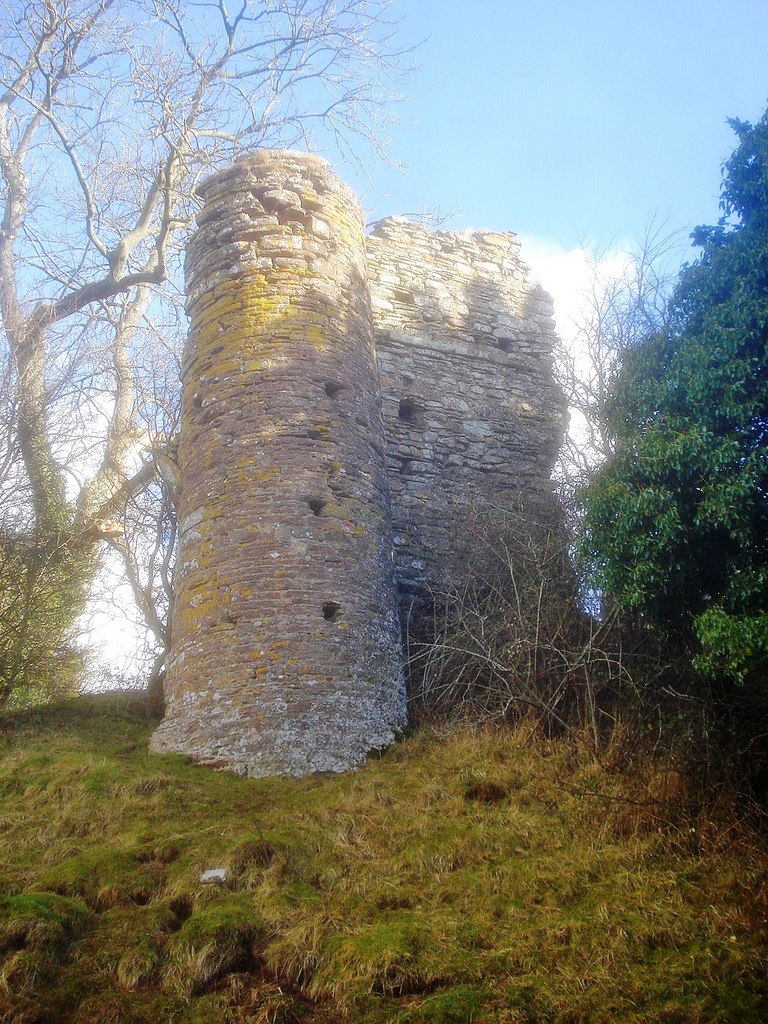
The barony of Chandos was not a place, but just a title attached to the name, like many of the early English baronies. Lands in Herefordshire passed to the Brydges, but the most important castle, Snodhill, passed to other relatives, then to the Beauchamp family and on to the English Crown. An important frontier castle between England and Wales, it was held by various families for the Crown over the centuries until ‘slighted’ on order of the Parliamentarians during the English Civil War. The ruins decayed until only recently when a new Preservation Trust was set up to rescue it and carry out fascinating archaeological work, as can be seen in this lovely video: https://snodhillcastle.org/
Thomas and Alice’s son, Sir Giles Bruges of Cubberley, was, according to some sources de jure 4th Baron Chandos (terminating the abeyance in 1458). He became Sheriff of Gloucestershire and died in 1467. He married well to secure his family’s position in the county, Katherine Clifford, of Frampton-on-Severn, whose first husband had been Anselme Guise of Elmore, on a rise south of Gloucester. In an interesting aside about the Guise family of Gloucestershire: they were no relation to the powerful Guise dynasty in France, but took their name from an ancestor Guy owning something (Originally ‘Guy’s Aspley’ in Bedfordshire), and indeed is pronounced locally as Guy’s.
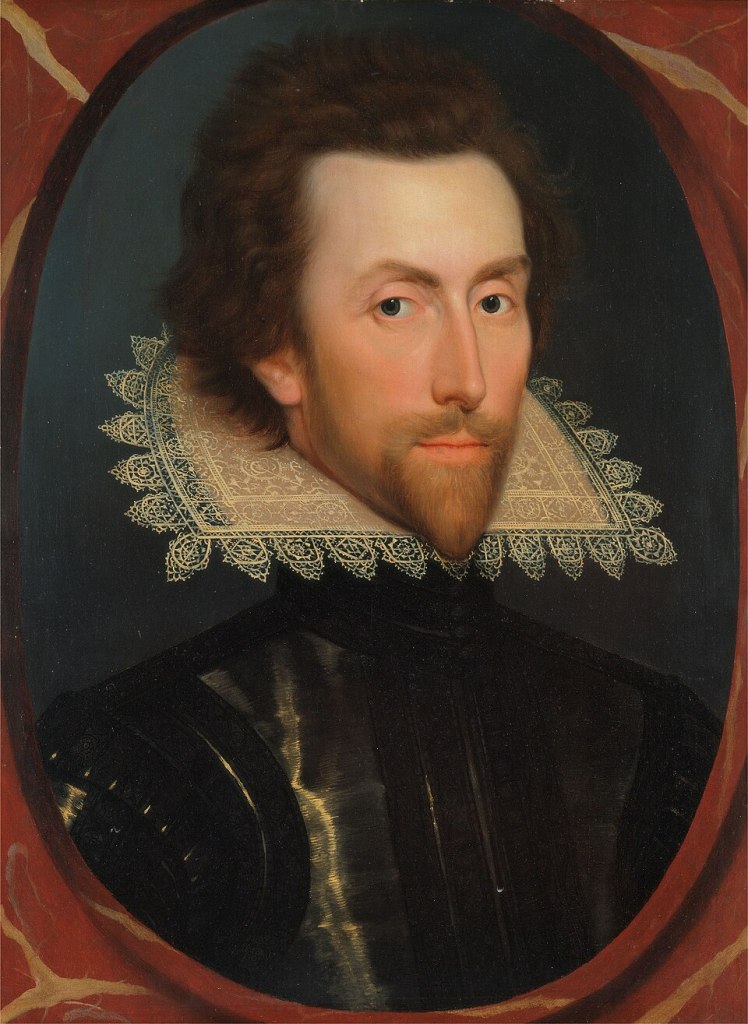
After a few generations, the barony of Chandos was finally recognised, but as a new creation. Sir John Brugge or Brydges also married well, in 1512, to Elizabeth Grey, daughter of the 9th Baron Grey de Wilton and Florence Hastings, a cousin of Henry VIII’s bosom friend Lord Hastings. Brugge was himself in favour at the young court of Henry VIII, one of the King’s soldiering buddies. When he was older, Sir John served the Crown as his ancestors did as a sheriff (of Wiltshire, 1537; while his brother Thomas, became sheriff of Gloucestershire, Berkshire and Oxfordshire). Having been the Constable of Sudeley Castle in Gloucestershire since the 1530s, he was granted it outright by Queen Mary in 1554, and created Baron Chandos of Sudeley, in thanks for his role in suppressing the rebellion of Thomas Wyatt in February of that year. He was appointed Lieutenant of the Tower of London, with his first task being to oversee the execution of his wife’s cousin, Lady Jane Grey, as depicted in the famous painting by Paul Delaroche from 1833. He also watched over the Queen’s half-sister Elizabeth during her incarceration in the Tower that Spring, then oversaw the execution of Wyatt himself in May. Lord Chandos died in 1557, so he escaped any repercussions for his actions when Elizabeth took the throne in 1558.

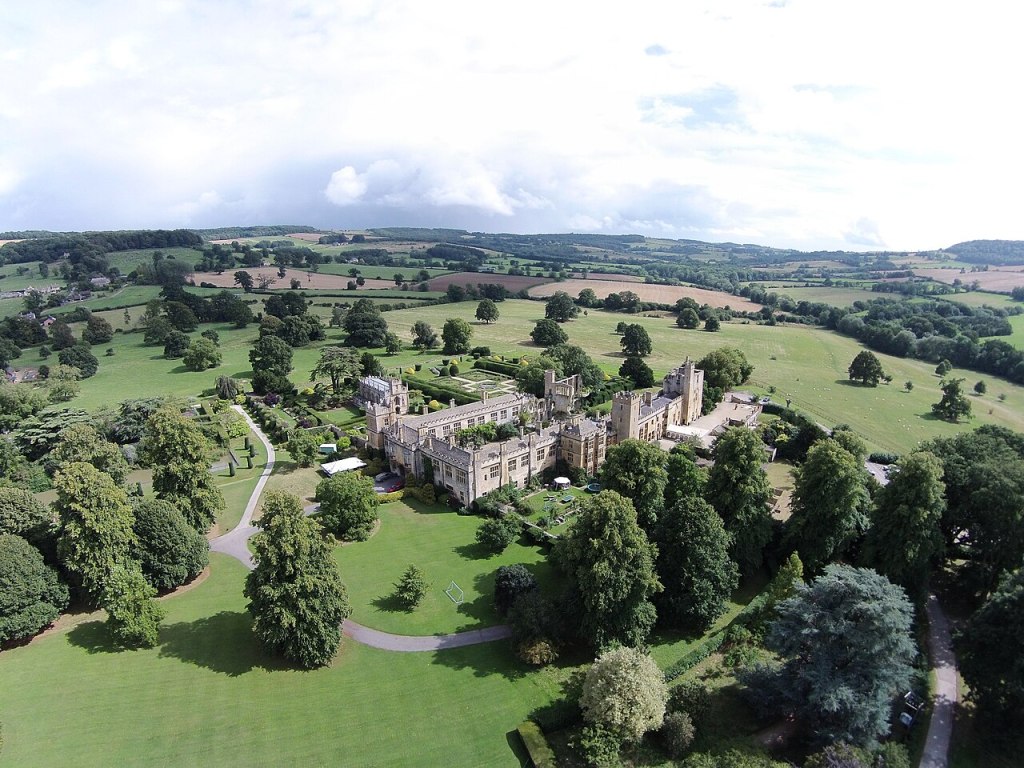
Sudeley Castle is also in Gloucestershire, a few miles north of the Brydges estates at Coberley, near the ancient Cotswold town of Winchcombe. It is best known today as the home of Queen Katherine Parr as a widow and her chief lodger, Princess Elizabeth. Winchcombe had been an ancient capital of Mercian kings, and a royal estate nearby was held by Norman kings from the eleventh century. A local family, de Sudeley (from sudeleagh, ‘south meadow’), barons Sudeley from 1299, died out in the 1440s and the estate passed by marriage to Ralph Boteler, Lord High Treasurer, who built a grand new mansion. As a Lancastrian, his estates were seized by the Yorkist king Edward IV in 1469, and in the next reign, Richard III made this a favourite residence, built a large banqueting hall, which still remains in ruined form. In his will, Henry VIII gave the castle to Thomas Seymour, who was created Baron Seymour of Sudeley in 1547, and married the widowed Queen Katherine. But their marital bliss was short lived: she died in September 1548 and was buried at Sudeley; he fell from favour and was executed in March 1549. Her brother the Marquess of Northampton inherited, but he too fell from favour and the castle and its gardens was seized by Queen Mary in 1553 and given to Baron Chandos, as above. His son Edmund remodelled it significantly in the 1560s-70s, in part to make it suitable to host Elizabeth I on her royal progresses through the West Country (she stayed here several times, including a three-day festival in 1592, which bankrupted the Brydges-Chandos family!). Seriously damaged during the English Civil War, the 6th Baron Chandos was unable to make repairs due to significant debts, and in 1655 it passed out of his family by means of his wife’s heirs by her second marriage, the Pitts. They rented it out to various tenants, but over the next century the building seriously decayed. In 1837, the Dent brothers, glove merchants from Worcester, purchased Sudeley Castle and began to retore it. Their descendants, the Dent-Brocklehursts, still own it, and have opened it up for tourism since the 1970s. Today it is also known as a site for super glamorous celebrity weddings.
Edmund, 2nd Baron Chandos (d. 1573), continued the line in Gloucestershire, while his brother Charles founded a second line in neighbouring Herefordshire by acquiring Wilton Castle from his cousin the 13th Baron Grey (to enable the latter to pay a ransom in 1558). The senior line continued on, as virtual ‘kings of the Cotswolds’ (a nickname given to Grey, 5th Baron Chandos, in the 1610s). His second son, William, the 7th Baron, died in 1676. They had all married well, with successive baronesses being daughters of the Earl of Lincoln, the Earl of Derby and the Earl of Manchester.
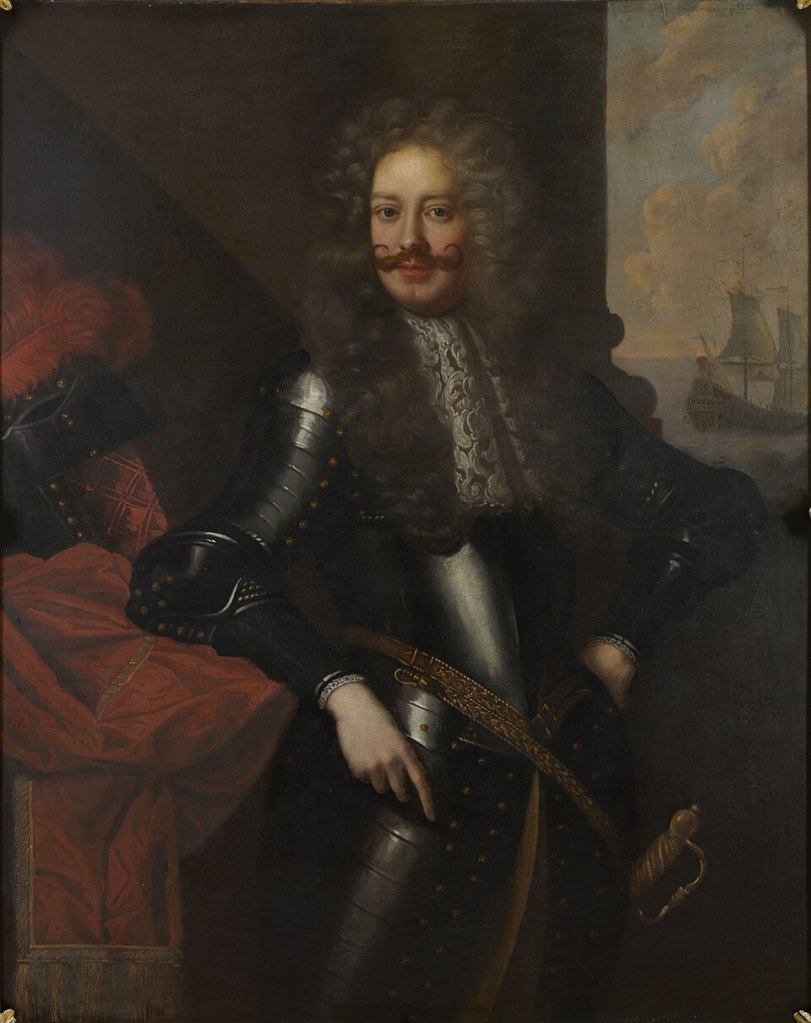
In 1676, the barony of Chandos passed to the junior line of Wilton (created baronets in 1627). Sir James Brydges, 3rd Baronet, was now 8th Baron Chandos of Sudeley. He was appointed Sheriff of Herefordshire the next year. He married Elizabeth Barnard of London, daughter of Sir Henry Barnard, a very wealthy merchant with the Levant Company who controlled appointments as ambassador to Constantinople—indeed, Barnard sent his new son-in-law Chandos to the Ottoman court as the English ambassador from 1680. Though he did not die until 1714, his son James’s career soon eclipsed his own.
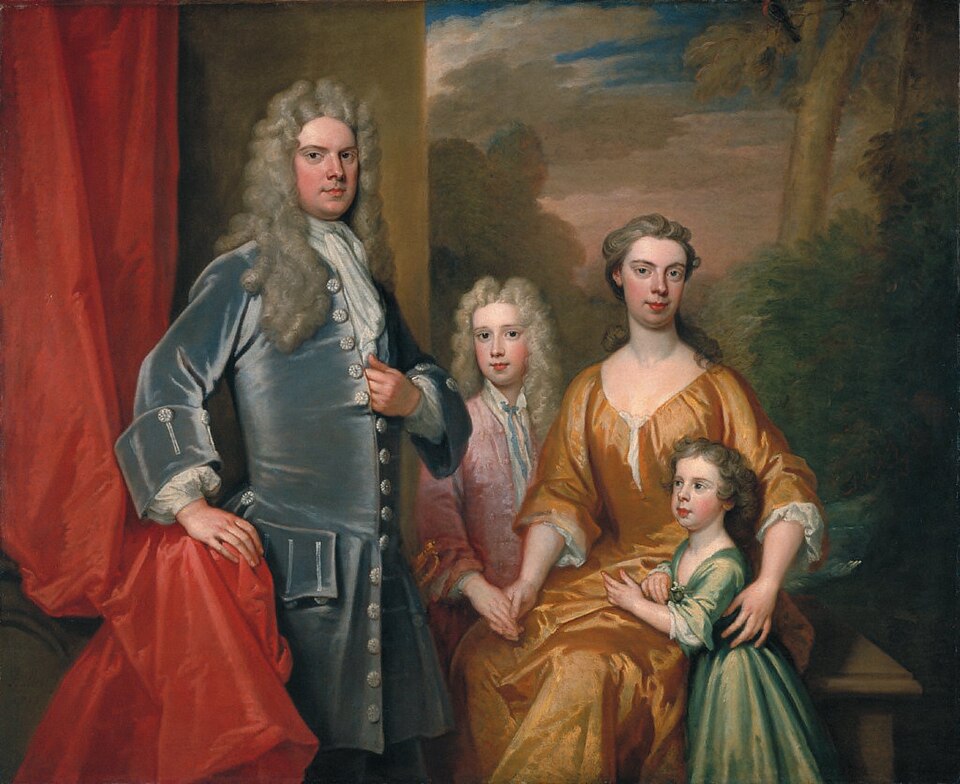
James Jr had also married a Londoner, Mary Lake, daughter of Sir Thomas Lake, of Cannons, Middlesex. She died in 1712 just before the culmination of her husband’s great rise to a dukedom, but her inheritance brought great riches, including Cannons. James had started his political career as MP from Hereford in 1697, and became involved in the East India Company and the financial administration of the office of the Lord High Admiral. From here he was appointed in 1705 Paymaster-General of the Allied Forces, a post that is always seen as a major stepping stone to great wealth (see Henry Fox later in the century). Managing public funds needed to support the huge war effort in the War of the Spanish Succession, he amassed a huge sum for himself, one of largest and swiftest fortunes of the age. In October 1714, three days after succeeding his father as 9th Baron Chandos, the new king George I made him Earl of Carnarvon and Viscount Wilton in his coronation honours. He was a talented political networker, and after courting Whig ministers, was further elevated in the peerage in 1719 as Duke of Chandos and Marquess of Carnarvon.
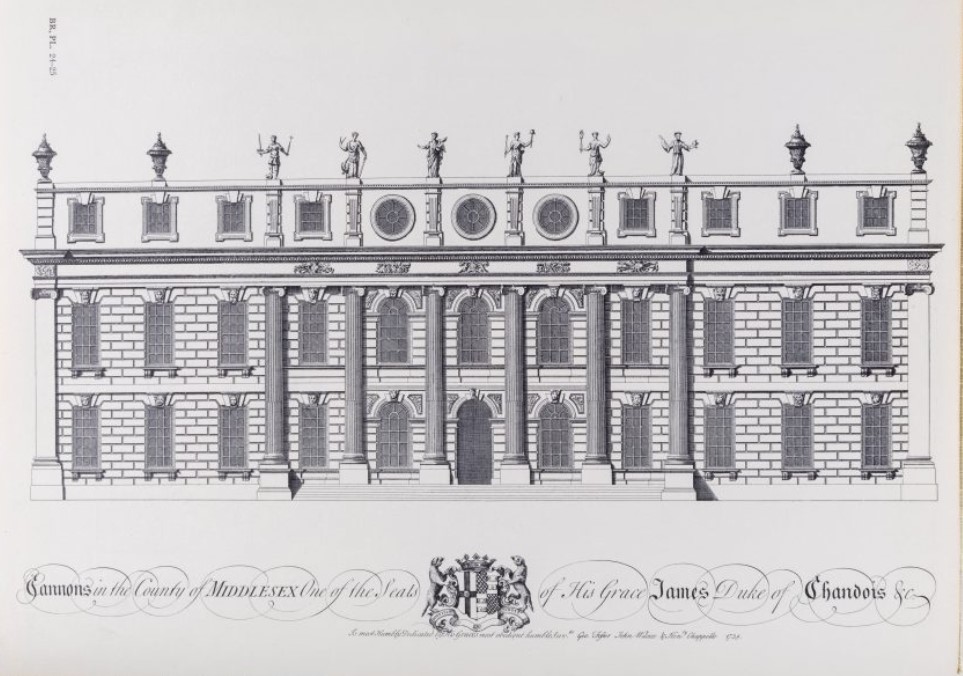
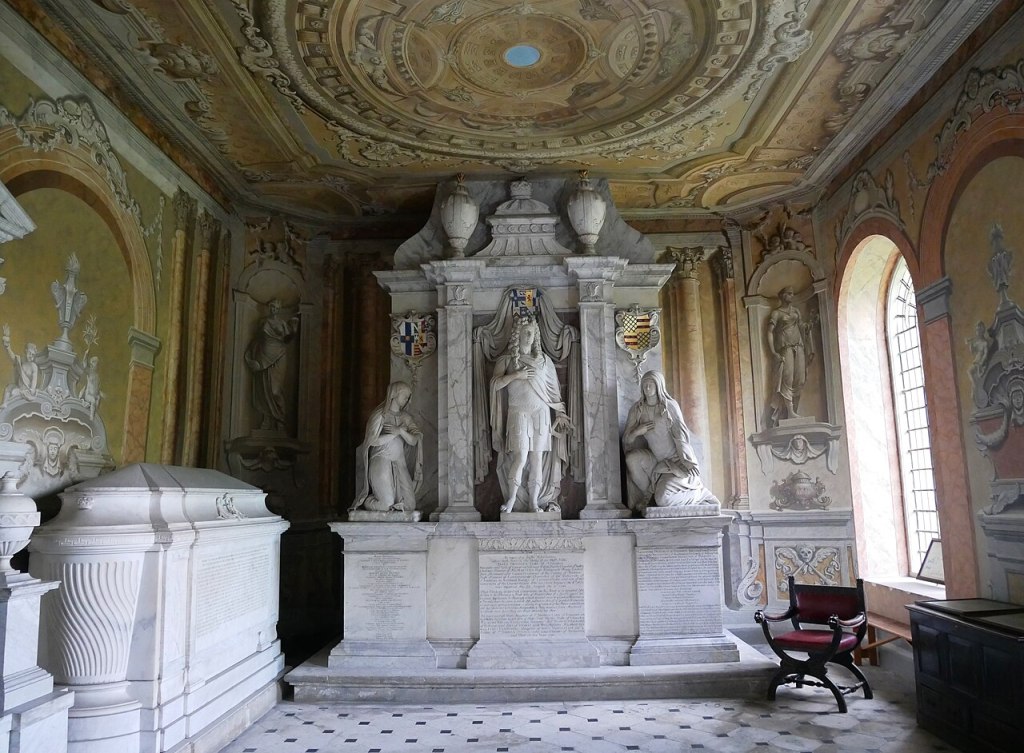
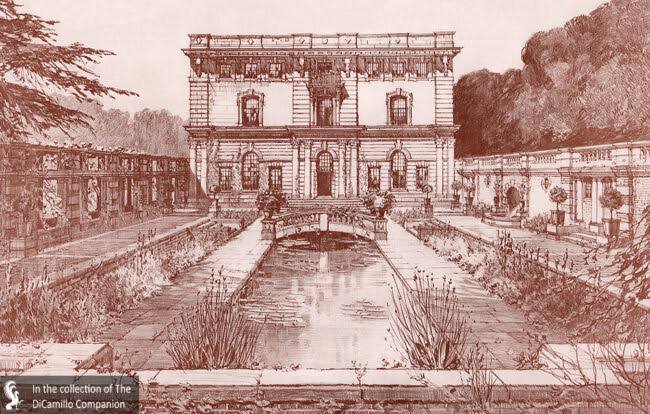
In 1710, Brydges purchased his wife’s uncle’s estate at Cannons in Middlesex just outside London, in the village of Edgware (just off the ancient Watling Street, but now giving its name to Edgware Road). The name Cannons refers to the canons of St Bartholomew’s Priory who owned the land in the Middle Ages. After the Priory had been dissolved in the Reformation, a large house was built here in the early seventeenth century by Mary’s great-grandfather Thomas Lake, Secretary of State for James I, who granted him the manor of Little Stanmore in 1604. Brydges started a new house in 1713, a model of innovative Palladianism in England, which cost over £200,000 (about 40 million today) before it was finished in 1720. It was a marvel, but, as we will see below, unsustainable, and so after a twelve-day demolition sale in 1747, it was mostly pulled down. Elements were saved: the portico columns are now part of the National Gallery in London; the ceiling of the chapel is now in a church in Worcestershire; and so on. A new villa was built on the site in 1760 by William Hallett, a renowned cabinet maker; today it houses the North London Collegiate School, while Canons Park is owned by the local council (and gives its name, with this spelling, to a tube stop). Nearby, the Duke built a family mausoleum in St Lawrence Church.
The Duke of Chandos became one of the great patrons of the Georgian Age: at Cannons, he exhibited Italian art and maintained his own orchestra and choir—led by the leading composer of the age, Handel. The German-born composer arranged eleven psalm settings into what is known as the ‘Chandos Anthems’ in 1717-18 for the ducal chapel; and in 1718 premiered his pastoral masque Acis and Galatea, outside on the terraces overlooking the garden, with its water features that included an impressive jet d’eau. This would later be reworked and expanded into an opera, Handel’s most popular secular work. This musical legacy later inspired the formation of a record label Chandos Music in 1963 (later Chandos Records from 1979).
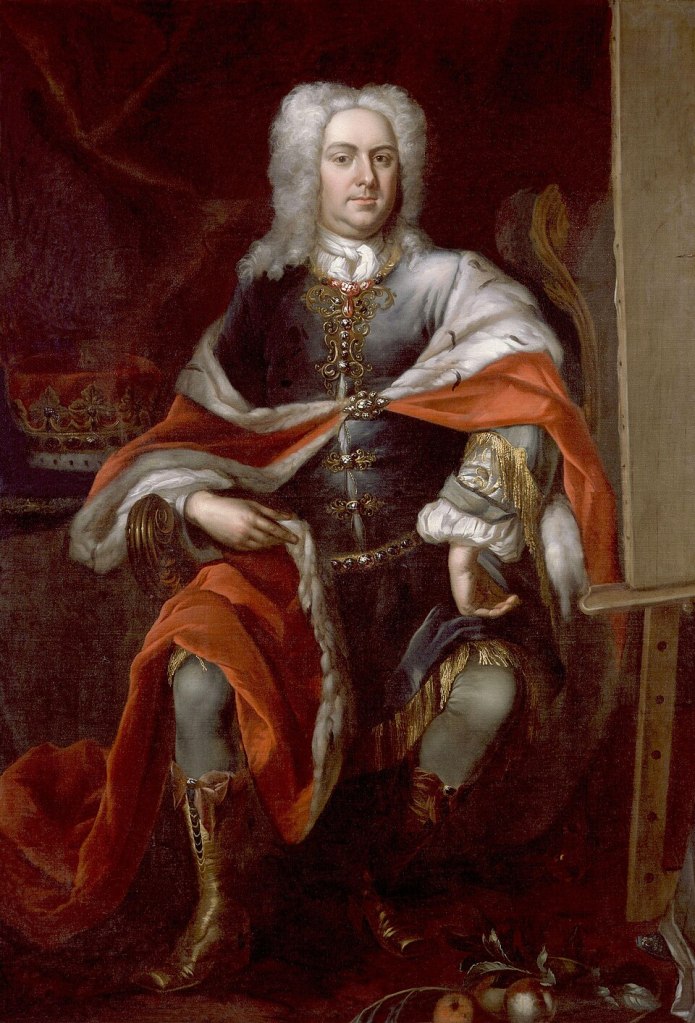
The Duke’s extravagance was mocked by some in high society as tasteless and definitely smelling of the nouveau riche. But his fortune continued to grow: he built a grand townhouse on St James Square; he invested in the development of the district north of Mayfair called Marylebone; he speculated in stocks. But here is where it all went wrong: in the bursting of the ‘South Sea Bubble’, October 1720, Chandos lost nearly £700,000 (£200 million today). Forced to sell his London townhouse, his debts continued to grow, to nearly £85,000 by his death in 1744.
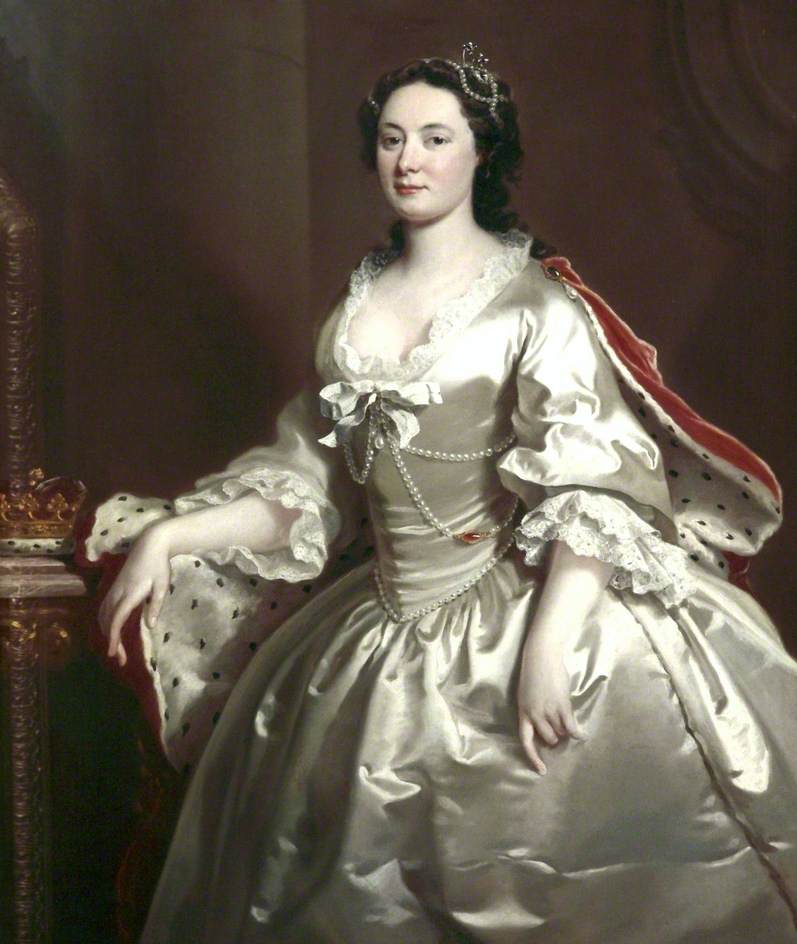
The Duke and his first wife had several sons who died young, followed by John (known as the ‘Marquess of Carnarvon’ after 1719), who married well, Lady Catherine Tollemache, daughter of the Earl of Dysart, but died in 1727, leaving two daughters. The next son, Henry, tried to rebuild the family’s position by obtaining a good position at court, as Master of the Horse to the Prince of Wales in 1729, and by marriage to Mary Bruce, granddaughter of the 2nd Earl of Ailesbury. Her father, later the 3rd Earl, died in 1747 with no male heirs, meaning most of his titles passed to distant male cousins, but not his barony of Kinloss (based in Morayshire, created in 1602 for Edward Bruce, Master of the Rolls), which was reckoned able to pass through a female line. But Carnarvon lost the position in the Prince’s household by 1735, his wife died in 1738, and he sullied his social standing by a second marriage to a domestic, Anne Jefferies (née Wells) in 1744. It was said he ‘bought’ his new wife from an innkeeper while visiting Newmarket—wife-selling was in fact a way of getting a divorce in the eighteenth century, and the Duke claimed he saw her being mistreated so rescued her. But the damage was done and once he became 2nd Duke of Chandos, he dismantled Cannons in 1747 and auctioned off its contents to attempt to cover his father’s debts.
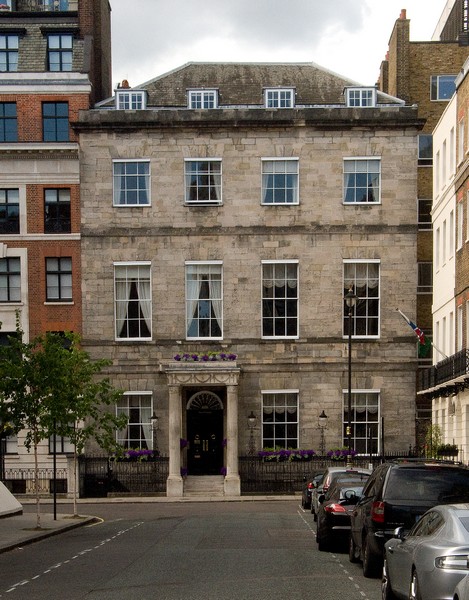
A second Chandos House was built in London at this time, on Queen Anne St in Marylebone, by the famous architect Robert Adam, his first London townhouse. Construction began in 1769. Its chief resident was for many years the 3rd Duke’s widow, confined here in her madness until 1813, after which it was sold. It housed the Austrian Embassy until 1866, then had various owners under 1959 when it was sold to a business. It is remarkably intact.
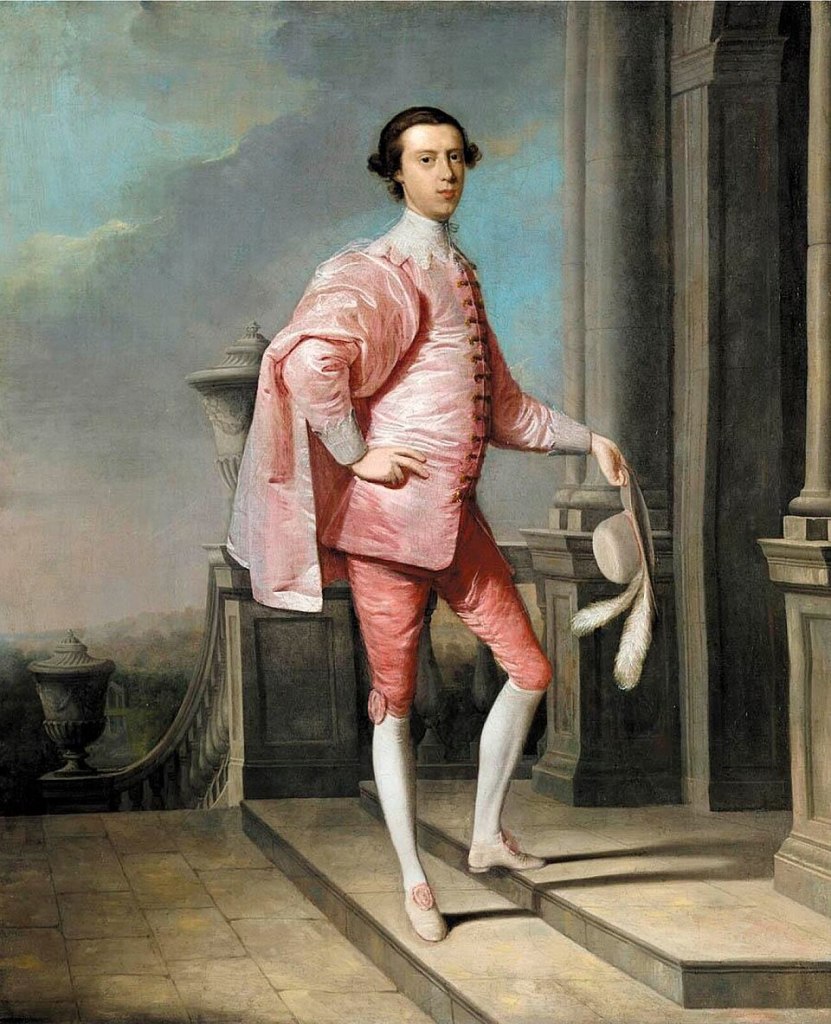
The 2nd Duke of Chandos did not get to live in his new London house, and died in 1771. He was succeeded by his son, another James. As Marquess of Carnarvon, James had acquired another good post at court, Gentleman of the Bedchamber of the Prince of Wales, 1760-64, and was later named a member of the Privy Council in 1775 and appointed Lord Steward of the Household, 1783, a post he held until his death in 1789. This was an important post to have at the time of crisis during the first attack of George III’s mental illness in the summer of 1788. The 3rd Duke of Chandos’ marriages were not of the rank normally associated with the great ducal families of the age, though both were strategic additions to prop up his family’s flagging fortune: his first wife (from 1753) Margaret Nicol (Nicholl), was an heiress, of Minchenden Hall in Middlesex; while the second (from 1777) was Anna Eliza Hope Elletson (née Gamon), heiress of her first husband’s sugar plantation in Jamaica.
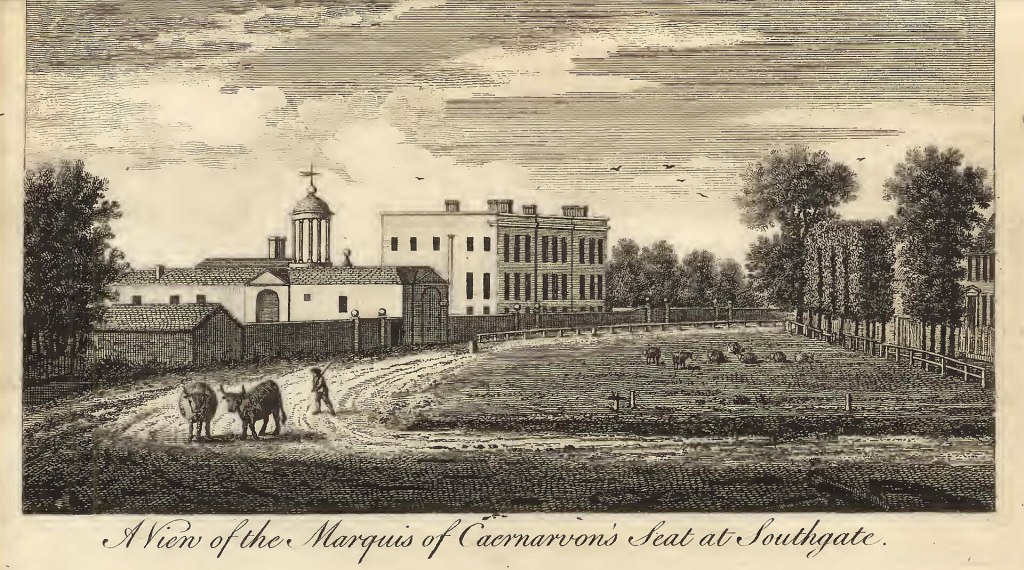
Minchenden (today usually spelled Minchington) was a brick house built in the 1660s by Sir Thomas Wolstenholme in Southgate, which is ironically in North London (it was the ‘south gate’ of the Enfield Chase, an open area long owned by the Duchy of Lancaster, over which young James Brydges had been appointed Ranger). Purchased by John Nichol in 1738 it passed to his daughter Margaret and thus to the Brydges family. As family debts continued to mount in the nineteenth century, the house was sold to a neighbouring landowner who demolished the house and absorbed the estate into his own.
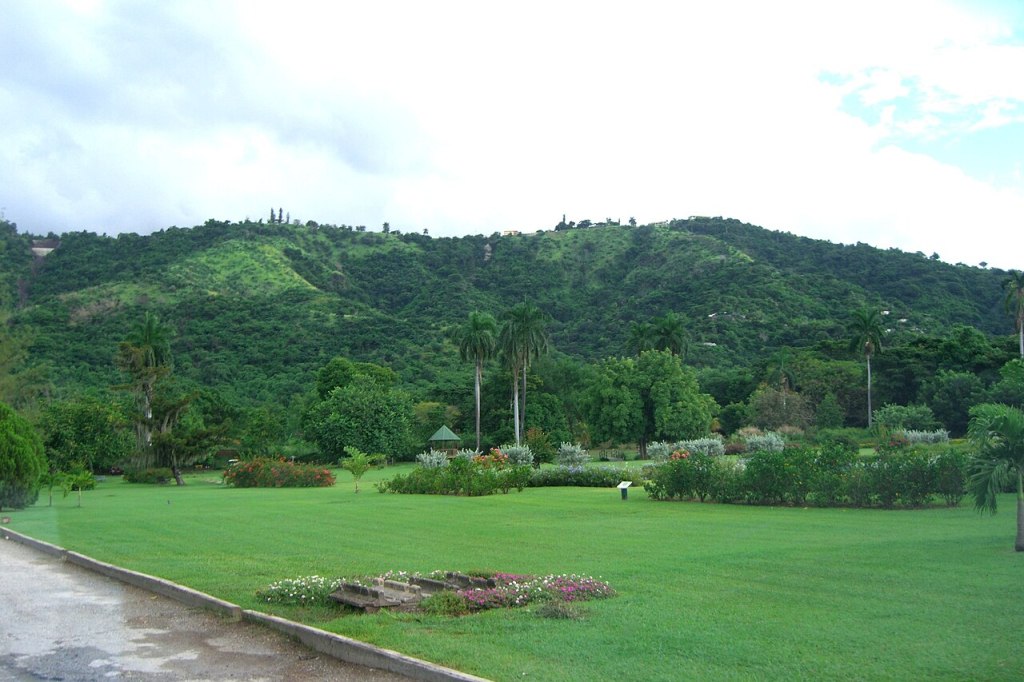
The Hope Plantation in Jamaica had been established by Maor Richard Hope in 1655, not too far from Kingston, and by the eighteenth century was worked by hundreds of slaves. Anna Eliza had been born in Hertfordshire but moved to Jamaica where her first husband, Roger Hope Elletson, served as Lieutenant-Governor, 1767-68. Since 1873, the Hope Estate has been transformed into the Hope Royal Botanical Gardens.
With restored wealth, the 3rd Duke added to the family’s reputation as art collectors, notably through his acquisition (via his first marriage) of a portrait thought most to resemble William Shakespeare, now known as the ‘Chandos Portrait’. This was sold by his heirs in 1848 to the Earl of Ellesmere who donated it to the newly founded National Portrait Gallery as the first work of art in its collection.
In 1789, the 3rd Duke died rather suddenly died due to an accident fall, it was said caused by his wife. She was declared a lunatic in 1791, and was confined to Chandos House and became a ward of court. Several lawsuits sprung up regarding the management of her various estates, including lands in Ireland and the plantation in Jamaica.
What was left of the Chandos fortune passed to their only child, Anna Elizabeth, who was only ten years old. This inheritance included claims to the Scottish barony of Kinloss, which the 3rd Duke had never claimed, though eligible as heir of his grandfather the Earl of Ailesbury in 1747. It was proposed to marry the heiress as early as 1785 to Richard Temple-Nugent-Grenville, Earl Temple, which was done in 1796. She and her husband thus forged the great quintuple-barrelled surname by royal licence in 1799.
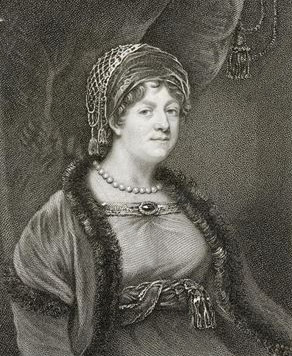
Grenville & Temple
By strict patrilineal reckoning, Richard’s surname was Grenville. This family’s roots stretch back into the eleventh century in Buckinghamshire—the first real connection with this county we encounter in this post. Earlier versions of the name are given as Greenvile or Greenville. They were lords of Wotton Underwood, a village northwest of Aylesbury, from about the fourteenth century. It is interesting to note that Buckinghamshire would proliferate with prime ministers’ country houses over the centuries: besides Wotton, there was Stowe House to the north (see below), and Hughenden (Disraeli’s house) to the south, as indeed is Chequers. In fact, former prime minister Tony Blair purchased the refurbished stable block at Wotton Underwood itself in 2008.
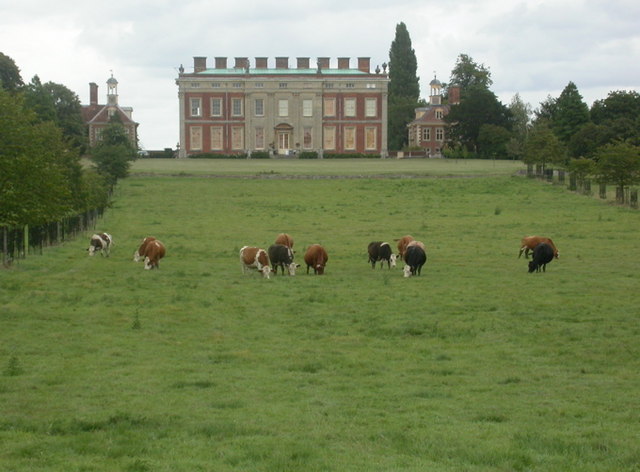
There was a manor house at Wotton from the twelfth century. The Grenvilles built a new house on higher ground in 1704, before moving to Stowe in 1749. A younger brother stayed on at Wotton, as did a sister, Hester, who was married to William Pitt the Elder, who redesigned its landscaping. After a bad fire in 1820, it was rebuilt with lower proportions, and after the family died out in 1889, it was rented out, then sold in 1929. The run-down building was slated for demolition in 1957, but was saved and renovated. It is still in private hands and open infrequently. Its coach house was renamed the South Pavilion and was owned by Sir John Gielgud, then Tony Blair.
For centuries the Grenvilles of Wotton cultivated ties with local gentry families of Buckinghamshire but did not rise to great prominence. Then in 1710, Richard Grenville, MP for Buckingham, married Hester Temple, sister and ultimately co-heiress of Sir Richard Temple of Stowe, the future Viscount Cobham, one of the leading lights of Whig politics in the 1720s-30s.
The Temple family were a more recent addition to Buckinghamshire society, making their money in wool, and based at Stowe House only from the late sixteenth century. The family rose in the world a bit when John Temple of Stowe’s daughter Elizabeth married William Fiennes, Viscount Saye & Sele (from just over the border in Oxfordshire) in 1600, and a few years later, his son Thomas, MP for Andover in Hampshire, purchased the ‘rotten borough’ of Buckingham (its two MPs far over-represented a small electorate), became a baronet (1611), and was appointed in succession Sheriff of Oxfordshire, Buckinghamshire and Warwickshire.
His son Peter was also Sheriff of Buckinghamshire, while a nephew, Thomas, became Governor-Proprietor of Acadia-Nova Scotia in 1657, and received one of those rare baronetcies in the Peerage of Nova Scotia in 1662. Thomas was joint proprietor with William Crowne (both appointed by Lord Protector Cromwell), and they travelled there to develop it, also living in Boston for a time, but were forced by a treaty signed by England 1667 to recognise that Acadia belonged to France.
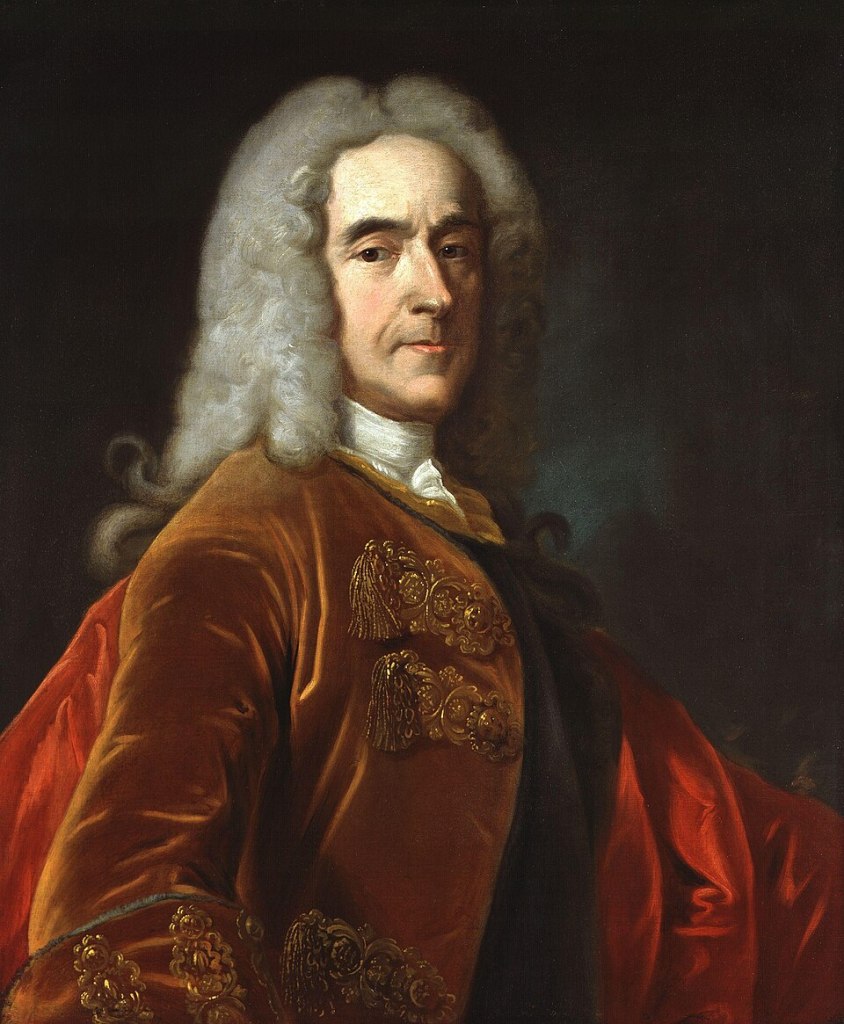
In the latter half of the seventeenth century, the Temple family became embedded in the ‘Country Party’, the remnants of the Parliamentarians of the Civil War which eventually formed the Whig Party in the 1670s. One of the main aims of the Whigs in this time was to prevent the succession of the Catholic and absolutist Duke of York, a mission led in part in Parliament by Sir Richard Temple, 3rd Baronet. His son Richard, 4th Baronet, was a soldier and politician: he rose through the military ranks in the 1680s-90s and in 1710 was promoted to lieutenant-general. He also occupied one of those seats guaranteed for the family as MP for Buckingham, from 1697 to 1714. That latter year, a new king, George I elevated him to the peerage as Baron Cobham, in the County of Kent, and sent him to Vienna as his ambassador. I’m not sure why this title was selected, as Cobham Hall in Kent seems un-related, as does Cobham Park in Surrey. In 1715, Lord Cobham married Anne Halsey, heiress of Edmund, owner of Anchor Brewery in Southwark, whose wealth enabled him to redevelop his family’s old seat at Stowe. Her father benefitted too, obtaining one of the Temple safe seats as MP for Buckingham in 1717.
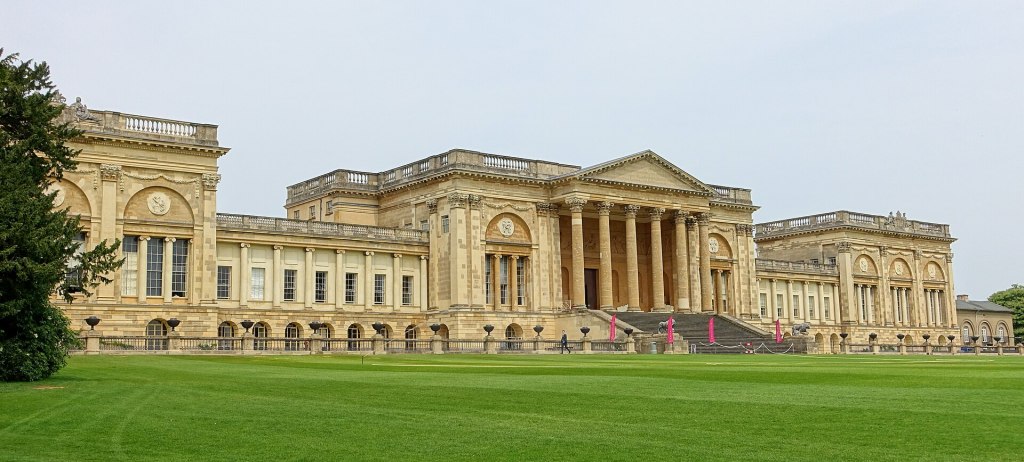
Stowe House is in the far northern end of Buckinghamshire. Originally a manor owned by Osney Abbey (in Oxford), when it was secularised in 1539 it was given to the Giffords, then leased to the Temples in 1571 and then sold to them outright in 1589. The house was rebuilt in the 1680s by the 3rd baronet, then additions were added in the 1720s by Viscount Cobham (with renowned architects John Vanbrugh and William Kent). The real showpiece we see today, the very wide steps leading up to the neo-classical south front, was added in the 1770s by the 2nd Earl Temple (designed by Robert Adam). Later additions included a massive library built in its own wing, and a fashionable ‘Egyptian Hall’. It was lavishly decorated with artworks purchased in Italy on the Grand Tour, and notably, much of the Orléans Collection sold in 1798. Most of this was sold off during the family’s bankruptcy travails in 1848-49—notably the Stowe Collection of Manuscripts now housed at the British Library, including about two-thousand Irish, Anglo-Saxon and medieval documents. The rest of the collections were sold in 1921, though some things were later bought back, notably family portraits that still adorn the house. After the Grenville-Temple family died out in 1889, Stowe House was rented out (including to the Count of Paris, exiled claimant to the French throne, who died here in 1894). The Morgan-Grenvilles sold it in 1922 to Stowe School, who still occupy the house, while the gardens, since 1989, have been held by the National Trust. Stowe’s gardens are still considered amongst the finest in Britain, but its real fame came as its role as the political hub for much of mid-century politics, as we will see.
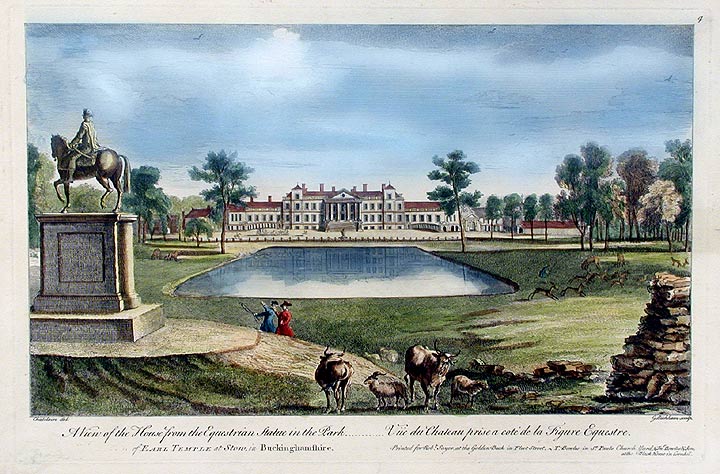
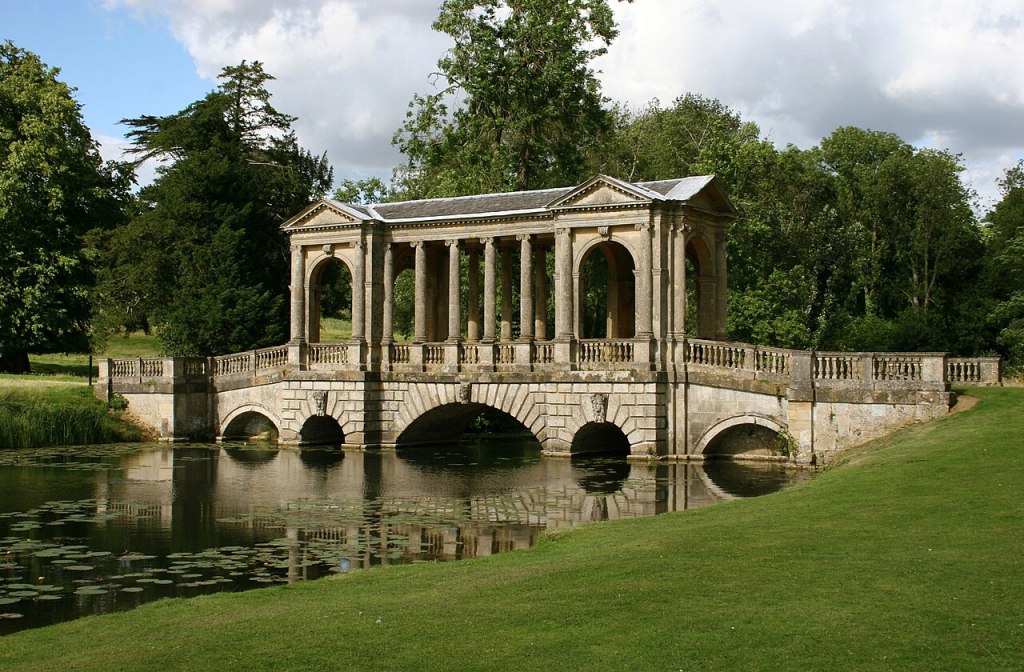
Speaking of politics, Lord Cobham returned to politics in 1716, and was named a Privy Councillor and Constable of Windsor Castle. In 1718, he was honoured further with the elevation of his title to Viscount Cobham. In the two decades that followed he developed into a senior statesman for the Whig party, the mentor to his nephews George Grenville and William Pitt, both future prime ministers. His faction became known as the Cobhamites, or ‘Cobham’s Cubs’, and they usually met at Stowe House—an alternate capital in opposition to London, and in particular a focal point of opposition to the government of Prime Minister Walpole. George Lyttleton was another of the Cubs, and was also a nephew, the son of Cobham’s sister Christian (and his family ultimately would be the heirs to the Cobham title). Other posts and ranks given to Viscount Cobham in this period include Governor of Jersey (1723) and Lord-Lieutenant of Buckinghamshire (1728); and in military grades, General (1735), and finally Field Marshal (1742).
When Viscount Cobham died in 1749, his viscountcy, and Stowe House, passed to his sister Hester, who was created Countess Cobham in her own right in 1749, with her son Richard Grenville-Temple as her heir. The Temple baronetcy, however, passed by right to a cousin, William Temple, but became dormant a generation later with the death of the 7th baronet in 1786. The next generation of Grenville-Temples was extraordinary, with four brothers and a brother-in-law at the pinnacle of Whig politics for much of the middle of the eighteenth century—often leading the government not from London, but from Stowe House.
The eldest, Richard Grenville-Temple, succeeded his mother in 1752 as 2nd Earl Temple and 3rd Viscount Cobham. A close political associate of his brother George and William Pitt, they pushed their way into power in the 1740s in the government of Henry Pelham. In 1754 Pitt solidified the alliance by marrying their sister Hester. In 1756, Richard became First Lord of the Admiralty while George was Treasurer of the Navy. Then in 1757, Pitt formed a government as virtual prime minister (nominally under Pelham’s brother, the Duke of Newcastle), and Richard was promoted to Lord Privy Seal. That was as high as the Earl rose in politics, and he died in 1779, leaving his titles to his nephew George Grenville junior.
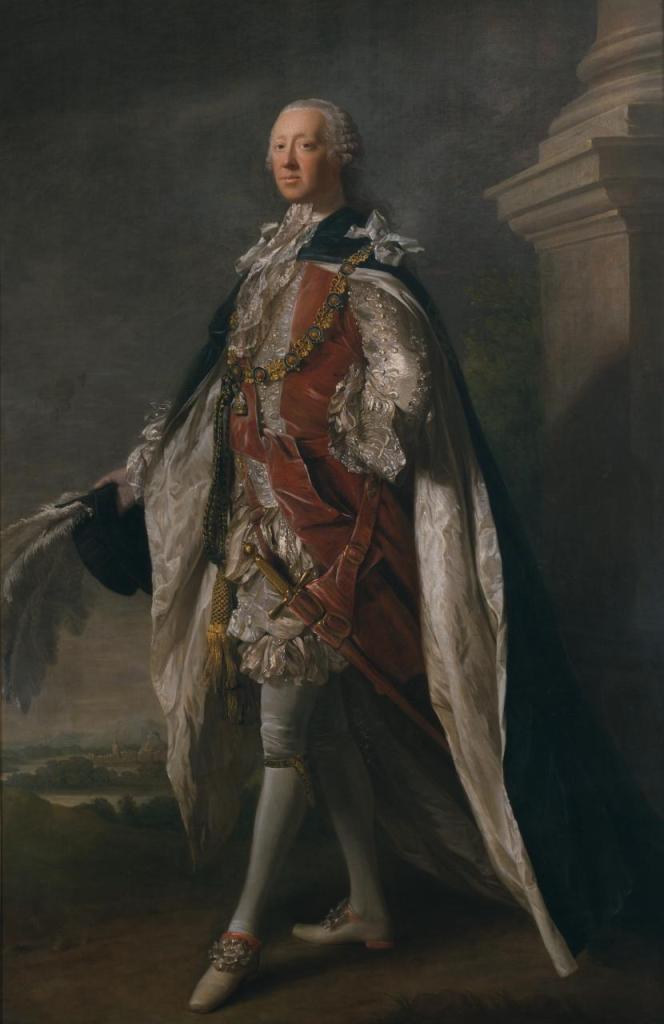
Meanwhile, George Grenville senior succeeded Pitt as Leader of the Commons in 1761, then formed a government as Prime Minister (formally Chancellor of the Exchequer) in 1763. His ministry oversaw the aftermath of the Seven Years War and the first stirrings of colonial unrest in America. After only two years he was forced out by the King who disliked him for replacing his favourite, Lord Bute. He died in 1770. Grenville was succeeded as Prime Minister in 1766 by his brother-in-law William Pitt (this time officially), again for only two years. Pitt was created Earl of Chatham that same year (Lady Hester had already been created Baroness Chatham in her own right in 1761), and was father to two sons: John, 2nd Earl of Chatham, and William Pitt the Younger, who would himself be Prime Minister for over two decades, from 1783 to 1806, transforming the Grenvillite party into the Pittite party.

The younger Grenville brothers were James, a Lord of the Treasury and Cofferer of the Household during the ministries of both Grenville and Pitt; and Henry, who actually held high office before anyone in the family, as Governor of Barbados in 1746, and later as Ambassador to Constantinople in 1761.
The next generation was nearly a repeat of the same, with three brothers all prominent in different spheres of influence. Here the most eminent was the youngest, William Wyndham Grenville, who succeeded Pitt the Younger as Prime Minister in February 1806, and oversaw the abolition of slavery in March 1807, but was forced out that same month for trying to pass a bill on Catholic Emancipation. He took his middle name from his mother’s father, Sir William Wyndham, a prominent politician (though a Tory) in the reign of Queen Anne (and husband to the great Seymour heiress). Here yet another brother-in-law, Charles Wyndham, 2nd Earl of Egremont, was part of the political machine of the Temple-Grenvilles in the 1760s. Before this Grenville became prime minister, he had been created Baron Grenville of Wotton in 1790 to move him from being Speaker of the House of Commons to Leader of the House of Lords. His wife Anne Pitt was a cousin of Pitt the Younger. His older brother Thomas, held the family seat as MP for Buckingham and was First Lord of the Admiralty, 1806-07.
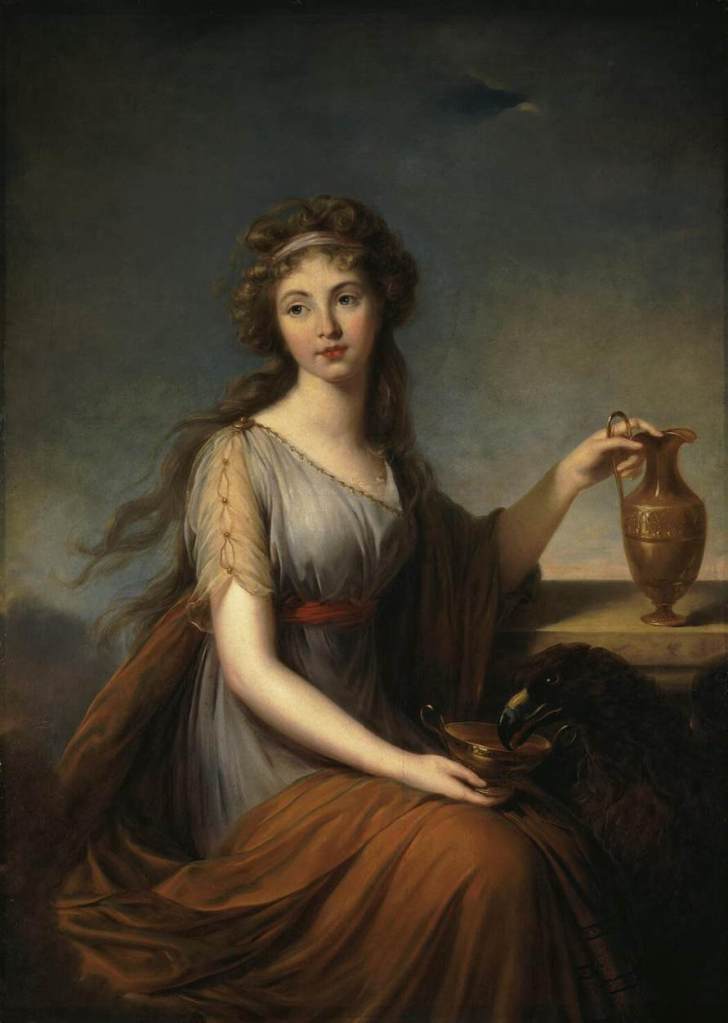
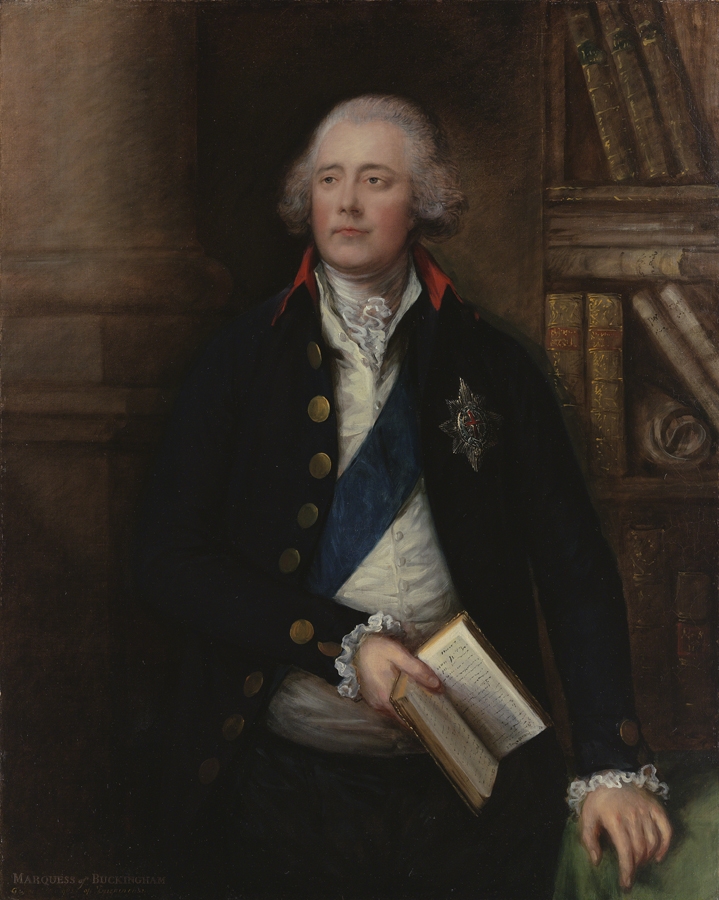
Finally, the eldest brother, George, 3rd Earl Temple from 1779, was Lord Lieutenant of Ireland August 1782 to May 1783, and 1787 to 1789. In between these stints in Ireland he was appointed a Secretary of State when Pitt the Younger formed his first ministry in December 1783, but resigned only three days later—the shortest cabinet tenure until the 2020s. He was raised in rank to Marquess of Buckingham in 1784 and sent back to Ireland where he became increasingly unpopular for his extravagant lifestyle. While he was in Ireland, he succeeded his father-in-law as 2nd Earl Nugent. So one more name was added to the family list.
Nugent:
George Grenville’s wife was Lady Mary Nugent. The Nugent family came from County Westmeath, right in the centre of Ireland. Sir Gilbert de Nugent, said to be originally from Nogent-le-Rotrou in western France, came to Ireland with one of the conquering Norman lords, Hugh de Lacy, in 1171. When de Lacy was granted the lands of the former Kingdom of Meath, Nugent was given the local lordship of Delvin, where he built a new castle.
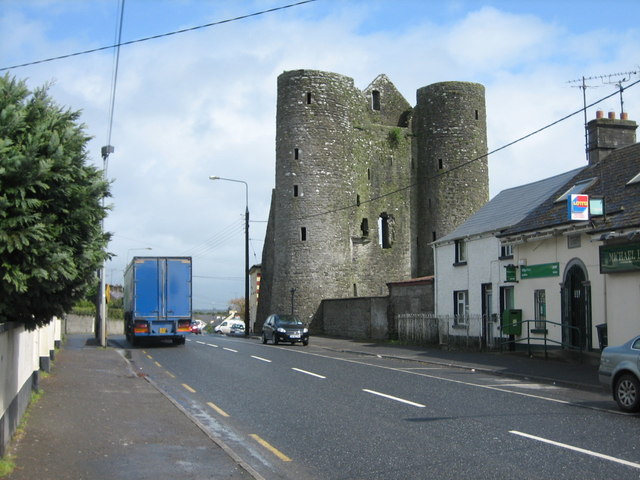
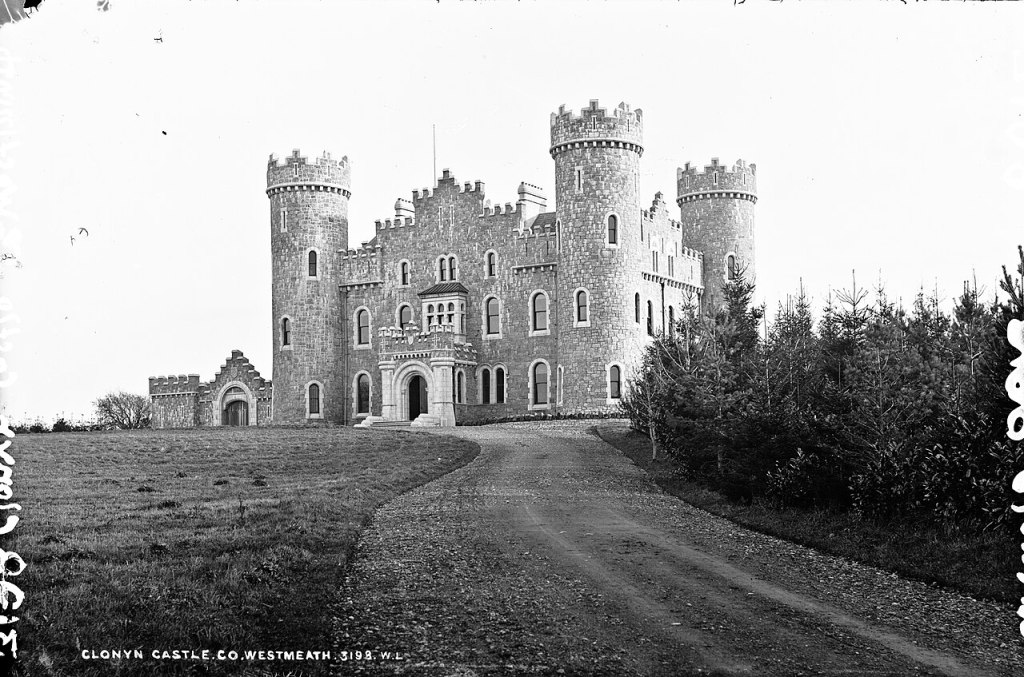
Delvin Castle, also called Nugent Castle, is today a ruin on the edge of town. Another castle nearby, Clonyn, was the seat of the senior branch of the family: initially built by the 1st Earl of Westmeath in 1639—he famously burned it down himself in 1649 rather than forced to offer hospitality to the men of Cromwell’s army—restored by his grandson in the 1680s, then replaced altogether in Victorian neogothic style in the 1860s and sold in the 1920s (and still privately owned).
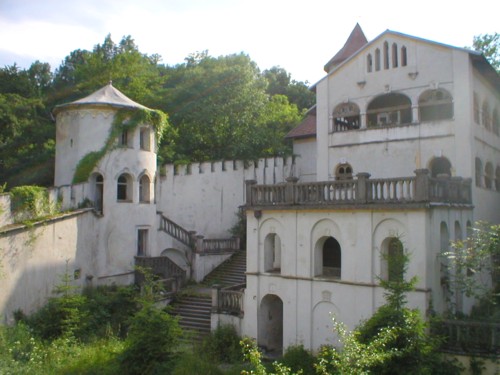
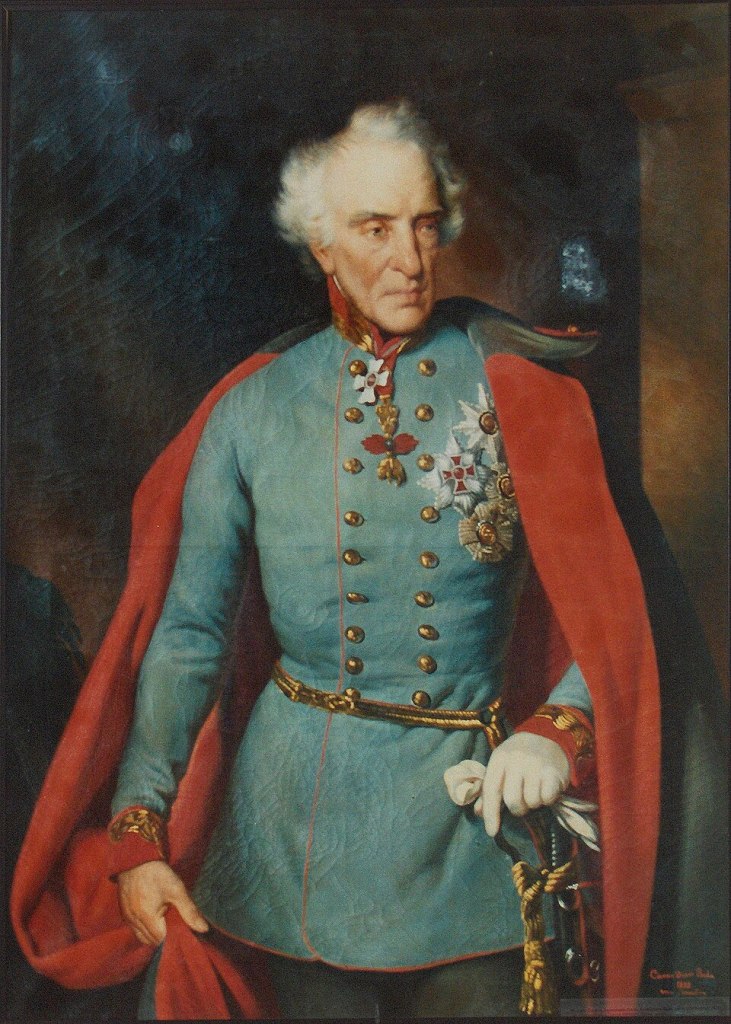
A peerage title, Baron Delvin, was granted to William FitzRichard Nugent in 1389, and more officially in 1451. The family produced several rebels during the Tudor era and remained Catholic even after reconciliation with the Crown and the creation of the title Earl of Westmeath for Richard Nugent, 7th Baron Delvin, in 1621. The second son of the 1st Earl went abroad, as many Irish Catholic nobles did, and founded a line of Austrian Nugents: Jakob Robert, Count Nugent von Westmeath was a Field Marshal-Lieutenant, while Count Michael Anton was an Austrian artillery commander and Governor of Prague (d. c1790). A soldier in the next generation was much more famous, and even made a prince (so doubly qualified for inclusion in this blog post): Laval, Count Nugent von Westmeath, was born at Ballinacor House in County Westmeath in 1777. He had a long military career in Austrian service, from the Napoleonic Wars to the revolutions of 1848. In 1809, he was appointed Chief of the General Staff of Archduke Johann, commander of Austrian forces in the war against France, and today is recognised (by some) as a hero in Croatia for liberating their Adriatic coast from French troops. In 1813, he led troops into Italy, liberating Modena and restoring its Este duke, and was named a Lieutenant-Field Marshal in April 1815. Now commander of one of the armies sent to chase the ex-king of Naples, Joachim Murat, out of Italy, he liberated Rome, then defeated Murat in May. For his efforts, Count Nugent was rewarded with the title ‘Roman Prince’ by Pope Pius VII in 1816, and a Knight of the Order of the Golden Fleece in Austria. Continuing down the Peninsula, he helped restore King Ferdinand IV to his throne in Naples, and so moved into that monarch’s service in 1817, married an Italian noblewoman (a Riario-Sforza), then returned to Austria in 1820. He returned to the Croatian coast as military commander in 1829, having already acquired several castles and lordships there including the imposing and very ancient Trsat Castle, overlooking Rijeka—once a stronghold of the Frankopan princes—which he restored and opened as a museum; and Bosilijevo, another Frankopan castle further inland (on the borders with Slovenia), which he acquired from the Auersperg family [LINK] and made his chief residence. Bosilijevo Castle was sold by the family in 1897, but Trsat was maintained until confiscated during World War II.
Having continued to rise in the military hierarchy, as Master of Ordnance in 1838 and General-in-Chief in Moravia in 1839, Nugent von Westmeath was sent to North Italy to suppress the revolts of 1848, then pulled to Hungary to do the same there in 1849. Again, his successes earned him a promotion, to full Field Marshal. A few years before his death in 1862, he was honoured again for his adherence to the Catholic cause with the titular title ‘Prior of Ireland’, a no longer extant position within the Order of Malta. He was succeeded as ‘2nd Prince Nugent’ by his son Albert (d. 1896), then his grandson Laval (d. 1940).
Back in Ireland, the main Nugent line continued in the person of George, 8th Earl of Westmeath, who was raised in rank to Marquess of Westmeath in 1822. When he died in 1871, the title passed to a cousin and reverted to an earldom, which continues to the present.
But Mary Nugent was from a cadet branch of the family, Nugent of Carlanstown, formed in the sixteenth century by the second son of the 3rd Baron Delvin. Carlanstown is also in County Westmeath and was the site of a medieval castle, mostly (but not entirely) replaced by a grand house in 1830.
Robert Nugent of Carlanstown became a tutor in the household of Peter Plunkett, 4th Earl of Fingall, and married his daughter Lady Emilia in 1730. She died in childbirth the next year, but Robert continued to advance his career through an astute second marriage in 1736 to a rich and well-connected widow, Anna Craggs, whose second husband, English MP John Knight, had left her Gosfield Hall.
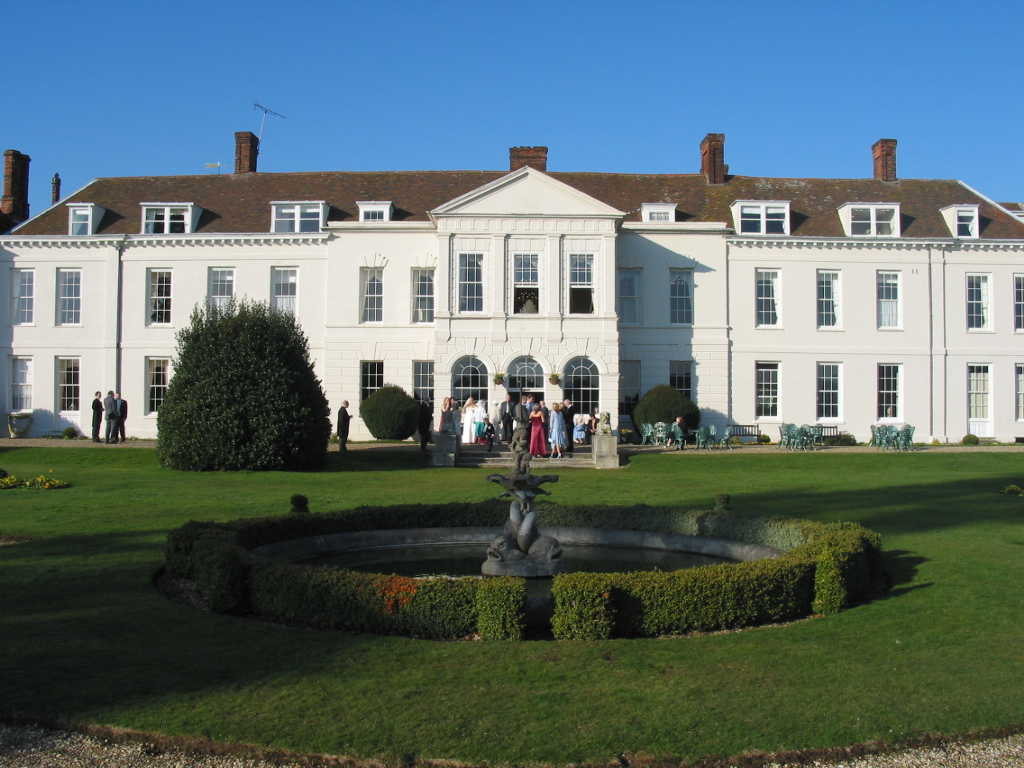
Gosfield, near the town of Braintree in Essex, had been built by John Wentworth in 1545. Expanded in the 1690s, it was then acquired by Knight in 1715. Nugent later expanded it to house his daughter and son-in-law, the Marquess of Buckingham. Louis XVIII lived here in 1807-09 until moving to the better-known Hartwell House in Buckinghamshire. Gosfield Hall was later owned by the Courtauld Institute, and today it is run as a wedding venue.
Anna Craggs’ father, James Craggs, was a financier and Whig politician. He was appointed Postmaster General in 1715 and clothier to the army, from which he profited a great deal, in the same manner as the Duke of Chandos above. He made an enormous fortune in the South Sea Bubble and was implicated in its collapse in 1720. His son James was named Secretary of War in 1717. Both father and son died within a month of each other in 1721, leaving Anna a great heiress.
Robert Nugent of Carlanstown, who took the name Craggs-Nugent on his second marriage, converted to Protestantism, and saw his political fortunes rise. MP for Cornwall and then Bristol from 1741 to 1788, from 1782 was called ‘Father of the House’ as the longest-serving MP. In 1747, he was appointed Comptroller of the Household of the Prince of Wales (and ingratiated himself by lending a lot of money), then in successive Whig regimes he was a Lord of the Treasury (1754), a member of the Privy Council (1759) and First Lord of Trade (1766). He was also appointed Vice-Treasurer of Ireland in 1759, a post he held (with a short break) until 1782, and was rewarded for his party loyalty with the titles Viscount Clare and Baron Nugent of Carlanstown, 1767; then Earl Nugent, 1776 (all in the Peerage of Ireland). His third wife (from 1757), Elizabeth Drax, widow of the 4th Earl of Berkeley, helped solidify his connections with the royal family through her long service as Lady of the Bedchamber to Augusta, Princess of Wales (the mother of George III)—for nearly thirty years.
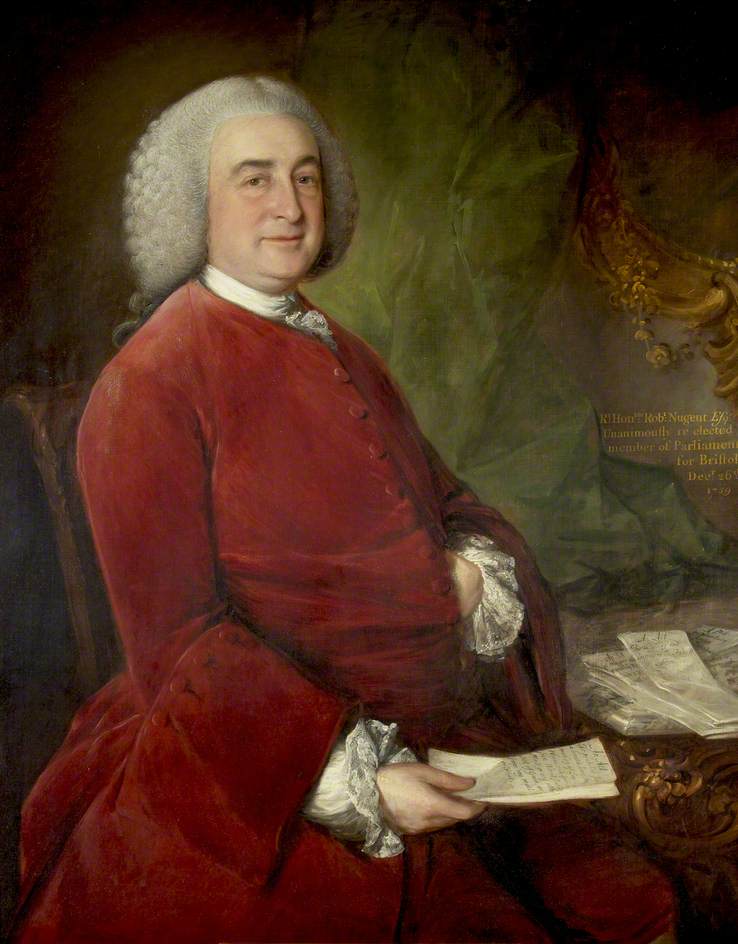
But despite his three marriages, the 1st Earl Nugent left no male heirs: his son Edmund from his first marriage died young in 1771, while his third wife left him two daughters, Mary and Louisa. The earldom of 1776 was thus created with a special remainder to allow it to pass to Mary and her heirs.
Edmund Nugent did have two sons, Sir George and Sir Charles, but these were illegitimate. The latter was an admiral, with service in America and the Caribbean from the 1770s to the 1810s. He retired as Admiral of the Fleet, 1833, the most senior officer in the Royal Navy. Sir George Nugent made his career on land: he served in the American Revolution and the Revolutionary Wars and was a major-general by 1796, then was named Commander of the Northern District of Ireland in 1798 (during the great rebellion there that year). From 1801 to 1806 he was Governor of Jamaica, and when he returned to serve as Commander of the Western District of England, he was also made a baronet, of Waddesdon in Berkshire—a place made more famous for its fantastic neo-gothic palace built by the Rothschilds in 1874. In 1811 Sir George Nugent was sent abroad again as Commander-in-Chief in India. Much later in life was raised to Field Marshal (1846). His line of baronets continues to the present; a second son of one of these was created Baron Nugent of Watterling, Norfolk, in 1960. He had been the equerry of the Duke of York since 1927 and continued in this role when the Duke became George VI, and even after for his daughter, Queen Elizabeth II, until 1960, when his post was converted to Lord-in-Waiting. He died in 1973 and his barony died with him.
When the 1st Earl Nugent died in 1788, his daughter Mary, Marchioness of Buckingham, Countess Temple, and Viscountess Chatham, became 2nd Countess Nugent, bringing this Irish title seemingly appropriately to her husband, George Temple-Grenville, Lord Lieutenant of Ireland. Together they adopted the surname Nugent-Temple-Grenville. Mary had an inheritance worth £14,000 a year and nearly 9,000 Irish acres. To secure this inheritance, Mary was created Baroness Nugent of Carlanstown in her own right in 1800, with special remainder to her second son, George. She died in 1812, followed by her husband in 1813.
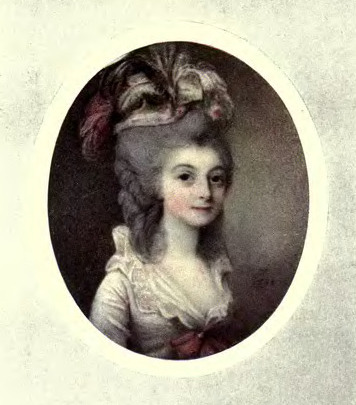
And so we come to their son, Richard Temple-Nugent-Brydges-Chandos-Grenville, 2nd Marquess of Buckingham, 4th Earl Temple and 3rd Earl Nugent. He had married Lady Anne Brydges, daughter of the 3rd Duke of Chandos, in 1796, and so formed the entire five-barrelled surname. I suppose it seemed outrageous for such a splendidly titled—and well-connected politically—person to not have a dukedom, so in 1822, King George IV re-created the Duchy of Chandos, but threw in Buckingham as well. It is said that the 1st Duke of Buckingham Chandos earned this promotion from the King by becoming a Tory in order to support the administration of George IV’s favoured Prime Minister, Lord Liverpool, and especially by having so many rotten boroughs in his pocket (these were all quashed by the Reform Acts of 1832). This dukedom was the last of the double dukedoms, an oddity that had appeared in the eighteenth century (with the exception of two more royal dukedoms in the nineteenth century: Connaught & Strathearn and Clarence & Avondale). His new subsidiary titles were Marquess of Chandos and Earl Temple of Stowe. In 1830, the Duke was named Lord Steward for the coronation of William IV. The 1st Duchess died in 1836 followed by the 1st Duke in 1839.
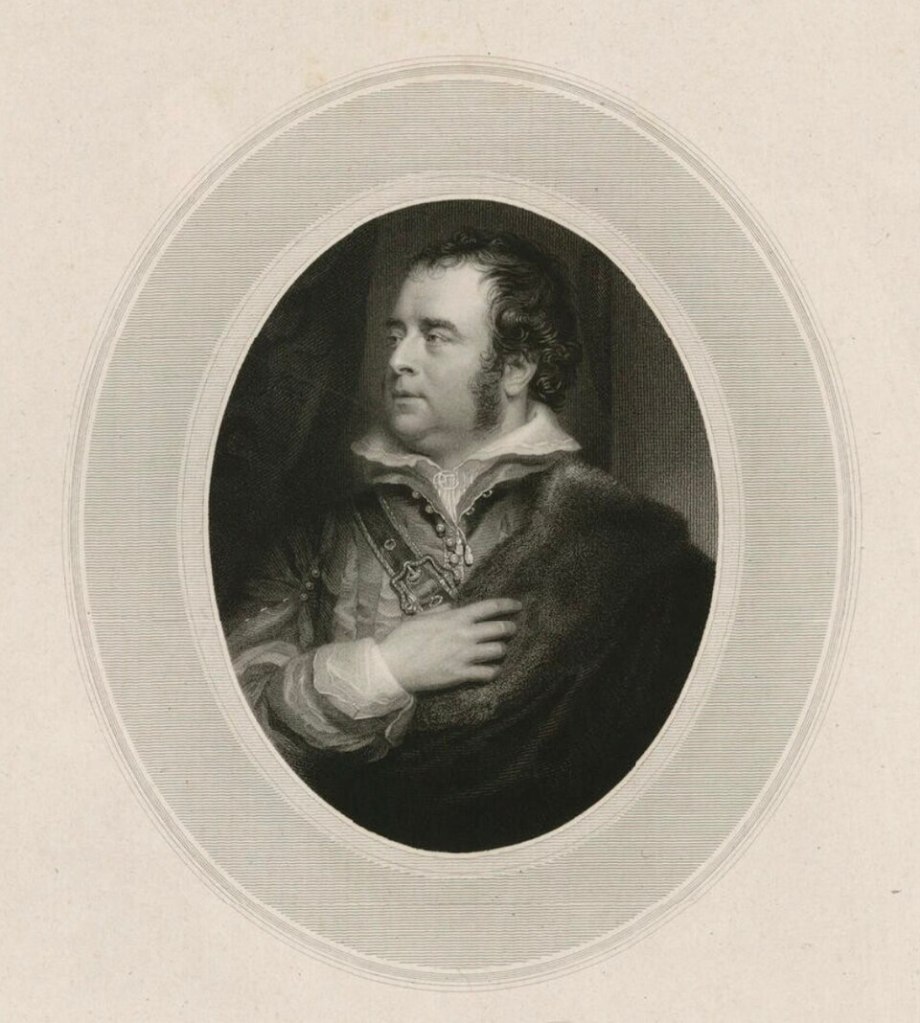
The Victorian era thus opened with Richard, 2nd Duke of Buckingham and Chandos, as one of its leading figures, still based at the old Whig political headquarters, Stowe House. In the government formed by Robert Peel in September 1841, he was named Lord Privy Seal, but he only served for five months. The Chandos family curse seems to have been passed to him from his mother, and, with around 1.5 million pounds of debt, in 1847 he declared himself bankrupt, selling Buckingham House on Pall Mall, Avington Park (the new Chandos seat), and much of the contents of Stowe House, including 21,000 bottles of wine. He also sold over 36,000 acres of land in Ireland and southwest England, leaving just the core of 10,000 in Buckinghamshire.
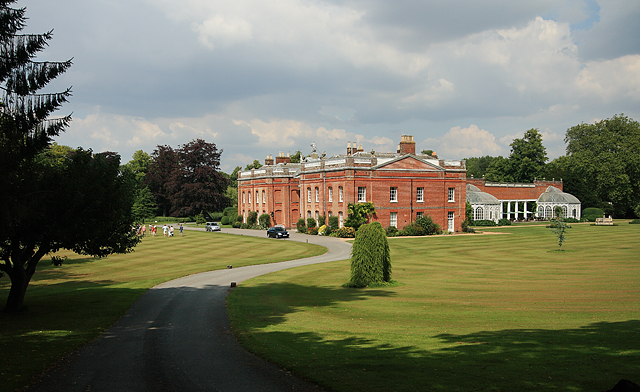
Avington Park is a country house in the Itchen valley, just outside Winchester in Hampshire. It was built as an Elizabethan ‘half-H’ style manor house, expanded in the seventeenth century by a Brydges cadet branch, and in 1751 passed to the 2nd Duke of Chandos. In the 1847 sale, it was acquired by the Shelley family (the same as the poet), and it is still in private hands.
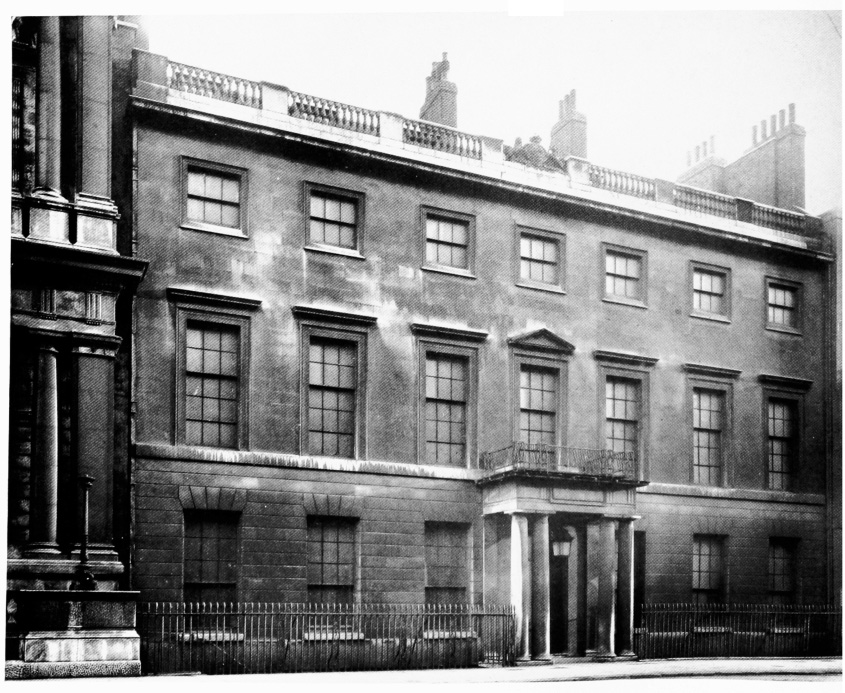
The London residence of the family had been Buckingham House—not the one that became Buckingham Palace, but one almost as grand on Pall Mall. It had been built for the 1st Marquess of Buckingham in 1790 by Sir John Soame. Sold in 1847, then demolished in 1908, an even grander building on the site now hosts the Royal Automobile Club.
At this low point in Buckingham & Chandos fortunes, yet another Temple prime minister enters this story: Henry John Temple, 3rd Viscount Palmerston, was the first prime minister from the Liberal Party, 1855-58 and 1859-65. He too had strong Irish roots: his family’s viscounty had been created in 1723 in the Irish peerage (for Palmerston in County Dublin) along with a barony, Temple of Mount Temple, County Sligo. But it appears these Temples were not related to the Temples in this blog post: Lord Palmerston’s ancestors had been lawyers and politicians in Ireland since the early seventeenth century—though they did originally hail from Leicestershire, which is not that far from Buckinghamshire, so perhaps somewhere in the past they were related to the Temples of Stowe? What’s more, the political tendrils of the Temple-Grenville-Pitt dynasty don’t entirely end there either, as William Gladstone, prime minister in the 1860s-90s, was married to a granddaughter of Catherine Grenville, sister of the 1st Marquess of Buckingham.
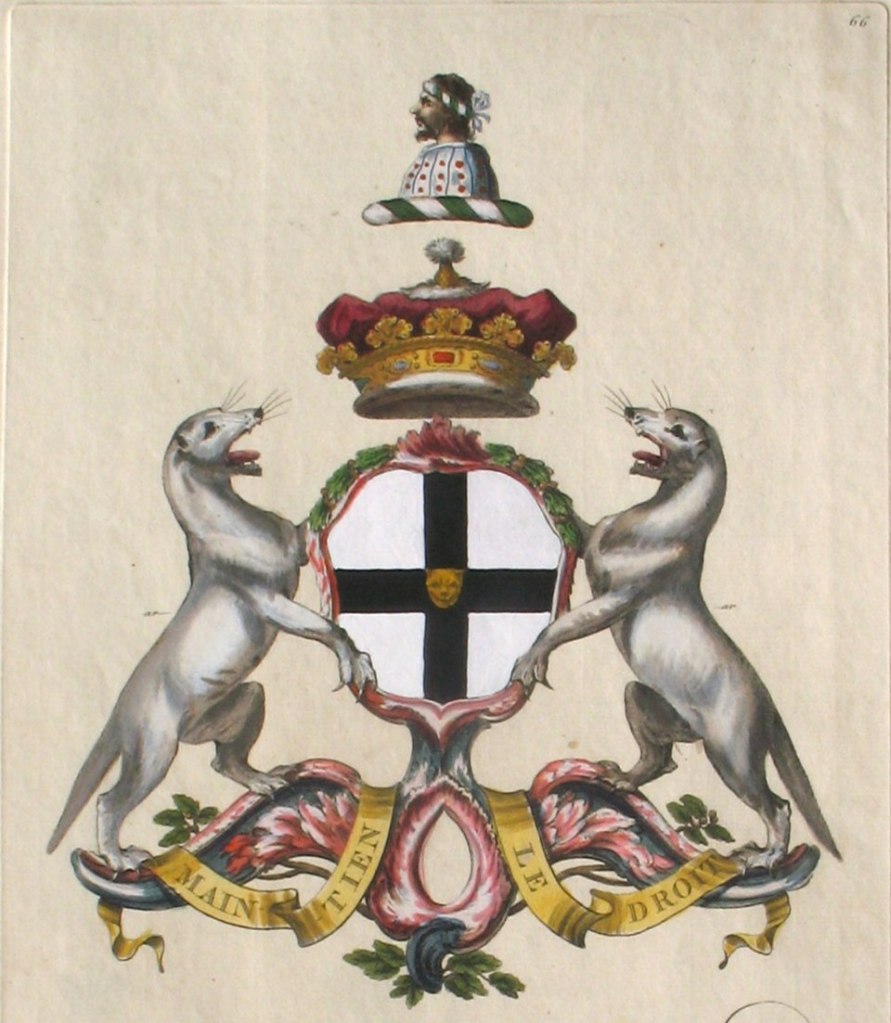
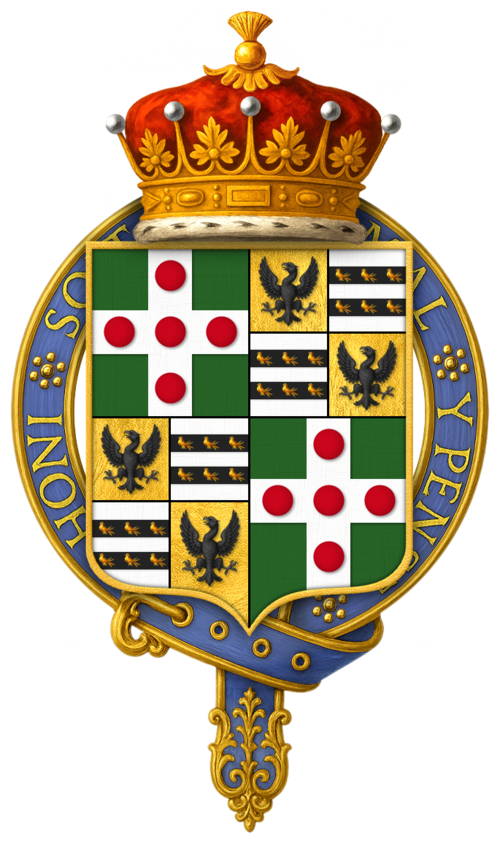
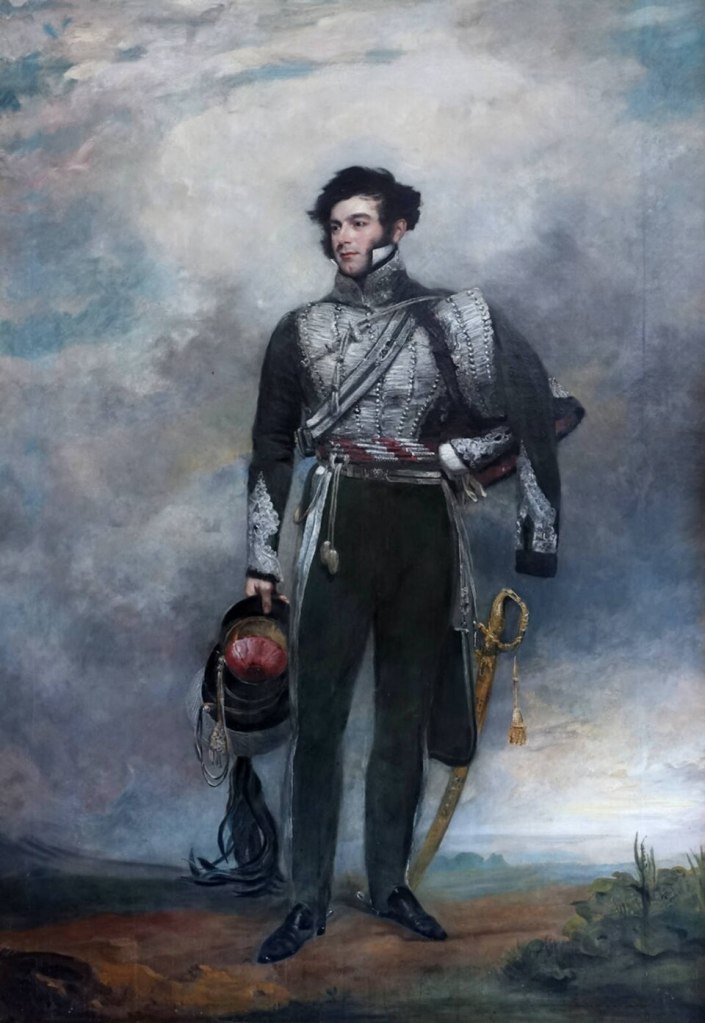
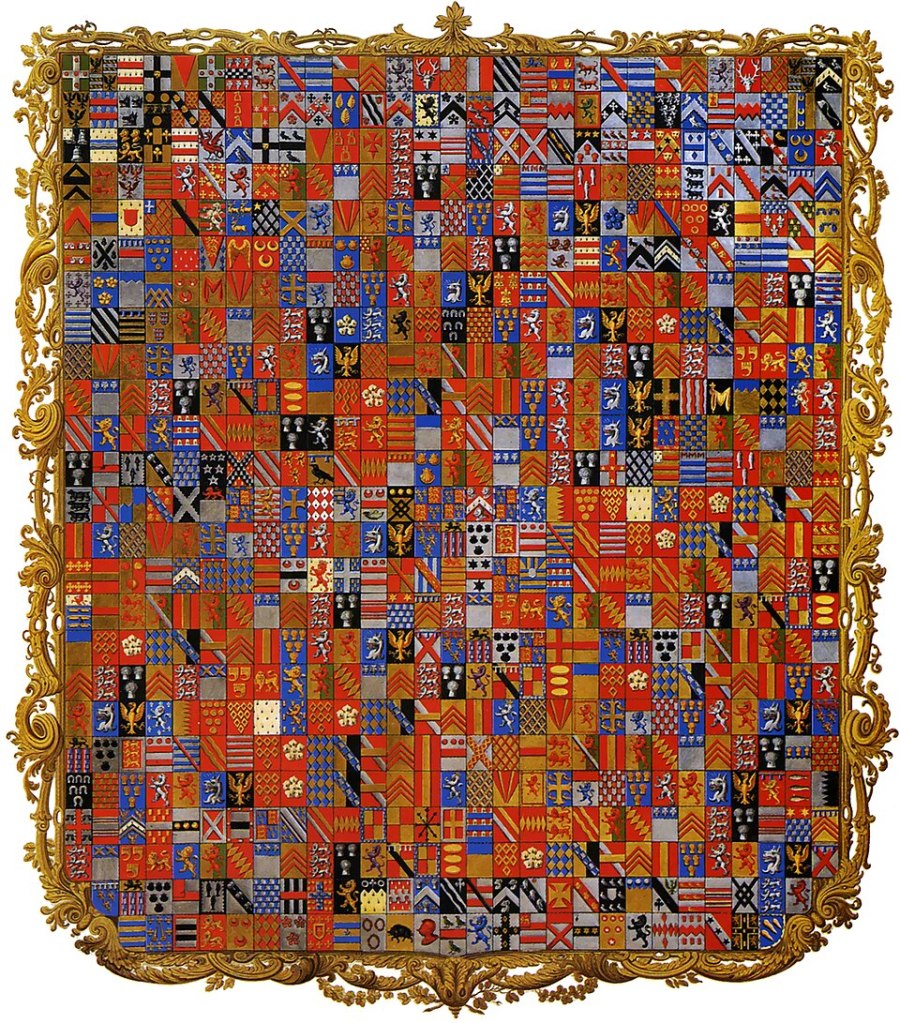
There was a bit of a resurge in the next generation. In 1861, the 2nd Duke of Buckingham and Chandos was succeeded by his son Richard, whose second name Plantagenet seems to augment even further the outrageous ostentatiousness of his quintuple-barrelled surname. This pomposity is especially notable in the absolutely huge and overwhelmingly complicated ‘Grenville Armorial’, commissioned by his grandfather for the ceiling of the library in Stowe House in 1806. Designed to shock and impress, at 1.4 meters, with 719 individual ‘quarterings’ (some certainly exaggerated) it tells the story of the combination of families of Grenville, Temple, Nugent, Brydges and Chandos.
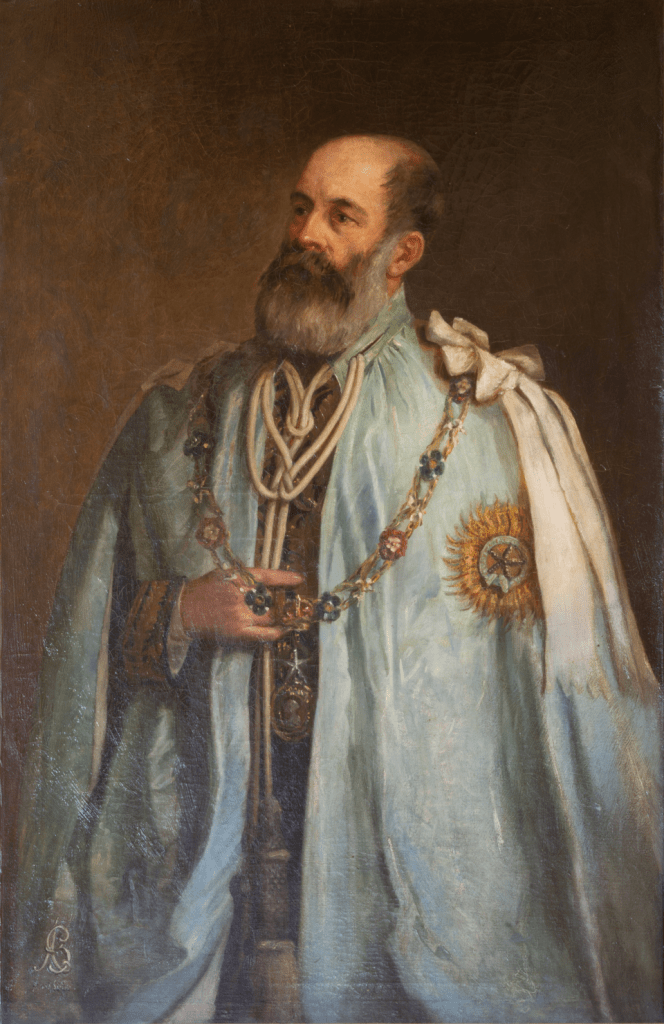
As Marquess of Chandos, Richard had been appointed Keeper of the Privy Seal of the Prince of Wales (1852), and now as 3rd Duke of Buckingham and Chandos, he resumed his family’s premier place in politics, as Lord President of the Council, 1866-67, then as Secretary of State for the Colonies, 1867-68. He paid off most of his father’s debts, successfully reclaimed the title Baron Kinloss in 1868 (dormant since 1747), and in 1875 crowned his career as Governor of Madras, 1875-1880. When he died in 1889, however, the magnificent collection of surnames and titles (and of course landed estates) was dispersed to various heirs. Despite his two marriages, to Caroline Harvey and Alice Graham (widow of the Earl of Egerton), he had no sons, only three daughters.
The dukedom and the marquessates became extinct, as did the earldom of Nugent. The viscountcy of Cobham passed to a cousin, Lord Lyttelton, while Stowe House and the Scottish barony of Kinloss went to the Duke’s eldest daughter Lady Mary, married since 1884 to Major Luis Morgan—they assumed the name Morgan-Grenville. The earldom of Temple of Stowe had been created with a special remainder to the 3rd Duke’s sister, Anne, who in 1846 married William Gore-Langton, a kinsman of the Gore baronets, the earls of Arran and the barons Harlech. Their son William Temple-Gore-Langton became 4th Earl Temple of Stowe in 1889, and his heirs still hold the title. The Temple title and the Temple seat at Stowe were now separated, and though Lady Kinloss tried to keep up the maintenance of Stowe House, she was forced to sell it in 1921. She had boosted her family’s connection to the past by giving her younger sons various ancestral names to form Temple-Morgan-Grenville and Nugent-Morgan-Grenville, but when she died in 1944, her eldest son having died shortly before her, she was succeeded by his daughter, Mary, who added her husband’s surname to her own. True to her family’s political heritage, Mary Freeman-Grenville, 12th Lady Kinloss, was active in the House of Lords until her hereditary status was removed in 1999. She was succeeded in 2012 by her daughter Teresa Freeman-Grenville.
There is currently no dukedom of Buckingham or Chandos.
(images Wikimedia Commons)


One thought on “How Many Hyphens? The Dukes of Buckingham and Chandos”