In 2024, Emily Sheffield published an editorial in I (now The I Paper) commenting on what it was like to be former Tory Prime Minister David Cameron’s sister-in-law. She received a lot of flak on social media from people who claimed she would be nowhere if not for her sister Samantha and her famous husband. Few seemed to be aware that the Sheffield family was far more aristocratic than the Camerons, with roots stretching back to the Tudor era and beyond. At one point they even inhabited the house now occupied by Britain’s royal family. Though they had risen slowly through the peerage hierarchy, they finally achieved the highest honour, a dukedom, in 1703—and it was an unusual one, in that it combined two place names, Buckingham and Normanby. Their lands, including Normanby, were firmly in Lincolnshire and Yorkshire, but not Buckinghamshire, but the name could perhaps reflect the influential Yorkshire political network of the dukes of Buckingham of the previous century, extinct since 1687. And the ‘Yorkshire clique’ did generally adhere to Tory politics, as would the Sheffields of Normanby. This is in sharp contrast with the family of the next dukes of Buckingham (and Chandos), who were leaders of the Whig party for much of the eighteenth century. Though the dukes of Buckingham & Normanby may not be well remembered today (if at all), their imprint on the city of London was long lasting: Buckingham House is better known today as Buckingham Palace.
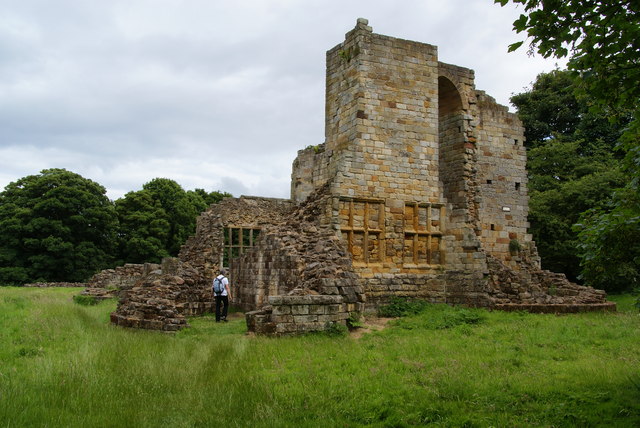
The Sheffields were a solid gentry family in North Lincolnshire as early as the thirteenth century, with no connection, as far as I can tell, with the manor of Sheffield on the far side of Yorkshire (later the great industrial city of Sheffield, which took its name from the river Sheaf). Their seat was at Butterwick on the west bank of the river Trent (with East Butterwick opposite side) in a low-lying area near the confluence of the Trent with the Ouse known as the Isle of Axholme. There was a tower house here in which the Sheffield family lived in the sixteenth century, surrounded by a deer park, which has some remains today. By the 1620s, the tower was sometimes called Mulgrave Castle, but this is more properly the name of their castle in North Yorkshire (see below). Forty years later, the family moved to Normanby, across the river and a few miles to the north, and the old tower at Butterwick fell to ruin.
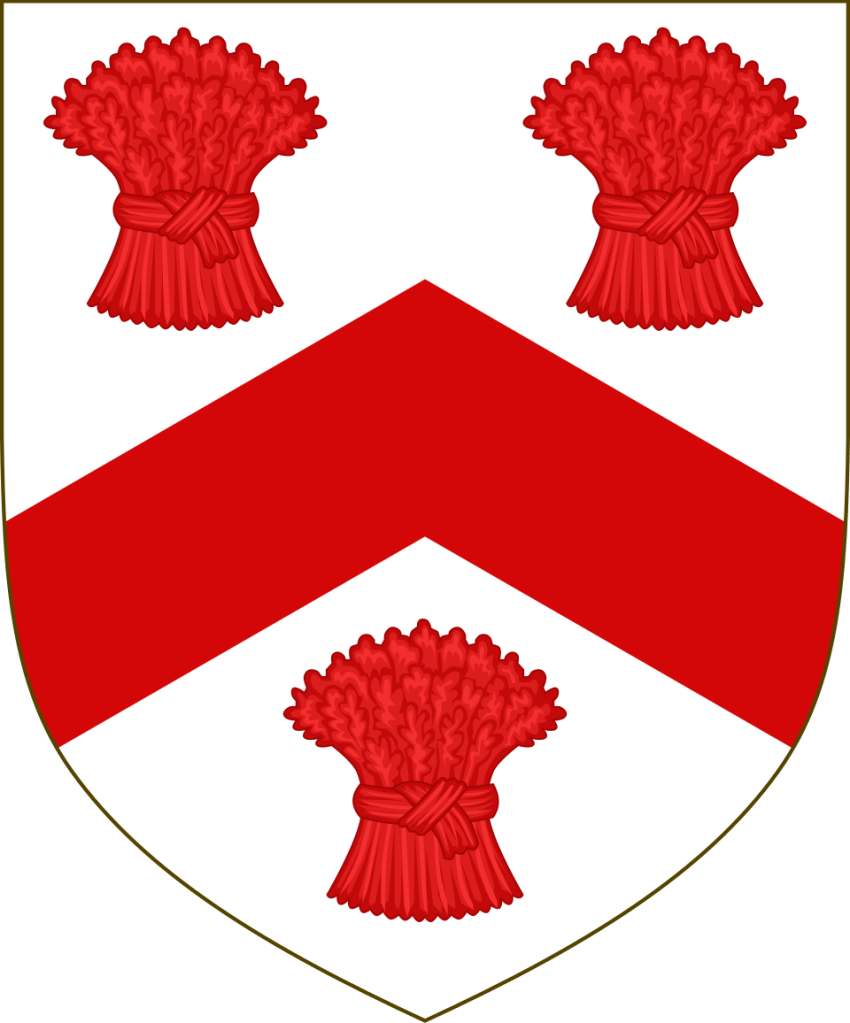
Sir Robert Sheffield, son of an MP, became a lawyer and held several prominent positions within the City of London, notably that of Recorder, a senior judge, before becoming Speaker of the Commons in 1512. His son began marrying into the higher nobility, with two wives, a Stanley (of Derby) and a Zouche, but died relatively young, leaving his son Edmund as a ward of George Boleyn (Queen Anne’s brother), and after his fall, John De Vere, Earl of Oxford, whose daughter Anne he married in 1538. Through his Stanley mother he was a cousin of Henry VIII who in his will authorised the creation of the barony of Sheffield of Butterwick, which was actioned only a month after the King’s death in 1547. But the 1st Lord Sheffield died just two years later trying to put down an uprising near Norwich, part of Kett’s Rebellion, in August 1549.
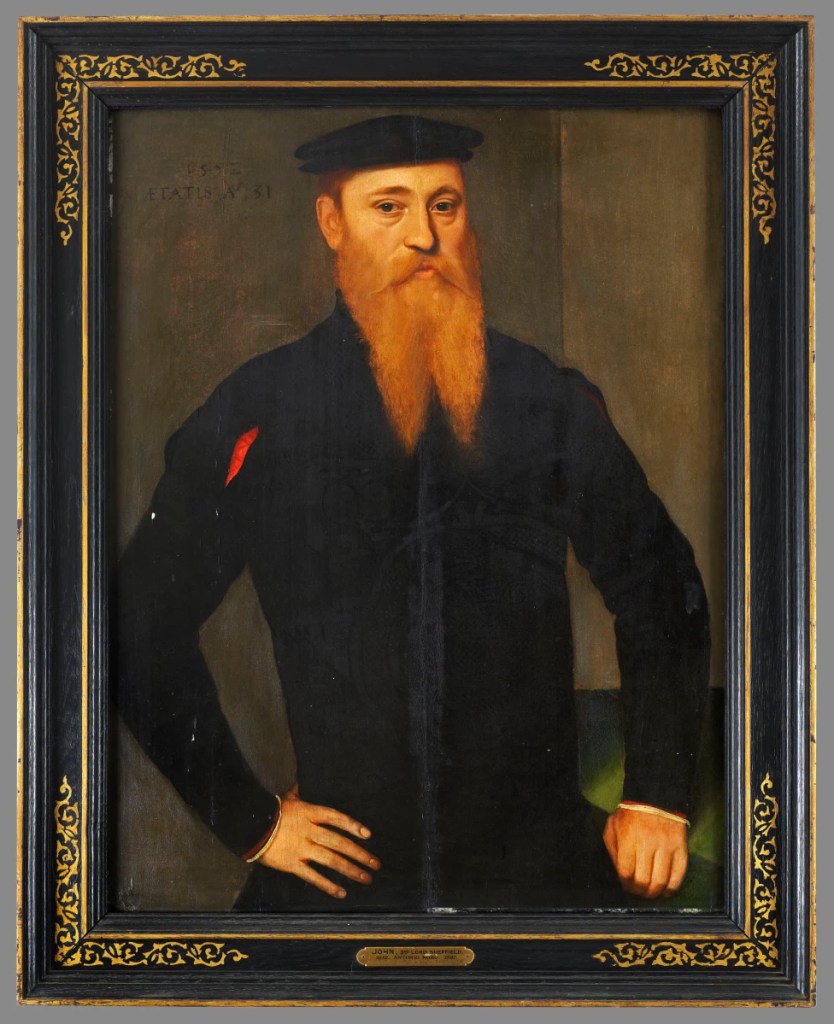
John, 2nd Baron Sheffield, also died relatively young, in 1568. Leaving little to his widow except this splendid Tudor portrait.
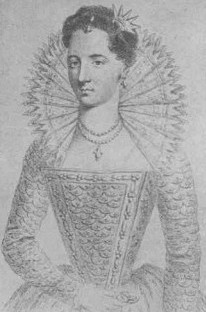
The 2nd Lady Sheffield, born Douglas Howard, remained at court and was one of the powerful personalities that flourished at the Elizabethan court. Douglas, daughter of William, Lord Howard of Effingham, had been named for her godmother, Lady Margaret Douglas. About the time of her husband’s death, Lady Sheffield started an affair with Robert Dudley, the favourite of Queen Elizabeth—a dangerous idea. A son was born in 1574, called Robert Dudley, who later followed his mother’s lead in claiming that she and his father had indeed married in 1573 (in a controversial court case of 1604/05). The marriage was never recognised by Robert Dudley (senior), and soon after he married Lettice Knollys in 1578, Lady Sheffield married Sir Edward Stafford. In later life both Staffords played an important role representing English interests in France where Sir Edward was Ambassador.
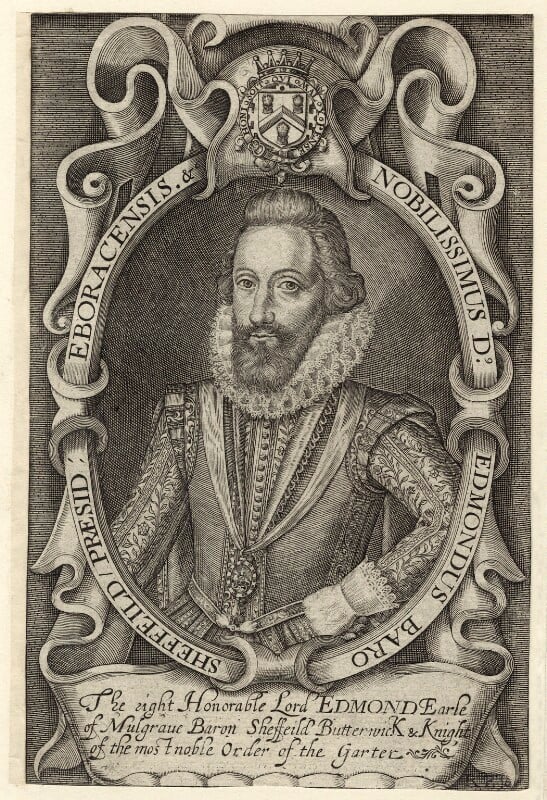
The 3rd Baron Sheffield, Edmund, was raised at the Elizabethan court, and served in the English support for Dutch independence in 1585 and in the Navy against the Spanish Armada in 1588. In the next reign, he rose in favour of King James, first as Lord Lieutenant of Yorkshire and President of the Council of the North, 1603, then Vice-Admiral of Yorkshire, 1604. In 1625, King Charles granted him Mulgrave Castle, then in 1626 elevated him in the peerage to Earl of Mulgrave.
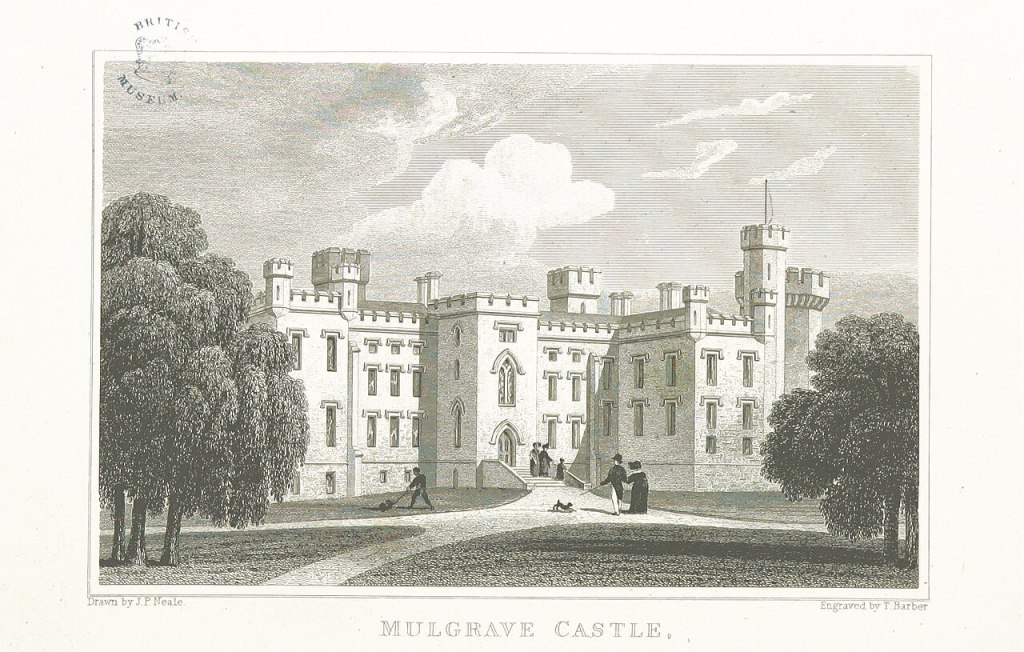
Mulgrave is just north of Whitby, on the coast of North Yorkshire. A Viking fortress had been built here as far back as the sixth century, replaced by an imposing Norman castle in the twelfth century, as the caput (or main seat) of a feudal barony. It passed through various Norman families, Fossard, de Turnham, de Mauley, and by 1400 to Bigot, and in the sixteenth century to the Radcliffes. Dismantled by order of Parliament in 1647, a new Mulgrave Castle was rebuilt a short distance to the north by Catherine, Duchess of Buckingham and Normanby. This passed to the Phipps family in 1718, who significantly remodelled it in the 1780s, and they still own it today.
The 1st Earl of Mulgrave’s son John died young in 1614, so he was eventually succeeded by his grandson, Edmund, in 1646. In 1631, young Edmund made an interesting choice in marrying Elizabeth Cranfield, daughter of the disgraced former Lord High Treasurer, the Earl of Middlesex. Back in 1621, Middlesex had tried to gain royal favour by marrying as his second wife Anne Brett, a cousin of the King’s favourite, George Villiers, Duke of Buckingham—but he also tried to promote Anne’s brother Arthur Brett as a rival royal favourite in 1622, which led to his downfall. Buckingham himself died in 1628; and although he left a son, the 2nd Duke of Buckingham, when he died in 1687, that title became available. Could this be the link between the Sheffield family and the title Buckingham that we shall see in the next generation? After these tumultuous years at the court of James I, Edmund became a Parliamentarian, yet he was still permitted by King Charles to succeed his father as Lord-Lieutenant of Yorkshire as late as 1646, the year he also became 2nd Earl of Mulgrave. During the Commonwealth period Mulgrave sat as a member of the Council of State, but died in 1658, before the Restoration, when many members of the aristocracy redeemed themselves at the court of Charles II. So it was the widowed Countess of Mulgrave who was instrumental in raising her young son John to be more loyal.
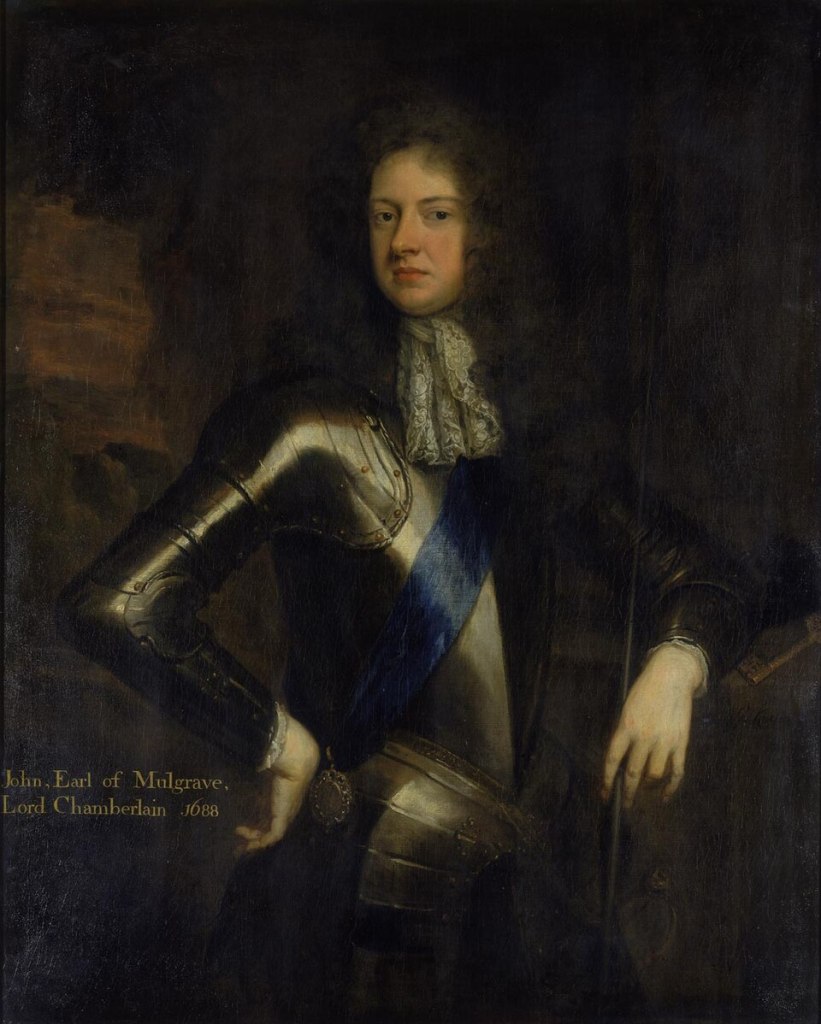
And loyal he was. And was well rewarded…with a double dukedom. The young 3rd Earl of Mulgrave first succeeded his father as Vice-Admiral of Yorkshire, though he was only 12. As an adult, he joined the emerging Tory faction at court, a political group that evolved in the 1670s around the old Royalist interests (and the Yorkshire gentry faction), and was rewarded with the position of Lord-Lieutenant of the East Riding of Yorkshire in 1679. He was a longtime courtier as Gentleman of the Chamber for both Charles II and James II. He was particularly favoured in the reign of James II, who named him to his Privy Council in 1685, and Lord Chamberlain of England. Mulgrave supported James in the Glorious Revolution of 1688, so lost these posts in the new regime of William & Mary, but was later reconciled with William III who rewarded his loyalty (again) by raising him in the peerage to Marquis of Normanby in 1694.
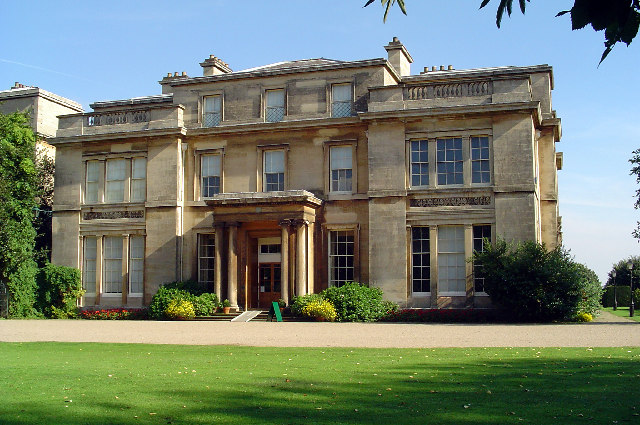
Normanby Hall is near Scunthorpe in North Lincolnshire. A seventeenth-century house was redesigned in late Georgian style by the Sheffield family in the 1820s, and remained their primary seat until it was given to the North Lincolnshire Council in 1963 (and the Sheffield family moved to Sutton Park, see below). The house was opened for tourism and the grounds turned into a country park.
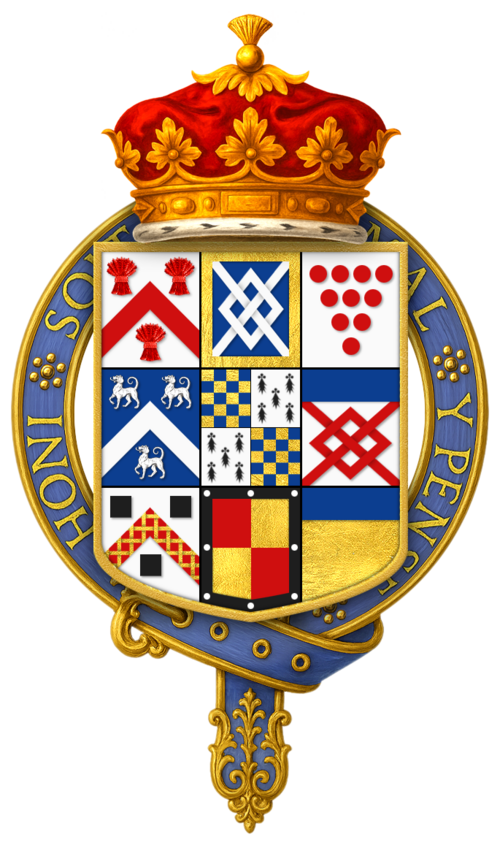
In 1702, King William died and was succeeded by Queen Anne. The Marquis of Normanby by this point was one of her favourites, and she appointed him Lord Privy Seal in 1702 and Lord-Lieutenant of the North Riding of Yorkshire (switching Ridings). The next year, she created him Duke of Buckingham and Normanby. Cockayne’s Complete Peerage speculates that the ‘and Normanby’ was added in case the Villers heirs managed to reclaim the Buckingham title (which they didn’t). A few years later, the Whigs lost power and the Queen’s favoured party, the Tories, formed a government, so the new Duke was created Lord Steward of the Household, 1710, and Lord President of the Council, 1711. These posts ended with the arrival of George I in 1714, and the Duke retired, and died in 1721.
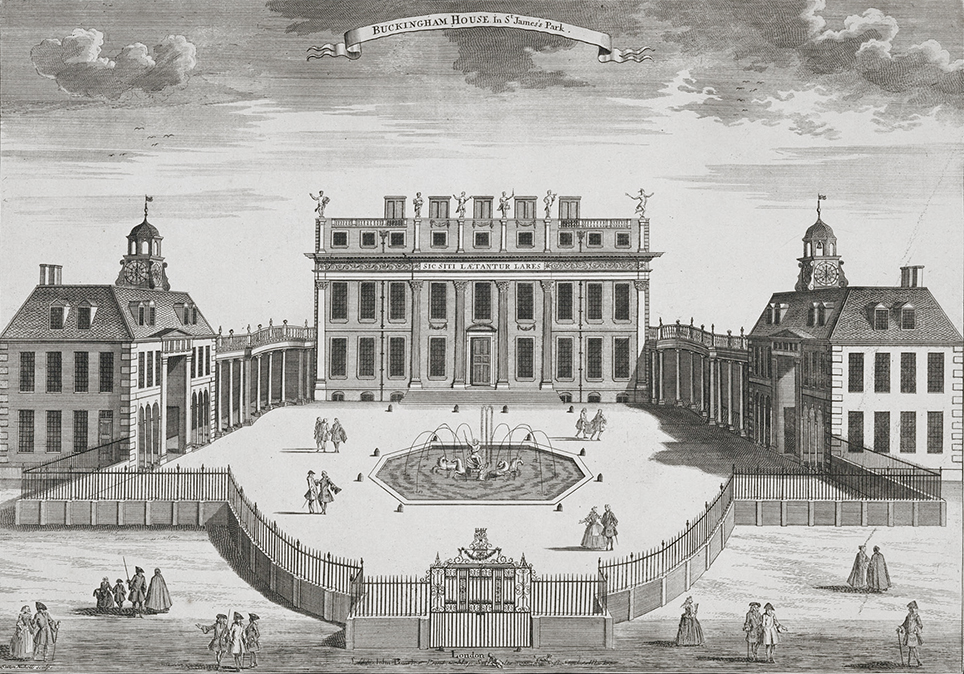
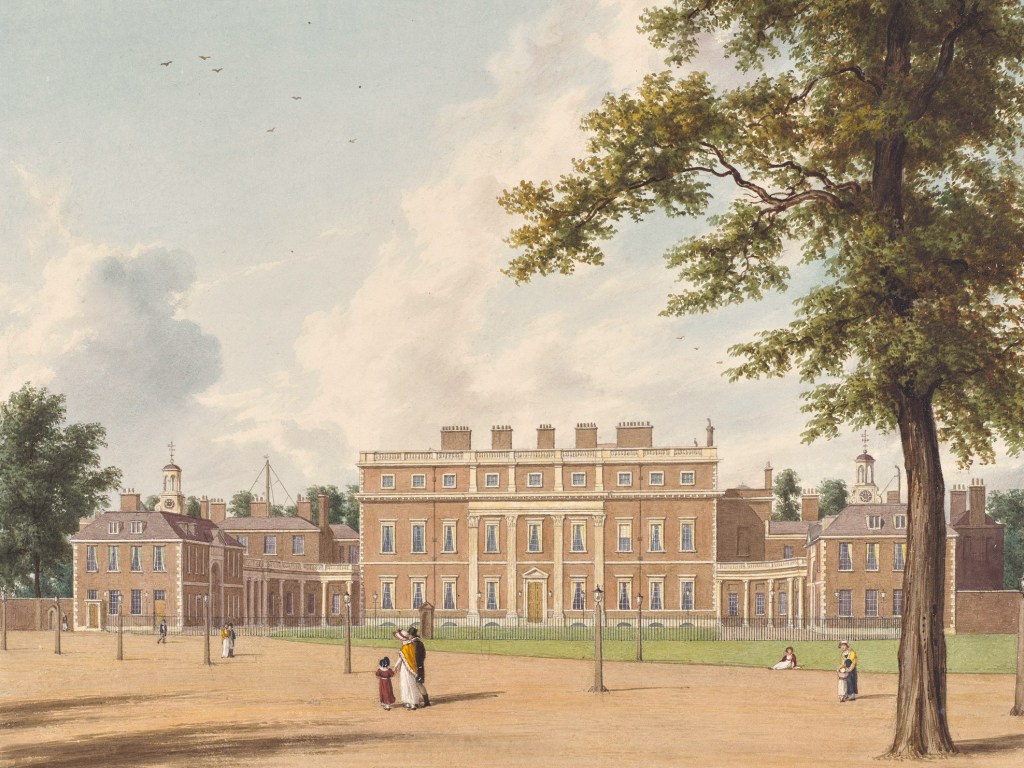
In 1703, the new Duke of Buckingham and Normanby built a house near court in London, on land he had acquired a few years before. He named it Buckingham House. This land, in the fields north of Westminster Abbey had originally been part of the Manor of Ebury, watered by the river Tyburn. It was an ancient estate, owned by Anglo-Saxon kings, then given by William the Conqueror to the Abbey. Henry VIII secularised the lands in 1536 and leased it out; James I then sold the freehold, which eventually passed to the Earl of Middlesex—the same as above—who sold it to Hugh Audley, one of England’s richest men. He left it to his great-niece Mary Davies, whose story is known as the founder of the great London wealth of the Grosvenor dukes of Westminster. The first great house on the site was built in 1624 by William Blake, purchased in 1633 by George Goring, Earl of Norwich. This ‘Goring House’ was extended over the next decades and soon included a ‘Great Garden’. In the 1670s it was owned by Henry Bennet, Earl of Arlington, a chief minister of Charles II. It burned down in 1674, so a new ‘Arlington House’ was built in 1675. John Sheffield bought the freehold then built a new ‘Buckingham House’ in 1703, with a central block and two service wings. His heirs sold both the freehold and the house back to the Crown in 1761—it was later known as ‘the Queen’s House’ and by the 1790s, Buckingham Palace. A new building replaced the Sheffield house in the 1820s, then Queen Victoria added a new wing in the 1850s—what is now considered the ‘front’ of the house, with its famous balcony (though this was significantly redesigned in 1913).
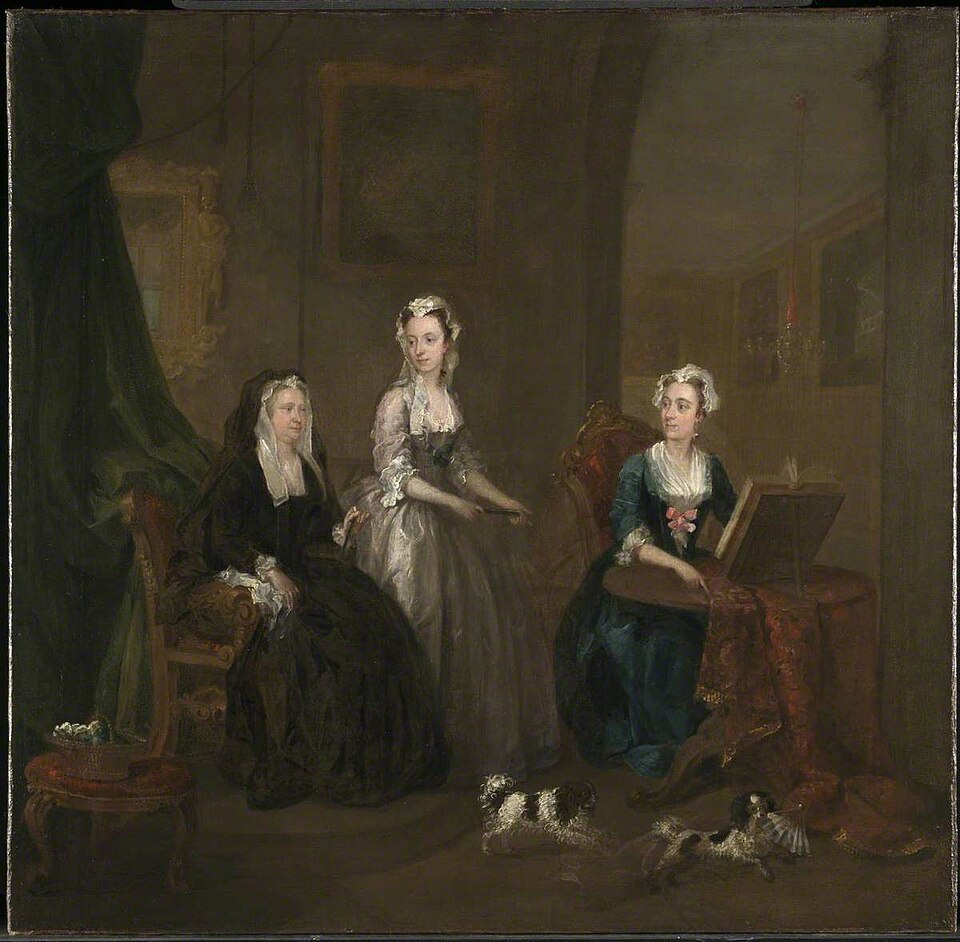
In 1706, the Duke of Buckingham and Normanby married for the third time—the two first wives having died childless—to Catherine Darnley, the divorced Countess of Anglesey. This was an interesting choice, as she was a natural daughter of James II and his mistress Catherine Sedley. The new Duchess was thus a half-sister of the Old Pretender, James Edward Stuart, and was reputedly one of the most proud women at court (some called her ‘Princess Buckingham’), openly pro-Jacobite. Politically she was a Tory and a strong rival to the Whig Sarah Churchill, Duchess of Marlborough. Much younger than her husband, the Duchess of Buckingham and Normanby lived for many years as a widow and died in 1743, outliving the dukedom itself: outliving two infant sons (called by the courtesy title ‘Marquess of Normanby’), and the nineteen-year-old 2nd Duke.
Edmund, 2nd Duke of Buckingham & Normanby, served in Germany with his uncle, the Duke of Berwick (also an illegitimate child of James II), in the War of the Polish Succession (1733-35, and died of consumption on a visit to Rome in 1735.
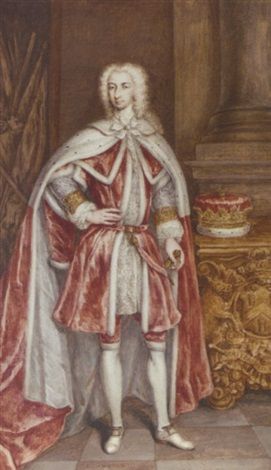
Upon the 2nd Duke’s death most of the Sheffield estates passed to a half-brother (below); but Mulgrave Castle was awarded to the Phipps family, heirs of his mother’s first marriage to the Earl of Anglesey, and some of the Sheffield titles were later re-created for them: Baron Mulgrave, 1765, Earl of Mulgrave and Viscount Normanby, 1812 (for Henry Phipps, Foreign Secretary, 1805, and First Lord of the Admiralty, 1807); and finally Marquis of Normanby, 1838 (for Constantine Phipps, Lord Lieutenant of Ireland and Home Secretary). This line continues today. There was also a new barony (and for a short time, an earldom) of Sheffield, for the unrelated Holroyd family in 1781, now held by a branch of the Stanley family.
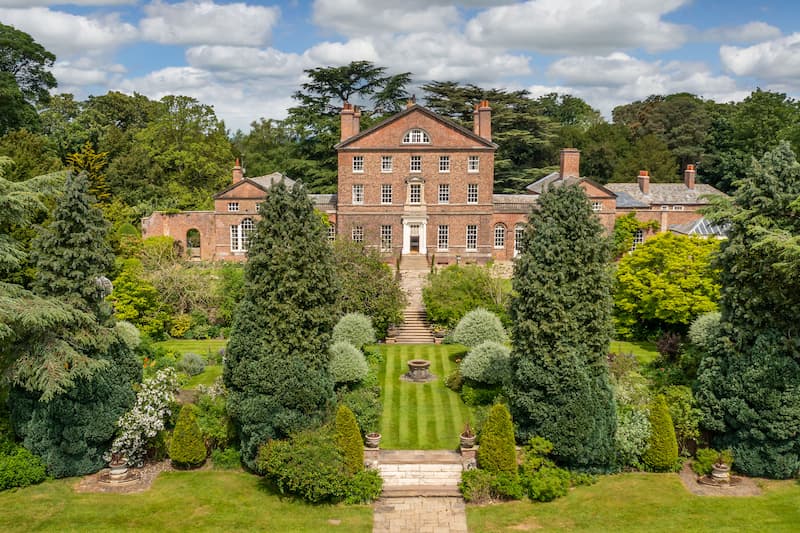
The illegitimate son of the 1st Duke, Sir Charles Sheffield, born about the time of his father’s third marriage, was created Baronet Sheffield, of Normanby, in 1755. He inherited Buckingham House but soon sold it to George III. The Sheffield baronets retreated back to Lincolnshire for the next century. In 1963, they sold the too large Normanby House and purchased Sutton Park, north of York towards the Howardian Hills. The Georgian manor house built by the Harland family in the 1750s replaced an earlier Jacobean manor. The Sheffields moved their huge art collection here from Normanby (and included works that had once been in Buckingham House in London). It remains private, with occasional open days. The 8th and current Sheffield baronet, Sir Reginald, is the father of Samantha, Lady Cameron, and the journalist Emily Sheffield.
(Images Wikimedia Commons)


2 thoughts on “Buckingham and Normanby: a Yorkshire dukedom for the House of Sheffield”