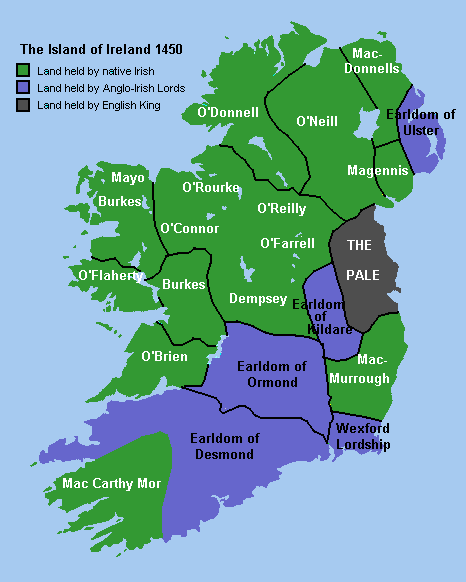
In the historic Kingdom of Ireland there were two types of nobility: the ancient native Gaelic aristocracy, descended from kings and clan chiefs, and the Anglo-Norman nobles who arrived in the wake of their conquest of Ireland in the 1170s-80s. These soon controlled most of the richest parts of Ireland, but over the centuries became gaelicised, such that when a new English nobility arrived in the sixteenth and seventeenth centuries, they became known as the ‘Old English’, or Seanghaill (lit. ‘old foreigners’). Amongst these families, several retained the old Norman patronymic starting with fitz, ‘son of’, like the FitzPatricks or FitzGeralds, and of these, the latter became dukes of Leinster, often seen as the first family of Ireland. Others retained a surname derived from a place or castle in England or Normandy, while still others took a new surname in Ireland based on a royal office they held. Such was the case for the Butlers, who, centuries after they were established in Ireland, received one of only three dukedoms created in the peerage of Ireland: Ormond in 1661. They lost it only two generations later, but other branches continued to dominate the high aristocracy of Ireland, as earls then marquesses of Ormond, into the modern era.
The royal office in question was Chief Butler of Ireland. The English court had been served by a Chief Butler since the Norman Conquest. His basic task was to present wine to the monarch at his coronation banquet, but he also enjoyed certain rights and privileges pertaining to the importing and selling of wine within the Kingdom. The office derived from a similar post at the French court, the Grand Bouteiller (or ‘great bottle handler’), who was in charge of the royal wine cellars (and as with Butler, also became a noble surname in France as Le Bouteiller). The coat of arms used by the Butlers was a mix of a basic shield of blue and gold (divided horizontally by a jagged line) and another shield that bore three golden goblets on red. A noble family in central Germany, von Buttlar, also used a clear depiction of the function, with three wine butts or barrels. There was also a Le Boteler family in England, barons in the thirteenth and fourteenth centuries (and briefly again in the seventeenth).

The Irish Butlers descended from a Norman lord, Hervey Walter, who lived in West Dereham in Norfolk, the brother-in-law of Ranulf de Glanville, Chief Justiciar of England under King Henry II. Some genealogical sources attempt to connect Hervey (an Anglicisation of the French name Hervé) to a more obviously powerful family, suggesting he was the son of Hervé de Clare, of the Suffolk Clares, kinsmen of William the Conqueror, who later became earls of Hertford and, more significantly, led the conquest of Ireland in the form of Richard ‘Strongbow’, Earl of Pembroke. But there’s no evidence for this link, nor that the original surname was FitzWalter—just Walter. What is clear is that Ranulf de Glanville gave a leg up to his nephews, Theobald Walter and Hubert Walter, to make their way at the royal court. Hubert in fact succeeded Ranulf as Chief Justiciar in 1193, and was appointed Archbishop of Canterbury that same year, then Lord Chancellor of England in 1199. As such he was a key figure in the reign of King John and developed much of the early regulations of the English judiciary system; he was even left in charge of the government when the King was abroad in 1202. His initial rise, however, had been under John’s brother King Richard, with whom he had gone on Crusade in 1189—in fact, he had been responsible for the trial and excommunication of Prince John in 1194.
But Prince John had, a decade earlier, favoured Hubert Walter’s older brother, Theobald. John was, as his share of Henry II’s domains, called Lord of Ireland, and as such visited the island for the first time in 1185. Theobald was in his entourage and was named Chief Butler of Ireland (or Pincera Regis in Latin). The Prince toured much of Ireland and granted his servant Theobald extensive lands in the southeast part of the old Kingdom of Limerick (or North Munster), including the barony of Ormond, which took its name from an earlier division of Munster called the Kingdom of East Munster or Urumhain, which today forms County Tipperary. He also received baronies in Clare, Offaly and Limerick, most seized from local chiefs who had resisted English rule, whom Theobald helped John defeat. Back in England, John’s father King Henry II granted Theobald and his heirs duties on wine imports into Irish ports, to allow him to sustain his office with noble dignity. Instead of Walter, his family would use the surname Le Botiller, ‘the Butler’. Theobald the Butler also maintained links with England, being appointed by King Richard as High Sheriff of Lancashire in 1194, and he later married to one of the major heiresses of Yorkshire, Maud le Vavasour—sometimes considered as the role model for the character of Marian in the Robin Hood stories, based on events later in her life when she returned to England.
One of the first places the Butlers established their power base was on the east coast at Arklow in County Wicklow. This town (which used the Norse term for a meadow, a low), was important for trade across the Irish Sea as straddled the mouth of the river Avoca. There was a large Norman-style castle here built by the Butlers in the 1180s, as a well as a Dominican Priory they founded in the 1260s as a place for family burials. In the fifteenth century, the family moved inland to their castle at Kilkenny, and Castle Arklow fell to ruin (only a single tower remains), and the estate was sold in 1714.

Theobald, 1st Chief Butler of Ireland, died in 1205, and was succeeded by another Theobald. Like many Anglo-Norman lords of this era, he divided his time between England and Ireland. He married twice, once to the daughter of a Justiciar of Ireland and once to another significant Northern English heiress (Roesia de Verdun), whose father had also accompanied Prince John in Ireland in 1285. Her inheritance included Alton Towers which is more familiar today as one of England’s major amusement parks (and will be looked at in a blog post about the Talbot dukes of Shrewsbury). Theobald le Botiller later accompanied the young King Henry III on his invasion of France in 1229, and died there a year later. The 3rd Butler, also named Theobald, also married the daughter of a Justiciar of Ireland (Margery de Burgh), then himself was appointed to that office, in 1247, but died only a year later.
And so it continued for the next few generations, with two more Theobalds as 4th and 5th Chief Butler, also holding posts at Justiciar of Ireland—essentially the head of the government, in the name of the King or his viceroy—and marrying women with connections to other Anglo-Norman lords in Ireland but also heiresses of lands in England. They therefore retained their double identity as Anglo-Irish well into the fourteenth century. In 1315, Edmund, the 6th Butler and Justiciar of Ireland, defended Ireland against an invasion by Scots, and was rewarded with an earldom, Carrick, based on the river Suir in Tipperary—one of the major noble titles in the south of Ireland. But it was never fully recognised nor passed on to his heirs, so after his death in 1321, his son, James (the first of *many* Butlers of this name) was compensated with the title Earl of Ormond in 1328. This is the main title by which the family would be known for the next eight hundred years.
Ormond Castle was built outside the old town of Carrick on the river Suir, near where the counties of Tipperary, Kilkenny and Waterford come together. The Suir was an important highway into the interior, and we will see several Butler castles built along its banks. The old Castle Carrick was acquired by the Butlers in about 1315, and was subsequently known as Castle Ormond. Often it is spelled Ormonde, particularly in the sixteenth and seventeenth centuries when it was fashionable to make English spellings look more French. For consistency in this post, I will stick with Ormond. In the 1560s, the 10th Earl of Ormond, a cousin of Elizabeth I who spent a lot of time at the English court, built a new manor in the new Tudor style—the first in Ireland. He left the fifteenth-century tower standing and incorporated it into one side of the manor. This was not a defensive building, the very fact of which was meant to display the Earl’s power and authority as not needing such a thing. The castle was a favoured residence through the seventeenth century but was mostly abandoned by the eighteenth, when the family preferred Kilkenny Castle instead. In 1947 it was given to the state and restored for tourism.

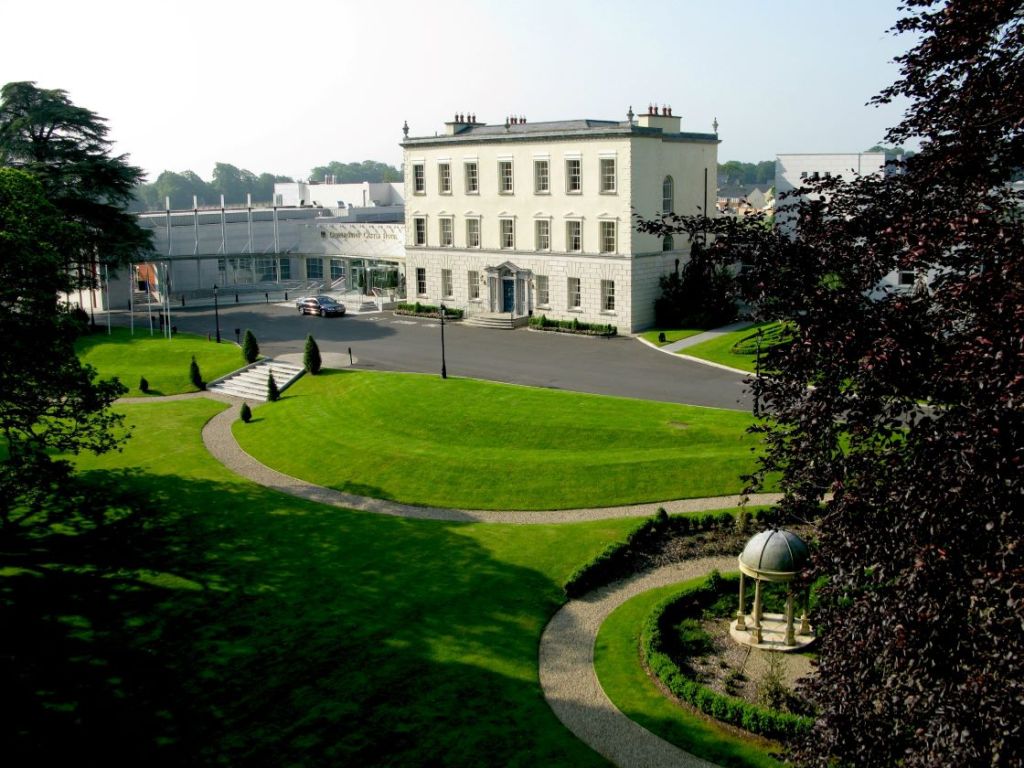
Another important title acquired by the Butlers at this point was Baron Dunboyne. Edmund’s brother Thomas was summoned as a baron to the Irish Parliament in 1324. These estates, developed by the bishops of Meath (just outside Dublin), were used to create a cadet line of the House of Butler, which persists today. The Barony of Dunboyne, County Meath, was formally re-created as a peerage in 1541 for the 10th Baron, so ever since, this line uses both numberings (so today baron, Richard Butler, b. 1983, is called the 30th and 20th). The original Dunboyne Castle, a medieval tower house, was destroyed in the 1650s during the Cromwellian invasion. But the family had long resided instead at Kiltinan Castle in County Tipperary (which in 1650 passed to the Cooke family), and in the mid-eighteenth century replaced the ancient Dunboyne Castle with a new Georgian manor house. Badly burned in the Irish rebellion of 1798, it was not rebuilt right away, and the family more recently has lived at Argo Hill House in Sussex. In the twentieth century Dunboyne was renovated and today hosts a hotel and spa.
The cadet line of Butler of Dunboyne remained Roman Catholic after the Reformation. Prominent clergy in the eighteenth century include an Archbishop of Cashel in 1757 (James), and a Bishop of Cork in 1763 (John), who inherited the baronial title in 1785 so asked the Pope for a dispensation in order to marry and carry on the line—he was refused, so he resigned, became a Protestant, and married his cousin Mary Butler (but they didn’t have children, and the title passed to a cousin).
The 7th Chief Butler, James, 1st Earl of Ormond, was particularly favoured by the English king, Edward III, as he had become close kin through marriage, the year before the creation of the earldom, to Eleanor de Bohun, a granddaughter through her mother of Edward I. The earldom of Ormond thus came with rights to act as a ‘palatine lord’ in County Tipperary, which gave him more control over the local judiciary plus some rights to collect certain royal fees. This significant honour was meant to be for his lifetime only, but his descendants still exercised palatine rights here until 1715. His younger brother John founded another main cadet branch of the Butlers, of Clonamicklon, in northeast Tipperary. A descendent, Sir Pierce, was a lieutenant-general and was created Viscount Ikerrin in 1629 in the Irish Peerage. The 8th Viscount was then created Earl of Carrick, 1748 (in commemoration of his distant ancestor, the 1st Earl). The seat of this branch is Mount Juliet, in County Kilkenny, on which was based the new title, Baron Butler of Mount Juliet, created in 1912 in the UK Peerage to ensure these Butlers had a seat in the Parliament in Westminster.
As with most of the oldest noble families in Europe, the Butler coat of arms as described above was very simple and easy to recognise on the battlefield. And, adopting the continental heraldry system, junior branches added small changes or ‘differences’: three scallop shells (‘escallops’) for Butler of Dunboyne; a gold crescent moon for Butler of Clonamicklon; a blue crescent moon for Butler of Mountgarret and so on. The main line also added to more quarters, a red cross on ermine for Fitzgerald of Desmond (neighbours, cousins and hereditary enemies), and two gold rings and a white swan over a red lion on silver for the earldom of Carrick (though they hadn’t possessed it since the death of the 1st Earl).
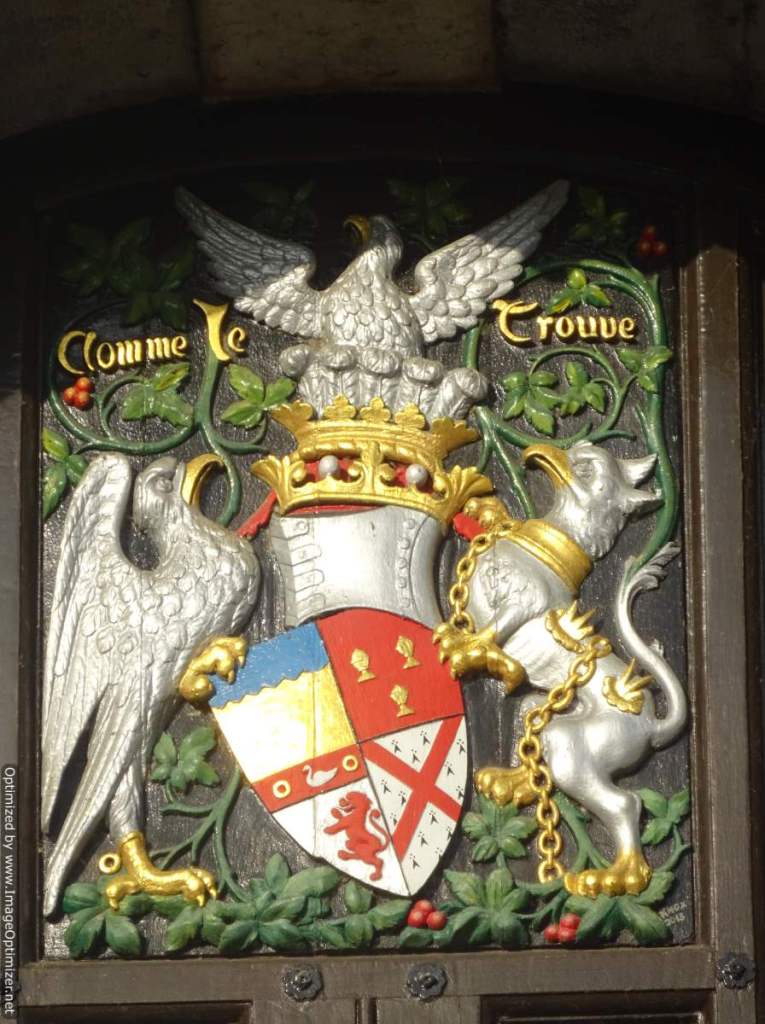
The main line continued: James, 2nd Earl of Ormond, was once again Lord Justiciar of Ireland, 1359, 1364, 1376, but also rose one notch higher in the government of Ireland as Lord Deputy, 1364, governing ruthlessly under the Viceroy, the Duke of Clarence. He ended his career as Constable of Dublin Castle, from 1372. He died at Knocktopher Castle, in County Kilkenny. This was the site of another Butler monastery, but both this and the castle were destroyed in the seventeenth century, leaving little remains.
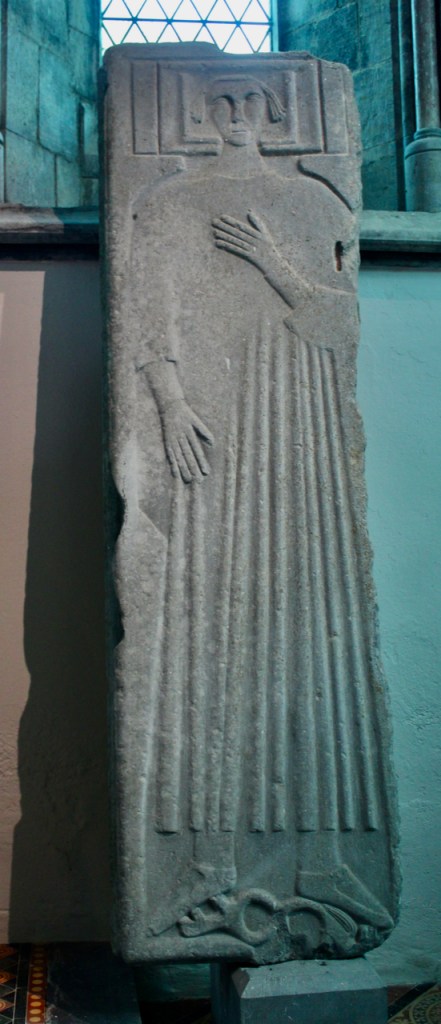
The 3rd Earl of Ormond was also Lord Deputy of Ireland, 1384, then Lord Justiciar in 1392 and 1401, and he expanded the family’s holdings significantly by purchasing more castles in the interior of Ireland, Gowran, with a new Collegiate Church that became the chief family burial spot; and Kilkenny Castle (about which more below). Gowran had been an early seat of the ancient kings of Osraighe (and sometimes this earl is called ‘Earl of Gowran’). But while the Collegiate Church still stands (and with it several Butler earls), the Butler castle built in the 1380s left little trace as it was replaced by a more comfortable country house in the eighteenth century, built by the Agar family, viscounts Clifden. The Butler family’s main seat shifted a few miles to the west, to Kilkenny.

The 3rd Earl had several sons, the eldest illegitimate: Thomas Le Boteller, who became Lord Deputy in 1406, then Lord Chancellor in 1412. He was unmarried, as a Knight Hospitaller, and had earned a reputation as a soldier in Normandy and employed the ruthlessness he learned on the battlefield in government back in Ireland, where he is remembered as particularly ruthless. Of the other sons of the 3rd Earl, the two youngest, Philip and James, founded still more cadet branches. Philip’s descendants were the Botelers (later Butlers) of Brantfield (an estate in Hertfordshire), who became baronets of Hatfield Woodhall (in Herts) in 1620, then Baronets of Bramfield, in 1643—both extinct in 1657. James’s descendants were the Butlers of Cahir, created Baron Cahir in 1542 and again in 1583. The 10th Baron was created Earl of Glengall and Viscount Cahir in 1816. This title became extinct in 1858, but the barony is in abeyance and could be reclaimed.
Cahir Castle, one of the largest and most famous in Ireland, is in County Tipperary, again on the river Suir—but this time in it, not next to it. Buit on an island in the 1140s by the O’Briens, kings of Thomond (and named cathair, ‘stone fort’), unlike the others, this was a Gaelic castle built to block the expansion of the Normans in this area. It was confiscated by the English government and given to the Butlers in 1375. Enlarged several times, it would be the site of a major siege during one of the many rebellions of Irish Catholic lords against the Elizabethan regime in the 1590s. Cahir was mostly a ruin by the eighteenth century, then restored during the revival of interest in all things medieval in the 1840s. In 1961, the last Baron Cahir died, so the castle passed into state custody.
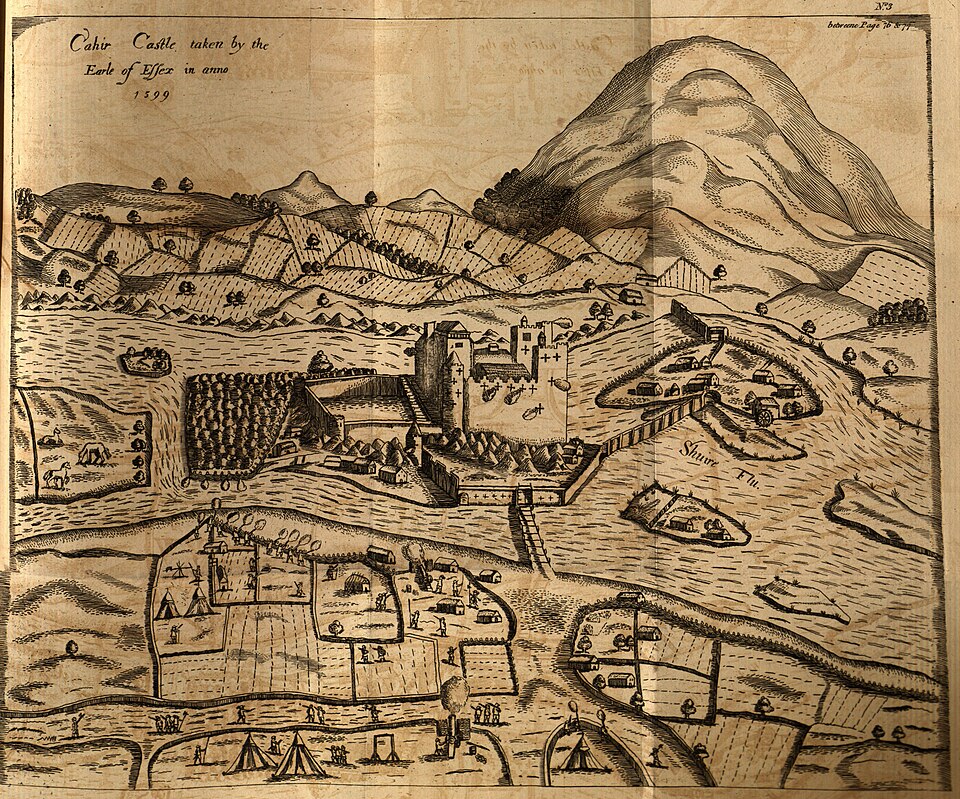
The second son of the 3rd Earl of Ormond, Sir Richard of Polestown, founded a branch who later succeeded to the earldom, so we’ll return to them below. James, 4th Earl of Ormond, was often a key deputy for English kings in the government of Ireland, like his ancestors serving as both Lord Deputy (1405) and then in the top role, Lord Lieutenant (aka Viceroy), 1420, 1425 and 1442. The 4th Earl maintained long feuds with both the Talbots (and their head in Ireland, Richard, Archbishop of Dublin) and the FitzGeralds of Desmond—and later settled these through the marriages of two of his daughters. As in previous generations, his own marriages reflect a continuing interlinkage between English and Irish aristocracies: the first was a Beauchamp of Bergavenny while the second was a FitzGerald of Kildare (just as his mother and step-mother had been an English Welles and an Irish FitzGerald of Desmond). From the first marriage, he left three sons, who each succeeded him as earl.
James, the 5th Earl, was also created Earl of Wiltshire, 1449, to further secure his place back in England, and married twice within the Lancastrian faction in the English Wars of the Roses: Alice Stafford and Eleanor Beaufort, the latter a great catch as daughter of the Duke of Somerset. In this period, the Earl left his Irish affairs to the cadet lines of the family, and resided in England, where he was appointed Lord High Treasurer of England, 1455 (briefly), and again 1458-60. He brought Irish troops over to England to support Queen Margaret of Anjou in her defence of the Lancastrian cause, for which he was executed by Edward IV following the disastrous battle of Towton in 1461.
John Butler then succeeded as 6th Earl of Ormond, and continued to support the Lancastrians, though now in Ireland, where he was badly defeated at Piltown in County Kilkenny by a Yorkist army. His title had been attainted after Towton but was restored by Edward IV who sent him on embassies to various European courts. He died in pilgrimage in the Holy Land in 1476, leaving a brother, Thomas, 7th Earl of Ormond, who lived in England, sat on the Tudor Privy Council and served at court as Lord Chamberlain for Queen Catherine of Aragon. When he died in 1515 he was considered one of the richest men in both England and Ireland. His daughters Anne and Margaret became his co-heiresses to lands in England, and passed these along to their eldest sons: Anne’s son George St. Leger and Margaret’s son Sir Thomas Boleyn (father of Anne Boleyn). Whether the earldom of Ormond could pass through female succession was unclear, so it was disputed for several years.
The earldom had in fact already been in dispute for several years: another James Butler, an illegitimate son of the 6th Earl, had claimed the earldom for himself since his father died in 1476. This rival 7th Earl went on to defend Ireland for the Tudors against the Yorkist pretender, Perkin Warbeck, in 1491 and 1493, and was rewarded by Henry VII for this loyalty with the post of Lord Treasurer of Ireland, 1492-94), in reality the de facto governor of that kingdom. His rival for the Ormond succession, Thomas Butler, finally had him silenced in 1497 through assassination.
In 1515, the next male heir was Piers Butler, great-grandson of Sir Richard of Polestown Castle in County Kilkenny (now Paulstown), younger brother of the 4th Earl, as noted above. Sir Richard’s eldest son Edmund had taken a further step on the path of gaelicisation by adopting the title ‘The MacRichard of Ossory’, as kin via his mother to one of the great Gaelic clans, the O’Reillys. The area around Polestown lay within the borders of the ancient Kingdom of Osraighe (anglicised as Ossory), long a buffer state between the larger kingdoms of Munster and Leinster. We will see the name Ossory appear again in the family history below. He may have tried to boost these Gaelic credentials even further by marrying his son James to Sabina Kavanagh, daughter to one of the pretenders to the Kingdom of Leinster (a MacMurrough-Kavanagh). His younger son Walter founded another cadet line: baronets Butler of Polestown in 1645, extinct in 1761.
So when Piers Butler of Polestown claimed the succession to the earldom of Ormond after the death of his cousin Thomas in 1515, he managed to take physical possession of the lands, but this was contested by his English cousins, including Thomas Boleyn, whose mother Margaret Butler was a powerful figure at the Tudor court. Finally in 1528, undoubtedly through the influence of Anne Boleyn, Henry VIII convinced Butler to renounce the earldom, in exchange for another, the Earldom of Ossory—reviving his grandfather’s assumed title. Thomas Boleyn thus became Earl of Ormond, and was also given the former Butler earldom of Wiltshire. When Thomas Boleyn died in 1538—both his daughter Queen Anne and his son George having been shamed and executed—the earldom of Ormond was finally restored to Piers Butler, who then died a year later.
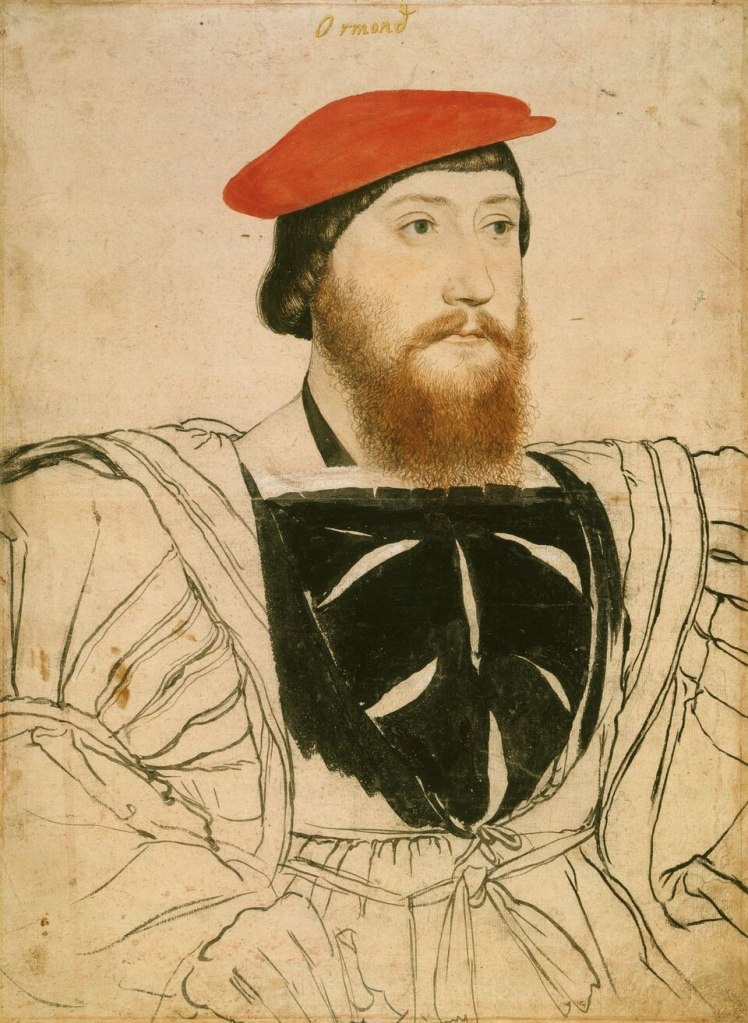
The 8th Earl’s son, James, was thus both 2nd Earl of Ossory and 9th Earl of Ormond (though some genealogies count Boleyn in the numbering, making Butler the 10th Earl). As a young man, James Butler had accompanied Henry VIII to France, in 1513, and was badly wounded—so bore the nickname ‘the Lame’. In 1522, he was proposed as a husband for his cousin Anne Boleyn as a means for resolving the succession dispute. While still heir to his father’s titles, James was appointed Lord High Treasurer of Ireland, 1532, then Admiral of Ireland, 1535, and given his own peerage, Viscount Thurles, named for a castle in County Tipperary.
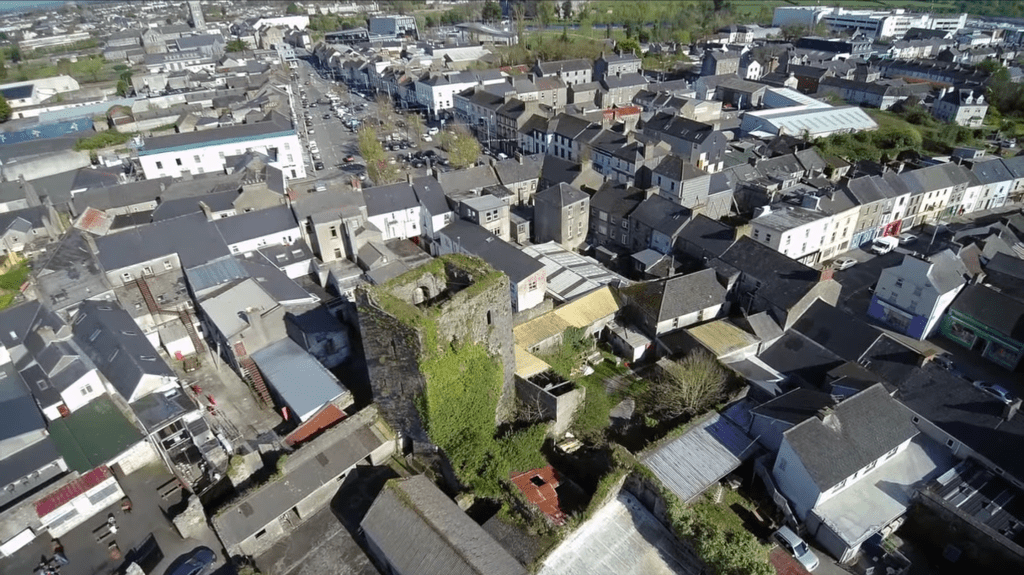
Thurles Castle, also known as Westgate Castle (or the Black Castle) to distinguish it from the other castle in this town (Bridge Castle, the old stronghold of the O’Fogarty clan). Thurles itself came from the word durlas, ‘strong fort’, and this was yet another Butler stronghold built to control a crossing over the river Suir. The tower house was built to protect the western gate into the town—though today it is in the middle of town, an unattractive ruin. Thurles is also important as it became the seat of the Catholic archdiocese of Cashel after the Reformation.
Once Viscount Thurles inherited his father’s earldoms of Ormond and Ossory, he was appointed Commander of the Irish forces in England’s war against the Scots of 1544: the ‘Rough Wooing’. Like most Tudor courtiers, he benefitted from the dissolution of the monasteries, in his case, in Ireland, with the acquisition of Kells Priory, in 1540—though note well that this priory was in County Kilkenny, not the more famous Kells Abbey (of the Book of Kells fame) located in County Meath. The remains of the former priory still look impressive, with its extensive walls and seven towers built in the 1190s. The 9th Earl was very much in the ascendant. And though he had not married the potential heiress Anne Boleyn in the 1520s, he did later marry Lady Joan Fitzgerald, heiress of her father, the 10th Earl of Desmond, whose lands bordered those of the Butlers in the south of Ireland—bitter rivals for centuries. But Joan’s uncle managed to claim the Desmond earldom, so this resulted in little advantage for the Butlers. Suddenly, at a dinner in London in 1546, the Earl died of poisoning—no investigation followed, and no one knows who did it, but suspicion falls on his rival for power in Ireland, Sir Anthony St Leger, Lord Deputy of Ireland (who was, incidentally, a relative of the St Legers who also claimed some of the Butler succession back in 1515).
The 9th Earl left behind several sons, but they were all very young, so headship of the family fell to the Earl’s younger brother, Richard, created Viscount Mountgarret in 1550; and an illegitimate brother Edmund, Archbishop of Cashel—the senior ecclesiastical post in the south of Ireland. Edmund had been appointed to this see in 1527, and publicly accepted royal supremacy of the church in 1539 (whereas many Irish prelates did not). Through his influence in the Irish Parliament in Dublin and the Irish Privy Council, legislation was approved that formally transformed the Lordship of Ireland into a Kingdom, with Henry VIII as its first king, in 1541.
The title Viscount Mountgarret was based on lands more recently acquired by the Butlers along Ireland’s south coast in County Wexford. A hilltop north of the town of New Ross on the river Barrow was the site of a tower built in 1408 by the Bishop of Ferns (who was also Lord Chancellor of Ireland) when he moved the seat of his diocese from Ferns to New Ross. As above, it was important for the Butlers to control riverways, and the tower on Mountgarret overlooks the Barrow near its confluence with both the Nore above (flowing from Kilkenny) and the Suir below (flowing from Tipperary), which all then form a large estuary as the Barrow enters the sea. The tower house was rebuilt by the 1st Viscount in the 1550s. His descendants formed yet another branch of the House of Butler: the 5th Viscount was a supporter of James II in 1689 and was attainted (reversed in 1715); and the 12th was created Earl of Kilkenny in 1793. Another member of this line was the last of the line of Catholic archbishops of Cashel, James (1774 to 1791). While this earldom went extinct in 1846, the viscounty continued into the twentieth century, when, to assure his seat in the UK Parliament, the 14th Viscount was created Baron Mountgarret of Nidd (in the West Riding of Yorkshire), in 1911. Today’s 18th Viscount Mountgarret (Piers Butler, b. 1961) is in fact a claimant to the earldoms of Ormond and Ossory, but has not put forwards claims, requiring a costly process of genealogical proofs and with no real benefits. His seat is Stainley House, near Harrowgate (as Nidd Hall was sold in the 1960s).

Jumping back to the sixteenth century, the 10th Earl of Ormond and 3rd Earl of Ossory came of age in the later 1550s, when, like his ancestors, he was appointed Lord Treasurer of Ireland, a position he held a remarkably long time, from 1559 to 1614. Thomas Butler had in fact been raised with his cousin Princess Elizabeth, as a Protestant, and was a ward of the Crown after his father’s death in 1546. He and Queen Elizabeth remained close, and he fought for her often back in Ireland. In particular, he led troops against his mother’s family, the Fitzgeralds of Desmond, when they rebelled in the 1560s (and later against his own brothers, who took up the Desmond cause). In 1579 he was appointed Lord General of forces in Munster (the province that included the Butler lands in Tipperary), to put down the Second Desmond Rebellion. In 1597 he was appointed Lieutenant-General of all royal forces in Ireland, and in 1600 was instrumental in suppressing Tyrone’s Rebellion in the north (which also involved his brothers).
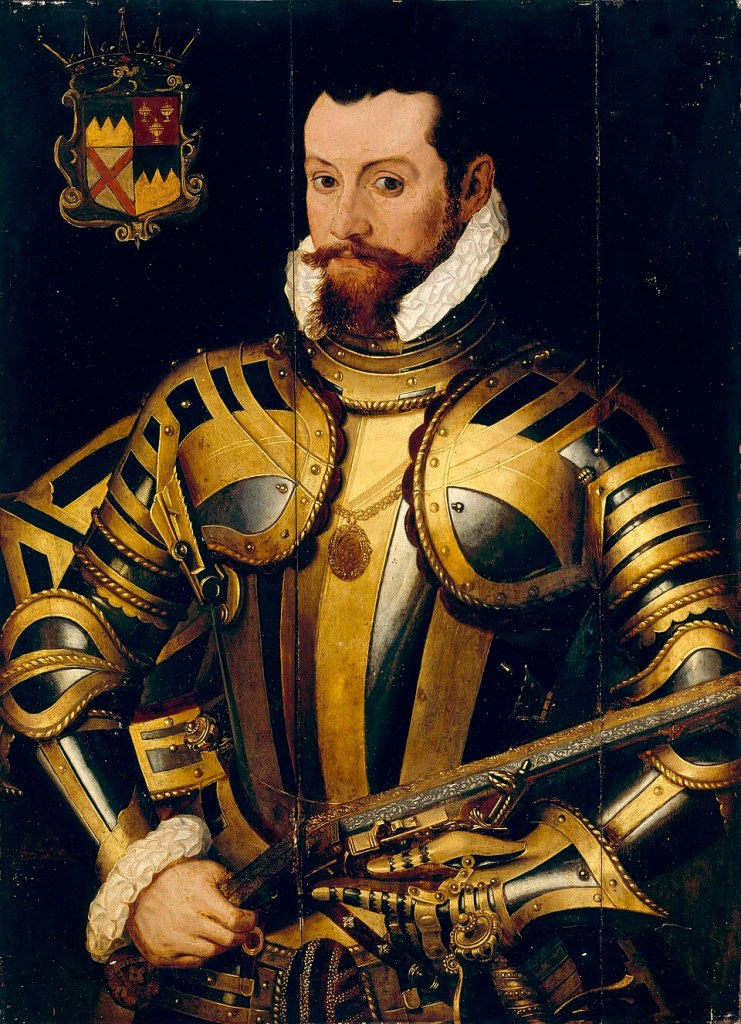
Meanwhile, the Earl—known as ‘Black Tom’—expanded Ormond Castle in the 1560s, in preparation for a visit by Queen Elizabeth (which never materialised). He later built a great gallery at Kilkenny Castle. He died in 1614, leaving a daughter, Elizabeth, as his sole heir. His brothers having been attainted due to rebellion, the Earl convinced the Queen to reverse the attainder in 1603 for his nephew Theobald, who was then married to Lady Elizabeth. The new king, James I, then created a title for them, Viscount Butler of Tulleophelim (County Carlow). Theobald died young, however, in 1613; so shortly before her father’s death, Elizabeth married a Scottish favourite of the King, Richard Preston, Lord Dingwall, whose royal favour she hoped would help her block the succession to the next Butler male heir (Walter, below). In 1618, she and her husband were awarded half the Butler estates, and in 1619, in an interesting twist, were created Earl and Countess of Desmond (that title confiscated from the FitzGeralds in the 1580s). They too only had a daughter, another Elizabeth, in her own right Lady Dingwall, who in 1629, at age 14, married her cousin James Butler, Viscount Thurles, thus bringing back together much of the Butler estates, including the crown jewel, Kilkenny Castle.

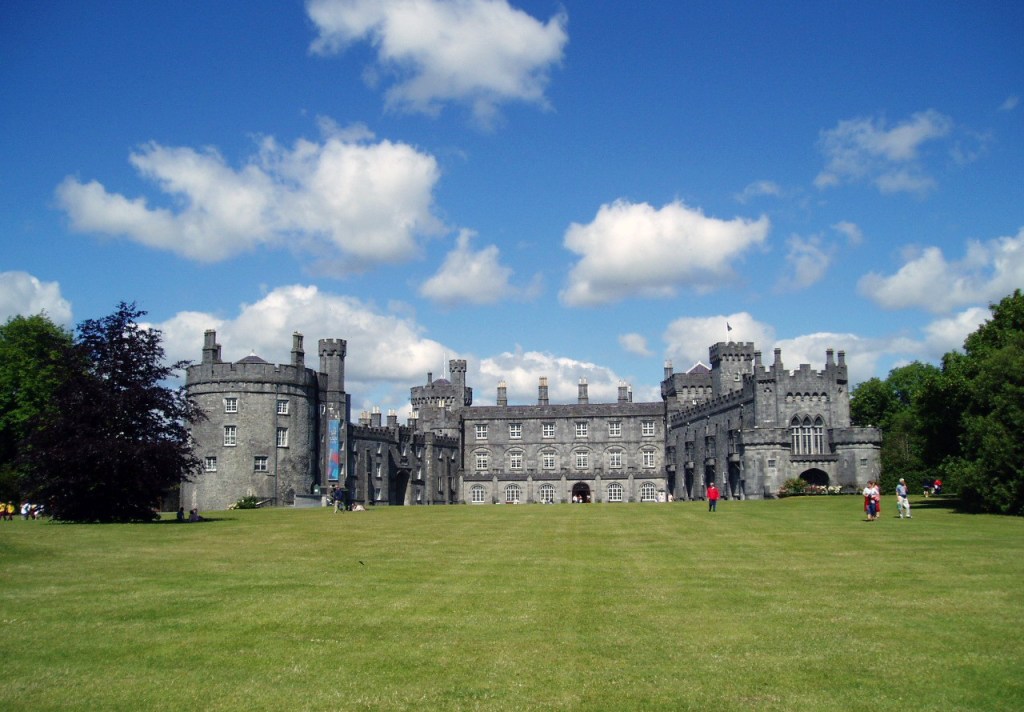
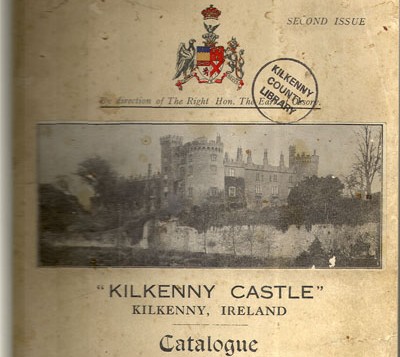
The town of Kilkenny (and the county in which it is located) takes its name from ‘the church of Saint Kenny’ or Cainnech, one of the Twelve Apostles of Ireland. Both the Cathedral of St Cainneach (or Canice) and the castle built to defend it, also take their name from him. The original fortress on the river Nore was built by the kings of Osraighe; it was later rebuilt in Norman style as a symbol of English power by Strongbow himself in the twelfth century, then rebuilt in stone by his De Bohun heirs in the next century. Seized by the Crown in 1381, it was sold to the Butlers in 1391, and became their main seat in the century that followed. Badly damaged in the civil wars of the 1640s-50s, it was modernised by the 1st Duke of Ormond in the 1660s; then much of this was ‘re-medievalised’ by the family in the nineteenth century. As we will see below, the Butlers struggled to maintain so many large properties in the twentieth century, so, after many of the surrounding estates had been sold off, the contents were sold in a hugely publicised public auction in 1935, and the family moved to England. As it started to fall into disrepair, the 6th Marquess of Ormond sold it to the Castle Restoration Committee for a symbolic £50. Since then the City of Kilkenny has restored it and opened it for tourism.
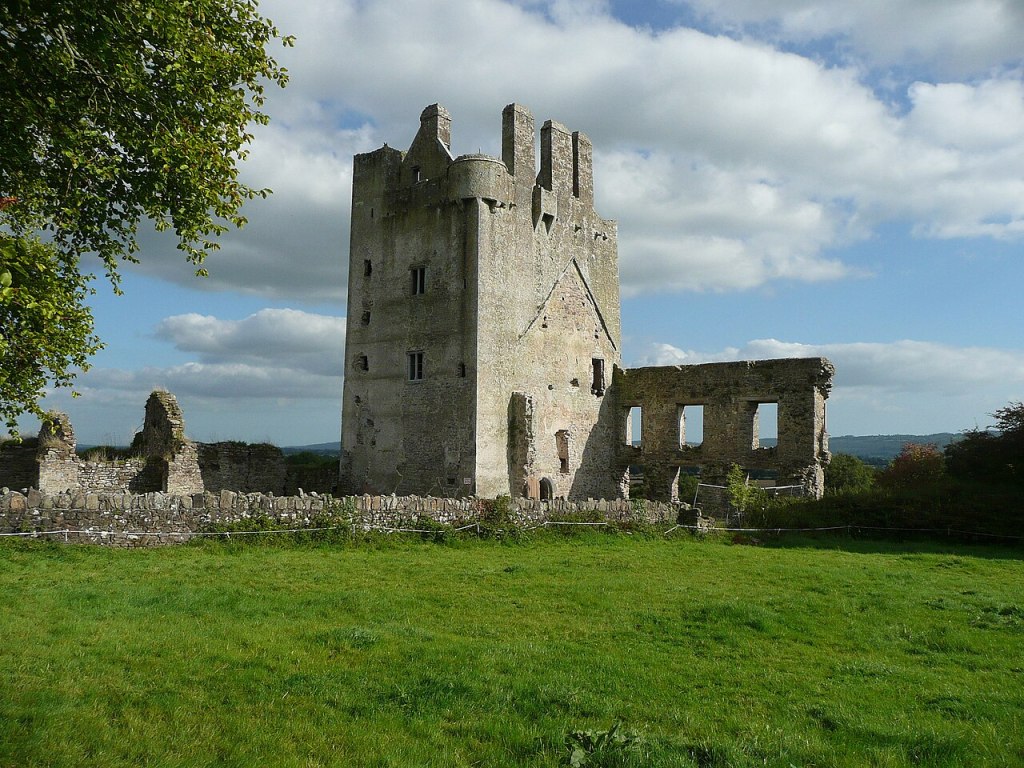
The 10th Earl of Ormond’s younger brothers, Sir Edmund of Cloughrenan, Edward and Piers got involved in the Desmond Rebellion, 1569-70, and fought for their share of the inheritance that they saw was being granted by the Deputy Lieutenant to someone else. The 10th Earl, returning from England, actually helped put down this short ‘Butler Revolt’, and while the younger brothers were pardoned, Edmund was not: he escaped imprisonment in Dublin Castle and lived in exile until his death in the 1580s. He left several sons: the first two, Piers and James, later rebelled in 1596 and were executed on orders of their own uncle the Earl; the third, Theobald, was created Viscount Butler of Tulleophelim in 1603 as we’ve seen. Old Anglo-Norman nobles like the Desmonds and the Butlers had aligned with the Catholic Gaelic nobility of Ireland—and we can see this alliance given flesh in the marriage between the third of the 10th Earl’s brothers, John of Kilcash (who had not taken part in the Butler Revolt of 1569) and Katherine MacCarthy, daughter of the Prince of Carbery (‘the MacCarthy Reagh’). Their son Walter, a devoted Catholic, would even be given a Gaelic moniker, Walter an Phaidrin (‘of the beads’). He became the male heir in 1614, but his faith (and his cousin’s favour with the King, as seen above), deprived him of half the inheritance. The 11th Earl of Ormond was in fact held in prison in London, 1617-25, for protesting this situation to King James, and matters were only settled in 1629 when he agreed to the marriage of his grandson James to the Butler heiress, Lady Elizabeth Preston.
The 11th Earl’s son, Thomas, Viscount Thurles, had married an English Catholic woman, Jane Pointz, and died young, in 1619, on a ship travelling towards England heading for a trial in London, accused of garrisoning Kilkenny Castle with troops against royal wishes. Their eldest son, James, only nine years old, became a ward of the Crown, and King James ensured that he was raised and educated by Protestant tutors. The 12th Earl of Ormond, as he became when his grandfather died in 1633, was therefore a Protestant in a vast sea of Catholic relatives. His younger brother Richard was given their grandfather’s apanage of Kilcash Castle and spent much of his life in opposition and exile. He founded another cadet line, of Garryricken (where his son Walter built a new house in 1660), to which we will return in the eighteenth century.
Kilcash Castle is a fortified tower built in the sixteenth century in the southeast corner of Conty Kilkenny, guarding one of the main roads connecting Kilkenny to the Suir river valley. Once there was a cadet line living here, a great hall and living quarters were added. But all of these fell to ruin in the nineteenth century, and was further damaged during the unrest of the 1920s. Today it is dangerously close to collapse, and was finally sold by the Butler estate to the Irish government in 1997 to try to save it. The local church became the burial ground for many of the eighteenth-century earls and other Butler kin.
James, 12th Earl of Ormond, in contrast to his brother Richard of Kilcash, was a loyal servant of the Stuarts and raised the family to its greatest heights, recognised by being created Marquess of Ormond in 1642, then Duke of Ormond in 1661. He was Lord Lieutenant, aka Viceroy, of Ireland three times: 1643, 1661-69, and 1677-84. When considering the creation of the dukedom of Ormond (usually spelled ‘Ormonde’ in this period), it is important to put it into perspective of the Peerage of Ireland. There had been no other dukedoms in Ireland (and they were in fact still very rare in England and Scotland). There were also only three marquisates in the 1650s: Ormond itself, Antrim (for the MacDonnells), and Clanricarde (for the Burkes), and the latter two soon became extinct. There was a sharp increase in the number of Irish earldoms created under the Stuarts—so it is significant that Charles II chose to honour the Butlers above the rest by creating a more elevated title.
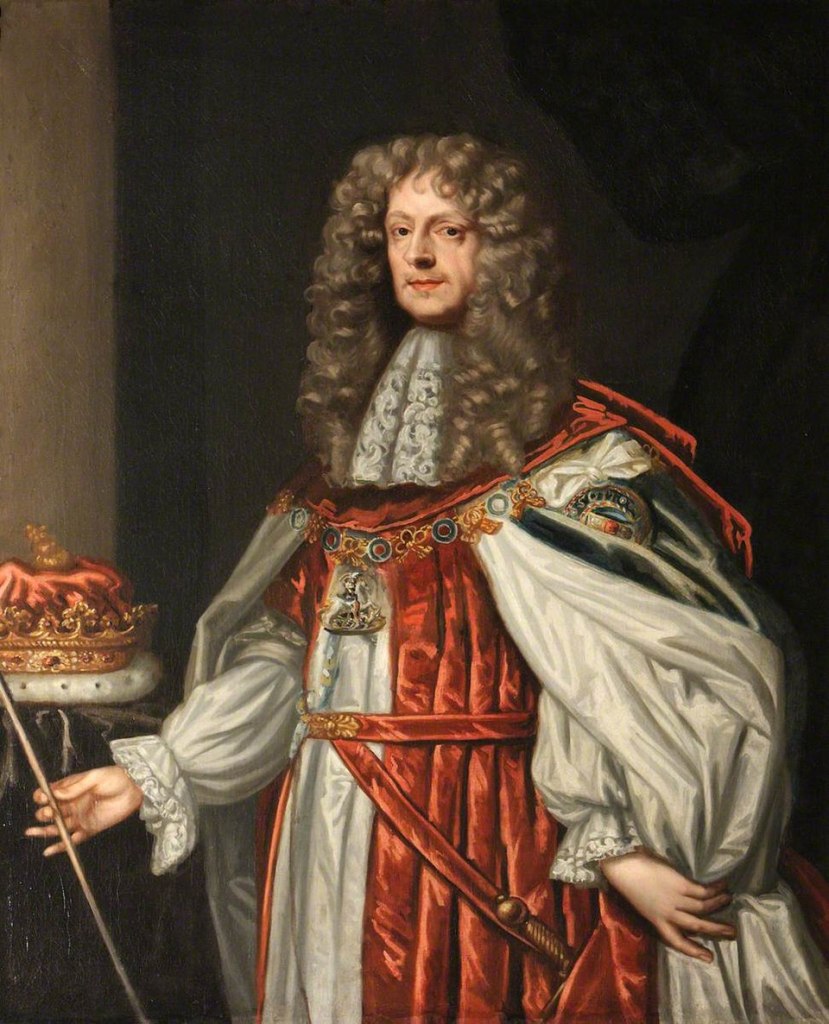
Back in 1641, rebellion had broken out in Ireland: the 12th Earl of Ormond was named Commander of the Royal Army in Ireland, and secured the Pale in the face of a rising rebellion of Catholic Irish Confederates (to which his brother belonged). The Confederates set up an alternative government in Butler’s own seat, Kilkenny Castle, the location of its Supreme Council from 1642 to 1648. The Earl himself, raised in rank to Marquess in 1642 in an attempt to boost further his prestige within the military, was based in Dublin, and given further authority as Lord Lieutenant of Ireland in 1643. His negotiations with his countrymen in Kilkenny led to the Ormonde Peace of 1646 and the Second Ormonde Peace of 1649, which created an alliance between Confederates and Royalists against the forces of Oliver Cromwell. This alliance failed, and Ormond was exiled and his lands confiscated by the English Republic’s representatives in Ireland. Ormond lived overseas with Charles II in the 1650s, then was greatly rewarded when that king was restored in 1660: in March 1661 he was given the dukedom of Ormond, in the peerage of Ireland, along with subsidiary titles Earl of Brecknock and Baron Butler of Llanthory, both in the Peerage of England (being places in Wales). He had already been named Lord Steward of the Household, 1660, and performed the more ceremonial role, Lord High Steward of England, during the King’s coronation later that year. Ormond was also reinstated as Lord Lieutenant of Ireland. Other honorary posts included Lord Lieutenant of Somerset, High Steward of Westminster, and Chancellor of Trinity College Dublin.
In 1669, the first Duke of Ormond was removed from office in Ireland due to personality clashes with the King’s favourite, the Duke of Buckingham. He retired to live in Oxfordshire, where he could attend to his new duties as Chancellor of Oxford University. He developed his estates back in Ireland (now fully restored, including the palatine powers in County Tipperary), notably by installing a wool industry in Carrick. The King restored him to full authority by re-appointing him Lord Lieutenant of Ireland in 1677, an attempt to keep order in Catholic Ireland amidst rising anti-Catholic feeling in England (and Protestant Dublin). In 1682, on a trip to London, James Butler’s dukedom was re-created by the King, this time in the peerage of England, to demonstrate his full faith in Ormond’s control of politics in Ireland, but also to build up his own defences in the English parliament. But Ormond was removed once again by court intrigues in 1684. The 1st Duke died in England in July 1688, just as things were about to heat up again for Ireland. He outlived all three of his sons: Thomas, Earl of Ossory (the courtesy title as heir), Richard, Earl of Arran (a new title, created in 1662), and John, Earl of Gowran (also a new title, 1676). All were dead by 1686.
Thomas Butler, Earl of Ossory, had spent much of his formative years in exile, in France and the Low Countries, where he met and married Emilia van Nassau, sister of the Heer van Ouwerkerk, a cousin of the Prince of Orange (known as ‘Lord Overkirk’ in England) whose son, the Earl of Grantham would later marry Ossory’s daughter Henrietta. At the Restoration he was named Lord of the Bedchamber for Charles II, then in 1662 was ‘accelerated’ to the earldom of Ossory so he could sit in the Irish House of Lords while his father was still alive. Four years later, he was created Baron Butler of Moore Park (Herts) so he could have a seat in the English House of Lords as well. He became a commander in the Dutch War of the 1670s, first against them, then with them, and became close to William III, the young Dutch Stadtholder, but died in 1680, before this friendship could bring real political advantage in England when William III became king.
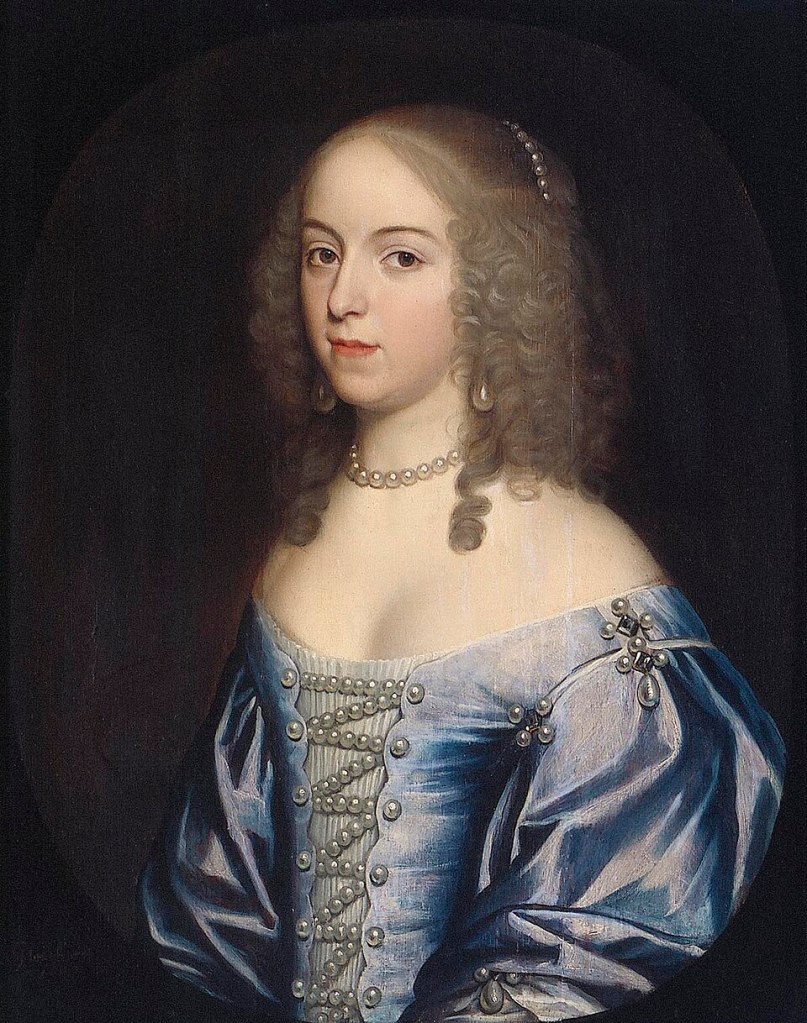
Of his younger brothers, Lord Richard was also given titles in both the Irish and English peerages: Earl of Arran in 1662 (not the Scottish island; the Arran islands—today spelled Aran—off the west coast, which he had purchased), Viscount Tullogh and Baron of Cloughgrannan (in Ireland); then Baron Butler of Weston (in Huntingdon, England) in 1673. He married two rich heiresses: Mary Stuart, Baroness Clifton (daughter of the Duke of Richmond and Lennox)—married at age 12 and died at 16—then Dorothy Ferrers of Tamworth, who produced an only daughter, Charlotte Butler, who took the Ferrers estates by marriage into the Cornwallis family. The other brother, Lord John, served briefly as an MP in the Irish Parliament, 1662 to 1666, then he too was given Irish titles: Earl of Gowran, Viscount Clonmore (Kilkenny) and Baron Aghrim (Galway), in 1676—supposedly as a reward for saving Dublin Castle from a fire in 1671. Both earldoms, Arran and Gowran, were extinct on the deaths of their bearers.
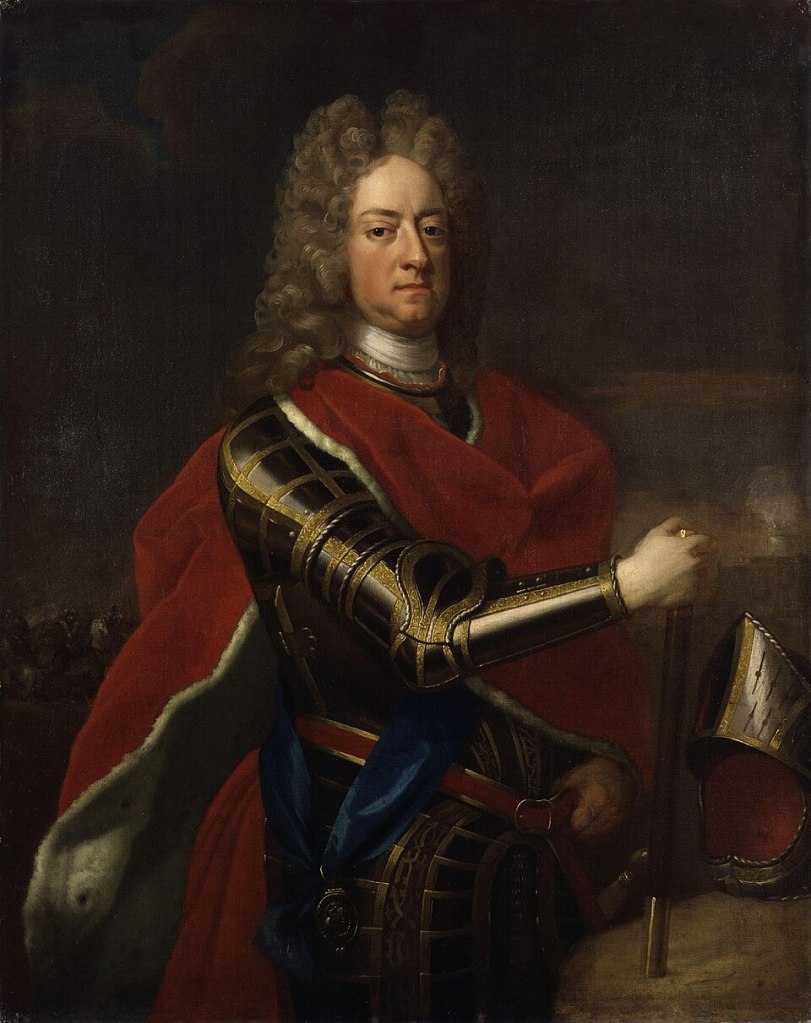
The grandson of the 1st Duke of Ormond, James, Viscount Thurles and 3rd Lord Dingwall (in Scotland), became the 2nd Duke in 1688. He also took over his grandfather’s posts as chancellor of the universities of Dublin and Oxford. He was at first loyal to James II, having served with him against the Duke of Monmouth in 1685, and refused to vote in favour of his deposition in February 1688. But he soon changed sides and served William III as commander of the Horse Guards at the Battle of the Boyne in July 1690. He went on to command in William’s army in Flanders in the Nine Years War, then was named Commander of Land Forces in Spain, from 1702. In London he built a residence in Richmond Park, Ormonde Lodge.
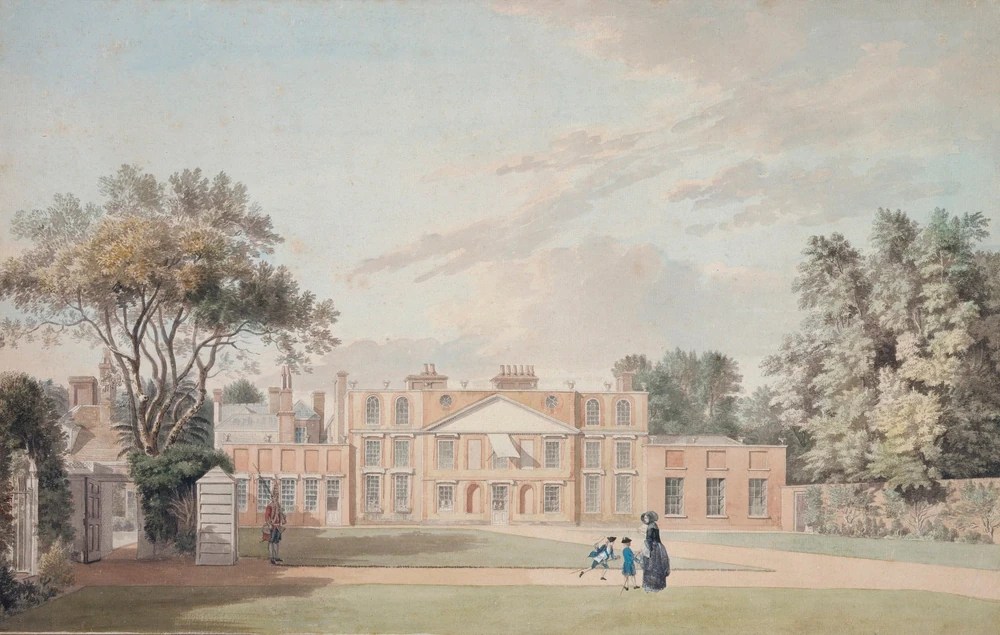
Ormonde Lodge was built near the Thames on the north side of Richmond, nearly adjacent to the royal estate at Kew. It was in fact seized by the government in 1715, purchased by the Prince of Wales (the future George II), and was used by him and his grandson George III as a favoured summer residence (by which time it was known as Richmond Lodge). Demolished in 1772, the parklands were merged with the Kew estate.
By 1703, Queen Anne was on the throne, the 2nd Duke’s wife, Lady Mary Beaufort, was one of her ladies-in-waiting, and he was himself in favour. The Queen sent Ormond to Ireland to serve as Lord Lieutenant (1703-07; 1710-13), then sent him back to the battlefield in 1712 when the Duke of Marlborough was dismissed from his posts, replacing him as Commander-in-Chief of the Allied Forces. But by this point in the War of the Spanish Succession, the British government was not interested in pursuing the war, so conflicts with the Dutch and Austrian allies essentially meant that Ormond did very little. Towards the end of Queen Anne’s reign, as a committed Tory, the Duke of Ormond drew closer to the Jacobites, so when George I succeeded Anne in 1714, the Duke was stripped of his military commands—further, he was accused of supporting the Jacobite Uprising in 1715 and was put on trial. He fled to France and was formally attainted in August 1715. His estates were taken away, as was his Order of the Garter, and the Irish Parliament finally legally ended the palatine rights his family had enjoyed in County Tipperary for centuries. He moved to Spain and tried to organise an invasion fleet for the Old Pretender in 1719. In 1732, he moved again, to Avignon, where he died in 1745. He left two daughters, Elizabeth and Mary, but neither of these left children.
The succession passed in theory to the Duke’s brother, Lord Charles Butler, Earl of Arran (a re-creation in 1693 of their uncle’s earldom). Charles had also been created Baron Butler of Weston (the English title of their other uncle), in 1694. He too had a military career, rising to rank of lieutenant-general in 1708 and Master-General of the Ordnance in Ireland, 1712. He avoided any involvement in the ‘15, but nevertheless joined the Jacobite cause by 1720, and was preparing to command troops for the Old Pretender in the ‘Atterbury Plot’ until he was discovered and the plot unravelled. In May 1722, the Pretender (‘James III’) named both the 2nd Duke and his brother Arran ‘Lords Regent’ to look after his affairs until he would be restored, raising Charles in rank to ‘Duke of Arran’ (a dukedom never formally recognised by the British Crown). He remained a ‘discreet’ Jacobite, never using the ducal title in public, and secretly corresponding with those who helped put Stuart-friendly Tories into government in the 1730s. He even withstood an attempt to remove him as Chancellor of Oxford University. Nor did he claim his brother’s titles to become 3rd Duke of Ormond when he died in 1745—that year of course being the crucial second Jacobite rising known as the ’45. Back in 1721, the Earl of Arran had been given formal permission to repurchase his brother’s confiscated estates in Ireland. But when he died in 1758 with no direct male heir, his earldom of Arran went extinct, while succession to his other titles was less clear. Many years later the descendants of his sister Henrietta, Countess of Grantham, managed to reverse the attainder on the Butler barony (of Moore Park), along with the Lordship of Dingwall—but not until 1871. The earldoms of Ormond and Ossory went into abeyance until the correct successor could be identified.
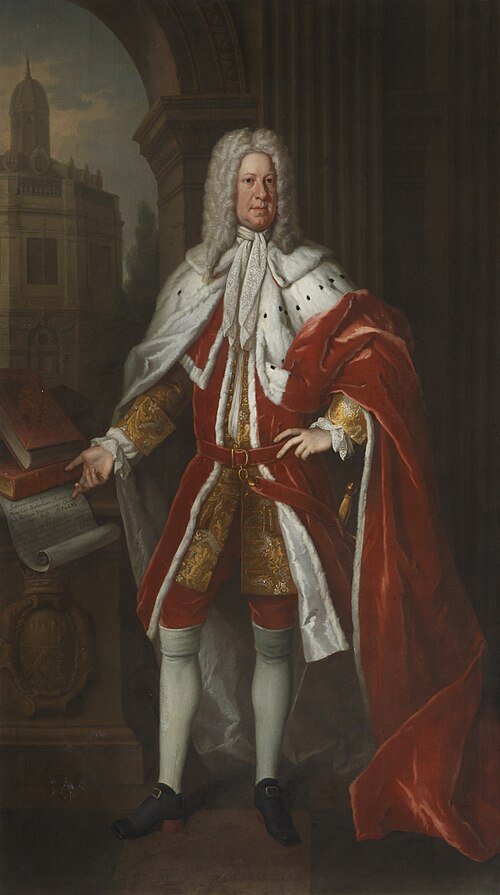
John Butler, of Kilcash, a great-grandson of the 1st Duke’s younger brother (Richard of Kilcash, above) inherited the estates in 1760, but did not claim the earldoms as he thought they were forfeit since the ‘15, and as a Catholic he was restricted from holding public office anyway. His brother Christopher had been the Catholic Archbishop of Cashel for many years: 1711 to 1757. Nor did his son Walter Butler, de jure 16th Earl of Ormond and 9th Earl of Ossory, put forward claims. He nevertheless moved his residence to the family seat at Kilkenny Castle, restored it and landscaped its grounds. He also constructed grand stables across the road and a dowager house, Butler House.
His son John changed things: in order to marry, he converted to Protestantism in 1764. Anne Wandesford was heiress of coal mines around Castlecomer in County Kilkenny. John successfully reclaimed the two earldoms in 1791 (and moved from the House of Commons to the House of Lords), and by the time of his death in 1795, had re-established his family as the largest landowner in southern Ireland. The 17th Earl’s sister Eleanor Butler is remembered in history as one of the ‘Ladies of Llangollen’, who lived with Sarah Ponsonby for fifty years at Plas Newydd in North Wales, leaving Ireland in 1780 to escape the pressures of conventional marriage.
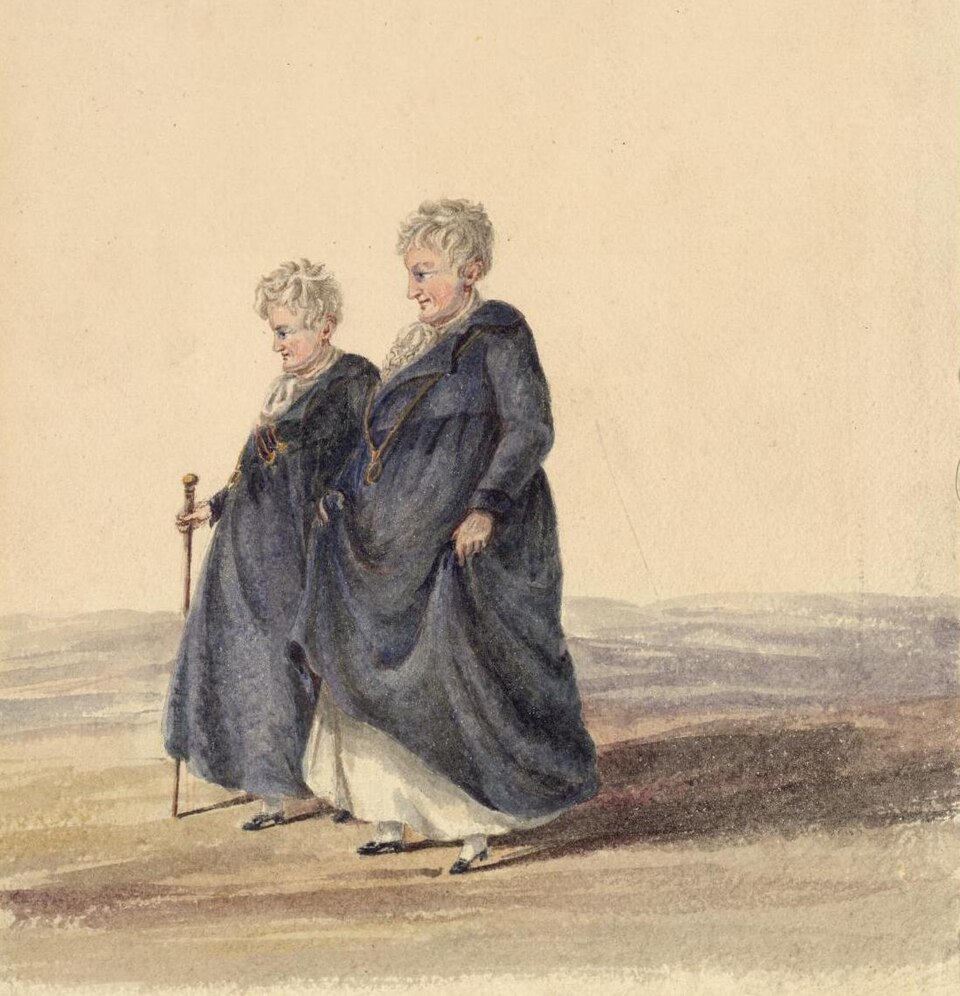
Walter Butler went one step further than his father and raised the family’s rank once more to that of marquess, in 1816 (now in the peerage of the United Kingdom). He gave up the family’s ancient right to presage, the collecting of duties on wine imports—the backbone of the family since the 1280s—in exchange for a large cash settlement, though they did still ceremonially use the title ‘Chief Butler of Ireland’. He died in 1820, so the marquessate had to be re-created for his brother James in 1825, along with a new barony, Baron Butler of Llanthony (Monmouthshire). James had been an MP in Ireland for a few years, then in the UK Parliament from 1801 to 1820 (when he moved into the Irish House of Lords as 19th Earl of Ormond). He was part of the social circle of the Prince of Wales, who saw to it that the marquessate was re-created when he became king (George IV), and suggested he ask for a dukedom, which he declined.

The 2nd Marquess of Ormond was a Lord in Waiting to Queen Victoria from 1841 and died in 1854. His son James (‘Earl of Ossory’ as the heir) did ask for a dukedom, in 1868, but Prime Minister Disraeli opposed the idea; a few years later he married the daughter of the newly minted Duke of Westminster, the richest peer in England, so perhaps he thought he had another chance. He was on the Irish Privy Council and was Lord Lieutenant of County Kilkenny for many years, but was the last to live at Kilkenny Castle, having entertained the King and Queen there in 1904. When he died in 1919, the title passed to his brother Arthur, but the castle was given directly to the latter’s son George, to avoid death duties. The 4th Marquess himself married an American heiress, Ellen Stager (whose father founded Western Union and pioneered the use of the telegraph), and in 1901 used some of her fortune to purchase Gennings House in Kent.
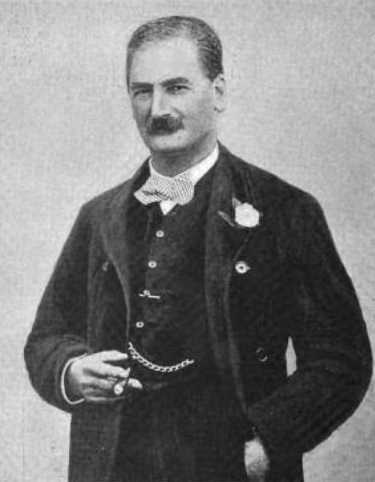
Gennings House, in western Kent, was built in the early eighteenth century, and briefly the property of the 3rd Duke of Saint Albans. In the later nineteenth century it was the seat of the Campbell-Bannerman family, political elites related to the Liberal Prime Minister (1905-08). Let to various people until 1901 when purchased by the Butlers, who lived here until it was sold again in 1955.

The very Irish house of Butler was thus very English already by the time of Irish independence (and the closing of the Irish House of Lords). The 4th Marquess of Ormond died in 1943 and was succeeded by Lord Ossory (George), who lived in London. Much of the fortune was gone, through overspending in the nineteenth century, and inheritances passing to the 3rd Marquess’s daughters. The 5th Marquess died a few years later, having lost his son, Anthony, Viscount Thurles, early in the War (1940). So his brother Arthur became 6th Marquess, selling Gennings in 1955 to purchase Cantley House (Berkshire), before he died in 1971. Both George and Arthur left daughters—one of these, Lady Moyra, was the mother to Piers Weld-Forester, a playboy boyfriend of Princess Anne in 1971, and motorway car-racer killed in a crash in 1977. He had been co-owner of the Ormonde Family Trust, which sold Kilkenny Castle—empty since the 1930s—to the local government in 1967.
In 1971, the titles (but none of the estate) passed to a cousin, Charles Butler (nephew of the 3rd and 4th Marquesses). Already 72 years old, he had served in the Army in World War I, then moved to the United States in the 1920s, where he married Nan Gilpin and worked as the business manager of the Art Institute of Chicago in the 1940s-50s. As 7th Marquess of Ormond and 25th Earl of Ormond, he re-established ties with Ireland in his seventies, taking on the role of President of the Butler Society and visiting Kilkenny Castle. He died in 1997, in Chicago, leaving two daughters. The Marquessate is once again extinct, but, as noted above, the 18th Viscount of Mountgarret should be able to claim the earldom.
(images Wikimedia Commons)

