The Russian Empire in all its vastness had many, many princes. Some became fairly well known while others came and went in prominence in Russian history. One of the most enduring—with historical figures from the fifteenth century all the way to the Revolution of 1918, and some interesting characters even after—are the Golitsyns. One was a Prime Minister in the early reign of Peter the Great in the 1680s, while another was Prime Minister in the last days of the reign of Nicholas II. Others were generals, musicians, art collectors and scientists. The Golitsyn princes are sometimes better known by the Frenchified version of their name, Galitzine. The name comes from the nickname of one of their earliest members, ‘Golitsa’, which comes from geležis, ‘glove’ in old Lithuanian—indicating the iron or hard leather glove he wore in battle in the early sixteenth century.
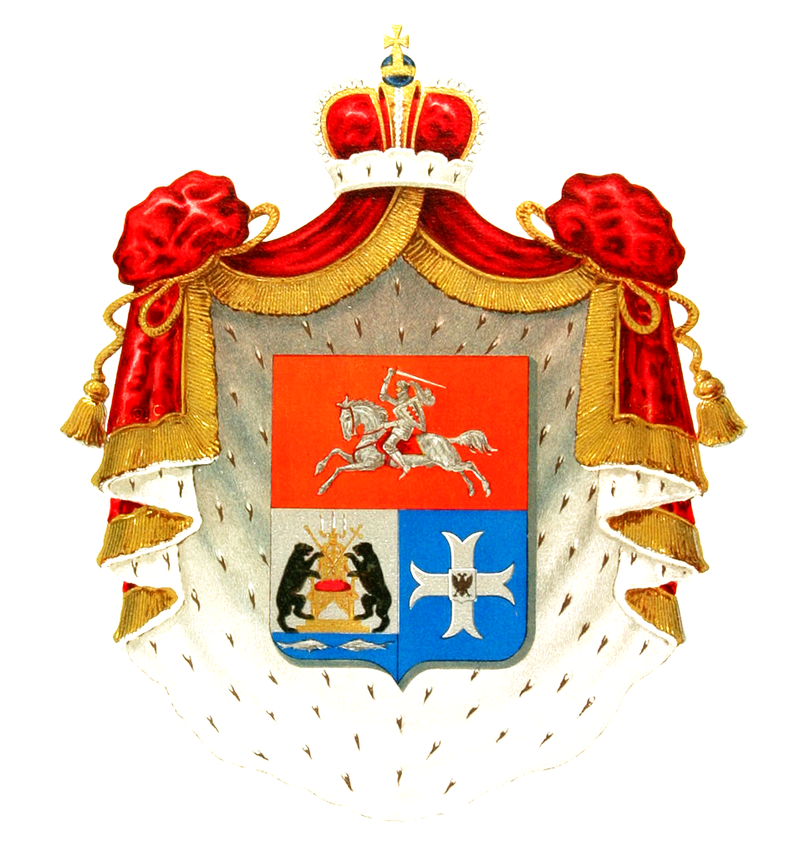
Why did this Russian prince have a Lithuanian nickname? While most of the Russian princes were descended from the founder of the ruling dynasty of Rus, Rurik, a number were descended instead from the founding chieftain of the Lithuanian principality, Gediminas (who died in 1341). The Golitsyns were one of the latter, and from the seventeenth century onwards, were the senior representatives of this former ruling house (the Gediminids). As so often the case, the exact filiation from Gediminas is a little murky, and probably fiddled with by nineteenth-century genealogists, but the accepted version was that Gediminas’ second son Narimantas had a son (or perhaps grandson) called Patrikas of Korela (a fortress north of what’s now Saint Petersburg). And from Patrikas descended a number of grand princely families, notably the Kurakin, the Khovanski and the Golitsyn. The son of Patrikas, Jurgis (Yuri, or George), moved to Muscovy about 1410 and married the daughter of Grand Prince Vasily I, thus tying his family to the Russian ruling clan. Their offspring became one of the premier boyar families in the period when Muscovy expanded to take over all the other Russian principalities. Their landed interests, remained tied to the far northwest, particularly around the city of Pskov. The coat of arms used by the family reflected this mixed interest: the arms of Lithuania at top (a knight on a white horse), the arms of Novgorod which was usually the overlord of Pskov (two bears supporting a throne), and an unknown quarter (a silver cross on blue, with an imperial eagle in the centre) which may have come from one of the ancient family estates.
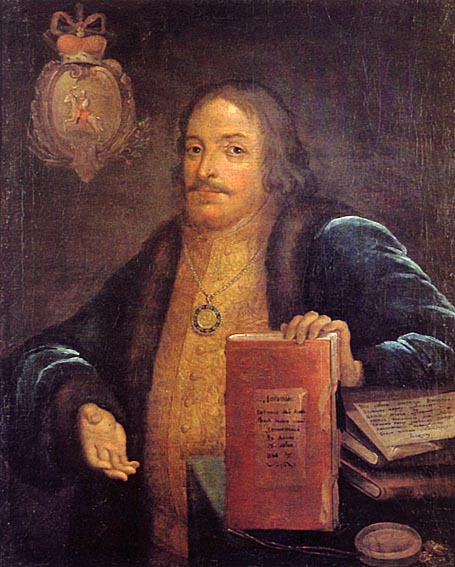
An early prominent member—using as his surname the patronymic Patrikeyev—was Vassian, Bishop of Rostov, a confidant of Tsar Ivan III, and supporter of his grandson Dmitri Ivanovich against the claims of his uncle Vasily III in the succession of 1503. Bishop Vassian was also notable as a political writer, with works in the 1480s that stressed that the Mongols (the Golden Horde) were not the rightful rulers of Russia, and that the descendants of Rurik should stop paying them tribute, as they had been since the thirteenth century.
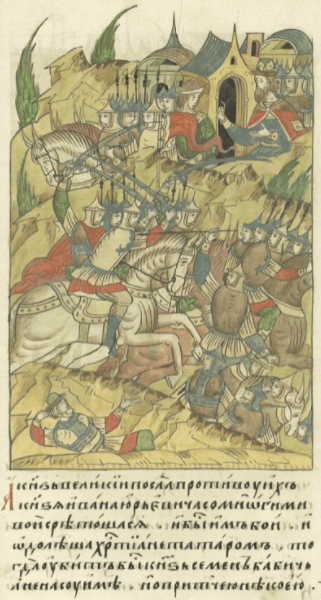
The first to gain the nickname ‘Golitsa’ was Mikhail Ivanovich Bulgakov, the warrior with the iron glove (his own surname came from his father’s nickname, bulgaq, Turkic for ‘proud’). His son Yuri Mikhailovich Bulgakov-Golitsyn was appointed to important posts by the Tsar: governor of Pskov and later Novgorod, and ambassador to Hungary (in 1550). His sons used the title knyaz (‘prince’) to indicate their family’s high status, and the title boyar to indicate service to the tsar. Prince Vasily Vasilievich Golitsyn was a leading commander in the armies of Russia against Sweden in the 1590s, and then defended Moscow against an invasion by the Crimean khan. He became a prominent political player in the period that followed the extinction of the first ruling house in 1598, the years without a permanent tsar known as the ‘Time of Troubles’. He served as a senior official in the regime of Tsar Boris Godunov and led troops against the ‘False Dmitri’ (claiming to be the son of Tsar Ivan). He later turned around and fought for Dmitri against Godunov’s son Feodor, and was one of the coordinators of the latter’s murder. He then participated in the overthrow of a second ‘False Dmitri’ in 1606, and of the next elected tsar, Vasily Shuisky in 1610, and was himself nominated for the throne in the National Assembly (the Zemsky Sobor) of 1613—but Mikhail Romanov was elected instead. At the time, Vasily was not in Moscow since he had been sent to Poland to negotiate their prince’s claims to the Russian throne, but was imprisoned by them and died there in 1619.
There were already many branches of the family, but all Golitsyns today descend from Prince Andrei Andreievich. He had four sons who generated the four main branches of the family: the Vasilievich, Ivanovich, Alexeievich and Mikhailovich lines. Each contributed hugely to the history of late seventeenth and eighteenth-century Russia—though not always united and sometimes even working actively against each other.
Of the senior line, Prince Vasily Vasilievich was a major figure in the early reign of Peter the Great when he was still a child governed by his elder sister Sophia. Golitsyn and the Regent Sophia were kindred spirits in their interests in education and modernisation of the elites of Russia and its institutions—in particular the military, for which he proposed a system whereby promotions were made based on merit, not ancestry, something that certainly was picked up later by Tsar Peter as an adult. He even considered ideas like the abolition of serfdom and the introduction of religious toleration. From 1682, Prince Golitsyn was Principal Minister (as Minister of Foreign Affairs) for Sophia, and perhaps her lover. He made peace with China in the East and Poland in the West (and recovered Kiev from Poland in 1686). But when Sophia was overthrown by her half-brother in September 1689, her favourite fell with her. Prince Vasily was deprived of his lands and titles but was spared execution; he was exiled with his family to the far north of Russia where he died.
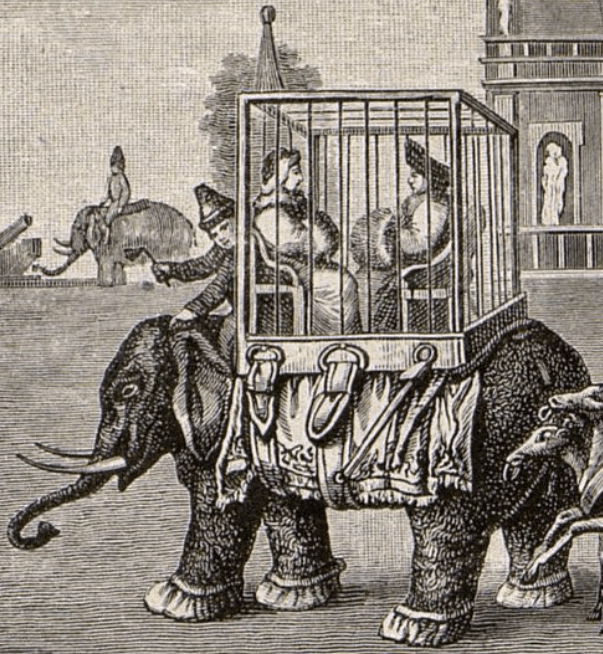
Vasily’s branch continued into the eighteenth century, though pushed aside due to the exile and disgrace of its founder. His grandson, Mikhail Alexeievich was initially patronised by Peter the Great who sent him abroad for his education, but later suffered an incredibly strange fate, the stuff of legends, told many times and with differing details. In 1729 he went abroad and converted to Catholicism in order to marry an unnamed Italian or German noblewoman; when Empress Anna discovered this, she declared the marriage illegal and forced the Prince to take on the role of a court fool, serving kvass (a sort of weak wheat beer) to her courtiers (and thus earning the new surname Kvasnik). Then in 1740, he was forced to marry another court fool known as Avdotia Buzheninova, whose surname refers to her custom of smearing melted fat on her body instead of washing, a custom of her people, the Kalmyks. A grand carnival was arranged, in which the newlyweds were paraded in a cage atop an elephant followed by deer, dogs and pigs led by various ethnic minorities of the Empire. They then ‘held court’ in an ice palace constructed on the Neva. Finally freed from his humiliation when the Empress died in 1740, Prince Mikhail lived a rather long life, dying only in 1775.
While the senior line of the Vasilievichi carried on into the nineteenth century, they seem to have been quite inconspicuous, particularly when compared to their cousins from other lines, as we shall see. None really stand out. When the Russian Empire collapsed in 1917-18, the formal head of the house was Prince Valerian (b. 1869). Born in Moscow, he died there as well sometime after 1923, whereas his wife and son fled abroad to Brussels, where the son, Konstantin, died in 1924. Formal headship—whether that entailed any special privilege or not—passed to a cousin, Nikolai, who had emigrated to New Zealand where he died in 1952, ending the senior line of the House of Golitsyn.
Line of Alexei
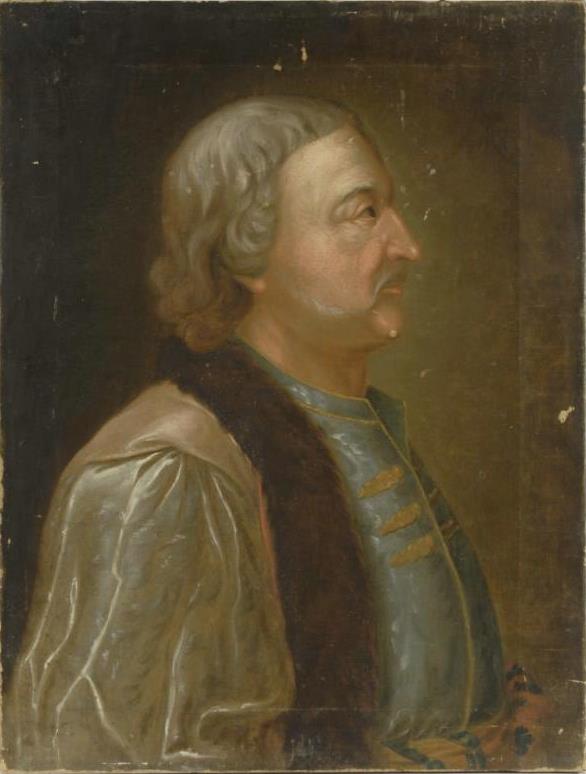
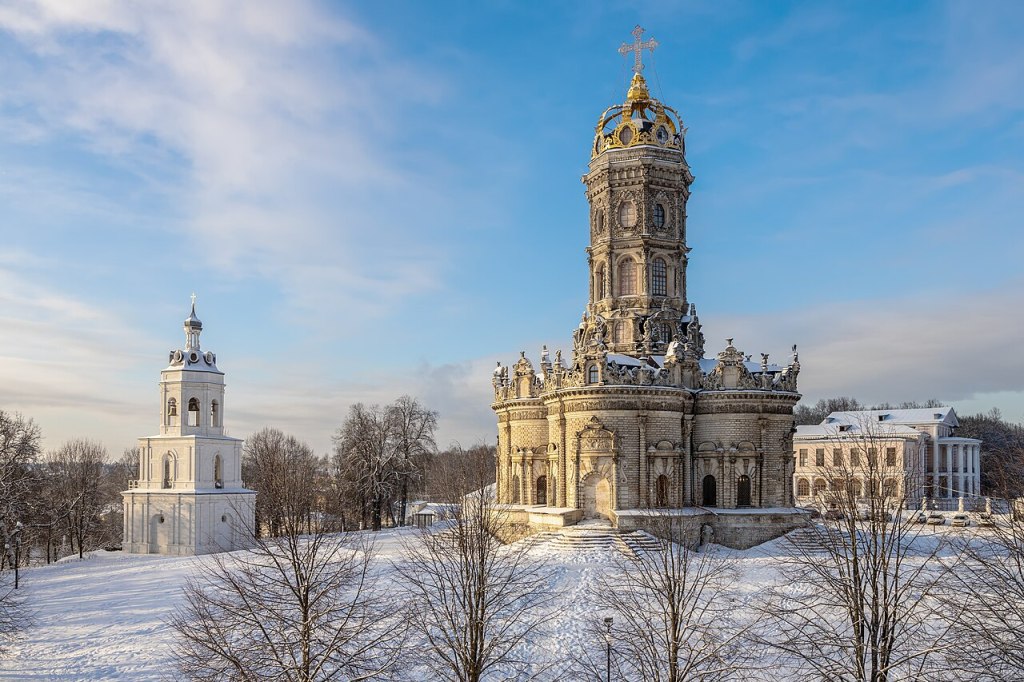
The second major branch, the Alexeievichi, were the richest and most numerous branch, sometimes called the ‘Moscow branch’. Early on it split into three sub-branches, for his sons Boris, Ivan and Peter. Prince Boris Alexeievich was the chief rival of his cousin Vasily (the favourite of the Regent Sophia), and was court chamberlain and tutor of young Tsar Peter. Like his cousin, he was also highly educated, very ‘western’, but turned against Sophia and Prince Vasily to aid Peter in his coup d’état of 1689. Once fully in charge, Peter named Boris Minister of the Interior, and gave him the estate of Vyazyomy in 1694, in thanks for saving his life during the Streltsy Revolt. This became the chief estate of this branch of the family. He also acquired the estate of Dubrovitsy, where he built a new stone church in grandiose baroque style, the Church of the Incarnation, though it was at first deemed ‘too Catholic’ in appearance and not dedicated by the Patriarch until several years after its construction. This Prince Golitsyn ruled Russia as one of the ‘triumvirate’ when Tsar Peter went abroad on his long European travels, 1697-98, but he lost favour after failing to suppress a rebellion in Astrakhan in 1706.
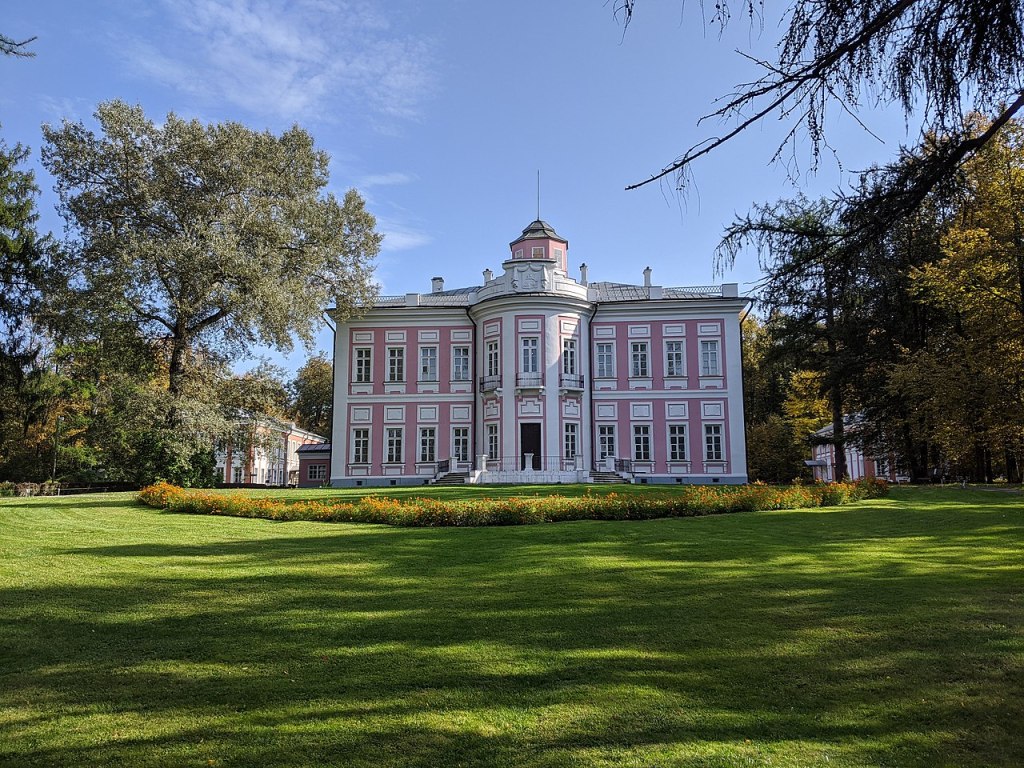
The Vyazomy Manor, west of Moscow, had once been the ancestral estate of Boris Godunov, then served as the residence of the first ‘False Dmitri’ (above). It was a huge estate, comprising several villages and about 900 serfs. The Manor was rebuilt in Louis XVI Style in the 1770s and remained a centre of aristocratic life when the court was in residence in Moscow—though it was located a bit too close for comfort to the battleground of Borodino in 1812 (and the Russian commanders headquartered themselves here). In the late nineteenth century, part of the estate was cut off and set up as a train station for the new Moscow to Brest main line, and the new town around it was named Golitsino. Here the Golitsyns also developed a handicraft cooperative—specialising in basket weaving—for their tenants. Some of this survived the downfall of the old regime, when the estate became a collective farm, and later a horse-breeding and plant disease research centre after the war. Since the 1980s the palace has housed the State Pushkin Museum.
The Dubrovitsy estate, south of Moscow, had been first acquired in marriage by Prince Ivan Golitsyn, then purchased by his cousin Boris in 1688. Alongside the great stone church, he built a manor house which was enlarged in the following century and remodelled in classical style. In the latter half of the eighteenth century the palace was acquired by Potemkin, then by Catherine II who gave it to her new favourite, Dmitriev-Momonov. After the latter’s son died in 1863, a succession battle awarded the estate back to the Golistyns who held it until the Revolution. Nationalised in the 1920s, Dubrovitsy Palace was mostly empty in the Soviet era, and has been recently restored and is used to house a local marriage office, a veterans council and research centres for animal husbandry and agriculture.
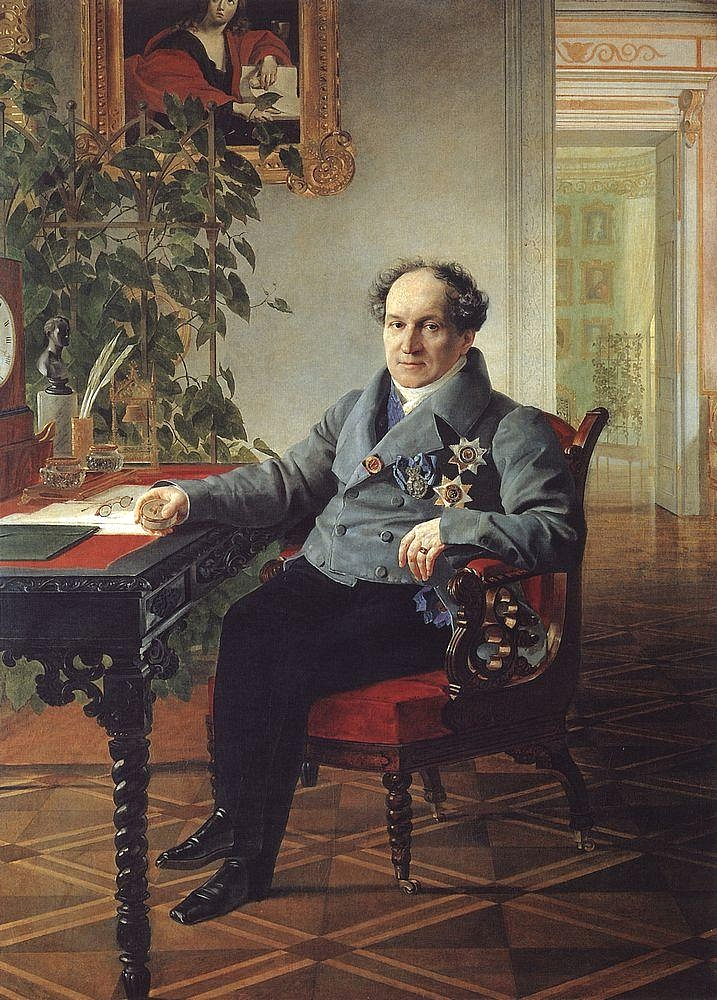
Boris’ grandson, Sergei Alexeievich was appointed Russia’s first permanent ambassador to Spain in 1722, then returned to serve in the Imperial Mint, becoming its director in 1743, then Governor of Moscow, 1753-56. During his tenure, the city’s fire brigade was established and its university opened. His grandson Alexander Nikolaievich was a strange character, combining intimate court favour with ever-increasing piety. Raised in the court alongside Catherine the Great’s grandsons and particularly close to the eldest, Alexander (whose gentleman of the chamber he became in 1795), he continued this friendship once Alexander became Tsar in 1801. Appointed to the post of the Emperor’s representative in the National Church Synod in 1803, he set to work reforming theological colleges and founded a society to promote the Bible, having it translated into Russian. He was appointed to the Council of State in 1810 and then Minister of Education in 1816. Progressives worried of his increasingly conservative power over religion and education and worked to remove him from the Emperor’s favour—even mocking his eternal bachelor status and suspicious closeness with men. But Alexander’s brother and successor Nicholas I retained A.N. Golitsyn on the Council, and he even presided over it for some time in the late 1830s, before he retired to his country estate on the Black Sea, Gaspra, where he died in 1844.
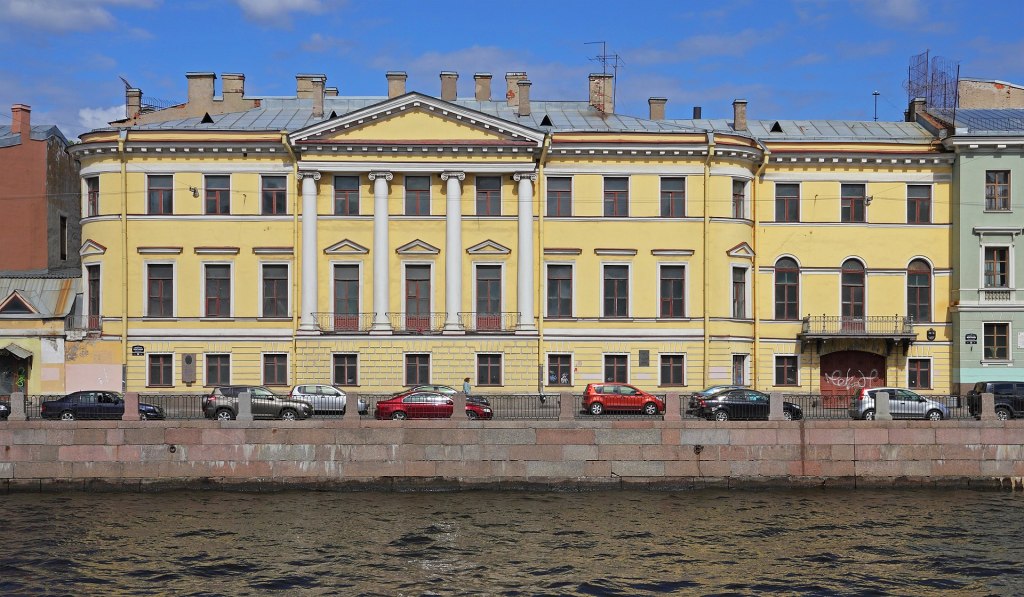
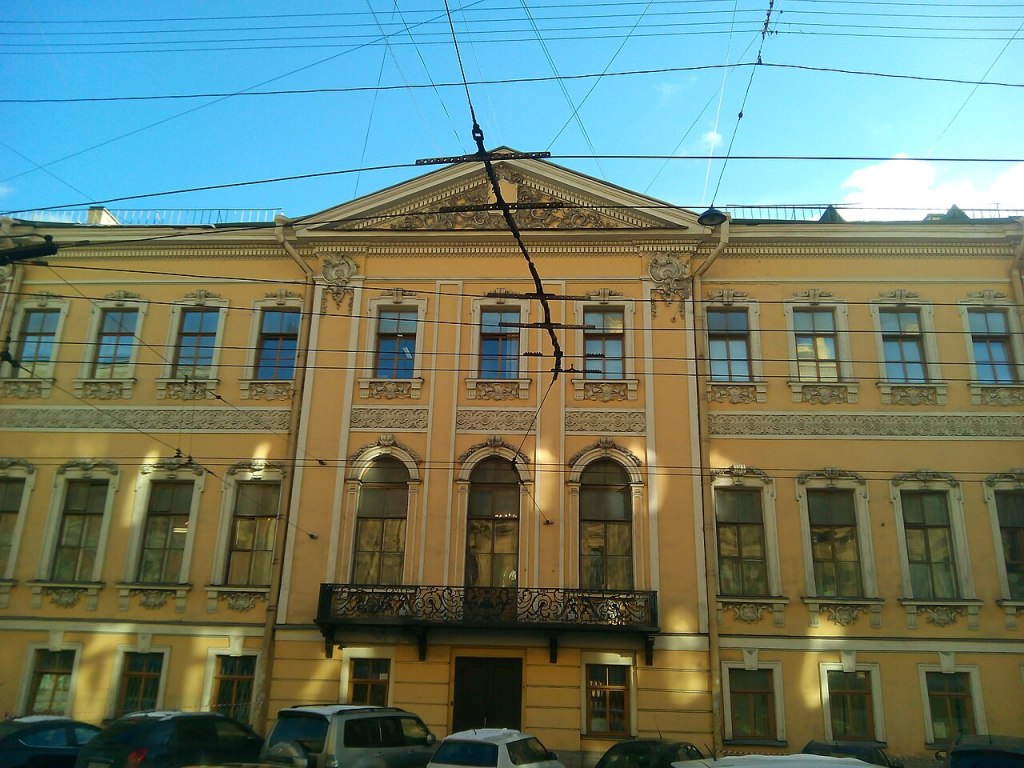
Prince Alexander’s residence in Saint Petersburg was Golitsyn House on the Fontanka Embankment, among the line of grand aristocratic palaces along the Fontanka river that cuts through the centre of the city. Built in the 1790s and purchased by the Prince in 1812, by the end of the century it belonged to the Treasury, and was owned by the Imperial Court until 1917. In the twentieth century, it was for a long time a school of design, and today it houses a school for children with special needs.
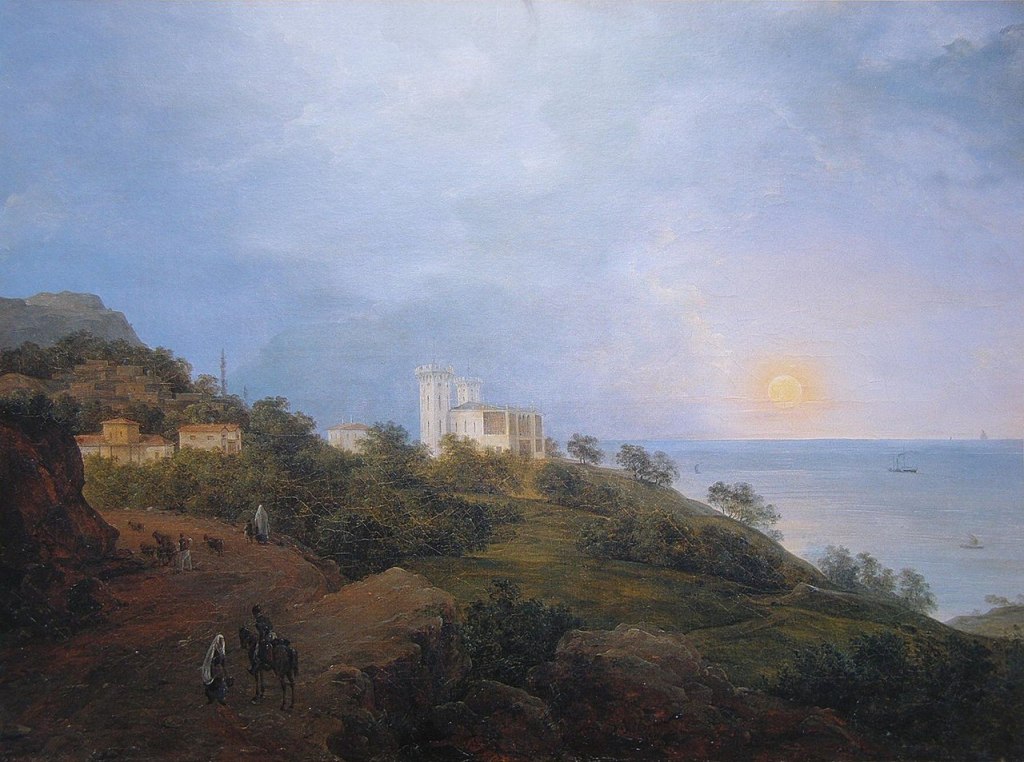
Gaspra, an estate a few miles west of Yalta in the Crimea, had been confiscated from the Crimean khans in 1783 and given to the Golitsyns who built a new summer residence here in the 1830s, known as ‘Alexandria’, overlooking the Black Sea. From the 1860s it was owned by Countess Panina, who rented it out to Leo Tolstoy in 1901-02. Since the Revolution it has housed a sanatorium.
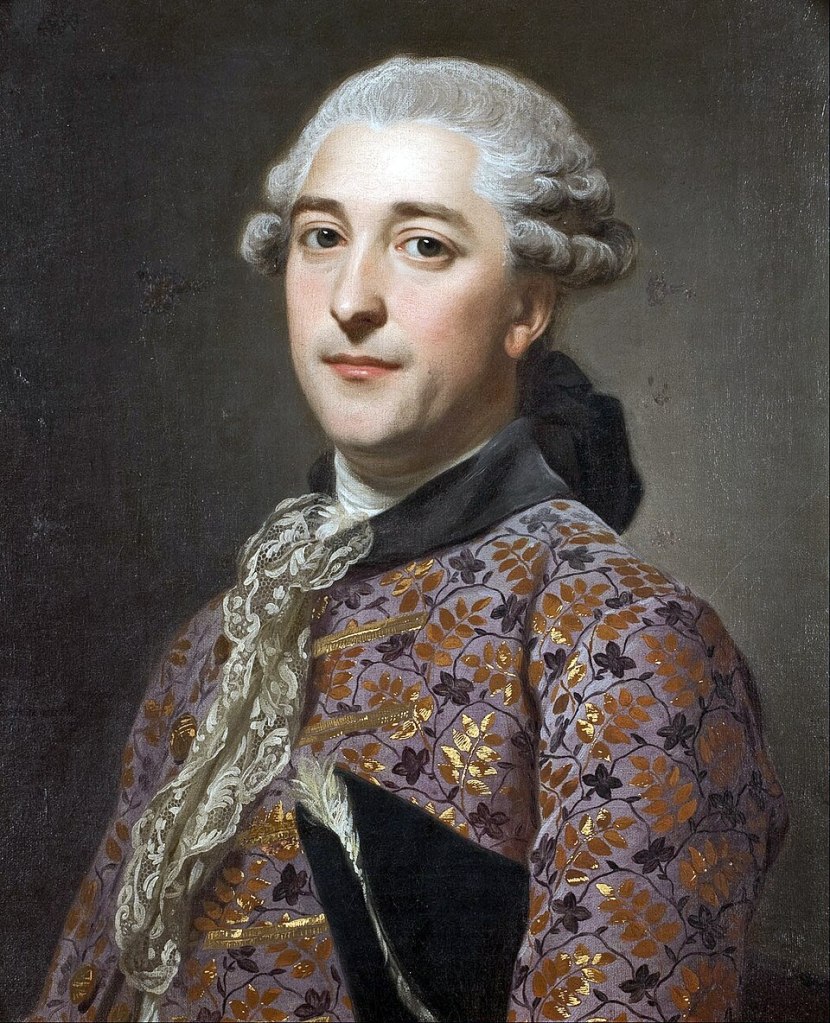
Back in the eighteenth century, in the junior branch of the Line of Alexei, Prince Vladimir Borisovich (d. 1798) was even more pro-western than his ancestors had been and became quite Frenchified. He and his wife moved to the French court in the 1780s to oversee their sons’ education there. The Princess, Natalia Petrovna, who had been a lady-in-waiting to Empress Catherine II in the 1760s, many years later was the inspiration for the title character in Pushkin’s novella The Queen of Spades (1833), in which the elderly Countess teaches the story’s protagonist the secret for winning at cards. In Tchaikovsky’s opera version of the story (Pique Dame or Пиковая дама, 1890), the Countess memorably reminisces about the better times of her youth, when she sang at the French court ‘Je crains de lui parler la nuit’, a genuine aria from Grétry’s opera Richard Cœur-de-Lion which premiered in Paris in 1784. The real ‘Queen of Spades’ died in 1838, at age 96, having served at court through the reigns of five emperors and empresses.
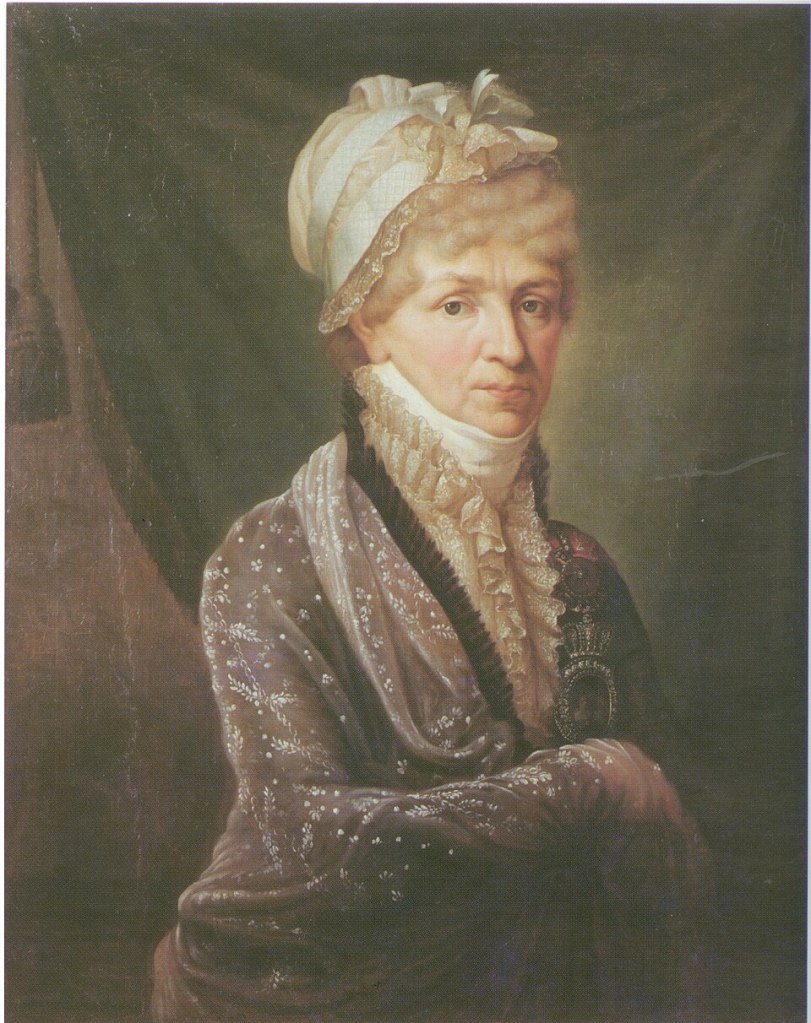
The ‘Queen of Spades House’, where the Princess Golitsyna lived, was actually next door to where Pushkin lived in the 1830s, on Malaya Morskaya Street, not far from St Isaac’s Cathedral in Saint Petersburg. This house had been built for the Chamberlain of the Court in the 1740s, Prince Gagarin, then sold to the Apraksins, then to the Prince and Princess Golitsyn when they fled the French Revolution in 1790. They created a social and artistic hub for other refugees here, including the celebrated society painter Marie Vigée-Lebrun. In 1838, the grand residence was purchased by the Minister of War, Prince Chernyshev, and his family held it until the Russian Revolution. Afterwards it housed various government offices and the Red Cross—today it still houses a clinic run by the Ministry of the Interior.
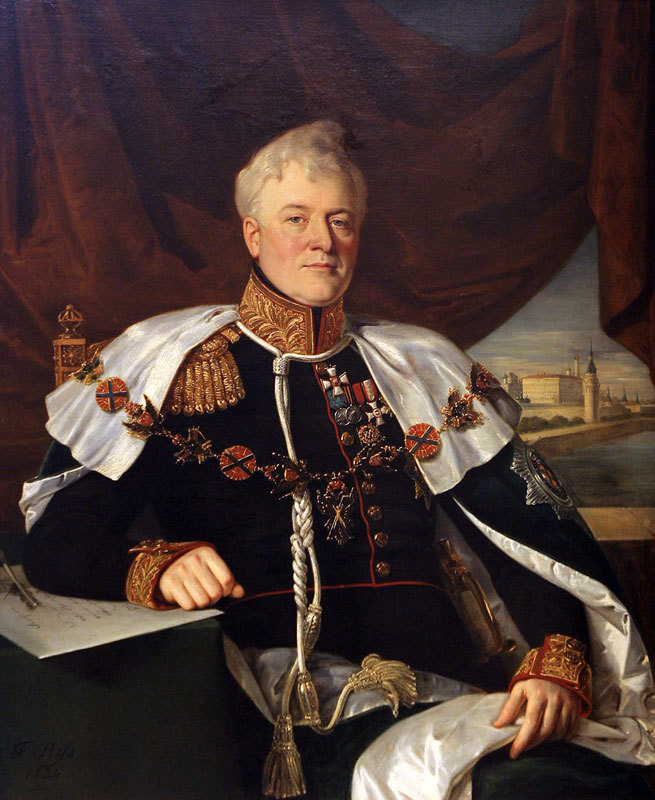
Of Prince Vladimir and Princess Natalia’s sons, Boris and Dmitri both stayed in France at first in the early days of the French Revolution and joined the French Royal Guard, but were recalled to Russia by Catherine the Great in 1791. Boris then left in 1794 to join the Swedish army to fight against the republican armies of France. Back in Russia he became a Lieutenant-General in 1799 and died in 1813, from wounds he’d received at the Battle of Borodino. His brother Dmitri Vladimirovich was named a full General of the Cavalry the year after that, then served for over twenty years as Military Governor of Moscow, overseeing its rebuilding as one of Imperial Russia’s two capitals after it had been burned to the ground in 1812. He was a member of the Council of State from 1821, and in 1841 was formally recognised as a ‘Serene Highness’, distinguishing him and his family from the many other princely families of Imperial Russia. This extended to his descendants, who reside today in France.
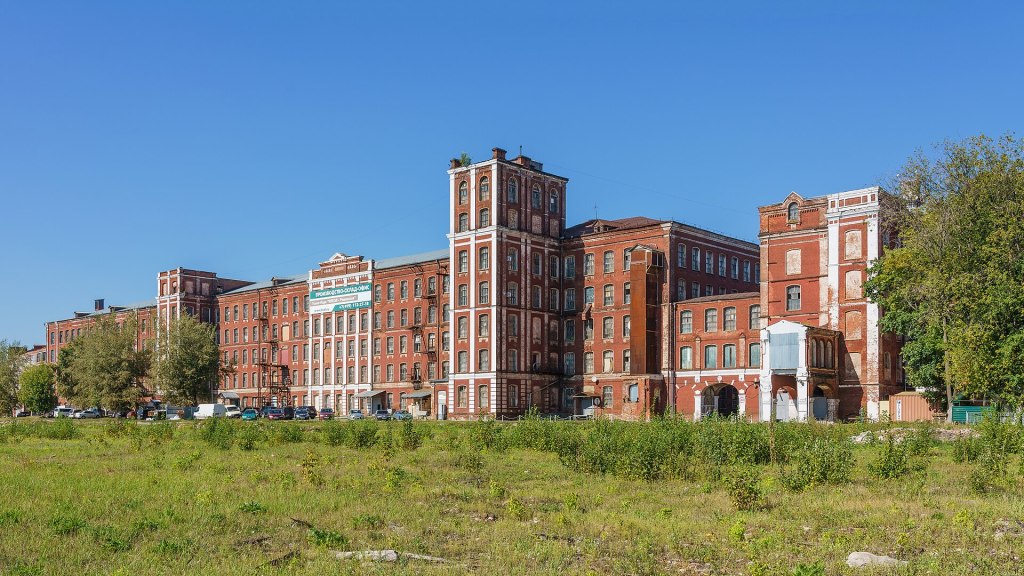
One rung down in the branches of the Line of Alexei, Prince Feodor Sergeievich (d. 1826) served the court as Grand Master of the Hunt. In 1809, he married the last of the line of princes Prozorovsky, one of the many princes descended from Rurik, founder of the Russian royal line, and heiress of Field Marshal Prince Alexander Prozorovsky. Princess Anna was heiress of a large estate, Ramenskoye, southeast of Moscow. In 1831 she built a textile mill here which, by the end of the nineteenth century was one of the largest textile businesses in Russia. Before she died in 1863, the Princess obtained permission from the Tsar for her son Alexander, a Lieutenant-General, to add the name Prozorovsky to his own. The Princes Golitsyn-Prozorovsky only continued for one more generation, however, with another Lieutenant-General named Alexander dying in 1914.
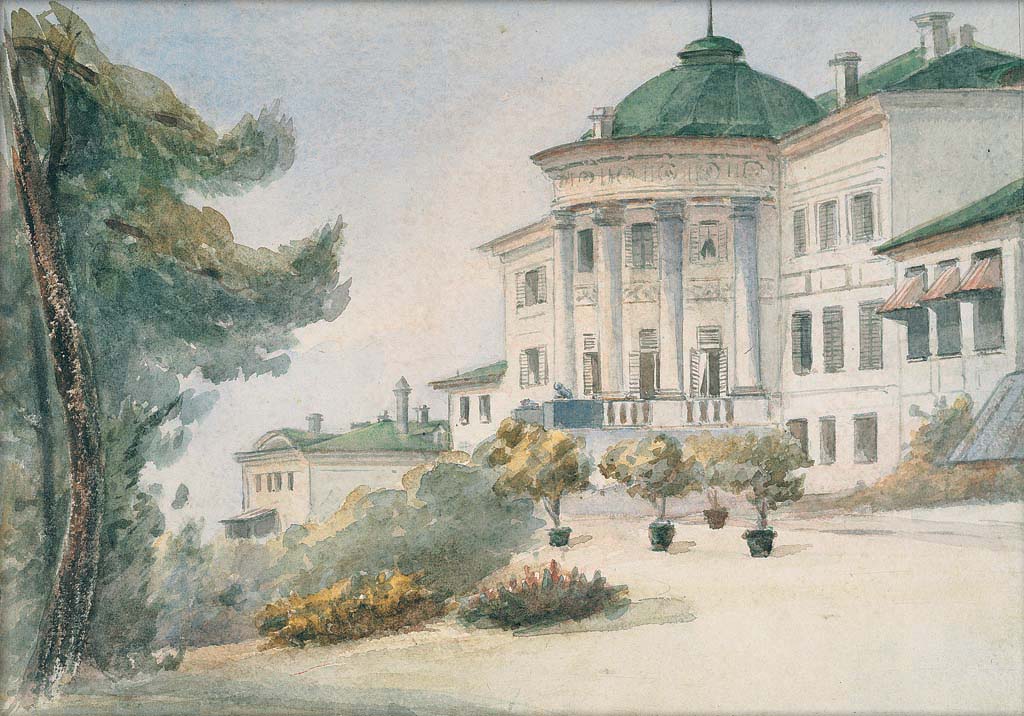
This line of princes had a second seat, much further from the capital, Zubrilovka, in the Volga river valley near the city of Saratov. Purchased by Prince Feodor’s father in the 1780s, Feodor made it a showcase for his collections of art objects. He and his wife Anna built a school here for noble children, the first in the province. Later generations neglected Zubrilovka Palace and it declined, then was badly burned during a peasant uprising in 1905. Portraits, books and documents were destroyed, and the building was not repaired. After the Revolution, the estate was given to an agricultural commune settled by displaced citizens from Petrograd, and the palace was partly restored as a holiday home for party workers. It continued to decline however and was empty by the 1980s. Plans in recent years to save it have come to nothing.
Another member of this branch, Prince Dmitri Alexeievich, was Ambassador to Paris, 1762-68, and made his mark by pressing Catherine II to make huge acquisitions of French art, notably the Crozat Collection which she purchased for the Hermitage in 1772. He also convinced Catherine to purchase the library of his friend the philosophe Denis Diderot. Golitsyn then was posted as ambassador to the Dutch Republic, 1768-98, and in this capacity was part of a group of diplomats who created a league of ‘armed neutrality’ to the support the American colonists in their war against Britain. Like his cousins, he was a reformer, and encouraged Grand Duke Paul, while still heir to the throne, to consider patronising new developments in science back in Russia and even (with little success) to abolish serfdom.
His son Dmitri is known by an Americanised version of his name, Demetrius Gallitzin, also known as ‘the Apostle of the Alleghenies’. He grew up in Holland with Prince William of Orange (later the first king of the Netherlands), but by 1786 was discontented with the Orthodoxy of his ancestors and converted to Catholicism. He moved to Baltimore, Maryland (the centre of Catholicism in the United States) in 1792, entered a seminary, became a priest, and travelled into the interior—incognito at first as ‘Augustine Schmettau’, his mother’s maiden name; which morphed into ‘Schmet’, then ‘Smith’. The Bishop of Baltimore sent him on missions to western Maryland and western Pennsylvania, on the far side of the Allegheny Mountains, where in 1799 he founded a settlement called Loretto (after the shrine in Italy), in what is now Cambria County, Pennsylvania. This was the first English-speaking Catholic community west of the Appalachians; its church today is called the Basilica of Saint Michael. ‘Augustine Smith’ became a US citizen in 1802, then legally changed his name in 1809 to Demetrius Augustine Gallitzin. As a priest, he couldn’t inherit his father’s estate, which he wanted to use to fund his mission work in Pennsylvania, so he looked to his friend King William of the Netherlands for help. Gallitzin was several times suggested as bishop for new dioceses being created in Pittsburgh, Cincinnati and Detroit, but he declined them all. He did accept the title of ‘Vicar-General’ of Western Pennsylvania. Prince Demetrius died in Loretto in 1840, leaving his name to the nearby town of Gallitzin.
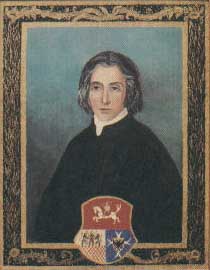
I’ll be honest, I didn’t expect to find that story when I started researching this family! So let’s go back to Mother Russia…
The Alexeievich Branch continued to flourish in the late nineteenth century, and even the twentieth, but before we look at these princes, we should jump back to the seventeenth century to look at the third and fourth branches.
Branch 3, the Line of Ivan flourished in the late seventeenth century as the others did, but died out in 1751, so did not reach the great numerical expanse of the other lineages. The brothers Andrei and Ivan were governors of Kazan, the former Tatar capital on the Volga, during the regency of Sophia and their cousin Prince Vasily in the 1680s, and this branch continued its presence in this frontier region until they died out two generations later.
So we can move on to Branch 4, the Line of Mikhail (the ‘Saint Petersburg Branch’)
The founder of this line, Prince Mikhail Andreievich Golitsyn, was Governor of Pskov where the family still had a lot of land and power, under the Regent Sophia, 1682-87. His eldest son Dmitri Mikhailovich was sent by Peter the Great to Italy to learn military tactics. He was later appointed a Senator of the Empire and President of the College of Commerce—but was deprived of this office due to a scandal in 1723. Perhaps for this reason he was the head of the conservative faction in opposition to Empress Catherine I (Peter’s lowborn wife), and then correspondingly rose again in favour under Peter II, who hated his step-grandmother. The new Tsar named him head of his Privy Council in 1727. Like the other Golitsyns we have seen in this period, Prince Dmitri was a reformer, trying to influence the young Tsar to consider new plans for developing a constitutional monarchy led by the aristocracy. These plans were then drawn up formally for Peter II’s successor, Empress Anna, in 1730, and at first she accepted them, then repudiated them—Prince Golitsyn was pushed out of court, tried and imprisoned for his anti-monarchy views in 1736. He died a year later.
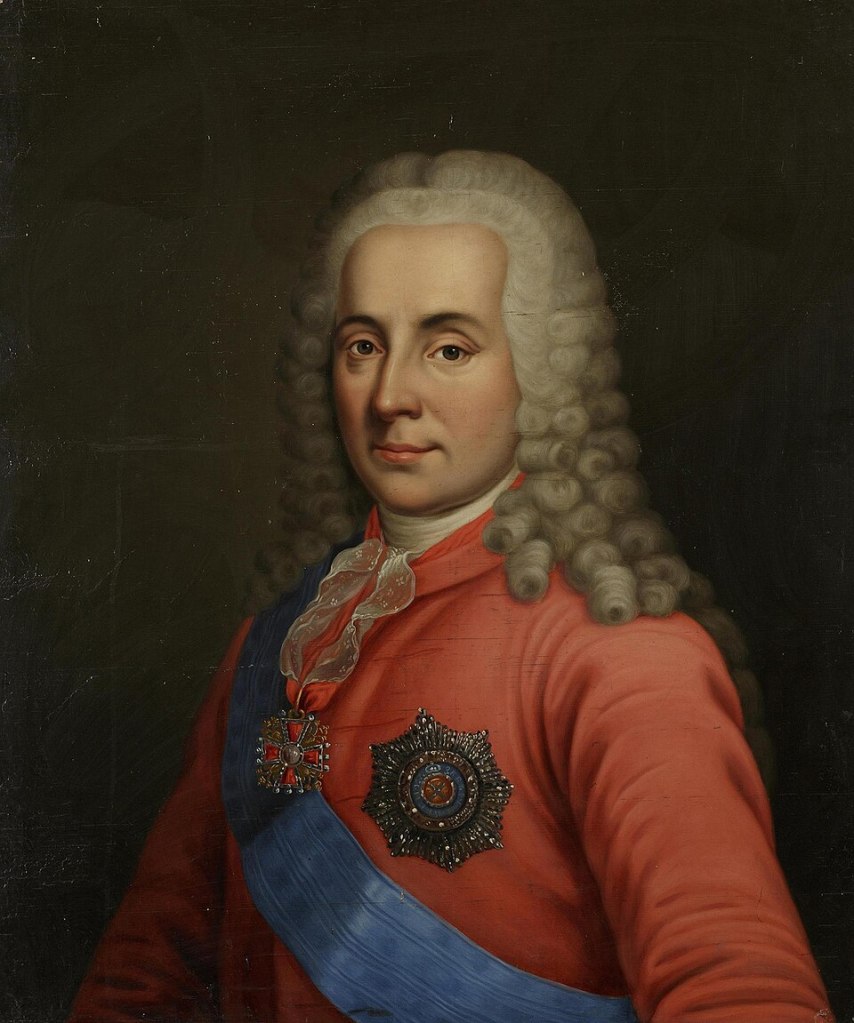
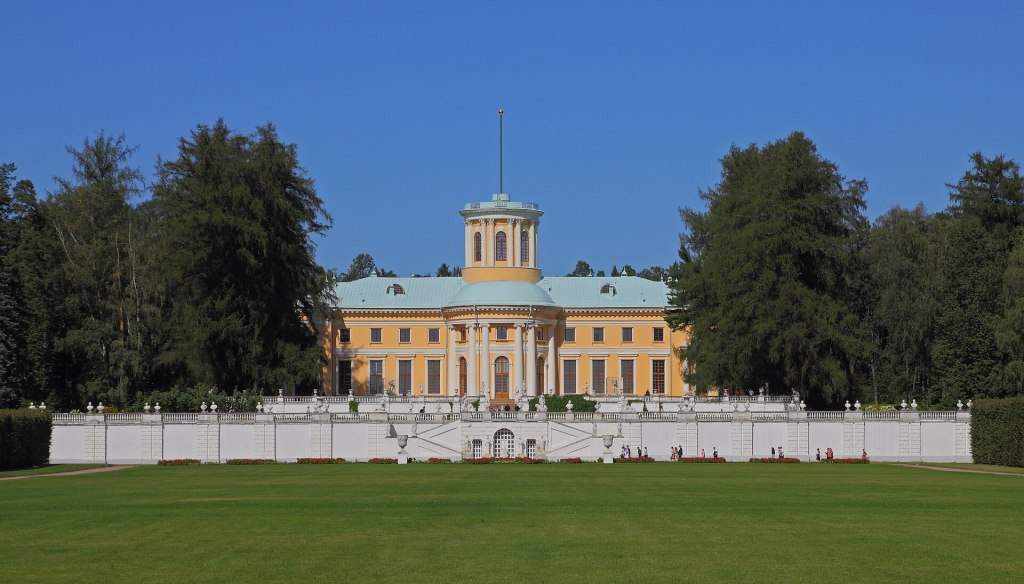
Dmitri acquired one of the major estates of the family, Arkhangelskoye Palace, about fifteen miles west of Moscow. It had belonged in the seventeenth century to Sheremetevs then Cherkasskys, and passed by marriage in 1703 to the Golitsyns. Dmitri retreated here when exiled from the court, and developed a French style garden on the banks of the Moscow River. His grandson Nikolai rebuilt the manor into a palace in the 1780s, with French-inspired architecture and Swedish engineering—he’d picked up the designers on his trips abroad as a diplomat. But work was not completed before it was sold to the Yussupovs in 1810—they built a massive temple-tomb here, as well as a theatre for Italian plays. Since the Revolution it has housed an art and history museum.
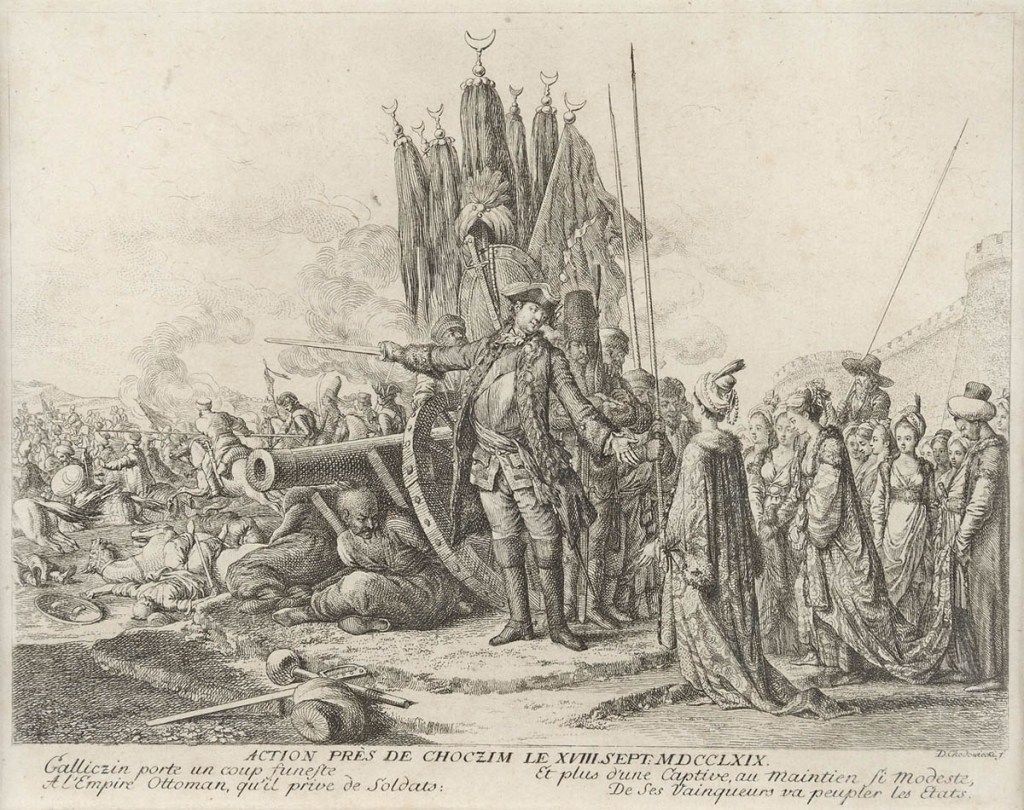
Dmitri had two younger brothers both named Mikhail Mikhailovich. The older was a Russian Field Marshal and Military Governor of occupied Finland, 1714-21. He too was in favour in the reign of Peter II, as a member of the Privy Council and President of the College of War in 1728. He supported the succession of Empress Anna in 1730, but died that same year, leaving several sons: the eldest, Alexander, was in favour with Anna’s successor Elizabeth, who supported his military career as commander of an army sent against Prussia in 1757, and General-in-Chief after his victory at Kunersdorf, 1758. Catherine the Great retained his services in 1762 as her adjutant-general and a member of her High Court Council. He again commanded an army, in 1768, this time sent against the Turks, and successfully captured a garrison town at Khotyn, for which he was created a Field Marshal. He was one of Catherine’s closest advisors in the 1770s and filled several government posts. Notably he was Governor-General of Saint Petersburg, 1775 and 1780-83, during which time he reformed the city’s police force, built schools and hospitals, and oversaw the creation of the huge equestrian statue of Peter the Great which still stands sentinel near the Admiralty buildings. He died in office.
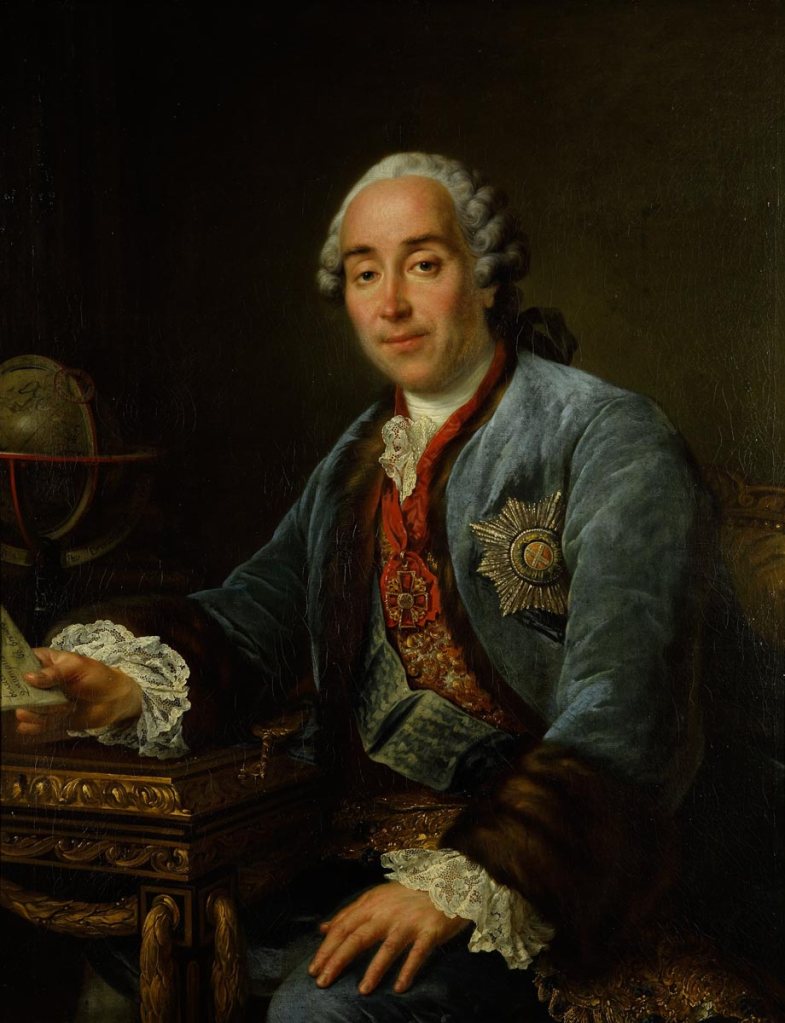
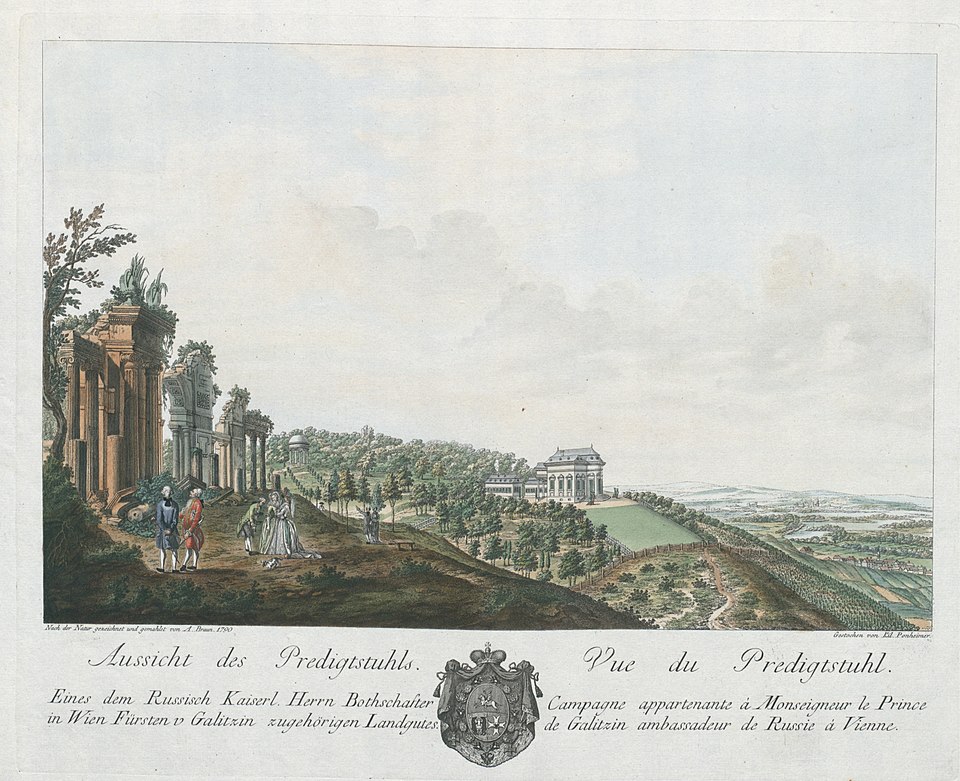
The second son, Dmitri Mikhailovich, spent much of Catherine’s reign abroad: he was ambassador to Paris in the late 1750s, then to Vienna from 1761 to 1792—it is amazing to think that two Golitsyn cousins dominated senior diplomatic posts in Paris, Vienna and The Hague for nearly three decades. At the Imperial court, Prince Dmitri was one of the key negotiators for the first partition of Poland between Russia, Austria and Prussia in 1772. He was also a major patron of Mozart and a collector of art, which he housed in a palace he constructed on the outskirts of Vienna, at the foot of a hill named in his honour the Gallitzenberg—he even had a street in Vienna named for him, Gallitzenstraße, which led from the city to these western hills. The summer palace Golitsyn lived in from 1784 was sold in 1795 to Prince Romanzov then to Prince Montléart in 1824 (and renamed Wilhelminenberg after his wife Wilhelmine). A new palace was constructed here in 1903 for a junior Habsburg archduke, and for much of the twentieth century it housed a children’s home (and since 2000 an exclusive hotel). All that remains of the original villa and its park is a Neoclassical round temple on the hill above the palace. The Prince (‘Fürst von Gallitzen’) died in 1793 and, childless, ordered that this fortune be used to open a hospital back in Russia.
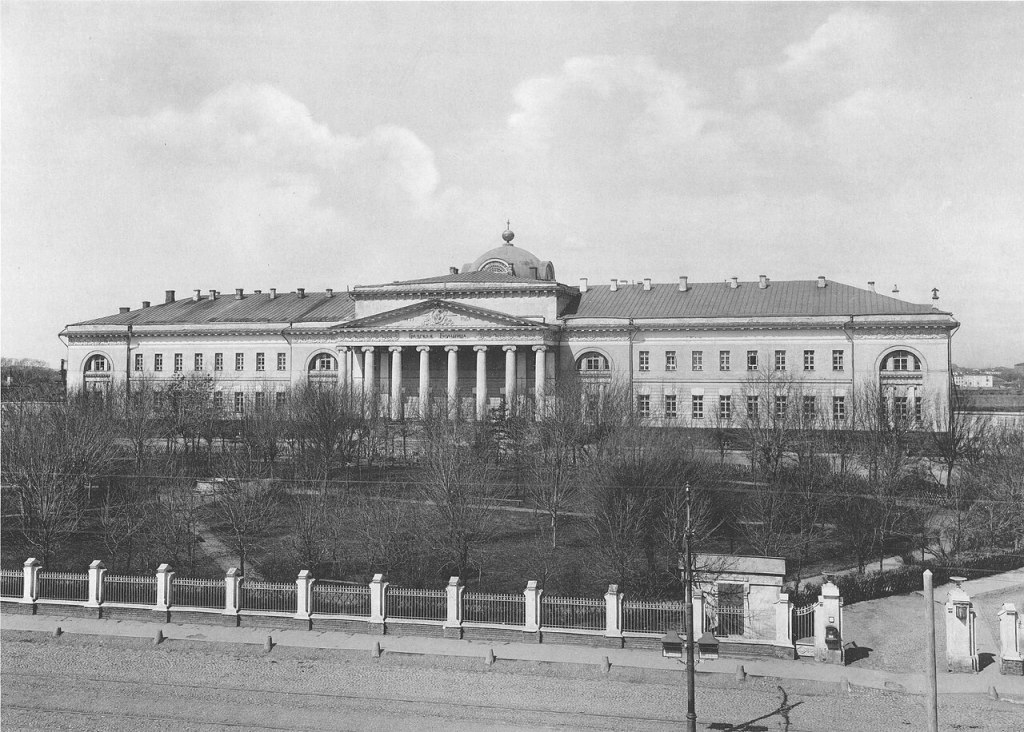
The Golitsyn Hospital, built in the southwest suburbs of Moscow (on what is now the major boulevard, Leninsky Prospekt), was opened by Dmitri’s cousin Prince Alexander Mikhailovich in 1802, the third public hospital in the Russian capital. It had an affiliation with Moscow University and soon became the clinical base for professors of the University’s medical school. An art gallery was opened here in 1810 to house Prince Dmitri’s collection, the first public gallery of Western European art in Moscow. But it did not last long, and in 1817 was closed and the artworks sold to fund the expansion of the hospital. The Golitsyn Hospital lost its independence in 1919 when it was merged with the 1st City Hospital next door.
Mikhail the elder’s third son Nikolai was Grand Marshal of the Court (d. 1786), while his fourth son Andrei died relatively young but left a son, Boris, a lieutenant-general, and a grandson, Nikolai, a cellist and a music patron—in particular commissioning Beethoven to write three of his very late string quartets (in 1822). Prince Nikolai Borisovich also translated Pushkin into French. His son Yuri was a composer and conductor, and died in 1872, ending this line.
This branch had accumulated a lot of wealth, in part through marriage to Princess Anna Gruzinskaya (aka, ‘of Georgia’), granddaughter of one of the last kings of Kartli, and in part through the gift of the Sima estate in Vladimir, northeast of Moscow. Here Princess Anna’s nephew, General Bagration, a hero of the War of 1812, died of his war wounds. When the Sima estate was nationalised in 1918, it became an orphanage, but in the 1960s was declared a national monument, and today houses a rural ‘House of Culture’, the local library, as well as a museum dedicated to the Patriotic War of 1812 and General Bagration.
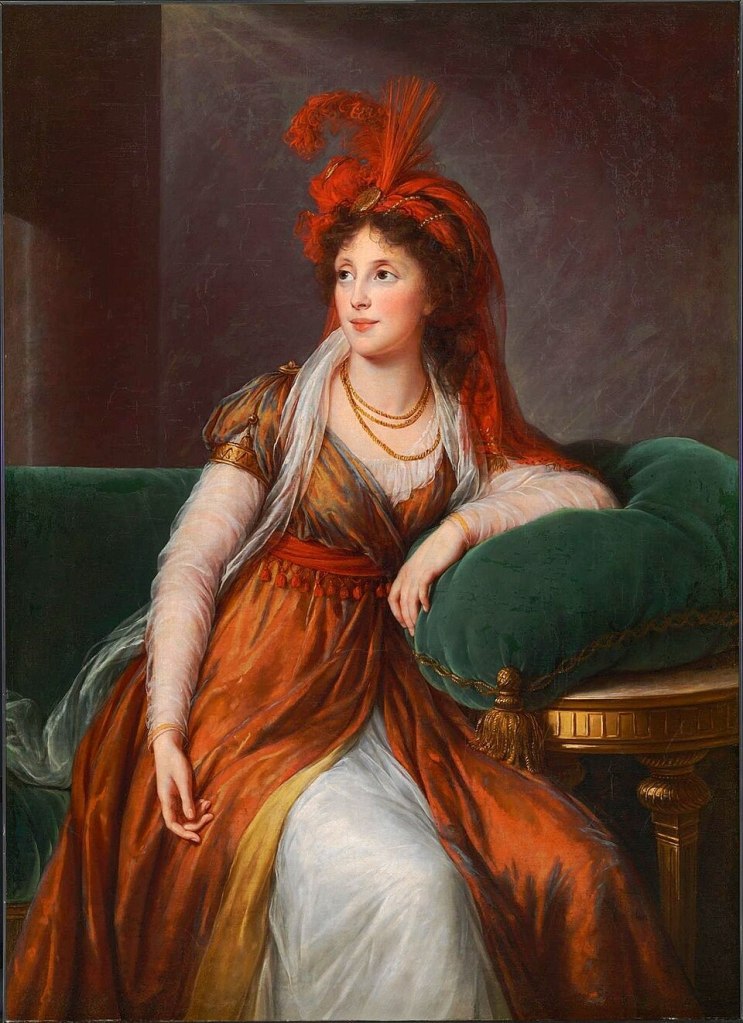
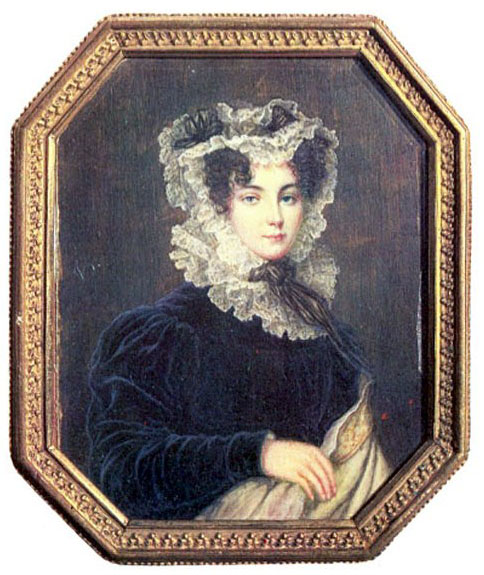
Andrei’s younger son Alexei was a Privy Councillor and Master of the Horse late in the reign of Catherine II. His widow Alexandra converted to Catholicism in 1818, along with two sons and a daughter, and became a missionary amongst the Russian nobility. Eldest son Peter moved to France in 1837 and left descendants there; while Paul stayed in Russia and retained a place at court, as a Gentleman of the Bedchamber. Their sister brings us back to Catholic mission activity in the United States: Princess Elizaveta was at first a nun in Metz then Paris, then travelled to America to become the Assistant General of the Society of the Sacred Heart of Jesus in Louisiana, 1839. She was sent to New York to open a house of the Society in 1841 and died back in Louisiana in 1844.
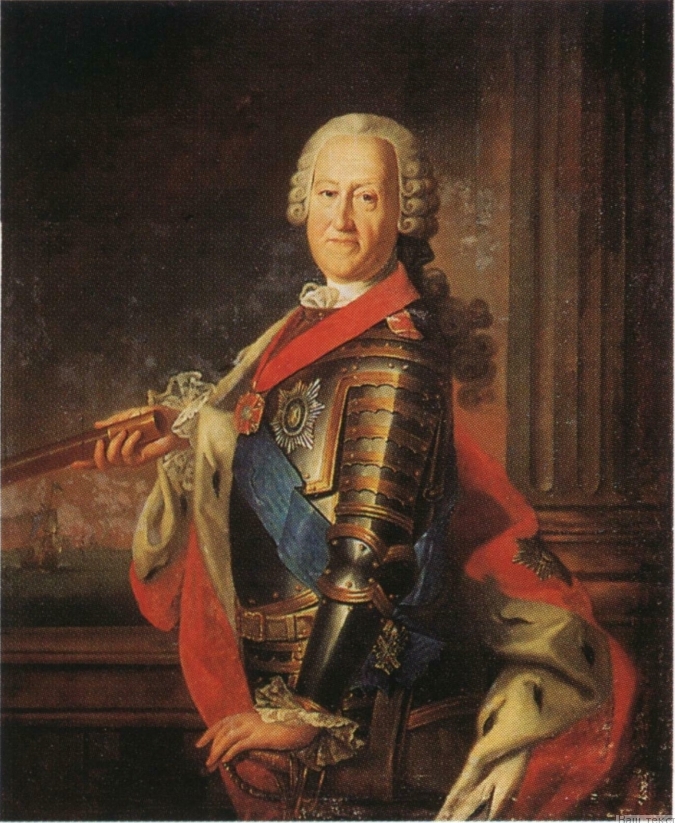
Returning to that second Mikhail Mikhailovich (Mikhail the Younger), like his brothers, he too was prominent in the reign of Tsar Peter II, a member of the Privy Council and President of the College of Justice in 1727. He later had a career in the navy, as an admiral in 1746, then Supreme Commander of Saint Petersburg in 1752 and Admiral-General in 1756—the latter was a tremendous honour, usually reserved for royals only. His position at court had been solidified as a young man through his marriage to Tatiana Naryshkina, the daughter of the Governor of Moscow and a cousin of the Tsar through the latter’s grandmother Natalia Naryshkina.
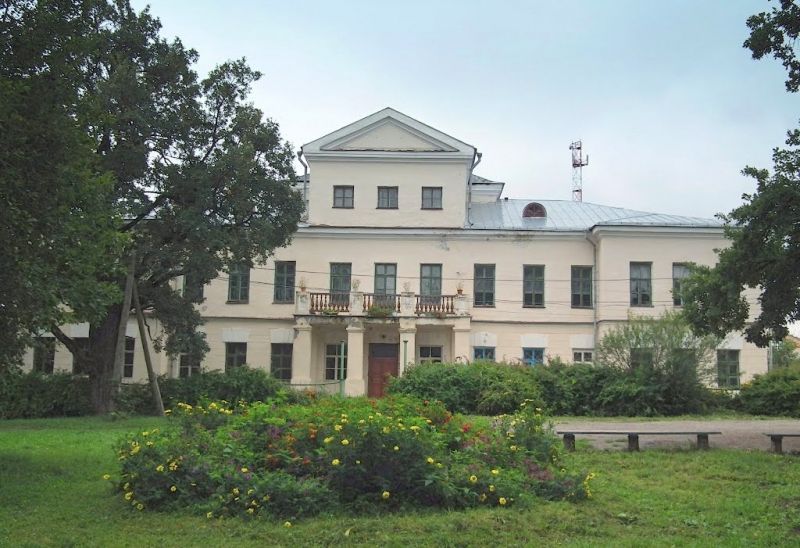
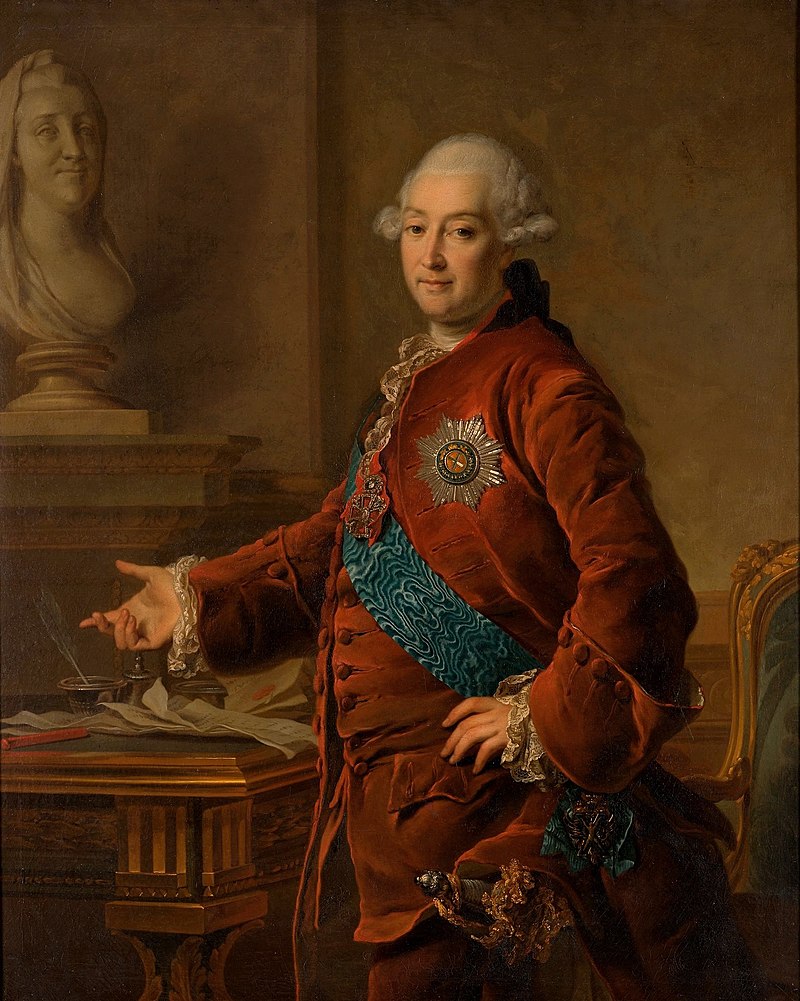
Their son Alexander was a key figure of the Enlightenment in Russia: he spent much of the 1740s-60s abroad as a diplomat, and used his connections to major artists he met to become a connoisseur and collector of art. He was one of those most encouraging Catherine II to build the Hermitage in 1764. Politically, Alexander Golitsyn aided Catherine in her overthrow of her husband in 1762 and was named to her Privy Council and Vice-Chancellor of the Empire, largely concerned with foreign affairs. He fell out of the Empress’s inner circle and eventually resigned to take up the more ceremonial court position of Chief Chamberlain in 1775. In the 1780s, he retired from politics altogether and devoted himself to the renovation of the main country seat of the Mikhailovichi branch of the family, the estate of Pekhra-Yakovlevskoe east of Moscow, then in the 1790s was responsible for completing his cousin Dmitri’s vision for the Golitsyn Hospital in that city. He lived until 1807, well into his 80s.
The estate of Pekhra-Yakovlevskoe, considered one of the finest in Russia, took its name from the small Pekhorka river (a tributary of the Moscow river) and the former owners of the estate, the Yakovlevs, an old boyar family. Acquired by the Golitsyns in 1591, a small house was built here in the 1760s, then Prince Alexander Mikhailovich built a much grander palace in the 1780s, along with the impressive Church of the Transfiguration. In 1828 it was sold to Prince Gagarin, then others, before it was nationalised during the Revolution. Following a fire in 1924, it was restored to house the Institute for Fur Farming, and since the 1950s the Agrarian University.
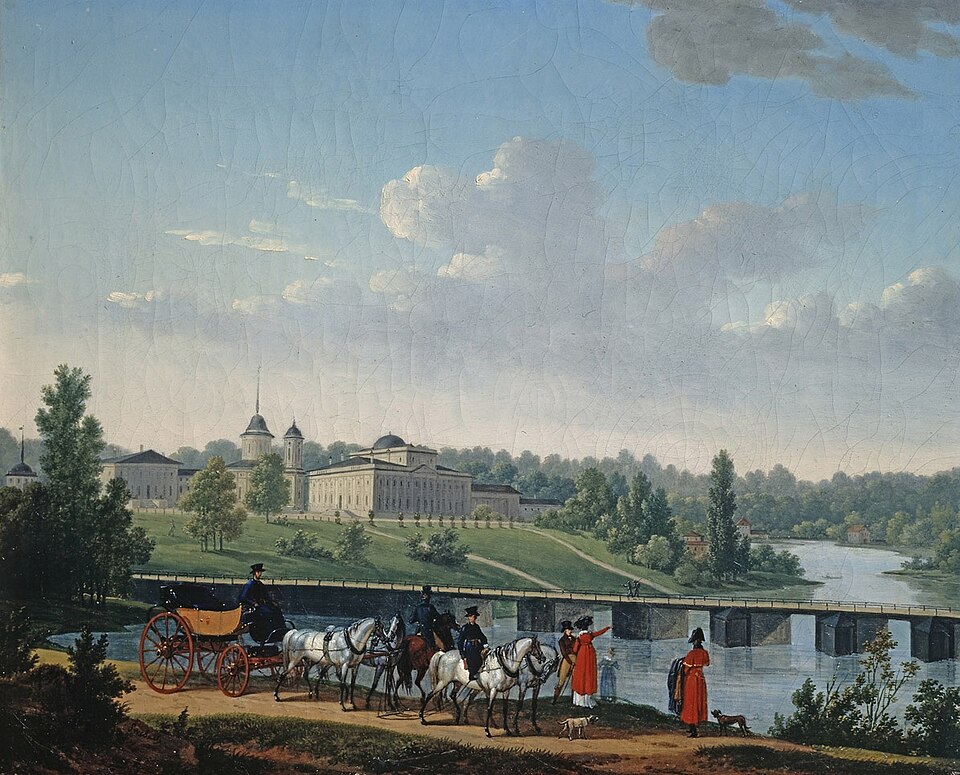
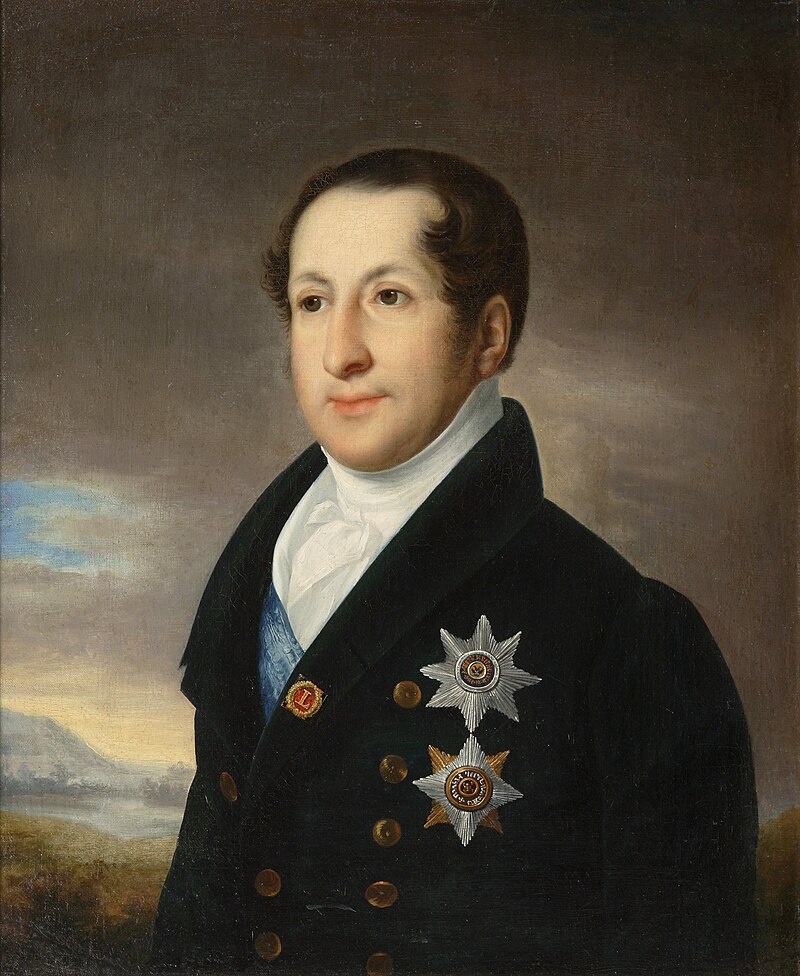
Prince Alexander had no legitimate children, so this branch of the family was led in the early nineteenth century by his nephews Alexander, an important art collector, and Sergei, who took over as director of the Golitsyn Hospital. Prince Sergei Mikhailovich, nicknamed ‘the last Moscow nobleman’, was seen as the unofficial head of the Golitsyn family as a whole, and was involved in numerous charities and aspects of government, as a member of the Council of State from 1837 until his death in 1859.
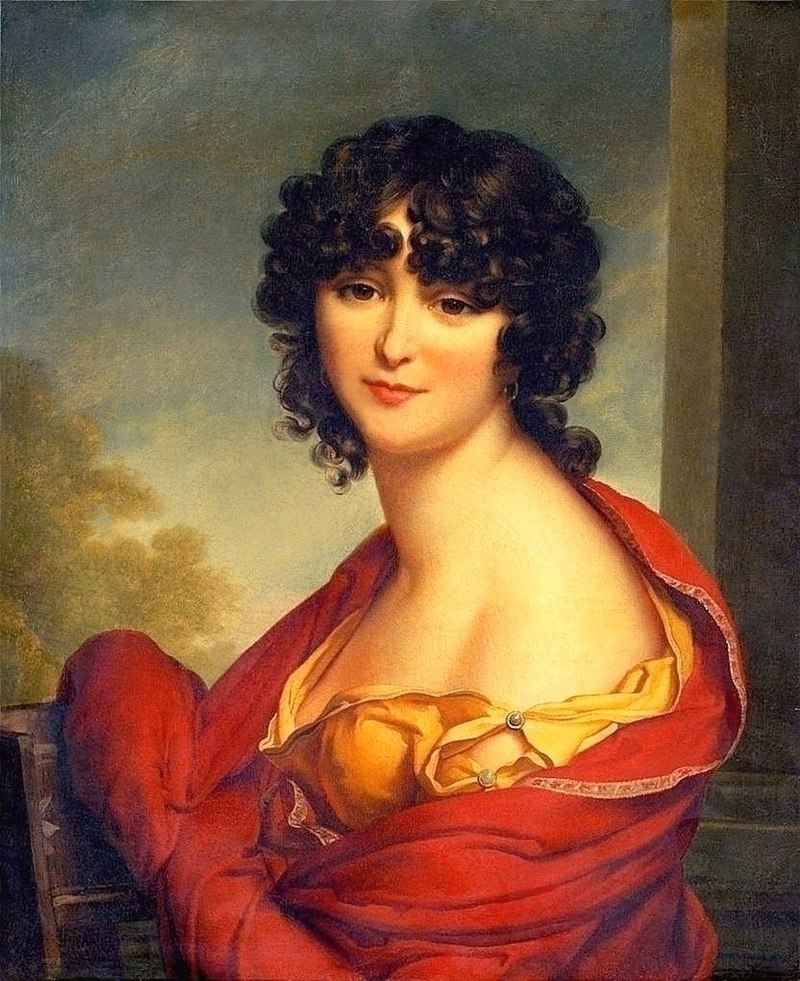
His wife Evdokia, daughter of General Izmailov, known as the ‘Princesse Nocturne’, was one of the great beauties of her age, and had been forced to marry the quite unattractive Prince Golitsyn. After living abroad for many years to escape her marriage, she returned to Saint Petersburg to become one of the great salon hostesses—earning her nickname since her salon never received its guests until after 10 at night. Her house on Millionnaya Street regularly hosted the greatest names in literature and art, including Pushkin who for a time was in love with her.
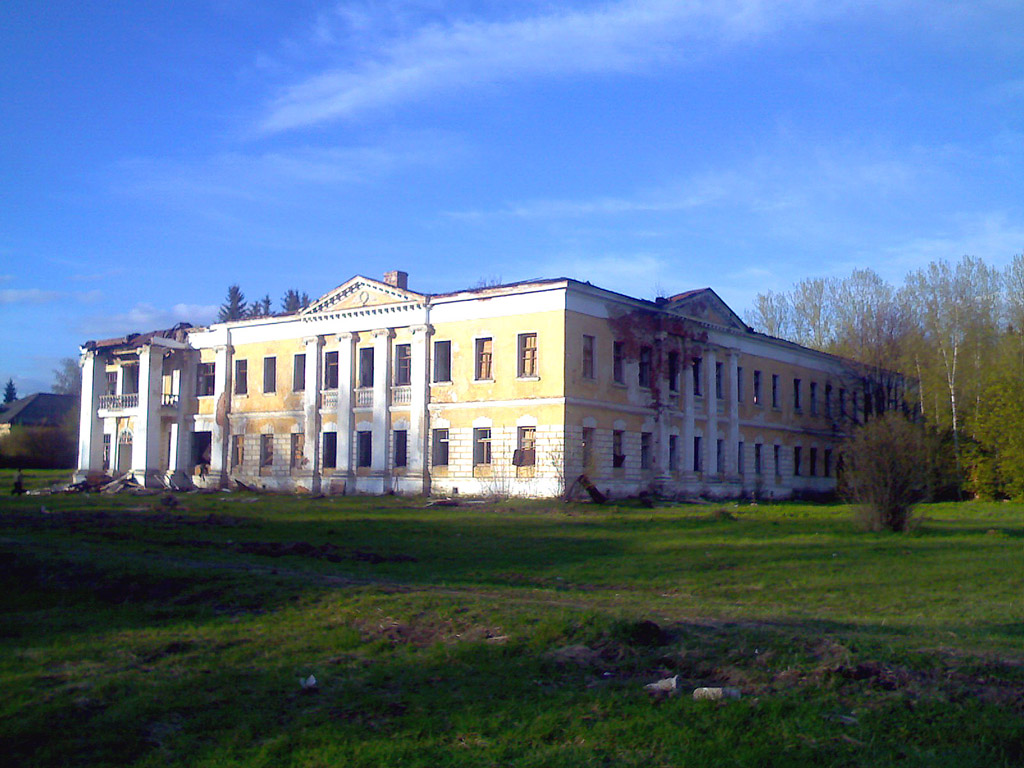
Prince Sergei’s country residence was at Grebnevo, northeast of Moscow. This sixteenth-century estate had belonged to the Trubetskoyes by the early eighteenth century, then passed to the Cantemirs—one of whom married Dmitri Mikhailovich Golitsyn (the one who lived in Vienna). But it wasn’t until 1811 that the estate passed to them permanently. Sergei enlarged it and gave it a number of outbuildings. He sold it in 1845. After the Revolution it was a sanatorium but since the 1960s has fallen mostly into ruin.
The Prince also maintained a residence closer in towards the city, at Kuzminki, in the southeastern suburbs, along a river that once powered several mills. It had been a Stroganov manor and passed to the Golitsyns by marriage in 1757. Kuzminki was often visited by members of the royal family, sometimes for extended stays—Catherine II lived here for nearly a year in the 1770s. In 1912 it was sold to the city of Moscow, but the main building burned down in 1916. Since 1999 its surviving outbuildings have housed a museum of noble estate culture.
Later Golitsyns
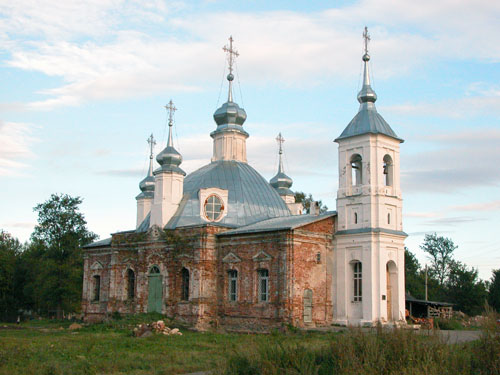
As the nineteenth century progressed, the three remaining main branches of the House of Golitsyn moved further and further apart. As seen above, the senior branch of Prince Vasily continued but was mostly out of the spotlight. Of the senior line of the branch of Prince Alexei, Prince Valerian stands out for having taken part in the Decembrist Uprising of 1825 against the autocratic rule of Tsar Nicholas I, and was exiled to Siberia. His son Mstislav was given the extra title of Count Osterman in 1863, as heir to his great-uncle Count Alexander Osterman-Tolstoy, a hero of the Napoleonic Wars, who was heir himself to his uncle, Count Ivan Osterman, Chancellor of the Russian Empire. Along with the title came an estate, Krasnoye, southeast of Moscow near the city of Ryazan. Here generations of Ostermans, Tolstoys and Golitsyns are buried.
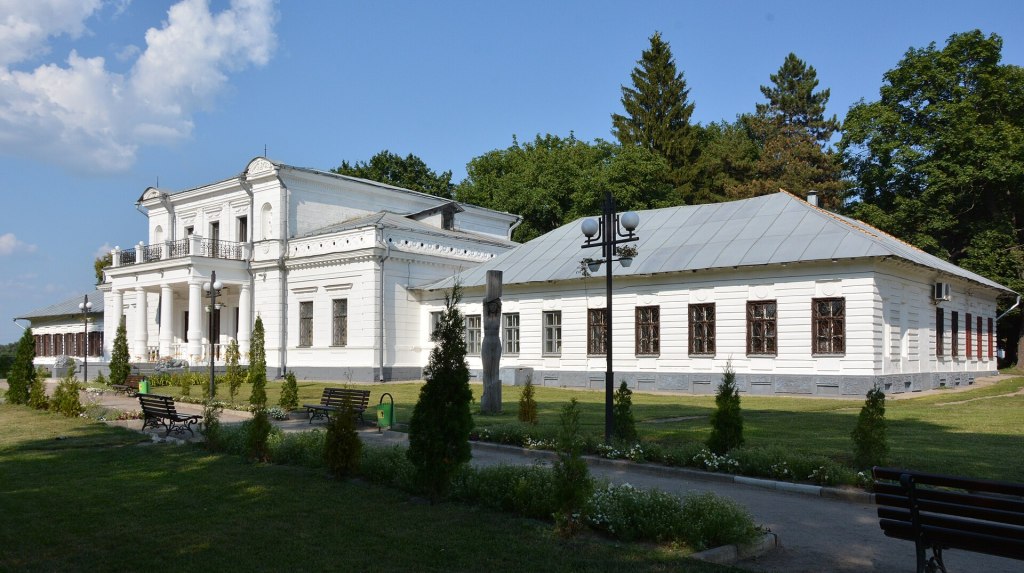
In another sub-branch we find Prince Alexei Vasilievich (d. 1901) who was part of the circle of friends of Tchaikovsky and lived openly with a male lover. The composer spent the summer of 1864 at his friend’s estate of Trostinets in Kharkov Province (now Kharkiv, Ukraine). It only belonged to the family for a short period, inherited mid-nineteenth century, but by 1870s sold to Leopold Koenig who ran the sugar beet factory here.
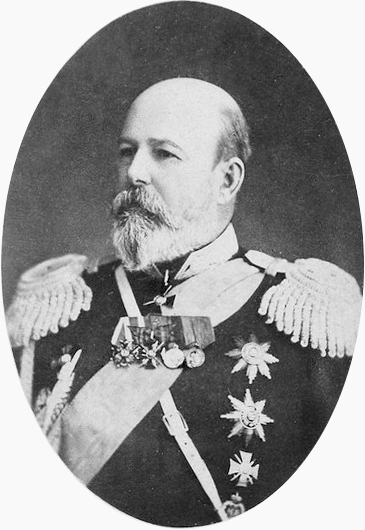
In contrast to these circles of high culture, we find (in the same sub-branch) Prince Grigory Sergeievich, a major-general in the retinue of the Tsar, Military Governor of the Ural Oblast and Commander of the Ural Cossack Army from 1876 to 1885. He was a member of the Council of State, 1893, then sent to the southern frontiers of the Empire, as Commander-in-Chief of the Caucasian Administration, 1896-97. A year later, Golitsyn was promoted to Governor of all of Transcaucasia, with his seat in Tbilisi. He survived an assassination attempt by Armenian radicals and died in his bed in 1907.
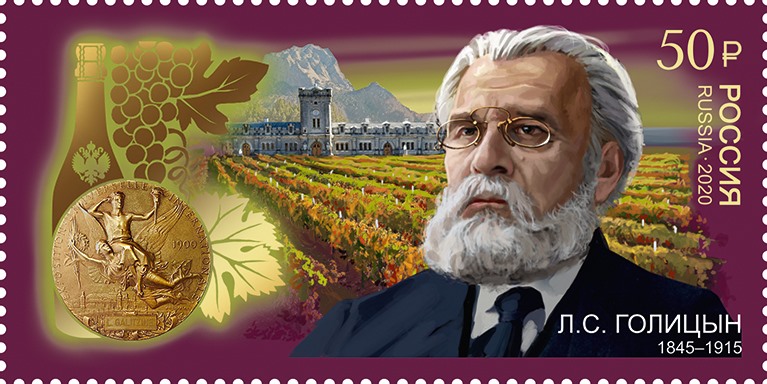
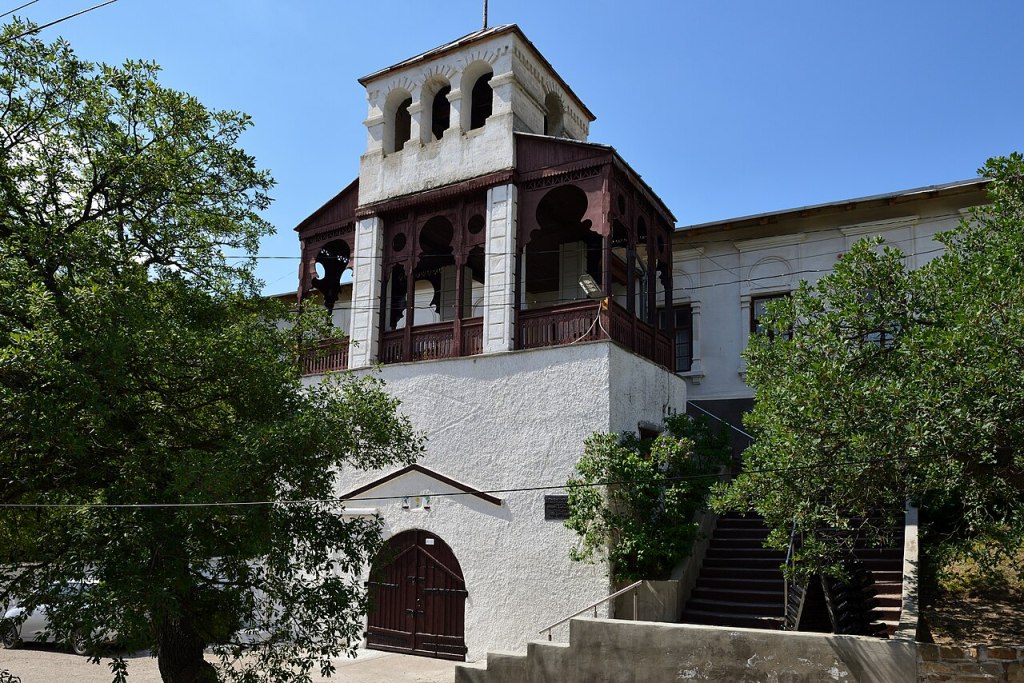
Grigory’s brother, Lev, was a winemaker, setting up wine-growing estates in the Crimea and Northern Caucasus and introducing sparkling wines into Russian dining. As a young man he had studied in France, and in 1878 acquired the estate called ‘Paradise’ near Sudak on the south coast of the Crimea. Here he built a manor house and a guest house modelled on Moorish design. By the 1880s he had become winemaker for the Imperial household, and his champagne served at the coronation banquet of Nicholas II in 1896 became known as ‘Coronation’. In 1912, the Tsar came to visit and requested the name be changed from Paradise to ‘New World’ or Novy Svet, a name which was retained by the estate and company even after the Revolution.
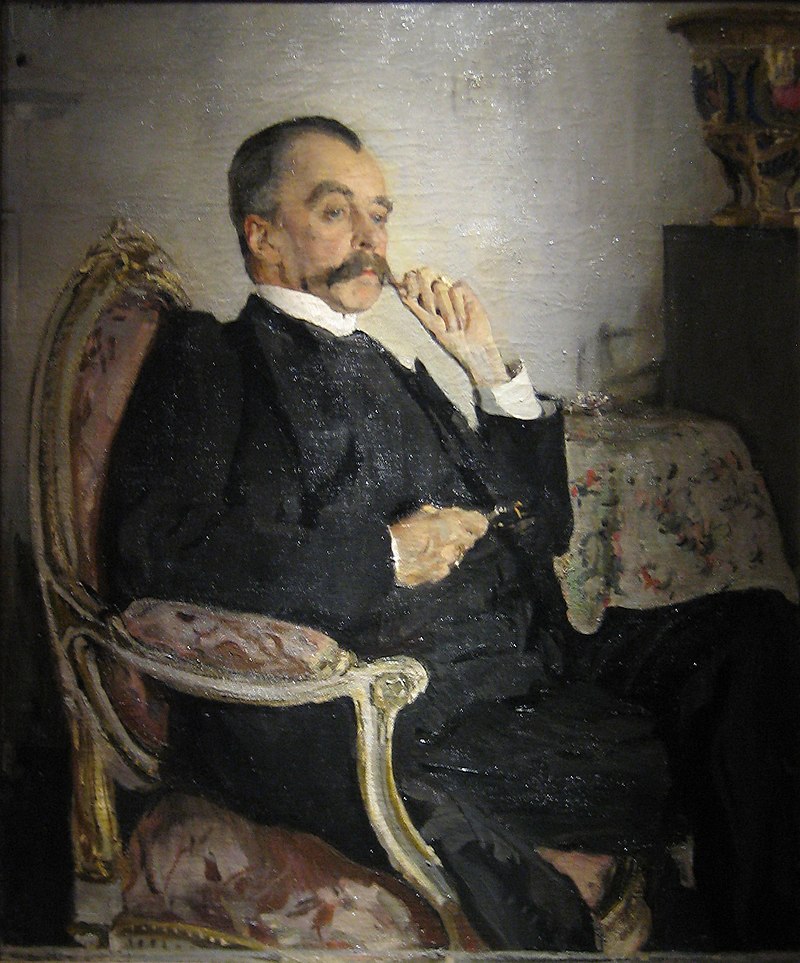
Even further down this extended tree of the Alexeievichi, we find Prince Vladimir Mikhailovich, Mayor of Moscow during the turbulent years of the reign of Nicholas II. He had been appointed Governor of the Moscow region 1887, then was elected mayor in 1897. During his tenure tramlines were centralised and a plan drawn up for a metro system. He also built major power factories to bring electricity to the people of Moscow. In his position as mayor of one of the two capital cities of the Empire, he became a leader of the opposition to tsarist absolutism and resigned after the repression of the uprising of 1905. He survived the Revolution but was forbidden from residing in Moscow. Nor could he reside in his country residence, Petrovskoye-Durnevo, as it had been confiscated by the Soviet state.
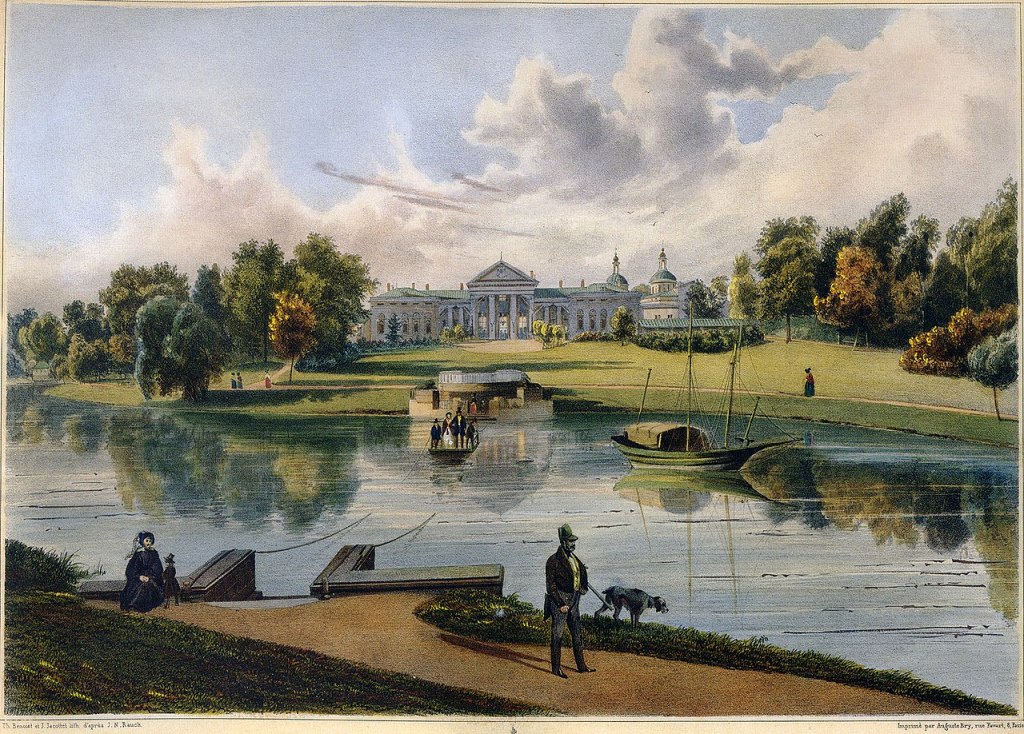
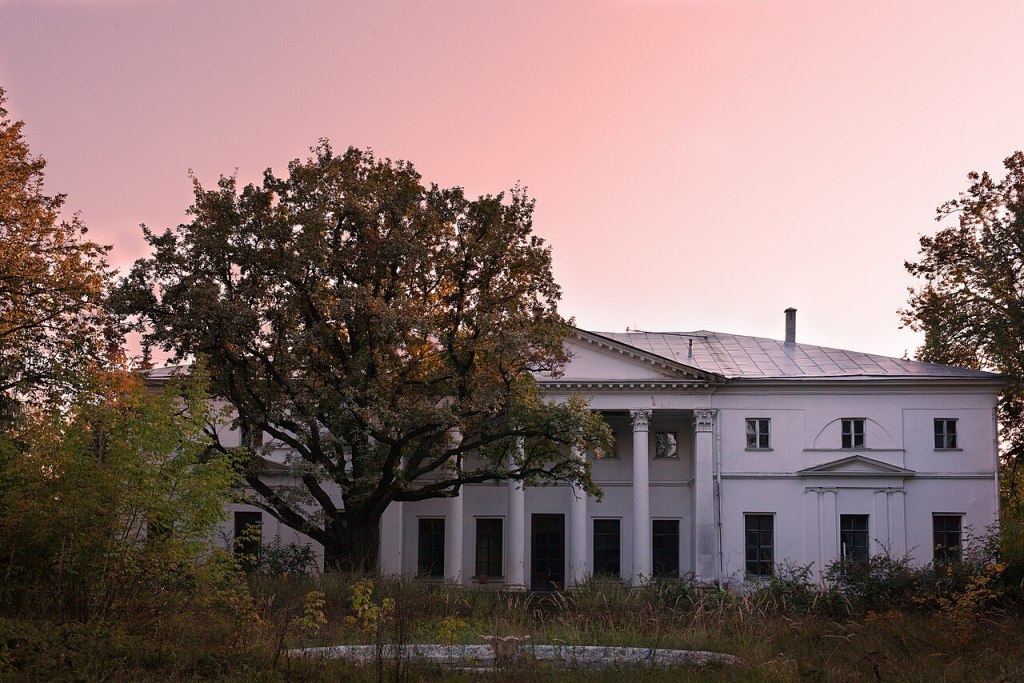
Petrovskoye-Durnevo was an estate on the north bank of the Moscow River, west of the city. It had belonged to the Prozorovsky princes in the seventeenth century, then passed by marriage to the Golitysns in the 1720s. Rebuilt as a Gothic castle in the 1760s, it was demolished and rebuilt in 1807 in Classical style, as we see it today. In the 1920s, it served as an orphanage, a rest home and a sanatorium. In 1930 its name was changed to Petrovo-Dalneye, but fell into decay. Restored in the 1970s by the Ministry of Internal Affairs as a national monument, today it is mostly forgotten and deteriorating.
In the youngest branch, the Mikhailovichi, prominent late nineteenth-century Golitysns include Prince Sergei Mikhailovich (d. 1915), whose status as a wealthy landowner—inheriting both the Kuzminki and Dubrovitsy estates—allowed him to be a major philanthropist. He supported the construction of several Orthodox churches abroad, took over as Director of the Golitsyn Hospital in 1873, and funded numerous charities and poor relief funds. He inherited his father’s large art collection and opened his house in central Moscow on Znamensky Lane as the Golitsyn Museum in 1865.
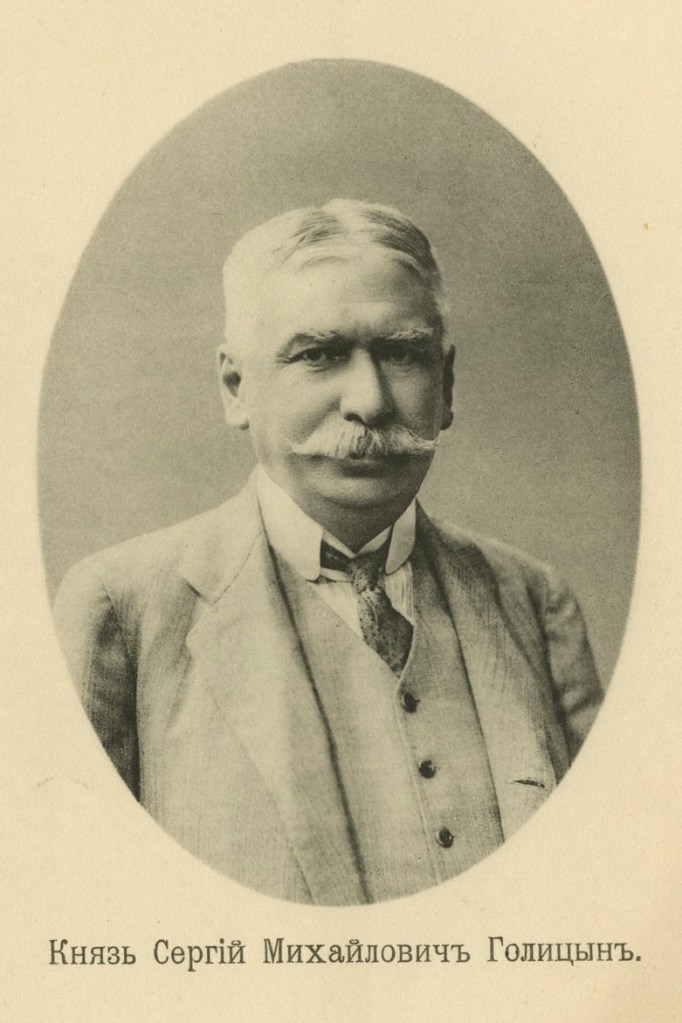
This museum housed an extraordinary collection of two hundred paintings of Western masters and over 12,000 volumes of his family library. The estate had been purchased by Mikhail Mikhailovich the younger in 1724, and the house built in the 1760s, then expanded to house Catherine II during an extended stay in Moscow in 1775. In financial difficulties, Sergei Mikhailovich was forced to close the museum and sell its collections to the Hermitage. In 1903 the house itself was sold to the Moscow Art Society, and several of the outbuildings were converted into rentable flats for artists—some of these included the composer Scriabin, the painter Repnin and the author Pasternak. After the Revolution, the building housed various departments of the USSR Academy of Sciences—nearly being torn down in the 1930s to build the huge Palace of Soviets (which was not built)—and by the 1990s it housed the Institute of Philosophy of the Russian Academy of Sciences. It was sold and in 2015 re-opened as part of the Pushkin State Museum of Fine Arts, housing its gallery of nineteenth- and twentieth-century European and American Art.
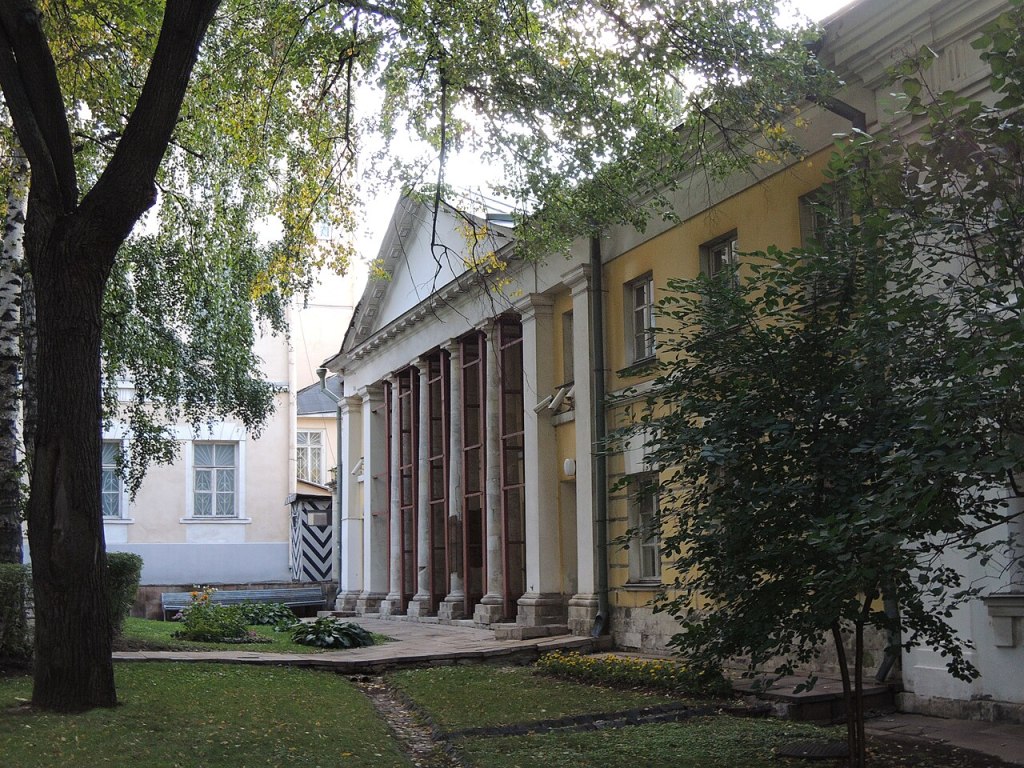
Prince Sergei’s cousin Boris Borisovich (d. 1916, grandson of the music patron Prince Nikolai) was a prominent physicist who invented the electromagnetic seismograph in 1906, then served as President of the International Seismological Association, 1911, and Director of Central Physical Observatory, 1913. Golitsyn princes like Mayor Vladimir, Gallery owner Sergei and scientist Boris demonstrated the best of the late imperial aristocracy in Russia.
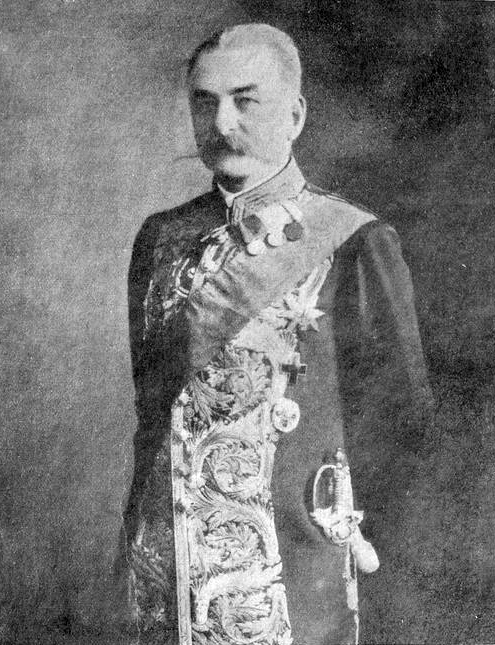
The Russian Revolution of course disturbed the centuries old dominance of princely families like the Golitsyns. One of the most famous of the entire family was right in the thick of it, though completely unable to keep events from spiralling out of control. Prince Nikolai Dmitrievich, of the Alexeievichi branch, was a nephew of Prince Alexander Sergeievich (the Minister of Education under Alexander I). Early in his career, Prince Nikolai served as governor of Archangelsk, then of Kaluga and Tver in the 1880s-90s. He later led Red Cross efforts in the Urals and Kazakhstan during the famines of 1907-08, which impressed Tsar Nicholas II who named him to the Council of State in late 1915. As the crisis in government grew, the Tsar appointed Prince Golitsyn Chairman of the Council of Ministers, aka Prime Minister of Russia, in December 1916 (old style; January 1917 new style). Golitsyn was by this point an old man and not a very energetic leader, and he weakly opposed the other ministers’ efforts to shut down the Duma. When the Tsar closed this legislative assembly in late February 1917, Golitsyn resigned. As the Revolution unfolded, he was arrested, tortured, then released in mid-March. For the next few years he lived quietly, repairing shoes and guarding people’s gardens to earn a living. But Comrade Nikolai Dmitrievich was arrested again in 1925, suspected of having counter-revolutionary ties, and executed a few months later.
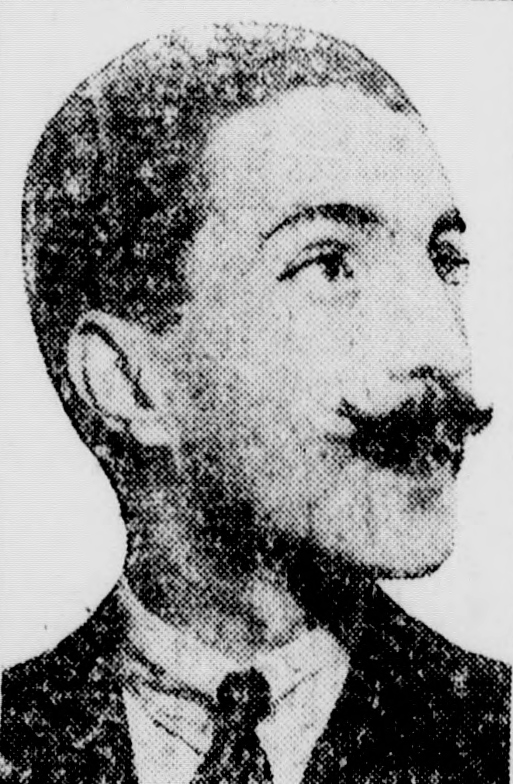
Following the Revolution, we see a diaspora of Golitsyn princes—now more often spelled Galitzine since many ended up in Paris. For example, Prince Mstislav Galitzine, Count Osterman (grandson of the first Count Osterman, of the same name) founded an anti-Bolshevik club in Paris and became involved in fashionable high society interested in esotericism and dream interpretation. Probably through these connections in 1925 he met the much older American socialite heiress and mystic, Aimee Crocker Gouraud. She was an heiress of California railroad money—and at the time considered one of America’s most eccentric personalities and party princesses. This was her fifth marriage, but now she was a real princess—in exchange for a pension of $250 a month for her husband. They divorced only two years later, and he lived in Paris for another forty years. From 1952, he became the de facto head of the entire House of Golitsyn, following the death of his very distant cousin Prince Nikolai in New Zealand.
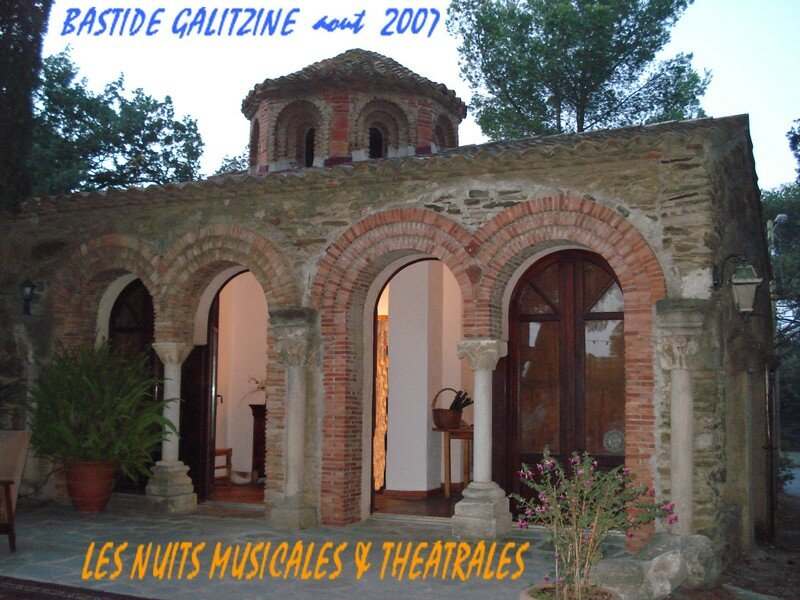
Mstislav’s brother Leo moved to Canada where he ran a chartered airplane company in Great Bear Lake. He later acted in small parts in Hollywood, and when he died, in Vancouver, in 1969, the headship of the House of Golitsyn passed once more to another branch, but not for long. This was to Prince Alexander Nikolaievich, son of the executed former Prime Minister. In 1927 he had married Princess Maria Petrovna of Russia, the niece of Grand Duke Nikolai, Commander-in-Chief of Russian forces in World War I, and they settled at La Bastide-Galitzine, near Toulon. Alexandre Galitzine became head of the House in 1966 and died, childless, in 1974. The family may no longer exist on this stretch of the Côte d’Azur, but the cultural association Matrioshka founded by the Princess does, inviting speakers and musicians every summer.
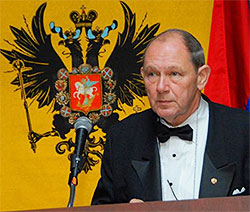
Meanwhile, the claimed title of ‘Head of House’ passed to Dmitri and his brother Kirill who lived in New York City from the 1950s. I am not certain their claim to being heads of the family was recognised by the other branches, since their grandfather Vladimir in some sources is listed as illegitimate, and in others, not. But the purported illegitimacy must not have stained the reputation of the family too much, for in the next generation, Dmitri’s son Peter married (in 1981) Archduchess Maria Anna of Austria, niece of Archduke Otto, claimant to the imperial and royal thrones of Austria and Hungary. Prince Peter moved with Maria Anna to a newly reborn Russia in 1993, and worked to support Catholic charities there, but eventually moved back to the United States in 2008. They have several children, but the actual claim to be senior prince of the House of Golitsyn (if that means anything today), falls to his older brother Dmitri (b. 1947) and his son Philip (b. 1979). Meanwhile, Kirill’s son Vladimir became one of the central pillars of the White Russian community in New York, and ran many of the activities of the Russian Nobility Association, culminating as its president in 2017, until his death in 2018.
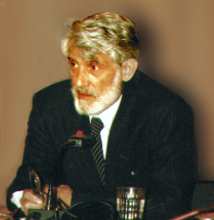
In the youngest branch of the Line of Alexei, we have the descendants of the longtime Mayor of Moscow (above). Some of these stayed in Russia, such as Georgy Sergeievich Golitsyn, a well-known physicist in the Soviet Union, an atmospheric scientist who at first examined the atmospheres of Venus and Mars in the 1960s, then developed the concept of a ‘nuclear winter’ in the 1980s. He worked for many years at the Russian Academy of Sciences in Moscow, and died only in May of this year. One of his cousins, Prince Andrei Kirillovich, also stayed in Russia, and became a fairly well-known illustrator. In 1990, he helped to found the Assembly of the Russian Nobility, and was elected its leader…a position he held until his death in 2023. He was connected to other Russian noble and charity organisations all over the world.
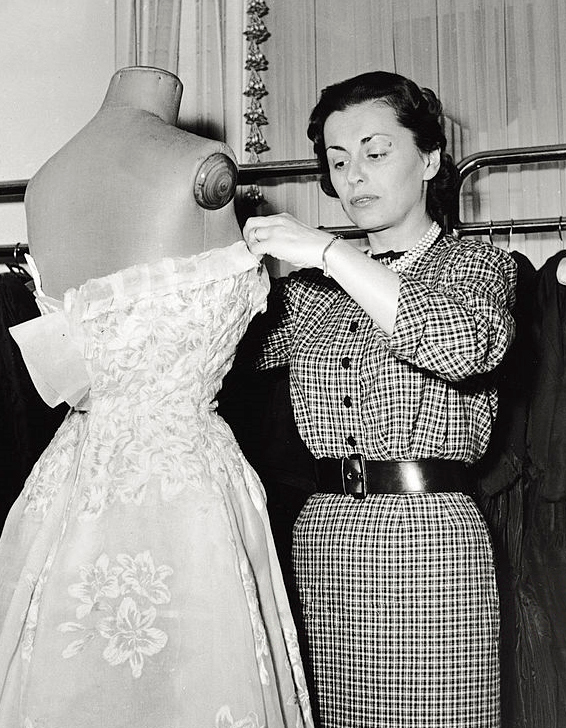
In contrast, many cousins from left Russia. Princess Irene Borisovna, born in the last months of the Empire, escaped with her mother and settled in Rome, She became a leading fashion designer in the 1950s-60s, dressing celebrities like Sophia Loren, Elizabeth Taylor and Jackie Kennedy.
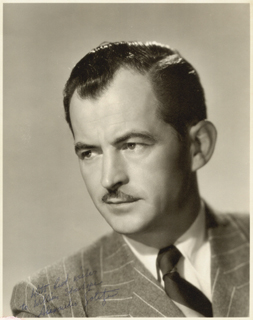
Others went to America. Brothers Alexander and George ‘Golitzen’ became successful members of the film industry in Hollywood. Alexander was a production designer and art director—he won Oscars for Spartacus (1960) and To Kill a Mockingbird (1962), and was nominated for many others. He died at nearly 100 in 2005. George was a producer, responsible for Disney classics Pollyanna (1960) and Parent Trap (1961), but died just two years later. Their sister meanwhile kept up the princely pretensions: in 1931, Natalia married Prince Vasily Alexandrovich of Russia, nephew of the Tsar, and lived for many years in a town near San Francisco.
Another Prince Alexander in America (this one spelled Golitzin), from one of the extant Mikhailovichi lines, was formerly a professor of theology and since 2016 has been Archbishop of the South of the Orthodox Church of America (based in Dallas).
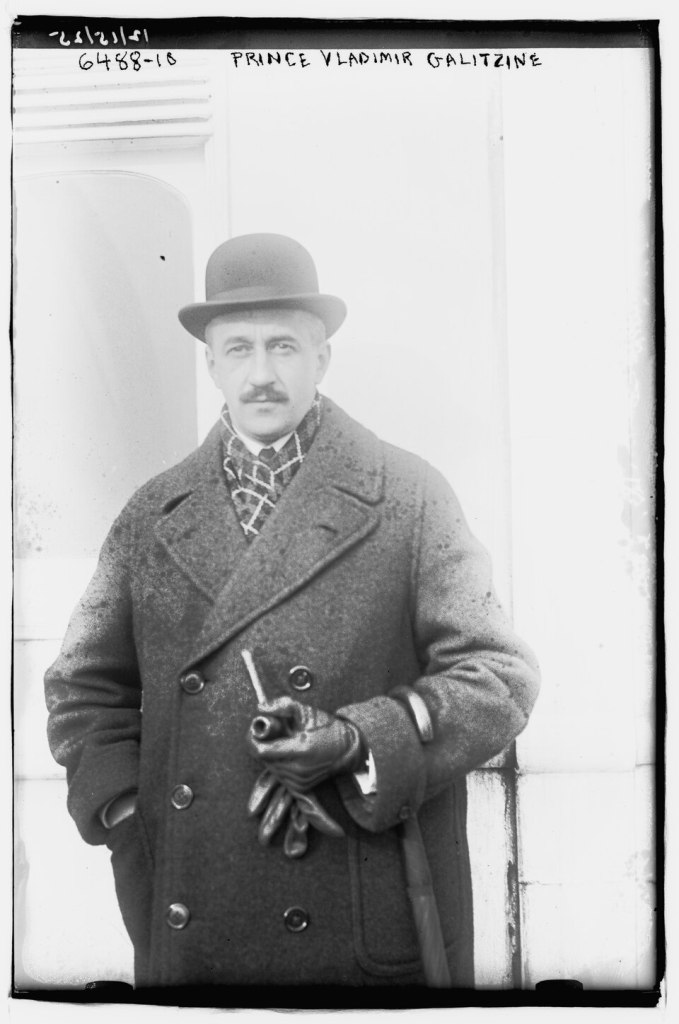
Princess Alexandra (‘Aleka’) Pavlovna moved to Chicago, and in 1928 she too married a Romanov prince, Rostislav Alexandrovich (Vasily’s brother). After a divorce in 1944, she opened up her own clothing shop and was a fixture of Chicago society until she died, age 101 in 2006. Her cousin Vladimir also married, somewhat, into royalty, when he married in 1945 Mabel Iris FitzGeorge, a granddaughter of the 2nd Duke of Cambridge (himself a grandson of King George III). Prince Vladimir Galitzine as a young man had been aide-de-camp of Grand Duke Nikolai, Commander-in-Chief of the Imperial Army, in 1914. In 1912, he married Ekaterina, Countess von Carlow, a morganatic daughter of the Grand Duke Alexander of Mecklenburg-Strelitz (her sister Maria married Boris Golitsyn from the line of the longtime governor-general of Moscow). They emigrated to London, where he set up an art and antiques shop in Berkeley Square in Mayfair in the 1920s; he was also for many years Chairman of the Russian Society of Support for Russian Emigrants in England. They lived for a time in Chessington Hall in Surrey. Princess Ekaterina was killed in the Blitz in 1940, so Vladimir married again. He died in London in 1954, and is buried in Brompton Cemetery, but left behind a set of ‘London Galitzines’.
Which leads us to the question of London-born actor, Nicholas Galitzine (b. 1994), who shot to fame last year through his role as the Duke of Buckingham in Mary & George (and previously the cheesy Amazon Prime film, Red, White and Royal Blue (2023) and now appears much bulked up in the summer blockbuster Masters of the Universe. But although his Wikipedia page used to speculate that he might be ‘a real royal’, it now clearly states he is not. Nor is one of the most famous defectors from the KGB to the CIA in the 1960s, Anatoliy Golitsyn.
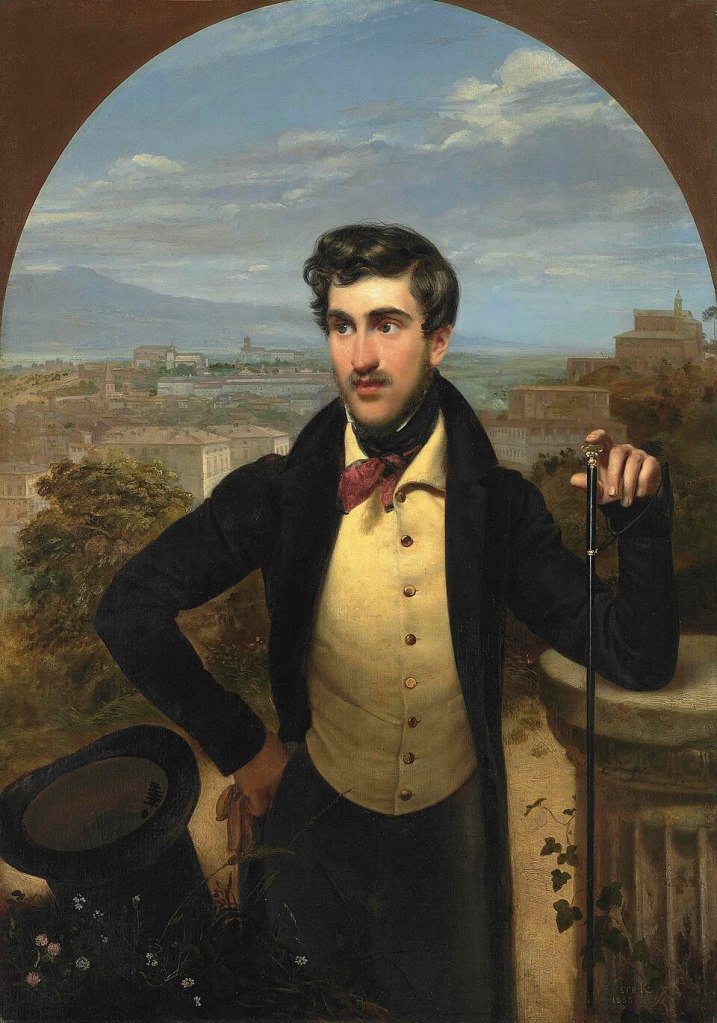
Even within the lists of those genuinely descended from Mikhail ‘With the Iron Glove’ there are loads more Golitsyns not mentioned in this overview, and many more estates scattered across Russia. They truly left their mark, and continue to do so.
(images Wikimedia Commons)

