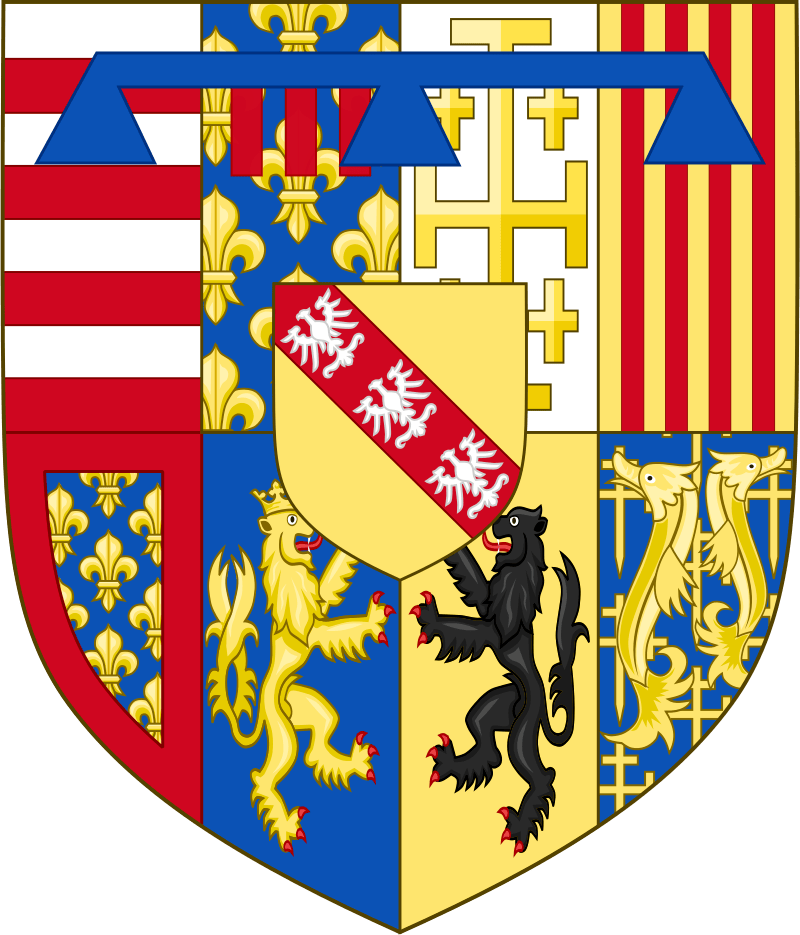
Like the ducal lines held by cadets of the House of Lorraine encountered in Part I, the dukes of Mercoeur were strong supporters of the Catholic League in France and powerful allies of the dukes of Guise. As with the dukedoms of Aumale and Mayenne, there were only two holders in this family, father and son. But they are slightly different in that they were not members of the House of Guise, but in fact senior to them in the line of succession to the sovereign throne of the Duchy of Lorraine. Prince Nicolas of Lorraine, as second son of Duke Antoine (the older brother of the 1st Duke of Guise), used the full coat-of-arms of Lorraine with a three-point label of blue, not red as used by the Guise, or white by the eldest son of the Duke.
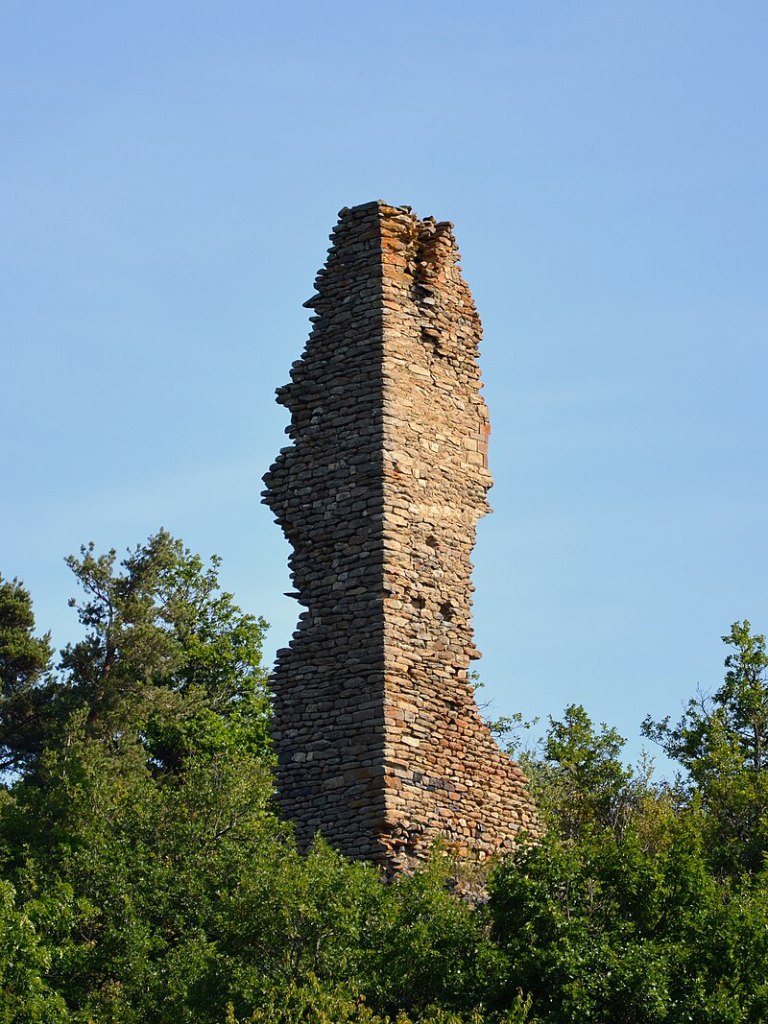
Also like the other cadet lines looked at so far, the Mercoeur branch brought Lorraine influence into two different regions of France far from the dynastic heartland in the Ardennes: as governors of Brittany (as we shall see) and as lords of Mercoeur in the Auvergne. While the titular château was within the bounds of Auvergne, in the mountainous heart of France, much of the lands that made up its associated estates were across the crest of the hills in Languedoc. Mercoeur itself is a small village deep in the valleys of southern Auvergne, near the town of Brioude, in the upper reaches of the Allier, a chief tributary of the Loire. There was a château here from the thirteenth century, but today there are only vestiges. It had been the seat of a noble family from the ninth to the fourteenth century—one of these was Saint Odilon of Cluny (d. 1048), and the Mercoeur family also included several bishops of Le Puy. They frequently married into the ruling family of the counts of Auvergne, and the last three in fact succeeded to this rank themselves as Count of Clermont and Dauphin of Auvergne (two portions of the divided province of Auvergne in the later Middle Ages).
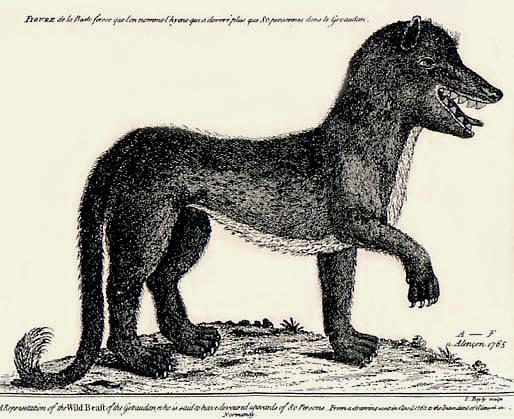
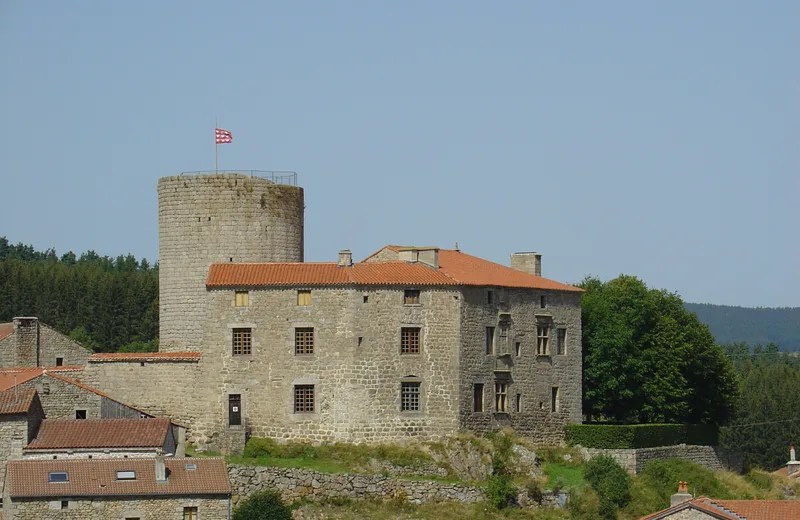
The estates held by the Mercoeur family extended southwards across the frontier from Auvergne into the Gévaudan, one of the smaller provinces included within Languedoc. Gévaudan was one of the most remote and wild parts of ancien régime France, made especially famous in the 1760s for the legendary ‘Bête du Gévaudan’, a giant man-eating wolf—or maybe even a demon—that terrorised villages and devoured cattle. Reality grew into a sensation, titillating readers all over Europe until the King of France organised a team to hunt it down. The Beast was killed near Saugues, which was the centre of the barony of Mercoeur in this province, along with the neighbouring fortified town of Le Malzieu. Just north of the town, the earliest barons built a fortification on a rocky outcropping at Verdezun—of which nothing remains—then moved their base to the château of Esplantas, closer to Saugues, built in the 1250s, and jointly owned by both the lords of Mercoeur and the local bishops of Mende. Augmented several times in succeeding centuries, it has recently been restored. The Barony of Mercoeur was one of the eight feudal baronies that governed the Gévaudan, a very rural province, far from the King’s justice in Paris, or even from the regional parlement in Toulouse—in fact, the Barony itself was split, awkwardly, since Gévaudan was subject to the jurisdiction of Toulouse, while Auvergne, across the ridge of mountains, faced north and was under the jurisdiction of Paris.
The last Dauphin of Auvergne, from the House of Mercoeur, died in 1399. His succession was complicated, since some of his lands (including Mercoeur) went to his elder daughter, married to Louis II, Duke of Bourbon, a cousin of the King; while other lands went to a younger heiress who married another Louis de Bourbon, Count of Montpensier (the latter’s grandson), notably the County of Clermont. Mercoeur thus became part of the massive conglomeration of territories amassed by the House of Bourbon in the fifteenth century, virtual kings in the centre of France. Eventually, parts of the succession were carved off for younger sons or dowries for daughters, and in 1515 Renée de Bourbon-Montpensier took the Barony of Mercoeur in marriage to Antoine, Duke of Lorraine, and so it passed into the House of Lorraine. In 1563, Renée’s grandson Duke Charles III gave the barony to his uncle, Nicolas, Count of Vaudémont, for whom it was erected into a duchy-peerage by the King of France in 1569, as a gesture of friendship between the Kingdom of France and the Duchy of Lorraine.
Nicolas of Lorraine, Duke Antoine’s second son, was initially intended for the church—he would accumulate the usual mass of bishoprics and abbeys and was expected to succeed his uncle Jean as Cardinal de Lorraine. He was thus appointed to the bishoprics of Metz in 1543 and Verdun in 1544 (when he was twenty years old). Metz and Verdun (along with Toul) are known as ‘The Three Bishoprics’ and were prince-bishoprics of the Holy Roman Empire enclaved within the Duchy of Lorraine, and thus outside the jurisdiction of France. Duke Antoine died in 1540, followed soon after in 1545 by Nicolas’s brother, Duke François. So the Prince-Bishop of Metz and Verdun was named as co-regent of the duchies of Lorraine and Bar with his widowed sister-in-law, Christina of Denmark, to look after her young son Charles III. Christina was a formidable woman, with powerful friends as niece of Emperor Charles V, so she convinced the estates of Lorraine to name her sole regent. Nicolas was pushed out, and it seems decided that his real interests were not with the Church, so he resigned his ecclesiastical offices in 1548 and took the title Count of Vaudémont, the usual title for the second son of the Duke of Lorraine. He also allied himself with French interests, and those of his Guise cousins, who encouraged their master, King Henry II of France to invade Lorraine in 1552, and send Christina—far too Habsburg for her own good—packing. The King replaced her as regent with the Count of Vaudémont (and young Charles was taken to Paris to be raised as a Valois prince, and was later married to the King’s daughter). Nicolas thus governed Lorraine and Bar until Charles III was old enough to rule and returned to Nancy in 1559.
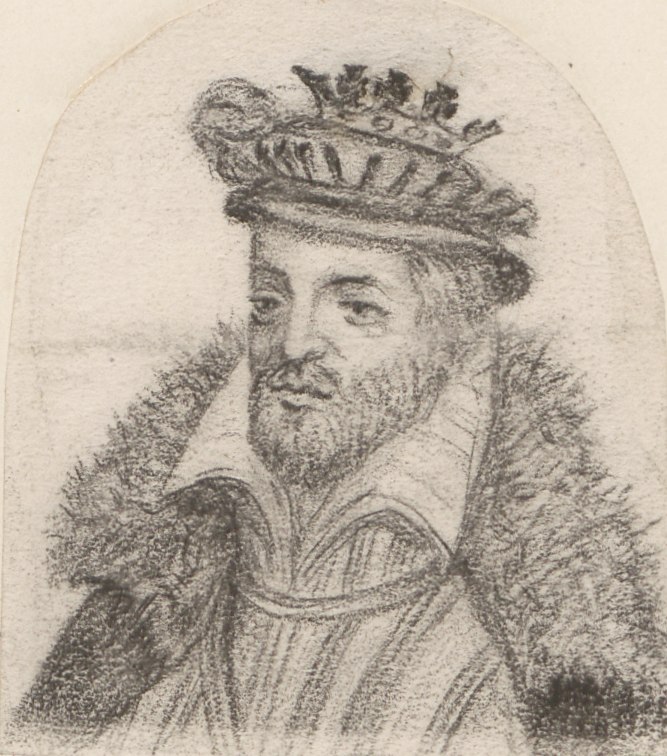
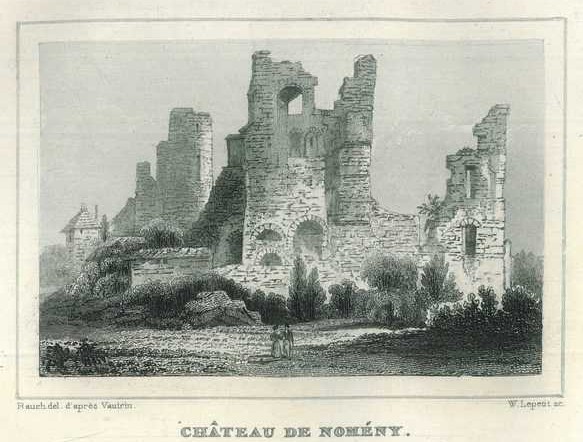
The Count of Vaudémont played little political role after that point, in either Lorraine or France, but he did represent the family in an interesting way as a bridge between France and the Holy Roman Empire (to which Lorraine still formally belonged). In 1563, Henry II’s widow, Catherine de Medici, now Regent of France, honoured him with the elevation of the Barony of Mercoeur into a principality, one of only a handful of such creations in France; and in 1567, Emperor Maximilian II, trying to lure the now pro-Valois House of Lorraine back into Habsburg orbit, countered by raising Vaudémont’s small lordship of Nomeny, in the heart of Lorraine, to the rank of an imperial margraveship, a principality of the Empire. The King of France then raised the stakes higher with the creation of the duchy-peerage of Mercoeur in 1569. Nicolas thus held the unique position of being a prince of Lorraine by birth, and a prince of the Empire and duke and prince of France by creation. In one of the real curiosities of European feudal history, the Margraveship of Nomeny would be retained by the House of Lorraine even after they lost the Duchy itself (1737), a detail of geo-politics that would ensure the family still had a vote in the Imperial Diet—a strangely prominent position for this tiny lordship and its fairly insignificant castle. The castle had been built in the fourteenth century (with even older elements at its core) by the bishops of Metz, and when Nicolas quit this role, he took it with him. Nomeny’s ramparts were dismantled during the first French occupation of Lorraine in the 1630s, followed by most of the rest of it under Louis XIV. Its value as a ‘princely state’ of the Empire was purely nominal.
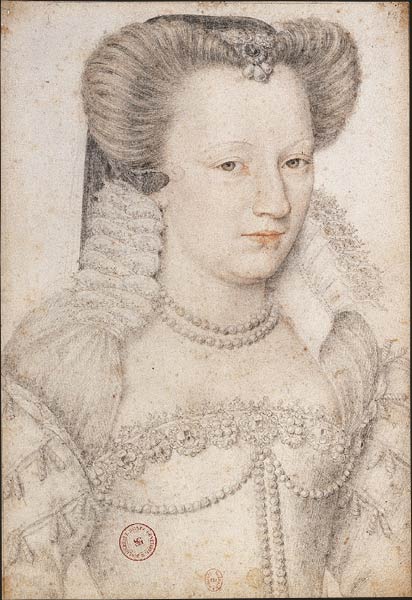
Once he was no longer a clergyman, the Duke of Mercoeur had married, three times, and founded a new cadet branch for the House of Lorraine. In 1549, when he was still pro-Habsburg in his political outlook, he married a sister of the Count of Egmont, the leading nobleman in the Habsburg Netherlands (who later was executed for his role in starting the Dutch revolt against Spanish rule). In 1555, he demonstrated his shift in alliance through marriage to the King of France’s cousin, Jeanne de Savoie-Nemours (a niece of François I’s mother, Louise of Savoy). Finally, he solidified his links with his Guise cousins by marrying in 1569 Catherine of Lorraine-Aumale. There were children from all three marriages: Louise from marriage one became Queen of France when she married Henry III in 1575; marriage two produced the 2nd Duke of Mercoeur, the Cardinal de Vaudémont and the Marquis de Chaussin, plus the Duchess of Joyeuse, whose 1581 marriage to Henry III’s favourite was one of the most celebrated events at the Valois court (and the subject of a famous painting); finally, marriage three produced two more sons, the Marquis de Mouy and the Bishop of Verdun. More on these below.
When the Duke of Mercoeur died at his ‘princely capital’ of Nomeny in 1577, he was succeeded by his nineteen-year-old son, Philippe-Emmanuel, whose name clearly came from his mother’s Savoy family. Although he was born in Lorraine and died in Germany, and possessed a dukedom in Auvergne, he is best known for leading a last-ditch independence movement for Brittany, with himself (he hoped) as sovereign duke.
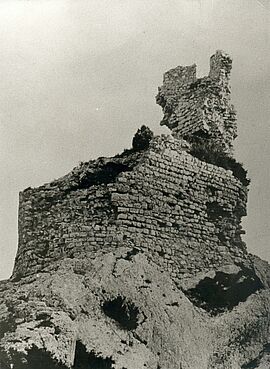
Philippe-Emmanuel’s attachment to Brittany began before his father’s death, when he became Duke of Penthièvre by marriage in 1575 to Marie de Luxembourg, duchess in her own right since her father’s death in 1569, and with a very distant claim (via the House of Penthièvre) to the ducal crown of Brittany—last independent of France in the 1490s. This dukedom covered the northern parts of Brittany, and brought with it a very large income, and other estates, including the Viscounty of Martigues, a large estate in Provence on the Mediterranean, between the city of Marseille and the mouth of the Rhône. Martigues had spent much of its history fighting for autonomy from the merchants of Marseilles, which may have contributed to the King’s decision to erect it as a principality in 1580 for the Duke and Duchess of Mercoeur (though information on whether this actually happened is uncertain, or when—other sources say it was by Henry IV in the 1590s). If correct, it was one of only a handful of principalities, like Mercoeur itself, erected by the Crown within the boundaries of the Kingdom of France. There was an ancient castle here, called Castrum Novum as early as the eleventh century (and now giving its name to the town of Châteauneuf-lès-Martigues)—the last vestiges of which were removed to make way for the motorway in 1972.
The 2nd Duke of Mercoeur, Duke of Penthièvre, Prince of Martigues and Margrave of Nomeny, added even further to his estates by purchasing the Barony of Ancenis from his cousin the Duke of Elbeuf in 1599—the castle here, one of the oldest fortresses in France (tenth century), allowed the Duke to have a stronghold near the mouth of the Loire and the city of Nantes, the capital of Brittany, where he was appointed royal governor in 1582. He and his wife also held court in Nantes itself. We can still see evidence of Mercoeur’s regime here, in the city’s fortifications he ordered reinforced and which still bear the telltale double cross of Lorraine.
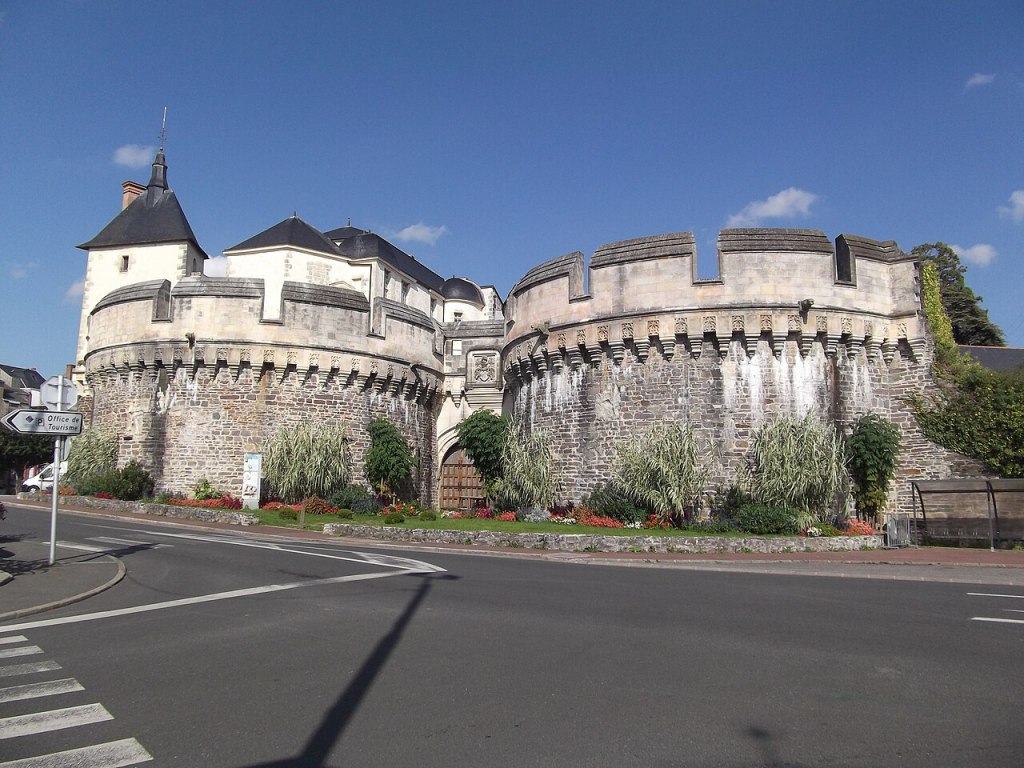
Mercoeur has a reputation as a pious warrior, but unlike his Guise cousins, he was steadfastly loyal to Henry III, his brother-in-law, though this grew more difficult after the King’s murders of his cousins in December 1588 and the subsequent attempts to arrest all the princes of this family, including Mercoeur himself—he escaped, thanks to warnings from his half-sister, Queen Louise. The King attempted to replace him as governor of Brittany in April 1589, but he held on to his position in Nantes through the loyalty of the local population, who helped him establish a separate branch of the Catholic League in Britany in August. From this point he began to push for a restoration of Breton sovereignty, with himself as duke, supported by Spanish troops and Spanish gold. He even began to refer to his eldest son, Philippe, born in May 1589, as ‘Prince of Brittany’—though this boy died shortly after in December 1590. Mercoeur defeated royal troops led by the new king, Henry IV, at Craon in 1592. Despite the odds, he held out in Brittany for another six years, until he finally submitted to the King at Angers in March 1598, the last of the Catholic League to do so.
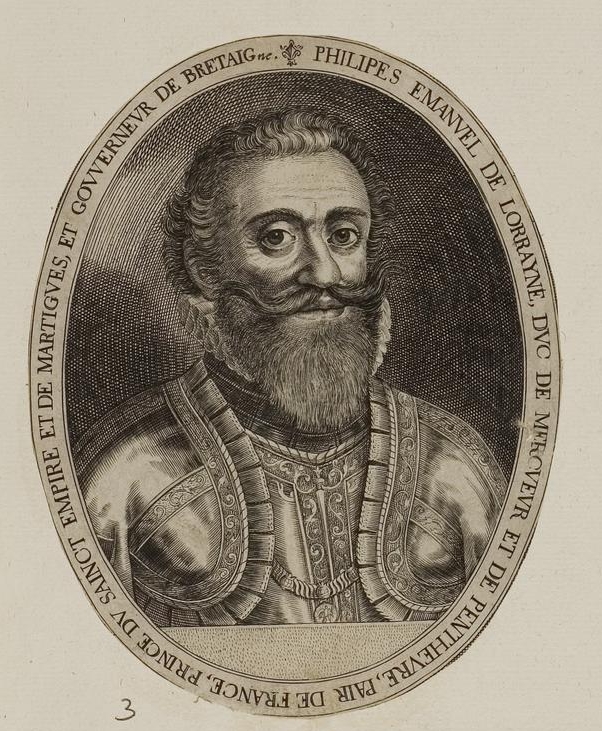
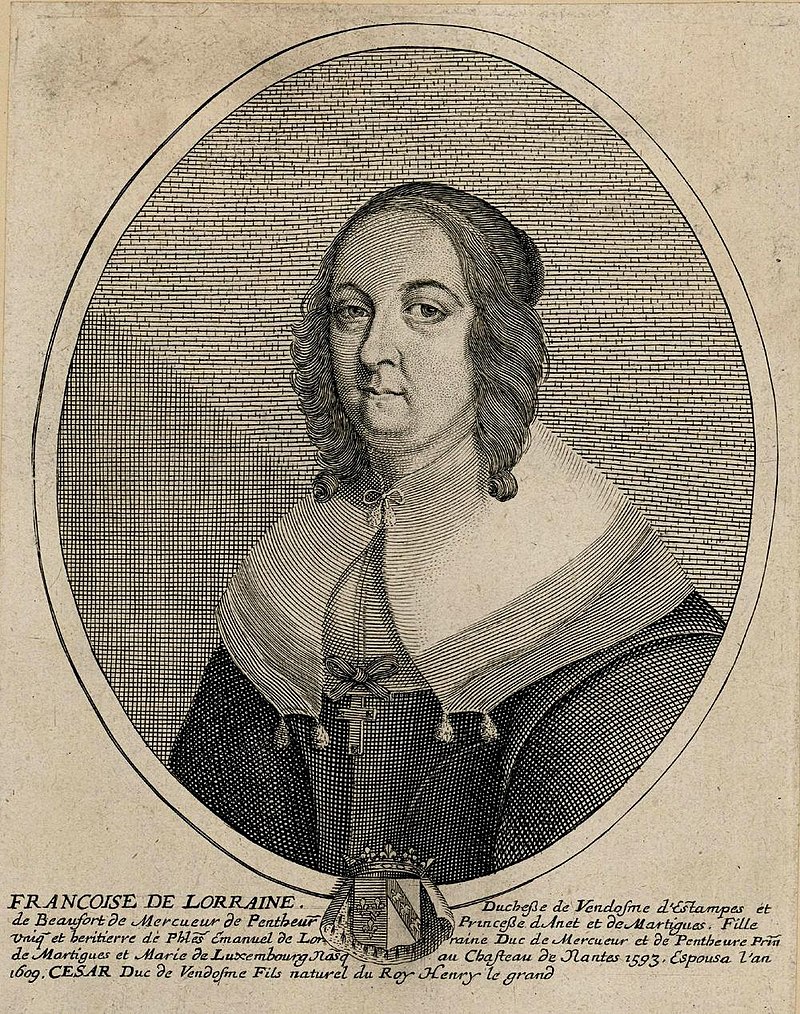
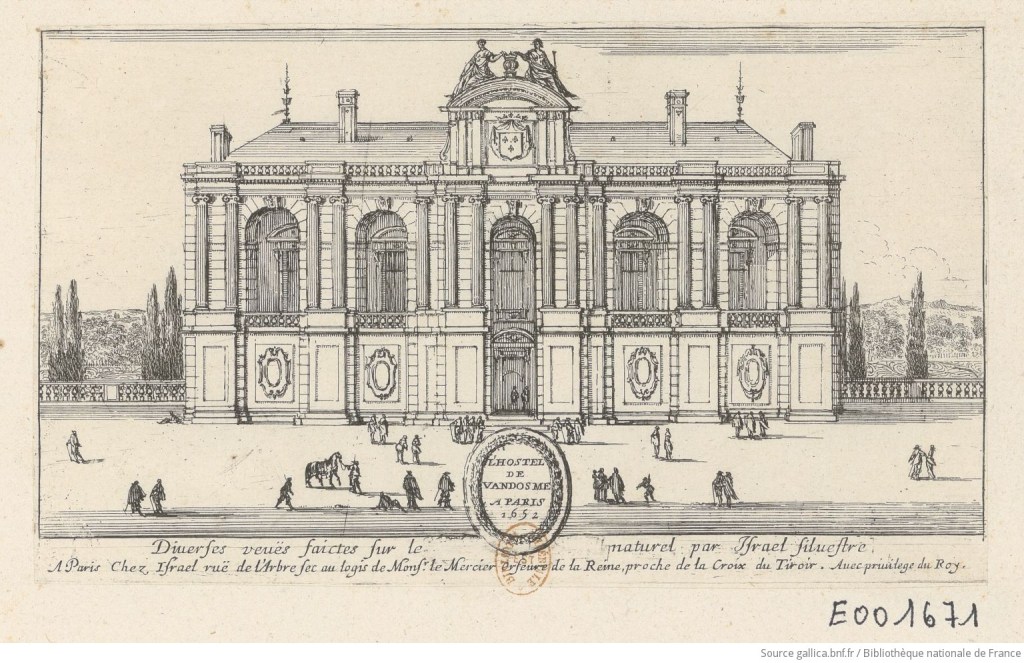
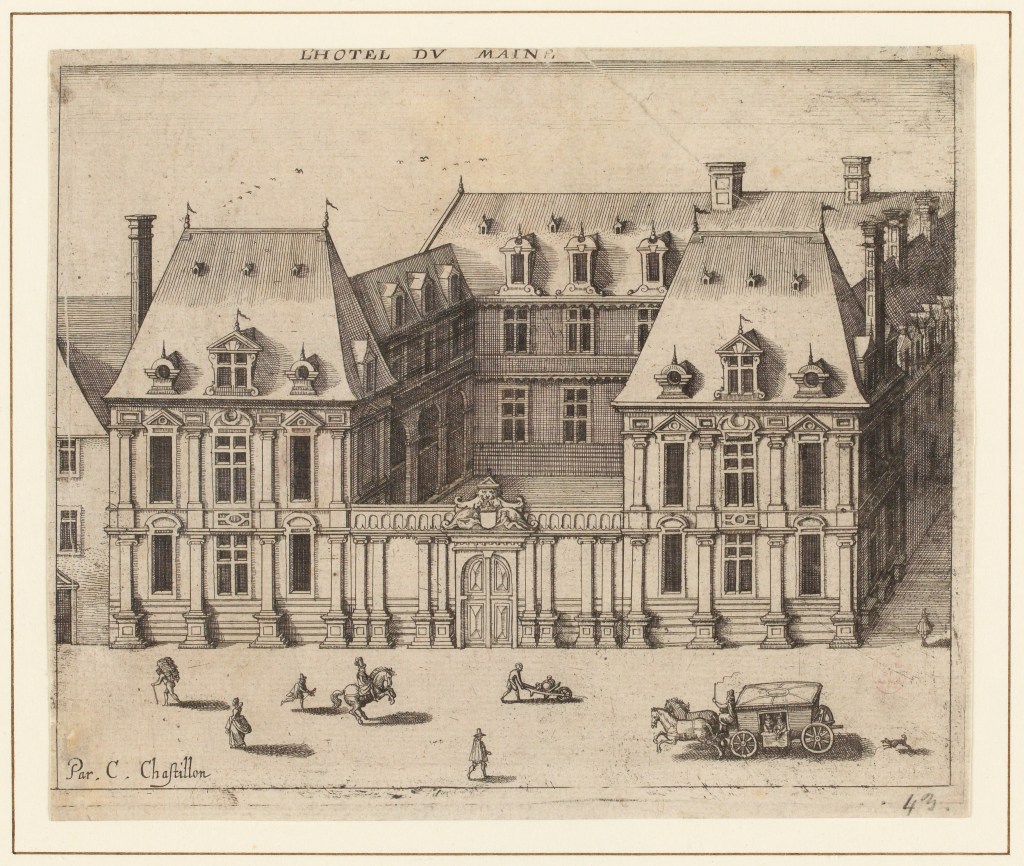
The peace treaty they signed gave Mercoeur a huge sum (four million livres) and although he had to agree he was no longer governor of Brittany, he was allowed to retain the Duchy of Penthièvre. It was arranged that this, along with the Duchy of Mercoeur and all his other estates would pass to his daughter, Françoise, who would marry the King’s son, César, Duke of Vendôme. Two points worth noting are that this basically disinherited the 2nd Duke’s male heirs, notably his brother Henri and his brother’s sons, but it also would potentially make Françoise a queen, since in 1598 there were still thoughts that Henry IV would marry his mistress, Gabrielle d’Estrées, thus legitimising their children. This did not happen, but in the end, Françoise de Lorraine, Duchess of Mercoeur, Penthièvre and Etampes, Princess of Martigues by parental succession, and Duchess of Vendôme, Etampes and Beaufort by marriage, helped her husband establish a major new dynasty: Bourbon-Vendôme. Both lived a very long time, she as a widow until 1669. She died in a Parisian mansion she inherited from her mother in 1623, the Hôtel de Mercoeur, renamed the Hôtel de Vendôme. Her mother had bought this house on the northwest edge of the old city in 1603 and enlarged it (and added a sizeable convent for Capuchin nuns on the side). Sold in 1675, it was demolished by Louis XIV to create a grand new royal square, the Place Louis-le-Grand, which was renamed Place Vendôme after the Revolution (and today the site is occupied by the Ritz Hotel).
Meanwhile, the Duke of Mercoeur bowed out of French affairs after 1598. He decided to take up his ‘other’ identity, as a prince of the Empire (as Margrave of Nomeny, but also as a grandson of the Duke of Lorraine), and took up service with Emperor Rudolf II against the Ottomans in Hungary. After taking part in a great victory in 1601, he died in Nuremberg on a journey back home towards Lorraine.
The Duchy of Mercoeur thus passed to his daughter Françoise and by marriage to the House of Bourbon-Vendôme. Her eldest son was called Duke of Mercoeur before he succeeded to the dukedom of Vendôme in 1665. This line died out in 1712, and the peerage of Mercoeur was extinct, but the dukedom itself passed to a cousin, Louis-François de Bourbon, son of the Prince of Conti, for whom the peerage was re-created in 1723. Long after he became Prince of Conti himself, Louis-François sold it to Louis XV in 1770, and it was given as part of the apanage of the King’s youngest grandson, the Count of Artois (in 1773).
What remained of this branch of the House of Lorraine were the 2nd Duke of Mercoeur’s brothers and his nephews, who, unlike their Guise cousins, went back to playing an important role in the history of the Duchy of Lorraine rather than the Kingdom of France. Their elder half-sister, the Dowager Queen Louise, had died the year before in 1601; she had lived in perpetual mourning since 1589 at the beautiful Château of Chenonceau, a gift from her mother-in-law, Catherine de Medici, which she now passed on to her niece, Françoise de Lorraine-Mercoeur, and through her to the House of Vendôme who owned it for over a century.
The eldest of these brothers, Charles, was, typically for a second son of a princely family, set up to be a bishop. The House of Lorraine had long held one or all three of the Three Bishoprics (Metz, Toul and Verdun), as noted above. After 1552, however, they were occupied by France, so the prince-bishops’ relationship with the king of France was often tense. While still a student at the Academy of Pont-à-Mousson (in Lorraine), Charles was named a cardinal (1578, age 16), then soon after Bishop of Toul (1580) and then also Bishop of Verdun (1585). He was actually called ‘apostolic vicar’ (or ‘administrator’) of both of these dioceses since by canon law he could not be consecrated a bishop until he was 27. He was ordained as a priest in November 1586, but died the following October, before he could be consecrated. He had been known as the ‘Cardinal de Vaudémont’ to distinguish him from his cousins, Cardinal de Lorraine and Cardinal de Guise.
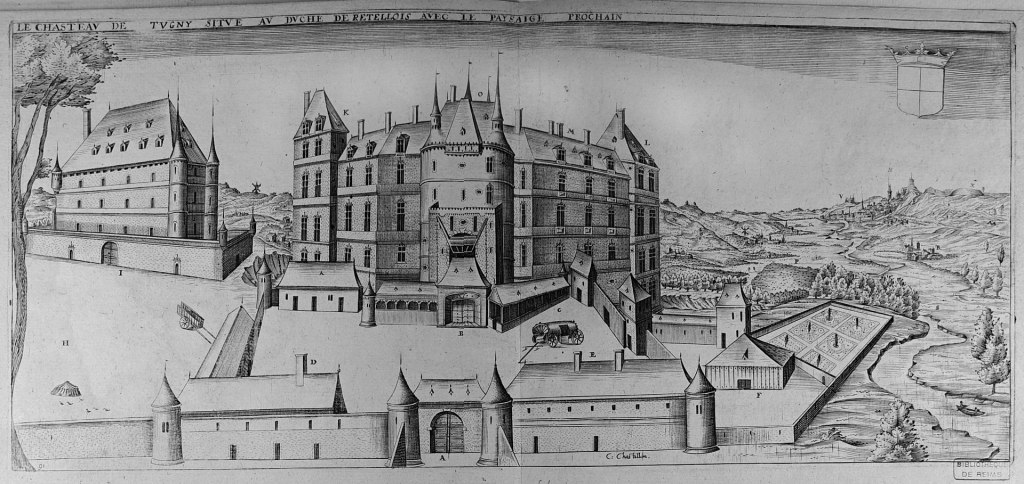
The next brother, Henri, was given one of his father’s titles, Count of Chaligny. Chaligny was a lordship in Lorraine, south of Nancy on the Moselle river. Its castle was destroyed in war in 1467 and not rebuilt. Created a county by the Duke of Lorraine in 1562, it would later return to the ducal domain when Henri’s son sold it to Duke Charles IV in 1624. Young Henri served in the League army in Paris 1590, then with his brother Mercoeur in Brittany and went into exile with him and military service in Hungary. He died in Vienna in 1600. By this point he was called the Marquis de Moy, after his marriage to Claude de Moy, heiress of these estates (sometimes spelled Mouy or Moÿ) on the river Aisne in eastern Picardy (not far from the town of Guise). Its castle had been destroyed by the Spanish in 1557, so the couple lived at the Château of Thugny-Trugny, further upriver in the Ardennes. This splendid castle had been built by Claude’s maternal grandfather, Jean-Jacques de Suzanne, Comte de Cerny. It was, along with Moy, sold by the Lorraine-Chaligny heirs in 1721 to the wealthiest man in France, Antoine Crozat. During the Revolutionary period the château passed to prominent families (Béthune, La Tour du Pin), then to various others in the nineteenth century until it came into the hands of the Caumont-La Force family, who own it today.
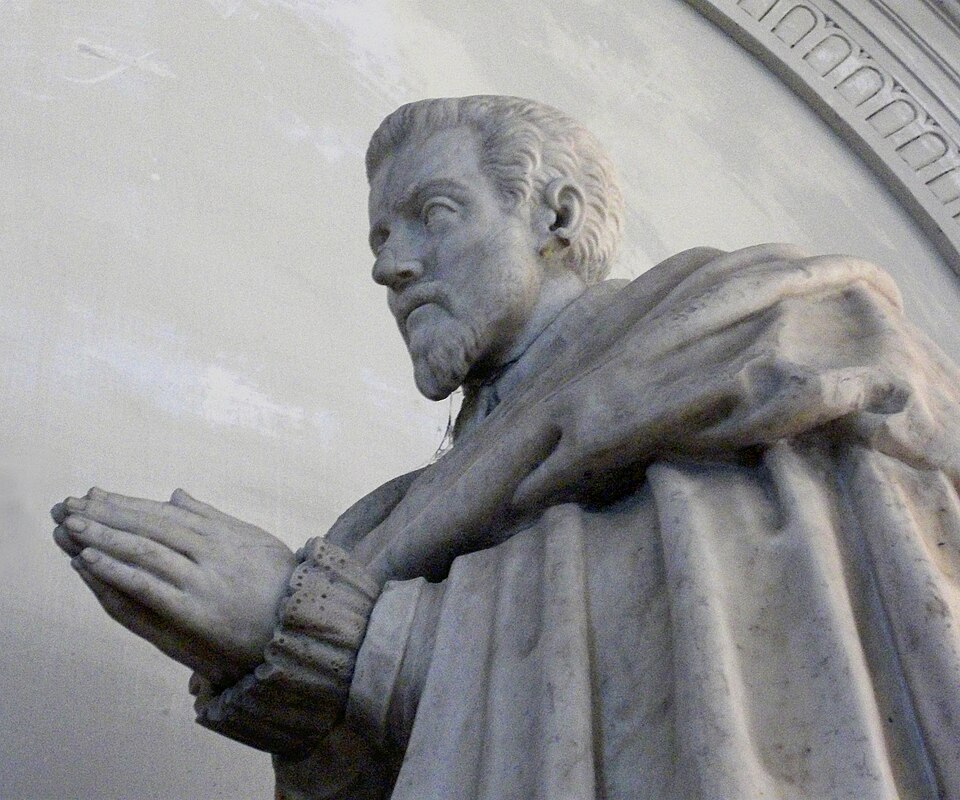
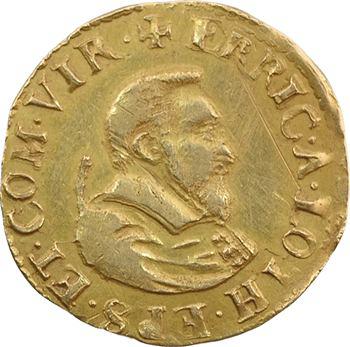
The Marquis de Moy left three sons, but first we need to include the fourth brother of the Duke of Mercoeur. Eric of Lorraine had an unusual name for this dynasty, probably named for his cousin Dorothea of Lorraine’s husband, Eric, Duke of Brunswick-Calenberg (they were married in November 1575 and he was born the following March). Eric of Brunswick was an important re-linkage for the House of Lorraine with the Catholic princes of Germany (he being Catholic, unlike most of his family, Brunswick-Wolfenbüttel), especially as the very same year of their marriage, his half-sister Louise married the King of France. When he was seventeen, Eric of Lorraine was earmarked to take over the bishopric of Toul, but a minor succeeding a minor was not seen as good practice, so his tutor was appointed instead (though the Duke of Lorraine and the Pope himself had to force the cathedral chapter to accept this). Yet when an age dispensation arrived for Eric from Rome in 1597, he was given Verdun instead of Toul. Initially, Bishop Eric was a reformer, very much in step with this era of renewed energy in reforming the Catholic Church; but in 1605, he fell in love and married in secret. He was found out and suspended from his position as bishop and told to live with the Jesuits in Pont-à-Mousson. In his defence, he claimed that he had been bewitched—isn’t it always the woman’s fault?—and was eventually exorcised and returned to his diocese in 1608. He then turned around and renounced it in favour of his nephew in 1611 and became a Capuchin monk. He died a decade later in 1623.
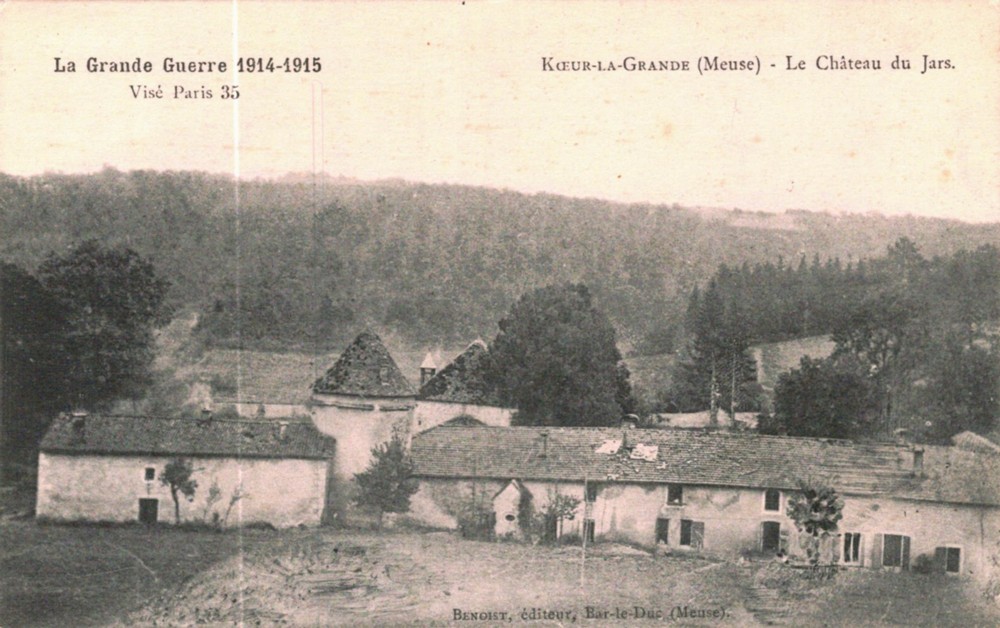
1623 was when things really heated up for his successor as Bishop of Verdun. Charles de Lorraine-Chaligny, eldest son of the Marquis de Moy (the one cheated of his inheritance to the ducal title of Mercoeur, which should have been his by French law), had reluctantly accepted his uncle’s donation of the episcopal title at Verdun in 1611. He had wanted to marry, but agreed that it was in the interests of the family to hold on to this strategic bishopric. He too was a reformer, and worked to eradicate any Protestant influence in his diocese, but also to defend the traditional independence of the prince-bishopric against the pressures of the French occupation. When tensions were high, he retired from Verdun to the countryside, to his castle at Koeurs (today Koeur-la-Petite) in the Duchy of Bar on the Meuse river. Its old castle had been a favoured residence of King René d’Anjou (also duke of Lorraine and Bar), whose daughter Marguerite, the future Queen of England, was born here in 1420, and returned here for several years as an exile with her son the Prince of Wales in the 1460s. A century later, the castle was given by the Duke of Lorraine and Bar to Catherine de Lorraine-Aumale, Dowager Duchess of Mercoeur, who held it for ten years until her death in 1606. It was later the centre of a marquisate created in 1717 by the Duke of Lorraine for the Manonville family.
In 1622, political pressure from France became too great—the King’s officers harassed him and his administration at every turn—and Bishop Charles resigned from Verdun to become a Jesuit and moved to Rome for training. He was later sent on missions to Bordeaux, 1625, and Toulouse, 1631, where he died.
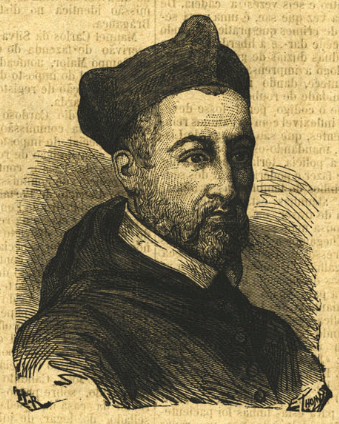
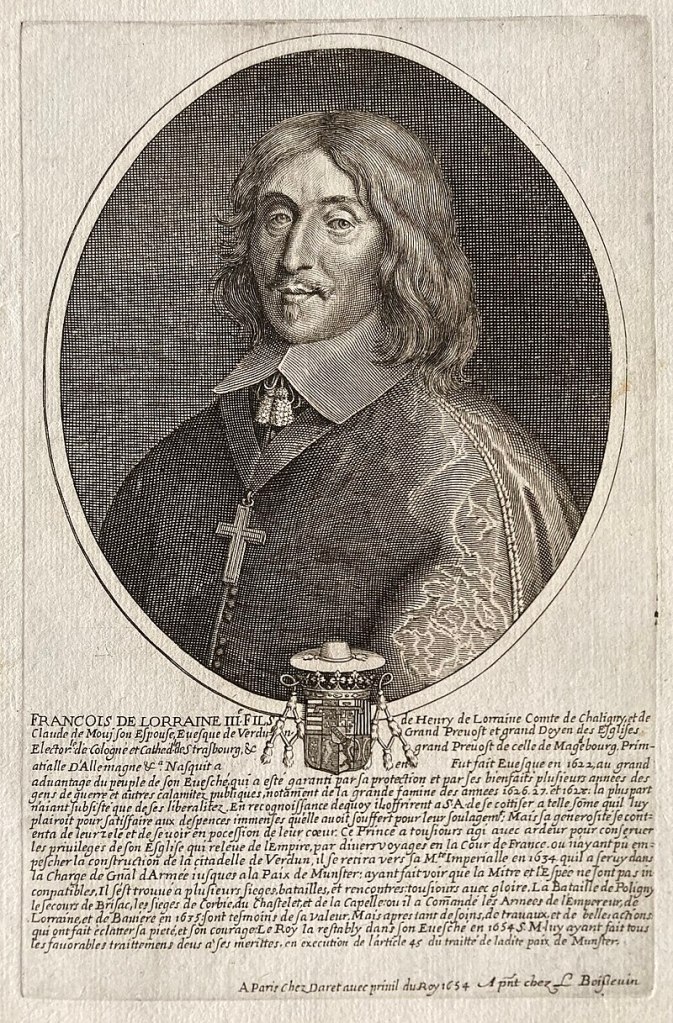
The Bishopric of Verdun was next given to Charles’ youngest brother, François, who continued the struggle against French domination, but went too far in 1626 when he excommunicated the workers who were destroying churches as they built a new French citadel. He realised his mistake and fled to Cologne rather than be arrested. He stayed here for many years, becoming Dean of the Cathedral in Cologne, until he finally returned to Verdun after the Peace of Westphalia in 1648. Never fully ordained, he quit his ecclesiastical duties in 1661 and married a local noblewoman, giving her the château of Thugny as her dower residence, and died ten years later in Lorraine. They had no children, but he had several illegitimate children from previous relationships.
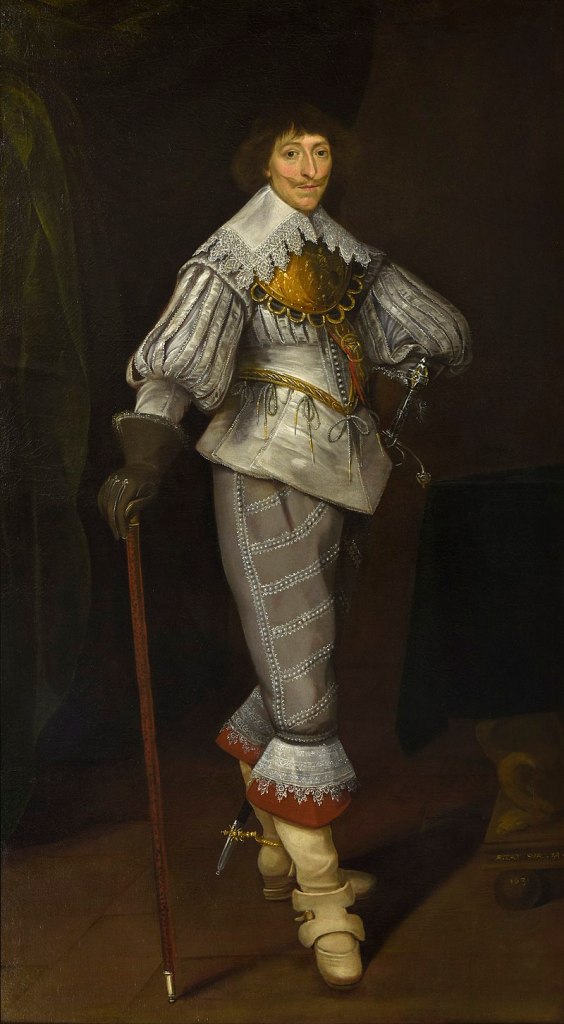
But Bishop François was not the last member of this branch of Lorraine-Mercoeur. Henri, Marquis de Moy and Comte de Chaligny lived a relatively quiet life at the court of Lorraine or in the countryside at Koeurs or Thugny. Fortunately for us, he had the time (and the money) to have this fantastic portrait painted by Ferdinand Elle (at least attributed to) in about 1631. He was a favourite of the court of Duke Henri II, and in the next reign, played his only significant part in the history of Lorraine when Duke Charles IV appointed him Lieutenant-General of Lorraine and Bar in late 1633, on the eve of an invasion by the armies of France, in the hopes that—since he perceived that their quarrel was with him personally—it might preserve the sovereignty of the duchies. It did not, yet when Charles was in exile, his cousin the Marquis de Moy continued to lead the Lorraine troops, though eventually he brought them into the service of France (and against Charles, who was fighting in the armies of Spain). Henri de Lorraine-Chaligny never married (though he had at least one child by a ‘concubine’). He lived for many years, dying in 1672, having named his nephew the Prince of Ligne his heir, on the condition that he take the name and arms of Lorraine-Moy (which he didn’t do). Since Ligne was a prince from the Spanish Netherlands, he had to fight long and hard for his succession to the lands in France and Lorraine—a fascinating paper trail I found one day in the archives in Nancy, and which someone should do a phd about (in fact this entire branch of the House of Lorraine is vastly under-studied).
*
By the 1670s, all three of the lesser known cadet branches of the House of Lorraine were extinct, and the three dukedoms—Aumale, Mayenne and Mercoeur, and Aiguillon too—had passed into other families: Savoy, Gonzaga, Vendôme. They left behind no great châteaux of these names; only the grand Hôtel de Mayenne in Paris remains as testament to their proximity to power in France at the height of the French Wars of Religion.
(images Wikimedia Commons)


One thought on “Lorraine Cadets: Dukes of Aumale, Mayenne and Mercoeur, Part II”