In the sixteenth century, the House of Lorraine acted as almost a royal family in waiting to the House of Valois in France. Its duke, with support of his cousins the House of Guise, even put forward a bold claim to the throne in 1589, but was blocked by the stronger claims of the House of Bourbon. I have written about the Guise already, in one of my very first posts here, and about the major cadet line of that family, the dukes of Elbeuf. In this post, I will focus on three other cadet lines of the House of Lorraine that were prominent in France’s Wars of Religion of the later sixteenth century: Aumale, Mayenne and Mercoeur. Two were Guise cadets, while the third was a cadet of the main ducal line, but who acted in concert with the Guise in French politics. Although set up to form new cadet branches of their own, each of these three titles were borne by only two dukes, a father and a son, but their impact on the history of France was gigantic.
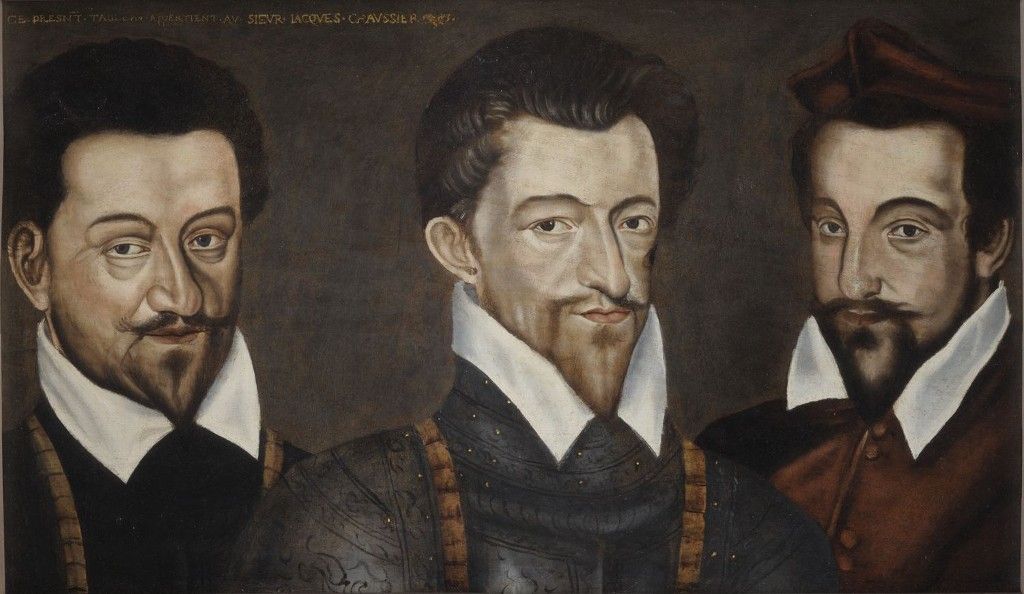
Altogether, the House of Lorraine collected eleven dukedoms, from the ancient semi-sovereign dukedoms within the Holy Roman Empire (Lorraine itself and Bar), to those created by the kings of France (Guise, Aumale, Mayenne, Mercoeur, Elbeuf, Aiguillon and Chevreuse), and two added later by marriage (Joyeuse and Angoulême). It was the most powerful family the Kingdom of France had ever known outside the extended royal dynasty itself, and was always extended special favour and privileges by French monarchs—sometimes out of friendship and kinship, sometimes out of pure fear. At one point in the sixteenth century, they held the three most senior offices of the royal household (Grand Master, Grand Chamberlain and Grand Equerry), as well as the most senior archbishopric in the Kingdom (Reims), which meant that at the coronation of Henry III in February 1575, three of the six lay peers were Guisards, while a fourth, the Archbishop of Reims, officiated. You can see why this family has fascinated historians and the general public for centuries, and were seen as a huge threat by many of the high aristocracy of France. Their position was solidified even more as the last of the Valois helped them forge a new rank, the prince étranger, as members of a sovereign foreign house, lower than the princes of the blood but superior to the dukes and peers of France.
Unlike the head of their house, the Duke of Lorraine, whose power lay chiefly outside the borders of the Kingdom of France, the stories of these three dukedoms, Aumale, Mayenne and Mercoeur, cover three interesting provincial powerbases: Normandy, the Loire Valley and the Auvergne, respectively. But although these were their feudal bases, these dukes centred their power much more on the provincial governorships they held, almost like mini-kingdoms: Picardy for Aumale, Burgundy for Mayenne and Brittany for Mercoeur.
The first of the three, Aumale, traces its name back to an ancient county formed within the Duchy of Normandy in the eleventh century. I’ve written about it before in a blog about the dukes of Albemarle, an English title in the later seventeenth century. The small town and its château guarded the ancient frontier between Normandy and Picardy, and was sometimes spelled Aumâle with the â indicating that some of the letters (in this case an ‘r’) have fallen away, but retaining in modern French an ‘a’ that is pronounced just slightly longer. The county was held by Anglo-Norman families for two centuries, until Normandy itself was confiscated from the English kings in 1204. The castle here lost therefore its strategic border function, and though it was rebuilt a few times (the last in seventeenth century), it fell to complete ruin. Today the castle’s main entrance remains, but the site itself is occupied by an old folks home. What is more impressive still today in the town of Aumale is the church, built in grand high gothic style to serve as the family sepulchre for this junior line of the House of Guise—which in the end lasted only two generations. The main Guise burial spot was only a few miles down the road in Eu, on the coast of the English Channel.
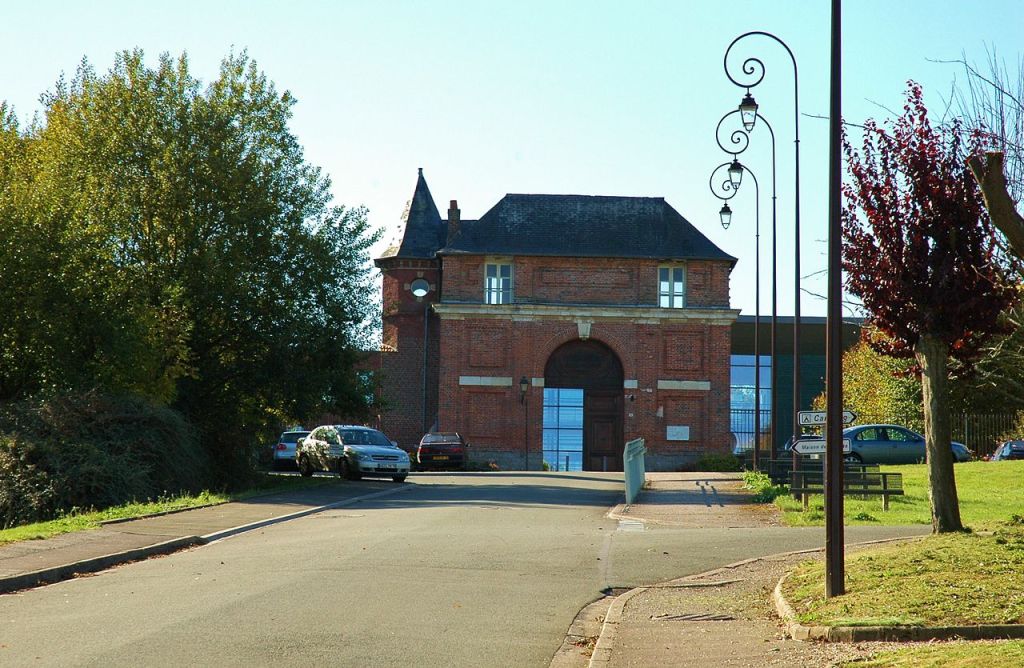
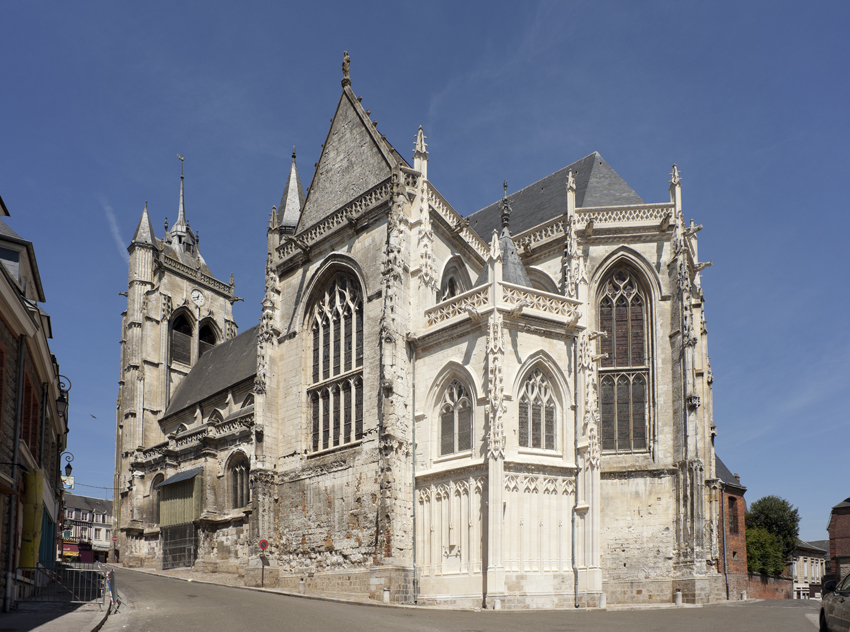
Before Aumale became a Guise possession, it had been handed out by the French crown to the counts of Dammartin (a noble family from the Ile de France), 1224, then passed by marriage to a younger son of the King of Castile, 1239, then by another marriage, to the counts of Harcourt, 1343. The Harcourts were one of the major noble families of Normandy and the County of Aumale added to their already large feudal domains at Harcourt, Elbeuf and Lillebonne. But in 1452 all of these passed to another son-in-law, the Count of Vaudémont, whose main lands were in Lorraine (thus outside the Kingdom of France), and in 1473 to the Duke of Lorraine himself by inheritance. Duke René II made a monumental decision in 1508 to split his inheritance between his eldest and second sons, with Antoine getting everything outside French territory (Lorraine and Bar), and Claude getting everything inside, which included the Norman counties of Harcourt, Aumale and Lillebonne (not to mention his principal estates of Joinville in Champagne and Guise in Picardy). Claude was sent to live at the French court where he became a close companion in arms to his cousin, King François I.
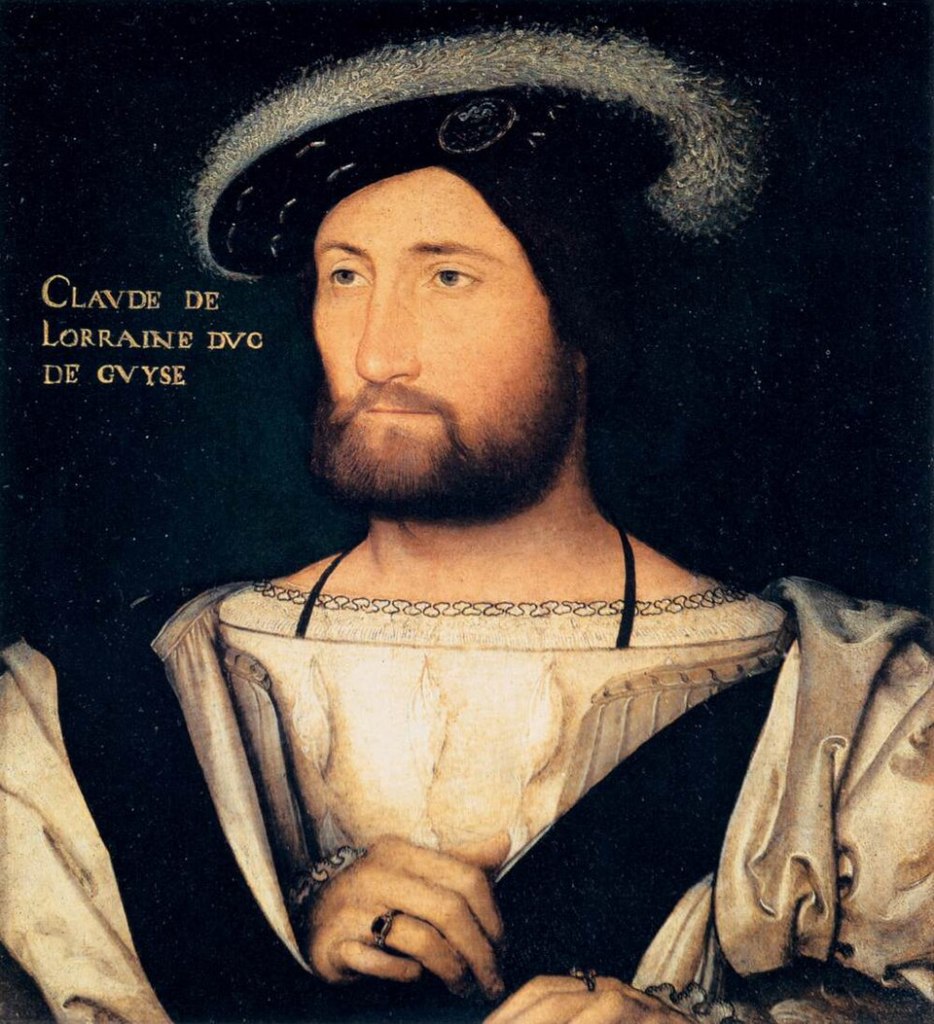
Claude, 1st Duke of Guise’s story is told in the blog post about the Guise. He was loaded down with honours and founded one of the most successful military dynasties in Europe. In July 1547, in preparations for the coronation of the new king, Henri II, Claude’s eldest son François was honoured with his own duchy-peerage, erected on his estates at Aumale, with the intriguing clause in the letters patent specifying that when his father died and he succeeded as Duke of Guise, François would cede this new duchy to his younger brother, Claude. This came to pass only a few years later, in 1550.
Alongside the Norman lands of Aumale, Claude was also given the significant barony of Boves in neighbouring Picardy, which would form his real power base in the years to come. Boves was southeast of Amiens, and had been the seat of a line of independent lords in the Middle Ages—they were also vicomtes or secular guardians of the Abbey of Corbie, one of the most important in the north of France. Interestingly, the fortress and lordship of Boves had been acquired much earlier by the House of Lorraine, in 1270, by marriage to a local heiress. Thy rebuilt the tenth-century fortress into a modern château in the fifteenth century. This remained the key stronghold of the dukes of Aumale until it was confiscated by Henry IV in 1595 and dismantled. The fief was given out to a loyal but less highly ranked servant of the Bourbons, and held by their descendants until the end of the ancien régime. Very little remains today.
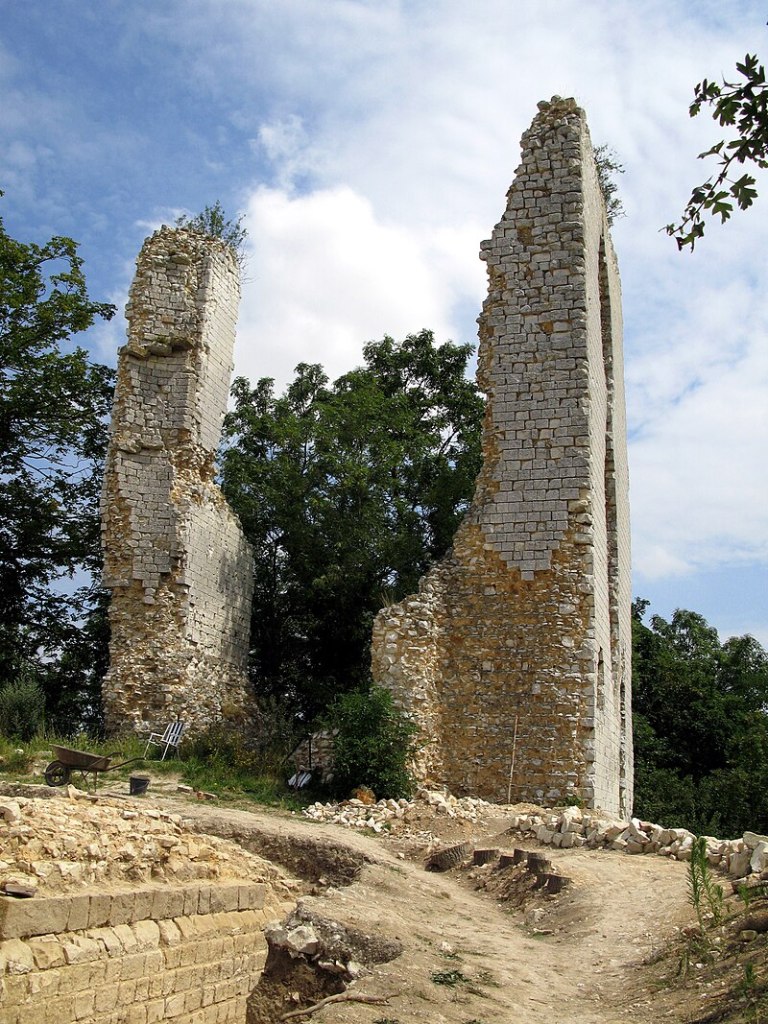
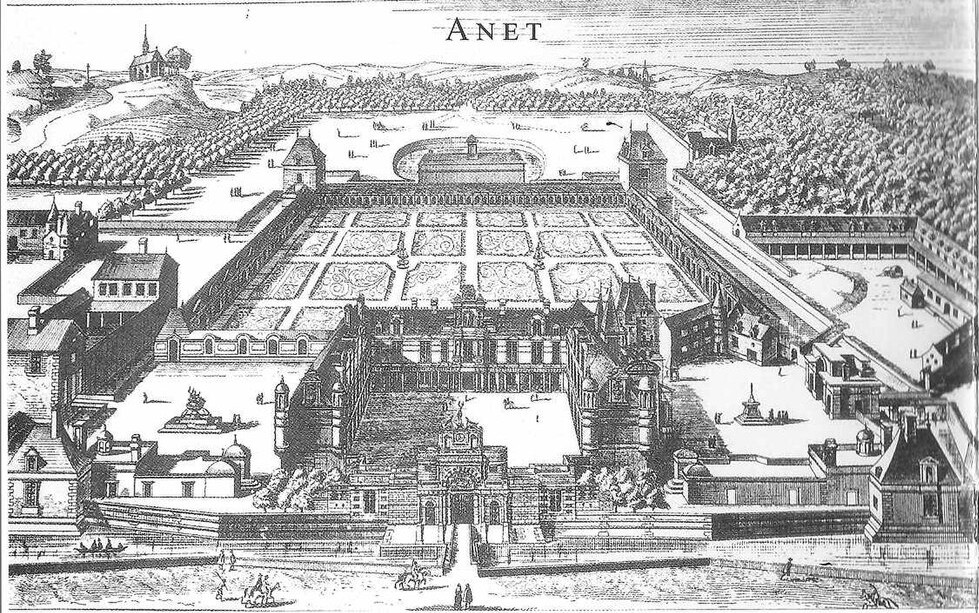
Claude de Lorraine, named for his father, was born at the main Guise seat of Joinville in Champagne in 1526. As a third son (the second was a cardinal and archbishop), he used the title ‘Marquis de Mayenne’, about which more below. In August 1547, he married Louise de Brézé, the younger daughter of Diane de Poitiers, mistress of Henri II, who had just succeeded his father as King of France earlier that year. This was a good move to ensure that Guise favour from the previous reign continued into this one. When Diane died in 1566, Louise inherited her amazing château of Anet, in the borderlands between the Ile de France and Normandy (near Dreux), one of the old Brézé estates that Diane had transformed into a Renaissance art wonder in the 1540s. Its story belongs to a future post about the duchy of Valentinois (Diane’s title). It now formed the second seat for the Duke and Duchess of Aumale and their son Charles, who built a new convent here for the Cordeliers in 1587. Anet was also confiscated in 1595, and was given to Marie de Luxembourg, Duchess of Penthièvre (as a major creditor of the 2nd Duke of Aumale) in 1610—we will encounter her again below.
Louise de Brézé was not the primary heiress of Diane de Poitiers, but by the 1560s, her elder sister, Françoise, Duchess of Bouillon, was in financial trouble, so the Duke and Duchess of Aumale purchased her County of Maulevrier and barony of Bec-Crespin with its mighty castle (Brézé properties in the Seine valley of Normandy). By 1570, the Aumales were amongst the wealthiest landowners in Normandy. They named their eldest son Henri ‘Comte de Valentinois’, so perhaps it was considered that he would inherit his grandmother’s vast estates in the far southeast of France (in the Dauphiné), though in the end these passed to the La Marck-Bouillon family. The boy himself died at age ten.
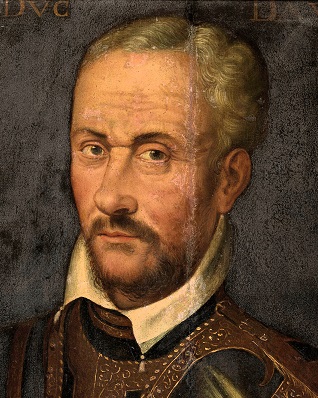
When he became Duke of Aumale in 1550, Claude de Lorraine took over from his father as one of the leading courtiers and military commanders in France, inheriting the posts of Grand Veneur of France (Master of the Hunt) and Governor of Burgundy. He was already, since 1548, Colonel-General of the Light Cavalry. As such, he led royal troops in north Italy and along the northern frontiers of France, building up his power base in Picardy in the process. As a reward for his success in expelling the English from Calais in 1559, he was named Governor of Piedmont by Henry II. The King died that same year, and although Aumale was unable to prevent the fall from power of his mother-in-law Diane de Poitiers—obviously out now that the King was dead—he did stay in power himself, as part of the Guise regime that dominated the reign of the teen-aged François II. After the eldest brother Guise’s assassination in 1563, Aumale and his brother the Cardinal of Lorraine became heads of the family, looking after their young nephew, Henri, now the 3rd Duke of Guise. The young duke was also Governor of Champagne, so Aumale effectively governed both Burgundy and Champagne, two of the most important provinces in France. He began to cultivate a following amongst the most fanatical Catholics of France (while the Cardinal was in fact more moderate). In particular, he pursued a family vendetta against Admiral Coligny (accused of his father’s assassination) and arranged for his murder during the Massacre of St Bartholomew’s Day in August 1572. Aumale himself was then killed during a siege of the Protestant stronghold La Rochelle in March 1573.
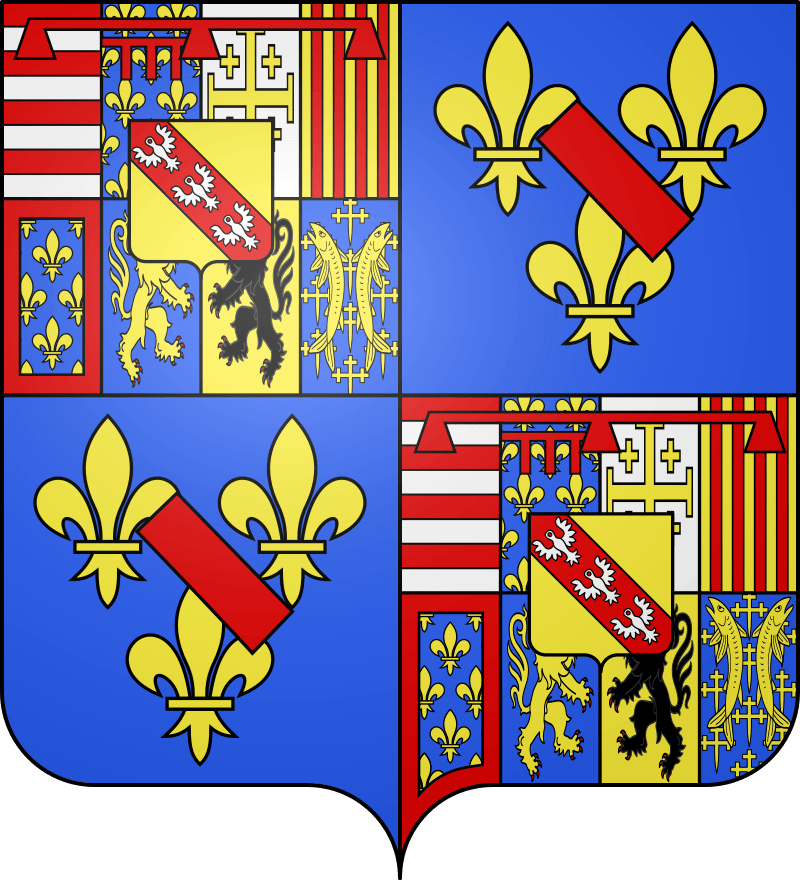
His son Charles was now 2nd Duke of Aumale. Like his father, he used a coat-of-arms that quartered the Guise arms (Lorraine with a red label) with the arms of the dukes of Bourbon (for his grandmother, Antoinette de Bourbon, wife of the 1st Duke of Guise). A younger brother, another Claude, became a Knight of Malta and was thus known as the ‘Chevalier d’Aumale’. Nominally General of the Maltese Galleys, he was in fact an important commander of the Catholic League in France—one of the most militant Catholics—and died fighting against the forces of the Protestant Henri de Navarre (Henry IV) in 1591. This generation of the family also included three abbesses ruling over major religious houses (Faremoutiers, Soissons and Chelles), as well as two duchesses: of Mercoeur (see below) and of Luxembourg-Piney.
The 2nd Duke inherited his father’s post of Grand Veneur, but not the government of Burgundy—Henry III was determined to weaken Guise power. The post of Grand Veneur itself was also made less prominent in the reign of Henry III—less passionate about hunting—who reduced its funding levels. Aumale thus found himself on the outside of the circles of power and soon joined other disgruntled princes and aristocrats like the King’s younger brother, the Duke of Alençon in court plots and factions. Unlike Alençon, who was religiously ‘fluid’, Aumale was, like his father, a much more convinced Catholic—perhaps even more so, as he had spent time being educated in Lorraine by Jesuits at their academy in Pont-à-Mousson. When Alençon died in 1584, Aumale was thus doubly angered at the idea of the heir to the throne now being the heretic prince, Henry of Navarre. He thus was an avid participant in the re-founding of the Catholic League with his Guise cousins later that year. From his base at the Château de Boves, he rallied his family’s Picard clientele and became a thorn in the King’s side, who refused to make him Governor of Picardy, which Aumale thought was his right. When the League took over Paris and chased the King out in Spring 1589, Aumale was named governor of that city, and helped re-form a Catholic government for France—and by the end of the summer, the League did name him Governor of Picardy. After the King’s murder in August, Aumale led League troops from Picardy into Normandy to fight against Henry of Navarre who now called himself Henry IV.
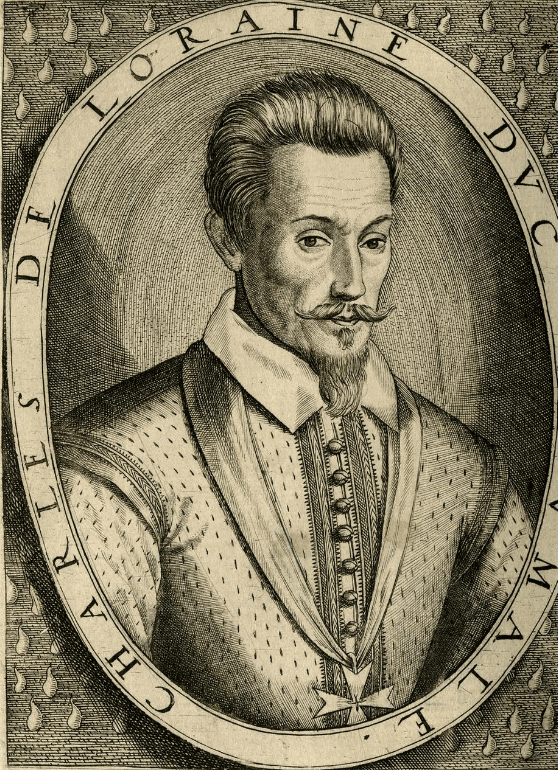
By 1595, Henry IV had asserted his position as king of France, and the Duke of Aumale was one of the last of the holdouts. The King made offers, and even some of his family members urged reconciliation. But Aumale, ever the most intense of the Guise, chose exile instead. He had already been declared guilty of lèse majesté by Henry III back in 1589, and now the Parlement of Paris ordered his execution in absentia—which meant in legal terms that all of his lands and titles were confiscated by the Crown. Aumale served in Spanish armies fighting against France in Flanders in 1597 then against the Dutch in 1600, then retired to a fairly obscure existence at the Spanish court in Brussels where he died . . . thirty years later.
Back in 1576, Aumale had married his first cousin, Marie de Lorraine-Elbeuf, and they had two daughters. While the younger married another prince in Spanish service (Ambrogio Spinola), the elder, Anne, managed to return to the French court, and in 1618 was given her father’s confiscated Duchy of Aumale by the King at the time of her marriage to Henri de Savoie, Duke of Nemours (whose mother was Anne d’Este, Dowager Duchess of Guise). The Duchy would stay in the family of Savoy-Nemours until 1652, then passed to another daughter, Marie-Jeanne-Baptiste, who became Duchess of Savoy. She sold it to Louis XIV’s illegitimate son the Duke of Maine in 1686, and it passed down from him to his son, then nephew, the Duke of Penthièvre (in 1776), whose daughter took it in marriage to the House of Orléans in 1793. The last flourish of the title Duke of Aumale came in the 1820s, when the Duke of Orléans, Louis-Philippe (the future king) gave it to his fifth son, Henri. This Duke of Aumale was one of the leaders of the House of Orléans in the nineteenth century, a collector and a builder (notably at the Château of Chantilly), and kept the flame of Orléanism as a political movement alive in France until his death in 1897. The lands are long since dispersed, but in recent years one of the grandsons of the Count of Paris (head of the House of France until 1999), Foulques d’Orléans (b. 1974), has been called Duc d’Aumale.
**
Shifting back to the sixteenth century, we come to a title, Mayenne, that did not have such a long afterlife, nor even any precedent—or did it? It is a little confusing to try to discern the difference between Maine and Mayenne (which are different, though geographically proximate). I suspect the title Duke of Mayenne was deliberately conflated with the older title Count of Maine since it hearkened back to a period of great power for the House of Lorraine when the family also controlled the domains of the House of Anjou–which included Maine.
The ancient province of Maine, always a buffer zone between the powerful territories of Ile de France, Normandy, Brittany and Anjou, got its name from the Celtic tribe that lived here, the Cenomani, whose name over the centuries morphed into Cemaine then Le Maine by the Middle Ages. There was a Duchy of Cénomannie in the era of early Frankish kings, held by Neustrian nobles Chrotgar and his son Charivius in the early eight century; then given as an apanage to younger royal sons: Grifo, half-brother of Pepin the Short in 748; Charles the Younger, second son of Charlemagne in 790; and so on. This region between the Frankish heartland and the Loire valley (and the border with Aquitaine) was sometimes called the Marches of Neustria, and was quite extensive, but over time it contracted to the diocese of Le Mans (whose name had the same origins) which was one of the oldest Christian centres in Gaul, dating from the late third century. This smaller area became the County of Maine (or ‘Le Maine’) and was held from the 830s by the Rorgonids (descendants of Count Rorgon, a son-in-law of Charlemagne and relative of the Robertians who eventually became the Capetians). They were succeeded as counts of Maine by the Hugonids in 886, who became vassals of the counts of Anjou in about 1000. From 1110, the County was held directly by the Count of Anjou who, from 1154, was also the King of England. Both Anjou and Maine were confiscated by the French Crown in 1204, and later given to a new Capetian House of Anjou, and then to a second House of Anjou, which died out in 1481 with Charles, Count of Maine (and Duke of Anjou), and these lands passed back to the French royal domain.
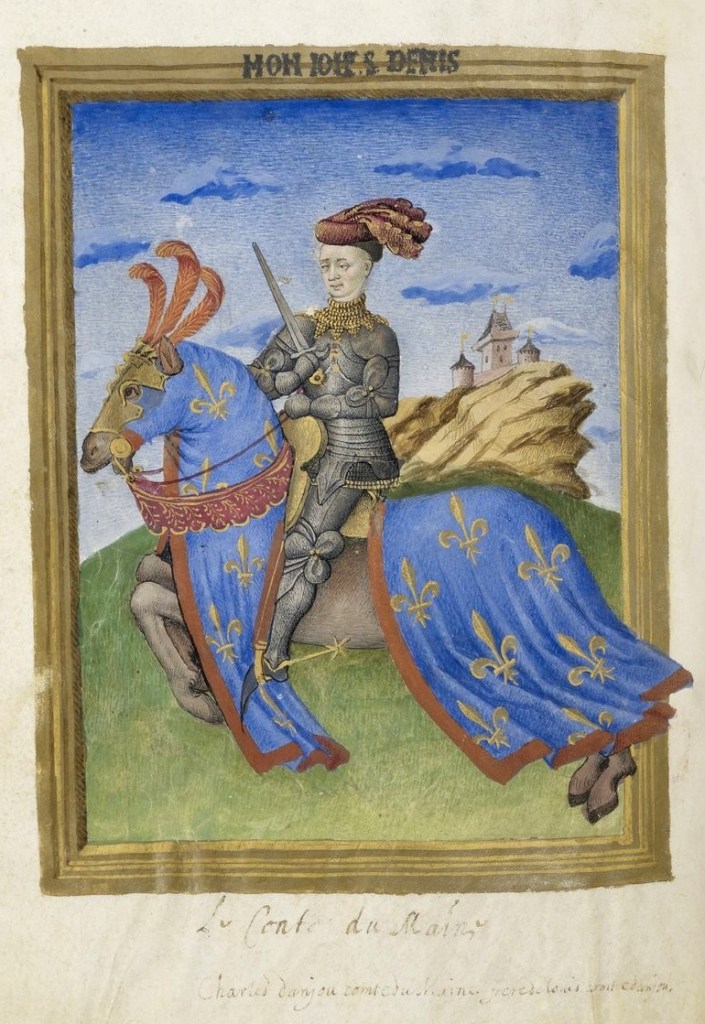
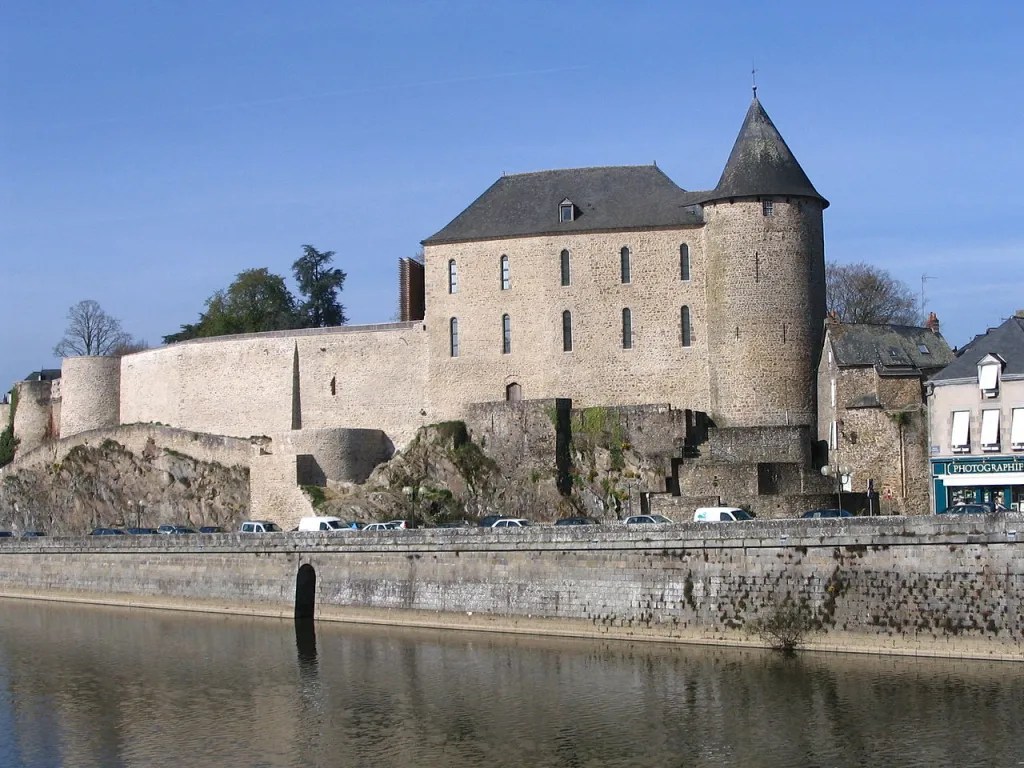
In the western part of this territory was a lordship called Mayenne, named for a small river that flows into the river Sarthe and becomes the river Maine (to add even more to the confusion of names) which flows through the city of Angers and into the Loire. Both rivers derive from the word Meodena, and are not related to the above word Maine (and since modern French departments are named for rivers, not provinces, it is the river Maine that gives its name to the Department of Maine-et-Loire, while the Department of Mayenne is next door). The Château of Mayenne, on the river of the same name, gave its name to a line of lords from the ninth to the thirteenth century. After this, it passed to the Avaugour family from Brittany, then the houses of Blois and Anjou, and to the Crown in 1481 (along with Maine, as above). The French king gave the lordship of Mayenne to the Count of Armagnac, then to the Duke of Lorraine in 1495, who then gave it to his son Claude in 1508 (as with Guise and everything else French, as above). Claude, already Duke of Guise, was created Marquis of Mayenne in 1544, and this was given first to the Duke of Aumale in 1563, then when he died in 1573 to his nephew Charles, second son of the 2nd Duke of Guise. Charles was created Duke of Mayenne later that year. The family now had three duchy-peerages.
The Château of Mayenne, built by the counts of Maine to defend against the Bretons in the ninth century was built and rebuilt many times over the following centuries. By the fourteenth century its owners lived elsewhere so it was used as a garrison, and it was maintained as such under the Lorraine princes. Confiscated from the Duke of Mayenne by Henry IV in 1595, it remained a Crown possession. Its defensive towers were dismantled in the 1660s, and in the 1740s it was converted into a prison—the prison was finally closed in 1936 and the castle was sold to the town. Slow restoration projects revealed that much of the original Carolingian foundations remained—a rarity—and a new museum was opened to the public in 2008.
Charles de Lorraine, 1st Duke of Mayenne, is distinguishable in contemporary depictions as the more burly of the three Guise brothers. His character seemed to match: while Henri, 3rd Duke of Guise, was the charismatic one, and Louis, Cardinal de Guise, was the scholar (though by no means a pious churchman, engaging in many affairs with the women of the Valois court), Charles was more vibrant, enjoying a good party and the bottle (which often led to violence). After their father’s assassination in 1563, Charles was given the office of Grand Chamberlain of France. He gained experience on the battlefield, fighting for the Crown in the first Wars of Religion, and abroad against the Turks (in the service of Venice). In 1573, he not only inherited Mayenne from his uncle Aumale, but also the position of Governor of Burgundy, allowing him to stand on near equal par with his older brother as Governor of Champagne. For his personal coat-of-arms, he quartered the arms of Lorraine-Guise with those of his mother’s family, the Este of Ferrara.
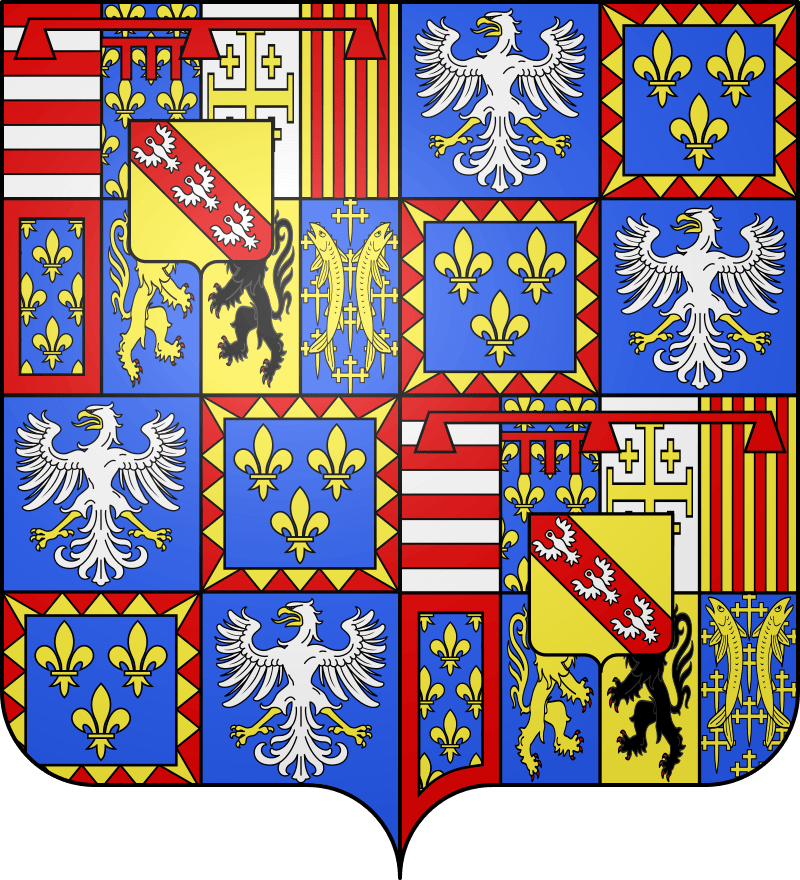
In 1574, the new Duke of Mayenne went with Prince Henri d’Anjou to Poland, where he’d been elected king, then joined another campaign against the Ottomans in Hungary. Back in France, Mayenne married an heiress, Henriette de Savoie-Villars, who brought to the marriage a huge dowry including lands in the southwest of France, notably the County of Montpezat (more on that below), as well as the promise of her father’s office of Admiral of France, to which Mayenne succeeded in 1578. By this point, all three Guise brothers, and their Aumale cousins, were heavily involved in the development of the Catholic League. Despite King Henry III’s opposition to this group, Mayenne was given full command of a royal army in 1580, to suppress a Protestant revolt in Dauphiné. Increasingly militant in his Catholicism, he was part of an aborted plot to invade England in 1583, and the next year was a leading force in the re-creation of the Catholic League (accompanied by the Treaty of Joinville in December, with the King of Spain, saying they would never recognise Henry of Navarre as heir to the French throne). He mobilised his clientèle in Burgundy and in July 1585 he and his brothers forced the King to agree that the Protestant Henry of Navarre was not the heir. Pushing further, in May 1588, the King was forced to pledge his support to a crusade against heresy in France, with Mayenne as its leader. But he refused to fund the military buildup needed—one of the contentious issues that led to an Estates General being called in Blois in December, where the famous murders of Mayenne’s brothers, Guise and the Cardinal, occurred on Christmas Day.
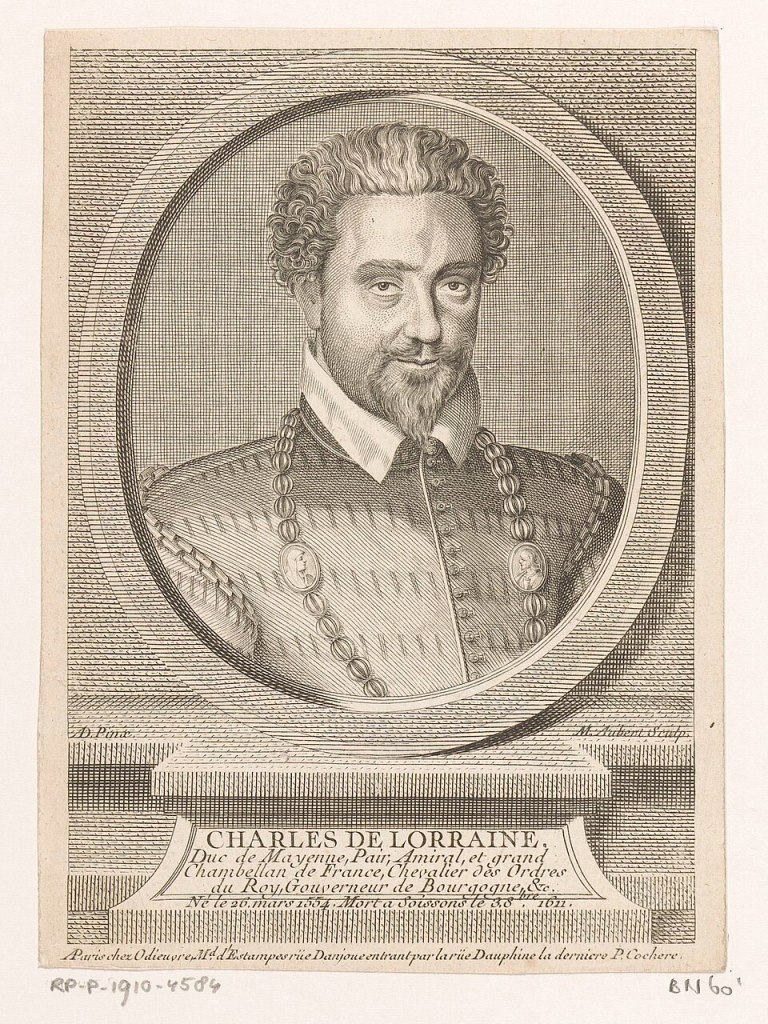
Mayenne escaped the King’s attempts to capture him that Winter, and when the League forces took over Paris and established a new government there, he was created Lieutenant-General of the Kingdom (February 1589), basically head of the government while the King was chased around the Loire valley, and ultimately assassinated in August. As Lieutenant-General, Mayenne lived in the Hôtel de la Reine (until recently the residence of Catherine de Medici), and appointed his allies to positions all over France, including his son (age 10) Governor of Normandy, his nephew Charles (the new Duke of Guise, age 13) Governor of Champagne, and his nephew Claude (age 12) Governor of the city of Troyes. He nominated men to vacant bishoprics which annoyed even the Pope. He led League armies against Henry of Navarre (now Henry IV), with Spanish aid—but continually losing ground. He and the other Leaguers regarded the elderly Cardinal de Bourbon as king (‘Charles X’), but when he died in 1590, some even considered nominating the Duke of Mayenne to the vacant throne. He agreed instead to back the candidacy of the Spanish Infanta (daughter of Philip II and Elisabeth de Valois), and convened a special Estates General to decide the matter, in late 1592 (the League proposed that the Infanta marry his nephew Guise, but Mayenne opposed it, perhaps from personal jealousy). All winds went out of his sails when Henry IV converted to Catholicism in July 1593, and by March 1594 Paris opened its gates to him. Mayenne retreated to Burgundy where the last battle of the Wars of Religion was fought, Fontaine-Française, July 1595, which lead to Mayenne’s submission in January 1596, in exchange for a large bribe, the post of Governor of Ile de France (minus the city of Paris itself), and three surety towns, including Soissons.
Soissons became a sort of mini-capital for the Duke of Mayenne. The Edict of Nantes, granting toleration to Protestants, did not apply here. In 1597 he engineered his cousin Mercoeur’s pacification (the last Lorraine hold out, see Part II), and fought with the King, not against him, against the Spanish at Amiens—where interestingly, his cousin Aumale was fighting in the opposing army. In 1599, Mayenne hosted a double wedding at Soissons between his son and daughter and the daughter and son of the Duke of Nevers. He lived his last decade in Soissons and died here in 1611.
The 2nd Duke of Mayenne, Henri, had already been named Duke of Aiguillon, as a wedding present from the King in 1599. This and other landed possession of this branch of the Guise family really accentuate the trans-regional nature of this family; and while Aiguillon was in France, in the far south, other properties he was set to inherit from his mother Henriette de Savoie were not: she was the Marquise of Villars, an old feudal lordship in a little known region called ‘the Dombes’, just across the Rhône river from France, in territory ruled by the dukes of Savoy. The Duke of Savoy had made Villars a county in 1497, then a marquisate in 1565. This area would not be fully incorporated into France until the mid-eighteenth century. Even further into Savoyard territory were the counties of Tende (guarding the passes over the Alps between Nice and the Piedmont) and Sommerive (Sommariva del Bosco, in Piedmont, about twenty miles south of Turin). Sommerive had been the title used by the 1st Duke’s second son, Charles-Emmanuel (who was named for the Duke of Savoy himself), who died relatively young in 1609. But Mayenne did not in fact inherit these properties: when Henriette died in 1611, Villars passed to her son from a previous marriage; while Tende had already been exchanged in 1581 with the Duke of Savoy for lands in the province of Bugey (adjacent to the Dombes)—notably the marquisate of Miribel and the barony of Sathonay. These were strategic lands on the eastern outskirts of the city of Lyon, and were incorporated into France by an exchange Henry IV made with the Duke of Savoy in 1601.
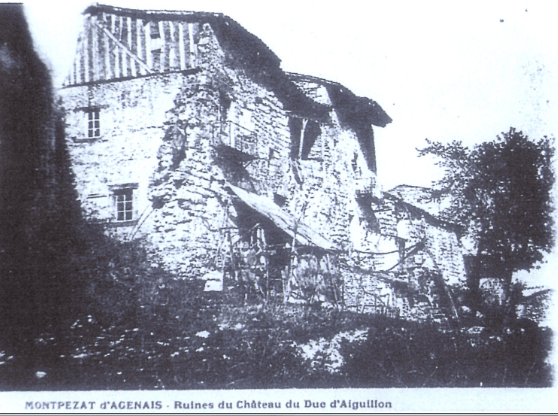
Aiguillon was a more important acquisition. A large estate at the confluence of the Lot and Garonne rivers, in the Agenais (part of Aquitaine), it had a thirteenth-century château (Château du Fossat), held for a long time by the Montpezat family. The Barony of Montpezat itself was a short distance to the east—its barons were considered the premier barons of the Agenais and were a major power in this region in the fourteenth and fifteenth centuries, before dying out in the early sixteenth century. The château de Montpezat was built and rebuilt many times in the many wars that ravaged this corner of France, and was completely dismantled during the Revolution. These two baronies and several adjacent lordships had passed to Honorat de Savoie-Villars from his mother, Françoise de Montpezat-Aiguillon. The old fortress of Aiguillon had been razed long ago, so the value was more in the agricultural revenues, plus the social prestige now extended for the Guise family in the southwest of France. In 1599, the King raised Aiguillon into a duchy-peerage for young Henri de Lorraine as a reward for his father’s loyalty at the end of the Wars of Religion.
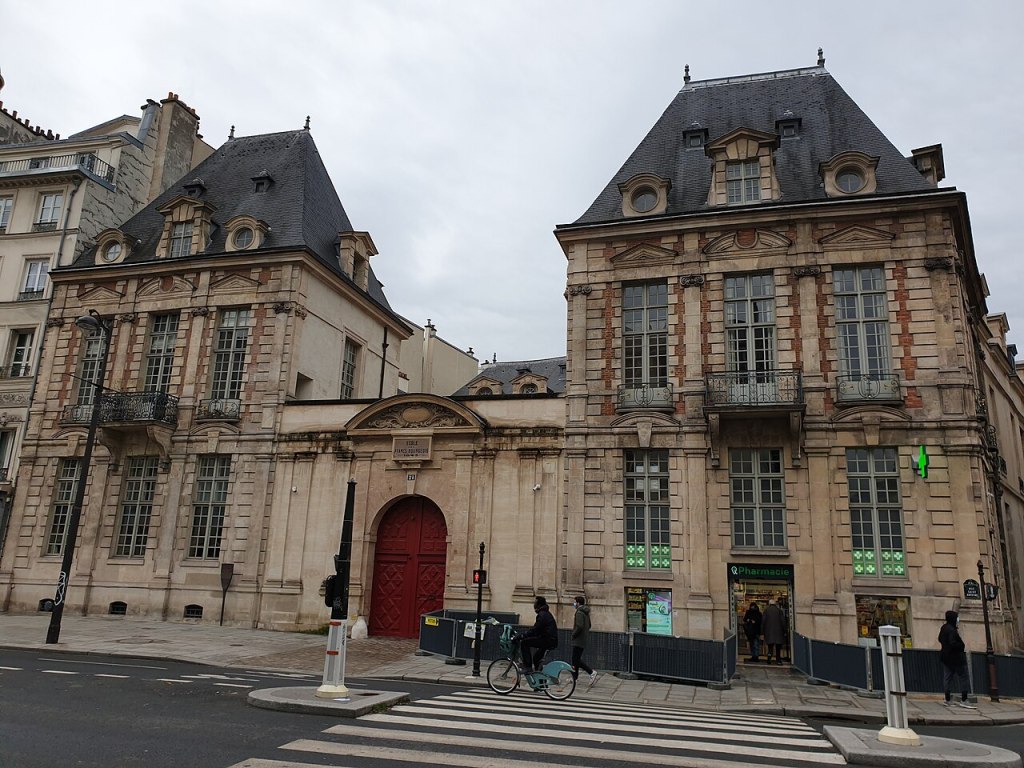
Late in life, the 1st Duke of Mayenne acquired a grand new townhouse in Paris, not too far from the Hôtel de Guise or the Hôtel de Lorraine—forming a cluster of residences just inside the eastern gate of the city, the Porte Saint-Antoine, guarded by the Bastille. This was the Hôtel de Boisy, rebuilt on top of an old royal residence (the Hôtel du Petit Musc) by Claude Gouffier, Marquis de Boisy, in the 1560s. In the 1570s it belonged to the Bishop of Langres, then in 1605 it was sold and renamed the Hôtel de Mayenne (also spelled Maine, Main, or Maienne). It would be enlarged and given a new façade on the rue Saint-Antoine in 1615, in the mixed red and white brick style we see in other buildings of this era (like in the Place des Vosges, nearby). Over this century, the residence passed to various princes of the House of Lorraine-Guise. Saint-Simon wrote of it with venom in his memoirs that it had the ‘odour of the League’ in it, and accused to the Guise family of plotting to bring down the state in its secret inner chambers—he was unaware that the Duke of Mayenne did not acquire it until long after the League had ceased to exist. By the memoirist’s day, it was lived in by the Princess of Lillebonne and her daughters (and called the Hôtel de Lillebonne), and after them it was the Paris residence of her brother, the Prince of Vaudémont, who modernised it in about 1710 and added the iron double-crosses of Lorraine in its windows—these remain to this day, and thrilled me when I first saw them while doing my research on the Lorraine family in Paris back in 2000. Back then, the Hôtel de Mayenne still had an ugly black middle section, built of materials that didn’t age as well as the original wings to the left and right—it was added in 1881 by the school that occupied the building from 1870, the Francs-Bourgeois. The school still occupies the building, but in 2010 completely cleaned the older wings and demolished the central piece.
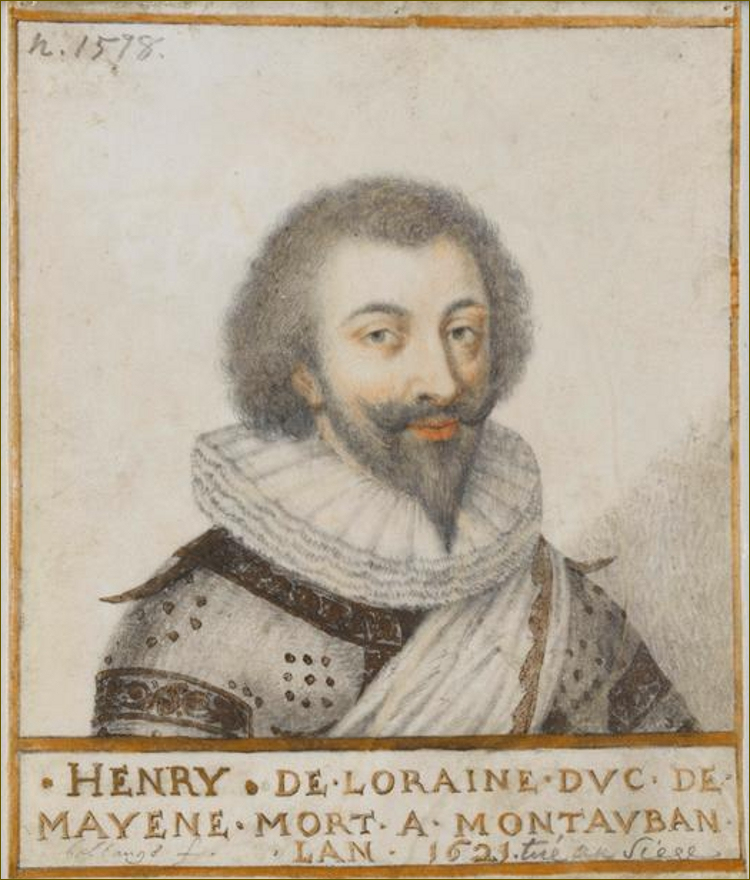
When Henri, 1st Duke of Aiguillon, succeeded his father as 2nd Duke of Mayenne, he also became Grand Chamberlain of France, though he rarely had opportunities to perform this ceremonial role as head of the King’s chambers, since Henry IV disliked the pomp and ceremony of court life, and for much of the early years of the reign of Louis XIII, the monarch was a minor. Nevertheless, the Guise saw a return of their fortunes, somewhat, since the Queen Mother, Marie de Medici was an ardent Catholic and generally favoured the Catholic grandees at court, and so did Louis himself (at least at first) when he took power from his mother from 1617. As a Catholic grandee, Mayenne was sent south—making good use of his family’s new connections in that region as Duke of Aiguillon—to lead royal troops suppressing a Protestant rebellion in 1621, but was shot in the head at the siege of Montauban and died.
There were no children from Mayenne’s marriage to Henriette de Gonzague-Nevers (who had died after only two years of marriage), so the duchies of Mayenne and Aiguillon passed by means of his sister Catherine’s marriage to Charles de Gonzague, Duke of Nevers, who later became Duke of Mantua (1627). Aiguillon was re-purchased by the Crown and re-created as a dukedom in 1634 for a favourite of Gaston d’Orléans, Antoine de Puylaurens, who suddenly died a year later, so it was re-created again, this time for Cardinal Richelieu’s niece, Madame de Combalet, 1638. The Duchy of Aiguillon stayed with the Richelieu family for the next two centuries, so will feature in a future post about that family. Several of Catherine’s Gonzaga sons used ‘Duc de Mayenne’ as a courtesy title, but in 1654, her heirs, now based in Italy, sold the Duchy to Cardinal Mazarin, who gave it to his niece Hortense Mancini 1661 on her marriage to the Duke of La Meilleraye. It passed through their heirs in various families in the eighteenth century (though the peerage was legally extinct), including the Grimaldis, and the Prince of Monaco still lists it among his titles. Meanwhile, Louis XIV, looking to revive ancient titles that would give an air of legitimacy to his illegitimate sons (like Vermandois and Toulouse) revived the title Duke of Maine for his favourite son, Louis-Auguste, in 1673. It was never a duchy-peerage, just a ‘courtesy title’, and ceased to exist with this prince’s death in 1736. As final evidence of the confusion of the titles, sometimes we see Louis-Auguste’s title spelled as Mayenne or Maienne.
[end part I; link to part II]

