You will never find the title ‘Duke of Fraser’ on the rolls of dukedoms within the various peerages of the United Kingdom, and not even on most lists of those dukedoms created ‘over the water’ by the exiled Stuart kings. Most of those that are known were created shortly after the unseating of James II in 1689, such as Melfort, Perth and Powis, or in the events surrounding the first Jacobite uprising in 1715, such as Northumberland and Mar. After the creation of the dukedom of Inverness for John Hay, the King’s Secretary of State, in 1727, there were no others—until 1739 or 1740, when ‘James III’ wrote to Simon Fraser, Lord Lovat, and tried to lure him (and his powerful Highland clan) to his cause with the offer of a dukedom—for which there is scant evidence. But it does allow us to explore the fascinating story of ‘Fraser the Fox’ upon whom the character of Lord Lovat is based in the popular Outlander spin-off series, Blood of my Blood, which has just completed airing its second season.
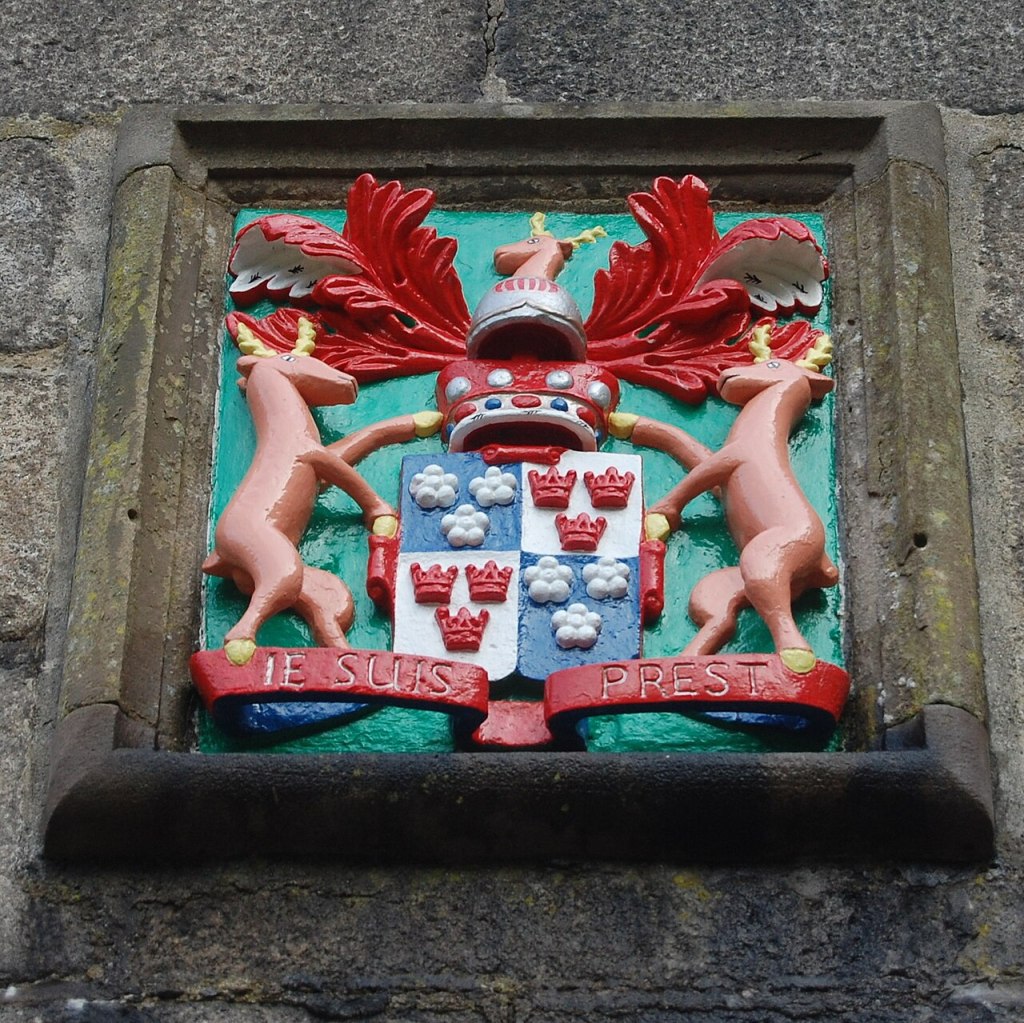
As with all ducal creations in the United Kingdom, the title ‘Duke of Fraser’ came with subsidiary titles, to be used by the title-holder’s son and grandson; in this case, these reveal the extensive landholdings of this mighty clan: Marquess of Beaufort, Earl of Stratherrick & Upper Tarf, Viscount of the Aird & Strathglass, and Baron Lovat & Beaulieu, or Beauly—and it is Beauly Castle where this story begins, in the deep indent of Scotland’s northeast coast that divides the ancient provinces of Moray and Ross. This division also mirrors, somewhat, the division between the two rival clans in the area—and indeed in the television programme—the Frasers and the Mackenzies.
Before we get to Scotland’s northeast coast, though, we must look further south, to an earlier founding of Clan Fraser, before it split into two distinct branches, Lowland and Highland, Fraser of Philorth and Fraser of Lovat. As with most ancient noble houses, the details of their origins are murky, and there are multitudes of family legends. It is assumed that they, like many Scottish noble houses, came from France, but precisely where varies. One good story says that a nobleman called Julius, from Berry, was knighted by King Charles the Simple in 916 in thanks for bringing him the best strawberries. Fraser is thus thought to derive from fraise (‘strawberry’), and strawberry leaves feature on the coats-of-arms of all the various branches of the clan. A descendant of this ‘Julius of the Strawberry’ was then said to have been sent by King Henri I as an envoy to Malcolm III in the early eleventh century, and he stayed in Scotland. The earliest record we have is of a Simon Fraser holding lands in East Lothian a century later in the 1160s. All subsequent clan chiefs have been known in Gaelic as the Mac Shimidh, or ‘son of Simon’. But the desire to connect the family to a specific place in France remained, so there are various places referred to that look or sound like Fresel or Friselle, which was how Fraser was spelled in the Middle Ages (one suggestion is that this was no more than Norman scribes mangling a Gaelic name). Indeed, in 1702, when Lord Lovat was visiting France he declared a pact of friendship with his distant ‘cousin’, the Marquis de la Frézelière, whose lands were in Anjou.
Where history starts to come into focus is with another Simon Fraser who was Sheriff of Peebles in the Borders until his death in 1291, and his son Simon, who fought for Robert Bruce—leading a victory at Roslin in Midlothian in 1303—until he was captured and executed by Edward I in 1306. His cousin, Sir Alexander Fraser of Touch (a castle just outside Stirling), was the Bruce’s chamberlain from 1319, then Lord Chamberlain of Scotland in 1325 and Sherriff of Stirling, and even married the King’s sister, Lady Mary Bruce. He was given the Barony of Cowie in Aberdeenshire, and established his branch of the family there, though he himself was killed in 1332 at the Battle of Dupplin Moor. His descendants are the Lowland Frasers, with an ancient seat at Castle Fraser, in the Don valley of Aberdeenshire (an area I’ve written about before, for Clan Leslie), and another seat at Castle Philorth (now called Cairnbulg) on a rise overlooking the sea just south of Fraserburgh—appropriately—on the very tip of this area of Scotland. Today’s Clan Chief of the Lowland Frasers is Lady Saltoun of Abernethy, a lordship created in 1445 for the Abernethys then passed to the Frasers of Philorth in 1669.
But the Frasers we are concerned with, and around whom the story of Outlander is framed, are the Highland Frasers. Sir Alexander Fraser of Touch and Cowie had a younger brother, Sir Simon, who also fought in Robert Bruce’s cause, notably at Bannockburn, 1314, and Dupplin Moor, 1332 (where his brother was killed), before losing his life as well at Halidon Hill, 1333. Before that, Simon had married Margaret, daughter of John Magnusson, Jarl of Orkney, and when her brother Magnus died in 1329 without an heir, he tried to claim the jarldom. By 1330, the King of Norway had chosen someone else, but Fraser did successfully claim the lairdship of Lovat from his wife’s maternal kin. He thus founded the line of Fraser of Lovat.
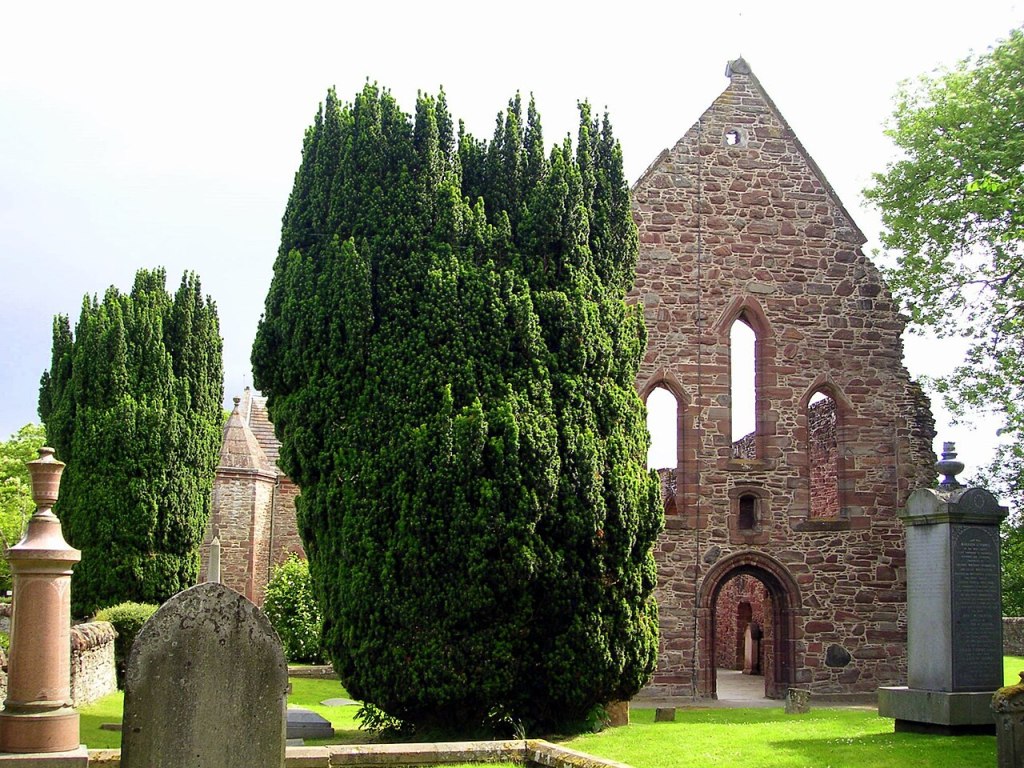
Lovat Castle was built in the eleventh century on a bend in the river Beauly, which flows out of the Highlands and into the Beauly Firth then past the city of Inverness and into the Moray Firth. The builders were from the Bissett (or Byset) family, and the castle at first took its name from the river and from the Priory of Beauly built just across the river in 1230 (originally beau lieu, ‘beautiful place’). Generations of Frasers were buried in the Priory, and later in the nearby village of Kirkhill (now known as the Wardlaw Mausoleum). After the Reformation, the Lovat Frasers took up residence in the Prior’s house, allowing Castle Lovat to decay. It was demolished in 1671 and its materials re-used elsewhere—so much so that almost no trace of the original remains.
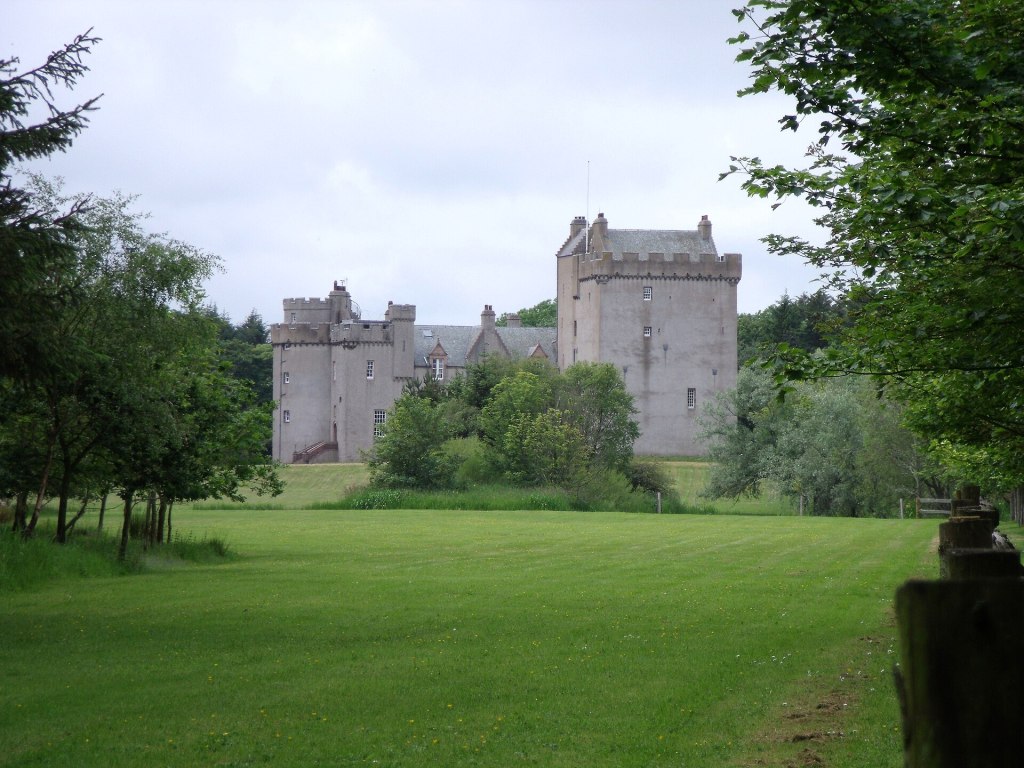
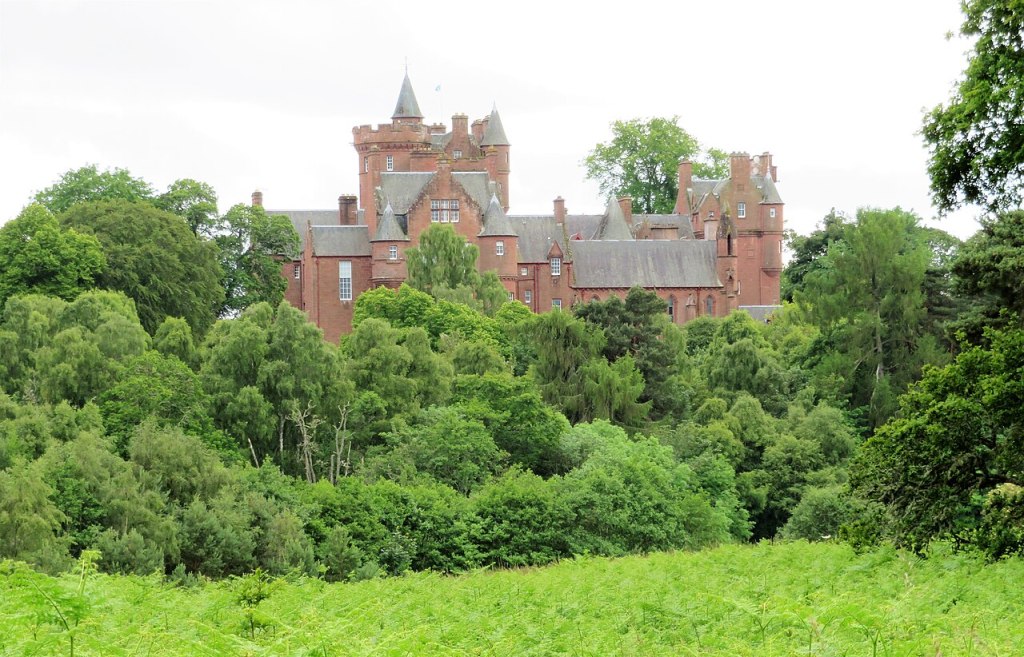
So the main residence for the clan shifted a few miles to the south, to Castle Dounie, also built by the Bissetts in the early twelfth century, and owned by the Frasers from the fourteenth. Named Dhunaidh in Gaelic, it is variously known in English as Dhuni or Downie, but at some point became known as Castle Beaufort. The castle referred to in the Outlander series is ‘Leathers’, which was in reality also a Fraser Castle, though held by a different branch (located just outside Inverness, now amidst a golf course). In 1740, probably in anticipation of his new ducal title, Lord Lovat planned a grand reconstruction at Beaufort, but events took a different course, and after his estates were confiscated, the castle was demolished. The lands were restored to the family in 1774, but no new house was built until 1880, when a grand Scottish Baronial house was erected—in which state we see it today. Beaufort Castle remained the family seat until 1994 when debts forced the family to sell it to a business magnate.
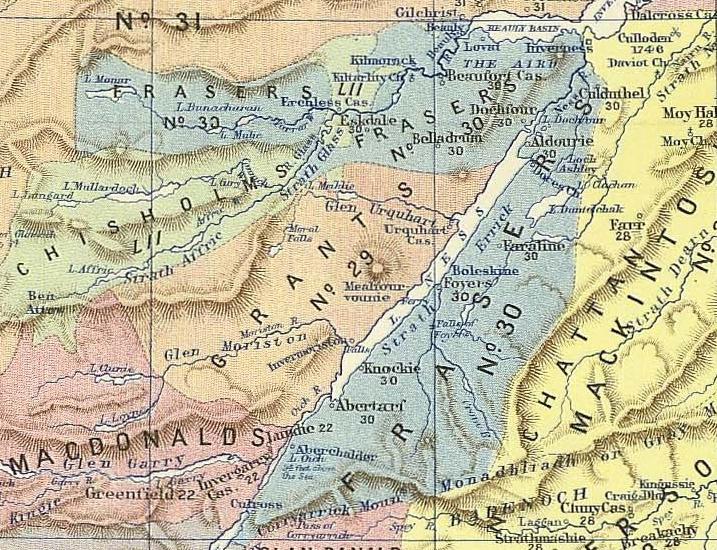
The lands held by Clan Fraser of Lovat spread in two directions, and, in typical clan rivalry fashion, bordered two hereditary enemies. Westwards, their territory extended into the hills along the river Glass (the Strathglass)—where they clashed with the interests of the Mackenzies—and southwards into a flat and fertile plain called The Aird, then along the southern shore of Loch Ness, an area called Stratherrick, stretching all the way down the Great Glen to the narrow valley of the river Tarff and beyond to Loch Lochy—where they clashed with the interests of the MacDonalds. We see in this list all the placenames referred to in Lord Lovat’s ephemeral ducal titles of 1740. The fifteenth and sixteenth centuries thus saw major violent clashes in the area between the Frasers, Mackenzies and MacDonalds—notably a huge battle in the Great Glen in 1544 that nearly decimated Clan Fraser.
Politically, the Frasers often supported the Crown, since this offered a strong position to thwart the MacDonalds, the former sovereign Lords of the Isles who often opposed the Stewart kings. James II summoned Hugh Fraser to Parliament in 1458 thus formally creating the Lordship of Lovat (or more formally, Lord Fraser of Lovat), distinct from the feudal lairdship which traced back to the twelfth century (and also distinct from the modern Barony of Lovat created in 1837, as we shall see). Clan Fraser supported Mary Queen of Scot when she fled north to Inverness in the 1560s, and supported the Stuart cause in the Civil Wars of the 1640s, taking Inverness Castle for the King in 1649 (briefly) and following Charles II as far south as Worcester in 1651 (to defeat). It thus would seem natural that they were early supporters of James VII in his clash with William of Orange in Spring 1689—though not, as it turns out, their clan chief, as we shall see.
Yet another Simon Fraser, 6th Lord Lovat, gained the favour of King James VI in the 1590s, and was closely connected to the Stewarts by blood: his mother was daughter of John Stewart, Earl of Atholl, Lord Chancellor of Scotland, and the King tasked both men with pacifying the Highlands. The King then promoted Simon’s marriage to Jean Stewart, daughter of the 1st Lord Doune, in 1596. A year before, when his mother’s half-brother the 5th Earl of Atholl died, he may have hoped to succeed him in one of the richest earldoms of Scotland, but such aspirations put him at odds with the family who eventually succeeded in claiming it, the Murrays, and we will see many Fraser-Murray clashes in the century that followed.
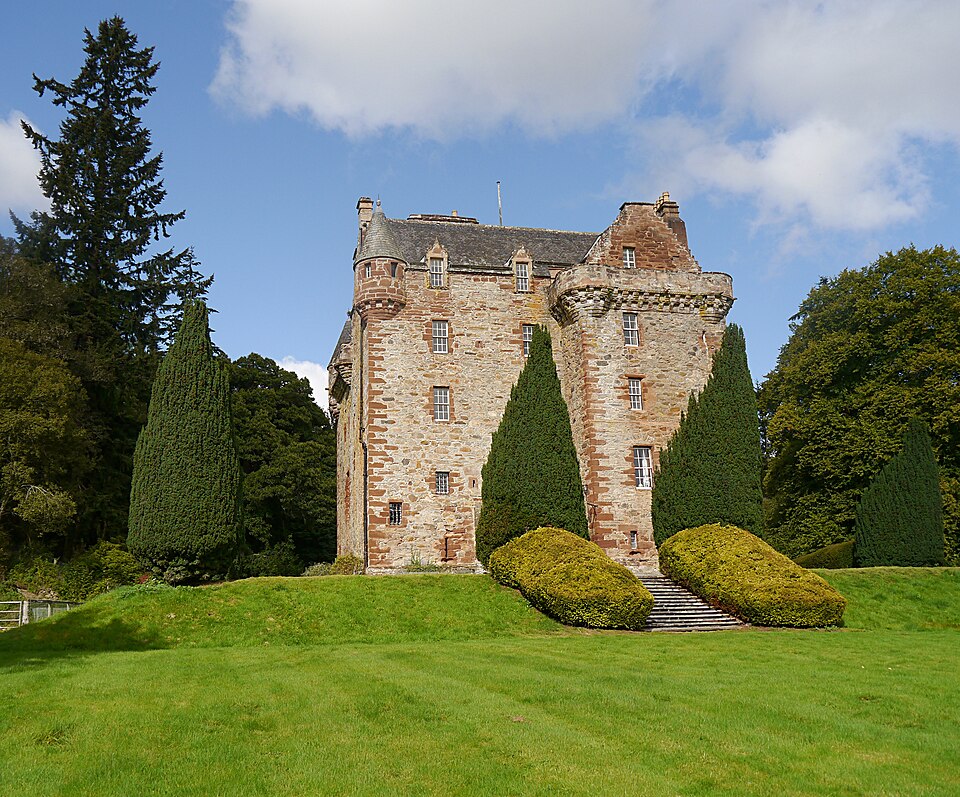
In an interesting contrast, at this point—and of particular interest to Outlander fans—there was a Fraser-Mackenzie alliance, in the 6th Lord’s earlier marriage, which produced his heir, Hugh. Katherine Mackenzie also had a Stewart of Atholl as a mother and indeed as a grandmother—so this was clearly a very strategic match. Her father Colin Mackenzie, Laird of Kintail, was head of the clan trying to promote his family, which succeeded in the next generation in being promoted to earls of Seaforth. They were one of the most powerful families of the Highlands, dominating Ross-shire from coast to coast until they were dispossessed after the Jacobite uprisings of the eighteenth century (and, since we are talking about Jacobite titles, the 4th Earl was created Marquis of Seaforth and Earl of Fortrose by James VII in 1690), after which they were replaced by another branch, the earls of Cromarty as clan chiefs. The Seaforth branch was based at Brahan Castle in Easter Ross (near Dingwall), while the Cromarty branch was (and is) based at Castle Leod, a few miles to the north. Leod gave Outlander author Diana Gabaldon the name for Castle Leoch, the home of the Mackenzie Chief in Blood of My Blood.
Hugh, 7th Lord Lovat, had two sons, Hugh, Master of Lovat, and Thomas of Beaufort, and notably, a daughter Anne who became Countess of Sutherland and thus one of the most powerful women in Scotland. Hugh married Anne Leslie, the daughter of the 1st Earl of Leven, one of the leading commanders in Scotland against the Royalists, but died before his father, leaving the title to a two-year-old Hugh, 8th Lord, in 1645. This Hugh also married a Mackenzie, sister of the 1st Earl of Cromarty, and died in 1672, passing the title on to another Hugh, the 9th Lord Lovat, who has a very chequered story, a sort of prelude to the story of the ‘Fraser Fox’ a generation later. He was raised by his Mackenzie relations at Castle Leod and married in 1687 to a Murray—one of the descendants of the successful claimant to the earldom of Atholl. Lady Amelia Murray’s marriage contract specified that if she had only daughters, they would fully inherit the Fraser lands and transmit them to whomever they married, contrary to custom where these would pass to a male relation from a cadet branch of the clan. Two years later, Lord Lovat was convinced by the Murrays to stay out of the Highland uprisings against William of Orange, despite the leanings of Clan Fraser itself, many of whom took part in the Battle of Killiecrankie in July 1689. The stress this caused, and the deaths of his two infant sons, seem to have led to excessive drink and when he knew he was dying, in 1696, he defied his maternal family and his in-laws, and named his paternal great-uncle, Thomas Fraser, as his heir.
Thomas had served Charles II way back in the 1650s, and followed him all the way to the Royalist defeat at Worcester in 1651, after which he spent several years in prison in Inverness. He married Lady Sybilla, daughter of the Chief of Clan McLeod, whose base was Dunvegan Castle on the Isle of Skye. They had a son, Alexander, who died fighting for James VII at Killiecrankie, and another, Simon, who now became ‘Master of Lovat’ as heir to his father, now 10th Lord Lovat.
But the succession from the 9th to the 10th Lord was challenged by the Murrays. The 9th Lord Lovat’s eldest daughter and heir, Amelia, was at first ‘claimed’ by her first cousin, Simon, ‘Master of Lovat’, but her uncle, John Murray, Earl of Tullibardine, removed her from Castle Dounie and took her to the Murray seat, Blair Castle in Perthshire, and planned to marry her instead to the heir to the Frasers of Philorth (Alexander, son of Lord Saltoun). Simon took action and kidnapped Alexander, prompting Tullibardine, one of the most powerful men in Scotland, to convince the Crown to name Simon an outlaw. In October 1697, Simon went to Dounie and forced not his cousin Amelia, but her mother the Dowager Lady Lovat to marry him. They soon separated and she fled to Blair, but they never legally divorced, though Simon’s actions led immediately to charges of abduction and rape, and both he and his aged father were forced to flee to the safety of Macleod headquarters on the Isle of Skye, where the 10th Lord Lovat died in 1699. Amelia Fraser did marry, not a Murray, but a Mackenzie, in 1702, and her husband added ‘of Fraserdale’ to his surname. During the absences of the 11th Lord Lovat (as we shall see), they moved into Castle Dounie and lived for several years by the terms of her parents’ marriage contract.
After his father’s death, Simon, now 11th Lord Lovat, returned to Fraser country and successfully drove the Murrays out. He travelled to London, armed with a letter of recommendation from a new ally, the Earl of Argyll (the Campbells are always eager to aid an enemy of the Macdonalds) to ask for the King’s pardon. King William was ready to have matters settled in Scotland so he could focus on the war breaking out on the Continent against France, so he agreed to the pardon, and promoted Argyll as well (to a dukedom). The Earl of Tullibardine did not give up, however, and continued to press the rape case in the Scottish courts, and after 1702, he rose in favour of a new monarch, Queen Anne. Lord Lovat had little choice but to seek support elsewhere, so travelled over the water to the court of the Old Pretender (‘James III’) at the Château of Saint-Germain-en-Laye outside Paris. Here he converted to Catholicism and joined the more militant faction of the Jacobite court. He met with Louis XIV and laid out plans for an invasion of Scotland via Dundee, then returned to Scotland in 1703 to secure support for this plan. Finding little willingness amongst the Highland clan chiefs, the Fox (as he was increasingly becoming known) decided to change sides again: he plotted with the Queen’s representative in Scotland, the Duke of Queensberry, to blacken the name of the Earl of Tullibardine. But it backfired, Queensberry was discredited and the Murray earl was promoted to Duke of Atholl. Fraser fled to France, but Louis XIV, learning of this double-dealing, arrested him and exiled him first to Bourges and then to a prison in Angoulême; after three years he was moved to Saumur. In late 1714, a Fraser kinsman (James, of Castle Leathers) managed to deliver him from Saumur to London to try to seek another pardon, now with the new king, George I. When the Jacobite rebellion called the Fifteen broke out in September 1715, Lord Lovat raced north to try to rally Clan Fraser in support of the Crown—many had joined the Mackenzies in supporting the Jacobite cause, but now switched sides and helped their chief retake Inverness for the Hanoverians in November. In thanks, King George did grant Simon Fraser a full pardon in March 1716, appointed him Governor of the Castle of Inverness. The restored Lord Lovat now reclaimed Castle Dounie. Conveniently, his rival, Alexander Mackenzie of Fraserdale was now in prison as a Jacobite—he was eventually pardoned and released and continued to haggle in the courts with Lord Lovat for his wife’s inheritance until the 1730s.
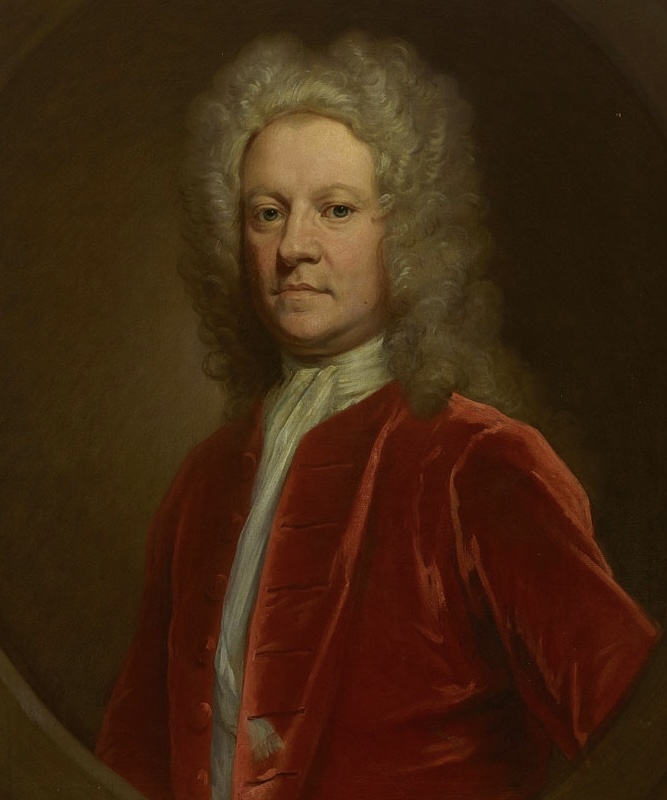
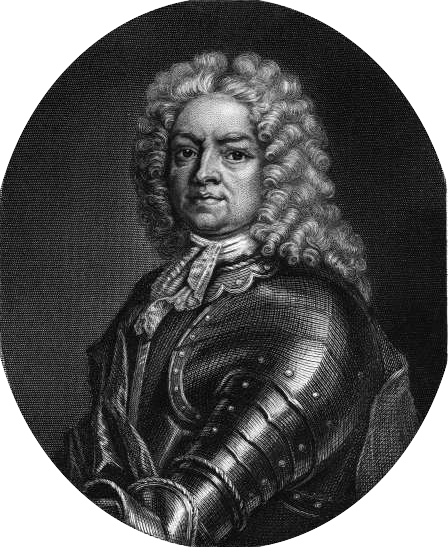
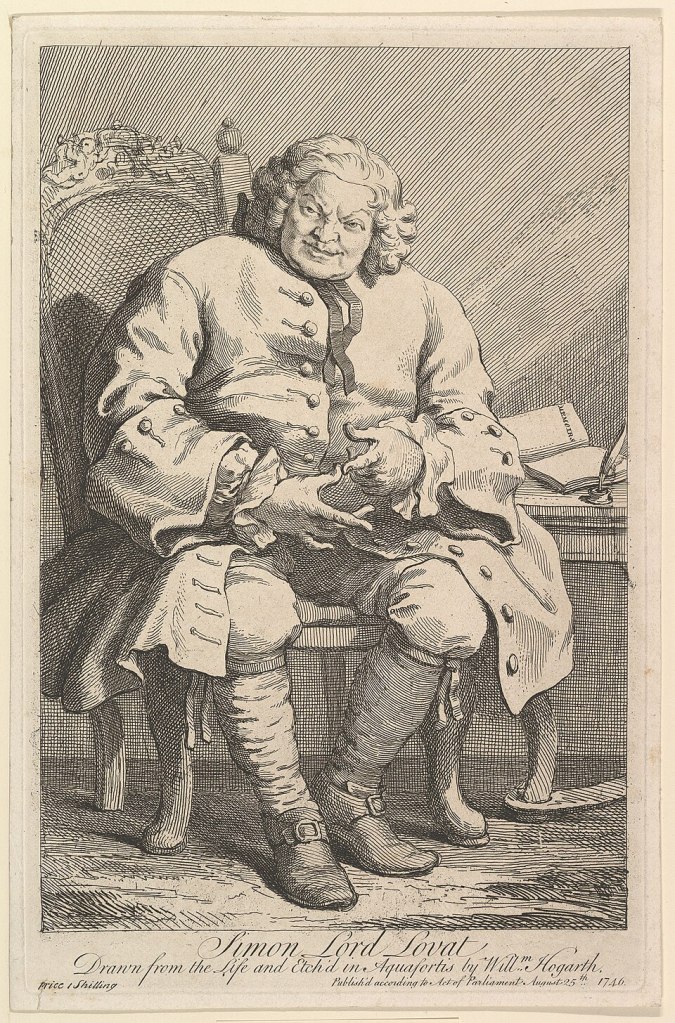
Meanwhile, the 11th Lord Lovat himself took a wife, Margaret Grant, daughter of Ludovick, 8th laird of Freuchie, ‘the Highland King’, whose power was nearly unquestioned on the other side of Inverness, in the valley of the river Spey. Certainly events here are lining up with the fictional Lord Lovat in Blood of My Blood. But the question did linger: had Simon actually married Lady Amelia Murray and were they in fact still married? Regardless, he and his new wife had a son, Simon, in 1726; and after Lady Margaret died in 1729, Lord Lovat married again, a Campbell, a cousin of the Duke of Argyll. By the 1730s, however, Lovat fell out with his Whig allies like Argyll, and felt threatened by increasing government encroachment on the powers of the Highland chiefs. In 1736, he hosted an envoy from the Stuart court, now based in Rome, and in 1739 or 1740, received the letter from the Old Pretender offering him his dukedom. Always on top of its spy network, the Hanoverian government found out, and removed Fraser from his military posts and chastised him for allowing Catholic worship on his lands. In the summer of 1745, the old Fox maintained neutrality during the rising in support of Bonnie Prince Charlie, but nevertheless kept in contact with both sides. By September, he had sent his son Simon to join the Jacobites; he himself was arrested but escaped. After Culloden, the Prince was welcomed by the ‘Duke of Fraser’ (one wonders if he was addressed as such?) at Gorthleck House on Loch Ness, and from there they escaped in different directions. Lovat was tracked down and arrested in June 1746, taken to London where he was housed in the Tower until he was tried in March and executed in April. His was the last beheading in Great Britain. The Fraser Fox was buried in the little church in the Tower, St Peter ad Vincula, though for centuries the family claimed his body was actually buried elsewhere.
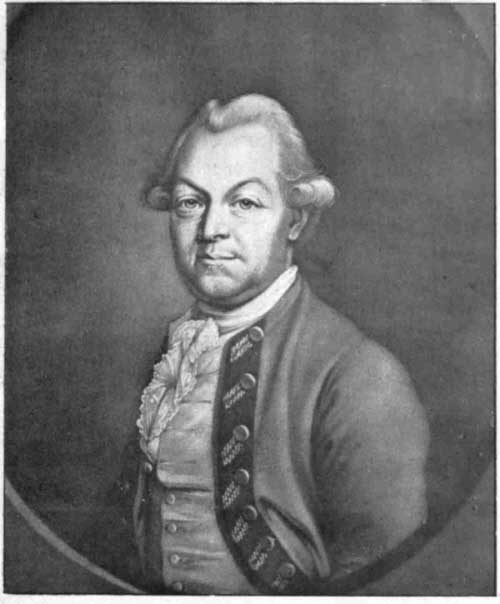
The elder Simon Fraser had not fought at Culloden in April 1746, nor had the junior Simon who had been sent to harass Crown troops near Fort Augustus on Loch Ness. The Frasers were instead led in the battle by the head of a cadet branch of the Lovat Frasers, Fraser of Inverallochy, whose father also had a Jacobite title, having been created ‘Lord Fraser of Muchall’ by the Old Pretender in 1723 (this other ephemeral Fraser title became extinct in 1792). The new 12th Lord Lovat (or, to Jacobites, the 2nd Duke of Fraser) surrendered to Crown forces and was held in Edinburgh Castle from 1746 to 1747. He was pardoned in 1750, but not restored to his father’s estates or titles. Instead, he moved to Glasgow and trained as a lawyer, then became MP for Inverness-shire, 1761-82. He recruited a new unit of Fraser Highlanders in 1757 and went with them to fight against the French in Canada, then in 1762, was sent with a British force to Portugal to repel a Franco-Spanish army, rising to the rank of major-general. In 1774, the Crown restored the Lovat estates, but still not the title, and the ever-loyal General Fraser raised a Fraser regiment again for the army, but did not accompany them as they sailed across the Atlantic to put down rebellion in America. He died in 1782.
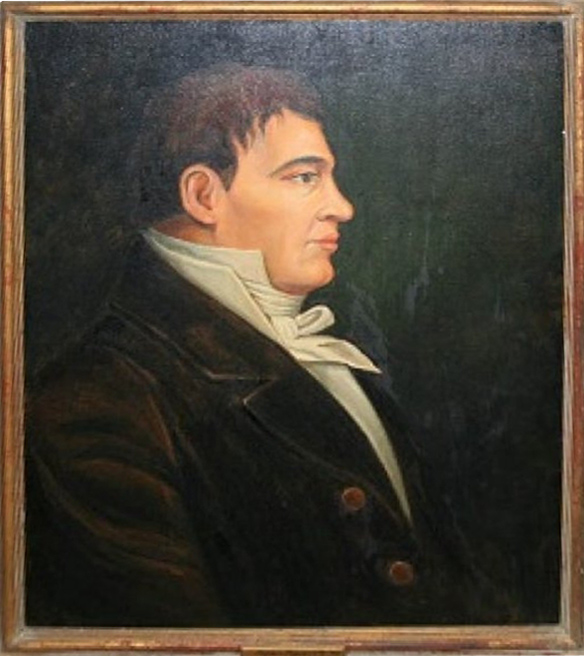
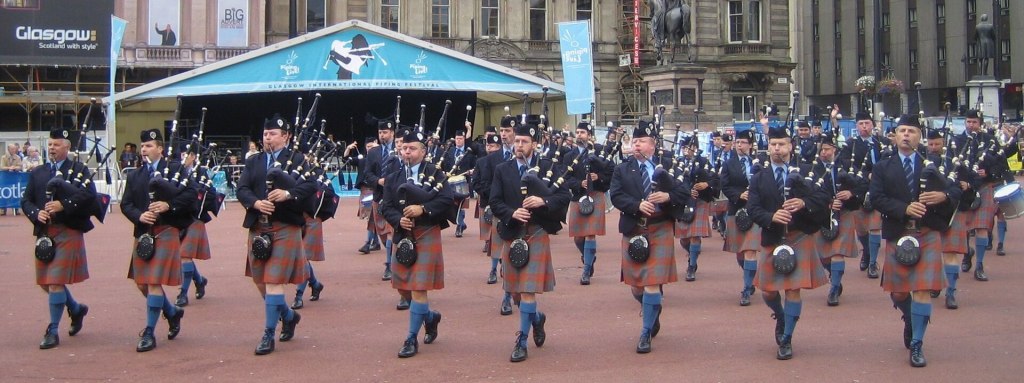
An interesting Fraser connection to North America at this time was the explorer Simon Fraser, of the Guisachan branch of the family. His father Captain Simon Fraser was serving in the colonies in 1773 when his son was born, and died in prison after the Battle of Saratoga (1777)–where another General Simon Fraser (from another branch of the clan) was killed. Young Simon was raised in Canada and became an agent and explorer for the North West Company. Pushing westward across the Rockies in 1805, he established the first European settlement in what is now British Columbia, and gave his name to Fraser Lake, Fort Fraser and the Fraser River which today flows through the city of Vancouver and into the Pacific. Just outside Vancouver is Simon Fraser University, founded in 1965. They have one of the leading pipe bands in the world.
Back in Scotland, the new clan chief, Simon’s half-brother Alexander, inherited the claims to the title (including the ephemeral ducal title, though I doubt this was ever considered, particularly, after the last Stuart pretender died in 1807), as well as the parliamentary seat representing County Inverness. Earlier in his career, Alexander Fraser had served as British consul in Tripoli, 1764-66, then in Algiers, 1767-76 (several of his children were born abroad). He was colonel of the Inverness Militia in the 1780s, and once again raised a Fraser regiment for service in 1795, this time being sent to Ireland in case the French tried to invade. His son John Simon Fraser commanded this regiment from 1797 and was instrumental in suppressing the Irish Rebellion of 1798. John Simon died in 1803, followed by his father in 1815.
A lawsuit followed over who would inherit the title of Chief of Clan Fraser and the Lovat lands, and any lingering claims to the title Lord Lovat—but not for the ephemeral Fraser dukedom (even if the title was legal, it would have gone extinct in 1815 for lack of a direct male heir). John Simon’s illegitimate son Alexander was challenged by the tutors of Thomas Fraser of Strichan (who was himself only 12), a descendant of the 7th Lord Lovat. After over a decade, the case was settled in favour of Thomas, who also managed to overturn the attainder of the Lovat title in 1854. He was legally called the 12th Lord Lovat, though the family numbers him the 14th (counting Simon and Alexander). In the meantime, Thomas had been created 1st Baron Lovat, 1837, in the peerage of the United Kingdom, meaning that, whether or not he was restored to the original title, he had a seat in the House of Lords (whereas the earlier Scottish peerage would only have allowed him to stand for one of the seats allotted to representative peers). He was also recognised by Queen Victoria with the conferral of the office of Lord Lieutenant of Inverness in 1853, which he resigned to his son Simon in 1873, two years before his death.
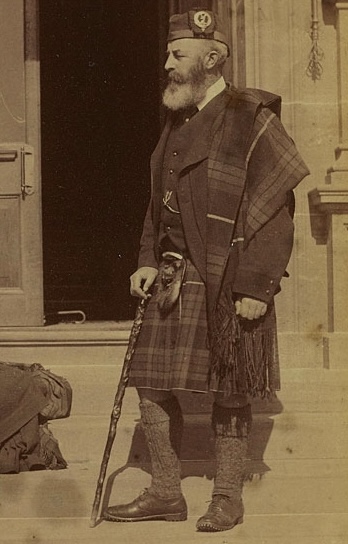
Simon, the 13th and 2nd Lord Lovat rebuilt Beaufort Castle in the 1870s, represented the Queen as Lord Lieutenant of Inverness, and served from 1883 as her aide-de-camp. He died in 1887 and was succeeded by another Simon Fraser as 14th Lord Lovat and 23rd MacShimidh of Clan Fraser. He was a soldier, leading the Lovat Scouts in the Boer War and in World War I (as a brigadier general of the Highland Mounted Brigade), and in later life a leader of the Catholic aristocracy in Scotland. In politics, he was active in the Conservative Party and served as Chairman of the Forestry Commission, 1919-27, then Under-Secretary of State for Dominion Affairs, 1927-29. He died in 1933, leaving two sons who were both prominent in war and politics.
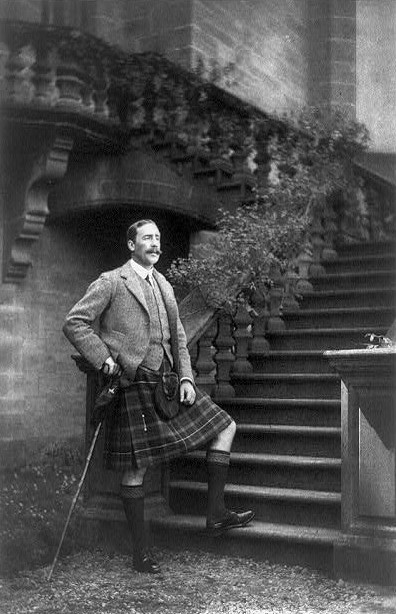
Simon, 15th Lord Lovat, was a prominent commando in World War II, leading the Lovat Scouts on special raids on German operations and in the D-Day landings. This was the last time a clan chief led his own men in battle, accompanied by his own personal piper—romantically depicted in the film The Longest Day (1962, portrayed by Peter Lawford). After the war, he was briefly Under-Secretary of State for Foreign Affairs in Churchill’s final cabinet, then retired to his still extensive Scottish estates (about 250,000 acres). Amongst other things, he bred his own breed of shorthorn cattle. He died in 1995, with his son Simon, Master of Lovat, dying the year before. The 16th Lord (another Simon, b. 1977), crippled with his father’s debts, was forced to sell Beaufort Castle, but has asserted his intentions to hopefully buy it back. He has two daughters, so the heir to his titles is his brother Jack (b. 1984).
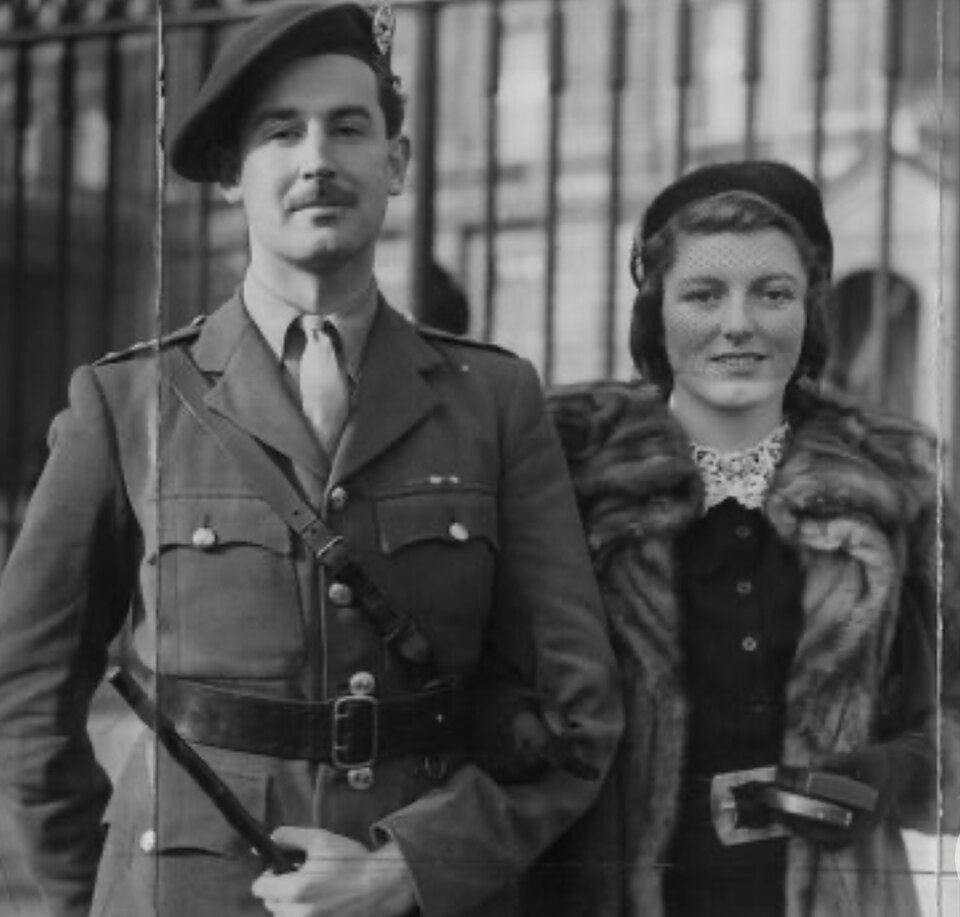
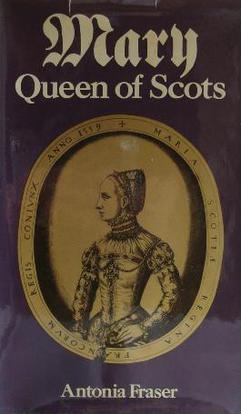
Finally, in a story of epic history writing, we come to the writers, Lady Antonia Fraser and her two daughters. Her husband, Sir Hugh Fraser, was the younger brother of the 15th Lord Lovat, and a Conservative MP from 1945 to 1984. In 1956 he had married Lady Antonia Pakenham, daughter of the Earl of Longford and Elizabeth Longford, herself a well-known historical biographer. Antonia published royal biographies starting in the 1960s with Mary, Queen of Scots and Charles II. She and Hugh Fraser divorced in 1977 following the scandal of her relationship with the playwright Harold Pinter. Her daughters are also writers, Rebecca publishing a biography of the Brontë sisters, and Flora on Queen Caroline, the daughters of George III and Pauline Bonaparte. Surprisingly, none of these have written about the ‘Fraser Fox’ or the ephemeral Jacobite dukedom to which he aspired.
(images Wikimedia Commons)

