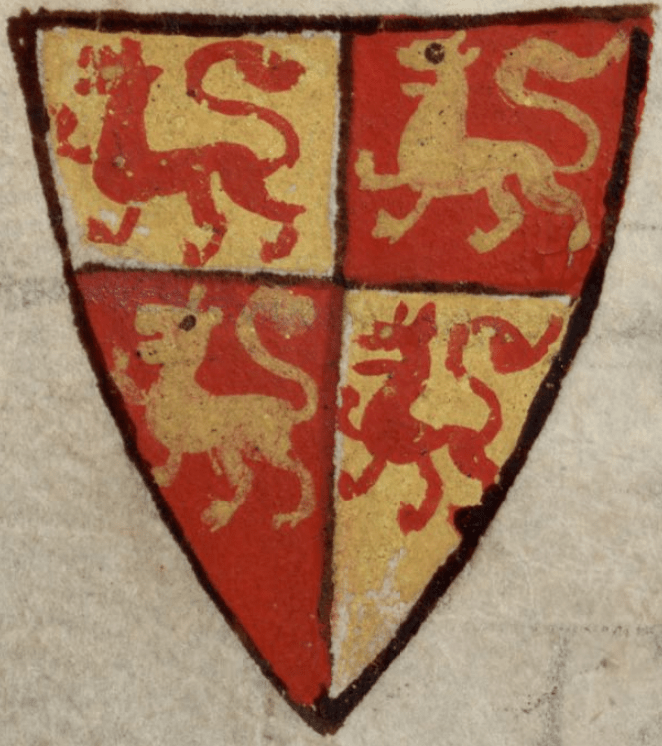
Since 1301, the heir to the English throne has borne the title Prince of Wales, but this title had been forged by several previous generations of native Welsh princes, notably of the House of Aberffraw: the princes of Gwynedd. From their base on the Isle of Môn, better known in English as Anglesey, they dominated the northwest corner of Wales for centuries, and stretched their influence along the north coast towards Chester and down the west coast into Ceredigion. At times their authority extended deep into the interior to include the principality of Powys, assuming the title ‘Prince of all the Welsh’ or even ‘King of the Britons’.
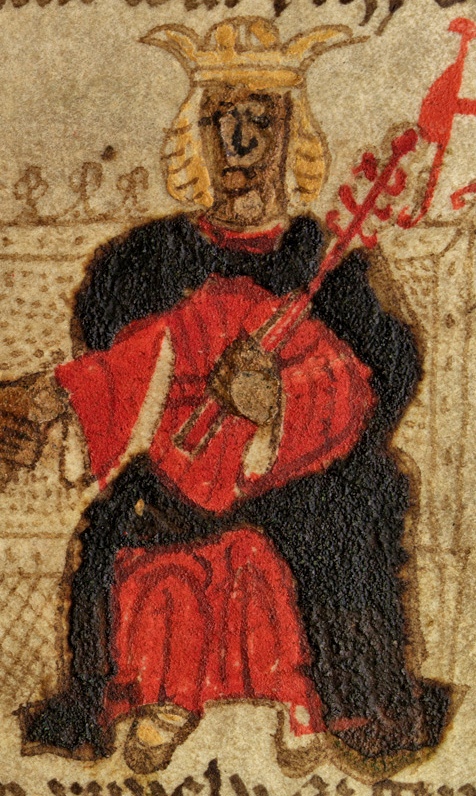
There are few physical remains of this dynasty, either in written records, visual representations of its princes, or its chief residences. The chronicles that are used by historians of Wales are often incomplete or contradictory. For a dynastic historian like me, their history is a good lesson in how family did not always mean harmony, and fraternal bloodshed and betrayal in this dynasty was rampant. Yet there are also stories of bravery and skill here, preserving Welsh culture in the face of generation after generation of invasions by Danes and Saxons, and later by Normans, to whom they ultimately fell. The House of Gwynedd is usually divided into two dynasties: the first, the House of Cunedda, established in the 450s (or the Maelgyning, named for Maelgwn in the sixth century), and the House of Aberffraw, who took over in the 840s and ruled until 1283.
Cunedda is one of the earliest figures to feature in Welsh history though provable details are scarce. He was said to be a warrior chieftain from northern Britannia, living in the area called Manaw Gododdin, today roughly the area known as the Lothians in Scotland. Invited by the people of northern Wales to help them either defend against raids by marauders from the Isle of Man, or to drive out Irish people who had settled the northwest coasts. Irish influence in this period was heavy, and it is thought the name of the Llŷn Peninsula, just south of Anglesey, might mean ‘people from Leinster’. Some stories say Cunedda was the grandson of a Roman officer stationed in Britain, while others say he was a descendant of Beli Mawr, an ancient British king from before the Roman conquest, and from other British kings who had ruled the ‘Old North’ (Hen Ogledd) in the Roman era, including Coel Hen (‘Cole the Old’), who reigned in the fourth century (and who has become confused over time with the nursery rhyme figure of Old King Cole). Both of these origin narratives could be true, and it seems that he and his sons did retain Roman customs and the Christian faith. His epithet, ‘Wledig’, is possibly a translation of a Roman title (an official of a region, like a ‘count’ in the original sense of that word), but may be more simply a British word for ruler or lord. Cunedda and his successors used the title rhi, ‘chief’ or ‘small king’, or the grander title of brenhin, ‘king’. To keep with the theme of dukes and princes in this website, I’ll pass over much of the earlier period of independent kings in Gwynedd, and focus more on the later period, after about 1060, when its rulers adopted the lesser title of tywysog or prince.
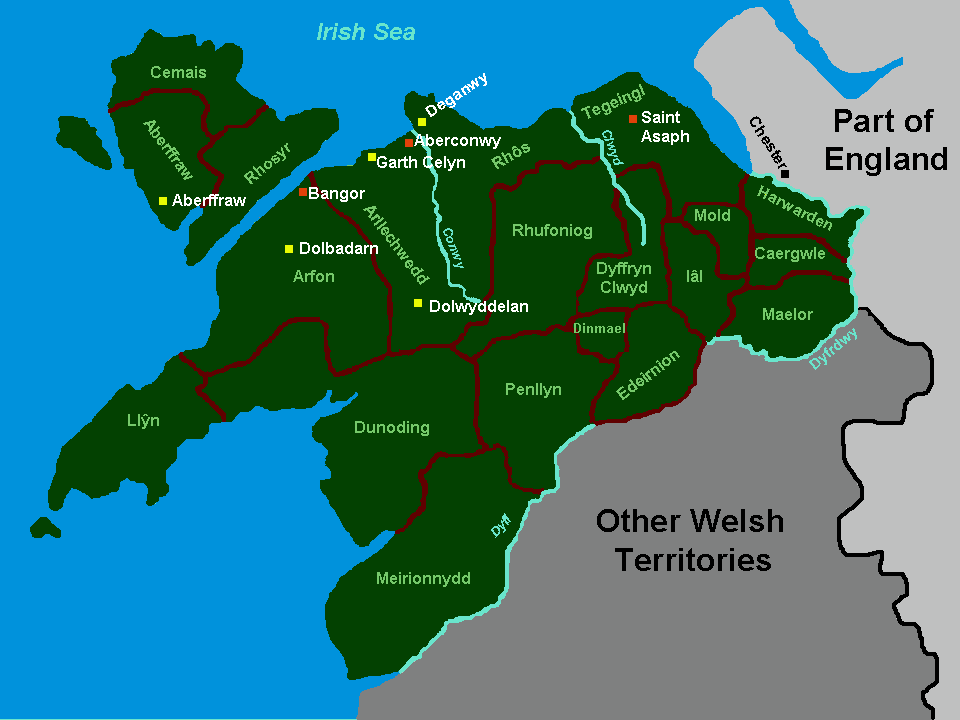
The state established by Cunedda in about 450 stretched from the Llŷn Peninsula and Ynys Môn in the west to the area around Conwy on the north coast and over the Clwyd mountains to the river Dee in the east. His kingdom eventually took the name Gwynedd, possibly from the Old Irish weidh-n (forest people, wild people) or weina (chase, pursue). In Latin, it was rendered Vened or Venedotia. Môn was probably from the same root as manaw (‘mountain island’) as used for Mannin, aka the Isle of Man. In contrast, Anglesey derives from the much later Viking name ‘Ongli’s Island’, which could be named for a chief called Ongli or for ongull (‘hook’), related to our word ‘angle’…so not Angle as in those people who came to Britain with the Saxons.
Cunedda died about 460 and divided his realm amongst his sons and grandsons, who gave their names to the historic principalities of northwest Wales: Ceredig ruled Ceredigion (Cardigan) and Meirion ruled Meirionydd (Merioneth). The eldest son Einion Yrth (‘the Impetuous’) retained Gwynedd and defeated the remaining Irish on Môn and consolidated his family’s rule there. He was followed in about 500 by his son, Cadwallon Lawhir (‘the Long-Haired’), who established his family’s superiority over the other Cambrian or Welsh states. Cadwallon’s nephew, Cynlas Goch (‘the Red’, also called Cuneglasus), established a separate line who ruled in the eastern parts of Gwynedd known as Rhos, which continued until about 800. Another interesting, but probably mythical, member of the dynasty at this early stage, was Saint Non or Nonita, who was a daughter or daughter-in-law of King Ceredig, a nun raped by another Welsh prince resulting in the birth of Saint David, the patron saint of Wales. Saints Einion and Seiriol are also attached in some medieval genealogies to the line of Rhos. The Ceredigion branch of the dynasty carried on as rulers of a separate kingdom until it was absorbed by Gwynedd towards the end of the ninth century.
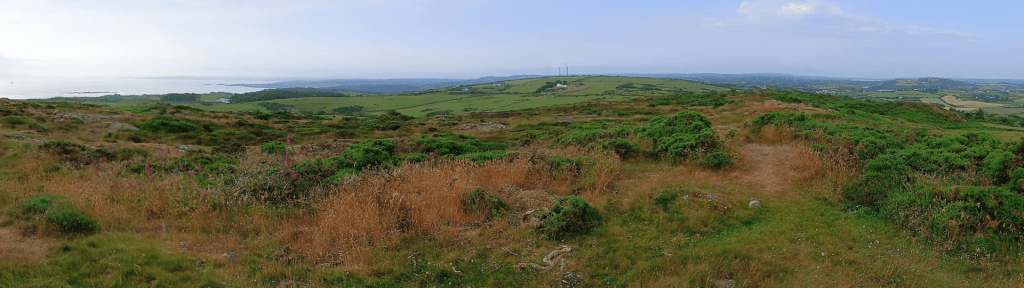
There are few sites with visible remains to visit from these early kings of Gwynedd, Rhos and Ceredigion. The court of Cadwallon Lawhir may have been a site today called Caswallon’s Llys (llys being the Welsh word for ‘court’, essentially an undefended great hall palace rather than a fortified castle) on the northeast corner of Ynys Môn atop a hill, Mynydd Eilian (‘mount of Saint Eilian’)—today only visible due to geophysical surveys undertaken in 2009. It is also thought he had a stronghold further to the east on the north coast near the mouth of the Conwy river: Bodysgallen (Bod Caswallon), though there is no real evidence connecting him to this site. The current Bodysgallen House is a manor built in the seventeenth century by the Wynns and held by the Mostyns from the later eighteenth century.
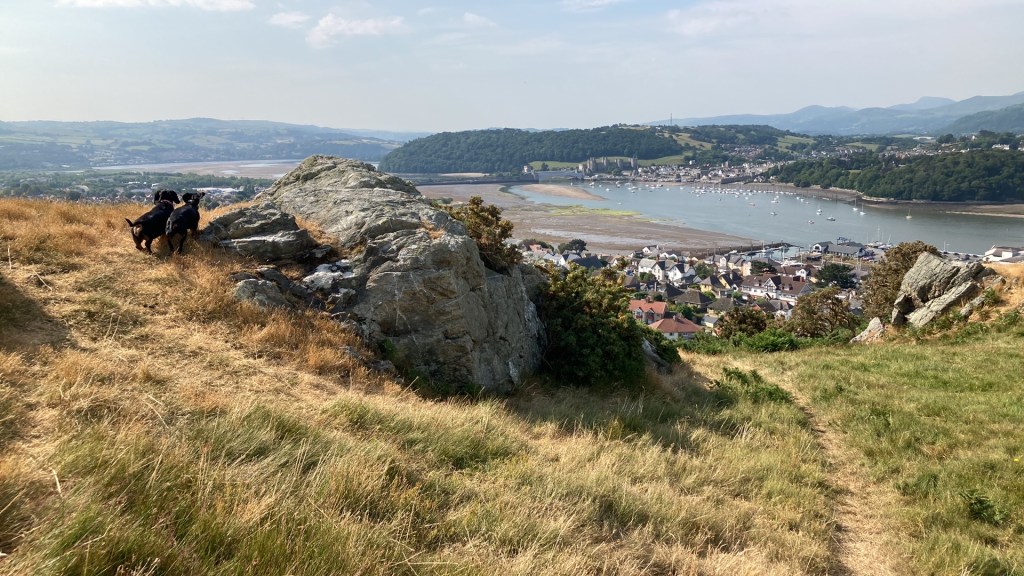
Just next door is the ruined hill fort of Deganwy, built by King Maelgwyn in the sixth century on a volcanic plug overlooking Conwy Bay (and today offering great views to the later Norman Conwy Castle). The Earl of Chester later built a Norman castle here in the 1070s, but little is known about it, in part because Prince Llywelyn Fawr rebuilt and expanded it in the thirteenth century, and this castle in turn was destroyed in 1241 by Dafydd II to prevent it from falling into English hands. Henry III of England nevertheless captured the site, rebuilt a castle, then saw it destroyed again in 1263 by Llywelyn II. Conwy Castle was then built on the other side of the estuary in the 1280s by Edward I, and Deganwy lost any strategic value. Very little remains today.
Also nearby, on the other side of the peninsula (and thus overlooking the Colwyn Bay) was the llys of the Rhos branch of the family, Dinerth, on a hill called Bryn Euryn—again, only known today following an excavation of 1997. At the foot of this hill was a more recent building, Llys Euryn, held by a local lieutenant for the princes of Gwynedd in the thirteenth century who became the ancestor of the Tudors.
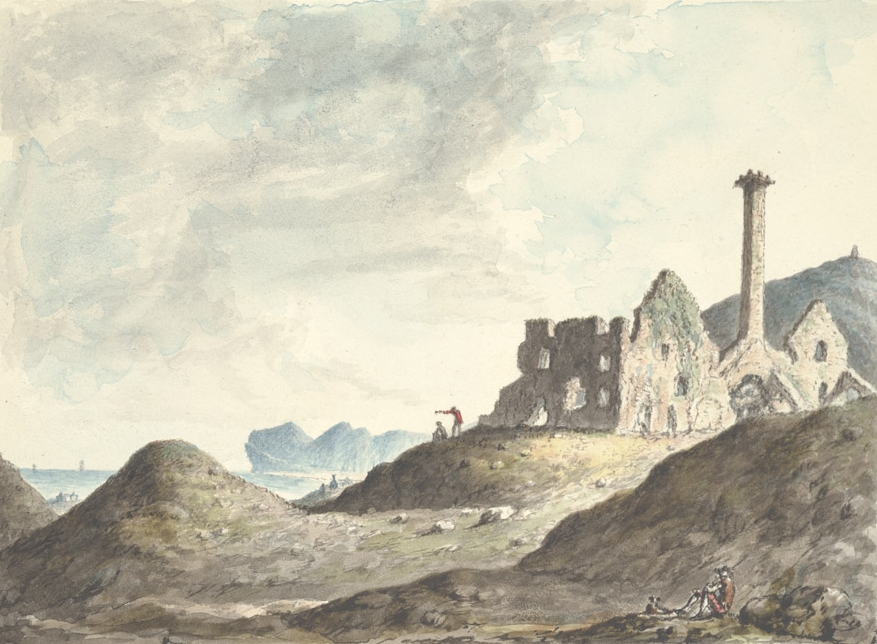
Some of the kings in this early period stand out. Maelgwyn Hir (‘the Tall’), was known as a great warrior, but not necessarily in a good way: Gildas, one of the only contemporary sources, describes him as a ‘vicious sinner’. He and Cuneglasus are listed as amongst the worst kings of the Britons. Yet Maelgwn is also known as a founder of many churches and abbeys, perhaps even the episcopal see for Gwynedd, Bangor, in about 530—at first as a monastery for Saint Deiniol and only later (perhaps the eighth century?) as a bishopric.
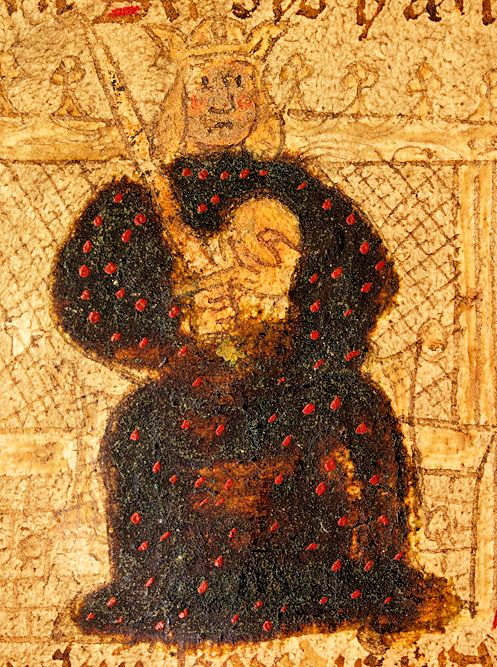
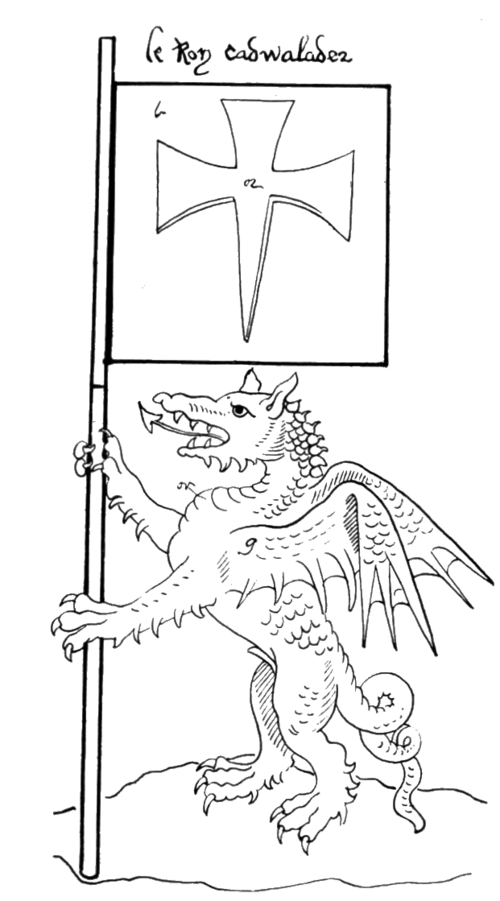
By mid-century, the principality was weakened by conflict with another British state, the Kingdom of Strathclyde, which perhaps led to Gwynedd’s early defeat by the new invaders, the Saxons, at the Battle of Chester, 613. In a resurgence, Cadwallon II raised a large army and took over much of the north of Britain, sacking York in 633, but died in battle a year later. He and his son, Cadwaladr, are considered the last two ‘high kings’ of Britain (‘Rex Brettonum’). The latter was very religious (known as Fendigaid, ‘Blessed’) and strengthened the church; he built a church on the southwest coast of Môn (near the later royal site of Aberffraw), now called Saint Cadwaladr (in the village of Llangadwaladr), where his grandfather Cadfan’s tomb can still be viewed (from about 625). The Blessed Cadwaladr was a folk saint (not formally recognised by Rome), but a powerful one with a messianic aura—the last British king to drive out the Saxons (under the banner of his iconic red dragon), and destined to return someday to do the same once more (Y Mab Darogan, ‘the child of destiny’). According to Geoffrey of Monmouth (always very free with his imagination in his chronicles), towards the end of his life Cadwaladr renounced the throne and went on pilgrimage to Rome where he died in 682. The Tudor Dynasty revived his messianic cult and claimed descent from him to help legitimise their claims to the English throne.
The royal genealogy in the next generations gets a little fuzzy: Idwal, Rhodri, Cynan, Hywel and Caradog all involved themselves in wars versus their Saxon neighbours to the east, but also against other Welsh princes to the south and the inevitable fraternal or avuncular struggles that continued to weaken the dynasty. Several kings are said to have died due to the ‘treachery’ of their brothers. The capital shifted to Caernarfon, an old Roman fortification, Segontium, on the river Seiont. The newer Welsh name derived from y gaer yn Arfon, ‘the fort in the land across from Môn’. A new castle was built after the Norman conquest by the Earl of Chester in the 1080s—and also one at the other end of the Menai Strait called Aberlleiniog, on Anglesey near Beaumaris. Caernarvon was re-captured by the prince of Gwynedd in 1115, but was taken again by the English in 1283, when Edward I rebuilt it once more into the magnificent castle we see today, one of the great models of medieval castle building, and part of the ring of castles in North Wales, including Conwy and Harlech. Here Edward’s son was crowned Prince of Wales in 1301.
But that’s getting ahead of ourselves by quite a bit. The last of the House of Cunedda, King Hywel, died in 825, leaving a daughter (or perhaps a niece), Ethyll (or Esyllt). Some historians consider she may have been invented by later medieval genealogists to legitimise the takeover of Gwynedd by the House of Aberffraw.
Merfyn Frych (‘the Freckled’) (also known as ‘the Opressor’), was said to have married Ethyll. Or she was his mother, married to Gwriad who was said to be descended from the ancient kings of Britain (and from them back to Adam) or to the kings of the Isle of Man (there is often confusion in these sources between Man and Môn). Historians gave his dynasty the name Aberffraw after his principal seat on Môn.
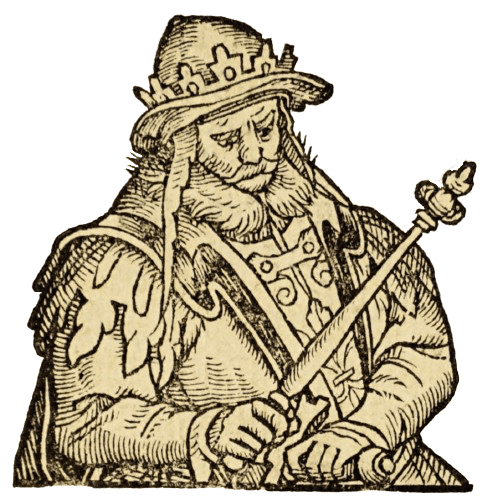
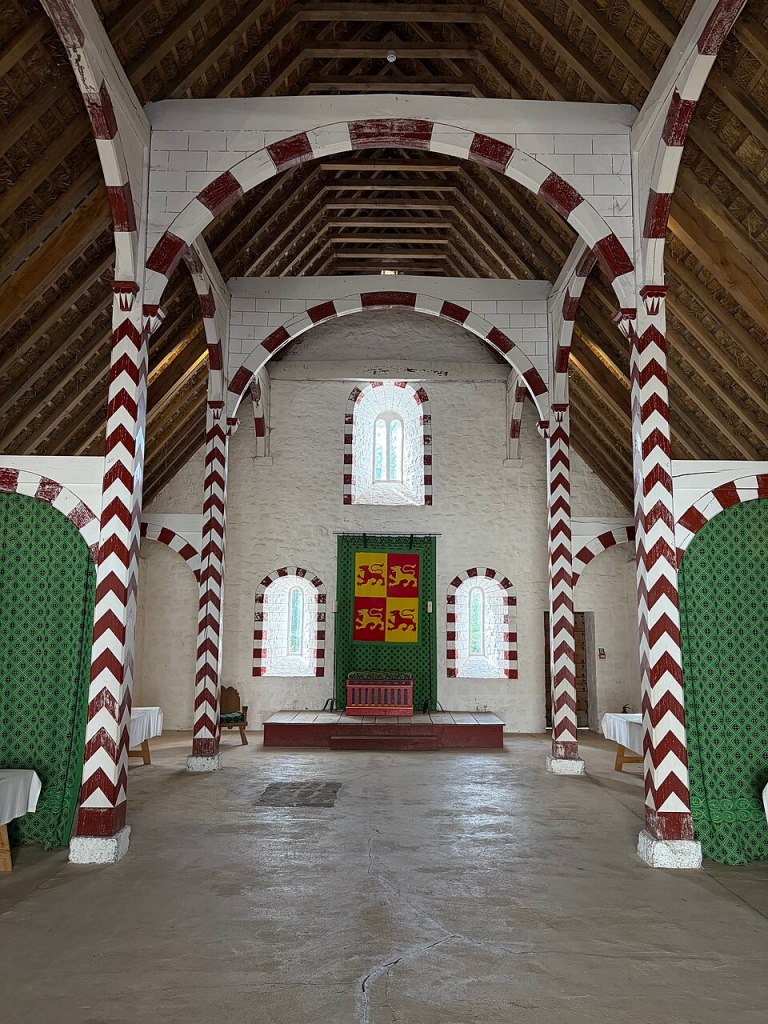
Aberffraw became the new seat of the principality when Merfyn’s son Rhodri moved the llys here from Caernarfon in about 870. A new fortress-residence replaced an older palace that had been built at the mouth of the Ffraw river by Cadwallon Lawhir in the fifth century. It remained the capital until the thirteenth century—later rulers used the title ‘Prince of Aberffraw’. Much was dismantled in the 1320s to provide stone used to rebuild Caernarfon Castle, and the rest was destroyed soon after. There was never again a castle here, and the land was eventually owned by the Meurig (Meyrick) family of Bodorgan Hall, and later the Owens of Penrhos—then various families until it was part of the estate of the Marquis of Anglesey (in the Paget family) and then Viscount Bulkeley (of Beaumaris).
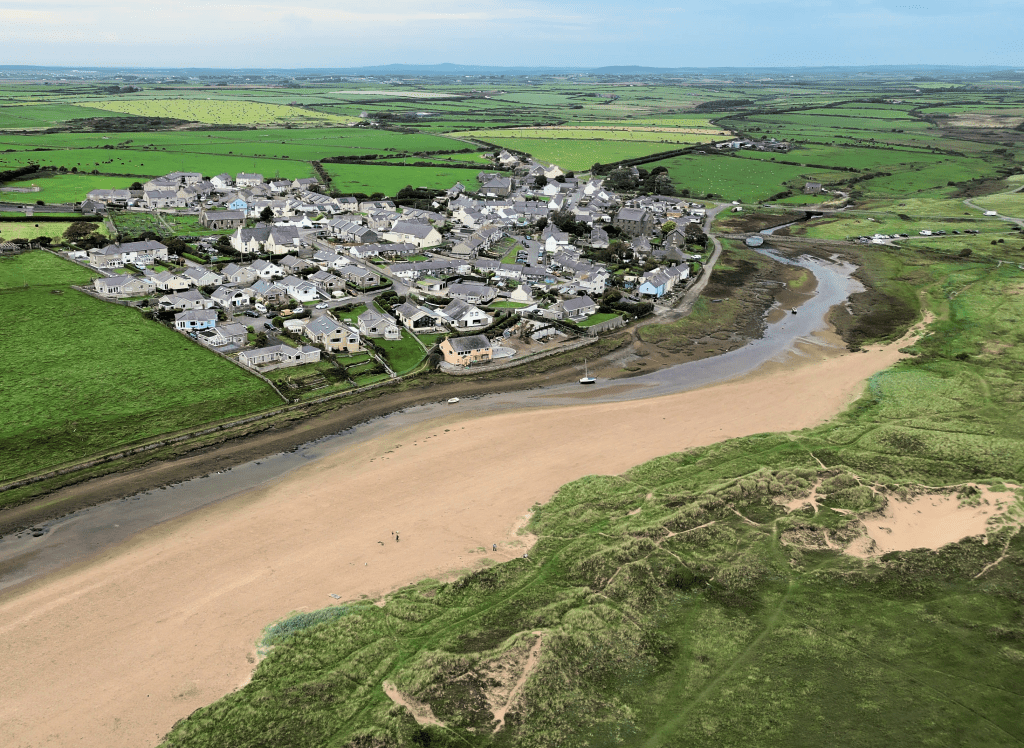
Another llys, east of Aberffraw and closer to the Menai Straits, has been identified at Rhosyr. Little is known about it, but it was in use in the mid-thirteenth century and has only recently been purchased and excavated by Cadw, the historic preservation organisation for Wales.
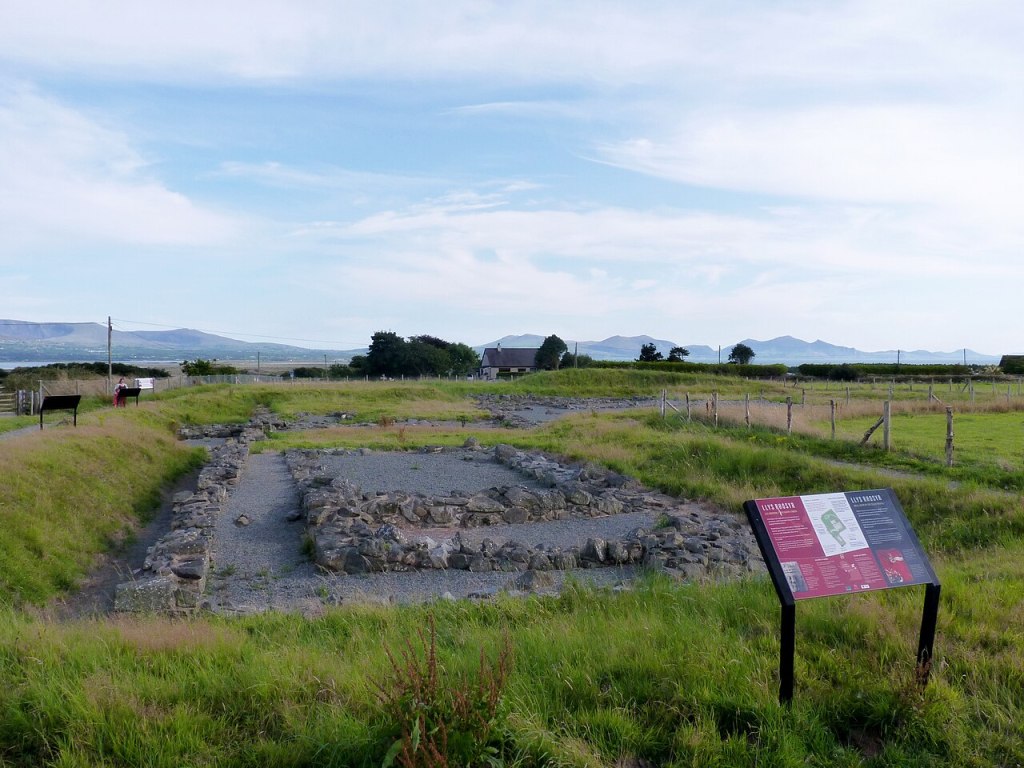
Rhodri Mawr (‘the Great’) was given this nickname as he inherited both Gwynedd from his father in 843, and Powys from his mother in 855, and eventually Ceredigion by marriage to its heiress in 872. So by the 870s, he was effectively prince of all of northern and central Wales. He was killed in 878 in battle against the Mercians, however, and his sons divided up his realm once more: Anarawd the eldest got Gwynedd, Merfyn got Powys, and Cadell got Ceredigion then added the Kingdom of Deheubarth (South Wales) by the end of the century—his descendants were called the Cadellings or the House of Dinefwr, named for their principal seat in Carmarthen (Anglicised as Dynevor). They ruled South Wales, contesting supremacy over Wales with the House of Aberffraw (and particularly passing Powys in the centre back and forth), until they were conquered by the English in 1197. They will receive a separate blog post
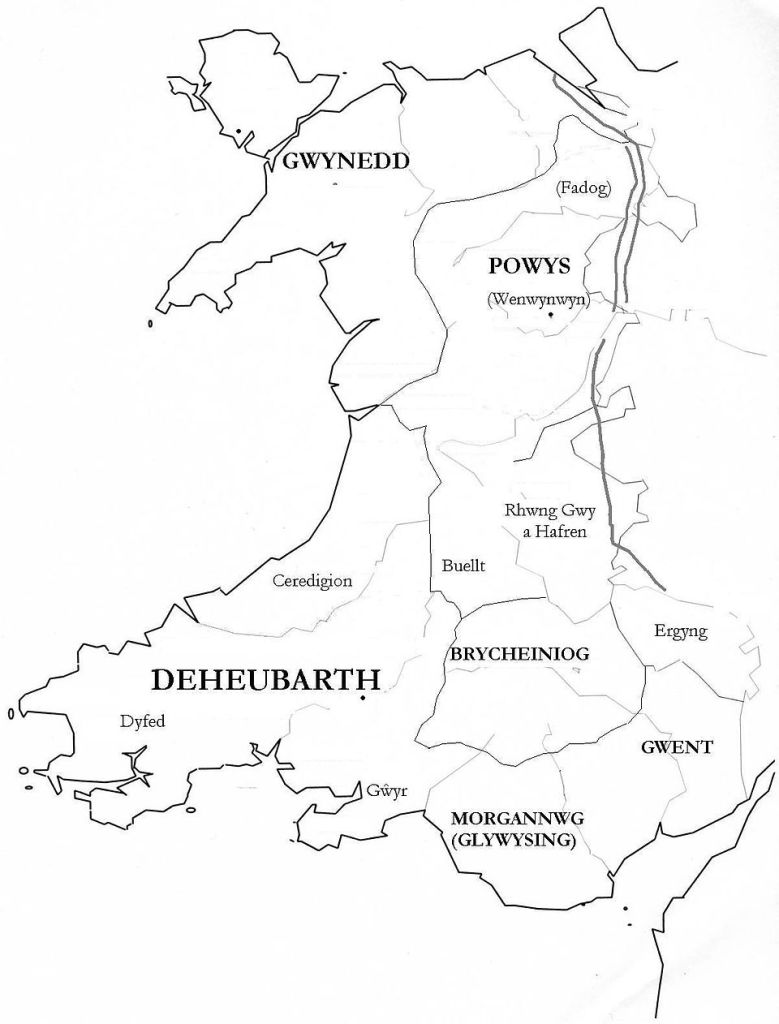
The House of Aberffraw usually claimed primacy over the other Welsh princes. But not always: Idwal of Gwynedd took on the Saxons under Edmund I, but was killed in 942, so his cousin Hywel Dda (‘the Black’), King of Deheubarth, took over in Gwynedd and Powys—once more unifying all of Wales, and famously codified Welsh law (Cyfraith Hywel), and agreeing to a firm border with King Athelstan of Wessex in 930. The laws may actually date from a later period, but Tudor legal experts liked to cite them again to stress Henry VII’s descent from Rhodri Mawr and Hywel Dda.
Idwal’s sons were restored to their place in Gwynedd in 950, and the next reigns are absolutely bloody. Nearly all of the kings blinded or murdered or exiled their brothers or nephews. They also sometimes paid tribute to the Saxon kings and sometimes were deposed by them. King Iago was defeated in 1039 by Gruffydd ap Llywelyn, who came from a different Welsh line altogether (founded by Seisyll, of unknown origins, who married a princess of the House of Aberffraw) His son Cynan lived in exile in Ireland forged an alliance through marriage with the daughter of Olav, King of Dublin, But his return to Wales in 1050 with a fleet of Irish ships failed and he returned to exile. The reign of Gruffydd ap Llywelyn had weakened by his getting involved in the politics and dynastic struggles of his Saxon neighbours, and he was defeated by Harold Godwinson in 1063. As is well known, Godwinson was then himself defeated by William, Duke of Normandy, in 1066 and a new era began for Wales as well.
Another dynasty arose in the north, with Bleddyn ap Cynfyn of Powys taking the throne of Gwynedd, with the backing of Edward the Confessor, in 1063, then passing this on to his nephew Cynwrig, who was driven out in 1079 when the House of Aberffraw re-established itself in Cynan’s son Gruffydd. By this point, the title used was prince not king, as Anglo-Norman overlordship was usually acknowledged. Indeed, North Wales was mostly occupied by the Normans in the 1080s-90s, with troops advancing from their base in Chester. Gruffydd was captured in 1081 and spent several years in Chester Castle. In 1092, the Normans attempted to install one of their own as Bishop of Bangor, but he was driven out. Gruffydd escaped and fled back to Ireland once more in 1096 but soon returned with Irish and Danish troops and secured his rule over Môn. In 1101 he negotiated terms with King Henry I of England, who recognised his rule here, plus Llŷn and the north coast as far as the mouth of the river Conwy. Further east, the King created a new buffer zone, the Welsh Marches, firmly under Norman control. Gwynedd enjoyed relative peace and a period of rebuilding in the astonishingly long reign (well, for medieval Welsh history!) of Prince Gruffydd ap Cynyn, who patronised the arts (according to legend one of the earliest official also sponsored an Eisteddfod, the festival and competition of poetry and music), and rebuilt royal residences and churches in stone, notably Bangor Cathedral, 1120-39, where eventually he would be buried. In 1116, Henry invaded again, with support from Alexander I of Scotland, and forced Gruffydd to do formal homage and pay a heavy fine. Peace was maintained as the Prince attained old age, and his rule was extended somewhat further to the south, into Meirionnydd, 1136, due to a dynastic dispute there. That same year, he joined with the princes of Powys and Deheubarth to defeat the Normans at Cardigan Castle.
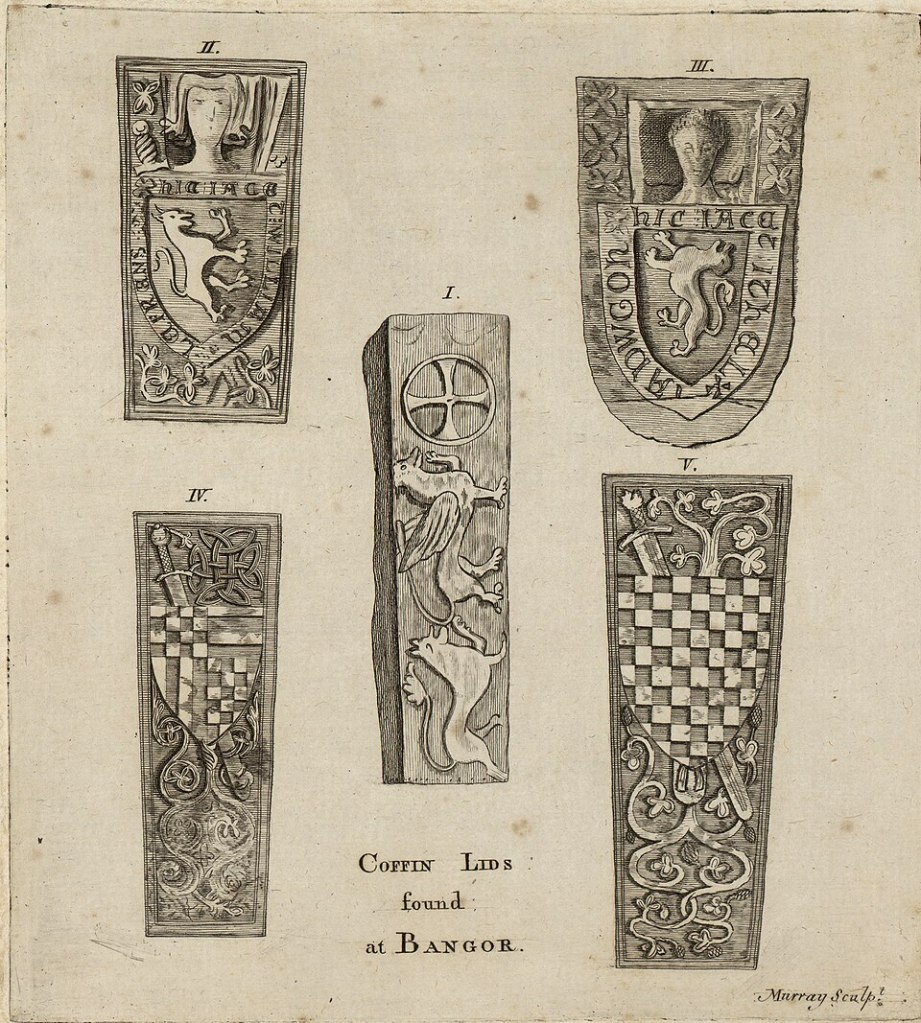
When Prince Gruffydd died in 1137, his sons Owain and Cadwaladr took over the rule of Gwynedd and much of northern Wales jointly. An older son, Cadwallon, had been killed fighting a few years before, and his son Cunedda’s claims were stifled by his uncles who had his eyes pulled out (and he was otherwise ‘emasculated’). Of the remaining co-princes, Cadwaladr made a name for himself early, by travelling to England and supporting Lady Matilda in her fight to gain the throne, and helped her capture her rival Stephen of Blois in 1141. Two years later, he murdered an ally of the House of Aberffraw, the King of Deheubarth, so was exiled by his brother Owain to Ireland—he returned to the Menai Strait with a Norse fleet and civil war seemed imminent, but the threat to Wales from the Norman marcher lords brought them back together. Tensions re-emerged between the brothers several times until 1153 when Cadwaladr fled to England, where he had kin as the brother-in-law of Gilbert de Clare, Earl of Hereford, and joined forces with King Henry II (Matilda’s son).
Meanwhile, Prince Owain had tested the peace with Henry II by expanding his domains eastward along the north coast of Wales, to Rhuddlan and the Clwyd valley (what is now Denbighshire). So in 1157, Henry II arrived with an army, joined by the Earl of Hereford and Prince Cadwaladr, but was pushed back. Nevertheless, Owain agreed to renew homage, restore lands to his brother, and Rhuddlan to the Earl of Chester. Peace held for about five years, until Owain invaded England through Shropshire (this time with his brother at his side). Again there was a hasty English retreat, and Henry II for a time abandoned his plans to definitely conquer Wales.
Yet by the 1150s Owain was using the title tywysog (prince), not brenhin or rex, since he recognised de jure the sovereignty of the King of England—though he was de facto independent. His supremacy amongst the Welsh princes was asserted as the senior descendant of Rhodri the Great. Owain ap Gruffydd was considered one of the greatest rulers of medieval Wales, but when he died in 1170, the Welsh principalities were again torn apart by another civil war and another English invasion.
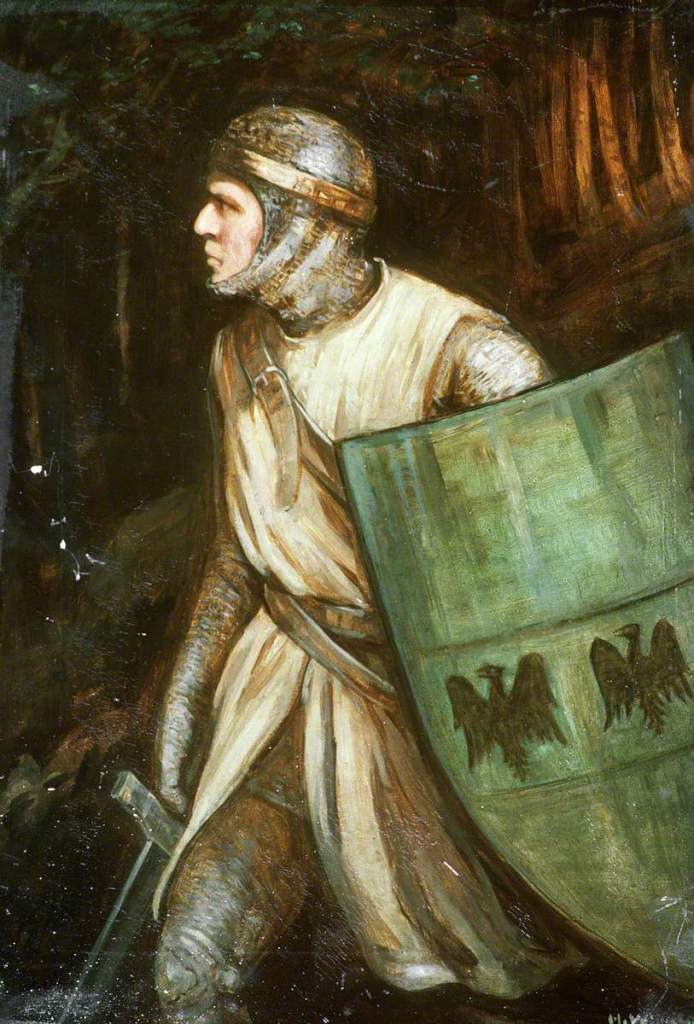
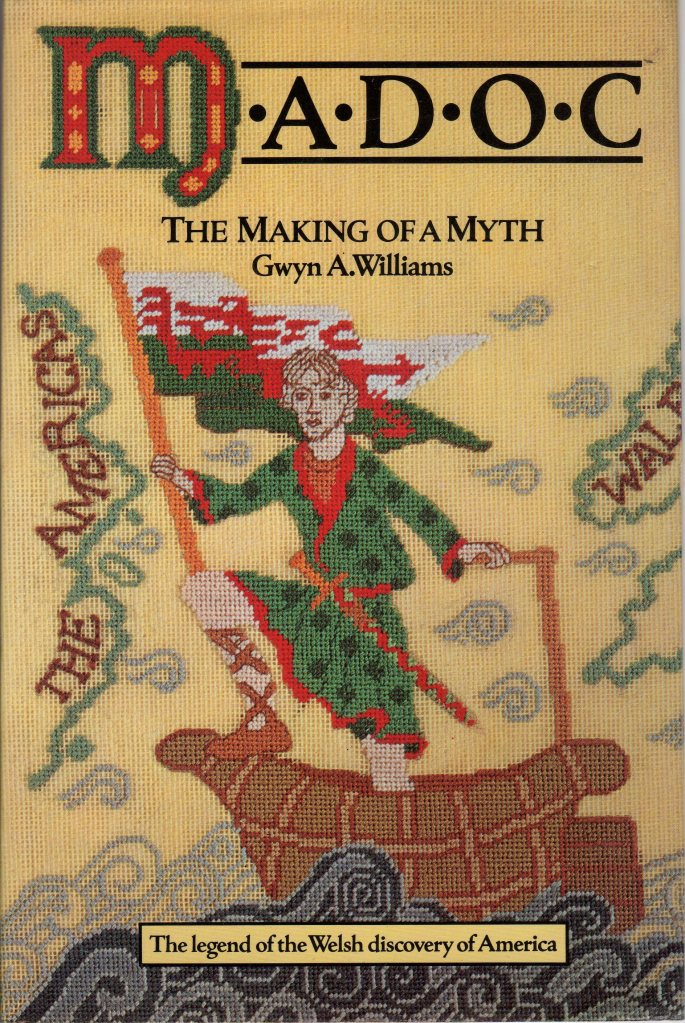
After three years, most of the realm was taken by force by Prince Dafydd I, who brutalised and imprisoned his brothers Maelgwn and Rhodri, as well as illegitimate half-brothers Hywel and Cynan. Also named as a sibling is Prince Madoc who was said to have sailed west to escape the dynastic chaos and ended up discovering North America. This is a character I knew very well in my childhood, as a protagonist in one of my favourite novels, A Swiftly Tilting Planet, by Madeleine L’Engle, along with his supposed descendants who bore the names Maddox and Mad Dog. There was indeed a long-enduring legend amongst the English colonists of the seventeenth and eighteenth century that there were Welsh-speaking natives living in the interior of the Carolinas, and was linked to a Cherokee legend of the ‘moon-eyed people’ who were fair haired and pale-skinned, but contemporary sources list no Madoc amongst the sons of Owain ap Gruffydd.
Dafydd’s rule was supported by Henry II of England, and in 1174 he married the King’s half-sister Emma of Anjou. In the early 1190s, his brother Rhodri escaped from prison, and with the aid of his nephews Gruffydd and Maredudd, the sons of Cynan of Merioneth, and Llywelyn, the son of his eldest brother Iorwerth Drwyndwn (‘broken nose’), he defeated Dafydd at the Battle of the Conwy Estuary and drove him out of Gwynedd and into exile in England (where Henry II had given him and his wife some estates in Shropshire).
Llywelyn became Prince of Gwynedd, while his cousins retained Merioneth as his vassals. He had been raised in exile in Powys (his mother’s homeland), and shortly after 1200 he had annexed much of that principality as well as Ceredigion to the south. He too allied with the English royal family through marriage to Joan, daughter of King John in 1205, who soon gave him an heir, Dafydd. But there was also an elder son, Gruffydd, born from an earlier marriage with a daughter of Ragnald, King of Man, that was much contested and then annulled since he had consummated the relationship before she was thirteen.
The name Llywelyn is still today synonymous with independent Wales and distinct in its Welshness—and its difficulty to pronounce for many given its initial double ll (a ‘voiceless alveolar lateral fricative’, as I’m sure we all know). Unlike David, Owen or Griffith, it did not have an easy Latin or English version for medieval chroniclers or early modern historians (though some used ‘Lewis’). The name is said to have evolved from Lugubelinos, a compound of two British deities Lugus and Belenus (the gods of harvest and healing).
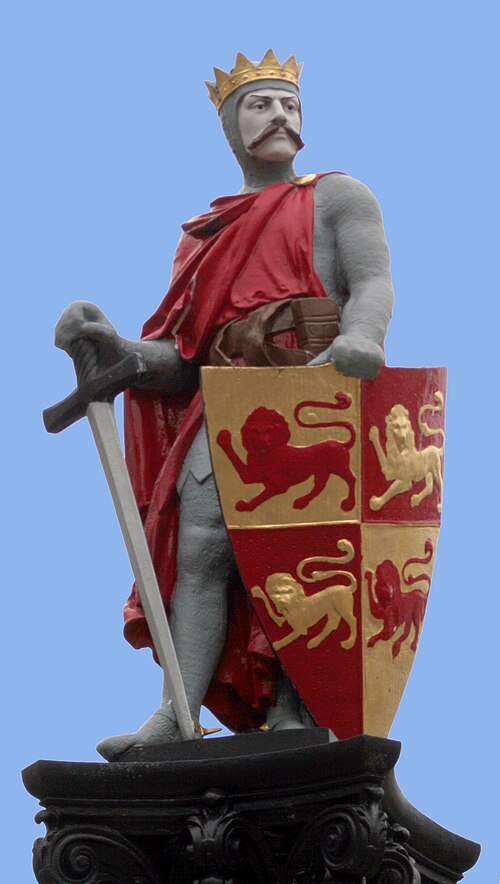
Llywelyn Fawr (‘the Great’) had a long and stable reign. His early alliance with King John was tested when the latter invaded in 1211, despite attempts by Joan to intervene. But the Welsh princes came together and by 1216 the English were driven out, and Llywelyn recognised as paramount amongst the princes. Two years later, John was dead, and Llywelyn made a new treaty with his son Henry III by which he was formally recognised as ‘Prince of Wales’. The next decade of peace allowed him to develop his court at Aberffraw as a ruling prince, using his wife’s knowledge of court etiquette and culture. He also tried to establish a more stable form of government, by hosting other Welsh princes in a regional council, usually at an abbey such as Strata Florida (inland from Aberystwyth). The Prince used this period to build or refortify many castles all around Gwynedd. It’s worth pausing to look at some of these castles, built in a new style for Wales, inspired by Norman designs.
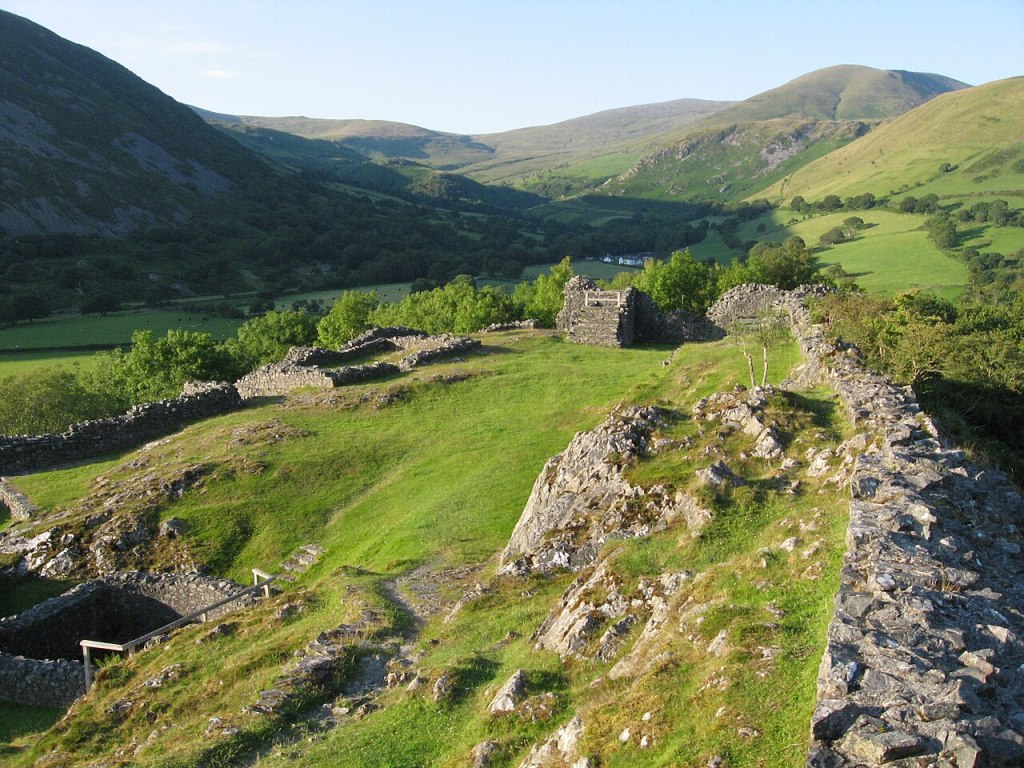
Castell y Bere was first. Built on the top of a ridge deep in the mountains, it was intended to control the population of Merioneth and secure Gwynedd’s southern borders. Edward I expanded it in the 1290s, then it was retaken by the Welsh in 1294, burned and mostly abandoned—a ruin by the sixteenth century. Today the site is managed by Cadw.
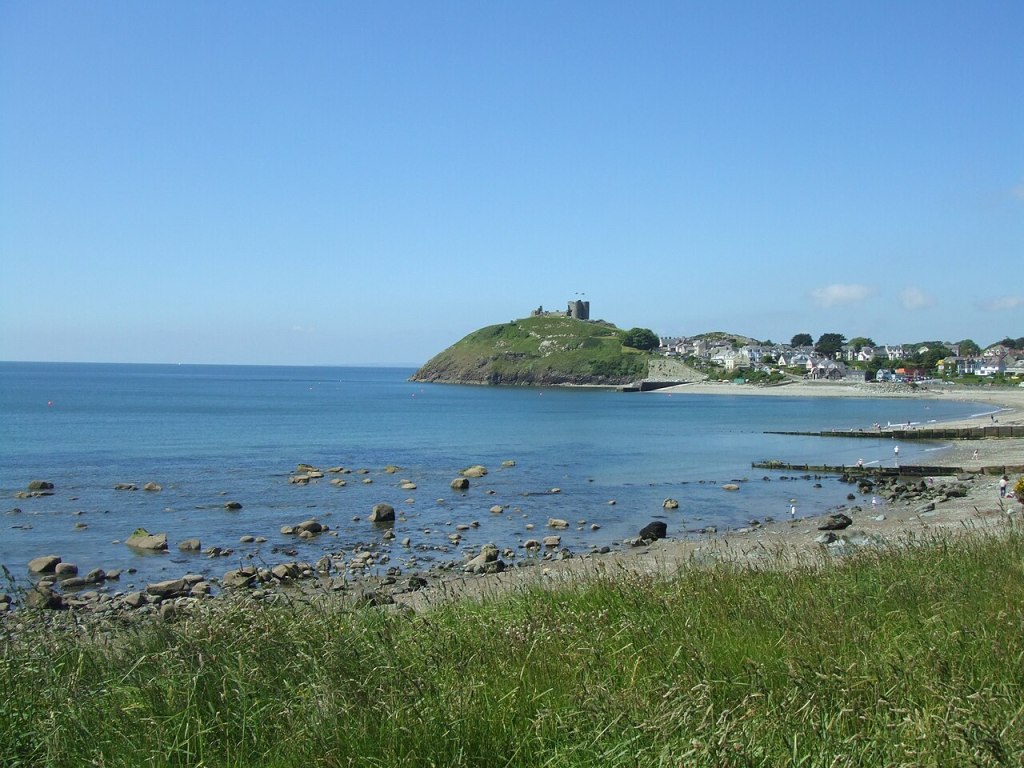
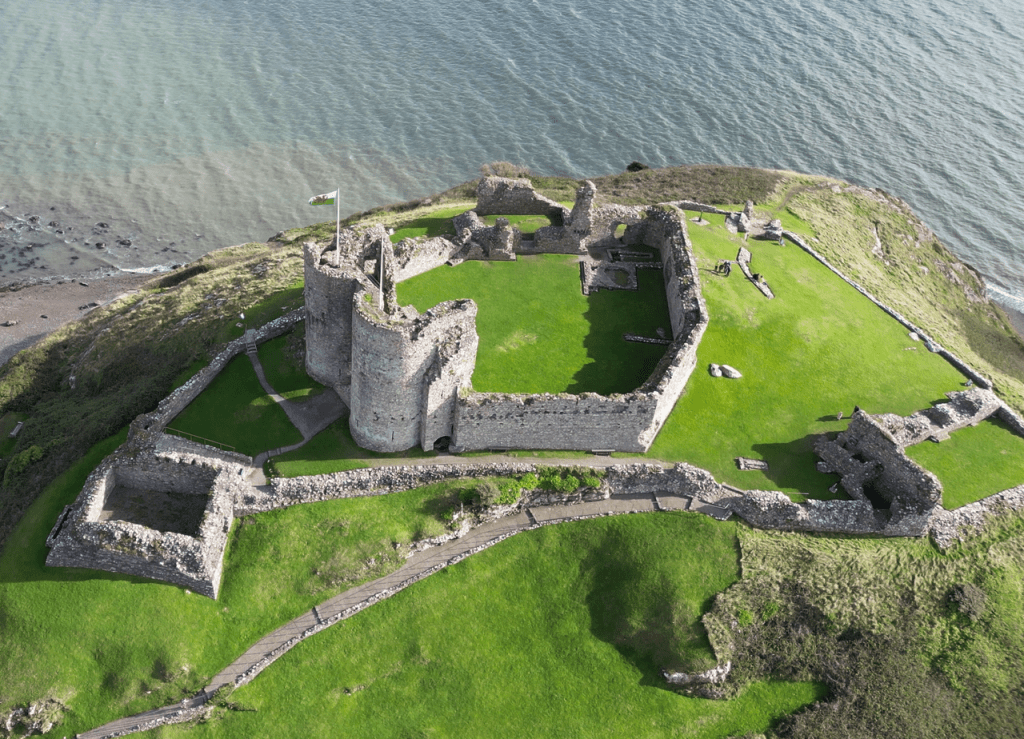
Criccieth was built later, in the 1230s on a headland overlooking Tremadog Bay (the northern part of Cardigan Bay). It was built to be the administrative centre of this region (known as Eifionydd), and to displace a nearby Norman castle, Dolbenmaen. Captured by Edward I in 1283, Criccieth Castle was improved by the English, and often used as a prison. It was a ruin by the 1450s, and eventually sold by the Crown to the 2nd Baron Harlech (of the Ormsby-Gore family), and since the 1930s has also been managed by Cadw.
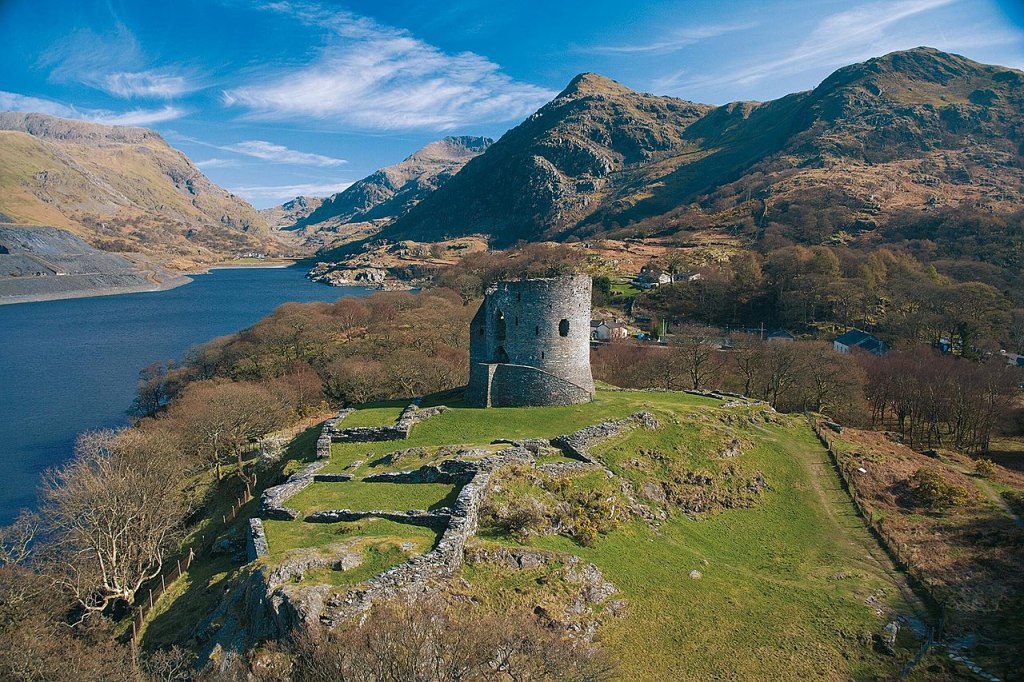
Moving inland into Snowdonia, Dolbadarn Castle was built at the base of Llanberis Pass, which allowed travellers or troops to cross from the west coast to the Conwy valley which then linked up to roads along the north coast. The large round tower allowed the Prince to wield authority as lord of the mountains, not just the islands and coasts of northwest Wales. It was one of the strongest castles of the Welsh princes, and would be Daffyd II’s last holdout in the final days of Welsh independence in 1283. After that, it lost importance and fell apart. A ruin by the eighteenth century, Dolbadarn became a popular subject for Romantic painters like Turner. It was owned by the Duff baronets until it too was gifted to Cadw in 1941.
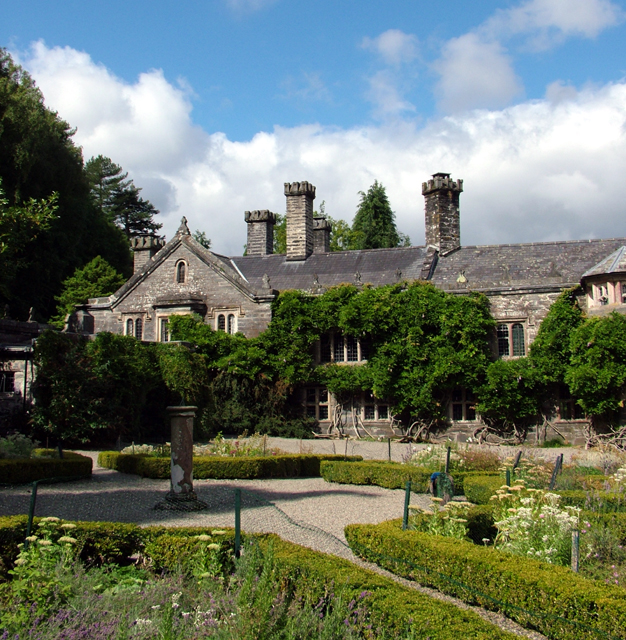
On the far side of the Llanberis Pass was Dolwyddelan Castle, which Prince Llywelyn built to replace an older castle nearby, Tomen, which had been built by his father and was probably his birthplace. Dolwyddelan sits on a ridge commanding the upper reaches of the river Lledr which flows into the river Conwy, and guards the main east-west route through the interior. Like the others, it was taken by Edward I in 1283, and eventually granted by the Crown to the Wynn family of baronets (whose base was the neighbouring Gwydir estate). From the Wynns, it passed to their descendants the lords Willoughby de Eresby, and from them into the custody of Cadw in 1930.
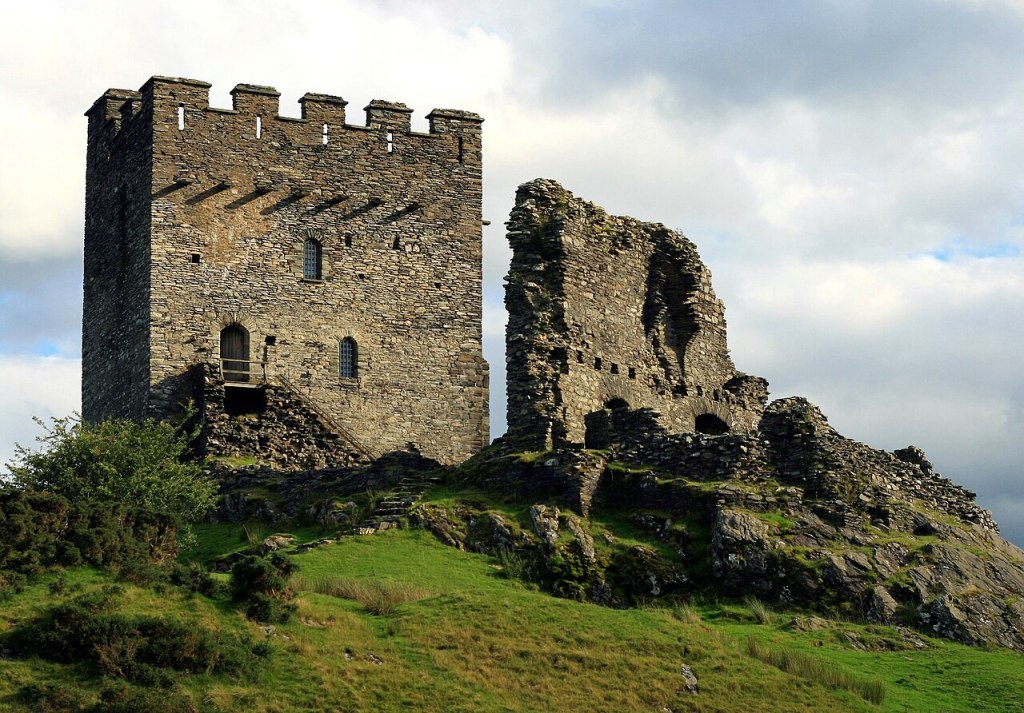
By 1235, Gwynedd was at peace, with a ring of advanced castles from Cardigan Bay to the Conwy estuary, and a sophisticated court at Aberffraw. Prince Llywelyn promoted his younger (unquestionably legitimate) son Dafydd as his heir, ‘Prince of Aberffraw and Lord of Snowdonia’—and obtained the formal nod of approval from King Henry III, to whose court he travelled with his mother (Henry’s half-sister) to do formal homage.
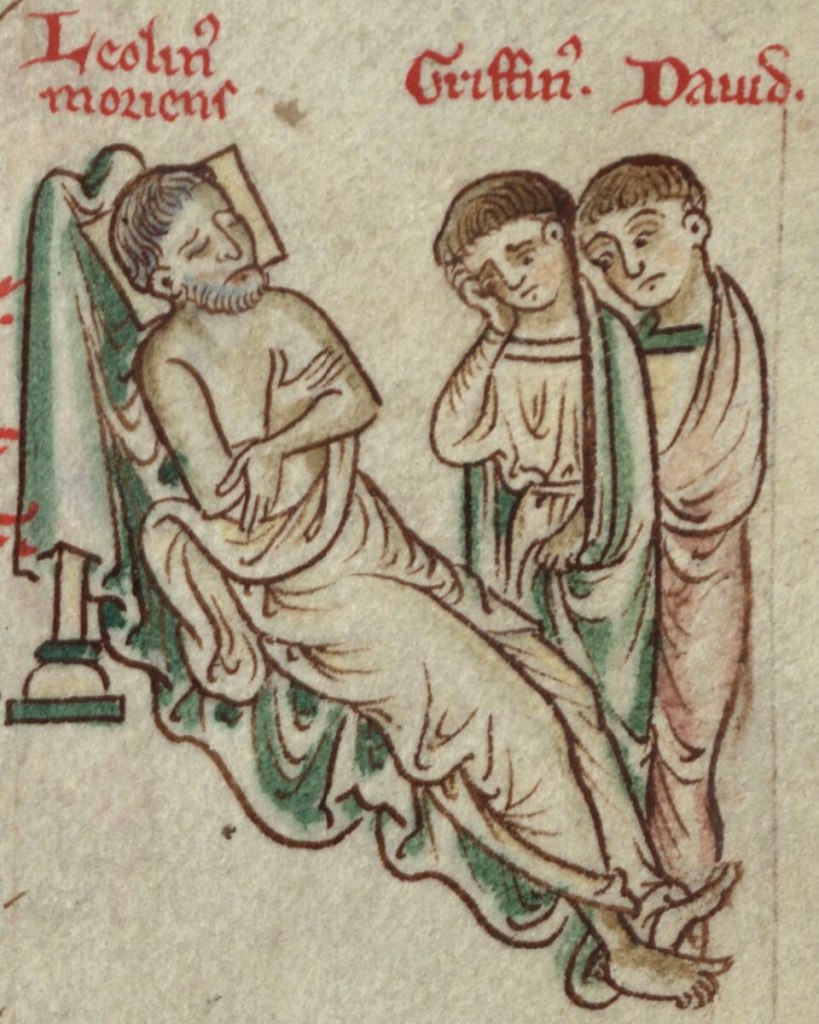
Yet the best laid plans rarely hold, and after Llywelyn the Great died in 1240, King Henry invaded and forced Dafydd II to give up claims to all lands outside Gwynedd, and for good measure captured his half-brother Gruffydd, taking him to the Tower of London, where he died in 1244 trying to escape. Dafydd did have some successes repelling English forces, then died suddenly in 1245, and was buried at the Abbey of Aberconwy, founded by his father (who is also buried there), now in the heart of the town of Conwy.
Dafydd II’s death once again re-opened the succession question—always a thorny point in a land that had not yet embraced primogeniture. His half-brother Gruffydd’s older son Owain Goch had also been a prisoner in London with his father while the younger, Llywelyn, had remained in Wales as an ally of his uncle. Now Henry III negotiated a shared rule between Owain and Llywelyn, and fraternal peace lasted until 1253. Another younger brother, Dafydd, reignited the conflict, and he and Owain took on Llywelyn in 1255 and lost. Owain was imprisoned for about twenty years (probably in Dolbadarn Castle), while Dafydd remained on the loose, and led another rebellion against Llywelyn II in 1263, after which he was exiled to England (only to return for another try in 1274).
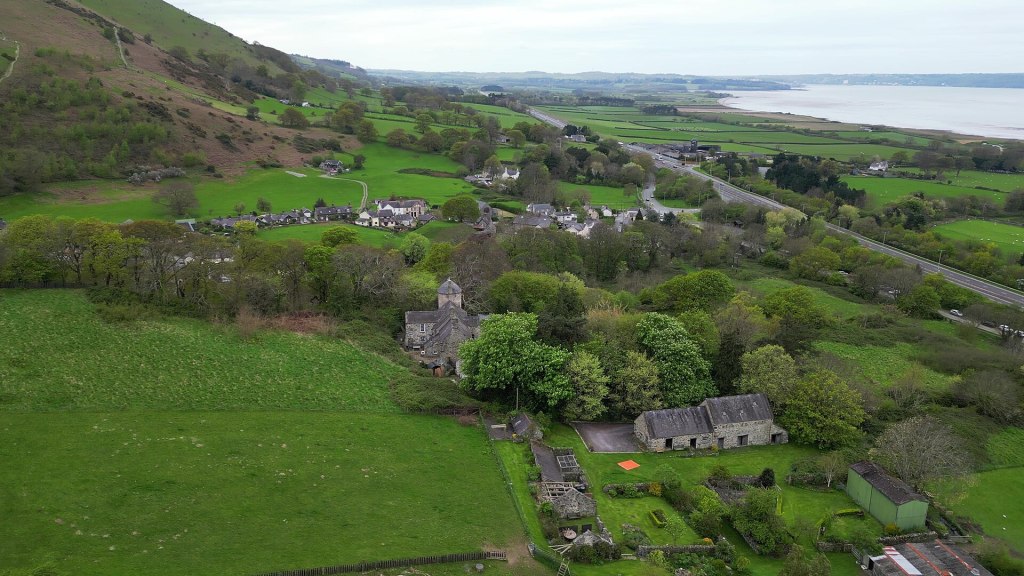
Prince Llywelyn II ‘the Last’ reunited all the Welsh principalities in the 1260s-70s. His seat was Garth Celyn, in the village of Abergwyngregyn (or just Aber). The small village on the north coast, midway between Conwy and Bangor, has two sites that are claimed as Gwynedd’s last princely capital. A manor house, Pen y Bryn, up on a hill, with structures that date back to the seventeenth century at least (and hints of earlier stonework), and a mound down in the valley closer to the church. There are calls for the Welsh government to purchase the site of Garth Celyn (‘Holly Enclosure’), but which one?
In 1275, Llwelyn married Eleanor, the daughter of Simon de Montfort, Earl of Leicester—a significant alliance given de Montfort’s role as leader of the baronial opposition to the Crown in England in the 1260s. Further to this, Eleanor’s mother was Eleanor of England, Henry III’s sister and aunt to the new king from 1272, Edward I. Thanks to these familial links, after Edward invaded North Wales in 1277, a new settlement was reached, the Treaty of Aberconwy, named for the monastery noted above, by which Llywelyn secured Gwynedd and the title Prince of Wales for himself, while his brothers were also given lands to rule: Owain in Llŷn and Dafydd in the interior valleys east of the Conwy river (while England secured the north coast and the Dee estuary). Dafydd was also married to a significant English noblewoman, the daughter of the Earl of Derby. The most significant clause of the Treaty was that when Llywelyn died, his principality would be ceded to the English crown.
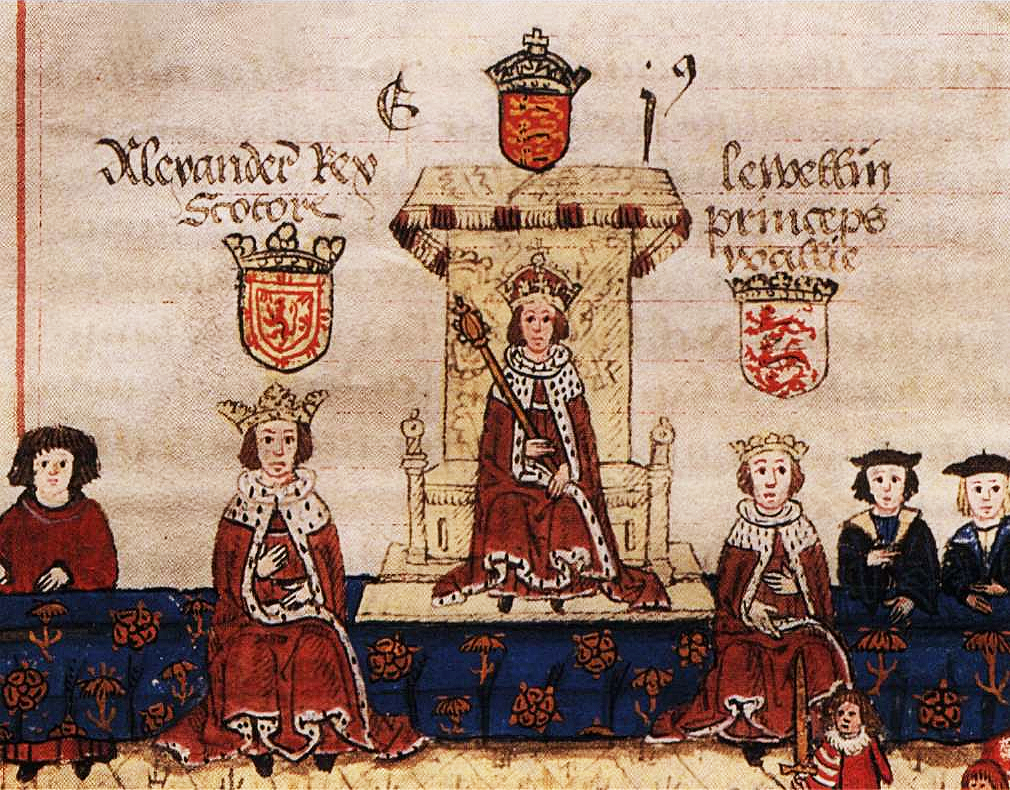
Though he had been a key ally of the English, Dafydd rejected this idea and fanned other Welsh princes to join him in attacking English outposts in Spring 1282. Llywelyn did not want war but felt obliged to support his brother and defend Welsh independence—and was killed in an ambush near Builth Wells in Powys in December; his head was taken to London. Llywelyn’s wife Eleanor also died in 1282, so their only child, an infant daughter Gwenllian, was left as an orphan. The last of her house, she was captured by the English and spent her life in Sempringham Priory in Lincolnshire. Always treated with courtesy as a princess of Wales, she died in 1337.
Dafydd III continued the fight for several months. In the winter of 1282-83, he was increasingly encircled in Snowdonia, and held on to the fortress of Castell y Bere until April 1283. Captured in June, he was taken to Rhuddlan Castle (by this point English military headquarters in North Wales), then to Shrewsbury and executed. His head was also sent to London. The remaining males of the family were captured and sent to Bristol Castle. The daughters, like Gwenllian, were sent to convents in England for the rest of their lives. Dafydd’s eldest son Llywelyn died a prisoner in 1287 (about twenty years old), while his younger brother Owain, the titular ‘Prince of Gwynedd’, continued to live in Bristol Castle until his death in 1325.
By the Statute of Rhuddlan, 1284, Gwynedd was annexed by the Kingdom of England and was reorganised into six shires (Anglesey, Carnarvon, Merioneth and Flint, alongside two in the south, Cardigan and Carmarthen). The rest of Wales would become the ‘Principality of Wales’, governed locally by English marcher lords, and overall by the King’s heir based (at least nominally) in Ludlow—ironically located not in Wales but Shropshire—with the future Edward II first being crowned as Prince of Wales at Caernarfon in 1301. This remained the situation until all of Wales was fully incorporated into England by Henry VIII in 1536.
There were later Welsh revolts: 1294 by Prince Madoc of Merioneth; 1372 by Owain Lawgoch; then 1400 by the famous Owain Glynŵr (a member of the House of Powys). Of these, Owain Lawgoch (‘red-handed’) is relevant here, as a descendant of Llywelyn the Great via his illegitimate son Gruffydd. He was born at Tatsfield Manor in Surrey, educated in the art of war in the French army in the 1350s-60s, and during a pause in the fighting of the Hundred Years War, planned armed expeditions to Wales to reclaim his ancestral throne, with the backing of the French king (1372-74). Referring to himself in French as Evain de Gales,he issued manifestos, but never got far with his invasions and was assassinated by an English agent at Mortagne in Poitou in 1378. He is reckoned to be the last of the House of Aberffraw.
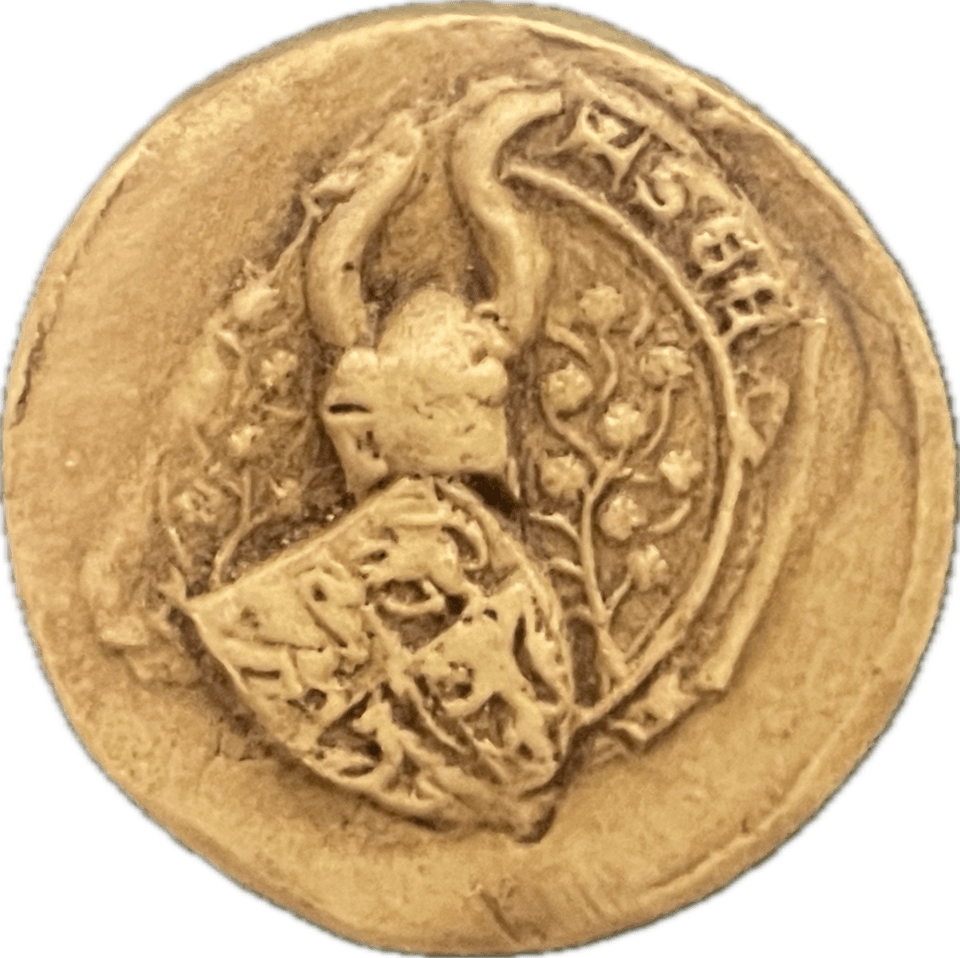
There are lines of Welsh nobles who trace their lineage back to these princes, notably the line of Wynn of Gwydir. Their family genealogies linked them to one of the uncles of Llywelyn the Great, Rhodri, Lord of Anglesey (d. 1195); they owned an estate, Gwydir, in the high uplands of the river Conwy in Snowdonia, from the mid-fourteenth century to the eighteenth. The Wynns were one of the most significant families of north Wales during the Tudor and Stuart periods, and their manor house, built around 1500, still stands. The most prominent was Sir John Wynn, Sheriff of Carnarvonshire and Merionethshire between 1587 and 1603, and a member of the Council of the Marches of Wales—created Baronet Wynn of Gwydir by King James I in 1611. The last baronet died in 1719, and the heiress took the estate to the family of the Duke of Ancaster and his heirs in the family Willoughby de Eresby.
The principality of Gwnyedd vanished, but the name was resurrected as a modern county in 1974. In 1996 it was reduced, so that today it includes Merioneth and Carmarthen, but not Anglesey. All three do retain the name Gwynedd however as a ‘preserved county’ for ceremonial purposes. The most famous castles in Wales are the ‘big four’ (Caernarvon, Beaumaris, Harlech and Conwy), but these were built by Edward I and are part of the later history of the region. For now the northwest corner of Wales remains part of the United Kingdom—though a genuine point of interest as one of the best places to hear Welsh spoken in everyday life—but who knows, perhaps someday the Blessed Cadwaladr will return to drive the Saxons away from these shores.
(images Wikimedia Commons)


2 thoughts on “Princes of Gwynedd: the last bastion in Wales”