In the world of dukes and princes, most family histories stretch across centuries. Families usually needed to accumulate stories of valorous deeds and a reputation of living like princes before they were formally created as such. They also needed sufficient wealth, acquired over generations, to sustain such a dignity. But not always. Sometimes one man could rise from the lower ranks to the very top of the aristocratic hierarchy in just one lifetime. But often fate is cruel (or just?) and cuts the dynasty down after only a short time of existence. Such is the case of the Eggenbergs of Styria. They were princes of the Holy Roman Empire only between 1623 and 1717—not even a century.
The meteoric rise was down to two main factors: great wealth, generated by savvy financial dealings with the Habsburg family, and the personal relationships that were established with those same Habsburgs, especially one, Ferdinand II, as he transitioned from a junior prince to Emperor.
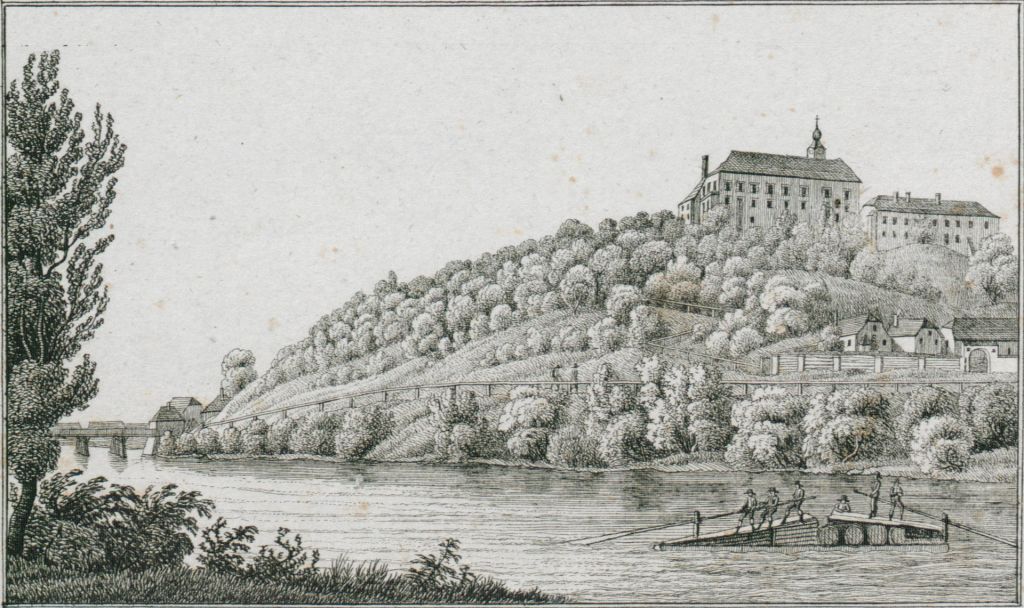
The Eggenberg story does start a little earlier. Ulrich Eggenberger was a municipal judge in the city of Graz, capital of the Duchy of Styria, in today’s southern corner of Austria. He appears in documents starting in the 1430s, as a financier to several of the local noble families, and in addition making a fortune from winemaking in the town of Radkersburg, a few miles to the southeast (today right on the border with Slovenia—still an area known for its wine). There is a castle directly across the river Mur, now in Slovenia, so it uses the Slavic name, Radgona. Built in the 1150s by the rulers of Styria to defend the border with Hungary, Radgona Castle was taken by the Hungarians in the late fifteenth century, then returned to the Habsburgs. The Eggenberg family purchased the castle in 1623, and it passed in the eighteenth century to another local noble family, the Herbersteins, who sold it on in 1789. In a separate country to Radkersburg since 1920, Gornja Radgona (or Schloss Oberradkersburg) was nationalised by Yugoslavia and was used as a school. Since the 1990s, the castle has served as a museum and event venue.
By the time of Ulrich’s death in 1448 his family was amongst the wealthiest bourgeois elites in the province. Where the name came from is unclear—was there an ‘egg mountain’ in the area? A lot of Austrian names with ‘egg’ in them (like Schwarzenegger) derive from a corner or sharp edge (eck, and an early form of the name was in fact Eckenberger). There was an earlier noble family of Eggenberg who flourished in Upper Austria in the fourteenth century, but there is no connection.
Ulrich’s eldest son Balthasar was a great entrepreneur and came to be one of the leading financial officers for Emperor Frederick III, who preferred to reside in Graz rather than Vienna. By the 1450s, Balthasar Eggenberger was appointed Master of the Imperial Mint for Styria (and for neighbouring provinces Carinthia and Carniola), and, as expected, he began to build in the city to demonstrate his family’s position there: a hospital in the centre with his family’s crypt in its chapel, and in 1460 a house on the western outskirts of town, at the foot of the mountains. He was a real wheeler-dealer and amassed a huge fortune, but in order to keep up with the shifting economy of the troubled times, he had to devalue silver coins, causing a crash—he fled to Venice. The Emperor needed him, however, so he was recalled … But in time they fell out again (for reasons not known) and Balthasar died in prison in Graz in 1493.
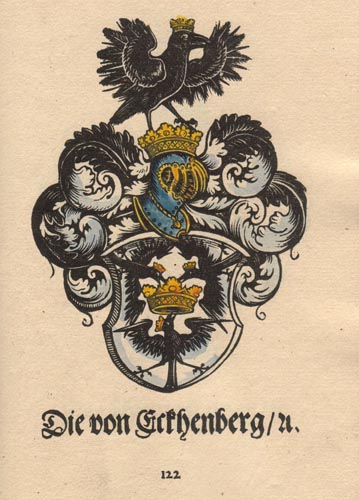
One reason Frederick probably did not trust Eggenberger was his open dealings with Matthias Corvinus, king of Hungary and rival of Frederick. In about 1479, Eggenberger adopted a coat-of-arms of a crown supported by three ravens, and it was fairly clear this was a reference to his patronage by Corvinus, whose name means the raven.
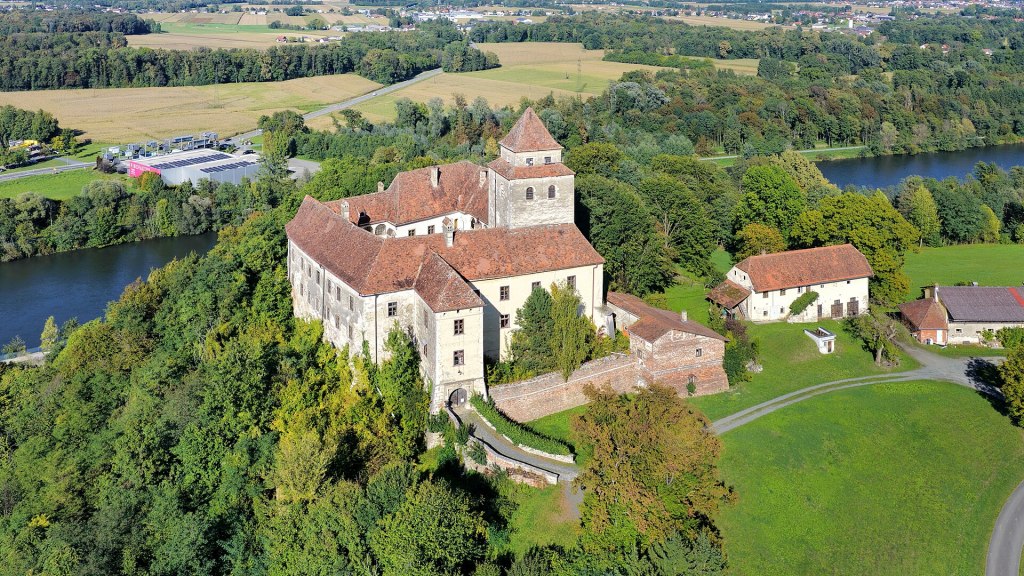
After Balthasar’s fall, the senior branch of the family laid low while the junior branch rose in stature. In 1543 they acquired a large castle south of Graz, Ehrenhausen. This castle was just a few miles upstream from Radkersburg, also overlooking the Mur river valley. A twelfth-century keep had been held by the lords of Pettau from the thirteenth to the fifteenth century. Once in the hands of the Eggenbergs, its defences were strengthened, important now that this region was an active frontier between Habsburg lands and Ottoman occupied Hungary. The castle passed to the senior Eggenberg line in the mid-seventeenth century, then to the Leslie family in the mid-eighteenth and finally to the Attems counts until the 1880s. It too remains in private hands today.
In the later sixteenth century, Rupprecht von Eggenberg of Ehrenhausen became a prominent military commander on the southeast frontier of the Habsburg lands. In Graz, he was appointed Captain of the Guard of the archducal court, but he made his name on the military frontier: in 1593, he led Styrian troops to defeat an Ottoman army at Sisak, and again in 1595 at Petrija (both in Croatia). He was rewarded with post of Colonel-General of the Croatian frontier, then two years later promoted to Colonel-General of the Artillery, and in 1598, earned the noble title of freiherr (baron) for himself and all of his house. Before he died in 1611, Rupprecht built a mausoleum at Ehrenhausen, a beautiful gem of baroque architecture, but made specific criteria for burial there: only those family members who remained faithful to the Catholic Church (in an era when many of the nobility were not), and who had attained the rank of general—which his nephew Wolff did, and was also buried here in 1615. The Ehrenhausen line died out in 1646.
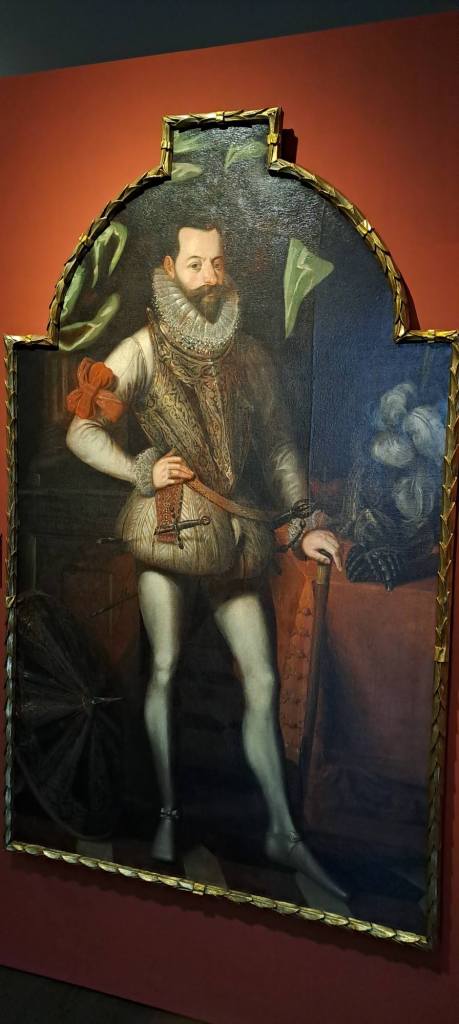
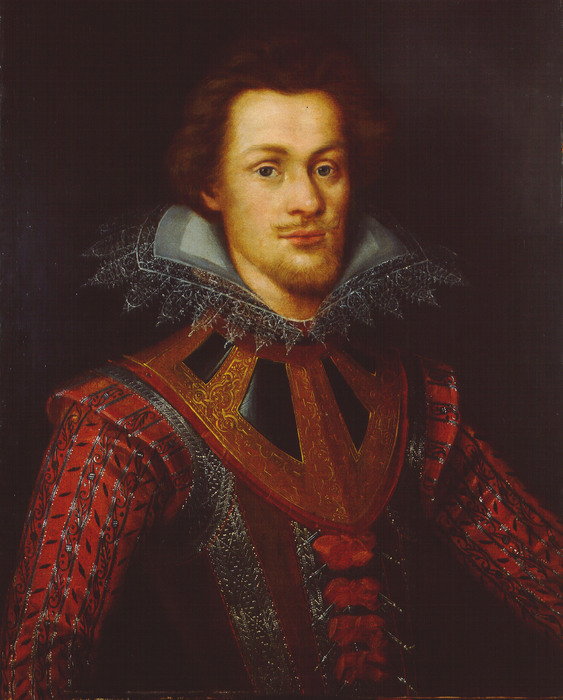
The promotion to baronial status within the nobility also benefitted the senior line of the Eggenbergs, now represented by Hans Ulrich, who, unlike his cousins, was in fact raised a Protestant, but smartly converted back to Catholicism and ingratiated himself with the ruler of Inner Austria (Styria, Carinthia, Carniola), Archduke Ferdinand, once more as a financial advisor. Swiftly becoming indispensable, the Archduke named Hans Ulrich Governor of Carniola and a member of his privy council in 1602, then Grand Master of the Styrian court in 1615. Four years later, Eggenberg’s services were crucial in financing Ferdinand’s election as Holy Roman Emperor, and he continued to raise the funds needed for the Emperor to wage the Thirty Years War. He was rewarded with a position on the Imperial Privy Council and the post of Lord Chamberlain, and in 1625 he was appointed to Ferdinand’s old job, Governor of Inner Austria—an unprecedented appointment for someone whose family had only recently been members of the urban bourgeoisie. The Emperor rectified the situation somewhat by raising Hans Ulrich in rank from baron to Prince of the Empire in 1623, and augmenting this further with the title of duke in 1628, a title attached to the castle and extensive estates of Krumau in Bohemia.
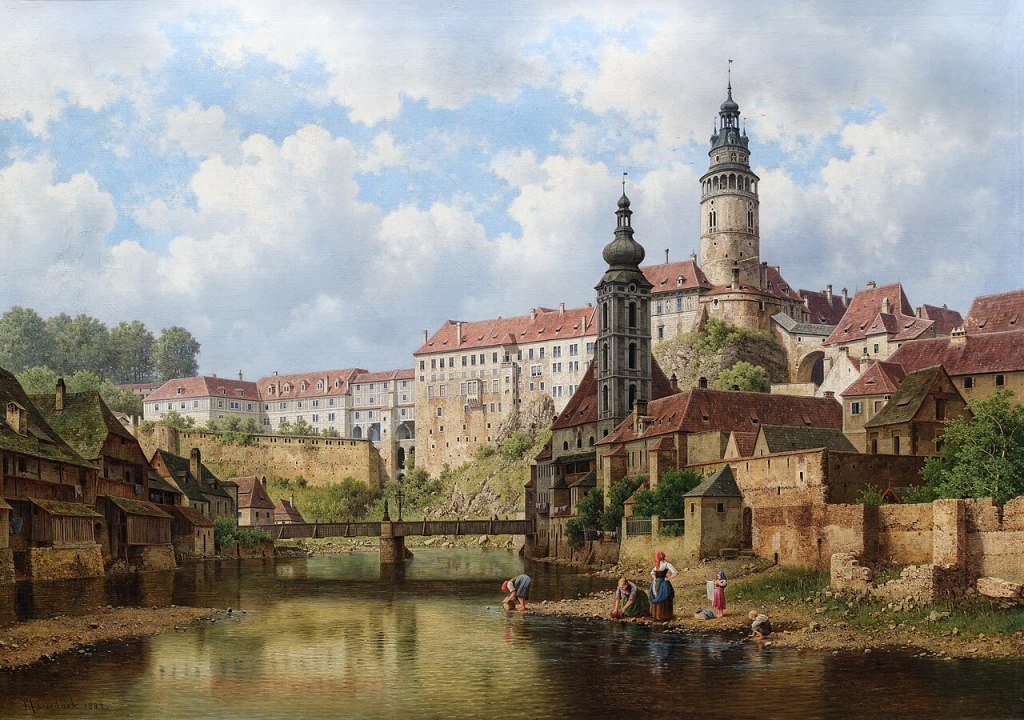
Krumau is today the popular Czech tourist attraction of Český Krumlov. This huge fortress on the upper Vltava river in South Bohemia was built in the 1250s by the Vitkovci family (also called the Krumlov family), and after 1302, passed to a cadet line of their clan, the Rosenbergs. They gave it a makeover in Renaissance style in the sixteenth century, then died out in 1611. The Habsburgs took it over, then as we’ve seen, granted it to Hans Ulrich von Eggenberg, in gratitude in part for the efforts Eggenberg was making to enable the Emperor-King to re-catholicise the nobility of Bohemia. His heirs gave the castle another, baroque, makeover in the 1660s. From the early eighteenth century, the castle of Krumau or Krumlov (called ‘Český’ to distinguish it from another Krumlov in Moravia) belonged to the Schwarzenberg princes, who will have their own blog post. Since 1947 it has been nationalised and is maintained by the Czech state.
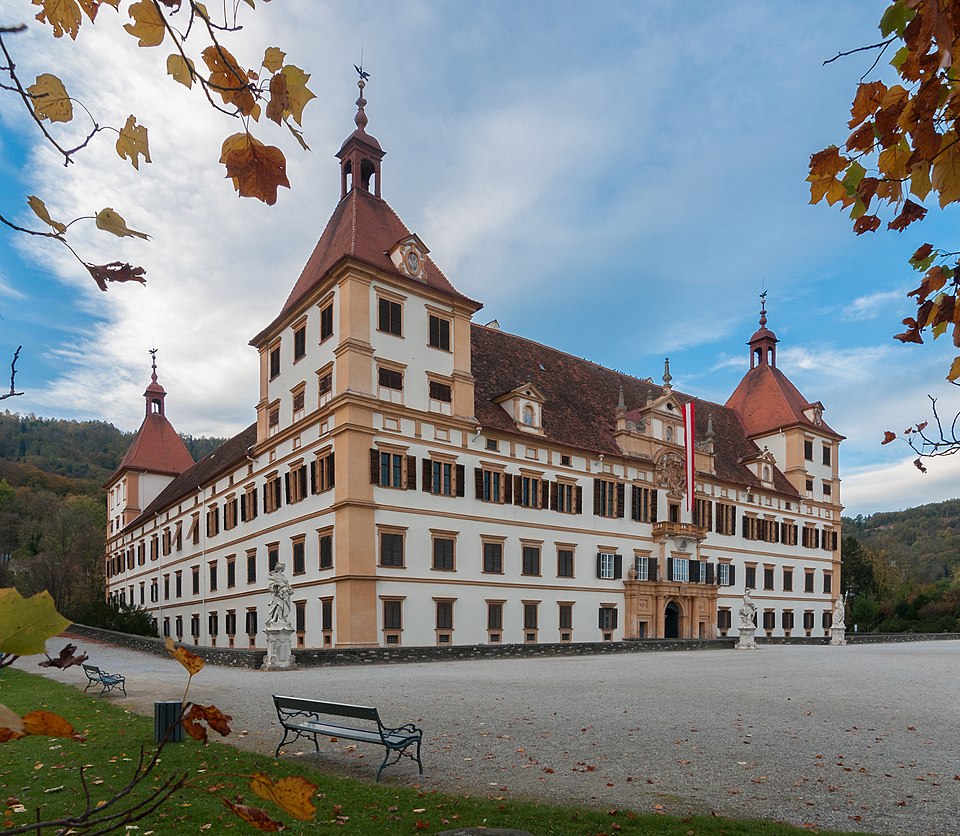
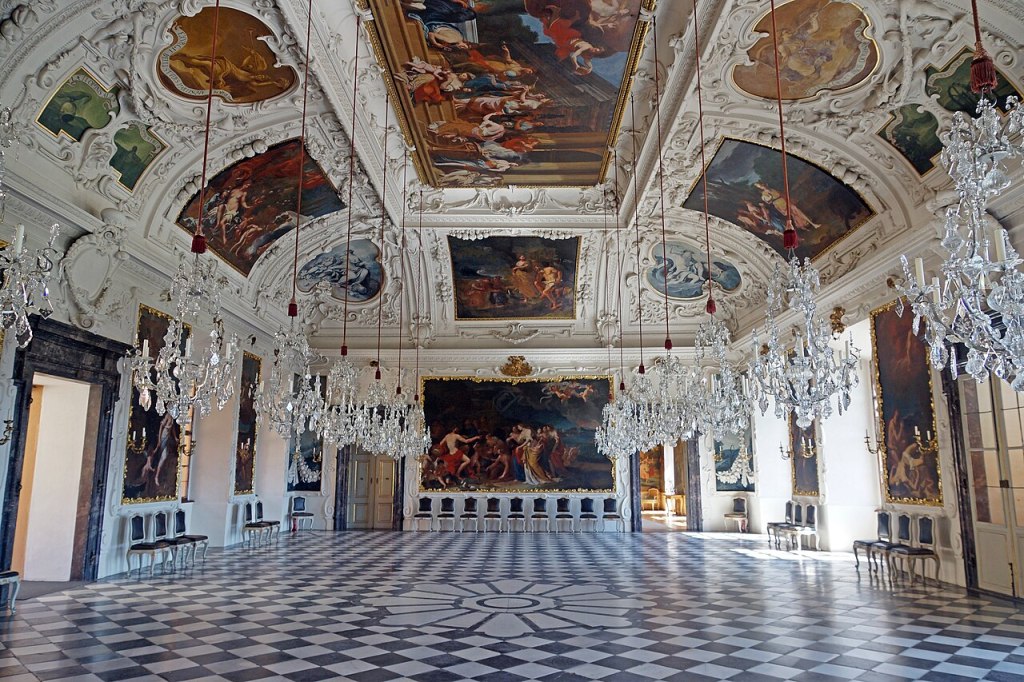
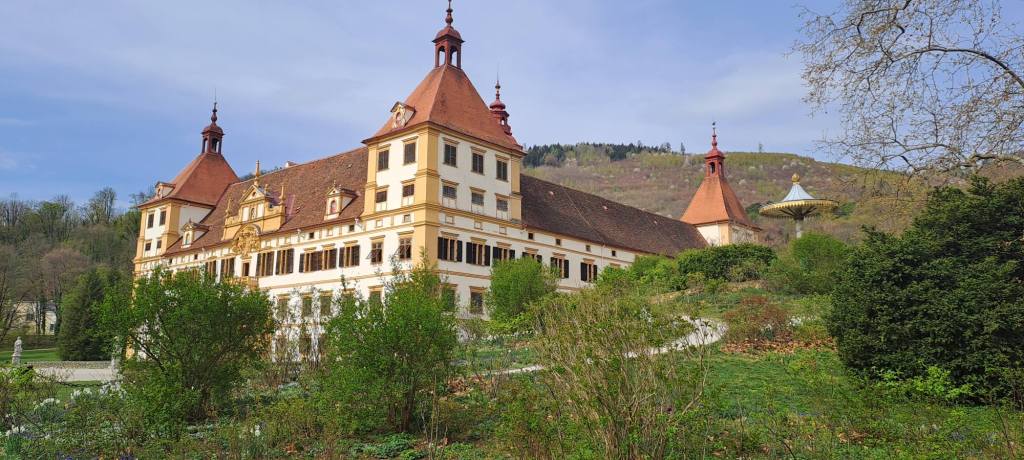
Though the 1st Prince of Eggenberg now had this magnificent treasure in Bohemia, he preferred to live in Styria. In order to live in the style of a prince and an imperial governor, he made plans to enlarge his family’s home outside Graz on a truly colossal scale. Much of the plans for a new baroque palace were inspired by the Escorial in Spain, with its grid plan and four towers, but these plans were modified significantly by his son, who had been inspired by noble palaces in Rome and also by the mystical forces of numerology. The numbers of windows and rooms and doorways all connect to 365 days of the year, 24 hours of the day, 60 minutes in an hour, and so on. There was also a theme of planets and planetary deities running through the building. Eggenberg Palace was completed by Hans Ulrich’s grandson in the 1660s, who added in particular the stunning ceiling paintings that still exist, thanks to the fact that the heirs to the Eggenbergs in the eighteenth and nineteenth centuries (the Herbersteins) weren’t that interested in this property, so left it mostly intact. The Hebersteins kept the property until 1939 when they sold it to the state of Styria and it became part of the Joanneum, a cluster of museums in Graz originally founded by Archduke Johann in 1811. Because of its preservation of its original interiors, the Eggenberg Palace is now part of the wider classification of Graz’s old town and museums as a UNESCO World Heritage Site. An interesting detail is that the original fifteenth-century house was not destroyed, but enveloped, so the old Gothic chapel is still visible, as are some of the old rooms in which Balthasar Eggenberger did his business as Master of the Mint—and these rooms today house a rich collection of coins.
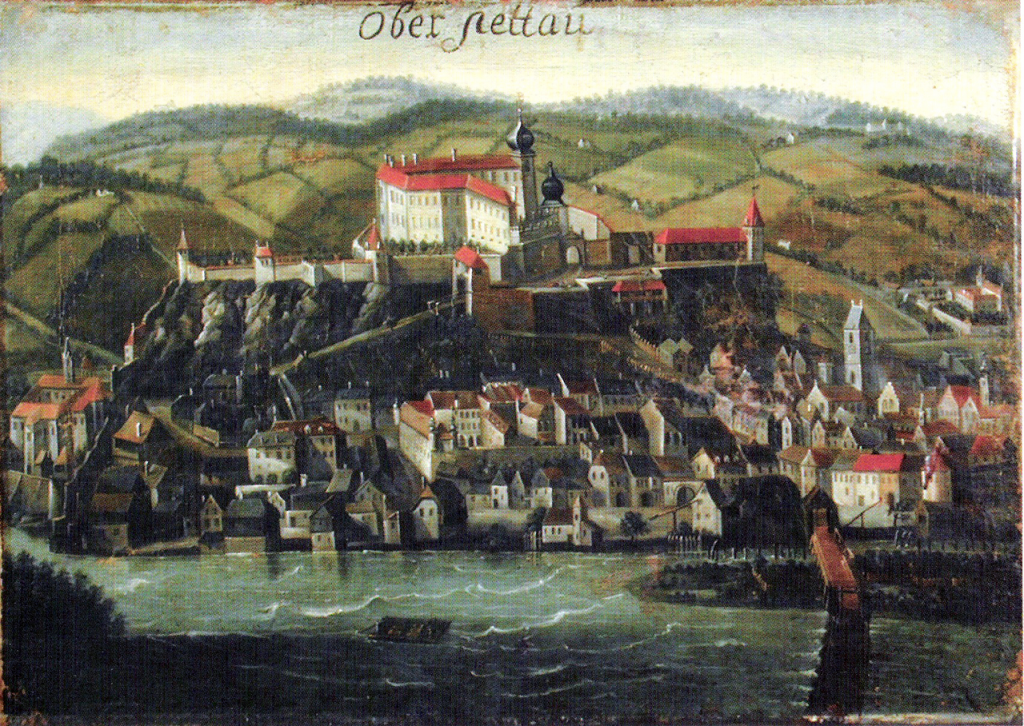
Now one of the richest men in all the Habsburg domains, Hans Ulrich, 1st Prince of Eggenberg also acquired lands in Slovenia, for example, Pettau (now Ptuj) in an area that at the time was the southernmost part of Styria. The castle here had been owned by the lords of Pettau until their extinction in 1438, then the Schaunburg family. From the 1550s, it was held directly by the Habsburgs, who sold it to Eggenberg in 1622. It eventually passed to the Leslie family like their castle of Ehrenhausen. Pettau was later held by the Dietrichsteins, then the Herbersteins (who seem to have scooped up so many inheritances in this region) until, after it was transferred from Austrian to Slovenian control after World War I, it was nationalised by Yugoslavia in 1945.
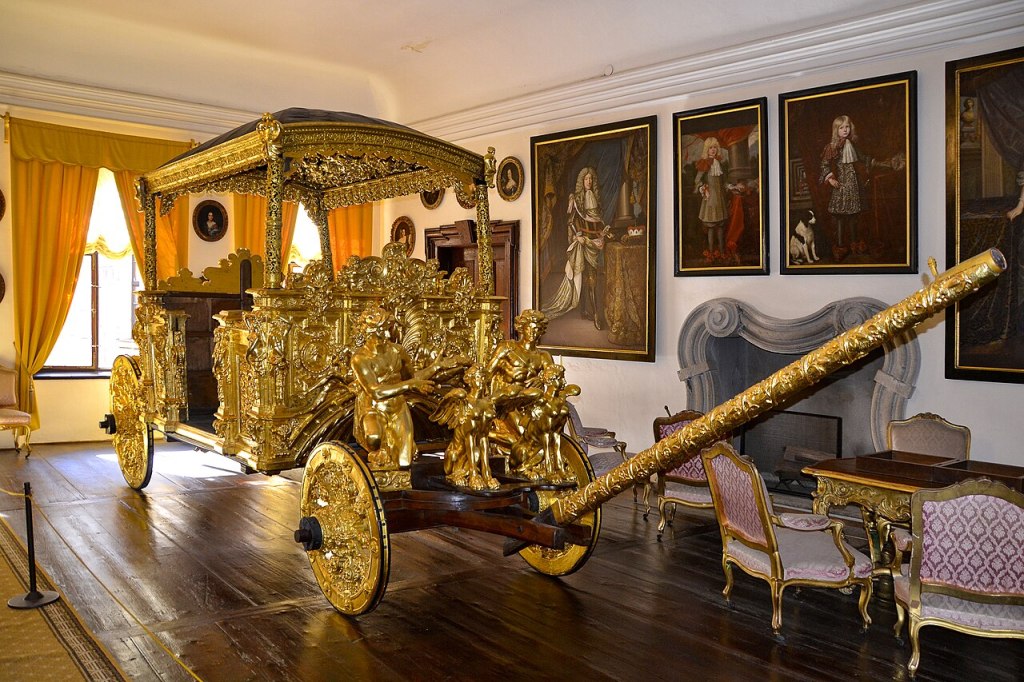
By 1630, Hans Ulrich was one of the most important statesmen in Europe, the premier minister of Emperor Ferdinand II. When he died in 1634, however, he had still not acquired the one thing he needed to be regarded as a true prince of the Holy Roman Empire: an ‘immediate’ fief. This meant a territory that was not held in vassalage to any other prince but directly from the emperor. This was the chief qualification needed for someone created a prince to be accepted by the other princes of the Empire and allowed a seat in the princes’ chamber in the Imperial Diet. This was therefore Hans Ulrich’s son Johann Anton’s chief goal. Unlike his father, he didn’t have the same political ambitions. But he was, like his father, very close to a Habsburg prince: Ferdinand II’s son Ferdinand III who succeeded as emperor in 1637. Johann Anton, the 2nd Prince of Eggenberg, had already taken over much of his father’s ceremonial role, as Governor of Carniola and Privy Councillor from 1635, and Chamberlain of Inner Austria. He organised Ferdinand II’s funeral in Graz (unlike most Habsburgs, Ferdinand did not wish to be buried in Vienna), and was given the tremendous honour in 1637 of travelling to Rome (in a brilliant golden carriage) to formally announce Ferdinand III’s imperial election to Pope Urban VIII. The golden carriage is still on display today at Český Krumlov.
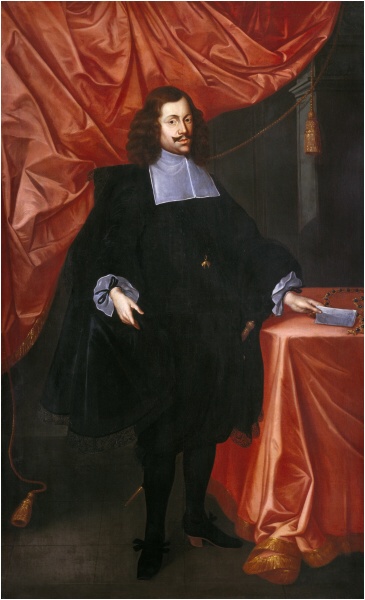
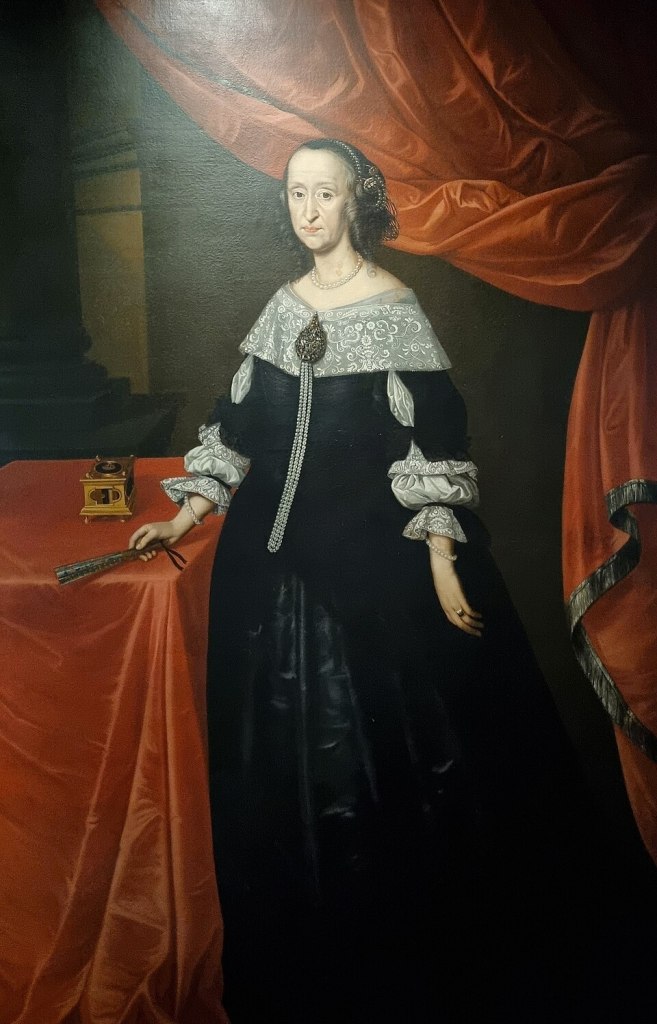
One plan Johann Anton had for securing his position as a prince of the Empire, was to marry into one of the genuinely old princely families. So in 1639 he married Princess Anna Maria of Brandenburg-Bayreuth, a Hohenzollern whose father was Margrave of Bayreuth, a younger son of the Elector of Brandenburg. She was also the sister-in-law of the Elector of Saxony. The only encumbrance was her religion—she remained a Protestant but did agree to raise their children as Catholics. Yet even with these electoral princes as close relatives, the Prince of Eggenberg’s admission in the princely chamber of the Diet was still blocked.
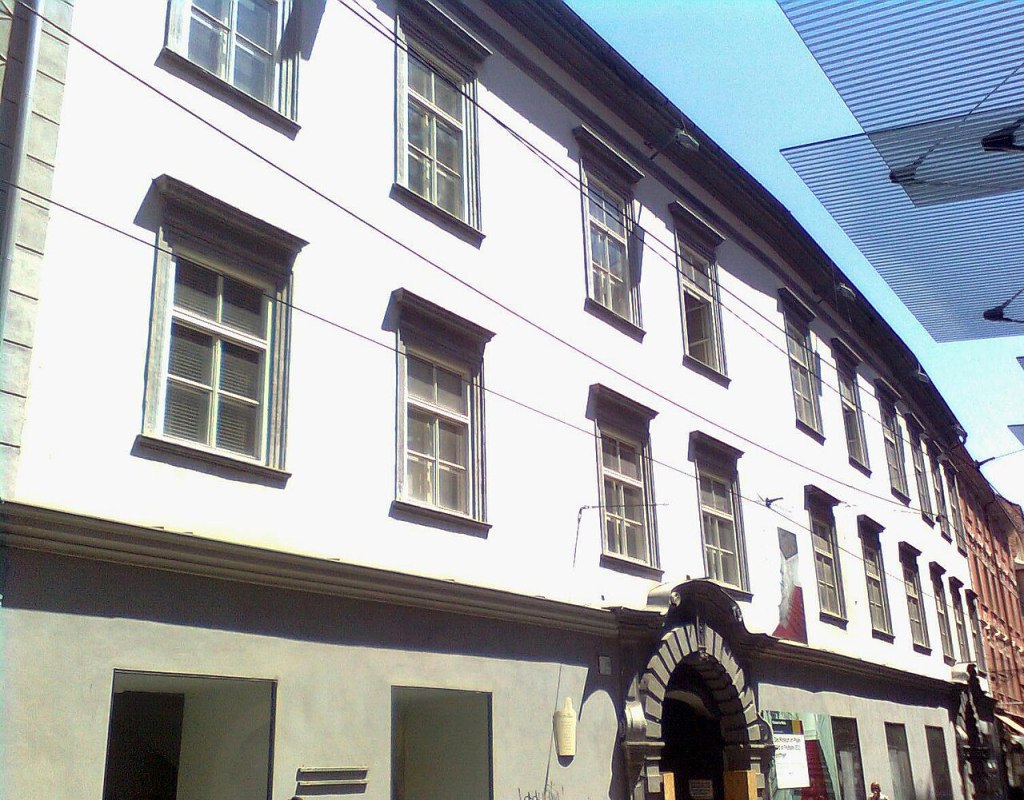
Meanwhile, Johann Anton accumulated more lands, with the extinction of the Ehrenhausen branch in 1646. And while he continued his father’s plans to develop Eggenberg Palace, he lived at the Eggenberg townhouse in the city of Graz, in the aristocratic quarter at the foot of the Schlossberg, in what is today called the Herberstein Palace and houses the Graz History Museum (also part of the Joanneum).
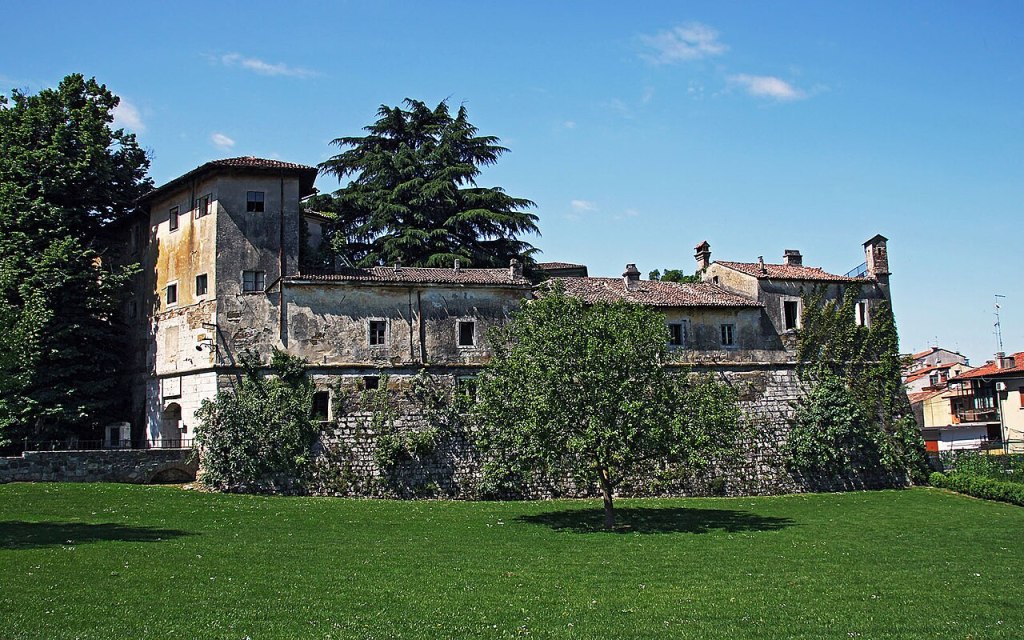
Finally, the issue of the princely rank was resolved by the Emperor granting Eggenberg part of the old imperial county of Görz, in two parts consisting of the old fortress town of Gradisca and the ancient port city of Aquileia, in the region of Friuli (now in Italy). In 1647 it was renamed the Princely County of Gradisca; it gave Johann Anton a genuinely sovereign territory to rule over: about 20 villages, though not all contiguous, several enclaved within Venetian territory. Eggenberg paid the Emperor a huge sum of 200,000 guilders in cash, and relieved him of a sizeable debt the Habsburgs owed the Eggenberg family. Yet the formal recognition of his princely title was still withheld by the other princes, until finally they relented for his son in 1654.
Gradisca had been formerly part of an independent county of Gorizia or Görz, which straddled the frontiers between the Habsburg lands of Carinthia and Carniola and the Republic of Venice. Much further back, both towns were part of an ecclesiastical estate, the Patriarchate of Aquileia, an ancient Roman city that became an early centre for Christianity in the northern Adriatic: an archbishopric by the fourth century, and a patriarchate, self-proclaimed during a temporary schism with Rome in the 550s. Venice conquered the entire area in 1420, and fortified the city of Gradisca (which took its name from the Slavic word for fortress, since the population here was a mix of Italians and Slovenes) against potential attacks by the Hungarians or later the Ottomans. The County of Görz had maintained its independence, but its line of counts died out in 1500 and the territory was added to the Habsburg domains, as was Gradisca and the now much less important city of Aquileia in 1511. It was this that was granted to the Eggenbergs in the 1640s. After 1717, Gradisca returned to the Habsburgs and was reintegrated into the province of ‘Gorizia and Gradisca’ which it remained into the twentieth century. In 1921, Gradisca was ceded to the Kingdom of Italy.
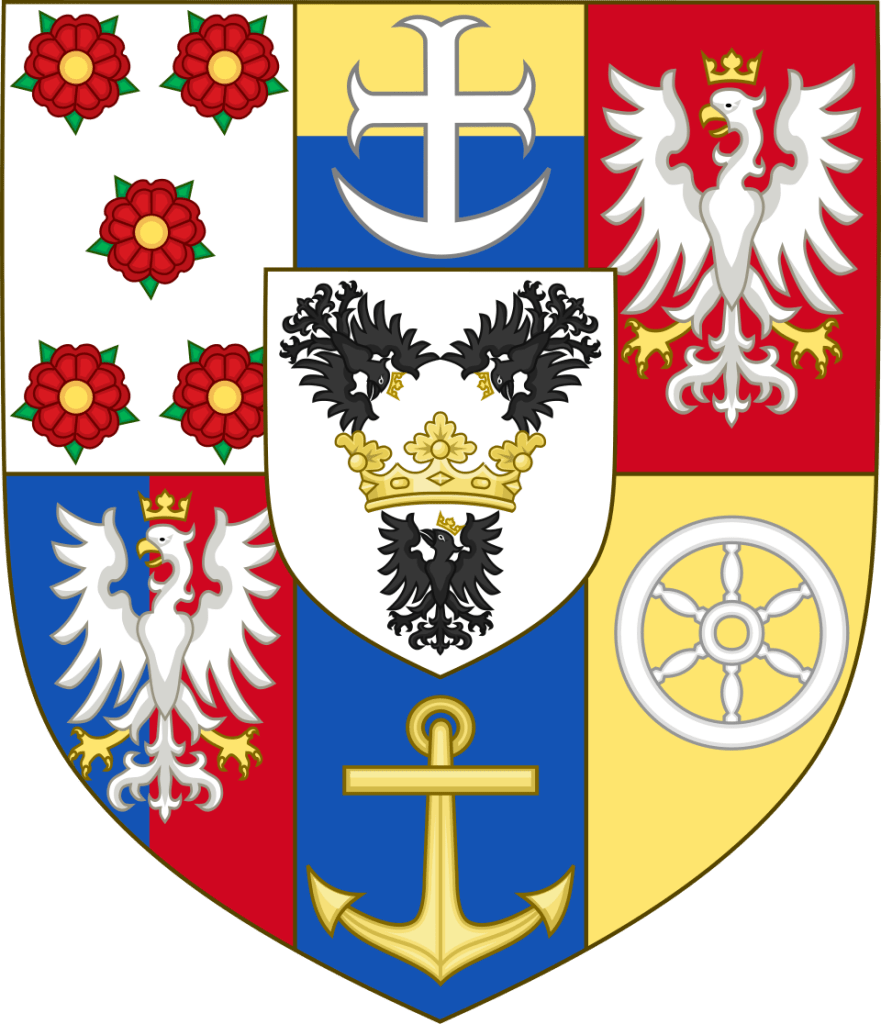
So by the late 1640s, the Eggenberg family bore a much more complex coat of arms: aside from the three ravens of Eggenberg, we see five red roses on silver for Krumau, a gold anchor on blue for Pettau, another anchor (with a cross on top) for Gradisca, a silver eagle on red for Aquileia, and a silver eagle on a divided red and blue field for the County of Adelsberg, another possession in what it now Slovenia (today called Poslojna).
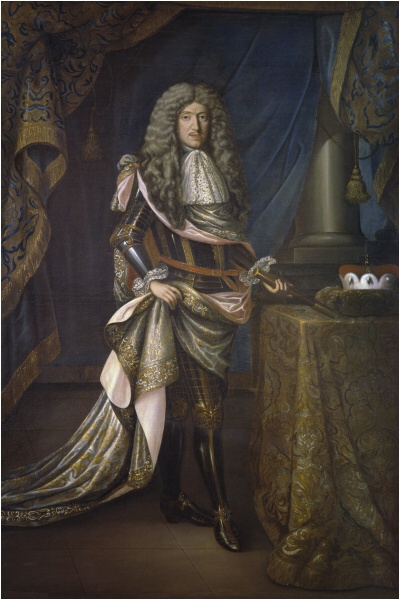
Johann Anton, the 2nd Prince, died suddenly in 1649, with an incomplete will. His widow Anna Maria of Brandenburg held the family together and ruled in the name of her young sons until they came of age in 1664. She retired to Ödenburg (now Sopron, Hungary) where toleration for Protestants was higher—and an Eggenberg Palace remains in that city. The Dowager Princess made sure that both sons would be represented in a division of their father’s estate, and even that her daughter received an equal portion for her dowry—which enabled her to marry the Prince of Dietrichstein (one of the other great success stories of the Austrian high nobility in this period). In 1666, both sons married, one a Schwarzenberg and one a Liechtenstein. This was a tight circle of the grandest Austrian princely houses.
The trouble with the unfinished will was what to do with Gradisca—as a territory with a vote in the Diet it could not be divided. After several years of haggling, it was agreed that the eldest son, Johann Christian, would receive the Bohemian lands centred on the Duchy of Krumau, as well as the princely county of Gradisca (and thus the seat in the Diet). His brother Johann Seyfried received the Styrian and Slovene lands; he was the one who finally brought to fruition their grandfather’s vision for a princely palace outside of Graz. Here in 1673, Johann Seyfried received the huge honour (and as always, the enormous financial burden that went with it) of hosting Emperor Leopold I on the eve of his wedding to his cousin Archduchess Claudia Felicitas of Tirol. He continued to spend lavishly and soon was teetering on bankruptcy. He was forced to sell many of the lands in Slovenia and was ultimately saved by outliving his older brother and thus inheriting his share of the Eggenberg estates.
Prince Johann Christian had built up his reputation as a grand noble administrator in South Bohemia, purchasing lands to augment the Duchy of Krumau, and aggrandising the castle and its gardens. He and his wife Maria Ernestina von Schwarzenberg turned it into a real princely court with its own permanent theatre. In Prague the princely couple resided in the former Lobkowitz Palace, confiscated in the 1620s and granted to Hans Ulrich von Eggenberg in 1631. Like Český Krumlov, the Eggenberg Palace in Prague passed to the Schwarzenbergs and is today known by that name.
Johann Christian died in 1710, thus reuniting the Bohemian and Styrian inheritances in the person of his brother, but only briefly, as he was followed to the grave by Johann Seyfried, now 4th Prince of Eggenberg, in 1713. The Eggenberg family came crashing down almost immediately. The latter’s son, Johann Anton II, the 5th Prince, died in 1716, as did his own very young son Johann Christian II in 1717. Four deaths in seven years. A devout Catholic might wonder what the family had done to offend God. The old nobility perhaps sneered that this was justice for such upstarts and that piles of money simply cannot replace ancientness of noble lineage.
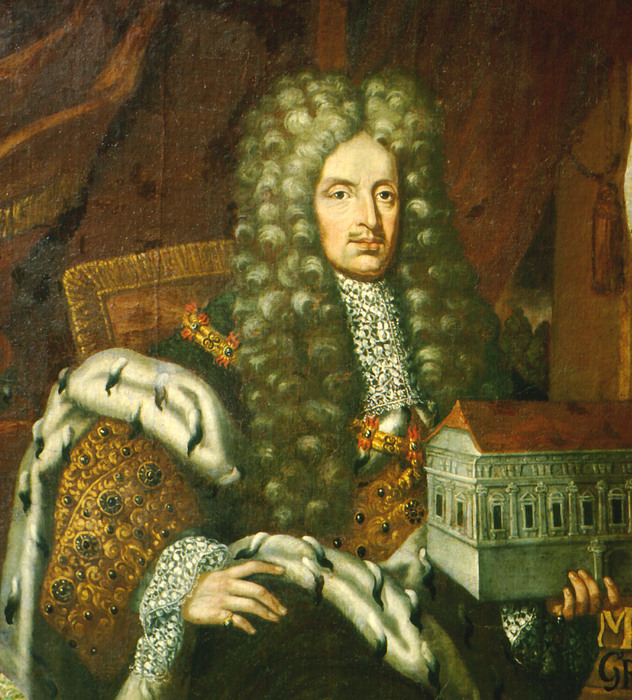
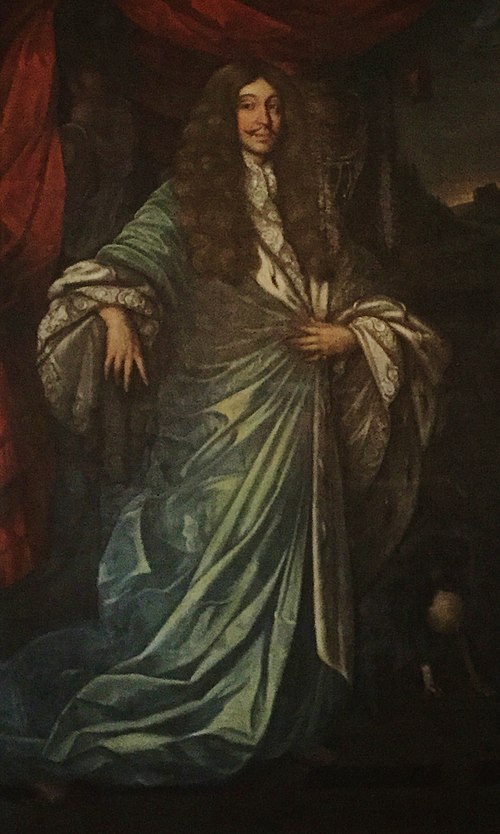
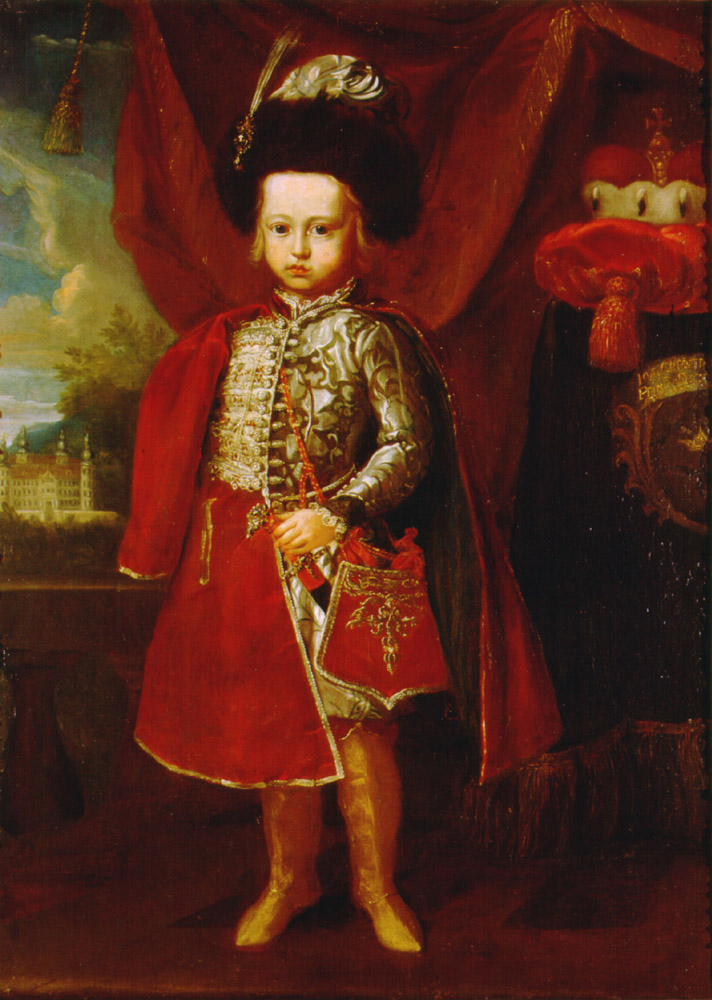
Princess Maria Eleonora von Eggenberg remained as heiress of the properties in Styria, Bohemia, Friuli and elsewhere. She married three times but had no children. Her ultimate heir when she died in 1774—over half a century later—was her third husband, the Count of Herberstein. As noted above, his family was more interested in their properties elsewhere in Austria, so Eggenberg Palace was mostly unlived in except for a few weeks each year. The castle of Krumau/Krumlov did not pass to the Herberstein family—it had remained the property of the Dowager Princess Maria Ernestina, widow of Johann Christian, who left it to her own family, the Schwarzenbergs, and they continued to own it until the 1940s. Other properties, as we’ve seen, passed to the family of Maria Eleonora’s second husband, Count Leslie. Gradisca returned to direct Habsburg rule. Most of the Eggenberg residences, in Graz, in Prague and elsewhere, now bear other names. Only the grand palace outside Graz maintains their grand legacy.
(images Wikimedia Commons)

