‘You know nothing, Jon Snow’, is perhaps a fitting introduction to the family history of Rose Leslie, an actress famous for playing Ygritte the Wildling in Game of Thrones. Snow did in fact know nothing about his own true ancestry in the story, but he also did not know that his real-life counterpart, Kit Harington, would marry Rose Leslie. And although both actors play non-aristocrats in the show, both in fact come from genuinely aristocratic families: he from the Harington baronets of Ridlington (in County Rutland), and she from the lairds of Warthill in Aberdeenshire, Scotland. But it is also possible that Jon Snow/Kit Harington did not know that Rose Leslie is not really a Leslie at all, in the strict sense of patrilineal descent, but a member of Clan Arbuthnott. The story of Clan Leslie is an interesting one in that it demonstrates nicely how aristocratic names and titles could be passed around, across family lines, and that matrilineal histories should not be overlooked. It is also a good example of how in the early modern period, noble lineages could sometimes be quite fluid in their national identities.
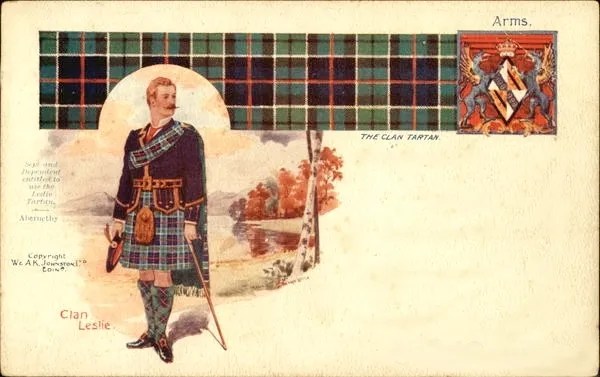
For the most famous Leslie in European history, Walter, was not that prominent in Scottish history, but was a significant figure in the Thirty Years War in Central Europe, and rose to the rank of Imperial Marshal. And though he wasn’t a duke or a prince, his military rank gave him similar privileges to them at the Imperial court in Vienna, and he stuck around, founding a line of Austrian counts who persisted until the start of the nineteenth century. But Clan Leslie does qualify for this blogsite ‘Dukes and Princes’, with one single duke: back in Scotland, Count Walter’s cousin, John Leslie, was created Duke of Rothes in 1680, but he died just over a year later, and the title with him…perhaps the shortest-lived ducal title in the British Isles? Of the various Leslie branches, the two senior titles were earl of Rothes (1458) in Aberdeenshire and earl of Leven (1641) in Fife. Both titles still exist, and both use the surname Leslie, though the current 22nd Earl of Rothes (and Baron Leslie, head of the Clan) is really a Haworth; and the current 15th Earl of Leven is a Melville.
Yet the most intriguing ‘you know nothing’ element of this family’s story is where they in fact came from…
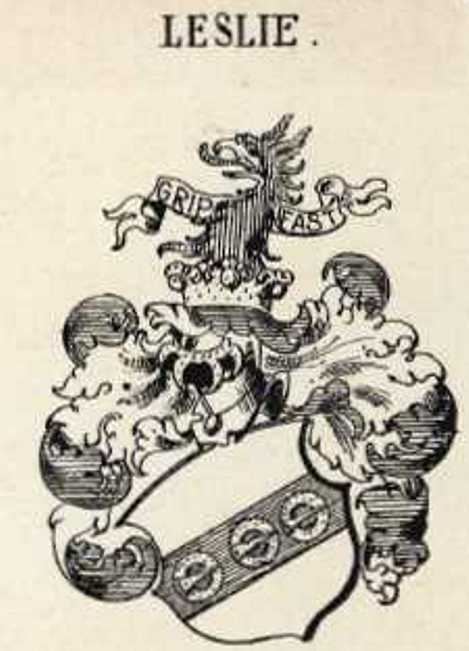
Intriguingly, considering the history of Field Marshal Walter Leslie, there is an old Leslie family story that places their origins in Central Europe. Way back in 1067, Edgar Aetheling—the Anglo-Saxon claimant to the throne of England—and his sister Margaret fled England for the Scottish court, where she married the Scottish king, Malcolm III (and later became a saint). In her entourage was a man called Bartolf, who was said to have originated in Hungary, where both Edgar and Margaret had been born in exile. This is similar to the origin story of the Drummond family. But perhaps Bartolf was an Anglo-Saxon lord who went into exile with the royal family earlier in the century. As the story goes, Bartolf married the Scots king’s sister, Beatrix (though this princess doesn’t appear in most sources), and was created Earl of Ross, in the far north of Scotland (though this also doesn’t appear in most sources). In another part of the legend, Bartolf served as Queen Margaret’s chamberlain, and one day, when out riding with the Queen seated behind him, he shouted ‘Grip Fast!’ to safely cross a wild river, and she held on to his three belt buckles. ‘Grip Fast’ became the family motto, and three buckles remain on the family’s coat of arms to this day.
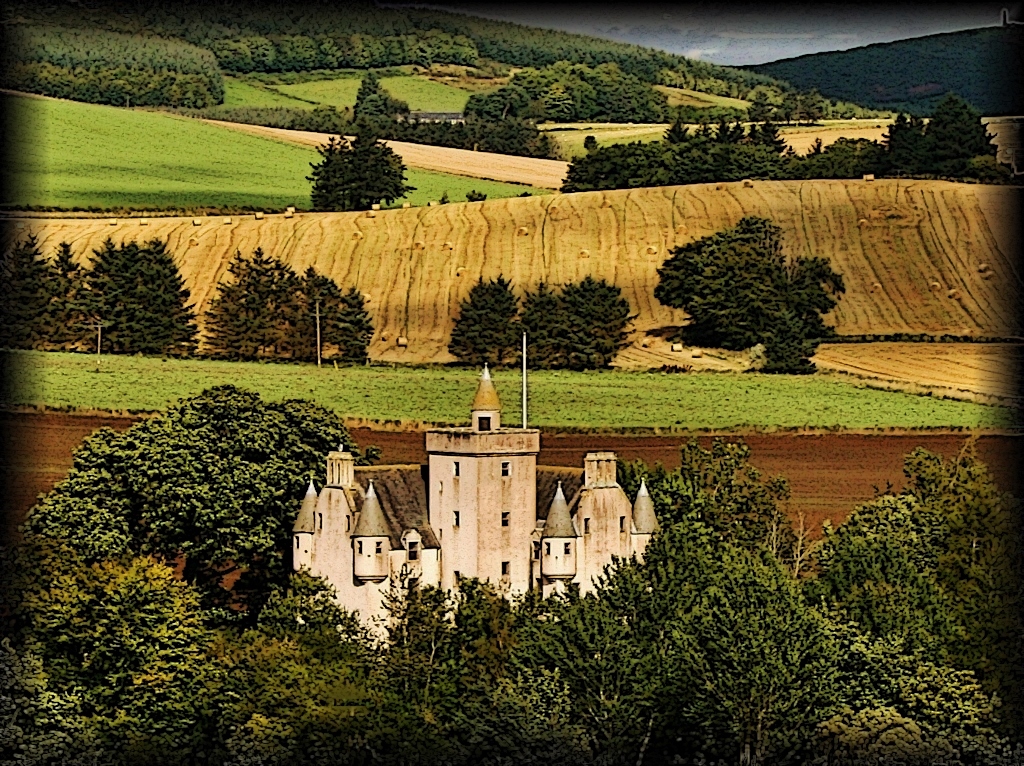
What does seem to be provable is that Bartolf was given lands in Aberdeenshire, today’s Castle Leslie, in the upper reaches of the Gadie Burn, which flows into the River Urie which flows south-eastward until it joins the Don outside the city of Aberdeen. This part of the County of Aberdeen was anciently known as Garioch (‘the rough place’, Gairbheach), an important lordship keeping watch over the northern territories of Scotland on behalf of the king. One source suggests that Bartolf, or perhaps his son, was appointed Constable of Inverurie Castle (named for the mouth of the Urie), in about 1080. A wooden castle was built to the west of Inverurie, in the Garioch, replaced with a stone structure in the fourteenth century, then lost to the Forbes family in 1620 who rebuilt it as a tall tower castle in the 1660s. Leslie Castle passed through several families then was abandoned after 1820—until it was purchased in 1980 by an Aberdeen architect named David Leslie who restored it and opened it for a time as a guesthouse. Since 2018 it has been owned (and still open as a guesthouse) by the current Baron of Leslie (a feudal barony, not a peerage).
Back in the Middle Ages, a grandson or great-grandson of the founder, called Norman de Leslie, spread the family interests both further north to Rothes, in the ancient Kingdom of Moray; and also further south to Fythkill, in the ancient Kingdom of Fife. And although Leslie and Rothes in the north of Scotland gave the family the names for their noble titles, their real power base shifted to Fife, where their lands ultimately formed a new town which took the name Leslie (and even later, a brand new town in the 1940s, Glenrothes). More about these later.
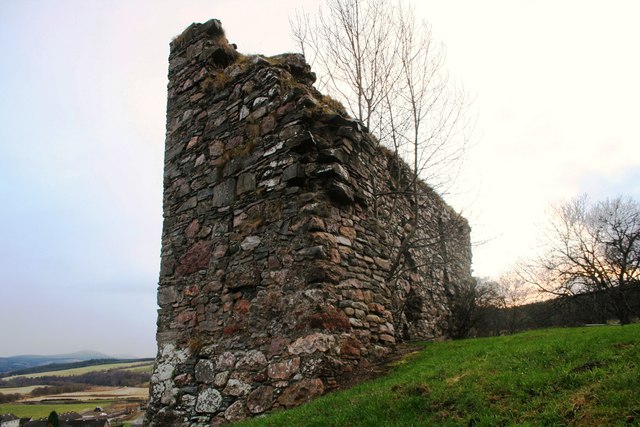
Rothes Castle was built in Speyside (the valley of the river Spey) south of the city of Elgin. The Leslies held it for the Scottish Crown by the end of the thirteenth century. A towering fortress, it dominated this part of the Spey valley now known more for its many whisky distilleries. Destroyed in 1662, then sold to a local family, the Grants, today only a mighty wall stands, high above the valley.
In the middle of the fourteenth century, five brothers founded several branches. The eldest retained the original Leslie lands, the third son founded a line at Rothes, while the youngest founded a line at Balquhain, near Inverurie—we’ll return to these two lines. A fourth son, Walter, was a great traveller, fighting in the Baltic against pagans and in France against the English and then on Crusade in Egypt. When he returned to Scotland in 1366, he was favoured by King David II who forced the Earl of Ross to agree to a marriage with his daughter and heiress, Euphemia. Their son Alexander was also Earl of Ross, with a capital at Dingwall, north of the Moray Firth, but had to contend for this title with his stepfather, Alexander Stewart, son of King Robert II. The Stewarts craved this northern earldom, so Alexander Leslie was married to King Robert’s grand-daughter Isabel, and their daughter, another Euphemia, was compelled to enter a nunnery and cede her rights to Ross to her mother’s brother, John Stewart. When he died in 1424, however, the earldom of Ross reverted to its natural course and passed via Mariota Leslie (Earl Alexander’s sister) to the MacDonalds, lords of the Isles.
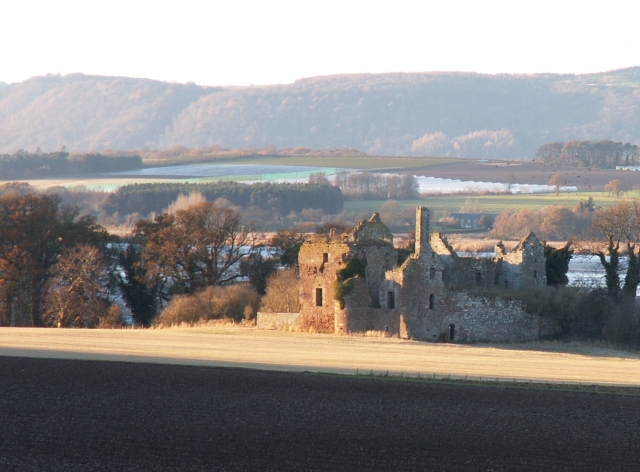
Thirty years later, the Leslies were once again given an earldom, with the elevation of the lordship of Rothes. It may look suspiciously like Ross, but is pronounced with two syllables, so sounds different. George, 1st Earl of Rothes, had been created Baron Leslie by King James II in 1445. Though his earldom was formally based in the castle in Speyside, the Earl and his heirs lived in Fythkill in Fife, which was renamed Leslie at this time. The town of Leslie, in south-central Fife, overlooks the River Leven, and is located between the royal castle and hunting grounds at Falkland and one of the Douglas family strongholds, Leven Castle on an island in the middle of Loch Leven. On the north coast of Fife, on the Tay, rose another castle for the Leslies: Ballinbreich. This was a more significant fortress than what they held elsewhere in Fife, the centre of a large barony, and was augmented even further in the sixteenth century. Today it is a ruin. With lands controlling both the north and south coasts of Fife, the earls of Rothes were strategically placed to play an important role in Scottish politics.
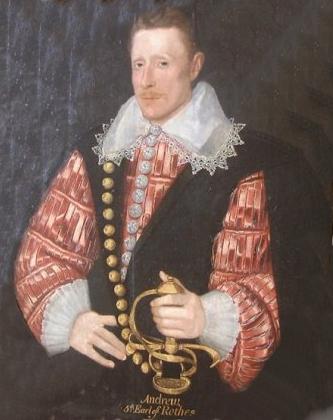
But it wasn’t until the 4th Earl, another George, that the family rose to real prominence. George Leslie was close to King James V and accompanied him on his trip to France to find a bride in 1536. He was a Lord of Session and Sheriff of Fife. In May 1546, he, his brother and his sons were involved in the murder of Cardinal Beaton in St Andrews, and although they were tried, they were not punished beyond being excluded from the succession to the earldom and barony. The Earl himself remained in politics, and was named ambassador to Denmark, then envoy to France to accompany Mary Queen of Scots to her marriage to the Dauphin. When he died in 1558, his eldest sons were passed over in favour of a younger son, Andrew. This 5th Earl of Rothes initially opposed the rule of Queen Mary, opposed her marriage to Lord Darnley, and was part of the plot against her secretary Rizzio, but later changed his tune and became one of her chief supporters. He lived a long life, not dying until 1611.
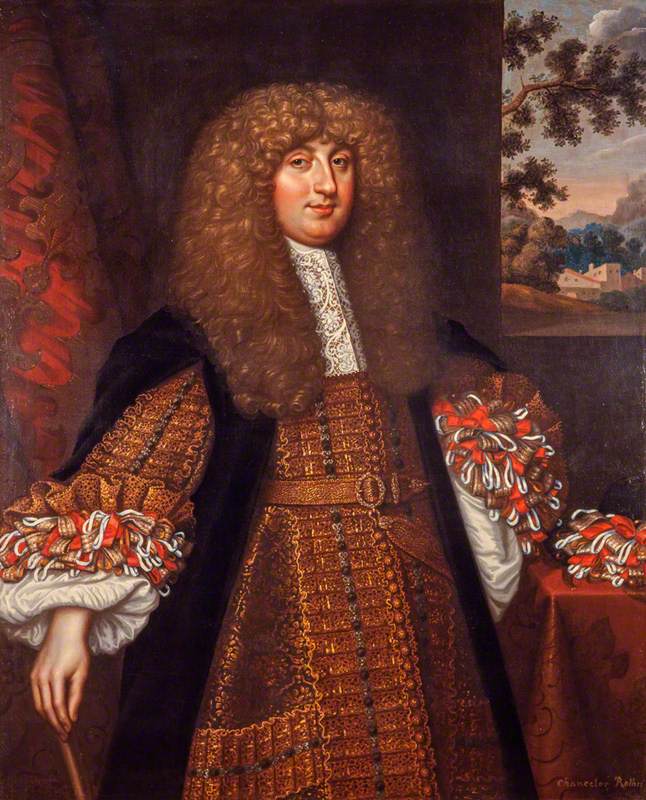
His grandson, John, 6th Earl of Rothes, once again became an opposition figure, leading the Covenanters in Scotland against the religious policies of Charles I, though he died in 1641 before the full-blown Civil War began. His son John thus became earl at age ten. Raised by the Earl of Crawford, who switched sides to become a Royalist in 1647, the 7th Earl of Rothes began his career in Royalist armies (and was engaged to Crawford’s daughter), but was soon captured, and was held by Cromwell’s government until 1658, first in the Tower of London then Edinburgh Castle. At the Restoration he enthusiastically welcomed Charles II who in 1663 named him Lord High Treasurer of Scotland, and in 1667, Lord Chancellor and President of the Privy Council of Scotland. Already by this point it was recognised that her would have no male heirs, so in 1663, he was re-created Earl of Rothes with a remainder allowing for female succession.
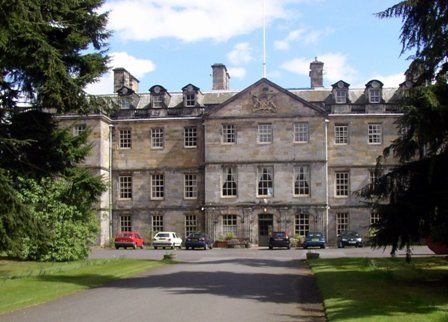
In 1667, the 7th Earl began to rebuild the family seat in Leslie, Fife—this became Leslie Palace and was once one of the grandest residences in Scotland. Several of its wings were badly damaged in a fire in 1763, and only one wing remained as the family seat until 1919 when it was sold to the Church of Scotland who used it for an elderly care home. Developers bought it, but were set back by another bad fire in 2009, yet when I visited it this year its conversion into flats was nearly complete. Nestled into a beautiful valley below the village of Leslie, it looks like a wonderful place to live.
In May 1680, the owner of this grand palace was appropriately honoured with a dukedom. His other new titles were Marquis of Bambreich (a spelling of Ballinbreich) and Earl of Leslie. The Duke of Rothes had governed Scotland as Lord Chancellor for over fifteen years, but as noted above, had no male heirs, so we can assume Charles II intended for this to be a gratification for life. When he died just over a year later, the dukedom and older earldom of Rothes became extinct, while the new earldom of Rothes passed to his elder daughter Margaret, who had married Charles Hamilton, 5th Earl of Haddington. It was agreed that these two earldoms should not be held in tandem, so their eldest son succeeded as Earl of Rothes (and changed his name to Leslie), while the second son continued the line of Hamilton of Haddington. It is from this eldest son that the current head of Clan Leslie descends.
Meanwhile, other powerful figures were emerging from Leslie cadet branches. Four Leslies became famous as military commanders, at first overseas and then at home in the Civil Wars: Alexander of Balgonie, Alexander of Auchintoul, David of Lindores and Walter of Balquhain. All of them were at some point part of the army of the King of Sweden, and thus part of the fascinating diaspora of Scottish nobles who were integrated into the Swedish high command during the Thirty Years War. Some of these, notably from ducal families like Douglas and Hamilton, put down roots and stayed in Sweden for generations. The Leslies didn’t. Instead, from one of these four commanders sprouted the earls of Leven in Scotland, and from two others came branches of Leslies in Russia and Austria.

The first Alexander Leslie was an illegitimate son of George, Keeper of Blair Castle in Perthshire, from the Kininvie branch of the Leslies (based in Speyside). When he was in his twenties he left Scotland to join the forces of the Swedish army and served in that Kingdom’s various wars against its neighbours (Poland, Russia, Denmark). In 1628, Sweden entered the Thirty Years War, a great Northern Protestant champion coming to the rescue of beleaguered German princes, and Leslie was key in securing the Baltic city of Stralsund against the Catholic armies of the Emperor. By 1631, he was a Major-General commanding a significant number of English and Scottish volunteers. Since the Anglo-Scottish king, James VI and I, refused to commit to this war (or was unable due to lack of funds) many noblemen came here on their own volition to gain glory and advancement. Alexander Leslie’s star continued to rise and he was named a Swedish Field Marshal in 1636 and continued to push the Imperials south, out of Protestant territory.
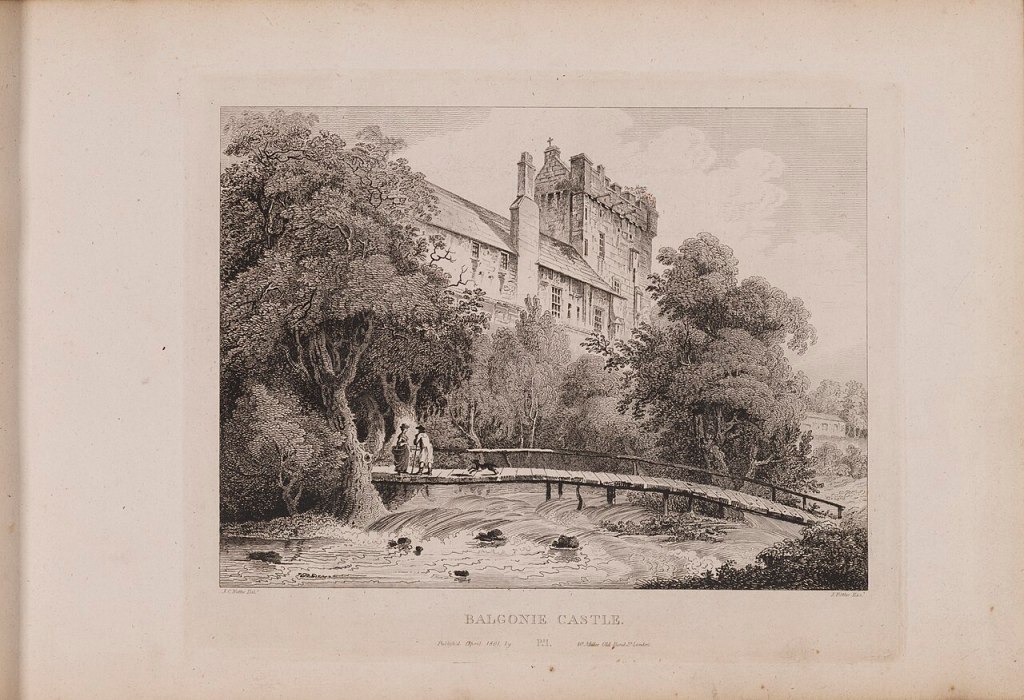
But in 1638, Leslie was recalled to Scotland, where troubles were brewing between the Scottish Presbyterians and the policies for religious conformity being imposed by Charles I. An ‘Army of the Convenant’ was formed, over which Leslie was named ‘Lord General’. Importantly, he not only brought with him skill and renown, but Swedish guns and cannons as well. After he secured Aberdeen and Edinburgh from the Royalists, he marched his army south into England and took the city of Newcastle. Before the conflict erupted into full civil war, the King made peace with a number of the Scottish leaders, and in 1641 named Leslie a member of the Scottish Privy Council and created him Earl of Leven (in Fife) and Lord Balgonie. The latter was a castle Leslie had purchased in 1635, on the banks of the River Leven just east of the new town of Leslie (and east of the modern town of Glenrothes, see above). It had been built in the 1360s by the Sibbald family, then enlarged in the 1490s by the Lundie family. The first Earl of Leven added a more modern residence within its walls. More improvements were made by subsequent earls before it was sold to the Balfour family in 1824, under whom it decayed. The ruins are open to the public today and the restored chapel and great hall are used for weddings.
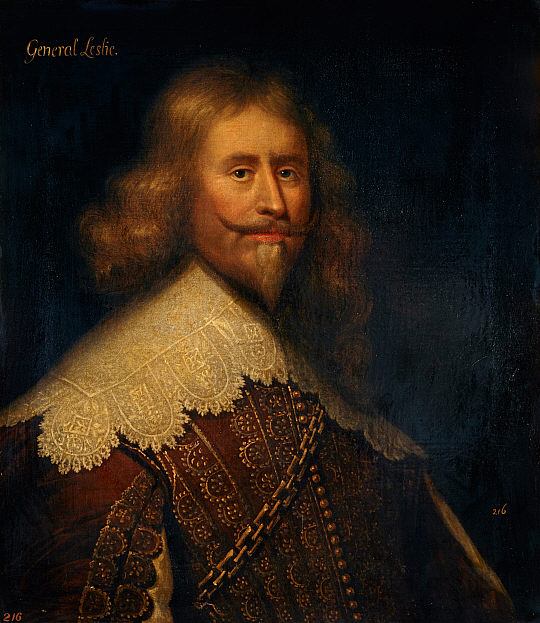
In 1642, the 1st English Civil War broke out—part of what is more accurately now called the War of the Three Kingdoms, since Scotland and Ireland were involved too—and by 1644, the Earl of Leven was named Commander of the Covenanter Army once more and acted as senior commander for both the Scottish and English armies ranged against the King, gaining a major victory at Marston Moor in July. In 1646, he participated in the siege of Newark, on the river Trent (see below) where he was given charge of the defeated King who came here to surrender; as part of the peace settlement, he agreed to march his Scottish troops north across the border. He retired from active service, and although he retained the title ‘Lord General’ in the next war, he took no active part. Nevertheless, when Cromwell’s troops invaded Scotland in 1651, Leven was captured—by now displaying Royalist sympathies—and taken to the Tower of London. He paid a bail, was freed, arrested again, and was finally freed in 1654 thanks to negotiations from Queen Christina of Sweden.
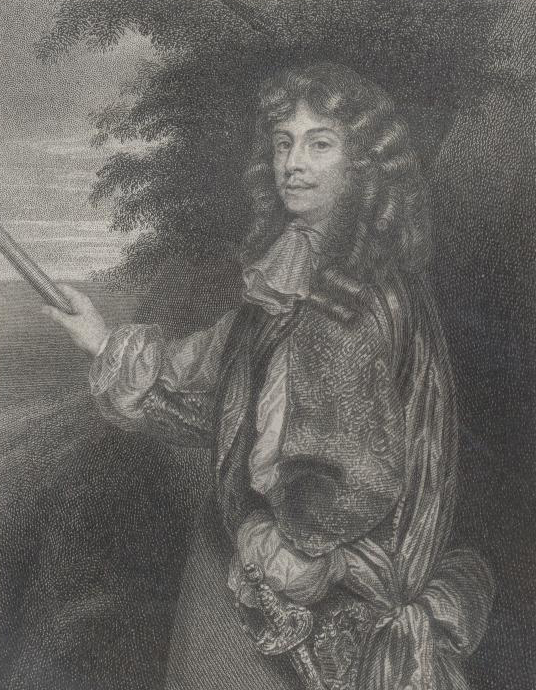
When the first Earl of Leven died, at Balgonie Castle, in 1661, he was succeeded by his grandson Alexander. The Earl’s son, also called Alexander, had served under his father in Sweden and in Scotland, and had married a Leslie from the senior branch (Rothes) perhaps to better secure his standing within the Scottish peerage (given that his father was born illegitimate), but died in 1644, shortly after Marston Moor. The second Earl of Leven died only three years later and left only daughters, Margaret and Catherine, who succeeded as Countess of Leven (but are not reckoned in the numbering of the list of earls). Margaret married, but died within a year in 1674, childless, and her teen-aged sister Catherine died two years later. The succession was disputed between the Earl of Rothes (soon to be the Duke, above), and the 2nd Earl of Leven’s sister, Catherine, who had married George Melville, Lord Melville of Monimail in Fife.
The Melville lords were based at Monimail Palace, a few miles north of Leven in Fife. The Palace had been a seat of the archbishops of Saint Andrews from the thirteenth century, but passed to the Melvilles in the early seventeenth century (and they were created Lord Melville in 1616), who mostly dismantled the palace and built a new Melville House nearby. In 1681, the Duke of Rothes died, and Lady Catherine Leslie’s son David was permitted to take up the title 3rd Earl of Leven. Soon after, both David and his father had to flee Scotland for allegedly plotting against Charles II, and they joined the court of William of Orange in The Hague. Young David used familial connections to raise troops from the German principalities, and helped the Prince in his invasion of southwest England in 1688. His father became one of the chief supporters of the new regime of William & Mary, and in 1690 was created Secretary of State for Scotland and Earl of Melville. David, Earl of Leven, was named Keeper of Edinburgh Castle, a post he held for the next twenty years. In the reign of Queen Anne, he was named Commander-in-Chief of Scottish forces (1706), and in 1707 succeeded his father as 2nd Earl of Melville. From here on the family name would be Leslie-Melville, and they would hold the two earldoms jointly, though they are mostly known as Lord Leven, and the heir as Lord Balgonie.

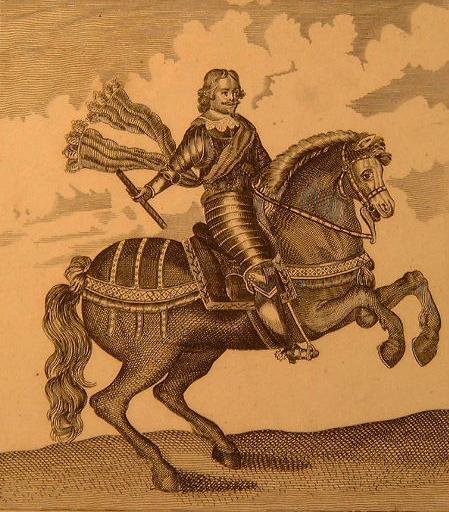
Jumping back to the 1630s, Alexander Leslie’s distant cousin David, son of the first Baron Lindores (a younger son of the Earl of Rothes), also joined the Swedish army under his cousin’s command. Lindores Abbey in Fife had been secularised in 1566 and given to David’s father (whose mother, interestingly, was an illegitimate son of James V, making David Leslie a cousin to the King). In 1632, David left Sweden with his other cousin Alexander Leslie (below) to serve in Russia, but soon returned to Sweden in 1634 as Adjutant-General to King Gustavus Adolphus. In 1640, he too returned to Scotland to serve in the Covenanter Army, and became a Major-General serving under the Earl of Leven, with notable victories in England and Scotland, notably routing the Royalists at Philipshaugh (near Selkirk) in 1645, after which he was promoted Lieutenant-General of Scottish forces. He led the siege of Newark, noted above, and Charles I surrendered to him in May 1646 before he was handed over the Earl of Leven. David Leslie was now one of the most prominent generals in Britain, and he purchased a castle for himself in 1649, the aptly named Newark Castle, on the east coast of Fife. Built in the fifteenth century it eventually passed out of Leslie hands and was a ruin by the nineteenth century.

General Leslie, like many of the Scots commanders, changed sides in 1650 to back the exiled King Charles II, and led the defence of Scotland against the invasion of Cromwell’s army. He then led Scottish troops into England in 1651 but was badly defeated at Worcester and taken to the Tower of London, where he stayed until he was released at the Restoration in 1660. A grateful Charles II created him Lord Newark. He died in 1682 and was succeeded by his son David for another decade before this title became extinct in 1694—though his daughter Jean took the title ‘Lady Newark’ and claimed she had been given a re-grant of the barony. Her sons changed their name from Anstruther to Leslie and continued to use the title Lord Newark until they eventually gave up the claim in the early nineteenth century.
The next Leslie commander intersects with General David Leslie’s career in interesting ways. Alexander Leslie of Auchintoul (near Banff) was from a junior branch of a junior branch of the lairds of Balquhain (about which below). He too was a colonel in Swedish service by 1629, and was sent by the Swedish king on a mission to Moscow in 1630, but instead of returning, he stayed to command a company of foreign soldiers in the service of Tsar Mikhail (including his distant cousin, David Leslie), and led these troops in Russia’s on-going war against the Commonwealth of Poland-Lithuania. He too returned to Scotland in 1637, but unlike his Leslie cousins, he joined the Royalists under the Marquis of Montrose; he was captured at Philiphaugh in 1645 but released by cousin David, and was banished from Scotland.
Alexander of Auchintoul returned to Russia where he became an important reformer of the military forces of Tsar Alexis, and led the successful siege of the city of Smolensk in 1654, then served as its first Russian governor. He converted to Orthodoxy, was recognised as a nobleman, and was given the estate of Gerchikovo, south of Smolensk, by a grateful Tsar. He left descendants in Russia (including several generals in the eighteenth century) who enlarged the mansion before it passed out the family’s hands. Gerchikovo Manor after 1918 served as a school then a health camp and is now privately owned and run as a hotel. The Russian Leslies died out with Lieutenant-General Alexander Alexandrovich Leslie in 1899.
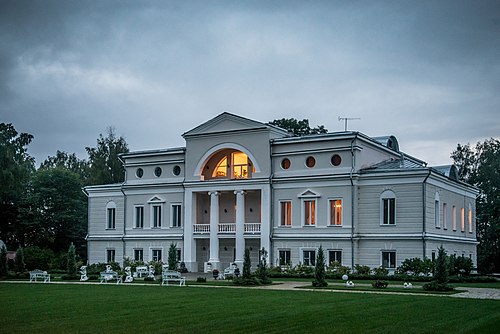
Another member of this branch worth mentioning is John Leslie of Crichie, an educated scholar and companion of James VI and I who named him a Privy Councillor of Scotland. As a faithful servant of the Crown he was sent by Charles I to be Bishop of the Isles (the Hebrides) in 1628 to try to enforce his religious policies in the west of Scotland, then to do the same in Ireland as Bishop of Raphoe (in County Donegal) in 1630. He became one of the leaders of Royalism in Ireland in the 1640s-50s, earning the nickname the ‘fighting bishop’, taking up arms during the Cromwellian invasion. In 1661, he transferred to the diocese of Clogher (County Tyrone), at 90 years old! And settled down to the castle he bought at Glaslough (County Monaghan) where he died at age 100 in 1671.
From the ‘fighting bishop’ descended the Irish branch of Clan Leslie, who were heavily involved in the political and military life of County Monaghan for the next two centuries, based at Glaslough, renamed Castle Leslie. The Bishop’s son, Charles, was one of the most prominent Jacobite propagandists in the 1690s, refusing to take the oath to William & Mary. He never fit in completely at the Stuart court in exile however: although he was an ardent royalist, his Protestantism was at odds with the Pretender’s devotion to Rome. The family replaced the old castle at Glaslough with a Victorian mansion in 1870, and in 1876 were created baronets. One of these married the American heiress Leonie Jerome, sister of Jenny Jerome, mother of Winston Churchill. The last recognised baronet (there is an heir but it remains unclaimed) was ‘Jack’ Leslie, openly gay, known for television appearances on programmes about Irish Castles, and for accidentally letting it slip that Paul McCartney’s super-secret wedding to Heather Mills in 2002 was being held at Castle Leslie. He died in 2016, aged 99.

Finally we come to perhaps the most famous Leslie, Walter, Imperial Field Marshal and Count of the Empire.
Walter came from the line of Leslie of Balquhain, one of the major divisions of the clan, split off from the mid-1300s. Balquhain Castle is about 2½ miles northwest of Inverurie, one of the earliest Leslie estates in the north of Scotland, in Aberdeenshire, granted by the king of Scots in 1340, and was formally a barony from 1511. Burnt down by rivals, the castle was rebuilt in the 1530s. The family moved to Fettenear House a few miles to the south in the 1690s, but kept Balquhain as a fortified place of safety—as Catholics and Jacobites—so it was once more destroyed by the Duke of Cumberland in the follow-up to the Battle of Culloden in 1746. It remains a ruin today.
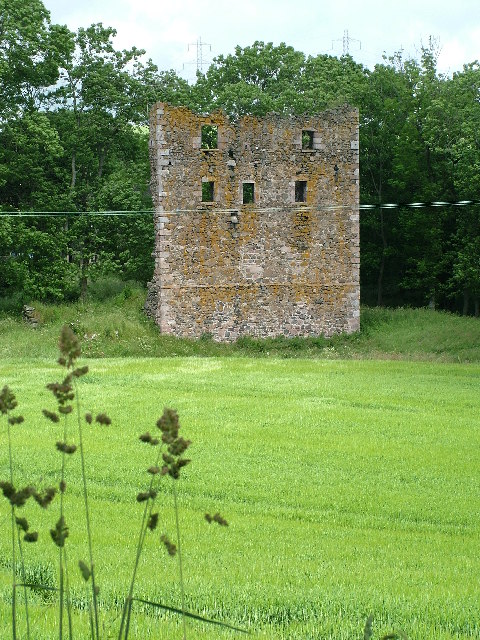
Fettenear Palace had been a summer residence of the bishops of Aberdeen since the fourteenth century. Located on a bend in the river Don northwest of the city of Aberdeen, it was turned into a grander palace in the 1520s, then was granted by a grateful bishop in 1550s to the 8th Laird of Balquhain in thanks for defending his diocese against Protestants. The Leslies let the old palace crumble and built a new Fettenear House in its place in the 1690s when it became their main seat. The last Laird of Balquhain died in 1916 and a few years later the house burned down…it remains a ruin.

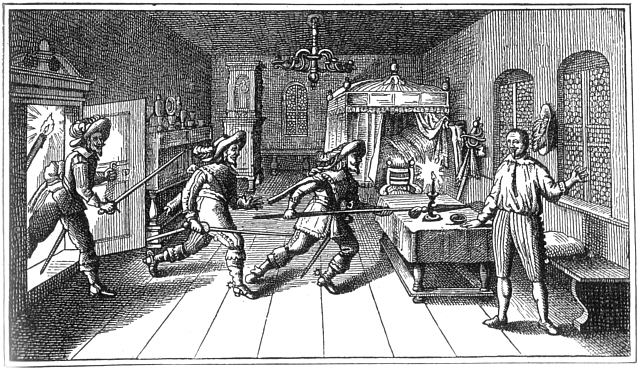
Walter Leslie was born at Fettenear in 1607, the fourth son of the 10th Laird of Balquhain. Before he was twenty, he had joined the Protestant cause on the Continent, serving in the Dutch armies fighting against Spain, then in Swedish armies on the Baltic by 1628. In 1630, his path differed from his cousins, however—I’m assuming he himself was a Catholic, given the leanings of this branch of the clan—and he switched sides to join the Catholic armies of the Emperor Ferdinand II. By 1631, he was attached to the service of General Wallenstein, the Emperor’s supreme commander in the Thirty Years War, under whom he led a division of Scottish and Irish soldiers. In early 1634, he became the ring-leader of a circle of foreign commanders (Scots and Italians) who plotted to bring down Wallenstein (with the Emperor’s tacit approval, since he was growing wary of the great general’s power and independence). Leslie and his co-conspirators murdered Wallenstein and his top officers in February in Eger (in Bohemia), and Leslie personally brought the news to Vienna—meaning he was first in line for the Emperor’s rewards. The Emperor gave him a court office (chamberlain), and named him to the post of Lieutenant Field Marshal and Head of the Guard of the King of Hungary (the Emperor’s son, Archduke Ferdinand). By the end of the year he earned glory as one of the main commanders at the great Imperial victory at Nördlingen.
Walter Leslie was also given the confiscated estates in Bohemia of one of Wallenstein’s lieutenants, Adam Trčka, notably the huge castle of Nové Město nad Metují (in German, Neustadt an der Mettau). This estate was located in northeast Bohemia, near the border with Silesia (today’s border between Czechia and Poland). An old fortress had been acquired by the powerful noble Pernštejn family in 1527 who rebuilt it as a Renaissance-style palace, dominated by a great tower. After 1548 it passed to the Stubenberk family, until 1621 when it was purchased by Wallenstein who gave it to Trčka. Now owned by Walter Leslie, it was again rebuilt, now in a baroque style. It passed to his nephews and remained in the family until 1802, when it passed to Dietrichstein relatives. Today it has been restored and is open for tourism.

Archduke Ferdinand became Emperor Ferdinand III in 1637 and rewarded his friend by creating him Count of the Empire. As Walter, Count Leslie aged he became more of a courtier, diplomat and administrator: first as Ambassador to Naples and Rome, 1645, then as Governor of the Croatian-Slavonian Military Frontier against the Turks in 1650. He sealed his integration within the Habsburg nobility by his marriage in 1647 to Princess Anna Franziska von Dietrichstein, whose father was the head of the Imperial Court and a major landowner in Bohemia (and whose mother was a Lichtenstein princess). In 1657, Count Walter was named Vice-President of the Imperial War Council; and in 1665 was once more sent abroad, now as Ambassador to Constantinople, to help hammer out the details following a peace treaty made between the Habsburgs and Ottomans the year before. He was honoured with the Order of the Golden Fleece, and died in Vienna in 1667—he is buried, appropriately, in the Scots Abbey of Vienna.
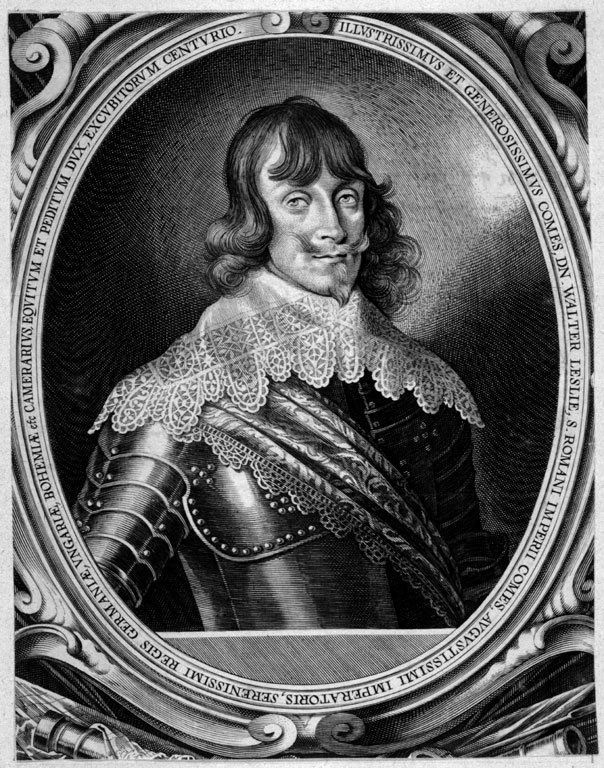
In the 1650s, like the grand aristocrat that he was, Walter Leslie also became a great collector of art, in particular to fill a new castle he purchased in 1656 near his governorship along the southern military frontier. Today in Slovenia (but then in the Austrian duchy of Styria), Ptuj Castle (or Pettau in German) sits gracefully over the Drava river. Built back in the twelfth century as an outpost of the archbishops of Salzburg, it later became a base for the Jesuits in the region. After 1656, Walter Leslie rebuilt it in a baroque style, and, like the Bohemian lands, it stayed in the family until 1802, then passed to Dietrichsteins, then Herbersteins until it was nationalised in 1945. Today Ptuj houses a museum of regional history.
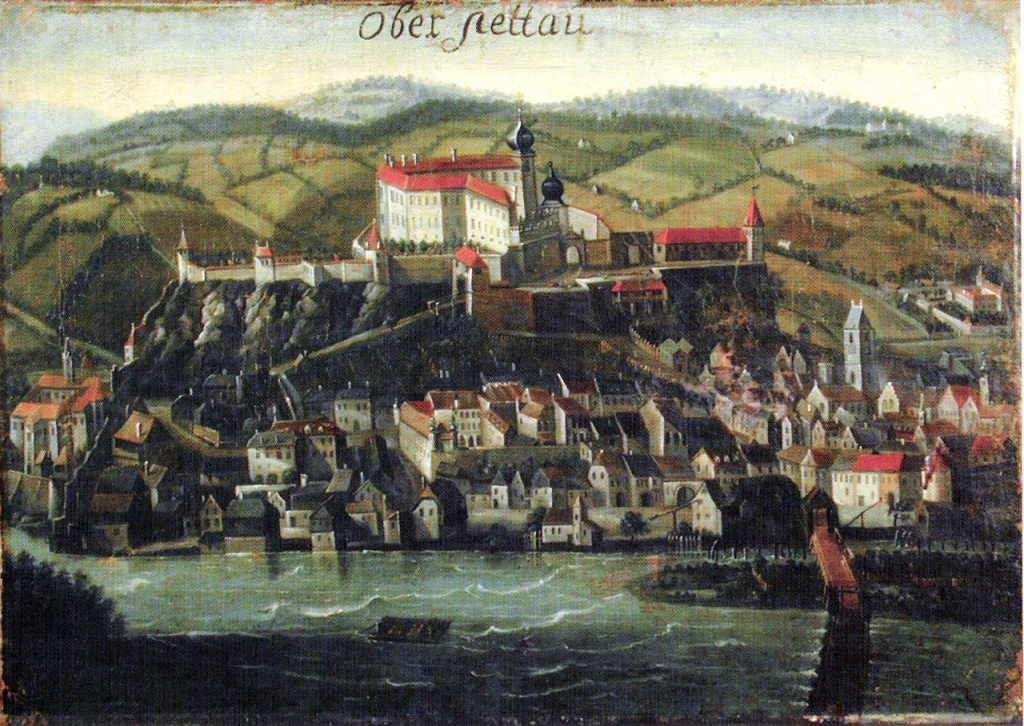
Walter Leslie had no children, so the Emperor, to further honour this war hero and statesman, created his older brother Alexander (now 14th Laird of Balquhain) Count of the Empire. Alexander had four sons: the younger two moved to Austria where one (Alexander) became a colonel in the Austrian army and another (William) a canon in the Cathedral of Breslau (Wrocłow), and later professor of philosophy at the University of Perugia, Rector of the Scots College in Douai, Superior of Jesuit Missions in Scotland, and Rector of the Scots College in Rome! The second son (Patrick) inherited the Balquhair lairdship, the house at Fettenear, and continued the line in Scotland; while the eldest (James) was named senior heir of their uncle Walter: he received the lands in Bohemia and Styria and became an Imperial chamberlain (1660), General of Artillery (1673), and finally Imperial Field Marshal (1683). Known as Count Jakob von Leslie (or von Lesel), he also married a Liechtenstein princess, and purchased a townhouse in Graz, Lesliehof, which today is part of the ‘Altes Joanneum’, the National History Museum of the city of Graz.

After 1739, the Scottish and Austro-Bohemian lines merged again, and Antony, Count Leslie, was also the 19th Laird of Balquhain. When he died in 1802, the Scottish lands and titles fell to different families (who took Leslie as a surname, or added it with a hyphen), while the lands in Austria and Bohemia passed to their Dietrichstein cousins.
Which leaves just some minor lines of genuine Leslies holding the fort in Scotland (but recall that both the earls of Rothes and the earls of Leven used Leslie as their surname, so I am forcing the issue a bit here). There were Leslie baronets of Wardis (County Moray) still in the twentieth century (and the title is currently dormant until someone claims it); Leslie baronets of Glaslough in Ireland (as above); and a line founded in the early sixteenth century by a younger son of the Laird of Wardis, who acquired by marriage a small castle called Wardhill (or Warthill) in rural Aberdeenshire, today a posh hotel which I drove past last summer and tried to have a peak into. The male line of the lairds of Wardhill died out in the end of the nineteenth century and the heiress, Mary Rose Leslie, married George Arbuthnot: their descendant Sebastian Arbuthnot-Leslie is the 15th Laird of Wardhill and the father of the actress Rose Leslie. Nearby is Lickleyhead Castle, anciently a Leslie castle, but only repurchased by them in the twentieth century, by Rose Leslie’s great-great-grandfather, Don Guillermo Landa y Escandón, a senior Mexican politician and diplomat, whose own mother had been a lady-in-waiting to the Empress Carlotta of Mexico—this Scottish aristocrat turned Wildling gets more and more interesting with every turn!

(images Wikimedia Commons)
 Dukes and Princes
“Since 1918 it has been owned (and still open as a guesthouse) by the current Baron of Leslie (a feudal barony, not a peerage).”
Shouldn’t the date be 2018?
LikeLike
Oh yes, thanks for this (and the next one). 1918 was certainly a typo, but I didn’t know about the different spellings of whisky/whiskey, so that is good to know!
LikeLike
“the Spey valley now known more for its many whiskey distilleries”
Whisky when it’s Scotch.
LikeLike
The final paragraph:
Wardis is in Aberdeenshire, not Morayshire?
Wardhill is not a hotel, it’s still a private house although you can arrange to stay there by appointment at https://www.wardhillcastle.co.uk/
The Empress of Mexico was either Charlotte or Carlota, not Carlotta.
No more pedantry from me. It’s a great article and I have sent it on to my Leslie cousins.
LikeLike