There’s a fairly common surname in England and America, Compton, and if you want to think it might once upon a time have been connected to the old Anglo-Norman aristocracy, as derived from an old French word connected to accounting (comptant), that’s not a bad deduction; but it just as easily could be derived, like so many English names, from the more mundane world of agriculture: the old English cum tun a farm or settlement in a narrow valley (or coombe). Unsurprisingly, there are lots of small villages in England with this name, especially in the south and west.

Of those Comptons associated with noble titles, the most prominent are the Comptons of Warwickshire, who rose very fast due to great royal favour in the Tudor era and ultimately became earls, then marquises of Northampton, and remain so today—with two very grand family seats: Compton Wynyates in Warwickshire, and Ashby Castle in Northamptonshire. This post will mostly be about them, even though they did not reach the very top of the peerage, the dukedom.
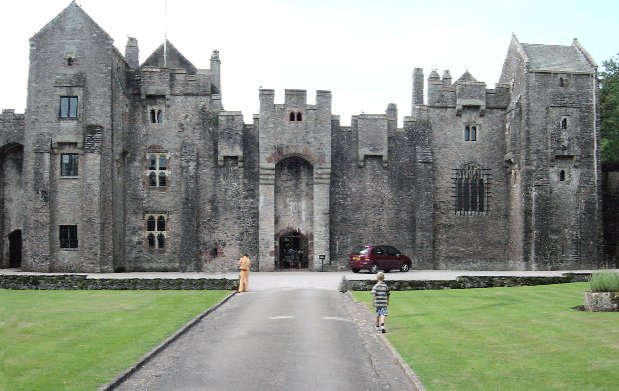
Other noble seats with the same name include the very famous Compton Verney (also in Warwickshire), the seat of the Verney family—today home to a wonderful art gallery. Compton Beauchamp House is a baroque mansion in southwest Oxfordshire. There’s a medieval Compton Castle in South Devon, home to a Compton family in the Middle Ages, but more known as the long-term seat of the Gilbert family. Compton Pauncefoot Castle in Somerset was built for the Hunt family in 1820s, and later became the seat of a baronetcy, Mason of Compton Pauncefoot (1918), whose family were later raised to the title Baron Blackford (1935), before going extinct in 1988. There was also a different Compton baronetcy, of Hartpury (Gloucestershire), granted in 1686. Though they went extinct in 1773, they may have left some distant cousins too poor or too distant to claim the title, as this family was known to have perennial financial difficulties, in part stemming from their status in the seventeenth century (at least) as recusant Catholics.
This leads me to pure speculation, and one of the reasons for justifying this post connecting the noble Comptons of Northampton to my own family (my mother’s surname). In the late seventeenth and early eighteenth centuries, a large number of junior members of the gentry or lower nobility of England emigrated to the colonies to escape financial or religious difficulties. Unlike France or Germany where noble status was always transmittable to male descendants—no matter how far away from the main line you got—in England only the head of a family was noble, so younger sons could sit in the House of Commons, could enter trade without social or legal impunity, and could easily ‘fall out’ of the upper social orders and become yeoman farmers, or worse, could speculate on investments and lose everything. Many Americans who research their family trees are able to trace their ancestry back to the English aristocracy through this route, though records are often patchy, and some records that do exist should be considered dubious. So my fantasy—I should reiterate, based on no evidence at all—is that it could be possible that one of these poor younger sons, deprived of an inheritance by the system of entail so prevalent in England in this period, and maybe fleeing persecution as a Catholic, managed to travel to America and establish a life there. He wouldn’t be the only one of my ancestors to flee religious persecution to the New World—see my previous blog post about anabaptists from Germany.
What I do know is that a certain Ezekiel Compton (or Cumpton) was born in the colony of New Jersey in 1773, perhaps in Hunterdon County in the Delaware Valley, and moved in about 1800 to the newly established Berkeley County, Virginia. The county was named for a popular governor Norborne Berkeley (who had died in 1770), who came from Gloucestershire in England, so maybe had some connections to English settlers whose families also came from there like the Comptons of Hartpury? The other interesting coincidence is that General Daniel Morgan also came to this area of Virginia (though many years before) from Hunterdon County, New Jersey. Morgan’s grandparents had emigrated from Wales (which borders Gloucestershire), and he settled in Frederick County, Virginia, which was then divided to create Berkeley County in 1772, and then divided again in 1820 to create a new county, which was named for Morgan himself, as a hero of the American Revolution. What is now Morgan County had long been popular with Native Americans for its warm springs bubbling out of the Potomac Highlands, which drew its first settlers, Germans from the Delaware Valley, in about the 1730. The town that grew up around the main springs was called Bath, after the city in England (in Gloucestershire, coincidence?)—but was renamed Berkeley Springs by about 1802.

I too lived in Gloucestershire for a bit in the early part of this century, but I can’t say I felt any deep ancestral tingles there.
Ezekiel Compton died in 1860, and three years later, Morgan County became part of the new state of West Virginia. His son John, born in Berkeley County, died only five years later. John’s son William was known as ‘Doc’—for what reason I do not know—and married a local girl, Martina Casler, whose family takes my lineage back yet again to the Palatinate in Germany. Her ancestor Michael Casler (or Kessler, the surname for a coppersmith) emigrated to north-western Virginia in the 1760s and bought land from Lord Fairfax on Sir Johns Run, near Berkeley Springs, land that eventually became Morgan County. They had five sons, some with intriguing names (Hamil, Leonidus and Newton), and around the turn of the twentieth century, several of these migrated to Washington DC at time when jobs were plentiful as the national capital was finally starting to develop into a real city. Leonidus, who went by his middle name, Smith, married another local girl from back in Berkeley Springs, Virginia Alderton, whose first cousin had married her husband’s sister (and they too moved to Washington). The Aldertons had also settled in the area that’s now Morgan County as early as 1750. One of the more interesting stories to appear when I was looking into this family history is that of Virginia’s uncle, Reverend Thomas Alderton, a Methodist preacher in Great Cacapon, West Virginia, who died in the pulpit, at nearly 7 feet tall and over 300 pounds (says his obituary in The Washington Post from 1906)! Smith and Virginia in turn had a large family of four girls and two boys—one of these, Ralph, was my grandad. Ralph Compton worked for the US government in the boom years of the 1930s-40s and earned enough to send his two sons and one daughter—my mother—to college. His career was in accounting and several of my cousins are today in related fields with very mathematical brains, so I’ve often joked that maybe there was a ‘comptant’ gene in the family after all (and not a ‘farm in a narrow valley’ gene!).
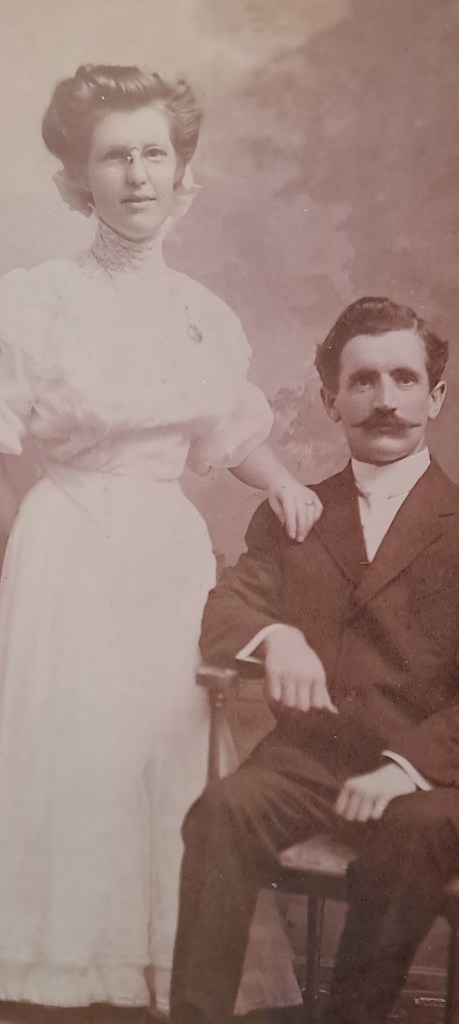
So do I think my Comptons are related to those in Warwickshire or Gloucestershire? Not really. But it could be fun. Maybe one of the earls of the later seventeenth century had an illegitimate son who, shunned by society in London, sought his fortune in the colonies?
Heading for more solid historical ground, we can look at the story of the Compton marquesses of Northampton as a good example of how to shimmy up the pole of the English aristocracy pretty quick if you enjoy royal favour. And the first who really rose to great prominence was indeed great mates with one of the most notorious promoters of new men: Henry VIII. Sir William Compton descended from local gentry with deep roots in rural Warwickshire stretching back to about 1200, and was appointed as a boy to be a page in the household of the Duke of York. When the Duke became King Henry VIII in 1509, he appointed his childhood friend to the extremely important position of Groom of the Stool—the person most trusted to attend the monarch in his most private moments (and I don’t mean sex). Compton became one of the central figures of the Tudor court, and features heavily in the TV dramatization, played by Kris Holden-Ried (maybe not as memorable as Henry Cavill, but a big presence, nonetheless). He accompanied the King on his Flanders campaign of 1513 and was knighted. Over the years he was richly rewarded with lands all over England and offices including the wardenship of Windsor Great Park, Chief Gentleman of the Bedchamber, and even a short stint as Chancellor of Ireland (1513-16). He married an heiress, Werburge Brereton, who was heiress of both her father’s lands in Sussex, and lands from her mother, Katherine Berkeley, in Gloucestershire.

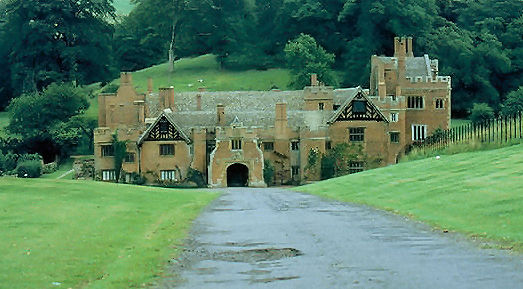
In 1515, Henry VIII gave William Compton the ruined Fulbroke Castle in Warwickshire, southwest of the town of Warwick, which he used as a sort of Ikea for castles, bringing back various ornamental bits to his family’s ancestral seat, further to the south in the same county, Compton Wynyates. This had been a Compton property since about 1200, rebuilt by William’s father in more fashionable brick, with four wings around a quadrangle. William now added a great porch, a chapel, and those twisty chimneys so associated with Tudor style. Compton Wynyates hosted numerous royal visits in the next two centuries—Henry VIII, Elizabeth, James I, Charles I—but it suffered during the English Civil War and the family mostly moved to another property, Ashby Castle, which they modernised and developed, meaning that Compton Wynyates is one of the most well-preserved Tudor houses in England. It was restored by the family in the nineteenth century, to be used as the home for the heir, but it always remained the second home, until the 1980s when Ashby Castle was opened for tourism, and Compton Wynyates became the principal, and still very private, family home.
But the King’s great pal William Compton died of the sweating sickness before he reached fifty. His baby son Peter was put into wardship, first under Cardinal Wolsey, then under the Earl of Shrewsbury, who married him off to his own daughter, Lady Anne Talbot. This meant the Comptons were not only connected to the Talbots, one of England’s premier families, but also, via the bride’s grandmother, Lady Katherine Stafford, to the Plantagenets and the royal family itself. But Peter died very young in 1544, leaving just one son, Henry.
Henry Compton, like his father, married extremely well. In the reign of Elizabeth, his first wife was Lady Frances Hastings, whose father was the Earl of Huntingdon, but whose mother was Katherine Pole, granddaughter of the Countess of Salisbury (niece of Richard III), meaning again that the Comptons were getting a healthy dollop of Plantagenet blood. He became an MP for Old Sarum in Wiltshire. In 1572, royal favour allowed him to move out of the House of Commons and into the House of Lords as Baron Compton of Compton Wynyates. He married a second time in about 1575, Anne Spencer, who, unlike his first wife, was from a relatively new family like his own, raised up to great prominence by favour with the Tudors, and owning significant agricultural lands in the county next door to Warwickshire, Northamptonshire.
Here Henry, Baron Compton, acquired a new family seat: Castle Ashby, a few miles southeast of the city of Northampton. The original manor house, built by the bishop of Coventry, dated back to the early fourteenth century. Lord Compton acquired it in the 1570s, and rebuilt it as an ‘Elizabethan prodigy house’, a princely mansion with space to house over eighty servants, surrounded by an estate that covered several villages. The house was given a grand palladian front enclosing the courtyard in the 1770s. It is still quite grand today, but the house is not open to the public (just the gardens).

Henry Compton died in 1589 leaving three sons. The youngest, Henry, established a secondary branch of the family in the old Brereton estates in Sussex. The second son, Sir Thomas, made an interesting marriage in 1609 as the third husband of Mary Beaumont, the widow of Sir George Villiers and mother of the soon-to-be great favourite of King James, George, Duke of Buckingham—again, as seen recently in a television drama (Mary & George, in which old Sir Thomas does not really come over too well). [see previous blog post on the Villiers family]. Meanwhile, the eldest son, William, made a much better marriage—in terms of finance if not status—but apparently had to fight to get it. Elizabeth Spencer—not related, I think, to the Spencers of Northamptonshire—was the only child of Sir John Spencer, Lord Mayor of London and one of the richest men in Elizabethan England. He opposed the marriage of his daughter to the 2nd Baron Compton, who had, it so happened, borrowed a huge amount of money from Spencer so considered getting a dowry and her inheritance would be a great way to cancel this debt. As the story goes, in about 1599, Compton used his influence at court to arrange for old Sir John to be arrested on charges of mistreating his daughter, then abducted Elizabeth—it was said by lowering her in a baker’s basket from her window in Canonbury Tower. Sir John disowned his daughter, but gradually was reconciled once she had a child and his heart softened.

Canonbury House, in Islington, north London, became the new jewel in the Compton real estate crown. It had been a priory, part of the huge monastic complex of St Bartholomew’s, named after its canons (though sometimes called ‘Canbury’). When monastic lands were confiscated in the 1540s, the estate was given to the Dudleys, then passed to others before it was acquired by Spencer in 1570 (and he rebuilt the house on a grander scale in the 1590s). William and Elizabeth didn’t move in here, however—he was too much in favour at court so needed to be closer to King James—but leased it out, notably to Sir Francis Bacon. The family did start to live here after the 1650s. In the eighteenth century the mansion was redeveloped into several smaller houses (again leased out, some to very famous lodgers). One of these became known as Northampton House by the 1850s. Other areas became sportsgrounds. The Tower of Canonbury remained, however, and is still the only major Tudor era building in Islington, restored by the 5th Marquess of Northampton in about 1910. It still has a ‘Spencer Room’ and a ‘Compton Room’. The London estate is owned by the family trust and includes a pub called the Compton Arms.
As William Compton rose in favour with King James, he was rewarded: in 1617 he was given the very prestigious and powerful post of Lord President of the Marches and Dominion of Wales (with jurisdiction over all of Wales, plus the bordering counties), and a year later elevated in title to Earl of Northampton. Though one of the family seats was in this midlands county, it is thought that this title was selected due to William’s descent from the earls of Huntingdon, who had at one point also been earls of Northampton, way back in the eleventh and twelfth centuries. Northampton was in fact one of the most ancient earldoms in all of England, a fact that would come into play again later.
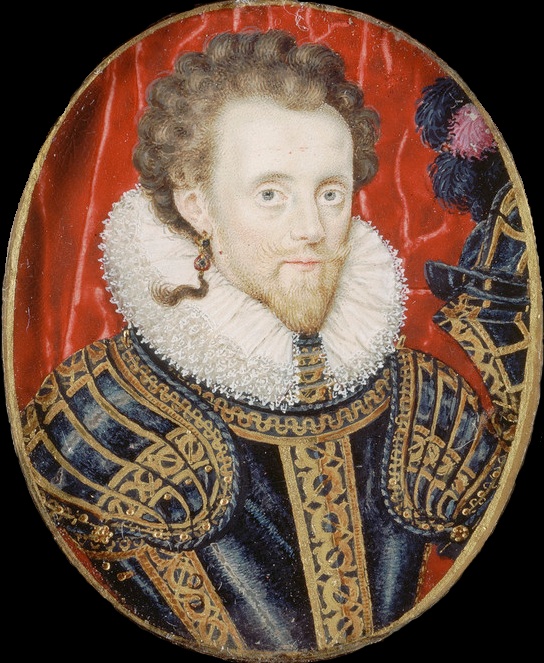
The first Earl of Northampton died in 1630, leaving just one son, with the very distinctive first name ‘Spencer’. This name will recur a lot in the next three centuries of family history, and although it derives from Sir John Spencer in London, it probably also gave a bit of caché to the family in Northamptonshire as the other major county family, the Spencers of Althorp, rose higher and higher in the social hierarchy. The 2nd Earl became another royal favourite—this time as Master of the Robes to Charles, Prince of Wales, 1621, and accompanying him on his famous trip to Spain in 1623 to try (and fail) to woo a Spanish infanta. Later in life, the 2nd Earl became a prominent Royalist commander in the Civil War and was killed at the Battle of Hopton Heath in Shropshire. He had married Mary Beaumont, the niece of the earlier Mary Beaumont, and thus first cousin to the Duke of Buckingham.
The 2nd Earl had six sons, several of whom were prominent Royalist commanders in the war. The eldest, James, became the 3rd Earl of Northampton and managed to lie low during the Commonwealth so his lands were not confiscated. At the Restoration of 1660, he was restored to his family’s now fairly hereditary position of Lord Lieutenant of Warwickshire, and later was given the post of Constable of the Tower of London, and member of the Privy Council. But he was never a major political figure and was sidelined in 1679 when tension rose between those who supported and those who feared the succession of the King’s Catholic brother, James, Duke of York.

Indeed the 3rd Earl’s youngest brother, Henry, became one of the chief opponents of the Duke of York once he became King James II. Henry Compton joined the church as a young man and was appointed Bishop of Oxford in 1674, then transferred to London in 1675. He was also given the post of Dean of the Chapel Royal and a seat on the Privy Council, as well as the task of overseeing the education of the royal princesses Mary and Anne, daughters of the Duke of York. As the reign of Charles II waned in the 1680s, the Bishop of London worked to bring dissenters back into the Church of England, but only low church Protestants or Presbyterians, not Catholics—so when James II became King in 1685, his anti-Catholic stance became a liability, and he was dismissed from the Privy Council and the Deanship. He therefore joined the opposition in the House of Lords and became one of the ‘Immortal Seven’ who wrote a letter to William, Prince of Orange, in June 1688, inviting him to invade England in order to remove the perceived threat of an absolutist and pro-Catholic regime. The Bishop of London then performed the coronation of William and Mary in April 1689, since the Archbishop of Canterbury would not do it. Henry Compton is one of my favourite Comptons as he became the first Chancellor of the College of William & Mary in Virginia—my alma mater—which he helped found in 1693. Although he remained a central figure in the reigns of William and Mary and of Queen Anne, and involved, for example, in the commission that drew up the official acts of union between England and Scotland in 1707, he was passed over twice for promotion to the top job, archbishop of Canterbury, which irked him.

This brings us into the eighteenth century and the next great Compton politician, Spencer Compton, younger brother of the 4th Earl of Northampton. The 4th Earl, George, was Lord Lieutenant of Warwickshire and Constable of the Tower, but led a fairly quiet life. His brother Spencer, in contrast, became a Member of Parliament in 1698 and a close ally of Walpole—a Whig, which went against the Compton family’s traditional Tory stance. Rising with Walpole, Compton was named Speaker of the Commons, 1715, a Privy Councillor in 1716, and Treasurer of the Household of the Prince of Wales. When Walpole became essentially Britain’s first Prime Minister, Compton was appointed Lord Privy Seal, and in 1728 moved to the House of Lords as Baron Wilmington, of Wilmington (Sussex). By this point, political winds changed, and he became one of Walpole’s chief opponents—but he continued to rise in royal favour: created Earl of Wilmington and Viscount Pevensey (also in Sussex) in 1730, and Lord President of the Council. Finally he succeeded Walpole as Prime Minister and First Lord of the Treasury in 1742. He only held these posts for a year before he died. Unmarried and childless, his titles became extinct. His name lives on however in the city of Wilmington in Delaware.
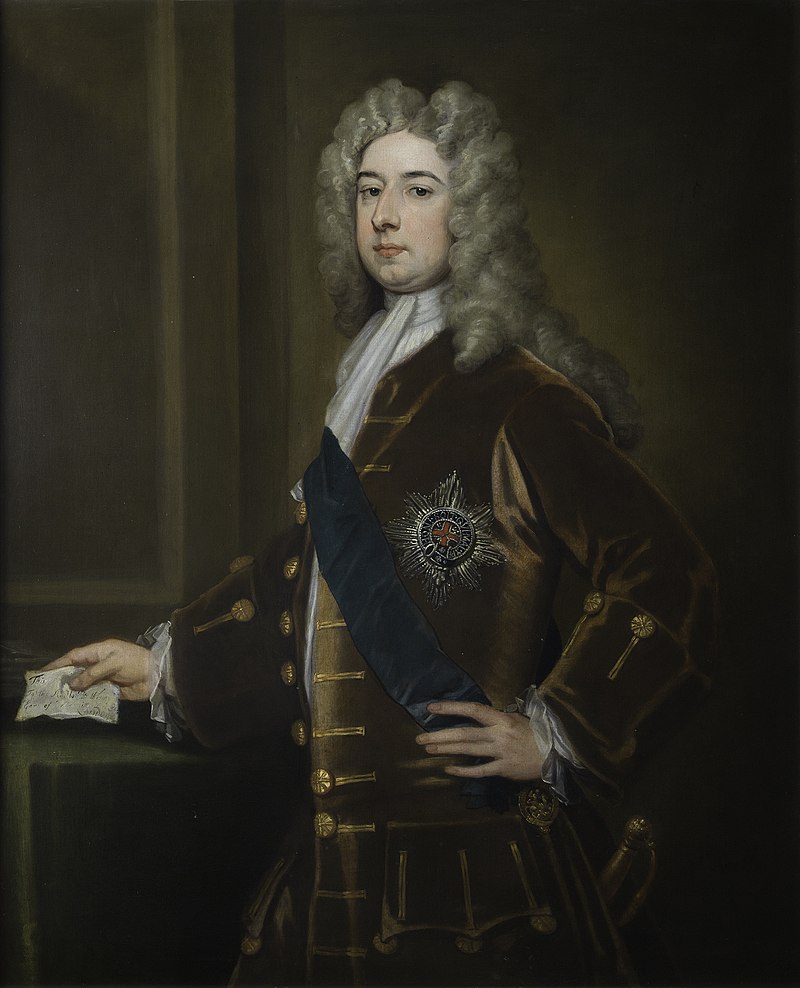
In the 1720s, Spencer Compton purchased the Jacobean mansion of Borne Place on the seaside in Eastbourne, Sussex and rebuilt it along baroque lines. Renamed Compton Place, it became his chief country retreat from London politics. Later it passed back to the main line of Compton earls, then in the 1750s by marriage into the Cavendish family: the dukes of Devonshire still own it today.

The next four earls of Northampton were fairly unremarkable. James, the 5th Earl, had married an heiress, Elizabeth Shirley, who succeeded in her own right as Baroness Ferrers of Chartley. They had only a daughter, Charlotte, who thus took the barony of Compton and that of Ferrers by marriage into the Townshend family (later elevated to the rank of marquess). The earldom passed to the next brother, George, who died only four years later (1758) and passed the earldom to his nephew, Charles. The 7th Earl married a society beauty, Lady Anne Somerset, daughter of the Duke of Beaufort, and they were both set to take up a romantic post in the British embassy in Venice when he suddenly died in October 1763, only 26 years old—predeceased by his equally young wife a few months earlier in Naples. Again there was only a daughter (later married to Lord Burlington), so the earldom moved sideways once more, to Spencer, 8th Earl of Northampton.
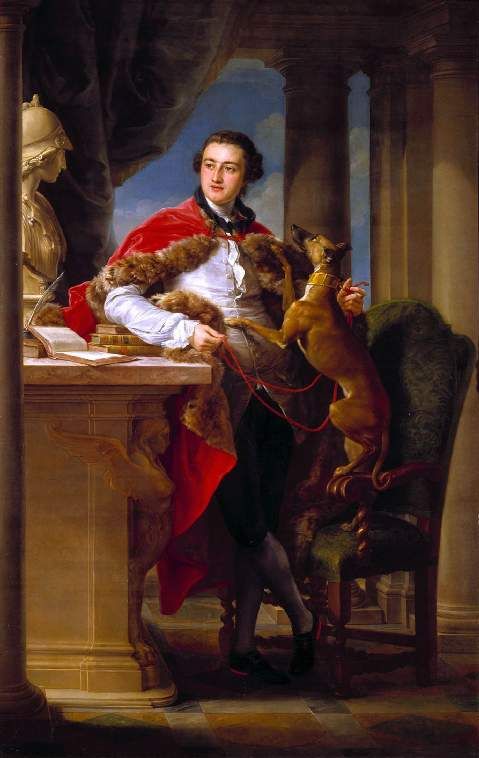
The 8th Earl was a Groom of the Bedchamber to George III in the early years of his reign, but became a rather extravagant spender, so that by the mid-1770s he was forced to live abroad, in Switzerland where it was much cheaper. It was also probably to avoid the scandal of having taken as a second wife, Anne Hougham, the daughter of a London linen-draper. He died in 1796, leaving his son Charles mostly a lot of debt.
Charles, 9th Earl of Northampton, had one thing in his favour, however: his aunt Catherine had married John Perceval, Earl of Egmont, and their son Spencer Perceval was a rising star in government and Prime Minister from 1809. Compton asked his cousin to raise his peerage title up a grade to marquess, with the argument that it was one of the ‘ancient earldoms’ of England (which it was) so should stand out more against the ever-increasing number of earldoms that had been created in the later eighteenth century. Spencer Perceval agreed, but was assassinated in May 1812, leaving the actual creation to his successor, Lord Liverpool. The first Marquess of Northampton’s subsidiary titles were Earl Compton (used by the heir) and Baron Wilmington.

Spencer, 2nd Marquess of Northampton, inherited this new title in 1828. He had lived in Italy since 1820, and championed liberal movements in Lombardy and Naples (sort of like Lord Byron fighting for independence of Greece at the same time). He returned to England in 1830 and became a vocal reformer in the House of Lords. He was also a keen scientist and headed up several societies, in particular for geology—he was interested in the earliest discoveries of dinosaur fossils and even had a type of stegosaurus named for him. He was President of the Royal Society, 1838-48, and died shortly after.

The 3rd and 4th marquesses were brothers. They also had a younger brother, Lord Alwyne, who became Lord High Almoner to Queen Victoria in 1882, and Bishop of Ely in 1886. The 3rd Marquess, Charles, was known mostly for his work restoring Compton Wynyates in the 1860s. William, 4th Marquess, had a long naval carer, with service in the Far East, until he succeeded to his brother’s titles in 1877. In 1894, he donated lands in Clerkenwell, another estate in London (south of Canonbury and Islington), to create the Northampton Institute, which eventually evolved into the City University of London. He died in 1897.
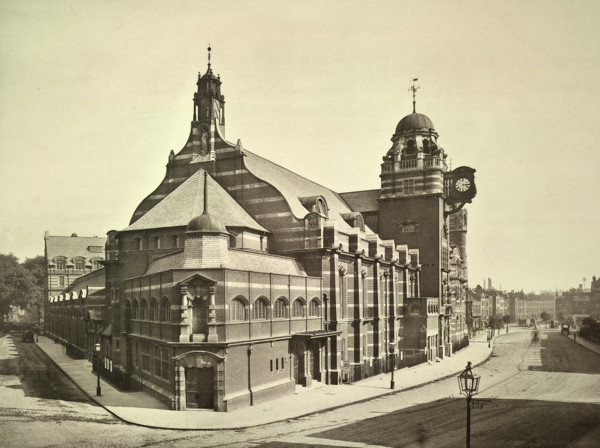
As a sizeable landowner in north London—the district of Clerkenwell still bears the street names of Northampton, Spencer and Compton—William, 5th Marquess of Northampton, took an active part in the organisation of the new London County Council in the 1890s. He had been a diplomat in the 1870s, and resumed this function in a more honorary way in 1910 as special envoy to the courts of Europe to announce the accession of George V. He died three years later, having added to the family’s fortunes by marrying one of the heiresses of Barings Bank.

In contrast to this marriage, a year before his father’s death, William, Earl Compton, had become engaged to an actress who gave birth to twins—but once he acceded to the marquisate, he backed out. She sued for breach of promise and was awarded £50,000. The 6th Marquess then went on to marry three times and divorce twice. This is not, I hasten to add, unusual for the British aristocracy of the 20th century (in fact his son, married six times!). The 6th Marquess served in the First World War as a major in the Royal Horse Guards, then spent much of his career in local affairs, as lieutenant-colonel of the Warwickshire yeomanry in the 1920s, and as chairman of the Northamptonshire County Council in the early 1950s. He died in 1978 at the ripe old age of 93. His son Spencer (‘Spenny’) is the 7th and current Marquess of Northampton. He is one of the richest men in the UK, with estates valued at about £120 million. So although not a duke or prince, he certainly lives like one. He is known for having an astute eye in the buying and selling of treasures, from Renaissance art to ancient buried Roman silver. The succession is secure in his son Daniel, Earl Compton (b. 1973), and grandson Henry, Lord Wilmington (b. 2018).
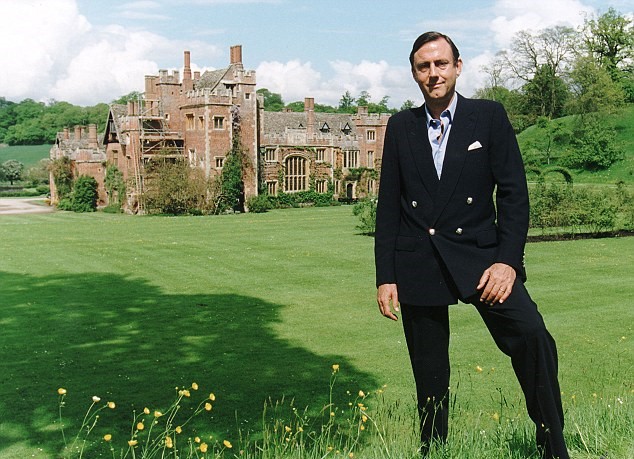
Before concluding, we can look at the current Marquess’s cousins, who, though having no title at all, also live like dukes and princes. The youngest brother of the 5th Marquess, Lord Alwyne Compton, was a Unionist politician (opposed to the separation of Ireland from the United Kingdom). In 1886 he married Mary de Grey Vyner, heiress of Newby Hall, Fountains Abbey and Studley Royal, all in Yorkshire. Their two sons divided these properties, with the younger taking the surname Vyner and starting a new subbranch (and marrying very well, the daughter of the Duke of Lennox). The ruined abbey at Fountains and its Elizabethan house are now part of the National Trust, while the Wren-inspired Newby Hall remains a Compton family seat.

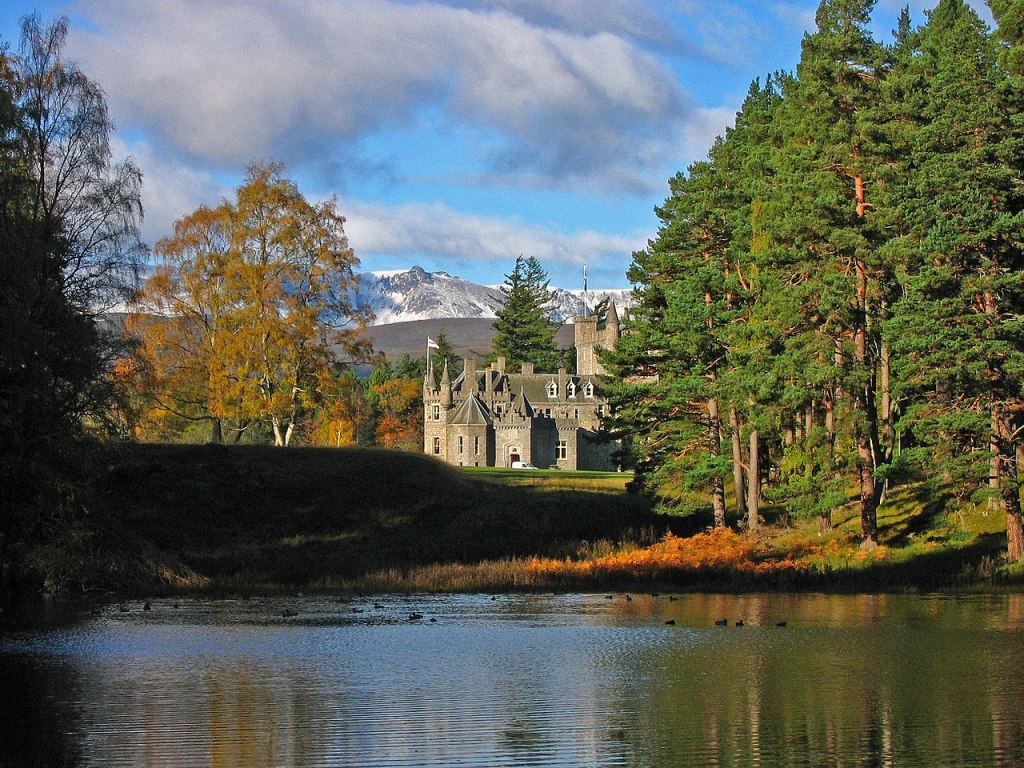
Newby Hall passed to a younger son, as the elder son, Edward, took the family in another direction entirely by marrying Silvia Farquharson, daughter and eventual heir of the 14th Laird of Invercauld, the Chief of Clan Farquharson. The lands of the Farquharsons (pronounced like Ferguson) are in Deeside, in the County of Aberdeen. In 1949, Alwyne Compton, now Farquharson, was recognised by the Lord Lyon as head of the Clan. He was a lifelong friend of Prince Philip, Duke of Edinburgh, and his lordly estate in Invercauld is quite close to the royal family’s estates at Balmoral. The 16th Laird of Invercauld died in 2021—at 102!—and passed the estates and titles to his great-nephew, Philip Farquharson (b. 1980). Philip’s cousins picked up another part of their Scottish inheritance and changed their surname to Maclean, and took up residence at Torloisk on Mull.

Another set of cousins brought the family even close into the orbit of today’s British royal family. Alwyne Farquharson’s twin sister, Mary Compton, married a millionaire horse-breeder from Suffolk, Bernard van Cutsem. The family hailed from a long line of minor nobles from Belgium and had migrated to England in the nineteenth century. Their children’s links to the royal family are legion: the second son Geoffrey was related to Lady Diana Spencer through marriage (via her sister Sarah McCorquodale); while the first son Hugh became great pals of the then Prince of Wales in the 1960s, so the two families continued to be linked through wedding and godparentage for the next two generations. Hugh’s son Edward is King Charles’ godson and was a page at the wedding in 1981 (and is now married to a Grosvenor, daughter of the Duke of Westminster). Second son Hugh married an Astor—their daughter Grace (Prince William’s goddaughter) captured the world’s attention as the angry three-year-old on the balcony of Buckingham Palace during William and Catherine’s wedding kiss in 2011. Third son Nicholas’s daughter is in turn Prince Harry’s goddaughter, and was also a bridesmaid in his wedding in 2018. Nicholas and the fourth brother, William, are godfathers to Princes George and Louis. Most recently, Grace’s little brother, Charles van Cutsem, was appointed a page of honour to the King in November 2023. Not bad for a family that remain faithfully Catholic.

Royal favour can thus help to solidify a family’s status within elite society in Britain, just as it did for the Comptons of Warwickshire in the Tudor era. Perhaps the Comptons of Berkeley Springs in Morgan County, West Virginia, enjoyed their own degree of notoriety in their corner of the world.
(images Wikimedia Commons)
 Dukes and Princes