In June 1673, the French Army laid siege to the Dutch city of Maastricht, a key crossing point of the river Meuse—they would take and hold the city for several years, aided by an English force commanded by a young Duke of Monmouth and the future Duke of Marlborough, John Churchill, and with the participation of the King, Louis XIV, himself, and the King’s brother, Philippe, Duke of Orléans. It was a glorious victory worthy of the Sun King. But one of his most celebrated commanders was killed during the siege, the Comte d’Artagnan, a captain of the Musketeers. It is believed he was buried in the Church of St Peter and St Paul in Maastricht’s western suburb of Wolder, where Louis XIV’s camp was during the siege—and in March 2026, bones were discovered under the main altar during repair work being done to that church which archaeologists and historians think may be the remains of the famous musketeer. Samples have been sent to labs for testing, so we shall see what they discover…
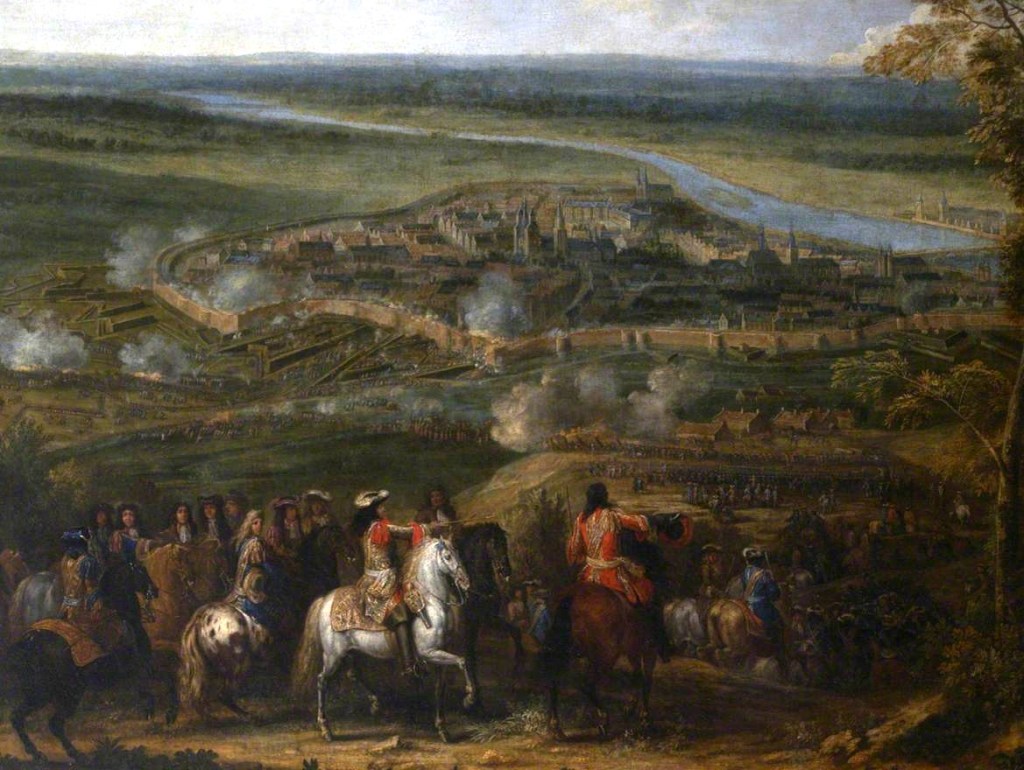
The famous d’Artagnan at the Siege of Maastricht of 1673 was not the dashing young hero immortalised in the Three Musketeers novels by Alexandre Dumas—he would have been about 63 years old. Nor was his name in fact d’Artagnan, but Charles Batz de Castelmore. He had ‘borrowed’ the name from his mother, Françoise de Montesquiou d’Artagnan, and it would retain some of its notoriety as a name in the decades after his death through use by his first cousins, Joseph de Montesquiou, another captain of the Musketeers, and Pierre de Montesqiou, known as the Maréchal d’Artagnan.
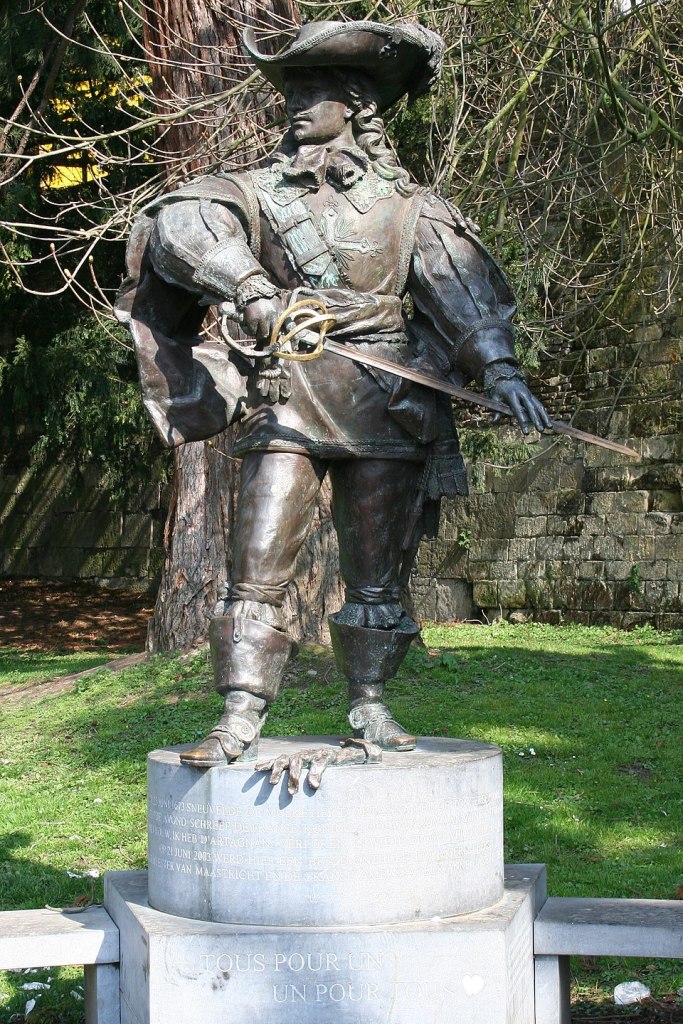
So the name that is central of this blog post, and which qualifies d’Artagnan for inclusion within this website for dukes and princes, is Montesquiou. It linked him also to one of the most celebrated military commanders of the age, also a distant Montesquiou cousin, Blaise de Monluc. It does not, however, connect him to one of the most prominent philosophes of the Age of Enlightenment, Charles-Louis de Secondat, Baron de Montesquieu (d. 1753), who was from a family of magistrates of Bordeaux. The much more aristocratic Montesquiou dynasty, also from the south of France, in fact claimed to be linked to one of the most ancient dynasties in France, the counts of Fezensac, and through them, to the House of Gascony, who have roots as far back as the eighth century, or possibly even the seventh.
The early history of the House of Gascony is fragmentary and sometimes contradictory. As Gaul fell to various invaders after the collapse of the Roman Empire, the southern part of the old province of Aquitania was invaded by Vascons, a tribe of people from Iberia who later were known as Basques south of the Pyrenees and Gascons north of the mountains. In the conflicts between the Franks, the Burgundians and the Visigoths, they tried to forge their own territory, and around 600 were governed by a duke appointed by a Frankish king. This duke or military governor was probably a Frank or a Gallo-Roman, but in 670 we see a duke called Lupus who may have been a Vascon, and he changed the name of the region from the Roman Novempopulania to Vasconia. He extended his rule north to the Garonne river and fought off Visigoths to the east—chroniclers write that he wanted to be named king, but was murdered in 675 before achieving this goal.
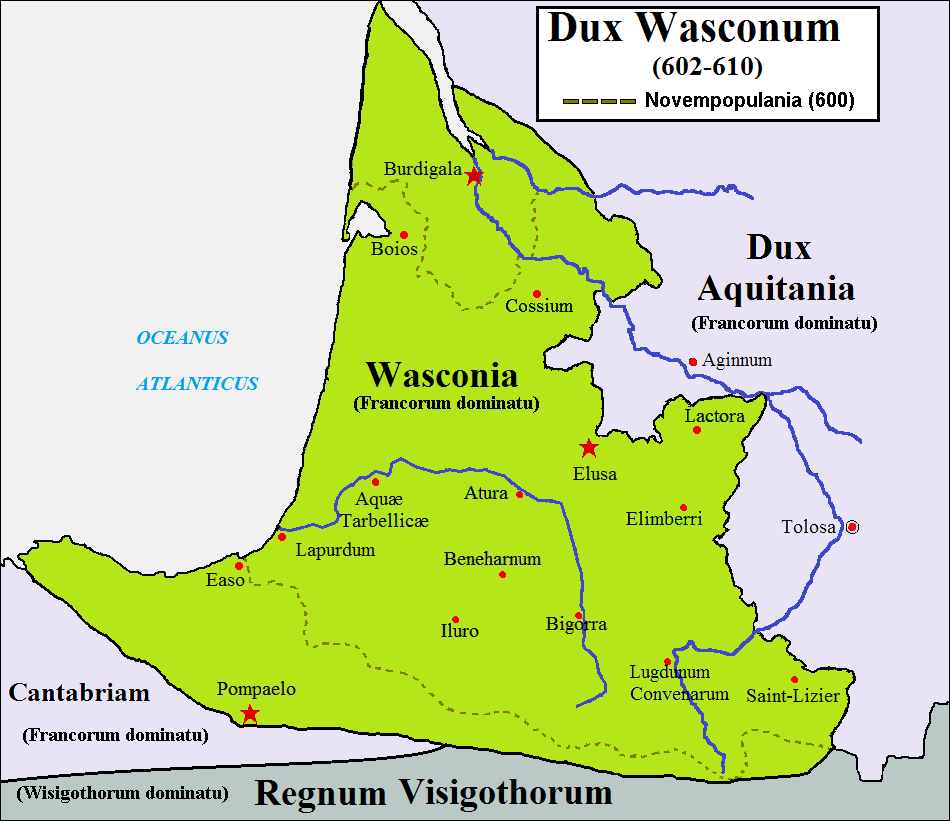
The name Lupus means ‘wolf’ in Latin, and later became Loup in French and Lobo or Lope in Spanish (in Basque, wolf is otxoa). A century later, a second Loup (from the same family?) allied with the Franks to preserve his country from the invading Umayyads and swore an oath of loyalty to Charlemagne in 769—who then reversed the tide and pushed the Arabs back across the mountains in the 770s-80s.
In the 820s, Loup III Centelle, ‘Prince of the Gascons’ rebelled against the Franks and asked the King of Asturias for protection. The King appointed the Prince’s son Sance as governor or consul. Sance (or Sancho) already had a reputation for fighting against Saracens in Iberia, and the grateful Gascon people proclaimed his family’s rule would be hereditary. In the 830s-40s, he and his successors fought off several waves of attacks by Vikings (Northmen), but succeeded in capturing the city of Bordeaux, which became the new capital of Vasconia or Gascony. The name Sance derived from the Roman Sanctius, a holy person. Using the patronymic naming systems prevalent in those days, sons of Lope would be named Lopez, while sons of Sancho would be Sanchez—two of the most common Spanish surnames were born.
A few years later Sance II reunited different parts of Gascony, both the inland valleys and along the Atlantic coast, and thus revived the title ‘duke’ in about 851, establishing a de facto independent state in defiance of any loyalty to the Frankish empire. His son (or at least relative) Garcia Sanchez (or as he’s known in French, Garsie-Sance, or Gassia Sans in Gascon) was called Duke of Gascony, but also Count and Marcher Lord of the Ocean Coast and Count of Bordeaux. When he died in about 925, his lands were divided into three parts for his sons. The eldest, Sance-Garcie, continued the line of dukes of Gascony until 1039 when the duchy passed into the possession of their more powerful neighbours to the north, the dukes of Aquitaine (of the House of Poitiers), whose heiress, Eleanor of Aquitaine, took it to the House of England through her marriage to Henri of Anjou in 1152. The third son, Arnaud-Garcie received the county of Astarac and founded a lineage that ultimately included—or so they claimed—the family of Saint-Lary, which will have a blog post due to the Duke of Bellegarde. The middle son, Guillaume-Garcie (or Guillermo), was given parts of central Gascony called the counties of Fezensac and Armagnac. The latter split off in the next generation and would form the House of Armagnac, the most powerful medieval noble family in southern France, and for a time in all of France (the fifteenth century), gaining ducal status as dukes of Nemours, before dying out in 1503.
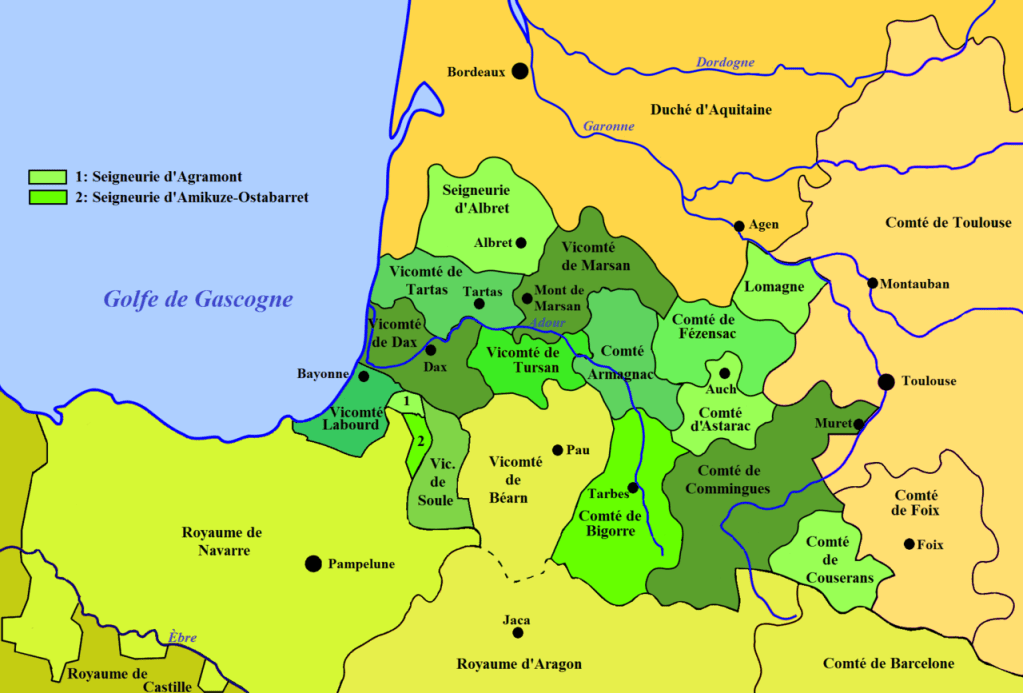
The County of Fezensac, with its capital at Vic-Fezensac (vic simply being a local word for ‘main town’), is a region today known for its amazing Gascon cuisine, with duck, rabbit and garlic, not mention foie-gras and Armagnac brandy (today’s Département of the Gers). Its counts in the tenth and eleventh centuries left behind records as donors to local bishops of Condom and archbishops of Auch. According to later genealogical assertions, Count Guillaume (d. 1074) divided his estates between his eldest son Aimery, who received the county, and Aysin, who received the lordship of Montesquiou. The elder line did not survive long and the county of Fezensac was re-integrated with the county of Armagnac from about 1140. The line of Montesquiou, in contrast, continues to the present. Whether the connection is genuine or not, it was formally recognised as so by Louis XVI in 1777, and the name was changed to Montesquiou-Fezensac.
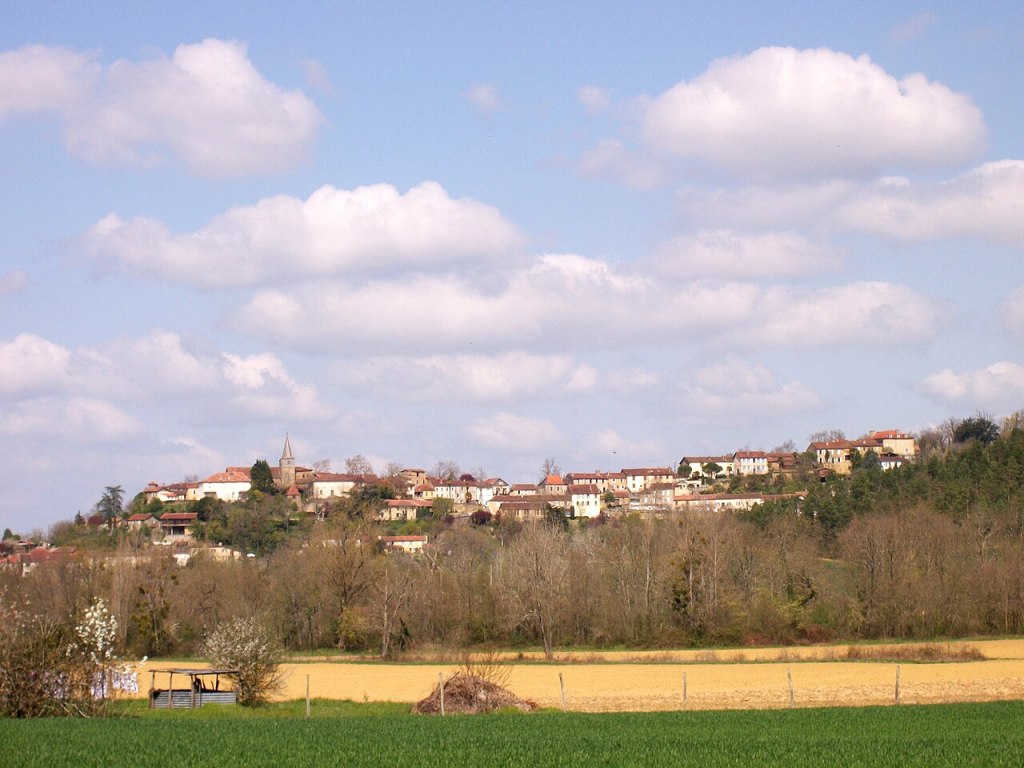
The lordship took its name from a fortified village in the County of Armagnac, southwest of Auch, which seems to have taken its name from a local Occitan (or Gascon) word esquiu (‘savage’) to indicate a wild hill; but it may be that there was a family with this savage name who attached it to a hill on which they built their castle, the Mont d’Esquiou. There is only a trace of an eleventh-century castle here—it was last occupied in the 1570s, then passed to the Monluc family (see below). The ruins were sold and demolished during the Revolution, and its materials reused in local building projects.
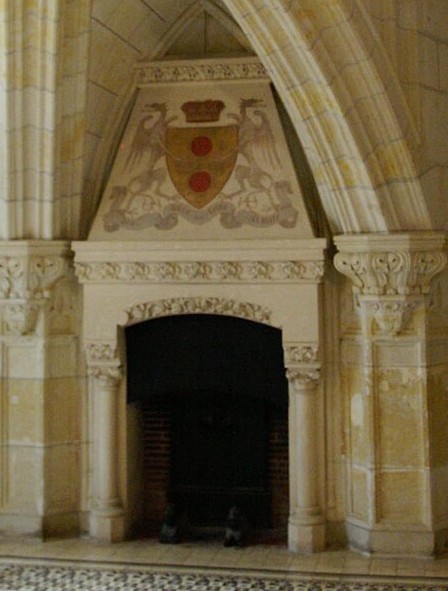
The coat-of-arms of the early Montesquiou lords is seen in accounts of the Crusades, and is quite simple, one of the best marks for genuine ancientness in French heraldry: two red balls or roundels on gold. They were titled as barons from at least the 1090s, and were vassals of the counts of Armagnac.
With lands so close to the borders with Spain, some of the barons crossed the Pyrenees and gained military glory in service of the kings of Navarre in campaigns against the Moors. One of these, Aysinus (or Assieu), was rewarded with the title ‘son and canon of the Cathedral of Auch’, which became attached to the family’s barony of Anglès (or Saint-Jean d’Anglès) which was considered one of the four baronies of Armagnac—succeeding generations thus held a prominent place in the local estates and in the metropolitan church of Auch. Early prominent churchmen include a bishop of Tarbes (in one of the Pyrenean valleys to the south) in the mid-twelfth century, and Pierre de Montesquiou, Bishop of Albi and Cardinal (d. 1262). A generation later, a nephew with the unusual name of Pictavin became Bishop of Bazas then of Albi (both a bit to the north, in Aquitaine), then also a Cardinal (d. 1355). While the Cardinal’s older brother continued the main line, the younger brother Odet, married Aude de Lasseran, in 1318, heiress of the lordships of Massencomme and Monluc. The former was local, in the County of Fezensac, and formed a separate cadet line (extinct in the fifteenth century); while the latter was located further north in the Agenais (also in Aquitaine). This family, who used the surname Lasseran-Massencomme, leads to the Marshal Blaise de Monluc, or so his family said, as we will see below.
The history of the Montesquiou barons in the next two centuries largely follows that of their overlord the count of Armagnac, fighting with him versus the counts of Foix or the kings of England or France. In the 1470s, the inheritance was divided and two branches formed: the elder based at Montesquiou and the latter at the château of Marsan. The senior line died out in 1569 with the death of François, Baron de Montesquiou, a gentleman in the household of the Duke of Anjou (the future King Henri III), and Captain of his Swiss Guards. His sister and heir Anne married Fabien de Monluc, thus connecting that family more genuinely to the Montesquious.
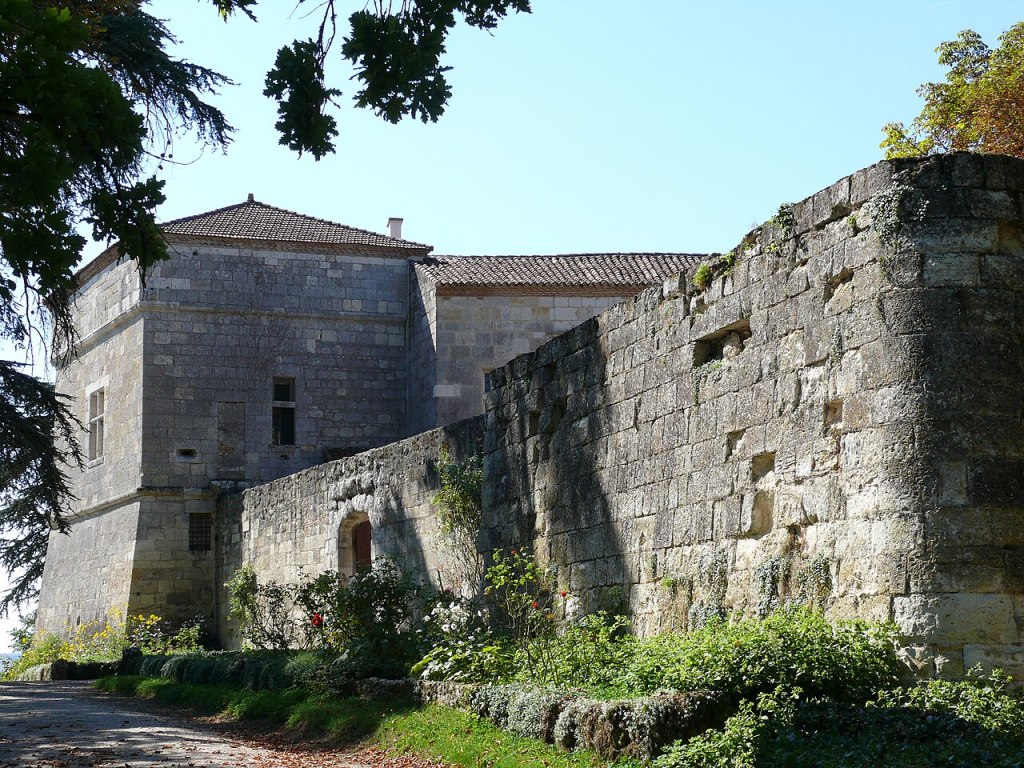
Fabien de Monluc was the son of one of the most famous military commanders in French history, Blaise de Monluc, and later published genealogies asserting that he was himself descended from the Montesquiou family, in a branch who split off in the fourteenth century and changed their name to Lasseran de Massencome. Changing your name to match that of your principal fief was not uncommon in the Middle Ages, but it does make the genealogists’ job a bit more complicated. This story was accepted by official royal genealogists in the eighteenth century, but by the nineteenth century it had come under doubt, and now it is thought that the Monlucs were a minor gentry family from the Armagnac region who made a good marriage at the start of the sixteenth century to the heiress of the lordship of Estillac, a bit further to the north in the Agenais, near the mighty Garonne river, and attached their name to its castle. Today it is called the Château de Montluc, spelled with a t probably by mistake, assuming it applied to a ‘mount’, whereas the actual spelling Monluc seems to have derived from an earlier Roman name bono luco (and the b changed over time to an m). The thirteenth-century fortification was expanded and re-fortified along modern military lines by the Maréchal de Monluc in the 1570s, then in the 1640s passed to his heirs in the Escoubleau de Sourdis family. It was sold several times in the eighteenth and nineteenth centuries, and is still in private hands.
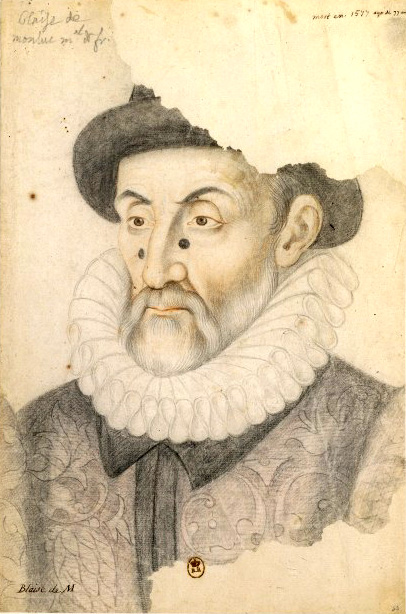
Blaise de Monluc was born around 1500 and by his twenties was in service of King François I in his wars in Italy, acted as military governor of the city of Siena—which he defended against an Imperial siege in 1555—and by 1558 was appointed Captain-General of the Infantry of France by Henri II. He maintained his prominence as a client of the Guise family leading Catholic troops in the Wars of Religion, and was appointed Lieutenant-General of Guyenne in 1562. He became an almost independent force in the southwest of France, besieging Protestant strongholds, like La Rochelle in 1573, gaining a reputation for brutal but efficient acts. He was shot in the face in 1570, so he wore a mask for the rest of his life. When Henri III came to the throne in 1574, he rewarded Monluc’s long and illustrious career—serving five reigns—with the baton of a Marshal of France. This was a reward, but also in a sense an indication that it was time to retire, since accusations of brutality and corruption were mounting. He therefore set about recording his memoirs as a soldier in the Commentaries, published in 1576 and ever since regarded as a sort of ‘soldier’s bible’. He died a year later.
The Marshal had two brothers, Jacques and Jean. Jacques, known as ‘the Young Monluc’ was also a soldier, a captain of the royal men-at-arms, lieutenant for the King in the Piedmont, and governor of the city of Albi. He is most interesting for this website as he acquired a curious title ‘Prince of Chabanois’, one of several small lordships to take such a title in the region contested by the English and French kings during the Hundred Years War (Poitou, Angoumois, Saintonge, Limousin). Now spelled Chabanais, the ancient lordship in the Angoumois (today’s Charente) had belonged to various families but rose to prominence under the Rochechouarts in the fourteenth century, then a branch of the counts of Vendôme, who used the title ‘prince’. As with the château of Monluc above, this property passed to the Escoubleau family in the seventeenth century, then the Colbert family (for whom it was more formally erected into a marquisate, the princely title never being official) who held it until the nineteenth century. Its tenth-century castle was mostly a ruin by that point, and its vestiges were removed in the 1890s to make way for public buildings in the town.
Brother Jean was also interesting: as a younger son, he pursued as career in the church and eventually was elected Bishop of Valence and Die (in France’s southeast) in 1553. He was better known, however, as a diplomat, and was sent by François I to Constantinople in 1540, Venice, 1545, and later by Catherine de Medici to Poland to help get her son Henri elected as king there in 1572-73. He was one of the Queen-Mother’s most trusted advisors, and like her, was more interested in maintaining the peace than defending orthodox Catholicism in France. So unlike his brother Blaise, he was accused of defending or even supporting Protestant heresy, and was removed from his diocese by the Pope in 1574.
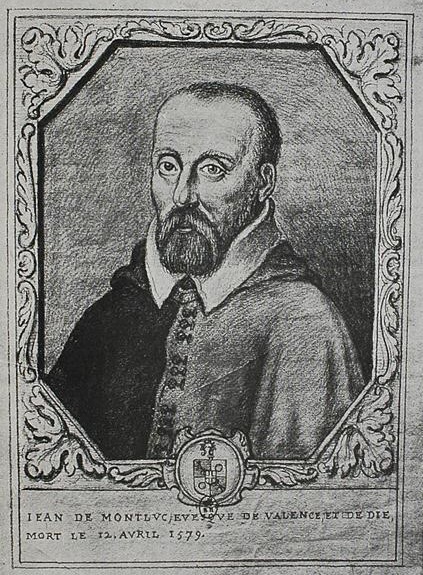
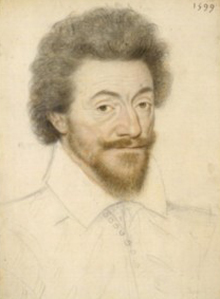
The Bishop also had an illegitimate son, who followed in his uncle’s footsteps to become a military commander. Jean de Monluc, Seigneur de Balagny, was a commander for the Catholic League in the north of France, and when he agreed to come to terms with King Henri IV, the King rewarded him with the rank of Marshal of France, 1594, and an appointment as governor of the city of Cambray. This city recently occupied by the French held the rank of prince-archbishopric, so Maréchal de Balagny took the unprecedented title ‘Prince of Cambray’. This meant the Monluc family now held two principalities! This presumption, and his heavy-handed government, led the citizens of Cambray to revolt and aided the Spanish in driving out the French by 1595—it would remain in Spanish hands until definitively attached to France in 1678. Balagny continued to integrate himself into the King’s inner circle by taking as his wife Diane d’Estrées, the older sister of the King’s mistress Gabrielle. He died in 1603 and left descendants, titled Marquis de Balagny (based on the lordship in Beauvasis, north of Paris), who died out later in the century.
Blaise de Monluc also had sons. Most of them predeceased him in various battles—one, Pierre-Bertrand, in attempting to take French troops to Congo, Mozambique or Malindi on the east coast of Africa to set up a trading post. Stopping first at Madeira, he briefly took it over, but was killed when the Portuguese, fearing French incursions into their sphere of trade, retook the island in 1568. The youngest son, Fabien, had been willed the principality of Chabanais by his uncle the Bishop of Valence, but was killed in 1573 while serving as governor of the fortress of Pignerolo in Piedmont.
It was this Fabien who had married Anne, Dame de Montesquiou, which led their son Adrien to put forward the idea that the Lasseran de Massencome de Monluc family was in fact already related to this more prestigious Gascon family. He published a genealogy in the 1620s with the aim to secure his eligibility to be appointed to the highest royal orders (St-Michel and St-Esprit). According to the royal genealogist Père Anselme writing later in the century, Adrien had been nominated to receive the St-Esprit in 1613, but for some reason did not receive it, and by the 1630s, had fallen out with Cardinal Richelieu and was sent to the Bastille, accused of plotting a coup. Earlier in his life he had been a favourite of King Henri IV, a fellow Gascon, one of the court gallants of this very randy court known as ‘les Intrépides’ or ‘les Dangereux’. Back in 1592, he had married very well, to Jeanne de Foix-Carmain, heiress of a very valuable property in the Lauragais, the grain-basket of Languedoc, the county of Carmain (today spelled Caraman). He was also named governor of the county of Foix, at the time still fairly independent from the Kingdom of France.
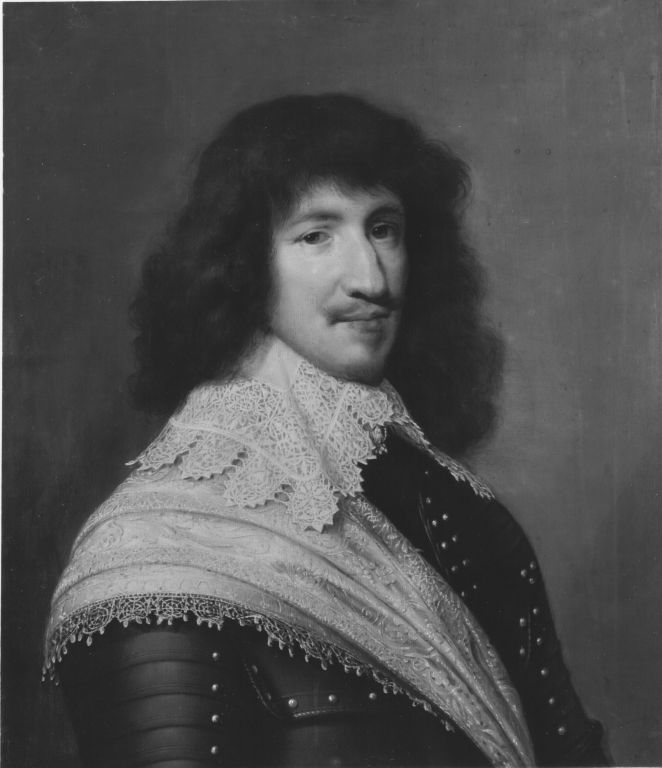
Carmain (or Carmaing) had long been a prominent lordship, on the road between Toulouse and Béziers, elevated to a viscounty for the Lautrec family in 1310, then to a county for the Foix in the 1480s. It would pass to Adrien’s daughter who used the illustrious styling Jeanne de Montluc de Foix, Comtesse de Carmain, Princesse de Chabanais, Dame de Montesquiou. In 1612, her father had arranged her marriage to Charles d’Escoubleau, Marquis de Sourdis, from a family on the rise in the west of France, notably through Charles’ brother François, the warrior Cardinal-Archbishop of Bordeaux, and they inherited all of these territories. Carmain, however, was sold in 1670 to Pierre-Paul Riquet, from Béziers, who built the famous Canal du Midi. His descendants ultimately inherited the Principality of Chimay in 1804, and are now one of the leading families of the Belgian nobility as princes of Chimay and dukes of Caraman.
So, while the barony of Montesquiou had passed out of the family’s possession, the junior branch was based in the lordship of Marsan. Its château was built by the Montesquious in the twelfth century in the town of that name, northeast of the regional capital of Auch. Damaged across centuries of conflict with the counts of Armagnac or the archbishops of Auch, the family rebuilt it entirely as a more grandiose country house in the 1750s in a neoclassical style. In 1906 it was given by the now senior branch to another junior branch, whose descendants still live there.
In the 1480s, the House of Montesquiou-Marsan divided again into several more sub-lineages: Marsan for the eldest, then Salles (in the Lauragais), and others. We will return later to the line of Marsan, which includes the ducal line, and focus first on the line of Salles, which became the line of d’Artagnan in the 1540s when Jacquette d’Estaing, Dame d’Artagnan (daughter of a wonderfully named Sauvage d’Artagnan), willed her estates to her husband, Paul de Montesquiou, Seigneur de Salles, an equerry to Henri II d’Albret, king of Navarre. This lordship thus passed to his son from a second marriage.
The lordship of Artagnan was even further south, in the County of Bigorre, one of the semi-independent counties in the Pyrenees that were only fully brought under control of the French monarchy in the seventeenth century. Known as Artanhan in Occitan, it took its name possibly from an ancient Gaulish word for bear, artos, which formed a personal name Artanius. It doesn’t seem to have had a castle, though I’ve found some old postcards showing a house in Artagnan claiming the famous Musketeer was born here, probably because the character in Dumas’ novel comes from Tarbes, which is nearby, whereas the real d’Artagnan was likely born in the château of Castelmore (see below).
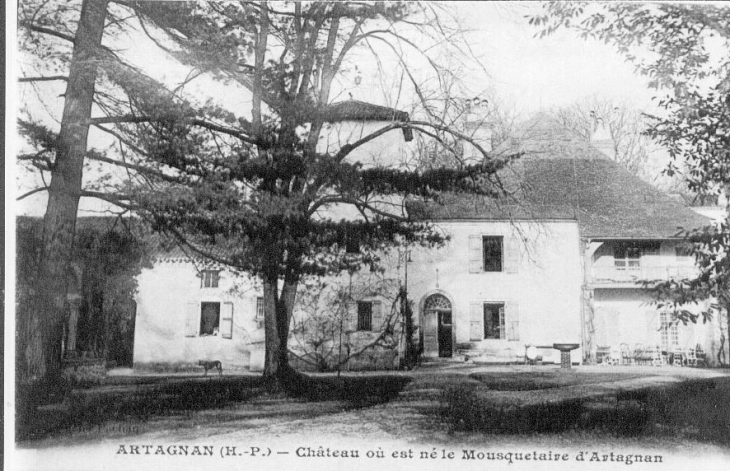
One of the lordships in this wild and remote region of Bigorre that claimed to be a ‘free lordship’, with no feudal overlord at all (much like we can see with the ‘principality’ of Bidache for the Gramont family) was Tarasteix, acquired by Henri de Montesquou d’Artagnan in 1664. He had been appointed royal governor of the Château of Montaner in Béarn in 1630 and the King’s Lieutenant in the city of Bayonne. More importantly in terms of his family’s rise to prominence, he had married the sister of the Marshal de Gassion, one of the leading French commanders of the 1630s-40s. It was probably Gassion who supported the early career of Henri’s sister’s son, Charles de Batz de Castelmore.
The Batz family were merchants in one of the towns near Auch, Lupiac, and Charles de Batz’s grandfather was ennobled for holding an office in the local magistracy and bought a nearby château called Castelmore in order for his family to ‘live nobly’ (which was in itself one of the qualifications for being noble in the early seventeenth century). The château was only recently constructed, not a medieval fortress, and it remains mostly unaltered today, still in private hands (though reports suggest it has recently been sold to owners who want to open it up for Three Musketeers tourism).
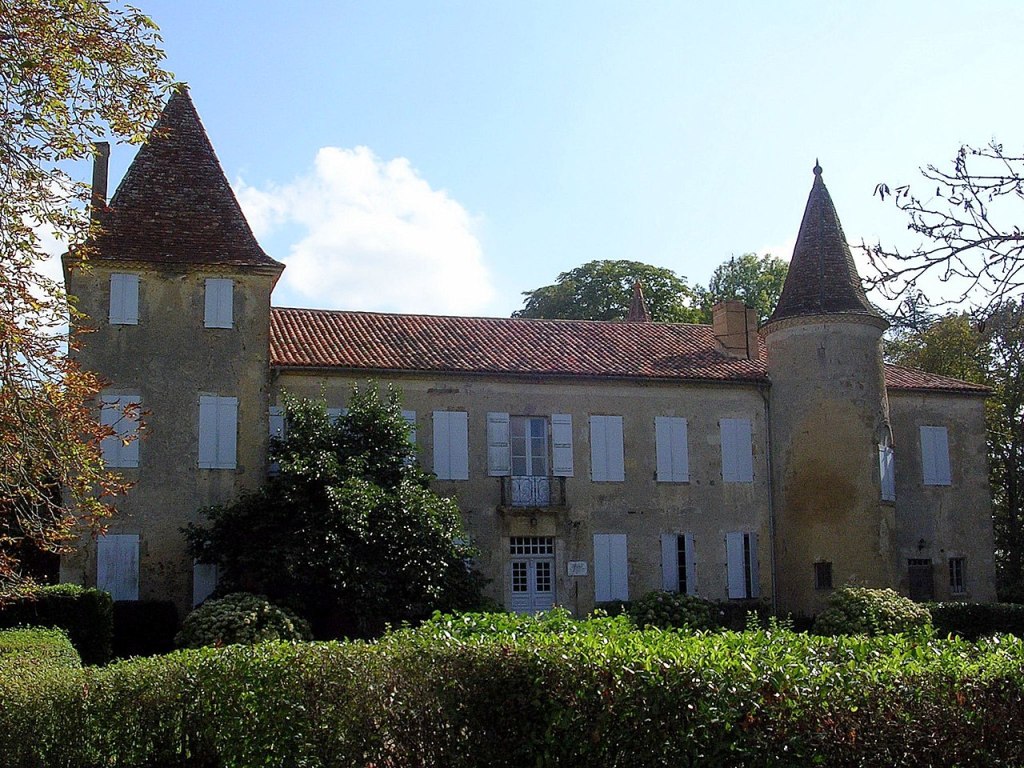
In about 1630, young Charles travelled to Paris using his mother’s name and her connections—his older brother Paul was already serving in the Musketeers there, alongside three other Gascon noblemen whose names sound suspiciously like Athos, Porthos and Aramis. The newly minted d’Artagnan joined the Musketeers, the elite unit of the French Guards formed as part of the royal household in the 1620s which fought in the various military campaigns of the 1630s-40s. He then shifted his focus to acting as a secret agent and diplomat for Cardinal Mazarin (for whom he also served as one of the gentlemen of his household), until his Musketeer regiment was re-formed in the late 1650s. D’Artagnan lived in a house in Paris on rue du Bac, in the fashionable faubourg Saint-Germain, immersed himself in the world of the literary salons there, and became increasingly attached to the young Louis XIV, with whom he travelled through Gascony on his way to the Spanish border to meet his new wife, the Infanta Maria Teresa. The King thus gave this trusted soldier the task of arresting Nicolas Fouquet, suspected of government embezzling on a spectacular scale, and of personally guarding him for the several years of the trial of the century. In 1667, d’Artagnan (now sometimes using the title ‘count’) was named Captain-Lieutenant of the First Company of Musketeers, which meant he was its real commander, since the nominal captain was the King himself. He was appointed governor of the newly captured city of Lille in 1672, but was pulled away to attend the King during the siege of Maastricht, where, as we have seen, he was killed. His life inspired a novel by Gatien de Courtilz de Sandras, published in 1700, which was then used by Dumas to write his novels in the 1840s.
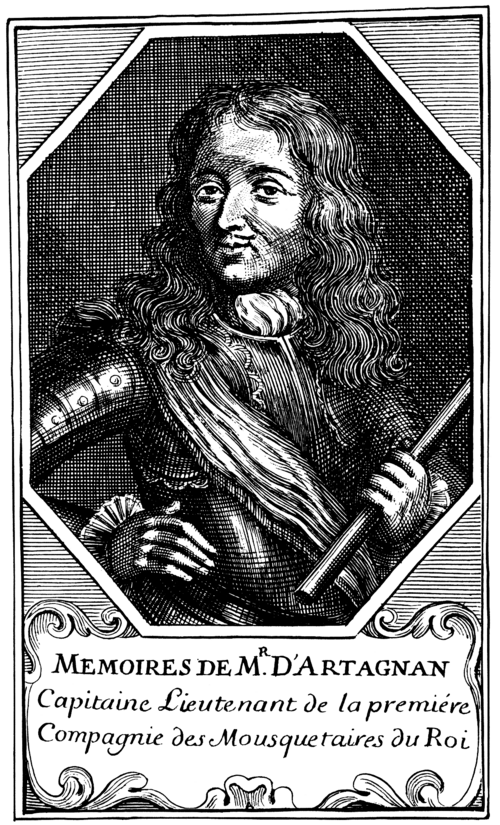
The name d’Artagnan was kept in the public eye by the famous Musketeer’s first cousin, Joseph de Montesquiou, Comte d’Artagnan, who became a Musketeer in 1669, then rose through the ranks until he too was Captain-Lieutenant of the First Company in 1702, and led his brigade in various campaigns of the War of the Spanish Succession. After the war he was appointed governor of the southern city of Nîmes in 1719, and died a decade later.
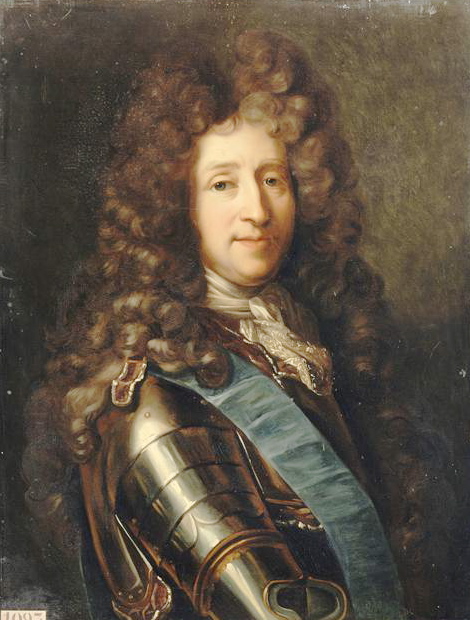
An even more prominent career was forged by another first cousin, Pierre de Montesquiou d’Artagnan, who was sent to Paris to be looked after by d’Artagnan in 1660 and was established in the King’s household as a page, then joined the Musketeers in 1666. He too rose through the ranks of the Guards to become a Maréchal de camp in 1691, and was named governor of the city of Arras and lieutenant-general of the surrounding province, Artois—French since the 1660s, but still a sensitive frontier zone during the Nine Years War. When at court, Pierre was close to the King’s second wife, Madame de Maintenon, and the King’s favourite son, the Duke of Maine. When the next war broke out (the Spanish Succession), his closeness to this inner royal circle led the King to entrust him with the mission of guiding his grandson, the Duke of Burgundy, in his first command, leading French armies into Flanders. In 1709, Montesquiou commanded one wing of the infantry at the Battle of Malplaquet and shortly afterwards was named a Marshal of France, the highest rank in the military—he was known, possibly to honour his famous cousin, as the Marshal d’Artagnan. During the disastrous winter of 1710, when everything froze and France was brought to its knees, he was left in the field guarding the Flanders frontier against potential invasion by the Allies. After the war, he was given the prestigious post of Governor of Brittany, 1716-20, and was appointed as a member of the Regency Council, 1721, which ran the Kingdom on behalf of the young Louis XV. The Marshal retired with full honours and died at his country estate in the southern suburbs of Paris, Le Plessis-Picquet.
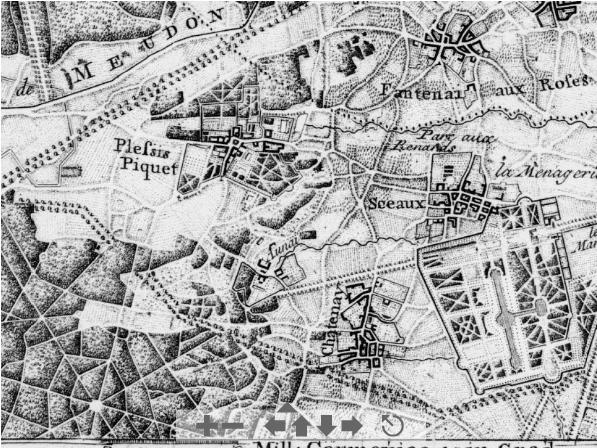
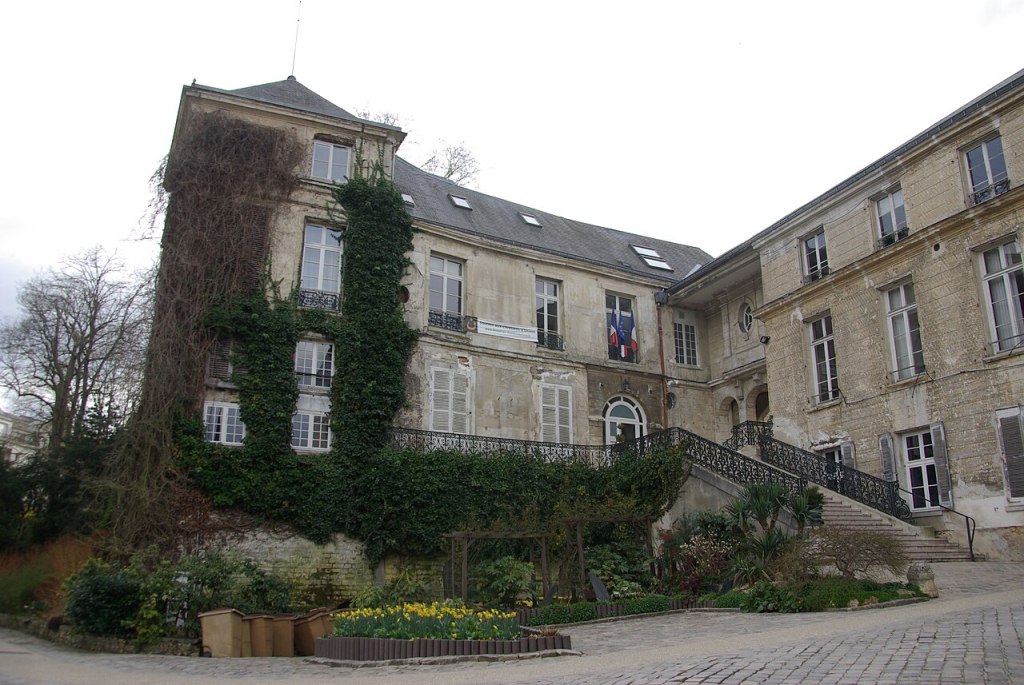
Le Plessis-Picquet had been built in 1410 by a Parisian financier and counsellor of Charles VI, Jean Picquet. It passed through the hands of various Parisian magistrate and parliamentary families, notably the Potier (a senior family of the Paris Parlement), until it was acquired by Jean-Baptiste Colbert, Louis XIV’s first minister—it was conveniently located between Colbert’s estate at Sceaux and the estate of Meudon, soon to be the residence of the Dauphin. When Pierre de Montesquiou acquired it in 1699, it was thus in the heart of the royal suburbs, a short drive to Versailles, and made it easy to socialise with his friends the Duke and Duchess of Maine who had established their court and salon at Sceaux. Montesquiou’s heirs would sell the château in 1755, and it passed through many more hands—including briefly to the Duke of Massa, one of Napoleon’s dukes, 1814-17—until it became the home of the Hachette family of Parisian publishers from 1853 (and took the name Château de Hachette). They sold it in 1915 to a government agency, and today it serves as the Hôtel de Ville for the town of Le Plessis-Robinson. When I lived in Paris, I had to follow the signs for ‘Robinson’ every day as I headed home on the RER B, and I always thought it such a strange name for a French town.
An even more oddly named estate had been acquired by Joseph de Montesquiou d’Artagnan: Mauperthuis, from malus, ‘bad’ and pertusium, ‘passage’. This estate in Brie, the region to the east of Paris, was in fact rich agricultural land, and brought the next generation great wealth. Joseph never married and had no sons, but he had five nephews, who also inherited lands from their uncle the Marshal d’Artagnan (who also had no surviving sons). All five forged advanced careers in the French military, including two in the Musketeers. One of these, Louis, Comte de Montesquiou, nearly added a third princely title to the family’s collection, by marriage in 1713 to Louise-Alphonse de Berghes, Princesse de Râches (an estate in Flanders that had been genuinely elevated into a principality by the King of Spain before this territory was lost to France in the 1670s). Soon after she died, heavily pregnant, she willed the principality to her husband, but the courts overruled this and returned it to her paternal heirs. Louis became Sub-Lieutenant of the First Company of Musketeers in 1729 and died in 1743. His brother’s son, Anne-Pierre, thus inherited all of the family properties of this branch of the family (the younger or d’Artagnan branch).
Anne-Pierre was raised as a menin or companion to the royal children of France, but unlike them, he embraced more of the teachings of the Enlightenment and became affiliated with a group called the Physiocrats who believed that wealth did not come from trade but from improving the land—when he inherited Mauperthuis, he built a grand new château there in the 1760s, and used the rich lands to develop new agricultural methods, and bred a new strain of merino sheep. A park was also laid out along newly fashionable English garden lines and became a renowned place to visit for a drive from the capital into the country—indeed, it was not far from Le Raincy, the country residence of the Duke of Orléans, who shared many of Montesquiou’s enlightened ideas, and they would be allies in the revolutionary period to come. Nevertheless, the château of Mauperthuis would be seized by revolutionary authorities in 1793 and destroyed. The park was eventually recovered by the family then sold in 1817.
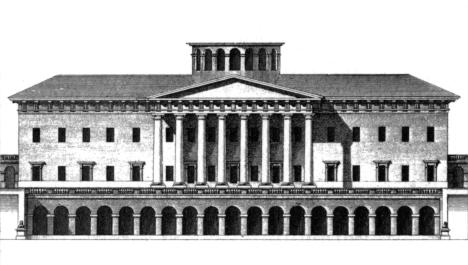
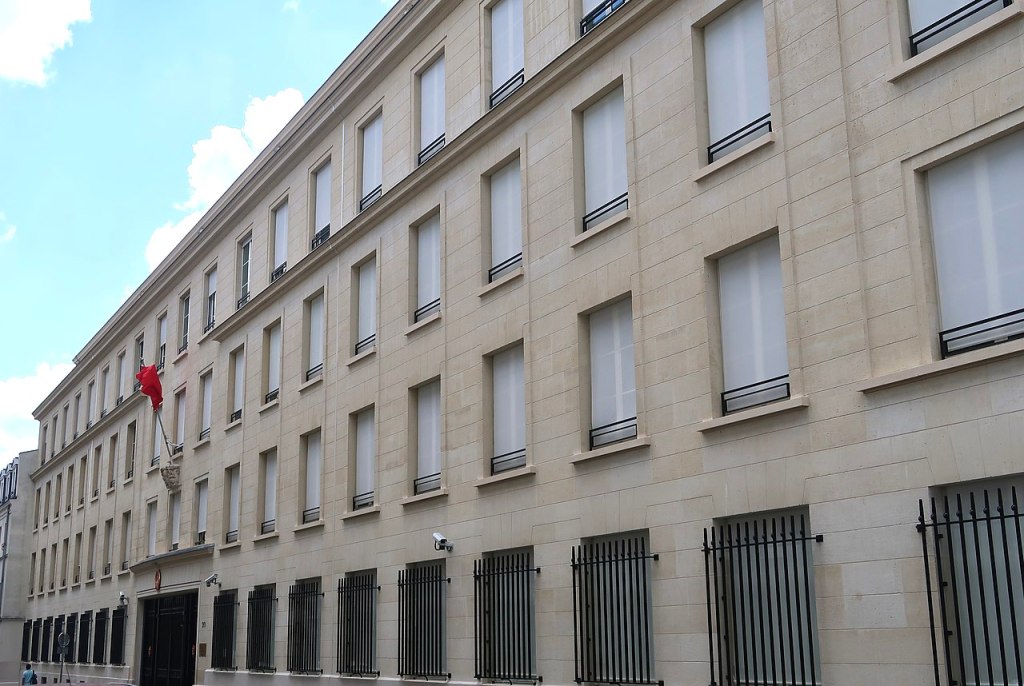
Anne-Pierre took the title Marquis de Montesquiou and would be formally authorised to add the name Fezensac by Louis XVI in 1777. Interestingly, his mother’s dowry had included the original lordship of Montesquiou, bought by her father from its heirs. Like all men in his family, he joined the army and rose through the ranks in the 1750s-60s, and was appointed Premier Equerry of the Count of Provence (Monsieur), Louis XVI’s younger brother. Both men enjoyed reading and patronising the arts, and the Marquis became part of the Prince’s inner circle, more elevated and literate than the court of Versailles, and more focused on Paris. Here he built a residence on the rue de Monsieur (not far from the Invalides, and near his workplace of Provence’s stables), the Hôtel de Montesquiou, in 1781. After 1851, it housed a Benedictine convent, and from 1938 was used by the French state for offices (and they built a very modern façade that obscures the building from the street), notably, between 1959 and 1999 the Ministry of Cooperation, an agency set up to maintain good relations with France’s former colonies. Since 2012, the hôtel has housed the Embassy of China.
The Marquis de Montesquiou-Fezensac published verse and comedies which earned him a seat in the Académie française in 1784, and he was eager to act as a deputy for Second Estate (the nobility) for the Paris district at the Estates General of 1789. Here he swiftly joined the Third Estate to form the National Assembly in June, along with his ally the Duke of Orléans, and would later be appointed President of the Constituent Assembly, as that body became by 1791. His family’s military reputation and his own successful career made him a good choice to lead the newly created Army of the South in the summer of 1792, and he conquered Savoy for the new French Republic in September, then was instructed to invade Geneva. Rather than use force, he chose to negotiate with the magistrates of the city—perhaps respecting it as the land of Rousseau and Necker?—for which he was accused of treason in November. He fled abroad, and although he returned in 1795, kept his head down and died a few years later.
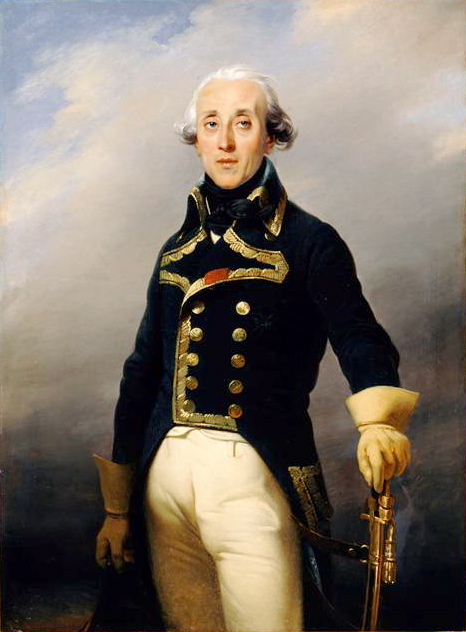
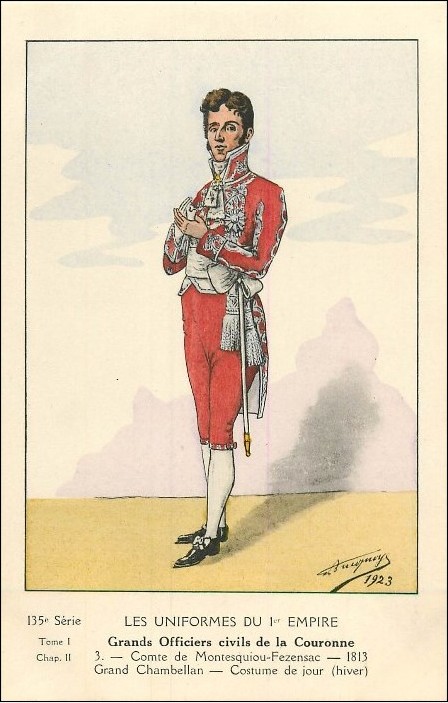
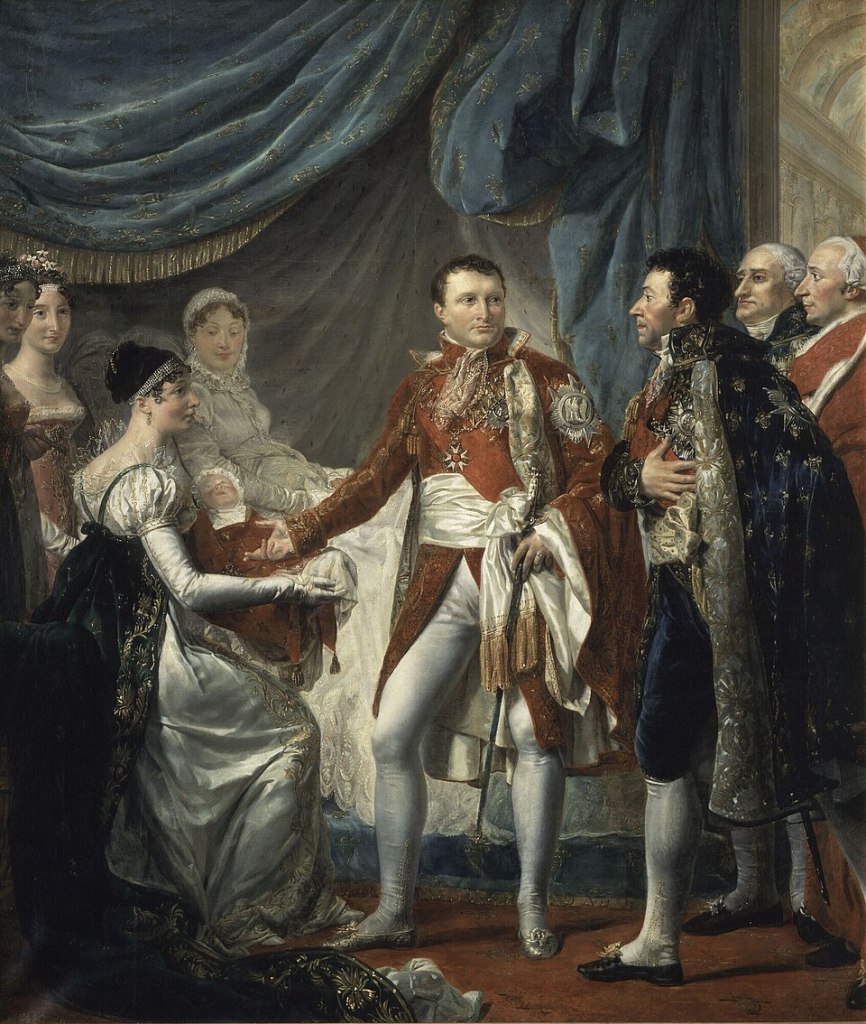
His sons however would continue their father’s legacy of support for the Revolution. Both had been set up at a young age to continue in royal services in the households of the King’s brothers, Provence and Artois, but both rallied to the cause of Napoleon and the proclamation of the Empire of the French in 1804. The elder, Pierre, was appointed Grand Chamberlain of the Imperial court in 1809, and was President of the Legislative Corps in 1810-13. He received a new imperial title, Count of the Empire, in 1810. His intimacy with the imperial court was strengthened further when his wife was appointed Governess of the king of Rome, Napoleon’s son, in 1811. Louise-Charlotte Le Tellier de Courtanvaux, known by her charge as ‘Maman Quiou’, also brought to the marriage another large château, Courtanvaux.
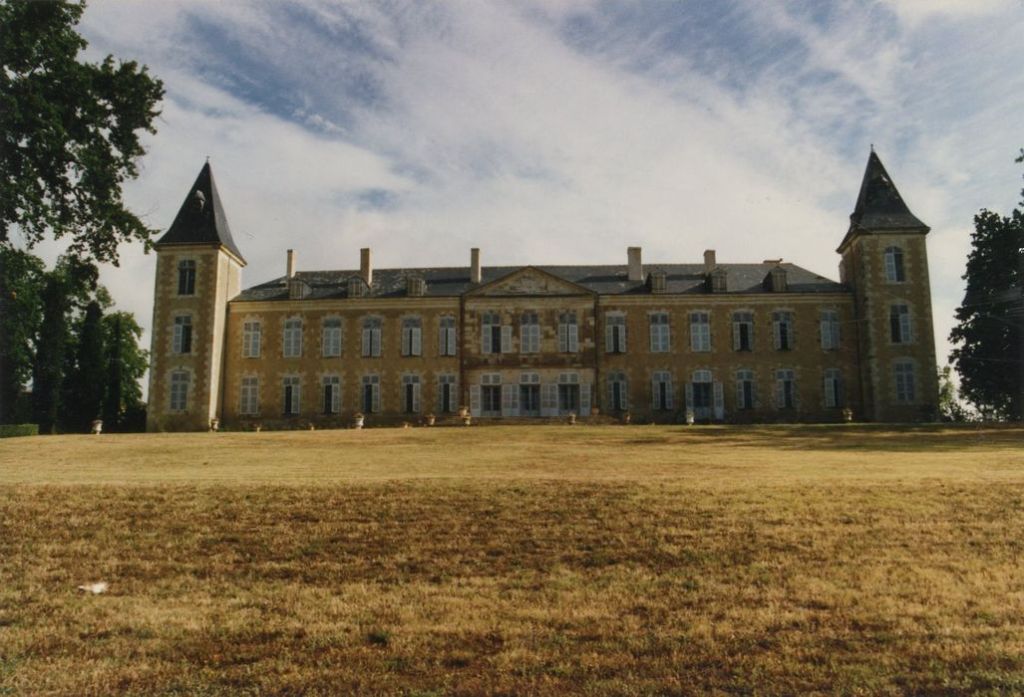
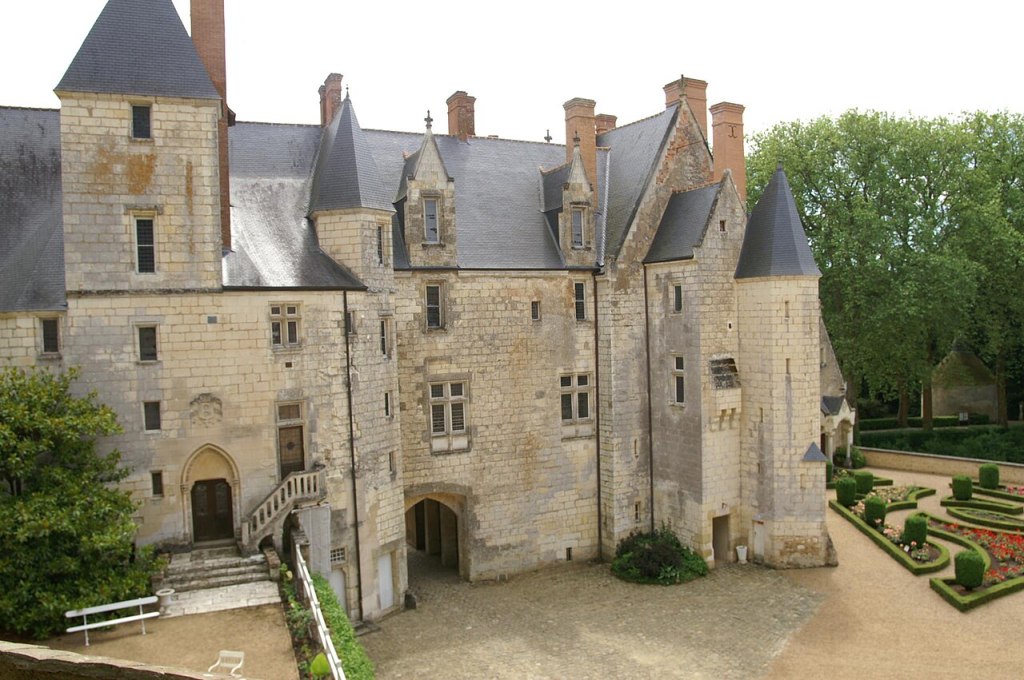
The Château de Courtanvaux is one of France’s great country houses. Built in the province of Maine (between Normandy and the Loire valley) in the fourteenth century, it was renovated in the fifteenth century and retains much of this characteristic high gothic style. The powerful Souvré family held it from 1500, known for the Marshal de Souvré, companion of Henry IV and preceptor for his son, Louis XIII. Now a marquisate, the estate and château passed by marriage to the Le Tellier family in 1661, but no one lived there for over a century until it was re-occupied and restored by Pierre and Louise-Charlotte de Montesquiou after the fall of Napoleon in 1815. Courtanvaux remained the family’s principal seat throughout the nineteenth and twentieth centuries, until it was sold by Aymeri de Montesquiou (below) in 1978. It is now owned by the local town and opened up for visitors.
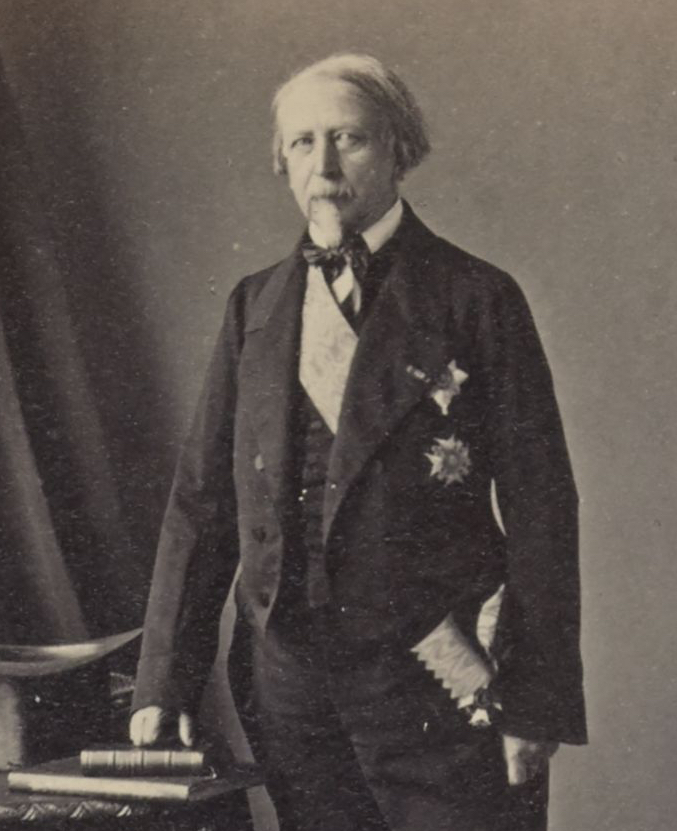
Pierre’s son Anatole was an ardent Bonapartist, a soldier in many of the Emperor’s campaigns and his aide-de-camp from 1813, and went into exile in 1815. He was reconciled with the new regime in 1816 and appointed aide-de-camp of the Duke of Orléans (and his wife appointed dame d’honneur of the Duchess), so when that Duke became King Louis-Philippe in 1830, Anatole de Montesquiou became an ardent supporter of Orléanism. Louis-Philippe gave him a seat in the Chamber of Peers in 1841, and elevated his military rank to general in 1848…but in that same year the Orléans Monarchy fell and Montesquiou went into exile once more. He did return in the 1850s and devoted himself to local politics in the area around Courtanvaux, and in the 1860s was a director of the Société de Secours aux Blessés Militaires, the organisation that would eventually become the French Red Cross.
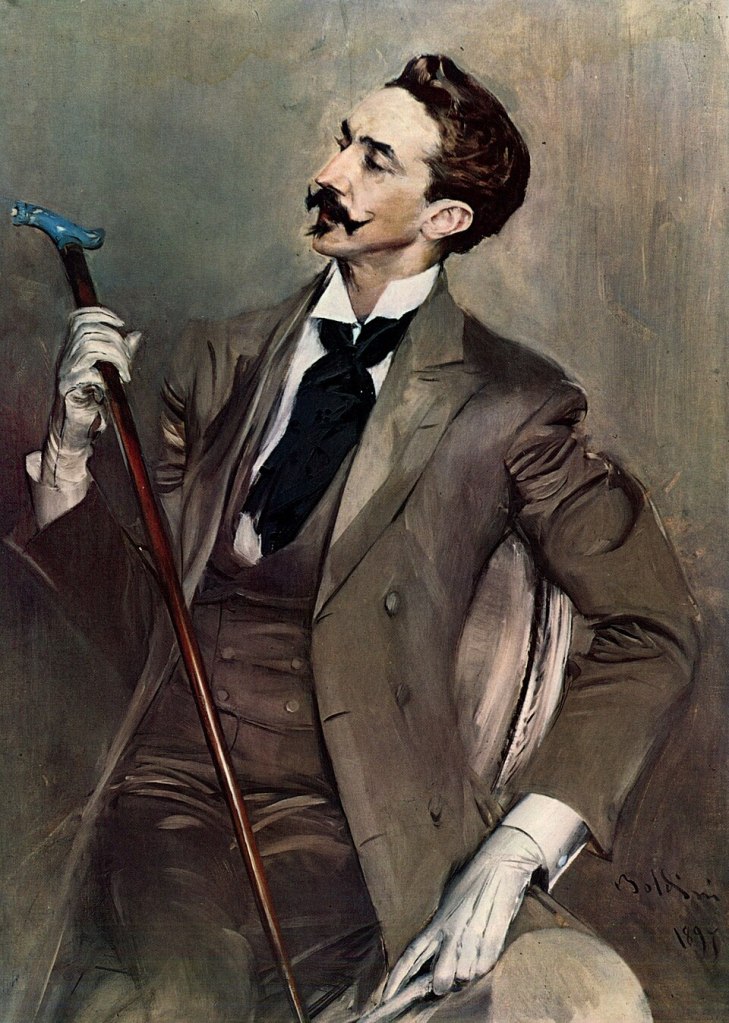
Of the many descendants of this branch of the Montesquiou family in the nineteenth and twentieth centuries, two stand out. Count Robert de Montesquiou (d. 1921) was a well-known dandy of the Belle Epoque: a poet and literary critic, he was a supporter of the Avant-Garde at his Hôtel de Montesquiou-Fezensac (not to be confused with the nearby Hôtel de Montesquiou, which today houses a Chinese cultural centre), where he lived fairly openly with his companion, the Argentinian Gabriel d’Yturri. Both men are cited as models for one of the more outrageous characters immortalised by Proust.
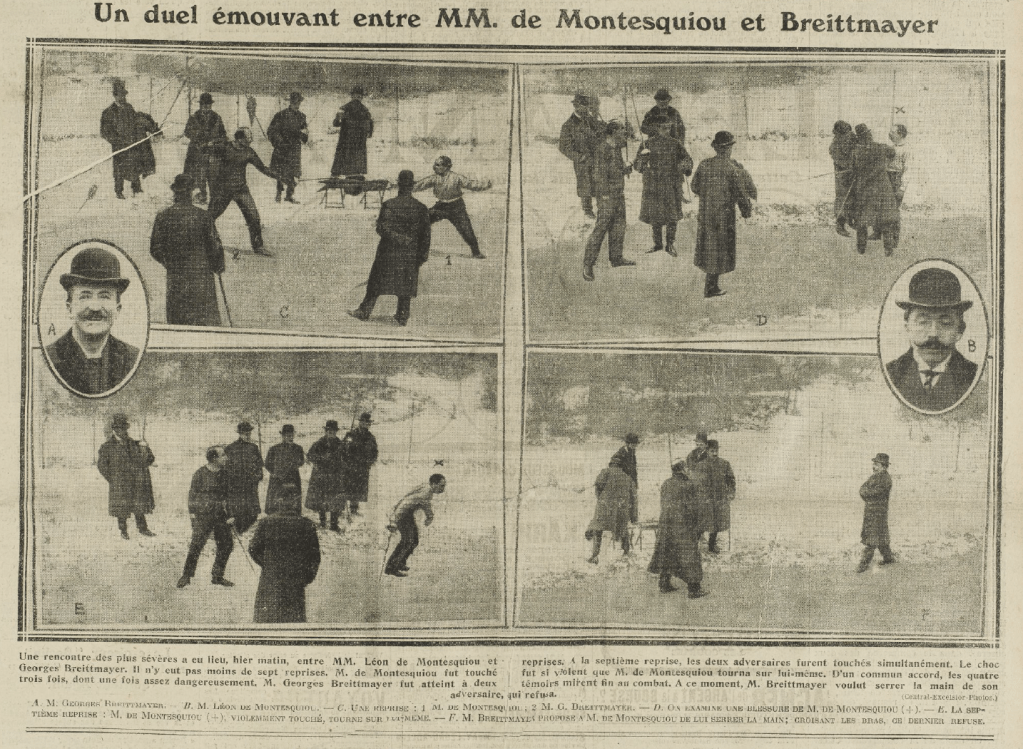
In the next generation, Count Léon de Montesquiou was at first a historian, writing a doctoral dissertation on the suppression of the noble duel, then from 1900 a leading member of the far-right nationalist and royalist party, Action Française. Vocally opposed to the government that had overturned the Dreyfus judgment in 1906, his comments calling for violent overthrow caused him to be removed from his post in the army reserve. Perhaps ironically, and in the spirit of the Musketeers, he was involved in a duel with a political opponent in November 1911. When war broke out, Montesquiou was re-integrated into the army and was killed in combat in September 1915.
The senior line, who used the title Marquis de Montesquiou-Fezensac for the head (and count for younger sons), continue to the present and will be looked at again once they take up the title ‘Duke of Fezensac’ after 1913. But first we need to see where this ducal title came from, and for that we need to go all the way back to the senior line of the House of Montesquiou, the lords of Marsan.
As we’ve seen, this line split from the line of d’Artagnan in the 1480s. There is not much remarkable to note about this branch in the next two centuries. Marc-Antoine was the first to adopt a higher title, Comte de Montesquiou-Marsan, and became a Captain in the French Navy in the mid-eighteenth century. The family’s rise in society is signalled by his marriage in 1752 to Françoise-Catherine de Narbonne-Lara, whose brothers were prominent at the court of Louis XV, and whose sister-in-law was one of the King’s favoured mistresses (and whose son, possibly the King’s, was briefly Minister of War under Louis XVI). Marc-Antoine’s eldest son Philippe rose to the rank of Maréchal de Camp in 1791, and eventually Lieutenant-General at the Restoration in 1814.
It was his younger brother, François-Xavier-Marc-Antoine, who brought the family—remember, one of the oldest in all of France—to the premier rank in 1821. But unlike most dukes, he was not a soldier, but a churchman. The Abbé de Montesquiou was two times over abbot of Beaulieu: one near Langres from 1782, and one near Le Mans from 1786. In 1785, he was appointed one of two agents-general of the clergy, an administrative role at the top of the French Church hierarchy (so we can assume he was headed for appointment as a bishop). He was then selected to represent the First Estate for the Paris district at the Estates General, and unlike his distant cousin noted above, he did not at first agree to join the Third Estate to form the National Assembly. He eventually came around and was elected several times to act as that body’s president, for monthly terms in 1790 and 1791. He remained conservative however, and opposed the adoption of the Civil Constitution of the Clergy (making it a strictly French Church, severing dependency on Rome) in July 1790. When things got hot after the popular attack on the Tuileries Palace in August 1792, he fled abroad, first to England, then to the United States. His journeys there were later recorded and published. The Abbé returned to France in 1795 after the end of the Terror, and acted as a royalist agent for the titular king in exile, Louis XVIII. As a reward, he was part of the provisional government set up in April 1814 before the return of the King, and he urged Louis not to accept a constitution from the Senate—reaffirming the old idea that kings grant rights to the people, not the other way round. He was appointed Minister of the Interior, and began to reform the nation’s education system, but was run out with the King in the Hundred Days in 1815. When the monarchy was restored for the second time, Montesquiou retained the title of Minister of State.
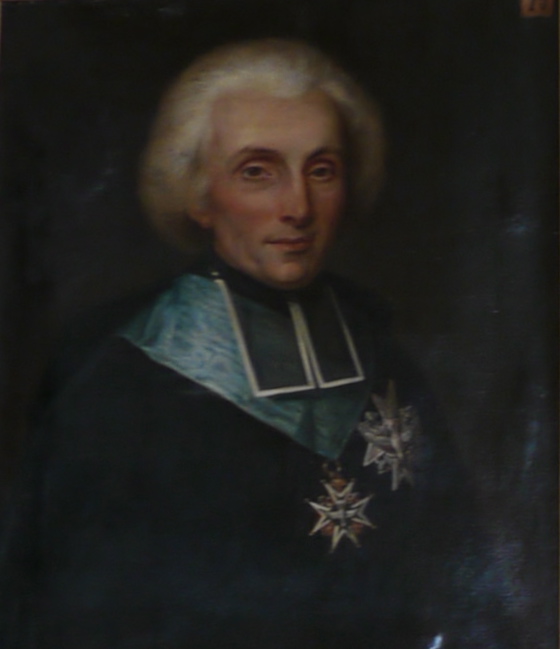
The Abbé de Montesquiou was a member of the Académie française from 1816, and appointed to the Chamber of Peers as Count of Montesquiou-Fezensac in 1817. This was then raised in rank to Duke of Fezensac (sometimes written Montesquiou-Fezensac) in 1821, though I’m not certain why: perhaps the fairly moderate Louis XVIII wished to keep him on side in the face of the increasingly conservative opposition led by his brother Artois, the future Charles X. When ultimately Charles X was toppled in 1830, the Duc de Fezensac at first remained in his seat in the Chamber of Peers under the new liberal regime, but resigned in 1832 and died soon after.
Before he died, the first Duke resigned his peerage to his nephew, Raymond. Initially not sharing his uncle’s fervent royalist views, he had joined the army in 1804, and served as aide-de-camp for Marshal Ney from 1806. In 1808 he married Henriette Clarke, daughter of Napoleon’s Minister of War, and in 1809 was created a baron of the Empire. He was appointed a general in 1813, and led campaigns in Germany and Bohemia. But despite these close Napoleonic ties, he did swiftly assimilate into the Restoration court, like so many nobles of the Old Regime, and was appointed a Major-General in the Royal Guard in 1815. In 1838, now as 2nd Duke of Fezensac, he represented King Louis-Philippe as Ambassador to Spain.
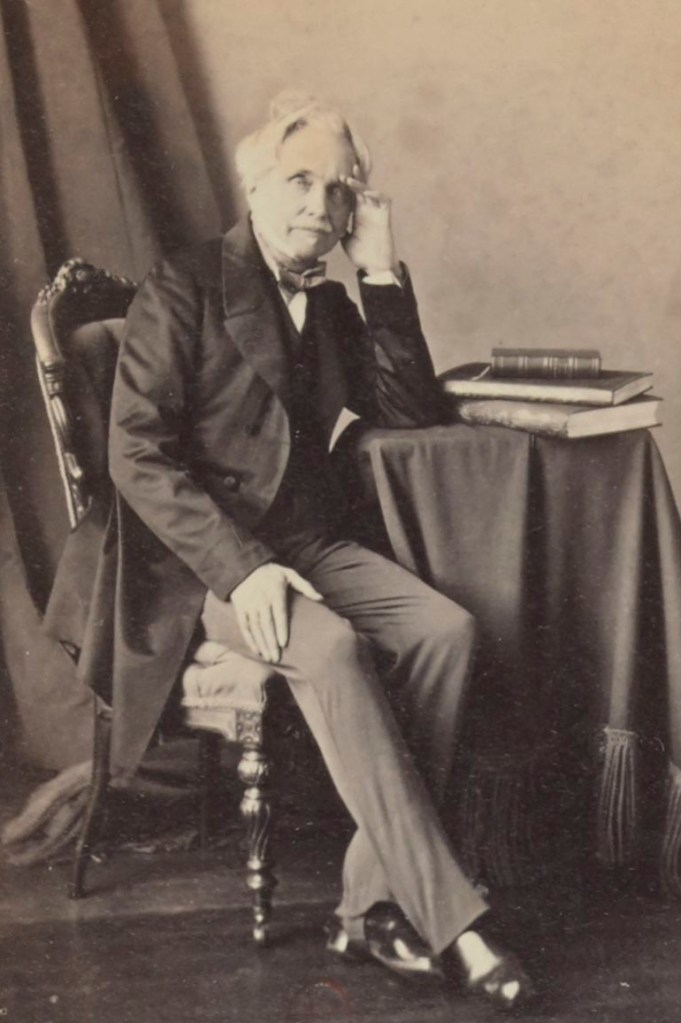
A generation is skipped since the 2nd Duke’s eldest son Roger-Aimery predeceased him, so in 1867 the title passed to his grandson, Philippe. Interestingly, another ducal title passed through this line, with Henriette Clarke, the 2nd Duchess, ultimately passing her father’s Napoleonic dukedom (Feltre) to one of her daughter’s sons. Philippe, 3rd Duke of Fezensac, was active in politics in the French Third Republic, representing the Department of the Gers in the Senate for a decade (1887-97) in support of the conservative monarchist faction. After his retirement, he became President of the exclusive Jockey Club of Paris, 1908 until his death in 1913. He had two daughters, but the dukedom expired with him.
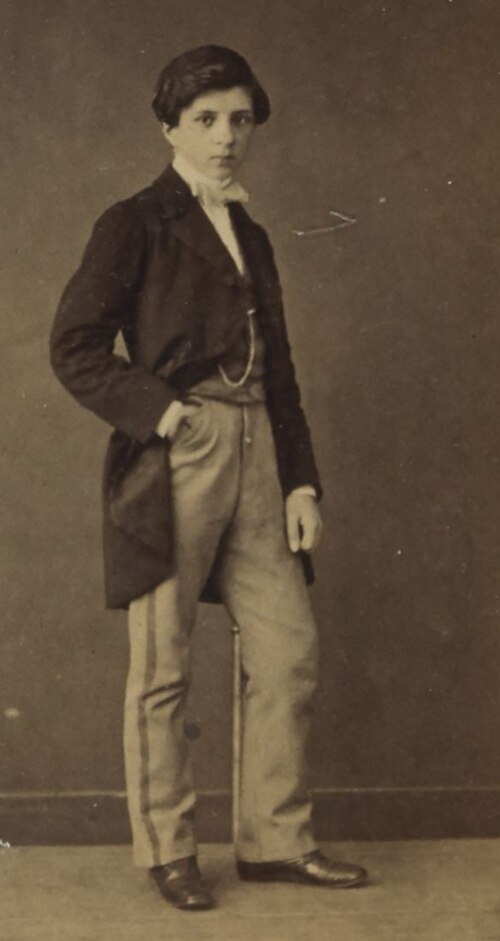
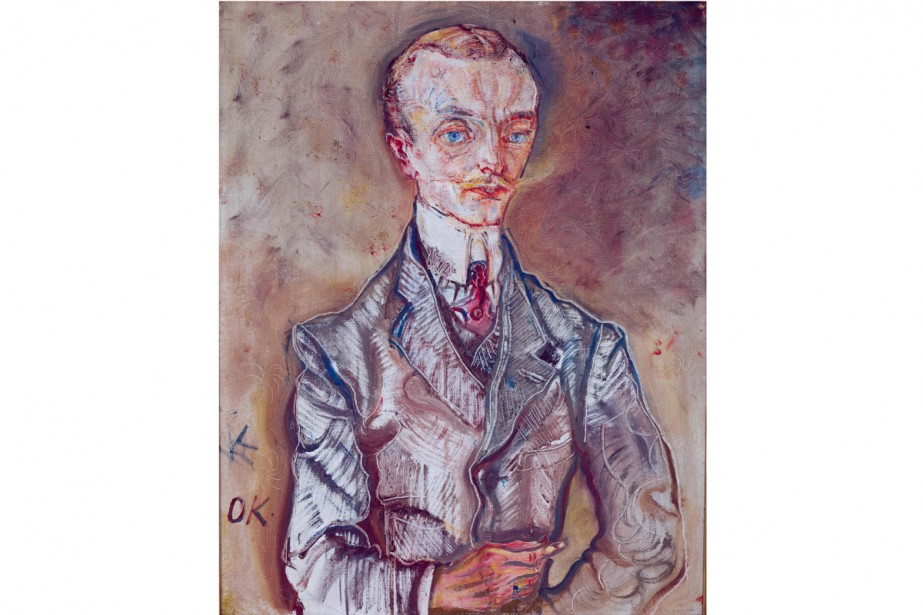
As noted above, before he died, the 3rd Duke donated several properties including the Château of Marsan in the ancient family heartland to a very distant cousin from the junior d’Artagnan line, Joseph, Marquis de Montesquiou-Fezensac, who assumed the title 4th Duke of Fezensac without any legal basis, since he wasn’t descended from the original grantee. Joseph and his wife Victoire Masséna de Rivoli were part of the avant-garde society of turn of the century Paris and were both painted by Expressionist painter Oskar Kokoschka.
Joseph was succeeded in 1939 by his son Pierre (‘5th Duke’) who took on various political roles in the Gers, including the post of mayor of Marsan, then served at the national level as a deputy from the Gers, 1958-76. Taking an interest in European politics, in the 1960s he was appointed to the Council of Europe and the Assembly of the Western European Union, where he presided over its liberal members. He inherited the Château of Courtanvaux in 1964, but also lived at Marsan until his death in 1976.
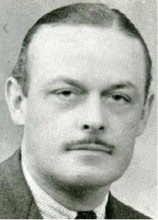
His son, Aymeri de Montesquiou (b. 1942), is considered to be the 6th Duke of Fezensac. He too has been for many years mayor of Marsan, where he resides, a deputy in the National Assembly and the European Parliament, and Senator for the Gers, 1998 to 2015. In the Senate, he sat as a Union Centriste (centre-right), but in 2015 his senatorial re-election was invalidated as he was accused of money laundering and trafficking influence with foreign agents, notably from Kazakhstan. Since 2012 he legally changed his name to Montesquiou-Fezensac d’Artagnan—and perhaps he can get a career re-launch with the renewed interest in his famous Musketeer ancestor buried in a church in far-off Maastricht.
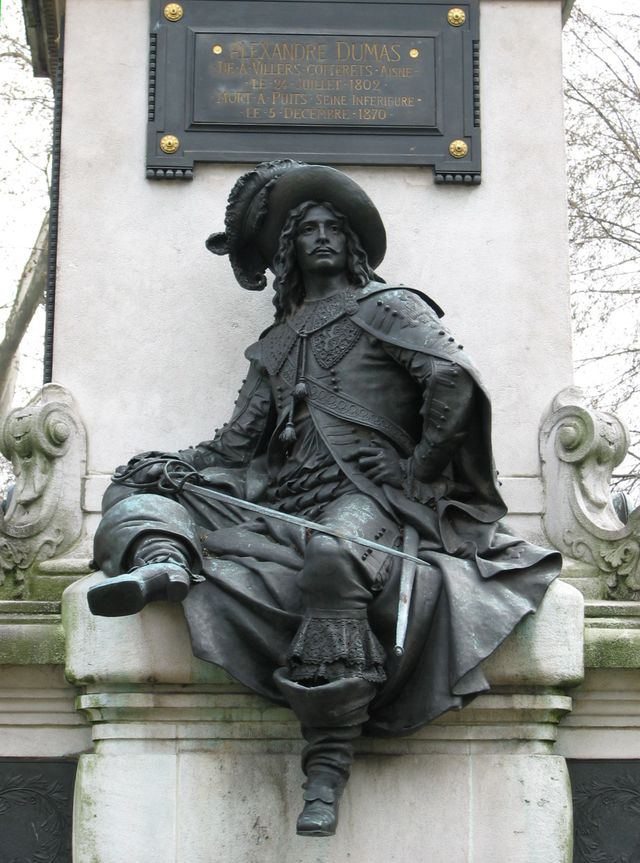
(images Wikimedia Commons)
 Dukes and Princes