Of all the grand aristocratic families with multiple titles and country houses in the United Kingdom today, one of the few who have also retained much of their ancestral lands is that of Montagu-Douglas-Scott. As their name suggests, this is actually three lineages joined together. The Scotts are an old Scottish clan from the Borders whose heiress married the illegitimate son of King Charles II in 1663 and founded the line of the dukes of Buccleuch, with a seat at Dalkeith House near Edinburgh; then by marrying a Douglas heiress in 1720, the family succeeded (eventually) to the title Duke of Queensberry, with another seat at Drumlanrig Castle in the Borders; and finally, another marriage in 1767 brought them the Montagu estate of Broughton House in Northamptonshire. The history of the Montagus, dukes of Montagu and of Manchester, has recently been told, and that of Douglas, one of the most powerful of all Scots noble houses, will certainly have a post of his own. So here we will focus on the Scotts of Buccleuch.
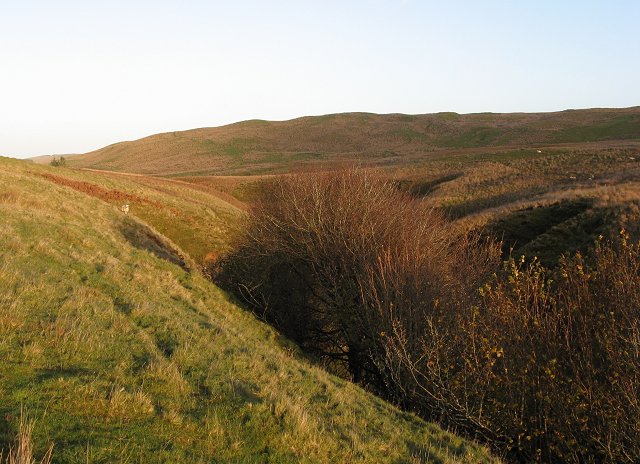
The surname Scott (Scotte, Scotus) traces back to the 1120s, but the first prominent member was Sir Richard Scott, Ranger of Ettrick Forest in the late 1200s. Ettrick Forest was one of the extensive forests controlled by the Scottish kings, this one just north of the border with England, in what is today called Selkirkshire. As Ranger, Sir Richard had access to property and acquired an estate on the Rankel Burn deep in the forest, upon which he built a new house called Buccleuch—pronounced ‘Buckloo’. The name describes a cleugh (gorge) above the burn in which a purported ancestor shot a mighty buck. There are remains of an old castle, now hidden beneath a nineteenth-century farmhouse, and a chapel and ruins of another fortified keep further up the hillside.
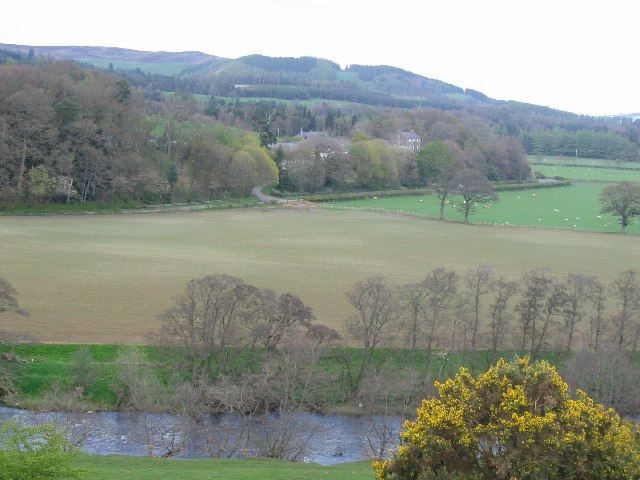
About the same time, Sir Richard acquired, by marriage to the heiress of the Murthock family of northern Lanarkshire (the upper Clyde valley), the barony of Murthockstone, which later became known as Murdostoun. The Scotts built a new castle here in the fifteenth century, above the South Calder Water. But it was soon exchanged for lands in the Borders with the Inglis family, who thereafter dominated this area southeast of Glasgow until they sold it in the late nineteenth century. Murdostoun Castle today houses a medical facility.
In about 1350, the family divided into two lines, the senior retaining Buccleuch and the junior, Scott of Synton (or Sinton, a village near Ashkirk in Selkirkshire), eventually becoming Lords Polwarth, inheriting the barony of Polwarth in Berwickshire in 1827 and taking the surname Hepburne-Scott, who continue to the present day, headed by the 11th Lord Polwarth (b. 1947).
Meanwhile, the senior line raised their profile by allying with the Stewarts in the Borders to suppress the Douglasses—and were rewarded with several of the Douglas properties. By the end of the fifteenth century, the Scotts were the most powerful of the border lords—though this was contested by Clan Kerr, in a long-running clan feud.
In the 1420s, the Scotts of Buccleuch acquired half of a barony in neighbouring Roxburghshire, Branxholme, overlooking the river Teviot near Hawick (an area called Upper Teviotdale). In 1446, by the above exchange with the Inglis family, they acquired the other half of the barony, and Branxholme became the new Scott family seat. The tower house here was burned in 1532 during a raid by the Earl of Northumberland, and again destroyed by the Earl of Essex in 1570. Such are the dangers of being a Border family… There is a more moderate house here today, built by Sir Walter Scott of Buccleuch in the 1570s, and remodelled in 1837 for the 5th Duke. The family still retains the property.
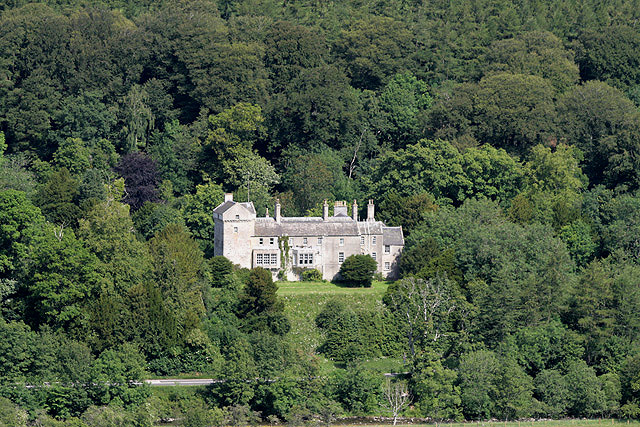
This Sir Walter Scott was the son of Sir Walter Scott (a common name in the family), Warden of Liddesdale and of the Middle March (the name for the frontier with England), until he was murdered in 1552 by the Kerrs. His grandson, another Walter, was Warden of the West March in 1590, famously led a cross-border raid to Carlisle in 1596 to rescue a fellow border reiver that almost caused a war with England (earning him the nickname ‘Bold Buccleuch’ and a number of poems and ballads), and was called to the Scottish Parliament in 1606 as Lord Scott of Buccleuch. Lord Walter helped James VI and I get involved in Dutch Protestant affairs against Catholic Spain without formally committing England and Scotland to war (leading a Scots-Dutch brigade), as did his son Walter who succeeded him in 1611. Because of this service, and likely because his mother and wife were both daughters of earls, this Walter was raised to the peerage to 1st Earl of Buccleuch in 1619. His son Francis succeeded as 2nd Earl of Buccleuch in 1633.
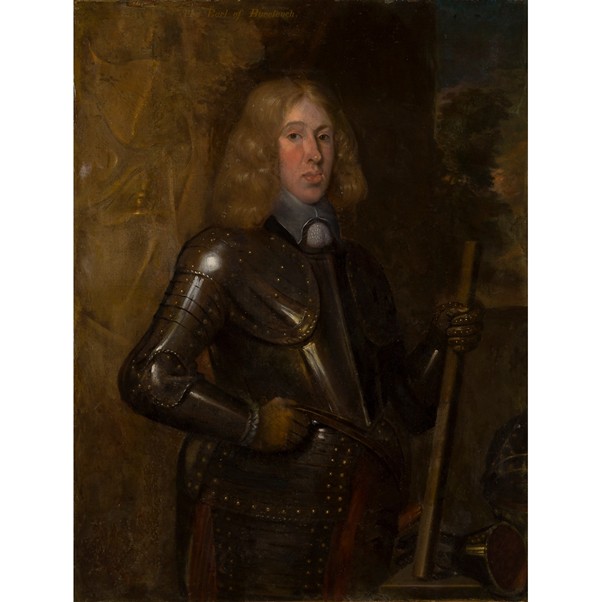
The 2nd Earl acquired a major new property, Dalkeith Palace, to give his family a seat closer to the capital, Edinburgh. The ‘wooded vale’ (dail cheith) of the River Esk, in the County of Midlothian, was guarded since the twelfth century by a castle built by Clan Graham, which passed by marriage in 1342 to Clan Douglas, in the branch of the earls of Morton (who also used the title, since the 1380s, Lord Dalkeith). The castle was the setting for numerous political visits, imprisonments and sieges in the sixteenth century, and was aggrandised (and rebranded as a ‘palace’) by the Earl of Morton who served as Regent of Scotland in the 1570s. It was a favoured residence of King James VI and Anne of Denmark, and their son Charles I when he came north for his Scottish coronation—he liked it so much he began the process of purchasing and enlarging it in 1637, but war intervened, and in 1642, the Douglasses sold it instead to the 2nd Earl of Buccleuch. It would be rebuilt entirely by the Dowager Duchess of Buccleuch (the 2nd Earl’s daughter), 1701-11, as a grand baroque palace, and continued to attract royal visits well into the next century, both George IV and Victoria preferring it to the dark and un-renovated Holyroodhouse. Dalkeith Palace (or Dalkeith House as it became known in the twentieth century) was vacated by the Buccleuch family after 1914, and by the 1970s was leased to a computer firm, and then from the mid-1980s to the University of Wisconsin who ran a study abroad centre here. Since 2021 the house has been reclaimed by the family’s Living Heritage Trust, which also runs the surrounding country park, and has begun hosting art exhibitions, perfect for a day out from nearby Edinburgh.
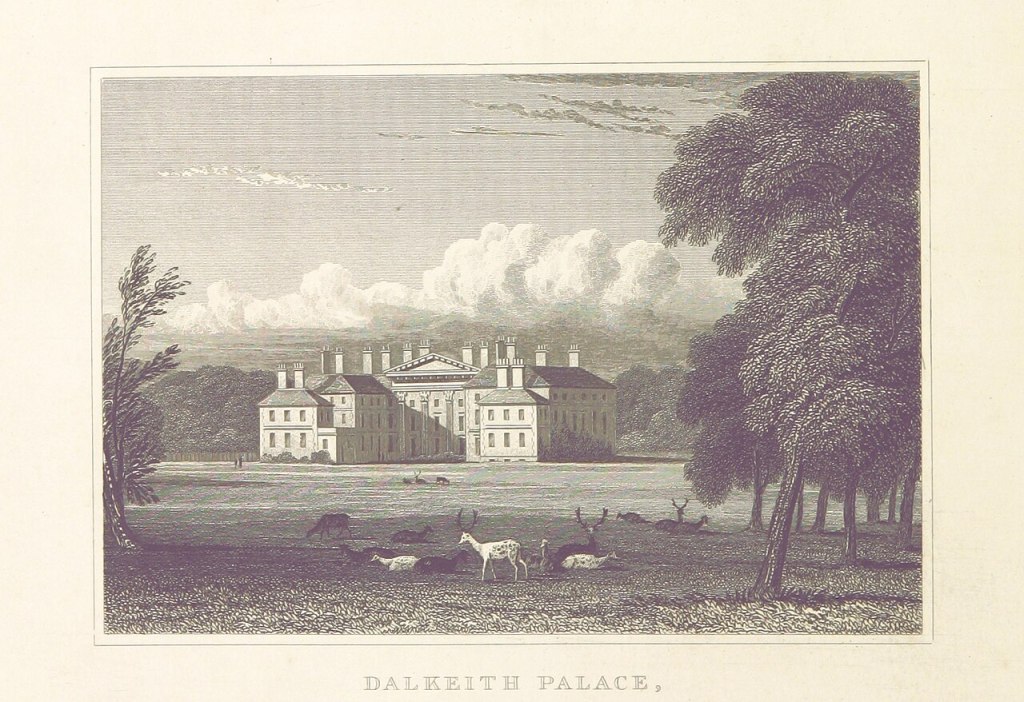
Returning to the seventeenth century, we see that the increasingly politicised 2nd Earl of Buccleuch was a Covenanter, leading a Scottish cavalry unit against the Royalists under Lord Montrose. He died in 1651, leaving two daughters: Mary, who became 3rd Countess of Buccleuch at age four, but died unmarried in 1661; and Anne, 4th Countess, who in 1663, married the Duke of Monmouth. At the time of their marriage, she was created—equally with him—Duchess of Buccleuch, so when he was executed and attainted in 1685, it did not affect her titles or those of her children.
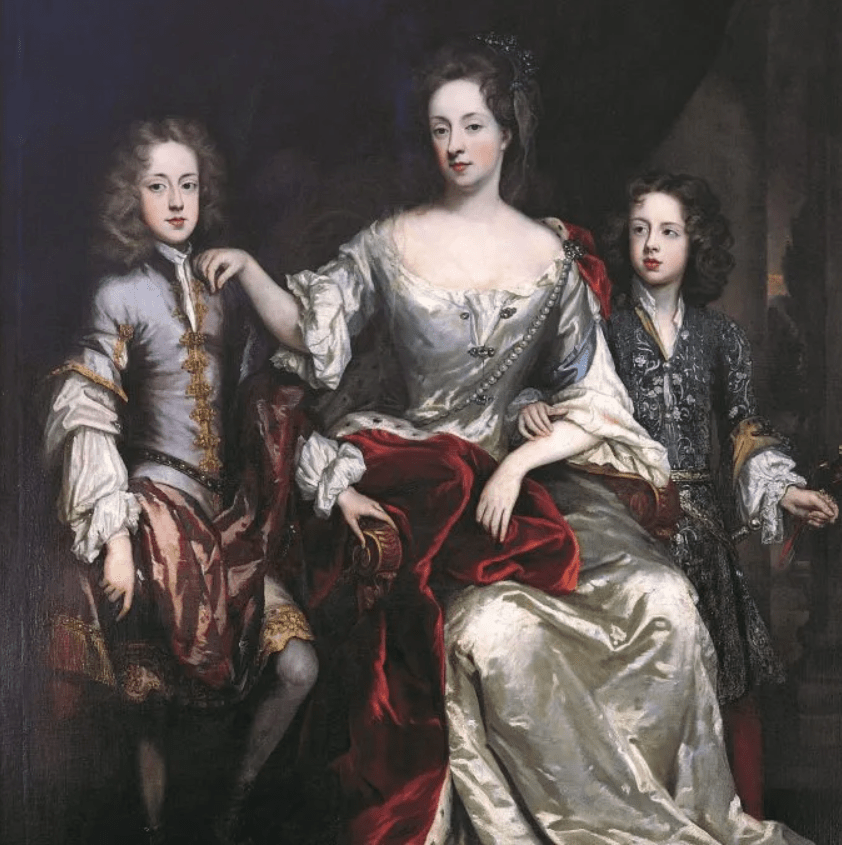
So who was the Duke of Monmouth? James Crofts or James FitzRoy, who later took the surname Scott, was born in April 1649 in Rotterdam, the product of a tryst of a young Charles Stuart and Lucy Walter—both were 18, and Charles had just become king, nominally, after the execution of his father in January. Charles and Lucy had conducted a teen love affair that winter at the court of The Hague—Walter was from a minor Welsh gentry family, and there was always a lingering story that she hoped for better things for herself and her son by claiming that she and the King had married, but no real evidence for this was ever produced—notably towards the end of Charles II’s reign, when courtiers hoped for a Protestant succession, rather than a Catholic one as represented by the King’s brother, the Duke of York.
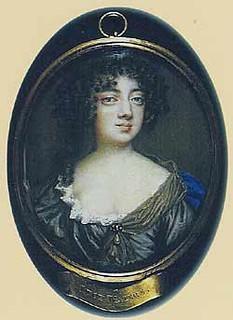
Charles II acknowledged his son James right away, and the baby and his mother moved around between Paris, Cologne and London—which also raised suspicions: Lucy was arrested in 1656 and accused of being a spy, and sent back to the Low Countries. Charles stopped paying her a pension and removed James from her care in 1658, bringing him to the exiled court in Paris, where he was raised by the newly ennobled William, 1st Baron Crofts (hence the first surname), a longtime servant of the King’s mother, and now the King’s Gentleman of the Bedchamber. Interestingly, James Crofts, after he became James Scott, would name his own illegitimate son (born 1683) James Crofts. Lucy Walter, pushed away from Stuart affairs by the sense of a pending Restoration, died later in 1658.
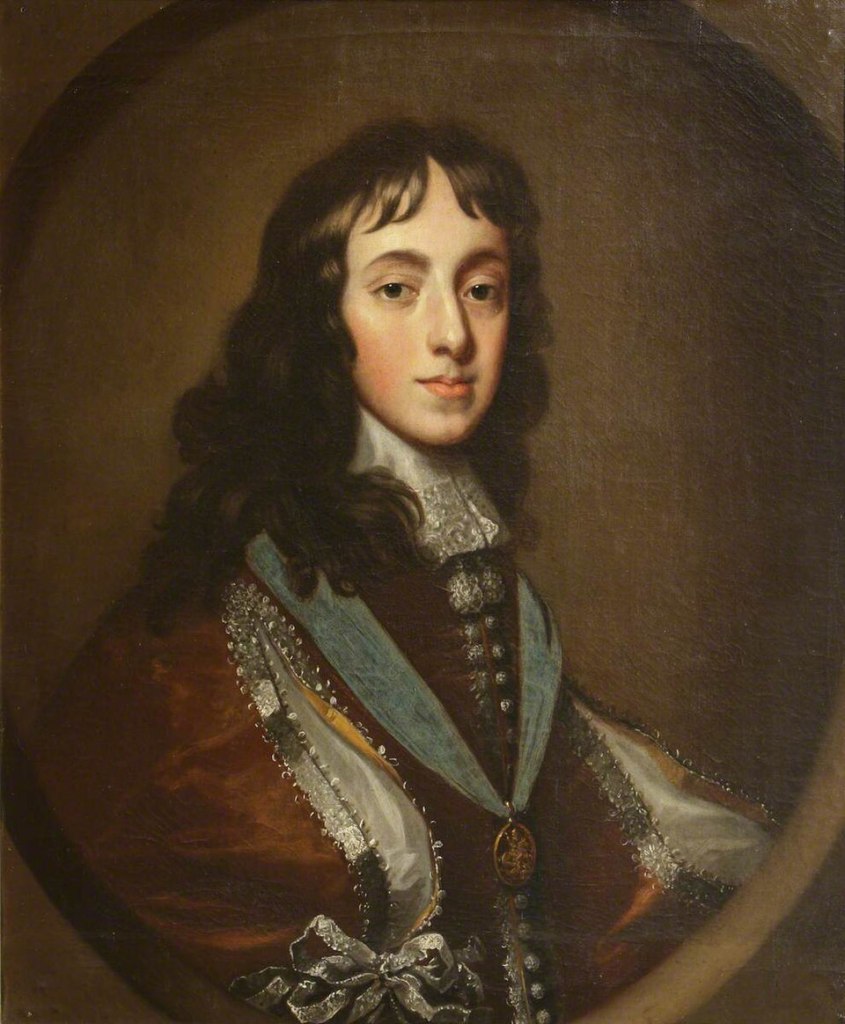
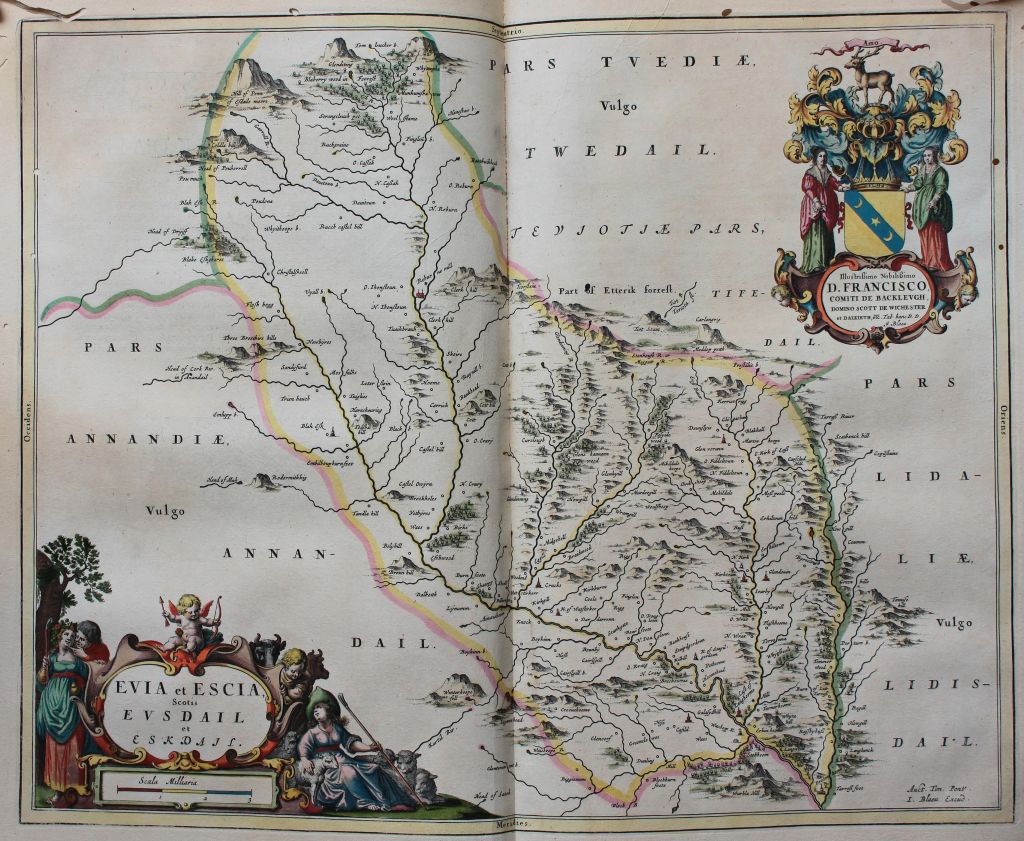
When Charles II was restored to his thrones in England, Scotland and Ireland, he brought his son James home with him. In February 1663, he was created Duke of Monmouth, Earl of Doncaster and Baron Scott of Tynedale. All these titles were in the peerage of England, giving Monmouth a seat in the House of Lords—but clearly a marriage with Anne Scott was already arranged, given the name of the barony. Monmouth is in Wales (though legally in England until the 1970s), Doncaster in Yorkshire and Tynedale in Northumberland. Two months later, the new duke did marry his heiress, and both were created Duke and Duchess of Buccleuch, Earl and Countess of Dalkeith, and Baron and Baroness Scott of Whitchester and Eskdale. Whitchester is on the Teviot near Branxholme, while Eskdale is the valley just across the watershed from Teviotdale, the river Esk flowing southwest into Solway Firth—it is perhaps notable that the barony of Eskdale long belonged to Clan Douglas, so perhaps this foreshadowed the merger of these two ancient rival clans. These titles carried a seat in the Scottish Parliament.
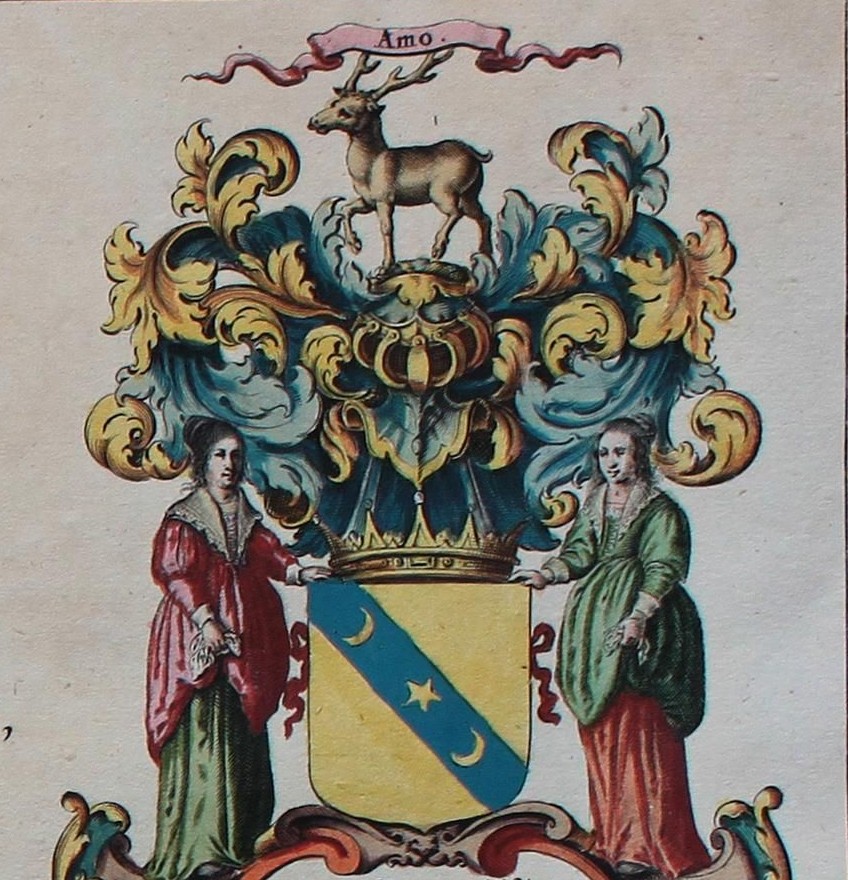
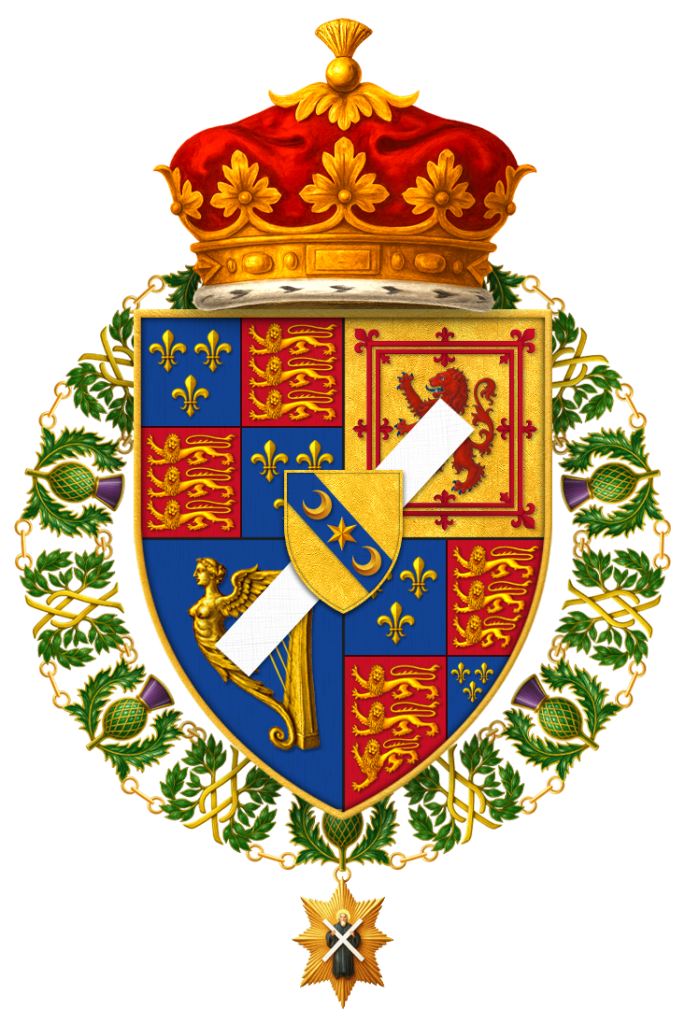
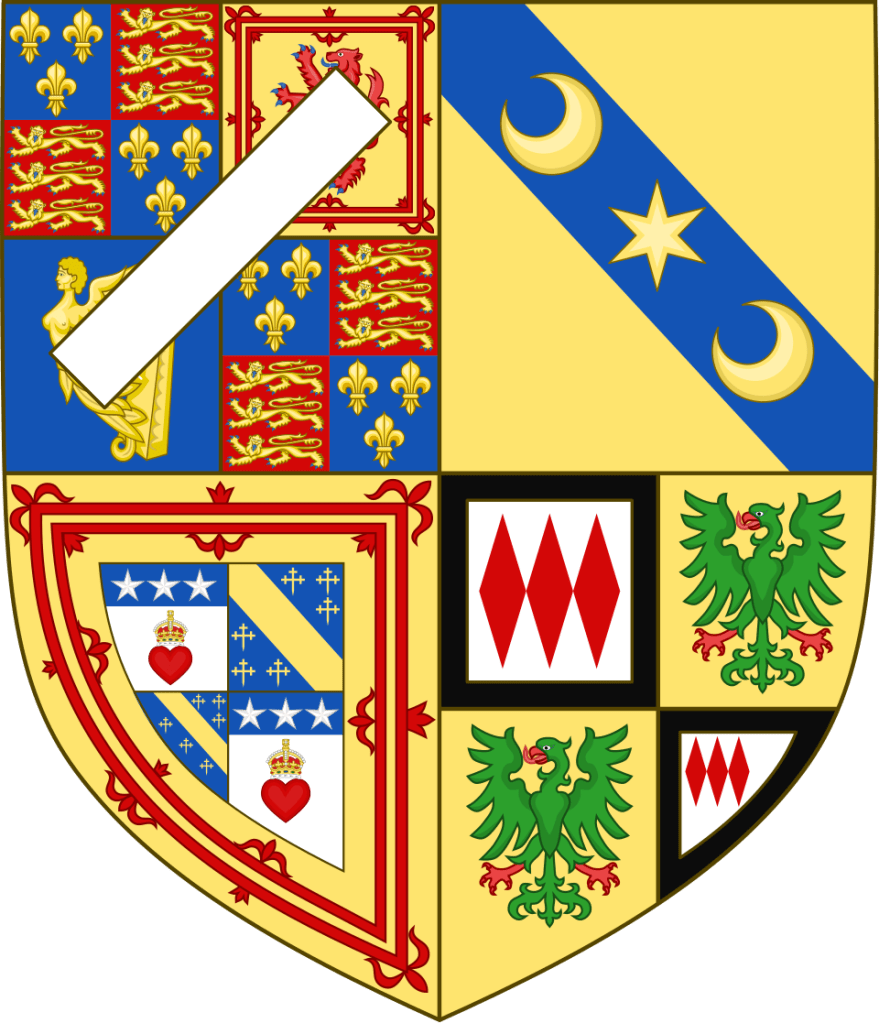
A new dynasty was born, joining together the distinctive coat-of-arms of the Scotts, gold, with two moons and a star on a blue band, with the royal arms of the Stuarts, with a silver ‘bend sinister’ denoting bastardy. The first son, born in 1674, would bear the name Earl of Dalkeith.
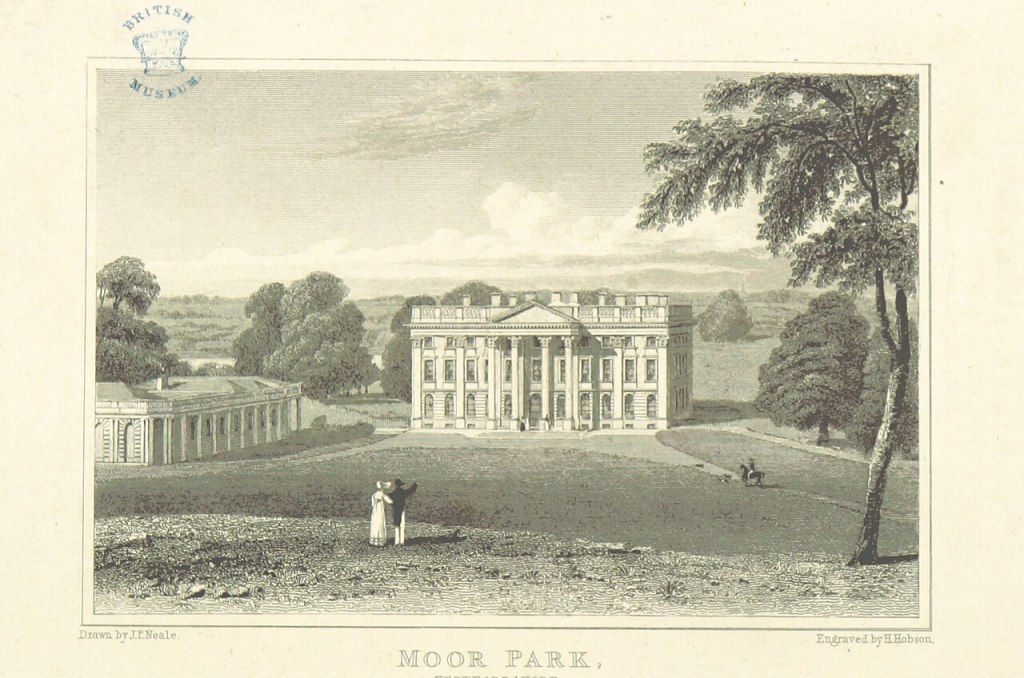
The Duke of Monmouth established his credentials as a military leader right away: serving in the navy against the Dutch in 1665, then appointed Colonel of the Royal Horse Guards in 1668. Rather than live on their Scottish estates far from court, the Duke and Duchess acquired Moor Park in Hertfordshire, north of London, in 1670. This house was a newer residence built in the park of the much older More Palace (or the ‘Manor of the More’). Acquired from the Abbey of St Albans, it had been turned into a residence by Cardinal Wolsey, then housed Katherine of Aragon following the annulment of her marriage. Preparations were made for it to become a country house for Anne Boleyn after her coronation, but she lost her crown before this was finalised. By the 1590s More Palace was in ruins and in the 1660s it was completely pulled down. The property had been leased to the Russells, earls of Bedford, who built the new house in the park (hence ‘Moor Park’) in 1617. Monmouth rebuilt it again in the 1670s, and after his death his widow sold it to a wealthy lawyer Benjamin Haskins-Stiles who fully transformed it into a Palladian villa as we see it today. Over the next two centuries it was bought and sold by various aristocrats, including the son of the Duke of Westminster and Lord and Lady Leverhulme, who in the 1920s, built a golf course in the grounds—today the house serves as its clubhouse.
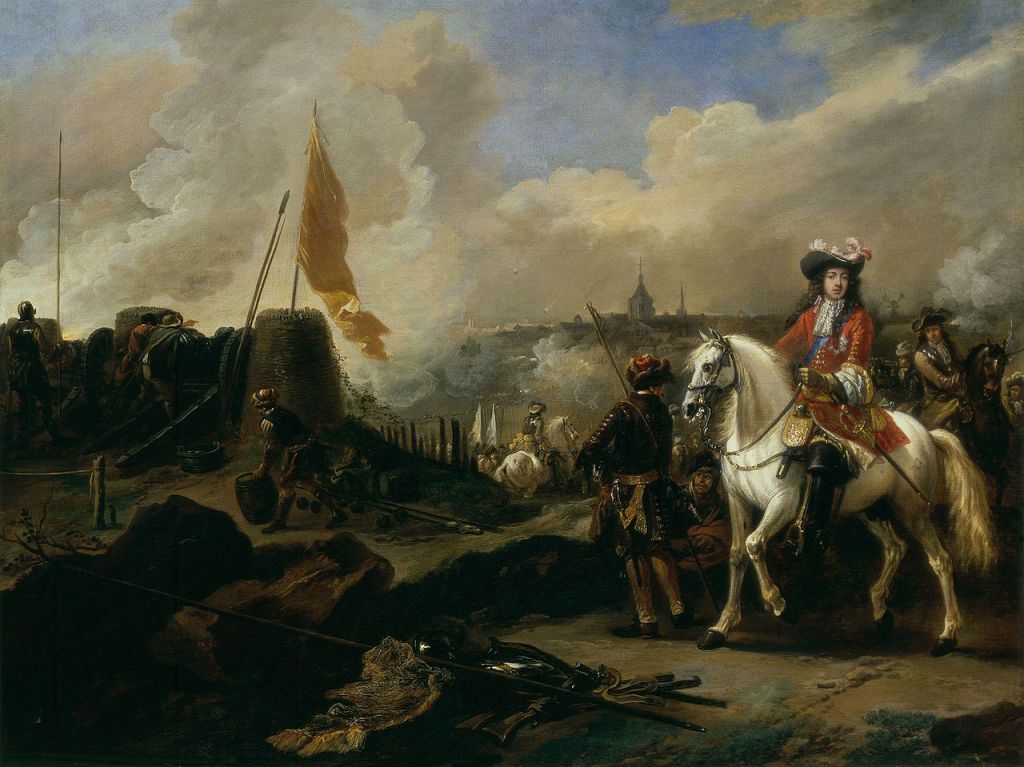
In 1672, the Duke of Monmouth was given command of 6,000 troops that were sent to France to serve in a war against the Dutch. In this war, he showed himself to be one of the era’s finest soldiers—but then so too had the Duke of York, his future rival, in the previous decade. The King, still lacking a legitimate heir after a decade of marriage to Catherine of Braganza, heaped more and more honours on to his favourite son: governor of Hull in 1673, and Lord Lieutenant of the East Riding of Yorkshire, then Master of the Horse, 1674, and effective commander of all royal land forces. In 1678, in a reversal of the situation of 1672, he led a joint Anglo-Dutch force against France, then was sent north in 1679 to put down a rebellion in England.
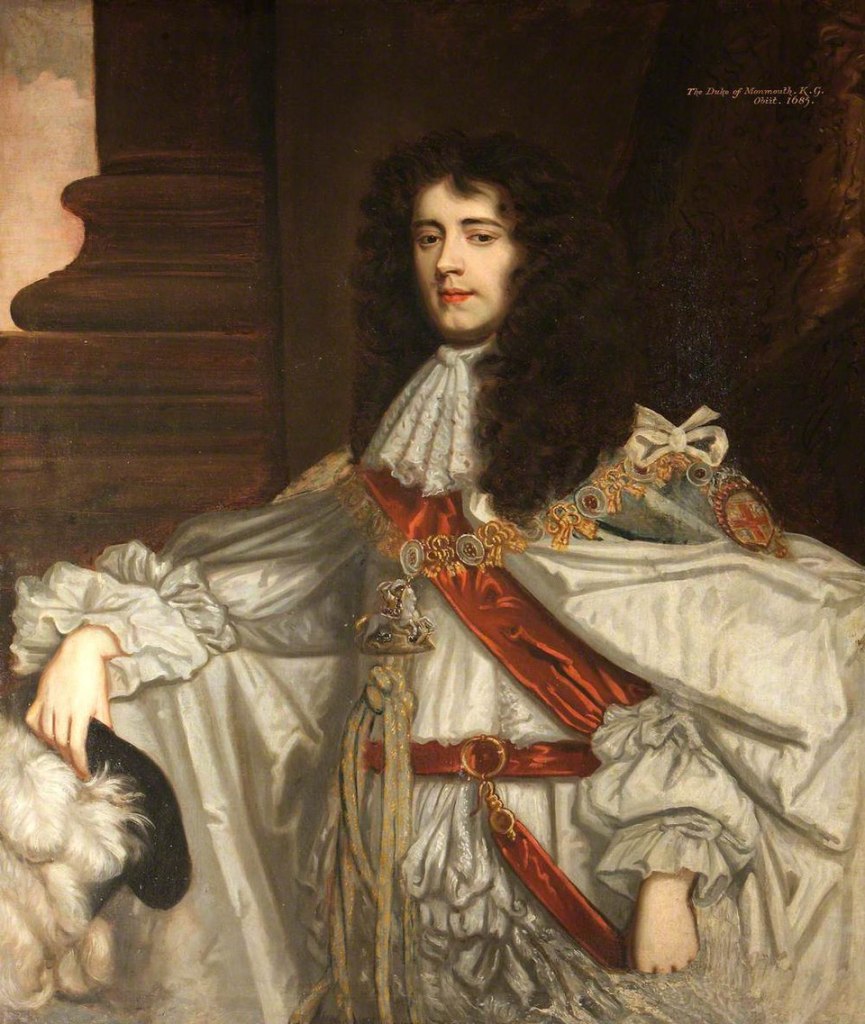
But by the end of 1679, the Exclusion Crisis—a political crisis over Parliament’s efforts to exclude the Duke of York from the succession—forced the King to send his son away from court, especially as Monmouth was not supporting the claims being put forward that his mother had married Charles back in 1648. In contrast to York, Monmouth, a Protestant war hero, was very popular. But he again played his cards wrong by participating (or at least being accused of participating) in the Rye House Plot to murder both the King and the Duke of York in 1683. Then in June 1685, shortly after the death of Charles II, the Duke of Monmouth raised the standard of rebellion against the new king, James II, at Lyme Regis, in Devon. His forces were soundly defeated at Sedgemoor in Somerset, 6 July. He was arrested and his titles attainted—many people hoped for clemency, including the Dowager Queen, Catherine, but Monmouth was executed on 15 July on Tower Hill. As noted above, his English titles were attainted, while the Scottish ones were allowed to continue for his widow and eldest son—the English subsidiary titles (Doncaster and Scott of Tynemouth) were, however, restored to the 2nd Duke in 1743.
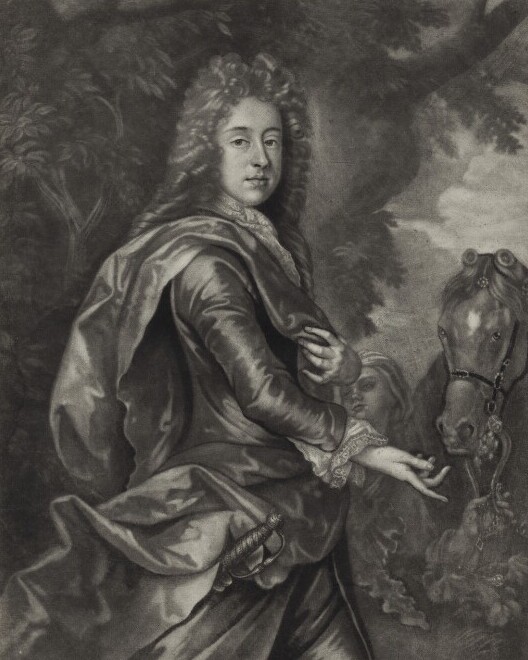
In 1685, the Duke of Monmouth left behind his widow and two sons, James and Henry, born in 1674 and 1676. Other children had died young, and there were several illegitimate children, including Henrietta Crofts who married the Duke of Bolton. Their mother, Anne, Duchess of Buccleuch, re-married in 1688 as the second wife of Charles, 3rd Baron Cornwallis, First Lord of the Admiralty, and they had several daughters, but only one, Isabella, lived long into the next century, unmarried (and used, notably, her mother’s surname, as a potential heiress to the dukedom should her half-brothers die without heirs). The eldest son, James, Earl of Dalkeith, did not become 2nd Duke of Buccleuch since he died in 1705, many years before his mother (who died in 1732). A year after his death, his brother Henry was created Earl of Deloraine. He was a politician elected to the last Scottish Parliament who voted in favour of its dissolution and to join the English Parliament in 1707. This title was based in the usual Scott homeland of Ettrick Forest, named after a burn called Deloraine, an affluent of Ettrick Water. His subsidiary titles included Lord Goldielands, a tower house on the Teviot, south of Hawick; and Viscount of Hermitage, a castle with a very eminent story in the history of Scotland.
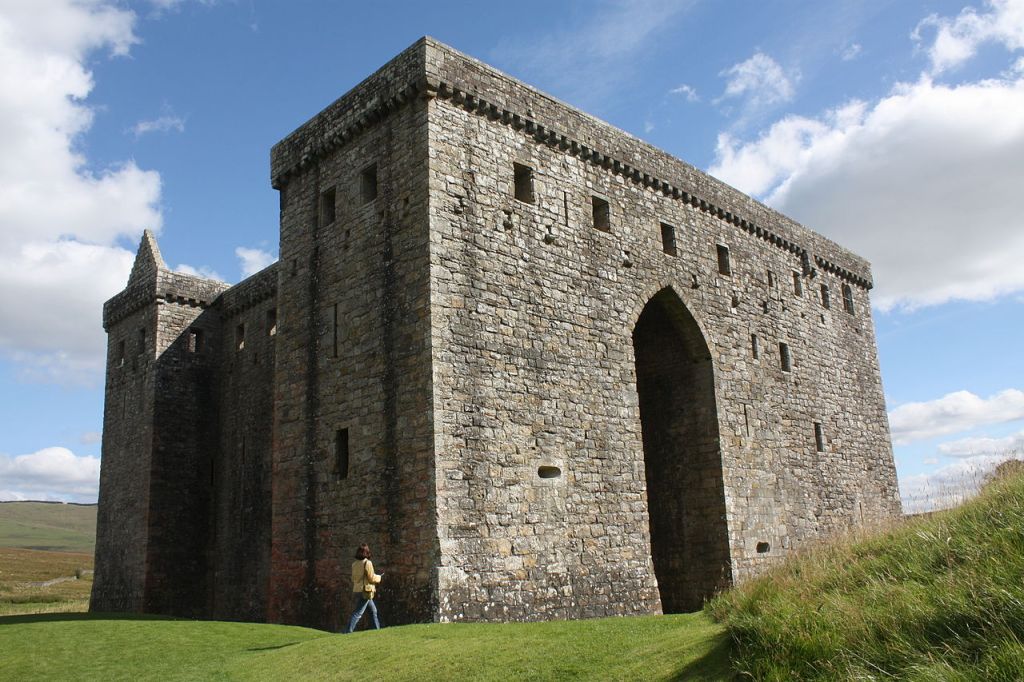
Hermitage Castle, in Liddesdale, County Roxburghe, was probably named for the Old French l’armitage or gatehouse. It was built in the 1240s by the De Soulis family, whose last member, William, left behind a curious legacy of witchcraft and attempted regicide. Visitors to the castle today are still confronted with stories of ghosts and strange noises. He lost the castle in 1320 and it was granted to the Black Douglas family, earls of Douglas, who rebuilt it on a grander scale. After that family was brought down by the Crown in the 1450s, the castle was re-granted to the Hepburns, earls of Bothwell. It was thus the property of Lord Bothwell during some of the more romantic escapades of the reign of Mary, Queen of Scots in the 1560s. It was again confiscated by the Crown after a plot against James VI by Bothwell’s nephew in 1593, and a year later was granted to the ever-loyal Scott of Buccleuch. After the Stuarts joined the crowns of Scotland and England, however, a powerful border fortress was no longer needed, so Hermitage was neglected. By the time it was part of the estates of the Earl of Deloraine, it was a ruin. The dukes of Buccleuch recouped the property in 1807 and held it until it was given to the nation in 1930—today it is one of the jewels in the tourism crown of Historic Environment Scotland.
The Earl of Deloraine was rewarded for his loyalty to the Act of Union and to the Hanoverian Succession with a position in the household of the Prince of Wales, as Gentleman of the Bedchamber. In this position he met Mary Howard (of the Berkshire branch of Howards), a maid of honour to the Princess of Wales, and they wed in 1726. When the Prince became George II in 1727, Deloraine was elevated to Gentleman of the Royal Bedchamber. His wife could no longer be a maid of honour, but the new queen, Caroline, appointed her governess of her daughters Mary and Louise. After the Earl died in 1730, she re-married the tutor of Prince William, William Windham, though continued to be referred to as Lady Deloraine, notably once she became the King’s mistress in about 1737. She held this position at court—and became known for her rude behaviour—until unseated abruptly by Amalie von Wallmoden in 1742 (who retained the title until the King’s death in 1760).
The Earl had two sons, Francis and Henry, who succeeded him as 2nd and 3rd Earl of Deloraine in 1730 and 1739, but the latter only for a year before being succeeded by his infant son Henry, who held the earldom until 1807. After his death, the properties returned to the main line of Buccleuch.
The Earl of Dalkeith had married well, in 1694, to Henrietta Hyde, daughter of the 1st Earl of Rochester, whose sister Anne was the mother of the two Stuart princesses, Mary and Anne, so Henrietta was first cousin to two regnant queens. They had one son, Francis, who became 2nd Duke of Buccleuch when his grandmother died in 1732.
A man of his times, the 2nd Duke was interested in science and the Enlightenment—leading to his appointment as Grand Master of the Freemasons, 1723-24, a Fellow of the Royal Society, 1724, and ultimately being awarded an honorary doctorate from Oxford University, 1745. While nothing specific is attributed to him in terms of scholarship, he was known as a patron in a variety of scientific fields. In Parliament, he was selected as one of the Scottish representative peers, then became a peer on his own right, 1743 when his grandfather’s English titles were restored (so he sat as Lord Doncaster). He married twice, Jane Douglas, daughter of the 2nd Duke of Queensberry—more on that below—and Alice Powell in 1744, before he succumbed to smallpox in 1751.
Before he died, the 2nd Duke greatly increased the holdings of the family’s country houses. He acquired the Manor of Spalding in the fenlands of southern Lincolnshire, and rented Hall Place at Hurley in Berkshire as his country seat nearer to London—close to Maidenhead, this house sat high above the Thames valley, and was modern and stylish, built in 1728 by a London lawyer (today it houses the Berkshire College of Agriculture). Then in 1747, the Duke purchased Bowhill in the old Scott heartland of Selkirkshire for his son as his seat until he inherited Dalkeith House (and to give him a footing to run for a seat in Parliament in that county).
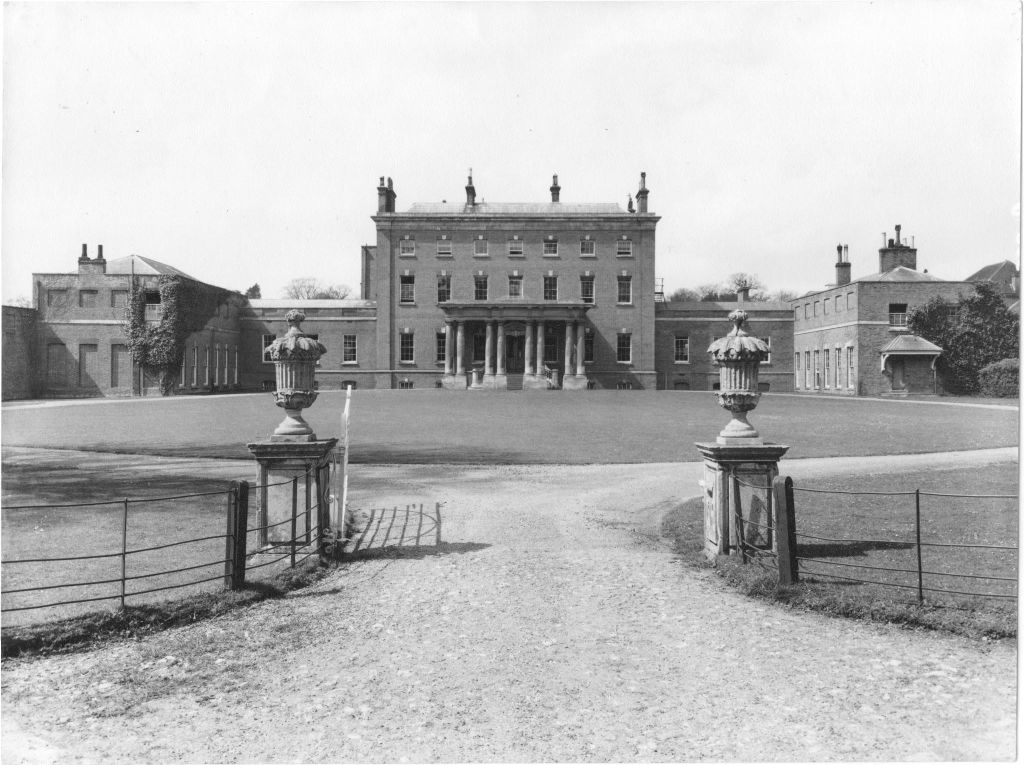
Bowhill House, a few miles outside the town of Selkirk, was built in 1708 by John Murray, Lord Bowhill (a Lord of Session). After it was purchased by the Scotts of Buccleuch, it was slowly improved and enlarged, converting it from a summer house to a permanent residence, and in particular, a showpiece for the growing art collection of three dynasties (Scott, Montagu and Douglas)—still today, the collection here is impressively grand.
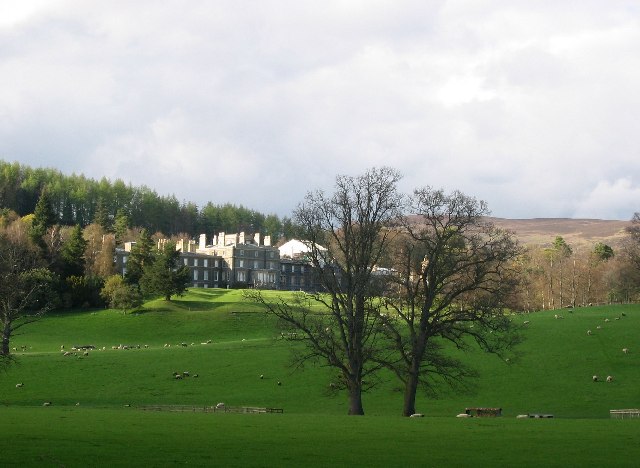
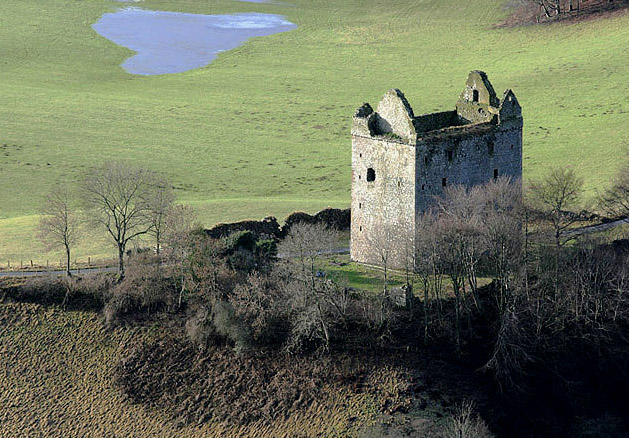
It is interesting to consider that this new purchase was already in the heart of Scott territory, in the Yarrow Water valley near its confluence with the Ettrick Water, and thus downstream from both Deloraine and Buccleuch itself. Also in this valley, much closer to Bowhill, was the remains of Newark Castle, a tower house built by the 4th Earl of Douglas in 1406 as a ‘new wark’ to replace his older castle as the seat of feudal administration for this district. Confiscated in 1455, Newark became the administrative centre for the Royal Forest of Ettrick. Over the next century the castle and its lands were given to various Scottish queens as part of their jointure lands, with the Scotts of Buccleuch sometimes acting as captain until they acquired the property outright by the later seventeenth century. It is now thus reunited with Scott property at Bowhill, the seat of the eldest sons of the dukes of Buccleuch.
The first of these eldest sons, Francis, Earl of Dalkeith, died in 1750, at 29, so the succession to the dukedom skipped a generation to pass to his son. Dalkeith had married Lady Caroline Campbell, eldest daughter of the 2nd Duke of Argyll, who had been created Duke of Greenwich in 1719 (as means of guaranteeing a seat in the united British Parliament); after Argyll died in 1743, Caroline became co-heiress with her sisters, and in 1767 was created Baroness Greenwich—she had remarried the politician Charles Townshend, and the title was created to pass to their eldest son, but they had no surviving sons, so this title went extinct on her death in 1794.
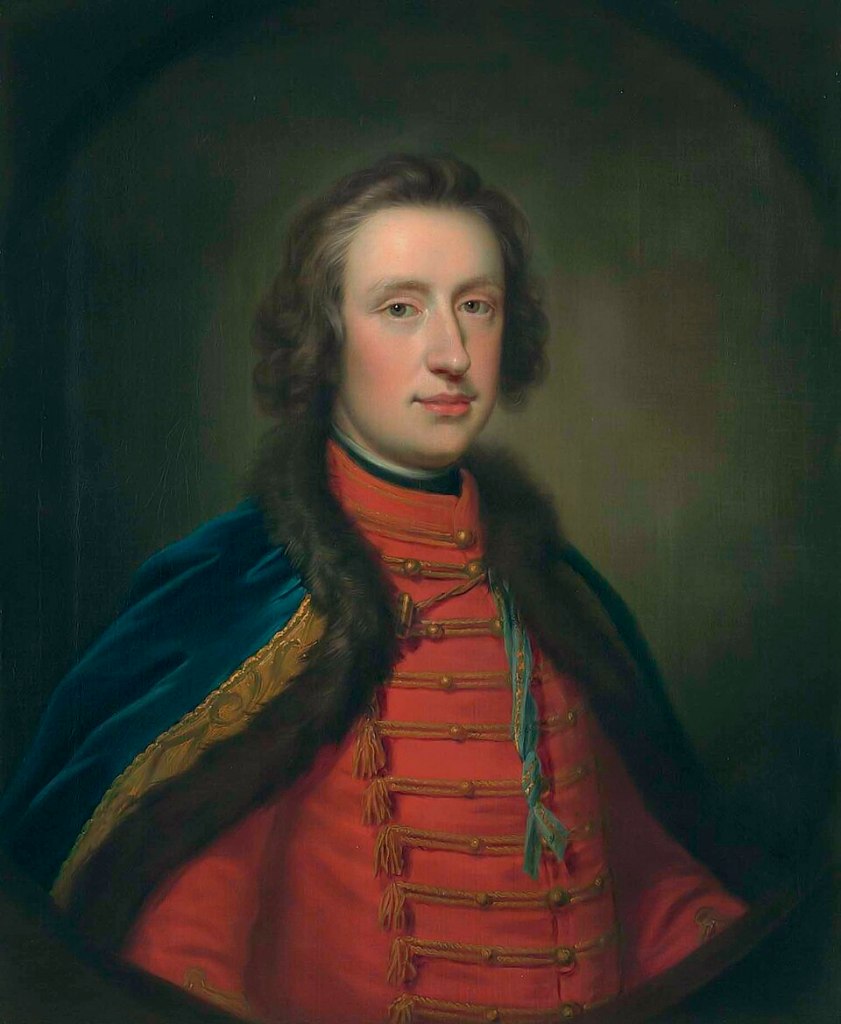
Henry Scott became 3rd Duke of Buccleuch as a child when his grandfather died in 1751. He had a good education, and was tutored by Adam Smith on his Grand Tour. Perhaps fittingly for a man educated by the greatest economist of the age, the Duke established his career in 1777 as Governor of the Royal Bank of Scotland. Later the King appointed him Lord Lieutenant of Midlothian and Haddington, 1794, and he was put in command of troops in Scotland in case of French invasion during the Revolutionary Wars.
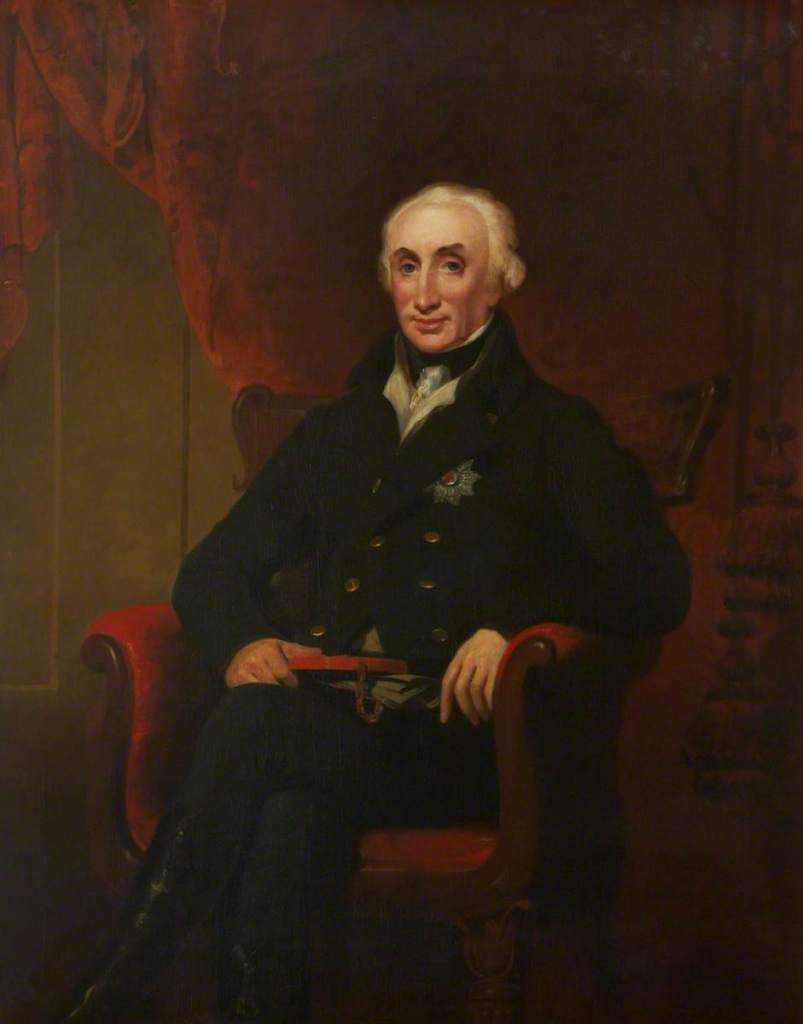
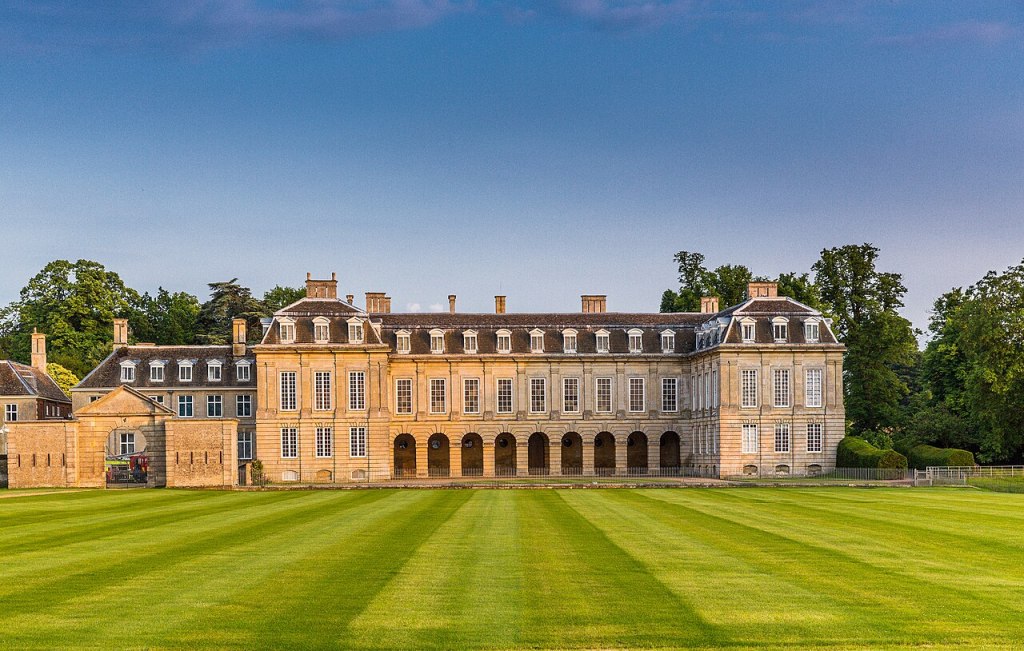
Back in 1767, the 3rd Duke had married Lady Elizabeth Montagu, daughter of George Brudenell and Mary Montagu of Boughton, 1st Duke and Duchess of Montagu of a new creation in 1766. When Brudenell died in 1790, his daughter the Duchess of Buccleuch inherited the Montagu lands—notably Boughton House—but not the dukedom (though her second son was set up as Baron Montagu of Boughton, see below). Two decades later, however, the 3rd Duke did inherit another dukedom, Queensberry, from his grandmother’s first cousin once removed, William Douglas, 4th Duke of Queensberry who died in 1810. This dukedom had been created in 1684 for a branch of the Douglas family that were based at Drumlanrig Castle in Dumfriesshire, not far from Queensberry Hill (in the Lowther Hills) from which it took its name. The history of this family and the titles associated with it will be detailed in a separate blog, but here we can note that its subsidiary titles from 1684 were Marquess of Dumfriesshire, Earl of Drumlanrig and Sanquhar, Viscount of Nith, Torthorwald and Ross, and Lord Douglas of Kilmount, Middlebie and Dornock. Douglas was also Marquess of Queensberry and Earl of March, but as these had separate rules of creation, when he died in 1810, they passed to different Douglas relatives.
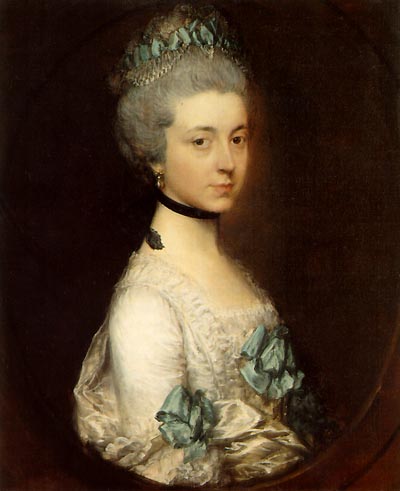
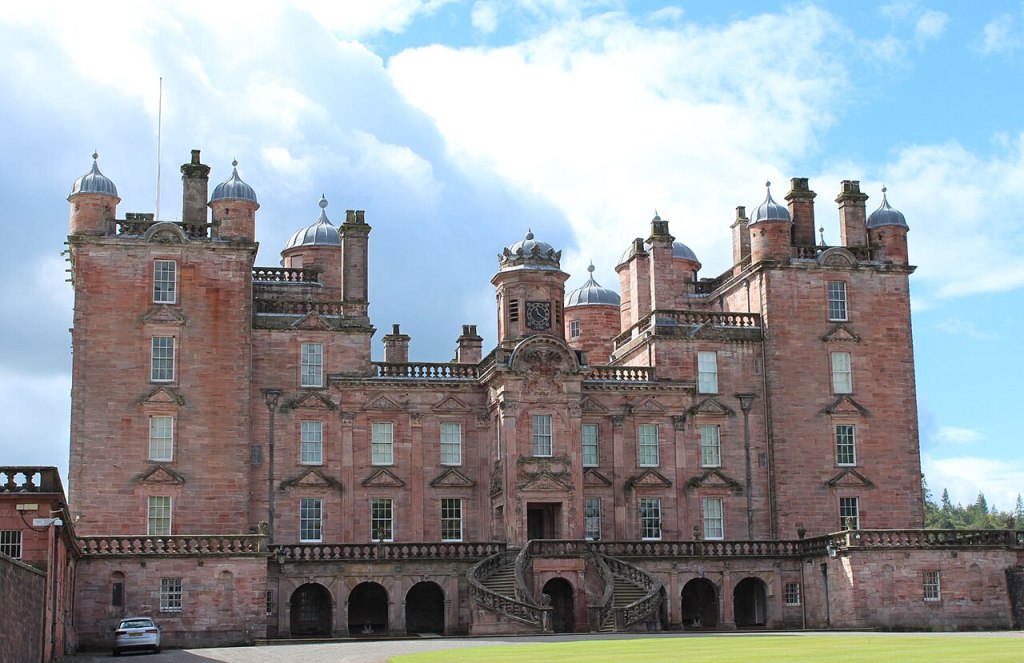
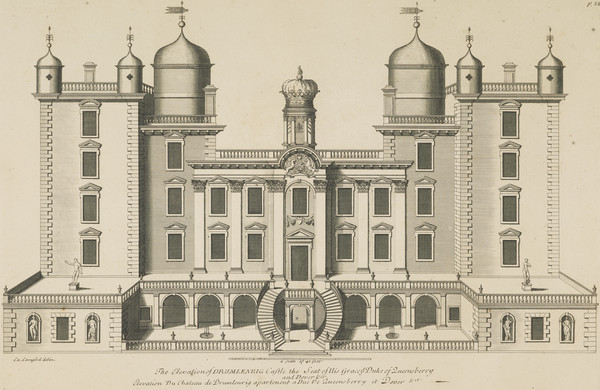
Of all these titles, it is worth noting that of Nith, since it was in the Nithsdale that Drumlanrig Castle was situated (and Sanquhar is nearby). The old castle, taking its name possibly from drum (ridge) and lanerc (a clearing in a wood), had been the centre of the Queensberry estate for a long time before the 1st Duke of Queensberry built a new, much grander castle here in 1679-89, and added a formal garden following the latest French and Dutch designs, with a summer house and water cascades. It became one of the grandest of all Scottish residences, with its distinctive pink stone, and is now the primary seat of the Buccleuch family.
After 1810, the 3rd Duke of Buccleuch and 5th Duke of Queensberry, thus took the name Montagu-Douglas-Scott, and later generations would use a more complex coat-of-arms for the family: Royal Stuart (‘bruised’ for illegitimacy), Scott, Douglas, Montagu (and more recent generations would also add quarters indicating descent from the Campbells, the Brudenells and the Churchills).
This now triple dynasty was still connected to the rest of Clan Scott, however, and the Duke was (and is) considered clan chief. Other branches of the Scotts, like the ducal line, had consistently remained loyal to the new Hanoverian regime across the eighteenth century, evident in both Jacobite uprisings, the ’15 and the ’45. This extended to the remaining members of Clan Scott: one of the most aggressive and brutal redcoats being Captain Caroline Frederick Scott, who defended Fort William in March 1746.
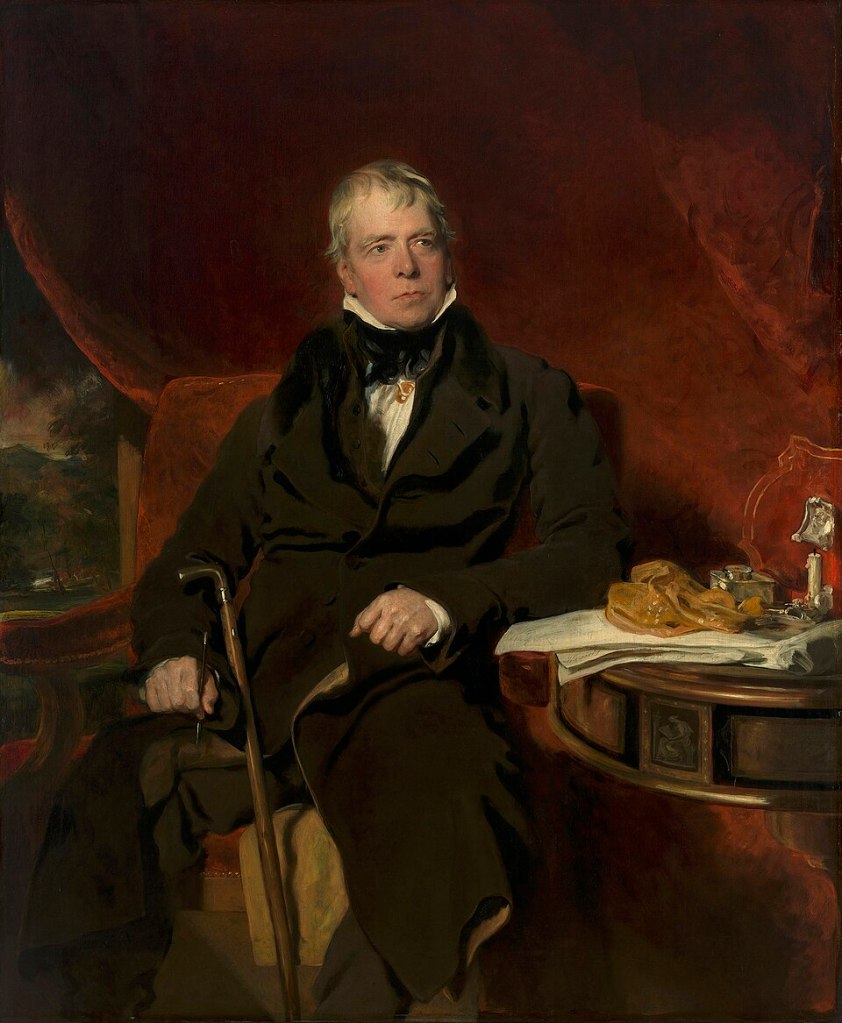
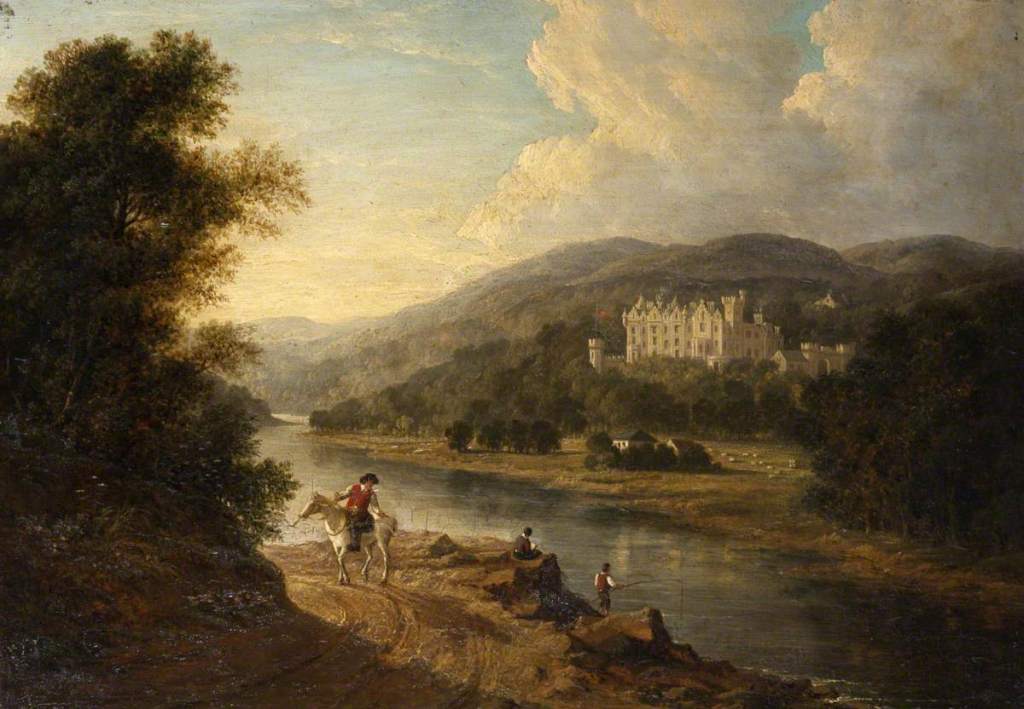
Other interesting Scotts from different branches include the most famous of all, Sir Walter Scott the poet and novelist. He came from the line of Harden (from the same branch that spawned the Lords Polwarth), with their seat at Smailholm Castle near Kelso in the Borders. The castle being a ruin by the late eighteenth century, this Walter Scott grew up in Edinburgh, studied at the university there, and became one of the most famous of all Scottish writers, with novels including Ivanhoe, Rob Roy, Waverley and The Lady of the Lake. He was also a historian, and elected President of the Royal Society and the Society of Antiquaries of Scotland. He worked with George IV to recover the Crown Jewels of Scotland (lost since the 1650s) and stage-managed the King’s visit to Scotland in 1822—reviving the use of tartan and the wearing of kilts as part of the royal identity in Scotland. The King created Scott a baronet in 1820, of Abbotsford, the name of a house he had recently built, in romantic Gothic Revival style, near Galashiels, on the Tweed. Abbotsford would be lived in by a Scott descendant until 2004 when it was completely turned over to tourism.
Two other Scotts are worth noting here, two more novelists, both known confusingly as Lady Scott. Caroline Lucy Scott (d. 1857) was a niece of the 3rd Duke of Buccleuch, married to Admiral Sir George Scott. She wrote anonymous novels in the 1820s-30s but published later religious tracts under her own name. Harriet Anne Scott (d. 1894) was the wife of Sir James Scott, 3rd Baronet of Dunninald (from the Scott of Logie branch). She wrote ten novels in the 1830s-60s, using her own name after the first few.
The first duke of both Buccleuch and Queensberry only held these titles for two years. His son, Charles, 4th Duke of Buccleuch and 6th Duke of Queensberry, had been known for most of his life as the Earl of Dalkeith and had a long career as an MP in the British House of Commons until he was ‘accelerated’ into the House of Lords by a royal writ creating him Baron Scott of Tyndale in 1807. He was Lord Lieutenant of Dumfriesshire from 1797 and succeeded his father as Lord Lieutenant of Midlothian in 1812. But his hold on the ducal titles was also short, dying only seven years later.
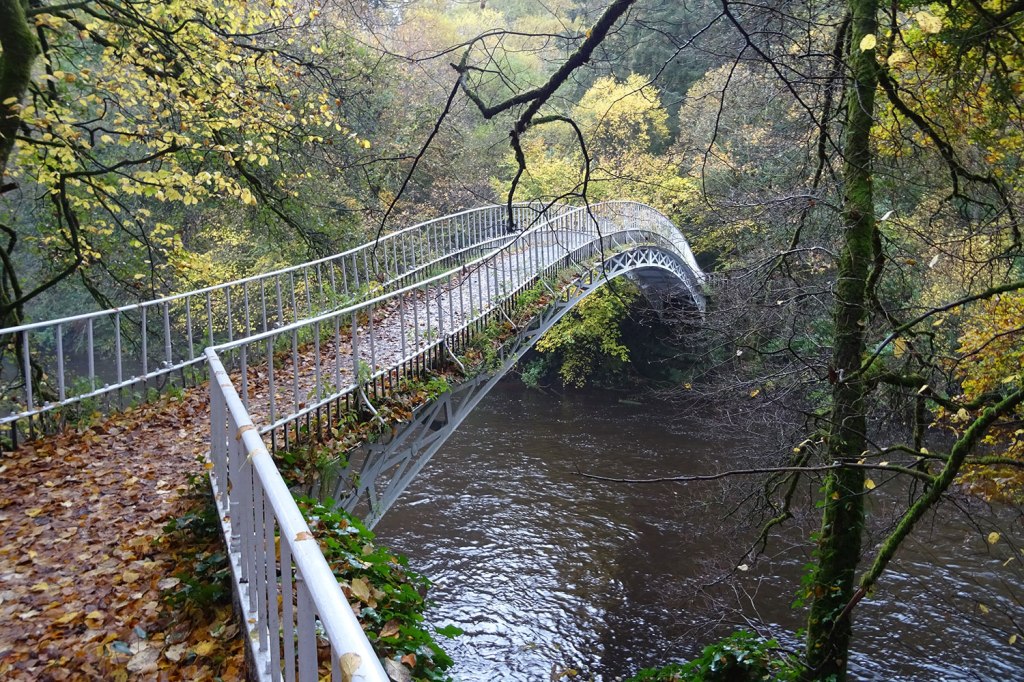
The 4th Duke had been responsible for improving Drumlanrig Castle, pulling together the art collections at Bowhill, and establishing the parish church of St Edmunds, Warkton, near Boughton House, as the new family sepulchre (though some remained buried in St Mary’s, Dalkeith). He also showed an interest in technology and sponsored one of the oldest iron bridges in Scotland, at Langholm Lodge (built for the 3rd Duke in 1786), over the River Esk north of Gretna Green (known as the ‘Duchess Bridge’). The Lodge was demolished in 1853, but the ornamental gardens built around it survive.
The 4th Duke’s younger brother, Henry, in 1790 inherited one of the new creations for the Montagu family, Baron Montagu of Boughton, and along with it, the large feudal property called the Forest of Bowland in Lancashire. He died in 1845 leaving only daughters—so the barony of Montagu of Bought became extinct and the lordship of Bowland passed to another family. A sister also helped keep these family lines connected, however, by her marriage to one of the other co-heirs, Charles Douglas, 6th Marquess of Queensberry.
In 1819, most of this passed to Walter Montagu-Douglas-Scott, the 5th Duke of Buccleuch and 7th Duke of Queensberry. As a young magnate, he was interested in the continued development of Scotland, and funded the development of Granton Harbour on the Edinburgh waterfront. He had a political career as a Conservative member of Peel’s government: Lord Keeper of the Privy Seal, 1842-46, then Lord President of the Council, briefly, January to July 1846. He also maintained a position at court, as Captain-General of the Royal Bodyguard of Scottish Archers and an aide-de-camp to Queen Victoria. He was far and away one of the richest men in the United Kingdom, with 250,000 acres in Dumfriesshire, 100,000 in Roxburghshire, 60,000 in Selkirkshire, 18,000 acres in Northamptonshire, and another 24,000 scattered all over England and Scotland (about 460,000 acres total).
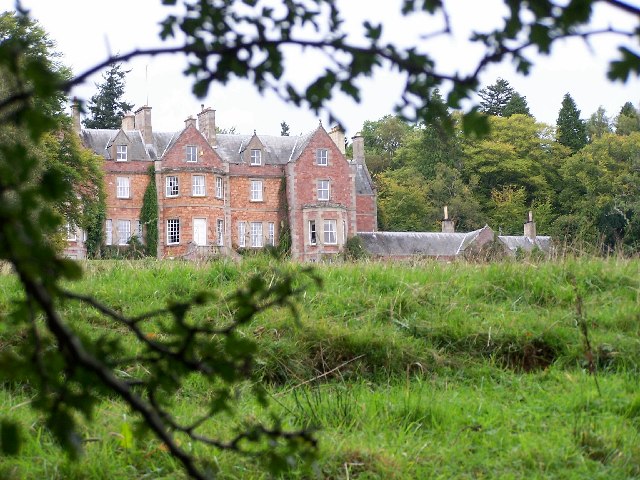
A new property added by this duke was Eildon Hall, near the river Tweed and the town of Melrose in Roxburghshire. Built in the shadow of Eildon Hill, an isolated outcropping in the Scottish Borders, Eildon Hall was constructed as a hunting lodge by a local surgeon in 1802, then bought by the 5th Duke of Buccleuch in 1838 to enhance his newly established Buccleuch Hunt in the surrounding Cheviot Hills. By the end of the century, it had become the usual residence of the earls of Dalkeith as heirs to the dukedom.
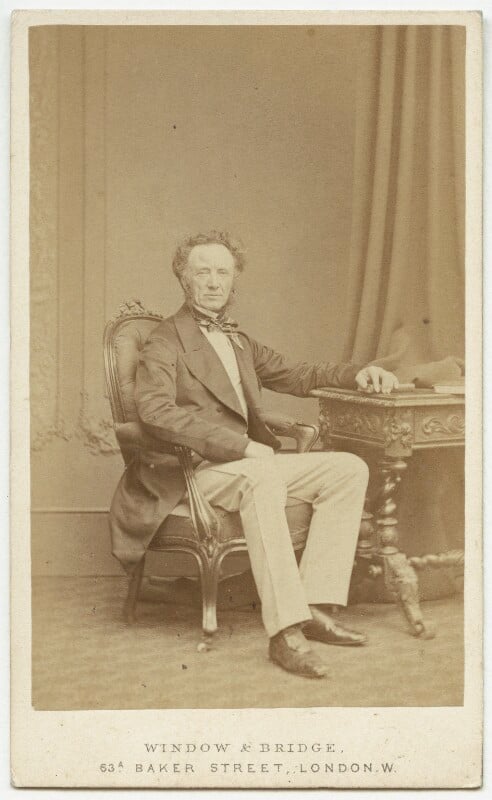
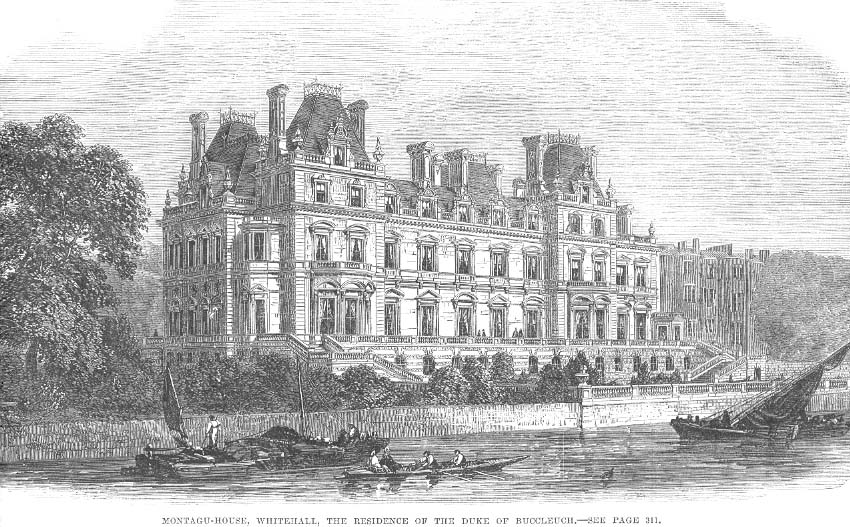
The 5th Duke, who died in 1884, had three sons: the youngest, Lord Charles, was an admiral in the navy with a very long career; the second, Lord Henry, became Baron Montagu of Beaulieu and started a junior line, about which more below. The eldest, William, was, as the Earl of Dalkeith, an active MP in the 1850s-80s, and established his London residence at Montagu House on Whitehall Street. This was a townhouse with frontage on the Thames, initially built in the 1730s by the 2nd Duke of Montagu, on a site previously part of the medieval residence of the archbishops of York. The Georgian mansion was replaced in the 1850s with a much larger, and fairly unusual French Renaissance style house, one of the grandest private mansions in London. In 1917 it was taken over for use as government offices, and was demolished in 1949 (the site is now part of the Ministry of Defence).
William, 6th Duke of Buccleuch, succeeded his father as Captain-General of the Archers, and was named a member of the Privy Council in 1901. He died in 1914, leaving behind five sons (an older son, Walter, had died young): John became the 7th Duke, while George, Henry and Herbert were soldiers—the latter was also the great-grandfather of Sarah Ferguson, Duchess of York. Lord Francis was not a soldier, a black sheep I guess.
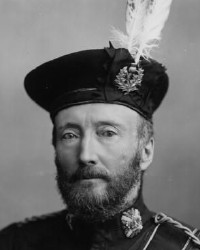
Before continuing the main line in the twentieth century, we should pause to look at the line founded by Lord Henry: Montagu of Beaulieu. Unlike the senior line, they use the surname Douglas-Montagu-Scott (and reverse the order of the quarterings in the coat-of-arms). Lord Henry was created Baron Montagu of Beaulieu in 1885. He had been an MP for Hampshire from 1868 to 1884 but was better known as a world traveller: Australia, Egypt, South Africa, and so on. In 1865, he was given Beaulieu Palace House by his father and thus rooted his career and his family in the southern country of Hampshire—for example, in 1890 he was appointed Verderer of the New Forest, a medieval office pertaining to keeping woodlands healthy and ‘verdant’ or green.
Beaulieu (pronounced ‘Byoolee’) had been built in the 1200s as the gatehouse for the Abbey of Beaulieu (‘beautiful place’). This was a Cistercian abbey, an order known for living in isolated places and being self-sufficient communities, founded in 1203 by King John. It became known as an ‘exempt’ abbey, owing obedience directly to the pope, not the local bishop. Much of the abbey buildings remain today, but it is the gatehouse that was acquired at secularisation in 1538 by Thomas Wriothesley, who later became Earl of Southampton. The house passed by inheritance to the Montagus, and then to the Scotts, as we’ve seen, who enlarged the building the nineteenth century, retaining its Gothic style.
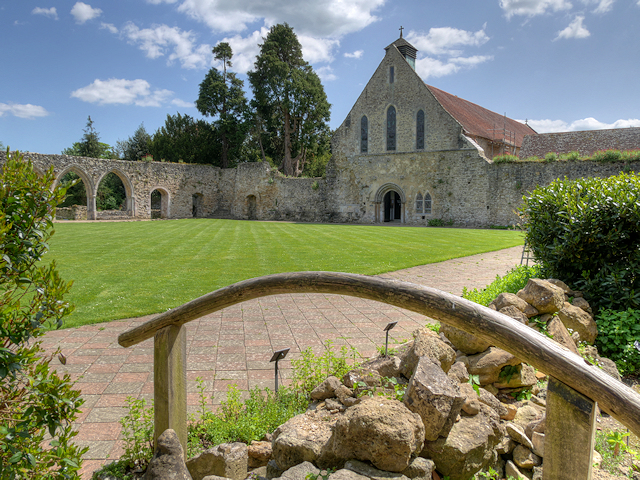
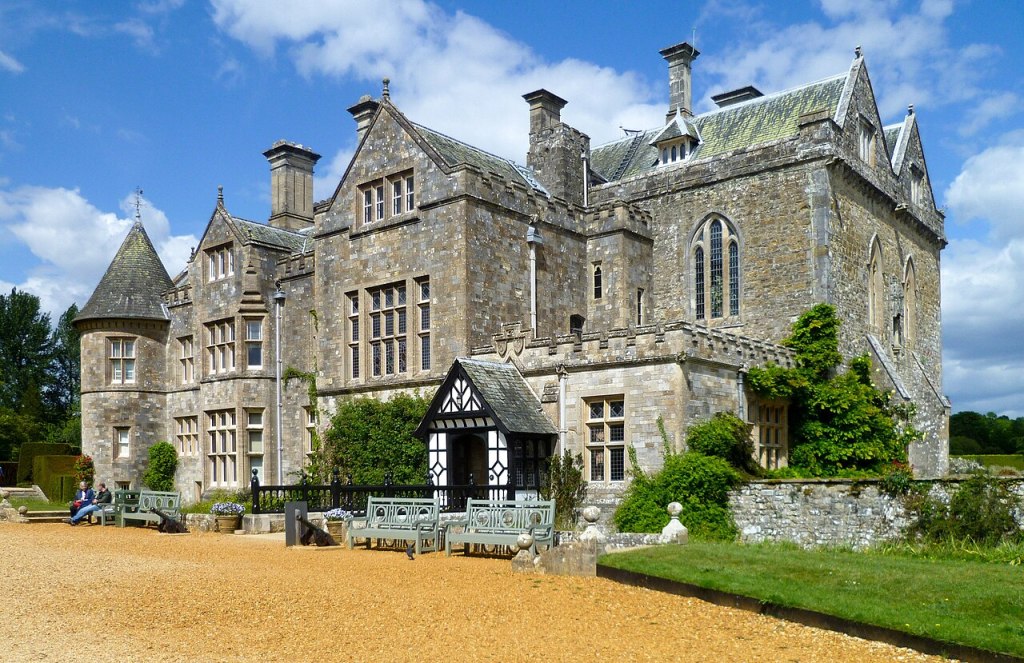
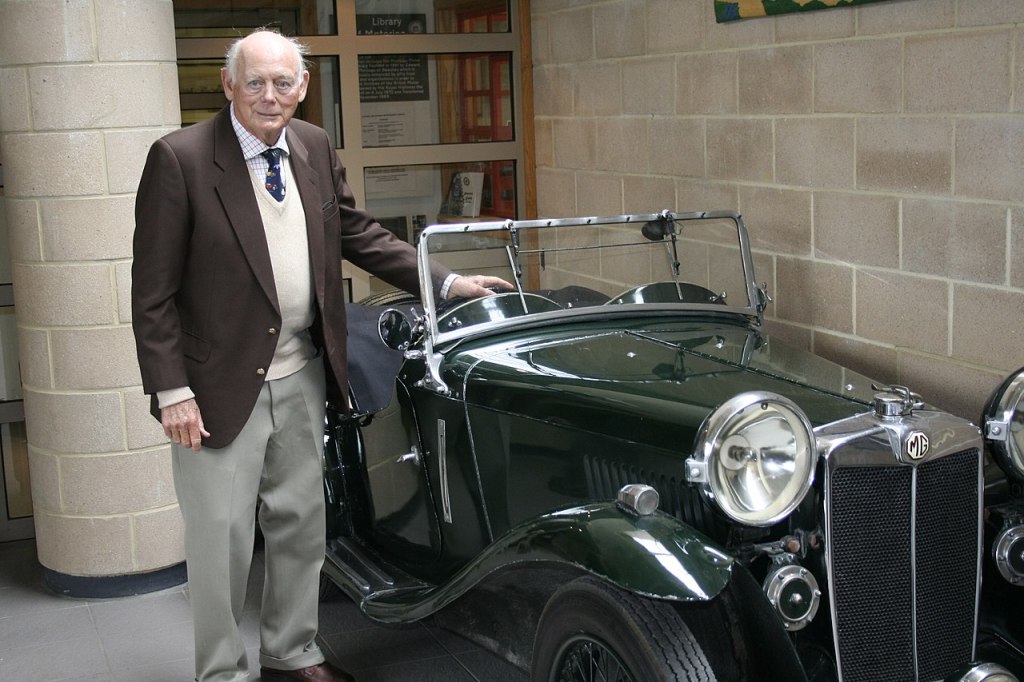
The 2nd Baron Montagu succeeded his father in 1905; already a pioneer of the motorcar in the 1890s, when he died in 1929, he passed this passion on to his son—eventually, for at the time of succession, Edward Douglas-Montagu-Scott was only three. When he died in 2015, the 3rd Baron thus passed a milestone for the longest peerage tenure: 86½ years. The 3rd Baron founded the National Motor Museum at Beaulieu in 1952, and hosted the Beaulieu Jazz Festival here between 1956 and 1961. He is most famous, however, for the scandal that broke out in 1954 when he was arrested, tried and imprisoned for homosexual acts—which gained in significance as a major catalyst for public scrutiny of the laws and ultimately the decriminalisation of homosexuality in the 1960s. The Baron himself was bisexual and married to produce today’s 4th Baron Montagu (Ralph, b. 1961). Following the scandal, the 2nd Baron rose again in society, and was Chairman of the Historic Houses Association, 1973-78, then of English Heritage, 1984-92.
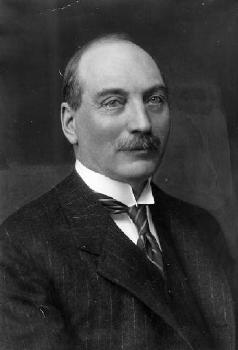
Returning to the main line, John Montagu-Douglas-Scott, 7th Duke of Buccleuch and 9th Duke of Queensberry, spent much of his life as an heir, first as Lord Eskdaill then as Earl of Dalkeith. As a young man he served in the Navy and in the House of Commons. When he became Duke in 1914, he vacated Montagu House and moved to No 2, Grosvenor Place. He was appointed Lord Lieutenant of Dumfriesshire, 1915, and Lord Clerk Register for Scotland, 1926. A few weeks after his death in October 1935, his daughter Lady Alice made a spectacular marriage to a member of the royal family: Prince Henry, the Duke of Gloucester, third son of King George V. It is interesting to consider this a reunion of distant kinship, since—we should recall—the Montagu-Douglas-Scotts were themselves a cadet branch of the House of Stuart. Princess Alice, Duchess of Gloucester, lived until 2004, dying at age 103!
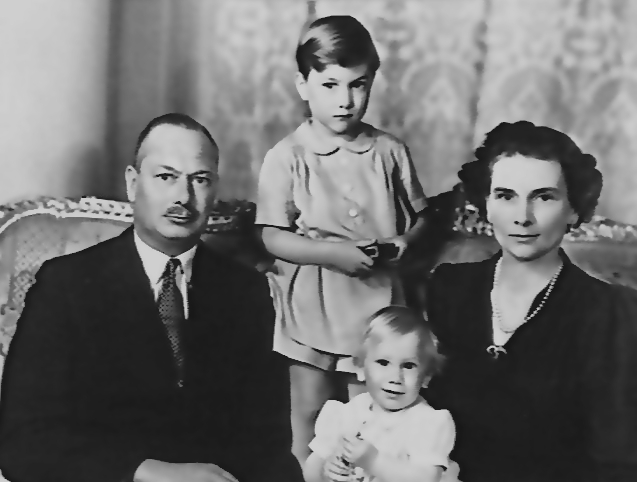
Her brother Walter, 8th Duke of Buccleuch, split his time between the three main residences of the family, Drumlanrig, Bowhill and Boughton, and continued to be one of the largest private landowners in the UK in an era when other aristocratic fortunes were crumbling. Like his predecessors, he was Captain-General of the Royal Company of Archers, but was also appointed Lord Steward of the Household—until he was compelled to resign by George VI for displaying awkwardly pro-German sentiments. It was known that he attended Hitler’s birthday party in 1939, and campaigned for a truce rather than war, but some say he went further and met secretly with Ribbentrop in London. Still, he remained close to the royal family through his sister’s marriage and through his own (in 1921) to Mary Lascelles, a cousin of the Earl of Harewood (husband to Princess Mary). His daughter Elizabeth also married within this elite circle and became Duchess of Northumberland.
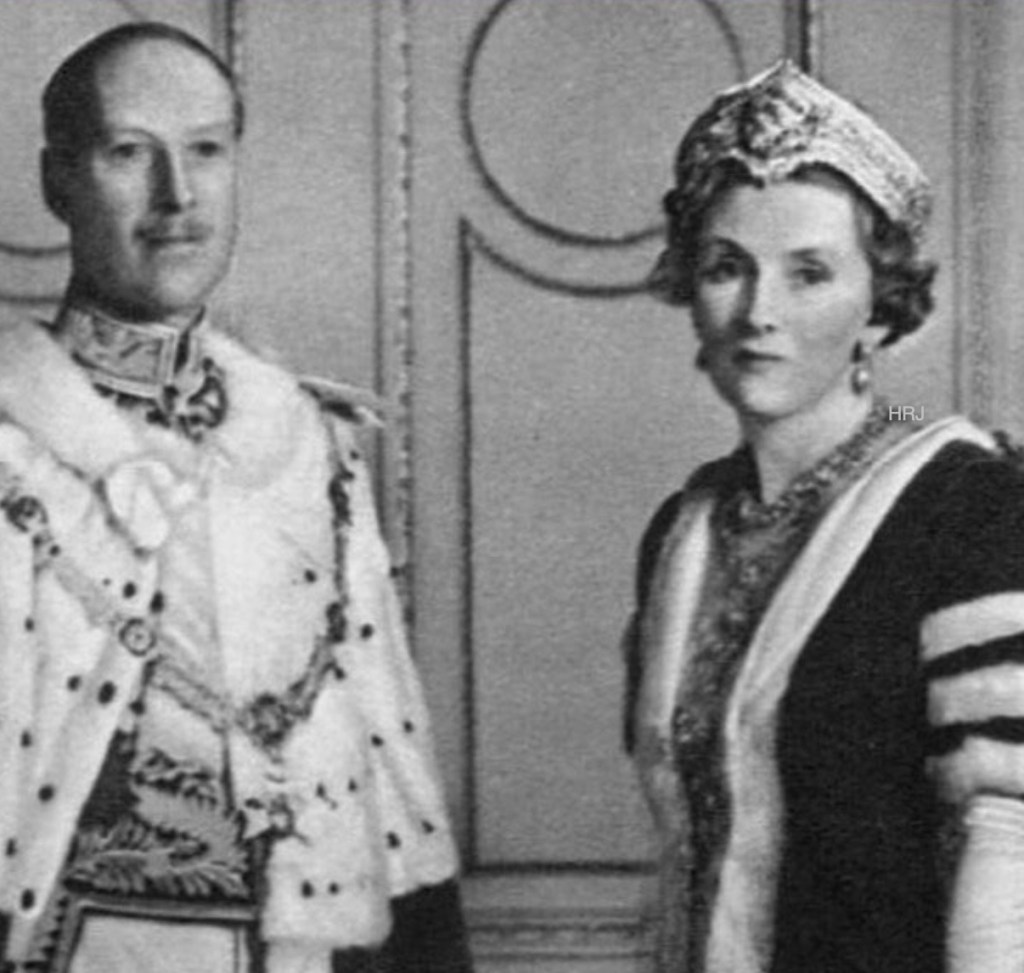
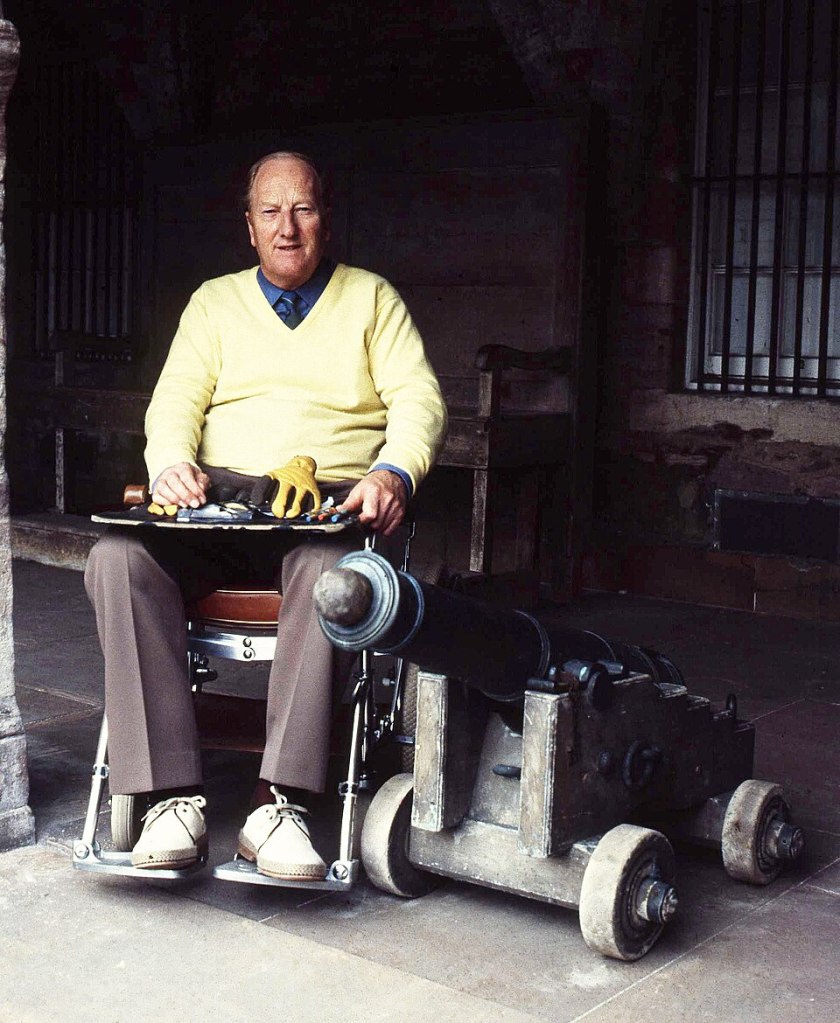
The 8th Duke died in 1973 and was succeeded by his son John, who also had a naval career, then served in the Commons (known as ‘Johnny Dalkeith’). In 1971, he had a hunting accident and spent the rest of his life in a wheelchair, but he continued to regularly attend the Lords (once he became duke) and held other prominent offices: Lord-Lieutenant of Roxburghshire and of Selkirkshire (merged from 1975), and Chancellor of the Order of the Thistle, 1992 to 2007.
In 2007, Richard Montagu-Douglas-Scott (b. 1954) became the 10th Duke of Buccleuch and 12th Duke of Queensberry. He is Chief of Clan Scott, and like his father, Chancellor of the Order of the Thistle as well as Lord Lieutenant of Roxburgh, Ettrick and Lauderdale. Besides the family’s main large residences, he lives at Eildon Hall (the traditional home of the heir). Since 2018, he has been surpassed as the largest private landowner in the UK, but still holds an impressive 217,000 acres (about 880 km2). The Buccleuch Group manages his interests in estates but also wind farms, tourism and forestry. The Duke holds ceremonial posts, notably as Captain-General of the Royal Company of Archers, which carries the title ‘Gold Stick for Scotland’ with its key role at the openings of the Scottish Parliament and at royal coronations and funerals—as recently seen in 2022 and 2023. He is active in Scottish society as President of the National Trust for Scotland, 2003-12, and President of the Royal Scottish Geographical Society, 1999-2005 (and many other things). Also active in the church, he was appointed High Steward of Westminster Abbey in 2016, and Lord High Commissioner to the General Assembly of the Church of Scotland, 2018-19, the Queen’s personal representative to the Kirk.
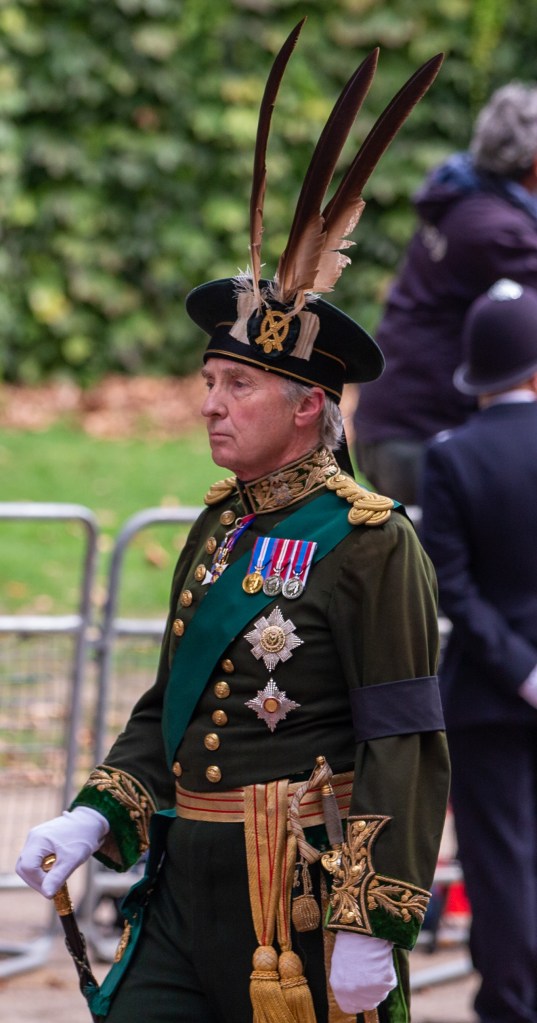
The triple dynasty is secure with an heir, Walter, Earl of Dalkeith (b. 1984) and a spare, Willoughby Ralph, Lord Eskdaill (b. 2016), plus an uncle, Lord Charles Scott (b. 1987), and many cousins, descendants of the 6th Duke. Reaching out for the crown in 1685, the Scotts remain essentially a clan of the Borders with roots still in Ettrick Forest.
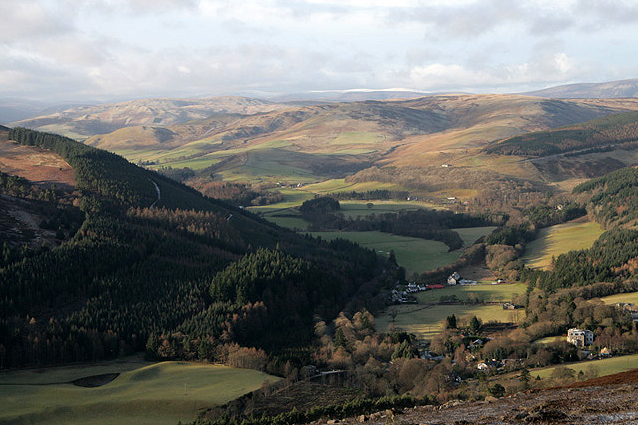
(images Wikimedia Commons)
 Dukes and Princes