Those knowledgeable about the dynastic details of the life of Queen Victoria will know that she had a half-sister, Princess Feodora. But her appearance in season three of the television series Victoria surprised many—at the time, I was asked if this was a fictional character added to make the series more interesting, as historical dramas often do. She was indeed a real person: one of two children born to Victoria’s mother from her first marriage to the Prince of Leiningen.
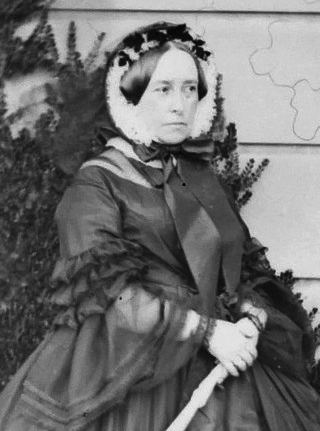
Leiningen? What is it? It was one of several ancient counties of the Holy Roman Empire that was elevated to the status of an autonomous principality in the final years of the Empire’s existence, then was snuffed out in the re-shuffling of Europe’s political boundaries at the Congress of Vienna in 1815. The family retained a princely rank, if no genuine sovereignty, all the way up to the fall of the German Empire in 1918. And because they were related to the British royal family, they forged several marriages of the highest order beyond the level of their peers. The other German princely family most associated with Princess Feodora was Hohenlohe—her husband’s family—and they too kept up relations with the British royal family, notably through Feodora’s third son Victor who came to live in the United Kingdom and served in the Royal Navy. But the Hohenlohes are part of a different story and will have their own blog post. The two half-siblings of Queen Victoria, Feodora and Karl of Leiningen, belonged to one of the most ancient noble houses of the Palatinate, the area of the Rhineland that was the political and economic core of the Holy Roman Empire from its earliest days.
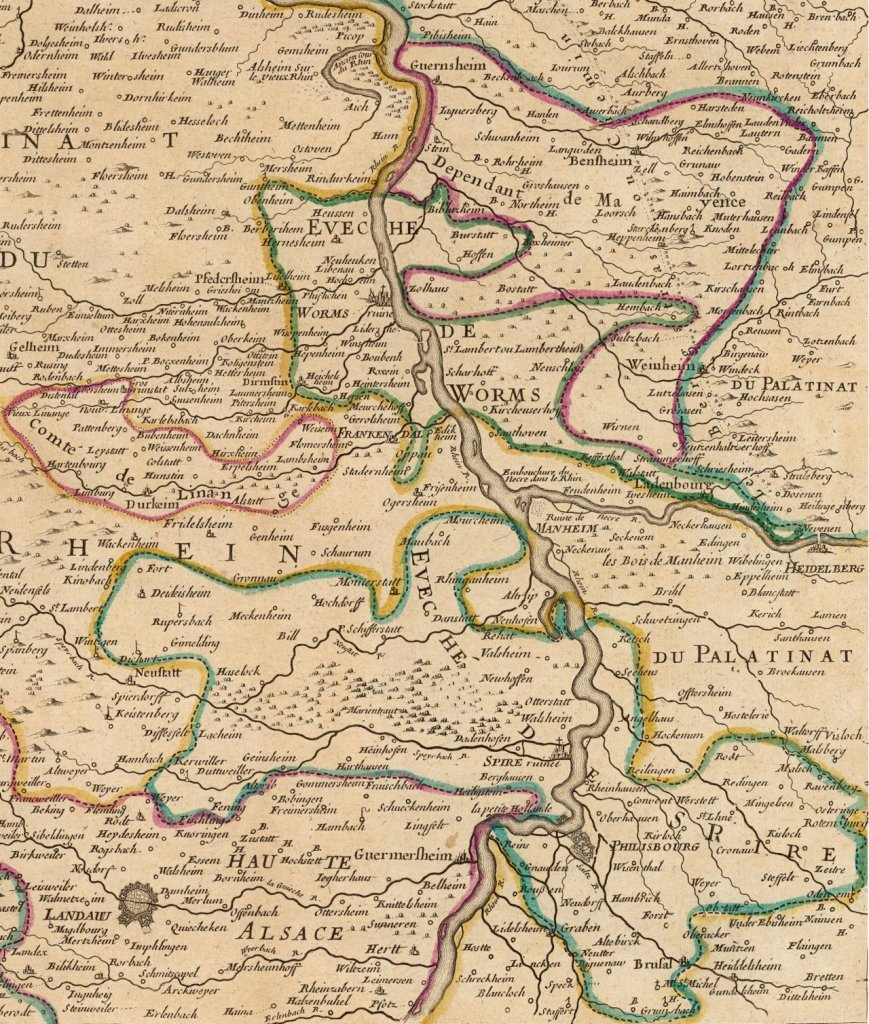
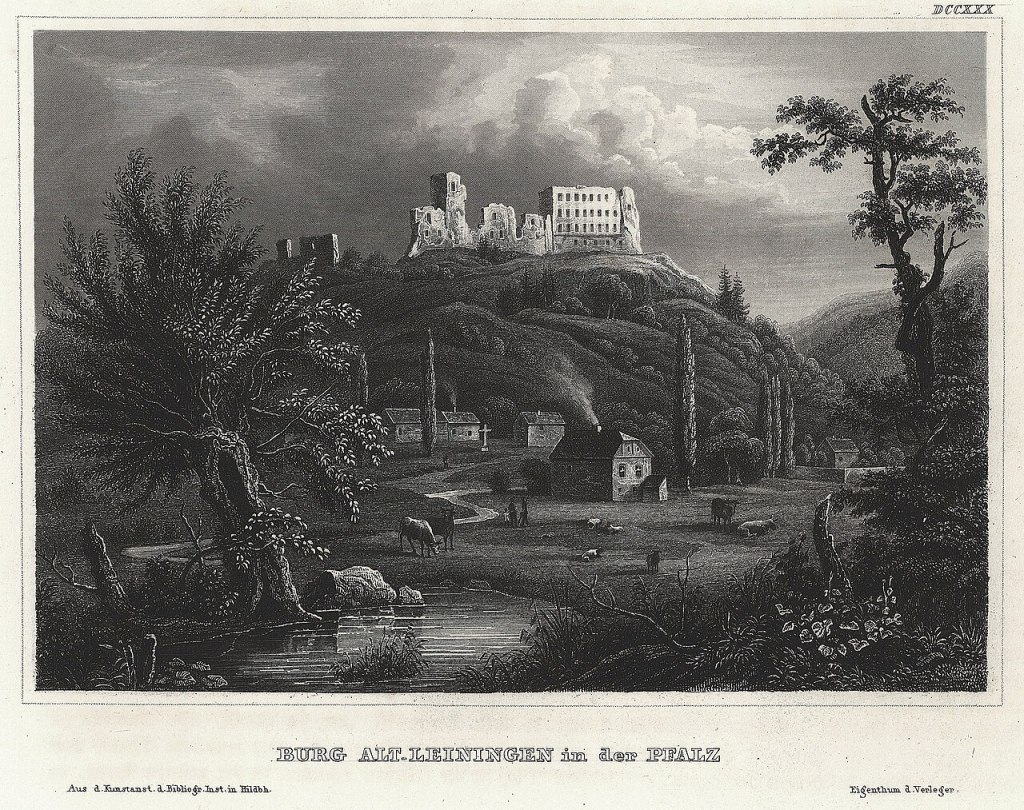
Leiningen Castle was built by a Count Emich in about 1100, in the area of hills west of the middle Rhine where the flat river plain meets the Palatine Forest (the Pfälzerwald), near the ancient episcopal city of Worms. The family also built about this same time a nearby abbey, Höningen, to serve as the family sepulchre. There is a record of an earlier Emich (or Amicho) who donated property in the Worms area to a local abbey in 782, and descendants were called the Emichonen (because many of them held this name), owning property in the mid-tenth century in the area known as the Nahegau (the valley of the river Nahe). Unlike most noble families, the date for their elevation to the rank of count is impossible to pinpoint, but they were certainly called counts by the time of another Emich, a leader of the First Crusade in the 1090s.
The origin of the family name is also not known for certain. It is possible the castle, and then the family, took its name from the Leinbaum, the lime tree growing on the banks of the Leinbach (now called the Eckbach)—and indeed, the older family coat-of-arms bore a lime tree. The area around their holdings became known as the Leiningerland.
The first castle, now known as Altleiningen, endured centuries of conflict as armies marched up and down the Rhine, then was badly damaged in the Peasants War of 1525 and rebuilt in a newer Renaissance style. Destroyed again by French troops who ravaged the Palatinate in 1690, it was not rebuilt, and was used for building materials by local residents. It was still owned by the family in 1933 when it was acquired by the local government; in the 1960s Altleiningen Castle was partly rebuilt and used as a youth hostel. Today it is not only known for hosting a number of local festivals but also as a home for the largest colony of wild bats in Germany, sleeping in its ancient vaults.
In the twelfth century, the family added to its prestige in the typical way of many German noble families in this period, by obtaining prized episcopal seats for its sons: the middle of this century saw two bishops of Würzburg and two bishops of Speyer, the latter at that point still one of the core religious centres of the Holy Roman Empire. Through this connection, the counts of Leiningen were given more senior titles by the emperor, notably in 1205 that of Landvogt (district governor) of the Speyergau, the region around the city of Speyer.
The original line of counts died out in 1220—the last count’s sister Liutgarde married Simon II, Count of Saarbrücken. Saarbrücken was a larger county further to the west, in what is now called the Saarland (see Nassau-Saarbrücken), which passed to their eldest son, while their second son Friedrich took the name Leiningen and restarted the dynasty. Count Friedrich II was also known as a composer-performer of German songs, a Minnesinger.
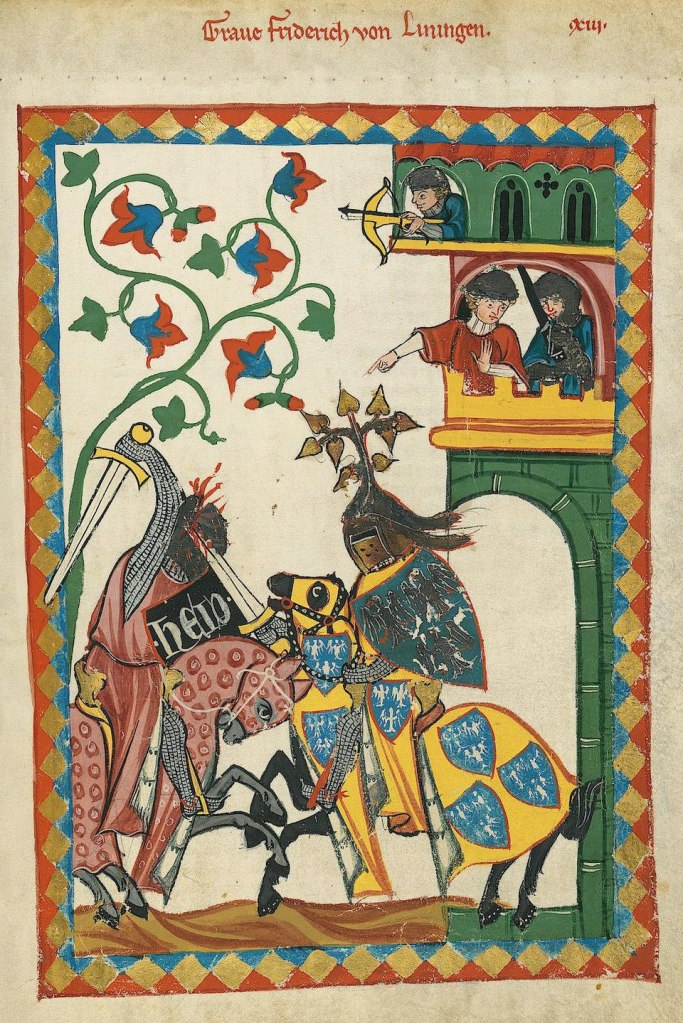
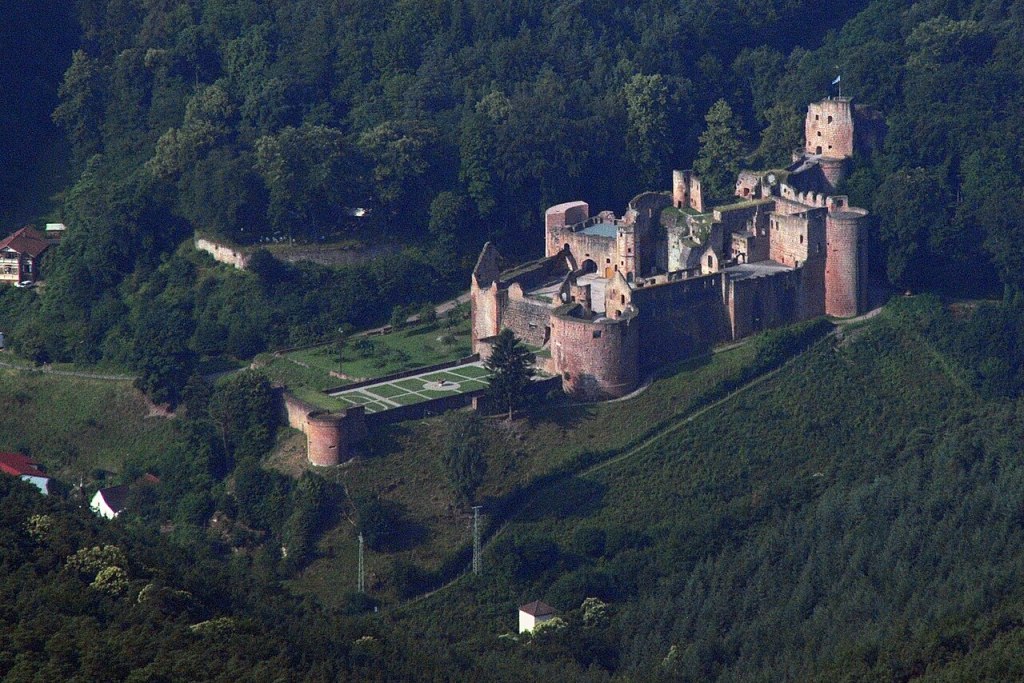
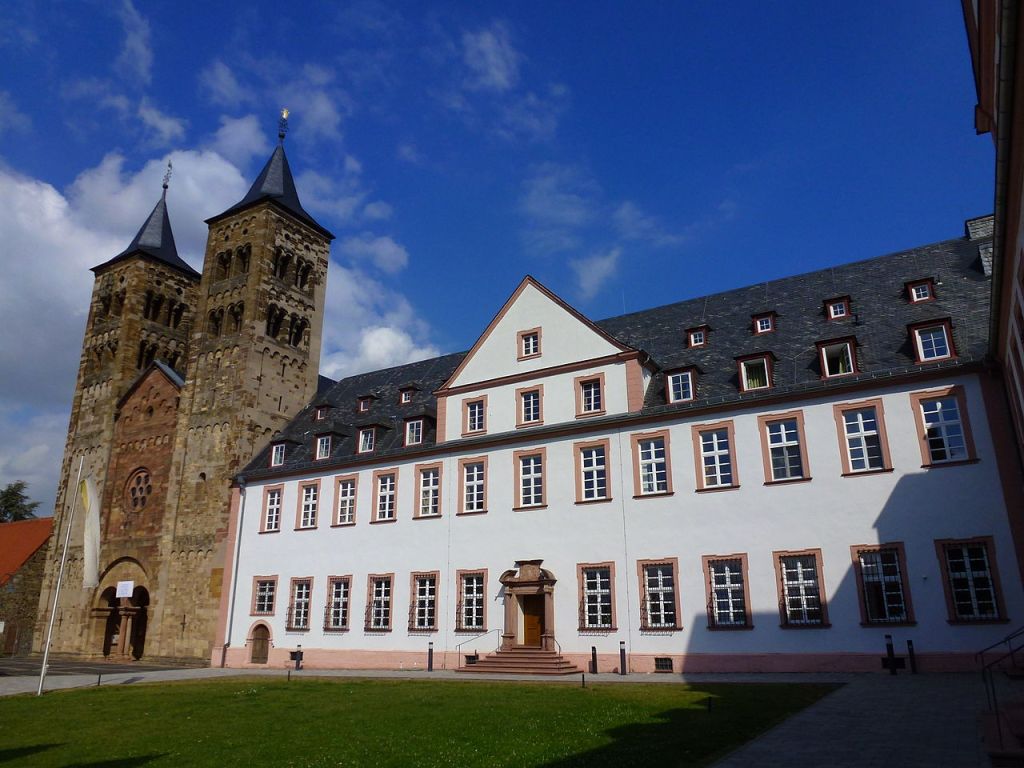
Friedrich inherited a castle, Hardenburg, built around 1205 a bit further to the south, on a bend in the river Isenach. It would become the senior branch of the Leiningen family’s main residence after 1560, until they moved to the town in the plains below, Bad Dürkheim (see below) after the ravages of the French armies in the 1690s. A further wave of French destruction did the rest in the 1790s, and the castle has remained a ruin since. Acquired by the state in 1820s, it is maintained today by the State of Rhineland-Palatinate.
Friedrich’s son Simon of Leiningen married an heiress, Gertrude, Countess of Dagsburg (more on that below), but they had no children so both inheritances passed to his brother, Friedrich III. In about 1240, Friedrich built a new castle five kilometres from Altleiningen named Neuleiningen. This castle was completely destroyed by the French in 1690 and was not rebuilt.
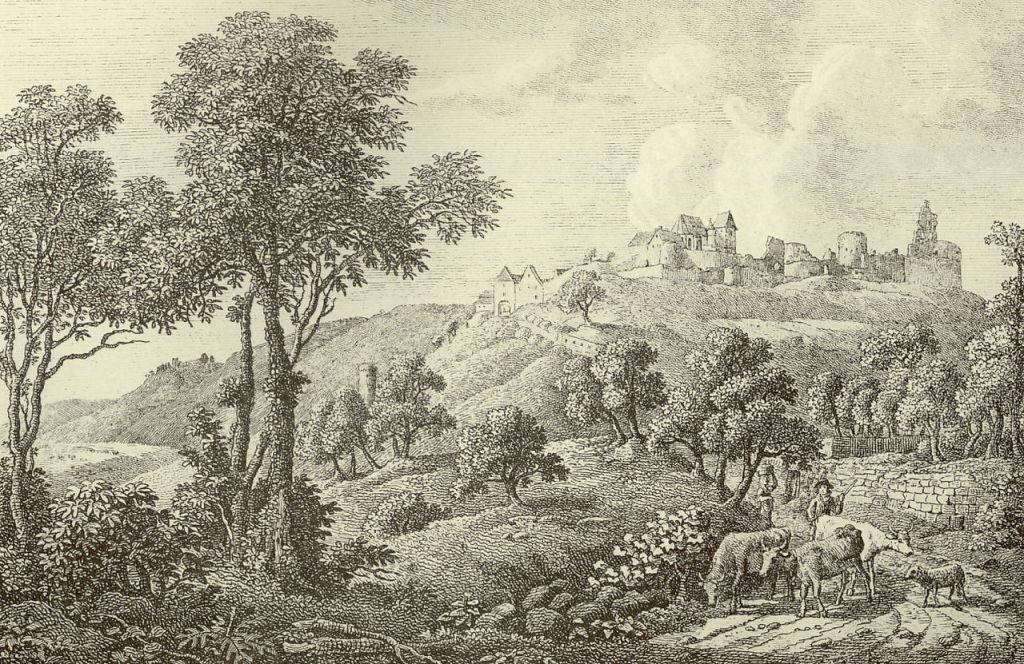
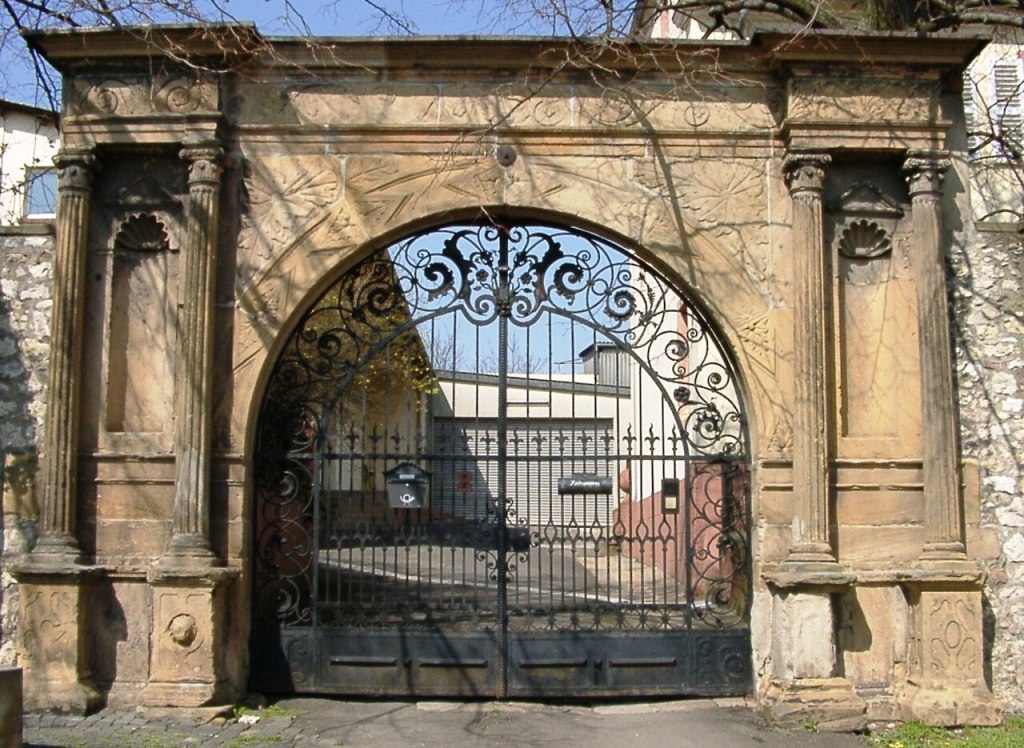
Other Leiningen castles built in this period, also ruins since the 1690s, include Battenberg Castle and Emichsburg in Bockenheim—the latter was a grander residence, of which some walls remain, having been incorporated into a local winery—the Leiningerland is one of the centres of the German wine country.
When Count Friedrich IV died in 1316, his domains were divided into the lines of Leiningen-Dagsburg and Leiningen-Hardenburg. The former was based much further to the south and west, in the Vosges mountains, along what was for many centuries the frontier between Alsace and Lorraine—though both were part of the Empire until the seventeenth century, and both Alsace and this eastern edge of Lorraine were German speaking.
The County of Dagsburg is a fascinating fragment of Imperial feudalism that persisted as an independent entity well into the modern age, until it was finally absorbed by France during the Revolution (and renamed ‘Dabo’ as it is called today). It is most famous for its huge pink sandstone rock (or rocher) that towers over the forested valleys of the Vosges mountains. Atop this rock (elevation about 650 meters) an ancient castle perched rather precariously, as does today the Chapel of Saint-Léon, named for Dagsburg’s most famous son, Pope Leo IX (Léon in French). Originally built by the local ruling family called the Ettichonids (or the House of Alsace) in the tenth century, the castle was probably named for a former Frankish nobleman called Dago (so ‘Dago’s Castle’ or burg).
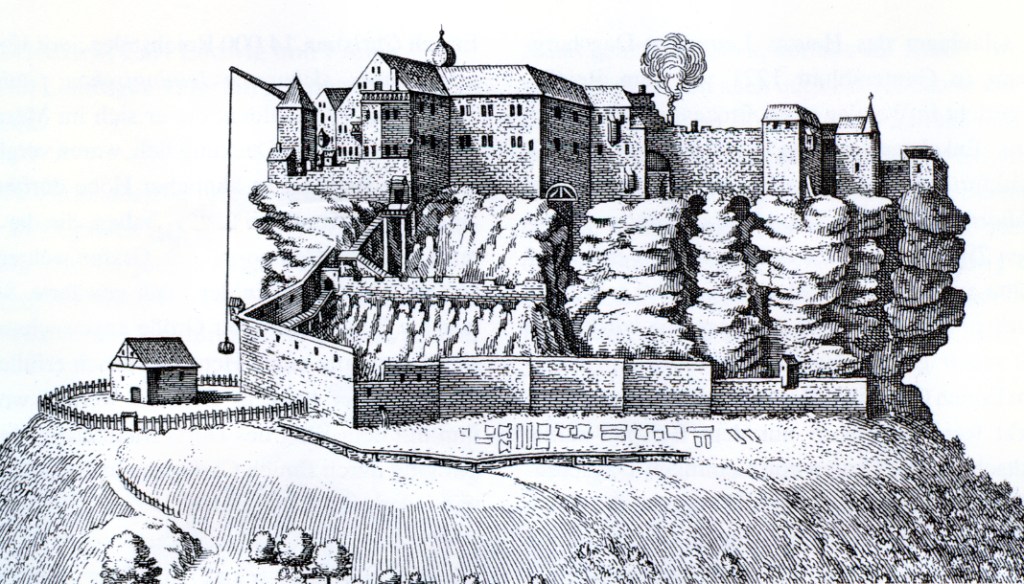
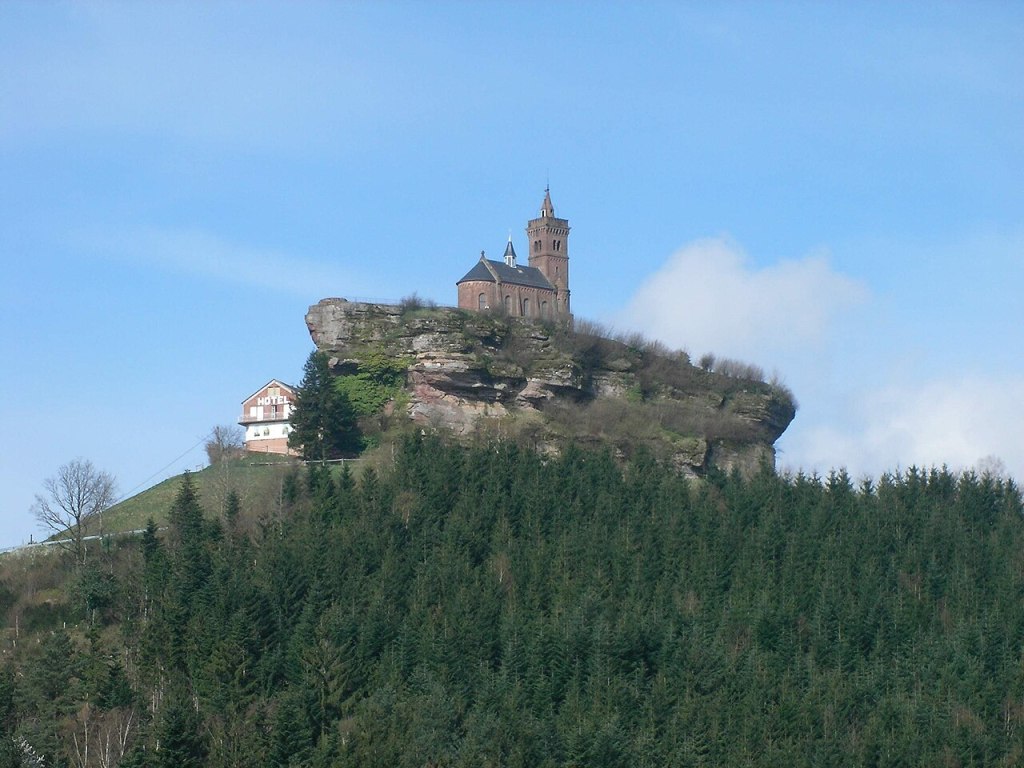
In the mid-eleventh century Dagsburg’s heiress, Heilwig, married an Alsatian count of Egisheim. Heilwig has several legends associated with her, including the discovery of holy relics in local monasteries and the performance of great miracles. She is also famous as the mother of Bruno of Dagsburg-Egisheim, Bishop of Toul from 1026, elected Pope Leo IX in 1049. A major church reformer (though his inflexibility led to the permanent break with the Eastern Church in 1054), he has been venerated as a saint since shortly after his death. The Pope’s older brother, Hugo, continued the line of counts of Dagsburg until its extinction in 1212 and its inheritance by Countess Gertrude. Gertrude is a fascinating historical person, an heiress and a poet, before she married Simon III of Leiningen, she was also a duchess and a queen, having survived two much more prominent husbands: first Thibaut I, Duke of Lorraine, and secondly Thibaut IV of Champagne, King of Navarre.
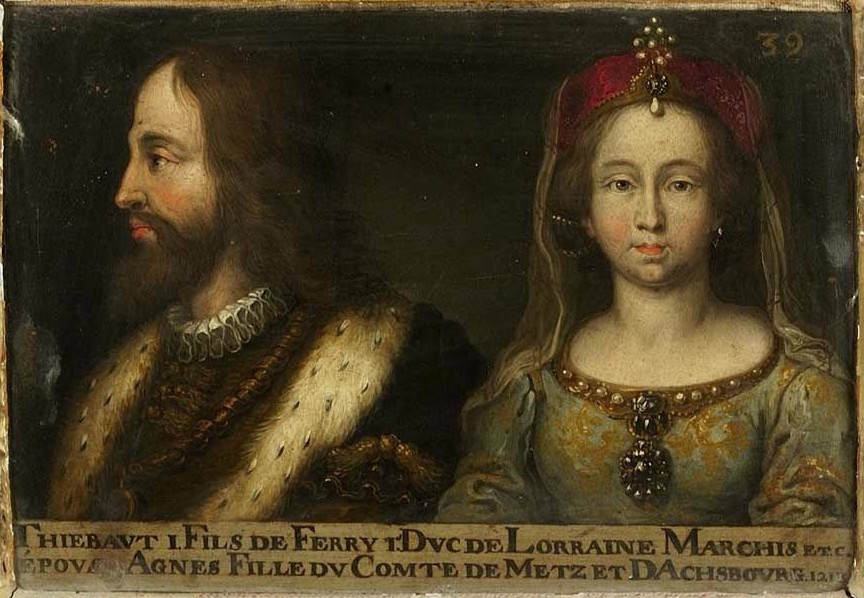
So Gertrude of Dagsburg was quite a catch for the Leiningers, and their augmented status continued to be enhanced in the next century with two more bishops of Speyer (Heinrich and Emich), a bishop of Bamberg, and, finally, an archbishop of Mainz: Gottfried von Leiningen-Dagsburg scaled to the top of the ecclesiastical hierarchy in the Holy Roman Empire, and was also thus one of the seven imperial electors—though only briefly, from 1396 to 1397.
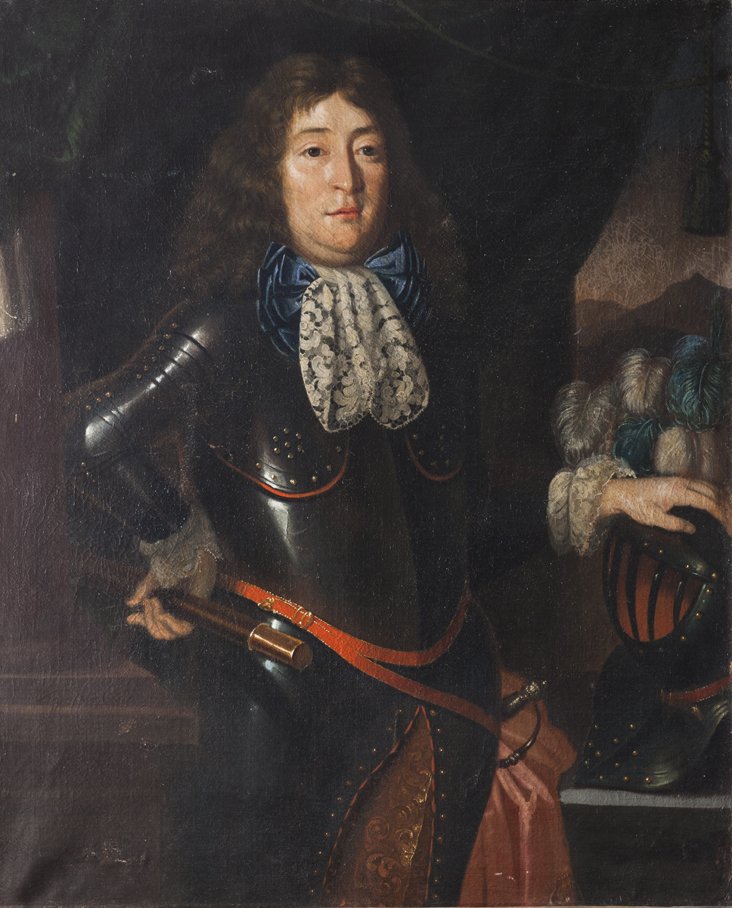
A further territory was added in 1344, a few miles to the west, across the crest of the Vosges: the County of Rixingen, or Ruxinge in French (many German place names ending in ‘ingen’ become ‘inge’ or ‘ange’ in French, including Leiningen itself, called Linange in French sources). Today the town is called Réchicourt, which is not a transliteration of Rixingen: the ancient Carolingian villa of ‘Richis Curtis’ became Réchicourt, while the Frankish village below was Ruadgisingen or Rixingen. Situated in the upper reaches of the river Saar, this was for centuries on the linguistic border between French and German. Its twelfth-century castle would be destroyed in 1469 in a conflict with the powerful Duke of Lorraine; later rebuilt in Renaissance style, in the 1660s it was sold to the Ahlefelt family. In the late eighteenth century the county was held by the Duke of Fronsac (in the Richelieu family) though it remained firmly outside the jurisdiction of the King of France until the Revolutionary wars of the 1790s. The last of the line of counts of Leiningen-Rixingen demonstrates well the trans-national character of this branch in particular: Philipp Ludwig, who converted to Catholicism in 1671, grew up in Lorraine (at the time occupied by France) and at first served in the army of France, then after 1688 shifted to Imperial service, but also served on the Privy Council of the Elector Palatine. He was killed as an Austrian general at the Battle of Cassano, 1705.
The senior line of counts of Leiningen-Dagsburg continued to move between the Rhineland and their possessions in the Vosges until 1467 when the last count, Hesso, died; the family’s principal heiress Margarete married a nobleman from across the Rhine, Reinhard III, Lord of Westerburg, from a junior branch of the House of Runkel. We will encounter Runkel again in another post as the Princes of Wied-Runkel. Their lordship of Westerburg was situated across the Rhine in the hilly region called the Westerwald. The castle dominates a landscape wedged between the estates of the electors of Trier and the counts of Nassau. Built in the 1190s by the House of Leiningen, it was held by the Runkels from about 1220, forming a separate branch soon after, then, from the 1550s formed a separate branch of a renewed house of Leiningen-Westerburg. The castle remains in private hands today.
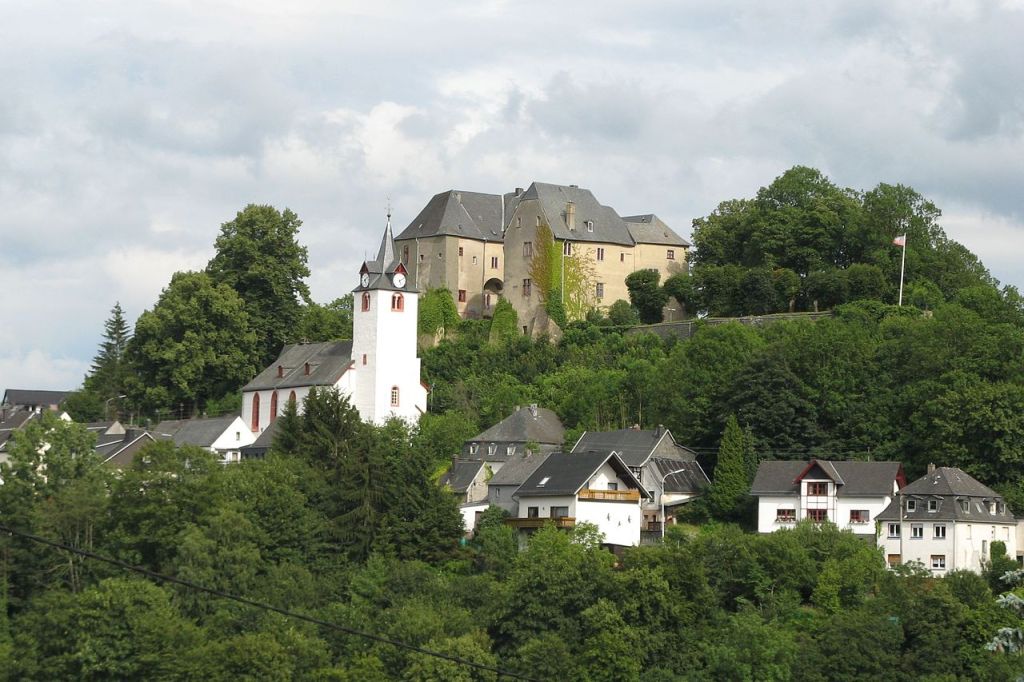
A reborn and rebranded dynasty, Leiningen-Westerburg, with the bulk of the Leiningen possessions west of the Rhine, and the Westerburg castles and lordships east of the Rhine, would divide, re-combine and re-divide until the end of the Holy Roman Empire in 1806. Many of the Westerburg lands passed out of the family in the mid-seventeenth century, so the two remaining branches in the eighteenth century were called Leiningen-Westerburg-Altleiningen and Leiningen-Westerburg-Neuleiningen. They remained counts, not princes, so are not covered in detail here, but they were given compensatory lands like their princely cousins in 1803 when their estates west of the Rhine were confiscated by the French: the secularised abbeys of Ilbenstadt and Engelthal in the Wetterau. Several branches died out in the nineteenth and twentieth centuries, with the last male of this line dying in 1956. Some of these distinguished themselves as soldiers, notably Viktor, an Austrian Field Marshal Lieutenant (d. 1880), and his cousin Karl, a Hungarian freedom fighter, killed during the uprisings of 1849. In the twentieth century, Count Wilhelm of Leiningen-Westerburg-Neuleiningen (d. 1956) was a prominent chemist, forestry scientist and university professor.
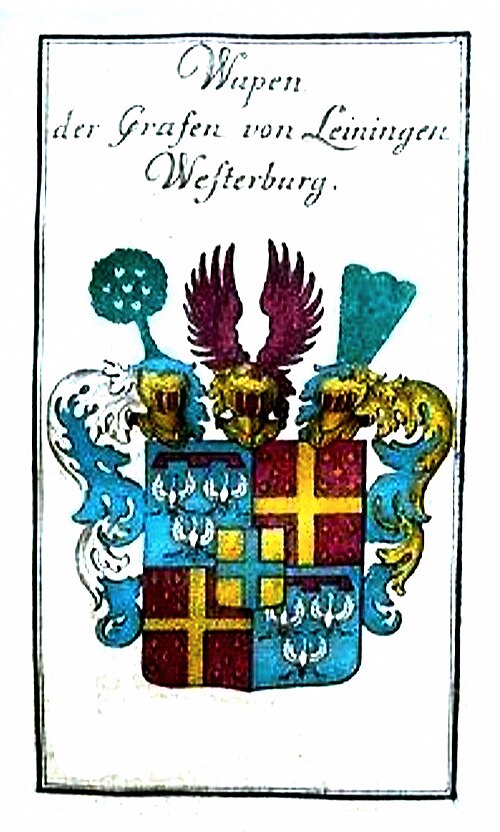
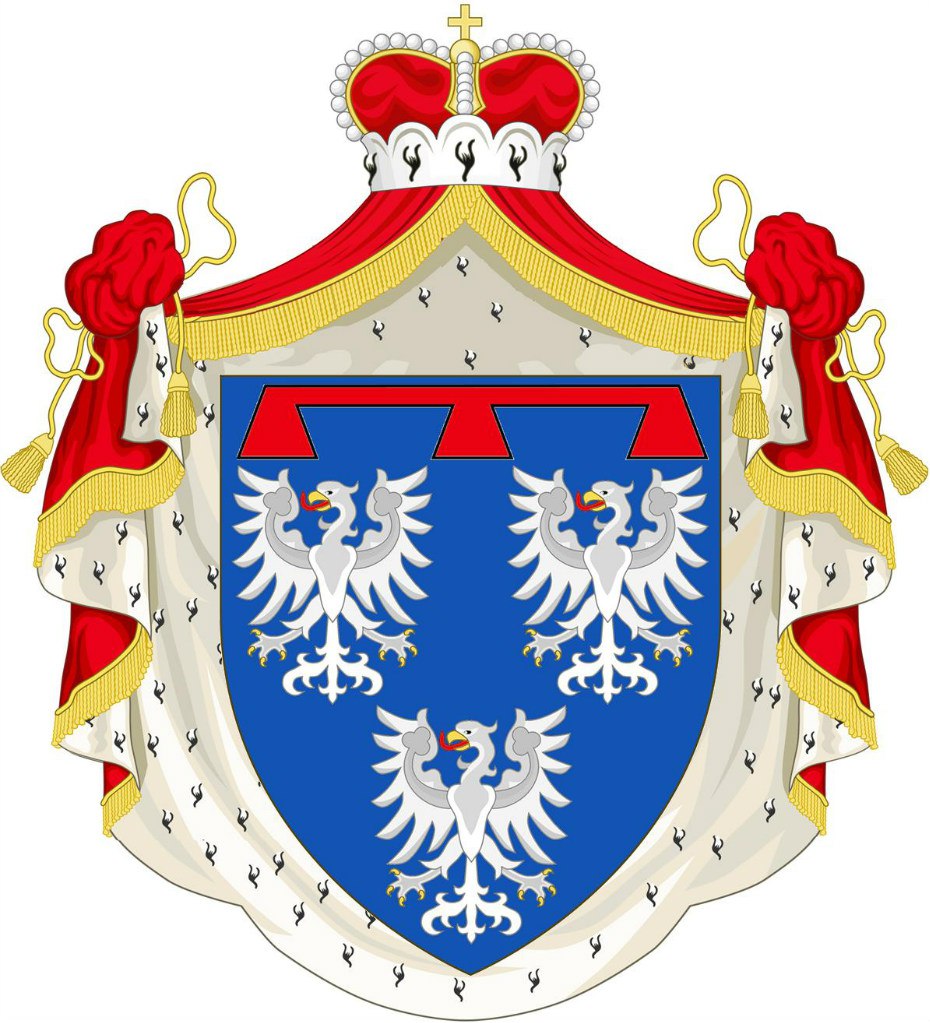
One curious element about this split in the Leiningen family after 1316 and the extinction in the male line of the senior branch in 1467, was that both the new Leiningen-Westerburg family and the junior line—still ‘genuine’ Leiningers by patrilineal standards—kept the same arms, three silver eagles on blue, both marked by a three-point red label (since both were descended from a younger line of the House of Saarbrücken). The Westerburg branch quartered this with their own arms, a gold cross on red, with twenty smaller gold crosses.
Even though most of the old Leiningen territories went to the Westerburgs, the castle of Dagsburg passed back to the junior line based in Hardenburg. They also continued to acquire lands in and around the Duchy of Lorraine, like the lordship of Aspremont in 1466, in the Meuse valley, and the lordship of Weißenburg in Alsace (today’s Wissembourg). In my own research on the Duchy of Lorraine, I encounter these in the seventeenth century as ‘comtes de Linange’.
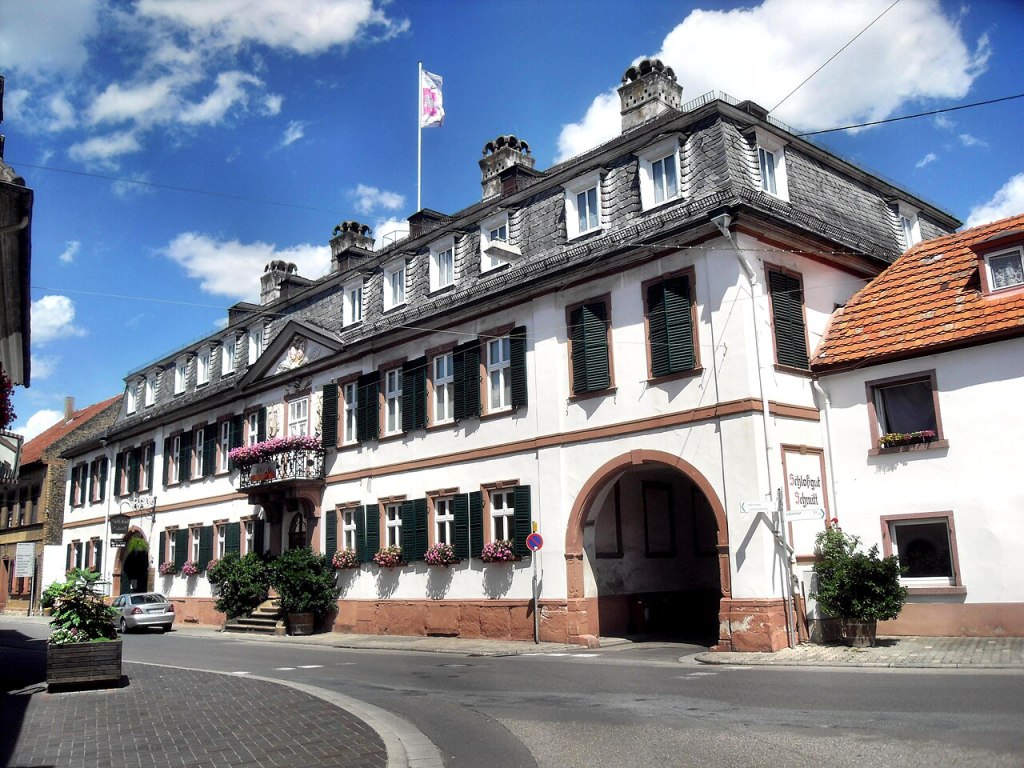
A further dynastic division in 1560 created the lines of Leiningen-Dagsburg-Hardenburg and Leiningen-Dagsburg-Falkenburg. The later were based at another castle deep in the Palatine Forest built on a rock of red sandstone and acquired by the family in about 1300. Entirely destroyed by the French in the 1680s, nothing remains of Falkenburg Castle. But by this point, these counts had moved to another castle, Heidesheim, closer to the main centres of Leiningen power, southwest of Worms, built in 1608. Another line settled further north in Guntersblum. These two lines came to an end in 1774, but two brothers, formerly excluded from the succession due to illegitimate descent, sued the main line of Leiningen and (surprisingly) won, re-creating two imperial counties in Guntersblum and Heidesheim, which persisted until the end of the Holy Roman Empire. Count Christian Karl of Leiningen-Dagsburg-Falkenburg-Guntersblum built a new Leiningen Palace in Guntersblum, in 1787—it remains a fine building, still privately owned.
Having only been re-established, these two tiny counties were overrun by the armies of revolutionary France in the 1790s, and both families fled (and Heidesheim Castle burned down); by a treaty between France and the Empire both were given lands in compensation in 1803, east of the Rhine: Guntersblum got Billigheim (formerly part of the lands of the Elector Palatine), while Heidesheim got Neudenau (formerly a fief of the Elector of Mainz). Both of these were almost immediately mediatised and joined to the new aggrandised Grand Duchy of Baden in 1806. These two cadet lines eventually died out, the last in 1925.
Meanwhile, in 1725, the main line of the family moved its main seat down from the mountain at Castle Hardenburg to the town of Dürkheim in the valley below. This was an ancient spa town, with several mineral springs. On the site of a Roman villa was an important medieval abbey (Limburg) and a mercantile town, acquired by the Leiningen family in 1554. Count Emich IX had already made the town the dynastic centre and built a new chapel there for the family necropolis in 1508. The town was destroyed by the French in the 1690s, so Count Freidrich Magnus rebuilt it and added a new residence for himself on the edge of town, Schloss Dürkheim, in the 1720s. This new baroque palace was soon augmented with formal gardens, completed by his son Karl Friedrich in the 1760s. He also added new wings, and converted one of these into a theatre open to the public, where several of his family members performed as amateurs. A few miles to the west, the counts built a smaller hunting lodge, Jägerthal, where the family resided in the summer months. But, as seems to happen a lot in this story, French armies invaded in the 1790s, with Schloss Dürkheim as a particular target since it had housed the commanders of the army of French noble émigrés, and both the city palace and the rural hunting lodge were completely destroyed. Neither was rebuilt, but in the nineteenth century, the town was developed into a spa town (and it changed its name in 1904 to Bad Dürkheim)—today its Kurhaus hosts a casino, spa and restaurant.
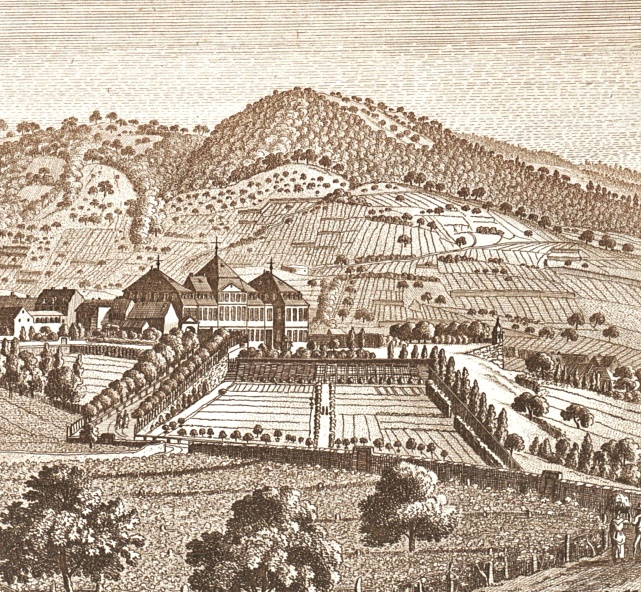
From 1756, the head of the senior branch of Leiningen-Dagsburg-Hardenburg was Count Karl Friedrich, born in the new Schloss Dürkheim. He became a Chamberlain at the Imperial court and served the Elector Palatine on his Privy Council and as a lieutenant-general in his armies. In 1774, he inherited the lands of the Leiningen-Falkenburg branch (though as seen above, he later had to give them back), so in 1779, Emperor Joseph II augmented his status by elevating him to princely rank—though not fully autonomous like other Imperial princes: he had did not have an independent vote in the Diet, but voted as a member of the College of Counts of the Wetterau, the collective body at the Diet representing the high nobility of the Middle Rhine.
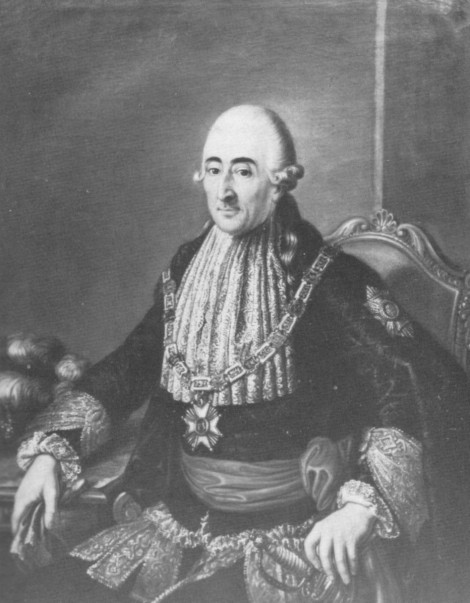
In the 1790s, as French revolutionary armies advanced towards the Rhine, they incorporated many German principalities into the expanding French Republic. The Prince of Leiningen lost his lands west of the Rhine, but according to the Treaty of Lunéville (1801), he was compensated, with lands taken from secularised ecclesiastical territories on the other side of the Rhine. A re-constituted Principality of Leiningen, created in 1803, was formed from lands east of the city of Heidelberg taken from a now secularised Archbishopric of Mainz—notably the Abbey of Amorbach, which became its capital—and from the Electoral Palatinate—including another former abbey, Mosbach—plus some smaller fiefs from the Bishopric of Würzburg to the east. Added to his princely title, Karl Friedrich’s other formal titles now included Count Palatine of Mosbach, Count of Düren, Lord of Amorbach and so on.
The Abbey of Amorbach was one of four grand abbeys established by the Frankish kings of the eighth century to help convert this region (Franconia). It was for a while an independent Imperial abbey, but by the tenth century was under the jurisdiction of the Bishop of Würzburg, then in 1656 transferred to that of the Archbishop of Mainz. The abbey church and its residence were rebuilt in the 1740s in a baroque style. In the 1780s, it was given a new organ, which remains one of the finest in the world. After 1803, the abbey church was given to the local parish (now Protestant) while the residence became the first seat of the princes of Leiningen. A few streets away, one of the archbishops of Mainz who had been born in Amorbach built a residence for himself there in the 1720s, and this became the preferred residence for the princes of Leiningen, and remains their private home today.
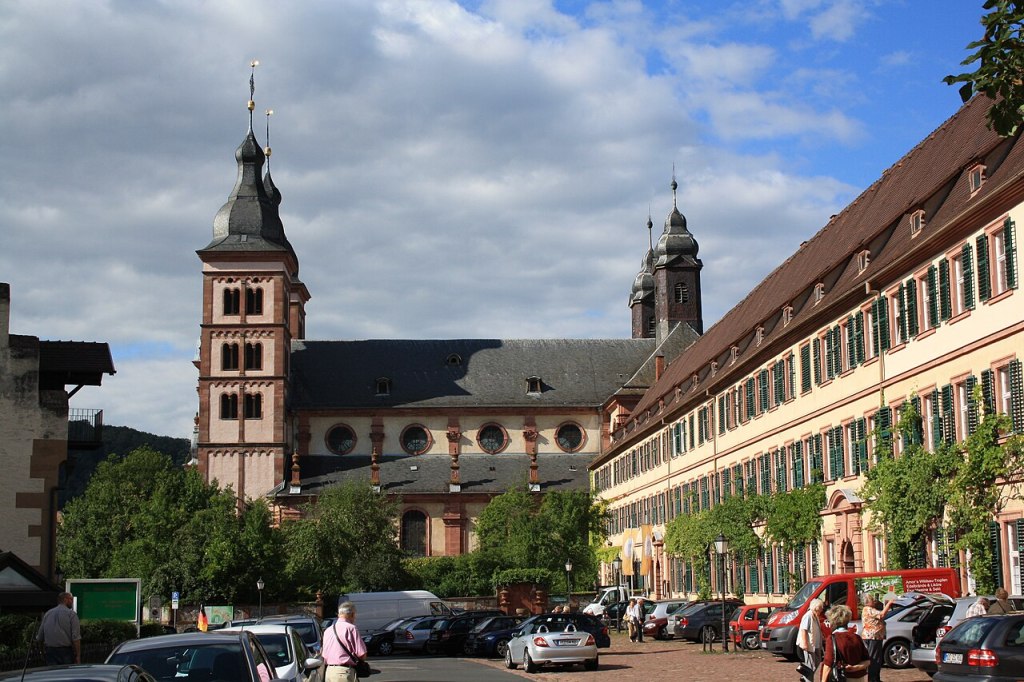
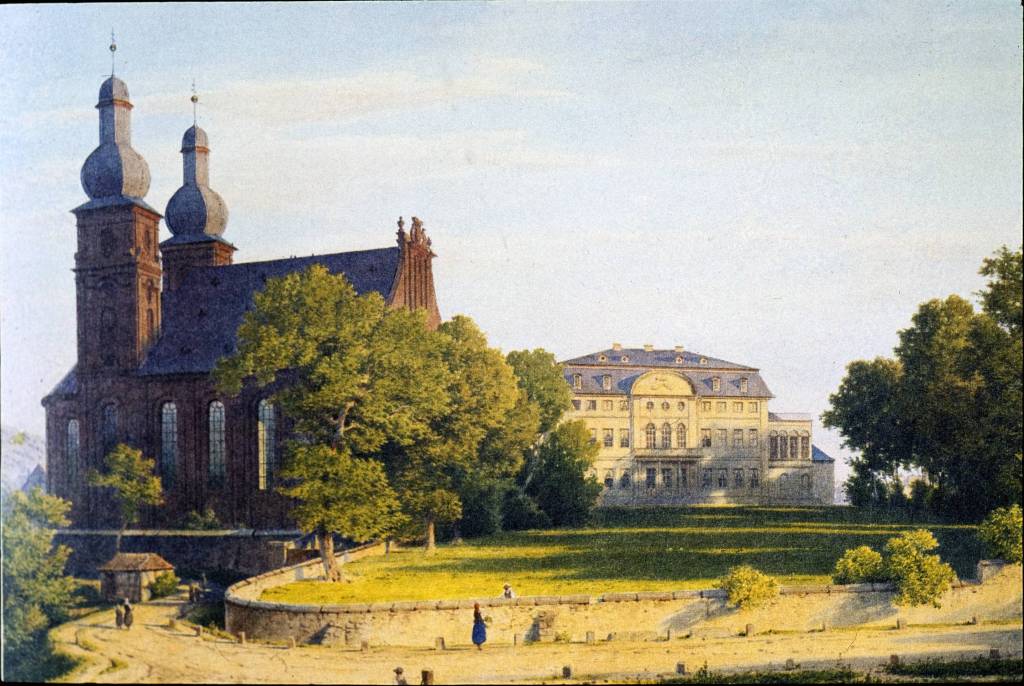
Having barely been created, the Principality of Leiningen was mediatised in 1806, and absorbed within the new Grand Duchy of Baden (today part of the state of Baden-Württemberg). After the Congress of Vienna of 1814-15, the former lands of the old County of Leiningen in the Palatinate—on the west bank of the Rhine—were given to the new Kingdom of Bavaria. Baden also ceded some of its territory, including Amorbach, to Bavaria. The 1st (and only independent) Prince of Leiningen died only a year later, in 1807. He was succeeded by his son, Emich Karl, who had long run the affairs of the family, particularly negotiating the delicate balance between French and Imperial politics.
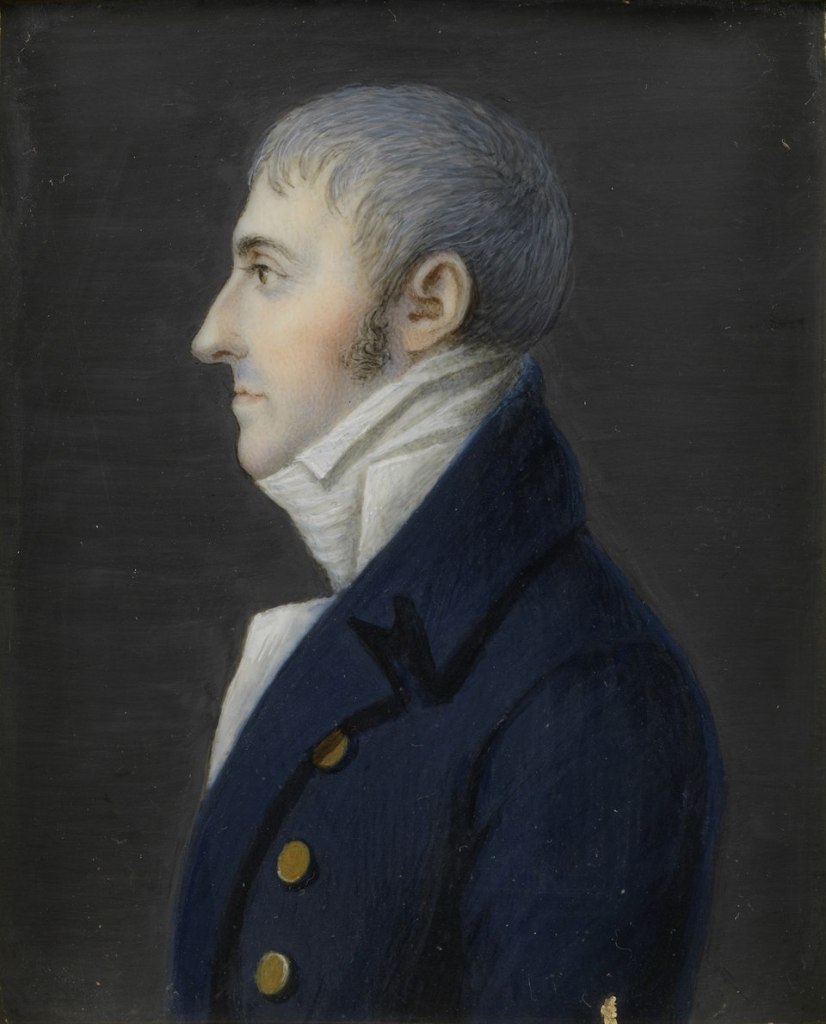
The 2nd Prince had married twice, both to women with later connections to Queen Victoria. The first was Countess Henriette of Reuss-Ebersdorf, from the curiously Pietist branch of that minor princely house from Thuringia, whose sister Augusta would become the grandmother of both Victoria and her husband Prince Albert. A year after their only child, Hereditary Prince Friedrich Karl, died in 1800, she also died. With no surviving children to sustain the newly created principality, the Prince married his wife’s niece, the much younger Princess Victoria of Saxe-Coburg-Saalfeld, and they had two children, Karl and Feodora. He died in 1814, and his widow remarried the Duke of Kent in May 1818, giving birth to Princess Victoria of Great Britain and Hanover almost exactly one year later. For that first year of their marriage, the Duke and Duchess of Kent lived in the Leiningen Palace in Amorbach, so it is interesting to consider that the eminent British queen was conceived in Leiningen territory.
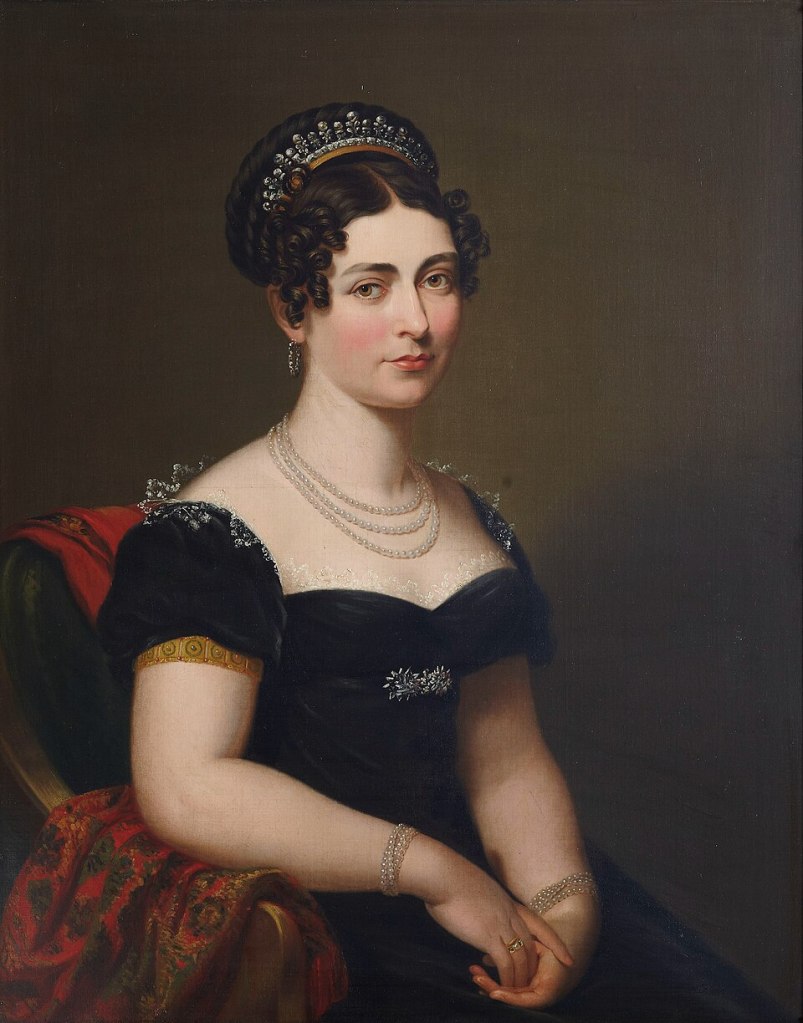
Queen Victoria’s elder half-brother, Karl, 3rd Prince of Leiningen, born in 1804, was educated in art and in law. Encouraged by the liberal outlook of the both the British royal family and the House of Saxe-Coburg, he took an active part in the reinvigorated political life of Germany, as a member of the Diet of the Grand Duchy of Baden, but also in the legislative body of the Kingdom of Bavaria (in which his seat, Amorbach, was located). In fact, he rose to the rank of President of the Bavarian Upper House in 1842, and lieutenant-general in the Bavarian Army. He had a reputation as a reformer, and an advocate for parliamentary government and limits to aristocratic privilege. So when a democratic movement swept across Europe in 1848, German liberals created a new central government based in Frankfurt, and in August, named Archduke John of Austria as ‘Regent’ and the Prince of Leiningen as First Minister (of the ‘Provisional Central Power’). Delegates to the Diet of Frankfurt appreciated the balance of a Catholic Archduke and a Lutheran prince, as well as Leiningen’s connections with the British establishment, hoping this could sustain their revolution. By September, however, Prussia defied the rest of the constituent states of this German confederation in making a separate peace with Denmark over the Schleswig-Holstein Question (ask Prince Albert to explain it), and Leiningen resigned as First Minister. By May 1849, the Austrian and Prussian delegates had abandoned the National Assembly in Frankfurt altogether and it dwindled away and died. The 3rd Prince also died, in 1856.
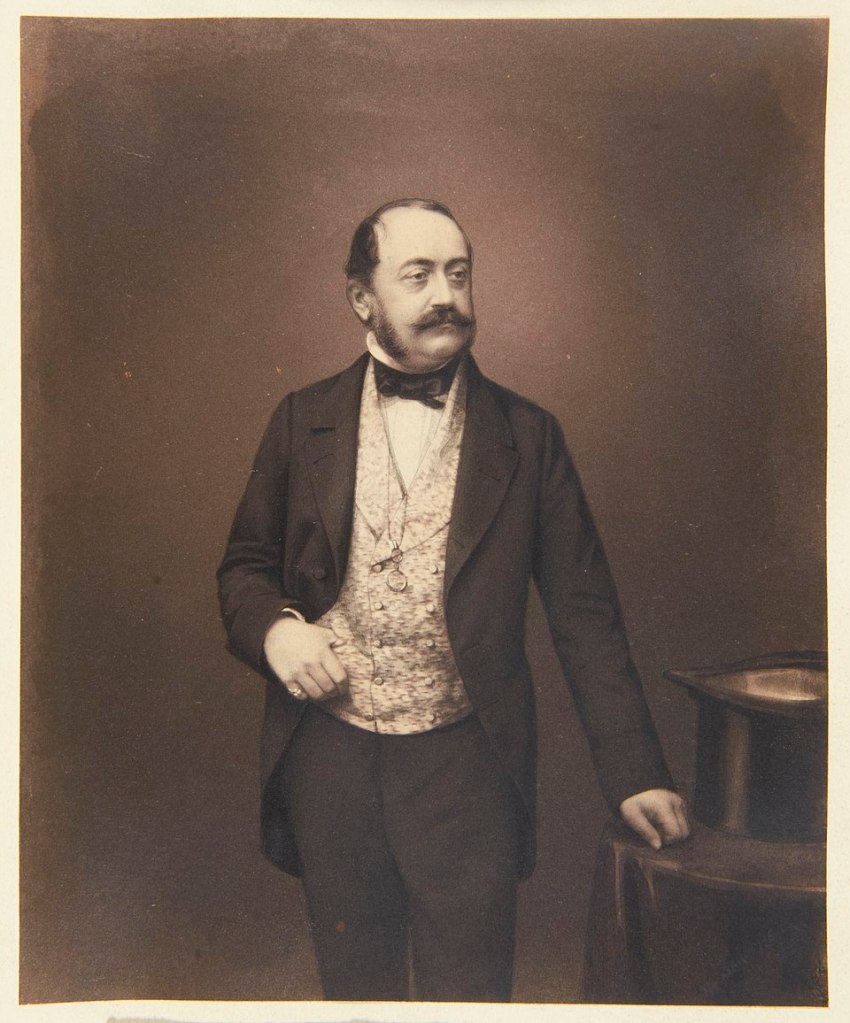
In his personal life, Prince Karl’s tastes also reflected his British connections: in 1828, he built a new princely residence in the forests southwest of Amorbach, the Odenwald. His father had developed a wildlife park here and built a small hunting lodge named Waldleiningen, after the forests of Leiningen his family had left behind. The new castle was built on a grander scale, in a romantic neogothic style, inspired by Abbotsford, the gothic novelist Sir Walter Scott’s country house in the Scottish Borders. In World War II Waldleiningen was converted into a hospital and today is run by the princely house as a private psychiatric clinic.
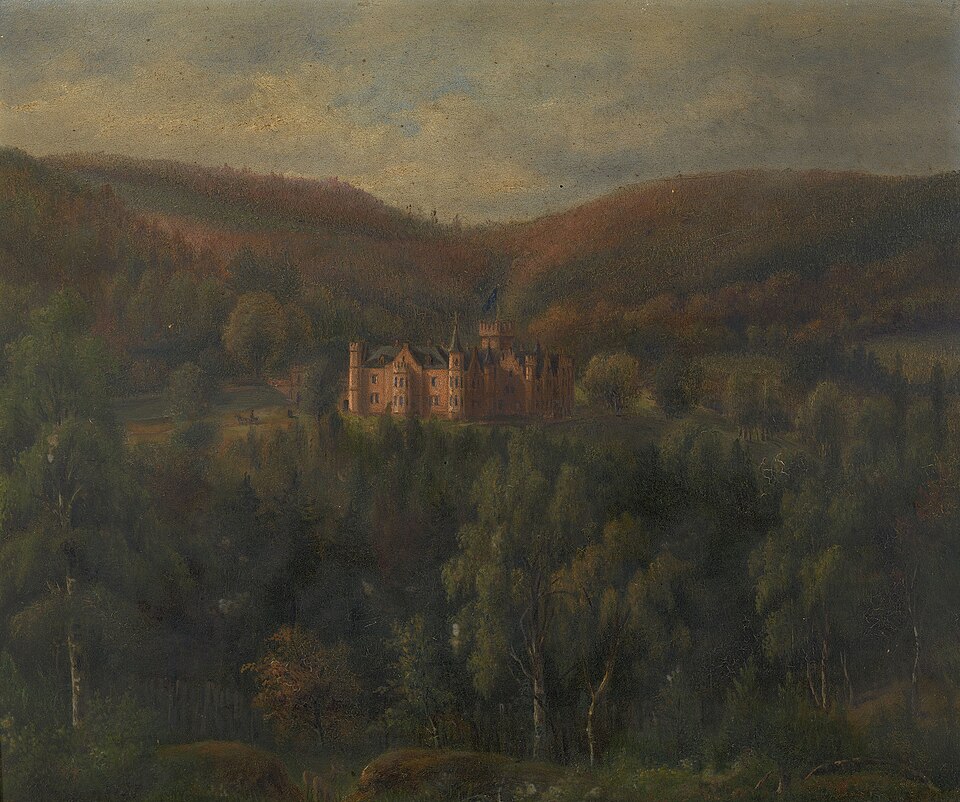
Karl’s sister, Princess Feodora, born in 1807, was fully named Anna Feodora, after her maternal aunt, Juliane of Saxe-Coburg, who had married a Russian grand duke and adopted the name Anna Feodorovna. Feodora of Leiningen was raised and educated in Kensington Palace alongside her younger half-sister Victoria, by their beloved German governess, Baroness Lehzen. In 1825, she was courted by a young man still trying to figure out his place in the British royal family: Augustus d’Este, the son of the Duke of Sussex and Lady Augusta Murray, whose marriage was seen as legal in some circles, but not recognised by the royal family, so the boy’s attempts to call himself ‘Prince Augustus’ were scorned, and his pleading letters to Princess Feodora—which you can see in the National Archives at Kew—got him nowhere. Another suitor was the Duke of Nassau, head of the newly augmented House of Nassau-Weilburg. This match would have made Feodora a sovereign duchess, but according to most narratives, her mother the Duchess of Kent was concerned about any hint of overshadowing her half-sister the future queen, so in 1828, when she was 21, Feodora (sometimes spelled Feodore by the family) was married to a prince, but a very minor one: Ernst I, Prince of Hohenlohe-Langenburg. He was a cousin of Adelaide of Saxe-Meiningen, Duchess of Clerence (soon to be Queen Adelaide), who facilitated the match. Hohenlohe, like Leiningen, was an ancient imperial county that had been elevated to full princely status in the eighteenth century (slightly earlier, in 1744), then mediatised and absorbed into its larger neighbour, the Kingdom of Württemberg. Its lands were further east than Leiningen, in the borderlands between Württemberg and Bavaria, notably its main princely seat, the castle of Langenburg, where Feodora lived out the remaining years of her life, raising six children, and corresponding frequently with Queen Victoria. She visited Britain a number of times, notably at her half-sister’s coronation in 1838.
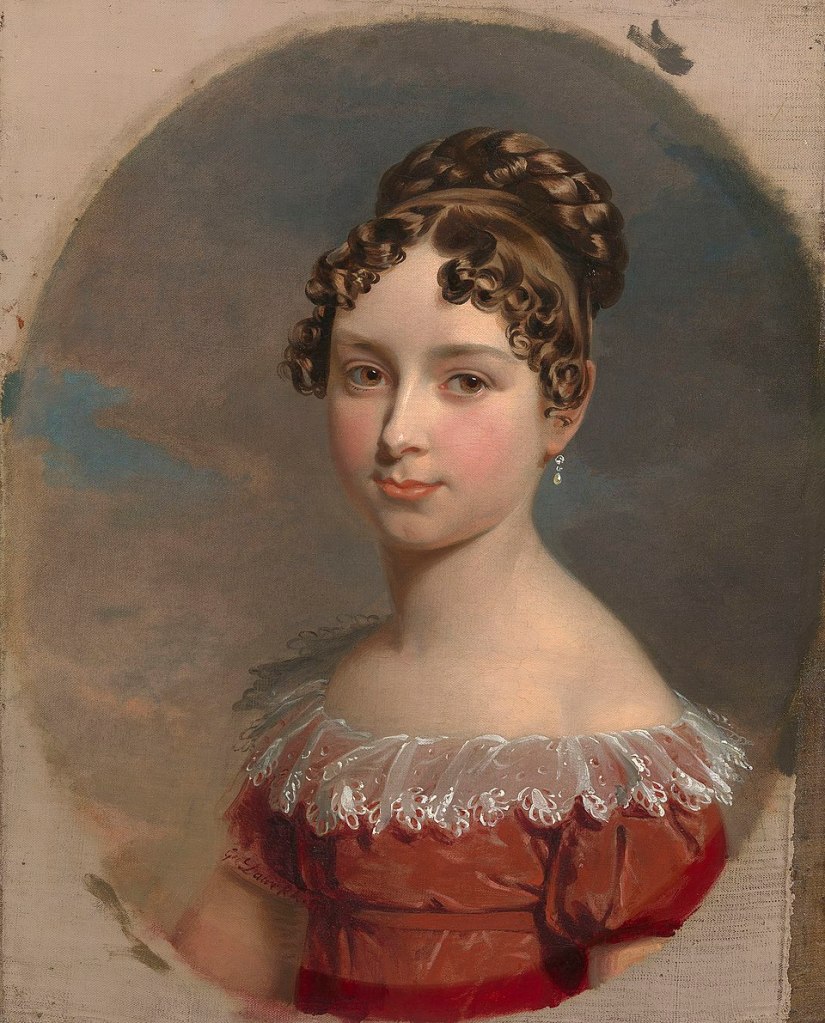
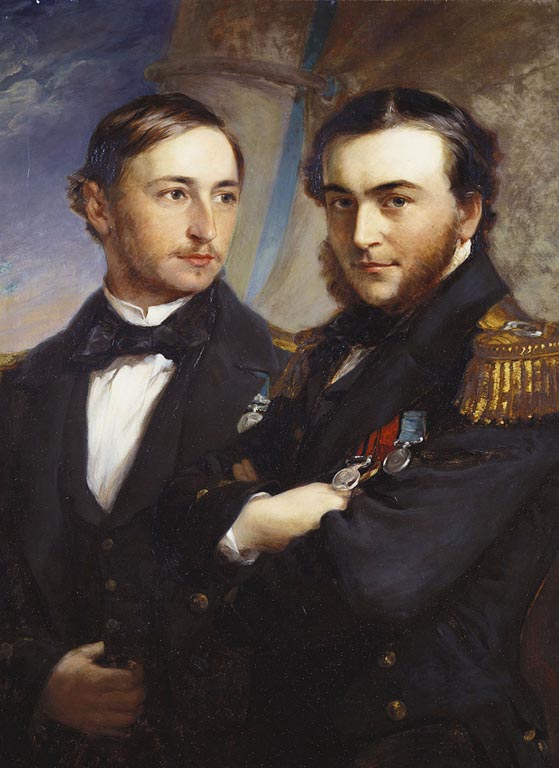
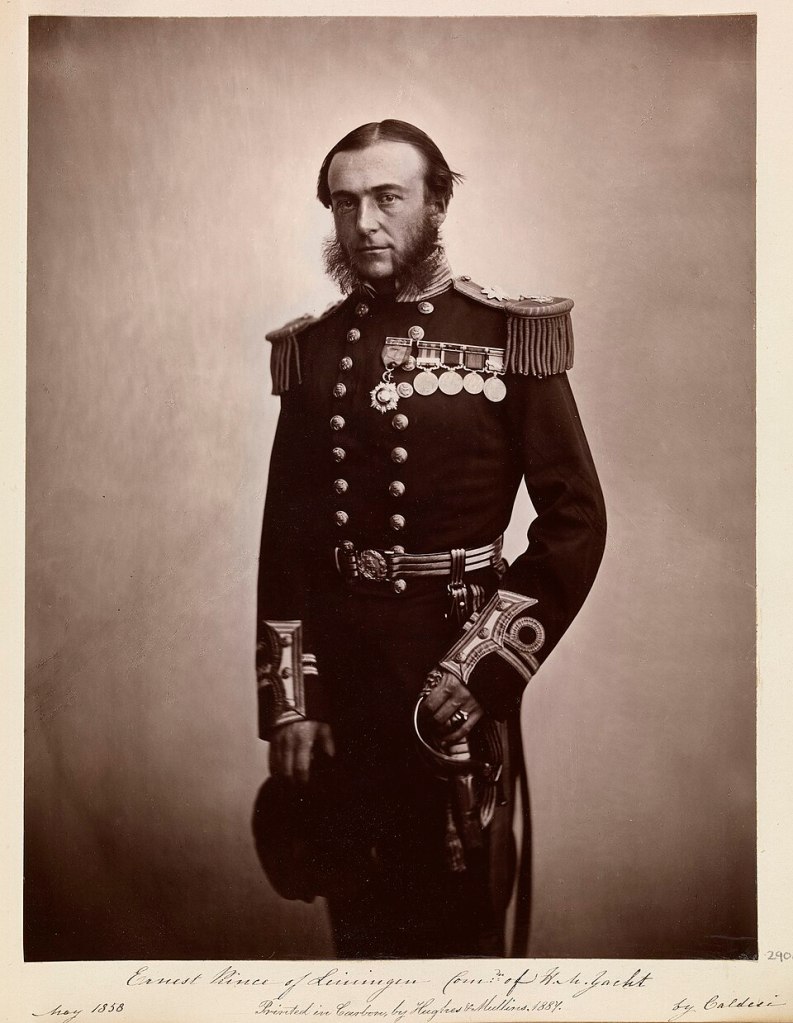
Continuing the line, Princess Feodora’s nephew, Ernst, 4th Prince of Leiningen, was born at Amorbach and spent much of his childhood here or at the British court. In 1849, he joined the British navy, and served all over the world, notably in Burma and the Crimea. Given the rank of captain in 1860, he commanded Her Majesty’s Yacht Victoria and Albert. In 1863, he was suggested to take up the throne of the Kingdom of Greece by the British government (as an alternative to Victoria’s son Prince Alfred, which the Great Powers rejected), but he declined. Years later there was even a suggestion he could become Duke of Lorraine in 1890, in an effort to stabilise that region annexed by the German Empire—this would have been an interesting return of the House of ‘Linange’ to that region, heirs to the Rock of Dagsburg. By that point, Ernst had retired from the Royal Navy with a rank of Admiral (from 1887), having served as Commander-in-Chief of the Nore (the Thames Estuary and Medway), 1885 to 1887. He certainly kept up family ties with Britain, with both his children, Alberta and Emich, born at Osborne House, Queen Victoria’s summer residence on the Isle of Wight. Ernst paid attention to his duties as a German prince too, marrying Princess Marie of Baden in 1858, attending sessions of the upper houses of the diets of Bavaria and Baden, and improving his estates, notably converting poorly developed agricultural lands into forestry (in the Odenwald). He died in 1904.
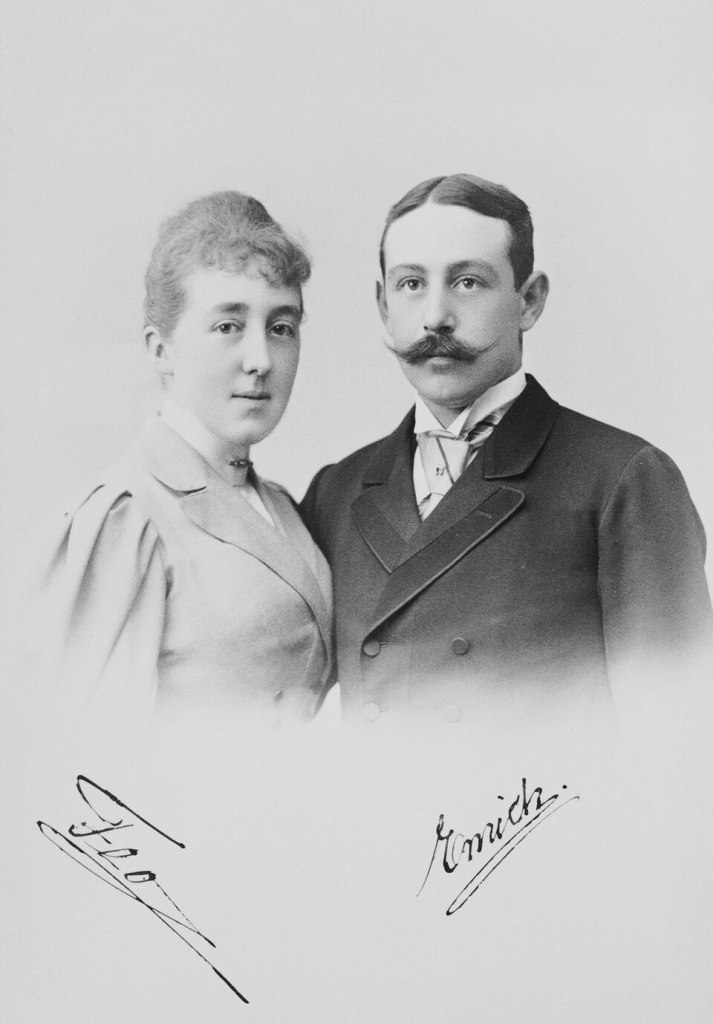
Emich, 5th Prince of Leiningen, has a much smaller profile, and spent most of his career in Germany, tending his estates, and serving in the Prussian army. In 1894, he married his second cousin, Princess Feodora of Hohenlohe-Langenburg, and they had several children (the eldest son, Emich Ernst, was killed in the First World War on the Western Front in March 1918 at age 22). The Prince managed to secure his inheritance in 1925 (at a time when government pressure was trying to break up the large aristocratic estates), then drifted to the right and joined the Nazi Party in 1933. He died six years later, on the eve of World War II.
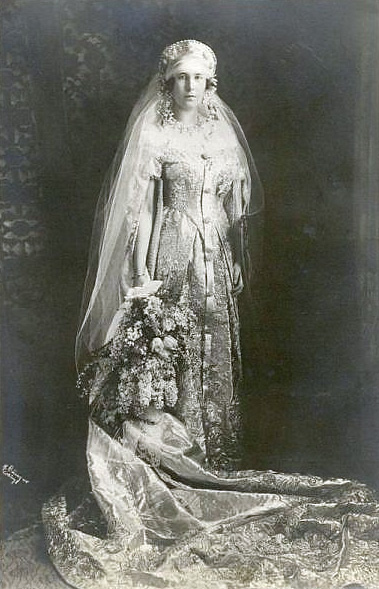
The 6th Prince, Karl, also joined the Nazi Party and served in the war that broke out just as he assumed headship of the family. He was taken prisoner by the Soviets and died in the USSR in 1946. Interestingly, he had married a Russian princess, Grand Duchess Maria Kirillovna, back in 1925. And she was not just any Russian princess who had survived the Revolution, but the sister of Grand Duke Vladimir, who, since 1938 had claimed the throne of the old Russian Empire. A further connection with Great Britain was reinforced as well: her mother was Princess Victoria Melita of Saxe-Coburg, daughter of Prince Alfred and thus granddaughter of Queen Victoria.
This re-connection to the senior royal families in Europe (regnant or deposed) was re-asserted even further in the next generation: the eldest son, Emich Kyrill (7th Prince of Leiningen), married Duchess Eilike, daughter of the Grand Duke of Oldenburg; Prince Karl married Princess Marie Louise, older sister of King Simeon II of Bulgaria; Princess Kira married Prince Andrew of Yugoslavia; and Princess Margarita married Friedrich Wilhelm, Prince of Hohenzollern (head of the Swabian branch of that family). An even longer-term impact was that the eldest son of Emich and Eilike, Prince Karl Emich, would be named by the Monarchist Party of Russia in 2013 as head of their movement to reclaim the throne of Russia. But that’s getting ahead of ourselves a bit.
The 7th Prince of Leiningen, a businessman in postwar West Germany, kept much of the family fortune together until his death in 1991. That same year, he had disinherited his oldest son due to an unequal marriage (though hardly a commoner—a member of the extended Thyssen business clan, and later after a divorce, the second wife of the 4th Aga Khan), and so the succession passed to his younger brother, Andreas (b. 1955), who today is the 8th Prince of Leiningen. Andreas had certainly satisfied the requirement to marry a princess through his 1981 marriage to Princess Alexandra of Hanover, sister of the current head of the House of Hanover. Their son the Hereditary Prince, Friedrich (b. 1982) did the same, marrying Princess Victoria Luise of Prussia, though they only have two daughters, so in the future the headship of the House of Leiningen will pass to Prince Hermann (b. 1987) or his son Prince Leopold (b. 2019).
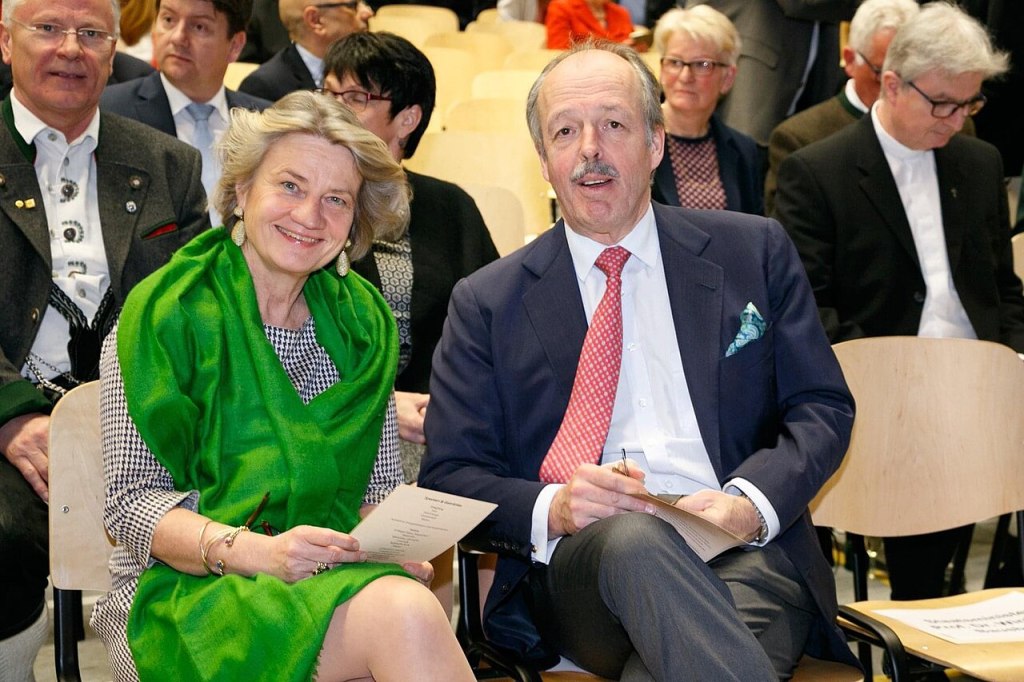
Meanwhile, Prince Karl Emich and his third wife, Countess Isabelle von und zu Egloffstein, were invited to occupy a nebulous throne by the Monarchist Party of Russia in 2013. This group adheres strictly to the Pauline Laws of succession in Russia, saying the throne (or claims to it) cannot pass to a woman, thus denouncing the claims of the Grand Duchess Maria Vladimirovna and her son Yuri, who have claimed to be heads of the House of Romanov since 1992. Karl Emich is a great-great-great-grandson of Tsar Alexander II, and although he also descends via a female (his grandmother Maria Kirillovna), his supporters deem him ‘more acceptable’ than Maria Vladimirovna since they consider her parents’ marriage to be unequal. The Prince of Leiningen converted to Russian Orthodoxy and took the name Nikolai Kirillovich Romanov or ‘Nicholas III’. Since then, the MPR has tried to acquire some land it can declare sovereign, over which their ‘Russian Imperial State’ can rule—apparently trying to acquire land in Russia itself, or Montenegro or offshore in the Mediterranean…or even as far off as the Gambia or Kiribati in the South Pacific. The Prince has a son and heir, Emich Albrecht, born in 2010.
Though there are now two princely lines established, with strong connections to the royal houses of Germany and Russia, the likelihood of either the Sovereign Principality of Leiningen or the Russian Empire or the being reborn is slight. Nevertheless, the Leiningen story is a good example of how a family dispossessed of its ancient lands can rebuild again using the strong connections of a half-sister of Queen Victoria.
(images Wikimedia Commons)
 Dukes and Princes