Kent is one of the most familiar names for an English county—but also unique in that it is one of the few that are never appended ‘-shire’ when giving historic names. It is also said to be one of the oldest place names still in use in England, named by the Greeks as Kantion in the fourth century BC, probably from a Celtic word for ‘land on the edge’ or ‘coast’, which certainly applies to this land famous for its white cliffs. When Julius Caesar invaded Britain in 55 BC he called this area Cantia and its people the Cantiaci or the Cantii. Their capital eventually became known as Canterbury—bury being a Germanic toponym for a town.
So by the fifth century, it was a Germanic place, settled by Jutes and Saxons who formed a Kingdom of Cantware (‘Kentish people’). The first reliably recorded king was Aethelberht, who converted to Christianity in 597 and set up the first two episcopal seats in England, at Canterbury and Rochester. After 764, his descendants weakened and Kent was often a client kingdom of Mercia, and after 825 was absorbed by Wessex.
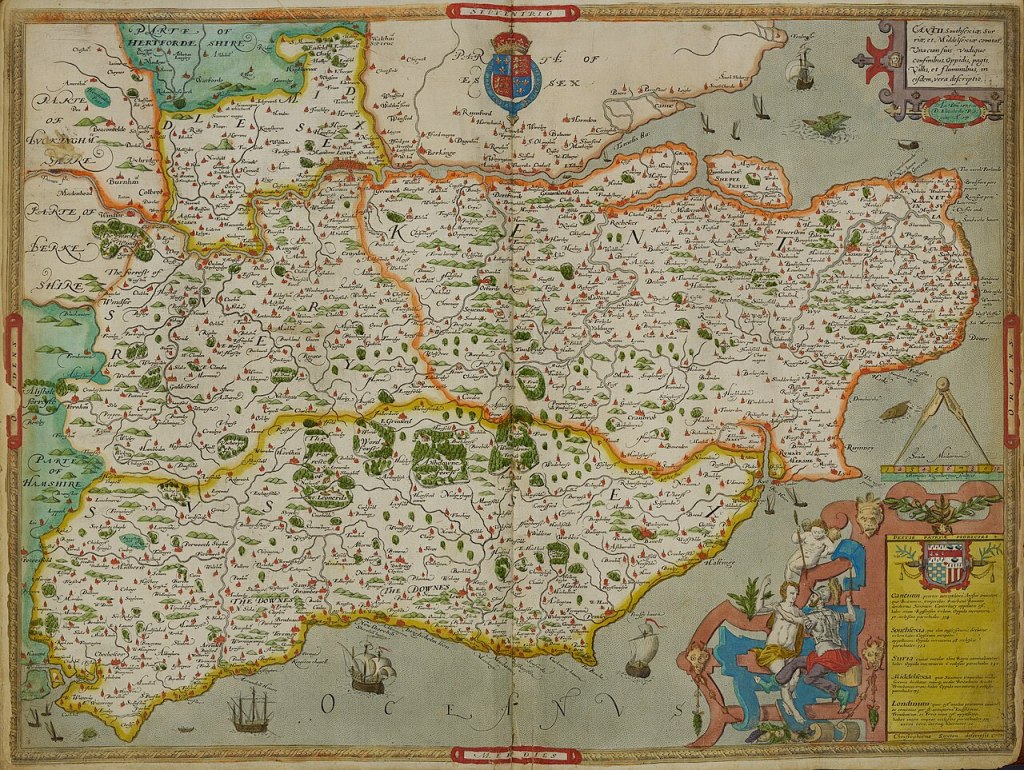
The first time Kent was referred to as an earldom was in 1020 when King Cnut gave it to Godwin, already Earl of Wessex (another source says it wasn’t until Edward the Confessor’s reign started in 1042). Godwin died in 1053 and his lands were divided, with Kent going to his fifth son Leofwine (along with Essex, Middlesex and other earldoms in the southeast). Earl Leofwine was killed alongside his brother King Harold at Hastings in 1066 (shown in the Bayeux Tapestry as ‘Lewine’). It’s too bad Leofwine was erased from existence in recent BBC television dramatization of the Norman Conquest.

Kent was one of the few places that really resisted the Normans, so in 1067 it was given the status of a county palatine, and its new earl, Odo, Bishop of Bayeux (William the Conqueror’s half-brother), more extensive powers. He later betrayed his family and forfeited his lands, including the earldom of Kent.
In the next three centuries, the earldom of Kent was re-created several times for key supporters of the English Crown. In 1141, it was for William of Ypres, a lieutenant of King Stephen; in 1227 it was for Hubert de Burgh, Chief Justiciar of England and Regent for the young King Henry III; then in 1321, for Edmund of Woodstock, sixth son of King Edward I. The earldom passed to his two sons, then after 1352 to their sister Joan, the ‘Fair Maid of Kent’. She could pass on the lands to her children, but not the earldom, so her husband, Thomas Holland, was re-created earl of Kent in 1360.

The Holland family held the earldom of Kent for the rest of the fourteenth century, with Thomas and Joan’s grandson Thomas (the 3rd Earl) being elevated to Duke of Surrey in 1397, though quickly brought down again in 1399 and executed in 1400. His brother the 4th Earl died in 1408, meaning their sister, another Joan, Countess of Kent, could transmit it to her husbands, one of them being Edmund, Duke of York (though in the end she had no children).
Another very brief creation was for William Neville (younger son of the Earl of Westmoreland), an ally of the Yorkist king, Edward IV, and Steward of his Household. He was named Earl of Kent in 1461, then died in 1463.
Immediately, the earldom was given again in 1465 to another Yorkist supporter, Edmund Grey, Lord Grey of Ruthin, Lord Treasurer of England. His son solidified the Grey family’s place at the top of the English aristocracy by marriage to the Queen’s sister, Anne Woodville (in 1480). So their descendants would be cousins of the Tudors in the century to come. The House of Grey is itself vast, with roots stretching back to the Conquest, and including the powerful Tudor magnate, the Duke of Suffolk, and his daughter, Lady Jane, several earldoms (including that for Prime Minister Earl Grey), and numerous baronies. The multiple branches of this family will have its own blog post in due course, but for now, we can focus on the last of the Grey earls of Kent, who became the one and only non-royal Duke of Kent, in 1710.

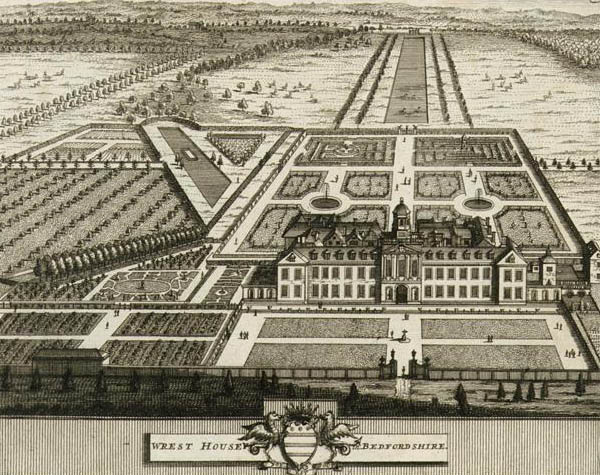
Henry Grey, 12th Earl of Kent, was a moderate politician and courtier, who served in the Household as Lord Chamberlain for Queen Anne, 1704-10, and was created Marquess of Kent in 1706. He agreed to give up his post in exchange for a dukedom, which he got in 1710, with subsidiary titles Earl of Harold and Viscount Goderich. The latter title comes from a castle held by the Greys since the 1610s, Goodrich, a mighty Norman fortress in Herefordshire. I suspect the earldom was also an allusion to Norman ancestry and Harold Godwinson (though it was his brother who was Earl of Kent, as we’ve seen). The Duke of Kent later returned to the Household under the Hanoverians, as Gentleman of the Bedchamber and as Lord Steward, 1716-18, and in the government at Lord Privy Seal, 1719-20. He lived at Wrest Park, in Bedfordshire, which today is the site of a magnificent, very French, country house—but it was a later reconstruction, not the house as the Duke of Kent knew it. Some of the earlier buildings remain, notably the lovely banqueting pavilion.By 1733, all of the Duke’s sons had died, so the King agreed to create a new title for him, Marquess Grey, with a special remainder to his grand-daughter, Lady Jemima Campbell. The Duke died in 1740, and his titles with him, except the marquisate—Lady Jemima married Philip Yorke, 2nd Earl of Hardwicke, that same year and the history of Wrest Park lies with her family.

And so we come to the first royal dukedom bearing the name Kent. The Hanoverians continued a Stuart practice of pairing together an English and a Scottish dukedom for royal princes, and this was done for the older sons of King George III as they came of age (but curiously not for the youngest two sons, whose dukedoms are English only). Prince Edward, the fourth son, was created Duke of Kent and Strathearn, in 1799. He had made a name for himself as Commander-in-Chief in British North America, 1791-1802 (and was an early advocate of the creation of Canada), then as Governor of Gibraltar, 1802-20. But he is mostly remembered today as the father of Queen Victoria, born when he was already in his fifties.

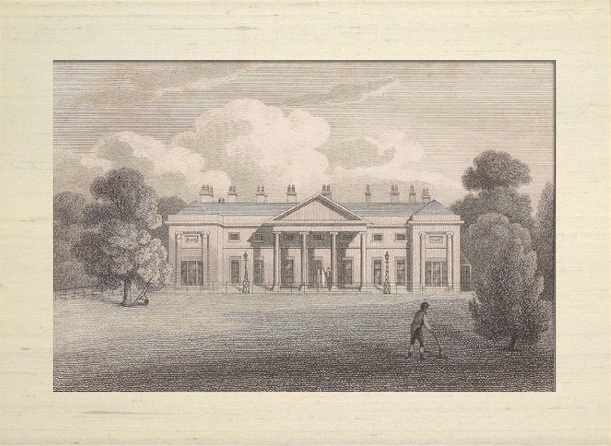
The Duke of Kent lived at Castle Hill Lodge in Ealing, west of London—he had bought the house from his brother’s secret former wife Mrs Fitzherbert in 1801, but left it in 1812, and it was eventually rebuilt, remodelled, and now serves as a home for wounded soldiers. When he died in 1820, his double dukedom reverted to the Crown.
The title was given out again for Prince Alfred, second son of Queen Victoria, but not as a dukedom. When he was created Duke of Edinburgh in 1866, his subsidiary titles were Earl of Kent and Earl of Ulster. By the 1880s the Duke of Edinburgh was an admiral, and was named Commander-in-Chief of the Mediterranean Fleet, and Admiral of the Fleet in 1893. That same year he inherited the title Duke of Saxe-Coburg & Gotha and moved to Germany. He died in 1900 with no sons, so these titles returned to the Crown.
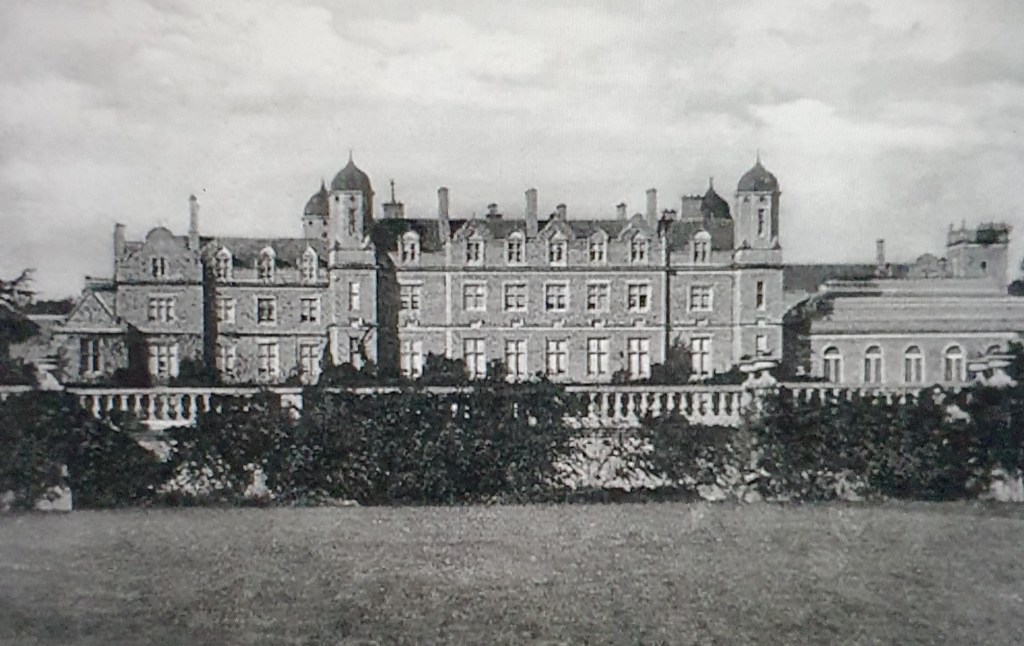
The Duke of Edinburgh did actually own property in Kent: a house at Eastwell Park near Ashford. There had been a house here since Tudor times, rebuilt in neo-Elizabethan style at the end of the eighteenth century, and occupied by Prince Alfred and his family in the 1870s and 80s. It was mostly destroyed by a fire in the 1920s.
Finally, we come to the present creation of the Dukedom of Kent. The title was raised once more into a dukedom in 1934 for Prince George, fourth son of George V. The new Duke of Kent, the most dashing and sociable brother of George VI, was meant to act as Governor-General of Australia in 1938, but was prevented by the outbreak of war. He was an RAF officer and died in an air crash in Caithness in August 1942. He had married in 1934 the glamourous Princess Marina of Greece, whose mother was a Russian grand duchess, which brought Romanov blood into this branch of the British royal family. Her first cousin Philip of Greece later married Elizabeth II. Princess Marina continued to be an active member of the House of Windsor for another twenty-five years.


From 1935, the Duke and Duchess of Kent lived at Coppins in Buckinghamshire, a nineteenth-century house first acquired by Princess Victoria, daughter of Edward VII. It would remain the family seat for the 2nd Duke of Kent and his family, until he sold it in 1972, and moved to Amner Hall, a Georgian House that became part of the Sandringham Estate in Norfolk at the end of the nineteenth century (later the residence of the Prince and Princess of Wales), and from 1990, Crocker End in Henley-on-Thames, Oxfordshire, until recently. Since 1978, the Kents also resided at Wren Cottage, within the grounds of Kensington Palace.

The 2nd Duke of Kent, Prince Edward of Great Britain and Northern Ireland, is the oldest living member of the British royal family (since September 2025). Born in 1935, he was only six when his father died and he succeeded to his titles. He followed a military career in the 1950s-70s, serving in Hong Kong, Cyprus and Northern Ireland. He became an honorary Field Marshal in 1993, and was colonel of the Scots Guards from 1974 to 2024. He has been very active in carrying out royal duties, often representing his cousin the late Queen overseas (such as independence ceremonies in Uganda and Barbados), and acting as chairman or president for a number of charities relating to sports, business or technology. He shares a passion for tennis for his wife, the now late Katharine Worsley. The daughter of a baronet from North Yorkshire, based at Holvingham Hall, she married the Duke in 1961, and like him became known for her connection to Wimbledon. The Duchess of Kent converted to Catholicism in 1994, and retreated from many of her royal duties, dropping the HRH styling from 2002 and focusing instead on her support for music, both performance and teaching (as simply ‘Katherine Kent’).

The Duke and his siblings (Prince Michael of Kent and Princess Alexandra, Lady Ogilvy) all retain the style HRH, as grandchildren of a sovereign. Their children are not, however, so when George, Earl of St Andrews (b. 1962) succeeds his father he will be the 3rd Duke of Kent, but not royal. His son, Edward, Lord Downpatrick (b. 1988) became a Catholic, so while he is in line for the dukedom, is not in line for the throne, nor is his uncle, Lord Nicholas Windsor. The Duke of Kent’s brother, Prince Michael, married a Catholic, as did the Earl of St Andrews, so both lost their place in the line of succession, but were both restored to it by Elizabeth II in 2015. The last in the line of succession to the dukedom is Prince Michael’s son, Lord Frederick Windsor. There are of course Kent daughters and granddaughters as well, but although they are in line for the throne, they are not in line for the dukedom.
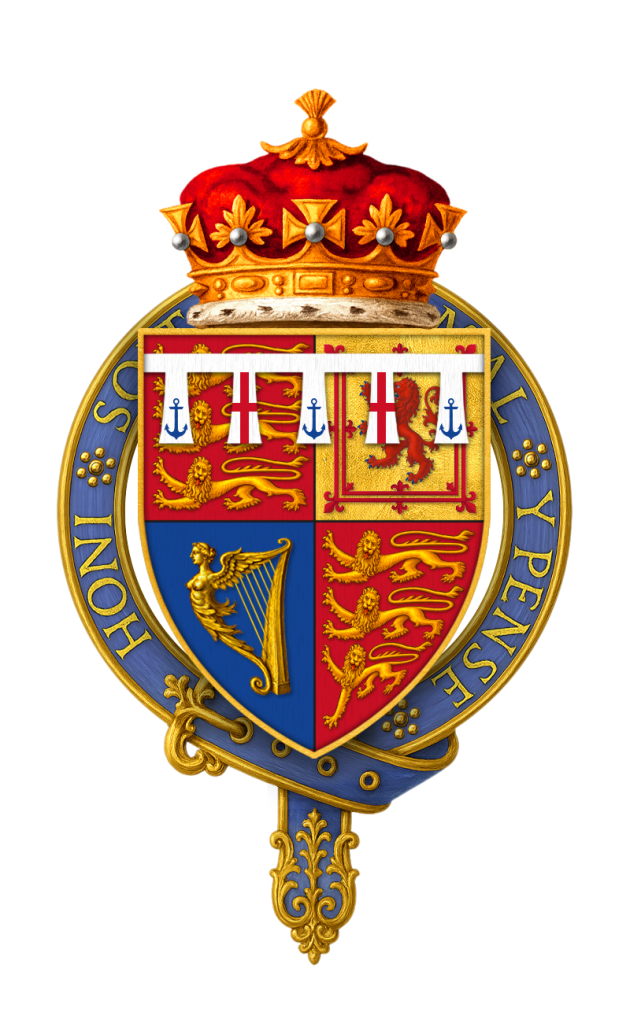
(images Wikimedia Commons)
 Dukes and Princes