In the long and varied history of European monarchy there have always been aspirations by the families of dukes and princes to move up in rank into the world of royalty. There have been some great success stories, for example the princes of Orange forging a new monarchy in the Low Countries in the eighteenth century, or the princes of Liechtenstein and Monaco becoming royal simply by outlasting the demise of the old world when numerous other small principalities disappeared all across Europe in the early nineteenth century. Some tried to seize power from failing dynasties, like the Guise in France in 1589, on the basis of religion. But the most tried and true pattern for an aristocratic family to become royal was by marrying a royal heiress: several English families like the Howards or Dudleys tried to do this in the time of Elizabeth I; some German princelings married reigning queens and tsarinas in Sweden and Russia in the 18th century; but the most successful of all were the dukes of Saxe-Coburg who in the 19th century married heiresses in Great Britain and Portugal, but also established new dynasties in Belgium and Bulgaria. In the Netherlands, successive reigning queens in the 20th century have given rise to the potential of a new royal house, first of Mecklenburg—giving a royal boost to that ancient German ducal house—then Lippe-Biesterfeld, and then Amsberg. But by the 20th century, the idea of a royal family taking on a new name by marriage—or dynastic transfer—had gone out of fashion, and the House of Orange kept the name of its royal house, as did the House of Windsor when its heiress, Elizabeth II, married Philip Mountbatten (Battenberg)—who, as we have seen in previous blog posts, was in fact a prince of the House of Oldenburg, which brings us to Denmark.
The dukes of Oldenburg themselves gained the royal throne of Denmark in 1448, along with Norway and Sweden (for a time) by marriage to the heiress (ultimately) of Queen Margrete I. This dynasty made an attempt at taking over the British monarchy in the late 17th century, with the marriage of Queen Anne to Prince George of Denmark, but none of their many children survived to generate a new royal house. In the 18th century, however, a junior branch of the Oldenburgs (Holstein-Gottorp) did re-generate royal lineages in Sweden and Russia, and in the mid-19th century they added the throne of Greece, and since 1905, that of Norway. Quite a success by dynastic standards.

So although the royal family in Denmark will continue to call itself the House of Oldenburg (or more specifically, the House of Glücksburg, one of its junior branches), if we look at it from a pre-modern dynastic point of view, the new royal house in Denmark after Queen Margrethe II’s abdication in January 2024 should become the House of Laborde de Monpezat. This exotic-sounding French surname sounds potentially very grand, as it might fit amongst the numerous houses of dukes and princes featured on this website. It does not—but nonetheless, it does have an interesting history in France’s deep, deep south: Béarn, the land of France’s beloved Gascon king, Henri IV.
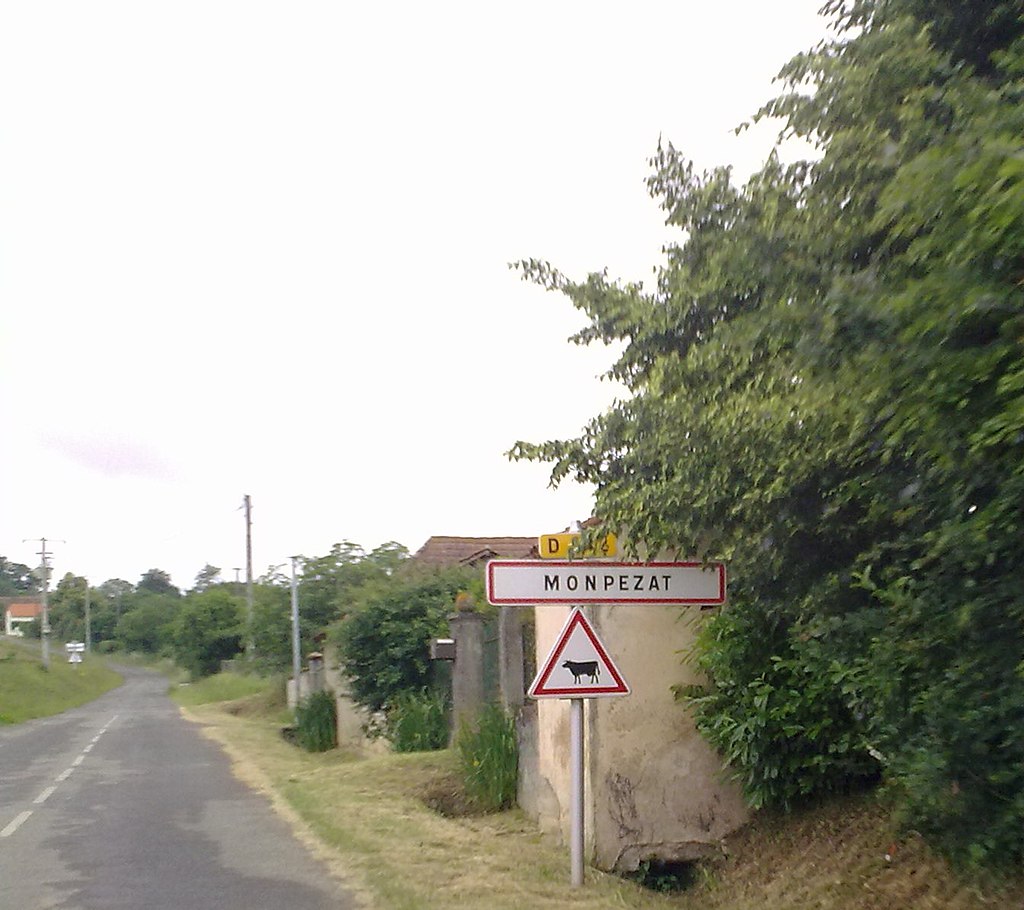
Béarn was itself a semi-sovereign principality, ruled by its own princely family from the early Middle Ages until it was merged with the royal House of Navarre in the 1430s, and then the royal House of France itself, the Bourbons, after 1589. It is a rustic country, still today, nestled in the valleys of the Pyrenees and known for its cows, cheeses and Catholic pilgrimage sites. A few valleys over from its capital, the city of Pau, was an estate known as Monpezat. In 1648, the heiress of this estate, Catherine d’Arricau, married a local doctor, Jean de Laborde. The Laborde family were a family of jurists and professionals originally from a village a few miles upriver from Pau, Nay. Perhaps they took their name from another nearby village, Bordes, or from one a bit further away (in the neighbouring county of Bigorre), Laborde, both of which take their name from an ancient Béarnaise word for farm.

Like many families of the newly emerging ‘middle class’ of the 17th century, the Laborde family wanted to enrich their lineage with the acquisition of a noble fief. This would bring status and prestige, but also certain legal privileges like exemptions from some taxes, and a stronger legal voice in the local assemblies or ‘estates’. Jean and Catherine’s eldest son, Vincent, was entered into a local company of musketeers, another clear sign of the family’s aspirations to noble status, since it was the nobility who traditionally fought in wars and served in elite regiments like the King’s Musketeers. Some of the greatest musketeers in French history have come from this region, including the most famous of them all, d’Artagnan. But this was also precisely the same time period when the Kingdom of France was cracking down on the assumption of noble titles by non-noble people, particularly those who hoped to obtain privileges by acquiring (by purchase or by marriage) a noble fief. So when the family Laborde applied to sit in the Second Order (the nobility) in a seating of the local estates of Béarn in the early 18th century, their request was turned down.

As the 18th century went on, brides came with surnames like de Canet, Cazenave and du Boy, all potentially noble sounding, and the men followed mixed professions as before, some military, some more bourgeois like mayor and wine-seller. In the early 19th century, Charles de Laborde de Monpezat and his brother Jean are both described as négociants, merchant-traders. Charles was also an official with the public treasury of the city of Agen, a bit to the north in Aquitaine, while Jean was also the mayor of their hometown, Taron (in Béarn, not far from Monpezat). The next generations were the same: Philippe and his brother Aristide are both listed in family genealogies as landowners, merchants, and officials in local government. Aristide (1830-1888) rose higher, as the President of the Tribunal of Commerce of Pau, then Mayor of Pau in 1875. Their sister Amélie became the Mother Superior of a house of the Filles de la Charité, founded by St Vincent de Paul, first in Aix (Provence), then in Lyon. Daughters in the next generation solidified the family’s links with the professional legal class of the south of France, with one daughter married to a president (or senior judge) of the tribunal court of Bordeaux. Like many of their contemporaries, some of these used the title ‘Count’ to boost their social status, but with no genuine legal basis.
In the 20th century, the family de Laborde de Monpezat took an interesting turn, but again, not an unusual one, in that the future for social advancement was within the administrative hierarchy of the French colonial empire (as it was for the British Empire). Philippe’s daughter Julie married a fiscal administrator in French Indochina, possibly inspiring her cousin, Henri, son of Aristide, to pursue a similar career. He was also stimulated by a devastating infestation of grape-loving pests (phylloxera) that struck the vineyards of France in the late 19th century. Henri (d. 1929) became the director of a newspaper in Indochina and eventually delegate of the province of Annam-Tonkin (modern northern and central Vietnam) to the Superior Council of the Colonies (which existed as a French government department until 1935). His son André (d. 1998) looked after his family’s business interests in Vietnam in the 1930s-50s, then returned with his family to France as Indochina began its struggle for independence.
André’s son, Henri, although born in Bordeaux (in 1940), spent much of his childhood in Vietnam, was sent to France for early schooling in Cahors, but returned to Vietnam to complete his high school education, then back to France to study law and political science at the Sorbonne and Chinese and Vietnamese at the French school for East Asian Languages. He became a diplomat, and served in the embassy in London in the 1960s, then met and soon married the heir to the throne of Denmark, Princess Margrethe. Upon their marriage in 1967, he was created a Prince of Denmark, and changed his name to Henrik (and became a Lutheran, which apparently ruffled some feathers in the family).

Princess Margrethe had originally not been the designated heir to the Danish throne, as the King her father (Frederick IX) had a younger brother, Prince Knud, who was assumed to be the next in line—indeed, in one of the longest unbroken lines of patrilineal succession in European royal history (back to 1448, though with a bit of a hiccup in 1863). In 1953, the Danish Act of Succession was modified to allow for female succession, meaning Knud and his two sons were now placed lower in the line of succession, after the King’s three daughters. Both of these sons, Ingolf and Christian, married in the last years of the reign of King Frederick IX without obtaining royal permission, so gave up their dynastic rights and took the new title, Count of Rosenborg. It wasn’t until the 1990s that the Danish Crown formally permitted marriage of a royal to a commoner without losing their status (and indeed, neither of Margrethe’s sisters married ‘unequally’), so it is a sleight of hand that Henri de Laborde’s family’s use of the title ‘Count’ seems to have allowed Margrethe to have slipped past this issue in 1967, when her cousins could not, in their marriages of 1968 and 1971.
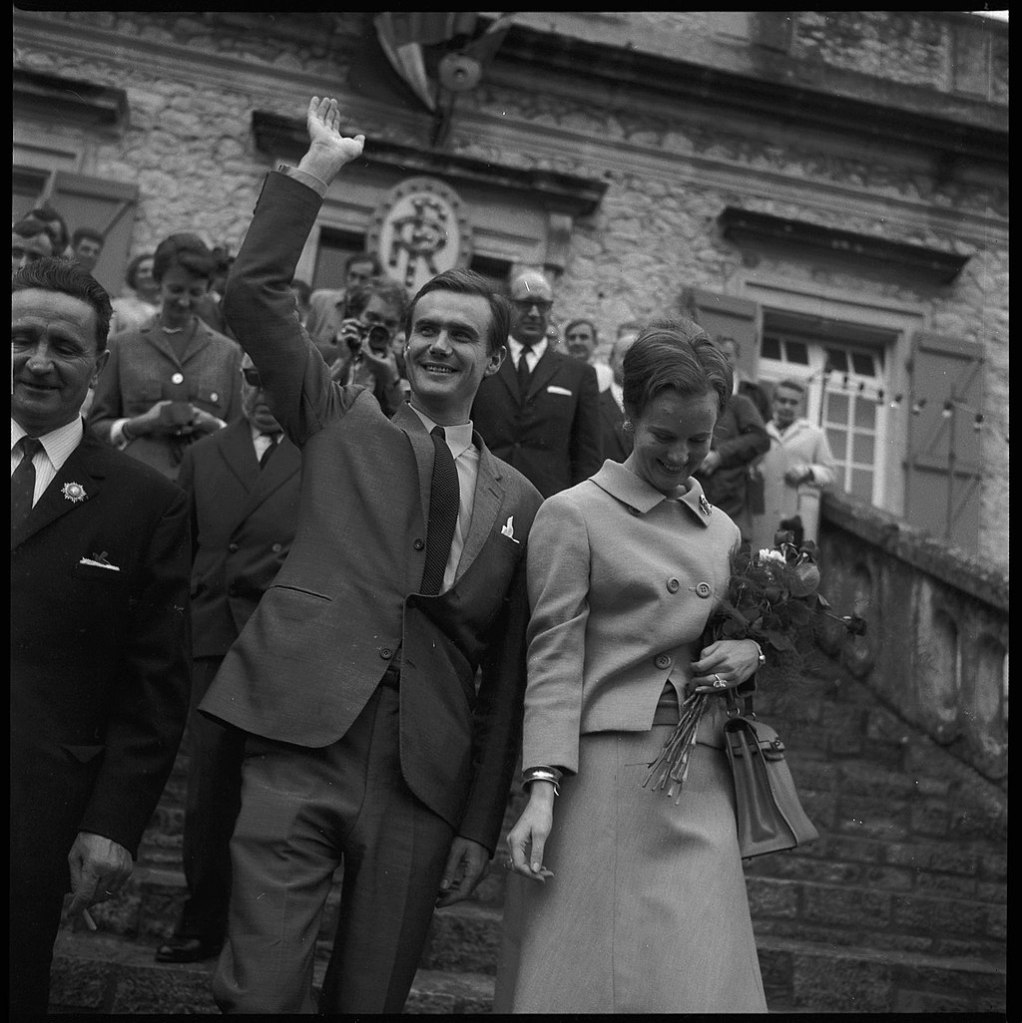
The rest of the story of the marriage of Prince Henrik and Queen Margrethe II (who succeeded her father Frederick IX not long after her marriage, in 1972) is fairly well known, and it was not always smooth sailing. Like many consorts of female sovereigns, Henrik struggled to find a place ‘three steps behind’ his wife, and sometimes pressed for more—for example, asking for formal recognition of his surname as part of the royal name (as Prince Philip also pressed for in England, and somewhat obtained with the name ‘Mountbatten-Windsor’ being adopted for junior royals), and the more elevated title of Prince-Consort, which he was finally given in 2005. In 2008, his sons Frederik and Joachim, princes of Denmark, were given the additional title Count of Monpezat. Prince Henrik died content with this in 2018.

Then in 2023, the Queen decided that the sons of Prince Joachim (and their descendants) would be counts of Monpezat only, which surprised (and offended) many, but is seen as very much in line with all of today’s European royal houses ‘slimming down’ in order to better accommodate themselves with modern values. One might argue, purely academically, that regardless of the Queen’s decision, his male-line descendants could still also call themselves duke of Oldenburg and duke of Schleswig-Holstein, but since dukedoms of the old Holy Roman Empire were always restricted to male-line succession, these in fact now only could be claimed by Ingolf of Rosenborg (who has no sons), and by another line of Counts of Rosenborg, more distant cousins (descendants of a younger son of Frederick VIII).

Like his wife, Prince Henrik was passionate about the arts, and about their family’s summer home at Cayx. Purchased as a summer retreat, far from the glare of cameras and his wife’s royal duties in Copenhagen, the Château de Cayx was purchased by the couple in 1974, not far from lands already owned by his family for generations, in the picturesque valley of the Lot, downriver the city of Cahors in Aquitaine. The castle had been built in the 14th century, and passed through several hands, undergoing many renovations.

Amongst its 18th-century inhabitants were the famous brothers, Jean-Jacques Lefranc de Pompignan, a philosophe and writer in the Enlightenment, and Jean-Georges, Archbishop of Vienne, whose liberal beliefs convinced him to lead the great movement of members of the clergy into the Third Estate at the Estates General of 1789. He then served briefly as President of the new National Assembly (4 to 19 July 1789—pretty crucial dates!), and was appointed one of Louis XVI’s ministers of state in August.

Cayx has once more become a flourishing centre of wine production, and will serve as a base for the newly reinvigorated, now royal, house of Laborde de Monpezat. with roots deep in the Béarnaise countryside. Vive le roi! Vive le roi, Frédéric X!


(images mostly Wikimedia Commons)
 Dukes and Princes